Chapter 5 Energy
and Ecosystem
Lesson 1 How do plants
produce food?
Vocabulary
1. transpiration: The loss of water from a leaf
through the stomata
2. Photosynthesis: The process in which plants
make food by using water from the soil, carbon
dioxide from the air, and energy from sunlight
3. Chlorophyll: A green pigment that allows a plant
to absorb the sun’s light energy
4. Producer: A living thing, such as a plant, that
makes its own food
5. Consumer: An animal that eats plants, other
animals, or both
The basic parts of plants include roots, stems,
and leaves. Some of those parts produce food for
the plant.
Roots:
Have two main jobs:
1. They anchor plants
2. They take in water and nutrients.
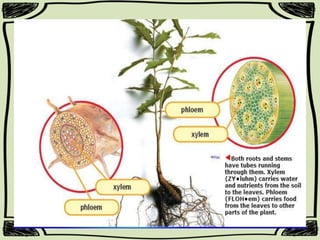
• Tubes in the roots carry water to the stems.
• Different plants have different types of roots.
• Larger plants and trees need more support.
Stems
- Support a plant and enable its
leaves to reach the sunlight.
- Contain tubes that carry water
and nutrients to the leaves.
- Plants have different stems. Small
plants tend to have flexible, green stems.
Leaves
Have one main job—to make food
for the plant.
Most leaves are thin and have several
layers of cells.
- The outer layer, called the epidermis
keeps the leaf from drying out.
- The upper epidermis is often covered
with a layer of wax. This helps keep water in.
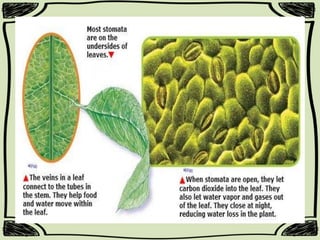
- The lower epidermis has many small
openings called stomata.
• Stomata usually open during the day so the
leaf can take in carbon dioxide to make food
and close at night to keep the plant from
drying out.
• Veins, which connect to the tubes in the
stems, are found in the center of most leaves
Photosynthesis
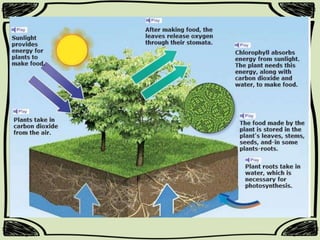
• Plants make food in a process that uses water from the soil, carbon
dioxide from the air, and energy from sunlight.
• Cells with chloroplasts are found in the inner layers of leaves on most
plants. Only cells with chloroplasts can make food.
• Chloroplasts contain a green pigment, or coloring matter, called
chlorophyll. It also makes plants green.
• Photosynthesis begins when sunlight hits the chloroplasts. The energy
absorbed by the chlorophyll causes water and carbon dioxide to combine
to form sugar—the food that plants need to live and grow.

• Oxygen is produced as a byproduct of photosynthesis. It is released into
the air through the stomata.
It all start with a plant
• Plants are called producer because they produce,
or make, their own food.
• The word consume means “to eat,” so we call
animals that eat plants or other
animals consumer.
• The energy from sunlight moves from plants to
animals that eat plants to animals that eat other
animals. Without sunlight, every living thing on
Earth would die.
5.1

5.1

  • 1.
    Chapter 5 Energy andEcosystem Lesson 1 How do plants produce food?
  • 2.
    Vocabulary 1. transpiration: Theloss of water from a leaf through the stomata 2. Photosynthesis: The process in which plants make food by using water from the soil, carbon dioxide from the air, and energy from sunlight 3. Chlorophyll: A green pigment that allows a plant to absorb the sun’s light energy 4. Producer: A living thing, such as a plant, that makes its own food 5. Consumer: An animal that eats plants, other animals, or both
  • 3.
    The basic partsof plants include roots, stems, and leaves. Some of those parts produce food for the plant. Roots: Have two main jobs: 1. They anchor plants 2. They take in water and nutrients. • Tubes in the roots carry water to the stems. • Different plants have different types of roots. • Larger plants and trees need more support.
  • 5.
    Stems - Support aplant and enable its leaves to reach the sunlight. - Contain tubes that carry water and nutrients to the leaves. - Plants have different stems. Small plants tend to have flexible, green stems.
  • 6.
    Leaves Have one mainjob—to make food for the plant. Most leaves are thin and have several layers of cells. - The outer layer, called the epidermis keeps the leaf from drying out. - The upper epidermis is often covered with a layer of wax. This helps keep water in. - The lower epidermis has many small openings called stomata.
  • 7.
    • Stomata usuallyopen during the day so the leaf can take in carbon dioxide to make food and close at night to keep the plant from drying out. • Veins, which connect to the tubes in the stems, are found in the center of most leaves
  • 9.
    Photosynthesis • Plants makefood in a process that uses water from the soil, carbon dioxide from the air, and energy from sunlight. • Cells with chloroplasts are found in the inner layers of leaves on most plants. Only cells with chloroplasts can make food. • Chloroplasts contain a green pigment, or coloring matter, called chlorophyll. It also makes plants green. • Photosynthesis begins when sunlight hits the chloroplasts. The energy absorbed by the chlorophyll causes water and carbon dioxide to combine to form sugar—the food that plants need to live and grow. • Oxygen is produced as a byproduct of photosynthesis. It is released into the air through the stomata.
  • 11.
    It all startwith a plant • Plants are called producer because they produce, or make, their own food. • The word consume means “to eat,” so we call animals that eat plants or other animals consumer. • The energy from sunlight moves from plants to animals that eat plants to animals that eat other animals. Without sunlight, every living thing on Earth would die.