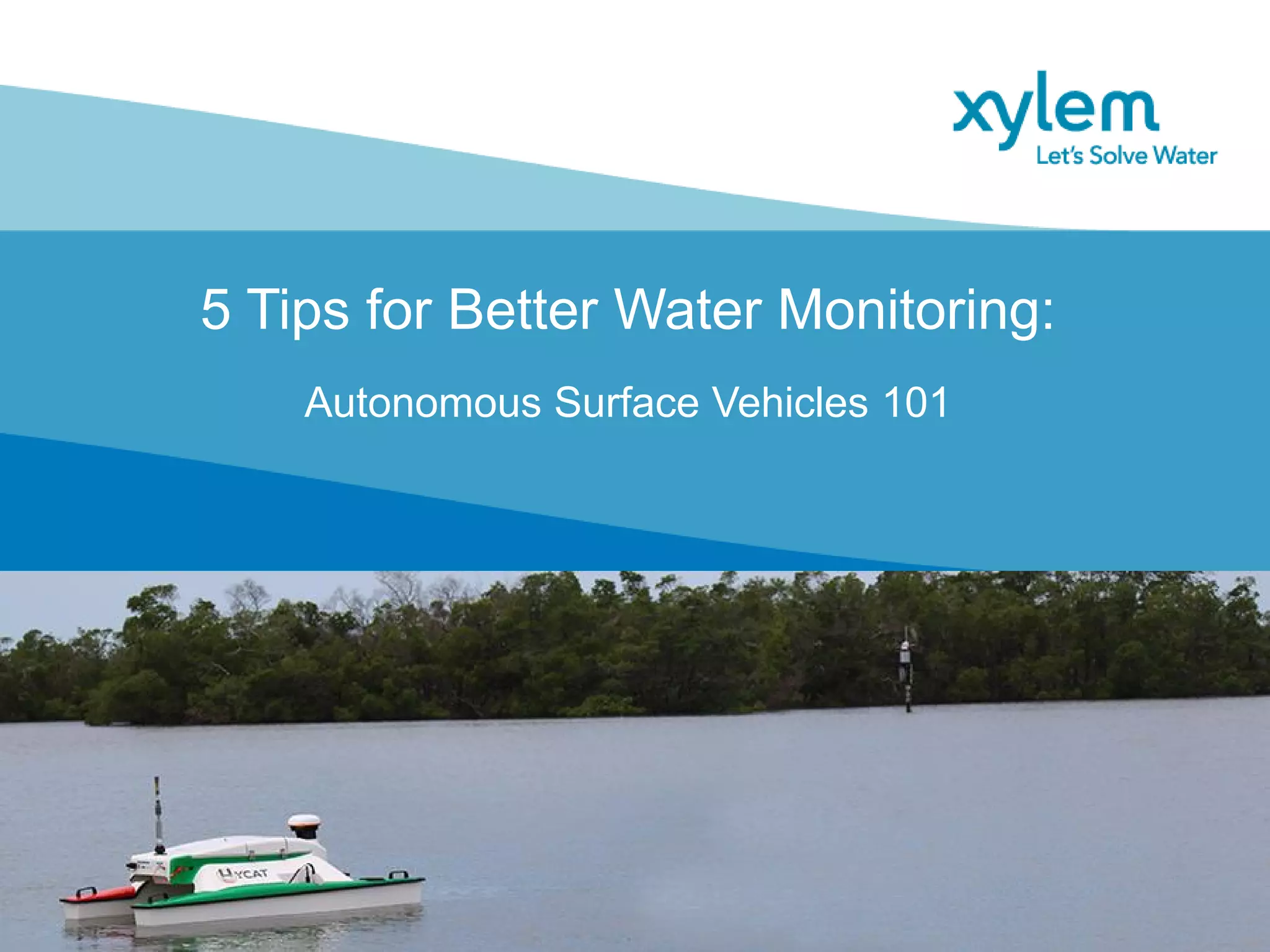
5 Tips for Better Water Monitoring:
Autonomous Surface Vehicles 101
Presenters
Kevin Simpson
Xylem
Director of Systems Engineering
Geoff Douglass
SeaRobotics
Product Development Manager
Robert Porrett
YSI, a Xylem brand
ISS Product Manager
2
Agenda
5 tips for better water quality monitoring
1. Chose the right sensor for the job
2. Autonomy counts
3. Tight integration has a payoff
4. Intuitive interfacing
5. When selecting an Autonomous Surface Vehicle/sensor system
choose brands with the most experience
Autonomous Surface Vehicle 101
Introducing our newest ASV - HYCAT
3
Company Overview
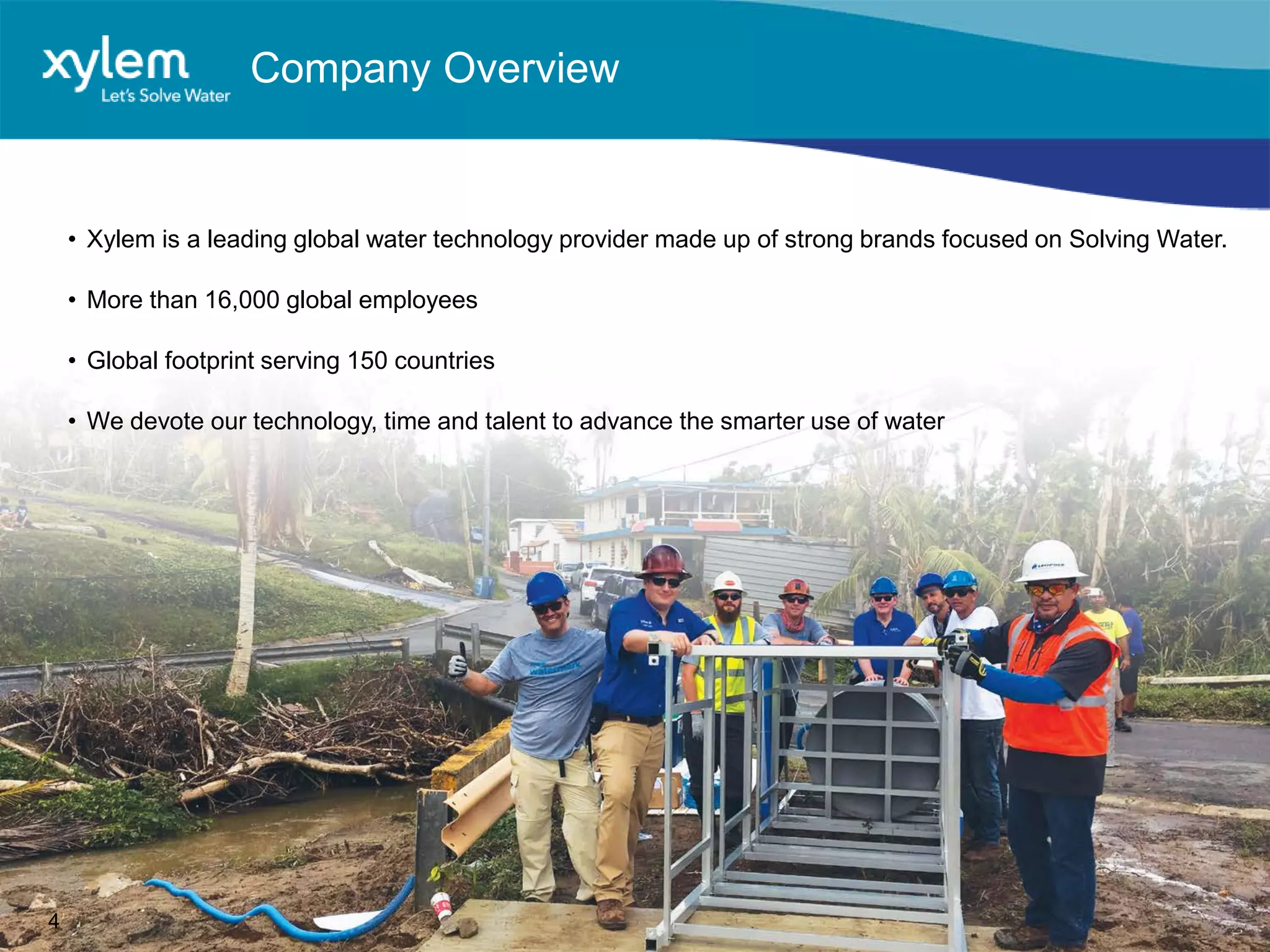
• Xylem is a leading global water technology provider made up of strong brands focused on Solving Water.
• More than 16,000 global employees
• Global footprint serving 150 countries
• We devote our technology, time and talent to advance the smarter use of water
4
Company Overview
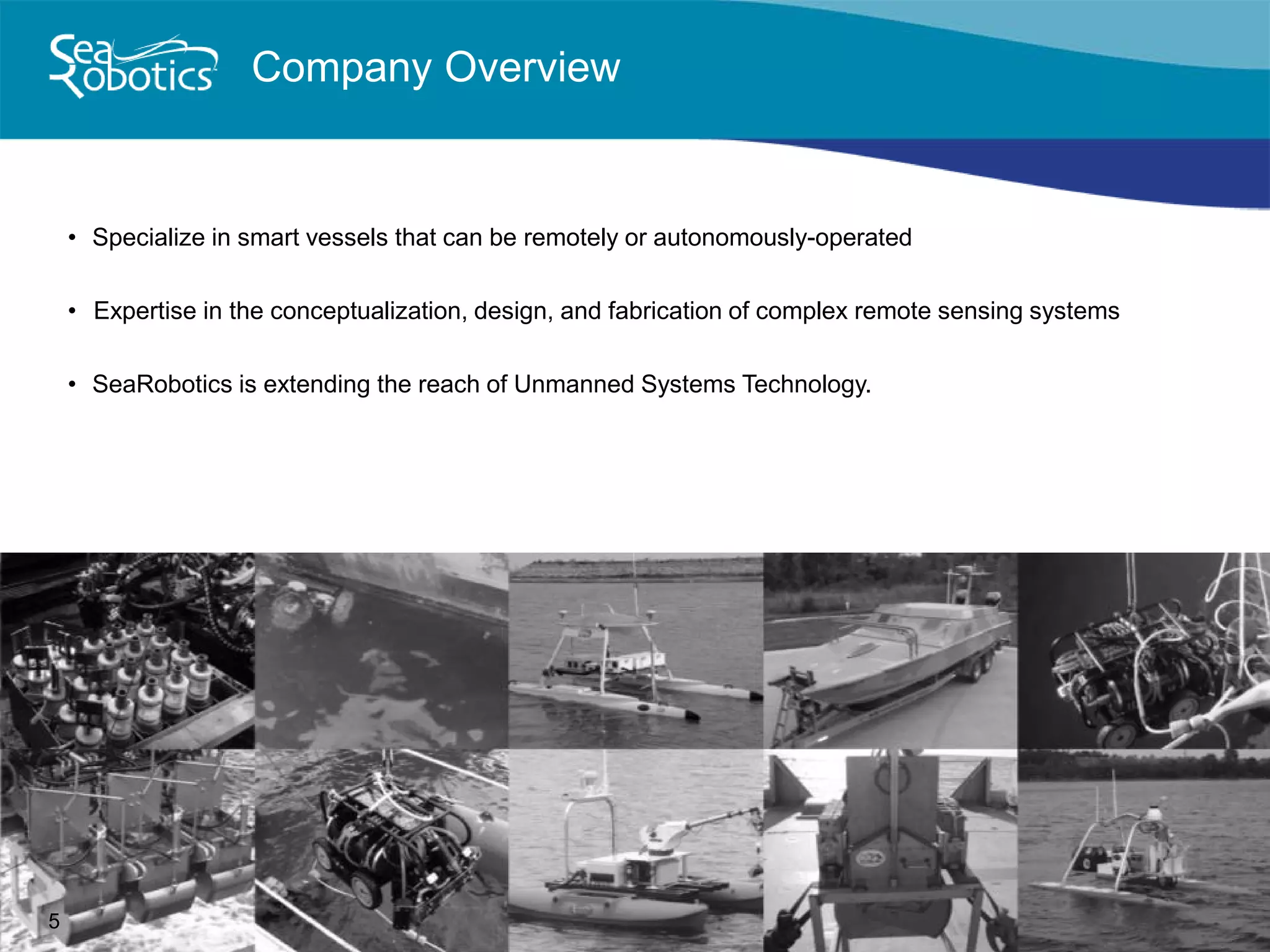
• Specialize in smart vessels that can be remotely or autonomously-operated
• Expertise in the conceptualization, design, and fabrication of complex remote sensing systems
• SeaRobotics is extending the reach of Unmanned Systems Technology.
5
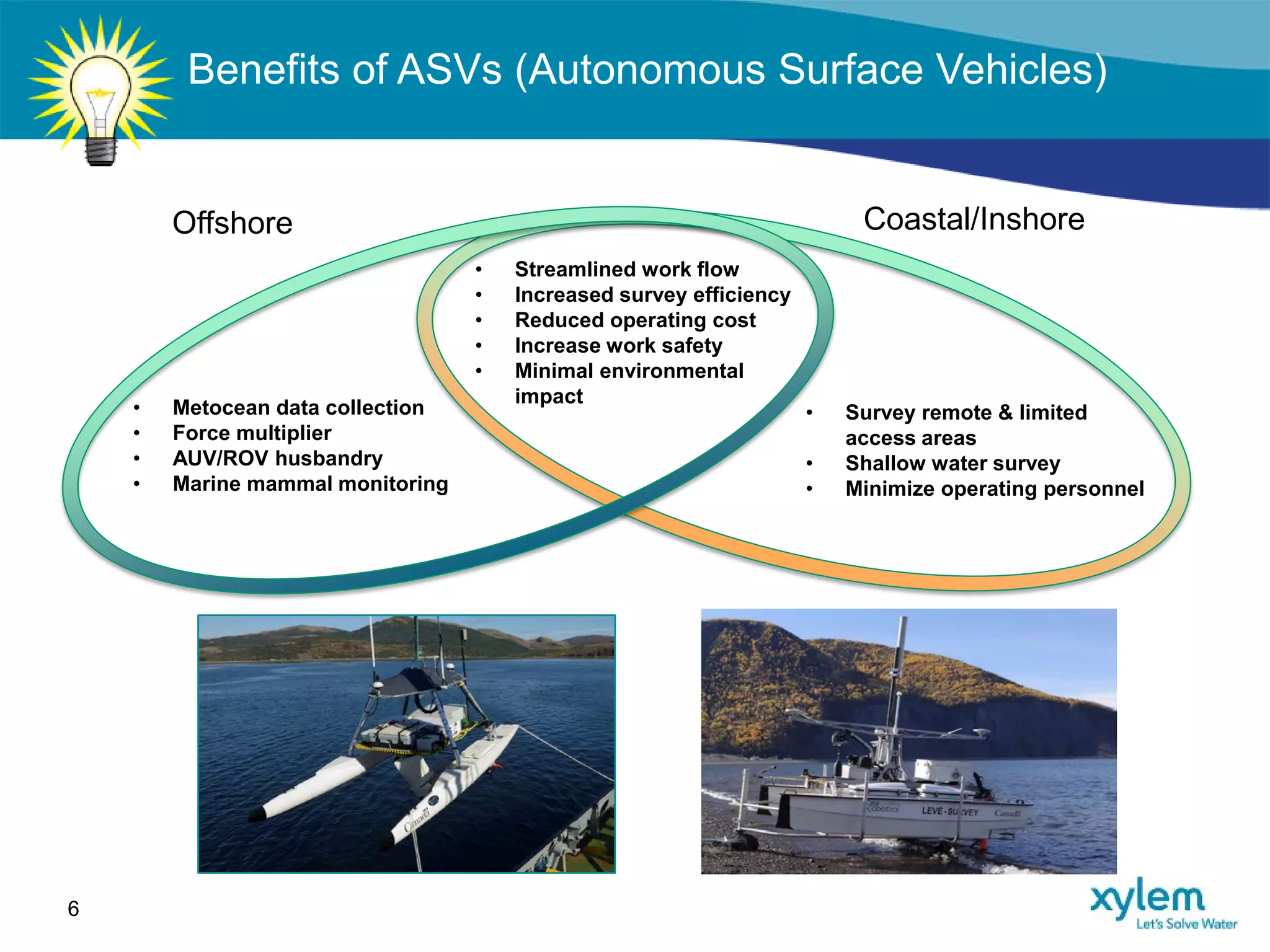
Benefits of ASVs (Autonomous Surface Vehicles)
Offshore Coastal/Inshore
• Streamlined work flow
• Increased survey efficiency
• Reduced operating cost
• Increase work safety
• Minimal environmental
impact
• Metocean data collection
• Force multiplier
• AUV/ROV husbandry
• Marine mammal monitoring
• Survey remote & limited
access areas
• Shallow water survey
• Minimize operating personnel
6
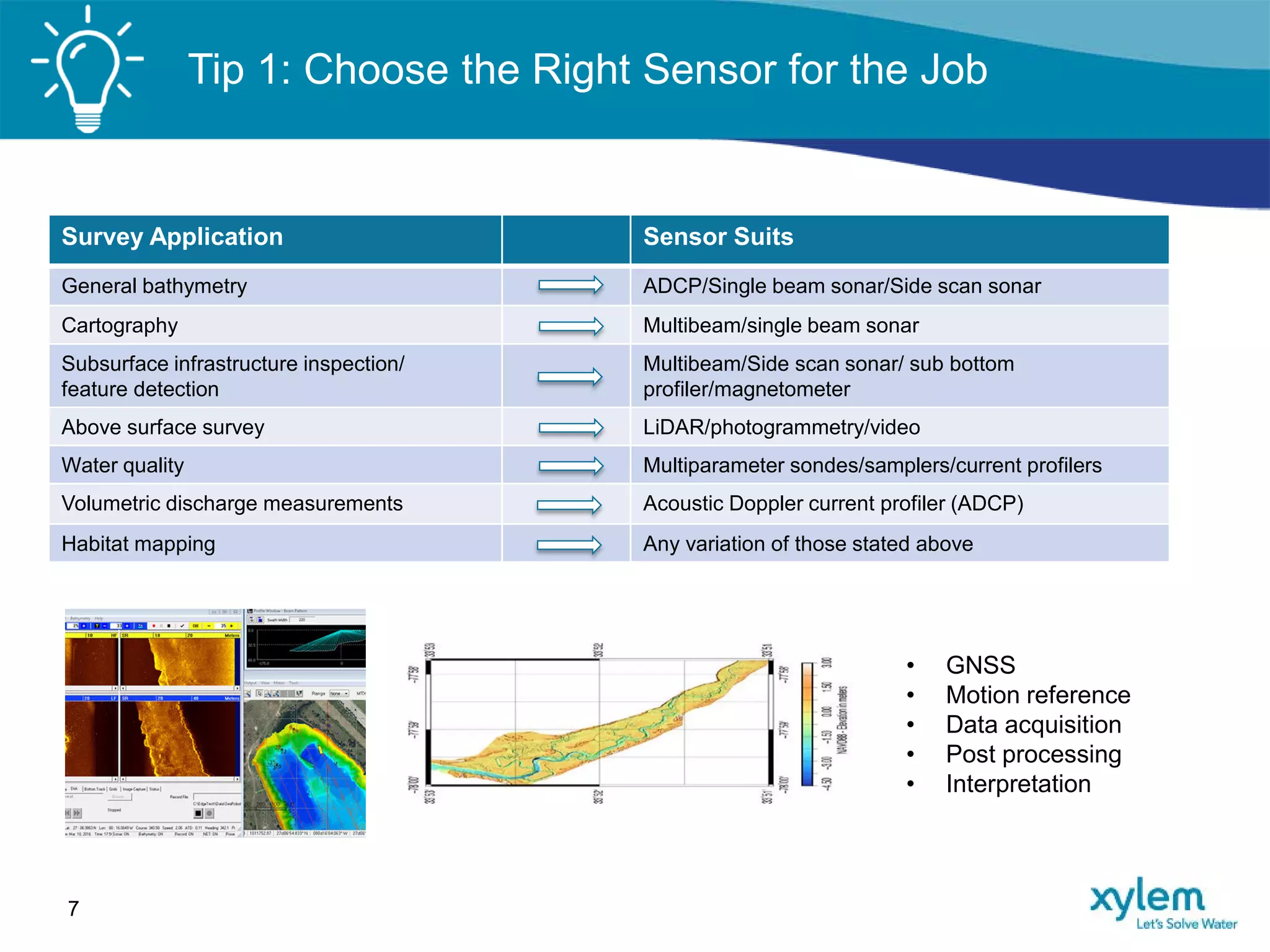
Tip 1: Choose the Right Sensor for the Job
• GNSS
• Motion reference
• Data acquisition
• Post processing
• Interpretation
Survey Application Sensor Suits
General bathymetry ADCP/Single beam sonar/Side scan sonar
Cartography Multibeam/single beam sonar
Subsurface infrastructure inspection/
feature detection
Multibeam/Side scan sonar/ sub bottom
profiler/magnetometer
Above surface survey LiDAR/photogrammetry/video
Water quality Multiparameter sondes/samplers/current profilers
Volumetric discharge measurements Acoustic Doppler current profiler (ADCP)
Habitat mapping Any variation of those stated above
7
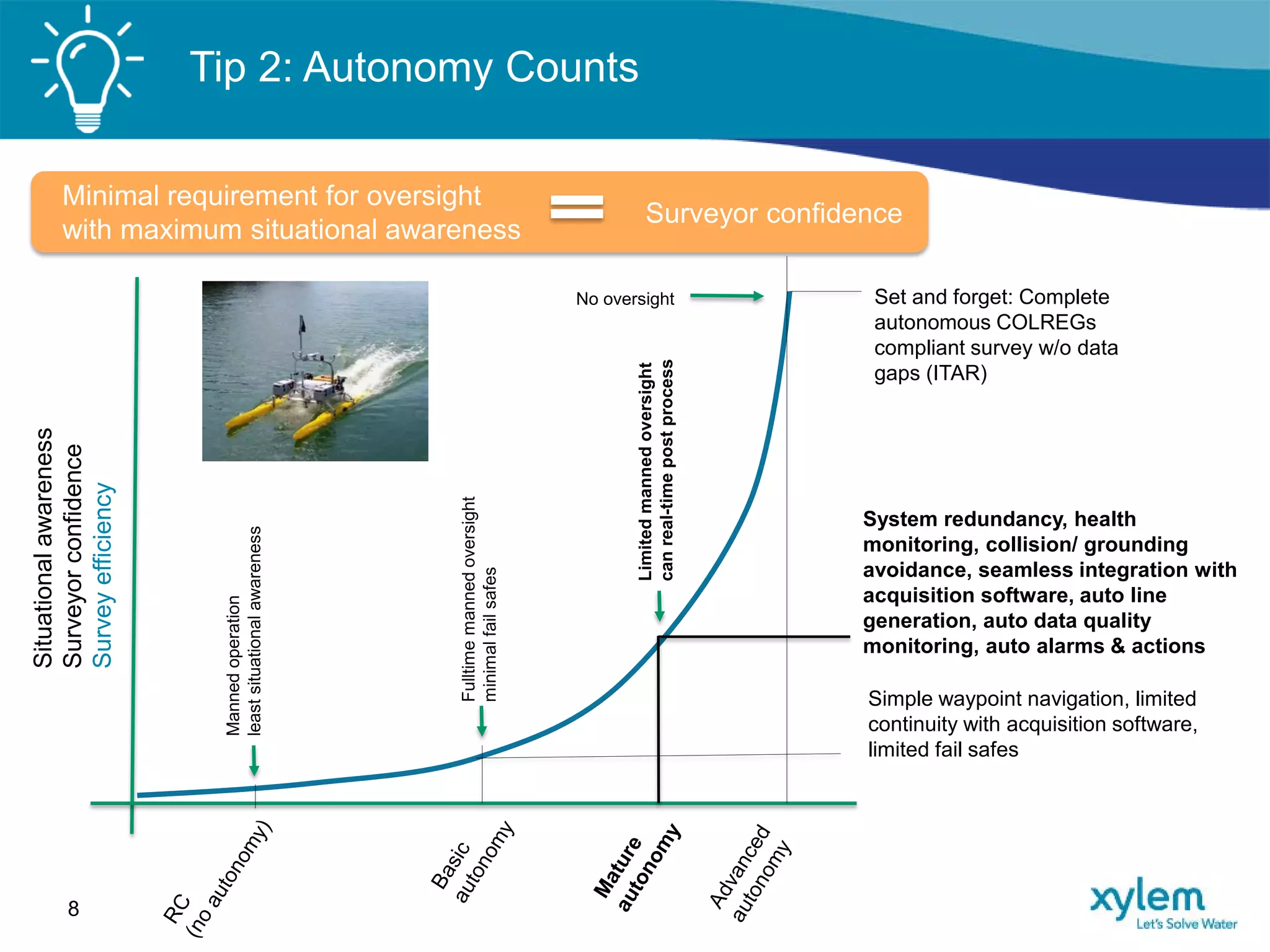
Tip 2: Autonomy Counts
Situationalawareness
Surveyorconfidence
Surveyefficiency
Minimal requirement for oversight
with maximum situational awareness
Surveyor confidence
Set and forget: Complete
autonomous COLREGs
compliant survey w/o data
gaps (ITAR)
System redundancy, health
monitoring, collision/ grounding
avoidance, seamless integration with
acquisition software, auto line
generation, auto data quality
monitoring, auto alarms & actions
Simple waypoint navigation, limited
continuity with acquisition software,
limited fail safes
Mannedoperation
leastsituationalawareness
Fulltimemannedoversight
minimalfailsafes
Limitedmannedoversight
canreal-timepostprocess
No oversight
8
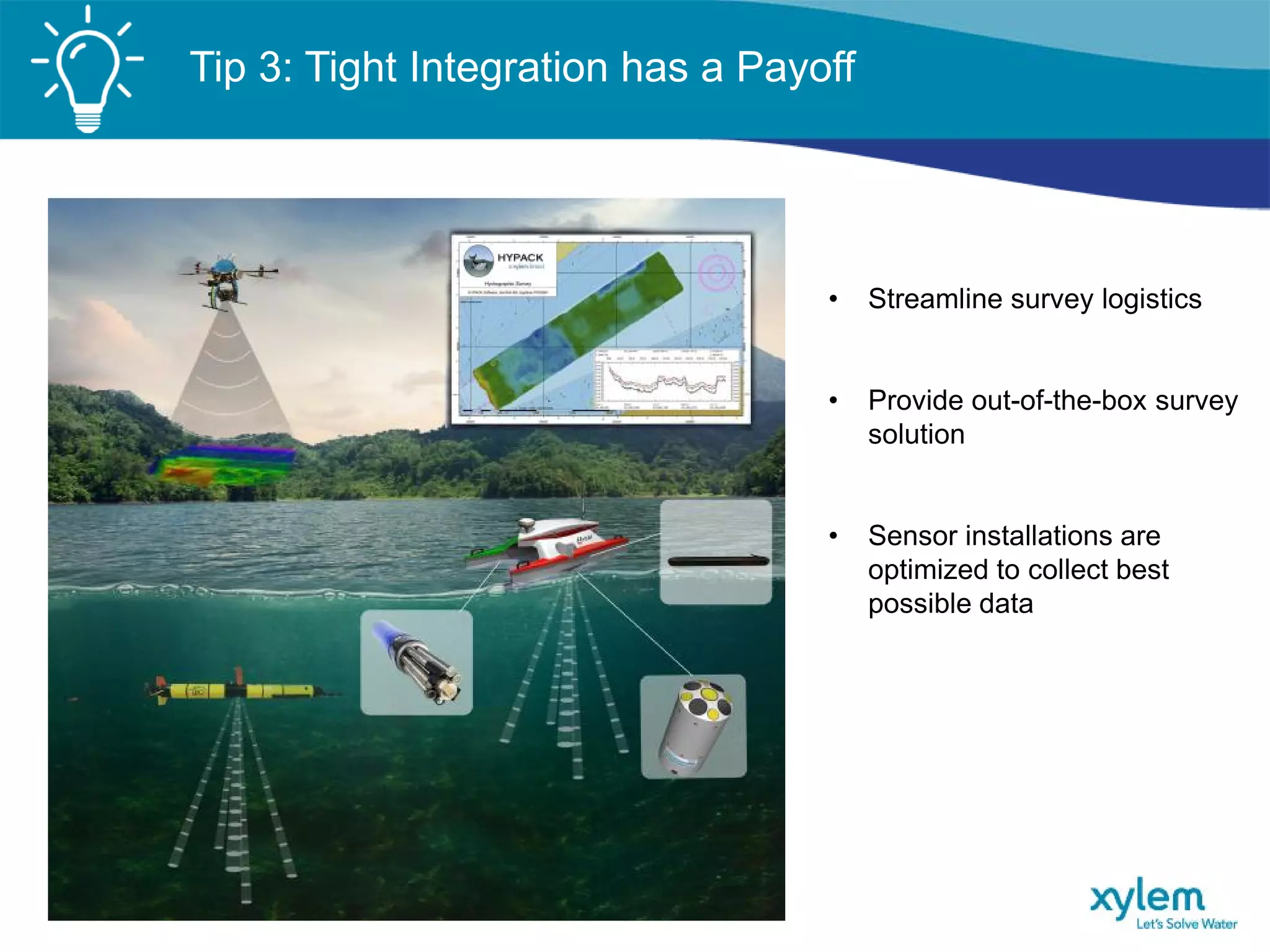
Tip 3: Tight Integration has a Payoff
• Streamline survey logistics
• Provide out-of-the-box survey
solution
• Sensor installations are
optimized to collect best
possible data
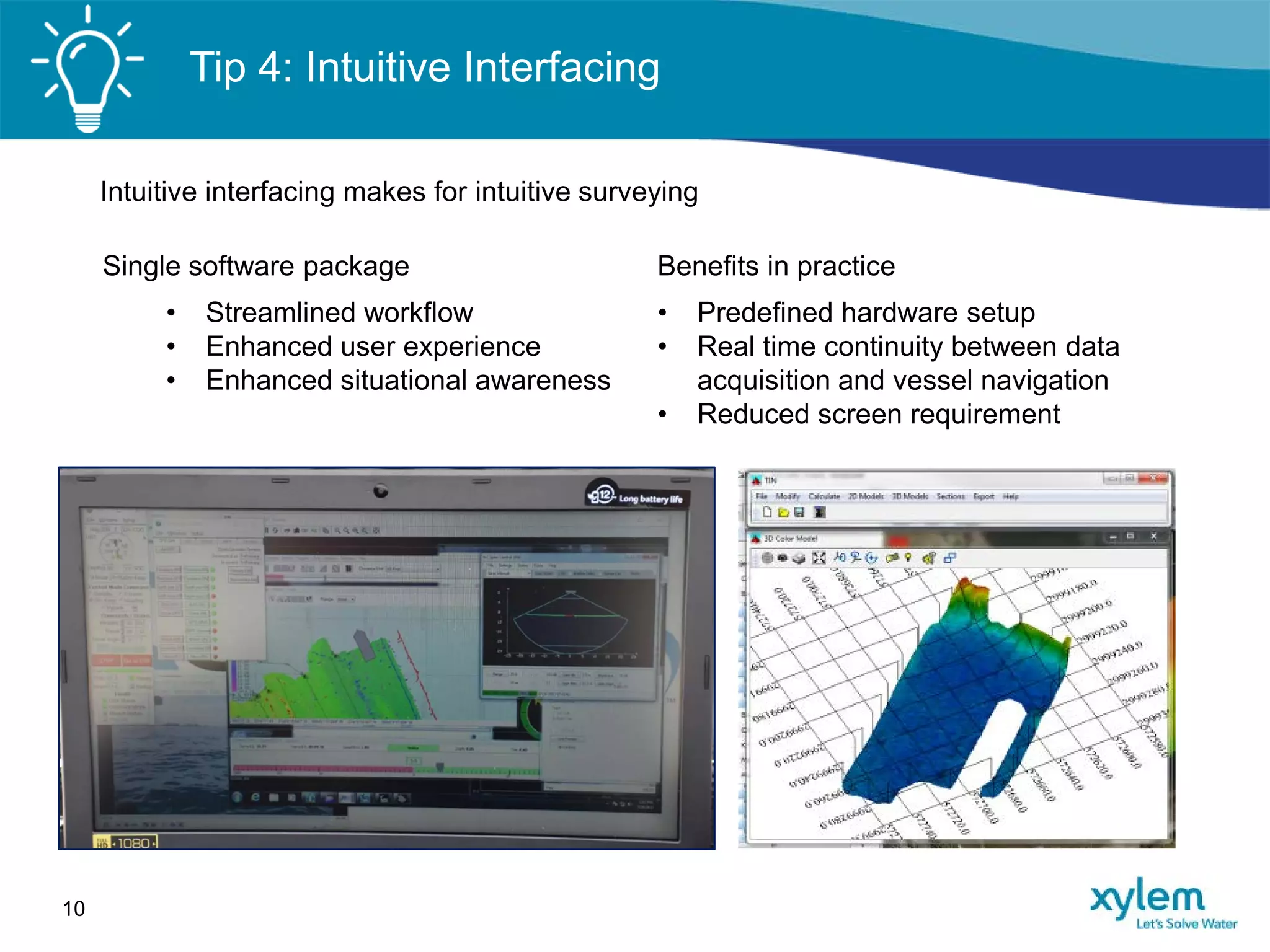
Tip 4: Intuitive Interfacing
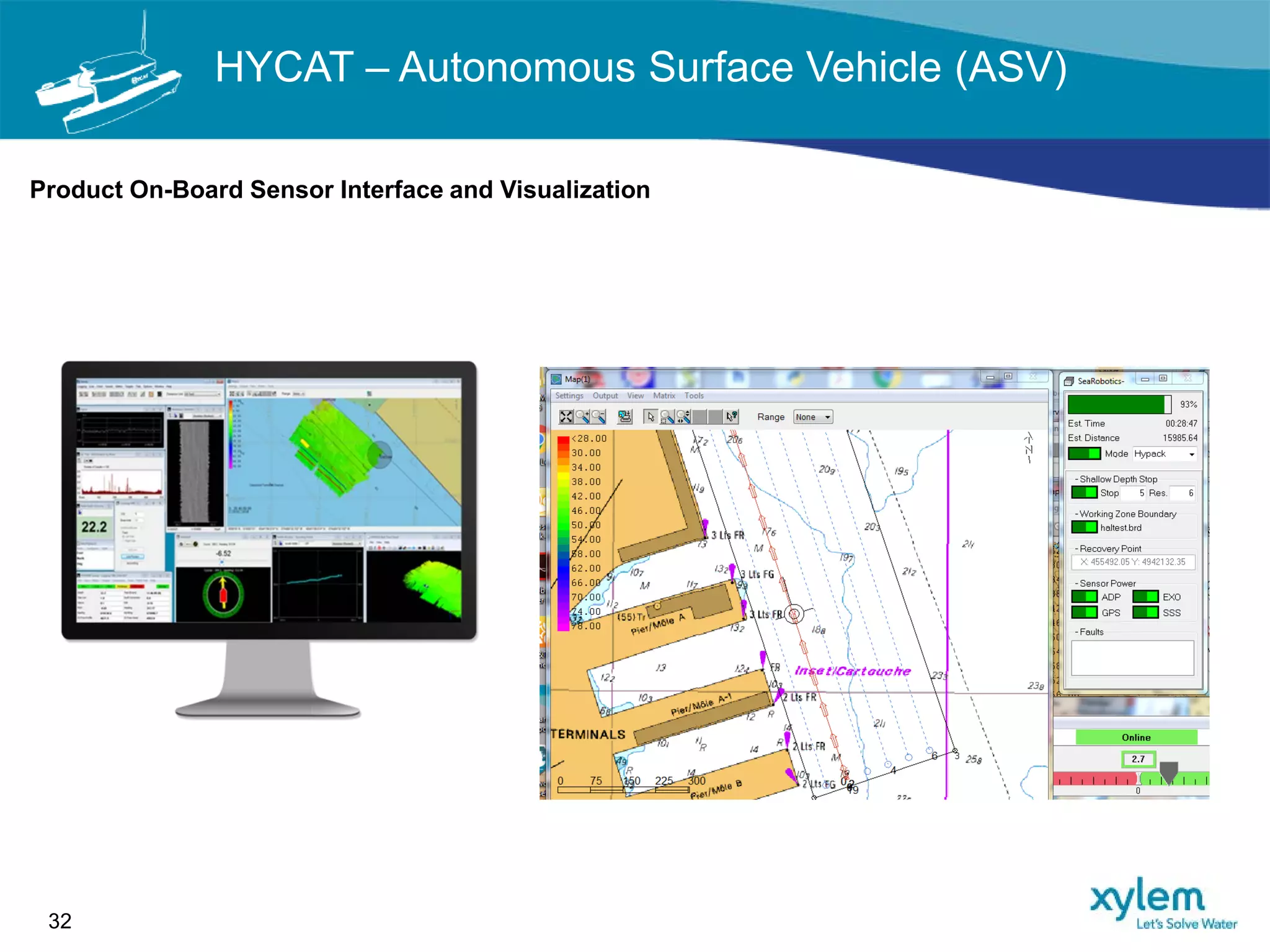
Single software package
• Streamlined workflow
• Enhanced user experience
• Enhanced situational awareness
Benefits in practice
• Predefined hardware setup
• Real time continuity between data
acquisition and vessel navigation
• Reduced screen requirement
Intuitive interfacing makes for intuitive surveying
10
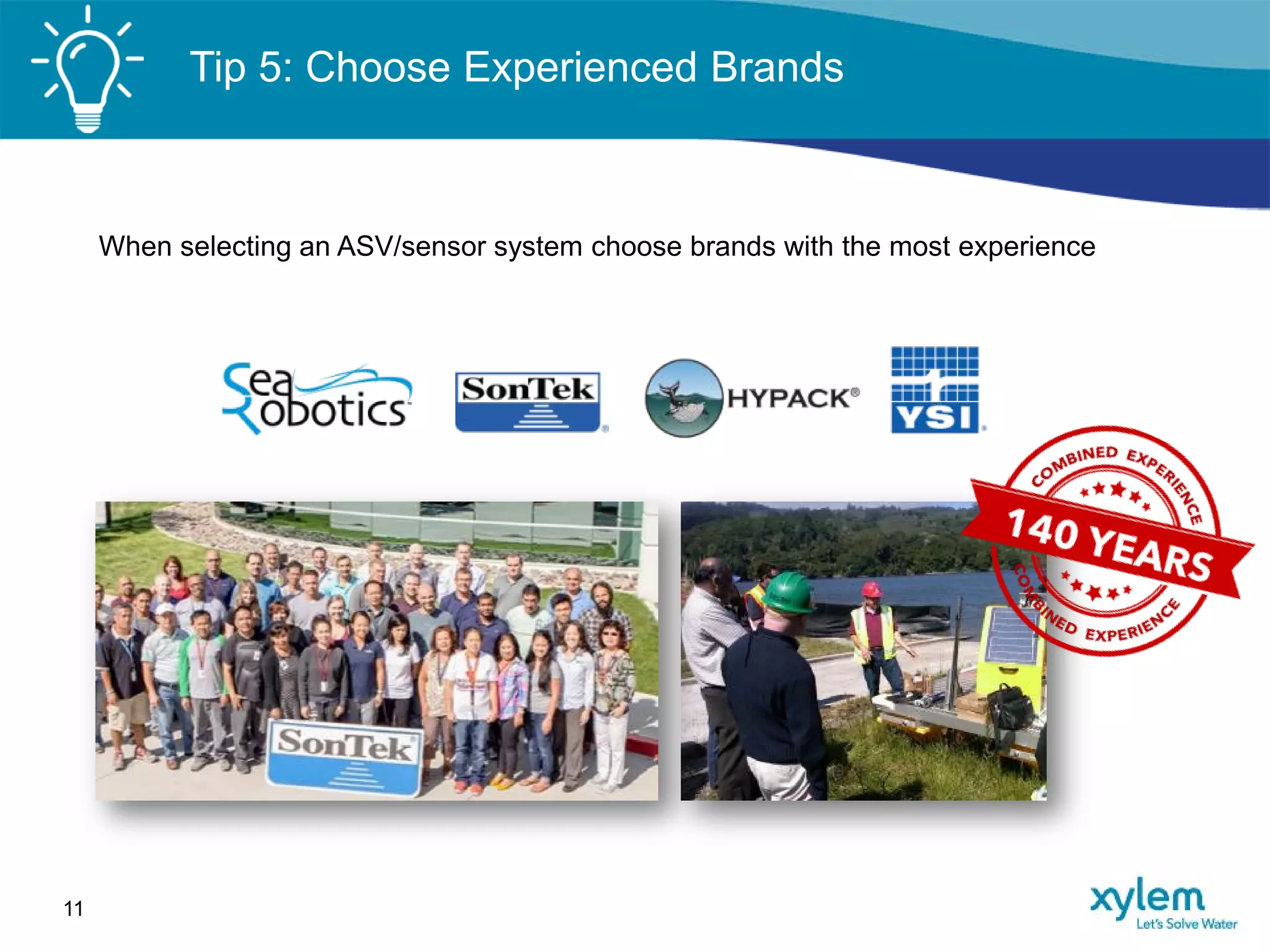
Tip 5: Choose Experienced Brands
When selecting an ASV/sensor system choose brands with the most experience
11
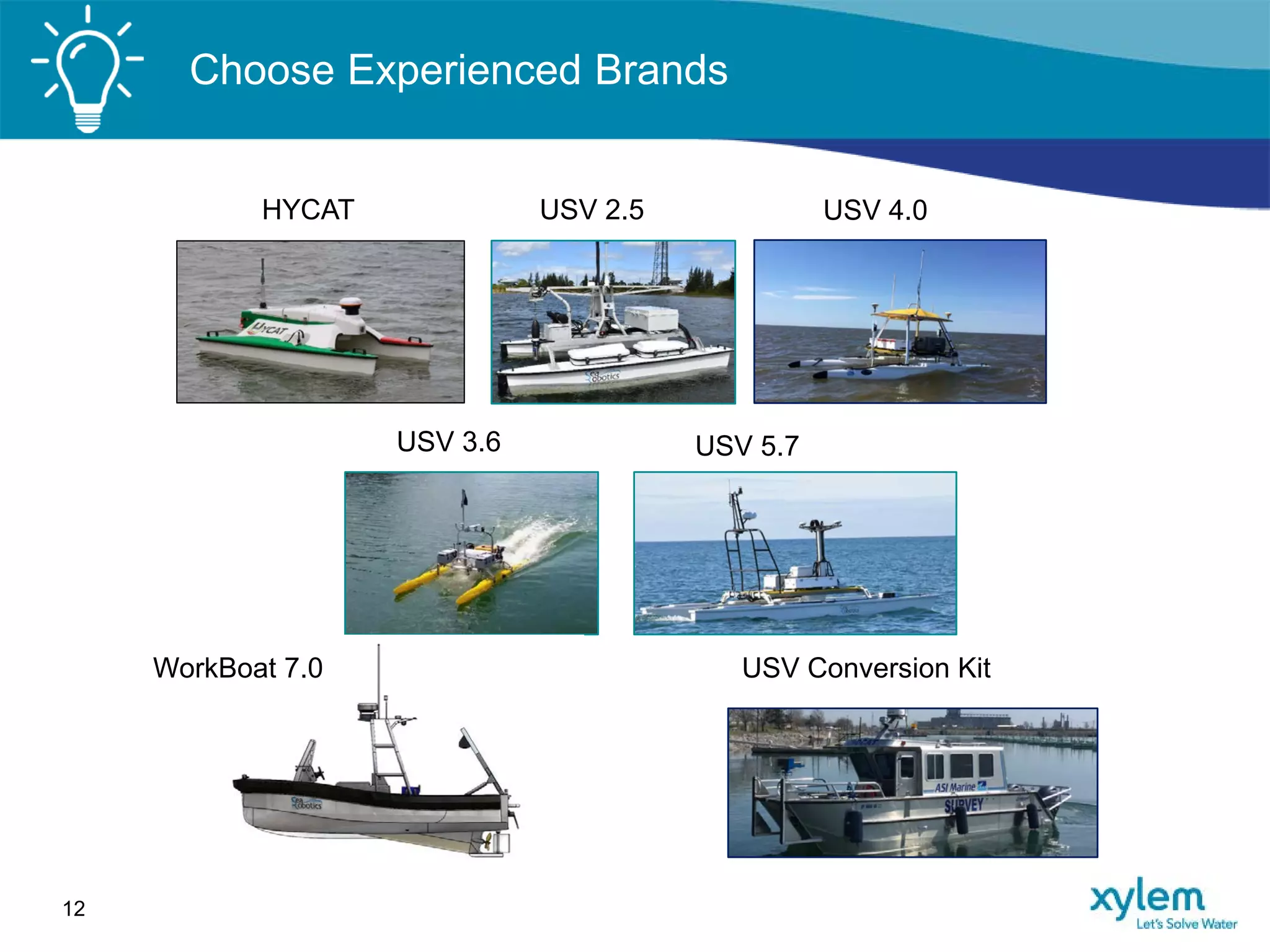
USV 2.5
USV 3.6
USV 4.0
USV 5.7
HYCAT
WorkBoat 7.0 USV Conversion Kit
Choose Experienced Brands
12
EXO Sonde
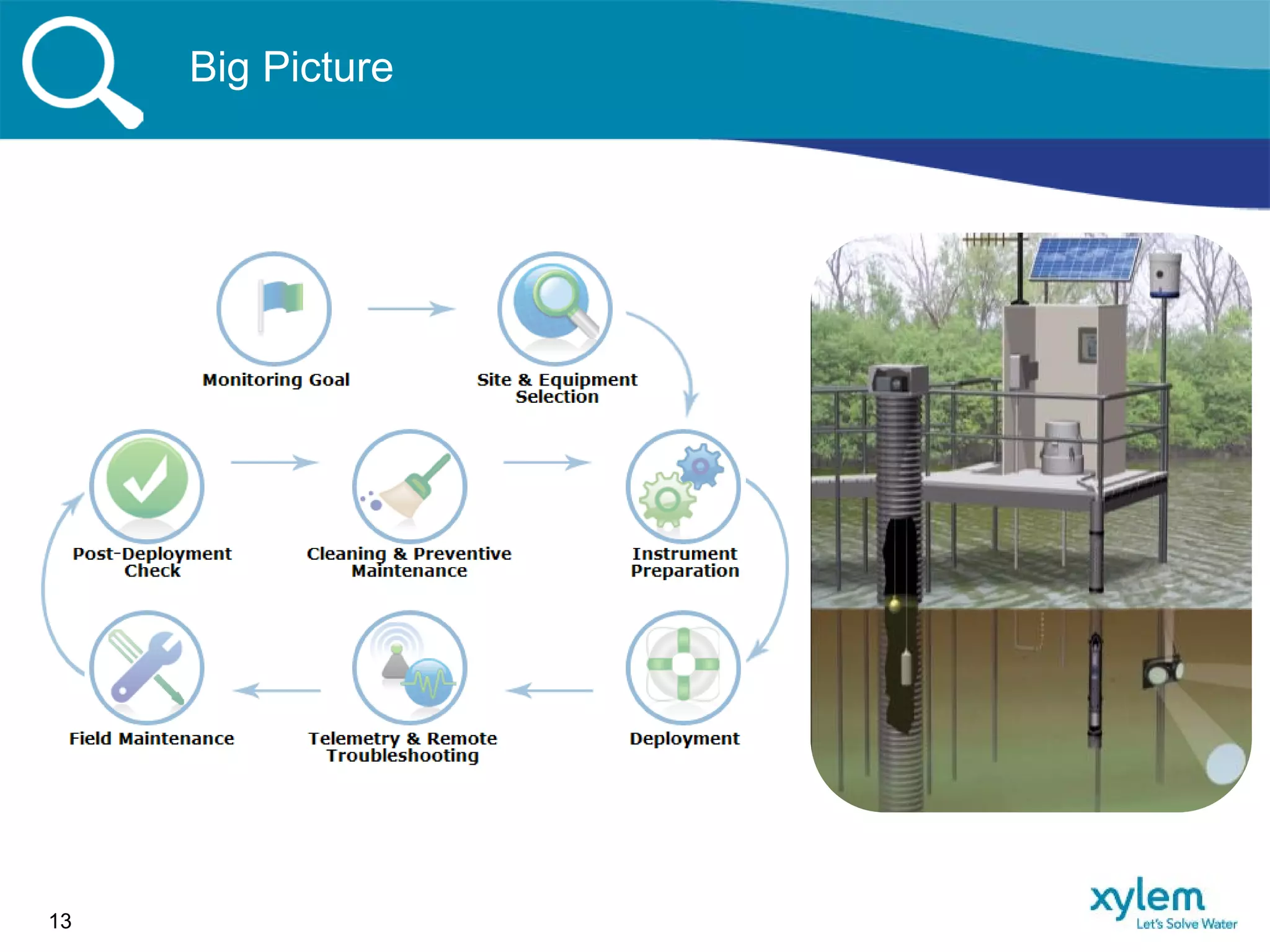
Big Picture
13
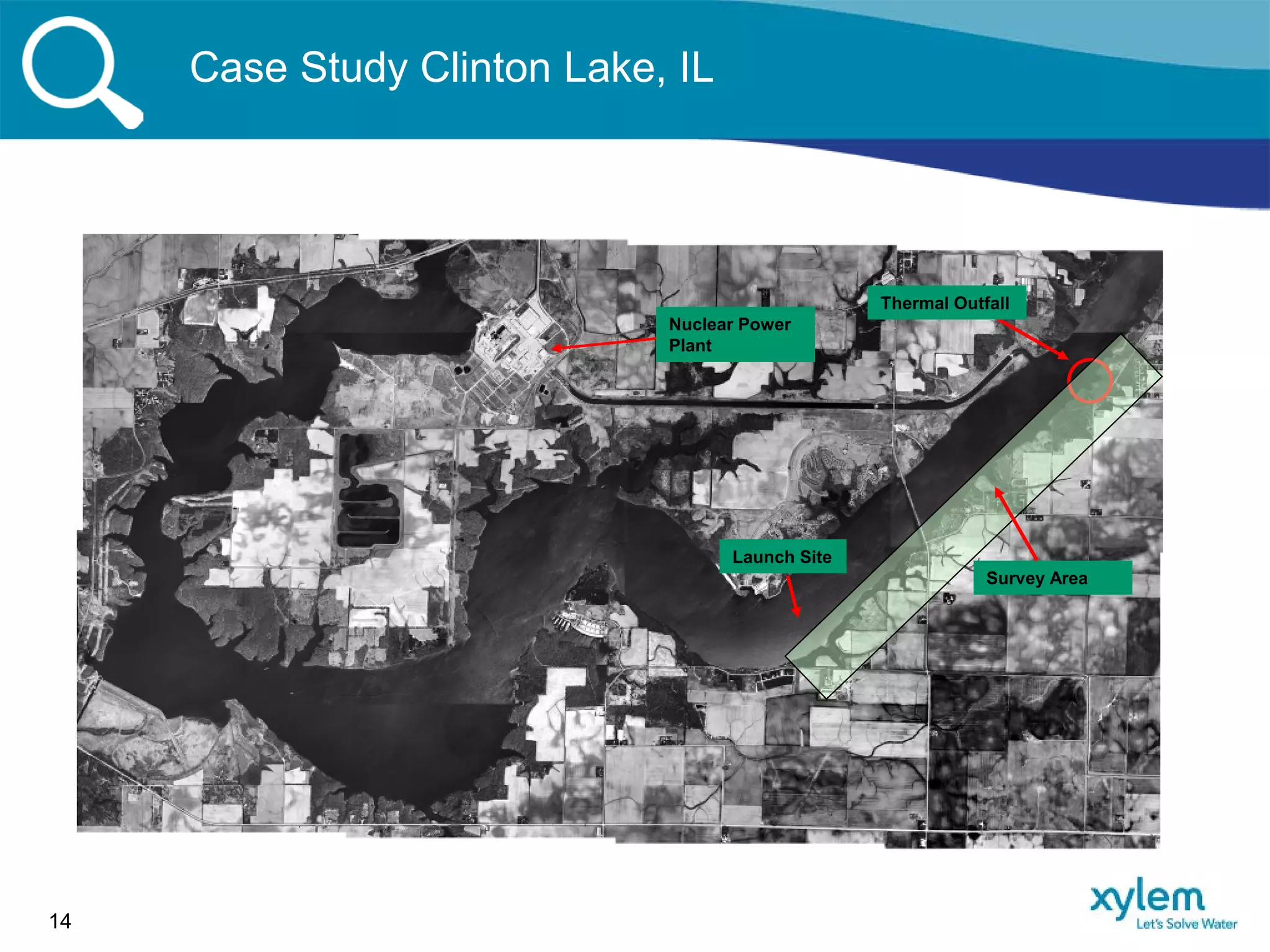
Case Study Clinton Lake, IL
Nuclear Power
Plant
Launch Site
Thermal Outfall
Survey Area
14
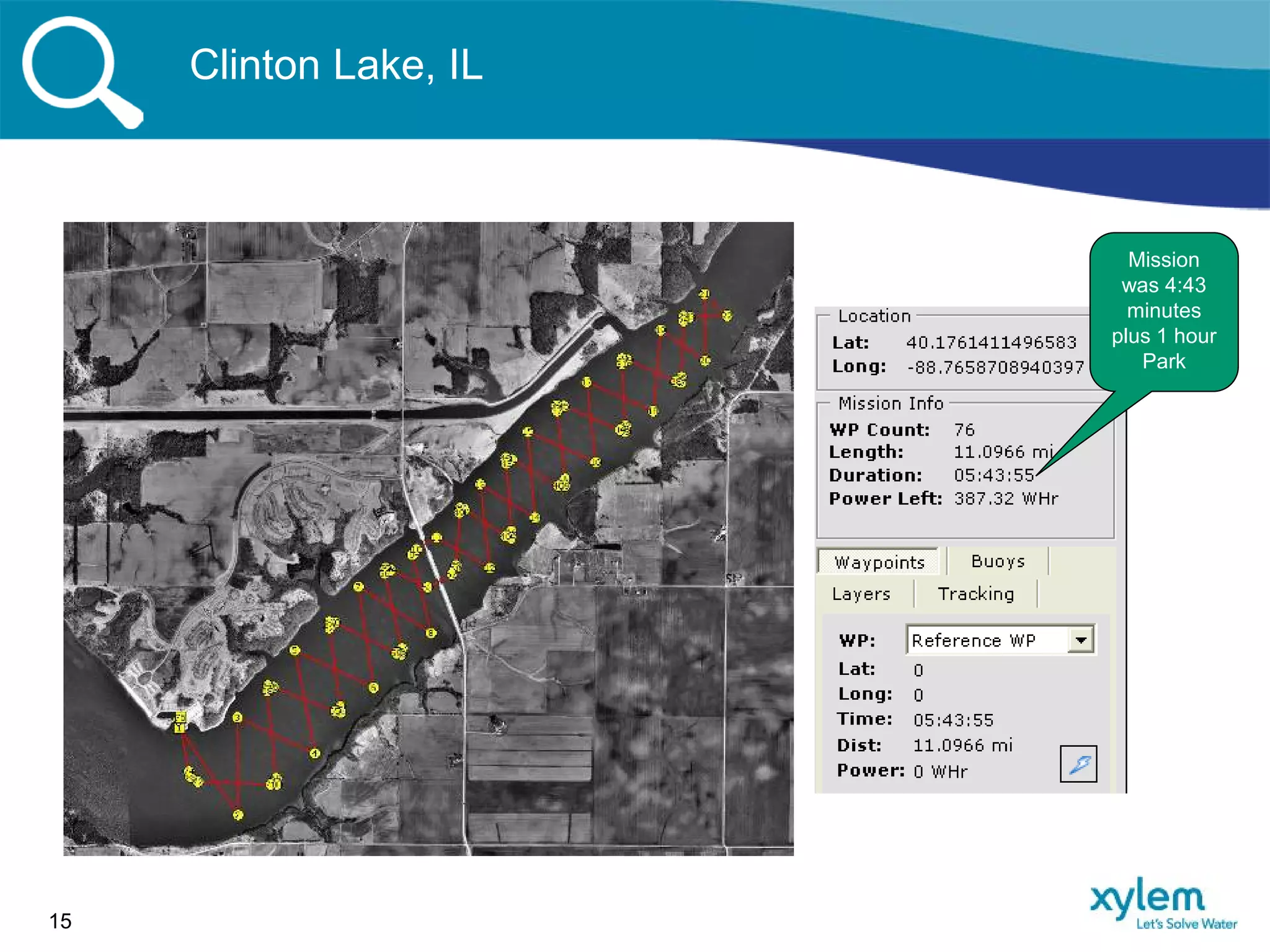
Mission
was 4:43
minutes
plus 1 hour
Park
Clinton Lake, IL
15
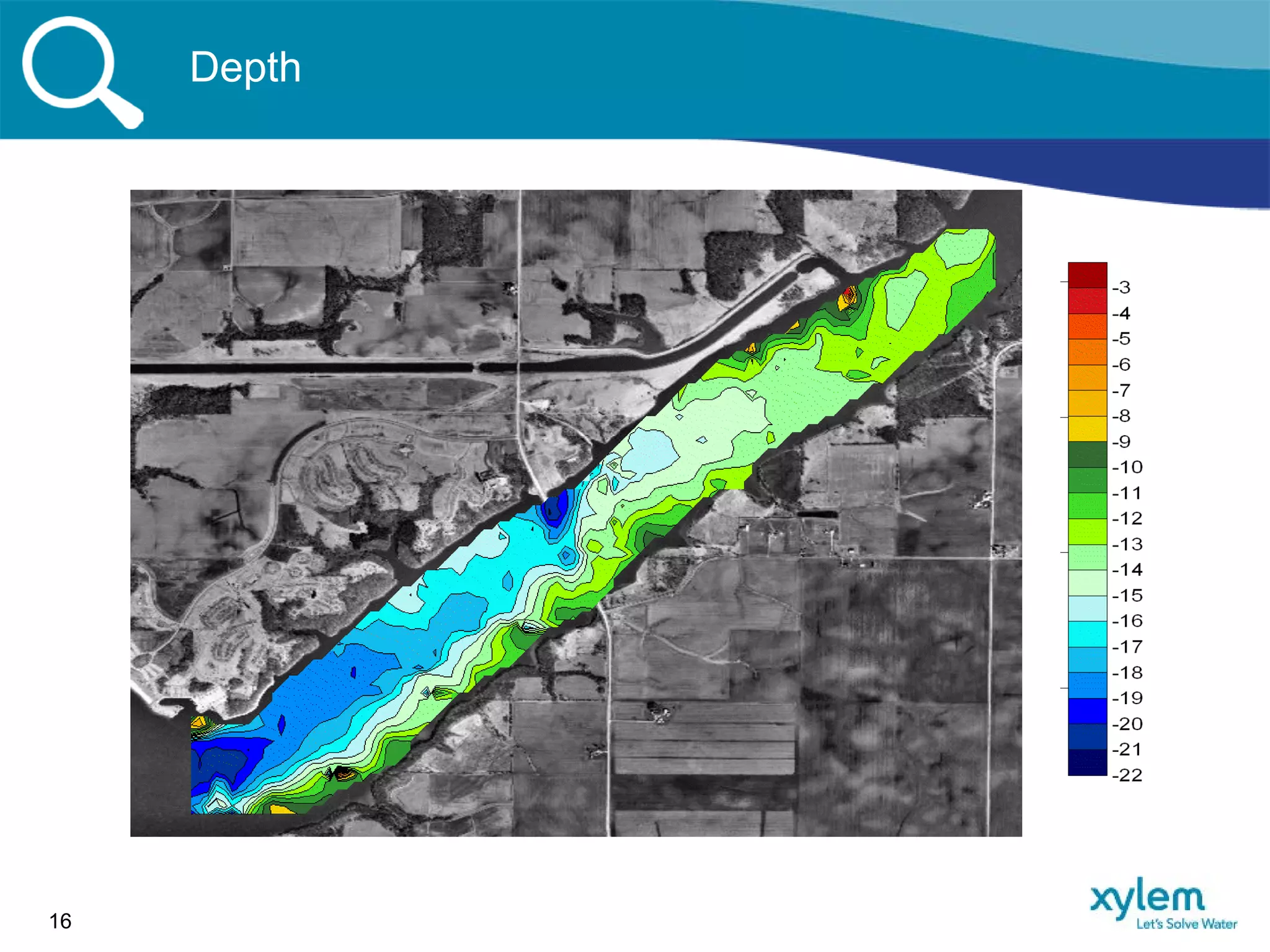
Depth
16
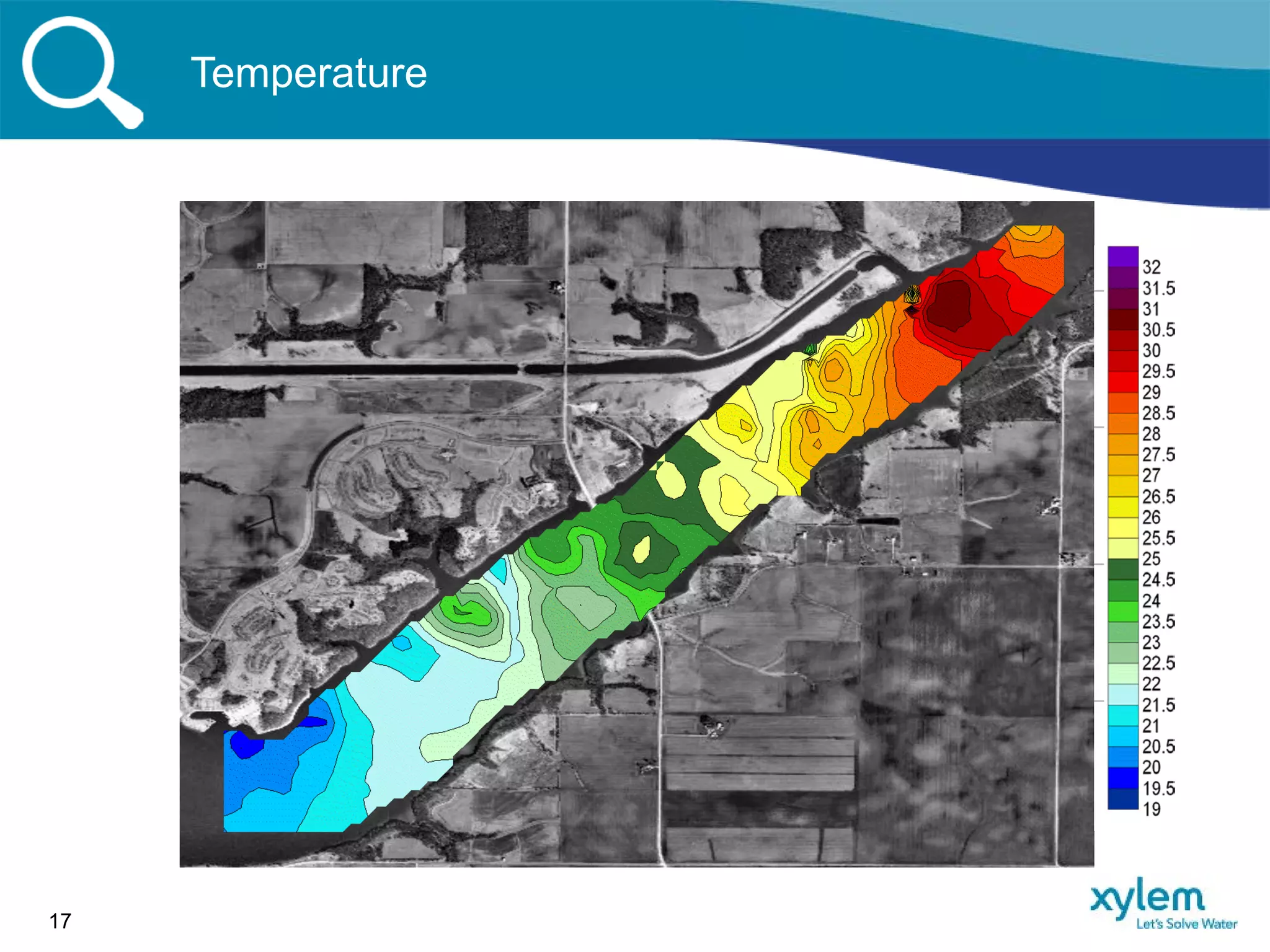
Temperature
17
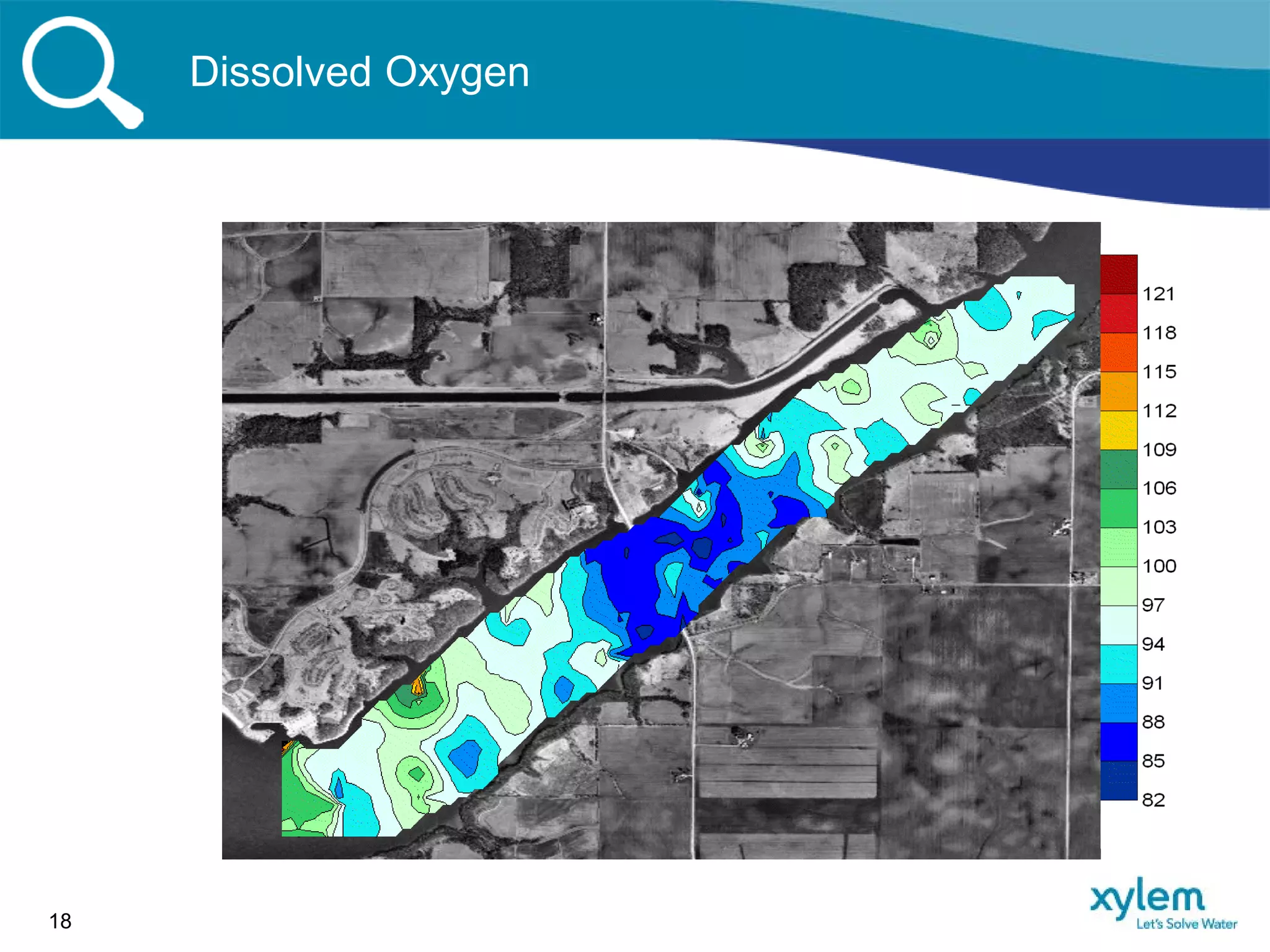
Dissolved Oxygen
18
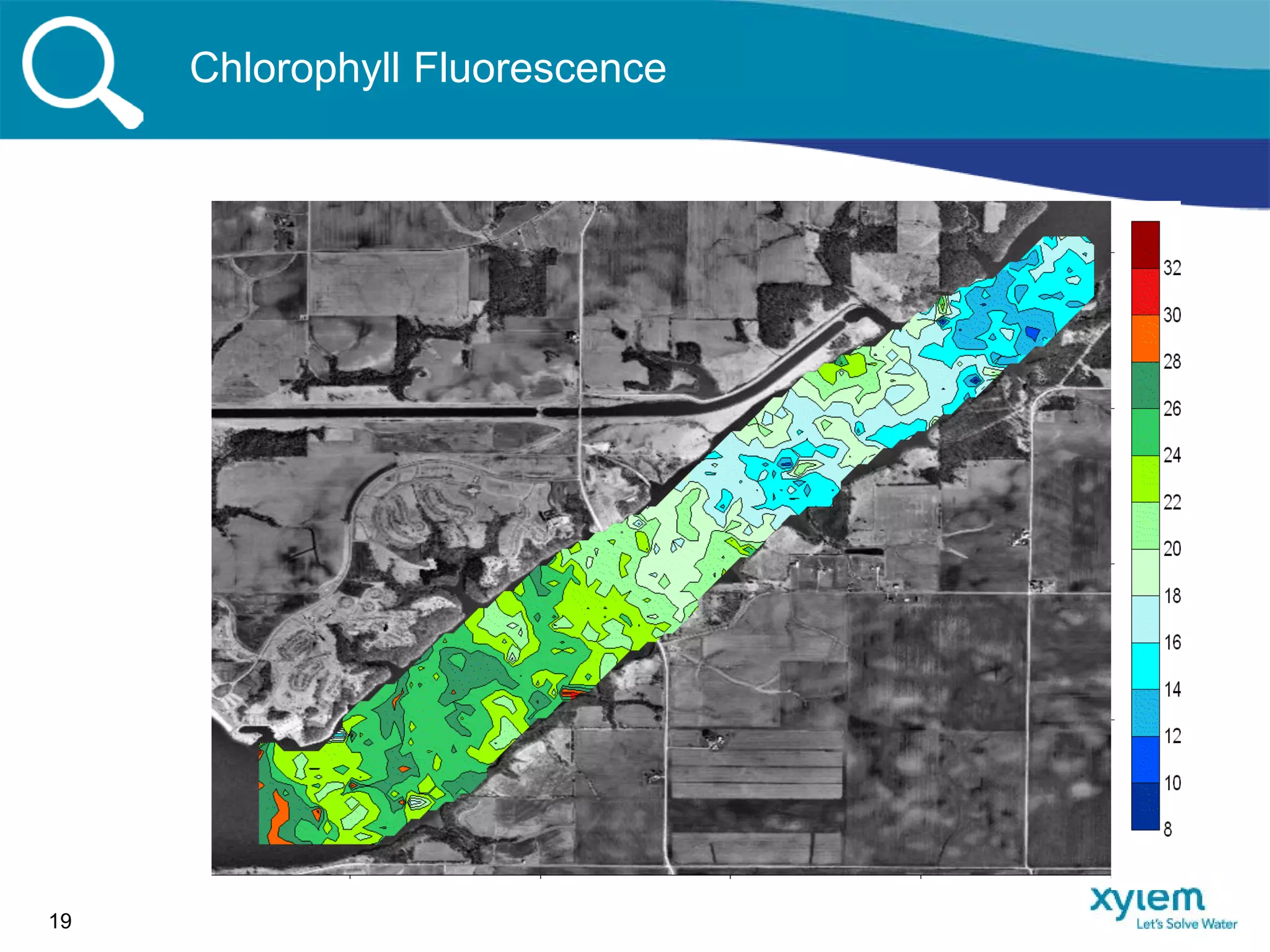
Chlorophyll Fluorescence
19
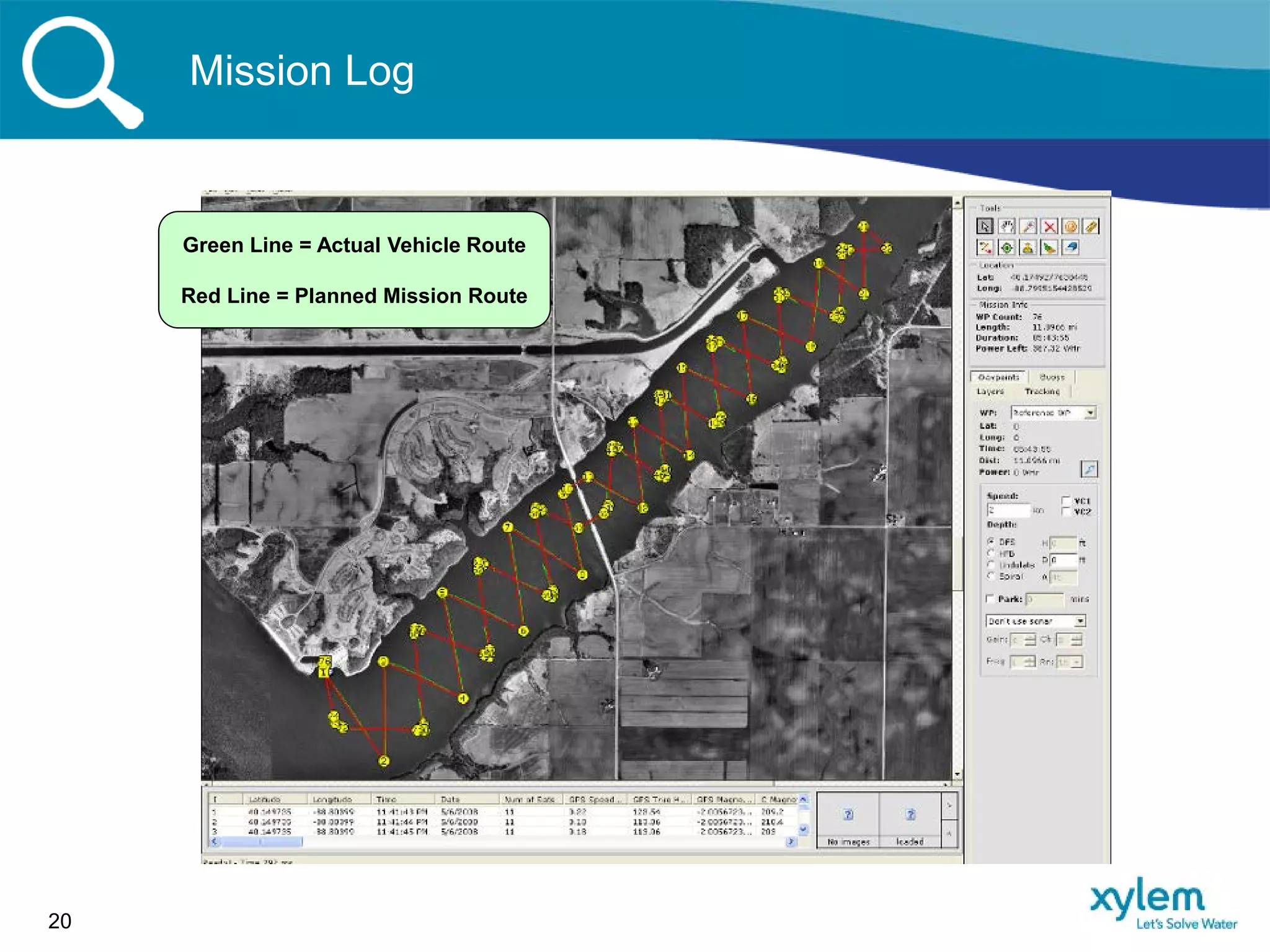
Mission Log
Green Line = Actual Vehicle Route
Red Line = Planned Mission Route
20
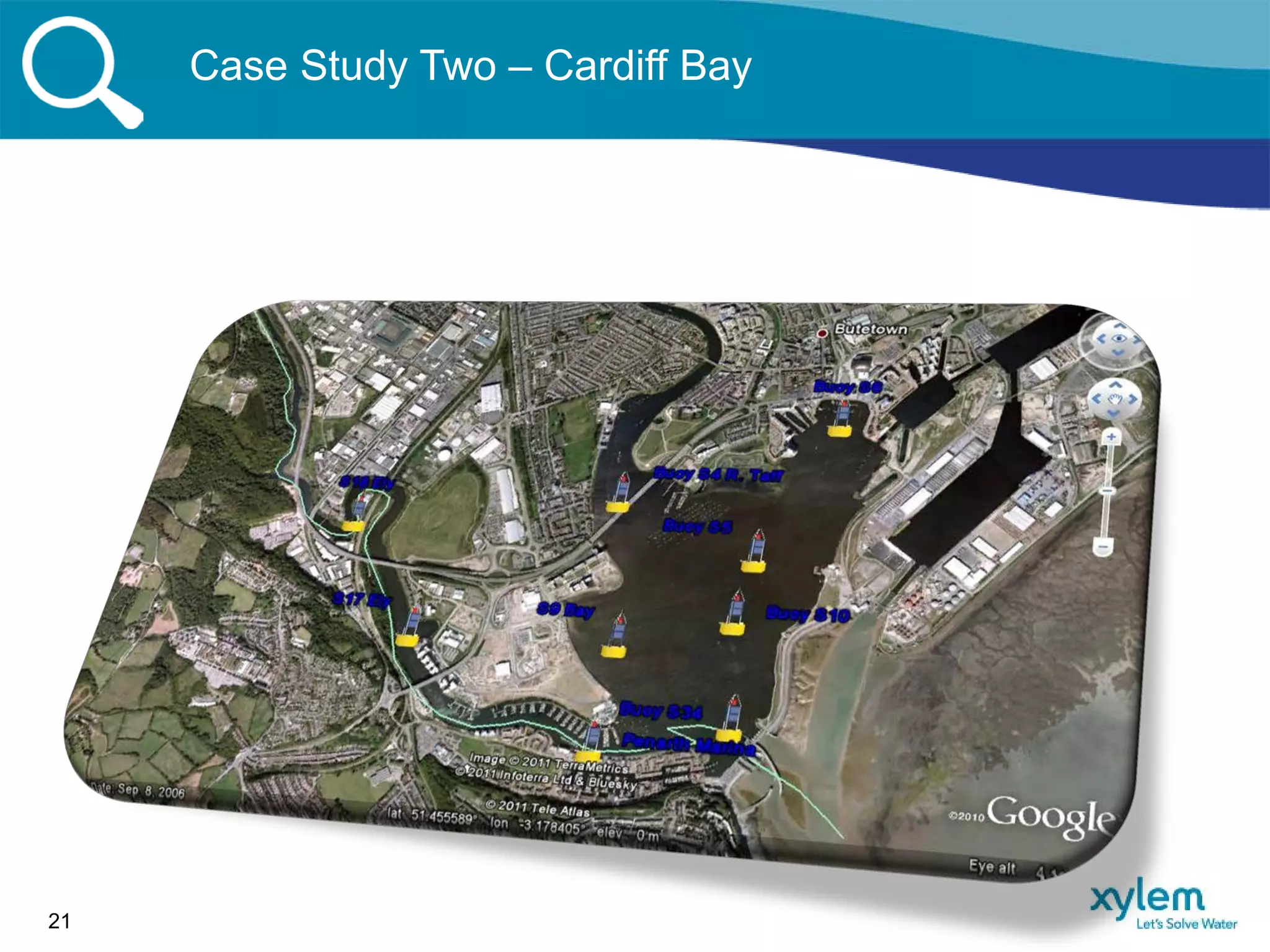
Case Study Two – Cardiff Bay
21
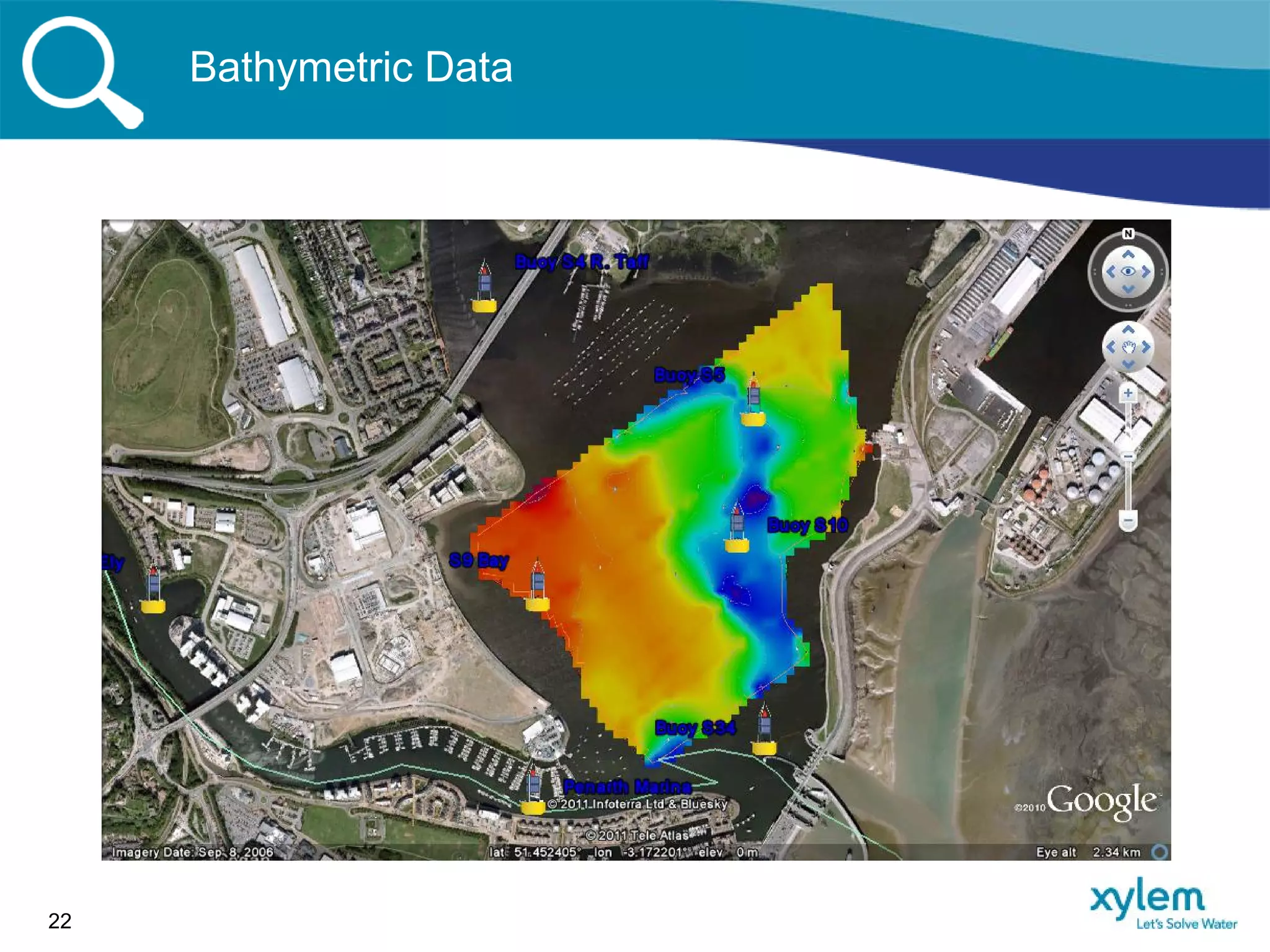
Bathymetric Data
22
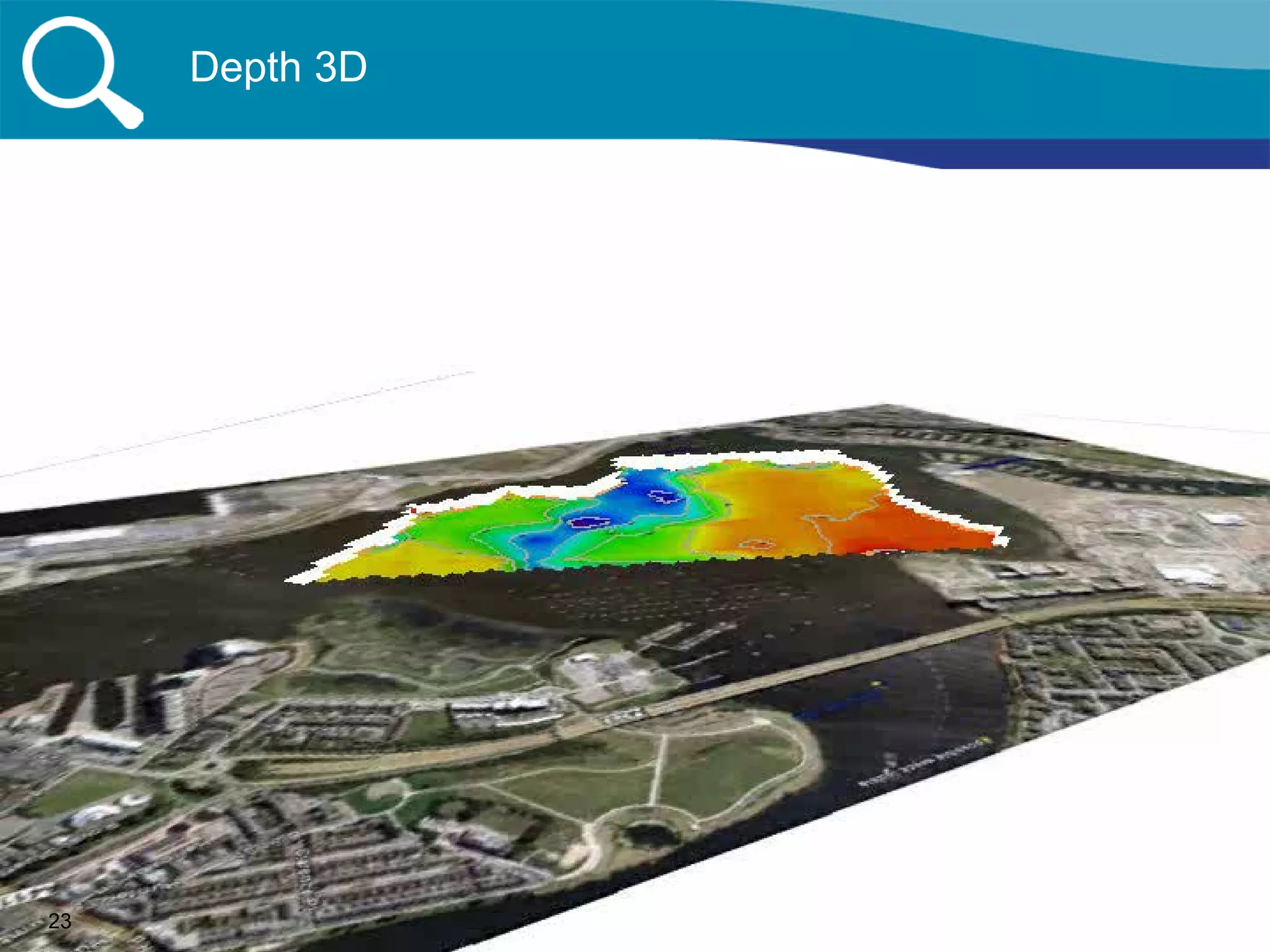
Depth 3D
23
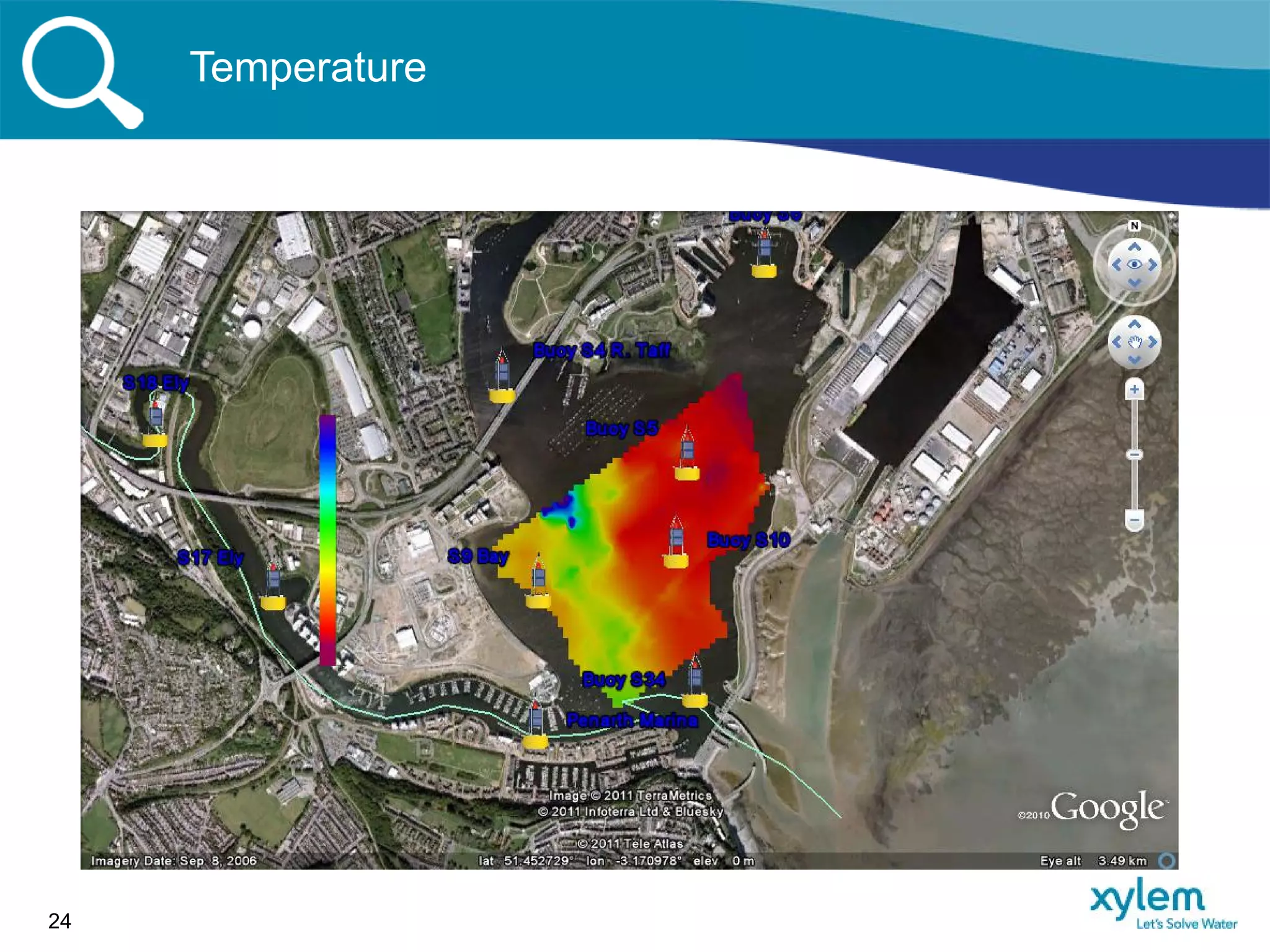
Temperature
24
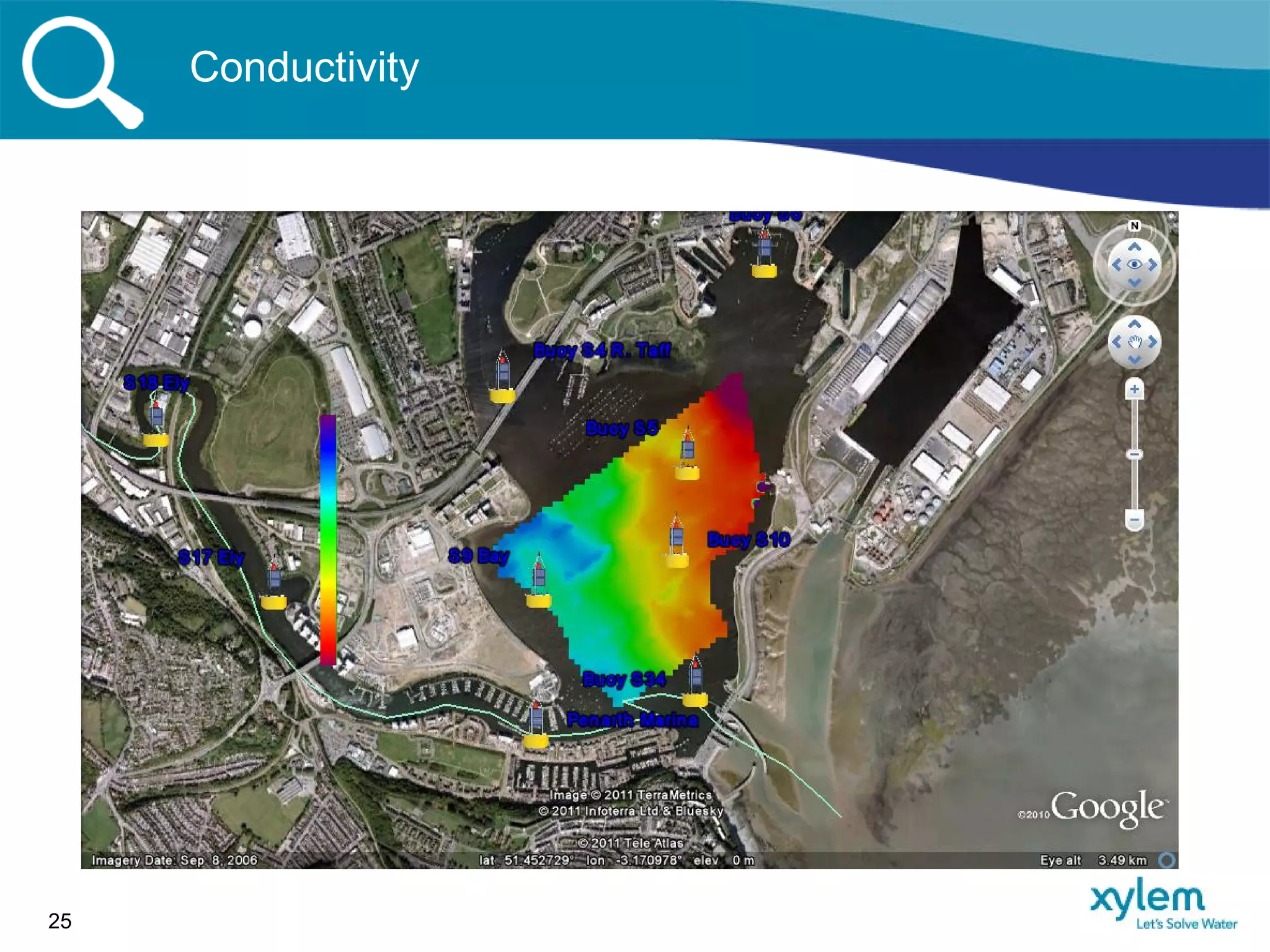
Conductivity
25
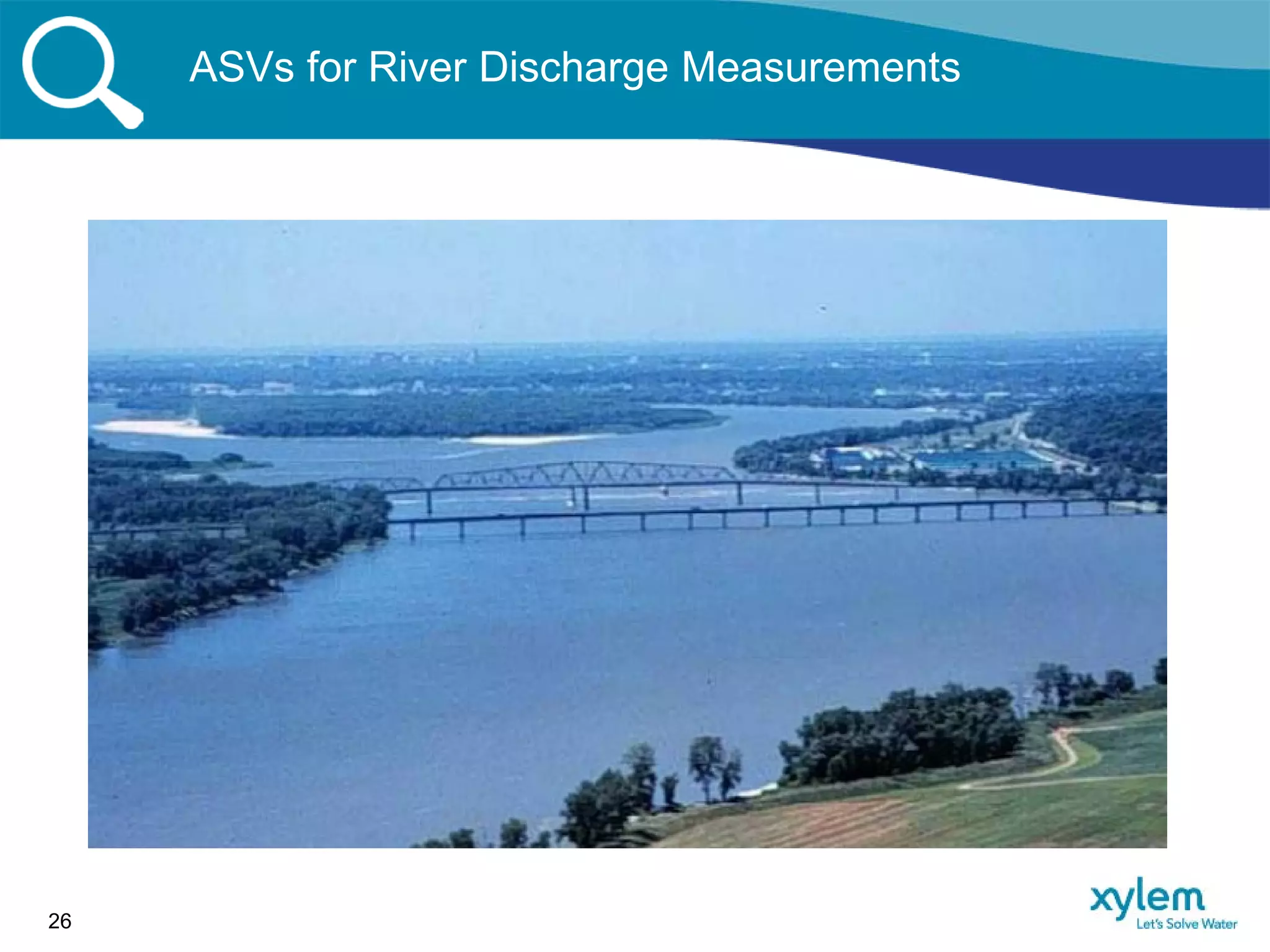
ASVs for River Discharge Measurements
26
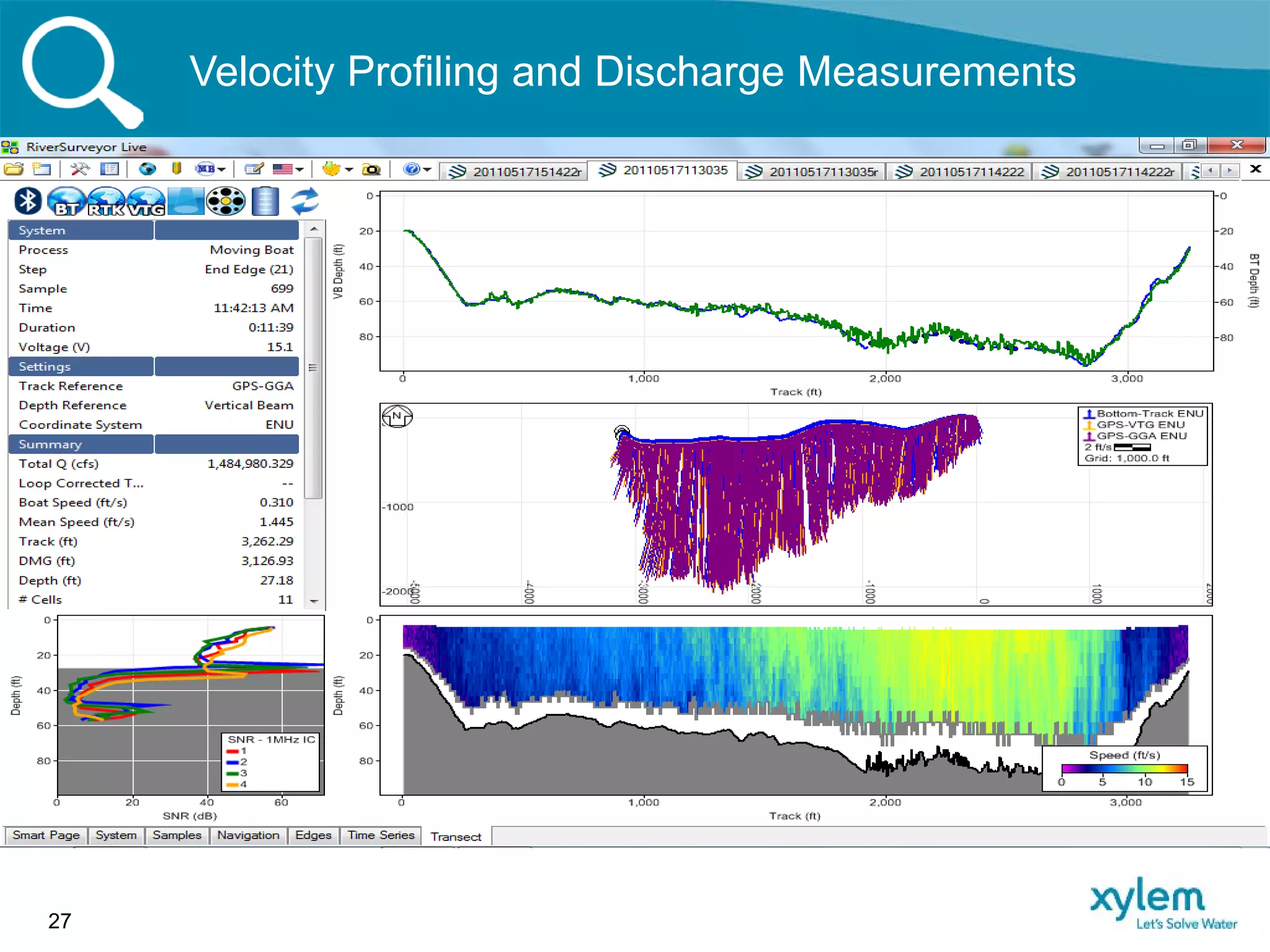
Velocity Profiling and Discharge Measurements
27
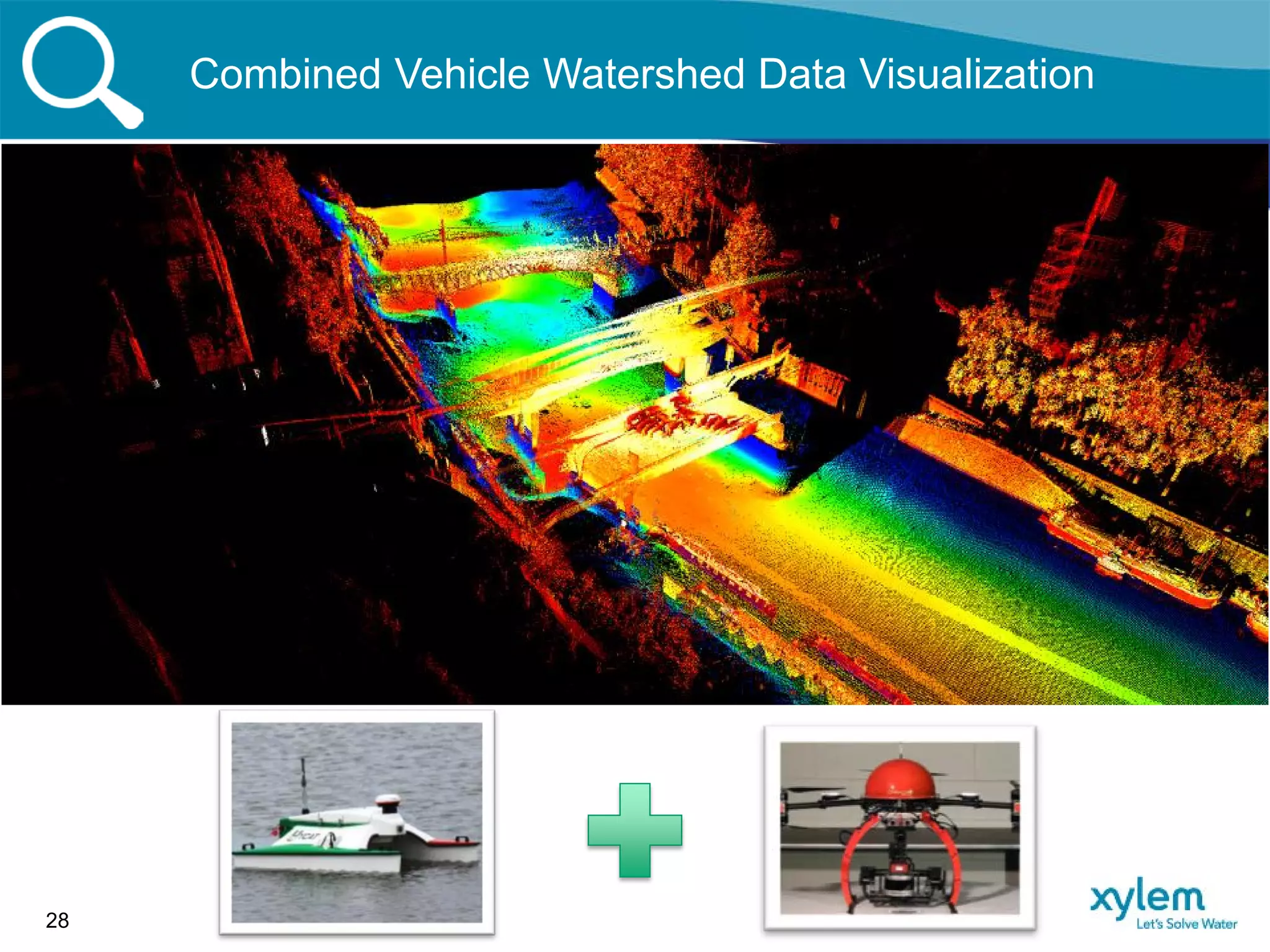
Combined Vehicle Watershed Data Visualization
28
Skeptical about automated solutions?
29
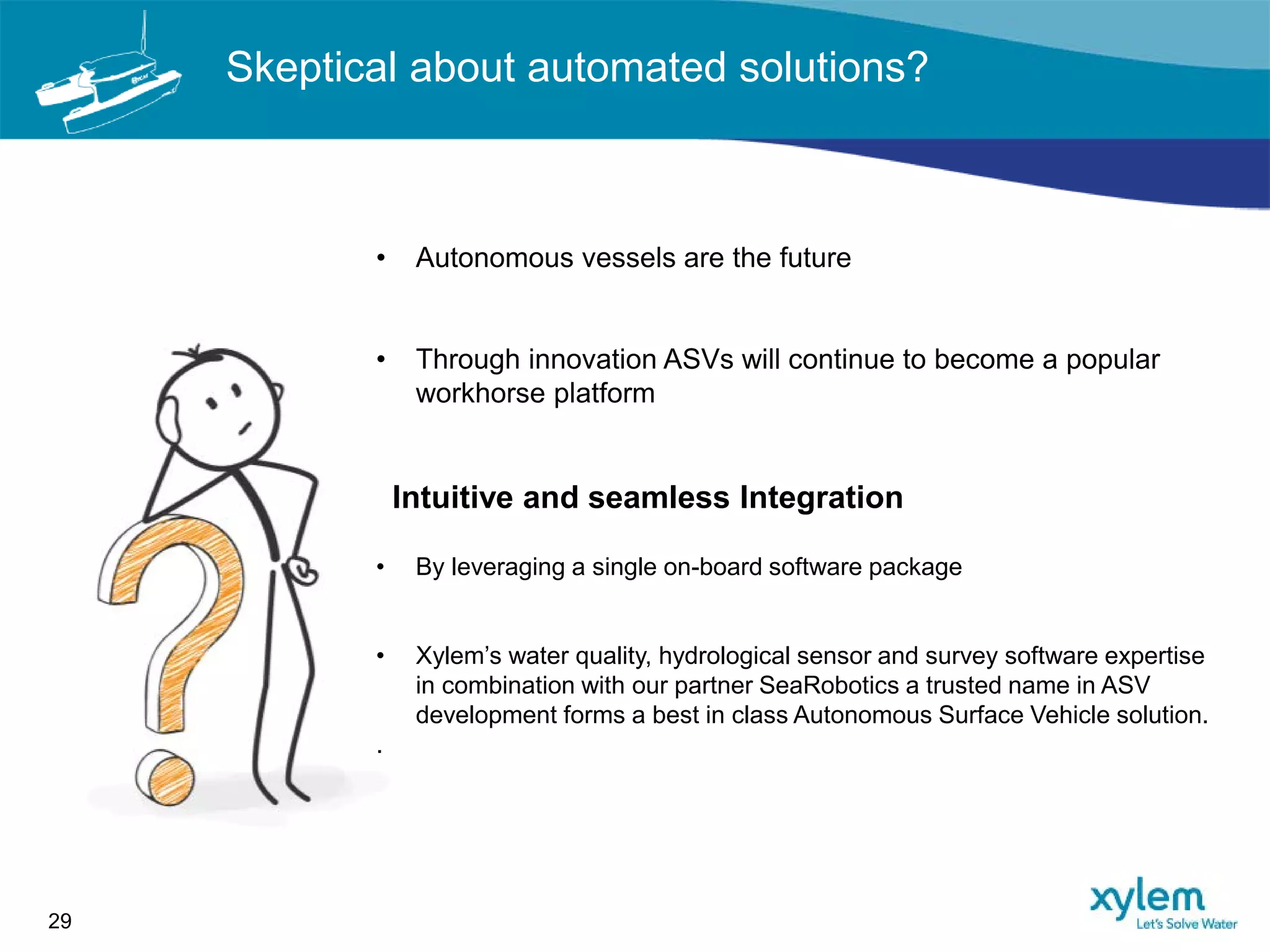
• Autonomous vessels are the future
• Through innovation ASVs will continue to become a popular
workhorse platform
Intuitive and seamless Integration
• By leveraging a single on-board software package
• Xylem’s water quality, hydrological sensor and survey software expertise
in combination with our partner SeaRobotics a trusted name in ASV
development forms a best in class Autonomous Surface Vehicle solution.
.
30
HYCAT – Autonomous Surface Vehicle (ASV)
31
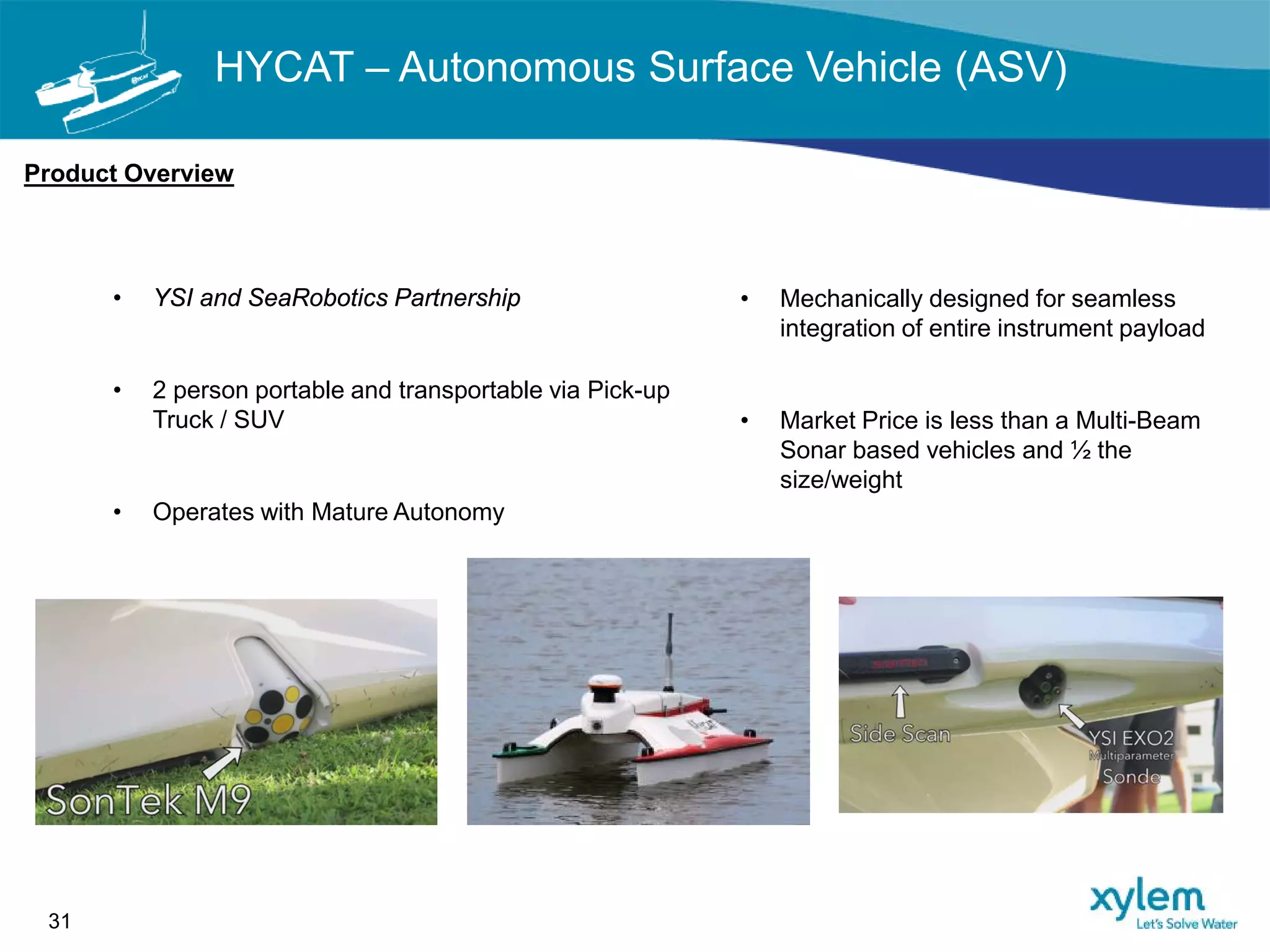
Product Overview
• YSI and SeaRobotics Partnership
• 2 person portable and transportable via Pick-up
Truck / SUV
• Operates with Mature Autonomy
• Mechanically designed for seamless
integration of entire instrument payload
• Market Price is less than a Multi-Beam
Sonar based vehicles and ½ the
size/weight
32
Product On-Board Sensor Interface and Visualization
HYCAT – Autonomous Surface Vehicle (ASV)
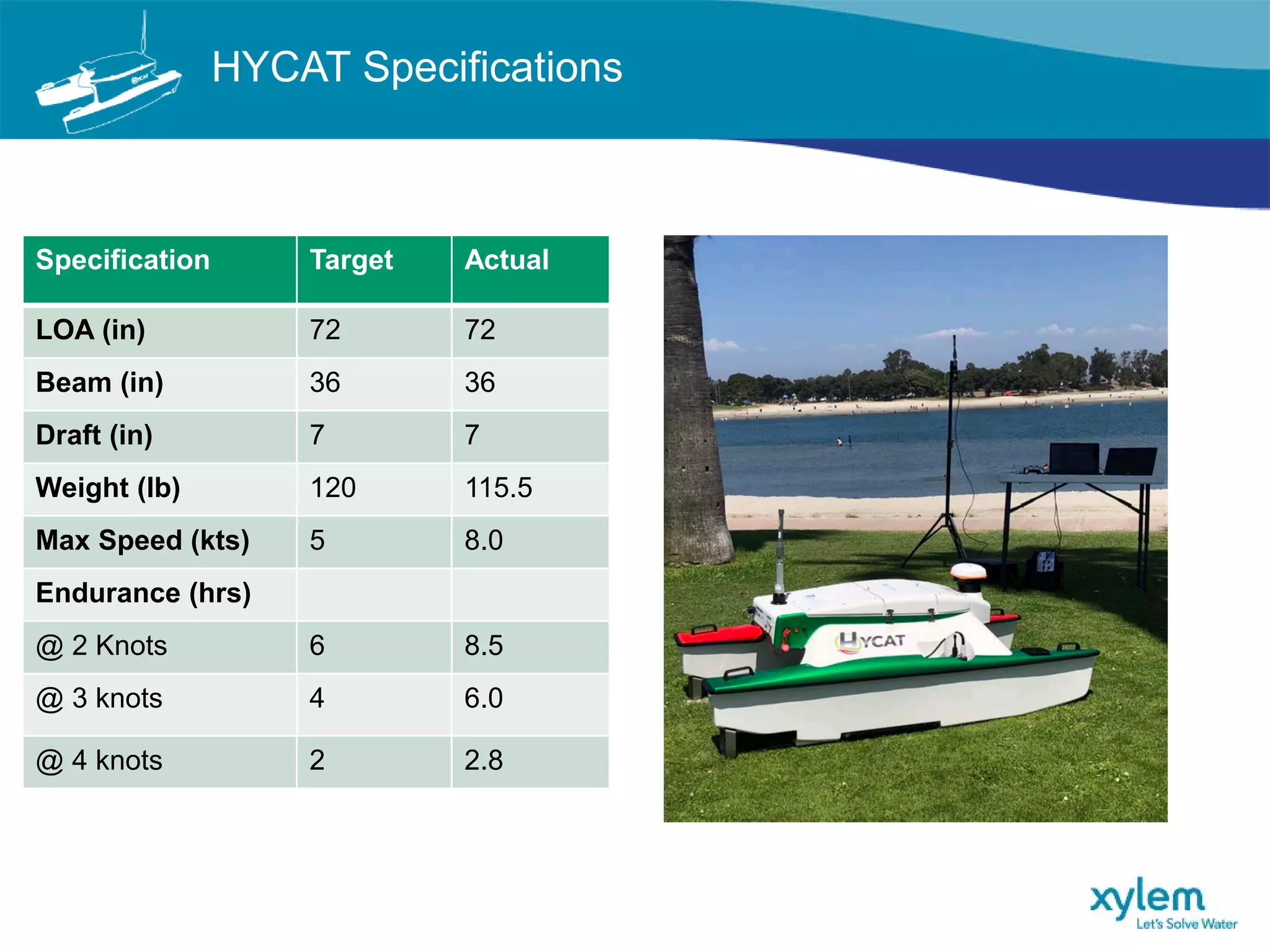
HYCAT Specifications
Specification Target Actual
LOA (in) 72 72
Beam (in) 36 36
Draft (in) 7 7
Weight (lb) 120 115.5
Max Speed (kts) 5 8.0
Endurance (hrs)
@ 2 Knots 6 8.5
@ 3 knots 4 6.0
@ 4 knots 2 2.8
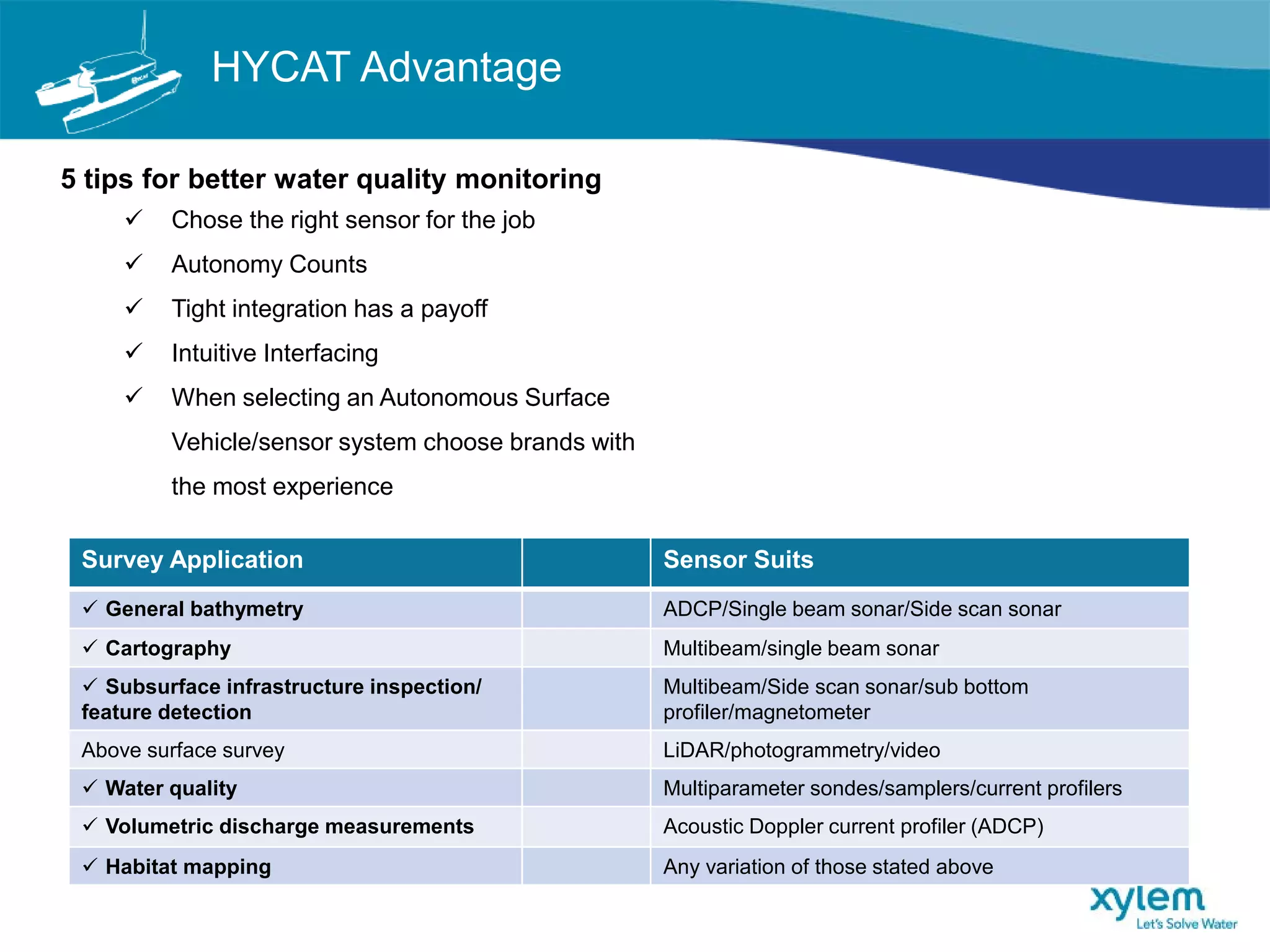
5 tips for better water quality monitoring
 Chose the right sensor for the job
 Autonomy Counts
 Tight integration has a payoff
 Intuitive Interfacing
 When selecting an Autonomous Surface
Vehicle/sensor system choose brands with
the most experience
HYCAT Advantage
Survey Application Sensor Suits
 General bathymetry ADCP/Single beam sonar/Side scan sonar
 Cartography Multibeam/single beam sonar
 Subsurface infrastructure inspection/
feature detection
Multibeam/Side scan sonar/sub bottom
profiler/magnetometer
Above surface survey LiDAR/photogrammetry/video
 Water quality Multiparameter sondes/samplers/current profilers
 Volumetric discharge measurements Acoustic Doppler current profiler (ADCP)
 Habitat mapping Any variation of those stated above
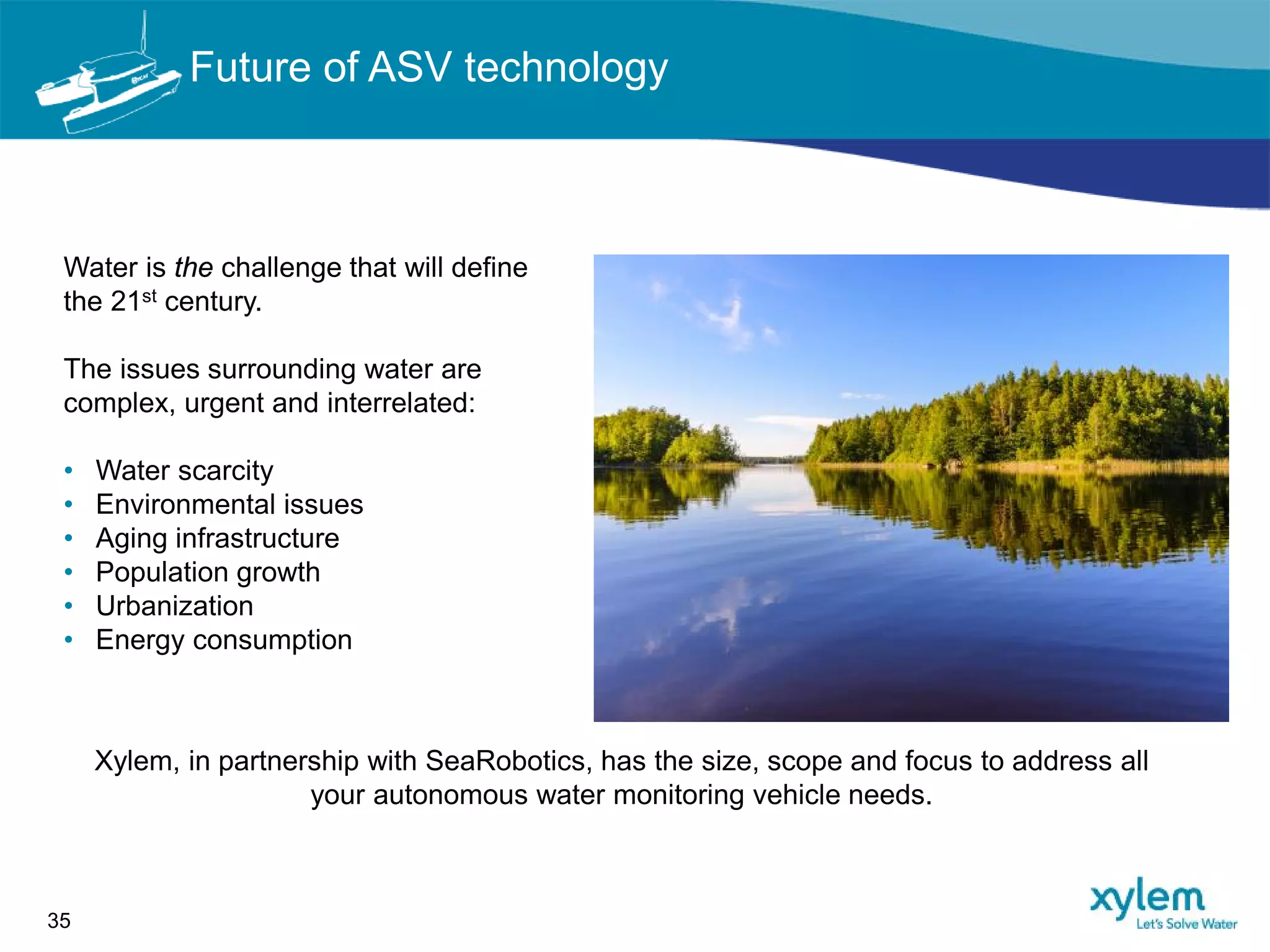
Water is the challenge that will define
the 21st century.
The issues surrounding water are
complex, urgent and interrelated:
• Water scarcity
• Environmental issues
• Aging infrastructure
• Population growth
• Urbanization
• Energy consumption
35
Xylem, in partnership with SeaRobotics, has the size, scope and focus to address all
your autonomous water monitoring vehicle needs.
Future of ASV technology
Questions?
For More Information Visit:
YSI.com/HYCAT
Searobotics.com
Hypack.com
Or contact us at
435.753.2212
info@ysi.com

5 Tips for Better Water Quality Monitoring with ASVs

  • 1.
    5 Tips forBetter Water Monitoring: Autonomous Surface Vehicles 101
  • 2.
    Presenters Kevin Simpson Xylem Director ofSystems Engineering Geoff Douglass SeaRobotics Product Development Manager Robert Porrett YSI, a Xylem brand ISS Product Manager 2
  • 3.
    Agenda 5 tips forbetter water quality monitoring 1. Chose the right sensor for the job 2. Autonomy counts 3. Tight integration has a payoff 4. Intuitive interfacing 5. When selecting an Autonomous Surface Vehicle/sensor system choose brands with the most experience Autonomous Surface Vehicle 101 Introducing our newest ASV - HYCAT 3
  • 4.
    Company Overview • Xylemis a leading global water technology provider made up of strong brands focused on Solving Water. • More than 16,000 global employees • Global footprint serving 150 countries • We devote our technology, time and talent to advance the smarter use of water 4
  • 5.
    Company Overview • Specializein smart vessels that can be remotely or autonomously-operated • Expertise in the conceptualization, design, and fabrication of complex remote sensing systems • SeaRobotics is extending the reach of Unmanned Systems Technology. 5
  • 6.
    Benefits of ASVs(Autonomous Surface Vehicles) Offshore Coastal/Inshore • Streamlined work flow • Increased survey efficiency • Reduced operating cost • Increase work safety • Minimal environmental impact • Metocean data collection • Force multiplier • AUV/ROV husbandry • Marine mammal monitoring • Survey remote & limited access areas • Shallow water survey • Minimize operating personnel 6
  • 7.
    Tip 1: Choosethe Right Sensor for the Job • GNSS • Motion reference • Data acquisition • Post processing • Interpretation Survey Application Sensor Suits General bathymetry ADCP/Single beam sonar/Side scan sonar Cartography Multibeam/single beam sonar Subsurface infrastructure inspection/ feature detection Multibeam/Side scan sonar/ sub bottom profiler/magnetometer Above surface survey LiDAR/photogrammetry/video Water quality Multiparameter sondes/samplers/current profilers Volumetric discharge measurements Acoustic Doppler current profiler (ADCP) Habitat mapping Any variation of those stated above 7
  • 8.
    Tip 2: AutonomyCounts Situationalawareness Surveyorconfidence Surveyefficiency Minimal requirement for oversight with maximum situational awareness Surveyor confidence Set and forget: Complete autonomous COLREGs compliant survey w/o data gaps (ITAR) System redundancy, health monitoring, collision/ grounding avoidance, seamless integration with acquisition software, auto line generation, auto data quality monitoring, auto alarms & actions Simple waypoint navigation, limited continuity with acquisition software, limited fail safes Mannedoperation leastsituationalawareness Fulltimemannedoversight minimalfailsafes Limitedmannedoversight canreal-timepostprocess No oversight 8
  • 9.
    Tip 3: TightIntegration has a Payoff • Streamline survey logistics • Provide out-of-the-box survey solution • Sensor installations are optimized to collect best possible data
  • 10.
    Tip 4: IntuitiveInterfacing Single software package • Streamlined workflow • Enhanced user experience • Enhanced situational awareness Benefits in practice • Predefined hardware setup • Real time continuity between data acquisition and vessel navigation • Reduced screen requirement Intuitive interfacing makes for intuitive surveying 10
  • 11.
    Tip 5: ChooseExperienced Brands When selecting an ASV/sensor system choose brands with the most experience 11
  • 12.
    USV 2.5 USV 3.6 USV4.0 USV 5.7 HYCAT WorkBoat 7.0 USV Conversion Kit Choose Experienced Brands 12
  • 13.
  • 14.
    Case Study ClintonLake, IL Nuclear Power Plant Launch Site Thermal Outfall Survey Area 14
  • 15.
    Mission was 4:43 minutes plus 1hour Park Clinton Lake, IL 15
  • 16.
  • 17.
  • 18.
  • 19.
  • 20.
    Mission Log Green Line= Actual Vehicle Route Red Line = Planned Mission Route 20
  • 21.
    Case Study Two– Cardiff Bay 21
  • 22.
  • 23.
  • 24.
  • 25.
  • 26.
    ASVs for RiverDischarge Measurements 26
  • 27.
    Velocity Profiling andDischarge Measurements 27
  • 28.
    Combined Vehicle WatershedData Visualization 28
  • 29.
    Skeptical about automatedsolutions? 29 • Autonomous vessels are the future • Through innovation ASVs will continue to become a popular workhorse platform Intuitive and seamless Integration • By leveraging a single on-board software package • Xylem’s water quality, hydrological sensor and survey software expertise in combination with our partner SeaRobotics a trusted name in ASV development forms a best in class Autonomous Surface Vehicle solution. .
  • 30.
    30 HYCAT – AutonomousSurface Vehicle (ASV)
  • 31.
    HYCAT – AutonomousSurface Vehicle (ASV) 31 Product Overview • YSI and SeaRobotics Partnership • 2 person portable and transportable via Pick-up Truck / SUV • Operates with Mature Autonomy • Mechanically designed for seamless integration of entire instrument payload • Market Price is less than a Multi-Beam Sonar based vehicles and ½ the size/weight
  • 32.
    32 Product On-Board SensorInterface and Visualization HYCAT – Autonomous Surface Vehicle (ASV)
  • 33.
    HYCAT Specifications Specification TargetActual LOA (in) 72 72 Beam (in) 36 36 Draft (in) 7 7 Weight (lb) 120 115.5 Max Speed (kts) 5 8.0 Endurance (hrs) @ 2 Knots 6 8.5 @ 3 knots 4 6.0 @ 4 knots 2 2.8
  • 34.
    5 tips forbetter water quality monitoring  Chose the right sensor for the job  Autonomy Counts  Tight integration has a payoff  Intuitive Interfacing  When selecting an Autonomous Surface Vehicle/sensor system choose brands with the most experience HYCAT Advantage Survey Application Sensor Suits  General bathymetry ADCP/Single beam sonar/Side scan sonar  Cartography Multibeam/single beam sonar  Subsurface infrastructure inspection/ feature detection Multibeam/Side scan sonar/sub bottom profiler/magnetometer Above surface survey LiDAR/photogrammetry/video  Water quality Multiparameter sondes/samplers/current profilers  Volumetric discharge measurements Acoustic Doppler current profiler (ADCP)  Habitat mapping Any variation of those stated above
  • 35.
    Water is thechallenge that will define the 21st century. The issues surrounding water are complex, urgent and interrelated: • Water scarcity • Environmental issues • Aging infrastructure • Population growth • Urbanization • Energy consumption 35 Xylem, in partnership with SeaRobotics, has the size, scope and focus to address all your autonomous water monitoring vehicle needs. Future of ASV technology
  • 36.
    Questions? For More InformationVisit: YSI.com/HYCAT Searobotics.com Hypack.com Or contact us at 435.753.2212 info@ysi.com