The IS-LM Model

      Chahir Zaki
 FEPS, Cairo University
Second semester, 2012
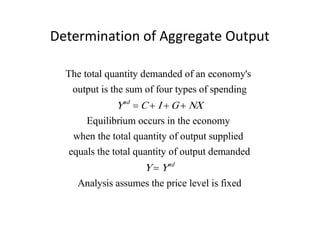
Determination of Aggregate Output

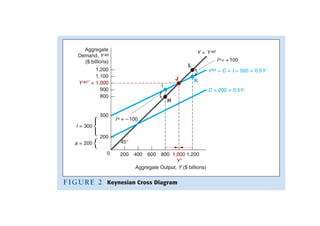
  The total quantity demanded of an economy's
   output is the sum of four types of spending
             Yad = C + I + G + NX
      Equilibrium occurs in the economy
   when the total quantity of output supplied
  equals the total quantity of output demanded
                    Y = Yad
    Analysis assumes the price level is fixed
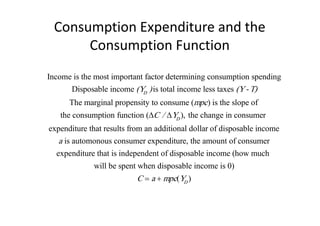
Consumption Expenditure and the
      Consumption Function
Income is the most important factor determining consumption spending
       Disposable income (Y ) is total income less taxes (Y - T)
                           D

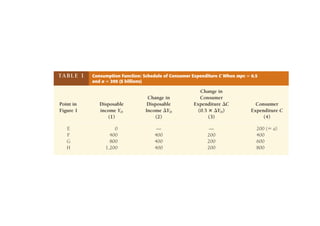
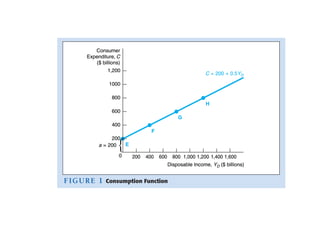
      The marginal propensity to consume (mpc ) is the slope of
   the consumption function (∆C / ∆Y ), the change in consumer
                                    D

expenditure that results from an additional dollar of disposable income
   a is automonous consumer expenditure, the amount of consumer
  expenditure that is independent of disposable income (how much
             will be spent when disposable income is 0)
                           C = a + mpc(YD )
Investment Spending
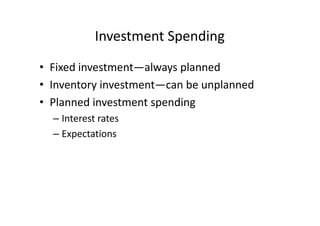
• Fixed investment—always planned
• Inventory investment—can be unplanned
• Planned investment spending
  – Interest rates
  – Expectations
Expenditure Multiplier
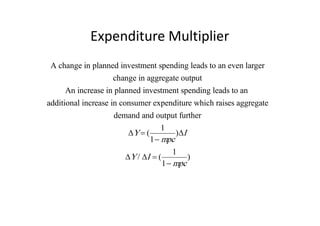
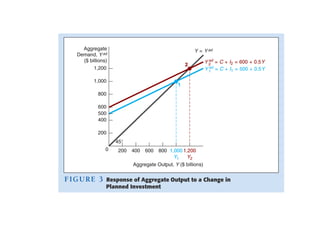
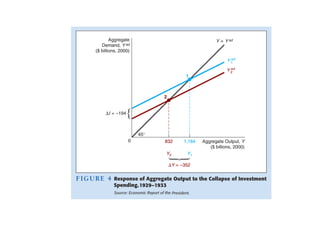
 A change in planned investment spending leads to an even larger
                   change in aggregate output
     An increase in planned investment spending leads to an
additional increase in consumer expenditure which raises aggregate
                     demand and output further
                                   1
                         ∆Y = (        )∆I
                                1− mpc
                                       1
                       ∆Y / ∆I = (            )
                                     1− mpc
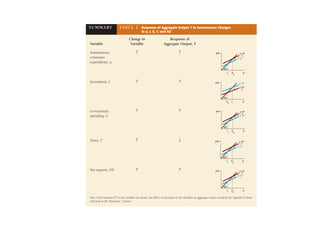
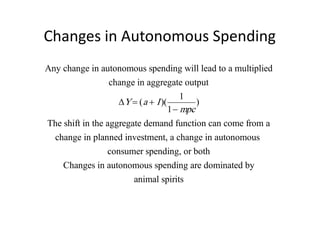
Changes in Autonomous Spending
Any change in autonomous spending will lead to a multiplied
                  change in aggregate output
                                       1
                    ∆Y = ( a + I )(        )
                                    1− mpc
The shift in the aggregate demand function can come from a
  change in planned investment, a change in autonomous
               consumer spending, or both
    Changes in autonomous spending are dominated by
                       animal spirits
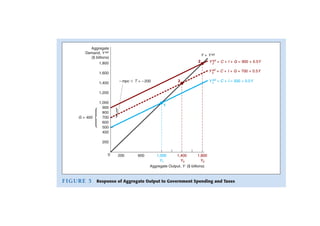
Government’s Role
         Government spending and taxes
     can be used to change the position of the
             aggregate demand function
        Government spending adds directly
              to aggregate demand
  Taxes do not affect aggregate demand directly
C = a + [ mpc × (Y − T )] = a + ( mpc × Y) − ( mpc × T )
 If taxes change, consumer expenditure changes
             in the opposite direction
                   ∆C = - mpc × ∆T
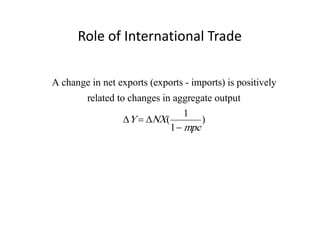
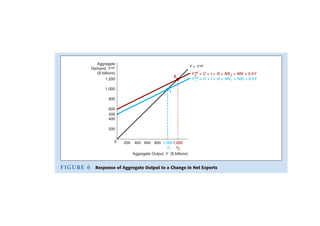
Role of International Trade

A change in net exports (exports - imports) is positively
        related to changes in aggregate output
                                1
                  ∆Y = ∆NX(         )
                             1− mpc
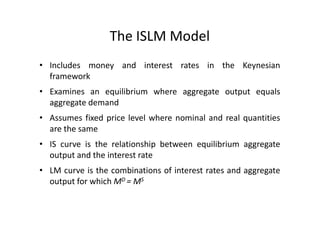
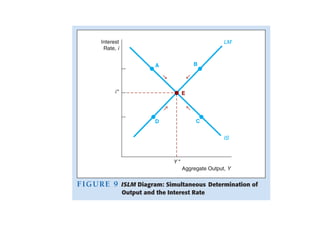
The ISLM Model
• Includes money and interest rates in the Keynesian
  framework
• Examines an equilibrium where aggregate output equals
  aggregate demand
• Assumes fixed price level where nominal and real quantities
  are the same
• IS curve is the relationship between equilibrium aggregate
  output and the interest rate
• LM curve is the combinations of interest rates and aggregate
  output for which MD = MS
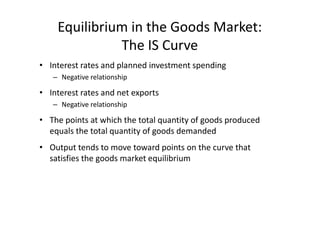
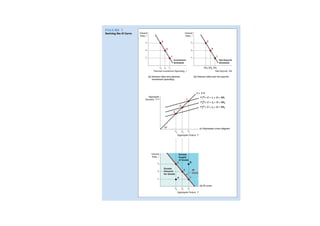
Equilibrium in the Goods Market:
              The IS Curve
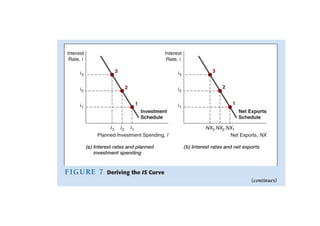
• Interest rates and planned investment spending
   – Negative relationship

• Interest rates and net exports
   – Negative relationship

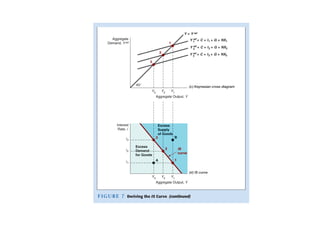
• The points at which the total quantity of goods produced
  equals the total quantity of goods demanded
• Output tends to move toward points on the curve that
  satisfies the goods market equilibrium
Equilibrium in the Market for Money:
            The LM Curve
 • Demand for money called liquidity
   preference
 • Md/P depends on income (Y) and interest
   rates (i)
 • Positively related to income
   – Raises the level of transactions
   – Increases wealth
 • Negatively related to interest rates
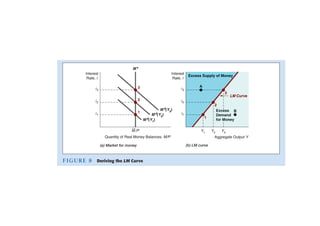
Equilibrium in the Market for Money:
         The LM Curve (cont’d)
• Connects points that satisfy the equilibrium
  condition that MD = MS
• For each level of aggregate output, the LM
  curve tells us what the interest rate must be
  for equilibrium to occur
• The economy tends to move toward points on
  the LM curve
References
• Mishkin, Chapter 20.
Thanks for your attention!

5 islm(1)

  • 1.
    The IS-LM Model Chahir Zaki FEPS, Cairo University Second semester, 2012
  • 2.
    Determination of AggregateOutput The total quantity demanded of an economy's output is the sum of four types of spending Yad = C + I + G + NX Equilibrium occurs in the economy when the total quantity of output supplied equals the total quantity of output demanded Y = Yad Analysis assumes the price level is fixed
  • 3.
    Consumption Expenditure andthe Consumption Function Income is the most important factor determining consumption spending Disposable income (Y ) is total income less taxes (Y - T) D The marginal propensity to consume (mpc ) is the slope of the consumption function (∆C / ∆Y ), the change in consumer D expenditure that results from an additional dollar of disposable income a is automonous consumer expenditure, the amount of consumer expenditure that is independent of disposable income (how much will be spent when disposable income is 0) C = a + mpc(YD )
  • 6.
    Investment Spending • Fixedinvestment—always planned • Inventory investment—can be unplanned • Planned investment spending – Interest rates – Expectations
  • 8.
    Expenditure Multiplier Achange in planned investment spending leads to an even larger change in aggregate output An increase in planned investment spending leads to an additional increase in consumer expenditure which raises aggregate demand and output further 1 ∆Y = ( )∆I 1− mpc 1 ∆Y / ∆I = ( ) 1− mpc
  • 11.
    Changes in AutonomousSpending Any change in autonomous spending will lead to a multiplied change in aggregate output 1 ∆Y = ( a + I )( ) 1− mpc The shift in the aggregate demand function can come from a change in planned investment, a change in autonomous consumer spending, or both Changes in autonomous spending are dominated by animal spirits
  • 12.
    Government’s Role Government spending and taxes can be used to change the position of the aggregate demand function Government spending adds directly to aggregate demand Taxes do not affect aggregate demand directly C = a + [ mpc × (Y − T )] = a + ( mpc × Y) − ( mpc × T ) If taxes change, consumer expenditure changes in the opposite direction ∆C = - mpc × ∆T
  • 14.
    Role of InternationalTrade A change in net exports (exports - imports) is positively related to changes in aggregate output 1 ∆Y = ∆NX( ) 1− mpc
  • 17.
    The ISLM Model •Includes money and interest rates in the Keynesian framework • Examines an equilibrium where aggregate output equals aggregate demand • Assumes fixed price level where nominal and real quantities are the same • IS curve is the relationship between equilibrium aggregate output and the interest rate • LM curve is the combinations of interest rates and aggregate output for which MD = MS
  • 18.
    Equilibrium in theGoods Market: The IS Curve • Interest rates and planned investment spending – Negative relationship • Interest rates and net exports – Negative relationship • The points at which the total quantity of goods produced equals the total quantity of goods demanded • Output tends to move toward points on the curve that satisfies the goods market equilibrium
  • 22.
    Equilibrium in theMarket for Money: The LM Curve • Demand for money called liquidity preference • Md/P depends on income (Y) and interest rates (i) • Positively related to income – Raises the level of transactions – Increases wealth • Negatively related to interest rates
  • 23.
    Equilibrium in theMarket for Money: The LM Curve (cont’d) • Connects points that satisfy the equilibrium condition that MD = MS • For each level of aggregate output, the LM curve tells us what the interest rate must be for equilibrium to occur • The economy tends to move toward points on the LM curve
  • 26.
  • 27.
    Thanks for yourattention!