Step 3
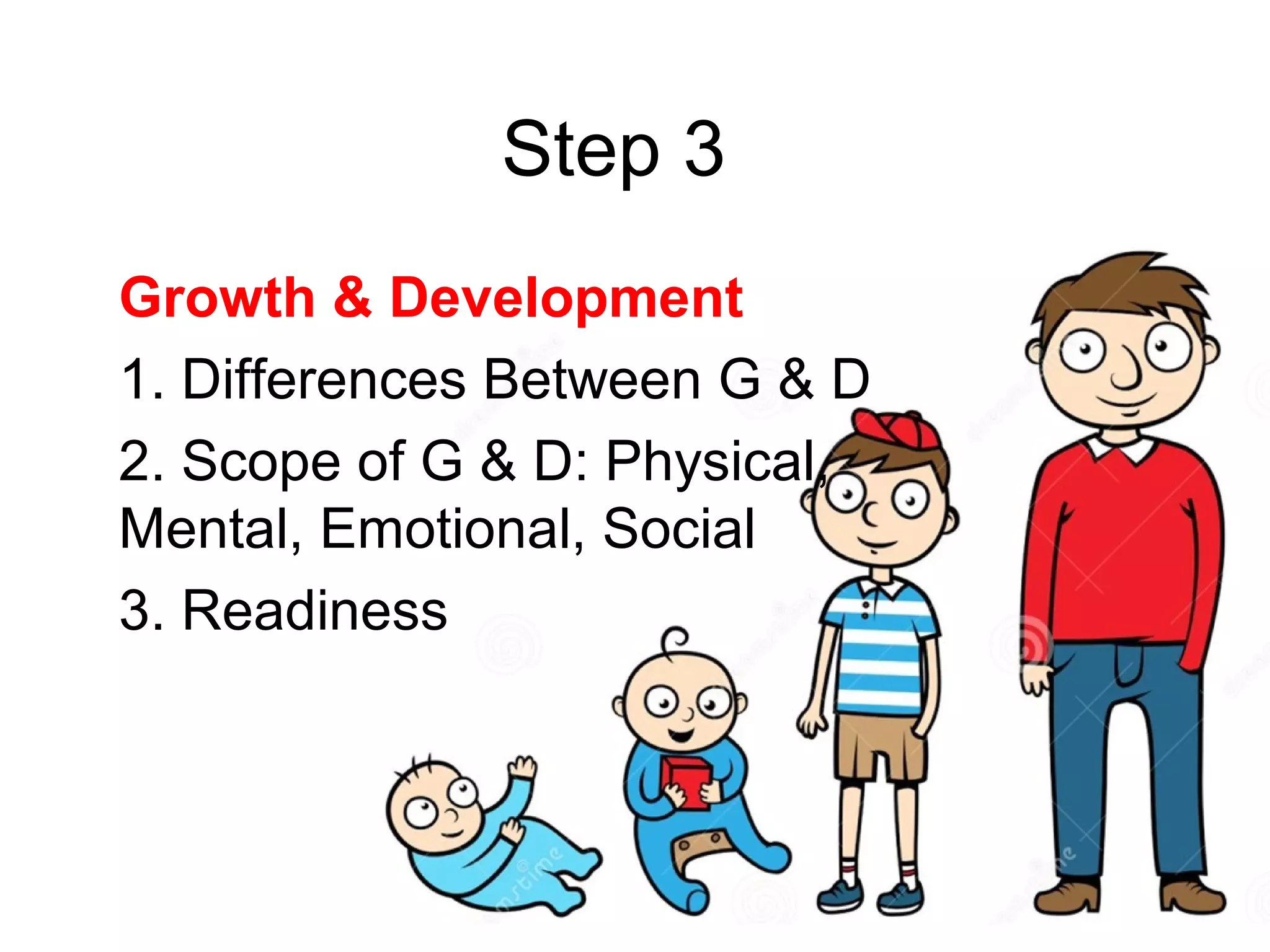
Growth & Development
1. Differences Between G & D
2. Scope of G & D: Physical,
Mental, Emotional, Social
3. Readiness
Definition of Growth &
Development
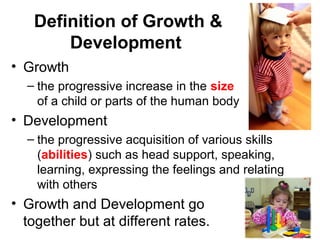
• Growth
– the progressive increase in the size
of a child or parts of the human body
• Development
– the progressive acquisition of various skills
(abilities) such as head support, speaking,
learning, expressing the feelings and relating
with others
• Growth and Development go
together but at different rates.
Milestones
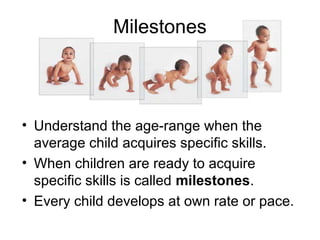
• Understand the age-range when the
average child acquires specific skills.
• When children are ready to acquire
specific skills is called milestones.
• Every child develops at own rate or pace.
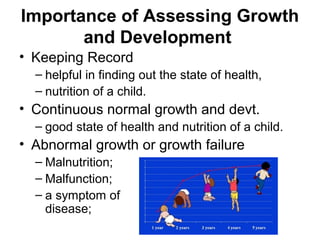
Importance of Assessing Growth
and Development
• Keeping Record
– helpful in finding out the state of health,
– nutrition of a child.
• Continuous normal growth and devt.
– good state of health and nutrition of a child.
• Abnormal growth or growth failure
– Malnutrition;
– Malfunction;
– a symptom of
disease;
Factors affecting Growth and
Development
• Genetic Factors
– determine the potential and
limitations of growth and
development
– congenital malformations,
hormonal disturbances,
disability, genetic diseases
– Traits and talents also inherited
Factors…
• Environmental Factors
– Favourable factors
• adequate nutrition, learning
opportunities
– Unfavourable factors
• malnutrition, infections,
lack of emotional support,
lack of play, and lack of
language training.
Both
factors
influence
children
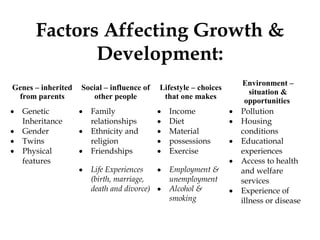
Factors Affecting Growth &
Development:
Genes – inherited
from parents
Social – influence of
other people
Lifestyle – choices
that one makes
Environment –
situation &
opportunities
• Genetic
Inheritance
• Gender
• Twins
• Physical
features
 
 
• Family
relationships
• Ethnicity and
religion
• Friendships
• Life Experiences
(birth, marriage,
death and divorce)
• Income
• Diet
• Material
• possessions
• Exercise
• Employment &
unemployment
• Alcohol &
smoking
 
• Pollution
• Housing
conditions
• Educational
experiences
• Access to health
and welfare
services
• Experience of
illness or disease
 
 
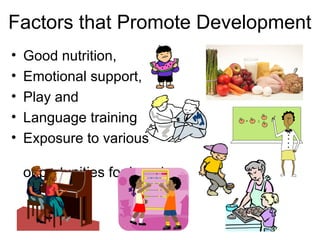
Factors that Promote Development
• Good nutrition,
• Emotional support,
• Play and
• Language training
• Exposure to various
opportunities for learning
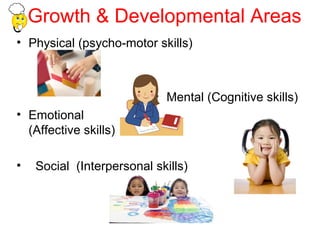
Growth & Developmental Areas
• Physical (psycho-motor skills)
• Mental (Cognitive skills)
• Emotional
(Affective skills)
• Social (Interpersonal skills)
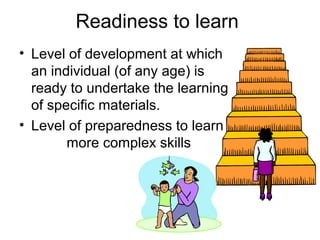
Readiness to learn
• Level of development at which
an individual (of any age) is
ready to undertake the learning
of specific materials.
• Level of preparedness to learn
more complex skills
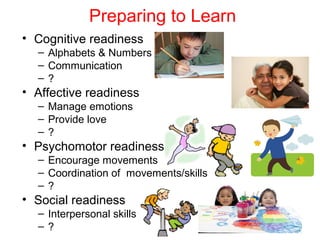
Preparing to Learn
• Cognitive readiness
– Alphabets & Numbers
– Communication
– ?
• Affective readiness
– Manage emotions
– Provide love
– ?
• Psychomotor readiness
– Encourage movements
– Coordination of movements/skills
– ?
• Social readiness
– Interpersonal skills
– ?

4share 03 step 3

  • 1.
    Step 3 Growth &Development 1. Differences Between G & D 2. Scope of G & D: Physical, Mental, Emotional, Social 3. Readiness
  • 2.
    Definition of Growth& Development • Growth – the progressive increase in the size of a child or parts of the human body • Development – the progressive acquisition of various skills (abilities) such as head support, speaking, learning, expressing the feelings and relating with others • Growth and Development go together but at different rates.
  • 3.
    Milestones • Understand theage-range when the average child acquires specific skills. • When children are ready to acquire specific skills is called milestones. • Every child develops at own rate or pace.
  • 4.
    Importance of AssessingGrowth and Development • Keeping Record – helpful in finding out the state of health, – nutrition of a child. • Continuous normal growth and devt. – good state of health and nutrition of a child. • Abnormal growth or growth failure – Malnutrition; – Malfunction; – a symptom of disease;
  • 5.
    Factors affecting Growthand Development • Genetic Factors – determine the potential and limitations of growth and development – congenital malformations, hormonal disturbances, disability, genetic diseases – Traits and talents also inherited
  • 6.
    Factors… • Environmental Factors –Favourable factors • adequate nutrition, learning opportunities – Unfavourable factors • malnutrition, infections, lack of emotional support, lack of play, and lack of language training. Both factors influence children
  • 7.
    Factors Affecting Growth& Development: Genes – inherited from parents Social – influence of other people Lifestyle – choices that one makes Environment – situation & opportunities • Genetic Inheritance • Gender • Twins • Physical features     • Family relationships • Ethnicity and religion • Friendships • Life Experiences (birth, marriage, death and divorce) • Income • Diet • Material • possessions • Exercise • Employment & unemployment • Alcohol & smoking   • Pollution • Housing conditions • Educational experiences • Access to health and welfare services • Experience of illness or disease    
  • 8.
    Factors that PromoteDevelopment • Good nutrition, • Emotional support, • Play and • Language training • Exposure to various opportunities for learning
  • 9.
    Growth & DevelopmentalAreas • Physical (psycho-motor skills) • Mental (Cognitive skills) • Emotional (Affective skills) • Social (Interpersonal skills)
  • 10.
    Readiness to learn •Level of development at which an individual (of any age) is ready to undertake the learning of specific materials. • Level of preparedness to learn more complex skills
  • 11.
    Preparing to Learn •Cognitive readiness – Alphabets & Numbers – Communication – ? • Affective readiness – Manage emotions – Provide love – ? • Psychomotor readiness – Encourage movements – Coordination of movements/skills – ? • Social readiness – Interpersonal skills – ?