Step 4
Individual Differences & Motivation
- Individual Differences
- Factors influencing differences
- Implications in the classroom
- Personality & Self-esteem
- Motivation
- Characteristics of Motivation
- Types of Motivation
- Intrinsic
- Extrinsic
Individual Differences
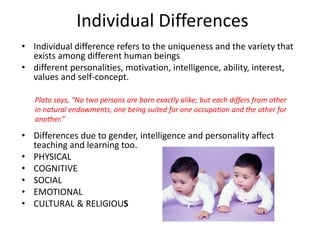
• Individual difference refers to the uniqueness and the variety that
exists among different human beings
• different personalities, motivation, intelligence, ability, interest,
values and self-concept.
• Differences due to gender, intelligence and personality affect
teaching and learning too.
• PHYSICAL
• COGNITIVE
• SOCIAL
• EMOTIONAL
• CULTURAL & RELIGIOUS
Plato says, “No two persons are born exactly alike; but each differs from other
in natural endowments, one being suited for one occupation and the other for
another.”
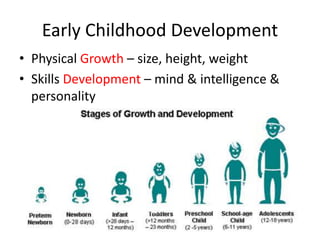
Early Childhood Development
• Physical Growth – size, height, weight
• Skills Development – mind & intelligence &
personality
Factors affecting Growth and
Development
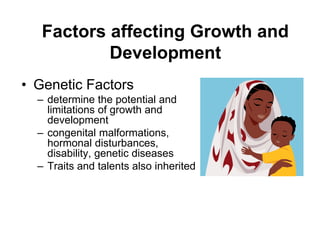
• Genetic Factors
– determine the potential and
limitations of growth and
development
– congenital malformations,
hormonal disturbances,
disability, genetic diseases
– Traits and talents also inherited
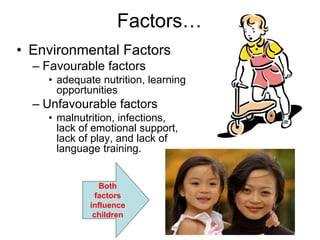
Factors…
• Environmental Factors
– Favourable factors
• adequate nutrition, learning
opportunities
– Unfavourable factors
• malnutrition, infections,
lack of emotional support,
lack of play, and lack of
language training.
Both
factors
influence
children
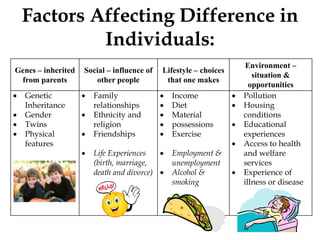
Factors Affecting Difference in
Individuals:
Genes – inherited
from parents
Social – influence of
other people
Lifestyle – choices
that one makes
Environment –
situation &
opportunities
 Genetic
Inheritance
 Gender
 Twins
 Physical
features
 Family
relationships
 Ethnicity and
religion
 Friendships
 Life Experiences
(birth, marriage,
death and divorce)
 Income
 Diet
 Material
 possessions
 Exercise
 Employment &
unemployment
 Alcohol &
smoking
 Pollution
 Housing
conditions
 Educational
experiences
 Access to health
and welfare
services
 Experience of
illness or disease
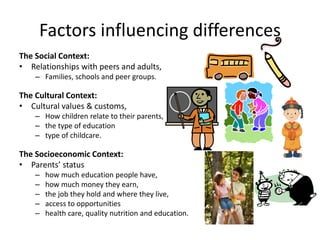
Factors influencing differences
The Social Context:
• Relationships with peers and adults,
– Families, schools and peer groups.
The Cultural Context:
• Cultural values & customs,
– How children relate to their parents,
– the type of education
– type of childcare.
The Socioeconomic Context:
• Parents’ status
– how much education people have,
– how much money they earn,
– the job they hold and where they live,
– access to opportunities
– health care, quality nutrition and education.
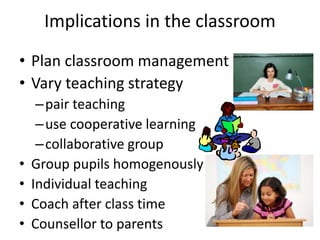
Implications in the classroom
• Plan classroom management
• Vary teaching strategy
–pair teaching
–use cooperative learning
–collaborative group
• Group pupils homogenously
• Individual teaching
• Coach after class time
• Counsellor to parents
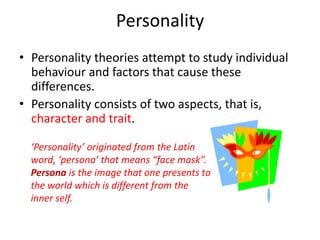
Personality
• Personality theories attempt to study individual
behaviour and factors that cause these
differences.
• Personality consists of two aspects, that is,
character and trait.
‘Personality’ originated from the Latin
word, ‘persona’ that means “face mask”.
Persona is the image that one presents to
the world which is different from the
inner self.
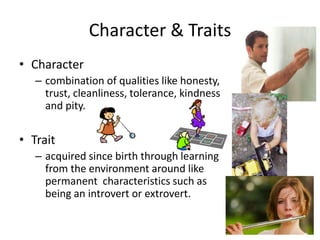
Character & Traits
• Character
– combination of qualities like honesty,
trust, cleanliness, tolerance, kindness
and pity.
• Trait
– acquired since birth through learning
from the environment around like
permanent characteristics such as
being an introvert or extrovert.
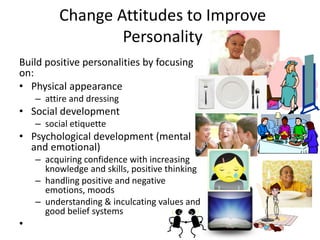
Change Attitudes to Improve
Personality
Build positive personalities by focusing
on:
• Physical appearance
– attire and dressing
• Social development
– social etiquette
• Psychological development (mental
and emotional)
– acquiring confidence with increasing
knowledge and skills, positive thinking
– handling positive and negative
emotions, moods
– understanding & inculcating values and
good belief systems
•
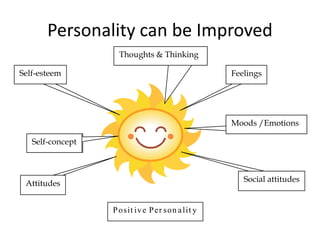
Personality can be Improved
Feelings
Thoughts & Thinking
Posit ive Per son alit y
Self-concept
Attitudes Social attitudes
Moods /Emotions
Self-esteem
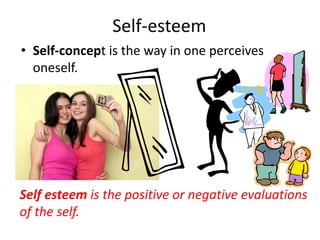
Self-esteem
• Self-concept is the way in one perceives
oneself.
Self esteem is the positive or negative evaluations
of the self.
Negative Self Esteem
• Labeling behaviours
• Unpleasant experiences or failures
that one has encountered
• Criticism
• Lack of Love and acceptance
• Low Achievement in studies and
sports
• Lack Socialisation skills
• Coming from Socio-economic
Background
• Physical Appearance
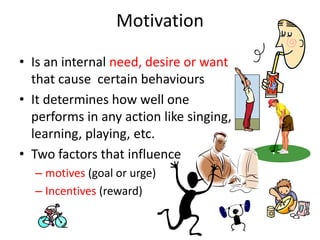
Motivation
• Is an internal need, desire or want
that cause certain behaviours
• It determines how well one
performs in any action like singing,
learning, playing, etc.
• Two factors that influence
– motives (goal or urge)
– Incentives (reward)
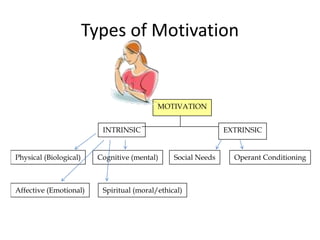
Types of Motivation
MOTIVATION
INTRINSIC EXTRINSIC
C
Operant ConditioningSocial NeedsCognitive (mental)Physical (Biological)
Affective (Emotional) Spiritual (moral/ethical)
Video clips
• https://www.youtube.com/watch?v=oKpWb1
F5Vjc
• Preschoolers’ Growth & Development
https://www.youtube.com/watch?v=P5Ntw-
TwNnE

4share 04 step 4

  • 1.
    Step 4 Individual Differences& Motivation - Individual Differences - Factors influencing differences - Implications in the classroom - Personality & Self-esteem - Motivation - Characteristics of Motivation - Types of Motivation - Intrinsic - Extrinsic
  • 2.
    Individual Differences • Individualdifference refers to the uniqueness and the variety that exists among different human beings • different personalities, motivation, intelligence, ability, interest, values and self-concept. • Differences due to gender, intelligence and personality affect teaching and learning too. • PHYSICAL • COGNITIVE • SOCIAL • EMOTIONAL • CULTURAL & RELIGIOUS Plato says, “No two persons are born exactly alike; but each differs from other in natural endowments, one being suited for one occupation and the other for another.”
  • 3.
    Early Childhood Development •Physical Growth – size, height, weight • Skills Development – mind & intelligence & personality
  • 4.
    Factors affecting Growthand Development • Genetic Factors – determine the potential and limitations of growth and development – congenital malformations, hormonal disturbances, disability, genetic diseases – Traits and talents also inherited
  • 5.
    Factors… • Environmental Factors –Favourable factors • adequate nutrition, learning opportunities – Unfavourable factors • malnutrition, infections, lack of emotional support, lack of play, and lack of language training. Both factors influence children
  • 6.
    Factors Affecting Differencein Individuals: Genes – inherited from parents Social – influence of other people Lifestyle – choices that one makes Environment – situation & opportunities  Genetic Inheritance  Gender  Twins  Physical features  Family relationships  Ethnicity and religion  Friendships  Life Experiences (birth, marriage, death and divorce)  Income  Diet  Material  possessions  Exercise  Employment & unemployment  Alcohol & smoking  Pollution  Housing conditions  Educational experiences  Access to health and welfare services  Experience of illness or disease
  • 7.
    Factors influencing differences TheSocial Context: • Relationships with peers and adults, – Families, schools and peer groups. The Cultural Context: • Cultural values & customs, – How children relate to their parents, – the type of education – type of childcare. The Socioeconomic Context: • Parents’ status – how much education people have, – how much money they earn, – the job they hold and where they live, – access to opportunities – health care, quality nutrition and education.
  • 8.
    Implications in theclassroom • Plan classroom management • Vary teaching strategy –pair teaching –use cooperative learning –collaborative group • Group pupils homogenously • Individual teaching • Coach after class time • Counsellor to parents
  • 9.
    Personality • Personality theoriesattempt to study individual behaviour and factors that cause these differences. • Personality consists of two aspects, that is, character and trait. ‘Personality’ originated from the Latin word, ‘persona’ that means “face mask”. Persona is the image that one presents to the world which is different from the inner self.
  • 10.
    Character & Traits •Character – combination of qualities like honesty, trust, cleanliness, tolerance, kindness and pity. • Trait – acquired since birth through learning from the environment around like permanent characteristics such as being an introvert or extrovert.
  • 11.
    Change Attitudes toImprove Personality Build positive personalities by focusing on: • Physical appearance – attire and dressing • Social development – social etiquette • Psychological development (mental and emotional) – acquiring confidence with increasing knowledge and skills, positive thinking – handling positive and negative emotions, moods – understanding & inculcating values and good belief systems •
  • 12.
    Personality can beImproved Feelings Thoughts & Thinking Posit ive Per son alit y Self-concept Attitudes Social attitudes Moods /Emotions Self-esteem
  • 13.
    Self-esteem • Self-concept isthe way in one perceives oneself. Self esteem is the positive or negative evaluations of the self.
  • 14.
    Negative Self Esteem •Labeling behaviours • Unpleasant experiences or failures that one has encountered • Criticism • Lack of Love and acceptance • Low Achievement in studies and sports • Lack Socialisation skills • Coming from Socio-economic Background • Physical Appearance
  • 15.
    Motivation • Is aninternal need, desire or want that cause certain behaviours • It determines how well one performs in any action like singing, learning, playing, etc. • Two factors that influence – motives (goal or urge) – Incentives (reward)
  • 16.
    Types of Motivation MOTIVATION INTRINSICEXTRINSIC C Operant ConditioningSocial NeedsCognitive (mental)Physical (Biological) Affective (Emotional) Spiritual (moral/ethical)
  • 17.
    Video clips • https://www.youtube.com/watch?v=oKpWb1 F5Vjc •Preschoolers’ Growth & Development https://www.youtube.com/watch?v=P5Ntw- TwNnE