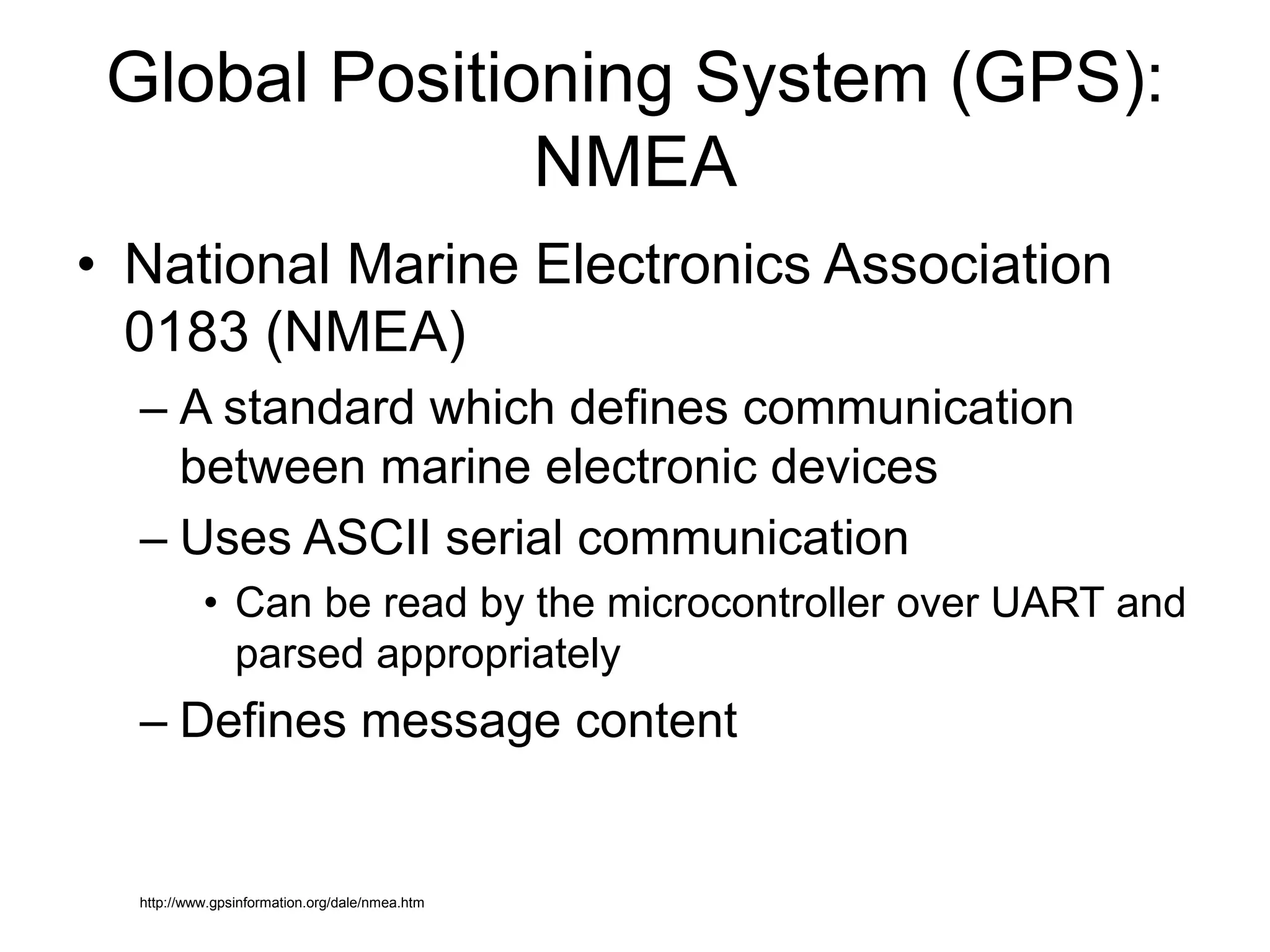
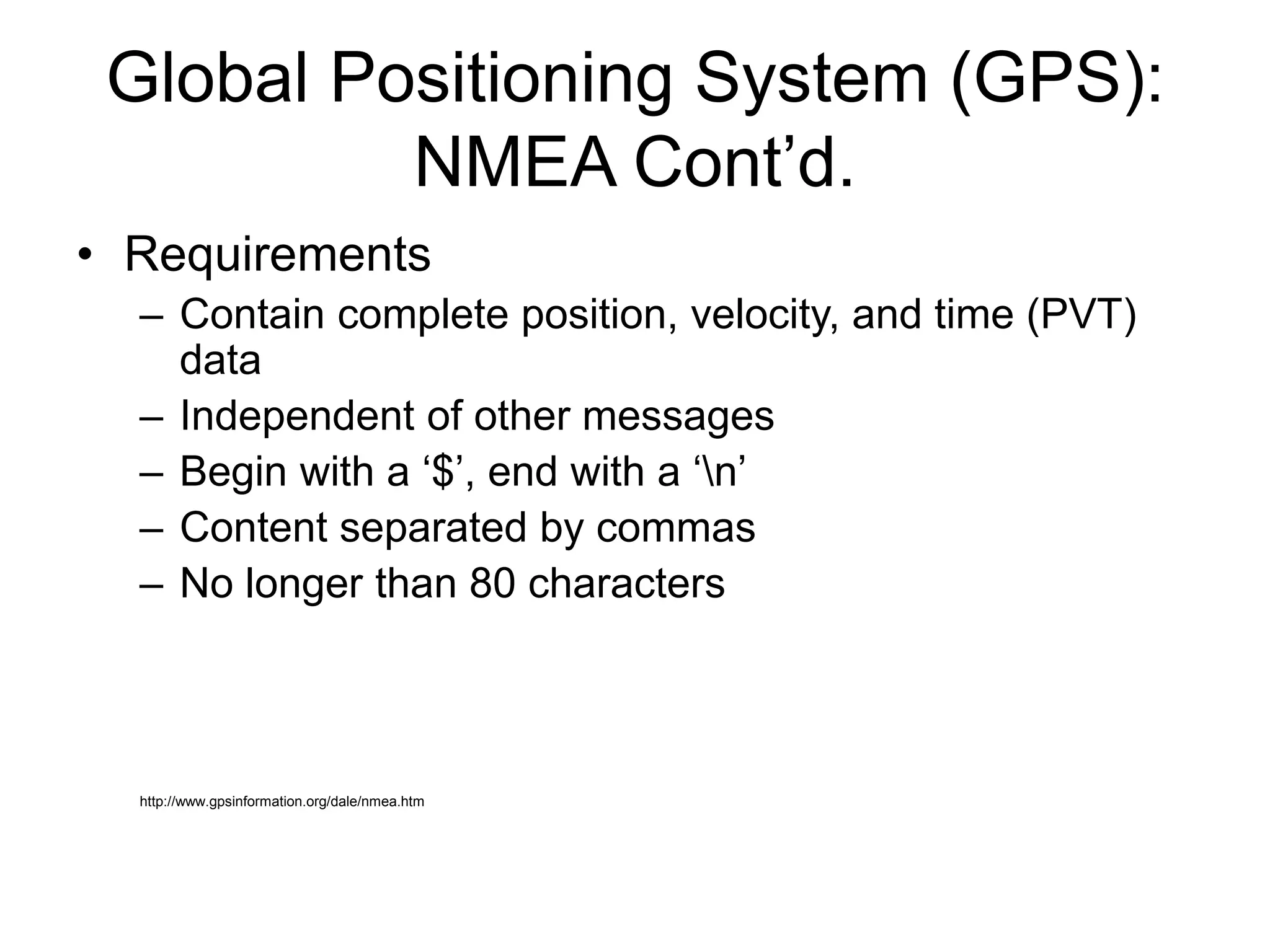
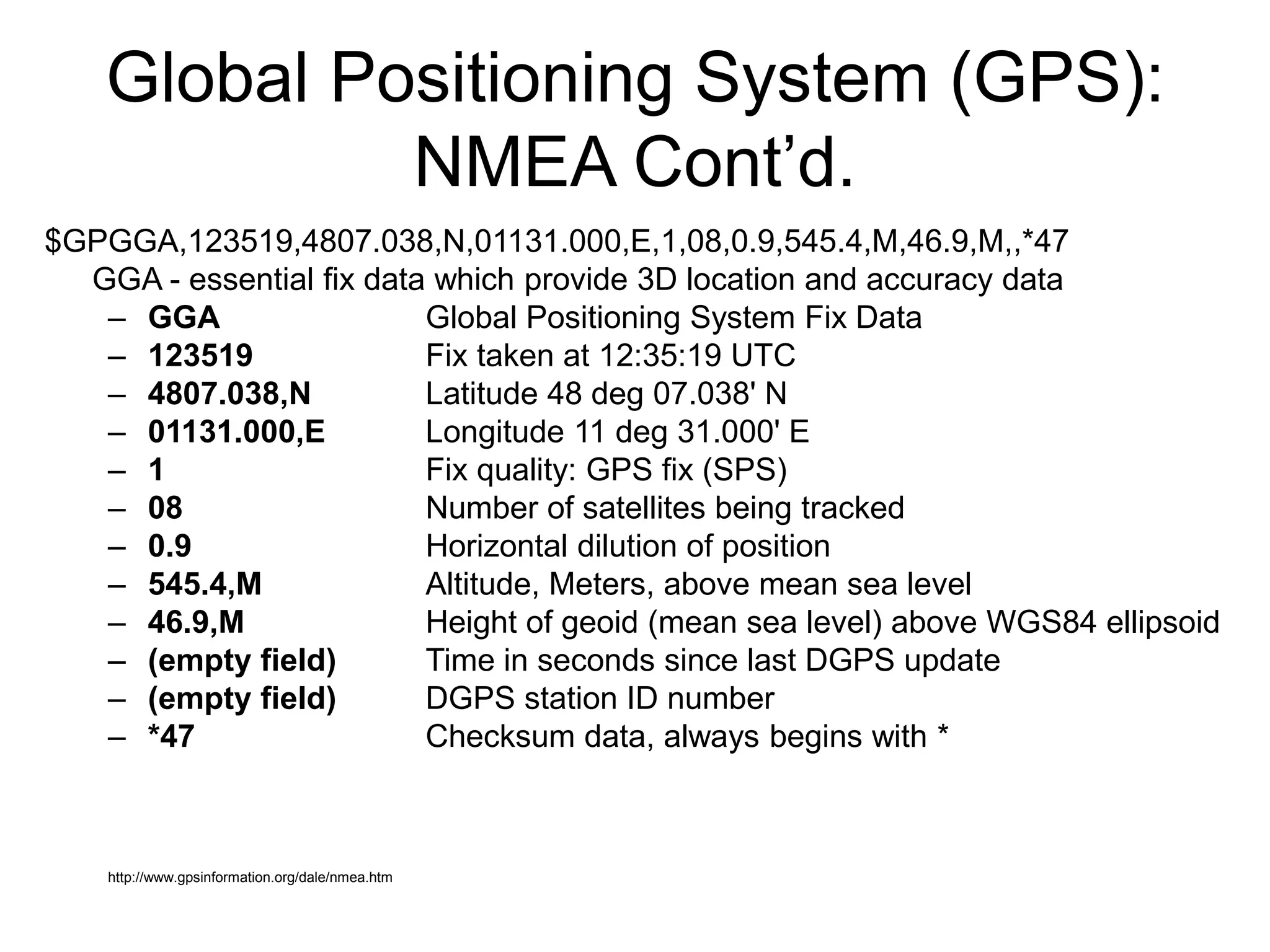
This document provides an overview of the Global Positioning System (GPS) including how it works, sources of error, error correction techniques, applications, and the NMEA standard. GPS uses a constellation of over 24 satellites that orbit 11,000 miles above the Earth and transmit precise time signals. A GPS receiver triangulates its position by precisely timing the signals from at least four satellites. Sources of error include atmospheric effects and issues with satellite orbits. Error correction techniques like DGPS and WAAS can improve accuracy by using reference stations. GPS is used widely in navigation, mapping, and other civilian and military applications.