

FOURTH GENERATION  MAINTENANCE 04/13/10 CSDO
04/13/10 CSDO
04/13/10 CSDO
04/13/10 CSDO MAINTAINABILITY ASPECTS OF AIRCRAFT SYSTEMS
04/13/10 CSDO 1940 1950 1970 1990 2010 1st Gen: Fix It when it breaks Focus:   Repair Tasks 2 nd  Gen: Scheduled O/H Sys for Plng &  Controlling work Focus:   Improving Maintenance Planning & Scheduling 3 rd  Gen: CBM, FMEA, Multi Skilling, Team Work, Rel, Maint, Availb Computers Focus:   Predicting, Preventing & Avoiding the Consequences of Equipment Failures 4 th   Gen:   Focus: Failure Elimination – Pro Active Maintenance, LCC, Lean, CBM+, RCA
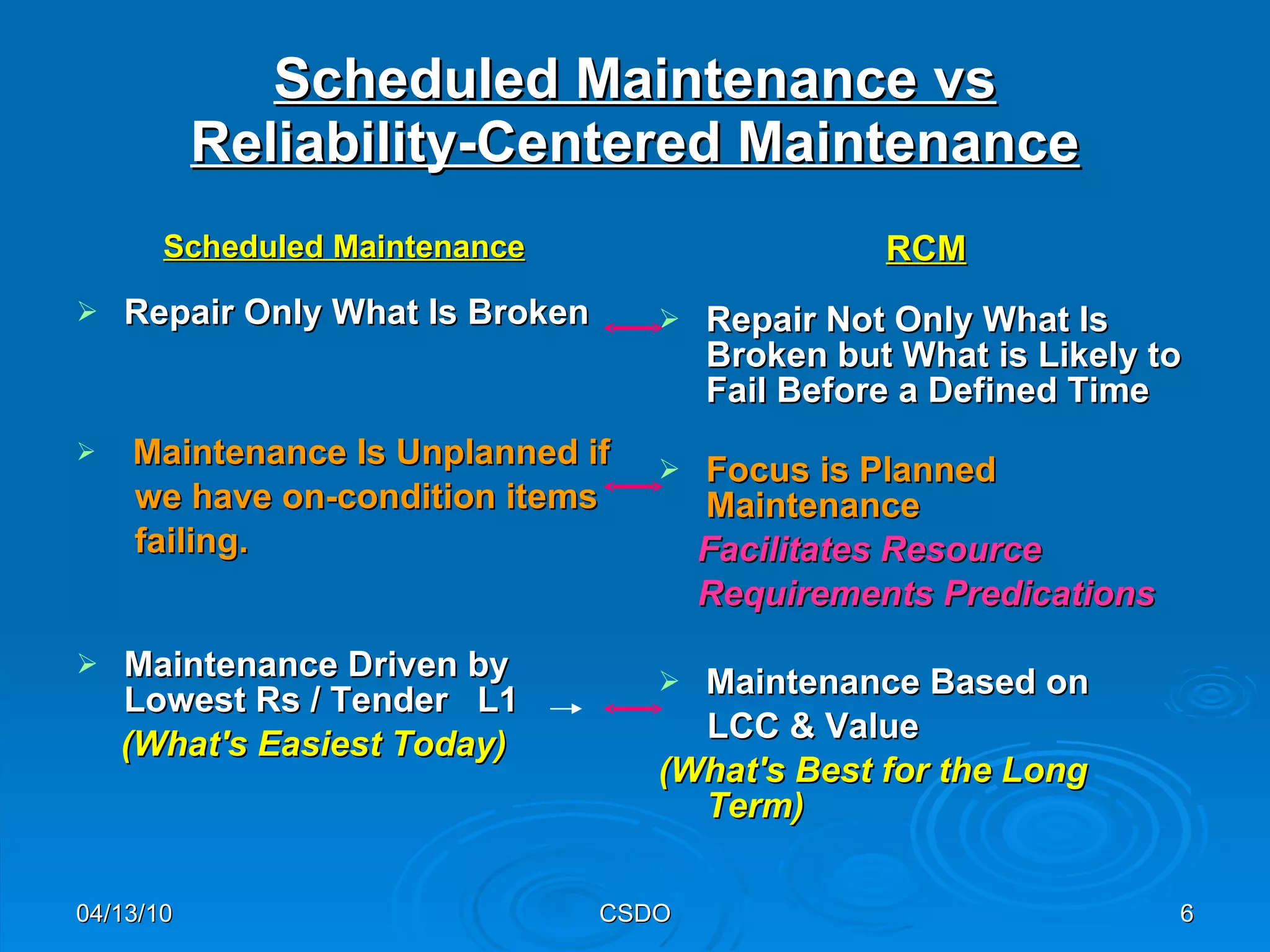
Scheduled Maintenance vs Reliability-Centered Maintenance Scheduled Maintenance Repair Only What Is Broken Maintenance Is Unplanned if  we have on-condition items failing. Maintenance Driven by Lowest Rs / Tender  L1 (What's Easiest Today) RCM Repair Not Only What Is Broken but What is Likely to Fail Before a Defined Time Focus is Planned Maintenance Facilitates Resource  Requirements Predications Maintenance Based on  LCC & Value (What's Best for the Long Term) 04/13/10 CSDO
The Fourth Generation of Maintenance   Will focus on failure elimination, rather than prediction or prevention   Find the Root Cause(s) of “events” or “mishaps” Human Factors Risk Analysis -  Human errors account for an alarming rate of failures throughout a broad range of industries worldwide. With high failure rates and the fact that the results of human error can result in enormously costly failures, including the loss of life, the need for human error analysis and safety assessment is crucial. 04/13/10 CSDO
Failure Reporting Analysis and Corrective Action System (FRACAS)  An effective FRACAS process provides for gathering and tracking failure data in a central database so that this data can be analyzed to determine underlying causes. Yet, in many organi-zations, the individuals participating in the process are distributed across multiple groups or locations, and are recording information in different sources or databases. As a result, the ability to quickly isolate failure trends is compromised. FRACAS Standard helps organizations to overcome this fragmented approach to reliability.  04/13/10 CSDO
Paradigm Change now 04/13/10 CSDO
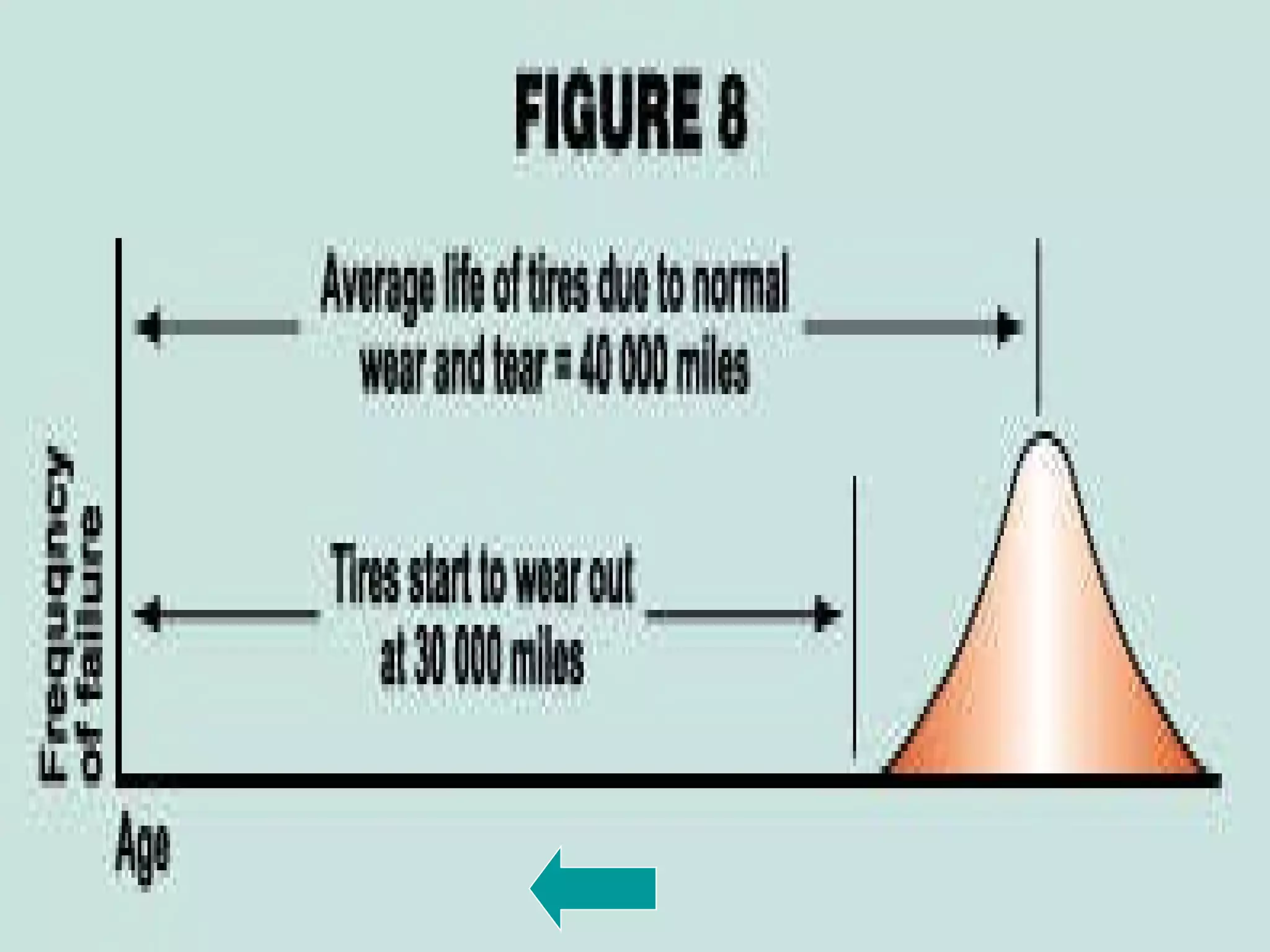
Maxim 1 Old Most equipment becomes more likely to fail as it gets  older New Most failures are not more  likely to occur  as equipment gets older
Maxim 2 Old Routine maintenance is about preventing failures New Routine maintenance is about avoiding, reducing or eliminating the consequences of failures 04/13/10 CSDO
Maxim 3 Old There are three basic types of maintenance: Predictive  Preventive  Corrective   04/13/10 CSDO
Maxim 3 New There are four basic types of maintenance: Predictive – condition based Preventive – overhaul/replace Corrective – after/during failure Detective – proactive 04/13/10 CSDO
04/13/10 CSDO
04/13/10 CSDO
04/13/10 CSDO
The Engineering Paradox Universities teach engineers to build things that never fail--but they fail ! Universities teach engineers about entropy--but most engineers cannot calculate maintenance demands to prevent or overcome deterioration. We look busy but no attempt to do  Life Cycle Costs (LCC). 04/13/10 CSDO
Breaking The Paradox Reliability problems are entropy driven failures which cost money and require trade-off considerations based on LCC. 04/13/10 CSDO
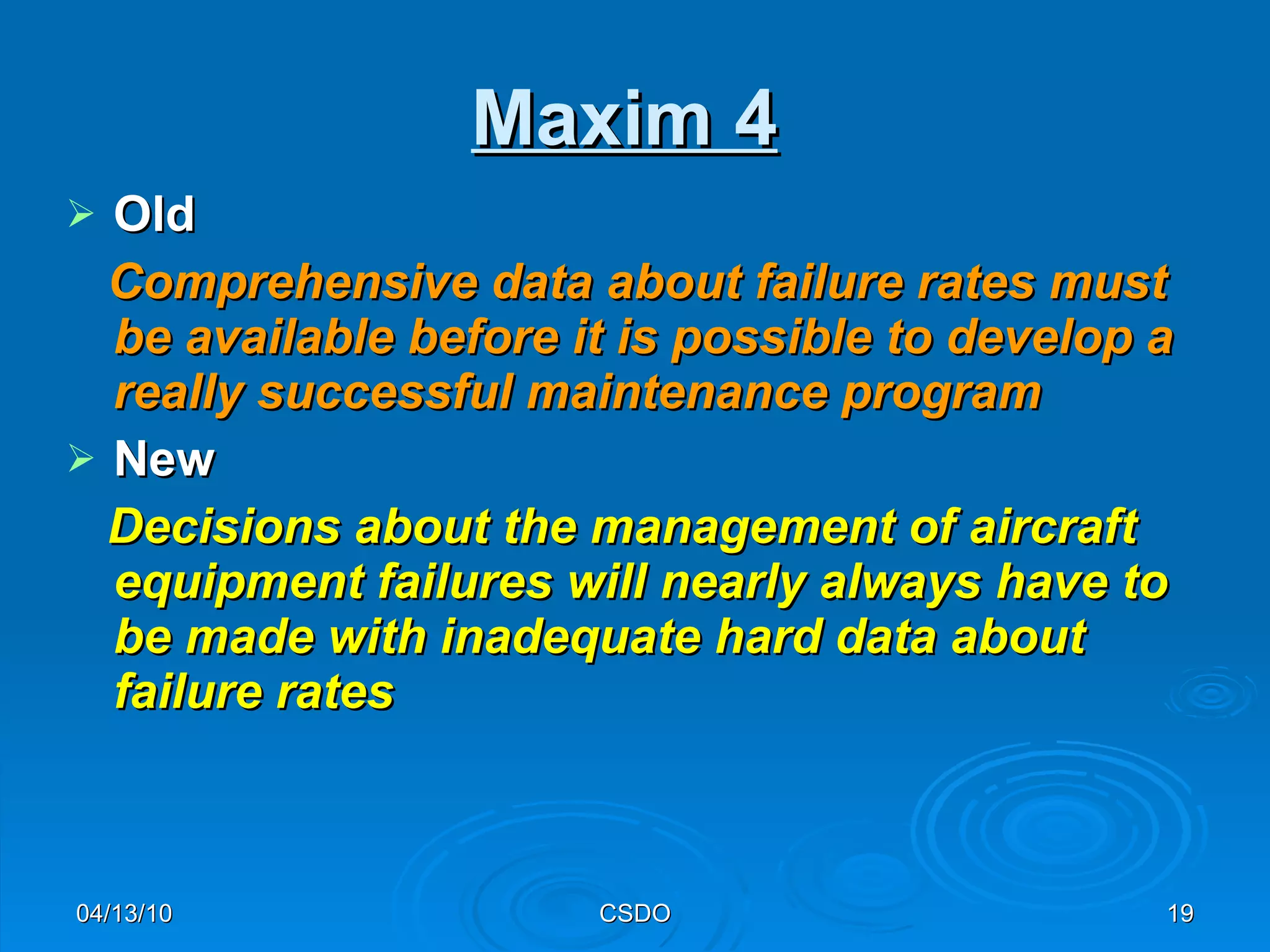
Maxim 4   Old   Comprehensive data about failure rates must be available before it is possible to develop a really successful maintenance program   New   Decisions about the management of aircraft equipment failures will nearly always have to be made with inadequate hard data about failure rates 04/13/10 CSDO
Maxim 5 Old If both are technically appropriate, fixed interval overhauls / replacements are usually both cheaper and more effective than condition-based maintenance. New If both are technically appropriate, condition-based maintenance is nearly always both cheaper and more effective than fixed interval overhauls/replacements throughout the life of the asset. 04/13/10 CSDO
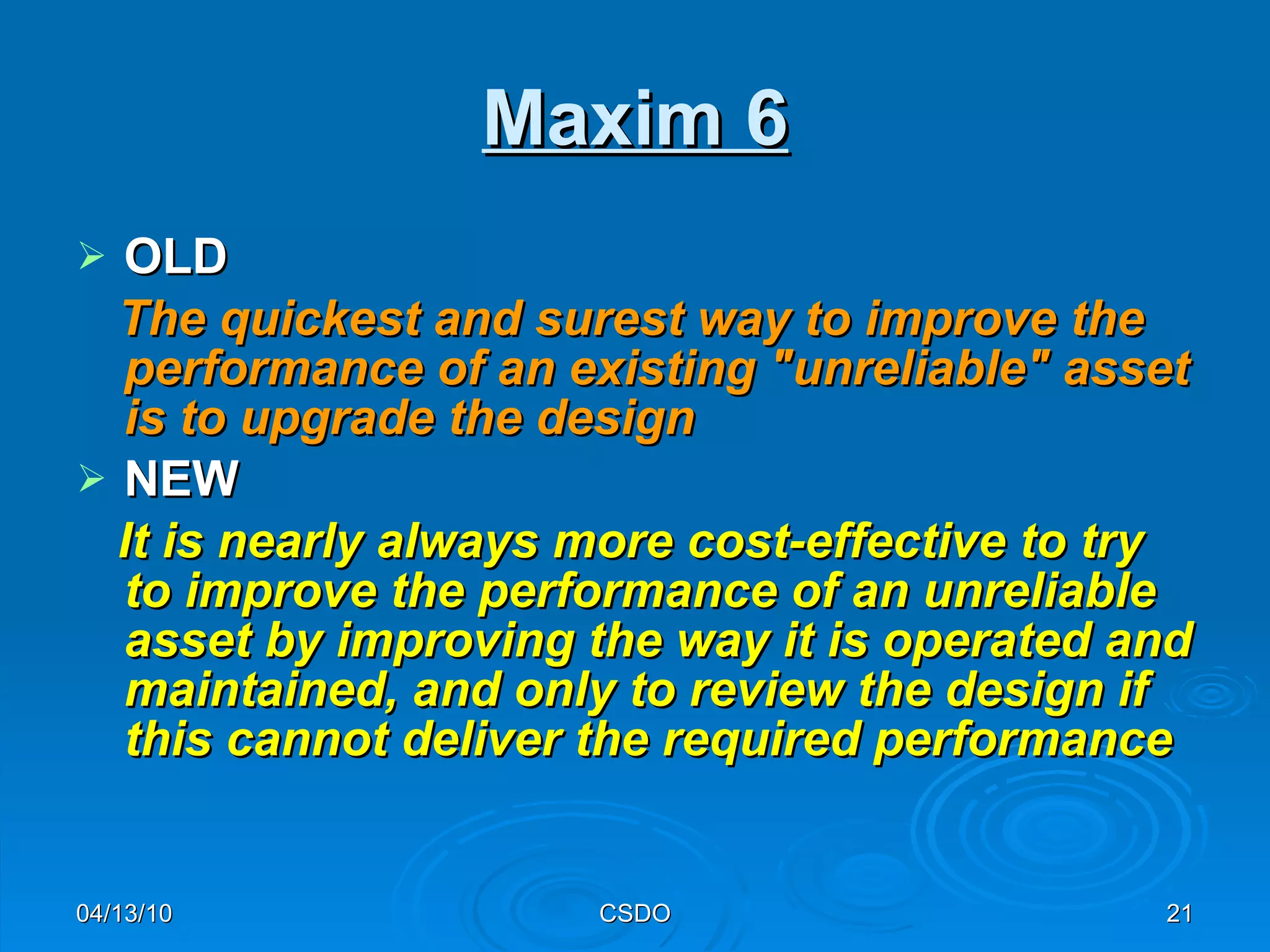
Maxim 6 OLD The quickest and surest way to improve the performance of an existing "unreliable" asset is to upgrade the design   NEW It is nearly always more cost-effective to try to improve the performance of an unreliable asset by improving the way it is operated and maintained, and only to review the design if this cannot deliver the required performance 04/13/10 CSDO
Maxim 7   OLD Maint policies should be formulated by managers and maint policies drawn up by suitably qualified specialists or ext agencies (a top-down approach) NEW Maint policies should be formulated by the people closest to the assets. The role of management is to provide the tools to help them make the right decisions, and to ensure that the decisions are sensible and defensible 04/13/10 CSDO
04/13/10 CSDO
04/13/10 CSDO The Elephant is like …
04/13/10 CSDO AOM
Maintenance Program Today The modern aircraft, although extremely complex when compared to its predecessors, requires less and less maint.  Nowadays, maint costs represent only a fraction of total operating costs but cost of maint is going up.   04/13/10 CSDO
04/13/10 CSDO
MILITARY AIRCRAFT REQUIREMENTS   LOWER MAINTENANCE RELATED COSTS   BETTER OPERATIONAL RELIABILITY   BETTER AIRCRAFT AVAILABILITY 04/13/10 CSDO
04/13/10 CSDO
MAINTAINABILITY ESSENTIALLY, THE EASE AND SPEED WITH WHICH A FAILED EQUIPMENT CAN BE BROUGHT BACK INTO OPERATING CONDITIONS IS MAINTAINABILITY  ALSO CALLED AS MEAN TIME TO REPAIR (MTTR) OF AN ITEM.  04/13/10 CSDO
MEAN TIME TO REPAIR DETECTION OF FAULT   ALLOCATION OF MAINTENANCE TEAM DIAGNOSE FAULT  OBTAIN SPARE PARTS (LOGISTIC DELAY)   REPAIR TIME(MTTR-THIS IS THE MANUFACTURERS INFORMATION)   TEST AND ACCEPT REPAIR  CLOSING UP THE SYSTEM AND RETURNING TO NORMAL OPERATION. SKILL OF THE MAINTENANCE ENGINEERS AND THE MAINTENANCE STAFF AVAILABLE AT THE BASES   04/13/10 CSDO
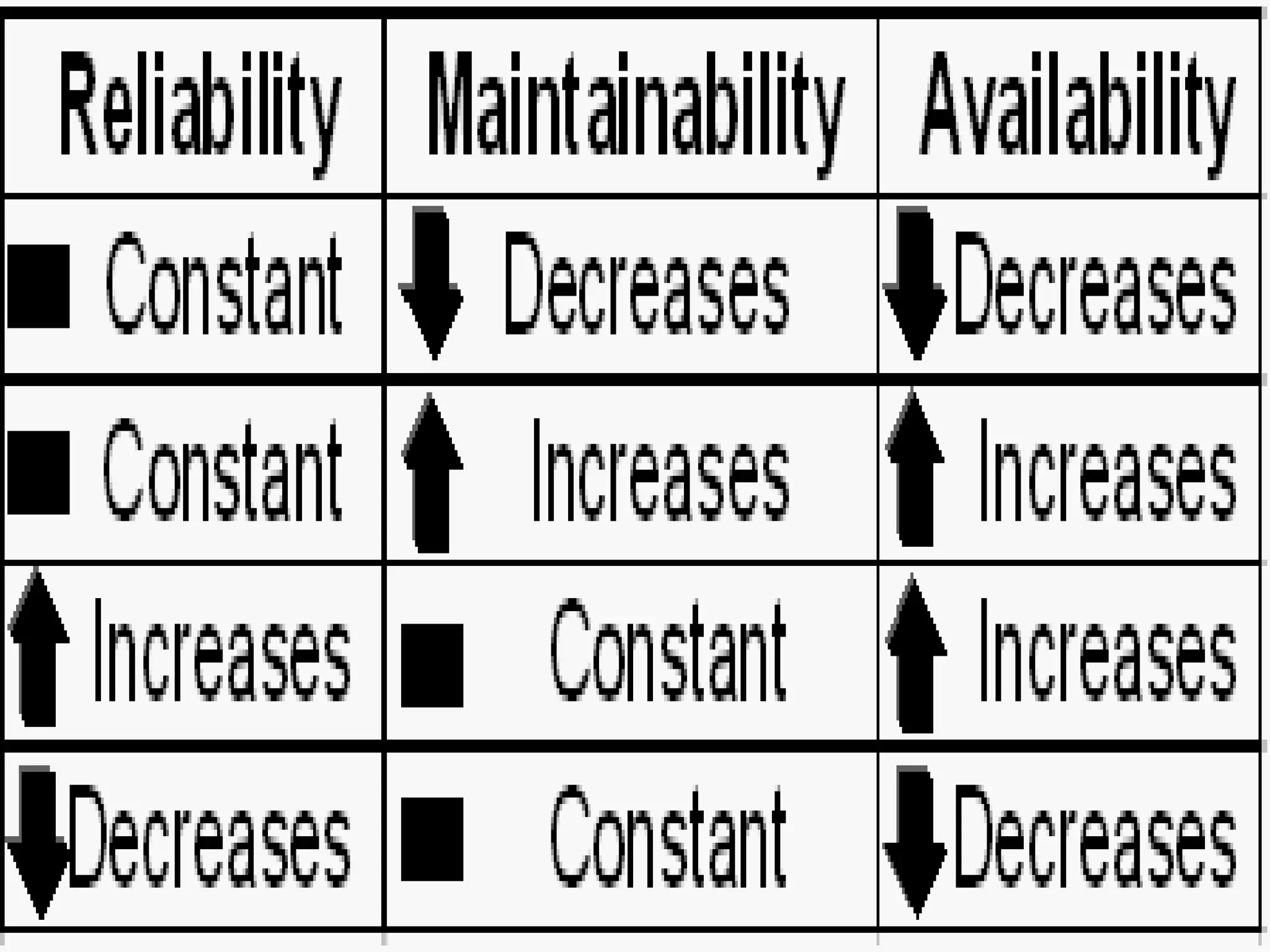
OPERATIONAL CONSIDERATIONS   MISSION ACCOMPLISHMENT   FLIGHT SAFETY   SIMULTANEOUS SERVICEABILITY Therefore the effectiveness  of a system is defined by   Reliability,   Maintainability  and  Availability.   04/13/10 CSDO
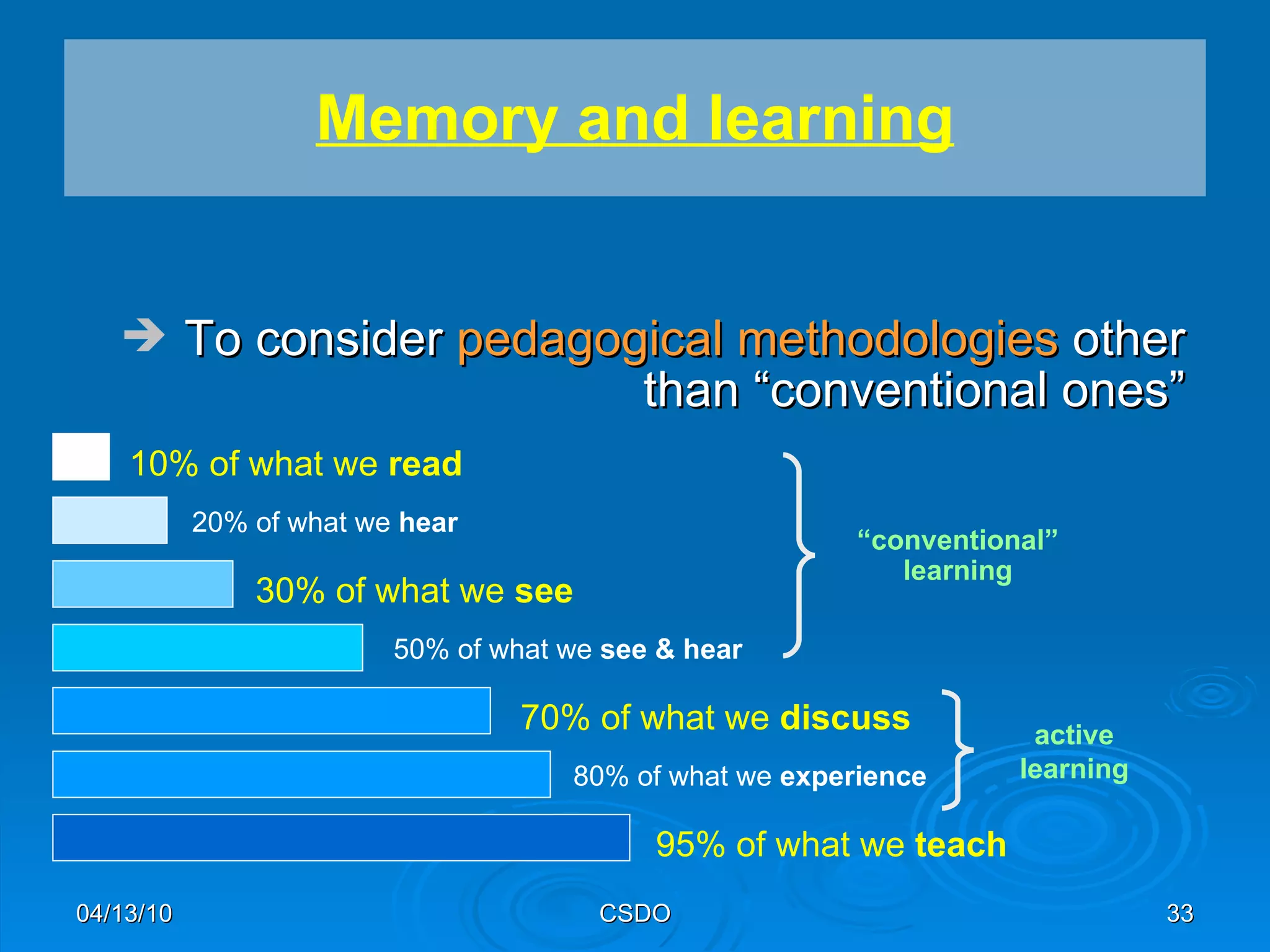
To consider  pedagogical methodologies  other than “conventional ones” Memory and learning 04/13/10 CSDO 95% of what we  teach 10% of what we  read 20% of what we  hear 50% of what we  see & hear  30% of what we  see “ conventional” learning 70% of what we  discuss 80% of what we  experience active learning
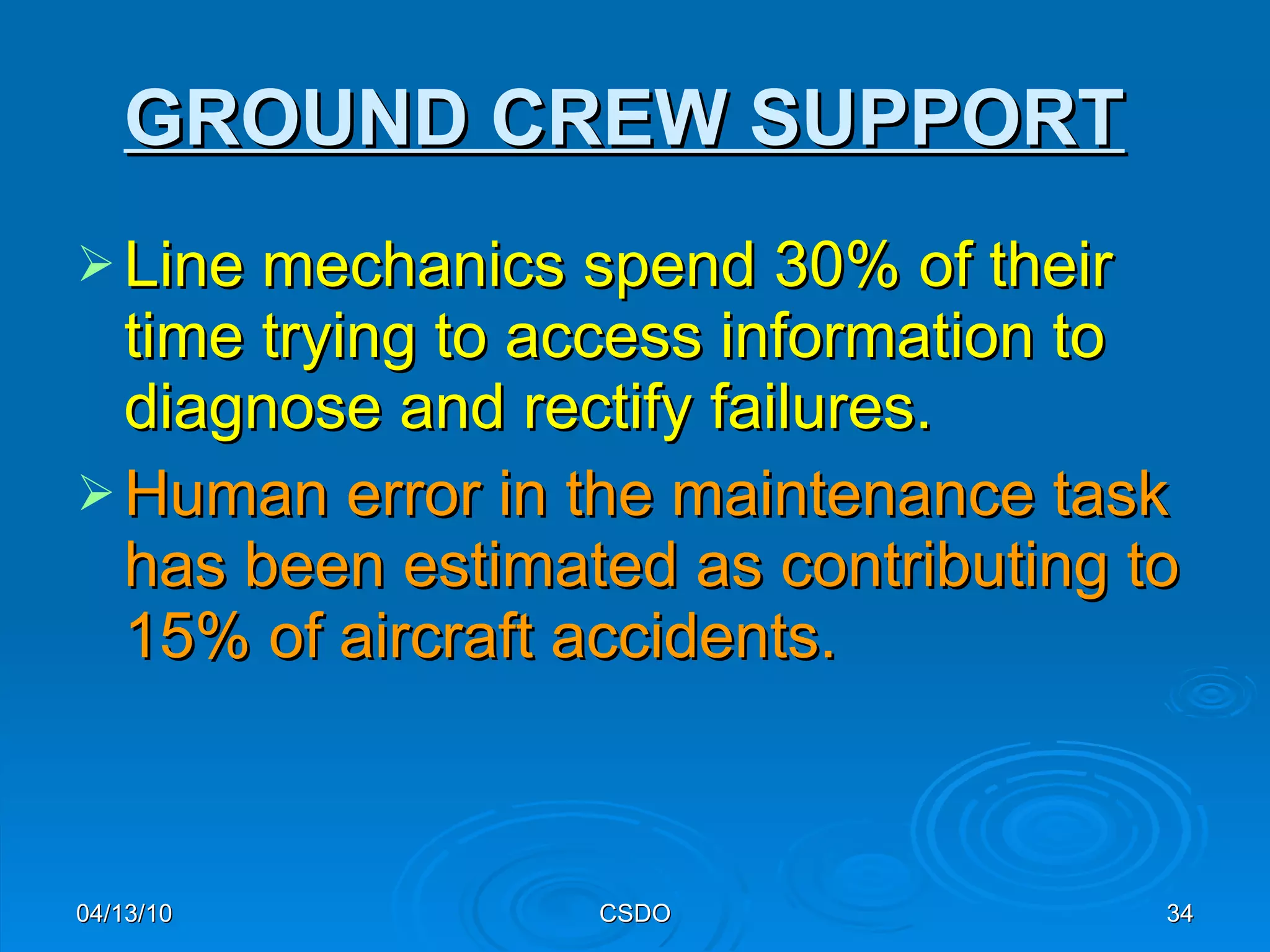
GROUND CREW SUPPORT   Line mechanics spend 30% of their time trying to access information to diagnose and rectify failures. Human error in the maintenance task has been estimated as contributing to 15% of aircraft accidents.   04/13/10 CSDO
GROUND CREW SUPPORT System-oriented approach to a Process-oriented approach.   The right Technical Data and tools necessary to complete those tasks. The Ground crew should have all the support readily at hand rather than searching for it.  04/13/10 CSDO
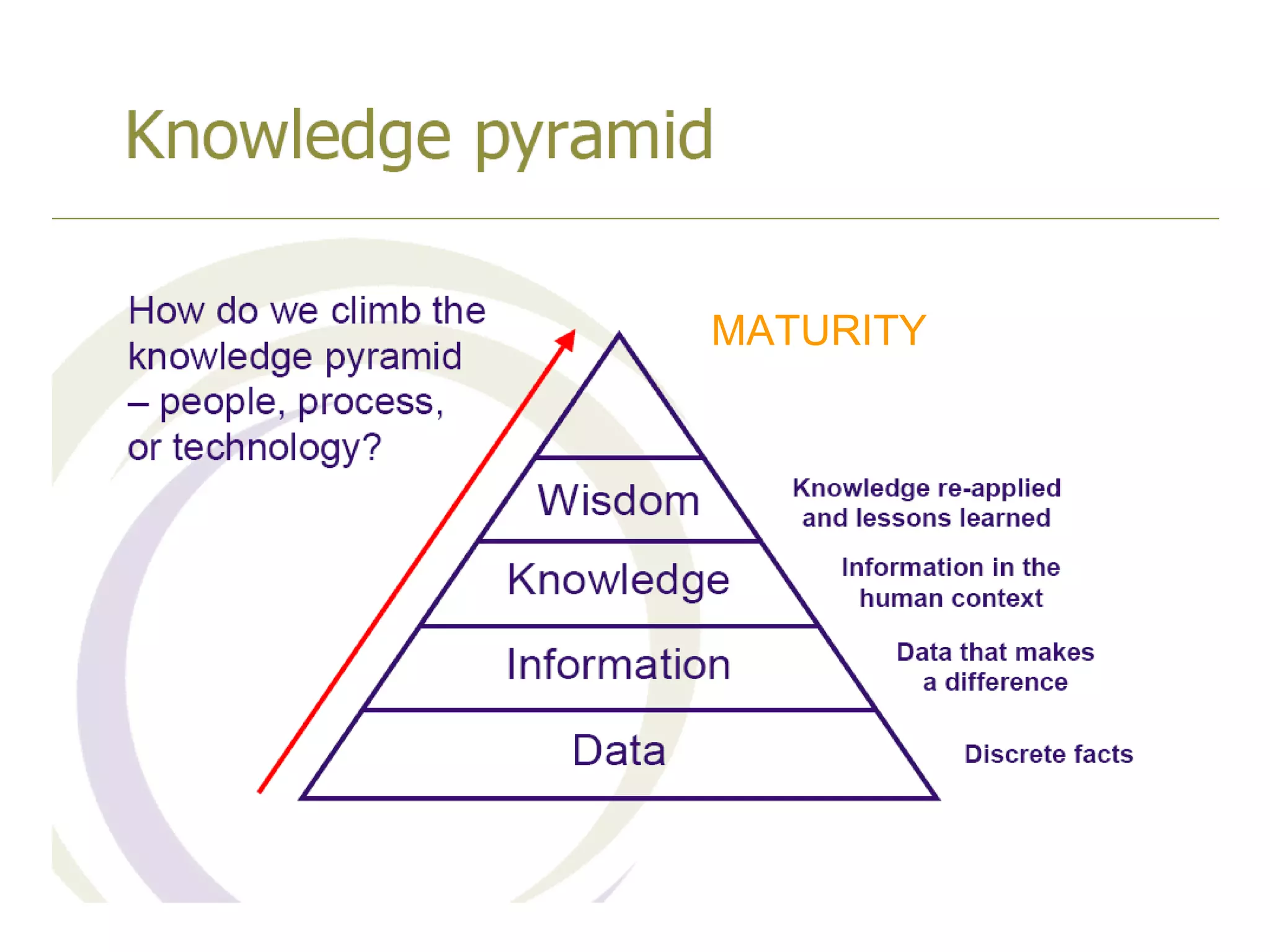
04/13/10 CSDO MATURITY
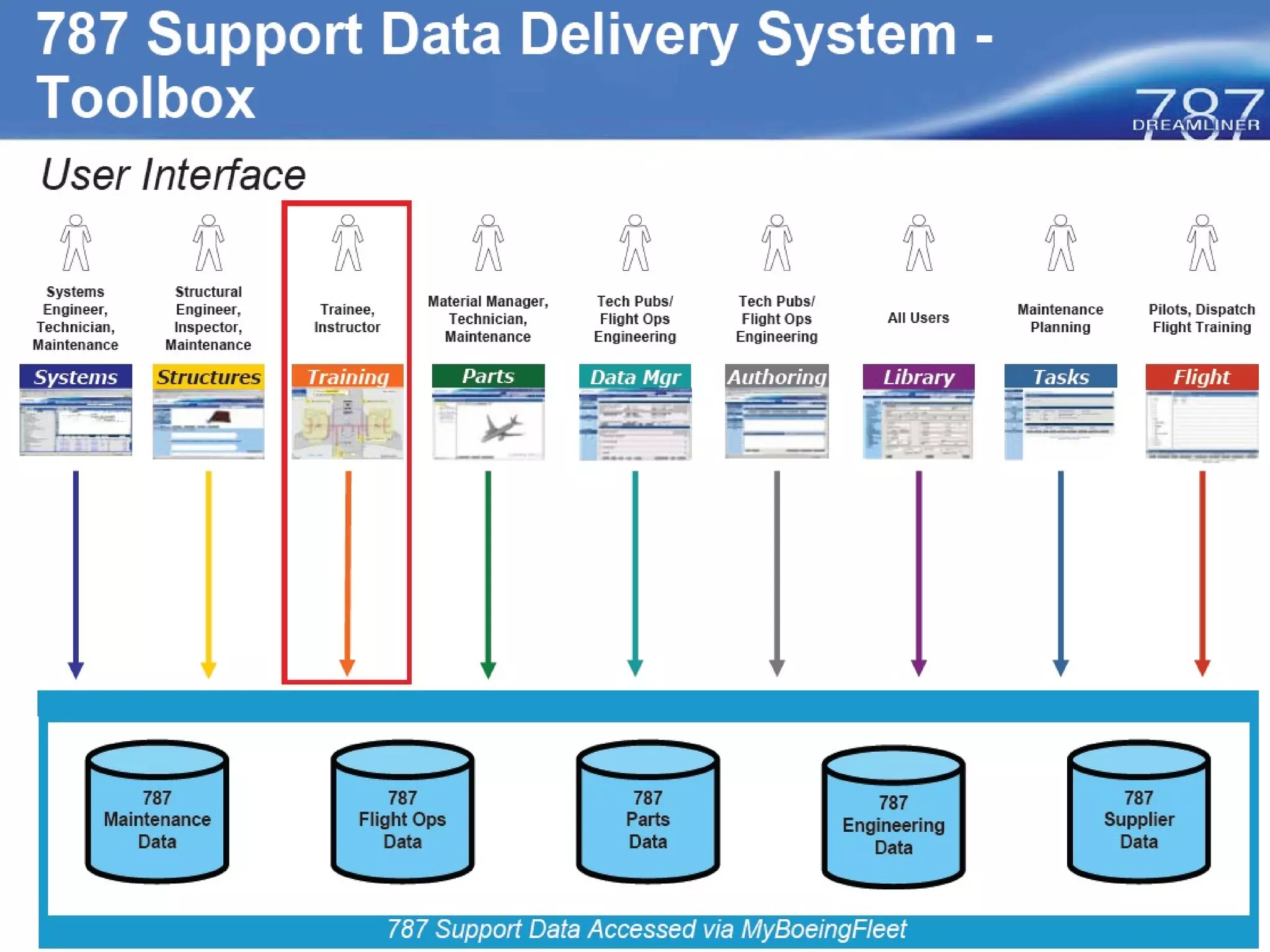
GROUND CREW SUPPORT Enable the rapid update of the technical information onboard the aircraft to support the operability driven aircraft approach.   Human interface technologies to provide the ground crew with information, data and advice at the point of work.   04/13/10 CSDO
04/13/10 CSDO
GROUND CREW SUPPORT Focus on embedded training technologies - train the ground crew within the operational environment - use the advanced HMI features - evaluate the proficiency of trainees.  Diagnostic methods to identify and locate failures and malfunctions and so reduce the incidence of ‘no fault found’ alarms.   04/13/10 CSDO
04/13/10 CSDO
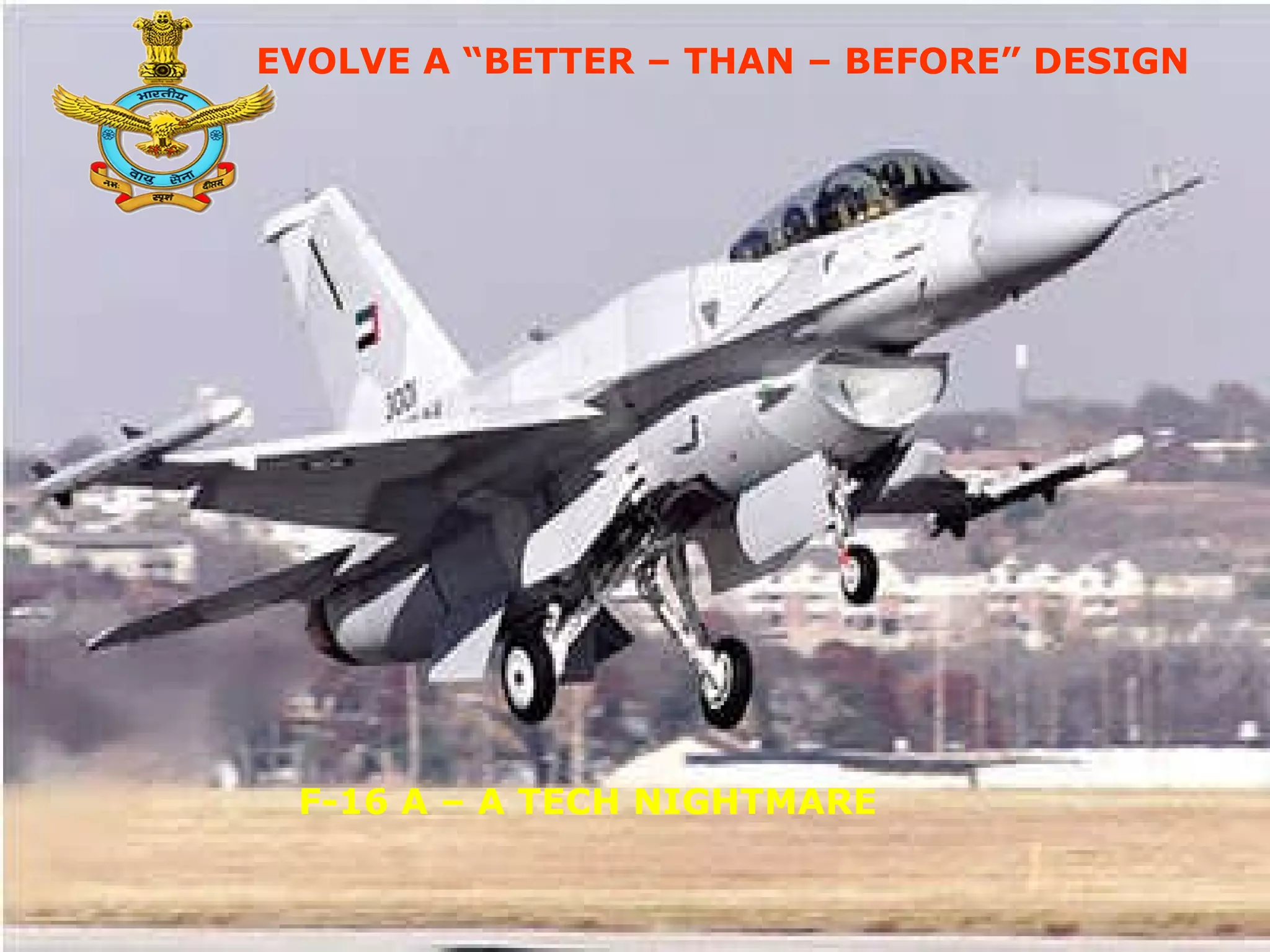
04/13/10 CSDO F-16 A – A TECH NIGHTMARE EVOLVE A “BETTER – THAN – BEFORE” DESIGN
04/13/10 CSDO BUILD – IN MAINTAINABILITY AT DESIGN STAGE
04/13/10 CSDO EMERGENCY LOWERING OF UNDER CARRIAGE SEEPAGE FROM HYDRAULIC PRESSURISATION POINT
TEJAS TO REMOVE THE HYDRAULIC PUMP ENGINE REMOVAL IS REQUIRED  THE REFUELLING AND GPU POINT ARE SITUATED CLOSE BY, WHICH CAN LEAD TO A FIRE BY SHORT CIRCUIT   04/13/10 CSDO LIMIT MAINT PERSONNEL REQMTS AND TO REDUCE THE POTENTIAL FOR MAINT ERROR
FIFTH GENERATION AIRCRAFT INTEGRATED VERY LOW OBSERVABLE  STEALTH. MTBF OF GREATER THAN 10 8  . MTTR OF 2 HRS . EMPHASIS ON RELIABILITY , MAINTAINABILITY  AND  SUSTAINABILITY - THE CAPABILITY TO FLY  DAYS WITHOUT EXTENSIVE  MAINTENANCE 04/13/10 CSDO
ACCESS / MAINTAINABILITY 36 INCHES OFF THE GROUND. SHOULDER HEIGHT TO NEARLY EVERY COMPONENT SUCH AS AVIONICS RACKS, ENGINES, AIRFRAME MOUNTED ACCESSORY DRIVE SYSTEM WITHOUT LADDERS OR WORK STANDS. DESIGN FEATURES  04/13/10 CSDO SHARE NEW IDEAS TO REDUCE THE FREQ OF DESIGN DICTATED MAINT ACTIVITIES
04/13/10 CSDO
DESIGN FEATURES (CONT’D)   AVIONICS Future - Highly Interactive and Distributed Avionics Architectures. "Selective Passivisation" - To enable an avionics computer to continue some part of its functionality even when a hardware or software failure occurs  "Disposable Electronics" - Meeting functional performances whilst dramatically decreasing maintenance costs.  Maintenance-free avionics that require no scheduled maintenance work.  04/13/10 CSDO
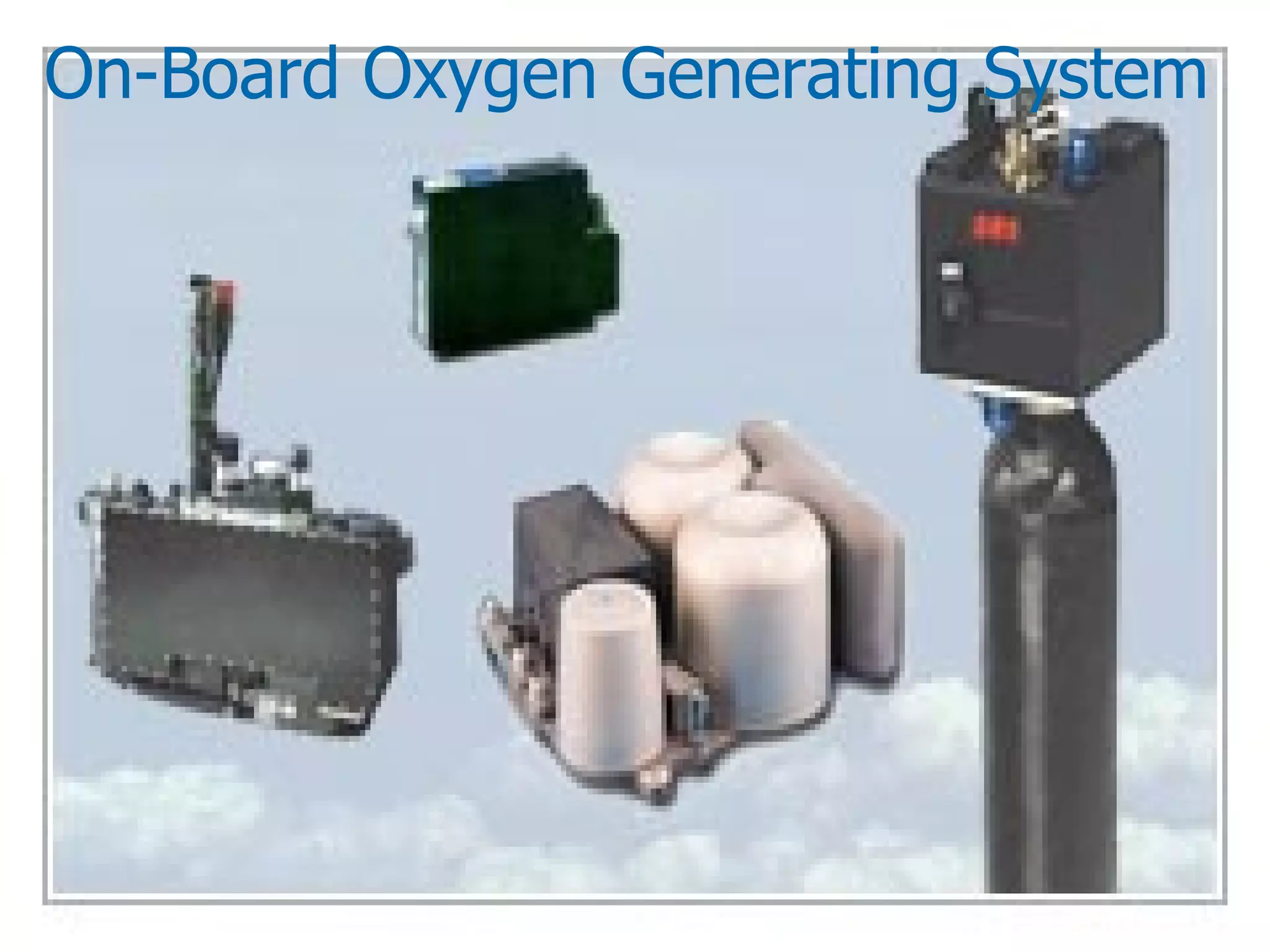
04/13/10 CSDO On-Board Oxygen Generating System
SELF SUFFICIENCY:- 04/13/10 CSDO ON BOARD OXYGEN GENERATING SYSTEM REPLACES GROUND BASED LOX. ON BOARD INERT GAS GENERATING SYSTEM (OBIGGS) USED TO FILL THE FUEL TANKS WITH NITROGEN AND USED FOR APU. DESIGN FEATURES (CONT’D)
04/13/10 CSDO PIT STOP IN RACING = ICT
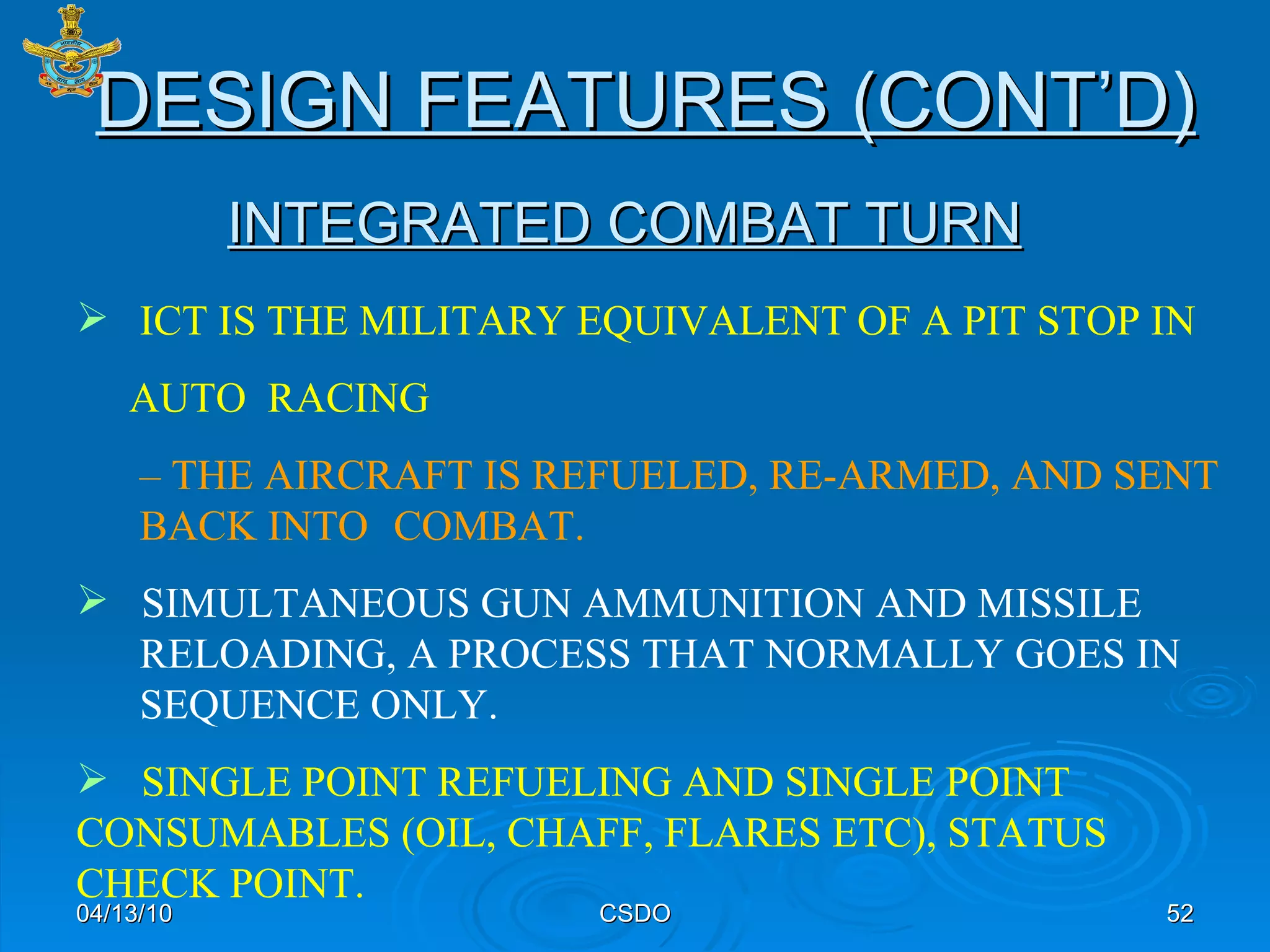
INTEGRATED COMBAT TURN 04/13/10 CSDO ICT IS THE MILITARY EQUIVALENT OF A PIT STOP IN  AUTO  RACING   –  THE AIRCRAFT IS REFUELED, RE-ARMED, AND SENT  BACK INTO  COMBAT. SIMULTANEOUS GUN AMMUNITION AND MISSILE  RELOADING, A PROCESS THAT NORMALLY GOES IN  SEQUENCE ONLY. SINGLE POINT REFUELING AND SINGLE POINT  CONSUMABLES (OIL, CHAFF, FLARES ETC), STATUS  CHECK POINT.  DESIGN FEATURES (CONT’D)
" T echnologies  A nd  T echniques for n E w  M aintenance concepts " A four-year, €40 million ($50 million) project co-funded by the European Commission under its Framework 6 research programme that aims to cut future generation aircraft maintenance costs by 50% within 20 years. TATEM research and technology project has now identified 19 top-level requirements and is working to apply these principles. 04/13/10 CSDO SUCCESS STORY OF CIVIL AVIATION MAINTAINABILITY MILITARY - LESS FLYING BUT MORE HARD MANOEUVRES
NEW PHILOSOPHY THE QUEST FOR SHORTCUTS   IMPROVEMENT IS A JOURNEY, NOT A DESTINATION   04/13/10 CSDO
04/13/10 CSDO
04/13/10 CSDO
Lean is… “ Eliminate all costs which do not add value to a product or process” “ Becoming ‘lean’ is a process of eliminating waste with the goal of creating value” 04/13/10 CSDO
04/13/10 CSDO
04/13/10 CSDO
04/13/10 CSDO
04/13/10 CSDO
04/13/10 CSDO
04/13/10 CSDO 4% 2% 5% 7% 14% 68%
04/13/10 CSDO
04/13/10 CSDO
Current situation: Document-oriented manuals Today, technical documentation is organized in a  document-centric  approach. 04/13/10 CSDO
Future The objective: provide  information  according to  what, when and how it is needed , instead of how it is printed. In other words,  be process-oriented ! 04/13/10 CSDO
04/13/10 CSDO
04/13/10 CSDO
04/13/10 CSDO

4 Th Gen

  • 1.
    FOURTH GENERATION MAINTENANCE 04/13/10 CSDO
  • 2.
  • 3.
  • 4.
    04/13/10 CSDO MAINTAINABILITYASPECTS OF AIRCRAFT SYSTEMS
  • 5.
    04/13/10 CSDO 19401950 1970 1990 2010 1st Gen: Fix It when it breaks Focus: Repair Tasks 2 nd Gen: Scheduled O/H Sys for Plng & Controlling work Focus: Improving Maintenance Planning & Scheduling 3 rd Gen: CBM, FMEA, Multi Skilling, Team Work, Rel, Maint, Availb Computers Focus: Predicting, Preventing & Avoiding the Consequences of Equipment Failures 4 th Gen: Focus: Failure Elimination – Pro Active Maintenance, LCC, Lean, CBM+, RCA
  • 6.
    Scheduled Maintenance vsReliability-Centered Maintenance Scheduled Maintenance Repair Only What Is Broken Maintenance Is Unplanned if we have on-condition items failing. Maintenance Driven by Lowest Rs / Tender L1 (What's Easiest Today) RCM Repair Not Only What Is Broken but What is Likely to Fail Before a Defined Time Focus is Planned Maintenance Facilitates Resource Requirements Predications Maintenance Based on LCC & Value (What's Best for the Long Term) 04/13/10 CSDO
  • 7.
    The Fourth Generationof Maintenance Will focus on failure elimination, rather than prediction or prevention Find the Root Cause(s) of “events” or “mishaps” Human Factors Risk Analysis - Human errors account for an alarming rate of failures throughout a broad range of industries worldwide. With high failure rates and the fact that the results of human error can result in enormously costly failures, including the loss of life, the need for human error analysis and safety assessment is crucial. 04/13/10 CSDO
  • 8.
    Failure Reporting Analysisand Corrective Action System (FRACAS) An effective FRACAS process provides for gathering and tracking failure data in a central database so that this data can be analyzed to determine underlying causes. Yet, in many organi-zations, the individuals participating in the process are distributed across multiple groups or locations, and are recording information in different sources or databases. As a result, the ability to quickly isolate failure trends is compromised. FRACAS Standard helps organizations to overcome this fragmented approach to reliability. 04/13/10 CSDO
  • 9.
    Paradigm Change now04/13/10 CSDO
  • 10.
    Maxim 1 OldMost equipment becomes more likely to fail as it gets older New Most failures are not more likely to occur as equipment gets older
  • 11.
    Maxim 2 OldRoutine maintenance is about preventing failures New Routine maintenance is about avoiding, reducing or eliminating the consequences of failures 04/13/10 CSDO
  • 12.
    Maxim 3 OldThere are three basic types of maintenance: Predictive Preventive Corrective 04/13/10 CSDO
  • 13.
    Maxim 3 NewThere are four basic types of maintenance: Predictive – condition based Preventive – overhaul/replace Corrective – after/during failure Detective – proactive 04/13/10 CSDO
  • 14.
  • 15.
  • 16.
  • 17.
    The Engineering ParadoxUniversities teach engineers to build things that never fail--but they fail ! Universities teach engineers about entropy--but most engineers cannot calculate maintenance demands to prevent or overcome deterioration. We look busy but no attempt to do Life Cycle Costs (LCC). 04/13/10 CSDO
  • 18.
    Breaking The ParadoxReliability problems are entropy driven failures which cost money and require trade-off considerations based on LCC. 04/13/10 CSDO
  • 19.
    Maxim 4 Old Comprehensive data about failure rates must be available before it is possible to develop a really successful maintenance program New Decisions about the management of aircraft equipment failures will nearly always have to be made with inadequate hard data about failure rates 04/13/10 CSDO
  • 20.
    Maxim 5 OldIf both are technically appropriate, fixed interval overhauls / replacements are usually both cheaper and more effective than condition-based maintenance. New If both are technically appropriate, condition-based maintenance is nearly always both cheaper and more effective than fixed interval overhauls/replacements throughout the life of the asset. 04/13/10 CSDO
  • 21.
    Maxim 6 OLDThe quickest and surest way to improve the performance of an existing "unreliable" asset is to upgrade the design NEW It is nearly always more cost-effective to try to improve the performance of an unreliable asset by improving the way it is operated and maintained, and only to review the design if this cannot deliver the required performance 04/13/10 CSDO
  • 22.
    Maxim 7 OLD Maint policies should be formulated by managers and maint policies drawn up by suitably qualified specialists or ext agencies (a top-down approach) NEW Maint policies should be formulated by the people closest to the assets. The role of management is to provide the tools to help them make the right decisions, and to ensure that the decisions are sensible and defensible 04/13/10 CSDO
  • 23.
  • 24.
    04/13/10 CSDO TheElephant is like …
  • 25.
  • 26.
    Maintenance Program TodayThe modern aircraft, although extremely complex when compared to its predecessors, requires less and less maint. Nowadays, maint costs represent only a fraction of total operating costs but cost of maint is going up. 04/13/10 CSDO
  • 27.
  • 28.
    MILITARY AIRCRAFT REQUIREMENTS LOWER MAINTENANCE RELATED COSTS BETTER OPERATIONAL RELIABILITY BETTER AIRCRAFT AVAILABILITY 04/13/10 CSDO
  • 29.
  • 30.
    MAINTAINABILITY ESSENTIALLY, THEEASE AND SPEED WITH WHICH A FAILED EQUIPMENT CAN BE BROUGHT BACK INTO OPERATING CONDITIONS IS MAINTAINABILITY ALSO CALLED AS MEAN TIME TO REPAIR (MTTR) OF AN ITEM. 04/13/10 CSDO
  • 31.
    MEAN TIME TOREPAIR DETECTION OF FAULT ALLOCATION OF MAINTENANCE TEAM DIAGNOSE FAULT OBTAIN SPARE PARTS (LOGISTIC DELAY) REPAIR TIME(MTTR-THIS IS THE MANUFACTURERS INFORMATION) TEST AND ACCEPT REPAIR CLOSING UP THE SYSTEM AND RETURNING TO NORMAL OPERATION. SKILL OF THE MAINTENANCE ENGINEERS AND THE MAINTENANCE STAFF AVAILABLE AT THE BASES 04/13/10 CSDO
  • 32.
    OPERATIONAL CONSIDERATIONS MISSION ACCOMPLISHMENT FLIGHT SAFETY SIMULTANEOUS SERVICEABILITY Therefore the effectiveness of a system is defined by Reliability, Maintainability and Availability. 04/13/10 CSDO
  • 33.
    To consider pedagogical methodologies other than “conventional ones” Memory and learning 04/13/10 CSDO 95% of what we teach 10% of what we read 20% of what we hear 50% of what we see & hear 30% of what we see “ conventional” learning 70% of what we discuss 80% of what we experience active learning
  • 34.
    GROUND CREW SUPPORT Line mechanics spend 30% of their time trying to access information to diagnose and rectify failures. Human error in the maintenance task has been estimated as contributing to 15% of aircraft accidents. 04/13/10 CSDO
  • 35.
    GROUND CREW SUPPORTSystem-oriented approach to a Process-oriented approach. The right Technical Data and tools necessary to complete those tasks. The Ground crew should have all the support readily at hand rather than searching for it. 04/13/10 CSDO
  • 36.
  • 37.
    GROUND CREW SUPPORTEnable the rapid update of the technical information onboard the aircraft to support the operability driven aircraft approach. Human interface technologies to provide the ground crew with information, data and advice at the point of work. 04/13/10 CSDO
  • 38.
  • 39.
    GROUND CREW SUPPORTFocus on embedded training technologies - train the ground crew within the operational environment - use the advanced HMI features - evaluate the proficiency of trainees. Diagnostic methods to identify and locate failures and malfunctions and so reduce the incidence of ‘no fault found’ alarms. 04/13/10 CSDO
  • 40.
  • 41.
    04/13/10 CSDO F-16A – A TECH NIGHTMARE EVOLVE A “BETTER – THAN – BEFORE” DESIGN
  • 42.
    04/13/10 CSDO BUILD– IN MAINTAINABILITY AT DESIGN STAGE
  • 43.
    04/13/10 CSDO EMERGENCYLOWERING OF UNDER CARRIAGE SEEPAGE FROM HYDRAULIC PRESSURISATION POINT
  • 44.
    TEJAS TO REMOVETHE HYDRAULIC PUMP ENGINE REMOVAL IS REQUIRED THE REFUELLING AND GPU POINT ARE SITUATED CLOSE BY, WHICH CAN LEAD TO A FIRE BY SHORT CIRCUIT 04/13/10 CSDO LIMIT MAINT PERSONNEL REQMTS AND TO REDUCE THE POTENTIAL FOR MAINT ERROR
  • 45.
    FIFTH GENERATION AIRCRAFTINTEGRATED VERY LOW OBSERVABLE STEALTH. MTBF OF GREATER THAN 10 8 . MTTR OF 2 HRS . EMPHASIS ON RELIABILITY , MAINTAINABILITY AND SUSTAINABILITY - THE CAPABILITY TO FLY DAYS WITHOUT EXTENSIVE MAINTENANCE 04/13/10 CSDO
  • 46.
    ACCESS / MAINTAINABILITY36 INCHES OFF THE GROUND. SHOULDER HEIGHT TO NEARLY EVERY COMPONENT SUCH AS AVIONICS RACKS, ENGINES, AIRFRAME MOUNTED ACCESSORY DRIVE SYSTEM WITHOUT LADDERS OR WORK STANDS. DESIGN FEATURES 04/13/10 CSDO SHARE NEW IDEAS TO REDUCE THE FREQ OF DESIGN DICTATED MAINT ACTIVITIES
  • 47.
  • 48.
    DESIGN FEATURES (CONT’D) AVIONICS Future - Highly Interactive and Distributed Avionics Architectures. "Selective Passivisation" - To enable an avionics computer to continue some part of its functionality even when a hardware or software failure occurs "Disposable Electronics" - Meeting functional performances whilst dramatically decreasing maintenance costs. Maintenance-free avionics that require no scheduled maintenance work. 04/13/10 CSDO
  • 49.
    04/13/10 CSDO On-BoardOxygen Generating System
  • 50.
    SELF SUFFICIENCY:- 04/13/10CSDO ON BOARD OXYGEN GENERATING SYSTEM REPLACES GROUND BASED LOX. ON BOARD INERT GAS GENERATING SYSTEM (OBIGGS) USED TO FILL THE FUEL TANKS WITH NITROGEN AND USED FOR APU. DESIGN FEATURES (CONT’D)
  • 51.
    04/13/10 CSDO PITSTOP IN RACING = ICT
  • 52.
    INTEGRATED COMBAT TURN04/13/10 CSDO ICT IS THE MILITARY EQUIVALENT OF A PIT STOP IN AUTO RACING – THE AIRCRAFT IS REFUELED, RE-ARMED, AND SENT BACK INTO COMBAT. SIMULTANEOUS GUN AMMUNITION AND MISSILE RELOADING, A PROCESS THAT NORMALLY GOES IN SEQUENCE ONLY. SINGLE POINT REFUELING AND SINGLE POINT CONSUMABLES (OIL, CHAFF, FLARES ETC), STATUS CHECK POINT. DESIGN FEATURES (CONT’D)
  • 53.
    " T echnologies A nd T echniques for n E w M aintenance concepts " A four-year, €40 million ($50 million) project co-funded by the European Commission under its Framework 6 research programme that aims to cut future generation aircraft maintenance costs by 50% within 20 years. TATEM research and technology project has now identified 19 top-level requirements and is working to apply these principles. 04/13/10 CSDO SUCCESS STORY OF CIVIL AVIATION MAINTAINABILITY MILITARY - LESS FLYING BUT MORE HARD MANOEUVRES
  • 54.
    NEW PHILOSOPHY THEQUEST FOR SHORTCUTS IMPROVEMENT IS A JOURNEY, NOT A DESTINATION 04/13/10 CSDO
  • 55.
  • 56.
  • 57.
    Lean is… “Eliminate all costs which do not add value to a product or process” “ Becoming ‘lean’ is a process of eliminating waste with the goal of creating value” 04/13/10 CSDO
  • 58.
  • 59.
  • 60.
  • 61.
  • 62.
  • 63.
    04/13/10 CSDO 4%2% 5% 7% 14% 68%
  • 64.
  • 65.
  • 66.
    Current situation: Document-orientedmanuals Today, technical documentation is organized in a document-centric approach. 04/13/10 CSDO
  • 67.
    Future The objective:provide information according to what, when and how it is needed , instead of how it is printed. In other words, be process-oriented ! 04/13/10 CSDO
  • 68.
  • 69.
  • 70.