Judging
Communications
            2013
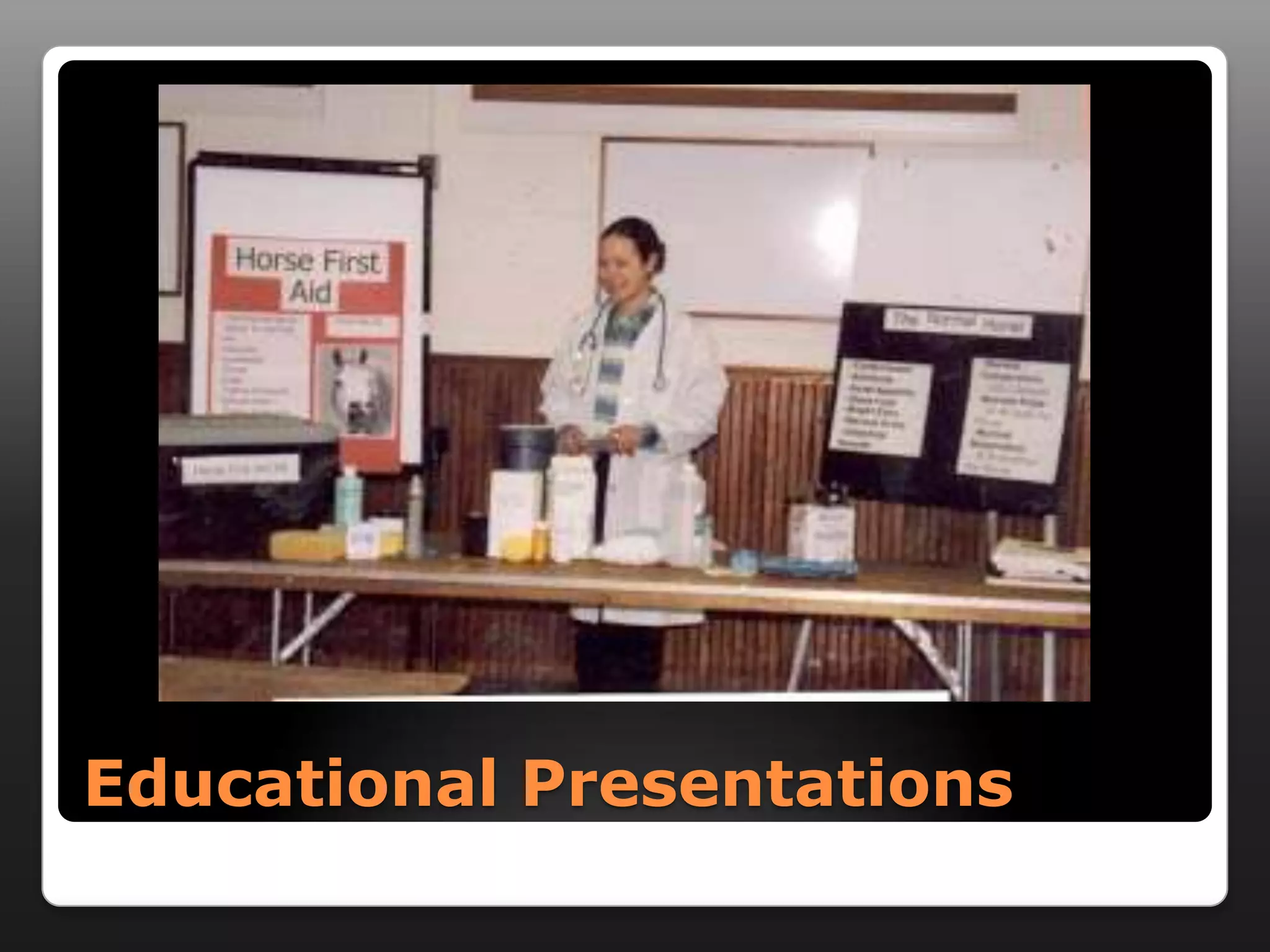
Educational Presentations
   To make sure the youth has a positive
    experience

   To help them develop their
    communication skills

   To educate the audience on a given topic


Goals
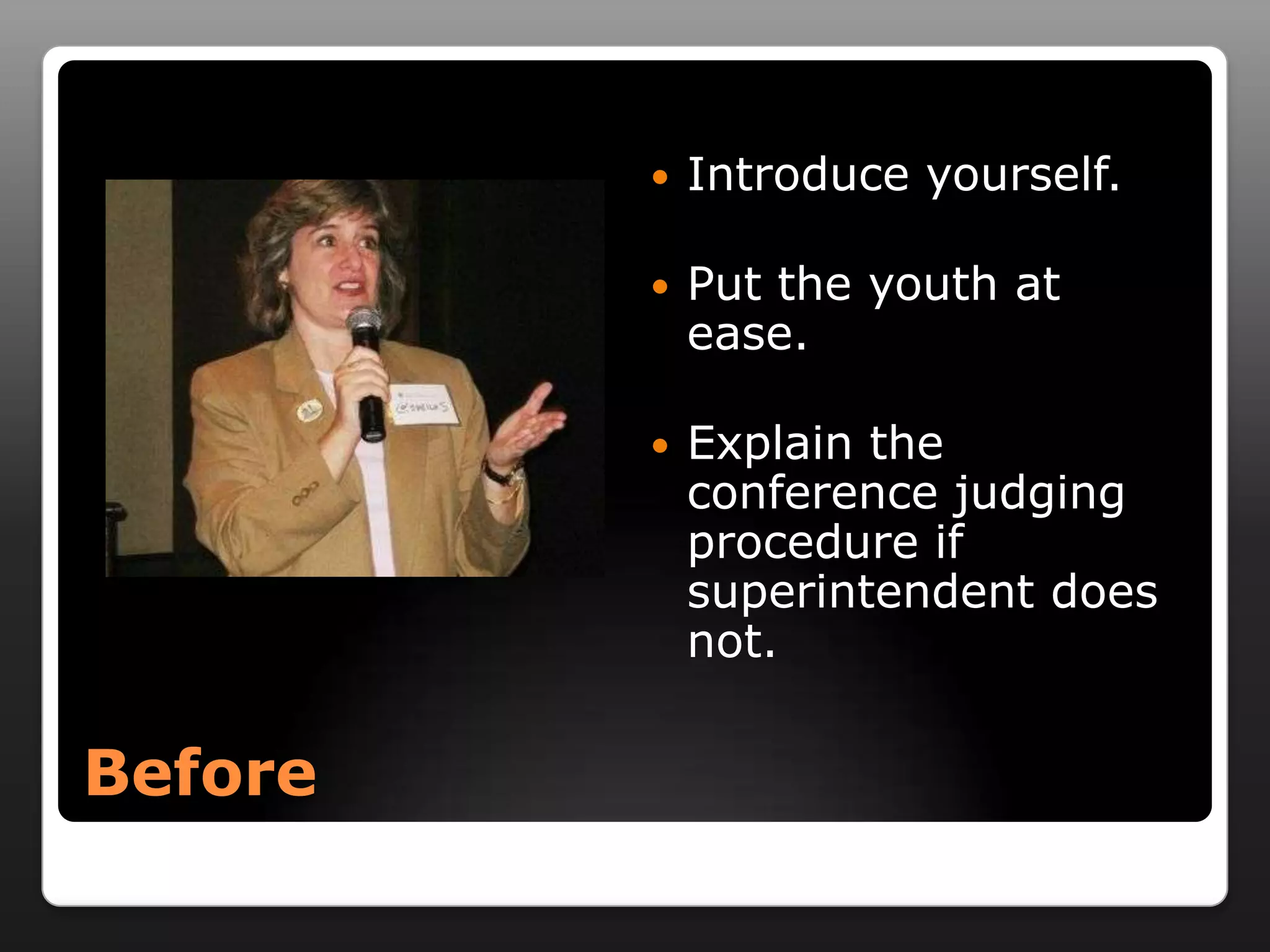
   Introduce yourself.

            Put the youth at
             ease.

            Explain the
             conference judging
             procedure if
             superintendent does
             not.


Before
   SMILE!!!!

   Make notes

   Be ready to pose a
    question at the end.

   Evaluate content, visual
    aids, and delivery

   Audience response?

During
   Ask about what they learned or how they came
    up with their topic

   What skills did they learn from this project?

   Feedback about presentation

    ◦ ―I really liked how you...‖

    ◦ ―I noticed you...‖

   End positive. Encourage them to do their
    presentation again somewhere.


After—Conference Judging
   Introductions that get attention

   Thesis statement with 3 (or more) points

   Clear transition between parts

   Conclusion that restates the points


What to look for...content
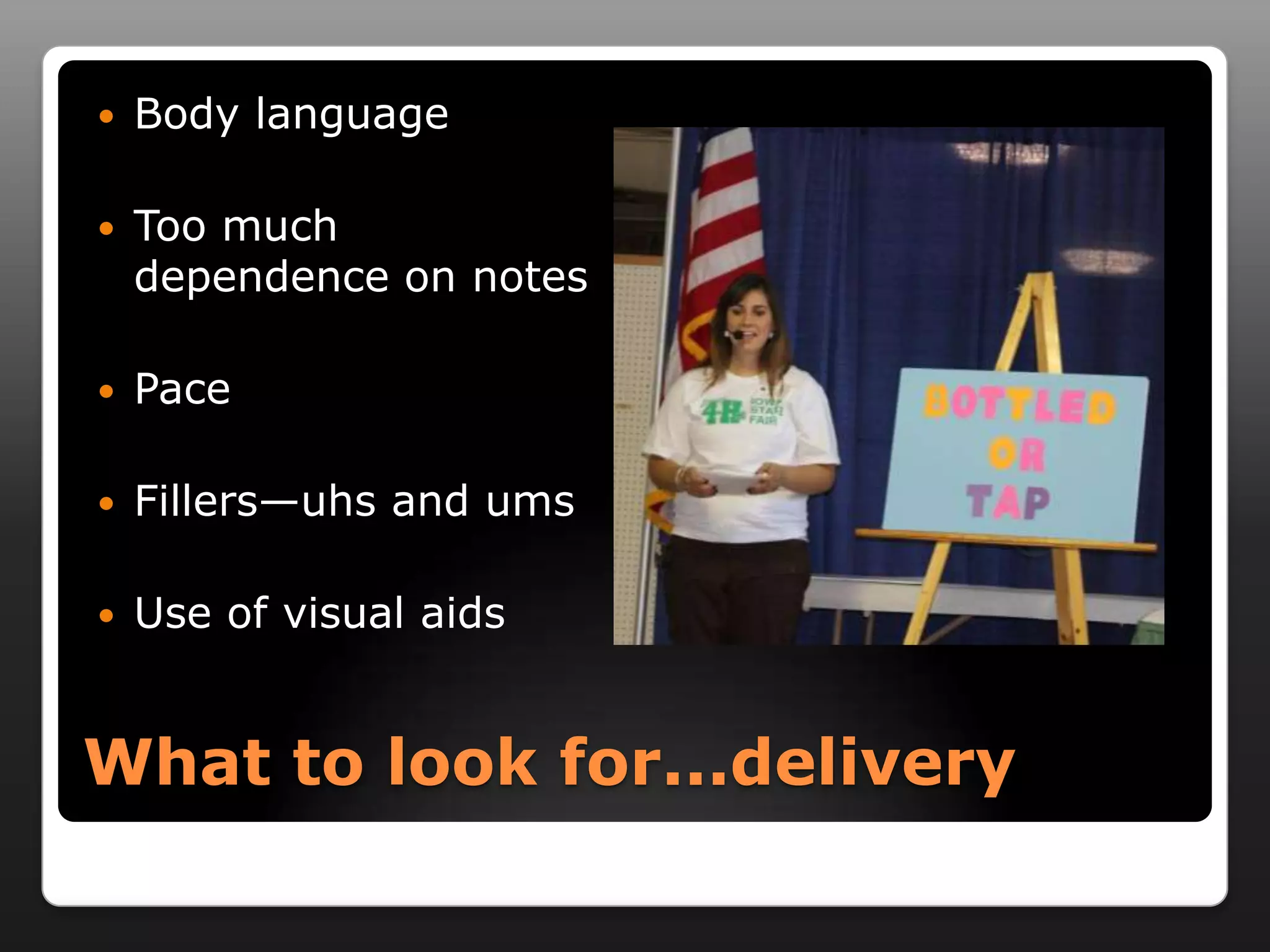
   Body language

   Too much
    dependence on notes

   Pace

   Fillers—uhs and ums

   Use of visual aids


What to look for...delivery
   Did they cite their sources?

   Did they ask if there were questions?

   Did they repeat the questions?


Specifics
   Posters or slides too crowded?

   Font too small?

   Props add to the presentation
    ◦ Food safety
    ◦ Manage space


   No brand names visible


Visual aid specifics
   This slide is too full. It’s hard to read and
    tells too much information. The audience
    will be so busy reading the screen that
    they won’t listen to what the speaker is
    saying, or they will not even attempt to
    read it because it is not visually pleasing.
    4H’ers should never do a slide like
    this, but some of them will. The colors are
    bad too. Help them see why this doesn’t
    work.

Bad example
http://vimeo.com/35802245


Video Example
   http://www.youtube.com/watch?v=LdQyj
    dvKvgc
   http://www.youtube.com/watch?v=LdQyj
    dvKvgc
   http://www.youtube.com/watch?v=JBoMZ
    KSYxZo
   Can 4-H’er set up/run equipment?

   Do they have a back-up plan?

   Talk to audience– not screen

   Stands so screen is visible


Electronic Visual Aids
   One major point per slide

   No more than 6 lines on a slide

   No ALL CAPS

   High contrast colors


Electronic Visual Aids – cont.
   Make them want to try this again!

   Make suggestions that will help them
    improve

   Make suggestions for those going on to
    the State Fair like
    memorization, posters, etc.


End on a high note!
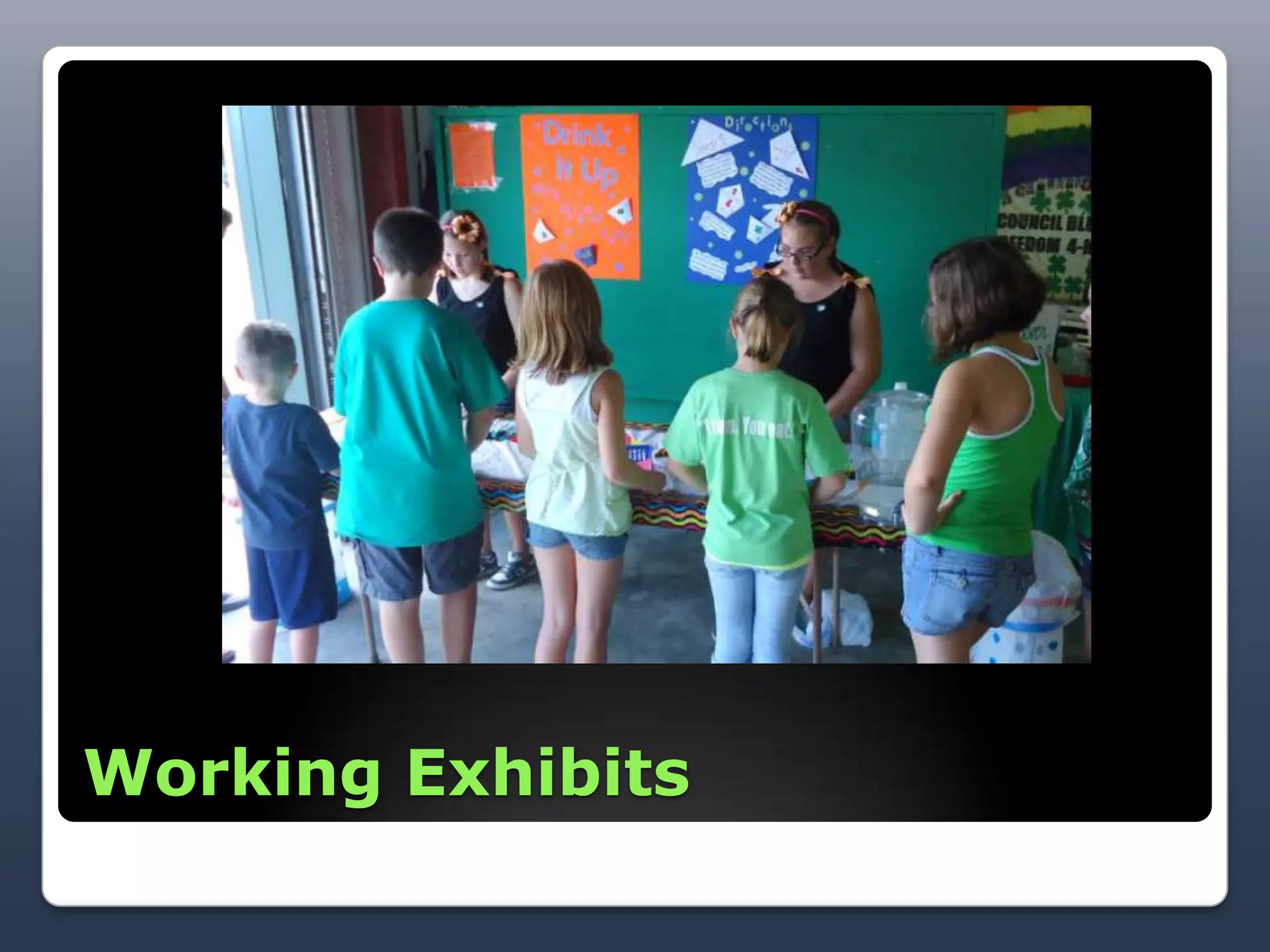
Working Exhibits
   To teach others a task

   To educate them in the process

   To ―sell‖ the project

   To manage the audience and the work
    space


Goals
   Stand back and watch set up

   Let them invite you

   Smile!!!!

   Make the item

   Ask questions


During
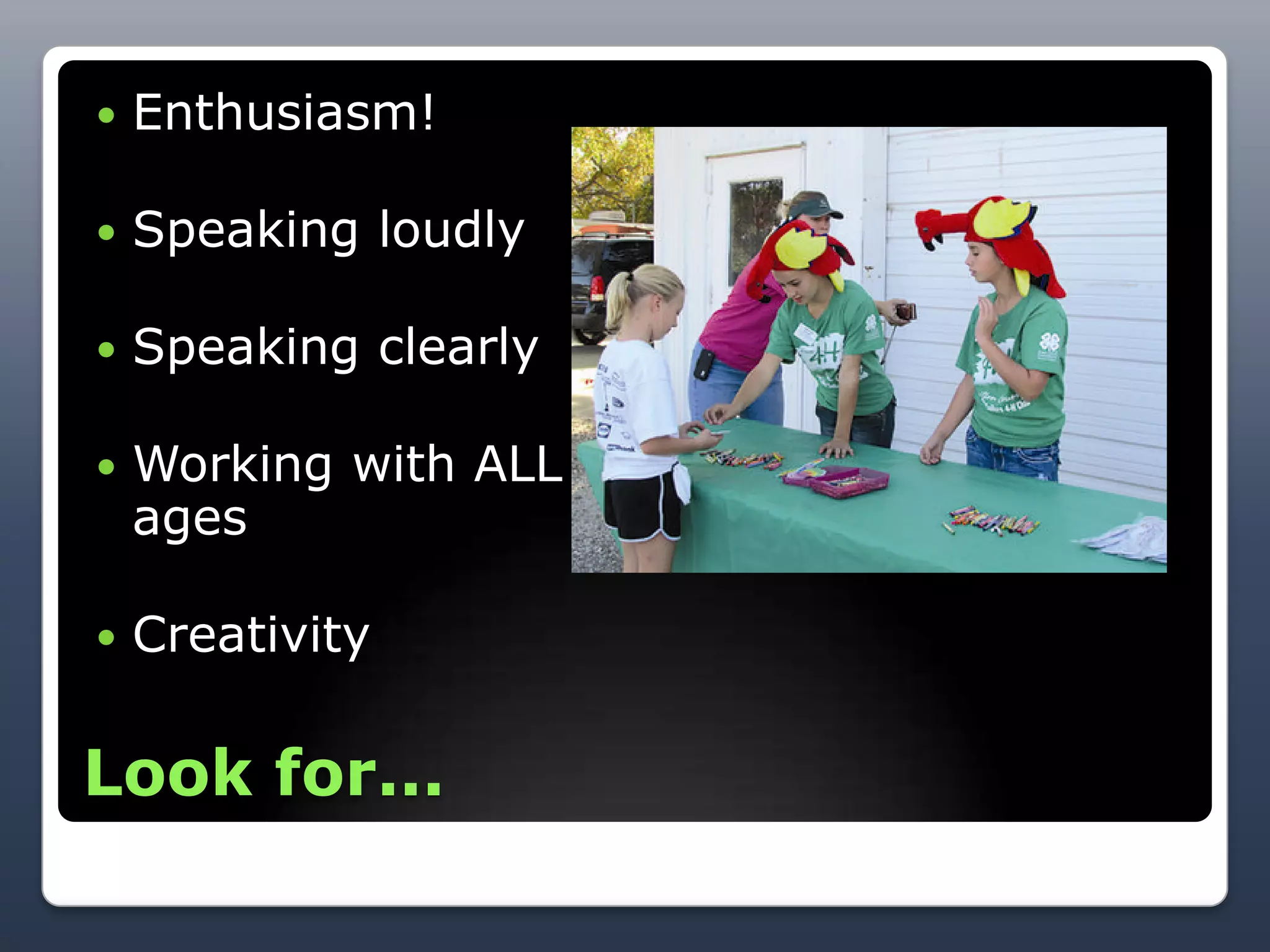
   Enthusiasm!

   Speaking loudly

   Speaking clearly

   Working with ALL
    ages

   Creativity

Look for...
   Managing the work space
    ◦ Clean
    ◦ Litter free
    ◦ Sanitary

   Several work ―areas‖ –no assembly lines

   Special care needed (food, safety)

   Are people having fun?


Look for...
   Posters easy to read? Follow?

   Written directions to take home?

   Cost?

   Source of idea?

   Ideas for other places to use item?

   Educate audience as they work


Look for...
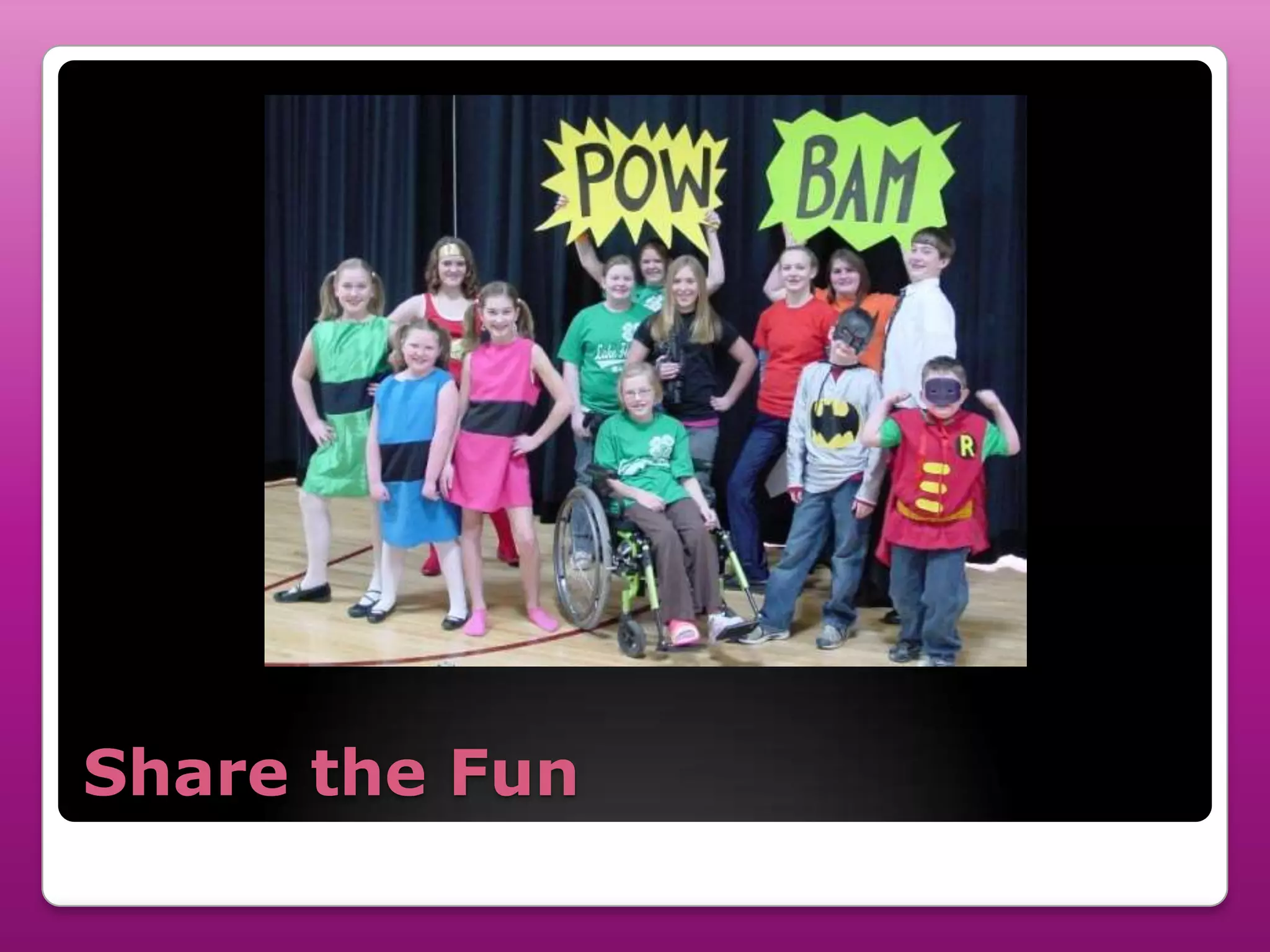
Share the Fun
   To experience performing / entertaining

   To share 4H fun with the public

   To feature 4H’ers various talents / creativity

   To foster teamwork among members/ club

   To develop poise, self-confidence


Goals
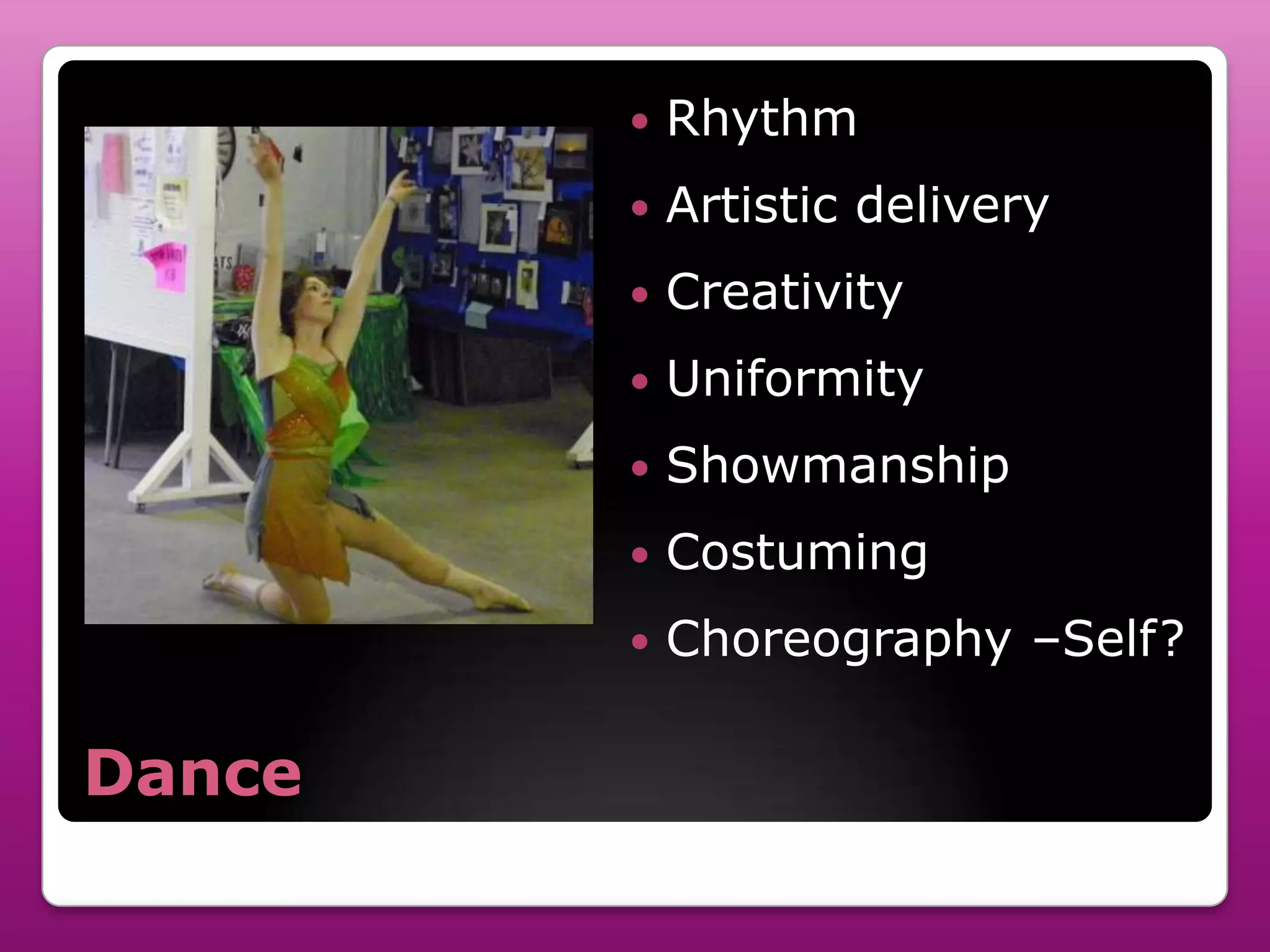
   Rhythm
           Artistic delivery
           Creativity
           Uniformity
           Showmanship
           Costuming
           Choreography –Self?

Dance
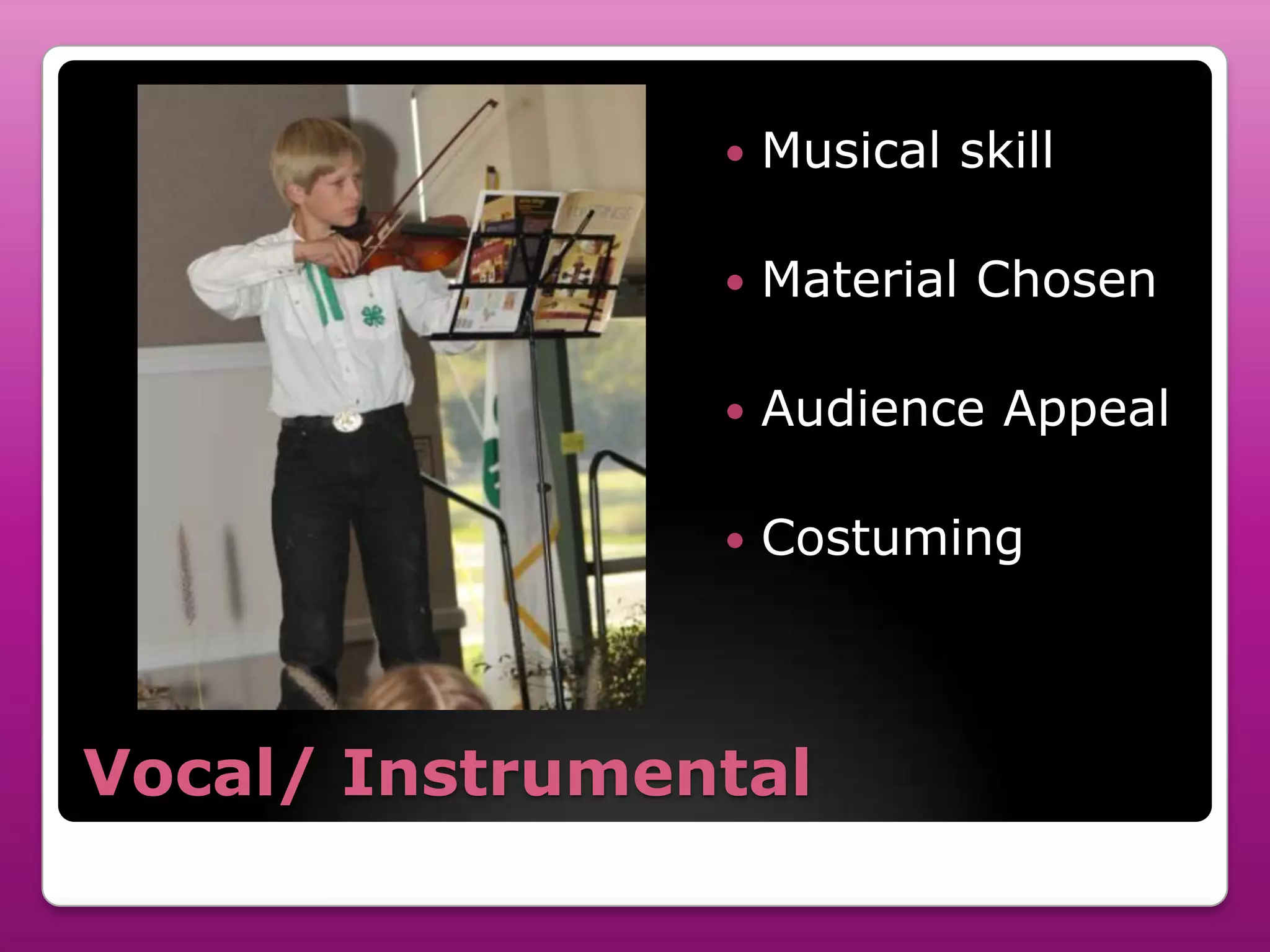
   Musical skill

                   Material Chosen

                   Audience Appeal

                   Costuming


Vocal/ Instrumental
   Selection-skill level
     appropriate

    Showmanship
     ◦   Personality
     ◦   Poise
     ◦   Confidence
     ◦   Stage presence
     ◦   Projection


Vocal / Instrumental
   Material chosen

                   Presentation
                    ◦ Memorization
                    ◦ Skills
                    ◦ Projection

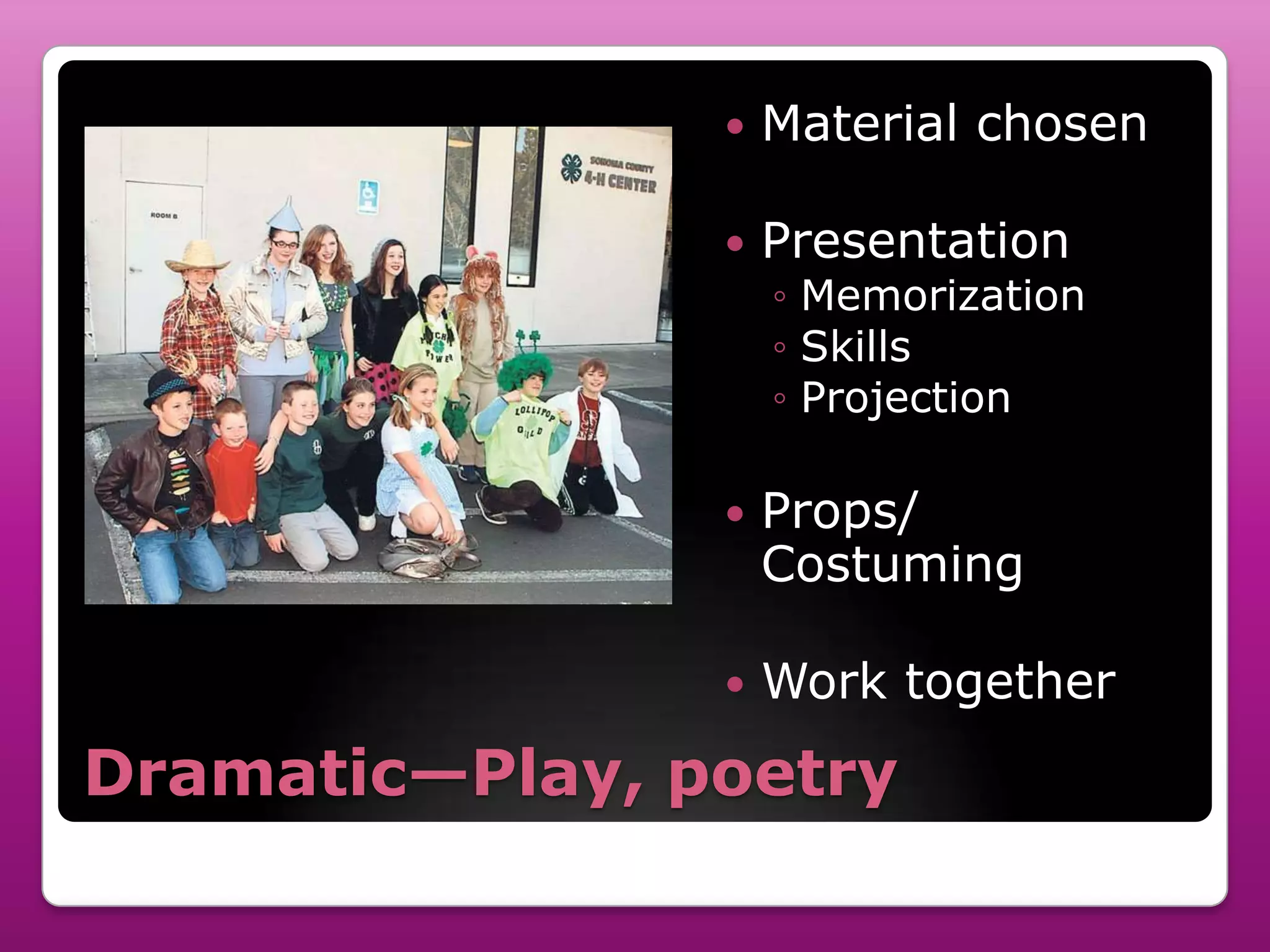
                   Props/
                    Costuming

                   Work together
Dramatic—Play, poetry
   Material chosen—
    ◦ Does it offend?
    ◦ Is it appropriate for youth?
    ◦ Does it educate or address an issue?


   Is it unique?

   How does the audience react?


Judging

4 h judging communications

  • 1.
  • 2.
  • 3.
    To make sure the youth has a positive experience  To help them develop their communication skills  To educate the audience on a given topic Goals
  • 4.
    Introduce yourself.  Put the youth at ease.  Explain the conference judging procedure if superintendent does not. Before
  • 5.
    SMILE!!!!  Make notes  Be ready to pose a question at the end.  Evaluate content, visual aids, and delivery  Audience response? During
  • 6.
    Ask about what they learned or how they came up with their topic  What skills did they learn from this project?  Feedback about presentation ◦ ―I really liked how you...‖ ◦ ―I noticed you...‖  End positive. Encourage them to do their presentation again somewhere. After—Conference Judging
  • 7.
    Introductions that get attention  Thesis statement with 3 (or more) points  Clear transition between parts  Conclusion that restates the points What to look for...content
  • 8.
    Body language  Too much dependence on notes  Pace  Fillers—uhs and ums  Use of visual aids What to look for...delivery
  • 9.
    Did they cite their sources?  Did they ask if there were questions?  Did they repeat the questions? Specifics
  • 10.
    Posters or slides too crowded?  Font too small?  Props add to the presentation ◦ Food safety ◦ Manage space  No brand names visible Visual aid specifics
  • 11.
    This slide is too full. It’s hard to read and tells too much information. The audience will be so busy reading the screen that they won’t listen to what the speaker is saying, or they will not even attempt to read it because it is not visually pleasing. 4H’ers should never do a slide like this, but some of them will. The colors are bad too. Help them see why this doesn’t work. Bad example
  • 12.
  • 13.
    http://www.youtube.com/watch?v=LdQyj dvKvgc
  • 14.
    http://www.youtube.com/watch?v=LdQyj dvKvgc
  • 15.
    http://www.youtube.com/watch?v=JBoMZ KSYxZo
  • 16.
    Can 4-H’er set up/run equipment?  Do they have a back-up plan?  Talk to audience– not screen  Stands so screen is visible Electronic Visual Aids
  • 17.
    One major point per slide  No more than 6 lines on a slide  No ALL CAPS  High contrast colors Electronic Visual Aids – cont.
  • 18.
    Make them want to try this again!  Make suggestions that will help them improve  Make suggestions for those going on to the State Fair like memorization, posters, etc. End on a high note!
  • 19.
  • 20.
    To teach others a task  To educate them in the process  To ―sell‖ the project  To manage the audience and the work space Goals
  • 21.
    Stand back and watch set up  Let them invite you  Smile!!!!  Make the item  Ask questions During
  • 22.
    Enthusiasm!  Speaking loudly  Speaking clearly  Working with ALL ages  Creativity Look for...
  • 23.
    Managing the work space ◦ Clean ◦ Litter free ◦ Sanitary  Several work ―areas‖ –no assembly lines  Special care needed (food, safety)  Are people having fun? Look for...
  • 24.
    Posters easy to read? Follow?  Written directions to take home?  Cost?  Source of idea?  Ideas for other places to use item?  Educate audience as they work Look for...
  • 25.
  • 26.
    To experience performing / entertaining  To share 4H fun with the public  To feature 4H’ers various talents / creativity  To foster teamwork among members/ club  To develop poise, self-confidence Goals
  • 27.
    Rhythm  Artistic delivery  Creativity  Uniformity  Showmanship  Costuming  Choreography –Self? Dance
  • 28.
    Musical skill  Material Chosen  Audience Appeal  Costuming Vocal/ Instrumental
  • 29.
    Selection-skill level appropriate  Showmanship ◦ Personality ◦ Poise ◦ Confidence ◦ Stage presence ◦ Projection Vocal / Instrumental
  • 30.
    Material chosen  Presentation ◦ Memorization ◦ Skills ◦ Projection  Props/ Costuming  Work together Dramatic—Play, poetry
  • 31.
    Material chosen— ◦ Does it offend? ◦ Is it appropriate for youth? ◦ Does it educate or address an issue?  Is it unique?  How does the audience react? Judging