Downloaded 545 times
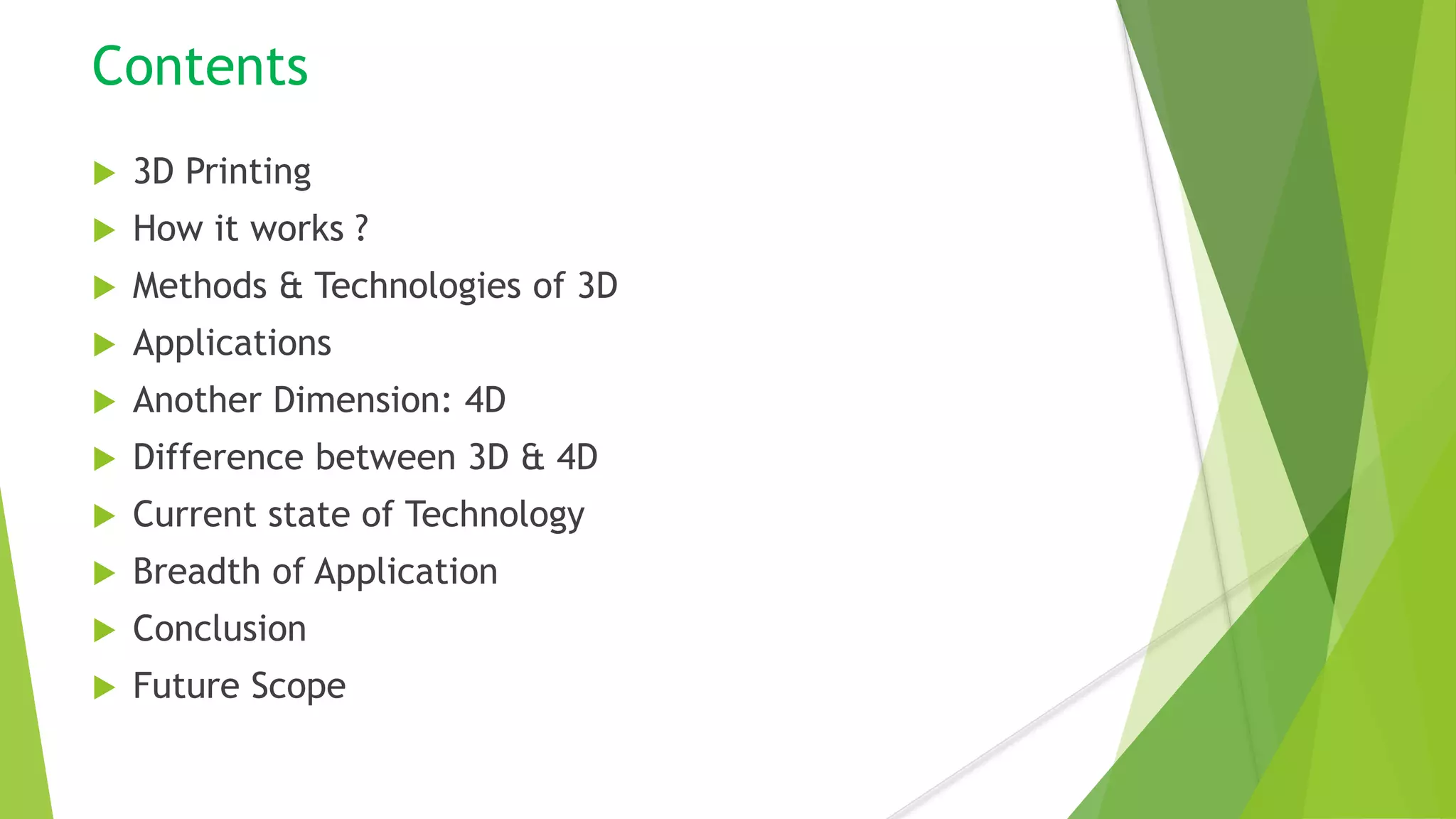
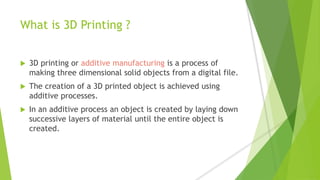
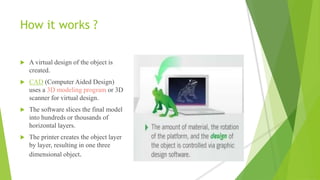
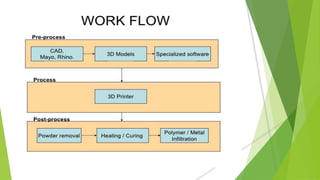
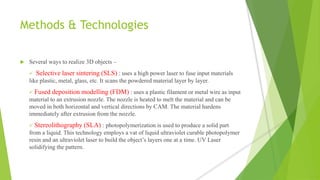
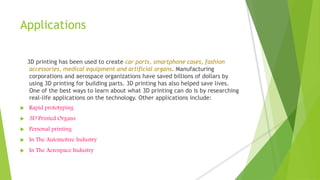
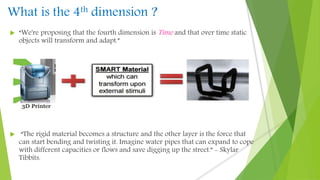
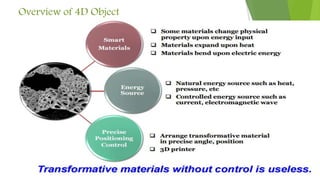
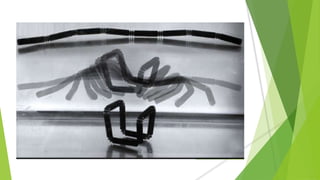
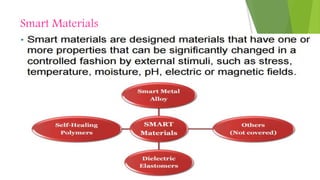
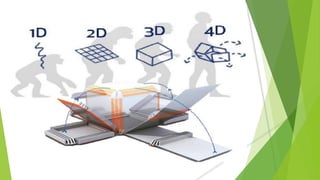
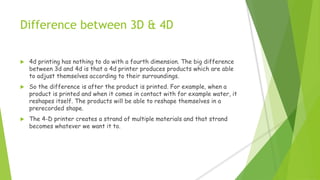
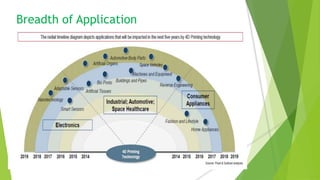
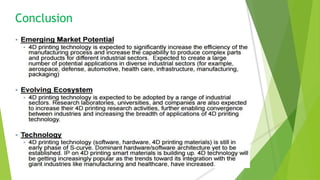
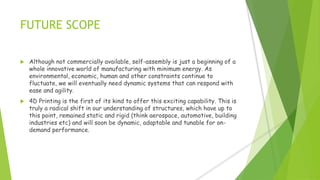


This document provides an overview of 3D and 4D printing technologies. It explains that 3D printing involves building 3D objects layer by layer from a digital file, while 4D printing produces objects that can change or transform over time when exposed to stimuli like water or heat. The document discusses several 3D printing methods and materials and gives examples of current applications. It describes how 4D printing embeds different material properties that allow printed objects to self-assemble into different shapes when activated by water or other triggers. The future potential of 4D printing is to create dynamically adaptive structures for applications like aerospace or infrastructure.


![MECHNICAL TECHNOLOGY [Autosaved].pptx pdf](https://cdn.slidesharecdn.com/ss_thumbnails/mechnicaltechnologyautosaved-240623114707-6da2d7b1-thumbnail.jpg?width=640&height=640&fit=bounds)


