2
Strength of
Material
(Formula & Short Notes)
3
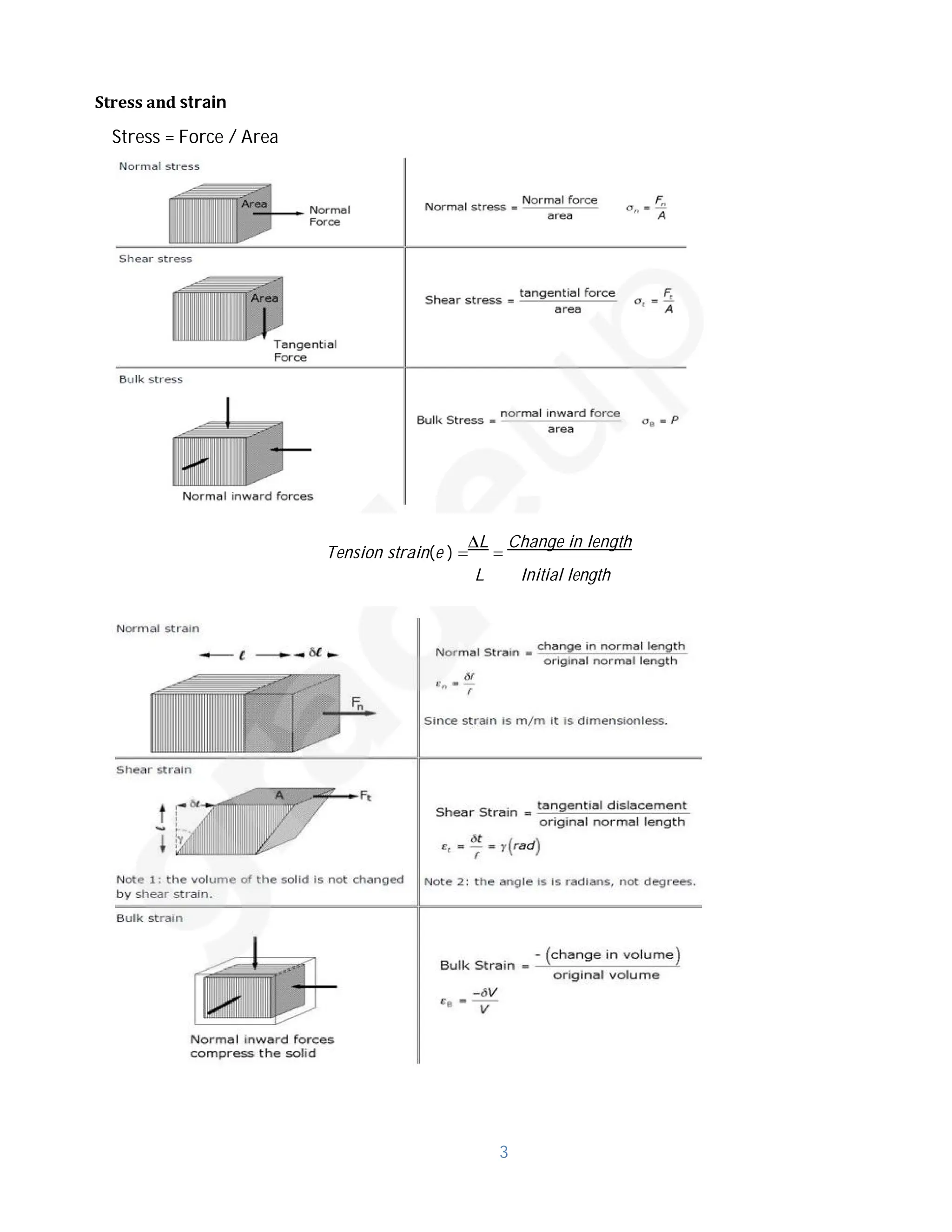
Stress and strain
Stress = Force / Area
Tension strain(e )
L Change in length
L Initial length
4
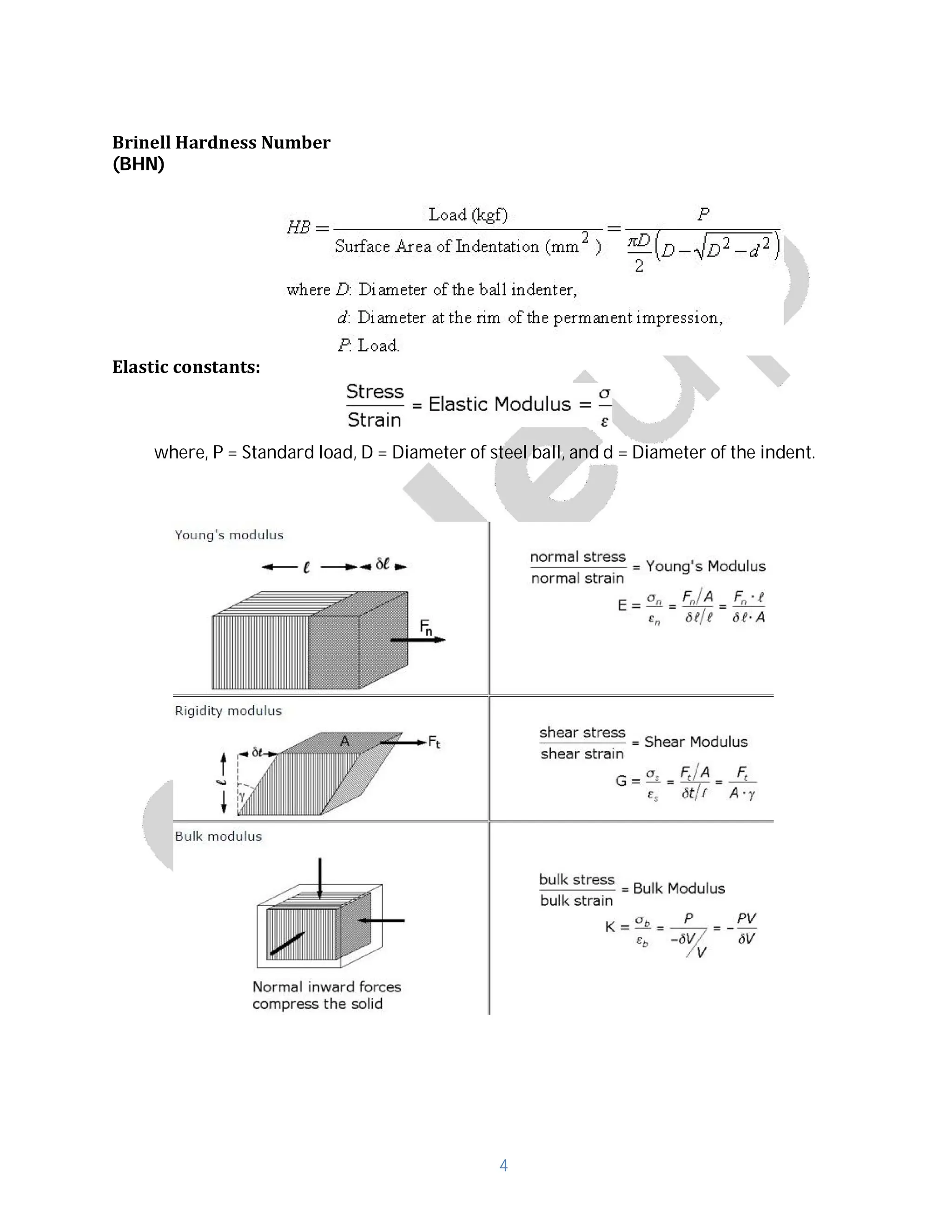
Brinell Hardness Number
(BHN)
Elastic constants:
where, P = Standard load, D = Diameter of steel ball, and d = Diameter of the indent.
5
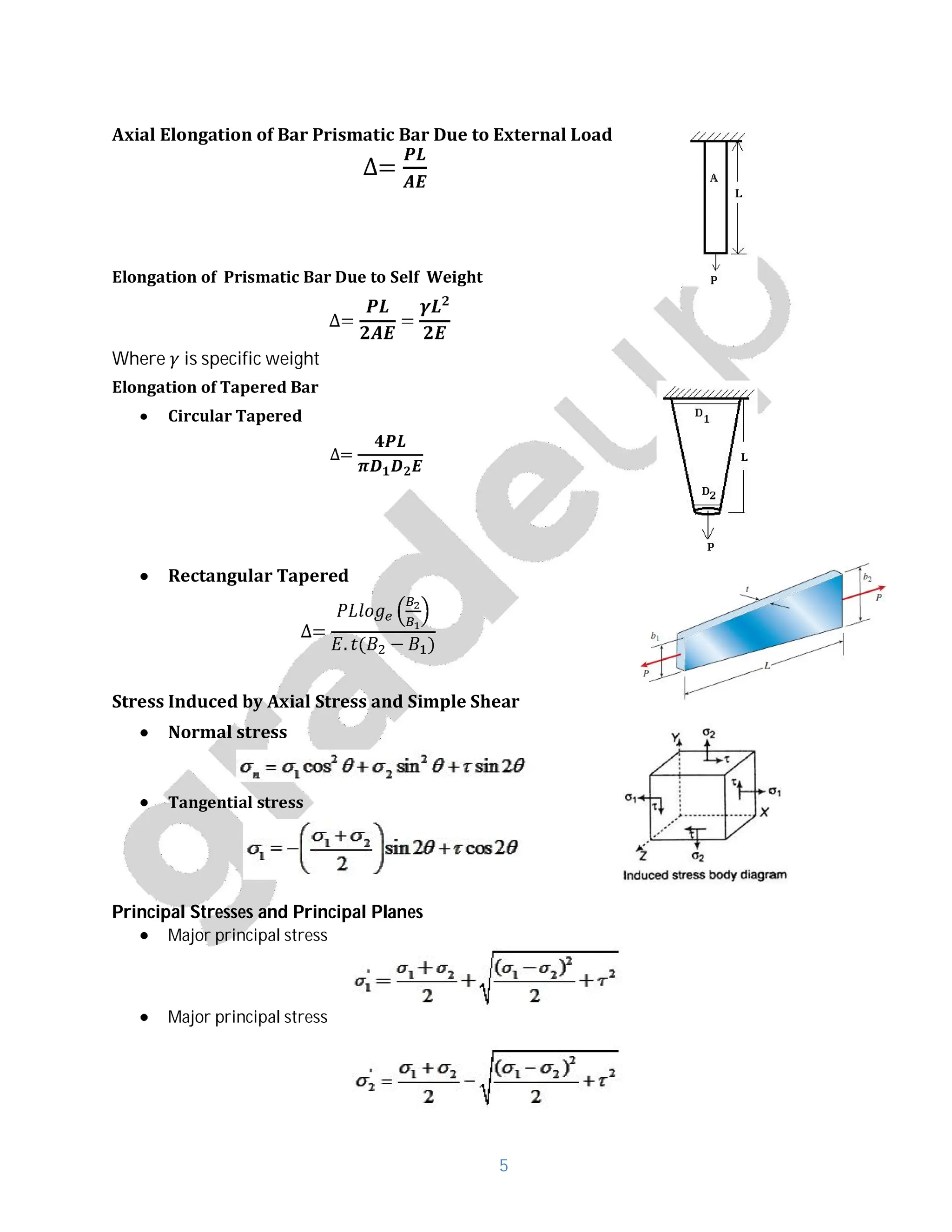
Axial Elongation of Bar Prismatic Bar Due to External Load
Elongation of Prismatic Bar Due to Self Weight
Where is specific weight
Elongation of Tapered Bar
Circular Tapered
Rectangular Tapered
Stress Induced by Axial Stress and Simple Shear
Normal stress
Tangential stress
Principal Stresses and Principal Planes
Major principal stress
6
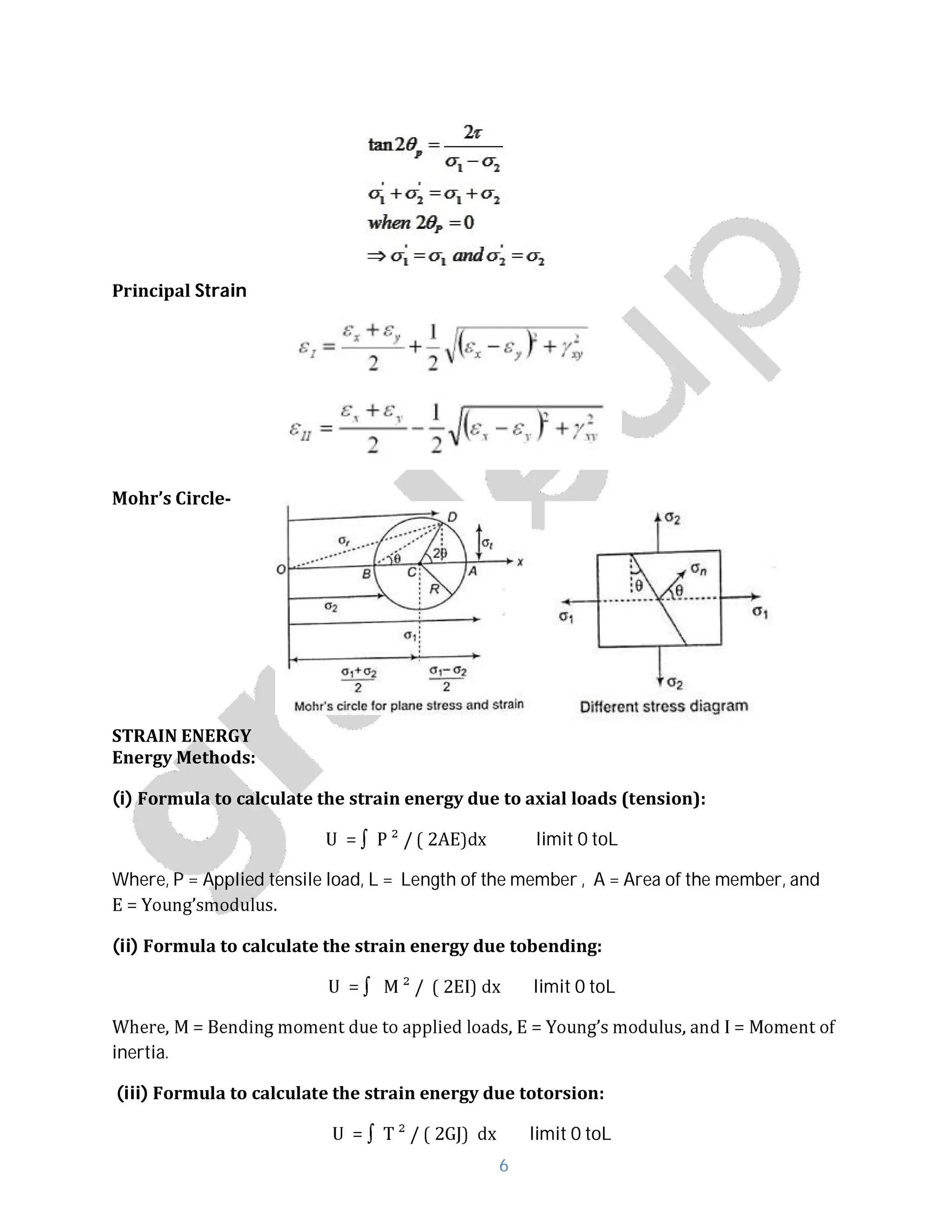
Principal Strain
-
STRAIN ENERGY
Energy Methods:
(i) Formula to calculate the strain energy due to axial loads (tension):
limit 0 toL
Where, P = Applied tensile load, L = Length of the member , A = Area of the member, and
(ii) Formula to calculate the strain energy due tobending:
limit 0 toL
inertia.
(iii) Formula to calculate the strain energy due totorsion:
limit 0 toL
7
Where, T = Applied Torsion , G = Shear modulus or Modulus of rigidity, and J = Polar
moment ofinertia
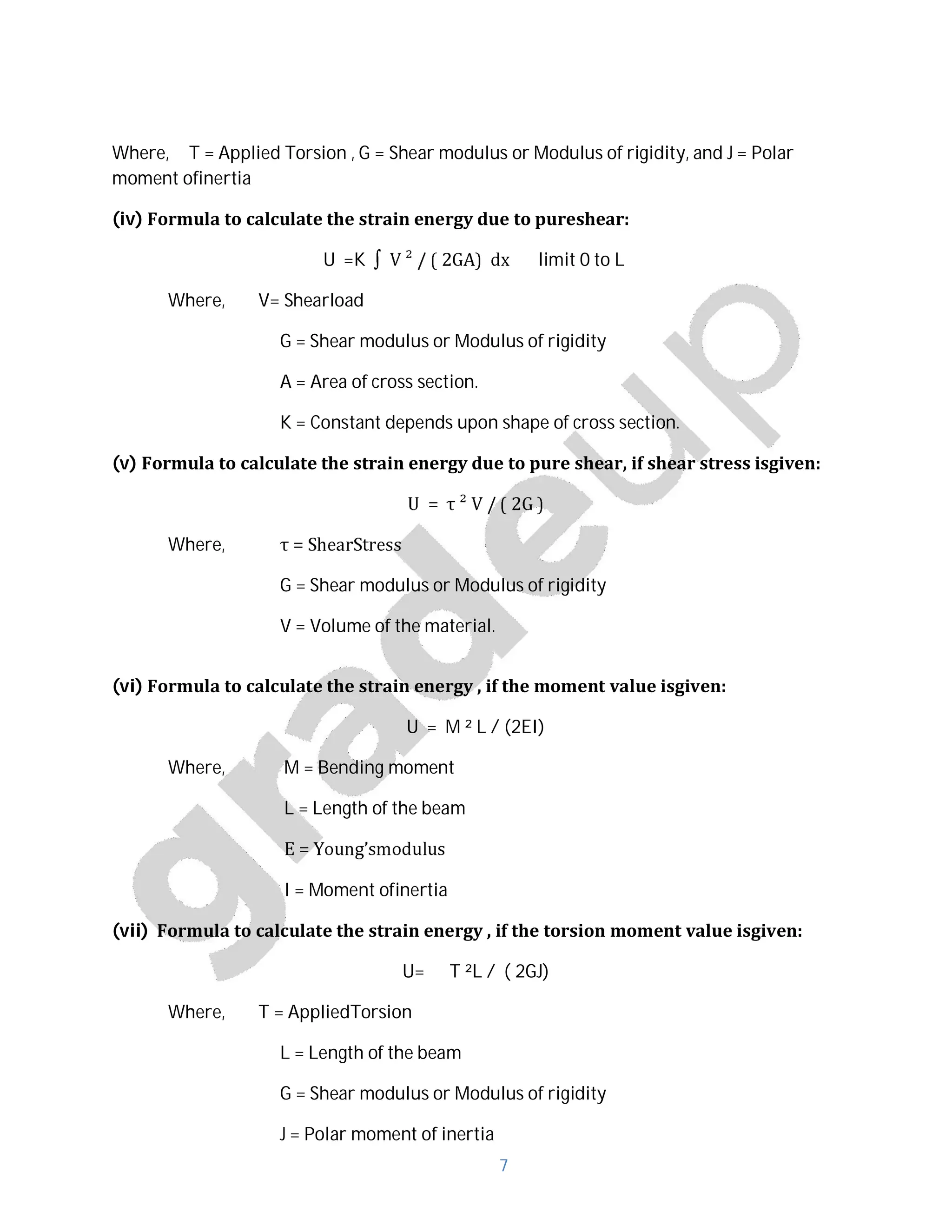
(iv) Formula to calculate the strain energy due to pureshear:
U =K limit 0 to L
Where, V= Shearload
G = Shear modulus or Modulus of rigidity
A = Area of cross section.
K = Constant depends upon shape of cross section.
(v) Formula to calculate the strain energy due to pure shear, if shear stress isgiven:
Where,
G = Shear modulus or Modulus of rigidity
V = Volume of the material.
(vi) Formula to calculate the strain energy , if the moment value isgiven:
U = M ² L / (2EI)
Where, M = Bending moment
L = Length of the beam
I = Moment ofinertia
(vii) Formula to calculate the strain energy , if the torsion moment value isgiven:
U= T ²L / ( 2GJ)
Where, T = AppliedTorsion
L = Length of the beam
G = Shear modulus or Modulus of rigidity
J = Polar moment of inertia
8
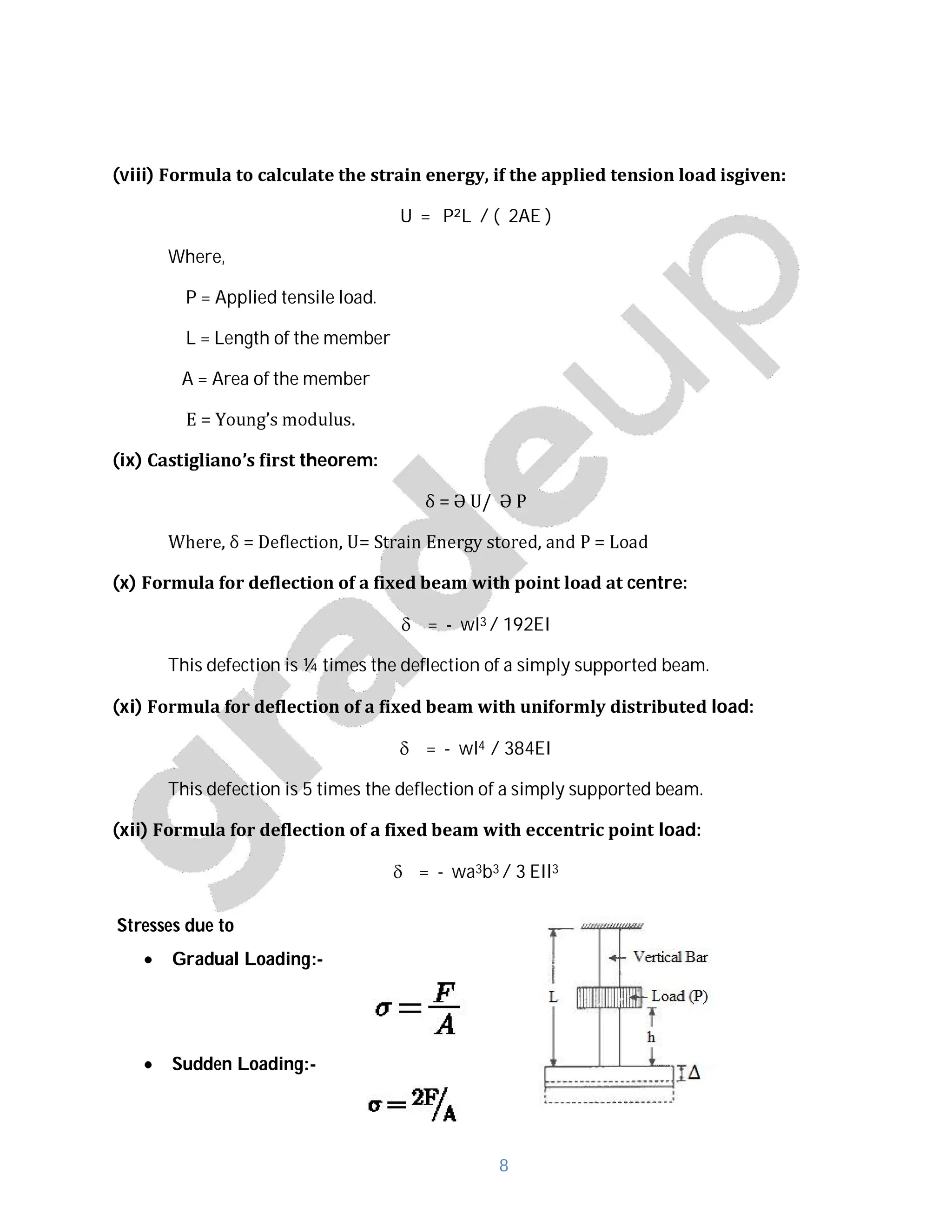
(viii) Formula to calculate the strain energy, if the applied tension load isgiven:
U = P²L / ( 2AE )
Where,
P = Applied tensile load.
L = Length of the member
A = Area of the member
(ix) theorem:
(x) Formula for deflection of a fixed beam with point load at centre:
= - wl3 / 192EI
This defection is ¼ times the deflection of a simply supported beam.
(xi) Formula for deflection of a fixed beam with uniformly distributed load:
= - wl4 / 384EI
This defection is 5 times the deflection of a simply supported beam.
(xii) Formula for deflection of a fixed beam with eccentric point load:
= - wa3b3 / 3 EIl3
Stresses due to
Gradual Loading:-
Sudden Loading:-
9
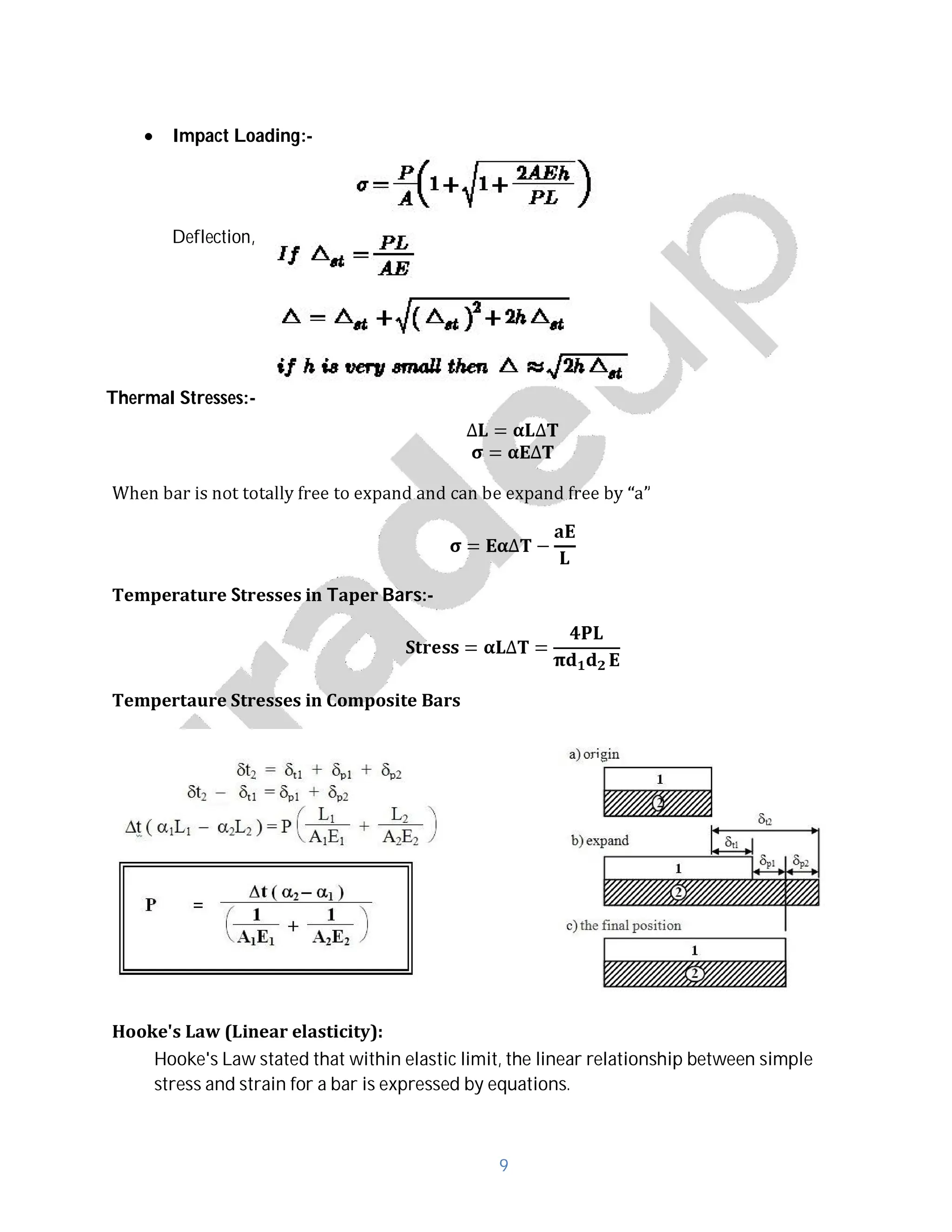
Impact Loading:-
Deflection,
Thermal Stresses:-
Temperature Stresses in Taper Bars:-
Tempertaure Stresses in Composite Bars
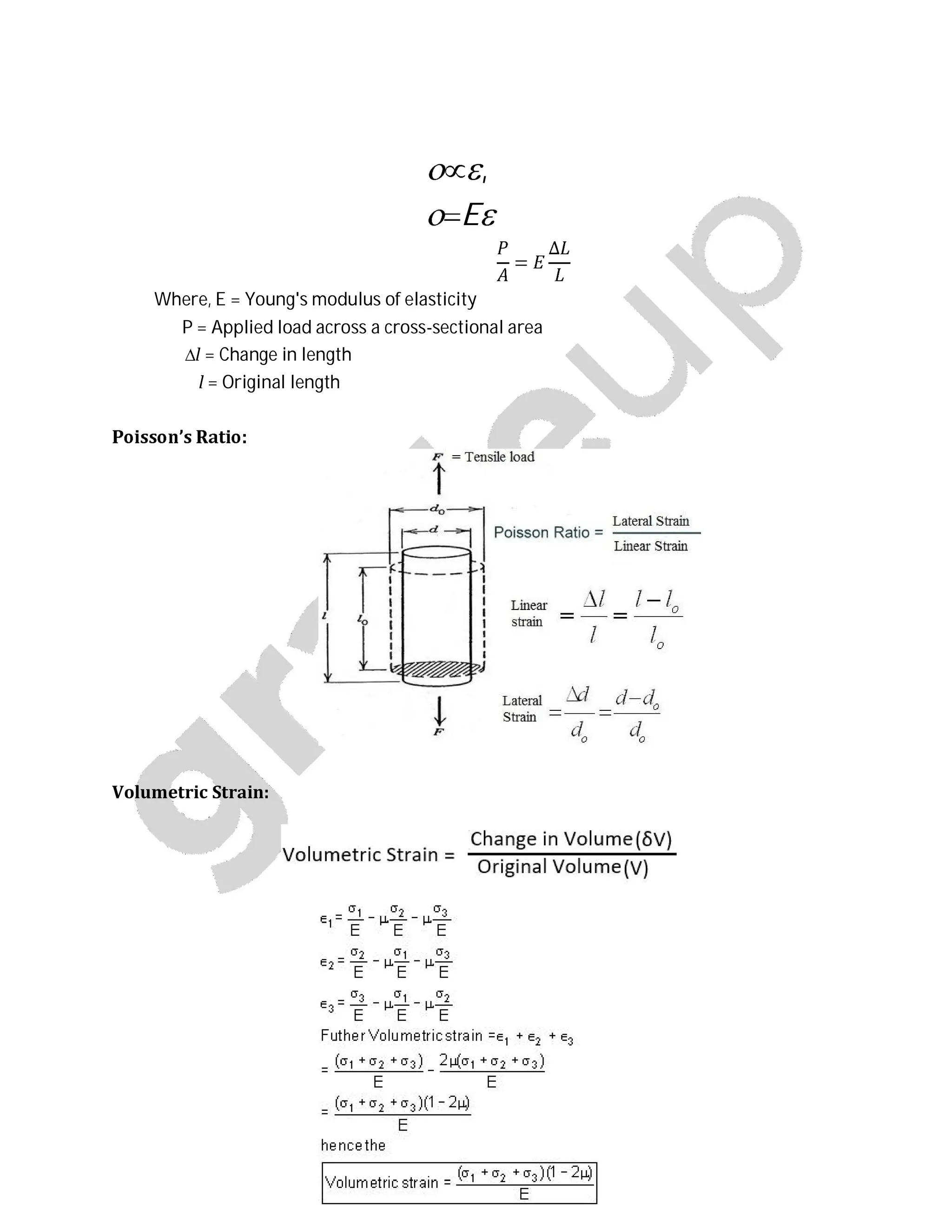
Hooke's Law (Linear elasticity):
Hooke's Law stated that within elastic limit, the linear relationship between simple
stress and strain for a bar is expressed by equations.
10
,
E
Where, E = Young's modulus of elasticity
P = Applied load across a cross-sectional area
l = Change in length
l = Original length
Volumetric Strain:
11
Relationship between E, G, K and µ:
Modulus of rigidity:-
Bulk modulus:-
Compound Stresses
Equation of Pure Bending
Section Modulus
Shearing Stress
Where,
V = Shearing force
=First moment of area
Shear
Stress
in
Rectang
ular
Beam
12
Shear Stress Circular Beam
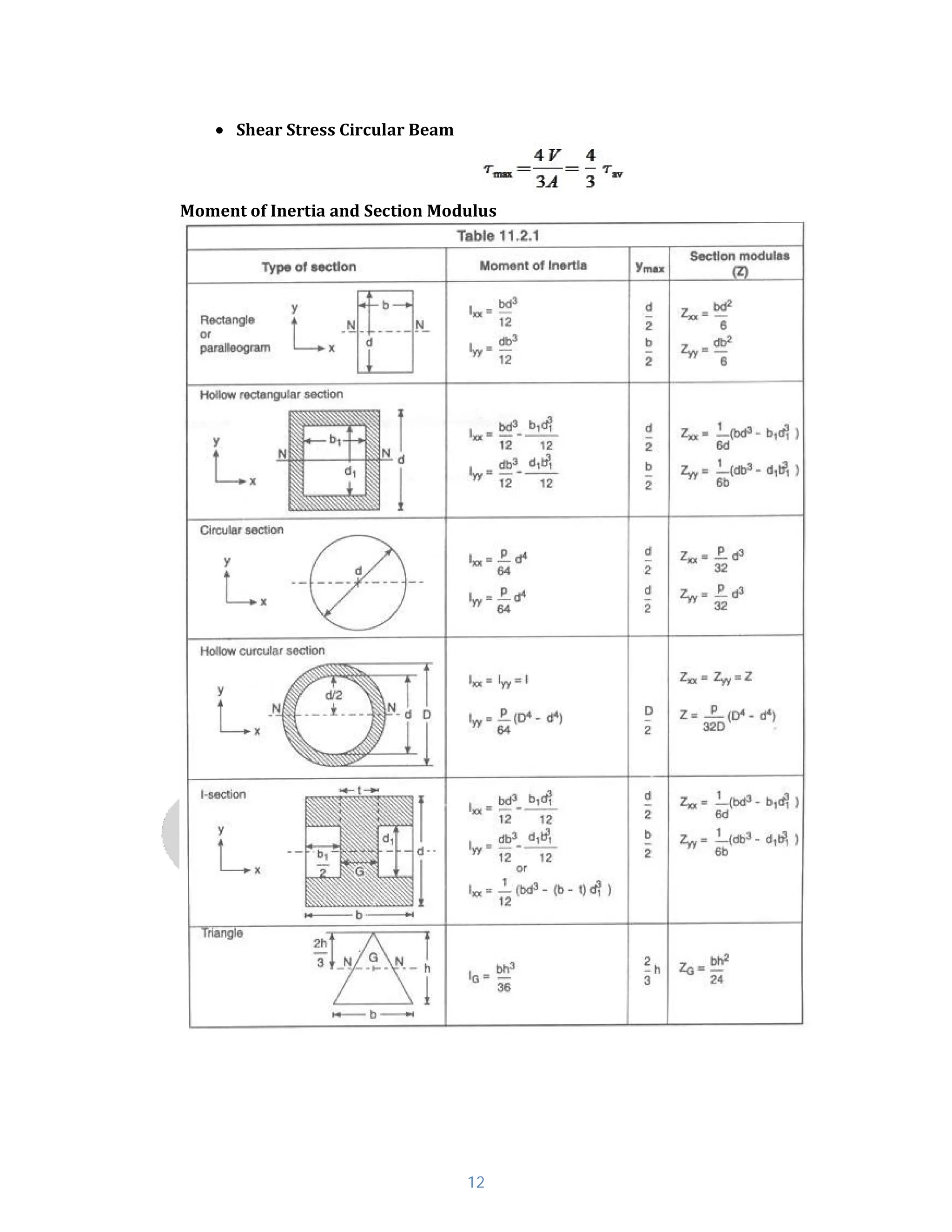
Moment of Inertia and Section Modulus
13
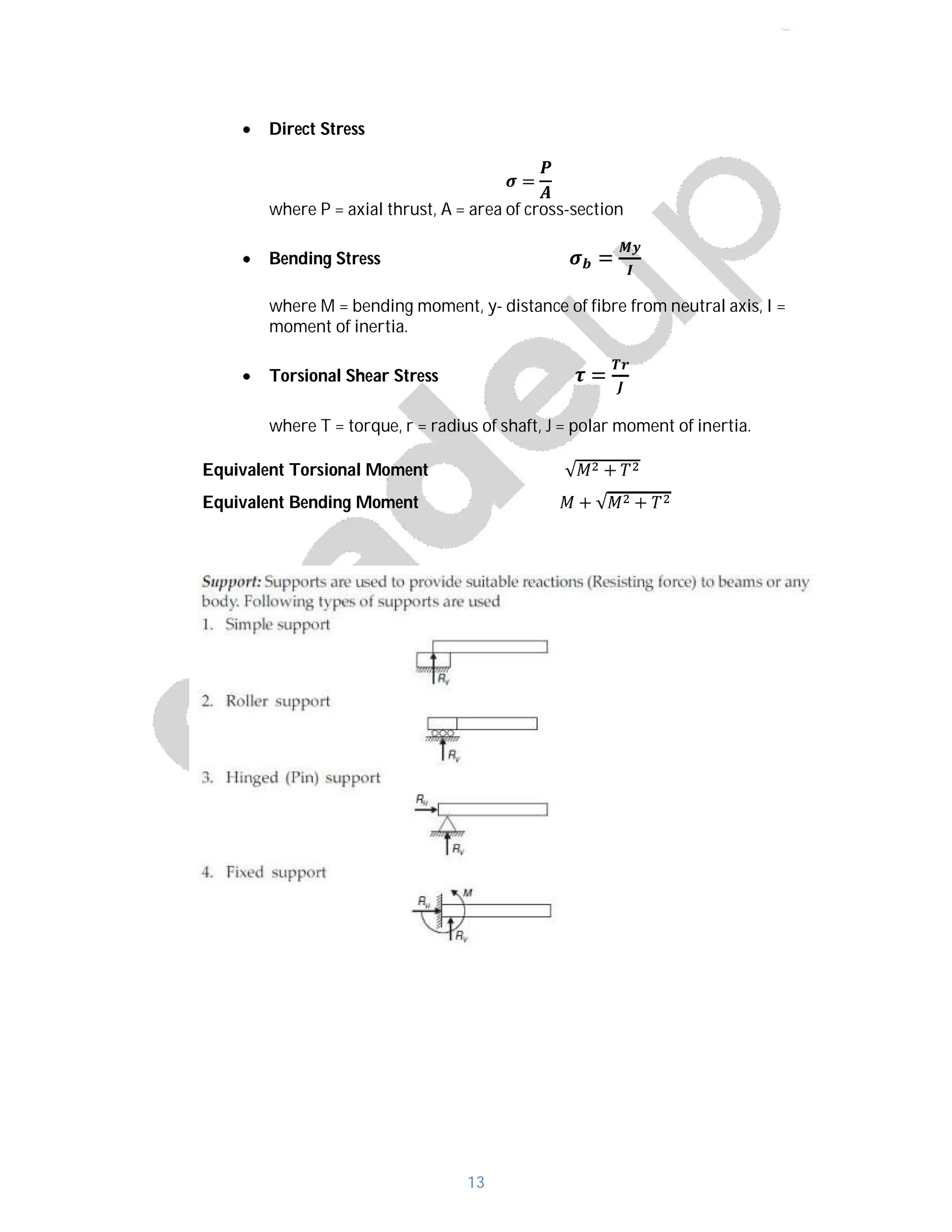
Direct Stress
where P = axial thrust, A = area of cross-section
Bending Stress
where M = bending moment, y- distance of fibre from neutral axis, I =
moment of inertia.
Torsional Shear Stress
where T = torque, r = radius of shaft, J = polar moment of inertia.
Equivalent Torsional Moment
Equivalent Bending Moment
14
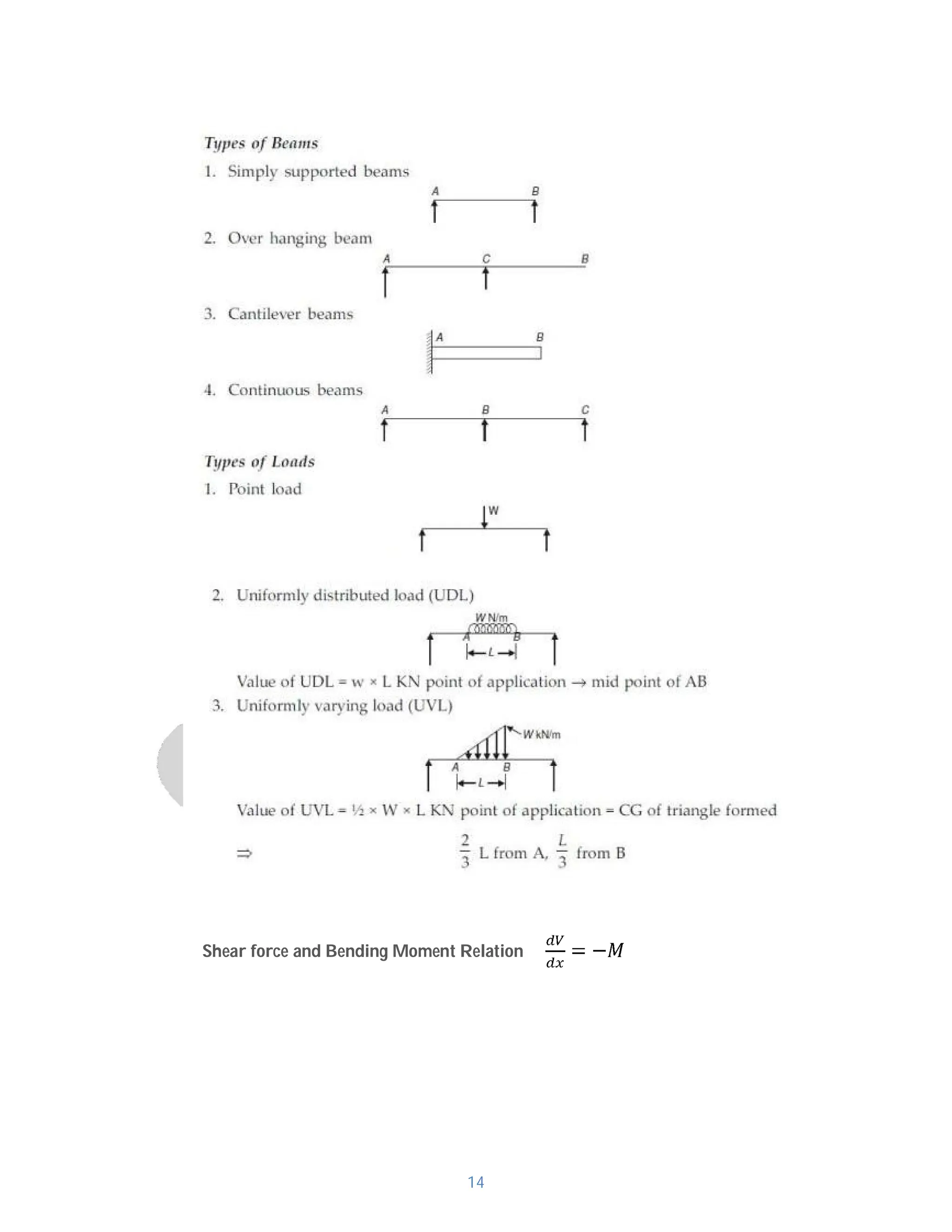
Shear force and Bending Moment Relation
15
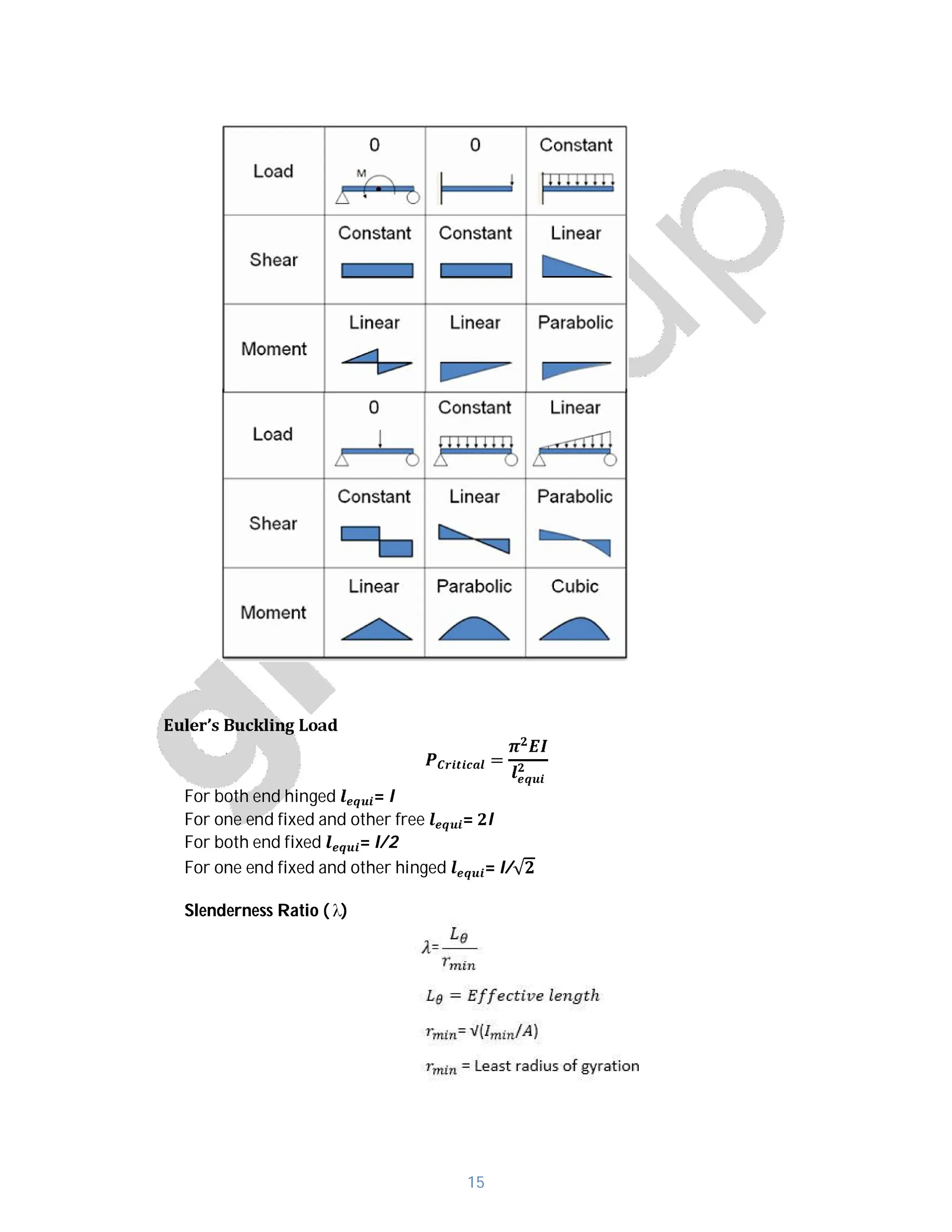
For both end hinged = l
For one end fixed and other free = 2l
For both end fixed = l/2
For one end fixed and other hinged = l/
Slenderness Ratio ( )
16
PR =
Pcs cs A = Ultimate crushing load for column
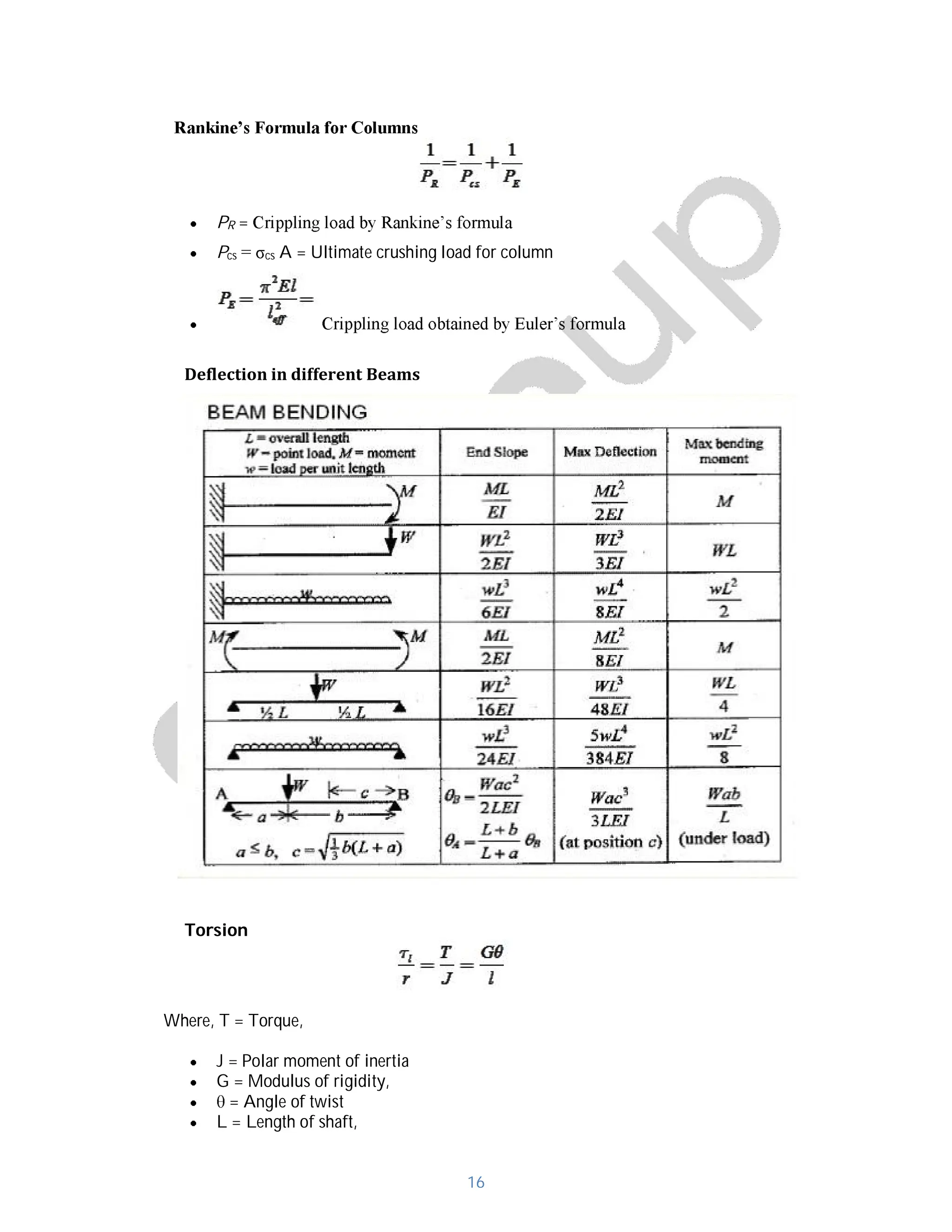
Deflection in different Beams
Torsion
Where, T = Torque,
J = Polar moment of inertia
G = Modulus of rigidity,
= Angle of twist
L = Length of shaft,
17
Total angle of twist
GJ = Torsional rigidity
= Torsional stiffness
= Torsional flexibility
= Axial stiffness
= Axial flexibility
Moment of Inertia About polar Axis
For hollow circular shaft
Compound Shaft
Series connection
Where,
1 = Angular deformation of 1st
shaft
2 = Angular deformation of 2nd
shaft
Parallel Connection
18
Strain Energy in Torsion
For solid shaft,
For hollow shaft,
Thin Cylinder
Circumferential Stress /Hoop Stress
Longitudinal Stress
Hoop Strain
Longitudinal Strain
Ratio of Hoop Strain to Longitudinal Strain
19
Stresses in Thin Spherical Shell
Hoop stress/longitudinal stress
Hoop stress/longitudinal strain
Volumetric strain of sphere
Thickness ratio of Cylindrical Shell with Hemisphere Ends
Where v=Poisson Ratio

3-Strength of Materials formulaws.pdf

  • 1.
  • 2.
    3 Stress and strain Stress= Force / Area Tension strain(e ) L Change in length L Initial length
  • 3.
    4 Brinell Hardness Number (BHN) Elasticconstants: where, P = Standard load, D = Diameter of steel ball, and d = Diameter of the indent.
  • 4.
    5 Axial Elongation ofBar Prismatic Bar Due to External Load Elongation of Prismatic Bar Due to Self Weight Where is specific weight Elongation of Tapered Bar Circular Tapered Rectangular Tapered Stress Induced by Axial Stress and Simple Shear Normal stress Tangential stress Principal Stresses and Principal Planes Major principal stress Major principal stress
  • 5.
    6 Principal Strain - STRAIN ENERGY EnergyMethods: (i) Formula to calculate the strain energy due to axial loads (tension): limit 0 toL Where, P = Applied tensile load, L = Length of the member , A = Area of the member, and (ii) Formula to calculate the strain energy due tobending: limit 0 toL inertia. (iii) Formula to calculate the strain energy due totorsion: limit 0 toL
  • 6.
    7 Where, T =Applied Torsion , G = Shear modulus or Modulus of rigidity, and J = Polar moment ofinertia (iv) Formula to calculate the strain energy due to pureshear: U =K limit 0 to L Where, V= Shearload G = Shear modulus or Modulus of rigidity A = Area of cross section. K = Constant depends upon shape of cross section. (v) Formula to calculate the strain energy due to pure shear, if shear stress isgiven: Where, G = Shear modulus or Modulus of rigidity V = Volume of the material. (vi) Formula to calculate the strain energy , if the moment value isgiven: U = M ² L / (2EI) Where, M = Bending moment L = Length of the beam I = Moment ofinertia (vii) Formula to calculate the strain energy , if the torsion moment value isgiven: U= T ²L / ( 2GJ) Where, T = AppliedTorsion L = Length of the beam G = Shear modulus or Modulus of rigidity J = Polar moment of inertia
  • 7.
    8 (viii) Formula tocalculate the strain energy, if the applied tension load isgiven: U = P²L / ( 2AE ) Where, P = Applied tensile load. L = Length of the member A = Area of the member (ix) theorem: (x) Formula for deflection of a fixed beam with point load at centre: = - wl3 / 192EI This defection is ¼ times the deflection of a simply supported beam. (xi) Formula for deflection of a fixed beam with uniformly distributed load: = - wl4 / 384EI This defection is 5 times the deflection of a simply supported beam. (xii) Formula for deflection of a fixed beam with eccentric point load: = - wa3b3 / 3 EIl3 Stresses due to Gradual Loading:- Sudden Loading:-
  • 8.
    9 Impact Loading:- Deflection, Thermal Stresses:- TemperatureStresses in Taper Bars:- Tempertaure Stresses in Composite Bars Hooke's Law (Linear elasticity): Hooke's Law stated that within elastic limit, the linear relationship between simple stress and strain for a bar is expressed by equations.
  • 9.
    10 , E Where, E =Young's modulus of elasticity P = Applied load across a cross-sectional area l = Change in length l = Original length Volumetric Strain:
  • 10.
    11 Relationship between E,G, K and µ: Modulus of rigidity:- Bulk modulus:- Compound Stresses Equation of Pure Bending Section Modulus Shearing Stress Where, V = Shearing force =First moment of area Shear Stress in Rectang ular Beam
  • 11.
    12 Shear Stress CircularBeam Moment of Inertia and Section Modulus
  • 12.
    13 Direct Stress where P= axial thrust, A = area of cross-section Bending Stress where M = bending moment, y- distance of fibre from neutral axis, I = moment of inertia. Torsional Shear Stress where T = torque, r = radius of shaft, J = polar moment of inertia. Equivalent Torsional Moment Equivalent Bending Moment
  • 13.
    14 Shear force andBending Moment Relation
  • 14.
    15 For both endhinged = l For one end fixed and other free = 2l For both end fixed = l/2 For one end fixed and other hinged = l/ Slenderness Ratio ( )
  • 15.
    16 PR = Pcs csA = Ultimate crushing load for column Deflection in different Beams Torsion Where, T = Torque, J = Polar moment of inertia G = Modulus of rigidity, = Angle of twist L = Length of shaft,
  • 16.
    17 Total angle oftwist GJ = Torsional rigidity = Torsional stiffness = Torsional flexibility = Axial stiffness = Axial flexibility Moment of Inertia About polar Axis Moment of Inertia About polar Axis For hollow circular shaft Compound Shaft Series connection Where, 1 = Angular deformation of 1st shaft 2 = Angular deformation of 2nd shaft Parallel Connection
  • 17.
    18 Strain Energy inTorsion For solid shaft, For hollow shaft, Thin Cylinder Circumferential Stress /Hoop Stress Longitudinal Stress Hoop Strain Longitudinal Strain Ratio of Hoop Strain to Longitudinal Strain
  • 18.
    19 Stresses in ThinSpherical Shell Hoop stress/longitudinal stress Hoop stress/longitudinal strain Volumetric strain of sphere Thickness ratio of Cylindrical Shell with Hemisphere Ends Where v=Poisson Ratio