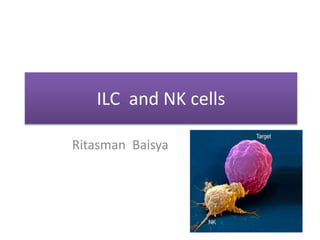
ILC and NK cells
Ritasman Baisya
Points of discussion
• Introduction
• Development
• Types of ILC
• Subset of NK cell
• NK cell – activating and inhibitory receptors
• Mechanism of action
• Clinical importance
Introduction
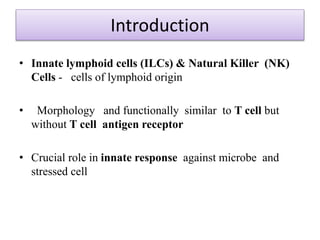
• Innate lymphoid cells (ILCs) & Natural Killer (NK)
Cells - cells of lymphoid origin
• Morphology and functionally similar to T cell but
without T cell antigen receptor
• Crucial role in innate response against microbe and
stressed cell
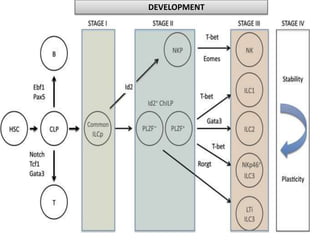
DEVELOPMENT
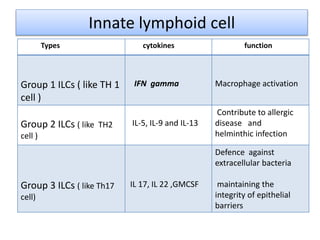
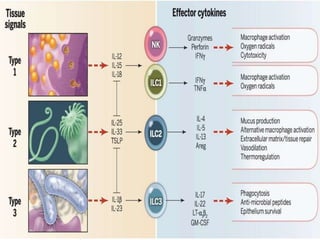
Innate lymphoid cell
Types cytokines function
Group 1 ILCs ( like TH 1
cell )
IFN gamma Macrophage activation
Group 2 ILCs ( like TH2
cell )
IL-5, IL-9 and IL-13
Contribute to allergic
disease and
helminthic infection
Group 3 ILCs ( like Th17
cell)
IL 17, IL 22 ,GMCSF
Defence against
extracellular bacteria
maintaining the
integrity of epithelial
barriers
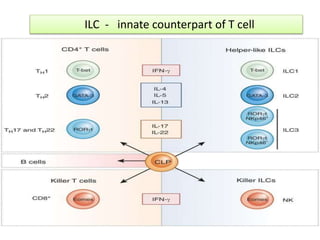
ILC - innate counterpart of T cell
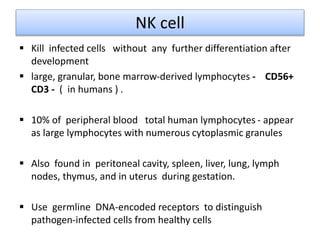
NK cell
 Kill infected cells without any further differentiation after
development
 large, granular, bone marrow-derived lymphocytes - CD56+
CD3 - ( in humans ) .
 10% of peripheral blood total human lymphocytes - appear
as large lymphocytes with numerous cytoplasmic granules
 Also found in peritoneal cavity, spleen, liver, lung, lymph
nodes, thymus, and in uterus during gestation.
 Use germline DNA-encoded receptors to distinguish
pathogen-infected cells from healthy cells
Subset of Nk cell
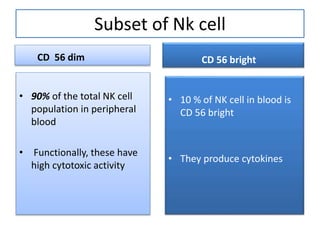
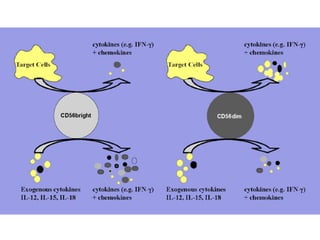
CD 56 dim
• 90% of the total NK cell
population in peripheral
blood
• Functionally, these have
high cytotoxic activity
CD 56 bright
• 10 % of NK cell in blood is
CD 56 bright
• They produce cytokines
Receptors
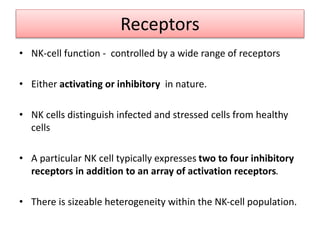
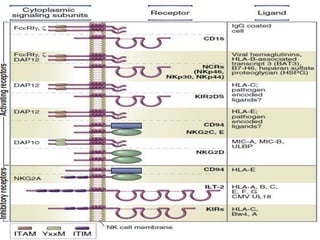
• NK-cell function - controlled by a wide range of receptors
• Either activating or inhibitory in nature.
• NK cells distinguish infected and stressed cells from healthy
cells
• A particular NK cell typically expresses two to four inhibitory
receptors in addition to an array of activation receptors.
• There is sizeable heterogeneity within the NK-cell population.
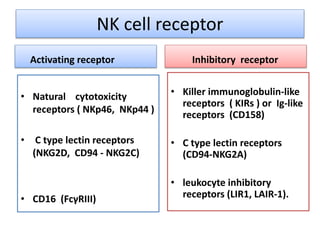
NK cell receptor
Inhibitory receptor
• Killer immunoglobulin-like
receptors ( KIRs ) or Ig-like
receptors (CD158)
• C type lectin receptors
(CD94-NKG2A)
• leukocyte inhibitory
receptors (LIR1, LAIR-1).
Activating receptor
• Natural cytotoxicity
receptors ( NKp46, NKp44 )
• C type lectin receptors
(NKG2D, CD94 - NKG2C)
• CD16 (FcγRIII)
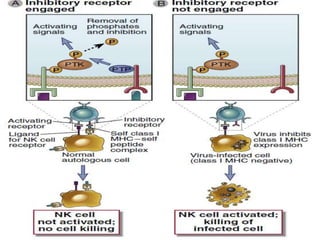
HOW RECEPTORS HELP IN NK CELL FUNCTION ?
Missing self recognition – a unique characteristics
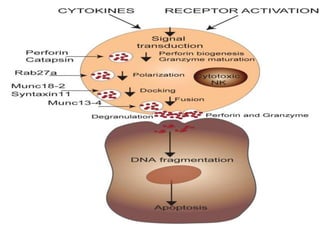
Final pathway
• Perforin and granzymes mediated apoptosis
• A caspase-dependent apoptosis
• Antibody dependent cellular cytotoxicity (ADCC) - CD16.
• NK cell–derived IFN-γ increases the capacity of
macrophages to kill phagocytised bacteria
Role in rheumatic disease
• Killer-cell immunoglobulin-like receptors (KIRs) – role in
autoimmune diseases
• Most studies on KIRs have been based on the missing self
theory
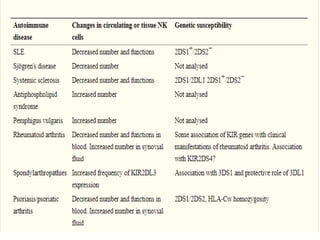
• NK cells have either a disease-promoting or a disease-
controlling role.
• In RA tissue, NK cells has disease-promoting functions, by
tissue infiltration
• A disease-controlling role is clearly suggested in SLE patients
Take home message
• ILC – A new paradigm in immunology , is innate counterpart of adaptive
T cell response
• NK cells, much early discovered , can be considered as a subset of ILC
• NK cell and ILC - crucial role in stress response
• NK cell has activating and inhibitory receptors - helping its function
• KIR on NK cell - association in rheumatic disease
• role of NK cells in autoimmune diseases will help to define new
therapeutic targets.
• Emerging research on ILCs showing its both protective and promoting
role in autoimmunity
References
• Vivier E , Tomasello E, Baratin M, Walzer T, Ugolini S. Functions of natural killer
cells. Nat Immunol. 2008 May ; 9(5) :503-10.
• Schleinitz N, Vély F, Harlé JR, Vivier E. Natural killer cells in human autoimmune
diseases. Immunology. 2010;131(4) : 451-8.
• Abul K. Abbas, Andrew H. Lichtman, Shiv Pillai, Cellular and Molecular
Immunology , eighth edition.
• Olshid Sanati, Zahra Aryan, Mehri Barbadi & Nima Rezaei (2015) Innate lymphoid
cells are pivotal actors in allergic, inflammatory and autoimmune diseases, Expert
Review of Clinical Immunology, 11:8, 885-895,
thank you

3_NK.pptx

  • 1.
    ILC and NKcells Ritasman Baisya
  • 2.
    Points of discussion •Introduction • Development • Types of ILC • Subset of NK cell • NK cell – activating and inhibitory receptors • Mechanism of action • Clinical importance
  • 3.
    Introduction • Innate lymphoidcells (ILCs) & Natural Killer (NK) Cells - cells of lymphoid origin • Morphology and functionally similar to T cell but without T cell antigen receptor • Crucial role in innate response against microbe and stressed cell
  • 4.
  • 5.
    Innate lymphoid cell Typescytokines function Group 1 ILCs ( like TH 1 cell ) IFN gamma Macrophage activation Group 2 ILCs ( like TH2 cell ) IL-5, IL-9 and IL-13 Contribute to allergic disease and helminthic infection Group 3 ILCs ( like Th17 cell) IL 17, IL 22 ,GMCSF Defence against extracellular bacteria maintaining the integrity of epithelial barriers
  • 7.
    ILC - innatecounterpart of T cell
  • 8.
    NK cell  Killinfected cells without any further differentiation after development  large, granular, bone marrow-derived lymphocytes - CD56+ CD3 - ( in humans ) .  10% of peripheral blood total human lymphocytes - appear as large lymphocytes with numerous cytoplasmic granules  Also found in peritoneal cavity, spleen, liver, lung, lymph nodes, thymus, and in uterus during gestation.  Use germline DNA-encoded receptors to distinguish pathogen-infected cells from healthy cells
  • 9.
    Subset of Nkcell CD 56 dim • 90% of the total NK cell population in peripheral blood • Functionally, these have high cytotoxic activity CD 56 bright • 10 % of NK cell in blood is CD 56 bright • They produce cytokines
  • 11.
    Receptors • NK-cell function- controlled by a wide range of receptors • Either activating or inhibitory in nature. • NK cells distinguish infected and stressed cells from healthy cells • A particular NK cell typically expresses two to four inhibitory receptors in addition to an array of activation receptors. • There is sizeable heterogeneity within the NK-cell population.
  • 12.
    NK cell receptor Inhibitoryreceptor • Killer immunoglobulin-like receptors ( KIRs ) or Ig-like receptors (CD158) • C type lectin receptors (CD94-NKG2A) • leukocyte inhibitory receptors (LIR1, LAIR-1). Activating receptor • Natural cytotoxicity receptors ( NKp46, NKp44 ) • C type lectin receptors (NKG2D, CD94 - NKG2C) • CD16 (FcγRIII)
  • 14.
    HOW RECEPTORS HELPIN NK CELL FUNCTION ?
  • 16.
    Missing self recognition– a unique characteristics
  • 17.
    Final pathway • Perforinand granzymes mediated apoptosis • A caspase-dependent apoptosis • Antibody dependent cellular cytotoxicity (ADCC) - CD16. • NK cell–derived IFN-γ increases the capacity of macrophages to kill phagocytised bacteria
  • 19.
    Role in rheumaticdisease • Killer-cell immunoglobulin-like receptors (KIRs) – role in autoimmune diseases • Most studies on KIRs have been based on the missing self theory • NK cells have either a disease-promoting or a disease- controlling role. • In RA tissue, NK cells has disease-promoting functions, by tissue infiltration • A disease-controlling role is clearly suggested in SLE patients
  • 21.
    Take home message •ILC – A new paradigm in immunology , is innate counterpart of adaptive T cell response • NK cells, much early discovered , can be considered as a subset of ILC • NK cell and ILC - crucial role in stress response • NK cell has activating and inhibitory receptors - helping its function • KIR on NK cell - association in rheumatic disease • role of NK cells in autoimmune diseases will help to define new therapeutic targets. • Emerging research on ILCs showing its both protective and promoting role in autoimmunity
  • 22.
    References • Vivier E, Tomasello E, Baratin M, Walzer T, Ugolini S. Functions of natural killer cells. Nat Immunol. 2008 May ; 9(5) :503-10. • Schleinitz N, Vély F, Harlé JR, Vivier E. Natural killer cells in human autoimmune diseases. Immunology. 2010;131(4) : 451-8. • Abul K. Abbas, Andrew H. Lichtman, Shiv Pillai, Cellular and Molecular Immunology , eighth edition. • Olshid Sanati, Zahra Aryan, Mehri Barbadi & Nima Rezaei (2015) Innate lymphoid cells are pivotal actors in allergic, inflammatory and autoimmune diseases, Expert Review of Clinical Immunology, 11:8, 885-895,
  • 23.