INTERNATIONAL JOURNAL OF AGRICULTURE & BIOLOGY 
ISSN Print: 1560–8530; ISSN Online: 1814–9596 
08–154/MCB/2009/11–2–197–200 
http://www.fspublishers.org 
Full Length Article 
Assessment of Heavy Metals in Sediments of the River Ravi, 
Pakistan 
ABDUL RAUF1, MUHAMMAD JAVED, MUHAMMAD UBAIDULLAH AND SAJID ABDULLAH 
Fisheries Research Farms, Department of Zoology and Fisheries, University of Agriculture, Faisalabad, Pakistan 
1Corresponding author’s e-mail: profrauf@yahoo.com 
ABSTRACT 
The extent of heavy metal contamination viz. cadmium (Cd), chromium (Cr), cobalt (Co) and copper (Cu) in the sediments of 
the river Ravi has been assessed. Sediment samples were taken from nineteen sampling stations. Metal concentrations in the 
sediments ranged from 0.99 to 3.17 for Cd, 4.60 to 57.40 for Cr, 2.22 to 18.53 for Co and 3.38 to 159.79 μg g-1 for Cu on dry 
matter basis. The highest concentration of Cu was found in Taj Company nulla, while minimum concentration of Cd was 
observed at Lahore Siphon. The results show that the metal concentrations in the sediments decreased in the order: Cu > Cr > 
Cd > Co. These contaminated sediments, accumulated over the years in the river bed sediments could act as secondary source 
of pollution to the overlying water column in the river. 
Key Words: Heavy metal pollution; Ravi river; Sediments 
INTRODUCTION 
Unfortunately, overpopulation, local soil erosion, 
inadequate water use management and intensive 
deforestation have caused major reductions in the river 
water quality. The alarming situation has aroused in the 
urban areas due to careless disposal of industrial waste and 
faulty drainage system that has badly affected the quality of 
the river water (Furtado et al., 1998; Ugochukwu, 2004; 
Chindah et al., 2004; Emongor et al., 2005). Major 
contributors to heavy metal water pollution are tanneries, 
brewery, textile, pottery, electroplating, metal finishing, 
mining, dyeing and printing industries, ceramic, 
photographic and pharmaceutical industries, scattered in the 
region (Azzaoui et al., 2002; Vutukuru, 2003). 
The distribution of heavy metals in sediments can 
provide researchers with evidence of the anthropogenic 
impact on aquatic ecosystems and therefore aid in assessing 
the risks associated with discharged human waste. River bed 
sediments act as both carriers and source of contamination 
in an aquatic environment; not only play an important role 
in river water pollution but can also provide a record of 
river’s pollution history (Tsai et al., 2003). By integrating 
the chemical, toxicological and ecological data, the impact 
of heavy metal pollution in Le An river in China was 
assessed by Wang and Tang (1998) and reported that water 
and sediment pollution has affected the aquatic ecosystem 
due to effluent discharges into the river. The metals 
contamination levels in the sediments were wide-ranging 
significant among river site sampling stations and three 
main effluent discharging tributaries. The sediments 
collected from tributaries showed significantly higher 
tendency towards metallic ion pollution in sediments than 
that of river system (Ubaidullah et al., 2004b). In sediments, 
mean metal level (Cu, Mn, Zn, Cr, Ni & Pb) were generally 
higher than the mean levels in water. This could be as a 
result of adsorption to sediment particles (Obasohan et al., 
2007). Solubility levels of metals viz. Cu, Cd, Ni, Mn, Zn, 
Pb, Fe and Cr were higher in the rainy season than that of 
dry season due to enhanced desorption of metals from the 
sediments (Fufeyin, 1994). 
To overcome the health problem, treatment of 
contaminated sediments may be as important as the 
treatment of sewage sluge. To do this, chemical and 
microbial methods have been reported by Ito et al. (2000) 
and Kitada et al. (2000). Heavy metal contamination in 
sediments of Shing Mun river, Hong Kong was reported by 
Sin et al. (2001). Highest concentrations of Cu, Pb, Zn and 
Cr were recorded in Fo Tan tributaries, while Al and Cd 
were found in the Shing Mun river. The present study was 
aimed to evaluate the pollution level of sediments 
contaminated with Cd, Cr, Co and Cu in sediment samples 
of the river Ravi (from Lahore Siphon to Baloki headworks) 
and its related tributaries. 
MATERIALS AND METHODS 
The stretch of river Ravi from Lahore Siphon to 
Baloki headworks (72 km long stretch) was surveyed 
exhaustively and ten sampling station along both right and 
left banks of the river viz Lahore Siphon Right bank (R B), 
Lahore Siphon Left bank (L B), Shahdera Bridge (R B), 
To cite this paper: Rauf, A., M. Javed, M. Ubaidullah and S. Abdullah, 2009. Assessment of heavy Metals in sediments of the river Ravi, Pakistan. Int. J. 
Agric. Biol., 11: 197–200
RAUF et al. / Int. J. Agric. Biol., Vol. 11, No. 2, 2009 
198 
Shahdera Bridge (L B), Purani Bheni, Mohnalwal, 
Chakighera, Sunder, Baloki headworks (Up stream), Baloki 
headworks (Down stream) and nine effluent discharging 
tributaries viz. Mehmood Booti nulla, Shad Bagh nulla, 
Farrukhabad nulla, Munshi Hospital nulla, Taj Company 
nulla, Bakar Mandi nulla, Hudiara nulla, Degh Fall and Q B. 
Link Canal were selected. Sediment samples were taken 
from each site on fortnightly basis. Each sampling station 
was divided into three sub-sampling stations with in 
diameter of 100 m. Samples were collected with the help of 
steel pipe (2 inch diameter) pressed with pressure through 
the water column to obtain a sediment layer of about one 
foot. Sediment samples collected from three sub-sampling 
stations at each station were homogenized to obtain a 
composite sample. The sediment samples (4-5 g) were dried 
at 100°C for 48 h in the oven. The dried samples were 
passed through standard screen to remove large particles 
and 1 g sediment sample was transferred to 100 mL quartz 
tube and digested in concentrated HNO3 and HCl (1:3 v/v) 
on a hot plate. The tubes were cooled and volumes prepared 
with double distilled water in volumetric flask. The digested 
samples were analyzed for Cd, Cr, Co and Cu according to 
APHA (1998) on Atomic Absorption Spectrophotometer 
(Perkin Elmer, AAnalyst-400). 
Statistical analysis. Analysis of variance and DMR tests 
were applied to find-out statistical differences among 
various parameters (Steel et al., 1996). 
RESULTS 
There were highly significant variations among 
fortnights and sampling stations for the contaminations of 
Cd, Cr and Co although the mean Cu concentration did not 
vary significantly among the fortnights. The sampling 
stations showed highly significant (p<0.001) differences for 
the mean Cu toxicity levels of bed sediments collected 
during the study period over one year (Table I). The mean 
Cd concentrations in the river bed sediments fluctuated 
between a maximum value of 3.17 μg g-1 (Shahdera Bridge, 
L.B.) and a minimum mean value of 0.99μg g-1 at Lahore 
Siphon (L B). The sediments collected from Mohnalwal had 
the mean annual Cd concentration of 2.98 μg g-1 showing 
significant differences with the contamination levels of 
Chakighera and Sunder (Fig. 1). Among the tributaries, 
Shad Bagh nulla exhibited the mean annual Cd 
contamination of 2.48 μg g-1 followed by that of 2.24, 2.24 
and 2.16 μg g-1 recorded at Hudiara, Munshi Hospital and 
Mehmood Booti nullas, respectively. Degh Fall had the 
mean lowest Cd contamination (1.53 μg g-1) in its 
sediments. Other tributaries showed variable sediment 
toxicities (Fig. 2). 
River bed sediments collected from Chakighera were 
the most contaminated with Cr having the mean annual 
contamination of 40.34 μg g-1, while it was minimum (4.60 
μg g-1) at Lahore siphon (L B). Among the tributaries, 
Hudiara nulla appeared the site with the highest Cr 
contaminated sediments (57.40 μg g-1), followed by the 
contamination levels recorded at Farrukhabad nulla and 
Mehmood Booti nulla. The lowest mean annual Cr 
concentration in the sediments was recorded at Q B. Link 
Canal (16.04 μg g-1). The sediments collected from 
Shahdera Bridge (L B) were highly contaminated with Co 
(18.53 μg g-1), followed by the contamination level recorded 
at Mohnalwal (16.82 μg g-1) with non-significant difference. 
Lahore Siphon contained the least toxic sediments. The 
sediments collected from this sampling station had the mean 
lowest Co concentrations of 2.22and 3.05 μg g-1 at right and 
left banks, respectively. Among the tributaries, Farrukhabad 
nulla had the mean highest Co contamination level of 17.23 
μg g-1 in their sediments while Q B. Link Canal showed the 
mean lowest contamination level of 6.05 μg g-1 (Table I). 
Among the river sites, Shahdera Bridge (L B) had the 
highly Cu contaminated sediments, while it was the lowest 
at Lahore Siphon (R B) with the mean annual values of 
46.28 and 3.38 μ gg-1, respectively. The highest Cu 
contamination in sediments was recorded at Shahdera 
Bridge, followed by the contamination levels of 41.35 and 
35.83 μg g-1 recorded at Sunder and Mohnalwal, 
respectively. Among the tributaries, Taj Company nulla 
exhibited the mean annual copper contamination level of 
159.79 μg g-1 in their sediments, while it was the lowest at 
Q B. Link Canal with the concentration of 21.90 μg g-1. The 
difference between Taj Company nulla and Q B. Link 
Canal, for the toxicity levels of their sediments, appeared 
statistically significant. 
DISCUSSION 
The main sources of pollution in the river Ravi 
stretching from Lahore Siphon to Baloki headworks are 
urban, agricultural and industrial wastewaters discharged 
from various industries like electroplating workshops, steel 
factories, paper and pulp industries, medicine and scientific 
laboratories, as well as surface runoff and municipal 
sewage. The present study revealed that Mehmood Booti, 
Shad Bagh, Farrukhabad, Munshi Hospital, Taj Company, 
Bakkar Mendi and Hudiar nullas, added substantially 
towards deterioration of river water and bed sediments. 
However, maximum metal contaminated water was 
discharged by upstream tributaries like Farrukhabad, 
Munshi Hospital, Taj Company, Bakkar Mandi and Hudiara 
nullas and Degh Fall. Wang and Tang (1998) concluded that 
water and sediment pollution has affected the aquatic 
ecosystem due to toxicity of effluent discharged into the Le 
An river in China. 
Sediment pollution associated with the moderate 
biological and ecological deterioration prevailed 
downstream of the river. Since water flow rate in the main 
river stretch was quite slow and most of the metals coming 
from effluent discharging tributaries deposited immediately 
after entering the main river channel. Nonetheless, lowest 
levels of metal in the sediments were recorded in Lahore
HEAVY METALS IN RIVER SEDIMENTS / Int. J. Agric. Biol., Vol. 11, No. 1, 2009 
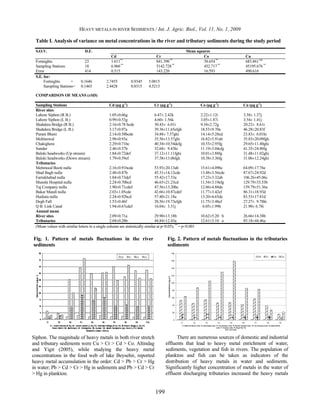
Table I. Analysis of variance on metal concentrations in the river and tributary sediments during the study period 
S.O.V. D.F. Mean squares 
Cd Cr Co Cu 
Fortnights 23 1.611** 841.390 ** 38.654 ** 683.861 NS 
Sampling Stations 18 6.960 ** 5142.728** 452.717 ** 45195.676 ** 
Error 414 0.515 143.220 16.593 490.616 
S.E. for: 
199 
Siphon. The magnitude of heavy metals in both river stretch 
and tributary sediments were Cu > Cr > Cd > Co. Altindag 
and Yigit (2005), while studying the heavy metal 
concentrations in the food web of lake Beysehir, reported 
heavy metal accumulation in the order: Cd > Pb > Cr > Hg 
in water; Pb > Cd > Cr > Hg in sediments and Pb > Cd > Cr 
> Hg in plankton. 
There are numerous sources of domestic and industrial 
180 
160 
140 
120 
100 
80 
60 
40 
20 
effluents that lead to heavy metal enrichment of water, 
sediments, vegetation and fish in rivers. The population of 
plankton and fish can be taken as indicators of the 
distribution of heavy metals in water and sediments. 
Significantly higher concentration of metals in the water of 
effluent discharging tributaries increased the heavy metals 
Fortnights = 0.1646 2.7455 0.9345 5.0815 
Sampling Stations= 0.1465 2.4428 0.8315 4.5213 
COMPARISON OF MEANS (±SD) 
Sampling Stations Cd (μg g-1) Cr (μg g-1) Co (μg g-1) Cu (μg g-1) 
River sites 
Lahore Siphon (R B.) 1.05±0.66g 6.47± 2.42k 2.22±1.12i 3.38± 1.37j 
Lahore Siphon (L B.) 0.99±0.53g 4.60± 1.56k 3.05±1.87i 3.54± 1.41j 
Shahdera Bridge (R B.) 2.16±0.78 bcde 30.43± 6.01i 9.34±2.72g 20.22± 8.61i 
Shahdera Bridge (L B.) 3.17±0.97a 39.36±11.65efgh 18.53±9.70a 46.28±20.83f 
Purani Bheni 2.14±0.58bcde 34.88± 7.57ghi 14.14±5.28cd 23.83± 6.01hi 
Mohlanwal 2.98±0.93a 35.56±13.57ghi 16.82±5.91ab 35.83±20.09fgh 
Chakighera 2.29±0.71bc 40.34±10.54defg 10.53±2.95fg 29.65±11.40ghi 
Sunder 2.46±0.57b 32.68± 9.43hi 11.19±3.04efg 41.35±24.80fg 
Baloki headworks (Up stream) 1.84±0.72def 37.12±11.11fghi 10.01±3.88fg 31.48±11.02ghi 
Baloki headworks (Down stream) 1.79±0.59ef 37.58±13.06fgh 10.38±3.36fg 31.06±12.24ghi 
Tributaries 
Mehmood Booti nulla 2.16±0.91bcde 53.93±20.13ab 15.61±4.09bc 64.09±17.76e 
Shad Bagh nulla 2.48±0.87b 45.31±14.12cde 13.48±3.56cde 87.67±24.92d 
Farrukhabad nulla 1.84±0.73def 55.42±17.53a 17.23±3.32ab 106.26±45.06c 
Munshi Hospital nulla 2.24±0.70bcd 46.65±21.23cd 11.54±3.19efg 129.79±33.53b 
Taj Company nulla 1.90±0.71cdef 47.56±13.20bc 12.86±4.88de 159.79±51.36a 
Bakar Mandi nulla 2.03±1.05cde 42.66±10.87cdef 11.77±3.42ef 86.31±18.93d 
Hudiara nulla 2.24±0.92bcd 57.40±21.18a 13.20±4.65de 83.53±17.81d 
Degh Fall 1.53±0.46f 38.56±19.73efgh 11.75±3.48ef 27.27± 9.78hi 
Q B. Link Canal 1.94±0.67cdef 16.04± 3.31j 6.05±1.99h 21.90± 6.78i 
Annual mean 
River sites 2.09±0.71a 29.90±13.18b 10.62±5.20 b 26.66±14.38b 
Tributaries 2.04±0.28b 44.84±12.43a 12.61±3.10 a 85.18±44.46a 
(Mean values with similar letters in a single column are statistically similar at p<0.05); ** = p<0.001 
Fig. 1. Pattern of metals fluctuations in the river 
sediments 
Fig. 2. Pattern of metals fluctuations in the tributaries 
sediments 
0 
T1 T2 T3 T4 T5 T6 T7 T8 T9 
T1, Mehmood Booti nulla; T2, Shad Bagh nulla; T3, Farrukhabad nulla; T4, Munshi Hospital nulla; T5, Taj Company nulla; T6, Bakar Mandi 
nulla; T7, Hudiara nulla; T8, Degh Fall; T9, 
Q B. Link Canal. 
Concentrations (μg g-1) 
Cd Cr Co Cu
RAUF et al. / Int. J. Agric. Biol., Vol. 11, No. 2, 2009 
200 
toxicity of the river bed sediments significantly (Javed & 
Hayat, 1995). Therefore, enrichment of metals in the bed 
sediments proved an important factor for detecting the 
sources of heavy metal in an aquatic ecosystem (Ubaidullah 
et al., 2004) because suspended particles carried by 
industrial effluents and domestic sewage are ultimately 
deposited as the sediments containing measurable quantities 
of Cd, Cr, Co and Cu. Sediments are important sinks for 
various pollutants like pesticides and heavy metals that play 
a significant role in the remobilization of contaminants in 
aquatic systems under favorable conditions. Direct transfer 
of chemicals from sediments to organisms is regarded as a 
major route of exposure to many species (Zoumis et al., 
2001). The release of trace metals from sediments into the 
water and consequently to the fish in the aquatic habitats 
depends on the rate of precipitation, complexation, 
absorption and solubilization of metals and physico-chemical 
characteristics of the aquatic system (Morgan & 
Stumm, 1991; Javed, 2003). The present study indicates that 
the sediments of the river Ravi and effluent discharging 
tributaries have been heavily contaminated with Cd, Cr, Co 
and Cu. Though most of the illegal discharges in the area 
have been reduced for some time, the highly contaminated 
sediments of the river Ravi could continue to act as 
secondary sources of pollution to the overlying water 
column. 
In conclusion, heavy metal levels in the river 
sediments were remarkably high, but varied among 
sampling stations. Our results suggest that special attention 
must be given to the issue of metal re-mobilization, because 
a large portion of metals in sediments are likely to release 
back into the water column. 
REFERENCES 
APHA, 1998. Standard Methods for the Examination of Water and 
Wastewater, 20th edition. American Public Health Association, New 
York 
Altındag, A. and S. Yigit, 2005. Assessment of heavy metal concentrations 
in the food web of lake Beysehir, Turkey. Chemosphere, 60: 552– 
556 
Azzaoui, S., M. El Hanbali and M. Leblance, 2002. Copper, lead, iron and 
manganese in the Sebou drainage basin; sources and impact on 
surface water quality. Water Qual Res. J. Canada, 37: 773–784 
Chindah, A.C., A.S. Braide and O.C. Sibeudu, 2004. Distribution of 
hydrocarbons and heavy metals in sediment and a crustacean 
(shrimps-Penaeus notialis) from the bonny/new Calabar river 
estuary, Niger Delta. Ajeam-Ragee, 9: 1–14 
Emongor, V., E. Kealotswe, I. Koorapetse, S. Sankwasa and S. 
Keikanetswe, 2005. Pollution indicator in Gaberone effluent. J. Appl. 
Sci., 5: 147–150 
Fufeyin, P.T., 1994. Heavy metal concentrations in the water, sediment and 
fish species of Ikpoba Reservior, Benin City. Ph. D. Thesis, 
University of Benin, Benin City, Nigeria 
Furtado, A.A.L., R.T. Albuquerque, S.G.F. Leite and R.P. Pecanha, 1998. 
Effect of hydraulicretention time on nitrification in an airlift 
biological reactor. Brazilian J. Chem. Engir., 15: 1–7 
Ito, A., T. Umita, J. Aizawa, T. Takachi and K. Morinaga, 2000. Removal 
of heavy metals from anaerobically digested sewage sludge by a new 
chemical method using ferric sulfate. Water Res., 34: 751–758 
Javed, M., 2003. Relationships among water, sediments and plankton for the 
uptake and accumulation of metals in the river Ravi. Indus J. Plant 
Sci., 2: 326–331 
Javed, M. and S. Hayat, 1995. Effect of waste disposal on the water quality 
of river Ravi from Lahore to Head Baloki. Proc. Pak. Cong. Zool., 
15: 41–51 
Kitada, K., A. Ito, K. Yamada. J. Aizawa and T. Umita, 2000. Biological 
leaching of heavy metals from anaerobically digested sewage sludge 
using indigenous sulfur-oxidizing bacteria and sulfure waste in a 
closed system. In: Proc. of First World Water Congress of the 
International Water Association, Paris, pp: 359–366 
Morgan, J.J. and W. Stumm, 1991. Chemical processes in the environment, 
relevance of chemical speciation, In: Merien, E. (ed.), Metasl and 
Their Compounds in the Environment, pp: 67–103. VCH Publishers, 
Germany 
Obasohan, E.E., J.A.O. Oronsaye and O.I. Eguavoen, 2007. Determination 
of post-dredging concentrations of selected trace metals in water, 
sediments and the freshwater mudfish (Clarias gariepinus) from 
Ikpoba river in Benin City, Edo State, Nigeria. African J. Biotech., 6: 
470–474 
Sin, S.N., H. Chua, W. Lo and L.M. Ng, 2001. Assessment of heavy metal 
cations in sediments of Shing Mun river, Hong Kong. Environ. Int., 
26: 297–301 
Steel, R.G.D., J.H. Torrie and D.A. Dinkkey, 1996. Principles and 
Procedures of Statistics: A Biomaterical Approach, 2nd edition. 
McGraw Hill Book Co., Singapore 
Tsai, L.J., K.C.Yu, S.F. Chen and P.Y. Kung, 2003. Effect of temperature 
on removal of heavy metals from contaminated river sediments via 
bioleaching. Water Res., 37: 2449–2457 
Ubaidullah, M., M. Javed and S. Abdullah, 2004. Metals toxicity of 
sediments in the river Ravi and related effluents discharging 
tributaries. Indus J. Biol. Sci., 1: 43–49 
Ugochukwu, C.N.C., 2004. Effluent monitoring of an oil servicing company 
and its impact on the environment. Ajeam-Ragee, 8: 27–30 
Vutukuru, S.S., 2003. Chromium induced alterations in some biochemical 
profiles of the Indian major carps, Labeo rohita (Hamilton). Bull. 
Environ. Contam. Toxicol., 70: 118–123 
Wang, Z.J. and H.X. Tang, 1998. The chemical, toxicological and 
ecological studies in assessing the heavy metal pollution in Le An 
river, China. Water Res., 32: 510–518 
Zoumis, T., A. Schmidt, L. Grigorova and W. Calmano, 2001. 
Contamination in sediments: remobilization and demobilization. Sci. 
Total Environ., 266: 195–202 
(Received 28 May 2008; Accepted 08 January 2009)

33198 .

  • 1.
    INTERNATIONAL JOURNAL OFAGRICULTURE & BIOLOGY ISSN Print: 1560–8530; ISSN Online: 1814–9596 08–154/MCB/2009/11–2–197–200 http://www.fspublishers.org Full Length Article Assessment of Heavy Metals in Sediments of the River Ravi, Pakistan ABDUL RAUF1, MUHAMMAD JAVED, MUHAMMAD UBAIDULLAH AND SAJID ABDULLAH Fisheries Research Farms, Department of Zoology and Fisheries, University of Agriculture, Faisalabad, Pakistan 1Corresponding author’s e-mail: profrauf@yahoo.com ABSTRACT The extent of heavy metal contamination viz. cadmium (Cd), chromium (Cr), cobalt (Co) and copper (Cu) in the sediments of the river Ravi has been assessed. Sediment samples were taken from nineteen sampling stations. Metal concentrations in the sediments ranged from 0.99 to 3.17 for Cd, 4.60 to 57.40 for Cr, 2.22 to 18.53 for Co and 3.38 to 159.79 μg g-1 for Cu on dry matter basis. The highest concentration of Cu was found in Taj Company nulla, while minimum concentration of Cd was observed at Lahore Siphon. The results show that the metal concentrations in the sediments decreased in the order: Cu > Cr > Cd > Co. These contaminated sediments, accumulated over the years in the river bed sediments could act as secondary source of pollution to the overlying water column in the river. Key Words: Heavy metal pollution; Ravi river; Sediments INTRODUCTION Unfortunately, overpopulation, local soil erosion, inadequate water use management and intensive deforestation have caused major reductions in the river water quality. The alarming situation has aroused in the urban areas due to careless disposal of industrial waste and faulty drainage system that has badly affected the quality of the river water (Furtado et al., 1998; Ugochukwu, 2004; Chindah et al., 2004; Emongor et al., 2005). Major contributors to heavy metal water pollution are tanneries, brewery, textile, pottery, electroplating, metal finishing, mining, dyeing and printing industries, ceramic, photographic and pharmaceutical industries, scattered in the region (Azzaoui et al., 2002; Vutukuru, 2003). The distribution of heavy metals in sediments can provide researchers with evidence of the anthropogenic impact on aquatic ecosystems and therefore aid in assessing the risks associated with discharged human waste. River bed sediments act as both carriers and source of contamination in an aquatic environment; not only play an important role in river water pollution but can also provide a record of river’s pollution history (Tsai et al., 2003). By integrating the chemical, toxicological and ecological data, the impact of heavy metal pollution in Le An river in China was assessed by Wang and Tang (1998) and reported that water and sediment pollution has affected the aquatic ecosystem due to effluent discharges into the river. The metals contamination levels in the sediments were wide-ranging significant among river site sampling stations and three main effluent discharging tributaries. The sediments collected from tributaries showed significantly higher tendency towards metallic ion pollution in sediments than that of river system (Ubaidullah et al., 2004b). In sediments, mean metal level (Cu, Mn, Zn, Cr, Ni & Pb) were generally higher than the mean levels in water. This could be as a result of adsorption to sediment particles (Obasohan et al., 2007). Solubility levels of metals viz. Cu, Cd, Ni, Mn, Zn, Pb, Fe and Cr were higher in the rainy season than that of dry season due to enhanced desorption of metals from the sediments (Fufeyin, 1994). To overcome the health problem, treatment of contaminated sediments may be as important as the treatment of sewage sluge. To do this, chemical and microbial methods have been reported by Ito et al. (2000) and Kitada et al. (2000). Heavy metal contamination in sediments of Shing Mun river, Hong Kong was reported by Sin et al. (2001). Highest concentrations of Cu, Pb, Zn and Cr were recorded in Fo Tan tributaries, while Al and Cd were found in the Shing Mun river. The present study was aimed to evaluate the pollution level of sediments contaminated with Cd, Cr, Co and Cu in sediment samples of the river Ravi (from Lahore Siphon to Baloki headworks) and its related tributaries. MATERIALS AND METHODS The stretch of river Ravi from Lahore Siphon to Baloki headworks (72 km long stretch) was surveyed exhaustively and ten sampling station along both right and left banks of the river viz Lahore Siphon Right bank (R B), Lahore Siphon Left bank (L B), Shahdera Bridge (R B), To cite this paper: Rauf, A., M. Javed, M. Ubaidullah and S. Abdullah, 2009. Assessment of heavy Metals in sediments of the river Ravi, Pakistan. Int. J. Agric. Biol., 11: 197–200
  • 2.
    RAUF et al./ Int. J. Agric. Biol., Vol. 11, No. 2, 2009 198 Shahdera Bridge (L B), Purani Bheni, Mohnalwal, Chakighera, Sunder, Baloki headworks (Up stream), Baloki headworks (Down stream) and nine effluent discharging tributaries viz. Mehmood Booti nulla, Shad Bagh nulla, Farrukhabad nulla, Munshi Hospital nulla, Taj Company nulla, Bakar Mandi nulla, Hudiara nulla, Degh Fall and Q B. Link Canal were selected. Sediment samples were taken from each site on fortnightly basis. Each sampling station was divided into three sub-sampling stations with in diameter of 100 m. Samples were collected with the help of steel pipe (2 inch diameter) pressed with pressure through the water column to obtain a sediment layer of about one foot. Sediment samples collected from three sub-sampling stations at each station were homogenized to obtain a composite sample. The sediment samples (4-5 g) were dried at 100°C for 48 h in the oven. The dried samples were passed through standard screen to remove large particles and 1 g sediment sample was transferred to 100 mL quartz tube and digested in concentrated HNO3 and HCl (1:3 v/v) on a hot plate. The tubes were cooled and volumes prepared with double distilled water in volumetric flask. The digested samples were analyzed for Cd, Cr, Co and Cu according to APHA (1998) on Atomic Absorption Spectrophotometer (Perkin Elmer, AAnalyst-400). Statistical analysis. Analysis of variance and DMR tests were applied to find-out statistical differences among various parameters (Steel et al., 1996). RESULTS There were highly significant variations among fortnights and sampling stations for the contaminations of Cd, Cr and Co although the mean Cu concentration did not vary significantly among the fortnights. The sampling stations showed highly significant (p<0.001) differences for the mean Cu toxicity levels of bed sediments collected during the study period over one year (Table I). The mean Cd concentrations in the river bed sediments fluctuated between a maximum value of 3.17 μg g-1 (Shahdera Bridge, L.B.) and a minimum mean value of 0.99μg g-1 at Lahore Siphon (L B). The sediments collected from Mohnalwal had the mean annual Cd concentration of 2.98 μg g-1 showing significant differences with the contamination levels of Chakighera and Sunder (Fig. 1). Among the tributaries, Shad Bagh nulla exhibited the mean annual Cd contamination of 2.48 μg g-1 followed by that of 2.24, 2.24 and 2.16 μg g-1 recorded at Hudiara, Munshi Hospital and Mehmood Booti nullas, respectively. Degh Fall had the mean lowest Cd contamination (1.53 μg g-1) in its sediments. Other tributaries showed variable sediment toxicities (Fig. 2). River bed sediments collected from Chakighera were the most contaminated with Cr having the mean annual contamination of 40.34 μg g-1, while it was minimum (4.60 μg g-1) at Lahore siphon (L B). Among the tributaries, Hudiara nulla appeared the site with the highest Cr contaminated sediments (57.40 μg g-1), followed by the contamination levels recorded at Farrukhabad nulla and Mehmood Booti nulla. The lowest mean annual Cr concentration in the sediments was recorded at Q B. Link Canal (16.04 μg g-1). The sediments collected from Shahdera Bridge (L B) were highly contaminated with Co (18.53 μg g-1), followed by the contamination level recorded at Mohnalwal (16.82 μg g-1) with non-significant difference. Lahore Siphon contained the least toxic sediments. The sediments collected from this sampling station had the mean lowest Co concentrations of 2.22and 3.05 μg g-1 at right and left banks, respectively. Among the tributaries, Farrukhabad nulla had the mean highest Co contamination level of 17.23 μg g-1 in their sediments while Q B. Link Canal showed the mean lowest contamination level of 6.05 μg g-1 (Table I). Among the river sites, Shahdera Bridge (L B) had the highly Cu contaminated sediments, while it was the lowest at Lahore Siphon (R B) with the mean annual values of 46.28 and 3.38 μ gg-1, respectively. The highest Cu contamination in sediments was recorded at Shahdera Bridge, followed by the contamination levels of 41.35 and 35.83 μg g-1 recorded at Sunder and Mohnalwal, respectively. Among the tributaries, Taj Company nulla exhibited the mean annual copper contamination level of 159.79 μg g-1 in their sediments, while it was the lowest at Q B. Link Canal with the concentration of 21.90 μg g-1. The difference between Taj Company nulla and Q B. Link Canal, for the toxicity levels of their sediments, appeared statistically significant. DISCUSSION The main sources of pollution in the river Ravi stretching from Lahore Siphon to Baloki headworks are urban, agricultural and industrial wastewaters discharged from various industries like electroplating workshops, steel factories, paper and pulp industries, medicine and scientific laboratories, as well as surface runoff and municipal sewage. The present study revealed that Mehmood Booti, Shad Bagh, Farrukhabad, Munshi Hospital, Taj Company, Bakkar Mendi and Hudiar nullas, added substantially towards deterioration of river water and bed sediments. However, maximum metal contaminated water was discharged by upstream tributaries like Farrukhabad, Munshi Hospital, Taj Company, Bakkar Mandi and Hudiara nullas and Degh Fall. Wang and Tang (1998) concluded that water and sediment pollution has affected the aquatic ecosystem due to toxicity of effluent discharged into the Le An river in China. Sediment pollution associated with the moderate biological and ecological deterioration prevailed downstream of the river. Since water flow rate in the main river stretch was quite slow and most of the metals coming from effluent discharging tributaries deposited immediately after entering the main river channel. Nonetheless, lowest levels of metal in the sediments were recorded in Lahore
  • 3.
    HEAVY METALS INRIVER SEDIMENTS / Int. J. Agric. Biol., Vol. 11, No. 1, 2009 Table I. Analysis of variance on metal concentrations in the river and tributary sediments during the study period S.O.V. D.F. Mean squares Cd Cr Co Cu Fortnights 23 1.611** 841.390 ** 38.654 ** 683.861 NS Sampling Stations 18 6.960 ** 5142.728** 452.717 ** 45195.676 ** Error 414 0.515 143.220 16.593 490.616 S.E. for: 199 Siphon. The magnitude of heavy metals in both river stretch and tributary sediments were Cu > Cr > Cd > Co. Altindag and Yigit (2005), while studying the heavy metal concentrations in the food web of lake Beysehir, reported heavy metal accumulation in the order: Cd > Pb > Cr > Hg in water; Pb > Cd > Cr > Hg in sediments and Pb > Cd > Cr > Hg in plankton. There are numerous sources of domestic and industrial 180 160 140 120 100 80 60 40 20 effluents that lead to heavy metal enrichment of water, sediments, vegetation and fish in rivers. The population of plankton and fish can be taken as indicators of the distribution of heavy metals in water and sediments. Significantly higher concentration of metals in the water of effluent discharging tributaries increased the heavy metals Fortnights = 0.1646 2.7455 0.9345 5.0815 Sampling Stations= 0.1465 2.4428 0.8315 4.5213 COMPARISON OF MEANS (±SD) Sampling Stations Cd (μg g-1) Cr (μg g-1) Co (μg g-1) Cu (μg g-1) River sites Lahore Siphon (R B.) 1.05±0.66g 6.47± 2.42k 2.22±1.12i 3.38± 1.37j Lahore Siphon (L B.) 0.99±0.53g 4.60± 1.56k 3.05±1.87i 3.54± 1.41j Shahdera Bridge (R B.) 2.16±0.78 bcde 30.43± 6.01i 9.34±2.72g 20.22± 8.61i Shahdera Bridge (L B.) 3.17±0.97a 39.36±11.65efgh 18.53±9.70a 46.28±20.83f Purani Bheni 2.14±0.58bcde 34.88± 7.57ghi 14.14±5.28cd 23.83± 6.01hi Mohlanwal 2.98±0.93a 35.56±13.57ghi 16.82±5.91ab 35.83±20.09fgh Chakighera 2.29±0.71bc 40.34±10.54defg 10.53±2.95fg 29.65±11.40ghi Sunder 2.46±0.57b 32.68± 9.43hi 11.19±3.04efg 41.35±24.80fg Baloki headworks (Up stream) 1.84±0.72def 37.12±11.11fghi 10.01±3.88fg 31.48±11.02ghi Baloki headworks (Down stream) 1.79±0.59ef 37.58±13.06fgh 10.38±3.36fg 31.06±12.24ghi Tributaries Mehmood Booti nulla 2.16±0.91bcde 53.93±20.13ab 15.61±4.09bc 64.09±17.76e Shad Bagh nulla 2.48±0.87b 45.31±14.12cde 13.48±3.56cde 87.67±24.92d Farrukhabad nulla 1.84±0.73def 55.42±17.53a 17.23±3.32ab 106.26±45.06c Munshi Hospital nulla 2.24±0.70bcd 46.65±21.23cd 11.54±3.19efg 129.79±33.53b Taj Company nulla 1.90±0.71cdef 47.56±13.20bc 12.86±4.88de 159.79±51.36a Bakar Mandi nulla 2.03±1.05cde 42.66±10.87cdef 11.77±3.42ef 86.31±18.93d Hudiara nulla 2.24±0.92bcd 57.40±21.18a 13.20±4.65de 83.53±17.81d Degh Fall 1.53±0.46f 38.56±19.73efgh 11.75±3.48ef 27.27± 9.78hi Q B. Link Canal 1.94±0.67cdef 16.04± 3.31j 6.05±1.99h 21.90± 6.78i Annual mean River sites 2.09±0.71a 29.90±13.18b 10.62±5.20 b 26.66±14.38b Tributaries 2.04±0.28b 44.84±12.43a 12.61±3.10 a 85.18±44.46a (Mean values with similar letters in a single column are statistically similar at p<0.05); ** = p<0.001 Fig. 1. Pattern of metals fluctuations in the river sediments Fig. 2. Pattern of metals fluctuations in the tributaries sediments 0 T1 T2 T3 T4 T5 T6 T7 T8 T9 T1, Mehmood Booti nulla; T2, Shad Bagh nulla; T3, Farrukhabad nulla; T4, Munshi Hospital nulla; T5, Taj Company nulla; T6, Bakar Mandi nulla; T7, Hudiara nulla; T8, Degh Fall; T9, Q B. Link Canal. Concentrations (μg g-1) Cd Cr Co Cu
  • 4.
    RAUF et al./ Int. J. Agric. Biol., Vol. 11, No. 2, 2009 200 toxicity of the river bed sediments significantly (Javed & Hayat, 1995). Therefore, enrichment of metals in the bed sediments proved an important factor for detecting the sources of heavy metal in an aquatic ecosystem (Ubaidullah et al., 2004) because suspended particles carried by industrial effluents and domestic sewage are ultimately deposited as the sediments containing measurable quantities of Cd, Cr, Co and Cu. Sediments are important sinks for various pollutants like pesticides and heavy metals that play a significant role in the remobilization of contaminants in aquatic systems under favorable conditions. Direct transfer of chemicals from sediments to organisms is regarded as a major route of exposure to many species (Zoumis et al., 2001). The release of trace metals from sediments into the water and consequently to the fish in the aquatic habitats depends on the rate of precipitation, complexation, absorption and solubilization of metals and physico-chemical characteristics of the aquatic system (Morgan & Stumm, 1991; Javed, 2003). The present study indicates that the sediments of the river Ravi and effluent discharging tributaries have been heavily contaminated with Cd, Cr, Co and Cu. Though most of the illegal discharges in the area have been reduced for some time, the highly contaminated sediments of the river Ravi could continue to act as secondary sources of pollution to the overlying water column. In conclusion, heavy metal levels in the river sediments were remarkably high, but varied among sampling stations. Our results suggest that special attention must be given to the issue of metal re-mobilization, because a large portion of metals in sediments are likely to release back into the water column. REFERENCES APHA, 1998. Standard Methods for the Examination of Water and Wastewater, 20th edition. American Public Health Association, New York Altındag, A. and S. Yigit, 2005. Assessment of heavy metal concentrations in the food web of lake Beysehir, Turkey. Chemosphere, 60: 552– 556 Azzaoui, S., M. El Hanbali and M. Leblance, 2002. Copper, lead, iron and manganese in the Sebou drainage basin; sources and impact on surface water quality. Water Qual Res. J. Canada, 37: 773–784 Chindah, A.C., A.S. Braide and O.C. Sibeudu, 2004. Distribution of hydrocarbons and heavy metals in sediment and a crustacean (shrimps-Penaeus notialis) from the bonny/new Calabar river estuary, Niger Delta. Ajeam-Ragee, 9: 1–14 Emongor, V., E. Kealotswe, I. Koorapetse, S. Sankwasa and S. Keikanetswe, 2005. Pollution indicator in Gaberone effluent. J. Appl. Sci., 5: 147–150 Fufeyin, P.T., 1994. Heavy metal concentrations in the water, sediment and fish species of Ikpoba Reservior, Benin City. Ph. D. Thesis, University of Benin, Benin City, Nigeria Furtado, A.A.L., R.T. Albuquerque, S.G.F. Leite and R.P. Pecanha, 1998. Effect of hydraulicretention time on nitrification in an airlift biological reactor. Brazilian J. Chem. Engir., 15: 1–7 Ito, A., T. Umita, J. Aizawa, T. Takachi and K. Morinaga, 2000. Removal of heavy metals from anaerobically digested sewage sludge by a new chemical method using ferric sulfate. Water Res., 34: 751–758 Javed, M., 2003. Relationships among water, sediments and plankton for the uptake and accumulation of metals in the river Ravi. Indus J. Plant Sci., 2: 326–331 Javed, M. and S. Hayat, 1995. Effect of waste disposal on the water quality of river Ravi from Lahore to Head Baloki. Proc. Pak. Cong. Zool., 15: 41–51 Kitada, K., A. Ito, K. Yamada. J. Aizawa and T. Umita, 2000. Biological leaching of heavy metals from anaerobically digested sewage sludge using indigenous sulfur-oxidizing bacteria and sulfure waste in a closed system. In: Proc. of First World Water Congress of the International Water Association, Paris, pp: 359–366 Morgan, J.J. and W. Stumm, 1991. Chemical processes in the environment, relevance of chemical speciation, In: Merien, E. (ed.), Metasl and Their Compounds in the Environment, pp: 67–103. VCH Publishers, Germany Obasohan, E.E., J.A.O. Oronsaye and O.I. Eguavoen, 2007. Determination of post-dredging concentrations of selected trace metals in water, sediments and the freshwater mudfish (Clarias gariepinus) from Ikpoba river in Benin City, Edo State, Nigeria. African J. Biotech., 6: 470–474 Sin, S.N., H. Chua, W. Lo and L.M. Ng, 2001. Assessment of heavy metal cations in sediments of Shing Mun river, Hong Kong. Environ. Int., 26: 297–301 Steel, R.G.D., J.H. Torrie and D.A. Dinkkey, 1996. Principles and Procedures of Statistics: A Biomaterical Approach, 2nd edition. McGraw Hill Book Co., Singapore Tsai, L.J., K.C.Yu, S.F. Chen and P.Y. Kung, 2003. Effect of temperature on removal of heavy metals from contaminated river sediments via bioleaching. Water Res., 37: 2449–2457 Ubaidullah, M., M. Javed and S. Abdullah, 2004. Metals toxicity of sediments in the river Ravi and related effluents discharging tributaries. Indus J. Biol. Sci., 1: 43–49 Ugochukwu, C.N.C., 2004. Effluent monitoring of an oil servicing company and its impact on the environment. Ajeam-Ragee, 8: 27–30 Vutukuru, S.S., 2003. Chromium induced alterations in some biochemical profiles of the Indian major carps, Labeo rohita (Hamilton). Bull. Environ. Contam. Toxicol., 70: 118–123 Wang, Z.J. and H.X. Tang, 1998. The chemical, toxicological and ecological studies in assessing the heavy metal pollution in Le An river, China. Water Res., 32: 510–518 Zoumis, T., A. Schmidt, L. Grigorova and W. Calmano, 2001. Contamination in sediments: remobilization and demobilization. Sci. Total Environ., 266: 195–202 (Received 28 May 2008; Accepted 08 January 2009)