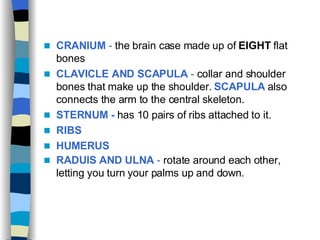
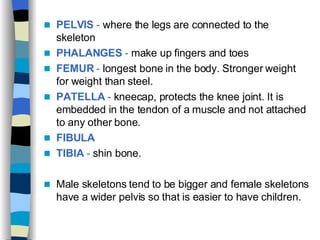
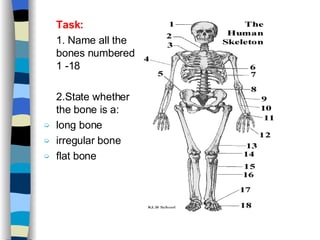
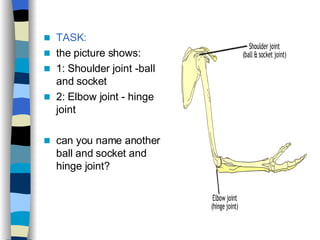
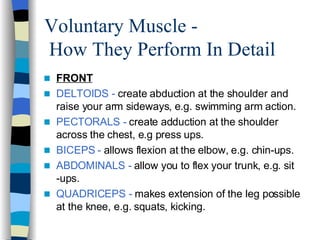
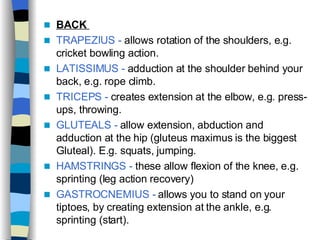
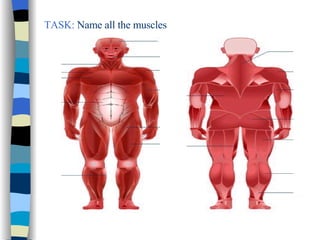
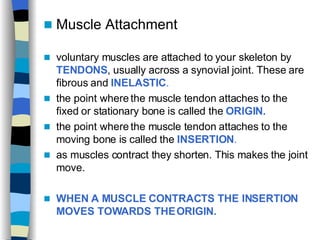
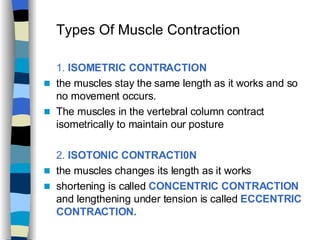
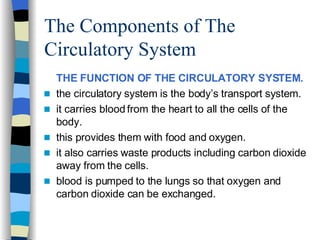
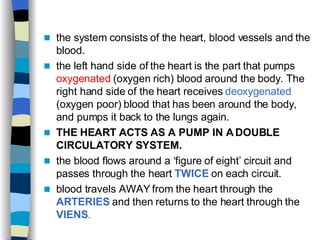
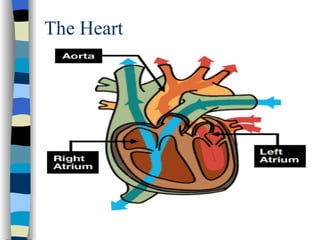
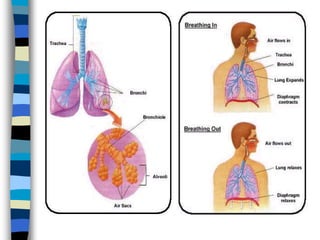
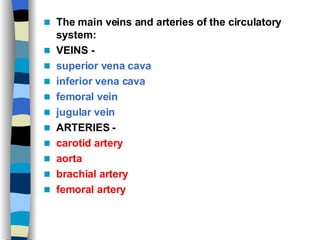
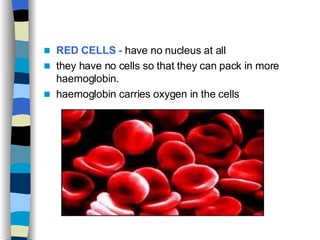
The skeleton has four main functions: providing shape and support, enabling movement, protecting vital organs, and producing blood cells. It is composed of over 200 bones, including long bones in the arms, legs, and hands/feet, flat bones like the skull and ribs, and irregular bones like the vertebrae. Joints like the ball-and-socket shoulder and hip allow a full range of motion, while hinge joints like the elbow only flex and extend. Muscles are attached to bones via tendons and work antagonistically in pairs to enable movement, with some muscles acting as agonists to contract and others relaxing as antagonists. The circulatory system transports blood from the heart to cells and back again to provide oxygen




![PERI-PROSTHETIC FRACTURE NAIL-PLATE CONSTRUCT [NPC].pptx](https://cdn.slidesharecdn.com/ss_thumbnails/drarunkumardrmohamedashrafperiprostheticfrasturenail-plateconstructnpc-260209164459-7e9d15a1-thumbnail.jpg?width=640&height=640&fit=bounds)


![ONFH[AVN HIP] -TRIPLE REGIME -A NOVAL SURGICAL CONCEPT .pptx](https://cdn.slidesharecdn.com/ss_thumbnails/onfhavnhip2026koaconcalicutdrgokuldevdrmashraf-260210064517-213ec005-thumbnail.jpg?width=640&height=640&fit=bounds)


