Victor L. Katch (Ann Arbor, MI)
Professor, Department of Movement Science
School of Kinesiology
Associate Professor, Pediatrics
School of Medicine
University of Michigan
Ann Arbor, Michigan
William D. McArdle (Sound Beach, NY)
Professor Emeritus, Department of Family, Nutrition, and Exercise Science
Queens College of the City University of New York
Flushing, New York
Frank I. Katch (Santa Barbara, CA)
International Research Scholar, Faculty of Health and Sport
Agder University College
Kristiansand, Norway
Instructor and Board Member
Certificate Program in Fitness Instructio
UCLA Extension, Los Angeles, CA
Former Professor and Chair of Exercise Science
University of Massachusetts
Amherst, Massachusetts
Essentials of Exercise Physiology
F O U R T H E D I T I O N
LWBK710-FM_i-xii.qxd 18/09/2010 00:26 Page i Aptara
Acquisitions Editor: Emily Lupash
Product Manager: Andrea M. Klingler
Marketing Manager: Christen Murphy
Designer: Joan Wendt
Art by: Dragonfly Media Grou
Compositor: Aptara, Inc.
Printer: C&C Offset Printing Co. Ltd.
Fourth Edition
Copyright © 2011 Lippincott Williams & Wilkins, a Wolters Kluwer business
351 West Camden Street Two Commerce Square, 2001 Market Street
Baltimore, MD 21201 Philadelphia, PA 19103
Printed in China
First Edition, 1994
Second Edition, 2000
Third Edition, 2006
Unless otherwise indicated, all photographs are Copyright © Fitness Technologies Press, Frank I. Katch, and Victor L. Katch, 50
43
Via Lara Lane, Santa Barbara, CA, 93111. This material is protected by copyright. No photograph may be reproduced in any form o
r
by any means without permission from the copyright holders.
Appendix B Copyright © 1991, 1999, 2010 by Fitness Technologies, Inc. 5043 Via Lara Lane, Santa Barbara, CA, 93111. This
material is protected by copyright. No part of it may be reproduced in any manner or by any means without written permission fr
om
the copyright holder.
Appendices C and D Copyright © 1991, 1999, 2010 by William D. McArdle, Frank L. Katch, Victor L. Katch and Fitness
Technologies, Inc. This material is protected by copyright. No part of it may be reproduced in any manner or by any means witho
ut
written permission from the copyright holder.
All rights reserved. This book is protected by copyright. No part of this book may be reproduced in any form or by any means, i
ncluding
photocopying, or utilized by any information storage and retrieval system without written permission from the copyright owner.
The publisher is not responsible (as a matter of product liability, negligence, or otherwise) for any injury resulting from any
material
contained herein. This publication contains information relating to general principles of medical care that should not be const
rued as
specific instructions for individual patients. Manufacturers’ product information and package inserts should be reviewed for curent
information, including contraindications, dosages, and precautions.
Library of Congress Cataloging-in-Publication Data
Katch, Victor L.
Essentials of exercise physiology / Victor L. Katch, William D. McArdle, Frank I. Katch.— 4th ed.
p. ; cm.
William D. McArdle is first named author on previous edition
Abridgement of: Exercise physiology / William D. McArdle, Frank I. Katch, Victor L. Katch. 7th ed. c2010.
Includes bibliographical references and index.
Summary: “This is a textbook for undergraduate Exercise Physiology courses”—Provided by publisher.
Summary: “The fourth edition of Essentials of Exercise Physiology represents a compact version of the seventh edition of Exerci
se
Physiology: Nutrition, Energy, and Human Performance, ideally suited for an undergraduate l introductory course in exercise
physiology”—Provided by publisher.
ISBN 978-1-60831-267-2 (alk. paper)
1. Exercise—Physiological aspects. I. McArdle, William D. II. Katch, Frank I. III. McArdle, William D. Exercise physiology.
IV. Title.
[DNLM: 1. Exercise—physiology. 2. Physical Fitness—physiology. 3. Sports Medicine. QT 260]
QP301.M1149 2011
612'.044—dc22
2010031304
The publishers have made every effort to trace the copyright holders for borrowed material. If they have inadvertently overlook
ed any, they
will be pleased to make the necessary arrangements at the first opportunity
To purchase additional copies of this book, call our customer service department at(800) 638-3030 or fax orders to (301) 223-2320.
International customers should call (301) 223-2300.
Visit Lippincott Williams & Wilkins on the Internet: http://www.lww.com. Lippincott Williams & Wilkins customer service represen-
tatives are available from 8:30 am to 6:00 pm, EST.
LWBK710-FM_i-xii.qxd 18/09/2010 00:26 Page ii Aptara
To Heather, Erika, Leslie, Jesse, Ryan, and Cameron: you light up my life.
— Victor L. Katch
To my grandchildren, Liam, Aiden, Quinn, Dylan, Kelly Rose, Owen, Henry,
Kathleen (Kate), Grace, Elizabeth, Claire, and Elise. Keep your eye on the ball,
your skis together, and go for the gold. All my love, Grandpa; and to Guido F. Foglia,
my mentor, my “brother,” and my unbelievably good and loyal friend.
— Bill McArdle
To my beautiful wife Kerry, who has been there for me from the beginning,
and our great children, David, Kevin, and Ellen.
— Frank I. Katch
D E D I C A T I O N
LWBK710-FM_i-xii.qxd 18/09/2010 00:26 Page iii Aptara
Preface
iv
The fourth edition of Essentials of Exercise Physiology represents an updated,
compact version of the seventh edition ofExercise Physiology: Nutrition, Energy,
and Human Performance , ideally suited for an undergraduate introductory
course in exercise physiology or health-related science. Essentials of Exercise
Physiology maintains many of the features that have made Exercise Physiology:
Nutrition, Energy, and Human Performance, a leading textbook in the field sinc
1981 and the First Prize winner in medicine of the British Medical Association’s
2002 Medical Book Competition. ThisEssentials text continues the same strong
pedagogy, writing style, and graphics and flow charts of prior editions, wit
considerable added materials.
In preparing this edition, we incorporated feedback from students and fac-
ulty from a wide range of interests and disciplines. We are encouraged that all
reviewers continue to embrace the major theme of the book: “understanding
interrelationships among energy intake, energy transfer during exercise, and
the physiologic systems that support that energy transfer.”
ORGANIZATION
We have rearranged material within and among chapters to make the informa-
tion flow more logically. To improve readability, we have combined topic head
ings, incorporated common materials, and rearranged other materials necessary
for an essentials text. This restructuring now makes it easier to cover most of
the chapters in a one-semester course and adapt materials to diverse disciplines.
Section I, “Introduction to Exercise Physiology,” introduces the historical
roots of exercise physiology and discusses professional aspects of exercise
physiology and the interrelationship between exercise physiology and sports
medicine.
Section II, “Nutrition and Energy,” consists of three chapters and empha-
sizes the interrelationship between food energy and optimal nutrition for exer-
cise. A critical discussion includes the alleged benefits of commonly promote
nutritional (and pharmacologic) aids to enhance performance.
Section III, “Energy Transfer,” has four chapters that focus on energy metab-
olism and how energy transfers from stored nutrients to muscle cells to pro-
duce movement during rest and various physical activities. We also include a
discussion of the measurement and evaluation of the different capacities for
human energy transfer.
Section IV, “The Physiologic Support Systems,” contains four chapters that
deal with the major physiologic systems (pulmonary, cardiovascular, neuro-
muscular, and endocrine) that interact to support the body’s response to acute
and chronic physical activity and exercise.
Section V, “Exercise Training and Adaptations,” includes three chapters that
describe application of the scientific principles of exercise training, includin
the highly specific functional and structural adaptation responses to chroni
exercise overload. We discuss the body’s response to resistance training and the
LWBK710-FM_i-xii.qxd 18/09/2010 00:26 Page iv Aptara
Preface • v
effects of different environmental challenges on energy transfer and exercise
performance. We also critique the purported performance-enhancing effects of
various “physiologic” agents.
Section VI, “Optimizing Body Composition, Successful Aging, and Health-
Related Physical Activity Benefits, contains three chapters that feature health-
related aspects of regular physical activity. We include a discussion of body
composition assessment; the important role physical activity plays in weight
control, successful aging, and disease prevention; and clinical aspects of exer-
cise physiology.
WORKBOOK FORMAT
The Questions & Notes workbook sections remain integrated into each chapter.
This pedagogical element encourages students to answer different questions
about what they read. This concurrent active reading/learning element enhances
student understanding of text material to a greater extent than simply reading
and underlining the content on the page.
Highlights of New and
Expanded Content
The following points highlight new and expanded content of the fourth edition
of Essentials of Exercise Physiology:
● Each section has undergone a major revision, incorporating the most re-
cent research and information about the topic.
● We have included new emerging topics within each chapter based on
current research.
● We include updated selected references at the end of every chapter.
● Where applicable, we include relevant Internet websites related to exer-
cise physiology.
● We include additional For Your Information boxes and have added new
and updated material to the Close Up boxes.
● The full-color art program continues to be a stellar feature of the text-
book. We have updated and expanded the art program and tables to
maintain consistent with the 2010 seventh edition of Exercise Physiology:
Nutrition, Energy, and Human Performance.
Special Features
● Close Up Boxes. This popular feature focuses on timely and important
exercise, sport, and clinical topics in exercise physiology that relate to
chapter content. Many of the boxes present practical applications to re-
lated topics of interest. This material, often showcased in a step-by-step,
illustrated format, provides relevance to the practice of exercise physiol-
ogy. Some Close Up boxes contain self-assessment or laboratory-type
activities.
● For Your Information Boxes. These boxes throughout the text highlight
key information about different exercise physiology areas. We designed
these boxes to help bring topics to life and make them relevant to stu-
dent learning.
● Thought Questions. Thought Questions at the end of each chapter sec-
tion summary encourage integrative, critical thinking to help students
apply information from the chapter. The instructor can use these ques-
tions to stimulate class discussion about chapter content and application
of material to practical situations.
LWBK710-FM_i-xii.qxd 18/09/2010 00:26 Page v Aptara
● Questions & Notes. This feature facilitates student learning by focusing
on specific questions related to important material presented in the text
● Appendices. Useful current information is at the student’s fingertips
Appendix A: The Metric System and Conversion Constants in Exercise
Physiology
Appendix B: Metabolic Computations in Open-Circuit Spirometry
Appendix C: Evaluation of Body Composition—Girth Method
Appendix D: Evaluation of Body Composition—Skinfold Method
vi • Preface
LWBK710-FM_i-xii.qxd 18/09/2010 00:26 Page vi Aptara
User’s Guide
vii
Essentials of Exercise Physiology, 4th edition, was created and developed as a
compact version of the popular Exercise Physiology: N utrition, Energy, and
Human Performance, 7th edition. This comprehensive package integrates the
basic concepts and relevant scientific information to understand nutrition
energy transfer, and exercise training. Please take a few moments to look
through this User’s Guide, which will introduce you to the tools and features
that will enhance your learning experience.
Chapter Objectives open each chapter and
present learning goals to help you focus on
and retain the crucial topics discussed in
each chapter.
Questions & Notes, located in the
margin of the odd-numbered pages,
enhance your understanding of text
material by using an integrated workbook
format that presents questions to help
drive home key topics and provide a place
to take notes and jot down questions.
For Your Information Boxeshighlight
key information about different exercise
physiology areas and help bring topics
to life, making them exciting and
relevant for all readers.
LWBK710-FM_i-xii.qxd 18/09/2010 00:27 Page vii Aptara
Beautiful Illustrations throughout the
text help to draw attention to important
concepts in a visually stimulating and
intriguing manner. Detailed, full-color
drawings and photographs amplify and
clarify the text and are particularly helpful
for visual learners.
Close Up Boxes explore real-life cases
and practical applications of exercise
physiology applied to elite athletes and
average people.
viii • User’s Guide
LWBK710-FM_i-xii.qxd 18/09/2010 00:27 Page viii Aptara
User’s Guide • ix
Thought Questions, located at the conclu-
sion of each chapter part, encourage critical
thinking and problem-solving skills to help
students use and apply information learned
throughout each chapter in a practical
manner.
Summaries at the end of each chapter
provide a numbered list of the need-to-
know facts and important information to
help you review and remember what you
have learned.
STUDENT RESOURCES
Inside the front cover of your textbook you will find your personal access code
Use it to log on to thePoint.lww.com/Essentials4e, the companion website for
this textbook. On the website you can access various supplemental materials
available to help enhance and further your learning. These assets include ani-
mations, a quiz bank, and the fully searchable online text.
LWBK710-FM_i-xii.qxd 18/09/2010 00:27 Page ix Aptara
x
Acknowledgments
The fourth edition of Essentials of Exercise Physiology represents a team effort.
We are pleased to thank the many dedicated professionals at Lippincott
Williams & Wilkins, particularly the outstanding efforts of our Product Man-
ager Andrea Klingler, who spearheaded this effort with her sense of good judg-
ment and tireless attention to detail. Other publishing team members include
the expert talents of the following individuals: Jennifer Clements, Art Director;
Emily Lupash, Acquisitions Editor; Amy Rowland, Editorial Assistant; and
Loftin Paul Montgomery, Permissions Department. We also thank the many
reviewers, colleagues, and adopters of the first three editions for their insightfu
comments and helpful suggestions.
VICTOR L. KATCH
WILLIAM D. MCARDLE
FRANK I. KATCH
LWBK710-FM_i-xii.qxd 18/09/2010 00:27 Page x Aptara
Contents
xi
Dedication iii
Preface iv
User’s Guide vii
Acknowledgments x
S E C T I O N I
INTRODUCTION TO EXERCISE PHYSIOLOGY 1
1. Origins of Exercise Physiology: Foundations
for the Field of Study 3
S E C T I O N II
NUTRITION AND ENERGY 31
2. Macronutrients and Micronutrients 33
3. Food Energy and Optimum Nutrition
for Exercise 81
4. Nutritional and Pharmacologic
Aids to Performance 109
S E C T I O N III
ENERGY TRANSFER 149
5. Fundamentals of Human Energy Transfer 151
6. Human Energy Transfer During Exercise 185
7. Measuring and Evaluating Human Energy-
Generating Capacities During Exercise 203
8. Energy Expenditure During Rest and
Physical Activity 237
LWBK710-FM_i-xii.qxd 18/09/2010 00:27 Page xi Aptara
xii • Contents
S E C T I O N IV
THE PHYSIOLOGIC SUPPORT SYSTEMS 263
9. The Pulmonary System and Exercise 265
10. The Cardiovascular System and Exercise 301
11. The Neuromuscular System and Exercise 337
12. Hormones, Exercise, and Training 377
S E C T I O N V
EXERCISE TRAINING AND ADAPTATIONS 407
13. Training the Anaerobic and
Aerobic Energy Systems 409
14. Training Muscles to Become Stronger 443
15. Factors Affecting Physiologic Function:
The Environment and Special Aids
to Performance 493
S E C T I O N VI
OPTIMIZING BODY COMPOSITION,
SUCCESSFUL AGING, AND
HEALTH-RELATED EXERCISE BENEFITS 531
16. Body Composition, Obesity, and
Weight Control 533
17. Physical Activity, Exercise, Successful
Aging, and Disease Prevention 595
18. Clinical Aspects of Exercise Physiology 631
Appendix
A. The Metric System and Conversion
Constants in Exercise Physiology 669
B. Metabolic Computations in Open-Circuit
Spirometry 672
C. Evaluation of Body Composition—
Girth Method 676
D. Evaluation of Body Composition—
Skinfold Method 683
Index 685
LWBK710-FM_i-xii.qxd 18/09/2010 00:27 Page xii Aptara
1
He who does not know what he is
looking for will not lay hold of what
he has found when he gets it.
— Claude Bernard,
Introduction à l’étude de la
medecine expérimentale
(The Introduction to the Study of
Experimental Medicine. 1865.
Translated by H.C. Greene;
Henry Schuman, Inc.,
New York, 1927)
I
Introduction
to Exercise
Physiology
Exercise physiology enjoys a rich historical past filled with engaging storie
about important discoveries in anatomy, physiology, and medicine. Fasci-
nating people and unique events have shaped our field. The ancient Greek physi
cian Galen (131–201 AD) wrote 87 detailed essays about improving health (proper
nutrition), aerobic fitness (walking), and strengthening muscles (rope climbing an
weight training). From 776 BC to 393 AD, the ancient Greek “sports nutritionists”
planned the training regimens and diets for Olympic competitors, which included
high-protein meat diets believed to improve strength and overall fitness. New idea
about body functioning emerged during the Renaissance as anatomists and physi-
cians exploded every notion inherited from antiquity. Gutenberg’s printing press in
the 15th century disseminated both classic and newly acquired knowledge. Conse-
quently, the typical person gained access to local and world events, and education
became more accessible to the masses as universities developed and flourishe
throughout Europe.
The new anatomists went beyond simplistic notions of the early Greek scholar
Empedocles’ (ca. 500–430BC) four “bodily humors” and elucidated the complexi-
ties of the circulatory, respiratory, and digestive systems. Although the supernatu-
ral still influenced discussions of physical phenomena, many people turned fro
dogma and superstition to experimentation as their primary source of knowledge.
By the middle of the 19th century, fledgling medical schools in the United State
began to graduate their students, many who assumed positions of leadership in
academia and allied medical sciences. The pioneer physicians taught in medical
schools, conducted research, and wrote textbooks. Some became affiliated wit
departments of physical education and hygiene, where they oversaw programs of
physical training for students and athletes. These early efforts to infuse biology and
physiology into the school curriculum helped to shape the origin of modern exer-
cise physiology.
Part 1 Chapter 1 chronicles the achievements of several of the early American
physician-scientists. The writing and research efforts (begun in 1860) by a college
president and his physician son at Amherst College, MA, gave birth to exercise
physiology as we know it today. Our history in the United States also includes
the first exercise physiology laboratory at Harvard University begun in 1891 an
I
S E C T I O N
LWBK710-c01_01-30.qxd 9/15/10 9:17 AM Page 1 Aptara
the rigorous course of study for students in the Department
of Anatomy, Physiology, and Physical Training. The chapter
also highlights scientific contributions of current America
and Nordic researchers who have impacted the field of exer
cise physiology.
The study of exercise physiology pioneers and their 2 mil-
lennia of contributions in chemistry, nutrition, metabolism,
physiology, and physical fitness helps us to more clearl
understand our historical underpinnings. It also places in
proper perspective the state and direction of our field today
Part 2 of Chapter 1 discusses the various roles of an exer-
cise physiologist in the workplace and includes certificatio
and education requirements necessary to achieve profes-
sional status.
2 • SECTION I Introduction to Exercise Physiology
LWBK710-c01_01-30.qxd 9/15/10 9:17 AM Page 2 Aptara
C H A P T E R O B J E C T I V E S
• Briefly outline Galen’s contributions to health and
scientific hygiene.
• Discuss the beginnings of the development of
exercise physiology in the United States.
• Discuss the contributions of George Wells Fitz to the
evolution of the academic field of exercise physiology.
• List contributions of Nordic scientists to the field of
exercise physiology.
• Outline the course of study for the first academic
4-year program in the United States from the Depart-
ment of Anatomy, Physiology, and Physical Training at
Harvard University.
• Describe the creation of the Harvard Fatigue Labora-
tory, its major scientists, and its contributions to the
field of exercise physiology.
• Describe the different jobs of an exercise physiologist.
• Discuss the roles of social networking and how they
relate to exercise physiologists.
• List two of the most prominent exercise physiology
professional organizations.
Origins of Exercise
Physiology:
Foundations for
the Field of Study
1
3
C h a p t e r
LWBK710-c01_01-30.qxd 9/15/10 9:17 AM Page 3 Aptara
INTRODUCTION
The ability to impact the environment depends on our
capacity for physical activity. Movement represents more
than just a convenience; it is fundamental to human evolu-
tionary development—no less important than the com-
plexities of intellect and emotion.
In this century, scientists have amassed considerable
new knowledge about physical activity so that exercise
physiology is now a separate academic field of study withi
the biological sciences. Exercise physiology as an academic
discipline consists of three distinct components (Fig. 1.1):
1. Body of knowledge built on facts and theories
derived from research
2. Formal course of study in institutions of higher
learning
3. Professional preparation of practitioners and future
investigators and leaders in the fiel
The current academic discipline of exercise physiology
emerged from the influences of several traditional field
primarily anatomy, physiology, and medicine. Each of
these disciplines uniquely contributes to our understand-
ing human structure and function in health and disease.
Human physiology integrates aspects of chemistry, biol-
ogy, nutrition, and physics to explain biological events and
their sites of occurrence. Physiologists grapple with ques-
tions such as, “What factors regulate body functions?” and
“What sequence of events occurs between the stimulus and
the response in the regulatory process?” The discipline of
physiology compartmentalizes into subdisciplines, usually
based on either a systems approach (e.g., pulmonary, car-
diovascular, renal, endocrine, neuromuscular) or a broad
area of study (e.g., cell, invertebrate, vertebrate, compara-
tive, human).
Part 1 of this chapter briefly outlines the genesis fro
antiquity to the present state of exercise physiology world-
wide. We emphasize the growth of formal research labora-
tories and the publication of textbooks in the field. Th
roots of exercise physiology have many common links to
antiquity, with the knowledge explosion of the late 1950s
greatly increasing the number of citations in the research
literature. Consider the terms exercise and exertion. In
1946, a hand search of resource manuals yielded only 12
citations in five journals. By 1962, the number increased t
128 citations in 51 journals, and by 1981, 655 citations
appeared in 224 journals. These increases, however, have
been dwarfed by the exponential increase in new scientifi
knowledge in the exercise physiology-related fields durin
the past decade. Eleven years ago in early October, more
than 6000 citation listings for exercise and exertion
appeared in more than 1400 journals. On October 13,
2010, the number of citations for the single term exercise
returned 180,066 citations, and adding the term exertion
yielded 54,451 more entries! It is not a stretch to say that
exercise physiology indeed represents a mature field o
study.
The historical underpinnings of exercise physiology
form an important base for students pursuing a graduate
degree. Many students complete course work, internships,
and research experiences that provide sufficient prepara
tion for continued education to become an exercise physi-
ologist. In part 2 of this chapter we introduce various roles
that the modern-day exercise physiologist will assume in
different clinical and professional settings. We also review
different academic and professional certifications offere
by different professional organizations.
4 • SECTION I Introduction to Exercise Physiology
Part 1 Origins of Exercise
Physiology:
From Ancient Greece to
the United States
The origins of exercise physiology begin with the influen
tial Greek physicians of antiquity. Scholars in the United
States and Nordic countries fostered the scientific assess
ment of sport and exercise as a respectable field of inquiry
EARLIEST DEVELOPMENT
The first real focus on the physiology of exercise probabl
began in early Greece and Asia Minor. Exercise, sports,
Securing facts and developing theories
D
i
s
s
e
m
i
n
a
t
i
n
g
k
n
o
w
l
e
d
g
e
D
i
s
s
e
m
i
n
a
t
i
n
g
k
n
o
w
l
e
d
g
e
P
r
e
p
a
r
i
n
g
f
u
t
u
r
e
l
e
a
d
e
r
s
P
r
e
p
a
r
i
n
g
f
u
t
u
r
e
l
e
a
d
e
r
s
P
r
e
p
a
r
i
n
g
f
u
t
u
r
e
l
e
a
d
e
r
s
Exercise
Physiology
Exercise
Physiology
Figure 1.1 Science triangle. Three parts of the field of stud
of exercise physiology: (1) the body of knowledge evidenced by
experimental and field research engaged in the enterprise o
securing facts and developing theories, (2) the formal course of
study in institutions of higher learning for the purpose of
disseminating knowledge, and (3) preparation of future leaders
in the field. (Adapted from Tipton, C.M.: Contemporar
exercise physiology: Fifty years after the closure of the Harvard
Fatigue Laboratory. Exerc. Sport Sci. Rev., 26:315, 1998.)
LWBK710-c01_01-30.qxd 9/15/10 9:17 AM Page 4 Aptara
games, and health concerned even earlier civilizations, including the Minoan
and Mycenaean cultures, the great biblical empires of David and Solomon,
Assyria, Babylonia, Media, and Persia, and the empires of Alexander. The
ancient civilizations of Syria, Egypt, Greece, Arabia, Mesopotamia, Persia, India,
and China also recorded references to sports, games, and health practices that
included personal hygiene, exercise, and training. The doctrines and teachings
of Susruta (Sushruta, an Indian physician) promoted the influence of differen
modes of exercise on human health and disease. For example, Susruta consid-
ered obesity a disease caused by an increase in the humorvayu (from increases
in lymph chyle) and believed that a sedentary lifestyle contributed to obesity.
The greatest influence on Western Civilization, however, came from the earl
Greek physicians Herodicus (ca. 480 BC), Hippocrates (460–377 BC), and
Claudius Galenus or Galen (131–201 AD). Herodicus, a physician and athlete,
strongly advocated proper diet in physical training. His early writings and
devoted followers influenced Hippocrates, the famous physician and “father o
preventive medicine” who contributed 87 treatises on medicine, including sev-
eral on health and hygiene.
Five centuries after Hippocrates, during the early decline of the Roman
Empire, Galen became the most well-known and influential physician wh
ever lived. Galen began studying medicine at about 16 years of age. During the
next 50 years, he enhanced current thinking about health and scientifi
hygiene, an area some might consider applied exercise physiology. Through-
out his life, Galen taught and practiced the seven “laws of health” that com-
prised breathing fresh air, eating proper foods, drinking the right beverages,
exercising, getting adequate sleep, having a daily bowel movement, and con-
trolling one’s emotions (sound familiar as modern dogma?). Galen scribed at
least 80 treatises and about 500 essays related to human anatomy and physiol-
ogy, nutrition, growth and development, the benefits of exercise and deleteri
ous consequences of sedentary living, and diverse diseases and their treatment.
Among his notable contributions, Galen introduced the concept of polisarkia
(too much food intake, too little exercise) now known as morbid obesity. One
of the first laboratory-oriented physiologist–physicians Galen conducted orig-
inal experiments in physiology, comparative anatomy, and medicine; he dis-
sected animals (e.g., goats, pigs, cows, horses, and elephants). As physician to
the gladiators (most likely the first “sports medicine” physician), Galen treate
torn tendons and muscles using surgical procedures that he invented and rec-
ommended rehabilitation therapies and exercise regimens. For example, for
lower-back discomfort, subjects were suspended upside down in a vertical
position to relieve pressure in the lumbar region. Galen followed the Hippo-
cratic school of medicine that believed in logical science grounded in observa-
tion and experimentation, not superstition or deity dictates. Galen wrote
detailed descriptions about the forms, kinds, and varieties of “swift” vigorous
exercises, including their proper quantity and duration. Galen’s writings about
exercise and its effects might be considered the first formal “how to” manual
about such topics, which remained influential for the next 15 centuries. Th
beginnings of “modern day” exercise physiology include the periods of Renais-
sance, Enlightenment, and Scientific Discovery in Europe. During this time
Galen’s ideas continued to influence the writings of the early physiologists
physicians, and teachers of hygiene and health. For example, in Venice in
1539, the Italian physician Hieronymus Mercurialis (1530–1606) published
De Arte Gymnastica Apud Ancientes(The Art of Gymnastics Among the Ancients
).
This text, influenced by Galen and other Greek and Latin authors, profoundl
affected subsequent writings about gymnastics (physical training and exercise)
and health (hygiene) in Europe and 19th century America. The panel in
Figure 1.2, redrawn from De Arte Gymnastica, acknowledges the early Greek
influence of one of Galen’s well-known essays, “Exercise with the Small Ball.
This depiction illustrates his regimen of specific strengthening exercises
featuring discus throwing and rope climbing.
Chapter 1 Origins of Exercise Physiology: Foundations for the Field of Study • 5
Questions & Notes
Name the most famous of the Greek
physicians.
What does the termpolisarkia mean?
State one important tenet of the
Hippocrates School of Medicine.
List 3 contributions of Galen to the study of
exercise physiology.
1.
2.
3.
LWBK710-c01_01-30.qxd 9/15/10 9:17 AM Page 5 Aptara
EARLY UNITED STATES EXPERIENCE
By the early 1800s in the United States, European science-
oriented physicians and experimental anatomists and phys-
iologists strongly promoted ideas about health and hygiene.
Before 1800, only 39 first-edition American-authored med
ical books had been published; several medical schools
were founded (e.g., Harvard Medical School, 1782–1783);
seven medical societies existed (the first was the New Jerse
State Medical Society in 1766); and only one medical jour-
nal existed (Medical Repository, initially published on July
26, 1797). Outside the United States, 176 medical journals
were published, mostly from Britain (e.g., Foreign Medical
Review, London Medical Journal, Physical Journal of London),
France (e.g., Le Journal de Medicine, Chirurgie et Pharmacie,
Gazette Medical de Paris ), Germany ( Deliciae Medicae et
Chirurgicae, N atur and Medizin Kunst und Literature
Geschichte, Acta Medicorum Berolinen , Chirurgisch), and
Italy (Giornale per Servire alla Storia Ragionata della Medic-
ina di questo Secole ). By 1850, the number of indigenous
medical journals published in the United States increased
to 117. Interestingly, the first medical publication in Americ
in 1677 by Thomas Thatcher, a minister, “A Brief Guide in
The Small Pox and Measles” appeared more than 100 years
before the founding of Harvard Medical School. The
famous classic f rst edition of Gray’s Anatomy, Descriptive
and Surgical (now known simply as Gray’s Anatomy) was
first published in 1858 in the United Kingdom (3 year
before British anatomist Henry Gray’s death at age 34 years
from smallpox) and in the United States in 1859. Medical
journal publications in the United States increased tremen-
dously during the first half of the 19th century. Stead
growth in the number of scientific contributions fro
France and Germany influenced the thinking and practic
of American medicine. An explosion of information
reached the American public through books, magazines,
newspapers, and traveling “health salesmen” who sold an
endless variety of tonics and elixirs, promising to optimize
health and cure disease. Many health reformers and physi-
cians from 1800 to 1850 used “strange” procedures to treat
disease and bodily discomforts. To a large extent, scientifi
knowledge about health and disease was in its infancy. Lack
of knowledge and factual information spawned a new gen-
eration of “healers,” who fostered quackery and primitive
practices on a public that was all too eager to experiment
with almost anything that seemed to work. If a salesman
could offer a “cure” to combat gluttony (digestive upset)
and other physical ailments, the product or procedure
would become the common remedy.
The “hot topics” of the early 19th century (alas, still
true today) included nutrition and dieting (slimming),
general information about exercise, how to best develop
overall fitness, training (gymnastic) exercises for recre
ation and preparation for sports, and personal health and
hygiene. Although many health faddists practiced “medicine”
without a license, some enrolled in newly created medical
schools (without entrance requirements), obtaining MD
degrees in as little as 16 weeks. During the time of the early
British American colonies, approximately 3500 medical
practitioners provided medical services, yet only about 400
had received “degrees” in medicine. By the mid-19th cen-
tury, medical school graduates began to assume positions
of leadership in academia and allied medical sciences.
Physicians either taught in medical school and conducted
research (and wrote textbooks) or were affiliated wit
departments of physical education and hygiene, where they
would oversee programs of physical training for students
and athletes.
Austin Flint, Jr., MD: Important
American Physician–Physiologist
Austin Flint, Jr., MD (1836–1915), a pioneer American
physician–physiologist, contributed significantly to th
6 • SECTION I Introduction to Exercise Physiology
Figure 1.2 The early Greek
influence of Galen’s famous essay
“Exercise with the Small Ball” clearly
appears in Mercurialis’ De Arte Gymnas-
tica, a treatise about the many uses of
exercise for preventive and therapeutic
medical and health benefits. The thre
panels represent the exercises as they
might have been performed during
Galen’s time.
LWBK710-c01_01-30.qxd 9/15/10 9:17 AM Page 6 Aptara
burgeoning literature in physiology (
Fig. 1.3). A respected physician, physiolo-
gist, and successful textbook author, he fostered the belief among 19th century
American physical education teachers that muscular exercise should be taught
from a strong foundation of science and experimentation. Flint, professor of
physiology and microscopic anatomy in the Bellevue Hospital Medical College
of New York (founded in 1736, the oldest public hospital in the United States),
chaired the Department of Physiology and Microbiology from 1861 to 1897 and
also served as New York State’s first Surgeon General. In 1866, he published
series of five classic textbooks, the first title The Physiology of Man; Designed to
Represent the Existing State of Physiological Science as Applied to the Functions of
the Human Body (the cloth edition of this 500-page text first sold for $4.50)
Eleven years later, Flint publishedThe Principles and Practice of Medicine
, a syn-
thesis of his first five textbooks consisting of 987 pages of meticulously orga
ized sections with supporting documentation. This tome included illustrations
of equipment used to record physiological phenomena, including the French-
man Etienne-Jules Marey’s (1830–1904) early cardiograph for registering the
wave form and frequency of the pulse and a refinement of his sphygmograp
instrument for making pulse measurements—the forerunner of modern cardio-
vascular instrumentation (Fig. 1.4).
Dr. Flint, well trained in the scientific method, received the American Medica
Association’s prize for basic research on the heart in 1858. He published his med-
ical school thesis, “ThePhenomena of Capillary Circulation,” in an 1878 issue of
the American Journal of the Medical Sciences. His 1877 textbook included many
exercise-related details about the influence of posture and exercise on pulse rate
the influence of muscular activity on respiration, and the influence of exercise
nitrogen elimination. Flint also published a well-known monograph in 1871 that
influenced future work in the early science of exercise, “On the Physiologica
Chapter 1 Origins of Exercise Physiology: Foundations for the Field of Study • 7
Figure 1.3 Austin Flint, Jr., MD American physician–physiologist, taught that mus-
cular exercise should be taught from a strong foundation of science and laboratory
experimentation.
Figure 1.4 Etienne-Jules Marey’s advanced sphygmograph.
Questions & Notes
Name the first medical school in th
United States.
Describe Austin Flint’s major contribution
to the field of exercise physiology
LWBK710-c01_01-30.qxd 9/15/10 10:38 PM Page 7 Aptara
Effects of Severe and Protracted Muscular Exercise, with
Special Reference to its Influence Upon the Excretion o
Nitrogen.” Flint was well aware of scientific experimenta
tion in France and England and cited the experimental
works of leading European physiologists and physicians,
including the incomparable François Magendie (1783–
1855) and Claude Bernard (1813–1878) and the influentia
German physiologists Justis von Liebig (1803–1873),
Edward Pflüger (1829–1910), and Carl von Voit (1831
1908). Flint also discussed the important contributions to
metabolism of Antoine Lavoisier (1743–1784) and to diges-
tive physiology from pioneer American physician–physiol-
ogist William Beaumont (1785–1853).
Through his textbooks Flint influenced Edward
Hitchcock, Jr., MD, the first medically trained and science
oriented professor of physical education (see next section).
Hitchcock quoted Flint about the muscular system in his
syllabus of Health Lectures, which became required reading
for all students enrolled at Amherst College between 1861
and 1905.
Amherst College Connection
Two physicians, father and son, pioneered the American
sports science movement ( Fig. 1.5). Edward Hitchcock,
DD, LL.D. (1793–1864), served as professor of chemistry
and natural history at Amherst College and as president of
the College from 1845 to 1854. He convinced the college
president in 1861 to allow his son Edward (1828–1911),
an Amherst graduate (1849) with a Harvard medical
degree (1853) to assume the duties of his anatomy course.
On August 15, 1861, Edward Hitchcock, Jr., became Pro-
fessor of Hygiene and Physical Education with full aca-
demic rank in the Department of Physical Culture at an
annual salary of $1000—a position he held almost contin-
uously until 1911. Hitchcock’s professorship became the
second such appointment in physical education in an
American college. The first, to John D. Hooker 1 year ear
lier at Amherst College in 1860, was short lived because of
Hooker’s poor health. Hooker resigned in 1861, and Hitch-
cock (Jr.) was appointed in his place.
The original idea of a Department of Physical Education
with a professorship had been proposed in 1854 by
William Augustus Stearns, DD, the fourth president of
Amherst College. Stearns considered physical education
instruction essential for the health of students and useful
to prepare them physically, spiritually, and intellectually.
In 1860, the Barrett Gymnasium at Amherst College was
completed and served as the training facility where all
students were required to perform systematic exercises
for 30 minutes daily, 4 days a week ( Fig. 1.6). A unique
8 • SECTION I Introduction to Exercise Physiology
Figure 1.5 Drs. Edward Hitchcock (1793–1864) (left) and
Edward Hitchcock, Jr. (1828–1911) (right), father and son edu-
cators, authors, and scientists who pioneered the sports science
movement in the USA.
Figure 1.6 Dr. Edward Hitch-
cock, Jr. (second from right, with
beard) with the entire class of stu-
dents perform regimented barbell
exercises at Amherst College in
the 1890s. (Photo courtesy of
Amherst College Archives, and by
permission of the Trustees of
Amherst College, 1995.)
LWBK710-c01_01-30.qxd 9/15/10 9:17 AM Page 8 Aptara
feature of the gymnasium was Hitchcock’s scientific laboratory that include
strength and anthropometric equipment and a spirometer to measure lung
function, which he used to measure the vital statistics of all Amherst students.
Dr. Hitchcock was the first to statistically record basic data on a large group o
subjects on a yearly basis. These measurements provided solid information for
his counseling duties concerning health, hygiene, and exercise training.
In 1860, the Hitchcocks coauthored an anatomy and physiology textbook
geared to college physical education (Hitchcock E, Hitchcock E, Jr:Elementary
Anatomy and Physiology for Colleges, Academies, and Other Schools . New York:
Ivison, Phinney & Co., 1860); 29 years earlier, the father had published a
science-oriented hygiene textbook. Interestingly, the anatomy and physiology
book predated Flint’s similar text by 6 years. This illustrated that an American-
trained physician, with an allegiance to the implementation of health and
hygiene in the curriculum, helped set the stage for the study of exercise and
training well before the medical establishment focused on this aspect of the dis-
cipline. A pedagogical aspect of the Hitchcocks’ text included questions at the
bottom of each page about topics under consideration. In essence, the textbook
also served as a “study guide” or “workbook.” Figure 1.7 shows sample pages
from the 1860 book on muscle structure and function.
Chapter 1 Origins of Exercise Physiology: Foundations for the Field of Study • 9
Figure 1.7 Examples from the Hitchcocks’ text on muscle structure and function. Note that study questions appear at the bottom
of each page, the forerunner of modern workbooks (Reproduced from Hitchcock, E., and Hitchcock, E., Jr.: (1860).Elementary
Anatomy and Physiology for Colleges, Academies, and Other Schools. New York: Ivison, Phinney & Co., 1860: pp., 132, 137. (Materials
courtesy of Amherst College Archives, and permission of the Trustees of Amherst College, 1995.)
Questions & Notes
Name the first “professor” of physica
education in the United States.
Name the father–son team who started the
first physical education program in th
United States.
LWBK710-c01_01-30.qxd 9/15/10 9:18 AM Page 9 Aptara
An 1880 reprint of the book contained 373 woodcut
drawings about the body’s physiological systems, includ-
ing detailed drawings of exercise apparatus (bars, ladders,
ropes, swings) and different exercises performed
with Indian clubs or “scepters,” one held in each hand.
Figure 1.8 shows examples of exercises with Indian clubs
and those performed on a balance beam and pommel horse
by Amherst College students from 1860 to the early 1890s.
Anthropometric Assessment of Body Build
From 1861 to 1888, Hitchcock, Jr. became interested in the
influence of bodily measurements on overall health. H
measured all students enrolled at Amherst College for six
measures of segmental height, 23 girths, six breadths, eight
lengths, and eight indices of muscular strength, lung
capacity, and pilosity (amount of hair on the body). In
1889, Hitchcock, Jr., and Hiram H. Seelye, MD, his col-
league who also served as college physician from 1884 to
1896 in the Department of Physical Education and
Hygiene, published a 37-page anthropometric manual that
included five tables of anthropometric statistics based o
measurements of students from 1861 to 1891. Hitchcock’s
measurement methods undoubtedly influenced European
trained anthropometrists in France and England in the
early 1890s, notably the French biometrician Alphonese
Bertillon (1853–1914), who developed a formal criminal
identification system based on physical measurements
Hitchcock, Jr., performed pioneering anthropometric stud-
ies at the college level, and the military made the firs
detailed anthropometric, spirometric, and muscular
strength measurements on Civil War soldiers in the early
1860s. Trained military anthropometrists (practitioners
with a specialty in taking body measurements according to
strict standards) used a unique device, the andrometer
(Fig. 1.9), to secure the physical dimensions of soldiers for
purposes of fitting uniforms. The andrometer, originall
devised in 1855 by a tailor in Edinburgh, Scotland, deter-
mined the proper clothing size for British soldiers. Special
“sliders” measured total height; breadth of the neck, shoul-
ders, and pelvis; and length of the legs and height to the
knees and crotch. Most current university exercise physi-
ology research laboratories and numerous medical school,
military, and ergonomic and exercise research laboratories
include quantitative assessment procedures to routinely
assess aspects of muscular strength, anthropometry, and
body composition.
George Wells Fitz, MD: A Key Exercise
Physiology Pioneer
George Wells Fitz, MD (1860–1934), physician and pio-
neer exercise physiology researcher ( Fig. 1.10), helped
establish the Department of Anatomy, Physiology, and Phys-
ical Training at Harvard University in 1891, shortly after he
10 • SECTION I Introduction to Exercise Physiology
Figure 1.8 Exercise with Indian clubs (top). Exercise on a balance beam and pommel horse (
bottom). These kinds of exercises
were performed routinely in physical activity classes at Amherst College from 1860 to 1920. Changes in girth anthropometric
measurements showed significant improvements in body dimensions (primarily upper arm and chest) from the workouts
LWBK710-c01_01-30.qxd 9/15/10 9:18 AM Page 10 Aptara
received his MD degree from Harvard Medical School in 1891. One year later, Fitz
developed the first formal exercise physiology laboratory, where students investi
gated the effects of exercise on cardiorespiratory function, including muscular
fatigue, metabolism, and nervous system functions. Fitz, uniquely qualified t
teach this course based on his sound experimental training at Harvard’s Medical
School under the tutelage of well-known physiologists, also designed new record-
ing and measuring devices. Fitz published his research in the prestigious Boston
Medical and Surgical Journal, including studies on muscle cramping, the efficac
of protective clothing, spinal curvature, respiratory function, carbon dioxide
measurement, and speed and accuracy of simple and complex movements. He
also wrote a textbook ( Principles of Physiology and Hygiene [New York: Holt,
1908] and revised physiologist HN Martin’s The Human Body. Textbook of
Anatomy, Physiology and Hygiene; with Practical Exercises [Holt, 1911]). Well-
known researchers in the new program included distinguished Harvard Medical
School physiologists Henry Pickering Bowditch (1840–1911), whose research
produced the “all or none principle” of cardiac contraction and “treppe” (staircase
Chapter 1 Origins of Exercise Physiology: Foundations for the Field of Study • 11
Figure 1.9 The United States Sanitary Commission first used the andrometer a
numerous military installations along the Atlantic seaboard during the early 1860s to
properly size soldiers for their military uniforms.
Figure 1.10 George Wells Fitz, MD, physician and pioneer exercise physiology
researcher.
Questions & Notes
Describe possible practical uses of anthro-
pometric data.
Discuss why George Wells Fitz is consid-
ered an important exercise physiology
pioneer.
Where was the first exercise physiolog
laboratory located?
LWBK710-c01_01-30.qxd 9/15/10 9:18 AM Page 11 Aptara
12 • SECTION I Introduction to Exercise Physiology
BOX 1.1
Course of Study: Department of Anatomy, Physiology, and Physical
Training, Lawrence Scientific School, Harvard University, 1893
Few of today’s undergraduate physical education major
programs could match the strong science core required at
Harvard in 1893. The accompanying table lists the 4-year
course of study of the department’s fourth-year require-
ments listed in the 1893 course catalog. Along with core
courses, Professor Fitz established an exercise physiology
laboratory. The following describes the laboratory’s
objectives:
“A well-equipped laboratory has been organized for the
experimental study of the physiology of exercise. The object
of this work is to exemplify the hygiene of the muscles, the
conditions under which they act, the relation of their action
to the body as a whole affecting blood supply and general
hygienic conditions, and the effects of various exercises on
muscular growth and general health.”
CLOSE UP
First Year
Experimental Physics
Elementary Zoology
Morphology of Animals
Morphology of Plants
Elementary Physiology and Hygiene (taught by Fitz1
)
General Descriptive Chemistry
Rhetoric and English Composition
Elementary German
Elementary French
Gymnastics and Athletics (taught by Sargent and Lathrop)
Second Year
Comparative Anatomy of Vertebrates
Geology
Physical Geography and Meteorology
Experimental Physics
General Descriptive Physics
Qualitative Analysis
English Composition
Gymnastics and Athletics (taught by Sargent and
Lathrop)
Third Year (at Harvard Medical School)
General Anatomy and Dissection
General Physiology (taught by Bowditch and Porter)
Histology (taught by Minot and Quincy)
Hygiene
Foods and Cooking [Nutrition] (at Boston Cooking
School)
Medical Chemistry
Auscultation and Percussion
Gymnastics and Athletics (taught by Sargent and
Lathrop)
Fourth Year
Psychology (taught by James)
Anthropometry (Sargent2
)
Applied Anatomy and Animal Mechanics [Kinesiology]
(taught by Sargent3
)
Physiology of Exercise (taught by Fitz4
)
Remedial Exercise (taught by Fitz5
)
History of Physical Education (taught by Sargent and Fitz
6
)
Forensics
Gymnastics and Athletics (Sargent and Lathrop7
)
COURSE EXPLANATION
1
The Elementary Physiology of and Hygiene of Common Life, Personal Hygiene, Emergencies. Half-course. One lecture and one
laboratory hour each week throughout the year (or three times a week, first half-year). Dr. G.W. Fitz. This is a general introd
ctory
course intended to give the knowledge of human anatomy, physiology, and hygiene, which should be possessed by every student;
it is suitable also for those not intending to study medicine or physical training.
2
Anthropometry. Measurements and Tests of the Human Body, Effects of Age, Nurture and Physical Training. Lectures and practi-
cal exercises. Half-course. Three times a week (first half-year). Dr. Sargent. This course affords systematic training in makinmeas-
urements and tests of persons for the purpose of determining individual strength and health deficiencies. Practice is also give in
classifying measurements, forming typical groups, etc., and in determining the relation of the individual to such groups. This
course
must be preceded by the course in General Anatomy at the Medical School, or its equivalent.
3
Applied Anatomy and Animal Mechanics. Action of Muscles in Different Exercises. Lectures and Demonstrations. Half-course.
Three times a week (second half-year). Dr. Sargent. The muscles taking part in the different exercises and the mechanical condi
tions
under which they work are studied. The body is considered as a machine. The development of force, its utilization and the adapt
a-
tion of the different parts to these ends are made prominent in the work. This course must be preceded by the course in General
Anatomy at the Medical School, or its equivalent.
4
Physiology of Exercise. Experimental work, original work and thesis. Laboratory work six hours a week. Dr. G.W. Fitz. This cour
se
is intended to introduce the student to the fundamental problems of physical education and to give him the training in use of a
ppa-
ratus for investigation and in the methods in such work. This course is preceded by the course in General Physiology at the Med
ical
School, or its equivalent.
LWBK710-c01_01-30.qxd 9/15/10 9:18 AM Page 12 Aptara
Chapter 1 Origins of Exercise Physiology: Foundations for the Field of Study • 13
5
Remedial Exercises. The Correction of Abnormal Conditions and Positions. Lectures and Demonstrations. Half-course. Twice a
week (second half-year). Dr. G.W. Fitz. Deformities such as spinal curvature are studied and the corrective effects of differen
t exer-
cises observed. The students are trained in the selection and application of proper exercises, and in the diagnosis of cases wh
en exer-
cise is unsuitable.
6
History of Physical Education. Half-course. Lecture once a week and a large amount of reading. Drs. Sargent and G.W. Fitz. The
student
is made acquainted with the literature of physical training; the history of the various sports is traced and the artistic recor ds (statuary,
etc.) studied.
7
Gymnastics and Athletics. Dr. Sargent and Mr. J.G. Lathrop. Systematic instruction is given throughout the four years in these
sub-
jects. The students attend the regular afternoon class in gymnastics conducted by Dr. Sargent, work with the developing applian
ces
to remedy up their own deficiencies and take part in the preliminary training for the various athletic exercises under Mr. Lathop’s
direction. Much work is also done with the regular apparatus of the gymnasium.
phenomenon of muscle contraction), and William T. Porter (1862–1949), inter-
nationally recognized experimental physiologist who founded Harvard Appara-
tus, Inc., in 1901). Charles S. Minot (1852–1914), a Massachusetts Institute of
Technology–educated chemist with European training in physiology, taught the
histology course, and acclaimed Harvard psychologist and philosopher, trained as
a physician, William James (brother of novelist Henry James, 1842–1910) offered
the fourth year psychology course. The new 4-year course of study, well
grounded in the basic sciences even by today’s standards, provided students with
a rigorous, challenging curriculum in what Fitz hoped would be a new science of
physical education. The third year of study was taken at the medical school
(see the table in the Close Up Box 1.1 on page 12).
Prelude to Exercise Science: Harvard’s Department
of Anatomy, Physiology, and Physical Training
(BS Degree, 1891–1898)
Harvard’s new physical education major and exercise physiology research labo-
ratory focused on three objectives:
1. Prepare students, with or without subsequent training in medicine, to
become directors of gymnasia or instructors in physical training.
2. Provide general knowledge about the science of exercise, including
systematic training to maintain health and fitness
3. Provide suitable academic preparation to enter medical school.
Physical education students took general anatomy and physiology courses
in the medical school; after 4 years of study, graduates could enroll as second-
year medical students and graduate in 3 years with an MD degree. Dr. Fitz
taught the physiology of exercise course; thus, he deserves recognition as the
first person to formally teach such a course. The new degree included experi
mental investigation and original work and a thesis, including 6 hours a week of
laboratory study. The prerequisite for Fitz’s physiology of exercise course
included general physiology or its equivalent taken at the medical school. The
Physiology of Exercise course introduced students to the fundamentals of phys-
ical education and provided training in experimental methods related to exer-
cise physiology. In addition to the course in remedial exercise, students took a
required course in applied anatomy and animal mechanics. This thrice-weekly
course, taught by Dr. Dudley Sargent (1849–1924), was the forerunner of mod-
ern biomechanics courses. Its prerequisite was general anatomy or its equiva-
lent taken at the medical school.
Before its dismantling in 1900, nine men graduated with BS degrees from the
Department of Anatomy, Physiology, and Physical Training. The first graduate
James Francis Jones (1893), became instructor in Physiology and Hygiene
and director of Gymnasium at Marietta College, Marietta, Ohio. One year after
Fitz’s untimely resignation from Harvard in 1899, the department changed its
Questions & Notes
Describe and detail similarities between
Harvard’s exercise physiology academic
requirements and the requirements for
your major.
LWBK710-c01_01-30.qxd 9/15/10 9:18 AM Page 13 Aptara
curricular emphasis to anatomy and physiology (dropping
the term physical training from the department title). This
terminated (at least temporarily) a unique experiment in
higher education. For almost a decade before the turn of
the century, the field of physical education was moving for
ward on a strong scientific foundation similar to othe
more developed disciplines. Unfortunately, this occasion
to nurture the next generation of students in exercise phys-
iology (and physical education) was momentarily stymied.
Twenty years would pass before Fitz’ visionary efforts to
“study the physiological and psychological effects of exer-
cise” and establish exercise physiology as a bona fide fie
of investigation would be revived, but outside of a formal
physical education curriculum.
One of the legacies of the Fitz-directed “Harvard experi-
ence” between 1891 and 1899 was the mentoring it pro-
vided specialists who began their careers with a strong
scientific basis in exercise and training and its relationshi
to health. They were taught that experimentation and the
discovery of new knowledge about exercise and training
furthered the development of a science-based curriculum.
Unfortunately, it would take another 60 years before the
next generation of science-oriented educators led by phys-
iologists such as A.V. Hill (1886–1977) and D.B. Dill
(1891–1986), who were not trained educators would again
exert strong influence on the physical education curricu
lum and propel exercise physiology to the forefront of sci-
entific investigation. By 1927, 135 institutions in th
United States offered bachelor’s degree programs in Physi-
cal Education with coursework in the basic sciences; this
included four master’s degree programs and two doctoral
programs (Teachers College, Columbia University and
New York University). Since then, programs of study with
differing emphasis in exercise physiology have prolifer-
ated. Currently, more than 170 programs in the United
States and 53 in Canada offer masters or doctoral degrees
with specialization in a topic related to Kinesiology and
Exercise Science with course work in exercise physiology.
Exercise Studies in Research Journals
In 1898, three articles on physical activity appeared in the
first volume of the American Journal of Physiology. Other
articles and reviews subsequently appeared in prestigious
journals, including the first published review inPhysiolog-
ical Reviews (2:310, 1922) on the mechanisms of muscular
contraction by N obel laureate A.V. Hill. The German
applied physiology publicationInternationale Zeitschrift für
angewandte Physiologie einschliesslich Arbeitsphysiologie
(1929–1940; now European Journal of Applied Physiology
and Occupational Physiology; www.springerlink.com/content/
108306/) became a significant journal for research abou
exercise physiology-related topics. The Journal of Applied
Physiology, first published in 1948, contained the classi
paper by British growth and development researcher J.M.
Tanner (1920–2010) on ratio expressions of physiological
data with reference to body size and function (a “must read”
for exercise physiologists). The official journal of the Amer
ican College of Sports Medicine (www.acsm.org/), Medicine
and Science in Sports, first appeared in 1969. It aimed to inte
grate both medical and physiological aspects of the emerging
fields of sports medicine and exercise science. The offici
name of this journal changed in 1980 to Medicine and
Science in Sports and Exercise.
First Textbook in Exercise Physiology
Debate exists over the question: “What was the first text
book in exercise physiology?” Several textbook authors
give the distinction of being “first” to the English transla
tion of Fernand Lagrange’s The Physiology of Bodily Exer-
cise, originally published in French in 1888. We disagree.
To deserve such historical recognition, a textbook should
meet the following three criteria:
1. Provide sound scientific rationale for major concepts
2. Provide summary information (based on experim-
entation) about important prior research in a partic-
ular topic area (e.g., contain scientific references t
research in the area).
3. Provide sufficient “factual” information about
topic area to give it academic legitimacy.
The Lagrange book represents a popular book about
health and exercise with a “scientific” title. Based on th
aforementioned criteria, the book does not exemplify a
bona fide exercise physiology text; it contains fewer tha
20 reference citations (based on observations of friends
performing exercise). By disqualifying the Lagrange book,
what text qualifies as the first exercise physiology tex
Possible candidates for “first” include these four choice
published between 1843 and 1896:
1. Combe’s 1843 text, The Principles of Physiology
Applied to the Preservation of Health, and to the
Improvement of Physical and Mental Education.
New York: Harper & Brothers.
2. Hitchcock and Hitchcock’s 1860 book,Elementary
Anatomy and Physiology for Colleges, Academies, and
Other Schools. New York: Ivison, Phinney & Co.
3. Kolb’s insightful 1893 book, Physiology of Sport.
London: Krohne and Sesemann.
4. Martin’s 1896 text, The Human Body. An Account of
its Structure and Activities and the Conditions of its
Healthy Working. New York: Holt & Co.
CONTRIBUTIONS OF THE HARVARD
FATIGUE LABORATORY
(1927–1946)
The real impact of laboratory research in exercise physiol-
ogy (along with many other research specialties) occurred
in 1927, again at Harvard University, 27 years after Har-
vard closed the first exercise physiology laboratory in th
United States. The 800-square-foot Harvard Fatigue Labo-
ratory in the basement of Morgan Hall of Harvard Univer-
sity’s Business School legitimized exercise physiology as an
important area of research and study.
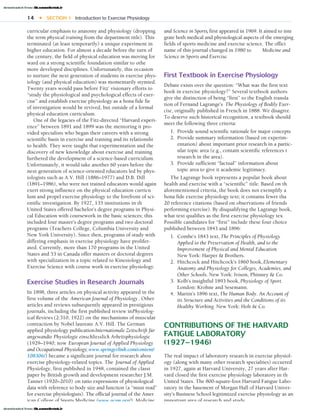
14 • SECTION I Introduction to Exercise Physiology
LWBK710-c01_01-30.qxd 9/18/10 1:54AM Page 14
Many of 20th century’s great scientists with an interest in exercise affiliated wit
the Fatigue Laboratory. Renowned Harvard chemist and professor of biochemistry
Lawrence J. Henderson, MD (1878–1942) established the laboratory. David Bruce
Dill (1891–1986;Fig. 1.11), a Stanford PhD in physical chemistry, became the firs
and only scientific director of the laboratory. While at Harvard, Dill refocused hi
Chapter 1 Origins of Exercise Physiology: Foundations for the Field of Study • 15
Figure 1.11 David Bruce Dill (1891–1986), prolific experimental exercis
physiologist, helped to establish the highly acclaimed Harvard Fatigue Laboratory.
BOX 1.2
What’s in a Name?
A lack of unanimity exists for the name of the departments
offering degrees (or even coursework) in exercise physiol-
ogy. This box lists examples of 49 names of departments
in the United States that offer essentially the same area of
study. Each provides some undergraduate or graduate
emphasis in exercise physiology (e.g., one or several
courses, internships, work-study programs, laboratory
rotations, or inservice programs).
CLOSE UP
Allied Health Sciences Movement and Exercise Science
Exercise and Movement Science Movement Studies
Exercise and Sport Science Nutrition and Exercise Science
Exercise and Sport Studies Nutritional and Health Sciences
Exercise Science Performance and Sport Science
Exercise Science and Human Movement Physical Culture
Exercise Science and Physical Therapy Physical Education
Health and Human Performance Physical Education and Exercise Science
Health and Physical Education Physical Education and Human Movement
Health, Physical Education, Recreation and Dance Physical Education and Sport Programs
Human Biodynamics Physical Education and Sport Science
Human Kinetics Physical Therapy
Human Kinetics and Health Recreation
Human Movement Recreation and Wellness Programs
Human Movement Sciences Science of Human Movement
Human Movement Studies Sport and Exercise Science
Human Movement Studies and Physical Education Sport Management
Human Performance Sport, Exercise, and Leisure Science
Human Performance and Health Promotion Sports Science
Human Performance and Leisure Studies Sport Science and Leisure Studies
Human Performance and Sport Science Sport Science and Movement Education
Interdisciplinary Health Studies Sport Studies
Integrative Biology Wellness and Fitness
Kinesiology Wellness Education
Kinesiology and Exercise Science
Questions & Notes
Describe the significance of the Harvar
Fatigue Laboratory to the development of
exercise physiology.
LWBK710-c01_01-30.qxd 9/15/10 9:18 AM Page 15 Aptara
efforts from biochemistry to experimental physiology and
became the driving force behind the laboratory’s numerous
scientific accomplishments. His early academic associatio
with physician Arlie Bock (a student of famous high-altitude
physiologist Sir Joseph F. Barcroft (1872–1947) at Cam-
bridge, England, and Dill’s closest friend for 59 years), and
contact with 1922 Nobel laureate Archibald Vivian Hill pro-
vided Dill with the confidence to successfully coordinate th
research efforts of dozens of scholars from 15 different coun-
tries. Hill convinced Bock to write a third edition of Bain-
bridge’s text,Physiology of Muscular Activity, and Bock invited
Dill to coauthor this 1931 book.
Similar to the legacy of the first exercise physiology lab
oratory established in 1891 at Harvard’s Lawrence Scientifi
School 31 years earlier, the Harvard Fatigue Laboratory
demanded excellence in research and scholarship. Cooper-
ation among scientists from around the world fostered last-
ing collaborations. Many of its charter scientists influence
a new generation of exercise physiologists worldwide.
OTHER EARLY EXERCISE
PHYSIOLOGY RESEARCH
LABORATORIES
Other notable research laboratories helped exercise physi-
ology become an established field of study at colleges an
universities. The N utrition Laboratory at the Carnegie
Institute in Washington, DC (established 1904) initiated
experiments in nutrition and energy metabolism. The firs
research laboratories established in a department of physi-
cal education in the United States originated at George
Williams College in 1923 (founded by the YMCA Training
School in Chicago, Illinois, now merged with Aurora Col-
lege, Aurora, Illinois); University of Illinois (1925), Spring-
field College, Massachusetts (1927); and Laboratory o
Physiological Hygiene at the University of California,
Berkeley (1934). In 1936, Franklin M. Henry ( Fig. 1.12)
assumed responsibility for the laboratory; shortly there-
after, his research appeared in various physiology and
motor performance-oriented journals (120 articles in peer-
reviewed journals; 1975 ACSM Honor Award).
NORDIC CONNECTION (DENMARK,
SWEDEN, NORWAY, AND FINLAND)
Denmark and Sweden also pioneered the field of exercis
physiology. In 1800, Denmark became the first Europea
country to require physical training (military-style gym-
nastics) in the school curriculum. Since then, Danish and
Swedish scientists have continued to contribute significan
research in both traditional physiology and the latest sub-
disciplines in exercise physiology and adaptations to phys-
ical training.
Danish Influence
In 1909, the University of Copenhagen endowed the equiv-
alent of a Chair in Anatomy, Physiology, and Theory of
Gymnastics. The first Docent, Johannes Lindhard, M
(1870–1947), later teamed with August Krogh, PhD
(1874–1949), an eminent scientist who specialized in phys-
iological chemistry and research instrument design and
construction, to conduct many of the classic experiments in
exercise physiology ( Fig. 1.13). For example, Professors
Lindhard and Krogh investigated gas exchange in the lungs,
pioneered studies of the relative contribution of fat and car-
bohydrate oxidation during exercise, measured blood flo
redistribution during different exercise intensities, and
quantified cardiorespiratory dynamics in exercise
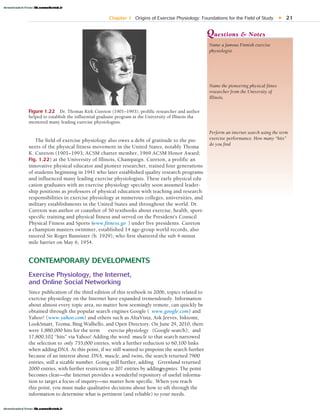
By 1910, Krogh and his wife Marie (Fig. 1.14), a physi-
cian, had proven through a series of ingenious, decisive
16 • SECTION I Introduction to Exercise Physiology
Figure 1.12 F.M. Henry (1904–1993), University of Califor-
nia, Berkeley, psychologist, physical educator, and researcher
who first proposed physical education as an academic discipline
He conducted basic experiments in oxygen uptake kinetics dur-
ing exercise and recovery, muscular strength, and cardiorespira-
tory variability during steady-rate exercise, determinants of
heavy-work endurance exercise, and neural control factors
related to human motor performance.
Figure 1.13 Professors August Krogh and Johannes Lindhard,
early 1930s, pioneering exercise physiology experimental
scientists.
LWBK710-c01_01-30.qxd 9/15/10 9:18 AM Page 16 Aptara
experiments that diffusion governs pulmonary gas exchange during exercise
and altitude exposure, not oxygen secretion from lung tissue into the blood as
postulated by British physiologists Sir John Scott Haldane and James Priestley.
Krogh published a series of experiments (three appearing in the 1919
Journal of
Physiology) concerning the mechanism of oxygen diffusion and transport in
skeletal muscles. He won the Nobel Prize in physiology or medicine in 1920 for
discovering the mechanism for capillary control of blood flow in resting an
exercising muscle. In recognition of the achievements of this renowned scien-
tist, an institute to honor this cradle for exercise physiology research in Copen-
hagen bears his name (August Krogh Institute;www1.bio.ku.dk/English).
Three other Danish researchers—physiologists Erling Asmussen (1907–1991;
ACSM Citation Award, 1976 and ACSM Honor Award, 1979), Erik Hohwü–
Christensen (1904–1996; ACSM Honor Award, 1981), and Marius N ielsen
(b. 1903)—conducted significant exercise physiology studies Fig. 1.15). These
“three musketeers,” as Krogh called them, published voluminously during the
1930s to 1970s. Asmussen, initially an assistant in Lindhard’s laboratory,
became a prolific researcher, specializing in muscle fiber architecture a
mechanics. He also published papers with Nielsen and Christensen on many
applied topics, including muscular strength and performance, ventilatory and
cardiovascular response to changes in posture and exercise intensity, maximum
Chapter 1 Origins of Exercise Physiology: Foundations for the Field of Study • 17
Figure 1.14 Marie Krogh (a physician and researcher) and August Krogh, Nobel
Prize achievement in Physiology or Medicine in 1920 that explained capillary control
of blood flow in resting and exercising muscle. Dr. Krogh published more than 300
scientific papers in scientific journals on many topics in exercise physiolog
Figure 1.15 Drs. Erling Asmussen (left), Erik Hohwü-Christensen (center), and
Marius Nielson (right), 1988, acclaimed exercise physiology researchers.
Questions & Notes
Name 8 non-American notable exercise
scientists and their country of origin.
1.
2.
3.
4.
5.
6.
7.
8.
LWBK710-c01_01-30.qxd 9/15/10 9:18 AM Page 17 Aptara
working capacity during arm and leg exercise, changes in
oxidative response of muscle during exercise, comparisons
of positive and negative work, hormonal and core tempera-
ture response during different intensities of exercise, and
respiratory function in response to decreased ambient oxy-
gen levels.
Christensen became Lindhard’s student in Copenhagen
in 1925. In his 1931 doctoral thesis, Christensen reported
studies of cardiac output, body temperature, and blood
sugar concentration during intense exercise on a cycle
ergometer, compared arm versus leg exercise, and quanti-
fied the effects of training. Together with Krogh and Lind
hard, Christensen published an important 1936 review
article describing physiological dynamics during maximal
exercise. With J.W. Hansen, he used oxygen uptake and
the respiratory quotient to describe how diet, state of train-
ing, and exercise intensity and duration affected carbohy-
drate and fat utilization. Discovery of the concept of
“carbohydrate loading” actually occurred in 1939. Experi-
ments by physician Olé Bang in 1936, inspired by his men-
tor Ejar Lundsgaard, described the fate of blood lactate
during exercise of different intensities and durations. The
research of Christensen, Asmussen, Nielsen, and Hansen
took place at the Laboratory for the Theory of Gymnastics
at the University of Copenhagen. Today, the August Krogh
Institute continues the tradition of basic and applied
research in exercise physiology. Since 1973, Swedish-
trained scientist Bengt Saltin (Fig. 1.16) (the only Nordic
researcher besides Erling Asmussen to receive the ACSM
Citation Award [1980] and ACSM Honor Award [1990];
former student of Per-Olof Åstrand, discussed in the next
section) continues his noteworthy scientific studies at th
Muscle Research Institute in Copenhagen.
Swedish Influence
Modern exercise physiology in Sweden can be traced to Per
Henrik Ling (1776–1839), who in 1813 became the firs
director of Stockholm’s Royal Central Institute of Gymnas-
tics (RCIG). Ling, in addition to his expertise in exercise and
movement and as a fencing master, developed a system of
“medical gymnastics” that incorporated his studies of
anatomy and physiology, which became integral to Sweden’s
school curriculum in 1820. Ling’s son, Hjalmar Ling
(1820–1886), published an important textbook about the
“kinesiology of body movements” in 1866 (from a transla-
tion in Swedish: The First Notions of Movement Science. Out-
line Regarding the Teaching at RCIG and an Introduction with
References to the Elementary Principles of Mechanics and Joint-
Science). As a result of Per Henrik and his son Hjalmar’s phi-
losophy and pioneering influences, physical educatio
graduates from the RCIG were extremely well schooled in
the basic biological sciences in addition to proficiency i
many sports and games. The RCIG graduates were all men
until 1864 when women were first admitted. Ling’s earl
teachings and curriculum advances consisted of four
branches of his System of Gymnastics—the most influentia
and long lasting being medical gymnastics that has evolved
into the discipline of physiotherapy. Course work included
anatomy and physiology, pathology with dissections, and
basic study in movement science ( Rörelselära in Swedish).
One of Ling’s lasting legacies was his steadfast insistence that
RCIG graduates have a strong science background. This was
carried out by Ling’s disciples, who assumed positions of
leadership in predominantly Germany, France, Denmark,
Belgium, and England, with the influence extending to th
United States beginning in the 1830s. Founded in 1813, the
Gymnastik-Och Idrottshögskolan or Swedish School of
Sport and Health Sciences (GIH) has the distinction as the
oldest University College in the world within its field. GI
along with the Department of Physiology in the Karolinska
Institute Medical School in Stockholm, the Royal Institute
of Technology, Stockholm University, and Örebro Univer-
sity conduct research in exercise physiology and muscu-
loskeletal health and disease.
Per-Olof Åstrand, MD, PhD (b. 1922; Fig. 1.17) is the
most famous graduate of the College of Physical Education
(1946); in 1952, he presented his doctoral thesis at the
Karolinska Institute Medical School. Åstrand taught in the
Department of Physiology in the College of Physical Edu-
cation from 1946 to 1977; it then became a department at
18 • SECTION I Introduction to Exercise Physiology
Figure 1.16 Swedish researcher Dr. Bengt Saltin taking a
muscle biopsy of gastrocnemius muscle after an endurance
training program. (Photo courtesy of Dr. David Costill.)
Figure 1.17 Dr. Per-Olof Åstrand, Department of Physiology,
Karolinska Institute, Stockholm, was instrumental in charting
the modern course of exercise physiology research.
LWBK710-c01_01-30.qxd 9/15/10 9:18 AM Page 18 Aptara
the Karolinska Institute, where he served as professor and department head from
1977 to 1987. Christensen, Åstrand’s mentor, supervised his thesis, which eval-
uated physical working capacity of men and women ages 4 to 33 years. This
important study, among others, established a line of research that propelled
Åstrand to the forefront of experimental exercise physiology for which he
achieved worldwide fame. Four of his papers, published in 1960 with Chris-
tensen as coauthor, stimulated further studies on the physiological responses to
intermittent exercise. Åstrand has mentored an impressive group of exercise
physiologists, including “superstar” Dr. Bengt Saltin.
Two Swedish scientists from the Karolinska Institute, Drs. Jonas Bergström
and Erik Hultman (Fig. 1.18), conducted important needle biopsy experiments
in the mid 1960s. With this procedure, muscle could be studied under various
conditions of exercise, training, and nutritional status. Collaborative work with
other Scandinavian researchers (Saltin and Hultman from Sweden and Her-
mansen from Norway) and researchers in the United States (e.g., Gollnick [d.
1994], Washington State University) provided new vistas from which to view
the physiology of exercise.
Norwegian and Finnish Influence
The new generation of exercise physiologists trained in the late 1940s analyzed
respiratory gases with a highly accurate sampling apparatus that measured
minute quantities of carbon dioxide and oxygen in expired air. Norwegian sci-
entist Per Scholander (1905–1980) developed the method of analysis (and ana-
lyzer that bears his name) in 1947.
Another prominent Norwegian researcher,Lars A. Hermansen(1933–1984:
Fig. 1.19; ACSM Citation Award, 1985), from the Institute of Work Physiology
Chapter 1 Origins of Exercise Physiology: Foundations for the Field of Study • 19
Figure 1.18 Drs. Jonas Bergström (left) and Eric Hultman (right), Karolinska Insti-
tute, Stockholm, pioneered needle biopsy techniques to assess the ultrastructural
architecture of muscle fibers and their biochemical functions
Figure 1.19 Lars A. Hermansen (1933–1984), Institute of Work Physiology, Oslo.
Questions & Notes
Who was Per Henrik Ling and why is he
an important historical figure
Name 2 famous Danish exercise
physiologists.
1.
2.
Name 2 famous Swedish exercise
physiologist.
1.
2.
Name a famous Norwegian exercise
physiologist.
LWBK710-c01_01-30.qxd 9/15/10 9:18 AM Page 19 Aptara
made many contributions, including a classic 1969 article
titled “Anaerobic Energy Release,” which appeared in the
initial volume of Medicine and Science in Sports.
In Finland, Martti Karvonen, MD, PhD (ACSM Honor
Award, 1991) from the Physiology Department of the Insti-
tute of Occupational Health, Helsinki, achieved notoriety
for a method to predict optimal exercise training heart rate,
now called the “Karvonen formula” (see Chapter 14).
Paavo Komi (Fig. 1.20), Department of Biology of Physical
Activity, University of Jyväskylä, has been Finland’s most
prolific researcher with numerous experiments publishe
in the combined areas of exercise physiology and sport
biomechanics.
OTHER CONTRIBUTORS TO
EXERCISE PHYSIOLOGY
In addition to the American and Nordic scientists who
achieved distinction as exercise scientists, many other
“giants” in the fields of physiology and experimental sci
ence made monumental contributions that indirectly con-
tributed to the knowledge base in exercise physiology.
These include the physiologists shown in Figure 1.21:
Antoine Laurent Lavoisier (1743–1794; fuel combustion);
Sir Joseph Barcroft (1872–1947; altitude); Christian Bohr
(1855–1911; oxygen–hemoglobin dissociation curve);
John Scott Haldane (1860–1936; respiration); Otto Myer-
hoff (1884–1951; N obel Prize, cellular metabolic path-
ways); Nathan Zuntz (1847–1920; portable metabolism
apparatus); Carl von Voit (1831–1908) and his student,
Max Rubner (1854–1932; direct and indirect calorimetry,
and specific dynamic action of food); Max von Pettenkofe
(1818–1901; nutrient metabolism); and Eduard F.W.
Pflüger (1829–1910; tissue oxidation)
20 • SECTION I Introduction to Exercise Physiology
Antoine Laurent Lavoisier
(1743–1794)
Sir Joseph Barcroft
(1872–1947)
Christian Bohr
(1855–1911)
John Scott Haldane
(1860–1936)
Otto Myerhoff
(1884–1951)
Nathan Zuntz
(1847–1920)
Carl von Voit
(1831–1908)
Max Rubner
(1854–1932)
Max von Pettenkofer
(1818–1901)
Eduard F.W. Pflüger
(1829–1910)
Figure 1.20 Dr. Paavo Komi, Finland’s pioneer researcher in
biomechanics and exercise work physiology.
Figure 1.21 Ten prominent scientist–researchers who paved the way in the development of modern exercise physiology.
LWBK710-c01_01-30.qxd 9/15/10 9:18 AM Page 20 Aptara
The field of exercise physiology also owes a debt of gratitude to the pio
neers of the physical fitness movement in the United States, notably Thoma
K. Cureton (1901–1993; ACSM charter member, 1969 ACSM Honor Award;
Fig. 1.22) at the University of Illinois, Champaign. Cureton, a prolific an
innovative physical educator and pioneer researcher, trained four generations
of students beginning in 1941 who later established quality research programs
and influenced many leading exercise physiologists. These early physical edu
cation graduates with an exercise physiology specialty soon assumed leader-
ship positions as professors of physical education with teaching and research
responsibilities in exercise physiology at numerous colleges, universities, and
military establishments in the United States and throughout the world. Dr.
Cureton was author or coauthor of 50 textbooks about exercise, health, sport-
specific training and physical fitness and served on the President’s Council
Physical Fitness and Sports (www.fitness.go ) under five presidents. Cureton
a champion masters swimmer, established 14 age-group world records, also
tutored Sir Roger Bannister (b. 1929), who first shattered the sub 4-minut
mile barrier on May 6, 1954.
CONTEMPORARY DEVELOPMENTS
Exercise Physiology, the Internet,
and Online Social Networking
Since publication of the third edition of this textbook in 2006, topics related to
exercise physiology on the Internet have expanded tremendously. Information
about almost every topic area, no matter how seemingly remote, can quickly be
obtained through the popular search engines Google ( www.google.com) and
Yahoo! (www.yahoo.com) and others such as AltaVista, Ask Jeeves, Inktomi,
LookSmart, Teoma, Bing Walhello, and Open Directory. On June 29, 2010, there
were 1,880,000 hits for the term exercise physiology (Google search); and
17,800,102 “hits” via Yahoo! Adding the word muscle to that search narrowed
the selection to only 755,000 entries, with a further reduction to 60,100 links
when addingDNA. At this point, if we still wanted to pinpoint the search further
because of an interest about DNA, muscle, and twins, the search returned 7900
entries, still a sizable number. Going still further, adding Greenland returned
2000 entries, with further restriction to 207 entries by adding
pygmies. The point
becomes clear—the Internet provides a wonderful repository of useful informa-
tion to target a focus of inquiry—no matter how specific. When you reach
this point, you must make qualitative decisions about how to sift through the
information to determine what is pertinent (and reliable) to your needs.
Chapter 1 Origins of Exercise Physiology: Foundations for the Field of Study • 21
Figure 1.22 Dr. Thomas Kirk Cureton (1901–1993), prolific researcher and author
helped to establish the influential graduate program at the University of Illinois tha
mentored many leading exercise physiologists.
Questions & Notes
Name a famous Finnish exercise
physiologist.
Name the pioneering physical fitnes
researcher from the University of
Illinois.
Perform an internet search using the term
exercise performance. How many “hits”
do you find
LWBK710-c01_01-30.qxd 9/15/10 9:18 AM Page 21 Aptara
An Example from This Section Consider an exam-
ple discussed in this section for Galen, one of the most influ
ential Greek physicians of antiquity. Entering the term Galen
into a June 29, 2010 Google search yields an overwhelming
5,600,000 entries! But do not be overwhelmed by this unbe-
lievable number of Web sites that deal in some way with top-
ics related to Galen. Check out the first entry en.wikipedia.
org/wiki/Galen); that single search by itself provides a gold-
mine of useful information about Galen. The blue hyperlinks
(words highlighted in blue) will lead to further details about
his life and times. Clicking on the first term in blue, Perga-
mon (en.wikipedia.org/wiki/Pergamum), provides much use-
ful information about this ancient Greek city (with
continuing details about the location of the city during the
Greek “ancient” period). Along the way, you can discover
information about the Greek Bronze Age and about ancient
Greece, including the development of early public school
education and how boys were trained in athletics to prepare
for military service (en.wikipedia.org/wiki/Ancient_Greece#
Education). At this point, you may want to know more spe-
cific details about Galen and sports medicine. By adding th
term Galen sports medicine to the search yields 35,400 Web
URLs (Universal Record Locator or specific pages of infor
mation). The fifth entry titled “the father of sports medicin
(Galen)” looks like it might provide useful information
(www.ncbi.nlm.nih.gov/pubmed/350061). This entry links to
one of the largest research databases in the world (PubMed)
sponsored by the U.S. National Library of Medicine and the
N ational Institutes of Health ( www.ncbi.nlm.nih.gov/
pubmed/). The following presents information from that link
that identifies an article by GA Snook in the
American Journal
of Sports Medicine in 1978 regarding Galen:
Snook GA. The father of sports medicine (Galen).
Am. J. Sports Med., 6(3):128–131, 1978.
Although there were many physicians who treated
athletes before Galen, I believe that he was the first
to devote a major portion of his time to this field of
endeavor. Furthermore, his systematic observations,
his aggressive pursuit of newer and better ways of
treatment, his teaching, and his publishing of his obser-
vations make him a kindred soul to the team physician
and practitioners of sports medicine of today. It is for
these reasons that I believe that he can justly be called
the “Father of Sports Medicine.”
Online Social Networking Online Social N et-
working refers to the common grouping of individuals into
more specific groups. The four most popular social net
working sites as of October 2009 (based on inbound
links and complete monthly visitors) include Facebook
(www.facebook.com), MySpace (www.myspace.com), Twit-
ter (www.twitter.com), and LinkedIn (www.linkedin.com).
Other popular sites include Classmates.com (
www.classmates.
com), and Ning (www.ning.com). Such sites allow Internet
users to gather and share information or experiences about
specific topics (from Galen the ancient physician to genet
ics related to molecular biology in exercise physiology)
and develop friendships and continue professional
relationships. Numerous electronic discussion groups
exist in exercise physiology and related areas, many with
thousands of subscribers. New bulletin boards with spe-
cific areas of interest (e.g., pediatric exercise immunology
molecular biology and exercise) enable subscribers to
receive and reply to the same inquiry. Many of the field’
top scientists routinely participate in discussion groups,
which makes “lurking” (computer slang for following the
interchanges but rarely participating) a productive pas-
time. Anyone with an Internet connection and e-mail
address can participate in a discussion group of interest.
Appendix E lists frequently cited journals in exercise phys-
iology. Entering the journal name in one of the Internet
search engines directs you to that site.
CONTEMPORARY PROFESSIONAL
EXERCISE PHYSIOLOGY
ORGANIZATIONS
Just as knowledge dissemination via publications in
research and professional journals signals expansion of a
field of study, development of professional organization
to certify and monitor professional activities becomes crit-
ical to continued growth. The American Association for the
Advancement of Physical Education (AAAPE), formed in
1885, represented the first professional organization in th
United States to include topics related to exercise physiol-
ogy. This association predated the current American
Alliance for Health, Physical Education, Recreation, and
Dance (AAHPERD; www.aahperd.org/).
Until the early 1950s, the AAHPERD represented the pre-
dominant professional organization for exercise physiolo-
gists. As the field expanded and diversified its focus,
separate professional organization was needed to more fully
respond to professional needs. In 1954, Joseph Wolffe, MD,
and 11 other physicians, physiologists, and physical educa-
tors founded the American College of Sports Medicine
(ACSM; www.acsm.org). Presently, the ACSM has more than
20,000 members in 75 countries, including 15,000 ACSM
Certified Professionals and 6500 conference attendees (as o
October 2009). The ACSM now represents the largest pro-
fessional organization in the world for exercise physiology
(including allied medical and health areas). The ACSM’s mis-
sion “promotes and integrates scientific research, education
and practical applications of sports medicine and exercise
science to maintain and enhance physical performance, fit
ness, health, and quality of life.” The ACSM publishes the
quality and well-cited research journal Medicine and Science
in Sport and Exerciseand other resource publications, includ-
ing the Health & Fitness Journal, Exercise and Sport Science
Reviews, the 2010 Guidelines for Exercise Testing and Pre-
scription (8th
edition), ACSM’s Resource Manual for Clinical
Exercise Physiology(2nd
edition), ACSM’s Resource Manual for
Guidelines for Exercise Testing and Prescription (6th
edition),
and ACSM’s Certification Revie (3rd
edition).
22 • SECTION I Introduction to Exercise Physiology
LWBK710-c01_01-30.qxd 9/15/10 9:18 AM Page 22 Aptara
Chapter 1 Origins of Exercise Physiology: Foundations for the Field of Study • 23
BOX 1.3
How to Discern Reliable Historical Research
The purpose of historical research has changed through
the ages. The earliest writers of history focused on literary
rather than scientific objectives; they preserved belove
folktales, created epics to entertain or inspire, defended
and promoted numerous causes, zealously protected the
privilege of a class, and glorified the state and exalted th
church. In contrast, ancient Greek scholars envisioned
history as a search for the truth—the application of exact-
ing methods to select, verify, and classify facts according
to specific standards that endure the test of critical exam
ination and preserve an accurate record of past events.
Historical research enlarges our world of experience and
provides deeper insights into what has been successfully
and unsuccessfully tried.
Historical scholars collect and validate source materi-
als to formulate and verify hypotheses. Unlike experi-
mental research, their methods feature observations and
insights that cannot be repeated under conventional lab-
oratory conditions.
COLLECTING SOURCE MATERIAL
Historians’ initial and most important problem-solving task
seeks to obtain the best available data. Historians must dis-
tinguish between primary and secondary source materials.
PRIMARY SOURCES
Primary sources comprise the basic materials of historical
research. This prized form of “data” derives from:
1. Testimony from reliable eyewitnesses and
earwitnesses to past events.
2. Direct examination of actual “objects” used in the past.
A historian collects evidence from the closest witness to
the past event or condition. Primary source materials
include records preserved with the conscious intent of
transmitting information. For example, a newspaper
account of what transpired at a meeting has less intrinsic
historical value than the meeting’s official minutes
Records of past ideas, conditions, and events exist in writ-
ten form (e.g., official records or executive documents
health records, licenses, annual reports, catalogs, and per-
sonal records—diaries, autobiographies, letters, wills,
deeds, contracts, lecture notes, original drafts of speeches,
articles, and books), visual (pictorial) form (photographs,
movies, microfilms, drawings, paintings, etchings, coins
sculpture), mechanical form (tape recordings, phonograph
records, dictations), electronic form (digital “memory” on
disc or tape), and sometimes oral form (myths, folktales,
family stories, dances, games, ceremonies, reminiscences
by eyewitnesses to events).
SECONDARY SOURCES
Secondary sources include information provided by a
person who did not directly observe the event, object, or
condition. The original publication of a research report in
a scientific journal represents a primary source (ofte
used by modern researchers to provide context to their
experiments), summaries in encyclopedias, newspapers,
periodicals, the Internet, and other references qualify as
secondary materials. The more interpretations that sepa-
rate a past event from the reader, the less trustworthy the
evidence becomes; the transition often distorts and
changes the facts. For this reason, secondary sources are
less reliable. However, secondary sources acquaint a neo-
phyte historian with major theoretical issues and suggest
locations for uncovering primary source materials.
CRITICIZING SOURCE MATERIAL
Historians critically examine the trustworthiness of their
source material. Through external criticism, the historian
checks the authenticity and textual integrity of the “data”
(time, place, and authorship) to determine its admissibility
as reliable evidence. Enterprising and exacting investiga-
tion becomes part of external criticism—tracking down
anonymous and undated documents, ferreting out forger-
ies, discovering plagiarism, uncovering incorrectly identi-
fied items, and restoring documents to their original forms
After completing external criticism, the historian
engages in internal criticism to establish the meaning and
trustworthiness of a document’s contents. Internal criti-
cism determines the following:
1. Conditions that produced the document
2. Validity of the writer’s intellectual premises
3. Competency, credibility, and possible author bias
4. Correctness of data interpretation
Careful historical research provides insight about how
past facts influence current events. Whether an accurat
record of the past predicts and influences future circum
stances remains a hotly debated topic among historians.
CLOSE UP
LWBK710-c01_01-30.qxd 9/15/10 9:18 AM Page 23 Aptara
24 • SECTION I Introduction to Exercise Physiology
Other important professional organizations related to
exercise physiology include the International Council
of Sport Science and Physical Education (ICSSPE;
www.icsspe.org/), founded in 1958 in Paris, France, origi-
nally under the name the International Council of Sport
and Physical Education. The ICSSPE serves as an interna-
tional umbrella organization concerned with promoting
and disseminating results and findings in the field of spo
science. Its main professional publication, Sport Science
Review, deals with thematic overviews of sport sciences
research. The Federation Internationale de Medicine
Sportive (FIMS; www.fims.or ), composed of the national
sports medicine associations of more than 100 countries,
originated in 1928 during a meeting of Olympic medical
doctors in Switzerland. The FIMS promotes the study and
development of sports medicine throughout the world and
hosts major international conferences in sports medicine
every 3 years; it also produces position statements on top-
ics related to health, physical activity, and sports medicine.
A joint position statement with the World Health Organi-
zation (WHO; www.who.int) titled “Physical Activity and
Health” denotes one of the FIMS’s best-known documents.
Other organizations representing exercise physiologists
1. Exercise physiology as an academic field of stud
consists of three distinct components: (1) a body of
knowledge built on facts and theories derived from
research, (2) a formal course of study at institutions of
higher learning, and (3) professional preparation of
practitioners and future leaders in the field
2. Exercise physiology has developed as a field separat
from physiology because of its unique focus on the study
of the functional dynamics and adaptations to human
movement and associated physiological responses.
3. Galen, one of the first “sports medicine” physicians
wrote prolifically, producing at least 80 treatises an
perhaps 500 essays on topics related to human
anatomy and physiology, nutrition, growth and
development, the benefits of exercise and deleteriou
consequences of sedentary living, and diseases and
their treatment.
4. Austin Flint, Jr., MD (1836–1915), one of the firs
American pioneer physician–scientists, incorporated
studies about physiological responses to exercise in his
influential medical physiology textbooks
5. Edward Hitchcock, Jr., (1828–1911), Amherst College
Professor of Hygiene and Physical Education, devoted
his academic career to the scientific study of physica
exercise and training and body size and shape. His
1860 text on anatomy and physiology, coauthored with
his father, significantly influenced the sports scien
movement in the United States after 1860. Hitchcock’s
insistence on the need for science applied to physical
education undoubtedly influenced Harvard’
commitment to create an academic Department of
Anatomy, Physiology, and Physical Training in 1891.
6. George Wells Fitz, MD (1860–1934) created the firs
departmental major in Anatomy, Physiology, and
Physical Training at Harvard University in 1891; the
following year, he started the first formal exercis
physiology laboratory in the United States. Fitz was
probably first to teach an exercise physiology course a
the university level.
7. The real impact of laboratory research in exercise
physiology (along with many other research
specialties) occurred in 1927 with the creation of the
Harvard Fatigue Laboratory at Harvard University’s
business school. Two decades of outstanding work by
this laboratory legitimized exercise physiology as a key
area of research and study.
8. The Nordic countries (particularly Denmark and
Sweden) played an important historical role in
developing the field of exercise physiology. Danis
physiologist August Krogh (1874–1949) won the 1920
Nobel Prize in physiology or medicine for discovering
the mechanism that controlled capillary blood flow i
resting or active muscle; Krogh’s basic experiments led
him to conduct other experiments with exercise
scientists worldwide. His pioneering work in exercise
physiology continues to inspire exercise physiology
studies in many areas, including oxygen uptake
kinetics and metabolism, muscle physiology, and
nutritional biochemistry.
include the European College of Sport Science (ECSS;
www.ecss.de), British Association of Sport and Exercise
Sciences (BASES; www.bases.org.uk), and American Soci-
ety of Exercise Physiology (ASEP;www.asep.org).
A COMMON LINK
One theme unites the 2300-year history of exercise
physiology—the value of mentoring by visionaries who
spent an extraordinary amount of time “infecting” students
with a passion for science. These demanding but inspiring
relationships developed researchers who nurtured the next
generation of productive scholars. This nurturing process
from mentor to student remains fundamental to the contin-
ued academic enhancement of exercise physiology. The
connection between mentor and student remains the hall-
mark of most fields of inquiry—from antiquity to the pres
ent. The mentoring process includes a love of discovery
through the scientific method. In Part 2, we explore th
fundamentals of the scientific process. The pioneers in ou
field (and contemporary researchers) incorporated thes
principles in their quest toward new discoveries.
S U M M A R Y
LWBK710-c01_01-30.qxd 9/15/10 9:18 AM Page 24 Aptara
Chapter 1 Origins of Exercise Physiology: Foundations for the Field of Study • 25
9. Publications of applied and basic exercise physiology
research have increased as the field expands int
different areas. The Internet and online social
networking offer unique growth potential for
information dissemination in this area.
10. The ACSM, with more than 20,000 members from
North America and 75 other countries, represents the
largest professional organization in the world for exercise
physiology (including allied medical and health areas).
11. One theme unites the 2300-year history of exercise
physiology—the value of mentoring by professors who
spent an extraordinary amount of time “infecting”
students with a passion for science.
Part 2 The Exercise Physiologist
Many individuals view exercise physiology as an undergraduate or graduate
academic major (or concentration) completed at an accredited college or uni-
versity. In this regard, only those who complete this academic major have the
“right” to be called an “exercise physiologist.” However, many individuals com-
plete undergraduate and graduate degrees in related fields with considerabl
coursework and practical experience in exercise physiology or related areas.
Consequently, the title “exercise physiologist” could also apply so long as a per-
son’s academic preparation is adequate. Resolution of this dilemma becomes
difficult because no national consensus exists as to what constitutes an accept
able (or minimal) academic program of course work in exercise physiology. In
addition, there are no universal standards for hands-on laboratory experiences
(anatomy, kinesiology, biomechanics, and exercise physiology), demonstrated
level of competency, and internship hours that would stand the test of national
certification or licensure. Moreover, because areas of concentration within th
field are so broad, consensus certification testing becomes challenging.
national accreditation or licensure exists to certify exercise physiologists.
WHAT DO EXERCISE PHYSIOLOGISTS DO?
Exercise physiologists assume diverse careers. Some use their research skills pri-
marily in colleges, universities, and private industry settings. Others are employed
in health, fitness, and rehabilitation centers, and others serve as educators, per
sonal trainers, managers, and entrepreneurs in the health and fitness industry
Exercise physiologists also own health and fitness companies or are hands
on practitioners who teach and service the community, including corporate,
industrial, and governmental agencies. Some specialize in other types of profes-
sional work such as massage therapy, and others go on to pursue professional
degrees in physical therapy, occupational therapy, nursing, nutrition, medicine,
and chiropractic.
Table 1.1 presents a partial list of different employment descriptions for a
qualified exercise physiologist in one of six major areas
EXERCISE PHYSIOLOGISTS AND HEALTH
AND FITNESS PROFESSIONALS IN THE
CLINICAL SETTING
The well-documented health benefits of regular physical activity have enhance
exercise physiologists’ role beyond traditional lines. A clinical exercise phys-
iologist becomes part of the health and fitness professional team. This tea
Questions & Notes
What is the ACSM? Summarize its
mission.
List 3 possible job opportunities for
exercise physiology graduates.
1.
2.
3.
LWBK710-c01_01-30.qxd 9/15/10 9:18 AM Page 25 Aptara
26 • SECTION I Introduction to Exercise Physiology
approach to preventive and rehabilitative services
requires different personnel depending on the program
mission, population served, location, number of partici-
pants, space availability, and funding level. A compre-
hensive clinical program may include the following
personnel in addition to an exercise physiologist:
● Physicians
● Certified personnel (exercise leaders, health an
fitness instructors, directors, exercise test tech
nologists, preventive and rehabilitative exercise
specialists, preventive and rehabilitative exercise
directors)
● Dietitians
● Nurses
● Physical therapists
● Occupational therapists
● Social workers
● Respiratory therapists
● Psychologists
● Health educators
Sports Medicine and Exercise
Physiology: A Vital Link
The traditional view ofsports medicineinvolves rehabilitat-
ing athletes from sports-related injuries. A more contempo-
rary view relates sports medicine to the scientific and medica
(preventive and rehabilitative) aspects of physical activity,
physical fitness, and exercise and sports performance A close
link ties sports medicine to clinical exercise physiology.
Sports medicine professionals and exercise physiologists
work hand in hand with similar populations. These include,
at one extreme, sedentary people who need only a modest
amount of regular exercise to reduce risk of degenerative
diseases, and at the other extreme, able-bod
ied and disabled
athletes who strive to further enhance their performance.
Carefully prescribed physical activity significantly con
tributes to overall health and quality of life.In conjunction with
sports medicine professionals, clinical exercise physiologists
test, treat, and rehabilitate individuals with diverse diseases
and physical disabilities. In addition, prescription of physical
activity and athletic competition for physically challenged
individuals plays an important role in sports medicine and
exercise physiology, providing unique opportunities for
research, clinical practice, and professional advancement.
TRAINING AND CERTIFICATION BY
PROFESSIONAL ORGANIZATIONS
To properly accomplish responsibilities in the exercise set-
ting, health and fitness professionals must integrate uniqu
knowledge, skills, and abilities related to exercise, physical
fitness, and health. Different professional organization
provide leadership in training and certifying health and fit
ness professionals at different levels.Table 1.2 lists organ-
izations offering training and certification programs wit
diverse emphases and specializations. The ACSM has
Table 1.1 Partial List of Employment Opportunities for Qualified Exercise Physiologists
COLLEGE GOVERNMENT
SPORTS UNIVERSITY COMMUNITY CLINICAL MILITARY BUSINESS PRIVATE
Sports Professor Manage/direct Test/supervise Fitness Sports Personal
director health/wellness cardiopulmonary director/ management health/
programs patients manager fitnes
consultant
Strength/ Researcher Community Evaluate/supervise Health fitnes Health/ Own
conditioning education special populations director in fitness business
coach (diabetes, obesity, correctional promotion
arthritis, institutions
dyslipidemia,
cystic fibrosis
cancer,
hypertension,
children, low
pregnancy)
Director, Administrator Occupational Exercise technologist Sports nutrition Sport
manager of rehabilitation in cardiology programs psychologist
state/national practice
teams
Consultant Teacher Researcher Health/
fitness club
instructor
Instructor
LWBK710-c01_01-30.qxd 9/15/10 9:18 AM Page 26 Aptara
Chapter 1 Origins of Exercise Physiology: Foundations for the Field of Study • 27
emerged as the preeminent academic organization offering comprehensive pro-
grams in areas related to the health and fitness profession. ACSM certificatio
encompass cognitive and practical competencies that are evaluated by written and
practical examinations. The candidate must successfully complete each of these
components (scored separately) to receive the world-recognized ACSM
certification The ACSM offers a wide variety of certif cation programs through-
out the United States and in other countries (
www.acsm.org).
ACSM QUALIFICATIONS AND CERTIFICATIONS
Health and fitness professionals should be knowledgeable and competent in dif
ferent areas, including first-aid and CPR certification, depending on person
ORGANIZATION AREAS OF SPECIALIZATION AND CERTIFICATION
Aerobics and Fitness Association of America (AFAA) AFP Fitness Practitioner, Primary Aerobics Instructor, Personal Trainer &
15250 Ventura Blvd., Suite 200 Fitness Counselor, Step Reebok Certification, Weight Room/Resistance
Sherman Oaks, CA 91403 Training Certification, Emergency Response Certificati
American College of Sports Medicine (ACSM) Exercise Leader, Health/Fitness Instructor, Exercise Test Technologist,
401 West Michigan St. Health/Fitness Director, Exercise Specialist, Program Director
Indianapolis, IN 46202
American Council on Exercise (ACE) Group Fitness Instructor, Personal Trainer, Lifestyle & Weight Management
5820 Oberlin Dr., Suite 102 Consultant
San Diego, CA 92121
Canadian Aerobics Instructors Network (CAIN) CIAI Instructor, Certified Personal Traine
2441 Lakeshore Rd. West, PO Box 70009
Oakville, ON L6L 6M9 Canada
Canadian Personal Trainers Network (CPTN) CPTN/OFC Certified Personal Trainer, CPTN Certified Specialty Person
Ontario Fitness Council (OFC) Trainer, CPTN/OFC Assessor of Personal Trainers, CPTN/OFC Course
1185 Eglington Ave. East, Suite 407 Conductor for Personal Trainers
North York, ON M3C 3C6 Canada
Canadian Society for Exercise Physiology CFC (Certified Fitness Consultant), PFLC (Professional Fitness & Lifestyl
1600 James Naismith Dr., Suite 311 Consultant), AFAC (Accredited Fitness Appraisal Center)
Gloucester, ON K1B 5N4
The Cooper Institute for Aerobics Research PFS (Physical Fitness Specialists; Personal Trainer), GEL (Group Exercise
12330 Preston Rd. Leadership; Aerobic Instructor), ADV.PFS (Advanced Physical Fitness
Dallas, TX 75230 specialist, Biomechanics of Strength Training, Health Promotion Director)
Disabled Sports USA Adapted Fitness Instructor
451 Hungerford Dr., Suite 100
Rockville, MD 20850
National Academy of Sports Medicine (NASM) (CPT) Certified Personal Traine
5845 E. Still Creek, Circle Suite 206
Mesa, AZ 85206
Jazzercise Certified Jazzercise Instructo
2808 Roosevelt Blvd.
Carlsbad, CA 92008
International Society of Sports Nutrition Sports Nutrition Certificatio
600 Pembrook Dr. Body Composition Certificatio
Woodland Park, CO 80863
National Strength & Conditioning Association Certified Strength & Conditioning Specialist, Certified Personal Train
(NSCA)
P.O. Box 38909
Colorado Springs, CO 80937
YMCA of the USA Certified Fitness Leader (Stage I—Theory, II—Applied Theory,
101 North Wacker Dr. III—Practical), Certified Specialty Leader, Trainer of
Chicago, IL 60606 Fitness Leaders, Trainer of Trainers
Table 1.2 Organizations Offering Training or Certification Programs Related to Physical Activity
Questions & Notes
Go on-line and search ACSM.org for their
various certification programs in you
geographic area.
LWBK710-c01_01-30.qxd 9/15/10 9:18 AM Page 27 Aptara
interest. Table 1.3 presents content areas for different
ACSM certifications. Each has general and specific lear
ing objectives.
Health and Fitness Track
The Health and Fitness Track encompasses the Exer-
cise Leader, Health/Fitness Instructor, and Health/Fitness
Director categories.
Exercise Leader An Exercise Leader must know
about physical fitness (including basic motivation an
counseling techniques) for healthy individuals and those
with cardiovascular and pulmonary diseases. This category
requires at least 250 hours of hands-on leadership experi-
ence or an academic background in an appropriate allied
health field. Examples of general objectives for an Exercis
Leader in exercise physiology include:
1. Define aerobic and anaerobic metabolism.
2. Describe the role of carbohydrates, fats, and
proteins as fuel for aerobic and anaerobic exercise
performance.
3. Define the relationship of METs (multiples of rest
ing metabolism) and kilocalories with levels of
physical activity.
Health/Fitness Instructor An undergraduate degree
in exercise science, kinesiology, physical education, or
appropriate allied health field represents the minimum edu
cation prerequisite for a Health/Fitness Instructor. These
individuals must demonstrate competency in physical fit
ness testing, designing and executing exercise programs,
leading exercise, and organizing and operating fitness facili
ties. The Health/Fitness Instructor has added responsibility
for (1) training or supervising exercise leaders during an
exercise program and (2) serving as an exercise leader.
Health/Fitness Instructors also function as health counselors
to offer multiple intervention strategies for lifestyle change.
Health/Fitness Director The minimum educational
prerequisite for Health/Fitness Director certificatio
requires a postgraduate degree in an appropriate allied
health field. Health/Fitness Directors must acquire
Health/Fitness Instructor or Exercise Specialist certifica
tion. This level requires supervision by a certified progra
director and physician during an approved internship or at
least 1 year of practical experience. Health/Fitness Direc-
tors require leadership qualities that ensure competency in
training and supervising personnel and proficiency in ora
presentations.
Clinical Track
The clinical track indicates that certified personnel i
these areas provide leadership in health and fitness or clin
ical programs. These professionals possess added clinical
skills and knowledge that allow them to work with higher
risk, symptomatic populations.
Exercise Test Technologist Exercise Test Tech-
nologists administer exercise tests to individuals in good
health and various states of illness. They need to demon-
strate appropriate knowledge of functional anatomy, exer-
cise physiology, pathophysiology, electrocardiography,
and psychology. They must know how to recognize con-
traindications to testing during preliminary screening,
administer tests, record data, implement emergency proce-
dures, summarize test data, and communicate test results
to other health professionals. Certification as an Exercis
Test Technologist doesnot require prerequisite experience
or special level of education.
Preventive/Rehabilitative Exercise Specialist
Unique competencies for the category include the ability
to lead exercises for persons with medical limitations (par-
ticularly cardiorespiratory and related diseases) and
healthy populations. The position requires a bachelor’s or
graduate degree in an appropriate allied health field and
an internship of 6 months or more (800 hours), largely
with cardiopulmonary disease patients in a rehabilitative
setting. The Preventive/Rehabilitative Exercise Specialist
conducts and administers exercise tests; evaluates and
interprets clinical data and formulates exercise prescrip-
tions; conducts exercise sessions; and demonstrates lead-
ership, enthusiasm, and creativity. This person can
respond appropriately to complications during exercise
testing and training and can modify exercise prescriptions
for patients with specific needs
Preventive/Rehabilitative Program Director A
Preventive/Rehabilitative Program Director holds an
advanced degree in an appropriate allied health-related
area. The certification requires an internship or practica
experience of at least 2 years. This health professional
works with cardiopulmonary disease patients in a rehabil-
itative setting, conducts and administers exercise tests,
evaluates and interprets clinical data, formulates exercise
28 • SECTION I Introduction to Exercise Physiology
Exercise physiology and related exercise science
Pathophysiology and risk factors
Health appraisal, fitness, and clinical testin
Electrocardiography and diagnostic techniques
Patient management and medications
Medical and surgical management
Exercise prescription and programming
Nutrition and weight management
Human behavior and counseling
Safety, injury prevention, and emergency procedures
Program administration, quality assurance, and outcome
assessment
Clinical and medical considerations (ACSM Certified Personal
Trainer only)
From American College of Sports Medicine. (2010). ACSM’s Guidelines
for Exercise Testing and Prescription (8th Ed.). Baltimore: Lippincott
Williams & Wilkins.
Table 1.3
Major Knowledge and Competency
Areas Required for Individuals
Interested in ACSM Certifications
LWBK710-c01_01-30.qxd 9/15/10 9:18 AM Page 28 Aptara
prescriptions, conducts exercise sessions, responds appropriately to complica-
tions during exercise testing and training, modifies exercise prescriptions fo
patients with specific limitations, and makes administrative decisions regard
ing all aspects of a specific program
Chapter 1 Origins of Exercise Physiology: Foundations for the Field of Study • 29
1. A close link ties sports medicine to clinical exercise
physiology. Sports medicine professionals and exercise
physiologists work side by side with similar
populations. These include, at one extreme, sedentary
people who need only a modest amount of regular
exercise to reduce their risk of degenerative diseases and
patients recovering from surgery or requiring regular
exercise to combat a decline in functional capacity
brought on by serious illness. At the other extreme are
able-bodied and disabled athletes who strive to enhance
their sports performance.
2. In their clinical role, exercise physiologists alongside
sports medicine professionals test, treat, and rehabilitate
individuals with diverse diseases and physical
disabilities.
3. The ACSM has emerged as the preeminent academic
organization offering comprehensive certificatio
programs in several areas related to the health and
fitness profession. ACSM certifications encompa
cognitive and practical competencies that are evaluated
by written and practical examinations.
1. Discuss advantages for personal trainers to become
trained in exercise physiology and related areas or
obtain a special certification from a recognize
organization. Why can’t a person just have practical
experience and learn to apply it to others?
2. How would you account for the differences that exist in
quality of certification requirements of differen
organizations?
3. Discuss whether professionals in the field should b
required by their certifying organization to take
continuing education courses and subscribe to
professional research journals.
American Association for Health, Physical Education, and
Recreation. Research Methods Applied to Health, Physical
Education, and Recreation. Washington, DC: American
Association for Health, Physical Education, and Recreation,
1949.
Asmussen, E.: Muscular exercise. In: Handbook of Respiration.
Section 3. Respiration. Vol. II. Fenn, W.O. and Rahn, H. (eds.).
Washington, DC: American Physiological Society, 1965.
Åstrand, P.O.: Influence of Scandinavian scientists in exercis
physiology. Scand. J. Med. Sci. Sports., 1:3, 1991.
Bang, O., et al.: Contributions to the physiology of severe
muscular work. Skand. Arch. Physiol., 74(Suppl):1, 1936.
Barcroft, J.: The Respiratory Function of the Blood. Part 1. Lesson
from High Altitude. Cambridge: Cambridge University Press,
1925.
Berryman, J.W.: The tradition of the “six things nonnatural”:
Exercise and medicine from Hippocrates through ante-
bellum America. Exerc. Sport Sci. Rev., 17:515, 1989.
Berryman, J.W.: The rise and development of the American
College of Sports Medicine. Med. Sci. Sports Exerc., 25:885.
Berryman, J.W.: Out of Many, One. A History of the American
College of Sports Medicine. Champaign, IL: Human Kinetics,
1995.
Berryman, J.W., Thomas K. Cureton, Jr.: pioneer researcher,
proselytizer, and proponent for physical fitness. Res. Q.
Exerc. Sport., 67:1, 1996.
Buskirk, E.R.: From Harvard to Minnesota: keys to our history.
Exerc. Sport Sci. Rev., 20:1, 1992.
Buskirk, E.R.: Early history of exercise physiology in the United
States. Part 1. A contemporary historical perspective. In:
History of Exercise and Sport Science. Messengale, J.D., and
Swanson, R.A. (eds.). Champaign, IL: Human Kinetics, 1997.
Christensen, E.H., et al.: Contributions to the physiology of
heavy muscular work. Skand. Arch. Physiol. Suppl., 10, 1936.
Consolazio, C.F.: Physiological Measurements of Metabolic
Functions in Man. New York: McGraw-Hill Book Co., 1961.
S U M M A R Y
T H O U G H T Q U E S T I O N S
S E L E C T E D R E F E R E N C E S
LWBK710-c01_01-30.qxd 9/15/10 9:18 AM Page 29 Aptara
Cureton, T.K., Jr.: Physical Fitness of Champion Athletes.
Urbana, IL: University of Illinois Press, 1951.
Dill, D.B.: Life, Heat, and Altitude: Physiological Effects of Hot
Climates and Great Heights. Cambridge, MA: Harvard
University Press, 1938.
Dill, D.B.: The Harvard Fatigue Laboratory: Its development,
contributions, and demise. Circ. Res., 20(suppl I):161, 1967.
Dill, D.B.: Arlie V. Bock, pioneer in sports medicine. December
30, 1888–August 11, 1984. Med. Sci. Sports Exerc., 17:401,
1985.
Gerber, E.W.: Innovators and Institutions in Physical Education.
Philadelphia: Lea & Febiger, 1971.
Green, R.M.: A Translation of Galen’s Hygiene. IL: Charles C.
Thomas, Springfield, MA 1951
Henry, F.M.: Aerobic oxygen consumption and alactic debt in
muscular work. J. Appl. Physiol., 3:427:1951.
Henry, F.M.: Lactic and alactic oxygen consumption in
moderate exercise of graded intensity. J. Appl. Physiol.,
8:608, 1956.
Henry, F.M. Physical education: an academic discipline.
JOHPER, 35:32, 1964.
Hermansen, L.: Anaerobic energy release. Med. Sci. Sports, 1:32,
1969.
Hermansen, L., Andersen, K.L.: Aerobic work capacity in young
Norwegian men and women. J. Appl. Physiol., 20:425, 1965.
Hoberman, J.M.: The early development of sports medicine in
Germany. In: Sport and Exercise Science. Berryman, J.W., and
Park, R.J. (eds.). Urbana, IL: University of Illinois Press,
1992.
Horvath, S.M., Horvath, E.C.: The Harvard Fatigue Laboratory:
Its History and Contributions. Englewood Cliffs, CA:
Prentice-Hall, 1973.
Johnson, R.E., et al.: Laboratory Manual of Field Methods for the
Biochemical Assessment of Metabolic and Nutrition Conditions.
Boston: Harvard Fatigue Laboratory, 1946.
Katch, V.L.: The burden of disproof. Med. Sci. Sports Exerc.
18:593, 1986.
Kerlinger, F.N.: Foundations of Behavioral Research, 2nd Ed.
New York: Holt, Rinehart, and Winston, 1973.
Krogh, A.: The Composition of the Atmosphere; An Account of
Preliminary Investigations and a Programme. Kobenhavn: A.F.
Host, 1919.
Kroll, W.: Perspectives in Physical Education. New York:
Academic Press, 1971.
Leonard, F.G.: A Guide to the History of Physical Education.
Philadelphia: Lea & Febiger.
Lusk, G.: The Elements of the Science of Nutrition. 2nd Ed.
Philadelphia: W.B. Saunders, 1909.
Park, R.J.: Concern for health and exercise as expressed in the
writings of 18th century physicians and informed laymen
(England, France, Switzerland). Res. Q., 47:756, 1976.
Park, R.J.: The attitudes of leading New England
transcendentalists toward healthful exercise, active
recreation and proper care of the body: 1830–1860. J. Sport
Hist., 4:34, 1977.
Park, R.J.: The research quarterly and its antecedents. Res. Q.
Exerc. Sport., 51:1, 1980.
Park, R.J.: The emergence of the academic discipline of physical
education in the United States. In: Perspectives on the
Academic Discipline of Physical Education. Brooks, G.A. (ed.).
Champaign, IL: Human Kinetics, 1981.
Park, R.J.: Edward M. Hartwell and physical training at the
Johns Hopkins University, 1879–1890. J. Sport Hist., 14:108,
1987.
Park, R.J.: Physiologists, physicians, and physical educators:
Nineteenth century biology and exercise, hygienic and
educative. J. Sport Hist., 14:28, 1987.
Park, R.J.: The rise and demise of Harvard’s B.S. program in
Anatomy, Physiology, and Physical Training. Res. Q. Exerc.
Sport, 63:246, 1992.
Park, R.J.: Human energy expenditure from Australopithecus
afarensis to the 4-minute mile: Exemplars and case studies.
Exerc. Sport Sci. Rev., 20:185, 1992.
Park, R.J.: A long and productive career: Franklin M. Henry—
Scientist, mentor, pioneer. Res. Q. Exerc. Sports, 65:295,
1994.
Park, R.J.: High-protein diets, “damaged hearts,” and rowing
men: antecedents of modern sports medicine and exercise
science, 1867–1928. Exerc. Sport. Sci. Rev., 25:137, 1997.
Payne, J.F.: Harvey and Galen. The Harveyan Oration, Oct. 19,
1896. London: Frowde, 1897.
Schmidt-Nielsen, B.: August and Marie Krogh and respiratory
physiology. J. Appl. Physiol., 57:293, 1984.
Scholander, P.F.: Analyzer for accurate estimation of respiratory
gases in one-half cubic centimeter samples. J. Biol. Chem.,
167:235, 1947.
Shaffel, N.: The evaluation of American medical literature. In:
History of American Medicine. MartiIbanez, F. (ed.). New
York: MD Publications, 1958.
Tipton, C.M.: Exercise physiology, part II: A contemporary
historical perspective. In: The History of Exercise and Sports
Science. Messengale, J.D., and Swanson, R.A. (eds.).
Champaign, IL: Human Kinetics, 1997.
Tipton, C.M.: Contemporary exercise physiology: Fifty years
after the closure of the Harvard Fatigue Laboratory. Exerc.
Sport Sci. Rev., 26:315, 1998.
Tipton, C.M.: Historical perspective: The antiquity of exercise,
exercise physiology and the exercise prescription for health.
World Rev. Nutr. Diet., 98:198, 2008.
Tipton, C.M.: Susruta of India, an unrecognized contributor
to the history of exercise physiology. J. Appl. Physiol.,
104:1553, 2008.
30 • SECTION I Introduction to Exercise Physiology
LWBK710-c01_01-30.qxd 9/15/10 9:18 AM Page 30 Aptara
31
What is a scientist after all? It is a
curious man looking through a
keyhole, the keyhole of nature,
trying to know what’s going on.
— Jacques Yves Cousteau
Nutrition
and Energy
Proper nutrition forms the foundation for physical performance.The foods
we consume provide fuel for biologic work and chemicals for extracting and using
potential energy within this fuel. Food also provides essential elements to synthe-
size new tissue and repair existing cells. Individuals often train for optimum exer-
cise performance, only to fall short from inadequate, counterproductive, and
sometimes harmful nutritional practices based on “junk” science vigorously pro-
moted on the Internet and in popular fitness magazines
Chapter 2 reviews the six broad categories of nutrients: carbohydrates, lipids,
proteins, vitamins, minerals, and water. Understanding each nutrient’s role in
energy metabolism and tissue synthesis clarifies one’s knowledge of the interac
tion between food intake and storage and exercise performance. No nutritional
“magic bullets” exist per se, yet the quantity and blend of nutrients in the daily diet
profoundly affect exercise capacity, training responsiveness, and the potential to
achieve positive health outcomes.Chapter 3 presents key information about food
as an energy source and what constitutes an optimum diet for exercise and good
health. Chapter 4 concludes with a discussion of nutritional and pharmacologic
supplements and their possible role as ergogenic aids to physical performance.
II
S E C T I O N
LWBK710-c02_31-80.qxd 9/15/10 9:19 AM Page 31 Aptara
LWBK710-c02_31-80.qxd 9/15/10 9:19 AM Page 32 Aptara
C H A P T E R O B J E C T I V E S
• Distinguish differences among monosaccharides,
disaccharides, and polysaccharides.
• Discuss carbohydrates’ role as an energy source, pro-
tein sparer, metabolic primer, and central nervous
system fuel.
• Define and give an example of a triacylglycerol, satu-
rated fatty acid, polyunsaturated fatty acid, monounsat-
urated fatty acid, and trans-fatty acid.
• List major characteristics of high- and low-density
lipoprotein cholesterol and discuss the role of each in
coronary heart disease.
• List four important functions of fat in the body.
• Define essential and non-essential amino acids and
give food sources for each.
• List one function for each fat- and water-soluble
vitamin and explain the potential risks of consuming
these micronutrients in excess.
• Outline three broad roles of minerals in the body.
• Define osteoporosis, exercise-induced anemia, and
sodium-induced hypertension.
• Describe how regular physical activity affects bone
mass and the body’s iron stores.
• Outline factors related to the female athlete triad.
• List the functions of water in the body.
• Define heat cramps, heat exhaustion, and heat stroke.
• Explain factors that affect gastric emptying and fluid
replacement.
• List five predisposing factors to hyponatremia with
prolonged exercise.
Macronutrients
and Micronutrients
2
33
C h a p t e r
LWBK710-c02_31-80.qxd 9/15/10 9:19 AM Page 33 Aptara
The carbohydrate, lipid, and protein macronutrients con-
sumed daily supply the energy to maintain bodily func-
tions during rest and diverse physical activities. The
macronutrients help to maintain and enhance the organ-
ism’s structural and functional integrity with exercise
training. Part 1 discusses each macronutrient’s general
structure, function, and source in the diet and emphasizes
their importance in sustaining physiologic function during
physical activity.
CARBOHYDRATES
All living cells contain carbohydrates. With the exception
of lactose and a small amount of glycogen obtained in ani-
mal tissues, plant sources provide all of the dietary carbo-
hydrate. Atoms of carbon, hydrogen, and oxygen combine
to form a carbohydrate or sugar molecule, always in a ratio
of 1 atom of carbon and 2 atoms of hydrogen for each oxy-
gen atom. The general formula (CH2O)n represents a sim-
ple carbohydrate, wheren equals from 3 to 7 carbon atoms.
Monosaccharides
The monosaccharide molecule forms the basic unit of carbo-
hydrates. The molecule’s number of carbon atoms deter-
mines its category. The Greek name for this number,
ending with “ose,” indicates sugars. For example, 3-carbon
monosaccharides are trioses, 4-carbon sugars aretetroses,
5-carbon sugars are pentoses, 6-carbon sugars are hex-
oses, and 7-carbon sugars areheptoses. The hexose sugars,
glucose, fructose, and galactose, represent the nutritionally
important monosaccharides.
Glucose, also called dextrose or blood sugar, consists of
6 carbon, 12 hydrogen, and 6 oxygen atoms (C 6H12O6;
Fig. 2.1). This sugar forms when energy from sunlight
interacts with water, carbon dioxide, and the green pig-
ment cholorophyl. It occurs naturally in food or is pro-
duced through the digestion (hydrolysis) of more complex
carbohydrates. After absorption by the small intestine, glu-
cose can function in one of these four ways:
1. Used directly by the cell for energy
2. Stored as glycogen in the muscles and liver
3. Converted to fats for energy storage
4. Provide carbon skeletons to synthesize non-
essential amino acids
Fruits and honey provide the main source of fructose
(also called levulose or fruit sugar ), the sweetest of the
monosaccharides. The small intestine absorbs some fruc-
tose directly into the blood, and the liver converts it to glu-
cose. Galactose does not exist freely in nature; rather, it
forms milk sugar (lactose) in the mammary glands of lac-
tating animals. In the body, galactose freely converts to
glucose for energy metabolism.
Disaccharides
Combining two monosaccharide molecules forms a disac-
charide or double sugar. The monosaccharides and disac-
charides collectively make up thesimple sugars.
Each of the disaccharides contains glucose as a principal
component. The three disaccharides of nutritional impor-
tance include:
1. Sucrose: Glucose  fructose; the most common
dietary disaccharide; composed of 12 atoms of car-
bon, 22 atoms of hydrogen, and 11 atoms of oxygen
(C12H22O11). It occurs naturally in most foods that
34 • SECTION II Nutrition and Energy
Part 1 Macronutrients:
Energy Fuel and Building
Blocks for Tissue Synthesis
OH
OH
C C
OH H
H
C
OH
H
O
H
C
C
H
C
H
OH
H
Figure 2.1 The three-dimensional ring structure
of the simple glucose molecule resembles a hexago-
nal plate to which H and O atoms form during pho-
tosynthesis. The sugar forms when energy from
sunlight interacts with water, carbon dioxide, and
the green pigment cholorophyl.
LWBK710-c02_31-80.qxd 9/15/10 9:19 AM Page 34 Aptara
contain carbohydrate, particularly beet sugar, cane sugar, brown sugar,
maple syrup, and honey
2. Lactose: Glucose  galactose; found in natural form only in milk and
often called milk sugar
3. Maltose: Glucose  glucose; occurs in beer, cereals, and germinating
seeds
Polysaccharides
Polysaccharides include plant and animal categories.
Plant Polysaccharides Starch and fiber represent the two most commo
forms of plant polysaccharides.
Starch Starch, the storage form of plant polysaccharide, forms from hun-
dreds of individual sugar molecules joined together. It appears as large granules
in seed and corn cells and in grains that make bread, cereal, spaghetti, and pas-
tries. Large amounts also exist in peas, beans, potatoes, and roots, in which
starch stores energy for the plant’s future needs. The term complex carbohy-
drates refers to dietary starch.
Fiber Fiber, classified as a non-starch, structural polysaccharide, include
cellulose, the most abundant organic molecule on earth. Fibrous materials resist
hydrolysis by human digestive enzymes. Plants exclusively contain fiber, whic
constitutes the structure of leaves, stems, roots, seeds, and fruit coverings.
Fibers differ in physical and chemical characteristics and physiologic action;
they occur primarily within the cell wall as cellulose, gums, hemicellulose,
pectin, and noncarbohydrate lignins. Other fibers—mucilage and the gums
serve as integral components of the plant cell itself.
Animal Polysaccharides During the process of glucogenesis, a few
hundred to thousands of glucose molecules combine to form glycogen, the
large storage polysaccharide in mammalian muscle and liver.Figure 2.2 illus-
trates that a well-nourished 80-kg person stores approximately 500 g of
Chapter 2 Macronutrients and Micronutrients • 35
Figure 2.2 Distribution of carbohydrate energy in a typical 80-kg person.
Questions  Notes
List the 3 types of carbohydrates.
1.
2.
3.
List the 2 types of polysaccharides.
1.
2.
Give the recommended fiber intake for me
and women up to age 50 years.
Men:
Women:
Write the chemical formula for glucose.
Give 2 examples of a simple sugar.
1.
2.
List the 2 most common plant
polysaccharides.
1.
2.
Give an example of a food with a high fibe
content.
LWBK710-c02_31-80.qxd 9/15/10 9:19 AM Page 35 Aptara
36 • SECTION II Nutrition and Energy
BOX 2.1
Health Implications of Dietary Fiber
Americans typically consume about 12 to 15 g of fibe
daily, far short of the recommendations of the Food and
N utrition Board of the N ational Academy of Sciences
(www.iom.edu/About-IOM/Leadership-Staff/Boards/
Food-and-Nutrition-Board.aspx) of 38 g for men and 25 g
for women up to age 50 years and 30 g for men and 21 g
for women older than age 50 years.
Fibers hold considerable water and give “bulk” to the
food residues in the intestines, often increasing stool
weight and volume by 40% to 100%. This bulking-up
action may aid gastrointestinal functioning and reduce
the chances of contracting colon cancer and other gas-
trointestinal diseases later
in life. Increased fiber
intake, partcularlywater-
soluble fibers may mod-
estly reduce serum cho-
lesterol. These include
pectin and guar gum
present in oats (rolled
oats, oat bran, oat flour)
legumes, barley, brown
rice, peas, carrots, and
diverse fruits.
For men with ele-
vated blood lipids, add-
ing 100 g of oat bran to
their daily diets reduced
serum cholesterol levels
by 13% and lowered the
low-density lipoprotein
(LDL) component of the
cholesterol profile. I
contrast, thewater-insol-
uble fiber —cellulose;
hemicellulose; lignin;
and cellulose-rich prod-
ucts, such as wheat
bran—did not reduce
cholesterol levels.
Current nutritional
wisdom maintains that a
dietary fiber intake o
between about 20 to40 g
per day depending on age and gender (ratio of 3:1 for
water-insoluble to soluble fiber) plays an important par
of a well-structured diet. Persons with marginal levels of
nutrition should not consume excessive fiber becaus
increased fiber intake decreases the absorption of cal
cium, iron, magnesium, phosphorus, and trace miner-
als. The figure below highlights the fiber content
common foods listed by overall fiber content. Note tha
1 cup of Fiber One Bran Cereal (General Mills) provides
100% of the recommended daily value for dietary fibe
for women up to age 50 years.
CLOSE UP
Dietary Fiber, g
25.0
20.0
15.0 17.5
12.5
10.0
5.0
0 2.5 7.5 22.5
Food
Food
Danish pastry, plain, 1
Spaghetti, 1/2 cup
Banana, 1 small
Seven grain bread, 1 slice
Whole wheat toast, 1 slice
Carrot, 1 medium
Strawberries, 3/4 cup
Broccoli, raw, 1 cup
Almonds, dried, 1 oz
Potato, 1 small
Strawberries, fresh, 1 cup
Apple, 1 small
Bran muffin, 1
Oatmeal, cooked, 1 cup
Pear, Bartlett, 1
Spaghetti, whole wheat, 1 cup
Pumpkin pie, 1 slice
Longanberries, fresh, 1 cup
Lima beans, fresh, cooked, 1 cup
100% Bran cereal, 1 cup
Pinto beans, dry, cooked, 1 cup
Rice bran, 1 oz
Avocado, whole
Fiber One Bran Cereal, 1 cup
White bread, 1 slice
Fiber content of representative foods. (Data from Food Composition Tables, United States
Department of Agriculture.) www.nal.usda.gov/fnic/foodcomp/search
carbohydrate. Of this, approximately 400 g exists as mus-
cle glycogen (largest reserve) and 90 to 110 g exists as
liver glycogen (highest concentration representing
between 3% to 7% of the liver’s weight), but only about 2
to 3 g exists as blood glucose. Each gram of carbohydrate
(glycogen or glucose) contains about 4 kCal of energy
(see Chapter 3), with the average-size individual storing
between 1500 and 2000 kCal as carbohydrate, enough
total energy to power a 20-mile run.
Muscle glycogen serves as the major source of carbohy-
drate energy for active muscles during exercise. In contrast
to muscle glycogen, liver glycogen reconverts to glucose
LWBK710-c02_31-80.qxd 9/15/10 9:19 AM Page 36 Aptara
for transport in the blood to the working muscles. Glycogenolysis describes
this reconversion process (glycogen S glucose); it provides a rapid extramus-
cular glucose supply. Unlike liver, muscle cells do not contain the enzyme to
remake glucose from stored glycogen. Thus, glucose (or glycogen) within a
muscle cell cannot supply the carbohydrate needs of surrounding cells. Deplet-
ing liver and muscle glycogen through dietary restriction or intense exercise
stimulates glucose synthesis from structural components of the other macronu-
trients (principally protein’s amino acids) through the process ofgluconeogen-
esis (glucose formation from non-glucose sources).
Hormones regulate liver and muscle glycogen stores by controlling the
level of circulating blood sugar. Elevated blood sugar cause the pancreas’ beta
() cells to secrete additional insulin that facilitates the muscles’ uptake of
the glucose excess, inhibiting further insulin secretion. This feedback regula-
tion maintains blood glucose at an appropriate physiologic concentration. In
contrast, if blood sugar decreases below normal ( hypoglycemia), the pan-
creas’ alpha () cells immediately secrete glucagon to increase glucose avail-
ability and normalize the blood sugar level. Known as theinsulin antagonist
hormone, blood glucose increases when glucagon stimulates liver glycogenol-
ysis and gluconeogenesis.
Diet Affects Glycogen Stores The body stores comparatively little
glycogen so dietary intake can considerably affect its quantity. For example, a
24-hour fast or a low-carbohydrate, normal-calorie (isocaloric) diet dramati-
cally reduces glycogen reserves. In contrast, maintaining a carbohydrate-rich
isocaloric diet for several days doubles the body’s carbohydrate stores compared
with a normal, well-balanced diet. The body’s upper limit for glycogen storage
equals about 15 g per kilogram (kg) of body mass, which is equivalent to 1050 g
for the average 70-kg man or 840 g for a typical 56-kg woman. To estimate
your body’s maximum glycogen storage capacity (in grams), multiply your body
weight in kilograms (lb  2.205  kg) by 15.
Carbohydrates’ Role in the Body
Carbohydrates serve three primary functions related to energy metabolism and
exercise performance:
1. Energy source. Energy from bloodborne glucose and muscle glycogen
breakdown ultimately powers muscle action (particularly high-intensity
exercise) and other more “silent” forms of biologic work. For physically
active people, adequate daily carbohydrate intake maintains the body’s
limited glycogen stores. However, more is not necessarily better; if
dietary carbohydrate intake exceeds the cells’ capacity to store glycogen,
the carbohydrate excess readily converts to fat, thus triggering an
increase in the body’s total fat content.
2. Protein sparer. Adequate carbohydrate intake preserves tissue proteins.
Normally, protein contributes to tissue maintenance, repair, and growth
and as a minor nutrient energy source. With reduced glycogen reserves,
gluconeogenesis synthesizes glucose from protein (amino acids) and the
glycerol portion of the fat molecule (triacylglycerol). This metabolic
process increases carbohydrate availability and maintains plasma
glucose levels under three conditions:
a. Dietary restriction
b. Prolonged exercise
c. Repeated bouts of intense training
3. Metabolic primer. Byproducts of carbohydrate breakdown serve as a
“primer” to facilitate the body’s use of fat for energy, particularly in the
liver. Insufficient carbohydrate metabolism (either through limitations i
glucose transport into the cell, as occurs in diabetes, or glycogen
Chapter 2 Macronutrients and Micronutrients • 37
For Your Information
IMPORTANT CARBOHYDRATE
CONVERSIONS
Glucogenesis—Glycogen synthesis
from glucose (glucose → glycogen)
Gluconeogenesis—Glucose synthesis
largely from structural components
of noncarbohydrate nutrients (pro-
tein → glucose)
Glycogenolysis—Glucose formation
from glycogen (glycogen → glucose)
Questions  Notes
Define hypoglycemia
List 3 important functions of
carbohydrates in the body.
1.
2.
3.
Describe the role of insulin in the body.
LWBK710-c02_31-80.qxd 9/15/10 9:19 AM Page 37 Aptara
depletion through inadequate diet or prolonged
exercise) increases dependence on fat utilization for
energy. When this happens, the body cannot gener-
ate a sustained high level of aerobic energy transfer
from fat-only metabolism. This consequence
reduces an individual’s maximum exercise intensity.
Fuel for the Central Nervous System The cen-
tral nervous system requires carbohydrate for proper func-
tioning. Under normal conditions, the brain uses blood
glucose almost exclusively for fuel without maintaining a
backup supply of this nutrient. In poorly regulated dia-
betes, during starvation, or with a low carbohydrate intake,
the brain adapts metabolically after about 8 days to use rel-
atively large amounts of fat (in the form of ketones) as an
alternative to glucose as the primary fuel source.
At rest and during exercise, the liver serves as the main
source to maintain normal blood glucose levels. In prolonged
intense exercise, blood glucose eventually decreases below
normal levels because of liver glycogen depletion and active
muscles’ continual use of available blood glucose. Symptoms
of a modest hypoglycemia include feelings of weakness,
hunger, and dizziness. This ultimately impacts exercise per-
formance and may partially explain “central” or neurologic
fatigue associated with prolonged exercise or starvation.
Recommended Carbohydrate Intake
Figure 2.3 illustrates the carbohydrate content of selected
foods. Rich carbohydrate sources include cereals, cookies,
candies, breads, and cakes. Fruits and vegetables appear as
less valuable sources of carbohydrates because the food’s
total weight (including water content) determines a food’s
carbohydrate percentage. The dried portions of fruits and
vegetables exist as almost pure carbohydrate. For this rea-
son, hikers and ultraendurance athletes rely on dried apri-
cots, pears, apples, bananas, and tomatoes to provide ready
but relatively lightweight carbohydrate sources.
Carbohydrates account for between 40% and 55% of the
total calories in the typical American diet. For a sedentary
70-kg person, this translates to a daily carbohydrate intake
of about 300 g. Average Americans consume about half
of their carbohydrate as simple sugars, predominantly as
sucrose and high-fructose corn syrup. This amount of sim-
ple sugar intake represents the yearly intake equivalent to
60 pounds of table sugar (16 teaspoons of sucrose a day)
and 46 pounds of corn syrup!
For more physically active people and those involved in
exercise training, carbohydrates should equal about 60% of
daily calories or 400 to 600 g, predominantly as unrefined
fiber-rich fruits, grains, and vegetables. During periods o
intense exercise training, we recommend that carbohydrate
intake increase to 70% of total calories consumed (8 to 10 g
per kg of body mass).
Carbohydrate Confusion
Frequent and excessive consumption of more rapidly
absorbed forms of carbohydrate (i.e., those with a high
glycemic index; see page 39) may alter the metabolic profil
and possibly increase disease risk for obesity, type 2 dia-
betes, abnormal blood lipids, and coronary heart disease,
particularly for individuals with excess body fat. For exam-
ple, eating a high-carbohydrate, low-fat meal reduces fat
breakdown and increases fat synthesis more in overweight
men than lean men. Dietary patterns of women over a 6-year
period showed that those who ate a starchy diet of potatoes
and low-fiber, higher glycemic processed white rice, pasta
and white bread along with non-diet soft drinks experienced
2.5 times the rate of type 2 diabetes than women who ate less
of those foods and more fiber-containing unrefined whol
grain cereals, fruits, and vegetables.
All Carbohydrates are Not Physiologically
Equal Digestion and absorption rates of different
carbohydrate-containing foods might explain the carbohy-
drate intake–diabetes link. Whereas low-fiber processe
starches and simple sugars in soft drinks digest quickly and
enter the blood at a relatively rapid rate (i.e., have a high
glycemic index), slow-release forms of high-fiber, unrefin
complex carbohydrates and carbohydrate foods rich in
lipids slow digestion to minimize surges in blood glucose.
The rapid increase in blood glucose that accompanies
refined processed starch and simple sugar intake increase
insulin demand, stimulates the pancrease to overproduce
insulin which accentuates hyperinsulinemia, increases
plasma triacylglycerol concentrations, and augments fat syn-
thesis. Consistently eating such foods can reduce the body’s
sensitivity to insulin (i.e., the body resists insulin’s effects),
38 • SECTION II Nutrition and Energy
Figure 2.3 Percentage of carbohydrates in commonly served
foods. The insert in each bar displays the number of grams of
carbohydrate per ounce (28.4 g) of food.
LWBK710-c02_31-80.qxd 9/15/10 9:19 AM Page 38 Aptara
thus requiring progressively greater insulin output to control blood sugar levels.
Type 2 diabetes results when the pancreas cannot produce sufficient insulin to regulat
blood glucose or becomes insensitive to the effects of insulin, causing it to rise.
In con-
trast, diets with fiber-rich, low-glycemic carbohydrates tend to lower blood glu
cose and the insulin response after eating, improve blood lipid profiles, an
increase insulin sensitivity.
A Role in Obesity? About 25% of the adult population produces exces-
sive insulin in response to a “challenge” of rapidly absorbed carbohydrates
(adminstering a set quantity of glucose to track the insulin outcome). These
insulin-resistant individuals (i.e., require more insulin to regulate blood glu-
cose) increase their risk for obesity by consistently consuming such a diet.
Weight gain occurs because excessive insulin facilitates glucose oxidation at the
expense of fatty acid oxidation; it also stimulates fat storage in adipose tissue.
The insulin surge in response to high-glycemic carbohydrate intake often
abnormally decreases blood glucose. This “rebound hypoglycemia” sets off
hunger signals that may trigger overeating. A repetitive scenario of high blood
sugar followed by low blood sugar exerts the most profound effect on sedentary
obese individuals who show the greatest insulin resistance and an exaggerated
insulin response to a blood glucose challenge. Regularly engaging in low to
moderate physical activity produces the following three beneficial effects:
1. Improves insulin sensitivity to reduce the insulin requirement for a
given glucose uptake.
2. Stimulates plasma-derived fatty acid oxidation to decrease fatty acid avail-
ability to the liver, thereby depressing any increase in plasma very low-
density lipoprotein (VLDL) cholesterol and triacylglycerol concentration.
3. Exerts a potent positive influence for weight control
Glycemic Index
The glycemic index serves as a relative (qualitative) indicator of carbohydrates’ abil-
ity to increase blood glucose levels. Blood sugar increase, termed the glycemic
response, is quantified after ingesting a food containing 50 g of a carbohydrate o
carbohydrate-containing food and comparing it over a 2-hour period with a “stan-
dard” for carbohydrate, usually white bread or glucose, with an assigned value of
100. The glycemic index expresses the percentage of total area under the blood
glucose response curve for a “specific food” compared with only glucose. Thus,
food with a glycemic index of 45 indicates that ingesting 50 g of the food increases
blood glucose concentrations to levels that reach 45% compared with 50 g of glu-
cose. The glycemic index provides a more useful physiologic concept than simply
classifying a carbohydrate based on its chemical configuration as simple or com
plex, as sugars or starches, or as available or unavailable. A high glycemic index
rating does not necessarily indicate poor nutritional quality because carrots,
brown rice, and corn, with their rich quantities of health-protective micronutri-
ents, phytochemicals, and dietary fiber, have relatively high indices
The revised glycemic index listing also includes the glycemic load associ-
ated with consuming specified serving sizes of different foods. Whereas th
glycemic index compares equal quantities of a carbohydrate-containing food,
the glycemic load quantifies the overall glycemic effect of a typical portion o
food. This represents the amount of available carbohydrate in that serving and
the glycemic index of the food. A high glycemic load reflects a greater expecte
elevation in blood glucose and a greater insulin response (release) to that food.
Consuming a diet with a high glycemic load on a regular basis is associated with
an increased risk for type 2 diabetes and coronary heart disease.
Figure 2.4 lists the glycemic index for common items in various food group-
ings. For easy identification, foods are placed into high, medium, and low cate
gories. Interestingly, a food’s index rating does not depend simply on its
Chapter 2 Macronutrients and Micronutrients • 39
Questions  Notes
Name the carbohydrate type that when
consumed in excess contributes to type
2 diabetes.
Explain the difference between the
glycemic index and glycemic load.
Give 3 beneficial effects of regular exercis
for obese individuals.
1.
2.
3.
Give the typical carbohydrate intake for a
sedentary 70-kg person.
LWBK710-c02_31-80.qxd 9/15/10 9:19 AM Page 39 Aptara
classification as a “simple” (mono- and disaccharides) o
“complex” (starch and fiber) carbohydrate. This is becaus
the plant starch in white rice and potatoes has a higher
glycemic index than the simple sugar fructose in apples
and peaches. A food’s fiber content slows digestion rate, s
many fiber-containing vegetables such as peas, beans, an
other legumes have low glycemic indexes. Ingesting lipids
and proteins also tends to slow the passage of food into the
small intestine, reducing the glycemic load of the meal’s
carbohydrate content.
Carbohydrate Use During Exercise
The fuel mixture used during exercise depends on the
intensity and duration of effort, including the exerciser’s
fitness and nutritional status
Intense Exercise Stored muscle glycogen and blood-
borne glucose primarily contribute to the total energy
required during intense exercise and in the early minutes
of exercise when oxygen supply fails to meet aerobic
metabolism demands.
Figure 2.5 shows that early during intense exercise, the
muscles’ uptake of circulating blood glucose increases
sharply and continues to increase as exercise progresses.
After 40 minutes, glucose uptake increases 7 to 20 times
the uptake at rest, with the highest use occurring in the
most intense exercise. Carbohydrates’ large energy contri-
bution occurs because they are the only macronutrient
that provides energy without oxygen (i.e., anaerobically).
During intense aerobic exercise, intramuscular glycogen
becomes the preferential energy fuel. This provides an
advantage because glycogen supplies energy for exercise
twice as rapidly than fat and protein (see Chapter 8).
Moderate and Prolonged Exercise During the
transition from rest to submaximal exercise, almost all
energy comes from glycogen stored in active muscles. Over
the next 20 minutes, liver and muscle glycogen provide
about 40% to 50% of the energy requirement, with the
remainder from fat breakdown with minimal amounts
from blood glucose. As exercise continues and glycogen
stores deplete, fat catabolism increases its percentage con-
tribution to the total energy for muscular activity. Addi-
tionally, bloodborne glucose becomes the major source of
the limited carbohydrate energy. Eventually, liver glucose
output does not keep pace with its use, and blood glucose
concentration declines toward hypoglycemic levels.
40 • SECTION II Nutrition and Energy
Figure 2.4 Categorization for glycemic index of common food sources of carbohydrates.
40
Exercise duration (min)
30
Leg
glucose
uptake
(mM
min
–1
)
40
30
20
10
0
10
20
Intense exercise
75%-90%
VO2max
Moderate exercise
50%-60%
VO2max
Mild exercise
25%-30%
VO2max
Figure 2.5 Generalized response for blood glucose uptake of
the leg muscles during cycling in relation to exercise duration
and intensity. Exercise intensity is expressed as a percentage of
V
.
O2max (maximal oxygen consumption).
LWBK710-c02_31-80.qxd 9/15/10 10:40 PM Page 40 Aptara
An inability to maintain a desired level of performance (often referred to as
fatigue) can occur if exercise progresses to the point where liver and muscle
glycogen decrease severely, even with sufficient oxygen available to the mus
cles and almost unlimited potential energy from stored fat. Endurance athletes
commonly refer to fatigue under these conditions as bonking or hitting the
wall. Research does not fully explain why carbohydrate depletion coincides
with the onset of fatigue in prolonged submaximal exercise. The answer may
relate to one or more of the following three reasons:
1. Key role of blood glucose in central nervous system function.
2. Muscle glycogen’s role as a “primer” in fat breakdown.
3. Relatively slow rate of energy release from fat compared with
carbohydrate breakdown.
LIPIDS (OILS, FATS, AND WAXES)
A lipid (from the Greek lipos, meaning fat) molecule has the same structural
elements as carbohydrate except that it differs in its atomic linkages. Specifi
cally, the lipid’s ratio of hydrogen-to-oxygen considerably exceeds that of car-
bohydrate. For example, the formula C 57H110O6 describes the common lipid
stearin with an H-to-O ratio of 18.3:1; for carbohydrate the ratio equals 2:1.
Lipid, a general term, refers to a heterogeneous group of compounds that
includes oils, fats, and waxes and related compounds. Oils remain liquid at
room temperature, whereas fats remain solid. Approximately 98% of dietary
lipid exists as triacylglycerols (see next section). Lipids can be placed into one
of three main groups: simple lipids, compound lipids, and derived lipids.
Simple Lipids
The simple lipids or “neutral fats” consist primarily of triacylglycerols. They
constitute the major storage form of fat; more than 90% of body fat exists as tri-
acylglycerol, predominantly in adipose cells. This molecule consists of two dif-
ferent atom clusters. A glycerol component has a 3-carbon molecule that itself
does not qualify as a lipid because of its high water solubility. The other com-
ponent consists of three clusters of carbon-chained atoms termed fatty acids
that attach to the glycerol molecule. Fatty acids contain straight hydrocarbon
chains with as few as 4 carbon atoms or more than 20, although chain lengths of
16 and 18 carbons are most prevalent.
Figure 2.6 illustrates the basic structure of saturated and unsaturated fatty
acid molecules. All lipid-containing foods contain mixtures of different propor-
tions of saturated and unsaturated fatty acids.
Saturated Fatty Acids Saturated fatty acids contain only single bonds
between carbon atoms, with the remaining bonds attaching to hydrogen. A sat-
urated the fatty acid holds as many hydrogen atoms as chemically possible
(i.e., saturated relative to hydrogen).
Saturated fatty acids occur plentifully in beef, lamb, pork, chicken, and egg
yolk and in dairy fats of cream, milk, butter, and cheese. Saturated fatty acids
from plants include coconut and palm oil, vegetable shortening, and hydro-
genated margarine; commercially prepared cakes, pies, and cookies rely heavily
on saturated fatty acids.
Unsaturated Fatty Acids Unsaturated fatty acids contain one or more
double bonds along the main carbon chain. Each double bond in the carbon
chain reduces the number of potential hydrogen-binding sites; therefore, the
molecule remains unsaturated relative to hydrogen. Monounsaturated fatty
acids contain one double bond along the main carbon chain; examples include
Chapter 2 Macronutrients and Micronutrients • 41
Questions  Notes
List 2 factors that determine the fuel mix-
ture used during exercise.
1.
2.
Name 2 low glycemic foods.
1.
2.
Give one possible exercise-related outcome
of low muscle glycogen levels.
Give the major differences between a satu-
rated and an unsaturated fatty acid.
LWBK710-c02_31-80.qxd 9/15/10 9:19 AM Page 41 Aptara
canola oil; olive oil; peanut oil; and oil in almonds, pecans,
and avocados. Polyunsaturated fatty acids contain two or
more double bonds along the main carbon chain; examples
include safflower, sunflower, soybean, and corn oil
Fatty acids from plant sources are typically unsaturated
and liquefy at room temperature. Lipids with more carbons
in the fatty acid chain and containing more saturated fatty
acids remain firmer at room temperature
Fatty Acids in the Diet The average person in the
United States consumes about 15% of their total calories as
saturated fats (equivalent to more than 50 pounds per year).
This contrasts with the Tarahumara Indians of Mexico,
whose diet typically contains only 2% of total calories as sat-
urated fat (high in complex, unref ned carbohydrate), The
strong relationship between saturated fatty acid intake and
coronary heart disease risk has prompted health profes-
sionals to recommend replacing at least a portion of dietary
saturated fatty acids with unsaturated fatty acids. Monoun-
saturated fatty acids lower coronary risk even below aver-
age levels. Recommendations include no more than 10% of
total energy intake as saturated fatty acids, with the
remainder distributed in equal amounts among saturated,
polyunsaturated, and monounsaturated fatty acids.
Compound Lipids
Compound lipids consist of neutral fat combined with
phosphorus (phospholipids) and glucose ( glucolipids).
Another group of compound fats contains the lipopro-
teins, which are formed primarily in the liver from the
union of triacylglycerols, phospholipids, or cholesterol
with protein. Lipoproteins serve important functions because
they constitute the main form for lipid transport in the blood.
If blood lipids did not bind to protein, they literally would
float to the top like cream in non-homogenized milk
High- and Low-Density Lipoprotein Choles-
terol Four types of lipoproteins exist according to their
gravitational densities: chylomicrons, high density, low
density, and very low density. Chylomicrons form after
emulsified lipid droplets leave the small intestine and ente
the lymphatic vasculature. Normally, the liver takes up
chylomicrons, metabolizes them, and delivers them to adi-
pose tissue for storage.
The liver and small intestine producehigh-density lipo-
protein (HDL). Of the lipoproteins, HDLs contain the
greatest percentage of protein and the least total lipid and
cholesterol. Degradation of a very-low density lipopro-
tein (VLDL) produces a low-density lipoprotein (LDL).
The VLDL contains the greatest percentage of lipid.
VLDLs transport triacylglycerols (formed in the liver from
fats, carbohydrates, alcohol, and cholesterol) to muscle
and adipose tissue. The enzymelipoprotein lipase acts on
VLDL to transform it to a denser LDL molecule with less
lipid. LDL and VLDL contain the greatest lipid and least
protein content.
“Bad” Cholesterol (Low-Density Lipoprotein) Among
the lipoproteins, LDLs, which normally carry between 60%
and 80% of the total serum cholesterol, have the greatest
affinity for cells located in the arterial wall. LDL deliver
cholesterol to arterial tissue where the LDL oxidizes to ulti-
mately participate in the proliferation of smooth muscle
cells and other unfavorable changes that damage and nar-
row arteries. These three factors influence serum LD
concentration:
1. Regular exercise
2. Visceral fat accumulation
3. Diet composition
“Good” Cholesterol (High-Density Lipoprotein) Un-
like LDL, HDL operates as so-called “good” cholesterol to
protect against heart disease. HDL acts as a scavenger in the
reverse transport of cholesterol by removing it from the
arterial wall and transporting it to the liver, where it joins in
bile formation for excretion from the intestinal tract.
The amounts of LDL and HDL cholesterol and their spe-
cific ratios (e.g., HDL/total cholesterol) and subfraction
provide more meaningful indicators of coronary artery dis-
ease risk than just total cholesterol in blood. Regular aero-
bic exercise and abstinence from cigarette smoking
increase HDLs and favorably affect the LDL/HDL ratio. The
role of exercise on the blood lipid profile is discussed mor
fully in Chapter 17.
Derived Lipids
Derived lipids include substances formed from simple and
compound lipids. Cholesterol, the most widely known
derived lipid, exists only in animal tissue. Cholesterol
does not contain fatty acids but shares some of the physi-
cal and chemical characteristics of lipids. From a dietary
viewpoint, cholesterol is considered a lipid. Cholesterol
42 • SECTION II Nutrition and Energy
Saturated fatty acid
Unsaturated fatty acid
Figure 2.6 The presence or absence of double bonds between
the carbon atoms constitutes the major structural difference
between saturated and unsaturated fatty acids.R represents the
glycerol portion of the triacylglycerol molecule.
LWBK710-c02_31-80.qxd 9/15/10 9:19 AM Page 42 Aptara
is widespread in the plasma membrane of all animal cells and is obtained either
through food intake ( exogenous cholesterol) or synthesis within the body
(endogenous cholesterol). Even if an individual maintains a “cholesterol-free”
diet (which is difficult to achieve), endogenous cholesterol synthesis usuall
varies between 0.5 to 2.0 g (500–2000 mg
d1
) daily. The body forms more cho-
lesterol with a diet high in saturated fatty acids because saturated fat facilitates the
liver’s cholesterol synthesis. The rate of endogenous synthesis usually meets the
body’s needs; hence, severely reducing cholesterol intake, except in pregnant
women and in infants (who require exogeneous cholesterol), causes little harm.
Cholesterol participates in many complex bodily processes, including the
following five functions:
1. Builds plasma membranes
2. Precursor in synthesizing vitamin D
3. Synthesizes adrenal gland hormones, including estrogen, androgen, and
progesterone
4. Serves as a component for bile (emulsifies lipids during digestion
5. Helps tissues, organs, and body structures form during fetal
development
Five rich sources of cholesterol include:
1. Egg yolk
2. Red meats
3. Organ meats (liver, kidney, and brains)
4. Shellfish (shrimp, lobster, crab, scallops, clams, oysters, mussels
5. Dairy products (ice cream, cream cheese, butter, and whole milk)
Foods of plant origin contain no cholesterol.
Trans-Fatty Acids: The Unwanted Fat
Trans-fatty acids derive from the hydrogenation of unsaturated corn, soybean, or
sunflower oil. This fatty acid forms when one of the hydrogen atoms along th
restructured carbon chain moves from its naturally occurring position (
cis position)
to the opposite side of the double bond that separates two carbon atoms (
trans posi-
tion). The richest trans-fat sources include vegetable shortenings, some margarines,
crackers, candies, cookies, snack foods, fried foods, baked goods, salad dressings,
and other processed foods made with partially hydrogenated vegetable oils.
Health concern about trans-fatty acids center on their possible detrimental
effects on serum lipoproteins. A diet high in margarine and commercial baked
goods like cookies, cakes, doughnuts, pies and deep-fried foods prepared with
hydrogenated vegetable oils increases LDL cholesterol concentration by a simi-
lar amount as a diet high in saturated fatty acids. Unlike saturated fats, hydro-
genated oils also decrease the concentration of beneficial HDL cholesterol. I
light of the strong evidence that trans-fatty acids place individuals at increased
risk for heart disease, the Food and Drug Administration (FDA) has mandated
that food processors include the amount of trans
-fatty acids on nutrition labels.
The FDA estimates the average American consumes approximately 2.2 kg of
trans-fats yearly. In Dec, 2006, New York City became the nation’s first city t
enforce a ban on essentially all trans-fats in foods prepared in the City’s 24,000
eateries—from fast foods and delicatessens to five-star restaurants. A full state
wide California ban on trans fat became law on January 1, 2010. Calgary, Canada,
was the first city in Canada to bantrans fat.
Fish Oils (and Fish) Are Healthful
Greenland Eskimos who consume large quantities of lipids from fish, seal, an
whale have a low incidence of coronary heart disease. Their health profiles indi
cate the potential for two long-chain polyunsaturated fatty acids, eicosapen-
taenoic acid (EHA) and docosahexaenoic acid (DHA), to confer health benefits
Chapter 2 Macronutrients and Micronutrients • 43
Questions  Notes
Describe the major differences between
exogenous and endogenous cholesterol.
List the 4 types of lipoproteins.
1.
2.
3.
4.
Describe the major function of
lipoproteins.
List the 3 factors that influence LD
concentrations in the body.
1.
2.
3.
Do foods of plant origin contain cholesterol?
LWBK710-c02_31-80.qxd 9/15/10 9:19 AM Page 43 Aptara
These oils belong to an omega-3 fatty acid family found
primarily in the oils of shellfish and cold-water herring
salmon, sardines, bluefish, mackerel, and sea mammals
Omega-3 fatty acids may prove beneficial in the treatmen
of diverse psychological disorders in addition to decreas-
ing overall heart disease risk and mortality rate (chance of
ventricular fibrillation and sudden death), inflammato
disease risk, and for smokers the risk of contracting
chronic obstructive pulmonary disease.
Several mechanisms explain how eating fish possibl
protects against heart disease. Fish oil may serve as an
antithrombogenic agent to prevent blood clot formation on
arterial walls. It may also inhibit the growth of atheroscle-
rotic plaques, reduce pulse pressure and total vascular
resistance (increase arterial compliance), and stimulate
endothelial-derived nitric oxide (see Chapter 10) to facili-
tate myocardial perfusion. The oil’s lowering effect on tria-
cylglycerol provides additional heart disease protection.
Lipids in Food
Figure 2.7 shows the approximate percentage contribution
of common food groups to the total lipid content of the
typical American diet. Plant sources contribute about 34%
to the daily lipid intake, and the remaining 66% comes
from lipids of animal origin.
Lipid’s Role in the Body
Four important functions of lipids in the body include:
1. Energy reserve
2. Protection of vital organs and thermal insulation
3. Transport medium for fat-soluble vitamins
4. Hunger suppressor
Energy Reserve Fat constitutes the ideal cellular
fuel for three reasons: Each molecule (1) carries large
quantities of energy per unit weight, (2) transports and
stores easily, and (3) provides a ready energy source. At
rest in well-nourished individuals, fat provides as much as
80% to 90% of the body’s energy requirements. One g of
pure lipid contains about 9 kCal of energy, more than
twice the energy available in 1 g of carbohydrate or protein
from lipid’s greater number of hydrogen.
Approximately 15% of the body mass for men and 25%
for women consists of fat. Figure 2.8 illustrates the total
mass (and energy content) of fat from various sources in
an 80-kg young adult man. The amount of fat in adipose
tissue triacylglycerol translates to abo ut 108,00 0 kCal .
Most of this energy remains available for exercise and
would supply enough energy for a person to run four
round trips nonstop between Santa Barbara, California,
and San Francisco, California (or Ann Arbor, Michigan, to
Green Bay, Wisconsin) or three round trips between
Queens, New York, and Pittsburgh, Pennsylvania. These
runs assume a theoretical energy expenditure of about 100
kCal per mile. Contrast this with the lim ited 2000 kCal
reserve of stored glycogen that would provide only enough
energy for a 20-mile run. Viewed from a different perspec-
tive, the body’s energy reserves from carbohydrate could
power intense running for only about 1.6 hours, but the fat
reserves would last 75 times longer, or about 120 hours!
As was the case for carbohydrates, fat as a fuel “spares”
protein to carry out two of its three main functions of tis-
sue synthesis and repair.
Protection and Insulation Up to 4% of the body’s
fat protects against trauma to the vital organs, the heart,
lungs, liver, kidneys, spleen, brain, and spinal cord. Fats
44 • SECTION II Nutrition and Energy
5% Butter
3.8% Eggs
3.7% Beans
35% Meat, fish, poultry
36% Fats, oils
14% Dairy
1.5% Flour, cereal
1% Fruits,
vegetables
Figure 2.7 Contribution from the major food groups to the
lipid content of the typical American diet.
Adipose tissue triacylglycerols
12,000 g (108,000 kCal)
Total 12,304 g (110,700 kCal)
Intramuscular
triacylglycerols
300 g (2700 kCal)
Plasma
triacylglycerols
4.0 g (36 kCal)
Plasma FFA
0.4 g (3.6 kCal)
Figure 2.8 Distribution of fat energy within a typical 80-kg man.
LWBK710-c02_31-80.qxd 9/15/10 9:19 AM Page 44 Aptara
stored just below the skin in the subcutaneous fat layer provide insulation,
determining one’s ability to tolerate extremes of cold exposure. This insula-
tory layer of fat probably affords little protection except to deep-sea divers,
ocean or channel swimmers, or Arctic inhabitants or others exposed to cold-
related environments. In contrast, excess body fat hinders temperature regu-
lation during thermal stress, most notably during sustained exercise in air,
when the body’s heat production can increase 20 times above resting levels.
In this case, the barrier of insulation from subcutaneous fat retards the flo
of heat from the body.
Vitamin Carrier and Hunger Suppressor Dietary lipid serves as a
carrier and transport medium for the fat-soluble A, D, E, and K vitamins, which
require an intake of about 20 g of dietary fat daily. Thus, voluntarily reducing
lipid intake concomitantly depresses the body’s level of these vitamins and may
ultimately lead to vitamin deficiency. In addition, dietary lipid delays the onse
of “hunger pangs” and contributes to satiety after meals because emptying lipid
from the stomach takes about 3.5 hours after its ingestion. This explains why
weight-loss diets that contain some lipid sometimes prove initially successful
in blunting the urge to eat more than the heavily advertised extreme so-called
“fat-free” diets.
Recommended Lipid Intake
In the United States, dietary lipid represents between 34% and 38% of total calo-
rie intake. Most health professionals recommend that lipids should not exceed
30% of the diet’s total energy content. Unsaturated fatty acids should supply at
least 70% of total lipid intake.
For dietary cholesterol, the American Heart Association ( www.aha.org)
recommends no more than 300 mg (0.01 oz) of cholesterol consumed daily,
an intake equivalent to about 100 mg per 1000 kCal of food ingested. Three
hundred mg of cholesterol almost equals the amount in the yolk of one large
egg and just about one-half of the daily cholesterol consumed by the average
American man.
Consume Lipids in Moderation In the quest to achieve good health
and optimal exercise performance, prudent practice entails cooking with and
consuming lipids derived primarily from vegetable sources. This approach
may be too simplistic, however, because total saturated and unsaturated fatty
acid intake constitutes more than a minimal risk for diabetes and heart dis-
ease. If so, then one should reduce the intake of all lipids, particularly those
high in saturated and trans-fatty acids. Concerns also exist over the associa-
tion of high-fat diets with ovarian, colon, endometrium, and other cancers.
Another beneficial effect of reducing the diet’s total lipid content relates t
weight control. The energy requirements of various metabolic pathways make
the body particularly efficient in converting excess calories from dietary lipi
to stored fat.
Table 2.1 lists the saturated, monounsaturated, and polyunsaturated fatty
acid content of various sources of dietary lipids. All fats contain a mix of each
fatty acid type, yet different fatty acids predominate in certain foods. Several
polyunsaturated fatty acids, most prominently linoleic acid (present in cooking
and salad oils), must be consumed because they serve as precursors ofessential
fatty acids the body cannot synthesize. Humans require about 1% to 2% of total
energy intake from linoleic acid (an omega-6 fatty acid). The best sources for
alpha-linolenic acid or one of its related omega-3 fatty acids, EPA and DHA,
include cold-water fatty fish (salmon, tuna, or sardines) and oils such as canola
soybean, safflower, sunflower, sesame, and fl
Chapter 2 Macronutrients and Micronutrients • 45
Questions  Notes
Give the 4 major functions of lipids in the
body.
1.
2.
3.
4.
State the recommended lipid intake as a
percentage of the daily total kCal intake.
State the recommended cholesterol intake
in mg per 1000 kCal of food ingested.
List 3 reasons why lipid represents the
ideal cellulan fuel.
1.
2.
3.
List 2 examples of high saturated fatty
acid foods.
1.
2.
List 2 examples of high polyunsaturated
foods.
1.
2.
LWBK710-c02_31-80.qxd 9/15/10 9:19 AM Page 45 Aptara
Contribution of Fat in Exercise
The contribution of fat to the energy requirements of exer-
cise depends on two factors:
1. Fatty acid release from triacylglycerols in the fat
storage sites.
2. Delivery in the circulation to muscle tissue as free
fatty acids (FFA) bound to blood albumin.
Triacylglycerols stored within the muscle cell also con-
tribute to exercise energy metabolism.Figure 2.9 shows that
FFA uptake by active muscle increases during hours 1 and 4
of moderate exercise. In the first hour, fat (including intra
muscular fat) supplies about 50% of the energy; by the third
hour, fat contributes up to 70% of the total energy require-
ment. With greater dependence on fat catabolism (e.g., with
carbohydrate depletion), exercise intensity decreases to a level
governed by the body’s capacity to mobilize and oxidize fat.
PROTEINS
A normal-size adult contains between 10 and 12 kg of pro-
tein, primarily located within skeletal muscle. The caloric
equivalent for this mass of protein ranges between 18,160
and 21,792 kCal (1 kg  454 g; 1 g protein  4 kCal. Thus,
454 	 4  1816 kCal 	 10 kg  18,160 kCal). Structurally,
proteins resemble carbohydrates and lipids because they con-
tain carbon, oxygen, and hydrogen. They differ because they
also contain nitrogen ( 16% of the molecule) along with
sulfur and occasionally phosphorus, cobalt, and iron.
Amino Acids
Just as glycogen forms from the linkage of many simple
glucose subunits, protein forms from amino acid “build-
ing-block” linkages. Peptide bonds join amino acids in
chains representing diverse forms and chemical combina-
tions; combining two amino acids produces a dipeptide,
and three amino acids linked together form a tripeptide. A
linear configuration of up to as many as 1000 amino acid
produces a polypeptide; combining more than 50 amino
acids forms a polypeptide protein of which humans can
synthesize about 80,000 different kinds. Whereas single
cells contain thousands of different protein molecules, the
body contains approximately 50,000 different protein-
containing compounds. The biochemical functions and
properties of each protein depend on the sequencing of its
specific amino acids
46 • SECTION II Nutrition and Energy
HIGH SATURATED % HIGH MONOSATURATED % FATS AND OILS P/S RATIO
Coconut oil 91 Olives, black 80 Coconut oil 0.2/1.0
Palm kernel oil 82 Olive oil 75 Palm oil 0.2/1.0
Butter 68 Almond oil 70 Butter 0.1/1.0
Cream cheese 57 Canola oil 61 Olive oil 0.6/1.0
Coconut 56 Almonds, dry 52 Lard 0.3/1.0
Hollandaise sauce 54 Avocados 51 Canola oil 5.3/1.0
Palm oil 51 Peanut oil 48 Peanut oil 1.9/1.0
Half  half 45 Cashews, dry roasted 42 Soybean oil 2.5/1.0
Cheese, Velveeta 43 Peanut butter 39 Sesame oil 3.0/1.0
Cheese, mozzarella 41 Bologna 39 Margarine, 100% corn oil 2.5/1.0
Ice cream, vanilla 38 Beef, cooked 33 Cottonseed oil 2.0/1.0
Cheesecake 32 Lamb, roasted 32 Mayonnaise 3.7/1.0
Chocolate almond bar 29 Veal, roasted 26 Safflower oi 13.3/1.0
LOW SATURATED % HIGH POLYUNSATURATED %
Popcorn 0 Safflower oi 77
Hard candy 0 Sunflower oi 70
Yogurt, nonfat 2 Corn oil 58
Crackerjacks 3 Walnuts, dry 51
Milk, skim 4 Sunflower seed 47
Cookies, fig bar 4 Margarine, corn oil 45
Graham crackers 5 Canola oil 32
Chicken breast, roasted 6 Sesame seeds 31
Pancakes 8 Pumpkin seeds 31
Cottage cheese, 1% 8 Tofu 27
Milk, chocolate, 1% 9 Lard 11
Beef, dried 9 Butter 6
Chocolate, mints 10 Coconut oil 2
Data from the Science and Education Administration. (1985, 1986). Home and Garden Bulletin 72, Nutritive value of foods. Washington, DC: US Government
Printing Office; Agricultural Research Service, United States Department of Agriculture. (1975). Nutritive value of American foods in common units.
Agricultural Handbook no. 456. Washington, DC: US Government Printing Office
Table 2.1
Examples of Foods High and Low in Saturated Fatty Acids, Foods High in Monounsaturated
and Polyunsaturated Fatty Acids, and the Polyunsaturated to Saturated Fatty Acid (P/S) Ratio
of Common Fats and Oils
LWBK710-c02_31-80.qxd 9/15/10 9:19 AM Page 46 Aptara
Figure 2.10 shows the four common features that constitute the general
structure of all amino acids. Of the 20 different amino acids required by the
body, each contains a positively charged amine group at one end and a nega-
tively charged organic acid group at the opposite end. The amine group con-
sists of 2 hydrogen atoms attached to nitrogen (NH 2), and the organic acid
group (technically termed a carboxylic acid group) joins 1 carbon atom, 2 oxy-
gen atoms, and 1 atom of hydrogen symbolized chemically as COOH. The
remainder of the amino acid molecule contains a side chain, which may take
several different forms. The specific structure of the side chain dictates the amin
acid’s particular characteristics.Figure 2.11 illustrates the structure of the non-
essential amino acid alanine found in a wide variety of animal and vegetable
foods, particularly meats. This amino acid plays an important role in the
glucose–alanine cycle in the liver to synthesize glucose.
Essential and Non-essential Amino Acids The body requires 20
different amino acids, although tens of thousands of the same amino acids may
combine in a single protein compound. Of the different amino acids, eight
(nine in infants) cannot be synthesized in the body at a sufficient rate to pre
vent impairment of normal cellular function. These make up the indispensable
or essential amino acids because they must be ingested preformed in foods.
The body manufactures the remaining 12 non-essential amino acids. This
does not mean they are unimportant; rather, they form from compounds
already existing in the body at a rate that meets demands for normal growth
and tissue repair.
Animals and plants manufacture proteins that contain essential amino acids.
No health or physiological advantage comes from an amino acid derived from an ani-
mal compared with the same amino acid derived from vegetable origin. Plants syn-
thesize protein (and thus amino acids) by incorporating nitrogen from the soil
(along with carbon, oxygen, and hydrogen from air and water). In contrast,
Chapter 2 Macronutrients and Micronutrients • 47
1.0
0.9
0.8
0.7
Exercise duration (h)
40
20
0
Percentage
of
total
energy
RQ
Start 1 2 3 4 5 6
100
80
60
FAT CHO
Figure 2.9 Generalized percentage contribution of macronutrient catabolism in
relation to oxygen consumption of the leg muscles during prolonged exercise.
For Your Information
THE NINE ESSENTIAL AMINO ACIDS
1. Histidine (infants)
2. Leucine
3. Lysine
4. Isoleucine
5. Methionine
6. Phenylalanine
7. Threonine
8. Tryptophan
9. Valine
Questions  Notes
State the percentage of nitrogen contained
in most protein molecules.
Describe the general chemical structure of
an amino acid.
State the major difference between an
essential and a nonessential amino acid.
State one example of an essential amino
acid.
State one example of a nonessential amino
acid.
LWBK710-c02_31-80.qxd 9/15/10 9:19 AM Page 47 Aptara
animals do not possess a broad capability for protein synthe-
sis; they obtain much of their protein from ingested sources.
Constructing a body protein requires specific amin
acid availability at the time of protein synthesis.Complete
proteins or higher quality proteins come from foods with
all of the essential amino acids in their correct ratio. This
maintains protein balance and allows tissue growth and
repair. An incomplete protein or lower quality protein
lacks one or more of the essential amino acids. Diets that
contain mostly incomplete protein eventually produce pro-
tein malnutrition despite the food source’s adequacy for
energy and protein quantity.
Sources of Proteins
The two protein sources include those in the diet and those
synthesized in the body.
Dietary Sources Complete proteins are found in
eggs, milk, meat, fish, and poultry. Eggs provide the opti
mal mixture of essential amino acids among food sources;
hence, eggs receive the highest quality rating compared
with other foods. Presently, almost two-thirds of dietary
protein in the United States comes from animal sources,
whereas 90 years ago, protein consumption occurred
equally from plants and animals. Reliance on animal
sources for dietary protein accounts for a relatively high
current intake of cholesterol and saturated fatty acids.
The “biologic value” or protein rating of food refers to
its completeness for supplying essential amino acids. Ani-
mal sources contribute high-quality protein, whereas veg-
etables (lentils, dried beans and peas, nuts, and cereals)
remain incomplete in one or more of the essential amino
acids; thus, these rate lower in biologic value. Eating a
variety of plant foods (grains, fruits, and vegetables), each
providing a different quality and quantity of amino acids,
contributes all of the required essential amino acids.
Table 2.2 lists examples of common food sources of pro-
tein and their relative protein rating.
Synthesis in the Body Enzymes in muscle facilitate
nitrogen removal from certain amino acids and subse-
quently pass nitrogen to other compounds in the biochem-
ical reactions oftransamination illustrated in Figure 2.12.
An amine group shifts from a donor amino acid to an
acceptor acid, and the acceptor thus becomes a new amino
acid. This allows amino acids to form from non–nitrogen-
carrying organic compounds generated in metabolism.
Deamination represents the opposite process to trans-
amination. It involves removal of an amine group from the
amino acid molecule, with the remaining carbon skeleton
converting to a carbohydrate or lipid or being used for
energy. The cleaved amine group forms urea in the liver for
excretion by the kidneys. Urea must dissolve in water, so
48 • SECTION II Nutrition and Energy
Alanine
⒩
⒩ ⒤
⒩
⒩
⒤
⒰
⒤ ⒰⒩
Organic acid
group
Amine group
Amino acid side
chain
⒯
⒩ ⒩
Figure 2.11 Chemical structure of the common, non-
essential amino acid alanine. Animal sources of this amino acid
include meat, seafood, caseinate, dairy products, eggs, fish,
and gelatin. Vegetarian sources include beans, nuts, seeds, soy,
whey, brewer’s yeast, brown rice bran, corn, legumes, and
whole grains.
FOOD PROTEIN RATING
Eggs 100
Fish 70
Lean beef 69
Cow’s milk 60
Brown rice 57
White rice 56
Soybeans 47
Brewer’s hash 45
Whole-grain wheat 44
Peanuts 43
Dry beans 34
White potato 34
Table 2.2
Rating of Common Sources of
Dietary Protein
H H
C
C
O
O
H
R
H
H
N
H
Central
hydrocarbon
group
1
NH2 (amine)
group
2
COOH (carboxyl)
group
3
R group or
side chain
4
Figure 2.10 Four common features of amino acids.
LWBK710-c02_31-80.qxd 9/15/10 9:19 AM Page 48 Aptara
excessive protein catabolism (involving increased deamination) promotes flui
loss.
For deamination and transamination, the remaining carbon skeleton of the
non-nitrogenous amino acid residue further degrades during energy metabo-
lism. In well-nourished individuals at rest, protein breakdown ( catabolism)
contributes between 2% to 5% of the body’s total energy requirement. During its
catabolism, protein first degrades into its amino acid components. The live
then strips the nitrogen from the amino acid molecule (via deamination) to
form urea (H2NCONH2) for excretion.
Protein’s Role in the Body
No body “reservoirs” of protein exist; all protein contributes to tissue struc-
tures or exists as constituents of metabolic, transport, and hormonal systems.
Protein constitutes between 12% and 15% of the body mass, but its content in
different cells varies considerably. A brain cell, for example, contains only
about 10% protein, but protein represents up to 20% of the mass of red blood
cells and muscle cells. The systematic application of resistance training
increases the protein content of skeletal muscle, which represents about 65%
of the body’s total protein.
Amino acids provide the building blocks to synthesize RNA and DNA, the
heme components of the oxygen-binding hemoglobin and myoglobin com-
pounds, the catecholamine hormones epinephrine and norepinephrine, and the
neurotransmitter serotonin. Amino acids activate vitamins that play a key role
in metabolic and physiologic regulation.
Tissue synthesis (anabolism) accounts for more than one-third of the pro-
tein intake during rapid growth in infancy and childhood. As growth rate
declines, so does the percentage of protein retained for anabolic processes. Con-
tinual turnover of tissue protein occurs when a person attains optimal body size
and growth stabilizes. Adequate protein intake replaces the amino acids con-
tinually degraded in the turnover process.
Proteins serve as primary constituents for plasma membranes and internal
cellular material. Proteins within cell nuclei called nucleoproteins “supervise”
cellular protein synthesis and transmit hereditary characteristics. Structural
proteins are the key components in hair, skin, nails, bones, tendons, and liga-
ments, and globular proteins comprise the nearly 2000 different enzymes that
dramatically accelerate chemical reactions and regulate the catabolism of fats,
Chapter 2 Macronutrients and Micronutrients • 49
For Your Information
FATE OF AMINO ACIDS AFTER
NITROGEN REMOVAL
After deamination, the remaining
carbon skeletons of the -keto acids
pyruvate, oxaloacetate, or
-ketoglutarate follow one of three
distinct biochemical routes:
1. Gluconeogenesis—18 of the 20
amino acids serve as a source for
glucose synthesis.
2. Energy source—The carbon skele-
tons oxidize for energy because
they form intermediates in citric
acid cycle metabolism or related
molecules.
3. Fat synthesis—All amino acids
provide a potential source of
acetyl-CoA to furnish substrate
to synthesize fatty acids.
H
H
C
O
C
HO OH
H
H
C
H
N
H H
C
O
C
C
H
C C
H
H
H
C
O
C
H OH
O
O
H OH
H
C
H
H
C
O
C
HO OH
O
H
H
C
H
C C
Glutamate
Pyruvate
Alpha-ketoglutarate
Alanine
N
H H
Transamination
Figure 2.12 The biochemical process of transamination provides for the intramuscu-
lar synthesis of amino acids from nonprotein sources. An amine group from a donor
group transfers to an acceptor, non–nitrogen-containing acid to form a new amino acid.
Questions  Notes
Describe a complete protein.
Describe transamination.
Describe deamination.
LWBK710-c02_31-80.qxd 9/15/10 9:19 AM Page 49 Aptara
carbohydrates, and proteins during energy release. Pro-
teins also regulate the acid–base quality of the body fluids
which contributes to neutralizing (buffering) excess acid
metabolites formed during vigorous exercise.
Vegetarian Approach to Sound Nutrition
True vegetarians ( vegans) consume nutrients from only
two sources—plants and dietary supplements. Vegans rep-
resent fewer than 1% of the U.S. population, although
nearly 10% of Americans consider themselves “almost”
vegetarians.
An increasing number of competitive and champion
athletes consume diets consisting predominately of nutri-
ents from varied plant sources, including some dairy and
meat products. Considering the time required for training
and competition, athletes often encounter difficulty i
planning, selecting, and preparing nutritious meals from
predominantly plant sources without relying on supple-
mentation. The fact remains that two-thirds of the world’s
population subsists on largely vegetarian diets with little
reliance on animal protein. Well-balanced vegetarian and
vegetarian-type diets provide abundant carbohydrates,
which is crucial when training intensely. Vegetarian-type
diets have the following characteristics: usually low or devoid
of cholesterol, high in fiber, low in saturated and high i
unsaturated fatty acids, and rich in fruit and vegetable sources
of antioxidant vitamins and phytochemicals.
Obtaining ample high-quality protein becomes the veg-
etarian’s main nutritional concern. A lactovegetarian diet
includes milk and related products such as ice cream,
cheese, and yogurt. The lactovegetarian approach mini-
mizes the problem of acquiring sufficient high-quality pro
tein and increases the intake of calcium, phosphorus, and
vitamin B12 (produced by bacteria in the digestive tract of
animals). Good meatless sources of iron include fortifie
ready-to-eat cereals, soybeans, and cooked farina (fin
flour or meal made from cereal grains or starch), and cere
als and wheat germ contain a relatively high concentration
of zinc. Adding eggs to the diet ensures an ample intake of
high-quality protein (ovolactovegetarian diet).
Figure 2.13 displays the contribution of various food
groups to the protein content of the American diet. By far,
the greatest protein intake comes from animal sources,
with only about 30% from plant sources.
Recommended Protein Intake
Protein intake that exceeds three times the recommended
level does not enhance exercise capacity during intensive
training or subsequent sports performance. For athletes,
muscle mass does not increase simply by eating high-protein
foods. If lean tissue synthesis resulted from all the extra pro-
tein intake consumed by the typical athlete, then muscle
mass would increase tremendously. For example, eating an
extra 100 g (400kCal) of protein daily would translate to a
daily 500-g (1.1-lb) increase in muscle mass. This obviously
does not happen. Additional dietary protein, after deamina-
tion, provides for energy or recycles as components of other
molecules, including stored fat in subcutaneous depots.
Dietary protein intake substantially above recommended
values can prove harmful because excessive protein break-
down strains liver and kidney function from the production
and elimination of urea and other solutes.
Table 2.3 lists the recommended protein requirements
for adolescent and adult men and women. On average, 0.83 g
protein per kg body mass represents the recommended
daily intake. To determine the protein requirement for
50 • SECTION II Nutrition and Energy
7% Fruits, vegetables
5% Beans, peas, nuts
24% Dairy
44% Meat, fish, poultry, eggs
19% Cereal 1% Fats, oils
Figure 2.13 Contribution from the major food sources to the
protein content of the typical American diet.
MEN WOMEN
RECOMMENDED AMOUNT ADOLESCENT ADULT ADOLESCENT ADULT
Grams of protein per kg of body weight 0.9 0.8 0.9 0.8
Grams of protein per day based on average weighta
59.0 56.0 50.0 44.0
a
Average weight is based on a “reference’’ man and woman. For adolescents (ages 14–18 years), the average weight equals 65.8 kg (145 lb) for young
men and 55.7 kg (123 lb) for young women. For adult men, the average weight equals 70 kg (154 lb); for adult women, the average weight equals
56.8 kg (125 lb).
Table 2.3 Recommended Protein Intake for Adolescent and Adult Men and Women
LWBK710-c02_31-80.qxd 9/15/10 9:19 AM Page 50 Aptara
men and women ages 18 to 65 years, multiply body mass in kg by 0.83. Thus,
for a 90-kg man, the total protein requirement equals 75 g (90 	 0.83). The
protein requirement holds even for overweight people; it includes a reserve of
about 25% to account for individual differences in protein requirements for
about 98% of the population. Generally, the protein requirement (and the quan-
tity of the required essential amino acids) decreases with age. In contrast, the
protein required for infants and growing children equals 2.0 to 4.0 g per kg
body mass to facilitate growth and development. Pregnant women should
increase their daily protein intake by 20 g d1
, and nursing mothers should
increase intake by 10 gd1
. A 10% increase in the calculated protein requirement,
particularly for a vegetarian-type diet, accounts for dietary fiber’s effect in reducin
the digestibility of many plant-based protein sources. Stress, disease, and injury
usually increase protein requirements.
Protein Requirements for Physically Active People
Any discussion of protein requirements must include the assumption of ade-
quate energy intake to match the added needs of exercise. If energy intake falls
below the total energy expended during intense training, even augmented protein
intake may fail to maintain nitrogen balance. This occurs because a dispropor-
tionate quantity of dietary protein catabolizes to balance an energy deficit rathe
than augment tissue maintenance and muscle development.
The common practice among weight lifters, body builders, and other power
athletes who consume liquids, powders, or pills made of predigested protein rep-
resents a waste of money and may actually be counterproductive for producing
the intended outcome. For example, many preparations contain proteins predi-
gested to simple amino acids through chemical action in the laboratory. Avail-
able evidence does not support the notion that simple amino acids absorb more
easily or facilitate muscle growth. In fact, the small intestine absorbs amino acids
rapidly when they are part of more complex di- and tripeptide molecules. The
intestinal tract handles proteins effectively in their more complex form. In con-
trast, a concentrated amino acid solution draws water into the small intestine,
which can cause irritation, cramping, and diarrhea in susceptible individuals.
Researchers have questioned the necessity of advocating a larger protein
requirement for these three groups of athletes:
1. Growing adolescent athletes.
2. Athletes involved in resistance training (to enhance muscle growth) and
endurance training programs (to counter increased protein breakdown
for energy).
3. Wrestlers and football players subjected to recurring muscle trauma.
Inadequate protein intake can reduce body protein, particularly from muscle,
with a concomitant impairment in performance. If athletes do require additional
protein, then more than likely their increased food intake will compensate for
training’s increased energy expenditure. Nonetheless, this may not occur in ath-
letes with poor nutritional habits or who voluntarily diet and reduce their
energy intake to hopefully gain a competitive advantage.
Do Athletes Require More Protein? Much of the current under-
standing of protein dynamics and exercise comes from studies that have
expanded the classic method of determining protein breakdown through urea
excretion. For example, the output of “labeled” CO2 from amino acids (either
injected or ingested) increases during exercise in proportion to the metabolic
rate. As exercise progresses, the concentration of plasma urea also increases,
coupled with a dramatic increase in nitrogen excretion in sweat (often occur-
ring without changing urinary nitrogen excretion). The sweat mechanism
helps to excrete nitrogen produced from protein breakdown during exercise.
Furthermore, oxidation of plasma and intracellular amino acids increases
Chapter 2 Macronutrients and Micronutrients • 51
For Your Information
FOOD DIVERSITY: CRUCIAL FOR
VEGETARIANS
A vegan diet provides all of the essen-
tial amino acids if the Recommended
Daily Allowance for protein includes
60% of protein from grain products,
35% from legumes, and the remain-
ing 5% from green leafy vegetables. A
70-kg person who requires about 56 g
of protein can obtain the essential
amino acids by consuming approxi-
mately 11
⁄4 cups of beans; 1
⁄4 cup of
seeds or nuts; about 4 slices of whole-
grain bread; 2 cups of vegetables (half
being green leafy); and 21
⁄2 cups of
diverse grain sources such as brown
rice, oatmeal, and cracked wheat.
Questions  Notes
Describe a “vegan” diet.
Give the RDA for protein for an adult male
and female.
Male:
Female:
Do athletes require more protein? Discuss.
LWBK710-c02_31-80.qxd 9/15/10 9:19 AM Page 51 Aptara
significantly during moderate exercise independent o
changes in urea production. Protein use for energy
reached its highest level when subjects exercised in the
glycogen-depleted state. This emphasizes the important
role of carbohydrate as a protein sparer, meaning that car-
bohydrate availability impacts the demand on protein
“reserves” in exercise. Protein breakdown and accompa-
nying gluconeogenesis (glucose synthesis from protein)
undoubtedly become important factors in endurance exer-
cise and frequent intense training when glycogen reserves
diminish. Eating a high-carbohydrate diet with adequate
energy intake preserves muscle protein in athletes who
train hard and for protracted durations.
We recommend that athletes who train intensely for 2 to
6 hours daily consume between 1.2 and 1.8 g of protein per kg
of body mass daily. This protein intake falls within the
range typically consumed by physically active men and
women, thus obviating the need to consume supplemen-
tary protein. With adequate protein intake, consuming
animal sources of protein does not facilitate muscle
strength or size gains with resistance training compared
with protein intake from plant sources.
52 • SECTION II Nutrition and Energy
S U M M A R Y
1. Carbon, hydrogen, oxygen, and nitrogen represent the
primary structural units for most of the body’s
biologically active substances.
2. Whereas specific combinations of carbon with oxyge
and hydrogen form carbohydrates and lipids, proteins
consist of combinations of carbon, oxygen, and
hydrogen, including nitrogen and minerals.
3. Simple sugars consist of chains of from 3 to 7 carbon
atoms with hydrogen and oxygen in the ratio of 2 to 1.
Glucose, the most common simple sugar, contains a
6-carbon chain, C6H12O6.
4. Three classifications commonly define carbohydrate
monosaccharides (glucose and fructose); disaccharides
(two monosaccharides as in sucrose, lactose, and
maltose); and polysaccharides, which contain three or
more simple sugars to form plant starch and fiber an
the large animal polysaccharide glycogen.
5. Whereas glycogenolysis reconverts glycogen to
glucose, gluconeogenesis synthesizes glucose largely
from the carbon skeletons of amino acids.
6. Fiber, a non-starch, structural plant polysaccharide,
offers considerable resistance to human digestive
enzymes. Technically not a nutrient, water-soluble
and water-insoluble dietary fibers still confer healt
benefits for gastrointestinal functioning an
cardiovascular disease.
7. Americans typically consume 40% to 50% of their total
calories as carbohydrates, with about half in the form
of simple sugars, predominantly sucrose and high-
fructose corn syrup.
8. Carbohydrates, stored in limited quantity in liver and
muscle, serve four important functions: major source
of energy, spares protein breakdown, metabolic primer
for fat metabolism, and fuel for the central nervous
system.
9. Muscle glycogen and blood glucose become the
primary fuels for intense exercise. The body’s glycogen
stores also provide energy in sustained, intense aerobic
exercise such as marathon running, triathlon-type
events, long-distance cycling, and endurance
swimming.
10. A carbohydrate-deficient diet rapidly depletes muscl
and liver glycogen, profoundly affecting capacity for
both intense anaerobic exercise and long-duration
aerobic exercise. Individuals who exercise regularly
should consume at least 60% of their daily calories as
carbohydrates (400–600 g), predominantly in
unrefined, fiber-rich complex for
11. Similar to carbohydrates, lipids contain carbon,
hydrogen, and oxygen atoms but with a higher ratio
of hydrogen to oxygen. Lipid molecules consist
of one glycerol molecule and three fatty acid
molecules.
12. Plants and animals synthesize lipids into one of three
groups: simple lipids, compound lipids, and derived
lipids.
13. Saturated fatty acids contain as many hydrogen atoms
as chemically possible; thus, the molecule is
considered saturated relative to hydrogen. High
saturated fatty acid intake elevates blood cholesterol
and promotes coronary heart disease.
14. Unsaturated fatty acids contain fewer hydrogen atoms
attached to the carbon chain. These fatty acids exist as
either monounsaturated or polyunsaturated with
respect to hydrogen.
15. Dietary lipid represents between 34% to 38% of
the typical person’s total caloric intake. Prudent
recommendations suggest a 30% level or lower, of
which 70% to 80% should be unsaturated fatty
acids.
16. Lipids provide the largest nutrient store of potential
energy for biologic work. They protect vital organs,
provide insulation from cold, transport fat-soluble
vitamins, and depress hunger.
17. During light and moderate exercise, fat contributes
about 50% of the energy requirement. As exercise
LWBK710-c02_31-80.qxd 9/15/10 9:19 AM Page 52 Aptara
continues, fat becomes more important, supplying
more than 70% of the body’s energy needs.
18. Proteins differ chemically from lipids and
carbohydrates because they contain nitrogen in
addition to sulfur, phosphorus, and iron.
19. Subunits called amino acids form proteins. The body
requires 20 different amino acids.
20. The body cannot synthesize 8 (9 in children) of the
20 amino acids; they must be consumed in the diet
and thus comprise the essential amino acids.
21. All animal and plant cells contain protein. Complete
(higher quality) proteins contain all the essential amino
acids; the other protein type represents incomplete or
lower quality proteins. Proteins from the animal
kingdom are of higher quality.
22. Consuming a variety of plant foods provides all the
essential amino acids because each food source contains
a different quality and quantity of amino acids.
23. For adults, the recommended protein intake equals
0.83 g per kg of body mass.
24. Protein breakdown above the resting level occurs
during endurance and resistance training exercise to
a degree greater than previously thought. Athletes
in intense training (2–6 hd1
) should consume
between 1.2 and 1.8 g of protein per kg of body
mass daily.
25. Reduced carbohydrate reserves from either diet or
exercise increase protein catabolism, making it
imperative to maintain optimal levels of glycogen
during strenuous training.
Chapter 2 Macronutrients and Micronutrients • 53
T H O U G H T Q U E S T I O N S
1. Outline a presentation to a high school class about
how to eat “well” for a physically active, healthy
lifestyle.
2. Many college students do not eat well-balanced meals.
Give your recommendations concerning macronutrient
intake to ensure proper energy reserves for moderate
and intense physical activities. Are supplements of these
macronutrients necessarily required for physically active
individuals?
3. Explain the importance of regular carbohydrate intake
when maintaining a high level of daily physical activity.
Additionally, what are some “non-exercise” health
benefits for a diet rich in food sources containin
unrefined, complex carbohydrates
4. Discuss a rationale for recommending adequate
carbohydrate intake, rather than excess protein, for a
person who wants to increase muscle mass through
resistance training.
Part 2 Micronutrients:
Facilitators of Energy Transfer
and Tissue Synthesis
VITAMINS
The Nature of Vitamins
The formal discovery of vitamins revealed that the body requires these essential
organic substances in minute amounts to perform highly specific metaboli
functions. Vitamins, often considered accessory nutrients, donot perform these
three commonly assumed functions:
1. Supply energy.
2. Serve as basic building units for other compounds.
3. Contribute substantially to the body’s mass.
A prolonged inadequate intake of a particular vitamin can trigger symptoms
of vitamin deficiency and lead to severe medical complications. For example
For Your Information
NATURAL VERSUS LABORATORY-
MADE VITAMINS
No difference exists between a
vitamin obtained naturally from food
and a vitamin produced synthetically.
Manufacturers gain huge profits in
advertising vitamins as “natural” or
“organically isolated,” yet such
vitamins are chemically identical to
those synthesized in the laboratory.
LWBK710-c02_31-80.qxd 9/15/10 9:19 AM Page 53 Aptara
symptoms of thiamin deficiency occur after only 2 week
on a thiamin-free diet, and symptoms of vitamin C defi
ciency appear after 3 or 4 weeks. At the other extreme,
consuming the fat-soluble vitamins A, D, E, and K in
excess can produce a toxic overdose manifested by hair
loss, irregularities in bone formation, fetal malformation,
hemorrhage, bone fractures, abnormal liver function, and
ultimately death.
Classification of Vitamins
Thirteen different vitamins have been isolated, analyzed,
classified, and synthesized and have had their recom
mended intake levels established. Vitamins are classified a
either fat-soluble (vitamins A, D, E, and K) orwater-soluble
(vitamin C and the B-complex vitamins: vitamin B 6 [pyri-
doxine], vitamin B1 [thiamin], vitamin B2 [riboflavin], niaci
[nicotinic acid], pantothenic acid, biotin, folic acid, and vita-
min B12 [cobalamin]).
Fat-Soluble Vitamins Fat-soluble vitamins dissolve
and store in the body’s fatty tissues and do not require daily
intake. In fact, symptoms of a fat-soluble vitamin insuffi
ciency may not appear for years. Dietary lipid provides the
source of fat-soluble vitamins. Whereas the liver stores
vitamins A, D, and K, vitamin E distributes throughout the
body’s fatty tissues. Prolonged intake of a “fat-free” diet
accelerates a fat-soluble vitamin insufficiency. Table 2.4
lists the major bodily functions, dietary sources, and symp-
toms of a deficiency or excess for the fat-soluble vitamin
for men and women ages 19 to 50 years. Chapter 3 dis-
cusses the dietary reference intakes (DRIs), including tol-
erable upper intake levels for all vitamins (and minerals)
for different life-stage groups.
Water-Soluble Vitamins Vitamin C (ascorbic
acid) and the B-complex group constitute the nine water-
soluble vitamins. They act largely as coenzymes—small
molecules that combine with a larger protein compound
(apoenzyme) to form an active enzyme that accelerates
interconversion of chemical compounds. Coenzymes par-
ticipate directly in chemical reactions; when the reaction
runs its course, coenzymes remain intact and participate
in further reactions. Water-soluble vitamins play an essen-
tial role as part of coenzymes in the cells’ energy-generat-
ing reactions.
Because of their solubility in water, water-soluble vita-
mins disperse in the body fluids without appreciable stor
age, with the excess voided in urine. If the diet regularly
contains less than 50% of the recommended values for
water-soluble vitamins, marginal deficiencies may develo
within 4 weeks. Table 2.5 summarizes food sources,
major bodily functions, and symptoms from an excess and
deficiency of water-soluble vitamins. The B-complex vita
mins serve as coenzymes in energy-yielding reactions dur-
ing carbohydrate, fat, and protein breakdown. They also
contribute to hemoglobin synthesis and red blood cell
formation.
54 • SECTION II Nutrition and Energy
DIETARY MAJOR BODILY
VITAMIN SOURCES FUNCTIONS DEFICIENCY EXCESS
Vitamin A Provitamin A (beta– Constituent of Xeropthalmia Headache,
(retinol) carotene) widely rhodopsin (visual (keratinization of vomiting, peeling
distributed in pigment); ocular tissue), of skin, anorexia,
green vegetables; maintenance night blindness, swelling of long
retinol present in of epithelial permanent bones
milk, butter, tissues; role in blindness
cheese, fortifie mucopolysaccharide
margarine synthesis
Vitamin D Cod-liver oil, eggs, Promotes growth Rickets (bone Vomiting, diarrhea,
dairy products, and mineralization deformities) in weight loss,
fortified milk, an of bones; increases children; kidney damage
margarine absorption of calcium osteomalacia in
adults
Vitamin E Seeds, green leafy Functions as an Possibly anemia Relatively nontoxic
(tocopherol) vegetables, margarines, antioxidant to
shortenings prevent cell
damage
Vitamin K Green leafy vegetables, Important in blood Conditioned Relatively nontoxic;
(phylloquinone) small amount in clotting (helps deficiencie synthetic forms
cereals, fruits, and form active associated with at high doses
meats prothrombin) severe bleeding, may cause
internal jaundice
hemorrhages
a
Food and Nutrition Board, National Academy of Sciences. (2009). Available at http://www.nal.usda.gov/fnic/etext/000105.html. This website provides
interactive dietary reference intakes for health professionals.
Table 2.4
Food Sources, Major Bodily Functions, and Symptoms of Deficiency or Excess of the
Fat-Soluble Vitamins for Healthy Adults (Ages 19–50 Years)a
LWBK710-c02_31-80.qxd 9/15/10 9:19 AM Page 54 Aptara
Chapter 2 Macronutrients and Micronutrients • 55
DIETARY MAJOR BODILY
VITAMIN SOURCES FUNCTIONS DEFICIENCY EXCESS
Vitamin B1 (thiamin) Pork, organ meats, Coenzyme (thiamin Beriberi (peripheral None reported
whole grains, prophosphate) in nerve changes,
legumes reactions involving edema, heart
removal of carbon failure)
dioxide
Vitamin B2 Widely distributed Constituent of two Reddened lips, cracks None reported
(riboflavin in foods flavin nucleotid at mouth corner
coenzymes involved (cheilosis), eye
in energy metabolism lesions
(FAD and FMN)
Vitamin B3 Liver, lean meats, Constituent of two Pellagra (skin and Flushing, burning
(niacin-nicotinic acid) grains, legumes coenzymes in gastrointestinal and tingling around
(can be formed oxidation-reduction lesions, nervous neck, face, and
from tryptophan) reactions (NAD+
mental disorders) hands
and NADP)
Vitamin B5 Widely distributed Constituent of Fatigue, sleep None reported
(pantothenic acid) in foods coenzyme A, which disturbances,
plays a central role impaired
in energy coordination,
metabolism nausea
Vitamin B6 Meats, vegetables, Coenzyme (pyridoxal Irritability, None reported
(pyridoxine) whole-grain cereals phosphate) convulsions,
involved in amino muscular twitching,
acid and glycogen dermatitis, kidney
metabolism stones
Folate Legumes, green Coenzyme (reduced Anemia, None reported
vegetables, whole- form) involved in gastrointestinal
wheat products transfer of single- disturbances,
carbon units in diarrhea, red
nucleic acid and tongue
amino acid
metabolism
Vitamin B7 Legumes, vegetables, Coenzymes required Fatigue, depression, None reported
(biotin) meats for fat synthesis, nausea, dermatitis,
amino acid muscular pains
metabolism, and
glycogen (animal
starch) formation
Vitamin B12 Muscle meats, eggs, Coenzyme involved in Pernicious anemia, None reported
(cobalamin) dairy products, transfer of single- neurologic
(absent in plant carbon units in disorders
foods) nucleic acid
metabolism
Vitamin C Citrus fruits, Maintains intercellular Scurvy (degeneration Relatively nontoxic;
(ascorbic acid) tomatoes, green matrix of cartilage, of skin, teeth, possibility of
peppers, salad bone, and dentine, blood vessels, kidney stones
greens important in epithelial
collagen synthesis hemorrhages)
a
Food and Nutrition Board, National Academy of Sciences. (2009). Available at http://www.nal.usda.gov/fnic/etext/000105.html.
Table 2.5
Food Sources, Major Bodily Functions, and Symptoms of Deficiency or Excess
of the Water-Soluble Vitamins for Healthy Adults (Ages 19–50 Years)a
Vitamin C serves these four functions:
1. Cofactor in enzymatic reactions.
2. Scavenger of free radicals in antioxidative processes.
3. Collagen synthesis.
4. Maintain intracellular matrix of bone and cartilage.
Vitamin Toxicity Excess vitamins function as potentially harmful chemicals once
enzyme systems catalyzed by specific vitamins saturate A higher probability exists
for overdosing with fat-soluble than water-soluble vitamins.
LWBK710-c02_31-80.qxd 9/15/10 9:19 AM Page 55 Aptara
Fat-soluble vitamins should not be consumed in excess without
medical supervision. Adverse reactions from excessive fat-sol-
uble vitamin intake occur at a lower level than with water-sol-
uble vitamins. Women who consume excess vitamin A (as
retinol but not in the provitamin carotene form) early in preg-
nancy increase the risk of birth defects in their infants. Exces-
sive vitamin A accumulation (called hypervitaminosis A)
causes irritability; swelling of bones; weight loss; and dry,
itchy skin in young children. In adults, symptoms include
nausea, headache, drowsiness, loss of hair, diarrhea, and bone
brittleness from calcium loss. Discontinuing excessive vita-
min A consumption reverses these symptoms. A regular
excess of vitamin D can damage the kidneys. An “overdose”
from vitamins E and K rarely occurs, but intakes above the
recommended level provideno health or fitness benefit
Vitamins’ Role in the Body
Vitamins contain no useful energy for the body; instead,
they link and regulate the sequence of metabolic reactions
that release energy within food molecules. They also play
an intimate role in tissue synthesis and other biologic
processes. A vitamin participates repeatedly in metabolic
reactions regardless of the person’s physical activity level.
This means that the vitamin needs of athletes do not exceed
those of sedentary counterparts. Figure 2.14 summarizes
the important biologic functions of vitamins in the body.
Individuals who expend considerable energy exercising
need not consume special foods or supplements that
increase the diet’s vitamin content above established
requirements. Also, at high levels of daily physical activity,
food intake usually increases to sustain the added energy
requirements of exercise. Additional food consumed
through a variety of nutritious meals proportionately
increases vitamin and mineral intake. This general rule has
several possible exceptions. First, vitamin C and folic acid
exist in foods that usually comprise only a small part of
most Americans’ total caloric intake; the availability of
these foods also varies by season. Second, some athletic
groups consume relatively low amounts of vitamins B
1 and
56 • SECTION II Nutrition and Energy
Blood clotting: K
Eye function: A
Teeth: A, D, C
Blood Cells: E
Hormone formation:
steroids, A, B6
pantothenic acid,
norepinephrine, thyroxine
Neuromuscular function:
A, B6, B12, thiamine,
niacin, pantothenic acid
Cell membranes: E
Energy release: thiamine,
riboflavin, niacin, biotin,
B6, pantothenic acid
Skin: A, C, B6,
niacin, riboflavin,
pantothenic acid
Reproduction:
A, riboflavin
Bones: A, D, C
Blood formation:
B6, B12, C, folate
Figure 2.14 Biologic functions of vitamins.
LWBK710-c02_31-80.qxd 9/15/10 10:40 PM Page 56 Aptara
B6. An adequate intake of these two vitamins occurs if the daily diet contains
fresh fruit, grains, and uncooked or steamed vegetables. Individuals on meatless
diets should consume a small amount of milk, milk products, or eggs (or a vita-
min supplement) because only foods of animal origin contain vitamin B
12.
Free Radical Production and Antioxidant Role of
Specific Vitamins
Most of the oxygen consumed in the mitochondria during energy metabolism
combines with hydrogen to produce water. Normally, about 2% to 5% of oxy-
gen forms the oxygen-containing free radicals superoxide (O
2

), hydrogen per-
oxide (H2O2), and hydroxyl (OH
) from electron “leakage” along the electron
transport chain (see Chapter 5). Afree radical represents a chemically reactive
molecule or molecular fragment with at least one unpaired electron in its outer
orbital or valence shell. These are the same free radicals produced by heat and
ionizing radiation and carried in cigarette smoke, environmental pollutants,
and even some medications.
A buildup of free radicals increases the potential for cellular damage or
oxida-
tive stress to biologically important substances (see Close up Box 2.2:Increased
Metabolism During Exercise and Free Radical Production,on page 58). Oxygen rad-
icals exhibit strong aff nity for the polyunsaturated fatty acids in the lipid bilayer
of cell membranes. During oxidative stress, deterioration occurs in the plasma
membrane’s fatty acids. Membrane damage occurs through a series of chain reac-
tions termedlipid peroxidation.These reactions, which incorporate oxygen into
lipids, increase the vulnerability of the cell and its constituents. Free radicals also
facilitate LDL cholesterol oxidation and thus accelerate the atherosclerotic
process. Oxidative stress ultimately increases the likelihood of cellular deterio-
ration associated with advanced aging, cancer, diabetes, coronary artery disease,
and a general decline in central nervous system and immune function.
Vitamins Behave as Chemicals The most recent nationally representa-
tive data available on dietary supplement use showed that an estimated 175 million
Americans use supplements, spending in excess of $30 billion annually. Of this
total, vitamin–mineral pills and powders, often at potentially toxic dosages, repre-
sent the most common form of supplement used by the general public, accounting
for approximately 70% of the total annual supplement sales. Particularly suscepti-
ble marketing targets include exercise enthusiasts, competitive athletes, and
coaches and personal trainers who assist individuals achieve peak performance.
More than 50% of competitive athletes in some sports consume supplements on a
regular basis, either to ensure adequate micronutrient intake or to achieve an
excess with the hope of enhancing exercise performance and training responsive-
ness. More than 55 years of research data do not provide evidence that consuming vita-
min (and mineral) supplements improves exercise performance, the hormonal and
metabolic responses to exercise, or the ability to train arduously and recover from such
training in healthy persons with nutritionally
adequate diets. When vitamin–mineral defi
ciencies appear in physically active people,
they often occur among these three groups:
1. Vegetarians or groups with low
energy intake such as dancers, gym-
nasts, and weight-class sport
athletes who strive to maintain or
reduce body weight.
2. Individuals who eliminate one or
more food groups from their diet.
3. Individuals (e.g., endurance athletes)
who consume large amounts of
processed foods and simple sugars
with low micronutrient density.
Chapter 2 Macronutrients and Micronutrients • 57
For Your Information
RICH DIETARY SOURCES OF ANTIOXIDANT VITAMINS
• -carotene (best known of the pigmented compounds or carotenoids give
color to yellow, orange, and green leafy vegetables and fruits): Carrots;
dark-green leafy vegetables such as spinach, broccoli, turnips, beet, and
collard greens; sweet potatoes; winter squash; and apricots, cantaloupe,
mangos, and papaya
• Vitamin C: Citrus fruits and juices; cabbage, broccoli, and turnip greens;
cantaloupe; green and red sweet peppers; and berries
• Vitamin E: Poultry, seafood, vegetable oils, wheat germ, fish liver oils,
whole-grain breads and fortified cereals, nuts and seeds, dried beans, green
leafy vegetables, and eggs
Questions  Notes
Describe what generally happens to the
excess intake of the B-complex vitamins.
Describe a free radical.
Name the 3 most important antioxidant
vitamins.
1.
2.
3.
LWBK710-c02_31-80.qxd 9/15/10 9:19 AM Page 57 Aptara
58 • SECTION II Nutrition and Energy
BOX 2.2
Increased Metabolism During Exercise and
Free Radical Production
Exercise produces reactive oxygen in at least two ways.
The first occurs via an electron leak in the mitochondria
probably at the cytochrome level, to produce superoxide
radicals. The second occurs during alterations in blood
flow and oxygen supply—underperfusion during intens
exercise followed by substantial reperfusion in recovery—
which trigger excessive free radical generation. The
reintroduction of molecular oxygen in recovery also
produces reactive oxygen species that cause oxidative
stress. Some argue that the potential for free radical
damage increases during trauma, stress, and muscle
damage and from environmental pollutants, including
smog.
The risk of oxidative stress increases with intense
exercise. Exhaustive endurance exercise by untrained
persons produces oxidative damage in the active muscles.
Intense resistance exercise also increases free radical pro-
duction, indirectly measured by malondialdehyde, the
lipid peroxidation byproduct. Variations in estrogen lev-
els during the menstrual cycle do not affect the mild
oxidative stress that accompanies moderate-intensity
exercise. The accompanying figure illustrates how regula
aerobic exercise affects oxidative response and the poten-
tial for tissue damage including protective adaptive
responses.
Nothing can stop oxygen reduction and free radical pro-
duction, but an elaborate natural defense exists within the
cell and extracellular space against its damaging effects.
This defense includes enzymatic and non-enzymatic
mechanisms that work in concert to immediately counter
potential oxidative damage. Three major antioxidant
enzymes includesuperoxide dismutase,catalase, and glu-
tathione peroxidase. The nutritive-reducing vitamins A,
C, and E and the vitamin A precursor-carotene also serve
important protective functions. These antioxidant vita-
mins protect the plasma membrane by reacting with and
removing free radicals to squelch the chain reaction.
CLOSE UP
Any significant excess of vitamins function as chemi
cals or essentially drugs in the body. For example, a
megadose of water-soluble vitamin C increases serum
uric acid levels, which precipitates gout in people predis-
posed to this disease. At intakes greater than 1000 mg
daily, urinary excretion of oxalate (a breakdown product
of vitamin C) increases, accelerating kidney stone forma-
tion in susceptible individuals. In iron-deficient individu
als, megadoses of vitamin C may destroy significan
amounts of vitamin B12. In healthy people, vitamin C sup-
plements frequently irritate the bowel and cause diarrhea.
Excess vitamin B6 may induce liver and nerve damage.
Excessive riboflavin ( 2) intake can impair vision, and a
megadose of nicotinic acid (niacin) serves as a potent
vasodilator and inhibits fatty acid mobilization during exer-
cise, rapidly depleting muscle glycogen. Folic acid concen-
trated in supplement form can trigger an allergic response,
producing hives, lightheadedness, and breathing difficulties
Megadoses of vitamin A can induce toxicity to the nervous
system, and excess vitamin D intake can damage kidneys.
Vitamins and Exercise Performance
Figure 2.15 illustrates that the water-soluable B-complex
vitamins play key roles as coenzymes to regulate energy-
yielding reactions during carbohydrate, fat, and protein
catabolism. They also contribute to hemoglobin synthesis
and red blood cell production. The belief that “if a little is
LWBK710-c02_31-80.qxd 9/15/10 9:20 AM Page 58 Aptara
good, more must be better” has led many coaches, athletes, fitness enthusiasts
and even some scientists to advocate using vitamin supplements above recom-
mended levels. The facts do not support such advice for individuals who con-
sume an adequate diet.
Supplementing with vitamin B6, an essential cofactor in glycogen and amino
acid metabolism, did not benefit the metabolic mixture metabolized by wome
during intense aerobic exercise. In general, athletes’ status for this vitamin
equals reference standards for the population and does not decrease with stren-
uous exercise to a level warranting supplementation. For endurance-trained
men, 9 days of vitamin B 6 supplementation (20 mg per day) provided no
ergogenic effect on cycling to exhaustion performed at 70% of aerobic capacity.
Chronic high-potency, multivita-
min–mineral supplementation for
well-nourished, healthy individuals
does not augment aerobic fitness
muscular strength, neuromuscular
performance after prolonged run-
ning, and general athletic perform-
ance. In addition to the B-complex
group, no exercise benefits exist fo
excess vitamins C and E on stamina,
circulatory function, or energy metab-
olism. Short-term daily supplementa-
tion with 400 IU of vitamin E
produced no effect on normal neu-
roendocrine and metabolic responses
to strenuous exercise or performance
time to exhaustion. Vitamin C status
in trained athletes, assessed by serum
concentrations and urinary ascorbate
levels, does not differ from untrained
individuals despite large differences
in daily physical activity level. Active
persons typically increase their daily
energy intake to match their increased
energy requirement; thus, a propor-
tionate increase occurs in micronutrient intake, often in amounts that exceed
recommended levels.
MINERALS
The Nature of Minerals
Approximately 4% of the body’s mass (2 kg for a 50-kg woman) consists of 22
mostly metallic elements collectively called minerals. Minerals serve as con-
stituents of enzymes, hormones, and vitamins; they combine with other chemicals
(e.g., calcium phosphate in bone and iron in the heme of hemoglobin) or exist sin-
gularly (e.g., free calcium in body fluids). In the body, trace minerals are those
required in amounts 100 mg a day or below, and major minerals are required in
amounts 100 mg daily or above. Excess minerals serve no useful physiologic pur-
pose and can produce toxic effects.
Kinds, Sources, and Functions of Minerals
Most major and trace minerals occur freely in nature, mainly in the waters of
rivers, lakes, and oceans; in topsoil; and beneath the earth’s surface. Minerals
exist in the root systems of plants and in the body structure of animals that con-
sume plants and water containing minerals. Table 2.6 lists the major bodily
Chapter 2 Macronutrients and Micronutrients • 59
For Your Information
HOW ANTIOXIDANT VITAMINS SERVE TO NEUTRALIZE FREE RADICALS
Vitamin C neutralizes free radicals
so that they can no longer damage
molecules like DNA
Neutralized
free radical
Free radicals can
damage DNA and
other molecules
Free radicals
Damaged DNA
DNA molecule
Vitamin C
For Your Information
NOT WHAT MOST PEOPLE THINK
Think again if you are counting on
your daily multivitamin pill to ward off
the killer chronic diseases cancer or
heart disease. The largest study to
date of multivitamin use in 161,808
postmenopausal women published in
the February 2009 Archives of Internal
Medicine reported that vitamin supple-
mentation did not affect the risk of
cancer, heart disease, or overall
mortality—and it made no difference
how long the supplements were taken.
This is unfortunate because Americans
spend about $23 billion annually
on these supplements. The study’s
lead author offers this advice: “Get
nutrients from food. Whole foods are
better than dietary supplements.”
Questions  Notes
Briefly describe the function of minerals i
the body.
LWBK710-c02_31-80.qxd 9/15/10 9:20 AM Page 59 Aptara
60 • SECTION II Nutrition and Energy
CARBOHYDRATES
Niacin
Riboflavin
LIPIDS PROTEINS
glucose/glycogen
Niacin, Biotin,
Pantothenic acid
Niacin, Folate
Vitamin B6
Vitamin B12
Niacin lactate
Riboflavin
Niacin
Thiamine, Niacin
Pantothenic acid
fatty acids + glycerol
Pantothenic acid
Biotin, Niacin
amino acids
Vitamin
B6
ammonia
Vitamin C, Folate,
Vitamin B6, Vitamin B12,
Niacin
Vitamin C, Folate, Vitamin B6,
Vitamin B12, Niacin
Citric
Acid
Cycle
ENERGY
pyruvate
acetyl-CoA
Vitamin B6
deamination
urea
urine
Electron
transport chain
Figure 2.15 Generalized role of water-soluble vitamins in macronutrient metabolism.
functions, dietary sources, and symptoms of a deficienc
and excess for important major and trace minerals.
Minerals often become part of the body’s structures, and
existing chemicals and serve three broad roles:
1. Provide structure in forming bones and teeth.
2. Help to maintain normal heart rhythm, muscle con-
tractility, neural conductivity, and acid–base balance.
3. Help to regulate cellular metabolism by becoming
part of enzymes and hormones that modulate
cellular activity.
Figure 2.16 lists minerals that participate in catabolic
and anabolic cellular processes. Minerals activate numerous
reactions, releasing energy during carbohydrate, fat, and
protein catabolism. Minerals help to synthesize biologic
nutrients—glycogen from glucose, triacylglycerols from
fatty acids and glycerol, and proteins from amino acids.
Without the essential minerals, the fine balance would b
disrupted between catabolism and anabolism. Minerals also
form important constituents of hormones. An inadequate
thyroxine production from iodine deficiency, for example
LWBK710-c02_31-80.qxd 9/15/10 10:40 PM Page 60 Aptara
Chapter 2 Macronutrients and Micronutrients • 61
slows resting metabolism. In extreme cases, this predisposes a person to obesity.
The synthesis of insulin, the hormone that facilitates cellular glucose uptake,
requires zinc as do approximately 100 enzymes, and the mineral chlorine forms
the digestive acid hydrochloric acid.
Minerals and Physical Activity
Food sources in a well-balanced diet readily provide the minerals required by
the body. The next sections describe specific functions for important mineral
related to physical activity.
MAJOR BODILY
MINERAL DIETARY SOURCES FUNCTIONS DEFICIENCY EXCESS
Major
Calcium Milk, cheese, dark Bone and tooth formation; Stunted growth; rickets, Not reported in
green vegetables, blood clotting; nerve osteoporosis; humans
dried legumes transmission convulsions
Phosphorus Milk, cheese, yogurt, Bone and tooth formation; Weakness, demin- Erosion of jaw
meat, poultry, grains, acid-base balance eralization of bone; loss (phossy jaw)
fis of calcium
Potassium Leafy vegetables, Fluid balance; nerve Muscle cramps; irregular None if kidneys
cantaloupe, lima beans, transmission; acid-base cardiac rhythm; mental function normally;
potatoes, bananas, balance confusion; loss of poor kidney function
milk, meats, coffee, tea appetite; can be causes potassium
life-threatening buildup and cardiac
arrhythmias
Sulfur Obtained as part of Acid-based balance; liver Unlikely to occur with Unknown
dietary protein, and function adequate dietary intake
present in food
preservatives
Sodium Common salt Acid-based balance; Muscle cramps; mental High blood pressure
body water balance; apathy; reduced
nerve function appetite
Chlorine Part of salt-containing Important part of Unlikely to occur with With sodium,
(chloride) food; some vegetables extracellular fluid adequately dietary contributes to high
and fruits intake blood pressure
Magnesium Whole grains, green Activates enzymes in Growth failure; Diarrhea
leafy vegetables protein synthesis behavioral disturbances;
weakness, spasms
Trace
Iron Eggs, lean meats, Constituent of Iron deficiency anemi Siderosis; cirrhosis of
legumes, whole grains, hemoglobin and (weakness, reduced liver
green leafy vegetables enzymes involved in resistance to infection)
energy metabolism
Fluorine Drinking water, tea, May be important to Higher frequency of Mottling of teeth;
seafood maintain bone structure tooth decay increased bone
density; neurologic
disturbances
Zinc Widely distributed in Constituent of digestive Growth failure; small Fever, nausea,
foods enzymes sex glands vomiting, diarrhea
Copper Meats, drinking water Constituent of enzymes Anemia, bone changes Rare metabolic
associated with iron (rare in humans) condition (Wilson’s
metabolism disease)
Selenium Seafood, meat, grains Functions in close Anemia (rare) Gastrointestinal
association with disorders; lung
vitamin E irritation
Iodine Marine fish and shellfis Constituent of thyroid Goiter (enlarged thyroid) Very high intakes
(iodide) dairy products, hormones depress thyroid
vegetables, iodized salt activity
Chromium Legumes, cereals, organ Constituent of some Rarely reported in Inhibition of enzymes;
meats, fats, vegetable enzymes; involved in humans; impaired occupational
oils, meats, whole glucose and energy glucose metabolism exposures; skin and
grains metabolism kidney damage
a
Food and Nutrition Board, National Academy of Sciences. (2009). http://www.nal.usda.gov/fnic/etext/000105.html.
Table 2.6
Important Major and Trace Minerals for Healthy Adults (Ages 19–50 Years): Their Food
Sources, Functions, and Effects of Deficiencies and Excessesa
LWBK710-c02_31-80.qxd 9/15/10 9:20 AM Page 61 Aptara
62 • SECTION II Nutrition and Energy
Increased
calcium
resorption
from bone
Lining of
intestine
Calcium stored
in bone
Calcium
Normal
bone
Osteoporotic
bone
Normal
absorption
of calcium by
small intestine
Ineffective
absorption
of calcium by
small intestine
Figure 2.17 (1) Calcium buildup by its efficient transport from the small intestines for storage in the bone matrix (note that th
large blue arrowhead points into the bone) and (2) the opposing process of ineffective calcium intestinal absorption, where calcium
leaches from the bones (largeblue arrowhead points into blood stream), leaving them brittle and likely to fracture.
CO
CO2 + H
+ H2O
CATABOLISM (breakdown)
CO2 + H2O
Energy
Glucose
Calcium
Cobalt
Copper
Iron
Magnesium
Manganese
Potassium
Sulfur
Zinc
Fatty
acids
Amino
acids
ANABOLISM (buildup)
ANABOLISM (buildup)
Glucose Glycogen
Fatty acids Fats
Amino acids Proteins
Calcium
Chlorine
Magnesium
Manganese
Potassium
Figure 2.16 Minerals contribute to macronutrient catabolism
(breakdown) and anabolism (buildup).
cium), calcium is involved in these six important func-
tions:
1. Muscle action
2. Blood clotting
3. Nerve impulse transmission
4. Activation of several enzymes, (e.g., tissue transglu-
taminase, mitochondrial glycerol phosphate dehy-
drogenase [mGPD])
5. Synthesis of calciferol (active form of vitamin D)
6. Fluid transport across cell membranes
Osteoporosis: Calcium Intake, and Exercise The skele-
ton contains more than 99% of the body’s total calcium. With
calcium deficiency, the body draws on its calcium reserves i
bone to replace the deficit. With prolonged negative imbal
ance, osteoporosis (literally meaning “porous bones”) even-
tually develops as the bones lose calcium mass (mineral
content) and calcium concentration (mineral density) and
progressively become porous and brittle. Figure 2.17 illus-
trates two opposing processes: (1) the buildup of calcium by
its efficient transport from the small intestine for storage i
the bone matrix (note that the blue arrowhead points into the
bone) and (2) inadequate calcium intake or the ineffective
absorption of calcium by the intestinal mucosa, where cal-
cium travels in the opposite direction from the bone into
bodily fluids, called calcium resorption. Leaching of calcium
from the bones remains a destructive process that leaves
bones hollow and fenestrated. The end result, osteoporosis,
negatively impacts males and females of all ages.
Calcium Calcium, the most abundant mineral in the
body, combines with phosphorus to form bones and
teeth. These two minerals represent about 75% of the
body’s total mineral content of about 2.5% of body mass.
In ionized form ( 1% of the body’s 1200 mg of cal-
LWBK710-c02_31-80.qxd 9/15/10 10:40 PM Page 62 Aptara
Osteoporosis currently affects 44 million Americans, or
55% of people 50 years of age and older, with 68% women.
Today in the United States, approximately 10 million indi-
viduals already live with the disease, and almost 34 million
more are estimated to have low bone mass (
osteopenia). Fifty
percent of all women eventually develop osteoporosis, pri-
marly from their relatively low calcium intake and the loss of
the calcium-conserving hormone estrogen at menopause.
Men are not immune; men with osteoporosis totalled 2 mil-
lion in 2009. This number is expected to exceed 20 million
in 2020 ( www.nof.org/). Osteoporosis, a silent disease that
sometimes goes undetected for years until a bone fracture
occurs. It accounts for more than 1.6 million fractures yearly,
including about 700,000 spinal fractures, 250,000 wrist frac-
tures, 300,000 hip fractures, and 300,000 fractures at other
sites. Among women older than age 60 years, osteoporosis
has reached near-epidemic proportions. On average, 24% of
hip fracture patients older than 50 years of age die in the year
following their fracture.
Dietary Calcium Crucial. As a general guideline, adolescent
boys and girls (ages 9–13 years of age) and young adult men
and women (14–18 years of age) require 1300 mg of calcium
daily or about as much calcium in six 8-oz glasses of milk. For
adults between the ages of 19 and 50 years, the daily require-
ment decreases to 1000 mg. Although growing children require
more calcium per unit body mass on a daily basis than adults,
many adults remain deficient in calcium intake. For example
the typical adult’s daily calcium intake ranges between 500 and
700 mg. More than 75% of adults consume less than the recom-
mended amount, and about 25% of women in the United States
consume less than 300 mg of calcium daily. Athletes, female
dancers, gymnasts, and endurance competitors are the most
prone to calcium dietary insufficiency
Exercise Helps. Regular exercise slows the rate of skeletal aging.Regardless of
age or gender, young children and adults who maintain physically active
lifestyles achieve greater bone mass compared with sedentary counterparts.
For men and women who remain physically active, even at ages 70 and
80 years, bone mass exceeds that of sedentary individuals of similar age. The
decline in vigorous exercise as one ages closely parallels the age-related loss of
bone mass.
Exercise of moderate intensity provides a safe and potent stimulus to main-
tain and even increase bone mass.Weight-bearing exercise represents a partic-
ularly desirable form of exercise; examples include walking,
running, dancing, and rope skipping. Resistance training,
which generates considerable muscular force against the
body’s long bones, also proves beneficial. Exercise benefi
depend on adequate calcium availability for the bone-
forming process.
Female Athlete Triad: An Unexpected Problem
for Women Who Train Intensely A paradox exists
between exercise and bone dynamics for athletic pre-
menopausal women. Women who train intensely and empha-
size weight loss often engage indisordered eating behaviors,
which in the extreme, cause life-threatening complications
(see How to Recognize Warning Signs of Disordered Eating in
Chapter 2 Macronutrients and Micronutrients • 63
For Your Information
FIFTEEN RISK FACTORS FOR OSTEOPOROSIS
1. Advancing age
2. History of fracture as an adult, independent of cause
3. History of fracture in a parent or sibling
4. Cigarette smoking
5. Slight build or tendency toward being underweight
6. White or Asian female
7. Sedentary lifestyle
8. Early menopause
9. Eating disorder
10. High protein intake (particularly animal protein)
11. Excess sodium intake
12. Alcohol abuse
13. Calcium-deficient diet before and after menopause
14. High caffeine intake (equivocal)
15. Vitamin D deficiency (prevalent in 40% of adults)
For Your Information
BONE HEALTH DIAGNOSTIC CRITERIA BASED ON
VARIATION (STANDARD DEVIATION [SD]) OF OBSERVED
BONE DENSITY VALUES COMPARED WITH VALUES FOR
A GENDER-MATCHED YOUNG ADULT POPULATION
Normal 1.0 SD below mean
Osteopenia 1.0 to 2.5 SD below mean
Osteoporosis 2.5 SD below mean
Severe  2.5 SD below mean plus one
osteoporosis or more fragility fractures
For Your Information
REGULAR EXERCISE AND INCREASED MUSCLE
STRENGTH SLOW SKELETAL AGING
Moderate- to high-intensity aerobic exercise (weight
bearing) performed 3 days per week for 50 to 60 minutes
each builds bone and retards its rate of loss. Muscle-
strengthening exercises also benefit bone mass. Individuals
with greater back strength and those who train regularly
with resistance exercise have a greater spinal bone mineral
content than weaker and untrained individuals.
LWBK710-c02_31-80.qxd 9/15/10 9:20 AM Page 63 Aptara
64 • SECTION II Nutrition and Energy
Chapter 16). Disordered eating decreases energy availabil-
ity. This has the effect of reducing body mass and body fat
to a point where the menstrual cycle becomes irregular
(oligomenorrhea) or ceases (secondary amenorrhea). The
tightly integrated continuum illustrated in Figure 2.18
that begins with disordered eating and ends with energy
drain, amenorrhea, and eventual osteoporosis reflects th
clinical entity labeled the female athlete triad.
Many girls and young women who participate in sports
have at least one of the triad’s disorders, particularly disor-
dered eating behavior. Many female athletes of the 1970s and
1980s believed the loss of normal menstruation reflecte
hard training and the inevitable consequence of athletic suc-
cess. Whereas the prevalence of amenorrhea among female
athletes in body weight-related sports (distance running,
gymnastics, ballet, cheerleading, figure skating, and bod
building) probably ranges between 25% and 65%, no more
than 5% of the general population suffer from this condition.
Sodium, Potassium, and Chlorine The miner-
als sodium, potassium, and chlorine, collectively termed
electrolytes, dissolve in the body as electrically charged
ion particles. Sodium and chlorine represent the chief
Figure 2.18 The female athlete triad: disordered eating,
amenorrhea, and osteoporosis.
Multiple or recurrent stress fractures
Adolescent or young adult
Lean and low body mass
Compulsive behavior
Highly competitive
Low self-esteem
Perfectionist
Self-critical
Depression
Disordered eating
O
s
t
e
o
p
o
r
o
s
i
s
A
m
e
n
o
r
r
h
e
a
minerals contained in blood plasma and extracellular
fluid. Electrolytes modulate fluid movement within the
body’s various fluid compartments. This allows for a
constant, well-regulated exchange of nutrients and
waste products between the cell and its external fluid
environment. Potassium represents the chief intracellu-
lar mineral.
Establishing proper electrical gradients across cell mem-
branes represents the most important function of sodium
and potassium ions. A difference in electrical balance
between the cell’s interior and exterior allows nerve
impulse transmission, muscle stimulation and contraction,
and proper gland functioning. Electrolytes maintain
plasma membrane permeability and regulate the acid and
base qualities of body fluids, particularly blood
Sodium: How Much Is Enough? The wide distribution
of sodium in foods makes it easy to obtain the daily
requirement without adding salt to foods. In the United
States, sodium intake regularly exceeds the daily level rec-
ommended for adults of 2400 mg or the amount of one
heaping teaspoon of table salt (sodium makes up about
40% of salt). The typical Western diet contains about 4500
mg of sodium (8–12 g of salt) each day. This represents
10 times the 500 mg of sodium the body actually needs.
Reliance on table salt in processing, curing, cooking, sea-
soning, and preserving common foods accounts for the
large sodium intake. Aside from table salt, common
sodium-rich dietary sources include monosodium gluta-
mate (MSG), soy sauce, condiments, canned foods, baking
soda, and baking powder.
A normal sodium balance in the body usually occurs
throughout a range of dietary intakes. For some individu-
als, excessive sodium intake becomes inadequately regu-
lated. A chronic excess of dietary sodium can increase flui
volume and possibly increase peripheral vascular resist-
ance; both factors could elevate blood pressure to levels
that pose a health risk. Sodium-induced hypertension
occurs in about one-third of hypertensive individuals in
the United States.
For decades, the first line of defense in treating hig
blood pressure attempted to minimize excess sodium from
the diet. Conventional wisdom maintains that by reducing
sodium intake, perhaps the body’s sodium and fluid level
would be reduced, thereby lowering blood pressure.
Sodium restriction per se, however, does not lower blood
pressure in people with normal blood pressure. Certain
individuals, however, remain “salt sensitive”—reducing
dietary sodium decreases their blood pressure and thus
provides a prudent, nonpharmacologic first line of defense
Iron The body normally contains between 3 to 5 g
(about one-sixth oz) of iron. Of this amount, approxi-
mately 80% exists in functionally active compounds, pre-
dominantly combined with hemoglobin in red blood cells.
This iron–protein compound increases the oxygen-carrying
capacity of blood approximately 65 times. Iron also serves
LWBK710-c02_31-80.qxd 9/15/10 9:20 AM Page 64 Aptara
as a structural component of myoglobin (5% of total iron), a compound sim-
ilar to hemoglobin that stores oxygen for release within muscle cells. Small
amounts of iron exist in cytochromes, the specialized substances that transfer
cellular energy.
Iron Stores About 20% of the body’s
iron does not combine in functionally
active compounds. Hemosiderin and
ferritin constitute the iron stores in
the liver, spleen, and bone marrow.
These stores replenish iron lost from
the functional compounds and pro-
vide the iron reserve during periods
of insufficient dietary iron intake.
plasma protein,transferrin, transports
iron from ingested food and damaged
red blood cells to tissues in need.
Plasma levels of transferrin often
reflect the adequacy of the current iro
intake.
Athletes should include normal
amounts of iron-rich foods in their
daily diets. People with inadequate
iron intake or with limited rates of
iron absorption or high rates of iron
loss often develop a reduced concen-
tration of hemoglobin in the red
blood cells. This extreme condition
of iron insufficiency, commonly
called iron deficiency anemia, pro-
duces general sluggishness, loss of
appetite, and reduced capacity to
sustain even mild exercise. “Iron
therapy” normalizes the hemoglobin
content of the blood and exercise
capacity. Table 2.7 lists recommen-
dations for iron intake for children
and adults.
Chapter 2 Macronutrients and Micronutrients • 65
For Your Information
LESS MAY BE EVEN MORE BENEFICIAL
The Centers for Disease Control and Prevention (www.cdc.gov) says that nearly
70% of adult Americans should follow a low-salt diet that cuts recommended daily
sodium intake of 2300 mg to 1500 mg, about that found in two-thirds of a teaspoon
of salt. The three groups at special risk for sodium sensitivity include (1) people
with existing hypertension (30.5% of the adult population), (2) those age 40 years
and older without hypertension (34.4%), and (3) African Americans ages 20 to 39
years without hypertension (4.2%). And reducing sodium intake may have health
benefits beyond lowering blood pressure; it may improve flow-mediated dilatation,
the measure of a blood vessel’s healthy ability to relax.
For Your Information
SIX PRINCIPLES TO PROMOTE BONE HEALTH
1. Specificity: Exercise provides a local osteogenic effect.
2. Overload: Progressively increasing exercise intensity promotes continued
improvement.
3. Initial values: Individuals with the smallest total bone mass have the greatest
potential for improvement.
4. Diminishing returns: As one approaches the biologic ceiling for bone density,
further gains require greater effort.
5. More not necessarily better: Bone cells become desensitized in response to
prolonged mechanical-loading sessions.
6. Reversibility: Discontinuing exercise overload reverses the positive osteogenic
effects of exercise.
AGE (y) IRON (mg/d)
Children 1–3 7
4–8 10
Men 9–13 8
14–18 11
19–70 8
Women 9–13 8
14–18 15
19–50 18
51–70 8
Pregnant 19 27
19 27
Lactating 19 10
19 9
a
Food and Nutrition Board, Institute of Medicine. (2002). Dietary Reference Intakes: Recommended
Intakes for Individuals. Washington, DC: National Academy Press. Available at www.iom.edu.
Table 2.7 Recommended Dietary Allowances for Irona
Questions  Notes
Briefly describe the female athlete triad
LWBK710-c02_31-80.qxd 9/15/10 9:20 AM Page 65 Aptara
66 • SECTION II Nutrition and Energy
BOX 2.3
Lowering High Blood Pressure with Dietary
Intervention: The DASH Diet
Nearly 50 million Americans have hypertension, a condi-
tion that, if left untreated, increases the risk of stroke,
heart attack, and kidney failure. Fifty percent of people
with hypertension seek treatment; only about half of
these individuals achieve long-term success. One reason
for the lack of compliance concerns possible side effects
of readily available antihypertensive medication. For
example, fatigue and impotence often discourage patients
from maintaining a chronic medication schedule re-
quired by pharmacologic treatment of hypertension.
THE DASH APPROACH
Research using DASH (Dietary Approaches to Stop Hyper-
tension; www.nhlbi.nih.gov/health/public/heart/hbp/dash/
new_dash.pdf) shows that this diet lowers blood pressure
in some individuals to the same extent as pharmacologic
therapy and often more than other lifestyle changes. Two
months of the diet reduced systolic pressure by an aver-
age of 11.4 mm Hg; diastolic pressure decreased by
5.5 mm Hg. Every 2 mm Hg reduction in systolic pres-
sure lowers heart disease risk by 5% and stroke risk by
8%. Further good news emerges from recent research
indicating that the standard DASH diet combined with a
daily dietary salt intake of 1500 mg produces even greater
blood pressure reductions than achieved with the DASH
diet only.
CLOSE UP
Year
Average
daily
sodium
consumption
per
person
(mg)
1971-1974 1976-1980 1988-1994 1999-2000
0
500
1000
1500
2000
2500
3000
3500
Naturally occurring 12%
Sodium sources
Restaurant and processed foods 77%
Home Cooking 5%
Added while eating 6%
Consumer groups and the American
Medical Association (www.ama.org)
urge the limitation of salt in foods
to combat high blood pressure,
prevalent in about 40% of the U.S.
population. Adults now consume
4000 mg of sodium daily, almost dou-
ble the 2400 mg (1 tsp of salt) recom-
mended. Much of this excess comes
from restaurant and processed foods.
LWBK710-c02_31-80.qxd 9/15/10 9:20 AM Page 66 Aptara
Chapter 2 Macronutrients and Micronutrients • 67
Total fat 27% of calories Sodium 2300 mga
Saturated fat 6% of calories Potassium 4700 mg
Protein 18% of calories Calcium 1250 mg
Carbohydrate 55% of calories Magnesium 500 mg
Cholesterol 150 mg Fiber 30 g
FOOD GROUP DAILY SERVINGS SERVING SIZES
Grainsb
6–8 1 slice bread
1 oz dry cerealc
1
⁄2 cup cooked rice, pasta, or cereal
Vegetables 4–5 1 cup raw, leafy vegetable
1
⁄2 cup cut-up raw or cooked vegetable
1
⁄2 cup vegetable juice
Fruits 4–5 1 medium fruit
1
⁄4 cup dried fruit
1
⁄2 cup fresh, frozen, or canned fruit
1
⁄2 cup fruit juice
Fat-free or low-fat milk and mild products 2–3 1 cup milk or yogurt
11
⁄2 oz cheese
Lean meats, poultry, and fis 6 1 oz cooked meats, poultry, or fis
1 egg
Nuts, seeds, and legumes 4–5 per week 1
⁄3 cup or 11
⁄2 oz nuts
2 tbsp peanut butter
2 tbsp or 1
⁄2 oz seeds
1
⁄2 cup cooked legumes (dry beans and peas)
Fats and oils 2–3 1 tsp soft margarine
1 tsp vegetable oil
1 tbsp mayonnaise
2 tbsp salad dressing
Sweets and added sugars 5 per week 1 tbsp sugar
1 tbsp jelly or jam
1
⁄2 cup sorbet, gelatin
1 cup lemonade
a
1500 mg sodium was a lower goal tested and found to be even better for lowering blood pressure. It was particularly effective for middle-aged
and older individuals, African Americans, and those who already had high blood pressure.
b
Whole grains are recommended for most grain servings as a good source of fiber and nutrients
c
Serving sizes vary between 1
⁄2 cup and 11
⁄4 cups, depending on cereal type. Check the product’s Nutrition Facts label.
DASH, Dietary Approaches to Stop Hypertension. From US Department of Health and Human Services, National Institutes of Health, National
Heart, Lung, and Blood Institute (2006). Your Guide to Lowering Your Blood Pressure with DASH. Available at www.nhlbi.nih.gov/health/public/
heart/hbp/dash/new_dash.pdf.
Table 1 Daily Nutrient Goals Used in the DASH Studies for a 2100-Calorie Eating Plan
Table 1 shows the general goals and nature of the
DASH diet for a 2100-calorie (kCal) eating plan with
its high content of fruits, vegetables, and dairy prod-
ucts and low-fat composition. In addition, a 24-year
follow-up of women whose diets most closely resem-
bled the DASH plan were 24% less likely to develop
heart disease and 18% less likely to have a stroke.
Sample DASH Diet
Table 2 shows a sample DASH diet (including recom-
mended substitutions to reduce sodium to 1500 mg
daily) consisting of approximately 2100 kCal. This
level of energy intake provides a stable body weight for
a typical 70-kg person. More physically active and
heavier individuals should boost their portion size or
the number of individual items to maintain their
weight. Individuals desiring to lose weight or who are
lighter or sedentary should eat less but not less than the
minimum number of servings for each food group
shown on page 68.
(continued)
LWBK710-c02_31-80.qxd 9/15/10 9:20 AM Page 67 Aptara
68 • SECTION II Nutrition and Energy
BOX 2.3
Lowering High Blood Pressure with Dietary
Intervention: The DASH Diet (Continued)
CLOSE UP
SUBSTITUTION TO REDUCE
2300 mg SODIUM MENU SODIUM (mg) SODIUM TO 1500 mg SODIUM (mg)
Breakfast
3
⁄4 cup bran flakes cereal 220 3/4 cup shredded wheat cereal 1
1 medium banana 1
1 cup low-fat milk 107
1 slice whole wheat bread: 149
1 tsp soft (tub) margarine 26 1 tsp unsalted soft (tub) margarine 0
1 cup orange juice 5
Lunch
3
⁄4 cup chicken salad:a
179 Remove salt from the recipea
120
2 slices whole wheat bread 299
1 tbsp Dijon mustard 373 1 tbsp regular mustard 175
Salad:
1
⁄2 cup fresh cucumber slices 1
1
⁄2 cup tomato wedges 5
1 tbsp sunflower seed 0
1 tsp Italian dressing, low calorie 43
1
⁄2 cup fruit cocktail, juice pack 5
Dinner
3 oz beef, eye of the round: 35
2 tbsp beef gravy, fat free 165
1 cup green beans, sautéed with: 12
1
⁄2 tsp canola oil 0
1 small baked potato: 14
1 tbsp sour cream, fat free 21
1 tbsp grated natural cheddar cheese, 67 1 tbsp natural cheddar cheese, 1
reduced fat reduced fat, low sodium
1 small whole-wheat roll: 148
1 tsp soft (tub) margarine 26 1 tsp unsalted soft (tub) margarine 0
1 small apple 1
1 cup low-fat milk 107
Snacks
1
⁄3 cup almonds, unsalted 0
1
⁄4 cup raisins 4
1
⁄2 cup fruit yogurt, fat-free, no 86
sugar added
Totals 2101 1507
a
1500 mg sodium was a lower goal tested and found to be even better for lowering blood pressure. It was particularly effective for middle-aged
and older individuals, African Americans, and those who already had high blood pressure.
DASH, Dietary Approaches to Stop Hypertension. From US Department of Health and Human Services, National Institutes of Health, National
Heart, Lung, and Blood Institute (2006). Your Guide to Lowering Your Blood Pressure with DASH. Available at www.nhlbi.nih.gov/health/public/
heart/hbp/dash/new_dash.pdf.
Table 2 Sample DASH Diet (Including Recommended Substitutions to Reduce Sodium
to 1500 mg Daily) Consisting of Approximately 2100 kCal
R E F E R E N C E S
Calton J.B.: Prevalence of micronutrient deficiency in popular diet plans. J. Int. Soc. Sports Nutr., 10:24, 2010.
Smith P.J., et al.: Effects of the dietary approaches to stop hypertension diet, exercise, and caloric restriction on neurocognition in
overweight adults with high blood pressure. Hypertension, 55:1331, 2010.
Troyer J.L., et al.: The effect of home-delivered Dietary Approach to Stop Hypertension (DASH) meals on the diets of older adults
with cardiovascular disease. Am. J. Clin. Nutr., 91:1204, 2010.
LWBK710-c02_31-80.qxd 9/15/10 9:20 AM Page 68 Aptara
Of Concern to Vegetarians The relatively low bioavailability of non-heme iron
places women on vegetarian-type diets at risk for developing iron insufficiency.
Female
vegetarian runners have a poorer iron status than their counterparts who consume
the same quantity of iron from predominantly animal sources. Including vitamin
C–rich food in the diet enhances dietary iron bioavailability. This occurs because
ascorbic acid increases the solubility of non-heme iron, making it available for
absorption at the alkaline pH of the small intestine. The ascorbic acid in one glass
of orange juice, for example, stimulates a threefold increase in non-heme iron
absorption from a breakfast meal.
Females: A Population at Risk Inadequate iron intake frequently occurs
among young children, teenagers, and females of childbearing age, including phys-
ically active women.
Iron loss during a menstrual cycle ranges between 5 and 45 mg. This pro-
duces an additional 5-mg dietary iron requirement daily for premenopausal
females, increasing the average monthly dietary iron intake need by about
150 mg. The small intestine absorbs only about 15% of ingested iron. This
depends on one’s current iron status, form of iron ingested, and meal composi-
tion. An additional 20 to 25 mg of iron becomes available each month (from the
additional 150-mg monthly dietary requirement) for synthesizing red blood
cells lost during menstruation. N ot surprisingly, 30% to 50% of American
women experience dietary iron insufficiencies from menstrual blood loss
including their limited dietary iron intake.
Athletes and Iron Supplements If an individual’s diet contains the recom-
mended iron intake, supplementing with iron does not increase hemoglobin, hemat-
ocrit, or other measures of iron status . Any increase in iron loss with exercise
training coupled with poor dietary habits in adolescent and premenopausal
women could strain an already limited iron reserve. This does not mean that
individuals involved in strenuous training should take supplementary iron or
that indicators of sports anemia result from dietary iron deficiency or exercise
induced iron loss. Iron overconsumption or overabsorption could potentially
cause harm. Over-the-counter supplements containing high levels of iron should
not be used indiscriminately; excessive iron can accumulate to toxic levels and
contribute to diabetes, liver disease, and heart and joint damage. Iron excess may
even facilitate growth of latent cancers and infectious organisms. Athletes’ iron
status should be monitored by periodic evaluation of hematologic characteristics
and iron reserves.
Minerals and Exercise Performance
Consuming mineral supplements above recommended levels on an acute or
chronic basis does not benefit exercise performance or enhance trainin
responsiveness. However, loss of water and the mineral salts sodium chloride
and potassium chloride in sweat does pose an important challenge in pro-
longed, hot weather exercise. Excessive water and electrolyte loss impairs heat
tolerance and exercise performance and can trigger heat cramps, heat exhaus-
tion, or heat stroke. The yearly number of heat-related deaths during spring and
summer football practice provides a tragic illustration of the importance of
replacing fluids and electrolytes. During practice or competition, an athlete ma
sweat up to 5 kg of water. This corresponds to about 8.0 g of salt depletion
because each kilogram (1 L) of sweat contains about 1.5 g of salt (of which 40%
represents sodium). Immediate replacement of water lost through sweating
should become the overriding consideration.
Defense Against Mineral Loss in Exercise Vigorous exercise
triggers a rapid and coordinated release of the hormones vasopressin and
aldosterone and the enzyme renin to minimize sodium and water loss
Chapter 2 Macronutrients and Micronutrients • 69
Questions  Notes
Give the recommended iron intake for a
college-aged male and female.
Describe the term sports anemia and those
most susceptible.
For Your Information
FUNCTIONAL ANEMIA; NORMAL
HEMOGLOBIN BUT LOW IRON
RESERVES
A relatiely high prevalence of non-
anemic iron depletion exists among
athletes in diverse sports as well as in
recreationally active women and men.
Low values for hemoglobin within
the “normal” range often reflect
functional anemia or marginal iron
deficiency. Depleted iron reserves
and reduced iron-dependent protein
production (e.g., oxidative enzymes)
with a relatively normal hemoglobin
concentration (non-anemic) charac-
terize this condition. The ergogenic
effects of iron supplementation on
aerobic exercise performance and
training responsiveness benefit these
iron-deficient athletes.
Current recommendations support
iron supplementation for non-anemic
physically active women with low
serum ferritin (measure of iron
reserves) levels. Supplementation in
this case exerts little effect on hemo-
globin concentration and red blood
cell volume. Any improved exercise
capacity likely occurs from increased
muscle oxidative capacity, not the
blood’s increased oxygen transport
capacity.
LWBK710-c02_31-80.qxd 9/15/10 9:20 AM Page 69 Aptara
70 • SECTION II Nutrition and Energy
BOX 2.4
Exercise-Induced Anemia: Fact or Fiction?
Research has focused on the influence of vigorous trainin
on the body’s iron status, primarily because of interest in
endurance sports and increased participation of women in
such activities. The term “sports anemia” frequently
describes reduced hemoglobin levels approachingclinical
anemia (12 g per 100 mL of blood for women and 14 g
per 100 mL for men) attributa-
ble to intense training. Some
researchers maintain that exer-
cise training creates an added
demand for iron that often
exceeds its intake. This taxes
iron reserves, which eventually
slows hemoglobin synthesis or
reduces iron-containing com-
pounds within the cell’s energy
transfer system. Individuals
susceptible to an “iron drain”
could experience reduced exer-
cise capacity because of iron’s
crucial role in oxygen transport
and utilization.
Heavy training could theo-
retically create an augmented
iron demand (facilitating
development of clinical ane-
mia). This loss of iron could
come from iron loss in sweat
and hemoglobin loss in urine
caused by red blood cell
destruction with increased
temperature, spleen activity,
and circulation rates and from mechanical trauma (foot-
strike hemolysis) from the feet repetitively pounding the
running surface. Gastrointestinal bleeding may also occur
with long-distance running. Such iron loss, regardless of
the cause, stresses the body’s iron reserves for synthesiz-
ing 260 billion new red blood cells daily in the bone mar-
row of the skull, upper arm, sternum, ribs, spine, pelvis,
and upper legs. Iron losses pose an additional burden to
women because they have the greatest iron requirement
yet lowest iron intake.
Suboptimal hemoglobin concentrations and hemat-
ocrits occur frequently among endurance athletes, thus
supporting the possibility of an exercise-induced anemia.
On closer scrutiny, however, transient reductions in
hemoglobin concentration occur in the early phase of
training and then return toward pretraining values.
A decrease in hemoglobin
concentration with training par-
allels the disproportionately large
expansion in plasma volume
compared with total hemoglobin.
Thus, total hemoglobin (an im-
portant factor in endurance per-
formance) remains the same or
increases somewhat with train-
ing, yet hemoglobin concentra-
tion (expressed in mg per 100 mL
blood) decreases in the expand-
ing plasma volume.
Aerobic capacity and exercise
performance normally improve
with training despite the appar-
ent dilution of hemoglobin.
Although vigorous exercise may
induce some mechanical des-
truction of red blood cells
(including minimal iron loss in
sweat), these factors do not
appear to strain an athlete’s iron
reserves to precipitate clinical
anemia as long as iron intake
remains within the normal
range. Applying stringent criteria for what constitutes
anemia and insufficiency of iron reserves makes “true
sports anemia much less prevalent among highly trained
athletes than believed. For male collegiate runners and
swimmers, large changes in training volume and inten-
sity during various phases of the competitive season did
not reveal the early stages of anemia. Data from female
athletes also confirm that the prevalence of iron def
ciency anemia did not differ in comparison with specifi
athletic groups or with nonathletic controls.
CLOSE UP
through the kidneys and sweat. An increase in sodium
conservation by the kidneys occurs even under extreme
marathon running in warm, humid weather during
which sweat output often reaches 2 L per hour. Adding a
slight amount of salt to fluid ingested or food consume
usually replenishes electrolytes lost in sweat. For run-
ners during a 20-day road race in Hawaii, plasma miner-
als remained normal when the athletes consumed an
unrestricted diet without mineral supplements. This find
ing (and the findings of others) indicates that ingestin
LWBK710-c02_31-80.qxd 9/15/10 9:20 AM Page 70 Aptara
“athletic drinks” provides no special benefit in replacing the minerals lost
through sweating compared with ingesting the same minerals in a well-bal-
anced diet. Taking extra salt may prove beneficial for prolonged exercise i
the heat when fluid loss exceeds 4 or 5 kg. This can be achieved by drinkin
a 0.1% to 0.2% salt solution (adding 0.3 tsp of table salt per L of water).
Intense exercise during heat stress can produce a mild potassium deficiency
A diet that contains the recommended amount of this mineral corrects any
deficiencies. Drinking an 8-oz glass of orange or tomato juice replaces the
calcium, potassium, and magnesium lost in 3 L (7 lb) of sweat, a sweat loss
not likely to occur if an individual performs less than 60 minutes of vigorous
exercise. Older age Master’s athletes and other older recreational enthusiasts
who take blood pressure medications should remain vigilent against dehy-
dration symptoms (dizziness, lightheadedness, nausea) during exercise from
the medication’s effect to lower the blood pressure coupled with water and
fluid losses from the environmental and exercise effects
Chapter 2 Macronutrients and Micronutrients • 71
S U M M A R Y
1. Vitamins neither supply energy nor contribute to body
mass. These organic substances serve crucial functions
in almost all bodily processes and must be obtained
from food or dietary supplementation.
2. Thirteen known vitamins are classified as either wate
soluble or fat soluble. Vitamins A, D, E, and K comprise
the fat-soluble vitamins; vitamin C and the B-complex
vitamins constitute the water-soluble vitamins.
3. Excess fat-soluble vitamins can accumulate in body
tissues and increase to toxic concentrations. Except in
relatively rare instances, excess water-soluble vitamins
remain nontoxic and eventually pass in the urine.
4. Vitamins regulate metabolism, facilitate energy release,
and serve important functions in bone formation and
tissue synthesis.
5. Vitamins C and E and -carotene serve key protective
antioxidant functions. A diet with appropriate levels of
these micronutrients reduces the potential for free
radical damage (oxidative stress) and may protect
against heart disease and cancer.
6. Excess vitamin supplementation does not improve
exercise performance or the potential for sustaining
hard, physical training. Serious illness can occur from
regularly consuming excess fat-soluble and, in some
cases, water-soluble vitamins.
7. Approximately 4% of body mass consists of 22
elements called minerals. They distribute in all body
tissues and fluids
8. Minerals occur freely in nature; in the waters of rivers,
lakes, oceans; and in soil. The root system of plants
absorbs minerals; minerals eventually incorporate into
the tissues of animals that consume plants.
9. Minerals function primarily in metabolism as
important parts of enzymes. Minerals provide structure
to bones and teeth and in synthesizing glycogen, fat,
and protein.
10. A balanced diet provides adequate mineral intake
except in geographic locations with inadequate iodine
in the soil.
11. Osteoporosis has reached epidemic proportions among
older individuals, especially women. Adequate calcium
intake and regular weight-bearing exercise or resistance
training can protect against bone loss at any age.
12. Women who train vigorously often do not match
energy intake to energy output. Reduced body weight
and body fat can adversely affect menstruation and
cause advanced bone loss at an early age. Restoration
of normal menses does not necessarily restore bone
mass.
13. About 40% of American women of childbearing age
have dietary iron insufficiency. This could lead to iron
deficiency anemia, which negatively affects aerobi
exercise performance and the ability to perform heavy
training.
14. For women on vegetarian-type diets, the relatively
low bioavailability of non-heme iron increases risk
for iron insufficiency. Vitamin C (in food o
supplement form) increases intestinal non-heme
iron absorption.
15. Excessive sweating during exercise produces losses of
body water and related minerals; these should be
replaced during and after exercise. Sweat loss
during exercise usually does not increase mineral
requirements above recommended values.
Questions  Notes
Give the amount of salt needed per liter of
water to make a “homemade” flui
replacement drink.
LWBK710-c02_31-80.qxd 9/15/10 9:20 AM Page 71 Aptara
72 • SECTION II Nutrition and Energy
T H O U G H T Q U E S T I O N S
1. Discuss specific conditions that justify vitamin an
mineral supplementation.
2. Discuss factors that may contribute to gender-specifi
recommendations for vitamin and mineral intakes.
3. Outline the dynamics of bone loss and give suggestions
to high school females regarding protection against
future osteoporosis.
Part 3 Water
WATER IN THE BODY
Age, gender, and body composition influence an individ
ual’s body water content, which can range from 40% to
70% of total body mass. Water constitutes 72% of muscle
weight and approximately 50% of the weight of body fat
(adipose tissue). Thus, differences among individuals in
relative percentage of total body water largely result from
variations in body composition (i.e., differences in fat-free
versus fat tissue).
The body contains two fluid “compartments.” The firs
the intracellular compartment, refers to fluid inside cells
the second extracellular compartment includes (1) blood
plasma (20% of total extracellular fluid) and (2) intersti
tial fluids, which primarily comprise fluid flowing in
microscopic spaces between cells. Six sources of interstitial
fluid include:
1. Lymph
2. Saliva
3. Fluids in the eyes
4. Fluids secreted by glands and the digestive tract
5. Fluids that bathe the nerves of the spinal cord
6. Fluids excreted from the skin and kidneys
Much of the fluid lost through sweating comes from extracel
lular fluid, predominantly blood plasm .
Functions of Body Water
Water serves six important functions:
1. Provides the body’s transport and reactive medium.
2. Diffusion of gases occurs across moist body surfaces.
3. Waste products leave the body through the water in
urine and feces.
4. Absorbs considerable heat with only minimal
changes in temperature from its heat-stabilizing
qualities.
5. Watery fluids lubricate joints, keeping bon
surfaces from grinding against each other.
6. Being noncompressible, water provides structure
and form through the turgor it imparts to the body’s
tissues.
Water Balance: Intake Versus Output
The water content of the body remains relatively stable
over time. Appropriate fluid intake rapidly restores an
imbalance. Figure 2.19 displays the sources of water
intake and water loss (output). The bottom panel illus-
trates that fluid balance can change dramatically durin
exercise, especially in a hot, humid environment.
Water Intake In a normal environment, a sedentary
adult requires about 2.5 L of water daily. For an active per-
son in a warm environment, the water requirement often
increases to between 5 and 10 L daily. Three sources pro-
vide this water:
1. Liquids
2. Foods
3. Metabolic processes
The average individual living in a generally thermoneu-
tral environment normally consumes about 1200 mL or 41
oz of water daily. Fluid intake can increase five or six time
above normal during exercise and thermal stress. A decline
in body weight of 2 lb in exercise represents a fluid loss o
approximately 1 qt of fluid. At the extreme, an individua
lost 13.6 kg (30 lb) of water weight during a 2-day, 17-hour,
55-mile run across the desert in Death Valley, California.
Proper fluid ingestion with salt supplements kept the bod
weight loss to only 1.4 kg. In this example, fluid loss an
replenishment represented between 3.5 and 4 gal of liquid!
Most fruits and vegetables contain considerable water—
more than 90% (e.g., lettuce, celery, cucumber, red and
green tomatoes, spinach, zucchini, watermelon, can-
taloupe, eggplant, sweet peppers, cabbage and broccoli); in
contrast, butter, oils, dried meats, and chocolate, cookies,
and cakes contain relatively little water ( 20%).
Metabolizing food molecules for energy forms carbon
dioxide and water. For a sedentary person,metabolic water
provides about 25% of the daily water requirement. This
includes 55 g of water from the complete breakdown of 100
g of carbohydrate, 100 g of water from 100 g of protein
breakdown, and 107 g of water from 100 g of fat catabolism.
Additionally, each gram of glycogen joins with 2.7 g of water
as the glucose units link together thus making glycogen a
LWBK710-c02_31-80.qxd 9/15/10 9:20 AM Page 72 Aptara
Chapter 2 Macronutrients and Micronutrients • 73
Questions  Notes
Name the 2 fluid compartments of th
body.
1.
2.
List 4 ways water is lost from the body.
1.
2.
3.
4.
Daily water input Daily water output
Source
Food
Fluids
Metabolism
Total
mL
1000
1200
350
2550
Source
Urine
Feces
Skin
Lungs
Total
mL
1250
100
850
350
2550
Daily water input
Daily water output
Source
Food
Fluids
Metabolism
Total
mL
1000
1200
350
2550
Source
Urine
Feces
Skin
Lungs
Total
mL
500
100
5000
700
6300
Temperate weather
Figure 2.19 Water balance in the body.Top. Little or no exercise in normal
ambient temperature and humidity. Bottom. Moderate to intense exercise in a hot,
humid environment.
For Your Information
HYDRATION TERMINOLOGY
• Euhydration: Normal daily water
variation
• Hyperhydration: New steady-state
condition of increased water
content
• Hypohydration: New steady-state
condition of decreased water con-
tent
• Rehydration: Process of gaining
water from hypohydrated state
toward euhydration
heavy energy fuel. Glycogen subsequently releases this water during its catabo-
lism for energy. For runners and other endurance athletes who consume addi-
tional carbohydrates to “overstock” their muscles’ glycogen content, this practice
provides a double-edged sword. On the one hand, additional glycogen is essen-
tial for elite performance, yet the additional water storage decreases exercise
economy because the extra body mass increases energy expenditure.
Water Output The body loses water in four ways:
1. In urine
2. Through the skin
3. As water vapor in expired air
4. In feces
The kidneys normally reabsorb about 99% of the 140 to 160 L of filtrat
formed each day, leaving from 1000 to 1500 mL or about 1.5 qt of urine for
excretion daily. Every gram of solute (e.g., the urea end-product of protein
For Your Information
DON’T RELY ON ORAL TEMPERATURE
Oral temperature does not usually
provide an accurate measure of deep
body temperature after strenuous
exercise. Large and consistent differ-
ences occurred between oral and rec-
tal temperatures; for example, the
average rectal temperature of 103.5F
after a 14-mile race in a tropical
climate differed from a “normal” 98F
when temperature was assessed orally.
This 5.5F discrepancy partly results
from evaporative cooling of the
mouth and airways during relatively
high ventilatory volumes immediately
after heavy exercise.
LWBK710-c02_31-80.qxd 9/15/10 10:40 PM Page 73 Aptara
74 • SECTION II Nutrition and Energy
breakdown) eliminated by the kidneys requires about
15 mL of water. From a practical standpoint, consuming
large quantities of protein for energy via a high-protein diet
accelerates dehydration during exercise.
A small amount of water, perhaps 350 mL, termed
insensible perspiration, continually seeps from the deeper
tissues through the skin to the body’s surface. Subcuta-
neous sweat glands also produce water loss through the
skin. Evaporation of sweat’s water component provides the
refrigeration mechanism to cool the body. The daily sweat
rate under most conditions amounts to between 500 and
700 mL. This by no means reflects sweating capacity; fo
example, a well-trained, acclimatized person produces up
to 12 L of sweat (equivalent of 12 kg) at a rate of 1 L per
hour during prolonged exercise in a hot environment.
Insensible water loss of 250 to 350 mL per day occurs
through small water droplets in exhaled air. The complete
moistening of all inspired air passing down the pulmonary
airways accounts for this loss. Exercise affects this source
of water loss. For physically active individuals, the respira-
tory passages release 2 to 5 mL of water each minute dur-
ing strenuous exercise, depending on climatic conditions.
Ventilatory water loss happens least in hot, humid weather
and most in cold temperatures (inspired air contains little
moisture). At altitude, the less dense inspired air volumes,
which require humidification, also increase fluid loss co
pared with sea-level conditions.
Intestinal elimination produces between 100 and 200 mL
of water loss because water constitutes approximately 70%
of fecal matter. The remainder comprises nondigestible
material, including bacteria from the digestive process and
the residues of digestive juices from the intestine, stomach,
and pancreas. With diarrhea or vomiting, water loss can
increase to between 1500 and 5000 mL.
WATER REQUIREMENT
DURING EXERCISE
The loss of body water represents the most serious conse-
quence of profuse sweating. Three factors determine water
loss through sweating:
1. Severity of physical activity
2. Environmental temperature
3. Humidity
The major physiologic defense against overheating comes
from evaporation of sweat from the skin’s surface
. The evap-
orative loss of 1 L of sweat releases about 600 kCal of
heat energy from the body to the environment. Relative
humidity, which refers to the water content of the ambi-
ent air, impacts the efficiency of the sweating mechanis
in temperature regulation. At 100% relative humidity, the
ambient air is completely saturated with water vapor.
This blocks evaporation of fluid from the skin surface t
the air, thus minimizing this important avenue for body
cooling. When this happens, sweat beads on the skin and
eventually rolls off without generating a cooling effect.
Dry air can hold considerable moisture, so fluid evap
orates rapidly from the skin. This enables the sweat
mechanism to function at optimal efficiency to regulat
body temperature. Interestingly, sweat loss equal to 2% to
3% of body mass decreases plasma volume. This amount
of fluid loss strains circulatory functions and ultimatel
impairs exercise capacity and diminishes thermoregula-
tory control. Chapter 15 presents a more comprehensive
discussion of thermoregulatory dynamics during exercise
in hot climates.
Exertional Heat Stroke
Heat stroke, the most serious and complex heat stress mal-
ady, requires immediate medical attention. Heat stroke syn-
drome reflects a failure of heat-regulating mechanism
triggered by excessively high body temperatures. With
thermoregulatory failure, sweating usually ceases, the skin
becomes dry and hot, the body temperature increases to
41C (105.8 F) or higher, and the circulatory system
becomes strained. Unfortunately, subtle symptoms often
confound the complexity of exertional hyperthermia.
Instead of ceasing, sweating can occur during intense
aerobic exercise (e.g., 10-km running race) in young,
hydrated, and highly motivated individuals. With high
metabolic heat production, the body’s heat gain greatly
exceeds avenues for heat loss. If left untreated, circulatory
collapse and damage to the central nervous system and
other organs will lead to death.
Heat stroke represents a medical emergency. While
awaiting medical treatment, only aggressive treatment to
rapidly lower elevated core temperature can avert death;
the magnitude and duration of hyperthermia determine
organ damage and mortality. Immediate treatment
includes alcohol rubs and application of ice packs. Whole-
body cold- or ice-water immersion remains the most effec-
tive treatment for a collapsed hyperthermic athlete.
Practical Recommendations for Fluid
Replacement in Exercise
Depending on environmental conditions, total sweat
loss during a marathon run in elite athletes at world
record pace averages about 5.3 L (12 lb). The fluid loss
corresponds to an overall reduction of 6% to 8% of body
mass. Fluids must be consumed regularly during physical
activity to avoid dehydration and its life-threatening
consequences.
Fluid replacement maintains plasma volume to opti-
mize the circulatory and sweating response. Ingesting
“extra” water before exercising in the heat provides some
thermoregulatory protection. Pre-exercise hyperhydration
(1) delays dehydration, (2) increases sweating during exer-
cise, and (3) blunts the increase in body temperature com-
pared with exercising without prior fluids. As a practica
step, a person should consume 400 to 600 mL (13–20 oz)
of cold water 10 to 20 minutes before exercising. This
LWBK710-c02_31-80.qxd 9/15/10 9:20 AM Page 74 Aptara
Chapter 2 Macronutrients and Micronutrients • 75
BOX 2.5
How to Distinguish Among Heat Cramps, Heat
Exhaustion, and Heat Stroke
Human heat dissipation occurs by (1) redistribution of
blood from deeper tissues to the periphery and (2) activa-
tion of the refrigeration mechanism provided by evapora-
tion of sweat from the surface of the skin and respiratory
passages. During heat stress, cardiac output increases,
vasoconstriction and vasodilation move central blood vol-
ume toward the skin, and thousands of previously dor-
mant capillaries threading through the upper skin layer
open to accommodate blood flow. Conduction of hea
away from warm blood at the skin’s cooled surface pro-
vides about 75% of the body’s heat-dissipating functions.
Heat production during physical activity often strains
heat-dissipating mechanisms, especially under high ambi-
ent temperature and humidity. This triggers a broad array
of physical signs and symptoms collectively termed heat
illness, ranging in severity from mild to life threatening.
CLOSE UP
Intense, prolonged exercise in
the heat; negative Na
balance
Peripheral vasodilation and
pooling of venous blood;
hypotension; hypohydration
Cumulative negative water
balance
Extreme hyperthermia leading
to thermoregulatory failure;
aggravated by dehydration
CONDITION CAUSES SIGNS AND SYMPTOMS PREVENTION
Heat Cramps
Heat Syncope
Heat Exhaustion
Heat Stroke
Tightening cramps, involuntary
spasms of active muscles; low
serum Na
Giddiness; syncope, mostly in
upright position during rest or
exercise; pallor; high rectal
temperature
Exhaustion; hypohydration,
flushed skin; reduced sweatin
in extreme dehydration;
syncope; high rectal
temperature
Acute medical emergency;
includes hyperpyrexia (rectal
temp  41C), lack of sweating,
and neurologic defici
(disorientation, twitching,
seizures, coma)
Replenish salt loss; ensure
acclimatization
Ensure acclimatization and
fluid replenishment; reduc
exertion on hot days; avoid
standing
Proper hydration before
exercise and adequate
replenishment during exercise;
ensure acclimatization
Ensure acclimatization; identify
and exclude individuals at risk;
adapt activities to climatic
constraints
prudent practice should be combined with continual fluid replacement durin
exercise.
Gastric Emptying The small intestine absorbs fluids after they pass fro
the stomach. The following seven factors influence gastric emptying:
1. Fluid temperature. Cold fluids ( C or 41F) empty from the stomach
at a faster rate than fluids at body temperature
2. Fluid volume. Keeping fluid volume in the stomach at a relatively hig
level speeds gastric emptying and may compensate for any inhibitory
effects of the beverage’s carbohydrate or electrolyte content. Optimizing
the effect of stomach volume on gastric emptying occurs by consuming
Questions  Notes
Give the major physiologic defense against
overheating.
LWBK710-c02_31-80.qxd 9/15/10 9:20 AM Page 75 Aptara
400 to 600 mL of fluid immediately before exercise
Then regularly ingesting 150 to 250 mL of fluid (a
15-minute intervals) throughout exercise continu-
ally replenishes the fluid passed into the intestin
and maintains a large gastric volume during
exercise.
3. Caloric content. Increased energy content
decreases the gastric emptying rate.
4. Fluid osmolarity. Gastric emptying slows when the
ingested fluid contains concentrated electrolytes o
simple sugars, whether as glucose, fructose, or
sucrose. For example, a 40% sugar solution empties
from the stomach at a rate 20% slower than plain
water. As a general rule, between a 5% and 8% carbo-
hydrate–electrolyte beverage consumed during
exercise in the heat contributes to temperature regula-
tion and fluid balance as effectively as plain wate . As
an added bonus, this drink maintains glucose
metabolism and glycogen reserves in prolonged
exercise.
5. Exercise intensity. Exercise up to an intensity of
about 75% of maximum does not negatively affect
gastric emptying, at which point the stomach’s
emptying rate becomes restricted.
6. pH. Marked deviations from 7.0 decrease the emp-
tying rate.
7. Hydration level. Dehydration decreases gastric
emptying and increases the risk of gastrointestinal
distress.
The tradeoff between ingested fluid composition an
the gastric emptying rate must be evaluated based on envi-
ronmental stress and energy demands. Exercise in a cold
environment does not stimulate much fluid loss fro
sweating. In this case, reduced gastric emptying and subse-
quent water absorption are tolerated, and a more concen-
trated sugar solution (15–20 g per 100 mL of water) may
prove beneficia . For survival, the primary concern during
prolonged exercise in the heat becomes fluid replacement
Chapter 4 addresses the desirable composition of “sports
drinks” and their effects on fluid replacement
Adequacy of Rehydration Preventing dehydra-
tion and its consequences, especially a dangerously ele-
vated body temperature ( hyperthermia), requires
adherence to an adequate water replacement schedule.
This often becomes “easier said than done” because some
individuals believe ingesting water hinders exercise per-
formance. For some athletes, chronic dehydration
remains a way of life during the competitive season. Com-
petitors intentionally lose considerable fluid so they ca
compete in a lower weight class—often with fatal out-
comes if dehydration becomes severe enough to precipi-
tate cardiovascular abnormalities from electrolyte
imbalances. Chronic dehydration also occurs in ballet, in
which dancers focus on body weight to appear thin. Many
individuals on weight loss programs incorrectly believe
that restricting fluid intake in some way accelerates bod
fat loss. At the extreme, some fanatics and new-age, self-
help gurus advocate abstinance of food and fluids for sev
eral days while participating in spiritual ceremonies
and other so-called “mind and body cleansing” activities
while enclosed in sealed heat chambers (essentially
saunas covered with plastic tarps called sweat lodges)
that exceed 115F. In a recent tragedy (October 2009),
three people died as part of a group crowded into a home-
made structure without air circulation for purposes of
“cleansing their bodies of toxins!”
Monitoring changes in body weight provide a conven-
ient method to assess (1) fluid loss during exercise or hea
stress and (2) adequacy of rehydration in recovery. In
addition to having athletes “weigh in” before and after
practice, coaches can minimize weight loss by providing
scheduled water breaks during practice or training ses-
sions and unrestricted access to water during competition.
Each 0.45 kg (1 lb) of body weight loss corresponds to
450 mL (15 oz) of dehydration. After exercising, the thirst
mechanism provides an imprecise guide to water needs. If
rehydration depended entirely on a person’s thirst, it
could take several days to reestablish fluid balance afte
severe dehydration.
Hyponatremia: Water Intoxication Under nor-
mal conditions, one can consume a maximum of about
9.5 L (10 qt) of water daily without unduly straining the
kidneys or diluting chemical concentrations of body fluids
Consuming more than 9.5 L can producehyponatremia or
water intoxication, a condition related to dilution of the
body’s normal sodium concentration. In general, mild
hyponatremia exists when serum sodium concentration
decreases below 135 mEq L1
; serum sodium below
125 mEqL1
triggers severe symptoms.
A sustained low plasma sodium concentration creates
an osmotic imbalance across the blood–brain barrier that
forces rapid water influx into the brain. The swelling o
brain tissue leads to a cascade of symptoms that range from
mild (headache, confusion malaise, nausea, and cramping)
to severe (seizures, coma, pulmonary edema, cardiac
arrest, and death). The five most important predisposin
factors to hyponatremia include:
1. Prolonged intense exercise in hot weather.
2. Poorly conditioned individuals who experience
excessive sweat loss with high sodium
concentration.
3. Physical activity performed in a sodium-depleted
state because of a “salt-free” or “low-sodium”
diet.
4. Use of diuretic medication for hypertension.
5. Frequent intake of large quantities of sodium-free
fluid during prolonged exercise
Hyponatremia results from extreme sodium loss through
prolonged sweating coupled with dilution of existing extracel-
lular sodium and accompanying reduced osmolality from con-
suming fluids with low or no sodium Hyponatremia can
occur in experienced athletes. The likely scenario includes
76 • SECTION II Nutrition and Energy
LWBK710-c02_31-80.qxd 9/15/10 9:20 AM Page 76 Aptara
intense, ultramarathon-type, continuous exer-
cise lasting 6 to 8 hours, although it can occur
in only 4 hours. Nearly 30% of athletes who
competed in an Ironman Triathlon experi-
enced symptoms of hyponatremia; these
occurred most frequently late in the race or in
the recovery after competition. In a large study
of more than 18,000 ultra-endurance athletes
(including triathletes), approximately 9% of
collapsed athletes during or after competition
presented with symptoms of hyponatremia. An
experienced ultramarathoner required hospi-
talization after consuming nearly 20 L of flui
during a continuous 62-mile, 8.5-hour run.
Chapter 2 Macronutrients and Micronutrients • 77
For Your Information
SIX STEPS TO REDUCE OVERHYDRATION AND HYPONATREMIA RISK
DURING PROLONGED EXERCISE
1. Drink 400 to 600 mL (14–22 oz) of fluid 2 to 3 hours before exercise.
2. Drink 150 to 300 mL (5–10 oz) of fluid about 30 minutes before exercise.
3. Drink no more than 1000 mLh1
(33 oz) of plain water spread over
15-minute intervals during or after exercise.
4. Add approximately 1/4 to 1/2 tsp of salt per 32 oz of ingested
fluid.
5. Do not restrict salt in the diet.
6. Adding 5 to 8% glucose to the rehydration drink facilitates intestinal
water uptake via the glucose–sodium transport mechanism.
S U M M A R Y
1. Water constitutes 40% to 70% of an individual’s total
body mass. Muscle contains 72% water by weight, and
water represents only about 50% of the weight of body
fat.
2. Approximately 62% of total body water occurs
intracellularly (inside the cells), and 38% occurs
extracellularly in the plasma, lymph, and other fluid
outside the cell.
3. Aqueous solutions supply food and oxygen to cells,
and waste products always leave via a watery medium.
Water gives structure and form to the body and
regulates body temperature.
4. The normal average daily water intake of 2.5 L comes
from liquid intake (1.2 L), food (1.0 L), and
metabolic water produced during energy-yielding
reactions (0.3 L).
5. Daily water loss occurs through urine (1.0–1.5 L),
through the skin as insensible perspiration (0.35 L)
and sweat (500–700 mL), as water vapor in expired air
(0.25–0.35 L), and in feces (0.10 L).
6. Hot weather exercise greatly increases the body’s water
requirement because of fluid loss via sweating. I
extreme thermal conditions, fluid needs increase fi
or six times above normal.
7. Heat cramps, heat exhaustion, and heat stroke
comprise the major forms of heat illness. Heat stroke
represents the most serious and complex of these
maladies.
8. Several factors affect the rate of gastric emptying:
keeping fluid volume in the stomach at a relativel
high level speeds gastric emptying, concentrated
sugar solutions impair gastric emptying and flui
replacement, and cold fluids empty from the stomac
more rapidly than fluids at body temperature
9. Maintaining plasma volume (so circulation and sweating
progress optimally) represents the primary aim of flui
replacement. For the ideal replacement schedule during
exercise, fluid intake should match fluid loss. Monitori
change in body weight during and after workouts
indicates the effectiveness of fluid replacement
10. Optimal gastric volume for fluid replacement occurs b
consuming 400 to 600 mL of fluid immediately befor
exercise followed by regular ingestion of 250 mL of
fluid every 15 minutes during exercise
11. Drinking concentrated sugar-containing beverages
slows the rate of gastric emptying; this could disrupt
fluid balance in exercise, especially during heat stress
12. The ideal oral rehydration solution contains between
5% and 8% carbohydrates. This beverage
concentration replenishes carbohydrate without
adversely affecting fluid balance and thermoregulation
13. Excessive sweating and ingesting large volumes of
plain water during prolonged exercise decrease
extracellular sodium concentration and sets the stage
for hyponatremia (water intoxication), a potentially
dangerous malady.
T H O U G H T Q U E S T I O N S
1. What specific approaches might a coach establish fo
athletes to guard against dehydration and possible heat
injury? Include factors that optimize flui
replenishment.
2. Describe the ideal fluid (in terms of content an
quantity) to consume before, during, and after
exhausting exercise.
LWBK710-c02_31-80.qxd 9/15/10 9:20 AM Page 77 Aptara
78 • SECTION II Nutrition and Energy
S E L E C T E D R E F E R E N C E S
Adams-Hillard, P.J., Deitch, H.R.: Menstrual disorders in the
college age female. Pediatr. Clin. North Am., 52:179, 2005.
American Dietetic Association; Dietitians of Canada; American
College of Sports Medicine: American College of Sports
Medicine position stand. Nutrition and athletic performance.
Med. Sci. Sports Exerc., 2009;41:709, 2009. Review.
American College of Sports Medicine, American Dietetic
Association and Dietitians of Canada: Joint Position
Statement. Nutrition and athletic performance. Med. Sci.
Sports Exerc., 32:2130, 2000.
American College of Sports Medicine: American College of
Sports Medicine Position Stand. Osteoporosis and exercise.
Med. Sci. Sports Exerc., 27:i, 1995.
American College of Sports Medicine: Position stand on
physical activity and bone health. Med. Sci. Sports Exerc.,
36:1985, 2004.
Aoi, W.: Exercise and food factors. Forum Nutr., 61:147, 2009.
Barberger-Gateau, P., et al.: Dietary patterns and risk of
dementia: the Three-City cohort study. Neurology., 69:1921,
2007.
Bartali, B., et al.: Serum micronutrient concentrations and
decline in physical function among older persons. JAMA.,
299:3208, 2008.
Bartoszewska, M., et al.: Vitamin D, muscle function, and
exercise performance. Pediatr. Clin. North Am., 57:849, 2010.
Boon, H., et al.: Substrate source use in older, trained males
after decades of endurance training. Med. Sci. Sports Exerc.,
39:2160, 2007.
Cases, N., et al.: Differential response of plasma and immune
cell’s vitamin E levels to physical activity and antioxidant
vitamin supplementation. Eur. J. Clin. Nutr., 59:781, 2005.
Coyle, E.F.: Improved muscular efficiency displayed as Tou
de France champion matures. J. Appl. Physiol., 98:2191,
2005.
Cox, G.R., et al.: Daily training with high carbohydrate
availability increases exogenous carbohydrate oxidation
during endurance cycling. J. Appl. Physiol., 109:126, 2010.
Davies, J.H., et al.: Bone mass acquisition in healthy children.
Arch. Dis. Child., 90:373, 2005.
Davis, J.K., Green, J.M.: Caffeine and anaerobic performance:
ergogenic value and mechanisms of action. Sports Med.,
39:813, 2009.
Demark-Wahnefried, W., et al.: Lifestyle intervention
development study to improve physical function in older
adults with cancer: outcomes from Project LEAD. J. Clin.
Oncol., 24:3465, 2006.
Donsmark, M., et al.: Hormone-sensitive lipase as mediator of
lipolysis in contracting skeletal muscle. Exerc. Sport Sci. Rev.,
33:127, 2005.
Erdman, K.A., et al.: Influence of performance level on dietar
supplementation in elite Canadian athletes. Med. Sci. Sports
Exerc., 38:349, 2006.
Fairey A.S., et al.: Randomized controlled trial of exercise and
blood immune function in postmenopausal breast cancer
survivors. J. Appl. Physiol., 98:1534, 2005.
Feiereisen, P., et al.: Is strength training the more efficien
training modality in chronic heart failure? Med. Sci. Sports
Exerc., 39:1910, 2007.
Food and Nutrition Board, Institute of Medicine: Dietary
Reference Intakes for Energy, Carbohydrates, Fiber, Fat,
Protein and Amino Acids. Washington, D.C.: National
Academy Press, 2002.
Foskett, A., et al.: Carbohydrate availability and muscle energy
metabolism during intermittent running. Med. Sci. Sports
Exerc., 401:96, 2008.
Gaine, P.C., et al.: Postexercise whole-body protein turnover
response to three levels of protein intake. Med. Sci. Sports
Exerc., 39:480, 2007.
Ganio, M.S., et al.: Effect of various carbohydrate-electrolyte
fluids on cycling performance and maximal voluntar
contraction. Int. J. Sport Nutr. Exerc. Metab., 20:104, 2010.
Geleijnse, J.M., et al.: Effect of low doses of n-3 fatty acids on
cardiovascular diseases in 4,837 post-myocardial infarction
patients: design and baseline characteristics of the Alpha
Omega Trial. Am. Heart J., 159:539, 2010.
Godek, S.F., et al.: Sweat rate and fluid turnover in America
football players compared with runners in a hot and humid
environment. Br. J. Sports Med., 39:205, 2005.
Green, H.J., et al.: Mechanical and metabolic responses with
exercise and dietary carbohydrate manipulation. Med. Sci.
Sports Exerc., 391:139, 2007.
Greydanus, D.E., et al.: The adolescent female athlete: current
concepts and conundrums. Pediatr. Clin. North Am., 57:697,
2010.
Gropper S.S., et al.: Iron status of female collegiate athletes
involved in different sorts. Biol. Trace Elem. Res., 109:1,
2006.
Guadalupe-Grau, A., et al.: Exercise and bone mass in adults.
Sports Med., 39:439, 2009.
Hamilton, K.L.: Antioxidants and cardioprotection. Med. Sci.
Sports Exerc., 39:1544, 2007.
Irwin, M.L.: Randomized controlled trials of physical activity and
breast cancer prevention. Exerc. Sport Sci. Rev., 34:182, 2006.
Jentjens, R.L., Jeukendrup, A.E.: High rates of exogenous
carbohydrate oxidation from a mixture of glucose and
fructose ingested during prolonged cycling exercise. Br. J.
Nutr., 93:485, 2005.
Jeukendrup, A.E., et al.: Nutritional considerations in triathlon.
Sports Med., 35:163, 2005.
Jeukendrup, A.E., Wallis, G.A.: Measurement of substrate
oxidation during exercise by means of gas exchange
measurements. Int. J. Sports Med., 26 Suppl 1:S28, 2005.
Jeukendrup, A.E.: Carbohydrate intake during exercise and
performance. Nutrition, 20:669, 2004.
Jeukendrup, A.E.: Carbohydrate and exercise performance: the
role of multiple transportable carbohydrates. Curr. Opin.
Clin. Nutr. Metab. Care., 13:452, 2010.
Klungland Torstveit, M., Sundgot-Borgen, J.: The female athlete
triad: are elite athletes at increased risk. Med. Sci. Sports
Exerc., 37:184, 2005.
LWBK710-c02_31-80.qxd 9/15/10 9:20 AM Page 78 Aptara
Kobayashi, I.H., et al.: Intake of fish and omega-3 fatty acid
and risk of coronary heart disease among Japanese: The
Japan Public Health Center-Based (JPHC) Study Cohort 1.
Circulation, 113:195, 2006.
Lanou, A.J., et al.: Calcium, dairy products, and bone health in
children and young adults: a reevaluation of the evidence.
Pediatrics, 115:736, 2005.
Lecarpentier, Y.: Physiological role of free radicals in skeletal
muscles. J. Appl. Physiol., 103:1917, 2007.
Li, W.C., et al.: Effects of exercise programs on quality of life in
osteoporotic and osteopenic postmenopausal women: a
systematic review and meta-analysis. Clin. Rehabil.,
23(10):888, 2009.
Lindsey, C., et al.: Association of physical performance
measures with bone mineral density in postmenopausal
women. Arch. Phys. Med. Rehabil., 86:1102, 2005.
Liu, J.F., et al.: Blood lipid peroxides and muscle damage
increased following intensive resistance training of female
weightlifters. Ann. N. Y. Acad. Sci., 1042:255, 2005.
Lonn, E., et al.: Effects of long-term vitamin E supplementation
on cardiovascular events and cancer: a randomized
controlled trial. JAMA, 293:1338, 2005.
Loucks, A.B.: New animal model opens opportunities for research
on the female athlete triad. J. Appl. Physiol., 103:1467, 2007.
Lukaski, H.C.: Vitamin and mineral status: effects on physical
performance. Nutrition, 20:632, 2004.
Ma, Y., et al.: Dietary quality 1 year after diagnosis of coronary
heart disease. J. Am. Diet. Assoc., 108:240, 2008.
Maughan, R.J., Shirreffs, S.M.: Development of individual
hydration strategies for athletes. Int. J. Sport Nutr. Exerc.
Metab., 18:457, 2008.
Myint, P.K., et al.: Plasma vitamin C concentrations predict risk
of incident stroke over 10 y in 20649 participants of the
European Prospective Investigation into Cancer Norfolk
prospective population study. Am. J. Clin. Nutr., 87:64, 2008.
Pikosky, M.A., et al.: Increased protein maintains nitrogen
balance during exercise-induced energy deficit. Med. Sci.
Sports Exerc., 40:505, 2008.
Popp, K.L., et al.: Bone geometry, strength, and muscle size in
runners with a history of stress fracture. Med. Sci. Sports
Exerc.,41: 2145, 2009.
Qi, L., et al.: Whole grain, bran, and cereal fiber intakes an
markers of systemic inflammation in diabetic women
Diabetes Care, 29:207, 2006.
Reinking, M.F., Alexander, L.E.: Prevalence of disordered-
eating behaviors in undergraduate female collegiate athletes
and nonathletes. J. Athl. Train., 40:47, 2005.
Rosner, MH.: Exercise-associated hyponatremia. Semin.
Nephrol. 29:271, 2009.
Roth, E.M., Harris, W.S.: Fish oil for primary and secondary
prevention of coronary heart disease. Curr. Atheroscler
Rep., 12:66, 2010.
Siu, P.M., et al.: Effect of frequency of carbohydrate feedings on
recovery and subsequent endurance run. Med. Sci. Sports
Exerc., 36:315, 2004.
Simopoulos, A.P.: Genetic variants in the metabolism of omega-6
and omega-3 fatty acids: their role in the determination of
nutritional requirements and chronic disease risk. Exp. Biol.
Med., 235:785, 2010.
Slentz, C.A., et al.: Inactivity, exercise training and detraining,
and plasma lipoproteins. STRRIDE: a randomized,
controlled study of exercise intensity and amount. J. Appl.
Physiol., 103:432, 2007.
Starnes, J.W., Taylor, R.P.: Exercise-induced cardioprotection:
Endogenous mechanisms. Med. Sci. Sports Exerc., 39:1537,
2007.
Stewart, K.J., et al.: Exercise effects on bone mineral density
relationships to changes in fitness and fatness. Am. J. Prev.
Med., 28:453, 2005.
Suh, S.W., et al. Hypoglycemia, brain energetics, and
hypoglycemic neuronal death. Glia., 55:1280, 2007.
Thomas-John, M., et al.: Risk factors for the development of
osteoporosis and osteoporotic fractures among older men. J.
Rheumatol. 36:1947, 2009.
Torstveit, M.K., Sundgot-Borgen, J.: Low bone mineral density
is two to three times more prevalent in non-athletic
premenopausal women than in elite athletes: a
comprehensive controlled study. Br. J. Sports Med.,
39:282, 2005.
Torstveit, M.K., Sundgot-Borgen, J.: The female athlete triad:
are elite athletes at increased risk? Med. Sci. Sports Exerc.,
37:184, 2005.
Venables, M.C., Jeukendrup, A.E.: Endurance training and
obesity: Effect on substrate metabolism and insulin
sensitivity. Med. Sci. Sports Exerc., 40:495, 2008.
Wallis, G.A., et al.: Oxidation of combined ingestion of
maltodextrins and fructose during exercise. Med. Sci. Sports
Exerc., 37:426, 2005.
Westerlind, K.C., Williams, N.I.: Effect of energy deficiency o
estrogen metabolism in premenopausal women. Med. Sci.
Sports Exerc., 39:1090, 2007.
Williams, PT.: Reduced diabetic, hypertensive, and cholesterol
medication use with walking. Med. Sci. Sports Exerc., 40:433,
2008.
Chapter 2 Macronutrients and Micronutrients • 79
LWBK710-c02_31-80.qxd 9/15/10 9:20 AM Page 79 Aptara
NOTES
LWBK710-c02_31-80.qxd 9/15/10 9:20 AM Page 80 Aptara
C H A P T E R O B J E C T I V E S
• Define heat of combustion, digestive efficiency, and
Atwater general factors.
• Compute the energy content of a meal from its
macronutrient composition.
• Compare the nutrient and energy intakes of physically
active men and women with sedentary counterparts.
• Outline the MyPyramid recommendations.
• Describe the timing and composition of the pre-event
(precompetition) meal, including reasons for limiting
lipid and protein intake.
• Summarize effects of low, normal, and high
carbohydrate intake on glycogen reserves and
subsequent endurance performance.
• For endurance athletes, describe the potential
negative effects of consuming a concentrated sugar
drink 30 minutes before competition and the ideal
composition of a “sports drink.”
• Discuss possible reasons why consuming high-
glycemic carbohydrates during intense
aerobic exercise enhances endurance
performance.
• Define glucose polymer and give the rationale for
adding these compounds to a sports drink.
• Make a general recommendation concerning
carbohydrate intake for athletes in intense training.
• Describe the most effective way to replenish glycogen
reserves after an intense bout of training or
competition.
• Compare classic carbohydrate loading with the
modified procedure.
Food Energy
and Optimum
Nutrition for
Exercise
3
81
C h a p t e r
LWBK710-c03_81-108.qxd 9/15/10 9:21 AM Page 81 Aptara
CALORIE—A MEASUREMENT
OF FOOD ENERGY
One kilogram–calorie (kilocalorie [kCal], or simply calo-
rie) expresses the quantity of heat necessary to raise the
temperature of 1 kg (1 L) of water 1 C (from 14.5  to
15.5C). For example, if a particular food contains 300 kCal,
then releasing the potential energy trapped within this
food’s chemical structure increases the temperature of 300 L
of water by 1C. Different foods contain different amounts
of potential energy. For example, one Triple Whopper
hamburger with medium French fries and a CocaCola from
Burger King (www.bk.com) contains 1930 kCal (about 60%
of fat kCal from the burger and fries). The equivalent heat
energy increases the temperature of 1930 L of water by 1
C.
Gross Energy Value of Foods
Laboratories usebomb calorimeters,similar to the one illus-
trated in Figure 3.1, to measure the total or gross energy
value of various food macronutrients. Bomb calorimeters
operate on the principle of direct calorimetry, measuring
the heat liberated as the food burns completely. The bomb
calorimeter works as follows:
• A small, insulated chamber filled with oxygen unde
pressure contains a weighed portion of food.
• The food literally explodes and burns when an
electric current ignites an electric fuse within the
chamber.
• A surrounding water bath absorbs the heat released
as the food burns (termed theheat of combustion).
An insulating water jacket surrounding the bomb
prevents heat loss to the outside.
• A sensitive thermometer measures the heat absorbed
by the water. For example, the complete combustion
of one beef, skinless, 20oz hot dog and a 1.4-oz bun
with mustard and small French fries (2.4 oz)
liberates 512 kCal of heat energy. This would raise
5.12 kg (11.3 lb) of ice water to the boiling point.
Heat of Combustion The heat liberated by the
burning or oxidation of food in a bomb calorimeter repre-
sents its heat of combustion (total energy value of the
food). Burning 1 g of pure carbohydrate yields a heat of com-
bustion of 4.20 kCal, 1 g of pure protein releases 5.65 kCal,
and 1 g of pure lipid yields 9.45 kCal.Because most foods in
the diet consist of various proportions of these three
macronutrients, the caloric value of a given food reflects th
sum of the heats of combustion for these three macronutri-
ents. This value demonstrates that complete lipid oxida-
tion in the bomb calorimeter liberates about 65% more
energy per gram than protein oxidation and 120% more
energy than carbohydrate oxidation.
Net Energy Value of Foods
Differences exist in the energy value of foods when com-
paring the heat of combustion (gross energy value) deter-
mined by direct calorimetry with thenet energy available
to the body. This pertains particularly to protein because
its nitrogen component does not oxidize. In the body,
nitrogen atoms combine with hydrogen to form urea,
which excretes in urine. Elimination of hydrogen in this
manner represents a loss of approximately 19% of pro-
tein’s potential energy. The hydrogen loss reduces pro-
tein’s heat of combustion in the body to about 4.6 kCal
per gram instead of 5.65 kCal per gram in the bomb
calorimeter. In contrast, identical physiologic fuel values
exist for carbohydrates and lipids (neither contains nitro-
gen) compared with their heats of combustion in the
bomb calorimeter.
Digestive Efficiency
The ingested macronutrient availability to the body deter-
mines their ultimate caloric yield. Availability refers to
82 • SECTION II Nutrition and Energy
Part 1 Food as Energy
Electrical
ignition
Thermometer
Oxygen inlet
Water bath
mixer
Food
sample
Pressurized
oxygen
Bomb
Electric
fuse
Air space
Insulating
container
Water
bath
Oxygen
source
Mixing
motor
Figure 3.1 Bomb calorimetry directly measures the energy
value of food.
LWBK710-c03_81-108.qxd 9/15/10 9:21 AM Page 82 Aptara
completeness of digestion and absorption.
N ormally, about 97% of carbohydrates,
95% of lipids, and 92% of proteins become
digested, absorbed, and available for
energy conversion. Large variation exists
in the digestive efficiency of protein, rang
ing from a high of 97% for animal protein
to a low of 78% for dried peas and beans.
Furthermore, less energy becomes avail-
able from a meal with a high-fiber content
Considering average digestive efficien
cies, the net kCal value per gram available
to the body equals 4.0 for carbohydrates,
9.0 for lipids, and 4.0 for proteins. These corrected heats of combustion, known
as the Atwater general factors, were named after Wilbur Olin Atwater
(1844–1907), the scientist who first described energy release in the calorimete
(www.sportsci.org/news/history/atwater/atwater.html).
Energy Value of a Meal
The caloric content of any food can be determined from Atwater values if one
knows its composition and weight. For example, how could we determine
the kCal value for 1/2 cup (3.5 oz or about 100 g) of creamed chicken? Based
on laboratory analysis of a standard recipe, the macronutrient composition of
l g of creamed chicken contains 0.2 g of protein, 0.12 g of lipid, and 0.06 g of
carbohydrate. Using the Atwater net kCal values, 0.2 g of protein contains
0.8 kCal (0.20  4.0), 0.12 g of lipid equals 1.08 kCal (0.12 9.0), and 0.06 g
of carbohydrate yields 0.24 kCal (0.06  4.0). Therefore, the total caloric
value of 1 g of creamed chicken equals 2.12 kCal (0.80  1.08  0.24).
Consequently, a 100-g serving contains 100 times as much or 212 kCal.
Table 3.1 presents another example of kCal calculations for 3/4 cup or 100 g
of vanilla ice cream.
Fortunately, the need seldom exists to compute kCal values because the
United States Department of Agriculture has already made these determinations
for almost all foods ( www.nal.usda.gov/fnic/foodcomp/search/). Food-calorie
guides available on the Internet make analyzing kCal values of food a relatively
easy task (www.nat.uiuc.edu/nat_welcome.html).
Chapter 3 Food Energy and Optimum Nutrition for Exercise • 83
For Your Information
SPORTS THAT PROMOTE MARGINAL NUTRITION
Gymnasts; ballet dancers; ice dancers; and weight-class athletes in boxing,
wrestling, rowing, and judo engage in arduous training. Owing to the nature
of their sport, these athletes continually strive to maintain a lean, light body
mass dictated by either esthetic or weight-class considerations. Energy intake
often intentionally falls short of energy expenditure, and a relative state of
malnutrition develops. Nutritional supplementation for these athletes may
prove beneficial.
Questions  Notes
Give the heat of combustion for 1 g each of:
Carbohydrate:
Protein:
Lipid:
Give the Atwater factors for:
Carbohydrate:
Protein:
Lipid:
Of the 3 macronutrients, which one has the
highest digestive efficiency
Food: Ice cream (vanilla)
Weight: 3/4 cup  100 g
COMPOSITION
PROTEIN LIPID CARBOHYDRATE
Percentage 4 13 21
Total grams 4 13 21
In 1 gram 0.04 0.13 0.21
Calories per gram 0.16 1.17 0.84
(0.04  4.0 kCal) (0.13  9.0 kCal) (0.21  4.0 kCal)
Total calories per gram: 0.16  1.17  0.84  2.17 kCal
Total calories per 100 grams: 2.17  100  217 kCal
Table 3.1
Method of Calculating the Caloric Value of a Food
from Its Composition of Macronutrients
LWBK710-c03_81-108.qxd 9/15/10 9:21 AM Page 83 Aptara
84 • SECTION II Nutrition and Energy
BOX 3.1
How to Read a Food Label
In 1990, the United States Congress passed the Nutrition
Labeling and Education Act, which brought sweeping
changes for food labeling. All foods, except those contain-
ing only a few nutrients such as plain coffee, tea, and spices,
now provide consistent nutrition information. The food
label must display the following information prominently
and in words an average person can understand (numbers
in the figure relate to the numbered information below)
1. Product’s common or usual name.
2. Name and address of manufacturer, packer, or
distributor.
3. Net contents for weight, measure, or count.
4. All ingredients listed in descending order of predomi-
nance by weight.
5. Serving size, number of servings per container, and
calorie information.
6. Quantities of specified nutrients and food constituents
including total food energy in calories; total fat (g); sat-
urated fat (g); cholesterol (mg); sodium (mg); total car-
bohydrate, including starch, sugar, and fiber (g); an
protein (g). As of 2006, the quantity of trans fat must
be included as well.
CLOSE UP
Nutrition Facts
Serving size 3/4 c (28 g)
Servings per container 14
Amount per serving
Calories 110
Calories from fat 9
% Daily Value*
Total Fat 1 g 2%
Saturated fat 0 g 0%
Trans fat 0 g 0%
Cholesterol 0 mg 0%
Sodium 250 mg 10%
Total Carbohydrate 23 g 8%
Dietary fiber 1.5 g 6%
Sugars 10 g
Protein 3 g
Vitamin A 25%
Vitamin C 25%
Calcium 2%
Iron 25%
*Percent Daily Values are based on a
2000 calorie diet. Your daily values may
be higher or lower depending on your
calorie needs.
Calories 2000 2500
Total fat Less than 65 g 80 g
Sat Fat Less than 20 g 25 g
Cholesterol Less than 300 mg 300 mg
Sodium Less than 2400 mg 2400 mg
Total Carbohydrate 300 g 375 g
Fiber 25 g 30 g
Calories per gram:
Fat 9
Carbohydrates 4
Protein 4
INGREDIENTS: Corn, whole wheat, sugar,
rolled oats, brown sugar, rice, partially
hydrogenated vegetable oir (sunflower and/or
canola oil), wheat flour, salt, malted barley flour,
corn syrup, whey (from milk), malted corn and
barley syrup, honey, artificial flavor, annatto
etract (color), BHT added to packaging material
to preserve product freshness.
VITAMINS AND MINERALS: Reduced iron,
niacinamide, vitamin B6, Vitamin A palmitate
zinc oxide (source of zinc), riboflavin (vitamin
B2), thiamin mononitrate (vitamin B1), folic
acid, vitamin B12, vitamin D.
EXCHANGE: 1-1/2 starch, exchange
calculations based on Exchange Lists for Meal
Planning ©1995, American Diabetes
Association, Inc. and The American Dietetic
Association.
Serving size, number
of servings per
container, and calorie
information
Nutrition information
panel provides
quantities of nutrients
per serving, in both
actual amounts and
as % Daily Values
based on a
2000-calorie energy
intake
Ingredients in
descending order
of predominance
by weight
5
Descriptive terms if
the product meets
specified criteria
7
Product
name
1
Manufacturer
name and
address
2
Weight or measure
3
Approved health claims
stated in terms of the
total diet
8
6
4
LWBK710-c03_81-108.qxd 9/15/10 9:21 AM Page 84 Aptara
Chapter 3 Food Energy and Optimum Nutrition for Exercise • 85
7. Descriptive terms of content.
8. Approved health claims stated in terms of the total
diet.
TERMS ON FOOD LABELS
Common terms and what they mean:
Free: Nutritionally trivial and unlikely to have physio-
logic consequences; synonyms include “without,”
“no,” and “zero”.
High: Twenty percent or more of the Daily Value (DV) for
a given nutrient per serving; synonyms include “rich
in” or “excellent in”.
Less: At least 25% less of a given nutrient or calories than
the comparison food.
Low: An amount that allows frequent consumption of the
food without exceeding the nutrient’s DV.
Good source: Product provides between 10% and 19% of a
given nutrient’s DV per serving.
Cholesterol Terms
Cholesterol free: Less than 2 mg per serving and 2 g or less
of saturated fat per serving.
Low cholesterol: Twenty mg or less of cholesterol per serv-
ing and 2 g or less of saturated fat per serving.
Less cholesterol: Twenty-five percent or less of choles
terol per serving and 2 g or less of saturated fat per
serving.
Fat Terms
Extra lean: Less than 5 g of fat, 2 g of saturated fat, and
95 mg of cholesterol per serving and per 100 g of meat,
poultry, or seafood.
Fat free:Less than 0.5 g of fat per serving (no added fat or oil).
Lean: Less than 10 g of fat, 4.5 g of saturated fat, and
95 mg of cholesterol per serving and per 100 g of meat,
poultry, or seafood.
Less fat: Twenty-five percent or less fat than the compari
son food.
Low fat: Three grams or less of fat per serving.
Light: Fifty percent or less fat than the comparison food
(e.g., “50% less fat than our regular cookies”).
Less saturated fat:Twenty-five percent or less saturated fa
than the comparison food.
Energy Terms
Calorie free: Fewer than 5 calories per serving.
Light: One-third fewer calories than the comparison food.
Low calorie: Forty calories or less per serving.
Reduced calorie: At least 25% fewer calories per serving
than the comparison food.
Fiber Term
High fiber Five g or more of fiber per serving
Sodium Terms
Sodium free and salt free: Less than 5 mg of sodium per
serving.
Low sodium: One hundred forty mg or less of sodium per
serving.
Light: Low-calorie food with 50% sodium reduction.
Light in sodium: No more than 50% of the sodium of the
comparison food.
Very low sodium : Thirty-five mg or less of sodium pe
serving.
R E F E R E N C E S
Nutritional Labeling and Education Act (NLEA) Requirements (8/94-2/95): www.fda.gov/ICECI/InspectionGuides/ucm074948.htm
U.S. Food and Drug Administration. Available at www.fda.gov/Food/LabelingNutrition/Consumerinformation/ucm078889.htm
twoparts panel (This website provides complete description of the new food label and relevant terms and materials related to
the label.)
Calories Equal Calories
Consider the following five common foods: raw celery, cooked
cabbage, cooked asparagus spears, mayonnaise, and salad oil. To
consume 100 kCal of each of these foods, one must eat 20 stalks
of celery, 4 cups of cabbage, 30 asparagus spears, but only 1 Tbsp
of mayonnaise or 4/5 tsp of salad oil. Thus, a small serving of
some foods contains the equivalent energy value as a large quan-
tity of other foods. Viewed from a different perspective, to meet
daily energy needs, a sedentary young adult woman would have
to consume more than 420 stalks of celery, 84 cups of cabbage,
or 630 asparagus spears yet only 1.5 cups of mayonnaise or about
8 oz of salad oil. What is the major difference among these
foods? Recall that high-fat foods contain more energy with little
water, and foods low in fat or high in water tend to contain little
energy.
For Your Information
MORE LIPID EQUALS MORE CALORIES
Lipid-rich foods contain a higher energy content
than foods that are relatively fat free. One glass of
whole milk, for example, contains 160 kCal; the
same quantity of skim milk contains only 90 kCal.
If a person who normally consumes 1 qt of whole
milk each day switches to skim milk, the total calo-
ries ingested each year would be reduced by the
equivalent calories in 25 lb of body fat. Thus, fol-
lowing this switch for just 3 years theoretically rep-
resents the equivalent energy in 75 lb of body fat.
LWBK710-c03_81-108.qxd 9/15/10 9:21 AM Page 85 Aptara
86 • SECTION II Nutrition and Energy
S U M M A R Y
1. A calorie or kilocalorie (kCal) represents a measure of
heat that expresses the energy value of food.
2. Burning food in a bomb calorimeter permits direct
quantification of the food’s energy content
3. The heat of combustion represents the amount of heat
liberated in a food’s complete oxidation. Average gross
energy values equal 4.2 kCal per gram for
carbohydrates, 9.4 kCal per gram for lipids, and
5.65 kCal per gram for proteins.
4. The coefficient of digestibility represents the proportio
of food consumed digested and absorbed by the body.
Coefficients of digestibility average approximately 97
for carbohydrates, 95% for lipids, and 92% for proteins.
5. The net energy values equal 4 kCal per gram of
carbohydrates, 9 kCal per gram of lipids, and 4 kCal
per gram of proteins. These Atwater general factors
provide an estimate of the net energy value of foods in
a diet and allow one to compute the caloric content of
any meal from its carbohydrate, lipid, and protein
composition.
6. A calorie represents a unit of heat energy regardless of
food source. From an energy standpoint, 500 kCal of
chocolate cheesecake topped with homemade whipped
cream is no more fattening than 500 kCal of a carrot
and lettuce salad; 500 kCal of onion and pepperoni
pizza; or 500 kCal of a bagel with Coho salmon, red
onions, and sour cream.
T H O U G H T Q U E S T I O N S
1. What factors other than the energy value of one’s diet
should you consider when formulating a healthful
approach to weight control?
2. Explain the importance of considering food type in
planning a weight loss diet.
Part 2 Optimal Nutrition for
Exercise and Sports
From a nutritional and energy balance perspective, optimal
food consumption must supply required nutrients for tis-
sue maintenance, repair, and growth without excessive
energy intake. Reasonable estimates have been made of spe-
cific nutrient needs for individuals of different ages an
body sizes, with considerations for individual differences in
digestion, storage capacity, nutrient metabolism, and daily
energy expenditure. Establishing dietary recommendations
for physically active men and women remains complicated
by the specific energy requirements and training demand
of particular sports and by individual dietary preferences.
Sound nutritional guidelines form the framework for plan-
ning and evaluating food intake for individuals who exer-
cise regularly. Part 2 describes nutrient requirements of
sedentary and active individuals, including optimal nutri-
tion guidelines for intense physical activity.
NUTRIENT CONSUMPTION
OF THE SEDENTARY AND
PHYSICALLY ACTIVE
Many coaches make dietary recommendations based on
their “feelings” and past experiences rather than sound
research evidence. The fact that athletes often obtain inad-
equate or incorrect information concerning dietary practices
and the role of specific nutrients in exercise exacerbate
the problem. Considering the total body of scientific evi
dence, physically active people and athletes do not require
additional nutrients beyond those obtained in a balanced
diet. Physically fit Americans, including those involved i
increased physical activity, consume diets that more closely
approach dietary recommendations than less active peers of
lower fitness levels
A calorie reflects food energy regardless of the foo
source. From an energy standpoint, 100 calories from
mayonnaise equals the same 100 calories in 20 celery
stalks, 100 calories of Ben and Jerry’s Triple Carmel
Chunk ice cream, or 30 asparagus spears! The more food
consumed, the more calories consumed. An individual’s
caloric intake equals the sum of all energy consumed
from either small or large quantities of foods. Celery and
asparagus spears would become “fattening” foods if con-
sumed in excess.
LWBK710-c03_81-108.qxd 9/15/10 9:21 AM Page 86 Aptara
Inconsistencies exist among studies that relate diet quality to physical activ-
ity level or physical fitness. Relatively crude and imprecise self-reported meas
ures of physical activity, unreliable dietary assessments, or small sample size
help to explain part of the discrepancy. Table 3.2 contrasts the nutrient and
energy intakes with national dietary recommendations of a large population-
based cohort of nearly 7959 men and 2453 women classified as low, moderate
and high for cardiorespiratory fitness. The most significant four findings in
cate the following:
1. A progressively lower body mass index with increasing levels of physical
fitness for both men and women
2. Remarkably small differences in energy intake related to physical fitnes
classification for women 94 kCal per day) and men (82 kCal per day);
the moderate fitness group in both genders consumed the least calories
3. A progressively higher dietary fiber intake and lower cholesterol intak
across fitness categories
4. Men and women with higher fitness levels generally consumed diet
that more closely approached dietary recommendations (with respect to
dietary fiber, percent of energy from total fat, percent of energy from sat
urated fat, and dietary cholesterol) than peers of lower levels of fitness
Attention to proper diet does not mean athletes must join the ranks of the
more than 40% of Americans who take nutritional supplements (spending more
than $10 billion yearly) to micromanage their nutrient intake.In essence, sound
human nutrition represents sound nutrition forathletes.
DIETARY REFERENCE INTAKES
Controversy surrounding use of the Recommended Dietary Allowances (RDAs)
over the past 15 years caused the Food and Nutrition Board and scientific nutri
tion community to reexamine the usefulness of the RDAs. This process, which
began in 1997, led the National Academies’ Institute of Medicine in coopera-
tion with Canadian scientists to develop the Dietary Reference Intakes (DRIs;
www.fnic.nal.usda.gov/interactiveDRI/), a radically new and more comprehen-
sive approach to nutritional recommendations for individuals. Think of the
DRIs as the umbrella term for an array of new standards—the
RDAs, Estimated
Average Requirements (EARs), Adequate Intakes (AIs), and the Tolerable
Upper Intake Levels (ULs)—for nutrient recommendations to plan and assess
diets for healthy people.
The final nutrient recommendations included population data from Canad
and the United States because of both countries’ similar dietary patterns. Nutrient
recommendations encompass daily intakes intended for health maintenance and
upper-intake levels that reduce the likelihood of harm from excess nutrient intake.
The DRIs differ from their predecessor RDAs by focusing more on promoting
health maintenance and risk reduction for nutrient-dependent diseases (e.g., heart
disease, diabetes, hypertension, osteoporosis, various cancers, and age-related
macular degeneration) rather than preventing the deficiency diseases scurvy (vita
min C deficiency) or beriberi (vitamin 1 deficiency). The DRIs also provide value
for macronutrients and food components of nutritional importance for com-
pounds believed to have health-protecting qualities (e.g., phytochemicals).
The DRI value also includes recommendations that apply to gender and life
stages of growth and development based on age including pregnancy and lacta-
tion (www.nap.edu; search for Dietary Reference Intakes).
The following provides four different sets of values for the intake of nutrients
and food components in the DRIs (Fig. 3.2):
1. EAR: Average level of daily nutrient intake to meet the requirement of
half of the healthy individuals in a particular life stage and gender
group. In addition to assessing nutritional adequacy of intakes of
Chapter 3 Food Energy and Optimum Nutrition for Exercise • 87
For Your Information
EAT MORE YET WEIGH LESS
Physically active individuals generally
consume more calories per kg of
body mass than their sedentary
counterparts. The extra energy
required for exercise accounts for the
larger caloric intake. Paradoxically,
the most physically active men and
women, who eat more on a daily
basis, weigh less than those who
exercise at a lower total caloric
expenditure. Regular exercise allows a
person to “eat more yet weigh less”
while maintaining a lower percentage
of body fat despite the age-related
tendency toward weight gain that
begins at about age 21 years and
continues at about one pound of
weight gained for the next 40 years!
Physically active persons maintain a
lighter and leaner body and a health-
ier heart disease risk profile despite
their increased food intake.
Questions  Notes
In general, do athletes require different
nutrients in different quantities than
non-athletes? Discuss.
LWBK710-c03_81-108.qxd 9/15/10 9:21 AM Page 87 Aptara
MALES
FEMALES
MALES
FEMALES
MALES
FEMALES
LOW
FITNESS
LOW
FITNESS
MODERATE
FITNESS
MODERATE
FITNESS
HIGH
FITNESS
HIGH
FITNESS
VARIABLE
(N

786)
(N

233)
(N

2457)
(N

730)
(N

4716)
(N

1490)
Demographic
and
health
data
Age
(y)
47.3

11.1
a,b
47.5

11.2
b
47.3

10.3
c
46.7

11.6
48.1

10.5
46.5

11.0
Apparently
healthy
(%)
51.5
a,b
55.4
a,b
69.1
c
71.1
c
77.0
79.3
Current
smokers
(%)
23.4
a,b
12.0
a,b
15.8
c
9.0
c
7.8
4.2
BMI
(kg
•
m
2
)
30.7

5.5
a,b
27.3

6.7
a,b
27.4

3.7
c
24.3

4.9
c
25.1

2.7
22.1

3.0
Nutrient
data
Energy
(kCal)
2378.6

718.6
a
1887.4

607.5
a
2296.9

661.9
c
1793.0

508.2
c
2348.1

664.3
1859.7

514.7
kCal
•
kg
1
25.0

8.1
a
27.1

9.4
a
26.7

8.4
c
28.1

8.8
c
29.7

9.2
31.7

9.8
Carbohydrate
(%
kCal)
43.2

9.4
b
47.7

9.6
b
44.6

9.1
c
48.2

9.0
c
48.1
9.7
51.1

9.4
Protein
(%
kCal)
18.6

3.8
17.6

3.7
a
18.5

3.8
18.1

3.9
18.1

3.8
17.7

3.9
Total
fat
(%
kCal)
36.7

7.2
b
34.8

7.6
b
35.4

7.1
c
33.7

6.8
c
32.6

7.5
31.3

7.5
SFA
(%
kCal)
11.8

3.2
b
11.1

3.3
b
11.3

3.2
c
10.6

3.2
c
10.0

3.2
9.6

3.1
MUFA
(%
kCal)
14.5

3.2
a,b
13.4

3.4
a,b
13.8

3.1
c
12.8

3.0
c
12.6

3.3
11.9

3.2
PUFA
(%
kCal)
7.4

2.2
a,b
7.5

2.2
7.5

2.2
7.5

2.2
7.4

2.3
7.4

2.4
Cholesterol
(mg)
349.5

173.2
b
244.7

132.8
b
314.5

147.5
c
224.6

115.6
c
277.8

138.5
204.1

103.6
Fiber
(g)
21.0

9.5
b
18.9

8.2
a,b
22.0

9.7
c
20.0

8.3
c
26.2

11.9
23.2

10.7
Calcium
(mg)
849.1

371.8
a,b
765.2

361.8
a,b
860.2

360.2
c
774.6

342.8
c
924.4

386.8
828.3

372.1
Sodium
(mg)
4317.4

1365.7
3350.8

980.8
4143.0

1202.3
3256.7

927.7
4133.2

1189.4
3314.4

952.7
Folate
(mcg)
336.4

165.2
b
301.8

157.6
a,b
359.5

197.0
c
319.7

196.2
428.0

272.0
356.2

232.5
Vitamin
B
6
(mg)
2.4

0.9
b
2.0

0.8
b
2.4

0.9
c
2.0

0.8
c
2.8

1.1
2.2

0.9
Vitamin
B
12
(mcg)
6.6

5.5
a
4.7

4.2
6.8

6.0
4.9

4.2
6.6

5.8
5.0

4.2
Vitamin
A
(RE)
1372.7

1007.3
a,b
1421.9

1135.3
b
1530.5

1170.4
c
1475.1

1132.9
c
1766.3

1476.0
1699.0

1346.9
Vitamin
C
(mg)
117.3

80.4
b
116.7

7.5
b
129.2

108.9
c
131.5

140.0
166.0

173.2
153.5

161.1
Vitamin
E
(AE)
11.5

9.1
b
10.8

7.5
12.1

8.6
c
10.3

6.5
c
13.7

11.4
11.5

8.1
BMI,
body
mass
index;
SFA,
saturated
fatty
acid;
PUFA,
polyunsaturated
fatty
acid;
MUFA,
monounsaturated
fatty
acid;
RE,
retinol
equivalents;
AE,
alpha-tocopherol
units.
a
Significant
difference
between
low
and
moderate
fit
P
	
0.05.
b
Significant
difference
between
low
and
high
fit
P
	
0.05.
c
Significant
difference
between
moderate
and
high
fit
P
	
0.05.
From:
Brodney,
S.,
et
al.:
Nutrient
intake
of
physically
active
fit
and
unfit
men
and
women
Med.
Sci.
Sports
Exerc.
33:459,2001.
Table
3.2
Mean
(SD)
Nutrient
Intake
Based
on
3-Day
Diet
Records
By
Level
of
Cardiorespiratory
Fitness
in
7959
Men
and
2453
Women
88
LWBK710-c03_81-108.qxd 9/15/10 9:21 AM Page 88 Aptara
population groups, the EAR provides a useful value for determining the
prevalence of inadequate nutrient intake by the proportion of the popu-
lation with intakes below this value.
2. RDA: The average daily nutrient intake level sufficient to meet th
requirement of nearly 97% to 98% of healthy individuals in a particular
life stage and gender group. For most nutrients, this value represents the
EAR plus two standard deviations of the requirement.
3. AI: The AI provides a nutritional goal when no RDA exists. It represents
a recommended average daily nutrient intake level based on observed or
experimentally determined approximations or estimates of nutrient
intake by a group (or groups) of apparently healthy people that are
assumed as adequate; the AI is used when an RDA cannot be
determined. The risk is low when intake is at or above the AI level.
4. UL: The highest average daily nutrient intake level likely to pose no risk
of adverse health effects to almost all individuals in the specified gende
and life stage group of the general population. The potential risk of
adverse effects increases as intake increases above the UL.
The DRI report reveals that fruits and vegetables yield about one-half as
much vitamin A as previously believed. This means that individuals who do not
eat vitamin A–rich, animal-derived foods should upgrade their intake of
carotene-rich fruits and vegetables. The report also sets a daily maximum intake
level for vitamin A in addition to boron, copper, iodine, iron, manganese,
molybdenum, nickel, vanadium, and zinc. Specific recommended intakes ar
provided for vitamins A and K, chromium, copper, iodine, manganese, molyb-
denum, and zinc. The report concludes that one can meet the daily requirement
for the nutrients examined without supplementation. The exception is iron
intake for which most pregnant women need supplements to meet their
increased daily requirements.
Table 3.3 presents the RDIs for the vitamins for different life stage groups.
Well-balanced meals provide an adequate quantity of all vitamins, regardless of
a person’s age and physical activity level. Similarly, mineral supplements gener-
ally confer little benefit because the required minerals occur readily in food an
water. Individuals who expend considerable energy exercising generally donot
need to consume special foods or supplements that increase their micronutrient
intake above recommended levels. Also, at high levels of daily physical activity,
Chapter 3 Food Energy and Optimum Nutrition for Exercise • 89
Intake Needed to Meet Requirements
EAR RDA
Number
of
People
2 sd
3% of
population
needs more
than RDA
Figure 3.2 Theoretical distribution of the number of people adequately nourished
by a given nutrient intake. For example, the number of people receiving adequate
nutrition with 50 units of the nutrient is greater than those receiving only 15 units or
who require 75 units. The Recommended Dietary Allowance (RDA) is set at an intake
level that would meet the nutrient needs of 97% to 98% of the population (2 standard
deviations [SD] above the mean). The Estimated Average Requirement (EAR)
represents a nutrient intake value estimated to meet the requirement of 50% of the
healthy individuals in a gender and life stage group.
Questions  Notes
Briefly explain how the DRIs differ fro
the RDAs.
Name the 4 different parts of the DRIs.
1.
2.
3.
4.
Explain the difference between “RDA” and
“EAR.”
For Your Information
HEART-DIET LINKS
Research published in the Archives of
Internal Medicine based on analysis
of more than 200 studies involving
millions of people indicates that veg-
etables, nuts, and the Mediterranean
diet (rich in vegetables, nuts, whole
grains, fish, and olive oil) make the
list of “good” heart-healthy foods.
Foods on the “bad” list include
starchy carbohydrates such as white
bread, and the trans fats in many
cookies and French fries. Insufficient
evidence exists to conclude that meat,
eggs, and milk are either good or bad
for the heart.
LWBK710-c03_81-108.qxd 9/15/10 9:21 AM Page 89 Aptara
90
LIFE
STAGE
VITAMIN
VITAMIN
VITAMIN
VITAMIN
VITAMIN
THIAMIN
RIBOFLAVIN
N
IACIN
VITAMIN
FOLATE
VITAMIN
PAN
TOTHEN
IC
BIOTIN
CHOLIN
E
GROUP
A
(
g/d)
a
C
(mg/d)
D
(
g/d)
b,c
E
(mg/d)
d
K
(
g/d)
(mg/d)
(mg/d)
(mg/d)
a
B
6
(mg/d)
(
g/d)
f
B
12
(mg/d)
ACID
(mg/d)
(
g/d)
(mg/d)
a
Infants
0–6
mo
400*
40*
5*
4*
2.0*
0.2*
0.3*
2*
0.1*
65*
0.4*
1.7*
5*
125*
7–12
mo
500*
50*
5*
5*
2.5*
0.3*
0.4*
4*
0.3*
80*
0.5*
1.8*
6*
150*
Children
1–3
y
300
15
5*
6
30*
0.5
0.5
6
0.5
150
0.9
2*
8*
200*
4–8
y
400
25
5*
7
55*
0.6
0.6
8
0.6
200
1.2
3*
12*
250*
Males
9–13
y
600
45
5*
11
60*
0.9
0.9
12
1.0
300
1.8
4*
20*
375*
14–18
y
900
75
5*
15
75*
1.2
1.3
16
1.3
400
2.4
5*
25*
550*
19–30
y
900
90
5*
15
120*
1.2
1.3
16
1.3
400
2.4
5*
30*
550*
31–50
y
900
90
5*
15
120*
1.2
1.3
16
1.3
400
2.4
5*
30*
550*
51–70
y
900
90
10*
15
120*
1.2
1.3
16
1.3
400
2.4
h
5*
30*
550*
70
y
900
90
15*
15
120*
1.2
1.3
16
1.3
400
2.4
h
5*
30*
550*
Females
9–13
y
600
45
5*
11
60*
0.9
0.9
12
1.0
300
1.8
4*
20*
375*
14–18
y
700
65
5*
15
75*
1.0
1.0
14
1.2
400
f
2.4
5*
25*
400*
19–30
y
700
75
5*
15
90*
1.1
1.1
14
1.3
400
f
2.4
5*
30*
425*
31–50
y
700
75
5*
15
90*
1.1
1.1
14
1.3
400
f
2.4
5*
30*
425*
50–70
y
700
75
10*
15
90*
1.1
1.1
14
1.5
400
2.4
h
5*
30*
425*
70
y
700
75
15*
15
90*
1.1
1.1
14
1.5
400
2.4
h
5*
30*
425*
Pregnancy
18
y
750
80
5*
15
75*
1.4
1.4
18
1.9
600
f
2.6
6*
30*
450*
19–30
y
770
85
5*
15
90*
1.4
1.4
18
1.9
600
f
2.6
6*
30*
450*
31–50
y
770
85
5*
15
90*
1.4
1.4
18
1.9
600
f
2.6
6*
30*
450*
Lactation
18
y
1200
115
5*
19
75*
1.4
1.6
17
2.0
500
2.8
7*
35*
550*
19–30
y
1300
120
5*
19
90*
1.4
1.6
17
2.0
500
2.8
7*
35*
550*
31–50
y
1300
120
5*
19
90*
1.4
1.6
17
2.0
500
2.8
7*
35*
550*
Note:
This
table
(taken
from
the
DRI
reports,
see
http://www.nap.edu/catalog.php?record_id=11537)
presents
Recommended
Dietary
Allowances
(RDAs)
in
bold
type
and
Adequate
Intakes
(AIs)
in
ordinary
type
followed
by
an
asterisk
(*).
RDAs
and
AIs
may
both
be
used
as
goals
for
individual
intake.
RDAs
are
set
to
meet
the
needs
of
almost
all
(97
to
98
percent)
individuals
in
a
group.
For
healthy
breastfed
infants,
the
AI
is
the
mean
intake.
The
AI
for
other
life
stage
and
gender
groups
is
believed
to
cover
needs
of
all
individuals
in
the
group,
but
lack
of
data
or
uncertainty
in
the
data
prevent
being
able
to
specify
with
confidence
the
percentage
of
individuals
covered
by
thi
intake.
a
As
retinol
activity
equivalents
(RAFs).
1
RAF
=
1
mg
retinol,
12
mg
-carotene,
24
mg
-carotene,
or
24
mg
-cryptoxanthin.
To
calculate
RAEs
from
REs
of
provitamin
A
carotenoids
in
foods,
divide
the
REs
by
2.
For
preformed
vitamin
A
in
foods
or
supplements
and
for
provitamin
A
carotenoids
in
supplements,
1
RE
=
1
RAE.
b
Calciferol.
1
g
calciferol

40
IU
vitamin
D.
c
In
the
absence
of
adequate
exposure
to
sunlight.
d
As
-tocopherol,
-Tocopherol
includes
RRR-
-tocopherol,
the
only
form
of
-tocopherol
that
occurs
naturally
in
foods,
and
the
2R-stereoisometric
forms
of
-tocopherol
(RRR-,
RSR-,
RRS,
and
RSS-
-tocopherol)
that
occur
in
fortified
foods
and
supplements.
It
does
not
include
the
2S-stereoisomeric
forms
of
-tocopherol
(SRR-,
SSR-,
SR-,
and
SSS-
-tocopherol),
also
found
in
fortified
foods
and
supplements
e
As
niacin
equivalents
(NE).
1
mg
of
niacin

60
mg
of
tryptophan;
0–6
months

preformed
niacin
(not
NE).
f
As
dietary
folate
equivalents
(DFE).
1
DFE

1
g
food
folate

0.6
µg
of
folic
acid
from
fortified
food
or
as
a
supplement
consumed
with
food

0.5
g
of
a
supplement
taken
on
an
empty
stomach.
g
Although
AIs
have
been
set
for
choice,
there
are
few
data
to
assess
whether
a
dietary
supply
of
choline
is
needed
at
all
stages
of
the
life
cycle
and
it
may
be
that
the
choline
requirement
can
be
met
by
endogenous
synthesis
at
some
of
these
stages.
h
Because
10
to
30
percent
of
older
people
may
malabsorb
food-bound
B
12
,
it
is
advisable
for
those
older
than
50
years
to
meet
their
RDA
mainly
by
consuming
foods
fortified
with
12
or
a
supplement
containing
B
12
.
i
In
view
of
evidence
linking
folate
intake
with
neural
tube
defects
in
the
fetus,
it
is
recommended
that
all
women
capable
of
becoming
pregnant
consume
400
g
from
supplements
or
fortified
foods
in
addition
to
intake
of
foo
folate
from
a
varied
diet.
j
It
is
assumed
that
women
will
continue
consuming
400
mg
from
supplements
or
fortified
food
until
their
pregnancy
is
confirmed
a
they
enter
prenatal
care,
which
ordinarily
occurs
after
the
end
of
the
periconceptional
period—the
critical
time
for
formation
of
the
neural
tube.
Sources:
Dietary
Reference
Intakes
for
Calcium,
Phosphorous,
Magnesium,
Vitamin
D,
and
Fluoride
(1997);
Dietary
Reference
Intakes
for
Thiamin,
Riboflavin,
Niacin,
Vitamin
6
,
Folate,
Vitamin
B
12
,
Pantothenic
Acid,
Biotin,
and
Choline
(1998);
Dietary
Reference
Intakes
for
Vitamin
C,
Vitamin
E,
Selenium,
and
Carotenoids
(2000);
and
Dietary
Reference
Intakes
for
Vitamin
A,
Vitamin
K,
Arsenic,
Boron,
Chromium,
Copper,
Iodine,
Iron,
Manganese,
Molybdenum,
Nickel,
Silicon,
Vanadium,
and
Zinc
(2001).
Table
3.3
Dietary
Reference
Intakes
(DRIs):
Recommended
Intakes
for
Individuals:
Vitamins
LWBK710-c03_81-108.qxd 9/15/10 9:21 AM Page 90 Aptara
food intake generally increases to sustain the added energy requirements of
exercise. Additional food through a variety of nutritious meals proportionately
increases vitamin and mineral intakes.Table 3.4 presents similar data for min-
erals for different life stage groups.
MYPYRAMID: THE ESSENTIALS
OF GOOD NUTRITION
Key principles of good eating includevariety, balance, and moderation. The typ-
ical pattern of food intake in the United States increases the risk for obesity,
marginal micronutrient intakes, low high-density lipoprotein (HDL) and high
low-density lipoprotein (LDL) cholesterol, type 2 diabetes, and elevated levels
of homocysteine.
In April 2005, the U.S. government unveiled its latest attempt to personalize the
approach of Americans to choose a healthier lifestyle that balances nutrition and
exercise. The new color-coded food pyramid, termedMyPyramid (Fig. 3.3), offers
a fresh look and a complementary Web site (www.mypyramid.gov) to provide per-
sonalized and supplementary materials on food intake guidance (e.g., the recom-
mended number of cups of vegetables) based on age, gender, and level of daily
exercise. The pyramid is based on the 2005 Dietary Guidelines for Americans pub-
lished by the Department of Health and Human Services and the Department of
Agriculture (www.healthierus.gov/dietaryguidelines). It provides a series of vertical
color bands of varying widths with the combined bands for fruits (red band) and
vegetables (green band) occupying the greatest width followed by grains, with the
narrowest bands occupied by fats, oils, meats, and sugars. A personalized pyramid
is obtained by logging on to the website. Note the addition of a figure walking up th
left side of the pyramid to emphasize at least 30 minutes of moderate to vigorous
daily physical activity. The Guidelines, formulated for the general population, also
provide a sound framework for meal planning for physically active individuals. The
principal message advises consuming a varied but balanced diet. Importance is
placed on a diet rich in fruits and vegetables, cereals and whole grains, nonfat and
low-fat dairy products, legumes, nuts, fish, poultry, and lean meats
Figures 3.3B and 3.3C present modifications of the basic pyramid. These appl
to individuals whose diet consists largely of foods from the plant kingdom ( Near-
Vegetarian Diet Pyramid), or fruits, nuts, vegetables, fish, beans, and all manner o
grains, with dietary fat composed mostly of monounsaturated fatty acids with mild
ethanol consumption (Mediterranean Diet Pyramid). A Mediterranean-style diet
protects individuals at high risk of death from heart disease. Its high content of
monounsaturated fatty acids (generally olive oil with its associated phytochemicals)
helps delay age-related memory loss, cancer, and overall mortality rate in healthy,
elderly people. The dietary focus of all three pyramids also reduces risk for ischemic
strokeand enhances the benefits of cholesterol-lowering drugs
AN EXPANDING EMPHASIS ON
HEALTHFUL EATING AND REGULAR
PHYSICAL ACTIVITY
Scientists have responded to the rapidly rising number of overweight
and obese adults and children and the increasing incidence of comor-
bidities associated with the overweight condition. The Institute of
Medicine, the medical division ofthe National Academies, issued the
Guidelines as part of its DRIs. The Guidelines, updated every 5 years,
are currently under development for 2010 ( www.cnpp.usda.gov/
dietaryguidelines.htm). Recommendations emphasizethat Americans
(including children) spend at least 1hour (not 30 minutes as previously
recommended—about 400 to 500 kCal expended) over the course of
Chapter 3 Food Energy and Optimum Nutrition for Exercise • 91
Questions  Notes
List 3 foods considered “good” for the heart.
1.
2.
3.
List the 3 principles of good eating.
1.
2.
3.
Describe the basis for the MyPyramid.
For Your Information
RECOMMENDED MEAL COMPOSITION
Suggested composition of a 2500-kCal diet based
on recommendations of an expert panel of the
Institute of Medicine, National Academies.
Carbohydrate Lipid Protein
Percentage 60 15 25
Kilocalories 150 375 625
Grams 375 94 69
Ounces 13.2 3.3 2.4
LWBK710-c03_81-108.qxd 9/15/10 9:21 AM Page 91 Aptara
LIFE
STAGE
CALCIUM
CHROMIUM
COPPER
FLUORIDE
IODI
N
E
IRO
N
MAG
N
ESIUM
MA
N
GA
N
ESE
MOLYBDE
N
UM
PHOSPHORUS
SELE
N
IUM
ZI
N
C
GROUP
(mg/d)
(
g/d)
(
g/d)
(mg/d)
(
g/d)
(mg/d)
(mg/d)
(mg/d)
(
g/d)
(mg/d)
(
g/d)
(mg/d)
Infants
0–6
mo
210*
0.2*
200*
0.01*
110*
0.27*
30*
0.003*
2*
100*
15*
2*
7–12
mo
270*
5.5*
220*
0.5*
130*
11*
75*
0.6*
3*
275*
20*
3
Children
1–3
y
500*
11*
340
0.7*
90
7
80
1.2*
17
460
20
3
4–8
y
800*
15*
440
1
90
10
130
1.5*
22
500
30
5
Males
9–13
y
1,300*
25*
700
2*
120
8
240
1.9*
34
1,250
40
8
14–18
y
1,300*
35*
890
3*
150
11
410
2.2*
43
1,250
55
11
19–30
y
1,000*
35*
900
4*
150
8
420
2.3*
45
700
55
11
31–50
y
1,000*
35*
900
4*
150
8
420
2.3*
45
700
55
11
51–70
y
1,200*
30*
900
4*
150
8
420
2.3*
45
700
55
11
70
y
1,200*
30*
900
4*
150
8
420
2.3*
45
700
55
11
Females
9–13
y
1,300*
21*
700
2*
120
8
240
1.6*
34
1,250
40
8
14–18
y
1,300*
24*
890
3*
150
15
360
1.6*
43
1,250
55
9
19–30
y
1,000*
25*
900
3*
150
18
310
1.8*
45
700
55
8
31–50
y
1,000*
25*
900
3*
150
18
320
1.8*
45
700
55
8
50–70
y
1,200*
20*
900
3*
150
8
320
1.8*
45
700
55
8
70
y
1,200*
20*
900
3*
150
8
320
1.8*
45
700
55
8
Pregnancy
18
y
1,300*
29*
1,000
3*
220
27
400
2.0*
50
1,250
60
13
19–30
y
1,000*
30*
1,000
3*
220
27
350
2.0*
50
700
60
11
31–50
y
1,000*
30*
1,000
3*
220
27
360
2.0*
50
700
60
11
Lactation
18
y
1,300*
44*
1,300
3*
290
10
360
2.6*
50
1,250
70
14
19–30
y
1,000*
45*
1,300
3*
290
9
310
2.6*
50
700
70
12
31–50
y
1,000*
45*
1,300
3*
290
9
320
2.6*
50
700
70
12
Note:
This
table
presents
Recommended
Dietary
Allowances
(RDAs)
in
bold
type
and
Adequate
Intakes
(AIs)
in
ordinary
type
followed
by
an
asterisk
(*).
RDAs
and
AIs
may
both
be
used
as
goals
for
individual
intake.
RDAs
are
set
to
meet
the
needs
of
almost
all
(97
to
98
percent)
individuals
in
a
group.
For
healthy
breastfed
infants,
the
AI
is
the
mean
intake.
The
AI
for
other
life
stage
and
gender
groups
is
believed
to
cover
needs
of
all
individuals
in
the
group,
but
lack
of
data
or
uncertainty
in
the
data
prevent
being
able
to
specify
with
confidence
the
percentage
of
individuals
overed
by
this
intake.
Sources:
Dietary
Reference
Intakes
for
Calcium,
Phosphorous,
Magnesium,
Vitamin
D
and
Fluoride
(1997);
Dietary
Reference
Intakes
for
Thiamin,
Riboflavin,
Niacin,
Vitamin
5
Folate,
Vitamin
B
12
,
Pantothenic
Acid,
Biotin,
and
Choline
(1998);
Dietary
Reference
Intakes
for
Vitamin
C,
Vitamin
E,
Selenium,
and
Carotenoids
(2000);
and
Dietary
Reference
Intakes
for
Vitamin
A,
Vitamin
K,
Arsenic,
Boron,
Chromium,
Copper,
Iodine,
Iron,
Manganese,
Molybdenum,
Nickel,
Silicon,
Vanadium,
and
Zinc
(2001).
These
reports
may
be
accessed
via
http://www.nap.edu/catalog.php?record_id=11537.
Copyright
2006
by
the
National
Academy
of
Sciences.
Reprinted
with
permission.
Table
3.4
Dietary
Reference
Intakes
(DRIs):
Recommended
Intakes
for
Individuals:
Minerals
92
LWBK710-c03_81-108.qxd 9/15/10 9:21 AM Page 92 Aptara
Chapter 3 Food Energy and Optimum Nutrition for Exercise • 93
Red meat
(a few times a month)
Eggs and sweets
(optional, or occasionally, or
in small quantities)
Eggs whites, soy milks, dairy
nuts, seeds, and plant oils
(daily)
Whole grains, fruits,
vegetables, and
legumes
(at every meal)
Daily
exercise
Sweets, eggs, poultry, and fish
(a few times a week)
Breads, pasta, rice,
couscous, polenta
bulgur, and other
grains and potatoes
(daily)
Daily
exercise
Wine
(in moderation)
Wine, alcohol
(optional)
Mediterranean Diet Pyramid
MyPyramid
Near-Vegetarian Diet Pyramid
GRAINS
Make half your
grains whole
VEGETABLES
Vary your veggies
FRUITS
Focus on fruits
MILK
Get your
calcium-rich foods
MEAT  BEANS
Go lean with protein
For a 2000-Calorie diet you need the amounts below from each food group.To find the amounts right for you, go to MyPyramid.gov.
Eat 3 oz. every day Eat 21
/2 cups every day Eat 51
/2 oz. every day
Eat 2 cups every day Drink 3 cups every day;
for kids aged 2 to 8, it’s 2
B
B
A
C
Any food made from wheat,
rice, oats, cornmeal, barley,
or another cereal grain is a
grain product
Bread, pasta, oatmeal,
breakfast cereals, tortillas,
and grits are examples of
grain products
Eat a variety of fruit
Choose fresh, frozen,
canned, or dried fruit
Go easy on fruit juices
Go low-fat or fat-free when
you choose milk, yogurt,
and other milk products
If you don’t or can’t
consume milk, choose
lactose-free products or
other calcium sources such
as fortified foods and
beverages
Choose low-fat or lean
meats and poultry
Bake it, broil it, or grill it
Vary your protein routine –
choose more fish, beans,
peas, nuts, and seeds
Eat more dark-green veggies
like broccoli, spinach, and
other dark leafy greens
Eat more orange vegetables
like carrots and sweet
potatoes
Eat more dry beans and
peas like pinto beans, kidney
beans, and lentils
Figure 3.3 A. MyPyramid: A more comprehensive and personalized guide to sound nutrition.B. Mediterranean Diet Pyramid
application to individuals whose diet consists largely of foods from the plant kingdom, or fruits; nuts; vegetables; all manner
of grains;
and protein derived from fish, beans, and chicken, with dietary fat composed mostly of monounsaturated fatty acids and with mil
alcohol consumption. C. Near-Vegetarian Diet Pyramid without meat or dairy products consumed. The focus of the two pyramids in
B and C on fruits and vegetables, particularly cruciferous and green leafy vegetables and citrus fruit and juice, also reduces risk for
ischemic stroke and may potentiate the beneficial effects of cholesterol-lowering drugs
LWBK710-c03_81-108.qxd 9/15/10 9:21 AM Page 93 Aptara
94 • SECTION II Nutrition and Energy
each day in moderately intense physical activity (e.g., brisk
walking; jogging; swimming; bicycling; lawn, garden, and
house work) to maintain health and a normal body weight.
This amount of regular physical activity, which was based on
an assessment of the amount of exercise healthy people engage
in each day, is twice that previously recommended in 1996 in
a report from the United States Surgeon General. The advice
represents a bold increase in exercise duration considering that
30 minutes of similar type exercise on most days significantl
decreases disease risk; unfortunately, more than 60% of the
U.S. population fails to incorporate even a moderate level of
exercise into their lives, and shamefully, 25% do no exercise at
all. In 2007, the American College of Sports Medicine in coop-
eration with the American Heart Association published guide-
lines presented in Chapter 13 for optimum exercise type and
duration for people up to age 65 years and older than age 65
years (www.acsm.org).
The team of 21 experts also recommended for the firs
time a range for macronutrient intake plus how much dietary
fiber to include in one’s daily diet (previous reports over th
past 60 years have dealt only with micronutrient recommen-
dations). To meet daily energy and nutrient needs while min-
imizing the risk for chronic diseases, adults should consume
between 45% and 65% of their total calories from carbohy-
drates. The maximum intake of added sugars (i.e., the caloric
sweeteners added to manufactured foods and beverages such
as soda, candy, fruit drinks, cakes, cookies, and ice cream)
was placed at 25% of total calories. The range of acceptable
lipid intake was placed at 20% to 35% of caloric intake, which
is a range lower at the lower end of most recommendations
and higher at the upper end of the 30% limit set by the Amer-
ican Heart Association, American Cancer Society, and
National Institutes of Health. The panel also recommended
that adult men age 50 years and younger consume 38 g of
fiber daily and adult women consume 21 g a day, values con
siderably greater than the 12 to 15 g currently consumed.
Clearly, no single food or meal provides optimal nutrition
and associated health-related benefits
Diet Quality Index The Diet Quality Index (DQI-I),
developed by the National Research Council Committee
on Diet and Health, appraises the general “healthfulness”
of one’s diet. The index presented in Table 3.5 offers a
simple scoring schema based on a risk gradient associated
with diet and major diet-related chronic diseases. Respon-
dents who meet a given dietary goal receive a score of 0; a
score of 1 applies to an intake within 30% of a dietary goal;
the score becomes 2 when intake fails to fall within 30% of
the goal. The final score equals the total for all eight cate
gories. The index ranges from 0 to 16, with a lower score
representing a higher quality diet. A score of 4 or less
reflects a more healthful diet; an index of 10 or higher indi
cates a less healthful diet that needs improvement.
EXERCISE AND FOOD INTAKE
Figure 3.4 illustrates the average energy intakes for males
and females in the U.S. population grouped by age category.
Mean energy intakes peak between ages 16 to 29 years and
Age (y)
0 10 20 30 40 50 60 70 80 90
2
4
6
8
10
12
14
Energy
(kJ
in
thousands)
Females
Males
Figure 3.4 Average daily energy intake for males and females
by age in the U.S. population during the years 1988 to 1991.
(From Briefel, R.R., et al.: Total energy intake of the U.S. popu-
lation: The Third National Health and Nutrition Examination
Survey, 1988–1991. Am. J. Clin. Nutr., 62(suppl):10725, 1995;
and Troiano, R.P. Energy and fat intake of children and adoles-
cents in the United States: Data from the National Health and
Nutrition Survey. Am. J. Clin. Nutr., 72:134, 2000.)
decline thereafter. A similar pattern occurs for males and
females, although males reported higher daily energy
intakes than females at all ages. Between ages 20 to 29 years,
women consumed 35% fewer kCal than men on a daily
basis (3025 kCal vs. 1957 kCal). With aging, the gender
difference in energy intake decreased; at age 70 years,
women consumed 25% fewer kCal than men.
Physical Activity Makes a Difference
For individuals who regularly engage in moderate to
intense physical activities, food intake balances easily with
daily energy expenditure. Lumber workers, for example,
who typically expend nearly 4500 kCal daily, uncon-
sciously adjust their energy intake to balance their energy
output. For them, body weight remains stable despite an
extremely large food intake. The balancing of food intake to
meet a new level of energy output takes 1 to 2 days to attain
new energy equilibrium. The fine balance between energ
expenditure and food intake does not occur in sedentary
people, in whom caloric intake chronically exceeds their rel-
atively low daily energy expenditure. Lack of precision in
regulating food intake at the low end of the physical activity
spectrum contributes to “creeping obesity” in highly mech-
anized and technologically advanced societies.
Figure 3.5 presents data on energy intake from a large
sample of elite male and female endurance, strength, and
team sport athletes in the Netherlands. For men, daily energy
intake ranged between 2900 and 5900 kCal; female com-
petitors consumed 1600 to 3200 kCal. Except for the high-
energy intake of athletes at extremes of performance and
training, daily energy intake did not exceed 4000 kCal for
men or 3000 kCal for women.
LWBK710-c03_81-108.qxd 9/15/10 9:21 AM Page 94 Aptara
Extreme Energy Intake and
Expenditure: The Tour de
France During competition or peri-
ods of intense training, some sport
activities require extreme energy out-
put (sometimes in excess of 1000
kCalh1
in elite marathoners and pro-
fessional cyclists) and a correspond-
ingly high energy intake. For example,
the daily energy requirements of elite
cross-country skiers during 1 week of
training averages 3740 to 4860 kCal
for women and 6120 to 8570 kCal for
men. Figure 3.6 shows the variation in
daily energy expenditure for a male
competitor during the Tour de France
professional cycling race. Energy
expenditure averaged 6500 kCal daily
for nearly 3 weeks during this event.
Large daily variation occurred depend-
ing on the activity level for a particular
day; the daily energy expenditure
decreased to 3000 kCal on a “rest” day
and increased to approximately 9000
kCal when the athlete was cycling over
a mountain pass. By combining liquid
nutrition with normal meals, the cyclist
nearly matched daily energy expendi-
ture with energy intake.
The Precompetition Meal
Athletes often compete in the morningafter an overnight fast. Considerable
depletion occurs in the body’s carbohydrate reserves over 8 to 12 hours
without eating (see Chapter 2); thus, precompetition nutrition takes on
considerable importance even if the person follows appropriate dietary rec-
ommendations. The precompetition meal provides the athlete with adequate
carbohydrate energy and ensures optimal hydration. Fasting before competi-
tion or intense training makes no sense physiologically because it rapidly
depletes liver and muscle glycogen and ultimately impairs exercise per-
formance. Consider the following three factors when individualizing an ath-
lete’s meal plans:
1. Food preference
2. Psychologic set
3. Food digestibility
As a general rule, foods high in lipid and protein should not be consumed on
competition days. These foods digest slowly and remain in the digestive tract
longer than carbohydrate foods containing similar calories. The timing of the
precompetition meal also deserves consideration. Increased emotional stress
and tension depress intestinal absorption because of a decrease in blood flow t
the digestive tract. Generally, 3 hours provides sufficient time to digest and absor
a carbohydrate-rich precompetition meal.
High Protein: Not the Best Choice Many athletes become accus-
tomed to and even depend on the classic “steak and eggs” precompetition meal.
This meal may satisfy the athlete, coach, and restaurateur, but its benefits t
exercise performance can actually hinder optimal performance.
Chapter 3 Food Energy and Optimum Nutrition for Exercise • 95
For Your Information
NUTRITIONAL GUIDELINES FOR THE GENERAL POPULATION
Population Goals Major Guidelines
Overall healthy Consume a varied diet that includes foods from each
eating pattern of the major food groups with an emphasis on fruits,
vegetables, whole grains, low-fat or nonfat dairy
products, fish, legumes, poultry, and lean meats
Monitor portion size and number to ensure adequate
not excess, intake.
Appropriate body Match energy intake to energy needs.
weight (BMI  25a
) When weight loss is desirable, make appropriate
changes to energy intake and expenditure (PA).
Limit foods with a high sugar content and those with
a high caloric density.
Desirable cholesterol Limit foods high in saturated fat, trans fat, and
profil cholesterol.
Substitute unsaturated fat from vegetables, fish, legumes,
and nuts.
Desirable blood pressure Maintain a healthy body weight.
(systolic 	140 mm Hg; Consume a varied diet with an emphasis on vegetables,
diastolic 	90 mm Hg) fruits, and low-fat or nonfat dairy products.
Limit sodium intake.
Limit alcohol intake.
Modified from Krauss RM, et al. AHA dietary guidelines revision 2000: a statement for healthcar
professionals from the Nutrition Committee of the American Heart Association. Circulation
102:2284, 2000.
a
BMI, body mass index (kg·m2
); PA, Physical Activity.
LWBK710-c03_81-108.qxd 9/15/10 9:21 AM Page 95 Aptara
acid breakdown require water for urinary excretion.
Approximately 50 mL of water “accompanies” the
excretion of each gram of urea in urine.
5. Carbohydrate provides the main energy nutrient for
short-duration anaerobic exercise and prolonged,
intense endurance activities.
Ideal Precompetition Meal The ideal precompeti-
tion meal maximizes muscle and liver glycogen storage and
provides glucose for intestinal absorption during exercise.The
meal should accomplish these two goals:
1. Contain 150 to 300 g of carbohydrate (3–5 g per kg
of body mass) in either solid or liquid form.
2. Be consumed within 3 to 4 hours before exercising.
The benefit of a precompetition meal depends on th
athlete maintaining a nutritionally sound diet throughout
training. Pre-exercise food cannot correct existing nutri-
tional deficiencies or inadequate nutrient intake during th
weeks before competition.
Liquid Meals Commercially prepared liquid meals offer
an alternative to the precompetition meal. Five benefit
include the following:
1. Enhance energy and nutrient intake in training,
particularly if daily energy output exceeds energy
intake because of the athlete’s lack of interest in
food or nutrition mismanagement.
2. Provide a high glycemic carbohydrate for glycogen
replenishment.
3. Contain some lipid and protein to contribute to satiety.
4. Supply fluid because these meals exist in liquid form
5. Digest rapidly, essentially omitting residue in the
intestinal tract.
Liquid meals prove particularly effective during daylong
swimming and track meets or tennis, ice hockey, soccer,
field hockey, martial arts, wrestling, volleyball, and basket
ball tournaments. During tournament competition, the
athlete usually has little time for or interest in food. Ath-
letes also can benefit from liquid meals if they experienc
difficulty maintaining a relatively large body mass and as
ready source of calories to gain weight.
Carbohydrate Intake Before,
During, and After Intense Exercise
Whereas intense aerobic exercise continued for 1 hour
decreases liver glycogen by about 55%, a 2-hour strenuous
workout almost depletes the glycogen in the liver and specifi
cally targeted exercised muscle fibers Even maximal, repeti-
tive, 1- to 5-minute bouts of exercise interspersed with
brief rest intervals dramatically lowers liver and muscle
glycogen levels (e.g., soccer, ice hockey, field hockey
European handball, and tennis). Carbohydrate supple-
mentation improves prolonged exercise capacity and
intermittent, high-intensity exercise performance. The
“vulnerability” of the body’s glycogen stores during intense
exercise has focused research on the potential high per-
formance benefits of carbohydrate intake just before
and during exercise. Current research also continues to
96 • SECTION II Nutrition and Energy
Judo
Weight lifting
Judo
Running
Hockey, Body building
Soccer
Rowing
Skating, Swimming
Water polo
Cycling, amateur
Triathlon
Tour de L'avenir
Tour de France
Rowing
Cycling
Volleyball
Hockey, Handball
Running, Swimming
Sub-top gymnastics
Top gymnastics
Body building
6000
4800
3600
2400
1200
Daily Energy Expenditure (kCal)
Women
Men
Figure 3.5 Daily energy intake in kilocalories per day in elite
male and female endurance, strength, and team sport athletes.
(From van Erp-Baart, A.M.J., et al.: Nationwide survey on nutri-
tional habits in elite athletes.Int. J. Sports Med., 10:53, 1989.)
High-protein precompetition meals should be modifie
or even abolished in favor of one high in carbohydrates for
the following five reasons
1. Dietary carbohydrates, not protein, replenish liver
and muscle glycogen previously depleted from an
overnight fast.
2. Carbohydrates digest and become absorbed more rap-
idly than proteins or lipids; thus, carbohydrates pro-
vide energy faster and reduce the feeling of fullness.
3. High-protein meals elevate resting metabolism
more than high-carbohydrate meals because of
greater energy requirements for protein’s digestion,
absorption, and assimilation. Additional metabolic
heat places demands on the body’s heat-dissipating
mechanisms, which impairs exercise performance
in hot weather.
4. Protein catabolism for energy facilitates dehydration
during exercise because the byproducts of amino
LWBK710-c03_81-108.qxd 9/15/10 9:21 AM Page 96 Aptara
Chapter 3 Food Energy and Optimum Nutrition for Exercise • 97
RECOMMENDATION SCORE INTAKE
Reduce total lipid intake to 30% or n 0 30%
less of total energy n l 30–40%
n 2 40%
Reduce saturated fatty acid intake to n 0 10%
less than 10% of total energy n 1 10–13%
n 2 13%
Reduce cholesterol intake to less than n 0 300 mg
300 mg daily n 1 300–400 mg
n 2 400 mg
Eat 5 or more servings daily of n 0 5 servings
vegetables and fruits n 1 3–4 servings
n 2 0–2 servings
Increase intake of starches and other n 0 6 servings
complex carbohydrates by eating n 1 4–5 servings
6 or more servings daily of breads, n 2 0–3 servings
cereals, and legumes
Maintain protein intake at moderate n 0 100% RDA
levels n 1 100–150% RDA
n 2 150% RDA
Limit total daily sodium intake to n 0 2400 mg
2400 mg or less n 1 2400–3400 mg
n 2 3400 mg
Maintain adequate calcium intake n 0 100% RDA
(approximately the RDA) n 1 67–99% RDA
n 2 67% RDA
Table 3.5 The Diet Quality Index
Days
500 km
Energy
(kCal
in
thousands)
1 2 3 4 6 7 8 9 10 11 12 13 14 15 16 17 18 19 20 21
0
3
4
5
6
7
8
9
P R R R
Daily energy intake
Daily energy expenditure
Figure 3.6 Variation in daily energy expenditure (purple squares) and energy intake
(yellow circles) for a cyclist during the Tour de France competition. Note the extremely
high energy expenditure values and the ability to achieve energy balance with liquid nutri-
tion plus normal meals. P, stage; R, rest day. (Modified from the chapterAdequacy of Vita-
min Supply under Maximal Sustained Workloads: The Tour de Franceby Wim H.M. Saris,
Jaap Schrijver, Marie-Agnes v. Erp Baart,  Fred Brouns, published on pp. 205–212
in Elevated Dosages of Vitaminsby Paul Walter et al., ISBN 0-920887-29-5 and ISBN
3-456-81679-0 ©1989 Hans Huber Publishers.)
Questions  Notes
Give the average daily energy intake for
males and females between ages 16 and
29 years.
Males:
Females:
Give the estimated daily energy expenditure
for participants in the Tour de France.
List 2 food types that should NOT be
consumed during days of athletic competition.
1.
2.
Give 3 reasons the precompetition meal
should be higher in carbohydrate than in
protein.
1.
2.
3.
For Your Information
GLUCOSE POLYMERS
If a drink contains a glucose polymer
(e.g., maltodextrin) rather than simple
sugars, it minimizes the negative
effects of concentrated sugar
molecules on gastric emptying and
maintains plasma volume. Short-chain
polymers (3 to 20 glucose units)
derived from cornstarch breakdown
reduce the number of particles in
solution (osmolality); this facilitates
water movement from the stomach
into the small intestine for absorption.
LWBK710-c03_81-108.qxd 9/15/10 10:42 PM Page 97 Aptara
illustrate how to optimize carbohydrate replenishment
during the postexercise recovery period.
Before Exercise
The potential endurance benefits of consuming simple
sugars before exercise remain equivocal. One line of
research contends that ingesting rapidly absorbed, high-
glycemic carbohydrates within 1 hour before exercising
accelerates glycogen depletion and negatively affects
endurance performance by (1) causing an overshoot in
insulin release, thus creating low blood sugar termed
rebound hypoglycemia (that impairs central nervous
system function during exercise) and (2) facilitating glu-
cose influx into muscle (through a large insulin release
to increase carbohydrate use as fuel during exercise.
Concurrently, high insulin levels inhibit lipolysis to
reduce free fatty acid mobilization from adipose tissue.
Greater carbohydrate breakdown and blunted fat mobi-
lization contribute to premature glycogen depletion and
early fatigue.
Recent research indicates that consuming glucose
before exercise increases muscle glucose uptake but
reduces liver glucose output during exercise to a degree
that actually conserves liver glycogen reserves. From a prac-
tical standpoint, one way to eliminate any potential for
negative effects from pre-exercise simple sugars necessi-
tates ingesting them at least 60 minutes before exercise.
This allows sufficient time to reestablish hormonal balanc
before exercise.
Pre-exercise Fructose Intake The small intes-
tine absorbs fructose more slowly than glucose with only
a minimal insulin response without a decline in blood
glucose. These observations have stimulated debate about
whether fructose might provide a beneficial pre-exercise
exogenous carbohydrate fuel source for prolonged exer-
cise. The theoretical rationale for fructose appears plausi-
ble, but its exercise benefits remain inconclusive. From
practical standpoint, consuming a high-fructose beverage
often produces gastrointestinal distress (cramping, vom-
iting, and diarrhea), which should negatively impact
exercise performance. After it has been absorbed by the
small intestine, fructose must also be converted to glucose in
the liver. This time delay further limits fructose availability
for energy.
Glycemic Index and Pre-exercise Food Intake
The glycemic index helps to formulate the composition of
the immediate pre-exercise meal. The basic idea is to make
glucose available to maintain blood sugar and muscle
metabolism without requiring an excess insulin release.
The objective, to spare glycogen reserves, requires stabiliz-
ing blood glucose and optimizing fat mobilization and
catabolism. Consuming low-glycemic index foods less
than 30 minutes before exercise allows for a relatively slow
rate of glucose absorption into the blood during exercise.
This eliminates an insulin surge yet also provides a steady
supply of “slow-release” glucose from the digestive tract as
exercise progresses. This effect theoretically should benefi
long-term, intense exercise.
During Exercise
Consuming about 60 g of liquid or solid carbohydrates each
hour during exercise benefits long-duration intense exercis
and repetitive, short bouts of near-maximal effort. Sustained
exercise below 50% of maximum intensity relies primarily
on fat oxidation, with only a relatively small demand on
carbohydrate breakdown. As such, consuming carbohy-
drate offers little benefit during such activity. In contrast
carbohydrate intake provides supplementary glucose dur-
ing intense, aerobic exercise when glycogen utilization
increases greatly. Exogenous carbohydrate accomplishes
one or both of the following two goals:
1. Spares muscle glycogen because the ingested
glucose powers the exercise.
2. Helps to stabilize blood glucose, which prevents
headache, lightheadedness, nausea, and other
symptoms of central nervous system distress.
Maintaining an optimal blood glucose level also supplies
muscles with glucose during the later stages of prolonged
exercise when glycogen reserves deplete. Consuming
carbohydrates while exercising at 60% to 80% V
.
O2max
(maximal oxygen consumption) postpones fatigue by 15 to
30 minutes. This effect offers potential for marathon runners
who often experience muscle fatigue within 90 minutes of
running. Figure 3.7 shows that a single, concentrated car-
bohydrate intake almost 2 hours into exercise when blood
98 • SECTION II Nutrition and Energy
6.0
Exercise duration (min)
Plasma
glucose
(mM)
0 30 60 90 120 135 150 180 195 210
2.5
3.0
3.5
4.0
4.5
5.0
5.5
feeding
Placebo
Glucose polymer
Figure 3.7 Average plasma glucose concentration during pro-
longed, high-intensity aerobic exercise when subjects consumed
a placebo (red) or glucose polymer (gold; 3 g per kg body mass
in a 50% solution). (Modified from Coggan, A.R., Coyle, E.F
Metabolism and performance following carbohydrate ingestion
late in exercise. Med. Sci. Sports Exerc.,21:59, 1989.)
LWBK710-c03_81-108.qxd 9/15/10 9:21 AM Page 98 Aptara
glucose and glycogen reserves near depletion restores blood glucose levels; this
strategy increases carbohydrate availability and delays fatigue because higher
blood glucose levels sustain the muscles’ energy needs.
Post-exercise Carbohydrate Intake
To speed glycogen replenishment after a hard bout of training or competition,
one should immediately consume carbohydrate-rich, high-glycemic foods.
Specifically, consume 50 to 75 g (2 to 3 oz) of moderate- to high-glycemic car
bohydrates every 2 hours for a total of 500 g (7–10 g per kg body mass) or until
consuming a large high-carbohydrate meal. If consuming carbohydrate imme-
diately after exercise is impractical, meals containing 2.5 g of high-glycemic car-
bohydrates per kg of body mass consumed at 2, 4, 6, 8, and 22 hours after
exercise rapidly restores muscle glycogen. For a 70-kg runner, for example, this
would amount to a little more than 6 oz (2.5 g 70  28.4 g per oz  6 oz).
To rapidly replenish glycogen reserves, avoid legumes, fructose, and milk
products because of their slow rates of intestinal absorption. More rapid glyco-
gen resynthesis occurs by remaining physically inactive during recovery.Under
optimal carbohydrate intake conditions, glycogen replenishes at a rate of about 5%
per hour. Even under the best of circumstances, it would still require at least
20 hours to reestablish glycogen stores with glycogen depletion.
GLUCOSE INTAKE, ELECTROLYTES,
AND WATER UPTAKE
Adding carbohydrates to the oral rehydration beverage provides additional glucose
energy for exercise when the body’s glycogen reserves deplete. Determining the
optimal fluid/carbohydrate mixture and volume to consume during exercise take
on importance when the objectives attempt to reduce fatigue and prevent dehydra-
tion. Consuming a large, dilute fluid volume may lessen carbohydrate uptake, an
concentrated sugar solutions diminish fluid replacement
The rate of stomach emptying greatly affects the small intestine’s fluid an
nutrient absorption. Exercise up to an intensity of about 75% V
.
O2max minimally
(if at all) impacts gastric emptying and an exercise intensity greater than 75%
V
.
O2max slows the emptying rate. Gastric
volume greatly influences gastric empty
ing; its rate decreases as stomach volume
decreases. It makes sense to maintain a
relatively large stomach fluid volume t
speed gastric emptying.
Consider Fluid Concentration
A key question concerns the possible
negative effects of sugar drinks on water
absorption from the digestive tract. Gas-
tric emptying slows when ingested fluid
contain an excessive concentration of
particles in solution (increased osmolal-
ity) or possess high caloric content. Any
factor that impairs fluid uptake nega
tively impacts prolonged exercise in hot
weather, when adequate water intake and
absorption play prime roles in the partic-
ipant’s health and safety. Ingesting up to
an 8% glucose–sodium oral rehydration
beverage causes little negative effect on
Chapter 3 Food Energy and Optimum Nutrition for Exercise • 99
Questions  Notes
Give the major purpose of the
precompetition meal.
Give 2 benefits of a precompetition liqui
meal.
1.
2.
For Your Information
FLUID INTAKE: PRACTICAL RECOMMENDATIONS
1. Monitor dehydration rate from changes in body weight (have athlete uri-
nate before postexercise body weight determination to account for water
lost in urine). Each pound of weight loss corresponds to about 450 mL
(15 fluid oz) of dehydration.
2. Drink fluids at the same rate as their estimated rate of depletion. This means
drinking at a rate close to 80% of sweating rate during prolonged exercise
that produces cardiovascular stress, excessive heat, and dehydration.
3. Drink between 625 and 1250 mL each hour (250 mL every 15 min) of a 4%
to 8% carbohydrate beverage to meet carbohydrate (30 to 60 gh1
) and
fluid requirements.
4. Consuming 400 to 600 mL of fluid immediately before exercise optimizes
the beneficial effect of increased stomach volume on fluid and nutrient
passage into the intestine.
5. Fluid temperature per se probably does not play a major role in replenish-
ing fluid during exercise.
6. Avoid beverages containing alcohol or caffeine because both compounds
induce a diuretic effect (alcohol most pronounced) that facilitates water loss.
LWBK710-c03_81-108.qxd 9/15/10 9:21 AM Page 99 Aptara
100 • SECTION II Nutrition and Energy
BOX 3.2
Recommended Oral Rehydration Beverage
The ideal oral rehydration beverage has these five quali
ties:
1. Tastes good.
2. Absorbs rapidly.
3. Causes little or no gastrointestinal distress.
4. Helps maintain extracellular fluid volume an
osmolality.
5. Offers the potential to enhance exercise performance.
Consuming a 5% to 8% carbohydrate-electrolyte beverage
during exercise in the heat contributes to temperature regu-
lation and fluid balance as effectively as plain water. Th
drink also maintains glucose metabolism and glycogen
reserves in prolonged exercise.
To determine a drink’s carbohydrate percentage,
divide its carbohydrate content (in grams) by the flui
volume (in milliliters) and multiply by 100. For example,
80 g of carbohydrate in 1000 mL (1 L) of water represents
an 8% solution. Of course, various environmental and
exercise conditions interact to influence the optimal com
position of the rehydration solution. With relatively
short-duration (30–60 minutes), intense aerobic effort,
and high thermal stress, fluid replenishment takes o
importance for health and safety; ingesting a more dilute
carbohydrate–electrolyte solution (	5% carbohydrate) is
advisable under such conditions. In cool weather, with
less likelihood of significant dehydration, a more concen
trated beverage of 15% carbohydrate suffices. Essentially
no differences exist among liquids containing glucose,
sucrose, or starch as the preferred exogenous carbohy-
drate fuel source during exercise.
The optimal carbohydrate replacement rate ranges
between 30 and 60 g (1–2 oz) per hour.
The accompanying figure illustrates the major factor
that affect gastric emptying from the stomach and flui
absorption for the small intestine. A major factor to speed
gastric emptying involves maintaining a relatively high
fluid volume in the stomach
CLOSE UP
Gastric emptying
Volume: increased gastric volume increases
emptying rate
Caloric content: increased energy content
decreases emptying rate
Osmolality: increased solute concentration
decreases emptying rate
Exercise: intensity exceeding 75% of maximum
decreases emptying rate
pH: marked deviations from 7.0 decrease
emptying rate
Hydration level: dehydration decreases gastric
emptying and increases risk of gastrointesinal
distress
Intestinal fluid absortion
Carbohydrate: low to moderate level of
glucose + sodium increases fluid absorption
Sodium: low to moderate level of sodium
increases fluid absorption
Osmolality: hypotonic to isotonic fluids contain-
ing NaCl and glucose increase fluid absorption
Stomach
Small
intestine
Large
intestine
LWBK710-c03_81-108.qxd 9/15/10 9:21 AM Page 100 Aptara
gastric emptying. This beverage facilitates fluid uptake by the intestinal lume
because active cotransport of glucose and sodium across the intestinal mucosa
stimulates water’s passive uptake by osmotic action. Water replenishes effec-
tively, and additional glucose uptake contributes to blood glucose mainte-
nance. This glucose can then spare muscle and liver glycogen or provide for
blood glucose reserves during the later stage of exercise.
Sodium’s Potential Benefit
Adding a moderate amount of sodium to ingested fluid maintains plasm
sodium concentration. The American College of Sports Medicine recom-
mends that sports drinks contain 0.5 to 0.7 g of sodium per liter of fluid con
sumed during exercise lasting more than 1 hour. This benefits ultraenduranc
athletes at risk for hyponatremia (see Chapter 2), which results from signifi
cant sweat-induced sodium loss coupled with an unusually large intake of
plain water. A beverage that tastes good to the individual contributes to vol-
untary rehydration during exercise and recovery. Adding a small amount of
sodium to the rehydration beverage does the following to promote continued
fluid intake and fluid retention during recovery from exercise
1. Maintains plasma osmolality.
2. Reduces urine output.
3. Sustains the drive to drink.
CARBOHYDRATE NEEDS
DURING INTENSE TRAINING
Repeated days of strenuous endurance workouts for distance running, swimming,
cross-country skiing, and cycling can induce general fatigue that makes training
progressively more difficult. Often referred to as staleness,” the gradual deple-
tion of glycogen reserves probably triggers this physiologic state. In one experi-
ment, in which athletes ran 16.1 km (10 miles) a day for 3 successive days,
glycogen in the thigh muscles was nearly depleted, although the athletes’ diets
contained about 50% carbohydrate. By the third day, glycogen usage during the
run was less than on the first day, and fat breakdown supplied the predominan
fuel to power exercise. No further glycogen depletion occurred when daily dietary
carbohydrate increased to 600 g (70% of caloric intake), further demonstrating
the importance of maintaining adequate carbohydrate intake during training.
Diet, Glycogen Stores, and Endurance Capacity
In the late 1960s, scientists observed that endurance performance improved sim-
ply by consuming a carbohydrate-rich diet for 3 days before exercising. Con-
versely, endurance deteriorated if the diet consisted principally of lipids. In one
series of classic experiments, subjects con-
sumed one of three diets. The first main
tained normal energy intake but supplied
the majority of calories from lipids, with
only 5% from carbohydrates. The second
provided the normal allotment for calories
with the typical percentages of the three
macronutrients. The third provided 80%
of calories as carbohydrates.
The results from this innovative study
illustrated in Figure 3.8 show that the
glycogen content of leg muscles, expressed
as grams of glycogen per 100 g of muscle,
Chapter 3 Food Energy and Optimum Nutrition for Exercise • 101
For Your Information
MUSCLE GLYCOGEN SUPERCOMPENSATION ENHANCED BY PRIOR
CREATINE SUPPLEMENTATION
A synergy exists between glycogen storage and creatine supplementation. For
example, preceding a glycogen loading protocol with a creatine loading protocol
(20 g per day for 5 days) produces a 10% greater glycogen packing in the vastus
lateralis muscle compared with muscle glycogen levels achieved with only glyco-
gen loading. It appears that increases in creatine and cellular volume with crea-
tine supplementation facilitate subsequent storage of muscle glycogen.
Questions  Notes
Describe the advantage of adding a small
amount of sodium to fluid ingested
Describes what happens with gradual
glycogen depletion.
LWBK710-c03_81-108.qxd 9/15/10 9:21 AM Page 101 Aptara
102 • SECTION II Nutrition and Energy
averaged 0.6 for subjects who consumed the low-carbohy-
drate diet, 1.75 for subjects who consumed the typical diet,
and 3.75 for subjects who consumed the high-carbohy-
drate diet. Furthermore, the subjects’ endurance capacity
varied greatly depending on their pre-exercise diet. When
subjects consumed the high-carbohydrate diet, endurance
more than tripled compared with those consuming the
low-carbohydrate diet!
These findings highlight the important role nutritio
plays in establishing appropriate energy reserves for exer-
cise. A diet deficient in carbohydrates rapidly deplete
muscle and liver glycogen. Glycogen depletion subse-
quently affects performance in maximal, short-term anaer-
obic exercise and prolonged, intense aerobic effort. In
addition to athletes, these observations also are germain to
moderately active people who eat less than the recom-
mended quantity of carbohydrates.
Enhanced Glycogen Storage:
Carbohydrate Loading
A particular combination of diet plus exercise produces a
significant “packing” of muscle glycogen, a procedur
termed carbohydrate loadingor glycogen supercompensa-
tion. The technique increases muscle glycogen levels more
than levels achieved by simply maintaining a high-carbohy-
drate diet. Glycogen loading packs up to 5 g of glycogen
into each 100 g of muscle in contrast to the normal value of
1.7 g. For athletes who follow the classic glycogen-loading
procedure (see Close Up Box 3.3,Strategies forCarbohydrate
Loading, page 104 ), enhanced muscle glycogen levels are
maintained in a resting, nonexercising individual for at least
3 days if the diet contains about 60% of total calories as car-
bohydrate during the maintenance phase.
Exercise facilitates both the rate and magnitude of glyco-
gen replenishment. For sports competition and exercise train-
ing, a diet containing between 60% and 70% of calories as car-
bohydrates should adequately maintain muscle and liver
glycogen reserves. This diet ensures about twice the level of
muscle glycogen compared with sedentary counterparts who
consume a lower carbohydrate diet of 50%–60% carbohy-
drates. For well-nourished physically active individuals, the
supercompensation effect remains relatively small. During
intense training, individuals who do not upgrade daily caloric
and carbohydrate intakes to meet increased energy demands
may experience chronic muscle fatigue and staleness.
Individuals should learn all they can about carbohydrate
loading before trying to manipulate their diet and exercise
habits to achieve a supercompensation effect. If a person
decides to supercompensate after weighing the pros and
cons (see page 103), the new food regimen should be tried in
stages during training and not for the first time before com
petition. For example, a runner should start with a long run
followed by a high-carbohydrate diet. The athlete should
maintain a detailed log of how the dietary manipulation
affects performance. Subjective feelings should be noted
during exercise depletion and replenishment phases. With
positive results, the person should then try the complete
series of depletion, low-carbohydrate diet and a high-carbo-
hydrate diet but maintain the low-carbohydrate diet for only
1 day. If no adverse effects appear, the low-carbohydrate diet
should be gradually extended to a maximum of 4 days.
Modified Loading Procedure
The less-stringent, modified dietary protocol removes man
of the negative aspects of the classic glycogen-loading
sequence. This 6-day protocol does not require prior exer-
cise to deplete glycogen. The athlete trains at about 75% of
V
.
O2max (85% HR max) for 1.5 hours and then gradually
reduces or tapers exercise duration on successive days. Car-
bohydrates represent approximately 50% of total caloric
Initial muscle glycogen (g 100 g muscle-1)
150
100
50
0
Time
to
exhaustion
(min)
1 2 3 4
200
High fat—low CHO
Normal
High CHO—low fat
Figure 3.8 Classic experiment
on the effects of a low-carbohydrate
diet, mixed diet, and high-carbohy-
drate diet on glycogen content of
the quadriceps femoris muscle and
the duration of endurance exercise
on a bicycle ergometer. With a
high-carbohydrate diet, endurance
time tripled compared with a diet
low in carbohydrates. (Adapted
from Bergstrom, J., et al.: Diet,
muscle glycogen and physical per-
formance. Acta. Physiol. Scand.
71:140, 1967.)
LWBK710-c03_81-108.qxd 9/15/10 9:21 AM Page 102 Aptara
intake during the first 3 days. Three days before competition, the diet’s carbohy
drate content then increases to 70% of energy intake, replenishing glycogen
reserves to about the same point achieved with the classic loading protocol.
Rapid Loading Procedure: A One-Day Requirement The 2 to
6 days required to achieve supranormal muscle glycogen levels represents a
limitation of typical carbohydrate loading procedures. Research has evaluated
whether a shortened time period that combines a relatively brief bout of
intense exercise with only 1 day of high-carbohydrate intake achieves the
desired loading effect. Endurance-trained athletes cycled for 150 seconds at
130% of V
.
O2max, followed by 30 seconds of all-out cycling. In the recovery
period, the men consumed 10.3 gkg body mass1
of high-glycemic carbohy-
drate foods. Biopsy data presented in Figure 3.9 indicated that carbohydrate
levels increased 82% in all fiber types of the vastus lateralis muscle after onl
24 hours. The increased glycogen storage equaled or exceeded values reported
by others using a 2- to 6-day regimen. The short-duration loading procedure
benefits individuals who do not wish to disrupt normal training with the tim
required and potential negative aspects of other nutrient loading protocols.
Limited Applicability and Negative Aspects
The potential benefits from carbohydrate loading apply only to intense an
prolonged aerobic activities. Unless the athlete begins competing in a state of
depletion, exercising for less than 60 minutes requires only normal carbohydrate
intake and glycogen reserves. Carbohydrate loading and associated high levels
of muscle and liver glycogen did not benefit athletes in a 20.9-km (13-mile
run compared with a run after a low-carbohydrate diet. Also, a single, maximal
anaerobic exercise for 75 seconds did not improve by increasing muscle glyco-
gen availability above normal through dietary manipulation before exercise.
In most sport competition and exercise training, a daily diet of 60% to 70% of
total calories as carbohydrates provides for adequate muscle and liver glycogen
reserves. This diet ensures about twicethe level ofmuscle glycogen compared
with the 45% to 50% carbohydrate amount of the typical American diet. For
Chapter 3 Food Energy and Optimum Nutrition for Exercise • 103
250
Muscle
glycogen
level
(mmol•kg
-1
wet
wt)
150
Pre-loading Post-loading
50
0
100
200
Figure 3.9 Muscle glycogen concentration of the vastus lateralis before (pre-
loading) and after 180 seconds of near-maximal intensity cycling exercise followed by
1 day of high-carbohydrate intake (post-loading). (From Fairchild, T. J., et al.: Rapid
carbohydrate loading after short bout of near maximal-intensity exercise.Med. Sci.
Sports Exerc., 34:980, 2002.)
For Your Information
ADJUST CARBOHYDRATE INTAKE TO
ENERGY EXPENDITURE AND BODY
WEIGHT
Athletes who train arduously should
consume 10 g of carbohydrates per kg
of body mass daily. A 100-lb (45-kg)
athlete who expends 2800 kCal daily
requires approximately 450 g of car-
bohydrate, or 1800 kCal. An athlete
who weighs 150 pounds (68 kg) and
expends 4200 kCal per day
should consume about 680 g of
carbohydrates (2720 kCal). In both
examples, carbohydrate intake equals
64% of total energy intake.
For Your Information
KEEP THEM UNREFINED, COMPLEX,
AND LOW GLYCEMIC
Little health risk exists in subsisting
chiefly on a variety of fiber-rich com-
plex carbohydrates if intake also
supplies essential amino acids, fatty
acids, minerals, and vitamins. The
most desirable complex carbohydrates
exhibit slow digestion and absorption
rates. Such moderate- to low-glycemic
types include whole-grain breads,
cereals, pastas, legumes, most fruits,
and milk and milk products.
Questions  Notes
Discuss potential benefits of carbohydrat
loading.
LWBK710-c03_81-108.qxd 9/15/10 9:21 AM Page 103 Aptara
104 • SECTION II Nutrition and Energy
BOX 3.3
Strategies for Carbohydrate Loading
The importance of muscle glycogen levels to enhance
exercise performance remains unequivocal; time to
exhaustion during intense aerobic exercise directly relates
to the initial glycogen content of the liver and active mus
-
culature. In one series of experiments, muscle glycogen
content increased sixfold, and endurance capacity
tripled for subjects fed a high-carbohydrate diet com-
pared with feeding the same subjects a low-carbohydrate
(high-fat) diet of similar energy content. Carbohydrate
loading provides a strategy to increase initial muscle and
liver glycogen levels before prolonged endurance per-
formance.
CLASSIC CARBOHYDRATE
LOADING PROCEDURE
Classic carbohydrate loading involves a two-stage proce-
dure.
Stage 1—Depletion
Day 1: Perform exhaustive exercise to deplete muscle
glycogen in specific muscles
Days 2, 3, and 4: Maintain low-carbohydrate food
intake (high percentage of protein and lipid in the
daily diet).
Stage 2—Carbohydrate Loading
Days 5, 6, and 7: Maintain high-carbohydrate food intake
(normal percentage of protein in the daily diet).
Competition Day
Follow high-carbohydrate precompetition meal rec-
ommendation.
SPECIFICS OF PRECOMPETITION
DIET-EXERCISE PLAN TO ENHANCE
GLYCOGEN STORAGE
1. Use high-intensity, aerobic exercise for 90 minutes
about 6 days before competition to reduce muscle
and liver glycogen stores. Because glycogen loading
occurs only in the specific muscles depleted by exer
cise, athletes must engage the major muscles involved
in their sport.
2. Maintain a low-carbohydrate diet (60–100 g per day)
for 3 days while training at moderate intensity to fur-
ther deplete glycogen stores.
3. Switch to a high-carbohydrate diet (400–700 g per
day) at least 3 days before competition and maintain
this intake up to and as part of the precompetition
meal.
CLOSE UP
MEAL STAGE 1 STAGE 2
Breakfast 1/2 cup fruit juice 1 cup fruit juice
2 eggs 1 bowl hot or cold cereal
1 slice whole-wheat toast 1 to 2 muffin
1 glass whole milk 1 Tbsp butter
coffee (cream and sugar)
Lunch 6 oz hamburger 2–3 oz hamburger with bun
2 slices bread 1 cup juice
1 serving salad 1 orange
1 Tbsp mayonnaise and salad dressing 1 Tbsp mayonnaise
1 glass whole milk 1 serving pie or cake
Snack 1 cup yogurt 1 cup yogurt, fruit, or cookies
Dinner 2 to 3 pieces chicken, fried 1–1 1/2 pieces chicken, baked
1 baked potato with sour cream 1 baked potato with sour cream
1/2 cup vegetables 1 cup vegetables
2 Tbsp butter 1/2 cup sweetened pineapple
iced tea (no sugar) iced tea (sugar)
1 Tbsp butter
Snack 1 glass whole milk 1 glass chocolate milk with 4 cookies
Carbohydrate intake averages approximately 100 g or 400 kCal during Stage 1; Stage 2 carbohydrate intake increases to 400 to
700 g or about 1600 to 2800 kCal.
Sample Meal Plans for Carbohydrate Depletion (Stage 1) and Carbohydrate Loading (Stage 2)
Preceding an Endurance Event
LWBK710-c03_81-108.qxd 9/15/10 9:21 AM Page 104 Aptara
Chapter 3 Food Energy and Optimum Nutrition for Exercise • 105
BOX 3.4
International Society of Sports Nutrition
Position Stand: Nutrient Timinga
The following represents the position of the International
Society of Sports Nutrition published in 2008 regarding
nutrient timing and the intake of carbohydrates, proteins,
and fats in reference to healthy, exercising individuals. The
Society, composed of experts in the field of sports nutritio
and exercise physiology (www.sportsnutritionsociety.org),
makes the following eight points:
1. Maximal endogenous glycogen stores are best
promoted by following a high-glycemic, high-
carbohydrate (CHO) diet (600 to 1000 g CHO or
8 to 10 g CHOkg1
d1
), and ingestion of free
amino acids and protein (PRO) alone or in combina-
tion with CHO before resistance exercise can
maximally stimulate protein synthesis.
2. During exercise, CHO should be consumed at a rate
of 30 to 60 g of CHO/h in a 6% to 8% CHO solution
(8 to 16 fluid oz) every 10 to 15 minutes. Adding pro
tein (PRO) to create a CHO:PRO ratio of 3 to 4:1 may
increase endurance performance and maximally pro-
motes glycogen resynthesis during acute and
subsequent bouts of endurance exercise.
3. Ingesting CHO alone or in combination with PRO
during resistance exercise increases muscle glycogen,
offsets muscle damage, and facilitates greater training
adaptations after either acute or prolonged periods of
supplementation with resistance training.
4. Postexercise (within 30 minutes) consumption of
CHO at high dosages (8–10 g CHOkg1
d1
) have
stimulate muscle glycogen resynthesis; adding PRO
(0.2–0.5 g PROkg1
d1
) to CHO at a ratio of 3 to
4:1 (CHO:PRO) may further enhance glycogen
resynthesis.
5. Postexercise ingestion (immediately to 3 hours after
exercise) of amino acids, primarily essential amino
acids, stimulates robust increases in muscle protein
synthesis; the addition of CHO may stimulate even
greater levels of protein synthesis. Additionally, pre-
exercise consumption of a CHO PRO supplement
may produce peak levels of protein synthesis.
6. During consistent, prolonged resistance training,
postexercise consumption of varying doses of
CHO  PRO supplements in varying dosages stimu-
late improvements in strength and body composition
compared with control or placebo conditions.
7. The addition of creatine (Cr) (0.1 g Crkg1
d1
) to
a CHO  PRO supplement may facilitate even greater
adaptations to resistance training.
8. Nutrient timing incorporates the use of methodical
planning and eating of whole foods, nutrients
extracted from food, and other sources. The timing of
the energy intake and the ratio of certain ingested
macronutrients are likely the attributes to allow for
enhanced recovery and tissue repair after high-
volume exercise, augmented muscle protein synthe-
sis, and improved mood states when compared with
unplanned or traditional strategies of nutrient intake.
CLOSE UP
a
Kerksick C, et al.: International Society of Sports Nutrition position stand: nutrient timing. J. Int. Soc. Sports Nutr., 3;5:17, 2008.
well-nourished athletes, any supercompensation effect from carbohydrate
loading remains relatively small.
The addition of 2.7 g of water stored with each gram of glycogen makes this
a heavy fuel compared with equivalent energy as stored fat. A higher body mass
because of water retention often makes the athlete feel heavy, “bloated,” and
uncomfortable; any extra load also directly adds to the energy cost of weight-
bearing running, racewalking, climbing activities, and cross-country skiing.
The added energy cost may actually negate the potential benefits fro
increased glycogen storage. On the positive side, the water liberated during
glycogen breakdown aids in temperature regulation to benefit exercise in ho
environments.
The classic model for supercompensation is ill advised for individuals with
certain health problems. A dietary carbohydrate overload, interspersed with
periods of high lipid or protein intake, may increase blood cholesterol and urea
nitrogen levels. This could pose problems to those predisposed to type 2 diabetes
and heart disease and those with muscle enzyme deficiencies or renal disease
Failure to eat a balanced diet can produce deficiencies of some minerals and vita
mins, particularly water-soluble vitamins; these deficiencies may require dietar
Questions  Notes
Under what condition would glycogen
super-compensation be ill-advised?
LWBK710-c03_81-108.qxd 9/15/10 9:21 AM Page 105 Aptara
supplementation. The glycogen-depleted state during the
first phase of the glycogen-loading procedure certainl
reduces one’s capability to engage in intense training, pos-
sibly producing a detraining effect during the loading inter-
val. Dramatically reducing dietary carbohydrate for 3 or
4 days could also set the stage for lean tissue loss because
muscle protein serves as gluconeogenic substrate to main-
tain blood-glucose levels with low glycogen reserves.
106 • SECTION II Nutrition and Energy
1. Within rather broad limits, a balanced diet from
regular food intake provides the nutrient requirements
of athletes and others engaged in exercise training and
sports competition.
2. MyPyramid represents a model for good nutrition for
most individuals, and includes regular physical
activity. The guidelines emphasize diverse grains,
vegetables, and fruits as major calorie sources,
downplaying foods high in animal proteins, lipids, and
dairy products.
3. For physically active individuals, consuming 400 to
600 g of carbohydrates particularly unrefined, low
glycemic polysaccharides should supply 60% to 70%
of daily caloric intake.
4. The volume of daily physical activity largely determines
energy intake requirements. Under most circumstances,
daily energy requirements for physically active
individuals probably do not exceed 4000 kCal for men
and 3000 kCal for women. Under extremes of training
and competition, these values approach 5000 kCal for
women and 9000 kCal for men.
5. The relatively high caloric intakes of physically active
men and women usually increase protein, vitamin, and
mineral intake above recommended values.
6. The ideal precompetition meal maximizes muscle
and liver glycogen storage and enhances glucose
for intestinal absorption during exercise. High-
carbohydrate and relatively low-lipid and low-protein
meals generally fill this requirement. A carbohydrate
rich pre-event meal requires about 3 hours for
digestion and absorption.
7. Commercially prepared liquid meals offer a practical
approach to precompetition nutrition and energy
supplementation because they balance nutritive value,
contribute to fluid needs, and absorb rapidly
8. Consuming low-glycemic index foods immediately
before exercise allows for a relatively slow rate of
glucose absorption into the blood. This should
eliminate an insulin surge while providing a steady
supply of “slow-release” glucose from the digestive
tract during exercise.
9. Fluid volume within the stomach exerts the greatest
effect on the rate of gastric emptying. One should
consume 400 to 600 mL of fluid immediately befor
exercise with subsequent regular ingestion of 250 mL
at 15-minute intervals throughout exercise.
10. Consuming a 5% to 8% carbohydrate-electrolyte
beverage during exercise in the heat contributes to
temperature regulation and fluid balance as effectivel
as plain water.
11. Following a bout of intense physical training or
competition, a person should consume 50 to 75 g of
moderate- to high-glycemic carbohydrates every 2 hours
for a total of 500 g to speed glycogen replenishment.
12. It takes at least 20 hours (5% per hour) to fully re-
establish pre-exercise glycogen stores.
13. Successive days of intense training gradually deplete
glycogen reserves even with the typical pattern of
carbohydrate intake.
14. A diet deficient in carbohydrate rapidly deplete
muscle and liver glycogen to profoundly impair
performance in maximal, short-term anaerobic exercise
and prolonged, intense aerobic effort.
15. Carbohydrate loading can augment endurance per-
formance. Athletes should become well informed about
this procedure because of potential negative side effects.
16. Modifying the classic carbohydrate loading procedure
augments glycogen storage without dramatically
altering diet and exercise regimens.
T H O U G H T Q U E S T I O N S
1. Under what circumstances might an athlete require
nutritional supplementation?
2. An athletic team has three matches scheduled on
consecutive days. What should the athletes consume
after each day’s competition and why?
3. What advice would you give to a sprint athlete (runner
or swimmer) who plans to carbohydrate load for
competition?
4. Among physically active men and women, how can
individuals who consume the greatest number of calories
weigh less than those who consume fewer calories?
S U M M A R Y
LWBK710-c03_81-108.qxd 9/15/10 9:21 AM Page 106 Aptara
Chapter 3 Food Energy and Optimum Nutrition for Exercise • 107
S E L E C T E D R E F E R E N C E S
Achten, J., et al.: Higher dietary carbohydrate content during
interspersed running training results in a better maintenance
of performance and mood state. J. Appl. Physiol., 96:1331,
2004.
Akabas, S.R., Dolins, K.R.: Micronutrient requirements of
physically active women: what can we learn from iron? Am.
J. Clin. Nutr., 81(suppl):1246S, 2005.
Barnett, C., et al.: Muscle metabolism during sprint exercise in
man: influence of sprint training. J. Sci. Med. Sport, 7:314,
2004.
Baty, J.J., et al.: The effect of a carbohydrate and protein supple-
ment on resistance exercise performance, hormonal response,
and muscle damage. J. Strength Cond. Res., 21:321, 2007.
Berardi, J.M., et al.: Postexercise muscle glycogen recovery
enhanced with a carbohydrate-protein supplement.
Med. Sci. Sports Exerc., 38:1106, 2006.
Billaut, F., Bishop, D.: Muscle fatigue in males and females
during multiple-sprint exercise. Sports Med., 39:257, 2009.
Blacker, S.D., et al.: Carbohydrate vs protein supplementation
for recovery of neuromuscular function following prolonged
load carriage. J. Int. Soc. Sports Nutr., 7:2, 2010.
Bosch, A.N., Noakes, T.D.: Carbohydrate ingestion during
exercise and endurance performance. Indian J. Med. Res.,
121:634, 2005.
Burgomaster, K.A., et al.: Six sessions of sprint interval training
increases muscle oxidative potential and cycle endurance
capacity in humans. J. Appl. Physiol., 98:1985, 2005.
Burke, L.M., et al.: Energy and carbohydrate for training and
recovery. J. Sports Sci., 24:675, 2006.
Burke, L.M.: Nutrition for distance events. J. Sports Sci., 25
(Suppl 1):S29, 2007. Review. Erratum in: J. Sports Sci., 27
667, 2009.
Burns, S.F., et al.: A single session of resistance exercise does not
reduce postprandial lipaemia. J. Sports Sci., 23:251, 2005.
Cases, N., et al.: Differential response of plasma and immune
cell’s vitamin E levels to physical activity and antioxidant
vitamin supplementation. Eur. J. Clin. Nutr., 59:781, 2005.
Castell, L.M., et al.: BJSM reviews: A-Z of nutritional
supplements: dietary supplements, sports nutrition foods
and ergogenic aids for health and performance. Part 8. Br. J.
Sports Med., 44:468, 2010.
Castellani, J.W., et al.: Energy expenditure in men and women
during 54h of exercise and caloric deprivation. Med. Sci.
Sports Exerc., 38:894, 2006.
Cochran, A.J., et al.: Carbohydrate feeding during recovery
alters the skeletal muscle metabolic response to repeated
sessions of high-intensity interval exercise in humans.
J. Appl. Physiol., 108:628, 2010.
Coggan, A.R., Coyle, E.F.: Carbohydrate ingestion during
prolonged exercise: Effects on metabolism and performance.
In: Exercise and Sport Science Reviews, Vol. 19. Holloszy, J.O.
(ed.). Baltimore: Williams  Wilkins, 1991.
Cordain, L., et al.: Origins and evolutions of the Western diet:
health implications for the 21st century. Am. J. Clin. Nutr.,
81:341, 2005.
Coyle, E.F.: Fluid and fuel intake during exercise. J. Sports Sci.,
22:39, 2004.
Currell, K., and Jeukendrup, A.E.: Superior endurance
performance with ingestion of multiple transportable
carbohydrates. Med. Sci. Sports Exerc., 40:275, 2008.
Donaldson, C.M., et al.: Glycemic index and endurance
performance. Int. J. Sport Nutr. Exerc. Metab., 20:154.
Review, 2010.
Erlenbusch, M., et al.: Effect of high-fat or high-carbohydrate
diets on endurance exercise: a meta-analysis. Int. J. Sport
Nutr. Exerc. Metab., 15:1, 2005.
Fiala, K.A., et al.: Rehydration with a caffeinated beverage
during the nonexercise periods of 3 consecutive days of 2-a-
day practices. Int. J. Sport Nutr. Exerc. Metab., 14:419, 2004.
Food and Nutrition Board, Institute of Medicine.: Dietary
Reference Intakes for Energy, Carbohydrates, Fiber, Fat,
Protein and Amino Acids. Washington, D.C.: National
Academy Press, 2002.
Helge, J.W., et al.: Impact of a fat-rich diet on endurance in
man: role of the dietary period. Med. Sci. Sports Exerc.,
30:456, 1998.
Hoffman, J.R., et al.: Effect of low-dose, short-duration creatine
supplementation on anaerobic exercise performance.
J. Strength Cond. Res., 19:260, 2005.
Hoffman, J.R., et al.: Effects of beta-hydroxy beta-
methylbutyrate on power performance and indices of muscle
damage and stress during high-intensity training. J. Strength
Cond. Res., 18:747, 2004.
Horowitz, J.F., et al.: Energy deficit without reducing dietar
carbohydrate alters resting carbohydrate oxidation and fatty
acid availability. J. Appl. Physiol., 98:1612, 2005.
Horowitz, J.F., et al.: Substrate metabolism when subjects are
fed carbohydrates during exercise. Am. J. Physiol., 276(5 Pt):
E828, 1999.
Horowitz, J.F.: Fatty acid mobilization from adipose tissue
during exercise. Trends Endocrinol. Metab., 14:386, 2003.
Hulston, C.J., Jeukendrup, A.E.: No placebo effect from
carbohydrate intake during prolonged exercise. Int. J. Sport
Nutr. Exerc. Metab., 19:275, 2009.
Iaia, F. M., et al.: Four weeks of speed endurance training
reduces energy expenditure during exercise and maintains
muscle oxidative capacity despite a reduction in training
volume. J. Appl. Physiol., 106:73, 2009.
Ivy, J.L., et al.: Effect of a carbohydrate-protein supplement on
endurance performance during exercise of varying intensity.
Int. J. Sport Nutr. Exerc. Metab., 13:388, 2003.
Jeacocke, N.A., Burke, L.M.: Methods to standardize dietary
intake before performance testing. Int. J. Sport Nutr. Exerc.
Metab. 20:87. Review, 2010.
Jenkins, D. J., et al.: Glycemic index: an overview of
implications in health and disease. Am. J. Clin. Nutr.,
76(suppl):266S, 2002.
Jentjens, R. L., et al.: Oxidation of combined ingestion of
glucose and fructose during exercise. J. Appl. Physiol.,
96:1277, 2004.
LWBK710-c03_81-108.qxd 9/15/10 9:21 AM Page 107 Aptara
Jentjens, R.L., Jeukendrup, A.E.: High rates of exogenous
carbohydrate oxidation from a mixture of glucose and
fructose ingested during prolonged cycling exercise.
Br. J. Nutr., 93:485, 2005.
Jeukendrup, A.E., Wallis, G.A.: Measurement of substrate
oxidation during exercise by means of gas exchange
measurements. Int. J. Sports Med., 26(suppl 1):S28, 2005.
Kammer, L, et al.: Cereal and nonfat milk support muscle
recovery following exercise. J. Int. Soc. Sports Nutr., 6:11.
2009.
Kerksick, C., et al.: International Society of Sports Nutrition
position stand: Nutrient timing. J. Int. Soc. Sports Nutr.,
3;5:17. 2008. Erratum in: J. Int. Soc. Sports Nutr., 5:18, 2008.
Khanna, G.L., Manna, I.: Supplementary effect of carbohydrate-
electrolyte drink on sports performance, lactate removal and
cardiovascular response of athletes. Indian J. Med. Res.,
121:665, 2005.
Kirwin, J.P., et al.: A moderate glycemic meal before endurance
exercise can enhance performance. J. Appl. Physiol., 84:53,
1998.
Lambert, C.P., et al.: Macronutrient considerations for the sport
of bodybuilding. Sports Med., 34:317, 2004.
Lasheras, C., et al.: Mediterranean diet and age with respect to
overall survival in institutionalized, nonsmoking elderly
people. Am. J. Clin. Nutr., 71:987, 2000.
Leiper, J.B., et al.: The effect of intermittent high-intensity
running on gastric emptying of fluids in man. Med. Sci.
Sports Exerc., 37:240, 2005.
Liu, S., et al.: A prospective study of dietary glycemic load,
carbohydrate intake, and risk of coronary heart disease in US
women. Am. J. Clin. Nutr., 71:1455, 2000.
McArdle, W.D., et al.: Sports and Exercise Nutrition, 3rd Ed.
Baltimore: Lippincott Williams  Wilkins, 2009.
Morifuji, M., et al.: Dietary whey protein increases liver and
skeletal muscle glycogen levels in exercise-trained rats. Br. J.
Nutr., 93:439, 2005.
Morrison, P.J., et al.: Adding protein to a carbohydrate
supplement provided after endurance exercise enhances 4E-
BP1 and RPS6 signaling in skeletal muscle. J. Appl. Physiol.,
104:1029, 2008.
Nick J.J., et al.: Carbohydrate feedings during team sport
exercise preserve physical and CNS function. Med. Sci.
Sports Exerc.; 37:306, 2005.
Nybo, L.: CNS fatigue and prolonged exercise: effect of glucose
supplementation. Med. Sci. Sports Exerc., 35:589, 2003.
Pelly, F., et al.: Catering for the athletes village at the Sydney
2000 Olympic Games: The role of sports dietitians. Int. J.
Sport Nutr. Exerc. Metab., 19:340, 2009.
Pi-Sunyer, X.: Glycemic index and disease. Am. J. Clin. Nutr.,
76(suppl): 290S, 2002.
Riddell, M.C., et al.: (2001). Substrate utilization during
exercise with glucose and glucose plus fructose ingestion in
boys ages 10–14 yr. J. Appl. Physiol., 90:903, 2001.
Rodriguez, N.R., et al.: Position of the American Dietetic
Association, Dietitians of Canada, and the American College
of Sports Medicine: Nutrition and athletic performance.
American Dietetic Association; Dietetians of Canada;
American College of Sports Medicine. J. Am. Diet. Assoc.,
109:509, 2009.
Roy, L.B., et al.: Oxidation of exogenous glucose, sucrose, and
maltose during prolonged cycling exercise. J. Appl. Physiol.,
96:1285, 2004.
Saunders, M.J., et al.: Effects of a carbohydrate-protein beverage
on cycling endurance and muscle damage. Med. Sci. Sports
Exerc., 36:1233, 2004.
Sawka, M.N., et al.: Hydration effects on temperature
regulation. Int. J. Sports Med., 19(suppl 2):S108, 1998.
Shannon, K.A., et al.: Resistance exercise and postprandial
lipemia: The dose effect of differing volumes of acute
resistance exercise bouts. Metabolism, 54:756, 2005.
Shirreffs, S.M., et al.: Fluid and electrolyte needs for preparation
and recovery from training and competition. J. Sports Sci.,
22:57, 2004.
Snyder, A.C.: Overtraining and glycogen depletion hypothesis.
Med. Sci. Sports Exerc., 30:1146, 1998.
Sparks, M.J., et al.: Pre-exercise carbohydrate ingestion: Effect
of the glycemic index on endurance exercise performance.
Med. Sci. Sports Exerc., 30:844, 1998.
Stepto, N. K., et al.: Effect of short-term fat adaptation on high-
intensity training. Med. Sci. Sports Exerc., 34:449, 2002.
Stewart, R.D., et al.: Protection of muscle membrane excitability
during prolonged cycle exercise with glucose
supplementation. J. Appl. Physiol.; 103:331, 2007.
Tharion, W. J., et al.: Energy requirements of military
personnel. Appetite, 44:47, 2005.
Theodorou, A.S.: Effects of acute creatine loading with or
without carbohydrate on repeated bouts of maximal
swimming in high-performance swimmers. J. Strength Cond.
Res., 19:265, 2005.
Trichopoulou, A., et al.: Adherence to a Mediterranean diet and
survival in a Greek population. N. Engl. J. Med., 348:2599,
2003.
Vogt, M., et al.: Effects of dietary fat on muscle substrates,
metabolism, and performance in athletes. Med. Sci. Sports
Exerc., 35:952, 2003.
Von Duvillard, S.P., et al.: Fluids and hydration in prolonged
endurance performance. Nutrition, 20:651, 2004.
Wakshlag, J.J., et al.: Biochemical and metabolic changes due to
exercise in sprint-racing sled dogs: implications for
postexercise carbohydrate supplements and hydration
management. Vet. Ther., 5:52, 2004.
Welsh, R. S., et al.: Carbohydrates and physical/mental per-
formance during intermittent exercise to fatigue. Med. Sci.
Sports Exerc., 34;723, 2002.
Williams, M.H.: Nutrition for Health, Fitness, and Sport, 7th Ed.
New York: McGraw-Hill. 2009.
Wismann, J., Willoughby, D.: Gender differences in
carbohydrate metabolism and carbohydrate loading. J. Int.
Soc. Sports Nutr., 5:3:28, 2006.
Yeo, W.K., et al.: Fat adaptation followed by carbohydrate
restoration increases AMPK activity in skeletal muscle from
trained humans. J. Appl. Physiol., 1051:519, 2008.
Zaryski, C., Smith, D. J.: (2005). Training principles and issues for
ultra-endurance athletes. Curr. Sports Med. Rep., 4:165, 2005.
108 • SECTION II Nutrition and Energy
LWBK710-c03_81-108.qxd 9/15/10 9:21 AM Page 108 Aptara
C H A P T E R O B J E C T I V E S
• List four examples of substances alleged to provide
ergogenic benefits.
• Summarize research concerning caffeine’s potential
as an ergogenic aid.
• Discuss the physiologic and psychologic effects of
alcohol and how alcohol affects exercise
performance.
• Explain how glutamine and phosphatidylserine affect
exercise performance and the training response.
• Describe any positive and negative ergogenic effects
of creatine supplementation.
• Explain how postexercise carbohydrate–protein–
creatine supplementation augments responses to
resistance training.
• Give the rationale for medium-chain triacylglycerol
supplementation as an ergogenic aid.
• Discuss the possible ergogenic benefits and risks of
clenbuterol, amphetamines, chromium picolinate,
-hydroxy--methylbutyrate, and buffering solutions.
• Discuss the positive and negative effects of anabolic
steroids use as an ergogenic aid.
• Discuss the positive and negative effects of
androstenedione use as an ergogenic aid.
• Describe the medical use of human growth hormone,
including its potential dangers when used by healthy
individuals.
• Describe the rationale for DHEA (dehydroepiandros-
terone) as an ergogenic aid.
Nutritional and
Pharmacologic
Aids to
Performance
4
C h a p t e r
109
LWBK710-c04_109-148.qxd 9/15/10 9:22 AM Page 109 Aptara
Ergogenic aids include substances and procedures believed to
improve exercise capacity, physiologic function, or athletic
performance. This chapter discusses the possible ergogenic
role of selected commonly used nutritional and pharmaco-
logic agents. Chapter 15 presents the use of physiologic
manipulations and agents to enhance exercise performance.
Considerable literature concerns the effects of different
nutritional and pharmacologic aids on exercise performance
and training responsiveness. Product promotional materials
often include testimonials and endorsements for untested
products from sports professionals and organizations, media
publicity, television infomercials, and websites. Frequently
touted articles quote potential performance benefits fro
steroids (and steroid substitutes), alcohol, amphetamines,
hormones, carbohydrates, amino acids (either consumed
singularly or in combination), fatty acids, caffeine, buffering
compounds, wheat-germ oil, vitamins, minerals, cate-
cholamine agonists, and even marijuana and cocaine. Ath-
letes routinely use many of these substances, believing their
use can enhance mental and physical functions or the effects
of training for sports performance.
Five mechanisms explain how ergogenic agents exert
their effects:
1. By acting as a central or peripheral stimulant to the
nervous system (e.g., caffeine, choline, amphetamines,
alcohol).
2. By increasing the storage or availability (or both) of
a limiting substrate (e.g., carbohydrate, creatine,
carnitine, chromium).
3. By acting as a supplemental fuel source (e.g., glucose,
medium-chain triacylglycerols).
4. By reducing or neutralizing performance-inhibiting
metabolic byproducts (e.g., sodium bicarbonate,
citrate, pangamic acid, phosphate).
5. By facilitating recovery from strenuous exercise
(e.g., high-glycemic carbohydrates, water).
The indiscriminate use of ergogenic substances often
increases the likelihood of adverse side effects that range
from benign physical discomfort to life-threatening episodes.
Many compounds also fail to conform to labeling require-
ments to correctly identify the strength of the product’s
ingredients and contaminents.
USED SINCE ANTIQUITY
Ancient athletes of Greece reportedly used hallucinogenic
mushrooms for ergogenic purposes, and Roman gladiators
ingested the equivalent of “speed” to enhance performance
in the Circus Maximus (chariot racing stadium and mass
entertainment venue in Rome beginning in 50 BC). Athletes
of the Victorian era between 1840 to 1900 routinely used
chemicals such as caffeine, alcohol, nitroglycerine, heroin,
cocaine, and even strychnine (rat poison) for a competitive
edge. Present-day athletes go to great lengths to promote all
aspects of their health. They train hard; eat well-balanced
meals; consume the latest sports drink with megadoses of
vitamins, minerals, and amino acids; and seek and receive
medical advice for various injuries (no matter how minor).
Yet ironically, they ingest synthetic agents, many of which
precipitate adverse effects ranging from nausea, hair loss,
itching, and nervous irritability to severe consequences of
sterility, liver disease, drug addiction, psychotic episodes,
and even death from liver and blood cancer.
Ergogenic aids, including illigal drugs, to improve exer-
cise performance in almost all sports have been making
headlines since the 1950s. Improvements in doping control
standards have apparently had a major impact on sports
performance reflected by the lack of improvement in ne
world records, mainly in track and field. Perhaps the drug
tainted past has temporarily been put on hold. Particularly
impressive is the decline in men and women’s performances
in the shotput, discus, javelin, and long jump.
Highly celebrated and idolized but now disgraced
Olympians were required by the International Olympic
Committee (IOC; www.olympic.org) to return their medals
for illegal doping during the 2000 Sydney Olympic Games.
Track star Marion Jones, who won five medals (gold in th
100-m and 200-m and 1600-m relay and bronze in the long
jump and 40-m relay), pleaded guilty in 2007 to two
counts of lying to investigators after vigorously denying
steroid abuse over many years. Jones was sentenced to fed-
eral prison for 6 months, including 2 years’ probation and
community service.
FUNCTIONAL FOODS
An increasing belief in the potential for selected foods to
promote health has led to the coined term functional food.
Beyond meeting the three basic nutrition needs for survival,
hunger satisfaction, and preventing adverse effects, func-
tional foods and their bioactive components (e.g., olive oil,
soy products, omega-3 fatty acids) promote well-being,
health, and optimal bodily function and reduce disease risk
(Fig. 4.1). Primary physiologic targets for this expanding
branch of food science include gastrointestinal functions,
antioxidant systems, and macronutrient metabolism. Enor-
mous pressure exists to understand nutrition’s role in opti-
mizing an individual’s genetic potential, susceptibility to
disease, and overall performance. Unfortunately, the science
base generated by research in this field of human nutritio
often falls prey to nutritional hucksters and scam artists.
DOUBLE-BLIND, PLACEBO-
CONTROLLED EXPERIMENT: THE
PROPER MEANS TO EVALUATE
ERGOGENIC CLAIMS
For today’s exercise enthusiast and competitive athlete,
dietary supplements usually consist of nonprescription plant
extracts, vitamins, minerals, enzymes, and hormonal prod-
ucts. For a positive impact, these supplements must provide
a nutrient that is undersupplied in the diet or exerts a drug-
like influence on cellular function
110 • SECTION II Nutrition and Energy
LWBK710-c04_109-148.qxd 9/15/10 9:22 AM Page 110 Aptara
Chapter 4 Nutritional and Pharmacologic Aids to Performance • 111
Honey
(1, 6, 11);
Cocoa/Chocolate (1)
Fats  Sweets
Psyllium-containing Bread and Cereal (4); Corn Products (2, 3);
Flaxseed (1, 2, 4); Oat Products (4); Rye Products (2); Wheat Bran Products (2)
Bread, Cereal, Rice  Pasta
1. Antioxidant Benefits
2. Reduces Cancer Risk
3. Maintenance of Vision
4. Improves Heart Health
5. May Decrease Menopause Symptoms
Green or Black Tea (1, 2, 7)
Fluid
Cheese
(2, 9, 10);
Milk (6, 9, 10);
Milk Products
(2, 4, 5, 10 );
Soy Milk Products
(2, 4, 5, 9, 10);
Yogurt (6, 10)
Milk,
Yogurt  Cheese
Beans (2, 4);
Beef (2);
Eggs (3);
Mackerel (4);
Salmon (4);
Soy Nuts
(2, 4, 5, 9, 10);
Soy Protein
(2, 4, 5, 9, 10);
Sardines (4); Tuna (4);
Walnuts (4)
Meat, Poultry, Fish,
Eggs, Dry Beans  Nuts
Apples (2, 4);
Bananas (6, 9);
Blueberries (2, 3, 4, 8);
Cranberries (2, 8);
Grapefruit (1, 2);
Grapes/Juice (1, 2, 4), Lemons (1, 2);
Limes (1, 2), Oranges (1, 2);
Raspberries (1, 2);
Fruits
Artichokes (6); Broccoli (1, 2);
Brussels Sprouts (1, 2); Cabbage (1, 2);
Carrots (1, 3, 7); Cauliflower (1, 2);
Celery (9); Horseradish (1, 2, 6);
Garlic (2, 4, 9, 11); Leeks (2, 4, 6, 7);
Onions (2, 4, 6, 7); Scallions/Shallots
(2, 4, 6, 7); Soybeans (2, 4, 5, 9, 10);
Tomatoes (1, 2); Watercress (2)
Vegetables
Functional Food Guide Pyramid
Potential Benefits
The numbers next to the foods refer to one of the potential benefits listed below
6.
7.
8.
9.
10.
11.
Improves Gastrointestinal Health
Maintains Immune System
Maintains Urinary Tract Health
Reduces Blood Pressure
Improves Bone Health
Antibacterial Benefits
Figure 4.1 Functional food guide pyramid. Different foods provide different benefits. (From University of Illinois at Chicago an
the University of Illinois at Urbana-Champaign.Functional Foods for Health.) www.Nutriwatch.org/04Foods/ff.html
For Your Information
BANNED SUBSTANCES
The World Anti-Doping Agency (WADA; www.wada-ama.org/en/prohibitedlist.ch2)
currently bans the following nine categories of substances:
1. Anabolic androgenic steroids 6. Stimulants
2. Hormones and related substances 7. Narcotics
3. 2 agonists 8. Cannabinoids
4. Hormone antagonists and modulators 9. Glucocorticosteroids
5. Diuretics and other masking agents
LWBK710-c04_109-148.qxd 9/15/10 9:23 AM Page 111 Aptara
BOX 4.1
Key Points on Nutrition and Athletic Performance From the
American Dietetic Association, Dietitians of Canada, and
American College of Sports Medicine
The following key points summarize the current energy,
nutrient, and fluid recommendations for active adults an
competitive athletes.
1. Athletes need to consume adequate energy during
periods of high-intensity and long-duration training to
maintain body weight and health and maximize train-
ing effects. Low energy intakes results in loss of mus-
cle mass; menstrual dysfunction; loss of or failure to
gain bone density; an increased risk of fatigue, injury
and illness; and a prolonged recovery process.
2. Body weight and composition shouldnot be used as
the sole criterion for sports participation, daily weigh-
ins are discouraged. Optimal body fat levels depend
on sex, gender, and heredity of the athlete. Body fat
assessment techniques have inherent variability and
limitations. Preferably, weight loss (fat loss) should
take place during the off season or begin before the
competitive season with a qualified sports dietitian
3. Carbohydrate recommendations for athletes
range from 6 to 10 gkg1
BWd1
(2.7–4.5 glb1
BWd1
). Carbohydrates maintain blood glucose
levels during exercise and replace muscle glycogen.
The amount required depends on the athlete’s total
daily energy expenditure, type of sport, gender, and
environmental conditions.
4. Protein recommendations for endurance and strength-
trained athletes range from 1.2 to 1.7 gkg1
BWd1
(0.5–0.8 glb1
BWd1
). These recommended
intakes can be met through diet without use of pro-
tein or amino acid supplements. Energy intake to
maintain body weight is necessary for optimal
protein use and performance.
5. Fat intake should range from 20% to 35% of total
energy intake. Consuming 20% or less of energy
from fat does not benefit performance. Fat, fat
soluble vitamins, and essential fatty acids are
important in the athletes diet. High-fat diets are
not recommended for athletes.
6. Athletes who restrict energy intake or use severe weight
loss practices, eliminate one or more food groups or
consume high- or low-carbohydrate diets of low
micronutrient density are at greatest risk of micronutri-
ent deficiencies. Athletes should consume diets tha
provide at least the Recommended Dietary Allowance
for all micronutrients.
7. Dehydration (water deficit in excess of 2%–3%
body mass) decreases exercise performance; thus, ade-
quate fluid intake before, during, and after exercise i
important for optimal performance. Drinking prevents
dehydration from occurring during exercise, and indi-
viduals should not drink in excess of sweating rate.
After exercise, individuals should drink approximately
16 to 24 oz (450–675 mL) of fluid for every pound (0.
kg) of body weight lost during exercise.
8. Before exercise, a meal or snack should provide suffi
cient fluid to maintain hydration and should b
relatively low in fat and fiber to facilitate gastric empty
ing and minimize gastrointestinal distress, relatively
high in carbohydrates to maximize maintenance of
blood glucose, moderate in protein, composed of
familiar foods, and well tolerated by the athlete.
9. During exercise, primary goals for nutrient
consumption are to replace fluid losses and provid
carbohydrates (30–60 gh1
) for maintenance of
blood glucose levels. This is especially important for
endurance events lasting longer than 1 h when the
athlete has not consumed adequate food or flui
before exercise or when the athlete is exercising in
extreme environments (heat, cold, or high altitude).
10. After exercise, dietary goals are to provide adequate
fluids, electrolytes, energy, and carbohydrates to
replace muscle glycogen and ensure rapid recovery. A
carbohydrate intake of approximately 1.0 to 1.5 gkg1
BW (0.5–0.7 glb1
) during the first 30 min an
again every 2 h for 4 to 6 h is adequate to replace
glycogen stores. Protein consumed after exercise pro-
vides amino acids for building and repair of muscle.
11. In general, no vitamin and mineral supplements
are required if an athlete consumes adequate
energy from a variety of foods. Supplementation
recommendations unrelated to exercise, such as
folic acid for women of childbearing potential,
should be followed. A multivitamin/mineral
supplement may be appropriate if an athlete is
dieting, habitually eliminating foods or food
groups, is ill or recovering from injury, or has a
specific micronutrient deficiency. Single-nutrie
supplements may be appropriate for a specifi
medical or nutritional reason (e.g., iron
supplements to correct iron-deficiency anemia)
12. Athletes should be counseled regarding the
appropriate use of ergogenic aids to ensure safety,
efficacy, potency, and legality
13. Vegetarian athletes may be at risk for low intakes of
energy, protein, fat, and key micronutrients such as
iron, calcium, vitamin D, riboflavin, zinc, and vita
min B12. Consultation with a sports dietitian is rec-
ommended to avoid these nutrition problems.
CLOSE UP
Nutrition and Athletic Performance. Joint position statement from the American Dietetic Association, Dietitians of Canada, and the American
College of Sports Medicine. Med. Sci. Sports Exerc., 41:709, 2009.
LWBK710-c04_109-148.qxd 9/15/10 9:23 AM Page 112 Aptara
The ideal experiment to evaluate the performance-enhancing effects of an
exogenous supplement requires that randomly assigned experimental and con-
trol subjects remain unaware or “blinded” to the substance administered. To
achieve this goal, subjects receive a similar quantity or form of the proposed aid.
The experimental subjects receive the alleged aid, and the control group subjects
receive an inert compound or placebo. The placebo treatment evaluates the pos-
sibility of subjects performing well or responding better simply because they
receive a substance they believe should benefit them (psychological or placeb
effect). To further reduce experimental bias from influencing the outcome, thos
administering the treatment and recording the response must not know which
subjects receive the treatment or placebo. In such a double-blinded experiment,
both the investigators and the subjects remain unaware of the treatment condi-
tion. Figure 4.2 illustrates the design of a double-blind, placebo-controlled study
with an accompanyingcrossover with treatment and placebo conditions reversed.
BUFFERING SOLUTIONS
Dramatic alterations take place in the chemical balance of intracellular and
extracellular fluids during all-out exercise durations of between 30 and 120 sec
onds. This occurs because muscle fibers rely predominantly on anaerobi
energy transfer, which increases lactate formation with decreased intracellular
pH. Increases in acidity inhibit the energy transfer and contractile qualities of
Chapter 4 Nutritional and Pharmacologic Aids to Performance • 113
Pre-Test
(all subjects)
Compare results
Compare results
Crossover
Placebo
condition
Post test
Post test
Post test
Treatment
condition
Treatment
condition
Post test
Placebo
condition
Random assignment
Select subjects
For Your Information
URINE TESTING: THE METHOD
OF CHOICE
Testing of urine samples provides the
primary method for drug detection.
Chemicals are added to the urine
sample, which is then heated and
vaporized in testing. The vapor passes
through an absorbent column and
an electric or magnetic field (gas
chromatography and mass spectrom-
etry). The pattern made by the
molecules deflected by the field is
compared with patterns made by
known chemicals.
Figure 4.2 Example of a randomized, double-blind, placebo-controlled, cross-over
study. After appropriate subject selection, participants are pre-tested and then randomly
assigned to either the experimental or control (placebo) group. After treatment, a
posttest is administered. Participants then cross over into the opposite group for the
same time period as in the first condition. A second post-test follows. Comparisons o
the post-tests determine the extent of a “treatment effect.”
Part 1 Nutritional Ergogenic Aids
Questions  Notes
State the recommended protein intake for
endurance and strength-trained athletes.
LWBK710-c04_109-148.qxd 9/15/10 9:23 AM Page 113 Aptara
active muscle fibers. In the blood, increased concentration
of H
and lactate produce acidosis.
The bicarbonate aspect of the body’s buffering system
defends against an increase in intracellular H
concentra-
tion (see Chapter 9). Maintaining high levels of extracel-
lular bicarbonate causes rapid H 
efflux from cells an
reduces intracellular acidosis. This fact has fueled specu-
lation that increasing the body’s bicarbonate (alkaline)
reserve or pre-exercise alkalosis might enhance subse-
quent anaerobic exercise performance by delaying the
decrease in intracellular pH. Research has produced con-
flicting results in this area from variations in pre-exercis
doses of sodium bicarbonate and type of exercise to evalu-
ate the ergogenic effects.
One study evaluated the effects of acute induced
metabolic alkalosis on short-term fatiguing exercise that
generated lactate accumulation. Six trained middle-dis-
tance runners consumed a sodium bicarbonate solution
(300 mg per kg body mass) or a similar quantity of cal-
cium carbonate placebo before running an 800-m race or
under control conditions without an exogenous sub-
stance. Ingesting the alkaline drink increased pH and
standard bicarbonate levels before exercise (Table 4.1).
Study subjects ran an average of 2.9 sec faster under
alkalosis and achieved higher post-exercise blood lactate,
pH, and extracellular H
concentrations compared with
the placebo or control subjects. Similar ergogenic effects
of induced alkalosis also occur in short-term anaerobic
performance with the alkalinizing agent exogenous
sodium citrate.
The ergogenic effect of pre-exercise alkalosis (not banned
by the World Anti-Doping Agency WADA;www.wada-a.org),
either with sodium bicarbonate or sodium citrate before
intense, short-term exercise, probably occurs from an
increase in anaerobic energy transfer during exercise.
Increases in extracellular buffering provided by exoge-
nous buffers may facilitate coupled transport of lactate
and H
across muscle cell membranes into extracellular
fluid during fatiguing exercise. This delays decreases i
intracellular pH and its subsequent negative effects on
muscle function. A 2.9-second faster 800-m race time
represents a dramatic improvement; it transposes to
about 19 m at race pace, bringing a last place finisher t
first place in most 800-m races
Effects Relate to Dosage and Degree
of Exercise Anaerobiosis
The interaction between bicarbonate dosage and the cumu-
lative anaerobic nature of exercise influences potentia
ergogenic effects of pre-exercise bicarbonate loading. For
men and women, doses of at least 0.3 g per kg body mass
ingested 1 to 2 hours before competition facilitate H 
efflu
from cells. This enhances a single maximal effort of 1 to
2 minutes or longer term arm or leg exercise that lead to
exhaustion within 6 to 8 minutes. N o ergogenic effect
occurs for typical resistance training exercises (e.g., squat,
bench press). All-out effort lasting less than 1 minute may
improve only for repetitive exercise bouts.
PHOSPHATE LOADING
The rationale concerning pre-exercise phosphate supple-
mentation ( phosphate loading ) focuses on increasing
extracellular and intracellular phosphate levels can pro-
duce three effects:
1. Increase adenosine triphosphate (ATP) phosphory-
lation.
2. Increase aerobic exercise performance and myocar-
dial functional capacity.
114 • SECTION II Nutrition and Energy
VARIABLE CONDITION PRE-TREATMENT PRE-EXERCISE POST-EXERCISE
pH Control 7.40 7.39 7.07
Placebo 7.39 7.40 7.09
Alkalosis 7.40 7.49b
7.18a
Lactate (mmolL1
) Control 1.21 1.15 12.62
Placebo 1.38 1.23 13.62
Alkalosis 1.29 1.31 14.29a
Standard HCO3
1
Control 25.8 24.5 9.90
(mEqL1
) Placebo 25.6 26.2 11.0
Alkalosis 25.2 33.5b
14.30a
Control Placebo Alkalosis
Performance time (min:s) 2:05.8 2:05.1 2:02.9c
a
Alkalosis values were significantly higher than placebo and control values post exercise
b
Pre-exercise values were significantly higher than pre-treatment values
c
Alkalosis time was significantly faster than control and placebo times
From Wilkes, D., et al.: Effects of induced metabolic alkalosis on 800-m racing time. Med. Sci. Sports Exerc., 15:277, 1983.
Table 4.1
Performance Time and Acid–Base Profiles for Subjects Under Control, Placebo, and Induced
Pre-exercise Alkalosis Conditions Before and Following an 800-m Race
LWBK710-c04_109-148.qxd 9/15/10 9:23 AM Page 114 Aptara
3. Augment peripheral oxygen extraction in muscle tissue by stimulating
red blood cell glycolysis and subsequent elevation of erythrocyte
2,3-diphosphoglycerate (2,3-DPG).
The compound 2,3-DPG, produced within the red blood cells during anaer-
obic glycolytic reactions, binds loosely with hemoglobin subunits, reducing its
affinity for oxygen. This releases additional oxygen to the tissues for a give
decrease in cellular oxygen pressure.
Despite the proposed theoretical rationale for ergogenic effects with phos-
phate loading, benefits are not consistently observed. Some studies sho
improvement in V
.
O2max (maximal oxygen consumption) and arteriovenous
oxygen difference after phosphate loading, but other studies report no effects on
aerobic capacity and cardiovascular performance.
One reason for inconsistencies in findings concerns variations in exercis
mode and intensity, dosage, and duration of supplementation; standardiza-
tion of pretesting diets; and subjects’ fitness level. Presently, little reliable sci-
entific evidence exists to recommend exogenous phosphate as an ergogenic ai. On
the negative side, excess plasma phosphate stimulates secretion of parathor-
mone, the parathyroid hormone. Excessive parathormone production accel-
erates the kidneys’ excretion of phosphate and facilitates resorption of
calcium salts from the bones to decrease bone mass. Research has not deter-
mined whether short-term phosphate supplementation can negatively impact
normal bone dynamics.
ANTI-CORTISOL–PRODUCING COMPOUNDS
The anterior pituitary gland secretes adrenocorticotropic hormone (ACTH),
which induces adrenal cortex release of the glucocorticoid hormone cortisol
(hydrocortisone) (see Chapter 12). Cortisol decreases the transport of amino
acid into cells to depress anabolism and stimulate protein breakdown to its
building block amino acids in all cells except the liver. The liberated amino
acids circulate to the liver for glucose synthesis (gluconeogenesis) for energy.
Cortisol serves as an insulin antagonist by inhibiting cellular glucose uptake
and oxidation.
Prolonged, elevated serum concentration of cortisol from exogenous intake
ultimately leads to excessive protein breakdown, tissue wasting, and negative
nitrogen balance. The potential catabolic effect of exogenous cortisol has con-
vinced body builders and others to use supplements in the hope that they
inhibit the body’s normal cortisol release. Some believe that depressing corti-
sol’s normal increase after exercise augments muscular development with
resistance training because muscle tissue synthesis progresses unimpeded in
recovery. Athletes use the supplements glutamine and phosphatidylserine to
produce an anticortisol effect.
Glutamine
Glutamine, a non-essential amino acid, exhibits many regulatory functions
in the body, one of which provides an anticatabolic effect to enhance protein
synthesis. The rationale for glutamine’s use as an ergogenic aid comes from
findings that glutamine supplementation effectively counteracts protein
breakdown and muscle wasting from repeated use of exogenous glucocorti-
coids. In one study with female rats, infusing a glutamine supplement for
7 days countered the normal depressed protein synthesis and atrophy in
skeletal muscle with chronic glucocorticoid administration. However, no
research exists concerning the efficacy of excess glutamine in altering the
normal hormonal milieu and training responsiveness in healthy men and
women. For example, the potential anticatabolic and glycogen synthesizing
Chapter 4 Nutritional and Pharmacologic Aids to Performance • 115
For Your Information
SOME POTENTIAL NEGATIVE
SIDE EFFECTS
Individuals who bicarbonate load often
experience abdominal cramps and
diarrhea about 1 hour after ingestion.
This adverse effect would surely mini-
mize any potential ergogenic effect.
Substituting sodium citrate (0.4–0.5 g
per kg body mass) for sodium
bicarbonate reduces or eliminates
adverse gastrointestinal effects while
still providing ergogenic benefits.
Questions  Notes
Briefly describe the ergogenic role o
sodium bicarbonate.
Briefly describe the ergogenic role o
phosphate loading.
Briefly describe the theoretical benefits
using anti-cortisol agents.
LWBK710-c04_109-148.qxd 9/15/10 9:23 AM Page 115 Aptara
effects of exogenous glutamine have promoted specula-
tion that supplementation might benefit resistance
training effects. Daily glutamine supplementation (0.9 g
per kg lean tissue mass) during 6 weeks of resistance
training in healthy young adults did not affect muscle
performance, body composition, or muscle protein
degradation compared with a placebo. Any objective
decision about glutamine supplements for ergogenic
purposes must await supportive research studies, which
presently are lacking.
Phosphatidylserine
Phosphatidylserine (PS) represents a glycerophospho-
lipid typical of a class of natural lipids that comprise the
structural components of biological membranes, partic-
ularly the internal layer of the plasma membrane that
surrounds all cells. Speculation exists that PS, through
its potential for modulating functional events in cell
membranes (e.g., number and affinity of membrane
receptor sites), modifies the body’s neuroendocrine
response to stress.
In one study, nine healthy men received 800 mg of PS
derived from bovine cerebral cortex in oral form daily for
10 days. Three 6-minute intervals of cycle ergometer exer-
cise of increasing intensity induced physical stress. Com-
pared with the placebo condition, the PS treatment
diminished ACTH and cortisol release without affecting
growth hormone (GH) release. These results confirme
earlier findings by the same researchers that a single
intravenous PS injection counteracted hypothalamic–
pituitary–adrenal axis activation with exercise. Soybean
lecithin provides the majority of PS supplementation by
athletes, yet the research showing physiologic effects has
used bovine-derived PS. Subtle differences in the chemical
structure of these two forms of PS may create differences in
physiologic action, including the potential ergogenic
effects of this compound.
-HYDROXY--METHYLBUTYRATE
-Hydroxy--methylbutyrate (HMB), a bioactive metabo-
lite generated in the breakdown of the essential branched-
chain amino acid leucine, decreases protein loss during
stress by inhibiting protein catabolism. In rats and chicks,
less protein breakdown and a slight increase in protein
synthesis occurred in muscle tissue (in vitro) exposed to
HMB. An HMB-induced increase occurred in fatty acid oxi-
dation in mammalian muscle cells exposed to HMB.
Depending on the quantity of HMB in food (relatively rich
sources include catfish, grapefruit, and breast milk)
humans synthesize between 0.3 and 1.0 g of HMB daily,
with about 5% from dietary leucine catabolism. HMB sup-
plements are taken because of their potential nitrogen-
retaining effects to prevent or slow muscle damage and
inhibit muscle breakdown (proteolysis) with intense phys-
ical effort.
Research has studied the effects of exogenous HMB on
skeletal muscle response to resistance training. In part one
of a two-part study ( Fig. 4.3), young men participated in
two randomized trials. In the first study, 41 subject
received either 0, 1.5, or 3.0 g of HMB daily at two protein
levels, either 117 g or 175 g daily, for 3 weeks. The men
resistance trained during this time for 1.5 hours, 3 days a
week. In the second study, 28 subjects consumed either 0
or 3.0 g of HMB daily and resistance trained for 2 to
3 hours, 6 days a week, for 7 weeks. In the first study, HM
supplementation depressed the exercise-induced increase
in muscle proteolysis reflected by urinary 3-methylhisti
dine and plasma creatine phosphokinase [CPK] levels
during the first 2 weeks of training. These biochemica
indices of muscle damage were 20% to 60% lower in the
HMB-supplemented group. In addition, the supplemented
116 • SECTION II Nutrition and Energy
800
0
200
400
600
-200
-1.5
Fat-free
body
mass
gain
(kg)
Change
in
total
body
strength
(kg)
Week 1 Week 3
10
0 20 30 40 50
3.5
-0.5
0.5
1.5
2.5
1.5g HMB
3.0g HMB
Placebo
Control
HMB + nutrient
powder
Day of study
A
B
Figure 4.3 A. Change in muscle strength (total weight lifted
in upper- and lower-body exercises) during study 1 (week 1–
week 3) in subjects who supplemented with-hydroxy--
methylbutyrate (HMB). Each group of bars represents one com-
plete set of upper- and lower-body workouts.B. Total-body
electrical conductivity-assessed change in fat-free mass (FFM)
during study 2 for a control group that received a carbohydrate
drink (placebo) and a group that received 3 g of Ca-HMB each
day mixed in a nutrient powder (HMB  nutrient powder).
(From Nissen, S., et al.: Effect of leucine metabolite-
hydroxy–-methylbutyrate on muscle metabolism during
resistance-exercise training. J. Appl. Physiol., 81:2095,1996.)
LWBK710-c04_109-148.qxd 9/15/10 9:23 AM Page 116 Aptara
group lifted more total weight during each training week (see Fig. 4.3A), with
the greatest effect in the group receiving the largest HMB supplement. Muscu-
lar strength increased 8% in the unsupplemented group and more in the HMB-
supplemented groups (13% for the 1.5-g group and 18.4% for the 3.0-g group).
Added protein (not indicated in the graph) did not affect any of the measure-
ments; one should view this lack of effect in proper context—the “lower” pro-
tein quantity (115 gd1
) equaled twice the RDA.
In the second study, individuals who received HMB supplementation had
higher fat-free mass (FFM) than the unsupplemented group at 2 and 4 to 6
weeks of training (seeFig. 4.3B). At the last measurement during training, how-
ever, the difference between groups decreased and failed to differ from the dif-
ference between pretraining baseline values.
The mechanism for any HMB effect on muscle metabolism, strength
improvement, and body composition remains unknown. Perhaps this metabo-
lite inhibits normal proteolytic processes that accompany intense muscular
overload. Although the results demonstrate an ergogenic effect for HMB sup-
plementation, it remains unclear just what component of the FFM (protein,
bone, water) HMB affects. Furthermore, the data inFigure 4.3B indicate poten-
tially transient body composition benefits of supplementation that tend t
revert toward the unsupplemented state as training progresses.
N ot all research shows beneficial effects of HMB supplementation wit
resistance training. One study evaluated the effects of variations in HMB
supplementation (approximately 3 g d1
vs. 6 g d1
) on muscular strength
during 8 weeks of whole-body resistance training in untrained young men. The
study’s primary finding indicated that HMB supplementation, regardless o
dosage, produced no difference in most of the strength data (including 1-repeti-
tion maximum [1-RM] strength) compared with the placebo group. Additional
studies must assess the long-term effects of HMB supplements on body compo-
sition, training response, and overall health and safety.
CHROMIUM
The trace mineral chromium serves as a cofactor for potentiating insulin func-
tion, although its precise mechanism of action remains unclear. Chronic
chromium deficiency may trigger an increase in blood cholesterol and decreas
the body’s sensitivity to insulin, thus increasing the risk of type 2 diabetes. In all
likelihood, some adult Americans consume less than the 50 to 200 mg of
chromium, which is considered by the National Research Council Food and
N utrition Board’s the Estimated Safe and Adequate Daily Dietary Intake
(ESADDI). This occurs largely because chromium-rich foods such as brewer’s
yeast, broccoli, wheat germ, nuts, liver, prunes, egg yolks, apples with skins,
asparagus, mushrooms, wine, and cheese do not usually constitute part of the
regular daily diet. Food processing removes chromium from foods in natural
form, and strenuous exercise and associated high carbohydrate intake also
promote urinary chromium losses to increase the potential for chromium
deficiency. For athletes with documented chromium-deficient diets, dieta
modifications or use of chromium supplements to increase chromium intak
seem prudent.
Chromium’s Alleged Benefits
Chromium, touted as a “fat burner” and “muscle builder,” represents one of
the largest selling mineral supplements in the United States, second only to
calcium. Supplement intake of chromium, usually as chromium picolinate,
often achieves 600 g daily. This picolinic acid combination supposedly
improves chromium absorption compared with the inorganic salt chromium
chloride.
Chapter 4 Nutritional and Pharmacologic Aids to Performance • 117
For Your Information
POTENTIAL RISKS OF CHROMIUM
EXCESS
Concerning the bioavailability of
trace minerals in the diet, excessive
dietary chromium inhibits zinc and
iron absorption. At the extreme, this
could induce iron-deficiency anemia,
blunt the ability to train intensely,
and negatively affect exercise
performance requiring high-level
aerobic metabolism.
Further potential bad news
emerges from studies in which human
tissue cultures that received extreme
doses of chromium picolinate showed
eventual chromosomal damage. Crit-
ics contend that such high laboratory
dosages would not occur with supple-
ment use in humans. Nonetheless,
one could argue that cells continually
exposed to excessive chromium (e.g.,
long-term supplementation) accumu-
late this mineral and retain it for years.
Questions  Notes
Briefly describe the ergogenic benefits
HMB ingestion.
LWBK710-c04_109-148.qxd 9/15/10 9:23 AM Page 117 Aptara
Generally, studies that suggest beneficial effects o
chromium supplements on body fat and muscle mass incor-
rectly infer body composition changes from changes in body
weight (or anthropometric measurements) instead of the
more appropriate assessment methods discussed in Chapter
16. One study observed that supplementing daily with 200
g (3.85 mmol) of chromium picolinate for 40 days pro-
duced a small increase in FFM and a decrease in body fat in
young men who resistance trained for 6 weeks. No data were
presented to document increases in muscular strength.
Another study reported increases in body mass without
a change in strength or body composition in previously
untrained female college students (no change in males)
who received daily a 200-g chromium supplement dur-
ing a 12-week resistance training program compared with
unsupplemented control subjects. When collegiate foot-
ball players received daily supplements of 200 g of
chromium picolinate for 9 weeks, no changes occurred in
body composition and muscular strength from intense
weight-lifting training compared with a control group
receiving a placebo. Among obese personnel enrolled in
the U.S. Navy’s mandatory remedial physical conditioning
program, consuming 400 g of additional chromium
picolinate daily caused no greater loss in body weight or
percentage of body fat and no increase in FFM compared
with a group receiving a placebo.
A double-blind research design studied the effects of a
daily chromium supplement (3.3–3.5 mmol either as
chromium chloride or chromium picolinate) or a placebo
for 8 weeks during resistance training in 36 young men.
For each group, dietary intakes of protein, magnesium,
zinc, copper, and iron equaled or exceeded recommended
levels during training; subjects also had adequate baseline
dietary chromium intakes. Chromium supplementation
increased serum chromium concentration and urinary
chromium excretion equally, regardless of its ingested
form. Table 4.2 shows that compared with a placebo treat-
ment, chromium supplementation did not affect training-
related changes in muscular strength, physique, FFM, or
muscle mass.
CREATINE
Meat, poultry, and fish provide rich sources of creatine;
they contain approximately 4 to 5 g per kg of food weight.
The body synthesizes only about 1 to 2 g of this nitrogen-
containing organic compound daily, primarily in the kid-
neys, liver, and pancreas, from the amino acids arginine,
glycine, and methionine. Thus, adequate dietary creatine
becomes important for obtaining required amounts.
Because the animal kingdom contains the richest creatine-
containing foods, vegetarians experience a distinct disad-
vantage in obtaining ready sources of exogenous creatine.
Skeletal muscle contains approximately 95% of the body’s
total 120 to 150 g of creatine.
Creatine supplements sold as creatine monohydrate
(CrH2O) come as a powder, tablet, capsule, and stabilized
liquid (under such names as Rejuvinix, Cell Tech Hard-
core, Muscle Marketing, and NOZ). A person can purchase
creatine over the counter or via mail order as a nutritional
supplement (without guarantee of purity). Ingesting a
118 • SECTION II Nutrition and Energy
CHROMIUM CHROMIUM
PLACEBO CHLORIDE PICOLINATE
PRE POST PRE POST PRE POST
Age (y) 21.1 21.5 23.3 23.5 22.3 22.5
Stature (cm) 179.3 179.2 177.3 177.3 178.0 178.2
Weight (kg) 79.9 80.5a
79.3 81.1a
79.2 80.5
Σ4 skinfold thickness (mm)b
42.0 41.5 42.6 42.2 43.3 43.1
Upper arm (cm) 30.9 31.6a
31.3 32.0a
31.1 31.4a
Lower leg (cm) 38.2 37.9 37.4 37.5 37.1 37.0
Endomorphy 3.68 3.73 3.58 3.54 3.71 3.72
Mesomorphy 4.09 4.36a
4.25 4.42a
4.21 4.33a
Ectomorphy 2.09 1.94a
1.79 1.63a
2.00 1.88a
FFMFM (kg)c
62.9 64.3a
61.1 63.1a
61.3 62.7a
Bone mineral (g) 2952 2968 2860 2878 2918 2940
Fat-free body mass (kg) 65.9 67.3a
64.0 65.9a
64.2 66.1a
Fat (kg) 13.4 13.1 14.7 15.1 14.7 14.5
Body fat (%) 16.4 15.7 18.4 18.2 18.4 17.9
From Lukaski, H.C., et al.: Chromium supplementation and resistance training: Effects on body composition, strength, and trace element status of men.
Am. J. Clin. Nutr., 63:954, 1996.
a
Significantly different from pretraining value
b
Measured at biceps, triceps, subscapular, and suprailiac sites.
c
Fat-free, mineral-free mass.
Table 4.2
Effects of Two Different Forms of Chromium Supplementation on Average Values for
Anthropometric, Bone, and Soft Tissue Composition Measurements Before and After
Resistance Training
LWBK710-c04_109-148.qxd 9/15/10 9:23 AM Page 118 Aptara
liquid suspension of creatine monohydrate at the relatively high daily dose of 20
to 30 g for up to 2 weeks increases intramuscular concentrations of free creatine
and PCr by 30%. These levels remain high for weeks after only a few days of
supplementation. Sports governing bodies have not declared creatine an illegal
substance.
Important Component of High-Energy Phosphates
The precise physiologic mechanisms underlying the potential ergogenic effective-
ness of supplemental creatine remain poorly understood. Creatine passes through
the digestive tract unaltered for absorption in the bloodstream from the intestinal
mucosa. Just about all ingested creatine becomes incorporated within skeletal
muscle (average concentration, 125 mM per kg dry muscle; range, 90–160 mM)
via insulin-mediated active transport. About 40% of the total exists as free crea-
tine; the remainder combines readily with phosphate to form PCr. Type II, fast-
twitch muscle fibers store about four to six times more PCr than ATP. PCr serve
as the cells’ “energy reservoir” to provide rapid phosphate-bond energy to resyn-
thesize ATP (refer to Chapter 5). This becomes important in all-out effort lasting
up to 10 seconds. Because of limited amounts of intramuscular PCr, it seems plau-
sible that any increase in PCr availability should accomplish the following three
ergogenic effects:
1. Improve repetitive performance in muscular strength and short-term
power activities.
2. Augment short bursts of muscular endurance.
3. Provide for greater muscular overload to enhance resistance training
effectiveness.
Documented Benefits Under
Certain Exercise Conditions
No serious adverse effects from creatine supplementation for up to 4 years have
been reported. However, anecdotes indicate a possible association between cre-
atine supplementation and cramping in multiple muscle areas during competi-
tion or lengthy practice in football players. This effect may occur from
(1) altered intracellular dynamics from increased free creatine and PCr levels or
(2) an osmotically induced enlarged muscle cell volume (greater cellular hydra-
tion) caused by increased creatine content. Gastrointestinal tract nausea, indi-
gestion, and difficulty absorbing food have been linked to exogenous creatin
ingestion.
Figure 4.4 illustrates the ergogenic effects of creatine loading on total
work accomplished during repetitive sprint cycling performance. Active but
untrained men performed sets of maximal 6-second bicycle sprints interspersed
with various recovery periods (24, 54, or 84 s) between sprints to simulate
sports conditions. Performance evaluations took place under creatine-loaded
(20 g per day for 5 days) or placebo conditions. Supplementation increased
muscle creatine (48.9%) and PCr (12.5%) levels compared with the placebo lev-
els. Increased intramuscular creatine produced a 6% increase in total work
accomplished (251.7 kJ before supplement vs. 266.9 kJ after creatine loaded)
compared with the group that consumed the placebo (254.0 kJ before test vs.
252.3 kJ after placebo). Creatine supplements have benefited an on-cour
“ghosting” routine that involves simulated positional play of competitive
squash players. It also augmented repeated sprint cycle performance after
30 minutes of constant load, submaximal exercise in the heat without disrupt-
ing thermoregulatory dynamics. Creatine’s benefits to muscular performanc
also occur in normally active older men.
Figure 4.5 outlines mechanisms of how elevating intramuscular free
creatine and PCr with creatine supplementation might enhance exercise
Chapter 4 Nutritional and Pharmacologic Aids to Performance • 119
For Your Information
CARBOHYDRATE INGESTION
AUGMENTS CREATINE LOADING
Research supports the common belief
among athletes that consuming crea-
tine with a sugar-containing drink
increases creatine uptake and storage
in skeletal muscle. For 5 days, subjects
received either 5 g of creatine four
times daily or a 5-g supplement
followed 30 minutes later by 93 g of a
high-glycemic simple sugar four
times daily. For the creatine-only sup-
plement group, increases occurred for
muscle phosphocreatine (PCr) (7.2%),
free creatine (13.5%), and total crea-
tine (20.7%). Larger increases took
place for the creatine plus sugar-sup-
plemented group (14.7% increase in
muscle PCr, 18.1% increase in free
creatine, and 33.0% increase in total
creatine).
Questions  Notes
Name one product known to augment the
effects of creatine loading.
Briefly describe the ergogenic benefits
creatine ingestion.
LWBK710-c04_109-148.qxd 9/15/10 9:23 AM Page 119 Aptara
performance and training responses. Besides benefitin
weight lifting and body building, improved immediate
anaerobic power output capacity benefits sprint running
cycling; swimming; jumping; and all-out, repetitive rapid
movements in football and volleyball. Increased intra-
muscular PCr concentrations should also enable individ-
uals to increase training intensity in strength and power
activities.
Oral supplements of creatine monohydrate (20–25 g
per day) increase muscle creatine and performance in
high-intensity exercise, particularly repeated intense mus-
cular effort. The ergogenic effect does not vary between
vegetarians and meat eaters. Even daily low doses of 6 g
for 5 days improve repeated power performance. For Divi-
sion I football players, creatine supplementation during
resistance training increased body mass, lean body mass,
cellular hydration, and muscular strength and perform-
ance. Similarly, supplementation augmented muscular
strength and size increases during 12 weeks of resistance
training.
Taking a high dose of creatine helps replenish muscle
creatine levels after intense exercise. Such metabolic
“reloading” should facilitate recovery of muscle contrac-
tile capacity, thus enabling athletes to sustain repeated
efforts of intense exercise. Also, only limited information
exists about long-term high doses of creatine supplemen-
tation in healthy individuals, particularly the effects on
cardiac muscle and kidney function (creatine degrades to
creatinine before excretion in urine). Short-term use (e.g.,
20 g per day for 5 consecutive days) in healthy men does
not detrimentally impact blood pressure, plasma creatine,
plasma creatine kinase (CK) activity, or renal responses
assessed by glomerular filtration rate and rates of tota
protein and albumin excretion. For healthy subjects, no
differences emerged in plasma content and urine excre-
tion rate for creatinine, urea, and albumin between con-
trol subjects and those consuming creatine for between 10
months and 5 years.
Creatine supplementation does not improve exercise
performance that requires high levels of aerobic energy
transfer or cardiovascular and metabolic responses. It also
exerts little effect on isometric muscular strength or
dynamic muscle force during a single movement.
Effects on Body Mass and Body Composition
Body mass increases of between 0.5 and 2.4 kg often
accompany creatine supplementation independent of
short-term changes in testosterone or cortisol concentra-
tions. It remains unclear how much of the weight gain
occurs from anabolic effects of creatine on muscle tissue
120 • SECTION II Nutrition and Energy
Post-loading
Pre-loading
220
240
260
280
200
Work
done
(kJ)
300
Creatine Placebo
Hydration
status of cell
Pre-exercise
PCr availability
Exogenous
Cr monohydrate
Intramuscular
Cr and PCr
Delay onset
of fatigue
pH
[Lactate] [H+]
Dependence
on glycolysis Pre-exercise
Cr availability
Short-term
muscular
performance
[PCr] at start of
next exercise bout
PCr resynthesis
Flux through Cr
kinase reaction
Training
intensity
Fat-free mass
Diameter of
Type II fibers
Protein synthesis
Figure 4.4 Effects of creatine loading versus placebo on total
work accomplished during long-term (80-min) repetitive sprint-
cycling performance. (From Preen, C.D., et al.: Effect of creatine
loading on long-term sprint exercise performance and metabo-
lism. Med. Sci. Sports Exerc., 33:814, 2001.)
Figure 4.5 Possible mechanisms for how elevating intracellu-
lar creatine (Cr) and phosphocreatine (PCr) might enhance
intense, short-term exercise performance and the exercise train-
ing response. (Modified from Volek, J.S., Kraemer, W.J.: Creatin
supplementation: Its effect on human muscular performance and
body composition. J. Strength Cond. Res., 10:200, 1996.)
LWBK710-c04_109-148.qxd 9/15/10 9:23 AM Page 120 Aptara
synthesis or osmotic retention of intracellular water from increased creatine
stores.
Creatine Loading Many creatine users pursue a “loading” phase by
ingesting 20 to 30 g of creatine daily for 5 to 7 days (usually as a tablet or pow-
der added to liquid). A maintenance phase occurs after the loading phase, dur-
ing which the person supplements with as little as 2 to 5 g of creatine daily.
Individuals who consume vegetarian-type diets show the greatest increase in
muscle creatine because of the low creatine content of their diets. Large
increases also characterize “responders,” that is, individuals with normally low
basal levels of intramuscular creatine.
Three practical questions for those desiring to elevate intramuscular creatine
with supplementation concern:
1. The magnitude and time course of intramuscular creatine increase.
2. The dosage necessary to maintain a creatine increase.
3. The rate of creatine loss or “washout” after cessation of supplementation.
To provide insight into these questions,researchers studied twogroups ofmen.
In one experiment, subjects ingested 20 g of creatine monohydrate (0.3 gkg1
)
for 6 consecutive days, at which time supplementation ceased. Muscle biopsies
were taken before supplement ingestion and at days 7, 21, and 35. Similarly,
another group consumed 20 g of creatine monohydrate daily for 6 consecutive
days. But instead of discontinuing supplementation, they reduced dosage to 2 g
daily (0.03 g kg1
) for an additional 28 days. Figure 4.6A illustrates that
muscle creatine concentration increased by approximately 20% after 6 days.
Without continued supplementation, muscle creatine content gradually
declined to baseline in 35 days. The group that continued to supplement with
reduced creatine intake for an additional 28 days maintained muscle creatine at
the increased level (Fig. 4.6B).
For both groups, the increase in total muscle creatine content during the ini-
tial 6-day supplement period averaged about 23 mmol per kg of dry muscle,
which represented about 20 g (17%) of the total creatine ingested. Interestingly,
a similar 20% increase in total muscle creatine concentration occurred with
only a 3-g daily supplement. This increase occurred more gradually and
required 28 days in contrast to only 6 days with the 6-g supplement.
Chapter 4 Nutritional and Pharmacologic Aids to Performance • 121
Questions  Notes
Briefly explain the effects of creatine
supplementation on exercise performance.
Discuss important factors to consider when
trying to elevate intramuscular creatine.
160
150
140
130
120
110
100
-1
Total
creatine,
mmol

kg
dm
160
150
140
130
120
110
100
-1
Total
creatine,
mmol

kg
dm
* * * *
Day 0 Day 7 Day 21 Day 35 Day 0 Day 7 Day 21 Day 35
B
A
Figure 4.6 A. Muscle total creatine concentration in six men who ingested 20 g of creatine for 6 consecutive days.B. Muscle total
creatine concentration in nine men who ingested 20 g of creatine for 6 consecutive days and thereafter ingested 2 g of creatine
per day
for the next 28 days. In bothA and B, muscle biopsy samples were taken before ingestion (day 0) and on days 7, 21, and 35. Values
refer to averages per kg dry muscle mass (dm).*Significantly different from day 0. (From Hultman, E., et al.: Muscle creatine loadin
in men. J. Appl. Physiol., 81:232, 1996.)
LWBK710-c04_109-148.qxd 9/15/10 9:23 AM Page 121 Aptara
A rapid and effective way to “creatine load” skeletal muscle
requires ingesting 20 g of creatine monohydrate daily for 6
days and then switching to 2 gd1
. This keeps levels elevated
for up to 28 days.If rapidity of “loading” is not a considera-
tion, supplementing 3 g daily for 28 days achieves approx-
imately the same high levels.
RIBOSE: AN ALTERNATIVE
TO CREATINE ON THE
SUPPLEMENT SCENE
Ribose has emerged as a competitor supplement to creatine
to increase power and replenish high-energy compounds
after intense exercise. The body readily synthesizes ribose,
and the diet provides small amounts in ripe fruits and veg-
etables. Metabolically, the 5-carbon ribose sugar serves as an
energy substrate for ATP resynthesis. Consuming exoge-
nous ribose has been touted to quickly restore depleted
ATP. To maintain optimal ATP levels and thus provide its
ergogenic effect, recommended ribose doses range from 10
to 20 g per day. A compound that either increases ATP levels
or facilitates its resynthesis could certainly benefit short
term, high-power output physical activities, yet only limited
data have assessed this potential. A double-blind random-
ized experiment evaluated the effects of four doses of oral
ribose daily at 4 g per dose on repeated bouts of maximal
exercise and ATP replenishment after intermittent maximal
muscle contractions. No difference in intermittent isokinetic
knee extension force, blood lactate, or plasma ammonia con-
centration emerged between ribose and placebo trials. The
exercise decreased intramuscular ATP and total adenine
nucleotide content immediately after exercise and 24 hours
later, yet oral ribose administration proved ineffective to
facilitate recovery of these compounds.
GINSENG AND EPHEDRINE
The popularity of herbal and botanical remedies has soared
as possible ways to improve health, control body weight,
and improve exercise performance.Ginseng and ephedrine
are marketed as nutritional supplements to “reduce stress,”
“revitalize,” and “optimize mental and physical perform-
ance,” particularly during times of fatigue and stress. Gin-
seng also is touted to play a role as an alternative therapy to
treat diabetes, stimulate immune function, and improve
male fertility. Clinically, 1 to 3 g of ginseng administered 40
minutes before an oral glucose challenge reduces postpran-
dial glycemia in subjects without diabetes. As with caffeine,
ephedrine and ginseng occur naturally and, for decades,
have been used in folk medicine to enhance “energy.”
Ginseng
Used in Asian medicine to prolong life, strengthen and
restore sexual functions, and invigorate the body, the gin-
seng root (often sold as Panax or Chinese or Korean gin-
seng), serves no recognized medical use in the United
States except as a soothing agent in skin ointments. Com-
mercial ginseng root preparations usually take the form of
powder, liquid, tablets, or capsules. Widely marketed
foods and beverages also contain various types and
amounts of ginsenosides. Because dietary supplements
need not meet the same quality control for purity and
potency as pharmaceuticals, considerable variation exists
in the concentrations of marker compounds for ginseng,
including levels of potentially harmful impurities, toxic
pesticides, and heavy metal contamination like lead, cad-
mium, mercury, arsenic. N either the Food and Drug
Administration (FDA; www.fda.gov) nor state or federal
agencies routinely test ginseng-containing products or
other supplements for quality.
Reports of ginsing’s ergogenic possibilities often appear
in the lay literature, but a review of the research provides
little evidence to support its effectiveness for these pur-
poses. For example, volunteers consumed either 200 or
400 mg of the standardized ginseng concentrate every day
for 8 weeks in a double-blind research protocol. Neither
treatment affected submaximal or maximal exercise per-
formance, ratings of perceived exertion, heart rate, oxygen
consumption, or blood lactate concentrations. Similarly,
no ergogenic effects emerged on diverse physiologic and
performance variables after a 1-week treatment with a gin-
seng saponin extract administered in two doses of either 8
or 16 mg per kg of body mass. When effectiveness has been
demonstrated, the research has failed to use adequate con-
trols, placebos, or double-blind testing protocols. At pres-
ent, no compelling scientific evidence exists that ginsen
supplementation offers any ergogenic benefit for physiologi
function or exercise performance.
Ephedrine
Unlike ginseng, Western medicine had recognized the
potent amphetamine-like compound ephedrine (with sym-
pathomimetic physiologic effects) found in several species
of the plant ephedra (dried plant stem called ma huang [ma
wong, ephedra sinica]). The ephedra plant contains
ephedrine and pseudoephedrine, the two major active
components first isolated by a Japanese researcher in 1928
The medicinal role of this herb has included treating
asthma, symptoms of the common cold, hypotension, and
urinary incontinence and as a central stimulant to treat
depression. Physicians in the United States discontinued
ephedrine’s use as a decongestant and asthma treatment in
the 1930s in favor of safer medications.
Ephedrine exerts both central and peripheral effects,
with the latter reflected in increased heart rate, cardiac out
put, and blood pressure. Because of its-adrenergic effect,
ephedrine causes bronchodilation in the lungs. High
ephedrine dosages can produce hypertension, insomnia,
hyperthermia, and cardiac arrhythmias. Other possible
side effects include dizziness, restlessness, anxiety, irri-
tability, personality changes, gastrointestinal symptoms,
and difficulty concentrating
122 • SECTION II Nutrition and Energy
LWBK710-c04_109-148.qxd 9/15/10 9:23 AM Page 122 Aptara
The potent physiologic effects of ephedrine have led researchers to investi-
gate its potential as an ergogenic aid. No effect of a 40-mg dose of ephedrine
occurred on indirect indicators of exercise performance or ratings of perceived
exertion (RPE; see Chapter 13). The less concentrated pseudoephedrine also
produced no effect on V
.
O2max, RPE, aerobic cycling efficiency, anaerobic powe
output (Wingate test), time to exhaustion on a bicycle and a 40-km cycling
trial, or physiologic and performance measures during 20 minutes of running at
70% of V
.
O2max followed by a 5000-m time trial.
FDA Bans Ephedrine In early 2004, the United States federal govern-
ment announced a ban on the sale of ephedra, the latest chapter in a long story
that gained national prominence after the deaths of two football players (a pro-
fessional National Football League [NFL] all-pro player and a university ath-
lete) were linked to ephedra use in 2001. A little more than 1 month after the
death of one of its players, the NFL was the first sports governing body to ba
ephedra. In February 2003, the FDA announced a series of measures that
included strong enforcement actions against firms making unsubstantiate
claims for their ephedra-containing products. In early 2004, the ban on
ephedrine took effect (www.fda.gov/ola/2003/dietarysupplements1028.html and
www.cfsan.fda.gov/dms/ds-ephed.html). A Utah judge then countered and
blocked the FDA’s action against Nutraceutical Corporation (a Utah-based cor-
poration), and the banned herbal compound ephedra could again be marketed
and sold to the general public. Nutraceutical had argued that ephedra was “safe”
at recommended doses and accused the FDA of failing to adequately assess
ephedra’s effects at lower dosage levels. Finally, the U.S. Supreme Court in 2007
issued a “certiorari denied” without comment in the case, rejecting the lower
court’s challenge to the FDA’s ban of ephedra. This final decision should onc
and for all curtail this product from being sold to an eager public looking for an
“edge” in health and fitness
AMINO ACID SUPPLEMENTS AND
OTHER DIETARY MODIFICATIONS
FOR AN ANABOLIC EFFECT
Many athletes and the lay public regularly consume amino acid supplements
believing they boost testosterone, GH, insulin, and insulin-like growth factor I
(IGF-I) to improve muscle size and strength and decrease body fat. The rationale for
trying such nutritional ergogenic stimulants comes from the clinical use of amino
acid infusion or ingestion in deficient patients to regulate anabolic hormones
Research on healthy subjects does not provide convincing evidence for an
ergogenic effect of the generalized use of amino acid supplements on hormone secre-
tion, responsiveness to workouts, or exercise performance. In studies with appro-
priate design and statistical analysis, supplements of arginine, lysine, ornithine,
tyrosine, and other amino acids, either singularly or in combination, produced
no effect on GH levels or insulin secretion or on diverse measures of anaerobic
power and all-out running performance at V
.
O2max. Furthermore, elite junior
weight lifers who supplemented with all 20 amino acids did not improve their
physical performance or resting or exercise-induced responses of testosterone,
cortisol, or GH. The indiscriminate use of amino acid supplements at dosages
considered pharmacologic rather than nutritional increases risk of direct toxic
effects or creation of an amino acid imbalance.
Prudent Means to Possibly Augment
an Anabolic Effect
With resistance training, muscle hypertrophy occurs from a shift in the body’s nor-
mal dynamic state of protein synthesis and degradation to greater tissue synthesis.
Chapter 4 Nutritional and Pharmacologic Aids to Performance • 123
LWBK710-c04_109-148.qxd 9/15/10 9:23 AM Page 123 Aptara
The normal hormonal milieu (e.g., insulin and GH levels) in
the period following resistance exercise stimulates the mus-
cle fiber’s anabolic processes while inhibiting muscle protei
degradation. Dietary modifications that increase amino aci
transport into muscle, raise energy availability, or increase
anabolic hormone levels would theoretically augment the
training effect by increasing the rate of anabolism, depress-
ing catabolism, or both. Either effect should create a positive
body protein balance to improve muscular growth and
strength (see Close Up Box 3.4:International Society of Sports
Nutrition Position Stand: Nutrient Timing,on page 105).
Specific Timing of
Carbohydrate–Protein-Creatine
Supplementation Augments Response
to Resistance Exercise
Studies of hormonal dynamics and protein anabolism indi-
cate a transient but potential fourfold increase in protein
synthesis with carbohydrate or protein supplements
(or both) consumed immediately after resistance exercise
workouts. This effect of supplementation in the immediate
postexercise period of resistance exercise may also prove
effective for tissue repair and synthesis of muscle proteins
after aerobic exercise.
Drug-free male weightlifters with at least 2 years of
resistance training experience consumed carbohydrate and
protein supplements immediately after a standard resist-
ance training workout. Treatment included one of the fol-
lowing: (1) a placebo of pure water, (2) a supplement of
carbohydrate (1.5 g per kg body mass), (3) protein (1.38 g
per kg body mass), or (4) carbohydrate and protein (1.06 g
carbohydrate plus 0.41 g protein per kg body mass) con-
sumed immediately after and then 2 hours after the training
session. Compared with the placebo, each nutritive supple-
ment produced a hormonal environment (elevated plasma
concentrations of insulin and GH) in recovery conducive to
protein synthesis and muscle tissue growth. Such data pro-
vide indirect evidence for a possible training benefit o
increasing carbohydrate or protein intake (or both) imme-
diately after resistance training workouts.
A recent study compared the effects of the strategic
consumption of glucose, protein, and creatine (1) before,
(2) after, or (3) before and after each resistance-training
workout compared with supplementation in the hours not
close to the workout (i.e., supplement timing) on muscle
fiber hypertrophy, muscular strength, and body composition
Resistance-trained men matched for strength were placed in
one of two groups; one group consumed a supplement (1 g
per kg body weight) of glucose, protein, and creatine immedi-
ately before and after resistance training, and the other group
received the same supplement dose in the morning and late
evening of the workout day. Measurements of body compo-
sition by dual energy x-ray aborptiometry (DXA; see Chapter
16), strength (1-RM), muscle fiber type, cross-sectional area
contractile protein, creatine, and glycogen content from vas-
tus lateralis muscle biopsies took place the week before and
immediately after a 10-week training program. Supplementa-
tion in the immediate pre-postexercise period produced a
greater increase in lean body mass and 1-RM strength in two
of three measures (Fig. 4.7). Body composition changes were
accompanied by greater increases in muscle cross-sectional
124 • SECTION II Nutrition and Energy
2
-1
-0.5
0.5
1.5
*
0
1
3
2.5
3.5
5
10
15
20
-2
-1.5
0
25
Mor/Eve
Pre/Post
200
400
600
800
1000
1200
0
kg
kg
Um
2
1400
*
C
B
A
LBM Fat mass Body fat %
Bench press Squat Dead-lift
Type-I Type-IIa
Muscle fiber cross-sectional area
Muscular strength
Body composition
Type-IIx
*
*
* *
* Statistically significant greater
change compared with Mor/Eve
Figure 4.7 Effects of receiving a supplement (1 g per kg of
body weight) or protein, glucose, and creatine immediately
before (PRE) and after (POST) resistance exercise training or in
the early morning (MOR) or late evening (EVE) of the training
day on changes in body composition (A), 1-RM strength (B), and
muscle cross-sectional area (C). *Statistically significant greate
change compared with MOR-EVE. (From Cribb, P.J., Hayes, A.:
Effects of supplement timing and resistance exercise on skeletal
muscle hypertrophy. Med. Sci. Sports Exerc., 38:1918, 2006.)
LWBK710-c04_109-148.qxd 9/15/10 9:23 AM Page 124 Aptara
area of the type II muscle fibers and contractile protein content. These findin
revealed that supplement timing provides a simple but effective strategy to
enhance the desired adaptations from resistance training.
COENZYME Q-10 (UBIQUINONE)
Coenzyme Q-10 (CoQ10; ubiquinone in oxidized form and ubiquinol when
reduced), found primarily in meats, peanuts, and soybean oil, functions as an
integral part of the mitochondrion’s electron transport system of oxidative phos-
phorylation. This lipid-soluble natural component of all cells exists in high con-
centrations within myocardial tissue. CoQ 10 has been used therapeutically to
treat individuals with cardiovascular disease because of its role in oxidative
metabolism and its antioxidant properties that promote scavenging of free radi-
cals that damage cellular components. Because of its positive effect on oxygen
uptake and exercise performance in cardiac patients, some consider CoQ 10 a
potential ergogenic nutrient for endurance performance. Based on the belief that
supplementation could increase the flux of electrons through the respirator
chain and thus augment aerobic resynthesis of ATP, the popular literature touts
CoQ10 supplements as a means to improve “stamina” and enhance cardiovascu-
lar function. However, no research data support such claims.
CoQ10 supplementation increases serum CoQ 10 levels, but it does not
improve a healthy person’s aerobic capacity, endurance performance, plasma
glucose or lactate levels at submaximal workloads, or cardiovascular dynamics
compared with a placebo. One study evaluated oral supplements of CoQ 10 on
the exercise tolerance and peripheral muscle function of healthy, middle-aged
men. Measurements included V
.
O2max, lactate threshold, heart rate response,
and upper extremity exercise blood flow and metabolism. For 2 months, sub
jects received either CoQ 10 (150 mg per day) or a placebo. Blood levels of
CoQ10 increased during the treatment period and remained unchanged in the
control subjects. No differences occurred between groups for any of the physi-
ologic or metabolic variables. Similarly, for trained young and older men,
CoQ10 supplementation of 120 mg per day for 6 weeks did not benefit aerobi
capacity or lipid peroxidation, a marker of oxidative stress. Recent data indicate
that CoQ10 supplements (60 mg daily combined with vitamins E and C) did not
affect lipid peroxidation during exercise in endurance athletes.
LIPID SUPPLEMENTATION
WITH MEDIUM-CHAIN
TRIACYLGLYCEROLS
Do high-fat foods or supplements elevate
plasma lipid levels to make more energy
available during prolonged aerobic exercise?
To answer this question, one must consider
these factors. First, consuming triacylglyc-
erols composed of predominantly 12 to 18
carbon long-chain fatty acids delays gastric
emptying. This negatively affects the rapidity
of exogenous fat availability and slows flui
and carbohydrate replenishment, both crucial
in intense endurance exercise. Second, after
digestion and intestinal absorption (nor-
mally a 3- to 4-h process), long-chain triacyl-
glycerols reassemble with phospholipids,
fatty acids, and a cholesterol shell to form
Chapter 4 Nutritional and Pharmacologic Aids to Performance • 125
Questions  Notes
Name 3 herbs and their purported
ergogenic effects.
Herb: Effect:
1.
2.
3.
Give the formal names for the following
herbs:
CoQ10:
MCT:
HCA:
Describe the function of coenzyme Q-10.
For Your Information
POSTEXERCISE GLUCOSE AUGMENTS PROTEIN BALANCE AFTER
RESISTANCE TRAINING WORKOUTS
Healthy men familiar with resistance training performed eight sets of
10 repetitions of knee extensor exercise at 85% of maximum strength.
Immediately after the exercise session and 1 hour later, they received
either a glucose supplement (1.0 g per kg body mass) or a placebo of
NutraSweet. Glucose supplementation reduced myofibrillar protein
breakdown as reflected by decreased excretion of 3-methylhistidine
and urinary nitrogen. Although not statistically significant, glucose sup-
plementation also increased the rate of the amino acid leucine’s incorpo-
ration into the vastus lateralis over the 10-hour post-exercise period.
These alterations indicated that the supplemented condition produced a
more positive body protein balance after exercise. The beneficial effect of
a post-exercise high-glycemic glucose supplementation most likely
occurred from increased insulin release with glucose intake, which should
enhance muscle protein balance in recovery.
LWBK710-c04_109-148.qxd 9/15/10 9:23 AM Page 125 Aptara
fatty droplets called chylomicrons that travel relatively
slowly to the systemic circulation via the lymphatic sys-
tem. In the bloodstream, the tissues remove the triacyl-
glycerols bound to chylomicrons. The relatively slow rate
of digestion, absorption, and oxidation of long-chain fatty
acids make this energy source undesirable as a supplement
to augment energy metabolism in active muscle during
exercise.
Medium-chain triacylglycerols (MCTs) provide a more
rapid source of fatty acid fuel. MCTs are processed oils, fre-
quently produced for patients with intestinal malabsorption
and other tissue-wasting diseases. Marketing for the sports
enthusiast hypes MCTs as a “fat burner,” “energy source,”
“glycogen sparer,” and “muscle builder.” Unlike longer
chain triacylglycerols, MCTs contain saturated fatty acids
with 8- to 10-carbon atoms along the fatty acid chain. Dur-
ing digestion, they hydrolyze by lipase action in the mouth,
stomach, and intestinal duodenum to glycerol and
medium-chain fatty acids (MCFAs). The water solubility of
MCFAs enables them to move rapidly across the intestinal
mucosa directly into the bloodstream via the portal vein
without necessity of slow chylomicron transport by the
lymphatic system as required for long-chain triacylglyc-
erols. In the tissues, MCFAs move through the plasma
membrane and diffuse across the inner mitochondrial
membrane for oxidation. They pass into the mitochondria
largely independent of the carnitine-acyl-CoA transferase
system; this contrasts with the slower transfer and mito-
chondrial oxidation rate of long-chain fatty acids. MCTs do
not usually store as body fat because of their relative ease of
oxidation. Because ingesting MCTs elevates plasma free
fatty acids (FFAs) rapidly, some speculate that supplement-
ing with these lipids might spare liver and muscle glycogen
during intense aerobic exercise.
Inconclusive Exercise Benefits
Consuming MCTs does not inhibit gastric emptying, but
conflicting research exists about their use in exercise
Ingesting 30 g of MCTs (an estimated maximal amount
tolerated in the gastrointestinal tract) before exercising
contributed only between 3% and 7% of the total exercise
energy cost.
Consuming about 3 oz (86 g) of MCT provides inter-
esting results. Endurance-trained cyclists rode for 2 hours
at 60% V
.
O2peak; they then immediately performed a simu-
lated 40-km cycling time trial. During each of three rides,
they drank 2 L of beverages containing either 10% glu-
cose, a 4.3% MCT emulsion, or 10% glucose plus a 4.3%
MCT emulsion. Figure 4.8 shows the effects of the bever-
ages on average speed in the 40-km trials. Replacing the
carbohydrate beverage with only the MCT emulsion
impaired exercise performance by approximately 8%. The
combined carbohydrate plus MCT solution consumed
repeatedly during exercise significantly improved cyclin
speed by 2.5%. This small ergogenic effect occurred with
(1) reduced total carbohydrate oxidation at a given level of
oxygen uptake, (2) higher final circulating FFA an
ketone levels, and (3) lower final glucose and lactate con
centrations.
The small endurance performance enhancement with
MCT supplementation probably occurred because this
exogenous fatty acid source contributed to the total exer-
cise energy expenditure including total fat oxidation in
exercise. Consuming MCTs does not stimulate the release
of bile, the fat-emulsifying agent from the gall bladder.
Thus, cramping and diarrhea often accompany an excess
intake of this lipid form. In general, the relatively small
alterations in substrate availability and substrate oxidation
by increasing the FFA availability during moderately
intense aerobic exercise have only a small ergogenic effect
on exercise capacity.
(—)-HYDROXYCITRATE: A
POTENTIAL FAT BURNER?
(—)-Hydroxycitrate (HCA), a principal constituent of the
rind of the fruit of Garcinia cambogia used in Asian cuisine,
is the latest compound promoted as a “natural fat burner”
to facilitate weight loss and enhance endurance perform-
ance. Metabolically, HCA operates as a competitive
inhibitor of an enzyme that catalyzes the breakdown of cit-
rate to oxaloacetate and acetyl-CoA in the cytosol, which
limits the pool of 2-carbon acetyl compounds and reduces
cellular ability to synthesize fat. Inhibition of citrate catabo-
lism also slows carbohydrate breakdown. Thus, HCA sup-
plementation should provide a way to conserve glycogen
and increase lipolysis during endurance exercise. Research
has shown that increasing plasma HCA availability with
126 • SECTION II Nutrition and Energy
30 35 40
10% CHO + 4.3% MCT
10% CHO
4.3% MCT
-1
Average speed, kmh
*
**
Figure 4.8 Effects of carbohydrate (CHO; 10% solution),
medium-chain triacylglycerol (MCT; 4.3% emulsion), and car-
bohydrate  MCT ingestion during exercise on a simulated
40-km time-trial cycling speeds after 2 hours of exercise at 60% of
peak oxygen uptake. *Significantly faster than 10% CHO trials
**significantly faster than 4.3% MCT trials. (From Van Zyl, C.G.
et al.: Effects of medium-chain triacylglycerol ingestion on fuel
metabolism and cycling performance. J. Appl. Physiol., 80:2217,
1996.)
LWBK710-c04_109-148.qxd 9/15/10 10:43 PM Page 126 Aptara
supplementation exerts no effect on skeletal muscle fat oxidation during rest
or exercise, at least in endurance-trained humans. This casts serious doubt
on the usefulness of large quantities of HCA as an anti-obesity agent or
ergogenic aid.
PYRUVATE
Ergogenic effects have been extolled forpyruvate, the 3-carbon end product of
the cytoplasmic breakdown of glucose in glycolysis. As a partial replacement
for dietary carbohydrate, advocates say that consuming pyruvate enhances
endurance performance and promotes fat loss. Pyruvic acid, a relatively unsta-
ble chemical, causes intestinal distress. Consequently, various forms of the salt
of this acid (sodium, potassium, calcium, or magnesium pyruvate) are pro-
duced in capsule, tablet, or powder form. Supplement manufacturers recom-
mend taking 2 to 4 capsules daily (a total of 2 and 5 g of pyruvate spread
throughout the day and taken with meals). One capsule usually contains 600 mg
of pyruvate. The calcium form of pyruvate contains approximately 80 mg of cal-
cium with 600 mg of pyruvate. Some advertisements recommend doses of one
capsule per 20 pounds of body weight. Manufacturers also combine creatine
monohydrate and pyruvate; 1 g of creatine pyruvate provides about 80 mg of
creatine and 400 mg of pyruvate. Recommended pyruvate doses range from 5 to
20 g per day. Pyruvate content in the normal diet ranges between 100 to 2000 mg
daily. The largest dietary amounts occur in fruits and vegetables, particularly
red apples (500 mg each), with smaller quantities in dark beer (80 mg per
12 oz) and red wine (75 mg per 6 oz).
Effects on Endurance Performance
Two double-blind, cross-over studies by the same laboratory showed that
7 days of daily supplementation of a 100-g mixture of pyruvate (25 g) plus dihy-
droxyacetone (DHA; 75 g, another 3-carbon compound of glycolysis), increased
upper- and lower-body aerobic endurance by 20% compared with exercise with
a 100-g supplement of an isocaloric glucose polymer. The pyruvate–DHA mix-
ture increased cycle ergometer time to exhaustion of the legs by 13 minutes
(66 min vs. 79 min); upper-body arm-cranking exercise time increased by 27
minutes (133 min vs. 160 min). A reduction also occurred for local muscle and
overall body ratings of perceived exertion when subjects exercised with the
pyruvate–DHA mixture compared with the placebo. Dosage recommendations
range between 2 and 5 g of pyruvate spread throughout the day and consumed
with meals.
Proponents of pyruvate supplementation maintain that elevations in extra-
cellular pyruvate augment glucose transport into active muscle. Enhanced “glu-
cose extraction” from blood provides the important carbohydrate energy source
to sustain intense aerobic exercise while also conserving intramuscular glyco-
gen stores. When the individual’s diet contains 55% of total calories as carbo-
hydrate, pyruvate supplementation also increases pre-exercise muscle glycogen
levels. Both of these effects (higher pre-exercise glycogen levels and facilitated
glucose uptake and oxidation by active muscle) benefit high-intensit
endurance exercise similar to how pre-exercise carbohydrate loading and glu-
cose feedings during exercise exert ergogenic effects.
Body Fat Loss Some research indicates that exogenous pyruvate intake
augments body fat loss when accompanied by a low-energy diet. The precise
role of pyruvate in facilitating weight loss remains unknown. Consuming pyru-
vate may stimulate small increases in futile metabolic activity (metabolism not
coupled to ATP production) with a subsequent wasting of energy. Unfortu-
nately, adverse side effects of a 30- to 100-g daily pyruvate intake include
Chapter 4 Nutritional and Pharmacologic Aids to Performance • 127
For Your Information
SKIP THE CARNITINE
Vital to normal metabolism, carnitine
facilitates influx of long-chain fatty
acids into the mitochondrial matrix,
where they enter -oxidation during
energy metabolism. Patients with pro-
gressive muscle weakness benefit from
carnitine administration, but healthy
adults do not require carnitine supple-
ments above that contained in a
balanced diet. No research supports
ergogenic benefits, positive metabolic
alterations (aerobic or anaerobic), or
body fat–reducing effects from carni-
tine supplementation.
Questions  Notes
Give one reason that long-chain fatty acids
are undesirable as a supplement to augment
energy metabolism.
Briefly describe how medium-chai
triacylglycerols may act as an ergogenic
supplement.
Give one negative effect of consuming
medium-chain triacylglycerols.
Briefly describe how pyruvate supposedl
acts as an ergogenic supplement.
LWBK710-c04_109-148.qxd 9/15/10 9:23 AM Page 127 Aptara
diarrhea and some gastrointestinal gurgling and discom-
fort. Until additional studies from independent laboratories
reproduce existing findings for exercise performance and bod
fat loss, one should view with caution conclusions about the
effectiveness of pyruvate supplementation.
GLYCEROL
Glycerol is a component of the triacylglycerol molecule, a
gluconeogenic substrate, an important constituent of the
cells’ phospholipid plasma membrane, and an osmotically
active natural metabolite. The 2-carbon glycerol molecule
achieved clinical notoriety (along with mannitol, sorbitol,
and urea) for its role in producing an osmotic diuresis.
This capacity for influencing water movement within th
body makes glycerol effective in reducing excess accumu-
lation of fluid (edema) in the brain and eye. Glycerol’
effect on water movement occurs because extracellular
glycerol enters the tissues of the brain, cerebrospinal fluid
and eye’s aqueous humor at a relatively slow rate to create
an osmotic effect that draws fluid from these tissues
Ingesting a concentrated mixture of glycerol plus water
increases the body’s fluid volume and glycerol concentra
tions in plasma and interstitial fluid compartments. Thi
sets the stage for fluid excretion from an increase in rena
filtrate and urine flow. Because proximal and distal tubul
reabsorb much of this glycerol, a large fluid portion o
renal filtrate also becomes reabsorbed to avert a marke
diuresis. When consumed with 1 to 2 L of water, glycerol
facilitates water absorption from the intestine to cause
extracellular fluid retention mainly in the plasma flu
compartment. The hyperhydration effect of glycerol sup-
plementation reduces overall heat stress during exercise
reflected by increased sweating rate; this lowers the hear
rate and body temperature during exercise and enhances
endurance performance during heat stress. Reducing heat
stress with hyperhydration using glycerol plus water sup-
plementation before exercise increases safety for the exer-
cise participant. The typically recommended pre-exercise
glycerol dosage of 1 g of glycerol per kg of body mass in 1
to 2 L of water lasts up to 6 hours.
Not all research demonstrates meaningful thermoregu-
latory or exercise performance benefits of glycerol hyper
hydration over pre-exercise hyperhydration with plain
water. For example, exogenous glycerol diluted in 500 mL
of water consumed 4 hours before exercise failed to pro-
mote fluid retention or ergogenic effects. Also, no cardio
vascular or thermoregulatory advantages occurred when
consuming glycerol with small volumes of water during
exercise. Side effects of exogenous glycerol ingestion
include nausea, dizziness, bloating, and lightheadedness.
128 • SECTION II Nutrition and Energy
S U M M A R Y
1. Ergogenic aids consist of substances or procedures that
improve physical work capacity, physiologic function,
or athletic performance.
2. Functional foods comprise foods and their bioactive
components (e.g., olive oil, soy products, omega-3
fatty acids) that promote well-being, health, and
optimal bodily function or reduce disease risk.
3. Increasing the body’s alkaline reserve before anaerobic
exercise by ingesting buffering solutions of sodium
bicarbonate or sodium citrate improves performance.
Buffer dosage and the cumulative anaerobic nature of
the exercise interact to influence the ergogenic effect o
bicarbonate or citrate loading.
4. Little scientific evidence exists to recommen
exogenous phosphates as an ergogenic aid.
5. Cortisol decreases amino acid transport into cells,
depressing anabolism and stimulating protein
catabolism. Some believe that blunting cortisol’s
normal increase after exercise in healthy individuals
augments muscular development with resistance
training because muscle tissue synthesis progresses
unimpeded in recovery.
6. An objective decision about the potential benefits an
risks of glutamine, PS, and HMB to provide a “natural”
anabolic boost with resistance training for healthy
individuals awaits further research.
7. Research fails to show any beneficial effect o
chromium supplements on training-related changes in
muscular strength, physique, fat-free body mass, or
muscle mass.
8. In supplement form, creatine supplementation
increases intramuscular creatine and phosphocreatine,
enhances short-term anaerobic power output capacity,
and facilitates recovery from repeated bouts of intense
effort. Creatine loading occurs by ingesting 20 g of
creatine monohydrate for 6 consecutive days.
Thereafter, reducing intake to 2 g daily maintains
elevated intramuscular levels.
9. Because of its role in energy metabolism, exogenous
ribose ingestion has been touted as a means to quickly
restore depleted ATP. No difference in any exercise
performance and physiologic measure emerged
between ribose and placebo exercise trials.
10. No compelling scientific evidence exists to conclud
that ginseng supplementation offers positive benefits fo
physiologic function or performance during exercise.
11. Significant health risks accompany ephedrine use
Based on an analysis of existing data, the FDA
LWBK710-c04_109-148.qxd 9/15/10 9:23 AM Page 128 Aptara
Athletes at all levels of competition often use pharmacologic and chemical
agents, believing that a specific drug positively influences their skill, strengt
power, or endurance. When winning becomes all-important, cheating to win
becomes pervasive. Despite scanty “hard” scientific evidence indicating a per
formance-enhancing effect of many of these chemicals, little can be done to pre-
vent the use and abuse of drugs by athletes. This section discusses the most
prominent of the pharmacologic chemical agents used by athletes to enhance
performance.
CAFFEINE
In January 2004, the IOC removedcaffeine from its list of restricted substances.
Caffeine belongs to a group of compounds called methylxanthines, found natu-
rally in coffee beans, tea leaves, chocolate, cocoa beans, and cola nuts and are
added to carbonated beverages and nonprescription medicines (Table 4.3).
Sixty-three plant species contain caffeine in their leaves, seeds, or fruit. In the
United States, 75% of caffeine intake or 14 million kg comes from coffee,
and 15% comes from tea. Depending on the preparation, 1 cup of brewed
coffee contains between 60 to 150 mg of caffeine, instant coffee contains about
Chapter 4 Nutritional and Pharmacologic Aids to Performance • 129
announced a ban on ephedra in 2004, which was
upheld by the U.S. Supreme Court in 2007 after lower
court challenges from lawsuits filed by the Utah-base
manufacturer of ephedrine.
12. Many resistance-trained athletes supplement with
amino acids, either singularly or in combination, to
create a hormonal milieu to facilitate protein synthesis
in skeletal muscle. Research generally shows no
benefits of such general supplementation on levels o
anabolic hormones or measures of body composition,
muscle size, or exercise performance.
13. The proper timing of carbohydrate–protein–creatine
supplementation immediately in recovery from
resistance training produces a hormonal environment
conducive to protein synthesis and muscle tissue
growth (elevated plasma concentrations of insulin
and GH).
14. CoQ10 supplements in healthy individuals provide no
ergogenic effect on aerobic capacity, endurance,
submaximal exercise lactate levels, or cardiovascular
dynamics.
15. Because of their relatively rapid digestion,
assimilation, and catabolism for energy, some believe
that consuming MCTs enhances fat metabolism and
conserves glycogen during endurance exercise.
Ingesting about 86 g of MCTs enhances performance
by an additional 2.5%.
16. Increasing plasma HCA availability via supplementation
exerts no effect on skeletal muscle fat oxidation at rest or
during exercise.
17. Pyruvate supplementation purportedly augments
endurance performance and promotes fat loss. Body fat
loss is attributed to its small effect on increasing
metabolic rate.
18. Pre-exercise glycerol ingestion promotes hyperhy-
dration. It remains controversial whether exogenous
glycerol protects the individual from heat stress and
heat injury during intense exercise.
T H O U G H T Q U E S T I O N S
1. Respond to the question: “If the government allows
the chemicals in food supplements to be sold over the
counter, how could they possibly be harmful to you?”
2. Discuss the importance of the psychological or “placebo”
effect in evaluating claims for the effectiveness of particular
nutrients, chemicals, or procedures as ergogenic aids.
Part 2 Pharmacologic Aids to Performance
Questions  Notes
Name 4 substances with high caffeine
content.
1.
2.
3.
4.
LWBK710-c04_109-148.qxd 9/15/10 9:23 AM Page 129 Aptara
100 mg, brewed tea contains between 20 and 50 mg, and
caffeinated soft drinks contain about 50 mg. As a frame of
reference, 2.5 cups of percolated coffee contains 250 to
400 mg, or generally between 3 and 6 mg per kg of body
mass. Caffeine absorption by the small intestine occurs
rapidly, reaching peak plasma concentrations between 30
and 120 minutes after ingestion to exert an influence o
the nervous, cardiovascular, and muscular systems. Caf-
feine’s metabolic half-life ranges between 3 to 8 hours,
which means that it clears from the body fairly rapidly,
certainly after a night’s sleep.
Caffeine’s Ergogenic Effects
A strong base of evidence supports the use of caffeine to
improve exercise performance. Ingesting the amount of
caffeine (330 mg) in 2.5 cups of regularly percolated coffee
1 hour before exercising extends endurance in intense
130 • SECTION II Nutrition and Energy
BEVERAGES AND FOOD OVER-THE-COUNTER PRODUCTS
CAFFEINE CAFFEINE
SUBSTANCE CONTENT, mg SUBSTANCE CONTENT, mg
Table 4.3
Caffeine Content of Some Common Foods, Beverages, and Over-the-Counter and
Prescription Medications
Coffeea
Coffee, Starbucks, grande, 16 oz 550
Coffee, Starbucks, tall, 12 oz 375
Coffee, Starbucks, short, 8 oz 250
Coffee, Starbucks, Americano, tall, 12 oz 70
Coffee, Starbucks, Latte or Cappucinno, 70
grande, 16 oz
Brewed, drip method 110–150
Brewed, percolator 64–124
Instant 40–108
Expresso 100
Decaffeinated, brewed or instant; Sanka 2–5
Tea, 5 oz cupa
Brewed, 1 min 9–33
Brewed, 3 min 20–46
Brewed, 5 min 20–50
Iced tea, 12 oz; instant tea 12–36
Chocolate
Baker’s semi-sweet, 1 oz; Baker’s 13
chocolate chips, and 51
⁄4 cup
Cocoa, 5 oz cup, made from mix 6–10
Milk chocolate candy, 1 oz 6
Sweet/dark chocolate, 1 oz 20
Baking chocolate, 1 oz 35
Chocolate bar, 3.5 oz 12–15
Jello chocolate fudge mousse 12
Ovaltine 0
Cold Remedies
Dristan, Coryban-D, Triaminicin, Sinarest 30–31
Excedrin 65
Actifed, Contac, Comtrex, Sudafed 0
Diuretics
Aqua-ban 200
Pre-Mens Forte 100
Pain Remedies
Vanquish 33
Anacin, Midol 32
Aspirin, any brand; Bufferin, Tylenol, 0
Excedrin P.M.
Soft Drinks
Jolt 100
Sugar Free Mr. Pibb 59
Mellow Yellow, Mountain Dew 53–54
Tab 47
Coca Cola, Diet Coke, 7-Up Gold 46
Shasta-Cola, Cherry Cola, Diet Cola 44
Dr. Pepper, Mr. Pibb 40–41
Dr. Pepper, sugar free 40
Pepsi Cola 38
Diet Pepsi, Pepsi Light, Diet RC, 36
RC Cola, Diet Rite
Stimulants
Vivarin tablet, NoDoz maximum strength 200
caplet, Caffedrin
NoDoz tablet 100
Energets Iozenges 75
Weight Control Aids
Dexatrim, Dietac 200
Prolamine 140
Pain Drugsb
Cafergot 100
Migrol 50
Fiornal 40
Darvon compound 32
a
Brewing tea or coffee for longer periods slightly increases the caffeine content.
b
Prescription required.
Data from product labels and manufacturers.
LWBK710-c04_109-148.qxd 9/15/10 9:23 AM Page 130 Aptara
aerobic exercise. Subjects who consumed caffeine exercised for an average of
90.2 minutes compared with 75.5 minutes in subjects who exercised without
caffeine. Even though heart rate and oxygen uptake were similar during the two
trials, the caffeine made the work seem easier.
Caffeine also provides an ergogenic benefit during maximal swimming per
formances completed in less than 25 minutes. In a double-blind, cross-over
study, seven male and four female distance swimmers ( 25 min for 1500 m)
consumed caffeine (6 mgkg body mass1
) 2.5 hours before swimming 1500 m.
Figure 4.9 illustrates that the split times improved with caffeine for each 500 m
of the swim. Total swim time averaged 1.9% faster with caffeine than without it
(20 min, 58.6 s vs. 21 min, 21.8 s). Lower plasma potassium concentration
before exercise and higher blood glucose levels at the end of the trial accompa-
nied enhanced performance with caffeine. This suggested that electrolyte bal-
ance and glucose availability might be key factors in caffeine’s ergogenic effect.
Proposed Mechanism for Ergogenic Action
A precise explanation for the exercise-enhancing boost from caffeine remains
elusive. In all likelihood, the ergogenic effect of caffeine (or other related
methylxanthine compounds) in intense endurance exercise occurs from the
facilitated use of fat as fuel, thus sparing the body’s limited glycogen reserves. In
quantities typically administered to humans, caffeine probably acts in one or
more of the three following ways:
1. It acts directly by stimulating adipose tissues to release fatty acids.
2. Indirectly by stimulating epinephrine release from the adrenal medulla;
epinephrine then facilitates fatty acid release from adipocytes into
plasma. Increased plasma FFA levels, in turn, increase fat oxidation,
thus conserving liver and muscle glycogen.
3. Produces analgesic effects on the central nervous system and enhances
motoneuronal excitability, facilitating motor unit recruitment.
Chapter 4 Nutritional and Pharmacologic Aids to Performance • 131
For Your Information
STOP CAFFEINE WHEN USING CREATINE
Caffeine blunts the ergogenic effect of
creatine supplementation. To evaluate
the effect of pre-exercise caffeine inges-
tion on intramuscular creatine stores and
high-intensity exercise performance,
subjects consumed a placebo, a daily
creatine supplement (0.5 gkg1
body
mass), or the same daily creatine supple-
ment plus caffeine (5 mg kg1
body
mass) for 6 days. Under each condition,
they performed maximal intermittent
knee extension exercise to fatigue on an
isokinetic dynamometer. Creatine sup-
plementation, with or without caffeine,
increased intramuscular PCr by
between 4% and 6%. Dynamic torque
production also increased 10% to 23%
with creatine only compared with the
placebo. Taking caffeine, however,
totally negated creatine’s ergogenic
effect. Thus, athletes who creatine load
should refrain from caffeine-containing
foods and beverages for several days
before competition.
448
444
440
436
432
428
424
420
416
412
408
1000 1500
500
Distance, m
Time,
s

500m
-1
Caffeine
Placebo
Figure 4.9 Split times for each 500 m of a 1500-m time trial for caffeine (
light
purple) and placebo (dark purple) trials. Caffeine produced significantly faster spli
times. (From MacIntosh, B.R., Wright, B.M.: Caffeine ingestion and performance of a
1,500-metre swim. Can. J. Appl. Physiol., 20:168, 1995.)
For Your Information
ANOTHER USE FOR VIAGRA
Viagra (sildenafil citrate) represents the
latest entry of drugs with purported
ergogenic effects that athletes use to
enhance exercise performance. The
mechanism for ergogenic effects lies in
its dilating effect on blood vessels to
enhance oxygen delivery to muscles.
Research on the climbers of Mt. Everest
during acute hypoxia tends to support
its effectiveness. No action has been
taken regarding its use or the alternative
tadalafil (phosphodiesterase-5 inhibitor;
common name, Cialis) in athletic com-
petition.
LWBK710-c04_109-148.qxd 9/15/10 9:23 AM Page 131 Aptara
Endurance Effects Often Inconsistent Prior
nutrition may partly account for variation in response to
exercise after individuals consume caffeine. Although
group improvements in endurance occur with caffeine,
individuals who maintain high carbohydrate intake show a
diminished effect on FFA mobilization. Individual differ-
ences in caffeine sensitivity, tolerance, and hormonal
response from short- and long-term patterns of caffeine
consumption also affect this drug’s ergogenic qualities.
Interestingly, the ergogenic effects of caffeine are less for
caffeine in coffee than for an equivalent dose in capsule
form. Apparently, components in coffee counteract caf-
feine’s actions. Beneficial effects do not occur consistentl
in habitual caffeine users. This indicates that an athlete
should consider “caffeine tolerance” rather than assume
that caffeine provides a consistent benefit to all people
From a practical standpoint, athletes should omit caffeine-
containing foods and beverages 4 to 6 days before competi-
tion to optimize caffeine’s potential for ergogenic effects.
Effects on Muscle Caffeine may act directly on
muscles to enhance their capacity for exercise. A double-
blind research design evaluated voluntary and electri-
cally stimulated muscle actions under “caffeine-free”
conditions and after oral administration of 500 mg of caf-
feine. Electrically stimulating the motor nerve enabled
researchers to remove central nervous system control
and quantify caffeine’s direct effects on skeletal muscle.
Caffeine produced no ergogenic effect on maximal
muscle force during voluntary or electrically stimulated
132 • SECTION II Nutrition and Energy
BOX 4.2
How to Recognize Warning Signs of Alcohol Abuse
Alcohol consumption has been a socially acceptable behav-
ior for centuries. Alcohol is consumed at parties, religious
ceremonies, dinners, and sport contests, and has been used
as a mild sedative and as a pain killer for surgery. Some ath-
letes possess a negative attitude about drinking, but they,
as a group, are not immune to alcohol abuse.
Alcohol addiction develops slowly. Most people
believe they can control their drinking habits and do not
realize they have a problem until they become alcoholic;
they develop a physical and emotional dependence on the
drug, characterized by excessive use and constant preoc-
cupation with drinking that leads to mental, emotional,
physical, and social problems.
ALCOHOL ABUSE: ARE YOU DRINKING
TOO MUCH?
The following checklist can help identify problem behav-
iors with alcohol. Two or more “Yes” answers on this
questionnaire indicate a potential for jeopardizing health
through excessive alcohol consumption.
CLOSE UP
YES NO QUESTION
n n When you are holding an empty glass at a party, do you always actively look for a refill instead of
waiting to be offered one?
n n If given the chance, do you frequently pour out a more generous drink for yourself than seems to be the
“going” amount for others?
n n Do you often have a drink or two when you are alone, either at home or in a bar?
n n Is your drinking ever the direct cause of a family quarrel, or do quarrels often seem to occur, if only by
coincidence, after you have had a drink or two?
n n Do you feel that you must have a drink at a specific time every day (e.g., right after work, for your
nerves)?
n n When worried or under unusual stress, do you almost automatically take a stiff drink to “settle your
nerves?”
n n Are you untruthful about how much you have had to drink when questioned on the subject?
n n Does drinking ever cause you to take time off work or to miss scheduled meetings or appointments?
n n Do you feel physically deprived if you cannot have at least one drink every day?
n n Do you sometimes crave a drink in the morning?
n n Do you sometimes have “mornings after” when you cannot remember what happened the night before?
a
Answer “yes” or “no” to each question. Evaluation: One “yes” answer should be viewed as a warning sign. Two “yes” answers suggests alcohol
dependency. Three or more “yes” answers indicates a serious problem that requires immediate professional help.
From American Medical Association. Family Medical Guide by the American Medical Association. New York: Random House (1982).
Identifying Alcohol Abusea
LWBK710-c04_109-148.qxd 9/15/10 9:23 AM Page 132 Aptara
muscle actions. In contrast,
for submaximal effort, caf-
feine increased force output
for low-frequency electrical
stimulation before and after
muscle fatigue. This suggests
that caffeine exerts a direct
and specific ergogenic effec
on skeletal muscle during
repetitive low-frequency
stimulation. Perhaps caffeine
increases the sarcoplasmic
reticulum’s permeability to
Ca
, thus making this min-
eral readily available for con-
traction. Caffeine could also
influence the myofibril’s se
sitivity to Ca
.
ALCOHOL
Alcohol, more specificall
ethyl alcohol or ethanol (a
form of carbohydrate), is a
depressant drug. Alcohol pro-
vides about 7 kCal of energy
per gram (mL) of pure sub-
stance (100% or 200 proof).
Adolescents and adults, both
athletes and non-athletes,
abuse alcohol more than any
other drug in the United
States. According to World
Health Organization statistics,
about 140 million people have
alcohol-related disorders. A
standard drink refers to one
12-oz bottle of beer or wine
cooler, one 5-oz glass of wine,
or 1.5 oz of 80-proof distilled
spirits. Between 25% and 30%
of men and 5% and 10% of
women abuse alcohol. About 16% of alcohol abusers report a family history of
alcoholism in first-, second-, or third-degree relatives. Among college student
in the United States, binge drinking (consumption of five or more drinks witi
2 h by men or four or more drinks by women) contributes to 1400 unintended
student deaths yearly (including motor vehicle accidents), and approximately
600,000 students are assaulted by a drinking student. Of particular concern are
the more than 70,000 students between the ages of 18 and 24 years who become
victims of alcohol-related sexual assault or date rape each year.
Use Among Athletes
Statistics remain equivocal about alcohol use among athletes compared with the
general population. In a study of athletes in Italy, 330 male high school non-
athletes consumed more beer, wine, and hard liquor and had greater episodes of
heavy drinking than 336 young athletes. Interestingly, the strongest predictor of
Chapter 4 Nutritional and Pharmacologic Aids to Performance • 133
For Your Information
CAFFEINE WARNING
Individuals who normally avoid caffeine may experience undesirable side effects when
they consume it. Caffeine stimulates the central nervous system and can produce restless-
ness, headaches, insomnia and nervous irritability, muscle twitching, tremulousness, and
psychomotor agitation and trigger premature left ventricular contractions. From the
standpoint of temperature regulation, caffeine acts as a potent diuretic. Excessive
consumption could cause an unnecessary pre-exercise fluid loss, negatively affecting thermal
balance and exercise performance in a hot environment.
For Your Information
MORE CAFFEINE IS NOT NECESSARILY BETTER
To study the effects of pre-exercise caffeine intake on endurance time trained, male
cyclists received a placebo or a capsule containing 5, 9, or 13 mg of caffeine per kg of
body mass 1 hour before cycling at 80% of maximal power output on a V
.
O2max test. All
caffeine trials showed a 24% improvement in performance with no additional benefit from
caffeine quantities above 5 mgkg body mass1
.
For Your Information
ALCOHOL ABUSE
More young people in the United States use alcohol than tobacco or illicit drugs, which
accounts for approximately 75,000 deaths yearly. Alcohol represents a major factor in
about 41% of all deaths from motor vehicle accidents. Long-term alcohol abuse is associ-
ated with liver disease; cancer; cardiovascular disease; and neurologic damage, including
psychiatric problems such as depression, anxiety, and antisocial personality disorder. All
states prohibit people younger than age 21 years from purchasing alcohol, yet in 2007,
26% of high school students reported episodic heavy or binge drinking. Zero-tolerance
laws make it illegal for youth younger than age 21 years to drive with any measurable
amount of alcohol in their system (i.e., with a blood alcohol concentration 0.02 g/dL).
In 2007, 11% of high school students reported driving a car or other vehicle during the
past 30 days after drinking alcohol, and 29% of students reported riding in a car or other
vehicle during the past 30 days driven by someone who had been drinking alcohol.
From U.S. Department of Health and Human Services. (2007). The Surgeon General’s
Call to Action to Prevent and Reduce Underage Drinking. Washington, DC: U.S.
Department of Health and Human Services, Office of the Surgeon General.
http://ncadi.samhsa.gov.
LWBK710-c04_109-148.qxd 9/15/10 9:23 AM Page 133 Aptara
a participant’s alcohol consumption related to the drinking
habits of his or her best friend and boyfriend or girlfriend.
In other research, physically active men drank less alcohol
than their sedentary counterparts. A self-reported ques-
tionnaire assessed alcohol intake of randomly selected stu-
dents in a representative national sample of 4-year colleges
in the United States. Compared with non-athletic students,
athletes were at high risk for binge drinking, heavier alco-
hol use, and a greater number of drinking-related harms.
Athletes were also more likely than non-athletes to sur-
round themselves with others who binge drink and a social
environment conducive to excessive alcohol consumption.
These findings support the position that future alcoho
prevention programs targeted to athletes should address
the unique social and environmental influences that affec
the current athletes’ increased alcohol use.
Alcohol’s Psychologic and
Physiologic Effects
Some athletes use alcohol to enhance their performance
because of its supposed “positive” psychologic and physio-
logic effects. In the psychologic realm, some have argued
that alcohol before competition reduces tension and anxiety
(anxiolytic effect), enhances self-confidence, and promote
aggressiveness. It also facilitates neurologic “disinhibition”
through its initial, although transitory, stimulatory effect.
Thus, athletes may believe that alcohol facilitates physical
performance at or close to physiologic capacity, particularly
for maximal strength and power activities.Research does not
substantiate any ergogenic effect of alcohol on muscular
strength, short-term maximal anaerobic power, or longer term
aerobic exercise performance.
Although initially acting as a stimulant, alcohol ulti-
mately depresses neurologic function (e.g., impaired mem-
ory, visual perception, speech, and motor coordination) in
direct relationship to blood alcohol concentration. Damp-
ing of psychomotor function causes the anti-tremor effect
of alcohol ingestion. Consequently, alcohol use has been
particularly prevalent in sports that require extreme steadi-
ness and accuracy such as rifle and pistol shooting an
archery. Achieving an anti-tremor effect has also been the
primary rationale among such athletes for using-blockers
(adrenergic receptor blocking agents such as propranolol),
which blunt the arousal effect of sympathetic stimulation.
Despite this specific potential for performance enhance
ment, the majority of research indicates that alcohol at best
provides no ergogenic benefit; at worst, it can precipitat
dangerous side effects that impair performance, termed an
ergolytic effect. For example, alcohol’s depression of nerv-
ous system function profoundly impairs almost all sports
performances that require balance, hand–eye coordination,
reaction time, and overall need for rapid information
processing.
From a physiologic perspective, alcohol impairs cardiac
function. Ingesting 1 g of alcohol per kg of body mass dur-
ing 1 hour raises the blood alcohol level to just over
0.10 gdL1
(1 dL 	 100 mL). This level, often observed
among social drinkers, acutely depresses myocardial con-
tractility. In terms of metabolism, alcohol inhibits the
liver’s capacity to synthesize glucose from noncarbohy-
drate sources via gluconeogenesis. These effects could
impair performance in intense aerobic activities that rely
on cardiovascular capacity and energy from carbohydrate
catabolism. Alcohol provides no benefit as an energy sub
strate and does not favorably alter the metabolic mixture
in endurance exercise.
Alcohol Drinks for Fluid Replacement: Not a
Good Idea Alcohol exaggerates the dehydrating effect
of exercise in a warm environment. It acts as a potent
diuretic in two ways by:
1. Depressing antidiuretic hormone release from the
posterior pituitary.
2. Diminishes the arginine-vasopressin response.
These effects impair thermoregulation during heat stress,
placing the athlete at greater risk for heat distress.
Many athletes consume alcohol-containing beverages
after exercising or sports competition; thus, one question
concerns whether alcohol impairs rehydration in recov-
ery. Alcohol’s effect on rehydration has been studied after
exercise-induced dehydration equal to approximately 2%
of body mass. The subjects consumed a rehydration flui
volume equivalent to 150% of fluid lost and containin
0%, 1%, 2%, 3%, or 4% alcohol. Urine volume produced
during the 6-hour study period was directly related to the
beverages’ alcohol concentration; greater alcohol con-
sumed produced more urine. The increase in plasma vol-
ume in recovery compared with the dehydrated state
averaged 8.1% when the rehydration fluid contained n
alcohol but only 5.3% for the beverage with 4% alcohol
content. The bottom line—alcohol-containing beverages
impede rehydration.
Because of alcohol’s action as a peripheral vasodilator,
it should not be consumed during extreme cold exposure
or to facilitate recovery from hypothermia. A good “stiff
drink” does not warm you up. Current debate exists as to
whether moderate alcohol intake exacerbates body cooling
during mild cold exposure.
ANABOLIC STEROIDS
Anabolic steroids (available in oral, injectable, and trans-
dermal forms) for therapeutic use became prominent in
the early 1950s to treat patients deficient in natural andro
gens or with muscle-wasting diseases. Other legitimate
steroid uses include treatment for osteoporosis and severe
breast cancer and to counter the excessive decline in lean
body mass and increase in body fat often observed among
elderly men, people with HIV, and individuals undergoing
kidney dialysis.
Anabolic steroids (popular trade names include Dian-
abol, Anadrol, Deca Durabolin, Parabolin, and Winstrol)
became an integral part of the high-technology scene of
competitive American sports, beginning with the 1955
134 • SECTION II Nutrition and Energy
LWBK710-c04_109-148.qxd 9/15/10 9:23 AM Page 134 Aptara
U.S. weightlifting team’s use of Dianabol (a modified, synthetic testosteron
molecule, methandrostenolone). A new era of “drugging” competitive athletes
was ushered in with the formulation of additional anabolic steroids.
Steroid Structure and Action
Anabolic steroids function similarly to testosterone. By binding with special receptor
sites on muscle and other tissues, testosterone contributes to male secondary sex
characteristics that include gender differences in muscle mass and strength that
develop at puberty onset. The hormone’s androgenic or masculinizing effects are
minimized by synthetically manipulating the steroid’s chemical structure to increase
muscle growth from anabolic tissue building and nitrogen retention. Nevertheless,
the masculinizing effect of synthetically derived steroids still occurs despite chemical
alteration, particularly in women.
Athletes who take these drugs do so typically during the active years of their
athletic careers. They combine multiple steroid preparations in oral and
injectable form combined because they believe various androgens differ in their
physiologic action. This practice, called stacking, progressively increases the
drug dosage ( pyramiding) during 6- to 12-week cycles. The drug quantity
far exceeds the recommended
medical dose. The athlete then
alters the drug dosage or com-
bines it with other prescription-
only drugs before competition
to minimize the chances o f
detection.
The difference between
dosages used in research stud-
ies and the excess typically
abused by athletes has con-
tributed to a credibility gap
between scientific findin
(often, no effect of steroids)
and what most in the athletic
community believe to be true.
Estimates of Steroid
Use
Estimates suggest that up to
4 million athletes (90% of male
and 80% of female professional
body builders) currently use
androgens, often combined
with stimulants, hormones,
and diuretics. Even in the sport
of professional baseball, inter-
views of strength trainers and
current players estimate that up
to 30% of the players use ana-
bolic steroids in their quest to
enhance their hitting and pitch-
ing performance. Male and
female athletes usually com-
bine anabolic steroid use with
resistance training and aug-
mented protein intake because
they believe this combination
Chapter 4 Nutritional and Pharmacologic Aids to Performance • 135
For Your Information
ALCOHOL IN THE BODY
One alcoholic drink contains 1.0 oz (28.4 g or 28.4 mL) of 100-proof (50%) alcohol. This
translates into 12 oz of regular beer (4% alcohol by volume) or 5 oz of wine (11% to
14% alcohol by volume). The stomach absorbs between 15% and 25% of the alcohol
ingested; the small intestine rapidly takes up the remainder for distribution throughout
the body’s water compartments (particularly the water-rich tissues of the central nervous
system). The absence of food in the digestive tract facilitates alcohol absorption. The
liver, the major organ for alcohol metabolism, removes alcohol at a rate of about 10 g per
hour, equivalent to the alcohol content of one drink. Consuming two drinks in 1 hour
produces a blood alcohol concentration of between 0.04 and 0.05 gdL1
. Age, body
mass, body fat content, and gender influence blood alcohol levels. The legal state limit for
alcohol intoxication ranges between a blood alcohol concentration of 0.11 and 0.16 gdL1
.
A blood alcohol concentration of greater than 0.40 gdL1
(19 drinks or more in 2 hours)
can lead to coma, respiratory depression, and eventual death.
For Your Information
FDA ALERT FOR BODYBUILDERS
In October 2009, the FDA issued an alert to consumers to refrain from using body-
building products sold as nutritional supplements because they may contain steroids or
steroid-like substances that can cause stroke, pulmonary embolism, acute liver injury,
and kidney failure. Particular emphasis was placed on products labeled with code words
such as anabolic and tren or phrases such as blocks estrogen or minimizes gyno. The gyno
and estrogen references indicate that the products aim to minimize feminizing effects
such as breast swelling or shrinking testicles.
For Your Information
IT’S AGAINST THE LAW
A federal law makes it illegal to prescribe, distribute, or possess anabolic steroids for any
purpose other than treatment of disease or other medical conditions. First offenders face
up to 5 years in prison and a fine up to $250,000.
Questions  Notes
Is alcohol a stimulant or depressant?
Briefly discuss how alcohol acts as
dehydrating substance.
LWBK710-c04_109-148.qxd 9/15/10 9:23 AM Page 135 Aptara
improves sports performance that requires strength, speed,
and power. The steroid abuser often has the image of a mas-
sively developed body builder; however, abuse also occurs
frequently in competitive athletes participating in road
cycling, tennis, track and field, and swimming
Many competitive and recreational athletes obtain
steroids on the black market, yet misinformed individuals
take massive and prolonged dosages without medical
monitoring. Particularly worrisome is steroid abuse
among young boys and girls and its accompanying risks,
including extreme masculinization and premature cessa-
tion of bone growth. Reports from the Centers for Disease
Control and Prevention (CDC;www.cdc.gov) indicate that
4.4% to 5.7% of boys and 1.9% to 3.3% of girls grades
9 through 12 have used steroids. Both male and female
teenagers cite improved athletic performance as the most
common reason for taking steroids, although 25%
acknowledged enhanced appearance as the main reason.
Forty percent of those surveyed noted that obtaining
steroids was relatively easy.
Effectiveness of Anabolic Steroids
Much of the confusion about the ergogenic effectiveness of
anabolic steroids results from variations in experimental
design, poor controls, differences in specific drugs an
dosages (50 to 200 mg per day vs. the usual medical
dosage of 5 to 20 mg), treatment duration, training inten-
sity, measurement techniques, previous experience as sub-
jects, individual variation in response, and nutritional
supplementation. Also, the relatively small residual andro-
genic effect of the steroid can make the athlete more
aggressive (so-called “roid rage”), competitive, and fatigue
resistant. Such disinhibitory central nervous system effects
allow the athlete to train harder for a longer time or believe
that augmented training effects have actually occurred.
Abnormal alterations in mood, including psychiatric dys-
function, have been attributed to androgen use as well.
Research with animals suggests that anabolic steroid
treatment, when combined with exercise and adequate
protein intake, stimulates protein synthesis and increases
muscle protein content. In contrast, other research shows
no benefit from steroid treatment on the leg muscl
weight of rats subjected to functional overload by surgi-
cally removing the synergistic muscle. The researchers
concluded that anabolic steroid treatment did not com-
plement functional overload to augment muscle develop-
ment. Effects of steroids on humans remain difficult t
interpret. Some studies show augmented body mass gains
and reduced body fat with steroid use in men who train,
but other studies show no effects on strength and power
or body composition, even with sufficient energy an
protein intake to support an anabolic effect. When steroid
use produced body weight gains, the compositional
nature of these gains (water, muscle, fat) remained
unclear. The fact that steroid use remains widespread
among top-level athletes including body builders and
weight lifters suggests that it is a potent substance with
considerable credibility.
Dosage Is an Important Factor
Variations in drug dosage contribute to the confusion and
credibility gap between scientist and steroid user regarding
the true effectiveness of anabolic steroids. Research studied
43 healthy men with some resistance training experience.
Diet (energy and protein intake) and exercise (standard
weight lifting, three times weekly) were controlled, with
steroid dosage exceeding previous human studies (600 mg
of testosterone enanthate injected weekly or placebo).
Figure 4.10 illustrates changes from baseline average
values for FFM (assessed by hydrostatic weighing; refer to
136 • SECTION II Nutrition and Energy
Placebo Testosterone Placebo Testosterone
No exercise Exercise
6
4
2
0
600
400
200
0
1200
800
400
0
20
10
0
40
30
20
10
0
Squatting
strength,
kg
Bench
press
strength,
kg
Fat-free
mass,
kg
Triceps
area,
mm
2
Quadriceps
area,
mm
2
Mean
change
Figure 4.10 Changes from baseline in
mean fat-free body mass, triceps, quadri-
ceps cross-sectional areas, and muscle
strength in bench-press and squatting
exercises over 10 weeks of testosterone
treatment. (Data from Bhasin, S., et al.:
The effects of supraphysiological doses of
testosterone on muscle size and strength
in normal men. N. Engl. J. Med., 335:1,
1996.)
LWBK710-c04_109-148.qxd 9/15/10 9:23 AM Page 136 Aptara
Chapter 16), triceps and quadriceps cross-sectional muscle areas assessed by mag-
netic resonance imaging, and muscle strength repetition maximum (1-RM) after
10 weeks of testosterone treatment. The men who received the hormone and con-
tinued to train gained about 0.5 kg (1 lb) of lean tissue weekly, with no increase in
body fat over the relatively brief treatment period. Even the group that received the
drug but did not train increased their muscle mass and strength compared with the
group receiving the placebo, although their increases were lower than the group
that trained while taking testosterone.
Risks of Steroid Use
Table 4.4 lists some of the known harmful side effects from abuse of anabolic
steroids. Prolonged high dosages of steroids (often at levels 10 to 200 times
the therapeutic recommendation) can impair normal testosterone endocrine
Chapter 4 Nutritional and Pharmacologic Aids to Performance • 137
For Your Information
COMPETITIVE ATHLETES BEWARE
Elite athletes who take androstenedione
can fail a urine test for the banned ana-
bolic steroid nandrolone. This occurs
because the supplement often contains
contaminates with trace amounts (as
low as 10 mg) of 19-norandrosterone,
the standard marker for nandrolone
use. Many androstenedione
preparations are grossly mislabeled.
Analysis of nine different brands of
100-mg doses indicate wide fluctuations
in overall content ranging from 0 to
103 mg of androstenedione, with one
brand contaminated with testosterone.
Questions  Notes
Describe the magnitude of the differences
between a typical medical and a typical
athlete’s dosage of steroids.
List 3 detrimental side effects of steroid
abuse.
1.
2.
3.
List 2 adverse non-reversible side effects
of steroid abuse.
1.
2.
SYSTEM ADVERSE EFFECT REVERSIBILITY
Cardiovascular Increased LDL cholesterol Yes
Decreased HDL cholesterol Yes
Hypertension Yes
Elevated triglycerides Yes
Arteriosclerotic heart disease No
High blood pressure Possible
Reproductive– Testicular atrophy Possible
Male Gynecomastia (breast enlargement) Possible
Impaired spermatogenesis Yes
Altered libido (impotence) Yes
Male pattern baldness No
Enlarged prostate gland Possible
Pain in urinating Yes
Reproductive– Menstrual dysfunction Yes
Female Altered libido Yes
Clitoral enlargement No
Deepening voice No
Male pattern baldness No
Breast reduction No
Hepatic Elevated liver enzymes Yes
Jaundice Yes
Hepatic tumors No
Peliosis No
Endocrine Altered glucose tolerance Yes
Decreased FSH, LH Yes
Acne Yes
Musculoskeletal Premature epiphyseal closure No
(stunted growth)
Tendon degeneration, ruptures No
Swelling of feet or ankles Yes
Central Nervous Mood swings Yes
Violent behavior Yes
Depression Yes
Psychoses/delusions Yes
Other Hepatoma Yes
Bad breath Yes
Nausea and vomiting Yes
Sleep problems Yes
Impaired judgment Yes
Paranoid jealous Yes
Increased risk of blood poisoning No
and infections
Table 4.4 Steroid Use and Associated Detrimental Side Effects
LWBK710-c04_109-148.qxd 9/15/10 9:23 AM Page 137 Aptara
function. A study of five male power athletes showed tha
26 weeks of steroid administration reduced serum testos-
terone to less than half the level measured when the study
began, with the effect lasting throughout a 12- to 16-week
follow-up period. Infertility, reduced sperm concentra-
tions (azoospermia), and decreased testicular volume
pose additional problems for male steroid users.
Other accompanying hormonal alterations during
steroid use in men include a sevenfold increase in estradiol
concentration, the major female hormone. The higher
estradiol level represents an average value for normal
women and possibly explains thegynecomastia (excessive
development of the male mammary glands, sometimes
secreting milk) reported among men who take anabolic
steroids. Furthermore, steroids have been shown to cause
the following four responses:
1. Chronic stimulation of the prostate gland
(increased size).
2. Injury and functional alterations in cardiovascular
function and myocardial cell cultures.
3. Possible pathologic ventricular growth and dysfunc-
tion when combined with resistance training.
4. Increased blood platelet aggregation, which can
compromise cardiovascular health and function and
possibly increase the risk of stroke and acute
myocardial infarction from blood clots.
Steroid Use and Life-Threatening Disease
Concern regarding the risk of chronic steroid use centers
on evidence about possible links between androgen abuse
and abnormal liver function. The liver almost exclusively
metabolizes androgens, thus becoming susceptible to dam-
age from long-term steroid use and toxic excess. One of the
serious effects of androgens on the liver and sometimes
splenic tissue occurs when it develops localized blood-
filled lesions (cysts), a condition calledpeliosis hepatis. In
extreme cases, the liver eventually fails or intraabdominal
hemorrhage develops, and the patient dies. These out-
comes emphasize the potentially serious side effects even
when a physician prescribes the drug in the recommended
dosage. Patients often take steroids for a longer duration
than athletes, and some athletes take steroids on and off for
years, with dosages exceeding typical therapeutic levels.
Steroid Use and Plasma Lipoproteins Ana-
bolic steroid use particularly the orally active 17-alkylated
androgens in healthy men and women rapidly lowers high-
density lipoprotein cholesterol (HDL-C), elevates both
low-density lipoprotein cholesterol (LDL-C) and total cho-
lesterol, and lowers the HDL-C:LDL-C ratio. Weight lifters
who took anabolic steroids averaged an HDL-C of
26 mgdL1
compared with 50 mgdL1
for weight lifters
not taking these drugs. Reduction of HDL-C to this level
considerably increases risk of coronary artery disease.
Specific Risks for Females Females have addi-
tional concerns about dangers from anabolic steroids.
These include virilization (more apparent than in men),
disruption of normal growth pattern by premature clo-
sure of the plates for bone growth, altered menstrual
function, dramatic increase in sebaceous gland size, acne,
hirsutism (excessive body and facial hair), generally irre-
versible deepening of the voice, decreased breast size,
enlarged clitoris (clitoromegaly), and hair loss (alopecia
areata). Serum levels of luteinziging hormone, follicle-
stimulating hormone, progesterone, and estrogens also
138 • SECTION II Nutrition and Energy
BOX 4.3
American College of Sports Medicine (ACSM; www.acsm.org)
Position Statement on Anabolic Steroids
Based on the world literature and a careful analysis of
claims about anabolic-androgenic steroids, the ACSM
issued the following statement:
1. Anabolic-androgenic steroids in the presence of an
adequate diet and training can contribute to
increases in body weight, often in the lean mass
compartment.
2. The gains in muscular strength achieved through
high-intensity exercise and proper diet can occur by
the increased use of anabolic-androgenic steroids in
some individuals.
3. Anabolic-androgenic steroids do not increase aerobic
power or capacity for muscular exercise.
4. Anabolic-androgenic steroids have been associated
with adverse effects on the liver, cardiovascular,
reproductive system, and psychological status in
therapeutic trials and in limited research on athletes.
Until further research is completed, the potential
hazards of the use of anabolic-androgenic steroids in
athletes must include those found in therapeutic
trials.
5. The use of anabolic-androgenic steroids by athletes is
contrary to the rules and ethical principles of athletic
competition as set forth by many of the sports govern-
ing bodies. The American College of Sports Medicine
supports these ethical principles and deplores the use
of anabolic-androgenic steroids by athletes.
CLOSE UP
LWBK710-c04_109-148.qxd 9/15/10 9:23 AM Page 138 Aptara
decline. These may negatively affect follicle formation, ovulation, and men-
strual function.
ANDROSTENEDIONE: A STEROID ALTERNATIVE
Many physically active individuals have taken the over-the-counter nutritional
supplement androstenedione (also known as Andromax and Androstat 100),
believing it produces endogenous testosterone to enable them to train harder,
build muscle mass, and repair injury more rapidly. Initially marketed as a dietary
supplement and anti-aging drug, androstenedione occurs naturally in meat and
extracts of some plants and is touted on the internet as “a metabolite that is only
one step away from the biosynthesis of testosterone.” The NFL ( www.nfl.co ),
National Collegiate Athletic Association (NCAA; www.ncaa.com), Men’s Profes-
sional Tennis Association (www.atpworldtour.com), WADA, and IOC ban its use
because these organizations believe it provides an unfair competitive advantage
and may endanger health, similar to anabolic steroids. The IOC banned for life the
1996 Olympic shotput gold medalist because he used androstenedione, and it
remains a banned substance by the IOC and U.S. Olympic Committee. In 2004, the
FDA banned androstenedione because of its potent anabolic and androgenic
effects and accompanying health risks.
Chapter 4 Nutritional and Pharmacologic Aids to Performance • 139
Questions  Notes
Briefly explain why steroid abuse relates t
plasma lipoprotein levels.
BOX 4.4
2009–2010 NCAA List of Banned Substances:a
Collegiate Athletes Beware
The NCAA bans the following classes of drugs: (Note:
Any substance chemically related to these classes is also
banned). The institution and the student-athlete shall be
held accountable for all drugs within the banned drug
class regardless of whether they have been specificall
identified. There is no complete list of banned dru
examples!
1. Stimulants
2. Anabolic agents
3. Alcohol and -blockers (banned for rifle only
4. Diuretics and other masking agents
5. Street drugs
6. Peptide hormones and analogues
7. Anti-estrogens
8. 2 Agonists
Stimulants: Amphetamine (Adderall), caffeine (guarana),
cocaine, ephedrine, fenfluramine (Fen), methampheta
mine, methylphenidate (Ritalin), phentermine (Phen),
Synephrine (bitter orange).Exceptions: Phenylephrine
and pseudoephedrine are not banned.
Anabolic agents: Boldenone, clenbuterol, DHEA, nan-
drolone, stanozolol, testosterone, methasterone,
androstenedione, norandrostenedione, methandienone,
etiocholanolone, trenbolone
Alcohol and -blockers (banned for rifle only) Alcohol,
atenolol, metoprolol, nadolol, pindolol, propranolol,
timolol
Diuretics and other masking agents: Bumetanide,
chlorothiazide, furosemide, hydrochlorothiazide,
probenecid, spironolactone (canrenone), triamterene,
trichlormethiazide
Street drugs: Heroin, marijuana, tetrahydrocannabinol
(THC)
Peptide hormones and analogues: Human growth hor-
mone (hGH), human chorionic gonadotropin (hCG),
erythropoietin (EPO)
Anti-estrogens: Anastrozole, clomiphene, tamoxifen,
formestane
2 agonists: Bambuterol, formoterol, salbutamol, salme-
terol
CLOSE UP
Available at www.ncaa.org
LWBK710-c04_109-148.qxd 9/15/10 9:23 AM Page 139 Aptara
Action and Effectiveness
Androstenedione, an intermediate or precursor hormone
between DHEA and testosterone, aids the liver to synthe-
size other biologically active steroid hormones. Normally
produced by the adrenal glands and gonads, androstene-
dione converts to testosterone through enzymatic action in
diverse tissues of the body. Some androstenedione also
converts into estrogens.
Little scientific evidence supports claims abou
androstenedione’s effectiveness or anabolic qualities. One
study systematically evaluated whether short- and long-
term oral androstenedione supplementation elevated
blood testosterone concentrations and enhanced gains in
muscle size and strength during resistance training. In one
phase of the investigation, 10 young men received a single
100-mg dose of androstenedione or a placebo containing
250 mg of rice flour. With supplementation, seru
androstenedione increased 175% during the first 60 min
utes after ingestion and then increased further by about
350% above baseline values between minutes 90 and 270
minutes. No effect emerged for androstenedione supple-
mentation on serum concentrations of either free or total
testosterone.
In the experiment’s second phase, 20 young, untrained
men received either 300 mg of androstenedione daily or
250 mg of rice flour placebo daily during weeks 1, 2, 4, 5
7, and 8 of an 8-week total body resistance training pro-
gram. Serum androstenedione increased 100% in the
androstenedione-supplemented group and remained ele-
vated throughout training. Serum testosterone levels
were higher in the androstenedione-supplemented group
than the placebo group before and after supplementation,
but serum free and total testosterone remained unaltered
for both groups during the supplementation training
period. Serum estradiol and estrone concentrations
increased during the training period only for the group
receiving the supplement, suggesting an increased arom-
atization of the ingested androstenedione to estrogens.
Furthermore, resistance training increased muscle
strength and lean body mass and reduced body fat for
both groups, but no synergistic effect emerged for the
group supplemented with androstenedione. The supple-
ment did cause a 12% reduction in HDL-C after only 2
weeks, which remained lower for the 8 weeks of training
and supplementation. Liver function enzymes remained
within normal limits for both groups throughout the
experimental period.
Taken together, these findings indicate no effect of
androstenedione supplementation on (1) basal serum con-
centrations of testosterone or (2) training responsiveness
in terms of muscle size and strength and body composi-
tion. A worrisome result relates to the potential negative
effects of the reduction of HDL-C on overall heart disease
risk and elevated serum estrogen levels on risk of gyneco-
mastia and possibly pancreatic and other cancers. One
must view these findings within the context of this specif
study because test subjects took doses of androstenedione
far smaller than those routinely taken by body builders and
other athletes.
THG: THE HIDDEN STEROID
Tetrahydrogestrinone (THG),a relatively new drug listed by
the FDA, represents an anabolic steroid specifically designe
to escape detection by normal drug testing. This “designer
drug” was made public in 2003 when the United States Anti-
Doping Agency (USADA; www.usantidoping.org), which
oversees drug testing for all sports federations under the
U.S. Olympic umbrella, was contacted by an anonymous
track and field coach claiming several top athletes used th
drug. The same coach subsequently provided the USADA
with a syringe containing THG that the USADA then used
to develop a new test for its detection. They then reana-
lyzed 350 urine samples from participants at the June
2003 U.S. track and field championships and 100 sample
from random out-of-competition tests. Six athletes tested
positive.
The source of the THG was traced to the Bay Area Lab-
oratory Cooperative (BALCO), a U.S. company that ana-
lyzed blood and urine from athletes and then prescribed a
series of supplements to compensate for vitamin and min-
eral deficiencies. Among its clients were high-profile at
letes in many professional and amateur sports. The ability
to develop an undetectable steroid points to the disturbing
ready market for such drugs among athletes who are pre-
pared to try almost anything to achieve success.
CLENBUTEROL: ANABOLIC
STEROID SUBSTITUTE
Extensive random testing of competitive athletes for ana-
bolic steroid use has produced a number of steroid substi-
tutes appearing on the illicit health food, mail order, and
“black market” drug network. One such drug, the sympa-
thomimetic amine clenbuterol (trade names Clenasma,
Monores, Novegan, Prontovent, and Spiropent), is popu-
lar among athletes because of its purported tissue-building,
fat-reducing benefits. Typically, when body builders dis
continue steroid use before competition to avoid detection
and possible disqualification, they substitute clenbuterol t
maintain a steroid effect.
Clenbuterol, one of a group of chemical compounds
classified as a-adrenergic agonist (albuterol, clenbuterol,
salbutamol, salmeterol, and terbutaline), is not approved
for human use in the United States but is commonly pre-
scribed abroad as an inhaled bronchodilator for treating
obstructive pulmonary disorders. Clenbuterol facilitates
responsiveness of adrenergic receptors to circulating epi-
nephrine, norepinephrine, and other adrenergic amines. A
review of available animal studies (no human studies exist)
indicates that when sedentary, growing livestock receive
clenbuterol in dosages in excess of those prescribed in
140 • SECTION II Nutrition and Energy
LWBK710-c04_109-148.qxd 9/15/10 9:23 AM Page 140 Aptara
Europe for human use for bronchial asthma, clenbuterol increases skeletal and
cardiac muscle protein deposition and slows fat gain by enhancing lipolysis.
Clenbuterol has also been experimentally used in animals with some success to
counter the muscle-wasting effects of aging, immobilization, malnutrition, and
zero-gravity exposure. The enlarged muscle size from clenbuterol treatment
came from decreases in protein breakdown and increases in protein synthesis.
Reported short-term side effects in humans accidentally “overdosing” from eat-
ing animals that were treated with clenbuterol include muscle tremor, agitation,
palpitations, muscle cramps, rapid heart rate, and headache. Despite such neg-
ative side effects, supervised use of clenbuterol may prove beneficial for human
with muscle wasting from disease, forced immobilization, and aging. Unfortu-
nately, no data exist for its potential toxicity level in humans or its efficacy an
safety in long-term use. Clearly, clenbuterol use cannot be justified or recom
mended as an ergogenic aid.
HUMAN GROWTH HORMONE:
THE STEROID COMPETITOR
Human growth hormone (hGH),also known as somatotropic hormone, com-
petes with anabolic steroids in the illicit market of alleged tissue-building,
performance-enhancing drugs. This hormone, produced by the adenohy-
pophysis of the pituitary gland, facilitates tissue-building processes and nor-
mal human growth. Specifically, hGH stimulates bone and cartilage growth
enhances fatty acid oxidation, and slows glucose and amino acid breakdown.
Reduced hGH secretion (about 50% less at age 60 years than age 30 years)
accounts for some of the decrease in FFM and increase in fat mass that accom-
pany aging; reversal occurs with exogenous hGH supplements produced by
genetically engineered bacteria.
Children with kidney failure or hGH-deficient children take this hormon
to help stimulate long bone growth. hGH use appeals to strength and power
athletes because at physiologic levels, it stimulates amino acid uptake and pro-
tein synthesis by muscle while enhancing fat breakdown and conserving glyco-
gen reserves.
Research has produced equivocal results concerning the true benefits of hG
supplementation to counter the loss of muscle mass, thinning bones, increased
body fat (particularly abdominal fat), and depressed energy levels. For example,
16 previously sedentary young men who participated in a 12-week resistance
training program received daily recombinant hGH (40 g kg1
) or a placebo.
FFM, total body water, and whole-body protein synthesis (attributed to
increased nitrogen retention in lean tissue other than skeletal muscle) increased
more in the hGH recipients, with no differences between groups in fractional
rate of protein synthesis in skeletal muscle, torso and limb circumferences, or
muscle function in dynamic and static strength measures.
One of the largest studies to date determined the effects of hGH on changes
in the body composition and functional capacity of healthy men and women
ranging in age from the mid-60s to the late 80s. Men who took hGH gained
7 pounds of lean body mass and decreased a similar amount of fat mass.
Women gained about 3 pounds of lean body mass and lost 5 pounds of body fat
compared with their counterparts who received a placebo. The subjects
remained sedentary and did not change their diet over the 6-month study
period. Unfortunately, serious side effects affected between 24% and 46% of
the subjects. These included swollen feet and ankles, joint pain, carpal tunnel
syndrome (swelling of tendon sheath over a nerve in the wrist), and the devel-
opment of a diabetic or prediabetic condition. As in previous research, no
effects occurred for hGH treatment on measures of muscular strength or
endurance capacity despite increases in lean body mass.
Chapter 4 Nutritional and Pharmacologic Aids to Performance • 141
For Your Information
SUMMARY OF RESEARCH FINDINGS
CONCERNING ANDROSTENEDIONE
• Elevates plasma testosterone
concentrations
• No favorable effect on muscle mass
• No favorable effect on muscular
performance
• No favorable alteration in body
composition
• Elevates a variety of estrogen
subfractions
• No favorable effects on muscle pro-
tein synthesis or tissue anabolism
• Impairs the blood lipid profile in
apparently healthy men
• Increases the likelihood of testing
positive for steroid use
For Your Information
NASTY SIDE EFFECTS OF GH
Excessive GH production (or use)
during skeletal growth produces
gigantism, an endocrine and
metabolic disorder characterized by
abnormal size or overgrowth of the
entire body or any of its parts. Exces-
sive hormone production (or use) after
growth cessation produces the
irreversible disorder acromegaly that
presents as enlarged hands, feet, and
facial features.
Questions  Notes
Briefly describe the ergogenic effects o
human growth hormone use.
LWBK710-c04_109-148.qxd 9/15/10 9:23 AM Page 141 Aptara
Previously, healthy people could only obtain hGH on
the black market, often in adulterated form. The use of
human cadaver-derived hGH (discontinued by U.S. physi-
cians in 1985) to treat children of short stature greatly
increases the risk for contracting Creutzfeldt-Jakob dis-
ease, an infectious, incurable fatal brain-deteriorating
disorder. A synthetic form of hGH (Protoropin and
Humantrope) produced by genetic engineering currently
treats hGH-deficient children. Undoubtedly, child athlete
who take hGH believing they gain a competitive edge expe-
rience increased incidence of gigantism, and adults can
develop acromegalic syndrome. Less visual side effects
include insulin resistance leading to type 2 diabetes, water
retention, and carpal tunnel compression.
DHEA: NEW “WONDER DRUG?”
Use of synthetic dehydroepiandrosterone (DHEA; mar-
keted under the names Prastera, Fidelin, and Fluasterone)
among athletes and the general population raises concerns
because of issues related to safety and effectiveness. DHEA
and its sulfated ester, DHEAS, are relatively weak steroid
hormones synthesized from cholesterol in the adrenal cor-
tex. The quantity of DHEA (commonly referred to as
“mother hormone”) produced by the body surpasses all
other known steroids; its chemical structure closely resem-
bles the sex hormones testosterone and estrogen, with a
small amount of DHEA serving as a precursor for these
hormones for men and women.
Because DHEA occurs naturally, the FDA has no con-
trol over its distribution or claims for its action and
effectiveness. The lay press, mail order catalogs, and
health food industry describe DHEA as a “superhor-
mone” (even available as a chewing gum, each piece
containing 25 mg) to increase testosterone production,
preserve youth, protect against heart disease, cancer,
diabetes, and osteoporosis, invigorate sex drive, facili-
tate lean tissue gain and body fat loss, enhance mood
and memory, extend life, and boost immunity to a vari-
ety of infectious diseases (including AIDS). A Google
search for “buy DHEA” returned almost 750,000 hits,
and Yahoo! lists 2,720,027 (July, 2010) sites! The
WADA and USOC include DHEA on their banned sub-
stance lists at zero-tolerance levels.
Figure 4.11 illustrates the generalized trend for plasma
DHEA levels during a lifetime plus six common claims
made by manufacturers for DHEA supplements. For boys
and girls, DHEA levels are substantial at birth and then
decline sharply. A steady increase in DHEA production
occurs from age 6 to 10 years (an occurrence that some
researchers believe contributes to the beginning of puberty
and sexuality), followed by a rapid increase with peak pro-
duction (higher in young men than young women)
reached between ages 18 to 25 years.
In contrast to the glucocorticoid and mineralocorti-
coid adrenal steroids whose plasma levels remain rela-
tively high with aging, a long, steady decline in DHEA
occurs after age 30 years. By age 75 years, plasma levels
decrease to only about 20% of the value in young adult-
hood. This fact has fueled speculation that DHEA plasma
levels might serve as a biochemical marker of biologic
aging and disease susceptibility. Popular reasoning con-
cludes that supplementing with DHEA diminishes the
negative effects of aging by increasing plasma levels to
more youthful concentrations. Many people supplement
with this hormone “just in case” it proves beneficial with
out concern for safety.
Safety of DHEA
In 1994, the FDA reclassified DHEA from the category o
unapproved new drug (prescription required for use) to a
dietary supplement for sale over the counter without a pre-
scription. Despite its quantitative significance as a hor
mone, researchers know little about DHEA’s relationship
to health and aging, cellular or molecular mechanisms of
action, and possible receptor sites and the potential for
negative side effects from exogenous dosage, particularly
among young adults with normal DHEA levels. The appro-
priate DHEA dosage for humans has not been determined.
Concern exists about possible harmful effects on blood
lipids, glucose tolerance, and prostate gland health, partic-
ularly because medical problems associated with hormone
supplementation often do not appear until years after their
first use Despite its popularity among exercise enthusiasts, no
142 • SECTION II Nutrition and Energy
0 10 20 100
90
80
70
60
50
40
30
DHEA Claims:
• Blunts aging
• Facilitates weight loss
• Boosts immune function
• Inhibits development of
Alzheimer's Disease
• Protects against heart
disease
• Retains and/or increases
muscle mass
Peak production
(20 - 25 years old)
DHEA
level
Age, y
Female
Male
Figure 4.11 Generalized trend for plasma levels of DHEA
(dehydroepiandrosterone) for men and women during a
lifetime.
LWBK710-c04_109-148.qxd 9/15/10 9:23 AM Page 142 Aptara
data support an ergogenic effect of exogenous DHEA among young adult men and
women.
AMPHETAMINES
Amphetamines, or “pep pills,” consist of pharmacologic compounds that
exert a powerful stimulating effect on central nervous system function. Ath-
letes most frequently use amphetamine (Benzedrine) and dextroamphetamine
sulfate (Dexedrine). These compounds, referred to as sympathomimetic,
mimic the actions of the sympathetic hormones epinephrine and norepineph-
rine to trigger increases in blood pressure, heart rate, cardiac output, breath-
ing rate, metabolism, and blood glucose. Taking 5 to 20 mg of amphetamine
usually produces an effect typically for 30 to 90 minutes. Amphetamines sup-
posedly increase alertness, wakefulness, and augment work capacity by
depressing sensations of muscle fatigue. The deaths of two famed cyclists in
the 1960s during competitive road racing were attributed to amphetamine use
for just such purposes. Soldiers in World War II commonly used ampheta-
mines to increase their alertness and reduce fatigue; athletes frequently use
amphetamines for the same purpose.
Dangers of Amphetamines
Dangers of amphetamine use include the following:
1. Continual use can lead to physiologic or emotional drug dependency.
This often causes cyclical dependency on “uppers” (amphetamines) or
“downers” (barbiturates). (Barbiturates blunt or tranquilize the “hyper”
state brought on by amphetamines).
2. General side effects include headache, tremulousness, agitation, insom-
nia, nausea, dizziness, and confusion, all of which negatively impact
sports performance.
3. Prolonged use eventually requires more of the drug to achieve the same
effect because drug tolerance increases; this may aggravate and even
precipitate cardiovascular and psychologic disorders. Medical risks
include hypertension, stroke, sudden death, and glucose intolerance.
4. Amphetamines inhibit or suppress the body’s normal mechanisms for
perceiving and responding to pain, fatigue, and heat stress, severely
jeopardizing health and safety.
5. Prolonged intake of high doses of amphetamines can produce weight
loss, paranoia, psychosis, repetitive compulsive behavior, and nerve
damage.
Amphetamines and Athletic Performance
Athletes take amphetamines to get “up” psychologically for competition. On
the day or evening before a contest, competitors often feel nervous or irrita-
ble and have difficulty relaxing. Under these circumstances, a barbiturate
induces sleep. The athlete then regains the “hyper” condition by taking an
“upper.” This undesirable cycle of depressant to stimulant becomes danger-
ous because the stimulant acts abnormally after barbiturate intake. Knowl-
edgeable and prudent sports professionals urge banning amphetamines from
athletic competition. Most athletic governing groups have rules regarding
athletes who use amphetamines. Ironically, the majority of research indicates
that amphetamines do not enhance physical performance. Perhaps their
greatest influence includes the psychological realm, where naive athletes
believe that taking any supplement contributes to superior performance. A
placebo containing an inert substance often produces results identical to
those of amphetamines.
Chapter 4 Nutritional and Pharmacologic Aids to Performance • 143
Questions  Notes
Describe two negative side effects of
using GH.
1.
2.
Briefly explain how DHEA supposedly act
as an ergogenic aid.
List 3 dangers of amphetamines.
1.
2.
3.
LWBK710-c04_109-148.qxd 9/15/10 9:23 AM Page 143 Aptara
144 • SECTION II Nutrition and Energy
1. Caffeine exerts an ergogenic effect in extending aerobic
exercise duration by increasing fat utilization for
energy, thus conserving glycogen reserves. These effects
become less apparent in individuals who maintain a
high-carbohydrate diet or habitually use caffeine.
2. Consuming ethyl alcohol produces an acute anxiolytic
effect because it temporarily reduces tension and
anxiety, enhances self-confidence, and promote
aggression. Other than the anti-tremor effect, alcohol
conveys no ergogenic benefits and likely impair
overall athletic performance (ergolytic effect).
3. Anabolic steroids comprise a group of pharmacologic
agents frequently used for ergogenic purposes. These
drugs function similar to the hormone testosterone.
Anabolic steroids may help to increase muscle size,
strength, and power with resistance training in some
individuals.
4. Side effects that accompany anabolic steroid use
include infertility, reduced sperm concentrations,
decreased testicular volume, gynecomastia, connective
tissue damage that decreases the tensile strength and
elastic compliance of tendons, chronic stimulation of
the prostate gland, injury and functional alterations in
cardiovascular function and myocardial cell cultures,
possible pathologic ventricular growth and dysfunction,
and increased blood platelet aggregation that can
compromise cardiovascular system health and function
and increase risk of stroke and acute myocardial
infarction.
5. Research findings indicate no effect of androstenedion
supplementation on basal serum concentrations of
testosterone or training response in terms of muscle
size and strength and body composition. Worrisome
are the potentially negative effects of a lowered HDL-C
on overall heart disease risk and the elevated serum
estrogen level on risk of gynecomastia and possibly
pancreatic and other cancers.
6. Tetrahydrogestrinone (THG) often escapes detection
using normal drug testing. Its suspected use by
competitive athletes caused the initiation of retesting
urine samples from competitors in diverse sports.
7. The 2-adrenergic agonist clenbuterol increases skeletal
muscle mass and slows fat gain in animals to counter
the effects of aging, immobilization, malnutrition, and
tissue-wasting pathology. A negative finding showe
hastened fatigue during short-term, intense muscle
actions.
8. Debate exists about whether administration of GH to
healthy people augments muscular hypertrophy when
combined with resistance training. Significant healt
risks exist for those who abuse this chemical.
9. DHEA is a relatively weak steroid hormone synthesized
from cholesterol by the adrenal cortex. DHEA levels
steadily decrease throughout adulthood, prompting
many individuals to supplement, hoping to counteract
the effects of aging. Available research does not
indicate an ergogenic effect of DHEA.
10. Little credible evidence exists that amphetamines
(“pep pills”) aid exercise performance or psychomotor
skills any better than inert placebos. Side effects of
amphetamines include drug dependency, headache,
dizziness, confusion, and upset stomach.
S U M M A R Y
T H O U G H T Q U E S T I O N S
1. Respond to the question: “If hormones, such as
testosterone, GH, and DHEA, occur naturally in the
body, what harm could exist in supplementing with
these ‘natural’ compounds?”
2. Outline the main points you would make in a talk to a
high school football team concerning whether they
should consider using performance-enhancing
chemicals and hormones.
3. A student swears that a chemical compound added to
her diet profoundly improved her weight-lifting
performance. Your review of the research literature
indicates no ergogenic benefits for this compound. Ho
would you reconcile this discrepancy?
4. What advice would you give to a collegiate football
player who “sees no harm” in replacing fluid lost durin
the first half with a few beers at half time
S E L E C T E D R E F E R E N C E S
Abel, T., et al.: Influence of chronic supplementation of
arginine aspartate in endurance athletes on performance
and substrate metabolism: a randomized, double-blind,
placebo-controlled study. Int. J. Sports Med., 26:344,
2005.
Althuis, M.D., et al.: Glucose and insulin responses to dietary
chromium supplements: a meta-analysis. Am. J. Clin. Nutr.,
76:148, 2002.
Alves, C., Lima, R.V.: Dietary supplement use by adolescents.
J. Pediatr., (Rio J), 85:287, 2009.
LWBK710-c04_109-148.qxd 9/15/10 9:23 AM Page 144 Aptara
Chapter 4 Nutritional and Pharmacologic Aids to Performance • 145
American College of Sports Medicine: The use of anabolic–
androgenic steroids in sports. Sports Med. Bull., 19:13, 1984.
Bahrke, M., Morgan, W.P.: Evaluation of the ergogenic
properties of ginseng. Sports Med., 29:113, 2000.
Bahrke, M.S., Yesalis, C.E.: Abuse of anabolic androgenic
steroids and related substances in sport and exercise. Curr.
Opin. Pharmacol., 4:614, 2004.
Battra, D.S., et al.: Caffeine ingestion does not impede the
resynthesis of proglycogen and macroglycogen after
prolonged exercise and carbohydrate supplementation in
humans. J. Appl. Physiol., 96:943, 2004.
Beedie, C., Foad, A.J.: The placebo effect in sports performance:
a brief review. Sports Med., 39:313, 2009.
Bell, D.G., et al.: Effect of caffeine and ephedrine ingestion on
anaerobic performance. Med. Sci. Sports Exerc., 33:1399,
2001.
Bell, D.G., McLellan, T.M.: Effect of repeated caffeine ingestion
on repeated exhaustive exercise endurance. Med. Sci. Sports
Exerc., 35:1348, 2003.
Bemben, M.G., Lamont, H.S.: Creatine supplementation and
exercise performance: recent findings. Sports Med., 35:107,
2005.
Bent, S., et al.: The relative safety of ephedra compared with
other herbal products. Ann. Intern. Med., 138:468, 2003.
Berggren, A., et al.: Short-term administration of
supraphysiological recombinant human growth hormone
(GH) does not increase maximum endurance exercise
capacity in healthy, active young men and women with
normal GH-insulin-like growth factor I axes. J. Clin.
Endocrinol. Metab., 90:3268, 2005.
Bhasin, S., et al.: Older men are as responsive as young men to
the anabolic effects of graded doses of testosterone on the
skeletal muscle. J. Clin. Endocrinol. Metab., 90:678, 2005.
Blackman, M.R., et al.: Growth hormone and sex steroid
administration in healthy aged women and men: a
randomized controlled trial. JAMA, 288:2282, 2002.
Blanchard, M.A., et al.: The influence of diet and exercise o
muscle and plasma glutamine concentrations. Med. Sci.
Sports Exerc., 33:69, 2001.
Bohn, A.M., et al.: Ephedrine and other stimulants as ergogenic
aids. Curr. Sports Med. Rep., 2:220, 2003.
Bonnet, N., et al.: Doping dose of salbutamol and exercise:
deleterious effect on cancellous and cortical bones in adult
rats. J. Appl. Physiol., 102:1502, 2007.
Branch, J.D.: Effect of creatine supplementation on body
composition and performance: a meta-analysis. Int. J. Sport
Nutr. Exerc. Metab., 13:198, 2003.
Braun, H., et al.: Dietary supplement use among elite young
German athletes. Int. J. Sport Nutr. Exerc. Metab., 19:97,
2009.
Braun, H., et al.: Dietary supplement use among elite young
German athletes. Int. J. Sport Nutr. Exerc. Metab., 19:97,
2009.
Brown, G.A., et al.: Changes in serum testosterone and estradiol
concentrations following acute androstenedione ingestion in
young women. Horm. Metab. Res., 36:62, 2004.
Brudnak, M.A.: Creatine: are the benefits worth the risk
Toxicol. Lett., 150:123, 2004.
Burke, L.M., et al.: BJSM reviews: A–Z of nutritional
supplements: dietary supplements, sports nutrition foods
and ergogenic aids for health and performance. Part 7. Br. J.
Sports Med., 44:389, 2010.
Burke, L.M., et al.: BJSM reviews: A-Z of nutritional
supplements: dietary supplements, sports nutrition foods
and ergogenic aids for health and performance Part 4. Br. J.
Sports Med., 43:1088, 2009.
Burke, D.G., et al.: Effect of creatine and weight training on
muscle creatine and performance in vegetarians. Med. Sci.
Sports Exerc., 35:1946, 2003.
Byars, A., et al.: The influence of a pre-exercise sports drin
(PRX) on factors related to maximal aerobic performance.
J. Int. Soc. Sports Nutr., 7:12, 2010.
Cabral de Oliveira, A.C., et al.: Protection of Panax ginseng in
injured muscles after eccentric exercise. J. Ethnopharmacol.,
28;97:211, 2005.
Candow, D.G., et al.: Effect of glutamine supplementation
combined with resistance training in young adults. Eur. J.
Appl. Physiol., 86:142, 2001.
Castell, L.M., et al.: BJSM reviews: A-Z of nutritional
supplements: dietary supplements, sports nutrition foods
and ergogenic aids for health and performance Part 5. Br. J.
Sports Med., 44:77, 2010.
Castell, L.M., et al.: BJSM reviews: A-Z of nutritional
supplements: dietary supplements, sports nutrition foods
and ergogenic aids for health and performance. Part 8. Br. J.
Sports Med. 44:468, 2010.
Castell, L.M., et al.: A-Z of nutritional supplements: dietary
supplements, sports nutrition foods and ergogenic aids for
health and performance. Part 9. Br. J. Sports Med., 44:609,
2010.
Cheng, W., et al.: Beta-hydroxy-beta-methyl butyrate increases
fatty acid oxidation by muscle cells. FASEB J. 11(3):A381,
1997.
Cheuvront, S.N., et al.: Branched-chain amino acid
supplementation and human performance when
hypohydrated in the heat. J. Appl. Physiol., 97:1275, 2004.
Chilibeck, P.D., et al.: Effect of creatine ingestion after exercise
on muscle thickness in males and females. Med. Sci. Sports
Exerc., 36:1781, 2004.
Collier, S.R., et al.: Oral arginine attenuates the growth
hormone response to resistance exercise. J. Appl. Physiol.
101:848, 2006.
Davis, J.K., Green, J.M.: (2009). Caffeine and anaerobic
performance: ergogenic value and mechanisms of action.
Sports Med., 39:813, 2009.
Dhar, R., et al.: Cardiovascular toxicities of performance-enhancing
substances in sports. Mayo Clin. Prod., 80:1307, 2005.
del Coso, J., et al.: Caffeine effects on short-term performance
during prolonged exercise in the heat. Med. Sci. Sports
Exerc., 40:744, 2008.
Desbrow, B., et al.: Caffeine, cycling performance, and
exogenous CHO oxidation: A dose-response study. Med. Sci.
Sports Exerc., 41:1744, 2009.
Doherty, M., et al.: Caffeine lowers perceptual response and
increases power output during high-intensity cycling. J.
Sports Sci., 22:637, 2004.
LWBK710-c04_109-148.qxd 9/15/10 9:23 AM Page 145 Aptara
Doherty, M., Smith, P.M.: Effects of caffeine ingestion on rating
of perceived exertion during and after exercise: a meta-
analysis. Scand. J. Med. Sci. Sports, 15:69, 2005.
Drakeley, A., et al.: Duration of azoospermia following anabolic
steroids. Fertil. Steril., 81:226, 2004.
Eckerson, J.M., et al.: Effect of two and five days of creatin
loading on anaerobic working capacity in women. J. Strength
Cond. Res., 18:168, 2004.
Elliot, T.A., et al.: Milk ingestion stimulates net muscle protein
synthesis following resistance exercise. Med. Sci. Sports
Exerc., 38:667, 2006.
El-Sayed, M.S., et al.: Interaction between alcohol and exercise:
physiological and haematological implications. Sports Med.,
35:257, 2005.
Engels, H.J., et al.: Effects of ginseng on secretory IgA,
performance, and recovery from interval exercise. Med. Sci.
Sports Exerc., 35:690, 2003.
Fomous, C.M., et al.: Symposium: conference on the science
and policy of performance-enhancing products. Med. Sci.
Sports Exerc., 34:1685, 2002.
Fortunato, R.S., et al.: Chronic administration of anabolic
androgenic steroid alters murine thyroid function. Med. Sci.
Sports Exerc., 38:256, 2006.
Gallagher, P.M., et al.: -hydroxy--methylbutyrate ingestion,
Part I: effects on strength and fat free mass. Med. Sci. Sports
Exerc., 32:2116, 2000.
Gallagher, P.M., et al.: -hydroxy--methylbutyrate ingestion,
Part II: effects on hematology, hepatic and renal function.
Med. Sci. Sports Exerc., 32:2116, 2000.
Ghofrani, H.A., et al.: Sidenafil increased exercise capacit
during hypoxia at low altitudes and at Mt. Everest base
camp: a randomized, double-blind, placebo-controlled
crossover trial. Ann. Intern. Med., 141:169, 2006.
Gibney, J., et al.: The growth hormone/insulin-like growth
factor-I axis in exercise and sport. Endocr. Rev., 28:603,
2007.
Gleeson, M.: Interrelationship between physical activity and
branched-chain amino acids. J. Nutr., 135(suppl):1591S, 2005.
Goldfield, G.S.: Body image, disordered eating and anaboli
steroid use in female bodybuilders. Eat. Disord., 17:200,
2009.
Gotshalk, L.A., et al.: Creatine supplementation improves
muscular performance in older men. Med. Sci. Sports Exerc.,
34:537, 2002.
Hackney, A.C.: Effects of endurance exercise on the
reproductive system of men: The “exercise-hypogonadal
male condition.” J. Endocrinol. Invest., 31:932, 2008.
Harkey, M.R., et al.: Variability in commercial ginseng
products: an analysis of 25 preparations. Am. J. Clin. Nutr.,
73:1101, 2001.
Hellsten, Y., et al.: Effect of ribose supplementation on resynthesis
of adenine nucleotides after intense intermittent training in
humans. Am. J. Physiol. Regul. Integr. Comp. Physiol., 286:R182,
2004.
Herda, T.J., et al.: Effects of creatine monohydrate and
polyethylene glycosylated creatine supplementation on
muscular strength, endurance, and power output. J. Strength
Cond. Res., 23:818, 2009.
Hingson, R.W., et al.: Magnitude of alcohol-related mortality
and morbidity among U.S. college students ages 18–24.
J. Stud. Alcohol, 63:136, 2002.
Hingson, R.W., Howland, J.: Comprehensive community
interventions to promote health: Implications for college-age
drinking problems. J. Stud. Alcohol Suppl., 14:226, 2002.
Hodges, A.N., et al.: Effects of pseudoephedrine on maximal
cycling power and submaximal cycling efficiency. Med. Sci.
Sports Exerc., 35:1316, 2003.
Hoffman, J.R., et al.: Effect of low-dose, short-duration creatine
supplementation on anaerobic exercise performance.
J. Strength Cond. Res., 19:260, 2005.
Hoffman, J.R., et al.: Nutritional supplementation and anabloic
steroid use in adolescents. Med. Sci. Sports Exerc., 40:15, 2008.
Hoffman, J.R., et al.: Position stand on androgen and human
growth hormone use. J. Strength Cond. Res., 23(5 suppl):S1,
2009.
Ivy, J.L.: Effect of pyruvate and dehydroxyacetone on
metabolism and aerobic endurance capacity. Med. Sci. Sports
Exerc., 6:837, 1998.
Ivy, J.L., et al.: Improved cycling time-trial performance after
ingestion of a caffeine energy drink. Int. J. Sport Nutr. Exerc.
Metab., 1:61, 2009.
Izquierdo, M., et al.: Effects of creatine supplementation on
muscle power, endurance, and sprint performance. Med. Sci.
Sports Exerc., 34:332, 2002.
Jacobs, I., et al.: Effects of ephedrine, caffeine, and their
combination on muscular endurance. Med. Sci. Sports Exerc.,
35:987, 2003.
Jowko, E., et al.: Creatine and beta-hydroxy-beta-methylbutyrate
(HMB) additively increase lean body mass and muscle strength
during a weight training program. Nutrition, 17:558, 2001.
Kam, P.C., Yarrow, M.: Anabolic steroid abuse: physiological
and anaesthetic considerations. Anaesthesia, 60:685, 2005.
Kamber, M., et al.: Nutritional supplements as a source for
positive doping cases? Int. J. Sport Nutr. Exerc. Metab.,
11:258, 2001.
Kearns, C. F., et al.: Chronic administration of therapeutic
levels of clenbuterol acts as a repartitioning agent. J. Appl.
Physiol., 91:2064, 2001.
Kearns, C.F., McKeever, J.: Clenbuterol diminishes aerobic
performance in horses. Med. Sci. Sports Exerc., 34:1976, 2002.
Keisier, B.D., Armsey, T.D.: Caffeine as an ergogenic aid. Curr.
Sports Med. Rep., 5:215, 2006.
Kilduff, L.P., et al.: The effects of creatine supplementation on
cardiovascular, metabolic, and thermoregulatory responses
during exercise in the heat in endurance-trained humans.
Int. Jr. Sport Nutr. Exerc. Metab., 14:443, 2004.
Koh-Banerjee, P.K., et al.: Effects of calcium pyruvate
supplementation during training on body composition,
exercise capacity, and metabolic responses to exercise.
Nutrition., 21:312, 2005.
Kreider, R.B., et al.: ISSN exercise  sport nutrition review:
research  recommendations. J. Int. Soc. Sports Nutr., 7:7,
2010.
Kreider, R.B., et al.: Long-term creatine supplementation does
not significantly affect clinical markers of health in athletes
Mol. Cell. Biochem., 244:95, 2003.
146 • SECTION II Nutrition and Energy
LWBK710-c04_109-148.qxd 9/15/10 9:23 AM Page 146 Aptara
Chapter 4 Nutritional and Pharmacologic Aids to Performance • 147
Laure, P., et al.: Drugs, recreational drug use and attitudes
towards doping of high school athletes. Int. J. Sports Med.,
25:133, 2004.
Liang, M.T., et al.: Panax notoginseng supplementation
enhances physical performance during endurance exercise.
J. Strength Cond. Res., 19:108, 2005.
Liu, H., et al.: Systematic review: The effects of growth hormone
on athletic performance. Ann. Intern. Med., 148:747, 2008.
Lopez, R.M., Casa, D.J.: The influence of nutritional ergogeni
aids on exercise heat tolerance and hydration status. Curr.
Sports Med. Rep., 8:192, 2009. Review.
Magkos, F., Kavouras, S.A.: Caffeine and ephedrine:
physiological, metabolic and performance-enhancing effects.
Sports Med., 34:871, 2004.
Malvey, T., Armsey, T.: Tetrahydrogestrinone: the discovery
of a designer steroid. Curr. Sports Med. Rep., 4:227, 2005.
Mendes, R.R., et al.: Effects of creatine supplementation on the
performance and body composition of competitive
swimmers. J. Nutr. Biochem., 15:473, 2004.
Miller, S.L., et al.: Independent and combined effects of amino
acids and glucose after resistance exercise. Med. Sci. Sports
Exerc., 35:449, 2003.
Molinero, O., Márquez, S.: Use of nutritional supplements in
sports: risks, knowledge, and behavioural-related factors.
Review. Nutr. Hosp., 24:128, 2009.
National Institute on Drug Abuse.: Monitoring the Future.
National Results on Adolescent Drug Use. Overview of Key
Findings. Washington, DC: National Institutes of Health,
2007. Available at www.monitoringthefuture.org/pubs/
monographs/overview2007.pdf.
Noakes, T.D.: Tainted glory—doping and athletic performance.
N. Engl. J. Med., 351:847, 2004.
Paddon-Jones, D., et al.: Potential ergogenic effects of arginine and
creatine supplementation. J. Nutr., 134(suppl):2888S, 2004.
Parkinson, A.B, Evans, N.A.: Anabolic androgenic steroids: A
survey of 500 users. Med. Sci. Sports Exerc., 38:644, 2006.
Paul, G., et al.: Efficacy and safety of ephedra and ephedrine fo
weight loss and athletic performance: a meta-analysis. JAMA,
289:1537, 2003.
Percheron, G., et al.: Effect of 1-year oral administration of
dehydroepiandrosterone to 60- to 80-year-old individuals on
muscle function and cross-sectional area: a double-blind
placebo-controlled trial. Arch. Intern. Med., 163:720, 2003.
Porter, D.A., et al.: The effect of oral coenzyme Q10 on the
exercise tolerance of middle-aged, untrained men. Int.
J. Sports Med., 16:421, 1995.
Rasmussen, B.B., Phillips, S.M.: Contractile and nutritional
regulation of human muscle growth. Exerc. Sport Sci. Rev.,
31:127, 2003.
Raymer, G.H., et al.: Metabolic effects of induced alkalosis
during progressive forearm exercise to fatigue. J. Appl.
Physiol., 96:2050, 2004.
Rennie, M.J., Tipton, K.D.: Protein and amino acid metabolism
during and after resistance exercise and the effects of
nutrition. Ann. Rev. Nutr., 20:457, 2000.
Rodriguez, N.R., et al.: American College of Sports Medicine
position stand. Nutrition and athletic performance. Med. Sci.
Sports Exerc., 41:709, 2009.
Rodriguez, N.R., et al.: Position of the American Dietetic
Association, Dietitians of Canada, and the American College
of Sports Medicine: Nutrition and athletic performance.
American Dietetic Association; Dietetians of Canada;
American College of Sports Medicine. J. Am. Diet. Assoc.,
109:509, 2009.
Rogers, N.L., Dinges, D.F.: Caffeine: implications for alertness
in athletes. Clin. Sports Med., 24:1, 2005.
Rogol, A.D.: Growth hormone and the adolescent athlete: What
are the data for its safety and efficacy as an ergogenic agent
Growth Horm., IGF Res., 19:294, 2009.
Rosell, M., et al.: The relation between alcohol intake and
physical activity and the fatty acids 14:0, 15:0 and 17:0 in
serum phospholipids and adipose tissue used as markers for
dairy fat intake. Br. J. Nutr., 93:115, 2005.
Rown, G.A., et al.: Testosterone prohormone supplements. Med.
Sci. Sports Exerc., 38:1451, 2006.
Roy, B.D., et al.: An acute oral dose of caffeine does not alter
glucose kinetics during prolonged dynamic exercise in trained
endurance athletes. Eur. J. Appl. Physiol., 85:280, 2005.
Schilling, B.K., et al.: Creatine supplementation and health
variables: a retrospective study. Med. Sci. Sports Exerc.,
33:183, 2001.
Sekera, M.H., et al.: Another designer steroid: discovery,
synthesis, and detection of “madol” in urine. Rapid Commun.
Mass Spectrom., 19:781, 2005.
Selsby, J.T., et al.: Mg2
-creatine chelate and a low-dose
creatine supplementation regimen improve exercise
performance. J. Strength Cond. Res., 18:311, 2004.
Shekelle, P.G., et al.: Efficacy and safety of ephedra an
ephedrine for weight loss and athletic performance: A meta-
analysis. JAMA, 289:1537, 2003.
Schneiker, K.T., et al.: Effects of caffeine on prolonged
intermittent-sprint ability in team-sport athletes. Med. Sci.
Sports Exerc., 38:578, 2006.
Shomrat, A., et al.: Effects of creatine feeding on maximal exercise
performance in vegetarians. Eur. J. Appl. Physiol., 82:321, 2000.
Slater, B., et al.: Beta-hydroxy-beta-methylbutyrate (HMB)
supplementation does not affect changes in strength or body
composition during resistance training in trained men. Int.
J. Sport Nutr. Exerc. Metab., 11:384, 2001.
Snow, R.J., Murphy, R.M.R.: Factors influencing creatin
loading into human skeletal muscle. Exerc. Sport Sci. Rev.,
31:154, 2003.
Stacy, J. J., et al.: Ergogenic aids: Human growth hormone.
Curr. Sports Med. Rep., 3:229, 2004.
Stear, S.J., et al.: A-Z of nutritional supplements: dietary
supplements, sports nutrition foods and ergogenic aids for
health and performance. Part 10. Br. J. Sports Med., 44:688,
2010.
Stear, S.J., et al.: BJSM reviews: A-Z of nutritional supplements:
dietary supplements, sports nutrition foods and ergogenic
aids for health and performance. Part 6. Br. J. Sports Med.,
44:297, 2010.
Stear, S.J., et al.: BJSM reviews: A-Z of nutritional supplements:
dietary supplements, sports nutrition foods and Ergogenic
aids for health and performance Part 3. Br. J. Sports Med.,
43:890, 2009.
LWBK710-c04_109-148.qxd 9/15/10 9:23 AM Page 147 Aptara
148 • SECTION II Nutrition and Energy
Tagarakis, C.V., et al.: Anabolic steroids impair the exercise-
induced growth of the cardiac capillary bed. Int. J. Sports
Med., 21:412, 2000.
Tian, H.H., et al.: Nutritional supplement use among university
athletes in Singapore. Singapore Med. J., 50:165, 2009.
Tipton, K.D., et al.: Acute response of net muscle protein
balance reflects 24-h balance after exercise and amino aci
ingestion. Am. J. Physiol., 284:E76, 2003.
Tipton, K.D., et al.: Ingestion of casein and whey proteins result
in muscle anabolism after resistance exercise. Med. Sci.
Sports Exerc., 36:2073, 2004.
Tokish, J.M., et al.: Ergogenic aids: a review of basic science,
performance, side effects, and status in sports. Am. J. Sports
Med., 32:1543, 2004.
van Loon, L.J., et al.: Effects of creatine loading and prolonged
creatine supplementation on body composition, fuel
selection, sprint and endurance performance in humans.
Clin. Sci. (Lond), 104:153, 2003.
Vierck, J.L., et al.: The effects of ergogenic compounds on
myogenic satellite cells. Med. Sci. Sports Exerc., 35:769,
2003.
Villareal, D.T., Holloszy, J.O.: Effect of DHEA on abdominal fat
and insulin action in elderly women and men: a randomized
controlled trial. JAMA, 292:2243, 2004.
Vincent, J.B.: The potential value and toxicity of chromium
picolinate as a nutritional supplement, weight loss agent
and muscle development agent. Sports Med., 33:213, 2003.
Vingren, J.L., et al.: Effect of resistance exercise on muscle
steroidogenesis. J. Appl. Physiol., 105:1754, 2008.
Vistisen, B., et al.: Minor amounts of plasma medium-chain
fatty acids and no improved time trial performance after
consuming lipids. J. Appl. Physiol., 95:2434, 2003.
Volek, J.S.: Influence of nutrition on responses to resistanc
training. Med. Sci. Sports Exerc., 36:689, 2004.
Vukovich, M.D., et al.: Body composition in 70-year-old adults
responds to dietary beta-hydroxy-beta-methylbutyrate
similarly to that of young adults. J. Nutr., 131:2049,
2001.
Vuksan, V., et al.: American ginseng (Panex quinquefolius L.)
attenuates postprandial glycemia in a time-dependent but
not dose-dependent manner in healthy individuals. Am. J.
Clin. Nutr., 73:753, 2001.
Walker, J., Adams, B.: Cutaneous manifestations of anabolic-
androgenic steroid use in athletes. Int. J. Dermatol., 48:1044,
2009.
Walter, A.A., et al.: Acute effects of a thermogenic nutritional
supplement on cycling time to exhaustion and muscular
strength in college-aged men. J. Int. Soc. Sports Nutr., 2009
13:6, 2009.
Willoughby, D.S., Rosene, J.: Effects of oral creatine and
resistance training on myogenic regulatory factor
expression. Med. Sci. Sports Exerc., 35:923, 2003.
Wolfe, R.R.: Regulation of muscle protein by amino acids.
J. Nutr., 132(suppl):3219S, 2002.
LWBK710-c04_109-148.qxd 9/15/10 9:23 AM Page 148 Aptara
149
I often say that when you can
measure what you are speaking
about, and express it in numbers,
you know something about it;
but when you cannot measure it,
when you cannot express it in
numbers, your knowledge is of a
meagre and unsatisfactory kind.
— Lord Kelvin
(William Thomson,
1st Baron) (1824–1907),
English physicist and
mathematician
Energy Transfer
Biochemical reactions that do not consume oxygen generate considerable
energy for short durations. This rapid energy generation becomes crucial in
maintaining a high standard of performance in sprint activities and other bursts of
all-out exercise. In contrast, longer duration (aerobic) exercise extracts energy
more slowly from food catabolism through chemical reactions that require the
continual use of oxygen. Planning effective training to enhance exercise perform-
ance requires the following:
1. Insight about how muscle tissue generates energy to sustain exercise.
2. The sources that provide that energy.
3. The energy requirements of diverse physical activities.
This section presents a broad overview of the fundamentals of human energy trans-
fer during rest and exercise. We emphasize the means by which the body’s cells
extract chemical energy bound within food molecules and transfer it to a common
compound that powers all forms of biologic work. The food nutrients and processes
of energy transfer that play important roles in sustaining physiologic function dur-
ing light, moderate, and strenuous exercise, is given special attention as are tech-
niques to measure and evaluate the diverse human energy transfer capacities.
III
S E C T I O N
LWBK710-c05_149-184.qxd 9/15/10 10:45 PM Page 149 Aptara
LWBK710-c05_149-184.qxd 9/15/10 10:45 PM Page 150 Aptara
C H A P T E R O B J E C T I V E S
• Describe the first law of thermodynamics related to
energy balance and biologic work.
• Define the terms potential energy and kinetic energy
and give examples of each.
• Give examples of exergonic and endergonic chemical
processes within the body and indicate their
importance.
• State the second law of thermodynamics and give a
practical application.
• Identify and give examples of three forms of biologic
work.
• Discuss the role of enzymes and coenzymes in
bioenergetics.
• Identify the high-energy phosphates and discuss their
contributions in powering biologic work.
• Outline the process of electron transport–oxidative
phosphorylation.
• Explain oxygen’s role in energy metabolism.
• Describe how anaerobic energy release occurs in
cells.
• Describe lactate formation during progressively
increasing exercise intensity.
• Outline the general pathways of the citric cycle during
macronutrient catabolism.
• Contrast adenosine triphosphate yield from
carbohydrate, fat, and protein catabolism.
• Explain the statement, “Fats burn in a carbohydrate
flame.”
Fundamentals of
Human Energy
Transfer
5
151
C h a p t e r
LWBK710-c05_149-184.qxd 9/15/10 10:45 PM Page 151 Aptara
The body’s capacity to extract energy from food nutrients
and transfer it to the contractile elements in skeletal mus-
cle determines our capacity to move. Energy transfer
occurs through thousands of complex chemical reactions
that require the proper mixture of macro- and micronutri-
ents continually fueled by oxygen. The term aerobic
describes such oxygen-requiring energy reactions. In con-
trast, anaerobic chemical reactions generate energy rapidly
from chemical reactions that do not require oxygen. The
anaerobic and aerobic breakdown of ingested food nutrients
provides the energy source for synthesizing the chemical fuel
that powers all forms of biologic work.
This chapter presents an overview of the different forms
of energy and the factors that affect energy generation. The
chapter also discusses how the body obtains energy to
power its diverse functions. A basic understanding of car-
bohydrate, fat, and protein breakdown (catabolism) and
concurrent anaerobic and aerobic energy transfer forms
the basis for much of the content of exercise physiology.
Knowledge about human bioenergetics provides the prac-
tical basis for formulating sport-specific exercise trainin
regimens, recommending activities for physical fitness an
weight control, and advocating prudent dietary modifica
tions for specific sport requirements
energy of position, similar to a boulder tottering atop a cliff
or water at the top of a mountain before it flows down
stream. In the example of flowing water, the energy chang
is proportional to the water’s vertical drop (i.e., the greater
the vertical drop, the greater water’s potential energy at the
top). The waterwheel harnesses a portion of the energy
from the falling water to produce useful work. In the case
of the boulder, all potential energy transforms to kinetic
energy and dissipates as useless heat as the boulder crashes
to the ground.
Other examples of potential energy include bound
energy within the internal structure of a battery, a stick of
dynamite, or a macronutrient before release of its stored
energy in metabolism. Releasing potential energy trans-
forms the basic ingredient into kinetic energy of motion . In
some cases, bound energy in one substance directly trans-
fers to other substances to increase their potential energy.
Energy transfers of this type provide the required energy
for the body’s chemical work of biosynthesis. In this
process, specific building-block atoms of carbon, hydro
gen, oxygen, and nitrogen become activated and join
other atoms and molecules to synthesize important
biologic compounds and tissues. Some newly created com-
pounds provide structure as in bone or the lipid-containing
plasma membrane that encloses each cell. The synthesized
compounds ATP and phosphocreatine (PCr) serve the cell’s
energy requirements.
152 • SECTION III Energy Transfer
Part 1 Energy—The Capacity
for Work
Unlike the physical properties of matter, one cannot defin
energy in concrete terms of size, shape, or mass. Rather,
the term energy suggests a dynamic state related to change;
thus, the presence of energy emerges only when change
occurs. Within this context, energy relates to the perform-
ance of work (as work increases, so does energy transfer)
and the occurrence of change.
The first law of thermodynamics one of the most
important principles related to biologic work, states that
energy cannot be created or destroyed; rather, it is trans-
formed from one form to another without being depleted.
In essence, this law describes the immutable principle of
the conservation of energy. In the body, chemical energy
stored within the bonds of macronutrients does not immedi-
ately dissipate as heat during energy metabolism. Instead, a
large portion remains as chemical energy, which the muscu-
loskeletal system then changes into mechanical energy and
then ultimately to heat energy.
POTENTIAL AND KINETIC ENERGY
Potential energy and kinetic energy constitute the total
energy of a system. Figure 5.1 shows potential energy as
Potential energy
Kinetic energy
Heat energy
Work
results from
harnessing
potential
energy
Potential energy
dissipates to kinetic
energy as the water
flows down the hill
Lower potential
energy
Figure 5.1 High-grade potential energy capable of perform-
ing work degrades to a useless form of kinetic energy. In the
example of falling water, the waterwheel harnesses potential
energy to perform useful work. For the falling boulder, all of the
potential energy dissipates to kinetic energy (heat) as the boul-
der crashes to the surface.
LWBK710-c05_149-184.qxd 9/15/10 10:45 PM Page 152 Aptara
Chapter 5 Fundamentals of Human Energy Transfer • 153
BOX 5.1
Adenosine Triphosphate—Nature’s Powerful Ingredient
Animals and plants are as different as night and day, yet
they share one important common biological trait—they
each trap, store, and transfer energy through a complex
series of chemical reactions that involve the compound
adenosine triphosphate (ATP).
The history of the discovery of ATP reads like a mys-
tery dating back to the 1860s in France and the work of
Louis Pasteur (1822–1895), a leading scientist of the day.
During one of his experiments with
yeast, Pasteur proposed that this
micro-organism’s ability to degrade
sugar to carbon dioxide and alcohol
(ethanol) was strictly a living (Pas-
teur termed it “vitalistic”) function
of the yeast cell. He hypothesized
that if the yeast cell died, the fer-
mentation process would cease.
In 1897, the German chemist,
Eduard Buchner (1860–1917) made
a chance observation that proved
Pasteur wrong. His discovery revolu-
tionized the study of physiologic sys-
tems and represented the beginning
of the modern science of biochem-
istry. Searching for therapeutic uses
for protein, he concocted a thick
paste of freshly grown yeast and sand
in a large mortar and pressed out the
yeast cell juice. The gummy liquid
proved unstable and could not be
preserved by techniques available
at that time. One of the laboratory
assistants suggested adding a large
amount of sugar to the mixture—his
wife used this technique to preserve fruit.
To everyone’s surprise, what seemed like a silly solu-
tion worked; the nonliving juice from the yeast cells con-
verted the sugar to carbon dioxide and alcohol directly
contradicting Pasteur’s prevailing theory. The epoch
finding about noncellular fermentation earned Professo
Buchner the 1907 Nobel Prize in Chemistry.
In 1905, British biochemist Arthur Harden (1865–1940)
and Australian biochemist William Young (1878–1942)
observed, as had their German predecessors, that the fer-
menting ability of yeast juice decreased gradually with
time and could be restored only by adding fresh boiled
yeast juice or blood serum. What revitalized the mixture?
After prolonged research, inorganic phosphate, present in
both liquids, was identified as the activating agent
Other British scientists working with eventual Nobel
Laureate Sir Arthur Harden (1929 Nobel Prize in Chem-
istry) and William Young also played important roles in
ATP’s discovery. Crude yeast juice pressed through a gel-
atin film yielded a filtrate free of pr
tein. The filtrate and protein wer
completely inert. Vigorous fermenta-
tion began when the filtrate and pro
tein were recombined. They called this
combination “zymase;” it consisted of
the filtrate “cozymase” and th
protein residue “apozymase.” Many
years passed before the two compo-
nents were accurately analyzed and
identified as containing “coenzyme
compounds. In addition, the apozy-
mase consisted of many proteins,
each a specific catalyst in suga
breakdown.
In 1929, young German scientist
Karl Lohmann (1898–1978) working
in Otto Meyerhoff’s laboratory stud-
ied the “energy” source responsible
for cellular reactions involving yeast
and sugar. Working with yeast juice,
Lohmann discovered that an unsta-
ble substance in the cozymase filtrat
degraded the sugar. This energizing
substance contained the nitrogen-
containing compound adenine linked
to the sugar ribose and three phosphate groups. We now
call this compound ATP. The potential energy stored in
the “high-energy bonds” link the phosphate groups in the
ATP molecule. The splitting of these phosphate bonds
releases the energy for all biologic work.
The function of ATP is truly amazing for the variety of
processes it powers in all living cells. This ubiquitous
compound, found in microorganisms, plants, and ani-
mals, ranges from nematodes to cockroaches to humans.
Wherever ATP is found, it always has the same structure,
regardless of the organism’s complexity.
CLOSE UP
LWBK710-c05_149-184.qxd 9/15/10 10:45 PM Page 153 Aptara
154 • SECTION III Energy Transfer
Glucose
Light energy
(Sun)
Forms of Energy
Chemical
Mechanical
Heat
Light
Electric
Nuclear
Nuclear energy
(reactor)
Electric
energy
Mechanical energy
(hydroelectric
generating plant)
Heat energy
(solar panels)
Chemical energy
(fossil fuel, oil
burner)
Figure 5.2 Interconversions of six forms of energy.
ENERGY-RELEASING AND
ENERGY-CONSERVING PROCESSES
The term exergonic describes any physical or chemical
process that releases (frees up) energy to its surroundings.
Such reactions represent “downhill” processes; they pro-
duce a decline in free energy—“useful” energy for biologic
work that encompasses all of the cell’s energy-requiring,
life-sustaining processes. In contrast,endergonic chemical
processes store or absorb energy; these reactions represent
“uphill” processes and proceed with an increase in free
energy for biologic work. In some instances, exergonic
processes link or couple with endergonic reactions to
transfer some energy to the endergonic process.
Changes in free energy occur when the bonds in the
reactant molecules form new product molecules but with
different bonding. The equation that expresses these
changes, under conditions of constant temperature, pres-
sure, and volume, takes the following form:
G  H  TS
The symbol  designates change. The change in free
energy represents a keystone of chemical reactions. In
exergonic reactions, G is negative ( G); the products
contain less free energy than the reactants, with the energy
differential released as heat. For example, when hydrogen
unites with oxygen to form water, 68 kCal per mole
(molecular weight of substance in g) of free energy are
released in the following reaction:
H2  O S H2O  G 68 kCalmol1
In the reverse endergonic reaction, G remains positive
(G) because the product containsmore free energy than the
LWBK710-c05_149-184.qxd 9/15/10 10:45 PM Page 154 Aptara
Chapter 5 Fundamentals of Human Energy Transfer • 155
Questions  Notes
Describe the difference between kinetic and
potential energy.
Kinetic energy:
Potential energy:
Complete the equation to indicate energy
conservation:
H2  O 4
List the 6 forms of energy.
1.
2.
3.
4.
5.
6.
List 2 examples of energy conversion in
living cells.
1.
2.
reactants. The infusion of 68 kCal of energy per mole of water causes the chem-
ical bonds of the water molecule to split apart, freeing the original hydrogen
and oxygen atoms. This “uphill” process of energy transfer provides the hydro-
gen and oxygen atoms with their original energy content to satisfy the principle
of the first law of thermodynamics—energy conservation
H2  O ← H2O  G 68 kCalmol1
Energy transfer in cells follows the same principles in the waterfall–water-
wheel example. Carbohydrate, lipid, and protein macronutrients possess con-
siderable potential energy. The formation of product substances progressively
reduces the nutrients’ original potential energy with corresponding increases in
kinetic energy. Enzyme-regulated transfer systems harness or conserve a por-
tion of this chemical energy in new compounds for biologic work. In essence,
living cells serve as transducers with the capacity to extract and use chemical
energy stored within a compound’s atomic structure. Conversely, and equally
important, they also bond atoms and molecules together, raising them to a
higher potential energy level.
The transfer of potential energy in any spontaneous process always pro-
ceeds in a direction that decreases the capacity to perform work. Entropy
refers to the tendency of potential energy to convert to kinetic energy of
motion with a lower capacity for work and reflects thesecond law of thermo-
dynamics. A flashlight battery embodies this principle. The electrochemica
energy stored within its cells slowly dissipates, even when the battery remains
unused. The energy from sunlight also continually degrades to heat energy
when light strikes and becomes absorbed by a surface. Food and other chem-
icals represent excellent stores of potential energy, yet this energy continu-
ally declines as the compounds decompose through normal oxidative
processes. Energy, similar to water, always runs downhill to decrease the
potential energy. Ultimately, all of the potential energy in a system degrades to
the unusable form of kinetic or heat energy.
INTERCONVERSIONS OF ENERGY
During energy conversions, a loss of potential energy from one source often
produces a temporary increase in the potential energy of another source. In this
way, nature harnesses vast quantities of potential energy for useful purposes.
Even under such favorable conditions, the net flow of energy in the biologi
world still moves toward entropy, ultimately producing a loss of a system’s total
potential energy.
Figure 5.2 shows energy categorized into one of six forms:
1. Chemical
2. Mechanical
3. Heat
4. Light
5. Electric
6. Nuclear
Examples of Energy Conversions
Photosynthesis and respiration represent the most fundamental examples of
energy conversion in living cells.
Photosynthesis Figure 5.3 depicts the dynamics of photosynthesis, an
endergonic process powered by the sun’s energy. The pigment chlorophyll
located within the leaf’s cells large organelles, the chloroplasts, absorbs radi-
ant (solar) energy to synthesize glucose from carbon dioxide and water while
oxygen flows to the environment. The plant also converts carbohydrates t
LWBK710-c05_149-184.qxd 9/15/10 10:45 PM Page 155 Aptara
156 • SECTION III Energy Transfer
Sun
(fusion)
Nuclear
Nuclear
energy
energy
Nuclear
energy
energy
Radiant
energy
H2O
CO2
CO2
O2
Chlorophyll
6CO2 6O2
6H2O Stored energy
Glucose
Lipids
Protein
O2
Figure 5.3 The endergonic
process of photosynthesis in
plants, algae, and some bacteria
serves as the mechanism for
synthesizing carbohydrates,
lipids, and proteins. In this
example, a glucose molecule
forms from the union of carbon
dioxide and water, with a posi-
tive free energy (useful energy)
change (G).
lipids and proteins for storage as a future reserve for
energy and growth. Animals then ingest plant nutrients
to serve their own energy needs. In essence, solar energy
coupled with photosynthesis powers the animal world with
food and oxygen.
Cellular Respiration Figure 5.4 illustrates the reac-
tions of respiration, the reverse of photosynthesis, as the
plant’s stored energy is recovered for biologic work. Dur-
ing these exergonic reactions, the cells extract the chemical
energy stored in the carbohydrate, lipid, and protein mole-
cules in the presence of oxygen. For glucose, this releases
689 kCal per mole (180 g) oxidized.A portion of the energy
released during cellular respiration becomes conserved in
other chemical compounds in energy-requiring processes; the
remaining energy flows to the environment as heat (loss)
BIOLOGIC WORK IN HUMANS
Figure 5.4 also illustrates that biologic work takes one of
three forms:
1. Mechanical work of muscle contraction.
2. Chemical work that synthesizes cellular molecules.
3. Transport work that concentrates various substances
in the intracellular and extracellular fluids
Mechanical Work
The most obvious example of energy transformation
occurs from mechanical work generated by muscle action
and subsequent movement. The molecular motors in a
muscle fiber’s protein filaments directly convert chemic
energy into the mechanical energy of movement. The cell’s
nucleus represents another example of the body’s mechan-
ical work, where contractile elements literally tug at the
chromosomes to produce cell division.
Chemical Work
All cells perform chemical work for maintenance and
growth. Continuous synthesis of cellular components
takes place as other components break down. The extreme
muscle tissue synthesis that occurs in response to chronic
overload in resistance training vividly illustrates chemical
work.
Transport Work
Cellular materials normally flow from an area of highe
concentration to one of lower concentration. This passive
process of diffusion does not require energy. To maintain
proper physiologic functioning, certain chemicals require
LWBK710-c05_149-184.qxd 9/15/10 10:45 PM Page 156 Aptara
Chapter 5 Fundamentals of Human Energy Transfer • 157
Questions  Notes
Give the major difference between photo-
synthesis and respiration.
Describe the major function of enzymes.
Give one example of an enzyme and one
example of a coenzyme.
Enzyme:
Coenzyme:
Cellular respiration
(reverse of photosynthesis)
Chemical work
6 6 6
Glucose
Glucose Glycogen
Glycerol +
fatty acids Triacylglycerol
Amino acids Protein
O2 H2O
CO2 ATP
ATP
ATP
ATP
Mechanical
work
ATP
Na+ Na+
Na+
K+
K+
K+
Transport work
Extracellular
fluid
Cytoplasm
ATP
ADP
P
Figure 5.4 The exergonic process of cellular respiration. Exergonic reactions, such as the burning of gasoline or the oxidation of
glucose, release potential energy. This results in a negative standard free energy change, that is, a reduction in total energy
available
for work, or G. In this illustration, cellular respiration harvests the potential energy in food to form adenosine triphosphte (ATP).
Subsequently, the energy in ATP powers all forms of biologic work.
transport “uphill,” against their normal concentration gradients from an area
of lower to higher concentration. Active transport describes this energy-
requiring process. Secretion and reabsorption in the kidney tubules use
active transport mechanisms, as does neural tissue in establishing the proper
electrochemical gradients about its plasma membranes. These more “quiet”
forms of biologic work require a continual expenditure of stored chemical
energy.
FACTORS AFFECTING BIOENERGETICS
The limits of exercise intensity ultimately depend on the rate that cells extract,
conserve, and transfer the chemical energy in the food nutrients to the contrac-
tile filaments of skeletal muscle. The sustained pace of the marathon runner at
close to 90% of maximum aerobic capacity or the speed achieved by the sprinter in
all-out exercise directly reflects the body’s capacity to transfer chemical energy int
mechanical work. Enzymes and coenzymes greatly affect the rate of energy
release during chemical reactions.
Enzymes as Biological Catalysts
An enzyme, a highly specific and large protein catalyst, accelerates the forward an
reverse rates of chemical reactions within the body without being consumed or
changed in the reaction. Enzymes only govern reactions that would normally
take place but at a much slower rate. Enzyme action takes place without altering
the equilibrium constants and total energy released (free energy change) in the
reaction.
Enzymes possess the unique property of not being readily altered by the reac-
tions they affect. Consequently, enzyme turnover in the body remains relatively
LWBK710-c05_149-184.qxd 9/15/10 10:45 PM Page 157 Aptara
low, and the specific enzymes are continually reused. A typ
ical mitochondrion may contain up to 10 billion enzyme
molecules, each responsible for millions of cellular opera-
tions. During strenuous exercise, the rate of enzyme activity
increases many fold as energy demands increase up to 100
times resting levels. For example, glucose breakdown to
carbon dioxide and water requires 19 different chemical
reactions, each catalyzed by its own specific enzyme
Enzymes activate precise locations on the surfaces of cell
structures; they also operate within the structure itself.
Many enzymes also function outside the cell—in the blood-
stream, digestive mixture, or intestinal fluids
Enzymes frequently take the names of the functions
they perform. The suffix ase usually appends to the
enzyme whose prefix often indicates its mode of operatio
or the substance with which it interacts. For example,
hydrolase adds water during hydrolysis reactions, prote
ase
interacts with protein, oxidase adds oxygen to a substance,
and ribonuclease splits ribonucleic acid (RNA).
Reaction Rates Enzymes do not all operate at the
same rate—some operate slowly while others operate more
rapidly. Consider the enzyme carbonic anhydrase, which
catalyzes the hydration of carbon dioxide to form carbonic
acid. Carbonic anhydrase’s maximumturnover number of
800,000 represents the number of moles of substrate that
react to form product per mole of enzyme per unit time. In
contrast, the turnover number for tryptophan synthetase is
only two to catalyzize the final step in tryptophan synthe
sis. Enzymes often work cooperatively. While one sub-
stance “turns on” at a particular site, its neighbor “turns
off” until the process finishes. The operation can the
reverse, with one enzyme becoming inactive and the other
active. The pH and temperature of the cellular milieu dra-
matically affect enzyme activity. For some enzymes, peak
activity requires relatively high acidity, but others function
optimally on the alkaline side of neutrality. The pH opti-
mum for lipase in the stomach, for example, ranges from
4.0 to 5.0, but in the pancrease, the optimum lipase pH
increases to 8.0.
Enzyme Mode of Action How an enzyme inter-
acts with its specific substrate represents a unique char
acteristic of the enzyme’s three-dimensional globular
protein structure. Interaction works similiar to a key fit
ting a lock. The enzyme “turns on” when its active site
(usually a groove, cleft, or cavity on the protein’s surface)
joins in a “perfect fit” with the substrate’s active site
Upon forming an enzyme–substrate complex, the split-
ting of chemical bonds forms a new product with new
bonds, freeing the enzyme to act on additional substrate.
This lock-and-key mechanism serves a protective func-
tion so only the correct, specific enzyme activates a give
substrate.
Coenzymes
Some enzymes remain totally dormant without activation
by additional substances termed coenzymes. These com-
plex nonprotein substances facilitate enzyme action by
binding the substrate with its specific enzyme. Coenzyme
then regenerate to assist in further similar reactions. The
metallic ions iron and zinc play coenzyme roles as do the B
vitamins or their derivatives. Whereas oxidation–reduction
reactions use the B vitamins riboflavin and niacin, othe
vitamins serve as transfer agents for groups of compounds
in other metabolic processes. A coenzyme requires less
specificity in its action than an enzyme because the coen
zyme affects a number of different reactions. Coenzymes
either act as a “cobinder” or serve as a temporary carrier of
intermediary products in the reaction. For example, the
coenzyme nicotinamide adenine dinucleotide (N AD
)
forms NADH in transporting hydrogen atoms and electrons
that split from food fragments during energy metabolism.
158 • SECTION III Energy Transfer
1. The first law of thermodynamics states that the bod
does not produce, consume, or use up energy; rather, it
transforms it from one form into another as physiologic
systems undergo continual change.
2. Potential energy and kinetic energy constitute the total
energy of a system. Potential energy is the energy of
position and form, and kinetic energy is the energy of
motion. The release of potential energy transforms into
kinetic energy of motion.
3. The term exergonic describes any physical or chemical
process resulting in the release (freeing) of energy to its
surroundings. Chemical processes that store or absorb
energy are termed endergonic.
4. The second law of thermodynamics describes the
tendency for potential energy to degrade to
kinetic energy with a lower capacity to perform
work.
5. The total energy in an isolated system remains constant;
a decrease in one form of energy matches an equivalent
increase in another form.
6. Biologic work takes one of three forms: mechanical
work (work of muscle contraction), chemical work
(synthesizing cellular molecules), and transport work
(concentrating various substances in the intracellular
and extracellular fluids)
7. An enzyme, a highly specific and large protein catalyst
accelerates the forward and reverse rates of chemical
reactions within the body without being consumed or
changed in the reaction.
S U M M A R Y
LWBK710-c05_149-184.qxd 9/15/10 10:45 PM Page 158 Aptara
8. Enzymes do not all operate at the same rate; some
operate slowly, and others operate more rapidly.
Conditions of pH and temperature dramatically affect
enzyme activity.
9. Coenzymes are nonprotein substances that facilitate
enzyme action by binding the substrate with its specifi
enzyme.
Chapter 5 Fundamentals of Human Energy Transfer • 159
T H O U G H T Q U E S T I O N S
1. From a metabolic perspective, why is the destruction of
the rain forests throughout the world so bad for humans?
2. In terms of metabolism, why is body temperature
maintained within a relatively narrow range?
Part 2 Phosphate-Bond Energy
The human body receives a continual chemical energy supply to perform its
many functions. Energy derived from food oxidation does not release sud-
denly at some kindling temperature because the body, unlike a mechanical
engine, cannot directly harness heat energy. Rather, complex, enzymatically
controlled reactions within the cell’s relatively cool, watery medium extract
the chemical energy trapped within the bonds of carbohydrate, fat, and
protein molecules. This extraction process reduces energy loss and
enhances the efficiency of energy transformations. In this way, the body
makes direct use of chemical energy for biologic work. Adenosine triphos-
phate (ATP), the special carrier for free energy, provides the required
energy for all cellular functions.
ADENOSINE TRIPHOSPHATE:
ENERGY CURRENCY
The energy in food does not transfer directly to cells for biologic work. Rather,
the “macronutrient energy” releases and funnels through the energy-rich com-
pound ATP to power cellular needs. Figure 5.5 shows how an ATP molecule
forms from a molecule of adenine and ribose (called adenosine), linked to three
phosphate molecules. The bonds linking the two outermost phosphates, termed
high-energy bonds, represent considerable stored energy.
A tight linkage or coupling exists between the breakdown of the macronu-
trient energy molecules and ATP synthesis that “captures” a
significant portion of the released energy. Coupled reactions
occur in pairs; the breakdown of one compound provides
energy for building another compound. To meet cellular
energy needs, water binds ATP in the process of hydrolysis.
This operation splits the outermost phosphate bond from the
ATP molecule. The enzyme adenosine triphosphatase accel-
erates hydrolysis, forming a new compound adenosine
diphosphate (ADP). These reactions, in turn, couple to other
reactions that incorporate the “freed” phosphate-bond chem-
ical energy. The ATP molecules transfer the energy produced
during catabolic reactions to power chemical reactions to
Questions  Notes
In terms of energy use by the body, give the
main difference between ATP and ADP.
Complete the equation:
ATP  H2O S
Give the amount of free energy liberated
with the splitting of ATP to ADP.
Complete the following equations:
Glucose  Glucose S
Glycerol  Fatty acids S
Amino acids  Amino acids S
For Your Information
HIGH-ENERGY PHOSPHATES
To appreciate the importance of the intramuscular high-
energy phosphates in exercise, consider activities in which
success requires short, intense bursts of energy. Football,
tennis, track and field, golf, volleyball, field hockey, base-
ball, weight lifting, and wood chopping often require
bursts of maximal effort for only up to 8 seconds.
LWBK710-c05_149-184.qxd 9/15/10 10:45 PM Page 159 Aptara
synthesize new compounds. In essence, this energy
receiver–energy donor cycle represents the cells’ two major
energy-transforming activities:
1. Form and conserve ATP from food’s potential
energy.
2. Use energy extracted from ATP to power all forms
of biologic work.
Figure 5.6 illustrates examples of the anabolic and cata-
bolic reactions that involve the coupled transfer of chemi-
cal energy. All of the energy released from catabolizing one
compound does not dissipate as heat; rather, a portion
remains conserved within the chemical structure of the
newly formed compound. The highly “energized” ATP
molecule represents the common energy transfer “vehicle”
in most coupled biologic reactions.
Anabolism uses energy to synthesize new compounds.
For example, many glucose molecules join together to
form the larger more complex glycogen molecule; simi-
larly, glycerol and fatty acids combine to make triacylglyc-
erols, and amino acids bind together to form larger protein
molecules. Each reaction starts with simple compounds
and groups them as building blocks to form larger, more
complex compounds.
Catabolic reactions release energy to form ADP. During
this hydrolysis process, adenosine triphosphatase catalyzes
the reaction when ATP joins with water. For each mole of
ATP degraded to ADP, the outermost phosphate bond
splits and liberates approximately 7.3 kCal of free energy.
This is the energy available for work.
ATPase
ATP  H2O ADP  Pi  G 7.3 kCalmol1
The symbol G refers to the standard free energy
change measured under laboratory conditions which sel-
dom occur in the body (25ºC; 1 atmosphere pressure; con-
centrations maintained at 1 molal at pH  7.0). In the
intracellular environment, the value may approach
10 kCalmol1
. The free energy liberated in ATP hydroly-
sis reflects the energy difference between the reactant and
end products. This reaction generates considerable energy,
so we refer to ATP as ahigh-energy phosphate compound.
The energy liberated during ATP breakdown directly
transfers to other energy-requiring molecules. In mus-
cle, this energy activates specific sites on the contractile
elements that trigger muscle fibers to shorten. Energy
from ATP powers all forms of biologic work, so ATP may
be thought of as constituting the cell’s “energy currency.”
Figure 5.7 illustrates the general role of ATP as energy
currency.
The splitting of ATP takes place immediately without
oxygen. The cell’s capability for ATP breakdown generates
energy for rapid use. This anaerobic energy–producing
process does not involve oxygen. Think of anaerobic
energy release as a back-up power source relied on to
deliver energy in excess of aerobic energy production.
Examples of immediate anaerobic energy release include
sprinting for a bus, lifting a fork, smashing a golf ball, spik-
ing a volleyball, doing a pushup, or jumping up in the air.
When you think of it, there literally are hundeds of exam-
ples you could list in your own daily routines. Lifting your
hand to turn the page of this book occurswithout the need
for oxygen in the energy-requiring process. You can easily
verify this by holding your breath when grasping the
page—no external oxygen is required to execute the task.
It takes less than 2 seconds to lift your hand to turn the
page, and this act occurs anaerobically. In actuality, energy
metabolism proceeds uninterrupted because intramuscular
160 • SECTION III Energy Transfer
O P O P P OH
O
OH
O
OH
O
OH
ADENOSINE O
TRIPHOSPHATE
High-energy bonds
Figure 5.5 Adenosine triphosphate (ATP), the energy currency
of the cell. Thestarburst represents the high-energy bonds.
Energy
Glucose + Glucose Glycogen
Energy
Energy
Glycogen Glucose
Protein Amino acids
Energy Energy
Triacylglycerol Glycerol + Fatty acids
Energy
Glycerol + Fatty acids Triacylglycerol
Energy
Amino acids + Amino acids Protein
Catabolic reactions release energy
in glucose, glycerol, fatty acid, and
amino acid breakdown
Anabolic reactions require energy for
glycogen, triacylglycerol, and protein
synthesis
Figure 5.6 Anabolic and catabolic
reactions.
LWBK710-c05_149-184.qxd 9/15/10 10:45 PM Page 160 Aptara
Chapter 5 Fundamentals of Human Energy Transfer • 161
Muscle contraction
Nerve
transmission
Circulation
Tissue synthesis
Glandular
secretion
Digestion
ADENOSINE O P O P P OH
O
OH
O
OH
O
OH
Amino acids
Hypothalamus
O
Protein
Figure 5.7 Adenosine triphosphate (ATP) represents the energy currency that powers all forms of biologic work.
anaerobic energy resources invariably provides the energy to perform these rel-
atively short-duration activities.
Adenosine Triphosphate: A Limited Currency
A limited quantity of ATP serves as the energy currency for all cells. In fact, at any
one time, the body stores only 80 to 100 g (3.5 oz) of ATP. This provides enough
intramuscular stored energy for several seconds of explosive, all-out exercise. A
limited quantity of “stored” ATP represents an additional advantage because of its
molecule’s heaviness. Biochemists estimate that a sedentary person each day uses
an amount of ATP approximately equal to 75% of body mass. For an endurance
athlete running a marathon race and generating 20 times the resting energy
expenditure over 3 hours, the total equivalent ATP usage could amount to 80 kg.
Cells store only a small quantity of ATP so it must be resynthesized continu-
ally at its rate of use. This provides a biologically useful mechanism for regulat-
ing energy metabolism. By maintaining only a small amount of ATP, its relative
concentration and corresponding concentration of ADP changes rapidly with
any increase in a cell’s energy demands. An ATP:ADP imbalance at the start of
exercise immediately stimulates the breakdown of other stored energy-containing
compounds to resynthesize ATP. As one might expect,
increases in cellular energy transfer depend on exercise
intensity. Energy transfer increases about fourfold in the
transition from sitting in a chair to walking. Changing
from a walk to an all-out sprint rapidly accelerates energy
transfer rate within active muscle about 120 times within
active muscle. Generating considerable energy output
almost instantaneously demands ATP availability and a
means for its rapid resynthesis.
PHOSPHOCREATINE: ENERGY RESERVOIR
The hydrolysis of a phosphate from another intracellular high-energy phos-
phate compound—phosphocreatine (PCr) (also known as creatine phosphate
[CP]), provides some energy for ATP resynthesis. PCr, similar to ATP, releases
For Your Information
TRAINING THE IMMEDIATE ENERGY SYSTEM
Exercise training increases the muscles’ quantity of high-
energy phosphates. The most effective training uses repeat
6- to 10-second intervals of maximal exercise in the specific
activity requiring improved sprint-power capacity.
Questions  Notes
List the 6 forms of biologic work powered
by ATP.
1.
2.
3.
4.
5.
6.
LWBK710-c05_149-184.qxd 9/15/10 10:46 PM Page 161 Aptara
a large amount of energy when the bond splits between the
creatine and phosphate molecules. The hydrolysis of PCr
begins at the onset of intense exercise, does not require
oxygen, and reaches a maximum in about 8 to 12 seconds.
Thus, PCr can be considered a “reservoir” of high-energy
phosphate bonds. Figure 5.8 illustrates the release and cre-
ation of phosphate-bond energy in ATP and PCr. The term
high-energy phosphates or phosphagens describes these
two stored intramuscular compounds.
In each reaction, the arrows point in both directions to
indicate reversible reactions. In other words, creatine (Cr)
and inorganic phosphate (from ATP) can join again to
reform PCr. This also holds true for ATP where the union
of ADP and P i reforms ATP (top part of Fig. 5.8). ATP
resynthesis occurs if sufficient energy exists to rejoin a
ADP molecule with one P
i molecule. The hydrolysis of PCr
“fuels” this energy.
Cells store PCr in considerably larger quantities than
ATP. Mobilization of PCr for energy takes place almost
instantaneously and does not require oxygen. Interestingly,
the concentration of ADP in the cell stimulates the activity
level of creatine kinase, the enzyme that facilitates PCr
breakdown to Cr and ATP. This provides a crucial feedback
mechanism known as thecreatine kinase reactionthat rap-
idly forms ATP from the high-energy phosphates.
The adenylate kinase reactionrepresents another single-
enzyme–mediated reaction for ATP regeneration. The reac-
tion uses two ADP molecules to produce one molecule of
ATP and AMP as follows:
Adenylate kinase
2 ADP ATP  AMP
The creatine kinase and adenylate kinase reactions not
only augment how well the muscles rapidly increase
energy output (i.e., increase ATP availability), they also
produce the molecular byproducts (AMP, P i, ADP) that
activate the initial stages of glycogen and glucose break-
down in the cell fluids and the aerobic pathways of th
mitochondrion.
INTRAMUSCULAR
HIGH-ENERGY PHOSPHATES
The energy released from ATP and PCr breakdown within
muscle can sustain all-out running, cycling, or swimming
for 5 to 8 seconds. In the 100-m sprint, for example, the
body cannot maintain maximum speed for longer than
this duration. During the last few seconds, runners actu-
ally slow down, with the winner slowing the least. From
an energy perspective, the winner most effectively sup-
plies and uses the limited quantity of phosphate-bond
energy.
In almost all sports, the energy transfer capacity of the
ATP-PCr high-energy phosphates (termed the “immedi-
ate energy system”) plays a crucial role in success or fail-
ure of some phase of performance. If all-out effort
continues beyond about 8 seconds or if moderate exercise
continues for much longer periods, ATP resynthesis
requires an additional energy source other then PCr.
Without this additional ATP resynthesis, the “fuel” sup-
ply diminishes, and high-intensity movement ceases. The
foods we eat and store provide the energy to continually
recharge cellular supplies of ATP and PCr.
Identifying Energy Sources is Important
Identifying the predominant source(s) of energy required
for a particular sport or activities of daily living provides
the basis for an effective exercise training program. Foot-
ball and baseball, for example, require a high-energy out-
put for only brief time periods. These performances rely
almost exclusively on energy transfer from the intramus-
cular high-energy phosphates. Developing this immediate
energy system becomes important when training to
improve performance in movements of brief duration.
Chapter 13 discusses specific training to optimize th
power-output capacity of the different energy systems.
Phosphorylation: Chemical Bonds Transfer
Energy In the body, biologic work occurs when com-
pounds relatively low in potential energy “juice up” from
the transfer of energy via high-energy phosphate bonds.
ATP serves as the ideal energy-transfer agent. In one
respect, the phosphate bonds of ATP “trap” a large portion
of the original food molecules’ potential energy. ATP then
transfers this energy to other compounds to raise them to a
higher activation level. Phosphorylation refers to energy
transfer through phosphate bonds.
CELLULAR OXIDATION
The energy for phosphorylation comes from oxidation
(“biologic burning”) of the carbohydrate, lipid, and protein
macronutrients in the body. A molecule becomes reduced
when it accepts electrons from an electron donor. In turn,
the molecule that gives up the electron becomesoxidized.
162 • SECTION III Energy Transfer
Energy
ATP ADP + Pi +
PCr + ADP Cr + ATP
Biologic work
ATPase
Creatine
kinase
Figure 5.8 Adenosine triphosphate (ATP) and phosphocrea-
tine (PCr) are anaerobic sources of phosphate-bond energy.
The energy liberated from the hydrolysis (splitting) of PCr
powers the union of ADP and Pi to reform ATP (the creatine
kinase reaction).
LWBK710-c05_149-184.qxd 9/15/10 10:46 PM Page 162 Aptara
Oxidation reactions (donating electrons) and reduction reactions (accept-
ing electrons) remain coupled because every oxidation coincides with a reduc-
tion. In essence, cellular oxidation–reduction constitutes the mechanism for energy
metabolism. The stored carbohydrate, fat, and protein molecules continually
provide hydrogen atoms for this process. The complex but highly efficien
mitochondria (micro.magnet.fsu.edu/cells), the cell’s “energy factories,” contain
carrier molecules that remove electrons from hydrogen (oxidation) and eventu-
ally pass them to oxygen (reduction). Synthesis of the high-energy phosphate
ATP occurs during oxidation–reduction reactions.
Electron Transport
Figure 5.9 illustrates hydrogen oxidation and the accompanying electron trans-
port to oxygen. During cellular oxidation, hydrogen atoms are not merely
turned loose in cell fluid. Rather, highly specifi dehydrogenase enzymes cat-
alyze hydrogen’s release from nutrient substrates. The coenzyme part of the
dehydrogenase (usually the niacin-containing coenzyme, NAD
) accepts pairs
of electrons (energy) from hydrogen. While the substrate oxidizes and loses
hydrogen (electrons), NAD
gains one hydrogen and two electrons and reduces
to NADH; the other hydrogen appears as H
in cell fluid
The riboflavin-containing coenzyme flavin adenine dinucleotide (FAD is
the other important electron acceptor that oxidizes food fragments. FAD also
catalyzes dehydrogenations and accepts pairs of electrons. Unlike NAD

, how-
ever, FAD becomes FADH2 by accepting both hydrogens. This distinct differ-
ence between NAD
and FAD produces a different total number of ATP in the
respiratory chain (see next section).
The N ADH and FADH 2 formed in macronutrient breakdown represent
energy-rich molecules because they carry electrons with a high-energy transfer
potential. The cytochromes, a series of iron–protein electron carriers, then pass
pairs of electrons carried by NADH and FADH 2 in “bucket brigade” fashion on
the inner membranes of the mitochondria. The iron portion of each cytochrome
exists in either its oxidized (ferric or Fe
) or reduced (ferrous or Fe
) ionic
state. By accepting an electron, the ferric portion of a specific cytochrome reduce
to its ferrous form. In turn, ferrous iron donates electrons to the next cytochrome,
and so on down the “bucket brigade.” By shuttling between these two iron forms,
the cytochromes transfer electrons to their ultimate destination, where they
reduce oxygen to form water. The NAD 
and FAD then recycle for subsequent
reuse in energy metabolism.
Chapter 5 Fundamentals of Human Energy Transfer • 163
Questions  Notes
Oxidation involves _______________ of
electrons.
Reduction involves _______________ of
electrons.
Name the cellular organelle where
oxidation/reduction takes place.
Name the 2 specific coenzymes tha
catalyze hydrogen’s release from nutrient
substrates.
1.
2.
Fill-in:
For each pair of hydrogen atoms, ______
electrons flow down the respiratory chai
and reduce ______ atoms of oxygen to
form ______ .
ATP
ATP
ATP
Phosphorylated
substrate
2 H 2 H+ + 2 e–
1/2 O2
2 H2O
2 H
+ 2 e–
Electron transport
chain
Figure 5.9 Oxidation (removal of electrons) of hydrogen and accompanying electron
transport. In reduction, oxygen gains electrons and water forms.
LWBK710-c05_149-184.qxd 9/15/10 10:46 PM Page 163 Aptara
Electron transport by specific carrier molecules consti
tutes the respiratory chain, the final common pathwa
where electrons extracted from hydrogen pass to oxygen.
For each pair of hydrogen atoms, two electrons flow down th
chain and reduce one atom of oxygen to form water.
Of the fiv
specific cytochromes, only the last one, cytochrome oxidas
(cytochrome aa3 with a strong affinity for oxygen), dis
charges its electron directly to oxygen.Figure 5.10A shows
the respiratory chain route for hydrogen oxidation, electron
transport, and energy transfer in the respiratory chain. The
respiratory chain releases free energy in relatively small
amounts. In several of the electron transfers, energy conser-
vation occurs by forming high-energy phosphate bonds.
Oxidative Phosphorylation
Oxidative phosphorylation refers to how ATP forms dur-
ing electron transfer from N ADH and FADH 2 with the
eventual involvement of molecular oxygen. This crucial
cellular metabolic process represents cells’ primary means
for extracting and trapping chemical energy in the high-
energy phosphates. More than 90% of ATP synthesis takes
place in the respiratory chain by oxidative reactions coupled
with phosphorylation.
Think of oxidative phosphorylation as a waterfalldivided
into several separate cascades by the waterwheels located
at different heights. Figure 5.10B depicts the water-
wheels harnessing the energy of the falling water; simi-
larly, electrochemical energy generated via electron
transport in the respiratory chain becomes harnessed
and transferred (or coupled) to ADP. The energy in
NADH transfers to ADP to reform ATP at three distinct
coupling sites during electron transport ( Fig. 5.10A).
Oxidation of hydrogen and subsequent phosphorylation
occurs as follows:
NADH  H
 3ADP  3Pi  1
/2O2 S
NAD
 H2O  3ATP
164 • SECTION III Energy Transfer
NADH + H+
FADH2
FAD
NAD+
Cytochrome
Cytochrome
Cytochrome
Cytochrome
Cytochrome
Electron transport chain
2e-
2e-
2e-
2e-
2e-
2e-
2H+
H2O
1 2 O2
A
Lower potential energy
Higher potential energy
B
Lower potential energy
Higher potential energy
Waterwheel
ATP
ATP
ATP
2H+
Figure 5.10 Examples of harness-
ing potential energy. A. In the body.
The electron transport chain removes
electrons from hydrogens and
ultimately delivers them to oxygen.
In this oxidation–reduction process,
much of the chemical energy stored
within the hydrogen atom does not
dissipate to kinetic energy. Rather, it
becomes conserved in forming
adenosine triphosphate (ATP). B. In
industry. The captured energy from
falling water drives the waterwheel,
which in turn performs mechanical
work.
LWBK710-c05_149-184.qxd 9/15/10 10:46 PM Page 164 Aptara
Thus, three ATP form for each NADH plus H

oxidized. However, if FADH2
originally donates hydrogen, only two molecules of ATP form for each
hydrogen pair oxidized. This occurs because FADH2 enters the respiratory
chain at a lower energy level at a point beyond the site of the first ATP
synthesis.
Efficiency of Electron Transport and Oxidative Phosphoryla-
tion Each mole of ATP formed from ADP conserves approximately
7 kCal of energy. Because 2.5 moles of ATP regenerate from the total of
52 kCal of energy released to oxidize 1 mole of N ADH, about 18 kCal
(7 kCal mol1
 2.5) is conserved as chemical energy. This represents a
relative efficiency of 34% for harnessing chemical energy via electron trans-
port-oxidative phosphorylation (18 kCal 52 kCal  100). The remaining
66% of the energy dissipates as heat. If the intracellular energy change for
ATP synthesis approaches 10 kCalmol1
, then efficiency ofenergy conser-
vation approximates 50%. Considering that a steam engine transforms its
fuel into useful energy at only about 30% efficiency, the value of 34% or
above for the human body represents a relatively high-efficiency rate
Role of Oxygen in Energy Metabolism
The continual resynthesis of ATP during coupled oxida-
tive phosphorylation of the macronutrients has three
prerequisites:
1. Availability of the reducing agents NADH or FADH
2.
2. Presence of a terminal oxidizing agent in the form
of oxygen.
3. Sufficient quantity of enzymes and metaboli
machinery in the tissues to make the energy trans-
fer reactions “go” at the appropriate rate.
Satisfying these three conditions causes hydrogen
and electrons to continually shuttle down the respira-
tory chain. The hydrogens combine with oxygen to
form water, and the electrons pass on to form the high
energy ATP molecule. During strenuous exercise, inad-
equacy in oxygen delivery (prerequisite 2, above) or its
rate of utilization (prerequisite 3) creates a relative
imbalance between hydrogen release and oxygen’s fina
acceptance of them. If either of these conditions occurs,
electrons flowing down the respiratory chain “back up,
and hydrogens accumulate bound to NAD 
and FAD.
Without oxygen, the temporarily “free” hydrogens
require another molecule to bind with. In a subsequent
section, we explain how lactate forms when the com-
pound pyruvate temporarily binds these excess hydro-
gens (electrons); lactate formation allows electron
transport–oxidative phosphorylation to proceed rela-
tively unimpeded at a particular exercise intensity.
Aerobic energy metabolism refers to the energy-generating
catabolic reactions during which oxygen serves as the fina
electron acceptor in the respiratory chain and combines with
hydrogen to form water. Some might argue that the term
aerobic metabolism is misleading because oxygen does not
participate directly in ATP synthesis. Oxygen’s presence
at the “end of the line,” however, largely determines one’s
capability for ATP production via respiration.
Chapter 5 Fundamentals of Human Energy Transfer • 165
For Your Information
A MODIFICATION IN ADENOSINE
TRIPHOSPHATE ACCOUNTING
Biochemists have recently adjusted their accounting trans-
positions regarding conservation of energy in the resynthe-
sis of an ATP molecule from carbohydrate in aerobic
metabolism. Although it is true that energy provided by
oxidation of NADH and FADH2 resynthesizes ADP to
ATP, additional energy (H
) is also required to shuttle the
NADH (and hence ATP exchanged for ADP and Pi) from
the cell’s cytoplasm across the mitochondrial membrane to
deliver H
to electron transport. This added energy
exchange of NADH shuttling across the mitochondral
membrane reduces the net ATP yield for glucose metabo-
lism and changes the overall efficiency of ATP production.
On average, only 2.5 ATP molecules form from oxidation
of one NADH moloecule. This decimal value for ATP
does not indicate formation of a one-half of an ATP mole-
cule but rather indicates the average number of ATP pro-
duced per NADH oxidation with the energy for
mitochondrial transport subtracted. When FADH2 donates
hydrogen, then on average only 1.5 molecules of ATP form
for each hydrogen pair oxidized.
For Your Information
“OIL RIG”
To remember that oxidation involves the loss of electrons
and reduction involves the gain of electrons, remember the
phrase OIL RIG:
OIL: Oxidation Involves Loss
RIG: Reduction Involves Gain
Questions  Notes
How many kCal of energy conserve for
each mole of ATP formed from ADP?
Does oxygen participate directly in ATP
synthesis?
LWBK710-c05_149-184.qxd 9/15/10 10:46 PM Page 165 Aptara
166 • SECTION III Energy Transfer
1. Energy release occurs slowly in small amounts
during complex, enzymatically controlled reactions
to enable more efficient energy transfer and
conservation.
2. About 40% of the potential energy in food nutrients
transfers to the high-energy compound ATP.
3. Splitting of ATP’s terminal phosphate bond liberates
free energy to power all biologic work.
4. ATP represents the cell’s energy currency, although its
limited quantity amounts to only about 3.5 oz.
5. PCr interacts with ADP to form ATP; this nonaerobic,
high-energy reservoir replenishes ATP rapidly.
Collectively, ATP and PCr are referred to as “high-
energy phosphates.”
6. Phosphorylation represents energy transfer as energy-
rich phosphate bonds. In this process, ADP and Cr
continually recycle into ATP and PCr.
7. Cellular oxidation occurs on the inner lining of the
mitochondrial membranes; it involves transferring
electrons from NADH and FADH2 to molecular oxygen.
This releases and transfers chemical energy to combine
ATP from ADP plus a phosphate ion.
8. During aerobic ATP resynthesis, oxygen (the fina
electron acceptor in the respiratory chain) combines
with hydrogen to form water.
S U M M A R Y
T H O U G H T Q U E S T I O N S
1. Based on the first law of thermodynamics, why is it
imprecise to refer to energy “production” in the
body?
2. Discuss the implications of the second law of
thermodynamics for the measurement of energy
expenditure.
Part 3 Energy Release
from Food
The energy released from macronutrient breakdown serves
one crucial purpose—to phosphorylate ADP to reform the
energy-rich compound ATP ( Fig. 5.11). Macronutrient
catabolism favors generating phosphate-bond energy, yet
the specific pathways of degradation differ depending o
the nutrients metabolized.
Figure 5.12 outlines the following six macronutrient
fuel sources that supply substrate for oxidation and subse-
quent ATP formation:
1. Triacylglycerol and glycogen molecules stored
within muscle cells.
2. Blood glucose (derived from liver glycogen).
3. Free fatty acids (derived from triacylglycerols in
liver and adipocytes).
4. Intramuscular- and liver-derived carbon skeletons
of amino acids.
5. Anaerobic reactions in the cytosol in the initial
phase of glucose or glycogen breakdown (small
amount of ATP).
6. Phosphorylation of ADP by PCr under enzymatic
control by creatine kinase and adenylate kinase.
ADP + Pi ATP
Food Energy
carbohydrates • lipids • proteins
Figure 5.11 Potential energy in food powers adenosine
triphosphate (ATP) resynthesis.
CARBOHYDRATE ENERGY RELEASE
Carbohydrates’ primary function supplies energy for cellular
work. Our discussion of nutrient energy metabolism begins
with carbohydrates for five reasons
1. Carbohydrate represents the only macronutrient
whose potential energy generates ATP aerobically
and anaerobically. This becomes important in vigor-
ous exercise that requires rapid energy release above
levels supplied by aerobic metabolic reactions.
LWBK710-c05_149-184.qxd 9/15/10 10:46 PM Page 166 Aptara
2. During light and moderate aerobic
exercise, carbohydrate supplies about half
of the body’s energy requirements.
3. Processing fat through the metabolic mill
for energy requires some carbohydrate
catabolism.
4. Aerobic breakdown of carbohydrate for
energy occurs at abouttwice the rate as
energy generated from lipid breakdown.
Thus, depleting glycogen reserves reduces
exercise power output. In prolonged, high-
intensity, aerobic exercise, such as marathon
running, athletes often experience nutrient-
related fatigue, a state associated with mus-
cle and liver glycogen depletion.
Chapter 5 Fundamentals of Human Energy Transfer • 167
Questions  Notes
What is carbohydrate’s major function in
the body?
Complete the equation:
C6H12O6  6O2 S
How many kCals are required to synthesize
one mole of ATP from ADP and Pi?
List 4 of the 6 macronutrient fuel sources.
1.
2.
3.
4.
For Your Information
GLUCOSE IS NOT RETRIEVABLE FROM FATTY ACIDS
Cells can synthesize glucose from pyruvate and other 3-carbon com-
pounds. However, glucose cannot form from the 2-carbon acetyl
fragments of the 	-oxidation of fatty acids. Consequently, fatty acids
cannot readily provide energy for tissues (e.g., brain and nerve
tissues) that use glucose almost exclusively for fuel. All dietary lipid
occurs in triacylglycerol form. Triacylglycerol’s glycerol component
can yield glucose, but the glycerol molecule contains only 3 (6%) of
the 57 carbon atoms in the molecule. Thus, fat from dietary sources
or stored in adipocytes does not provide an adequate potential
glucose source; about 95% of the fat molecule cannot be converted
to glucose.
Liver Muscle tissue Adipose tissue
Bloodstream
Glucose
Triacylglycerols
Fatty acids
Deaminated
amino acid
Mitochondrion
Glucose
Deaminated
amino acid
Free
fatty acid
ATP
Electron
transport
Glycogen
•ATP
•PCr
•Triacylglycerols
•Glycogen
•Carbon skeletons
from amino acids
Intramuscular
energy stores
Citric
Acid
Cycle
Figure 5.12 Macronutrient fuel sources that supply substrates to regenerate adenosine
triphosphate (ATP). The liver provides a rich source of amino acids and glucose, and
adipocytes generate large quantities of energy-rich fatty acid molecules. After their release,
the bloodstream delivers these compounds to the muscle cell. Most of the cells’ energy
transfer takes place within the mitochondria. Mitochondrial proteins carry out their roles
in oxidative phosphorylation on the inner membranous walls of this architechturally ele-
gant complex. The intramuscular energy sources consist of the high-energy phosphates
ATP and phosphocreatine and triacylglycerols, glycogen, and amino acids.
LWBK710-c05_149-184.qxd 9/15/10 10:46 PM Page 167 Aptara
168 • SECTION III Energy Transfer
5. The central nervous system requires an uninterrupted
stream of carbohydrates to function optimally.
The complete breakdown of one mole of glucose (180 g)
to carbon dioxide and water yields a maximum of 686 kCal
of chemical-free energy available for work.
C6H12O6  6 O2 S 6 CO2  6 H2O  G 686 kCalmol1
In the body, glucose breakdown liberates the same quan-
tity of energy, with a large portion conserved as ATP. Syn-
thesizing 1 mole of ATP from ADP and phosphate ion
requires 7.3 kCal of energy. Therefore, coupling all of the
energy from glucose oxidation to phosphorylation could
theoretically form 94 moles of ATP per mole of glucose
(686 kCal  7.3 kCal per mole  94 moles). In the muscles,
however, the phosphate bonds only conserve 34% or 233 kCal
of energy, with the remainder dissipated as heat. This loss
of energy represents the body’s metabolic inefficienc for
converting stored potential energy into useful energy. In
summary, glucose breakdown regenerates a net gain of
32 moles of ATP (net gain because 2 ATPs degrade to initiate
glucose breakdown) per mole of glucose (233 kCal 7.3 kCal
per mole  32 ATP). An additional ATP forms if carbohy-
drate breakdown begins with glycogen.
Anaerobic versus Aerobic
Two forms of the initial phase of carbohydrate breakdown
exist, collectively termed glycolysis (process of converting
glucose to pyruvate and generating ATP). In one stage of
glycolysis, lactate (formed from pyruvate) becomes the end
product. In another stage, pyruvate remains the end sub-
strate, and carbohydrate catabolism proceeds and couples
to further breakdown (citric acid cycle) and electron trans-
port production of ATP. Carbohydrate breakdown of this
form (sometimes termedaerobic [with oxygen]glycolysis)
is a relatively slow process resulting in substantial ATP for-
mation. In contrast, glycolysis that results in lactate forma-
tion (referred to asanaerobic [without oxygen] glycolysis)
represents rapid but limited ATP production. The net for-
mation of either lactate or pyruvate depends more on the
relative glycolytic and mitochondrial activities than on the
presence of molecular oxygen. The relative demands for
rapid or slow ATP production determines the form of gly-
colysis. The glycolytic process itself, from beginning sub-
strate (glucose) to end substrate (lactate or pyruvate), does
not involve oxygen. It has become common to call these
two stages rapid (anaerobic) and slow (aerobic) glycolysis.
Anaerobic Energy From Glucose:
Rapid Glycolysis
The first stage of rapidglycolysis, during which glucose is
the substrate, is termed the Embden-Meyerhoff pathway
(named for the two German scientist discoverers); the term
glycogenolysis describes these reactions when they initi-
ate from stored glycogen. These series of reactions, sum-
marized in Figure 5.13, occur in the cell’s cytoplasm, the
watery medium outside of the mitochondrion. In a way,
glycolytic reactions represent a more primitive form of
energy transfer that is well developed in amphibians, rep-
tiles, fish, and marine mammals. In humans, the cells’ lim
ited capacity for rapid glycolysis assumes a crucial role
during physical activities that require maximal effort for up
to 90 seconds in duration.
In the first reaction, ATP acts as a phosphate donor t
phosphorylate glucose toglucose 6-phosphate.In most cells,
this reaction “traps” the glucose molecule. In the presence of
glycogen synthase, glucose links become polymerized with
other glucose molecules to form glycogen. In energy metab-
olism, glucose 6-phosphate changes to fructose 6-phos-
phate. At this stage, no energy extraction occurs, yet energy
incorporates into the original glucose molecule at the
expense of one ATP molecule. In a sense, phosphorylation
“primes the pump” for continued energy metabolism. The
fructose 6-phosphate molecule gains an additional phos-
phate and changes to fructose 1, 6-diphosphate under con-
trol of phosphofructokinase (PFK). The activity level of
this enzyme probably limits the rate of glycolysis during
maximum-effort exercise. Fructose 1, 6-diphosphate then
splits into two phosphorylated molecules with 3-carbon
chains; these further decompose to pyruvate in five suc
cessive reactions.
Figure 5.14 provides an overview of the glucose-to-
pyruvate sequence in terms of carbon atoms. Essentially,
the 6-carbon glucose compound splits into two inter-
changeable 3-carbon compounds. This ultimately pro-
duces two 3-carbon pyruvate molecules and generates
useful energy as ATP.
Most of the energy generated in glycolysis does not resyn-
thesize ATP but instead dissipates as heat. In reactions 7 and
10 in Figure 5.13, however, the energy released from the
glucose intermediates stimulates the direct transfer of phos-
phate groups to ADPs, generating four molecules of ATP.
Because two molecules of ATP were lost in the initial phos-
phorylation of the glucose molecule, glycolysis generates a
net gain of 2 ATP molecules. Note that these specific energ
transfers from substrate to ADP do not require molecular
oxygen. Rather, energy directly transfers via phosphate
bonds in the anaerobic reactions. Energy conservation dur-
ing rapid glycolysis operates at an efficiency of about 30%
Rapid glycolysis generates only about 5% of the total
ATP during the glucose molecule’s complete degradation.
Examples of activities that rely heavily on ATP generated
by rapid glycolysis include sprinting at the end of a mile
run, swimming all-out from start to finish in a 50- and 100
m swim, routines on gymnastics apparatus, and sprint run-
ning up to 200 m.
Hydrogen Release During Rapid Glycolysis
During rapid glycolysis, two pairs of hydrogen atoms are
stripped away from the substrate (glucose), and their elec-
trons are passed to NAD
to form NADH (see Fig. 5.13).
Normally, if the respiratory chain processed these elec-
trons directly, 2.5 molecules of ATP would generate for
each N ADH molecule oxidized. The mitochondrion in
LWBK710-c05_149-184.qxd 9/15/10 10:46 PM Page 168 Aptara
Chapter 5 Fundamentals of Human Energy Transfer • 169
For Your Information
LINKS IN ENERGY TRANSFER
NAD
and FAD represent crucial
oxidizing agents (electron acceptors)
in energy metabolism. Oxidation
reactions couple to reduction
reactions, allowing electrons (hydro-
gens) picked up by NAD
and FAD
to transfer to other compounds
(reducing agents) during energy
metabolism.
Questions  Notes
Give the efficiency of energy conservatio
during glycolysis.
Give the percentage of energy stored
within ATP molecules compared to the
total energy released during glycolysis.
Give 2 examples of activities that rely
heavily on ATP generated via glycolytic
anaerobic reactions.
1.
2.
The total (net and gross) number of ATP
molecules generated in glycolysis:
Net:
Gross:
In what tissue does the Cori cycle function?
ATP
ATP
ATP
ADP
ATP
ADP
ATP
ADP
glucose 6-phosphate
fructose 6-phosphate
fructose 1, 6-diphosphate
1
2
3
4
5
dihydroxyacetone phosphate
2(3-phosphoglyceraldehyde)
6
2(1, 3-diphosphoglycerate)
2(3-phosphoglyceric acid)
2(2-phosphoglyceric acid)
7
8
9
2(phosphoenolpyruvate)
10
2 (Pyruvate) Lactate
Lactate
ADP
ADP
NAD
+
NADH + H
+
NAD
+
NADH + H
+
ATP
ADP
To electron
transport
chain
To electron
transport
chain
H2O H2O
Glucose
Figure 5.13 Glycolysis. Ten enzymatically controlled chemical reactions involve
the anaerobic breakdown of glucose to two molecules of pyruvate. Lactate forms when
NADH oxidation does not keep pace with its formation in glycolysis.
skeletal muscle remains impermeable to NADH formed in the cytoplasm during
glycolysis. Consequently, the electrons fromextramitochondrial NADH shuttle
indirectly into the mitochondria. In skeletal muscle, this route ends with elec-
trons passing to FAD to form FADH2 at a point below the first ATP formatio
(see Fig. 5.10A). Thus, 1.5 rather than 2.5 ATP molecules form when the res-
piratory chain oxidizes cytoplasmic NADH. Because two molecules of NADH
form in glycolysis, subsequent coupled electron transport–oxidative phospho-
rylation aerobically generates four ATP molecules.
Lactate Formation Sufficient oxygen bathes the cells during light t
moderate levels of energy metabolism. The hydrogens (electrons) stripped from
the substrate and carried by NADH oxidize within the mitochondria to form
LWBK710-c05_149-184.qxd 9/15/10 10:46 PM Page 169 Aptara
water when they join with oxygen. In a biochemical sense,
a “steady rate” exists because hydrogen oxidizes at about
the same rate it becomes available. This condition of aerobic
glycolysis forms pyruvate as the end product.
In strenuous exercise, when energy demands exceed
either the oxygen supply or the utilization rate, the respi-
ratory chain cannot process all of the hydrogen joined
to NADH. Continued release of anaerobic energy in gly-
colysis depends on N AD 
availability for oxidizing 3-
phosphoglyceraldehyde (see reaction 6 in Fig. 5.13);
otherwise, the rapid rate of glycolysis “grinds to a halt.”
During rapid or anaerobicglycolysis, NAD
“frees up” as
pairs of “excess” non-oxidized hydrogens combine tem-
porarily with pyruvate to form lactate, catalyzed by the
enzyme lactate dehydrogenase in the reversible reaction
shown in Figure 5.15.
During rest and moderate exercise, some lactate con-
tinually forms and readily oxidizes for energy in neigh-
boring muscle fibers with high oxidative capacity or i
more distant tissues such as the heart and ventilatory mus-
cles. Lactate can also provide an indrect precursor of liver
glycogen (see next section). Consequently, lactate does
not accumulate because its removal rate equals its rate of
production. One of the benefits of arduous, prolongle
training for sports is that endurance athletes have an
enhanced ability for lactate clearance or turnover during
exercise.
170 • SECTION III Energy Transfer
Energy
Pyruvate
Pyruvate
GLUCOSE
GLUCOSE
Energy
C
C
C
C
C
C
C C C C C C
C
C
C
C
C
C
Figure 5.14 Glycolysis: the glucose-to-pyruvate pathway. A
6-carbon glucose splits into two 3-carbon compounds, which
further degrade into two 3-carbon pyruvate molecules. Glucose
splitting occurs under anaerobic conditions in the cells’ watery
medium.
H2 H C C C OH
H O O
H
H C C C OH
H OH O
H H
C3H4O3
Pyruvate Lactate
NAD NAD
1 2
LDH
2 hydrogen
atoms
C3H6O3
Figure 5.15 Lactate forms when
excess hydrogens from NADH combine
temporarily with pyruvate. This frees up
NAD
to accept additional hydrogens
generated in glycolysis. LDH lactate
dehydrogenase.
A direct chemical pathway exists for liver glycogen syn-
thesis from dietary carbohydrate. Liver glycogen synthesis
also occurs indirectly from the conversion of the 3-carbon
precursor lactate to glucose. Erythrocytes and adipocytes
contain glycolytic enzymes, skeletal muscle possesses the
largest quantity; thus, much of the lactate-to-glucose con-
version likely occurs in muscle.
The temporary storage of hydrogen with pyruvate rep-
resents a unique aspect of energy metabolism because it
provides a ready “collector” for temporary storage of the
end product of rapid glycolysis. After lactate forms in mus-
cle, it either (1) diffuses into the interstitial space and
blood for buffering and removal from the site of energy
metabolism or (2) provides a gluconeogenic substrate for
glycogen synthesis. In this way, glycolysis continues to
supply anaerobic energy for ATP resynthesis. This avenue
for extra energy remains temporary if blood and muscle
lactate levels increase and ATP formation fails to keep pace
with its rate of use. Fatigue soon sets in, and exercise per-
formance diminishes. Increased intracellular acidity under
anaerobic conditions likely mediates fatigue by inactivat-
ing various enzymes in energy transfer impair the muscle’s
contractile properties.
A Valuable “Waste Product” Lactate should not
be viewed as a metabolic waste product. To the contrary, it
provides a valuable source of chemical energy that accu-
mulates with intense exercise. When sufficient oxyge
becomes available during recovery or when exercise pace
slows or ceases (recovery), NAD 
scavenges hydrogens
attached to lactate, which subsequently oxidize to form
ATP. The carbon skeletons of the pyruvate molecules
reformed from lactate during exercise (one pyruvate mole-
cule  2 hydrogens forms one lactate molecule) become
either oxidized for energy or synthesized to glucose (glu-
coneogenesis) in muscle itself or in the liver via the Cori
cycle (Fig. 5.16). This cycle removes lactate and uses it to
replenish glycogen reserves depleted from intense exercise.
Lactate Shuttle: Blood Lactate as an Energy
Source Isotope tracer studies show that lactate pro-
duced in fast-twitch muscle fibers (and other tissues) cir
culates to other fast- or slow-twitch fibers for conversio
to pyruvate. Pyruvate, in turn, converts to acetyl-CoA for
entry into the citric acid cycle for aerobic energy metabo-
lism. This process of lactate shuttling among cells enables
LWBK710-c05_149-184.qxd 9/15/10 10:46 PM Page 170 Aptara
glycogenolysis in one cell to supply other cells with fuel for oxidation. This
makes muscle not only a major site of lactate production but also a primary tissue
for lactate removal via oxidation.
Aerobic (Slow) Glycolysis: The Citric Acid Cycle
The anaerobic reactions of rapid glycolysis release only about 5% of the original
potential energy within the original glucose molecule. This means that extract-
ing the remaining energy must occur by another metabolic pathway. This
occurs when pyruvate irreversibly converts to acetyl-CoA, a form of acetic acid.
Acetyl-CoA enters the second stage of carbohydrate breakdown known as aero-
bic (slow) glycolysis (also termed the citric acid cycle, Krebs cycle, or tricar-
boxylic acid cycle).
Figure 5.17 shows the metabolic reactions of pyruvate to acetyl-CoA. Each
3-carbon pyruvate molecule loses a carbon when it joins with a CoA molecule
to form acetyl-CoA and carbon dioxide. The reaction from pyruvate proceeds in
one direction only.
Figure 5.18 illustrates that the citric acid cycle within the mitochondria
degrades the acetyl-CoA substrate to carbon dioxide and hydrogen atoms.
Hydrogen atoms oxidize during electron transport–oxidative phosphorylation
that regenerates ATP.
Figure 5.19 shows pyruvate entering the citric acid cycle by joining with the
vitamin B–derivative coenzyme A (A stands for acetic acid) to form the 2-carbon
compound acetyl-CoA. This process releases two hydrogens and transfers their
electrons to NAD
, forming one molecule of carbon dioxide as follows:
Pyruvate  NAD
 CoA S Acetyl–CoA  CO2  NADH  H
The acetyl portion of acetyl-CoA joins with oxaloacetate to form citrate (cit-
ric acid—the same 6-carbon compound found in citrus fruits) before proceed-
ing through the citric acid cycle. The citric acid cycle continues to operate
because it retains the original oxaloacetate molecule to join with a new acetyl
fragment.
For each acetyl-CoA molecule that enters the citric acid cycle, the substrate
releases two carbon dioxide molecules and four pairs of hydrogen atoms. One
molecule of ATP also regenerates directly by substrate-level phosphorylation
Chapter 5 Fundamentals of Human Energy Transfer • 171
Questions  Notes
Describe the major function of the citric
acid cycle.
In what organale does the citric acid cycle
occur?
For Your Information
FREE RADICALS FORMED DURING
AEROBIC METABOLISM
The passage of electrons along the
electron transport chain sometimes
forms free radicals, molecules with an
unpaired electron in their outer orbital,
making them highly reactive. These
reactive free radicals bind quickly to
other molecules that promote potential
damage to the combining molecule.
Free radical formation in muscle, for
example, might contribute to muscle
fatigue or soreness or a potential
reduction in metabolic potential.
For Your Information
CARBOHYDRATE DEPLETION
REDUCES POWER OUTPUT
Carbohydrate depletion depresses
exercise capacity (expressed as a
percentage of maximum). This capac-
ity progressively decreases after 2 hours
to 50% of the initial exercise intensity.
Reduced power directly results from
the slow rate of aerobic energy release
from fat oxidation, which now becomes
the major energy pathway.
Liver
Pyruvate
Lactate
Glycogen
Glucose
Blood
Muscle Cell
Muscle
Gycogen
Pyruvate
Lactate
Muscle
Protein
Glucogenic
Amino Acids
Alanine
Figure 5.16 The Cori cycle in the liver synthesizes glucose from lactate released
from active muscle. This gluconeogenic process maintains carbohydrate reserves.
LWBK710-c05_149-184.qxd 9/15/10 10:46 PM Page 171 Aptara
from citric acid cycle reactions (see reaction 7 in
Fig. 5.19).
The bottom of Figure 5.19 shows that four hydrogens
release when acetyl-CoA forms from the two pyruvate mol-
ecules created in glycolysis, with an additional 16 hydro-
gens released in the citric acid cycle (acetyl-CoA
hydrolysis). Generating electrons for passage to the respira-
tory chain via NAD
and FAD represents the most important
function of the citric acid cycle.
Oxygen does not participate directly in citric acid cycle
reactions. Instead, the aerobic process of electron trans-
port–oxidative phosphorylation transfers a considerable
portion of the chemical energy in pyruvate to ADP. With
adequate oxygen, including enzymes and substrate, NAD

and FAD regeneration takes place, allowing citric acid
cycle metabolism to proceed unimpeded.
Net Energy Transfer
From Glucose Catabolism
Figure 5.20 summarizes the pathways for energy transfer
during glucose breakdown in skeletal muscle. A net gain of
two ATP molecules form from substrate-level phosphoryla-
tion in glycolysis; similarly, 2 ATP molecules come from
172 • SECTION III Energy Transfer
c c Pyruvate
c
c c
c
Pyruvate
Acetyl-CoA
c
c
c
Acetyl-CoA
c
c
CO2
c CO2
2 CoA
2 CoA
Figure 5.17 One-way reaction of pyruvate to acetyl-CoA.
Two 3-carbon pyruvate molecules join with two coenzyme A
molecules to form two 2-carbon acetyl-CoA molecules with 2
carbons lost as carbon dioxide.
H+
H+
H+
H+
H+
H+
PHASE 1
Pyruvate
from glycolysis
Acetyl-CoA
CO2
CO2
ATP
H+
PHASE 2
e–
H+
H+
H+
H+
H+
H+
H+
H+
H+
H+
H+
H+
H+
H+
H+
Electron Transport Chain:
Reduced coenzyme complexes
oxidize
2H+ + O= H2O
ADP+Pi
H+
H+
CITRIC
ACID
CYCLE
Coenzyme A
e–
e– e–
e– e–
ELECTRON
TRANSPORT
CHAIN
ATP
Reduced coenzymes
(carrier molecules)
transport hydrogen
to the electron transport
chain
Figure 5.18 Phase 1. In the mitochondrion, citric acid cycle activity generates hydrogen atoms in acetyl-CoA breakdown.
Phase 2. Significant adenosine triphosphate (ATP) regenerates when hydrogens oxidize via the aerobic process of electro
transport–oxidative phosphorylation (electron transport chain).
LWBK710-c05_149-184.qxd 9/15/10 10:46 PM Page 172 Aptara
Chapter 5 Fundamentals of Human Energy Transfer • 173
CITRIC ACID CYCLE
1
NAD+
NADH + H+
coenzyme A (CoA)
CO2
CoA
2
3
H2O
4
NAD+
NADH + H+
5
6
7
CO2 H2O
ATP
NAD+
NADH + H+
NAD+
H2O
FADH2
8
9
10
FAD
CO andHReleaseperHydrolysisof2PyruvateMolecules
2 Pyruvate + 6 H2O + 2 ADP 6 CO2 + 2 OH + 2 CoA + 2 ATP
2 molecules pyruvate
2 molecules acetyl-CoA
Total
CO2
2
4
6
H
4
16
20
NADH + H+
PYRUVATE
ACETYL-COENZYME A
2
Figure 5.19 Release of H and CO2
in the mitochondrion during break-
down of one pyruvate molecule. All
values double when computing the
net gain of H and CO2 from pyruvate
breakdown because glycolysis forms
two molecules of pyruvate from one
glucose molecule.
acetyl-CoA degradation in the citric acid cycle. The 24 released hydrogen atoms
(and their subsequent oxidation) can be accounted for as follows:
1. Four extramitochondrial hydrogens (2 NADH) generated in rapid
glycolysis yield 5 ATPs during oxidative phosphorylation.
2. Four hydrogens (2 NADH) released in the mitochondrion when
pyruvate degrades to acetyl-CoA yield 5 ATPs.
3. The citric acid cycle via substrate-level phosphorylation produces two
guanosine triphosphates (GTPs; a molecule similar to ATP).
4. Twelve of the 16 hydrogens (6 NADH) released in the citric acid cycle
yield 15 ATPs (6 NADH 2.5 ATPs per NADH  15 ATPs).
5. Four hydrogens joined to FAD (2 FADH2) in the citric acid cycle yield
3 ATPs.
The complete breakdown of glucose yields a total of 34 ATPs. Because
2 ATPs initially phosphorylate glucose, 32 ATP molecules equal the net ATP
yield from glucose catabolism in skeletal muscle. Whereas four ATP mole-
cules form directly from substrate-level phosphorylation (glycolysis and citric
LWBK710-c05_149-184.qxd 9/15/10 10:46 PM Page 173 Aptara
174 • SECTION III Energy Transfer
H+
H+
H+
Glucose
Glycolysis in cytosol
Citric acid cycle and
electron transport
in mitochondrion
Glycogen
Pyruvate
ATP
ATP
2
ATP
2
ATP
2
4
(2 net ATP)
NAD+
2
2
2
NAD+
2
NAD+
2
NAD+
6
FAD
2
6
6
4
NAD+
2
2
NAD+
6
6
2
2
2
2
Electron
transport-cytochromes
Citric Acid
Cycle
Acetyl-CoA
ADP
FAD
CO2
H2O
12 H2O
CO2
O2
H
CH2OH
H
OH
HO
O
H H
OH
H
OH
OH H
NADH
NADH
NADH
FADH2
Substrate phosphorylation
2 H2 (4 H)
2 H2 (4 H)
Substrate phosphorylation
8 H2 (16 H)
Glycolysis
Glycolysis
Pyruvate Acetyl-CoA
Citric acid cycle
Citric acid cycle
2
4
5
2
18
Reaction
Source Net ATPs
TOTAL: 32 ATP
Figure 5.20 A net yield of 32
ATPs from energy transfer dur-
ing the complete oxidation of
one glucose molecule in glycol-
ysis, citric acid cycle, and elec-
tron transport.
acid cycle), 28 ATP molecules regenerate during oxida-
tive phosphorylation.
Some textbooks quote a net yield of 36 to 38 ATP mole-
cules from glucose catabolism. Depending on which shut-
tle system (the glycerol–phosphate or malate–aspartate)
transports NADH with H
into the mitochondrion and the
ATP yield per NADH oxidation used in the computations.
One must temper the theoretical values for ATP yield in
energy metabolism in light of recent biochemical experi-
ments that suggests an overestimate because only 30 to 32
ATP actually enter the cell’s cytoplasm. The differentiation
between theoretical versus actual ATP yield may result
from the added energy cost to transport ATP out of the
mitochondria.
LWBK710-c05_149-184.qxd 9/15/10 10:46 PM Page 174 Aptara
ENERGY RELEASE FROM FAT
Stored fat represents the body’s most plentiful source of potential energy
. Relative to
carbohydrate and protein, stored fat provides almost unlimited energy. The fuel
reserves in an average young man represent between 60,000 and 100,000 kCal
of energy from triacylglycerol in fat cells (adipocytes) and about 3000 kCal
from intramuscular triacylglycerol stored in close proximity to muscle mito-
chondria. In contrast, the carbohydrate energy reserve only contributes about
2000 kCal to the total available energy pool.
Three specific energy sources for fat catabolism include
1. Triacylglycerols stored directly within the muscle fiber in close proxim
ity to the mitochondria (more in slow-twitch than in fast-twitch muscle
fibers)
2. Circulating triacylglycerols in lipoprotein complexes that become
hydrolyzed on the surface of a tissue’s capillary endothelium.
3. Adipose tissue that provides circulating FFAs mobilized from
triacylglycerols in adipose tissue.
Before energy release from fat, hydrolysis (lipolysis) in the cell’s cytosol
splits the triacylglycerol molecule into a glycerol molecule with three water-
insoluble fatty acid molecules. Hormone-sensitive lipase (activated by cyclic
AMP; see Chapter 12) catalyzes triacylglycerol breakdown as follows:
Triacylglycerol  3 H2O
LIPASE
Glycerol  3 Fatty acids
Adipocytes: Site of Fat Storage and Mobilization
All cells store some fat, but adipose tissue represents an active and major sup-
plier of fatty acid molecules. Adipocytes synthesize and store triacylglycerol
with these fat droplets occupying up to 95% of the cell’s volume. When fatty
acids diffuse from the adipocyte and enter the circulation, nearly all of them
bind to plasma albumin for transport to the body’s tissues as free fatty acids
(FFAs). Fat utilization as an energy substrate varies in concert with blood flo
in the active tissue. As blood flow increases with exercise, adipose tissu
releases more FFA to active muscle for energy metabolism. The activity level of
lipoprotein lipase (LPL), an enzyme synthesized within the cells and localized
on the surface of its surrounding capillaries, facilitates the local cells’ uptake of
fatty acids for energy use or resynthesis (called re-esterification) of stored tria
cylglycerol in muscle and adipose tissue.
FFAs do not exist as truly “free” entities. At the muscle site, FFAs release
from the albumin–FFA complex to move across the plasma membrane.
Inside the muscle cell, FFAs either esterify to form intracellular triacylglyc-
erol or bind with intramuscular proteins to enter the mitochondria for
energy metabolism. Medium- and short-chain fatty acids do not depend
on this carrier-mediated means of transport; most diffuse freely into the
mitochondrion.
Breakdown of Glycerol and Fatty Acids
Figure 5.21 summarizes the pathways for the breakdown of the triacylglycerol
molecule’s glycerol and fatty acid components.
Glycerol The anaerobic reactions of glycolysis accept glycerol as 3-
phosphoglyceraldehyde, which then degrades to pyruvate to form ATP by sub-
strate-level phosphorylation. Hydrogen atoms pass to NAD 
, and the citric acid
cycle oxidizes pyruvate. The complete breakdown of the single glycerol molecule in
a triacylglycerol synthesizes 19 ATP molecules. Glycerol also provides carbon skele-
tons for glucose synthesis.The gluconeogenic role of glycerol becomes prominent when
Chapter 5 Fundamentals of Human Energy Transfer • 175
Questions  Notes
Give the total ATP yield from the
breakdown of one triacylglycerol (neutral
fat) molecule.
Give the major function of-oxidation.
Under what condition does gluconeogenesis
predominate?
For Your Information
EXERCISE INTENSITY AND
DURATION AFFECT FAT OXIDATION
Considerable fatty acid oxidation
occurs during low-intensity exercise.
For example, fat combustion almost
totally powers exercise at 25% of
aerobic capacity. Carbohydrate and
fat contribute energy equally during
more moderate-intensity exercise. Fat
oxidation then gradually increases as
exercise extends to 1 hour or more,
and glycogen depletes. Toward the
end of prolonged exercise (with
glycogen reserves low), circulating
FFAs supply nearly 80% of the total
energy required.
LWBK710-c05_149-184.qxd 9/15/10 10:46 PM Page 175 Aptara
176 • SECTION III Energy Transfer
2 CO2
Glucose Triacylglycerol + 3 H2O Glycerol + 3 Fatty acids
2H
3-phosphoglyceraldehyde
pyruvate
acetyl -CoA CoA + acetyl
coenzyme A
coenzyme A
2H
2H
2H
Source Pathway
ATP yield per
molecule
neutral fat
1 molecule glycerol
3 molecules of 18-
carbon fatty acid
Glycolysis +
Citric acid cycle
Beta oxidation +
Citric acid cycle
TOTAL: 460 ATP
CITRIC
ACID
CYCLE
2H
ATP
19
441
BETA
OXIDATION
Figure 5.21 Breakdown of glyc-
erol and fatty acid fragments of a
triacylglycerol molecule. Glycerol
enters the energy pathways of glycoly-
sis. The fatty acid fragments enter the
citric acid cycle via	-oxidation. The
electron transport chain processes the
released hydrogens from glycolysis,
	-oxidation, and citric acid cycle
metabolism to yield ATP.
glycogen reserves deplete from dietary restriction of carbohy-
drates, extended-duration exercise, or intense training.
Fatty Acids The fatty acid molecule transforms to
acetyl-CoA in the mitochondrion during–oxidation reac-
tions (Fig. 5.22). This involves the successive release of
2-carbon acetyl fragments split from the fatty acid’s long
chain. ATP phosphorylates the reactions, water is added,
hydrogens pass to NAD
and FAD, and acetyl-CoA forms
when the acetyl fragment joins with coenzyme A. This
acetyl unit is the same as that generated from glucose break-
down. 	-oxidation continues until the entire fatty acid mol-
ecule degrades to acetyl-CoAs that directly enter the citric
acid cycle. The respiratory chain oxidizes hydrogen released
during fatty acid catabolism. Fatty acid breakdown relates
directly with oxygen uptake. Oxygen must be present to
join with hydrogen for 	-oxidation to proceed; oxygen
must also be present to join with hydrogen. Without oxy-
gen (anaerobic conditions), hydrogen remains joined with
NAD
and FAD and fat catabolism ceases.
Total Energy Transfer From Fat Catabolism
For each 18-carbon fatty acid molecule, 147 molecules
of ADP phosphorylate to ATP during 	-oxidation and
citric acid cycle metabolism. Because each triacylglycerol
molecule contains three fatty acid molecules, 441 ATP
molecules (3  147 ATP) form from the triacylglycerol’s
fatty acid components. Also, 19 molecules of ATP form
during glycerol breakdown to generate 460 molecules of
ATP for each triacylglycerol molecule catabolized. This
represents a considerable energy yield because only a net
of 32 ATPs form when skeletal muscle catabolizes a glu-
cose molecule.
Fats Burn in a Carbohydrate Flame
Interestingly, fatty acid breakdown depends in part on a
continual background level of carbohydrate breakdown.
Recall that acetyl-CoA enters the citric acid cycle by com-
bining with oxaloacetate to form citrate (see Fig. 5.19).
Depleting carbohydrate decreases pyruvate production
during glycolysis. Diminished pyruvate further reduces cit-
ric acid cycle intermediates, slowing citric acid cycle activ-
ity. Fatty acid degradation in the citric acid cycle depends
on sufficient oxaloacetate availability to combine with th
acetyl-CoA formed during 	-oxidation (see Fig. 5.22).
When carbohydrate level decreases, the oxaloacetate level
may become inadequate and reduce fat catabolism. In this
sense, fats burn in a carbohydrate flame
LWBK710-c05_149-184.qxd 9/15/10 10:46 PM Page 176 Aptara
Chapter 5 Fundamentals of Human Energy Transfer • 177
OH
O
H
H
H
16-Carbon fatty acid
ATP formation occurs with the cleavage of carbon bonds
CoA activates the fatty acid
H
H
H
CoA
CoA
ATP
ATP
CoA
H
H
H CoA CoA
+
Another CoA joins the chain, and the bond at the second carbon (the beta carbon)
weakens. Acetyl-CoA splits off, leaving the fatty acid two carbons shorter.
The new shorter fatty acid enters the pathway,
repeating the cycle. The molecules of acetyl-CoA enter
the citric acid for energy metabolism. The final yield
from a 16 carbon fatty acid is 8 acetyl-CoA.
14-Carbon fatty acid
14-Carbon fatty acid acetyl-CoA
12-Carbon fatty acid acetyl-CoA
10-Carbon fatty acid acetyl-CoA
8-Carbon fatty acid acetyl-CoA
6-Carbon fatty acid acetyl-CoA
4-Carbon fatty acid acetyl-CoA
2-Carbon fatty acid acetyl-CoA
Acetyl
C C
Figure 5.22 	-oxidation of
a typical 16-carbon fatty acid.
Fatty acids degrade to 2-carbon
fragments that combine with CoA
to form acetyl-CoA.
Metabolism Under Low-Carbohydrate Conditions Oxaloac-
etate converts to pyruvate (seeFig. 5.19; note two-way arrow), which then can
be synthesized to glucose. This occurs with inadequate carbohydrates perhaps
from fasting, prolonged exercise, or diabetes due to their unavailability to com-
bine with acetyl-CoA to form citrate. The liver converts the acetyl-CoA derived
from the fatty acids into strong acid metabolites called ketones or ketone bod-
ies. The three major ketone bodies include acetoacetic acid,	-hydroxybutryric
acid, and acetone. Ketones are used as fuel primarily by muscles and to a more
limited extent by nervous system tissues. Without ketone catabolism, they
accumulate in the central circulation to produce the condition called ketosis.
The high acidity of ketosis disrupts normal physiologic function, especially
acid–base balance, which can ultimately be medically dangerous to health.
Ketosis generally occurs more from an inadequate diet as in anorexia nervosa
or diabetes than from prolonged exercise because muscle uses ketones as a
fuel. During exercise, aerobically trained individuals use ketones more effec-
tively than untrained individuals.
Slower Energy Release From Fat A rate limit exists for how active
muscle makes use of fatty acid. Aerobic training enhances this limit, but the
Questions  Notes
Briefly discuss what the phrase “fats bur
in a carbohydrate flame” means
LWBK710-c05_149-184.qxd 9/15/10 10:46 PM Page 177 Aptara
rate of energy generated solely by fat breakdown still rep-
resents only about one-half of the value achieved with
carbohydrate as the chief aerobic energy source. Thus,
depleting muscle glycogen decreases the intensity that a
muscle can sustain aerobic power output. Just as the
hypoglycemic condition coincides with a “central” or
neural fatigue, exercising with depleted muscle glycogen
causes “peripheral” or local muscle fatigue.
Excess Macronutrients Regardless of Source
Convert to Fat Excess energy intake from any fuel
source can be counterproductive. Figure 5.23 shows how
too much of any macronutrient converts to fatty acids,
which then accumulate as body fat. Surplus dietary carbo-
hydrate first fills the glycogen reserves. When the
reserves fill, excess carbohydrate converts to triacylglyc
erols for storage in adipose tissue. Excess dietary fat calo-
ries move easily into the body’s fat deposits. After they have
been deaminated, the carbon residues of excess amino
acids from protein readily convert to fat.
Hormones That Affect Fat Metabolism
Epinephrine, norepinephrine, glucagon, and growth hor-
mone augment lipase activation and subsequent lipolysis and
FFA mobilization from adipose tissue. Plasma concentrations
of these lipogenic hormones increase during exercise to con-
tinually supply active muscles with energy-rich substrate. An
intracellular mediator, adenosine 3 ,5-cyclic monophos-
phate (cyclic AMP), activates hormone-sensitive lipase and
thus regulates fat breakdown. Various lipid-mobilizing hor-
mones that themselves do not enter the cell activate cyclic
AMP. Circulating lactate, ketones, and particularly insulin
inhibit cyclic AMP activation. Exercise training-induced
increases in the activity level of skeletal muscle and adipose
tissue lipases, including biochemical and vascular adapta-
tions in the muscles themselves, enhance fat use for energy
during moderate exercise. Paradoxically, excess body fat
decreases the availability of fatty acids during exercise.
Chapter 12 presents a more detailed evaluation of hormone
regulation during exercise and training.
178 • SECTION III Energy Transfer
Glucose
Fatty Acids
Pyruvate
Acetyl-CoA
Glucose Amino Acids
Amino Acids
Fatty Acids
Pyruvate
Acetyl-CoA
Fatty Acids
Pyruvate
Acetyl-CoA
Glycerol
Fatty Acids
Fatty Acids
Fatty Acids
Pyruvate
Pyruvate
Pyruvate
Acetyl-CoA
Acetyl-CoA
Acetyl-CoA
Glycerol
Glycerol
Glycerol
NH2
NH2
Carbohydrate Lipid Protein
Figure 5.23 Metabolic fate of macronutrient energy surplus.
LWBK710-c05_149-184.qxd 9/15/10 10:46 PM Page 178 Aptara
The availability of fatty acid molecules regulates fat breakdown or syn-
thesis. After a meal, when energy metabolism remains relatively low, diges-
tive processes increase FFA and triacylglycerol delivery to cells; this in turn
stimulates triacylglycerol synthesis. In contrast, moderate exercise increases
fatty acid use for energy, which reduces their cellular concentration. The
decrease in intracellular FFAs stimulates triacylglycerol breakdown into
glycerol and fatty acid components. Concurrently, hormonal release trig-
gered by exercise stimulates adipose tissue lipolysis to further augment FFA
delivery to active muscle.
ENERGY RELEASE FROM PROTEIN
Figure 5.24 illustrates how protein supplies intermediates at three different
levels that have energy-producing capabilities. Protein acts as an energy sub-
strate during long-duration, endurance-type activities. The amino acids (pri-
marily the branched-chain amino acids leucine, isoleucine, valine, glutamine,
and aspartic acid) first convert to a form that readily enters pathways fo
energy release. This conversion requires removing nitrogen from the amino
acid molecule, a process known as deamination (refer to Chapter 2). The liver
Chapter 5 Fundamentals of Human Energy Transfer • 179
c c
c
N
Amino Acids
Amino Acids
Glucogenic amino acids
synthesize glucose or
become catabolized
Ketogenic amino acids
convert to acetyl-CoA
for triacylglycerol formation
or become catabolized
NH2
c c
c
N
NH2
CO2
CO2
CoA
c c
c
N
Some amino acids directly
enter the citric acid cycle
for catabolism
NH2
CoA
CoA
Energy
Energy
Energy
Energy Energy
Electron Transport
CITRIC
ACID
CYCLE
Electron Transport
CITRIC
ACID
CYCLE
Acetyl-CoA
Acetyl-CoA
Pyruvate
Pyruvate
Glucose
Glucose
Pyruvate
Lipid
Figure 5.24 Protein-to-energy pathways.
Questions  Notes
Discuss the fate of excess energy intake.
Briefly describe the role of cyclic AMP i
fat metabolism.
Briefly discuss the effects of exercis
training on fat metabolism.
LWBK710-c05_149-184.qxd 9/15/10 10:46 PM Page 179 Aptara
180 • SECTION III Energy Transfer
BOX 5.2
How to Estimate Individual Protein Requirements
Total body protein remains constant when nitrogen intake
from protein in food balances its excretion in the feces,
urine, and sweat. An imbalance in the body’s nitrogen con-
tent provides (1) an accurate estimate of either protein’s
depletion or accumulation and (2) a measure of the ade-
quacy of dietary protein intake. Evaluating the nitrogen
balance can estimate human protein requirements under
various conditions, including intense exercise training.
The magnitude and direction of nitrogen balance in
individuals engaged in exercise training depends on
many factors, including training status; quality and quan-
tity of protein consumed; total energy intake; the body’s
glycogen levels; and intensity, duration, and type of exer-
cise performed.
MEASURING NITROGEN BALANCE
Nitrogen Intake. Estimate protein intake (in grams) by
carefully measuring total food consumed over a 24-hour
period. Determine nitrogen quantity (in grams) by
assuming protein contains 16% nitrogen. Then:
Total nitrogen intake (g) 
Total protein intake (g)  0.16
Nitrogen Output. Researchers determine nitrogen output
by collecting all of the nitrogen excreted over the same
period that assessed nitrogen intake. This involves col-
lecting nitrogen loss from urine, lungs, sweat, and feces.
A simplified method estimates nitrogen output by meas
uring urinary urea nitrogen (UUN; plus 4 g to account for
other sources of nitrogen loss):
Total nitrogen output  UUN  4 g
Example
Male, age, 22 years; total body mass, 75 kg; total energy
intake (food diary), 2100 kCal; protein intake (food
diary), 63 g; UUN (collection and analysis of urine out-
put), 8 g
Nitrogen balance  nitrogen intake (g) 
nitrogen output (g)
 (63 g  0.16)  (8 g  4 g)
 1.92 g
This example shows that a daily negative nitrogen bal-
ance of 1.92 g occurred because estimated protein
catabolized in metabolism exceeded its replacement
through dietary protein. To correct this deficiency an
achieve nitrogen (protein) balance, the person would
need to increase his daily protein intake.
ESTIMATING INDIVIDUAL PROTEIN
REQUIREMENTS
The table above estimates average protein needs of adults
under different conditions. For a healthy person who
weighs 70 kg, the protein requirement equals 56 g.
0.8 gkg1
 70 kg  56 g
The same person with a chronic infection or in a protein-
depleted state would require an upper-range estimate of
140 g of protein daily.
2.0 gkg1
 70 kg  140 g
CLOSE UP
CONDITION PROTEIN NEEDS gkg BW
Normal, healthy 0.8–1.0
Fever, fracture, infection 1.5–2.0
Protein depleted 1.5–2.0
Extensive burns 1.5–3.0
Intensive training 0.8–1.5
Estimated Daily Protein Needs
serves as the main site of deamination. However, skeletal
muscle also contains enzymes that remove nitrogen from
an amino acid and pass it to other compounds during
transamination (removal of nitrogen usually occurs when
an amine group from a donor amino acid transfers to an
acceptor acid from a new amino acid; refer to Chapter 1).
In this way, the muscle directly uses for energy the carbon
skeleton byproducts of donor amino acids. Enzyme levels
for transamination favorably adapt to exercise training; this
may further facilitate protein’s use as an energy substrate.
Only when an amino acid loses its nitrogen-containing
amine group does the remaining compound (usually one
of the citric acid cycle’s reactive compounds) contribute
to ATP formation. Some amino acids are glucogenic;
when deaminated, they yield intermediate products for
glucose synthesis via gluconeogenesis. In the liver, for
example, pyruvate forms when alanine loses its amino
group and gains a double-bond oxygen; this allows glu-
cose synthesis from pyruvate. This gluconeogenic method
is an important adjunct to the Cori cycle for providing
glucose during prolonged exercise that depletes glycogen
reserves. Similar to fat and carbohydrate, certain amino
acids are ketogenic; they cannot synthesize to glucose, but
instead when consumed in excess synthesize to fat.
LWBK710-c05_149-184.qxd 9/15/10 10:46 PM Page 180 Aptara
Regulating Energy Metabolism
Electron transfer and subsequent energy release normally tightly couple to ADP
phosphorylation. Without ADP availability for phosphorylation to ATP, elec-
trons do not shuttle down the respiratory chain to oxygen.
Metabolites that either
inhibit or activate enzymes at key control points in the oxidative pathways modulate
regulatory control of glycolysis and the citric acid cycle.Each pathway contains at
least one enzyme consideredrate limiting because the enzyme controls the over-
all speed of that pathway’s reactions.Cellular ADP concentration exerts the great-
est effect on the rate-limiting enzymes that control macronutrient energy metabolism.
This mechanism for respiratory control makes sense because any increase in
ADP signals a need to supply energy to restore depressed ATP levels. Conversely,
high cellular ATP levels indicate a relatively low energy requirement. From a
broader perspective, ADP concentrations function as a cellular feedback mecha-
nism to maintain a relative constancy (homeostasis) in the level of energy cur-
rency required for biologic work. Other rate-limiting modulators include cellular
levels of phosphate, cyclic AMP, AMP-activated protein kinase (AMPK), cal-
cium, NAD
, citrate, and pH. More specifically, ATP and NADH serve as enzym
inhibitors, and intracellular calcium, ADP, and NAD 
function as activators.
This form of chemical feedback allows rapid metabolic adjustment to the cells’
energy needs. Within a resting cell, the ATP concentration considerably exceeds
the concentration of ADP by about 500:1. A decrease in the ATP:ADP ratio and
intramitochondrial NADH:NAD
ratio, as occurs when exercise begins, signals
a need for increased metabolism of stored nutrients. In contrast, relatively low
levels of energy demand maintain high ratios of ATP to ADP and NADH to
NAD
, which depress the rate of energy metabolism.
Independent Effects No single chemical regulator dominates mitochon-
drial ATP production. In vitro (artificial environment outside the living organ
ism) and in vivo (in the living organism) experiments show that changes in each
of these compounds independently alter the rate of oxidative phosphorylation.
All compounds exert regulatory effects, each contributing differently depending
on energy demands, cellular conditions, and the specific tissue involved
THE METABOLIC MILL
The “metabolic mill” illustrated in Figure 5.25 depicts the citric acid cycle as
the essential “connector” between macronutrient energy and the chemical
energy of ATP. The citric acid cycle plays a much more important role than sim-
ply degrading pyruvate produced during glucose catabolism. Fragments from
other organic compounds formed from fat and protein breakdown provide
energy during citric acid cycle metabolism. Deaminated residues of excess
amino acids enter the citric acid cycle at various intermediate stages. In con-
trast, the glycerol fragment of triacylglycerol catabolism gains entrance via the
glycolytic pathway. Fatty acids become oxidized via	-oxidation to acetyl-CoA,
which then enters the citric acid cycle directly.
In addition to its role in energy metabolism, the citric acid cycle serves as a
metabolic hub to provide intermediates to synthesize nutrients for tissue main-
tenance and growth. For example, excess carbohydrates provide glycerol and
acetyl fragments to synthesize triacylglycerol. Acetyl-CoA also functions as the
starting point for synthesizing cholesterol and many hormones. In contrast,
fatty acids do not contribute to glucose synthesis because pyruvate’s conversion
to acetyl-CoA does not reverse (notice theone-way arrow in Fig. 5.25). Many of
the carbon compounds generated in citric acid cycle reactions provide the
organic starting points for synthesizing nonessential amino acids. Amino acids
with carbon skeletons resembling citric acid cycle intermediates after deamina-
tion synthesize to glucose.
Chapter 5 Fundamentals of Human Energy Transfer • 181
For Your Information
EXCESS PROTEIN
ACCUMULATES FAT
Athletes and others who believe that
taking protein supplements builds
muscle should beware. Extra protein
consumed above the body’s require-
ment (easily achieved with a well-
balanced “normal” diet) ends up
either catabolized for energy or con-
verted to body fat! If an athlete wants
to add fat, excessive protein intake
achieves this end; this excess does not
contribute to muscle tissue synthesis.
Questions  Notes
Estimate the protein requirements for the
following individuals:
1. Healthy 18 year old male:
2. Healthy 30 year old female athlete:
3. 60 year old male recovering from burns:
Briefly describe what is ment by the ter
“rate-limiting enzyme”.
LWBK710-c05_149-184.qxd 9/15/10 10:46 PM Page 181 Aptara
182 • SECTION III Energy Transfer
BETA
OXIDATION
BETA
OXIDATION pyruvate
Deamination
alanine
glycine
acetyl-CoA
lactate
ketone bodies
Nutrient Can Form
Glucose?
Can Form
Amino Acids?
Can Form
Fat?
Yes Yes; addition of nitrogen yields
non-essential amino acids
Yes
Fatty acids no;
only glycerol portion
No Yes
Yes; glucogenic amino acids Yes Yes; ketogenic
amino acids
ammonia
urea
urine
glutamate
Predominant Interconversions
FATS CARBOHYDRATES PROTEINS
Amino Acids
Glucose / Glycogen
Glycolysis
Fatty Acids + Glycerol
CITRIC
ACID
CYCLE
CITRIC
ACID
CYCLE
citrate
oxaloacetate
Carbohydrates
Fats
Proteins
Carbohydrates
Fats
Proteins
Figure 5.25 The “metabolic mill.”
Important interconversions between
carbohydrates, fats, and proteins.
1. The complete breakdown of 1 mole of glucose liberates
689 kCal of energy. Of this total, ATP’s bonds conserve
about 233 kCal (34%), with the remainder dissipated
as heat.
2. During glycolytic reactions in the cell’s cytosol, a net of
2 ATP molecules form during anaerobic substrate-level
phosphorylation.
3. In intense exercise, when hydrogen oxidation does not
keep pace with its production, pyruvate temporarily
binds hydrogen to form lactate.
4. In the mitochondrion, the second stage of carbohydrate
breakdown converts pyruvate to acetyl-CoA. Acetyl-
CoA then progresses through the citric acid cycle.
5. Hydrogen atoms released during glucose breakdown
oxidize via the respiratory chain; the energy generated
couples to ADP phosphorylation.
6. Oxidation of one glucose molecule in skeletal muscle
yields a total of 32 ATP molecules (net gain).
7. Adipose tissue serves as an active and major supplier of
fatty acid molecules.
8. The breakdown of a triacylglycerol molecule yields
about 460 molecules of ATP. Fatty acid catabolism
requires oxygen.
9. Protein can serve as an energy substrate. When
deamination removes nitrogen from an amino
acid molecule, the remaining carbon skeleton
can enter metabolic pathways to produce ATP
aerobically.
10. Numerous interconversions take place among the food
nutrients. Fatty acids are an exception; they cannot be
synthesized to glucose.
S U M M A R Y
LWBK710-c05_149-184.qxd 9/15/10 10:46 PM Page 182 Aptara
11. Fatty acids require a minimum level of carbohydrate
breakdown for their continual catabolism for energy in
the metabolic mill.
12. Cellular ADP concentration exerts the greatest effect on
the rate-limiting enzymes that control energy
metabolism.
Chapter 5 Fundamentals of Human Energy Transfer • 183
T H O U G H T Q U E S T I O N S
1. How does aerobic and anaerobic energy metabolism
affect optimal energy transfer capacity for a (1) 100-m
sprinter, (2) 400-m hurdler, and (3) marathon runner?
2. How can elite marathoners run 26.2 miles at a pace of
5 minutes per mile, yet very few can run just 1 mile in
4 minutes?
3. In prolonged aerobic exercise such as marathon
running, explain why exercise capacity diminishes when
glycogen reserves deplete even though stored fat
contains more than adequate energy reserves.
4. Is it important for weight lifters and sprinters to have a
high capacity to consume oxygen? Explain.
5. From an exercise perspective, what are some
advantages of having diverse sources of potential
energy for synthesizing the cells’ energy currency
ATP?
S E L E C T E D R E F E R E N C E S
Achten, J., Jeukendrup, A.E.: Optimizing fat oxidation through
exercise and diet. Nutrition, 20(7–8):716, 2004.
Alberts, B., et al.: Essential Cell Biology: An Introduction to the
Molecular Biology of the Cell. 2nd Ed. New York: Garland
Publishers, 2003.
Åstrand, P.O., et al.: Textbook of Work Physiology. Physiological
Bases of Exercise. 4th Ed. Champaign, IL: Human Kinetics,
2003.
Barnes, B.R., et al.: 5’-AMP-activated protein kinase regulates
skeletal muscle glycogen content and ergogenics. FASEB J.,
19:773, 2005.
Berg, J.M., et al.: Biochemistry. 6th Ed. San Francisco: W.H.
Freeman, 2006.
Binzoni, T.: Saturation of the lactate clearance mechanisms
different from the “actate shuttle” determines the anaerobic
threshold: prediction from the bioenergetic model. J. Physiol.
Anthropol. Appl. Human Sci., 24:175, 2005.
Brooks, G.A., et al.: Exercise Physiology: Human Bioenergetics
and Its Applications. 4th Ed. New York: McGraw-Hill, 2004.
Brooks, G.A.: Cell-cell and intracellular lactate shuttles. J.
Physiol., 1;587:5591, 2009.
Brooks, G.A.: What does glycolysis make and why is it
important. J. Appl. Physiol., 108:1450, 2010.
Campbell, M.K., Farrell, S.O.: Biochemistry. 5th Ed. London:
Thomson Brooks/Cole, 2007.
Campbell, P.N., et al.: Biochemistry Illustrated. 5th Ed.
Philadelphia: Churchill Livingstone, 2005.
Carr, D.B., et al.: A reduced-fat diet and aerobic exercise in
Japanese Americans with impaired glucose tolerance
decreases intra-abdominal fat and improves insulin
sensitivity but not beta-cell function. Diabetes, 54:340,
2005.
DiNuzzo, M., et al.: Changes in glucose uptake rather than
lactate shuttle take center stage in subserving
neuroenergetics: evidence from mathematical modeling. J.
Cereb. Blood Flow Metab., 30:586, 2010.
Enqvist, J.K., et al.: Energy turnover during 24 hours and 6 days
of adventure racing. Sports Sci., 28:947, 2010.
Fatouros, I.G., et al.: Oxidative stress responses in older men
during endurance training and detraining. Med. Sci. Sports
Exerc., 36:2065, 2004.
Fox, S.I.: Human Physiology. 10th Ed. New York: McGraw-Hill,
2008.
Hashimoto, T., Brooks, G.A.: Mitochondrial lactate oxidation
complex and an adaptive role for lactate production. Med.
Sci. Sports Exerc., 40:486, 2008.
Henderson, G.C., et al.: Pyruvate shuttling during rest and
exercise before and after endurance training in men. J. Appl.
Physiol., 97:317, 2004.
Henderson G.C., et al.: Plasma triglyceride concentrations are
rapidly reduced following individual bouts of endurance
exercise in women. Eur. J. Appl. Physiol., 109:721, 2010.
Horton, R.: Principles of Biochemistry. 4th Ed. Engelwood Cliffs,
NJ: Prentice-Hall, 2005.
Jeukendrup, A.E., Wallis, G.A.: Measurement of substrate
oxidation during exercise by means of gas exchange
measurements. Int. J. Sports Med., 26 Suppl 1:S28, 2005.
Jones D.E., et al.: Abnormalities in pH handling by peripheral
muscle and potential regulation by the autonomic nervous
system in chronic fatigue syndrome. J. Intern. Med., 267:394,
2010.
Jorgensen, S.B., et al.: Role of AMPK in skeletal muscle
metabolic regulation and adaptation in relation to exercise.
J. Physiol., 574 (Pt 1):17, 2006.
Kiens, B.: Skeletal muscle lipid metabolism in exercise and
insulin resistance. Physiol Rev., 86:205, 2006.
Lehninger, A.H., et al.: Principles of Biochemistry. 5th Ed. New
York: WH Freeman, 2008.
LWBK710-c05_149-184.qxd 9/15/10 10:46 PM Page 183 Aptara
Li, J., et al.: Interstitial ATP and norepinephrine concentrations
in active muscle. Circulation, 111:2748, 2005.
Marieb, E.N.: Human Anatomy and Physiology. 8th Ed.
Redwood City, CA: Pearson Education/Benjamin Cummings,
2009.
Peres, S.B., et al.: Endurance exercise training increases insulin
responsiveness in isolated adipocytes through IRS/PI3-
kinase/Akt pathway. J. Appl. Physiol., 98:1037, 2005.
Petibois, C., Deleris, G.: FT-IR spectrometry analysis of plasma
fatty acyl moieties selective mobilization during endurance
exercise. Biopolymers, 77:345, 2005.
Revan, S., et al.: Short duration exhaustive running exercise
does not modify lipid hydroperoxide, glutathione peroxidase
and catalase. J. Sports Med. Phys. Fitness., 50:235, 2010.
Ricquier, D.: Respiration uncoupling and metabolism in the
control of energy expenditure. Proc. Nutr. Soc., 64:47,
2005.
Roepstorff, C., et al.: Regulation of oxidative enzyme activity
and eukaryotic elongation factor 2 in human skeletal
muscle: influence of gender and exercise. Acta. Physiol.
Scand., 184:215, 2005.
Rose, A.J., Richter E.A.: Skeletal muscle glucose uptake during
exercise: how is it regulated? Physiology, 20:260, 2005.
Widmaier, E.P.: Vander’s Human Physiology. 11th ed. New York:
McGraw-Hill, 2007.
Tarnopolsky, M.: Protein requirements for endurance athletes.
Nutrition, 20:662, 2004.
Tauler, P., et al.: Pre-exercise antioxidant enzyme activities
determine the antioxidant enzyme erythrocyte response to
exercise. J. Sports Sci., 23:5, 2005.
van Loon, L.J.: Use of intramuscular triacylglycerol as a
substrate source during exercise in humans. J. Appl. Physiol.,
97:1170, 2004.
Veldhorst, M.A., et al.: Presence or absence of carbohydrates and
the proportion of fat in a high-protein diet affect appetite
suppression but not energy expenditure in normal-weight
human subjects fed in energy balance. Br. J. Nutr., 22:1, 2010.
Venables, M.C., et al.: Determinants of fat oxidation during
exercise in healthy men and women: a cross-sectional study.
J. Appl. Physiol., 98:160, 2005.
Watson, J.D., Berry, A.: DNA: The Secret of Life. New York:
Knopf, 2003.
184 • SECTION III Energy Transfer
LWBK710-c05_149-184.qxd 9/15/10 10:46 PM Page 184 Aptara
C H A P T E R O B J E C T I V E S
• Identify the body’s three energy systems and explain
their relative contributions to exercise intensity and
duration.
• Describe differences in blood lactate threshold
between sedentary and aerobically trained individuals.
• Outline the time course for oxygen uptake during
10 minutes of moderate exercise.
• Draw a figure showing the relationship between
oxygen uptake and exercise intensity during progres-
sively increasing increments of exercise to maximum.
• Differentiate between the body’s two types of muscle
fibers.
• Explain differences in the pattern of recovery oxygen
uptake from moderate and exhaustive exercise, and
include factors that account for the excess post-
exercise oxygen consumption or EPOC from each
exercise mode.
• Outline optimal recovery procedures from steady-rate
and non–steady-rate exercise.
Human Energy
Transfer During
Exercise
6
C h a p t e r
185
LWBK710-c06_185-202.qxd 9/16/10 5:58PM Page 185 LWBK710-Ind_685-698.qxd
Physical activity provides the greatest stimulus to energy
metabolism. In sprint running and cycling, whole-body
energy output in world-class competitors exceeds 40 to
50 times their resting energy expenditure. In contrast,
during less intense but sustained marathon running,
energy requirements still exceed resting level by 20 to
25 times. This chapter explains how the body’s diverse
energy systems interact to transfer energy during rest and
different exercise intensities.
IMMEDIATE ENERGY: THE
ADENOSINE TRIPHOSPHATE–
PHOSPHOCREATINE SYSTEM
Performances of short duration and high intensity, such as
the 100-m sprint, 25-m swim, smashing a tennis ball dur-
ing the serve, or thrusting a heavy weight upward, require
an immediate and rapid energy supply. The two high-
energy phosphates adenosine triphosphate (ATP) and
phosphocreatine (PCr) stored within muscles almost
exclusively provide this energy. ATP and PCr are termed
phosphagens.
Each kilogram (kg) of skeletal muscle stores approxi-
mately 5 millimoles (mmol) of ATP and 15 mmol of PCr.
For a person with 30 kg of muscle mass, this amounts to
between 570 and 690 mmol of phosphagens. If physical
activity activates 20 kg of muscle, then stored phosphagen
energy could power a brisk walk for 1 minute, a slow run
for 20 to 30 seconds, or all-out sprint running and swim-
ming for about 6 to 8 seconds. In the 100-m dash, for
example, the body cannot maintain maximum speed for
longer than this time, and the runner actually slows down
toward the end of the race. Thus, the quantity of intramus-
cular phosphagens substantially influences “all-out” energ
for brief durations.The enzyme creatine kinase, which trig-
gers PCr hydrolysis to resynthesize ATP, regulates the rate
of phosphagen breakdown.
SHORT-TERM ENERGY:
THE LACTIC ACID SYSTEM
The intramuscular phosphagens must continually resyn-
thesize rapidly for strenuous exercise to continue beyond a
brief period. During intense exercise, intramuscular stored
glycogen provides the energy source to phosphorylate ADP
during anaerobic glycogenolysis, forming lactate (see
Chapter 5, Figs. 5.13 and 5.15).
With inadequate oxygen supply and utilization, all of the
hydrogens formed in rapid glycolysis fail to oxidize; in this
case, pyruvate converts to lactate in the chemical reaction:
Pyruvate  2H S Lactate. This enables the continuation of
rapid ATP formation by anaerobic substrate-level phospho-
rylation. Anaerobic energy for ATP resynthesis from glycol-
ysis can be viewed as “reserve fuel” activated when the
oxygen demand:oxygen util ization ratio exceeds 1.0, as
occurs during the last phase “sprint” of a 1-mile race. Rapid
ATP production from rapid glycolysis remains crucial
during a 440-m run or 100-m swim and inmultiple-sprint
sports such as ice hockey, field hockey, and soccer. Thes
activities require rapid energy transfer that exceeds that
supplied by stored phosphagens. If the intensity of “all-
out” exercise decreases (thereby extending exercise dura-
tion), lactate buildup correspondingly decreases.
Blood Lactate Accumulation
Chapter 5 points out that some lactate continually forms
even under resting conditions. However, lactate removal
by heart muscle and nonactive skeletal muscle balances
its production, yielding no “net” lactate buildup. Only
when lactate removal fails to match production does
blood lactate accumulate. Aerobic activities produce cellu-
lar adaptations that increase rates of lactate removal so that
only exercise at higher intensities produces lactate accumu-
lation. Figure 6.1 illustrates the general relationship
between oxygen uptake, expressed as a percentage of max
-
imum, and blood lactate level during light, moderate, and
strenuous exercise in endurance athletes and untrained
individuals. During light and moderate exercise in both
groups, aerobic metabolism adequately meets energy
demands. Non-active tissues rapidly oxidize any lactate
that forms, permitting blood lactate to remain fairly stable
(i.e., no net blood lactate accumulates) even though oxy-
gen uptake increases.
Blood lactate begins to increase exponentially at
approximately 55% of a healthy, untrained person’s
maximal capacity for aerobic metabolism. The usual
186 • SECTION III Energy Transfer
Percentage VO2max
50 75 100
25
Light
exercise
Moderate
exercise
Blood lactate
threshold: untrained
Strenuous
exercise
Blood
lactate
concentration
Factors related to
lactate threshold
• Low tissue oxygen
• Reliance on glycolysis
• Activation of fast-twitch
muscle fibers
• Reduced lactate removal
Blood lactate: trained
Blood lactate: untrained
Blood lactate
threshold: trained
Figure 6.1 Blood lactate concentration for trained and
untrained subjects at different levels of exercise expressed as a
percentage of maximal oxygen consumption (V
.
O2max).
LWBK710-c06_185-202.qxd 9/16/10 5:58PM Page 186 LWBK710-Ind_685-698.qxd
explanation for increased blood lactate during intense exercise assumes a
relative tissue hypoxia or lack of oxygen. Even though poor experimental
evidence exists for direct exercise-induced hypoxia within muscle, indirect
measures support the notion of reduced cellular oxygen content. During
hypoxia, anaerobic rapid glycolysis partially meets any energy requirement,
allowing hydrogen release to exceed its oxidation down the respiratory
(electron transport) chain. Lactate forms as excess hydrogens produced dur-
ing glycolysis attach to pyruvate (see Fig. 5.15). Lactate formation contin-
ues to increase at higher levels of exercise intensity when active muscle
cannot meet the additional energy demands aerobically. Blood lactate accu-
mulates only when its disappearance (oxidation or substrate conversion) does
not match its production rate.
As Figure 6.1 illustrates, trained individuals show a similar pattern of
blood lactate accumulation as untrained individuals, except for the point at
which blood lactate sharply increases. The point of abrupt increase in blood
lactate, known as the blood lactate threshold also termed onset of blood lac-
tate accumulation or OBLA, occurs at a higher percentage of an endurance
athlete’s V
.
O2max. This favorable metabolic response could result from genetic
endowment (e.g., muscle fiber type distribution) or specific local musc
adaptations with training that favor less lactate formation and its more rapid
removal rate. For example, endurance training typically increases capillary
density and mitochondria size and number. Training also increases the con-
centrations of various enzymes, and transfer agents involved in aerobic
metabolism. Such alterations enhance the cells’ capacity to generate ATP aer-
obically, particularly via fatty acid breakdown. These training adaptations also
extend exercise intensity before the onset of blood lactate accumulation. For
example, world-class endurance athletes sustain exercise intensities at 85% to
90% of their maximum capacity for aerobic metabolism before blood lactate
accumulates.
The lactate formed in one part of an active muscle can be oxidized by other
fibers in the same muscle or by less active neighboring muscle. Lactate uptak
by less active muscle fibers depresses blood lactate levels during light to mod
erate exercise and conserves blood glucose and muscle glycogen in prolonged
exercise. We discuss the concept of the blood lactate threshold and its relation
to endurance performance in Chapter 13.
Lactate-Producing Capacity
Specific sprint-power anaerobic training produces high blood lactate levels durin
maximal exercise, which then decrease when training ceases.Sprint-power athletes
often achieve 20% to 30% higher blood lactate levels than untrained counter-
parts during maximal short-duration exercise. One or more of the following
three mechanisms explains this response:
1. Improved motivation that accompanies exercise training.
2. Increased intramuscular glycogen stores that accompany training
probably allow a greater
contribution of energy via
anaerobic glycolysis.
3. Training-induced increase
in glycolytic-related
enzymes, particularly
phosphofructokinase. The
20% increase in glycolytic
enzymes falls well below the
two- to threefold increase in
aerobic enzymes with
endurance training.
Chapter 6 Human Energy Transfer During Exercise • 187
Questions  Notes
What 2 compounds comprise the
high-energy phosphates?
1.
2.
List 3 examples of sporting events that rely
almost exclusively on the immediate
energy system.
1.
2.
3.
The point of abrupt increase in blood lac-
tate concentration during exercise of
increasing intensity is known as
the_______ _______ _______.
Give the percentage of the maximal
capacity for aerobic metabolism where
blood lactate begins to increase in healthy,
untrained persons.
Give the percentage of V
·
O2max where blood
lactate begins to increase in world-class
endurance athletes.
Give the percentage increase in blood
lactate levels generated by anaerobic
athletes compared to untrained individuals.
For Your Information
LACTIC ACID AND pH
Hydrogen ions (H
) dissociating from lactic acid, rather than undissociated lactate
(La
), present the primary problem to the body. At normal pH levels, lactic acid
almost immediately completely dissociates to H
and La
(C3H5O3

). There are
few problems if the amount of free H
does not exceed the body’s ability to
buffer them and maintain the pH at a relatively stable level. The pH decreases
when excessive lactic acid (H
) exceeds the body’s immediate buffering capacity.
Discomfort occurs and performance decreases as the blood becomes more acidic.
LWBK710-c06_185-202.qxd 9/16/10 5:58PM Page 187 LWBK710-Ind_685-698.qxd
Blood Lactate as an Energy Source
In Chapter 5 we pointed out how blood lactate serves as sub-
strate for glucose retrieval (gluconeogenesis) and as a direct
fuel source for active muscle. Isotope tracer studies of mus-
cle and other tissues reveal that lactate produced in fast-
twitch muscle fibers can circulate to other fast- o
slow-twitch fibers for conversion to pyruvate. Pyruvate, i
turn, converts to acetyl-CoA for entry to the citric acid cycle
for aerobic energy metabolism. Such lactate shuttling
between cells enables glycogenolysis in one cell to supply
other cells with fuel for oxidation.This makes muscle not only
a major site of lactate production but also a primary tissue for
lactate removal via oxidation.
A muscle oxidizes much of the lactate produced by it
without releasing lactate into the blood. The liver also
accepts muscle-generated lactate from the bloodstream and
synthesizes it to glucose through the Cori cycle’s gluco-
neogenic reactions (see Chapter 5). Glucose derived from
lactate takes one of two routes: (1) it returns in the blood to
skeletal muscle for energy metabolism or (2) it synthesizes
to glycogen for storage. These two uses of lactate make this
anaerobic byproduct of intense exercise a valuable meta-
bolic substrate and certainly not an unwanted product.
LONG-TERM ENERGY:
THE AEROBIC SYSTEM
Glycolysis releases anaerobic energy rapidly, yet only a rel-
atively small total ATP yield results from this pathway. In
contrast, aerobic metabolic reactions provide for the great-
est portion of energy transfer, particularly when exercise
duration exceeds 2 to 3 minutes.
Oxygen Uptake During Exercise
The curve in Figure 6.2 illustrates oxygen uptake during
each minute of a 20-minute slow jog continued at a steady
pace. The vertical y-axis indicates the uptake of oxygen by
the body (referred to as oxygen uptake or oxygen consump-
tion); the horizontal x-axis displays exercise time. The
abbreviation V
.
O2 indicates oxygen uptake, where the V
denotes the volume consumed; the dot placed above the V
.
expresses oxygen uptake as a per minute value. Oxygen
uptake during any minute can be determined easily by locat-
ing time on the x-axis and its corresponding point for oxygen
uptake on the Y-axis. For example, after running 4 minutes,
oxygen uptake equals approximately 17 mLkg1
min1
.
Oxygen uptake increases rapidly during the first min
utes of exercise and reaches a relative plateau between
minutes 4 and 6. Oxygen uptake then remains relatively
stable throughout the remainder of exercise. The flat por
tion, or plateau, of the oxygen uptake curve represents the
steady rate of aerobic metabolism —a balance between
energy required by the body and the rate of aerobic ATP
production. Oxygen-consuming reactions supply the
energy for steady-rate exercise; any lactate produced either
oxidizes or reconverts to glucose in the liver, kidneys, and
skeletal muscles. No net accumulation of blood lactate occurs
under these steady-rate metabolic conditions.
Many Levels of Steady Rate For some individu-
als, lying in bed, working around the house, and playing an
occasional round of golf represent the activity spectrum for
steady-rate metabolism. In contrast, a champion marathon
runner covers 26.2 miles in slightly more than 2 hours and
can still maintain a steady rate of aerobic metabolism.
This sub–5-minute-per-mile pace represents a magnificent
physiologic–metabolic accomplishment. Maintenance of the
required level of aerobic metabolism necessitates well-devel-
oped functional capacities to deliver adequate oxygen to
active muscles and process oxygen within muscle cells for
aerobic ATP production.
Oxygen Deficit N ote that the upward curve of
oxygen uptake shown in Figure 6.2 does not increase
188 • SECTION III Energy Transfer
20.0
15.0
10.0
5.0
5 10 15 20
Oxygen
uptake
(mL
•
kg
–1
•
min
–1
)
Time, min
Steady-rate VO2
Rest
•
Figure 6.2 Time course of oxygen uptake
during continuous jogging at a slow pace. The
dots along the curve represent measured values
of oxygen uptake determined by open-circuit
spirometry.
LWBK710-c06_185-202.qxd 9/16/10 5:58PM Page 188 LWBK710-Ind_685-698.qxd
instantaneously to a steady rate at the start of exercise. Instead, oxygen uptake
remains considerably below the steady-rate level in the first minute of exercis
even though the exercise energy requirement remains essentially unchanged
throughout the activity period. The temporary “lag” in oxygen uptake occurs
because ATP and PCr provide the muscles’ immediate energy requirements
without the need for oxygen. Even with experimentally increased oxygen avail-
ability and increased oxygen diffusion gradients at the tissue level, the initial
increase in exercise oxygen consumption is always lower than the steady-rate
oxygen consumption. Owing to the interaction of intrinsic inertia in cellular
metabolic signals and enzyme activation and the relative sluggishness of oxygen
delivery to the mitochondria, the hydrogens produced in energy metabolism do
not immediately oxidize and combine with oxygen. Thus, a deficiency alway
exists in the oxygen uptake response to a new, higher steady-rate, regardless of
activity mode or intensity.
The oxygen deficit quantitatively represents the difference between the total oxy-
gen consumed during exercise and an additional amount that would have been con-
sumed if a steady-rate aerobic metabolism occurred immediately at the initiation of
exercise. Energy provided during the deficit phase of exercise represents, at leas
conceptually, a predominance of anaerobic energy transfer. Stated in metabolic
terms, the oxygen deficit represents the quantity of energy produced from store
intramuscular phosphagens plus energy contributed from rapid glycolytic reac-
tions. This yields phosphate-bond energy until oxygen uptake and energy
demands reach steady rate.
Figure 6.3 depicts the relationship between the size of the oxygen deficit an
the energy contribution from the ATP–PCr and lactic acid energy systems.
Exercise that generates about a 3- to 4-L oxygen deficit substantially deplete
Chapter 6 Human Energy Transfer During Exercise • 189
Questions  Notes
Explain oxygen deficit
Briefly explain the benefits of lactat
shuttling?
For Your Information
LIMITED DURATION OF STEADY-RATE
EXERCISE
Theoretically, exercise could continue
indefinitely when performed at
steady-rate aerobic metabolism. Fac-
tors other than motivation, however,
limit the duration of steady-rate work.
These include loss of important body
fluids in sweat and depletion of essen-
tial nutrients, especially blood glucose
and glycogen stored in the liver and
active muscles.
25
20
15
10
5
0
Oxygen deficit (L)
5
0
ATP-PCr
depletion
(mM
.
kg
wet
muscle
-1
)
Muscle
lactate
concentration
(mM
.
kg
wet
muscle
-1
)
1 3
2 4 5 6 7
15
10
Figure 6.3 Muscle adenosine triphosphate (ATP) and phosphocreatine (PCr) deple-
tion and muscle lactate concentration related to the oxygen deficit. (Adapted from
Pernow, B., Karlsson, J.: Muscle ATP, CP and lactate in submaximal and maximal exer-
cise. In: Muscle Metabolism During Exercise. Pernow, B., and Saltin, B. (eds.). New York:
Plenum Press, 1971.)
LWBK710-c06_185-202.qxd 9/16/10 5:58PM Page 189 LWBK710-Ind_685-698.qxd
190 • SECTION III Energy Transfer
BOX 6.1
Overtraining: Too Much of a Good Thing
With intense and prolonged training athletes can experi-
ence overtraining, staleness,or burnout. The overtrained
condition reflects more than just a short-term inability t
train as hard as usual or a slight dip in competition-level
performance; rather, it involves a
more chronic fatigue experienced
during exercise workouts and sub-
sequent recovery periods. Over-
training associates with sustained
poor exercise performance, fre-
quent infections (particularly of
the upper respiratory tract), and a
general malaise and loss of interest
in high-level training. Injuries also
are more frequent in the over-
trained state. The specific symptom
of overtraining are highly individu-
alized, with those outlined in the
accompanying table most common.
Little is known about the cause of
this syndrome, although neuroen-
docrine alterations that affect the
sympathetic nervous system, as well
as alterations in immune function,
are probably involved. These symp-
toms persist unless the athlete rests,
with complete recovery requiring
weeks or even months.
CARBOHYDRATES’ POSSIBLE
ROLE IN OVERTRAINING
A gradual depletion of the body’s carbohydrate reserves
with repeated strenuous training exacerbate the over-
training syndrome. A pioneering study showed that
after 3 successive days of running 16.1 km (10 miles),
glycogen in the thigh muscle became nearly depleted.
This occurred even though the runners’ diets contained
40% to 60% of total calories as
carbohydrates. In addition, glyco-
gen use on the third day of the
run averaged about 72% less than
on day 1. The mechanism by
which repeated occurrences of
glycogen depletion may con-
tribute to overtraining remains
unclear.
TAPERING OFTEN HELPS
Overtraining symptoms may range
from mild to severe. They more
often occur in highly motivated
individuals when a large increase
in training occurs abruptly and
when the overall training program
does not include sufficient rest an
recovery.
Overtraining symptoms often
occur before season-ending com-
petition. To achieve peak perform-
ance, athletes should reduce their
training volume and increase their
carbohydrate intake for at least several days before com-
petition—a practice calledtapering. The goal of tapering
is to provide time for muscles to resynthesize glycogen
to maximal levels and allow them to heal from training-
induced damage.
CLOSE UP
OVERTRAINING SIGNS AND SYMPTOMS
Performance-Related Symptoms
1. Consistent performance decline
2. Persistent fatigue and sluggishness
3. Excessive recovery required after competitive events
4. Inconsistent performance
Physiologic-Related Symptoms
1. Decrease in maximum work capacity
2. Frequent headaches or stomach aches
3. Insomnia
4. Persistent low-grade stiffness and muscle or joint
soreness
5. Frequent constipation or diarrhea
6. Unexplained loss of appetite and body mass
7. Amenorrhea
8. Elevated resting heart rate on waking
Psychologic-Related Symptoms
1. Depression
2. General apathy
3. Decreased self-esteem
4. Mood changes
5. Difficulty concentratin
6. Loss of competitive drive
LWBK710-c06_185-202.qxd 9/16/10 5:58PM Page 190 LWBK710-Ind_685-698.qxd
the intramuscular high-energy phosphates.
Consequently, this intensity of exercise con-
tinues only on a “pay-as-you-go” basis; ATP
must be replenished continually through
either glycolysis or the aerobic breakdown of
carbohydrate, fat, and protein. Interestingly,
lactate begins to increase in exercising mus-
cle before the phosphagens attain their lowest
levels. This means that glycolysis contributes
anaerobic energy early in vigorous exercise
before full utilization of the high-energy
phosphates. Energy for exercise does not
merely result from a series of energy systems
that “switch on” and “switch off” like a light
switch. Rather, a muscle’s energy supply repre-
sents a smooth transition between anaerobic and
aerobic sources, with considerable overlap from
one source of energy transfer to another.
Oxygen Deficit in Trained and Untrained Individuals
Figure 6.4 shows the oxygen uptake response to submaximum cycle ergometer
or treadmill exercise for a trained and an untrained person. Trained and
untrained individuals show similar values for steady-rate oxygen uptake during
light and moderate exercise. A trained person, however, achieves the steady-rate
quicker; hence, this person has a smaller oxygen deficit for the same exercis
duration compared with the untrained person. This indicates that the trained
person consumes more total oxygen during exercise with a proportionately
smaller anaerobic energy transfer component. A likely explanation relates to the
trained person’s more highly developed aerobic bioenergetic capacity. Greater
aerobic power results from either improved central cardiovascular function or
Chapter 6 Human Energy Transfer During Exercise • 191
For Your Information
OXYGEN UPTAKE AND BODY SIZE
To adjust for the effects of variations in body size on oxygen uptake (i.e.,
bigger people usually consume more oxygen), researchers frequently
express oxygen uptake in terms of body mass (termed relative oxygen
uptake) as milliliters of oxygen per kilogram of body mass per minute
(mLkg1
min1
). At rest, this averages about 3.5 mLkg1
min1
or
of 1 metabolic equivalent (MET) or 245 mLmin1
(absolute oxygen
uptake) for a 70-kg person. Other means of relating oxygen uptake to
aspects of body size and body composition include milliliters of oxygen per
kilogram of fat-free body mass per minute (mLkg FFM1
min1
) and
sometimes milliliters of oxygen per square centimeter of muscle cross-
sectional area per minute (mLcm MCSA2
min1
).
Questions  Notes
List 2 symptoms of overtraining.
1.
2.
For the same level of work production
(duration and intensity of effort), does a
trained or an untrained person record a
greater oxygen deficit? Explain
Trained
Untrained
Oxygen deficit
0 2 4 6 8 10
20.0
15.0
10.0
5.0
0
Oxygen
uptake,
mL
·
kg
–1
·
min
–1
Exercise time, min
Rest
Steady-rate VO2
·
Figure 6.4 Oxygen uptake and oxygen deficit for trained and untrained individual
during submaximum cycle ergometer exercise. Both individuals reach the same steady-
rate V
.
O2, but the trained person reaches it at a faster rate, reducing the oxygen deficit
LWBK710-c06_185-202.qxd 9/16/10 5:58PM Page 191 LWBK710-Ind_685-698.qxd
training-induced local adaptations that increase a muscle’s
capacity to generate ATP aerobically. These adaptations for
the trained person trigger an earlier onset of aerobic ATP
production with less lactate formation.
MAXIMAL OXYGEN UPTAKE
Figure 6.5 depicts the curve for oxygen uptake during a series
of constant-speed runs up six hills, each progressively steeper
than the next. In the laboratory, these “hills” represent
increasing treadmill elevations, raising the height of a step
bench, providing greater resistance to pedaling a bicycle
ergometer, or increasing the onward rush of water while a
swimmer maintains speed in a swim flume. Each successiv
hill translates to an increase in exercise intensity requiring
greater energy output and demand for aerobic metabolism.
Increases in oxygen uptake relate linearly and in direct pro-
portion to exercise intensity during the climb up the first sev
eral hills. The runner maintains speed up the last two hills, yet
oxygen uptake does not increase by the same magnitude as in
the prior hills. In fact, oxygen uptake does not increase during
the run up the last hill.The maximal oxygen uptake (V
.
O2max)
describes the highest oxygen uptake achieved despite increases in
exercise intensity. The V
.
O2max holds great physiologic signifi
cance because of its dependence on the functional capacity
and integration of the many biologic systems required for
oxygen supply, transport, delivery, and use.
The V
.
O2max indicates an individual’s capacity to aerobically
resynthese ATP. Exercise performed above V
.
O2max can only
occur via energy transfer predominantly from anaerobic
glycolysis with subsequent lactate formation. A large
buildup of lactate, caused by the additional anaerobic mus-
cular effort, disrupts the already high rate of energy transfer
for the aerobic resynthesis of ATP. To borrow an analogy
from business economics: supply (aerobic resynthesis of
ATP) does not meet demand (aerobic energy required for
muscular effort). An aerobic energy supply–demand imbal-
ance impacts cellular processes so lactate accumulates with
subsequent compromise of exercise performance.
Because of the importance of aerobic power in exercise
physiology, subsequent chapters cover more detailed
aspects of V
.
O2max, including its measurement, physiologic
significance, and role in endurance performance
ENERGY TRANSFER IN FAST- AND
SLOW-TWITCH MUSCLE FIBERS
Two distinct types of muscle fiber exist in humans. Fast-
twitch (FT) or type II muscle fiber (with several subdivi-
sions), possess rapid contraction speed and high capacity
for glycolytic, anaerobic ATP production. Type II fiber
become active during change-of-pace and stop-and-go
activities such as basketball, soccer, and ice hockey. They
also contribute increased force output when running or
cycling up a hill while maintaining a constant speed or
during all-out effort requiring rapid, powerful movements
that depend almost exclusively on energy from anaerobic
metabolism.
The second fiber-type, slow-twitch (ST) or type I
muscle fiber, generates energy primarily through aero-
bic pathways. This fiber possesses relatively slow con-
traction speeds compared with type II fibers. Their
capacity to generate ATP aerobically intimately relates to
numerous large mitochondria and high levels of enzymes
required for aerobic metabolism, particularly fatty acid
catabolism. Slow-twitch muscle fibers primarily sustain
continuous activities requiring a steady rate of aerobic
energy transfer. Fatigue in endurance exercise associates
with glycogen depletion in the muscles’ type I and some
type II muscle fibers. The predominance of slow-twitc
muscle fibers contribute to high blood lactate threshold
among elite endurance athletes.
The preceding discussion suggests that a muscle’s pre-
dominant fiber type contributes significantly to success
certain sports or physical activities. Chapter 14 explores
this idea more fully, including other considerations con-
cerning metabolic, contractile, and fatigue characteristics
of each fiber type
192 • SECTION III Energy Transfer
Region of VO2max
Hills of successively increasing grade
Oxygen
consumption
(mL
.
kg
-1
.
min
-1
)
60
40
50
10
Level
Grade 1
Grade 2
Grade 3
Grade 4
Grade 5
Grade 6
20
30
Figure 6.5 Attainment of maximal oxygen uptake
(V
.
O2max) while running up hills of increasing slope.
This occurs in the region where a further increase in
exercise intensity does not produce an additional or the
expected increase in oxygen uptake.Yellow and orange
dots represent measured values for oxygen uptake dur-
ing the run up each hill.
LWBK710-c06_185-202.qxd 9/16/10 5:58PM Page 192 LWBK710-Ind_685-698.qxd
Chapter 6 Human Energy Transfer During Exercise • 193
ENERGY SPECTRUM OF EXERCISE
Figure 6.6 depicts the relative contributions of anaerobic and aerobic energy
sources for various durations of maximal exercise. The data represent estimates
from laboratory experiments of all-out treadmill running and stationary bicy-
cling. They also relate to other activities by juxaposing the appropriate time
relationships. For example, a 100-m sprint run equates to any all-out 10-second
activity, but an 800-m run lasts approximately 2 minutes. All-out exercise for 1
minute includes the 400-m sprint in track, the 100-m swim, and repeated full-
court presses during a basketball game.
Intensity and Duration
Determine the Blend
The body’s energy transfer systems can be viewed along a continuum of exercise
bioenergetics. Anaerobic sources supply most of the energy for fast movements
and during increased resistance to movement at a given speed. Also, when
movement begins at either fast or slow speed (from performing a front hand-
spring to starting a marathon run), the intramuscular phosphagens provide
immediate anaerobic energy for the required initial muscle actions.
At the short-duration extreme of maximum effort, the intramuscular phos-
phagens supply the major energy for the exercise. The ATP–PCr and lactic acid
systems contribute about one-half of the energy required for “best-effort” exer-
cise lasting 2 minutes; aerobic reactions contribute the remainder. Top per-
formance in all-out, 2-minute exercise requires well-developed capacities for
Questions  Notes
Define maximal oxygen uptake (
·
O2max).
Give the amount of time that the ATP–PCr
and lactic acid system can power maximal,
all-out exercise.
List 2 factors that determine the energy
system and metabolic mixture that
predominate during exercise.
1.
2.
Compared to fat, carbohydrate generates
about how much greater energy per unit of
oxygen consumed?
Briefly explain the phenomenon known a
“hitting the wall.”
For Your Information
IT’S DIFFICULT TO EXCEL
IN ALL SPORTS
An understanding of the energy
requirements of various physical activ-
ities partly explains why a world-
record holder in the 1-mile run does
not achieve similar success as a long-
distance runner. Conversely, premier
marathoners usually cannot run 1 mile
in less than 4 minutes, yet they
complete a 26-mile race averaging a
5-minute per mile pace.
100
Maximal exercise time (min)
80
60
Percentage
of
total
energy
yield
30 40 50
20
10
20
40
10 30 60 2 4 10 30 60 120
90 80 70 50 35 15 5 2 1
10 20 30 50 65 85 95 98 99
Percentage
anaerobic
Percentage
aerobic
Duration of maximal exercise
Seconds Minutes
Figure 6.6 Relative contribution of aerobic and anaerobic energy metabolism during
maximal physical effort of various durations; 2 minutes of maximal effort requires
about 50% of the energy from both aerobic and anaerobic processes. At a world-class 4-
minute mile pace, aerobic metabolism supplies approximately 65% of the energy, with
the remainder generated from anaerobic processes. (Adapted from Åstrand, P.O.,
Rodahl, K.: Textbook of Work Physiology. New York: McGraw-Hill Book Company,
1977.)
LWBK710-c06_185-202.qxd 9/16/10 5:58PM Page 193 LWBK710-Ind_685-698.qxd
aerobic and anaerobic metabolism. Five to 10 minutes of
intense middle-distance running and swimming or stop-
and-go sports such as basketball and soccer, demands
greater aerobic energy transfer. Longer duration marathon
running, distance swimming and cycling, recreational jog-
ging, cross-country skiing, and hiking and backpacking
require continual energy from aerobic resources without
reliance on lactate’s contribution.
Intensity and duration determine the energy system and
metabolic mixture used during exercise.The aerobic system
predominates in low-intensity exercise, with fat serving
as the primary fuel source. The liver markedly increases
its release of glucose to active muscle as exercise pro-
gresses from low to high intensity. Simultaneously, glyco-
gen stored within muscle serves as the predominant
carbohydrate energy source during the early stages of
exercise and when exercise intensity increases. The
advantage of selective dependence on carbohydrate metabo-
lism during near-maximum aerobic exercise lies in its two
times more rapid energy transfer capacity compared with fat
and protein fuels. Compared with fat, carbohydrate also
generates close to 6% greater energy per unit of oxygen
consumed. As exercise continues with accompanying
muscle glycogen depletion, progressively more fat (intra-
muscular triacylglycerols and circulating free fatty acids
[FFAs]) serves as the substrate for ATP production. In
maximal anaerobic effort, carbohydrate serves as the sole
contributor to ATP production in mainstream glycolytic
reactions.
A sound approach to exercise training first analyzes a
activity for its specific energy components and then estab
lishes a task-specific training regimen to ensure that optima
physiologic and metabolic adaptations occur. Improved
capacity for energy transfer should translate to improved
exercise performance.
Nutrient-Related Fatigue Severe depletion of
liver and muscle glycogen during intense aerobic exercise
induces fatigue despite sufficient oxygen availability t
muscle and an almost unlimited energy supply from
stored fat. Endurance athletes commonly refer to this
extreme sensation of fatigue as “bonking” or hitting the
wall. The image of hitting the wall suggests an inability to
continue exercising, which in reality does not occur,
although pain exists in the active muscles and exercise
intensity decreases markedly. Skeletal muscle does not
contain the phosphatase enzyme present in the liver that
helps release glucose from liver cells; this means that rela-
tively inactive muscle retains all of its glycogen. Contro-
versy exists as to why liver and muscle glycogen depletion
during prolonged exercise reduces exercise capacity.
Three factors are involved:
1. The central nervous system’s use of blood glucose
for energy.
2. Muscle glycogen’s role as a “primer” in fat
catabolism.
3. Significantly slower rate of energy release from fa
compared with carbohydrate oxidation.
OXYGEN UPTAKE DURING
RECOVERY: THE SO-CALLED
“OXYGEN DEBT”
Bodily processes do not immediately return to resting
levels after exercise. In light exercise (e.g., golf, archery,
bowling), recovery to a resting condition takes place rap-
idly and often progresses unnoticed. Intense physical
activity (e.g., running full speed for 800 m or trying to
swim 200 m as fast as possible) requires considerable
194 • SECTION III Energy Transfer
O2
Deficit
Recovery VO2
VO2max
Slow component
Exercise VO2
Rest Exercise Recovery
F
a
s
t
c
o
m
p
o
n
e
n
t
C All-out maximal exercise (aerobic – anaerobic)
B Moderate to heavy aerobic exercise
A Light aerobic exercise
Slow component
F
a
s
t
c
o
m
p
o
n
e
n
t
Rest Exercise Recovery
Exercise VO2
Recovery VO2
Rest
Exercise VO2
Recovery VO2
Steady-rate VO2 = energy requirement of exercise
Energy requirement of exercise exceeds VO2max
Exercise Recovery
F
a
s
t
c
o
m
p
o
n
e
n
t
O2
Deficit
O2
Deficit
Figure 6.7 Oxygen uptake during exercise and recovery from
light steady-rate exercise (A), moderate to intense steady-rate
exercise (B), and exhaustive exercise with no steady rate of aero-
bic metabolism (C). The first phase (fast component) of recover
occurs rapidly; the second phase (slow component) progresses
more slowly and may take considerable time to return to resting
conditions. In exhaustive exercise, the oxygen requirement of
exercise exceeds the measured exercise oxygen uptake.
LWBK710-c06_185-202.qxd 9/16/10 5:58PM Page 194 LWBK710-Ind_685-698.qxd
time for the body to return to resting levels. The difference in recovery from
light and strenuous exercise relates largely to the specific metabolic and
physiologic processes in each exercise mode.
British Nobel physiologist A.V. Hill (1886–1977), referred to oxygen uptake
during recovery as the oxygen debt. Contemporary researchers no longer uses
this term. Instead, recovery oxygen uptake or excess post-exercise oxygen
consumption (EPOC) now defines the excess oxygen uptake above the restin
level in recovery. This specifically refers to the total oxygen consumed afte
exercise in excess of a pre-exercise baseline level.
Panel A inFigure 6.7 illustrates that light exercise rapidly attains steady-rate
with a small oxygen deficit. Rapid recovery ensues from such exercise with a
accompanying small EPOC. In moderate to intense aerobic exercise (Panel B),
it takes longer to achieve steady rate, so the oxygen deficit increases compare
with light exercise. Oxygen uptake in recovery from relatively strenuous aero-
bic exercise returns more slowly to pre-exercise resting levels. Recovery oxy-
gen uptake initially declines rapidly (similar to recovery from light exercise)
followed by a gradual decline to baseline. In both Panels A and B, computation
of the oxygen deficit and EPOC uses th
steady-rate oxygen uptake to represent the
exercise oxygen (energy) requirement. Dur-
ing exhausting exercise, illustrated in Panel
C, a steady rate of aerobic metabolism cannot
be attained. This produces a large accumula-
tion of blood lactate; it takes oxygen uptake
considerable time to return to the pre-
exercise level. It is nearly impossible to deter-
mine the true oxygen deficit in such exercis
without establishing a steady rate; in this
instance the energy requirement exceeds the
individual’s maximal oxygen uptake.
No matter how intense the exercise (walk-
ing, bowling, golf, snowboarding, wrestling,
cross-country skiing, or sprint running), an
oxygen uptake in excess of the resting value
always exists when exercise stops. Theshaded
area under the recovery curves in Figure 6.7
indicates this quantity of oxygen; it equals the
total oxygen consumed in recovery until
attaining the baseline level minus the total
oxygen normally consumed at rest for an
equivalent duration. An assumption underly-
ing discussions of the physiologic meaning of
EPOC posits that resting oxygen uptake
remains essentially unchanged during exer-
cise and recovery. This assumption may be
incorrect, particularly following strenuous exercise.
The recovery curves in Figure 6.7 illustrate two fundamentals of EPOC:
1. Fast component: In low-intensity, primarily aerobic exercise with
little increase in body temperature, about half of the total EPOC
occurs within 30 seconds; complete recovery requires several
minutes.
2. Slow component: A second slower phase occurs in recovery from
more strenuous exercise (often accompanied by considerable
increases in blood lactate and body temperature). The slower phase
of recovery, depending on exercise intensity and duration, may
require 24 hours or more before reestablishing the pre-exercise oxy-
gen uptake.
Chapter 6 Human Energy Transfer During Exercise • 195
For Your Information
EARLY RESEARCH ABOUT “OXYGEN DEBT”: SPECIES DIFFERENCES
A.V. Hill and other researchers in the 1920s–1940s did not have a clear
understanding of human bioenergetics. They frequently applied their
knowledge of energy metabolism and lactate dynamics of amphibian and
reptiles to observations on humans. In frogs, but not in humans for
example, most of the lactate formed in active muscle reconverts to
glycogen.
For Your Information
SEVEN CAUSES OF EXCESS POSTEXERCISE OXYGEN CONSUMPTION
WITH INTENSE EXERCISE
1. Resynthesis of ATP and PCr
2. Resynthesis of blood lactate to glycogen (Cori cycle)
3. Oxidation of blood lactate in energy metabolism
4. Restoration of oxygen to blood, tissue fluids, and myoglobin
5. Thermogenic effects of elevated core temperature
6. Thermogenic effects of hormones, particularly the catecholamines
epinephrine and norepinephrine
7. Increased pulmonary and circulatory dynamics and other elevated
levels of physiologic function
Questions  Notes
Discuss possible reasons liver and/or
muscle glycogen depletion reduces
exercise capacity.
LWBK710-c06_185-202.qxd 9/16/10 5:58PM Page 195 LWBK710-Ind_685-698.qxd
196 • SECTION III Energy Transfer
Metabolic Dynamics of Recovery
Oxygen Uptake
Traditional View: A.V. Hill’s 1922 Oxygen
Debt Theory A.V. Hill first coined the term“oxygen
debt” in 1922, but Danish N obel physiologist August
Krogh (1874–1949; see Chapter 1) first reported th
exponential decline in oxygen uptake immediately after
exercise. Hill and others discussed the dynamics of metab-
olism in exercise and recovery in financial-accountin
terms. Based on his work with frogs, Hill likened the
body’s carbohydrate stores to energy “credits,” and thus,
expending stored credits during exercise would incur a
“debt.” The larger the energy “deficit” (use of available store
energy credits) meant the larger the energy debt. The recov-
ery oxygen uptake thus represented the added metabolic cost
of repaying this debt, establishing the term “oxygen debt.”
Hill hypothesized that lactate accumulation during the
anaerobic component of exercise represented the use of
stored glycogen energy credits. Therefore, the subsequent
oxygen debt served two purposes: (1) reestablish the orig-
inal carbohydrate stores (credits) by resynthesizing
approximately 80% of the lactate back to glycogen in the
liver (gluconeogenesis via the Cori cycle) and (2) catabo-
lize the remaining lactate for energy through pyruvate–
citric acid cycle pathways. ATP generated by this latter
pathway presumably powered glycogen resynthesis from
the accumulated lactate. The lactic acid theory of oxygen
debt frequently describes this early explanation of recov-
ery oxygen uptake dynamics.
Following Hill’s work, researchers at Harvard’s Fatigue
Laboratory (1927–1946; see Chapter 1) in 1933 attempted
to explain their observations that the initial fast component
of the recovery oxygen uptake occurs before blood lactate
decreases. In fact, they showed that an “oxygen debt” of
almost 3 L could incur without appreciably elevated blood
lactate levels. To resolve these discrepancies, they pro-
posed two phases of oxygen debt. This model explained
the energetics of oxygen uptake during recovery from exer-
cise for the next 60 years.
1. Alactic or alactacid oxygen debt (without lactate
buildup): The alactacid portion of the oxygen debt
(depicted for steady-rate exercise in panels
A and B of Figure 6.7 or the rapid phase of recov-
ery from strenuous exercise in panel C), restores
the intramuscular high-energy phosphagens
depleted toward the end of exercise. The aerobic
breakdown of the stored macronutrients during
recovery provides the energy for this restoration. A
small portion of the alactacid recovery oxygen
uptake reloads the muscles’ myoglobin and hemo-
globin in the blood returning from previously
active tissues.
2. Lactic acid or lactacid oxygen debt (with lactate
buildup): In keeping with A.V. Hill’s explanation,
the major portion of the lactacid oxygen debt
represented reconversion of lactate to liver
glycogen.
Testing Hill’s Oxygen Debt Theory Acceptance
of Hill’s explanation for the lactacid phase of the oxygen
debt requires evidence that in recovery, the major portion
of lactate produced in exercise actually resynthesizes to
glycogen. The evidence, however, indicates otherwise.
When researchers infused radioactive-labeled lactate into rat
muscle, more than 75% of it appeared as radioactive carbon
dioxide, and only 25% synthesized to glycogen. In experi-
ments with humans, no substantial replenishment of glyco-
gen occurred 10 minutes after strenuous exercise even
though blood lactate levels decreased significantly. Contrar
to Hill’s theory, the heart, liver, kidneys, and skeletal muscle
use a major portion of blood lactate produced during exer-
cise as an energy substrate during exercise and recovery.
Updated Explanation for EPOC
No doubt exists that the elevated aerobic metabolism in
recovery helps restore the body’s processes to pre-exercise
conditions. Oxygen uptake after light and moderate exer-
cise replenishes high-energy phosphates depleted in the
preceding exercise, sustaining the cost of a somewhat ele-
vated overall level of physiologic function. In recovery from
strenuous exercise, some oxygen resynthesizes a portion of
lactate to glycogen.A considerable portion of recovery oxygen
uptake supports physiologic functions that occur in recovery.
The considerably larger recovery oxygen uptake compared
with oxygen deficit in exhaustive exercise results partl
from an elevated body temperature. Core temperature fre-
quently increases by about 3 C (5.4F) during vigorous
exercise and can remain elevated for several hours into
recovery. This thermogenic “boost” directly stimulates
metabolism and increases oxygen uptakeduring recovery.
In essence, all of the physiologic systems activated to
meet the demands of muscular activity increase their need
for oxygen during recovery. Two important factors charac-
terize the recovery oxygen uptake:
1. Anaerobic metabolism of prior exercise.
2. Respiratory, circulatory, hormonal, ionic, and
thermal disequilibriums caused by prior exercise.
Implications of EPOC for Exercise
and Recovery
Understanding the dynamics of recovery oxygen uptake
provides a basis for optimizing recovery from strenuous
activity. Blood lactate does not accumulate considerably
with either steady-rate aerobic exercise or brief 5- to 10-sec-
ond bouts of all-out effort powered by the intramuscular
high-energy phosphates. Recovery, reflecting the fast com
ponent proceeds rapidly, enabling exercise to begin again
with only a brief pause. In contrast, anaerobic exercise pow-
ered mainly by rapid glycolysis causes lactate buildup and
significant disruption in physiologic processes and th
internal environment. This requires considerably more
LWBK710-c06_185-202.qxd 9/16/10 5:58PM Page 196 LWBK710-Ind_685-698.qxd
Chapter 6 Human Energy Transfer During Exercise • 197
For Your Information
KEEP MOVING IN RECOVERY FROM
INTENSE EXERCISE
Active recovery most likely facilitates
lactate removal because of increased
perfusion of blood through the
“lactate-using” liver and heart.
Increased blood flow through the
muscles in active recovery also
enhances lactate removal because
muscle tissue oxidizes this substrate
during citric acid cycle metabolism.
Questions  Notes
List 3 factors that help explain increased
V
.
O2 during exercise recovery.
1.
2.
3.
Discuss advantages of active versus passive
recovery.
time for complete recovery (slow component). Incomplete recovery in basket-
ball, hockey, soccer, tennis, and badminton hinders a performer when pushed to
a high level of anaerobic metabolism. This may prevent full recovery even during
brief rest periods and time-outs, between points, or even during half-time breaks.
Procedures for speeding recovery from exercise can classify as active or pas-
sive. Active recovery (often called “cooling down” or “tapering off”) involves
submaximum aerobic exercise performed immediately after exercise. Many
believe that continued movement prevents muscle cramps and stiffness and
facilitates the recovery process. In passive recovery, in contrast, a person usu-
ally lies down, assuming that inactivity during this time reduces the resting
energy requirements and “frees” oxygen for metabolic recovery. Modification
of active and passive recovery have included cold showers, massages, specifi
body positions, ice application, and ingesting cold fluids. Research findin
have been equivocal about these recovery procedures.
Optimal Recovery From Steady-Rate Exercise
Most people can easily perform exercise below 55% to 60% of V
.
O2max in steady
rate with little or no blood lactate accumulation. The following occur during
recovery from such exercise:
1. Resynthesis of high-energy phosphates.
2. Replenishment of oxygen in the blood.
3. Replenishment of bodily fluids
4. Replenishment of muscle myoglobin.
5. Resupply of the small energy cost to sustain an elevated circulation and
ventilation.
Passive procedures produce the most rapid recovery in such cases because exer-
cise elevates total metabolism and delays recovery.
Optimal Recovery from Non–Steady-Rate Exercise
Exercise intensity that exceeds the maximum steady-rate level causes lactate for-
mation to accumulate because its formation exceeds its rate of removal. As work
intensity increases, the level of lactate increases sharply, and the exerciser soon feels
“exhausted.” The precise mechanisms of fatigue
during intense anaerobic exercise are not fully
understood, but the blood lactate level indicates
the relative strenuousness of exercise, indirectly
reflecting the adequacy of the recovery
Active aerobic exercise in recovery acceler-
ates lactate removal. The optimal level of exer-
cise in recovery ranges between 30% and 45%
of V
.
O2max for bicycle exercise and 55% and 60% of V
.
O2max when recovery
involves treadmill running. The variation between these two forms of exercise
probably results from the more localized nature of bicycling (i.e., more intense
effort per unit muscle mass), which produces a lower lactate threshold com-
pared with running.
Figure 6.8 illustrates blood lactate recovery patterns for trained men who
performed 6 minutes of supermaximum bicycle exercise. Active recovery
involved 40 minutes of continuous exercise at either 35% or 65% of V
.
O2max. An
exercise combination of 65% V
.
O2max performed for 7 minutes followed by
33 minutes at 35% V
.
O2max assessed whether a higher intensity exercise interval
early in recovery expedited blood lactate removal. Moderate aerobic exercise in
recovery clearly facilitated lactate removal compared with passive recovery.
Combining higher intensity exercise followed by lower intensity exercise
offered no greater benefit than a single exercise bout of moderate intensity
Recovery exercise above the lactate threshold might even prolong recovery by
promoting lactate formation. In a practical sense, if left to their own choice,
For Your Information
THE SPECIFICITY OF SPEED
Haile Gebrselassie, the world record holder for the marathon (September
30, 2007), can run 1 mile in 4 minutes, 45 seconds and repeat the perform-
ance 26 times in a row yet cannot run 1 mile in less than 4 minutes.
LWBK710-c06_185-202.qxd 9/16/10 5:58PM Page 197 LWBK710-Ind_685-698.qxd
198 • SECTION III Energy Transfer
BOX 6.2
How to Measure Work on a Treadmill, Cycle
Ergometer, and Step Bench
CLOSE UP
D
θ
An ergometer is an exercise apparatus that quantifie
work, power output, or both. The most common ergome-
ters include treadmills, cycle and arm-crank ergometers,
stair steppers, and rowers.
WORK
Work (W) represents application of force (F) through a dis-
tance (D):
W  F  D
For example, for a body mass of 70 kg and vertical jump
score of 0.5 m, work accomplished equals 35 kilogram-
meters (kg-m) (70 kg 0.5 m). The most common units
of measurement to express work include kg-m, foot-
pounds (ft-lb), joules (J), Newton-meters (Nm), and kilo-
calories (kCal).
POWER
Power (P) represents work (W) performed per unit time (T):
P  F  D  T
In the above example, if the person were to accomplish
work in the vertical jump of 35 kg-m in 500 msec
(0.500 sec; 0.008 min), the power attained would equal
4375 kg-mmin1
. The most common units of meas-
urement for power are kg-m min1
, Watts (1 W 
6.12 kg-mmin1
), and kCalmin1
.
Calculation of Treadmill Work
The treadmill is a moving conveyor belt with variable angle
of incline and speed. Work performed equals the product
of the weight (mass) of the person (F) and the vertical dis-
tance (D) achieved walking or running up the incline. Ver-
tical distance equals the sine of the treadmill angle (theta
or 	) multiplied by the distance traveled along the incline
(treadmill speed  time).
W  Body mass (F)  Vertical distance (D)
Example For an angle	 of 8 degrees (measured with an
inclinometer or determined by knowing the percent
grade of the treadmill), the sine of angle 	 equals 0.1392
(see table). The vertical distance represents treadmill
speed multiplied by exercise duration multiplied by sine
	. For example, vertical distance on the incline while
walking at 5000 mh1
for 1 hour equals 696 m (5000
0.1392). If a person with a body mass of 50 kg walked on
a treadmill at an incline of 8 degrees (percent grade
14%) for 60 minutes at 5000 m h1
, work accom-
plished computes as:
W  F  Vertical distance (sine 	  D)
 50 kg  (0.1392  5000 m)
 34,800 kg-m
The value for power equals 34,800 kg-m 60 minutes or
580 kg-m.min1
.
Degree 	 Sine 	 Tangent 	 Percent Grade %
1 0.0175 0.0175 1.75
2 0.0349 0.0349 3.49
3 0.0523 0.0523 5.23
4 0.0698 0.0698 6.98
5 0.0872 0.0872 8.72
6 0.1045 0.1051 10.51
7 0.1219 0.1228 12.28
8 0.1392 0.1405 14.05
9 0.1564 0.1584 15.84
10 0.1736 0.1763 17.63
15 0.2588 0.2680 26.80
20 0.3420 0.3640 36.40
LWBK710-c06_185-202.qxd 9/16/10 5:58PM Page 198 LWBK710-Ind_685-698.qxd
Chapter 6 Human Energy Transfer During Exercise • 199
Calculation of Cycle Ergometer Work
The typical mechanically braked cycle ergometer con-
tains a flywheel with a belt around it connected by a smal
spring at one end and an adjustable tension lever at the
other end. A pendulum balance indicates the resistance
against the flywheel as it turns. Increasing the tension o
the belt increases flywheel friction, which increases ped
aling resistance. The force (flywheel friction) represent
braking load in kg or kilopounds (kp  force acting on
1-kg mass at the normal acceleration of gravity). The dis-
tance traveled equals number of pedal revolutions times
flywheel circumference
Example A person pedaling a bicycle ergometer with a
6-m flywheel circumference at 60 rpm for 1 minute cov
ers a distance (D) of 360 m each minute (6 m  60). If
the frictional resistance on the flywheel equals 2.5 kg
total work computes as:
Power generated by the effort equals 900 kg-m in 1 min
or 900 kg-m.min1
(900 kg-m  1 min).
Calculation of Bench Stepping Work
Only the vertical (positive) work can be calculated in
bench stepping. Distance (D) computes as bench height
times the number of times the person steps; force (F)
equals the person’s body mass (kg).
Example If a 70-kg person steps on a bench 0.375 m
high at a rate of 30 steps per minute for 10 minutes, total
work computes as:
Power generated during stepping equals 787 kg-m
.min1
(7875 kg-m 10 min).
W  F  D
 Body mass, kg  (Vertical distance, m
 Steps per min  10 min)
 70 kg  (0.375 m  30  10)
 7875 kg-m
W  F  D
 Frictional resistance  Distance traveled
 2.5 kg  360 m
 900 kg-m
Spring
Pendulum
Tension belt
Chain
Pedals Flywheel
Adjustable
tension
knob
Resistance (Kp)
LWBK710-c06_185-202.qxd 9/16/10 5:58PM Page 199 LWBK710-Ind_685-698.qxd
people voluntarily select their optimal intensity of recov-
ery exercise for blood lactate removal.
Intermittent Exercise and Recovery: The Inter-
val Training Approach One can exercise at an inten-
sity that normally proves exhausting within 3 to 5 minutes
using preestablished spacing of exercise-to-rest intervals.
This approach forms the basis of the interval training
program. From a practical perspective, the exerciser applies
various work-to-rest intervals using “supermaximum” effort
to overload the specific systems of energy transfer. Fo
example, in all-out exercise of up to 8 seconds, intramuscu-
lar phosphagens provide the major portion of energy, with
little demand on glycolytic pathways. Rapid recovery ensues
(fast component), and exercise can begin again after only a
brief recovery. Chapter 13 further discusses interval training.
200 • SECTION III Energy Transfer
40
10
5 15 20 25 30 35
0
1
2
3
4
5
6
7
8
9
10
11
12
65%
Resting baseline
Time, min
Blood
lactate
concentration,
mM
65%
Passive
35%
65–35%
Figure 6.8 Blood lactate concen-
trations after maximal exercise dur-
ing passive recovery and active
exercise recoveries at 35% maximal
oxygen consumption (V
.
O2max), 65%
V
.
O2max, and a combination of 35%
and 65% of V
.
O2max. The horizontal
solid orange line indicates the level
of blood lactate produced by
exercise at 65% of V
.
O2max without
previous exercise. (Adapted from
Dodd, S., et al.: Blood lactate disap-
pearance at various intensities of
recovery exercise. J. Appl. Physiol.,
57:1462, 1984.)
1. The major energy pathway for ATP production differs
depending on exercise intensity and duration. Intense
exercise of short duration (100-m dash, weight lifting)
derives energy primarily from the intramuscular
phosphagens ATP and PCr (immediate energy system).
Intense exercise of longer duration (1–2 min) requires
energy mainly from the reactions of anaerobic glycolysis
(short-term energy system). The long-term aerobic
system predominates as exercise progresses beyond
several minutes in duration.
2. The steady-rate oxygen uptake represents a balance
between exercise energy requirements and aerobic ATP
resynthesis.
3. The oxygen deficit represents the difference between th
exercise oxygen requirement and the actual oxygen
consumed.
4. The maximum oxygen uptake, or V
.
O2max, represents
quantitatively the maximum capacity for aerobic ATP
resynthesis.
5. Humans possess different types of muscle fibers, eac
with unique metabolic and contractile properties. The
two major fiber types include low glycolytic, hig
oxidative, slow-twitch fibers and low oxidative, hig
glycolytic, fast-twitch fibers
6. Understanding the energy spectrum of exercise forms a
sound basis for creating optimal training regimens.
7. Bodily processes do not immediately return to resting
levels after exercise ceases. The difference in recovery
from light and strenuous exercise relates largely to the
specific metabolic and physiologic processes in eac
exercise.
S U M M A R Y
LWBK710-c06_185-202.qxd 9/16/10 5:58PM Page 200 LWBK710-Ind_685-698.qxd
9. Proper spacing of exercise and rest intervals can
optimize workouts geared toward training a specifi
energy transfer system.
8. Moderate exercise performed during recovery (active
recovery) from strenuous physical activity facilitates
recovery compared with passive procedures (inactive
recovery). Active recovery performed below the point of
blood lactate accumulation speeds lactate removal.
Chapter 6 Human Energy Transfer During Exercise • 201
T H O U G H T Q U E S T I O N S
1. If the maximal oxygen uptake represents such an
important measure of a person’s capacity to resynthesize
ATP aerobically, why does the person with the highest
V
.
O2max not always achieve the best marathon run
performance?
2. How does an understanding of the energy spectrum of
exercise help formulate optimal training to improve
specific exercise performance
3. Why is it so unusual to find athletes who excel at bot
short- and long-distance running?
S E L E C T E D R E F E R E N C E S
Aisbett, B., Le Rossignol, P.: Estimating the total energy
demand for supra-maximal exercise using the VO2-power
regression from an incremental exercise test. J. Sci. Med.
Sport, 6:343, 2003.
Beneke, R.: Methodological aspects of maximal lactate steady
state-implications for performance testing. Eur. J. Appl.
Physiol., 89:95, 2003.
Berg, K., et al.: Oxygen cost of sprint training. J. Sports Med.
Phys. Fitness, 50:25, 2010.
Berger, N.J., et al.: Influence of continuous and interval trainin
on oxygen uptake on-kinetics. Med. Sci. Sports Exerc.,
38:504, 2006.
Borsheim, E., Bahr, R.: Effect of exercise intensity, duration and
mode on post-exercise oxygen consumption. Sports Med.,
33:1037, 2003.
Breen, L., et al.: No effect of carbohydrate-protein on cycling
performance and indices of recovery. Med. Sci. Sports Exerc.,
42:1140, 2010.
Bourdin, M., et al.: Laboratory blood lactate profile is suited t
on water training monitoring in highly trained rowers.
J. Sports Med. Phys. Fitness, 44:337, 2004.
Carter, H., et al.: Effect of prior exercise above and below
critical power on exercise to exhaustion. Med. Sci. Sports
Exerc., 37:775, 2005.
Chiappa, G.R., et al.: Blood lactate during recovery from intense
exercise: Impact of inspiratory loading. Med. Sci. Sports
Exerc., 40:111, 2008.
Cleuziou, C., et al.: Dynamic responses of O2 uptake at the
onset and end of exercise in trained subjects. Can. J. Appl.
Physiol., 28:630, 2003.
Crommett, A.D., Kinzey, S.J.: Excess postexercise oxygen
consumption following acute aerobic and resistance exercise
in women who are lean or obese. J. Strength Cond. Res.,
18:410, 2004.
Da Silva, R.L., Brentano, M.A., et al.: Effects of different strength
training methods on postexercise energetic expenditure. J.
Strength Cond. Res., 24:2255, 2010.
Dupont, G., et al.: Effect of short recovery intensities on the
performance during two Wingate tests. Med. Sci. Sports
Exerc., 39:1170, 2007.
Ferguson, R.A., et al.: Effect of muscle temperature on rate of
oxygen uptake during exercise in humans at different
contraction frequencies. J. Exp. Biol., 205:981, 2002.
Ferreira, L.F., et al.: Dynamics of skeletal muscle oxygenation
during sequential bouts of moderate exercise. Exp. Physiol.,
90:393, 2005.
Gardner, A., et al.: A comparison of two methods for the
calculation of accumulated oxygen deficit J. Sports Sci.,
21:155, 2003.
Gordon, D., et al.: Influence of blood donation on oxyge
uptake kinetics during moderate and heavy intensity cycle
exercise. Int. J. Sports Med., 31:298, 2010.
Hughson, R.L.: Oxygen uptake kinetics: historical perspective
and future directions. Appl. Physiol. Nutr. Metab., 34:840,
2009.
Ingham, S.A., et al.: Comparison of the oxygen uptake kinetics
of club and Olympic champion rowers. Med. Sci. Sports
Exerc., 39:865, 2007.
Isaacs, K., et al.: Modeling energy expenditure and oxygen
consumption in human exposure models: accounting for
fatigue and EPOC. Expo. Sci. Environ. Epidemiol., 18:289,
2008.
Kang, J., et al.: Evaluation of physiological responses during
recovery following three resistance exercise programs.
J. Strength Cond. Res., 19:305, 2005.
Koppo, K., Bouckaert, J.: Prior arm exercise speeds the VO2
kinetics during arm exercise above the heart level. Med. Sci.
Sports Exerc., 37:613, 2005.
LWBK710-c06_185-202.qxd 9/16/10 5:58PM Page 201 LWBK710-Ind_685-698.qxd
LeCheminant, J.D., et al.: Effects of long-term aerobic exercise
on EPOC. Int. J. Sports Med., 29:53, 2008.
Lyons, S., et al.: Excess post-exercise oxygen consumption in
untrained men following exercise of equal energy expenditure:
comparisons of upper and lower body exercise. Diabetes
Obes. Metab., 9:889, 2007.
Markovitz, G.H., et al.: On issues of confidence in determinin
the time constant for oxygen uptake kinetics. Br. J. Sports
Med., 38:553, 2004.
McLaughlin, J.E., et al.: A test of the classic model for predicting
endurance running performance. Med. Sci. Sports Exerc.,
42:991, 2010.
Nanas, S., et al.: Heart rate recovery and oxygen kinetics after
exercise in obstructive sleep apnea syndrome. Clin. Cardiol.,
33:46, 2010.
Pringle, J.S., et al.: Effect of pedal rate on primary and slow-
component oxygen uptake responses during heavy-cycle
exercise. J. Appl. Physiol., 94:1501, 2003.
Robergs, R., et al.: Influence of pre-exercise acidosis an
alkalosis on the kinetics of acid-base recovery following
intense exercise. Int. J. Sport Nutr. Exerc. Metab., 15:59,
2005.
Sahlin, K., et al.: Prior heavy exercise eliminates V
.
O2 slow
component and reduces efficiency during submaxima
exercise in humans. J. Physiol., 564:765, 2005.
Scott, C.B., Kemp, R.B.: Direct and indirect calorimetry of
lactate oxidation: implications for whole-body energy
expenditure. J. Sports Sci., 23:15, 2005.
Stupnicki, R., et al.: Fitting a single-phase model to the post-
exercise changes in heart rate and oxygen uptake. Physiol.
Res., Aug 12., epub ahead of print. 2009.
Tahara, Y., et al.: Fat-free mass and excess post-exercise
oxygen consumption in the 40 minutes after short-
duration exhaustive exercise in young male Japanese
athletes. J. Physiol. Anthropol., 27:139, 2008.
Takken, T., et al.: Cardiopulmonary exercise testing in
congenital heart disease: equipment and test protocols. Neth.
Heart J., 17:339, 2009.
Van Hall, G., et al.: Leg and arm lactate and substrate kinetics
during exercise. Am. J. Physiol. Endocrinol. Metab., 284:E193,
2003.
Whipp, B.J.: The slow component of O2 uptake kinetics during
heavy exercise. Med. Sci. Sports Exerc., 26:1319, 1994.
Wilkerson, D.P., et al.: Effect of prior multiple-sprint exercise
on pulmonary O2 uptake kinetics following the onset of
perimaximal exercise. J. Appl. Physiol., 97:1227, 2004.
Winlove, M.A., et al.: Influence of training status and exercis
modality on pulmonary O2 uptake kinetics in pre-pubertal
girls. Eur. J. Appl. Physiol., 108:1169, 2010.
Wiltshire, E.V., et al.: Massage impairs post exercise muscle
blood flow and “lactic acid” Removal. Med. Sci. Sports Exerc.,
42:1062, 2010.
Zhang, Z., et al.: Comparisons of muscle oxygenation changes
between arm and leg muscles during incremental rowing
exercise with near-infrared spectroscopy. J. Biomed. Opt.,
15:017007, 2010.
202 • SECTION III Energy Transfer
LWBK710-c06_185-202.qxd 9/16/10 5:58PM Page 202 LWBK710-Ind_685-698.qxd
C H A P T E R O B J E C T I V E S
• Compare and contrast the concepts of measurement,
evaluation, and prediction.
• Explain specificity and generality applied to exercise
performance and physiologic function.
• Describe procedures to administer two practical “field
tests” to evaluate power output capacity of the
intramuscular high-energy phosphates (immediate
energy system).
• Describe a commonly used test to evaluate the power
output capacity of glycolysis (short-term energy
system).
• Explain the differences between direct and indirect
calorimetry.
• Explain the differences between open- and closed-
circuit spirometry.
• Describe different measurement systems used in
open-circuit spirometry.
• Define the term respiratory quotient (RQ), including its
use and importance.
• Explain factors that influence RQ and respiratory
exchange ratio.
• Define maximal oxygen uptake (V
.
O2max), including its
physiological significance.
• Define graded exercise stress test.
• List criteria that indicate when a person reaches “true”
V
.
O2max and V
.
O2peak during a graded exercise test.
• Outline three commonly used treadmill protocols to
assess V
.
O2max.
• Explain how each of the following affects V
.
O2max:
(1) mode of exercise, (2) heredity, (3) state of training,
(4) gender, (5) body composition, and (6) age.
• Describe procedures to administer a submaximal
walking “field test” to predict V
.
O2max.
• Outline the procedure to administer a step test to
predict V
.
O2max.
• List three assumptions when predicting V
.
O2max from
submaximal exercise heart rate.
Measuring and
Evaluating Human
Energy-Generating
Capacities During
Exercise
7
C h a p t e r
203
LWBK710-c07_203-236.qxd 9/16/10 6:00PM Page 203 LWBK710-Ind_685-698.qxd
All individuals possesses the capability for anaerobic and
aerobic energy metabolism, although the capacity for each
form of energy transfer varies considerably among individ-
uals. These differences illustrate the concept of individual
differences in metabolic capacity for exercise. A person’s
capacity for energy transfer (and for many other physio-
logic functions) does not exist as a general factor for all
types of exercise; rather, it depends largely on exercise
mode. A high maximal oxygen uptake (
V
.
O2max) in running,
for example, does not necessarily ensure a similar V
.
O2max in
swimming or rowing. The differences in V
.
O2max within an
individual for different activities that activate different mus-
cle groups emphasizes thespecificity of metabolic capacity
In contrast, some individuals with high V
.
O2max in one form
of exercise can also possess an above-average aerobic power
in other diverse activities. This illustrates the generality of
metabolic capacity. For the most part, more specificity exist
than generality in metabolic and physiologic functions. In this
chapter, we discuss different tests (and their evaluation) of
the capacity of the various energy transfer systems discussed
in Chapter 6 with reference to measurement, specificity, an
individual differences.
OVERVIEW OF ENERGY TRANSFER
CAPACITY DURING EXERCISE
Figure 7.1 illustrates the specificity–generality concep of
energy capacities. The non-overlapped areas represent
specificit of physiologic function, and the overlapped areas
represent generality of function. For each of the energy sys-
tems, specificity exceeds generality; rarely do individual
excel in markedly different activities (e.g., sprinting and
distance running). Although many world-class triathletes
seem to possess “metabolically generalized” capacities for
diverse aerobic activities, more than likely their perform-
ance results from hundreds of hours of highly specific train
ing in each of the triathlon’s three grueling events.
Based on the specificity principle, training for high aer
obic power probably contributes little to one’s capacity for
anaerobic energy transfer and vice versa. The effects of
systematic exercise training remain highly specific for neuro
logic, physiologic, and metabolic responses.
Figure 7.2 illustrates the involvement of anaerobic and
aerobic energy transfer systems for different durations of all-
out exercise. At the initiation of either high- or low-speed
movements, the intramuscular phosphagens provide imme-
diate and nonaerobic energy for muscle action. After the firs
few seconds of movement, the rapid-glycolytic energy system
provides an increasingly greater proportion of the total
energy requirements. Continuation of exercise, although at a
lower intensity, places a progressively greater demand on aer-
obic metabolic pathways for ATP resynthesis.
204 • SECTION III Energy Transfer
Immediate
energy
system
Short-term
energy
system
Long-term
energy
system
Figure 7.1 Specificity-generality concept of the three energ
systems. The overlap of systems represents generality, and the
remainder represents specificity
10
s
30
s
2
min
5
Exercise duration
100%
Immediate
energy system
(ATP-PCr)
Short-term
energy system
(glycolysis)
Percent
capacity
of
energy
systems
Long-term
energy system
(aerobic)
min
Figure 7.2 Three energy systems and their percentage contri-
bution to total energy output during all-out exercise of different
durations.
Part 1 Measuring and Evaluating
the Immediate and Short-
Term Anaerobic Energy
Systems
THE IMMEDIATE ENERGY SYSTEM
Two general approaches assess the anaerobic power and
capacity responses of individuals:
1. Measure changes in ATP and PCr levelsmetabolized
or lactate produced from anaerobic metabolism.
2. Quantify the amount ofexternal work performed or
power generated during short-duration, intense
LWBK710-c07_203-236.qxd 9/16/10 6:00PM Page 204 LWBK710-Ind_685-698.qxd
activity (representing anaerobic energy transfer). This approach assumes
that short-duration, intense activity could not be done without anaerobic
energy; therefore, measuring such work or power indirectly measures
(predicts) anaerobic energy utilization.
PERFORMANCE TESTS OF FAST AND SLOW
ANAEROBIC POWER
Performance tests of anaerobic power and capacity have been developed as prac-
tical “field tests” to evaluate theimmediate energy system.These maximal effort
power tests that rely on maximal activation of the intramuscular ATP–PCr
energy reserves evaluate the time rate of doing work (i.e., work accomplished
per unit of time). The following formula computes power output (P):
P  (F  D)  T
where F equals force generated, D equals distance through which the force
moves, and T equals exercise duration. Watts represent a common expression
of power; 1 watt equals 0.73756 ft-lb.s1
or 6.12 kg-mmin1
.
Often tests of short term performance tests of maximal effort for 1 to 10 sec-
onds reflect energy transfer of the immediate energy system, and maximal test
of longer duration (10–60 s) reflect utilization of the slow-glycolytic bioener
getic system.
Jumping Power Test
For years, physical fitness test batteries have included the jump-and-reach tes
(see Close Up Box 7.1: Predicting Power of the Immediate Energy System Using a
Vertical Jump Test, on page 206) and standing broad jump to evaluate anaerobic
power generated by the immediate energy system of ATP and PCr. The jump-
and-reach test score equals the difference between a person’s maximum standing
reach and the maximum jump-and-touch height. For the broad jump, the score
represents the horizontal distance covered in a leap from a semi-crouched posi-
tion. Both tests purport to measure leg power, but they probably do not achieve
the goal of evaluating a person’s true ATP and PCr power output capacity.
Other Immediate Energy Power Tests
A 6- to 8-second performance involving all-out exercise measures a person’s capac-
ity for immediate power from the intramuscular high-energy phosphates (seeFig.
7.2). Examples of other similar tests include sprint running or cycling; shuttle
runs; and more localized arm cranking or simulated stair climbing, rowing, or ski-
ing. In the Québec 10-second test of leg cycling power, the subject performs two
all-out, 10-second rides at a frictional resistance equal to 0.09 kg per kg of body
mass with 10 minutes of rest between repeat bouts. Exercise begins by pedaling as
fast as possible as the friction load is applied and continues all-out for 10 seconds.
Performance represents the average of the two tests reported in peak joules (or
kCal) per kg of body mass and total joules (or kCal) per kg of body mass.
The 40-yard sprint test is commonly used to test for “anaerobic performance
of professional American football players.” Unfortunately, this relates poorly to
performance per se yet continues to be used. Several researchers have suggested
replacing this test with a repeat, short-duration sprint test that includes changes
in direction. Another alternative that would better represent an indvidual’s true
anaerobic power and capacity would include repeat testing to document antic-
ipated performance decrements.
There are many concerns about short-duration tests. First, low interrelation-
ships exist among different power output capacity test scores. Low interrela-
tionships suggest a high degree of task specificity. This translates to mean tha
Chapter 7 Measuring and Evaluating Human Energy-Generating Capacities During Exercise • 205
Questions  Notes
Give an example of the generality of
metabolic capacity.
Write the formula for calculating power.
Predict peak anaerobic power output in
watts for a male weighing 80 kg who
performs a vertical jump of 50 cm.
LWBK710-c07_203-236.qxd 9/16/10 6:00PM Page 205 LWBK710-Ind_685-698.qxd
206 • SECTION III Energy Transfer
BOX 7.1
Predicting Power of the Immediate Energy System
Using a Vertical Jump Test
Peak anaerobic power output underlies success in many
sport activities. The vertical jump test has become a widely
used test to assess “explosive” peak anaerobic power.
VERTICAL JUMP TEST
The vertical jump measures the highest distance jumped
from a semi-crouched position. The specific protocol follows
1. Establish standing reach height. The individual stands
with the shoulder adjacent to a wall with the feet fla
on the floor before reaching up as high as possible t
touch the wall with the middle finger. Measure the dis
tance (in centimeters) from the wall mark to the floor
2. Bend the knees to roughly a 90 degree angle and
place both arms back in a winged position.
3. Thrust forward and upward, touching as high as
possible on the wall; no leg movement is permitted
before jumping.
4. Perform three trials of the jump test and use the high-
est score to represent the individual’s “best” vertical
jump height.
5. Compute the vertical jump height as the difference
between the standing reach height and the vertical
jump height in centimeters.
ANAEROBIC POWER OUTPUT EQUATION
The following equation predicts peak anaerobic power
output from the immediate energy system in watts
(PAPW) from vertical jump height in centimeters (VJ cm)
and body weight in kilograms (BW kg). The equation
applies to males and females:
PAPW  (60.7  VJcm)  (45.3  BWkg)  2055
Example A 21-year-old man weighing 78 kg records a
vertical jump height of 43 cm (standing reach height 
185 cm; vertical jump height  228 cm); predict peak
anaerobic power output in watts.
PAPW  (60.7  VJcm)  (45.3  BWkg)  2055
 (60.7  43 cm)  (45.3  78 kg)  2055
 4088.5 W
Applicability to Males and Females
For comparison purposes, average peak power output
measured with this protocol averages 4620.2 W (SD 
822.5 W) for males and 2993.7 W (SD  542.9 W)
for females.
CLOSE UP
R E F E R E N C E S
Clark M.A., Lucett S.C., eds.:NASM Essentials of Personal Fitness Training. Baltimore: Lippincott Williams  Wilkins, 103, 2010.
Sayers, S., et al.: Cross-validation of three jump power equations. Med. Sci. Sports Exerc., 31:572, 1999.
LWBK710-c07_203-236.qxd 9/16/10 6:01PM Page 206 LWBK710-Ind_685-698.qxd
the best sprint runner may not necessarily be the best sprint swimmer, sprint
cyclist, stair sprinter, repetitive volleyball leaper, or sprint arm cranker.
Although the same metabolic reactions generate the energy to power each per-
formance, energy transfer takes place within the specific muscles the exercis
activates. Furthermore, each specific test requires different central nervous sys
tem (neurologic) skill components. The predominance of neuromuscular task
specificity predicts that the outcome from any one test will likely differ fro
the results on another test.
Specific training can change an athlete’s performance on anaerobic powe
tests. Such tests also serve as excellent self-testing and motivational tools and
provide the actual movement-specific exercise for training the immediat
energy system.
THE SHORT-TERM GLYCOLYTIC
ENERGY SYSTEM
The anaerobic reactions of the short-term energy system do not imply that
aerobic metabolism remains unimportant at this stage of exercise or that
the oxygen-consuming reactions have failed to “switch on.” To the contrary,
the aerobic energy contribution begins very early in exercise. The energy
requirement in brief, intense exercise significantly exceeds energy generate
by hydrogen’s oxidation in the respiratory chain. This means the anaerobic
reactions of glycolysis predominate, presumably with large quantities of lactate
accumulating within the active muscle and ultimately appearing in the blood.
No specific criteria exist to indicate when a person reaches a maximal anaer
obic effort. In fact, one’s level of self-motivation, including external factors in
the test environment, likely influence test scores.Researchers often use the blood
lactate level to reveal the degree of activation of the short-term energy system
.
Physiologic Indicators of the Short-Term
Glycolytic Energy System
Blood Lactate Levels Considerable blood lactate accumulates from gly-
colytic energy pathway activation in maximal exercise. Establishing blood lac-
tate levels reflect the capacity of the short-term energy system
Figure 7.3 presents data obtained from 10 college men who performed 10
all-out bicycle ergometer rides of different durations on the Katch test (see Per-
formance Tests of Glycolytic Power on pages 208 and 209) on different days.
The subjects included men involved in physical conditioning programs and var-
sity athletics. Unaware of the duration of each test, the men were urged to turn
as many revolutions as possible. The researchers measured the participants’
venous blood lactate before and immediately after each test and throughout
recovery. The plotted points represent the average peak blood lactate values at
the end of exercise for each test. Blood lactate levels increased proportionally
with duration (and total work output) of all-out exercise. The highest blood
lactates occurred at the end of 3 minutes of cycling, averaging about 130 mg in
each 100 mL of blood (16 mmol).
Glycogen Depletion Because the short-term energy system largely
depends on glycogen stored within specific muscles activated by exercise, th
pattern of glycogen depletion in these muscles provides an indication of the
contribution of glycolysis to exercise.
Figure 7.4 shows that the rate of glycogen depletion in the quadriceps
femoris muscle during bicycle exercise closely parallels exercise intensity.
With steady-rate exercise at about 30% of V
.
O2max, a substantial reserve of mus-
cle glycogen remains even after cycling for 180 minutes because relatively light
Chapter 7 Measuring and Evaluating Human Energy-Generating Capacities During Exercise • 207
Questions  Notes
List 2 variables frequently used to indicate
activation of the short-term energy system.
1.
2.
Complete the following:
1 kCal  ______________ ft-lb
1 ft-lb  ______________ kg-m
1 J  ______________ Nm
1 watt  ______________ mmin–1
Give the duration of activity that requires
substantial activation of the short-term
energy system.
Give the duration and frictional resistance
used in the popular Wingate test of anaero-
bic power and capacity.
For Your Information
INTERCHANGEABLE EXPRESSIONS
FOR ENERGY AND WORK
1 foot-pound (ft-lb)  0.13825
kilogram-meters (kg-m)
1 kg-m  7.233 ft-lb  9.8066 joules
1 kilocalorie (kCal)  3.0874 ft-lb 
426.85 kg-m  4.186 kilojoules (kJ)
1 joule (J)  1 Newton-meter (Nm)
1 kilojoule (kJ)  1000 J 
0.23889 kCal
LWBK710-c07_203-236.qxd 9/16/10 6:01PM Page 207 LWBK710-Ind_685-698.qxd
exercise relies mainly on a low level of aerobic metabo-
lism. This means large quantities of fatty acids provide
energy with only moderate use of stored glycogen. The
most rapid and pronounced glycogen depletion occurs at
the two most intense workloads. This makes sense from a
metabolic standpoint because glycogen provides the only
stored nutrient for anaerobic ATP resynthesis. Thus,
glycogen has high priority in the “metabolic mill” during
such strenuous exercise.
Performance Tests of Glycolytic Power
Cycle Ergometer Tests Activities that require sub-
stantial activation of the short-term energy system demand max-
imal work for up to 3 minutes or longer in some individuals .
Testing anaerobic energy transfer capacity usually involves
all-out runs and cycling exercise. Weight lifting (repetitive
lifting of a certain percentage of maximum) and shuttle and
agility runs also have been used. Age, gender, skill, motiva-
tion, and body size affect maximal physical performance.
Thus, researchers have difficulty selecting a suitable criterio
test to develop normative standards for glycolytic energy
capacity. A test that maximally uses only leg muscles cannot
adequately assess short-term anaerobic capacity for upper-
body rowing or swimming. Considered within the framework
of exercise specificity, the performance test must be similar to th
activity or sport for which energy capacity is evaluated. In most
cases, the actual activity serves as the test.
In the early 1970s, the Katch test performed on a
Monarch bicycle ergometer used short-duration all-out leg
cycling to generate the potential for fast and slow anaerobic
energy. Subjects turned as many pedal revolutions as pos-
sible at a frictional resistance of 4.0 kg for men and 5.0 kg
for women. The frictional resistance was established after
the first pedal revolution and stabilized by the second o
208 • SECTION III Energy Transfer
150
130
110
90
70
50
30
20 40 60 80 110 120 140 160 180
Blood
lactate,
mg
·
dL
–1
Time, s
Figure 7.3 Pedaling a stationary bicycle ergometer at each
subject’s highest possible power output increases blood lactate in
direct proportion to the duration of exercise for up to 3 minutes.
Each value represents the average of 10 subjects. (Data from the
Applied Physiology Laboratory, University of Michigan.)
100
Exercise duration (min)
90
Muscle
glycogen
(mM
.
kg
–1
)
20 40 60 80 100 120 180
70
60
80
50
40
30
20
10
0
64% max
150% max
31% max 83% max 120% max
Figure 7.4 Glycogen depletion from the vastus lateralis
portion of the quadriceps femoris muscle in bicycle exercise of
different intensities and durations. Exercise at 31% of V
.
O2max
(the lightest workload) caused some depletion of muscle
glycogen, but the most rapid and largest depletion occurred with
exercise that ranged from 83% to 150% of V
.
O2max. (Adapted from
Gollnick, P.D.: Selective glycogen depletion pattern in human
muscle fibers after exercise of varying intensity and at varyin
pedaling rates. J. Physiol., 241:45, 1974.)
third revolution. The peak power achieved during the test
(always achieved during the first 10-second interval) rep
resented anaerobic power or work per unit of time. This
represented the immediate energy system potential, with
total work accomplished reflecting anaerobic capacity or
total work accomplished (representing the short-term
energy system potential).
A subsequent modification, the Wingate test, involves
30 seconds of all-out exercise on either an arm-crank or
leg-cycle ergometer. In this adaptation, the initial frictional
resistance represents a function of the subject’s body mass
(0.075 kg of resistance per kg body mass) rather than a set
value; the tester applies this resistance only after the sub-
ject overcomes the initial inertia and unloaded frictional
resistance to pedaling (within 3 s). Timing of the test
then begins, with pedal revolutions counted continuously
and usually reported every 5 seconds. Peak power output
represents the highest mechanical power generated during
any 3- to 5-second interval of the test; average power out-
put equals the arithmetic average of total power generated
during the 30-second test.
Anaerobic fatigue (the percentage of decline in power
relative to the peak value) provides an index of anaerobic
endurance; it represents the maximal capacity for ATP pro-
duction via a combination of intramuscular phosphagen
breakdown and glycolytic reactions. Anaerobic capacity
represents the total work accomplished over the 30-second
LWBK710-c07_203-236.qxd 9/16/10 6:01PM Page 208 LWBK710-Ind_685-698.qxd
exercise period (see Close Up Box 7.2: Predicting Anaerobic Power and Capacity
Using the Wingate Cycle Ergometer Test,on page 210).
Interpretation of the Wingate test assumes that peak power output repre-
sents the energy-generating capacity of the intramuscular phosphagens and
total power output reflects anaerobic (glycolytic) capacity. Elite volleyball an
ice hockey players have recorded some of the highest cycle ergometer power
scores. The Wingate and Katch tests elicit reproducible performance scores
with acceptable validity. Modifications to the Wingate test include extendin
the duration to 60 seconds with use of variable resistance loadings.
Figure 7.5 presents estimates of the relative contribution of each metabolic
pathway during three different duration all-out cycle ergometer tests. Part A
presents the findings as a percentage of total work output, and part B shows th
data in estimated kilojoules (kJ) and kCal of energy (1 kJ
 4.2 kCal). Note the
progressive change in the percentage contribution of each of the energy systems
to the total work output as the duration of effort increases.
Other Anaerobic Tests Running anaerobic power tests include all-out
runs from 200 to 800 m and sport-specific run tests. For example, the evalua
tion of soccer players typically relies on repeat, 20-m all-out shuttle run-tests of
varying distances and durations. Sport-specific, ultra-short tests exist for tennis
basketball, ice skating, and swimming. These tests attempt to mimic actual per-
formance and can assess training success.
Chapter 7 Measuring and Evaluating Human Energy-Generating Capacities During Exercise • 209
Questions  Notes
Define what is meant by anaerobic fatigu
in the Wingate test.
Describe what happens to muscle fatigue
during exhaustive bicycle riding for up to
180 min. (Hint: refer to Fig. 7.4).
State the differences between anaerobic
power and anaerobic capacity.
100
90
80
Percentage
of
total
work
70
60
50
40
30
20
10
0
40
35
Short-duration tests
30
25
Kilojoules
10 s 30 s 90 s
20
15
10
5
0
A
B
Aerobic
Aerobic
Glycolysis
Glycolysis
ATP-PCr
ATP-PCr
Aerobic
Aerobic
Glycolysis
Glycolysis
ATP-PCr
ATP-PCr
Aerobic
Glycolysis
Glycolysis
ATP-PCr
ATP-PCr
Figure 7.5 Relative contribution of each of the energy systems to the total work
accomplished in three tests of short duration.A. Percent of total work output.
B. Kilojoules of energy. Test results based on the Katch test protocol. (Data from
the Applied Physiology Laboratory, University of Michigan.)
LWBK710-c07_203-236.qxd 9/16/10 6:01PM Page 209 LWBK710-Ind_685-698.qxd
210 • SECTION III Energy Transfer
BOX 7.2
Predicting Anaerobic Power and Capacity Using
the Wingate Cycle Ergometer Test
A mechanically braked bicycle ergometer serves as the
testing device. After warming-up (3–5 min), the subject
begins pedaling as fast as possible without resistance.
Within 3 seconds, a fixed resistance is applied to the fl
wheel; the subject continues to pedal “all out” for 30 sec-
onds. An electrical or mechanical counter continuously
records flywheel revolutions in 5-second intervals
RESISTANCE
Flywheel resistance equals 0.075 kg per kg body mass. For
a 70-kg person, the flywheel resistance equals 5.25 kg
(70 kg  0.075). Higher resistances (1.0 to 1.3 kg  body
mass) are often used to test power- and sprint-type athletes.
TEST SCORES
1. Peak power output (PP): The highest power output,
observed during the first 5-second exercise interval
indicates the energy-generating capacity of the imme-
diate energy system (intramuscular high-energy
phosphates ATP and PCr). PP, expressed in watts
(1 W  6.12 kg-mmin1
), computes as Force 
Distance (Number of revolutions  Distance per rev-
olution)  Time in minutes (5 s 0.0833 min).
2. Relative peak power output (RPP):Peak power out-
put relative to body mass: PP Body mass (in kg).
3. Anaerobic fatigue (AF): Percentage decline in power
output during the test; AF represents the total capac-
ity to produce ATP via the immediate and short-term
energy systems. AF computes as Highest 5-s
PP  Lowest 5-s PP  Highest 5-s PP  100.
4. Anaerobic capacity (AC): Total work accomplished
over 30 seconds; AC computes as the sum of each
5-second PP, or Force Total distance in 30seconds.
Example
A man weighing 73.3 kg (161.6 lb) performs the Wingate
test on a Monark cycle ergometer (6.0 m traveled per
pedal revolution) with an applied resistance of 5.5 kg
(73.3 kg body mass 0.075  5.497, rounded to 5.5 kg);
pedal revolutions for each 5-second interval equal 12, 10,
8, 7, 6, and 5 (48 total revolutions in 30 s).
Calculations
1. Peak power output (PP)
PP  Force  Distance  Time
 5.5  (12 rev  6 m)  0.0833
 396  0.0833
 4753.9 kg-mmin1
or 776.8 W
2. Relative Peak Power Output (RPP)
RPP  PP  Body mass, kg
 776.8 W  73.3 kg
 10.6 Wkg1
3. Anaerobic Fatigue (AF)
AF  Highest PP  Lowest PP 
Highest PP  100
[Highest PP  Force  Distance
 Time: 5.5 kg  (12 rev  6 m)
 0.0833 min  4753.9 kg-mmin1
or
776.8 W]
[Lowest PP  Force  Distance
 Time: 5.5 kg  (5 rev  6 m)
 0.0833 min  1980.8 kg-mmin1
or
323.7 W]
 776.8 W  323.7 W  776.8 W  100
 58.3%
4. Anaerobic Capacity (AC)
AC  Force  Total Distance (in 30 s)
 5.5  [(12 rev  10 rev  8 rev
 7 rev  6 rev  5 rev)  6 m]
 1584 kg-mmin1
or 258.8 W
CLOSE UP
LWBK710-c07_203-236.qxd 9/16/10 6:01PM Page 210 LWBK710-Ind_685-698.qxd
Questions  Notes
Explain why children usually record
poorer results than adults on tests of short-
term anaerobic power.
List 3 factors that influence anaerobi
performance.
1.
2.
3.
Chapter 7 Measuring and Evaluating Human Energy-Generating Capacities During Exercise • 211
AVERAGE POWER PEAK POWER
MALE FEMALE MALE FEMALE
% RANK W WKG W WKG W WKG W WKG
90 662 8.24 470 7.31 822 10.89 560 9.02
80 618 8.01 419 6.95 777 10.39 527 8.83
70 600 7.91 410 6.77 757 10.20 505 8.53
60 577 7.59 391 6.59 721 9.80 480 8.14
50 565 7.44 381 6.39 689 9.22 449 7.65
40 548 7.14 367 6.15 671 8.92 432 6.96
30 530 7.00 353 6.03 656 8.53 399 6.86
20 496 6.59 336 5.71 618 8.24 376 6.57
10 471 5.98 306 5.25 570 7.06 353 5.98
W  watts; WKG  watts per kg body mass.
From Maud, P.J., Schultz, B.B.: Norms for the Wingate anaerobic test with comparisons in another similar test. Res. Q. Exerc. Sport., 60:144, 1989.
Percentile Rankings for Average and Peak Power for Active Young Adults
Anaerobic Power is Lower in Children Children perform poorer on
tests of short-term anaerobic power compared with adolescents and young
adults. Perhaps children’s lower muscle glycogen concentrations and rates of
glycogen utilization partly account for this difference. Children have less lower
leg muscle strength related to body mass compared with adults, which could
also diminish their anaerobic exercise performance.
Gender Differences in Anaerobic Exercise Performance Dif-
ferences in body composition, physique, muscular strength, or neuromuscular factors
do not fully explain theconsiderable difference in anaerobic power capacity between
women and men. For example, supermaximal cycling exercise elicited a higher
peak oxygen deficit (a measure of anaerobic capacity) in men than in women pe
unit of fat-free leg volume. This difference persisted even after considering gen-
der differences in active muscle mass. Similar observations occur for gender dif-
ferences in anaerobic exercise capacity in children and adolescents.
The above findings suggest the possibility of gender-related biologic differ
ences in anaerobic exercise capacity. If this possibility proves correct, then
physical testing that focuses on anaerobic exercise performance would further
highlight performance differences between men and women to a greater degree
than typically expected. Adjusting performance to body size or composition
would not eliminate this effect. For physical testing in the occupational setting,
justifiable concern exists that all-out anaerobic exercise testing exacerbate
existing gender differences in performance scores; such testing adversely
impacts females.
Factors Affecting Anaerobic Exercise Performance Three fac-
tors influence individual differences in anaerobic exercise performance
1. Specific training: Short-term supermaximal training produces
higher levels of blood and muscle lactate and greater muscle glyco-
gen depletion compared with untrained counterparts; better
performances are usually associated with higher blood lactate levels,
supporting the belief that training for brief, all-out exercise
enhances the glycolytic system’s capacity to generate energy.
2. Buffering of acid metabolites: Anaerobic training might enhance
short-term energy transfer by increasing the body’s buffering capacity
(alkaline reserve) to enable greater lactate production; unfortunately,
For Your Information
BENEFITS OF ENHANCED
ALKALINE RESERVE
Pre-exercise altering of acid–base
balance in the direction of alkalosis
can temporarily but significantly
enhance short-term, intense exercise
performance. Run times improve
by consuming a buffering solution
of sodium bicarbonate before an
anaerobic effort. This effect is
accompanied by higher blood lactate
and extracellular H
concentrations,
which indicate increased anaerobic
energy contribution.
LWBK710-c07_203-236.qxd 9/16/10 6:01PM Page 211 LWBK710-Ind_685-698.qxd
212 • SECTION III Energy Transfer
no data confirm that trained individuals have
superior buffering capacity.
3. Motivation: Individuals with greater “pain
tolerance,” “toughness,” or ability to “push”
beyond the discomforts of fatiguing exercise
accomplish more anaerobic work and generate
greater levels of blood lactate and glycogen
depletion.
1. The contribution of anaerobic and aerobic energy
transfer depends largely on exercise intensity and
duration. For sprint and strength-power activities,
primary energy transfer involves the immediate
and short-term anaerobic energy systems. The long-
term aerobic energy system becomes progressively
more important in activities that last longer than
2 minutes.
2. Appropriate physiologic measurements and
performance tests provide estimates of each energy
system’s capacity at a particular time or reveal changes
consequent to specific training programs
3. The 30-second, all-out Wingate test evaluates peak
power and average power capacity from the glycolytic
pathway. Interpretation of test results considers the
exercise specificity principle
4. Training status, motivation, and acid–base regulation
contribute to differences among individuals in the
capacities of the immediate and short-term energy
systems.
S U M M A R Y
T H O U G H T Q U E S T I O N S
1. Significant physiologic function and exercis
performance specificity exist. How can one reconcil
observations that certain individuals perform
exceptionally well in multiple physical activity modes
(i.e., they appear to be “natural” athletes)?
2. Give examples of how you would explain to an athlete
the differences between the concepts of power and
capacity.
3. How would you react to the coach who says, “You can’t
train for speed; it’s a genetic gift”?
Part 2 Measuring and Evaluating
the Aerobic Energy
System
All of the metabolic processes within the body ultimately result
in heat production. Thus, the rate of heat production from
cells, tissues, or even the whole body operationally define
the rate of energy metabolism. The calorie represents the
basic unit of heat measurement, and the term calorimetry
defines the measurement of heat transfer. Direct calorime-
try and indirect calorimetry, two different measurement
approaches illustrated in Figure 7.6, accurately quantify
human energy transfer.
DIRECT CALORIMETRY
Direct calorimetry assesses human energy metabolism by
measuring heat production similarly to the method for deter-
mining the energy value of foods in the bomb calorimeter
(Fig. 3.1, Chapter 3). The early experiments of French
chemist Antoine Lavoisier (1743–1794) and his contempo-
raries (http://scienceworld.wolfram.com/biography/Lavoisier.
html) in the 1770s provided the impetus to directly meas-
ure energy expenditure during rest and physical activity.
LWBK710-c07_203-236.qxd 9/16/10 6:01PM Page 212 LWBK710-Ind_685-698.qxd
Chapter 7 Measuring and Evaluating Human Energy-Generating Capacities During Exercise • 213
Indirect Heat Measurement
O2 consumption,
CO2 production
and N2 balance
(Open- or closed-circuit methods)
Metabolic Processes
Direct Heat
Measurement
Calorimetry
(Food + O2 CO2 + H2O + Heat)
Figure 7.6 The measurment of the body’s rate of heat production gives a direct
assessment of metabolic rate. Heat production (metabolic rate) can also be estimated
indirectly by measuring the exchange of gases (carbon dioxide and oxygen) during the
breakdown of food macronutrients and the excretion of nitrogen.
The human calorimeterillustrated inFigure 7.7 consists of an airtight cham-
ber where a person lives and works for extended periods. A known volume
of water at a specified temperature circulates through a series of coils
at the top of the chamber. Circulating water absorbs the heat produced and radi-
ated by the individual. Insulation protects the entire chamber, so any change in
water temperature relates directly to the individual’s energy metabolism. Chem-
icals continually remove moisture and absorb carbon dioxide from the person’s
exhaled air. Oxygen added to the air recirculates through the chamber.
Water flows through
copper coils
Heat
exchanger
Air out Air in
Thermometer
Oxygen supply
Tension
equalizer
Sulphuric
acid
CO2
absorber
Sulphuric
acid
Blower
Water
collecting
reservoir
Water inlet
Water
outlet
Thermometer
Figure 7.7 A human calorime-
ter directly measures the body’s
rate of energy metabolism (heat
production). In the Atwater-Rosa
calorimeter, a thin sheet of copper
lines the interior wall to which
heat exchangers attach overhead
and through which cold water
passes. Water cooled to 2	C moves
at a high flow rate, absorbing th
heat radiated from the subject dur-
ing exercise. As the subject rests,
warmer water flows at a slowe
rate. In the original bicycle
ergometer shown in the schematic,
the rear wheel contacts the shaft of
a generator that powers a light
bulb. In later versions of ergome-
ters, copper composed part of the
rear wheel. The wheel rotated
through the field of an electromag
net to produce an electric current
for determining power output.
Questions  Notes
Define calorimetry
The calorie represents the basic unit for
measuring .
LWBK710-c07_203-236.qxd 9/16/10 6:01PM Page 213 LWBK710-Ind_685-698.qxd
Professors W.O. Atwater (a chemist) and E.B. Rosa (a
physicist) at Wesleyan University, Connecticut, in the
1890s built and perfected the first human calorimeter o
major scientific importance. Their elegant human calori
metric experiments relating energy input to energy expen-
diture successfully verified the law of the conservation of
energy and validated the relationship between direct and
indirect calorimetry. The Atwater-Rosa Calorimeter con-
sisted of a small chamber where the subject lived, ate,
slept, and exercised on a bicycle ergometer. Experiments
lasted from several hours to 13 days; during some experi-
ments, subjects cycled continuously for up to 16 hours,
expending more than 10,000 kCal. The calorimeter’s
operation required 16 people working in teams of eight for
12-hour shifts.
INDIRECT CALORIMETRY
All energy-releasing reactions in the body ultimately depend
on the use of oxygen. By measuring a person’s oxygen
uptake, researchers obtain anindirect yet accurate estimate
of energy expenditure. Closed-circuit and open-circuit
spirometry represent the two methods of indirect
calorimetry.
Closed-Circuit Spirometry
Figure 7.8 illustrates closed-circuit spirometry, which
was developed in the late 1800s and currently used in
hospitals and research laboratories to estimate resting
energy expenditure. The subject breathes 100% oxygen
from a prefilled container (spirometer). The spiromete
in this application is a “closed system” because the per-
son rebreathes only the gas in the spirometer with no
outside air entering the system. A canister of soda lime
(potassium hydroxide) placed in the breathing circuit
absorbs the person’s exhaled carbon dioxide. A drum
attached to the spirometer revolves at a known speed and
records the difference between the initial and final vol-
umes of oxygen in the calibrated spirometer to indicate
the oxygen uptake during the measurement interval.
This system is unsuitable during exercise in which sub-
ject movement occurs with large volumes of air
exchanged.
Open-Circuit Spirometry
Open-circuit spirometry represents the most widely used
technique to measure oxygen uptake during exercise. A
subject inhales ambient air that has a constant composition
of 20.93% oxygen, 0.03% carbon dioxide, and 79.04%
nitrogen. The nitrogen fraction also includes a small quan-
tity of inert gases. Changes in oxygen and carbon dioxide
percentages in expired air compared with inspired ambient
air indirectly reflect the ongoing process of energy metabo
lism. The analysis of two factors—volume of air breathed
during a specified time period and composition of exhale
air—measures oxygen uptake.
Three common open-circuit, indirect calorimetric
procedures that measure oxygen uptake during physical
activity are the bag technique, portable spirometry, and
computerized instrumentation.
Bag Technique Figure 7.9 depicts thebag technique.
In this example, a subject rides a stationary bicycle
ergometer wearing headgear containing a two-way, high-
velocity, low-resistance breathing valve. Ambient air
passes through one side of the valve and exits out the
other side. The expired air then passes into either large
canvas or plastic bags or rubber meteorologic balloons or
directly through a gas meter to measure air volume. An
aliquot of expired air is analyzed for its oxygen and car-
bon dioxide composition, with subsequent calculation of
V
.
O2 and calories.
Portable Spirometry German scientists in the early
1940s perfected a lightweight, portable system to indirectly
determine the energy expended during physical activity.
The activities included war-related traveling over different
terrain with full battle gear; operating transportation vehi-
cles, including tanks and aircraft; and simulating tasks that
soldiers would encounter during combat. Since then, many
different portable systems have been designed, tested, and
used in a variety of applications. For the most part, these
portable systems use the latest advances in computer tech-
nology to produce acceptable results compared with more
214 • SECTION III Energy Transfer
Water
Oxygen chamber
Soda lime
absorbs
CO2
Recording
drum
One-way
valves
O
x
y
g
en
consum
ption
Pulley
Figure 7.8 The closed-circuit method uses a spirometer pre-
filled with 100% oxygen. As the subject rebreathes from th
spirometer, soda lime removes the expired air’s carbon dioxide.
The difference between the initial and final volumes of oxyge
in the calibrated spirometer indicates oxygen consumption
during the measurement interval.
LWBK710-c07_203-236.qxd 9/16/10 6:01PM Page 214 LWBK710-Ind_685-698.qxd
fixed, dedicated desktop systems or the traditional bag system. Figure 7.10
shows applications of a commerically available portable metabolic collections
system. New systems on the horizon include a miniaturized system that can be
worn on the wrist. In these applications, an onboard computer performs the
metabolic calculations based on electronic signals it receives from micro-
designed instruments that measure oxygen and carbon dioxide in expired air
and repiratory flow dynamics and volumes. Data are stored on microchips fo
later analyses. More advanced systems include automated blood pressure, heart
rate, and temperature monitors and preset instructions to regulate speed, dura-
tion, and workload of a treadmill, bicycle ergometer, stepper, rower, swim
flume, resistance device, or other exercise apparatus
Chapter 7 Measuring and Evaluating Human Energy-Generating Capacities During Exercise • 215
Questions  Notes
Briefly describe the major differenc
between open- and closed-circuit spirome-
try procedures.
Give the percentage composition of oxygen,
carbon dioxide, and nitrogen in ambient air.
Figure 7.9 Oxygen uptake measurement by open-circuit spirometry (bag technique)
during stationary cycle ergometer exercise.
A B
Figure 7.10 Portable micro-metabolic collection system using the latest in miniature computer technology. Built-in oxygen and
carbon dioxide analyzer cells coupled with a highly sensitive micro-flow meter measure oxygen uptake by the open-circuit metho
during different activities such as (A) in-line skating and (B) wall climbing. (Photos courtesy of CareFusion Corporation, formerly
VIASYS Healthcare [SensorMedics, Jaeger]).
For Your Information
KILOCALORIE EQUIVALENT FOR 1 L
OXYGEN
Assuming the combustion of a mixed
diet, a rounded value of 5.0 kCal per
liter of oxygen consumed designates
the appropriate conversion factor for
estimating energy expenditure from
oxygen uptake under steady-rate con-
ditions of aerobic metabolism.
LWBK710-c07_203-236.qxd 9/16/10 6:01PM Page 215 LWBK710-Ind_685-698.qxd
216 • SECTION III Energy Transfer
BOX 7.3
How to Calibrate an Instrument
Most measuring instruments exhibit two types of errors,
variable error and constant error.
Variable errors are unpredictable and produce incon-
sistent scores (i.e., scores fluctuate randomly in both pos
itive and negative directions). Variable errors are caused
by (1) instrument reading errors, (2) effects of uncon-
trolled environmental influences (temperature or baro
metric pressure), and (3) variable functioning inherent to
the instrument’s operation.
Constant errors include systematic errors that either
add or subtract a consistent amount from the resulting
score. Many scientific instruments exhibit a consistent drif
of the zero so that it always reads consistently several units
higher (or lower) than an established, criterion value.
CALCULATING ERRORS
Suppose you want to calibrate a new ventilation meter
(NM) that can record expired air volumes (V E) in
Lmin1
during rest and up to maximum ventilation
(e.g., from 12 to 120 Lmin1
). Calculating constant and
variable errors involves comparing volumes obtained
using the NM versus volumes obtained using a criterion
device (instrument known to yield correct values). In this
example, a Tissot gasometer ( TG) (see Fig. 1) serves as
the criterion device for assessing gas volume.
To calibrate the NM, a subject breathes in ambient air
through a two-way respiratory value, and the expired air
passes into the NM and then into the TG, connected in
series with low-resistance corrugated tubing.
Minute ventilation volumes are measured for 8 min-
utes under the following conditions: rest and light, mod-
erate, and intense exercise. Table 1 presents the V
.
E
(Lmin1
) for NM and TG and the difference between
the two during the light exercise condition.
Constant Error
The mean absolute difference between the two methods
(5.13 Lmin1
; last column, Table 1) represents the
Figure 1 Tissot gasometer (water-filled and weight-balance
spirometer) capable of measuring up to 125 L of gas. The
contents of a meteorologic balloon containing expired air are
being transferred to the gasometer for precise measurement.
constant error (i.e., the N M, on average, consistently
records 5.13 Lmin1
higher than the criterion TG). The
constant error can be subtracted from each NM record-
ing to more closely approximate TG values. The constant
error is sometimes referred to as acalibration factor.
Variable Error
The standard deviation of the differences (
1.38 Lmin1
;
last column, Table 1) represents the variable error of the
NM. Expressed as a percentage of the mean criterion gas
volume [(1.38 L min1
 32.99 Lmin1
)  100], the
variable error represents4.2% of the actual gas volume.
Because the variable error represents a random inconsis-
tency in recording an accurate volume, it cannot be added
or subtracted to more closely approximate the “true” TG
volume; it will have to be determined whether this mag-
nitude of variable error for the NM is small enough to
warrant its use.
CLOSE UP
TISSOT (TG) VOLUME, NEW METER (NM) VOLUME, TG  NM VOLUME,
MINUTE Lmin1
Lmin1
Lmin1
1 29.6 35.9 6.2
2 33.8 38.5 4.7
3 31.2 36.3 5.1
4 31.2 34.7 3.5
5 30.6 36.9 6.3
6 40.5 43.0 2.5
7 39.5 45.9 6.4
8 27.5 33.8 6.3
X
_
 32.99 X
_
 38.13 X
_
diff  5.13
SD  4.37 SD  3.95 SDdiff  1.38
Table 1 Ventilation Data for the New Meter (NM) and Criterion Tissot Gasometer (TG)
LWBK710-c07_203-236.qxd 9/16/10 6:01PM Page 216 LWBK710-Ind_685-698.qxd
Chapter 7 Measuring and Evaluating Human Energy-Generating Capacities During Exercise • 217
ERRORS AT DIFFERENT VOLUMES
The previous example illustrates constant and variable
errors for a volume averaging about 30 L min1
. The
same procedures are performed at different expiratory vol-
umes to determine whether errors (constant and variable)
change in relation to the size of the volume breathed into
the meter. Table 2 presents data for constant and variable
errors for six ventilation volume ranges. (The data from
Table 1 are included in this table.)
In this example, note that the constant error remains
stable throughout the different volume ranges. This is not
the case with the variable error. A plot of the variable
errors (Lmin1
) as a function of the mean criterion vol-
ume (Lmin1
) in Figure 2 reveals that the new meter
becomes progressively more inconsistent. It reaches
12.3% (12.8  104.1  100) of the criterion at the
highest ventilation rate (see Fig. 2).
INTERPRETATION
Although constant errors can be corrected or accounted
for, variable errors cannot. It becomes necessary to calcu-
late the effects of a particular variable error before con-
cluding if its magnitude reaches unacceptable levels. For
example, a V
.
E variable error of2% to 4% by itself would
not be considered large, but when used for calculating
oxygen consumption, it may represent an unacceptable
level of error. This is the case at the highest ventilatory
rates, where the calibration data show the new meter
resulting in large and inconsistent errors. Therefore, this
meter should not be used to determine ventilatory vol-
ume for computing oxygen uptake.
Figure 2 Plot of variables errors (Lmin1
) versus criterion
volume. At the highest rate, % 100
Lmin1
the variable error
of 12.8 Lmin1
amounts to 12.3% of the criterion volume
(see Table 2).
0
0
2
4
6
8
10
12
14
20 40 60 80 100 120
Variable
error,
L•min
1
Criterion volume, L•min1
Variable Errors
VE
N TILATIO
N MEA
N CRITERIO
N CO
N STA
N T VARIABLE VARIABLE
RANGE, VOLUME, ERROR, ERROR, ERROR,
Lmin1
Lmin1
Lmin1
Lmin1
% CRITERION
8–15 12.3 5.0 0.113 0.92
15–25 18.4 5.10 0.52 2.8
30–40 32.9 5.13 1.38 4.2
50–75 65.2 5.10 3.85 5.9
75–100 81.7 5.0 6.05 7.4
100 104.1 5.2 12.80 12.3
Table 2 Constant and Variable Errors for Six Ventilation Ranges
Calibration Required
Regardless of the apparent sophistication of a particular automated system, the out-
put data reflect the accuracy of the measuring device. Accuracy and validity o
measurement devices require careful and frequent calibration using established ref-
erence standards. Metabolic measurements require frequent calibration of the
meter that measures the air volume breathed and analyzers that measure oxy-
gen and carbon dioxide. Most laboratories have criterion instruments for cali-
bration purposes.
DIRECT VERSUS INDIRECT CALORIMETRY
Energy metabolism studied simultaneously using direct and indirect calorime-
try provides convincing evidence for the validity of the indirect method. At the
Questions  Notes
List the 2 types of instrumental errors.
1.
2.
Which of the 2 errors can be corrected or
accounted for?
LWBK710-c07_203-236.qxd 9/16/10 6:01PM Page 217 LWBK710-Ind_685-698.qxd
218 • SECTION III Energy Transfer
turn of the century, the two calorimetric methods were com-
pared by Atwater and Rosa for 40 days with three men who
lived in calorimeters similar to the one shown in Figure 7.7
on page 213. Their daily energy outputs averaged 2723 kCal
when measured directly by heat production and 2717 kCal
when computed indirectly using closed-circuit measures of
oxygen uptake. Other experiments with animals and
humans based on moderate exercise also demonstrated close
agreement between direct and indirect methods; in most
instances, the difference averaged less than 1%. In the
Atwater and Rosa calorimetry experiments, the 0.2%
method error represents a remarkable achievement, given
that these experiments used handmade instruments.
DOUBLY LABELED
WATER TECHNIQUE
The doubly labeled water technique provides an isotope-
based method to safely estimate total and average daily
energy expenditure of groups of children and adults in free-
living conditions without the normal constraints imposed
by laboratory procedures. Few studies routinely use this
method because of the expense in using doubly labeled
water and the need for sophisticated measurement equip-
ment. Nevertheless, its measurement does serve as a crite-
rion or standard to validate other methods that estimate
total daily energy expenditure over prolonged periods.
The subject consumes a quantity of water with a known
concentration of the heavy, non-radioactive forms of the
stable isotopes of hydrogen (2
H or deuterium) and oxygen
(18
O or oxygen-18)—hence the term doubly labeled
water. The isotopes distribute throughout all bodily fluids
Labeled hydrogen leaves the body as water in sweat, urine,
and pulmonary water vapor ( 2
H2O), and labeled oxygen
leaves as both water (H2
18
O) and carbon dioxide (C18
O2)
produced during macronutrient oxidation in energy
metabolism. Differences between elimination rates of the
two isotopes determined by an isotope ratio mass spec-
trometer relative to the body’s normal background levels
estimate total CO 2 production during the measurement
period. Oxygen consumption is estimated on the basis of
CO2 production and an assumed (or measured) respiratory
quotient (RQ) value of 0.85 (see next section).
Under normal circumstances, analysis of urine or saliva
before consuming the doubly labeled water serves as the
control baseline values for 18
O and 2
H. Ingested isotopes
require about 5 hours to distribute throughout the body
water. The researchers then measure the enriched urine or
saliva sample initially and then every day (or week) there-
after for the study’s duration, usually up to 3 weeks. The
progressive decrease in the sample concentrations of the
two isotopes permits computation of the CO 2 production
rate and hence the V
.
O2. The doubly labeled water tech-
nique provides an ideal way to assess total energy expendi-
ture of individuals over prolonged periods, including bed
rest and extreme activities such as climbing Mt. Everest,
cycling the Tour de France, trekking across Antarctica,
military activities, extravehicular activities in space, and
endurance running and swimming.
Caloric Transformation for Oxygen
Bomb calorimeter studies show that approximately 4.82
kCal release when a blend of carbohydrate, lipid, and pro-
tein burns in 1 L of oxygen. Even with large variations in
the metabolic mixture, thiscaloric value for oxygenvaries
within 2% to 4%.
An energy–oxygen equivalent of 5.0 kCal per liter pro-
vides a convenient yardstick to transpose any aerobic
physical activity to a caloric (energy) frame of reference.
Indirect calorimetry through oxygen uptake measurement
provides the basis for quantifying the caloric cost of most
physical activities.
RESPIRATORY QUOTIENT
Complete oxidation of a molecule’s carbon and hydrogen
atoms to carbon dioxide and water end products requires
different amounts of oxygen because of inherent chemical
differences in carbohydrate, lipid, and protein composi-
tion. Consequently, the substrate metabolized determines
the quantity of carbon dioxide produced in relative to oxy-
gen consumed. Therespiratory quotient (RQ)refers to the
following ratio of metabolic gas exchange:
RQ  CO2 produced  O2 consumed
The RQ helps approximate the nutrient mixture catabo-
lized for energy during rest and aerobic exercise. Also, the
caloric equivalent for oxygen differs depending on the
nutrients oxidized, so precisely determining the body’s
heat production (kCal) requires information about both
oxygen uptake and RQ.
Respiratory Quotient for Carbohydrate
All of the oxygen consumed in carbohydrate combustion
oxidizes carbon in the carbohydrate molecule to carbon
dioxide. This occurs because the ratio of hydrogen to oxy-
gen atoms in carbohydrates always exists in the same 2:1
ratio as in water. The complete oxidation of one glucose
molecule requires six oxygen molecules and produces six
molecules of carbon dioxide and water as follows:
C6H12O6  6O2 S 6CO2  6H2O
Gas exchange during glucose oxidation produces an equal
number of CO2 molecules to O2 molecules consumed; there-
fore, RQ for carbohydrate equals 1.00:
RQ  6CO2  6O2  1.00
Respiratory Quotient for Lipid
The chemical composition of lipids differs from carbohy-
drates because lipids contain considerably fewer oxygen
atoms in proportion to hydrogen atoms and carbon.
LWBK710-c07_203-236.qxd 9/16/10 6:01PM Page 218 LWBK710-Ind_685-698.qxd
Consequently, lipid catabolism for energy requires considerably more oxygen
in relation to carbon dioxide production. Palmitic acid, a typical fatty acid, oxi-
dizes to carbon dioxide and water to produce 16 carbon dioxide molecules for
every 23 oxygen molecules consumed. The following equation summarizes this
exchange to compute RQ:
C16H32O2  23O2 S 16CO2  16H2O
RQ  16CO2  23O2  0.696
Generally, a value of 0.70 represents the RQ for lipid, ranging between 0.69 and
0.73 depending on the oxidized fatty acid’s carbon chain length.
Respiratory Quotient for Protein
Proteins do not oxidize to carbon dioxide and water during energy metabolism.
Rather, the liver first deaminates or removes nitrogen from the amino acid mol
ecule; then the body excretes the nitrogen and sulfur fragments in the urine,
sweat, and feces. The remaining “keto acid” fragment oxidizes to carbon diox-
ide and water to provide energy for biologic work. To achieve complete com-
bustion, short-chain keto acids require more oxygen than carbon dioxide
produced. For example, the protein albumin oxidizes as follows:
C72H112N2O22S  77O2 S 63CO2  38H2O  SO3  9CO(NH2)2
RQ  63CO2  77O2  0.818
The general value 0.82 characterizes the RQ for protein.
Respiratory Quotient for a Mixed Diet
During activities that range from complete bed rest to mild aerobic walking
or slow jogging, the RQ seldom reflects the oxidation of pure carbohy
drate or pure fat. Instead, metabolizing a mixture of nutrients occurs with
an RQ intermediate between 0.70 and 1.00.For most purposes, we assume
an RQ of 0.82 from the metabolism of a mixture of 40% carbohydrate and 60%
fat by applying the caloric equivalent of 4.825 kCal per liter of oxygen for the
energy transformation. Using 4.825 kCal, the maximum error possible
in estimating energy metabolism from steady-rate oxygen uptake equals
about 4%.
Table 7.1 presents the energy expenditure per liter of oxygen uptake
for different non-protein RQ values, including corresponding percentages
and grams of carbohydrate and fat used for energy. The non-protein RQ
value assumes that the metabolic mixture comprises only carbohydrate and
fat. Interpret the table as follows:
Suppose oxygen uptake during 30 minutes of aerobic exercise
averages 3.22 Lmin1
with CO2 production of 2.78 Lmin1
. The RQ,
computed as V
.
CO2  V
.
O2 (2.78  3.22), equals 0.86. From Table 7.1,
this RQ value (left column) corresponds to an energy equivalent of
4.875 kCal per liter of oxygen uptake, or an exercise energy output of
15.7 kCalmin1
(3.22 L O2min1
 4.875 kCal). Based on a non-pro-
tein RQ, 54.1% of the calories come from the combustion of carbohy-
drate, and 45.9% come from fat. The total calories expended during
the 30-minute exercise period equal 471 kCal (15.7 kCalmin1
 30).
RESPIRATORY EXCHANGE RATIO
Application of the RQ requires the assumption that the O 2 and CO2
exchange measured at the lungs reflects cellular level gas exchange fro
Chapter 7 Measuring and Evaluating Human Energy-Generating Capacities During Exercise • 219
Questions  Notes
Give the formula for computing RQ.
Give the “general” RQ values for the 3
macronutrients.
Carbohydrate:
Lipid:
Protein:
Give the kCal per L O2 uptake for a
non-protein RQ  0.86.
For Your Information
OXYGEN DRIFT
The V
.
O2 increases under these exercise con-
ditions: (1) while performing at an intensity
level greater than about 70% V
.
O2max; (2)
at a lower percentage of V
.
O2max but for
prolonged durations ( 30 minutes); and
(3) when performed in hot, humid environ-
ments for prolonged periods. These
increases occur, although the energy
requirement does not change. This upward
drift in the V
.
O2 results from increasing
blood levels of catecholamines, lactate accu-
mulation (if exercise is intense enough),
shifting substrate utilization (to greater car-
bohydrate use), increased energy cost of
ventilation, and increased body temperature.
For Your Information
RESPIRATORY QUOTIENT (RQ) VERSUS
RESPIRATORY EXCHANGE RATIO (RER)
The respiratory exchange ratio or RER,
(the ratio of the amount of CO2 produced
to the amount of O2 consumed) represents
occurrences on a total body level, while the
RQ (ratio of CO2 produced to O2 consumed)
represents the gas exchange from substrate
metabolism on the cellular level.
LWBK710-c07_203-236.qxd 9/16/10 6:01PM Page 219 LWBK710-Ind_685-698.qxd
220 • SECTION III Energy Transfer
PERCENTAGE KCAL GRAMS PER LITER O2
DERIVED FROM UPTAKE
CARBOHYDRATE FAT CARBOHYDRATE FAT
0.707 4.686 0.0 100.0 0.000 .496
.71 4.690 1.1 98.9 .012 .491
.72 4.702 4.8 95.2 .051 .476
.73 4.714 8.4 91.6 .900 .460
.74 4.727 12.0 88.0 .130 .444
.75 4.739 15.6 84.4 .170 .428
.76 4.750 19.2 80.8 .211 .412
.77 4.764 22.8 77.2 .250 .396
.78 4.776 26.3 73.7 .290 .380
.79 4.788 29.9 70.1 .330 .363
.80 4.801 33.4 66.6 .371 .347
.81 4.813 36.9 63.1 .413 .330
.82 4.825 40.3 59.7 .454 .313
.83 4.838 43.8 56.2 .496 .297
.84 4.850 47.2 52.8 .537 .280
.85 4.862 50.7 49.3 .579 .263
.86 4.875 54.1 45.9 .621 .247
.87 4.887 57.5 42.5 .663 .230
.88 4.887 60.8 39.2 .705 .213
.89 4.911 64.2 35.8 .749 .195
.90 4.924 67.5 32.5 .791 .178
.91 4.936 70.8 29.2 .834 .160
.92 4.948 74.1 25.9 .877 .143
.93 4.961 77.4 22.6 .921 .125
.94 4.973 80.7 19.3 .964 .108
.95 4.985 84.0 16.0 1.008 .090
.96 4.998 87.2 12.8 1.052 .072
.97 5.010 90.4 9.6 1.097 .054
.98 5.022 93.6 6.4 1.142 .036
.99 5.035 96.8 3.2 1.186 .018
1.00 5.047 100.0 0 1.231 .000
From Zuntz, N.: Ueber die Bedeutung der verschiedenen Nährstoffe als Erzeuger der Muskelkraft. [Arch. Gesamta Physiol., Bonn, Ger.: LXXXIII, 557–571,
1901], Pflügers Arch. Physiol. 83:557, 1901.
Table 7.1
Thermal Equivalents of Oxygen for the Non-Protein Respiratory Quotient, Including
Percentage kCal and Grams Derived From Carbohydrate and Fat
NON-
PROTEIN KCAL PER LITER
RQ O2 UPTAKE
nutrient metabolism. This assumption is reasonably valid
for rest and during steady-rate mild to moderate aerobic
exercise conditions without lactate accumulation. Vari-
ous factors can alter the exchange of oxygen and carbon
dioxide in the lungs so that the gas exchange ratio no
longer reflects only the substrate mixture in cellular
energy metabolism. For example, carbon dioxide elimi-
nation increases during hyperventilation because breath-
ing increases to disproportionately high levels compared
with the intrinsic metabolic demands. By overbreathing,
the normal level of CO 2 in the blood decreases because
the gas “blows off” in expired air. A corresponding
increase in oxygen uptake does not accompany additional
CO2 elimination. Consequently, the exchange ratio often
exceeds 1.00. Respiratory physiologists refer to the ratio of
carbon dioxide produced to oxygen consumed under such
conditions as the respiratory exchange ratio, R or RER.
This ratio computes in exactly the same manner as RQ.
An increase in the respiratory exchange ratio above 1.00
cannot be attributed to foodstuff oxidation.
Exhaustive exercise presents another situation in which
R usually increases above 1.00. To maintain proper
acid–base balance, sodium bicarbonate in the blood buffers
or “neutralizes” the lactate generated during anaerobic
metabolism in the following reaction:
HLa  NaHCO3 S NaLa  H2CO3 S
H2O  CO2 S Lungs
Lactate buffering produces the weaker carbonic acid. In the
pulmonary capillaries, carbonic acid breaks down to its
components carbon dioxide and water to allow carbon
dioxide to readily exit through the lungs. The R increases
above 1.00 because buffering adds “extra” CO2 to expired
air above the quantity normally released during cellular
energy metabolism.
Relatively low R values occur after exhaustive exercise
when carbon dioxide remains in body fluids to replenis
bicarbonate that buffered the accumulating lactate. This
action reduces expired carbon dioxide without affecting
oxygen uptake; this decreases R to below 0.70.
LWBK710-c07_203-236.qxd 9/16/10 6:01PM Page 220 LWBK710-Ind_685-698.qxd
MAXIMAL OXYGEN UPTAKE (V
.
O2max)
The V
.
O2max (also called aerobic power) represents the greatest amount of oxygen
a person can use to produce ATP aerobically on a per minute basis. This usually
occurs during intense, endurance-type exercise. The data in Figure 7.11 illus-
trate that persons who engage in sports that require sustained, intense exercise
possess large aerobic energy transfer capacities.
Men and women who compete in distance running, swimming, bicycling, and
cross-country skiinghave nearly twice the aerobic capacity as sedentary individuals
.
This does not mean that only V
.
O2max determines endurance exercise capacity.
Other factors at the muscle level, such as capillary density, enzymes, and muscle
fiber type, strongly influence the capacity to sustain exercise at a high percenta
of V
.
O2max (i.e., achieve a high blood lactate threshold). The V
.
O2max provides use-
ful information about capacity of the long-term energy system. The attainment of
V
.
O2max requires integration of the ventilatory, cardiovascular, and neuromuscular
systems; this gives significant physiologic “meaning” to this metabolic measure.In
essence, V
.
O2max represents a fundamental measure in exercise physiology and serves as
a standard to compare performance estimates of aerobic capacity and endurance fitness
Tests for V
.
O2max use exercise tasks that activate large muscle groups with
sufficient intensity and duration to engage maximal aerobic energy transfer
Typical exercise includes treadmill walking or running, bench stepping, or
Chapter 7 Measuring and Evaluating Human Energy-Generating Capacities During Exercise • 221
BOX 7.4
Predicting V
.
O2max Using a Walking Test
A walking test devised in the 1980s for use on large groups
predicts V
.
O2max (Lmin1
) from the following variables
(see Equation 1): body weight (W) in pounds; age (A) in
years; gender (G): 0  female, 1  male; time (T1) for the
1-mile track walk expressed as minutes and hundredths of a
minute; and peak heart rate (HRpeak) in beatsmin1
at the
end of the last quarter mile (measured as a 15-second pulse
immediately after the walk 4 to convert to b
min1
). The
test consisted of having individuals
walk 1 mile as fast as possible with-
out jogging or running.
For most individuals, V
.
O2max
ranged within 0.335 L min1
(4.4 mL kg1
min1
) of actual
V
.
O2max. This prediction method
applies to a broad segment of the
general population (ages 30 to 69 y).
EQUATIONS
Equation 1
Predicts V
.
O2max in Lmin1
:
V
.
O2max  6.9652  (0.0091  W)
 (0.0257  A)
 (0.5955  G)  (0.224  T1)
 (0.0115  HRpeak)
Equation 2
Predicts V
.
O2max in mLkg1
min1
:
V
.
O2max  132.853  (0.0769  W)
 (0.3877  A)  (6.315  G)
 (3.2649  T1)
 (0.1565  HRpeak)
Example
Predict V
.
O2max (mLkg1
min1
) from the following
data: gender, female; age, 30 years; body weight, 155.5 lb;
T1, 13.56 min; HRpeak, 145 bmin1
.
Substituting the above values inequation 2:
V
.
O2max  132.853  (0.0769  155.5)
 (0.3877  30.0)  (6.315  0)
 (3.2649  13.56)
 (0.1565  145)
 132.853  (11.96)  (11.63)
 (0)  (44.27)  (22.69)
 42.3 mLkg1
min1
CLOSE UP
R E F E R E N C E
Kline, G., et al.: Estimation of V
.
O2max from a one-mile track
walk, gender, age, and body weight. Med. Sci. Sports Exerc.,
19:253, 1987.
Questions  Notes
Does an increase in the R above 1.00
directly reflect the mixture of macronu
trients oxidized for energy?
Name the substance produced from lactate
buffering.
What is the R value typically observed after
exhaustive exercise?
LWBK710-c07_203-236.qxd 9/16/10 6:01PM Page 221 LWBK710-Ind_685-698.qxd
222 • SECTION III Energy Transfer
0 10 20 30 40 50 60 70 80 90
Cross-country skiers
Sedentary
Speed skaters
Middle-distance runners
Cyclists
Rowers
Weight lifters
0 10 20 30 40 50 60 70 80 90
Cross-country skiers
Runners
Swimmers
Speed skaters
Fencers
Sedentary
Male
Female
Maximal oxygen uptake, mL • kg–1
• min–1
Maximal oxygen uptake, mL • kg–1
• min–1
Figure 7.11 Maximal oxygen uptake
of male and female Olympic-caliber
athletes in different sport categories
compared with healthy sedentary
subjects. (Adapted from Saltin, B., and
Åstrand, P.O.: Maximal oxygen uptake in
athletes. J. Appl. Physiol., 23:353, 1967.)
cycling; tethered and flume swimming and swim-benc
ergometry; and simulated rowing, skiing, in-line skating,
stair-climbing, ice skating, and arm-crank exercise. Con-
siderable research effort has been directed toward
(1) development and standardization of tests for V
.
O2max
and (2) establishment of related age, gender, state of train-
ing, and body composition norms.
Criteria for V
.
O2max
A leveling-off or peaking-over in oxygen uptake during
increasing exercise intensity (Fig. 7.12) signifies attainmen
of maximum capacity for aerobic metabolism (i.e., a “true”
V
.
O2max). When this accepted criterion is not met or local
muscle fatigue in the arms or legs rather than central cir-
culatory dynamics limits test performance, the term peak
oxygen uptake (V
.
O2peak) usually describes the highest
oxygen uptake value during the test.
The data inFigure 7.12 reflect oxygen uptake with pro
gressive increases in treadmill exercise intensity; the test
terminates when the subject decides to stop even when
prodded to continue. For the average oxygen uptake val-
ues of 18 subjects plotted in this figure, the highest oxyge
uptake occurred before subjects attained their maximum
exercise level. The peaking-over criterion substantiates
attainment of a true V
.
O2max.
Peaking-over or slight decreases in oxygen uptake do not
always occur as exercise intensity increases. The highest
LWBK710-c07_203-236.qxd 9/16/10 6:01PM Page 222 LWBK710-Ind_685-698.qxd
oxygen uptake usually occurs during the last minute of exercise without the
plateau criterion for V
.
O2max. Additional criteria for establishing V
.
O2max (and
V
.
O2peak) are based on three metabolic and physiologic responses:
1. Failure for oxygen uptake versus exercise intensity to increase by some
value usually expected from previous observations with the particular
test (V
.
O2max criterion).
2. Blood lactate levels that attain at least 70 or 80 mg per 100 mL of
blood or about 8 to 10 mmol to ensure the subject significantl
exceeded the lactate threshold with near-maximal exercise effort
(V
.
O2peak criterion).
3. Attainment of near age-predicted maximum heart rate, or a respiratory
exchange ratio (R) in excess of 1.00 indicates that subject exercised at
close to the maximum intensity (V
.
O2peak criterion).
Tests of Aerobic Power
Different standardized tests assess V
.
O2max. Such tests remain independent of
muscle strength, speed, body size, and skill, with the exception of specialized
swimming, rowing, and ice skating tests.
The V
.
O2max test may require a continuous 3- to 5-minute “supermaximal”
effort, but it usually consists of increments in exercise intensity, referred to as a
graded exercise test or GXT, until the subject stops. Some researchers have
imprecisely termed the end point “exhaustion,” but the subject can terminate
the test for a variety of reasons, with exhaustion only one possibility. A variety of
psychologic or motivational factors can influence this decision instead of tru
physiologic exhaustion. It can take considerable urging and encouragement to
convince subjects to attain their “real” V
.
O2max. Children and adults encounter
particular difficulty if they have little prior experience performing strenuou
exercise with its associated central (cardiorespiratory) and peripheral (local
muscular) discomforts.Attaining a plateau in oxygen uptake during the V
.
O2max test
requires high motivation and a large anaerobic component because of the maximal
exercise requirement.
Chapter 7 Measuring and Evaluating Human Energy-Generating Capacities During Exercise • 223
4.0 15.2
13.3
11.4
9.5
7.6
5.7
3.8
1.9
METs
40.0
33.3
26.7
20.0
13.3
6.7
53.3
46.7
Oxygen
consumption
(mL
.
kg
-1
.
min
-1
)
Rest
3.0
3.5
Oxygen
consumption
(L
.
min
-1
)
2.0
1.5
1.0
0.5
2.5
VO2max
VO2max
Speed (km . h-1) 4.8 8.0 11.2 11.2 11.2 11.2 11.2
Time (min) 0—2 2—4 4—6 6—8 8—10 10—12 12—14
Treadmill grade (%) 0 5.5 7.5 9.5 11.5 13.5 15.5
Figure 7.12 Peaking over in
oxygen uptake with increasing
intensity of treadmill exercise.
Each point represents the aver-
age oxygen uptake of 18 seden-
tary men. The point at which
oxygen uptake fails to increase
the expected amount or even
decreases slightly with increas-
ing exercise intensity represents
the maximal oxygen uptake
(V
.
O2max). (Data from the
Applied Physiology Laboratory,
University of Michigan.)
Questions  Notes
State the major criterion for achieving
V

O2max during graded exercise testing.
Name the 2 types of V

O2max tests.
1.
2.
Name 3 commonly used treadmill
procedures to assess V

O2max.
1.
2.
3.
LWBK710-c07_203-236.qxd 9/16/10 6:01PM Page 223 LWBK710-Ind_685-698.qxd
224 • SECTION III Energy Transfer
BOX 7.5
Predicting V
.
O2max Using a Step Test
Recovery heart rate from a standardized stepping exercise
can classify people on cardiovascular fitness and
.
O2max
with reasonable acceptable accuracy.
THE TEST
Individuals step to a four-step cadence (“up-up-down-
down”) on a bench 161
⁄4 inches high (height of standard
gymnasium bleachers). Women perform 22 complete
step-ups per minute to a metronome set at 88 beats per
minute; men use 24 step-ups per minute at a metronome
setting of 96 beats per minute.
Stepping begins after a brief demonstration and prac-
tice period. After stepping, the person remains standing
while another person measures the pulse rate (carotid or
radial artery) for a 15-second period 5 to 20 seconds into
recovery. Fifteen-second recovery heart rate converts to
beats per minute (15-s HR 4), which converts to a per-
centile ranking for predicted V
.
O2max (see table).
Equations
The following equations predict V
.
O2max (mLkg1.
min1
) from step-test heart rate recovery for men and
women ages 18 to 24 years:
Men: V
.
O2max  111.33  (0.42  step-test pulse rate,
bmin1
)
Women: V
.
O2max  65.81  (0.1847  step-test pulse
rate, bmin1
)
The Predicted V
.
O2max columns of the table present the
V
.
O2max values for men and women from different recov-
ery heart rate scores.
CLOSE UP
RECOVERY HR PREDICTED RECOVERY HR PREDICTED
PERCENTILE FEMALES V

O2max MALES V

O2max
100 128 42.2 120 60.9
95 140 40.0 124 59.3
90 148 38.5 128 57.6
85 152 37.7 136 54.2
80 156 37.0 140 52.5
75 158 36.6 144 50.9
70 160 36.3 148 49.2
65 162 35.9 149 48.8
60 163 35.7 152 47.5
55 164 35.5 154 46.7
50 166 35.1 156 45.8
45 168 34.8 160 44.1
40 170 34.4 162 43.3
35 171 34.2 164 42.5
30 172 34.0 166 41.6
25 176 33.3 168 40.8
20 180 32.6 172 39.1
15 182 32.2 176 37.4
10 184 31.8 178 36.6
5 196 29.6 184 34.1
From McArdle, W.D., et al.: Percentile norms for a valid step test in college women. Res. Q., 44:498, 1973; McArdle, W.D., et al.: Reliability and
interrelationships between maximal oxygen uptake, physical work capacity, and step test scores in college women. Med. Sci. Sports, 4:182, 1972.
Percentile Ranking for Recovery Heart Rate and Predicted V
.
O2max (mLkg–1
min–1
) for
Male and Female College Students
Comparisons Among V
.
O2max Tests
Two types of V
.
O2max tests are typically used:
1. Continuous test:No rest between exercise increments.
2. Discontinuous test: Several minutes of rest between
exercise increments.
The data in Table 7.2 show a systematic comparison of
V
.
O2max scores measured by six common continuous and
discontinuous treadmill and bicycle procedures.
Only a small 8-mL difference occurred in V
.
O2max
between continuous and discontinuous bicycle tests, with
V
.
O2max averaging 6.4% to 11.2% below treadmill values.
LWBK710-c07_203-236.qxd 9/16/10 6:01PM Page 224 LWBK710-Ind_685-698.qxd
The largest difference among any of the three treadmill tests equaled only 1.2%.
The walking test, in contrast, elicited V
.
O2max scores about 7% above values
achieved on the bicycle but 5% less than the average for the three run tests.
Subjects reported local discomfort in their thigh muscles during intense
exercise on both bicycle tests. In walking, subjects reported discomfort in
the lower back and calf muscles, particularly at higher treadmill elevations.
The running tests produced little local discomfort, but subjects experienced
general fatigue categorized as feeling “winded.” A continuous treadmill run
is the method of choice for ease of administration in healthy subjects. Total
time to administer the test averaged slightly more than 12 minutes, whereas
the discontinuous running test averaged about 65 minutes. V
.
O2max can also
be achieved with a continuous exercise protocol during which exercise
intensity increases progressively in 15-second intervals. With such an
approach, the total test time for bicycle or treadmill exercise averages only
about 5 minutes.
Commonly Used Treadmill Protocols
Figure 7.13 summarizes six commonly used treadmill protocols to assess
V
.
O2max in healthy individuals and individuals with cardiovascular disease.
Common features include manipulation of exercise duration and treadmill
speed and grade. The Harbor treadmill test (example F), referred to as a ramp
test, is unique because treadmill grade increases every minute up to 10 minutes
by a constant amount that ranges from 1% to 4% depending on the subject’s fit
ness. This quick procedure linearly increases oxygen uptake to the maximum
level. Healthy individuals and monitored cardiac patients tolerate the protocol
without problems.
Manipulating Test Protocol to Increase V
.
O2max
On completion of a maximal oxygen uptake test, one assumes the tester has
made every attempt to “push” the subject to near-limits of performance. This
effort includes verbal encouragement from laboratory staff and peers or a mon-
etary incentive. If the test meets the usual physiologic criteria, one assumes the
test score represents the subject’s “true” V
.
O2max.
In one study, 44 sedentary and trained men and women performed a contin-
uous treadmill V
.
O2max test to the point of so-called “exhaustion” in which they
refused to continue exercising. They then recovered for 2 minutes before
performing a second V
.
O2max test. During active recovery from test 1, the
researchers lowered the treadmill grade at least 2.5% below the final grade of th
previous test and reduced running speed from 11.0 kmh1
to 9.0 kmh1
for
the trained subjects and from 9.0 kmh1
to 6.0 kmh1
for the sedentary sub-
jects. After 2 minutes, treadmill speed increased to the test 1 speed for
30 seconds, at which time the percent grade increased to the final grad
Chapter 7 Measuring and Evaluating Human Energy-Generating Capacities During Exercise • 225
TREADMILL, TREADMILL, TREADMILL,
BIKE, BIKE, DISCO
N T. CO
N T. DISCO
N T. TREADMILL,
VARIABLE DISCONT. CONT. WALK-RUN WALK RUN CONT. RUN
V
.
O2max, mLmin–1
3691  453 3683  448 4145  401 3944  395 4157  445 4109  424
V
.
O2max, mLkg–1
min–1
50.0  6.9 49.9  7.0 56.6  7.3 56.6  7.6 55.5  7.6 55.5  6.8
Values are means  standard deviation.
V
.
O2max  maximal oxygen uptake.
Adapted from McArdle, W.D., et al.: Comparison of continuous and discontinuous treadmill and bicycle tests for max V
.
O2. Med. Sci. Sport, 5:156, 1973.
Table 7.2
Average Maximal Oxygen Uptakes for 15 College Students During Continuous (Cont.) and
Discontinuous (Discont.) Tests on the Bicycle and Treadmill
Questions  Notes
Name 5 factors that affect V

O2max.
1.
2.
3.
4.
5.
Briefly explain why different modes of
exercise elicit different V

O2max values.
LWBK710-c07_203-236.qxd 9/16/10 6:01PM Page 225 LWBK710-Ind_685-698.qxd
226 • SECTION III Energy Transfer
8 mph
1.5 mph
1mph 2 mph
2 mph
2 mph
3 mph
3 mph
3 mph
3 mph
3 mph
20
15
10
5
0
0 5 10 15 20 25 30 35 40 45 50 55 60
Time, min
Grade,
%
30
25
20
15
10
5
0
Time, min
0 5 10 15 20 25
Constant 5.0 mph
B Åstrand Test 30
25
20
15
10
5
0
Time, min
0 5 10 15 20 25
C Bruce Test
6.0 mph
5.5
5.0
4.2
3.4
2.5
1.7
1.7
1.7
A Naughton Test
Grade,
%
35
30
25
20
15
10
5
0
Time, min
0 5 10 15 20 25
D Balke Test
Grade,
%
30
35
30
25
20
15
10
5
0
0 5 10 15
E Ellestad Test
1.7 3 4 5
6 7
35
30
25
20
15
10
5
0
0 5 10
Time, min Time, min
Less fit
More fit
F Harbor Test
Constant 3.3 mph
Figure 7.13 Six commonly used
treadmill procedures. A. Naughton
test. Three-minute exercise periods
of increasing intensity alternate with
3 minutes of rest. The exercise peri-
ods vary in grade and speed.
B. Åstrand test. Speed remains con-
stant at 5 mph. After 3 minutes at
0% grade, grade increases 2.5%
every 2 minutes. C. Bruce test.
Grade, speed, or both change every
3 minutes. Healthy subjects do not
perform grades 0% and 5%.D. Balke
test. After 1 minute at 0% grade
and 1 minute at 2% grade, grade
increases 1% per minute (all at a
speed of 3.3 mph). E. Ellestad test.
The initial grade is 10%, the later
grade 15%, and the speed increases
every 2 or 3 minutes.F. Harbor test.
After 3 minutes of walking at a com-
fortable speed, grade increases at a
constant preselected amount each
minute (1%, 2%, 3%, or 4%), so the
subject reaches maximal oxygen
uptake (V
.
O2max) in approximately
10 minutes. (From Wasserman, K.,
et al.: Principles of Exercise Testing
and Interpretation, 4th ed. Baltimore:
Lippincott Williams  Wilkins,
2004.)
achieved in test 1. Treadmill grade increased every 2 min-
utes thereafter until the subjects again terminated the test.
Subjects received strong verbal encouragement, particu-
larly during the last minutes of exercise during both tests.
The V
.
O2max scores averaged a statistically significan
1.4% higher value on test 2. This small difference was
almost double the difference typically measured between
two final oxygen uptake readings on continuous or discon
tinuous tests. A “booster” test after a normally adminis-
tered aerobic capacity test can increase the final oxyge
uptake, illustrating the need to pay careful attention to
V
.
O2max administrative techniques.
Factors Affecting V
.
O2max
Many factors influence :V
.
O2max. The most important
include exercise mode and the person’s training state,
heredity, gender, body composition, and age.
Exercise Mode Variations in :V
.
O2max during different
modes of exercise reflect the quantity of activated muscl
mass. Experiments that measured V
.
O2max on the same
subjects during treadmill exercise produced the highest
values. Bench-stepping generates V
.
O2max scores nearly
identical to treadmill values and significantly higher tha
bicycle ergometer values. With arm-crank exercise, a per-
son’s aerobic capacity reaches only about 70% of treadmill
V
.
O2max.
For skilled but untrained swimmers, V
.
O2max during
swimming records about 20% below treadmill values. A
definite test specificity exists in this form of exerci
because trained collegiate swimmers achieved V
.
O2max val-
ues swimming only 11% below treadmill values; some elite
competitive swimmers equal or even exceed their treadmill
V
.
O2max scores during an aerobic capacity swimming test.
Similarly, a distinct exercise and training specificity occur
among competitive racewalkers who achieve oxygen
LWBK710-c07_203-236.qxd 9/16/10 6:01PM Page 226 LWBK710-Ind_685-698.qxd
Chapter 7 Measuring and Evaluating Human Energy-Generating Capacities During Exercise • 227
227 • SECTION III Energy Transfer
BOX 7.6
Predicting V
.
O2max Using Age for Sedentary, Physically Active,
and Endurance-Trained Individuals
V
.
O2max declines approximately 0.4 mLkg1
min1
each
year for most individuals (4.0 m
Lkg–1
min–1
each decade).
Sedentary individuals may have nearly twofold faster rates
of decline in V
.
O2max aging. Heredity undoubtedly plays an
important role, as does the well-documented decrement in
muscle mass with age. Thus, for both active and sedentary
persons, it is possible to predict V
.
O2max from age alone.
EQUATIONS
The accompanying table presents different equations
to predict V
.
O2max using age as the predictor variable.
Example 1: Endurance-Trained Man, Age 55 y
(Equation 3)
Predicted V
.
O2max  77.2  0.46 (age, y)
 77.2  0.46 (55)
 51.7 mLkg1
min1
Example 2: Active Woman, Age 21 y
(Equation 2)
Predicted V
.
O2max  61.4  0.39 (age, y)
 61.4  0.39 (21)
 53.2 mLkg1
min1
Example 3: 23-Year-Old Woman of Unknown
Fitness Status (Equation 4)
Predicted V
.
O2max  53.7  0.537 (age, y)
 53.7  0.537 (23)
 41.4 mLkg1
min1
CLOSE UP
GROUP EQUATION CORRELATION
1. Sedentarya
Predicted V

O2max  54.2  0.40 (age, y) r  0.88
2. Moderately Activeb
Predicted V

O2max  61.4  0.39 (age, y) r  0.80
3. Endurance Trainedc
Predicted V

O2max  77.2  0.46 (age, y) r  0.89
4. Alternate equations (independent of relative fitness status
Males: Predicted V
.
O2max  59.48  0.46 (age, y)
Females: Predicted V
.
O2max  53.7  0.537 (age, y)
a
No physical activity.
b
Occasional physical activity, about 2 dwk1
.
c
Physical activity  3 dwk1
for at least 1 full year.
Equations to Predict V
.
O2max (mLkg–1
min–1
) from Age
R E F E R E N C E S
1. Wilson, T.M., and Seals, D.R.: Meta-analysis of the age-associated decline in maximal aerobic capacity in men: Relation to
habitual aerobic status. Med. Sci. Sports Exerc., 31(suppl):S385, 1995.
2. Jackson, A.S., et al.: Changes in aerobic power of women age 20–64 y. Med. Sci. Sports Exerc., 28:884, 1996.
uptakes during walking that equal V
.
O2max values during treadmill running. If
competitive cyclists pedal at their fastest rate in competition, they also achieve
V
.
O2max values equivalent to their treadmill scores.
The treadmill represents the laboratory apparatus of choice to determine
V
.
O2max in healthy subjects. The treadmill easily quantifies and regulates exer
cise intensity. Compared with other exercise modes, subjects achieve one or
more of the criteria on the treadmill to establish V
.
O2max or V
.
O2peak more easily.
Bench stepping or bicycle exercise serve as suitable alternatives under non-lab-
oratory “field” conditions
Heredity A frequent question concerns the relative contribution of heredity
to physiologic function and exercise performance. For example, to what extent
LWBK710-c07_203-236.qxd 9/16/10 6:01PM Page 227 LWBK710-Ind_685-698.qxd
does heredity determine the extremely high aerobic capac-
ities of endurance athletes? Some researchers focus on the
question of how genetic variability accounts for differ-
ences among individuals in physiologic and metabolic
capacity.
Early studies were conducted on 15 pairs of identical
twins (same heredity because they came from the same
fertilized egg) and 15 pairs of fraternal twins (did not dif-
fer from ordinary siblings because they result from sepa-
rate fertilization of two eggs) raised in the same city by
parents with similar socioeconomic backgrounds. The
researchers concluded that heredity alone accounted for
up to 93% of the observed differences in V
.
O2max. Subse-
quent investigations of larger groups of brothers, frater-
nal twins, and identical twins indicate a much smaller
effect of inherited factors on aerobic capacity and
endurance performance.
Current estimates of the genetic effect ascribe about 20% to
30% for V
.
O2max, 50% for maximum heart rate, and 70% for
physical working capacity. Future research will someday
determine the exact upper limit of genetic determination,
but present data show that inherited factors contributesig-
nificantl to physiologic functional capacity and exercise
performance. A large genotype dependency also exists for
the potential to improve aerobic and anaerobic power and
adaptations of most muscle enzymes to training. In other
words, members of the same twin pair show almost identi-
cal responses to exercise training.
Training State Maximal oxygen uptake must be eval-
uated relative to the person’s state of training at the time of
measurement. Aerobic capacity with training improves
between 6% and 20%, although increases have been
reported as high as 50% above pretraining levels. The
largest V
.
O2max improvement occurs among the most
sedentary individuals.
Gender V
.
O2max (mLkg1
min1
) for women typically
averages 15% to 30% below values for men. Even among
trained athletes, the disparity ranges between 10% and 20%.
Such differences increase considerably when expressing
V
.
O2max as an absolute value (Lmin1
) rather than relative
to body mass (mL kg1
min1
) or mL FFM1
min1
.
Among world-class male and female cross-country skiers, a
43% lower V
.
O2max for women (6.54 vs. 3.75 L min1
)
decreased to 15% (83.8 vs. 71.2 mL kg1
min1
) when
using the athletes’ body mass in the V
.
O2max ratio expression.
The apparent gender difference in V
.
O2max has been
attributed to differences in body composition and the
blood’s hemoglobin concentration. Untrained young adult
women possess about 25% body fat, the corresponding
value for men averages 15%. Trained athletes have a lower
body fat percentage, yet trained women still possess signif-
icantly more body fat than their male counterparts. Conse-
quently, males generate more total aerobic energy simply
because they possess a relatively large muscle mass and less
fat than females.
Probably because of higher levels of testosterone, men
also show a 10% to 14% greater concentration of hemo-
globin than women. This difference in the blood’s oxy-
gen-carrying capacity enables males to circulate more
oxygen during exercise to give them an edge in aerobic
capacity.
Differences in normal physical activity level between an
“average” male and “average” female also provide a possi-
ble explanation for the gender difference in V
.
O2max.
Perhaps less opportunity exists for women to become as
physically active as men because of social structure and
constraints. Even among prepubertal children, boys exhibit
a higher physical activity level in daily life.
Despite these possible limitations, the aerobic capacity
of physically active women exceeds that of sedentary men.
For example, female cross-country skiers have V
.
O2max
scores 40% higher than untrained men of the same age.
Body Composition Differences in body mass explain
roughly 70% of the differences in V
.
O2max (Lmin1
) among
individuals. Thus, meaningful comparisons of V
.
O2max
when expressed in Lmin1
become difficult among indi
viduals who differ in body size or body composition. This
has led to the common practice of expressing oxygen
uptake in terms by body surface area, body mass (BM), fat-
free body mass (FFM) or even limb volume (i.e., dividing
the V
.
O2max scores by FFM or BM) in the hope that V
.
O2max
will be expressed independent of the respective divisor.
Table 7.3 presents typical oxygen uptake values for an
untrained man and woman who differ considerably in body
mass. The percentage difference in V
.
O2max between these
individuals, when expressed in Lmin1
, amounts to 43%.
The woman still exhibits about a 20% lower value when
228 • SECTION III Energy Transfer
VARIABLE FEMALE MALE % DIFFERENCEa
V
.
O2max, Lmin–1
2.00 3.50 –43
V
.
O2max, mLmin–1
40.0 50.0 –20
V
.
O2max, mLkg FFM1
min–1
53.3 58.8 –9.0
Body mass, kg 50 70 –29
Percent body fat 25 15 67
FFM, kg 37.5 59.5 –37
a
Female minus male.
FFM, fat-free mass; V
.
O2max  maximal oxygen uptake.
Table 7.3 Different Ways of Expressing Oxygen Uptake
LWBK710-c07_203-236.qxd 9/16/10 6:01PM Page 228 LWBK710-Ind_685-698.qxd
Chapter 7 Measuring and Evaluating Human Energy-Generating Capacities During Exercise • 229
Questions  Notes
Explain the rationale for expressing V

O2 in
mLkg1
min1
.
Briefly explain the effects of increasing ag
on V

O2max.
Give the average V

O2max for the following
individuals: (Hint see Figure 7.14)
1. 20 year old male:
2. 40 year old female:
3. 65 year old male:
4. 75 year old female:
expressing V
.
O2max related to body mass (mL kg1
min1
); when divided by
FFM, the difference shrinks to 9%.
Similar findings occur for
.
O2peak for men and women during arm-cranking
exercise. Adjusting arm-crank V
.
O2peak for variations in arm and shoulder size
equalize values between men and women. This suggests that gender differences
in aerobic capacity largely reflect size of “acting” muscle mass. Such observa
tions foster arguments that no gender difference exists in the capacity of active
muscle mass to generate ATP aerobically. On the other hand, simply dividing
V
.
O2max or V
.
O2peak by some measure of body composition does not automati-
cally “adjust” for observable gender differences.
Age Changes in V
.
O2max relate to chronological age, yet limitations exist in
drawing inferences from cross-sectional studies of different people at different
ages. The available data provide insight into the possible effects of aging on
physiologic function.
Absolute Values Maximal oxygen uptake (L min1
) increases dramatically
during the growth years. Longitudinal studies (measuring the same individual
over a prolonged period) of children’s V
.
O2max show that absolute values
increase from about 1.0 L min1
at age 6 years to 3.2 L min1
at 16 years.
V
.
O2max in girls peaks at about age 14 years and declines thereafter. At age
14 years, the differences in V
.
O2max (Lmin1
) between boys and girls is approx-
imately 25%, with the spread reaching 50% by age 16 years.
Relative Values When expressed relative to body mass, the V
.
O2max remains
constant at about 53 mLkg1
min1
between ages 6 and 16 years for boys. In
contrast, relative V
.
O2max in girls gradually decreases from 52.0 mL
kg1
min1
at age 6 years to 40.5 mLkg1
min1
at age 16 years. Greater accumulation of
body fat in young women provides the most common explanation for this
discrepancy.
A recent longitudinal study of a cohort of more than 3000 women and
16,000 men age 20 to 96 years from the Aerobics Center Longitudinal Study
(www.cooperinstitute.org/research/study/acls.cfm) who completed serial health
examinations including maximal treadmill testing during 1974 to 2006 illus-
trates the effects of age on aerobic capacity.Beyond age 35 years, V
.
O2max declines
at a non-linear rate that accelerates after age 45 years so that by age 60 years, it
averages 11% below values for 35-year-old men and 15% below values for women
(Fig. 7.14). Although active adults retain a relatively high V
.
O2max at all ages,
their aerobic power still declines with advancing years. However, research con-
tinues to show that one’s habitual level of physical activity through middle age
determines changes in V
.
O2max to a greater extent than chronological age per se.
V
.
O2max PREDICTIONS
Directly measuring V
.
O2max requires an extensive laboratory and equipment,
including considerable motivation on the subject’s part to perform “all out.” In
addition, maximal exercise can be hazardous to adults who have not received
proper medical clearance or who are tested without appropriate safeguards or
supervision (refer to Chapter 18).
In view of these requirements, alternative tests have been devised to predict
V
.
O2max from submaximal performances (refer to Close Up Boxes 7.4–7.6 in this
chapter). The most popular V
.
O2max predictions use walking and running perform-
ance. Easily administered, large groups can perform these tests without the need
for a formal laboratory setting. Running tests assume that V
.
O2max largely deter-
mines the distance one runs in a specified time 5 or 6 min). The first of the run
ning tests required subjects to run-walk as far as possible in 15 minutes, and a 1968
revision of the test shortened the duration to 12 minutes or 1.5 miles.
LWBK710-c07_203-236.qxd 9/16/10 6:01PM Page 229 LWBK710-Ind_685-698.qxd
230 • SECTION III Energy Transfer
Age (y)
20 30 40 50 60 90
Males
Females
70 80
Peak
oxygen
uptake
(mL
•
kg
-1
•
min
-1
)
52.5
24.5
17.0
31.5
38.5
45.5
Cardiorespiratory
Fitness
(METs)
15
7
5
9
11
13
Figure 7.14 General trend for maximal oxygen uptake with age in a longitudinal study of a large cohort males and females.
(Modified from Jackson, A., et al.: Role of lifestyle and aging on the longitudinal change in cardiorespiratory fitnessArch. Intern.
Med., 169:1781, 2009.)
Findings from many research studies suggest that pre-
diction of aerobic capacity should be approached with
caution when using walking and running performance.
Establishing a consistent level of motivation and effec-
tive pacing becomes critical for inexperienced subjects.
Some individuals may run too fast early in the run and
slow down or even stop as the test (and fatigue) pro-
gresses. Other individuals may begin too slowly and
continue this way, so their final run score reflects ina
propriate pacing or motivation, rather than physiologic
and metabolic capacity.
Factors other than V
.
O2max determine walking-running
performance. The following four factors contribute to the
final
.
O2max predicted score:
1. Body mass
2. Body fatness
3. Running economy
4. Percentage of aerobic capacity sustainable without
blood lactate buildup
Heart Rate Predictions of V.O2max
Common tests to predict V
.
O2max from exercise or pos-
texercise heart rate use a standardized regimen of sub-
maximal exercise on a bicycle ergometer, motorized
treadmill, or step test. Such tests make use of the essen-
tially linear or straight-line relationship between heart
rate and oxygen uptake for various intensities of light to
moderately intense exercise. The slope of this relation-
ship (rate of HR increase per unit of V
.
O2 increase)
reflects the individual’s aerobic power (V
.
O2max). It is
estimated by drawing a best-fit straight line through sev
eral submaximum points that relate heart rate and oxy-
gen uptake or exercise intensity, and then extending the
line to an assumed maximum heart rate (HRmax) for the
person’s age.
Figure 7.15 for example, applies this extrapolation
procedure for a trained and untrained subject. Four
submaximal measures during bicycle exercise provided
the data points to draw the heart rate–oxygen uptake
(HR–V
.
O2) line. Each person’s HR–V
.
O2 line tends to be lin-
ear, but the slope of the individual lines can differ consid-
erably largely from variations in how much blood the heart
pumps with each beat (stroke volume). A person with a
relatively high aerobic power can accomplish more exer-
cise and achieves a higher oxygen uptake before reaching
their HRmax than a less “fit” person. The person with th
lowest heart rate increase tends to have the highest exercise
capacity and largest V
.
O2max. The data in Figure 7.15 pre-
dict V
.
O2max by extrapolating the HR–V
.
O2 line to a heart
LWBK710-c07_203-236.qxd 9/16/10 6:01PM Page 230 LWBK710-Ind_685-698.qxd
Chapter 7 Measuring and Evaluating Human Energy-Generating Capacities During Exercise • 231
BOX 7.7
The Weir Method of Calculating Energy Expenditure
In 1949, J.B. Weir, a Scottish physician and physiologist
from Glasgow University, presented a simple method to
estimate caloric expenditure (kCal. min1
) from measures
of pulmonary ventilation and expired oxygen percentage,
accurate to within 1% of the traditional RQ method.
BASIC EQUATION
Weir showed the following formula could calculate
energy expenditure if total energy production from pro-
tein breakdown equaled 12.5% (a reasonable percentage
for most people):
kCalmin1
 V
.
E(STPD)  (1.044  0.0499  %O2E)
where V
.
E(STPD) represents expired minute ventilation
(Lmin1
)corrected to STPD conditions, and %O
2E repre-
sents expired oxygen percentage. The value in parentheses
(1.044  0.0499  %O2E) represents the “Weir factor.”
The table displays Weir factors for different %O 2E values.
To use the table, locate the %O2E and corresponding Weir
factor. Compute energy expenditure in kCal min1
by
multiplying the Weir factor by V
.
E(STPD).
Example
A person runs on a treadmill and V
.
E(STPD)  50 Lmin1
and %O2E  16.0%. Compute energy expenditure by the
Weir method as follows:
kCalmin1
 V
.
E(STPD)  (1.044  [0.0499  %O2E])
 50  (1.044  [0.0499  16.0])
 50  0.2456
 12.3
Weir also derived the following equation to calculate
kCalmin1
from RQ and V
.
O2 in Lmin1
:
kCalmin1
 ([1.1  RQ]  3.9)  V
.
O2
CLOSE UP
WEIR %O2E FACTOR WEIR %O2E FACTOR
14.50 0.3205 17.00 0.1957
14.60 0.3155 17.10 0.1907
14.70 0.3105 17.20 0.1857
14.80 0.3055 17.30 0.1807
14.90 0.3005 17.40 0.1757
15.00 0.2955 17.50 0.1707
15.10 0.2905 17.60 0.1658
15.20 0.2855 17.70 0.1608
15.30 0.2805 17.80 0.1558
15.40 0.2755 17.90 0.1508
15.50 0.2705 18.00 0.1468
15.60 0.2656 18.10 0.1408
15.70 0.2606 18.20 0.1368
15.80 0.2556 18.30 0.1308
15.90 0.2506 18.40 0.1268
16.00 0.2456 18.50 0.1208
16.10 0.2406 18.60 0.1168
16.20 0.2366 18.70 0.1109
16.30 0.2306 18.80 0.1068
16.40 0.2256 18.90 0.1009
16.50 0.2206 19.00 0.0969
16.60 0.2157 19.10 0.0909
16.70 0.2107 19.20 0.0868
16.80 0.2057 19.30 0.0809
16.90 0.2007 19.40 0.0769
If %O2E (expired oxygen percentage) does not appear in the table, compute individual Weir factors as
1.044  0.0499  %O2E.
From Weir, J.B.: New methods for calculating metabolic rates with special reference to protein
metabolism. J. Physiol., 109:1, 1949.
Weir Factors
LWBK710-c07_203-236.qxd 9/16/10 6:01PM Page 231 LWBK710-Ind_685-698.qxd
rate of 195 bmin1
(the assumed maximum heart rate for
these college-age subjects).
The following four assumptions limit the accuracy of
predicting V
.
O2max from submaximal exercise heart rate:
1. Linearity of the HR–V
.
O2 (exercise intensity) rela-
tionship. Various intensities of light to moderately
intense exercise meet this assumption. For some
subjects, the HR–V
.
O2 line curves or asymptotes at
the intense exercise levels in a direction that
indicates a larger than expected increase in oxygen
uptake per unit increase in heart rate. Oxygen
uptake increases more than predicted through lin-
ear extrapolation of the HR–V
.
O2 line, thus under-
estimating the V
.
O2max.
2. Similar maximum heart rates for all subjects.The
standard deviation for the average maximum heart
rate for individuals of the same age equals10
bmin1
. The V
.
O2max of a 25-year-old person with a
maximum heart rate of 185 bmin1
would be over-
estimated if the HR–V
.
O2 line extrapolated to an
assumed maximum heart rate for this age group of
195 bmin1
. The opposite would occur if this sub-
ject’s maximum heart rate equaled 210 bmin1
.
HRmax also decreases with age. Without considering
the age effect, older subjects would consistently be
overestimated by assuming a maximum heart rate of
195 bmin1
, which represents the appropriate esti-
mation for 25 year olds.
3. Assumed constant exercise economy. The
predicted V
.
O2max can vary from variability in exer-
cise economy when estimating submaximal oxygen
uptake from an exercise level. A subject with low
economy (submaximal V
.
O2 higher than assumed)
is underestimated for V
.
O2max because the heart rate
increases from added oxygen cost of uneconomical
exercise. The opposite occurs for a person with
high exercise economy. The variation among indi-
viduals in oxygen uptake during walking, stepping,
or cycling does not usually exceed6%. Seemingly
small modifications in test procedures profoundl
affect the metabolic cost of exercise. Allowing indi-
viduals to support themselves with treadmill
handrails reduces exercise oxygen cost by up to
30%. Failure to maintain cadence on a bicycle
ergometer or step test can dramatically alter the
oxygen requirement.
4. Day-to-day variation in exercise heart rate.
Even under highly standardized conditions, an
individual’s submaximal heart rate varies by
about 5 beats per minute with day-to-day test-
ing at the same exercise intensity. This variation
in exercise heart rate represents an additional
error source.
Considering these four limitations, V
.
O2max predicted
from submaximal heart rate generally falls within 10% to
20% of the person’s actual V
.
O2max. Clearly, this repre-
sents too large an error for research purposes. These tests
are better suited for screening and classification of aero
bic fitness
A Word of Caution About Predictions
All predictions involve error. The error is referred to as the
standard error of estimate (SEE) and computes from the
original equation that generated the prediction. Errors of esti-
mate are expressed in units of the predicted variable or a per-
centage. For example, say the V
.
O2max (mLkg1.min1
)
prediction from a walking test equals 55 mL
kg1. min1
and
the SEE of the predicted score equals 10 mLkg1
min1
.
This means that in reality the actual V
.
O2max probably (68%
likelihood) ranges within 10 mLkg1
min1
of the pre-
dicted value, or between 45 and 65 mL kg1
min1
. This
example represents a relatively large error ( 18.2% of the
actual value).
Obviously, a larger prediction error creates a less than
useful predicted score because the true score falls within a
broad range of possible values. One cannot judge the use-
fulness of the predicted score without knowing the magni-
tude of the error. Whenever predictions are made, one
must interpret the predicted score in light of the magnitude
of the prediction error. With a small error, prediction of
V
.
O2max proves useful in appropriate situations in which
direct measurement is not feasible.
232 • SECTION III Energy Transfer
200
Oxygen consumption (L . min-1)
190
Heart
rate
(b
.
min
–1
)
1 2
Assumed HR max
3 4 5
180
170
160
150
140
130
120
110
100
90
80
Endurance trained
Untrained
Predicted VO2max
Figure 7.15 Prediction of maximal oxygen uptake (V
.
O2max)
by extrapolating the linear relationship between submaximal
heart rate and oxygen uptake during graded exercise in an
untrained and aerobically trained subject.
LWBK710-c07_203-236.qxd 9/16/10 6:01PM Page 232 LWBK710-Ind_685-698.qxd
Chapter 7 Measuring and Evaluating Human Energy-Generating Capacities During Exercise • 233
1. Direct and indirect calorimetry determine the
body’s rate of energy expenditure. Direct calorimetry
measures the actual heat production in an insulated
calorimeter. Indirect calorimetry infers energy
expenditure from oxygen uptake and carbon
dioxide production using closed- or open-circuit
spirometry.
2. All energy-releasing reactions in the body ultimately
depend on oxygen use. Measuring oxygen uptake
during steady-rate exercise provides an indirect yet
accurate estimate of energy expenditure.
3. Three common open-circuit, indirect calorimetric
procedures to measure oxygen uptake during physical
activity include portable spirometry, bag technique,
and computerized instrumentation.
4. The complete oxidation of each nutrient requires a
different quantity of oxygen uptake compared with
carbon dioxide production. The ratio of carbon
dioxide produced to oxygen consumed (the RQ)
provides important information about the nutrient
mixture catabolized for energy. The RQ averages
1.00 for carbohydrate, 0.70 for fat, and 0.82 for
protein.
5. For each RQ value, a corresponding caloric value exists
for 1 L of oxygen consumed. The RQ–kCal relationship
determines energy expenditure during exercise with a
high degree of accuracy.
6. During strenuous exercise, the RQ does not represent
specific substrate use because of nonmetaboli
production of carbon dioxide in lactate buffering.
7. The respiratory exchange ratio (R) reflects th
pulmonary exchange of carbon dioxide and oxygen
under various physiologic and metabolic conditions; R
does not fully mirror the macronutrient mixture
catabolized for energy.
8. V
.
O2max provides reliable and important information on
the power of the long-term aerobic energy system,
including the functional capacity of various physiologic
support systems.
9. A leveling-off or peaking-over in oxygen uptake
during increasing exercise intensity signifie
attainment of maximum capacity for aerobic
metabolism (i.e., a “true” V
.
O2max). The term “peak
oxygen uptake” (V
.
O2peak) describes the highest oxygen
uptake value when this accepted criterion is not met
or local muscle fatigue in the arms or legs rather than
central circulatory dynamics limits test performance.
10. Different standardized tests measure V
.
O2max. Such
tests remain independent of muscle strength, speed,
body size, and skill, with the exception of specialized
swimming, rowing, and ice skating tests.
11. The V
.
O2max test may require a continuous 3- to
5-minute “supermaximal” effort but usually consists of
increments in exercise intensity referred to as a graded
exercise test (GXT).
12. Two types of V
.
O2max tests are a continuous test
without rest between exercise increments and a
discontinuous test with several minutes of rest between
exercise increments.
13. The most important factors that influence
.
O2max
include exercise mode, training state, heredity, gender,
body composition, and age.
14. Differences in body mass explain roughly 70% of the
differences among individuals in V
.
O2max (Lmin1
).
15. Changes in V
.
O2max relate to chronological age.
16. Tests to predict V
.
O2max from submaximal physiologic
and performance data can be useful for classificatio
purposes. The validity of prediction equations relies
on the following assumptions: linearity of the
HR–V
.
O2 line, similar maximal heart rate for
individuals of the same age, a constant exercise
economy, and a relatively small day-to-day variation
in exercise heart rate.
17. Field methods to predict V
.
O2max provide useful
information for screening purposes in the absence of
the direct measurement of aerobic capacity with more
elaborate testing.
S U M M A R Y
T H O U G H T Q U E S T I O N
1. Explain how oxygen uptake translates to heat
production during exercise.
LWBK710-c07_203-236.qxd 9/16/10 6:01PM Page 233 LWBK710-Ind_685-698.qxd
234 • SECTION III Energy Transfer
S E L E C T E D R E F E R E N C E S
Aisbett, B., et al.: The influence of pacing during 6-minut
supra-maximal cycle ergometer performance. J. Sci. Med.
Sport, 6:187, 2003.
Amann, M., et al.: An evaluation of the predictive validity and
reliability of ventilatory threshold. Med. Sci. Sports Exerc.,
36:1716, 2004.
Atwater, W.O., Rosa, E.B.: Description of a New Respiration
Calorimeter and Experiments on the Conservation Of Energy
in the Human Body. Bulletin No. 63, Washington, D.C., U.S.
Department of Agriculture, Office of Experiment Stations
Government Printing Office, 1899
Balmer, J., et al.: Mechanically braked Wingate powers:
agreement between SRM, corrected and conventional
methods of measurement. J. Sports Sci., 22:661, 2004.
Bar-Or, O.: The Wingate anaerobic test: An update on
methodology, reliability, and validity. Sports Med., 4:381, 1987.
Bentley, D.J., McNaughton, L.R.: Comparison of W(peak),
V
.
O2(peak) and the ventilation threshold from two different
incremental exercise tests: relationship to endurance
performance. J. Sci. Med. Sport, 6:422, 2003.
Binzoni, T.: Saturation of the lactate clearance mechanisms
different from the “lactate shuttle” determines the anaerobic
threshold: prediction from the bioenergetic model. J. Physiol.
Anthropol. Appl. Human Sci., 24:175, 2005.
Blain, G., et al.: Assessment of ventilatory thresholds during
graded and maximal exercise test using time varying analysis
of respiratory sinus arrhythmia. Br. J. Sports Med., 39:448,
2005.
Bosquet, L., et al.: Methods to determine aerobic endurance.
Sports Med., 32:675, 2002.
Bouchard, C., et al.: Familial resemblance for V
.
O2max in the
sedentary state: The Heritage family study. Med. Sci. Sports
Exerc., 30:252, 1998.
Bouchard, C., et al.: Testing anaerobic power and capacity. In
Physiological Testing of the High Performance Athlete. J.
MacKougall, et al., eds. Champaign, IL: Human Kinetics
Press; 175–222, 1991.
Brooks, G.A.: Intra- and extra-cellular lactate shuttles. Med. Sci.
Sports Exerc., 32:790, 2000.
Buresh, R., Berg, K.: Scaling oxygen uptake to body size and several
practical applications. J. Strength Cond. Res., 16:46, 2002.
Busso, T., et al.: A comparison of modelling procedures used to
estimate the power-exhaustion time relationship. Eur. J.
Appl. Physiol., 108:257, 2010.
Cain, S.M.: Mechanisms which control V
.
O2 near V
.
O2max: An
overview. Med. Sci. Sports Exerc., 27:60, 1995.
Canavan, P.K., Vescovi, J.D.: Evaluation of power prediction
equations: Peak vertical jumping power in women. Med. Sci.
Sports Exerc., 36:1589, 2004.
Castellani, J.W., et al.: Energy expenditure in men and women
during 54h of exercise and caloric deprivation. Med. Sci.
Sports Exerc., 38:894, 2006.
Cooper, K.: Correlation between field and treadmill testing as
means for assessing maximal oxygen intake. JAMA, 203:201,
1968.
Cooper, S.M., et al.: A simple multistage field test for th
prediction of anaerobic capacity in female games players. Br.
J. Sports Med., 38:784, 2004.
Coquart, J.B., et al.: Prediction of peak oxygen uptake from sub-
maximal ratings of perceived exertion elicited during a
graded exercise test in obese women. Psychophysiology,
46:1150, 2009.
Duncan, G.E., et al.: Applicability of V
.
O2max criteria:
Discontinuous versus continuous protocols. Med. Sci. Sports
Exerc., 29:273, 1997.
Ekelund, U., et al.: Energy expenditure assessed by heart rate
and doubly labeled water in young athletes. Med. Sci. Sports
Exerc., 34:1360, 2002.
Eston, R., et al.: Prediction of maximal oxygen uptake in
sedentary males from a perceptually regulated, sub-maximal
graded exercise test. J. Sports Sci., 26:131, 2008.
Fleg, J.L., et al.: Accelerated longitudinal decline of aerobic
capacity in healthy older adults. Circulation, 112:674, 2005.
Flouris, A.D., et al.: Prediction of V
.
O2max from a new field tes
based on portable indirect calorimetry. J. Sci. Med. Sport,
13:70, 2010.
Gladden, L.B.: Muscle as a consumer of lactate. Med. Sci. Sports
Exerc., 32:764, 2000.
Gladden, L.B.: The role of skeletal muscle in lactate exchange
during exercise: introduction. Med. Sci. Sports Exerc.,
32:753, 2000.
Gore, J.C., et al.: CPX/D underestimates O2 in athletes
compared with an automated Douglas bag system. Med. Sci.
Sports Exerc., 35:1341, 2003.
Hagberg, J.M., et al.: Specific genetic markers of enduranc
performance and V
.
O2max. Exerc. Sport Sci. Rev., 29:15, 2001.
Haldane, J.S., Priestley, J.G.: Respiration. New York: Oxford
University Press, 1935.
Hetzler, R.K., et al.: Development of a modified Margaria
Kalamen anaerobic power test for American football athletes.
Strength Cond. Res., 24:978, 2010.
Jackson, A., et al.: Role of lifestyle and aging on the longitudinal
change in cardiorespiratory fitness. Arch. Intern. Med.,
169:1781, 2009.
Jéquier, E., Schutz, Y.: Long-term measurements of energy
expenditure in humans using a respiration chamber. Am. J.
Clin. Nutr., 38:989, 1983.
Jo, E.: Influence of recovery duration after a potentiatin
stimulus on muscular power in recreationally trained
individuals. J. Strength Cond. Res., 24:343, 2010.
Jurca, R., et al.: Assessing cardiorespiratory fitness withou
performing exercise testing. Am. J. Prev. Med., 29:185, 2005.
Katch, V.L., et al.: Optimal test characteristics for maximal
anaerobic work on the bicycle ergometer. Res. Q., 48:319, 1977.
Katch, V.: Kinetics of oxygen uptake and recovery for
supramaximal work of short duration. Eur. J. Appl. Physiol.,
31:197, l973.
Katch, V.: Body weight, leg volume, leg weight and leg density
as determiners of short duration work performance on the
bicycle ergometer. Med. Sci. Sports, 6:267, 1974.
LWBK710-c07_203-236.qxd 9/16/10 6:01PM Page 234 LWBK710-Ind_685-698.qxd
Chapter 7 Measuring and Evaluating Human Energy-Generating Capacities During Exercise • 235
Katch, V., et al.: A steady-paced versus all-out cycling strategy
for maximal work output of short duration. Res. Q., 47:164,
l976.
Kohler, R.M., et al.: Peak power during repeated Wingate trials:
Implications for testing. J. Strength Cond. Res., 24:370, 2010.
Kounalakis, S.N., et al.: Oxygen saturation in the triceps brachii
muscle during an arm Wingate test: the role of training and
power output. Res. Sports Med., 17:171, 2009.
Krustrup, P., et al.: The yo-yo intermittent recovery test:
physiological response, reliability, and validity. Med. Sci.
Sports Exerc., 35:697, 2003.
Little, J.P., et al.: A practical model of low-volume high-
intensity interval training induces mitochondrial biogenesis
in human skeletal muscle: potential mechanisms. J. Physiol.,
588, 2010.
Margaria, R., et al.: Measurement of muscular power
(anaerobic) in man. J. Appl. Physiol., 21:1662, 1966.
McArdle, W.D., et al.: Specificity of run training on
.
O2max and
heart rate changes during running and swimming. Med. Sci.
Sports, 10:16, 1978.
McLester, J.R., et al.: Effects of standing vs. seated posture on
repeated Wingate performance. J. Strength Cond. Res.,
18:816, 2004.
McMurray, R.G., et al.: Predicted maximal aerobic power in
youth is related to age, gender, and ethnicity. Med. Sci.
Sports Exerc., 34:145, 2002.
Molik, B., et al.: Relationship between functional classificatio
levels and anaerobic performance of wheelchair basketball
athletes. Res. Q. Exerc. Sport, 81:69, 2010.
Moore, A., Murphy, A.: Development of an anaerobic capacity
test for field sport athletes. J. Sci. Med. Sport, 6:275, 2003.
Nikooie, R., et al.: Noninvasive determination of anaerobic
threshold by monitoring the %SpO2 changes and respiratory
gas exchange. J. Strength Cond. Res., 23:2107, 2009.
Porszasz, J., et al.: A treadmill ramp protocol using
simultaneous changes in speed and grade. Med. Sci. Sports
Exerc., 35:1596, 2003.
Potteiger, J.A., et al.: Relationship between body composition,
leg strength, anaerobic power, and on-ice skating
performance in division I men’s hockey athletes. J. Strength
Cond. Res., 24:1755, 2010.
Ravussin, E., et al.: Determinants of 24-hour energy
expenditure in man: Methods and results using a respiratory
chamber. J. Clin. Invest., 78:1568, 1986.
Rumpler, W., et al.: Repeatability of 24-hour energy expenditure
measurements in humans by indirect calorimetry. Am. J. Clin.
Nutr., 51:147, 1990.
Seiler, S., et al.: The fall and rise of the gender difference in elite
anaerobic performance 1952–2006. Med. Sci. Sports Exerc.,
39:534, 2007.
Sentija, D., et al.: The effects of strength training on some
parameters of aerobic and anaerobic endurance. Coll.
Antropol., 33:111, 2009.
Snell, P.G., et al.: Maximal oxygen uptake as a parametric
measure of cardiorespiratory capacity. Med. Sci. Sports
Exerc., 39:103, 2007.
Souissi, N., et al.: Diurnal variation in Wingate test
performances: influence of active warm-up. Chronobiol. Int.,
27:640, 2010.
Speakman, J.R.: The history and theory of the doubly labeled
water technique. Am. J. Clin. Nutr., 68(Suppl):932S,
1998.
Spencer, M.R., Gastin, P.B.: Energy system contribution during
200-m to 1500-m running in highly trained athletes. Med.
Sci. Sports Exerc., 33:157, 2001.
Suminski, R.R., et al.: The effect of habitual smoking on
measured and predicted V
.
O2(max). J. Phys. Act. Health,
6:667, 2009.
Tiainen, K., et al.: Heritability of maximal isometric muscle
strength in older female twins. J. Appl. Physiol., 96:173, 2004.
Uth, N., et al.: Estimation of V
.
O2max from the ratio between
HRmax and HRrest—the heart rate ratio method. Eur. J. Appl.
Physiol., 91:111, 2004.
Vandewalle, H., et al.: Standard anaerobic exercise test. Sports
Med., 4:268, 1987.
Wang, L., et al.: Time constant of heart rate recovery after low
level exercise as a useful measure of cardiovascular fitness
Conf. Proc. IEEE Eng. Med. Biol. Soc., 1:1799, 2006.
Wasserman, K., et al.: Principles of Exercise Testing and
Interpretation, 3rd Ed. Baltimore: Lippincott Williams 
Wilkins, 1999.
Weltman, A., et al.: The lactate threshold and endurance
performance. Adv. Sports Med. Fitness, 2:91, 1989.
Weltman, A., et al.: Exercise recovery, lactate removal, and
subsequent high intensity exercise performance. Res. Q.,
48:786, l977.
Wiedemann, M.S., Bosquet, L.: Anaerobic Work Capacity
derived from isokinetic and isoinertial cycling. Int. J. Sports
Med., 31:89, 2010.
Yoon, B.L., et al.: V
.
O2max, protocol duration, and the V
.
O2
plateau. Med. Sci. Sports Exerc., 39:1186, 2007.
Zagatto, A.M., et al.: Validity of the running anaerobic sprint
test for assessing anaerobic power and predicting short-
distance performance. J. Strength Cond. Res., 23:1820, 2009.
Zajac, A., et al.: The diagnostic value of the 10- and 30-second
Wingate test for competitive athletes. J. Strength Cond. Res.,
13:16, 1999.
Zupan, M.F., et al.: Wingate anaerobic test peak power and
anaerobic capacity classifications for men and wome
intercollegiate athletes. J. Strength Cond. Res., 23:2598, 2009.
LWBK710-c07_203-236.qxd 9/16/10 6:01PM Page 235 LWBK710-Ind_685-698.qxd
NOTES
LWBK710-c07_203-236.qxd 9/16/10 6:01PM Page 236 LWBK710-Ind_685-698.qxd
C H A P T E R O B J E C T I V E S
• Define basal metabolic rate and indicate factors that
affect it.
• Explain the effect of body weight on the energy cost of
different forms of physical activity.
• Identify factors that contribute to the total daily energy
expenditure.
• Outline different classification systems for rating the
intensity of physical activity.
• Describe two ways to predict resting daily energy
expenditure.
• Explain the concepts of exercise efficiency and
exercise economy.
• List three factors that affect the energy cost of walking
and running.
• Identify factors that contribute to the lower exercise
economy of swimming compared with running.
Energy
Expenditure
During Rest and
Physical Activity
8
C h a p t e r
237
LWBK710-c08_237-262.qxd 9/16/10 6:03PM Page 237 LWBK710-Ind_685-698.qxd
Three factors shown in Figure 8.1 determine the total
daily energy expenditure (TDEE):
1. Resting metabolic rate, which includes basal and
sleeping conditions plus the added cost of arousal.
2. Thermogenic influence of consumed food
3. Energy expended during physical activity and
recovery.
BASAL (RESTING) METABOLIC RATE
For each individual, a minimum energy requirement sus-
tains the body’s functions in the waking state. Measuring
oxygen uptake under the following three standardized
conditions quantifies this requirement called the basal
metabolic rate (BMR):
1. No food consumed for a minimum of 12 hours
before measurement; the postabsorptive state
describes this condition.
2. No undue muscular exertion for at least 12 hours
before measurement.
3. Measured after the person has been lying quietly for
30 to 60 minutes in a dimly lit, temperature-
controlled (thermoneutral) room.
Maintaining controlled conditions provides a way to
study relationships among energy expenditure and body
size, gender, and age. The BMR also establishes an energy
baseline for implementing a prudent program of weight
control by food restraint, exercise, or both. In most
instances, basal values measured in the laboratory remain
only marginally lower than values for resting metabolic
rate measured under less strict conditions (e.g., 3 to
4 hours after a light meal without physical activity.) In
these discussions, we use the terms basal and resting
metabolism interchangeably.
INFLUENCE OF BODY SIZE ON
RESTING METABOLISM
Body surface area frequently provides a common denom-
inator for expressing basal metabolism.Figure 8.2 shows
BMR (expressed as kCal per body surface area (BSA) per
hour, or kCal m2
h1
) averages 5% to 10% lower in
females compared with males at all ages. A female’s
larger percentage body fat and smaller muscle mass in
relation to body size helps explain her lower metabolic
rate per unit surface area. From ages 20 to 40 years, aver-
age values for BMR equal 38 kCalm2
h1
for men and
238 • SECTION III Energy Transfer
Part 1 Energy Expenditure
During Rest
Total Daily Energy Expenditure
Thermic effect
of physical activity
(Duration and intensity)
• In occupation
• In home
• In sport and recreation
Resting metabolic rate
(Fat-free body mass;
Gender; thyroid hormones;
protein turnover)
• Sleeping metabolism
• Basal metabolism
• Arousal metabolism
Thermic effect of feeding
(Food intake; cold stress;
thermogenic drugs)
• Obligatory thermogensis
• Facultative thermogensis
Thermic effect
of physical activity
(Duration and intensity)
• In occupation
• In home
• In sport and recreation
60-75%
15-30%
~10%
Resting metabolic rate
(Fat-free body mass;
gender; thyroid hormones;
protein turnover)
• Sleeping metabolism
• Basal metabolism
• Arousal metabolism
Thermic effect of feeding
(Food intake; cold stress;
thermogenic drugs)
• Obligatory thermogensis
• Facultative thermogensis
Figure 8.1 Components of daily energy expenditure.
LWBK710-c08_237-262.qxd 9/16/10 6:03PM Page 238 LWBK710-Ind_685-698.qxd
36 kCalm2
h1
for women. For a more precise BMR estimate, the actual aver-
age value for a specific age should be read directly from the curves. A person’
resting metabolic rate in kCalmin1
can be estimated and converted to a total
daily resting requirement with the value for heat production (BMR) in
Figure 8.2 combined with the appropriate surface area value.
ESTIMATING RESTING DAILY
ENERGY EXPENDITURE
The curves in Figure 8.2 estimate a person’s resting daily energy expenditure
(RDEE). For example, between ages 20 and 40 years the BMR of men averages
about 38 kCal m2
h1
; for women, the corresponding value equals
35 kCalm2
h1
. To estimate the total metabolic rate per hour, multiply the
BMR value by the person’s calculated BSA. This hourly total provides important
information to estimate the daily energy baseline requirement for caloric intake.
Accurate measurement of the BSA poses a considerable challenge. Experi-
ments in the early 1900s provided the data to determine BSA. The studies
clothed eight men and two women in tight whole-body underwear and applied
melted paraffin and paper strips to prevent modification of their body surfac
After removing the treated cloth it was cut into flat pieces to allow precis
measurements of BSA (length width). The close relationship between height
(stature) and body weight (mass) and BSA allowed the researcher to derive the
following empirical formula to predict BSA:
BSA, m2
 0.20247  Stature0.725
 Body mass0.425
Stature is height in meters (multiply inches by 0.254 to convert to meters)
and body mass is weight in kg (divide pounds by 2.205 to convert to
kilograms).
Chapter 8 Energy Expenditure During Rest and Physical Activity • 239
Questions  Notes
Give 2 of the standardized conditions for
measuring BMR.
1.
2.
Describe the general trend of the relation-
ship between BMR and age.
What are the units of measurements for the
BMR?
Write the formula for predicting body
surface area.
List 3 factors that affect total daily energy
expenditure.
1.
2.
3.
For Your Information
CHILDREN EXHIBIT LOWER RUNNING
ECONOMY THAN ADULTS
Children are less economical runners than
adults; they require between 20% and
30% more oxygen per unit of body mass
to run at a given speed. A larger ratio of
surface area to body mass, greater
stride frequency, shorter stride
lengths, and anthropometric and bio-
mechanical factors contribute to chil-
dren’s lower movement economy.
54
52
50
48
46
44
42
40
38
36
34
32
30
0 10 20 30 40 50 60 70 80
BMR,
kCal
·
m
–2
·
h
–1
Age, y
Males
Females
Figure 8.2 Basal metabolic rate as a function of age and gender. (Data from
Altman, P.L., Dittmer, D.: Metabolism. Bethesda, MD: Federation of American
Societies for Experimental Biology, 1968.)
LWBK710-c08_237-262.qxd 9/16/10 6:03PM Page 239 LWBK710-Ind_685-698.qxd
Example BSA computations for a man 70 inches tall
(1.778 m) who weighs 165.3 lb (75 kg):
BSA  0.20247  1.7780.725
 750.425
 0.20247  1.51775  6.2647
 1.925 m2
For a 20-year-old man the estimated BMR equals
36.5 kCalm2
h1
. If his surface area were 1.925 m
2
as
in the calculation above, the hourly energy expenditure
would equal 70.3 kCal (36.5  1.925 m2
). On a 24-hour
basis, this amounts to an RDEE of 1686 kCal (70.3
 24).
PREDICTING RESTING ENERGY
EXPENDITURE
Body mass (BM), stature (S in centimeters), and age (A
in years) can successfully predict RDEE with sufficient
accuracy using the following equations.
Equations for women and men are:
Women: RDEE  655  (9.6  BM)  (1.85  S)
 (4.7  A)
Men: RDEE  66.0  (13.7  BM)  (5.0  S)
 (6.8  A)
Examples
Woman
Man
FACTORS AFFECTING TOTAL DAILY
ENERGY EXPENDITURE
The three most important factors that affect total daily
energy expenditure (TDEE) include physical activity,
dietary-induced thermogenesis, and climate. Pregnancy
also affects TDEE through its impact on the energy cost of
many forms of physical activity.
Physical Activity
Physical activity profoundly affects human energy
expenditure. World-class athletes nearly double their
BM  80 kg; S  189.0 cm; A  30 y.
RDEE  66.0  (13.7  80)  (5.0  189.0)
 (6.8  30.0)
 66.0  1096  945  204
 1903 kCal
BM  62.7 kg; S  172.5 cm; A  22.4 y.
RDEE  655  (9.6  62.7)
 (1.85  172.5)  (4.7  22.4)
 655  601.92  319.13  105.28
 1471 kCal
daily caloric outputs with 3 or 4 hours of physical train-
ing. Most people can sustain metabolic rates that average
10 times the resting value during “big muscle” exercises
such as fast walking, running, cycling, and swimming.
Physical activity generally accounts for between 15% and
30% of TDEE.
Dietary-Induced Thermogenesis
Consuming food increases energy metabolism from the
energy-requiring processes of digesting, absorbing, and
assimilating nutrients. Dietary-induced thermogenesis
(DIT; also termed thermic effect of food [TEF]) typically
reaches maximum 1 hour after feeding, depending on
food quantity and types of food consumed. The magni-
tude of DIT ranges between 10% and 35% of the ingested
food energy. A meal of pure protein, for example, pro-
duces a thermic effect often equaling 25% of the meal’s
total energy content.
Advertisements routinely tout the high thermic effect
of protein consumption to promote a high-protein diet for
weight loss. Advocates maintain that fewer calories ulti-
mately become available to the body compared with a
lipid- or carbohydrate-rich meal of similar caloric value.
This point has some validity, but other factors must be
considered in formulating a prudent weight loss program.
These include the potentially harmful strain on kidney
and liver function induced by excessive protein and the
cholesterol-stimulating effects of considerable saturated
fatty acids contained in higher protein foods. Well-bal-
anced nutrition requires a blend of macronutrients with
appropriate quantities of vitamins and minerals. When
combining exercise with food restriction for weight loss,
carbohydrate not protein intake provides energy for exer-
cise and conserves lean tissue invariably lost through
dieting.
Individuals with poor control over their body weight
often display a depressed thermic response to eating, an
effect most likely related to genetic predisposition. This
connection contributes to considerable body fat accumu-
lation over many years. If a person’s lifestyle includes regu-
lar moderate physical activity, then the thermogenic effect
represents only a small percentage of TDEE. Also, exercis-
ing after eating further stimulates the normal thermic
response to food consumption. This supports the wisdom
of “going for a brisk walk” after a meal.
Climate
Environmental factors influence the resting metabolic rate
The resting metabolism of people living in tropical cli-
mates, for example, averages 5% to 20% higher than coun-
terparts in more temperate regions. Exercise performed in
hot weather also imposes a small 5% elevation in metabolic
load that translates to correspondingly higher oxygen
uptake compared with the same work performed in a ther-
moneutral environment. Three factors directly produce an
increased thermogenic effect:
240 • SECTION III Energy Transfer
LWBK710-c08_237-262.qxd 9/16/10 6:03PM Page 240 LWBK710-Ind_685-698.qxd
Chapter 8 Energy Expenditure During Rest and Physical Activity • 241
Questions  Notes
List 3 factors responsible for producing an
increased thermogenic effect.
1.
2.
3.
Explain how pregnancy effects metabolic
and physiologic demands on the mother.
1. BMR reflects the minimum energy required for vital
functions in the waking state. BMR relates inversely
to age and gender, averaging 5% to 10% lower in
women than men. FFM and the percentage of body
fat largely account for the age and gender differences
in BMR.
2. TDEE represents the sum of energy required in basal
and resting metabolism, the thermic effect of food and
energy generated in physical activity.
3. Body mass, stature, age, and FFM provide for accurate
estimates of resting daily energy expenditure.
4. Physical activity, dietary-induced thermogenesis,
environmental factors, and pregnancy significantl
impact TDEE.
5. Dietary-induced thermogenesis refers to the increase in
energy metabolism attributable to digestion, absorption,
and assimilation of food nutrients.
6. Exposure to hot and cold environments slightly
increases in TDEE.
S U M M A R Y
T H O U G H T Q U E S T I O N S
1. Discuss the factors contributing to total daily energy
expenditure. Explain which factor contributes the most.
2. Discuss the notion that for some individuals, a calorie
ingested really is not a calorie in terms of its potential
for energy storage.
3. What would be the ideal exercise prescription to
optimize increases in total daily energy expenditure?
1. Elevated core temperature
2. Additional energy required for sweat-gland activity
3. Altered circulatory dynamics
Cold environments also increase energy metabolism depending on the
body’s fat content and thermal quality of clothing. During extreme cold
stress, resting metabolism can triple because shivering generates heat to
maintain a stable core temperature referred to as shivering thermogenesis.
The effects of cold stress during exercise become most evident in cold water
from extreme difficulty maintaining a stable core temperature in such a hos
tile environment.
Pregnancy
Maternal cardiovascular dynamics follow normal response patterns. Moderate
exercise presents no greater physiologic stress to the mother than that imposed by
the additional weight gain and possible encumbrance of fetal tissue . Pregnancy
does not compromise the absolute value for aerobic capacity (L min1
). As
pregnancy progresses, increases in mater-
nal body weight add to the exercise effort
during weight-bearing activities such as
walking, jogging, and stair climbing and
may reduce the economy of movement.
Pregnancy, particularly in the later stages,
increases pulmonary ventilation at a given
submaximal exercise intensity. The hor-
mone progesterone increases the sensitiv-
ity of the respiratory center to carbon
dioxide and directly stimulates maternal
hyperventilation.
For Your Information
REGULAR EXERCISE SLOWS DECREASES IN METABOLISM WITH AGE
Increases in body fat and decreases in fat-free mass (FFM) largely explain
the 2% decline in BMR per decade through adulthood. Regular physical
activity, blunts the decrease in BMR with aging. An accompanying 8%
increase in resting metabolism occurs when 50- to 65-year-old men
increase their FFM with intense resistance training. Endurance and
resistance exercise training offsets the decrease in resting metabolism
usually observed with aging.
LWBK710-c08_237-262.qxd 9/16/10 6:03PM Page 241 LWBK710-Ind_685-698.qxd
An understanding of resting energy metabolism provides
an important frame of reference to appreciate human
potential to substantially increase daily energy output.
According to numerous surveys, physical inactivity (e.g.,
watching television, lounging around the home, playing
video games, and other sedentary activities) accounts for
about one-third of a person’s waking hours. This means
that regular physical activity can considerably boost the
TDEE of large numbers of men, women, and children.
Actualizing this potential depends on the intensity, dura-
tion, and type of physical activity performed.
Researchers have measured energy expended during
diverse activities such as brushing teeth, house cleaning,
mowing the lawn, walking the dog, driving a car, playing
ping-pong, bowling, dancing, swimming, rock climbing,
and physical activity during space flight. Consider an activ
ity such as rowing continuously at 30 strokes per minute for
30 minutes. How can we determine the number of calories
“burned” during the 30 minutes? If the amount of oxygen
consumed averages 2.0 L min1
during each minute of
rowing, then in 30 minutes the rower would consume 60 L
of oxygen. A reasonably accurate estimate of the energy
expended in rowing can be made because 1 L of oxygen gen-
erates about 5 kCal of energy. In this example, the rower
expends 300 kCal (60 L 5 kCal) during the exercise. This
value represents the gross energy expenditure for the exer-
cise duration.
The 300 kCal of energy cannot all be attributed solely to
rowing because this value also includes the resting require-
ment during the 30-minute row. The rower’s BSA of
2.04 m2
, estimated from the formula BSA, m2
 0.20247 
Stature0.725
 Body mass0.425
(body mass 81.8 kg; stature
1.83 m), multiplied by the average BMR for gender
(38 kCalm2
h1
 2.04 m2
) gives the resting metabolism
per hour, which is approximately 78 kCal per hour or
39 kCal “burned” over 30 minutes. Based on these computa-
tions, the net energy expenditure attributable solely to row-
ing equals gross energy expenditure (300 kCal) minus the
requirement for rest (39 kCal), or approximately 261 kCal.
One estimates TDEE by determining the time spent in
daily activities (using a diary) and determining the activi-
ties’ corresponding energy requirements.
ENERGY COST OF RECREATIONAL
AND SPORT ACTIVITIES
Table 8.1 illustrates the energy cost among diverse recre-
ational and sport activities. Notice, for example, that vol-
leyball requires about 3.6 kCal per minute (216 kCal per
hour) for a person who weighs 71 kg (157 lb). The same
person expends more than twice this energy, or 546 kCal
per hour, swimming the front crawl. Viewed somewhat dif-
ferently, 25 minutes spent swimming expends about the
same number of calories as playing 1 hour of recreational
volleyball. If the pace of the swim increases or the volley-
ball game becomes more intense, energy expenditure
increases proportionately.
Effect of Body Mass Body size plays an important
contributing role in exercise energy requirements.Figure 8.3
illustrates that heavier people expend more energy to per-
form the same activity than people who weigh less. This
occurs because the energy expended during weight-
bearing exercise increases directly with the body mass
transported. Such a strong relationship means that one can
predict energy expenditure during walking or running from
body mass with almost as much accuracy as measuring oxy-
gen uptake under controlled laboratory conditions . In
non–weight-bearing or weight-supported exercise such as
stationary cycling, little relationship exists between body
mass and exercise energy cost.
From a practical standpoint, walking and other weight-
bearing exercises require a substantial calorie burn for
heavier people. Notice in Table 8.1 that playing tennis or
volleyball requires considerably greater energy expenditure
242 • SECTION III Energy Transfer
kg 50 53 56 59 62 65 68 71 74 77 80 83
ACTIVITY lb 110 117 123 130 137 143 150 157 163 170 176 183
Volleyball 2.5 2.7 2.8 3.0 3.1 3.3 3.4 3.6 3.7 3.9 4.0 4.2
Aerobic dancing 6.7 7.1 7.5 7.9 8.3 8.7 9.2 9.6 10.0 10.4 10.8 11.2
Cycling, leisure 5.0 5.3 5.6 5.9 6.2 6.5 6.8 7.1 7.4 7.7 8.0 8.3
Tennis 5.5 5.8 6.1 6.4 6.8 7.1 7.4 7.7 8.1 8.4 8.7 9.0
Swimming, slow crawl 6.4 6.8 7.2 7.6 7.9 8.3 8.7 9.1 9.5 9.9 10.2 10.6
Touch football 6.6 7.0 7.4 7.8 8.2 8.6 9.0 9.4 9.8 10.2 10.6 11.0
Running, 8-min/mile 10.8 11.3 11.9 12.5 13.11 3.6 14.2 14.8 15.4 16.0 16.5 17.1
Skiing, uphill racing 13.7 14.5 15.3 16.2 17.0 17.8 18.6 19.5 20.3 21.1 21.9 22.7
a
Data from Katch F., et al.: Calorie Expenditure Charts. Ann Arbor, MI: Fitness Technologies Press, 1996.
Note: Energy expenditure computes as the number of minutes of participation multiplied by the kCal value in the appropriate body weight column. For
example, the kCal cost of 1 hour of tennis for a person weighing 150 pounds equals 444 kCal (7.4 kCal  60 min).
Table 8.1 Gross Energy Cost for Selected Recreational and Sports Activities in Relation to Body Massa
Part 2 Energy Expenditure During
Physical Activity
LWBK710-c08_237-262.qxd 9/16/10 6:03PM Page 242 LWBK710-Ind_685-698.qxd
for a person who weighs 83 kg than for someone who weighs 62 kg. Expressing
caloric cost of weight-bearing exercise relative to body mass, as kilocalories per
kilogram of body mass per minute (kCalkg1
min1
), greatly reduces the dif-
ference in energy expenditure among individuals of different body weights.
Nonetheless, the absolute energy cost of the exercise (kCal min1
) remains
greater for the heavier person simply because of the extra body weight.
AVERAGE DAILY RATES OF
ENERGY EXPENDITURE
A committee of the United States Food and Nutrition Board (www.iom.edu/en)
proposed various norms to represent average rates of energy expenditure for men
and women in the United States. These values apply to people with occupations
considered between sedentary and active and who participate in some recre-
ational activities such as weekend swimming, golf, hiking, and tennis.Table 8.2
shows that the average daily energy expenditure ranges between 2900 and
3000 kCal for men and 2200 kCal for women between the ages of 15 and 50 years.
The lower part of the table reveals that the typical person spends about 75% of the
day in sedentary activities. This predominance of physicalinactivity has prompted
some sociologists to refer to the modern-day American ashomosedentarius.
CLASSIFICATION OF WORK
BY ENERGY EXPENDITURE
All of us at one time or another have performed some type of physical work we
would classify as exceedingly “difficult.” This includes walking up a long flight
stairs, shoveling a snow-filled driveway, sprinting to catch a bus, loading an
unloading furniture from a truck, digging trenches, skiing or snow-shoeing through
a snowstorm, or running in soft beachsand. Two factorsaffect how researchers rate
Chapter 8 Energy Expenditure During Rest and Physical Activity • 243
Questions  Notes
If the V
.
O2 averages 2.5 Lmin1
during
skiing, how many kCal would be expended
during 45 minutes?
Describe the difference between gross and
net energy expenditure.
Compute the gross energy expenditure for
a 62 kg person who plays touch football for
25 minutes. (refer to Table 8.1)
List 2 factors that determine the strenuous-
ness of a particular exercise task.
1.
2.
Compute the kCalmin–1
for a 54-kg
person who exercises at a 10-MET level.
2.9
Body mass (kg)
Oxygen
consumption
(L
.
min
-1
)
55 65 75 85 95 105 115
1.5
1.7
1.9
2.1
2.3
2.5
2.7
Figure 8.3 Relationship between body mass and oxygen uptake measured during
submaximal, brisk treadmill walking. (From Applied Physiology Laboratory, Queens
College, Flushing, NY. Photo courtesy of Dr. Jay Graves, University of Utah.)
LWBK710-c08_237-262.qxd 9/16/10 6:03PM Page 243 LWBK710-Ind_685-698.qxd
the difficulty of a particular task: duration of activity and
intensity of effort.Both factors can vary considerably. Running
a 26-mile marathon at various speeds illustrates this point.
One runner maintains maximum pace and completes the
race in a little more than 2 hours. Another runner of similar
fitness selects a slower, more “leisurely” pace and complete
the run in 3 hours. In these examples, the intensity of exer-
cise differentiates the performance. In another situation, two
people run at the same speed, but one runs twice as long as
the other. Here, exercise duration differentiates performance.
METABOLIC EQUIVALENTS
Oxygen uptake and kilocalories commonly express differ-
ences in exercise intensity. As an alternative, a convenient
way to express exercise intensity classifies physical effort a
multiples of resting energy expenditure, with a unitless
measure. To this end, scientists have developed the concept
of metabolic equivalents (METs). One MET represents
an adult’s average seated resting oxygen consumption or
energy expenditure—about 250 mL O 2min1
, 3.5 mL
O2kg1
min1
, 1 kCalkg1
h1
, or 0.017 kCalkg1
min1
(1 kCalkg1
h1
 60 minh1
 0.017). Using these data
as a frame of reference, a 2-MET activity requires twice as
much energy expended at rest, and so on.
The MET provides a convenient way to rate exercise
intensity from a resting baseline (i.e., multiples of resting
energy expenditure). Conversion from METs to
kCalmin1
requires knowledge of body mass and the
following conversion: 1.0 kCal kg1
h1
 1 MET. For
example, if a person who weighs 70 kg bicycles at 10 mph,
which is listed as a 10-MET activity, the corresponding
kCal expenditure calculates as follows:
10.0 METs  10.0 kCalkg1
h1
 70 kg  60 min
 700 kCal  60 min
 11.7 kCalmin1
Table 8.3 presents a five-level classification scheme
physical activity based on energy expenditure and corre-
sponding MET levels for untrained men and women.
Heart Rate Estimates Energy Expenditure
For each person, heart rate (HR) and oxygen uptake relate
linearly throughout a broad range of aerobic exercise
intensities. By knowing this precise relationship, exercise
HR provides an estimate of oxygen uptake (and thus
energy expenditure) during physical activity. This
approach has served as a substitute when oxygen uptake
cannot be measured during the actual activity.
Figure 8.4 presents data for two members of a nation-
ally ranked women’s basketball team during a labora-
tory treadmill running test. The HR for each woman
increased linearly with exercise intensity—a proportion-
ate increase in HR accompanied each increase in oxygen
uptake. However, a similar HR for each athlete did not
correspond to the same level of oxygen uptake because
the slope (rate of change) of the HR–V
.
O2 line differed
considerably between the women. For a given increase
in oxygen uptake, the HR of subject B increased less
244 • SECTION III Energy Transfer
Table 8.2
Average Rates of Energy Expenditure for Men and
Women Living in the United Statesa
BODY ENERGY
MASS STATURE EXPENDITURE
AGE
(y) (kg) (lb) (cm) (in) (kCal)
Males 15–18 66 145 176 69 3000
19–24 72 160 177 70 2900
25–50 79 174 176 70 2900
51 77 170 173 68 2300
Females 15–18 55 120 163 64 2200
19–24 58 128 164 65 2200
25–50 63 138 163 64 2200
50 65 143 160 63 1900
AVERAGE TIME SPENT DURING THE DAY
ACTIVITY TIME (h)
Sleeping and lying down 8
Sitting 6
Standing 6
Walking 2
Recreational activity 2
a
The information in this table was designed for the maintenance of practically all healthy people in
the United States.
Data from Food and Nutrition Board, National Research Council: Recommended Dietary Allowances,
revised. Washington, DC, National Academy of Sciences, 1989.
LWBK710-c08_237-262.qxd 9/16/10 6:03PM Page 244 LWBK710-Ind_685-698.qxd
Chapter 8 Energy Expenditure During Rest and Physical Activity • 245
Questions  Notes
List 3 factors that determine aerobic
endurance performance.
1.
2.
3.
What is one assumption underlying predic-
tions of V
.
O2max from HR?
Define the term MET
Convert a 15 MET level exercise to
kCalmin1
for a 200 lb person.
ENERGY EXPENDITUREa
MEN
LEVEL kCalmin1
Lmin1
mLkg1
min1
METs
Light 2.0–4.9 0.40–0.99 6.1–15.2 1.6–3.9
Moderate 5.0–7.4 1.00–1.49 15.3–22.9 4.0–5.9
Heavy 7.5–9.9 1.50–1.99 23.0–30.6 6.0–7.9
Very heavy 10.0–12.4 2.00–2.49 30.7–38.3 8.0–9.9
Unduly heavy 12.5– 2.50– 38.4– 10.0–
WOMEN
LEVEL kCalmin1
Lmin1
mLkg1
min1
METs
Light 1.5–3.4 0.30–0.69 5.4–12.5 1.2–2.7
Moderate 3.5–5.4 0.70–1.09 12.6–19.8 2.8–4.3
Heavy 5.5–7.4 1.10–1.49 19.9–27.1 4.4–5.9
Very heavy 7.5–9.4 1.50–1.89 27.2–34.4 6.0–7.5
Unduly heavy 9.5– 1.90– 34.5– 7.6–
a
Lmin1
based on 5 kCal per liter of oxygen; mlkg1
min1
based on 65-kg man and 55-kg
woman; one MET equals average resting oxygen uptake of 3.5 mLkg1
min1
.
Table 8.3
Five-Level Classification of Physical Activity Based on
Exercise Intensity
than for subject A. For player A, an exercise HR of 140 b min1
corresponds
to an oxygen uptake of 1.08 L
min1
. The same HR for player B corresponds to
an oxygen uptake of 1.60 Lmin1
.
A major consideration when using HR to estimate oxygen uptake lies in
the similarity between the laboratory assessment of the HR–V
.
O2 line and
the specific in vivo field activity applied to this relationship. It should be
noted that factors other than oxygen uptake influence HR response to
220
200
Heart
rate
(b
.
min
–1
)
0.4 0.8 1.2 1.6 2.0 2.4 2.8
180
140
160
120
80
100
60
Player B
Player A
Oxygen consumption (L . min–1)
Figure 8.4 Linear relationship between heart rate and oxygen uptake during graded
exercise on a treadmill in two collegiate basketball players of different aerobic fitnes
levels. (Data from Laboratory of Applied Physiology, Queens College, NY.)
LWBK710-c08_237-262.qxd 9/16/10 6:03PM Page 245 LWBK710-Ind_685-698.qxd
1. Aerobic power (V
.
O2max)
2. Ability to sustain effort at a large percentage of V
.
O2max
3. Efficiency of energy use or movement econom
Exercise physiologists consider a high V
.
O2max as pre-
requisite for success in endurance activities. Among long-
distance runners with nearly identical aerobic powers as
often occurs at elite levels of competition, other factor(s)
often explain success in competition. For example, a per-
formance edge would clearly exist for an athlete able to run
at a higher percentage of V
.
O2max than competitors. Simi-
larly, the runner who maintains a given pace with relatively
low energy expenditure or greater economy maintains a
competitive advantage.
Efficiency of Energy Use
The energy expenditure related to external work repre-
sents only a portion of the total energy utilized when
an individual exercises. The remainder appears as heat.
246 • SECTION III Energy Transfer
Part 3 Energy Expenditure
During Walking, Running,
and Swimming
Total daily energy expenditure depends largely on the
type, intensity, and duration of physical activity. The fol-
lowing sections explore the energy expenditure for walk-
ing, running, and swimming. These activities play an
important role in weight control, physical conditioning,
and cardiac rehabilitation.
ECONOMY AND EFFICIENCY OF
ENERGY EXPENDITURE
Three factors largely determine success in aerobic endurance
performance:
exercise. These include environmental temperature,
emotional state, previous food intake, body position,
muscle groups exercised, continuous or discontinuous
nature of the exercise, and whether the muscles act stat-
ically or more dynamically. During aerobic dance, for
example, higher HRs occur while dancing at a specific
oxygen uptake than at the same oxygen uptake while
walking or running on a treadmill. Arm exercise, or
when muscles act statically in a straining-type exercise,
produces consistently higher HRs than dynamic leg
exercise at any submaximum oxygen uptake. Conse-
quently, applying HRs during upper-body or static exer-
cise to a HR–V
.
O2 line established during running or
cycling overpredicts the criterion oxygen uptake.
1. Energy expenditure can be expressed in gross or net
terms. Gross or total values include the resting energy
requirement during the activity phase, and the net
energy expenditure reflects the energy cost of th
activity that excludes resting metabolism over an
equivalent time period.
2. Daily rates of energy expenditure classify different
occupations and sports professions. Within any
classification, variability exists from energy expended i
recreational or on-the-job pursuits. Heavier individuals
expend more energy in most physical activities than
lighter counterparts simply because of the cost of
moving the added body weight.
3. Average total daily energy expenditure ranges between
2900 and 3000 kCal for men and 2200 kCal for women
age 15 to 50 years.
4. Different classification systems rate the strenuousness
of physical activities. These include ratings based
on energy cost expressed in kCalmin1
, oxygen
requirement in Lmin1
, or multiples of the resting
metabolic rate (METs).
5. Exercise HR estimates energy expenditure during
physical activity from a laboratory-determined
individual’s HR–V
.
O2 line. Researchers then apply the
HRs during recreational, sport, or occupational activity
to the HR–V
.
O2 line to estimate exercise oxygen
uptake.
6. Diverse factors that influence HR act independent of th
oxygen consumption so estimates of energy cost using
HR response are limited to only select types of physical
activities.
S U M M A R Y
T H O U G H T Q U E S T I O N S
1. What circumstances would cause a particular exercise
task to be rated “strenuous” in intensity by one person
but only “moderate” by another?
2. Discuss the limitations of using exercise HR to estimate
the energy cost of vigorous resistance training based on
an HR–V
.
O2 line determined from treadmill walking.
LWBK710-c08_237-262.qxd 9/16/10 6:03PM Page 246 LWBK710-Ind_685-698.qxd
Mechanical efficienc (ME) indicates the
percentage of the total chemical energy
expended (denominator) that contributes
to the external work output (numerator).
Within this context:
Force, acting through a vertical distance
(F  D) and usually recorded as foot-pounds (ft-lb) or kilogram-meters
(kg-m), yields the external work accomplished or work output. External
work output is determined routinely during cycle ergometry or other exer-
cises such as stair climbing or bench stepping that require lifting the body
mass. In horizontal walking or running, work output cannot be computed
because technically, external work does not occur. Reciprocal leg and arm
movements negate each other, and the body achieves no net gain in vertical
distance. If a person walks or runs up a grade, the work component can be
estimated from body mass and vertical distance or lift achieved during the
exercise period (see Close-Up Box in Chapter 6, page 198: How to Measure
Work on a Treadmill, Cycle Ergometer, and Step Bench
). Work output converts
to kilocalories using these standard conversions:
1 kCal  426.8 kg-m
1 kCal  3087.4 ft–lb
1 kCal  1.5593 103
hph1
1 watt  0.01433 kCalmin1
1 watt  6.12 kg-mmin1
Steady-rate oxygen uptake during exercise infers the energy input portion
of the efficiency equation (denominator). To obtain common units, the oxy
gen uptake converts to energy units (1.0 L O 2  5.0 kCal; see Table 7.1 for
precise calorific transformations based on the non-protein RQ)
Three terms express efficiency: gross, net, and delta. Each expression, cal-
culated differently, exhibits a particular advantage. Each method assumes a sub-
maximal steady-rate condition and requires that work output and energy
expenditure be expressed in the same units—typically kilocalories. Applying
the different calculation methods to the same exercise modality yields varying
results for ME that range from 8% to 25% using gross calculations, 10% to 30%
using net calculations, and 24% to 35% using delta calculations.
Gross Mechanical Efficiency Gross ME, the most frequently calcu-
lated measure of efficiency, applies when one requires specific rates of work a
speed or in nutritional studies that features energy expenditures over extended
durations. Gross efficiency computations use the total oxygen uptake durin
the exercise.
For example, suppose a 15-minute ride on a stationary bicycle generated
13,300 kg-m of work or 31.2 kCal (13,300 kg-m  426.8 kCal per kg-m). The
oxygen consumed to perform the work totaled 25 L with an RQ of 0.88. An RQ of
0.88 indicates that each liter of oxygen uptake generated an energy equivalent of 4.9
kCal (see Table 7.2). Thus, the exercise expended 122.5 kCal (25 L  4.9 kCal).
ME (%) computes as follows:
 25.5%

31.2 kCal
122.5 kCal
 100
ME (%) 
Work Output
Energy Expended
 100
ME (%) 
Work Output
Energy Expended
 100
Chapter 8 Energy Expenditure During Rest and Physical Activity • 247
For Your Information
RUNNING ECONOMY IMPROVES WITH AGE
Running economy improves steadily from ages 10 to 18 years. This partly
explains the relatively poor performance of young children in distance
running and their progressive improvement throughout adolescence.
Improved endurance occurs even though aerobic capacity relative to body
mass (mL O2kg1
min1
) remains relatively constant during this time.
Questions  Notes
Complete the following conversions:
1 kCal  _____ kg-m
1 kCal  _____ ft-lb
1 watt  _____ kCalmin1
1 watt  _____ kg-minmin1
Compute the mechanical efficiency for
10-minute ride on a bicycle ergometer that
generates 28 kCal of energy; oxygen
uptake totaled 20 L with an RQ of 0.88.
Write the formula for gross mechanical
efficiency
Write the formula for delta efficiency
List 3 factors that influence exercis
efficiency
1.
2.
3.
LWBK710-c08_237-262.qxd 9/16/10 6:03PM Page 247 LWBK710-Ind_685-698.qxd
As with all machines, the human body’s efficiency fo
producing mechanical work falls considerably below
100%. The energy required to overcome internal and exter-
nal friction becomes the biggest factor affecting ME. Over-
coming friction represents essentially wasted energy
because it accomplishes no external work; consequently,
work input always exceeds work output. The ME of
human locomotion in walking, running, and cycling
ranges between 20% and 30%.
Net Mechanical Efficiency Net ME involves sub-
tracting the resting energy expenditure from the total
energy expended during exercise. This calculation indi-
cates the efficiency of the work per se, unaffected by th
energy expended to sustain the body at rest.
Net ME is calculated as follows:
Resting energy output is determined for the same time
duration as the work output.
In the previous example for gross ME, if the resting
oxygen uptake equaled 250 mLmin1
(0.25 Lmin1
)
and RQ equaled 0.91 (4.936 kCalL O 2
1
; 0.250
Lmin1
 4.936  1.234 kCal min1
), the net ME
computes as:
Net ME (%)
 100
100
 30%
Delta Efficiency Delta efficiency calculates as the rel
ative energy cost of performing an additional increment of
work; that is, the ratio of the difference between work out-
put at two levels of work output to the difference in energy
expenditure determined for the two levels of work output.
Delta () Efficiency 
For example, suppose an individual cycles at 100 watts
for 5 minutes (100 W  1.433 kCalmin1
) at a steady-
rate oxygen uptake of 1.70 L min1
with an RQ of 0.83
(4.838 kCalL O 2
1
). This corresponds to an energy
expenditure of 8.23 kCal min1
. The person then
completes another 5 minutes at 200 watts (200 W 
2.866 kCal min1
) at a steady-rate oxygen uptake of
2.80 Lmin1
with an RQ of 0.90 (4.924 kCalL O2
1
).
This results in an energy expenditure of 13.8 kCal
min1
.
Delta efficiency computes as

Difference in Work Output
Between Two Exercise Levels
Difference in Energy Expended
Between Two Exercise Levels
 100

31.2 kCal
122.5 kCal(1.234 kCal # min1
15 min)

Work Output
Energy Expended Above Rest
Net ME (%) 
Work Output
Energy Expended Above Rest
 100
Delta () Efficiency 
 25.8%
Delta efficiency remains the calculation of choice whe
assessing efficiency of treadmill exercise because it i
impossible to determine work output accurately during
horizontal movement.
Factors Influencing Exercise Efficiency Seven
factors influence exercise efficienc
1. Work rate: Efficiency generally decreases as wor
rate increases because the relationship between
energy expenditure and work rate is curvilinear
rather than linear. Thus, as work rate increases, total
energy expenditure increases disproportionately to
work output, resulting in a lowered ME.
2. Movement speed: Every individual has an optimum
speed of movement for any given work rate. Gener-
ally, the optimum movement speed increases as
power output increases (i.e., higher power outputs
require greater movement speed to create optimum
efficiency). Any deviation from the optima
movement speed decreases efficiency. Low efficie
cies at slow speeds most likely result from inertia
(increased energy expended to overcome internal
starting and stopping). A decline in efficiency a
high speeds might result from increases in muscular
friction, with resulting increases in internal work
and energy expenditure.
3. Extrinsic factors: Improvements in equipment
design have increased efficiency in many physical
activities. For example, changes in shoe design
(lighter, softer) permit running at a given speed
with a lower energy expenditure, thus increasing
efficiency of movement; changes in clothing
(lighter more absorbent fabrics and more hydro-
dynamic full-body swim suits) have produced a
similar effect.
4. Muscle fiber composition Activation of slow-
twitch muscle fibers produces greater efficien
than the same work accomplished by fast-twitch
fibers (slow-twitch fibers require less ATP p
unit work than fast-twitch fibers). Thus, individu
als with a higher percentage of slow-twitch mus-
cle fibers display increased ME

1.433 kCalmin1
5.56 kCalmin1  100

2.866 kCalmin1

1.433 kCalmin1
13.79 kCalmin1

8.23 kCalmin1
 100

Difference in Work Output
Between Two Exercise Levels
Difference in Energy Expended
Between Two Exercise Levels
 100
248 • SECTION III Energy Transfer
LWBK710-c08_237-262.qxd 9/16/10 6:03PM Page 248 LWBK710-Ind_685-698.qxd
5. Fitness level: More fit individuals perform a given task at a higher
efficiency because of decreased energy expenditure for non–exercise
related functions such as temperature regulation, increased circulation,
and waste product removal.
6. Body composition: Fatter individuals perform a given exercise task
(particularly weight-bearing exercises such as walking and running) at a
lower efficiency. This results from an increased energy cost of transport
ing extra body fat.
7. Technique: Improved technique produces fewer extraneous body move-
ments, resulting in a lower energy expenditure and hence higher
efficiency. The golf swing is a prime example. Millions of men an
women expend considerable “energy” trying to hit the ball where they
want it to go—most of the time with less than perfect execution. In con-
trast, a golf pro expends seemingly little “energy” in coordinating the
legs, hips, shoulders, and arms to strike the ball 250 to 300 yards on a
perfect trajectory.
ECONOMY OF MOVEMENT
The concept of exercise economy also can be viewed as the relationship
between energy input and energy output. Foreconomy of human movement,
the quantity of energy to perform a particular task relative to performance
quality represents an important concern. In a sense, many of us assess econ-
omy by visually comparing the ease of movement among highly trained ath-
letes. It does not require a trained eye to discriminate the ease of effort in
comparisons of elite swimmers, skiers, dancers, gymnasts, and divers with
less proficient counterparts who seem to expend considerable “waste
energy” to perform the same tasks. Anyone who has learned a new sport
recalls the difficulties encountered performing basic movements that wit
practice, became automatic and seemingly “effortless.”
Exercise Oxygen Uptake
Reflects Economy
A common method to assess differences between individuals in economy of
movement evaluates the steady-rate oxygen uptake during a specific exercise a
a set power output or speed. This approach only applies to steady-rate exercise
in which oxygen uptake closely mirrors energy expenditure.At a given submax-
imum speed of running, cycling, or swimming, an individual with greater movement
economy consumes less oxygen . Economy takes on importance during longer
duration exercise during which the athlete’s aerobic capacity and the oxygen
requirements of the task largely determine success. All else being equal, a train-
ing adjustment that improves economy of effort directly translates to improved
exercise performance. Figure 8.5 relates running economy to endurance per-
formance in elite athletes of comparable aerobic fitness. Clearly, athletes wit
greater running economies (lower oxygen uptake at the same running pace)
achieve better performance.
No single biomechanical factor accounts for individual differences in run-
ning economy. Significant variation in economy at a particular running spee
occurs even among trained runners. In general, improved running economy
results from years of arduous run training. Short-term training that empha-
sizes only the “proper techniques” of running (e.g., arm movements and
body alignment) probably does not improve running economy. Distance run-
ners who lack an economical stride-length pattern benefit from a short-ter
program of audiovisual feedback that focuses on optimizing their stride
length.
Chapter 8 Energy Expenditure During Rest and Physical Activity • 249
Questions  Notes
List the 4 factors that influence movemen
efficiency
1.
2.
3.
4.
Define economy of movement
For Your Information
ELITE RUNNERS RUN MORE
ECONOMICALLY
At a particular speed, elite endurance
runners run at a lower oxygen uptake
than less trained or less successful
counterparts of similar age. This holds
for 8- to 11-year-old cross-country
runners and adult marathoners. Elite
distance athletes, as a group, run with
5% to 10% greater economy than
well-trained middle-distance runners.
LWBK710-c08_237-262.qxd 9/16/10 6:03PM Page 249 LWBK710-Ind_685-698.qxd
WALKING ECONOMY
For most individuals, the most common form of exercise,
walking, represents the major type of physical activity that
falls outside the realm of sedentary living. Figure 8.6 dis-
plays the curvilinear relationship between energy expendi-
ture versus walking at slow and fast speeds. A linear rela-
tionship exists between walking speeds of 3.0 and
5.0 kmh1
(1.9–3.1 mph) and oxygen uptake; at faster
speeds, walking becomes less economical, so the relation-
ship curves upward to indicate a disproportionate increase
in energy cost related to walking speed. In general, the
crossover velocity (note intersection of two straight lines)
appears to be about 6.5 km h1
(4.0 mph) at which run-
ning becomes more economical than walking.
Competition Walking
The energy expenditure of Olympic-caliber walkers has
been studied at various speeds while walking and running
on a treadmill. Their competitive walking speeds average a
remarkable 13.0 km h1
(11.5–14.8 km h1
or 7.1–
9.2 mph) over distances ranging from 1.6 to 50 km. (The
current world record [as of January 2010] 20-km speed
walk is 1:16:43 for men [set June 2008] and 1:24:50
for women [set March 2001]. This equals a speed of
15.64 k mh1
[9.718 mph] for men, and 14.15 km h1
[8.79 mph] for men.)The cross-over velocity during which
running becomes more economical than walking for these
competitive race walkers occurs at about 8.0 km h1
(4.97 mph). The oxygen uptake of race walkers during
treadmill walking at competition speeds averages only
slightly lower than the highest oxygen uptake measured
250 • SECTION III Energy Transfer
34
10-km
race
time
(min)
44 46 48 50 52 54
33
31
32
VO2 (mL . kg–1 . min–1)
.
r = 0.82
Figure 8.5 Relationship between submaximum maximal oxy-
gen consumption (V
.
O2) at 16.1 kmh1
and 10-km race time in
elite male runners of comparable aerobic capacity.
Velocity (speed), mph
Energy
expenditure
(kCal
.
min
–1
)
km .hr–1
6
4 5
3
2
1 10
9
8
7
6
4 5
3
2
1
11
9
8
10
7
5
4
6
3
1
2
walking
r
u
n
n
i
n
g
walking
r
u
n
n
i
n
g
Figure 8.6 Energy expenditures while
walking on a level surface at different speeds.
The line represents a compilation of values
reported in the literature.
LWBK710-c08_237-262.qxd 9/16/10 6:04PM Page 250 LWBK710-Ind_685-698.qxd
Chapter 8 Energy Expenditure During Rest and Physical Activity • 251
TERRAINa
CORRECTION FACTORb
Paved road (similar to a grass track) 0.0
Plowed fiel 1.5
Hard snow 1.6
Sand dune 1.8
a
First entry from Passmore, R., Dumin, J.V.G.A.: Human energy expenditure. Physiol. Rev., 35:801,
1955. Last three entries from Givoni, B., Goldman, R.F.: Predicting metabolic energy cost. J. Appl.
Physiol., 30:429, 1971.
b
The correction factor represents a multiple of the energy expenditure for walking on a paved road
or grass track. For example, the energy cost of walking in a plowed field averages 1.5 times the cos
of walking on the paved road.
Table 8.5
Effect of Different Terrain on the Energy Expenditure
of Walking Between 5.2 and 5.6 kmh1
BODY MASS
SPEED kg 36 45 54 64 73 82 91
mph kmh1
lb 80 100 120 140 160 180 200
2.0 3.22 1.9 2.2 2.6 2.9 3.2 3.5 3.8
2.5 4.02 2.3 2.7 3.1 3.5 3.8 4.2 4.5
3.0 4.83 2.7 3.1 3.6 4.0 4.4 4.8 5.3
3.5 5.63 3.1 3.6 4.2 4.6 5.0 5.4 6.1
4.0 6.44 3.5 4.1 4.7 5.2 5.8 6.4 7.0
How to use the chart: A 54-kg (120-lb) person who walks at 3.0 mph (4.83 kmh1
) expends
3.6 kCalmin1
. This person would expend 216 kCal during a 60-min walk (3.6  60).
Table 8.4
Prediction of Energy Expenditure (kCalmin1
) from
Speed of Level Walking and Body Mass
Questions  Notes
Energy cost almost _________ walking in
sand compared with walking in soft snow.
Which muscle fiber acts with greate
mechanical efficiency
It requires _________ energy to carry added
weight in the hands or on the torso than to
carry a similar weight on the feet or ankles.
What is the impact force on the legs during
running?
What is the increase in energy expenditure
walking in hard snow compared with
walking on a hard, paved road?
List the 3 ways to increase running speed.
1.
2.
3.
for these athletes during treadmill running. Also, a linear relationship exists
between oxygen uptake and walking at speeds above 8 km
h1
, but the slope of
the line was twice as steep compared with running at the same speeds. The ath-
letes could walk at velocities up to 16 km h1
(9.94 mph) and attain oxygen
uptakes as high as those while running; the economy of walking faster than
8 kmh1
averaged half of running at similar speeds.
Effects of Body Mass
Body mass can predict energy expenditure with reasonable accuracy at horizon-
tal walking speeds ranging from 3.2 to 6.4 km
h1
(2.0–4.0 mph) for people of
diverse body size and composition. The predicted values for energy expenditure
during walking listed inTable 8.4 fall within 	15% of the actual energy expen-
diture for men and women of different body weights up to 91 kg (200 lb). On a
daily basis, the estimated energy expended while walking would only be in error
by about 50 to 100 kCal, assuming the person walks 2 hours daily. Extrapola-
tions can be made for heavier individuals but with some loss in accuracy.
Effects of Terrain and Walking Surface
Table 8.5 summarizes the influence of terrain and surface on the energy cost o
walking. Similar economies exist for level walking on a grass track or paved sur-
face. Not surprisingly, the energy cost almost doubles walking in sand com-
pared with walking on a hard surface; in soft snow, the metabolic cost increases
threefold compared with treadmill walking. A brisk walk along a beach or in
freshly fallen snow provides excellent exercise for programs designed to “burn
up” calories or improve physiologic fitness
LWBK710-c08_237-262.qxd 9/16/10 6:04PM Page 251 LWBK710-Ind_685-698.qxd
252 • SECTION III Energy Transfer
BOX 8.1
Predicting Energy Expenditure During Treadmill
Walking and Running
An almost linear relationship exists between oxygen con-
sumption (energy expenditure) and walking speeds
between 3.0 and 5.0 kmh1
(1.9 and 3.1 mph) and run-
ning at speeds faster than 8.0 km h1
(5–10 mph; see
Fig. 8.6). Adding the resting oxygen consumption to the
oxygen requirements of the horizontal and vertical com-
ponents of the walk or run makes it possible to estimate
total (gross) exercise oxygen consumption (V
.
O2) and
energy expenditure.
BASIC EQUATION
V
.
O2 (mLkg1
min1
)  Resting component (1 MET
[3.5 mL O2kg1
min1
])  Horizontal component
(speed, [mmin1
]  Oxygen consumption of hori-
zontal movement)  Vertical component (percentage
grade  speed [mmin1
]  oxygen consumption of
vertical movement)
To convert mph to mmin1
, multiply by 26.82; to convert
mmin1
to mph, multiply by 0.03728.
Walking
Oxygen consumption of the horizontal component of move-
ment equals 0.1 mLkg1
min1
and 1.8 mLkg1
min1
for the vertical component.
Running
Oxygen consumption of the horizontal component of move-
ment equals 0.2 mLkg1
min1
and 0.9 mLkg1
min1
for the vertical component.
PREDICTING ENERGY EXPENDITURE OF
TREADMILL WALKING
A 55-kg person walks on a treadmill at 2.8 mph (2.8 
26.82  75 mmin1
) up a 4% grade. Calculate (1) V
.
O2
(mLkg1
min1
), (2) METs, and (3) energy expendi-
ture (kCalmin1
). Note: express % grade as a decimal
value (i.e., 4% grade  0.04).
Solution
1. V
.
O2 (mLkg1
min1
)  Resting component
 Horizontal component  Vertical component
2. METs  V
.
O2 (mLkg1
min1
)
 3.5 mLkg1
min1
 16.4  3.5
 4.7
3. kCalmin1
 V
.
O2 (mLkg1
min1
)
 Body mass (kg)
 5.05 kCalLO2
1
 16.4 mLkg1
min1
 55 kg  5.05 kCalL1
 0.902 Lmin1
 5.05 kCalL1
 4.6
PREDICTING ENERGY EXPENDITURE OF
TREADMILL RUNNING
Problem
A 55-kg person runs on a treadmill at 5.4 mph (5.4 
126.82  145 mmin1
) up a 6% grade. Calculate (1)
V
.
O2 in mL kg1
min1
, (2) METs, and (3) energy
expenditure (kCalmin1
).
Solution
1. V
.
O2 (mLkg1
min1
)  Resting component
 Horizontal component  Vertical component
2. METs  V
.
O2 (mLkg1
min1
)
 3.5 mLkg1
min1
 40.33  3.5
 11.5
3. kCalmin1
 V
.
O2 (mLkg1
min1
)
 Body mass (kg)
 5.05 kCalLO2
1
 40.33 mLkg1
min1
 55 kg
 5.05 kCalL1
 2.22 Lmin1
 5.05 kCalL1
 11.2
V
.
O2  Resting V
.
O2 (mLkg1
min1
)
 [speed (mmin1
)
 0.2 mLkg1
min1
]
 [% grade  speed (mmin1
)
 0.9 mLkg1
min1
]
 3.5  (145  0.2)  (0.06  145  0.9)
 3.5  29.0  7.83
 40.33 mLkg1
min1
V
.
O2  Resting V
.
O2 (mLkg1
min1
)
 [speed (mmin1
)
 0.1 mLkg1
min1
]
 [% grade  speed (mmin1
)
 1.8 mLkg1
min1
]
 3.5  (75  0.1)
 (0.04  75  1.8)
 3.5  7.5  5.4
 16.4 mLkg1
min1
CLOSE UP
LWBK710-c08_237-262.qxd 9/16/10 6:04PM Page 252 LWBK710-Ind_685-698.qxd
Footwear Effects
It requires considerably more energy to carry added weight on the feet or ankles
than to carry similar weight attached to the torso. For a weight equal to 1.4% of
body mass placed on the ankles, for example, the energy cost of walking
increases an average of 8% or nearly six times more than with the same weight
carried on the torso. In a practical sense, the energy cost of locomotion during
walking and running increases when wearing boots compared with running
shoes. Simply adding an additional 100 g to each shoe increases oxygen uptake
by 1% during moderate running. The implication of these findings seems clea
for the design of running shoes, hiking and climbing boots, and work boots tra-
ditionally required in mining, forestry, fire fighting, and the military; sma
changes in shoe weight produce large changes in economy of locomotion
(energy expenditure). The cushioning properties of shoes also affect movement
economy. A softer-soled running shoe reduced the oxygen cost of running at
moderate speed by about 2.4% compared with a similar shoe with a firmer cush
ioning system, even though the softer-soled shoes weighed an additional 31 g or
only 1.1 oz. The preceding observations about terrain, footwear, and economy
of locomotion indicate that, at the extreme, one could dramatically elevate
energy cost by walking in soft sand at rapid speed wearing heavy work boots
and ankle weights. Another more prudent approach would involve unweighted
race walking or running on a firm surface
Use of Handheld and Ankle Weights
The impact force on the legs during running equals about three times body mass, the
amount of leg shock with walking reaches only about 30% of this value
.
Ankle weights increase the energy cost of walking to values usually observed
for running. This benefits people who want to use only walking as a relativel
low-impact training modality yet require intensities of effort higher than at nor-
mal walking speeds. Handheld weights also increase the energy cost of walk-
ing, particularly when arm movements accentuate a pumping action. Despite
this apparent benefit, this procedure may disproportionately elevate systoli
blood pressure perhaps because of increased intramuscular tension while grip-
ping the weight. For individuals with hypertension or coronary heart disease,
an unnecessarily “induced” elevated blood pressure contraindicates the use of
handheld weights. For these individuals, increasing running speed (or distance)
offers a more desirable alternative to increase energy expenditure than hand-
held or ankle weights.
ENERGY EXPENDITURE DURING RUNNING
Terrain, weather, training goals, and the performer’s fitness level influence t
speed of running. Two ways quantify running energy expenditure:
1. During performance of the actual activity
2. On a treadmill in the laboratory, with precise control over running
speed and grade
Jogging and running represent qualitative terms related to speed of loco-
motion. This difference relates largely to the relative aerobic energy
demands required in raising and lowering the body’s center of gravity and
accelerating and decelerating the limbs during the run. At identical running
speeds, a trained distance runner moves at a lower percentage of aerobic
capacity than an untrained runner, even though the oxygen uptake during
the run may be similar for both. The demarcation between jogging and run-
ning depends on the participant’s fitness; a jog for one person represents a
run for another.
Chapter 8 Energy Expenditure During Rest and Physical Activity • 253
For Your Information
A CONSIDERABLE ENERGY OUTPUT
During a marathon, elite athletes gen-
erate a steady-rate energy expenditure
of about 25 kCal per minute for the
duration of the run. Among elite row-
ers, a 5- to 7-minute competition gen-
erates about 36 kCal per minute!
Questions  Notes
Write the basic equation to predict energy
expenditure during treadmill walking or
running up an incline.
What is the increase in energy expenditure
by adding ankle weights during walking?
List 4 factors that influence running speed
1.
2.
3.
4.
For the average person, at what speed is it
more economical to run than walk?
LWBK710-c08_237-262.qxd 9/16/10 6:04PM Page 253 LWBK710-Ind_685-698.qxd
Independent of fitness, it becomes more economical from a
energy standpoint to discontinue walking and begin to jog or
run at speeds greater than about 6.5 km h1
(4.0 mph)
(Fig. 8.6).
Running Economy
The data in Figure 8.6 also illustrate an important prin-
ciple in relation to running speed (e.g., 5 mph or
8 km h1
) and energy expenditure. Oxygen uptake
relates linearly to running speed; thus, the same total
caloric cost results when running a given distance at
a steady-rate oxygen uptake at a fast or slow pace. In
simple terms, if one runs a mile at a 10-mph pace
(16.1 kmh1
), it requires about twice as much energy
per minute as a 5-mph pace (8 km
h1
). The runner fin
ishes the mile in 6 minutes, but running at the slower
speed requires twice the time, or 12 minutes. Conse-
quently, the net energy cost for the mile remains about
the same regardless of the pace (	10%).
For horizontal running, the net energy cost (i.e., excluding
the resting requirement) per kilogram of body mass per kilome-
ter traveled averages approximately 1 kCal or 1 kCal  kg1.
km1
. For an individual who weighs 78 kg, the net energy
requirement for running 1 km equals about 78 kCal,
regardless of running speed. Expressed as oxygen uptake,
this amounts to 15.6 L of oxygen consumed per kilometer
(1 L O2  5 kCal; 5.0  15.6).
Energy Cost of Running
Table 8.6 presents values for net energy expended during
running for 1 hour at various speeds. The table expresses
running speed as kilometers per hour, miles per hour, and
number of minutes required to complete 1 mile at a given
running speed. The boldface values represent net calories
expended to run 1 mile for a person of a given body mass;
this energy requirement remains independent of running
speed. For example, for a person who weighs 62 kg, run-
ning a 26.2-mile marathon requires about 2600 net kCal
whether the run takes just over 2 hours or 4 hours.
The energy cost per mile increases proportionately with
the runner’s body mass (refer to column 3). This observa-
tion certainly supports the role of weight-bearing exercise
as a caloric stress for overweight individuals who wish to
increase energy expenditure for weight loss. For example,
a 102-kg person who jogs 5 miles daily at any comfortable
pace expends about 163 kCal for each mile completed, or a
total of 815 kCal for the 5-mile run. Increasing or decreas-
ing the speed (within the broad range of steady-rate paces)
simply alters the length of the exercise period required to
burn a given number of calories.
254 • SECTION III Energy Transfer
kmh1
8 9 10 11 12 13 14 15 16
mph 4.97 5.60 6.20 6.84 7.46 8.08 8.70 9.32 9.94
BODY MASS min per mile 12:00 10:43 9:41 8:46 8:02 7:26 6:54 6:26 6:02
kg lb kCal per mile
50 110 80 400 450 500 550 600 650 700 750 800
54 119 86 432 486 540 594 648 702 756 810 864
58 128 93 464 522 580 638 696 754 812 870 928
62 137 99 496 558 620 682 744 806 868 930 992
66 146 106 528 594 660 726 792 858 924 990 1056
70 154 112 560 630 700 770 840 910 980 1050 I120
74 163 118 592 666 740 814 888 962 1036 1110 1184
78 172 125 624 702 780 858 936 1014 1092 1170 1248
82 181 131 656 738 820 902 984 1066 1148 1230 1312
86 190 138 688 774 860 946 1032 1118 1204 1290 1376
90 199 144 720 810 900 990 1080 1170 1260 1350 1440
94 207 150 752 846 940 1034 1128 1222 1316 1410 1504
98 216 157 784 882 980 1078 1176 1274 1372 1470 1568
102 225 163 816 918 1020 1122 1224 1326 1428 1530 1632
106 234 170 848 954 1060 1166 1272 1378 1484 1590 1696
a
Interpret the table as follows: For a 50-kg person, the net energy expenditure for running for 1 hour at 8 kmh1
(4.97 mph) equals 400 kCal; this speed
represents a 12-minute per mile pace. Thus, 5 miles would be run in 1 hour and 400 kCal would be expended. If the pace increased to 12 kmh1
(7.46 mph), 600 kCal would be expended during the 1-hour run.
b
Running speeds expressed as kilometers per hour (kmh1
), miles per hour (mph), and minutes required to complete each mile (min per mile). The
values in boldface type equal net calories (resting energy expenditure subtracted) expended to run 1 mile for a given body mass, independent of running
speed.
Table 8.6
Net Energy Expenditure per Hour for Horizontal Running in Relation to Velocity
and Body Massa,b
LWBK710-c08_237-262.qxd 9/16/10 6:04PM Page 254 LWBK710-Ind_685-698.qxd
Stride Length and Stride Frequency Effects on
Running Speed
Running speed can increase in three ways:
1. Increase the number of steps each minute (stride frequency)
2. Increase the distance between steps (stride length)
3. Increase stride length and stride frequency
Although the third option may seem the obvious way to increase running
speed, several experiments provide objective data concerning this question.
In 1944, researchers studied the stride pattern for the Danish champion
in the 5- and 10-km running events. At a running speed of 9.3 km h1
(5.8 mph), this athlete’s stride frequency equaled 160 per minute with a cor-
responding stride length of 97 cm (38.2 in). When running speed increased
91% to 17.8 km h1
(11.1 mph), stride frequency increased only 10% to
176 per minute, whereas an 83% increase to 168 cm occurred in stride
length. These data illustrate that running speed increases predominantly by
lengthening the stride length. Only at faster speeds does stride frequency
become important.
Optimum Stride Length An optimum combination of stride length and
frequency exists for running at a particular speed. The optimum combination
depends largely on the person’s “style” of running and cannot be determined
from objective body measurements. Running speed chosen by the person incor-
porates the most economical stride length. Lengthening the stride above the
optimum increases oxygen uptake more than a shorter-than-optimum stride
length. Urging a runner who shows signs of fatigue to “lengthen stride” to
maintain speed proves counterproductive for exercise economy.
Well-trained runners run at a stride length “selected” through years of train-
ing. This produces the most economical running performance, in keeping with
the concept that the body naturally attempts to achieve a level of “ minimum
effort.” No “best” style exists to characterize elite runners. Instead, individual
differences in body size, inertia of limb segments, and anatomic development
interact to vary one’s stride to the one most
economical.
Effects of Air Resistance
Anyone who has run into a strong headwind knows
it requires more energy to maintain a given pace
compared with running in calm weather or with the
wind at one’s back. Three factors influence how ai
resistance affects energy cost of running:
1. Air density
2. Runner’s projected surface area
3. Square of headwind velocity
Depending on running speed, overcoming air
resistance accounts for 3% to 9% of the total
energy requirement of running in calm weather.
Running into a headwind creates an additional
energy expense. In one study, for example, run-
ning at 15.9 kmh1
(9.9 mph) in calm conditions
produced an oxygen uptake of 2.92 L
min1
. This
increased by 5.5% to 3.09 L min1
against a
16-kmh1
(9.9 mph) headwind and to
4.1 Lmin1
while running against the strongest
wind (41 mph); running into the strongest wind
represents a 40% additional expenditure of
energy to maintain running velocity.
Chapter 8 Energy Expenditure During Rest and Physical Activity • 255
Questions  Notes
What major factor determines optimum
stride length and frequency.
List 2 factors that determine how air
resistance affects the energy cost of
running.
1.
2.
What is the net energy cost per kg body
weight per km travelled?
List 2 factors that contribute to the lower
economy of effort in swimming compared
to running?
1.
2.
For Your Information
CALORIES ADD UP WITH REGULAR EXERCISE
For distance runners who train up to 100 miles a week, or slightly less
than the distance of four marathons, at close to competitive speeds, the
weekly caloric expenditure from exercise averages about 10,000 kCal. For
the serious marathon runner who trains year round, the total energy
expended in training for 4 years before an Olympic competition exceeds
2 million calories—the caloric equivalent of 555 pounds of body fat. This
more than likely contributes to the low levels of body fat (3% to 5% of
body mass for men; 12% to 17% for women) typical for these athletes.
For Your Information
EXERCISE ECONOMY AND MUSCLE FIBER TYPE
Muscle fiber type affects the economy of cycling effort. During submaxi-
mal cycling, the exercise economies of trained cyclists vary up to 15%.
Differences in muscle fiber types in the active muscles account for an
important component of this variation. Cyclists exhibiting the most eco-
nomical cycling pattern possess the greater percentage of slow-twitch
(type I) muscle fibers in their legs. This suggests that the type I fiber acts
with greater ME than the faster acting type II fiber.
LWBK710-c08_237-262.qxd 9/16/10 6:04PM Page 255 LWBK710-Ind_685-698.qxd
Some may argue that the negative effects of running into
a headwind counterbalance on one’s return with the tail-
wind. This does not occur because the energy cost of cutting
through a headwind exceeds the reduction in exercise oxy-
gen uptake with an equivalent wind velocity from the rear.
Wind tunnel tests show that running performance increases
by wearing form-fitting clothing; even shaving body hai
improves aerodynamics and reduces wind resistance effects
by up to 6%. In competitive cycling, manufacturers continu-
ally modify clothing and helmets to reduce the effects of air
resistance on energy cost. This includes frame redesign to
optimize the rider’s body position on the bicycle.
At altitude, wind velocity affects energy expenditure
less than at sea level because of reduced air density at
higher elevations. Speed skaters experience a lower oxygen
requirement while skating at a particular speed at altitude
compared with sea level. Overcoming air resistance at alti-
tude only becomes important at the faster skating speeds.
An altitude effect also applies to competitive cycling, where
the impeding effect of air resistance increases at the high
speeds achieved by these athletes.
Drafting Athletes use “ drafting” by following directly
behind a competitor to counter the negative effects of air
resistance and headwind on energy cost. For example, run-
ning 1 m behind another runner at a speed of 21.6 kmh1
(13.4 mph) decreases the total energy expenditure by about
7%. Drafting at this speed could save about 1 second for each
400 m covered during a race. The beneficial aerodynami
effect of drafting on the economy of effort also exists for
cross-country skiing, speed skating, and cycling. About
90% of the power generated when cycling at 40 km h1
(24.9 mph) on a calm day goes to overcome air resistance. At
this speed, energy expenditure decreases between 26% and
38% when a competitor follows closely behind another cyclist.
Treadmill versus Track Running
Researchers use the treadmill almost exclusively to evalu-
ate the physiology of running. A question concerns the
association between treadmill running and running per-
formance on a track or road race. For example, does it
require the same energy to run a given speed or distance
on a treadmill and a track in calm weather? To answer
this question, researchers studied distance runners on
both a treadmill and track at three submaximum speeds
of 10.8, 12.6, and 15.6 km h1
(6.7, 7.8, and 9.7 mph).
They also measured the athletes during a graded exercise
test to determine possible differences between treadmill
and track running on submaximal and maximal oxygen
uptake.
From a practical standpoint, no meaningful differences
occurred in aerobic requirements of submaximal running
(up to 17.2 km h1
) on the treadmill or track or between
the V
.
O2max measured in both exercise forms under similar
environmental conditions. At the faster running speeds of
endurance competition, air resistance could negatively impact
outdoor running performance and oxygen cost may exceed
that of “stationary” treadmill running at the same speed.
Marathon Running
Figure 8.7 shows the world and olympicbest times for men
and women. The world marathon record for men is 2 h,
256 • SECTION III Energy Transfer
Year
Time,
h:min
1980
1950 1970
1930
1920
1900 2010
2000
1990
1960
1940
1910
3:00
2:45
2:30
2:15
2:00
Men’s Marathon Record Times Men’s Olympic Marathon Times
Women’s Marathon Record Times Women’s Olympic Marathon Times
female:
female:
2h:15min:25s
2h:15min:25s
male: 2h:03min:59s
male: 2h:03min:59s
female:
2h:15min:25s
male: 2h:03min:59s
Figure 8.7 Male and female world record and
Olympic record marathon run times. The male record,
set in 2008 at the Berlin, Germany, marathon is 2 h,
3 min, 59 s, and the female record set at the London,
England, marathon in 2003 is 2 h, 15 min, 25 s.
LWBK710-c08_237-262.qxd 9/16/10 6:04PM Page 256 LWBK710-Ind_685-698.qxd
3 min, 59 s (set on September 28, 2008, at the Berlin, Ger-
many, marathon.) The record holder, Haile Gebrselassie,
became the first man to break the 2:04 barrier at an averag
pace of 4:44 per mile. The women’s world record of 2 h,
15 min, 25 s set on April 19, 2003, at the London, England,
Marathon by Paula Radcliffe from Great Britain who posted
5 min, 10 s; 5 min, 08 s; and 4 min, 57 s splits for the first
miles. Radcliffe also set world-record marks for 20 miles
(1:43:44) and 30 km (1:36:36) during this run. The amaz-
ingly fast paces for both athletes not only require a steady-
rate aerobic metabolism that greatly exceeds the aerobic
capacity of the average male college student, it also repre-
sents about 85% of the marathoners’ V
.
O2max, maintained for
over 2 hours. Aerobic capacity of these athletes ranges
between 70 and 84 mL kg1
min1
. The energy expendi-
ture required to run the marathon averages about 2400 kCal,
excluding any elevated energy expenditure during recovery,
which can persist for up to 24 to 48 hours.
ENERGY EXPENDITURE
DURING SWIMMING
Swimming differs in several important respects from walk-
ing and running. For one thing, swimmers must expend
energy to maintain buoyancy while generating horizontal
movement at the same time using the arms and legs, either in
combination or separately. Other differences include the
energy requirements for overcoming drag forces that impede
the movement of an object through a water medium. The
amount of drag depends on the characteristics of the medium and the object’s size,
shape, and velocity.These factors all contribute to a considerably lower economy swim-
ming compared with running. More specifically, it requires about four times more energ
to swim a given distance than to run the same distance. Energy expenditure has been
computed from oxygen uptake measured by open-circuit spirometry during swim-
ming (Fig. 8.8). In measurement in the pool, the researcher walks alongside the
swimmer while carrying the portable gas collection equipment.
Chapter 8 Energy Expenditure During Rest and Physical Activity • 257
Questions  Notes
List 3 components of swimming drag.
1.
2.
3.
About how much can wet suits reduce
swimming drag?
Elite swimmers swim a given distance with
a __________ V
.
O2max.
True or False:
Women have higher buoyancy than men.
Figure 8.8 Open-circuit spirometry (bag technique) to measure oxygen consump-
tion during front-crawl swimming.
For Your Information
MARATHON RECORDS ARE DIFFICULT TO REPEAT
Only five men and eight women have been able to follow
one marathon world record with another. James Peters set
four marathon records between 1952 and 1954, and Abebe
Bikila, Derek Clayton, Khalid Khannouchi, and most
recently Haile Gebrselassie each set two world records back-
to-back. On the women’s side, Greta Weitz set four consecu-
tive world records from 1978 to 1983 (the last stood only for
1 day!), and Chantal Langlace, Jacqueline Hansen, Christa
Vahlensieck, Joyce Smith, Tegla Loroupe, and most
recently Paula Radcliffe each broke the marathon record
twice. Perhaps the most famous of all of the world records
were the races of Abebe Bikila, the barefoot Ethiopian, who
set world records 4 years apart while winning Olympic
Marathons in 1960 (barefoot) and 1964 (wearing shoes).
For Your Information
MARATHON DISTANCE
The current marathon distance (26 mi, 385 yd) was set for
the 1908 London Olympics so that the course could start at
Windsor Castle and end in front of the Royal Box. Not until
1921 was this distance adopted as the “official” marathon
distance by the International Association of Athletics Feder-
ations (IAAF, www.iaaf.org).
LWBK710-c08_237-262.qxd 9/16/10 6:04PM Page 257 LWBK710-Ind_685-698.qxd
Energy Cost and Drag
Three components comprise the total drag force that
impedes a swimmer’s forward movement:
1. Wave drag caused by waves that build up in front of
and form hollows behind the swimmer moving
through the water. This component of drag only
becomes a significant factor at fast speeds
2. Skin friction drag produced as the water slides over
the skin’s surface. Removal of body hair reduces
drag to slightly decrease the energy cost and physio-
logic demands during swimming.
3. Viscous pressure drag contributes substantially to
counter the propulsive efforts of the swimmer at
slow velocities. It results from the separation of the
thin sheet of water (boundary layer) adjacent to the
swimmer. The pressure differential created in front
of and behind the swimmer represents viscous pres-
sure drag. Highly skilled swimmers who
“streamline” their stroke reduce this component of
total drag. Streamlining with improved stroke
mechanics reduces the separation region by moving
the separation point closer to the water’s trailing
edge. This also occurs when an oar slices through
the water with the blade parallel rather than
perpendicular to water movement.
Differences in total drag force between swimmers can
make the difference between winning and losing, particu-
larly in longer distance competitions. Wet suits worn dur-
ing the swim portion of a triathlon can reduce body drag by
14%. Improved swimming economy largely explains the
faster swim times of athletes who wear wet suits. Propo-
nents of the neck-to-body suits worn by pool swimmers
maintain that the technology-driven approach to competi-
tive swimming maximizes swimming economy and allows
swimmers to achieve 3% faster times than those with stan-
dard swimsuits. As in running, cross-country skiing, and
cycling, drafting in ocean swimming (following closely
behind the wake of a lead swimmer) reduces energy expen-
diture. This enables an endurance swimmer to conserve
energy and possibly improve performance toward the end
of competition.
Energy Cost, Swimming Velocity, and Skill
Elite swimmers swim a particular stroke at a given velocity
at a lower oxygen uptake than either less elite or recreational
swimmers. Elite swimmers swim a given speed with a lower
oxygen uptake than untrained yet skilled swimmers. For dif-
ferent swimming strokes in terms of energy expenditure,
swimming the breaststroke “costs” the most at any speed fol-
lowed by the backstroke. The front crawl represents the least
“expensive” (calorie-wise) among the three strokes.
Effects of Buoyancy: Men versus Women
Women of all ages possess, on average, more total body fat
than men. Because fat floats and muscle and bone sink, th
average woman gains a hydrodynamic lift and floats mor
easily than the average man. This difference in buoyancy
can help to explain women’s greater swimming economy
compared with men. For example, women swim a given
distance at a lower energy cost than men; expressed
another way, women achieve a higher swimming velocity
than men for the same level of energy expenditure.
Whereas the distribution of body fat toward the
periphery in women causes their legs to float higher i
the water, making them more horizontal or “stream-
lined,” men’s leaner legs tend to swing down in the water.
Lowering the legs to a deeper position increases body
drag and thus reduces swimming economy. The potential
hydrodynamic benefits enjoyed by women become note
worthy in longer distances during which swimming econ-
omy and body insulation assume added importance. For
example, the women’s record for swimming the 21-mile
English Channel from England to France is 7 h, 40 min.
The men’s record equals 7 h, 17 min, a difference of only
5.2%. In several instances, as displayed in Table 8.7,
women actually swim faster than men. In fact, American
Gertrude Ederle (http://en.wikipedia.org/wiki/Gertrude_
Ederle), the first woman to swim the English Channel
(14 h, 31 min) on August 6, 1926, was faster by more
than 2 hours than British Capt. Matthew Webb(http://en.
wikipedia.org/wiki/Matthew_Webb), the first man with
out a life vest to complete the swim (21 h, 45 min on
August 25, 1875).
258 • SECTION III Energy Transfer
ENGLISH CHANNEL RECORDS (H:MIN): MALE VS. FEMALE
% DIFFERENCE
RECORD MALE FEMALE (MALE:FEMALE)
First attempt–one way 21:45 (1875) 14:39 (1926) 34.9
Fastest–one way 07:17 (1994) 7:40 (1978) 5.26
Youngest–one way 11:54 (11 y, 11 mo; 1988) 15:28 (12 y, 11 mo; 1983) 29.9
Oldest–one way 18:37 (67 y; 1987) 12:32 (57 y; 1999) 32.69
Fastest–2 way 16:10 (1987) 17:14 (1991) 6.6
Fastest–3 way 28:21 (1987) 34:40 (1990) 22.2
Note that for two records (first attempt, oldest) females bettered the male record by more than 30%.
Table 8.7 Comparisons of English Channel World Record Swimming Times Between Men and Women
LWBK710-c08_237-262.qxd 9/16/10 6:04PM Page 258 LWBK710-Ind_685-698.qxd
Chapter 8 Energy Expenditure During Rest and Physical Activity • 259
T H O U G H T Q U E S T I O N S
1. A 60-kg (132-lb) elite marathoner who trains year
round expends about 4000 kCal daily over a 4-year
training period before Olympic competition. Assuming
the athlete’s body mass remains unchanged and 70% of
daily caloric intake comes from carbohydrate and 1.4 g
per kg body mass comes from protein, compute the
runner’s total 4-year calorie intake and total grams
consumed from carbohydrate and protein.
2. Respond to this question, “Why do children who run in
10-km races never seem to perform as well as adults?”
3. Explain why it is untrue that it takes more total calories
to run a given distance faster. In what way does
correcting this misunderstanding contribute to a
recommendation for the use of exercise for weight loss?
4. An elite 120-lb runner claims that she consistently
consumes 12,000 kCal daily simply to maintain her
body weight owing to the strenuousness of her training.
Using examples of exercise energy expenditures, discuss
whether this intake level could reflect a plausibl
regular energy intake requirement.
S E L E C T E D R E F E R E N C E S
ACSM’s Guidelines for Exercise Testing and Prescription. 8th Ed.
Baltimore: Lippincott Williams  Wilkins, 2009.
ACSM’s Resource Manual for Guidelines for Exercise Testing and
Prescription. 6th Ed. Baltimore: Lippincott Williams 
Wilkins, 2009.
ACSM’s Guidelines for Exercise Testing and Prescription. 8th Ed.
Baltimore: Lippincott Williams  Wilkins, 2010.
ACSM’s Resource Manual for Guidelines for Exercise Testing and
Prescription. 6th Ed. Baltimore: Lippincott Williams 
Wilkins, 2010.
ACSM’s Resources for Clinical Exercise Physiology. 6th Ed.
Baltimore: Lippincott Williams  Wilkins, 2010.
Alexander, R.M.: Physiology: enhanced: walking made simple.
Science, 308:58, 2005.
1. Mechanical efficiency represents the percentage of tota
chemical energy expended that contributes to external
work, with the remainder representing lost heat.
2. Exercise economy refers to the relationship between
energy input and energy output commonly evaluated
by oxygen uptake while exercising at a set power
output or speed.
3. Walking speed relates linearly to oxygen uptake
between speeds of 1.9 and 3.1 mph; walking becomes
less economical at speeds faster than 4.0 mph.
4. Walking surface impacts energy expenditure; walking
on sand requires about twice the energy expenditure as
walking on hard surfaces. The energy cost of such
weight-bearing exercise becomes proportionally larger
for heavier people.
5. Handheld and ankle weights increase the energy cost
of walking to values usually observed for running.
6. It is more energetically economical to jog-run than to
walk at speeds that exceed 8 kmh1
(5 mph).
7. The total energy cost for running a given distance
remains independent of running speed. For horizontal
running, the net energy expenditure averages about
1 kCalkg1
km1
.
8. Shortening the running stride and increasing the stride
frequency to maintain a constant running speed
requires less energy than lengthening the stride and
reducing the stride frequency.
9. Overcoming air resistance accounts for 3% to 9% of
the total energy cost of running in calm weather.
10. Running directly behind a competitor, a favorable
aerodynamic technique called “drafting,” counters the
negative effect of air resistance and headwind on the
energy cost of running.
11. It requires the same amount of energy to run a given
distance or speed on a treadmill as on a track under
identical environmental conditions.
12. Children run at a given speed with less economy than
adults because they require between 20% and 30%
more oxygen per unit of body mass.
13. It takes about four times more energy to swim than to
run the same distance because a swimmer expends
considerable energy to maintain buoyancy and
overcome the various drag forces that impede
movement.
14. Elite swimmers expend fewer calories to swim a given
stroke at any velocity.
15. Significant gender differences exist for body drag
economy, and net oxygen uptake during swimming.
Women swim a given distance at approximately 30%
lower energy cost than men.
S U M M A R Y
LWBK710-c08_237-262.qxd 9/16/10 6:04PM Page 259 LWBK710-Ind_685-698.qxd
Alfonzo-Gonzalez, G., et al.: Estimation of daily energy needs
with the FAO/WHO/UNU 1985 procedures in adults:
comparison to whole-body indirect calorimetry
measurements. Eur. J. Clin. Nutr., 58:1125, 2004.
Barbosa, T.M., et al.: Energy cost and intracyclic variation of the
velocity of the centre of mass in butterfly stroke. Eur. J. Appl.
Physiol., 93:519, 2005.
Barbosa, T.M., et al.: Energetics and biomechanics as
determining factors of swimming performance: updating the
state of the art. J. Sci. Med. Sport., 13:262, 2010.
Bertram, J.E.: Constrained optimization in human walking:
cost minimization and gait plasticity. J. Exp. Biol., 208:979,
2005.
Blanc, S., et al.: Energy requirements in the eighth decade of
life. Am. J. Clin. Nutr., 79:303, 2004.
Browning, R.C., et al.: Pound for pound: Working out how
obesity influences the energetics of walking. J. Appl. Physiol.,
106:1755, 2009.
Browning, R.C., et al.: The effects of adding mass to the legs on
the energetics and biomechanics of walking. Med. Sci. Sports
Exerc., 39:515, 2007.
Butte, N.F., et al.: Energy requirements of women of
reproductive age. Am. J. Clin. Nutr., 77:630, 2003.
Byrne, N.M., et al.: Metabolic equivalent: One size does not fi
all. J. Appl. Physiol., 99:1112, 2005.
Chasan-Taber, L., et al.: Development and validation of a
pregnancy physical activity questionnaire. Med. Sci. Sports
Exerc., 36:1750, 2004.
Chatard, J.C., Wilson, B.: Effect of fastskin suits on
performance, drag, and energy cost of swimming. Med. Sci.
Sports Exerc., 40:1149, 2008.
Chatard, J-C., et al.: Drafting distance in swimming. Med. Sci.
Sports Exerc., 35:1176, 2003.
Coyle, E.F.: Improved muscular efficiency displayed as Tour d
France champion matures. J. Appl. Physiol., 98:2191, 2005.
Crouter, S.E., et al.: Accuracy of polar S410 heart rate monitor
to estimate energy cost of exercise. Med. Sci. Sports Exerc.,
36:1433, 2004.
da Rocha, E.E., et al.: Can measured resting energy expenditure
be estimated by formulae in daily clinical nutrition practice?
Curr. Opin. Clin. Nutr. Metab. Care, 8:319, 2005.
Das, S.K., et al.: Energy expenditure is very high in extremely
obese women. J. Nutr., 134:1412, 2004.
DeLany, J.P., et al.: Energy expenditure in African American
and white boys and girls in a 2-y follow-up of the Baton
Rouge Children’s Study. Am. J. Clin. Nutr., 79:268, 2004.
Delextrat, A., et al.: Drafting during swimming improves
efficiency during subsequent cycling. Med. Sci. Sports Exerc.,
35:1612, 2003.
Dennis, S.C., Noakes, T.D.: Advantages of a smaller body mass
in humans when distance-running in warm, humid
conditions. Eur. J. Appl. Physiol., 79:280, 1999.
Doke, J., et al.: Mechanics and energetics of swinging the
human leg. J. Exp. Biol., 208:439, 2005.
Donahoo, W.T., et al.: Variability in energy expenditure and its
components. Curr. Opin. Clin. Nutr. Metab. Care, 7:599, 2004.
Duffield, R., et al.: Energy system contribution to 100-m an
200-m track running events. J. Sci. Med. Sport, 7:302, 2004.
Edwards, A.G., Byrnes, W.C.: Aerodynamic characteristics as
determinants of the drafting effect in cycling. Med. Sci.
Sports Exerc., 39:170, 2007.
Farshchi, H.R., et al.: Decreased thermic effect of food after an
irregular compared with a regular meal pattern in healthy
lean women. Int. J. Obes. Relat. Metab. Disord., 28:653, 2004.
Flodmark, C.E.: Calculation of resting energy expenditure in
obese children. Acta. Paediatr., 93:727, 2004.
Garet, M., et al.: Estimating relative physical workload using
heart rate monitoring: a validation by whole-body indirect
calorimetry. Eur. J. Appl. Physiol., 94:46, 2005.
Gottschall, J.S., Kram, R.: Ground reaction forces during
downhill and uphill running. J. Biomech., 38:445, 2005.
Hall, C., et al.: Energy expenditure of walking and running:
comparison with prediction equations. Med. Sci. Sports
Exerc., 36:2128, 2004.
Hausswirth, C., et al.: Effects of cycling alone or in a sheltered
position on subsequent running performance during a
triathlon. Med. Sci. Sports Exerc., 31:599, 1999.
Helseth, J., et al.: How do low horizontal forces produce
disproportionately high torques in human locomotion?
J. Biomech., 41:1747, 2008.
Hiilloskorpi, H.K., et al.: Use of heart rate to predict energy
expenditure from low to high activity levels. Int. J. Sports
Med., 24:332, 2003.
Hoyt, R.W., et al.: Total energy expenditure estimated using
foot-ground contact pedometry. Diabetes Technol. Ther.,
6:71, 2004.
Keytel, L.R., et al.: Prediction of energy expenditure from heart
rate monitoring during submaximal exercise. J. Sports Sci.,
23:289, 2005.
Kien, C.L., Ugrasbul, F.: Prediction of daily energy expenditure
during a feeding trial using measurements of resting energy
expenditure, fat-free mass, or Harris-Benedict equations. Am.
J. Clin. Nutr., 80:876, 2004.
Kram, R.: Muscular force or work: what determines the metabolic
energy cost of running? Exer. Sport Sci. Rev., 28:138, 2000.
Kyrölälinen, H., et al.: Interrelationships between muscle
structure, muscle strength, and running economy. Med. Sci.
Sports Exerc., 35:45, 2003.
Larsson, L., Lindqvist, P.G.: Low-impact exercise during
pregnancy study of safety. Acta. Obstet. Gynecol. Scand.,
84:34, 2005.
Lätt, E., et al.: Longitudinal development of physical and
performance parameters during biological maturation of
young male swimmers. Percept. Mot. Skills., 108:297, 2009.
Lätt, E., et al.: Physical development and swimming
performance during biological maturation in young female
swimmers. Coll. Antropol., 33:117, 2009.
Lin, P.H., et al.: Estimation of energy requirements in a
controlled feeding trial. Am. J. Clin. Nutr., 77:639, 2003.
Malison, E.R., et al.: Running performance in middle-school
runners. J. Sports Med. Phys. Fitness, 44:383, 2004.
Manini, T.M.: Energy expenditure and aging. Ageing Res. Rev.,
9:1, 2010.
McArdle, W.D., et al.: Aerobic capacity, heart rate and
estimated energy cost during women’s competitive
basketball. Res. Q., 42:178, 1971.
260 • SECTION III Energy Transfer
LWBK710-c08_237-262.qxd 9/16/10 6:04PM Page 260 LWBK710-Ind_685-698.qxd
Royer, T.D., Martin, P.E.: Manipulations of leg mass and
moment of inertia: effects on energy cost of walking. Med.
Sci. Sports Exerc., 37:649, 2005.
Saunders, P.U., et al.: Reliability and variability of running
economy in elite distance runners. Med. Sci. Sports Exerc.,
36:1972, 2004.
Sazonov, E.S., Schuckers, S.: The energetics of obesity: a review:
monitoring energy intake and energy expenditure in
humans. IEEE Eng. Med. Biol. Mag., 29:31, 2010. Review.
Scott, C.B., Devore, R.: Diet-induced thermogenesis: variations
among three isocaloric meal-replacement shakes. Nutrition,
21:874, 2005.
Slawinski, J.S., Billat, V.L.: Difference in mechanical and energy
cost between highly, well, and nontrained runners. Med. Sci.
Sports Exerc., 36:1440, 2004.
Speakman, J.R.: Body size, energy metabolism and lifespan.
J. Exp. Biol., 208:1717, 2005.
Srinivasan, M.: Optimal speeds for walking and running, and
walking on a moving walkway. Chaos., 19:026112, 2009.
Støren, ø., et al.: Maximal strength training improves running
economy in distance runners. Med. Sci. Sports Exerc.,
40:1087, 2008.
Tharion, W.J., et al.: Energy requirements of military personnel.
Appetite, 44:47, 2005.
Unnithan, V., et al.: Aerobic cost in elite female adolescent
swimmers. Int. J. Sports Med., 30:194, 2009.
Vasconcellos, M.T., Anjos, L.A.: A simplified method fo
assessing physical activity level values for a country or study
population. Eur. J. Clin. Nutr., 57:1025, 2003.
Vercruyssen, F., et al.: Cadence selection affects metabolic
responses during cycling and subsequent running time to
fatigue. Br. J. Sports Med., 39:267, 2005.
Weissgerber, T.L., et al.: The role of regular physical activity in
preeclampsia prevention. Med. Sci. Sports Exerc., 36:2024, 2004.
Weyand, P.G., Bundle, M.W.: Energetics of high-speed
running: integrating classical theory and contemporary
observations. Am. J. Physiol. Regul. Integr. Comp. Physiol.,
288:R956, 2005.
Zamparo, P., et al.: The interplay between propelling efficiency
hydrodynamic position and energy cost of front crawl in 8 to
19-year-old swimmers. Eur. J. Appl. Physiol., 104:689, 2008.
McArdle, W.D., Foglia, G.F.: Energy cost and cardiorespiratory
stress of isometric and weight training exercise. J. Sports
Med. Phys. Fitness., 9:23, 1969.
Mollendorf, J.C., et al.: Effect of swim suit design on passive
drag. Med. Sci. Sports Exerc., 36:1029, 2004.
Morgan, D.W., et al.: Longitudinal stratification of gai
economy in young boys and girls: the locomotion energy
and growth study. Eur. J. Appl. Physiol., 91:30, 2004.
Morgan, D.W., et al.: Prediction of the aerobic demand of
walking in children. Med. Sci. Sports Exerc., 34:2097, 2002.
Pendergast, D., et al.: Energy balance of human locomotion in
water. Eur. J. Appl. Physiol., 90:377, 2003.
Pendergast, D., et al.: The influence of drag on huma
locomotion in water. Undersea Hyperb. Med., 32:45, 2005.
Pendergast, D.R., et al.: Evaluation of fins used in underwate
swimming. Undersea Hyperb. Med., 30:57, 2003.
Pontzer, H.: A new model predicting locomotor cost from limb
length via force production. J. Exp. Biol., 208:1513, 2005.
Puthoff, M.L., et al.: The effect of weighted vest walking on
metabolic responses and ground reaction forces. Med. Sci.
Sports Exerc., 38:746, 2006.
Ramirez-Marrero, F.A., et al.: Comparison of methods to
estimate physical activity and energy expenditure in African
American children. Int. J. Sports Med., 26:363, 2005.
Ratel, S., Poujade, B.: Comparative analysis of the energy cost
during front crawl swimming in children and adults. Eur.
J. Appl. Physiol., 105:543, 2009.
Ray, A.D., et al.: Respiratory muscle training reduces the work
of breathing at depth. Eur. J. Appl. Physiol., 108:811, 2010.
Reis, V.M., et al.: Examining the accumulated oxygen defici
method in front crawl swimming. Int. J. Sports Med., 31:421,
2010.
Rosenberger, F., et al.: Running 8000 m fast or slow: Are there
differences in energy cost and fat metabolism? Med. Sci.
Sports Exerc., 37:1789, 2005.
Rotstein, A., et al.: Preferred transition speed between walking
and running: Effects of training status. Med. Sci. Sports
Exerc., 37:1864, 2006.
Roy, J-P.R., Stefanyshyn, D.J.: Shoe midsole longitudinal
bending stiffness and running economy, joint energy, and
EMG. Med. Sci. Sports Exerc., 38:562, 2006.
Chapter 8 Energy Expenditure During Rest and Physical Activity • 261
LWBK710-c08_237-262.qxd 9/16/10 6:04PM Page 261 LWBK710-Ind_685-698.qxd
NOTES
LWBK710-c08_237-262.qxd 9/16/10 6:04PM Page 262 LWBK710-Ind_685-698.qxd
263
All the problems of the world
could be settled easily if men
were only willing to think. The
trouble is that men very often
resort to all sorts of devices in
order not to think, because
thinking is such hard work.
— Thomas J. Watson
President of IBM (1924–1952)
The Physiologic
Support Systems
Most sport, recreational, and occupational activities require a moderately
intense yet sustained energy release.The aerobic breakdown of carbohydrates,
fats, and proteins generates this energy from adenosine diphosphate (ADP) phos-
phorylation to adenosine triphosphate (ATP). Without a steady rate between
oxidative phosphorylation and the energy requirements of physical activity, an
anaerobic–aerobic energy imbalance develops, lactate accumulates, tissue acidity
increases, and fatigue quickly ensues. Two factors limit an individual’s ability to
sustain a high level of exercise intensity without undue fatigue:
1. The capacity for oxygen delivery to active muscle cells
2. The capacity of active muscle cells to generate ATP aerobically
Understanding the roles of the ventilatory, circulatory, muscular, and
endocrine systems during exercise explains the broad range of individual differ-
ences in exercise capacity. Knowing the energy requirements of exercise and the
corresponding physiologic adjustments necessary to meet these requirements
helps formulate an effective physical fitness program to properly evaluate physio
logic and fitness status before and during such a program
IV
S E C T I O N
LWBK710-c09_263-300.qxd 9/16/10 7:11PM Page 263 LWBK710-Ind_685-698.qxd
LWBK710-c09_263-300.qxd 9/16/10 7:11PM Page 264 LWBK710-Ind_685-698.qxd
C H A P T E R O B J E C T I V E S
• Diagram the ventilatory system and show the glottis,
larynx, trachea, bronchi, bronchioles, and alveoli.
• Describe the dynamics of inspiration and expiration
during rest and exercise.
• Describe the Valsalva maneuver and its physiologic
consequences.
• Define minute ventilation, alveolar minute ventilation,
ventilation–perfusion ratio, and anatomic and
physiologic dead spaces.
• Explain the Bohr effect and its benefit during physical
activity.
• List and quantify three means for carbon dioxide
transport in blood.
• Identify major factors that regulate pulmonary
ventilation during rest and exercise.
• Describe how hyperventilation extends breath-holding
time but can have dangerous consequences in sport
diving.
• Graph relationships among pulmonary ventilation,
blood lactate concentrations, and oxygen uptake
during incremental exercise. Indicate the demarcation
points for the lactate threshold and onset of blood
lactate accumulation.
• Explain what triggers exercise-induced asthma and
identify factors that affect its severity.
The Pulmonary
System and
Exercise
9
265
C h a p t e r
LWBK710-c09_263-300.qxd 9/16/10 7:11PM Page 265 LWBK710-Ind_685-698.qxd
lungs. A distance of about 0.3 m (1 ft) separates ambient
air just outside the nose and mouth from the blood flow
ing through the lungs. Air entering the nose and mouth
flows into the conductive portion of the ventilatory sys
tem, where it adjusts to body temperature and is filtere
and almost completely humidified as it passes throug
the trachea. The trachea, a short 1-inch-diameter tube
that extends from the larynx, divides into two tubes of
smaller diameter calledbronchi. The bronchi serve as pri-
mary conduits within the right and left lungs. They fur-
ther subdivide into numerous bronchioles that conduct
inspired air through a narrow route until eventually mix-
ing with air in the alveoli, the terminal branches of the
respiratory tract.
Lungs
The lungs provide the surface between blood and the
external environment. Lung volume varies between 4 and
6 L (amount of air in a basketball) and provides an excep-
tionally large moist surface. The lungs of an average-sized
person weigh about 1 kg, yet if spread out, they would
cover a surface of 60 to 80 m2
, about 35 times the external
surface of the person, and almost half the size of a tennis
court or an entire badminton court. This represents a con-
siderable interface for aeration of blood because during any
1 second of maximal exercise, no more than 1 pint of blood
266 • SECTION IV The Physiologic Support Systems
Part 1
If oxygen supply depended only on diffusion through skin,
it would be impossible to support the basal energy require-
ment, let alone the 4- to6-L oxygen uptake each minute to
sustain a world-class 5 minuteper mile marathonpace. The
remarkably effective ventilatory system meets the body’s
needs to maintain efficient gas exchange. This system
depicted in Figure 9.1, regulates the gaseous state of our
“external” environment for aerating fluids of the “internal
environment during rest and exercise. The major functions
of the ventilatory system include:
1. Supply oxygen required in metabolism
2. Eliminate carbon dioxide produced in metabolism
3. Regulate hydrogen ion concentration [H
] to main-
tain acid–base balance
ANATOMY OF VENTILATION
The term pulmonary ventilation describes how ambient
atmospheric air moves into and exchanges with air in the
B
A
Nasal
passage
Pulmonary vein
(oxygenated
blood to heart)
Deoxygenated blood Oxygenated blood
Pulmonary
venule
Pulmonary artery
(deoxygenated
blood from heart)
Oral cavity
Pharynx
Larynx
Cartilage
Bronchi
Bronchioles
Plural space
Diaphragm
lung
Bronchus
Bronchiole
Pulmonary
arteriole
Alveoli
Ribs
Capillaries
Capillary
Alveolus
Alveolar
membane
CO2
O2
Figure 9.1 A. Major pulmonary structures within the thoracic cavity.B. Respiratory passages, alveoli, and gas exchange function in
an alveolus.
Pulmonary Structure
and Function
LWBK710-c09_263-300.qxd 9/16/10 7:11PM Page 266 LWBK710-Ind_685-698.qxd
flows in the lung tissue’s weblike, intricate, and interlaced network of bloo
vessels.
Alveoli
Lung tissue contains more than 600 million alveoli. These elastic, thin-walled,
membranous sacs provide the vital surface for gas exchange between the lungs
and blood. Alveolar tissue has the largest blood supply of any organ in the body.
Millions of thin-walled capillaries and alveoli lie side by side, with air moving
on one side and blood on the other. The capillaries form a dense, meshlike
cover that almost encircles the entire outside of each alveolus (
Fig. 9.2A). This
web becomes so dense that blood flows as a sheet over each alveolus. Whe
blood reaches the pulmonary capillaries, only a single cell barrier, the respira-
tory membrane, separates blood from air in the alveolus (Fig. 9.2B). This thin
tissue–blood barrier permits rapid diffusion between alveolar and blood gases.
During rest, approximately 250 mL of oxygen leave the alveoli each minute
and enter the blood, and about 200 mL of carbon dioxide diffuse into the alve-
oli. When trained endurance athletes perform intense exercise, about 20 times
the resting oxygen uptake transfers across the respiratory membrane into the
blood each minute. The primary function of pulmonary ventilation during rest
and exercise is to maintain relatively constant and favorable concentrations of
oxygen and carbon dioxide in the alveolar chambers. This ensures effective
alveolar gaseous exchange before the blood exits the lungs for transit through-
out the body.
Mechanics of Ventilation
Figure 9.3 illustrates the physical principle underlying breathing dynamics.
The example shows two balloons connected to a jar whose glass bottom has
been replaced by a thin rubber membrane. When the membrane lowers, the
jar’s volume increases, and air pressure within the jar becomes less than air
pressure outside the jar. Consequently, air rushes into the balloons, and they
inflate. Conversely, if the elastic membrane recoils, the pressure within the ja
temporarily increases, and air rushes out. Air exchange occurs within the
Chapter 9 The Pulmonary System and Exercise • 267
Questions  Notes
Define pulmonary ventilation.
List 2 functions of the ventilatory system.
1.
2.
How many liters of oxygen leave the alve-
oli and enter the blood each minute during
rest?
How many liters of carbon dioxide leave
the blood and enter the alveoli each minute
at rest.
List 2 factors that determine lung filling
1.
2.
BOX 9.1
Common Symbols Used by Pulmonary Physiologists
CLOSE UP
PULMONARY VENTILATION EXTERNAL RESPIRATION INTERNAL RESPIRATION
V
.
E  Minute ventilation
Vd  Dead space
VT  Tidal volume
F  Breathing frequency
Vd/VT  Ratio of dead space to
tidal volume
V
.
A  Alveolar minute ventilation
PAO2  Partial pressure of oxygen
in the alveoli
PaO2  Partial pressure of oxygen
in arterial blood
(A-a)PO2diff  Oxygen or PO2 pressure
gradient between the alveoli
and arteries
SaO2%  Percent saturation of arterial
blood with oxygen
PACO2  Partial pressure of carbon
dioxide in the alveoli
a–v

O2diff  Quantity of oxygen
carried in the arteries minus
the amount carried in the
veins
PaO2  Partial pressure of oxygen
in arterial blood
PacO2  Partial pressure of carbon
dioxide in arterial blood
PvcO2  Partial pressure of carbon
dioxide in venous blood
SvO2%  Percent saturation of
venous blood with oxygen
PvO2  Partial pressure of oxygen in
venous blood
LWBK710-c09_263-300.qxd 9/16/10 7:11PM Page 267 LWBK710-Ind_685-698.qxd
268 • SECTION IV The Physiologic Support Systems
Lung capillary bed
Alveolar air
Alveolar
capillaries
Respiratory
membrane
separating
the alveolar
air and
blood
Red blood
cell
A
B
Figure 9.2 A. Electron micrograph of lung capillaries
(1300). Note the extremely dense capillary bed; the dark areas
represent the alveolar chambers.B. Electron micrograph of a pul-
monary capillary (6000). Note the extremely thin respiratory
membrane layer separating alveolar air from red blood cells.
balloons as the distance and rate of descent and ascent of
the rubber membrane increases.
The lungs are not merely suspended in the chest cavity as
depicted with the balloons and jar. Rather, the difference in
pressure within the lungs and the lung–chest wall interface
causes the lungs to adhere to the chest wall interior and liter-
ally follow its every movement. Any change in thoracic cavity
volume thus produces a corresponding change in lung vol-
ume. Skeletal muscle action during inspiration and expira-
tion alters thoracic dimensions to change lung volume.
Inspiration
The diaphragm, a large, dome-shaped sheet of muscle,
serves the same purpose as the jar’s rubber membrane in
Figure 9.3. The diaphragm muscle makes an airtight sepa-
ration between the abdominal and thoracic cavities. Dur-
ing inspiration, the diaphragm contracts, flattens out, an
moves downward up to 10 cm toward the abdominal cav-
ity. This enlarges and elongates the chest cavity. The air in
the lungs then expands, reducing its pressure (referred to
as intrapulmonic pressure ) to about 5 mm Hg below
atmospheric pressure. The pressure differential between the
lungs and ambient air literally sucks air in through the nose
and mouth and inflates the lungs The degree of lung fillin
depends on two factors:
1. The magnitude of inspiratory movements
2. The pressure gradient between the air inside and
the air outside the lung
Inspiration concludes when thoracic cavity expansion
ceases and intrapulmonic pressure increases to equal
atmospheric pressure.
During exercise, the scaleni and external intercostal
muscles between the ribs contract. This causes the ribs to
rotate and lift up and away from the body—an action sim-
ilar to the movement of the handle lifted up and away from
the side of the bucket at the right inFigure 9.3. Air moves
into the lungs when chest cavity volume increases from
three factors: (1) descent of the diaphragm, (2) upward lift
of the ribs, and (3) outward thrust of the sternum.
Expiration
Expiration, a predominantly passive process, occurs as air
moves out of the lungs from the recoil of stretched lung tis-
sue and relaxation of the inspiratory muscles. This causes
the sternum and ribs to swing down while the diaphragm
moves toward the thoracic cavity. These movements
decrease chest cavity volume and compress alveolar gas;
this forces it out through the respiratory tract to the atmos-
phere. During ventilation in moderate to intense exercise,
the internal intercostal muscles and abdominal muscles act
powerfully on the ribs and abdominal cavity to produce a
rapid and greater depth of exhalation. Greater involvement
of the pulmonary musculature during progressively intense
exercise causes larger pressure differentials and concomi-
tant increases in air movement.
LUNG VOLUMES AND CAPACITIES
Figure 9.4 presents a lung volume tracing with average val-
ues for men and women. To obtain these measurements,
the subject rebreathes through a water-sealed, volume-
displacement spirometer similar to the one described in
Chapter 7 for measuring oxygen consumption with the
closed-circuit method. As with many anatomic and phys-
iologic measures, lung volumes vary with age, gender,
and body size and composition, but particularly with
stature. Common practice evaluates lung volumes by
comparing them with established standards that consider
these factors.
Two types of measurements, static and dynamic, provide
information about lung volume dimensions and capacities.
Static lung volume tests evaluate the dimensional compo-
nent for air movement within the pulmonary tract and
impose no time limitation on the subject. In contrast,
dynamic lung volumemeasures evaluate thepower compo-
nent of pulmonary performance during different phases of
the ventilatory excursion.
Static Lung Volumes
During static lung function measurement, the spirometer
bell falls and rises with each inhalation and exhalation to
provide a record of the ventilatory volume and breathing
LWBK710-c09_263-300.qxd 9/16/10 7:11PM Page 268 LWBK710-Ind_685-698.qxd
Chapter 9 The Pulmonary System and Exercise • 269
Ribs rise
Ribs lower
Diaphragm action Rib action
Inspiration
Expiration
Diaphragm
Diaphragm
Figure 9.3 Mechanics of breathing. During inspiration, the chest cavity increases in size because the ribs rise and the muscular
diaphragm lowers. During exhalation, the ribs swing down, and the diaphragm returns to a relaxed position. This reduces the tho
racic
cavity volume, and air rushes out. The movement of the jar’s rubber bottom causes air to enter and leave the two balloons, simu
lating
the diaphragm’s action. The movement of the bucket handle simulates rib action.
For Your Information
BODY POSITION FACILITATES
BREATHING
Athletes frequently bend forward
from the waist to facilitate breathing
after intense exercise. This body
position serves two purposes:
1. Facilitates blood flow to the heart
2. Minimizes antagonistic effects of
gravity on respiratory movements
rate. Tidal volume (TV) describes air moved during either the inspiratory or
expiratory phase of each breathing cycle. For healthy men and women, TV
under resting conditions ranges between 0.4 and 1.0 L of air per breath.
After recording several representative TVs, the subject breathes in normally
and then inspires maximally. An additional volume of 2.5 to 3.5 L above TV air
represents the reserve for inhalation, termed the inspiratory reserve volume
(IRV). The normal breathing pattern begins once again following the IRV. After
a normal exhalation, the subject continues to exhale and forces as much air as
possible from the lungs. This additional volume, theexpiratory reserve volume
(ERV), ranges between 1.0 and 1.5 L for an average-size man (10%–20% lower
for a woman). During exercise, TV increases considerably because of encroach-
ment on IRV and ERV but particularly IRV.
Forced vital capacity (FVC)represents total air volume moved in one breath
from full inspiration to maximum expiration or vice versa. FVC varies with
body size and body position during measurement; values usually average 4 to
5 L in healthy young men and 3 to 4 L in healthy young women. FVCs of 6 to
7 L are common for tall individuals, and values above 8 L have been reported for
some large-size professional athletes. These large lung volumes probably reflec
genetic endowment because exercise training does not change appreciably static
lung volumes.
Residual Lung Volume After a maximal exhalation, a volume of air
remains in the lungs that cannot be exhaled. This volume, called the residual
LWBK710-c09_263-300.qxd 9/16/10 7:11PM Page 269 LWBK710-Ind_685-698.qxd
270 • SECTION IV The Physiologic Support Systems
6
5
4
3
2
1
0
Liters,
BTPS
FRC
RV
FVC
IRV
TLC
ERV
TV
Lung Volume/Capacity Definition
Average Values (mL)
Males Females
Tidal Volume (TV)
Inspiratory Reserve Volume (IRV)
Expiratory Reserve Volume (ERV)
Total Lung Capacity (TLC)
Residual Lung Volume (RLV)
Forced Vital Capacity (FVC)
Inspiratory Capacity (IC)
Functional Residual Capacity (FRC)
Volume inspired or expired
per breath
Maximum inspiration at end
of tidal inspiration
Maximum expiration at end
of tidal expiration
Volume in lungs after
maximum inspiration
Volume in lungs after
maximum expiration
Maximum volume expired
after maximum inspiration
Maximum volume inspired
following tidal expiration
Volume in lungs after
tidal expiration
600
3000
1200
6000
1200
4800
3600
2400
500
1900
800
4200
1000
3200
2400
1800
Figure 9.4 Static measures of lung volume and capacity.
lung volume (RLV) , averages between 1.0 and 1.2 L for
young adult women and 1.2 and 1.6 L for men.
Aging changes lung volumes because of decreases in
lung tissue elasticity and a decline in pulmonary muscle
power. These two factors do not entirely result from
aging per se but more from the effects of a sedentary
lifestyle. Sedentary living, rather than true aging, most
likely accounts for the largest changes in lung volumes and
pulmonary function.
Dynamic Lung Volumes
Dynamic measures of pulmonary ventilation depend on
two factors:
1. The maximum lung volume expired (FVC)
2. The speed of moving a volume of air
Airflow speed depends on the pulmonary airways’ resist
ance to the smooth flow of air and resistance (“stiffness”
offered by the chest and lung tissue to changes in shape during
breathing termed lung compliance.
Ratio of Forced Expiratory Volume to Forced
Vital Capacity Normal values for vital capacity occur
in severe lung disease if no time limit exists to expel air. For
this reason, a dynamic lung function measure, such as the
percentage of FVC expelled in 1 second (FEV1.0), serves a
more useful diagnostic purpose than static measures.
The forced expiratory volume-to-FVC ratio (FEV 1.0 / FVC)
reflects expiratory power and overall resistance to air move
ment in the lungs.Normally, the FEV1.0 / FVC averages about
85%. With severe obstructive pulmonary disease (e.g.,
emphysema, bronchial asthma), the FEV 1.0 / FVC often
LWBK710-c09_263-300.qxd 9/16/10 7:11PM Page 270 LWBK710-Ind_685-698.qxd
decreases below 40% of vital capacity. The clinical demarcation for airway obstruc-
tion represents the point where a person can expel less than 70% of the FVC in 1 second.
Maximum Voluntary Ventilation Another dynamic assessment of
ventilatory capacity requires rapid, deep breathing for 15 seconds. Extrapola-
tion of this 15-second volume to the volume breathed for 1 minute represents
the maximum voluntary ventilation (MVV).For healthy young men, the MVV
ranges between 140 and 180 L min1
. The average for women is 80 to 120
Lmin1
. Male members of the United States Nordic Ski Team averaged 192
Lmin1
, with an individual high MVV of 239 Lmin1
. Patients with obstruc-
tive lung disease achieve only about 40% of the MVV predicted normal for their
age and stature. Specific pulmonary therapy benefits these patients becau
training the muscles used in breathing increases the strength and endurance of
the respiratory muscles and enhances MVV.
PULMONARY VENTILATION
Minute Ventilation
During quiet breathing at rest, an adult’s breathing rate averages 12 breaths per
minute, and the TV averages about 0.5 L of air per breath. Under these conditions,
the volume of air breathed each minute, termedminute ventilation, equals 6 L.
An increase in the depth or rate of breathing or both increases minute venti-
lation. During maximal exercise, the breathing rate of healthy young adults
increases to 35 to 45 breaths per minute, while elite athletes often achieve 60 to
70 breaths per minute. In addition, TV commonly increases to 2.0 L and greater
during intense exercise. This causes exercise minute ventilation in adults to
reach 100 L or about 17 times the resting value. In well-trained male endurance
athletes, ventilation can increase to 160 L
min1
during maximal exercise, with
several studies of elite endurance athletes reporting ventilation volumes exceed-
ing 200 Lmin1
. Even with these large minute ventilations, the TV rarely exceeds
55% to 65% of vital capacity.
Alveolar Ventilation
Alveolar ventilation refers to the portion of minute ventilation that mixes with the
air in the alveolar chambers. A portion of each breath inspired does not enter the
alveoli and does not engage in gaseous exchange with blood. The air that fill
the nose, mouth, trachea, and other non-
diffusible conducting portions of the res-
piratory tract constitutes the anatomic
dead space. In healthy people, this vol-
ume equals 150 to 200 mL, or about 30%
of the resting TV. Almost equivalent com-
position exists between dead-space air
and ambient air except for dead-space
air’s full saturation with water vapor.
Because of dead-space volume, approx-
imately 350 mL of the 500 mL of ambient
air inspired in each TV at rest mixes with
existing alveolar air. This does not mean
Chapter 9 The Pulmonary System and Exercise • 271
Questions  Notes
List an average tidal volume for men
and women.
Men:
Women:
List the average vital capacity for men
and women.
Men:
Women:
List an average residual lung volume for
men and women.
Men:
Women:
List the average FEV1.0 / FVC for healthy
adults.
Compute V

E for an individual with a tidal
volume of 0.6 L and a breathing rate of
15 breaths per minute.
For Your Information
VENTILATORY MUSCLES RESPOND TO TRAINING
Specific exercise training of the ventilatory muscles improves their strength and
endurance and increases both inspiratory muscle function and MVV. Ventilatory
training in patients with chronic pulmonary disease enhances exercise capacity
and reduces physiologic strain. Patients with chronic obstructive lung disease
receive benefits from ventilatory muscle training and regular large muscle low-
intensity aerobic exercise. This occurs from progressive desensitization to the
feeling of breathlessness and greater self-control of respiratory symptoms.
Minute ventilation (V
.
E)  Breathing rate  TV
6.0 Lmin1
 12  0.5 L
LWBK710-c09_263-300.qxd 9/16/10 7:11PM Page 271 LWBK710-Ind_685-698.qxd
272 • SECTION IV The Physiologic Support Systems
BOX 9.2
Predicting Pulmonary Function Variables from Stature and Age
Pulmonary function variables do not directly relate to
measures of physical fitness in healthy individuals, bu
their measurement often forms part of a standard med-
ical, health, or fitness examination, particularly for indi
viduals at risk for limited pulmonary function (e.g.,
chronic cigarette smokers, people with asthma). Mea-
surement of diverse components of pulmonary dimen-
sion and lung function with a water-filled spirometer o
electronic spirometer (see Fig. 7.8) provide the frame-
work to discuss pulmonary dynamics during rest and
exercise. Proper evaluation of measured values for pul-
monary function requires comparison with norms from
the clinical literature. Stature and age are two variables
that predict the lung function value expected to be aver-
age (normal) for a particular individual.
EXAMPLES
Predictions use cm for stature (ST) and years for age (A).
Data
Woman: Age, 22 y; stature, 165.1 cm (65 in)
Man: Age, 22 y; stature, 182.9 cm (72 in)
Woman
1. FVC
FVC, L  (0.0414  ST)  (0.0232  A)  2.20
 6.835  0.5104  2.20
 4.12 L
2. FEV1.0
FEV1.0, L  (0.0268  ST)  (0.0251  A)  0.38
 4.425  0.5522  0.38
 3.49 L
3. FEV1.0 / FVC
FEV1.0 / FVC, %  (0.2145  ST)  (0.1523  A)
 124.5
 35.41  3.35  124.5
 85.7%
4. Maximum voluntary ventilation (MVV)
MMV, Lmin1
 40  FEV1.0
 40  3.49 (from eq. 2)
 139.6 Lmin1
Man
1. FVC
FVC, L  (0.0774  ST)  (0.0212  A)  7.75
 14.156  0.4664  7.75
 5.49 L
2. FEV1.0
FEV1.0, L  (0.0566  ST)  (0.0233  A)  0.491
 10.35  0.5126  4.91
 4.93 L
3. FEV1.0 / FVC
FEV1.0 / FVC, %  (0.1314  ST)  (0.1490  A)
 110.2
 24.03  3.35  110.2
 82.8%
4. MVV
MMV, Lmin1
 40  FEV1.0
 40  4.93 (from eq. 2)
 197.2 Lmin1
CLOSE UP
R E F E R E N C E S
1. Miller, A. Pulmonary Function Tests in Clinical and Occupational Disease. Philadelphia: Grune  Stratton. 1986.
2. Wasserman, K., et al. Principles of Exercise Testing. Baltimore: Lippincott Williams  Wilkins. 1999.
that only 350 mL of air enters and leaves the alveoli with
each breath. To the contrary, if the TV equals 500 mL, then
500 mL of air enters the alveoli but only 350 mL represents
fresh air (about one-seventh of the total air in the alveoli).
This relatively small, seemingly inefficient alveolar venti
lation prevents drastic changes in alveolar air composition.
This ensures a consistency in arterial blood gases through-
out the breathing cycle.
Table 9.1 shows that minute ventilation does not
always reflect the actual alveolar ventilation. In the fir
example of shallow breathing, the TV decreases to 150 mL,
yet a 6-L minute ventilation occurs when the breathing rate
increases to 40 breaths per minute. The same 6-L minute
volume can be achieved by decreasing the breathing rate to
12 breaths per minute and increasing the TV to 500 mL.
Doubling the TV and reducing ventilatory rate by half, as
in the example of deep breathing, again produces a 6-L
minute ventilation. Each ventilatory adjustment drastically
affects alveolar ventilation. In the example of shallow breath-
ing, dead-space air represents the entire air volume moved
LWBK710-c09_263-300.qxd 9/16/10 7:11PM Page 272 LWBK710-Ind_685-698.qxd
(no alveolar ventilation has taken place). The other examples involve deeper
breathing; thus, a larger portion of each breath mixes with existing alveolar air.
Alveolar ventilation, not dead-space ventilation, determines gaseous concentrations
at the alveolar–capillary membrane.
Physiologic Dead Space
Some alveoli may not function adequately in gas exchange because of under-
perfusion of blood or inadequate ventilation relative to alveolar surface area.
The term physiologic dead space describes the portion of the alveolar volume
with poor tissue regional perfusion or inadequate ventilation. Figure 9.5 illus-
trates that only a negligible physiologic dead space exists in healthy lungs.
Physiologic dead space can increase to 50% of resting TV. This occurs
because of two factors:
1. Inadequate perfusion during hemorrhage or blockage of the pulmonary
circulation from an embolism or blood clot
2. Inadequate alveolar ventilation in chronic pulmonary disease
Adequate gas exchange and aeration of blood are impossible when the lung’s
total dead space exceeds 60% of lung volume.
Depth Versus Rate
Adjustments in breathing rate and depth maintain alveolar ventilation as exer-
cise intensity increases. In moderate exercise, trained endurance athletes main-
tain adequate alveolar ventilation by increasing the TV and only minimally
by increasing the breathing rate. With deeper breathing, alveolar ventilation
Chapter 9 The Pulmonary System and Exercise • 273
Questions  Notes
TV rarely exceeds ______% to _____%
of vital capacity.
Give the normal range for the anatomic
dead space (volume) for healthy adults.
Why do novice exercisers sometimes
experience dyspnea during exercise?
TIDAL BREATHI
N G MI
N UTE DEAD SPACE ALVEOLAR
VOLUME  RATE  VENTILATION  VENTILATION  VENTILATION
CONDITION (mL) (breathsmin1
) (mL min1
) (mLmin1
) (mL min1
)
Shallow breathing 150 40 6000 (150 mL  40) 0
Normal breathing 5000 12 6000 (150 mL  12) 4200
Deep breathing 1000 6 6000 (150 mL  6) 5100
Table 9.1 Relationships Among Tidal Volume, Breathing Rate, and Minute and Alveolar Minute Ventilation
For Your Information
THE GAS LAWS
The four laws governing gas behavior
include:
• Boyle’s law: If temperature
remains constant, the pressure of a
gas varies inversely with its volume.
• Gay–Lussac’s law: If gas volume
remains constant, its pressure
increases in direct proportion to its
absolute temperature.
• Law of partial pressures: In a
mixture of gases, each gas exerts a
partial pressure proportional to its
concentration.
• Henry’s law: If temperature re-
mains constant, the quantity of a gas
dissolved in a liquid varies in direct
proportion to its partial pressure.
500
400
Tidal
volume
(mL)
0
200
100
300
Physiologic dead
space
Anatomic dead
space
Alveolar air
Figure 9.5 Distribution of tidal volume in the lungs of a healthy subject at rest. Tidal
volume includes about 350 mL of ambient air that mixes with alveolar air, 150 mLof
air in the larger air passages (anatomic dead space), and a small portion of air distributed
to either poorly ventilated or poorly perfused alveoli (physiologic dead space).
LWBK710-c09_263-300.qxd 9/16/10 7:11PM Page 273 LWBK710-Ind_685-698.qxd
usually increases from 70% of minute ventilation at rest to
more than 85% of the total ventilation in exercise. This
increase occurs because a greater percentage of incoming TV
enters the alveoli with deeper breathing.
Figure 9.6 shows increasing TV during in exercise
results largely from encroachment on IRV, with an accom-
panying but smaller decrease in end-expiratory level. As
exercise intensity increases, TV plateaus at about 60% of
vital capacity; further increases in minute ventilation result
from increases in breathing rate. These ventilatory adjust-
ments occur unconsciously; each individual develops a
“style” of breathing by blending the breathing rate and TV
so alveolar ventilation matches alveolar perfusion. Con-
scious attempts to modify breathing during running and other
general physical activities do not benefit exercise performance
In most instances, conscious manipulation of breathing
detracts from the exquisitely regulated ventilatory adjust-
ments to exercise. During rest and exercise each individual
should breathe in the manner that seems “most natural.”
Most individuals who perform rhythmical walking, run-
ning, cycling, and rowing naturally synchronize breathing
frequency with limb movements. This breathing pattern,
termed entrainment, reduces the energy cost of the
activity.
DISRUPTIONS IN NORMAL
BREATHING PATTERNS
Breathing patterns during exercise generally progress in
an effective and highly economical manner, yet some
pulmonary responses negatively impact exercise per-
formance.
Dyspnea
Dyspnea refers to shortness of breath or subjective distress
in breathing. The sense of inability to breathe during exer-
cise, particularly in novice exercisers, usually accompanies
elevated arterial carbon dioxide and [H 
]. Both chemicals
excite the inspiratory center to increase breathing rate and
depth. Failure to adequately regulate arterial carbon diox-
ide and [H
] most likely relates to low aerobic fitness level
and a poorly conditioned ventilatory musculature. The
strong neural drive to breathe during exercise causes poorly
conditioned respiratory muscles to fatigue, disrupting nor-
mal plasma levels of carbon dioxide and [H

]. This acceler-
ates the pattern of shallow, ineffective breathing, and the
individual senses an inability to breathe sufficient air
Hyperventilation
Hyperventilation refers to an increase in pulmonary venti-
lation that exceeds the oxygen needs of metabolism. This
“overbreathing” quickly lowers normal alveolar carbon
dioxide concentration, which causes excess carbon diox-
ide to leave body fluids via the expired air. An accompany
ing decrease in [H
] increases plasma pH. Several seconds
of hyperventilation generally produces lightheadedness;
prolonged hyperventilation can lead to unconsciousness
from excessive carbon dioxide unloading from the blood
(see page 288).
274 • SECTION IV The Physiologic Support Systems
6
5
4
3
2
1
0
90
80
70
60
50
40
30
20
10
Tidal volume
Inspiratory
reserve
volume
Expiratory reserve volume
Residual
volume
Functional
residual
capacity
10 20 30 40 50 60
Volume,
liters
Minute volume, liters
Percent
of
vital
capacity
Total
lung
capacity
Figure 9.6 Tidal volume and subdivisions of pulmonary air during rest and exercise.
LWBK710-c09_263-300.qxd 9/16/10 7:11PM Page 274 LWBK710-Ind_685-698.qxd
Chapter 9 The Pulmonary System and Exercise • 275
BOX 9.3
The Valsalva Maneuver Impedes Blood Flow Return to the Heart
With quiet breathing, intrapulmonic pressure within the
airways and alveoli decreases by only about 3 to 5 mm
Hg below atmospheric pressure during the inspiratory
cycle; exhalation produces a similar pressure increase
(A). Closing the glottis after a full inspiration and then
activating the expiratory muscles causes the compressive
forces of exhalation to increase considerably (B). Maxi-
mal exhalation force against a closed glottis can increase
pressure within the thoracic cavity ( intrathoracic pres-
sure) by more than 150 mm Hg above atmospheric pres-
sure, with somewhat higher pressures within the
abdominal cavity. A Valsalva maneuver describes this
forced exhalation against a closed glottis. This ventila-
tory maneuver occurs commonly in weight lifting and
other activities requiring a rapid, maximum application
of force for short duration. The fixation of the abdomina
and thoracic cavities with a Valsalva optimizes the force-
generating capacity of the chest musculature.
PHYSIOLOGIC CONSEQUENCES
With the onset of a Valsalva maneuver (in straining-
type exercises; see figure), blood pressure briefly
increases abruptly as elevated intrathoracic pressure
forces blood from the heart into the arterial system (
C).
Simultaneously, the inferior vena cava compresses
because pressure within the thoracic and abdominal
cavities exceeds the relatively low pressures within the
venous system. This significantly reduces blood flow
into the heart (venous return). Reduced venous return
and subsequent large decrease in arterial blood pressure
diminish the brain’s blood supply, producing dizziness,
“spots before the eyes,” and even fainting. N ormal
blood flow reestablishes (with perhaps even an “over-
shoot”) when the glottis opens and intrathoracic pres-
sure decreases.
C
180
160
140
120
20
Systolic
Start of
lift
Blood
pressure,
mm
Hg
Glottis open
Inferior
vena cava
Diaphragm
A
B
Glottis
closed
Time
CLOSE UP
1. The healthy lung provides a large interface between the
body’s internal fluid environment and the gaseou
external environment. No more than 1 pint of blood
flows in the pulmonary capillaries during an
1 second.
2. Pulmonary ventilation adjustments maintain
favorable concentrations of alveolar oxygen and carbon
dioxide to ensure adequate aeration of lung blood
flow
3. Pulmonary airflow depends on small pressur
differences between ambient air and air within the
lungs. The action of muscles that alter the dimensions
of the thoracic cavity produces these pressure
differences.
S U M M A R Y
LWBK710-c09_263-300.qxd 9/16/10 7:11PM Page 275 LWBK710-Ind_685-698.qxd
4. Lung volumes vary with age, gender, body size, and
stature; they should be evaluated only relative to
norms based on these variables.
5. TV increases during exercise by encroachment on
inspiratory and expiratory reserve volumes.
6. When a person breathes to vital capacity, air remains
in the lungs at maximal exhalation. This RLV allows
for an uninterrupted gas exchange during the
breathing cycle.
7. FEV1.0 and MVV provide a dynamic assessment of the
ability to sustain high airflow levels. They serve a
excellent screening tests to detect lung disease.
8. Minute ventilation equals breathing rate times TV. It
averages about 6 L at rest. In maximum exercise,
increases in the breathing rate and TV produce minute
ventilations as high as 200 L in large, endurance-
trained individuals.
9. Alveolar ventilation represents the portion of minute
ventilation entering the alveoli for gaseous exchange
with the blood.
10. Healthy people exhibit their own unique breathing
styles during rest and exercise. Conscious attempts to
modify the breathing pattern during aerobic exercise
confer no physiologic or performance benefits
11. Disruptions in normal breathing patterns during exercise
include dyspnea (shortness of breath), hyperventilation
(overbreathing), and the Valsalva maneuver (forcefully
trying to exhale against a closed glottis).
276 • SECTION IV The Physiologic Support Systems
T H O U G H T Q U E S T I O N S
1. Advise a track athlete trying to change her breathing
pattern in the hope of becoming a more economical
runner.
2. How might regular resistance and aerobic exercise
training blunt the typical decline in lung function with
advancing age?
3. After straining to “squeeze out” a maximum lift in the
standing press, the person states: “I feel slightly dizzy
and see spots before my eyes.” Provide a plausible
physiologic explanation. What can be done to prevent
this from happening?
Part 2 Gas Exchange
Oxygen supply depends on oxygen concentration in ambi-
ent air and its pressure. Ambient air composition remains
constant: 20.93% oxygen, 79.04% nitrogen (including
small quantities of inert gases that behave physiologically
like nitrogen), 0.03% carbon dioxide, and usually small
quantities of water vapor. The gas molecules move quickly
and exert a pressure against any surface they contact. At
sea level, the pressure of air’s gas molecules raises a column
of mercury to an average height of 760 mm (29.9 in). This
barometric reading varies somewhat with changing
weather conditions and decreases predictably at increased
altitude.
RESPIRED GASES: CONCENTRATIONS
AND PARTIAL PRESSURES
Gas concentration should not be confused with gas
pressure:
• Gas concentration reflects the amount of gas
in a given volume, which is determined by the
product of the gas’ partial pressure and
solubility.
• Gas pressure represents the force exerted by the gas
molecules against the surfaces they encounter.
A mixture’s total pressure equals the sum of the partial
pressures of the individual gases, which computes as
follows:
Partial pressure  Percentage concentration 
Total pressure of gas mixture
Ambient Air
Table 9.2 presents the percentages, partial pressures, and
volumes of the specific gases in 1 L of dry, ambient air a
sea level. The partial pressure (the letter P before the gas
symbol denotes partial pressure) of oxygen equals 20.93%
of the total 760 mm Hg pressure exerted by the air mix-
ture, or 159 mm Hg (0.2093  760 mm Hg); the random
movement of the minute quantity of carbon dioxide exerts
a pressure of only 0.2 mm Hg (0.0003  760 mm Hg),
and nitrogen molecules exert a pressure that raises the
LWBK710-c09_263-300.qxd 9/16/10 7:11PM Page 276 LWBK710-Ind_685-698.qxd
mercury in a manometer about 600 mm Hg (0.7904  760 mm Hg). For sea
level ambient air:
Chapter 9 The Pulmonary System and Exercise • 277
Questions  Notes
List the ambient air percentages for
oxygen, carbon dioxide, and nitrogen are:
O2:
CO2:
N2:
Give the formula for computing partial
pressure.
What determines gas concentration?
List the PO2 in ambient air at sea level.
List alveolar’s air concentration for oxygen
and carbon dioxide at rest:
O2:
CO2:
PARTIAL
PRESSURE VOLUME OF
GAS PERCENTAGE (at 760 mm Hg) GAS (mLL1
)
Oxygen 20.93 159 mm Hg 209.3
Carbon dioxide 0.03 0.2 mm Hg 0.4
Nitrogen 79.04a
600 mm Hg 790.3
a
Includes 0.93% argon and other trace rare gases.
Table 9.2
Percentages, Partial Pressures, and Volumes of Gases
in 1 L of Dry Ambient Air at Sea Level
PO2  159 mm Hg; PCO2  0.2 mm Hg; and PN2  600 mm Hg
Tracheal Air
Air entering the nose and mouth passes down the respiratory tract; it com-
pletely saturates with water vapor, which slightly dilutes the inspired air mix-
ture. At body temperature, the pressure of water molecules in humidified ai
equals 47 mm Hg; this leaves 713 mm Hg (760 mm Hg  47 mm Hg) as the
total pressure exerted by the inspired dry air molecules at sea level. This
decreases the effective PO2 in tracheal air by about 10 mm Hg from its dry ambi-
ent value of 159 mm Hg to 149 mm Hg (0.2093
 [760 mm Hg 47 mm Hg]).
Humidification has little effect on inspired CO2 because of carbon dioxide’s
near negligible concentration in inspired air.
Alveolar Air
Alveolar air composition differs considerably from the incoming breath of ambi-
ent air because carbon dioxide continually enters the alveoli from the blood and
oxygen leaves the lungs for transport throughout the body.Table 9.3 shows that
moist alveolar air contains approximately 14.5% oxygen, 5.5% carbon dioxide,
and 80.0% nitrogen.
After subtracting water vapor pressure in moist alveolar gas, the average alve-
olar PO2 equals 103 mm Hg (0.145  [760 mm Hg  47 mm Hg]), and P CO2
equals 39 mm Hg (0.055 [760 mm Hg 47 mm Hg]). These values represent
the average pressures exerted by oxygen and carbon dioxide molecules against
the alveolar side of the respiratory membrane. They do not exist as physiologic
constants but vary slightly with the phase of the ventilatory cycle and adequacy
of ventilation in different lung segments.
PARTIAL
PRESSURE VOLUME OF
GAS PERCENTAGE (at 760  47 mm Hg) GAS (mLL1
)
Oxygen 14.5 103 mm Hg 145
Carbon dioxide 5.5 39 mm Hg 55
Nitrogen 80.00 571 mm Hg 800
Water vapor 47 mm Hg
Table 9.3
Percentages, Partial Pressures, and Volumes of Gases
in 1 L of Moist Alveolar Air at Sea Level (37°C)
LWBK710-c09_263-300.qxd 9/16/10 7:11PM Page 277 LWBK710-Ind_685-698.qxd
MOVEMENT OF GAS IN AIR
AND FLUIDS
Knowledge of how gases act in air and fluids allows us t
understand the mechanism for gas movement between the
external environment and the body’s tissues. In accord
with Henry’s law, the amount of a specific gas dissolved i
a fluid depends on two factors
1. Pressure differential between the gas above the flui
and gas dissolved in the flui
2. Solubility of the gas in the flui
Pressure Differential
Figure 9.7 shows three examples of gas movement
between air and fluid. Oxygen molecules continually strik
the water surface in each of the three chambers. Pure water
in container A contains no oxygen, so a large number of
oxygen molecules dissolve in water. Some oxygen mole-
cules also leave the water because the dissolved molecules
move continuously in random motion. In chamber B, the
pressure gradient between air and water still favors oxy-
gen’s net movement (diffusion) into the fluid from th
gaseous state, but the quantity of additional oxygen dis-
solving in the fluid remains less than in chamber A. Even
tually, the pressures for gas movement attain equilibrium,
and the number of molecules entering and leaving the flui
equalize (chamber C). Conversely, if pressure of dissolved
oxygen molecules exceeds the air’s oxygen pressure, oxy-
gen leaves the fluid until it attains a new pressure equilib
rium. These examples illustrate that the net diffusion of a
gas occurs only when a difference exists in gas pressure.
Specific gas’ partial pressure gradient represents the drivin
force for its diffusion. Similarly, concentration gradients
provide the driving force for diffusion of nongaseous mol-
ecules (e.g., glucose, sodium, and calcium).
Solubility
Gas solubility, or its dissolving power, reflects the quan
tity of a gas dissolved in fluid at a particular pressure.
gas with greater solubility has a higher concentration at a
specific pressure. For two different gases at identical pres
sure differentials, the solubility of each gas determines
the number of molecules moving into or out of a fluid
For each unit of pressure favoring diffusion, approximately
278 • SECTION IV The Physiologic Support Systems
A B C
O2
P = 160mm Hg
O2
P = 160mm Hg
O2
P = 160mm Hg
O2
P = 0 mm Hg
O2
P = 80 mm Hg
O2
P = 160mm Hg
A B C
Figure 9.7 Solution of oxygen in water when oxygen firs
comes in contact with pure water (A); dissolved oxygen halfway to
equilibrium with gaseous oxygen (B); and equilibrium established
between the oxygen in air and oxygen dissolved in water (
C).
Venous blood Arterial blood
Skeletal muscle
Pco2 46 mm Hg
Po2 40 mm Hg
Skeletal muscle
Alveolus
Trachea
Inspired air
Po2 = 159 mm Hg
Pco2 = 0.3 mm Hg
Po2
149 mm Hg
Pco2
0.3 mm Hg
Po2 100 mm Hg
Pco2 40 mm Hg
Po2 40 mm Hg
Pco2 46 mm Hg
Po2 100 mm Hg
Pco2 40 mm Hg
Pco2 46 mm Hg
Po2 40 mm Hg
Pco2 46 mm Hg
Po2 40 mm Hg
Pco2 40 mm Hg
Po2 100 mm Hg
Tissue capillary
Tissue capillary
Pulmonary capillary
Pulmonary capillary
Figure 9.8 Pressure gradients for
gas transfer within the body at rest.
The PO2 and PCO2 of ambient,
tracheal, and alveolar air and these
gas pressures in venous and arterial
blood and muscle tissue. Gas
movement at the alveolar–capillary
and tissue–capillary membranes
always progresses from an area of
higher partial pressure to lower par-
tial pressure.
LWBK710-c09_263-300.qxd 9/16/10 7:11PM Page 278 LWBK710-Ind_685-698.qxd
25 times more carbon dioxide than oxygen moves into
or from a fluid
GAS EXCHANGE IN THE BODY
The exchange of gases between lungs and blood and
their movement at the tissue level takes place passively
by diffusion. Figure 9.8 illustrates the pressure gradi-
ents favoring gas transfer in the body.
Chapter 9 The Pulmonary System and Exercise • 279
BOX 9.4
Exercise-Induced Asthma
Asthma, achronic obstructive pulmonary disease (COPD),
affects more than 300 million individuals around the world
and is the most common chronic disease in children
(http://www.who.int/mediacentre/factsheets/fs307/
en/index.html). Asthma is a public health problem not just
for high-income countries; it occurs in all countries regard-
less of the level of development, although most asthma-
related deaths occur in low- and lower middle income
countries. Asthma is underdiagnosed and undertreated
and often restricts individuals’ activities for a lifetime.
A high fitness level does not confer immunity fro
this ailment. Hyperirritability of the pulmonary airways,
usually manifested by coughing, wheezing, and shortness
of breath, characterizes an
asthmatic condition.
With exercise, cate-
cholamines released from
the sympathetic nervous
system produce a relaxation
effect on smooth muscle
that lines the pulmonary
airways. Everyone experi-
ences initial bronchodila-
tion with exercise. For
people with asthma, how-
ever, bronchospasm and
excessive mucus secretion
occur after normal bron-
chodilation. An acute episode of airway obstruction often
appears 10 minutes after exercise; recovery usually
occurs spontaneously within 30 to 90 minutes. One tech-
nique for diagnosing EIA uses progressive increments of
exercise on a treadmill or bicycle ergometer. During a 10-
to 20-minute recovery after each exercise bout, a spirom-
eter evaluates FEV 1.0 / FVC. A 15% reduction in pre-
exercise values confirms the diagnosis of EIA
SENSITIVITY TO THERMAL GRADIENTS
An attractive theory to explain EIA relates to the rate and
magnitude of alterations in pulmonary heat exchange as
ventilation increases in exercise. As the incoming breath
of air moves down the pulmonary pathways, heat and
water transfer from the respiratory tract as air warms
and humidifies. This form of “air conditioning” cool
and dries the respiratory mucosa; an abrupt airway
rewarming occurs during recovery. The thermal gradi-
ent from cooling and subsequent rewarming and loss
of water from mucosal tissue stimulates the release of
proinflammatory chemical mediators that cause bron
chospasm.
ENVIRONMENT MAKES A DIFFERENCE
Exercising in a humid environment, regardless of ambi-
ent air temperature, dimin-
ishes the EIA response.
This is perplexing because
conventional belief main-
tains that a dry climate best
suits people with asthma.
In fact, inhaling ambient
air fully saturated with
water vapor in exercising
patients often abolishes the
bronchospastic response.
This also explains why peo-
ple with asthma tolerate
walking or jogging on a
warm, humid day or swim-
ming in an indoor pool, but outdoor winter sports usually
trigger an asthmatic attack. People with asthma should
perform 15 to 30 minutes of continuous warm-up
because it initiates a “refractory period” that minimizes
the severity of a bronchoconstrictive response during
subsequent, more intense exercise.
Currently, medications offer considerable relief from
bronchoconstriction for individuals who want to exercise
on a regular basis without affecting their performance.
Exercise training cannot “cure” the asthmatic condition,
but it can increase airway reserve and reduce the work of
breathing during all modes of physical activity.
CLOSE UP
For Your Information
EVEN FIT ATHLETES CAN HAVE ASTHMA
Champions are not immune from asthma. One of the most
famous examples is 1984 Olympic marathon champion Joan
Benoit Samuelson, who experienced breathing problems during
several races in 1991 that led to the discovery of her asthmatic
condition. Despite breathing difficulties during the 1991 New
York Marathon she finished with a time of 2 h:33 min:40 s!
LWBK710-c09_263-300.qxd 9/16/10 7:11PM Page 279 LWBK710-Ind_685-698.qxd
Gas Exchange in the Lungs
The first step in oxygen transport involves the transfer o
oxygen from the alveoli into the blood. Three factors
account for the dilution of oxygen in inspired air as it
passes into the alveolar chambers:
1. Water vapor saturates relatively dry inspired air.
2. Oxygen continually leaves alveolar air.
3. Carbon dioxide continually enters alveolar air.
Considering these three factors, alveolar P O2 averages
about 100 mm Hg, a value considerably below the
159 mm Hg in dry ambient air. Despite this reduced P O2,
the pressure of oxygen molecules in alveolar air still aver-
ages about 60 mm Hg higher than the P
O2 in venous blood
that enters pulmonary capillaries. This allows oxygen to
diffuse through the alveolar membrane into the blood. Car-
bon dioxide exists under slightly greater pressure in
returning venous blood than in the alveoli, causing carbon
dioxide to diffuse from the blood to the lungs. Although
only a small pressure gradient of 6 mm Hg exists for carbon
dioxide diffusion compared with oxygen, adequate carbon
dioxide transfer occurs rapidly because of carbon dioxide’s
high solubility. N itrogen, an inert gas in metabolism,
remains unchanged in alveolar–capillary gas.
Gas Exchange in Tissues
In tissues where energy metabolism consumes oxygen at a
rate equal to carbon dioxide production, gas pressures dif-
fer from arterial blood (see Fig. 9.8). At rest, the average
PO2 within the muscle rarely drops below 40 mm Hg; intra-
cellular P CO2 averages about 46 mm Hg. In contrast,
whereas vigorous exercise reduces the pressure of oxygen
molecules in active muscle tissue to 3 mm Hg, carbon
dioxide pressure approaches 90 mm Hg.The large pressure
differential between gases in plasma and tissues establishes
the diffusion gradient—oxygen leaves capillary blood and
flows toward metabolizing cells, and carbon dioxide flo
from the cell into the blood. Blood then enters the veins and
returns to the heart for delivery to the lungs. Diffusion
rapidly begins when venous blood enters the lung’s dense
capillary network.
280 • SECTION IV The Physiologic Support Systems
1. The partial pressure of a specific gas in a gas
mixture varies proportionally to its concentration in
the mixture and the total pressure exerted by the
mixture.
2. Pressure and solubility determine the quantity of gas
that dissolves in a fluid. Because of carbon dioxide’s 2
times greater solubility than oxygen in plasma, more
carbon dioxide molecules move down relatively small
pressure gradients in body fluids
3. Gas molecules diffuse in the lungs and tissues down
their concentration gradients from higher concentration
(higher pressure) to lower concentration (lower
pressure).
4. Alveolar ventilation adjusts during intense exercise so
the composition of alveolar gas remains similar to
resting conditions. Alveolar and arterial oxygen
pressures equal about 100 mm Hg, and carbon dioxide
pressure remains at 40 mm Hg.
5. Compared with alveolar gas, venous blood contains
oxygen at lower pressure than carbon dioxide; this
makes oxygen diffuse into the blood and carbon dioxide
diffuse into the lungs.
6. Diffusion gradients in the tissues favor oxygen
movement from the capillaries to the tissues and carbon
dioxide movement from the cells to the blood. Exercise
expands these gradients, making oxygen and carbon
dioxide diffuse rapidly.
7. EIA represents a relatively common obstructive lung
disorder associated with the rate and magnitude of
airway cooling (and drying) and subsequent rewarming.
Breathing humidified air during exercise ofte
eliminates EIA.
S U M M A R Y
T H O U G H T Q U E S T I O N S
1. Discuss the driving forces for the exchange of
respiratory gases in the lungs and active muscles.
2. One technique during “natural” childbirth requires
rapid breathing to effectively “work with” the
normal ebb and flow of uterine contractions. How
can a person accelerate the breathing rate at
rest without disrupting normal alveolar
ventilation?
LWBK710-c09_263-300.qxd 9/16/10 7:11PM Page 280 LWBK710-Ind_685-698.qxd
OXYGEN TRANSPORT IN THE BLOOD
The blood transports oxygen in two ways:
1. In physical solution—dissolved in the fluid portion of the bloo
2. Combined with hemoglobin (Hb)—in loose combination with the
iron–protein Hb molecule in the red blood cell
Oxygen Transport in Physical Solution
Oxygen does not dissolve readily in fluids. At an alveolar O2 of 100 mm Hg,
only about 0.3 mL of gaseous oxygen dissolves in the plasma of each 100 mL of
blood (3 mLL1
). Because the average adult’s total blood volume equals about
5 L, 15 mL of oxygen dissolves for transport in the fluid portion of the blood
(3 mLL1
 5  15 mL). This amount of oxygen sustains life for about 4 sec-
onds. Viewed somewhat differently, the body would need to circulate 80 L of
blood each minute just to supply the resting oxygen requirements if oxygen
were transported only in physical solution.
Despite its limited quantity, oxygen transported in physical solution serves a
vital physiologic function. Dissolved oxygen establishes the P O2 of the blood
and tissue fluids to help regulate breathing and determines the magnitude tha
Hb loads with oxygen in the lungs and unloads it in the tissues.
Oxygen Combined with Hemoglobin
The blood of many animal species contains a metallic compound to augment its
oxygen-carrying capacity. In humans, the iron-containing protein pigment Hb
constitutes the main component of the body’s 25 trillion red blood cells. Hb
increases the blood’s oxygen-carrying capacity 65 to 70 times above that normally dis-
solved in plasma.For each liter of blood, Hb temporarily “captures” about 197 mL
of oxygen. Each of the four iron atoms in a Hb molecule loosely binds one mole-
cule of oxygen to form oxyhemoglobin in the reversibleoxygenation reaction:
Hb  4O2 S Hb4O8
This reaction requires no enzymes; it progresses without a change in the
valance of Fe
, as occurs during the more permanent process of oxidation.
The partial pressure of oxygen in solution solely determines the oxygenation of Hb to
oxyhemoglobin.
Oxygen-Carrying Capacity of Hemoglobin In men, each 100 mL
of blood contains approximately 15 to 16 g of Hb. The value averages 5% to 10%
less for women, or about 14 g per 100 mL of blood. The gender difference in Hb
concentration contributes to the lower aerobic capacity of women even after
adjusting statistically for gender-related differences in body mass and body fat.
Each gram of Hb can combine loosely with 1.34 mL of oxygen. Thus, the
oxygen-carrying capacity of the blood from its Hb concentration computes as
follows:
Oxygen-carrying capacity  Hb (g100 mL blood1
)  Oxygen capacity of Hb
If the blood’s Hb concentration equals 15 g, then approximately 20 mL of
oxygen (15 g per 100 mL  1.34 mL  20.1) combine with the Hb in each
100 mL of blood if Hb achiev
 Exercise Physiology
 Exercise Physiology
 Exercise Physiology
 Exercise Physiology
 Exercise Physiology
 Exercise Physiology
 Exercise Physiology
 Exercise Physiology
 Exercise Physiology
 Exercise Physiology
 Exercise Physiology
 Exercise Physiology
 Exercise Physiology
 Exercise Physiology
 Exercise Physiology
 Exercise Physiology
 Exercise Physiology
 Exercise Physiology
 Exercise Physiology
 Exercise Physiology
 Exercise Physiology
 Exercise Physiology
 Exercise Physiology
 Exercise Physiology
 Exercise Physiology
 Exercise Physiology
 Exercise Physiology
 Exercise Physiology
 Exercise Physiology
 Exercise Physiology
 Exercise Physiology
 Exercise Physiology
 Exercise Physiology
 Exercise Physiology
 Exercise Physiology
 Exercise Physiology
 Exercise Physiology
 Exercise Physiology
 Exercise Physiology
 Exercise Physiology
 Exercise Physiology
 Exercise Physiology
 Exercise Physiology
 Exercise Physiology
 Exercise Physiology
 Exercise Physiology
 Exercise Physiology
 Exercise Physiology
 Exercise Physiology
 Exercise Physiology
 Exercise Physiology
 Exercise Physiology
 Exercise Physiology
 Exercise Physiology
 Exercise Physiology
 Exercise Physiology
 Exercise Physiology
 Exercise Physiology
 Exercise Physiology
 Exercise Physiology
 Exercise Physiology
 Exercise Physiology
 Exercise Physiology
 Exercise Physiology
 Exercise Physiology
 Exercise Physiology
 Exercise Physiology
 Exercise Physiology
 Exercise Physiology
 Exercise Physiology
 Exercise Physiology
 Exercise Physiology
 Exercise Physiology
 Exercise Physiology
 Exercise Physiology
 Exercise Physiology
 Exercise Physiology
 Exercise Physiology
 Exercise Physiology
 Exercise Physiology
 Exercise Physiology
 Exercise Physiology
 Exercise Physiology
 Exercise Physiology
 Exercise Physiology
 Exercise Physiology
 Exercise Physiology
 Exercise Physiology
 Exercise Physiology
 Exercise Physiology
 Exercise Physiology
 Exercise Physiology
 Exercise Physiology
 Exercise Physiology
 Exercise Physiology
 Exercise Physiology
 Exercise Physiology
 Exercise Physiology
 Exercise Physiology
 Exercise Physiology
 Exercise Physiology
 Exercise Physiology
 Exercise Physiology
 Exercise Physiology
 Exercise Physiology
 Exercise Physiology
 Exercise Physiology
 Exercise Physiology
 Exercise Physiology
 Exercise Physiology
 Exercise Physiology
 Exercise Physiology
 Exercise Physiology
 Exercise Physiology
 Exercise Physiology
 Exercise Physiology
 Exercise Physiology
 Exercise Physiology
 Exercise Physiology
 Exercise Physiology
 Exercise Physiology
 Exercise Physiology
 Exercise Physiology
 Exercise Physiology
 Exercise Physiology
 Exercise Physiology
 Exercise Physiology
 Exercise Physiology
 Exercise Physiology
 Exercise Physiology
 Exercise Physiology
 Exercise Physiology
 Exercise Physiology
 Exercise Physiology
 Exercise Physiology
 Exercise Physiology
 Exercise Physiology
 Exercise Physiology
 Exercise Physiology
 Exercise Physiology
 Exercise Physiology
 Exercise Physiology
 Exercise Physiology
 Exercise Physiology
 Exercise Physiology
 Exercise Physiology
 Exercise Physiology
 Exercise Physiology
 Exercise Physiology
 Exercise Physiology
 Exercise Physiology
 Exercise Physiology
 Exercise Physiology
 Exercise Physiology
 Exercise Physiology
 Exercise Physiology
 Exercise Physiology
 Exercise Physiology
 Exercise Physiology
 Exercise Physiology
 Exercise Physiology
 Exercise Physiology
 Exercise Physiology
 Exercise Physiology
 Exercise Physiology
 Exercise Physiology
 Exercise Physiology
 Exercise Physiology
 Exercise Physiology
 Exercise Physiology
 Exercise Physiology
 Exercise Physiology
 Exercise Physiology
 Exercise Physiology
 Exercise Physiology
 Exercise Physiology
 Exercise Physiology
 Exercise Physiology
 Exercise Physiology
 Exercise Physiology
 Exercise Physiology
 Exercise Physiology
 Exercise Physiology
 Exercise Physiology
 Exercise Physiology
 Exercise Physiology
 Exercise Physiology
 Exercise Physiology
 Exercise Physiology
 Exercise Physiology
 Exercise Physiology
 Exercise Physiology
 Exercise Physiology
 Exercise Physiology
 Exercise Physiology
 Exercise Physiology
 Exercise Physiology
 Exercise Physiology
 Exercise Physiology
 Exercise Physiology
 Exercise Physiology
 Exercise Physiology
 Exercise Physiology
 Exercise Physiology
 Exercise Physiology
 Exercise Physiology
 Exercise Physiology
 Exercise Physiology
 Exercise Physiology
 Exercise Physiology
 Exercise Physiology
 Exercise Physiology
 Exercise Physiology
 Exercise Physiology
 Exercise Physiology
 Exercise Physiology
 Exercise Physiology
 Exercise Physiology
 Exercise Physiology
 Exercise Physiology
 Exercise Physiology
 Exercise Physiology
 Exercise Physiology
 Exercise Physiology
 Exercise Physiology
 Exercise Physiology
 Exercise Physiology
 Exercise Physiology
 Exercise Physiology
 Exercise Physiology
 Exercise Physiology
 Exercise Physiology
 Exercise Physiology
 Exercise Physiology
 Exercise Physiology
 Exercise Physiology
 Exercise Physiology
 Exercise Physiology
 Exercise Physiology
 Exercise Physiology
 Exercise Physiology
 Exercise Physiology
 Exercise Physiology
 Exercise Physiology
 Exercise Physiology
 Exercise Physiology
 Exercise Physiology
 Exercise Physiology
 Exercise Physiology
 Exercise Physiology
 Exercise Physiology
 Exercise Physiology
 Exercise Physiology
 Exercise Physiology
 Exercise Physiology
 Exercise Physiology
 Exercise Physiology
 Exercise Physiology
 Exercise Physiology
 Exercise Physiology
 Exercise Physiology
 Exercise Physiology
 Exercise Physiology
 Exercise Physiology
 Exercise Physiology
 Exercise Physiology
 Exercise Physiology
 Exercise Physiology
 Exercise Physiology
 Exercise Physiology
 Exercise Physiology
 Exercise Physiology
 Exercise Physiology
 Exercise Physiology
 Exercise Physiology
 Exercise Physiology
 Exercise Physiology
 Exercise Physiology
 Exercise Physiology
 Exercise Physiology
 Exercise Physiology
 Exercise Physiology
 Exercise Physiology
 Exercise Physiology
 Exercise Physiology
 Exercise Physiology
 Exercise Physiology
 Exercise Physiology
 Exercise Physiology
 Exercise Physiology
 Exercise Physiology
 Exercise Physiology
 Exercise Physiology
 Exercise Physiology
 Exercise Physiology
 Exercise Physiology
 Exercise Physiology
 Exercise Physiology
 Exercise Physiology
 Exercise Physiology
 Exercise Physiology
 Exercise Physiology
 Exercise Physiology
 Exercise Physiology
 Exercise Physiology
 Exercise Physiology
 Exercise Physiology
 Exercise Physiology
 Exercise Physiology
 Exercise Physiology
 Exercise Physiology
 Exercise Physiology
 Exercise Physiology
 Exercise Physiology
 Exercise Physiology
 Exercise Physiology
 Exercise Physiology
 Exercise Physiology
 Exercise Physiology
 Exercise Physiology
 Exercise Physiology
 Exercise Physiology
 Exercise Physiology
 Exercise Physiology
 Exercise Physiology
 Exercise Physiology
 Exercise Physiology
 Exercise Physiology
 Exercise Physiology
 Exercise Physiology
 Exercise Physiology
 Exercise Physiology
 Exercise Physiology
 Exercise Physiology
 Exercise Physiology
 Exercise Physiology
 Exercise Physiology
 Exercise Physiology
 Exercise Physiology
 Exercise Physiology
 Exercise Physiology
 Exercise Physiology
 Exercise Physiology
 Exercise Physiology
 Exercise Physiology
 Exercise Physiology
 Exercise Physiology
 Exercise Physiology
 Exercise Physiology
 Exercise Physiology
 Exercise Physiology
 Exercise Physiology
 Exercise Physiology
 Exercise Physiology
 Exercise Physiology
 Exercise Physiology
 Exercise Physiology
 Exercise Physiology
 Exercise Physiology
 Exercise Physiology
 Exercise Physiology
 Exercise Physiology
 Exercise Physiology
 Exercise Physiology
 Exercise Physiology
 Exercise Physiology
 Exercise Physiology
 Exercise Physiology
 Exercise Physiology
 Exercise Physiology
 Exercise Physiology
 Exercise Physiology
 Exercise Physiology
 Exercise Physiology
 Exercise Physiology
 Exercise Physiology
 Exercise Physiology
 Exercise Physiology
 Exercise Physiology
 Exercise Physiology
 Exercise Physiology
 Exercise Physiology
 Exercise Physiology
 Exercise Physiology
 Exercise Physiology
 Exercise Physiology
 Exercise Physiology
 Exercise Physiology
 Exercise Physiology
 Exercise Physiology
 Exercise Physiology
 Exercise Physiology
 Exercise Physiology
 Exercise Physiology
 Exercise Physiology
 Exercise Physiology
 Exercise Physiology
 Exercise Physiology
 Exercise Physiology
 Exercise Physiology
 Exercise Physiology
 Exercise Physiology
 Exercise Physiology
 Exercise Physiology
 Exercise Physiology
 Exercise Physiology
 Exercise Physiology
 Exercise Physiology
 Exercise Physiology
 Exercise Physiology
 Exercise Physiology
 Exercise Physiology
 Exercise Physiology
 Exercise Physiology
 Exercise Physiology
 Exercise Physiology

Exercise Physiology

  • 3.
    Victor L. Katch(Ann Arbor, MI) Professor, Department of Movement Science School of Kinesiology Associate Professor, Pediatrics School of Medicine University of Michigan Ann Arbor, Michigan William D. McArdle (Sound Beach, NY) Professor Emeritus, Department of Family, Nutrition, and Exercise Science Queens College of the City University of New York Flushing, New York Frank I. Katch (Santa Barbara, CA) International Research Scholar, Faculty of Health and Sport Agder University College Kristiansand, Norway Instructor and Board Member Certificate Program in Fitness Instructio UCLA Extension, Los Angeles, CA Former Professor and Chair of Exercise Science University of Massachusetts Amherst, Massachusetts Essentials of Exercise Physiology F O U R T H E D I T I O N LWBK710-FM_i-xii.qxd 18/09/2010 00:26 Page i Aptara
  • 4.
    Acquisitions Editor: EmilyLupash Product Manager: Andrea M. Klingler Marketing Manager: Christen Murphy Designer: Joan Wendt Art by: Dragonfly Media Grou Compositor: Aptara, Inc. Printer: C&C Offset Printing Co. Ltd. Fourth Edition Copyright © 2011 Lippincott Williams & Wilkins, a Wolters Kluwer business 351 West Camden Street Two Commerce Square, 2001 Market Street Baltimore, MD 21201 Philadelphia, PA 19103 Printed in China First Edition, 1994 Second Edition, 2000 Third Edition, 2006 Unless otherwise indicated, all photographs are Copyright © Fitness Technologies Press, Frank I. Katch, and Victor L. Katch, 50 43 Via Lara Lane, Santa Barbara, CA, 93111. This material is protected by copyright. No photograph may be reproduced in any form o r by any means without permission from the copyright holders. Appendix B Copyright © 1991, 1999, 2010 by Fitness Technologies, Inc. 5043 Via Lara Lane, Santa Barbara, CA, 93111. This material is protected by copyright. No part of it may be reproduced in any manner or by any means without written permission fr om the copyright holder. Appendices C and D Copyright © 1991, 1999, 2010 by William D. McArdle, Frank L. Katch, Victor L. Katch and Fitness Technologies, Inc. This material is protected by copyright. No part of it may be reproduced in any manner or by any means witho ut written permission from the copyright holder. All rights reserved. This book is protected by copyright. No part of this book may be reproduced in any form or by any means, i ncluding photocopying, or utilized by any information storage and retrieval system without written permission from the copyright owner. The publisher is not responsible (as a matter of product liability, negligence, or otherwise) for any injury resulting from any material contained herein. This publication contains information relating to general principles of medical care that should not be const rued as specific instructions for individual patients. Manufacturers’ product information and package inserts should be reviewed for curent information, including contraindications, dosages, and precautions. Library of Congress Cataloging-in-Publication Data Katch, Victor L. Essentials of exercise physiology / Victor L. Katch, William D. McArdle, Frank I. Katch.— 4th ed. p. ; cm. William D. McArdle is first named author on previous edition Abridgement of: Exercise physiology / William D. McArdle, Frank I. Katch, Victor L. Katch. 7th ed. c2010. Includes bibliographical references and index. Summary: “This is a textbook for undergraduate Exercise Physiology courses”—Provided by publisher. Summary: “The fourth edition of Essentials of Exercise Physiology represents a compact version of the seventh edition of Exerci se Physiology: Nutrition, Energy, and Human Performance, ideally suited for an undergraduate l introductory course in exercise physiology”—Provided by publisher. ISBN 978-1-60831-267-2 (alk. paper) 1. Exercise—Physiological aspects. I. McArdle, William D. II. Katch, Frank I. III. McArdle, William D. Exercise physiology. IV. Title. [DNLM: 1. Exercise—physiology. 2. Physical Fitness—physiology. 3. Sports Medicine. QT 260] QP301.M1149 2011 612'.044—dc22 2010031304 The publishers have made every effort to trace the copyright holders for borrowed material. If they have inadvertently overlook ed any, they will be pleased to make the necessary arrangements at the first opportunity To purchase additional copies of this book, call our customer service department at(800) 638-3030 or fax orders to (301) 223-2320. International customers should call (301) 223-2300. Visit Lippincott Williams & Wilkins on the Internet: http://www.lww.com. Lippincott Williams & Wilkins customer service represen- tatives are available from 8:30 am to 6:00 pm, EST. LWBK710-FM_i-xii.qxd 18/09/2010 00:26 Page ii Aptara
  • 5.
    To Heather, Erika,Leslie, Jesse, Ryan, and Cameron: you light up my life. — Victor L. Katch To my grandchildren, Liam, Aiden, Quinn, Dylan, Kelly Rose, Owen, Henry, Kathleen (Kate), Grace, Elizabeth, Claire, and Elise. Keep your eye on the ball, your skis together, and go for the gold. All my love, Grandpa; and to Guido F. Foglia, my mentor, my “brother,” and my unbelievably good and loyal friend. — Bill McArdle To my beautiful wife Kerry, who has been there for me from the beginning, and our great children, David, Kevin, and Ellen. — Frank I. Katch D E D I C A T I O N LWBK710-FM_i-xii.qxd 18/09/2010 00:26 Page iii Aptara
  • 6.
    Preface iv The fourth editionof Essentials of Exercise Physiology represents an updated, compact version of the seventh edition ofExercise Physiology: Nutrition, Energy, and Human Performance , ideally suited for an undergraduate introductory course in exercise physiology or health-related science. Essentials of Exercise Physiology maintains many of the features that have made Exercise Physiology: Nutrition, Energy, and Human Performance, a leading textbook in the field sinc 1981 and the First Prize winner in medicine of the British Medical Association’s 2002 Medical Book Competition. ThisEssentials text continues the same strong pedagogy, writing style, and graphics and flow charts of prior editions, wit considerable added materials. In preparing this edition, we incorporated feedback from students and fac- ulty from a wide range of interests and disciplines. We are encouraged that all reviewers continue to embrace the major theme of the book: “understanding interrelationships among energy intake, energy transfer during exercise, and the physiologic systems that support that energy transfer.” ORGANIZATION We have rearranged material within and among chapters to make the informa- tion flow more logically. To improve readability, we have combined topic head ings, incorporated common materials, and rearranged other materials necessary for an essentials text. This restructuring now makes it easier to cover most of the chapters in a one-semester course and adapt materials to diverse disciplines. Section I, “Introduction to Exercise Physiology,” introduces the historical roots of exercise physiology and discusses professional aspects of exercise physiology and the interrelationship between exercise physiology and sports medicine. Section II, “Nutrition and Energy,” consists of three chapters and empha- sizes the interrelationship between food energy and optimal nutrition for exer- cise. A critical discussion includes the alleged benefits of commonly promote nutritional (and pharmacologic) aids to enhance performance. Section III, “Energy Transfer,” has four chapters that focus on energy metab- olism and how energy transfers from stored nutrients to muscle cells to pro- duce movement during rest and various physical activities. We also include a discussion of the measurement and evaluation of the different capacities for human energy transfer. Section IV, “The Physiologic Support Systems,” contains four chapters that deal with the major physiologic systems (pulmonary, cardiovascular, neuro- muscular, and endocrine) that interact to support the body’s response to acute and chronic physical activity and exercise. Section V, “Exercise Training and Adaptations,” includes three chapters that describe application of the scientific principles of exercise training, includin the highly specific functional and structural adaptation responses to chroni exercise overload. We discuss the body’s response to resistance training and the LWBK710-FM_i-xii.qxd 18/09/2010 00:26 Page iv Aptara
  • 7.
    Preface • v effectsof different environmental challenges on energy transfer and exercise performance. We also critique the purported performance-enhancing effects of various “physiologic” agents. Section VI, “Optimizing Body Composition, Successful Aging, and Health- Related Physical Activity Benefits, contains three chapters that feature health- related aspects of regular physical activity. We include a discussion of body composition assessment; the important role physical activity plays in weight control, successful aging, and disease prevention; and clinical aspects of exer- cise physiology. WORKBOOK FORMAT The Questions & Notes workbook sections remain integrated into each chapter. This pedagogical element encourages students to answer different questions about what they read. This concurrent active reading/learning element enhances student understanding of text material to a greater extent than simply reading and underlining the content on the page. Highlights of New and Expanded Content The following points highlight new and expanded content of the fourth edition of Essentials of Exercise Physiology: ● Each section has undergone a major revision, incorporating the most re- cent research and information about the topic. ● We have included new emerging topics within each chapter based on current research. ● We include updated selected references at the end of every chapter. ● Where applicable, we include relevant Internet websites related to exer- cise physiology. ● We include additional For Your Information boxes and have added new and updated material to the Close Up boxes. ● The full-color art program continues to be a stellar feature of the text- book. We have updated and expanded the art program and tables to maintain consistent with the 2010 seventh edition of Exercise Physiology: Nutrition, Energy, and Human Performance. Special Features ● Close Up Boxes. This popular feature focuses on timely and important exercise, sport, and clinical topics in exercise physiology that relate to chapter content. Many of the boxes present practical applications to re- lated topics of interest. This material, often showcased in a step-by-step, illustrated format, provides relevance to the practice of exercise physiol- ogy. Some Close Up boxes contain self-assessment or laboratory-type activities. ● For Your Information Boxes. These boxes throughout the text highlight key information about different exercise physiology areas. We designed these boxes to help bring topics to life and make them relevant to stu- dent learning. ● Thought Questions. Thought Questions at the end of each chapter sec- tion summary encourage integrative, critical thinking to help students apply information from the chapter. The instructor can use these ques- tions to stimulate class discussion about chapter content and application of material to practical situations. LWBK710-FM_i-xii.qxd 18/09/2010 00:26 Page v Aptara
  • 8.
    ● Questions &Notes. This feature facilitates student learning by focusing on specific questions related to important material presented in the text ● Appendices. Useful current information is at the student’s fingertips Appendix A: The Metric System and Conversion Constants in Exercise Physiology Appendix B: Metabolic Computations in Open-Circuit Spirometry Appendix C: Evaluation of Body Composition—Girth Method Appendix D: Evaluation of Body Composition—Skinfold Method vi • Preface LWBK710-FM_i-xii.qxd 18/09/2010 00:26 Page vi Aptara
  • 9.
    User’s Guide vii Essentials ofExercise Physiology, 4th edition, was created and developed as a compact version of the popular Exercise Physiology: N utrition, Energy, and Human Performance, 7th edition. This comprehensive package integrates the basic concepts and relevant scientific information to understand nutrition energy transfer, and exercise training. Please take a few moments to look through this User’s Guide, which will introduce you to the tools and features that will enhance your learning experience. Chapter Objectives open each chapter and present learning goals to help you focus on and retain the crucial topics discussed in each chapter. Questions & Notes, located in the margin of the odd-numbered pages, enhance your understanding of text material by using an integrated workbook format that presents questions to help drive home key topics and provide a place to take notes and jot down questions. For Your Information Boxeshighlight key information about different exercise physiology areas and help bring topics to life, making them exciting and relevant for all readers. LWBK710-FM_i-xii.qxd 18/09/2010 00:27 Page vii Aptara
  • 10.
    Beautiful Illustrations throughoutthe text help to draw attention to important concepts in a visually stimulating and intriguing manner. Detailed, full-color drawings and photographs amplify and clarify the text and are particularly helpful for visual learners. Close Up Boxes explore real-life cases and practical applications of exercise physiology applied to elite athletes and average people. viii • User’s Guide LWBK710-FM_i-xii.qxd 18/09/2010 00:27 Page viii Aptara
  • 11.
    User’s Guide •ix Thought Questions, located at the conclu- sion of each chapter part, encourage critical thinking and problem-solving skills to help students use and apply information learned throughout each chapter in a practical manner. Summaries at the end of each chapter provide a numbered list of the need-to- know facts and important information to help you review and remember what you have learned. STUDENT RESOURCES Inside the front cover of your textbook you will find your personal access code Use it to log on to thePoint.lww.com/Essentials4e, the companion website for this textbook. On the website you can access various supplemental materials available to help enhance and further your learning. These assets include ani- mations, a quiz bank, and the fully searchable online text. LWBK710-FM_i-xii.qxd 18/09/2010 00:27 Page ix Aptara
  • 12.
    x Acknowledgments The fourth editionof Essentials of Exercise Physiology represents a team effort. We are pleased to thank the many dedicated professionals at Lippincott Williams & Wilkins, particularly the outstanding efforts of our Product Man- ager Andrea Klingler, who spearheaded this effort with her sense of good judg- ment and tireless attention to detail. Other publishing team members include the expert talents of the following individuals: Jennifer Clements, Art Director; Emily Lupash, Acquisitions Editor; Amy Rowland, Editorial Assistant; and Loftin Paul Montgomery, Permissions Department. We also thank the many reviewers, colleagues, and adopters of the first three editions for their insightfu comments and helpful suggestions. VICTOR L. KATCH WILLIAM D. MCARDLE FRANK I. KATCH LWBK710-FM_i-xii.qxd 18/09/2010 00:27 Page x Aptara
  • 13.
    Contents xi Dedication iii Preface iv User’sGuide vii Acknowledgments x S E C T I O N I INTRODUCTION TO EXERCISE PHYSIOLOGY 1 1. Origins of Exercise Physiology: Foundations for the Field of Study 3 S E C T I O N II NUTRITION AND ENERGY 31 2. Macronutrients and Micronutrients 33 3. Food Energy and Optimum Nutrition for Exercise 81 4. Nutritional and Pharmacologic Aids to Performance 109 S E C T I O N III ENERGY TRANSFER 149 5. Fundamentals of Human Energy Transfer 151 6. Human Energy Transfer During Exercise 185 7. Measuring and Evaluating Human Energy- Generating Capacities During Exercise 203 8. Energy Expenditure During Rest and Physical Activity 237 LWBK710-FM_i-xii.qxd 18/09/2010 00:27 Page xi Aptara
  • 14.
    xii • Contents SE C T I O N IV THE PHYSIOLOGIC SUPPORT SYSTEMS 263 9. The Pulmonary System and Exercise 265 10. The Cardiovascular System and Exercise 301 11. The Neuromuscular System and Exercise 337 12. Hormones, Exercise, and Training 377 S E C T I O N V EXERCISE TRAINING AND ADAPTATIONS 407 13. Training the Anaerobic and Aerobic Energy Systems 409 14. Training Muscles to Become Stronger 443 15. Factors Affecting Physiologic Function: The Environment and Special Aids to Performance 493 S E C T I O N VI OPTIMIZING BODY COMPOSITION, SUCCESSFUL AGING, AND HEALTH-RELATED EXERCISE BENEFITS 531 16. Body Composition, Obesity, and Weight Control 533 17. Physical Activity, Exercise, Successful Aging, and Disease Prevention 595 18. Clinical Aspects of Exercise Physiology 631 Appendix A. The Metric System and Conversion Constants in Exercise Physiology 669 B. Metabolic Computations in Open-Circuit Spirometry 672 C. Evaluation of Body Composition— Girth Method 676 D. Evaluation of Body Composition— Skinfold Method 683 Index 685 LWBK710-FM_i-xii.qxd 18/09/2010 00:27 Page xii Aptara
  • 15.
    1 He who doesnot know what he is looking for will not lay hold of what he has found when he gets it. — Claude Bernard, Introduction à l’étude de la medecine expérimentale (The Introduction to the Study of Experimental Medicine. 1865. Translated by H.C. Greene; Henry Schuman, Inc., New York, 1927) I Introduction to Exercise Physiology Exercise physiology enjoys a rich historical past filled with engaging storie about important discoveries in anatomy, physiology, and medicine. Fasci- nating people and unique events have shaped our field. The ancient Greek physi cian Galen (131–201 AD) wrote 87 detailed essays about improving health (proper nutrition), aerobic fitness (walking), and strengthening muscles (rope climbing an weight training). From 776 BC to 393 AD, the ancient Greek “sports nutritionists” planned the training regimens and diets for Olympic competitors, which included high-protein meat diets believed to improve strength and overall fitness. New idea about body functioning emerged during the Renaissance as anatomists and physi- cians exploded every notion inherited from antiquity. Gutenberg’s printing press in the 15th century disseminated both classic and newly acquired knowledge. Conse- quently, the typical person gained access to local and world events, and education became more accessible to the masses as universities developed and flourishe throughout Europe. The new anatomists went beyond simplistic notions of the early Greek scholar Empedocles’ (ca. 500–430BC) four “bodily humors” and elucidated the complexi- ties of the circulatory, respiratory, and digestive systems. Although the supernatu- ral still influenced discussions of physical phenomena, many people turned fro dogma and superstition to experimentation as their primary source of knowledge. By the middle of the 19th century, fledgling medical schools in the United State began to graduate their students, many who assumed positions of leadership in academia and allied medical sciences. The pioneer physicians taught in medical schools, conducted research, and wrote textbooks. Some became affiliated wit departments of physical education and hygiene, where they oversaw programs of physical training for students and athletes. These early efforts to infuse biology and physiology into the school curriculum helped to shape the origin of modern exer- cise physiology. Part 1 Chapter 1 chronicles the achievements of several of the early American physician-scientists. The writing and research efforts (begun in 1860) by a college president and his physician son at Amherst College, MA, gave birth to exercise physiology as we know it today. Our history in the United States also includes the first exercise physiology laboratory at Harvard University begun in 1891 an I S E C T I O N LWBK710-c01_01-30.qxd 9/15/10 9:17 AM Page 1 Aptara
  • 16.
    the rigorous courseof study for students in the Department of Anatomy, Physiology, and Physical Training. The chapter also highlights scientific contributions of current America and Nordic researchers who have impacted the field of exer cise physiology. The study of exercise physiology pioneers and their 2 mil- lennia of contributions in chemistry, nutrition, metabolism, physiology, and physical fitness helps us to more clearl understand our historical underpinnings. It also places in proper perspective the state and direction of our field today Part 2 of Chapter 1 discusses the various roles of an exer- cise physiologist in the workplace and includes certificatio and education requirements necessary to achieve profes- sional status. 2 • SECTION I Introduction to Exercise Physiology LWBK710-c01_01-30.qxd 9/15/10 9:17 AM Page 2 Aptara
  • 17.
    C H AP T E R O B J E C T I V E S • Briefly outline Galen’s contributions to health and scientific hygiene. • Discuss the beginnings of the development of exercise physiology in the United States. • Discuss the contributions of George Wells Fitz to the evolution of the academic field of exercise physiology. • List contributions of Nordic scientists to the field of exercise physiology. • Outline the course of study for the first academic 4-year program in the United States from the Depart- ment of Anatomy, Physiology, and Physical Training at Harvard University. • Describe the creation of the Harvard Fatigue Labora- tory, its major scientists, and its contributions to the field of exercise physiology. • Describe the different jobs of an exercise physiologist. • Discuss the roles of social networking and how they relate to exercise physiologists. • List two of the most prominent exercise physiology professional organizations. Origins of Exercise Physiology: Foundations for the Field of Study 1 3 C h a p t e r LWBK710-c01_01-30.qxd 9/15/10 9:17 AM Page 3 Aptara
  • 18.
    INTRODUCTION The ability toimpact the environment depends on our capacity for physical activity. Movement represents more than just a convenience; it is fundamental to human evolu- tionary development—no less important than the com- plexities of intellect and emotion. In this century, scientists have amassed considerable new knowledge about physical activity so that exercise physiology is now a separate academic field of study withi the biological sciences. Exercise physiology as an academic discipline consists of three distinct components (Fig. 1.1): 1. Body of knowledge built on facts and theories derived from research 2. Formal course of study in institutions of higher learning 3. Professional preparation of practitioners and future investigators and leaders in the fiel The current academic discipline of exercise physiology emerged from the influences of several traditional field primarily anatomy, physiology, and medicine. Each of these disciplines uniquely contributes to our understand- ing human structure and function in health and disease. Human physiology integrates aspects of chemistry, biol- ogy, nutrition, and physics to explain biological events and their sites of occurrence. Physiologists grapple with ques- tions such as, “What factors regulate body functions?” and “What sequence of events occurs between the stimulus and the response in the regulatory process?” The discipline of physiology compartmentalizes into subdisciplines, usually based on either a systems approach (e.g., pulmonary, car- diovascular, renal, endocrine, neuromuscular) or a broad area of study (e.g., cell, invertebrate, vertebrate, compara- tive, human). Part 1 of this chapter briefly outlines the genesis fro antiquity to the present state of exercise physiology world- wide. We emphasize the growth of formal research labora- tories and the publication of textbooks in the field. Th roots of exercise physiology have many common links to antiquity, with the knowledge explosion of the late 1950s greatly increasing the number of citations in the research literature. Consider the terms exercise and exertion. In 1946, a hand search of resource manuals yielded only 12 citations in five journals. By 1962, the number increased t 128 citations in 51 journals, and by 1981, 655 citations appeared in 224 journals. These increases, however, have been dwarfed by the exponential increase in new scientifi knowledge in the exercise physiology-related fields durin the past decade. Eleven years ago in early October, more than 6000 citation listings for exercise and exertion appeared in more than 1400 journals. On October 13, 2010, the number of citations for the single term exercise returned 180,066 citations, and adding the term exertion yielded 54,451 more entries! It is not a stretch to say that exercise physiology indeed represents a mature field o study. The historical underpinnings of exercise physiology form an important base for students pursuing a graduate degree. Many students complete course work, internships, and research experiences that provide sufficient prepara tion for continued education to become an exercise physi- ologist. In part 2 of this chapter we introduce various roles that the modern-day exercise physiologist will assume in different clinical and professional settings. We also review different academic and professional certifications offere by different professional organizations. 4 • SECTION I Introduction to Exercise Physiology Part 1 Origins of Exercise Physiology: From Ancient Greece to the United States The origins of exercise physiology begin with the influen tial Greek physicians of antiquity. Scholars in the United States and Nordic countries fostered the scientific assess ment of sport and exercise as a respectable field of inquiry EARLIEST DEVELOPMENT The first real focus on the physiology of exercise probabl began in early Greece and Asia Minor. Exercise, sports, Securing facts and developing theories Securing facts and developing theories D i s s e m i n a t i n g k n o w l e d g e D i s s e m i n a t i n g k n o w l e d g e P r e p a r i n g f u t u r e l e a d e r s P r e p a r i n g f u t u r e l e a d e r s P r e p a r i n g f u t u r e l e a d e r s Exercise Physiology Exercise Physiology Figure 1.1 Science triangle. Three parts of the field of stud of exercise physiology: (1) the body of knowledge evidenced by experimental and field research engaged in the enterprise o securing facts and developing theories, (2) the formal course of study in institutions of higher learning for the purpose of disseminating knowledge, and (3) preparation of future leaders in the field. (Adapted from Tipton, C.M.: Contemporar exercise physiology: Fifty years after the closure of the Harvard Fatigue Laboratory. Exerc. Sport Sci. Rev., 26:315, 1998.) LWBK710-c01_01-30.qxd 9/15/10 9:17 AM Page 4 Aptara
  • 19.
    games, and healthconcerned even earlier civilizations, including the Minoan and Mycenaean cultures, the great biblical empires of David and Solomon, Assyria, Babylonia, Media, and Persia, and the empires of Alexander. The ancient civilizations of Syria, Egypt, Greece, Arabia, Mesopotamia, Persia, India, and China also recorded references to sports, games, and health practices that included personal hygiene, exercise, and training. The doctrines and teachings of Susruta (Sushruta, an Indian physician) promoted the influence of differen modes of exercise on human health and disease. For example, Susruta consid- ered obesity a disease caused by an increase in the humorvayu (from increases in lymph chyle) and believed that a sedentary lifestyle contributed to obesity. The greatest influence on Western Civilization, however, came from the earl Greek physicians Herodicus (ca. 480 BC), Hippocrates (460–377 BC), and Claudius Galenus or Galen (131–201 AD). Herodicus, a physician and athlete, strongly advocated proper diet in physical training. His early writings and devoted followers influenced Hippocrates, the famous physician and “father o preventive medicine” who contributed 87 treatises on medicine, including sev- eral on health and hygiene. Five centuries after Hippocrates, during the early decline of the Roman Empire, Galen became the most well-known and influential physician wh ever lived. Galen began studying medicine at about 16 years of age. During the next 50 years, he enhanced current thinking about health and scientifi hygiene, an area some might consider applied exercise physiology. Through- out his life, Galen taught and practiced the seven “laws of health” that com- prised breathing fresh air, eating proper foods, drinking the right beverages, exercising, getting adequate sleep, having a daily bowel movement, and con- trolling one’s emotions (sound familiar as modern dogma?). Galen scribed at least 80 treatises and about 500 essays related to human anatomy and physiol- ogy, nutrition, growth and development, the benefits of exercise and deleteri ous consequences of sedentary living, and diverse diseases and their treatment. Among his notable contributions, Galen introduced the concept of polisarkia (too much food intake, too little exercise) now known as morbid obesity. One of the first laboratory-oriented physiologist–physicians Galen conducted orig- inal experiments in physiology, comparative anatomy, and medicine; he dis- sected animals (e.g., goats, pigs, cows, horses, and elephants). As physician to the gladiators (most likely the first “sports medicine” physician), Galen treate torn tendons and muscles using surgical procedures that he invented and rec- ommended rehabilitation therapies and exercise regimens. For example, for lower-back discomfort, subjects were suspended upside down in a vertical position to relieve pressure in the lumbar region. Galen followed the Hippo- cratic school of medicine that believed in logical science grounded in observa- tion and experimentation, not superstition or deity dictates. Galen wrote detailed descriptions about the forms, kinds, and varieties of “swift” vigorous exercises, including their proper quantity and duration. Galen’s writings about exercise and its effects might be considered the first formal “how to” manual about such topics, which remained influential for the next 15 centuries. Th beginnings of “modern day” exercise physiology include the periods of Renais- sance, Enlightenment, and Scientific Discovery in Europe. During this time Galen’s ideas continued to influence the writings of the early physiologists physicians, and teachers of hygiene and health. For example, in Venice in 1539, the Italian physician Hieronymus Mercurialis (1530–1606) published De Arte Gymnastica Apud Ancientes(The Art of Gymnastics Among the Ancients ). This text, influenced by Galen and other Greek and Latin authors, profoundl affected subsequent writings about gymnastics (physical training and exercise) and health (hygiene) in Europe and 19th century America. The panel in Figure 1.2, redrawn from De Arte Gymnastica, acknowledges the early Greek influence of one of Galen’s well-known essays, “Exercise with the Small Ball. This depiction illustrates his regimen of specific strengthening exercises featuring discus throwing and rope climbing. Chapter 1 Origins of Exercise Physiology: Foundations for the Field of Study • 5 Questions & Notes Name the most famous of the Greek physicians. What does the termpolisarkia mean? State one important tenet of the Hippocrates School of Medicine. List 3 contributions of Galen to the study of exercise physiology. 1. 2. 3. LWBK710-c01_01-30.qxd 9/15/10 9:17 AM Page 5 Aptara
  • 20.
    EARLY UNITED STATESEXPERIENCE By the early 1800s in the United States, European science- oriented physicians and experimental anatomists and phys- iologists strongly promoted ideas about health and hygiene. Before 1800, only 39 first-edition American-authored med ical books had been published; several medical schools were founded (e.g., Harvard Medical School, 1782–1783); seven medical societies existed (the first was the New Jerse State Medical Society in 1766); and only one medical jour- nal existed (Medical Repository, initially published on July 26, 1797). Outside the United States, 176 medical journals were published, mostly from Britain (e.g., Foreign Medical Review, London Medical Journal, Physical Journal of London), France (e.g., Le Journal de Medicine, Chirurgie et Pharmacie, Gazette Medical de Paris ), Germany ( Deliciae Medicae et Chirurgicae, N atur and Medizin Kunst und Literature Geschichte, Acta Medicorum Berolinen , Chirurgisch), and Italy (Giornale per Servire alla Storia Ragionata della Medic- ina di questo Secole ). By 1850, the number of indigenous medical journals published in the United States increased to 117. Interestingly, the first medical publication in Americ in 1677 by Thomas Thatcher, a minister, “A Brief Guide in The Small Pox and Measles” appeared more than 100 years before the founding of Harvard Medical School. The famous classic f rst edition of Gray’s Anatomy, Descriptive and Surgical (now known simply as Gray’s Anatomy) was first published in 1858 in the United Kingdom (3 year before British anatomist Henry Gray’s death at age 34 years from smallpox) and in the United States in 1859. Medical journal publications in the United States increased tremen- dously during the first half of the 19th century. Stead growth in the number of scientific contributions fro France and Germany influenced the thinking and practic of American medicine. An explosion of information reached the American public through books, magazines, newspapers, and traveling “health salesmen” who sold an endless variety of tonics and elixirs, promising to optimize health and cure disease. Many health reformers and physi- cians from 1800 to 1850 used “strange” procedures to treat disease and bodily discomforts. To a large extent, scientifi knowledge about health and disease was in its infancy. Lack of knowledge and factual information spawned a new gen- eration of “healers,” who fostered quackery and primitive practices on a public that was all too eager to experiment with almost anything that seemed to work. If a salesman could offer a “cure” to combat gluttony (digestive upset) and other physical ailments, the product or procedure would become the common remedy. The “hot topics” of the early 19th century (alas, still true today) included nutrition and dieting (slimming), general information about exercise, how to best develop overall fitness, training (gymnastic) exercises for recre ation and preparation for sports, and personal health and hygiene. Although many health faddists practiced “medicine” without a license, some enrolled in newly created medical schools (without entrance requirements), obtaining MD degrees in as little as 16 weeks. During the time of the early British American colonies, approximately 3500 medical practitioners provided medical services, yet only about 400 had received “degrees” in medicine. By the mid-19th cen- tury, medical school graduates began to assume positions of leadership in academia and allied medical sciences. Physicians either taught in medical school and conducted research (and wrote textbooks) or were affiliated wit departments of physical education and hygiene, where they would oversee programs of physical training for students and athletes. Austin Flint, Jr., MD: Important American Physician–Physiologist Austin Flint, Jr., MD (1836–1915), a pioneer American physician–physiologist, contributed significantly to th 6 • SECTION I Introduction to Exercise Physiology Figure 1.2 The early Greek influence of Galen’s famous essay “Exercise with the Small Ball” clearly appears in Mercurialis’ De Arte Gymnas- tica, a treatise about the many uses of exercise for preventive and therapeutic medical and health benefits. The thre panels represent the exercises as they might have been performed during Galen’s time. LWBK710-c01_01-30.qxd 9/15/10 9:17 AM Page 6 Aptara
  • 21.
    burgeoning literature inphysiology ( Fig. 1.3). A respected physician, physiolo- gist, and successful textbook author, he fostered the belief among 19th century American physical education teachers that muscular exercise should be taught from a strong foundation of science and experimentation. Flint, professor of physiology and microscopic anatomy in the Bellevue Hospital Medical College of New York (founded in 1736, the oldest public hospital in the United States), chaired the Department of Physiology and Microbiology from 1861 to 1897 and also served as New York State’s first Surgeon General. In 1866, he published series of five classic textbooks, the first title The Physiology of Man; Designed to Represent the Existing State of Physiological Science as Applied to the Functions of the Human Body (the cloth edition of this 500-page text first sold for $4.50) Eleven years later, Flint publishedThe Principles and Practice of Medicine , a syn- thesis of his first five textbooks consisting of 987 pages of meticulously orga ized sections with supporting documentation. This tome included illustrations of equipment used to record physiological phenomena, including the French- man Etienne-Jules Marey’s (1830–1904) early cardiograph for registering the wave form and frequency of the pulse and a refinement of his sphygmograp instrument for making pulse measurements—the forerunner of modern cardio- vascular instrumentation (Fig. 1.4). Dr. Flint, well trained in the scientific method, received the American Medica Association’s prize for basic research on the heart in 1858. He published his med- ical school thesis, “ThePhenomena of Capillary Circulation,” in an 1878 issue of the American Journal of the Medical Sciences. His 1877 textbook included many exercise-related details about the influence of posture and exercise on pulse rate the influence of muscular activity on respiration, and the influence of exercise nitrogen elimination. Flint also published a well-known monograph in 1871 that influenced future work in the early science of exercise, “On the Physiologica Chapter 1 Origins of Exercise Physiology: Foundations for the Field of Study • 7 Figure 1.3 Austin Flint, Jr., MD American physician–physiologist, taught that mus- cular exercise should be taught from a strong foundation of science and laboratory experimentation. Figure 1.4 Etienne-Jules Marey’s advanced sphygmograph. Questions & Notes Name the first medical school in th United States. Describe Austin Flint’s major contribution to the field of exercise physiology LWBK710-c01_01-30.qxd 9/15/10 10:38 PM Page 7 Aptara
  • 22.
    Effects of Severeand Protracted Muscular Exercise, with Special Reference to its Influence Upon the Excretion o Nitrogen.” Flint was well aware of scientific experimenta tion in France and England and cited the experimental works of leading European physiologists and physicians, including the incomparable François Magendie (1783– 1855) and Claude Bernard (1813–1878) and the influentia German physiologists Justis von Liebig (1803–1873), Edward Pflüger (1829–1910), and Carl von Voit (1831 1908). Flint also discussed the important contributions to metabolism of Antoine Lavoisier (1743–1784) and to diges- tive physiology from pioneer American physician–physiol- ogist William Beaumont (1785–1853). Through his textbooks Flint influenced Edward Hitchcock, Jr., MD, the first medically trained and science oriented professor of physical education (see next section). Hitchcock quoted Flint about the muscular system in his syllabus of Health Lectures, which became required reading for all students enrolled at Amherst College between 1861 and 1905. Amherst College Connection Two physicians, father and son, pioneered the American sports science movement ( Fig. 1.5). Edward Hitchcock, DD, LL.D. (1793–1864), served as professor of chemistry and natural history at Amherst College and as president of the College from 1845 to 1854. He convinced the college president in 1861 to allow his son Edward (1828–1911), an Amherst graduate (1849) with a Harvard medical degree (1853) to assume the duties of his anatomy course. On August 15, 1861, Edward Hitchcock, Jr., became Pro- fessor of Hygiene and Physical Education with full aca- demic rank in the Department of Physical Culture at an annual salary of $1000—a position he held almost contin- uously until 1911. Hitchcock’s professorship became the second such appointment in physical education in an American college. The first, to John D. Hooker 1 year ear lier at Amherst College in 1860, was short lived because of Hooker’s poor health. Hooker resigned in 1861, and Hitch- cock (Jr.) was appointed in his place. The original idea of a Department of Physical Education with a professorship had been proposed in 1854 by William Augustus Stearns, DD, the fourth president of Amherst College. Stearns considered physical education instruction essential for the health of students and useful to prepare them physically, spiritually, and intellectually. In 1860, the Barrett Gymnasium at Amherst College was completed and served as the training facility where all students were required to perform systematic exercises for 30 minutes daily, 4 days a week ( Fig. 1.6). A unique 8 • SECTION I Introduction to Exercise Physiology Figure 1.5 Drs. Edward Hitchcock (1793–1864) (left) and Edward Hitchcock, Jr. (1828–1911) (right), father and son edu- cators, authors, and scientists who pioneered the sports science movement in the USA. Figure 1.6 Dr. Edward Hitch- cock, Jr. (second from right, with beard) with the entire class of stu- dents perform regimented barbell exercises at Amherst College in the 1890s. (Photo courtesy of Amherst College Archives, and by permission of the Trustees of Amherst College, 1995.) LWBK710-c01_01-30.qxd 9/15/10 9:17 AM Page 8 Aptara
  • 23.
    feature of thegymnasium was Hitchcock’s scientific laboratory that include strength and anthropometric equipment and a spirometer to measure lung function, which he used to measure the vital statistics of all Amherst students. Dr. Hitchcock was the first to statistically record basic data on a large group o subjects on a yearly basis. These measurements provided solid information for his counseling duties concerning health, hygiene, and exercise training. In 1860, the Hitchcocks coauthored an anatomy and physiology textbook geared to college physical education (Hitchcock E, Hitchcock E, Jr:Elementary Anatomy and Physiology for Colleges, Academies, and Other Schools . New York: Ivison, Phinney & Co., 1860); 29 years earlier, the father had published a science-oriented hygiene textbook. Interestingly, the anatomy and physiology book predated Flint’s similar text by 6 years. This illustrated that an American- trained physician, with an allegiance to the implementation of health and hygiene in the curriculum, helped set the stage for the study of exercise and training well before the medical establishment focused on this aspect of the dis- cipline. A pedagogical aspect of the Hitchcocks’ text included questions at the bottom of each page about topics under consideration. In essence, the textbook also served as a “study guide” or “workbook.” Figure 1.7 shows sample pages from the 1860 book on muscle structure and function. Chapter 1 Origins of Exercise Physiology: Foundations for the Field of Study • 9 Figure 1.7 Examples from the Hitchcocks’ text on muscle structure and function. Note that study questions appear at the bottom of each page, the forerunner of modern workbooks (Reproduced from Hitchcock, E., and Hitchcock, E., Jr.: (1860).Elementary Anatomy and Physiology for Colleges, Academies, and Other Schools. New York: Ivison, Phinney & Co., 1860: pp., 132, 137. (Materials courtesy of Amherst College Archives, and permission of the Trustees of Amherst College, 1995.) Questions & Notes Name the first “professor” of physica education in the United States. Name the father–son team who started the first physical education program in th United States. LWBK710-c01_01-30.qxd 9/15/10 9:18 AM Page 9 Aptara
  • 24.
    An 1880 reprintof the book contained 373 woodcut drawings about the body’s physiological systems, includ- ing detailed drawings of exercise apparatus (bars, ladders, ropes, swings) and different exercises performed with Indian clubs or “scepters,” one held in each hand. Figure 1.8 shows examples of exercises with Indian clubs and those performed on a balance beam and pommel horse by Amherst College students from 1860 to the early 1890s. Anthropometric Assessment of Body Build From 1861 to 1888, Hitchcock, Jr. became interested in the influence of bodily measurements on overall health. H measured all students enrolled at Amherst College for six measures of segmental height, 23 girths, six breadths, eight lengths, and eight indices of muscular strength, lung capacity, and pilosity (amount of hair on the body). In 1889, Hitchcock, Jr., and Hiram H. Seelye, MD, his col- league who also served as college physician from 1884 to 1896 in the Department of Physical Education and Hygiene, published a 37-page anthropometric manual that included five tables of anthropometric statistics based o measurements of students from 1861 to 1891. Hitchcock’s measurement methods undoubtedly influenced European trained anthropometrists in France and England in the early 1890s, notably the French biometrician Alphonese Bertillon (1853–1914), who developed a formal criminal identification system based on physical measurements Hitchcock, Jr., performed pioneering anthropometric stud- ies at the college level, and the military made the firs detailed anthropometric, spirometric, and muscular strength measurements on Civil War soldiers in the early 1860s. Trained military anthropometrists (practitioners with a specialty in taking body measurements according to strict standards) used a unique device, the andrometer (Fig. 1.9), to secure the physical dimensions of soldiers for purposes of fitting uniforms. The andrometer, originall devised in 1855 by a tailor in Edinburgh, Scotland, deter- mined the proper clothing size for British soldiers. Special “sliders” measured total height; breadth of the neck, shoul- ders, and pelvis; and length of the legs and height to the knees and crotch. Most current university exercise physi- ology research laboratories and numerous medical school, military, and ergonomic and exercise research laboratories include quantitative assessment procedures to routinely assess aspects of muscular strength, anthropometry, and body composition. George Wells Fitz, MD: A Key Exercise Physiology Pioneer George Wells Fitz, MD (1860–1934), physician and pio- neer exercise physiology researcher ( Fig. 1.10), helped establish the Department of Anatomy, Physiology, and Phys- ical Training at Harvard University in 1891, shortly after he 10 • SECTION I Introduction to Exercise Physiology Figure 1.8 Exercise with Indian clubs (top). Exercise on a balance beam and pommel horse ( bottom). These kinds of exercises were performed routinely in physical activity classes at Amherst College from 1860 to 1920. Changes in girth anthropometric measurements showed significant improvements in body dimensions (primarily upper arm and chest) from the workouts LWBK710-c01_01-30.qxd 9/15/10 9:18 AM Page 10 Aptara
  • 25.
    received his MDdegree from Harvard Medical School in 1891. One year later, Fitz developed the first formal exercise physiology laboratory, where students investi gated the effects of exercise on cardiorespiratory function, including muscular fatigue, metabolism, and nervous system functions. Fitz, uniquely qualified t teach this course based on his sound experimental training at Harvard’s Medical School under the tutelage of well-known physiologists, also designed new record- ing and measuring devices. Fitz published his research in the prestigious Boston Medical and Surgical Journal, including studies on muscle cramping, the efficac of protective clothing, spinal curvature, respiratory function, carbon dioxide measurement, and speed and accuracy of simple and complex movements. He also wrote a textbook ( Principles of Physiology and Hygiene [New York: Holt, 1908] and revised physiologist HN Martin’s The Human Body. Textbook of Anatomy, Physiology and Hygiene; with Practical Exercises [Holt, 1911]). Well- known researchers in the new program included distinguished Harvard Medical School physiologists Henry Pickering Bowditch (1840–1911), whose research produced the “all or none principle” of cardiac contraction and “treppe” (staircase Chapter 1 Origins of Exercise Physiology: Foundations for the Field of Study • 11 Figure 1.9 The United States Sanitary Commission first used the andrometer a numerous military installations along the Atlantic seaboard during the early 1860s to properly size soldiers for their military uniforms. Figure 1.10 George Wells Fitz, MD, physician and pioneer exercise physiology researcher. Questions & Notes Describe possible practical uses of anthro- pometric data. Discuss why George Wells Fitz is consid- ered an important exercise physiology pioneer. Where was the first exercise physiolog laboratory located? LWBK710-c01_01-30.qxd 9/15/10 9:18 AM Page 11 Aptara
  • 26.
    12 • SECTIONI Introduction to Exercise Physiology BOX 1.1 Course of Study: Department of Anatomy, Physiology, and Physical Training, Lawrence Scientific School, Harvard University, 1893 Few of today’s undergraduate physical education major programs could match the strong science core required at Harvard in 1893. The accompanying table lists the 4-year course of study of the department’s fourth-year require- ments listed in the 1893 course catalog. Along with core courses, Professor Fitz established an exercise physiology laboratory. The following describes the laboratory’s objectives: “A well-equipped laboratory has been organized for the experimental study of the physiology of exercise. The object of this work is to exemplify the hygiene of the muscles, the conditions under which they act, the relation of their action to the body as a whole affecting blood supply and general hygienic conditions, and the effects of various exercises on muscular growth and general health.” CLOSE UP First Year Experimental Physics Elementary Zoology Morphology of Animals Morphology of Plants Elementary Physiology and Hygiene (taught by Fitz1 ) General Descriptive Chemistry Rhetoric and English Composition Elementary German Elementary French Gymnastics and Athletics (taught by Sargent and Lathrop) Second Year Comparative Anatomy of Vertebrates Geology Physical Geography and Meteorology Experimental Physics General Descriptive Physics Qualitative Analysis English Composition Gymnastics and Athletics (taught by Sargent and Lathrop) Third Year (at Harvard Medical School) General Anatomy and Dissection General Physiology (taught by Bowditch and Porter) Histology (taught by Minot and Quincy) Hygiene Foods and Cooking [Nutrition] (at Boston Cooking School) Medical Chemistry Auscultation and Percussion Gymnastics and Athletics (taught by Sargent and Lathrop) Fourth Year Psychology (taught by James) Anthropometry (Sargent2 ) Applied Anatomy and Animal Mechanics [Kinesiology] (taught by Sargent3 ) Physiology of Exercise (taught by Fitz4 ) Remedial Exercise (taught by Fitz5 ) History of Physical Education (taught by Sargent and Fitz 6 ) Forensics Gymnastics and Athletics (Sargent and Lathrop7 ) COURSE EXPLANATION 1 The Elementary Physiology of and Hygiene of Common Life, Personal Hygiene, Emergencies. Half-course. One lecture and one laboratory hour each week throughout the year (or three times a week, first half-year). Dr. G.W. Fitz. This is a general introd ctory course intended to give the knowledge of human anatomy, physiology, and hygiene, which should be possessed by every student; it is suitable also for those not intending to study medicine or physical training. 2 Anthropometry. Measurements and Tests of the Human Body, Effects of Age, Nurture and Physical Training. Lectures and practi- cal exercises. Half-course. Three times a week (first half-year). Dr. Sargent. This course affords systematic training in makinmeas- urements and tests of persons for the purpose of determining individual strength and health deficiencies. Practice is also give in classifying measurements, forming typical groups, etc., and in determining the relation of the individual to such groups. This course must be preceded by the course in General Anatomy at the Medical School, or its equivalent. 3 Applied Anatomy and Animal Mechanics. Action of Muscles in Different Exercises. Lectures and Demonstrations. Half-course. Three times a week (second half-year). Dr. Sargent. The muscles taking part in the different exercises and the mechanical condi tions under which they work are studied. The body is considered as a machine. The development of force, its utilization and the adapt a- tion of the different parts to these ends are made prominent in the work. This course must be preceded by the course in General Anatomy at the Medical School, or its equivalent. 4 Physiology of Exercise. Experimental work, original work and thesis. Laboratory work six hours a week. Dr. G.W. Fitz. This cour se is intended to introduce the student to the fundamental problems of physical education and to give him the training in use of a ppa- ratus for investigation and in the methods in such work. This course is preceded by the course in General Physiology at the Med ical School, or its equivalent. LWBK710-c01_01-30.qxd 9/15/10 9:18 AM Page 12 Aptara
  • 27.
    Chapter 1 Originsof Exercise Physiology: Foundations for the Field of Study • 13 5 Remedial Exercises. The Correction of Abnormal Conditions and Positions. Lectures and Demonstrations. Half-course. Twice a week (second half-year). Dr. G.W. Fitz. Deformities such as spinal curvature are studied and the corrective effects of differen t exer- cises observed. The students are trained in the selection and application of proper exercises, and in the diagnosis of cases wh en exer- cise is unsuitable. 6 History of Physical Education. Half-course. Lecture once a week and a large amount of reading. Drs. Sargent and G.W. Fitz. The student is made acquainted with the literature of physical training; the history of the various sports is traced and the artistic recor ds (statuary, etc.) studied. 7 Gymnastics and Athletics. Dr. Sargent and Mr. J.G. Lathrop. Systematic instruction is given throughout the four years in these sub- jects. The students attend the regular afternoon class in gymnastics conducted by Dr. Sargent, work with the developing applian ces to remedy up their own deficiencies and take part in the preliminary training for the various athletic exercises under Mr. Lathop’s direction. Much work is also done with the regular apparatus of the gymnasium. phenomenon of muscle contraction), and William T. Porter (1862–1949), inter- nationally recognized experimental physiologist who founded Harvard Appara- tus, Inc., in 1901). Charles S. Minot (1852–1914), a Massachusetts Institute of Technology–educated chemist with European training in physiology, taught the histology course, and acclaimed Harvard psychologist and philosopher, trained as a physician, William James (brother of novelist Henry James, 1842–1910) offered the fourth year psychology course. The new 4-year course of study, well grounded in the basic sciences even by today’s standards, provided students with a rigorous, challenging curriculum in what Fitz hoped would be a new science of physical education. The third year of study was taken at the medical school (see the table in the Close Up Box 1.1 on page 12). Prelude to Exercise Science: Harvard’s Department of Anatomy, Physiology, and Physical Training (BS Degree, 1891–1898) Harvard’s new physical education major and exercise physiology research labo- ratory focused on three objectives: 1. Prepare students, with or without subsequent training in medicine, to become directors of gymnasia or instructors in physical training. 2. Provide general knowledge about the science of exercise, including systematic training to maintain health and fitness 3. Provide suitable academic preparation to enter medical school. Physical education students took general anatomy and physiology courses in the medical school; after 4 years of study, graduates could enroll as second- year medical students and graduate in 3 years with an MD degree. Dr. Fitz taught the physiology of exercise course; thus, he deserves recognition as the first person to formally teach such a course. The new degree included experi mental investigation and original work and a thesis, including 6 hours a week of laboratory study. The prerequisite for Fitz’s physiology of exercise course included general physiology or its equivalent taken at the medical school. The Physiology of Exercise course introduced students to the fundamentals of phys- ical education and provided training in experimental methods related to exer- cise physiology. In addition to the course in remedial exercise, students took a required course in applied anatomy and animal mechanics. This thrice-weekly course, taught by Dr. Dudley Sargent (1849–1924), was the forerunner of mod- ern biomechanics courses. Its prerequisite was general anatomy or its equiva- lent taken at the medical school. Before its dismantling in 1900, nine men graduated with BS degrees from the Department of Anatomy, Physiology, and Physical Training. The first graduate James Francis Jones (1893), became instructor in Physiology and Hygiene and director of Gymnasium at Marietta College, Marietta, Ohio. One year after Fitz’s untimely resignation from Harvard in 1899, the department changed its Questions & Notes Describe and detail similarities between Harvard’s exercise physiology academic requirements and the requirements for your major. LWBK710-c01_01-30.qxd 9/15/10 9:18 AM Page 13 Aptara
  • 28.
    curricular emphasis toanatomy and physiology (dropping the term physical training from the department title). This terminated (at least temporarily) a unique experiment in higher education. For almost a decade before the turn of the century, the field of physical education was moving for ward on a strong scientific foundation similar to othe more developed disciplines. Unfortunately, this occasion to nurture the next generation of students in exercise phys- iology (and physical education) was momentarily stymied. Twenty years would pass before Fitz’ visionary efforts to “study the physiological and psychological effects of exer- cise” and establish exercise physiology as a bona fide fie of investigation would be revived, but outside of a formal physical education curriculum. One of the legacies of the Fitz-directed “Harvard experi- ence” between 1891 and 1899 was the mentoring it pro- vided specialists who began their careers with a strong scientific basis in exercise and training and its relationshi to health. They were taught that experimentation and the discovery of new knowledge about exercise and training furthered the development of a science-based curriculum. Unfortunately, it would take another 60 years before the next generation of science-oriented educators led by phys- iologists such as A.V. Hill (1886–1977) and D.B. Dill (1891–1986), who were not trained educators would again exert strong influence on the physical education curricu lum and propel exercise physiology to the forefront of sci- entific investigation. By 1927, 135 institutions in th United States offered bachelor’s degree programs in Physi- cal Education with coursework in the basic sciences; this included four master’s degree programs and two doctoral programs (Teachers College, Columbia University and New York University). Since then, programs of study with differing emphasis in exercise physiology have prolifer- ated. Currently, more than 170 programs in the United States and 53 in Canada offer masters or doctoral degrees with specialization in a topic related to Kinesiology and Exercise Science with course work in exercise physiology. Exercise Studies in Research Journals In 1898, three articles on physical activity appeared in the first volume of the American Journal of Physiology. Other articles and reviews subsequently appeared in prestigious journals, including the first published review inPhysiolog- ical Reviews (2:310, 1922) on the mechanisms of muscular contraction by N obel laureate A.V. Hill. The German applied physiology publicationInternationale Zeitschrift für angewandte Physiologie einschliesslich Arbeitsphysiologie (1929–1940; now European Journal of Applied Physiology and Occupational Physiology; www.springerlink.com/content/ 108306/) became a significant journal for research abou exercise physiology-related topics. The Journal of Applied Physiology, first published in 1948, contained the classi paper by British growth and development researcher J.M. Tanner (1920–2010) on ratio expressions of physiological data with reference to body size and function (a “must read” for exercise physiologists). The official journal of the Amer ican College of Sports Medicine (www.acsm.org/), Medicine and Science in Sports, first appeared in 1969. It aimed to inte grate both medical and physiological aspects of the emerging fields of sports medicine and exercise science. The offici name of this journal changed in 1980 to Medicine and Science in Sports and Exercise. First Textbook in Exercise Physiology Debate exists over the question: “What was the first text book in exercise physiology?” Several textbook authors give the distinction of being “first” to the English transla tion of Fernand Lagrange’s The Physiology of Bodily Exer- cise, originally published in French in 1888. We disagree. To deserve such historical recognition, a textbook should meet the following three criteria: 1. Provide sound scientific rationale for major concepts 2. Provide summary information (based on experim- entation) about important prior research in a partic- ular topic area (e.g., contain scientific references t research in the area). 3. Provide sufficient “factual” information about topic area to give it academic legitimacy. The Lagrange book represents a popular book about health and exercise with a “scientific” title. Based on th aforementioned criteria, the book does not exemplify a bona fide exercise physiology text; it contains fewer tha 20 reference citations (based on observations of friends performing exercise). By disqualifying the Lagrange book, what text qualifies as the first exercise physiology tex Possible candidates for “first” include these four choice published between 1843 and 1896: 1. Combe’s 1843 text, The Principles of Physiology Applied to the Preservation of Health, and to the Improvement of Physical and Mental Education. New York: Harper & Brothers. 2. Hitchcock and Hitchcock’s 1860 book,Elementary Anatomy and Physiology for Colleges, Academies, and Other Schools. New York: Ivison, Phinney & Co. 3. Kolb’s insightful 1893 book, Physiology of Sport. London: Krohne and Sesemann. 4. Martin’s 1896 text, The Human Body. An Account of its Structure and Activities and the Conditions of its Healthy Working. New York: Holt & Co. CONTRIBUTIONS OF THE HARVARD FATIGUE LABORATORY (1927–1946) The real impact of laboratory research in exercise physiol- ogy (along with many other research specialties) occurred in 1927, again at Harvard University, 27 years after Har- vard closed the first exercise physiology laboratory in th United States. The 800-square-foot Harvard Fatigue Labo- ratory in the basement of Morgan Hall of Harvard Univer- sity’s Business School legitimized exercise physiology as an important area of research and study. 14 • SECTION I Introduction to Exercise Physiology LWBK710-c01_01-30.qxd 9/18/10 1:54AM Page 14
  • 29.
    Many of 20thcentury’s great scientists with an interest in exercise affiliated wit the Fatigue Laboratory. Renowned Harvard chemist and professor of biochemistry Lawrence J. Henderson, MD (1878–1942) established the laboratory. David Bruce Dill (1891–1986;Fig. 1.11), a Stanford PhD in physical chemistry, became the firs and only scientific director of the laboratory. While at Harvard, Dill refocused hi Chapter 1 Origins of Exercise Physiology: Foundations for the Field of Study • 15 Figure 1.11 David Bruce Dill (1891–1986), prolific experimental exercis physiologist, helped to establish the highly acclaimed Harvard Fatigue Laboratory. BOX 1.2 What’s in a Name? A lack of unanimity exists for the name of the departments offering degrees (or even coursework) in exercise physiol- ogy. This box lists examples of 49 names of departments in the United States that offer essentially the same area of study. Each provides some undergraduate or graduate emphasis in exercise physiology (e.g., one or several courses, internships, work-study programs, laboratory rotations, or inservice programs). CLOSE UP Allied Health Sciences Movement and Exercise Science Exercise and Movement Science Movement Studies Exercise and Sport Science Nutrition and Exercise Science Exercise and Sport Studies Nutritional and Health Sciences Exercise Science Performance and Sport Science Exercise Science and Human Movement Physical Culture Exercise Science and Physical Therapy Physical Education Health and Human Performance Physical Education and Exercise Science Health and Physical Education Physical Education and Human Movement Health, Physical Education, Recreation and Dance Physical Education and Sport Programs Human Biodynamics Physical Education and Sport Science Human Kinetics Physical Therapy Human Kinetics and Health Recreation Human Movement Recreation and Wellness Programs Human Movement Sciences Science of Human Movement Human Movement Studies Sport and Exercise Science Human Movement Studies and Physical Education Sport Management Human Performance Sport, Exercise, and Leisure Science Human Performance and Health Promotion Sports Science Human Performance and Leisure Studies Sport Science and Leisure Studies Human Performance and Sport Science Sport Science and Movement Education Interdisciplinary Health Studies Sport Studies Integrative Biology Wellness and Fitness Kinesiology Wellness Education Kinesiology and Exercise Science Questions & Notes Describe the significance of the Harvar Fatigue Laboratory to the development of exercise physiology. LWBK710-c01_01-30.qxd 9/15/10 9:18 AM Page 15 Aptara
  • 30.
    efforts from biochemistryto experimental physiology and became the driving force behind the laboratory’s numerous scientific accomplishments. His early academic associatio with physician Arlie Bock (a student of famous high-altitude physiologist Sir Joseph F. Barcroft (1872–1947) at Cam- bridge, England, and Dill’s closest friend for 59 years), and contact with 1922 Nobel laureate Archibald Vivian Hill pro- vided Dill with the confidence to successfully coordinate th research efforts of dozens of scholars from 15 different coun- tries. Hill convinced Bock to write a third edition of Bain- bridge’s text,Physiology of Muscular Activity, and Bock invited Dill to coauthor this 1931 book. Similar to the legacy of the first exercise physiology lab oratory established in 1891 at Harvard’s Lawrence Scientifi School 31 years earlier, the Harvard Fatigue Laboratory demanded excellence in research and scholarship. Cooper- ation among scientists from around the world fostered last- ing collaborations. Many of its charter scientists influence a new generation of exercise physiologists worldwide. OTHER EARLY EXERCISE PHYSIOLOGY RESEARCH LABORATORIES Other notable research laboratories helped exercise physi- ology become an established field of study at colleges an universities. The N utrition Laboratory at the Carnegie Institute in Washington, DC (established 1904) initiated experiments in nutrition and energy metabolism. The firs research laboratories established in a department of physi- cal education in the United States originated at George Williams College in 1923 (founded by the YMCA Training School in Chicago, Illinois, now merged with Aurora Col- lege, Aurora, Illinois); University of Illinois (1925), Spring- field College, Massachusetts (1927); and Laboratory o Physiological Hygiene at the University of California, Berkeley (1934). In 1936, Franklin M. Henry ( Fig. 1.12) assumed responsibility for the laboratory; shortly there- after, his research appeared in various physiology and motor performance-oriented journals (120 articles in peer- reviewed journals; 1975 ACSM Honor Award). NORDIC CONNECTION (DENMARK, SWEDEN, NORWAY, AND FINLAND) Denmark and Sweden also pioneered the field of exercis physiology. In 1800, Denmark became the first Europea country to require physical training (military-style gym- nastics) in the school curriculum. Since then, Danish and Swedish scientists have continued to contribute significan research in both traditional physiology and the latest sub- disciplines in exercise physiology and adaptations to phys- ical training. Danish Influence In 1909, the University of Copenhagen endowed the equiv- alent of a Chair in Anatomy, Physiology, and Theory of Gymnastics. The first Docent, Johannes Lindhard, M (1870–1947), later teamed with August Krogh, PhD (1874–1949), an eminent scientist who specialized in phys- iological chemistry and research instrument design and construction, to conduct many of the classic experiments in exercise physiology ( Fig. 1.13). For example, Professors Lindhard and Krogh investigated gas exchange in the lungs, pioneered studies of the relative contribution of fat and car- bohydrate oxidation during exercise, measured blood flo redistribution during different exercise intensities, and quantified cardiorespiratory dynamics in exercise By 1910, Krogh and his wife Marie (Fig. 1.14), a physi- cian, had proven through a series of ingenious, decisive 16 • SECTION I Introduction to Exercise Physiology Figure 1.12 F.M. Henry (1904–1993), University of Califor- nia, Berkeley, psychologist, physical educator, and researcher who first proposed physical education as an academic discipline He conducted basic experiments in oxygen uptake kinetics dur- ing exercise and recovery, muscular strength, and cardiorespira- tory variability during steady-rate exercise, determinants of heavy-work endurance exercise, and neural control factors related to human motor performance. Figure 1.13 Professors August Krogh and Johannes Lindhard, early 1930s, pioneering exercise physiology experimental scientists. LWBK710-c01_01-30.qxd 9/15/10 9:18 AM Page 16 Aptara
  • 31.
    experiments that diffusiongoverns pulmonary gas exchange during exercise and altitude exposure, not oxygen secretion from lung tissue into the blood as postulated by British physiologists Sir John Scott Haldane and James Priestley. Krogh published a series of experiments (three appearing in the 1919 Journal of Physiology) concerning the mechanism of oxygen diffusion and transport in skeletal muscles. He won the Nobel Prize in physiology or medicine in 1920 for discovering the mechanism for capillary control of blood flow in resting an exercising muscle. In recognition of the achievements of this renowned scien- tist, an institute to honor this cradle for exercise physiology research in Copen- hagen bears his name (August Krogh Institute;www1.bio.ku.dk/English). Three other Danish researchers—physiologists Erling Asmussen (1907–1991; ACSM Citation Award, 1976 and ACSM Honor Award, 1979), Erik Hohwü– Christensen (1904–1996; ACSM Honor Award, 1981), and Marius N ielsen (b. 1903)—conducted significant exercise physiology studies Fig. 1.15). These “three musketeers,” as Krogh called them, published voluminously during the 1930s to 1970s. Asmussen, initially an assistant in Lindhard’s laboratory, became a prolific researcher, specializing in muscle fiber architecture a mechanics. He also published papers with Nielsen and Christensen on many applied topics, including muscular strength and performance, ventilatory and cardiovascular response to changes in posture and exercise intensity, maximum Chapter 1 Origins of Exercise Physiology: Foundations for the Field of Study • 17 Figure 1.14 Marie Krogh (a physician and researcher) and August Krogh, Nobel Prize achievement in Physiology or Medicine in 1920 that explained capillary control of blood flow in resting and exercising muscle. Dr. Krogh published more than 300 scientific papers in scientific journals on many topics in exercise physiolog Figure 1.15 Drs. Erling Asmussen (left), Erik Hohwü-Christensen (center), and Marius Nielson (right), 1988, acclaimed exercise physiology researchers. Questions & Notes Name 8 non-American notable exercise scientists and their country of origin. 1. 2. 3. 4. 5. 6. 7. 8. LWBK710-c01_01-30.qxd 9/15/10 9:18 AM Page 17 Aptara
  • 32.
    working capacity duringarm and leg exercise, changes in oxidative response of muscle during exercise, comparisons of positive and negative work, hormonal and core tempera- ture response during different intensities of exercise, and respiratory function in response to decreased ambient oxy- gen levels. Christensen became Lindhard’s student in Copenhagen in 1925. In his 1931 doctoral thesis, Christensen reported studies of cardiac output, body temperature, and blood sugar concentration during intense exercise on a cycle ergometer, compared arm versus leg exercise, and quanti- fied the effects of training. Together with Krogh and Lind hard, Christensen published an important 1936 review article describing physiological dynamics during maximal exercise. With J.W. Hansen, he used oxygen uptake and the respiratory quotient to describe how diet, state of train- ing, and exercise intensity and duration affected carbohy- drate and fat utilization. Discovery of the concept of “carbohydrate loading” actually occurred in 1939. Experi- ments by physician Olé Bang in 1936, inspired by his men- tor Ejar Lundsgaard, described the fate of blood lactate during exercise of different intensities and durations. The research of Christensen, Asmussen, Nielsen, and Hansen took place at the Laboratory for the Theory of Gymnastics at the University of Copenhagen. Today, the August Krogh Institute continues the tradition of basic and applied research in exercise physiology. Since 1973, Swedish- trained scientist Bengt Saltin (Fig. 1.16) (the only Nordic researcher besides Erling Asmussen to receive the ACSM Citation Award [1980] and ACSM Honor Award [1990]; former student of Per-Olof Åstrand, discussed in the next section) continues his noteworthy scientific studies at th Muscle Research Institute in Copenhagen. Swedish Influence Modern exercise physiology in Sweden can be traced to Per Henrik Ling (1776–1839), who in 1813 became the firs director of Stockholm’s Royal Central Institute of Gymnas- tics (RCIG). Ling, in addition to his expertise in exercise and movement and as a fencing master, developed a system of “medical gymnastics” that incorporated his studies of anatomy and physiology, which became integral to Sweden’s school curriculum in 1820. Ling’s son, Hjalmar Ling (1820–1886), published an important textbook about the “kinesiology of body movements” in 1866 (from a transla- tion in Swedish: The First Notions of Movement Science. Out- line Regarding the Teaching at RCIG and an Introduction with References to the Elementary Principles of Mechanics and Joint- Science). As a result of Per Henrik and his son Hjalmar’s phi- losophy and pioneering influences, physical educatio graduates from the RCIG were extremely well schooled in the basic biological sciences in addition to proficiency i many sports and games. The RCIG graduates were all men until 1864 when women were first admitted. Ling’s earl teachings and curriculum advances consisted of four branches of his System of Gymnastics—the most influentia and long lasting being medical gymnastics that has evolved into the discipline of physiotherapy. Course work included anatomy and physiology, pathology with dissections, and basic study in movement science ( Rörelselära in Swedish). One of Ling’s lasting legacies was his steadfast insistence that RCIG graduates have a strong science background. This was carried out by Ling’s disciples, who assumed positions of leadership in predominantly Germany, France, Denmark, Belgium, and England, with the influence extending to th United States beginning in the 1830s. Founded in 1813, the Gymnastik-Och Idrottshögskolan or Swedish School of Sport and Health Sciences (GIH) has the distinction as the oldest University College in the world within its field. GI along with the Department of Physiology in the Karolinska Institute Medical School in Stockholm, the Royal Institute of Technology, Stockholm University, and Örebro Univer- sity conduct research in exercise physiology and muscu- loskeletal health and disease. Per-Olof Åstrand, MD, PhD (b. 1922; Fig. 1.17) is the most famous graduate of the College of Physical Education (1946); in 1952, he presented his doctoral thesis at the Karolinska Institute Medical School. Åstrand taught in the Department of Physiology in the College of Physical Edu- cation from 1946 to 1977; it then became a department at 18 • SECTION I Introduction to Exercise Physiology Figure 1.16 Swedish researcher Dr. Bengt Saltin taking a muscle biopsy of gastrocnemius muscle after an endurance training program. (Photo courtesy of Dr. David Costill.) Figure 1.17 Dr. Per-Olof Åstrand, Department of Physiology, Karolinska Institute, Stockholm, was instrumental in charting the modern course of exercise physiology research. LWBK710-c01_01-30.qxd 9/15/10 9:18 AM Page 18 Aptara
  • 33.
    the Karolinska Institute,where he served as professor and department head from 1977 to 1987. Christensen, Åstrand’s mentor, supervised his thesis, which eval- uated physical working capacity of men and women ages 4 to 33 years. This important study, among others, established a line of research that propelled Åstrand to the forefront of experimental exercise physiology for which he achieved worldwide fame. Four of his papers, published in 1960 with Chris- tensen as coauthor, stimulated further studies on the physiological responses to intermittent exercise. Åstrand has mentored an impressive group of exercise physiologists, including “superstar” Dr. Bengt Saltin. Two Swedish scientists from the Karolinska Institute, Drs. Jonas Bergström and Erik Hultman (Fig. 1.18), conducted important needle biopsy experiments in the mid 1960s. With this procedure, muscle could be studied under various conditions of exercise, training, and nutritional status. Collaborative work with other Scandinavian researchers (Saltin and Hultman from Sweden and Her- mansen from Norway) and researchers in the United States (e.g., Gollnick [d. 1994], Washington State University) provided new vistas from which to view the physiology of exercise. Norwegian and Finnish Influence The new generation of exercise physiologists trained in the late 1940s analyzed respiratory gases with a highly accurate sampling apparatus that measured minute quantities of carbon dioxide and oxygen in expired air. Norwegian sci- entist Per Scholander (1905–1980) developed the method of analysis (and ana- lyzer that bears his name) in 1947. Another prominent Norwegian researcher,Lars A. Hermansen(1933–1984: Fig. 1.19; ACSM Citation Award, 1985), from the Institute of Work Physiology Chapter 1 Origins of Exercise Physiology: Foundations for the Field of Study • 19 Figure 1.18 Drs. Jonas Bergström (left) and Eric Hultman (right), Karolinska Insti- tute, Stockholm, pioneered needle biopsy techniques to assess the ultrastructural architecture of muscle fibers and their biochemical functions Figure 1.19 Lars A. Hermansen (1933–1984), Institute of Work Physiology, Oslo. Questions & Notes Who was Per Henrik Ling and why is he an important historical figure Name 2 famous Danish exercise physiologists. 1. 2. Name 2 famous Swedish exercise physiologist. 1. 2. Name a famous Norwegian exercise physiologist. LWBK710-c01_01-30.qxd 9/15/10 9:18 AM Page 19 Aptara
  • 34.
    made many contributions,including a classic 1969 article titled “Anaerobic Energy Release,” which appeared in the initial volume of Medicine and Science in Sports. In Finland, Martti Karvonen, MD, PhD (ACSM Honor Award, 1991) from the Physiology Department of the Insti- tute of Occupational Health, Helsinki, achieved notoriety for a method to predict optimal exercise training heart rate, now called the “Karvonen formula” (see Chapter 14). Paavo Komi (Fig. 1.20), Department of Biology of Physical Activity, University of Jyväskylä, has been Finland’s most prolific researcher with numerous experiments publishe in the combined areas of exercise physiology and sport biomechanics. OTHER CONTRIBUTORS TO EXERCISE PHYSIOLOGY In addition to the American and Nordic scientists who achieved distinction as exercise scientists, many other “giants” in the fields of physiology and experimental sci ence made monumental contributions that indirectly con- tributed to the knowledge base in exercise physiology. These include the physiologists shown in Figure 1.21: Antoine Laurent Lavoisier (1743–1794; fuel combustion); Sir Joseph Barcroft (1872–1947; altitude); Christian Bohr (1855–1911; oxygen–hemoglobin dissociation curve); John Scott Haldane (1860–1936; respiration); Otto Myer- hoff (1884–1951; N obel Prize, cellular metabolic path- ways); Nathan Zuntz (1847–1920; portable metabolism apparatus); Carl von Voit (1831–1908) and his student, Max Rubner (1854–1932; direct and indirect calorimetry, and specific dynamic action of food); Max von Pettenkofe (1818–1901; nutrient metabolism); and Eduard F.W. Pflüger (1829–1910; tissue oxidation) 20 • SECTION I Introduction to Exercise Physiology Antoine Laurent Lavoisier (1743–1794) Sir Joseph Barcroft (1872–1947) Christian Bohr (1855–1911) John Scott Haldane (1860–1936) Otto Myerhoff (1884–1951) Nathan Zuntz (1847–1920) Carl von Voit (1831–1908) Max Rubner (1854–1932) Max von Pettenkofer (1818–1901) Eduard F.W. Pflüger (1829–1910) Figure 1.20 Dr. Paavo Komi, Finland’s pioneer researcher in biomechanics and exercise work physiology. Figure 1.21 Ten prominent scientist–researchers who paved the way in the development of modern exercise physiology. LWBK710-c01_01-30.qxd 9/15/10 9:18 AM Page 20 Aptara
  • 35.
    The field ofexercise physiology also owes a debt of gratitude to the pio neers of the physical fitness movement in the United States, notably Thoma K. Cureton (1901–1993; ACSM charter member, 1969 ACSM Honor Award; Fig. 1.22) at the University of Illinois, Champaign. Cureton, a prolific an innovative physical educator and pioneer researcher, trained four generations of students beginning in 1941 who later established quality research programs and influenced many leading exercise physiologists. These early physical edu cation graduates with an exercise physiology specialty soon assumed leader- ship positions as professors of physical education with teaching and research responsibilities in exercise physiology at numerous colleges, universities, and military establishments in the United States and throughout the world. Dr. Cureton was author or coauthor of 50 textbooks about exercise, health, sport- specific training and physical fitness and served on the President’s Council Physical Fitness and Sports (www.fitness.go ) under five presidents. Cureton a champion masters swimmer, established 14 age-group world records, also tutored Sir Roger Bannister (b. 1929), who first shattered the sub 4-minut mile barrier on May 6, 1954. CONTEMPORARY DEVELOPMENTS Exercise Physiology, the Internet, and Online Social Networking Since publication of the third edition of this textbook in 2006, topics related to exercise physiology on the Internet have expanded tremendously. Information about almost every topic area, no matter how seemingly remote, can quickly be obtained through the popular search engines Google ( www.google.com) and Yahoo! (www.yahoo.com) and others such as AltaVista, Ask Jeeves, Inktomi, LookSmart, Teoma, Bing Walhello, and Open Directory. On June 29, 2010, there were 1,880,000 hits for the term exercise physiology (Google search); and 17,800,102 “hits” via Yahoo! Adding the word muscle to that search narrowed the selection to only 755,000 entries, with a further reduction to 60,100 links when addingDNA. At this point, if we still wanted to pinpoint the search further because of an interest about DNA, muscle, and twins, the search returned 7900 entries, still a sizable number. Going still further, adding Greenland returned 2000 entries, with further restriction to 207 entries by adding pygmies. The point becomes clear—the Internet provides a wonderful repository of useful informa- tion to target a focus of inquiry—no matter how specific. When you reach this point, you must make qualitative decisions about how to sift through the information to determine what is pertinent (and reliable) to your needs. Chapter 1 Origins of Exercise Physiology: Foundations for the Field of Study • 21 Figure 1.22 Dr. Thomas Kirk Cureton (1901–1993), prolific researcher and author helped to establish the influential graduate program at the University of Illinois tha mentored many leading exercise physiologists. Questions & Notes Name a famous Finnish exercise physiologist. Name the pioneering physical fitnes researcher from the University of Illinois. Perform an internet search using the term exercise performance. How many “hits” do you find LWBK710-c01_01-30.qxd 9/15/10 9:18 AM Page 21 Aptara
  • 36.
    An Example fromThis Section Consider an exam- ple discussed in this section for Galen, one of the most influ ential Greek physicians of antiquity. Entering the term Galen into a June 29, 2010 Google search yields an overwhelming 5,600,000 entries! But do not be overwhelmed by this unbe- lievable number of Web sites that deal in some way with top- ics related to Galen. Check out the first entry en.wikipedia. org/wiki/Galen); that single search by itself provides a gold- mine of useful information about Galen. The blue hyperlinks (words highlighted in blue) will lead to further details about his life and times. Clicking on the first term in blue, Perga- mon (en.wikipedia.org/wiki/Pergamum), provides much use- ful information about this ancient Greek city (with continuing details about the location of the city during the Greek “ancient” period). Along the way, you can discover information about the Greek Bronze Age and about ancient Greece, including the development of early public school education and how boys were trained in athletics to prepare for military service (en.wikipedia.org/wiki/Ancient_Greece# Education). At this point, you may want to know more spe- cific details about Galen and sports medicine. By adding th term Galen sports medicine to the search yields 35,400 Web URLs (Universal Record Locator or specific pages of infor mation). The fifth entry titled “the father of sports medicin (Galen)” looks like it might provide useful information (www.ncbi.nlm.nih.gov/pubmed/350061). This entry links to one of the largest research databases in the world (PubMed) sponsored by the U.S. National Library of Medicine and the N ational Institutes of Health ( www.ncbi.nlm.nih.gov/ pubmed/). The following presents information from that link that identifies an article by GA Snook in the American Journal of Sports Medicine in 1978 regarding Galen: Snook GA. The father of sports medicine (Galen). Am. J. Sports Med., 6(3):128–131, 1978. Although there were many physicians who treated athletes before Galen, I believe that he was the first to devote a major portion of his time to this field of endeavor. Furthermore, his systematic observations, his aggressive pursuit of newer and better ways of treatment, his teaching, and his publishing of his obser- vations make him a kindred soul to the team physician and practitioners of sports medicine of today. It is for these reasons that I believe that he can justly be called the “Father of Sports Medicine.” Online Social Networking Online Social N et- working refers to the common grouping of individuals into more specific groups. The four most popular social net working sites as of October 2009 (based on inbound links and complete monthly visitors) include Facebook (www.facebook.com), MySpace (www.myspace.com), Twit- ter (www.twitter.com), and LinkedIn (www.linkedin.com). Other popular sites include Classmates.com ( www.classmates. com), and Ning (www.ning.com). Such sites allow Internet users to gather and share information or experiences about specific topics (from Galen the ancient physician to genet ics related to molecular biology in exercise physiology) and develop friendships and continue professional relationships. Numerous electronic discussion groups exist in exercise physiology and related areas, many with thousands of subscribers. New bulletin boards with spe- cific areas of interest (e.g., pediatric exercise immunology molecular biology and exercise) enable subscribers to receive and reply to the same inquiry. Many of the field’ top scientists routinely participate in discussion groups, which makes “lurking” (computer slang for following the interchanges but rarely participating) a productive pas- time. Anyone with an Internet connection and e-mail address can participate in a discussion group of interest. Appendix E lists frequently cited journals in exercise phys- iology. Entering the journal name in one of the Internet search engines directs you to that site. CONTEMPORARY PROFESSIONAL EXERCISE PHYSIOLOGY ORGANIZATIONS Just as knowledge dissemination via publications in research and professional journals signals expansion of a field of study, development of professional organization to certify and monitor professional activities becomes crit- ical to continued growth. The American Association for the Advancement of Physical Education (AAAPE), formed in 1885, represented the first professional organization in th United States to include topics related to exercise physiol- ogy. This association predated the current American Alliance for Health, Physical Education, Recreation, and Dance (AAHPERD; www.aahperd.org/). Until the early 1950s, the AAHPERD represented the pre- dominant professional organization for exercise physiolo- gists. As the field expanded and diversified its focus, separate professional organization was needed to more fully respond to professional needs. In 1954, Joseph Wolffe, MD, and 11 other physicians, physiologists, and physical educa- tors founded the American College of Sports Medicine (ACSM; www.acsm.org). Presently, the ACSM has more than 20,000 members in 75 countries, including 15,000 ACSM Certified Professionals and 6500 conference attendees (as o October 2009). The ACSM now represents the largest pro- fessional organization in the world for exercise physiology (including allied medical and health areas). The ACSM’s mis- sion “promotes and integrates scientific research, education and practical applications of sports medicine and exercise science to maintain and enhance physical performance, fit ness, health, and quality of life.” The ACSM publishes the quality and well-cited research journal Medicine and Science in Sport and Exerciseand other resource publications, includ- ing the Health & Fitness Journal, Exercise and Sport Science Reviews, the 2010 Guidelines for Exercise Testing and Pre- scription (8th edition), ACSM’s Resource Manual for Clinical Exercise Physiology(2nd edition), ACSM’s Resource Manual for Guidelines for Exercise Testing and Prescription (6th edition), and ACSM’s Certification Revie (3rd edition). 22 • SECTION I Introduction to Exercise Physiology LWBK710-c01_01-30.qxd 9/15/10 9:18 AM Page 22 Aptara
  • 37.
    Chapter 1 Originsof Exercise Physiology: Foundations for the Field of Study • 23 BOX 1.3 How to Discern Reliable Historical Research The purpose of historical research has changed through the ages. The earliest writers of history focused on literary rather than scientific objectives; they preserved belove folktales, created epics to entertain or inspire, defended and promoted numerous causes, zealously protected the privilege of a class, and glorified the state and exalted th church. In contrast, ancient Greek scholars envisioned history as a search for the truth—the application of exact- ing methods to select, verify, and classify facts according to specific standards that endure the test of critical exam ination and preserve an accurate record of past events. Historical research enlarges our world of experience and provides deeper insights into what has been successfully and unsuccessfully tried. Historical scholars collect and validate source materi- als to formulate and verify hypotheses. Unlike experi- mental research, their methods feature observations and insights that cannot be repeated under conventional lab- oratory conditions. COLLECTING SOURCE MATERIAL Historians’ initial and most important problem-solving task seeks to obtain the best available data. Historians must dis- tinguish between primary and secondary source materials. PRIMARY SOURCES Primary sources comprise the basic materials of historical research. This prized form of “data” derives from: 1. Testimony from reliable eyewitnesses and earwitnesses to past events. 2. Direct examination of actual “objects” used in the past. A historian collects evidence from the closest witness to the past event or condition. Primary source materials include records preserved with the conscious intent of transmitting information. For example, a newspaper account of what transpired at a meeting has less intrinsic historical value than the meeting’s official minutes Records of past ideas, conditions, and events exist in writ- ten form (e.g., official records or executive documents health records, licenses, annual reports, catalogs, and per- sonal records—diaries, autobiographies, letters, wills, deeds, contracts, lecture notes, original drafts of speeches, articles, and books), visual (pictorial) form (photographs, movies, microfilms, drawings, paintings, etchings, coins sculpture), mechanical form (tape recordings, phonograph records, dictations), electronic form (digital “memory” on disc or tape), and sometimes oral form (myths, folktales, family stories, dances, games, ceremonies, reminiscences by eyewitnesses to events). SECONDARY SOURCES Secondary sources include information provided by a person who did not directly observe the event, object, or condition. The original publication of a research report in a scientific journal represents a primary source (ofte used by modern researchers to provide context to their experiments), summaries in encyclopedias, newspapers, periodicals, the Internet, and other references qualify as secondary materials. The more interpretations that sepa- rate a past event from the reader, the less trustworthy the evidence becomes; the transition often distorts and changes the facts. For this reason, secondary sources are less reliable. However, secondary sources acquaint a neo- phyte historian with major theoretical issues and suggest locations for uncovering primary source materials. CRITICIZING SOURCE MATERIAL Historians critically examine the trustworthiness of their source material. Through external criticism, the historian checks the authenticity and textual integrity of the “data” (time, place, and authorship) to determine its admissibility as reliable evidence. Enterprising and exacting investiga- tion becomes part of external criticism—tracking down anonymous and undated documents, ferreting out forger- ies, discovering plagiarism, uncovering incorrectly identi- fied items, and restoring documents to their original forms After completing external criticism, the historian engages in internal criticism to establish the meaning and trustworthiness of a document’s contents. Internal criti- cism determines the following: 1. Conditions that produced the document 2. Validity of the writer’s intellectual premises 3. Competency, credibility, and possible author bias 4. Correctness of data interpretation Careful historical research provides insight about how past facts influence current events. Whether an accurat record of the past predicts and influences future circum stances remains a hotly debated topic among historians. CLOSE UP LWBK710-c01_01-30.qxd 9/15/10 9:18 AM Page 23 Aptara
  • 38.
    24 • SECTIONI Introduction to Exercise Physiology Other important professional organizations related to exercise physiology include the International Council of Sport Science and Physical Education (ICSSPE; www.icsspe.org/), founded in 1958 in Paris, France, origi- nally under the name the International Council of Sport and Physical Education. The ICSSPE serves as an interna- tional umbrella organization concerned with promoting and disseminating results and findings in the field of spo science. Its main professional publication, Sport Science Review, deals with thematic overviews of sport sciences research. The Federation Internationale de Medicine Sportive (FIMS; www.fims.or ), composed of the national sports medicine associations of more than 100 countries, originated in 1928 during a meeting of Olympic medical doctors in Switzerland. The FIMS promotes the study and development of sports medicine throughout the world and hosts major international conferences in sports medicine every 3 years; it also produces position statements on top- ics related to health, physical activity, and sports medicine. A joint position statement with the World Health Organi- zation (WHO; www.who.int) titled “Physical Activity and Health” denotes one of the FIMS’s best-known documents. Other organizations representing exercise physiologists 1. Exercise physiology as an academic field of stud consists of three distinct components: (1) a body of knowledge built on facts and theories derived from research, (2) a formal course of study at institutions of higher learning, and (3) professional preparation of practitioners and future leaders in the field 2. Exercise physiology has developed as a field separat from physiology because of its unique focus on the study of the functional dynamics and adaptations to human movement and associated physiological responses. 3. Galen, one of the first “sports medicine” physicians wrote prolifically, producing at least 80 treatises an perhaps 500 essays on topics related to human anatomy and physiology, nutrition, growth and development, the benefits of exercise and deleteriou consequences of sedentary living, and diseases and their treatment. 4. Austin Flint, Jr., MD (1836–1915), one of the firs American pioneer physician–scientists, incorporated studies about physiological responses to exercise in his influential medical physiology textbooks 5. Edward Hitchcock, Jr., (1828–1911), Amherst College Professor of Hygiene and Physical Education, devoted his academic career to the scientific study of physica exercise and training and body size and shape. His 1860 text on anatomy and physiology, coauthored with his father, significantly influenced the sports scien movement in the United States after 1860. Hitchcock’s insistence on the need for science applied to physical education undoubtedly influenced Harvard’ commitment to create an academic Department of Anatomy, Physiology, and Physical Training in 1891. 6. George Wells Fitz, MD (1860–1934) created the firs departmental major in Anatomy, Physiology, and Physical Training at Harvard University in 1891; the following year, he started the first formal exercis physiology laboratory in the United States. Fitz was probably first to teach an exercise physiology course a the university level. 7. The real impact of laboratory research in exercise physiology (along with many other research specialties) occurred in 1927 with the creation of the Harvard Fatigue Laboratory at Harvard University’s business school. Two decades of outstanding work by this laboratory legitimized exercise physiology as a key area of research and study. 8. The Nordic countries (particularly Denmark and Sweden) played an important historical role in developing the field of exercise physiology. Danis physiologist August Krogh (1874–1949) won the 1920 Nobel Prize in physiology or medicine for discovering the mechanism that controlled capillary blood flow i resting or active muscle; Krogh’s basic experiments led him to conduct other experiments with exercise scientists worldwide. His pioneering work in exercise physiology continues to inspire exercise physiology studies in many areas, including oxygen uptake kinetics and metabolism, muscle physiology, and nutritional biochemistry. include the European College of Sport Science (ECSS; www.ecss.de), British Association of Sport and Exercise Sciences (BASES; www.bases.org.uk), and American Soci- ety of Exercise Physiology (ASEP;www.asep.org). A COMMON LINK One theme unites the 2300-year history of exercise physiology—the value of mentoring by visionaries who spent an extraordinary amount of time “infecting” students with a passion for science. These demanding but inspiring relationships developed researchers who nurtured the next generation of productive scholars. This nurturing process from mentor to student remains fundamental to the contin- ued academic enhancement of exercise physiology. The connection between mentor and student remains the hall- mark of most fields of inquiry—from antiquity to the pres ent. The mentoring process includes a love of discovery through the scientific method. In Part 2, we explore th fundamentals of the scientific process. The pioneers in ou field (and contemporary researchers) incorporated thes principles in their quest toward new discoveries. S U M M A R Y LWBK710-c01_01-30.qxd 9/15/10 9:18 AM Page 24 Aptara
  • 39.
    Chapter 1 Originsof Exercise Physiology: Foundations for the Field of Study • 25 9. Publications of applied and basic exercise physiology research have increased as the field expands int different areas. The Internet and online social networking offer unique growth potential for information dissemination in this area. 10. The ACSM, with more than 20,000 members from North America and 75 other countries, represents the largest professional organization in the world for exercise physiology (including allied medical and health areas). 11. One theme unites the 2300-year history of exercise physiology—the value of mentoring by professors who spent an extraordinary amount of time “infecting” students with a passion for science. Part 2 The Exercise Physiologist Many individuals view exercise physiology as an undergraduate or graduate academic major (or concentration) completed at an accredited college or uni- versity. In this regard, only those who complete this academic major have the “right” to be called an “exercise physiologist.” However, many individuals com- plete undergraduate and graduate degrees in related fields with considerabl coursework and practical experience in exercise physiology or related areas. Consequently, the title “exercise physiologist” could also apply so long as a per- son’s academic preparation is adequate. Resolution of this dilemma becomes difficult because no national consensus exists as to what constitutes an accept able (or minimal) academic program of course work in exercise physiology. In addition, there are no universal standards for hands-on laboratory experiences (anatomy, kinesiology, biomechanics, and exercise physiology), demonstrated level of competency, and internship hours that would stand the test of national certification or licensure. Moreover, because areas of concentration within th field are so broad, consensus certification testing becomes challenging. national accreditation or licensure exists to certify exercise physiologists. WHAT DO EXERCISE PHYSIOLOGISTS DO? Exercise physiologists assume diverse careers. Some use their research skills pri- marily in colleges, universities, and private industry settings. Others are employed in health, fitness, and rehabilitation centers, and others serve as educators, per sonal trainers, managers, and entrepreneurs in the health and fitness industry Exercise physiologists also own health and fitness companies or are hands on practitioners who teach and service the community, including corporate, industrial, and governmental agencies. Some specialize in other types of profes- sional work such as massage therapy, and others go on to pursue professional degrees in physical therapy, occupational therapy, nursing, nutrition, medicine, and chiropractic. Table 1.1 presents a partial list of different employment descriptions for a qualified exercise physiologist in one of six major areas EXERCISE PHYSIOLOGISTS AND HEALTH AND FITNESS PROFESSIONALS IN THE CLINICAL SETTING The well-documented health benefits of regular physical activity have enhance exercise physiologists’ role beyond traditional lines. A clinical exercise phys- iologist becomes part of the health and fitness professional team. This tea Questions & Notes What is the ACSM? Summarize its mission. List 3 possible job opportunities for exercise physiology graduates. 1. 2. 3. LWBK710-c01_01-30.qxd 9/15/10 9:18 AM Page 25 Aptara
  • 40.
    26 • SECTIONI Introduction to Exercise Physiology approach to preventive and rehabilitative services requires different personnel depending on the program mission, population served, location, number of partici- pants, space availability, and funding level. A compre- hensive clinical program may include the following personnel in addition to an exercise physiologist: ● Physicians ● Certified personnel (exercise leaders, health an fitness instructors, directors, exercise test tech nologists, preventive and rehabilitative exercise specialists, preventive and rehabilitative exercise directors) ● Dietitians ● Nurses ● Physical therapists ● Occupational therapists ● Social workers ● Respiratory therapists ● Psychologists ● Health educators Sports Medicine and Exercise Physiology: A Vital Link The traditional view ofsports medicineinvolves rehabilitat- ing athletes from sports-related injuries. A more contempo- rary view relates sports medicine to the scientific and medica (preventive and rehabilitative) aspects of physical activity, physical fitness, and exercise and sports performance A close link ties sports medicine to clinical exercise physiology. Sports medicine professionals and exercise physiologists work hand in hand with similar populations. These include, at one extreme, sedentary people who need only a modest amount of regular exercise to reduce risk of degenerative diseases, and at the other extreme, able-bod ied and disabled athletes who strive to further enhance their performance. Carefully prescribed physical activity significantly con tributes to overall health and quality of life.In conjunction with sports medicine professionals, clinical exercise physiologists test, treat, and rehabilitate individuals with diverse diseases and physical disabilities. In addition, prescription of physical activity and athletic competition for physically challenged individuals plays an important role in sports medicine and exercise physiology, providing unique opportunities for research, clinical practice, and professional advancement. TRAINING AND CERTIFICATION BY PROFESSIONAL ORGANIZATIONS To properly accomplish responsibilities in the exercise set- ting, health and fitness professionals must integrate uniqu knowledge, skills, and abilities related to exercise, physical fitness, and health. Different professional organization provide leadership in training and certifying health and fit ness professionals at different levels.Table 1.2 lists organ- izations offering training and certification programs wit diverse emphases and specializations. The ACSM has Table 1.1 Partial List of Employment Opportunities for Qualified Exercise Physiologists COLLEGE GOVERNMENT SPORTS UNIVERSITY COMMUNITY CLINICAL MILITARY BUSINESS PRIVATE Sports Professor Manage/direct Test/supervise Fitness Sports Personal director health/wellness cardiopulmonary director/ management health/ programs patients manager fitnes consultant Strength/ Researcher Community Evaluate/supervise Health fitnes Health/ Own conditioning education special populations director in fitness business coach (diabetes, obesity, correctional promotion arthritis, institutions dyslipidemia, cystic fibrosis cancer, hypertension, children, low pregnancy) Director, Administrator Occupational Exercise technologist Sports nutrition Sport manager of rehabilitation in cardiology programs psychologist state/national practice teams Consultant Teacher Researcher Health/ fitness club instructor Instructor LWBK710-c01_01-30.qxd 9/15/10 9:18 AM Page 26 Aptara
  • 41.
    Chapter 1 Originsof Exercise Physiology: Foundations for the Field of Study • 27 emerged as the preeminent academic organization offering comprehensive pro- grams in areas related to the health and fitness profession. ACSM certificatio encompass cognitive and practical competencies that are evaluated by written and practical examinations. The candidate must successfully complete each of these components (scored separately) to receive the world-recognized ACSM certification The ACSM offers a wide variety of certif cation programs through- out the United States and in other countries ( www.acsm.org). ACSM QUALIFICATIONS AND CERTIFICATIONS Health and fitness professionals should be knowledgeable and competent in dif ferent areas, including first-aid and CPR certification, depending on person ORGANIZATION AREAS OF SPECIALIZATION AND CERTIFICATION Aerobics and Fitness Association of America (AFAA) AFP Fitness Practitioner, Primary Aerobics Instructor, Personal Trainer & 15250 Ventura Blvd., Suite 200 Fitness Counselor, Step Reebok Certification, Weight Room/Resistance Sherman Oaks, CA 91403 Training Certification, Emergency Response Certificati American College of Sports Medicine (ACSM) Exercise Leader, Health/Fitness Instructor, Exercise Test Technologist, 401 West Michigan St. Health/Fitness Director, Exercise Specialist, Program Director Indianapolis, IN 46202 American Council on Exercise (ACE) Group Fitness Instructor, Personal Trainer, Lifestyle & Weight Management 5820 Oberlin Dr., Suite 102 Consultant San Diego, CA 92121 Canadian Aerobics Instructors Network (CAIN) CIAI Instructor, Certified Personal Traine 2441 Lakeshore Rd. West, PO Box 70009 Oakville, ON L6L 6M9 Canada Canadian Personal Trainers Network (CPTN) CPTN/OFC Certified Personal Trainer, CPTN Certified Specialty Person Ontario Fitness Council (OFC) Trainer, CPTN/OFC Assessor of Personal Trainers, CPTN/OFC Course 1185 Eglington Ave. East, Suite 407 Conductor for Personal Trainers North York, ON M3C 3C6 Canada Canadian Society for Exercise Physiology CFC (Certified Fitness Consultant), PFLC (Professional Fitness & Lifestyl 1600 James Naismith Dr., Suite 311 Consultant), AFAC (Accredited Fitness Appraisal Center) Gloucester, ON K1B 5N4 The Cooper Institute for Aerobics Research PFS (Physical Fitness Specialists; Personal Trainer), GEL (Group Exercise 12330 Preston Rd. Leadership; Aerobic Instructor), ADV.PFS (Advanced Physical Fitness Dallas, TX 75230 specialist, Biomechanics of Strength Training, Health Promotion Director) Disabled Sports USA Adapted Fitness Instructor 451 Hungerford Dr., Suite 100 Rockville, MD 20850 National Academy of Sports Medicine (NASM) (CPT) Certified Personal Traine 5845 E. Still Creek, Circle Suite 206 Mesa, AZ 85206 Jazzercise Certified Jazzercise Instructo 2808 Roosevelt Blvd. Carlsbad, CA 92008 International Society of Sports Nutrition Sports Nutrition Certificatio 600 Pembrook Dr. Body Composition Certificatio Woodland Park, CO 80863 National Strength & Conditioning Association Certified Strength & Conditioning Specialist, Certified Personal Train (NSCA) P.O. Box 38909 Colorado Springs, CO 80937 YMCA of the USA Certified Fitness Leader (Stage I—Theory, II—Applied Theory, 101 North Wacker Dr. III—Practical), Certified Specialty Leader, Trainer of Chicago, IL 60606 Fitness Leaders, Trainer of Trainers Table 1.2 Organizations Offering Training or Certification Programs Related to Physical Activity Questions & Notes Go on-line and search ACSM.org for their various certification programs in you geographic area. LWBK710-c01_01-30.qxd 9/15/10 9:18 AM Page 27 Aptara
  • 42.
    interest. Table 1.3presents content areas for different ACSM certifications. Each has general and specific lear ing objectives. Health and Fitness Track The Health and Fitness Track encompasses the Exer- cise Leader, Health/Fitness Instructor, and Health/Fitness Director categories. Exercise Leader An Exercise Leader must know about physical fitness (including basic motivation an counseling techniques) for healthy individuals and those with cardiovascular and pulmonary diseases. This category requires at least 250 hours of hands-on leadership experi- ence or an academic background in an appropriate allied health field. Examples of general objectives for an Exercis Leader in exercise physiology include: 1. Define aerobic and anaerobic metabolism. 2. Describe the role of carbohydrates, fats, and proteins as fuel for aerobic and anaerobic exercise performance. 3. Define the relationship of METs (multiples of rest ing metabolism) and kilocalories with levels of physical activity. Health/Fitness Instructor An undergraduate degree in exercise science, kinesiology, physical education, or appropriate allied health field represents the minimum edu cation prerequisite for a Health/Fitness Instructor. These individuals must demonstrate competency in physical fit ness testing, designing and executing exercise programs, leading exercise, and organizing and operating fitness facili ties. The Health/Fitness Instructor has added responsibility for (1) training or supervising exercise leaders during an exercise program and (2) serving as an exercise leader. Health/Fitness Instructors also function as health counselors to offer multiple intervention strategies for lifestyle change. Health/Fitness Director The minimum educational prerequisite for Health/Fitness Director certificatio requires a postgraduate degree in an appropriate allied health field. Health/Fitness Directors must acquire Health/Fitness Instructor or Exercise Specialist certifica tion. This level requires supervision by a certified progra director and physician during an approved internship or at least 1 year of practical experience. Health/Fitness Direc- tors require leadership qualities that ensure competency in training and supervising personnel and proficiency in ora presentations. Clinical Track The clinical track indicates that certified personnel i these areas provide leadership in health and fitness or clin ical programs. These professionals possess added clinical skills and knowledge that allow them to work with higher risk, symptomatic populations. Exercise Test Technologist Exercise Test Tech- nologists administer exercise tests to individuals in good health and various states of illness. They need to demon- strate appropriate knowledge of functional anatomy, exer- cise physiology, pathophysiology, electrocardiography, and psychology. They must know how to recognize con- traindications to testing during preliminary screening, administer tests, record data, implement emergency proce- dures, summarize test data, and communicate test results to other health professionals. Certification as an Exercis Test Technologist doesnot require prerequisite experience or special level of education. Preventive/Rehabilitative Exercise Specialist Unique competencies for the category include the ability to lead exercises for persons with medical limitations (par- ticularly cardiorespiratory and related diseases) and healthy populations. The position requires a bachelor’s or graduate degree in an appropriate allied health field and an internship of 6 months or more (800 hours), largely with cardiopulmonary disease patients in a rehabilitative setting. The Preventive/Rehabilitative Exercise Specialist conducts and administers exercise tests; evaluates and interprets clinical data and formulates exercise prescrip- tions; conducts exercise sessions; and demonstrates lead- ership, enthusiasm, and creativity. This person can respond appropriately to complications during exercise testing and training and can modify exercise prescriptions for patients with specific needs Preventive/Rehabilitative Program Director A Preventive/Rehabilitative Program Director holds an advanced degree in an appropriate allied health-related area. The certification requires an internship or practica experience of at least 2 years. This health professional works with cardiopulmonary disease patients in a rehabil- itative setting, conducts and administers exercise tests, evaluates and interprets clinical data, formulates exercise 28 • SECTION I Introduction to Exercise Physiology Exercise physiology and related exercise science Pathophysiology and risk factors Health appraisal, fitness, and clinical testin Electrocardiography and diagnostic techniques Patient management and medications Medical and surgical management Exercise prescription and programming Nutrition and weight management Human behavior and counseling Safety, injury prevention, and emergency procedures Program administration, quality assurance, and outcome assessment Clinical and medical considerations (ACSM Certified Personal Trainer only) From American College of Sports Medicine. (2010). ACSM’s Guidelines for Exercise Testing and Prescription (8th Ed.). Baltimore: Lippincott Williams & Wilkins. Table 1.3 Major Knowledge and Competency Areas Required for Individuals Interested in ACSM Certifications LWBK710-c01_01-30.qxd 9/15/10 9:18 AM Page 28 Aptara
  • 43.
    prescriptions, conducts exercisesessions, responds appropriately to complica- tions during exercise testing and training, modifies exercise prescriptions fo patients with specific limitations, and makes administrative decisions regard ing all aspects of a specific program Chapter 1 Origins of Exercise Physiology: Foundations for the Field of Study • 29 1. A close link ties sports medicine to clinical exercise physiology. Sports medicine professionals and exercise physiologists work side by side with similar populations. These include, at one extreme, sedentary people who need only a modest amount of regular exercise to reduce their risk of degenerative diseases and patients recovering from surgery or requiring regular exercise to combat a decline in functional capacity brought on by serious illness. At the other extreme are able-bodied and disabled athletes who strive to enhance their sports performance. 2. In their clinical role, exercise physiologists alongside sports medicine professionals test, treat, and rehabilitate individuals with diverse diseases and physical disabilities. 3. The ACSM has emerged as the preeminent academic organization offering comprehensive certificatio programs in several areas related to the health and fitness profession. ACSM certifications encompa cognitive and practical competencies that are evaluated by written and practical examinations. 1. Discuss advantages for personal trainers to become trained in exercise physiology and related areas or obtain a special certification from a recognize organization. Why can’t a person just have practical experience and learn to apply it to others? 2. How would you account for the differences that exist in quality of certification requirements of differen organizations? 3. Discuss whether professionals in the field should b required by their certifying organization to take continuing education courses and subscribe to professional research journals. American Association for Health, Physical Education, and Recreation. Research Methods Applied to Health, Physical Education, and Recreation. Washington, DC: American Association for Health, Physical Education, and Recreation, 1949. Asmussen, E.: Muscular exercise. In: Handbook of Respiration. Section 3. Respiration. Vol. II. Fenn, W.O. and Rahn, H. (eds.). Washington, DC: American Physiological Society, 1965. Åstrand, P.O.: Influence of Scandinavian scientists in exercis physiology. Scand. J. Med. Sci. Sports., 1:3, 1991. Bang, O., et al.: Contributions to the physiology of severe muscular work. Skand. Arch. Physiol., 74(Suppl):1, 1936. Barcroft, J.: The Respiratory Function of the Blood. Part 1. Lesson from High Altitude. Cambridge: Cambridge University Press, 1925. Berryman, J.W.: The tradition of the “six things nonnatural”: Exercise and medicine from Hippocrates through ante- bellum America. Exerc. Sport Sci. Rev., 17:515, 1989. Berryman, J.W.: The rise and development of the American College of Sports Medicine. Med. Sci. Sports Exerc., 25:885. Berryman, J.W.: Out of Many, One. A History of the American College of Sports Medicine. Champaign, IL: Human Kinetics, 1995. Berryman, J.W., Thomas K. Cureton, Jr.: pioneer researcher, proselytizer, and proponent for physical fitness. Res. Q. Exerc. Sport., 67:1, 1996. Buskirk, E.R.: From Harvard to Minnesota: keys to our history. Exerc. Sport Sci. Rev., 20:1, 1992. Buskirk, E.R.: Early history of exercise physiology in the United States. Part 1. A contemporary historical perspective. In: History of Exercise and Sport Science. Messengale, J.D., and Swanson, R.A. (eds.). Champaign, IL: Human Kinetics, 1997. Christensen, E.H., et al.: Contributions to the physiology of heavy muscular work. Skand. Arch. Physiol. Suppl., 10, 1936. Consolazio, C.F.: Physiological Measurements of Metabolic Functions in Man. New York: McGraw-Hill Book Co., 1961. S U M M A R Y T H O U G H T Q U E S T I O N S S E L E C T E D R E F E R E N C E S LWBK710-c01_01-30.qxd 9/15/10 9:18 AM Page 29 Aptara
  • 44.
    Cureton, T.K., Jr.:Physical Fitness of Champion Athletes. Urbana, IL: University of Illinois Press, 1951. Dill, D.B.: Life, Heat, and Altitude: Physiological Effects of Hot Climates and Great Heights. Cambridge, MA: Harvard University Press, 1938. Dill, D.B.: The Harvard Fatigue Laboratory: Its development, contributions, and demise. Circ. Res., 20(suppl I):161, 1967. Dill, D.B.: Arlie V. Bock, pioneer in sports medicine. December 30, 1888–August 11, 1984. Med. Sci. Sports Exerc., 17:401, 1985. Gerber, E.W.: Innovators and Institutions in Physical Education. Philadelphia: Lea & Febiger, 1971. Green, R.M.: A Translation of Galen’s Hygiene. IL: Charles C. Thomas, Springfield, MA 1951 Henry, F.M.: Aerobic oxygen consumption and alactic debt in muscular work. J. Appl. Physiol., 3:427:1951. Henry, F.M.: Lactic and alactic oxygen consumption in moderate exercise of graded intensity. J. Appl. Physiol., 8:608, 1956. Henry, F.M. Physical education: an academic discipline. JOHPER, 35:32, 1964. Hermansen, L.: Anaerobic energy release. Med. Sci. Sports, 1:32, 1969. Hermansen, L., Andersen, K.L.: Aerobic work capacity in young Norwegian men and women. J. Appl. Physiol., 20:425, 1965. Hoberman, J.M.: The early development of sports medicine in Germany. In: Sport and Exercise Science. Berryman, J.W., and Park, R.J. (eds.). Urbana, IL: University of Illinois Press, 1992. Horvath, S.M., Horvath, E.C.: The Harvard Fatigue Laboratory: Its History and Contributions. Englewood Cliffs, CA: Prentice-Hall, 1973. Johnson, R.E., et al.: Laboratory Manual of Field Methods for the Biochemical Assessment of Metabolic and Nutrition Conditions. Boston: Harvard Fatigue Laboratory, 1946. Katch, V.L.: The burden of disproof. Med. Sci. Sports Exerc. 18:593, 1986. Kerlinger, F.N.: Foundations of Behavioral Research, 2nd Ed. New York: Holt, Rinehart, and Winston, 1973. Krogh, A.: The Composition of the Atmosphere; An Account of Preliminary Investigations and a Programme. Kobenhavn: A.F. Host, 1919. Kroll, W.: Perspectives in Physical Education. New York: Academic Press, 1971. Leonard, F.G.: A Guide to the History of Physical Education. Philadelphia: Lea & Febiger. Lusk, G.: The Elements of the Science of Nutrition. 2nd Ed. Philadelphia: W.B. Saunders, 1909. Park, R.J.: Concern for health and exercise as expressed in the writings of 18th century physicians and informed laymen (England, France, Switzerland). Res. Q., 47:756, 1976. Park, R.J.: The attitudes of leading New England transcendentalists toward healthful exercise, active recreation and proper care of the body: 1830–1860. J. Sport Hist., 4:34, 1977. Park, R.J.: The research quarterly and its antecedents. Res. Q. Exerc. Sport., 51:1, 1980. Park, R.J.: The emergence of the academic discipline of physical education in the United States. In: Perspectives on the Academic Discipline of Physical Education. Brooks, G.A. (ed.). Champaign, IL: Human Kinetics, 1981. Park, R.J.: Edward M. Hartwell and physical training at the Johns Hopkins University, 1879–1890. J. Sport Hist., 14:108, 1987. Park, R.J.: Physiologists, physicians, and physical educators: Nineteenth century biology and exercise, hygienic and educative. J. Sport Hist., 14:28, 1987. Park, R.J.: The rise and demise of Harvard’s B.S. program in Anatomy, Physiology, and Physical Training. Res. Q. Exerc. Sport, 63:246, 1992. Park, R.J.: Human energy expenditure from Australopithecus afarensis to the 4-minute mile: Exemplars and case studies. Exerc. Sport Sci. Rev., 20:185, 1992. Park, R.J.: A long and productive career: Franklin M. Henry— Scientist, mentor, pioneer. Res. Q. Exerc. Sports, 65:295, 1994. Park, R.J.: High-protein diets, “damaged hearts,” and rowing men: antecedents of modern sports medicine and exercise science, 1867–1928. Exerc. Sport. Sci. Rev., 25:137, 1997. Payne, J.F.: Harvey and Galen. The Harveyan Oration, Oct. 19, 1896. London: Frowde, 1897. Schmidt-Nielsen, B.: August and Marie Krogh and respiratory physiology. J. Appl. Physiol., 57:293, 1984. Scholander, P.F.: Analyzer for accurate estimation of respiratory gases in one-half cubic centimeter samples. J. Biol. Chem., 167:235, 1947. Shaffel, N.: The evaluation of American medical literature. In: History of American Medicine. MartiIbanez, F. (ed.). New York: MD Publications, 1958. Tipton, C.M.: Exercise physiology, part II: A contemporary historical perspective. In: The History of Exercise and Sports Science. Messengale, J.D., and Swanson, R.A. (eds.). Champaign, IL: Human Kinetics, 1997. Tipton, C.M.: Contemporary exercise physiology: Fifty years after the closure of the Harvard Fatigue Laboratory. Exerc. Sport Sci. Rev., 26:315, 1998. Tipton, C.M.: Historical perspective: The antiquity of exercise, exercise physiology and the exercise prescription for health. World Rev. Nutr. Diet., 98:198, 2008. Tipton, C.M.: Susruta of India, an unrecognized contributor to the history of exercise physiology. J. Appl. Physiol., 104:1553, 2008. 30 • SECTION I Introduction to Exercise Physiology LWBK710-c01_01-30.qxd 9/15/10 9:18 AM Page 30 Aptara
  • 45.
    31 What is ascientist after all? It is a curious man looking through a keyhole, the keyhole of nature, trying to know what’s going on. — Jacques Yves Cousteau Nutrition and Energy Proper nutrition forms the foundation for physical performance.The foods we consume provide fuel for biologic work and chemicals for extracting and using potential energy within this fuel. Food also provides essential elements to synthe- size new tissue and repair existing cells. Individuals often train for optimum exer- cise performance, only to fall short from inadequate, counterproductive, and sometimes harmful nutritional practices based on “junk” science vigorously pro- moted on the Internet and in popular fitness magazines Chapter 2 reviews the six broad categories of nutrients: carbohydrates, lipids, proteins, vitamins, minerals, and water. Understanding each nutrient’s role in energy metabolism and tissue synthesis clarifies one’s knowledge of the interac tion between food intake and storage and exercise performance. No nutritional “magic bullets” exist per se, yet the quantity and blend of nutrients in the daily diet profoundly affect exercise capacity, training responsiveness, and the potential to achieve positive health outcomes.Chapter 3 presents key information about food as an energy source and what constitutes an optimum diet for exercise and good health. Chapter 4 concludes with a discussion of nutritional and pharmacologic supplements and their possible role as ergogenic aids to physical performance. II S E C T I O N LWBK710-c02_31-80.qxd 9/15/10 9:19 AM Page 31 Aptara
  • 46.
  • 47.
    C H AP T E R O B J E C T I V E S • Distinguish differences among monosaccharides, disaccharides, and polysaccharides. • Discuss carbohydrates’ role as an energy source, pro- tein sparer, metabolic primer, and central nervous system fuel. • Define and give an example of a triacylglycerol, satu- rated fatty acid, polyunsaturated fatty acid, monounsat- urated fatty acid, and trans-fatty acid. • List major characteristics of high- and low-density lipoprotein cholesterol and discuss the role of each in coronary heart disease. • List four important functions of fat in the body. • Define essential and non-essential amino acids and give food sources for each. • List one function for each fat- and water-soluble vitamin and explain the potential risks of consuming these micronutrients in excess. • Outline three broad roles of minerals in the body. • Define osteoporosis, exercise-induced anemia, and sodium-induced hypertension. • Describe how regular physical activity affects bone mass and the body’s iron stores. • Outline factors related to the female athlete triad. • List the functions of water in the body. • Define heat cramps, heat exhaustion, and heat stroke. • Explain factors that affect gastric emptying and fluid replacement. • List five predisposing factors to hyponatremia with prolonged exercise. Macronutrients and Micronutrients 2 33 C h a p t e r LWBK710-c02_31-80.qxd 9/15/10 9:19 AM Page 33 Aptara
  • 48.
    The carbohydrate, lipid,and protein macronutrients con- sumed daily supply the energy to maintain bodily func- tions during rest and diverse physical activities. The macronutrients help to maintain and enhance the organ- ism’s structural and functional integrity with exercise training. Part 1 discusses each macronutrient’s general structure, function, and source in the diet and emphasizes their importance in sustaining physiologic function during physical activity. CARBOHYDRATES All living cells contain carbohydrates. With the exception of lactose and a small amount of glycogen obtained in ani- mal tissues, plant sources provide all of the dietary carbo- hydrate. Atoms of carbon, hydrogen, and oxygen combine to form a carbohydrate or sugar molecule, always in a ratio of 1 atom of carbon and 2 atoms of hydrogen for each oxy- gen atom. The general formula (CH2O)n represents a sim- ple carbohydrate, wheren equals from 3 to 7 carbon atoms. Monosaccharides The monosaccharide molecule forms the basic unit of carbo- hydrates. The molecule’s number of carbon atoms deter- mines its category. The Greek name for this number, ending with “ose,” indicates sugars. For example, 3-carbon monosaccharides are trioses, 4-carbon sugars aretetroses, 5-carbon sugars are pentoses, 6-carbon sugars are hex- oses, and 7-carbon sugars areheptoses. The hexose sugars, glucose, fructose, and galactose, represent the nutritionally important monosaccharides. Glucose, also called dextrose or blood sugar, consists of 6 carbon, 12 hydrogen, and 6 oxygen atoms (C 6H12O6; Fig. 2.1). This sugar forms when energy from sunlight interacts with water, carbon dioxide, and the green pig- ment cholorophyl. It occurs naturally in food or is pro- duced through the digestion (hydrolysis) of more complex carbohydrates. After absorption by the small intestine, glu- cose can function in one of these four ways: 1. Used directly by the cell for energy 2. Stored as glycogen in the muscles and liver 3. Converted to fats for energy storage 4. Provide carbon skeletons to synthesize non- essential amino acids Fruits and honey provide the main source of fructose (also called levulose or fruit sugar ), the sweetest of the monosaccharides. The small intestine absorbs some fruc- tose directly into the blood, and the liver converts it to glu- cose. Galactose does not exist freely in nature; rather, it forms milk sugar (lactose) in the mammary glands of lac- tating animals. In the body, galactose freely converts to glucose for energy metabolism. Disaccharides Combining two monosaccharide molecules forms a disac- charide or double sugar. The monosaccharides and disac- charides collectively make up thesimple sugars. Each of the disaccharides contains glucose as a principal component. The three disaccharides of nutritional impor- tance include: 1. Sucrose: Glucose fructose; the most common dietary disaccharide; composed of 12 atoms of car- bon, 22 atoms of hydrogen, and 11 atoms of oxygen (C12H22O11). It occurs naturally in most foods that 34 • SECTION II Nutrition and Energy Part 1 Macronutrients: Energy Fuel and Building Blocks for Tissue Synthesis OH OH C C OH H H C OH H O H C C H C H OH H Figure 2.1 The three-dimensional ring structure of the simple glucose molecule resembles a hexago- nal plate to which H and O atoms form during pho- tosynthesis. The sugar forms when energy from sunlight interacts with water, carbon dioxide, and the green pigment cholorophyl. LWBK710-c02_31-80.qxd 9/15/10 9:19 AM Page 34 Aptara
  • 49.
    contain carbohydrate, particularlybeet sugar, cane sugar, brown sugar, maple syrup, and honey 2. Lactose: Glucose galactose; found in natural form only in milk and often called milk sugar 3. Maltose: Glucose glucose; occurs in beer, cereals, and germinating seeds Polysaccharides Polysaccharides include plant and animal categories. Plant Polysaccharides Starch and fiber represent the two most commo forms of plant polysaccharides. Starch Starch, the storage form of plant polysaccharide, forms from hun- dreds of individual sugar molecules joined together. It appears as large granules in seed and corn cells and in grains that make bread, cereal, spaghetti, and pas- tries. Large amounts also exist in peas, beans, potatoes, and roots, in which starch stores energy for the plant’s future needs. The term complex carbohy- drates refers to dietary starch. Fiber Fiber, classified as a non-starch, structural polysaccharide, include cellulose, the most abundant organic molecule on earth. Fibrous materials resist hydrolysis by human digestive enzymes. Plants exclusively contain fiber, whic constitutes the structure of leaves, stems, roots, seeds, and fruit coverings. Fibers differ in physical and chemical characteristics and physiologic action; they occur primarily within the cell wall as cellulose, gums, hemicellulose, pectin, and noncarbohydrate lignins. Other fibers—mucilage and the gums serve as integral components of the plant cell itself. Animal Polysaccharides During the process of glucogenesis, a few hundred to thousands of glucose molecules combine to form glycogen, the large storage polysaccharide in mammalian muscle and liver.Figure 2.2 illus- trates that a well-nourished 80-kg person stores approximately 500 g of Chapter 2 Macronutrients and Micronutrients • 35 Figure 2.2 Distribution of carbohydrate energy in a typical 80-kg person. Questions Notes List the 3 types of carbohydrates. 1. 2. 3. List the 2 types of polysaccharides. 1. 2. Give the recommended fiber intake for me and women up to age 50 years. Men: Women: Write the chemical formula for glucose. Give 2 examples of a simple sugar. 1. 2. List the 2 most common plant polysaccharides. 1. 2. Give an example of a food with a high fibe content. LWBK710-c02_31-80.qxd 9/15/10 9:19 AM Page 35 Aptara
  • 50.
    36 • SECTIONII Nutrition and Energy BOX 2.1 Health Implications of Dietary Fiber Americans typically consume about 12 to 15 g of fibe daily, far short of the recommendations of the Food and N utrition Board of the N ational Academy of Sciences (www.iom.edu/About-IOM/Leadership-Staff/Boards/ Food-and-Nutrition-Board.aspx) of 38 g for men and 25 g for women up to age 50 years and 30 g for men and 21 g for women older than age 50 years. Fibers hold considerable water and give “bulk” to the food residues in the intestines, often increasing stool weight and volume by 40% to 100%. This bulking-up action may aid gastrointestinal functioning and reduce the chances of contracting colon cancer and other gas- trointestinal diseases later in life. Increased fiber intake, partcularlywater- soluble fibers may mod- estly reduce serum cho- lesterol. These include pectin and guar gum present in oats (rolled oats, oat bran, oat flour) legumes, barley, brown rice, peas, carrots, and diverse fruits. For men with ele- vated blood lipids, add- ing 100 g of oat bran to their daily diets reduced serum cholesterol levels by 13% and lowered the low-density lipoprotein (LDL) component of the cholesterol profile. I contrast, thewater-insol- uble fiber —cellulose; hemicellulose; lignin; and cellulose-rich prod- ucts, such as wheat bran—did not reduce cholesterol levels. Current nutritional wisdom maintains that a dietary fiber intake o between about 20 to40 g per day depending on age and gender (ratio of 3:1 for water-insoluble to soluble fiber) plays an important par of a well-structured diet. Persons with marginal levels of nutrition should not consume excessive fiber becaus increased fiber intake decreases the absorption of cal cium, iron, magnesium, phosphorus, and trace miner- als. The figure below highlights the fiber content common foods listed by overall fiber content. Note tha 1 cup of Fiber One Bran Cereal (General Mills) provides 100% of the recommended daily value for dietary fibe for women up to age 50 years. CLOSE UP Dietary Fiber, g 25.0 20.0 15.0 17.5 12.5 10.0 5.0 0 2.5 7.5 22.5 Food Food Danish pastry, plain, 1 Spaghetti, 1/2 cup Banana, 1 small Seven grain bread, 1 slice Whole wheat toast, 1 slice Carrot, 1 medium Strawberries, 3/4 cup Broccoli, raw, 1 cup Almonds, dried, 1 oz Potato, 1 small Strawberries, fresh, 1 cup Apple, 1 small Bran muffin, 1 Oatmeal, cooked, 1 cup Pear, Bartlett, 1 Spaghetti, whole wheat, 1 cup Pumpkin pie, 1 slice Longanberries, fresh, 1 cup Lima beans, fresh, cooked, 1 cup 100% Bran cereal, 1 cup Pinto beans, dry, cooked, 1 cup Rice bran, 1 oz Avocado, whole Fiber One Bran Cereal, 1 cup White bread, 1 slice Fiber content of representative foods. (Data from Food Composition Tables, United States Department of Agriculture.) www.nal.usda.gov/fnic/foodcomp/search carbohydrate. Of this, approximately 400 g exists as mus- cle glycogen (largest reserve) and 90 to 110 g exists as liver glycogen (highest concentration representing between 3% to 7% of the liver’s weight), but only about 2 to 3 g exists as blood glucose. Each gram of carbohydrate (glycogen or glucose) contains about 4 kCal of energy (see Chapter 3), with the average-size individual storing between 1500 and 2000 kCal as carbohydrate, enough total energy to power a 20-mile run. Muscle glycogen serves as the major source of carbohy- drate energy for active muscles during exercise. In contrast to muscle glycogen, liver glycogen reconverts to glucose LWBK710-c02_31-80.qxd 9/15/10 9:19 AM Page 36 Aptara
  • 51.
    for transport inthe blood to the working muscles. Glycogenolysis describes this reconversion process (glycogen S glucose); it provides a rapid extramus- cular glucose supply. Unlike liver, muscle cells do not contain the enzyme to remake glucose from stored glycogen. Thus, glucose (or glycogen) within a muscle cell cannot supply the carbohydrate needs of surrounding cells. Deplet- ing liver and muscle glycogen through dietary restriction or intense exercise stimulates glucose synthesis from structural components of the other macronu- trients (principally protein’s amino acids) through the process ofgluconeogen- esis (glucose formation from non-glucose sources). Hormones regulate liver and muscle glycogen stores by controlling the level of circulating blood sugar. Elevated blood sugar cause the pancreas’ beta () cells to secrete additional insulin that facilitates the muscles’ uptake of the glucose excess, inhibiting further insulin secretion. This feedback regula- tion maintains blood glucose at an appropriate physiologic concentration. In contrast, if blood sugar decreases below normal ( hypoglycemia), the pan- creas’ alpha () cells immediately secrete glucagon to increase glucose avail- ability and normalize the blood sugar level. Known as theinsulin antagonist hormone, blood glucose increases when glucagon stimulates liver glycogenol- ysis and gluconeogenesis. Diet Affects Glycogen Stores The body stores comparatively little glycogen so dietary intake can considerably affect its quantity. For example, a 24-hour fast or a low-carbohydrate, normal-calorie (isocaloric) diet dramati- cally reduces glycogen reserves. In contrast, maintaining a carbohydrate-rich isocaloric diet for several days doubles the body’s carbohydrate stores compared with a normal, well-balanced diet. The body’s upper limit for glycogen storage equals about 15 g per kilogram (kg) of body mass, which is equivalent to 1050 g for the average 70-kg man or 840 g for a typical 56-kg woman. To estimate your body’s maximum glycogen storage capacity (in grams), multiply your body weight in kilograms (lb 2.205 kg) by 15. Carbohydrates’ Role in the Body Carbohydrates serve three primary functions related to energy metabolism and exercise performance: 1. Energy source. Energy from bloodborne glucose and muscle glycogen breakdown ultimately powers muscle action (particularly high-intensity exercise) and other more “silent” forms of biologic work. For physically active people, adequate daily carbohydrate intake maintains the body’s limited glycogen stores. However, more is not necessarily better; if dietary carbohydrate intake exceeds the cells’ capacity to store glycogen, the carbohydrate excess readily converts to fat, thus triggering an increase in the body’s total fat content. 2. Protein sparer. Adequate carbohydrate intake preserves tissue proteins. Normally, protein contributes to tissue maintenance, repair, and growth and as a minor nutrient energy source. With reduced glycogen reserves, gluconeogenesis synthesizes glucose from protein (amino acids) and the glycerol portion of the fat molecule (triacylglycerol). This metabolic process increases carbohydrate availability and maintains plasma glucose levels under three conditions: a. Dietary restriction b. Prolonged exercise c. Repeated bouts of intense training 3. Metabolic primer. Byproducts of carbohydrate breakdown serve as a “primer” to facilitate the body’s use of fat for energy, particularly in the liver. Insufficient carbohydrate metabolism (either through limitations i glucose transport into the cell, as occurs in diabetes, or glycogen Chapter 2 Macronutrients and Micronutrients • 37 For Your Information IMPORTANT CARBOHYDRATE CONVERSIONS Glucogenesis—Glycogen synthesis from glucose (glucose → glycogen) Gluconeogenesis—Glucose synthesis largely from structural components of noncarbohydrate nutrients (pro- tein → glucose) Glycogenolysis—Glucose formation from glycogen (glycogen → glucose) Questions Notes Define hypoglycemia List 3 important functions of carbohydrates in the body. 1. 2. 3. Describe the role of insulin in the body. LWBK710-c02_31-80.qxd 9/15/10 9:19 AM Page 37 Aptara
  • 52.
    depletion through inadequatediet or prolonged exercise) increases dependence on fat utilization for energy. When this happens, the body cannot gener- ate a sustained high level of aerobic energy transfer from fat-only metabolism. This consequence reduces an individual’s maximum exercise intensity. Fuel for the Central Nervous System The cen- tral nervous system requires carbohydrate for proper func- tioning. Under normal conditions, the brain uses blood glucose almost exclusively for fuel without maintaining a backup supply of this nutrient. In poorly regulated dia- betes, during starvation, or with a low carbohydrate intake, the brain adapts metabolically after about 8 days to use rel- atively large amounts of fat (in the form of ketones) as an alternative to glucose as the primary fuel source. At rest and during exercise, the liver serves as the main source to maintain normal blood glucose levels. In prolonged intense exercise, blood glucose eventually decreases below normal levels because of liver glycogen depletion and active muscles’ continual use of available blood glucose. Symptoms of a modest hypoglycemia include feelings of weakness, hunger, and dizziness. This ultimately impacts exercise per- formance and may partially explain “central” or neurologic fatigue associated with prolonged exercise or starvation. Recommended Carbohydrate Intake Figure 2.3 illustrates the carbohydrate content of selected foods. Rich carbohydrate sources include cereals, cookies, candies, breads, and cakes. Fruits and vegetables appear as less valuable sources of carbohydrates because the food’s total weight (including water content) determines a food’s carbohydrate percentage. The dried portions of fruits and vegetables exist as almost pure carbohydrate. For this rea- son, hikers and ultraendurance athletes rely on dried apri- cots, pears, apples, bananas, and tomatoes to provide ready but relatively lightweight carbohydrate sources. Carbohydrates account for between 40% and 55% of the total calories in the typical American diet. For a sedentary 70-kg person, this translates to a daily carbohydrate intake of about 300 g. Average Americans consume about half of their carbohydrate as simple sugars, predominantly as sucrose and high-fructose corn syrup. This amount of sim- ple sugar intake represents the yearly intake equivalent to 60 pounds of table sugar (16 teaspoons of sucrose a day) and 46 pounds of corn syrup! For more physically active people and those involved in exercise training, carbohydrates should equal about 60% of daily calories or 400 to 600 g, predominantly as unrefined fiber-rich fruits, grains, and vegetables. During periods o intense exercise training, we recommend that carbohydrate intake increase to 70% of total calories consumed (8 to 10 g per kg of body mass). Carbohydrate Confusion Frequent and excessive consumption of more rapidly absorbed forms of carbohydrate (i.e., those with a high glycemic index; see page 39) may alter the metabolic profil and possibly increase disease risk for obesity, type 2 dia- betes, abnormal blood lipids, and coronary heart disease, particularly for individuals with excess body fat. For exam- ple, eating a high-carbohydrate, low-fat meal reduces fat breakdown and increases fat synthesis more in overweight men than lean men. Dietary patterns of women over a 6-year period showed that those who ate a starchy diet of potatoes and low-fiber, higher glycemic processed white rice, pasta and white bread along with non-diet soft drinks experienced 2.5 times the rate of type 2 diabetes than women who ate less of those foods and more fiber-containing unrefined whol grain cereals, fruits, and vegetables. All Carbohydrates are Not Physiologically Equal Digestion and absorption rates of different carbohydrate-containing foods might explain the carbohy- drate intake–diabetes link. Whereas low-fiber processe starches and simple sugars in soft drinks digest quickly and enter the blood at a relatively rapid rate (i.e., have a high glycemic index), slow-release forms of high-fiber, unrefin complex carbohydrates and carbohydrate foods rich in lipids slow digestion to minimize surges in blood glucose. The rapid increase in blood glucose that accompanies refined processed starch and simple sugar intake increase insulin demand, stimulates the pancrease to overproduce insulin which accentuates hyperinsulinemia, increases plasma triacylglycerol concentrations, and augments fat syn- thesis. Consistently eating such foods can reduce the body’s sensitivity to insulin (i.e., the body resists insulin’s effects), 38 • SECTION II Nutrition and Energy Figure 2.3 Percentage of carbohydrates in commonly served foods. The insert in each bar displays the number of grams of carbohydrate per ounce (28.4 g) of food. LWBK710-c02_31-80.qxd 9/15/10 9:19 AM Page 38 Aptara
  • 53.
    thus requiring progressivelygreater insulin output to control blood sugar levels. Type 2 diabetes results when the pancreas cannot produce sufficient insulin to regulat blood glucose or becomes insensitive to the effects of insulin, causing it to rise. In con- trast, diets with fiber-rich, low-glycemic carbohydrates tend to lower blood glu cose and the insulin response after eating, improve blood lipid profiles, an increase insulin sensitivity. A Role in Obesity? About 25% of the adult population produces exces- sive insulin in response to a “challenge” of rapidly absorbed carbohydrates (adminstering a set quantity of glucose to track the insulin outcome). These insulin-resistant individuals (i.e., require more insulin to regulate blood glu- cose) increase their risk for obesity by consistently consuming such a diet. Weight gain occurs because excessive insulin facilitates glucose oxidation at the expense of fatty acid oxidation; it also stimulates fat storage in adipose tissue. The insulin surge in response to high-glycemic carbohydrate intake often abnormally decreases blood glucose. This “rebound hypoglycemia” sets off hunger signals that may trigger overeating. A repetitive scenario of high blood sugar followed by low blood sugar exerts the most profound effect on sedentary obese individuals who show the greatest insulin resistance and an exaggerated insulin response to a blood glucose challenge. Regularly engaging in low to moderate physical activity produces the following three beneficial effects: 1. Improves insulin sensitivity to reduce the insulin requirement for a given glucose uptake. 2. Stimulates plasma-derived fatty acid oxidation to decrease fatty acid avail- ability to the liver, thereby depressing any increase in plasma very low- density lipoprotein (VLDL) cholesterol and triacylglycerol concentration. 3. Exerts a potent positive influence for weight control Glycemic Index The glycemic index serves as a relative (qualitative) indicator of carbohydrates’ abil- ity to increase blood glucose levels. Blood sugar increase, termed the glycemic response, is quantified after ingesting a food containing 50 g of a carbohydrate o carbohydrate-containing food and comparing it over a 2-hour period with a “stan- dard” for carbohydrate, usually white bread or glucose, with an assigned value of 100. The glycemic index expresses the percentage of total area under the blood glucose response curve for a “specific food” compared with only glucose. Thus, food with a glycemic index of 45 indicates that ingesting 50 g of the food increases blood glucose concentrations to levels that reach 45% compared with 50 g of glu- cose. The glycemic index provides a more useful physiologic concept than simply classifying a carbohydrate based on its chemical configuration as simple or com plex, as sugars or starches, or as available or unavailable. A high glycemic index rating does not necessarily indicate poor nutritional quality because carrots, brown rice, and corn, with their rich quantities of health-protective micronutri- ents, phytochemicals, and dietary fiber, have relatively high indices The revised glycemic index listing also includes the glycemic load associ- ated with consuming specified serving sizes of different foods. Whereas th glycemic index compares equal quantities of a carbohydrate-containing food, the glycemic load quantifies the overall glycemic effect of a typical portion o food. This represents the amount of available carbohydrate in that serving and the glycemic index of the food. A high glycemic load reflects a greater expecte elevation in blood glucose and a greater insulin response (release) to that food. Consuming a diet with a high glycemic load on a regular basis is associated with an increased risk for type 2 diabetes and coronary heart disease. Figure 2.4 lists the glycemic index for common items in various food group- ings. For easy identification, foods are placed into high, medium, and low cate gories. Interestingly, a food’s index rating does not depend simply on its Chapter 2 Macronutrients and Micronutrients • 39 Questions Notes Name the carbohydrate type that when consumed in excess contributes to type 2 diabetes. Explain the difference between the glycemic index and glycemic load. Give 3 beneficial effects of regular exercis for obese individuals. 1. 2. 3. Give the typical carbohydrate intake for a sedentary 70-kg person. LWBK710-c02_31-80.qxd 9/15/10 9:19 AM Page 39 Aptara
  • 54.
    classification as a“simple” (mono- and disaccharides) o “complex” (starch and fiber) carbohydrate. This is becaus the plant starch in white rice and potatoes has a higher glycemic index than the simple sugar fructose in apples and peaches. A food’s fiber content slows digestion rate, s many fiber-containing vegetables such as peas, beans, an other legumes have low glycemic indexes. Ingesting lipids and proteins also tends to slow the passage of food into the small intestine, reducing the glycemic load of the meal’s carbohydrate content. Carbohydrate Use During Exercise The fuel mixture used during exercise depends on the intensity and duration of effort, including the exerciser’s fitness and nutritional status Intense Exercise Stored muscle glycogen and blood- borne glucose primarily contribute to the total energy required during intense exercise and in the early minutes of exercise when oxygen supply fails to meet aerobic metabolism demands. Figure 2.5 shows that early during intense exercise, the muscles’ uptake of circulating blood glucose increases sharply and continues to increase as exercise progresses. After 40 minutes, glucose uptake increases 7 to 20 times the uptake at rest, with the highest use occurring in the most intense exercise. Carbohydrates’ large energy contri- bution occurs because they are the only macronutrient that provides energy without oxygen (i.e., anaerobically). During intense aerobic exercise, intramuscular glycogen becomes the preferential energy fuel. This provides an advantage because glycogen supplies energy for exercise twice as rapidly than fat and protein (see Chapter 8). Moderate and Prolonged Exercise During the transition from rest to submaximal exercise, almost all energy comes from glycogen stored in active muscles. Over the next 20 minutes, liver and muscle glycogen provide about 40% to 50% of the energy requirement, with the remainder from fat breakdown with minimal amounts from blood glucose. As exercise continues and glycogen stores deplete, fat catabolism increases its percentage con- tribution to the total energy for muscular activity. Addi- tionally, bloodborne glucose becomes the major source of the limited carbohydrate energy. Eventually, liver glucose output does not keep pace with its use, and blood glucose concentration declines toward hypoglycemic levels. 40 • SECTION II Nutrition and Energy Figure 2.4 Categorization for glycemic index of common food sources of carbohydrates. 40 Exercise duration (min) 30 Leg glucose uptake (mM min –1 ) 40 30 20 10 0 10 20 Intense exercise 75%-90% VO2max Moderate exercise 50%-60% VO2max Mild exercise 25%-30% VO2max Figure 2.5 Generalized response for blood glucose uptake of the leg muscles during cycling in relation to exercise duration and intensity. Exercise intensity is expressed as a percentage of V . O2max (maximal oxygen consumption). LWBK710-c02_31-80.qxd 9/15/10 10:40 PM Page 40 Aptara
  • 55.
    An inability tomaintain a desired level of performance (often referred to as fatigue) can occur if exercise progresses to the point where liver and muscle glycogen decrease severely, even with sufficient oxygen available to the mus cles and almost unlimited potential energy from stored fat. Endurance athletes commonly refer to fatigue under these conditions as bonking or hitting the wall. Research does not fully explain why carbohydrate depletion coincides with the onset of fatigue in prolonged submaximal exercise. The answer may relate to one or more of the following three reasons: 1. Key role of blood glucose in central nervous system function. 2. Muscle glycogen’s role as a “primer” in fat breakdown. 3. Relatively slow rate of energy release from fat compared with carbohydrate breakdown. LIPIDS (OILS, FATS, AND WAXES) A lipid (from the Greek lipos, meaning fat) molecule has the same structural elements as carbohydrate except that it differs in its atomic linkages. Specifi cally, the lipid’s ratio of hydrogen-to-oxygen considerably exceeds that of car- bohydrate. For example, the formula C 57H110O6 describes the common lipid stearin with an H-to-O ratio of 18.3:1; for carbohydrate the ratio equals 2:1. Lipid, a general term, refers to a heterogeneous group of compounds that includes oils, fats, and waxes and related compounds. Oils remain liquid at room temperature, whereas fats remain solid. Approximately 98% of dietary lipid exists as triacylglycerols (see next section). Lipids can be placed into one of three main groups: simple lipids, compound lipids, and derived lipids. Simple Lipids The simple lipids or “neutral fats” consist primarily of triacylglycerols. They constitute the major storage form of fat; more than 90% of body fat exists as tri- acylglycerol, predominantly in adipose cells. This molecule consists of two dif- ferent atom clusters. A glycerol component has a 3-carbon molecule that itself does not qualify as a lipid because of its high water solubility. The other com- ponent consists of three clusters of carbon-chained atoms termed fatty acids that attach to the glycerol molecule. Fatty acids contain straight hydrocarbon chains with as few as 4 carbon atoms or more than 20, although chain lengths of 16 and 18 carbons are most prevalent. Figure 2.6 illustrates the basic structure of saturated and unsaturated fatty acid molecules. All lipid-containing foods contain mixtures of different propor- tions of saturated and unsaturated fatty acids. Saturated Fatty Acids Saturated fatty acids contain only single bonds between carbon atoms, with the remaining bonds attaching to hydrogen. A sat- urated the fatty acid holds as many hydrogen atoms as chemically possible (i.e., saturated relative to hydrogen). Saturated fatty acids occur plentifully in beef, lamb, pork, chicken, and egg yolk and in dairy fats of cream, milk, butter, and cheese. Saturated fatty acids from plants include coconut and palm oil, vegetable shortening, and hydro- genated margarine; commercially prepared cakes, pies, and cookies rely heavily on saturated fatty acids. Unsaturated Fatty Acids Unsaturated fatty acids contain one or more double bonds along the main carbon chain. Each double bond in the carbon chain reduces the number of potential hydrogen-binding sites; therefore, the molecule remains unsaturated relative to hydrogen. Monounsaturated fatty acids contain one double bond along the main carbon chain; examples include Chapter 2 Macronutrients and Micronutrients • 41 Questions Notes List 2 factors that determine the fuel mix- ture used during exercise. 1. 2. Name 2 low glycemic foods. 1. 2. Give one possible exercise-related outcome of low muscle glycogen levels. Give the major differences between a satu- rated and an unsaturated fatty acid. LWBK710-c02_31-80.qxd 9/15/10 9:19 AM Page 41 Aptara
  • 56.
    canola oil; oliveoil; peanut oil; and oil in almonds, pecans, and avocados. Polyunsaturated fatty acids contain two or more double bonds along the main carbon chain; examples include safflower, sunflower, soybean, and corn oil Fatty acids from plant sources are typically unsaturated and liquefy at room temperature. Lipids with more carbons in the fatty acid chain and containing more saturated fatty acids remain firmer at room temperature Fatty Acids in the Diet The average person in the United States consumes about 15% of their total calories as saturated fats (equivalent to more than 50 pounds per year). This contrasts with the Tarahumara Indians of Mexico, whose diet typically contains only 2% of total calories as sat- urated fat (high in complex, unref ned carbohydrate), The strong relationship between saturated fatty acid intake and coronary heart disease risk has prompted health profes- sionals to recommend replacing at least a portion of dietary saturated fatty acids with unsaturated fatty acids. Monoun- saturated fatty acids lower coronary risk even below aver- age levels. Recommendations include no more than 10% of total energy intake as saturated fatty acids, with the remainder distributed in equal amounts among saturated, polyunsaturated, and monounsaturated fatty acids. Compound Lipids Compound lipids consist of neutral fat combined with phosphorus (phospholipids) and glucose ( glucolipids). Another group of compound fats contains the lipopro- teins, which are formed primarily in the liver from the union of triacylglycerols, phospholipids, or cholesterol with protein. Lipoproteins serve important functions because they constitute the main form for lipid transport in the blood. If blood lipids did not bind to protein, they literally would float to the top like cream in non-homogenized milk High- and Low-Density Lipoprotein Choles- terol Four types of lipoproteins exist according to their gravitational densities: chylomicrons, high density, low density, and very low density. Chylomicrons form after emulsified lipid droplets leave the small intestine and ente the lymphatic vasculature. Normally, the liver takes up chylomicrons, metabolizes them, and delivers them to adi- pose tissue for storage. The liver and small intestine producehigh-density lipo- protein (HDL). Of the lipoproteins, HDLs contain the greatest percentage of protein and the least total lipid and cholesterol. Degradation of a very-low density lipopro- tein (VLDL) produces a low-density lipoprotein (LDL). The VLDL contains the greatest percentage of lipid. VLDLs transport triacylglycerols (formed in the liver from fats, carbohydrates, alcohol, and cholesterol) to muscle and adipose tissue. The enzymelipoprotein lipase acts on VLDL to transform it to a denser LDL molecule with less lipid. LDL and VLDL contain the greatest lipid and least protein content. “Bad” Cholesterol (Low-Density Lipoprotein) Among the lipoproteins, LDLs, which normally carry between 60% and 80% of the total serum cholesterol, have the greatest affinity for cells located in the arterial wall. LDL deliver cholesterol to arterial tissue where the LDL oxidizes to ulti- mately participate in the proliferation of smooth muscle cells and other unfavorable changes that damage and nar- row arteries. These three factors influence serum LD concentration: 1. Regular exercise 2. Visceral fat accumulation 3. Diet composition “Good” Cholesterol (High-Density Lipoprotein) Un- like LDL, HDL operates as so-called “good” cholesterol to protect against heart disease. HDL acts as a scavenger in the reverse transport of cholesterol by removing it from the arterial wall and transporting it to the liver, where it joins in bile formation for excretion from the intestinal tract. The amounts of LDL and HDL cholesterol and their spe- cific ratios (e.g., HDL/total cholesterol) and subfraction provide more meaningful indicators of coronary artery dis- ease risk than just total cholesterol in blood. Regular aero- bic exercise and abstinence from cigarette smoking increase HDLs and favorably affect the LDL/HDL ratio. The role of exercise on the blood lipid profile is discussed mor fully in Chapter 17. Derived Lipids Derived lipids include substances formed from simple and compound lipids. Cholesterol, the most widely known derived lipid, exists only in animal tissue. Cholesterol does not contain fatty acids but shares some of the physi- cal and chemical characteristics of lipids. From a dietary viewpoint, cholesterol is considered a lipid. Cholesterol 42 • SECTION II Nutrition and Energy Saturated fatty acid Unsaturated fatty acid Figure 2.6 The presence or absence of double bonds between the carbon atoms constitutes the major structural difference between saturated and unsaturated fatty acids.R represents the glycerol portion of the triacylglycerol molecule. LWBK710-c02_31-80.qxd 9/15/10 9:19 AM Page 42 Aptara
  • 57.
    is widespread inthe plasma membrane of all animal cells and is obtained either through food intake ( exogenous cholesterol) or synthesis within the body (endogenous cholesterol). Even if an individual maintains a “cholesterol-free” diet (which is difficult to achieve), endogenous cholesterol synthesis usuall varies between 0.5 to 2.0 g (500–2000 mg d1 ) daily. The body forms more cho- lesterol with a diet high in saturated fatty acids because saturated fat facilitates the liver’s cholesterol synthesis. The rate of endogenous synthesis usually meets the body’s needs; hence, severely reducing cholesterol intake, except in pregnant women and in infants (who require exogeneous cholesterol), causes little harm. Cholesterol participates in many complex bodily processes, including the following five functions: 1. Builds plasma membranes 2. Precursor in synthesizing vitamin D 3. Synthesizes adrenal gland hormones, including estrogen, androgen, and progesterone 4. Serves as a component for bile (emulsifies lipids during digestion 5. Helps tissues, organs, and body structures form during fetal development Five rich sources of cholesterol include: 1. Egg yolk 2. Red meats 3. Organ meats (liver, kidney, and brains) 4. Shellfish (shrimp, lobster, crab, scallops, clams, oysters, mussels 5. Dairy products (ice cream, cream cheese, butter, and whole milk) Foods of plant origin contain no cholesterol. Trans-Fatty Acids: The Unwanted Fat Trans-fatty acids derive from the hydrogenation of unsaturated corn, soybean, or sunflower oil. This fatty acid forms when one of the hydrogen atoms along th restructured carbon chain moves from its naturally occurring position ( cis position) to the opposite side of the double bond that separates two carbon atoms ( trans posi- tion). The richest trans-fat sources include vegetable shortenings, some margarines, crackers, candies, cookies, snack foods, fried foods, baked goods, salad dressings, and other processed foods made with partially hydrogenated vegetable oils. Health concern about trans-fatty acids center on their possible detrimental effects on serum lipoproteins. A diet high in margarine and commercial baked goods like cookies, cakes, doughnuts, pies and deep-fried foods prepared with hydrogenated vegetable oils increases LDL cholesterol concentration by a simi- lar amount as a diet high in saturated fatty acids. Unlike saturated fats, hydro- genated oils also decrease the concentration of beneficial HDL cholesterol. I light of the strong evidence that trans-fatty acids place individuals at increased risk for heart disease, the Food and Drug Administration (FDA) has mandated that food processors include the amount of trans -fatty acids on nutrition labels. The FDA estimates the average American consumes approximately 2.2 kg of trans-fats yearly. In Dec, 2006, New York City became the nation’s first city t enforce a ban on essentially all trans-fats in foods prepared in the City’s 24,000 eateries—from fast foods and delicatessens to five-star restaurants. A full state wide California ban on trans fat became law on January 1, 2010. Calgary, Canada, was the first city in Canada to bantrans fat. Fish Oils (and Fish) Are Healthful Greenland Eskimos who consume large quantities of lipids from fish, seal, an whale have a low incidence of coronary heart disease. Their health profiles indi cate the potential for two long-chain polyunsaturated fatty acids, eicosapen- taenoic acid (EHA) and docosahexaenoic acid (DHA), to confer health benefits Chapter 2 Macronutrients and Micronutrients • 43 Questions Notes Describe the major differences between exogenous and endogenous cholesterol. List the 4 types of lipoproteins. 1. 2. 3. 4. Describe the major function of lipoproteins. List the 3 factors that influence LD concentrations in the body. 1. 2. 3. Do foods of plant origin contain cholesterol? LWBK710-c02_31-80.qxd 9/15/10 9:19 AM Page 43 Aptara
  • 58.
    These oils belongto an omega-3 fatty acid family found primarily in the oils of shellfish and cold-water herring salmon, sardines, bluefish, mackerel, and sea mammals Omega-3 fatty acids may prove beneficial in the treatmen of diverse psychological disorders in addition to decreas- ing overall heart disease risk and mortality rate (chance of ventricular fibrillation and sudden death), inflammato disease risk, and for smokers the risk of contracting chronic obstructive pulmonary disease. Several mechanisms explain how eating fish possibl protects against heart disease. Fish oil may serve as an antithrombogenic agent to prevent blood clot formation on arterial walls. It may also inhibit the growth of atheroscle- rotic plaques, reduce pulse pressure and total vascular resistance (increase arterial compliance), and stimulate endothelial-derived nitric oxide (see Chapter 10) to facili- tate myocardial perfusion. The oil’s lowering effect on tria- cylglycerol provides additional heart disease protection. Lipids in Food Figure 2.7 shows the approximate percentage contribution of common food groups to the total lipid content of the typical American diet. Plant sources contribute about 34% to the daily lipid intake, and the remaining 66% comes from lipids of animal origin. Lipid’s Role in the Body Four important functions of lipids in the body include: 1. Energy reserve 2. Protection of vital organs and thermal insulation 3. Transport medium for fat-soluble vitamins 4. Hunger suppressor Energy Reserve Fat constitutes the ideal cellular fuel for three reasons: Each molecule (1) carries large quantities of energy per unit weight, (2) transports and stores easily, and (3) provides a ready energy source. At rest in well-nourished individuals, fat provides as much as 80% to 90% of the body’s energy requirements. One g of pure lipid contains about 9 kCal of energy, more than twice the energy available in 1 g of carbohydrate or protein from lipid’s greater number of hydrogen. Approximately 15% of the body mass for men and 25% for women consists of fat. Figure 2.8 illustrates the total mass (and energy content) of fat from various sources in an 80-kg young adult man. The amount of fat in adipose tissue triacylglycerol translates to abo ut 108,00 0 kCal . Most of this energy remains available for exercise and would supply enough energy for a person to run four round trips nonstop between Santa Barbara, California, and San Francisco, California (or Ann Arbor, Michigan, to Green Bay, Wisconsin) or three round trips between Queens, New York, and Pittsburgh, Pennsylvania. These runs assume a theoretical energy expenditure of about 100 kCal per mile. Contrast this with the lim ited 2000 kCal reserve of stored glycogen that would provide only enough energy for a 20-mile run. Viewed from a different perspec- tive, the body’s energy reserves from carbohydrate could power intense running for only about 1.6 hours, but the fat reserves would last 75 times longer, or about 120 hours! As was the case for carbohydrates, fat as a fuel “spares” protein to carry out two of its three main functions of tis- sue synthesis and repair. Protection and Insulation Up to 4% of the body’s fat protects against trauma to the vital organs, the heart, lungs, liver, kidneys, spleen, brain, and spinal cord. Fats 44 • SECTION II Nutrition and Energy 5% Butter 3.8% Eggs 3.7% Beans 35% Meat, fish, poultry 36% Fats, oils 14% Dairy 1.5% Flour, cereal 1% Fruits, vegetables Figure 2.7 Contribution from the major food groups to the lipid content of the typical American diet. Adipose tissue triacylglycerols 12,000 g (108,000 kCal) Total 12,304 g (110,700 kCal) Intramuscular triacylglycerols 300 g (2700 kCal) Plasma triacylglycerols 4.0 g (36 kCal) Plasma FFA 0.4 g (3.6 kCal) Figure 2.8 Distribution of fat energy within a typical 80-kg man. LWBK710-c02_31-80.qxd 9/15/10 9:19 AM Page 44 Aptara
  • 59.
    stored just belowthe skin in the subcutaneous fat layer provide insulation, determining one’s ability to tolerate extremes of cold exposure. This insula- tory layer of fat probably affords little protection except to deep-sea divers, ocean or channel swimmers, or Arctic inhabitants or others exposed to cold- related environments. In contrast, excess body fat hinders temperature regu- lation during thermal stress, most notably during sustained exercise in air, when the body’s heat production can increase 20 times above resting levels. In this case, the barrier of insulation from subcutaneous fat retards the flo of heat from the body. Vitamin Carrier and Hunger Suppressor Dietary lipid serves as a carrier and transport medium for the fat-soluble A, D, E, and K vitamins, which require an intake of about 20 g of dietary fat daily. Thus, voluntarily reducing lipid intake concomitantly depresses the body’s level of these vitamins and may ultimately lead to vitamin deficiency. In addition, dietary lipid delays the onse of “hunger pangs” and contributes to satiety after meals because emptying lipid from the stomach takes about 3.5 hours after its ingestion. This explains why weight-loss diets that contain some lipid sometimes prove initially successful in blunting the urge to eat more than the heavily advertised extreme so-called “fat-free” diets. Recommended Lipid Intake In the United States, dietary lipid represents between 34% and 38% of total calo- rie intake. Most health professionals recommend that lipids should not exceed 30% of the diet’s total energy content. Unsaturated fatty acids should supply at least 70% of total lipid intake. For dietary cholesterol, the American Heart Association ( www.aha.org) recommends no more than 300 mg (0.01 oz) of cholesterol consumed daily, an intake equivalent to about 100 mg per 1000 kCal of food ingested. Three hundred mg of cholesterol almost equals the amount in the yolk of one large egg and just about one-half of the daily cholesterol consumed by the average American man. Consume Lipids in Moderation In the quest to achieve good health and optimal exercise performance, prudent practice entails cooking with and consuming lipids derived primarily from vegetable sources. This approach may be too simplistic, however, because total saturated and unsaturated fatty acid intake constitutes more than a minimal risk for diabetes and heart dis- ease. If so, then one should reduce the intake of all lipids, particularly those high in saturated and trans-fatty acids. Concerns also exist over the associa- tion of high-fat diets with ovarian, colon, endometrium, and other cancers. Another beneficial effect of reducing the diet’s total lipid content relates t weight control. The energy requirements of various metabolic pathways make the body particularly efficient in converting excess calories from dietary lipi to stored fat. Table 2.1 lists the saturated, monounsaturated, and polyunsaturated fatty acid content of various sources of dietary lipids. All fats contain a mix of each fatty acid type, yet different fatty acids predominate in certain foods. Several polyunsaturated fatty acids, most prominently linoleic acid (present in cooking and salad oils), must be consumed because they serve as precursors ofessential fatty acids the body cannot synthesize. Humans require about 1% to 2% of total energy intake from linoleic acid (an omega-6 fatty acid). The best sources for alpha-linolenic acid or one of its related omega-3 fatty acids, EPA and DHA, include cold-water fatty fish (salmon, tuna, or sardines) and oils such as canola soybean, safflower, sunflower, sesame, and fl Chapter 2 Macronutrients and Micronutrients • 45 Questions Notes Give the 4 major functions of lipids in the body. 1. 2. 3. 4. State the recommended lipid intake as a percentage of the daily total kCal intake. State the recommended cholesterol intake in mg per 1000 kCal of food ingested. List 3 reasons why lipid represents the ideal cellulan fuel. 1. 2. 3. List 2 examples of high saturated fatty acid foods. 1. 2. List 2 examples of high polyunsaturated foods. 1. 2. LWBK710-c02_31-80.qxd 9/15/10 9:19 AM Page 45 Aptara
  • 60.
    Contribution of Fatin Exercise The contribution of fat to the energy requirements of exer- cise depends on two factors: 1. Fatty acid release from triacylglycerols in the fat storage sites. 2. Delivery in the circulation to muscle tissue as free fatty acids (FFA) bound to blood albumin. Triacylglycerols stored within the muscle cell also con- tribute to exercise energy metabolism.Figure 2.9 shows that FFA uptake by active muscle increases during hours 1 and 4 of moderate exercise. In the first hour, fat (including intra muscular fat) supplies about 50% of the energy; by the third hour, fat contributes up to 70% of the total energy require- ment. With greater dependence on fat catabolism (e.g., with carbohydrate depletion), exercise intensity decreases to a level governed by the body’s capacity to mobilize and oxidize fat. PROTEINS A normal-size adult contains between 10 and 12 kg of pro- tein, primarily located within skeletal muscle. The caloric equivalent for this mass of protein ranges between 18,160 and 21,792 kCal (1 kg 454 g; 1 g protein 4 kCal. Thus, 454 4 1816 kCal 10 kg 18,160 kCal). Structurally, proteins resemble carbohydrates and lipids because they con- tain carbon, oxygen, and hydrogen. They differ because they also contain nitrogen ( 16% of the molecule) along with sulfur and occasionally phosphorus, cobalt, and iron. Amino Acids Just as glycogen forms from the linkage of many simple glucose subunits, protein forms from amino acid “build- ing-block” linkages. Peptide bonds join amino acids in chains representing diverse forms and chemical combina- tions; combining two amino acids produces a dipeptide, and three amino acids linked together form a tripeptide. A linear configuration of up to as many as 1000 amino acid produces a polypeptide; combining more than 50 amino acids forms a polypeptide protein of which humans can synthesize about 80,000 different kinds. Whereas single cells contain thousands of different protein molecules, the body contains approximately 50,000 different protein- containing compounds. The biochemical functions and properties of each protein depend on the sequencing of its specific amino acids 46 • SECTION II Nutrition and Energy HIGH SATURATED % HIGH MONOSATURATED % FATS AND OILS P/S RATIO Coconut oil 91 Olives, black 80 Coconut oil 0.2/1.0 Palm kernel oil 82 Olive oil 75 Palm oil 0.2/1.0 Butter 68 Almond oil 70 Butter 0.1/1.0 Cream cheese 57 Canola oil 61 Olive oil 0.6/1.0 Coconut 56 Almonds, dry 52 Lard 0.3/1.0 Hollandaise sauce 54 Avocados 51 Canola oil 5.3/1.0 Palm oil 51 Peanut oil 48 Peanut oil 1.9/1.0 Half half 45 Cashews, dry roasted 42 Soybean oil 2.5/1.0 Cheese, Velveeta 43 Peanut butter 39 Sesame oil 3.0/1.0 Cheese, mozzarella 41 Bologna 39 Margarine, 100% corn oil 2.5/1.0 Ice cream, vanilla 38 Beef, cooked 33 Cottonseed oil 2.0/1.0 Cheesecake 32 Lamb, roasted 32 Mayonnaise 3.7/1.0 Chocolate almond bar 29 Veal, roasted 26 Safflower oi 13.3/1.0 LOW SATURATED % HIGH POLYUNSATURATED % Popcorn 0 Safflower oi 77 Hard candy 0 Sunflower oi 70 Yogurt, nonfat 2 Corn oil 58 Crackerjacks 3 Walnuts, dry 51 Milk, skim 4 Sunflower seed 47 Cookies, fig bar 4 Margarine, corn oil 45 Graham crackers 5 Canola oil 32 Chicken breast, roasted 6 Sesame seeds 31 Pancakes 8 Pumpkin seeds 31 Cottage cheese, 1% 8 Tofu 27 Milk, chocolate, 1% 9 Lard 11 Beef, dried 9 Butter 6 Chocolate, mints 10 Coconut oil 2 Data from the Science and Education Administration. (1985, 1986). Home and Garden Bulletin 72, Nutritive value of foods. Washington, DC: US Government Printing Office; Agricultural Research Service, United States Department of Agriculture. (1975). Nutritive value of American foods in common units. Agricultural Handbook no. 456. Washington, DC: US Government Printing Office Table 2.1 Examples of Foods High and Low in Saturated Fatty Acids, Foods High in Monounsaturated and Polyunsaturated Fatty Acids, and the Polyunsaturated to Saturated Fatty Acid (P/S) Ratio of Common Fats and Oils LWBK710-c02_31-80.qxd 9/15/10 9:19 AM Page 46 Aptara
  • 61.
    Figure 2.10 showsthe four common features that constitute the general structure of all amino acids. Of the 20 different amino acids required by the body, each contains a positively charged amine group at one end and a nega- tively charged organic acid group at the opposite end. The amine group con- sists of 2 hydrogen atoms attached to nitrogen (NH 2), and the organic acid group (technically termed a carboxylic acid group) joins 1 carbon atom, 2 oxy- gen atoms, and 1 atom of hydrogen symbolized chemically as COOH. The remainder of the amino acid molecule contains a side chain, which may take several different forms. The specific structure of the side chain dictates the amin acid’s particular characteristics.Figure 2.11 illustrates the structure of the non- essential amino acid alanine found in a wide variety of animal and vegetable foods, particularly meats. This amino acid plays an important role in the glucose–alanine cycle in the liver to synthesize glucose. Essential and Non-essential Amino Acids The body requires 20 different amino acids, although tens of thousands of the same amino acids may combine in a single protein compound. Of the different amino acids, eight (nine in infants) cannot be synthesized in the body at a sufficient rate to pre vent impairment of normal cellular function. These make up the indispensable or essential amino acids because they must be ingested preformed in foods. The body manufactures the remaining 12 non-essential amino acids. This does not mean they are unimportant; rather, they form from compounds already existing in the body at a rate that meets demands for normal growth and tissue repair. Animals and plants manufacture proteins that contain essential amino acids. No health or physiological advantage comes from an amino acid derived from an ani- mal compared with the same amino acid derived from vegetable origin. Plants syn- thesize protein (and thus amino acids) by incorporating nitrogen from the soil (along with carbon, oxygen, and hydrogen from air and water). In contrast, Chapter 2 Macronutrients and Micronutrients • 47 1.0 0.9 0.8 0.7 Exercise duration (h) 40 20 0 Percentage of total energy RQ Start 1 2 3 4 5 6 100 80 60 FAT CHO Figure 2.9 Generalized percentage contribution of macronutrient catabolism in relation to oxygen consumption of the leg muscles during prolonged exercise. For Your Information THE NINE ESSENTIAL AMINO ACIDS 1. Histidine (infants) 2. Leucine 3. Lysine 4. Isoleucine 5. Methionine 6. Phenylalanine 7. Threonine 8. Tryptophan 9. Valine Questions Notes State the percentage of nitrogen contained in most protein molecules. Describe the general chemical structure of an amino acid. State the major difference between an essential and a nonessential amino acid. State one example of an essential amino acid. State one example of a nonessential amino acid. LWBK710-c02_31-80.qxd 9/15/10 9:19 AM Page 47 Aptara
  • 62.
    animals do notpossess a broad capability for protein synthe- sis; they obtain much of their protein from ingested sources. Constructing a body protein requires specific amin acid availability at the time of protein synthesis.Complete proteins or higher quality proteins come from foods with all of the essential amino acids in their correct ratio. This maintains protein balance and allows tissue growth and repair. An incomplete protein or lower quality protein lacks one or more of the essential amino acids. Diets that contain mostly incomplete protein eventually produce pro- tein malnutrition despite the food source’s adequacy for energy and protein quantity. Sources of Proteins The two protein sources include those in the diet and those synthesized in the body. Dietary Sources Complete proteins are found in eggs, milk, meat, fish, and poultry. Eggs provide the opti mal mixture of essential amino acids among food sources; hence, eggs receive the highest quality rating compared with other foods. Presently, almost two-thirds of dietary protein in the United States comes from animal sources, whereas 90 years ago, protein consumption occurred equally from plants and animals. Reliance on animal sources for dietary protein accounts for a relatively high current intake of cholesterol and saturated fatty acids. The “biologic value” or protein rating of food refers to its completeness for supplying essential amino acids. Ani- mal sources contribute high-quality protein, whereas veg- etables (lentils, dried beans and peas, nuts, and cereals) remain incomplete in one or more of the essential amino acids; thus, these rate lower in biologic value. Eating a variety of plant foods (grains, fruits, and vegetables), each providing a different quality and quantity of amino acids, contributes all of the required essential amino acids. Table 2.2 lists examples of common food sources of pro- tein and their relative protein rating. Synthesis in the Body Enzymes in muscle facilitate nitrogen removal from certain amino acids and subse- quently pass nitrogen to other compounds in the biochem- ical reactions oftransamination illustrated in Figure 2.12. An amine group shifts from a donor amino acid to an acceptor acid, and the acceptor thus becomes a new amino acid. This allows amino acids to form from non–nitrogen- carrying organic compounds generated in metabolism. Deamination represents the opposite process to trans- amination. It involves removal of an amine group from the amino acid molecule, with the remaining carbon skeleton converting to a carbohydrate or lipid or being used for energy. The cleaved amine group forms urea in the liver for excretion by the kidneys. Urea must dissolve in water, so 48 • SECTION II Nutrition and Energy Alanine ⒩ ⒩ ⒤ ⒩ ⒩ ⒤ ⒰ ⒤ ⒰⒩ Organic acid group Amine group Amino acid side chain ⒯ ⒩ ⒩ Figure 2.11 Chemical structure of the common, non- essential amino acid alanine. Animal sources of this amino acid include meat, seafood, caseinate, dairy products, eggs, fish, and gelatin. Vegetarian sources include beans, nuts, seeds, soy, whey, brewer’s yeast, brown rice bran, corn, legumes, and whole grains. FOOD PROTEIN RATING Eggs 100 Fish 70 Lean beef 69 Cow’s milk 60 Brown rice 57 White rice 56 Soybeans 47 Brewer’s hash 45 Whole-grain wheat 44 Peanuts 43 Dry beans 34 White potato 34 Table 2.2 Rating of Common Sources of Dietary Protein H H C C O O H R H H N H Central hydrocarbon group 1 NH2 (amine) group 2 COOH (carboxyl) group 3 R group or side chain 4 Figure 2.10 Four common features of amino acids. LWBK710-c02_31-80.qxd 9/15/10 9:19 AM Page 48 Aptara
  • 63.
    excessive protein catabolism(involving increased deamination) promotes flui loss. For deamination and transamination, the remaining carbon skeleton of the non-nitrogenous amino acid residue further degrades during energy metabo- lism. In well-nourished individuals at rest, protein breakdown ( catabolism) contributes between 2% to 5% of the body’s total energy requirement. During its catabolism, protein first degrades into its amino acid components. The live then strips the nitrogen from the amino acid molecule (via deamination) to form urea (H2NCONH2) for excretion. Protein’s Role in the Body No body “reservoirs” of protein exist; all protein contributes to tissue struc- tures or exists as constituents of metabolic, transport, and hormonal systems. Protein constitutes between 12% and 15% of the body mass, but its content in different cells varies considerably. A brain cell, for example, contains only about 10% protein, but protein represents up to 20% of the mass of red blood cells and muscle cells. The systematic application of resistance training increases the protein content of skeletal muscle, which represents about 65% of the body’s total protein. Amino acids provide the building blocks to synthesize RNA and DNA, the heme components of the oxygen-binding hemoglobin and myoglobin com- pounds, the catecholamine hormones epinephrine and norepinephrine, and the neurotransmitter serotonin. Amino acids activate vitamins that play a key role in metabolic and physiologic regulation. Tissue synthesis (anabolism) accounts for more than one-third of the pro- tein intake during rapid growth in infancy and childhood. As growth rate declines, so does the percentage of protein retained for anabolic processes. Con- tinual turnover of tissue protein occurs when a person attains optimal body size and growth stabilizes. Adequate protein intake replaces the amino acids con- tinually degraded in the turnover process. Proteins serve as primary constituents for plasma membranes and internal cellular material. Proteins within cell nuclei called nucleoproteins “supervise” cellular protein synthesis and transmit hereditary characteristics. Structural proteins are the key components in hair, skin, nails, bones, tendons, and liga- ments, and globular proteins comprise the nearly 2000 different enzymes that dramatically accelerate chemical reactions and regulate the catabolism of fats, Chapter 2 Macronutrients and Micronutrients • 49 For Your Information FATE OF AMINO ACIDS AFTER NITROGEN REMOVAL After deamination, the remaining carbon skeletons of the -keto acids pyruvate, oxaloacetate, or -ketoglutarate follow one of three distinct biochemical routes: 1. Gluconeogenesis—18 of the 20 amino acids serve as a source for glucose synthesis. 2. Energy source—The carbon skele- tons oxidize for energy because they form intermediates in citric acid cycle metabolism or related molecules. 3. Fat synthesis—All amino acids provide a potential source of acetyl-CoA to furnish substrate to synthesize fatty acids. H H C O C HO OH H H C H N H H C O C C H C C H H H C O C H OH O O H OH H C H H C O C HO OH O H H C H C C Glutamate Pyruvate Alpha-ketoglutarate Alanine N H H Transamination Figure 2.12 The biochemical process of transamination provides for the intramuscu- lar synthesis of amino acids from nonprotein sources. An amine group from a donor group transfers to an acceptor, non–nitrogen-containing acid to form a new amino acid. Questions Notes Describe a complete protein. Describe transamination. Describe deamination. LWBK710-c02_31-80.qxd 9/15/10 9:19 AM Page 49 Aptara
  • 64.
    carbohydrates, and proteinsduring energy release. Pro- teins also regulate the acid–base quality of the body fluids which contributes to neutralizing (buffering) excess acid metabolites formed during vigorous exercise. Vegetarian Approach to Sound Nutrition True vegetarians ( vegans) consume nutrients from only two sources—plants and dietary supplements. Vegans rep- resent fewer than 1% of the U.S. population, although nearly 10% of Americans consider themselves “almost” vegetarians. An increasing number of competitive and champion athletes consume diets consisting predominately of nutri- ents from varied plant sources, including some dairy and meat products. Considering the time required for training and competition, athletes often encounter difficulty i planning, selecting, and preparing nutritious meals from predominantly plant sources without relying on supple- mentation. The fact remains that two-thirds of the world’s population subsists on largely vegetarian diets with little reliance on animal protein. Well-balanced vegetarian and vegetarian-type diets provide abundant carbohydrates, which is crucial when training intensely. Vegetarian-type diets have the following characteristics: usually low or devoid of cholesterol, high in fiber, low in saturated and high i unsaturated fatty acids, and rich in fruit and vegetable sources of antioxidant vitamins and phytochemicals. Obtaining ample high-quality protein becomes the veg- etarian’s main nutritional concern. A lactovegetarian diet includes milk and related products such as ice cream, cheese, and yogurt. The lactovegetarian approach mini- mizes the problem of acquiring sufficient high-quality pro tein and increases the intake of calcium, phosphorus, and vitamin B12 (produced by bacteria in the digestive tract of animals). Good meatless sources of iron include fortifie ready-to-eat cereals, soybeans, and cooked farina (fin flour or meal made from cereal grains or starch), and cere als and wheat germ contain a relatively high concentration of zinc. Adding eggs to the diet ensures an ample intake of high-quality protein (ovolactovegetarian diet). Figure 2.13 displays the contribution of various food groups to the protein content of the American diet. By far, the greatest protein intake comes from animal sources, with only about 30% from plant sources. Recommended Protein Intake Protein intake that exceeds three times the recommended level does not enhance exercise capacity during intensive training or subsequent sports performance. For athletes, muscle mass does not increase simply by eating high-protein foods. If lean tissue synthesis resulted from all the extra pro- tein intake consumed by the typical athlete, then muscle mass would increase tremendously. For example, eating an extra 100 g (400kCal) of protein daily would translate to a daily 500-g (1.1-lb) increase in muscle mass. This obviously does not happen. Additional dietary protein, after deamina- tion, provides for energy or recycles as components of other molecules, including stored fat in subcutaneous depots. Dietary protein intake substantially above recommended values can prove harmful because excessive protein break- down strains liver and kidney function from the production and elimination of urea and other solutes. Table 2.3 lists the recommended protein requirements for adolescent and adult men and women. On average, 0.83 g protein per kg body mass represents the recommended daily intake. To determine the protein requirement for 50 • SECTION II Nutrition and Energy 7% Fruits, vegetables 5% Beans, peas, nuts 24% Dairy 44% Meat, fish, poultry, eggs 19% Cereal 1% Fats, oils Figure 2.13 Contribution from the major food sources to the protein content of the typical American diet. MEN WOMEN RECOMMENDED AMOUNT ADOLESCENT ADULT ADOLESCENT ADULT Grams of protein per kg of body weight 0.9 0.8 0.9 0.8 Grams of protein per day based on average weighta 59.0 56.0 50.0 44.0 a Average weight is based on a “reference’’ man and woman. For adolescents (ages 14–18 years), the average weight equals 65.8 kg (145 lb) for young men and 55.7 kg (123 lb) for young women. For adult men, the average weight equals 70 kg (154 lb); for adult women, the average weight equals 56.8 kg (125 lb). Table 2.3 Recommended Protein Intake for Adolescent and Adult Men and Women LWBK710-c02_31-80.qxd 9/15/10 9:19 AM Page 50 Aptara
  • 65.
    men and womenages 18 to 65 years, multiply body mass in kg by 0.83. Thus, for a 90-kg man, the total protein requirement equals 75 g (90 0.83). The protein requirement holds even for overweight people; it includes a reserve of about 25% to account for individual differences in protein requirements for about 98% of the population. Generally, the protein requirement (and the quan- tity of the required essential amino acids) decreases with age. In contrast, the protein required for infants and growing children equals 2.0 to 4.0 g per kg body mass to facilitate growth and development. Pregnant women should increase their daily protein intake by 20 g d1 , and nursing mothers should increase intake by 10 gd1 . A 10% increase in the calculated protein requirement, particularly for a vegetarian-type diet, accounts for dietary fiber’s effect in reducin the digestibility of many plant-based protein sources. Stress, disease, and injury usually increase protein requirements. Protein Requirements for Physically Active People Any discussion of protein requirements must include the assumption of ade- quate energy intake to match the added needs of exercise. If energy intake falls below the total energy expended during intense training, even augmented protein intake may fail to maintain nitrogen balance. This occurs because a dispropor- tionate quantity of dietary protein catabolizes to balance an energy deficit rathe than augment tissue maintenance and muscle development. The common practice among weight lifters, body builders, and other power athletes who consume liquids, powders, or pills made of predigested protein rep- resents a waste of money and may actually be counterproductive for producing the intended outcome. For example, many preparations contain proteins predi- gested to simple amino acids through chemical action in the laboratory. Avail- able evidence does not support the notion that simple amino acids absorb more easily or facilitate muscle growth. In fact, the small intestine absorbs amino acids rapidly when they are part of more complex di- and tripeptide molecules. The intestinal tract handles proteins effectively in their more complex form. In con- trast, a concentrated amino acid solution draws water into the small intestine, which can cause irritation, cramping, and diarrhea in susceptible individuals. Researchers have questioned the necessity of advocating a larger protein requirement for these three groups of athletes: 1. Growing adolescent athletes. 2. Athletes involved in resistance training (to enhance muscle growth) and endurance training programs (to counter increased protein breakdown for energy). 3. Wrestlers and football players subjected to recurring muscle trauma. Inadequate protein intake can reduce body protein, particularly from muscle, with a concomitant impairment in performance. If athletes do require additional protein, then more than likely their increased food intake will compensate for training’s increased energy expenditure. Nonetheless, this may not occur in ath- letes with poor nutritional habits or who voluntarily diet and reduce their energy intake to hopefully gain a competitive advantage. Do Athletes Require More Protein? Much of the current under- standing of protein dynamics and exercise comes from studies that have expanded the classic method of determining protein breakdown through urea excretion. For example, the output of “labeled” CO2 from amino acids (either injected or ingested) increases during exercise in proportion to the metabolic rate. As exercise progresses, the concentration of plasma urea also increases, coupled with a dramatic increase in nitrogen excretion in sweat (often occur- ring without changing urinary nitrogen excretion). The sweat mechanism helps to excrete nitrogen produced from protein breakdown during exercise. Furthermore, oxidation of plasma and intracellular amino acids increases Chapter 2 Macronutrients and Micronutrients • 51 For Your Information FOOD DIVERSITY: CRUCIAL FOR VEGETARIANS A vegan diet provides all of the essen- tial amino acids if the Recommended Daily Allowance for protein includes 60% of protein from grain products, 35% from legumes, and the remain- ing 5% from green leafy vegetables. A 70-kg person who requires about 56 g of protein can obtain the essential amino acids by consuming approxi- mately 11 ⁄4 cups of beans; 1 ⁄4 cup of seeds or nuts; about 4 slices of whole- grain bread; 2 cups of vegetables (half being green leafy); and 21 ⁄2 cups of diverse grain sources such as brown rice, oatmeal, and cracked wheat. Questions Notes Describe a “vegan” diet. Give the RDA for protein for an adult male and female. Male: Female: Do athletes require more protein? Discuss. LWBK710-c02_31-80.qxd 9/15/10 9:19 AM Page 51 Aptara
  • 66.
    significantly during moderateexercise independent o changes in urea production. Protein use for energy reached its highest level when subjects exercised in the glycogen-depleted state. This emphasizes the important role of carbohydrate as a protein sparer, meaning that car- bohydrate availability impacts the demand on protein “reserves” in exercise. Protein breakdown and accompa- nying gluconeogenesis (glucose synthesis from protein) undoubtedly become important factors in endurance exer- cise and frequent intense training when glycogen reserves diminish. Eating a high-carbohydrate diet with adequate energy intake preserves muscle protein in athletes who train hard and for protracted durations. We recommend that athletes who train intensely for 2 to 6 hours daily consume between 1.2 and 1.8 g of protein per kg of body mass daily. This protein intake falls within the range typically consumed by physically active men and women, thus obviating the need to consume supplemen- tary protein. With adequate protein intake, consuming animal sources of protein does not facilitate muscle strength or size gains with resistance training compared with protein intake from plant sources. 52 • SECTION II Nutrition and Energy S U M M A R Y 1. Carbon, hydrogen, oxygen, and nitrogen represent the primary structural units for most of the body’s biologically active substances. 2. Whereas specific combinations of carbon with oxyge and hydrogen form carbohydrates and lipids, proteins consist of combinations of carbon, oxygen, and hydrogen, including nitrogen and minerals. 3. Simple sugars consist of chains of from 3 to 7 carbon atoms with hydrogen and oxygen in the ratio of 2 to 1. Glucose, the most common simple sugar, contains a 6-carbon chain, C6H12O6. 4. Three classifications commonly define carbohydrate monosaccharides (glucose and fructose); disaccharides (two monosaccharides as in sucrose, lactose, and maltose); and polysaccharides, which contain three or more simple sugars to form plant starch and fiber an the large animal polysaccharide glycogen. 5. Whereas glycogenolysis reconverts glycogen to glucose, gluconeogenesis synthesizes glucose largely from the carbon skeletons of amino acids. 6. Fiber, a non-starch, structural plant polysaccharide, offers considerable resistance to human digestive enzymes. Technically not a nutrient, water-soluble and water-insoluble dietary fibers still confer healt benefits for gastrointestinal functioning an cardiovascular disease. 7. Americans typically consume 40% to 50% of their total calories as carbohydrates, with about half in the form of simple sugars, predominantly sucrose and high- fructose corn syrup. 8. Carbohydrates, stored in limited quantity in liver and muscle, serve four important functions: major source of energy, spares protein breakdown, metabolic primer for fat metabolism, and fuel for the central nervous system. 9. Muscle glycogen and blood glucose become the primary fuels for intense exercise. The body’s glycogen stores also provide energy in sustained, intense aerobic exercise such as marathon running, triathlon-type events, long-distance cycling, and endurance swimming. 10. A carbohydrate-deficient diet rapidly depletes muscl and liver glycogen, profoundly affecting capacity for both intense anaerobic exercise and long-duration aerobic exercise. Individuals who exercise regularly should consume at least 60% of their daily calories as carbohydrates (400–600 g), predominantly in unrefined, fiber-rich complex for 11. Similar to carbohydrates, lipids contain carbon, hydrogen, and oxygen atoms but with a higher ratio of hydrogen to oxygen. Lipid molecules consist of one glycerol molecule and three fatty acid molecules. 12. Plants and animals synthesize lipids into one of three groups: simple lipids, compound lipids, and derived lipids. 13. Saturated fatty acids contain as many hydrogen atoms as chemically possible; thus, the molecule is considered saturated relative to hydrogen. High saturated fatty acid intake elevates blood cholesterol and promotes coronary heart disease. 14. Unsaturated fatty acids contain fewer hydrogen atoms attached to the carbon chain. These fatty acids exist as either monounsaturated or polyunsaturated with respect to hydrogen. 15. Dietary lipid represents between 34% to 38% of the typical person’s total caloric intake. Prudent recommendations suggest a 30% level or lower, of which 70% to 80% should be unsaturated fatty acids. 16. Lipids provide the largest nutrient store of potential energy for biologic work. They protect vital organs, provide insulation from cold, transport fat-soluble vitamins, and depress hunger. 17. During light and moderate exercise, fat contributes about 50% of the energy requirement. As exercise LWBK710-c02_31-80.qxd 9/15/10 9:19 AM Page 52 Aptara
  • 67.
    continues, fat becomesmore important, supplying more than 70% of the body’s energy needs. 18. Proteins differ chemically from lipids and carbohydrates because they contain nitrogen in addition to sulfur, phosphorus, and iron. 19. Subunits called amino acids form proteins. The body requires 20 different amino acids. 20. The body cannot synthesize 8 (9 in children) of the 20 amino acids; they must be consumed in the diet and thus comprise the essential amino acids. 21. All animal and plant cells contain protein. Complete (higher quality) proteins contain all the essential amino acids; the other protein type represents incomplete or lower quality proteins. Proteins from the animal kingdom are of higher quality. 22. Consuming a variety of plant foods provides all the essential amino acids because each food source contains a different quality and quantity of amino acids. 23. For adults, the recommended protein intake equals 0.83 g per kg of body mass. 24. Protein breakdown above the resting level occurs during endurance and resistance training exercise to a degree greater than previously thought. Athletes in intense training (2–6 hd1 ) should consume between 1.2 and 1.8 g of protein per kg of body mass daily. 25. Reduced carbohydrate reserves from either diet or exercise increase protein catabolism, making it imperative to maintain optimal levels of glycogen during strenuous training. Chapter 2 Macronutrients and Micronutrients • 53 T H O U G H T Q U E S T I O N S 1. Outline a presentation to a high school class about how to eat “well” for a physically active, healthy lifestyle. 2. Many college students do not eat well-balanced meals. Give your recommendations concerning macronutrient intake to ensure proper energy reserves for moderate and intense physical activities. Are supplements of these macronutrients necessarily required for physically active individuals? 3. Explain the importance of regular carbohydrate intake when maintaining a high level of daily physical activity. Additionally, what are some “non-exercise” health benefits for a diet rich in food sources containin unrefined, complex carbohydrates 4. Discuss a rationale for recommending adequate carbohydrate intake, rather than excess protein, for a person who wants to increase muscle mass through resistance training. Part 2 Micronutrients: Facilitators of Energy Transfer and Tissue Synthesis VITAMINS The Nature of Vitamins The formal discovery of vitamins revealed that the body requires these essential organic substances in minute amounts to perform highly specific metaboli functions. Vitamins, often considered accessory nutrients, donot perform these three commonly assumed functions: 1. Supply energy. 2. Serve as basic building units for other compounds. 3. Contribute substantially to the body’s mass. A prolonged inadequate intake of a particular vitamin can trigger symptoms of vitamin deficiency and lead to severe medical complications. For example For Your Information NATURAL VERSUS LABORATORY- MADE VITAMINS No difference exists between a vitamin obtained naturally from food and a vitamin produced synthetically. Manufacturers gain huge profits in advertising vitamins as “natural” or “organically isolated,” yet such vitamins are chemically identical to those synthesized in the laboratory. LWBK710-c02_31-80.qxd 9/15/10 9:19 AM Page 53 Aptara
  • 68.
    symptoms of thiamindeficiency occur after only 2 week on a thiamin-free diet, and symptoms of vitamin C defi ciency appear after 3 or 4 weeks. At the other extreme, consuming the fat-soluble vitamins A, D, E, and K in excess can produce a toxic overdose manifested by hair loss, irregularities in bone formation, fetal malformation, hemorrhage, bone fractures, abnormal liver function, and ultimately death. Classification of Vitamins Thirteen different vitamins have been isolated, analyzed, classified, and synthesized and have had their recom mended intake levels established. Vitamins are classified a either fat-soluble (vitamins A, D, E, and K) orwater-soluble (vitamin C and the B-complex vitamins: vitamin B 6 [pyri- doxine], vitamin B1 [thiamin], vitamin B2 [riboflavin], niaci [nicotinic acid], pantothenic acid, biotin, folic acid, and vita- min B12 [cobalamin]). Fat-Soluble Vitamins Fat-soluble vitamins dissolve and store in the body’s fatty tissues and do not require daily intake. In fact, symptoms of a fat-soluble vitamin insuffi ciency may not appear for years. Dietary lipid provides the source of fat-soluble vitamins. Whereas the liver stores vitamins A, D, and K, vitamin E distributes throughout the body’s fatty tissues. Prolonged intake of a “fat-free” diet accelerates a fat-soluble vitamin insufficiency. Table 2.4 lists the major bodily functions, dietary sources, and symp- toms of a deficiency or excess for the fat-soluble vitamin for men and women ages 19 to 50 years. Chapter 3 dis- cusses the dietary reference intakes (DRIs), including tol- erable upper intake levels for all vitamins (and minerals) for different life-stage groups. Water-Soluble Vitamins Vitamin C (ascorbic acid) and the B-complex group constitute the nine water- soluble vitamins. They act largely as coenzymes—small molecules that combine with a larger protein compound (apoenzyme) to form an active enzyme that accelerates interconversion of chemical compounds. Coenzymes par- ticipate directly in chemical reactions; when the reaction runs its course, coenzymes remain intact and participate in further reactions. Water-soluble vitamins play an essen- tial role as part of coenzymes in the cells’ energy-generat- ing reactions. Because of their solubility in water, water-soluble vita- mins disperse in the body fluids without appreciable stor age, with the excess voided in urine. If the diet regularly contains less than 50% of the recommended values for water-soluble vitamins, marginal deficiencies may develo within 4 weeks. Table 2.5 summarizes food sources, major bodily functions, and symptoms from an excess and deficiency of water-soluble vitamins. The B-complex vita mins serve as coenzymes in energy-yielding reactions dur- ing carbohydrate, fat, and protein breakdown. They also contribute to hemoglobin synthesis and red blood cell formation. 54 • SECTION II Nutrition and Energy DIETARY MAJOR BODILY VITAMIN SOURCES FUNCTIONS DEFICIENCY EXCESS Vitamin A Provitamin A (beta– Constituent of Xeropthalmia Headache, (retinol) carotene) widely rhodopsin (visual (keratinization of vomiting, peeling distributed in pigment); ocular tissue), of skin, anorexia, green vegetables; maintenance night blindness, swelling of long retinol present in of epithelial permanent bones milk, butter, tissues; role in blindness cheese, fortifie mucopolysaccharide margarine synthesis Vitamin D Cod-liver oil, eggs, Promotes growth Rickets (bone Vomiting, diarrhea, dairy products, and mineralization deformities) in weight loss, fortified milk, an of bones; increases children; kidney damage margarine absorption of calcium osteomalacia in adults Vitamin E Seeds, green leafy Functions as an Possibly anemia Relatively nontoxic (tocopherol) vegetables, margarines, antioxidant to shortenings prevent cell damage Vitamin K Green leafy vegetables, Important in blood Conditioned Relatively nontoxic; (phylloquinone) small amount in clotting (helps deficiencie synthetic forms cereals, fruits, and form active associated with at high doses meats prothrombin) severe bleeding, may cause internal jaundice hemorrhages a Food and Nutrition Board, National Academy of Sciences. (2009). Available at http://www.nal.usda.gov/fnic/etext/000105.html. This website provides interactive dietary reference intakes for health professionals. Table 2.4 Food Sources, Major Bodily Functions, and Symptoms of Deficiency or Excess of the Fat-Soluble Vitamins for Healthy Adults (Ages 19–50 Years)a LWBK710-c02_31-80.qxd 9/15/10 9:19 AM Page 54 Aptara
  • 69.
    Chapter 2 Macronutrientsand Micronutrients • 55 DIETARY MAJOR BODILY VITAMIN SOURCES FUNCTIONS DEFICIENCY EXCESS Vitamin B1 (thiamin) Pork, organ meats, Coenzyme (thiamin Beriberi (peripheral None reported whole grains, prophosphate) in nerve changes, legumes reactions involving edema, heart removal of carbon failure) dioxide Vitamin B2 Widely distributed Constituent of two Reddened lips, cracks None reported (riboflavin in foods flavin nucleotid at mouth corner coenzymes involved (cheilosis), eye in energy metabolism lesions (FAD and FMN) Vitamin B3 Liver, lean meats, Constituent of two Pellagra (skin and Flushing, burning (niacin-nicotinic acid) grains, legumes coenzymes in gastrointestinal and tingling around (can be formed oxidation-reduction lesions, nervous neck, face, and from tryptophan) reactions (NAD+ mental disorders) hands and NADP) Vitamin B5 Widely distributed Constituent of Fatigue, sleep None reported (pantothenic acid) in foods coenzyme A, which disturbances, plays a central role impaired in energy coordination, metabolism nausea Vitamin B6 Meats, vegetables, Coenzyme (pyridoxal Irritability, None reported (pyridoxine) whole-grain cereals phosphate) convulsions, involved in amino muscular twitching, acid and glycogen dermatitis, kidney metabolism stones Folate Legumes, green Coenzyme (reduced Anemia, None reported vegetables, whole- form) involved in gastrointestinal wheat products transfer of single- disturbances, carbon units in diarrhea, red nucleic acid and tongue amino acid metabolism Vitamin B7 Legumes, vegetables, Coenzymes required Fatigue, depression, None reported (biotin) meats for fat synthesis, nausea, dermatitis, amino acid muscular pains metabolism, and glycogen (animal starch) formation Vitamin B12 Muscle meats, eggs, Coenzyme involved in Pernicious anemia, None reported (cobalamin) dairy products, transfer of single- neurologic (absent in plant carbon units in disorders foods) nucleic acid metabolism Vitamin C Citrus fruits, Maintains intercellular Scurvy (degeneration Relatively nontoxic; (ascorbic acid) tomatoes, green matrix of cartilage, of skin, teeth, possibility of peppers, salad bone, and dentine, blood vessels, kidney stones greens important in epithelial collagen synthesis hemorrhages) a Food and Nutrition Board, National Academy of Sciences. (2009). Available at http://www.nal.usda.gov/fnic/etext/000105.html. Table 2.5 Food Sources, Major Bodily Functions, and Symptoms of Deficiency or Excess of the Water-Soluble Vitamins for Healthy Adults (Ages 19–50 Years)a Vitamin C serves these four functions: 1. Cofactor in enzymatic reactions. 2. Scavenger of free radicals in antioxidative processes. 3. Collagen synthesis. 4. Maintain intracellular matrix of bone and cartilage. Vitamin Toxicity Excess vitamins function as potentially harmful chemicals once enzyme systems catalyzed by specific vitamins saturate A higher probability exists for overdosing with fat-soluble than water-soluble vitamins. LWBK710-c02_31-80.qxd 9/15/10 9:19 AM Page 55 Aptara
  • 70.
    Fat-soluble vitamins shouldnot be consumed in excess without medical supervision. Adverse reactions from excessive fat-sol- uble vitamin intake occur at a lower level than with water-sol- uble vitamins. Women who consume excess vitamin A (as retinol but not in the provitamin carotene form) early in preg- nancy increase the risk of birth defects in their infants. Exces- sive vitamin A accumulation (called hypervitaminosis A) causes irritability; swelling of bones; weight loss; and dry, itchy skin in young children. In adults, symptoms include nausea, headache, drowsiness, loss of hair, diarrhea, and bone brittleness from calcium loss. Discontinuing excessive vita- min A consumption reverses these symptoms. A regular excess of vitamin D can damage the kidneys. An “overdose” from vitamins E and K rarely occurs, but intakes above the recommended level provideno health or fitness benefit Vitamins’ Role in the Body Vitamins contain no useful energy for the body; instead, they link and regulate the sequence of metabolic reactions that release energy within food molecules. They also play an intimate role in tissue synthesis and other biologic processes. A vitamin participates repeatedly in metabolic reactions regardless of the person’s physical activity level. This means that the vitamin needs of athletes do not exceed those of sedentary counterparts. Figure 2.14 summarizes the important biologic functions of vitamins in the body. Individuals who expend considerable energy exercising need not consume special foods or supplements that increase the diet’s vitamin content above established requirements. Also, at high levels of daily physical activity, food intake usually increases to sustain the added energy requirements of exercise. Additional food consumed through a variety of nutritious meals proportionately increases vitamin and mineral intake. This general rule has several possible exceptions. First, vitamin C and folic acid exist in foods that usually comprise only a small part of most Americans’ total caloric intake; the availability of these foods also varies by season. Second, some athletic groups consume relatively low amounts of vitamins B 1 and 56 • SECTION II Nutrition and Energy Blood clotting: K Eye function: A Teeth: A, D, C Blood Cells: E Hormone formation: steroids, A, B6 pantothenic acid, norepinephrine, thyroxine Neuromuscular function: A, B6, B12, thiamine, niacin, pantothenic acid Cell membranes: E Energy release: thiamine, riboflavin, niacin, biotin, B6, pantothenic acid Skin: A, C, B6, niacin, riboflavin, pantothenic acid Reproduction: A, riboflavin Bones: A, D, C Blood formation: B6, B12, C, folate Figure 2.14 Biologic functions of vitamins. LWBK710-c02_31-80.qxd 9/15/10 10:40 PM Page 56 Aptara
  • 71.
    B6. An adequateintake of these two vitamins occurs if the daily diet contains fresh fruit, grains, and uncooked or steamed vegetables. Individuals on meatless diets should consume a small amount of milk, milk products, or eggs (or a vita- min supplement) because only foods of animal origin contain vitamin B 12. Free Radical Production and Antioxidant Role of Specific Vitamins Most of the oxygen consumed in the mitochondria during energy metabolism combines with hydrogen to produce water. Normally, about 2% to 5% of oxy- gen forms the oxygen-containing free radicals superoxide (O 2 ), hydrogen per- oxide (H2O2), and hydroxyl (OH ) from electron “leakage” along the electron transport chain (see Chapter 5). Afree radical represents a chemically reactive molecule or molecular fragment with at least one unpaired electron in its outer orbital or valence shell. These are the same free radicals produced by heat and ionizing radiation and carried in cigarette smoke, environmental pollutants, and even some medications. A buildup of free radicals increases the potential for cellular damage or oxida- tive stress to biologically important substances (see Close up Box 2.2:Increased Metabolism During Exercise and Free Radical Production,on page 58). Oxygen rad- icals exhibit strong aff nity for the polyunsaturated fatty acids in the lipid bilayer of cell membranes. During oxidative stress, deterioration occurs in the plasma membrane’s fatty acids. Membrane damage occurs through a series of chain reac- tions termedlipid peroxidation.These reactions, which incorporate oxygen into lipids, increase the vulnerability of the cell and its constituents. Free radicals also facilitate LDL cholesterol oxidation and thus accelerate the atherosclerotic process. Oxidative stress ultimately increases the likelihood of cellular deterio- ration associated with advanced aging, cancer, diabetes, coronary artery disease, and a general decline in central nervous system and immune function. Vitamins Behave as Chemicals The most recent nationally representa- tive data available on dietary supplement use showed that an estimated 175 million Americans use supplements, spending in excess of $30 billion annually. Of this total, vitamin–mineral pills and powders, often at potentially toxic dosages, repre- sent the most common form of supplement used by the general public, accounting for approximately 70% of the total annual supplement sales. Particularly suscepti- ble marketing targets include exercise enthusiasts, competitive athletes, and coaches and personal trainers who assist individuals achieve peak performance. More than 50% of competitive athletes in some sports consume supplements on a regular basis, either to ensure adequate micronutrient intake or to achieve an excess with the hope of enhancing exercise performance and training responsive- ness. More than 55 years of research data do not provide evidence that consuming vita- min (and mineral) supplements improves exercise performance, the hormonal and metabolic responses to exercise, or the ability to train arduously and recover from such training in healthy persons with nutritionally adequate diets. When vitamin–mineral defi ciencies appear in physically active people, they often occur among these three groups: 1. Vegetarians or groups with low energy intake such as dancers, gym- nasts, and weight-class sport athletes who strive to maintain or reduce body weight. 2. Individuals who eliminate one or more food groups from their diet. 3. Individuals (e.g., endurance athletes) who consume large amounts of processed foods and simple sugars with low micronutrient density. Chapter 2 Macronutrients and Micronutrients • 57 For Your Information RICH DIETARY SOURCES OF ANTIOXIDANT VITAMINS • -carotene (best known of the pigmented compounds or carotenoids give color to yellow, orange, and green leafy vegetables and fruits): Carrots; dark-green leafy vegetables such as spinach, broccoli, turnips, beet, and collard greens; sweet potatoes; winter squash; and apricots, cantaloupe, mangos, and papaya • Vitamin C: Citrus fruits and juices; cabbage, broccoli, and turnip greens; cantaloupe; green and red sweet peppers; and berries • Vitamin E: Poultry, seafood, vegetable oils, wheat germ, fish liver oils, whole-grain breads and fortified cereals, nuts and seeds, dried beans, green leafy vegetables, and eggs Questions Notes Describe what generally happens to the excess intake of the B-complex vitamins. Describe a free radical. Name the 3 most important antioxidant vitamins. 1. 2. 3. LWBK710-c02_31-80.qxd 9/15/10 9:19 AM Page 57 Aptara
  • 72.
    58 • SECTIONII Nutrition and Energy BOX 2.2 Increased Metabolism During Exercise and Free Radical Production Exercise produces reactive oxygen in at least two ways. The first occurs via an electron leak in the mitochondria probably at the cytochrome level, to produce superoxide radicals. The second occurs during alterations in blood flow and oxygen supply—underperfusion during intens exercise followed by substantial reperfusion in recovery— which trigger excessive free radical generation. The reintroduction of molecular oxygen in recovery also produces reactive oxygen species that cause oxidative stress. Some argue that the potential for free radical damage increases during trauma, stress, and muscle damage and from environmental pollutants, including smog. The risk of oxidative stress increases with intense exercise. Exhaustive endurance exercise by untrained persons produces oxidative damage in the active muscles. Intense resistance exercise also increases free radical pro- duction, indirectly measured by malondialdehyde, the lipid peroxidation byproduct. Variations in estrogen lev- els during the menstrual cycle do not affect the mild oxidative stress that accompanies moderate-intensity exercise. The accompanying figure illustrates how regula aerobic exercise affects oxidative response and the poten- tial for tissue damage including protective adaptive responses. Nothing can stop oxygen reduction and free radical pro- duction, but an elaborate natural defense exists within the cell and extracellular space against its damaging effects. This defense includes enzymatic and non-enzymatic mechanisms that work in concert to immediately counter potential oxidative damage. Three major antioxidant enzymes includesuperoxide dismutase,catalase, and glu- tathione peroxidase. The nutritive-reducing vitamins A, C, and E and the vitamin A precursor-carotene also serve important protective functions. These antioxidant vita- mins protect the plasma membrane by reacting with and removing free radicals to squelch the chain reaction. CLOSE UP Any significant excess of vitamins function as chemi cals or essentially drugs in the body. For example, a megadose of water-soluble vitamin C increases serum uric acid levels, which precipitates gout in people predis- posed to this disease. At intakes greater than 1000 mg daily, urinary excretion of oxalate (a breakdown product of vitamin C) increases, accelerating kidney stone forma- tion in susceptible individuals. In iron-deficient individu als, megadoses of vitamin C may destroy significan amounts of vitamin B12. In healthy people, vitamin C sup- plements frequently irritate the bowel and cause diarrhea. Excess vitamin B6 may induce liver and nerve damage. Excessive riboflavin ( 2) intake can impair vision, and a megadose of nicotinic acid (niacin) serves as a potent vasodilator and inhibits fatty acid mobilization during exer- cise, rapidly depleting muscle glycogen. Folic acid concen- trated in supplement form can trigger an allergic response, producing hives, lightheadedness, and breathing difficulties Megadoses of vitamin A can induce toxicity to the nervous system, and excess vitamin D intake can damage kidneys. Vitamins and Exercise Performance Figure 2.15 illustrates that the water-soluable B-complex vitamins play key roles as coenzymes to regulate energy- yielding reactions during carbohydrate, fat, and protein catabolism. They also contribute to hemoglobin synthesis and red blood cell production. The belief that “if a little is LWBK710-c02_31-80.qxd 9/15/10 9:20 AM Page 58 Aptara
  • 73.
    good, more mustbe better” has led many coaches, athletes, fitness enthusiasts and even some scientists to advocate using vitamin supplements above recom- mended levels. The facts do not support such advice for individuals who con- sume an adequate diet. Supplementing with vitamin B6, an essential cofactor in glycogen and amino acid metabolism, did not benefit the metabolic mixture metabolized by wome during intense aerobic exercise. In general, athletes’ status for this vitamin equals reference standards for the population and does not decrease with stren- uous exercise to a level warranting supplementation. For endurance-trained men, 9 days of vitamin B 6 supplementation (20 mg per day) provided no ergogenic effect on cycling to exhaustion performed at 70% of aerobic capacity. Chronic high-potency, multivita- min–mineral supplementation for well-nourished, healthy individuals does not augment aerobic fitness muscular strength, neuromuscular performance after prolonged run- ning, and general athletic perform- ance. In addition to the B-complex group, no exercise benefits exist fo excess vitamins C and E on stamina, circulatory function, or energy metab- olism. Short-term daily supplementa- tion with 400 IU of vitamin E produced no effect on normal neu- roendocrine and metabolic responses to strenuous exercise or performance time to exhaustion. Vitamin C status in trained athletes, assessed by serum concentrations and urinary ascorbate levels, does not differ from untrained individuals despite large differences in daily physical activity level. Active persons typically increase their daily energy intake to match their increased energy requirement; thus, a propor- tionate increase occurs in micronutrient intake, often in amounts that exceed recommended levels. MINERALS The Nature of Minerals Approximately 4% of the body’s mass (2 kg for a 50-kg woman) consists of 22 mostly metallic elements collectively called minerals. Minerals serve as con- stituents of enzymes, hormones, and vitamins; they combine with other chemicals (e.g., calcium phosphate in bone and iron in the heme of hemoglobin) or exist sin- gularly (e.g., free calcium in body fluids). In the body, trace minerals are those required in amounts 100 mg a day or below, and major minerals are required in amounts 100 mg daily or above. Excess minerals serve no useful physiologic pur- pose and can produce toxic effects. Kinds, Sources, and Functions of Minerals Most major and trace minerals occur freely in nature, mainly in the waters of rivers, lakes, and oceans; in topsoil; and beneath the earth’s surface. Minerals exist in the root systems of plants and in the body structure of animals that con- sume plants and water containing minerals. Table 2.6 lists the major bodily Chapter 2 Macronutrients and Micronutrients • 59 For Your Information HOW ANTIOXIDANT VITAMINS SERVE TO NEUTRALIZE FREE RADICALS Vitamin C neutralizes free radicals so that they can no longer damage molecules like DNA Neutralized free radical Free radicals can damage DNA and other molecules Free radicals Damaged DNA DNA molecule Vitamin C For Your Information NOT WHAT MOST PEOPLE THINK Think again if you are counting on your daily multivitamin pill to ward off the killer chronic diseases cancer or heart disease. The largest study to date of multivitamin use in 161,808 postmenopausal women published in the February 2009 Archives of Internal Medicine reported that vitamin supple- mentation did not affect the risk of cancer, heart disease, or overall mortality—and it made no difference how long the supplements were taken. This is unfortunate because Americans spend about $23 billion annually on these supplements. The study’s lead author offers this advice: “Get nutrients from food. Whole foods are better than dietary supplements.” Questions Notes Briefly describe the function of minerals i the body. LWBK710-c02_31-80.qxd 9/15/10 9:20 AM Page 59 Aptara
  • 74.
    60 • SECTIONII Nutrition and Energy CARBOHYDRATES Niacin Riboflavin LIPIDS PROTEINS glucose/glycogen Niacin, Biotin, Pantothenic acid Niacin, Folate Vitamin B6 Vitamin B12 Niacin lactate Riboflavin Niacin Thiamine, Niacin Pantothenic acid fatty acids + glycerol Pantothenic acid Biotin, Niacin amino acids Vitamin B6 ammonia Vitamin C, Folate, Vitamin B6, Vitamin B12, Niacin Vitamin C, Folate, Vitamin B6, Vitamin B12, Niacin Citric Acid Cycle ENERGY pyruvate acetyl-CoA Vitamin B6 deamination urea urine Electron transport chain Figure 2.15 Generalized role of water-soluble vitamins in macronutrient metabolism. functions, dietary sources, and symptoms of a deficienc and excess for important major and trace minerals. Minerals often become part of the body’s structures, and existing chemicals and serve three broad roles: 1. Provide structure in forming bones and teeth. 2. Help to maintain normal heart rhythm, muscle con- tractility, neural conductivity, and acid–base balance. 3. Help to regulate cellular metabolism by becoming part of enzymes and hormones that modulate cellular activity. Figure 2.16 lists minerals that participate in catabolic and anabolic cellular processes. Minerals activate numerous reactions, releasing energy during carbohydrate, fat, and protein catabolism. Minerals help to synthesize biologic nutrients—glycogen from glucose, triacylglycerols from fatty acids and glycerol, and proteins from amino acids. Without the essential minerals, the fine balance would b disrupted between catabolism and anabolism. Minerals also form important constituents of hormones. An inadequate thyroxine production from iodine deficiency, for example LWBK710-c02_31-80.qxd 9/15/10 10:40 PM Page 60 Aptara
  • 75.
    Chapter 2 Macronutrientsand Micronutrients • 61 slows resting metabolism. In extreme cases, this predisposes a person to obesity. The synthesis of insulin, the hormone that facilitates cellular glucose uptake, requires zinc as do approximately 100 enzymes, and the mineral chlorine forms the digestive acid hydrochloric acid. Minerals and Physical Activity Food sources in a well-balanced diet readily provide the minerals required by the body. The next sections describe specific functions for important mineral related to physical activity. MAJOR BODILY MINERAL DIETARY SOURCES FUNCTIONS DEFICIENCY EXCESS Major Calcium Milk, cheese, dark Bone and tooth formation; Stunted growth; rickets, Not reported in green vegetables, blood clotting; nerve osteoporosis; humans dried legumes transmission convulsions Phosphorus Milk, cheese, yogurt, Bone and tooth formation; Weakness, demin- Erosion of jaw meat, poultry, grains, acid-base balance eralization of bone; loss (phossy jaw) fis of calcium Potassium Leafy vegetables, Fluid balance; nerve Muscle cramps; irregular None if kidneys cantaloupe, lima beans, transmission; acid-base cardiac rhythm; mental function normally; potatoes, bananas, balance confusion; loss of poor kidney function milk, meats, coffee, tea appetite; can be causes potassium life-threatening buildup and cardiac arrhythmias Sulfur Obtained as part of Acid-based balance; liver Unlikely to occur with Unknown dietary protein, and function adequate dietary intake present in food preservatives Sodium Common salt Acid-based balance; Muscle cramps; mental High blood pressure body water balance; apathy; reduced nerve function appetite Chlorine Part of salt-containing Important part of Unlikely to occur with With sodium, (chloride) food; some vegetables extracellular fluid adequately dietary contributes to high and fruits intake blood pressure Magnesium Whole grains, green Activates enzymes in Growth failure; Diarrhea leafy vegetables protein synthesis behavioral disturbances; weakness, spasms Trace Iron Eggs, lean meats, Constituent of Iron deficiency anemi Siderosis; cirrhosis of legumes, whole grains, hemoglobin and (weakness, reduced liver green leafy vegetables enzymes involved in resistance to infection) energy metabolism Fluorine Drinking water, tea, May be important to Higher frequency of Mottling of teeth; seafood maintain bone structure tooth decay increased bone density; neurologic disturbances Zinc Widely distributed in Constituent of digestive Growth failure; small Fever, nausea, foods enzymes sex glands vomiting, diarrhea Copper Meats, drinking water Constituent of enzymes Anemia, bone changes Rare metabolic associated with iron (rare in humans) condition (Wilson’s metabolism disease) Selenium Seafood, meat, grains Functions in close Anemia (rare) Gastrointestinal association with disorders; lung vitamin E irritation Iodine Marine fish and shellfis Constituent of thyroid Goiter (enlarged thyroid) Very high intakes (iodide) dairy products, hormones depress thyroid vegetables, iodized salt activity Chromium Legumes, cereals, organ Constituent of some Rarely reported in Inhibition of enzymes; meats, fats, vegetable enzymes; involved in humans; impaired occupational oils, meats, whole glucose and energy glucose metabolism exposures; skin and grains metabolism kidney damage a Food and Nutrition Board, National Academy of Sciences. (2009). http://www.nal.usda.gov/fnic/etext/000105.html. Table 2.6 Important Major and Trace Minerals for Healthy Adults (Ages 19–50 Years): Their Food Sources, Functions, and Effects of Deficiencies and Excessesa LWBK710-c02_31-80.qxd 9/15/10 9:20 AM Page 61 Aptara
  • 76.
    62 • SECTIONII Nutrition and Energy Increased calcium resorption from bone Lining of intestine Calcium stored in bone Calcium Normal bone Osteoporotic bone Normal absorption of calcium by small intestine Ineffective absorption of calcium by small intestine Figure 2.17 (1) Calcium buildup by its efficient transport from the small intestines for storage in the bone matrix (note that th large blue arrowhead points into the bone) and (2) the opposing process of ineffective calcium intestinal absorption, where calcium leaches from the bones (largeblue arrowhead points into blood stream), leaving them brittle and likely to fracture. CO CO2 + H + H2O CATABOLISM (breakdown) CATABOLISM (breakdown) CO2 + H2O Energy Glucose Calcium Cobalt Copper Iron Magnesium Manganese Potassium Sulfur Zinc Fatty acids Amino acids ANABOLISM (buildup) ANABOLISM (buildup) Glucose Glycogen Fatty acids Fats Amino acids Proteins Calcium Chlorine Magnesium Manganese Potassium Figure 2.16 Minerals contribute to macronutrient catabolism (breakdown) and anabolism (buildup). cium), calcium is involved in these six important func- tions: 1. Muscle action 2. Blood clotting 3. Nerve impulse transmission 4. Activation of several enzymes, (e.g., tissue transglu- taminase, mitochondrial glycerol phosphate dehy- drogenase [mGPD]) 5. Synthesis of calciferol (active form of vitamin D) 6. Fluid transport across cell membranes Osteoporosis: Calcium Intake, and Exercise The skele- ton contains more than 99% of the body’s total calcium. With calcium deficiency, the body draws on its calcium reserves i bone to replace the deficit. With prolonged negative imbal ance, osteoporosis (literally meaning “porous bones”) even- tually develops as the bones lose calcium mass (mineral content) and calcium concentration (mineral density) and progressively become porous and brittle. Figure 2.17 illus- trates two opposing processes: (1) the buildup of calcium by its efficient transport from the small intestine for storage i the bone matrix (note that the blue arrowhead points into the bone) and (2) inadequate calcium intake or the ineffective absorption of calcium by the intestinal mucosa, where cal- cium travels in the opposite direction from the bone into bodily fluids, called calcium resorption. Leaching of calcium from the bones remains a destructive process that leaves bones hollow and fenestrated. The end result, osteoporosis, negatively impacts males and females of all ages. Calcium Calcium, the most abundant mineral in the body, combines with phosphorus to form bones and teeth. These two minerals represent about 75% of the body’s total mineral content of about 2.5% of body mass. In ionized form ( 1% of the body’s 1200 mg of cal- LWBK710-c02_31-80.qxd 9/15/10 10:40 PM Page 62 Aptara
  • 77.
    Osteoporosis currently affects44 million Americans, or 55% of people 50 years of age and older, with 68% women. Today in the United States, approximately 10 million indi- viduals already live with the disease, and almost 34 million more are estimated to have low bone mass ( osteopenia). Fifty percent of all women eventually develop osteoporosis, pri- marly from their relatively low calcium intake and the loss of the calcium-conserving hormone estrogen at menopause. Men are not immune; men with osteoporosis totalled 2 mil- lion in 2009. This number is expected to exceed 20 million in 2020 ( www.nof.org/). Osteoporosis, a silent disease that sometimes goes undetected for years until a bone fracture occurs. It accounts for more than 1.6 million fractures yearly, including about 700,000 spinal fractures, 250,000 wrist frac- tures, 300,000 hip fractures, and 300,000 fractures at other sites. Among women older than age 60 years, osteoporosis has reached near-epidemic proportions. On average, 24% of hip fracture patients older than 50 years of age die in the year following their fracture. Dietary Calcium Crucial. As a general guideline, adolescent boys and girls (ages 9–13 years of age) and young adult men and women (14–18 years of age) require 1300 mg of calcium daily or about as much calcium in six 8-oz glasses of milk. For adults between the ages of 19 and 50 years, the daily require- ment decreases to 1000 mg. Although growing children require more calcium per unit body mass on a daily basis than adults, many adults remain deficient in calcium intake. For example the typical adult’s daily calcium intake ranges between 500 and 700 mg. More than 75% of adults consume less than the recom- mended amount, and about 25% of women in the United States consume less than 300 mg of calcium daily. Athletes, female dancers, gymnasts, and endurance competitors are the most prone to calcium dietary insufficiency Exercise Helps. Regular exercise slows the rate of skeletal aging.Regardless of age or gender, young children and adults who maintain physically active lifestyles achieve greater bone mass compared with sedentary counterparts. For men and women who remain physically active, even at ages 70 and 80 years, bone mass exceeds that of sedentary individuals of similar age. The decline in vigorous exercise as one ages closely parallels the age-related loss of bone mass. Exercise of moderate intensity provides a safe and potent stimulus to main- tain and even increase bone mass.Weight-bearing exercise represents a partic- ularly desirable form of exercise; examples include walking, running, dancing, and rope skipping. Resistance training, which generates considerable muscular force against the body’s long bones, also proves beneficial. Exercise benefi depend on adequate calcium availability for the bone- forming process. Female Athlete Triad: An Unexpected Problem for Women Who Train Intensely A paradox exists between exercise and bone dynamics for athletic pre- menopausal women. Women who train intensely and empha- size weight loss often engage indisordered eating behaviors, which in the extreme, cause life-threatening complications (see How to Recognize Warning Signs of Disordered Eating in Chapter 2 Macronutrients and Micronutrients • 63 For Your Information FIFTEEN RISK FACTORS FOR OSTEOPOROSIS 1. Advancing age 2. History of fracture as an adult, independent of cause 3. History of fracture in a parent or sibling 4. Cigarette smoking 5. Slight build or tendency toward being underweight 6. White or Asian female 7. Sedentary lifestyle 8. Early menopause 9. Eating disorder 10. High protein intake (particularly animal protein) 11. Excess sodium intake 12. Alcohol abuse 13. Calcium-deficient diet before and after menopause 14. High caffeine intake (equivocal) 15. Vitamin D deficiency (prevalent in 40% of adults) For Your Information BONE HEALTH DIAGNOSTIC CRITERIA BASED ON VARIATION (STANDARD DEVIATION [SD]) OF OBSERVED BONE DENSITY VALUES COMPARED WITH VALUES FOR A GENDER-MATCHED YOUNG ADULT POPULATION Normal 1.0 SD below mean Osteopenia 1.0 to 2.5 SD below mean Osteoporosis 2.5 SD below mean Severe 2.5 SD below mean plus one osteoporosis or more fragility fractures For Your Information REGULAR EXERCISE AND INCREASED MUSCLE STRENGTH SLOW SKELETAL AGING Moderate- to high-intensity aerobic exercise (weight bearing) performed 3 days per week for 50 to 60 minutes each builds bone and retards its rate of loss. Muscle- strengthening exercises also benefit bone mass. Individuals with greater back strength and those who train regularly with resistance exercise have a greater spinal bone mineral content than weaker and untrained individuals. LWBK710-c02_31-80.qxd 9/15/10 9:20 AM Page 63 Aptara
  • 78.
    64 • SECTIONII Nutrition and Energy Chapter 16). Disordered eating decreases energy availabil- ity. This has the effect of reducing body mass and body fat to a point where the menstrual cycle becomes irregular (oligomenorrhea) or ceases (secondary amenorrhea). The tightly integrated continuum illustrated in Figure 2.18 that begins with disordered eating and ends with energy drain, amenorrhea, and eventual osteoporosis reflects th clinical entity labeled the female athlete triad. Many girls and young women who participate in sports have at least one of the triad’s disorders, particularly disor- dered eating behavior. Many female athletes of the 1970s and 1980s believed the loss of normal menstruation reflecte hard training and the inevitable consequence of athletic suc- cess. Whereas the prevalence of amenorrhea among female athletes in body weight-related sports (distance running, gymnastics, ballet, cheerleading, figure skating, and bod building) probably ranges between 25% and 65%, no more than 5% of the general population suffer from this condition. Sodium, Potassium, and Chlorine The miner- als sodium, potassium, and chlorine, collectively termed electrolytes, dissolve in the body as electrically charged ion particles. Sodium and chlorine represent the chief Figure 2.18 The female athlete triad: disordered eating, amenorrhea, and osteoporosis. Multiple or recurrent stress fractures Adolescent or young adult Lean and low body mass Compulsive behavior Highly competitive Low self-esteem Perfectionist Self-critical Depression Disordered eating O s t e o p o r o s i s A m e n o r r h e a minerals contained in blood plasma and extracellular fluid. Electrolytes modulate fluid movement within the body’s various fluid compartments. This allows for a constant, well-regulated exchange of nutrients and waste products between the cell and its external fluid environment. Potassium represents the chief intracellu- lar mineral. Establishing proper electrical gradients across cell mem- branes represents the most important function of sodium and potassium ions. A difference in electrical balance between the cell’s interior and exterior allows nerve impulse transmission, muscle stimulation and contraction, and proper gland functioning. Electrolytes maintain plasma membrane permeability and regulate the acid and base qualities of body fluids, particularly blood Sodium: How Much Is Enough? The wide distribution of sodium in foods makes it easy to obtain the daily requirement without adding salt to foods. In the United States, sodium intake regularly exceeds the daily level rec- ommended for adults of 2400 mg or the amount of one heaping teaspoon of table salt (sodium makes up about 40% of salt). The typical Western diet contains about 4500 mg of sodium (8–12 g of salt) each day. This represents 10 times the 500 mg of sodium the body actually needs. Reliance on table salt in processing, curing, cooking, sea- soning, and preserving common foods accounts for the large sodium intake. Aside from table salt, common sodium-rich dietary sources include monosodium gluta- mate (MSG), soy sauce, condiments, canned foods, baking soda, and baking powder. A normal sodium balance in the body usually occurs throughout a range of dietary intakes. For some individu- als, excessive sodium intake becomes inadequately regu- lated. A chronic excess of dietary sodium can increase flui volume and possibly increase peripheral vascular resist- ance; both factors could elevate blood pressure to levels that pose a health risk. Sodium-induced hypertension occurs in about one-third of hypertensive individuals in the United States. For decades, the first line of defense in treating hig blood pressure attempted to minimize excess sodium from the diet. Conventional wisdom maintains that by reducing sodium intake, perhaps the body’s sodium and fluid level would be reduced, thereby lowering blood pressure. Sodium restriction per se, however, does not lower blood pressure in people with normal blood pressure. Certain individuals, however, remain “salt sensitive”—reducing dietary sodium decreases their blood pressure and thus provides a prudent, nonpharmacologic first line of defense Iron The body normally contains between 3 to 5 g (about one-sixth oz) of iron. Of this amount, approxi- mately 80% exists in functionally active compounds, pre- dominantly combined with hemoglobin in red blood cells. This iron–protein compound increases the oxygen-carrying capacity of blood approximately 65 times. Iron also serves LWBK710-c02_31-80.qxd 9/15/10 9:20 AM Page 64 Aptara
  • 79.
    as a structuralcomponent of myoglobin (5% of total iron), a compound sim- ilar to hemoglobin that stores oxygen for release within muscle cells. Small amounts of iron exist in cytochromes, the specialized substances that transfer cellular energy. Iron Stores About 20% of the body’s iron does not combine in functionally active compounds. Hemosiderin and ferritin constitute the iron stores in the liver, spleen, and bone marrow. These stores replenish iron lost from the functional compounds and pro- vide the iron reserve during periods of insufficient dietary iron intake. plasma protein,transferrin, transports iron from ingested food and damaged red blood cells to tissues in need. Plasma levels of transferrin often reflect the adequacy of the current iro intake. Athletes should include normal amounts of iron-rich foods in their daily diets. People with inadequate iron intake or with limited rates of iron absorption or high rates of iron loss often develop a reduced concen- tration of hemoglobin in the red blood cells. This extreme condition of iron insufficiency, commonly called iron deficiency anemia, pro- duces general sluggishness, loss of appetite, and reduced capacity to sustain even mild exercise. “Iron therapy” normalizes the hemoglobin content of the blood and exercise capacity. Table 2.7 lists recommen- dations for iron intake for children and adults. Chapter 2 Macronutrients and Micronutrients • 65 For Your Information LESS MAY BE EVEN MORE BENEFICIAL The Centers for Disease Control and Prevention (www.cdc.gov) says that nearly 70% of adult Americans should follow a low-salt diet that cuts recommended daily sodium intake of 2300 mg to 1500 mg, about that found in two-thirds of a teaspoon of salt. The three groups at special risk for sodium sensitivity include (1) people with existing hypertension (30.5% of the adult population), (2) those age 40 years and older without hypertension (34.4%), and (3) African Americans ages 20 to 39 years without hypertension (4.2%). And reducing sodium intake may have health benefits beyond lowering blood pressure; it may improve flow-mediated dilatation, the measure of a blood vessel’s healthy ability to relax. For Your Information SIX PRINCIPLES TO PROMOTE BONE HEALTH 1. Specificity: Exercise provides a local osteogenic effect. 2. Overload: Progressively increasing exercise intensity promotes continued improvement. 3. Initial values: Individuals with the smallest total bone mass have the greatest potential for improvement. 4. Diminishing returns: As one approaches the biologic ceiling for bone density, further gains require greater effort. 5. More not necessarily better: Bone cells become desensitized in response to prolonged mechanical-loading sessions. 6. Reversibility: Discontinuing exercise overload reverses the positive osteogenic effects of exercise. AGE (y) IRON (mg/d) Children 1–3 7 4–8 10 Men 9–13 8 14–18 11 19–70 8 Women 9–13 8 14–18 15 19–50 18 51–70 8 Pregnant 19 27
  • 80.
  • 81.
    19 9 a Food andNutrition Board, Institute of Medicine. (2002). Dietary Reference Intakes: Recommended Intakes for Individuals. Washington, DC: National Academy Press. Available at www.iom.edu. Table 2.7 Recommended Dietary Allowances for Irona Questions Notes Briefly describe the female athlete triad LWBK710-c02_31-80.qxd 9/15/10 9:20 AM Page 65 Aptara
  • 82.
    66 • SECTIONII Nutrition and Energy BOX 2.3 Lowering High Blood Pressure with Dietary Intervention: The DASH Diet Nearly 50 million Americans have hypertension, a condi- tion that, if left untreated, increases the risk of stroke, heart attack, and kidney failure. Fifty percent of people with hypertension seek treatment; only about half of these individuals achieve long-term success. One reason for the lack of compliance concerns possible side effects of readily available antihypertensive medication. For example, fatigue and impotence often discourage patients from maintaining a chronic medication schedule re- quired by pharmacologic treatment of hypertension. THE DASH APPROACH Research using DASH (Dietary Approaches to Stop Hyper- tension; www.nhlbi.nih.gov/health/public/heart/hbp/dash/ new_dash.pdf) shows that this diet lowers blood pressure in some individuals to the same extent as pharmacologic therapy and often more than other lifestyle changes. Two months of the diet reduced systolic pressure by an aver- age of 11.4 mm Hg; diastolic pressure decreased by 5.5 mm Hg. Every 2 mm Hg reduction in systolic pres- sure lowers heart disease risk by 5% and stroke risk by 8%. Further good news emerges from recent research indicating that the standard DASH diet combined with a daily dietary salt intake of 1500 mg produces even greater blood pressure reductions than achieved with the DASH diet only. CLOSE UP Year Average daily sodium consumption per person (mg) 1971-1974 1976-1980 1988-1994 1999-2000 0 500 1000 1500 2000 2500 3000 3500 Naturally occurring 12% Sodium sources Restaurant and processed foods 77% Home Cooking 5% Added while eating 6% Consumer groups and the American Medical Association (www.ama.org) urge the limitation of salt in foods to combat high blood pressure, prevalent in about 40% of the U.S. population. Adults now consume 4000 mg of sodium daily, almost dou- ble the 2400 mg (1 tsp of salt) recom- mended. Much of this excess comes from restaurant and processed foods. LWBK710-c02_31-80.qxd 9/15/10 9:20 AM Page 66 Aptara
  • 83.
    Chapter 2 Macronutrientsand Micronutrients • 67 Total fat 27% of calories Sodium 2300 mga Saturated fat 6% of calories Potassium 4700 mg Protein 18% of calories Calcium 1250 mg Carbohydrate 55% of calories Magnesium 500 mg Cholesterol 150 mg Fiber 30 g FOOD GROUP DAILY SERVINGS SERVING SIZES Grainsb 6–8 1 slice bread 1 oz dry cerealc 1 ⁄2 cup cooked rice, pasta, or cereal Vegetables 4–5 1 cup raw, leafy vegetable 1 ⁄2 cup cut-up raw or cooked vegetable 1 ⁄2 cup vegetable juice Fruits 4–5 1 medium fruit 1 ⁄4 cup dried fruit 1 ⁄2 cup fresh, frozen, or canned fruit 1 ⁄2 cup fruit juice Fat-free or low-fat milk and mild products 2–3 1 cup milk or yogurt 11 ⁄2 oz cheese Lean meats, poultry, and fis 6 1 oz cooked meats, poultry, or fis 1 egg Nuts, seeds, and legumes 4–5 per week 1 ⁄3 cup or 11 ⁄2 oz nuts 2 tbsp peanut butter 2 tbsp or 1 ⁄2 oz seeds 1 ⁄2 cup cooked legumes (dry beans and peas) Fats and oils 2–3 1 tsp soft margarine 1 tsp vegetable oil 1 tbsp mayonnaise 2 tbsp salad dressing Sweets and added sugars 5 per week 1 tbsp sugar 1 tbsp jelly or jam 1 ⁄2 cup sorbet, gelatin 1 cup lemonade a 1500 mg sodium was a lower goal tested and found to be even better for lowering blood pressure. It was particularly effective for middle-aged and older individuals, African Americans, and those who already had high blood pressure. b Whole grains are recommended for most grain servings as a good source of fiber and nutrients c Serving sizes vary between 1 ⁄2 cup and 11 ⁄4 cups, depending on cereal type. Check the product’s Nutrition Facts label. DASH, Dietary Approaches to Stop Hypertension. From US Department of Health and Human Services, National Institutes of Health, National Heart, Lung, and Blood Institute (2006). Your Guide to Lowering Your Blood Pressure with DASH. Available at www.nhlbi.nih.gov/health/public/ heart/hbp/dash/new_dash.pdf. Table 1 Daily Nutrient Goals Used in the DASH Studies for a 2100-Calorie Eating Plan Table 1 shows the general goals and nature of the DASH diet for a 2100-calorie (kCal) eating plan with its high content of fruits, vegetables, and dairy prod- ucts and low-fat composition. In addition, a 24-year follow-up of women whose diets most closely resem- bled the DASH plan were 24% less likely to develop heart disease and 18% less likely to have a stroke. Sample DASH Diet Table 2 shows a sample DASH diet (including recom- mended substitutions to reduce sodium to 1500 mg daily) consisting of approximately 2100 kCal. This level of energy intake provides a stable body weight for a typical 70-kg person. More physically active and heavier individuals should boost their portion size or the number of individual items to maintain their weight. Individuals desiring to lose weight or who are lighter or sedentary should eat less but not less than the minimum number of servings for each food group shown on page 68. (continued) LWBK710-c02_31-80.qxd 9/15/10 9:20 AM Page 67 Aptara
  • 84.
    68 • SECTIONII Nutrition and Energy BOX 2.3 Lowering High Blood Pressure with Dietary Intervention: The DASH Diet (Continued) CLOSE UP SUBSTITUTION TO REDUCE 2300 mg SODIUM MENU SODIUM (mg) SODIUM TO 1500 mg SODIUM (mg) Breakfast 3 ⁄4 cup bran flakes cereal 220 3/4 cup shredded wheat cereal 1 1 medium banana 1 1 cup low-fat milk 107 1 slice whole wheat bread: 149 1 tsp soft (tub) margarine 26 1 tsp unsalted soft (tub) margarine 0 1 cup orange juice 5 Lunch 3 ⁄4 cup chicken salad:a 179 Remove salt from the recipea 120 2 slices whole wheat bread 299 1 tbsp Dijon mustard 373 1 tbsp regular mustard 175 Salad: 1 ⁄2 cup fresh cucumber slices 1 1 ⁄2 cup tomato wedges 5 1 tbsp sunflower seed 0 1 tsp Italian dressing, low calorie 43 1 ⁄2 cup fruit cocktail, juice pack 5 Dinner 3 oz beef, eye of the round: 35 2 tbsp beef gravy, fat free 165 1 cup green beans, sautéed with: 12 1 ⁄2 tsp canola oil 0 1 small baked potato: 14 1 tbsp sour cream, fat free 21 1 tbsp grated natural cheddar cheese, 67 1 tbsp natural cheddar cheese, 1 reduced fat reduced fat, low sodium 1 small whole-wheat roll: 148 1 tsp soft (tub) margarine 26 1 tsp unsalted soft (tub) margarine 0 1 small apple 1 1 cup low-fat milk 107 Snacks 1 ⁄3 cup almonds, unsalted 0 1 ⁄4 cup raisins 4 1 ⁄2 cup fruit yogurt, fat-free, no 86 sugar added Totals 2101 1507 a 1500 mg sodium was a lower goal tested and found to be even better for lowering blood pressure. It was particularly effective for middle-aged and older individuals, African Americans, and those who already had high blood pressure. DASH, Dietary Approaches to Stop Hypertension. From US Department of Health and Human Services, National Institutes of Health, National Heart, Lung, and Blood Institute (2006). Your Guide to Lowering Your Blood Pressure with DASH. Available at www.nhlbi.nih.gov/health/public/ heart/hbp/dash/new_dash.pdf. Table 2 Sample DASH Diet (Including Recommended Substitutions to Reduce Sodium to 1500 mg Daily) Consisting of Approximately 2100 kCal R E F E R E N C E S Calton J.B.: Prevalence of micronutrient deficiency in popular diet plans. J. Int. Soc. Sports Nutr., 10:24, 2010. Smith P.J., et al.: Effects of the dietary approaches to stop hypertension diet, exercise, and caloric restriction on neurocognition in overweight adults with high blood pressure. Hypertension, 55:1331, 2010. Troyer J.L., et al.: The effect of home-delivered Dietary Approach to Stop Hypertension (DASH) meals on the diets of older adults with cardiovascular disease. Am. J. Clin. Nutr., 91:1204, 2010. LWBK710-c02_31-80.qxd 9/15/10 9:20 AM Page 68 Aptara
  • 85.
    Of Concern toVegetarians The relatively low bioavailability of non-heme iron places women on vegetarian-type diets at risk for developing iron insufficiency. Female vegetarian runners have a poorer iron status than their counterparts who consume the same quantity of iron from predominantly animal sources. Including vitamin C–rich food in the diet enhances dietary iron bioavailability. This occurs because ascorbic acid increases the solubility of non-heme iron, making it available for absorption at the alkaline pH of the small intestine. The ascorbic acid in one glass of orange juice, for example, stimulates a threefold increase in non-heme iron absorption from a breakfast meal. Females: A Population at Risk Inadequate iron intake frequently occurs among young children, teenagers, and females of childbearing age, including phys- ically active women. Iron loss during a menstrual cycle ranges between 5 and 45 mg. This pro- duces an additional 5-mg dietary iron requirement daily for premenopausal females, increasing the average monthly dietary iron intake need by about 150 mg. The small intestine absorbs only about 15% of ingested iron. This depends on one’s current iron status, form of iron ingested, and meal composi- tion. An additional 20 to 25 mg of iron becomes available each month (from the additional 150-mg monthly dietary requirement) for synthesizing red blood cells lost during menstruation. N ot surprisingly, 30% to 50% of American women experience dietary iron insufficiencies from menstrual blood loss including their limited dietary iron intake. Athletes and Iron Supplements If an individual’s diet contains the recom- mended iron intake, supplementing with iron does not increase hemoglobin, hemat- ocrit, or other measures of iron status . Any increase in iron loss with exercise training coupled with poor dietary habits in adolescent and premenopausal women could strain an already limited iron reserve. This does not mean that individuals involved in strenuous training should take supplementary iron or that indicators of sports anemia result from dietary iron deficiency or exercise induced iron loss. Iron overconsumption or overabsorption could potentially cause harm. Over-the-counter supplements containing high levels of iron should not be used indiscriminately; excessive iron can accumulate to toxic levels and contribute to diabetes, liver disease, and heart and joint damage. Iron excess may even facilitate growth of latent cancers and infectious organisms. Athletes’ iron status should be monitored by periodic evaluation of hematologic characteristics and iron reserves. Minerals and Exercise Performance Consuming mineral supplements above recommended levels on an acute or chronic basis does not benefit exercise performance or enhance trainin responsiveness. However, loss of water and the mineral salts sodium chloride and potassium chloride in sweat does pose an important challenge in pro- longed, hot weather exercise. Excessive water and electrolyte loss impairs heat tolerance and exercise performance and can trigger heat cramps, heat exhaus- tion, or heat stroke. The yearly number of heat-related deaths during spring and summer football practice provides a tragic illustration of the importance of replacing fluids and electrolytes. During practice or competition, an athlete ma sweat up to 5 kg of water. This corresponds to about 8.0 g of salt depletion because each kilogram (1 L) of sweat contains about 1.5 g of salt (of which 40% represents sodium). Immediate replacement of water lost through sweating should become the overriding consideration. Defense Against Mineral Loss in Exercise Vigorous exercise triggers a rapid and coordinated release of the hormones vasopressin and aldosterone and the enzyme renin to minimize sodium and water loss Chapter 2 Macronutrients and Micronutrients • 69 Questions Notes Give the recommended iron intake for a college-aged male and female. Describe the term sports anemia and those most susceptible. For Your Information FUNCTIONAL ANEMIA; NORMAL HEMOGLOBIN BUT LOW IRON RESERVES A relatiely high prevalence of non- anemic iron depletion exists among athletes in diverse sports as well as in recreationally active women and men. Low values for hemoglobin within the “normal” range often reflect functional anemia or marginal iron deficiency. Depleted iron reserves and reduced iron-dependent protein production (e.g., oxidative enzymes) with a relatively normal hemoglobin concentration (non-anemic) charac- terize this condition. The ergogenic effects of iron supplementation on aerobic exercise performance and training responsiveness benefit these iron-deficient athletes. Current recommendations support iron supplementation for non-anemic physically active women with low serum ferritin (measure of iron reserves) levels. Supplementation in this case exerts little effect on hemo- globin concentration and red blood cell volume. Any improved exercise capacity likely occurs from increased muscle oxidative capacity, not the blood’s increased oxygen transport capacity. LWBK710-c02_31-80.qxd 9/15/10 9:20 AM Page 69 Aptara
  • 86.
    70 • SECTIONII Nutrition and Energy BOX 2.4 Exercise-Induced Anemia: Fact or Fiction? Research has focused on the influence of vigorous trainin on the body’s iron status, primarily because of interest in endurance sports and increased participation of women in such activities. The term “sports anemia” frequently describes reduced hemoglobin levels approachingclinical anemia (12 g per 100 mL of blood for women and 14 g per 100 mL for men) attributa- ble to intense training. Some researchers maintain that exer- cise training creates an added demand for iron that often exceeds its intake. This taxes iron reserves, which eventually slows hemoglobin synthesis or reduces iron-containing com- pounds within the cell’s energy transfer system. Individuals susceptible to an “iron drain” could experience reduced exer- cise capacity because of iron’s crucial role in oxygen transport and utilization. Heavy training could theo- retically create an augmented iron demand (facilitating development of clinical ane- mia). This loss of iron could come from iron loss in sweat and hemoglobin loss in urine caused by red blood cell destruction with increased temperature, spleen activity, and circulation rates and from mechanical trauma (foot- strike hemolysis) from the feet repetitively pounding the running surface. Gastrointestinal bleeding may also occur with long-distance running. Such iron loss, regardless of the cause, stresses the body’s iron reserves for synthesiz- ing 260 billion new red blood cells daily in the bone mar- row of the skull, upper arm, sternum, ribs, spine, pelvis, and upper legs. Iron losses pose an additional burden to women because they have the greatest iron requirement yet lowest iron intake. Suboptimal hemoglobin concentrations and hemat- ocrits occur frequently among endurance athletes, thus supporting the possibility of an exercise-induced anemia. On closer scrutiny, however, transient reductions in hemoglobin concentration occur in the early phase of training and then return toward pretraining values. A decrease in hemoglobin concentration with training par- allels the disproportionately large expansion in plasma volume compared with total hemoglobin. Thus, total hemoglobin (an im- portant factor in endurance per- formance) remains the same or increases somewhat with train- ing, yet hemoglobin concentra- tion (expressed in mg per 100 mL blood) decreases in the expand- ing plasma volume. Aerobic capacity and exercise performance normally improve with training despite the appar- ent dilution of hemoglobin. Although vigorous exercise may induce some mechanical des- truction of red blood cells (including minimal iron loss in sweat), these factors do not appear to strain an athlete’s iron reserves to precipitate clinical anemia as long as iron intake remains within the normal range. Applying stringent criteria for what constitutes anemia and insufficiency of iron reserves makes “true sports anemia much less prevalent among highly trained athletes than believed. For male collegiate runners and swimmers, large changes in training volume and inten- sity during various phases of the competitive season did not reveal the early stages of anemia. Data from female athletes also confirm that the prevalence of iron def ciency anemia did not differ in comparison with specifi athletic groups or with nonathletic controls. CLOSE UP through the kidneys and sweat. An increase in sodium conservation by the kidneys occurs even under extreme marathon running in warm, humid weather during which sweat output often reaches 2 L per hour. Adding a slight amount of salt to fluid ingested or food consume usually replenishes electrolytes lost in sweat. For run- ners during a 20-day road race in Hawaii, plasma miner- als remained normal when the athletes consumed an unrestricted diet without mineral supplements. This find ing (and the findings of others) indicates that ingestin LWBK710-c02_31-80.qxd 9/15/10 9:20 AM Page 70 Aptara
  • 87.
    “athletic drinks” providesno special benefit in replacing the minerals lost through sweating compared with ingesting the same minerals in a well-bal- anced diet. Taking extra salt may prove beneficial for prolonged exercise i the heat when fluid loss exceeds 4 or 5 kg. This can be achieved by drinkin a 0.1% to 0.2% salt solution (adding 0.3 tsp of table salt per L of water). Intense exercise during heat stress can produce a mild potassium deficiency A diet that contains the recommended amount of this mineral corrects any deficiencies. Drinking an 8-oz glass of orange or tomato juice replaces the calcium, potassium, and magnesium lost in 3 L (7 lb) of sweat, a sweat loss not likely to occur if an individual performs less than 60 minutes of vigorous exercise. Older age Master’s athletes and other older recreational enthusiasts who take blood pressure medications should remain vigilent against dehy- dration symptoms (dizziness, lightheadedness, nausea) during exercise from the medication’s effect to lower the blood pressure coupled with water and fluid losses from the environmental and exercise effects Chapter 2 Macronutrients and Micronutrients • 71 S U M M A R Y 1. Vitamins neither supply energy nor contribute to body mass. These organic substances serve crucial functions in almost all bodily processes and must be obtained from food or dietary supplementation. 2. Thirteen known vitamins are classified as either wate soluble or fat soluble. Vitamins A, D, E, and K comprise the fat-soluble vitamins; vitamin C and the B-complex vitamins constitute the water-soluble vitamins. 3. Excess fat-soluble vitamins can accumulate in body tissues and increase to toxic concentrations. Except in relatively rare instances, excess water-soluble vitamins remain nontoxic and eventually pass in the urine. 4. Vitamins regulate metabolism, facilitate energy release, and serve important functions in bone formation and tissue synthesis. 5. Vitamins C and E and -carotene serve key protective antioxidant functions. A diet with appropriate levels of these micronutrients reduces the potential for free radical damage (oxidative stress) and may protect against heart disease and cancer. 6. Excess vitamin supplementation does not improve exercise performance or the potential for sustaining hard, physical training. Serious illness can occur from regularly consuming excess fat-soluble and, in some cases, water-soluble vitamins. 7. Approximately 4% of body mass consists of 22 elements called minerals. They distribute in all body tissues and fluids 8. Minerals occur freely in nature; in the waters of rivers, lakes, oceans; and in soil. The root system of plants absorbs minerals; minerals eventually incorporate into the tissues of animals that consume plants. 9. Minerals function primarily in metabolism as important parts of enzymes. Minerals provide structure to bones and teeth and in synthesizing glycogen, fat, and protein. 10. A balanced diet provides adequate mineral intake except in geographic locations with inadequate iodine in the soil. 11. Osteoporosis has reached epidemic proportions among older individuals, especially women. Adequate calcium intake and regular weight-bearing exercise or resistance training can protect against bone loss at any age. 12. Women who train vigorously often do not match energy intake to energy output. Reduced body weight and body fat can adversely affect menstruation and cause advanced bone loss at an early age. Restoration of normal menses does not necessarily restore bone mass. 13. About 40% of American women of childbearing age have dietary iron insufficiency. This could lead to iron deficiency anemia, which negatively affects aerobi exercise performance and the ability to perform heavy training. 14. For women on vegetarian-type diets, the relatively low bioavailability of non-heme iron increases risk for iron insufficiency. Vitamin C (in food o supplement form) increases intestinal non-heme iron absorption. 15. Excessive sweating during exercise produces losses of body water and related minerals; these should be replaced during and after exercise. Sweat loss during exercise usually does not increase mineral requirements above recommended values. Questions Notes Give the amount of salt needed per liter of water to make a “homemade” flui replacement drink. LWBK710-c02_31-80.qxd 9/15/10 9:20 AM Page 71 Aptara
  • 88.
    72 • SECTIONII Nutrition and Energy T H O U G H T Q U E S T I O N S 1. Discuss specific conditions that justify vitamin an mineral supplementation. 2. Discuss factors that may contribute to gender-specifi recommendations for vitamin and mineral intakes. 3. Outline the dynamics of bone loss and give suggestions to high school females regarding protection against future osteoporosis. Part 3 Water WATER IN THE BODY Age, gender, and body composition influence an individ ual’s body water content, which can range from 40% to 70% of total body mass. Water constitutes 72% of muscle weight and approximately 50% of the weight of body fat (adipose tissue). Thus, differences among individuals in relative percentage of total body water largely result from variations in body composition (i.e., differences in fat-free versus fat tissue). The body contains two fluid “compartments.” The firs the intracellular compartment, refers to fluid inside cells the second extracellular compartment includes (1) blood plasma (20% of total extracellular fluid) and (2) intersti tial fluids, which primarily comprise fluid flowing in microscopic spaces between cells. Six sources of interstitial fluid include: 1. Lymph 2. Saliva 3. Fluids in the eyes 4. Fluids secreted by glands and the digestive tract 5. Fluids that bathe the nerves of the spinal cord 6. Fluids excreted from the skin and kidneys Much of the fluid lost through sweating comes from extracel lular fluid, predominantly blood plasm . Functions of Body Water Water serves six important functions: 1. Provides the body’s transport and reactive medium. 2. Diffusion of gases occurs across moist body surfaces. 3. Waste products leave the body through the water in urine and feces. 4. Absorbs considerable heat with only minimal changes in temperature from its heat-stabilizing qualities. 5. Watery fluids lubricate joints, keeping bon surfaces from grinding against each other. 6. Being noncompressible, water provides structure and form through the turgor it imparts to the body’s tissues. Water Balance: Intake Versus Output The water content of the body remains relatively stable over time. Appropriate fluid intake rapidly restores an imbalance. Figure 2.19 displays the sources of water intake and water loss (output). The bottom panel illus- trates that fluid balance can change dramatically durin exercise, especially in a hot, humid environment. Water Intake In a normal environment, a sedentary adult requires about 2.5 L of water daily. For an active per- son in a warm environment, the water requirement often increases to between 5 and 10 L daily. Three sources pro- vide this water: 1. Liquids 2. Foods 3. Metabolic processes The average individual living in a generally thermoneu- tral environment normally consumes about 1200 mL or 41 oz of water daily. Fluid intake can increase five or six time above normal during exercise and thermal stress. A decline in body weight of 2 lb in exercise represents a fluid loss o approximately 1 qt of fluid. At the extreme, an individua lost 13.6 kg (30 lb) of water weight during a 2-day, 17-hour, 55-mile run across the desert in Death Valley, California. Proper fluid ingestion with salt supplements kept the bod weight loss to only 1.4 kg. In this example, fluid loss an replenishment represented between 3.5 and 4 gal of liquid! Most fruits and vegetables contain considerable water— more than 90% (e.g., lettuce, celery, cucumber, red and green tomatoes, spinach, zucchini, watermelon, can- taloupe, eggplant, sweet peppers, cabbage and broccoli); in contrast, butter, oils, dried meats, and chocolate, cookies, and cakes contain relatively little water ( 20%). Metabolizing food molecules for energy forms carbon dioxide and water. For a sedentary person,metabolic water provides about 25% of the daily water requirement. This includes 55 g of water from the complete breakdown of 100 g of carbohydrate, 100 g of water from 100 g of protein breakdown, and 107 g of water from 100 g of fat catabolism. Additionally, each gram of glycogen joins with 2.7 g of water as the glucose units link together thus making glycogen a LWBK710-c02_31-80.qxd 9/15/10 9:20 AM Page 72 Aptara
  • 89.
    Chapter 2 Macronutrientsand Micronutrients • 73 Questions Notes Name the 2 fluid compartments of th body. 1. 2. List 4 ways water is lost from the body. 1. 2. 3. 4. Daily water input Daily water output Source Food Fluids Metabolism Total mL 1000 1200 350 2550 Source Urine Feces Skin Lungs Total mL 1250 100 850 350 2550 Daily water input Daily water output Source Food Fluids Metabolism Total mL 1000 1200 350 2550 Source Urine Feces Skin Lungs Total mL 500 100 5000 700 6300 Temperate weather Figure 2.19 Water balance in the body.Top. Little or no exercise in normal ambient temperature and humidity. Bottom. Moderate to intense exercise in a hot, humid environment. For Your Information HYDRATION TERMINOLOGY • Euhydration: Normal daily water variation • Hyperhydration: New steady-state condition of increased water content • Hypohydration: New steady-state condition of decreased water con- tent • Rehydration: Process of gaining water from hypohydrated state toward euhydration heavy energy fuel. Glycogen subsequently releases this water during its catabo- lism for energy. For runners and other endurance athletes who consume addi- tional carbohydrates to “overstock” their muscles’ glycogen content, this practice provides a double-edged sword. On the one hand, additional glycogen is essen- tial for elite performance, yet the additional water storage decreases exercise economy because the extra body mass increases energy expenditure. Water Output The body loses water in four ways: 1. In urine 2. Through the skin 3. As water vapor in expired air 4. In feces The kidneys normally reabsorb about 99% of the 140 to 160 L of filtrat formed each day, leaving from 1000 to 1500 mL or about 1.5 qt of urine for excretion daily. Every gram of solute (e.g., the urea end-product of protein For Your Information DON’T RELY ON ORAL TEMPERATURE Oral temperature does not usually provide an accurate measure of deep body temperature after strenuous exercise. Large and consistent differ- ences occurred between oral and rec- tal temperatures; for example, the average rectal temperature of 103.5F after a 14-mile race in a tropical climate differed from a “normal” 98F when temperature was assessed orally. This 5.5F discrepancy partly results from evaporative cooling of the mouth and airways during relatively high ventilatory volumes immediately after heavy exercise. LWBK710-c02_31-80.qxd 9/15/10 10:40 PM Page 73 Aptara
  • 90.
    74 • SECTIONII Nutrition and Energy breakdown) eliminated by the kidneys requires about 15 mL of water. From a practical standpoint, consuming large quantities of protein for energy via a high-protein diet accelerates dehydration during exercise. A small amount of water, perhaps 350 mL, termed insensible perspiration, continually seeps from the deeper tissues through the skin to the body’s surface. Subcuta- neous sweat glands also produce water loss through the skin. Evaporation of sweat’s water component provides the refrigeration mechanism to cool the body. The daily sweat rate under most conditions amounts to between 500 and 700 mL. This by no means reflects sweating capacity; fo example, a well-trained, acclimatized person produces up to 12 L of sweat (equivalent of 12 kg) at a rate of 1 L per hour during prolonged exercise in a hot environment. Insensible water loss of 250 to 350 mL per day occurs through small water droplets in exhaled air. The complete moistening of all inspired air passing down the pulmonary airways accounts for this loss. Exercise affects this source of water loss. For physically active individuals, the respira- tory passages release 2 to 5 mL of water each minute dur- ing strenuous exercise, depending on climatic conditions. Ventilatory water loss happens least in hot, humid weather and most in cold temperatures (inspired air contains little moisture). At altitude, the less dense inspired air volumes, which require humidification, also increase fluid loss co pared with sea-level conditions. Intestinal elimination produces between 100 and 200 mL of water loss because water constitutes approximately 70% of fecal matter. The remainder comprises nondigestible material, including bacteria from the digestive process and the residues of digestive juices from the intestine, stomach, and pancreas. With diarrhea or vomiting, water loss can increase to between 1500 and 5000 mL. WATER REQUIREMENT DURING EXERCISE The loss of body water represents the most serious conse- quence of profuse sweating. Three factors determine water loss through sweating: 1. Severity of physical activity 2. Environmental temperature 3. Humidity The major physiologic defense against overheating comes from evaporation of sweat from the skin’s surface . The evap- orative loss of 1 L of sweat releases about 600 kCal of heat energy from the body to the environment. Relative humidity, which refers to the water content of the ambi- ent air, impacts the efficiency of the sweating mechanis in temperature regulation. At 100% relative humidity, the ambient air is completely saturated with water vapor. This blocks evaporation of fluid from the skin surface t the air, thus minimizing this important avenue for body cooling. When this happens, sweat beads on the skin and eventually rolls off without generating a cooling effect. Dry air can hold considerable moisture, so fluid evap orates rapidly from the skin. This enables the sweat mechanism to function at optimal efficiency to regulat body temperature. Interestingly, sweat loss equal to 2% to 3% of body mass decreases plasma volume. This amount of fluid loss strains circulatory functions and ultimatel impairs exercise capacity and diminishes thermoregula- tory control. Chapter 15 presents a more comprehensive discussion of thermoregulatory dynamics during exercise in hot climates. Exertional Heat Stroke Heat stroke, the most serious and complex heat stress mal- ady, requires immediate medical attention. Heat stroke syn- drome reflects a failure of heat-regulating mechanism triggered by excessively high body temperatures. With thermoregulatory failure, sweating usually ceases, the skin becomes dry and hot, the body temperature increases to 41C (105.8 F) or higher, and the circulatory system becomes strained. Unfortunately, subtle symptoms often confound the complexity of exertional hyperthermia. Instead of ceasing, sweating can occur during intense aerobic exercise (e.g., 10-km running race) in young, hydrated, and highly motivated individuals. With high metabolic heat production, the body’s heat gain greatly exceeds avenues for heat loss. If left untreated, circulatory collapse and damage to the central nervous system and other organs will lead to death. Heat stroke represents a medical emergency. While awaiting medical treatment, only aggressive treatment to rapidly lower elevated core temperature can avert death; the magnitude and duration of hyperthermia determine organ damage and mortality. Immediate treatment includes alcohol rubs and application of ice packs. Whole- body cold- or ice-water immersion remains the most effec- tive treatment for a collapsed hyperthermic athlete. Practical Recommendations for Fluid Replacement in Exercise Depending on environmental conditions, total sweat loss during a marathon run in elite athletes at world record pace averages about 5.3 L (12 lb). The fluid loss corresponds to an overall reduction of 6% to 8% of body mass. Fluids must be consumed regularly during physical activity to avoid dehydration and its life-threatening consequences. Fluid replacement maintains plasma volume to opti- mize the circulatory and sweating response. Ingesting “extra” water before exercising in the heat provides some thermoregulatory protection. Pre-exercise hyperhydration (1) delays dehydration, (2) increases sweating during exer- cise, and (3) blunts the increase in body temperature com- pared with exercising without prior fluids. As a practica step, a person should consume 400 to 600 mL (13–20 oz) of cold water 10 to 20 minutes before exercising. This LWBK710-c02_31-80.qxd 9/15/10 9:20 AM Page 74 Aptara
  • 91.
    Chapter 2 Macronutrientsand Micronutrients • 75 BOX 2.5 How to Distinguish Among Heat Cramps, Heat Exhaustion, and Heat Stroke Human heat dissipation occurs by (1) redistribution of blood from deeper tissues to the periphery and (2) activa- tion of the refrigeration mechanism provided by evapora- tion of sweat from the surface of the skin and respiratory passages. During heat stress, cardiac output increases, vasoconstriction and vasodilation move central blood vol- ume toward the skin, and thousands of previously dor- mant capillaries threading through the upper skin layer open to accommodate blood flow. Conduction of hea away from warm blood at the skin’s cooled surface pro- vides about 75% of the body’s heat-dissipating functions. Heat production during physical activity often strains heat-dissipating mechanisms, especially under high ambi- ent temperature and humidity. This triggers a broad array of physical signs and symptoms collectively termed heat illness, ranging in severity from mild to life threatening. CLOSE UP Intense, prolonged exercise in the heat; negative Na balance Peripheral vasodilation and pooling of venous blood; hypotension; hypohydration Cumulative negative water balance Extreme hyperthermia leading to thermoregulatory failure; aggravated by dehydration CONDITION CAUSES SIGNS AND SYMPTOMS PREVENTION Heat Cramps Heat Syncope Heat Exhaustion Heat Stroke Tightening cramps, involuntary spasms of active muscles; low serum Na Giddiness; syncope, mostly in upright position during rest or exercise; pallor; high rectal temperature Exhaustion; hypohydration, flushed skin; reduced sweatin in extreme dehydration; syncope; high rectal temperature Acute medical emergency; includes hyperpyrexia (rectal temp 41C), lack of sweating, and neurologic defici (disorientation, twitching, seizures, coma) Replenish salt loss; ensure acclimatization Ensure acclimatization and fluid replenishment; reduc exertion on hot days; avoid standing Proper hydration before exercise and adequate replenishment during exercise; ensure acclimatization Ensure acclimatization; identify and exclude individuals at risk; adapt activities to climatic constraints prudent practice should be combined with continual fluid replacement durin exercise. Gastric Emptying The small intestine absorbs fluids after they pass fro the stomach. The following seven factors influence gastric emptying: 1. Fluid temperature. Cold fluids ( C or 41F) empty from the stomach at a faster rate than fluids at body temperature 2. Fluid volume. Keeping fluid volume in the stomach at a relatively hig level speeds gastric emptying and may compensate for any inhibitory effects of the beverage’s carbohydrate or electrolyte content. Optimizing the effect of stomach volume on gastric emptying occurs by consuming Questions Notes Give the major physiologic defense against overheating. LWBK710-c02_31-80.qxd 9/15/10 9:20 AM Page 75 Aptara
  • 92.
    400 to 600mL of fluid immediately before exercise Then regularly ingesting 150 to 250 mL of fluid (a 15-minute intervals) throughout exercise continu- ally replenishes the fluid passed into the intestin and maintains a large gastric volume during exercise. 3. Caloric content. Increased energy content decreases the gastric emptying rate. 4. Fluid osmolarity. Gastric emptying slows when the ingested fluid contains concentrated electrolytes o simple sugars, whether as glucose, fructose, or sucrose. For example, a 40% sugar solution empties from the stomach at a rate 20% slower than plain water. As a general rule, between a 5% and 8% carbo- hydrate–electrolyte beverage consumed during exercise in the heat contributes to temperature regula- tion and fluid balance as effectively as plain wate . As an added bonus, this drink maintains glucose metabolism and glycogen reserves in prolonged exercise. 5. Exercise intensity. Exercise up to an intensity of about 75% of maximum does not negatively affect gastric emptying, at which point the stomach’s emptying rate becomes restricted. 6. pH. Marked deviations from 7.0 decrease the emp- tying rate. 7. Hydration level. Dehydration decreases gastric emptying and increases the risk of gastrointestinal distress. The tradeoff between ingested fluid composition an the gastric emptying rate must be evaluated based on envi- ronmental stress and energy demands. Exercise in a cold environment does not stimulate much fluid loss fro sweating. In this case, reduced gastric emptying and subse- quent water absorption are tolerated, and a more concen- trated sugar solution (15–20 g per 100 mL of water) may prove beneficia . For survival, the primary concern during prolonged exercise in the heat becomes fluid replacement Chapter 4 addresses the desirable composition of “sports drinks” and their effects on fluid replacement Adequacy of Rehydration Preventing dehydra- tion and its consequences, especially a dangerously ele- vated body temperature ( hyperthermia), requires adherence to an adequate water replacement schedule. This often becomes “easier said than done” because some individuals believe ingesting water hinders exercise per- formance. For some athletes, chronic dehydration remains a way of life during the competitive season. Com- petitors intentionally lose considerable fluid so they ca compete in a lower weight class—often with fatal out- comes if dehydration becomes severe enough to precipi- tate cardiovascular abnormalities from electrolyte imbalances. Chronic dehydration also occurs in ballet, in which dancers focus on body weight to appear thin. Many individuals on weight loss programs incorrectly believe that restricting fluid intake in some way accelerates bod fat loss. At the extreme, some fanatics and new-age, self- help gurus advocate abstinance of food and fluids for sev eral days while participating in spiritual ceremonies and other so-called “mind and body cleansing” activities while enclosed in sealed heat chambers (essentially saunas covered with plastic tarps called sweat lodges) that exceed 115F. In a recent tragedy (October 2009), three people died as part of a group crowded into a home- made structure without air circulation for purposes of “cleansing their bodies of toxins!” Monitoring changes in body weight provide a conven- ient method to assess (1) fluid loss during exercise or hea stress and (2) adequacy of rehydration in recovery. In addition to having athletes “weigh in” before and after practice, coaches can minimize weight loss by providing scheduled water breaks during practice or training ses- sions and unrestricted access to water during competition. Each 0.45 kg (1 lb) of body weight loss corresponds to 450 mL (15 oz) of dehydration. After exercising, the thirst mechanism provides an imprecise guide to water needs. If rehydration depended entirely on a person’s thirst, it could take several days to reestablish fluid balance afte severe dehydration. Hyponatremia: Water Intoxication Under nor- mal conditions, one can consume a maximum of about 9.5 L (10 qt) of water daily without unduly straining the kidneys or diluting chemical concentrations of body fluids Consuming more than 9.5 L can producehyponatremia or water intoxication, a condition related to dilution of the body’s normal sodium concentration. In general, mild hyponatremia exists when serum sodium concentration decreases below 135 mEq L1 ; serum sodium below 125 mEqL1 triggers severe symptoms. A sustained low plasma sodium concentration creates an osmotic imbalance across the blood–brain barrier that forces rapid water influx into the brain. The swelling o brain tissue leads to a cascade of symptoms that range from mild (headache, confusion malaise, nausea, and cramping) to severe (seizures, coma, pulmonary edema, cardiac arrest, and death). The five most important predisposin factors to hyponatremia include: 1. Prolonged intense exercise in hot weather. 2. Poorly conditioned individuals who experience excessive sweat loss with high sodium concentration. 3. Physical activity performed in a sodium-depleted state because of a “salt-free” or “low-sodium” diet. 4. Use of diuretic medication for hypertension. 5. Frequent intake of large quantities of sodium-free fluid during prolonged exercise Hyponatremia results from extreme sodium loss through prolonged sweating coupled with dilution of existing extracel- lular sodium and accompanying reduced osmolality from con- suming fluids with low or no sodium Hyponatremia can occur in experienced athletes. The likely scenario includes 76 • SECTION II Nutrition and Energy LWBK710-c02_31-80.qxd 9/15/10 9:20 AM Page 76 Aptara
  • 93.
    intense, ultramarathon-type, continuousexer- cise lasting 6 to 8 hours, although it can occur in only 4 hours. Nearly 30% of athletes who competed in an Ironman Triathlon experi- enced symptoms of hyponatremia; these occurred most frequently late in the race or in the recovery after competition. In a large study of more than 18,000 ultra-endurance athletes (including triathletes), approximately 9% of collapsed athletes during or after competition presented with symptoms of hyponatremia. An experienced ultramarathoner required hospi- talization after consuming nearly 20 L of flui during a continuous 62-mile, 8.5-hour run. Chapter 2 Macronutrients and Micronutrients • 77 For Your Information SIX STEPS TO REDUCE OVERHYDRATION AND HYPONATREMIA RISK DURING PROLONGED EXERCISE 1. Drink 400 to 600 mL (14–22 oz) of fluid 2 to 3 hours before exercise. 2. Drink 150 to 300 mL (5–10 oz) of fluid about 30 minutes before exercise. 3. Drink no more than 1000 mLh1 (33 oz) of plain water spread over 15-minute intervals during or after exercise. 4. Add approximately 1/4 to 1/2 tsp of salt per 32 oz of ingested fluid. 5. Do not restrict salt in the diet. 6. Adding 5 to 8% glucose to the rehydration drink facilitates intestinal water uptake via the glucose–sodium transport mechanism. S U M M A R Y 1. Water constitutes 40% to 70% of an individual’s total body mass. Muscle contains 72% water by weight, and water represents only about 50% of the weight of body fat. 2. Approximately 62% of total body water occurs intracellularly (inside the cells), and 38% occurs extracellularly in the plasma, lymph, and other fluid outside the cell. 3. Aqueous solutions supply food and oxygen to cells, and waste products always leave via a watery medium. Water gives structure and form to the body and regulates body temperature. 4. The normal average daily water intake of 2.5 L comes from liquid intake (1.2 L), food (1.0 L), and metabolic water produced during energy-yielding reactions (0.3 L). 5. Daily water loss occurs through urine (1.0–1.5 L), through the skin as insensible perspiration (0.35 L) and sweat (500–700 mL), as water vapor in expired air (0.25–0.35 L), and in feces (0.10 L). 6. Hot weather exercise greatly increases the body’s water requirement because of fluid loss via sweating. I extreme thermal conditions, fluid needs increase fi or six times above normal. 7. Heat cramps, heat exhaustion, and heat stroke comprise the major forms of heat illness. Heat stroke represents the most serious and complex of these maladies. 8. Several factors affect the rate of gastric emptying: keeping fluid volume in the stomach at a relativel high level speeds gastric emptying, concentrated sugar solutions impair gastric emptying and flui replacement, and cold fluids empty from the stomac more rapidly than fluids at body temperature 9. Maintaining plasma volume (so circulation and sweating progress optimally) represents the primary aim of flui replacement. For the ideal replacement schedule during exercise, fluid intake should match fluid loss. Monitori change in body weight during and after workouts indicates the effectiveness of fluid replacement 10. Optimal gastric volume for fluid replacement occurs b consuming 400 to 600 mL of fluid immediately befor exercise followed by regular ingestion of 250 mL of fluid every 15 minutes during exercise 11. Drinking concentrated sugar-containing beverages slows the rate of gastric emptying; this could disrupt fluid balance in exercise, especially during heat stress 12. The ideal oral rehydration solution contains between 5% and 8% carbohydrates. This beverage concentration replenishes carbohydrate without adversely affecting fluid balance and thermoregulation 13. Excessive sweating and ingesting large volumes of plain water during prolonged exercise decrease extracellular sodium concentration and sets the stage for hyponatremia (water intoxication), a potentially dangerous malady. T H O U G H T Q U E S T I O N S 1. What specific approaches might a coach establish fo athletes to guard against dehydration and possible heat injury? Include factors that optimize flui replenishment. 2. Describe the ideal fluid (in terms of content an quantity) to consume before, during, and after exhausting exercise. LWBK710-c02_31-80.qxd 9/15/10 9:20 AM Page 77 Aptara
  • 94.
    78 • SECTIONII Nutrition and Energy S E L E C T E D R E F E R E N C E S Adams-Hillard, P.J., Deitch, H.R.: Menstrual disorders in the college age female. Pediatr. Clin. North Am., 52:179, 2005. American Dietetic Association; Dietitians of Canada; American College of Sports Medicine: American College of Sports Medicine position stand. Nutrition and athletic performance. Med. Sci. Sports Exerc., 2009;41:709, 2009. Review. American College of Sports Medicine, American Dietetic Association and Dietitians of Canada: Joint Position Statement. Nutrition and athletic performance. Med. Sci. Sports Exerc., 32:2130, 2000. American College of Sports Medicine: American College of Sports Medicine Position Stand. Osteoporosis and exercise. Med. Sci. Sports Exerc., 27:i, 1995. American College of Sports Medicine: Position stand on physical activity and bone health. Med. Sci. Sports Exerc., 36:1985, 2004. Aoi, W.: Exercise and food factors. Forum Nutr., 61:147, 2009. Barberger-Gateau, P., et al.: Dietary patterns and risk of dementia: the Three-City cohort study. Neurology., 69:1921, 2007. Bartali, B., et al.: Serum micronutrient concentrations and decline in physical function among older persons. JAMA., 299:3208, 2008. Bartoszewska, M., et al.: Vitamin D, muscle function, and exercise performance. Pediatr. Clin. North Am., 57:849, 2010. Boon, H., et al.: Substrate source use in older, trained males after decades of endurance training. Med. Sci. Sports Exerc., 39:2160, 2007. Cases, N., et al.: Differential response of plasma and immune cell’s vitamin E levels to physical activity and antioxidant vitamin supplementation. Eur. J. Clin. Nutr., 59:781, 2005. Coyle, E.F.: Improved muscular efficiency displayed as Tou de France champion matures. J. Appl. Physiol., 98:2191, 2005. Cox, G.R., et al.: Daily training with high carbohydrate availability increases exogenous carbohydrate oxidation during endurance cycling. J. Appl. Physiol., 109:126, 2010. Davies, J.H., et al.: Bone mass acquisition in healthy children. Arch. Dis. Child., 90:373, 2005. Davis, J.K., Green, J.M.: Caffeine and anaerobic performance: ergogenic value and mechanisms of action. Sports Med., 39:813, 2009. Demark-Wahnefried, W., et al.: Lifestyle intervention development study to improve physical function in older adults with cancer: outcomes from Project LEAD. J. Clin. Oncol., 24:3465, 2006. Donsmark, M., et al.: Hormone-sensitive lipase as mediator of lipolysis in contracting skeletal muscle. Exerc. Sport Sci. Rev., 33:127, 2005. Erdman, K.A., et al.: Influence of performance level on dietar supplementation in elite Canadian athletes. Med. Sci. Sports Exerc., 38:349, 2006. Fairey A.S., et al.: Randomized controlled trial of exercise and blood immune function in postmenopausal breast cancer survivors. J. Appl. Physiol., 98:1534, 2005. Feiereisen, P., et al.: Is strength training the more efficien training modality in chronic heart failure? Med. Sci. Sports Exerc., 39:1910, 2007. Food and Nutrition Board, Institute of Medicine: Dietary Reference Intakes for Energy, Carbohydrates, Fiber, Fat, Protein and Amino Acids. Washington, D.C.: National Academy Press, 2002. Foskett, A., et al.: Carbohydrate availability and muscle energy metabolism during intermittent running. Med. Sci. Sports Exerc., 401:96, 2008. Gaine, P.C., et al.: Postexercise whole-body protein turnover response to three levels of protein intake. Med. Sci. Sports Exerc., 39:480, 2007. Ganio, M.S., et al.: Effect of various carbohydrate-electrolyte fluids on cycling performance and maximal voluntar contraction. Int. J. Sport Nutr. Exerc. Metab., 20:104, 2010. Geleijnse, J.M., et al.: Effect of low doses of n-3 fatty acids on cardiovascular diseases in 4,837 post-myocardial infarction patients: design and baseline characteristics of the Alpha Omega Trial. Am. Heart J., 159:539, 2010. Godek, S.F., et al.: Sweat rate and fluid turnover in America football players compared with runners in a hot and humid environment. Br. J. Sports Med., 39:205, 2005. Green, H.J., et al.: Mechanical and metabolic responses with exercise and dietary carbohydrate manipulation. Med. Sci. Sports Exerc., 391:139, 2007. Greydanus, D.E., et al.: The adolescent female athlete: current concepts and conundrums. Pediatr. Clin. North Am., 57:697, 2010. Gropper S.S., et al.: Iron status of female collegiate athletes involved in different sorts. Biol. Trace Elem. Res., 109:1, 2006. Guadalupe-Grau, A., et al.: Exercise and bone mass in adults. Sports Med., 39:439, 2009. Hamilton, K.L.: Antioxidants and cardioprotection. Med. Sci. Sports Exerc., 39:1544, 2007. Irwin, M.L.: Randomized controlled trials of physical activity and breast cancer prevention. Exerc. Sport Sci. Rev., 34:182, 2006. Jentjens, R.L., Jeukendrup, A.E.: High rates of exogenous carbohydrate oxidation from a mixture of glucose and fructose ingested during prolonged cycling exercise. Br. J. Nutr., 93:485, 2005. Jeukendrup, A.E., et al.: Nutritional considerations in triathlon. Sports Med., 35:163, 2005. Jeukendrup, A.E., Wallis, G.A.: Measurement of substrate oxidation during exercise by means of gas exchange measurements. Int. J. Sports Med., 26 Suppl 1:S28, 2005. Jeukendrup, A.E.: Carbohydrate intake during exercise and performance. Nutrition, 20:669, 2004. Jeukendrup, A.E.: Carbohydrate and exercise performance: the role of multiple transportable carbohydrates. Curr. Opin. Clin. Nutr. Metab. Care., 13:452, 2010. Klungland Torstveit, M., Sundgot-Borgen, J.: The female athlete triad: are elite athletes at increased risk. Med. Sci. Sports Exerc., 37:184, 2005. LWBK710-c02_31-80.qxd 9/15/10 9:20 AM Page 78 Aptara
  • 95.
    Kobayashi, I.H., etal.: Intake of fish and omega-3 fatty acid and risk of coronary heart disease among Japanese: The Japan Public Health Center-Based (JPHC) Study Cohort 1. Circulation, 113:195, 2006. Lanou, A.J., et al.: Calcium, dairy products, and bone health in children and young adults: a reevaluation of the evidence. Pediatrics, 115:736, 2005. Lecarpentier, Y.: Physiological role of free radicals in skeletal muscles. J. Appl. Physiol., 103:1917, 2007. Li, W.C., et al.: Effects of exercise programs on quality of life in osteoporotic and osteopenic postmenopausal women: a systematic review and meta-analysis. Clin. Rehabil., 23(10):888, 2009. Lindsey, C., et al.: Association of physical performance measures with bone mineral density in postmenopausal women. Arch. Phys. Med. Rehabil., 86:1102, 2005. Liu, J.F., et al.: Blood lipid peroxides and muscle damage increased following intensive resistance training of female weightlifters. Ann. N. Y. Acad. Sci., 1042:255, 2005. Lonn, E., et al.: Effects of long-term vitamin E supplementation on cardiovascular events and cancer: a randomized controlled trial. JAMA, 293:1338, 2005. Loucks, A.B.: New animal model opens opportunities for research on the female athlete triad. J. Appl. Physiol., 103:1467, 2007. Lukaski, H.C.: Vitamin and mineral status: effects on physical performance. Nutrition, 20:632, 2004. Ma, Y., et al.: Dietary quality 1 year after diagnosis of coronary heart disease. J. Am. Diet. Assoc., 108:240, 2008. Maughan, R.J., Shirreffs, S.M.: Development of individual hydration strategies for athletes. Int. J. Sport Nutr. Exerc. Metab., 18:457, 2008. Myint, P.K., et al.: Plasma vitamin C concentrations predict risk of incident stroke over 10 y in 20649 participants of the European Prospective Investigation into Cancer Norfolk prospective population study. Am. J. Clin. Nutr., 87:64, 2008. Pikosky, M.A., et al.: Increased protein maintains nitrogen balance during exercise-induced energy deficit. Med. Sci. Sports Exerc., 40:505, 2008. Popp, K.L., et al.: Bone geometry, strength, and muscle size in runners with a history of stress fracture. Med. Sci. Sports Exerc.,41: 2145, 2009. Qi, L., et al.: Whole grain, bran, and cereal fiber intakes an markers of systemic inflammation in diabetic women Diabetes Care, 29:207, 2006. Reinking, M.F., Alexander, L.E.: Prevalence of disordered- eating behaviors in undergraduate female collegiate athletes and nonathletes. J. Athl. Train., 40:47, 2005. Rosner, MH.: Exercise-associated hyponatremia. Semin. Nephrol. 29:271, 2009. Roth, E.M., Harris, W.S.: Fish oil for primary and secondary prevention of coronary heart disease. Curr. Atheroscler Rep., 12:66, 2010. Siu, P.M., et al.: Effect of frequency of carbohydrate feedings on recovery and subsequent endurance run. Med. Sci. Sports Exerc., 36:315, 2004. Simopoulos, A.P.: Genetic variants in the metabolism of omega-6 and omega-3 fatty acids: their role in the determination of nutritional requirements and chronic disease risk. Exp. Biol. Med., 235:785, 2010. Slentz, C.A., et al.: Inactivity, exercise training and detraining, and plasma lipoproteins. STRRIDE: a randomized, controlled study of exercise intensity and amount. J. Appl. Physiol., 103:432, 2007. Starnes, J.W., Taylor, R.P.: Exercise-induced cardioprotection: Endogenous mechanisms. Med. Sci. Sports Exerc., 39:1537, 2007. Stewart, K.J., et al.: Exercise effects on bone mineral density relationships to changes in fitness and fatness. Am. J. Prev. Med., 28:453, 2005. Suh, S.W., et al. Hypoglycemia, brain energetics, and hypoglycemic neuronal death. Glia., 55:1280, 2007. Thomas-John, M., et al.: Risk factors for the development of osteoporosis and osteoporotic fractures among older men. J. Rheumatol. 36:1947, 2009. Torstveit, M.K., Sundgot-Borgen, J.: Low bone mineral density is two to three times more prevalent in non-athletic premenopausal women than in elite athletes: a comprehensive controlled study. Br. J. Sports Med., 39:282, 2005. Torstveit, M.K., Sundgot-Borgen, J.: The female athlete triad: are elite athletes at increased risk? Med. Sci. Sports Exerc., 37:184, 2005. Venables, M.C., Jeukendrup, A.E.: Endurance training and obesity: Effect on substrate metabolism and insulin sensitivity. Med. Sci. Sports Exerc., 40:495, 2008. Wallis, G.A., et al.: Oxidation of combined ingestion of maltodextrins and fructose during exercise. Med. Sci. Sports Exerc., 37:426, 2005. Westerlind, K.C., Williams, N.I.: Effect of energy deficiency o estrogen metabolism in premenopausal women. Med. Sci. Sports Exerc., 39:1090, 2007. Williams, PT.: Reduced diabetic, hypertensive, and cholesterol medication use with walking. Med. Sci. Sports Exerc., 40:433, 2008. Chapter 2 Macronutrients and Micronutrients • 79 LWBK710-c02_31-80.qxd 9/15/10 9:20 AM Page 79 Aptara
  • 96.
  • 97.
    C H AP T E R O B J E C T I V E S • Define heat of combustion, digestive efficiency, and Atwater general factors. • Compute the energy content of a meal from its macronutrient composition. • Compare the nutrient and energy intakes of physically active men and women with sedentary counterparts. • Outline the MyPyramid recommendations. • Describe the timing and composition of the pre-event (precompetition) meal, including reasons for limiting lipid and protein intake. • Summarize effects of low, normal, and high carbohydrate intake on glycogen reserves and subsequent endurance performance. • For endurance athletes, describe the potential negative effects of consuming a concentrated sugar drink 30 minutes before competition and the ideal composition of a “sports drink.” • Discuss possible reasons why consuming high- glycemic carbohydrates during intense aerobic exercise enhances endurance performance. • Define glucose polymer and give the rationale for adding these compounds to a sports drink. • Make a general recommendation concerning carbohydrate intake for athletes in intense training. • Describe the most effective way to replenish glycogen reserves after an intense bout of training or competition. • Compare classic carbohydrate loading with the modified procedure. Food Energy and Optimum Nutrition for Exercise 3 81 C h a p t e r LWBK710-c03_81-108.qxd 9/15/10 9:21 AM Page 81 Aptara
  • 98.
    CALORIE—A MEASUREMENT OF FOODENERGY One kilogram–calorie (kilocalorie [kCal], or simply calo- rie) expresses the quantity of heat necessary to raise the temperature of 1 kg (1 L) of water 1 C (from 14.5 to 15.5C). For example, if a particular food contains 300 kCal, then releasing the potential energy trapped within this food’s chemical structure increases the temperature of 300 L of water by 1C. Different foods contain different amounts of potential energy. For example, one Triple Whopper hamburger with medium French fries and a CocaCola from Burger King (www.bk.com) contains 1930 kCal (about 60% of fat kCal from the burger and fries). The equivalent heat energy increases the temperature of 1930 L of water by 1 C. Gross Energy Value of Foods Laboratories usebomb calorimeters,similar to the one illus- trated in Figure 3.1, to measure the total or gross energy value of various food macronutrients. Bomb calorimeters operate on the principle of direct calorimetry, measuring the heat liberated as the food burns completely. The bomb calorimeter works as follows: • A small, insulated chamber filled with oxygen unde pressure contains a weighed portion of food. • The food literally explodes and burns when an electric current ignites an electric fuse within the chamber. • A surrounding water bath absorbs the heat released as the food burns (termed theheat of combustion). An insulating water jacket surrounding the bomb prevents heat loss to the outside. • A sensitive thermometer measures the heat absorbed by the water. For example, the complete combustion of one beef, skinless, 20oz hot dog and a 1.4-oz bun with mustard and small French fries (2.4 oz) liberates 512 kCal of heat energy. This would raise 5.12 kg (11.3 lb) of ice water to the boiling point. Heat of Combustion The heat liberated by the burning or oxidation of food in a bomb calorimeter repre- sents its heat of combustion (total energy value of the food). Burning 1 g of pure carbohydrate yields a heat of com- bustion of 4.20 kCal, 1 g of pure protein releases 5.65 kCal, and 1 g of pure lipid yields 9.45 kCal.Because most foods in the diet consist of various proportions of these three macronutrients, the caloric value of a given food reflects th sum of the heats of combustion for these three macronutri- ents. This value demonstrates that complete lipid oxida- tion in the bomb calorimeter liberates about 65% more energy per gram than protein oxidation and 120% more energy than carbohydrate oxidation. Net Energy Value of Foods Differences exist in the energy value of foods when com- paring the heat of combustion (gross energy value) deter- mined by direct calorimetry with thenet energy available to the body. This pertains particularly to protein because its nitrogen component does not oxidize. In the body, nitrogen atoms combine with hydrogen to form urea, which excretes in urine. Elimination of hydrogen in this manner represents a loss of approximately 19% of pro- tein’s potential energy. The hydrogen loss reduces pro- tein’s heat of combustion in the body to about 4.6 kCal per gram instead of 5.65 kCal per gram in the bomb calorimeter. In contrast, identical physiologic fuel values exist for carbohydrates and lipids (neither contains nitro- gen) compared with their heats of combustion in the bomb calorimeter. Digestive Efficiency The ingested macronutrient availability to the body deter- mines their ultimate caloric yield. Availability refers to 82 • SECTION II Nutrition and Energy Part 1 Food as Energy Electrical ignition Thermometer Oxygen inlet Water bath mixer Food sample Pressurized oxygen Bomb Electric fuse Air space Insulating container Water bath Oxygen source Mixing motor Figure 3.1 Bomb calorimetry directly measures the energy value of food. LWBK710-c03_81-108.qxd 9/15/10 9:21 AM Page 82 Aptara
  • 99.
    completeness of digestionand absorption. N ormally, about 97% of carbohydrates, 95% of lipids, and 92% of proteins become digested, absorbed, and available for energy conversion. Large variation exists in the digestive efficiency of protein, rang ing from a high of 97% for animal protein to a low of 78% for dried peas and beans. Furthermore, less energy becomes avail- able from a meal with a high-fiber content Considering average digestive efficien cies, the net kCal value per gram available to the body equals 4.0 for carbohydrates, 9.0 for lipids, and 4.0 for proteins. These corrected heats of combustion, known as the Atwater general factors, were named after Wilbur Olin Atwater (1844–1907), the scientist who first described energy release in the calorimete (www.sportsci.org/news/history/atwater/atwater.html). Energy Value of a Meal The caloric content of any food can be determined from Atwater values if one knows its composition and weight. For example, how could we determine the kCal value for 1/2 cup (3.5 oz or about 100 g) of creamed chicken? Based on laboratory analysis of a standard recipe, the macronutrient composition of l g of creamed chicken contains 0.2 g of protein, 0.12 g of lipid, and 0.06 g of carbohydrate. Using the Atwater net kCal values, 0.2 g of protein contains 0.8 kCal (0.20 4.0), 0.12 g of lipid equals 1.08 kCal (0.12 9.0), and 0.06 g of carbohydrate yields 0.24 kCal (0.06 4.0). Therefore, the total caloric value of 1 g of creamed chicken equals 2.12 kCal (0.80 1.08 0.24). Consequently, a 100-g serving contains 100 times as much or 212 kCal. Table 3.1 presents another example of kCal calculations for 3/4 cup or 100 g of vanilla ice cream. Fortunately, the need seldom exists to compute kCal values because the United States Department of Agriculture has already made these determinations for almost all foods ( www.nal.usda.gov/fnic/foodcomp/search/). Food-calorie guides available on the Internet make analyzing kCal values of food a relatively easy task (www.nat.uiuc.edu/nat_welcome.html). Chapter 3 Food Energy and Optimum Nutrition for Exercise • 83 For Your Information SPORTS THAT PROMOTE MARGINAL NUTRITION Gymnasts; ballet dancers; ice dancers; and weight-class athletes in boxing, wrestling, rowing, and judo engage in arduous training. Owing to the nature of their sport, these athletes continually strive to maintain a lean, light body mass dictated by either esthetic or weight-class considerations. Energy intake often intentionally falls short of energy expenditure, and a relative state of malnutrition develops. Nutritional supplementation for these athletes may prove beneficial. Questions Notes Give the heat of combustion for 1 g each of: Carbohydrate: Protein: Lipid: Give the Atwater factors for: Carbohydrate: Protein: Lipid: Of the 3 macronutrients, which one has the highest digestive efficiency Food: Ice cream (vanilla) Weight: 3/4 cup 100 g COMPOSITION PROTEIN LIPID CARBOHYDRATE Percentage 4 13 21 Total grams 4 13 21 In 1 gram 0.04 0.13 0.21 Calories per gram 0.16 1.17 0.84 (0.04 4.0 kCal) (0.13 9.0 kCal) (0.21 4.0 kCal) Total calories per gram: 0.16 1.17 0.84 2.17 kCal Total calories per 100 grams: 2.17 100 217 kCal Table 3.1 Method of Calculating the Caloric Value of a Food from Its Composition of Macronutrients LWBK710-c03_81-108.qxd 9/15/10 9:21 AM Page 83 Aptara
  • 100.
    84 • SECTIONII Nutrition and Energy BOX 3.1 How to Read a Food Label In 1990, the United States Congress passed the Nutrition Labeling and Education Act, which brought sweeping changes for food labeling. All foods, except those contain- ing only a few nutrients such as plain coffee, tea, and spices, now provide consistent nutrition information. The food label must display the following information prominently and in words an average person can understand (numbers in the figure relate to the numbered information below) 1. Product’s common or usual name. 2. Name and address of manufacturer, packer, or distributor. 3. Net contents for weight, measure, or count. 4. All ingredients listed in descending order of predomi- nance by weight. 5. Serving size, number of servings per container, and calorie information. 6. Quantities of specified nutrients and food constituents including total food energy in calories; total fat (g); sat- urated fat (g); cholesterol (mg); sodium (mg); total car- bohydrate, including starch, sugar, and fiber (g); an protein (g). As of 2006, the quantity of trans fat must be included as well. CLOSE UP Nutrition Facts Serving size 3/4 c (28 g) Servings per container 14 Amount per serving Calories 110 Calories from fat 9 % Daily Value* Total Fat 1 g 2% Saturated fat 0 g 0% Trans fat 0 g 0% Cholesterol 0 mg 0% Sodium 250 mg 10% Total Carbohydrate 23 g 8% Dietary fiber 1.5 g 6% Sugars 10 g Protein 3 g Vitamin A 25% Vitamin C 25% Calcium 2% Iron 25% *Percent Daily Values are based on a 2000 calorie diet. Your daily values may be higher or lower depending on your calorie needs. Calories 2000 2500 Total fat Less than 65 g 80 g Sat Fat Less than 20 g 25 g Cholesterol Less than 300 mg 300 mg Sodium Less than 2400 mg 2400 mg Total Carbohydrate 300 g 375 g Fiber 25 g 30 g Calories per gram: Fat 9 Carbohydrates 4 Protein 4 INGREDIENTS: Corn, whole wheat, sugar, rolled oats, brown sugar, rice, partially hydrogenated vegetable oir (sunflower and/or canola oil), wheat flour, salt, malted barley flour, corn syrup, whey (from milk), malted corn and barley syrup, honey, artificial flavor, annatto etract (color), BHT added to packaging material to preserve product freshness. VITAMINS AND MINERALS: Reduced iron, niacinamide, vitamin B6, Vitamin A palmitate zinc oxide (source of zinc), riboflavin (vitamin B2), thiamin mononitrate (vitamin B1), folic acid, vitamin B12, vitamin D. EXCHANGE: 1-1/2 starch, exchange calculations based on Exchange Lists for Meal Planning ©1995, American Diabetes Association, Inc. and The American Dietetic Association. Serving size, number of servings per container, and calorie information Nutrition information panel provides quantities of nutrients per serving, in both actual amounts and as % Daily Values based on a 2000-calorie energy intake Ingredients in descending order of predominance by weight 5 Descriptive terms if the product meets specified criteria 7 Product name 1 Manufacturer name and address 2 Weight or measure 3 Approved health claims stated in terms of the total diet 8 6 4 LWBK710-c03_81-108.qxd 9/15/10 9:21 AM Page 84 Aptara
  • 101.
    Chapter 3 FoodEnergy and Optimum Nutrition for Exercise • 85 7. Descriptive terms of content. 8. Approved health claims stated in terms of the total diet. TERMS ON FOOD LABELS Common terms and what they mean: Free: Nutritionally trivial and unlikely to have physio- logic consequences; synonyms include “without,” “no,” and “zero”. High: Twenty percent or more of the Daily Value (DV) for a given nutrient per serving; synonyms include “rich in” or “excellent in”. Less: At least 25% less of a given nutrient or calories than the comparison food. Low: An amount that allows frequent consumption of the food without exceeding the nutrient’s DV. Good source: Product provides between 10% and 19% of a given nutrient’s DV per serving. Cholesterol Terms Cholesterol free: Less than 2 mg per serving and 2 g or less of saturated fat per serving. Low cholesterol: Twenty mg or less of cholesterol per serv- ing and 2 g or less of saturated fat per serving. Less cholesterol: Twenty-five percent or less of choles terol per serving and 2 g or less of saturated fat per serving. Fat Terms Extra lean: Less than 5 g of fat, 2 g of saturated fat, and 95 mg of cholesterol per serving and per 100 g of meat, poultry, or seafood. Fat free:Less than 0.5 g of fat per serving (no added fat or oil). Lean: Less than 10 g of fat, 4.5 g of saturated fat, and 95 mg of cholesterol per serving and per 100 g of meat, poultry, or seafood. Less fat: Twenty-five percent or less fat than the compari son food. Low fat: Three grams or less of fat per serving. Light: Fifty percent or less fat than the comparison food (e.g., “50% less fat than our regular cookies”). Less saturated fat:Twenty-five percent or less saturated fa than the comparison food. Energy Terms Calorie free: Fewer than 5 calories per serving. Light: One-third fewer calories than the comparison food. Low calorie: Forty calories or less per serving. Reduced calorie: At least 25% fewer calories per serving than the comparison food. Fiber Term High fiber Five g or more of fiber per serving Sodium Terms Sodium free and salt free: Less than 5 mg of sodium per serving. Low sodium: One hundred forty mg or less of sodium per serving. Light: Low-calorie food with 50% sodium reduction. Light in sodium: No more than 50% of the sodium of the comparison food. Very low sodium : Thirty-five mg or less of sodium pe serving. R E F E R E N C E S Nutritional Labeling and Education Act (NLEA) Requirements (8/94-2/95): www.fda.gov/ICECI/InspectionGuides/ucm074948.htm U.S. Food and Drug Administration. Available at www.fda.gov/Food/LabelingNutrition/Consumerinformation/ucm078889.htm twoparts panel (This website provides complete description of the new food label and relevant terms and materials related to the label.) Calories Equal Calories Consider the following five common foods: raw celery, cooked cabbage, cooked asparagus spears, mayonnaise, and salad oil. To consume 100 kCal of each of these foods, one must eat 20 stalks of celery, 4 cups of cabbage, 30 asparagus spears, but only 1 Tbsp of mayonnaise or 4/5 tsp of salad oil. Thus, a small serving of some foods contains the equivalent energy value as a large quan- tity of other foods. Viewed from a different perspective, to meet daily energy needs, a sedentary young adult woman would have to consume more than 420 stalks of celery, 84 cups of cabbage, or 630 asparagus spears yet only 1.5 cups of mayonnaise or about 8 oz of salad oil. What is the major difference among these foods? Recall that high-fat foods contain more energy with little water, and foods low in fat or high in water tend to contain little energy. For Your Information MORE LIPID EQUALS MORE CALORIES Lipid-rich foods contain a higher energy content than foods that are relatively fat free. One glass of whole milk, for example, contains 160 kCal; the same quantity of skim milk contains only 90 kCal. If a person who normally consumes 1 qt of whole milk each day switches to skim milk, the total calo- ries ingested each year would be reduced by the equivalent calories in 25 lb of body fat. Thus, fol- lowing this switch for just 3 years theoretically rep- resents the equivalent energy in 75 lb of body fat. LWBK710-c03_81-108.qxd 9/15/10 9:21 AM Page 85 Aptara
  • 102.
    86 • SECTIONII Nutrition and Energy S U M M A R Y 1. A calorie or kilocalorie (kCal) represents a measure of heat that expresses the energy value of food. 2. Burning food in a bomb calorimeter permits direct quantification of the food’s energy content 3. The heat of combustion represents the amount of heat liberated in a food’s complete oxidation. Average gross energy values equal 4.2 kCal per gram for carbohydrates, 9.4 kCal per gram for lipids, and 5.65 kCal per gram for proteins. 4. The coefficient of digestibility represents the proportio of food consumed digested and absorbed by the body. Coefficients of digestibility average approximately 97 for carbohydrates, 95% for lipids, and 92% for proteins. 5. The net energy values equal 4 kCal per gram of carbohydrates, 9 kCal per gram of lipids, and 4 kCal per gram of proteins. These Atwater general factors provide an estimate of the net energy value of foods in a diet and allow one to compute the caloric content of any meal from its carbohydrate, lipid, and protein composition. 6. A calorie represents a unit of heat energy regardless of food source. From an energy standpoint, 500 kCal of chocolate cheesecake topped with homemade whipped cream is no more fattening than 500 kCal of a carrot and lettuce salad; 500 kCal of onion and pepperoni pizza; or 500 kCal of a bagel with Coho salmon, red onions, and sour cream. T H O U G H T Q U E S T I O N S 1. What factors other than the energy value of one’s diet should you consider when formulating a healthful approach to weight control? 2. Explain the importance of considering food type in planning a weight loss diet. Part 2 Optimal Nutrition for Exercise and Sports From a nutritional and energy balance perspective, optimal food consumption must supply required nutrients for tis- sue maintenance, repair, and growth without excessive energy intake. Reasonable estimates have been made of spe- cific nutrient needs for individuals of different ages an body sizes, with considerations for individual differences in digestion, storage capacity, nutrient metabolism, and daily energy expenditure. Establishing dietary recommendations for physically active men and women remains complicated by the specific energy requirements and training demand of particular sports and by individual dietary preferences. Sound nutritional guidelines form the framework for plan- ning and evaluating food intake for individuals who exer- cise regularly. Part 2 describes nutrient requirements of sedentary and active individuals, including optimal nutri- tion guidelines for intense physical activity. NUTRIENT CONSUMPTION OF THE SEDENTARY AND PHYSICALLY ACTIVE Many coaches make dietary recommendations based on their “feelings” and past experiences rather than sound research evidence. The fact that athletes often obtain inad- equate or incorrect information concerning dietary practices and the role of specific nutrients in exercise exacerbate the problem. Considering the total body of scientific evi dence, physically active people and athletes do not require additional nutrients beyond those obtained in a balanced diet. Physically fit Americans, including those involved i increased physical activity, consume diets that more closely approach dietary recommendations than less active peers of lower fitness levels A calorie reflects food energy regardless of the foo source. From an energy standpoint, 100 calories from mayonnaise equals the same 100 calories in 20 celery stalks, 100 calories of Ben and Jerry’s Triple Carmel Chunk ice cream, or 30 asparagus spears! The more food consumed, the more calories consumed. An individual’s caloric intake equals the sum of all energy consumed from either small or large quantities of foods. Celery and asparagus spears would become “fattening” foods if con- sumed in excess. LWBK710-c03_81-108.qxd 9/15/10 9:21 AM Page 86 Aptara
  • 103.
    Inconsistencies exist amongstudies that relate diet quality to physical activ- ity level or physical fitness. Relatively crude and imprecise self-reported meas ures of physical activity, unreliable dietary assessments, or small sample size help to explain part of the discrepancy. Table 3.2 contrasts the nutrient and energy intakes with national dietary recommendations of a large population- based cohort of nearly 7959 men and 2453 women classified as low, moderate and high for cardiorespiratory fitness. The most significant four findings in cate the following: 1. A progressively lower body mass index with increasing levels of physical fitness for both men and women 2. Remarkably small differences in energy intake related to physical fitnes classification for women 94 kCal per day) and men (82 kCal per day); the moderate fitness group in both genders consumed the least calories 3. A progressively higher dietary fiber intake and lower cholesterol intak across fitness categories 4. Men and women with higher fitness levels generally consumed diet that more closely approached dietary recommendations (with respect to dietary fiber, percent of energy from total fat, percent of energy from sat urated fat, and dietary cholesterol) than peers of lower levels of fitness Attention to proper diet does not mean athletes must join the ranks of the more than 40% of Americans who take nutritional supplements (spending more than $10 billion yearly) to micromanage their nutrient intake.In essence, sound human nutrition represents sound nutrition forathletes. DIETARY REFERENCE INTAKES Controversy surrounding use of the Recommended Dietary Allowances (RDAs) over the past 15 years caused the Food and Nutrition Board and scientific nutri tion community to reexamine the usefulness of the RDAs. This process, which began in 1997, led the National Academies’ Institute of Medicine in coopera- tion with Canadian scientists to develop the Dietary Reference Intakes (DRIs; www.fnic.nal.usda.gov/interactiveDRI/), a radically new and more comprehen- sive approach to nutritional recommendations for individuals. Think of the DRIs as the umbrella term for an array of new standards—the RDAs, Estimated Average Requirements (EARs), Adequate Intakes (AIs), and the Tolerable Upper Intake Levels (ULs)—for nutrient recommendations to plan and assess diets for healthy people. The final nutrient recommendations included population data from Canad and the United States because of both countries’ similar dietary patterns. Nutrient recommendations encompass daily intakes intended for health maintenance and upper-intake levels that reduce the likelihood of harm from excess nutrient intake. The DRIs differ from their predecessor RDAs by focusing more on promoting health maintenance and risk reduction for nutrient-dependent diseases (e.g., heart disease, diabetes, hypertension, osteoporosis, various cancers, and age-related macular degeneration) rather than preventing the deficiency diseases scurvy (vita min C deficiency) or beriberi (vitamin 1 deficiency). The DRIs also provide value for macronutrients and food components of nutritional importance for com- pounds believed to have health-protecting qualities (e.g., phytochemicals). The DRI value also includes recommendations that apply to gender and life stages of growth and development based on age including pregnancy and lacta- tion (www.nap.edu; search for Dietary Reference Intakes). The following provides four different sets of values for the intake of nutrients and food components in the DRIs (Fig. 3.2): 1. EAR: Average level of daily nutrient intake to meet the requirement of half of the healthy individuals in a particular life stage and gender group. In addition to assessing nutritional adequacy of intakes of Chapter 3 Food Energy and Optimum Nutrition for Exercise • 87 For Your Information EAT MORE YET WEIGH LESS Physically active individuals generally consume more calories per kg of body mass than their sedentary counterparts. The extra energy required for exercise accounts for the larger caloric intake. Paradoxically, the most physically active men and women, who eat more on a daily basis, weigh less than those who exercise at a lower total caloric expenditure. Regular exercise allows a person to “eat more yet weigh less” while maintaining a lower percentage of body fat despite the age-related tendency toward weight gain that begins at about age 21 years and continues at about one pound of weight gained for the next 40 years! Physically active persons maintain a lighter and leaner body and a health- ier heart disease risk profile despite their increased food intake. Questions Notes In general, do athletes require different nutrients in different quantities than non-athletes? Discuss. LWBK710-c03_81-108.qxd 9/15/10 9:21 AM Page 87 Aptara
  • 104.
    MALES FEMALES MALES FEMALES MALES FEMALES LOW FITNESS LOW FITNESS MODERATE FITNESS MODERATE FITNESS HIGH FITNESS HIGH FITNESS VARIABLE (N 786) (N 233) (N 2457) (N 730) (N 4716) (N 1490) Demographic and health data Age (y) 47.3 11.1 a,b 47.5 11.2 b 47.3 10.3 c 46.7 11.6 48.1 10.5 46.5 11.0 Apparently healthy (%) 51.5 a,b 55.4 a,b 69.1 c 71.1 c 77.0 79.3 Current smokers (%) 23.4 a,b 12.0 a,b 15.8 c 9.0 c 7.8 4.2 BMI (kg • m 2 ) 30.7 5.5 a,b 27.3 6.7 a,b 27.4 3.7 c 24.3 4.9 c 25.1 2.7 22.1 3.0 Nutrient data Energy (kCal) 2378.6 718.6 a 1887.4 607.5 a 2296.9 661.9 c 1793.0 508.2 c 2348.1 664.3 1859.7 514.7 kCal • kg 1 25.0 8.1 a 27.1 9.4 a 26.7 8.4 c 28.1 8.8 c 29.7 9.2 31.7 9.8 Carbohydrate (% kCal) 43.2 9.4 b 47.7 9.6 b 44.6 9.1 c 48.2 9.0 c 48.1 9.7 51.1 9.4 Protein (% kCal) 18.6 3.8 17.6 3.7 a 18.5 3.8 18.1 3.9 18.1 3.8 17.7 3.9 Total fat (% kCal) 36.7 7.2 b 34.8 7.6 b 35.4 7.1 c 33.7 6.8 c 32.6 7.5 31.3 7.5 SFA (% kCal) 11.8 3.2 b 11.1 3.3 b 11.3 3.2 c 10.6 3.2 c 10.0 3.2 9.6 3.1 MUFA (% kCal) 14.5 3.2 a,b 13.4 3.4 a,b 13.8 3.1 c 12.8 3.0 c 12.6 3.3 11.9 3.2 PUFA (% kCal) 7.4 2.2 a,b 7.5 2.2 7.5 2.2 7.5 2.2 7.4 2.3 7.4 2.4 Cholesterol (mg) 349.5 173.2 b 244.7 132.8 b 314.5 147.5 c 224.6 115.6 c 277.8 138.5 204.1 103.6 Fiber (g) 21.0 9.5 b 18.9 8.2 a,b 22.0 9.7 c 20.0 8.3 c 26.2 11.9 23.2 10.7 Calcium (mg) 849.1 371.8 a,b 765.2 361.8 a,b 860.2 360.2 c 774.6 342.8 c 924.4 386.8 828.3 372.1 Sodium (mg) 4317.4 1365.7 3350.8 980.8 4143.0 1202.3 3256.7 927.7 4133.2 1189.4 3314.4 952.7 Folate (mcg) 336.4 165.2 b 301.8 157.6 a,b 359.5 197.0 c 319.7 196.2 428.0 272.0 356.2 232.5 Vitamin B 6 (mg) 2.4 0.9 b 2.0 0.8 b 2.4 0.9 c 2.0 0.8 c 2.8 1.1 2.2 0.9 Vitamin B 12 (mcg) 6.6 5.5 a 4.7 4.2 6.8 6.0 4.9 4.2 6.6 5.8 5.0 4.2 Vitamin A (RE) 1372.7 1007.3 a,b 1421.9 1135.3 b 1530.5 1170.4 c 1475.1 1132.9 c 1766.3 1476.0 1699.0 1346.9 Vitamin C (mg) 117.3 80.4 b 116.7 7.5 b 129.2 108.9 c 131.5 140.0 166.0 173.2 153.5 161.1 Vitamin E (AE) 11.5 9.1 b 10.8 7.5 12.1 8.6 c 10.3 6.5 c 13.7 11.4 11.5 8.1 BMI, body mass index; SFA, saturated fatty acid; PUFA, polyunsaturated fatty acid; MUFA, monounsaturated fatty acid; RE, retinol equivalents; AE, alpha-tocopherol units. a Significant difference between low and moderate fit P 0.05. b Significant difference between low and high fit P 0.05. c Significant difference between moderate and high fit P 0.05. From: Brodney, S., et al.: Nutrient intake of physically active fit and unfit men and women Med. Sci. Sports Exerc. 33:459,2001. Table 3.2 Mean (SD) Nutrient Intake Based on 3-Day Diet Records By Level of Cardiorespiratory Fitness in 7959 Men and 2453 Women 88 LWBK710-c03_81-108.qxd 9/15/10 9:21AM Page 88 Aptara
  • 105.
    population groups, theEAR provides a useful value for determining the prevalence of inadequate nutrient intake by the proportion of the popu- lation with intakes below this value. 2. RDA: The average daily nutrient intake level sufficient to meet th requirement of nearly 97% to 98% of healthy individuals in a particular life stage and gender group. For most nutrients, this value represents the EAR plus two standard deviations of the requirement. 3. AI: The AI provides a nutritional goal when no RDA exists. It represents a recommended average daily nutrient intake level based on observed or experimentally determined approximations or estimates of nutrient intake by a group (or groups) of apparently healthy people that are assumed as adequate; the AI is used when an RDA cannot be determined. The risk is low when intake is at or above the AI level. 4. UL: The highest average daily nutrient intake level likely to pose no risk of adverse health effects to almost all individuals in the specified gende and life stage group of the general population. The potential risk of adverse effects increases as intake increases above the UL. The DRI report reveals that fruits and vegetables yield about one-half as much vitamin A as previously believed. This means that individuals who do not eat vitamin A–rich, animal-derived foods should upgrade their intake of carotene-rich fruits and vegetables. The report also sets a daily maximum intake level for vitamin A in addition to boron, copper, iodine, iron, manganese, molybdenum, nickel, vanadium, and zinc. Specific recommended intakes ar provided for vitamins A and K, chromium, copper, iodine, manganese, molyb- denum, and zinc. The report concludes that one can meet the daily requirement for the nutrients examined without supplementation. The exception is iron intake for which most pregnant women need supplements to meet their increased daily requirements. Table 3.3 presents the RDIs for the vitamins for different life stage groups. Well-balanced meals provide an adequate quantity of all vitamins, regardless of a person’s age and physical activity level. Similarly, mineral supplements gener- ally confer little benefit because the required minerals occur readily in food an water. Individuals who expend considerable energy exercising generally donot need to consume special foods or supplements that increase their micronutrient intake above recommended levels. Also, at high levels of daily physical activity, Chapter 3 Food Energy and Optimum Nutrition for Exercise • 89 Intake Needed to Meet Requirements EAR RDA Number of People 2 sd 3% of population needs more than RDA Figure 3.2 Theoretical distribution of the number of people adequately nourished by a given nutrient intake. For example, the number of people receiving adequate nutrition with 50 units of the nutrient is greater than those receiving only 15 units or who require 75 units. The Recommended Dietary Allowance (RDA) is set at an intake level that would meet the nutrient needs of 97% to 98% of the population (2 standard deviations [SD] above the mean). The Estimated Average Requirement (EAR) represents a nutrient intake value estimated to meet the requirement of 50% of the healthy individuals in a gender and life stage group. Questions Notes Briefly explain how the DRIs differ fro the RDAs. Name the 4 different parts of the DRIs. 1. 2. 3. 4. Explain the difference between “RDA” and “EAR.” For Your Information HEART-DIET LINKS Research published in the Archives of Internal Medicine based on analysis of more than 200 studies involving millions of people indicates that veg- etables, nuts, and the Mediterranean diet (rich in vegetables, nuts, whole grains, fish, and olive oil) make the list of “good” heart-healthy foods. Foods on the “bad” list include starchy carbohydrates such as white bread, and the trans fats in many cookies and French fries. Insufficient evidence exists to conclude that meat, eggs, and milk are either good or bad for the heart. LWBK710-c03_81-108.qxd 9/15/10 9:21 AM Page 89 Aptara
  • 106.
    90 LIFE STAGE VITAMIN VITAMIN VITAMIN VITAMIN VITAMIN THIAMIN RIBOFLAVIN N IACIN VITAMIN FOLATE VITAMIN PAN TOTHEN IC BIOTIN CHOLIN E GROUP A ( g/d) a C (mg/d) D ( g/d) b,c E (mg/d) d K ( g/d) (mg/d) (mg/d) (mg/d) a B 6 (mg/d) ( g/d) f B 12 (mg/d) ACID (mg/d) ( g/d) (mg/d) a Infants 0–6 mo 400* 40* 5* 4* 2.0* 0.2* 0.3* 2* 0.1* 65* 0.4* 1.7* 5* 125* 7–12 mo 500* 50* 5* 5* 2.5* 0.3* 0.4* 4* 0.3* 80* 0.5* 1.8* 6* 150* Children 1–3 y 300 15 5* 6 30* 0.5 0.5 6 0.5 150 0.9 2* 8* 200* 4–8 y 400 25 5* 7 55* 0.6 0.6 8 0.6 200 1.2 3* 12* 250* Males 9–13 y 600 45 5* 11 60* 0.9 0.9 12 1.0 300 1.8 4* 20* 375* 14–18 y 900 75 5* 15 75* 1.2 1.3 16 1.3 400 2.4 5* 25* 550* 19–30 y 900 90 5* 15 120* 1.2 1.3 16 1.3 400 2.4 5* 30* 550* 31–50 y 900 90 5* 15 120* 1.2 1.3 16 1.3 400 2.4 5* 30* 550* 51–70 y 900 90 10* 15 120* 1.2 1.3 16 1.3 400 2.4 h 5* 30* 550* 70 y 900 90 15* 15 120* 1.2 1.3 16 1.3 400 2.4 h 5* 30* 550* Females 9–13 y 600 45 5* 11 60* 0.9 0.9 12 1.0 300 1.8 4* 20* 375* 14–18 y 700 65 5* 15 75* 1.0 1.0 14 1.2 400 f 2.4 5* 25* 400* 19–30 y 700 75 5* 15 90* 1.1 1.1 14 1.3 400 f 2.4 5* 30* 425* 31–50 y 700 75 5* 15 90* 1.1 1.1 14 1.3 400 f 2.4 5* 30* 425* 50–70 y 700 75 10* 15 90* 1.1 1.1 14 1.5 400 2.4 h 5* 30* 425* 70 y 700 75 15* 15 90* 1.1 1.1 14 1.5 400 2.4 h 5* 30* 425* Pregnancy 18 y 750 80 5* 15 75* 1.4 1.4 18 1.9 600 f 2.6 6* 30* 450* 19–30 y 770 85 5* 15 90* 1.4 1.4 18 1.9 600 f 2.6 6* 30* 450* 31–50 y 770 85 5* 15 90* 1.4 1.4 18 1.9 600 f 2.6 6* 30* 450* Lactation 18 y 1200 115 5* 19 75* 1.4 1.6 17 2.0 500 2.8 7* 35* 550* 19–30 y 1300 120 5* 19 90* 1.4 1.6 17 2.0 500 2.8 7* 35* 550* 31–50 y 1300 120 5* 19 90* 1.4 1.6 17 2.0 500 2.8 7* 35* 550* Note: This table (taken from the DRI reports, see http://www.nap.edu/catalog.php?record_id=11537) presents Recommended Dietary Allowances (RDAs) in bold type and Adequate Intakes (AIs) in ordinary type followed by an asterisk (*). RDAs and AIs may both be used as goals for individual intake. RDAs are set to meet the needs of almost all (97 to 98 percent) individuals in a group. For healthy breastfed infants, the AI is the mean intake. The AI for other life stage and gender groups is believed to cover needs of all individuals in the group, but lack of data or uncertainty in the data prevent being able to specify with confidence the percentage of individuals covered by thi intake. a As retinol activity equivalents (RAFs). 1 RAF = 1 mg retinol, 12 mg
  • 107.
  • 108.
    -cryptoxanthin. To calculate RAEs from REs of provitamin A carotenoids in foods, divide the REs by 2. For preformed vitamin A in foods or supplements and for provitamin A carotenoids in supplements, 1 RE = 1 RAE. b Calciferol. 1 g calciferol 40 IU vitamin D. c In the absence of adequate exposure to sunlight. d As -tocopherol, -Tocopherol includes RRR- -tocopherol, the only form of -tocopherol that occurs naturally in foods, and the 2R-stereoisometric forms of -tocopherol (RRR-, RSR-, RRS, and RSS- -tocopherol) that occur in fortified foods and supplements. It does not include the 2S-stereoisomeric forms of -tocopherol (SRR-, SSR-, SR-, and SSS- -tocopherol), also found in fortified foods and supplements e As niacin equivalents (NE). 1 mg of niacin 60 mg of tryptophan; 0–6 months preformed niacin (not NE). f As dietary folate equivalents (DFE). 1 DFE 1 g food folate 0.6 µg of folic acid from fortified food or as a supplement consumed with food 0.5 g of a supplement taken on an empty stomach. g Although AIs have been set for choice, there are few data to assess whether a dietary supply of choline is needed at all stages of the life cycle and it may be that the choline requirement can be met by endogenous synthesis at some of these stages. h Because 10 to 30 percent of older people may malabsorb food-bound B 12 , it is advisable for those older than 50 years to meet their RDA mainly by consuming foods fortified with 12 or a supplement containing B 12 . i In view of evidence linking folate intake with neural tube defects in the fetus, it is recommended that all women capable of becoming pregnant consume 400 g from supplements or fortified foods in addition to intake of foo folate from a varied diet. j It is assumed that women will continue consuming 400 mg from supplements or fortified food until their pregnancy is confirmed a they enter prenatal care, which ordinarily occurs after the end of the periconceptional period—the critical time for formation of the neural tube. Sources: Dietary Reference Intakes for Calcium, Phosphorous, Magnesium, Vitamin D, and Fluoride (1997); Dietary Reference Intakes for Thiamin, Riboflavin, Niacin, Vitamin 6 , Folate, Vitamin B 12 , Pantothenic Acid, Biotin, and Choline (1998); Dietary Reference Intakes for Vitamin C, Vitamin E, Selenium, and Carotenoids (2000); and Dietary Reference Intakes for Vitamin A, Vitamin K, Arsenic, Boron, Chromium, Copper, Iodine, Iron, Manganese, Molybdenum, Nickel, Silicon, Vanadium, and Zinc (2001). Table 3.3 Dietary Reference Intakes (DRIs): Recommended Intakes for Individuals: Vitamins LWBK710-c03_81-108.qxd 9/15/10 9:21AM Page 90 Aptara
  • 109.
    food intake generallyincreases to sustain the added energy requirements of exercise. Additional food through a variety of nutritious meals proportionately increases vitamin and mineral intakes.Table 3.4 presents similar data for min- erals for different life stage groups. MYPYRAMID: THE ESSENTIALS OF GOOD NUTRITION Key principles of good eating includevariety, balance, and moderation. The typ- ical pattern of food intake in the United States increases the risk for obesity, marginal micronutrient intakes, low high-density lipoprotein (HDL) and high low-density lipoprotein (LDL) cholesterol, type 2 diabetes, and elevated levels of homocysteine. In April 2005, the U.S. government unveiled its latest attempt to personalize the approach of Americans to choose a healthier lifestyle that balances nutrition and exercise. The new color-coded food pyramid, termedMyPyramid (Fig. 3.3), offers a fresh look and a complementary Web site (www.mypyramid.gov) to provide per- sonalized and supplementary materials on food intake guidance (e.g., the recom- mended number of cups of vegetables) based on age, gender, and level of daily exercise. The pyramid is based on the 2005 Dietary Guidelines for Americans pub- lished by the Department of Health and Human Services and the Department of Agriculture (www.healthierus.gov/dietaryguidelines). It provides a series of vertical color bands of varying widths with the combined bands for fruits (red band) and vegetables (green band) occupying the greatest width followed by grains, with the narrowest bands occupied by fats, oils, meats, and sugars. A personalized pyramid is obtained by logging on to the website. Note the addition of a figure walking up th left side of the pyramid to emphasize at least 30 minutes of moderate to vigorous daily physical activity. The Guidelines, formulated for the general population, also provide a sound framework for meal planning for physically active individuals. The principal message advises consuming a varied but balanced diet. Importance is placed on a diet rich in fruits and vegetables, cereals and whole grains, nonfat and low-fat dairy products, legumes, nuts, fish, poultry, and lean meats Figures 3.3B and 3.3C present modifications of the basic pyramid. These appl to individuals whose diet consists largely of foods from the plant kingdom ( Near- Vegetarian Diet Pyramid), or fruits, nuts, vegetables, fish, beans, and all manner o grains, with dietary fat composed mostly of monounsaturated fatty acids with mild ethanol consumption (Mediterranean Diet Pyramid). A Mediterranean-style diet protects individuals at high risk of death from heart disease. Its high content of monounsaturated fatty acids (generally olive oil with its associated phytochemicals) helps delay age-related memory loss, cancer, and overall mortality rate in healthy, elderly people. The dietary focus of all three pyramids also reduces risk for ischemic strokeand enhances the benefits of cholesterol-lowering drugs AN EXPANDING EMPHASIS ON HEALTHFUL EATING AND REGULAR PHYSICAL ACTIVITY Scientists have responded to the rapidly rising number of overweight and obese adults and children and the increasing incidence of comor- bidities associated with the overweight condition. The Institute of Medicine, the medical division ofthe National Academies, issued the Guidelines as part of its DRIs. The Guidelines, updated every 5 years, are currently under development for 2010 ( www.cnpp.usda.gov/ dietaryguidelines.htm). Recommendations emphasizethat Americans (including children) spend at least 1hour (not 30 minutes as previously recommended—about 400 to 500 kCal expended) over the course of Chapter 3 Food Energy and Optimum Nutrition for Exercise • 91 Questions Notes List 3 foods considered “good” for the heart. 1. 2. 3. List the 3 principles of good eating. 1. 2. 3. Describe the basis for the MyPyramid. For Your Information RECOMMENDED MEAL COMPOSITION Suggested composition of a 2500-kCal diet based on recommendations of an expert panel of the Institute of Medicine, National Academies. Carbohydrate Lipid Protein Percentage 60 15 25 Kilocalories 150 375 625 Grams 375 94 69 Ounces 13.2 3.3 2.4 LWBK710-c03_81-108.qxd 9/15/10 9:21 AM Page 91 Aptara
  • 110.
    LIFE STAGE CALCIUM CHROMIUM COPPER FLUORIDE IODI N E IRO N MAG N ESIUM MA N GA N ESE MOLYBDE N UM PHOSPHORUS SELE N IUM ZI N C GROUP (mg/d) ( g/d) ( g/d) (mg/d) ( g/d) (mg/d) (mg/d) (mg/d) ( g/d) (mg/d) ( g/d) (mg/d) Infants 0–6 mo 210* 0.2* 200* 0.01* 110* 0.27* 30* 0.003* 2* 100* 15* 2* 7–12 mo 270* 5.5* 220* 0.5* 130* 11* 75* 0.6* 3* 275* 20* 3 Children 1–3 y 500* 11* 340 0.7* 90 7 80 1.2* 17 460 20 3 4–8 y 800* 15* 440 1 90 10 130 1.5* 22 500 30 5 Males 9–13 y 1,300* 25* 700 2* 120 8 240 1.9* 34 1,250 40 8 14–18 y 1,300* 35* 890 3* 150 11 410 2.2* 43 1,250 55 11 19–30 y 1,000* 35* 900 4* 150 8 420 2.3* 45 700 55 11 31–50 y 1,000* 35* 900 4* 150 8 420 2.3* 45 700 55 11 51–70 y 1,200* 30* 900 4* 150 8 420 2.3* 45 700 55 11 70 y 1,200* 30* 900 4* 150 8 420 2.3* 45 700 55 11 Females 9–13 y 1,300* 21* 700 2* 120 8 240 1.6* 34 1,250 40 8 14–18 y 1,300* 24* 890 3* 150 15 360 1.6* 43 1,250 55 9 19–30 y 1,000* 25* 900 3* 150 18 310 1.8* 45 700 55 8 31–50 y 1,000* 25* 900 3* 150 18 320 1.8* 45 700 55 8 50–70 y 1,200* 20* 900 3* 150 8 320 1.8* 45 700 55 8 70 y 1,200* 20* 900 3* 150 8 320 1.8* 45 700 55 8 Pregnancy 18 y 1,300* 29* 1,000 3* 220 27 400 2.0* 50 1,250 60 13 19–30 y 1,000* 30* 1,000 3* 220 27 350 2.0* 50 700 60 11 31–50 y 1,000* 30* 1,000 3* 220 27 360 2.0* 50 700 60 11 Lactation 18 y 1,300* 44* 1,300 3* 290 10 360 2.6* 50 1,250 70 14 19–30 y 1,000* 45* 1,300 3* 290 9 310 2.6* 50 700 70 12 31–50 y 1,000* 45* 1,300 3* 290 9 320 2.6* 50 700 70 12 Note: This table presents Recommended Dietary Allowances (RDAs) in bold type and Adequate Intakes (AIs) in ordinary type followed by an asterisk (*). RDAs and AIs may both be used as goals for individual intake. RDAs are set to meet the needs of almost all (97 to 98 percent) individuals in a group. For healthy breastfed infants, the AI is the mean intake. The AI for other life stage and gender groups is believed to cover needs of all individuals in the group, but lack of data or uncertainty in the data prevent being able to specify with confidence the percentage of individuals overed by this intake. Sources: Dietary Reference Intakes for Calcium, Phosphorous, Magnesium, Vitamin D and Fluoride (1997); Dietary Reference Intakes for Thiamin, Riboflavin, Niacin, Vitamin 5 Folate, Vitamin B 12 , Pantothenic Acid, Biotin, and Choline (1998); Dietary Reference Intakes for Vitamin C, Vitamin E, Selenium, and Carotenoids (2000); and Dietary Reference Intakes for Vitamin A, Vitamin K, Arsenic, Boron, Chromium, Copper, Iodine, Iron, Manganese, Molybdenum, Nickel, Silicon, Vanadium, and Zinc (2001). These reports may be accessed via http://www.nap.edu/catalog.php?record_id=11537. Copyright 2006 by the National Academy of Sciences. Reprinted with permission. Table 3.4 Dietary Reference Intakes (DRIs): Recommended Intakes for Individuals: Minerals 92 LWBK710-c03_81-108.qxd 9/15/10 9:21AM Page 92 Aptara
  • 111.
    Chapter 3 FoodEnergy and Optimum Nutrition for Exercise • 93 Red meat (a few times a month) Eggs and sweets (optional, or occasionally, or in small quantities) Eggs whites, soy milks, dairy nuts, seeds, and plant oils (daily) Whole grains, fruits, vegetables, and legumes (at every meal) Daily exercise Sweets, eggs, poultry, and fish (a few times a week) Breads, pasta, rice, couscous, polenta bulgur, and other grains and potatoes (daily) Daily exercise Wine (in moderation) Wine, alcohol (optional) Mediterranean Diet Pyramid MyPyramid Near-Vegetarian Diet Pyramid GRAINS Make half your grains whole VEGETABLES Vary your veggies FRUITS Focus on fruits MILK Get your calcium-rich foods MEAT BEANS Go lean with protein For a 2000-Calorie diet you need the amounts below from each food group.To find the amounts right for you, go to MyPyramid.gov. Eat 3 oz. every day Eat 21 /2 cups every day Eat 51 /2 oz. every day Eat 2 cups every day Drink 3 cups every day; for kids aged 2 to 8, it’s 2 B B A C Any food made from wheat, rice, oats, cornmeal, barley, or another cereal grain is a grain product Bread, pasta, oatmeal, breakfast cereals, tortillas, and grits are examples of grain products Eat a variety of fruit Choose fresh, frozen, canned, or dried fruit Go easy on fruit juices Go low-fat or fat-free when you choose milk, yogurt, and other milk products If you don’t or can’t consume milk, choose lactose-free products or other calcium sources such as fortified foods and beverages Choose low-fat or lean meats and poultry Bake it, broil it, or grill it Vary your protein routine – choose more fish, beans, peas, nuts, and seeds Eat more dark-green veggies like broccoli, spinach, and other dark leafy greens Eat more orange vegetables like carrots and sweet potatoes Eat more dry beans and peas like pinto beans, kidney beans, and lentils Figure 3.3 A. MyPyramid: A more comprehensive and personalized guide to sound nutrition.B. Mediterranean Diet Pyramid application to individuals whose diet consists largely of foods from the plant kingdom, or fruits; nuts; vegetables; all manner of grains; and protein derived from fish, beans, and chicken, with dietary fat composed mostly of monounsaturated fatty acids and with mil alcohol consumption. C. Near-Vegetarian Diet Pyramid without meat or dairy products consumed. The focus of the two pyramids in B and C on fruits and vegetables, particularly cruciferous and green leafy vegetables and citrus fruit and juice, also reduces risk for ischemic stroke and may potentiate the beneficial effects of cholesterol-lowering drugs LWBK710-c03_81-108.qxd 9/15/10 9:21 AM Page 93 Aptara
  • 112.
    94 • SECTIONII Nutrition and Energy each day in moderately intense physical activity (e.g., brisk walking; jogging; swimming; bicycling; lawn, garden, and house work) to maintain health and a normal body weight. This amount of regular physical activity, which was based on an assessment of the amount of exercise healthy people engage in each day, is twice that previously recommended in 1996 in a report from the United States Surgeon General. The advice represents a bold increase in exercise duration considering that 30 minutes of similar type exercise on most days significantl decreases disease risk; unfortunately, more than 60% of the U.S. population fails to incorporate even a moderate level of exercise into their lives, and shamefully, 25% do no exercise at all. In 2007, the American College of Sports Medicine in coop- eration with the American Heart Association published guide- lines presented in Chapter 13 for optimum exercise type and duration for people up to age 65 years and older than age 65 years (www.acsm.org). The team of 21 experts also recommended for the firs time a range for macronutrient intake plus how much dietary fiber to include in one’s daily diet (previous reports over th past 60 years have dealt only with micronutrient recommen- dations). To meet daily energy and nutrient needs while min- imizing the risk for chronic diseases, adults should consume between 45% and 65% of their total calories from carbohy- drates. The maximum intake of added sugars (i.e., the caloric sweeteners added to manufactured foods and beverages such as soda, candy, fruit drinks, cakes, cookies, and ice cream) was placed at 25% of total calories. The range of acceptable lipid intake was placed at 20% to 35% of caloric intake, which is a range lower at the lower end of most recommendations and higher at the upper end of the 30% limit set by the Amer- ican Heart Association, American Cancer Society, and National Institutes of Health. The panel also recommended that adult men age 50 years and younger consume 38 g of fiber daily and adult women consume 21 g a day, values con siderably greater than the 12 to 15 g currently consumed. Clearly, no single food or meal provides optimal nutrition and associated health-related benefits Diet Quality Index The Diet Quality Index (DQI-I), developed by the National Research Council Committee on Diet and Health, appraises the general “healthfulness” of one’s diet. The index presented in Table 3.5 offers a simple scoring schema based on a risk gradient associated with diet and major diet-related chronic diseases. Respon- dents who meet a given dietary goal receive a score of 0; a score of 1 applies to an intake within 30% of a dietary goal; the score becomes 2 when intake fails to fall within 30% of the goal. The final score equals the total for all eight cate gories. The index ranges from 0 to 16, with a lower score representing a higher quality diet. A score of 4 or less reflects a more healthful diet; an index of 10 or higher indi cates a less healthful diet that needs improvement. EXERCISE AND FOOD INTAKE Figure 3.4 illustrates the average energy intakes for males and females in the U.S. population grouped by age category. Mean energy intakes peak between ages 16 to 29 years and Age (y) 0 10 20 30 40 50 60 70 80 90 2 4 6 8 10 12 14 Energy (kJ in thousands) Females Males Figure 3.4 Average daily energy intake for males and females by age in the U.S. population during the years 1988 to 1991. (From Briefel, R.R., et al.: Total energy intake of the U.S. popu- lation: The Third National Health and Nutrition Examination Survey, 1988–1991. Am. J. Clin. Nutr., 62(suppl):10725, 1995; and Troiano, R.P. Energy and fat intake of children and adoles- cents in the United States: Data from the National Health and Nutrition Survey. Am. J. Clin. Nutr., 72:134, 2000.) decline thereafter. A similar pattern occurs for males and females, although males reported higher daily energy intakes than females at all ages. Between ages 20 to 29 years, women consumed 35% fewer kCal than men on a daily basis (3025 kCal vs. 1957 kCal). With aging, the gender difference in energy intake decreased; at age 70 years, women consumed 25% fewer kCal than men. Physical Activity Makes a Difference For individuals who regularly engage in moderate to intense physical activities, food intake balances easily with daily energy expenditure. Lumber workers, for example, who typically expend nearly 4500 kCal daily, uncon- sciously adjust their energy intake to balance their energy output. For them, body weight remains stable despite an extremely large food intake. The balancing of food intake to meet a new level of energy output takes 1 to 2 days to attain new energy equilibrium. The fine balance between energ expenditure and food intake does not occur in sedentary people, in whom caloric intake chronically exceeds their rel- atively low daily energy expenditure. Lack of precision in regulating food intake at the low end of the physical activity spectrum contributes to “creeping obesity” in highly mech- anized and technologically advanced societies. Figure 3.5 presents data on energy intake from a large sample of elite male and female endurance, strength, and team sport athletes in the Netherlands. For men, daily energy intake ranged between 2900 and 5900 kCal; female com- petitors consumed 1600 to 3200 kCal. Except for the high- energy intake of athletes at extremes of performance and training, daily energy intake did not exceed 4000 kCal for men or 3000 kCal for women. LWBK710-c03_81-108.qxd 9/15/10 9:21 AM Page 94 Aptara
  • 113.
    Extreme Energy Intakeand Expenditure: The Tour de France During competition or peri- ods of intense training, some sport activities require extreme energy out- put (sometimes in excess of 1000 kCalh1 in elite marathoners and pro- fessional cyclists) and a correspond- ingly high energy intake. For example, the daily energy requirements of elite cross-country skiers during 1 week of training averages 3740 to 4860 kCal for women and 6120 to 8570 kCal for men. Figure 3.6 shows the variation in daily energy expenditure for a male competitor during the Tour de France professional cycling race. Energy expenditure averaged 6500 kCal daily for nearly 3 weeks during this event. Large daily variation occurred depend- ing on the activity level for a particular day; the daily energy expenditure decreased to 3000 kCal on a “rest” day and increased to approximately 9000 kCal when the athlete was cycling over a mountain pass. By combining liquid nutrition with normal meals, the cyclist nearly matched daily energy expendi- ture with energy intake. The Precompetition Meal Athletes often compete in the morningafter an overnight fast. Considerable depletion occurs in the body’s carbohydrate reserves over 8 to 12 hours without eating (see Chapter 2); thus, precompetition nutrition takes on considerable importance even if the person follows appropriate dietary rec- ommendations. The precompetition meal provides the athlete with adequate carbohydrate energy and ensures optimal hydration. Fasting before competi- tion or intense training makes no sense physiologically because it rapidly depletes liver and muscle glycogen and ultimately impairs exercise per- formance. Consider the following three factors when individualizing an ath- lete’s meal plans: 1. Food preference 2. Psychologic set 3. Food digestibility As a general rule, foods high in lipid and protein should not be consumed on competition days. These foods digest slowly and remain in the digestive tract longer than carbohydrate foods containing similar calories. The timing of the precompetition meal also deserves consideration. Increased emotional stress and tension depress intestinal absorption because of a decrease in blood flow t the digestive tract. Generally, 3 hours provides sufficient time to digest and absor a carbohydrate-rich precompetition meal. High Protein: Not the Best Choice Many athletes become accus- tomed to and even depend on the classic “steak and eggs” precompetition meal. This meal may satisfy the athlete, coach, and restaurateur, but its benefits t exercise performance can actually hinder optimal performance. Chapter 3 Food Energy and Optimum Nutrition for Exercise • 95 For Your Information NUTRITIONAL GUIDELINES FOR THE GENERAL POPULATION Population Goals Major Guidelines Overall healthy Consume a varied diet that includes foods from each eating pattern of the major food groups with an emphasis on fruits, vegetables, whole grains, low-fat or nonfat dairy products, fish, legumes, poultry, and lean meats Monitor portion size and number to ensure adequate not excess, intake. Appropriate body Match energy intake to energy needs. weight (BMI 25a ) When weight loss is desirable, make appropriate changes to energy intake and expenditure (PA). Limit foods with a high sugar content and those with a high caloric density. Desirable cholesterol Limit foods high in saturated fat, trans fat, and profil cholesterol. Substitute unsaturated fat from vegetables, fish, legumes, and nuts. Desirable blood pressure Maintain a healthy body weight. (systolic 140 mm Hg; Consume a varied diet with an emphasis on vegetables, diastolic 90 mm Hg) fruits, and low-fat or nonfat dairy products. Limit sodium intake. Limit alcohol intake. Modified from Krauss RM, et al. AHA dietary guidelines revision 2000: a statement for healthcar professionals from the Nutrition Committee of the American Heart Association. Circulation 102:2284, 2000. a BMI, body mass index (kg·m2 ); PA, Physical Activity. LWBK710-c03_81-108.qxd 9/15/10 9:21 AM Page 95 Aptara
  • 114.
    acid breakdown requirewater for urinary excretion. Approximately 50 mL of water “accompanies” the excretion of each gram of urea in urine. 5. Carbohydrate provides the main energy nutrient for short-duration anaerobic exercise and prolonged, intense endurance activities. Ideal Precompetition Meal The ideal precompeti- tion meal maximizes muscle and liver glycogen storage and provides glucose for intestinal absorption during exercise.The meal should accomplish these two goals: 1. Contain 150 to 300 g of carbohydrate (3–5 g per kg of body mass) in either solid or liquid form. 2. Be consumed within 3 to 4 hours before exercising. The benefit of a precompetition meal depends on th athlete maintaining a nutritionally sound diet throughout training. Pre-exercise food cannot correct existing nutri- tional deficiencies or inadequate nutrient intake during th weeks before competition. Liquid Meals Commercially prepared liquid meals offer an alternative to the precompetition meal. Five benefit include the following: 1. Enhance energy and nutrient intake in training, particularly if daily energy output exceeds energy intake because of the athlete’s lack of interest in food or nutrition mismanagement. 2. Provide a high glycemic carbohydrate for glycogen replenishment. 3. Contain some lipid and protein to contribute to satiety. 4. Supply fluid because these meals exist in liquid form 5. Digest rapidly, essentially omitting residue in the intestinal tract. Liquid meals prove particularly effective during daylong swimming and track meets or tennis, ice hockey, soccer, field hockey, martial arts, wrestling, volleyball, and basket ball tournaments. During tournament competition, the athlete usually has little time for or interest in food. Ath- letes also can benefit from liquid meals if they experienc difficulty maintaining a relatively large body mass and as ready source of calories to gain weight. Carbohydrate Intake Before, During, and After Intense Exercise Whereas intense aerobic exercise continued for 1 hour decreases liver glycogen by about 55%, a 2-hour strenuous workout almost depletes the glycogen in the liver and specifi cally targeted exercised muscle fibers Even maximal, repeti- tive, 1- to 5-minute bouts of exercise interspersed with brief rest intervals dramatically lowers liver and muscle glycogen levels (e.g., soccer, ice hockey, field hockey European handball, and tennis). Carbohydrate supple- mentation improves prolonged exercise capacity and intermittent, high-intensity exercise performance. The “vulnerability” of the body’s glycogen stores during intense exercise has focused research on the potential high per- formance benefits of carbohydrate intake just before and during exercise. Current research also continues to 96 • SECTION II Nutrition and Energy 96 • SECTION II Nutrition and Energy Judo Weight lifting Judo Running Hockey, Body building Soccer Rowing Skating, Swimming Water polo Cycling, amateur Triathlon Tour de L'avenir Tour de France Rowing Cycling Volleyball Hockey, Handball Running, Swimming Sub-top gymnastics Top gymnastics Body building 6000 4800 3600 2400 1200 Daily Energy Expenditure (kCal) Women Men Figure 3.5 Daily energy intake in kilocalories per day in elite male and female endurance, strength, and team sport athletes. (From van Erp-Baart, A.M.J., et al.: Nationwide survey on nutri- tional habits in elite athletes.Int. J. Sports Med., 10:53, 1989.) High-protein precompetition meals should be modifie or even abolished in favor of one high in carbohydrates for the following five reasons 1. Dietary carbohydrates, not protein, replenish liver and muscle glycogen previously depleted from an overnight fast. 2. Carbohydrates digest and become absorbed more rap- idly than proteins or lipids; thus, carbohydrates pro- vide energy faster and reduce the feeling of fullness. 3. High-protein meals elevate resting metabolism more than high-carbohydrate meals because of greater energy requirements for protein’s digestion, absorption, and assimilation. Additional metabolic heat places demands on the body’s heat-dissipating mechanisms, which impairs exercise performance in hot weather. 4. Protein catabolism for energy facilitates dehydration during exercise because the byproducts of amino LWBK710-c03_81-108.qxd 9/15/10 9:21 AM Page 96 Aptara
  • 115.
    Chapter 3 FoodEnergy and Optimum Nutrition for Exercise • 97 RECOMMENDATION SCORE INTAKE Reduce total lipid intake to 30% or n 0 30% less of total energy n l 30–40% n 2 40% Reduce saturated fatty acid intake to n 0 10% less than 10% of total energy n 1 10–13% n 2 13% Reduce cholesterol intake to less than n 0 300 mg 300 mg daily n 1 300–400 mg n 2 400 mg Eat 5 or more servings daily of n 0 5 servings vegetables and fruits n 1 3–4 servings n 2 0–2 servings Increase intake of starches and other n 0 6 servings complex carbohydrates by eating n 1 4–5 servings 6 or more servings daily of breads, n 2 0–3 servings cereals, and legumes Maintain protein intake at moderate n 0 100% RDA levels n 1 100–150% RDA n 2 150% RDA Limit total daily sodium intake to n 0 2400 mg 2400 mg or less n 1 2400–3400 mg n 2 3400 mg Maintain adequate calcium intake n 0 100% RDA (approximately the RDA) n 1 67–99% RDA n 2 67% RDA Table 3.5 The Diet Quality Index Days 500 km Energy (kCal in thousands) 1 2 3 4 6 7 8 9 10 11 12 13 14 15 16 17 18 19 20 21 0 3 4 5 6 7 8 9 P R R R Daily energy intake Daily energy expenditure Figure 3.6 Variation in daily energy expenditure (purple squares) and energy intake (yellow circles) for a cyclist during the Tour de France competition. Note the extremely high energy expenditure values and the ability to achieve energy balance with liquid nutri- tion plus normal meals. P, stage; R, rest day. (Modified from the chapterAdequacy of Vita- min Supply under Maximal Sustained Workloads: The Tour de Franceby Wim H.M. Saris, Jaap Schrijver, Marie-Agnes v. Erp Baart, Fred Brouns, published on pp. 205–212 in Elevated Dosages of Vitaminsby Paul Walter et al., ISBN 0-920887-29-5 and ISBN 3-456-81679-0 ©1989 Hans Huber Publishers.) Questions Notes Give the average daily energy intake for males and females between ages 16 and 29 years. Males: Females: Give the estimated daily energy expenditure for participants in the Tour de France. List 2 food types that should NOT be consumed during days of athletic competition. 1. 2. Give 3 reasons the precompetition meal should be higher in carbohydrate than in protein. 1. 2. 3. For Your Information GLUCOSE POLYMERS If a drink contains a glucose polymer (e.g., maltodextrin) rather than simple sugars, it minimizes the negative effects of concentrated sugar molecules on gastric emptying and maintains plasma volume. Short-chain polymers (3 to 20 glucose units) derived from cornstarch breakdown reduce the number of particles in solution (osmolality); this facilitates water movement from the stomach into the small intestine for absorption. LWBK710-c03_81-108.qxd 9/15/10 10:42 PM Page 97 Aptara
  • 116.
    illustrate how tooptimize carbohydrate replenishment during the postexercise recovery period. Before Exercise The potential endurance benefits of consuming simple sugars before exercise remain equivocal. One line of research contends that ingesting rapidly absorbed, high- glycemic carbohydrates within 1 hour before exercising accelerates glycogen depletion and negatively affects endurance performance by (1) causing an overshoot in insulin release, thus creating low blood sugar termed rebound hypoglycemia (that impairs central nervous system function during exercise) and (2) facilitating glu- cose influx into muscle (through a large insulin release to increase carbohydrate use as fuel during exercise. Concurrently, high insulin levels inhibit lipolysis to reduce free fatty acid mobilization from adipose tissue. Greater carbohydrate breakdown and blunted fat mobi- lization contribute to premature glycogen depletion and early fatigue. Recent research indicates that consuming glucose before exercise increases muscle glucose uptake but reduces liver glucose output during exercise to a degree that actually conserves liver glycogen reserves. From a prac- tical standpoint, one way to eliminate any potential for negative effects from pre-exercise simple sugars necessi- tates ingesting them at least 60 minutes before exercise. This allows sufficient time to reestablish hormonal balanc before exercise. Pre-exercise Fructose Intake The small intes- tine absorbs fructose more slowly than glucose with only a minimal insulin response without a decline in blood glucose. These observations have stimulated debate about whether fructose might provide a beneficial pre-exercise exogenous carbohydrate fuel source for prolonged exer- cise. The theoretical rationale for fructose appears plausi- ble, but its exercise benefits remain inconclusive. From practical standpoint, consuming a high-fructose beverage often produces gastrointestinal distress (cramping, vom- iting, and diarrhea), which should negatively impact exercise performance. After it has been absorbed by the small intestine, fructose must also be converted to glucose in the liver. This time delay further limits fructose availability for energy. Glycemic Index and Pre-exercise Food Intake The glycemic index helps to formulate the composition of the immediate pre-exercise meal. The basic idea is to make glucose available to maintain blood sugar and muscle metabolism without requiring an excess insulin release. The objective, to spare glycogen reserves, requires stabiliz- ing blood glucose and optimizing fat mobilization and catabolism. Consuming low-glycemic index foods less than 30 minutes before exercise allows for a relatively slow rate of glucose absorption into the blood during exercise. This eliminates an insulin surge yet also provides a steady supply of “slow-release” glucose from the digestive tract as exercise progresses. This effect theoretically should benefi long-term, intense exercise. During Exercise Consuming about 60 g of liquid or solid carbohydrates each hour during exercise benefits long-duration intense exercis and repetitive, short bouts of near-maximal effort. Sustained exercise below 50% of maximum intensity relies primarily on fat oxidation, with only a relatively small demand on carbohydrate breakdown. As such, consuming carbohy- drate offers little benefit during such activity. In contrast carbohydrate intake provides supplementary glucose dur- ing intense, aerobic exercise when glycogen utilization increases greatly. Exogenous carbohydrate accomplishes one or both of the following two goals: 1. Spares muscle glycogen because the ingested glucose powers the exercise. 2. Helps to stabilize blood glucose, which prevents headache, lightheadedness, nausea, and other symptoms of central nervous system distress. Maintaining an optimal blood glucose level also supplies muscles with glucose during the later stages of prolonged exercise when glycogen reserves deplete. Consuming carbohydrates while exercising at 60% to 80% V . O2max (maximal oxygen consumption) postpones fatigue by 15 to 30 minutes. This effect offers potential for marathon runners who often experience muscle fatigue within 90 minutes of running. Figure 3.7 shows that a single, concentrated car- bohydrate intake almost 2 hours into exercise when blood 98 • SECTION II Nutrition and Energy 6.0 Exercise duration (min) Plasma glucose (mM) 0 30 60 90 120 135 150 180 195 210 2.5 3.0 3.5 4.0 4.5 5.0 5.5 feeding Placebo Glucose polymer Figure 3.7 Average plasma glucose concentration during pro- longed, high-intensity aerobic exercise when subjects consumed a placebo (red) or glucose polymer (gold; 3 g per kg body mass in a 50% solution). (Modified from Coggan, A.R., Coyle, E.F Metabolism and performance following carbohydrate ingestion late in exercise. Med. Sci. Sports Exerc.,21:59, 1989.) LWBK710-c03_81-108.qxd 9/15/10 9:21 AM Page 98 Aptara
  • 117.
    glucose and glycogenreserves near depletion restores blood glucose levels; this strategy increases carbohydrate availability and delays fatigue because higher blood glucose levels sustain the muscles’ energy needs. Post-exercise Carbohydrate Intake To speed glycogen replenishment after a hard bout of training or competition, one should immediately consume carbohydrate-rich, high-glycemic foods. Specifically, consume 50 to 75 g (2 to 3 oz) of moderate- to high-glycemic car bohydrates every 2 hours for a total of 500 g (7–10 g per kg body mass) or until consuming a large high-carbohydrate meal. If consuming carbohydrate imme- diately after exercise is impractical, meals containing 2.5 g of high-glycemic car- bohydrates per kg of body mass consumed at 2, 4, 6, 8, and 22 hours after exercise rapidly restores muscle glycogen. For a 70-kg runner, for example, this would amount to a little more than 6 oz (2.5 g 70 28.4 g per oz 6 oz). To rapidly replenish glycogen reserves, avoid legumes, fructose, and milk products because of their slow rates of intestinal absorption. More rapid glyco- gen resynthesis occurs by remaining physically inactive during recovery.Under optimal carbohydrate intake conditions, glycogen replenishes at a rate of about 5% per hour. Even under the best of circumstances, it would still require at least 20 hours to reestablish glycogen stores with glycogen depletion. GLUCOSE INTAKE, ELECTROLYTES, AND WATER UPTAKE Adding carbohydrates to the oral rehydration beverage provides additional glucose energy for exercise when the body’s glycogen reserves deplete. Determining the optimal fluid/carbohydrate mixture and volume to consume during exercise take on importance when the objectives attempt to reduce fatigue and prevent dehydra- tion. Consuming a large, dilute fluid volume may lessen carbohydrate uptake, an concentrated sugar solutions diminish fluid replacement The rate of stomach emptying greatly affects the small intestine’s fluid an nutrient absorption. Exercise up to an intensity of about 75% V . O2max minimally (if at all) impacts gastric emptying and an exercise intensity greater than 75% V . O2max slows the emptying rate. Gastric volume greatly influences gastric empty ing; its rate decreases as stomach volume decreases. It makes sense to maintain a relatively large stomach fluid volume t speed gastric emptying. Consider Fluid Concentration A key question concerns the possible negative effects of sugar drinks on water absorption from the digestive tract. Gas- tric emptying slows when ingested fluid contain an excessive concentration of particles in solution (increased osmolal- ity) or possess high caloric content. Any factor that impairs fluid uptake nega tively impacts prolonged exercise in hot weather, when adequate water intake and absorption play prime roles in the partic- ipant’s health and safety. Ingesting up to an 8% glucose–sodium oral rehydration beverage causes little negative effect on Chapter 3 Food Energy and Optimum Nutrition for Exercise • 99 Questions Notes Give the major purpose of the precompetition meal. Give 2 benefits of a precompetition liqui meal. 1. 2. For Your Information FLUID INTAKE: PRACTICAL RECOMMENDATIONS 1. Monitor dehydration rate from changes in body weight (have athlete uri- nate before postexercise body weight determination to account for water lost in urine). Each pound of weight loss corresponds to about 450 mL (15 fluid oz) of dehydration. 2. Drink fluids at the same rate as their estimated rate of depletion. This means drinking at a rate close to 80% of sweating rate during prolonged exercise that produces cardiovascular stress, excessive heat, and dehydration. 3. Drink between 625 and 1250 mL each hour (250 mL every 15 min) of a 4% to 8% carbohydrate beverage to meet carbohydrate (30 to 60 gh1 ) and fluid requirements. 4. Consuming 400 to 600 mL of fluid immediately before exercise optimizes the beneficial effect of increased stomach volume on fluid and nutrient passage into the intestine. 5. Fluid temperature per se probably does not play a major role in replenish- ing fluid during exercise. 6. Avoid beverages containing alcohol or caffeine because both compounds induce a diuretic effect (alcohol most pronounced) that facilitates water loss. LWBK710-c03_81-108.qxd 9/15/10 9:21 AM Page 99 Aptara
  • 118.
    100 • SECTIONII Nutrition and Energy BOX 3.2 Recommended Oral Rehydration Beverage The ideal oral rehydration beverage has these five quali ties: 1. Tastes good. 2. Absorbs rapidly. 3. Causes little or no gastrointestinal distress. 4. Helps maintain extracellular fluid volume an osmolality. 5. Offers the potential to enhance exercise performance. Consuming a 5% to 8% carbohydrate-electrolyte beverage during exercise in the heat contributes to temperature regu- lation and fluid balance as effectively as plain water. Th drink also maintains glucose metabolism and glycogen reserves in prolonged exercise. To determine a drink’s carbohydrate percentage, divide its carbohydrate content (in grams) by the flui volume (in milliliters) and multiply by 100. For example, 80 g of carbohydrate in 1000 mL (1 L) of water represents an 8% solution. Of course, various environmental and exercise conditions interact to influence the optimal com position of the rehydration solution. With relatively short-duration (30–60 minutes), intense aerobic effort, and high thermal stress, fluid replenishment takes o importance for health and safety; ingesting a more dilute carbohydrate–electrolyte solution ( 5% carbohydrate) is advisable under such conditions. In cool weather, with less likelihood of significant dehydration, a more concen trated beverage of 15% carbohydrate suffices. Essentially no differences exist among liquids containing glucose, sucrose, or starch as the preferred exogenous carbohy- drate fuel source during exercise. The optimal carbohydrate replacement rate ranges between 30 and 60 g (1–2 oz) per hour. The accompanying figure illustrates the major factor that affect gastric emptying from the stomach and flui absorption for the small intestine. A major factor to speed gastric emptying involves maintaining a relatively high fluid volume in the stomach CLOSE UP Gastric emptying Volume: increased gastric volume increases emptying rate Caloric content: increased energy content decreases emptying rate Osmolality: increased solute concentration decreases emptying rate Exercise: intensity exceeding 75% of maximum decreases emptying rate pH: marked deviations from 7.0 decrease emptying rate Hydration level: dehydration decreases gastric emptying and increases risk of gastrointesinal distress Intestinal fluid absortion Carbohydrate: low to moderate level of glucose + sodium increases fluid absorption Sodium: low to moderate level of sodium increases fluid absorption Osmolality: hypotonic to isotonic fluids contain- ing NaCl and glucose increase fluid absorption Stomach Small intestine Large intestine LWBK710-c03_81-108.qxd 9/15/10 9:21 AM Page 100 Aptara
  • 119.
    gastric emptying. Thisbeverage facilitates fluid uptake by the intestinal lume because active cotransport of glucose and sodium across the intestinal mucosa stimulates water’s passive uptake by osmotic action. Water replenishes effec- tively, and additional glucose uptake contributes to blood glucose mainte- nance. This glucose can then spare muscle and liver glycogen or provide for blood glucose reserves during the later stage of exercise. Sodium’s Potential Benefit Adding a moderate amount of sodium to ingested fluid maintains plasm sodium concentration. The American College of Sports Medicine recom- mends that sports drinks contain 0.5 to 0.7 g of sodium per liter of fluid con sumed during exercise lasting more than 1 hour. This benefits ultraenduranc athletes at risk for hyponatremia (see Chapter 2), which results from signifi cant sweat-induced sodium loss coupled with an unusually large intake of plain water. A beverage that tastes good to the individual contributes to vol- untary rehydration during exercise and recovery. Adding a small amount of sodium to the rehydration beverage does the following to promote continued fluid intake and fluid retention during recovery from exercise 1. Maintains plasma osmolality. 2. Reduces urine output. 3. Sustains the drive to drink. CARBOHYDRATE NEEDS DURING INTENSE TRAINING Repeated days of strenuous endurance workouts for distance running, swimming, cross-country skiing, and cycling can induce general fatigue that makes training progressively more difficult. Often referred to as staleness,” the gradual deple- tion of glycogen reserves probably triggers this physiologic state. In one experi- ment, in which athletes ran 16.1 km (10 miles) a day for 3 successive days, glycogen in the thigh muscles was nearly depleted, although the athletes’ diets contained about 50% carbohydrate. By the third day, glycogen usage during the run was less than on the first day, and fat breakdown supplied the predominan fuel to power exercise. No further glycogen depletion occurred when daily dietary carbohydrate increased to 600 g (70% of caloric intake), further demonstrating the importance of maintaining adequate carbohydrate intake during training. Diet, Glycogen Stores, and Endurance Capacity In the late 1960s, scientists observed that endurance performance improved sim- ply by consuming a carbohydrate-rich diet for 3 days before exercising. Con- versely, endurance deteriorated if the diet consisted principally of lipids. In one series of classic experiments, subjects con- sumed one of three diets. The first main tained normal energy intake but supplied the majority of calories from lipids, with only 5% from carbohydrates. The second provided the normal allotment for calories with the typical percentages of the three macronutrients. The third provided 80% of calories as carbohydrates. The results from this innovative study illustrated in Figure 3.8 show that the glycogen content of leg muscles, expressed as grams of glycogen per 100 g of muscle, Chapter 3 Food Energy and Optimum Nutrition for Exercise • 101 For Your Information MUSCLE GLYCOGEN SUPERCOMPENSATION ENHANCED BY PRIOR CREATINE SUPPLEMENTATION A synergy exists between glycogen storage and creatine supplementation. For example, preceding a glycogen loading protocol with a creatine loading protocol (20 g per day for 5 days) produces a 10% greater glycogen packing in the vastus lateralis muscle compared with muscle glycogen levels achieved with only glyco- gen loading. It appears that increases in creatine and cellular volume with crea- tine supplementation facilitate subsequent storage of muscle glycogen. Questions Notes Describe the advantage of adding a small amount of sodium to fluid ingested Describes what happens with gradual glycogen depletion. LWBK710-c03_81-108.qxd 9/15/10 9:21 AM Page 101 Aptara
  • 120.
    102 • SECTIONII Nutrition and Energy averaged 0.6 for subjects who consumed the low-carbohy- drate diet, 1.75 for subjects who consumed the typical diet, and 3.75 for subjects who consumed the high-carbohy- drate diet. Furthermore, the subjects’ endurance capacity varied greatly depending on their pre-exercise diet. When subjects consumed the high-carbohydrate diet, endurance more than tripled compared with those consuming the low-carbohydrate diet! These findings highlight the important role nutritio plays in establishing appropriate energy reserves for exer- cise. A diet deficient in carbohydrates rapidly deplete muscle and liver glycogen. Glycogen depletion subse- quently affects performance in maximal, short-term anaer- obic exercise and prolonged, intense aerobic effort. In addition to athletes, these observations also are germain to moderately active people who eat less than the recom- mended quantity of carbohydrates. Enhanced Glycogen Storage: Carbohydrate Loading A particular combination of diet plus exercise produces a significant “packing” of muscle glycogen, a procedur termed carbohydrate loadingor glycogen supercompensa- tion. The technique increases muscle glycogen levels more than levels achieved by simply maintaining a high-carbohy- drate diet. Glycogen loading packs up to 5 g of glycogen into each 100 g of muscle in contrast to the normal value of 1.7 g. For athletes who follow the classic glycogen-loading procedure (see Close Up Box 3.3,Strategies forCarbohydrate Loading, page 104 ), enhanced muscle glycogen levels are maintained in a resting, nonexercising individual for at least 3 days if the diet contains about 60% of total calories as car- bohydrate during the maintenance phase. Exercise facilitates both the rate and magnitude of glyco- gen replenishment. For sports competition and exercise train- ing, a diet containing between 60% and 70% of calories as car- bohydrates should adequately maintain muscle and liver glycogen reserves. This diet ensures about twice the level of muscle glycogen compared with sedentary counterparts who consume a lower carbohydrate diet of 50%–60% carbohy- drates. For well-nourished physically active individuals, the supercompensation effect remains relatively small. During intense training, individuals who do not upgrade daily caloric and carbohydrate intakes to meet increased energy demands may experience chronic muscle fatigue and staleness. Individuals should learn all they can about carbohydrate loading before trying to manipulate their diet and exercise habits to achieve a supercompensation effect. If a person decides to supercompensate after weighing the pros and cons (see page 103), the new food regimen should be tried in stages during training and not for the first time before com petition. For example, a runner should start with a long run followed by a high-carbohydrate diet. The athlete should maintain a detailed log of how the dietary manipulation affects performance. Subjective feelings should be noted during exercise depletion and replenishment phases. With positive results, the person should then try the complete series of depletion, low-carbohydrate diet and a high-carbo- hydrate diet but maintain the low-carbohydrate diet for only 1 day. If no adverse effects appear, the low-carbohydrate diet should be gradually extended to a maximum of 4 days. Modified Loading Procedure The less-stringent, modified dietary protocol removes man of the negative aspects of the classic glycogen-loading sequence. This 6-day protocol does not require prior exer- cise to deplete glycogen. The athlete trains at about 75% of V . O2max (85% HR max) for 1.5 hours and then gradually reduces or tapers exercise duration on successive days. Car- bohydrates represent approximately 50% of total caloric Initial muscle glycogen (g 100 g muscle-1) 150 100 50 0 Time to exhaustion (min) 1 2 3 4 200 High fat—low CHO Normal High CHO—low fat Figure 3.8 Classic experiment on the effects of a low-carbohydrate diet, mixed diet, and high-carbohy- drate diet on glycogen content of the quadriceps femoris muscle and the duration of endurance exercise on a bicycle ergometer. With a high-carbohydrate diet, endurance time tripled compared with a diet low in carbohydrates. (Adapted from Bergstrom, J., et al.: Diet, muscle glycogen and physical per- formance. Acta. Physiol. Scand. 71:140, 1967.) LWBK710-c03_81-108.qxd 9/15/10 9:21 AM Page 102 Aptara
  • 121.
    intake during thefirst 3 days. Three days before competition, the diet’s carbohy drate content then increases to 70% of energy intake, replenishing glycogen reserves to about the same point achieved with the classic loading protocol. Rapid Loading Procedure: A One-Day Requirement The 2 to 6 days required to achieve supranormal muscle glycogen levels represents a limitation of typical carbohydrate loading procedures. Research has evaluated whether a shortened time period that combines a relatively brief bout of intense exercise with only 1 day of high-carbohydrate intake achieves the desired loading effect. Endurance-trained athletes cycled for 150 seconds at 130% of V . O2max, followed by 30 seconds of all-out cycling. In the recovery period, the men consumed 10.3 gkg body mass1 of high-glycemic carbohy- drate foods. Biopsy data presented in Figure 3.9 indicated that carbohydrate levels increased 82% in all fiber types of the vastus lateralis muscle after onl 24 hours. The increased glycogen storage equaled or exceeded values reported by others using a 2- to 6-day regimen. The short-duration loading procedure benefits individuals who do not wish to disrupt normal training with the tim required and potential negative aspects of other nutrient loading protocols. Limited Applicability and Negative Aspects The potential benefits from carbohydrate loading apply only to intense an prolonged aerobic activities. Unless the athlete begins competing in a state of depletion, exercising for less than 60 minutes requires only normal carbohydrate intake and glycogen reserves. Carbohydrate loading and associated high levels of muscle and liver glycogen did not benefit athletes in a 20.9-km (13-mile run compared with a run after a low-carbohydrate diet. Also, a single, maximal anaerobic exercise for 75 seconds did not improve by increasing muscle glyco- gen availability above normal through dietary manipulation before exercise. In most sport competition and exercise training, a daily diet of 60% to 70% of total calories as carbohydrates provides for adequate muscle and liver glycogen reserves. This diet ensures about twicethe level ofmuscle glycogen compared with the 45% to 50% carbohydrate amount of the typical American diet. For Chapter 3 Food Energy and Optimum Nutrition for Exercise • 103 250 Muscle glycogen level (mmol•kg -1 wet wt) 150 Pre-loading Post-loading 50 0 100 200 Figure 3.9 Muscle glycogen concentration of the vastus lateralis before (pre- loading) and after 180 seconds of near-maximal intensity cycling exercise followed by 1 day of high-carbohydrate intake (post-loading). (From Fairchild, T. J., et al.: Rapid carbohydrate loading after short bout of near maximal-intensity exercise.Med. Sci. Sports Exerc., 34:980, 2002.) For Your Information ADJUST CARBOHYDRATE INTAKE TO ENERGY EXPENDITURE AND BODY WEIGHT Athletes who train arduously should consume 10 g of carbohydrates per kg of body mass daily. A 100-lb (45-kg) athlete who expends 2800 kCal daily requires approximately 450 g of car- bohydrate, or 1800 kCal. An athlete who weighs 150 pounds (68 kg) and expends 4200 kCal per day should consume about 680 g of carbohydrates (2720 kCal). In both examples, carbohydrate intake equals 64% of total energy intake. For Your Information KEEP THEM UNREFINED, COMPLEX, AND LOW GLYCEMIC Little health risk exists in subsisting chiefly on a variety of fiber-rich com- plex carbohydrates if intake also supplies essential amino acids, fatty acids, minerals, and vitamins. The most desirable complex carbohydrates exhibit slow digestion and absorption rates. Such moderate- to low-glycemic types include whole-grain breads, cereals, pastas, legumes, most fruits, and milk and milk products. Questions Notes Discuss potential benefits of carbohydrat loading. LWBK710-c03_81-108.qxd 9/15/10 9:21 AM Page 103 Aptara
  • 122.
    104 • SECTIONII Nutrition and Energy BOX 3.3 Strategies for Carbohydrate Loading The importance of muscle glycogen levels to enhance exercise performance remains unequivocal; time to exhaustion during intense aerobic exercise directly relates to the initial glycogen content of the liver and active mus - culature. In one series of experiments, muscle glycogen content increased sixfold, and endurance capacity tripled for subjects fed a high-carbohydrate diet com- pared with feeding the same subjects a low-carbohydrate (high-fat) diet of similar energy content. Carbohydrate loading provides a strategy to increase initial muscle and liver glycogen levels before prolonged endurance per- formance. CLASSIC CARBOHYDRATE LOADING PROCEDURE Classic carbohydrate loading involves a two-stage proce- dure. Stage 1—Depletion Day 1: Perform exhaustive exercise to deplete muscle glycogen in specific muscles Days 2, 3, and 4: Maintain low-carbohydrate food intake (high percentage of protein and lipid in the daily diet). Stage 2—Carbohydrate Loading Days 5, 6, and 7: Maintain high-carbohydrate food intake (normal percentage of protein in the daily diet). Competition Day Follow high-carbohydrate precompetition meal rec- ommendation. SPECIFICS OF PRECOMPETITION DIET-EXERCISE PLAN TO ENHANCE GLYCOGEN STORAGE 1. Use high-intensity, aerobic exercise for 90 minutes about 6 days before competition to reduce muscle and liver glycogen stores. Because glycogen loading occurs only in the specific muscles depleted by exer cise, athletes must engage the major muscles involved in their sport. 2. Maintain a low-carbohydrate diet (60–100 g per day) for 3 days while training at moderate intensity to fur- ther deplete glycogen stores. 3. Switch to a high-carbohydrate diet (400–700 g per day) at least 3 days before competition and maintain this intake up to and as part of the precompetition meal. CLOSE UP MEAL STAGE 1 STAGE 2 Breakfast 1/2 cup fruit juice 1 cup fruit juice 2 eggs 1 bowl hot or cold cereal 1 slice whole-wheat toast 1 to 2 muffin 1 glass whole milk 1 Tbsp butter coffee (cream and sugar) Lunch 6 oz hamburger 2–3 oz hamburger with bun 2 slices bread 1 cup juice 1 serving salad 1 orange 1 Tbsp mayonnaise and salad dressing 1 Tbsp mayonnaise 1 glass whole milk 1 serving pie or cake Snack 1 cup yogurt 1 cup yogurt, fruit, or cookies Dinner 2 to 3 pieces chicken, fried 1–1 1/2 pieces chicken, baked 1 baked potato with sour cream 1 baked potato with sour cream 1/2 cup vegetables 1 cup vegetables 2 Tbsp butter 1/2 cup sweetened pineapple iced tea (no sugar) iced tea (sugar) 1 Tbsp butter Snack 1 glass whole milk 1 glass chocolate milk with 4 cookies Carbohydrate intake averages approximately 100 g or 400 kCal during Stage 1; Stage 2 carbohydrate intake increases to 400 to 700 g or about 1600 to 2800 kCal. Sample Meal Plans for Carbohydrate Depletion (Stage 1) and Carbohydrate Loading (Stage 2) Preceding an Endurance Event LWBK710-c03_81-108.qxd 9/15/10 9:21 AM Page 104 Aptara
  • 123.
    Chapter 3 FoodEnergy and Optimum Nutrition for Exercise • 105 BOX 3.4 International Society of Sports Nutrition Position Stand: Nutrient Timinga The following represents the position of the International Society of Sports Nutrition published in 2008 regarding nutrient timing and the intake of carbohydrates, proteins, and fats in reference to healthy, exercising individuals. The Society, composed of experts in the field of sports nutritio and exercise physiology (www.sportsnutritionsociety.org), makes the following eight points: 1. Maximal endogenous glycogen stores are best promoted by following a high-glycemic, high- carbohydrate (CHO) diet (600 to 1000 g CHO or 8 to 10 g CHOkg1 d1 ), and ingestion of free amino acids and protein (PRO) alone or in combina- tion with CHO before resistance exercise can maximally stimulate protein synthesis. 2. During exercise, CHO should be consumed at a rate of 30 to 60 g of CHO/h in a 6% to 8% CHO solution (8 to 16 fluid oz) every 10 to 15 minutes. Adding pro tein (PRO) to create a CHO:PRO ratio of 3 to 4:1 may increase endurance performance and maximally pro- motes glycogen resynthesis during acute and subsequent bouts of endurance exercise. 3. Ingesting CHO alone or in combination with PRO during resistance exercise increases muscle glycogen, offsets muscle damage, and facilitates greater training adaptations after either acute or prolonged periods of supplementation with resistance training. 4. Postexercise (within 30 minutes) consumption of CHO at high dosages (8–10 g CHOkg1 d1 ) have stimulate muscle glycogen resynthesis; adding PRO (0.2–0.5 g PROkg1 d1 ) to CHO at a ratio of 3 to 4:1 (CHO:PRO) may further enhance glycogen resynthesis. 5. Postexercise ingestion (immediately to 3 hours after exercise) of amino acids, primarily essential amino acids, stimulates robust increases in muscle protein synthesis; the addition of CHO may stimulate even greater levels of protein synthesis. Additionally, pre- exercise consumption of a CHO PRO supplement may produce peak levels of protein synthesis. 6. During consistent, prolonged resistance training, postexercise consumption of varying doses of CHO PRO supplements in varying dosages stimu- late improvements in strength and body composition compared with control or placebo conditions. 7. The addition of creatine (Cr) (0.1 g Crkg1 d1 ) to a CHO PRO supplement may facilitate even greater adaptations to resistance training. 8. Nutrient timing incorporates the use of methodical planning and eating of whole foods, nutrients extracted from food, and other sources. The timing of the energy intake and the ratio of certain ingested macronutrients are likely the attributes to allow for enhanced recovery and tissue repair after high- volume exercise, augmented muscle protein synthe- sis, and improved mood states when compared with unplanned or traditional strategies of nutrient intake. CLOSE UP a Kerksick C, et al.: International Society of Sports Nutrition position stand: nutrient timing. J. Int. Soc. Sports Nutr., 3;5:17, 2008. well-nourished athletes, any supercompensation effect from carbohydrate loading remains relatively small. The addition of 2.7 g of water stored with each gram of glycogen makes this a heavy fuel compared with equivalent energy as stored fat. A higher body mass because of water retention often makes the athlete feel heavy, “bloated,” and uncomfortable; any extra load also directly adds to the energy cost of weight- bearing running, racewalking, climbing activities, and cross-country skiing. The added energy cost may actually negate the potential benefits fro increased glycogen storage. On the positive side, the water liberated during glycogen breakdown aids in temperature regulation to benefit exercise in ho environments. The classic model for supercompensation is ill advised for individuals with certain health problems. A dietary carbohydrate overload, interspersed with periods of high lipid or protein intake, may increase blood cholesterol and urea nitrogen levels. This could pose problems to those predisposed to type 2 diabetes and heart disease and those with muscle enzyme deficiencies or renal disease Failure to eat a balanced diet can produce deficiencies of some minerals and vita mins, particularly water-soluble vitamins; these deficiencies may require dietar Questions Notes Under what condition would glycogen super-compensation be ill-advised? LWBK710-c03_81-108.qxd 9/15/10 9:21 AM Page 105 Aptara
  • 124.
    supplementation. The glycogen-depletedstate during the first phase of the glycogen-loading procedure certainl reduces one’s capability to engage in intense training, pos- sibly producing a detraining effect during the loading inter- val. Dramatically reducing dietary carbohydrate for 3 or 4 days could also set the stage for lean tissue loss because muscle protein serves as gluconeogenic substrate to main- tain blood-glucose levels with low glycogen reserves. 106 • SECTION II Nutrition and Energy 1. Within rather broad limits, a balanced diet from regular food intake provides the nutrient requirements of athletes and others engaged in exercise training and sports competition. 2. MyPyramid represents a model for good nutrition for most individuals, and includes regular physical activity. The guidelines emphasize diverse grains, vegetables, and fruits as major calorie sources, downplaying foods high in animal proteins, lipids, and dairy products. 3. For physically active individuals, consuming 400 to 600 g of carbohydrates particularly unrefined, low glycemic polysaccharides should supply 60% to 70% of daily caloric intake. 4. The volume of daily physical activity largely determines energy intake requirements. Under most circumstances, daily energy requirements for physically active individuals probably do not exceed 4000 kCal for men and 3000 kCal for women. Under extremes of training and competition, these values approach 5000 kCal for women and 9000 kCal for men. 5. The relatively high caloric intakes of physically active men and women usually increase protein, vitamin, and mineral intake above recommended values. 6. The ideal precompetition meal maximizes muscle and liver glycogen storage and enhances glucose for intestinal absorption during exercise. High- carbohydrate and relatively low-lipid and low-protein meals generally fill this requirement. A carbohydrate rich pre-event meal requires about 3 hours for digestion and absorption. 7. Commercially prepared liquid meals offer a practical approach to precompetition nutrition and energy supplementation because they balance nutritive value, contribute to fluid needs, and absorb rapidly 8. Consuming low-glycemic index foods immediately before exercise allows for a relatively slow rate of glucose absorption into the blood. This should eliminate an insulin surge while providing a steady supply of “slow-release” glucose from the digestive tract during exercise. 9. Fluid volume within the stomach exerts the greatest effect on the rate of gastric emptying. One should consume 400 to 600 mL of fluid immediately befor exercise with subsequent regular ingestion of 250 mL at 15-minute intervals throughout exercise. 10. Consuming a 5% to 8% carbohydrate-electrolyte beverage during exercise in the heat contributes to temperature regulation and fluid balance as effectivel as plain water. 11. Following a bout of intense physical training or competition, a person should consume 50 to 75 g of moderate- to high-glycemic carbohydrates every 2 hours for a total of 500 g to speed glycogen replenishment. 12. It takes at least 20 hours (5% per hour) to fully re- establish pre-exercise glycogen stores. 13. Successive days of intense training gradually deplete glycogen reserves even with the typical pattern of carbohydrate intake. 14. A diet deficient in carbohydrate rapidly deplete muscle and liver glycogen to profoundly impair performance in maximal, short-term anaerobic exercise and prolonged, intense aerobic effort. 15. Carbohydrate loading can augment endurance per- formance. Athletes should become well informed about this procedure because of potential negative side effects. 16. Modifying the classic carbohydrate loading procedure augments glycogen storage without dramatically altering diet and exercise regimens. T H O U G H T Q U E S T I O N S 1. Under what circumstances might an athlete require nutritional supplementation? 2. An athletic team has three matches scheduled on consecutive days. What should the athletes consume after each day’s competition and why? 3. What advice would you give to a sprint athlete (runner or swimmer) who plans to carbohydrate load for competition? 4. Among physically active men and women, how can individuals who consume the greatest number of calories weigh less than those who consume fewer calories? S U M M A R Y LWBK710-c03_81-108.qxd 9/15/10 9:21 AM Page 106 Aptara
  • 125.
    Chapter 3 FoodEnergy and Optimum Nutrition for Exercise • 107 S E L E C T E D R E F E R E N C E S Achten, J., et al.: Higher dietary carbohydrate content during interspersed running training results in a better maintenance of performance and mood state. J. Appl. Physiol., 96:1331, 2004. Akabas, S.R., Dolins, K.R.: Micronutrient requirements of physically active women: what can we learn from iron? Am. J. Clin. Nutr., 81(suppl):1246S, 2005. Barnett, C., et al.: Muscle metabolism during sprint exercise in man: influence of sprint training. J. Sci. Med. Sport, 7:314, 2004. Baty, J.J., et al.: The effect of a carbohydrate and protein supple- ment on resistance exercise performance, hormonal response, and muscle damage. J. Strength Cond. Res., 21:321, 2007. Berardi, J.M., et al.: Postexercise muscle glycogen recovery enhanced with a carbohydrate-protein supplement. Med. Sci. Sports Exerc., 38:1106, 2006. Billaut, F., Bishop, D.: Muscle fatigue in males and females during multiple-sprint exercise. Sports Med., 39:257, 2009. Blacker, S.D., et al.: Carbohydrate vs protein supplementation for recovery of neuromuscular function following prolonged load carriage. J. Int. Soc. Sports Nutr., 7:2, 2010. Bosch, A.N., Noakes, T.D.: Carbohydrate ingestion during exercise and endurance performance. Indian J. Med. Res., 121:634, 2005. Burgomaster, K.A., et al.: Six sessions of sprint interval training increases muscle oxidative potential and cycle endurance capacity in humans. J. Appl. Physiol., 98:1985, 2005. Burke, L.M., et al.: Energy and carbohydrate for training and recovery. J. Sports Sci., 24:675, 2006. Burke, L.M.: Nutrition for distance events. J. Sports Sci., 25 (Suppl 1):S29, 2007. Review. Erratum in: J. Sports Sci., 27 667, 2009. Burns, S.F., et al.: A single session of resistance exercise does not reduce postprandial lipaemia. J. Sports Sci., 23:251, 2005. Cases, N., et al.: Differential response of plasma and immune cell’s vitamin E levels to physical activity and antioxidant vitamin supplementation. Eur. J. Clin. Nutr., 59:781, 2005. Castell, L.M., et al.: BJSM reviews: A-Z of nutritional supplements: dietary supplements, sports nutrition foods and ergogenic aids for health and performance. Part 8. Br. J. Sports Med., 44:468, 2010. Castellani, J.W., et al.: Energy expenditure in men and women during 54h of exercise and caloric deprivation. Med. Sci. Sports Exerc., 38:894, 2006. Cochran, A.J., et al.: Carbohydrate feeding during recovery alters the skeletal muscle metabolic response to repeated sessions of high-intensity interval exercise in humans. J. Appl. Physiol., 108:628, 2010. Coggan, A.R., Coyle, E.F.: Carbohydrate ingestion during prolonged exercise: Effects on metabolism and performance. In: Exercise and Sport Science Reviews, Vol. 19. Holloszy, J.O. (ed.). Baltimore: Williams Wilkins, 1991. Cordain, L., et al.: Origins and evolutions of the Western diet: health implications for the 21st century. Am. J. Clin. Nutr., 81:341, 2005. Coyle, E.F.: Fluid and fuel intake during exercise. J. Sports Sci., 22:39, 2004. Currell, K., and Jeukendrup, A.E.: Superior endurance performance with ingestion of multiple transportable carbohydrates. Med. Sci. Sports Exerc., 40:275, 2008. Donaldson, C.M., et al.: Glycemic index and endurance performance. Int. J. Sport Nutr. Exerc. Metab., 20:154. Review, 2010. Erlenbusch, M., et al.: Effect of high-fat or high-carbohydrate diets on endurance exercise: a meta-analysis. Int. J. Sport Nutr. Exerc. Metab., 15:1, 2005. Fiala, K.A., et al.: Rehydration with a caffeinated beverage during the nonexercise periods of 3 consecutive days of 2-a- day practices. Int. J. Sport Nutr. Exerc. Metab., 14:419, 2004. Food and Nutrition Board, Institute of Medicine.: Dietary Reference Intakes for Energy, Carbohydrates, Fiber, Fat, Protein and Amino Acids. Washington, D.C.: National Academy Press, 2002. Helge, J.W., et al.: Impact of a fat-rich diet on endurance in man: role of the dietary period. Med. Sci. Sports Exerc., 30:456, 1998. Hoffman, J.R., et al.: Effect of low-dose, short-duration creatine supplementation on anaerobic exercise performance. J. Strength Cond. Res., 19:260, 2005. Hoffman, J.R., et al.: Effects of beta-hydroxy beta- methylbutyrate on power performance and indices of muscle damage and stress during high-intensity training. J. Strength Cond. Res., 18:747, 2004. Horowitz, J.F., et al.: Energy deficit without reducing dietar carbohydrate alters resting carbohydrate oxidation and fatty acid availability. J. Appl. Physiol., 98:1612, 2005. Horowitz, J.F., et al.: Substrate metabolism when subjects are fed carbohydrates during exercise. Am. J. Physiol., 276(5 Pt): E828, 1999. Horowitz, J.F.: Fatty acid mobilization from adipose tissue during exercise. Trends Endocrinol. Metab., 14:386, 2003. Hulston, C.J., Jeukendrup, A.E.: No placebo effect from carbohydrate intake during prolonged exercise. Int. J. Sport Nutr. Exerc. Metab., 19:275, 2009. Iaia, F. M., et al.: Four weeks of speed endurance training reduces energy expenditure during exercise and maintains muscle oxidative capacity despite a reduction in training volume. J. Appl. Physiol., 106:73, 2009. Ivy, J.L., et al.: Effect of a carbohydrate-protein supplement on endurance performance during exercise of varying intensity. Int. J. Sport Nutr. Exerc. Metab., 13:388, 2003. Jeacocke, N.A., Burke, L.M.: Methods to standardize dietary intake before performance testing. Int. J. Sport Nutr. Exerc. Metab. 20:87. Review, 2010. Jenkins, D. J., et al.: Glycemic index: an overview of implications in health and disease. Am. J. Clin. Nutr., 76(suppl):266S, 2002. Jentjens, R. L., et al.: Oxidation of combined ingestion of glucose and fructose during exercise. J. Appl. Physiol., 96:1277, 2004. LWBK710-c03_81-108.qxd 9/15/10 9:21 AM Page 107 Aptara
  • 126.
    Jentjens, R.L., Jeukendrup,A.E.: High rates of exogenous carbohydrate oxidation from a mixture of glucose and fructose ingested during prolonged cycling exercise. Br. J. Nutr., 93:485, 2005. Jeukendrup, A.E., Wallis, G.A.: Measurement of substrate oxidation during exercise by means of gas exchange measurements. Int. J. Sports Med., 26(suppl 1):S28, 2005. Kammer, L, et al.: Cereal and nonfat milk support muscle recovery following exercise. J. Int. Soc. Sports Nutr., 6:11. 2009. Kerksick, C., et al.: International Society of Sports Nutrition position stand: Nutrient timing. J. Int. Soc. Sports Nutr., 3;5:17. 2008. Erratum in: J. Int. Soc. Sports Nutr., 5:18, 2008. Khanna, G.L., Manna, I.: Supplementary effect of carbohydrate- electrolyte drink on sports performance, lactate removal and cardiovascular response of athletes. Indian J. Med. Res., 121:665, 2005. Kirwin, J.P., et al.: A moderate glycemic meal before endurance exercise can enhance performance. J. Appl. Physiol., 84:53, 1998. Lambert, C.P., et al.: Macronutrient considerations for the sport of bodybuilding. Sports Med., 34:317, 2004. Lasheras, C., et al.: Mediterranean diet and age with respect to overall survival in institutionalized, nonsmoking elderly people. Am. J. Clin. Nutr., 71:987, 2000. Leiper, J.B., et al.: The effect of intermittent high-intensity running on gastric emptying of fluids in man. Med. Sci. Sports Exerc., 37:240, 2005. Liu, S., et al.: A prospective study of dietary glycemic load, carbohydrate intake, and risk of coronary heart disease in US women. Am. J. Clin. Nutr., 71:1455, 2000. McArdle, W.D., et al.: Sports and Exercise Nutrition, 3rd Ed. Baltimore: Lippincott Williams Wilkins, 2009. Morifuji, M., et al.: Dietary whey protein increases liver and skeletal muscle glycogen levels in exercise-trained rats. Br. J. Nutr., 93:439, 2005. Morrison, P.J., et al.: Adding protein to a carbohydrate supplement provided after endurance exercise enhances 4E- BP1 and RPS6 signaling in skeletal muscle. J. Appl. Physiol., 104:1029, 2008. Nick J.J., et al.: Carbohydrate feedings during team sport exercise preserve physical and CNS function. Med. Sci. Sports Exerc.; 37:306, 2005. Nybo, L.: CNS fatigue and prolonged exercise: effect of glucose supplementation. Med. Sci. Sports Exerc., 35:589, 2003. Pelly, F., et al.: Catering for the athletes village at the Sydney 2000 Olympic Games: The role of sports dietitians. Int. J. Sport Nutr. Exerc. Metab., 19:340, 2009. Pi-Sunyer, X.: Glycemic index and disease. Am. J. Clin. Nutr., 76(suppl): 290S, 2002. Riddell, M.C., et al.: (2001). Substrate utilization during exercise with glucose and glucose plus fructose ingestion in boys ages 10–14 yr. J. Appl. Physiol., 90:903, 2001. Rodriguez, N.R., et al.: Position of the American Dietetic Association, Dietitians of Canada, and the American College of Sports Medicine: Nutrition and athletic performance. American Dietetic Association; Dietetians of Canada; American College of Sports Medicine. J. Am. Diet. Assoc., 109:509, 2009. Roy, L.B., et al.: Oxidation of exogenous glucose, sucrose, and maltose during prolonged cycling exercise. J. Appl. Physiol., 96:1285, 2004. Saunders, M.J., et al.: Effects of a carbohydrate-protein beverage on cycling endurance and muscle damage. Med. Sci. Sports Exerc., 36:1233, 2004. Sawka, M.N., et al.: Hydration effects on temperature regulation. Int. J. Sports Med., 19(suppl 2):S108, 1998. Shannon, K.A., et al.: Resistance exercise and postprandial lipemia: The dose effect of differing volumes of acute resistance exercise bouts. Metabolism, 54:756, 2005. Shirreffs, S.M., et al.: Fluid and electrolyte needs for preparation and recovery from training and competition. J. Sports Sci., 22:57, 2004. Snyder, A.C.: Overtraining and glycogen depletion hypothesis. Med. Sci. Sports Exerc., 30:1146, 1998. Sparks, M.J., et al.: Pre-exercise carbohydrate ingestion: Effect of the glycemic index on endurance exercise performance. Med. Sci. Sports Exerc., 30:844, 1998. Stepto, N. K., et al.: Effect of short-term fat adaptation on high- intensity training. Med. Sci. Sports Exerc., 34:449, 2002. Stewart, R.D., et al.: Protection of muscle membrane excitability during prolonged cycle exercise with glucose supplementation. J. Appl. Physiol.; 103:331, 2007. Tharion, W. J., et al.: Energy requirements of military personnel. Appetite, 44:47, 2005. Theodorou, A.S.: Effects of acute creatine loading with or without carbohydrate on repeated bouts of maximal swimming in high-performance swimmers. J. Strength Cond. Res., 19:265, 2005. Trichopoulou, A., et al.: Adherence to a Mediterranean diet and survival in a Greek population. N. Engl. J. Med., 348:2599, 2003. Vogt, M., et al.: Effects of dietary fat on muscle substrates, metabolism, and performance in athletes. Med. Sci. Sports Exerc., 35:952, 2003. Von Duvillard, S.P., et al.: Fluids and hydration in prolonged endurance performance. Nutrition, 20:651, 2004. Wakshlag, J.J., et al.: Biochemical and metabolic changes due to exercise in sprint-racing sled dogs: implications for postexercise carbohydrate supplements and hydration management. Vet. Ther., 5:52, 2004. Welsh, R. S., et al.: Carbohydrates and physical/mental per- formance during intermittent exercise to fatigue. Med. Sci. Sports Exerc., 34;723, 2002. Williams, M.H.: Nutrition for Health, Fitness, and Sport, 7th Ed. New York: McGraw-Hill. 2009. Wismann, J., Willoughby, D.: Gender differences in carbohydrate metabolism and carbohydrate loading. J. Int. Soc. Sports Nutr., 5:3:28, 2006. Yeo, W.K., et al.: Fat adaptation followed by carbohydrate restoration increases AMPK activity in skeletal muscle from trained humans. J. Appl. Physiol., 1051:519, 2008. Zaryski, C., Smith, D. J.: (2005). Training principles and issues for ultra-endurance athletes. Curr. Sports Med. Rep., 4:165, 2005. 108 • SECTION II Nutrition and Energy LWBK710-c03_81-108.qxd 9/15/10 9:21 AM Page 108 Aptara
  • 127.
    C H AP T E R O B J E C T I V E S • List four examples of substances alleged to provide ergogenic benefits. • Summarize research concerning caffeine’s potential as an ergogenic aid. • Discuss the physiologic and psychologic effects of alcohol and how alcohol affects exercise performance. • Explain how glutamine and phosphatidylserine affect exercise performance and the training response. • Describe any positive and negative ergogenic effects of creatine supplementation. • Explain how postexercise carbohydrate–protein– creatine supplementation augments responses to resistance training. • Give the rationale for medium-chain triacylglycerol supplementation as an ergogenic aid. • Discuss the possible ergogenic benefits and risks of clenbuterol, amphetamines, chromium picolinate, -hydroxy--methylbutyrate, and buffering solutions. • Discuss the positive and negative effects of anabolic steroids use as an ergogenic aid. • Discuss the positive and negative effects of androstenedione use as an ergogenic aid. • Describe the medical use of human growth hormone, including its potential dangers when used by healthy individuals. • Describe the rationale for DHEA (dehydroepiandros- terone) as an ergogenic aid. Nutritional and Pharmacologic Aids to Performance 4 C h a p t e r 109 LWBK710-c04_109-148.qxd 9/15/10 9:22 AM Page 109 Aptara
  • 128.
    Ergogenic aids includesubstances and procedures believed to improve exercise capacity, physiologic function, or athletic performance. This chapter discusses the possible ergogenic role of selected commonly used nutritional and pharmaco- logic agents. Chapter 15 presents the use of physiologic manipulations and agents to enhance exercise performance. Considerable literature concerns the effects of different nutritional and pharmacologic aids on exercise performance and training responsiveness. Product promotional materials often include testimonials and endorsements for untested products from sports professionals and organizations, media publicity, television infomercials, and websites. Frequently touted articles quote potential performance benefits fro steroids (and steroid substitutes), alcohol, amphetamines, hormones, carbohydrates, amino acids (either consumed singularly or in combination), fatty acids, caffeine, buffering compounds, wheat-germ oil, vitamins, minerals, cate- cholamine agonists, and even marijuana and cocaine. Ath- letes routinely use many of these substances, believing their use can enhance mental and physical functions or the effects of training for sports performance. Five mechanisms explain how ergogenic agents exert their effects: 1. By acting as a central or peripheral stimulant to the nervous system (e.g., caffeine, choline, amphetamines, alcohol). 2. By increasing the storage or availability (or both) of a limiting substrate (e.g., carbohydrate, creatine, carnitine, chromium). 3. By acting as a supplemental fuel source (e.g., glucose, medium-chain triacylglycerols). 4. By reducing or neutralizing performance-inhibiting metabolic byproducts (e.g., sodium bicarbonate, citrate, pangamic acid, phosphate). 5. By facilitating recovery from strenuous exercise (e.g., high-glycemic carbohydrates, water). The indiscriminate use of ergogenic substances often increases the likelihood of adverse side effects that range from benign physical discomfort to life-threatening episodes. Many compounds also fail to conform to labeling require- ments to correctly identify the strength of the product’s ingredients and contaminents. USED SINCE ANTIQUITY Ancient athletes of Greece reportedly used hallucinogenic mushrooms for ergogenic purposes, and Roman gladiators ingested the equivalent of “speed” to enhance performance in the Circus Maximus (chariot racing stadium and mass entertainment venue in Rome beginning in 50 BC). Athletes of the Victorian era between 1840 to 1900 routinely used chemicals such as caffeine, alcohol, nitroglycerine, heroin, cocaine, and even strychnine (rat poison) for a competitive edge. Present-day athletes go to great lengths to promote all aspects of their health. They train hard; eat well-balanced meals; consume the latest sports drink with megadoses of vitamins, minerals, and amino acids; and seek and receive medical advice for various injuries (no matter how minor). Yet ironically, they ingest synthetic agents, many of which precipitate adverse effects ranging from nausea, hair loss, itching, and nervous irritability to severe consequences of sterility, liver disease, drug addiction, psychotic episodes, and even death from liver and blood cancer. Ergogenic aids, including illigal drugs, to improve exer- cise performance in almost all sports have been making headlines since the 1950s. Improvements in doping control standards have apparently had a major impact on sports performance reflected by the lack of improvement in ne world records, mainly in track and field. Perhaps the drug tainted past has temporarily been put on hold. Particularly impressive is the decline in men and women’s performances in the shotput, discus, javelin, and long jump. Highly celebrated and idolized but now disgraced Olympians were required by the International Olympic Committee (IOC; www.olympic.org) to return their medals for illegal doping during the 2000 Sydney Olympic Games. Track star Marion Jones, who won five medals (gold in th 100-m and 200-m and 1600-m relay and bronze in the long jump and 40-m relay), pleaded guilty in 2007 to two counts of lying to investigators after vigorously denying steroid abuse over many years. Jones was sentenced to fed- eral prison for 6 months, including 2 years’ probation and community service. FUNCTIONAL FOODS An increasing belief in the potential for selected foods to promote health has led to the coined term functional food. Beyond meeting the three basic nutrition needs for survival, hunger satisfaction, and preventing adverse effects, func- tional foods and their bioactive components (e.g., olive oil, soy products, omega-3 fatty acids) promote well-being, health, and optimal bodily function and reduce disease risk (Fig. 4.1). Primary physiologic targets for this expanding branch of food science include gastrointestinal functions, antioxidant systems, and macronutrient metabolism. Enor- mous pressure exists to understand nutrition’s role in opti- mizing an individual’s genetic potential, susceptibility to disease, and overall performance. Unfortunately, the science base generated by research in this field of human nutritio often falls prey to nutritional hucksters and scam artists. DOUBLE-BLIND, PLACEBO- CONTROLLED EXPERIMENT: THE PROPER MEANS TO EVALUATE ERGOGENIC CLAIMS For today’s exercise enthusiast and competitive athlete, dietary supplements usually consist of nonprescription plant extracts, vitamins, minerals, enzymes, and hormonal prod- ucts. For a positive impact, these supplements must provide a nutrient that is undersupplied in the diet or exerts a drug- like influence on cellular function 110 • SECTION II Nutrition and Energy LWBK710-c04_109-148.qxd 9/15/10 9:22 AM Page 110 Aptara
  • 129.
    Chapter 4 Nutritionaland Pharmacologic Aids to Performance • 111 Honey (1, 6, 11); Cocoa/Chocolate (1) Fats Sweets Psyllium-containing Bread and Cereal (4); Corn Products (2, 3); Flaxseed (1, 2, 4); Oat Products (4); Rye Products (2); Wheat Bran Products (2) Bread, Cereal, Rice Pasta 1. Antioxidant Benefits 2. Reduces Cancer Risk 3. Maintenance of Vision 4. Improves Heart Health 5. May Decrease Menopause Symptoms Green or Black Tea (1, 2, 7) Fluid Cheese (2, 9, 10); Milk (6, 9, 10); Milk Products (2, 4, 5, 10 ); Soy Milk Products (2, 4, 5, 9, 10); Yogurt (6, 10) Milk, Yogurt Cheese Beans (2, 4); Beef (2); Eggs (3); Mackerel (4); Salmon (4); Soy Nuts (2, 4, 5, 9, 10); Soy Protein (2, 4, 5, 9, 10); Sardines (4); Tuna (4); Walnuts (4) Meat, Poultry, Fish, Eggs, Dry Beans Nuts Apples (2, 4); Bananas (6, 9); Blueberries (2, 3, 4, 8); Cranberries (2, 8); Grapefruit (1, 2); Grapes/Juice (1, 2, 4), Lemons (1, 2); Limes (1, 2), Oranges (1, 2); Raspberries (1, 2); Fruits Artichokes (6); Broccoli (1, 2); Brussels Sprouts (1, 2); Cabbage (1, 2); Carrots (1, 3, 7); Cauliflower (1, 2); Celery (9); Horseradish (1, 2, 6); Garlic (2, 4, 9, 11); Leeks (2, 4, 6, 7); Onions (2, 4, 6, 7); Scallions/Shallots (2, 4, 6, 7); Soybeans (2, 4, 5, 9, 10); Tomatoes (1, 2); Watercress (2) Vegetables Functional Food Guide Pyramid Potential Benefits The numbers next to the foods refer to one of the potential benefits listed below 6. 7. 8. 9. 10. 11. Improves Gastrointestinal Health Maintains Immune System Maintains Urinary Tract Health Reduces Blood Pressure Improves Bone Health Antibacterial Benefits Figure 4.1 Functional food guide pyramid. Different foods provide different benefits. (From University of Illinois at Chicago an the University of Illinois at Urbana-Champaign.Functional Foods for Health.) www.Nutriwatch.org/04Foods/ff.html For Your Information BANNED SUBSTANCES The World Anti-Doping Agency (WADA; www.wada-ama.org/en/prohibitedlist.ch2) currently bans the following nine categories of substances: 1. Anabolic androgenic steroids 6. Stimulants 2. Hormones and related substances 7. Narcotics 3. 2 agonists 8. Cannabinoids 4. Hormone antagonists and modulators 9. Glucocorticosteroids 5. Diuretics and other masking agents LWBK710-c04_109-148.qxd 9/15/10 9:23 AM Page 111 Aptara
  • 130.
    BOX 4.1 Key Pointson Nutrition and Athletic Performance From the American Dietetic Association, Dietitians of Canada, and American College of Sports Medicine The following key points summarize the current energy, nutrient, and fluid recommendations for active adults an competitive athletes. 1. Athletes need to consume adequate energy during periods of high-intensity and long-duration training to maintain body weight and health and maximize train- ing effects. Low energy intakes results in loss of mus- cle mass; menstrual dysfunction; loss of or failure to gain bone density; an increased risk of fatigue, injury and illness; and a prolonged recovery process. 2. Body weight and composition shouldnot be used as the sole criterion for sports participation, daily weigh- ins are discouraged. Optimal body fat levels depend on sex, gender, and heredity of the athlete. Body fat assessment techniques have inherent variability and limitations. Preferably, weight loss (fat loss) should take place during the off season or begin before the competitive season with a qualified sports dietitian 3. Carbohydrate recommendations for athletes range from 6 to 10 gkg1 BWd1 (2.7–4.5 glb1 BWd1 ). Carbohydrates maintain blood glucose levels during exercise and replace muscle glycogen. The amount required depends on the athlete’s total daily energy expenditure, type of sport, gender, and environmental conditions. 4. Protein recommendations for endurance and strength- trained athletes range from 1.2 to 1.7 gkg1 BWd1 (0.5–0.8 glb1 BWd1 ). These recommended intakes can be met through diet without use of pro- tein or amino acid supplements. Energy intake to maintain body weight is necessary for optimal protein use and performance. 5. Fat intake should range from 20% to 35% of total energy intake. Consuming 20% or less of energy from fat does not benefit performance. Fat, fat soluble vitamins, and essential fatty acids are important in the athletes diet. High-fat diets are not recommended for athletes. 6. Athletes who restrict energy intake or use severe weight loss practices, eliminate one or more food groups or consume high- or low-carbohydrate diets of low micronutrient density are at greatest risk of micronutri- ent deficiencies. Athletes should consume diets tha provide at least the Recommended Dietary Allowance for all micronutrients. 7. Dehydration (water deficit in excess of 2%–3% body mass) decreases exercise performance; thus, ade- quate fluid intake before, during, and after exercise i important for optimal performance. Drinking prevents dehydration from occurring during exercise, and indi- viduals should not drink in excess of sweating rate. After exercise, individuals should drink approximately 16 to 24 oz (450–675 mL) of fluid for every pound (0. kg) of body weight lost during exercise. 8. Before exercise, a meal or snack should provide suffi cient fluid to maintain hydration and should b relatively low in fat and fiber to facilitate gastric empty ing and minimize gastrointestinal distress, relatively high in carbohydrates to maximize maintenance of blood glucose, moderate in protein, composed of familiar foods, and well tolerated by the athlete. 9. During exercise, primary goals for nutrient consumption are to replace fluid losses and provid carbohydrates (30–60 gh1 ) for maintenance of blood glucose levels. This is especially important for endurance events lasting longer than 1 h when the athlete has not consumed adequate food or flui before exercise or when the athlete is exercising in extreme environments (heat, cold, or high altitude). 10. After exercise, dietary goals are to provide adequate fluids, electrolytes, energy, and carbohydrates to replace muscle glycogen and ensure rapid recovery. A carbohydrate intake of approximately 1.0 to 1.5 gkg1 BW (0.5–0.7 glb1 ) during the first 30 min an again every 2 h for 4 to 6 h is adequate to replace glycogen stores. Protein consumed after exercise pro- vides amino acids for building and repair of muscle. 11. In general, no vitamin and mineral supplements are required if an athlete consumes adequate energy from a variety of foods. Supplementation recommendations unrelated to exercise, such as folic acid for women of childbearing potential, should be followed. A multivitamin/mineral supplement may be appropriate if an athlete is dieting, habitually eliminating foods or food groups, is ill or recovering from injury, or has a specific micronutrient deficiency. Single-nutrie supplements may be appropriate for a specifi medical or nutritional reason (e.g., iron supplements to correct iron-deficiency anemia) 12. Athletes should be counseled regarding the appropriate use of ergogenic aids to ensure safety, efficacy, potency, and legality 13. Vegetarian athletes may be at risk for low intakes of energy, protein, fat, and key micronutrients such as iron, calcium, vitamin D, riboflavin, zinc, and vita min B12. Consultation with a sports dietitian is rec- ommended to avoid these nutrition problems. CLOSE UP Nutrition and Athletic Performance. Joint position statement from the American Dietetic Association, Dietitians of Canada, and the American College of Sports Medicine. Med. Sci. Sports Exerc., 41:709, 2009. LWBK710-c04_109-148.qxd 9/15/10 9:23 AM Page 112 Aptara
  • 131.
    The ideal experimentto evaluate the performance-enhancing effects of an exogenous supplement requires that randomly assigned experimental and con- trol subjects remain unaware or “blinded” to the substance administered. To achieve this goal, subjects receive a similar quantity or form of the proposed aid. The experimental subjects receive the alleged aid, and the control group subjects receive an inert compound or placebo. The placebo treatment evaluates the pos- sibility of subjects performing well or responding better simply because they receive a substance they believe should benefit them (psychological or placeb effect). To further reduce experimental bias from influencing the outcome, thos administering the treatment and recording the response must not know which subjects receive the treatment or placebo. In such a double-blinded experiment, both the investigators and the subjects remain unaware of the treatment condi- tion. Figure 4.2 illustrates the design of a double-blind, placebo-controlled study with an accompanyingcrossover with treatment and placebo conditions reversed. BUFFERING SOLUTIONS Dramatic alterations take place in the chemical balance of intracellular and extracellular fluids during all-out exercise durations of between 30 and 120 sec onds. This occurs because muscle fibers rely predominantly on anaerobi energy transfer, which increases lactate formation with decreased intracellular pH. Increases in acidity inhibit the energy transfer and contractile qualities of Chapter 4 Nutritional and Pharmacologic Aids to Performance • 113 Pre-Test (all subjects) Compare results Compare results Crossover Placebo condition Post test Post test Post test Treatment condition Treatment condition Post test Placebo condition Random assignment Select subjects For Your Information URINE TESTING: THE METHOD OF CHOICE Testing of urine samples provides the primary method for drug detection. Chemicals are added to the urine sample, which is then heated and vaporized in testing. The vapor passes through an absorbent column and an electric or magnetic field (gas chromatography and mass spectrom- etry). The pattern made by the molecules deflected by the field is compared with patterns made by known chemicals. Figure 4.2 Example of a randomized, double-blind, placebo-controlled, cross-over study. After appropriate subject selection, participants are pre-tested and then randomly assigned to either the experimental or control (placebo) group. After treatment, a posttest is administered. Participants then cross over into the opposite group for the same time period as in the first condition. A second post-test follows. Comparisons o the post-tests determine the extent of a “treatment effect.” Part 1 Nutritional Ergogenic Aids Questions Notes State the recommended protein intake for endurance and strength-trained athletes. LWBK710-c04_109-148.qxd 9/15/10 9:23 AM Page 113 Aptara
  • 132.
    active muscle fibers.In the blood, increased concentration of H and lactate produce acidosis. The bicarbonate aspect of the body’s buffering system defends against an increase in intracellular H concentra- tion (see Chapter 9). Maintaining high levels of extracel- lular bicarbonate causes rapid H efflux from cells an reduces intracellular acidosis. This fact has fueled specu- lation that increasing the body’s bicarbonate (alkaline) reserve or pre-exercise alkalosis might enhance subse- quent anaerobic exercise performance by delaying the decrease in intracellular pH. Research has produced con- flicting results in this area from variations in pre-exercis doses of sodium bicarbonate and type of exercise to evalu- ate the ergogenic effects. One study evaluated the effects of acute induced metabolic alkalosis on short-term fatiguing exercise that generated lactate accumulation. Six trained middle-dis- tance runners consumed a sodium bicarbonate solution (300 mg per kg body mass) or a similar quantity of cal- cium carbonate placebo before running an 800-m race or under control conditions without an exogenous sub- stance. Ingesting the alkaline drink increased pH and standard bicarbonate levels before exercise (Table 4.1). Study subjects ran an average of 2.9 sec faster under alkalosis and achieved higher post-exercise blood lactate, pH, and extracellular H concentrations compared with the placebo or control subjects. Similar ergogenic effects of induced alkalosis also occur in short-term anaerobic performance with the alkalinizing agent exogenous sodium citrate. The ergogenic effect of pre-exercise alkalosis (not banned by the World Anti-Doping Agency WADA;www.wada-a.org), either with sodium bicarbonate or sodium citrate before intense, short-term exercise, probably occurs from an increase in anaerobic energy transfer during exercise. Increases in extracellular buffering provided by exoge- nous buffers may facilitate coupled transport of lactate and H across muscle cell membranes into extracellular fluid during fatiguing exercise. This delays decreases i intracellular pH and its subsequent negative effects on muscle function. A 2.9-second faster 800-m race time represents a dramatic improvement; it transposes to about 19 m at race pace, bringing a last place finisher t first place in most 800-m races Effects Relate to Dosage and Degree of Exercise Anaerobiosis The interaction between bicarbonate dosage and the cumu- lative anaerobic nature of exercise influences potentia ergogenic effects of pre-exercise bicarbonate loading. For men and women, doses of at least 0.3 g per kg body mass ingested 1 to 2 hours before competition facilitate H efflu from cells. This enhances a single maximal effort of 1 to 2 minutes or longer term arm or leg exercise that lead to exhaustion within 6 to 8 minutes. N o ergogenic effect occurs for typical resistance training exercises (e.g., squat, bench press). All-out effort lasting less than 1 minute may improve only for repetitive exercise bouts. PHOSPHATE LOADING The rationale concerning pre-exercise phosphate supple- mentation ( phosphate loading ) focuses on increasing extracellular and intracellular phosphate levels can pro- duce three effects: 1. Increase adenosine triphosphate (ATP) phosphory- lation. 2. Increase aerobic exercise performance and myocar- dial functional capacity. 114 • SECTION II Nutrition and Energy VARIABLE CONDITION PRE-TREATMENT PRE-EXERCISE POST-EXERCISE pH Control 7.40 7.39 7.07 Placebo 7.39 7.40 7.09 Alkalosis 7.40 7.49b 7.18a Lactate (mmolL1 ) Control 1.21 1.15 12.62 Placebo 1.38 1.23 13.62 Alkalosis 1.29 1.31 14.29a Standard HCO3 1 Control 25.8 24.5 9.90 (mEqL1 ) Placebo 25.6 26.2 11.0 Alkalosis 25.2 33.5b 14.30a Control Placebo Alkalosis Performance time (min:s) 2:05.8 2:05.1 2:02.9c a Alkalosis values were significantly higher than placebo and control values post exercise b Pre-exercise values were significantly higher than pre-treatment values c Alkalosis time was significantly faster than control and placebo times From Wilkes, D., et al.: Effects of induced metabolic alkalosis on 800-m racing time. Med. Sci. Sports Exerc., 15:277, 1983. Table 4.1 Performance Time and Acid–Base Profiles for Subjects Under Control, Placebo, and Induced Pre-exercise Alkalosis Conditions Before and Following an 800-m Race LWBK710-c04_109-148.qxd 9/15/10 9:23 AM Page 114 Aptara
  • 133.
    3. Augment peripheraloxygen extraction in muscle tissue by stimulating red blood cell glycolysis and subsequent elevation of erythrocyte 2,3-diphosphoglycerate (2,3-DPG). The compound 2,3-DPG, produced within the red blood cells during anaer- obic glycolytic reactions, binds loosely with hemoglobin subunits, reducing its affinity for oxygen. This releases additional oxygen to the tissues for a give decrease in cellular oxygen pressure. Despite the proposed theoretical rationale for ergogenic effects with phos- phate loading, benefits are not consistently observed. Some studies sho improvement in V . O2max (maximal oxygen consumption) and arteriovenous oxygen difference after phosphate loading, but other studies report no effects on aerobic capacity and cardiovascular performance. One reason for inconsistencies in findings concerns variations in exercis mode and intensity, dosage, and duration of supplementation; standardiza- tion of pretesting diets; and subjects’ fitness level. Presently, little reliable sci- entific evidence exists to recommend exogenous phosphate as an ergogenic ai. On the negative side, excess plasma phosphate stimulates secretion of parathor- mone, the parathyroid hormone. Excessive parathormone production accel- erates the kidneys’ excretion of phosphate and facilitates resorption of calcium salts from the bones to decrease bone mass. Research has not deter- mined whether short-term phosphate supplementation can negatively impact normal bone dynamics. ANTI-CORTISOL–PRODUCING COMPOUNDS The anterior pituitary gland secretes adrenocorticotropic hormone (ACTH), which induces adrenal cortex release of the glucocorticoid hormone cortisol (hydrocortisone) (see Chapter 12). Cortisol decreases the transport of amino acid into cells to depress anabolism and stimulate protein breakdown to its building block amino acids in all cells except the liver. The liberated amino acids circulate to the liver for glucose synthesis (gluconeogenesis) for energy. Cortisol serves as an insulin antagonist by inhibiting cellular glucose uptake and oxidation. Prolonged, elevated serum concentration of cortisol from exogenous intake ultimately leads to excessive protein breakdown, tissue wasting, and negative nitrogen balance. The potential catabolic effect of exogenous cortisol has con- vinced body builders and others to use supplements in the hope that they inhibit the body’s normal cortisol release. Some believe that depressing corti- sol’s normal increase after exercise augments muscular development with resistance training because muscle tissue synthesis progresses unimpeded in recovery. Athletes use the supplements glutamine and phosphatidylserine to produce an anticortisol effect. Glutamine Glutamine, a non-essential amino acid, exhibits many regulatory functions in the body, one of which provides an anticatabolic effect to enhance protein synthesis. The rationale for glutamine’s use as an ergogenic aid comes from findings that glutamine supplementation effectively counteracts protein breakdown and muscle wasting from repeated use of exogenous glucocorti- coids. In one study with female rats, infusing a glutamine supplement for 7 days countered the normal depressed protein synthesis and atrophy in skeletal muscle with chronic glucocorticoid administration. However, no research exists concerning the efficacy of excess glutamine in altering the normal hormonal milieu and training responsiveness in healthy men and women. For example, the potential anticatabolic and glycogen synthesizing Chapter 4 Nutritional and Pharmacologic Aids to Performance • 115 For Your Information SOME POTENTIAL NEGATIVE SIDE EFFECTS Individuals who bicarbonate load often experience abdominal cramps and diarrhea about 1 hour after ingestion. This adverse effect would surely mini- mize any potential ergogenic effect. Substituting sodium citrate (0.4–0.5 g per kg body mass) for sodium bicarbonate reduces or eliminates adverse gastrointestinal effects while still providing ergogenic benefits. Questions Notes Briefly describe the ergogenic role o sodium bicarbonate. Briefly describe the ergogenic role o phosphate loading. Briefly describe the theoretical benefits using anti-cortisol agents. LWBK710-c04_109-148.qxd 9/15/10 9:23 AM Page 115 Aptara
  • 134.
    effects of exogenousglutamine have promoted specula- tion that supplementation might benefit resistance training effects. Daily glutamine supplementation (0.9 g per kg lean tissue mass) during 6 weeks of resistance training in healthy young adults did not affect muscle performance, body composition, or muscle protein degradation compared with a placebo. Any objective decision about glutamine supplements for ergogenic purposes must await supportive research studies, which presently are lacking. Phosphatidylserine Phosphatidylserine (PS) represents a glycerophospho- lipid typical of a class of natural lipids that comprise the structural components of biological membranes, partic- ularly the internal layer of the plasma membrane that surrounds all cells. Speculation exists that PS, through its potential for modulating functional events in cell membranes (e.g., number and affinity of membrane receptor sites), modifies the body’s neuroendocrine response to stress. In one study, nine healthy men received 800 mg of PS derived from bovine cerebral cortex in oral form daily for 10 days. Three 6-minute intervals of cycle ergometer exer- cise of increasing intensity induced physical stress. Com- pared with the placebo condition, the PS treatment diminished ACTH and cortisol release without affecting growth hormone (GH) release. These results confirme earlier findings by the same researchers that a single intravenous PS injection counteracted hypothalamic– pituitary–adrenal axis activation with exercise. Soybean lecithin provides the majority of PS supplementation by athletes, yet the research showing physiologic effects has used bovine-derived PS. Subtle differences in the chemical structure of these two forms of PS may create differences in physiologic action, including the potential ergogenic effects of this compound. -HYDROXY--METHYLBUTYRATE -Hydroxy--methylbutyrate (HMB), a bioactive metabo- lite generated in the breakdown of the essential branched- chain amino acid leucine, decreases protein loss during stress by inhibiting protein catabolism. In rats and chicks, less protein breakdown and a slight increase in protein synthesis occurred in muscle tissue (in vitro) exposed to HMB. An HMB-induced increase occurred in fatty acid oxi- dation in mammalian muscle cells exposed to HMB. Depending on the quantity of HMB in food (relatively rich sources include catfish, grapefruit, and breast milk) humans synthesize between 0.3 and 1.0 g of HMB daily, with about 5% from dietary leucine catabolism. HMB sup- plements are taken because of their potential nitrogen- retaining effects to prevent or slow muscle damage and inhibit muscle breakdown (proteolysis) with intense phys- ical effort. Research has studied the effects of exogenous HMB on skeletal muscle response to resistance training. In part one of a two-part study ( Fig. 4.3), young men participated in two randomized trials. In the first study, 41 subject received either 0, 1.5, or 3.0 g of HMB daily at two protein levels, either 117 g or 175 g daily, for 3 weeks. The men resistance trained during this time for 1.5 hours, 3 days a week. In the second study, 28 subjects consumed either 0 or 3.0 g of HMB daily and resistance trained for 2 to 3 hours, 6 days a week, for 7 weeks. In the first study, HM supplementation depressed the exercise-induced increase in muscle proteolysis reflected by urinary 3-methylhisti dine and plasma creatine phosphokinase [CPK] levels during the first 2 weeks of training. These biochemica indices of muscle damage were 20% to 60% lower in the HMB-supplemented group. In addition, the supplemented 116 • SECTION II Nutrition and Energy 800 0 200 400 600 -200 -1.5 Fat-free body mass gain (kg) Change in total body strength (kg) Week 1 Week 3 10 0 20 30 40 50 3.5 -0.5 0.5 1.5 2.5 1.5g HMB 3.0g HMB Placebo Control HMB + nutrient powder Day of study A B Figure 4.3 A. Change in muscle strength (total weight lifted in upper- and lower-body exercises) during study 1 (week 1– week 3) in subjects who supplemented with-hydroxy-- methylbutyrate (HMB). Each group of bars represents one com- plete set of upper- and lower-body workouts.B. Total-body electrical conductivity-assessed change in fat-free mass (FFM) during study 2 for a control group that received a carbohydrate drink (placebo) and a group that received 3 g of Ca-HMB each day mixed in a nutrient powder (HMB nutrient powder). (From Nissen, S., et al.: Effect of leucine metabolite- hydroxy–-methylbutyrate on muscle metabolism during resistance-exercise training. J. Appl. Physiol., 81:2095,1996.) LWBK710-c04_109-148.qxd 9/15/10 9:23 AM Page 116 Aptara
  • 135.
    group lifted moretotal weight during each training week (see Fig. 4.3A), with the greatest effect in the group receiving the largest HMB supplement. Muscu- lar strength increased 8% in the unsupplemented group and more in the HMB- supplemented groups (13% for the 1.5-g group and 18.4% for the 3.0-g group). Added protein (not indicated in the graph) did not affect any of the measure- ments; one should view this lack of effect in proper context—the “lower” pro- tein quantity (115 gd1 ) equaled twice the RDA. In the second study, individuals who received HMB supplementation had higher fat-free mass (FFM) than the unsupplemented group at 2 and 4 to 6 weeks of training (seeFig. 4.3B). At the last measurement during training, how- ever, the difference between groups decreased and failed to differ from the dif- ference between pretraining baseline values. The mechanism for any HMB effect on muscle metabolism, strength improvement, and body composition remains unknown. Perhaps this metabo- lite inhibits normal proteolytic processes that accompany intense muscular overload. Although the results demonstrate an ergogenic effect for HMB sup- plementation, it remains unclear just what component of the FFM (protein, bone, water) HMB affects. Furthermore, the data inFigure 4.3B indicate poten- tially transient body composition benefits of supplementation that tend t revert toward the unsupplemented state as training progresses. N ot all research shows beneficial effects of HMB supplementation wit resistance training. One study evaluated the effects of variations in HMB supplementation (approximately 3 g d1 vs. 6 g d1 ) on muscular strength during 8 weeks of whole-body resistance training in untrained young men. The study’s primary finding indicated that HMB supplementation, regardless o dosage, produced no difference in most of the strength data (including 1-repeti- tion maximum [1-RM] strength) compared with the placebo group. Additional studies must assess the long-term effects of HMB supplements on body compo- sition, training response, and overall health and safety. CHROMIUM The trace mineral chromium serves as a cofactor for potentiating insulin func- tion, although its precise mechanism of action remains unclear. Chronic chromium deficiency may trigger an increase in blood cholesterol and decreas the body’s sensitivity to insulin, thus increasing the risk of type 2 diabetes. In all likelihood, some adult Americans consume less than the 50 to 200 mg of chromium, which is considered by the National Research Council Food and N utrition Board’s the Estimated Safe and Adequate Daily Dietary Intake (ESADDI). This occurs largely because chromium-rich foods such as brewer’s yeast, broccoli, wheat germ, nuts, liver, prunes, egg yolks, apples with skins, asparagus, mushrooms, wine, and cheese do not usually constitute part of the regular daily diet. Food processing removes chromium from foods in natural form, and strenuous exercise and associated high carbohydrate intake also promote urinary chromium losses to increase the potential for chromium deficiency. For athletes with documented chromium-deficient diets, dieta modifications or use of chromium supplements to increase chromium intak seem prudent. Chromium’s Alleged Benefits Chromium, touted as a “fat burner” and “muscle builder,” represents one of the largest selling mineral supplements in the United States, second only to calcium. Supplement intake of chromium, usually as chromium picolinate, often achieves 600 g daily. This picolinic acid combination supposedly improves chromium absorption compared with the inorganic salt chromium chloride. Chapter 4 Nutritional and Pharmacologic Aids to Performance • 117 For Your Information POTENTIAL RISKS OF CHROMIUM EXCESS Concerning the bioavailability of trace minerals in the diet, excessive dietary chromium inhibits zinc and iron absorption. At the extreme, this could induce iron-deficiency anemia, blunt the ability to train intensely, and negatively affect exercise performance requiring high-level aerobic metabolism. Further potential bad news emerges from studies in which human tissue cultures that received extreme doses of chromium picolinate showed eventual chromosomal damage. Crit- ics contend that such high laboratory dosages would not occur with supple- ment use in humans. Nonetheless, one could argue that cells continually exposed to excessive chromium (e.g., long-term supplementation) accumu- late this mineral and retain it for years. Questions Notes Briefly describe the ergogenic benefits HMB ingestion. LWBK710-c04_109-148.qxd 9/15/10 9:23 AM Page 117 Aptara
  • 136.
    Generally, studies thatsuggest beneficial effects o chromium supplements on body fat and muscle mass incor- rectly infer body composition changes from changes in body weight (or anthropometric measurements) instead of the more appropriate assessment methods discussed in Chapter 16. One study observed that supplementing daily with 200 g (3.85 mmol) of chromium picolinate for 40 days pro- duced a small increase in FFM and a decrease in body fat in young men who resistance trained for 6 weeks. No data were presented to document increases in muscular strength. Another study reported increases in body mass without a change in strength or body composition in previously untrained female college students (no change in males) who received daily a 200-g chromium supplement dur- ing a 12-week resistance training program compared with unsupplemented control subjects. When collegiate foot- ball players received daily supplements of 200 g of chromium picolinate for 9 weeks, no changes occurred in body composition and muscular strength from intense weight-lifting training compared with a control group receiving a placebo. Among obese personnel enrolled in the U.S. Navy’s mandatory remedial physical conditioning program, consuming 400 g of additional chromium picolinate daily caused no greater loss in body weight or percentage of body fat and no increase in FFM compared with a group receiving a placebo. A double-blind research design studied the effects of a daily chromium supplement (3.3–3.5 mmol either as chromium chloride or chromium picolinate) or a placebo for 8 weeks during resistance training in 36 young men. For each group, dietary intakes of protein, magnesium, zinc, copper, and iron equaled or exceeded recommended levels during training; subjects also had adequate baseline dietary chromium intakes. Chromium supplementation increased serum chromium concentration and urinary chromium excretion equally, regardless of its ingested form. Table 4.2 shows that compared with a placebo treat- ment, chromium supplementation did not affect training- related changes in muscular strength, physique, FFM, or muscle mass. CREATINE Meat, poultry, and fish provide rich sources of creatine; they contain approximately 4 to 5 g per kg of food weight. The body synthesizes only about 1 to 2 g of this nitrogen- containing organic compound daily, primarily in the kid- neys, liver, and pancreas, from the amino acids arginine, glycine, and methionine. Thus, adequate dietary creatine becomes important for obtaining required amounts. Because the animal kingdom contains the richest creatine- containing foods, vegetarians experience a distinct disad- vantage in obtaining ready sources of exogenous creatine. Skeletal muscle contains approximately 95% of the body’s total 120 to 150 g of creatine. Creatine supplements sold as creatine monohydrate (CrH2O) come as a powder, tablet, capsule, and stabilized liquid (under such names as Rejuvinix, Cell Tech Hard- core, Muscle Marketing, and NOZ). A person can purchase creatine over the counter or via mail order as a nutritional supplement (without guarantee of purity). Ingesting a 118 • SECTION II Nutrition and Energy CHROMIUM CHROMIUM PLACEBO CHLORIDE PICOLINATE PRE POST PRE POST PRE POST Age (y) 21.1 21.5 23.3 23.5 22.3 22.5 Stature (cm) 179.3 179.2 177.3 177.3 178.0 178.2 Weight (kg) 79.9 80.5a 79.3 81.1a 79.2 80.5 Σ4 skinfold thickness (mm)b 42.0 41.5 42.6 42.2 43.3 43.1 Upper arm (cm) 30.9 31.6a 31.3 32.0a 31.1 31.4a Lower leg (cm) 38.2 37.9 37.4 37.5 37.1 37.0 Endomorphy 3.68 3.73 3.58 3.54 3.71 3.72 Mesomorphy 4.09 4.36a 4.25 4.42a 4.21 4.33a Ectomorphy 2.09 1.94a 1.79 1.63a 2.00 1.88a FFMFM (kg)c 62.9 64.3a 61.1 63.1a 61.3 62.7a Bone mineral (g) 2952 2968 2860 2878 2918 2940 Fat-free body mass (kg) 65.9 67.3a 64.0 65.9a 64.2 66.1a Fat (kg) 13.4 13.1 14.7 15.1 14.7 14.5 Body fat (%) 16.4 15.7 18.4 18.2 18.4 17.9 From Lukaski, H.C., et al.: Chromium supplementation and resistance training: Effects on body composition, strength, and trace element status of men. Am. J. Clin. Nutr., 63:954, 1996. a Significantly different from pretraining value b Measured at biceps, triceps, subscapular, and suprailiac sites. c Fat-free, mineral-free mass. Table 4.2 Effects of Two Different Forms of Chromium Supplementation on Average Values for Anthropometric, Bone, and Soft Tissue Composition Measurements Before and After Resistance Training LWBK710-c04_109-148.qxd 9/15/10 9:23 AM Page 118 Aptara
  • 137.
    liquid suspension ofcreatine monohydrate at the relatively high daily dose of 20 to 30 g for up to 2 weeks increases intramuscular concentrations of free creatine and PCr by 30%. These levels remain high for weeks after only a few days of supplementation. Sports governing bodies have not declared creatine an illegal substance. Important Component of High-Energy Phosphates The precise physiologic mechanisms underlying the potential ergogenic effective- ness of supplemental creatine remain poorly understood. Creatine passes through the digestive tract unaltered for absorption in the bloodstream from the intestinal mucosa. Just about all ingested creatine becomes incorporated within skeletal muscle (average concentration, 125 mM per kg dry muscle; range, 90–160 mM) via insulin-mediated active transport. About 40% of the total exists as free crea- tine; the remainder combines readily with phosphate to form PCr. Type II, fast- twitch muscle fibers store about four to six times more PCr than ATP. PCr serve as the cells’ “energy reservoir” to provide rapid phosphate-bond energy to resyn- thesize ATP (refer to Chapter 5). This becomes important in all-out effort lasting up to 10 seconds. Because of limited amounts of intramuscular PCr, it seems plau- sible that any increase in PCr availability should accomplish the following three ergogenic effects: 1. Improve repetitive performance in muscular strength and short-term power activities. 2. Augment short bursts of muscular endurance. 3. Provide for greater muscular overload to enhance resistance training effectiveness. Documented Benefits Under Certain Exercise Conditions No serious adverse effects from creatine supplementation for up to 4 years have been reported. However, anecdotes indicate a possible association between cre- atine supplementation and cramping in multiple muscle areas during competi- tion or lengthy practice in football players. This effect may occur from (1) altered intracellular dynamics from increased free creatine and PCr levels or (2) an osmotically induced enlarged muscle cell volume (greater cellular hydra- tion) caused by increased creatine content. Gastrointestinal tract nausea, indi- gestion, and difficulty absorbing food have been linked to exogenous creatin ingestion. Figure 4.4 illustrates the ergogenic effects of creatine loading on total work accomplished during repetitive sprint cycling performance. Active but untrained men performed sets of maximal 6-second bicycle sprints interspersed with various recovery periods (24, 54, or 84 s) between sprints to simulate sports conditions. Performance evaluations took place under creatine-loaded (20 g per day for 5 days) or placebo conditions. Supplementation increased muscle creatine (48.9%) and PCr (12.5%) levels compared with the placebo lev- els. Increased intramuscular creatine produced a 6% increase in total work accomplished (251.7 kJ before supplement vs. 266.9 kJ after creatine loaded) compared with the group that consumed the placebo (254.0 kJ before test vs. 252.3 kJ after placebo). Creatine supplements have benefited an on-cour “ghosting” routine that involves simulated positional play of competitive squash players. It also augmented repeated sprint cycle performance after 30 minutes of constant load, submaximal exercise in the heat without disrupt- ing thermoregulatory dynamics. Creatine’s benefits to muscular performanc also occur in normally active older men. Figure 4.5 outlines mechanisms of how elevating intramuscular free creatine and PCr with creatine supplementation might enhance exercise Chapter 4 Nutritional and Pharmacologic Aids to Performance • 119 For Your Information CARBOHYDRATE INGESTION AUGMENTS CREATINE LOADING Research supports the common belief among athletes that consuming crea- tine with a sugar-containing drink increases creatine uptake and storage in skeletal muscle. For 5 days, subjects received either 5 g of creatine four times daily or a 5-g supplement followed 30 minutes later by 93 g of a high-glycemic simple sugar four times daily. For the creatine-only sup- plement group, increases occurred for muscle phosphocreatine (PCr) (7.2%), free creatine (13.5%), and total crea- tine (20.7%). Larger increases took place for the creatine plus sugar-sup- plemented group (14.7% increase in muscle PCr, 18.1% increase in free creatine, and 33.0% increase in total creatine). Questions Notes Name one product known to augment the effects of creatine loading. Briefly describe the ergogenic benefits creatine ingestion. LWBK710-c04_109-148.qxd 9/15/10 9:23 AM Page 119 Aptara
  • 138.
    performance and trainingresponses. Besides benefitin weight lifting and body building, improved immediate anaerobic power output capacity benefits sprint running cycling; swimming; jumping; and all-out, repetitive rapid movements in football and volleyball. Increased intra- muscular PCr concentrations should also enable individ- uals to increase training intensity in strength and power activities. Oral supplements of creatine monohydrate (20–25 g per day) increase muscle creatine and performance in high-intensity exercise, particularly repeated intense mus- cular effort. The ergogenic effect does not vary between vegetarians and meat eaters. Even daily low doses of 6 g for 5 days improve repeated power performance. For Divi- sion I football players, creatine supplementation during resistance training increased body mass, lean body mass, cellular hydration, and muscular strength and perform- ance. Similarly, supplementation augmented muscular strength and size increases during 12 weeks of resistance training. Taking a high dose of creatine helps replenish muscle creatine levels after intense exercise. Such metabolic “reloading” should facilitate recovery of muscle contrac- tile capacity, thus enabling athletes to sustain repeated efforts of intense exercise. Also, only limited information exists about long-term high doses of creatine supplemen- tation in healthy individuals, particularly the effects on cardiac muscle and kidney function (creatine degrades to creatinine before excretion in urine). Short-term use (e.g., 20 g per day for 5 consecutive days) in healthy men does not detrimentally impact blood pressure, plasma creatine, plasma creatine kinase (CK) activity, or renal responses assessed by glomerular filtration rate and rates of tota protein and albumin excretion. For healthy subjects, no differences emerged in plasma content and urine excre- tion rate for creatinine, urea, and albumin between con- trol subjects and those consuming creatine for between 10 months and 5 years. Creatine supplementation does not improve exercise performance that requires high levels of aerobic energy transfer or cardiovascular and metabolic responses. It also exerts little effect on isometric muscular strength or dynamic muscle force during a single movement. Effects on Body Mass and Body Composition Body mass increases of between 0.5 and 2.4 kg often accompany creatine supplementation independent of short-term changes in testosterone or cortisol concentra- tions. It remains unclear how much of the weight gain occurs from anabolic effects of creatine on muscle tissue 120 • SECTION II Nutrition and Energy Post-loading Pre-loading 220 240 260 280 200 Work done (kJ) 300 Creatine Placebo Hydration status of cell Pre-exercise PCr availability Exogenous Cr monohydrate Intramuscular Cr and PCr Delay onset of fatigue pH [Lactate] [H+] Dependence on glycolysis Pre-exercise Cr availability Short-term muscular performance [PCr] at start of next exercise bout PCr resynthesis Flux through Cr kinase reaction Training intensity Fat-free mass Diameter of Type II fibers Protein synthesis Figure 4.4 Effects of creatine loading versus placebo on total work accomplished during long-term (80-min) repetitive sprint- cycling performance. (From Preen, C.D., et al.: Effect of creatine loading on long-term sprint exercise performance and metabo- lism. Med. Sci. Sports Exerc., 33:814, 2001.) Figure 4.5 Possible mechanisms for how elevating intracellu- lar creatine (Cr) and phosphocreatine (PCr) might enhance intense, short-term exercise performance and the exercise train- ing response. (Modified from Volek, J.S., Kraemer, W.J.: Creatin supplementation: Its effect on human muscular performance and body composition. J. Strength Cond. Res., 10:200, 1996.) LWBK710-c04_109-148.qxd 9/15/10 9:23 AM Page 120 Aptara
  • 139.
    synthesis or osmoticretention of intracellular water from increased creatine stores. Creatine Loading Many creatine users pursue a “loading” phase by ingesting 20 to 30 g of creatine daily for 5 to 7 days (usually as a tablet or pow- der added to liquid). A maintenance phase occurs after the loading phase, dur- ing which the person supplements with as little as 2 to 5 g of creatine daily. Individuals who consume vegetarian-type diets show the greatest increase in muscle creatine because of the low creatine content of their diets. Large increases also characterize “responders,” that is, individuals with normally low basal levels of intramuscular creatine. Three practical questions for those desiring to elevate intramuscular creatine with supplementation concern: 1. The magnitude and time course of intramuscular creatine increase. 2. The dosage necessary to maintain a creatine increase. 3. The rate of creatine loss or “washout” after cessation of supplementation. To provide insight into these questions,researchers studied twogroups ofmen. In one experiment, subjects ingested 20 g of creatine monohydrate (0.3 gkg1 ) for 6 consecutive days, at which time supplementation ceased. Muscle biopsies were taken before supplement ingestion and at days 7, 21, and 35. Similarly, another group consumed 20 g of creatine monohydrate daily for 6 consecutive days. But instead of discontinuing supplementation, they reduced dosage to 2 g daily (0.03 g kg1 ) for an additional 28 days. Figure 4.6A illustrates that muscle creatine concentration increased by approximately 20% after 6 days. Without continued supplementation, muscle creatine content gradually declined to baseline in 35 days. The group that continued to supplement with reduced creatine intake for an additional 28 days maintained muscle creatine at the increased level (Fig. 4.6B). For both groups, the increase in total muscle creatine content during the ini- tial 6-day supplement period averaged about 23 mmol per kg of dry muscle, which represented about 20 g (17%) of the total creatine ingested. Interestingly, a similar 20% increase in total muscle creatine concentration occurred with only a 3-g daily supplement. This increase occurred more gradually and required 28 days in contrast to only 6 days with the 6-g supplement. Chapter 4 Nutritional and Pharmacologic Aids to Performance • 121 Questions Notes Briefly explain the effects of creatine supplementation on exercise performance. Discuss important factors to consider when trying to elevate intramuscular creatine. 160 150 140 130 120 110 100 -1 Total creatine, mmol kg dm 160 150 140 130 120 110 100 -1 Total creatine, mmol kg dm * * * * Day 0 Day 7 Day 21 Day 35 Day 0 Day 7 Day 21 Day 35 B A Figure 4.6 A. Muscle total creatine concentration in six men who ingested 20 g of creatine for 6 consecutive days.B. Muscle total creatine concentration in nine men who ingested 20 g of creatine for 6 consecutive days and thereafter ingested 2 g of creatine per day for the next 28 days. In bothA and B, muscle biopsy samples were taken before ingestion (day 0) and on days 7, 21, and 35. Values refer to averages per kg dry muscle mass (dm).*Significantly different from day 0. (From Hultman, E., et al.: Muscle creatine loadin in men. J. Appl. Physiol., 81:232, 1996.) LWBK710-c04_109-148.qxd 9/15/10 9:23 AM Page 121 Aptara
  • 140.
    A rapid andeffective way to “creatine load” skeletal muscle requires ingesting 20 g of creatine monohydrate daily for 6 days and then switching to 2 gd1 . This keeps levels elevated for up to 28 days.If rapidity of “loading” is not a considera- tion, supplementing 3 g daily for 28 days achieves approx- imately the same high levels. RIBOSE: AN ALTERNATIVE TO CREATINE ON THE SUPPLEMENT SCENE Ribose has emerged as a competitor supplement to creatine to increase power and replenish high-energy compounds after intense exercise. The body readily synthesizes ribose, and the diet provides small amounts in ripe fruits and veg- etables. Metabolically, the 5-carbon ribose sugar serves as an energy substrate for ATP resynthesis. Consuming exoge- nous ribose has been touted to quickly restore depleted ATP. To maintain optimal ATP levels and thus provide its ergogenic effect, recommended ribose doses range from 10 to 20 g per day. A compound that either increases ATP levels or facilitates its resynthesis could certainly benefit short term, high-power output physical activities, yet only limited data have assessed this potential. A double-blind random- ized experiment evaluated the effects of four doses of oral ribose daily at 4 g per dose on repeated bouts of maximal exercise and ATP replenishment after intermittent maximal muscle contractions. No difference in intermittent isokinetic knee extension force, blood lactate, or plasma ammonia con- centration emerged between ribose and placebo trials. The exercise decreased intramuscular ATP and total adenine nucleotide content immediately after exercise and 24 hours later, yet oral ribose administration proved ineffective to facilitate recovery of these compounds. GINSENG AND EPHEDRINE The popularity of herbal and botanical remedies has soared as possible ways to improve health, control body weight, and improve exercise performance.Ginseng and ephedrine are marketed as nutritional supplements to “reduce stress,” “revitalize,” and “optimize mental and physical perform- ance,” particularly during times of fatigue and stress. Gin- seng also is touted to play a role as an alternative therapy to treat diabetes, stimulate immune function, and improve male fertility. Clinically, 1 to 3 g of ginseng administered 40 minutes before an oral glucose challenge reduces postpran- dial glycemia in subjects without diabetes. As with caffeine, ephedrine and ginseng occur naturally and, for decades, have been used in folk medicine to enhance “energy.” Ginseng Used in Asian medicine to prolong life, strengthen and restore sexual functions, and invigorate the body, the gin- seng root (often sold as Panax or Chinese or Korean gin- seng), serves no recognized medical use in the United States except as a soothing agent in skin ointments. Com- mercial ginseng root preparations usually take the form of powder, liquid, tablets, or capsules. Widely marketed foods and beverages also contain various types and amounts of ginsenosides. Because dietary supplements need not meet the same quality control for purity and potency as pharmaceuticals, considerable variation exists in the concentrations of marker compounds for ginseng, including levels of potentially harmful impurities, toxic pesticides, and heavy metal contamination like lead, cad- mium, mercury, arsenic. N either the Food and Drug Administration (FDA; www.fda.gov) nor state or federal agencies routinely test ginseng-containing products or other supplements for quality. Reports of ginsing’s ergogenic possibilities often appear in the lay literature, but a review of the research provides little evidence to support its effectiveness for these pur- poses. For example, volunteers consumed either 200 or 400 mg of the standardized ginseng concentrate every day for 8 weeks in a double-blind research protocol. Neither treatment affected submaximal or maximal exercise per- formance, ratings of perceived exertion, heart rate, oxygen consumption, or blood lactate concentrations. Similarly, no ergogenic effects emerged on diverse physiologic and performance variables after a 1-week treatment with a gin- seng saponin extract administered in two doses of either 8 or 16 mg per kg of body mass. When effectiveness has been demonstrated, the research has failed to use adequate con- trols, placebos, or double-blind testing protocols. At pres- ent, no compelling scientific evidence exists that ginsen supplementation offers any ergogenic benefit for physiologi function or exercise performance. Ephedrine Unlike ginseng, Western medicine had recognized the potent amphetamine-like compound ephedrine (with sym- pathomimetic physiologic effects) found in several species of the plant ephedra (dried plant stem called ma huang [ma wong, ephedra sinica]). The ephedra plant contains ephedrine and pseudoephedrine, the two major active components first isolated by a Japanese researcher in 1928 The medicinal role of this herb has included treating asthma, symptoms of the common cold, hypotension, and urinary incontinence and as a central stimulant to treat depression. Physicians in the United States discontinued ephedrine’s use as a decongestant and asthma treatment in the 1930s in favor of safer medications. Ephedrine exerts both central and peripheral effects, with the latter reflected in increased heart rate, cardiac out put, and blood pressure. Because of its-adrenergic effect, ephedrine causes bronchodilation in the lungs. High ephedrine dosages can produce hypertension, insomnia, hyperthermia, and cardiac arrhythmias. Other possible side effects include dizziness, restlessness, anxiety, irri- tability, personality changes, gastrointestinal symptoms, and difficulty concentrating 122 • SECTION II Nutrition and Energy LWBK710-c04_109-148.qxd 9/15/10 9:23 AM Page 122 Aptara
  • 141.
    The potent physiologiceffects of ephedrine have led researchers to investi- gate its potential as an ergogenic aid. No effect of a 40-mg dose of ephedrine occurred on indirect indicators of exercise performance or ratings of perceived exertion (RPE; see Chapter 13). The less concentrated pseudoephedrine also produced no effect on V . O2max, RPE, aerobic cycling efficiency, anaerobic powe output (Wingate test), time to exhaustion on a bicycle and a 40-km cycling trial, or physiologic and performance measures during 20 minutes of running at 70% of V . O2max followed by a 5000-m time trial. FDA Bans Ephedrine In early 2004, the United States federal govern- ment announced a ban on the sale of ephedra, the latest chapter in a long story that gained national prominence after the deaths of two football players (a pro- fessional National Football League [NFL] all-pro player and a university ath- lete) were linked to ephedra use in 2001. A little more than 1 month after the death of one of its players, the NFL was the first sports governing body to ba ephedra. In February 2003, the FDA announced a series of measures that included strong enforcement actions against firms making unsubstantiate claims for their ephedra-containing products. In early 2004, the ban on ephedrine took effect (www.fda.gov/ola/2003/dietarysupplements1028.html and www.cfsan.fda.gov/dms/ds-ephed.html). A Utah judge then countered and blocked the FDA’s action against Nutraceutical Corporation (a Utah-based cor- poration), and the banned herbal compound ephedra could again be marketed and sold to the general public. Nutraceutical had argued that ephedra was “safe” at recommended doses and accused the FDA of failing to adequately assess ephedra’s effects at lower dosage levels. Finally, the U.S. Supreme Court in 2007 issued a “certiorari denied” without comment in the case, rejecting the lower court’s challenge to the FDA’s ban of ephedra. This final decision should onc and for all curtail this product from being sold to an eager public looking for an “edge” in health and fitness AMINO ACID SUPPLEMENTS AND OTHER DIETARY MODIFICATIONS FOR AN ANABOLIC EFFECT Many athletes and the lay public regularly consume amino acid supplements believing they boost testosterone, GH, insulin, and insulin-like growth factor I (IGF-I) to improve muscle size and strength and decrease body fat. The rationale for trying such nutritional ergogenic stimulants comes from the clinical use of amino acid infusion or ingestion in deficient patients to regulate anabolic hormones Research on healthy subjects does not provide convincing evidence for an ergogenic effect of the generalized use of amino acid supplements on hormone secre- tion, responsiveness to workouts, or exercise performance. In studies with appro- priate design and statistical analysis, supplements of arginine, lysine, ornithine, tyrosine, and other amino acids, either singularly or in combination, produced no effect on GH levels or insulin secretion or on diverse measures of anaerobic power and all-out running performance at V . O2max. Furthermore, elite junior weight lifers who supplemented with all 20 amino acids did not improve their physical performance or resting or exercise-induced responses of testosterone, cortisol, or GH. The indiscriminate use of amino acid supplements at dosages considered pharmacologic rather than nutritional increases risk of direct toxic effects or creation of an amino acid imbalance. Prudent Means to Possibly Augment an Anabolic Effect With resistance training, muscle hypertrophy occurs from a shift in the body’s nor- mal dynamic state of protein synthesis and degradation to greater tissue synthesis. Chapter 4 Nutritional and Pharmacologic Aids to Performance • 123 LWBK710-c04_109-148.qxd 9/15/10 9:23 AM Page 123 Aptara
  • 142.
    The normal hormonalmilieu (e.g., insulin and GH levels) in the period following resistance exercise stimulates the mus- cle fiber’s anabolic processes while inhibiting muscle protei degradation. Dietary modifications that increase amino aci transport into muscle, raise energy availability, or increase anabolic hormone levels would theoretically augment the training effect by increasing the rate of anabolism, depress- ing catabolism, or both. Either effect should create a positive body protein balance to improve muscular growth and strength (see Close Up Box 3.4:International Society of Sports Nutrition Position Stand: Nutrient Timing,on page 105). Specific Timing of Carbohydrate–Protein-Creatine Supplementation Augments Response to Resistance Exercise Studies of hormonal dynamics and protein anabolism indi- cate a transient but potential fourfold increase in protein synthesis with carbohydrate or protein supplements (or both) consumed immediately after resistance exercise workouts. This effect of supplementation in the immediate postexercise period of resistance exercise may also prove effective for tissue repair and synthesis of muscle proteins after aerobic exercise. Drug-free male weightlifters with at least 2 years of resistance training experience consumed carbohydrate and protein supplements immediately after a standard resist- ance training workout. Treatment included one of the fol- lowing: (1) a placebo of pure water, (2) a supplement of carbohydrate (1.5 g per kg body mass), (3) protein (1.38 g per kg body mass), or (4) carbohydrate and protein (1.06 g carbohydrate plus 0.41 g protein per kg body mass) con- sumed immediately after and then 2 hours after the training session. Compared with the placebo, each nutritive supple- ment produced a hormonal environment (elevated plasma concentrations of insulin and GH) in recovery conducive to protein synthesis and muscle tissue growth. Such data pro- vide indirect evidence for a possible training benefit o increasing carbohydrate or protein intake (or both) imme- diately after resistance training workouts. A recent study compared the effects of the strategic consumption of glucose, protein, and creatine (1) before, (2) after, or (3) before and after each resistance-training workout compared with supplementation in the hours not close to the workout (i.e., supplement timing) on muscle fiber hypertrophy, muscular strength, and body composition Resistance-trained men matched for strength were placed in one of two groups; one group consumed a supplement (1 g per kg body weight) of glucose, protein, and creatine immedi- ately before and after resistance training, and the other group received the same supplement dose in the morning and late evening of the workout day. Measurements of body compo- sition by dual energy x-ray aborptiometry (DXA; see Chapter 16), strength (1-RM), muscle fiber type, cross-sectional area contractile protein, creatine, and glycogen content from vas- tus lateralis muscle biopsies took place the week before and immediately after a 10-week training program. Supplementa- tion in the immediate pre-postexercise period produced a greater increase in lean body mass and 1-RM strength in two of three measures (Fig. 4.7). Body composition changes were accompanied by greater increases in muscle cross-sectional 124 • SECTION II Nutrition and Energy 2 -1 -0.5 0.5 1.5 * 0 1 3 2.5 3.5 5 10 15 20 -2 -1.5 0 25 Mor/Eve Pre/Post 200 400 600 800 1000 1200 0 kg kg Um 2 1400 * C B A LBM Fat mass Body fat % Bench press Squat Dead-lift Type-I Type-IIa Muscle fiber cross-sectional area Muscular strength Body composition Type-IIx * * * * * Statistically significant greater change compared with Mor/Eve Figure 4.7 Effects of receiving a supplement (1 g per kg of body weight) or protein, glucose, and creatine immediately before (PRE) and after (POST) resistance exercise training or in the early morning (MOR) or late evening (EVE) of the training day on changes in body composition (A), 1-RM strength (B), and muscle cross-sectional area (C). *Statistically significant greate change compared with MOR-EVE. (From Cribb, P.J., Hayes, A.: Effects of supplement timing and resistance exercise on skeletal muscle hypertrophy. Med. Sci. Sports Exerc., 38:1918, 2006.) LWBK710-c04_109-148.qxd 9/15/10 9:23 AM Page 124 Aptara
  • 143.
    area of thetype II muscle fibers and contractile protein content. These findin revealed that supplement timing provides a simple but effective strategy to enhance the desired adaptations from resistance training. COENZYME Q-10 (UBIQUINONE) Coenzyme Q-10 (CoQ10; ubiquinone in oxidized form and ubiquinol when reduced), found primarily in meats, peanuts, and soybean oil, functions as an integral part of the mitochondrion’s electron transport system of oxidative phos- phorylation. This lipid-soluble natural component of all cells exists in high con- centrations within myocardial tissue. CoQ 10 has been used therapeutically to treat individuals with cardiovascular disease because of its role in oxidative metabolism and its antioxidant properties that promote scavenging of free radi- cals that damage cellular components. Because of its positive effect on oxygen uptake and exercise performance in cardiac patients, some consider CoQ 10 a potential ergogenic nutrient for endurance performance. Based on the belief that supplementation could increase the flux of electrons through the respirator chain and thus augment aerobic resynthesis of ATP, the popular literature touts CoQ10 supplements as a means to improve “stamina” and enhance cardiovascu- lar function. However, no research data support such claims. CoQ10 supplementation increases serum CoQ 10 levels, but it does not improve a healthy person’s aerobic capacity, endurance performance, plasma glucose or lactate levels at submaximal workloads, or cardiovascular dynamics compared with a placebo. One study evaluated oral supplements of CoQ 10 on the exercise tolerance and peripheral muscle function of healthy, middle-aged men. Measurements included V . O2max, lactate threshold, heart rate response, and upper extremity exercise blood flow and metabolism. For 2 months, sub jects received either CoQ 10 (150 mg per day) or a placebo. Blood levels of CoQ10 increased during the treatment period and remained unchanged in the control subjects. No differences occurred between groups for any of the physi- ologic or metabolic variables. Similarly, for trained young and older men, CoQ10 supplementation of 120 mg per day for 6 weeks did not benefit aerobi capacity or lipid peroxidation, a marker of oxidative stress. Recent data indicate that CoQ10 supplements (60 mg daily combined with vitamins E and C) did not affect lipid peroxidation during exercise in endurance athletes. LIPID SUPPLEMENTATION WITH MEDIUM-CHAIN TRIACYLGLYCEROLS Do high-fat foods or supplements elevate plasma lipid levels to make more energy available during prolonged aerobic exercise? To answer this question, one must consider these factors. First, consuming triacylglyc- erols composed of predominantly 12 to 18 carbon long-chain fatty acids delays gastric emptying. This negatively affects the rapidity of exogenous fat availability and slows flui and carbohydrate replenishment, both crucial in intense endurance exercise. Second, after digestion and intestinal absorption (nor- mally a 3- to 4-h process), long-chain triacyl- glycerols reassemble with phospholipids, fatty acids, and a cholesterol shell to form Chapter 4 Nutritional and Pharmacologic Aids to Performance • 125 Questions Notes Name 3 herbs and their purported ergogenic effects. Herb: Effect: 1. 2. 3. Give the formal names for the following herbs: CoQ10: MCT: HCA: Describe the function of coenzyme Q-10. For Your Information POSTEXERCISE GLUCOSE AUGMENTS PROTEIN BALANCE AFTER RESISTANCE TRAINING WORKOUTS Healthy men familiar with resistance training performed eight sets of 10 repetitions of knee extensor exercise at 85% of maximum strength. Immediately after the exercise session and 1 hour later, they received either a glucose supplement (1.0 g per kg body mass) or a placebo of NutraSweet. Glucose supplementation reduced myofibrillar protein breakdown as reflected by decreased excretion of 3-methylhistidine and urinary nitrogen. Although not statistically significant, glucose sup- plementation also increased the rate of the amino acid leucine’s incorpo- ration into the vastus lateralis over the 10-hour post-exercise period. These alterations indicated that the supplemented condition produced a more positive body protein balance after exercise. The beneficial effect of a post-exercise high-glycemic glucose supplementation most likely occurred from increased insulin release with glucose intake, which should enhance muscle protein balance in recovery. LWBK710-c04_109-148.qxd 9/15/10 9:23 AM Page 125 Aptara
  • 144.
    fatty droplets calledchylomicrons that travel relatively slowly to the systemic circulation via the lymphatic sys- tem. In the bloodstream, the tissues remove the triacyl- glycerols bound to chylomicrons. The relatively slow rate of digestion, absorption, and oxidation of long-chain fatty acids make this energy source undesirable as a supplement to augment energy metabolism in active muscle during exercise. Medium-chain triacylglycerols (MCTs) provide a more rapid source of fatty acid fuel. MCTs are processed oils, fre- quently produced for patients with intestinal malabsorption and other tissue-wasting diseases. Marketing for the sports enthusiast hypes MCTs as a “fat burner,” “energy source,” “glycogen sparer,” and “muscle builder.” Unlike longer chain triacylglycerols, MCTs contain saturated fatty acids with 8- to 10-carbon atoms along the fatty acid chain. Dur- ing digestion, they hydrolyze by lipase action in the mouth, stomach, and intestinal duodenum to glycerol and medium-chain fatty acids (MCFAs). The water solubility of MCFAs enables them to move rapidly across the intestinal mucosa directly into the bloodstream via the portal vein without necessity of slow chylomicron transport by the lymphatic system as required for long-chain triacylglyc- erols. In the tissues, MCFAs move through the plasma membrane and diffuse across the inner mitochondrial membrane for oxidation. They pass into the mitochondria largely independent of the carnitine-acyl-CoA transferase system; this contrasts with the slower transfer and mito- chondrial oxidation rate of long-chain fatty acids. MCTs do not usually store as body fat because of their relative ease of oxidation. Because ingesting MCTs elevates plasma free fatty acids (FFAs) rapidly, some speculate that supplement- ing with these lipids might spare liver and muscle glycogen during intense aerobic exercise. Inconclusive Exercise Benefits Consuming MCTs does not inhibit gastric emptying, but conflicting research exists about their use in exercise Ingesting 30 g of MCTs (an estimated maximal amount tolerated in the gastrointestinal tract) before exercising contributed only between 3% and 7% of the total exercise energy cost. Consuming about 3 oz (86 g) of MCT provides inter- esting results. Endurance-trained cyclists rode for 2 hours at 60% V . O2peak; they then immediately performed a simu- lated 40-km cycling time trial. During each of three rides, they drank 2 L of beverages containing either 10% glu- cose, a 4.3% MCT emulsion, or 10% glucose plus a 4.3% MCT emulsion. Figure 4.8 shows the effects of the bever- ages on average speed in the 40-km trials. Replacing the carbohydrate beverage with only the MCT emulsion impaired exercise performance by approximately 8%. The combined carbohydrate plus MCT solution consumed repeatedly during exercise significantly improved cyclin speed by 2.5%. This small ergogenic effect occurred with (1) reduced total carbohydrate oxidation at a given level of oxygen uptake, (2) higher final circulating FFA an ketone levels, and (3) lower final glucose and lactate con centrations. The small endurance performance enhancement with MCT supplementation probably occurred because this exogenous fatty acid source contributed to the total exer- cise energy expenditure including total fat oxidation in exercise. Consuming MCTs does not stimulate the release of bile, the fat-emulsifying agent from the gall bladder. Thus, cramping and diarrhea often accompany an excess intake of this lipid form. In general, the relatively small alterations in substrate availability and substrate oxidation by increasing the FFA availability during moderately intense aerobic exercise have only a small ergogenic effect on exercise capacity. (—)-HYDROXYCITRATE: A POTENTIAL FAT BURNER? (—)-Hydroxycitrate (HCA), a principal constituent of the rind of the fruit of Garcinia cambogia used in Asian cuisine, is the latest compound promoted as a “natural fat burner” to facilitate weight loss and enhance endurance perform- ance. Metabolically, HCA operates as a competitive inhibitor of an enzyme that catalyzes the breakdown of cit- rate to oxaloacetate and acetyl-CoA in the cytosol, which limits the pool of 2-carbon acetyl compounds and reduces cellular ability to synthesize fat. Inhibition of citrate catabo- lism also slows carbohydrate breakdown. Thus, HCA sup- plementation should provide a way to conserve glycogen and increase lipolysis during endurance exercise. Research has shown that increasing plasma HCA availability with 126 • SECTION II Nutrition and Energy 30 35 40 10% CHO + 4.3% MCT 10% CHO 4.3% MCT -1 Average speed, kmh * ** Figure 4.8 Effects of carbohydrate (CHO; 10% solution), medium-chain triacylglycerol (MCT; 4.3% emulsion), and car- bohydrate MCT ingestion during exercise on a simulated 40-km time-trial cycling speeds after 2 hours of exercise at 60% of peak oxygen uptake. *Significantly faster than 10% CHO trials **significantly faster than 4.3% MCT trials. (From Van Zyl, C.G. et al.: Effects of medium-chain triacylglycerol ingestion on fuel metabolism and cycling performance. J. Appl. Physiol., 80:2217, 1996.) LWBK710-c04_109-148.qxd 9/15/10 10:43 PM Page 126 Aptara
  • 145.
    supplementation exerts noeffect on skeletal muscle fat oxidation during rest or exercise, at least in endurance-trained humans. This casts serious doubt on the usefulness of large quantities of HCA as an anti-obesity agent or ergogenic aid. PYRUVATE Ergogenic effects have been extolled forpyruvate, the 3-carbon end product of the cytoplasmic breakdown of glucose in glycolysis. As a partial replacement for dietary carbohydrate, advocates say that consuming pyruvate enhances endurance performance and promotes fat loss. Pyruvic acid, a relatively unsta- ble chemical, causes intestinal distress. Consequently, various forms of the salt of this acid (sodium, potassium, calcium, or magnesium pyruvate) are pro- duced in capsule, tablet, or powder form. Supplement manufacturers recom- mend taking 2 to 4 capsules daily (a total of 2 and 5 g of pyruvate spread throughout the day and taken with meals). One capsule usually contains 600 mg of pyruvate. The calcium form of pyruvate contains approximately 80 mg of cal- cium with 600 mg of pyruvate. Some advertisements recommend doses of one capsule per 20 pounds of body weight. Manufacturers also combine creatine monohydrate and pyruvate; 1 g of creatine pyruvate provides about 80 mg of creatine and 400 mg of pyruvate. Recommended pyruvate doses range from 5 to 20 g per day. Pyruvate content in the normal diet ranges between 100 to 2000 mg daily. The largest dietary amounts occur in fruits and vegetables, particularly red apples (500 mg each), with smaller quantities in dark beer (80 mg per 12 oz) and red wine (75 mg per 6 oz). Effects on Endurance Performance Two double-blind, cross-over studies by the same laboratory showed that 7 days of daily supplementation of a 100-g mixture of pyruvate (25 g) plus dihy- droxyacetone (DHA; 75 g, another 3-carbon compound of glycolysis), increased upper- and lower-body aerobic endurance by 20% compared with exercise with a 100-g supplement of an isocaloric glucose polymer. The pyruvate–DHA mix- ture increased cycle ergometer time to exhaustion of the legs by 13 minutes (66 min vs. 79 min); upper-body arm-cranking exercise time increased by 27 minutes (133 min vs. 160 min). A reduction also occurred for local muscle and overall body ratings of perceived exertion when subjects exercised with the pyruvate–DHA mixture compared with the placebo. Dosage recommendations range between 2 and 5 g of pyruvate spread throughout the day and consumed with meals. Proponents of pyruvate supplementation maintain that elevations in extra- cellular pyruvate augment glucose transport into active muscle. Enhanced “glu- cose extraction” from blood provides the important carbohydrate energy source to sustain intense aerobic exercise while also conserving intramuscular glyco- gen stores. When the individual’s diet contains 55% of total calories as carbo- hydrate, pyruvate supplementation also increases pre-exercise muscle glycogen levels. Both of these effects (higher pre-exercise glycogen levels and facilitated glucose uptake and oxidation by active muscle) benefit high-intensit endurance exercise similar to how pre-exercise carbohydrate loading and glu- cose feedings during exercise exert ergogenic effects. Body Fat Loss Some research indicates that exogenous pyruvate intake augments body fat loss when accompanied by a low-energy diet. The precise role of pyruvate in facilitating weight loss remains unknown. Consuming pyru- vate may stimulate small increases in futile metabolic activity (metabolism not coupled to ATP production) with a subsequent wasting of energy. Unfortu- nately, adverse side effects of a 30- to 100-g daily pyruvate intake include Chapter 4 Nutritional and Pharmacologic Aids to Performance • 127 For Your Information SKIP THE CARNITINE Vital to normal metabolism, carnitine facilitates influx of long-chain fatty acids into the mitochondrial matrix, where they enter -oxidation during energy metabolism. Patients with pro- gressive muscle weakness benefit from carnitine administration, but healthy adults do not require carnitine supple- ments above that contained in a balanced diet. No research supports ergogenic benefits, positive metabolic alterations (aerobic or anaerobic), or body fat–reducing effects from carni- tine supplementation. Questions Notes Give one reason that long-chain fatty acids are undesirable as a supplement to augment energy metabolism. Briefly describe how medium-chai triacylglycerols may act as an ergogenic supplement. Give one negative effect of consuming medium-chain triacylglycerols. Briefly describe how pyruvate supposedl acts as an ergogenic supplement. LWBK710-c04_109-148.qxd 9/15/10 9:23 AM Page 127 Aptara
  • 146.
    diarrhea and somegastrointestinal gurgling and discom- fort. Until additional studies from independent laboratories reproduce existing findings for exercise performance and bod fat loss, one should view with caution conclusions about the effectiveness of pyruvate supplementation. GLYCEROL Glycerol is a component of the triacylglycerol molecule, a gluconeogenic substrate, an important constituent of the cells’ phospholipid plasma membrane, and an osmotically active natural metabolite. The 2-carbon glycerol molecule achieved clinical notoriety (along with mannitol, sorbitol, and urea) for its role in producing an osmotic diuresis. This capacity for influencing water movement within th body makes glycerol effective in reducing excess accumu- lation of fluid (edema) in the brain and eye. Glycerol’ effect on water movement occurs because extracellular glycerol enters the tissues of the brain, cerebrospinal fluid and eye’s aqueous humor at a relatively slow rate to create an osmotic effect that draws fluid from these tissues Ingesting a concentrated mixture of glycerol plus water increases the body’s fluid volume and glycerol concentra tions in plasma and interstitial fluid compartments. Thi sets the stage for fluid excretion from an increase in rena filtrate and urine flow. Because proximal and distal tubul reabsorb much of this glycerol, a large fluid portion o renal filtrate also becomes reabsorbed to avert a marke diuresis. When consumed with 1 to 2 L of water, glycerol facilitates water absorption from the intestine to cause extracellular fluid retention mainly in the plasma flu compartment. The hyperhydration effect of glycerol sup- plementation reduces overall heat stress during exercise reflected by increased sweating rate; this lowers the hear rate and body temperature during exercise and enhances endurance performance during heat stress. Reducing heat stress with hyperhydration using glycerol plus water sup- plementation before exercise increases safety for the exer- cise participant. The typically recommended pre-exercise glycerol dosage of 1 g of glycerol per kg of body mass in 1 to 2 L of water lasts up to 6 hours. Not all research demonstrates meaningful thermoregu- latory or exercise performance benefits of glycerol hyper hydration over pre-exercise hyperhydration with plain water. For example, exogenous glycerol diluted in 500 mL of water consumed 4 hours before exercise failed to pro- mote fluid retention or ergogenic effects. Also, no cardio vascular or thermoregulatory advantages occurred when consuming glycerol with small volumes of water during exercise. Side effects of exogenous glycerol ingestion include nausea, dizziness, bloating, and lightheadedness. 128 • SECTION II Nutrition and Energy S U M M A R Y 1. Ergogenic aids consist of substances or procedures that improve physical work capacity, physiologic function, or athletic performance. 2. Functional foods comprise foods and their bioactive components (e.g., olive oil, soy products, omega-3 fatty acids) that promote well-being, health, and optimal bodily function or reduce disease risk. 3. Increasing the body’s alkaline reserve before anaerobic exercise by ingesting buffering solutions of sodium bicarbonate or sodium citrate improves performance. Buffer dosage and the cumulative anaerobic nature of the exercise interact to influence the ergogenic effect o bicarbonate or citrate loading. 4. Little scientific evidence exists to recommen exogenous phosphates as an ergogenic aid. 5. Cortisol decreases amino acid transport into cells, depressing anabolism and stimulating protein catabolism. Some believe that blunting cortisol’s normal increase after exercise in healthy individuals augments muscular development with resistance training because muscle tissue synthesis progresses unimpeded in recovery. 6. An objective decision about the potential benefits an risks of glutamine, PS, and HMB to provide a “natural” anabolic boost with resistance training for healthy individuals awaits further research. 7. Research fails to show any beneficial effect o chromium supplements on training-related changes in muscular strength, physique, fat-free body mass, or muscle mass. 8. In supplement form, creatine supplementation increases intramuscular creatine and phosphocreatine, enhances short-term anaerobic power output capacity, and facilitates recovery from repeated bouts of intense effort. Creatine loading occurs by ingesting 20 g of creatine monohydrate for 6 consecutive days. Thereafter, reducing intake to 2 g daily maintains elevated intramuscular levels. 9. Because of its role in energy metabolism, exogenous ribose ingestion has been touted as a means to quickly restore depleted ATP. No difference in any exercise performance and physiologic measure emerged between ribose and placebo exercise trials. 10. No compelling scientific evidence exists to conclud that ginseng supplementation offers positive benefits fo physiologic function or performance during exercise. 11. Significant health risks accompany ephedrine use Based on an analysis of existing data, the FDA LWBK710-c04_109-148.qxd 9/15/10 9:23 AM Page 128 Aptara
  • 147.
    Athletes at alllevels of competition often use pharmacologic and chemical agents, believing that a specific drug positively influences their skill, strengt power, or endurance. When winning becomes all-important, cheating to win becomes pervasive. Despite scanty “hard” scientific evidence indicating a per formance-enhancing effect of many of these chemicals, little can be done to pre- vent the use and abuse of drugs by athletes. This section discusses the most prominent of the pharmacologic chemical agents used by athletes to enhance performance. CAFFEINE In January 2004, the IOC removedcaffeine from its list of restricted substances. Caffeine belongs to a group of compounds called methylxanthines, found natu- rally in coffee beans, tea leaves, chocolate, cocoa beans, and cola nuts and are added to carbonated beverages and nonprescription medicines (Table 4.3). Sixty-three plant species contain caffeine in their leaves, seeds, or fruit. In the United States, 75% of caffeine intake or 14 million kg comes from coffee, and 15% comes from tea. Depending on the preparation, 1 cup of brewed coffee contains between 60 to 150 mg of caffeine, instant coffee contains about Chapter 4 Nutritional and Pharmacologic Aids to Performance • 129 announced a ban on ephedra in 2004, which was upheld by the U.S. Supreme Court in 2007 after lower court challenges from lawsuits filed by the Utah-base manufacturer of ephedrine. 12. Many resistance-trained athletes supplement with amino acids, either singularly or in combination, to create a hormonal milieu to facilitate protein synthesis in skeletal muscle. Research generally shows no benefits of such general supplementation on levels o anabolic hormones or measures of body composition, muscle size, or exercise performance. 13. The proper timing of carbohydrate–protein–creatine supplementation immediately in recovery from resistance training produces a hormonal environment conducive to protein synthesis and muscle tissue growth (elevated plasma concentrations of insulin and GH). 14. CoQ10 supplements in healthy individuals provide no ergogenic effect on aerobic capacity, endurance, submaximal exercise lactate levels, or cardiovascular dynamics. 15. Because of their relatively rapid digestion, assimilation, and catabolism for energy, some believe that consuming MCTs enhances fat metabolism and conserves glycogen during endurance exercise. Ingesting about 86 g of MCTs enhances performance by an additional 2.5%. 16. Increasing plasma HCA availability via supplementation exerts no effect on skeletal muscle fat oxidation at rest or during exercise. 17. Pyruvate supplementation purportedly augments endurance performance and promotes fat loss. Body fat loss is attributed to its small effect on increasing metabolic rate. 18. Pre-exercise glycerol ingestion promotes hyperhy- dration. It remains controversial whether exogenous glycerol protects the individual from heat stress and heat injury during intense exercise. T H O U G H T Q U E S T I O N S 1. Respond to the question: “If the government allows the chemicals in food supplements to be sold over the counter, how could they possibly be harmful to you?” 2. Discuss the importance of the psychological or “placebo” effect in evaluating claims for the effectiveness of particular nutrients, chemicals, or procedures as ergogenic aids. Part 2 Pharmacologic Aids to Performance Questions Notes Name 4 substances with high caffeine content. 1. 2. 3. 4. LWBK710-c04_109-148.qxd 9/15/10 9:23 AM Page 129 Aptara
  • 148.
    100 mg, brewedtea contains between 20 and 50 mg, and caffeinated soft drinks contain about 50 mg. As a frame of reference, 2.5 cups of percolated coffee contains 250 to 400 mg, or generally between 3 and 6 mg per kg of body mass. Caffeine absorption by the small intestine occurs rapidly, reaching peak plasma concentrations between 30 and 120 minutes after ingestion to exert an influence o the nervous, cardiovascular, and muscular systems. Caf- feine’s metabolic half-life ranges between 3 to 8 hours, which means that it clears from the body fairly rapidly, certainly after a night’s sleep. Caffeine’s Ergogenic Effects A strong base of evidence supports the use of caffeine to improve exercise performance. Ingesting the amount of caffeine (330 mg) in 2.5 cups of regularly percolated coffee 1 hour before exercising extends endurance in intense 130 • SECTION II Nutrition and Energy BEVERAGES AND FOOD OVER-THE-COUNTER PRODUCTS CAFFEINE CAFFEINE SUBSTANCE CONTENT, mg SUBSTANCE CONTENT, mg Table 4.3 Caffeine Content of Some Common Foods, Beverages, and Over-the-Counter and Prescription Medications Coffeea Coffee, Starbucks, grande, 16 oz 550 Coffee, Starbucks, tall, 12 oz 375 Coffee, Starbucks, short, 8 oz 250 Coffee, Starbucks, Americano, tall, 12 oz 70 Coffee, Starbucks, Latte or Cappucinno, 70 grande, 16 oz Brewed, drip method 110–150 Brewed, percolator 64–124 Instant 40–108 Expresso 100 Decaffeinated, brewed or instant; Sanka 2–5 Tea, 5 oz cupa Brewed, 1 min 9–33 Brewed, 3 min 20–46 Brewed, 5 min 20–50 Iced tea, 12 oz; instant tea 12–36 Chocolate Baker’s semi-sweet, 1 oz; Baker’s 13 chocolate chips, and 51 ⁄4 cup Cocoa, 5 oz cup, made from mix 6–10 Milk chocolate candy, 1 oz 6 Sweet/dark chocolate, 1 oz 20 Baking chocolate, 1 oz 35 Chocolate bar, 3.5 oz 12–15 Jello chocolate fudge mousse 12 Ovaltine 0 Cold Remedies Dristan, Coryban-D, Triaminicin, Sinarest 30–31 Excedrin 65 Actifed, Contac, Comtrex, Sudafed 0 Diuretics Aqua-ban 200 Pre-Mens Forte 100 Pain Remedies Vanquish 33 Anacin, Midol 32 Aspirin, any brand; Bufferin, Tylenol, 0 Excedrin P.M. Soft Drinks Jolt 100 Sugar Free Mr. Pibb 59 Mellow Yellow, Mountain Dew 53–54 Tab 47 Coca Cola, Diet Coke, 7-Up Gold 46 Shasta-Cola, Cherry Cola, Diet Cola 44 Dr. Pepper, Mr. Pibb 40–41 Dr. Pepper, sugar free 40 Pepsi Cola 38 Diet Pepsi, Pepsi Light, Diet RC, 36 RC Cola, Diet Rite Stimulants Vivarin tablet, NoDoz maximum strength 200 caplet, Caffedrin NoDoz tablet 100 Energets Iozenges 75 Weight Control Aids Dexatrim, Dietac 200 Prolamine 140 Pain Drugsb Cafergot 100 Migrol 50 Fiornal 40 Darvon compound 32 a Brewing tea or coffee for longer periods slightly increases the caffeine content. b Prescription required. Data from product labels and manufacturers. LWBK710-c04_109-148.qxd 9/15/10 9:23 AM Page 130 Aptara
  • 149.
    aerobic exercise. Subjectswho consumed caffeine exercised for an average of 90.2 minutes compared with 75.5 minutes in subjects who exercised without caffeine. Even though heart rate and oxygen uptake were similar during the two trials, the caffeine made the work seem easier. Caffeine also provides an ergogenic benefit during maximal swimming per formances completed in less than 25 minutes. In a double-blind, cross-over study, seven male and four female distance swimmers ( 25 min for 1500 m) consumed caffeine (6 mgkg body mass1 ) 2.5 hours before swimming 1500 m. Figure 4.9 illustrates that the split times improved with caffeine for each 500 m of the swim. Total swim time averaged 1.9% faster with caffeine than without it (20 min, 58.6 s vs. 21 min, 21.8 s). Lower plasma potassium concentration before exercise and higher blood glucose levels at the end of the trial accompa- nied enhanced performance with caffeine. This suggested that electrolyte bal- ance and glucose availability might be key factors in caffeine’s ergogenic effect. Proposed Mechanism for Ergogenic Action A precise explanation for the exercise-enhancing boost from caffeine remains elusive. In all likelihood, the ergogenic effect of caffeine (or other related methylxanthine compounds) in intense endurance exercise occurs from the facilitated use of fat as fuel, thus sparing the body’s limited glycogen reserves. In quantities typically administered to humans, caffeine probably acts in one or more of the three following ways: 1. It acts directly by stimulating adipose tissues to release fatty acids. 2. Indirectly by stimulating epinephrine release from the adrenal medulla; epinephrine then facilitates fatty acid release from adipocytes into plasma. Increased plasma FFA levels, in turn, increase fat oxidation, thus conserving liver and muscle glycogen. 3. Produces analgesic effects on the central nervous system and enhances motoneuronal excitability, facilitating motor unit recruitment. Chapter 4 Nutritional and Pharmacologic Aids to Performance • 131 For Your Information STOP CAFFEINE WHEN USING CREATINE Caffeine blunts the ergogenic effect of creatine supplementation. To evaluate the effect of pre-exercise caffeine inges- tion on intramuscular creatine stores and high-intensity exercise performance, subjects consumed a placebo, a daily creatine supplement (0.5 gkg1 body mass), or the same daily creatine supple- ment plus caffeine (5 mg kg1 body mass) for 6 days. Under each condition, they performed maximal intermittent knee extension exercise to fatigue on an isokinetic dynamometer. Creatine sup- plementation, with or without caffeine, increased intramuscular PCr by between 4% and 6%. Dynamic torque production also increased 10% to 23% with creatine only compared with the placebo. Taking caffeine, however, totally negated creatine’s ergogenic effect. Thus, athletes who creatine load should refrain from caffeine-containing foods and beverages for several days before competition. 448 444 440 436 432 428 424 420 416 412 408 1000 1500 500 Distance, m Time, s 500m -1 Caffeine Placebo Figure 4.9 Split times for each 500 m of a 1500-m time trial for caffeine ( light purple) and placebo (dark purple) trials. Caffeine produced significantly faster spli times. (From MacIntosh, B.R., Wright, B.M.: Caffeine ingestion and performance of a 1,500-metre swim. Can. J. Appl. Physiol., 20:168, 1995.) For Your Information ANOTHER USE FOR VIAGRA Viagra (sildenafil citrate) represents the latest entry of drugs with purported ergogenic effects that athletes use to enhance exercise performance. The mechanism for ergogenic effects lies in its dilating effect on blood vessels to enhance oxygen delivery to muscles. Research on the climbers of Mt. Everest during acute hypoxia tends to support its effectiveness. No action has been taken regarding its use or the alternative tadalafil (phosphodiesterase-5 inhibitor; common name, Cialis) in athletic com- petition. LWBK710-c04_109-148.qxd 9/15/10 9:23 AM Page 131 Aptara
  • 150.
    Endurance Effects OftenInconsistent Prior nutrition may partly account for variation in response to exercise after individuals consume caffeine. Although group improvements in endurance occur with caffeine, individuals who maintain high carbohydrate intake show a diminished effect on FFA mobilization. Individual differ- ences in caffeine sensitivity, tolerance, and hormonal response from short- and long-term patterns of caffeine consumption also affect this drug’s ergogenic qualities. Interestingly, the ergogenic effects of caffeine are less for caffeine in coffee than for an equivalent dose in capsule form. Apparently, components in coffee counteract caf- feine’s actions. Beneficial effects do not occur consistentl in habitual caffeine users. This indicates that an athlete should consider “caffeine tolerance” rather than assume that caffeine provides a consistent benefit to all people From a practical standpoint, athletes should omit caffeine- containing foods and beverages 4 to 6 days before competi- tion to optimize caffeine’s potential for ergogenic effects. Effects on Muscle Caffeine may act directly on muscles to enhance their capacity for exercise. A double- blind research design evaluated voluntary and electri- cally stimulated muscle actions under “caffeine-free” conditions and after oral administration of 500 mg of caf- feine. Electrically stimulating the motor nerve enabled researchers to remove central nervous system control and quantify caffeine’s direct effects on skeletal muscle. Caffeine produced no ergogenic effect on maximal muscle force during voluntary or electrically stimulated 132 • SECTION II Nutrition and Energy BOX 4.2 How to Recognize Warning Signs of Alcohol Abuse Alcohol consumption has been a socially acceptable behav- ior for centuries. Alcohol is consumed at parties, religious ceremonies, dinners, and sport contests, and has been used as a mild sedative and as a pain killer for surgery. Some ath- letes possess a negative attitude about drinking, but they, as a group, are not immune to alcohol abuse. Alcohol addiction develops slowly. Most people believe they can control their drinking habits and do not realize they have a problem until they become alcoholic; they develop a physical and emotional dependence on the drug, characterized by excessive use and constant preoc- cupation with drinking that leads to mental, emotional, physical, and social problems. ALCOHOL ABUSE: ARE YOU DRINKING TOO MUCH? The following checklist can help identify problem behav- iors with alcohol. Two or more “Yes” answers on this questionnaire indicate a potential for jeopardizing health through excessive alcohol consumption. CLOSE UP YES NO QUESTION n n When you are holding an empty glass at a party, do you always actively look for a refill instead of waiting to be offered one? n n If given the chance, do you frequently pour out a more generous drink for yourself than seems to be the “going” amount for others? n n Do you often have a drink or two when you are alone, either at home or in a bar? n n Is your drinking ever the direct cause of a family quarrel, or do quarrels often seem to occur, if only by coincidence, after you have had a drink or two? n n Do you feel that you must have a drink at a specific time every day (e.g., right after work, for your nerves)? n n When worried or under unusual stress, do you almost automatically take a stiff drink to “settle your nerves?” n n Are you untruthful about how much you have had to drink when questioned on the subject? n n Does drinking ever cause you to take time off work or to miss scheduled meetings or appointments? n n Do you feel physically deprived if you cannot have at least one drink every day? n n Do you sometimes crave a drink in the morning? n n Do you sometimes have “mornings after” when you cannot remember what happened the night before? a Answer “yes” or “no” to each question. Evaluation: One “yes” answer should be viewed as a warning sign. Two “yes” answers suggests alcohol dependency. Three or more “yes” answers indicates a serious problem that requires immediate professional help. From American Medical Association. Family Medical Guide by the American Medical Association. New York: Random House (1982). Identifying Alcohol Abusea LWBK710-c04_109-148.qxd 9/15/10 9:23 AM Page 132 Aptara
  • 151.
    muscle actions. Incontrast, for submaximal effort, caf- feine increased force output for low-frequency electrical stimulation before and after muscle fatigue. This suggests that caffeine exerts a direct and specific ergogenic effec on skeletal muscle during repetitive low-frequency stimulation. Perhaps caffeine increases the sarcoplasmic reticulum’s permeability to Ca , thus making this min- eral readily available for con- traction. Caffeine could also influence the myofibril’s se sitivity to Ca . ALCOHOL Alcohol, more specificall ethyl alcohol or ethanol (a form of carbohydrate), is a depressant drug. Alcohol pro- vides about 7 kCal of energy per gram (mL) of pure sub- stance (100% or 200 proof). Adolescents and adults, both athletes and non-athletes, abuse alcohol more than any other drug in the United States. According to World Health Organization statistics, about 140 million people have alcohol-related disorders. A standard drink refers to one 12-oz bottle of beer or wine cooler, one 5-oz glass of wine, or 1.5 oz of 80-proof distilled spirits. Between 25% and 30% of men and 5% and 10% of women abuse alcohol. About 16% of alcohol abusers report a family history of alcoholism in first-, second-, or third-degree relatives. Among college student in the United States, binge drinking (consumption of five or more drinks witi 2 h by men or four or more drinks by women) contributes to 1400 unintended student deaths yearly (including motor vehicle accidents), and approximately 600,000 students are assaulted by a drinking student. Of particular concern are the more than 70,000 students between the ages of 18 and 24 years who become victims of alcohol-related sexual assault or date rape each year. Use Among Athletes Statistics remain equivocal about alcohol use among athletes compared with the general population. In a study of athletes in Italy, 330 male high school non- athletes consumed more beer, wine, and hard liquor and had greater episodes of heavy drinking than 336 young athletes. Interestingly, the strongest predictor of Chapter 4 Nutritional and Pharmacologic Aids to Performance • 133 For Your Information CAFFEINE WARNING Individuals who normally avoid caffeine may experience undesirable side effects when they consume it. Caffeine stimulates the central nervous system and can produce restless- ness, headaches, insomnia and nervous irritability, muscle twitching, tremulousness, and psychomotor agitation and trigger premature left ventricular contractions. From the standpoint of temperature regulation, caffeine acts as a potent diuretic. Excessive consumption could cause an unnecessary pre-exercise fluid loss, negatively affecting thermal balance and exercise performance in a hot environment. For Your Information MORE CAFFEINE IS NOT NECESSARILY BETTER To study the effects of pre-exercise caffeine intake on endurance time trained, male cyclists received a placebo or a capsule containing 5, 9, or 13 mg of caffeine per kg of body mass 1 hour before cycling at 80% of maximal power output on a V . O2max test. All caffeine trials showed a 24% improvement in performance with no additional benefit from caffeine quantities above 5 mgkg body mass1 . For Your Information ALCOHOL ABUSE More young people in the United States use alcohol than tobacco or illicit drugs, which accounts for approximately 75,000 deaths yearly. Alcohol represents a major factor in about 41% of all deaths from motor vehicle accidents. Long-term alcohol abuse is associ- ated with liver disease; cancer; cardiovascular disease; and neurologic damage, including psychiatric problems such as depression, anxiety, and antisocial personality disorder. All states prohibit people younger than age 21 years from purchasing alcohol, yet in 2007, 26% of high school students reported episodic heavy or binge drinking. Zero-tolerance laws make it illegal for youth younger than age 21 years to drive with any measurable amount of alcohol in their system (i.e., with a blood alcohol concentration 0.02 g/dL). In 2007, 11% of high school students reported driving a car or other vehicle during the past 30 days after drinking alcohol, and 29% of students reported riding in a car or other vehicle during the past 30 days driven by someone who had been drinking alcohol. From U.S. Department of Health and Human Services. (2007). The Surgeon General’s Call to Action to Prevent and Reduce Underage Drinking. Washington, DC: U.S. Department of Health and Human Services, Office of the Surgeon General. http://ncadi.samhsa.gov. LWBK710-c04_109-148.qxd 9/15/10 9:23 AM Page 133 Aptara
  • 152.
    a participant’s alcoholconsumption related to the drinking habits of his or her best friend and boyfriend or girlfriend. In other research, physically active men drank less alcohol than their sedentary counterparts. A self-reported ques- tionnaire assessed alcohol intake of randomly selected stu- dents in a representative national sample of 4-year colleges in the United States. Compared with non-athletic students, athletes were at high risk for binge drinking, heavier alco- hol use, and a greater number of drinking-related harms. Athletes were also more likely than non-athletes to sur- round themselves with others who binge drink and a social environment conducive to excessive alcohol consumption. These findings support the position that future alcoho prevention programs targeted to athletes should address the unique social and environmental influences that affec the current athletes’ increased alcohol use. Alcohol’s Psychologic and Physiologic Effects Some athletes use alcohol to enhance their performance because of its supposed “positive” psychologic and physio- logic effects. In the psychologic realm, some have argued that alcohol before competition reduces tension and anxiety (anxiolytic effect), enhances self-confidence, and promote aggressiveness. It also facilitates neurologic “disinhibition” through its initial, although transitory, stimulatory effect. Thus, athletes may believe that alcohol facilitates physical performance at or close to physiologic capacity, particularly for maximal strength and power activities.Research does not substantiate any ergogenic effect of alcohol on muscular strength, short-term maximal anaerobic power, or longer term aerobic exercise performance. Although initially acting as a stimulant, alcohol ulti- mately depresses neurologic function (e.g., impaired mem- ory, visual perception, speech, and motor coordination) in direct relationship to blood alcohol concentration. Damp- ing of psychomotor function causes the anti-tremor effect of alcohol ingestion. Consequently, alcohol use has been particularly prevalent in sports that require extreme steadi- ness and accuracy such as rifle and pistol shooting an archery. Achieving an anti-tremor effect has also been the primary rationale among such athletes for using-blockers (adrenergic receptor blocking agents such as propranolol), which blunt the arousal effect of sympathetic stimulation. Despite this specific potential for performance enhance ment, the majority of research indicates that alcohol at best provides no ergogenic benefit; at worst, it can precipitat dangerous side effects that impair performance, termed an ergolytic effect. For example, alcohol’s depression of nerv- ous system function profoundly impairs almost all sports performances that require balance, hand–eye coordination, reaction time, and overall need for rapid information processing. From a physiologic perspective, alcohol impairs cardiac function. Ingesting 1 g of alcohol per kg of body mass dur- ing 1 hour raises the blood alcohol level to just over 0.10 gdL1 (1 dL 100 mL). This level, often observed among social drinkers, acutely depresses myocardial con- tractility. In terms of metabolism, alcohol inhibits the liver’s capacity to synthesize glucose from noncarbohy- drate sources via gluconeogenesis. These effects could impair performance in intense aerobic activities that rely on cardiovascular capacity and energy from carbohydrate catabolism. Alcohol provides no benefit as an energy sub strate and does not favorably alter the metabolic mixture in endurance exercise. Alcohol Drinks for Fluid Replacement: Not a Good Idea Alcohol exaggerates the dehydrating effect of exercise in a warm environment. It acts as a potent diuretic in two ways by: 1. Depressing antidiuretic hormone release from the posterior pituitary. 2. Diminishes the arginine-vasopressin response. These effects impair thermoregulation during heat stress, placing the athlete at greater risk for heat distress. Many athletes consume alcohol-containing beverages after exercising or sports competition; thus, one question concerns whether alcohol impairs rehydration in recov- ery. Alcohol’s effect on rehydration has been studied after exercise-induced dehydration equal to approximately 2% of body mass. The subjects consumed a rehydration flui volume equivalent to 150% of fluid lost and containin 0%, 1%, 2%, 3%, or 4% alcohol. Urine volume produced during the 6-hour study period was directly related to the beverages’ alcohol concentration; greater alcohol con- sumed produced more urine. The increase in plasma vol- ume in recovery compared with the dehydrated state averaged 8.1% when the rehydration fluid contained n alcohol but only 5.3% for the beverage with 4% alcohol content. The bottom line—alcohol-containing beverages impede rehydration. Because of alcohol’s action as a peripheral vasodilator, it should not be consumed during extreme cold exposure or to facilitate recovery from hypothermia. A good “stiff drink” does not warm you up. Current debate exists as to whether moderate alcohol intake exacerbates body cooling during mild cold exposure. ANABOLIC STEROIDS Anabolic steroids (available in oral, injectable, and trans- dermal forms) for therapeutic use became prominent in the early 1950s to treat patients deficient in natural andro gens or with muscle-wasting diseases. Other legitimate steroid uses include treatment for osteoporosis and severe breast cancer and to counter the excessive decline in lean body mass and increase in body fat often observed among elderly men, people with HIV, and individuals undergoing kidney dialysis. Anabolic steroids (popular trade names include Dian- abol, Anadrol, Deca Durabolin, Parabolin, and Winstrol) became an integral part of the high-technology scene of competitive American sports, beginning with the 1955 134 • SECTION II Nutrition and Energy LWBK710-c04_109-148.qxd 9/15/10 9:23 AM Page 134 Aptara
  • 153.
    U.S. weightlifting team’suse of Dianabol (a modified, synthetic testosteron molecule, methandrostenolone). A new era of “drugging” competitive athletes was ushered in with the formulation of additional anabolic steroids. Steroid Structure and Action Anabolic steroids function similarly to testosterone. By binding with special receptor sites on muscle and other tissues, testosterone contributes to male secondary sex characteristics that include gender differences in muscle mass and strength that develop at puberty onset. The hormone’s androgenic or masculinizing effects are minimized by synthetically manipulating the steroid’s chemical structure to increase muscle growth from anabolic tissue building and nitrogen retention. Nevertheless, the masculinizing effect of synthetically derived steroids still occurs despite chemical alteration, particularly in women. Athletes who take these drugs do so typically during the active years of their athletic careers. They combine multiple steroid preparations in oral and injectable form combined because they believe various androgens differ in their physiologic action. This practice, called stacking, progressively increases the drug dosage ( pyramiding) during 6- to 12-week cycles. The drug quantity far exceeds the recommended medical dose. The athlete then alters the drug dosage or com- bines it with other prescription- only drugs before competition to minimize the chances o f detection. The difference between dosages used in research stud- ies and the excess typically abused by athletes has con- tributed to a credibility gap between scientific findin (often, no effect of steroids) and what most in the athletic community believe to be true. Estimates of Steroid Use Estimates suggest that up to 4 million athletes (90% of male and 80% of female professional body builders) currently use androgens, often combined with stimulants, hormones, and diuretics. Even in the sport of professional baseball, inter- views of strength trainers and current players estimate that up to 30% of the players use ana- bolic steroids in their quest to enhance their hitting and pitch- ing performance. Male and female athletes usually com- bine anabolic steroid use with resistance training and aug- mented protein intake because they believe this combination Chapter 4 Nutritional and Pharmacologic Aids to Performance • 135 For Your Information ALCOHOL IN THE BODY One alcoholic drink contains 1.0 oz (28.4 g or 28.4 mL) of 100-proof (50%) alcohol. This translates into 12 oz of regular beer (4% alcohol by volume) or 5 oz of wine (11% to 14% alcohol by volume). The stomach absorbs between 15% and 25% of the alcohol ingested; the small intestine rapidly takes up the remainder for distribution throughout the body’s water compartments (particularly the water-rich tissues of the central nervous system). The absence of food in the digestive tract facilitates alcohol absorption. The liver, the major organ for alcohol metabolism, removes alcohol at a rate of about 10 g per hour, equivalent to the alcohol content of one drink. Consuming two drinks in 1 hour produces a blood alcohol concentration of between 0.04 and 0.05 gdL1 . Age, body mass, body fat content, and gender influence blood alcohol levels. The legal state limit for alcohol intoxication ranges between a blood alcohol concentration of 0.11 and 0.16 gdL1 . A blood alcohol concentration of greater than 0.40 gdL1 (19 drinks or more in 2 hours) can lead to coma, respiratory depression, and eventual death. For Your Information FDA ALERT FOR BODYBUILDERS In October 2009, the FDA issued an alert to consumers to refrain from using body- building products sold as nutritional supplements because they may contain steroids or steroid-like substances that can cause stroke, pulmonary embolism, acute liver injury, and kidney failure. Particular emphasis was placed on products labeled with code words such as anabolic and tren or phrases such as blocks estrogen or minimizes gyno. The gyno and estrogen references indicate that the products aim to minimize feminizing effects such as breast swelling or shrinking testicles. For Your Information IT’S AGAINST THE LAW A federal law makes it illegal to prescribe, distribute, or possess anabolic steroids for any purpose other than treatment of disease or other medical conditions. First offenders face up to 5 years in prison and a fine up to $250,000. Questions Notes Is alcohol a stimulant or depressant? Briefly discuss how alcohol acts as dehydrating substance. LWBK710-c04_109-148.qxd 9/15/10 9:23 AM Page 135 Aptara
  • 154.
    improves sports performancethat requires strength, speed, and power. The steroid abuser often has the image of a mas- sively developed body builder; however, abuse also occurs frequently in competitive athletes participating in road cycling, tennis, track and field, and swimming Many competitive and recreational athletes obtain steroids on the black market, yet misinformed individuals take massive and prolonged dosages without medical monitoring. Particularly worrisome is steroid abuse among young boys and girls and its accompanying risks, including extreme masculinization and premature cessa- tion of bone growth. Reports from the Centers for Disease Control and Prevention (CDC;www.cdc.gov) indicate that 4.4% to 5.7% of boys and 1.9% to 3.3% of girls grades 9 through 12 have used steroids. Both male and female teenagers cite improved athletic performance as the most common reason for taking steroids, although 25% acknowledged enhanced appearance as the main reason. Forty percent of those surveyed noted that obtaining steroids was relatively easy. Effectiveness of Anabolic Steroids Much of the confusion about the ergogenic effectiveness of anabolic steroids results from variations in experimental design, poor controls, differences in specific drugs an dosages (50 to 200 mg per day vs. the usual medical dosage of 5 to 20 mg), treatment duration, training inten- sity, measurement techniques, previous experience as sub- jects, individual variation in response, and nutritional supplementation. Also, the relatively small residual andro- genic effect of the steroid can make the athlete more aggressive (so-called “roid rage”), competitive, and fatigue resistant. Such disinhibitory central nervous system effects allow the athlete to train harder for a longer time or believe that augmented training effects have actually occurred. Abnormal alterations in mood, including psychiatric dys- function, have been attributed to androgen use as well. Research with animals suggests that anabolic steroid treatment, when combined with exercise and adequate protein intake, stimulates protein synthesis and increases muscle protein content. In contrast, other research shows no benefit from steroid treatment on the leg muscl weight of rats subjected to functional overload by surgi- cally removing the synergistic muscle. The researchers concluded that anabolic steroid treatment did not com- plement functional overload to augment muscle develop- ment. Effects of steroids on humans remain difficult t interpret. Some studies show augmented body mass gains and reduced body fat with steroid use in men who train, but other studies show no effects on strength and power or body composition, even with sufficient energy an protein intake to support an anabolic effect. When steroid use produced body weight gains, the compositional nature of these gains (water, muscle, fat) remained unclear. The fact that steroid use remains widespread among top-level athletes including body builders and weight lifters suggests that it is a potent substance with considerable credibility. Dosage Is an Important Factor Variations in drug dosage contribute to the confusion and credibility gap between scientist and steroid user regarding the true effectiveness of anabolic steroids. Research studied 43 healthy men with some resistance training experience. Diet (energy and protein intake) and exercise (standard weight lifting, three times weekly) were controlled, with steroid dosage exceeding previous human studies (600 mg of testosterone enanthate injected weekly or placebo). Figure 4.10 illustrates changes from baseline average values for FFM (assessed by hydrostatic weighing; refer to 136 • SECTION II Nutrition and Energy Placebo Testosterone Placebo Testosterone No exercise Exercise 6 4 2 0 600 400 200 0 1200 800 400 0 20 10 0 40 30 20 10 0 Squatting strength, kg Bench press strength, kg Fat-free mass, kg Triceps area, mm 2 Quadriceps area, mm 2 Mean change Figure 4.10 Changes from baseline in mean fat-free body mass, triceps, quadri- ceps cross-sectional areas, and muscle strength in bench-press and squatting exercises over 10 weeks of testosterone treatment. (Data from Bhasin, S., et al.: The effects of supraphysiological doses of testosterone on muscle size and strength in normal men. N. Engl. J. Med., 335:1, 1996.) LWBK710-c04_109-148.qxd 9/15/10 9:23 AM Page 136 Aptara
  • 155.
    Chapter 16), tricepsand quadriceps cross-sectional muscle areas assessed by mag- netic resonance imaging, and muscle strength repetition maximum (1-RM) after 10 weeks of testosterone treatment. The men who received the hormone and con- tinued to train gained about 0.5 kg (1 lb) of lean tissue weekly, with no increase in body fat over the relatively brief treatment period. Even the group that received the drug but did not train increased their muscle mass and strength compared with the group receiving the placebo, although their increases were lower than the group that trained while taking testosterone. Risks of Steroid Use Table 4.4 lists some of the known harmful side effects from abuse of anabolic steroids. Prolonged high dosages of steroids (often at levels 10 to 200 times the therapeutic recommendation) can impair normal testosterone endocrine Chapter 4 Nutritional and Pharmacologic Aids to Performance • 137 For Your Information COMPETITIVE ATHLETES BEWARE Elite athletes who take androstenedione can fail a urine test for the banned ana- bolic steroid nandrolone. This occurs because the supplement often contains contaminates with trace amounts (as low as 10 mg) of 19-norandrosterone, the standard marker for nandrolone use. Many androstenedione preparations are grossly mislabeled. Analysis of nine different brands of 100-mg doses indicate wide fluctuations in overall content ranging from 0 to 103 mg of androstenedione, with one brand contaminated with testosterone. Questions Notes Describe the magnitude of the differences between a typical medical and a typical athlete’s dosage of steroids. List 3 detrimental side effects of steroid abuse. 1. 2. 3. List 2 adverse non-reversible side effects of steroid abuse. 1. 2. SYSTEM ADVERSE EFFECT REVERSIBILITY Cardiovascular Increased LDL cholesterol Yes Decreased HDL cholesterol Yes Hypertension Yes Elevated triglycerides Yes Arteriosclerotic heart disease No High blood pressure Possible Reproductive– Testicular atrophy Possible Male Gynecomastia (breast enlargement) Possible Impaired spermatogenesis Yes Altered libido (impotence) Yes Male pattern baldness No Enlarged prostate gland Possible Pain in urinating Yes Reproductive– Menstrual dysfunction Yes Female Altered libido Yes Clitoral enlargement No Deepening voice No Male pattern baldness No Breast reduction No Hepatic Elevated liver enzymes Yes Jaundice Yes Hepatic tumors No Peliosis No Endocrine Altered glucose tolerance Yes Decreased FSH, LH Yes Acne Yes Musculoskeletal Premature epiphyseal closure No (stunted growth) Tendon degeneration, ruptures No Swelling of feet or ankles Yes Central Nervous Mood swings Yes Violent behavior Yes Depression Yes Psychoses/delusions Yes Other Hepatoma Yes Bad breath Yes Nausea and vomiting Yes Sleep problems Yes Impaired judgment Yes Paranoid jealous Yes Increased risk of blood poisoning No and infections Table 4.4 Steroid Use and Associated Detrimental Side Effects LWBK710-c04_109-148.qxd 9/15/10 9:23 AM Page 137 Aptara
  • 156.
    function. A studyof five male power athletes showed tha 26 weeks of steroid administration reduced serum testos- terone to less than half the level measured when the study began, with the effect lasting throughout a 12- to 16-week follow-up period. Infertility, reduced sperm concentra- tions (azoospermia), and decreased testicular volume pose additional problems for male steroid users. Other accompanying hormonal alterations during steroid use in men include a sevenfold increase in estradiol concentration, the major female hormone. The higher estradiol level represents an average value for normal women and possibly explains thegynecomastia (excessive development of the male mammary glands, sometimes secreting milk) reported among men who take anabolic steroids. Furthermore, steroids have been shown to cause the following four responses: 1. Chronic stimulation of the prostate gland (increased size). 2. Injury and functional alterations in cardiovascular function and myocardial cell cultures. 3. Possible pathologic ventricular growth and dysfunc- tion when combined with resistance training. 4. Increased blood platelet aggregation, which can compromise cardiovascular health and function and possibly increase the risk of stroke and acute myocardial infarction from blood clots. Steroid Use and Life-Threatening Disease Concern regarding the risk of chronic steroid use centers on evidence about possible links between androgen abuse and abnormal liver function. The liver almost exclusively metabolizes androgens, thus becoming susceptible to dam- age from long-term steroid use and toxic excess. One of the serious effects of androgens on the liver and sometimes splenic tissue occurs when it develops localized blood- filled lesions (cysts), a condition calledpeliosis hepatis. In extreme cases, the liver eventually fails or intraabdominal hemorrhage develops, and the patient dies. These out- comes emphasize the potentially serious side effects even when a physician prescribes the drug in the recommended dosage. Patients often take steroids for a longer duration than athletes, and some athletes take steroids on and off for years, with dosages exceeding typical therapeutic levels. Steroid Use and Plasma Lipoproteins Ana- bolic steroid use particularly the orally active 17-alkylated androgens in healthy men and women rapidly lowers high- density lipoprotein cholesterol (HDL-C), elevates both low-density lipoprotein cholesterol (LDL-C) and total cho- lesterol, and lowers the HDL-C:LDL-C ratio. Weight lifters who took anabolic steroids averaged an HDL-C of 26 mgdL1 compared with 50 mgdL1 for weight lifters not taking these drugs. Reduction of HDL-C to this level considerably increases risk of coronary artery disease. Specific Risks for Females Females have addi- tional concerns about dangers from anabolic steroids. These include virilization (more apparent than in men), disruption of normal growth pattern by premature clo- sure of the plates for bone growth, altered menstrual function, dramatic increase in sebaceous gland size, acne, hirsutism (excessive body and facial hair), generally irre- versible deepening of the voice, decreased breast size, enlarged clitoris (clitoromegaly), and hair loss (alopecia areata). Serum levels of luteinziging hormone, follicle- stimulating hormone, progesterone, and estrogens also 138 • SECTION II Nutrition and Energy BOX 4.3 American College of Sports Medicine (ACSM; www.acsm.org) Position Statement on Anabolic Steroids Based on the world literature and a careful analysis of claims about anabolic-androgenic steroids, the ACSM issued the following statement: 1. Anabolic-androgenic steroids in the presence of an adequate diet and training can contribute to increases in body weight, often in the lean mass compartment. 2. The gains in muscular strength achieved through high-intensity exercise and proper diet can occur by the increased use of anabolic-androgenic steroids in some individuals. 3. Anabolic-androgenic steroids do not increase aerobic power or capacity for muscular exercise. 4. Anabolic-androgenic steroids have been associated with adverse effects on the liver, cardiovascular, reproductive system, and psychological status in therapeutic trials and in limited research on athletes. Until further research is completed, the potential hazards of the use of anabolic-androgenic steroids in athletes must include those found in therapeutic trials. 5. The use of anabolic-androgenic steroids by athletes is contrary to the rules and ethical principles of athletic competition as set forth by many of the sports govern- ing bodies. The American College of Sports Medicine supports these ethical principles and deplores the use of anabolic-androgenic steroids by athletes. CLOSE UP LWBK710-c04_109-148.qxd 9/15/10 9:23 AM Page 138 Aptara
  • 157.
    decline. These maynegatively affect follicle formation, ovulation, and men- strual function. ANDROSTENEDIONE: A STEROID ALTERNATIVE Many physically active individuals have taken the over-the-counter nutritional supplement androstenedione (also known as Andromax and Androstat 100), believing it produces endogenous testosterone to enable them to train harder, build muscle mass, and repair injury more rapidly. Initially marketed as a dietary supplement and anti-aging drug, androstenedione occurs naturally in meat and extracts of some plants and is touted on the internet as “a metabolite that is only one step away from the biosynthesis of testosterone.” The NFL ( www.nfl.co ), National Collegiate Athletic Association (NCAA; www.ncaa.com), Men’s Profes- sional Tennis Association (www.atpworldtour.com), WADA, and IOC ban its use because these organizations believe it provides an unfair competitive advantage and may endanger health, similar to anabolic steroids. The IOC banned for life the 1996 Olympic shotput gold medalist because he used androstenedione, and it remains a banned substance by the IOC and U.S. Olympic Committee. In 2004, the FDA banned androstenedione because of its potent anabolic and androgenic effects and accompanying health risks. Chapter 4 Nutritional and Pharmacologic Aids to Performance • 139 Questions Notes Briefly explain why steroid abuse relates t plasma lipoprotein levels. BOX 4.4 2009–2010 NCAA List of Banned Substances:a Collegiate Athletes Beware The NCAA bans the following classes of drugs: (Note: Any substance chemically related to these classes is also banned). The institution and the student-athlete shall be held accountable for all drugs within the banned drug class regardless of whether they have been specificall identified. There is no complete list of banned dru examples! 1. Stimulants 2. Anabolic agents 3. Alcohol and -blockers (banned for rifle only 4. Diuretics and other masking agents 5. Street drugs 6. Peptide hormones and analogues 7. Anti-estrogens 8. 2 Agonists Stimulants: Amphetamine (Adderall), caffeine (guarana), cocaine, ephedrine, fenfluramine (Fen), methampheta mine, methylphenidate (Ritalin), phentermine (Phen), Synephrine (bitter orange).Exceptions: Phenylephrine and pseudoephedrine are not banned. Anabolic agents: Boldenone, clenbuterol, DHEA, nan- drolone, stanozolol, testosterone, methasterone, androstenedione, norandrostenedione, methandienone, etiocholanolone, trenbolone Alcohol and -blockers (banned for rifle only) Alcohol, atenolol, metoprolol, nadolol, pindolol, propranolol, timolol Diuretics and other masking agents: Bumetanide, chlorothiazide, furosemide, hydrochlorothiazide, probenecid, spironolactone (canrenone), triamterene, trichlormethiazide Street drugs: Heroin, marijuana, tetrahydrocannabinol (THC) Peptide hormones and analogues: Human growth hor- mone (hGH), human chorionic gonadotropin (hCG), erythropoietin (EPO) Anti-estrogens: Anastrozole, clomiphene, tamoxifen, formestane 2 agonists: Bambuterol, formoterol, salbutamol, salme- terol CLOSE UP Available at www.ncaa.org LWBK710-c04_109-148.qxd 9/15/10 9:23 AM Page 139 Aptara
  • 158.
    Action and Effectiveness Androstenedione,an intermediate or precursor hormone between DHEA and testosterone, aids the liver to synthe- size other biologically active steroid hormones. Normally produced by the adrenal glands and gonads, androstene- dione converts to testosterone through enzymatic action in diverse tissues of the body. Some androstenedione also converts into estrogens. Little scientific evidence supports claims abou androstenedione’s effectiveness or anabolic qualities. One study systematically evaluated whether short- and long- term oral androstenedione supplementation elevated blood testosterone concentrations and enhanced gains in muscle size and strength during resistance training. In one phase of the investigation, 10 young men received a single 100-mg dose of androstenedione or a placebo containing 250 mg of rice flour. With supplementation, seru androstenedione increased 175% during the first 60 min utes after ingestion and then increased further by about 350% above baseline values between minutes 90 and 270 minutes. No effect emerged for androstenedione supple- mentation on serum concentrations of either free or total testosterone. In the experiment’s second phase, 20 young, untrained men received either 300 mg of androstenedione daily or 250 mg of rice flour placebo daily during weeks 1, 2, 4, 5 7, and 8 of an 8-week total body resistance training pro- gram. Serum androstenedione increased 100% in the androstenedione-supplemented group and remained ele- vated throughout training. Serum testosterone levels were higher in the androstenedione-supplemented group than the placebo group before and after supplementation, but serum free and total testosterone remained unaltered for both groups during the supplementation training period. Serum estradiol and estrone concentrations increased during the training period only for the group receiving the supplement, suggesting an increased arom- atization of the ingested androstenedione to estrogens. Furthermore, resistance training increased muscle strength and lean body mass and reduced body fat for both groups, but no synergistic effect emerged for the group supplemented with androstenedione. The supple- ment did cause a 12% reduction in HDL-C after only 2 weeks, which remained lower for the 8 weeks of training and supplementation. Liver function enzymes remained within normal limits for both groups throughout the experimental period. Taken together, these findings indicate no effect of androstenedione supplementation on (1) basal serum con- centrations of testosterone or (2) training responsiveness in terms of muscle size and strength and body composi- tion. A worrisome result relates to the potential negative effects of the reduction of HDL-C on overall heart disease risk and elevated serum estrogen levels on risk of gyneco- mastia and possibly pancreatic and other cancers. One must view these findings within the context of this specif study because test subjects took doses of androstenedione far smaller than those routinely taken by body builders and other athletes. THG: THE HIDDEN STEROID Tetrahydrogestrinone (THG),a relatively new drug listed by the FDA, represents an anabolic steroid specifically designe to escape detection by normal drug testing. This “designer drug” was made public in 2003 when the United States Anti- Doping Agency (USADA; www.usantidoping.org), which oversees drug testing for all sports federations under the U.S. Olympic umbrella, was contacted by an anonymous track and field coach claiming several top athletes used th drug. The same coach subsequently provided the USADA with a syringe containing THG that the USADA then used to develop a new test for its detection. They then reana- lyzed 350 urine samples from participants at the June 2003 U.S. track and field championships and 100 sample from random out-of-competition tests. Six athletes tested positive. The source of the THG was traced to the Bay Area Lab- oratory Cooperative (BALCO), a U.S. company that ana- lyzed blood and urine from athletes and then prescribed a series of supplements to compensate for vitamin and min- eral deficiencies. Among its clients were high-profile at letes in many professional and amateur sports. The ability to develop an undetectable steroid points to the disturbing ready market for such drugs among athletes who are pre- pared to try almost anything to achieve success. CLENBUTEROL: ANABOLIC STEROID SUBSTITUTE Extensive random testing of competitive athletes for ana- bolic steroid use has produced a number of steroid substi- tutes appearing on the illicit health food, mail order, and “black market” drug network. One such drug, the sympa- thomimetic amine clenbuterol (trade names Clenasma, Monores, Novegan, Prontovent, and Spiropent), is popu- lar among athletes because of its purported tissue-building, fat-reducing benefits. Typically, when body builders dis continue steroid use before competition to avoid detection and possible disqualification, they substitute clenbuterol t maintain a steroid effect. Clenbuterol, one of a group of chemical compounds classified as a-adrenergic agonist (albuterol, clenbuterol, salbutamol, salmeterol, and terbutaline), is not approved for human use in the United States but is commonly pre- scribed abroad as an inhaled bronchodilator for treating obstructive pulmonary disorders. Clenbuterol facilitates responsiveness of adrenergic receptors to circulating epi- nephrine, norepinephrine, and other adrenergic amines. A review of available animal studies (no human studies exist) indicates that when sedentary, growing livestock receive clenbuterol in dosages in excess of those prescribed in 140 • SECTION II Nutrition and Energy LWBK710-c04_109-148.qxd 9/15/10 9:23 AM Page 140 Aptara
  • 159.
    Europe for humanuse for bronchial asthma, clenbuterol increases skeletal and cardiac muscle protein deposition and slows fat gain by enhancing lipolysis. Clenbuterol has also been experimentally used in animals with some success to counter the muscle-wasting effects of aging, immobilization, malnutrition, and zero-gravity exposure. The enlarged muscle size from clenbuterol treatment came from decreases in protein breakdown and increases in protein synthesis. Reported short-term side effects in humans accidentally “overdosing” from eat- ing animals that were treated with clenbuterol include muscle tremor, agitation, palpitations, muscle cramps, rapid heart rate, and headache. Despite such neg- ative side effects, supervised use of clenbuterol may prove beneficial for human with muscle wasting from disease, forced immobilization, and aging. Unfortu- nately, no data exist for its potential toxicity level in humans or its efficacy an safety in long-term use. Clearly, clenbuterol use cannot be justified or recom mended as an ergogenic aid. HUMAN GROWTH HORMONE: THE STEROID COMPETITOR Human growth hormone (hGH),also known as somatotropic hormone, com- petes with anabolic steroids in the illicit market of alleged tissue-building, performance-enhancing drugs. This hormone, produced by the adenohy- pophysis of the pituitary gland, facilitates tissue-building processes and nor- mal human growth. Specifically, hGH stimulates bone and cartilage growth enhances fatty acid oxidation, and slows glucose and amino acid breakdown. Reduced hGH secretion (about 50% less at age 60 years than age 30 years) accounts for some of the decrease in FFM and increase in fat mass that accom- pany aging; reversal occurs with exogenous hGH supplements produced by genetically engineered bacteria. Children with kidney failure or hGH-deficient children take this hormon to help stimulate long bone growth. hGH use appeals to strength and power athletes because at physiologic levels, it stimulates amino acid uptake and pro- tein synthesis by muscle while enhancing fat breakdown and conserving glyco- gen reserves. Research has produced equivocal results concerning the true benefits of hG supplementation to counter the loss of muscle mass, thinning bones, increased body fat (particularly abdominal fat), and depressed energy levels. For example, 16 previously sedentary young men who participated in a 12-week resistance training program received daily recombinant hGH (40 g kg1 ) or a placebo. FFM, total body water, and whole-body protein synthesis (attributed to increased nitrogen retention in lean tissue other than skeletal muscle) increased more in the hGH recipients, with no differences between groups in fractional rate of protein synthesis in skeletal muscle, torso and limb circumferences, or muscle function in dynamic and static strength measures. One of the largest studies to date determined the effects of hGH on changes in the body composition and functional capacity of healthy men and women ranging in age from the mid-60s to the late 80s. Men who took hGH gained 7 pounds of lean body mass and decreased a similar amount of fat mass. Women gained about 3 pounds of lean body mass and lost 5 pounds of body fat compared with their counterparts who received a placebo. The subjects remained sedentary and did not change their diet over the 6-month study period. Unfortunately, serious side effects affected between 24% and 46% of the subjects. These included swollen feet and ankles, joint pain, carpal tunnel syndrome (swelling of tendon sheath over a nerve in the wrist), and the devel- opment of a diabetic or prediabetic condition. As in previous research, no effects occurred for hGH treatment on measures of muscular strength or endurance capacity despite increases in lean body mass. Chapter 4 Nutritional and Pharmacologic Aids to Performance • 141 For Your Information SUMMARY OF RESEARCH FINDINGS CONCERNING ANDROSTENEDIONE • Elevates plasma testosterone concentrations • No favorable effect on muscle mass • No favorable effect on muscular performance • No favorable alteration in body composition • Elevates a variety of estrogen subfractions • No favorable effects on muscle pro- tein synthesis or tissue anabolism • Impairs the blood lipid profile in apparently healthy men • Increases the likelihood of testing positive for steroid use For Your Information NASTY SIDE EFFECTS OF GH Excessive GH production (or use) during skeletal growth produces gigantism, an endocrine and metabolic disorder characterized by abnormal size or overgrowth of the entire body or any of its parts. Exces- sive hormone production (or use) after growth cessation produces the irreversible disorder acromegaly that presents as enlarged hands, feet, and facial features. Questions Notes Briefly describe the ergogenic effects o human growth hormone use. LWBK710-c04_109-148.qxd 9/15/10 9:23 AM Page 141 Aptara
  • 160.
    Previously, healthy peoplecould only obtain hGH on the black market, often in adulterated form. The use of human cadaver-derived hGH (discontinued by U.S. physi- cians in 1985) to treat children of short stature greatly increases the risk for contracting Creutzfeldt-Jakob dis- ease, an infectious, incurable fatal brain-deteriorating disorder. A synthetic form of hGH (Protoropin and Humantrope) produced by genetic engineering currently treats hGH-deficient children. Undoubtedly, child athlete who take hGH believing they gain a competitive edge expe- rience increased incidence of gigantism, and adults can develop acromegalic syndrome. Less visual side effects include insulin resistance leading to type 2 diabetes, water retention, and carpal tunnel compression. DHEA: NEW “WONDER DRUG?” Use of synthetic dehydroepiandrosterone (DHEA; mar- keted under the names Prastera, Fidelin, and Fluasterone) among athletes and the general population raises concerns because of issues related to safety and effectiveness. DHEA and its sulfated ester, DHEAS, are relatively weak steroid hormones synthesized from cholesterol in the adrenal cor- tex. The quantity of DHEA (commonly referred to as “mother hormone”) produced by the body surpasses all other known steroids; its chemical structure closely resem- bles the sex hormones testosterone and estrogen, with a small amount of DHEA serving as a precursor for these hormones for men and women. Because DHEA occurs naturally, the FDA has no con- trol over its distribution or claims for its action and effectiveness. The lay press, mail order catalogs, and health food industry describe DHEA as a “superhor- mone” (even available as a chewing gum, each piece containing 25 mg) to increase testosterone production, preserve youth, protect against heart disease, cancer, diabetes, and osteoporosis, invigorate sex drive, facili- tate lean tissue gain and body fat loss, enhance mood and memory, extend life, and boost immunity to a vari- ety of infectious diseases (including AIDS). A Google search for “buy DHEA” returned almost 750,000 hits, and Yahoo! lists 2,720,027 (July, 2010) sites! The WADA and USOC include DHEA on their banned sub- stance lists at zero-tolerance levels. Figure 4.11 illustrates the generalized trend for plasma DHEA levels during a lifetime plus six common claims made by manufacturers for DHEA supplements. For boys and girls, DHEA levels are substantial at birth and then decline sharply. A steady increase in DHEA production occurs from age 6 to 10 years (an occurrence that some researchers believe contributes to the beginning of puberty and sexuality), followed by a rapid increase with peak pro- duction (higher in young men than young women) reached between ages 18 to 25 years. In contrast to the glucocorticoid and mineralocorti- coid adrenal steroids whose plasma levels remain rela- tively high with aging, a long, steady decline in DHEA occurs after age 30 years. By age 75 years, plasma levels decrease to only about 20% of the value in young adult- hood. This fact has fueled speculation that DHEA plasma levels might serve as a biochemical marker of biologic aging and disease susceptibility. Popular reasoning con- cludes that supplementing with DHEA diminishes the negative effects of aging by increasing plasma levels to more youthful concentrations. Many people supplement with this hormone “just in case” it proves beneficial with out concern for safety. Safety of DHEA In 1994, the FDA reclassified DHEA from the category o unapproved new drug (prescription required for use) to a dietary supplement for sale over the counter without a pre- scription. Despite its quantitative significance as a hor mone, researchers know little about DHEA’s relationship to health and aging, cellular or molecular mechanisms of action, and possible receptor sites and the potential for negative side effects from exogenous dosage, particularly among young adults with normal DHEA levels. The appro- priate DHEA dosage for humans has not been determined. Concern exists about possible harmful effects on blood lipids, glucose tolerance, and prostate gland health, partic- ularly because medical problems associated with hormone supplementation often do not appear until years after their first use Despite its popularity among exercise enthusiasts, no 142 • SECTION II Nutrition and Energy 0 10 20 100 90 80 70 60 50 40 30 DHEA Claims: • Blunts aging • Facilitates weight loss • Boosts immune function • Inhibits development of Alzheimer's Disease • Protects against heart disease • Retains and/or increases muscle mass Peak production (20 - 25 years old) DHEA level Age, y Female Male Figure 4.11 Generalized trend for plasma levels of DHEA (dehydroepiandrosterone) for men and women during a lifetime. LWBK710-c04_109-148.qxd 9/15/10 9:23 AM Page 142 Aptara
  • 161.
    data support anergogenic effect of exogenous DHEA among young adult men and women. AMPHETAMINES Amphetamines, or “pep pills,” consist of pharmacologic compounds that exert a powerful stimulating effect on central nervous system function. Ath- letes most frequently use amphetamine (Benzedrine) and dextroamphetamine sulfate (Dexedrine). These compounds, referred to as sympathomimetic, mimic the actions of the sympathetic hormones epinephrine and norepineph- rine to trigger increases in blood pressure, heart rate, cardiac output, breath- ing rate, metabolism, and blood glucose. Taking 5 to 20 mg of amphetamine usually produces an effect typically for 30 to 90 minutes. Amphetamines sup- posedly increase alertness, wakefulness, and augment work capacity by depressing sensations of muscle fatigue. The deaths of two famed cyclists in the 1960s during competitive road racing were attributed to amphetamine use for just such purposes. Soldiers in World War II commonly used ampheta- mines to increase their alertness and reduce fatigue; athletes frequently use amphetamines for the same purpose. Dangers of Amphetamines Dangers of amphetamine use include the following: 1. Continual use can lead to physiologic or emotional drug dependency. This often causes cyclical dependency on “uppers” (amphetamines) or “downers” (barbiturates). (Barbiturates blunt or tranquilize the “hyper” state brought on by amphetamines). 2. General side effects include headache, tremulousness, agitation, insom- nia, nausea, dizziness, and confusion, all of which negatively impact sports performance. 3. Prolonged use eventually requires more of the drug to achieve the same effect because drug tolerance increases; this may aggravate and even precipitate cardiovascular and psychologic disorders. Medical risks include hypertension, stroke, sudden death, and glucose intolerance. 4. Amphetamines inhibit or suppress the body’s normal mechanisms for perceiving and responding to pain, fatigue, and heat stress, severely jeopardizing health and safety. 5. Prolonged intake of high doses of amphetamines can produce weight loss, paranoia, psychosis, repetitive compulsive behavior, and nerve damage. Amphetamines and Athletic Performance Athletes take amphetamines to get “up” psychologically for competition. On the day or evening before a contest, competitors often feel nervous or irrita- ble and have difficulty relaxing. Under these circumstances, a barbiturate induces sleep. The athlete then regains the “hyper” condition by taking an “upper.” This undesirable cycle of depressant to stimulant becomes danger- ous because the stimulant acts abnormally after barbiturate intake. Knowl- edgeable and prudent sports professionals urge banning amphetamines from athletic competition. Most athletic governing groups have rules regarding athletes who use amphetamines. Ironically, the majority of research indicates that amphetamines do not enhance physical performance. Perhaps their greatest influence includes the psychological realm, where naive athletes believe that taking any supplement contributes to superior performance. A placebo containing an inert substance often produces results identical to those of amphetamines. Chapter 4 Nutritional and Pharmacologic Aids to Performance • 143 Questions Notes Describe two negative side effects of using GH. 1. 2. Briefly explain how DHEA supposedly act as an ergogenic aid. List 3 dangers of amphetamines. 1. 2. 3. LWBK710-c04_109-148.qxd 9/15/10 9:23 AM Page 143 Aptara
  • 162.
    144 • SECTIONII Nutrition and Energy 1. Caffeine exerts an ergogenic effect in extending aerobic exercise duration by increasing fat utilization for energy, thus conserving glycogen reserves. These effects become less apparent in individuals who maintain a high-carbohydrate diet or habitually use caffeine. 2. Consuming ethyl alcohol produces an acute anxiolytic effect because it temporarily reduces tension and anxiety, enhances self-confidence, and promote aggression. Other than the anti-tremor effect, alcohol conveys no ergogenic benefits and likely impair overall athletic performance (ergolytic effect). 3. Anabolic steroids comprise a group of pharmacologic agents frequently used for ergogenic purposes. These drugs function similar to the hormone testosterone. Anabolic steroids may help to increase muscle size, strength, and power with resistance training in some individuals. 4. Side effects that accompany anabolic steroid use include infertility, reduced sperm concentrations, decreased testicular volume, gynecomastia, connective tissue damage that decreases the tensile strength and elastic compliance of tendons, chronic stimulation of the prostate gland, injury and functional alterations in cardiovascular function and myocardial cell cultures, possible pathologic ventricular growth and dysfunction, and increased blood platelet aggregation that can compromise cardiovascular system health and function and increase risk of stroke and acute myocardial infarction. 5. Research findings indicate no effect of androstenedion supplementation on basal serum concentrations of testosterone or training response in terms of muscle size and strength and body composition. Worrisome are the potentially negative effects of a lowered HDL-C on overall heart disease risk and the elevated serum estrogen level on risk of gynecomastia and possibly pancreatic and other cancers. 6. Tetrahydrogestrinone (THG) often escapes detection using normal drug testing. Its suspected use by competitive athletes caused the initiation of retesting urine samples from competitors in diverse sports. 7. The 2-adrenergic agonist clenbuterol increases skeletal muscle mass and slows fat gain in animals to counter the effects of aging, immobilization, malnutrition, and tissue-wasting pathology. A negative finding showe hastened fatigue during short-term, intense muscle actions. 8. Debate exists about whether administration of GH to healthy people augments muscular hypertrophy when combined with resistance training. Significant healt risks exist for those who abuse this chemical. 9. DHEA is a relatively weak steroid hormone synthesized from cholesterol by the adrenal cortex. DHEA levels steadily decrease throughout adulthood, prompting many individuals to supplement, hoping to counteract the effects of aging. Available research does not indicate an ergogenic effect of DHEA. 10. Little credible evidence exists that amphetamines (“pep pills”) aid exercise performance or psychomotor skills any better than inert placebos. Side effects of amphetamines include drug dependency, headache, dizziness, confusion, and upset stomach. S U M M A R Y T H O U G H T Q U E S T I O N S 1. Respond to the question: “If hormones, such as testosterone, GH, and DHEA, occur naturally in the body, what harm could exist in supplementing with these ‘natural’ compounds?” 2. Outline the main points you would make in a talk to a high school football team concerning whether they should consider using performance-enhancing chemicals and hormones. 3. A student swears that a chemical compound added to her diet profoundly improved her weight-lifting performance. Your review of the research literature indicates no ergogenic benefits for this compound. Ho would you reconcile this discrepancy? 4. What advice would you give to a collegiate football player who “sees no harm” in replacing fluid lost durin the first half with a few beers at half time S E L E C T E D R E F E R E N C E S Abel, T., et al.: Influence of chronic supplementation of arginine aspartate in endurance athletes on performance and substrate metabolism: a randomized, double-blind, placebo-controlled study. Int. J. Sports Med., 26:344, 2005. Althuis, M.D., et al.: Glucose and insulin responses to dietary chromium supplements: a meta-analysis. Am. J. Clin. Nutr., 76:148, 2002. Alves, C., Lima, R.V.: Dietary supplement use by adolescents. J. Pediatr., (Rio J), 85:287, 2009. LWBK710-c04_109-148.qxd 9/15/10 9:23 AM Page 144 Aptara
  • 163.
    Chapter 4 Nutritionaland Pharmacologic Aids to Performance • 145 American College of Sports Medicine: The use of anabolic– androgenic steroids in sports. Sports Med. Bull., 19:13, 1984. Bahrke, M., Morgan, W.P.: Evaluation of the ergogenic properties of ginseng. Sports Med., 29:113, 2000. Bahrke, M.S., Yesalis, C.E.: Abuse of anabolic androgenic steroids and related substances in sport and exercise. Curr. Opin. Pharmacol., 4:614, 2004. Battra, D.S., et al.: Caffeine ingestion does not impede the resynthesis of proglycogen and macroglycogen after prolonged exercise and carbohydrate supplementation in humans. J. Appl. Physiol., 96:943, 2004. Beedie, C., Foad, A.J.: The placebo effect in sports performance: a brief review. Sports Med., 39:313, 2009. Bell, D.G., et al.: Effect of caffeine and ephedrine ingestion on anaerobic performance. Med. Sci. Sports Exerc., 33:1399, 2001. Bell, D.G., McLellan, T.M.: Effect of repeated caffeine ingestion on repeated exhaustive exercise endurance. Med. Sci. Sports Exerc., 35:1348, 2003. Bemben, M.G., Lamont, H.S.: Creatine supplementation and exercise performance: recent findings. Sports Med., 35:107, 2005. Bent, S., et al.: The relative safety of ephedra compared with other herbal products. Ann. Intern. Med., 138:468, 2003. Berggren, A., et al.: Short-term administration of supraphysiological recombinant human growth hormone (GH) does not increase maximum endurance exercise capacity in healthy, active young men and women with normal GH-insulin-like growth factor I axes. J. Clin. Endocrinol. Metab., 90:3268, 2005. Bhasin, S., et al.: Older men are as responsive as young men to the anabolic effects of graded doses of testosterone on the skeletal muscle. J. Clin. Endocrinol. Metab., 90:678, 2005. Blackman, M.R., et al.: Growth hormone and sex steroid administration in healthy aged women and men: a randomized controlled trial. JAMA, 288:2282, 2002. Blanchard, M.A., et al.: The influence of diet and exercise o muscle and plasma glutamine concentrations. Med. Sci. Sports Exerc., 33:69, 2001. Bohn, A.M., et al.: Ephedrine and other stimulants as ergogenic aids. Curr. Sports Med. Rep., 2:220, 2003. Bonnet, N., et al.: Doping dose of salbutamol and exercise: deleterious effect on cancellous and cortical bones in adult rats. J. Appl. Physiol., 102:1502, 2007. Branch, J.D.: Effect of creatine supplementation on body composition and performance: a meta-analysis. Int. J. Sport Nutr. Exerc. Metab., 13:198, 2003. Braun, H., et al.: Dietary supplement use among elite young German athletes. Int. J. Sport Nutr. Exerc. Metab., 19:97, 2009. Braun, H., et al.: Dietary supplement use among elite young German athletes. Int. J. Sport Nutr. Exerc. Metab., 19:97, 2009. Brown, G.A., et al.: Changes in serum testosterone and estradiol concentrations following acute androstenedione ingestion in young women. Horm. Metab. Res., 36:62, 2004. Brudnak, M.A.: Creatine: are the benefits worth the risk Toxicol. Lett., 150:123, 2004. Burke, L.M., et al.: BJSM reviews: A–Z of nutritional supplements: dietary supplements, sports nutrition foods and ergogenic aids for health and performance. Part 7. Br. J. Sports Med., 44:389, 2010. Burke, L.M., et al.: BJSM reviews: A-Z of nutritional supplements: dietary supplements, sports nutrition foods and ergogenic aids for health and performance Part 4. Br. J. Sports Med., 43:1088, 2009. Burke, D.G., et al.: Effect of creatine and weight training on muscle creatine and performance in vegetarians. Med. Sci. Sports Exerc., 35:1946, 2003. Byars, A., et al.: The influence of a pre-exercise sports drin (PRX) on factors related to maximal aerobic performance. J. Int. Soc. Sports Nutr., 7:12, 2010. Cabral de Oliveira, A.C., et al.: Protection of Panax ginseng in injured muscles after eccentric exercise. J. Ethnopharmacol., 28;97:211, 2005. Candow, D.G., et al.: Effect of glutamine supplementation combined with resistance training in young adults. Eur. J. Appl. Physiol., 86:142, 2001. Castell, L.M., et al.: BJSM reviews: A-Z of nutritional supplements: dietary supplements, sports nutrition foods and ergogenic aids for health and performance Part 5. Br. J. Sports Med., 44:77, 2010. Castell, L.M., et al.: BJSM reviews: A-Z of nutritional supplements: dietary supplements, sports nutrition foods and ergogenic aids for health and performance. Part 8. Br. J. Sports Med. 44:468, 2010. Castell, L.M., et al.: A-Z of nutritional supplements: dietary supplements, sports nutrition foods and ergogenic aids for health and performance. Part 9. Br. J. Sports Med., 44:609, 2010. Cheng, W., et al.: Beta-hydroxy-beta-methyl butyrate increases fatty acid oxidation by muscle cells. FASEB J. 11(3):A381, 1997. Cheuvront, S.N., et al.: Branched-chain amino acid supplementation and human performance when hypohydrated in the heat. J. Appl. Physiol., 97:1275, 2004. Chilibeck, P.D., et al.: Effect of creatine ingestion after exercise on muscle thickness in males and females. Med. Sci. Sports Exerc., 36:1781, 2004. Collier, S.R., et al.: Oral arginine attenuates the growth hormone response to resistance exercise. J. Appl. Physiol. 101:848, 2006. Davis, J.K., Green, J.M.: (2009). Caffeine and anaerobic performance: ergogenic value and mechanisms of action. Sports Med., 39:813, 2009. Dhar, R., et al.: Cardiovascular toxicities of performance-enhancing substances in sports. Mayo Clin. Prod., 80:1307, 2005. del Coso, J., et al.: Caffeine effects on short-term performance during prolonged exercise in the heat. Med. Sci. Sports Exerc., 40:744, 2008. Desbrow, B., et al.: Caffeine, cycling performance, and exogenous CHO oxidation: A dose-response study. Med. Sci. Sports Exerc., 41:1744, 2009. Doherty, M., et al.: Caffeine lowers perceptual response and increases power output during high-intensity cycling. J. Sports Sci., 22:637, 2004. LWBK710-c04_109-148.qxd 9/15/10 9:23 AM Page 145 Aptara
  • 164.
    Doherty, M., Smith,P.M.: Effects of caffeine ingestion on rating of perceived exertion during and after exercise: a meta- analysis. Scand. J. Med. Sci. Sports, 15:69, 2005. Drakeley, A., et al.: Duration of azoospermia following anabolic steroids. Fertil. Steril., 81:226, 2004. Eckerson, J.M., et al.: Effect of two and five days of creatin loading on anaerobic working capacity in women. J. Strength Cond. Res., 18:168, 2004. Elliot, T.A., et al.: Milk ingestion stimulates net muscle protein synthesis following resistance exercise. Med. Sci. Sports Exerc., 38:667, 2006. El-Sayed, M.S., et al.: Interaction between alcohol and exercise: physiological and haematological implications. Sports Med., 35:257, 2005. Engels, H.J., et al.: Effects of ginseng on secretory IgA, performance, and recovery from interval exercise. Med. Sci. Sports Exerc., 35:690, 2003. Fomous, C.M., et al.: Symposium: conference on the science and policy of performance-enhancing products. Med. Sci. Sports Exerc., 34:1685, 2002. Fortunato, R.S., et al.: Chronic administration of anabolic androgenic steroid alters murine thyroid function. Med. Sci. Sports Exerc., 38:256, 2006. Gallagher, P.M., et al.: -hydroxy--methylbutyrate ingestion, Part I: effects on strength and fat free mass. Med. Sci. Sports Exerc., 32:2116, 2000. Gallagher, P.M., et al.: -hydroxy--methylbutyrate ingestion, Part II: effects on hematology, hepatic and renal function. Med. Sci. Sports Exerc., 32:2116, 2000. Ghofrani, H.A., et al.: Sidenafil increased exercise capacit during hypoxia at low altitudes and at Mt. Everest base camp: a randomized, double-blind, placebo-controlled crossover trial. Ann. Intern. Med., 141:169, 2006. Gibney, J., et al.: The growth hormone/insulin-like growth factor-I axis in exercise and sport. Endocr. Rev., 28:603, 2007. Gleeson, M.: Interrelationship between physical activity and branched-chain amino acids. J. Nutr., 135(suppl):1591S, 2005. Goldfield, G.S.: Body image, disordered eating and anaboli steroid use in female bodybuilders. Eat. Disord., 17:200, 2009. Gotshalk, L.A., et al.: Creatine supplementation improves muscular performance in older men. Med. Sci. Sports Exerc., 34:537, 2002. Hackney, A.C.: Effects of endurance exercise on the reproductive system of men: The “exercise-hypogonadal male condition.” J. Endocrinol. Invest., 31:932, 2008. Harkey, M.R., et al.: Variability in commercial ginseng products: an analysis of 25 preparations. Am. J. Clin. Nutr., 73:1101, 2001. Hellsten, Y., et al.: Effect of ribose supplementation on resynthesis of adenine nucleotides after intense intermittent training in humans. Am. J. Physiol. Regul. Integr. Comp. Physiol., 286:R182, 2004. Herda, T.J., et al.: Effects of creatine monohydrate and polyethylene glycosylated creatine supplementation on muscular strength, endurance, and power output. J. Strength Cond. Res., 23:818, 2009. Hingson, R.W., et al.: Magnitude of alcohol-related mortality and morbidity among U.S. college students ages 18–24. J. Stud. Alcohol, 63:136, 2002. Hingson, R.W., Howland, J.: Comprehensive community interventions to promote health: Implications for college-age drinking problems. J. Stud. Alcohol Suppl., 14:226, 2002. Hodges, A.N., et al.: Effects of pseudoephedrine on maximal cycling power and submaximal cycling efficiency. Med. Sci. Sports Exerc., 35:1316, 2003. Hoffman, J.R., et al.: Effect of low-dose, short-duration creatine supplementation on anaerobic exercise performance. J. Strength Cond. Res., 19:260, 2005. Hoffman, J.R., et al.: Nutritional supplementation and anabloic steroid use in adolescents. Med. Sci. Sports Exerc., 40:15, 2008. Hoffman, J.R., et al.: Position stand on androgen and human growth hormone use. J. Strength Cond. Res., 23(5 suppl):S1, 2009. Ivy, J.L.: Effect of pyruvate and dehydroxyacetone on metabolism and aerobic endurance capacity. Med. Sci. Sports Exerc., 6:837, 1998. Ivy, J.L., et al.: Improved cycling time-trial performance after ingestion of a caffeine energy drink. Int. J. Sport Nutr. Exerc. Metab., 1:61, 2009. Izquierdo, M., et al.: Effects of creatine supplementation on muscle power, endurance, and sprint performance. Med. Sci. Sports Exerc., 34:332, 2002. Jacobs, I., et al.: Effects of ephedrine, caffeine, and their combination on muscular endurance. Med. Sci. Sports Exerc., 35:987, 2003. Jowko, E., et al.: Creatine and beta-hydroxy-beta-methylbutyrate (HMB) additively increase lean body mass and muscle strength during a weight training program. Nutrition, 17:558, 2001. Kam, P.C., Yarrow, M.: Anabolic steroid abuse: physiological and anaesthetic considerations. Anaesthesia, 60:685, 2005. Kamber, M., et al.: Nutritional supplements as a source for positive doping cases? Int. J. Sport Nutr. Exerc. Metab., 11:258, 2001. Kearns, C. F., et al.: Chronic administration of therapeutic levels of clenbuterol acts as a repartitioning agent. J. Appl. Physiol., 91:2064, 2001. Kearns, C.F., McKeever, J.: Clenbuterol diminishes aerobic performance in horses. Med. Sci. Sports Exerc., 34:1976, 2002. Keisier, B.D., Armsey, T.D.: Caffeine as an ergogenic aid. Curr. Sports Med. Rep., 5:215, 2006. Kilduff, L.P., et al.: The effects of creatine supplementation on cardiovascular, metabolic, and thermoregulatory responses during exercise in the heat in endurance-trained humans. Int. Jr. Sport Nutr. Exerc. Metab., 14:443, 2004. Koh-Banerjee, P.K., et al.: Effects of calcium pyruvate supplementation during training on body composition, exercise capacity, and metabolic responses to exercise. Nutrition., 21:312, 2005. Kreider, R.B., et al.: ISSN exercise sport nutrition review: research recommendations. J. Int. Soc. Sports Nutr., 7:7, 2010. Kreider, R.B., et al.: Long-term creatine supplementation does not significantly affect clinical markers of health in athletes Mol. Cell. Biochem., 244:95, 2003. 146 • SECTION II Nutrition and Energy LWBK710-c04_109-148.qxd 9/15/10 9:23 AM Page 146 Aptara
  • 165.
    Chapter 4 Nutritionaland Pharmacologic Aids to Performance • 147 Laure, P., et al.: Drugs, recreational drug use and attitudes towards doping of high school athletes. Int. J. Sports Med., 25:133, 2004. Liang, M.T., et al.: Panax notoginseng supplementation enhances physical performance during endurance exercise. J. Strength Cond. Res., 19:108, 2005. Liu, H., et al.: Systematic review: The effects of growth hormone on athletic performance. Ann. Intern. Med., 148:747, 2008. Lopez, R.M., Casa, D.J.: The influence of nutritional ergogeni aids on exercise heat tolerance and hydration status. Curr. Sports Med. Rep., 8:192, 2009. Review. Magkos, F., Kavouras, S.A.: Caffeine and ephedrine: physiological, metabolic and performance-enhancing effects. Sports Med., 34:871, 2004. Malvey, T., Armsey, T.: Tetrahydrogestrinone: the discovery of a designer steroid. Curr. Sports Med. Rep., 4:227, 2005. Mendes, R.R., et al.: Effects of creatine supplementation on the performance and body composition of competitive swimmers. J. Nutr. Biochem., 15:473, 2004. Miller, S.L., et al.: Independent and combined effects of amino acids and glucose after resistance exercise. Med. Sci. Sports Exerc., 35:449, 2003. Molinero, O., Márquez, S.: Use of nutritional supplements in sports: risks, knowledge, and behavioural-related factors. Review. Nutr. Hosp., 24:128, 2009. National Institute on Drug Abuse.: Monitoring the Future. National Results on Adolescent Drug Use. Overview of Key Findings. Washington, DC: National Institutes of Health, 2007. Available at www.monitoringthefuture.org/pubs/ monographs/overview2007.pdf. Noakes, T.D.: Tainted glory—doping and athletic performance. N. Engl. J. Med., 351:847, 2004. Paddon-Jones, D., et al.: Potential ergogenic effects of arginine and creatine supplementation. J. Nutr., 134(suppl):2888S, 2004. Parkinson, A.B, Evans, N.A.: Anabolic androgenic steroids: A survey of 500 users. Med. Sci. Sports Exerc., 38:644, 2006. Paul, G., et al.: Efficacy and safety of ephedra and ephedrine fo weight loss and athletic performance: a meta-analysis. JAMA, 289:1537, 2003. Percheron, G., et al.: Effect of 1-year oral administration of dehydroepiandrosterone to 60- to 80-year-old individuals on muscle function and cross-sectional area: a double-blind placebo-controlled trial. Arch. Intern. Med., 163:720, 2003. Porter, D.A., et al.: The effect of oral coenzyme Q10 on the exercise tolerance of middle-aged, untrained men. Int. J. Sports Med., 16:421, 1995. Rasmussen, B.B., Phillips, S.M.: Contractile and nutritional regulation of human muscle growth. Exerc. Sport Sci. Rev., 31:127, 2003. Raymer, G.H., et al.: Metabolic effects of induced alkalosis during progressive forearm exercise to fatigue. J. Appl. Physiol., 96:2050, 2004. Rennie, M.J., Tipton, K.D.: Protein and amino acid metabolism during and after resistance exercise and the effects of nutrition. Ann. Rev. Nutr., 20:457, 2000. Rodriguez, N.R., et al.: American College of Sports Medicine position stand. Nutrition and athletic performance. Med. Sci. Sports Exerc., 41:709, 2009. Rodriguez, N.R., et al.: Position of the American Dietetic Association, Dietitians of Canada, and the American College of Sports Medicine: Nutrition and athletic performance. American Dietetic Association; Dietetians of Canada; American College of Sports Medicine. J. Am. Diet. Assoc., 109:509, 2009. Rogers, N.L., Dinges, D.F.: Caffeine: implications for alertness in athletes. Clin. Sports Med., 24:1, 2005. Rogol, A.D.: Growth hormone and the adolescent athlete: What are the data for its safety and efficacy as an ergogenic agent Growth Horm., IGF Res., 19:294, 2009. Rosell, M., et al.: The relation between alcohol intake and physical activity and the fatty acids 14:0, 15:0 and 17:0 in serum phospholipids and adipose tissue used as markers for dairy fat intake. Br. J. Nutr., 93:115, 2005. Rown, G.A., et al.: Testosterone prohormone supplements. Med. Sci. Sports Exerc., 38:1451, 2006. Roy, B.D., et al.: An acute oral dose of caffeine does not alter glucose kinetics during prolonged dynamic exercise in trained endurance athletes. Eur. J. Appl. Physiol., 85:280, 2005. Schilling, B.K., et al.: Creatine supplementation and health variables: a retrospective study. Med. Sci. Sports Exerc., 33:183, 2001. Sekera, M.H., et al.: Another designer steroid: discovery, synthesis, and detection of “madol” in urine. Rapid Commun. Mass Spectrom., 19:781, 2005. Selsby, J.T., et al.: Mg2 -creatine chelate and a low-dose creatine supplementation regimen improve exercise performance. J. Strength Cond. Res., 18:311, 2004. Shekelle, P.G., et al.: Efficacy and safety of ephedra an ephedrine for weight loss and athletic performance: A meta- analysis. JAMA, 289:1537, 2003. Schneiker, K.T., et al.: Effects of caffeine on prolonged intermittent-sprint ability in team-sport athletes. Med. Sci. Sports Exerc., 38:578, 2006. Shomrat, A., et al.: Effects of creatine feeding on maximal exercise performance in vegetarians. Eur. J. Appl. Physiol., 82:321, 2000. Slater, B., et al.: Beta-hydroxy-beta-methylbutyrate (HMB) supplementation does not affect changes in strength or body composition during resistance training in trained men. Int. J. Sport Nutr. Exerc. Metab., 11:384, 2001. Snow, R.J., Murphy, R.M.R.: Factors influencing creatin loading into human skeletal muscle. Exerc. Sport Sci. Rev., 31:154, 2003. Stacy, J. J., et al.: Ergogenic aids: Human growth hormone. Curr. Sports Med. Rep., 3:229, 2004. Stear, S.J., et al.: A-Z of nutritional supplements: dietary supplements, sports nutrition foods and ergogenic aids for health and performance. Part 10. Br. J. Sports Med., 44:688, 2010. Stear, S.J., et al.: BJSM reviews: A-Z of nutritional supplements: dietary supplements, sports nutrition foods and ergogenic aids for health and performance. Part 6. Br. J. Sports Med., 44:297, 2010. Stear, S.J., et al.: BJSM reviews: A-Z of nutritional supplements: dietary supplements, sports nutrition foods and Ergogenic aids for health and performance Part 3. Br. J. Sports Med., 43:890, 2009. LWBK710-c04_109-148.qxd 9/15/10 9:23 AM Page 147 Aptara
  • 166.
    148 • SECTIONII Nutrition and Energy Tagarakis, C.V., et al.: Anabolic steroids impair the exercise- induced growth of the cardiac capillary bed. Int. J. Sports Med., 21:412, 2000. Tian, H.H., et al.: Nutritional supplement use among university athletes in Singapore. Singapore Med. J., 50:165, 2009. Tipton, K.D., et al.: Acute response of net muscle protein balance reflects 24-h balance after exercise and amino aci ingestion. Am. J. Physiol., 284:E76, 2003. Tipton, K.D., et al.: Ingestion of casein and whey proteins result in muscle anabolism after resistance exercise. Med. Sci. Sports Exerc., 36:2073, 2004. Tokish, J.M., et al.: Ergogenic aids: a review of basic science, performance, side effects, and status in sports. Am. J. Sports Med., 32:1543, 2004. van Loon, L.J., et al.: Effects of creatine loading and prolonged creatine supplementation on body composition, fuel selection, sprint and endurance performance in humans. Clin. Sci. (Lond), 104:153, 2003. Vierck, J.L., et al.: The effects of ergogenic compounds on myogenic satellite cells. Med. Sci. Sports Exerc., 35:769, 2003. Villareal, D.T., Holloszy, J.O.: Effect of DHEA on abdominal fat and insulin action in elderly women and men: a randomized controlled trial. JAMA, 292:2243, 2004. Vincent, J.B.: The potential value and toxicity of chromium picolinate as a nutritional supplement, weight loss agent and muscle development agent. Sports Med., 33:213, 2003. Vingren, J.L., et al.: Effect of resistance exercise on muscle steroidogenesis. J. Appl. Physiol., 105:1754, 2008. Vistisen, B., et al.: Minor amounts of plasma medium-chain fatty acids and no improved time trial performance after consuming lipids. J. Appl. Physiol., 95:2434, 2003. Volek, J.S.: Influence of nutrition on responses to resistanc training. Med. Sci. Sports Exerc., 36:689, 2004. Vukovich, M.D., et al.: Body composition in 70-year-old adults responds to dietary beta-hydroxy-beta-methylbutyrate similarly to that of young adults. J. Nutr., 131:2049, 2001. Vuksan, V., et al.: American ginseng (Panex quinquefolius L.) attenuates postprandial glycemia in a time-dependent but not dose-dependent manner in healthy individuals. Am. J. Clin. Nutr., 73:753, 2001. Walker, J., Adams, B.: Cutaneous manifestations of anabolic- androgenic steroid use in athletes. Int. J. Dermatol., 48:1044, 2009. Walter, A.A., et al.: Acute effects of a thermogenic nutritional supplement on cycling time to exhaustion and muscular strength in college-aged men. J. Int. Soc. Sports Nutr., 2009 13:6, 2009. Willoughby, D.S., Rosene, J.: Effects of oral creatine and resistance training on myogenic regulatory factor expression. Med. Sci. Sports Exerc., 35:923, 2003. Wolfe, R.R.: Regulation of muscle protein by amino acids. J. Nutr., 132(suppl):3219S, 2002. LWBK710-c04_109-148.qxd 9/15/10 9:23 AM Page 148 Aptara
  • 167.
    149 I often saythat when you can measure what you are speaking about, and express it in numbers, you know something about it; but when you cannot measure it, when you cannot express it in numbers, your knowledge is of a meagre and unsatisfactory kind. — Lord Kelvin (William Thomson, 1st Baron) (1824–1907), English physicist and mathematician Energy Transfer Biochemical reactions that do not consume oxygen generate considerable energy for short durations. This rapid energy generation becomes crucial in maintaining a high standard of performance in sprint activities and other bursts of all-out exercise. In contrast, longer duration (aerobic) exercise extracts energy more slowly from food catabolism through chemical reactions that require the continual use of oxygen. Planning effective training to enhance exercise perform- ance requires the following: 1. Insight about how muscle tissue generates energy to sustain exercise. 2. The sources that provide that energy. 3. The energy requirements of diverse physical activities. This section presents a broad overview of the fundamentals of human energy trans- fer during rest and exercise. We emphasize the means by which the body’s cells extract chemical energy bound within food molecules and transfer it to a common compound that powers all forms of biologic work. The food nutrients and processes of energy transfer that play important roles in sustaining physiologic function dur- ing light, moderate, and strenuous exercise, is given special attention as are tech- niques to measure and evaluate the diverse human energy transfer capacities. III S E C T I O N LWBK710-c05_149-184.qxd 9/15/10 10:45 PM Page 149 Aptara
  • 168.
  • 169.
    C H AP T E R O B J E C T I V E S • Describe the first law of thermodynamics related to energy balance and biologic work. • Define the terms potential energy and kinetic energy and give examples of each. • Give examples of exergonic and endergonic chemical processes within the body and indicate their importance. • State the second law of thermodynamics and give a practical application. • Identify and give examples of three forms of biologic work. • Discuss the role of enzymes and coenzymes in bioenergetics. • Identify the high-energy phosphates and discuss their contributions in powering biologic work. • Outline the process of electron transport–oxidative phosphorylation. • Explain oxygen’s role in energy metabolism. • Describe how anaerobic energy release occurs in cells. • Describe lactate formation during progressively increasing exercise intensity. • Outline the general pathways of the citric cycle during macronutrient catabolism. • Contrast adenosine triphosphate yield from carbohydrate, fat, and protein catabolism. • Explain the statement, “Fats burn in a carbohydrate flame.” Fundamentals of Human Energy Transfer 5 151 C h a p t e r LWBK710-c05_149-184.qxd 9/15/10 10:45 PM Page 151 Aptara
  • 170.
    The body’s capacityto extract energy from food nutrients and transfer it to the contractile elements in skeletal mus- cle determines our capacity to move. Energy transfer occurs through thousands of complex chemical reactions that require the proper mixture of macro- and micronutri- ents continually fueled by oxygen. The term aerobic describes such oxygen-requiring energy reactions. In con- trast, anaerobic chemical reactions generate energy rapidly from chemical reactions that do not require oxygen. The anaerobic and aerobic breakdown of ingested food nutrients provides the energy source for synthesizing the chemical fuel that powers all forms of biologic work. This chapter presents an overview of the different forms of energy and the factors that affect energy generation. The chapter also discusses how the body obtains energy to power its diverse functions. A basic understanding of car- bohydrate, fat, and protein breakdown (catabolism) and concurrent anaerobic and aerobic energy transfer forms the basis for much of the content of exercise physiology. Knowledge about human bioenergetics provides the prac- tical basis for formulating sport-specific exercise trainin regimens, recommending activities for physical fitness an weight control, and advocating prudent dietary modifica tions for specific sport requirements energy of position, similar to a boulder tottering atop a cliff or water at the top of a mountain before it flows down stream. In the example of flowing water, the energy chang is proportional to the water’s vertical drop (i.e., the greater the vertical drop, the greater water’s potential energy at the top). The waterwheel harnesses a portion of the energy from the falling water to produce useful work. In the case of the boulder, all potential energy transforms to kinetic energy and dissipates as useless heat as the boulder crashes to the ground. Other examples of potential energy include bound energy within the internal structure of a battery, a stick of dynamite, or a macronutrient before release of its stored energy in metabolism. Releasing potential energy trans- forms the basic ingredient into kinetic energy of motion . In some cases, bound energy in one substance directly trans- fers to other substances to increase their potential energy. Energy transfers of this type provide the required energy for the body’s chemical work of biosynthesis. In this process, specific building-block atoms of carbon, hydro gen, oxygen, and nitrogen become activated and join other atoms and molecules to synthesize important biologic compounds and tissues. Some newly created com- pounds provide structure as in bone or the lipid-containing plasma membrane that encloses each cell. The synthesized compounds ATP and phosphocreatine (PCr) serve the cell’s energy requirements. 152 • SECTION III Energy Transfer Part 1 Energy—The Capacity for Work Unlike the physical properties of matter, one cannot defin energy in concrete terms of size, shape, or mass. Rather, the term energy suggests a dynamic state related to change; thus, the presence of energy emerges only when change occurs. Within this context, energy relates to the perform- ance of work (as work increases, so does energy transfer) and the occurrence of change. The first law of thermodynamics one of the most important principles related to biologic work, states that energy cannot be created or destroyed; rather, it is trans- formed from one form to another without being depleted. In essence, this law describes the immutable principle of the conservation of energy. In the body, chemical energy stored within the bonds of macronutrients does not immedi- ately dissipate as heat during energy metabolism. Instead, a large portion remains as chemical energy, which the muscu- loskeletal system then changes into mechanical energy and then ultimately to heat energy. POTENTIAL AND KINETIC ENERGY Potential energy and kinetic energy constitute the total energy of a system. Figure 5.1 shows potential energy as Potential energy Kinetic energy Heat energy Work results from harnessing potential energy Potential energy dissipates to kinetic energy as the water flows down the hill Lower potential energy Figure 5.1 High-grade potential energy capable of perform- ing work degrades to a useless form of kinetic energy. In the example of falling water, the waterwheel harnesses potential energy to perform useful work. For the falling boulder, all of the potential energy dissipates to kinetic energy (heat) as the boul- der crashes to the surface. LWBK710-c05_149-184.qxd 9/15/10 10:45 PM Page 152 Aptara
  • 171.
    Chapter 5 Fundamentalsof Human Energy Transfer • 153 BOX 5.1 Adenosine Triphosphate—Nature’s Powerful Ingredient Animals and plants are as different as night and day, yet they share one important common biological trait—they each trap, store, and transfer energy through a complex series of chemical reactions that involve the compound adenosine triphosphate (ATP). The history of the discovery of ATP reads like a mys- tery dating back to the 1860s in France and the work of Louis Pasteur (1822–1895), a leading scientist of the day. During one of his experiments with yeast, Pasteur proposed that this micro-organism’s ability to degrade sugar to carbon dioxide and alcohol (ethanol) was strictly a living (Pas- teur termed it “vitalistic”) function of the yeast cell. He hypothesized that if the yeast cell died, the fer- mentation process would cease. In 1897, the German chemist, Eduard Buchner (1860–1917) made a chance observation that proved Pasteur wrong. His discovery revolu- tionized the study of physiologic sys- tems and represented the beginning of the modern science of biochem- istry. Searching for therapeutic uses for protein, he concocted a thick paste of freshly grown yeast and sand in a large mortar and pressed out the yeast cell juice. The gummy liquid proved unstable and could not be preserved by techniques available at that time. One of the laboratory assistants suggested adding a large amount of sugar to the mixture—his wife used this technique to preserve fruit. To everyone’s surprise, what seemed like a silly solu- tion worked; the nonliving juice from the yeast cells con- verted the sugar to carbon dioxide and alcohol directly contradicting Pasteur’s prevailing theory. The epoch finding about noncellular fermentation earned Professo Buchner the 1907 Nobel Prize in Chemistry. In 1905, British biochemist Arthur Harden (1865–1940) and Australian biochemist William Young (1878–1942) observed, as had their German predecessors, that the fer- menting ability of yeast juice decreased gradually with time and could be restored only by adding fresh boiled yeast juice or blood serum. What revitalized the mixture? After prolonged research, inorganic phosphate, present in both liquids, was identified as the activating agent Other British scientists working with eventual Nobel Laureate Sir Arthur Harden (1929 Nobel Prize in Chem- istry) and William Young also played important roles in ATP’s discovery. Crude yeast juice pressed through a gel- atin film yielded a filtrate free of pr tein. The filtrate and protein wer completely inert. Vigorous fermenta- tion began when the filtrate and pro tein were recombined. They called this combination “zymase;” it consisted of the filtrate “cozymase” and th protein residue “apozymase.” Many years passed before the two compo- nents were accurately analyzed and identified as containing “coenzyme compounds. In addition, the apozy- mase consisted of many proteins, each a specific catalyst in suga breakdown. In 1929, young German scientist Karl Lohmann (1898–1978) working in Otto Meyerhoff’s laboratory stud- ied the “energy” source responsible for cellular reactions involving yeast and sugar. Working with yeast juice, Lohmann discovered that an unsta- ble substance in the cozymase filtrat degraded the sugar. This energizing substance contained the nitrogen- containing compound adenine linked to the sugar ribose and three phosphate groups. We now call this compound ATP. The potential energy stored in the “high-energy bonds” link the phosphate groups in the ATP molecule. The splitting of these phosphate bonds releases the energy for all biologic work. The function of ATP is truly amazing for the variety of processes it powers in all living cells. This ubiquitous compound, found in microorganisms, plants, and ani- mals, ranges from nematodes to cockroaches to humans. Wherever ATP is found, it always has the same structure, regardless of the organism’s complexity. CLOSE UP LWBK710-c05_149-184.qxd 9/15/10 10:45 PM Page 153 Aptara
  • 172.
    154 • SECTIONIII Energy Transfer Glucose Light energy (Sun) Forms of Energy Chemical Mechanical Heat Light Electric Nuclear Nuclear energy (reactor) Electric energy Mechanical energy (hydroelectric generating plant) Heat energy (solar panels) Chemical energy (fossil fuel, oil burner) Figure 5.2 Interconversions of six forms of energy. ENERGY-RELEASING AND ENERGY-CONSERVING PROCESSES The term exergonic describes any physical or chemical process that releases (frees up) energy to its surroundings. Such reactions represent “downhill” processes; they pro- duce a decline in free energy—“useful” energy for biologic work that encompasses all of the cell’s energy-requiring, life-sustaining processes. In contrast,endergonic chemical processes store or absorb energy; these reactions represent “uphill” processes and proceed with an increase in free energy for biologic work. In some instances, exergonic processes link or couple with endergonic reactions to transfer some energy to the endergonic process. Changes in free energy occur when the bonds in the reactant molecules form new product molecules but with different bonding. The equation that expresses these changes, under conditions of constant temperature, pres- sure, and volume, takes the following form: G H TS The symbol designates change. The change in free energy represents a keystone of chemical reactions. In exergonic reactions, G is negative ( G); the products contain less free energy than the reactants, with the energy differential released as heat. For example, when hydrogen unites with oxygen to form water, 68 kCal per mole (molecular weight of substance in g) of free energy are released in the following reaction: H2 O S H2O G 68 kCalmol1 In the reverse endergonic reaction, G remains positive (G) because the product containsmore free energy than the LWBK710-c05_149-184.qxd 9/15/10 10:45 PM Page 154 Aptara
  • 173.
    Chapter 5 Fundamentalsof Human Energy Transfer • 155 Questions Notes Describe the difference between kinetic and potential energy. Kinetic energy: Potential energy: Complete the equation to indicate energy conservation: H2 O 4 List the 6 forms of energy. 1. 2. 3. 4. 5. 6. List 2 examples of energy conversion in living cells. 1. 2. reactants. The infusion of 68 kCal of energy per mole of water causes the chem- ical bonds of the water molecule to split apart, freeing the original hydrogen and oxygen atoms. This “uphill” process of energy transfer provides the hydro- gen and oxygen atoms with their original energy content to satisfy the principle of the first law of thermodynamics—energy conservation H2 O ← H2O G 68 kCalmol1 Energy transfer in cells follows the same principles in the waterfall–water- wheel example. Carbohydrate, lipid, and protein macronutrients possess con- siderable potential energy. The formation of product substances progressively reduces the nutrients’ original potential energy with corresponding increases in kinetic energy. Enzyme-regulated transfer systems harness or conserve a por- tion of this chemical energy in new compounds for biologic work. In essence, living cells serve as transducers with the capacity to extract and use chemical energy stored within a compound’s atomic structure. Conversely, and equally important, they also bond atoms and molecules together, raising them to a higher potential energy level. The transfer of potential energy in any spontaneous process always pro- ceeds in a direction that decreases the capacity to perform work. Entropy refers to the tendency of potential energy to convert to kinetic energy of motion with a lower capacity for work and reflects thesecond law of thermo- dynamics. A flashlight battery embodies this principle. The electrochemica energy stored within its cells slowly dissipates, even when the battery remains unused. The energy from sunlight also continually degrades to heat energy when light strikes and becomes absorbed by a surface. Food and other chem- icals represent excellent stores of potential energy, yet this energy continu- ally declines as the compounds decompose through normal oxidative processes. Energy, similar to water, always runs downhill to decrease the potential energy. Ultimately, all of the potential energy in a system degrades to the unusable form of kinetic or heat energy. INTERCONVERSIONS OF ENERGY During energy conversions, a loss of potential energy from one source often produces a temporary increase in the potential energy of another source. In this way, nature harnesses vast quantities of potential energy for useful purposes. Even under such favorable conditions, the net flow of energy in the biologi world still moves toward entropy, ultimately producing a loss of a system’s total potential energy. Figure 5.2 shows energy categorized into one of six forms: 1. Chemical 2. Mechanical 3. Heat 4. Light 5. Electric 6. Nuclear Examples of Energy Conversions Photosynthesis and respiration represent the most fundamental examples of energy conversion in living cells. Photosynthesis Figure 5.3 depicts the dynamics of photosynthesis, an endergonic process powered by the sun’s energy. The pigment chlorophyll located within the leaf’s cells large organelles, the chloroplasts, absorbs radi- ant (solar) energy to synthesize glucose from carbon dioxide and water while oxygen flows to the environment. The plant also converts carbohydrates t LWBK710-c05_149-184.qxd 9/15/10 10:45 PM Page 155 Aptara
  • 174.
    156 • SECTIONIII Energy Transfer Sun (fusion) Nuclear Nuclear energy energy Nuclear energy energy Radiant energy H2O CO2 CO2 O2 Chlorophyll 6CO2 6O2 6H2O Stored energy Glucose Lipids Protein O2 Figure 5.3 The endergonic process of photosynthesis in plants, algae, and some bacteria serves as the mechanism for synthesizing carbohydrates, lipids, and proteins. In this example, a glucose molecule forms from the union of carbon dioxide and water, with a posi- tive free energy (useful energy) change (G). lipids and proteins for storage as a future reserve for energy and growth. Animals then ingest plant nutrients to serve their own energy needs. In essence, solar energy coupled with photosynthesis powers the animal world with food and oxygen. Cellular Respiration Figure 5.4 illustrates the reac- tions of respiration, the reverse of photosynthesis, as the plant’s stored energy is recovered for biologic work. Dur- ing these exergonic reactions, the cells extract the chemical energy stored in the carbohydrate, lipid, and protein mole- cules in the presence of oxygen. For glucose, this releases 689 kCal per mole (180 g) oxidized.A portion of the energy released during cellular respiration becomes conserved in other chemical compounds in energy-requiring processes; the remaining energy flows to the environment as heat (loss) BIOLOGIC WORK IN HUMANS Figure 5.4 also illustrates that biologic work takes one of three forms: 1. Mechanical work of muscle contraction. 2. Chemical work that synthesizes cellular molecules. 3. Transport work that concentrates various substances in the intracellular and extracellular fluids Mechanical Work The most obvious example of energy transformation occurs from mechanical work generated by muscle action and subsequent movement. The molecular motors in a muscle fiber’s protein filaments directly convert chemic energy into the mechanical energy of movement. The cell’s nucleus represents another example of the body’s mechan- ical work, where contractile elements literally tug at the chromosomes to produce cell division. Chemical Work All cells perform chemical work for maintenance and growth. Continuous synthesis of cellular components takes place as other components break down. The extreme muscle tissue synthesis that occurs in response to chronic overload in resistance training vividly illustrates chemical work. Transport Work Cellular materials normally flow from an area of highe concentration to one of lower concentration. This passive process of diffusion does not require energy. To maintain proper physiologic functioning, certain chemicals require LWBK710-c05_149-184.qxd 9/15/10 10:45 PM Page 156 Aptara
  • 175.
    Chapter 5 Fundamentalsof Human Energy Transfer • 157 Questions Notes Give the major difference between photo- synthesis and respiration. Describe the major function of enzymes. Give one example of an enzyme and one example of a coenzyme. Enzyme: Coenzyme: Cellular respiration (reverse of photosynthesis) Chemical work 6 6 6 Glucose Glucose Glycogen Glycerol + fatty acids Triacylglycerol Amino acids Protein O2 H2O CO2 ATP ATP ATP ATP Mechanical work ATP Na+ Na+ Na+ K+ K+ K+ Transport work Extracellular fluid Cytoplasm ATP ADP P Figure 5.4 The exergonic process of cellular respiration. Exergonic reactions, such as the burning of gasoline or the oxidation of glucose, release potential energy. This results in a negative standard free energy change, that is, a reduction in total energy available for work, or G. In this illustration, cellular respiration harvests the potential energy in food to form adenosine triphosphte (ATP). Subsequently, the energy in ATP powers all forms of biologic work. transport “uphill,” against their normal concentration gradients from an area of lower to higher concentration. Active transport describes this energy- requiring process. Secretion and reabsorption in the kidney tubules use active transport mechanisms, as does neural tissue in establishing the proper electrochemical gradients about its plasma membranes. These more “quiet” forms of biologic work require a continual expenditure of stored chemical energy. FACTORS AFFECTING BIOENERGETICS The limits of exercise intensity ultimately depend on the rate that cells extract, conserve, and transfer the chemical energy in the food nutrients to the contrac- tile filaments of skeletal muscle. The sustained pace of the marathon runner at close to 90% of maximum aerobic capacity or the speed achieved by the sprinter in all-out exercise directly reflects the body’s capacity to transfer chemical energy int mechanical work. Enzymes and coenzymes greatly affect the rate of energy release during chemical reactions. Enzymes as Biological Catalysts An enzyme, a highly specific and large protein catalyst, accelerates the forward an reverse rates of chemical reactions within the body without being consumed or changed in the reaction. Enzymes only govern reactions that would normally take place but at a much slower rate. Enzyme action takes place without altering the equilibrium constants and total energy released (free energy change) in the reaction. Enzymes possess the unique property of not being readily altered by the reac- tions they affect. Consequently, enzyme turnover in the body remains relatively LWBK710-c05_149-184.qxd 9/15/10 10:45 PM Page 157 Aptara
  • 176.
    low, and thespecific enzymes are continually reused. A typ ical mitochondrion may contain up to 10 billion enzyme molecules, each responsible for millions of cellular opera- tions. During strenuous exercise, the rate of enzyme activity increases many fold as energy demands increase up to 100 times resting levels. For example, glucose breakdown to carbon dioxide and water requires 19 different chemical reactions, each catalyzed by its own specific enzyme Enzymes activate precise locations on the surfaces of cell structures; they also operate within the structure itself. Many enzymes also function outside the cell—in the blood- stream, digestive mixture, or intestinal fluids Enzymes frequently take the names of the functions they perform. The suffix ase usually appends to the enzyme whose prefix often indicates its mode of operatio or the substance with which it interacts. For example, hydrolase adds water during hydrolysis reactions, prote ase interacts with protein, oxidase adds oxygen to a substance, and ribonuclease splits ribonucleic acid (RNA). Reaction Rates Enzymes do not all operate at the same rate—some operate slowly while others operate more rapidly. Consider the enzyme carbonic anhydrase, which catalyzes the hydration of carbon dioxide to form carbonic acid. Carbonic anhydrase’s maximumturnover number of 800,000 represents the number of moles of substrate that react to form product per mole of enzyme per unit time. In contrast, the turnover number for tryptophan synthetase is only two to catalyzize the final step in tryptophan synthe sis. Enzymes often work cooperatively. While one sub- stance “turns on” at a particular site, its neighbor “turns off” until the process finishes. The operation can the reverse, with one enzyme becoming inactive and the other active. The pH and temperature of the cellular milieu dra- matically affect enzyme activity. For some enzymes, peak activity requires relatively high acidity, but others function optimally on the alkaline side of neutrality. The pH opti- mum for lipase in the stomach, for example, ranges from 4.0 to 5.0, but in the pancrease, the optimum lipase pH increases to 8.0. Enzyme Mode of Action How an enzyme inter- acts with its specific substrate represents a unique char acteristic of the enzyme’s three-dimensional globular protein structure. Interaction works similiar to a key fit ting a lock. The enzyme “turns on” when its active site (usually a groove, cleft, or cavity on the protein’s surface) joins in a “perfect fit” with the substrate’s active site Upon forming an enzyme–substrate complex, the split- ting of chemical bonds forms a new product with new bonds, freeing the enzyme to act on additional substrate. This lock-and-key mechanism serves a protective func- tion so only the correct, specific enzyme activates a give substrate. Coenzymes Some enzymes remain totally dormant without activation by additional substances termed coenzymes. These com- plex nonprotein substances facilitate enzyme action by binding the substrate with its specific enzyme. Coenzyme then regenerate to assist in further similar reactions. The metallic ions iron and zinc play coenzyme roles as do the B vitamins or their derivatives. Whereas oxidation–reduction reactions use the B vitamins riboflavin and niacin, othe vitamins serve as transfer agents for groups of compounds in other metabolic processes. A coenzyme requires less specificity in its action than an enzyme because the coen zyme affects a number of different reactions. Coenzymes either act as a “cobinder” or serve as a temporary carrier of intermediary products in the reaction. For example, the coenzyme nicotinamide adenine dinucleotide (N AD ) forms NADH in transporting hydrogen atoms and electrons that split from food fragments during energy metabolism. 158 • SECTION III Energy Transfer 1. The first law of thermodynamics states that the bod does not produce, consume, or use up energy; rather, it transforms it from one form into another as physiologic systems undergo continual change. 2. Potential energy and kinetic energy constitute the total energy of a system. Potential energy is the energy of position and form, and kinetic energy is the energy of motion. The release of potential energy transforms into kinetic energy of motion. 3. The term exergonic describes any physical or chemical process resulting in the release (freeing) of energy to its surroundings. Chemical processes that store or absorb energy are termed endergonic. 4. The second law of thermodynamics describes the tendency for potential energy to degrade to kinetic energy with a lower capacity to perform work. 5. The total energy in an isolated system remains constant; a decrease in one form of energy matches an equivalent increase in another form. 6. Biologic work takes one of three forms: mechanical work (work of muscle contraction), chemical work (synthesizing cellular molecules), and transport work (concentrating various substances in the intracellular and extracellular fluids) 7. An enzyme, a highly specific and large protein catalyst accelerates the forward and reverse rates of chemical reactions within the body without being consumed or changed in the reaction. S U M M A R Y LWBK710-c05_149-184.qxd 9/15/10 10:45 PM Page 158 Aptara
  • 177.
    8. Enzymes donot all operate at the same rate; some operate slowly, and others operate more rapidly. Conditions of pH and temperature dramatically affect enzyme activity. 9. Coenzymes are nonprotein substances that facilitate enzyme action by binding the substrate with its specifi enzyme. Chapter 5 Fundamentals of Human Energy Transfer • 159 T H O U G H T Q U E S T I O N S 1. From a metabolic perspective, why is the destruction of the rain forests throughout the world so bad for humans? 2. In terms of metabolism, why is body temperature maintained within a relatively narrow range? Part 2 Phosphate-Bond Energy The human body receives a continual chemical energy supply to perform its many functions. Energy derived from food oxidation does not release sud- denly at some kindling temperature because the body, unlike a mechanical engine, cannot directly harness heat energy. Rather, complex, enzymatically controlled reactions within the cell’s relatively cool, watery medium extract the chemical energy trapped within the bonds of carbohydrate, fat, and protein molecules. This extraction process reduces energy loss and enhances the efficiency of energy transformations. In this way, the body makes direct use of chemical energy for biologic work. Adenosine triphos- phate (ATP), the special carrier for free energy, provides the required energy for all cellular functions. ADENOSINE TRIPHOSPHATE: ENERGY CURRENCY The energy in food does not transfer directly to cells for biologic work. Rather, the “macronutrient energy” releases and funnels through the energy-rich com- pound ATP to power cellular needs. Figure 5.5 shows how an ATP molecule forms from a molecule of adenine and ribose (called adenosine), linked to three phosphate molecules. The bonds linking the two outermost phosphates, termed high-energy bonds, represent considerable stored energy. A tight linkage or coupling exists between the breakdown of the macronu- trient energy molecules and ATP synthesis that “captures” a significant portion of the released energy. Coupled reactions occur in pairs; the breakdown of one compound provides energy for building another compound. To meet cellular energy needs, water binds ATP in the process of hydrolysis. This operation splits the outermost phosphate bond from the ATP molecule. The enzyme adenosine triphosphatase accel- erates hydrolysis, forming a new compound adenosine diphosphate (ADP). These reactions, in turn, couple to other reactions that incorporate the “freed” phosphate-bond chem- ical energy. The ATP molecules transfer the energy produced during catabolic reactions to power chemical reactions to Questions Notes In terms of energy use by the body, give the main difference between ATP and ADP. Complete the equation: ATP H2O S Give the amount of free energy liberated with the splitting of ATP to ADP. Complete the following equations: Glucose Glucose S Glycerol Fatty acids S Amino acids Amino acids S For Your Information HIGH-ENERGY PHOSPHATES To appreciate the importance of the intramuscular high- energy phosphates in exercise, consider activities in which success requires short, intense bursts of energy. Football, tennis, track and field, golf, volleyball, field hockey, base- ball, weight lifting, and wood chopping often require bursts of maximal effort for only up to 8 seconds. LWBK710-c05_149-184.qxd 9/15/10 10:45 PM Page 159 Aptara
  • 178.
    synthesize new compounds.In essence, this energy receiver–energy donor cycle represents the cells’ two major energy-transforming activities: 1. Form and conserve ATP from food’s potential energy. 2. Use energy extracted from ATP to power all forms of biologic work. Figure 5.6 illustrates examples of the anabolic and cata- bolic reactions that involve the coupled transfer of chemi- cal energy. All of the energy released from catabolizing one compound does not dissipate as heat; rather, a portion remains conserved within the chemical structure of the newly formed compound. The highly “energized” ATP molecule represents the common energy transfer “vehicle” in most coupled biologic reactions. Anabolism uses energy to synthesize new compounds. For example, many glucose molecules join together to form the larger more complex glycogen molecule; simi- larly, glycerol and fatty acids combine to make triacylglyc- erols, and amino acids bind together to form larger protein molecules. Each reaction starts with simple compounds and groups them as building blocks to form larger, more complex compounds. Catabolic reactions release energy to form ADP. During this hydrolysis process, adenosine triphosphatase catalyzes the reaction when ATP joins with water. For each mole of ATP degraded to ADP, the outermost phosphate bond splits and liberates approximately 7.3 kCal of free energy. This is the energy available for work. ATPase ATP H2O ADP Pi G 7.3 kCalmol1 The symbol G refers to the standard free energy change measured under laboratory conditions which sel- dom occur in the body (25ºC; 1 atmosphere pressure; con- centrations maintained at 1 molal at pH 7.0). In the intracellular environment, the value may approach 10 kCalmol1 . The free energy liberated in ATP hydroly- sis reflects the energy difference between the reactant and end products. This reaction generates considerable energy, so we refer to ATP as ahigh-energy phosphate compound. The energy liberated during ATP breakdown directly transfers to other energy-requiring molecules. In mus- cle, this energy activates specific sites on the contractile elements that trigger muscle fibers to shorten. Energy from ATP powers all forms of biologic work, so ATP may be thought of as constituting the cell’s “energy currency.” Figure 5.7 illustrates the general role of ATP as energy currency. The splitting of ATP takes place immediately without oxygen. The cell’s capability for ATP breakdown generates energy for rapid use. This anaerobic energy–producing process does not involve oxygen. Think of anaerobic energy release as a back-up power source relied on to deliver energy in excess of aerobic energy production. Examples of immediate anaerobic energy release include sprinting for a bus, lifting a fork, smashing a golf ball, spik- ing a volleyball, doing a pushup, or jumping up in the air. When you think of it, there literally are hundeds of exam- ples you could list in your own daily routines. Lifting your hand to turn the page of this book occurswithout the need for oxygen in the energy-requiring process. You can easily verify this by holding your breath when grasping the page—no external oxygen is required to execute the task. It takes less than 2 seconds to lift your hand to turn the page, and this act occurs anaerobically. In actuality, energy metabolism proceeds uninterrupted because intramuscular 160 • SECTION III Energy Transfer O P O P P OH O OH O OH O OH ADENOSINE O TRIPHOSPHATE High-energy bonds Figure 5.5 Adenosine triphosphate (ATP), the energy currency of the cell. Thestarburst represents the high-energy bonds. Energy Glucose + Glucose Glycogen Energy Energy Glycogen Glucose Protein Amino acids Energy Energy Triacylglycerol Glycerol + Fatty acids Energy Glycerol + Fatty acids Triacylglycerol Energy Amino acids + Amino acids Protein Catabolic reactions release energy in glucose, glycerol, fatty acid, and amino acid breakdown Anabolic reactions require energy for glycogen, triacylglycerol, and protein synthesis Figure 5.6 Anabolic and catabolic reactions. LWBK710-c05_149-184.qxd 9/15/10 10:45 PM Page 160 Aptara
  • 179.
    Chapter 5 Fundamentalsof Human Energy Transfer • 161 Muscle contraction Nerve transmission Circulation Tissue synthesis Glandular secretion Digestion ADENOSINE O P O P P OH O OH O OH O OH Amino acids Hypothalamus O Protein Figure 5.7 Adenosine triphosphate (ATP) represents the energy currency that powers all forms of biologic work. anaerobic energy resources invariably provides the energy to perform these rel- atively short-duration activities. Adenosine Triphosphate: A Limited Currency A limited quantity of ATP serves as the energy currency for all cells. In fact, at any one time, the body stores only 80 to 100 g (3.5 oz) of ATP. This provides enough intramuscular stored energy for several seconds of explosive, all-out exercise. A limited quantity of “stored” ATP represents an additional advantage because of its molecule’s heaviness. Biochemists estimate that a sedentary person each day uses an amount of ATP approximately equal to 75% of body mass. For an endurance athlete running a marathon race and generating 20 times the resting energy expenditure over 3 hours, the total equivalent ATP usage could amount to 80 kg. Cells store only a small quantity of ATP so it must be resynthesized continu- ally at its rate of use. This provides a biologically useful mechanism for regulat- ing energy metabolism. By maintaining only a small amount of ATP, its relative concentration and corresponding concentration of ADP changes rapidly with any increase in a cell’s energy demands. An ATP:ADP imbalance at the start of exercise immediately stimulates the breakdown of other stored energy-containing compounds to resynthesize ATP. As one might expect, increases in cellular energy transfer depend on exercise intensity. Energy transfer increases about fourfold in the transition from sitting in a chair to walking. Changing from a walk to an all-out sprint rapidly accelerates energy transfer rate within active muscle about 120 times within active muscle. Generating considerable energy output almost instantaneously demands ATP availability and a means for its rapid resynthesis. PHOSPHOCREATINE: ENERGY RESERVOIR The hydrolysis of a phosphate from another intracellular high-energy phos- phate compound—phosphocreatine (PCr) (also known as creatine phosphate [CP]), provides some energy for ATP resynthesis. PCr, similar to ATP, releases For Your Information TRAINING THE IMMEDIATE ENERGY SYSTEM Exercise training increases the muscles’ quantity of high- energy phosphates. The most effective training uses repeat 6- to 10-second intervals of maximal exercise in the specific activity requiring improved sprint-power capacity. Questions Notes List the 6 forms of biologic work powered by ATP. 1. 2. 3. 4. 5. 6. LWBK710-c05_149-184.qxd 9/15/10 10:46 PM Page 161 Aptara
  • 180.
    a large amountof energy when the bond splits between the creatine and phosphate molecules. The hydrolysis of PCr begins at the onset of intense exercise, does not require oxygen, and reaches a maximum in about 8 to 12 seconds. Thus, PCr can be considered a “reservoir” of high-energy phosphate bonds. Figure 5.8 illustrates the release and cre- ation of phosphate-bond energy in ATP and PCr. The term high-energy phosphates or phosphagens describes these two stored intramuscular compounds. In each reaction, the arrows point in both directions to indicate reversible reactions. In other words, creatine (Cr) and inorganic phosphate (from ATP) can join again to reform PCr. This also holds true for ATP where the union of ADP and P i reforms ATP (top part of Fig. 5.8). ATP resynthesis occurs if sufficient energy exists to rejoin a ADP molecule with one P i molecule. The hydrolysis of PCr “fuels” this energy. Cells store PCr in considerably larger quantities than ATP. Mobilization of PCr for energy takes place almost instantaneously and does not require oxygen. Interestingly, the concentration of ADP in the cell stimulates the activity level of creatine kinase, the enzyme that facilitates PCr breakdown to Cr and ATP. This provides a crucial feedback mechanism known as thecreatine kinase reactionthat rap- idly forms ATP from the high-energy phosphates. The adenylate kinase reactionrepresents another single- enzyme–mediated reaction for ATP regeneration. The reac- tion uses two ADP molecules to produce one molecule of ATP and AMP as follows: Adenylate kinase 2 ADP ATP AMP The creatine kinase and adenylate kinase reactions not only augment how well the muscles rapidly increase energy output (i.e., increase ATP availability), they also produce the molecular byproducts (AMP, P i, ADP) that activate the initial stages of glycogen and glucose break- down in the cell fluids and the aerobic pathways of th mitochondrion. INTRAMUSCULAR HIGH-ENERGY PHOSPHATES The energy released from ATP and PCr breakdown within muscle can sustain all-out running, cycling, or swimming for 5 to 8 seconds. In the 100-m sprint, for example, the body cannot maintain maximum speed for longer than this duration. During the last few seconds, runners actu- ally slow down, with the winner slowing the least. From an energy perspective, the winner most effectively sup- plies and uses the limited quantity of phosphate-bond energy. In almost all sports, the energy transfer capacity of the ATP-PCr high-energy phosphates (termed the “immedi- ate energy system”) plays a crucial role in success or fail- ure of some phase of performance. If all-out effort continues beyond about 8 seconds or if moderate exercise continues for much longer periods, ATP resynthesis requires an additional energy source other then PCr. Without this additional ATP resynthesis, the “fuel” sup- ply diminishes, and high-intensity movement ceases. The foods we eat and store provide the energy to continually recharge cellular supplies of ATP and PCr. Identifying Energy Sources is Important Identifying the predominant source(s) of energy required for a particular sport or activities of daily living provides the basis for an effective exercise training program. Foot- ball and baseball, for example, require a high-energy out- put for only brief time periods. These performances rely almost exclusively on energy transfer from the intramus- cular high-energy phosphates. Developing this immediate energy system becomes important when training to improve performance in movements of brief duration. Chapter 13 discusses specific training to optimize th power-output capacity of the different energy systems. Phosphorylation: Chemical Bonds Transfer Energy In the body, biologic work occurs when com- pounds relatively low in potential energy “juice up” from the transfer of energy via high-energy phosphate bonds. ATP serves as the ideal energy-transfer agent. In one respect, the phosphate bonds of ATP “trap” a large portion of the original food molecules’ potential energy. ATP then transfers this energy to other compounds to raise them to a higher activation level. Phosphorylation refers to energy transfer through phosphate bonds. CELLULAR OXIDATION The energy for phosphorylation comes from oxidation (“biologic burning”) of the carbohydrate, lipid, and protein macronutrients in the body. A molecule becomes reduced when it accepts electrons from an electron donor. In turn, the molecule that gives up the electron becomesoxidized. 162 • SECTION III Energy Transfer Energy ATP ADP + Pi + PCr + ADP Cr + ATP Biologic work ATPase Creatine kinase Figure 5.8 Adenosine triphosphate (ATP) and phosphocrea- tine (PCr) are anaerobic sources of phosphate-bond energy. The energy liberated from the hydrolysis (splitting) of PCr powers the union of ADP and Pi to reform ATP (the creatine kinase reaction). LWBK710-c05_149-184.qxd 9/15/10 10:46 PM Page 162 Aptara
  • 181.
    Oxidation reactions (donatingelectrons) and reduction reactions (accept- ing electrons) remain coupled because every oxidation coincides with a reduc- tion. In essence, cellular oxidation–reduction constitutes the mechanism for energy metabolism. The stored carbohydrate, fat, and protein molecules continually provide hydrogen atoms for this process. The complex but highly efficien mitochondria (micro.magnet.fsu.edu/cells), the cell’s “energy factories,” contain carrier molecules that remove electrons from hydrogen (oxidation) and eventu- ally pass them to oxygen (reduction). Synthesis of the high-energy phosphate ATP occurs during oxidation–reduction reactions. Electron Transport Figure 5.9 illustrates hydrogen oxidation and the accompanying electron trans- port to oxygen. During cellular oxidation, hydrogen atoms are not merely turned loose in cell fluid. Rather, highly specifi dehydrogenase enzymes cat- alyze hydrogen’s release from nutrient substrates. The coenzyme part of the dehydrogenase (usually the niacin-containing coenzyme, NAD ) accepts pairs of electrons (energy) from hydrogen. While the substrate oxidizes and loses hydrogen (electrons), NAD gains one hydrogen and two electrons and reduces to NADH; the other hydrogen appears as H in cell fluid The riboflavin-containing coenzyme flavin adenine dinucleotide (FAD is the other important electron acceptor that oxidizes food fragments. FAD also catalyzes dehydrogenations and accepts pairs of electrons. Unlike NAD , how- ever, FAD becomes FADH2 by accepting both hydrogens. This distinct differ- ence between NAD and FAD produces a different total number of ATP in the respiratory chain (see next section). The N ADH and FADH 2 formed in macronutrient breakdown represent energy-rich molecules because they carry electrons with a high-energy transfer potential. The cytochromes, a series of iron–protein electron carriers, then pass pairs of electrons carried by NADH and FADH 2 in “bucket brigade” fashion on the inner membranes of the mitochondria. The iron portion of each cytochrome exists in either its oxidized (ferric or Fe ) or reduced (ferrous or Fe ) ionic state. By accepting an electron, the ferric portion of a specific cytochrome reduce to its ferrous form. In turn, ferrous iron donates electrons to the next cytochrome, and so on down the “bucket brigade.” By shuttling between these two iron forms, the cytochromes transfer electrons to their ultimate destination, where they reduce oxygen to form water. The NAD and FAD then recycle for subsequent reuse in energy metabolism. Chapter 5 Fundamentals of Human Energy Transfer • 163 Questions Notes Oxidation involves _______________ of electrons. Reduction involves _______________ of electrons. Name the cellular organelle where oxidation/reduction takes place. Name the 2 specific coenzymes tha catalyze hydrogen’s release from nutrient substrates. 1. 2. Fill-in: For each pair of hydrogen atoms, ______ electrons flow down the respiratory chai and reduce ______ atoms of oxygen to form ______ . ATP ATP ATP Phosphorylated substrate 2 H 2 H+ + 2 e– 1/2 O2 2 H2O 2 H + 2 e– Electron transport chain Figure 5.9 Oxidation (removal of electrons) of hydrogen and accompanying electron transport. In reduction, oxygen gains electrons and water forms. LWBK710-c05_149-184.qxd 9/15/10 10:46 PM Page 163 Aptara
  • 182.
    Electron transport byspecific carrier molecules consti tutes the respiratory chain, the final common pathwa where electrons extracted from hydrogen pass to oxygen. For each pair of hydrogen atoms, two electrons flow down th chain and reduce one atom of oxygen to form water. Of the fiv specific cytochromes, only the last one, cytochrome oxidas (cytochrome aa3 with a strong affinity for oxygen), dis charges its electron directly to oxygen.Figure 5.10A shows the respiratory chain route for hydrogen oxidation, electron transport, and energy transfer in the respiratory chain. The respiratory chain releases free energy in relatively small amounts. In several of the electron transfers, energy conser- vation occurs by forming high-energy phosphate bonds. Oxidative Phosphorylation Oxidative phosphorylation refers to how ATP forms dur- ing electron transfer from N ADH and FADH 2 with the eventual involvement of molecular oxygen. This crucial cellular metabolic process represents cells’ primary means for extracting and trapping chemical energy in the high- energy phosphates. More than 90% of ATP synthesis takes place in the respiratory chain by oxidative reactions coupled with phosphorylation. Think of oxidative phosphorylation as a waterfalldivided into several separate cascades by the waterwheels located at different heights. Figure 5.10B depicts the water- wheels harnessing the energy of the falling water; simi- larly, electrochemical energy generated via electron transport in the respiratory chain becomes harnessed and transferred (or coupled) to ADP. The energy in NADH transfers to ADP to reform ATP at three distinct coupling sites during electron transport ( Fig. 5.10A). Oxidation of hydrogen and subsequent phosphorylation occurs as follows: NADH H 3ADP 3Pi 1 /2O2 S NAD H2O 3ATP 164 • SECTION III Energy Transfer NADH + H+ FADH2 FAD NAD+ Cytochrome Cytochrome Cytochrome Cytochrome Cytochrome Electron transport chain 2e- 2e- 2e- 2e- 2e- 2e- 2H+ H2O 1 2 O2 A Lower potential energy Higher potential energy B Lower potential energy Higher potential energy Waterwheel ATP ATP ATP 2H+ Figure 5.10 Examples of harness- ing potential energy. A. In the body. The electron transport chain removes electrons from hydrogens and ultimately delivers them to oxygen. In this oxidation–reduction process, much of the chemical energy stored within the hydrogen atom does not dissipate to kinetic energy. Rather, it becomes conserved in forming adenosine triphosphate (ATP). B. In industry. The captured energy from falling water drives the waterwheel, which in turn performs mechanical work. LWBK710-c05_149-184.qxd 9/15/10 10:46 PM Page 164 Aptara
  • 183.
    Thus, three ATPform for each NADH plus H oxidized. However, if FADH2 originally donates hydrogen, only two molecules of ATP form for each hydrogen pair oxidized. This occurs because FADH2 enters the respiratory chain at a lower energy level at a point beyond the site of the first ATP synthesis. Efficiency of Electron Transport and Oxidative Phosphoryla- tion Each mole of ATP formed from ADP conserves approximately 7 kCal of energy. Because 2.5 moles of ATP regenerate from the total of 52 kCal of energy released to oxidize 1 mole of N ADH, about 18 kCal (7 kCal mol1 2.5) is conserved as chemical energy. This represents a relative efficiency of 34% for harnessing chemical energy via electron trans- port-oxidative phosphorylation (18 kCal 52 kCal 100). The remaining 66% of the energy dissipates as heat. If the intracellular energy change for ATP synthesis approaches 10 kCalmol1 , then efficiency ofenergy conser- vation approximates 50%. Considering that a steam engine transforms its fuel into useful energy at only about 30% efficiency, the value of 34% or above for the human body represents a relatively high-efficiency rate Role of Oxygen in Energy Metabolism The continual resynthesis of ATP during coupled oxida- tive phosphorylation of the macronutrients has three prerequisites: 1. Availability of the reducing agents NADH or FADH 2. 2. Presence of a terminal oxidizing agent in the form of oxygen. 3. Sufficient quantity of enzymes and metaboli machinery in the tissues to make the energy trans- fer reactions “go” at the appropriate rate. Satisfying these three conditions causes hydrogen and electrons to continually shuttle down the respira- tory chain. The hydrogens combine with oxygen to form water, and the electrons pass on to form the high energy ATP molecule. During strenuous exercise, inad- equacy in oxygen delivery (prerequisite 2, above) or its rate of utilization (prerequisite 3) creates a relative imbalance between hydrogen release and oxygen’s fina acceptance of them. If either of these conditions occurs, electrons flowing down the respiratory chain “back up, and hydrogens accumulate bound to NAD and FAD. Without oxygen, the temporarily “free” hydrogens require another molecule to bind with. In a subsequent section, we explain how lactate forms when the com- pound pyruvate temporarily binds these excess hydro- gens (electrons); lactate formation allows electron transport–oxidative phosphorylation to proceed rela- tively unimpeded at a particular exercise intensity. Aerobic energy metabolism refers to the energy-generating catabolic reactions during which oxygen serves as the fina electron acceptor in the respiratory chain and combines with hydrogen to form water. Some might argue that the term aerobic metabolism is misleading because oxygen does not participate directly in ATP synthesis. Oxygen’s presence at the “end of the line,” however, largely determines one’s capability for ATP production via respiration. Chapter 5 Fundamentals of Human Energy Transfer • 165 For Your Information A MODIFICATION IN ADENOSINE TRIPHOSPHATE ACCOUNTING Biochemists have recently adjusted their accounting trans- positions regarding conservation of energy in the resynthe- sis of an ATP molecule from carbohydrate in aerobic metabolism. Although it is true that energy provided by oxidation of NADH and FADH2 resynthesizes ADP to ATP, additional energy (H ) is also required to shuttle the NADH (and hence ATP exchanged for ADP and Pi) from the cell’s cytoplasm across the mitochondrial membrane to deliver H to electron transport. This added energy exchange of NADH shuttling across the mitochondral membrane reduces the net ATP yield for glucose metabo- lism and changes the overall efficiency of ATP production. On average, only 2.5 ATP molecules form from oxidation of one NADH moloecule. This decimal value for ATP does not indicate formation of a one-half of an ATP mole- cule but rather indicates the average number of ATP pro- duced per NADH oxidation with the energy for mitochondrial transport subtracted. When FADH2 donates hydrogen, then on average only 1.5 molecules of ATP form for each hydrogen pair oxidized. For Your Information “OIL RIG” To remember that oxidation involves the loss of electrons and reduction involves the gain of electrons, remember the phrase OIL RIG: OIL: Oxidation Involves Loss RIG: Reduction Involves Gain Questions Notes How many kCal of energy conserve for each mole of ATP formed from ADP? Does oxygen participate directly in ATP synthesis? LWBK710-c05_149-184.qxd 9/15/10 10:46 PM Page 165 Aptara
  • 184.
    166 • SECTIONIII Energy Transfer 1. Energy release occurs slowly in small amounts during complex, enzymatically controlled reactions to enable more efficient energy transfer and conservation. 2. About 40% of the potential energy in food nutrients transfers to the high-energy compound ATP. 3. Splitting of ATP’s terminal phosphate bond liberates free energy to power all biologic work. 4. ATP represents the cell’s energy currency, although its limited quantity amounts to only about 3.5 oz. 5. PCr interacts with ADP to form ATP; this nonaerobic, high-energy reservoir replenishes ATP rapidly. Collectively, ATP and PCr are referred to as “high- energy phosphates.” 6. Phosphorylation represents energy transfer as energy- rich phosphate bonds. In this process, ADP and Cr continually recycle into ATP and PCr. 7. Cellular oxidation occurs on the inner lining of the mitochondrial membranes; it involves transferring electrons from NADH and FADH2 to molecular oxygen. This releases and transfers chemical energy to combine ATP from ADP plus a phosphate ion. 8. During aerobic ATP resynthesis, oxygen (the fina electron acceptor in the respiratory chain) combines with hydrogen to form water. S U M M A R Y T H O U G H T Q U E S T I O N S 1. Based on the first law of thermodynamics, why is it imprecise to refer to energy “production” in the body? 2. Discuss the implications of the second law of thermodynamics for the measurement of energy expenditure. Part 3 Energy Release from Food The energy released from macronutrient breakdown serves one crucial purpose—to phosphorylate ADP to reform the energy-rich compound ATP ( Fig. 5.11). Macronutrient catabolism favors generating phosphate-bond energy, yet the specific pathways of degradation differ depending o the nutrients metabolized. Figure 5.12 outlines the following six macronutrient fuel sources that supply substrate for oxidation and subse- quent ATP formation: 1. Triacylglycerol and glycogen molecules stored within muscle cells. 2. Blood glucose (derived from liver glycogen). 3. Free fatty acids (derived from triacylglycerols in liver and adipocytes). 4. Intramuscular- and liver-derived carbon skeletons of amino acids. 5. Anaerobic reactions in the cytosol in the initial phase of glucose or glycogen breakdown (small amount of ATP). 6. Phosphorylation of ADP by PCr under enzymatic control by creatine kinase and adenylate kinase. ADP + Pi ATP Food Energy carbohydrates • lipids • proteins Figure 5.11 Potential energy in food powers adenosine triphosphate (ATP) resynthesis. CARBOHYDRATE ENERGY RELEASE Carbohydrates’ primary function supplies energy for cellular work. Our discussion of nutrient energy metabolism begins with carbohydrates for five reasons 1. Carbohydrate represents the only macronutrient whose potential energy generates ATP aerobically and anaerobically. This becomes important in vigor- ous exercise that requires rapid energy release above levels supplied by aerobic metabolic reactions. LWBK710-c05_149-184.qxd 9/15/10 10:46 PM Page 166 Aptara
  • 185.
    2. During lightand moderate aerobic exercise, carbohydrate supplies about half of the body’s energy requirements. 3. Processing fat through the metabolic mill for energy requires some carbohydrate catabolism. 4. Aerobic breakdown of carbohydrate for energy occurs at abouttwice the rate as energy generated from lipid breakdown. Thus, depleting glycogen reserves reduces exercise power output. In prolonged, high- intensity, aerobic exercise, such as marathon running, athletes often experience nutrient- related fatigue, a state associated with mus- cle and liver glycogen depletion. Chapter 5 Fundamentals of Human Energy Transfer • 167 Questions Notes What is carbohydrate’s major function in the body? Complete the equation: C6H12O6 6O2 S How many kCals are required to synthesize one mole of ATP from ADP and Pi? List 4 of the 6 macronutrient fuel sources. 1. 2. 3. 4. For Your Information GLUCOSE IS NOT RETRIEVABLE FROM FATTY ACIDS Cells can synthesize glucose from pyruvate and other 3-carbon com- pounds. However, glucose cannot form from the 2-carbon acetyl fragments of the -oxidation of fatty acids. Consequently, fatty acids cannot readily provide energy for tissues (e.g., brain and nerve tissues) that use glucose almost exclusively for fuel. All dietary lipid occurs in triacylglycerol form. Triacylglycerol’s glycerol component can yield glucose, but the glycerol molecule contains only 3 (6%) of the 57 carbon atoms in the molecule. Thus, fat from dietary sources or stored in adipocytes does not provide an adequate potential glucose source; about 95% of the fat molecule cannot be converted to glucose. Liver Muscle tissue Adipose tissue Bloodstream Glucose Triacylglycerols Fatty acids Deaminated amino acid Mitochondrion Glucose Deaminated amino acid Free fatty acid ATP Electron transport Glycogen •ATP •PCr •Triacylglycerols •Glycogen •Carbon skeletons from amino acids Intramuscular energy stores Citric Acid Cycle Figure 5.12 Macronutrient fuel sources that supply substrates to regenerate adenosine triphosphate (ATP). The liver provides a rich source of amino acids and glucose, and adipocytes generate large quantities of energy-rich fatty acid molecules. After their release, the bloodstream delivers these compounds to the muscle cell. Most of the cells’ energy transfer takes place within the mitochondria. Mitochondrial proteins carry out their roles in oxidative phosphorylation on the inner membranous walls of this architechturally ele- gant complex. The intramuscular energy sources consist of the high-energy phosphates ATP and phosphocreatine and triacylglycerols, glycogen, and amino acids. LWBK710-c05_149-184.qxd 9/15/10 10:46 PM Page 167 Aptara
  • 186.
    168 • SECTIONIII Energy Transfer 5. The central nervous system requires an uninterrupted stream of carbohydrates to function optimally. The complete breakdown of one mole of glucose (180 g) to carbon dioxide and water yields a maximum of 686 kCal of chemical-free energy available for work. C6H12O6 6 O2 S 6 CO2 6 H2O G 686 kCalmol1 In the body, glucose breakdown liberates the same quan- tity of energy, with a large portion conserved as ATP. Syn- thesizing 1 mole of ATP from ADP and phosphate ion requires 7.3 kCal of energy. Therefore, coupling all of the energy from glucose oxidation to phosphorylation could theoretically form 94 moles of ATP per mole of glucose (686 kCal 7.3 kCal per mole 94 moles). In the muscles, however, the phosphate bonds only conserve 34% or 233 kCal of energy, with the remainder dissipated as heat. This loss of energy represents the body’s metabolic inefficienc for converting stored potential energy into useful energy. In summary, glucose breakdown regenerates a net gain of 32 moles of ATP (net gain because 2 ATPs degrade to initiate glucose breakdown) per mole of glucose (233 kCal 7.3 kCal per mole 32 ATP). An additional ATP forms if carbohy- drate breakdown begins with glycogen. Anaerobic versus Aerobic Two forms of the initial phase of carbohydrate breakdown exist, collectively termed glycolysis (process of converting glucose to pyruvate and generating ATP). In one stage of glycolysis, lactate (formed from pyruvate) becomes the end product. In another stage, pyruvate remains the end sub- strate, and carbohydrate catabolism proceeds and couples to further breakdown (citric acid cycle) and electron trans- port production of ATP. Carbohydrate breakdown of this form (sometimes termedaerobic [with oxygen]glycolysis) is a relatively slow process resulting in substantial ATP for- mation. In contrast, glycolysis that results in lactate forma- tion (referred to asanaerobic [without oxygen] glycolysis) represents rapid but limited ATP production. The net for- mation of either lactate or pyruvate depends more on the relative glycolytic and mitochondrial activities than on the presence of molecular oxygen. The relative demands for rapid or slow ATP production determines the form of gly- colysis. The glycolytic process itself, from beginning sub- strate (glucose) to end substrate (lactate or pyruvate), does not involve oxygen. It has become common to call these two stages rapid (anaerobic) and slow (aerobic) glycolysis. Anaerobic Energy From Glucose: Rapid Glycolysis The first stage of rapidglycolysis, during which glucose is the substrate, is termed the Embden-Meyerhoff pathway (named for the two German scientist discoverers); the term glycogenolysis describes these reactions when they initi- ate from stored glycogen. These series of reactions, sum- marized in Figure 5.13, occur in the cell’s cytoplasm, the watery medium outside of the mitochondrion. In a way, glycolytic reactions represent a more primitive form of energy transfer that is well developed in amphibians, rep- tiles, fish, and marine mammals. In humans, the cells’ lim ited capacity for rapid glycolysis assumes a crucial role during physical activities that require maximal effort for up to 90 seconds in duration. In the first reaction, ATP acts as a phosphate donor t phosphorylate glucose toglucose 6-phosphate.In most cells, this reaction “traps” the glucose molecule. In the presence of glycogen synthase, glucose links become polymerized with other glucose molecules to form glycogen. In energy metab- olism, glucose 6-phosphate changes to fructose 6-phos- phate. At this stage, no energy extraction occurs, yet energy incorporates into the original glucose molecule at the expense of one ATP molecule. In a sense, phosphorylation “primes the pump” for continued energy metabolism. The fructose 6-phosphate molecule gains an additional phos- phate and changes to fructose 1, 6-diphosphate under con- trol of phosphofructokinase (PFK). The activity level of this enzyme probably limits the rate of glycolysis during maximum-effort exercise. Fructose 1, 6-diphosphate then splits into two phosphorylated molecules with 3-carbon chains; these further decompose to pyruvate in five suc cessive reactions. Figure 5.14 provides an overview of the glucose-to- pyruvate sequence in terms of carbon atoms. Essentially, the 6-carbon glucose compound splits into two inter- changeable 3-carbon compounds. This ultimately pro- duces two 3-carbon pyruvate molecules and generates useful energy as ATP. Most of the energy generated in glycolysis does not resyn- thesize ATP but instead dissipates as heat. In reactions 7 and 10 in Figure 5.13, however, the energy released from the glucose intermediates stimulates the direct transfer of phos- phate groups to ADPs, generating four molecules of ATP. Because two molecules of ATP were lost in the initial phos- phorylation of the glucose molecule, glycolysis generates a net gain of 2 ATP molecules. Note that these specific energ transfers from substrate to ADP do not require molecular oxygen. Rather, energy directly transfers via phosphate bonds in the anaerobic reactions. Energy conservation dur- ing rapid glycolysis operates at an efficiency of about 30% Rapid glycolysis generates only about 5% of the total ATP during the glucose molecule’s complete degradation. Examples of activities that rely heavily on ATP generated by rapid glycolysis include sprinting at the end of a mile run, swimming all-out from start to finish in a 50- and 100 m swim, routines on gymnastics apparatus, and sprint run- ning up to 200 m. Hydrogen Release During Rapid Glycolysis During rapid glycolysis, two pairs of hydrogen atoms are stripped away from the substrate (glucose), and their elec- trons are passed to NAD to form NADH (see Fig. 5.13). Normally, if the respiratory chain processed these elec- trons directly, 2.5 molecules of ATP would generate for each N ADH molecule oxidized. The mitochondrion in LWBK710-c05_149-184.qxd 9/15/10 10:46 PM Page 168 Aptara
  • 187.
    Chapter 5 Fundamentalsof Human Energy Transfer • 169 For Your Information LINKS IN ENERGY TRANSFER NAD and FAD represent crucial oxidizing agents (electron acceptors) in energy metabolism. Oxidation reactions couple to reduction reactions, allowing electrons (hydro- gens) picked up by NAD and FAD to transfer to other compounds (reducing agents) during energy metabolism. Questions Notes Give the efficiency of energy conservatio during glycolysis. Give the percentage of energy stored within ATP molecules compared to the total energy released during glycolysis. Give 2 examples of activities that rely heavily on ATP generated via glycolytic anaerobic reactions. 1. 2. The total (net and gross) number of ATP molecules generated in glycolysis: Net: Gross: In what tissue does the Cori cycle function? ATP ATP ATP ADP ATP ADP ATP ADP glucose 6-phosphate fructose 6-phosphate fructose 1, 6-diphosphate 1 2 3 4 5 dihydroxyacetone phosphate 2(3-phosphoglyceraldehyde) 6 2(1, 3-diphosphoglycerate) 2(3-phosphoglyceric acid) 2(2-phosphoglyceric acid) 7 8 9 2(phosphoenolpyruvate) 10 2 (Pyruvate) Lactate Lactate ADP ADP NAD + NADH + H + NAD + NADH + H + ATP ADP To electron transport chain To electron transport chain H2O H2O Glucose Figure 5.13 Glycolysis. Ten enzymatically controlled chemical reactions involve the anaerobic breakdown of glucose to two molecules of pyruvate. Lactate forms when NADH oxidation does not keep pace with its formation in glycolysis. skeletal muscle remains impermeable to NADH formed in the cytoplasm during glycolysis. Consequently, the electrons fromextramitochondrial NADH shuttle indirectly into the mitochondria. In skeletal muscle, this route ends with elec- trons passing to FAD to form FADH2 at a point below the first ATP formatio (see Fig. 5.10A). Thus, 1.5 rather than 2.5 ATP molecules form when the res- piratory chain oxidizes cytoplasmic NADH. Because two molecules of NADH form in glycolysis, subsequent coupled electron transport–oxidative phospho- rylation aerobically generates four ATP molecules. Lactate Formation Sufficient oxygen bathes the cells during light t moderate levels of energy metabolism. The hydrogens (electrons) stripped from the substrate and carried by NADH oxidize within the mitochondria to form LWBK710-c05_149-184.qxd 9/15/10 10:46 PM Page 169 Aptara
  • 188.
    water when theyjoin with oxygen. In a biochemical sense, a “steady rate” exists because hydrogen oxidizes at about the same rate it becomes available. This condition of aerobic glycolysis forms pyruvate as the end product. In strenuous exercise, when energy demands exceed either the oxygen supply or the utilization rate, the respi- ratory chain cannot process all of the hydrogen joined to NADH. Continued release of anaerobic energy in gly- colysis depends on N AD availability for oxidizing 3- phosphoglyceraldehyde (see reaction 6 in Fig. 5.13); otherwise, the rapid rate of glycolysis “grinds to a halt.” During rapid or anaerobicglycolysis, NAD “frees up” as pairs of “excess” non-oxidized hydrogens combine tem- porarily with pyruvate to form lactate, catalyzed by the enzyme lactate dehydrogenase in the reversible reaction shown in Figure 5.15. During rest and moderate exercise, some lactate con- tinually forms and readily oxidizes for energy in neigh- boring muscle fibers with high oxidative capacity or i more distant tissues such as the heart and ventilatory mus- cles. Lactate can also provide an indrect precursor of liver glycogen (see next section). Consequently, lactate does not accumulate because its removal rate equals its rate of production. One of the benefits of arduous, prolongle training for sports is that endurance athletes have an enhanced ability for lactate clearance or turnover during exercise. 170 • SECTION III Energy Transfer Energy Pyruvate Pyruvate GLUCOSE GLUCOSE Energy C C C C C C C C C C C C C C C C C C Figure 5.14 Glycolysis: the glucose-to-pyruvate pathway. A 6-carbon glucose splits into two 3-carbon compounds, which further degrade into two 3-carbon pyruvate molecules. Glucose splitting occurs under anaerobic conditions in the cells’ watery medium. H2 H C C C OH H O O H H C C C OH H OH O H H C3H4O3 Pyruvate Lactate NAD NAD 1 2 LDH 2 hydrogen atoms C3H6O3 Figure 5.15 Lactate forms when excess hydrogens from NADH combine temporarily with pyruvate. This frees up NAD to accept additional hydrogens generated in glycolysis. LDH lactate dehydrogenase. A direct chemical pathway exists for liver glycogen syn- thesis from dietary carbohydrate. Liver glycogen synthesis also occurs indirectly from the conversion of the 3-carbon precursor lactate to glucose. Erythrocytes and adipocytes contain glycolytic enzymes, skeletal muscle possesses the largest quantity; thus, much of the lactate-to-glucose con- version likely occurs in muscle. The temporary storage of hydrogen with pyruvate rep- resents a unique aspect of energy metabolism because it provides a ready “collector” for temporary storage of the end product of rapid glycolysis. After lactate forms in mus- cle, it either (1) diffuses into the interstitial space and blood for buffering and removal from the site of energy metabolism or (2) provides a gluconeogenic substrate for glycogen synthesis. In this way, glycolysis continues to supply anaerobic energy for ATP resynthesis. This avenue for extra energy remains temporary if blood and muscle lactate levels increase and ATP formation fails to keep pace with its rate of use. Fatigue soon sets in, and exercise per- formance diminishes. Increased intracellular acidity under anaerobic conditions likely mediates fatigue by inactivat- ing various enzymes in energy transfer impair the muscle’s contractile properties. A Valuable “Waste Product” Lactate should not be viewed as a metabolic waste product. To the contrary, it provides a valuable source of chemical energy that accu- mulates with intense exercise. When sufficient oxyge becomes available during recovery or when exercise pace slows or ceases (recovery), NAD scavenges hydrogens attached to lactate, which subsequently oxidize to form ATP. The carbon skeletons of the pyruvate molecules reformed from lactate during exercise (one pyruvate mole- cule 2 hydrogens forms one lactate molecule) become either oxidized for energy or synthesized to glucose (glu- coneogenesis) in muscle itself or in the liver via the Cori cycle (Fig. 5.16). This cycle removes lactate and uses it to replenish glycogen reserves depleted from intense exercise. Lactate Shuttle: Blood Lactate as an Energy Source Isotope tracer studies show that lactate pro- duced in fast-twitch muscle fibers (and other tissues) cir culates to other fast- or slow-twitch fibers for conversio to pyruvate. Pyruvate, in turn, converts to acetyl-CoA for entry into the citric acid cycle for aerobic energy metabo- lism. This process of lactate shuttling among cells enables LWBK710-c05_149-184.qxd 9/15/10 10:46 PM Page 170 Aptara
  • 189.
    glycogenolysis in onecell to supply other cells with fuel for oxidation. This makes muscle not only a major site of lactate production but also a primary tissue for lactate removal via oxidation. Aerobic (Slow) Glycolysis: The Citric Acid Cycle The anaerobic reactions of rapid glycolysis release only about 5% of the original potential energy within the original glucose molecule. This means that extract- ing the remaining energy must occur by another metabolic pathway. This occurs when pyruvate irreversibly converts to acetyl-CoA, a form of acetic acid. Acetyl-CoA enters the second stage of carbohydrate breakdown known as aero- bic (slow) glycolysis (also termed the citric acid cycle, Krebs cycle, or tricar- boxylic acid cycle). Figure 5.17 shows the metabolic reactions of pyruvate to acetyl-CoA. Each 3-carbon pyruvate molecule loses a carbon when it joins with a CoA molecule to form acetyl-CoA and carbon dioxide. The reaction from pyruvate proceeds in one direction only. Figure 5.18 illustrates that the citric acid cycle within the mitochondria degrades the acetyl-CoA substrate to carbon dioxide and hydrogen atoms. Hydrogen atoms oxidize during electron transport–oxidative phosphorylation that regenerates ATP. Figure 5.19 shows pyruvate entering the citric acid cycle by joining with the vitamin B–derivative coenzyme A (A stands for acetic acid) to form the 2-carbon compound acetyl-CoA. This process releases two hydrogens and transfers their electrons to NAD , forming one molecule of carbon dioxide as follows: Pyruvate NAD CoA S Acetyl–CoA CO2 NADH H The acetyl portion of acetyl-CoA joins with oxaloacetate to form citrate (cit- ric acid—the same 6-carbon compound found in citrus fruits) before proceed- ing through the citric acid cycle. The citric acid cycle continues to operate because it retains the original oxaloacetate molecule to join with a new acetyl fragment. For each acetyl-CoA molecule that enters the citric acid cycle, the substrate releases two carbon dioxide molecules and four pairs of hydrogen atoms. One molecule of ATP also regenerates directly by substrate-level phosphorylation Chapter 5 Fundamentals of Human Energy Transfer • 171 Questions Notes Describe the major function of the citric acid cycle. In what organale does the citric acid cycle occur? For Your Information FREE RADICALS FORMED DURING AEROBIC METABOLISM The passage of electrons along the electron transport chain sometimes forms free radicals, molecules with an unpaired electron in their outer orbital, making them highly reactive. These reactive free radicals bind quickly to other molecules that promote potential damage to the combining molecule. Free radical formation in muscle, for example, might contribute to muscle fatigue or soreness or a potential reduction in metabolic potential. For Your Information CARBOHYDRATE DEPLETION REDUCES POWER OUTPUT Carbohydrate depletion depresses exercise capacity (expressed as a percentage of maximum). This capac- ity progressively decreases after 2 hours to 50% of the initial exercise intensity. Reduced power directly results from the slow rate of aerobic energy release from fat oxidation, which now becomes the major energy pathway. Liver Pyruvate Lactate Glycogen Glucose Blood Muscle Cell Muscle Gycogen Pyruvate Lactate Muscle Protein Glucogenic Amino Acids Alanine Figure 5.16 The Cori cycle in the liver synthesizes glucose from lactate released from active muscle. This gluconeogenic process maintains carbohydrate reserves. LWBK710-c05_149-184.qxd 9/15/10 10:46 PM Page 171 Aptara
  • 190.
    from citric acidcycle reactions (see reaction 7 in Fig. 5.19). The bottom of Figure 5.19 shows that four hydrogens release when acetyl-CoA forms from the two pyruvate mol- ecules created in glycolysis, with an additional 16 hydro- gens released in the citric acid cycle (acetyl-CoA hydrolysis). Generating electrons for passage to the respira- tory chain via NAD and FAD represents the most important function of the citric acid cycle. Oxygen does not participate directly in citric acid cycle reactions. Instead, the aerobic process of electron trans- port–oxidative phosphorylation transfers a considerable portion of the chemical energy in pyruvate to ADP. With adequate oxygen, including enzymes and substrate, NAD and FAD regeneration takes place, allowing citric acid cycle metabolism to proceed unimpeded. Net Energy Transfer From Glucose Catabolism Figure 5.20 summarizes the pathways for energy transfer during glucose breakdown in skeletal muscle. A net gain of two ATP molecules form from substrate-level phosphoryla- tion in glycolysis; similarly, 2 ATP molecules come from 172 • SECTION III Energy Transfer c c Pyruvate c c c c Pyruvate Acetyl-CoA c c c Acetyl-CoA c c CO2 c CO2 2 CoA 2 CoA Figure 5.17 One-way reaction of pyruvate to acetyl-CoA. Two 3-carbon pyruvate molecules join with two coenzyme A molecules to form two 2-carbon acetyl-CoA molecules with 2 carbons lost as carbon dioxide. H+ H+ H+ H+ H+ H+ PHASE 1 Pyruvate from glycolysis Acetyl-CoA CO2 CO2 ATP H+ PHASE 2 e– H+ H+ H+ H+ H+ H+ H+ H+ H+ H+ H+ H+ H+ H+ H+ Electron Transport Chain: Reduced coenzyme complexes oxidize 2H+ + O= H2O ADP+Pi H+ H+ CITRIC ACID CYCLE Coenzyme A e– e– e– e– e– ELECTRON TRANSPORT CHAIN ATP Reduced coenzymes (carrier molecules) transport hydrogen to the electron transport chain Figure 5.18 Phase 1. In the mitochondrion, citric acid cycle activity generates hydrogen atoms in acetyl-CoA breakdown. Phase 2. Significant adenosine triphosphate (ATP) regenerates when hydrogens oxidize via the aerobic process of electro transport–oxidative phosphorylation (electron transport chain). LWBK710-c05_149-184.qxd 9/15/10 10:46 PM Page 172 Aptara
  • 191.
    Chapter 5 Fundamentalsof Human Energy Transfer • 173 CITRIC ACID CYCLE 1 NAD+ NADH + H+ coenzyme A (CoA) CO2 CoA 2 3 H2O 4 NAD+ NADH + H+ 5 6 7 CO2 H2O ATP NAD+ NADH + H+ NAD+ H2O FADH2 8 9 10 FAD CO andHReleaseperHydrolysisof2PyruvateMolecules 2 Pyruvate + 6 H2O + 2 ADP 6 CO2 + 2 OH + 2 CoA + 2 ATP 2 molecules pyruvate 2 molecules acetyl-CoA Total CO2 2 4 6 H 4 16 20 NADH + H+ PYRUVATE ACETYL-COENZYME A 2 Figure 5.19 Release of H and CO2 in the mitochondrion during break- down of one pyruvate molecule. All values double when computing the net gain of H and CO2 from pyruvate breakdown because glycolysis forms two molecules of pyruvate from one glucose molecule. acetyl-CoA degradation in the citric acid cycle. The 24 released hydrogen atoms (and their subsequent oxidation) can be accounted for as follows: 1. Four extramitochondrial hydrogens (2 NADH) generated in rapid glycolysis yield 5 ATPs during oxidative phosphorylation. 2. Four hydrogens (2 NADH) released in the mitochondrion when pyruvate degrades to acetyl-CoA yield 5 ATPs. 3. The citric acid cycle via substrate-level phosphorylation produces two guanosine triphosphates (GTPs; a molecule similar to ATP). 4. Twelve of the 16 hydrogens (6 NADH) released in the citric acid cycle yield 15 ATPs (6 NADH 2.5 ATPs per NADH 15 ATPs). 5. Four hydrogens joined to FAD (2 FADH2) in the citric acid cycle yield 3 ATPs. The complete breakdown of glucose yields a total of 34 ATPs. Because 2 ATPs initially phosphorylate glucose, 32 ATP molecules equal the net ATP yield from glucose catabolism in skeletal muscle. Whereas four ATP mole- cules form directly from substrate-level phosphorylation (glycolysis and citric LWBK710-c05_149-184.qxd 9/15/10 10:46 PM Page 173 Aptara
  • 192.
    174 • SECTIONIII Energy Transfer H+ H+ H+ Glucose Glycolysis in cytosol Citric acid cycle and electron transport in mitochondrion Glycogen Pyruvate ATP ATP 2 ATP 2 ATP 2 4 (2 net ATP) NAD+ 2 2 2 NAD+ 2 NAD+ 2 NAD+ 6 FAD 2 6 6 4 NAD+ 2 2 NAD+ 6 6 2 2 2 2 Electron transport-cytochromes Citric Acid Cycle Acetyl-CoA ADP FAD CO2 H2O 12 H2O CO2 O2 H CH2OH H OH HO O H H OH H OH OH H NADH NADH NADH FADH2 Substrate phosphorylation 2 H2 (4 H) 2 H2 (4 H) Substrate phosphorylation 8 H2 (16 H) Glycolysis Glycolysis Pyruvate Acetyl-CoA Citric acid cycle Citric acid cycle 2 4 5 2 18 Reaction Source Net ATPs TOTAL: 32 ATP Figure 5.20 A net yield of 32 ATPs from energy transfer dur- ing the complete oxidation of one glucose molecule in glycol- ysis, citric acid cycle, and elec- tron transport. acid cycle), 28 ATP molecules regenerate during oxida- tive phosphorylation. Some textbooks quote a net yield of 36 to 38 ATP mole- cules from glucose catabolism. Depending on which shut- tle system (the glycerol–phosphate or malate–aspartate) transports NADH with H into the mitochondrion and the ATP yield per NADH oxidation used in the computations. One must temper the theoretical values for ATP yield in energy metabolism in light of recent biochemical experi- ments that suggests an overestimate because only 30 to 32 ATP actually enter the cell’s cytoplasm. The differentiation between theoretical versus actual ATP yield may result from the added energy cost to transport ATP out of the mitochondria. LWBK710-c05_149-184.qxd 9/15/10 10:46 PM Page 174 Aptara
  • 193.
    ENERGY RELEASE FROMFAT Stored fat represents the body’s most plentiful source of potential energy . Relative to carbohydrate and protein, stored fat provides almost unlimited energy. The fuel reserves in an average young man represent between 60,000 and 100,000 kCal of energy from triacylglycerol in fat cells (adipocytes) and about 3000 kCal from intramuscular triacylglycerol stored in close proximity to muscle mito- chondria. In contrast, the carbohydrate energy reserve only contributes about 2000 kCal to the total available energy pool. Three specific energy sources for fat catabolism include 1. Triacylglycerols stored directly within the muscle fiber in close proxim ity to the mitochondria (more in slow-twitch than in fast-twitch muscle fibers) 2. Circulating triacylglycerols in lipoprotein complexes that become hydrolyzed on the surface of a tissue’s capillary endothelium. 3. Adipose tissue that provides circulating FFAs mobilized from triacylglycerols in adipose tissue. Before energy release from fat, hydrolysis (lipolysis) in the cell’s cytosol splits the triacylglycerol molecule into a glycerol molecule with three water- insoluble fatty acid molecules. Hormone-sensitive lipase (activated by cyclic AMP; see Chapter 12) catalyzes triacylglycerol breakdown as follows: Triacylglycerol 3 H2O LIPASE Glycerol 3 Fatty acids Adipocytes: Site of Fat Storage and Mobilization All cells store some fat, but adipose tissue represents an active and major sup- plier of fatty acid molecules. Adipocytes synthesize and store triacylglycerol with these fat droplets occupying up to 95% of the cell’s volume. When fatty acids diffuse from the adipocyte and enter the circulation, nearly all of them bind to plasma albumin for transport to the body’s tissues as free fatty acids (FFAs). Fat utilization as an energy substrate varies in concert with blood flo in the active tissue. As blood flow increases with exercise, adipose tissu releases more FFA to active muscle for energy metabolism. The activity level of lipoprotein lipase (LPL), an enzyme synthesized within the cells and localized on the surface of its surrounding capillaries, facilitates the local cells’ uptake of fatty acids for energy use or resynthesis (called re-esterification) of stored tria cylglycerol in muscle and adipose tissue. FFAs do not exist as truly “free” entities. At the muscle site, FFAs release from the albumin–FFA complex to move across the plasma membrane. Inside the muscle cell, FFAs either esterify to form intracellular triacylglyc- erol or bind with intramuscular proteins to enter the mitochondria for energy metabolism. Medium- and short-chain fatty acids do not depend on this carrier-mediated means of transport; most diffuse freely into the mitochondrion. Breakdown of Glycerol and Fatty Acids Figure 5.21 summarizes the pathways for the breakdown of the triacylglycerol molecule’s glycerol and fatty acid components. Glycerol The anaerobic reactions of glycolysis accept glycerol as 3- phosphoglyceraldehyde, which then degrades to pyruvate to form ATP by sub- strate-level phosphorylation. Hydrogen atoms pass to NAD , and the citric acid cycle oxidizes pyruvate. The complete breakdown of the single glycerol molecule in a triacylglycerol synthesizes 19 ATP molecules. Glycerol also provides carbon skele- tons for glucose synthesis.The gluconeogenic role of glycerol becomes prominent when Chapter 5 Fundamentals of Human Energy Transfer • 175 Questions Notes Give the total ATP yield from the breakdown of one triacylglycerol (neutral fat) molecule. Give the major function of-oxidation. Under what condition does gluconeogenesis predominate? For Your Information EXERCISE INTENSITY AND DURATION AFFECT FAT OXIDATION Considerable fatty acid oxidation occurs during low-intensity exercise. For example, fat combustion almost totally powers exercise at 25% of aerobic capacity. Carbohydrate and fat contribute energy equally during more moderate-intensity exercise. Fat oxidation then gradually increases as exercise extends to 1 hour or more, and glycogen depletes. Toward the end of prolonged exercise (with glycogen reserves low), circulating FFAs supply nearly 80% of the total energy required. LWBK710-c05_149-184.qxd 9/15/10 10:46 PM Page 175 Aptara
  • 194.
    176 • SECTIONIII Energy Transfer 2 CO2 Glucose Triacylglycerol + 3 H2O Glycerol + 3 Fatty acids 2H 3-phosphoglyceraldehyde pyruvate acetyl -CoA CoA + acetyl coenzyme A coenzyme A 2H 2H 2H Source Pathway ATP yield per molecule neutral fat 1 molecule glycerol 3 molecules of 18- carbon fatty acid Glycolysis + Citric acid cycle Beta oxidation + Citric acid cycle TOTAL: 460 ATP CITRIC ACID CYCLE 2H ATP 19 441 BETA OXIDATION Figure 5.21 Breakdown of glyc- erol and fatty acid fragments of a triacylglycerol molecule. Glycerol enters the energy pathways of glycoly- sis. The fatty acid fragments enter the citric acid cycle via -oxidation. The electron transport chain processes the released hydrogens from glycolysis, -oxidation, and citric acid cycle metabolism to yield ATP. glycogen reserves deplete from dietary restriction of carbohy- drates, extended-duration exercise, or intense training. Fatty Acids The fatty acid molecule transforms to acetyl-CoA in the mitochondrion during–oxidation reac- tions (Fig. 5.22). This involves the successive release of 2-carbon acetyl fragments split from the fatty acid’s long chain. ATP phosphorylates the reactions, water is added, hydrogens pass to NAD and FAD, and acetyl-CoA forms when the acetyl fragment joins with coenzyme A. This acetyl unit is the same as that generated from glucose break- down. -oxidation continues until the entire fatty acid mol- ecule degrades to acetyl-CoAs that directly enter the citric acid cycle. The respiratory chain oxidizes hydrogen released during fatty acid catabolism. Fatty acid breakdown relates directly with oxygen uptake. Oxygen must be present to join with hydrogen for -oxidation to proceed; oxygen must also be present to join with hydrogen. Without oxy- gen (anaerobic conditions), hydrogen remains joined with NAD and FAD and fat catabolism ceases. Total Energy Transfer From Fat Catabolism For each 18-carbon fatty acid molecule, 147 molecules of ADP phosphorylate to ATP during -oxidation and citric acid cycle metabolism. Because each triacylglycerol molecule contains three fatty acid molecules, 441 ATP molecules (3 147 ATP) form from the triacylglycerol’s fatty acid components. Also, 19 molecules of ATP form during glycerol breakdown to generate 460 molecules of ATP for each triacylglycerol molecule catabolized. This represents a considerable energy yield because only a net of 32 ATPs form when skeletal muscle catabolizes a glu- cose molecule. Fats Burn in a Carbohydrate Flame Interestingly, fatty acid breakdown depends in part on a continual background level of carbohydrate breakdown. Recall that acetyl-CoA enters the citric acid cycle by com- bining with oxaloacetate to form citrate (see Fig. 5.19). Depleting carbohydrate decreases pyruvate production during glycolysis. Diminished pyruvate further reduces cit- ric acid cycle intermediates, slowing citric acid cycle activ- ity. Fatty acid degradation in the citric acid cycle depends on sufficient oxaloacetate availability to combine with th acetyl-CoA formed during -oxidation (see Fig. 5.22). When carbohydrate level decreases, the oxaloacetate level may become inadequate and reduce fat catabolism. In this sense, fats burn in a carbohydrate flame LWBK710-c05_149-184.qxd 9/15/10 10:46 PM Page 176 Aptara
  • 195.
    Chapter 5 Fundamentalsof Human Energy Transfer • 177 OH O H H H 16-Carbon fatty acid ATP formation occurs with the cleavage of carbon bonds CoA activates the fatty acid H H H CoA CoA ATP ATP CoA H H H CoA CoA + Another CoA joins the chain, and the bond at the second carbon (the beta carbon) weakens. Acetyl-CoA splits off, leaving the fatty acid two carbons shorter. The new shorter fatty acid enters the pathway, repeating the cycle. The molecules of acetyl-CoA enter the citric acid for energy metabolism. The final yield from a 16 carbon fatty acid is 8 acetyl-CoA. 14-Carbon fatty acid 14-Carbon fatty acid acetyl-CoA 12-Carbon fatty acid acetyl-CoA 10-Carbon fatty acid acetyl-CoA 8-Carbon fatty acid acetyl-CoA 6-Carbon fatty acid acetyl-CoA 4-Carbon fatty acid acetyl-CoA 2-Carbon fatty acid acetyl-CoA Acetyl C C Figure 5.22 -oxidation of a typical 16-carbon fatty acid. Fatty acids degrade to 2-carbon fragments that combine with CoA to form acetyl-CoA. Metabolism Under Low-Carbohydrate Conditions Oxaloac- etate converts to pyruvate (seeFig. 5.19; note two-way arrow), which then can be synthesized to glucose. This occurs with inadequate carbohydrates perhaps from fasting, prolonged exercise, or diabetes due to their unavailability to com- bine with acetyl-CoA to form citrate. The liver converts the acetyl-CoA derived from the fatty acids into strong acid metabolites called ketones or ketone bod- ies. The three major ketone bodies include acetoacetic acid, -hydroxybutryric acid, and acetone. Ketones are used as fuel primarily by muscles and to a more limited extent by nervous system tissues. Without ketone catabolism, they accumulate in the central circulation to produce the condition called ketosis. The high acidity of ketosis disrupts normal physiologic function, especially acid–base balance, which can ultimately be medically dangerous to health. Ketosis generally occurs more from an inadequate diet as in anorexia nervosa or diabetes than from prolonged exercise because muscle uses ketones as a fuel. During exercise, aerobically trained individuals use ketones more effec- tively than untrained individuals. Slower Energy Release From Fat A rate limit exists for how active muscle makes use of fatty acid. Aerobic training enhances this limit, but the Questions Notes Briefly discuss what the phrase “fats bur in a carbohydrate flame” means LWBK710-c05_149-184.qxd 9/15/10 10:46 PM Page 177 Aptara
  • 196.
    rate of energygenerated solely by fat breakdown still rep- resents only about one-half of the value achieved with carbohydrate as the chief aerobic energy source. Thus, depleting muscle glycogen decreases the intensity that a muscle can sustain aerobic power output. Just as the hypoglycemic condition coincides with a “central” or neural fatigue, exercising with depleted muscle glycogen causes “peripheral” or local muscle fatigue. Excess Macronutrients Regardless of Source Convert to Fat Excess energy intake from any fuel source can be counterproductive. Figure 5.23 shows how too much of any macronutrient converts to fatty acids, which then accumulate as body fat. Surplus dietary carbo- hydrate first fills the glycogen reserves. When the reserves fill, excess carbohydrate converts to triacylglyc erols for storage in adipose tissue. Excess dietary fat calo- ries move easily into the body’s fat deposits. After they have been deaminated, the carbon residues of excess amino acids from protein readily convert to fat. Hormones That Affect Fat Metabolism Epinephrine, norepinephrine, glucagon, and growth hor- mone augment lipase activation and subsequent lipolysis and FFA mobilization from adipose tissue. Plasma concentrations of these lipogenic hormones increase during exercise to con- tinually supply active muscles with energy-rich substrate. An intracellular mediator, adenosine 3 ,5-cyclic monophos- phate (cyclic AMP), activates hormone-sensitive lipase and thus regulates fat breakdown. Various lipid-mobilizing hor- mones that themselves do not enter the cell activate cyclic AMP. Circulating lactate, ketones, and particularly insulin inhibit cyclic AMP activation. Exercise training-induced increases in the activity level of skeletal muscle and adipose tissue lipases, including biochemical and vascular adapta- tions in the muscles themselves, enhance fat use for energy during moderate exercise. Paradoxically, excess body fat decreases the availability of fatty acids during exercise. Chapter 12 presents a more detailed evaluation of hormone regulation during exercise and training. 178 • SECTION III Energy Transfer Glucose Fatty Acids Pyruvate Acetyl-CoA Glucose Amino Acids Amino Acids Fatty Acids Pyruvate Acetyl-CoA Fatty Acids Pyruvate Acetyl-CoA Glycerol Fatty Acids Fatty Acids Fatty Acids Pyruvate Pyruvate Pyruvate Acetyl-CoA Acetyl-CoA Acetyl-CoA Glycerol Glycerol Glycerol NH2 NH2 Carbohydrate Lipid Protein Figure 5.23 Metabolic fate of macronutrient energy surplus. LWBK710-c05_149-184.qxd 9/15/10 10:46 PM Page 178 Aptara
  • 197.
    The availability offatty acid molecules regulates fat breakdown or syn- thesis. After a meal, when energy metabolism remains relatively low, diges- tive processes increase FFA and triacylglycerol delivery to cells; this in turn stimulates triacylglycerol synthesis. In contrast, moderate exercise increases fatty acid use for energy, which reduces their cellular concentration. The decrease in intracellular FFAs stimulates triacylglycerol breakdown into glycerol and fatty acid components. Concurrently, hormonal release trig- gered by exercise stimulates adipose tissue lipolysis to further augment FFA delivery to active muscle. ENERGY RELEASE FROM PROTEIN Figure 5.24 illustrates how protein supplies intermediates at three different levels that have energy-producing capabilities. Protein acts as an energy sub- strate during long-duration, endurance-type activities. The amino acids (pri- marily the branched-chain amino acids leucine, isoleucine, valine, glutamine, and aspartic acid) first convert to a form that readily enters pathways fo energy release. This conversion requires removing nitrogen from the amino acid molecule, a process known as deamination (refer to Chapter 2). The liver Chapter 5 Fundamentals of Human Energy Transfer • 179 c c c N Amino Acids Amino Acids Glucogenic amino acids synthesize glucose or become catabolized Ketogenic amino acids convert to acetyl-CoA for triacylglycerol formation or become catabolized NH2 c c c N NH2 CO2 CO2 CoA c c c N Some amino acids directly enter the citric acid cycle for catabolism NH2 CoA CoA Energy Energy Energy Energy Energy Electron Transport CITRIC ACID CYCLE Electron Transport CITRIC ACID CYCLE Acetyl-CoA Acetyl-CoA Pyruvate Pyruvate Glucose Glucose Pyruvate Lipid Figure 5.24 Protein-to-energy pathways. Questions Notes Discuss the fate of excess energy intake. Briefly describe the role of cyclic AMP i fat metabolism. Briefly discuss the effects of exercis training on fat metabolism. LWBK710-c05_149-184.qxd 9/15/10 10:46 PM Page 179 Aptara
  • 198.
    180 • SECTIONIII Energy Transfer BOX 5.2 How to Estimate Individual Protein Requirements Total body protein remains constant when nitrogen intake from protein in food balances its excretion in the feces, urine, and sweat. An imbalance in the body’s nitrogen con- tent provides (1) an accurate estimate of either protein’s depletion or accumulation and (2) a measure of the ade- quacy of dietary protein intake. Evaluating the nitrogen balance can estimate human protein requirements under various conditions, including intense exercise training. The magnitude and direction of nitrogen balance in individuals engaged in exercise training depends on many factors, including training status; quality and quan- tity of protein consumed; total energy intake; the body’s glycogen levels; and intensity, duration, and type of exer- cise performed. MEASURING NITROGEN BALANCE Nitrogen Intake. Estimate protein intake (in grams) by carefully measuring total food consumed over a 24-hour period. Determine nitrogen quantity (in grams) by assuming protein contains 16% nitrogen. Then: Total nitrogen intake (g) Total protein intake (g) 0.16 Nitrogen Output. Researchers determine nitrogen output by collecting all of the nitrogen excreted over the same period that assessed nitrogen intake. This involves col- lecting nitrogen loss from urine, lungs, sweat, and feces. A simplified method estimates nitrogen output by meas uring urinary urea nitrogen (UUN; plus 4 g to account for other sources of nitrogen loss): Total nitrogen output UUN 4 g Example Male, age, 22 years; total body mass, 75 kg; total energy intake (food diary), 2100 kCal; protein intake (food diary), 63 g; UUN (collection and analysis of urine out- put), 8 g Nitrogen balance nitrogen intake (g) nitrogen output (g) (63 g 0.16) (8 g 4 g) 1.92 g This example shows that a daily negative nitrogen bal- ance of 1.92 g occurred because estimated protein catabolized in metabolism exceeded its replacement through dietary protein. To correct this deficiency an achieve nitrogen (protein) balance, the person would need to increase his daily protein intake. ESTIMATING INDIVIDUAL PROTEIN REQUIREMENTS The table above estimates average protein needs of adults under different conditions. For a healthy person who weighs 70 kg, the protein requirement equals 56 g. 0.8 gkg1 70 kg 56 g The same person with a chronic infection or in a protein- depleted state would require an upper-range estimate of 140 g of protein daily. 2.0 gkg1 70 kg 140 g CLOSE UP CONDITION PROTEIN NEEDS gkg BW Normal, healthy 0.8–1.0 Fever, fracture, infection 1.5–2.0 Protein depleted 1.5–2.0 Extensive burns 1.5–3.0 Intensive training 0.8–1.5 Estimated Daily Protein Needs serves as the main site of deamination. However, skeletal muscle also contains enzymes that remove nitrogen from an amino acid and pass it to other compounds during transamination (removal of nitrogen usually occurs when an amine group from a donor amino acid transfers to an acceptor acid from a new amino acid; refer to Chapter 1). In this way, the muscle directly uses for energy the carbon skeleton byproducts of donor amino acids. Enzyme levels for transamination favorably adapt to exercise training; this may further facilitate protein’s use as an energy substrate. Only when an amino acid loses its nitrogen-containing amine group does the remaining compound (usually one of the citric acid cycle’s reactive compounds) contribute to ATP formation. Some amino acids are glucogenic; when deaminated, they yield intermediate products for glucose synthesis via gluconeogenesis. In the liver, for example, pyruvate forms when alanine loses its amino group and gains a double-bond oxygen; this allows glu- cose synthesis from pyruvate. This gluconeogenic method is an important adjunct to the Cori cycle for providing glucose during prolonged exercise that depletes glycogen reserves. Similar to fat and carbohydrate, certain amino acids are ketogenic; they cannot synthesize to glucose, but instead when consumed in excess synthesize to fat. LWBK710-c05_149-184.qxd 9/15/10 10:46 PM Page 180 Aptara
  • 199.
    Regulating Energy Metabolism Electrontransfer and subsequent energy release normally tightly couple to ADP phosphorylation. Without ADP availability for phosphorylation to ATP, elec- trons do not shuttle down the respiratory chain to oxygen. Metabolites that either inhibit or activate enzymes at key control points in the oxidative pathways modulate regulatory control of glycolysis and the citric acid cycle.Each pathway contains at least one enzyme consideredrate limiting because the enzyme controls the over- all speed of that pathway’s reactions.Cellular ADP concentration exerts the great- est effect on the rate-limiting enzymes that control macronutrient energy metabolism. This mechanism for respiratory control makes sense because any increase in ADP signals a need to supply energy to restore depressed ATP levels. Conversely, high cellular ATP levels indicate a relatively low energy requirement. From a broader perspective, ADP concentrations function as a cellular feedback mecha- nism to maintain a relative constancy (homeostasis) in the level of energy cur- rency required for biologic work. Other rate-limiting modulators include cellular levels of phosphate, cyclic AMP, AMP-activated protein kinase (AMPK), cal- cium, NAD , citrate, and pH. More specifically, ATP and NADH serve as enzym inhibitors, and intracellular calcium, ADP, and NAD function as activators. This form of chemical feedback allows rapid metabolic adjustment to the cells’ energy needs. Within a resting cell, the ATP concentration considerably exceeds the concentration of ADP by about 500:1. A decrease in the ATP:ADP ratio and intramitochondrial NADH:NAD ratio, as occurs when exercise begins, signals a need for increased metabolism of stored nutrients. In contrast, relatively low levels of energy demand maintain high ratios of ATP to ADP and NADH to NAD , which depress the rate of energy metabolism. Independent Effects No single chemical regulator dominates mitochon- drial ATP production. In vitro (artificial environment outside the living organ ism) and in vivo (in the living organism) experiments show that changes in each of these compounds independently alter the rate of oxidative phosphorylation. All compounds exert regulatory effects, each contributing differently depending on energy demands, cellular conditions, and the specific tissue involved THE METABOLIC MILL The “metabolic mill” illustrated in Figure 5.25 depicts the citric acid cycle as the essential “connector” between macronutrient energy and the chemical energy of ATP. The citric acid cycle plays a much more important role than sim- ply degrading pyruvate produced during glucose catabolism. Fragments from other organic compounds formed from fat and protein breakdown provide energy during citric acid cycle metabolism. Deaminated residues of excess amino acids enter the citric acid cycle at various intermediate stages. In con- trast, the glycerol fragment of triacylglycerol catabolism gains entrance via the glycolytic pathway. Fatty acids become oxidized via -oxidation to acetyl-CoA, which then enters the citric acid cycle directly. In addition to its role in energy metabolism, the citric acid cycle serves as a metabolic hub to provide intermediates to synthesize nutrients for tissue main- tenance and growth. For example, excess carbohydrates provide glycerol and acetyl fragments to synthesize triacylglycerol. Acetyl-CoA also functions as the starting point for synthesizing cholesterol and many hormones. In contrast, fatty acids do not contribute to glucose synthesis because pyruvate’s conversion to acetyl-CoA does not reverse (notice theone-way arrow in Fig. 5.25). Many of the carbon compounds generated in citric acid cycle reactions provide the organic starting points for synthesizing nonessential amino acids. Amino acids with carbon skeletons resembling citric acid cycle intermediates after deamina- tion synthesize to glucose. Chapter 5 Fundamentals of Human Energy Transfer • 181 For Your Information EXCESS PROTEIN ACCUMULATES FAT Athletes and others who believe that taking protein supplements builds muscle should beware. Extra protein consumed above the body’s require- ment (easily achieved with a well- balanced “normal” diet) ends up either catabolized for energy or con- verted to body fat! If an athlete wants to add fat, excessive protein intake achieves this end; this excess does not contribute to muscle tissue synthesis. Questions Notes Estimate the protein requirements for the following individuals: 1. Healthy 18 year old male: 2. Healthy 30 year old female athlete: 3. 60 year old male recovering from burns: Briefly describe what is ment by the ter “rate-limiting enzyme”. LWBK710-c05_149-184.qxd 9/15/10 10:46 PM Page 181 Aptara
  • 200.
    182 • SECTIONIII Energy Transfer BETA OXIDATION BETA OXIDATION pyruvate Deamination alanine glycine acetyl-CoA lactate ketone bodies Nutrient Can Form Glucose? Can Form Amino Acids? Can Form Fat? Yes Yes; addition of nitrogen yields non-essential amino acids Yes Fatty acids no; only glycerol portion No Yes Yes; glucogenic amino acids Yes Yes; ketogenic amino acids ammonia urea urine glutamate Predominant Interconversions Predominant Interconversions FATS CARBOHYDRATES PROTEINS FATS CARBOHYDRATES PROTEINS Amino Acids Glucose / Glycogen Glycolysis Fatty Acids + Glycerol CITRIC ACID CYCLE CITRIC ACID CYCLE citrate oxaloacetate Carbohydrates Fats Proteins Carbohydrates Fats Proteins Figure 5.25 The “metabolic mill.” Important interconversions between carbohydrates, fats, and proteins. 1. The complete breakdown of 1 mole of glucose liberates 689 kCal of energy. Of this total, ATP’s bonds conserve about 233 kCal (34%), with the remainder dissipated as heat. 2. During glycolytic reactions in the cell’s cytosol, a net of 2 ATP molecules form during anaerobic substrate-level phosphorylation. 3. In intense exercise, when hydrogen oxidation does not keep pace with its production, pyruvate temporarily binds hydrogen to form lactate. 4. In the mitochondrion, the second stage of carbohydrate breakdown converts pyruvate to acetyl-CoA. Acetyl- CoA then progresses through the citric acid cycle. 5. Hydrogen atoms released during glucose breakdown oxidize via the respiratory chain; the energy generated couples to ADP phosphorylation. 6. Oxidation of one glucose molecule in skeletal muscle yields a total of 32 ATP molecules (net gain). 7. Adipose tissue serves as an active and major supplier of fatty acid molecules. 8. The breakdown of a triacylglycerol molecule yields about 460 molecules of ATP. Fatty acid catabolism requires oxygen. 9. Protein can serve as an energy substrate. When deamination removes nitrogen from an amino acid molecule, the remaining carbon skeleton can enter metabolic pathways to produce ATP aerobically. 10. Numerous interconversions take place among the food nutrients. Fatty acids are an exception; they cannot be synthesized to glucose. S U M M A R Y LWBK710-c05_149-184.qxd 9/15/10 10:46 PM Page 182 Aptara
  • 201.
    11. Fatty acidsrequire a minimum level of carbohydrate breakdown for their continual catabolism for energy in the metabolic mill. 12. Cellular ADP concentration exerts the greatest effect on the rate-limiting enzymes that control energy metabolism. Chapter 5 Fundamentals of Human Energy Transfer • 183 T H O U G H T Q U E S T I O N S 1. How does aerobic and anaerobic energy metabolism affect optimal energy transfer capacity for a (1) 100-m sprinter, (2) 400-m hurdler, and (3) marathon runner? 2. How can elite marathoners run 26.2 miles at a pace of 5 minutes per mile, yet very few can run just 1 mile in 4 minutes? 3. In prolonged aerobic exercise such as marathon running, explain why exercise capacity diminishes when glycogen reserves deplete even though stored fat contains more than adequate energy reserves. 4. Is it important for weight lifters and sprinters to have a high capacity to consume oxygen? Explain. 5. From an exercise perspective, what are some advantages of having diverse sources of potential energy for synthesizing the cells’ energy currency ATP? S E L E C T E D R E F E R E N C E S Achten, J., Jeukendrup, A.E.: Optimizing fat oxidation through exercise and diet. Nutrition, 20(7–8):716, 2004. Alberts, B., et al.: Essential Cell Biology: An Introduction to the Molecular Biology of the Cell. 2nd Ed. New York: Garland Publishers, 2003. Åstrand, P.O., et al.: Textbook of Work Physiology. Physiological Bases of Exercise. 4th Ed. Champaign, IL: Human Kinetics, 2003. Barnes, B.R., et al.: 5’-AMP-activated protein kinase regulates skeletal muscle glycogen content and ergogenics. FASEB J., 19:773, 2005. Berg, J.M., et al.: Biochemistry. 6th Ed. San Francisco: W.H. Freeman, 2006. Binzoni, T.: Saturation of the lactate clearance mechanisms different from the “actate shuttle” determines the anaerobic threshold: prediction from the bioenergetic model. J. Physiol. Anthropol. Appl. Human Sci., 24:175, 2005. Brooks, G.A., et al.: Exercise Physiology: Human Bioenergetics and Its Applications. 4th Ed. New York: McGraw-Hill, 2004. Brooks, G.A.: Cell-cell and intracellular lactate shuttles. J. Physiol., 1;587:5591, 2009. Brooks, G.A.: What does glycolysis make and why is it important. J. Appl. Physiol., 108:1450, 2010. Campbell, M.K., Farrell, S.O.: Biochemistry. 5th Ed. London: Thomson Brooks/Cole, 2007. Campbell, P.N., et al.: Biochemistry Illustrated. 5th Ed. Philadelphia: Churchill Livingstone, 2005. Carr, D.B., et al.: A reduced-fat diet and aerobic exercise in Japanese Americans with impaired glucose tolerance decreases intra-abdominal fat and improves insulin sensitivity but not beta-cell function. Diabetes, 54:340, 2005. DiNuzzo, M., et al.: Changes in glucose uptake rather than lactate shuttle take center stage in subserving neuroenergetics: evidence from mathematical modeling. J. Cereb. Blood Flow Metab., 30:586, 2010. Enqvist, J.K., et al.: Energy turnover during 24 hours and 6 days of adventure racing. Sports Sci., 28:947, 2010. Fatouros, I.G., et al.: Oxidative stress responses in older men during endurance training and detraining. Med. Sci. Sports Exerc., 36:2065, 2004. Fox, S.I.: Human Physiology. 10th Ed. New York: McGraw-Hill, 2008. Hashimoto, T., Brooks, G.A.: Mitochondrial lactate oxidation complex and an adaptive role for lactate production. Med. Sci. Sports Exerc., 40:486, 2008. Henderson, G.C., et al.: Pyruvate shuttling during rest and exercise before and after endurance training in men. J. Appl. Physiol., 97:317, 2004. Henderson G.C., et al.: Plasma triglyceride concentrations are rapidly reduced following individual bouts of endurance exercise in women. Eur. J. Appl. Physiol., 109:721, 2010. Horton, R.: Principles of Biochemistry. 4th Ed. Engelwood Cliffs, NJ: Prentice-Hall, 2005. Jeukendrup, A.E., Wallis, G.A.: Measurement of substrate oxidation during exercise by means of gas exchange measurements. Int. J. Sports Med., 26 Suppl 1:S28, 2005. Jones D.E., et al.: Abnormalities in pH handling by peripheral muscle and potential regulation by the autonomic nervous system in chronic fatigue syndrome. J. Intern. Med., 267:394, 2010. Jorgensen, S.B., et al.: Role of AMPK in skeletal muscle metabolic regulation and adaptation in relation to exercise. J. Physiol., 574 (Pt 1):17, 2006. Kiens, B.: Skeletal muscle lipid metabolism in exercise and insulin resistance. Physiol Rev., 86:205, 2006. Lehninger, A.H., et al.: Principles of Biochemistry. 5th Ed. New York: WH Freeman, 2008. LWBK710-c05_149-184.qxd 9/15/10 10:46 PM Page 183 Aptara
  • 202.
    Li, J., etal.: Interstitial ATP and norepinephrine concentrations in active muscle. Circulation, 111:2748, 2005. Marieb, E.N.: Human Anatomy and Physiology. 8th Ed. Redwood City, CA: Pearson Education/Benjamin Cummings, 2009. Peres, S.B., et al.: Endurance exercise training increases insulin responsiveness in isolated adipocytes through IRS/PI3- kinase/Akt pathway. J. Appl. Physiol., 98:1037, 2005. Petibois, C., Deleris, G.: FT-IR spectrometry analysis of plasma fatty acyl moieties selective mobilization during endurance exercise. Biopolymers, 77:345, 2005. Revan, S., et al.: Short duration exhaustive running exercise does not modify lipid hydroperoxide, glutathione peroxidase and catalase. J. Sports Med. Phys. Fitness., 50:235, 2010. Ricquier, D.: Respiration uncoupling and metabolism in the control of energy expenditure. Proc. Nutr. Soc., 64:47, 2005. Roepstorff, C., et al.: Regulation of oxidative enzyme activity and eukaryotic elongation factor 2 in human skeletal muscle: influence of gender and exercise. Acta. Physiol. Scand., 184:215, 2005. Rose, A.J., Richter E.A.: Skeletal muscle glucose uptake during exercise: how is it regulated? Physiology, 20:260, 2005. Widmaier, E.P.: Vander’s Human Physiology. 11th ed. New York: McGraw-Hill, 2007. Tarnopolsky, M.: Protein requirements for endurance athletes. Nutrition, 20:662, 2004. Tauler, P., et al.: Pre-exercise antioxidant enzyme activities determine the antioxidant enzyme erythrocyte response to exercise. J. Sports Sci., 23:5, 2005. van Loon, L.J.: Use of intramuscular triacylglycerol as a substrate source during exercise in humans. J. Appl. Physiol., 97:1170, 2004. Veldhorst, M.A., et al.: Presence or absence of carbohydrates and the proportion of fat in a high-protein diet affect appetite suppression but not energy expenditure in normal-weight human subjects fed in energy balance. Br. J. Nutr., 22:1, 2010. Venables, M.C., et al.: Determinants of fat oxidation during exercise in healthy men and women: a cross-sectional study. J. Appl. Physiol., 98:160, 2005. Watson, J.D., Berry, A.: DNA: The Secret of Life. New York: Knopf, 2003. 184 • SECTION III Energy Transfer LWBK710-c05_149-184.qxd 9/15/10 10:46 PM Page 184 Aptara
  • 203.
    C H AP T E R O B J E C T I V E S • Identify the body’s three energy systems and explain their relative contributions to exercise intensity and duration. • Describe differences in blood lactate threshold between sedentary and aerobically trained individuals. • Outline the time course for oxygen uptake during 10 minutes of moderate exercise. • Draw a figure showing the relationship between oxygen uptake and exercise intensity during progres- sively increasing increments of exercise to maximum. • Differentiate between the body’s two types of muscle fibers. • Explain differences in the pattern of recovery oxygen uptake from moderate and exhaustive exercise, and include factors that account for the excess post- exercise oxygen consumption or EPOC from each exercise mode. • Outline optimal recovery procedures from steady-rate and non–steady-rate exercise. Human Energy Transfer During Exercise 6 C h a p t e r 185 LWBK710-c06_185-202.qxd 9/16/10 5:58PM Page 185 LWBK710-Ind_685-698.qxd
  • 204.
    Physical activity providesthe greatest stimulus to energy metabolism. In sprint running and cycling, whole-body energy output in world-class competitors exceeds 40 to 50 times their resting energy expenditure. In contrast, during less intense but sustained marathon running, energy requirements still exceed resting level by 20 to 25 times. This chapter explains how the body’s diverse energy systems interact to transfer energy during rest and different exercise intensities. IMMEDIATE ENERGY: THE ADENOSINE TRIPHOSPHATE– PHOSPHOCREATINE SYSTEM Performances of short duration and high intensity, such as the 100-m sprint, 25-m swim, smashing a tennis ball dur- ing the serve, or thrusting a heavy weight upward, require an immediate and rapid energy supply. The two high- energy phosphates adenosine triphosphate (ATP) and phosphocreatine (PCr) stored within muscles almost exclusively provide this energy. ATP and PCr are termed phosphagens. Each kilogram (kg) of skeletal muscle stores approxi- mately 5 millimoles (mmol) of ATP and 15 mmol of PCr. For a person with 30 kg of muscle mass, this amounts to between 570 and 690 mmol of phosphagens. If physical activity activates 20 kg of muscle, then stored phosphagen energy could power a brisk walk for 1 minute, a slow run for 20 to 30 seconds, or all-out sprint running and swim- ming for about 6 to 8 seconds. In the 100-m dash, for example, the body cannot maintain maximum speed for longer than this time, and the runner actually slows down toward the end of the race. Thus, the quantity of intramus- cular phosphagens substantially influences “all-out” energ for brief durations.The enzyme creatine kinase, which trig- gers PCr hydrolysis to resynthesize ATP, regulates the rate of phosphagen breakdown. SHORT-TERM ENERGY: THE LACTIC ACID SYSTEM The intramuscular phosphagens must continually resyn- thesize rapidly for strenuous exercise to continue beyond a brief period. During intense exercise, intramuscular stored glycogen provides the energy source to phosphorylate ADP during anaerobic glycogenolysis, forming lactate (see Chapter 5, Figs. 5.13 and 5.15). With inadequate oxygen supply and utilization, all of the hydrogens formed in rapid glycolysis fail to oxidize; in this case, pyruvate converts to lactate in the chemical reaction: Pyruvate 2H S Lactate. This enables the continuation of rapid ATP formation by anaerobic substrate-level phospho- rylation. Anaerobic energy for ATP resynthesis from glycol- ysis can be viewed as “reserve fuel” activated when the oxygen demand:oxygen util ization ratio exceeds 1.0, as occurs during the last phase “sprint” of a 1-mile race. Rapid ATP production from rapid glycolysis remains crucial during a 440-m run or 100-m swim and inmultiple-sprint sports such as ice hockey, field hockey, and soccer. Thes activities require rapid energy transfer that exceeds that supplied by stored phosphagens. If the intensity of “all- out” exercise decreases (thereby extending exercise dura- tion), lactate buildup correspondingly decreases. Blood Lactate Accumulation Chapter 5 points out that some lactate continually forms even under resting conditions. However, lactate removal by heart muscle and nonactive skeletal muscle balances its production, yielding no “net” lactate buildup. Only when lactate removal fails to match production does blood lactate accumulate. Aerobic activities produce cellu- lar adaptations that increase rates of lactate removal so that only exercise at higher intensities produces lactate accumu- lation. Figure 6.1 illustrates the general relationship between oxygen uptake, expressed as a percentage of max - imum, and blood lactate level during light, moderate, and strenuous exercise in endurance athletes and untrained individuals. During light and moderate exercise in both groups, aerobic metabolism adequately meets energy demands. Non-active tissues rapidly oxidize any lactate that forms, permitting blood lactate to remain fairly stable (i.e., no net blood lactate accumulates) even though oxy- gen uptake increases. Blood lactate begins to increase exponentially at approximately 55% of a healthy, untrained person’s maximal capacity for aerobic metabolism. The usual 186 • SECTION III Energy Transfer Percentage VO2max 50 75 100 25 Light exercise Moderate exercise Blood lactate threshold: untrained Strenuous exercise Blood lactate concentration Factors related to lactate threshold • Low tissue oxygen • Reliance on glycolysis • Activation of fast-twitch muscle fibers • Reduced lactate removal Blood lactate: trained Blood lactate: untrained Blood lactate threshold: trained Figure 6.1 Blood lactate concentration for trained and untrained subjects at different levels of exercise expressed as a percentage of maximal oxygen consumption (V . O2max). LWBK710-c06_185-202.qxd 9/16/10 5:58PM Page 186 LWBK710-Ind_685-698.qxd
  • 205.
    explanation for increasedblood lactate during intense exercise assumes a relative tissue hypoxia or lack of oxygen. Even though poor experimental evidence exists for direct exercise-induced hypoxia within muscle, indirect measures support the notion of reduced cellular oxygen content. During hypoxia, anaerobic rapid glycolysis partially meets any energy requirement, allowing hydrogen release to exceed its oxidation down the respiratory (electron transport) chain. Lactate forms as excess hydrogens produced dur- ing glycolysis attach to pyruvate (see Fig. 5.15). Lactate formation contin- ues to increase at higher levels of exercise intensity when active muscle cannot meet the additional energy demands aerobically. Blood lactate accu- mulates only when its disappearance (oxidation or substrate conversion) does not match its production rate. As Figure 6.1 illustrates, trained individuals show a similar pattern of blood lactate accumulation as untrained individuals, except for the point at which blood lactate sharply increases. The point of abrupt increase in blood lactate, known as the blood lactate threshold also termed onset of blood lac- tate accumulation or OBLA, occurs at a higher percentage of an endurance athlete’s V . O2max. This favorable metabolic response could result from genetic endowment (e.g., muscle fiber type distribution) or specific local musc adaptations with training that favor less lactate formation and its more rapid removal rate. For example, endurance training typically increases capillary density and mitochondria size and number. Training also increases the con- centrations of various enzymes, and transfer agents involved in aerobic metabolism. Such alterations enhance the cells’ capacity to generate ATP aer- obically, particularly via fatty acid breakdown. These training adaptations also extend exercise intensity before the onset of blood lactate accumulation. For example, world-class endurance athletes sustain exercise intensities at 85% to 90% of their maximum capacity for aerobic metabolism before blood lactate accumulates. The lactate formed in one part of an active muscle can be oxidized by other fibers in the same muscle or by less active neighboring muscle. Lactate uptak by less active muscle fibers depresses blood lactate levels during light to mod erate exercise and conserves blood glucose and muscle glycogen in prolonged exercise. We discuss the concept of the blood lactate threshold and its relation to endurance performance in Chapter 13. Lactate-Producing Capacity Specific sprint-power anaerobic training produces high blood lactate levels durin maximal exercise, which then decrease when training ceases.Sprint-power athletes often achieve 20% to 30% higher blood lactate levels than untrained counter- parts during maximal short-duration exercise. One or more of the following three mechanisms explains this response: 1. Improved motivation that accompanies exercise training. 2. Increased intramuscular glycogen stores that accompany training probably allow a greater contribution of energy via anaerobic glycolysis. 3. Training-induced increase in glycolytic-related enzymes, particularly phosphofructokinase. The 20% increase in glycolytic enzymes falls well below the two- to threefold increase in aerobic enzymes with endurance training. Chapter 6 Human Energy Transfer During Exercise • 187 Questions Notes What 2 compounds comprise the high-energy phosphates? 1. 2. List 3 examples of sporting events that rely almost exclusively on the immediate energy system. 1. 2. 3. The point of abrupt increase in blood lac- tate concentration during exercise of increasing intensity is known as the_______ _______ _______. Give the percentage of the maximal capacity for aerobic metabolism where blood lactate begins to increase in healthy, untrained persons. Give the percentage of V · O2max where blood lactate begins to increase in world-class endurance athletes. Give the percentage increase in blood lactate levels generated by anaerobic athletes compared to untrained individuals. For Your Information LACTIC ACID AND pH Hydrogen ions (H ) dissociating from lactic acid, rather than undissociated lactate (La ), present the primary problem to the body. At normal pH levels, lactic acid almost immediately completely dissociates to H and La (C3H5O3 ). There are few problems if the amount of free H does not exceed the body’s ability to buffer them and maintain the pH at a relatively stable level. The pH decreases when excessive lactic acid (H ) exceeds the body’s immediate buffering capacity. Discomfort occurs and performance decreases as the blood becomes more acidic. LWBK710-c06_185-202.qxd 9/16/10 5:58PM Page 187 LWBK710-Ind_685-698.qxd
  • 206.
    Blood Lactate asan Energy Source In Chapter 5 we pointed out how blood lactate serves as sub- strate for glucose retrieval (gluconeogenesis) and as a direct fuel source for active muscle. Isotope tracer studies of mus- cle and other tissues reveal that lactate produced in fast- twitch muscle fibers can circulate to other fast- o slow-twitch fibers for conversion to pyruvate. Pyruvate, i turn, converts to acetyl-CoA for entry to the citric acid cycle for aerobic energy metabolism. Such lactate shuttling between cells enables glycogenolysis in one cell to supply other cells with fuel for oxidation.This makes muscle not only a major site of lactate production but also a primary tissue for lactate removal via oxidation. A muscle oxidizes much of the lactate produced by it without releasing lactate into the blood. The liver also accepts muscle-generated lactate from the bloodstream and synthesizes it to glucose through the Cori cycle’s gluco- neogenic reactions (see Chapter 5). Glucose derived from lactate takes one of two routes: (1) it returns in the blood to skeletal muscle for energy metabolism or (2) it synthesizes to glycogen for storage. These two uses of lactate make this anaerobic byproduct of intense exercise a valuable meta- bolic substrate and certainly not an unwanted product. LONG-TERM ENERGY: THE AEROBIC SYSTEM Glycolysis releases anaerobic energy rapidly, yet only a rel- atively small total ATP yield results from this pathway. In contrast, aerobic metabolic reactions provide for the great- est portion of energy transfer, particularly when exercise duration exceeds 2 to 3 minutes. Oxygen Uptake During Exercise The curve in Figure 6.2 illustrates oxygen uptake during each minute of a 20-minute slow jog continued at a steady pace. The vertical y-axis indicates the uptake of oxygen by the body (referred to as oxygen uptake or oxygen consump- tion); the horizontal x-axis displays exercise time. The abbreviation V . O2 indicates oxygen uptake, where the V denotes the volume consumed; the dot placed above the V . expresses oxygen uptake as a per minute value. Oxygen uptake during any minute can be determined easily by locat- ing time on the x-axis and its corresponding point for oxygen uptake on the Y-axis. For example, after running 4 minutes, oxygen uptake equals approximately 17 mLkg1 min1 . Oxygen uptake increases rapidly during the first min utes of exercise and reaches a relative plateau between minutes 4 and 6. Oxygen uptake then remains relatively stable throughout the remainder of exercise. The flat por tion, or plateau, of the oxygen uptake curve represents the steady rate of aerobic metabolism —a balance between energy required by the body and the rate of aerobic ATP production. Oxygen-consuming reactions supply the energy for steady-rate exercise; any lactate produced either oxidizes or reconverts to glucose in the liver, kidneys, and skeletal muscles. No net accumulation of blood lactate occurs under these steady-rate metabolic conditions. Many Levels of Steady Rate For some individu- als, lying in bed, working around the house, and playing an occasional round of golf represent the activity spectrum for steady-rate metabolism. In contrast, a champion marathon runner covers 26.2 miles in slightly more than 2 hours and can still maintain a steady rate of aerobic metabolism. This sub–5-minute-per-mile pace represents a magnificent physiologic–metabolic accomplishment. Maintenance of the required level of aerobic metabolism necessitates well-devel- oped functional capacities to deliver adequate oxygen to active muscles and process oxygen within muscle cells for aerobic ATP production. Oxygen Deficit N ote that the upward curve of oxygen uptake shown in Figure 6.2 does not increase 188 • SECTION III Energy Transfer 20.0 15.0 10.0 5.0 5 10 15 20 Oxygen uptake (mL • kg –1 • min –1 ) Time, min Steady-rate VO2 Rest • Figure 6.2 Time course of oxygen uptake during continuous jogging at a slow pace. The dots along the curve represent measured values of oxygen uptake determined by open-circuit spirometry. LWBK710-c06_185-202.qxd 9/16/10 5:58PM Page 188 LWBK710-Ind_685-698.qxd
  • 207.
    instantaneously to asteady rate at the start of exercise. Instead, oxygen uptake remains considerably below the steady-rate level in the first minute of exercis even though the exercise energy requirement remains essentially unchanged throughout the activity period. The temporary “lag” in oxygen uptake occurs because ATP and PCr provide the muscles’ immediate energy requirements without the need for oxygen. Even with experimentally increased oxygen avail- ability and increased oxygen diffusion gradients at the tissue level, the initial increase in exercise oxygen consumption is always lower than the steady-rate oxygen consumption. Owing to the interaction of intrinsic inertia in cellular metabolic signals and enzyme activation and the relative sluggishness of oxygen delivery to the mitochondria, the hydrogens produced in energy metabolism do not immediately oxidize and combine with oxygen. Thus, a deficiency alway exists in the oxygen uptake response to a new, higher steady-rate, regardless of activity mode or intensity. The oxygen deficit quantitatively represents the difference between the total oxy- gen consumed during exercise and an additional amount that would have been con- sumed if a steady-rate aerobic metabolism occurred immediately at the initiation of exercise. Energy provided during the deficit phase of exercise represents, at leas conceptually, a predominance of anaerobic energy transfer. Stated in metabolic terms, the oxygen deficit represents the quantity of energy produced from store intramuscular phosphagens plus energy contributed from rapid glycolytic reac- tions. This yields phosphate-bond energy until oxygen uptake and energy demands reach steady rate. Figure 6.3 depicts the relationship between the size of the oxygen deficit an the energy contribution from the ATP–PCr and lactic acid energy systems. Exercise that generates about a 3- to 4-L oxygen deficit substantially deplete Chapter 6 Human Energy Transfer During Exercise • 189 Questions Notes Explain oxygen deficit Briefly explain the benefits of lactat shuttling? For Your Information LIMITED DURATION OF STEADY-RATE EXERCISE Theoretically, exercise could continue indefinitely when performed at steady-rate aerobic metabolism. Fac- tors other than motivation, however, limit the duration of steady-rate work. These include loss of important body fluids in sweat and depletion of essen- tial nutrients, especially blood glucose and glycogen stored in the liver and active muscles. 25 20 15 10 5 0 Oxygen deficit (L) 5 0 ATP-PCr depletion (mM . kg wet muscle -1 ) Muscle lactate concentration (mM . kg wet muscle -1 ) 1 3 2 4 5 6 7 15 10 Figure 6.3 Muscle adenosine triphosphate (ATP) and phosphocreatine (PCr) deple- tion and muscle lactate concentration related to the oxygen deficit. (Adapted from Pernow, B., Karlsson, J.: Muscle ATP, CP and lactate in submaximal and maximal exer- cise. In: Muscle Metabolism During Exercise. Pernow, B., and Saltin, B. (eds.). New York: Plenum Press, 1971.) LWBK710-c06_185-202.qxd 9/16/10 5:58PM Page 189 LWBK710-Ind_685-698.qxd
  • 208.
    190 • SECTIONIII Energy Transfer BOX 6.1 Overtraining: Too Much of a Good Thing With intense and prolonged training athletes can experi- ence overtraining, staleness,or burnout. The overtrained condition reflects more than just a short-term inability t train as hard as usual or a slight dip in competition-level performance; rather, it involves a more chronic fatigue experienced during exercise workouts and sub- sequent recovery periods. Over- training associates with sustained poor exercise performance, fre- quent infections (particularly of the upper respiratory tract), and a general malaise and loss of interest in high-level training. Injuries also are more frequent in the over- trained state. The specific symptom of overtraining are highly individu- alized, with those outlined in the accompanying table most common. Little is known about the cause of this syndrome, although neuroen- docrine alterations that affect the sympathetic nervous system, as well as alterations in immune function, are probably involved. These symp- toms persist unless the athlete rests, with complete recovery requiring weeks or even months. CARBOHYDRATES’ POSSIBLE ROLE IN OVERTRAINING A gradual depletion of the body’s carbohydrate reserves with repeated strenuous training exacerbate the over- training syndrome. A pioneering study showed that after 3 successive days of running 16.1 km (10 miles), glycogen in the thigh muscle became nearly depleted. This occurred even though the runners’ diets contained 40% to 60% of total calories as carbohydrates. In addition, glyco- gen use on the third day of the run averaged about 72% less than on day 1. The mechanism by which repeated occurrences of glycogen depletion may con- tribute to overtraining remains unclear. TAPERING OFTEN HELPS Overtraining symptoms may range from mild to severe. They more often occur in highly motivated individuals when a large increase in training occurs abruptly and when the overall training program does not include sufficient rest an recovery. Overtraining symptoms often occur before season-ending com- petition. To achieve peak perform- ance, athletes should reduce their training volume and increase their carbohydrate intake for at least several days before com- petition—a practice calledtapering. The goal of tapering is to provide time for muscles to resynthesize glycogen to maximal levels and allow them to heal from training- induced damage. CLOSE UP OVERTRAINING SIGNS AND SYMPTOMS Performance-Related Symptoms 1. Consistent performance decline 2. Persistent fatigue and sluggishness 3. Excessive recovery required after competitive events 4. Inconsistent performance Physiologic-Related Symptoms 1. Decrease in maximum work capacity 2. Frequent headaches or stomach aches 3. Insomnia 4. Persistent low-grade stiffness and muscle or joint soreness 5. Frequent constipation or diarrhea 6. Unexplained loss of appetite and body mass 7. Amenorrhea 8. Elevated resting heart rate on waking Psychologic-Related Symptoms 1. Depression 2. General apathy 3. Decreased self-esteem 4. Mood changes 5. Difficulty concentratin 6. Loss of competitive drive LWBK710-c06_185-202.qxd 9/16/10 5:58PM Page 190 LWBK710-Ind_685-698.qxd
  • 209.
    the intramuscular high-energyphosphates. Consequently, this intensity of exercise con- tinues only on a “pay-as-you-go” basis; ATP must be replenished continually through either glycolysis or the aerobic breakdown of carbohydrate, fat, and protein. Interestingly, lactate begins to increase in exercising mus- cle before the phosphagens attain their lowest levels. This means that glycolysis contributes anaerobic energy early in vigorous exercise before full utilization of the high-energy phosphates. Energy for exercise does not merely result from a series of energy systems that “switch on” and “switch off” like a light switch. Rather, a muscle’s energy supply repre- sents a smooth transition between anaerobic and aerobic sources, with considerable overlap from one source of energy transfer to another. Oxygen Deficit in Trained and Untrained Individuals Figure 6.4 shows the oxygen uptake response to submaximum cycle ergometer or treadmill exercise for a trained and an untrained person. Trained and untrained individuals show similar values for steady-rate oxygen uptake during light and moderate exercise. A trained person, however, achieves the steady-rate quicker; hence, this person has a smaller oxygen deficit for the same exercis duration compared with the untrained person. This indicates that the trained person consumes more total oxygen during exercise with a proportionately smaller anaerobic energy transfer component. A likely explanation relates to the trained person’s more highly developed aerobic bioenergetic capacity. Greater aerobic power results from either improved central cardiovascular function or Chapter 6 Human Energy Transfer During Exercise • 191 For Your Information OXYGEN UPTAKE AND BODY SIZE To adjust for the effects of variations in body size on oxygen uptake (i.e., bigger people usually consume more oxygen), researchers frequently express oxygen uptake in terms of body mass (termed relative oxygen uptake) as milliliters of oxygen per kilogram of body mass per minute (mLkg1 min1 ). At rest, this averages about 3.5 mLkg1 min1 or of 1 metabolic equivalent (MET) or 245 mLmin1 (absolute oxygen uptake) for a 70-kg person. Other means of relating oxygen uptake to aspects of body size and body composition include milliliters of oxygen per kilogram of fat-free body mass per minute (mLkg FFM1 min1 ) and sometimes milliliters of oxygen per square centimeter of muscle cross- sectional area per minute (mLcm MCSA2 min1 ). Questions Notes List 2 symptoms of overtraining. 1. 2. For the same level of work production (duration and intensity of effort), does a trained or an untrained person record a greater oxygen deficit? Explain Trained Untrained Oxygen deficit 0 2 4 6 8 10 20.0 15.0 10.0 5.0 0 Oxygen uptake, mL · kg –1 · min –1 Exercise time, min Rest Steady-rate VO2 · Figure 6.4 Oxygen uptake and oxygen deficit for trained and untrained individual during submaximum cycle ergometer exercise. Both individuals reach the same steady- rate V . O2, but the trained person reaches it at a faster rate, reducing the oxygen deficit LWBK710-c06_185-202.qxd 9/16/10 5:58PM Page 191 LWBK710-Ind_685-698.qxd
  • 210.
    training-induced local adaptationsthat increase a muscle’s capacity to generate ATP aerobically. These adaptations for the trained person trigger an earlier onset of aerobic ATP production with less lactate formation. MAXIMAL OXYGEN UPTAKE Figure 6.5 depicts the curve for oxygen uptake during a series of constant-speed runs up six hills, each progressively steeper than the next. In the laboratory, these “hills” represent increasing treadmill elevations, raising the height of a step bench, providing greater resistance to pedaling a bicycle ergometer, or increasing the onward rush of water while a swimmer maintains speed in a swim flume. Each successiv hill translates to an increase in exercise intensity requiring greater energy output and demand for aerobic metabolism. Increases in oxygen uptake relate linearly and in direct pro- portion to exercise intensity during the climb up the first sev eral hills. The runner maintains speed up the last two hills, yet oxygen uptake does not increase by the same magnitude as in the prior hills. In fact, oxygen uptake does not increase during the run up the last hill.The maximal oxygen uptake (V . O2max) describes the highest oxygen uptake achieved despite increases in exercise intensity. The V . O2max holds great physiologic signifi cance because of its dependence on the functional capacity and integration of the many biologic systems required for oxygen supply, transport, delivery, and use. The V . O2max indicates an individual’s capacity to aerobically resynthese ATP. Exercise performed above V . O2max can only occur via energy transfer predominantly from anaerobic glycolysis with subsequent lactate formation. A large buildup of lactate, caused by the additional anaerobic mus- cular effort, disrupts the already high rate of energy transfer for the aerobic resynthesis of ATP. To borrow an analogy from business economics: supply (aerobic resynthesis of ATP) does not meet demand (aerobic energy required for muscular effort). An aerobic energy supply–demand imbal- ance impacts cellular processes so lactate accumulates with subsequent compromise of exercise performance. Because of the importance of aerobic power in exercise physiology, subsequent chapters cover more detailed aspects of V . O2max, including its measurement, physiologic significance, and role in endurance performance ENERGY TRANSFER IN FAST- AND SLOW-TWITCH MUSCLE FIBERS Two distinct types of muscle fiber exist in humans. Fast- twitch (FT) or type II muscle fiber (with several subdivi- sions), possess rapid contraction speed and high capacity for glycolytic, anaerobic ATP production. Type II fiber become active during change-of-pace and stop-and-go activities such as basketball, soccer, and ice hockey. They also contribute increased force output when running or cycling up a hill while maintaining a constant speed or during all-out effort requiring rapid, powerful movements that depend almost exclusively on energy from anaerobic metabolism. The second fiber-type, slow-twitch (ST) or type I muscle fiber, generates energy primarily through aero- bic pathways. This fiber possesses relatively slow con- traction speeds compared with type II fibers. Their capacity to generate ATP aerobically intimately relates to numerous large mitochondria and high levels of enzymes required for aerobic metabolism, particularly fatty acid catabolism. Slow-twitch muscle fibers primarily sustain continuous activities requiring a steady rate of aerobic energy transfer. Fatigue in endurance exercise associates with glycogen depletion in the muscles’ type I and some type II muscle fibers. The predominance of slow-twitc muscle fibers contribute to high blood lactate threshold among elite endurance athletes. The preceding discussion suggests that a muscle’s pre- dominant fiber type contributes significantly to success certain sports or physical activities. Chapter 14 explores this idea more fully, including other considerations con- cerning metabolic, contractile, and fatigue characteristics of each fiber type 192 • SECTION III Energy Transfer Region of VO2max Hills of successively increasing grade Oxygen consumption (mL . kg -1 . min -1 ) 60 40 50 10 Level Grade 1 Grade 2 Grade 3 Grade 4 Grade 5 Grade 6 20 30 Figure 6.5 Attainment of maximal oxygen uptake (V . O2max) while running up hills of increasing slope. This occurs in the region where a further increase in exercise intensity does not produce an additional or the expected increase in oxygen uptake.Yellow and orange dots represent measured values for oxygen uptake dur- ing the run up each hill. LWBK710-c06_185-202.qxd 9/16/10 5:58PM Page 192 LWBK710-Ind_685-698.qxd
  • 211.
    Chapter 6 HumanEnergy Transfer During Exercise • 193 ENERGY SPECTRUM OF EXERCISE Figure 6.6 depicts the relative contributions of anaerobic and aerobic energy sources for various durations of maximal exercise. The data represent estimates from laboratory experiments of all-out treadmill running and stationary bicy- cling. They also relate to other activities by juxaposing the appropriate time relationships. For example, a 100-m sprint run equates to any all-out 10-second activity, but an 800-m run lasts approximately 2 minutes. All-out exercise for 1 minute includes the 400-m sprint in track, the 100-m swim, and repeated full- court presses during a basketball game. Intensity and Duration Determine the Blend The body’s energy transfer systems can be viewed along a continuum of exercise bioenergetics. Anaerobic sources supply most of the energy for fast movements and during increased resistance to movement at a given speed. Also, when movement begins at either fast or slow speed (from performing a front hand- spring to starting a marathon run), the intramuscular phosphagens provide immediate anaerobic energy for the required initial muscle actions. At the short-duration extreme of maximum effort, the intramuscular phos- phagens supply the major energy for the exercise. The ATP–PCr and lactic acid systems contribute about one-half of the energy required for “best-effort” exer- cise lasting 2 minutes; aerobic reactions contribute the remainder. Top per- formance in all-out, 2-minute exercise requires well-developed capacities for Questions Notes Define maximal oxygen uptake ( · O2max). Give the amount of time that the ATP–PCr and lactic acid system can power maximal, all-out exercise. List 2 factors that determine the energy system and metabolic mixture that predominate during exercise. 1. 2. Compared to fat, carbohydrate generates about how much greater energy per unit of oxygen consumed? Briefly explain the phenomenon known a “hitting the wall.” For Your Information IT’S DIFFICULT TO EXCEL IN ALL SPORTS An understanding of the energy requirements of various physical activ- ities partly explains why a world- record holder in the 1-mile run does not achieve similar success as a long- distance runner. Conversely, premier marathoners usually cannot run 1 mile in less than 4 minutes, yet they complete a 26-mile race averaging a 5-minute per mile pace. 100 Maximal exercise time (min) 80 60 Percentage of total energy yield 30 40 50 20 10 20 40 10 30 60 2 4 10 30 60 120 90 80 70 50 35 15 5 2 1 10 20 30 50 65 85 95 98 99 Percentage anaerobic Percentage aerobic Duration of maximal exercise Seconds Minutes Figure 6.6 Relative contribution of aerobic and anaerobic energy metabolism during maximal physical effort of various durations; 2 minutes of maximal effort requires about 50% of the energy from both aerobic and anaerobic processes. At a world-class 4- minute mile pace, aerobic metabolism supplies approximately 65% of the energy, with the remainder generated from anaerobic processes. (Adapted from Åstrand, P.O., Rodahl, K.: Textbook of Work Physiology. New York: McGraw-Hill Book Company, 1977.) LWBK710-c06_185-202.qxd 9/16/10 5:58PM Page 193 LWBK710-Ind_685-698.qxd
  • 212.
    aerobic and anaerobicmetabolism. Five to 10 minutes of intense middle-distance running and swimming or stop- and-go sports such as basketball and soccer, demands greater aerobic energy transfer. Longer duration marathon running, distance swimming and cycling, recreational jog- ging, cross-country skiing, and hiking and backpacking require continual energy from aerobic resources without reliance on lactate’s contribution. Intensity and duration determine the energy system and metabolic mixture used during exercise.The aerobic system predominates in low-intensity exercise, with fat serving as the primary fuel source. The liver markedly increases its release of glucose to active muscle as exercise pro- gresses from low to high intensity. Simultaneously, glyco- gen stored within muscle serves as the predominant carbohydrate energy source during the early stages of exercise and when exercise intensity increases. The advantage of selective dependence on carbohydrate metabo- lism during near-maximum aerobic exercise lies in its two times more rapid energy transfer capacity compared with fat and protein fuels. Compared with fat, carbohydrate also generates close to 6% greater energy per unit of oxygen consumed. As exercise continues with accompanying muscle glycogen depletion, progressively more fat (intra- muscular triacylglycerols and circulating free fatty acids [FFAs]) serves as the substrate for ATP production. In maximal anaerobic effort, carbohydrate serves as the sole contributor to ATP production in mainstream glycolytic reactions. A sound approach to exercise training first analyzes a activity for its specific energy components and then estab lishes a task-specific training regimen to ensure that optima physiologic and metabolic adaptations occur. Improved capacity for energy transfer should translate to improved exercise performance. Nutrient-Related Fatigue Severe depletion of liver and muscle glycogen during intense aerobic exercise induces fatigue despite sufficient oxygen availability t muscle and an almost unlimited energy supply from stored fat. Endurance athletes commonly refer to this extreme sensation of fatigue as “bonking” or hitting the wall. The image of hitting the wall suggests an inability to continue exercising, which in reality does not occur, although pain exists in the active muscles and exercise intensity decreases markedly. Skeletal muscle does not contain the phosphatase enzyme present in the liver that helps release glucose from liver cells; this means that rela- tively inactive muscle retains all of its glycogen. Contro- versy exists as to why liver and muscle glycogen depletion during prolonged exercise reduces exercise capacity. Three factors are involved: 1. The central nervous system’s use of blood glucose for energy. 2. Muscle glycogen’s role as a “primer” in fat catabolism. 3. Significantly slower rate of energy release from fa compared with carbohydrate oxidation. OXYGEN UPTAKE DURING RECOVERY: THE SO-CALLED “OXYGEN DEBT” Bodily processes do not immediately return to resting levels after exercise. In light exercise (e.g., golf, archery, bowling), recovery to a resting condition takes place rap- idly and often progresses unnoticed. Intense physical activity (e.g., running full speed for 800 m or trying to swim 200 m as fast as possible) requires considerable 194 • SECTION III Energy Transfer O2 Deficit Recovery VO2 VO2max Slow component Exercise VO2 Rest Exercise Recovery F a s t c o m p o n e n t C All-out maximal exercise (aerobic – anaerobic) B Moderate to heavy aerobic exercise A Light aerobic exercise Slow component F a s t c o m p o n e n t Rest Exercise Recovery Exercise VO2 Recovery VO2 Rest Exercise VO2 Recovery VO2 Steady-rate VO2 = energy requirement of exercise Steady-rate VO2 = energy requirement of exercise Energy requirement of exercise exceeds VO2max Exercise Recovery F a s t c o m p o n e n t O2 Deficit O2 Deficit Figure 6.7 Oxygen uptake during exercise and recovery from light steady-rate exercise (A), moderate to intense steady-rate exercise (B), and exhaustive exercise with no steady rate of aero- bic metabolism (C). The first phase (fast component) of recover occurs rapidly; the second phase (slow component) progresses more slowly and may take considerable time to return to resting conditions. In exhaustive exercise, the oxygen requirement of exercise exceeds the measured exercise oxygen uptake. LWBK710-c06_185-202.qxd 9/16/10 5:58PM Page 194 LWBK710-Ind_685-698.qxd
  • 213.
    time for thebody to return to resting levels. The difference in recovery from light and strenuous exercise relates largely to the specific metabolic and physiologic processes in each exercise mode. British Nobel physiologist A.V. Hill (1886–1977), referred to oxygen uptake during recovery as the oxygen debt. Contemporary researchers no longer uses this term. Instead, recovery oxygen uptake or excess post-exercise oxygen consumption (EPOC) now defines the excess oxygen uptake above the restin level in recovery. This specifically refers to the total oxygen consumed afte exercise in excess of a pre-exercise baseline level. Panel A inFigure 6.7 illustrates that light exercise rapidly attains steady-rate with a small oxygen deficit. Rapid recovery ensues from such exercise with a accompanying small EPOC. In moderate to intense aerobic exercise (Panel B), it takes longer to achieve steady rate, so the oxygen deficit increases compare with light exercise. Oxygen uptake in recovery from relatively strenuous aero- bic exercise returns more slowly to pre-exercise resting levels. Recovery oxy- gen uptake initially declines rapidly (similar to recovery from light exercise) followed by a gradual decline to baseline. In both Panels A and B, computation of the oxygen deficit and EPOC uses th steady-rate oxygen uptake to represent the exercise oxygen (energy) requirement. Dur- ing exhausting exercise, illustrated in Panel C, a steady rate of aerobic metabolism cannot be attained. This produces a large accumula- tion of blood lactate; it takes oxygen uptake considerable time to return to the pre- exercise level. It is nearly impossible to deter- mine the true oxygen deficit in such exercis without establishing a steady rate; in this instance the energy requirement exceeds the individual’s maximal oxygen uptake. No matter how intense the exercise (walk- ing, bowling, golf, snowboarding, wrestling, cross-country skiing, or sprint running), an oxygen uptake in excess of the resting value always exists when exercise stops. Theshaded area under the recovery curves in Figure 6.7 indicates this quantity of oxygen; it equals the total oxygen consumed in recovery until attaining the baseline level minus the total oxygen normally consumed at rest for an equivalent duration. An assumption underly- ing discussions of the physiologic meaning of EPOC posits that resting oxygen uptake remains essentially unchanged during exer- cise and recovery. This assumption may be incorrect, particularly following strenuous exercise. The recovery curves in Figure 6.7 illustrate two fundamentals of EPOC: 1. Fast component: In low-intensity, primarily aerobic exercise with little increase in body temperature, about half of the total EPOC occurs within 30 seconds; complete recovery requires several minutes. 2. Slow component: A second slower phase occurs in recovery from more strenuous exercise (often accompanied by considerable increases in blood lactate and body temperature). The slower phase of recovery, depending on exercise intensity and duration, may require 24 hours or more before reestablishing the pre-exercise oxy- gen uptake. Chapter 6 Human Energy Transfer During Exercise • 195 For Your Information EARLY RESEARCH ABOUT “OXYGEN DEBT”: SPECIES DIFFERENCES A.V. Hill and other researchers in the 1920s–1940s did not have a clear understanding of human bioenergetics. They frequently applied their knowledge of energy metabolism and lactate dynamics of amphibian and reptiles to observations on humans. In frogs, but not in humans for example, most of the lactate formed in active muscle reconverts to glycogen. For Your Information SEVEN CAUSES OF EXCESS POSTEXERCISE OXYGEN CONSUMPTION WITH INTENSE EXERCISE 1. Resynthesis of ATP and PCr 2. Resynthesis of blood lactate to glycogen (Cori cycle) 3. Oxidation of blood lactate in energy metabolism 4. Restoration of oxygen to blood, tissue fluids, and myoglobin 5. Thermogenic effects of elevated core temperature 6. Thermogenic effects of hormones, particularly the catecholamines epinephrine and norepinephrine 7. Increased pulmonary and circulatory dynamics and other elevated levels of physiologic function Questions Notes Discuss possible reasons liver and/or muscle glycogen depletion reduces exercise capacity. LWBK710-c06_185-202.qxd 9/16/10 5:58PM Page 195 LWBK710-Ind_685-698.qxd
  • 214.
    196 • SECTIONIII Energy Transfer Metabolic Dynamics of Recovery Oxygen Uptake Traditional View: A.V. Hill’s 1922 Oxygen Debt Theory A.V. Hill first coined the term“oxygen debt” in 1922, but Danish N obel physiologist August Krogh (1874–1949; see Chapter 1) first reported th exponential decline in oxygen uptake immediately after exercise. Hill and others discussed the dynamics of metab- olism in exercise and recovery in financial-accountin terms. Based on his work with frogs, Hill likened the body’s carbohydrate stores to energy “credits,” and thus, expending stored credits during exercise would incur a “debt.” The larger the energy “deficit” (use of available store energy credits) meant the larger the energy debt. The recov- ery oxygen uptake thus represented the added metabolic cost of repaying this debt, establishing the term “oxygen debt.” Hill hypothesized that lactate accumulation during the anaerobic component of exercise represented the use of stored glycogen energy credits. Therefore, the subsequent oxygen debt served two purposes: (1) reestablish the orig- inal carbohydrate stores (credits) by resynthesizing approximately 80% of the lactate back to glycogen in the liver (gluconeogenesis via the Cori cycle) and (2) catabo- lize the remaining lactate for energy through pyruvate– citric acid cycle pathways. ATP generated by this latter pathway presumably powered glycogen resynthesis from the accumulated lactate. The lactic acid theory of oxygen debt frequently describes this early explanation of recov- ery oxygen uptake dynamics. Following Hill’s work, researchers at Harvard’s Fatigue Laboratory (1927–1946; see Chapter 1) in 1933 attempted to explain their observations that the initial fast component of the recovery oxygen uptake occurs before blood lactate decreases. In fact, they showed that an “oxygen debt” of almost 3 L could incur without appreciably elevated blood lactate levels. To resolve these discrepancies, they pro- posed two phases of oxygen debt. This model explained the energetics of oxygen uptake during recovery from exer- cise for the next 60 years. 1. Alactic or alactacid oxygen debt (without lactate buildup): The alactacid portion of the oxygen debt (depicted for steady-rate exercise in panels A and B of Figure 6.7 or the rapid phase of recov- ery from strenuous exercise in panel C), restores the intramuscular high-energy phosphagens depleted toward the end of exercise. The aerobic breakdown of the stored macronutrients during recovery provides the energy for this restoration. A small portion of the alactacid recovery oxygen uptake reloads the muscles’ myoglobin and hemo- globin in the blood returning from previously active tissues. 2. Lactic acid or lactacid oxygen debt (with lactate buildup): In keeping with A.V. Hill’s explanation, the major portion of the lactacid oxygen debt represented reconversion of lactate to liver glycogen. Testing Hill’s Oxygen Debt Theory Acceptance of Hill’s explanation for the lactacid phase of the oxygen debt requires evidence that in recovery, the major portion of lactate produced in exercise actually resynthesizes to glycogen. The evidence, however, indicates otherwise. When researchers infused radioactive-labeled lactate into rat muscle, more than 75% of it appeared as radioactive carbon dioxide, and only 25% synthesized to glycogen. In experi- ments with humans, no substantial replenishment of glyco- gen occurred 10 minutes after strenuous exercise even though blood lactate levels decreased significantly. Contrar to Hill’s theory, the heart, liver, kidneys, and skeletal muscle use a major portion of blood lactate produced during exer- cise as an energy substrate during exercise and recovery. Updated Explanation for EPOC No doubt exists that the elevated aerobic metabolism in recovery helps restore the body’s processes to pre-exercise conditions. Oxygen uptake after light and moderate exer- cise replenishes high-energy phosphates depleted in the preceding exercise, sustaining the cost of a somewhat ele- vated overall level of physiologic function. In recovery from strenuous exercise, some oxygen resynthesizes a portion of lactate to glycogen.A considerable portion of recovery oxygen uptake supports physiologic functions that occur in recovery. The considerably larger recovery oxygen uptake compared with oxygen deficit in exhaustive exercise results partl from an elevated body temperature. Core temperature fre- quently increases by about 3 C (5.4F) during vigorous exercise and can remain elevated for several hours into recovery. This thermogenic “boost” directly stimulates metabolism and increases oxygen uptakeduring recovery. In essence, all of the physiologic systems activated to meet the demands of muscular activity increase their need for oxygen during recovery. Two important factors charac- terize the recovery oxygen uptake: 1. Anaerobic metabolism of prior exercise. 2. Respiratory, circulatory, hormonal, ionic, and thermal disequilibriums caused by prior exercise. Implications of EPOC for Exercise and Recovery Understanding the dynamics of recovery oxygen uptake provides a basis for optimizing recovery from strenuous activity. Blood lactate does not accumulate considerably with either steady-rate aerobic exercise or brief 5- to 10-sec- ond bouts of all-out effort powered by the intramuscular high-energy phosphates. Recovery, reflecting the fast com ponent proceeds rapidly, enabling exercise to begin again with only a brief pause. In contrast, anaerobic exercise pow- ered mainly by rapid glycolysis causes lactate buildup and significant disruption in physiologic processes and th internal environment. This requires considerably more LWBK710-c06_185-202.qxd 9/16/10 5:58PM Page 196 LWBK710-Ind_685-698.qxd
  • 215.
    Chapter 6 HumanEnergy Transfer During Exercise • 197 For Your Information KEEP MOVING IN RECOVERY FROM INTENSE EXERCISE Active recovery most likely facilitates lactate removal because of increased perfusion of blood through the “lactate-using” liver and heart. Increased blood flow through the muscles in active recovery also enhances lactate removal because muscle tissue oxidizes this substrate during citric acid cycle metabolism. Questions Notes List 3 factors that help explain increased V . O2 during exercise recovery. 1. 2. 3. Discuss advantages of active versus passive recovery. time for complete recovery (slow component). Incomplete recovery in basket- ball, hockey, soccer, tennis, and badminton hinders a performer when pushed to a high level of anaerobic metabolism. This may prevent full recovery even during brief rest periods and time-outs, between points, or even during half-time breaks. Procedures for speeding recovery from exercise can classify as active or pas- sive. Active recovery (often called “cooling down” or “tapering off”) involves submaximum aerobic exercise performed immediately after exercise. Many believe that continued movement prevents muscle cramps and stiffness and facilitates the recovery process. In passive recovery, in contrast, a person usu- ally lies down, assuming that inactivity during this time reduces the resting energy requirements and “frees” oxygen for metabolic recovery. Modification of active and passive recovery have included cold showers, massages, specifi body positions, ice application, and ingesting cold fluids. Research findin have been equivocal about these recovery procedures. Optimal Recovery From Steady-Rate Exercise Most people can easily perform exercise below 55% to 60% of V . O2max in steady rate with little or no blood lactate accumulation. The following occur during recovery from such exercise: 1. Resynthesis of high-energy phosphates. 2. Replenishment of oxygen in the blood. 3. Replenishment of bodily fluids 4. Replenishment of muscle myoglobin. 5. Resupply of the small energy cost to sustain an elevated circulation and ventilation. Passive procedures produce the most rapid recovery in such cases because exer- cise elevates total metabolism and delays recovery. Optimal Recovery from Non–Steady-Rate Exercise Exercise intensity that exceeds the maximum steady-rate level causes lactate for- mation to accumulate because its formation exceeds its rate of removal. As work intensity increases, the level of lactate increases sharply, and the exerciser soon feels “exhausted.” The precise mechanisms of fatigue during intense anaerobic exercise are not fully understood, but the blood lactate level indicates the relative strenuousness of exercise, indirectly reflecting the adequacy of the recovery Active aerobic exercise in recovery acceler- ates lactate removal. The optimal level of exer- cise in recovery ranges between 30% and 45% of V . O2max for bicycle exercise and 55% and 60% of V . O2max when recovery involves treadmill running. The variation between these two forms of exercise probably results from the more localized nature of bicycling (i.e., more intense effort per unit muscle mass), which produces a lower lactate threshold com- pared with running. Figure 6.8 illustrates blood lactate recovery patterns for trained men who performed 6 minutes of supermaximum bicycle exercise. Active recovery involved 40 minutes of continuous exercise at either 35% or 65% of V . O2max. An exercise combination of 65% V . O2max performed for 7 minutes followed by 33 minutes at 35% V . O2max assessed whether a higher intensity exercise interval early in recovery expedited blood lactate removal. Moderate aerobic exercise in recovery clearly facilitated lactate removal compared with passive recovery. Combining higher intensity exercise followed by lower intensity exercise offered no greater benefit than a single exercise bout of moderate intensity Recovery exercise above the lactate threshold might even prolong recovery by promoting lactate formation. In a practical sense, if left to their own choice, For Your Information THE SPECIFICITY OF SPEED Haile Gebrselassie, the world record holder for the marathon (September 30, 2007), can run 1 mile in 4 minutes, 45 seconds and repeat the perform- ance 26 times in a row yet cannot run 1 mile in less than 4 minutes. LWBK710-c06_185-202.qxd 9/16/10 5:58PM Page 197 LWBK710-Ind_685-698.qxd
  • 216.
    198 • SECTIONIII Energy Transfer BOX 6.2 How to Measure Work on a Treadmill, Cycle Ergometer, and Step Bench CLOSE UP D θ An ergometer is an exercise apparatus that quantifie work, power output, or both. The most common ergome- ters include treadmills, cycle and arm-crank ergometers, stair steppers, and rowers. WORK Work (W) represents application of force (F) through a dis- tance (D): W F D For example, for a body mass of 70 kg and vertical jump score of 0.5 m, work accomplished equals 35 kilogram- meters (kg-m) (70 kg 0.5 m). The most common units of measurement to express work include kg-m, foot- pounds (ft-lb), joules (J), Newton-meters (Nm), and kilo- calories (kCal). POWER Power (P) represents work (W) performed per unit time (T): P F D T In the above example, if the person were to accomplish work in the vertical jump of 35 kg-m in 500 msec (0.500 sec; 0.008 min), the power attained would equal 4375 kg-mmin1 . The most common units of meas- urement for power are kg-m min1 , Watts (1 W 6.12 kg-mmin1 ), and kCalmin1 . Calculation of Treadmill Work The treadmill is a moving conveyor belt with variable angle of incline and speed. Work performed equals the product of the weight (mass) of the person (F) and the vertical dis- tance (D) achieved walking or running up the incline. Ver- tical distance equals the sine of the treadmill angle (theta or ) multiplied by the distance traveled along the incline (treadmill speed time). W Body mass (F) Vertical distance (D) Example For an angle of 8 degrees (measured with an inclinometer or determined by knowing the percent grade of the treadmill), the sine of angle equals 0.1392 (see table). The vertical distance represents treadmill speed multiplied by exercise duration multiplied by sine . For example, vertical distance on the incline while walking at 5000 mh1 for 1 hour equals 696 m (5000 0.1392). If a person with a body mass of 50 kg walked on a treadmill at an incline of 8 degrees (percent grade 14%) for 60 minutes at 5000 m h1 , work accom- plished computes as: W F Vertical distance (sine D) 50 kg (0.1392 5000 m) 34,800 kg-m The value for power equals 34,800 kg-m 60 minutes or 580 kg-m.min1 . Degree Sine Tangent Percent Grade % 1 0.0175 0.0175 1.75 2 0.0349 0.0349 3.49 3 0.0523 0.0523 5.23 4 0.0698 0.0698 6.98 5 0.0872 0.0872 8.72 6 0.1045 0.1051 10.51 7 0.1219 0.1228 12.28 8 0.1392 0.1405 14.05 9 0.1564 0.1584 15.84 10 0.1736 0.1763 17.63 15 0.2588 0.2680 26.80 20 0.3420 0.3640 36.40 LWBK710-c06_185-202.qxd 9/16/10 5:58PM Page 198 LWBK710-Ind_685-698.qxd
  • 217.
    Chapter 6 HumanEnergy Transfer During Exercise • 199 Calculation of Cycle Ergometer Work The typical mechanically braked cycle ergometer con- tains a flywheel with a belt around it connected by a smal spring at one end and an adjustable tension lever at the other end. A pendulum balance indicates the resistance against the flywheel as it turns. Increasing the tension o the belt increases flywheel friction, which increases ped aling resistance. The force (flywheel friction) represent braking load in kg or kilopounds (kp force acting on 1-kg mass at the normal acceleration of gravity). The dis- tance traveled equals number of pedal revolutions times flywheel circumference Example A person pedaling a bicycle ergometer with a 6-m flywheel circumference at 60 rpm for 1 minute cov ers a distance (D) of 360 m each minute (6 m 60). If the frictional resistance on the flywheel equals 2.5 kg total work computes as: Power generated by the effort equals 900 kg-m in 1 min or 900 kg-m.min1 (900 kg-m 1 min). Calculation of Bench Stepping Work Only the vertical (positive) work can be calculated in bench stepping. Distance (D) computes as bench height times the number of times the person steps; force (F) equals the person’s body mass (kg). Example If a 70-kg person steps on a bench 0.375 m high at a rate of 30 steps per minute for 10 minutes, total work computes as: Power generated during stepping equals 787 kg-m .min1 (7875 kg-m 10 min). W F D Body mass, kg (Vertical distance, m Steps per min 10 min) 70 kg (0.375 m 30 10) 7875 kg-m W F D Frictional resistance Distance traveled 2.5 kg 360 m 900 kg-m Spring Pendulum Tension belt Chain Pedals Flywheel Adjustable tension knob Resistance (Kp) LWBK710-c06_185-202.qxd 9/16/10 5:58PM Page 199 LWBK710-Ind_685-698.qxd
  • 218.
    people voluntarily selecttheir optimal intensity of recov- ery exercise for blood lactate removal. Intermittent Exercise and Recovery: The Inter- val Training Approach One can exercise at an inten- sity that normally proves exhausting within 3 to 5 minutes using preestablished spacing of exercise-to-rest intervals. This approach forms the basis of the interval training program. From a practical perspective, the exerciser applies various work-to-rest intervals using “supermaximum” effort to overload the specific systems of energy transfer. Fo example, in all-out exercise of up to 8 seconds, intramuscu- lar phosphagens provide the major portion of energy, with little demand on glycolytic pathways. Rapid recovery ensues (fast component), and exercise can begin again after only a brief recovery. Chapter 13 further discusses interval training. 200 • SECTION III Energy Transfer 40 10 5 15 20 25 30 35 0 1 2 3 4 5 6 7 8 9 10 11 12 65% Resting baseline Time, min Blood lactate concentration, mM 65% Passive 35% 65–35% Figure 6.8 Blood lactate concen- trations after maximal exercise dur- ing passive recovery and active exercise recoveries at 35% maximal oxygen consumption (V . O2max), 65% V . O2max, and a combination of 35% and 65% of V . O2max. The horizontal solid orange line indicates the level of blood lactate produced by exercise at 65% of V . O2max without previous exercise. (Adapted from Dodd, S., et al.: Blood lactate disap- pearance at various intensities of recovery exercise. J. Appl. Physiol., 57:1462, 1984.) 1. The major energy pathway for ATP production differs depending on exercise intensity and duration. Intense exercise of short duration (100-m dash, weight lifting) derives energy primarily from the intramuscular phosphagens ATP and PCr (immediate energy system). Intense exercise of longer duration (1–2 min) requires energy mainly from the reactions of anaerobic glycolysis (short-term energy system). The long-term aerobic system predominates as exercise progresses beyond several minutes in duration. 2. The steady-rate oxygen uptake represents a balance between exercise energy requirements and aerobic ATP resynthesis. 3. The oxygen deficit represents the difference between th exercise oxygen requirement and the actual oxygen consumed. 4. The maximum oxygen uptake, or V . O2max, represents quantitatively the maximum capacity for aerobic ATP resynthesis. 5. Humans possess different types of muscle fibers, eac with unique metabolic and contractile properties. The two major fiber types include low glycolytic, hig oxidative, slow-twitch fibers and low oxidative, hig glycolytic, fast-twitch fibers 6. Understanding the energy spectrum of exercise forms a sound basis for creating optimal training regimens. 7. Bodily processes do not immediately return to resting levels after exercise ceases. The difference in recovery from light and strenuous exercise relates largely to the specific metabolic and physiologic processes in eac exercise. S U M M A R Y LWBK710-c06_185-202.qxd 9/16/10 5:58PM Page 200 LWBK710-Ind_685-698.qxd
  • 219.
    9. Proper spacingof exercise and rest intervals can optimize workouts geared toward training a specifi energy transfer system. 8. Moderate exercise performed during recovery (active recovery) from strenuous physical activity facilitates recovery compared with passive procedures (inactive recovery). Active recovery performed below the point of blood lactate accumulation speeds lactate removal. Chapter 6 Human Energy Transfer During Exercise • 201 T H O U G H T Q U E S T I O N S 1. If the maximal oxygen uptake represents such an important measure of a person’s capacity to resynthesize ATP aerobically, why does the person with the highest V . O2max not always achieve the best marathon run performance? 2. How does an understanding of the energy spectrum of exercise help formulate optimal training to improve specific exercise performance 3. Why is it so unusual to find athletes who excel at bot short- and long-distance running? S E L E C T E D R E F E R E N C E S Aisbett, B., Le Rossignol, P.: Estimating the total energy demand for supra-maximal exercise using the VO2-power regression from an incremental exercise test. J. Sci. Med. Sport, 6:343, 2003. Beneke, R.: Methodological aspects of maximal lactate steady state-implications for performance testing. Eur. J. Appl. Physiol., 89:95, 2003. Berg, K., et al.: Oxygen cost of sprint training. J. Sports Med. Phys. Fitness, 50:25, 2010. Berger, N.J., et al.: Influence of continuous and interval trainin on oxygen uptake on-kinetics. Med. Sci. Sports Exerc., 38:504, 2006. Borsheim, E., Bahr, R.: Effect of exercise intensity, duration and mode on post-exercise oxygen consumption. Sports Med., 33:1037, 2003. Breen, L., et al.: No effect of carbohydrate-protein on cycling performance and indices of recovery. Med. Sci. Sports Exerc., 42:1140, 2010. Bourdin, M., et al.: Laboratory blood lactate profile is suited t on water training monitoring in highly trained rowers. J. Sports Med. Phys. Fitness, 44:337, 2004. Carter, H., et al.: Effect of prior exercise above and below critical power on exercise to exhaustion. Med. Sci. Sports Exerc., 37:775, 2005. Chiappa, G.R., et al.: Blood lactate during recovery from intense exercise: Impact of inspiratory loading. Med. Sci. Sports Exerc., 40:111, 2008. Cleuziou, C., et al.: Dynamic responses of O2 uptake at the onset and end of exercise in trained subjects. Can. J. Appl. Physiol., 28:630, 2003. Crommett, A.D., Kinzey, S.J.: Excess postexercise oxygen consumption following acute aerobic and resistance exercise in women who are lean or obese. J. Strength Cond. Res., 18:410, 2004. Da Silva, R.L., Brentano, M.A., et al.: Effects of different strength training methods on postexercise energetic expenditure. J. Strength Cond. Res., 24:2255, 2010. Dupont, G., et al.: Effect of short recovery intensities on the performance during two Wingate tests. Med. Sci. Sports Exerc., 39:1170, 2007. Ferguson, R.A., et al.: Effect of muscle temperature on rate of oxygen uptake during exercise in humans at different contraction frequencies. J. Exp. Biol., 205:981, 2002. Ferreira, L.F., et al.: Dynamics of skeletal muscle oxygenation during sequential bouts of moderate exercise. Exp. Physiol., 90:393, 2005. Gardner, A., et al.: A comparison of two methods for the calculation of accumulated oxygen deficit J. Sports Sci., 21:155, 2003. Gordon, D., et al.: Influence of blood donation on oxyge uptake kinetics during moderate and heavy intensity cycle exercise. Int. J. Sports Med., 31:298, 2010. Hughson, R.L.: Oxygen uptake kinetics: historical perspective and future directions. Appl. Physiol. Nutr. Metab., 34:840, 2009. Ingham, S.A., et al.: Comparison of the oxygen uptake kinetics of club and Olympic champion rowers. Med. Sci. Sports Exerc., 39:865, 2007. Isaacs, K., et al.: Modeling energy expenditure and oxygen consumption in human exposure models: accounting for fatigue and EPOC. Expo. Sci. Environ. Epidemiol., 18:289, 2008. Kang, J., et al.: Evaluation of physiological responses during recovery following three resistance exercise programs. J. Strength Cond. Res., 19:305, 2005. Koppo, K., Bouckaert, J.: Prior arm exercise speeds the VO2 kinetics during arm exercise above the heart level. Med. Sci. Sports Exerc., 37:613, 2005. LWBK710-c06_185-202.qxd 9/16/10 5:58PM Page 201 LWBK710-Ind_685-698.qxd
  • 220.
    LeCheminant, J.D., etal.: Effects of long-term aerobic exercise on EPOC. Int. J. Sports Med., 29:53, 2008. Lyons, S., et al.: Excess post-exercise oxygen consumption in untrained men following exercise of equal energy expenditure: comparisons of upper and lower body exercise. Diabetes Obes. Metab., 9:889, 2007. Markovitz, G.H., et al.: On issues of confidence in determinin the time constant for oxygen uptake kinetics. Br. J. Sports Med., 38:553, 2004. McLaughlin, J.E., et al.: A test of the classic model for predicting endurance running performance. Med. Sci. Sports Exerc., 42:991, 2010. Nanas, S., et al.: Heart rate recovery and oxygen kinetics after exercise in obstructive sleep apnea syndrome. Clin. Cardiol., 33:46, 2010. Pringle, J.S., et al.: Effect of pedal rate on primary and slow- component oxygen uptake responses during heavy-cycle exercise. J. Appl. Physiol., 94:1501, 2003. Robergs, R., et al.: Influence of pre-exercise acidosis an alkalosis on the kinetics of acid-base recovery following intense exercise. Int. J. Sport Nutr. Exerc. Metab., 15:59, 2005. Sahlin, K., et al.: Prior heavy exercise eliminates V . O2 slow component and reduces efficiency during submaxima exercise in humans. J. Physiol., 564:765, 2005. Scott, C.B., Kemp, R.B.: Direct and indirect calorimetry of lactate oxidation: implications for whole-body energy expenditure. J. Sports Sci., 23:15, 2005. Stupnicki, R., et al.: Fitting a single-phase model to the post- exercise changes in heart rate and oxygen uptake. Physiol. Res., Aug 12., epub ahead of print. 2009. Tahara, Y., et al.: Fat-free mass and excess post-exercise oxygen consumption in the 40 minutes after short- duration exhaustive exercise in young male Japanese athletes. J. Physiol. Anthropol., 27:139, 2008. Takken, T., et al.: Cardiopulmonary exercise testing in congenital heart disease: equipment and test protocols. Neth. Heart J., 17:339, 2009. Van Hall, G., et al.: Leg and arm lactate and substrate kinetics during exercise. Am. J. Physiol. Endocrinol. Metab., 284:E193, 2003. Whipp, B.J.: The slow component of O2 uptake kinetics during heavy exercise. Med. Sci. Sports Exerc., 26:1319, 1994. Wilkerson, D.P., et al.: Effect of prior multiple-sprint exercise on pulmonary O2 uptake kinetics following the onset of perimaximal exercise. J. Appl. Physiol., 97:1227, 2004. Winlove, M.A., et al.: Influence of training status and exercis modality on pulmonary O2 uptake kinetics in pre-pubertal girls. Eur. J. Appl. Physiol., 108:1169, 2010. Wiltshire, E.V., et al.: Massage impairs post exercise muscle blood flow and “lactic acid” Removal. Med. Sci. Sports Exerc., 42:1062, 2010. Zhang, Z., et al.: Comparisons of muscle oxygenation changes between arm and leg muscles during incremental rowing exercise with near-infrared spectroscopy. J. Biomed. Opt., 15:017007, 2010. 202 • SECTION III Energy Transfer LWBK710-c06_185-202.qxd 9/16/10 5:58PM Page 202 LWBK710-Ind_685-698.qxd
  • 221.
    C H AP T E R O B J E C T I V E S • Compare and contrast the concepts of measurement, evaluation, and prediction. • Explain specificity and generality applied to exercise performance and physiologic function. • Describe procedures to administer two practical “field tests” to evaluate power output capacity of the intramuscular high-energy phosphates (immediate energy system). • Describe a commonly used test to evaluate the power output capacity of glycolysis (short-term energy system). • Explain the differences between direct and indirect calorimetry. • Explain the differences between open- and closed- circuit spirometry. • Describe different measurement systems used in open-circuit spirometry. • Define the term respiratory quotient (RQ), including its use and importance. • Explain factors that influence RQ and respiratory exchange ratio. • Define maximal oxygen uptake (V . O2max), including its physiological significance. • Define graded exercise stress test. • List criteria that indicate when a person reaches “true” V . O2max and V . O2peak during a graded exercise test. • Outline three commonly used treadmill protocols to assess V . O2max. • Explain how each of the following affects V . O2max: (1) mode of exercise, (2) heredity, (3) state of training, (4) gender, (5) body composition, and (6) age. • Describe procedures to administer a submaximal walking “field test” to predict V . O2max. • Outline the procedure to administer a step test to predict V . O2max. • List three assumptions when predicting V . O2max from submaximal exercise heart rate. Measuring and Evaluating Human Energy-Generating Capacities During Exercise 7 C h a p t e r 203 LWBK710-c07_203-236.qxd 9/16/10 6:00PM Page 203 LWBK710-Ind_685-698.qxd
  • 222.
    All individuals possessesthe capability for anaerobic and aerobic energy metabolism, although the capacity for each form of energy transfer varies considerably among individ- uals. These differences illustrate the concept of individual differences in metabolic capacity for exercise. A person’s capacity for energy transfer (and for many other physio- logic functions) does not exist as a general factor for all types of exercise; rather, it depends largely on exercise mode. A high maximal oxygen uptake ( V . O2max) in running, for example, does not necessarily ensure a similar V . O2max in swimming or rowing. The differences in V . O2max within an individual for different activities that activate different mus- cle groups emphasizes thespecificity of metabolic capacity In contrast, some individuals with high V . O2max in one form of exercise can also possess an above-average aerobic power in other diverse activities. This illustrates the generality of metabolic capacity. For the most part, more specificity exist than generality in metabolic and physiologic functions. In this chapter, we discuss different tests (and their evaluation) of the capacity of the various energy transfer systems discussed in Chapter 6 with reference to measurement, specificity, an individual differences. OVERVIEW OF ENERGY TRANSFER CAPACITY DURING EXERCISE Figure 7.1 illustrates the specificity–generality concep of energy capacities. The non-overlapped areas represent specificit of physiologic function, and the overlapped areas represent generality of function. For each of the energy sys- tems, specificity exceeds generality; rarely do individual excel in markedly different activities (e.g., sprinting and distance running). Although many world-class triathletes seem to possess “metabolically generalized” capacities for diverse aerobic activities, more than likely their perform- ance results from hundreds of hours of highly specific train ing in each of the triathlon’s three grueling events. Based on the specificity principle, training for high aer obic power probably contributes little to one’s capacity for anaerobic energy transfer and vice versa. The effects of systematic exercise training remain highly specific for neuro logic, physiologic, and metabolic responses. Figure 7.2 illustrates the involvement of anaerobic and aerobic energy transfer systems for different durations of all- out exercise. At the initiation of either high- or low-speed movements, the intramuscular phosphagens provide imme- diate and nonaerobic energy for muscle action. After the firs few seconds of movement, the rapid-glycolytic energy system provides an increasingly greater proportion of the total energy requirements. Continuation of exercise, although at a lower intensity, places a progressively greater demand on aer- obic metabolic pathways for ATP resynthesis. 204 • SECTION III Energy Transfer Immediate energy system Short-term energy system Long-term energy system Figure 7.1 Specificity-generality concept of the three energ systems. The overlap of systems represents generality, and the remainder represents specificity 10 s 30 s 2 min 5 Exercise duration 100% Immediate energy system (ATP-PCr) Short-term energy system (glycolysis) Percent capacity of energy systems Long-term energy system (aerobic) min Figure 7.2 Three energy systems and their percentage contri- bution to total energy output during all-out exercise of different durations. Part 1 Measuring and Evaluating the Immediate and Short- Term Anaerobic Energy Systems THE IMMEDIATE ENERGY SYSTEM Two general approaches assess the anaerobic power and capacity responses of individuals: 1. Measure changes in ATP and PCr levelsmetabolized or lactate produced from anaerobic metabolism. 2. Quantify the amount ofexternal work performed or power generated during short-duration, intense LWBK710-c07_203-236.qxd 9/16/10 6:00PM Page 204 LWBK710-Ind_685-698.qxd
  • 223.
    activity (representing anaerobicenergy transfer). This approach assumes that short-duration, intense activity could not be done without anaerobic energy; therefore, measuring such work or power indirectly measures (predicts) anaerobic energy utilization. PERFORMANCE TESTS OF FAST AND SLOW ANAEROBIC POWER Performance tests of anaerobic power and capacity have been developed as prac- tical “field tests” to evaluate theimmediate energy system.These maximal effort power tests that rely on maximal activation of the intramuscular ATP–PCr energy reserves evaluate the time rate of doing work (i.e., work accomplished per unit of time). The following formula computes power output (P): P (F D) T where F equals force generated, D equals distance through which the force moves, and T equals exercise duration. Watts represent a common expression of power; 1 watt equals 0.73756 ft-lb.s1 or 6.12 kg-mmin1 . Often tests of short term performance tests of maximal effort for 1 to 10 sec- onds reflect energy transfer of the immediate energy system, and maximal test of longer duration (10–60 s) reflect utilization of the slow-glycolytic bioener getic system. Jumping Power Test For years, physical fitness test batteries have included the jump-and-reach tes (see Close Up Box 7.1: Predicting Power of the Immediate Energy System Using a Vertical Jump Test, on page 206) and standing broad jump to evaluate anaerobic power generated by the immediate energy system of ATP and PCr. The jump- and-reach test score equals the difference between a person’s maximum standing reach and the maximum jump-and-touch height. For the broad jump, the score represents the horizontal distance covered in a leap from a semi-crouched posi- tion. Both tests purport to measure leg power, but they probably do not achieve the goal of evaluating a person’s true ATP and PCr power output capacity. Other Immediate Energy Power Tests A 6- to 8-second performance involving all-out exercise measures a person’s capac- ity for immediate power from the intramuscular high-energy phosphates (seeFig. 7.2). Examples of other similar tests include sprint running or cycling; shuttle runs; and more localized arm cranking or simulated stair climbing, rowing, or ski- ing. In the Québec 10-second test of leg cycling power, the subject performs two all-out, 10-second rides at a frictional resistance equal to 0.09 kg per kg of body mass with 10 minutes of rest between repeat bouts. Exercise begins by pedaling as fast as possible as the friction load is applied and continues all-out for 10 seconds. Performance represents the average of the two tests reported in peak joules (or kCal) per kg of body mass and total joules (or kCal) per kg of body mass. The 40-yard sprint test is commonly used to test for “anaerobic performance of professional American football players.” Unfortunately, this relates poorly to performance per se yet continues to be used. Several researchers have suggested replacing this test with a repeat, short-duration sprint test that includes changes in direction. Another alternative that would better represent an indvidual’s true anaerobic power and capacity would include repeat testing to document antic- ipated performance decrements. There are many concerns about short-duration tests. First, low interrelation- ships exist among different power output capacity test scores. Low interrela- tionships suggest a high degree of task specificity. This translates to mean tha Chapter 7 Measuring and Evaluating Human Energy-Generating Capacities During Exercise • 205 Questions Notes Give an example of the generality of metabolic capacity. Write the formula for calculating power. Predict peak anaerobic power output in watts for a male weighing 80 kg who performs a vertical jump of 50 cm. LWBK710-c07_203-236.qxd 9/16/10 6:00PM Page 205 LWBK710-Ind_685-698.qxd
  • 224.
    206 • SECTIONIII Energy Transfer BOX 7.1 Predicting Power of the Immediate Energy System Using a Vertical Jump Test Peak anaerobic power output underlies success in many sport activities. The vertical jump test has become a widely used test to assess “explosive” peak anaerobic power. VERTICAL JUMP TEST The vertical jump measures the highest distance jumped from a semi-crouched position. The specific protocol follows 1. Establish standing reach height. The individual stands with the shoulder adjacent to a wall with the feet fla on the floor before reaching up as high as possible t touch the wall with the middle finger. Measure the dis tance (in centimeters) from the wall mark to the floor 2. Bend the knees to roughly a 90 degree angle and place both arms back in a winged position. 3. Thrust forward and upward, touching as high as possible on the wall; no leg movement is permitted before jumping. 4. Perform three trials of the jump test and use the high- est score to represent the individual’s “best” vertical jump height. 5. Compute the vertical jump height as the difference between the standing reach height and the vertical jump height in centimeters. ANAEROBIC POWER OUTPUT EQUATION The following equation predicts peak anaerobic power output from the immediate energy system in watts (PAPW) from vertical jump height in centimeters (VJ cm) and body weight in kilograms (BW kg). The equation applies to males and females: PAPW (60.7 VJcm) (45.3 BWkg) 2055 Example A 21-year-old man weighing 78 kg records a vertical jump height of 43 cm (standing reach height 185 cm; vertical jump height 228 cm); predict peak anaerobic power output in watts. PAPW (60.7 VJcm) (45.3 BWkg) 2055 (60.7 43 cm) (45.3 78 kg) 2055 4088.5 W Applicability to Males and Females For comparison purposes, average peak power output measured with this protocol averages 4620.2 W (SD 822.5 W) for males and 2993.7 W (SD 542.9 W) for females. CLOSE UP R E F E R E N C E S Clark M.A., Lucett S.C., eds.:NASM Essentials of Personal Fitness Training. Baltimore: Lippincott Williams Wilkins, 103, 2010. Sayers, S., et al.: Cross-validation of three jump power equations. Med. Sci. Sports Exerc., 31:572, 1999. LWBK710-c07_203-236.qxd 9/16/10 6:01PM Page 206 LWBK710-Ind_685-698.qxd
  • 225.
    the best sprintrunner may not necessarily be the best sprint swimmer, sprint cyclist, stair sprinter, repetitive volleyball leaper, or sprint arm cranker. Although the same metabolic reactions generate the energy to power each per- formance, energy transfer takes place within the specific muscles the exercis activates. Furthermore, each specific test requires different central nervous sys tem (neurologic) skill components. The predominance of neuromuscular task specificity predicts that the outcome from any one test will likely differ fro the results on another test. Specific training can change an athlete’s performance on anaerobic powe tests. Such tests also serve as excellent self-testing and motivational tools and provide the actual movement-specific exercise for training the immediat energy system. THE SHORT-TERM GLYCOLYTIC ENERGY SYSTEM The anaerobic reactions of the short-term energy system do not imply that aerobic metabolism remains unimportant at this stage of exercise or that the oxygen-consuming reactions have failed to “switch on.” To the contrary, the aerobic energy contribution begins very early in exercise. The energy requirement in brief, intense exercise significantly exceeds energy generate by hydrogen’s oxidation in the respiratory chain. This means the anaerobic reactions of glycolysis predominate, presumably with large quantities of lactate accumulating within the active muscle and ultimately appearing in the blood. No specific criteria exist to indicate when a person reaches a maximal anaer obic effort. In fact, one’s level of self-motivation, including external factors in the test environment, likely influence test scores.Researchers often use the blood lactate level to reveal the degree of activation of the short-term energy system . Physiologic Indicators of the Short-Term Glycolytic Energy System Blood Lactate Levels Considerable blood lactate accumulates from gly- colytic energy pathway activation in maximal exercise. Establishing blood lac- tate levels reflect the capacity of the short-term energy system Figure 7.3 presents data obtained from 10 college men who performed 10 all-out bicycle ergometer rides of different durations on the Katch test (see Per- formance Tests of Glycolytic Power on pages 208 and 209) on different days. The subjects included men involved in physical conditioning programs and var- sity athletics. Unaware of the duration of each test, the men were urged to turn as many revolutions as possible. The researchers measured the participants’ venous blood lactate before and immediately after each test and throughout recovery. The plotted points represent the average peak blood lactate values at the end of exercise for each test. Blood lactate levels increased proportionally with duration (and total work output) of all-out exercise. The highest blood lactates occurred at the end of 3 minutes of cycling, averaging about 130 mg in each 100 mL of blood (16 mmol). Glycogen Depletion Because the short-term energy system largely depends on glycogen stored within specific muscles activated by exercise, th pattern of glycogen depletion in these muscles provides an indication of the contribution of glycolysis to exercise. Figure 7.4 shows that the rate of glycogen depletion in the quadriceps femoris muscle during bicycle exercise closely parallels exercise intensity. With steady-rate exercise at about 30% of V . O2max, a substantial reserve of mus- cle glycogen remains even after cycling for 180 minutes because relatively light Chapter 7 Measuring and Evaluating Human Energy-Generating Capacities During Exercise • 207 Questions Notes List 2 variables frequently used to indicate activation of the short-term energy system. 1. 2. Complete the following: 1 kCal ______________ ft-lb 1 ft-lb ______________ kg-m 1 J ______________ Nm 1 watt ______________ mmin–1 Give the duration of activity that requires substantial activation of the short-term energy system. Give the duration and frictional resistance used in the popular Wingate test of anaero- bic power and capacity. For Your Information INTERCHANGEABLE EXPRESSIONS FOR ENERGY AND WORK 1 foot-pound (ft-lb) 0.13825 kilogram-meters (kg-m) 1 kg-m 7.233 ft-lb 9.8066 joules 1 kilocalorie (kCal) 3.0874 ft-lb 426.85 kg-m 4.186 kilojoules (kJ) 1 joule (J) 1 Newton-meter (Nm) 1 kilojoule (kJ) 1000 J 0.23889 kCal LWBK710-c07_203-236.qxd 9/16/10 6:01PM Page 207 LWBK710-Ind_685-698.qxd
  • 226.
    exercise relies mainlyon a low level of aerobic metabo- lism. This means large quantities of fatty acids provide energy with only moderate use of stored glycogen. The most rapid and pronounced glycogen depletion occurs at the two most intense workloads. This makes sense from a metabolic standpoint because glycogen provides the only stored nutrient for anaerobic ATP resynthesis. Thus, glycogen has high priority in the “metabolic mill” during such strenuous exercise. Performance Tests of Glycolytic Power Cycle Ergometer Tests Activities that require sub- stantial activation of the short-term energy system demand max- imal work for up to 3 minutes or longer in some individuals . Testing anaerobic energy transfer capacity usually involves all-out runs and cycling exercise. Weight lifting (repetitive lifting of a certain percentage of maximum) and shuttle and agility runs also have been used. Age, gender, skill, motiva- tion, and body size affect maximal physical performance. Thus, researchers have difficulty selecting a suitable criterio test to develop normative standards for glycolytic energy capacity. A test that maximally uses only leg muscles cannot adequately assess short-term anaerobic capacity for upper- body rowing or swimming. Considered within the framework of exercise specificity, the performance test must be similar to th activity or sport for which energy capacity is evaluated. In most cases, the actual activity serves as the test. In the early 1970s, the Katch test performed on a Monarch bicycle ergometer used short-duration all-out leg cycling to generate the potential for fast and slow anaerobic energy. Subjects turned as many pedal revolutions as pos- sible at a frictional resistance of 4.0 kg for men and 5.0 kg for women. The frictional resistance was established after the first pedal revolution and stabilized by the second o 208 • SECTION III Energy Transfer 150 130 110 90 70 50 30 20 40 60 80 110 120 140 160 180 Blood lactate, mg · dL –1 Time, s Figure 7.3 Pedaling a stationary bicycle ergometer at each subject’s highest possible power output increases blood lactate in direct proportion to the duration of exercise for up to 3 minutes. Each value represents the average of 10 subjects. (Data from the Applied Physiology Laboratory, University of Michigan.) 100 Exercise duration (min) 90 Muscle glycogen (mM . kg –1 ) 20 40 60 80 100 120 180 70 60 80 50 40 30 20 10 0 64% max 150% max 31% max 83% max 120% max Figure 7.4 Glycogen depletion from the vastus lateralis portion of the quadriceps femoris muscle in bicycle exercise of different intensities and durations. Exercise at 31% of V . O2max (the lightest workload) caused some depletion of muscle glycogen, but the most rapid and largest depletion occurred with exercise that ranged from 83% to 150% of V . O2max. (Adapted from Gollnick, P.D.: Selective glycogen depletion pattern in human muscle fibers after exercise of varying intensity and at varyin pedaling rates. J. Physiol., 241:45, 1974.) third revolution. The peak power achieved during the test (always achieved during the first 10-second interval) rep resented anaerobic power or work per unit of time. This represented the immediate energy system potential, with total work accomplished reflecting anaerobic capacity or total work accomplished (representing the short-term energy system potential). A subsequent modification, the Wingate test, involves 30 seconds of all-out exercise on either an arm-crank or leg-cycle ergometer. In this adaptation, the initial frictional resistance represents a function of the subject’s body mass (0.075 kg of resistance per kg body mass) rather than a set value; the tester applies this resistance only after the sub- ject overcomes the initial inertia and unloaded frictional resistance to pedaling (within 3 s). Timing of the test then begins, with pedal revolutions counted continuously and usually reported every 5 seconds. Peak power output represents the highest mechanical power generated during any 3- to 5-second interval of the test; average power out- put equals the arithmetic average of total power generated during the 30-second test. Anaerobic fatigue (the percentage of decline in power relative to the peak value) provides an index of anaerobic endurance; it represents the maximal capacity for ATP pro- duction via a combination of intramuscular phosphagen breakdown and glycolytic reactions. Anaerobic capacity represents the total work accomplished over the 30-second LWBK710-c07_203-236.qxd 9/16/10 6:01PM Page 208 LWBK710-Ind_685-698.qxd
  • 227.
    exercise period (seeClose Up Box 7.2: Predicting Anaerobic Power and Capacity Using the Wingate Cycle Ergometer Test,on page 210). Interpretation of the Wingate test assumes that peak power output repre- sents the energy-generating capacity of the intramuscular phosphagens and total power output reflects anaerobic (glycolytic) capacity. Elite volleyball an ice hockey players have recorded some of the highest cycle ergometer power scores. The Wingate and Katch tests elicit reproducible performance scores with acceptable validity. Modifications to the Wingate test include extendin the duration to 60 seconds with use of variable resistance loadings. Figure 7.5 presents estimates of the relative contribution of each metabolic pathway during three different duration all-out cycle ergometer tests. Part A presents the findings as a percentage of total work output, and part B shows th data in estimated kilojoules (kJ) and kCal of energy (1 kJ 4.2 kCal). Note the progressive change in the percentage contribution of each of the energy systems to the total work output as the duration of effort increases. Other Anaerobic Tests Running anaerobic power tests include all-out runs from 200 to 800 m and sport-specific run tests. For example, the evalua tion of soccer players typically relies on repeat, 20-m all-out shuttle run-tests of varying distances and durations. Sport-specific, ultra-short tests exist for tennis basketball, ice skating, and swimming. These tests attempt to mimic actual per- formance and can assess training success. Chapter 7 Measuring and Evaluating Human Energy-Generating Capacities During Exercise • 209 Questions Notes Define what is meant by anaerobic fatigu in the Wingate test. Describe what happens to muscle fatigue during exhaustive bicycle riding for up to 180 min. (Hint: refer to Fig. 7.4). State the differences between anaerobic power and anaerobic capacity. 100 90 80 Percentage of total work 70 60 50 40 30 20 10 0 40 35 Short-duration tests 30 25 Kilojoules 10 s 30 s 90 s 20 15 10 5 0 A B Aerobic Aerobic Glycolysis Glycolysis ATP-PCr ATP-PCr Aerobic Aerobic Glycolysis Glycolysis ATP-PCr ATP-PCr Aerobic Glycolysis Glycolysis ATP-PCr ATP-PCr Figure 7.5 Relative contribution of each of the energy systems to the total work accomplished in three tests of short duration.A. Percent of total work output. B. Kilojoules of energy. Test results based on the Katch test protocol. (Data from the Applied Physiology Laboratory, University of Michigan.) LWBK710-c07_203-236.qxd 9/16/10 6:01PM Page 209 LWBK710-Ind_685-698.qxd
  • 228.
    210 • SECTIONIII Energy Transfer BOX 7.2 Predicting Anaerobic Power and Capacity Using the Wingate Cycle Ergometer Test A mechanically braked bicycle ergometer serves as the testing device. After warming-up (3–5 min), the subject begins pedaling as fast as possible without resistance. Within 3 seconds, a fixed resistance is applied to the fl wheel; the subject continues to pedal “all out” for 30 sec- onds. An electrical or mechanical counter continuously records flywheel revolutions in 5-second intervals RESISTANCE Flywheel resistance equals 0.075 kg per kg body mass. For a 70-kg person, the flywheel resistance equals 5.25 kg (70 kg 0.075). Higher resistances (1.0 to 1.3 kg body mass) are often used to test power- and sprint-type athletes. TEST SCORES 1. Peak power output (PP): The highest power output, observed during the first 5-second exercise interval indicates the energy-generating capacity of the imme- diate energy system (intramuscular high-energy phosphates ATP and PCr). PP, expressed in watts (1 W 6.12 kg-mmin1 ), computes as Force Distance (Number of revolutions Distance per rev- olution) Time in minutes (5 s 0.0833 min). 2. Relative peak power output (RPP):Peak power out- put relative to body mass: PP Body mass (in kg). 3. Anaerobic fatigue (AF): Percentage decline in power output during the test; AF represents the total capac- ity to produce ATP via the immediate and short-term energy systems. AF computes as Highest 5-s PP Lowest 5-s PP Highest 5-s PP 100. 4. Anaerobic capacity (AC): Total work accomplished over 30 seconds; AC computes as the sum of each 5-second PP, or Force Total distance in 30seconds. Example A man weighing 73.3 kg (161.6 lb) performs the Wingate test on a Monark cycle ergometer (6.0 m traveled per pedal revolution) with an applied resistance of 5.5 kg (73.3 kg body mass 0.075 5.497, rounded to 5.5 kg); pedal revolutions for each 5-second interval equal 12, 10, 8, 7, 6, and 5 (48 total revolutions in 30 s). Calculations 1. Peak power output (PP) PP Force Distance Time 5.5 (12 rev 6 m) 0.0833 396 0.0833 4753.9 kg-mmin1 or 776.8 W 2. Relative Peak Power Output (RPP) RPP PP Body mass, kg 776.8 W 73.3 kg 10.6 Wkg1 3. Anaerobic Fatigue (AF) AF Highest PP Lowest PP Highest PP 100 [Highest PP Force Distance Time: 5.5 kg (12 rev 6 m) 0.0833 min 4753.9 kg-mmin1 or 776.8 W] [Lowest PP Force Distance Time: 5.5 kg (5 rev 6 m) 0.0833 min 1980.8 kg-mmin1 or 323.7 W] 776.8 W 323.7 W 776.8 W 100 58.3% 4. Anaerobic Capacity (AC) AC Force Total Distance (in 30 s) 5.5 [(12 rev 10 rev 8 rev 7 rev 6 rev 5 rev) 6 m] 1584 kg-mmin1 or 258.8 W CLOSE UP LWBK710-c07_203-236.qxd 9/16/10 6:01PM Page 210 LWBK710-Ind_685-698.qxd
  • 229.
    Questions Notes Explainwhy children usually record poorer results than adults on tests of short- term anaerobic power. List 3 factors that influence anaerobi performance. 1. 2. 3. Chapter 7 Measuring and Evaluating Human Energy-Generating Capacities During Exercise • 211 AVERAGE POWER PEAK POWER MALE FEMALE MALE FEMALE % RANK W WKG W WKG W WKG W WKG 90 662 8.24 470 7.31 822 10.89 560 9.02 80 618 8.01 419 6.95 777 10.39 527 8.83 70 600 7.91 410 6.77 757 10.20 505 8.53 60 577 7.59 391 6.59 721 9.80 480 8.14 50 565 7.44 381 6.39 689 9.22 449 7.65 40 548 7.14 367 6.15 671 8.92 432 6.96 30 530 7.00 353 6.03 656 8.53 399 6.86 20 496 6.59 336 5.71 618 8.24 376 6.57 10 471 5.98 306 5.25 570 7.06 353 5.98 W watts; WKG watts per kg body mass. From Maud, P.J., Schultz, B.B.: Norms for the Wingate anaerobic test with comparisons in another similar test. Res. Q. Exerc. Sport., 60:144, 1989. Percentile Rankings for Average and Peak Power for Active Young Adults Anaerobic Power is Lower in Children Children perform poorer on tests of short-term anaerobic power compared with adolescents and young adults. Perhaps children’s lower muscle glycogen concentrations and rates of glycogen utilization partly account for this difference. Children have less lower leg muscle strength related to body mass compared with adults, which could also diminish their anaerobic exercise performance. Gender Differences in Anaerobic Exercise Performance Dif- ferences in body composition, physique, muscular strength, or neuromuscular factors do not fully explain theconsiderable difference in anaerobic power capacity between women and men. For example, supermaximal cycling exercise elicited a higher peak oxygen deficit (a measure of anaerobic capacity) in men than in women pe unit of fat-free leg volume. This difference persisted even after considering gen- der differences in active muscle mass. Similar observations occur for gender dif- ferences in anaerobic exercise capacity in children and adolescents. The above findings suggest the possibility of gender-related biologic differ ences in anaerobic exercise capacity. If this possibility proves correct, then physical testing that focuses on anaerobic exercise performance would further highlight performance differences between men and women to a greater degree than typically expected. Adjusting performance to body size or composition would not eliminate this effect. For physical testing in the occupational setting, justifiable concern exists that all-out anaerobic exercise testing exacerbate existing gender differences in performance scores; such testing adversely impacts females. Factors Affecting Anaerobic Exercise Performance Three fac- tors influence individual differences in anaerobic exercise performance 1. Specific training: Short-term supermaximal training produces higher levels of blood and muscle lactate and greater muscle glyco- gen depletion compared with untrained counterparts; better performances are usually associated with higher blood lactate levels, supporting the belief that training for brief, all-out exercise enhances the glycolytic system’s capacity to generate energy. 2. Buffering of acid metabolites: Anaerobic training might enhance short-term energy transfer by increasing the body’s buffering capacity (alkaline reserve) to enable greater lactate production; unfortunately, For Your Information BENEFITS OF ENHANCED ALKALINE RESERVE Pre-exercise altering of acid–base balance in the direction of alkalosis can temporarily but significantly enhance short-term, intense exercise performance. Run times improve by consuming a buffering solution of sodium bicarbonate before an anaerobic effort. This effect is accompanied by higher blood lactate and extracellular H concentrations, which indicate increased anaerobic energy contribution. LWBK710-c07_203-236.qxd 9/16/10 6:01PM Page 211 LWBK710-Ind_685-698.qxd
  • 230.
    212 • SECTIONIII Energy Transfer no data confirm that trained individuals have superior buffering capacity. 3. Motivation: Individuals with greater “pain tolerance,” “toughness,” or ability to “push” beyond the discomforts of fatiguing exercise accomplish more anaerobic work and generate greater levels of blood lactate and glycogen depletion. 1. The contribution of anaerobic and aerobic energy transfer depends largely on exercise intensity and duration. For sprint and strength-power activities, primary energy transfer involves the immediate and short-term anaerobic energy systems. The long- term aerobic energy system becomes progressively more important in activities that last longer than 2 minutes. 2. Appropriate physiologic measurements and performance tests provide estimates of each energy system’s capacity at a particular time or reveal changes consequent to specific training programs 3. The 30-second, all-out Wingate test evaluates peak power and average power capacity from the glycolytic pathway. Interpretation of test results considers the exercise specificity principle 4. Training status, motivation, and acid–base regulation contribute to differences among individuals in the capacities of the immediate and short-term energy systems. S U M M A R Y T H O U G H T Q U E S T I O N S 1. Significant physiologic function and exercis performance specificity exist. How can one reconcil observations that certain individuals perform exceptionally well in multiple physical activity modes (i.e., they appear to be “natural” athletes)? 2. Give examples of how you would explain to an athlete the differences between the concepts of power and capacity. 3. How would you react to the coach who says, “You can’t train for speed; it’s a genetic gift”? Part 2 Measuring and Evaluating the Aerobic Energy System All of the metabolic processes within the body ultimately result in heat production. Thus, the rate of heat production from cells, tissues, or even the whole body operationally define the rate of energy metabolism. The calorie represents the basic unit of heat measurement, and the term calorimetry defines the measurement of heat transfer. Direct calorime- try and indirect calorimetry, two different measurement approaches illustrated in Figure 7.6, accurately quantify human energy transfer. DIRECT CALORIMETRY Direct calorimetry assesses human energy metabolism by measuring heat production similarly to the method for deter- mining the energy value of foods in the bomb calorimeter (Fig. 3.1, Chapter 3). The early experiments of French chemist Antoine Lavoisier (1743–1794) and his contempo- raries (http://scienceworld.wolfram.com/biography/Lavoisier. html) in the 1770s provided the impetus to directly meas- ure energy expenditure during rest and physical activity. LWBK710-c07_203-236.qxd 9/16/10 6:01PM Page 212 LWBK710-Ind_685-698.qxd
  • 231.
    Chapter 7 Measuringand Evaluating Human Energy-Generating Capacities During Exercise • 213 Indirect Heat Measurement O2 consumption, CO2 production and N2 balance (Open- or closed-circuit methods) Metabolic Processes Direct Heat Measurement Calorimetry (Food + O2 CO2 + H2O + Heat) Figure 7.6 The measurment of the body’s rate of heat production gives a direct assessment of metabolic rate. Heat production (metabolic rate) can also be estimated indirectly by measuring the exchange of gases (carbon dioxide and oxygen) during the breakdown of food macronutrients and the excretion of nitrogen. The human calorimeterillustrated inFigure 7.7 consists of an airtight cham- ber where a person lives and works for extended periods. A known volume of water at a specified temperature circulates through a series of coils at the top of the chamber. Circulating water absorbs the heat produced and radi- ated by the individual. Insulation protects the entire chamber, so any change in water temperature relates directly to the individual’s energy metabolism. Chem- icals continually remove moisture and absorb carbon dioxide from the person’s exhaled air. Oxygen added to the air recirculates through the chamber. Water flows through copper coils Heat exchanger Air out Air in Thermometer Oxygen supply Tension equalizer Sulphuric acid CO2 absorber Sulphuric acid Blower Water collecting reservoir Water inlet Water outlet Thermometer Figure 7.7 A human calorime- ter directly measures the body’s rate of energy metabolism (heat production). In the Atwater-Rosa calorimeter, a thin sheet of copper lines the interior wall to which heat exchangers attach overhead and through which cold water passes. Water cooled to 2 C moves at a high flow rate, absorbing th heat radiated from the subject dur- ing exercise. As the subject rests, warmer water flows at a slowe rate. In the original bicycle ergometer shown in the schematic, the rear wheel contacts the shaft of a generator that powers a light bulb. In later versions of ergome- ters, copper composed part of the rear wheel. The wheel rotated through the field of an electromag net to produce an electric current for determining power output. Questions Notes Define calorimetry The calorie represents the basic unit for measuring . LWBK710-c07_203-236.qxd 9/16/10 6:01PM Page 213 LWBK710-Ind_685-698.qxd
  • 232.
    Professors W.O. Atwater(a chemist) and E.B. Rosa (a physicist) at Wesleyan University, Connecticut, in the 1890s built and perfected the first human calorimeter o major scientific importance. Their elegant human calori metric experiments relating energy input to energy expen- diture successfully verified the law of the conservation of energy and validated the relationship between direct and indirect calorimetry. The Atwater-Rosa Calorimeter con- sisted of a small chamber where the subject lived, ate, slept, and exercised on a bicycle ergometer. Experiments lasted from several hours to 13 days; during some experi- ments, subjects cycled continuously for up to 16 hours, expending more than 10,000 kCal. The calorimeter’s operation required 16 people working in teams of eight for 12-hour shifts. INDIRECT CALORIMETRY All energy-releasing reactions in the body ultimately depend on the use of oxygen. By measuring a person’s oxygen uptake, researchers obtain anindirect yet accurate estimate of energy expenditure. Closed-circuit and open-circuit spirometry represent the two methods of indirect calorimetry. Closed-Circuit Spirometry Figure 7.8 illustrates closed-circuit spirometry, which was developed in the late 1800s and currently used in hospitals and research laboratories to estimate resting energy expenditure. The subject breathes 100% oxygen from a prefilled container (spirometer). The spiromete in this application is a “closed system” because the per- son rebreathes only the gas in the spirometer with no outside air entering the system. A canister of soda lime (potassium hydroxide) placed in the breathing circuit absorbs the person’s exhaled carbon dioxide. A drum attached to the spirometer revolves at a known speed and records the difference between the initial and final vol- umes of oxygen in the calibrated spirometer to indicate the oxygen uptake during the measurement interval. This system is unsuitable during exercise in which sub- ject movement occurs with large volumes of air exchanged. Open-Circuit Spirometry Open-circuit spirometry represents the most widely used technique to measure oxygen uptake during exercise. A subject inhales ambient air that has a constant composition of 20.93% oxygen, 0.03% carbon dioxide, and 79.04% nitrogen. The nitrogen fraction also includes a small quan- tity of inert gases. Changes in oxygen and carbon dioxide percentages in expired air compared with inspired ambient air indirectly reflect the ongoing process of energy metabo lism. The analysis of two factors—volume of air breathed during a specified time period and composition of exhale air—measures oxygen uptake. Three common open-circuit, indirect calorimetric procedures that measure oxygen uptake during physical activity are the bag technique, portable spirometry, and computerized instrumentation. Bag Technique Figure 7.9 depicts thebag technique. In this example, a subject rides a stationary bicycle ergometer wearing headgear containing a two-way, high- velocity, low-resistance breathing valve. Ambient air passes through one side of the valve and exits out the other side. The expired air then passes into either large canvas or plastic bags or rubber meteorologic balloons or directly through a gas meter to measure air volume. An aliquot of expired air is analyzed for its oxygen and car- bon dioxide composition, with subsequent calculation of V . O2 and calories. Portable Spirometry German scientists in the early 1940s perfected a lightweight, portable system to indirectly determine the energy expended during physical activity. The activities included war-related traveling over different terrain with full battle gear; operating transportation vehi- cles, including tanks and aircraft; and simulating tasks that soldiers would encounter during combat. Since then, many different portable systems have been designed, tested, and used in a variety of applications. For the most part, these portable systems use the latest advances in computer tech- nology to produce acceptable results compared with more 214 • SECTION III Energy Transfer Water Oxygen chamber Soda lime absorbs CO2 Recording drum One-way valves O x y g en consum ption Pulley Figure 7.8 The closed-circuit method uses a spirometer pre- filled with 100% oxygen. As the subject rebreathes from th spirometer, soda lime removes the expired air’s carbon dioxide. The difference between the initial and final volumes of oxyge in the calibrated spirometer indicates oxygen consumption during the measurement interval. LWBK710-c07_203-236.qxd 9/16/10 6:01PM Page 214 LWBK710-Ind_685-698.qxd
  • 233.
    fixed, dedicated desktopsystems or the traditional bag system. Figure 7.10 shows applications of a commerically available portable metabolic collections system. New systems on the horizon include a miniaturized system that can be worn on the wrist. In these applications, an onboard computer performs the metabolic calculations based on electronic signals it receives from micro- designed instruments that measure oxygen and carbon dioxide in expired air and repiratory flow dynamics and volumes. Data are stored on microchips fo later analyses. More advanced systems include automated blood pressure, heart rate, and temperature monitors and preset instructions to regulate speed, dura- tion, and workload of a treadmill, bicycle ergometer, stepper, rower, swim flume, resistance device, or other exercise apparatus Chapter 7 Measuring and Evaluating Human Energy-Generating Capacities During Exercise • 215 Questions Notes Briefly describe the major differenc between open- and closed-circuit spirome- try procedures. Give the percentage composition of oxygen, carbon dioxide, and nitrogen in ambient air. Figure 7.9 Oxygen uptake measurement by open-circuit spirometry (bag technique) during stationary cycle ergometer exercise. A B Figure 7.10 Portable micro-metabolic collection system using the latest in miniature computer technology. Built-in oxygen and carbon dioxide analyzer cells coupled with a highly sensitive micro-flow meter measure oxygen uptake by the open-circuit metho during different activities such as (A) in-line skating and (B) wall climbing. (Photos courtesy of CareFusion Corporation, formerly VIASYS Healthcare [SensorMedics, Jaeger]). For Your Information KILOCALORIE EQUIVALENT FOR 1 L OXYGEN Assuming the combustion of a mixed diet, a rounded value of 5.0 kCal per liter of oxygen consumed designates the appropriate conversion factor for estimating energy expenditure from oxygen uptake under steady-rate con- ditions of aerobic metabolism. LWBK710-c07_203-236.qxd 9/16/10 6:01PM Page 215 LWBK710-Ind_685-698.qxd
  • 234.
    216 • SECTIONIII Energy Transfer BOX 7.3 How to Calibrate an Instrument Most measuring instruments exhibit two types of errors, variable error and constant error. Variable errors are unpredictable and produce incon- sistent scores (i.e., scores fluctuate randomly in both pos itive and negative directions). Variable errors are caused by (1) instrument reading errors, (2) effects of uncon- trolled environmental influences (temperature or baro metric pressure), and (3) variable functioning inherent to the instrument’s operation. Constant errors include systematic errors that either add or subtract a consistent amount from the resulting score. Many scientific instruments exhibit a consistent drif of the zero so that it always reads consistently several units higher (or lower) than an established, criterion value. CALCULATING ERRORS Suppose you want to calibrate a new ventilation meter (NM) that can record expired air volumes (V E) in Lmin1 during rest and up to maximum ventilation (e.g., from 12 to 120 Lmin1 ). Calculating constant and variable errors involves comparing volumes obtained using the NM versus volumes obtained using a criterion device (instrument known to yield correct values). In this example, a Tissot gasometer ( TG) (see Fig. 1) serves as the criterion device for assessing gas volume. To calibrate the NM, a subject breathes in ambient air through a two-way respiratory value, and the expired air passes into the NM and then into the TG, connected in series with low-resistance corrugated tubing. Minute ventilation volumes are measured for 8 min- utes under the following conditions: rest and light, mod- erate, and intense exercise. Table 1 presents the V . E (Lmin1 ) for NM and TG and the difference between the two during the light exercise condition. Constant Error The mean absolute difference between the two methods (5.13 Lmin1 ; last column, Table 1) represents the Figure 1 Tissot gasometer (water-filled and weight-balance spirometer) capable of measuring up to 125 L of gas. The contents of a meteorologic balloon containing expired air are being transferred to the gasometer for precise measurement. constant error (i.e., the N M, on average, consistently records 5.13 Lmin1 higher than the criterion TG). The constant error can be subtracted from each NM record- ing to more closely approximate TG values. The constant error is sometimes referred to as acalibration factor. Variable Error The standard deviation of the differences ( 1.38 Lmin1 ; last column, Table 1) represents the variable error of the NM. Expressed as a percentage of the mean criterion gas volume [(1.38 L min1 32.99 Lmin1 ) 100], the variable error represents4.2% of the actual gas volume. Because the variable error represents a random inconsis- tency in recording an accurate volume, it cannot be added or subtracted to more closely approximate the “true” TG volume; it will have to be determined whether this mag- nitude of variable error for the NM is small enough to warrant its use. CLOSE UP TISSOT (TG) VOLUME, NEW METER (NM) VOLUME, TG NM VOLUME, MINUTE Lmin1 Lmin1 Lmin1 1 29.6 35.9 6.2 2 33.8 38.5 4.7 3 31.2 36.3 5.1 4 31.2 34.7 3.5 5 30.6 36.9 6.3 6 40.5 43.0 2.5 7 39.5 45.9 6.4 8 27.5 33.8 6.3 X _ 32.99 X _ 38.13 X _ diff 5.13 SD 4.37 SD 3.95 SDdiff 1.38 Table 1 Ventilation Data for the New Meter (NM) and Criterion Tissot Gasometer (TG) LWBK710-c07_203-236.qxd 9/16/10 6:01PM Page 216 LWBK710-Ind_685-698.qxd
  • 235.
    Chapter 7 Measuringand Evaluating Human Energy-Generating Capacities During Exercise • 217 ERRORS AT DIFFERENT VOLUMES The previous example illustrates constant and variable errors for a volume averaging about 30 L min1 . The same procedures are performed at different expiratory vol- umes to determine whether errors (constant and variable) change in relation to the size of the volume breathed into the meter. Table 2 presents data for constant and variable errors for six ventilation volume ranges. (The data from Table 1 are included in this table.) In this example, note that the constant error remains stable throughout the different volume ranges. This is not the case with the variable error. A plot of the variable errors (Lmin1 ) as a function of the mean criterion vol- ume (Lmin1 ) in Figure 2 reveals that the new meter becomes progressively more inconsistent. It reaches 12.3% (12.8 104.1 100) of the criterion at the highest ventilation rate (see Fig. 2). INTERPRETATION Although constant errors can be corrected or accounted for, variable errors cannot. It becomes necessary to calcu- late the effects of a particular variable error before con- cluding if its magnitude reaches unacceptable levels. For example, a V . E variable error of2% to 4% by itself would not be considered large, but when used for calculating oxygen consumption, it may represent an unacceptable level of error. This is the case at the highest ventilatory rates, where the calibration data show the new meter resulting in large and inconsistent errors. Therefore, this meter should not be used to determine ventilatory vol- ume for computing oxygen uptake. Figure 2 Plot of variables errors (Lmin1 ) versus criterion volume. At the highest rate, % 100 Lmin1 the variable error of 12.8 Lmin1 amounts to 12.3% of the criterion volume (see Table 2). 0 0 2 4 6 8 10 12 14 20 40 60 80 100 120 Variable error, L•min 1 Criterion volume, L•min1 Variable Errors VE N TILATIO N MEA N CRITERIO N CO N STA N T VARIABLE VARIABLE RANGE, VOLUME, ERROR, ERROR, ERROR, Lmin1 Lmin1 Lmin1 Lmin1 % CRITERION 8–15 12.3 5.0 0.113 0.92 15–25 18.4 5.10 0.52 2.8 30–40 32.9 5.13 1.38 4.2 50–75 65.2 5.10 3.85 5.9 75–100 81.7 5.0 6.05 7.4 100 104.1 5.2 12.80 12.3 Table 2 Constant and Variable Errors for Six Ventilation Ranges Calibration Required Regardless of the apparent sophistication of a particular automated system, the out- put data reflect the accuracy of the measuring device. Accuracy and validity o measurement devices require careful and frequent calibration using established ref- erence standards. Metabolic measurements require frequent calibration of the meter that measures the air volume breathed and analyzers that measure oxy- gen and carbon dioxide. Most laboratories have criterion instruments for cali- bration purposes. DIRECT VERSUS INDIRECT CALORIMETRY Energy metabolism studied simultaneously using direct and indirect calorime- try provides convincing evidence for the validity of the indirect method. At the Questions Notes List the 2 types of instrumental errors. 1. 2. Which of the 2 errors can be corrected or accounted for? LWBK710-c07_203-236.qxd 9/16/10 6:01PM Page 217 LWBK710-Ind_685-698.qxd
  • 236.
    218 • SECTIONIII Energy Transfer turn of the century, the two calorimetric methods were com- pared by Atwater and Rosa for 40 days with three men who lived in calorimeters similar to the one shown in Figure 7.7 on page 213. Their daily energy outputs averaged 2723 kCal when measured directly by heat production and 2717 kCal when computed indirectly using closed-circuit measures of oxygen uptake. Other experiments with animals and humans based on moderate exercise also demonstrated close agreement between direct and indirect methods; in most instances, the difference averaged less than 1%. In the Atwater and Rosa calorimetry experiments, the 0.2% method error represents a remarkable achievement, given that these experiments used handmade instruments. DOUBLY LABELED WATER TECHNIQUE The doubly labeled water technique provides an isotope- based method to safely estimate total and average daily energy expenditure of groups of children and adults in free- living conditions without the normal constraints imposed by laboratory procedures. Few studies routinely use this method because of the expense in using doubly labeled water and the need for sophisticated measurement equip- ment. Nevertheless, its measurement does serve as a crite- rion or standard to validate other methods that estimate total daily energy expenditure over prolonged periods. The subject consumes a quantity of water with a known concentration of the heavy, non-radioactive forms of the stable isotopes of hydrogen (2 H or deuterium) and oxygen (18 O or oxygen-18)—hence the term doubly labeled water. The isotopes distribute throughout all bodily fluids Labeled hydrogen leaves the body as water in sweat, urine, and pulmonary water vapor ( 2 H2O), and labeled oxygen leaves as both water (H2 18 O) and carbon dioxide (C18 O2) produced during macronutrient oxidation in energy metabolism. Differences between elimination rates of the two isotopes determined by an isotope ratio mass spec- trometer relative to the body’s normal background levels estimate total CO 2 production during the measurement period. Oxygen consumption is estimated on the basis of CO2 production and an assumed (or measured) respiratory quotient (RQ) value of 0.85 (see next section). Under normal circumstances, analysis of urine or saliva before consuming the doubly labeled water serves as the control baseline values for 18 O and 2 H. Ingested isotopes require about 5 hours to distribute throughout the body water. The researchers then measure the enriched urine or saliva sample initially and then every day (or week) there- after for the study’s duration, usually up to 3 weeks. The progressive decrease in the sample concentrations of the two isotopes permits computation of the CO 2 production rate and hence the V . O2. The doubly labeled water tech- nique provides an ideal way to assess total energy expendi- ture of individuals over prolonged periods, including bed rest and extreme activities such as climbing Mt. Everest, cycling the Tour de France, trekking across Antarctica, military activities, extravehicular activities in space, and endurance running and swimming. Caloric Transformation for Oxygen Bomb calorimeter studies show that approximately 4.82 kCal release when a blend of carbohydrate, lipid, and pro- tein burns in 1 L of oxygen. Even with large variations in the metabolic mixture, thiscaloric value for oxygenvaries within 2% to 4%. An energy–oxygen equivalent of 5.0 kCal per liter pro- vides a convenient yardstick to transpose any aerobic physical activity to a caloric (energy) frame of reference. Indirect calorimetry through oxygen uptake measurement provides the basis for quantifying the caloric cost of most physical activities. RESPIRATORY QUOTIENT Complete oxidation of a molecule’s carbon and hydrogen atoms to carbon dioxide and water end products requires different amounts of oxygen because of inherent chemical differences in carbohydrate, lipid, and protein composi- tion. Consequently, the substrate metabolized determines the quantity of carbon dioxide produced in relative to oxy- gen consumed. Therespiratory quotient (RQ)refers to the following ratio of metabolic gas exchange: RQ CO2 produced O2 consumed The RQ helps approximate the nutrient mixture catabo- lized for energy during rest and aerobic exercise. Also, the caloric equivalent for oxygen differs depending on the nutrients oxidized, so precisely determining the body’s heat production (kCal) requires information about both oxygen uptake and RQ. Respiratory Quotient for Carbohydrate All of the oxygen consumed in carbohydrate combustion oxidizes carbon in the carbohydrate molecule to carbon dioxide. This occurs because the ratio of hydrogen to oxy- gen atoms in carbohydrates always exists in the same 2:1 ratio as in water. The complete oxidation of one glucose molecule requires six oxygen molecules and produces six molecules of carbon dioxide and water as follows: C6H12O6 6O2 S 6CO2 6H2O Gas exchange during glucose oxidation produces an equal number of CO2 molecules to O2 molecules consumed; there- fore, RQ for carbohydrate equals 1.00: RQ 6CO2 6O2 1.00 Respiratory Quotient for Lipid The chemical composition of lipids differs from carbohy- drates because lipids contain considerably fewer oxygen atoms in proportion to hydrogen atoms and carbon. LWBK710-c07_203-236.qxd 9/16/10 6:01PM Page 218 LWBK710-Ind_685-698.qxd
  • 237.
    Consequently, lipid catabolismfor energy requires considerably more oxygen in relation to carbon dioxide production. Palmitic acid, a typical fatty acid, oxi- dizes to carbon dioxide and water to produce 16 carbon dioxide molecules for every 23 oxygen molecules consumed. The following equation summarizes this exchange to compute RQ: C16H32O2 23O2 S 16CO2 16H2O RQ 16CO2 23O2 0.696 Generally, a value of 0.70 represents the RQ for lipid, ranging between 0.69 and 0.73 depending on the oxidized fatty acid’s carbon chain length. Respiratory Quotient for Protein Proteins do not oxidize to carbon dioxide and water during energy metabolism. Rather, the liver first deaminates or removes nitrogen from the amino acid mol ecule; then the body excretes the nitrogen and sulfur fragments in the urine, sweat, and feces. The remaining “keto acid” fragment oxidizes to carbon diox- ide and water to provide energy for biologic work. To achieve complete com- bustion, short-chain keto acids require more oxygen than carbon dioxide produced. For example, the protein albumin oxidizes as follows: C72H112N2O22S 77O2 S 63CO2 38H2O SO3 9CO(NH2)2 RQ 63CO2 77O2 0.818 The general value 0.82 characterizes the RQ for protein. Respiratory Quotient for a Mixed Diet During activities that range from complete bed rest to mild aerobic walking or slow jogging, the RQ seldom reflects the oxidation of pure carbohy drate or pure fat. Instead, metabolizing a mixture of nutrients occurs with an RQ intermediate between 0.70 and 1.00.For most purposes, we assume an RQ of 0.82 from the metabolism of a mixture of 40% carbohydrate and 60% fat by applying the caloric equivalent of 4.825 kCal per liter of oxygen for the energy transformation. Using 4.825 kCal, the maximum error possible in estimating energy metabolism from steady-rate oxygen uptake equals about 4%. Table 7.1 presents the energy expenditure per liter of oxygen uptake for different non-protein RQ values, including corresponding percentages and grams of carbohydrate and fat used for energy. The non-protein RQ value assumes that the metabolic mixture comprises only carbohydrate and fat. Interpret the table as follows: Suppose oxygen uptake during 30 minutes of aerobic exercise averages 3.22 Lmin1 with CO2 production of 2.78 Lmin1 . The RQ, computed as V . CO2 V . O2 (2.78 3.22), equals 0.86. From Table 7.1, this RQ value (left column) corresponds to an energy equivalent of 4.875 kCal per liter of oxygen uptake, or an exercise energy output of 15.7 kCalmin1 (3.22 L O2min1 4.875 kCal). Based on a non-pro- tein RQ, 54.1% of the calories come from the combustion of carbohy- drate, and 45.9% come from fat. The total calories expended during the 30-minute exercise period equal 471 kCal (15.7 kCalmin1 30). RESPIRATORY EXCHANGE RATIO Application of the RQ requires the assumption that the O 2 and CO2 exchange measured at the lungs reflects cellular level gas exchange fro Chapter 7 Measuring and Evaluating Human Energy-Generating Capacities During Exercise • 219 Questions Notes Give the formula for computing RQ. Give the “general” RQ values for the 3 macronutrients. Carbohydrate: Lipid: Protein: Give the kCal per L O2 uptake for a non-protein RQ 0.86. For Your Information OXYGEN DRIFT The V . O2 increases under these exercise con- ditions: (1) while performing at an intensity level greater than about 70% V . O2max; (2) at a lower percentage of V . O2max but for prolonged durations ( 30 minutes); and (3) when performed in hot, humid environ- ments for prolonged periods. These increases occur, although the energy requirement does not change. This upward drift in the V . O2 results from increasing blood levels of catecholamines, lactate accu- mulation (if exercise is intense enough), shifting substrate utilization (to greater car- bohydrate use), increased energy cost of ventilation, and increased body temperature. For Your Information RESPIRATORY QUOTIENT (RQ) VERSUS RESPIRATORY EXCHANGE RATIO (RER) The respiratory exchange ratio or RER, (the ratio of the amount of CO2 produced to the amount of O2 consumed) represents occurrences on a total body level, while the RQ (ratio of CO2 produced to O2 consumed) represents the gas exchange from substrate metabolism on the cellular level. LWBK710-c07_203-236.qxd 9/16/10 6:01PM Page 219 LWBK710-Ind_685-698.qxd
  • 238.
    220 • SECTIONIII Energy Transfer PERCENTAGE KCAL GRAMS PER LITER O2 DERIVED FROM UPTAKE CARBOHYDRATE FAT CARBOHYDRATE FAT 0.707 4.686 0.0 100.0 0.000 .496 .71 4.690 1.1 98.9 .012 .491 .72 4.702 4.8 95.2 .051 .476 .73 4.714 8.4 91.6 .900 .460 .74 4.727 12.0 88.0 .130 .444 .75 4.739 15.6 84.4 .170 .428 .76 4.750 19.2 80.8 .211 .412 .77 4.764 22.8 77.2 .250 .396 .78 4.776 26.3 73.7 .290 .380 .79 4.788 29.9 70.1 .330 .363 .80 4.801 33.4 66.6 .371 .347 .81 4.813 36.9 63.1 .413 .330 .82 4.825 40.3 59.7 .454 .313 .83 4.838 43.8 56.2 .496 .297 .84 4.850 47.2 52.8 .537 .280 .85 4.862 50.7 49.3 .579 .263 .86 4.875 54.1 45.9 .621 .247 .87 4.887 57.5 42.5 .663 .230 .88 4.887 60.8 39.2 .705 .213 .89 4.911 64.2 35.8 .749 .195 .90 4.924 67.5 32.5 .791 .178 .91 4.936 70.8 29.2 .834 .160 .92 4.948 74.1 25.9 .877 .143 .93 4.961 77.4 22.6 .921 .125 .94 4.973 80.7 19.3 .964 .108 .95 4.985 84.0 16.0 1.008 .090 .96 4.998 87.2 12.8 1.052 .072 .97 5.010 90.4 9.6 1.097 .054 .98 5.022 93.6 6.4 1.142 .036 .99 5.035 96.8 3.2 1.186 .018 1.00 5.047 100.0 0 1.231 .000 From Zuntz, N.: Ueber die Bedeutung der verschiedenen Nährstoffe als Erzeuger der Muskelkraft. [Arch. Gesamta Physiol., Bonn, Ger.: LXXXIII, 557–571, 1901], Pflügers Arch. Physiol. 83:557, 1901. Table 7.1 Thermal Equivalents of Oxygen for the Non-Protein Respiratory Quotient, Including Percentage kCal and Grams Derived From Carbohydrate and Fat NON- PROTEIN KCAL PER LITER RQ O2 UPTAKE nutrient metabolism. This assumption is reasonably valid for rest and during steady-rate mild to moderate aerobic exercise conditions without lactate accumulation. Vari- ous factors can alter the exchange of oxygen and carbon dioxide in the lungs so that the gas exchange ratio no longer reflects only the substrate mixture in cellular energy metabolism. For example, carbon dioxide elimi- nation increases during hyperventilation because breath- ing increases to disproportionately high levels compared with the intrinsic metabolic demands. By overbreathing, the normal level of CO 2 in the blood decreases because the gas “blows off” in expired air. A corresponding increase in oxygen uptake does not accompany additional CO2 elimination. Consequently, the exchange ratio often exceeds 1.00. Respiratory physiologists refer to the ratio of carbon dioxide produced to oxygen consumed under such conditions as the respiratory exchange ratio, R or RER. This ratio computes in exactly the same manner as RQ. An increase in the respiratory exchange ratio above 1.00 cannot be attributed to foodstuff oxidation. Exhaustive exercise presents another situation in which R usually increases above 1.00. To maintain proper acid–base balance, sodium bicarbonate in the blood buffers or “neutralizes” the lactate generated during anaerobic metabolism in the following reaction: HLa NaHCO3 S NaLa H2CO3 S H2O CO2 S Lungs Lactate buffering produces the weaker carbonic acid. In the pulmonary capillaries, carbonic acid breaks down to its components carbon dioxide and water to allow carbon dioxide to readily exit through the lungs. The R increases above 1.00 because buffering adds “extra” CO2 to expired air above the quantity normally released during cellular energy metabolism. Relatively low R values occur after exhaustive exercise when carbon dioxide remains in body fluids to replenis bicarbonate that buffered the accumulating lactate. This action reduces expired carbon dioxide without affecting oxygen uptake; this decreases R to below 0.70. LWBK710-c07_203-236.qxd 9/16/10 6:01PM Page 220 LWBK710-Ind_685-698.qxd
  • 239.
    MAXIMAL OXYGEN UPTAKE(V . O2max) The V . O2max (also called aerobic power) represents the greatest amount of oxygen a person can use to produce ATP aerobically on a per minute basis. This usually occurs during intense, endurance-type exercise. The data in Figure 7.11 illus- trate that persons who engage in sports that require sustained, intense exercise possess large aerobic energy transfer capacities. Men and women who compete in distance running, swimming, bicycling, and cross-country skiinghave nearly twice the aerobic capacity as sedentary individuals . This does not mean that only V . O2max determines endurance exercise capacity. Other factors at the muscle level, such as capillary density, enzymes, and muscle fiber type, strongly influence the capacity to sustain exercise at a high percenta of V . O2max (i.e., achieve a high blood lactate threshold). The V . O2max provides use- ful information about capacity of the long-term energy system. The attainment of V . O2max requires integration of the ventilatory, cardiovascular, and neuromuscular systems; this gives significant physiologic “meaning” to this metabolic measure.In essence, V . O2max represents a fundamental measure in exercise physiology and serves as a standard to compare performance estimates of aerobic capacity and endurance fitness Tests for V . O2max use exercise tasks that activate large muscle groups with sufficient intensity and duration to engage maximal aerobic energy transfer Typical exercise includes treadmill walking or running, bench stepping, or Chapter 7 Measuring and Evaluating Human Energy-Generating Capacities During Exercise • 221 BOX 7.4 Predicting V . O2max Using a Walking Test A walking test devised in the 1980s for use on large groups predicts V . O2max (Lmin1 ) from the following variables (see Equation 1): body weight (W) in pounds; age (A) in years; gender (G): 0 female, 1 male; time (T1) for the 1-mile track walk expressed as minutes and hundredths of a minute; and peak heart rate (HRpeak) in beatsmin1 at the end of the last quarter mile (measured as a 15-second pulse immediately after the walk 4 to convert to b min1 ). The test consisted of having individuals walk 1 mile as fast as possible with- out jogging or running. For most individuals, V . O2max ranged within 0.335 L min1 (4.4 mL kg1 min1 ) of actual V . O2max. This prediction method applies to a broad segment of the general population (ages 30 to 69 y). EQUATIONS Equation 1 Predicts V . O2max in Lmin1 : V . O2max 6.9652 (0.0091 W) (0.0257 A) (0.5955 G) (0.224 T1) (0.0115 HRpeak) Equation 2 Predicts V . O2max in mLkg1 min1 : V . O2max 132.853 (0.0769 W) (0.3877 A) (6.315 G) (3.2649 T1) (0.1565 HRpeak) Example Predict V . O2max (mLkg1 min1 ) from the following data: gender, female; age, 30 years; body weight, 155.5 lb; T1, 13.56 min; HRpeak, 145 bmin1 . Substituting the above values inequation 2: V . O2max 132.853 (0.0769 155.5) (0.3877 30.0) (6.315 0) (3.2649 13.56) (0.1565 145) 132.853 (11.96) (11.63) (0) (44.27) (22.69) 42.3 mLkg1 min1 CLOSE UP R E F E R E N C E Kline, G., et al.: Estimation of V . O2max from a one-mile track walk, gender, age, and body weight. Med. Sci. Sports Exerc., 19:253, 1987. Questions Notes Does an increase in the R above 1.00 directly reflect the mixture of macronu trients oxidized for energy? Name the substance produced from lactate buffering. What is the R value typically observed after exhaustive exercise? LWBK710-c07_203-236.qxd 9/16/10 6:01PM Page 221 LWBK710-Ind_685-698.qxd
  • 240.
    222 • SECTIONIII Energy Transfer 0 10 20 30 40 50 60 70 80 90 Cross-country skiers Sedentary Speed skaters Middle-distance runners Cyclists Rowers Weight lifters 0 10 20 30 40 50 60 70 80 90 Cross-country skiers Runners Swimmers Speed skaters Fencers Sedentary Male Female Maximal oxygen uptake, mL • kg–1 • min–1 Maximal oxygen uptake, mL • kg–1 • min–1 Figure 7.11 Maximal oxygen uptake of male and female Olympic-caliber athletes in different sport categories compared with healthy sedentary subjects. (Adapted from Saltin, B., and Åstrand, P.O.: Maximal oxygen uptake in athletes. J. Appl. Physiol., 23:353, 1967.) cycling; tethered and flume swimming and swim-benc ergometry; and simulated rowing, skiing, in-line skating, stair-climbing, ice skating, and arm-crank exercise. Con- siderable research effort has been directed toward (1) development and standardization of tests for V . O2max and (2) establishment of related age, gender, state of train- ing, and body composition norms. Criteria for V . O2max A leveling-off or peaking-over in oxygen uptake during increasing exercise intensity (Fig. 7.12) signifies attainmen of maximum capacity for aerobic metabolism (i.e., a “true” V . O2max). When this accepted criterion is not met or local muscle fatigue in the arms or legs rather than central cir- culatory dynamics limits test performance, the term peak oxygen uptake (V . O2peak) usually describes the highest oxygen uptake value during the test. The data inFigure 7.12 reflect oxygen uptake with pro gressive increases in treadmill exercise intensity; the test terminates when the subject decides to stop even when prodded to continue. For the average oxygen uptake val- ues of 18 subjects plotted in this figure, the highest oxyge uptake occurred before subjects attained their maximum exercise level. The peaking-over criterion substantiates attainment of a true V . O2max. Peaking-over or slight decreases in oxygen uptake do not always occur as exercise intensity increases. The highest LWBK710-c07_203-236.qxd 9/16/10 6:01PM Page 222 LWBK710-Ind_685-698.qxd
  • 241.
    oxygen uptake usuallyoccurs during the last minute of exercise without the plateau criterion for V . O2max. Additional criteria for establishing V . O2max (and V . O2peak) are based on three metabolic and physiologic responses: 1. Failure for oxygen uptake versus exercise intensity to increase by some value usually expected from previous observations with the particular test (V . O2max criterion). 2. Blood lactate levels that attain at least 70 or 80 mg per 100 mL of blood or about 8 to 10 mmol to ensure the subject significantl exceeded the lactate threshold with near-maximal exercise effort (V . O2peak criterion). 3. Attainment of near age-predicted maximum heart rate, or a respiratory exchange ratio (R) in excess of 1.00 indicates that subject exercised at close to the maximum intensity (V . O2peak criterion). Tests of Aerobic Power Different standardized tests assess V . O2max. Such tests remain independent of muscle strength, speed, body size, and skill, with the exception of specialized swimming, rowing, and ice skating tests. The V . O2max test may require a continuous 3- to 5-minute “supermaximal” effort, but it usually consists of increments in exercise intensity, referred to as a graded exercise test or GXT, until the subject stops. Some researchers have imprecisely termed the end point “exhaustion,” but the subject can terminate the test for a variety of reasons, with exhaustion only one possibility. A variety of psychologic or motivational factors can influence this decision instead of tru physiologic exhaustion. It can take considerable urging and encouragement to convince subjects to attain their “real” V . O2max. Children and adults encounter particular difficulty if they have little prior experience performing strenuou exercise with its associated central (cardiorespiratory) and peripheral (local muscular) discomforts.Attaining a plateau in oxygen uptake during the V . O2max test requires high motivation and a large anaerobic component because of the maximal exercise requirement. Chapter 7 Measuring and Evaluating Human Energy-Generating Capacities During Exercise • 223 4.0 15.2 13.3 11.4 9.5 7.6 5.7 3.8 1.9 METs 40.0 33.3 26.7 20.0 13.3 6.7 53.3 46.7 Oxygen consumption (mL . kg -1 . min -1 ) Rest 3.0 3.5 Oxygen consumption (L . min -1 ) 2.0 1.5 1.0 0.5 2.5 VO2max VO2max Speed (km . h-1) 4.8 8.0 11.2 11.2 11.2 11.2 11.2 Time (min) 0—2 2—4 4—6 6—8 8—10 10—12 12—14 Treadmill grade (%) 0 5.5 7.5 9.5 11.5 13.5 15.5 Figure 7.12 Peaking over in oxygen uptake with increasing intensity of treadmill exercise. Each point represents the aver- age oxygen uptake of 18 seden- tary men. The point at which oxygen uptake fails to increase the expected amount or even decreases slightly with increas- ing exercise intensity represents the maximal oxygen uptake (V . O2max). (Data from the Applied Physiology Laboratory, University of Michigan.) Questions Notes State the major criterion for achieving V O2max during graded exercise testing. Name the 2 types of V O2max tests. 1. 2. Name 3 commonly used treadmill procedures to assess V O2max. 1. 2. 3. LWBK710-c07_203-236.qxd 9/16/10 6:01PM Page 223 LWBK710-Ind_685-698.qxd
  • 242.
    224 • SECTIONIII Energy Transfer BOX 7.5 Predicting V . O2max Using a Step Test Recovery heart rate from a standardized stepping exercise can classify people on cardiovascular fitness and . O2max with reasonable acceptable accuracy. THE TEST Individuals step to a four-step cadence (“up-up-down- down”) on a bench 161 ⁄4 inches high (height of standard gymnasium bleachers). Women perform 22 complete step-ups per minute to a metronome set at 88 beats per minute; men use 24 step-ups per minute at a metronome setting of 96 beats per minute. Stepping begins after a brief demonstration and prac- tice period. After stepping, the person remains standing while another person measures the pulse rate (carotid or radial artery) for a 15-second period 5 to 20 seconds into recovery. Fifteen-second recovery heart rate converts to beats per minute (15-s HR 4), which converts to a per- centile ranking for predicted V . O2max (see table). Equations The following equations predict V . O2max (mLkg1. min1 ) from step-test heart rate recovery for men and women ages 18 to 24 years: Men: V . O2max 111.33 (0.42 step-test pulse rate, bmin1 ) Women: V . O2max 65.81 (0.1847 step-test pulse rate, bmin1 ) The Predicted V . O2max columns of the table present the V . O2max values for men and women from different recov- ery heart rate scores. CLOSE UP RECOVERY HR PREDICTED RECOVERY HR PREDICTED PERCENTILE FEMALES V O2max MALES V O2max 100 128 42.2 120 60.9 95 140 40.0 124 59.3 90 148 38.5 128 57.6 85 152 37.7 136 54.2 80 156 37.0 140 52.5 75 158 36.6 144 50.9 70 160 36.3 148 49.2 65 162 35.9 149 48.8 60 163 35.7 152 47.5 55 164 35.5 154 46.7 50 166 35.1 156 45.8 45 168 34.8 160 44.1 40 170 34.4 162 43.3 35 171 34.2 164 42.5 30 172 34.0 166 41.6 25 176 33.3 168 40.8 20 180 32.6 172 39.1 15 182 32.2 176 37.4 10 184 31.8 178 36.6 5 196 29.6 184 34.1 From McArdle, W.D., et al.: Percentile norms for a valid step test in college women. Res. Q., 44:498, 1973; McArdle, W.D., et al.: Reliability and interrelationships between maximal oxygen uptake, physical work capacity, and step test scores in college women. Med. Sci. Sports, 4:182, 1972. Percentile Ranking for Recovery Heart Rate and Predicted V . O2max (mLkg–1 min–1 ) for Male and Female College Students Comparisons Among V . O2max Tests Two types of V . O2max tests are typically used: 1. Continuous test:No rest between exercise increments. 2. Discontinuous test: Several minutes of rest between exercise increments. The data in Table 7.2 show a systematic comparison of V . O2max scores measured by six common continuous and discontinuous treadmill and bicycle procedures. Only a small 8-mL difference occurred in V . O2max between continuous and discontinuous bicycle tests, with V . O2max averaging 6.4% to 11.2% below treadmill values. LWBK710-c07_203-236.qxd 9/16/10 6:01PM Page 224 LWBK710-Ind_685-698.qxd
  • 243.
    The largest differenceamong any of the three treadmill tests equaled only 1.2%. The walking test, in contrast, elicited V . O2max scores about 7% above values achieved on the bicycle but 5% less than the average for the three run tests. Subjects reported local discomfort in their thigh muscles during intense exercise on both bicycle tests. In walking, subjects reported discomfort in the lower back and calf muscles, particularly at higher treadmill elevations. The running tests produced little local discomfort, but subjects experienced general fatigue categorized as feeling “winded.” A continuous treadmill run is the method of choice for ease of administration in healthy subjects. Total time to administer the test averaged slightly more than 12 minutes, whereas the discontinuous running test averaged about 65 minutes. V . O2max can also be achieved with a continuous exercise protocol during which exercise intensity increases progressively in 15-second intervals. With such an approach, the total test time for bicycle or treadmill exercise averages only about 5 minutes. Commonly Used Treadmill Protocols Figure 7.13 summarizes six commonly used treadmill protocols to assess V . O2max in healthy individuals and individuals with cardiovascular disease. Common features include manipulation of exercise duration and treadmill speed and grade. The Harbor treadmill test (example F), referred to as a ramp test, is unique because treadmill grade increases every minute up to 10 minutes by a constant amount that ranges from 1% to 4% depending on the subject’s fit ness. This quick procedure linearly increases oxygen uptake to the maximum level. Healthy individuals and monitored cardiac patients tolerate the protocol without problems. Manipulating Test Protocol to Increase V . O2max On completion of a maximal oxygen uptake test, one assumes the tester has made every attempt to “push” the subject to near-limits of performance. This effort includes verbal encouragement from laboratory staff and peers or a mon- etary incentive. If the test meets the usual physiologic criteria, one assumes the test score represents the subject’s “true” V . O2max. In one study, 44 sedentary and trained men and women performed a contin- uous treadmill V . O2max test to the point of so-called “exhaustion” in which they refused to continue exercising. They then recovered for 2 minutes before performing a second V . O2max test. During active recovery from test 1, the researchers lowered the treadmill grade at least 2.5% below the final grade of th previous test and reduced running speed from 11.0 kmh1 to 9.0 kmh1 for the trained subjects and from 9.0 kmh1 to 6.0 kmh1 for the sedentary sub- jects. After 2 minutes, treadmill speed increased to the test 1 speed for 30 seconds, at which time the percent grade increased to the final grad Chapter 7 Measuring and Evaluating Human Energy-Generating Capacities During Exercise • 225 TREADMILL, TREADMILL, TREADMILL, BIKE, BIKE, DISCO N T. CO N T. DISCO N T. TREADMILL, VARIABLE DISCONT. CONT. WALK-RUN WALK RUN CONT. RUN V . O2max, mLmin–1 3691 453 3683 448 4145 401 3944 395 4157 445 4109 424 V . O2max, mLkg–1 min–1 50.0 6.9 49.9 7.0 56.6 7.3 56.6 7.6 55.5 7.6 55.5 6.8 Values are means standard deviation. V . O2max maximal oxygen uptake. Adapted from McArdle, W.D., et al.: Comparison of continuous and discontinuous treadmill and bicycle tests for max V . O2. Med. Sci. Sport, 5:156, 1973. Table 7.2 Average Maximal Oxygen Uptakes for 15 College Students During Continuous (Cont.) and Discontinuous (Discont.) Tests on the Bicycle and Treadmill Questions Notes Name 5 factors that affect V O2max. 1. 2. 3. 4. 5. Briefly explain why different modes of exercise elicit different V O2max values. LWBK710-c07_203-236.qxd 9/16/10 6:01PM Page 225 LWBK710-Ind_685-698.qxd
  • 244.
    226 • SECTIONIII Energy Transfer 8 mph 1.5 mph 1mph 2 mph 2 mph 2 mph 3 mph 3 mph 3 mph 3 mph 3 mph 20 15 10 5 0 0 5 10 15 20 25 30 35 40 45 50 55 60 Time, min Grade, % 30 25 20 15 10 5 0 Time, min 0 5 10 15 20 25 Constant 5.0 mph B Åstrand Test 30 25 20 15 10 5 0 Time, min 0 5 10 15 20 25 C Bruce Test 6.0 mph 5.5 5.0 4.2 3.4 2.5 1.7 1.7 1.7 A Naughton Test Grade, % 35 30 25 20 15 10 5 0 Time, min 0 5 10 15 20 25 D Balke Test Grade, % 30 35 30 25 20 15 10 5 0 0 5 10 15 E Ellestad Test 1.7 3 4 5 6 7 35 30 25 20 15 10 5 0 0 5 10 Time, min Time, min Less fit More fit F Harbor Test Constant 3.3 mph Figure 7.13 Six commonly used treadmill procedures. A. Naughton test. Three-minute exercise periods of increasing intensity alternate with 3 minutes of rest. The exercise peri- ods vary in grade and speed. B. Åstrand test. Speed remains con- stant at 5 mph. After 3 minutes at 0% grade, grade increases 2.5% every 2 minutes. C. Bruce test. Grade, speed, or both change every 3 minutes. Healthy subjects do not perform grades 0% and 5%.D. Balke test. After 1 minute at 0% grade and 1 minute at 2% grade, grade increases 1% per minute (all at a speed of 3.3 mph). E. Ellestad test. The initial grade is 10%, the later grade 15%, and the speed increases every 2 or 3 minutes.F. Harbor test. After 3 minutes of walking at a com- fortable speed, grade increases at a constant preselected amount each minute (1%, 2%, 3%, or 4%), so the subject reaches maximal oxygen uptake (V . O2max) in approximately 10 minutes. (From Wasserman, K., et al.: Principles of Exercise Testing and Interpretation, 4th ed. Baltimore: Lippincott Williams Wilkins, 2004.) achieved in test 1. Treadmill grade increased every 2 min- utes thereafter until the subjects again terminated the test. Subjects received strong verbal encouragement, particu- larly during the last minutes of exercise during both tests. The V . O2max scores averaged a statistically significan 1.4% higher value on test 2. This small difference was almost double the difference typically measured between two final oxygen uptake readings on continuous or discon tinuous tests. A “booster” test after a normally adminis- tered aerobic capacity test can increase the final oxyge uptake, illustrating the need to pay careful attention to V . O2max administrative techniques. Factors Affecting V . O2max Many factors influence :V . O2max. The most important include exercise mode and the person’s training state, heredity, gender, body composition, and age. Exercise Mode Variations in :V . O2max during different modes of exercise reflect the quantity of activated muscl mass. Experiments that measured V . O2max on the same subjects during treadmill exercise produced the highest values. Bench-stepping generates V . O2max scores nearly identical to treadmill values and significantly higher tha bicycle ergometer values. With arm-crank exercise, a per- son’s aerobic capacity reaches only about 70% of treadmill V . O2max. For skilled but untrained swimmers, V . O2max during swimming records about 20% below treadmill values. A definite test specificity exists in this form of exerci because trained collegiate swimmers achieved V . O2max val- ues swimming only 11% below treadmill values; some elite competitive swimmers equal or even exceed their treadmill V . O2max scores during an aerobic capacity swimming test. Similarly, a distinct exercise and training specificity occur among competitive racewalkers who achieve oxygen LWBK710-c07_203-236.qxd 9/16/10 6:01PM Page 226 LWBK710-Ind_685-698.qxd
  • 245.
    Chapter 7 Measuringand Evaluating Human Energy-Generating Capacities During Exercise • 227 227 • SECTION III Energy Transfer BOX 7.6 Predicting V . O2max Using Age for Sedentary, Physically Active, and Endurance-Trained Individuals V . O2max declines approximately 0.4 mLkg1 min1 each year for most individuals (4.0 m Lkg–1 min–1 each decade). Sedentary individuals may have nearly twofold faster rates of decline in V . O2max aging. Heredity undoubtedly plays an important role, as does the well-documented decrement in muscle mass with age. Thus, for both active and sedentary persons, it is possible to predict V . O2max from age alone. EQUATIONS The accompanying table presents different equations to predict V . O2max using age as the predictor variable. Example 1: Endurance-Trained Man, Age 55 y (Equation 3) Predicted V . O2max 77.2 0.46 (age, y) 77.2 0.46 (55) 51.7 mLkg1 min1 Example 2: Active Woman, Age 21 y (Equation 2) Predicted V . O2max 61.4 0.39 (age, y) 61.4 0.39 (21) 53.2 mLkg1 min1 Example 3: 23-Year-Old Woman of Unknown Fitness Status (Equation 4) Predicted V . O2max 53.7 0.537 (age, y) 53.7 0.537 (23) 41.4 mLkg1 min1 CLOSE UP GROUP EQUATION CORRELATION 1. Sedentarya Predicted V O2max 54.2 0.40 (age, y) r 0.88 2. Moderately Activeb Predicted V O2max 61.4 0.39 (age, y) r 0.80 3. Endurance Trainedc Predicted V O2max 77.2 0.46 (age, y) r 0.89 4. Alternate equations (independent of relative fitness status Males: Predicted V . O2max 59.48 0.46 (age, y) Females: Predicted V . O2max 53.7 0.537 (age, y) a No physical activity. b Occasional physical activity, about 2 dwk1 . c Physical activity 3 dwk1 for at least 1 full year. Equations to Predict V . O2max (mLkg–1 min–1 ) from Age R E F E R E N C E S 1. Wilson, T.M., and Seals, D.R.: Meta-analysis of the age-associated decline in maximal aerobic capacity in men: Relation to habitual aerobic status. Med. Sci. Sports Exerc., 31(suppl):S385, 1995. 2. Jackson, A.S., et al.: Changes in aerobic power of women age 20–64 y. Med. Sci. Sports Exerc., 28:884, 1996. uptakes during walking that equal V . O2max values during treadmill running. If competitive cyclists pedal at their fastest rate in competition, they also achieve V . O2max values equivalent to their treadmill scores. The treadmill represents the laboratory apparatus of choice to determine V . O2max in healthy subjects. The treadmill easily quantifies and regulates exer cise intensity. Compared with other exercise modes, subjects achieve one or more of the criteria on the treadmill to establish V . O2max or V . O2peak more easily. Bench stepping or bicycle exercise serve as suitable alternatives under non-lab- oratory “field” conditions Heredity A frequent question concerns the relative contribution of heredity to physiologic function and exercise performance. For example, to what extent LWBK710-c07_203-236.qxd 9/16/10 6:01PM Page 227 LWBK710-Ind_685-698.qxd
  • 246.
    does heredity determinethe extremely high aerobic capac- ities of endurance athletes? Some researchers focus on the question of how genetic variability accounts for differ- ences among individuals in physiologic and metabolic capacity. Early studies were conducted on 15 pairs of identical twins (same heredity because they came from the same fertilized egg) and 15 pairs of fraternal twins (did not dif- fer from ordinary siblings because they result from sepa- rate fertilization of two eggs) raised in the same city by parents with similar socioeconomic backgrounds. The researchers concluded that heredity alone accounted for up to 93% of the observed differences in V . O2max. Subse- quent investigations of larger groups of brothers, frater- nal twins, and identical twins indicate a much smaller effect of inherited factors on aerobic capacity and endurance performance. Current estimates of the genetic effect ascribe about 20% to 30% for V . O2max, 50% for maximum heart rate, and 70% for physical working capacity. Future research will someday determine the exact upper limit of genetic determination, but present data show that inherited factors contributesig- nificantl to physiologic functional capacity and exercise performance. A large genotype dependency also exists for the potential to improve aerobic and anaerobic power and adaptations of most muscle enzymes to training. In other words, members of the same twin pair show almost identi- cal responses to exercise training. Training State Maximal oxygen uptake must be eval- uated relative to the person’s state of training at the time of measurement. Aerobic capacity with training improves between 6% and 20%, although increases have been reported as high as 50% above pretraining levels. The largest V . O2max improvement occurs among the most sedentary individuals. Gender V . O2max (mLkg1 min1 ) for women typically averages 15% to 30% below values for men. Even among trained athletes, the disparity ranges between 10% and 20%. Such differences increase considerably when expressing V . O2max as an absolute value (Lmin1 ) rather than relative to body mass (mL kg1 min1 ) or mL FFM1 min1 . Among world-class male and female cross-country skiers, a 43% lower V . O2max for women (6.54 vs. 3.75 L min1 ) decreased to 15% (83.8 vs. 71.2 mL kg1 min1 ) when using the athletes’ body mass in the V . O2max ratio expression. The apparent gender difference in V . O2max has been attributed to differences in body composition and the blood’s hemoglobin concentration. Untrained young adult women possess about 25% body fat, the corresponding value for men averages 15%. Trained athletes have a lower body fat percentage, yet trained women still possess signif- icantly more body fat than their male counterparts. Conse- quently, males generate more total aerobic energy simply because they possess a relatively large muscle mass and less fat than females. Probably because of higher levels of testosterone, men also show a 10% to 14% greater concentration of hemo- globin than women. This difference in the blood’s oxy- gen-carrying capacity enables males to circulate more oxygen during exercise to give them an edge in aerobic capacity. Differences in normal physical activity level between an “average” male and “average” female also provide a possi- ble explanation for the gender difference in V . O2max. Perhaps less opportunity exists for women to become as physically active as men because of social structure and constraints. Even among prepubertal children, boys exhibit a higher physical activity level in daily life. Despite these possible limitations, the aerobic capacity of physically active women exceeds that of sedentary men. For example, female cross-country skiers have V . O2max scores 40% higher than untrained men of the same age. Body Composition Differences in body mass explain roughly 70% of the differences in V . O2max (Lmin1 ) among individuals. Thus, meaningful comparisons of V . O2max when expressed in Lmin1 become difficult among indi viduals who differ in body size or body composition. This has led to the common practice of expressing oxygen uptake in terms by body surface area, body mass (BM), fat- free body mass (FFM) or even limb volume (i.e., dividing the V . O2max scores by FFM or BM) in the hope that V . O2max will be expressed independent of the respective divisor. Table 7.3 presents typical oxygen uptake values for an untrained man and woman who differ considerably in body mass. The percentage difference in V . O2max between these individuals, when expressed in Lmin1 , amounts to 43%. The woman still exhibits about a 20% lower value when 228 • SECTION III Energy Transfer VARIABLE FEMALE MALE % DIFFERENCEa V . O2max, Lmin–1 2.00 3.50 –43 V . O2max, mLmin–1 40.0 50.0 –20 V . O2max, mLkg FFM1 min–1 53.3 58.8 –9.0 Body mass, kg 50 70 –29 Percent body fat 25 15 67 FFM, kg 37.5 59.5 –37 a Female minus male. FFM, fat-free mass; V . O2max maximal oxygen uptake. Table 7.3 Different Ways of Expressing Oxygen Uptake LWBK710-c07_203-236.qxd 9/16/10 6:01PM Page 228 LWBK710-Ind_685-698.qxd
  • 247.
    Chapter 7 Measuringand Evaluating Human Energy-Generating Capacities During Exercise • 229 Questions Notes Explain the rationale for expressing V O2 in mLkg1 min1 . Briefly explain the effects of increasing ag on V O2max. Give the average V O2max for the following individuals: (Hint see Figure 7.14) 1. 20 year old male: 2. 40 year old female: 3. 65 year old male: 4. 75 year old female: expressing V . O2max related to body mass (mL kg1 min1 ); when divided by FFM, the difference shrinks to 9%. Similar findings occur for . O2peak for men and women during arm-cranking exercise. Adjusting arm-crank V . O2peak for variations in arm and shoulder size equalize values between men and women. This suggests that gender differences in aerobic capacity largely reflect size of “acting” muscle mass. Such observa tions foster arguments that no gender difference exists in the capacity of active muscle mass to generate ATP aerobically. On the other hand, simply dividing V . O2max or V . O2peak by some measure of body composition does not automati- cally “adjust” for observable gender differences. Age Changes in V . O2max relate to chronological age, yet limitations exist in drawing inferences from cross-sectional studies of different people at different ages. The available data provide insight into the possible effects of aging on physiologic function. Absolute Values Maximal oxygen uptake (L min1 ) increases dramatically during the growth years. Longitudinal studies (measuring the same individual over a prolonged period) of children’s V . O2max show that absolute values increase from about 1.0 L min1 at age 6 years to 3.2 L min1 at 16 years. V . O2max in girls peaks at about age 14 years and declines thereafter. At age 14 years, the differences in V . O2max (Lmin1 ) between boys and girls is approx- imately 25%, with the spread reaching 50% by age 16 years. Relative Values When expressed relative to body mass, the V . O2max remains constant at about 53 mLkg1 min1 between ages 6 and 16 years for boys. In contrast, relative V . O2max in girls gradually decreases from 52.0 mL kg1 min1 at age 6 years to 40.5 mLkg1 min1 at age 16 years. Greater accumulation of body fat in young women provides the most common explanation for this discrepancy. A recent longitudinal study of a cohort of more than 3000 women and 16,000 men age 20 to 96 years from the Aerobics Center Longitudinal Study (www.cooperinstitute.org/research/study/acls.cfm) who completed serial health examinations including maximal treadmill testing during 1974 to 2006 illus- trates the effects of age on aerobic capacity.Beyond age 35 years, V . O2max declines at a non-linear rate that accelerates after age 45 years so that by age 60 years, it averages 11% below values for 35-year-old men and 15% below values for women (Fig. 7.14). Although active adults retain a relatively high V . O2max at all ages, their aerobic power still declines with advancing years. However, research con- tinues to show that one’s habitual level of physical activity through middle age determines changes in V . O2max to a greater extent than chronological age per se. V . O2max PREDICTIONS Directly measuring V . O2max requires an extensive laboratory and equipment, including considerable motivation on the subject’s part to perform “all out.” In addition, maximal exercise can be hazardous to adults who have not received proper medical clearance or who are tested without appropriate safeguards or supervision (refer to Chapter 18). In view of these requirements, alternative tests have been devised to predict V . O2max from submaximal performances (refer to Close Up Boxes 7.4–7.6 in this chapter). The most popular V . O2max predictions use walking and running perform- ance. Easily administered, large groups can perform these tests without the need for a formal laboratory setting. Running tests assume that V . O2max largely deter- mines the distance one runs in a specified time 5 or 6 min). The first of the run ning tests required subjects to run-walk as far as possible in 15 minutes, and a 1968 revision of the test shortened the duration to 12 minutes or 1.5 miles. LWBK710-c07_203-236.qxd 9/16/10 6:01PM Page 229 LWBK710-Ind_685-698.qxd
  • 248.
    230 • SECTIONIII Energy Transfer Age (y) 20 30 40 50 60 90 Males Females 70 80 Peak oxygen uptake (mL • kg -1 • min -1 ) 52.5 24.5 17.0 31.5 38.5 45.5 Cardiorespiratory Fitness (METs) 15 7 5 9 11 13 Figure 7.14 General trend for maximal oxygen uptake with age in a longitudinal study of a large cohort males and females. (Modified from Jackson, A., et al.: Role of lifestyle and aging on the longitudinal change in cardiorespiratory fitnessArch. Intern. Med., 169:1781, 2009.) Findings from many research studies suggest that pre- diction of aerobic capacity should be approached with caution when using walking and running performance. Establishing a consistent level of motivation and effec- tive pacing becomes critical for inexperienced subjects. Some individuals may run too fast early in the run and slow down or even stop as the test (and fatigue) pro- gresses. Other individuals may begin too slowly and continue this way, so their final run score reflects ina propriate pacing or motivation, rather than physiologic and metabolic capacity. Factors other than V . O2max determine walking-running performance. The following four factors contribute to the final . O2max predicted score: 1. Body mass 2. Body fatness 3. Running economy 4. Percentage of aerobic capacity sustainable without blood lactate buildup Heart Rate Predictions of V.O2max Common tests to predict V . O2max from exercise or pos- texercise heart rate use a standardized regimen of sub- maximal exercise on a bicycle ergometer, motorized treadmill, or step test. Such tests make use of the essen- tially linear or straight-line relationship between heart rate and oxygen uptake for various intensities of light to moderately intense exercise. The slope of this relation- ship (rate of HR increase per unit of V . O2 increase) reflects the individual’s aerobic power (V . O2max). It is estimated by drawing a best-fit straight line through sev eral submaximum points that relate heart rate and oxy- gen uptake or exercise intensity, and then extending the line to an assumed maximum heart rate (HRmax) for the person’s age. Figure 7.15 for example, applies this extrapolation procedure for a trained and untrained subject. Four submaximal measures during bicycle exercise provided the data points to draw the heart rate–oxygen uptake (HR–V . O2) line. Each person’s HR–V . O2 line tends to be lin- ear, but the slope of the individual lines can differ consid- erably largely from variations in how much blood the heart pumps with each beat (stroke volume). A person with a relatively high aerobic power can accomplish more exer- cise and achieves a higher oxygen uptake before reaching their HRmax than a less “fit” person. The person with th lowest heart rate increase tends to have the highest exercise capacity and largest V . O2max. The data in Figure 7.15 pre- dict V . O2max by extrapolating the HR–V . O2 line to a heart LWBK710-c07_203-236.qxd 9/16/10 6:01PM Page 230 LWBK710-Ind_685-698.qxd
  • 249.
    Chapter 7 Measuringand Evaluating Human Energy-Generating Capacities During Exercise • 231 BOX 7.7 The Weir Method of Calculating Energy Expenditure In 1949, J.B. Weir, a Scottish physician and physiologist from Glasgow University, presented a simple method to estimate caloric expenditure (kCal. min1 ) from measures of pulmonary ventilation and expired oxygen percentage, accurate to within 1% of the traditional RQ method. BASIC EQUATION Weir showed the following formula could calculate energy expenditure if total energy production from pro- tein breakdown equaled 12.5% (a reasonable percentage for most people): kCalmin1 V . E(STPD) (1.044 0.0499 %O2E) where V . E(STPD) represents expired minute ventilation (Lmin1 )corrected to STPD conditions, and %O 2E repre- sents expired oxygen percentage. The value in parentheses (1.044 0.0499 %O2E) represents the “Weir factor.” The table displays Weir factors for different %O 2E values. To use the table, locate the %O2E and corresponding Weir factor. Compute energy expenditure in kCal min1 by multiplying the Weir factor by V . E(STPD). Example A person runs on a treadmill and V . E(STPD) 50 Lmin1 and %O2E 16.0%. Compute energy expenditure by the Weir method as follows: kCalmin1 V . E(STPD) (1.044 [0.0499 %O2E]) 50 (1.044 [0.0499 16.0]) 50 0.2456 12.3 Weir also derived the following equation to calculate kCalmin1 from RQ and V . O2 in Lmin1 : kCalmin1 ([1.1 RQ] 3.9) V . O2 CLOSE UP WEIR %O2E FACTOR WEIR %O2E FACTOR 14.50 0.3205 17.00 0.1957 14.60 0.3155 17.10 0.1907 14.70 0.3105 17.20 0.1857 14.80 0.3055 17.30 0.1807 14.90 0.3005 17.40 0.1757 15.00 0.2955 17.50 0.1707 15.10 0.2905 17.60 0.1658 15.20 0.2855 17.70 0.1608 15.30 0.2805 17.80 0.1558 15.40 0.2755 17.90 0.1508 15.50 0.2705 18.00 0.1468 15.60 0.2656 18.10 0.1408 15.70 0.2606 18.20 0.1368 15.80 0.2556 18.30 0.1308 15.90 0.2506 18.40 0.1268 16.00 0.2456 18.50 0.1208 16.10 0.2406 18.60 0.1168 16.20 0.2366 18.70 0.1109 16.30 0.2306 18.80 0.1068 16.40 0.2256 18.90 0.1009 16.50 0.2206 19.00 0.0969 16.60 0.2157 19.10 0.0909 16.70 0.2107 19.20 0.0868 16.80 0.2057 19.30 0.0809 16.90 0.2007 19.40 0.0769 If %O2E (expired oxygen percentage) does not appear in the table, compute individual Weir factors as 1.044 0.0499 %O2E. From Weir, J.B.: New methods for calculating metabolic rates with special reference to protein metabolism. J. Physiol., 109:1, 1949. Weir Factors LWBK710-c07_203-236.qxd 9/16/10 6:01PM Page 231 LWBK710-Ind_685-698.qxd
  • 250.
    rate of 195bmin1 (the assumed maximum heart rate for these college-age subjects). The following four assumptions limit the accuracy of predicting V . O2max from submaximal exercise heart rate: 1. Linearity of the HR–V . O2 (exercise intensity) rela- tionship. Various intensities of light to moderately intense exercise meet this assumption. For some subjects, the HR–V . O2 line curves or asymptotes at the intense exercise levels in a direction that indicates a larger than expected increase in oxygen uptake per unit increase in heart rate. Oxygen uptake increases more than predicted through lin- ear extrapolation of the HR–V . O2 line, thus under- estimating the V . O2max. 2. Similar maximum heart rates for all subjects.The standard deviation for the average maximum heart rate for individuals of the same age equals10 bmin1 . The V . O2max of a 25-year-old person with a maximum heart rate of 185 bmin1 would be over- estimated if the HR–V . O2 line extrapolated to an assumed maximum heart rate for this age group of 195 bmin1 . The opposite would occur if this sub- ject’s maximum heart rate equaled 210 bmin1 . HRmax also decreases with age. Without considering the age effect, older subjects would consistently be overestimated by assuming a maximum heart rate of 195 bmin1 , which represents the appropriate esti- mation for 25 year olds. 3. Assumed constant exercise economy. The predicted V . O2max can vary from variability in exer- cise economy when estimating submaximal oxygen uptake from an exercise level. A subject with low economy (submaximal V . O2 higher than assumed) is underestimated for V . O2max because the heart rate increases from added oxygen cost of uneconomical exercise. The opposite occurs for a person with high exercise economy. The variation among indi- viduals in oxygen uptake during walking, stepping, or cycling does not usually exceed6%. Seemingly small modifications in test procedures profoundl affect the metabolic cost of exercise. Allowing indi- viduals to support themselves with treadmill handrails reduces exercise oxygen cost by up to 30%. Failure to maintain cadence on a bicycle ergometer or step test can dramatically alter the oxygen requirement. 4. Day-to-day variation in exercise heart rate. Even under highly standardized conditions, an individual’s submaximal heart rate varies by about 5 beats per minute with day-to-day test- ing at the same exercise intensity. This variation in exercise heart rate represents an additional error source. Considering these four limitations, V . O2max predicted from submaximal heart rate generally falls within 10% to 20% of the person’s actual V . O2max. Clearly, this repre- sents too large an error for research purposes. These tests are better suited for screening and classification of aero bic fitness A Word of Caution About Predictions All predictions involve error. The error is referred to as the standard error of estimate (SEE) and computes from the original equation that generated the prediction. Errors of esti- mate are expressed in units of the predicted variable or a per- centage. For example, say the V . O2max (mLkg1.min1 ) prediction from a walking test equals 55 mL kg1. min1 and the SEE of the predicted score equals 10 mLkg1 min1 . This means that in reality the actual V . O2max probably (68% likelihood) ranges within 10 mLkg1 min1 of the pre- dicted value, or between 45 and 65 mL kg1 min1 . This example represents a relatively large error ( 18.2% of the actual value). Obviously, a larger prediction error creates a less than useful predicted score because the true score falls within a broad range of possible values. One cannot judge the use- fulness of the predicted score without knowing the magni- tude of the error. Whenever predictions are made, one must interpret the predicted score in light of the magnitude of the prediction error. With a small error, prediction of V . O2max proves useful in appropriate situations in which direct measurement is not feasible. 232 • SECTION III Energy Transfer 200 Oxygen consumption (L . min-1) 190 Heart rate (b . min –1 ) 1 2 Assumed HR max 3 4 5 180 170 160 150 140 130 120 110 100 90 80 Endurance trained Untrained Predicted VO2max Figure 7.15 Prediction of maximal oxygen uptake (V . O2max) by extrapolating the linear relationship between submaximal heart rate and oxygen uptake during graded exercise in an untrained and aerobically trained subject. LWBK710-c07_203-236.qxd 9/16/10 6:01PM Page 232 LWBK710-Ind_685-698.qxd
  • 251.
    Chapter 7 Measuringand Evaluating Human Energy-Generating Capacities During Exercise • 233 1. Direct and indirect calorimetry determine the body’s rate of energy expenditure. Direct calorimetry measures the actual heat production in an insulated calorimeter. Indirect calorimetry infers energy expenditure from oxygen uptake and carbon dioxide production using closed- or open-circuit spirometry. 2. All energy-releasing reactions in the body ultimately depend on oxygen use. Measuring oxygen uptake during steady-rate exercise provides an indirect yet accurate estimate of energy expenditure. 3. Three common open-circuit, indirect calorimetric procedures to measure oxygen uptake during physical activity include portable spirometry, bag technique, and computerized instrumentation. 4. The complete oxidation of each nutrient requires a different quantity of oxygen uptake compared with carbon dioxide production. The ratio of carbon dioxide produced to oxygen consumed (the RQ) provides important information about the nutrient mixture catabolized for energy. The RQ averages 1.00 for carbohydrate, 0.70 for fat, and 0.82 for protein. 5. For each RQ value, a corresponding caloric value exists for 1 L of oxygen consumed. The RQ–kCal relationship determines energy expenditure during exercise with a high degree of accuracy. 6. During strenuous exercise, the RQ does not represent specific substrate use because of nonmetaboli production of carbon dioxide in lactate buffering. 7. The respiratory exchange ratio (R) reflects th pulmonary exchange of carbon dioxide and oxygen under various physiologic and metabolic conditions; R does not fully mirror the macronutrient mixture catabolized for energy. 8. V . O2max provides reliable and important information on the power of the long-term aerobic energy system, including the functional capacity of various physiologic support systems. 9. A leveling-off or peaking-over in oxygen uptake during increasing exercise intensity signifie attainment of maximum capacity for aerobic metabolism (i.e., a “true” V . O2max). The term “peak oxygen uptake” (V . O2peak) describes the highest oxygen uptake value when this accepted criterion is not met or local muscle fatigue in the arms or legs rather than central circulatory dynamics limits test performance. 10. Different standardized tests measure V . O2max. Such tests remain independent of muscle strength, speed, body size, and skill, with the exception of specialized swimming, rowing, and ice skating tests. 11. The V . O2max test may require a continuous 3- to 5-minute “supermaximal” effort but usually consists of increments in exercise intensity referred to as a graded exercise test (GXT). 12. Two types of V . O2max tests are a continuous test without rest between exercise increments and a discontinuous test with several minutes of rest between exercise increments. 13. The most important factors that influence . O2max include exercise mode, training state, heredity, gender, body composition, and age. 14. Differences in body mass explain roughly 70% of the differences among individuals in V . O2max (Lmin1 ). 15. Changes in V . O2max relate to chronological age. 16. Tests to predict V . O2max from submaximal physiologic and performance data can be useful for classificatio purposes. The validity of prediction equations relies on the following assumptions: linearity of the HR–V . O2 line, similar maximal heart rate for individuals of the same age, a constant exercise economy, and a relatively small day-to-day variation in exercise heart rate. 17. Field methods to predict V . O2max provide useful information for screening purposes in the absence of the direct measurement of aerobic capacity with more elaborate testing. S U M M A R Y T H O U G H T Q U E S T I O N 1. Explain how oxygen uptake translates to heat production during exercise. LWBK710-c07_203-236.qxd 9/16/10 6:01PM Page 233 LWBK710-Ind_685-698.qxd
  • 252.
    234 • SECTIONIII Energy Transfer S E L E C T E D R E F E R E N C E S Aisbett, B., et al.: The influence of pacing during 6-minut supra-maximal cycle ergometer performance. J. Sci. Med. Sport, 6:187, 2003. Amann, M., et al.: An evaluation of the predictive validity and reliability of ventilatory threshold. Med. Sci. Sports Exerc., 36:1716, 2004. Atwater, W.O., Rosa, E.B.: Description of a New Respiration Calorimeter and Experiments on the Conservation Of Energy in the Human Body. Bulletin No. 63, Washington, D.C., U.S. Department of Agriculture, Office of Experiment Stations Government Printing Office, 1899 Balmer, J., et al.: Mechanically braked Wingate powers: agreement between SRM, corrected and conventional methods of measurement. J. Sports Sci., 22:661, 2004. Bar-Or, O.: The Wingate anaerobic test: An update on methodology, reliability, and validity. Sports Med., 4:381, 1987. Bentley, D.J., McNaughton, L.R.: Comparison of W(peak), V . O2(peak) and the ventilation threshold from two different incremental exercise tests: relationship to endurance performance. J. Sci. Med. Sport, 6:422, 2003. Binzoni, T.: Saturation of the lactate clearance mechanisms different from the “lactate shuttle” determines the anaerobic threshold: prediction from the bioenergetic model. J. Physiol. Anthropol. Appl. Human Sci., 24:175, 2005. Blain, G., et al.: Assessment of ventilatory thresholds during graded and maximal exercise test using time varying analysis of respiratory sinus arrhythmia. Br. J. Sports Med., 39:448, 2005. Bosquet, L., et al.: Methods to determine aerobic endurance. Sports Med., 32:675, 2002. Bouchard, C., et al.: Familial resemblance for V . O2max in the sedentary state: The Heritage family study. Med. Sci. Sports Exerc., 30:252, 1998. Bouchard, C., et al.: Testing anaerobic power and capacity. In Physiological Testing of the High Performance Athlete. J. MacKougall, et al., eds. Champaign, IL: Human Kinetics Press; 175–222, 1991. Brooks, G.A.: Intra- and extra-cellular lactate shuttles. Med. Sci. Sports Exerc., 32:790, 2000. Buresh, R., Berg, K.: Scaling oxygen uptake to body size and several practical applications. J. Strength Cond. Res., 16:46, 2002. Busso, T., et al.: A comparison of modelling procedures used to estimate the power-exhaustion time relationship. Eur. J. Appl. Physiol., 108:257, 2010. Cain, S.M.: Mechanisms which control V . O2 near V . O2max: An overview. Med. Sci. Sports Exerc., 27:60, 1995. Canavan, P.K., Vescovi, J.D.: Evaluation of power prediction equations: Peak vertical jumping power in women. Med. Sci. Sports Exerc., 36:1589, 2004. Castellani, J.W., et al.: Energy expenditure in men and women during 54h of exercise and caloric deprivation. Med. Sci. Sports Exerc., 38:894, 2006. Cooper, K.: Correlation between field and treadmill testing as means for assessing maximal oxygen intake. JAMA, 203:201, 1968. Cooper, S.M., et al.: A simple multistage field test for th prediction of anaerobic capacity in female games players. Br. J. Sports Med., 38:784, 2004. Coquart, J.B., et al.: Prediction of peak oxygen uptake from sub- maximal ratings of perceived exertion elicited during a graded exercise test in obese women. Psychophysiology, 46:1150, 2009. Duncan, G.E., et al.: Applicability of V . O2max criteria: Discontinuous versus continuous protocols. Med. Sci. Sports Exerc., 29:273, 1997. Ekelund, U., et al.: Energy expenditure assessed by heart rate and doubly labeled water in young athletes. Med. Sci. Sports Exerc., 34:1360, 2002. Eston, R., et al.: Prediction of maximal oxygen uptake in sedentary males from a perceptually regulated, sub-maximal graded exercise test. J. Sports Sci., 26:131, 2008. Fleg, J.L., et al.: Accelerated longitudinal decline of aerobic capacity in healthy older adults. Circulation, 112:674, 2005. Flouris, A.D., et al.: Prediction of V . O2max from a new field tes based on portable indirect calorimetry. J. Sci. Med. Sport, 13:70, 2010. Gladden, L.B.: Muscle as a consumer of lactate. Med. Sci. Sports Exerc., 32:764, 2000. Gladden, L.B.: The role of skeletal muscle in lactate exchange during exercise: introduction. Med. Sci. Sports Exerc., 32:753, 2000. Gore, J.C., et al.: CPX/D underestimates O2 in athletes compared with an automated Douglas bag system. Med. Sci. Sports Exerc., 35:1341, 2003. Hagberg, J.M., et al.: Specific genetic markers of enduranc performance and V . O2max. Exerc. Sport Sci. Rev., 29:15, 2001. Haldane, J.S., Priestley, J.G.: Respiration. New York: Oxford University Press, 1935. Hetzler, R.K., et al.: Development of a modified Margaria Kalamen anaerobic power test for American football athletes. Strength Cond. Res., 24:978, 2010. Jackson, A., et al.: Role of lifestyle and aging on the longitudinal change in cardiorespiratory fitness. Arch. Intern. Med., 169:1781, 2009. Jéquier, E., Schutz, Y.: Long-term measurements of energy expenditure in humans using a respiration chamber. Am. J. Clin. Nutr., 38:989, 1983. Jo, E.: Influence of recovery duration after a potentiatin stimulus on muscular power in recreationally trained individuals. J. Strength Cond. Res., 24:343, 2010. Jurca, R., et al.: Assessing cardiorespiratory fitness withou performing exercise testing. Am. J. Prev. Med., 29:185, 2005. Katch, V.L., et al.: Optimal test characteristics for maximal anaerobic work on the bicycle ergometer. Res. Q., 48:319, 1977. Katch, V.: Kinetics of oxygen uptake and recovery for supramaximal work of short duration. Eur. J. Appl. Physiol., 31:197, l973. Katch, V.: Body weight, leg volume, leg weight and leg density as determiners of short duration work performance on the bicycle ergometer. Med. Sci. Sports, 6:267, 1974. LWBK710-c07_203-236.qxd 9/16/10 6:01PM Page 234 LWBK710-Ind_685-698.qxd
  • 253.
    Chapter 7 Measuringand Evaluating Human Energy-Generating Capacities During Exercise • 235 Katch, V., et al.: A steady-paced versus all-out cycling strategy for maximal work output of short duration. Res. Q., 47:164, l976. Kohler, R.M., et al.: Peak power during repeated Wingate trials: Implications for testing. J. Strength Cond. Res., 24:370, 2010. Kounalakis, S.N., et al.: Oxygen saturation in the triceps brachii muscle during an arm Wingate test: the role of training and power output. Res. Sports Med., 17:171, 2009. Krustrup, P., et al.: The yo-yo intermittent recovery test: physiological response, reliability, and validity. Med. Sci. Sports Exerc., 35:697, 2003. Little, J.P., et al.: A practical model of low-volume high- intensity interval training induces mitochondrial biogenesis in human skeletal muscle: potential mechanisms. J. Physiol., 588, 2010. Margaria, R., et al.: Measurement of muscular power (anaerobic) in man. J. Appl. Physiol., 21:1662, 1966. McArdle, W.D., et al.: Specificity of run training on . O2max and heart rate changes during running and swimming. Med. Sci. Sports, 10:16, 1978. McLester, J.R., et al.: Effects of standing vs. seated posture on repeated Wingate performance. J. Strength Cond. Res., 18:816, 2004. McMurray, R.G., et al.: Predicted maximal aerobic power in youth is related to age, gender, and ethnicity. Med. Sci. Sports Exerc., 34:145, 2002. Molik, B., et al.: Relationship between functional classificatio levels and anaerobic performance of wheelchair basketball athletes. Res. Q. Exerc. Sport, 81:69, 2010. Moore, A., Murphy, A.: Development of an anaerobic capacity test for field sport athletes. J. Sci. Med. Sport, 6:275, 2003. Nikooie, R., et al.: Noninvasive determination of anaerobic threshold by monitoring the %SpO2 changes and respiratory gas exchange. J. Strength Cond. Res., 23:2107, 2009. Porszasz, J., et al.: A treadmill ramp protocol using simultaneous changes in speed and grade. Med. Sci. Sports Exerc., 35:1596, 2003. Potteiger, J.A., et al.: Relationship between body composition, leg strength, anaerobic power, and on-ice skating performance in division I men’s hockey athletes. J. Strength Cond. Res., 24:1755, 2010. Ravussin, E., et al.: Determinants of 24-hour energy expenditure in man: Methods and results using a respiratory chamber. J. Clin. Invest., 78:1568, 1986. Rumpler, W., et al.: Repeatability of 24-hour energy expenditure measurements in humans by indirect calorimetry. Am. J. Clin. Nutr., 51:147, 1990. Seiler, S., et al.: The fall and rise of the gender difference in elite anaerobic performance 1952–2006. Med. Sci. Sports Exerc., 39:534, 2007. Sentija, D., et al.: The effects of strength training on some parameters of aerobic and anaerobic endurance. Coll. Antropol., 33:111, 2009. Snell, P.G., et al.: Maximal oxygen uptake as a parametric measure of cardiorespiratory capacity. Med. Sci. Sports Exerc., 39:103, 2007. Souissi, N., et al.: Diurnal variation in Wingate test performances: influence of active warm-up. Chronobiol. Int., 27:640, 2010. Speakman, J.R.: The history and theory of the doubly labeled water technique. Am. J. Clin. Nutr., 68(Suppl):932S, 1998. Spencer, M.R., Gastin, P.B.: Energy system contribution during 200-m to 1500-m running in highly trained athletes. Med. Sci. Sports Exerc., 33:157, 2001. Suminski, R.R., et al.: The effect of habitual smoking on measured and predicted V . O2(max). J. Phys. Act. Health, 6:667, 2009. Tiainen, K., et al.: Heritability of maximal isometric muscle strength in older female twins. J. Appl. Physiol., 96:173, 2004. Uth, N., et al.: Estimation of V . O2max from the ratio between HRmax and HRrest—the heart rate ratio method. Eur. J. Appl. Physiol., 91:111, 2004. Vandewalle, H., et al.: Standard anaerobic exercise test. Sports Med., 4:268, 1987. Wang, L., et al.: Time constant of heart rate recovery after low level exercise as a useful measure of cardiovascular fitness Conf. Proc. IEEE Eng. Med. Biol. Soc., 1:1799, 2006. Wasserman, K., et al.: Principles of Exercise Testing and Interpretation, 3rd Ed. Baltimore: Lippincott Williams Wilkins, 1999. Weltman, A., et al.: The lactate threshold and endurance performance. Adv. Sports Med. Fitness, 2:91, 1989. Weltman, A., et al.: Exercise recovery, lactate removal, and subsequent high intensity exercise performance. Res. Q., 48:786, l977. Wiedemann, M.S., Bosquet, L.: Anaerobic Work Capacity derived from isokinetic and isoinertial cycling. Int. J. Sports Med., 31:89, 2010. Yoon, B.L., et al.: V . O2max, protocol duration, and the V . O2 plateau. Med. Sci. Sports Exerc., 39:1186, 2007. Zagatto, A.M., et al.: Validity of the running anaerobic sprint test for assessing anaerobic power and predicting short- distance performance. J. Strength Cond. Res., 23:1820, 2009. Zajac, A., et al.: The diagnostic value of the 10- and 30-second Wingate test for competitive athletes. J. Strength Cond. Res., 13:16, 1999. Zupan, M.F., et al.: Wingate anaerobic test peak power and anaerobic capacity classifications for men and wome intercollegiate athletes. J. Strength Cond. Res., 23:2598, 2009. LWBK710-c07_203-236.qxd 9/16/10 6:01PM Page 235 LWBK710-Ind_685-698.qxd
  • 254.
    NOTES LWBK710-c07_203-236.qxd 9/16/10 6:01PMPage 236 LWBK710-Ind_685-698.qxd
  • 255.
    C H AP T E R O B J E C T I V E S • Define basal metabolic rate and indicate factors that affect it. • Explain the effect of body weight on the energy cost of different forms of physical activity. • Identify factors that contribute to the total daily energy expenditure. • Outline different classification systems for rating the intensity of physical activity. • Describe two ways to predict resting daily energy expenditure. • Explain the concepts of exercise efficiency and exercise economy. • List three factors that affect the energy cost of walking and running. • Identify factors that contribute to the lower exercise economy of swimming compared with running. Energy Expenditure During Rest and Physical Activity 8 C h a p t e r 237 LWBK710-c08_237-262.qxd 9/16/10 6:03PM Page 237 LWBK710-Ind_685-698.qxd
  • 256.
    Three factors shownin Figure 8.1 determine the total daily energy expenditure (TDEE): 1. Resting metabolic rate, which includes basal and sleeping conditions plus the added cost of arousal. 2. Thermogenic influence of consumed food 3. Energy expended during physical activity and recovery. BASAL (RESTING) METABOLIC RATE For each individual, a minimum energy requirement sus- tains the body’s functions in the waking state. Measuring oxygen uptake under the following three standardized conditions quantifies this requirement called the basal metabolic rate (BMR): 1. No food consumed for a minimum of 12 hours before measurement; the postabsorptive state describes this condition. 2. No undue muscular exertion for at least 12 hours before measurement. 3. Measured after the person has been lying quietly for 30 to 60 minutes in a dimly lit, temperature- controlled (thermoneutral) room. Maintaining controlled conditions provides a way to study relationships among energy expenditure and body size, gender, and age. The BMR also establishes an energy baseline for implementing a prudent program of weight control by food restraint, exercise, or both. In most instances, basal values measured in the laboratory remain only marginally lower than values for resting metabolic rate measured under less strict conditions (e.g., 3 to 4 hours after a light meal without physical activity.) In these discussions, we use the terms basal and resting metabolism interchangeably. INFLUENCE OF BODY SIZE ON RESTING METABOLISM Body surface area frequently provides a common denom- inator for expressing basal metabolism.Figure 8.2 shows BMR (expressed as kCal per body surface area (BSA) per hour, or kCal m2 h1 ) averages 5% to 10% lower in females compared with males at all ages. A female’s larger percentage body fat and smaller muscle mass in relation to body size helps explain her lower metabolic rate per unit surface area. From ages 20 to 40 years, aver- age values for BMR equal 38 kCalm2 h1 for men and 238 • SECTION III Energy Transfer Part 1 Energy Expenditure During Rest Total Daily Energy Expenditure Thermic effect of physical activity (Duration and intensity) • In occupation • In home • In sport and recreation Resting metabolic rate (Fat-free body mass; Gender; thyroid hormones; protein turnover) • Sleeping metabolism • Basal metabolism • Arousal metabolism Thermic effect of feeding (Food intake; cold stress; thermogenic drugs) • Obligatory thermogensis • Facultative thermogensis Thermic effect of physical activity (Duration and intensity) • In occupation • In home • In sport and recreation 60-75% 15-30% ~10% Resting metabolic rate (Fat-free body mass; gender; thyroid hormones; protein turnover) • Sleeping metabolism • Basal metabolism • Arousal metabolism Thermic effect of feeding (Food intake; cold stress; thermogenic drugs) • Obligatory thermogensis • Facultative thermogensis Figure 8.1 Components of daily energy expenditure. LWBK710-c08_237-262.qxd 9/16/10 6:03PM Page 238 LWBK710-Ind_685-698.qxd
  • 257.
    36 kCalm2 h1 for women.For a more precise BMR estimate, the actual aver- age value for a specific age should be read directly from the curves. A person’ resting metabolic rate in kCalmin1 can be estimated and converted to a total daily resting requirement with the value for heat production (BMR) in Figure 8.2 combined with the appropriate surface area value. ESTIMATING RESTING DAILY ENERGY EXPENDITURE The curves in Figure 8.2 estimate a person’s resting daily energy expenditure (RDEE). For example, between ages 20 and 40 years the BMR of men averages about 38 kCal m2 h1 ; for women, the corresponding value equals 35 kCalm2 h1 . To estimate the total metabolic rate per hour, multiply the BMR value by the person’s calculated BSA. This hourly total provides important information to estimate the daily energy baseline requirement for caloric intake. Accurate measurement of the BSA poses a considerable challenge. Experi- ments in the early 1900s provided the data to determine BSA. The studies clothed eight men and two women in tight whole-body underwear and applied melted paraffin and paper strips to prevent modification of their body surfac After removing the treated cloth it was cut into flat pieces to allow precis measurements of BSA (length width). The close relationship between height (stature) and body weight (mass) and BSA allowed the researcher to derive the following empirical formula to predict BSA: BSA, m2 0.20247 Stature0.725 Body mass0.425 Stature is height in meters (multiply inches by 0.254 to convert to meters) and body mass is weight in kg (divide pounds by 2.205 to convert to kilograms). Chapter 8 Energy Expenditure During Rest and Physical Activity • 239 Questions Notes Give 2 of the standardized conditions for measuring BMR. 1. 2. Describe the general trend of the relation- ship between BMR and age. What are the units of measurements for the BMR? Write the formula for predicting body surface area. List 3 factors that affect total daily energy expenditure. 1. 2. 3. For Your Information CHILDREN EXHIBIT LOWER RUNNING ECONOMY THAN ADULTS Children are less economical runners than adults; they require between 20% and 30% more oxygen per unit of body mass to run at a given speed. A larger ratio of surface area to body mass, greater stride frequency, shorter stride lengths, and anthropometric and bio- mechanical factors contribute to chil- dren’s lower movement economy. 54 52 50 48 46 44 42 40 38 36 34 32 30 0 10 20 30 40 50 60 70 80 BMR, kCal · m –2 · h –1 Age, y Males Females Figure 8.2 Basal metabolic rate as a function of age and gender. (Data from Altman, P.L., Dittmer, D.: Metabolism. Bethesda, MD: Federation of American Societies for Experimental Biology, 1968.) LWBK710-c08_237-262.qxd 9/16/10 6:03PM Page 239 LWBK710-Ind_685-698.qxd
  • 258.
    Example BSA computationsfor a man 70 inches tall (1.778 m) who weighs 165.3 lb (75 kg): BSA 0.20247 1.7780.725 750.425 0.20247 1.51775 6.2647 1.925 m2 For a 20-year-old man the estimated BMR equals 36.5 kCalm2 h1 . If his surface area were 1.925 m 2 as in the calculation above, the hourly energy expenditure would equal 70.3 kCal (36.5 1.925 m2 ). On a 24-hour basis, this amounts to an RDEE of 1686 kCal (70.3 24). PREDICTING RESTING ENERGY EXPENDITURE Body mass (BM), stature (S in centimeters), and age (A in years) can successfully predict RDEE with sufficient accuracy using the following equations. Equations for women and men are: Women: RDEE 655 (9.6 BM) (1.85 S) (4.7 A) Men: RDEE 66.0 (13.7 BM) (5.0 S) (6.8 A) Examples Woman Man FACTORS AFFECTING TOTAL DAILY ENERGY EXPENDITURE The three most important factors that affect total daily energy expenditure (TDEE) include physical activity, dietary-induced thermogenesis, and climate. Pregnancy also affects TDEE through its impact on the energy cost of many forms of physical activity. Physical Activity Physical activity profoundly affects human energy expenditure. World-class athletes nearly double their BM 80 kg; S 189.0 cm; A 30 y. RDEE 66.0 (13.7 80) (5.0 189.0) (6.8 30.0) 66.0 1096 945 204 1903 kCal BM 62.7 kg; S 172.5 cm; A 22.4 y. RDEE 655 (9.6 62.7) (1.85 172.5) (4.7 22.4) 655 601.92 319.13 105.28 1471 kCal daily caloric outputs with 3 or 4 hours of physical train- ing. Most people can sustain metabolic rates that average 10 times the resting value during “big muscle” exercises such as fast walking, running, cycling, and swimming. Physical activity generally accounts for between 15% and 30% of TDEE. Dietary-Induced Thermogenesis Consuming food increases energy metabolism from the energy-requiring processes of digesting, absorbing, and assimilating nutrients. Dietary-induced thermogenesis (DIT; also termed thermic effect of food [TEF]) typically reaches maximum 1 hour after feeding, depending on food quantity and types of food consumed. The magni- tude of DIT ranges between 10% and 35% of the ingested food energy. A meal of pure protein, for example, pro- duces a thermic effect often equaling 25% of the meal’s total energy content. Advertisements routinely tout the high thermic effect of protein consumption to promote a high-protein diet for weight loss. Advocates maintain that fewer calories ulti- mately become available to the body compared with a lipid- or carbohydrate-rich meal of similar caloric value. This point has some validity, but other factors must be considered in formulating a prudent weight loss program. These include the potentially harmful strain on kidney and liver function induced by excessive protein and the cholesterol-stimulating effects of considerable saturated fatty acids contained in higher protein foods. Well-bal- anced nutrition requires a blend of macronutrients with appropriate quantities of vitamins and minerals. When combining exercise with food restriction for weight loss, carbohydrate not protein intake provides energy for exer- cise and conserves lean tissue invariably lost through dieting. Individuals with poor control over their body weight often display a depressed thermic response to eating, an effect most likely related to genetic predisposition. This connection contributes to considerable body fat accumu- lation over many years. If a person’s lifestyle includes regu- lar moderate physical activity, then the thermogenic effect represents only a small percentage of TDEE. Also, exercis- ing after eating further stimulates the normal thermic response to food consumption. This supports the wisdom of “going for a brisk walk” after a meal. Climate Environmental factors influence the resting metabolic rate The resting metabolism of people living in tropical cli- mates, for example, averages 5% to 20% higher than coun- terparts in more temperate regions. Exercise performed in hot weather also imposes a small 5% elevation in metabolic load that translates to correspondingly higher oxygen uptake compared with the same work performed in a ther- moneutral environment. Three factors directly produce an increased thermogenic effect: 240 • SECTION III Energy Transfer LWBK710-c08_237-262.qxd 9/16/10 6:03PM Page 240 LWBK710-Ind_685-698.qxd
  • 259.
    Chapter 8 EnergyExpenditure During Rest and Physical Activity • 241 Questions Notes List 3 factors responsible for producing an increased thermogenic effect. 1. 2. 3. Explain how pregnancy effects metabolic and physiologic demands on the mother. 1. BMR reflects the minimum energy required for vital functions in the waking state. BMR relates inversely to age and gender, averaging 5% to 10% lower in women than men. FFM and the percentage of body fat largely account for the age and gender differences in BMR. 2. TDEE represents the sum of energy required in basal and resting metabolism, the thermic effect of food and energy generated in physical activity. 3. Body mass, stature, age, and FFM provide for accurate estimates of resting daily energy expenditure. 4. Physical activity, dietary-induced thermogenesis, environmental factors, and pregnancy significantl impact TDEE. 5. Dietary-induced thermogenesis refers to the increase in energy metabolism attributable to digestion, absorption, and assimilation of food nutrients. 6. Exposure to hot and cold environments slightly increases in TDEE. S U M M A R Y T H O U G H T Q U E S T I O N S 1. Discuss the factors contributing to total daily energy expenditure. Explain which factor contributes the most. 2. Discuss the notion that for some individuals, a calorie ingested really is not a calorie in terms of its potential for energy storage. 3. What would be the ideal exercise prescription to optimize increases in total daily energy expenditure? 1. Elevated core temperature 2. Additional energy required for sweat-gland activity 3. Altered circulatory dynamics Cold environments also increase energy metabolism depending on the body’s fat content and thermal quality of clothing. During extreme cold stress, resting metabolism can triple because shivering generates heat to maintain a stable core temperature referred to as shivering thermogenesis. The effects of cold stress during exercise become most evident in cold water from extreme difficulty maintaining a stable core temperature in such a hos tile environment. Pregnancy Maternal cardiovascular dynamics follow normal response patterns. Moderate exercise presents no greater physiologic stress to the mother than that imposed by the additional weight gain and possible encumbrance of fetal tissue . Pregnancy does not compromise the absolute value for aerobic capacity (L min1 ). As pregnancy progresses, increases in mater- nal body weight add to the exercise effort during weight-bearing activities such as walking, jogging, and stair climbing and may reduce the economy of movement. Pregnancy, particularly in the later stages, increases pulmonary ventilation at a given submaximal exercise intensity. The hor- mone progesterone increases the sensitiv- ity of the respiratory center to carbon dioxide and directly stimulates maternal hyperventilation. For Your Information REGULAR EXERCISE SLOWS DECREASES IN METABOLISM WITH AGE Increases in body fat and decreases in fat-free mass (FFM) largely explain the 2% decline in BMR per decade through adulthood. Regular physical activity, blunts the decrease in BMR with aging. An accompanying 8% increase in resting metabolism occurs when 50- to 65-year-old men increase their FFM with intense resistance training. Endurance and resistance exercise training offsets the decrease in resting metabolism usually observed with aging. LWBK710-c08_237-262.qxd 9/16/10 6:03PM Page 241 LWBK710-Ind_685-698.qxd
  • 260.
    An understanding ofresting energy metabolism provides an important frame of reference to appreciate human potential to substantially increase daily energy output. According to numerous surveys, physical inactivity (e.g., watching television, lounging around the home, playing video games, and other sedentary activities) accounts for about one-third of a person’s waking hours. This means that regular physical activity can considerably boost the TDEE of large numbers of men, women, and children. Actualizing this potential depends on the intensity, dura- tion, and type of physical activity performed. Researchers have measured energy expended during diverse activities such as brushing teeth, house cleaning, mowing the lawn, walking the dog, driving a car, playing ping-pong, bowling, dancing, swimming, rock climbing, and physical activity during space flight. Consider an activ ity such as rowing continuously at 30 strokes per minute for 30 minutes. How can we determine the number of calories “burned” during the 30 minutes? If the amount of oxygen consumed averages 2.0 L min1 during each minute of rowing, then in 30 minutes the rower would consume 60 L of oxygen. A reasonably accurate estimate of the energy expended in rowing can be made because 1 L of oxygen gen- erates about 5 kCal of energy. In this example, the rower expends 300 kCal (60 L 5 kCal) during the exercise. This value represents the gross energy expenditure for the exer- cise duration. The 300 kCal of energy cannot all be attributed solely to rowing because this value also includes the resting require- ment during the 30-minute row. The rower’s BSA of 2.04 m2 , estimated from the formula BSA, m2 0.20247 Stature0.725 Body mass0.425 (body mass 81.8 kg; stature 1.83 m), multiplied by the average BMR for gender (38 kCalm2 h1 2.04 m2 ) gives the resting metabolism per hour, which is approximately 78 kCal per hour or 39 kCal “burned” over 30 minutes. Based on these computa- tions, the net energy expenditure attributable solely to row- ing equals gross energy expenditure (300 kCal) minus the requirement for rest (39 kCal), or approximately 261 kCal. One estimates TDEE by determining the time spent in daily activities (using a diary) and determining the activi- ties’ corresponding energy requirements. ENERGY COST OF RECREATIONAL AND SPORT ACTIVITIES Table 8.1 illustrates the energy cost among diverse recre- ational and sport activities. Notice, for example, that vol- leyball requires about 3.6 kCal per minute (216 kCal per hour) for a person who weighs 71 kg (157 lb). The same person expends more than twice this energy, or 546 kCal per hour, swimming the front crawl. Viewed somewhat dif- ferently, 25 minutes spent swimming expends about the same number of calories as playing 1 hour of recreational volleyball. If the pace of the swim increases or the volley- ball game becomes more intense, energy expenditure increases proportionately. Effect of Body Mass Body size plays an important contributing role in exercise energy requirements.Figure 8.3 illustrates that heavier people expend more energy to per- form the same activity than people who weigh less. This occurs because the energy expended during weight- bearing exercise increases directly with the body mass transported. Such a strong relationship means that one can predict energy expenditure during walking or running from body mass with almost as much accuracy as measuring oxy- gen uptake under controlled laboratory conditions . In non–weight-bearing or weight-supported exercise such as stationary cycling, little relationship exists between body mass and exercise energy cost. From a practical standpoint, walking and other weight- bearing exercises require a substantial calorie burn for heavier people. Notice in Table 8.1 that playing tennis or volleyball requires considerably greater energy expenditure 242 • SECTION III Energy Transfer kg 50 53 56 59 62 65 68 71 74 77 80 83 ACTIVITY lb 110 117 123 130 137 143 150 157 163 170 176 183 Volleyball 2.5 2.7 2.8 3.0 3.1 3.3 3.4 3.6 3.7 3.9 4.0 4.2 Aerobic dancing 6.7 7.1 7.5 7.9 8.3 8.7 9.2 9.6 10.0 10.4 10.8 11.2 Cycling, leisure 5.0 5.3 5.6 5.9 6.2 6.5 6.8 7.1 7.4 7.7 8.0 8.3 Tennis 5.5 5.8 6.1 6.4 6.8 7.1 7.4 7.7 8.1 8.4 8.7 9.0 Swimming, slow crawl 6.4 6.8 7.2 7.6 7.9 8.3 8.7 9.1 9.5 9.9 10.2 10.6 Touch football 6.6 7.0 7.4 7.8 8.2 8.6 9.0 9.4 9.8 10.2 10.6 11.0 Running, 8-min/mile 10.8 11.3 11.9 12.5 13.11 3.6 14.2 14.8 15.4 16.0 16.5 17.1 Skiing, uphill racing 13.7 14.5 15.3 16.2 17.0 17.8 18.6 19.5 20.3 21.1 21.9 22.7 a Data from Katch F., et al.: Calorie Expenditure Charts. Ann Arbor, MI: Fitness Technologies Press, 1996. Note: Energy expenditure computes as the number of minutes of participation multiplied by the kCal value in the appropriate body weight column. For example, the kCal cost of 1 hour of tennis for a person weighing 150 pounds equals 444 kCal (7.4 kCal 60 min). Table 8.1 Gross Energy Cost for Selected Recreational and Sports Activities in Relation to Body Massa Part 2 Energy Expenditure During Physical Activity LWBK710-c08_237-262.qxd 9/16/10 6:03PM Page 242 LWBK710-Ind_685-698.qxd
  • 261.
    for a personwho weighs 83 kg than for someone who weighs 62 kg. Expressing caloric cost of weight-bearing exercise relative to body mass, as kilocalories per kilogram of body mass per minute (kCalkg1 min1 ), greatly reduces the dif- ference in energy expenditure among individuals of different body weights. Nonetheless, the absolute energy cost of the exercise (kCal min1 ) remains greater for the heavier person simply because of the extra body weight. AVERAGE DAILY RATES OF ENERGY EXPENDITURE A committee of the United States Food and Nutrition Board (www.iom.edu/en) proposed various norms to represent average rates of energy expenditure for men and women in the United States. These values apply to people with occupations considered between sedentary and active and who participate in some recre- ational activities such as weekend swimming, golf, hiking, and tennis.Table 8.2 shows that the average daily energy expenditure ranges between 2900 and 3000 kCal for men and 2200 kCal for women between the ages of 15 and 50 years. The lower part of the table reveals that the typical person spends about 75% of the day in sedentary activities. This predominance of physicalinactivity has prompted some sociologists to refer to the modern-day American ashomosedentarius. CLASSIFICATION OF WORK BY ENERGY EXPENDITURE All of us at one time or another have performed some type of physical work we would classify as exceedingly “difficult.” This includes walking up a long flight stairs, shoveling a snow-filled driveway, sprinting to catch a bus, loading an unloading furniture from a truck, digging trenches, skiing or snow-shoeing through a snowstorm, or running in soft beachsand. Two factorsaffect how researchers rate Chapter 8 Energy Expenditure During Rest and Physical Activity • 243 Questions Notes If the V . O2 averages 2.5 Lmin1 during skiing, how many kCal would be expended during 45 minutes? Describe the difference between gross and net energy expenditure. Compute the gross energy expenditure for a 62 kg person who plays touch football for 25 minutes. (refer to Table 8.1) List 2 factors that determine the strenuous- ness of a particular exercise task. 1. 2. Compute the kCalmin–1 for a 54-kg person who exercises at a 10-MET level. 2.9 Body mass (kg) Oxygen consumption (L . min -1 ) 55 65 75 85 95 105 115 1.5 1.7 1.9 2.1 2.3 2.5 2.7 Figure 8.3 Relationship between body mass and oxygen uptake measured during submaximal, brisk treadmill walking. (From Applied Physiology Laboratory, Queens College, Flushing, NY. Photo courtesy of Dr. Jay Graves, University of Utah.) LWBK710-c08_237-262.qxd 9/16/10 6:03PM Page 243 LWBK710-Ind_685-698.qxd
  • 262.
    the difficulty ofa particular task: duration of activity and intensity of effort.Both factors can vary considerably. Running a 26-mile marathon at various speeds illustrates this point. One runner maintains maximum pace and completes the race in a little more than 2 hours. Another runner of similar fitness selects a slower, more “leisurely” pace and complete the run in 3 hours. In these examples, the intensity of exer- cise differentiates the performance. In another situation, two people run at the same speed, but one runs twice as long as the other. Here, exercise duration differentiates performance. METABOLIC EQUIVALENTS Oxygen uptake and kilocalories commonly express differ- ences in exercise intensity. As an alternative, a convenient way to express exercise intensity classifies physical effort a multiples of resting energy expenditure, with a unitless measure. To this end, scientists have developed the concept of metabolic equivalents (METs). One MET represents an adult’s average seated resting oxygen consumption or energy expenditure—about 250 mL O 2min1 , 3.5 mL O2kg1 min1 , 1 kCalkg1 h1 , or 0.017 kCalkg1 min1 (1 kCalkg1 h1 60 minh1 0.017). Using these data as a frame of reference, a 2-MET activity requires twice as much energy expended at rest, and so on. The MET provides a convenient way to rate exercise intensity from a resting baseline (i.e., multiples of resting energy expenditure). Conversion from METs to kCalmin1 requires knowledge of body mass and the following conversion: 1.0 kCal kg1 h1 1 MET. For example, if a person who weighs 70 kg bicycles at 10 mph, which is listed as a 10-MET activity, the corresponding kCal expenditure calculates as follows: 10.0 METs 10.0 kCalkg1 h1 70 kg 60 min 700 kCal 60 min 11.7 kCalmin1 Table 8.3 presents a five-level classification scheme physical activity based on energy expenditure and corre- sponding MET levels for untrained men and women. Heart Rate Estimates Energy Expenditure For each person, heart rate (HR) and oxygen uptake relate linearly throughout a broad range of aerobic exercise intensities. By knowing this precise relationship, exercise HR provides an estimate of oxygen uptake (and thus energy expenditure) during physical activity. This approach has served as a substitute when oxygen uptake cannot be measured during the actual activity. Figure 8.4 presents data for two members of a nation- ally ranked women’s basketball team during a labora- tory treadmill running test. The HR for each woman increased linearly with exercise intensity—a proportion- ate increase in HR accompanied each increase in oxygen uptake. However, a similar HR for each athlete did not correspond to the same level of oxygen uptake because the slope (rate of change) of the HR–V . O2 line differed considerably between the women. For a given increase in oxygen uptake, the HR of subject B increased less 244 • SECTION III Energy Transfer Table 8.2 Average Rates of Energy Expenditure for Men and Women Living in the United Statesa BODY ENERGY MASS STATURE EXPENDITURE AGE (y) (kg) (lb) (cm) (in) (kCal) Males 15–18 66 145 176 69 3000 19–24 72 160 177 70 2900 25–50 79 174 176 70 2900 51 77 170 173 68 2300 Females 15–18 55 120 163 64 2200 19–24 58 128 164 65 2200 25–50 63 138 163 64 2200 50 65 143 160 63 1900 AVERAGE TIME SPENT DURING THE DAY ACTIVITY TIME (h) Sleeping and lying down 8 Sitting 6 Standing 6 Walking 2 Recreational activity 2 a The information in this table was designed for the maintenance of practically all healthy people in the United States. Data from Food and Nutrition Board, National Research Council: Recommended Dietary Allowances, revised. Washington, DC, National Academy of Sciences, 1989. LWBK710-c08_237-262.qxd 9/16/10 6:03PM Page 244 LWBK710-Ind_685-698.qxd
  • 263.
    Chapter 8 EnergyExpenditure During Rest and Physical Activity • 245 Questions Notes List 3 factors that determine aerobic endurance performance. 1. 2. 3. What is one assumption underlying predic- tions of V . O2max from HR? Define the term MET Convert a 15 MET level exercise to kCalmin1 for a 200 lb person. ENERGY EXPENDITUREa MEN LEVEL kCalmin1 Lmin1 mLkg1 min1 METs Light 2.0–4.9 0.40–0.99 6.1–15.2 1.6–3.9 Moderate 5.0–7.4 1.00–1.49 15.3–22.9 4.0–5.9 Heavy 7.5–9.9 1.50–1.99 23.0–30.6 6.0–7.9 Very heavy 10.0–12.4 2.00–2.49 30.7–38.3 8.0–9.9 Unduly heavy 12.5– 2.50– 38.4– 10.0– WOMEN LEVEL kCalmin1 Lmin1 mLkg1 min1 METs Light 1.5–3.4 0.30–0.69 5.4–12.5 1.2–2.7 Moderate 3.5–5.4 0.70–1.09 12.6–19.8 2.8–4.3 Heavy 5.5–7.4 1.10–1.49 19.9–27.1 4.4–5.9 Very heavy 7.5–9.4 1.50–1.89 27.2–34.4 6.0–7.5 Unduly heavy 9.5– 1.90– 34.5– 7.6– a Lmin1 based on 5 kCal per liter of oxygen; mlkg1 min1 based on 65-kg man and 55-kg woman; one MET equals average resting oxygen uptake of 3.5 mLkg1 min1 . Table 8.3 Five-Level Classification of Physical Activity Based on Exercise Intensity than for subject A. For player A, an exercise HR of 140 b min1 corresponds to an oxygen uptake of 1.08 L min1 . The same HR for player B corresponds to an oxygen uptake of 1.60 Lmin1 . A major consideration when using HR to estimate oxygen uptake lies in the similarity between the laboratory assessment of the HR–V . O2 line and the specific in vivo field activity applied to this relationship. It should be noted that factors other than oxygen uptake influence HR response to 220 200 Heart rate (b . min –1 ) 0.4 0.8 1.2 1.6 2.0 2.4 2.8 180 140 160 120 80 100 60 Player B Player A Oxygen consumption (L . min–1) Figure 8.4 Linear relationship between heart rate and oxygen uptake during graded exercise on a treadmill in two collegiate basketball players of different aerobic fitnes levels. (Data from Laboratory of Applied Physiology, Queens College, NY.) LWBK710-c08_237-262.qxd 9/16/10 6:03PM Page 245 LWBK710-Ind_685-698.qxd
  • 264.
    1. Aerobic power(V . O2max) 2. Ability to sustain effort at a large percentage of V . O2max 3. Efficiency of energy use or movement econom Exercise physiologists consider a high V . O2max as pre- requisite for success in endurance activities. Among long- distance runners with nearly identical aerobic powers as often occurs at elite levels of competition, other factor(s) often explain success in competition. For example, a per- formance edge would clearly exist for an athlete able to run at a higher percentage of V . O2max than competitors. Simi- larly, the runner who maintains a given pace with relatively low energy expenditure or greater economy maintains a competitive advantage. Efficiency of Energy Use The energy expenditure related to external work repre- sents only a portion of the total energy utilized when an individual exercises. The remainder appears as heat. 246 • SECTION III Energy Transfer Part 3 Energy Expenditure During Walking, Running, and Swimming Total daily energy expenditure depends largely on the type, intensity, and duration of physical activity. The fol- lowing sections explore the energy expenditure for walk- ing, running, and swimming. These activities play an important role in weight control, physical conditioning, and cardiac rehabilitation. ECONOMY AND EFFICIENCY OF ENERGY EXPENDITURE Three factors largely determine success in aerobic endurance performance: exercise. These include environmental temperature, emotional state, previous food intake, body position, muscle groups exercised, continuous or discontinuous nature of the exercise, and whether the muscles act stat- ically or more dynamically. During aerobic dance, for example, higher HRs occur while dancing at a specific oxygen uptake than at the same oxygen uptake while walking or running on a treadmill. Arm exercise, or when muscles act statically in a straining-type exercise, produces consistently higher HRs than dynamic leg exercise at any submaximum oxygen uptake. Conse- quently, applying HRs during upper-body or static exer- cise to a HR–V . O2 line established during running or cycling overpredicts the criterion oxygen uptake. 1. Energy expenditure can be expressed in gross or net terms. Gross or total values include the resting energy requirement during the activity phase, and the net energy expenditure reflects the energy cost of th activity that excludes resting metabolism over an equivalent time period. 2. Daily rates of energy expenditure classify different occupations and sports professions. Within any classification, variability exists from energy expended i recreational or on-the-job pursuits. Heavier individuals expend more energy in most physical activities than lighter counterparts simply because of the cost of moving the added body weight. 3. Average total daily energy expenditure ranges between 2900 and 3000 kCal for men and 2200 kCal for women age 15 to 50 years. 4. Different classification systems rate the strenuousness of physical activities. These include ratings based on energy cost expressed in kCalmin1 , oxygen requirement in Lmin1 , or multiples of the resting metabolic rate (METs). 5. Exercise HR estimates energy expenditure during physical activity from a laboratory-determined individual’s HR–V . O2 line. Researchers then apply the HRs during recreational, sport, or occupational activity to the HR–V . O2 line to estimate exercise oxygen uptake. 6. Diverse factors that influence HR act independent of th oxygen consumption so estimates of energy cost using HR response are limited to only select types of physical activities. S U M M A R Y T H O U G H T Q U E S T I O N S 1. What circumstances would cause a particular exercise task to be rated “strenuous” in intensity by one person but only “moderate” by another? 2. Discuss the limitations of using exercise HR to estimate the energy cost of vigorous resistance training based on an HR–V . O2 line determined from treadmill walking. LWBK710-c08_237-262.qxd 9/16/10 6:03PM Page 246 LWBK710-Ind_685-698.qxd
  • 265.
    Mechanical efficienc (ME)indicates the percentage of the total chemical energy expended (denominator) that contributes to the external work output (numerator). Within this context: Force, acting through a vertical distance (F D) and usually recorded as foot-pounds (ft-lb) or kilogram-meters (kg-m), yields the external work accomplished or work output. External work output is determined routinely during cycle ergometry or other exer- cises such as stair climbing or bench stepping that require lifting the body mass. In horizontal walking or running, work output cannot be computed because technically, external work does not occur. Reciprocal leg and arm movements negate each other, and the body achieves no net gain in vertical distance. If a person walks or runs up a grade, the work component can be estimated from body mass and vertical distance or lift achieved during the exercise period (see Close-Up Box in Chapter 6, page 198: How to Measure Work on a Treadmill, Cycle Ergometer, and Step Bench ). Work output converts to kilocalories using these standard conversions: 1 kCal 426.8 kg-m 1 kCal 3087.4 ft–lb 1 kCal 1.5593 103 hph1 1 watt 0.01433 kCalmin1 1 watt 6.12 kg-mmin1 Steady-rate oxygen uptake during exercise infers the energy input portion of the efficiency equation (denominator). To obtain common units, the oxy gen uptake converts to energy units (1.0 L O 2 5.0 kCal; see Table 7.1 for precise calorific transformations based on the non-protein RQ) Three terms express efficiency: gross, net, and delta. Each expression, cal- culated differently, exhibits a particular advantage. Each method assumes a sub- maximal steady-rate condition and requires that work output and energy expenditure be expressed in the same units—typically kilocalories. Applying the different calculation methods to the same exercise modality yields varying results for ME that range from 8% to 25% using gross calculations, 10% to 30% using net calculations, and 24% to 35% using delta calculations. Gross Mechanical Efficiency Gross ME, the most frequently calcu- lated measure of efficiency, applies when one requires specific rates of work a speed or in nutritional studies that features energy expenditures over extended durations. Gross efficiency computations use the total oxygen uptake durin the exercise. For example, suppose a 15-minute ride on a stationary bicycle generated 13,300 kg-m of work or 31.2 kCal (13,300 kg-m 426.8 kCal per kg-m). The oxygen consumed to perform the work totaled 25 L with an RQ of 0.88. An RQ of 0.88 indicates that each liter of oxygen uptake generated an energy equivalent of 4.9 kCal (see Table 7.2). Thus, the exercise expended 122.5 kCal (25 L 4.9 kCal). ME (%) computes as follows: 25.5% 31.2 kCal 122.5 kCal 100 ME (%) Work Output Energy Expended 100 ME (%) Work Output Energy Expended 100 Chapter 8 Energy Expenditure During Rest and Physical Activity • 247 For Your Information RUNNING ECONOMY IMPROVES WITH AGE Running economy improves steadily from ages 10 to 18 years. This partly explains the relatively poor performance of young children in distance running and their progressive improvement throughout adolescence. Improved endurance occurs even though aerobic capacity relative to body mass (mL O2kg1 min1 ) remains relatively constant during this time. Questions Notes Complete the following conversions: 1 kCal _____ kg-m 1 kCal _____ ft-lb 1 watt _____ kCalmin1 1 watt _____ kg-minmin1 Compute the mechanical efficiency for 10-minute ride on a bicycle ergometer that generates 28 kCal of energy; oxygen uptake totaled 20 L with an RQ of 0.88. Write the formula for gross mechanical efficiency Write the formula for delta efficiency List 3 factors that influence exercis efficiency 1. 2. 3. LWBK710-c08_237-262.qxd 9/16/10 6:03PM Page 247 LWBK710-Ind_685-698.qxd
  • 266.
    As with allmachines, the human body’s efficiency fo producing mechanical work falls considerably below 100%. The energy required to overcome internal and exter- nal friction becomes the biggest factor affecting ME. Over- coming friction represents essentially wasted energy because it accomplishes no external work; consequently, work input always exceeds work output. The ME of human locomotion in walking, running, and cycling ranges between 20% and 30%. Net Mechanical Efficiency Net ME involves sub- tracting the resting energy expenditure from the total energy expended during exercise. This calculation indi- cates the efficiency of the work per se, unaffected by th energy expended to sustain the body at rest. Net ME is calculated as follows: Resting energy output is determined for the same time duration as the work output. In the previous example for gross ME, if the resting oxygen uptake equaled 250 mLmin1 (0.25 Lmin1 ) and RQ equaled 0.91 (4.936 kCalL O 2 1 ; 0.250 Lmin1 4.936 1.234 kCal min1 ), the net ME computes as: Net ME (%) 100 100 30% Delta Efficiency Delta efficiency calculates as the rel ative energy cost of performing an additional increment of work; that is, the ratio of the difference between work out- put at two levels of work output to the difference in energy expenditure determined for the two levels of work output. Delta () Efficiency For example, suppose an individual cycles at 100 watts for 5 minutes (100 W 1.433 kCalmin1 ) at a steady- rate oxygen uptake of 1.70 L min1 with an RQ of 0.83 (4.838 kCalL O 2 1 ). This corresponds to an energy expenditure of 8.23 kCal min1 . The person then completes another 5 minutes at 200 watts (200 W 2.866 kCal min1 ) at a steady-rate oxygen uptake of 2.80 Lmin1 with an RQ of 0.90 (4.924 kCalL O2 1 ). This results in an energy expenditure of 13.8 kCal min1 . Delta efficiency computes as Difference in Work Output Between Two Exercise Levels Difference in Energy Expended Between Two Exercise Levels 100 31.2 kCal 122.5 kCal(1.234 kCal # min1 15 min) Work Output Energy Expended Above Rest Net ME (%) Work Output Energy Expended Above Rest 100 Delta () Efficiency 25.8% Delta efficiency remains the calculation of choice whe assessing efficiency of treadmill exercise because it i impossible to determine work output accurately during horizontal movement. Factors Influencing Exercise Efficiency Seven factors influence exercise efficienc 1. Work rate: Efficiency generally decreases as wor rate increases because the relationship between energy expenditure and work rate is curvilinear rather than linear. Thus, as work rate increases, total energy expenditure increases disproportionately to work output, resulting in a lowered ME. 2. Movement speed: Every individual has an optimum speed of movement for any given work rate. Gener- ally, the optimum movement speed increases as power output increases (i.e., higher power outputs require greater movement speed to create optimum efficiency). Any deviation from the optima movement speed decreases efficiency. Low efficie cies at slow speeds most likely result from inertia (increased energy expended to overcome internal starting and stopping). A decline in efficiency a high speeds might result from increases in muscular friction, with resulting increases in internal work and energy expenditure. 3. Extrinsic factors: Improvements in equipment design have increased efficiency in many physical activities. For example, changes in shoe design (lighter, softer) permit running at a given speed with a lower energy expenditure, thus increasing efficiency of movement; changes in clothing (lighter more absorbent fabrics and more hydro- dynamic full-body swim suits) have produced a similar effect. 4. Muscle fiber composition Activation of slow- twitch muscle fibers produces greater efficien than the same work accomplished by fast-twitch fibers (slow-twitch fibers require less ATP p unit work than fast-twitch fibers). Thus, individu als with a higher percentage of slow-twitch mus- cle fibers display increased ME 1.433 kCalmin1 5.56 kCalmin1 100 2.866 kCalmin1 1.433 kCalmin1 13.79 kCalmin1 8.23 kCalmin1 100 Difference in Work Output Between Two Exercise Levels Difference in Energy Expended Between Two Exercise Levels 100 248 • SECTION III Energy Transfer LWBK710-c08_237-262.qxd 9/16/10 6:03PM Page 248 LWBK710-Ind_685-698.qxd
  • 267.
    5. Fitness level:More fit individuals perform a given task at a higher efficiency because of decreased energy expenditure for non–exercise related functions such as temperature regulation, increased circulation, and waste product removal. 6. Body composition: Fatter individuals perform a given exercise task (particularly weight-bearing exercises such as walking and running) at a lower efficiency. This results from an increased energy cost of transport ing extra body fat. 7. Technique: Improved technique produces fewer extraneous body move- ments, resulting in a lower energy expenditure and hence higher efficiency. The golf swing is a prime example. Millions of men an women expend considerable “energy” trying to hit the ball where they want it to go—most of the time with less than perfect execution. In con- trast, a golf pro expends seemingly little “energy” in coordinating the legs, hips, shoulders, and arms to strike the ball 250 to 300 yards on a perfect trajectory. ECONOMY OF MOVEMENT The concept of exercise economy also can be viewed as the relationship between energy input and energy output. Foreconomy of human movement, the quantity of energy to perform a particular task relative to performance quality represents an important concern. In a sense, many of us assess econ- omy by visually comparing the ease of movement among highly trained ath- letes. It does not require a trained eye to discriminate the ease of effort in comparisons of elite swimmers, skiers, dancers, gymnasts, and divers with less proficient counterparts who seem to expend considerable “waste energy” to perform the same tasks. Anyone who has learned a new sport recalls the difficulties encountered performing basic movements that wit practice, became automatic and seemingly “effortless.” Exercise Oxygen Uptake Reflects Economy A common method to assess differences between individuals in economy of movement evaluates the steady-rate oxygen uptake during a specific exercise a a set power output or speed. This approach only applies to steady-rate exercise in which oxygen uptake closely mirrors energy expenditure.At a given submax- imum speed of running, cycling, or swimming, an individual with greater movement economy consumes less oxygen . Economy takes on importance during longer duration exercise during which the athlete’s aerobic capacity and the oxygen requirements of the task largely determine success. All else being equal, a train- ing adjustment that improves economy of effort directly translates to improved exercise performance. Figure 8.5 relates running economy to endurance per- formance in elite athletes of comparable aerobic fitness. Clearly, athletes wit greater running economies (lower oxygen uptake at the same running pace) achieve better performance. No single biomechanical factor accounts for individual differences in run- ning economy. Significant variation in economy at a particular running spee occurs even among trained runners. In general, improved running economy results from years of arduous run training. Short-term training that empha- sizes only the “proper techniques” of running (e.g., arm movements and body alignment) probably does not improve running economy. Distance run- ners who lack an economical stride-length pattern benefit from a short-ter program of audiovisual feedback that focuses on optimizing their stride length. Chapter 8 Energy Expenditure During Rest and Physical Activity • 249 Questions Notes List the 4 factors that influence movemen efficiency 1. 2. 3. 4. Define economy of movement For Your Information ELITE RUNNERS RUN MORE ECONOMICALLY At a particular speed, elite endurance runners run at a lower oxygen uptake than less trained or less successful counterparts of similar age. This holds for 8- to 11-year-old cross-country runners and adult marathoners. Elite distance athletes, as a group, run with 5% to 10% greater economy than well-trained middle-distance runners. LWBK710-c08_237-262.qxd 9/16/10 6:03PM Page 249 LWBK710-Ind_685-698.qxd
  • 268.
    WALKING ECONOMY For mostindividuals, the most common form of exercise, walking, represents the major type of physical activity that falls outside the realm of sedentary living. Figure 8.6 dis- plays the curvilinear relationship between energy expendi- ture versus walking at slow and fast speeds. A linear rela- tionship exists between walking speeds of 3.0 and 5.0 kmh1 (1.9–3.1 mph) and oxygen uptake; at faster speeds, walking becomes less economical, so the relation- ship curves upward to indicate a disproportionate increase in energy cost related to walking speed. In general, the crossover velocity (note intersection of two straight lines) appears to be about 6.5 km h1 (4.0 mph) at which run- ning becomes more economical than walking. Competition Walking The energy expenditure of Olympic-caliber walkers has been studied at various speeds while walking and running on a treadmill. Their competitive walking speeds average a remarkable 13.0 km h1 (11.5–14.8 km h1 or 7.1– 9.2 mph) over distances ranging from 1.6 to 50 km. (The current world record [as of January 2010] 20-km speed walk is 1:16:43 for men [set June 2008] and 1:24:50 for women [set March 2001]. This equals a speed of 15.64 k mh1 [9.718 mph] for men, and 14.15 km h1 [8.79 mph] for men.)The cross-over velocity during which running becomes more economical than walking for these competitive race walkers occurs at about 8.0 km h1 (4.97 mph). The oxygen uptake of race walkers during treadmill walking at competition speeds averages only slightly lower than the highest oxygen uptake measured 250 • SECTION III Energy Transfer 34 10-km race time (min) 44 46 48 50 52 54 33 31 32 VO2 (mL . kg–1 . min–1) . r = 0.82 Figure 8.5 Relationship between submaximum maximal oxy- gen consumption (V . O2) at 16.1 kmh1 and 10-km race time in elite male runners of comparable aerobic capacity. Velocity (speed), mph Energy expenditure (kCal . min –1 ) km .hr–1 6 4 5 3 2 1 10 9 8 7 6 4 5 3 2 1 11 9 8 10 7 5 4 6 3 1 2 walking r u n n i n g walking r u n n i n g Figure 8.6 Energy expenditures while walking on a level surface at different speeds. The line represents a compilation of values reported in the literature. LWBK710-c08_237-262.qxd 9/16/10 6:04PM Page 250 LWBK710-Ind_685-698.qxd
  • 269.
    Chapter 8 EnergyExpenditure During Rest and Physical Activity • 251 TERRAINa CORRECTION FACTORb Paved road (similar to a grass track) 0.0 Plowed fiel 1.5 Hard snow 1.6 Sand dune 1.8 a First entry from Passmore, R., Dumin, J.V.G.A.: Human energy expenditure. Physiol. Rev., 35:801, 1955. Last three entries from Givoni, B., Goldman, R.F.: Predicting metabolic energy cost. J. Appl. Physiol., 30:429, 1971. b The correction factor represents a multiple of the energy expenditure for walking on a paved road or grass track. For example, the energy cost of walking in a plowed field averages 1.5 times the cos of walking on the paved road. Table 8.5 Effect of Different Terrain on the Energy Expenditure of Walking Between 5.2 and 5.6 kmh1 BODY MASS SPEED kg 36 45 54 64 73 82 91 mph kmh1 lb 80 100 120 140 160 180 200 2.0 3.22 1.9 2.2 2.6 2.9 3.2 3.5 3.8 2.5 4.02 2.3 2.7 3.1 3.5 3.8 4.2 4.5 3.0 4.83 2.7 3.1 3.6 4.0 4.4 4.8 5.3 3.5 5.63 3.1 3.6 4.2 4.6 5.0 5.4 6.1 4.0 6.44 3.5 4.1 4.7 5.2 5.8 6.4 7.0 How to use the chart: A 54-kg (120-lb) person who walks at 3.0 mph (4.83 kmh1 ) expends 3.6 kCalmin1 . This person would expend 216 kCal during a 60-min walk (3.6 60). Table 8.4 Prediction of Energy Expenditure (kCalmin1 ) from Speed of Level Walking and Body Mass Questions Notes Energy cost almost _________ walking in sand compared with walking in soft snow. Which muscle fiber acts with greate mechanical efficiency It requires _________ energy to carry added weight in the hands or on the torso than to carry a similar weight on the feet or ankles. What is the impact force on the legs during running? What is the increase in energy expenditure walking in hard snow compared with walking on a hard, paved road? List the 3 ways to increase running speed. 1. 2. 3. for these athletes during treadmill running. Also, a linear relationship exists between oxygen uptake and walking at speeds above 8 km h1 , but the slope of the line was twice as steep compared with running at the same speeds. The ath- letes could walk at velocities up to 16 km h1 (9.94 mph) and attain oxygen uptakes as high as those while running; the economy of walking faster than 8 kmh1 averaged half of running at similar speeds. Effects of Body Mass Body mass can predict energy expenditure with reasonable accuracy at horizon- tal walking speeds ranging from 3.2 to 6.4 km h1 (2.0–4.0 mph) for people of diverse body size and composition. The predicted values for energy expenditure during walking listed inTable 8.4 fall within 15% of the actual energy expen- diture for men and women of different body weights up to 91 kg (200 lb). On a daily basis, the estimated energy expended while walking would only be in error by about 50 to 100 kCal, assuming the person walks 2 hours daily. Extrapola- tions can be made for heavier individuals but with some loss in accuracy. Effects of Terrain and Walking Surface Table 8.5 summarizes the influence of terrain and surface on the energy cost o walking. Similar economies exist for level walking on a grass track or paved sur- face. Not surprisingly, the energy cost almost doubles walking in sand com- pared with walking on a hard surface; in soft snow, the metabolic cost increases threefold compared with treadmill walking. A brisk walk along a beach or in freshly fallen snow provides excellent exercise for programs designed to “burn up” calories or improve physiologic fitness LWBK710-c08_237-262.qxd 9/16/10 6:04PM Page 251 LWBK710-Ind_685-698.qxd
  • 270.
    252 • SECTIONIII Energy Transfer BOX 8.1 Predicting Energy Expenditure During Treadmill Walking and Running An almost linear relationship exists between oxygen con- sumption (energy expenditure) and walking speeds between 3.0 and 5.0 kmh1 (1.9 and 3.1 mph) and run- ning at speeds faster than 8.0 km h1 (5–10 mph; see Fig. 8.6). Adding the resting oxygen consumption to the oxygen requirements of the horizontal and vertical com- ponents of the walk or run makes it possible to estimate total (gross) exercise oxygen consumption (V . O2) and energy expenditure. BASIC EQUATION V . O2 (mLkg1 min1 ) Resting component (1 MET [3.5 mL O2kg1 min1 ]) Horizontal component (speed, [mmin1 ] Oxygen consumption of hori- zontal movement) Vertical component (percentage grade speed [mmin1 ] oxygen consumption of vertical movement) To convert mph to mmin1 , multiply by 26.82; to convert mmin1 to mph, multiply by 0.03728. Walking Oxygen consumption of the horizontal component of move- ment equals 0.1 mLkg1 min1 and 1.8 mLkg1 min1 for the vertical component. Running Oxygen consumption of the horizontal component of move- ment equals 0.2 mLkg1 min1 and 0.9 mLkg1 min1 for the vertical component. PREDICTING ENERGY EXPENDITURE OF TREADMILL WALKING A 55-kg person walks on a treadmill at 2.8 mph (2.8 26.82 75 mmin1 ) up a 4% grade. Calculate (1) V . O2 (mLkg1 min1 ), (2) METs, and (3) energy expendi- ture (kCalmin1 ). Note: express % grade as a decimal value (i.e., 4% grade 0.04). Solution 1. V . O2 (mLkg1 min1 ) Resting component Horizontal component Vertical component 2. METs V . O2 (mLkg1 min1 ) 3.5 mLkg1 min1 16.4 3.5 4.7 3. kCalmin1 V . O2 (mLkg1 min1 ) Body mass (kg) 5.05 kCalLO2 1 16.4 mLkg1 min1 55 kg 5.05 kCalL1 0.902 Lmin1 5.05 kCalL1 4.6 PREDICTING ENERGY EXPENDITURE OF TREADMILL RUNNING Problem A 55-kg person runs on a treadmill at 5.4 mph (5.4 126.82 145 mmin1 ) up a 6% grade. Calculate (1) V . O2 in mL kg1 min1 , (2) METs, and (3) energy expenditure (kCalmin1 ). Solution 1. V . O2 (mLkg1 min1 ) Resting component Horizontal component Vertical component 2. METs V . O2 (mLkg1 min1 ) 3.5 mLkg1 min1 40.33 3.5 11.5 3. kCalmin1 V . O2 (mLkg1 min1 ) Body mass (kg) 5.05 kCalLO2 1 40.33 mLkg1 min1 55 kg 5.05 kCalL1 2.22 Lmin1 5.05 kCalL1 11.2 V . O2 Resting V . O2 (mLkg1 min1 ) [speed (mmin1 ) 0.2 mLkg1 min1 ] [% grade speed (mmin1 ) 0.9 mLkg1 min1 ] 3.5 (145 0.2) (0.06 145 0.9) 3.5 29.0 7.83 40.33 mLkg1 min1 V . O2 Resting V . O2 (mLkg1 min1 ) [speed (mmin1 ) 0.1 mLkg1 min1 ] [% grade speed (mmin1 ) 1.8 mLkg1 min1 ] 3.5 (75 0.1) (0.04 75 1.8) 3.5 7.5 5.4 16.4 mLkg1 min1 CLOSE UP LWBK710-c08_237-262.qxd 9/16/10 6:04PM Page 252 LWBK710-Ind_685-698.qxd
  • 271.
    Footwear Effects It requiresconsiderably more energy to carry added weight on the feet or ankles than to carry similar weight attached to the torso. For a weight equal to 1.4% of body mass placed on the ankles, for example, the energy cost of walking increases an average of 8% or nearly six times more than with the same weight carried on the torso. In a practical sense, the energy cost of locomotion during walking and running increases when wearing boots compared with running shoes. Simply adding an additional 100 g to each shoe increases oxygen uptake by 1% during moderate running. The implication of these findings seems clea for the design of running shoes, hiking and climbing boots, and work boots tra- ditionally required in mining, forestry, fire fighting, and the military; sma changes in shoe weight produce large changes in economy of locomotion (energy expenditure). The cushioning properties of shoes also affect movement economy. A softer-soled running shoe reduced the oxygen cost of running at moderate speed by about 2.4% compared with a similar shoe with a firmer cush ioning system, even though the softer-soled shoes weighed an additional 31 g or only 1.1 oz. The preceding observations about terrain, footwear, and economy of locomotion indicate that, at the extreme, one could dramatically elevate energy cost by walking in soft sand at rapid speed wearing heavy work boots and ankle weights. Another more prudent approach would involve unweighted race walking or running on a firm surface Use of Handheld and Ankle Weights The impact force on the legs during running equals about three times body mass, the amount of leg shock with walking reaches only about 30% of this value . Ankle weights increase the energy cost of walking to values usually observed for running. This benefits people who want to use only walking as a relativel low-impact training modality yet require intensities of effort higher than at nor- mal walking speeds. Handheld weights also increase the energy cost of walk- ing, particularly when arm movements accentuate a pumping action. Despite this apparent benefit, this procedure may disproportionately elevate systoli blood pressure perhaps because of increased intramuscular tension while grip- ping the weight. For individuals with hypertension or coronary heart disease, an unnecessarily “induced” elevated blood pressure contraindicates the use of handheld weights. For these individuals, increasing running speed (or distance) offers a more desirable alternative to increase energy expenditure than hand- held or ankle weights. ENERGY EXPENDITURE DURING RUNNING Terrain, weather, training goals, and the performer’s fitness level influence t speed of running. Two ways quantify running energy expenditure: 1. During performance of the actual activity 2. On a treadmill in the laboratory, with precise control over running speed and grade Jogging and running represent qualitative terms related to speed of loco- motion. This difference relates largely to the relative aerobic energy demands required in raising and lowering the body’s center of gravity and accelerating and decelerating the limbs during the run. At identical running speeds, a trained distance runner moves at a lower percentage of aerobic capacity than an untrained runner, even though the oxygen uptake during the run may be similar for both. The demarcation between jogging and run- ning depends on the participant’s fitness; a jog for one person represents a run for another. Chapter 8 Energy Expenditure During Rest and Physical Activity • 253 For Your Information A CONSIDERABLE ENERGY OUTPUT During a marathon, elite athletes gen- erate a steady-rate energy expenditure of about 25 kCal per minute for the duration of the run. Among elite row- ers, a 5- to 7-minute competition gen- erates about 36 kCal per minute! Questions Notes Write the basic equation to predict energy expenditure during treadmill walking or running up an incline. What is the increase in energy expenditure by adding ankle weights during walking? List 4 factors that influence running speed 1. 2. 3. 4. For the average person, at what speed is it more economical to run than walk? LWBK710-c08_237-262.qxd 9/16/10 6:04PM Page 253 LWBK710-Ind_685-698.qxd
  • 272.
    Independent of fitness,it becomes more economical from a energy standpoint to discontinue walking and begin to jog or run at speeds greater than about 6.5 km h1 (4.0 mph) (Fig. 8.6). Running Economy The data in Figure 8.6 also illustrate an important prin- ciple in relation to running speed (e.g., 5 mph or 8 km h1 ) and energy expenditure. Oxygen uptake relates linearly to running speed; thus, the same total caloric cost results when running a given distance at a steady-rate oxygen uptake at a fast or slow pace. In simple terms, if one runs a mile at a 10-mph pace (16.1 kmh1 ), it requires about twice as much energy per minute as a 5-mph pace (8 km h1 ). The runner fin ishes the mile in 6 minutes, but running at the slower speed requires twice the time, or 12 minutes. Conse- quently, the net energy cost for the mile remains about the same regardless of the pace ( 10%). For horizontal running, the net energy cost (i.e., excluding the resting requirement) per kilogram of body mass per kilome- ter traveled averages approximately 1 kCal or 1 kCal kg1. km1 . For an individual who weighs 78 kg, the net energy requirement for running 1 km equals about 78 kCal, regardless of running speed. Expressed as oxygen uptake, this amounts to 15.6 L of oxygen consumed per kilometer (1 L O2 5 kCal; 5.0 15.6). Energy Cost of Running Table 8.6 presents values for net energy expended during running for 1 hour at various speeds. The table expresses running speed as kilometers per hour, miles per hour, and number of minutes required to complete 1 mile at a given running speed. The boldface values represent net calories expended to run 1 mile for a person of a given body mass; this energy requirement remains independent of running speed. For example, for a person who weighs 62 kg, run- ning a 26.2-mile marathon requires about 2600 net kCal whether the run takes just over 2 hours or 4 hours. The energy cost per mile increases proportionately with the runner’s body mass (refer to column 3). This observa- tion certainly supports the role of weight-bearing exercise as a caloric stress for overweight individuals who wish to increase energy expenditure for weight loss. For example, a 102-kg person who jogs 5 miles daily at any comfortable pace expends about 163 kCal for each mile completed, or a total of 815 kCal for the 5-mile run. Increasing or decreas- ing the speed (within the broad range of steady-rate paces) simply alters the length of the exercise period required to burn a given number of calories. 254 • SECTION III Energy Transfer kmh1 8 9 10 11 12 13 14 15 16 mph 4.97 5.60 6.20 6.84 7.46 8.08 8.70 9.32 9.94 BODY MASS min per mile 12:00 10:43 9:41 8:46 8:02 7:26 6:54 6:26 6:02 kg lb kCal per mile 50 110 80 400 450 500 550 600 650 700 750 800 54 119 86 432 486 540 594 648 702 756 810 864 58 128 93 464 522 580 638 696 754 812 870 928 62 137 99 496 558 620 682 744 806 868 930 992 66 146 106 528 594 660 726 792 858 924 990 1056 70 154 112 560 630 700 770 840 910 980 1050 I120 74 163 118 592 666 740 814 888 962 1036 1110 1184 78 172 125 624 702 780 858 936 1014 1092 1170 1248 82 181 131 656 738 820 902 984 1066 1148 1230 1312 86 190 138 688 774 860 946 1032 1118 1204 1290 1376 90 199 144 720 810 900 990 1080 1170 1260 1350 1440 94 207 150 752 846 940 1034 1128 1222 1316 1410 1504 98 216 157 784 882 980 1078 1176 1274 1372 1470 1568 102 225 163 816 918 1020 1122 1224 1326 1428 1530 1632 106 234 170 848 954 1060 1166 1272 1378 1484 1590 1696 a Interpret the table as follows: For a 50-kg person, the net energy expenditure for running for 1 hour at 8 kmh1 (4.97 mph) equals 400 kCal; this speed represents a 12-minute per mile pace. Thus, 5 miles would be run in 1 hour and 400 kCal would be expended. If the pace increased to 12 kmh1 (7.46 mph), 600 kCal would be expended during the 1-hour run. b Running speeds expressed as kilometers per hour (kmh1 ), miles per hour (mph), and minutes required to complete each mile (min per mile). The values in boldface type equal net calories (resting energy expenditure subtracted) expended to run 1 mile for a given body mass, independent of running speed. Table 8.6 Net Energy Expenditure per Hour for Horizontal Running in Relation to Velocity and Body Massa,b LWBK710-c08_237-262.qxd 9/16/10 6:04PM Page 254 LWBK710-Ind_685-698.qxd
  • 273.
    Stride Length andStride Frequency Effects on Running Speed Running speed can increase in three ways: 1. Increase the number of steps each minute (stride frequency) 2. Increase the distance between steps (stride length) 3. Increase stride length and stride frequency Although the third option may seem the obvious way to increase running speed, several experiments provide objective data concerning this question. In 1944, researchers studied the stride pattern for the Danish champion in the 5- and 10-km running events. At a running speed of 9.3 km h1 (5.8 mph), this athlete’s stride frequency equaled 160 per minute with a cor- responding stride length of 97 cm (38.2 in). When running speed increased 91% to 17.8 km h1 (11.1 mph), stride frequency increased only 10% to 176 per minute, whereas an 83% increase to 168 cm occurred in stride length. These data illustrate that running speed increases predominantly by lengthening the stride length. Only at faster speeds does stride frequency become important. Optimum Stride Length An optimum combination of stride length and frequency exists for running at a particular speed. The optimum combination depends largely on the person’s “style” of running and cannot be determined from objective body measurements. Running speed chosen by the person incor- porates the most economical stride length. Lengthening the stride above the optimum increases oxygen uptake more than a shorter-than-optimum stride length. Urging a runner who shows signs of fatigue to “lengthen stride” to maintain speed proves counterproductive for exercise economy. Well-trained runners run at a stride length “selected” through years of train- ing. This produces the most economical running performance, in keeping with the concept that the body naturally attempts to achieve a level of “ minimum effort.” No “best” style exists to characterize elite runners. Instead, individual differences in body size, inertia of limb segments, and anatomic development interact to vary one’s stride to the one most economical. Effects of Air Resistance Anyone who has run into a strong headwind knows it requires more energy to maintain a given pace compared with running in calm weather or with the wind at one’s back. Three factors influence how ai resistance affects energy cost of running: 1. Air density 2. Runner’s projected surface area 3. Square of headwind velocity Depending on running speed, overcoming air resistance accounts for 3% to 9% of the total energy requirement of running in calm weather. Running into a headwind creates an additional energy expense. In one study, for example, run- ning at 15.9 kmh1 (9.9 mph) in calm conditions produced an oxygen uptake of 2.92 L min1 . This increased by 5.5% to 3.09 L min1 against a 16-kmh1 (9.9 mph) headwind and to 4.1 Lmin1 while running against the strongest wind (41 mph); running into the strongest wind represents a 40% additional expenditure of energy to maintain running velocity. Chapter 8 Energy Expenditure During Rest and Physical Activity • 255 Questions Notes What major factor determines optimum stride length and frequency. List 2 factors that determine how air resistance affects the energy cost of running. 1. 2. What is the net energy cost per kg body weight per km travelled? List 2 factors that contribute to the lower economy of effort in swimming compared to running? 1. 2. For Your Information CALORIES ADD UP WITH REGULAR EXERCISE For distance runners who train up to 100 miles a week, or slightly less than the distance of four marathons, at close to competitive speeds, the weekly caloric expenditure from exercise averages about 10,000 kCal. For the serious marathon runner who trains year round, the total energy expended in training for 4 years before an Olympic competition exceeds 2 million calories—the caloric equivalent of 555 pounds of body fat. This more than likely contributes to the low levels of body fat (3% to 5% of body mass for men; 12% to 17% for women) typical for these athletes. For Your Information EXERCISE ECONOMY AND MUSCLE FIBER TYPE Muscle fiber type affects the economy of cycling effort. During submaxi- mal cycling, the exercise economies of trained cyclists vary up to 15%. Differences in muscle fiber types in the active muscles account for an important component of this variation. Cyclists exhibiting the most eco- nomical cycling pattern possess the greater percentage of slow-twitch (type I) muscle fibers in their legs. This suggests that the type I fiber acts with greater ME than the faster acting type II fiber. LWBK710-c08_237-262.qxd 9/16/10 6:04PM Page 255 LWBK710-Ind_685-698.qxd
  • 274.
    Some may arguethat the negative effects of running into a headwind counterbalance on one’s return with the tail- wind. This does not occur because the energy cost of cutting through a headwind exceeds the reduction in exercise oxy- gen uptake with an equivalent wind velocity from the rear. Wind tunnel tests show that running performance increases by wearing form-fitting clothing; even shaving body hai improves aerodynamics and reduces wind resistance effects by up to 6%. In competitive cycling, manufacturers continu- ally modify clothing and helmets to reduce the effects of air resistance on energy cost. This includes frame redesign to optimize the rider’s body position on the bicycle. At altitude, wind velocity affects energy expenditure less than at sea level because of reduced air density at higher elevations. Speed skaters experience a lower oxygen requirement while skating at a particular speed at altitude compared with sea level. Overcoming air resistance at alti- tude only becomes important at the faster skating speeds. An altitude effect also applies to competitive cycling, where the impeding effect of air resistance increases at the high speeds achieved by these athletes. Drafting Athletes use “ drafting” by following directly behind a competitor to counter the negative effects of air resistance and headwind on energy cost. For example, run- ning 1 m behind another runner at a speed of 21.6 kmh1 (13.4 mph) decreases the total energy expenditure by about 7%. Drafting at this speed could save about 1 second for each 400 m covered during a race. The beneficial aerodynami effect of drafting on the economy of effort also exists for cross-country skiing, speed skating, and cycling. About 90% of the power generated when cycling at 40 km h1 (24.9 mph) on a calm day goes to overcome air resistance. At this speed, energy expenditure decreases between 26% and 38% when a competitor follows closely behind another cyclist. Treadmill versus Track Running Researchers use the treadmill almost exclusively to evalu- ate the physiology of running. A question concerns the association between treadmill running and running per- formance on a track or road race. For example, does it require the same energy to run a given speed or distance on a treadmill and a track in calm weather? To answer this question, researchers studied distance runners on both a treadmill and track at three submaximum speeds of 10.8, 12.6, and 15.6 km h1 (6.7, 7.8, and 9.7 mph). They also measured the athletes during a graded exercise test to determine possible differences between treadmill and track running on submaximal and maximal oxygen uptake. From a practical standpoint, no meaningful differences occurred in aerobic requirements of submaximal running (up to 17.2 km h1 ) on the treadmill or track or between the V . O2max measured in both exercise forms under similar environmental conditions. At the faster running speeds of endurance competition, air resistance could negatively impact outdoor running performance and oxygen cost may exceed that of “stationary” treadmill running at the same speed. Marathon Running Figure 8.7 shows the world and olympicbest times for men and women. The world marathon record for men is 2 h, 256 • SECTION III Energy Transfer Year Time, h:min 1980 1950 1970 1930 1920 1900 2010 2000 1990 1960 1940 1910 3:00 2:45 2:30 2:15 2:00 Men’s Marathon Record Times Men’s Olympic Marathon Times Women’s Marathon Record Times Women’s Olympic Marathon Times female: female: 2h:15min:25s 2h:15min:25s male: 2h:03min:59s male: 2h:03min:59s female: 2h:15min:25s male: 2h:03min:59s Figure 8.7 Male and female world record and Olympic record marathon run times. The male record, set in 2008 at the Berlin, Germany, marathon is 2 h, 3 min, 59 s, and the female record set at the London, England, marathon in 2003 is 2 h, 15 min, 25 s. LWBK710-c08_237-262.qxd 9/16/10 6:04PM Page 256 LWBK710-Ind_685-698.qxd
  • 275.
    3 min, 59s (set on September 28, 2008, at the Berlin, Ger- many, marathon.) The record holder, Haile Gebrselassie, became the first man to break the 2:04 barrier at an averag pace of 4:44 per mile. The women’s world record of 2 h, 15 min, 25 s set on April 19, 2003, at the London, England, Marathon by Paula Radcliffe from Great Britain who posted 5 min, 10 s; 5 min, 08 s; and 4 min, 57 s splits for the first miles. Radcliffe also set world-record marks for 20 miles (1:43:44) and 30 km (1:36:36) during this run. The amaz- ingly fast paces for both athletes not only require a steady- rate aerobic metabolism that greatly exceeds the aerobic capacity of the average male college student, it also repre- sents about 85% of the marathoners’ V . O2max, maintained for over 2 hours. Aerobic capacity of these athletes ranges between 70 and 84 mL kg1 min1 . The energy expendi- ture required to run the marathon averages about 2400 kCal, excluding any elevated energy expenditure during recovery, which can persist for up to 24 to 48 hours. ENERGY EXPENDITURE DURING SWIMMING Swimming differs in several important respects from walk- ing and running. For one thing, swimmers must expend energy to maintain buoyancy while generating horizontal movement at the same time using the arms and legs, either in combination or separately. Other differences include the energy requirements for overcoming drag forces that impede the movement of an object through a water medium. The amount of drag depends on the characteristics of the medium and the object’s size, shape, and velocity.These factors all contribute to a considerably lower economy swim- ming compared with running. More specifically, it requires about four times more energ to swim a given distance than to run the same distance. Energy expenditure has been computed from oxygen uptake measured by open-circuit spirometry during swim- ming (Fig. 8.8). In measurement in the pool, the researcher walks alongside the swimmer while carrying the portable gas collection equipment. Chapter 8 Energy Expenditure During Rest and Physical Activity • 257 Questions Notes List 3 components of swimming drag. 1. 2. 3. About how much can wet suits reduce swimming drag? Elite swimmers swim a given distance with a __________ V . O2max. True or False: Women have higher buoyancy than men. Figure 8.8 Open-circuit spirometry (bag technique) to measure oxygen consump- tion during front-crawl swimming. For Your Information MARATHON RECORDS ARE DIFFICULT TO REPEAT Only five men and eight women have been able to follow one marathon world record with another. James Peters set four marathon records between 1952 and 1954, and Abebe Bikila, Derek Clayton, Khalid Khannouchi, and most recently Haile Gebrselassie each set two world records back- to-back. On the women’s side, Greta Weitz set four consecu- tive world records from 1978 to 1983 (the last stood only for 1 day!), and Chantal Langlace, Jacqueline Hansen, Christa Vahlensieck, Joyce Smith, Tegla Loroupe, and most recently Paula Radcliffe each broke the marathon record twice. Perhaps the most famous of all of the world records were the races of Abebe Bikila, the barefoot Ethiopian, who set world records 4 years apart while winning Olympic Marathons in 1960 (barefoot) and 1964 (wearing shoes). For Your Information MARATHON DISTANCE The current marathon distance (26 mi, 385 yd) was set for the 1908 London Olympics so that the course could start at Windsor Castle and end in front of the Royal Box. Not until 1921 was this distance adopted as the “official” marathon distance by the International Association of Athletics Feder- ations (IAAF, www.iaaf.org). LWBK710-c08_237-262.qxd 9/16/10 6:04PM Page 257 LWBK710-Ind_685-698.qxd
  • 276.
    Energy Cost andDrag Three components comprise the total drag force that impedes a swimmer’s forward movement: 1. Wave drag caused by waves that build up in front of and form hollows behind the swimmer moving through the water. This component of drag only becomes a significant factor at fast speeds 2. Skin friction drag produced as the water slides over the skin’s surface. Removal of body hair reduces drag to slightly decrease the energy cost and physio- logic demands during swimming. 3. Viscous pressure drag contributes substantially to counter the propulsive efforts of the swimmer at slow velocities. It results from the separation of the thin sheet of water (boundary layer) adjacent to the swimmer. The pressure differential created in front of and behind the swimmer represents viscous pres- sure drag. Highly skilled swimmers who “streamline” their stroke reduce this component of total drag. Streamlining with improved stroke mechanics reduces the separation region by moving the separation point closer to the water’s trailing edge. This also occurs when an oar slices through the water with the blade parallel rather than perpendicular to water movement. Differences in total drag force between swimmers can make the difference between winning and losing, particu- larly in longer distance competitions. Wet suits worn dur- ing the swim portion of a triathlon can reduce body drag by 14%. Improved swimming economy largely explains the faster swim times of athletes who wear wet suits. Propo- nents of the neck-to-body suits worn by pool swimmers maintain that the technology-driven approach to competi- tive swimming maximizes swimming economy and allows swimmers to achieve 3% faster times than those with stan- dard swimsuits. As in running, cross-country skiing, and cycling, drafting in ocean swimming (following closely behind the wake of a lead swimmer) reduces energy expen- diture. This enables an endurance swimmer to conserve energy and possibly improve performance toward the end of competition. Energy Cost, Swimming Velocity, and Skill Elite swimmers swim a particular stroke at a given velocity at a lower oxygen uptake than either less elite or recreational swimmers. Elite swimmers swim a given speed with a lower oxygen uptake than untrained yet skilled swimmers. For dif- ferent swimming strokes in terms of energy expenditure, swimming the breaststroke “costs” the most at any speed fol- lowed by the backstroke. The front crawl represents the least “expensive” (calorie-wise) among the three strokes. Effects of Buoyancy: Men versus Women Women of all ages possess, on average, more total body fat than men. Because fat floats and muscle and bone sink, th average woman gains a hydrodynamic lift and floats mor easily than the average man. This difference in buoyancy can help to explain women’s greater swimming economy compared with men. For example, women swim a given distance at a lower energy cost than men; expressed another way, women achieve a higher swimming velocity than men for the same level of energy expenditure. Whereas the distribution of body fat toward the periphery in women causes their legs to float higher i the water, making them more horizontal or “stream- lined,” men’s leaner legs tend to swing down in the water. Lowering the legs to a deeper position increases body drag and thus reduces swimming economy. The potential hydrodynamic benefits enjoyed by women become note worthy in longer distances during which swimming econ- omy and body insulation assume added importance. For example, the women’s record for swimming the 21-mile English Channel from England to France is 7 h, 40 min. The men’s record equals 7 h, 17 min, a difference of only 5.2%. In several instances, as displayed in Table 8.7, women actually swim faster than men. In fact, American Gertrude Ederle (http://en.wikipedia.org/wiki/Gertrude_ Ederle), the first woman to swim the English Channel (14 h, 31 min) on August 6, 1926, was faster by more than 2 hours than British Capt. Matthew Webb(http://en. wikipedia.org/wiki/Matthew_Webb), the first man with out a life vest to complete the swim (21 h, 45 min on August 25, 1875). 258 • SECTION III Energy Transfer ENGLISH CHANNEL RECORDS (H:MIN): MALE VS. FEMALE % DIFFERENCE RECORD MALE FEMALE (MALE:FEMALE) First attempt–one way 21:45 (1875) 14:39 (1926) 34.9 Fastest–one way 07:17 (1994) 7:40 (1978) 5.26 Youngest–one way 11:54 (11 y, 11 mo; 1988) 15:28 (12 y, 11 mo; 1983) 29.9 Oldest–one way 18:37 (67 y; 1987) 12:32 (57 y; 1999) 32.69 Fastest–2 way 16:10 (1987) 17:14 (1991) 6.6 Fastest–3 way 28:21 (1987) 34:40 (1990) 22.2 Note that for two records (first attempt, oldest) females bettered the male record by more than 30%. Table 8.7 Comparisons of English Channel World Record Swimming Times Between Men and Women LWBK710-c08_237-262.qxd 9/16/10 6:04PM Page 258 LWBK710-Ind_685-698.qxd
  • 277.
    Chapter 8 EnergyExpenditure During Rest and Physical Activity • 259 T H O U G H T Q U E S T I O N S 1. A 60-kg (132-lb) elite marathoner who trains year round expends about 4000 kCal daily over a 4-year training period before Olympic competition. Assuming the athlete’s body mass remains unchanged and 70% of daily caloric intake comes from carbohydrate and 1.4 g per kg body mass comes from protein, compute the runner’s total 4-year calorie intake and total grams consumed from carbohydrate and protein. 2. Respond to this question, “Why do children who run in 10-km races never seem to perform as well as adults?” 3. Explain why it is untrue that it takes more total calories to run a given distance faster. In what way does correcting this misunderstanding contribute to a recommendation for the use of exercise for weight loss? 4. An elite 120-lb runner claims that she consistently consumes 12,000 kCal daily simply to maintain her body weight owing to the strenuousness of her training. Using examples of exercise energy expenditures, discuss whether this intake level could reflect a plausibl regular energy intake requirement. S E L E C T E D R E F E R E N C E S ACSM’s Guidelines for Exercise Testing and Prescription. 8th Ed. Baltimore: Lippincott Williams Wilkins, 2009. ACSM’s Resource Manual for Guidelines for Exercise Testing and Prescription. 6th Ed. Baltimore: Lippincott Williams Wilkins, 2009. ACSM’s Guidelines for Exercise Testing and Prescription. 8th Ed. Baltimore: Lippincott Williams Wilkins, 2010. ACSM’s Resource Manual for Guidelines for Exercise Testing and Prescription. 6th Ed. Baltimore: Lippincott Williams Wilkins, 2010. ACSM’s Resources for Clinical Exercise Physiology. 6th Ed. Baltimore: Lippincott Williams Wilkins, 2010. Alexander, R.M.: Physiology: enhanced: walking made simple. Science, 308:58, 2005. 1. Mechanical efficiency represents the percentage of tota chemical energy expended that contributes to external work, with the remainder representing lost heat. 2. Exercise economy refers to the relationship between energy input and energy output commonly evaluated by oxygen uptake while exercising at a set power output or speed. 3. Walking speed relates linearly to oxygen uptake between speeds of 1.9 and 3.1 mph; walking becomes less economical at speeds faster than 4.0 mph. 4. Walking surface impacts energy expenditure; walking on sand requires about twice the energy expenditure as walking on hard surfaces. The energy cost of such weight-bearing exercise becomes proportionally larger for heavier people. 5. Handheld and ankle weights increase the energy cost of walking to values usually observed for running. 6. It is more energetically economical to jog-run than to walk at speeds that exceed 8 kmh1 (5 mph). 7. The total energy cost for running a given distance remains independent of running speed. For horizontal running, the net energy expenditure averages about 1 kCalkg1 km1 . 8. Shortening the running stride and increasing the stride frequency to maintain a constant running speed requires less energy than lengthening the stride and reducing the stride frequency. 9. Overcoming air resistance accounts for 3% to 9% of the total energy cost of running in calm weather. 10. Running directly behind a competitor, a favorable aerodynamic technique called “drafting,” counters the negative effect of air resistance and headwind on the energy cost of running. 11. It requires the same amount of energy to run a given distance or speed on a treadmill as on a track under identical environmental conditions. 12. Children run at a given speed with less economy than adults because they require between 20% and 30% more oxygen per unit of body mass. 13. It takes about four times more energy to swim than to run the same distance because a swimmer expends considerable energy to maintain buoyancy and overcome the various drag forces that impede movement. 14. Elite swimmers expend fewer calories to swim a given stroke at any velocity. 15. Significant gender differences exist for body drag economy, and net oxygen uptake during swimming. Women swim a given distance at approximately 30% lower energy cost than men. S U M M A R Y LWBK710-c08_237-262.qxd 9/16/10 6:04PM Page 259 LWBK710-Ind_685-698.qxd
  • 278.
    Alfonzo-Gonzalez, G., etal.: Estimation of daily energy needs with the FAO/WHO/UNU 1985 procedures in adults: comparison to whole-body indirect calorimetry measurements. Eur. J. Clin. Nutr., 58:1125, 2004. Barbosa, T.M., et al.: Energy cost and intracyclic variation of the velocity of the centre of mass in butterfly stroke. Eur. J. Appl. Physiol., 93:519, 2005. Barbosa, T.M., et al.: Energetics and biomechanics as determining factors of swimming performance: updating the state of the art. J. Sci. Med. Sport., 13:262, 2010. Bertram, J.E.: Constrained optimization in human walking: cost minimization and gait plasticity. J. Exp. Biol., 208:979, 2005. Blanc, S., et al.: Energy requirements in the eighth decade of life. Am. J. Clin. Nutr., 79:303, 2004. Browning, R.C., et al.: Pound for pound: Working out how obesity influences the energetics of walking. J. Appl. Physiol., 106:1755, 2009. Browning, R.C., et al.: The effects of adding mass to the legs on the energetics and biomechanics of walking. Med. Sci. Sports Exerc., 39:515, 2007. Butte, N.F., et al.: Energy requirements of women of reproductive age. Am. J. Clin. Nutr., 77:630, 2003. Byrne, N.M., et al.: Metabolic equivalent: One size does not fi all. J. Appl. Physiol., 99:1112, 2005. Chasan-Taber, L., et al.: Development and validation of a pregnancy physical activity questionnaire. Med. Sci. Sports Exerc., 36:1750, 2004. Chatard, J.C., Wilson, B.: Effect of fastskin suits on performance, drag, and energy cost of swimming. Med. Sci. Sports Exerc., 40:1149, 2008. Chatard, J-C., et al.: Drafting distance in swimming. Med. Sci. Sports Exerc., 35:1176, 2003. Coyle, E.F.: Improved muscular efficiency displayed as Tour d France champion matures. J. Appl. Physiol., 98:2191, 2005. Crouter, S.E., et al.: Accuracy of polar S410 heart rate monitor to estimate energy cost of exercise. Med. Sci. Sports Exerc., 36:1433, 2004. da Rocha, E.E., et al.: Can measured resting energy expenditure be estimated by formulae in daily clinical nutrition practice? Curr. Opin. Clin. Nutr. Metab. Care, 8:319, 2005. Das, S.K., et al.: Energy expenditure is very high in extremely obese women. J. Nutr., 134:1412, 2004. DeLany, J.P., et al.: Energy expenditure in African American and white boys and girls in a 2-y follow-up of the Baton Rouge Children’s Study. Am. J. Clin. Nutr., 79:268, 2004. Delextrat, A., et al.: Drafting during swimming improves efficiency during subsequent cycling. Med. Sci. Sports Exerc., 35:1612, 2003. Dennis, S.C., Noakes, T.D.: Advantages of a smaller body mass in humans when distance-running in warm, humid conditions. Eur. J. Appl. Physiol., 79:280, 1999. Doke, J., et al.: Mechanics and energetics of swinging the human leg. J. Exp. Biol., 208:439, 2005. Donahoo, W.T., et al.: Variability in energy expenditure and its components. Curr. Opin. Clin. Nutr. Metab. Care, 7:599, 2004. Duffield, R., et al.: Energy system contribution to 100-m an 200-m track running events. J. Sci. Med. Sport, 7:302, 2004. Edwards, A.G., Byrnes, W.C.: Aerodynamic characteristics as determinants of the drafting effect in cycling. Med. Sci. Sports Exerc., 39:170, 2007. Farshchi, H.R., et al.: Decreased thermic effect of food after an irregular compared with a regular meal pattern in healthy lean women. Int. J. Obes. Relat. Metab. Disord., 28:653, 2004. Flodmark, C.E.: Calculation of resting energy expenditure in obese children. Acta. Paediatr., 93:727, 2004. Garet, M., et al.: Estimating relative physical workload using heart rate monitoring: a validation by whole-body indirect calorimetry. Eur. J. Appl. Physiol., 94:46, 2005. Gottschall, J.S., Kram, R.: Ground reaction forces during downhill and uphill running. J. Biomech., 38:445, 2005. Hall, C., et al.: Energy expenditure of walking and running: comparison with prediction equations. Med. Sci. Sports Exerc., 36:2128, 2004. Hausswirth, C., et al.: Effects of cycling alone or in a sheltered position on subsequent running performance during a triathlon. Med. Sci. Sports Exerc., 31:599, 1999. Helseth, J., et al.: How do low horizontal forces produce disproportionately high torques in human locomotion? J. Biomech., 41:1747, 2008. Hiilloskorpi, H.K., et al.: Use of heart rate to predict energy expenditure from low to high activity levels. Int. J. Sports Med., 24:332, 2003. Hoyt, R.W., et al.: Total energy expenditure estimated using foot-ground contact pedometry. Diabetes Technol. Ther., 6:71, 2004. Keytel, L.R., et al.: Prediction of energy expenditure from heart rate monitoring during submaximal exercise. J. Sports Sci., 23:289, 2005. Kien, C.L., Ugrasbul, F.: Prediction of daily energy expenditure during a feeding trial using measurements of resting energy expenditure, fat-free mass, or Harris-Benedict equations. Am. J. Clin. Nutr., 80:876, 2004. Kram, R.: Muscular force or work: what determines the metabolic energy cost of running? Exer. Sport Sci. Rev., 28:138, 2000. Kyrölälinen, H., et al.: Interrelationships between muscle structure, muscle strength, and running economy. Med. Sci. Sports Exerc., 35:45, 2003. Larsson, L., Lindqvist, P.G.: Low-impact exercise during pregnancy study of safety. Acta. Obstet. Gynecol. Scand., 84:34, 2005. Lätt, E., et al.: Longitudinal development of physical and performance parameters during biological maturation of young male swimmers. Percept. Mot. Skills., 108:297, 2009. Lätt, E., et al.: Physical development and swimming performance during biological maturation in young female swimmers. Coll. Antropol., 33:117, 2009. Lin, P.H., et al.: Estimation of energy requirements in a controlled feeding trial. Am. J. Clin. Nutr., 77:639, 2003. Malison, E.R., et al.: Running performance in middle-school runners. J. Sports Med. Phys. Fitness, 44:383, 2004. Manini, T.M.: Energy expenditure and aging. Ageing Res. Rev., 9:1, 2010. McArdle, W.D., et al.: Aerobic capacity, heart rate and estimated energy cost during women’s competitive basketball. Res. Q., 42:178, 1971. 260 • SECTION III Energy Transfer LWBK710-c08_237-262.qxd 9/16/10 6:04PM Page 260 LWBK710-Ind_685-698.qxd
  • 279.
    Royer, T.D., Martin,P.E.: Manipulations of leg mass and moment of inertia: effects on energy cost of walking. Med. Sci. Sports Exerc., 37:649, 2005. Saunders, P.U., et al.: Reliability and variability of running economy in elite distance runners. Med. Sci. Sports Exerc., 36:1972, 2004. Sazonov, E.S., Schuckers, S.: The energetics of obesity: a review: monitoring energy intake and energy expenditure in humans. IEEE Eng. Med. Biol. Mag., 29:31, 2010. Review. Scott, C.B., Devore, R.: Diet-induced thermogenesis: variations among three isocaloric meal-replacement shakes. Nutrition, 21:874, 2005. Slawinski, J.S., Billat, V.L.: Difference in mechanical and energy cost between highly, well, and nontrained runners. Med. Sci. Sports Exerc., 36:1440, 2004. Speakman, J.R.: Body size, energy metabolism and lifespan. J. Exp. Biol., 208:1717, 2005. Srinivasan, M.: Optimal speeds for walking and running, and walking on a moving walkway. Chaos., 19:026112, 2009. Støren, ø., et al.: Maximal strength training improves running economy in distance runners. Med. Sci. Sports Exerc., 40:1087, 2008. Tharion, W.J., et al.: Energy requirements of military personnel. Appetite, 44:47, 2005. Unnithan, V., et al.: Aerobic cost in elite female adolescent swimmers. Int. J. Sports Med., 30:194, 2009. Vasconcellos, M.T., Anjos, L.A.: A simplified method fo assessing physical activity level values for a country or study population. Eur. J. Clin. Nutr., 57:1025, 2003. Vercruyssen, F., et al.: Cadence selection affects metabolic responses during cycling and subsequent running time to fatigue. Br. J. Sports Med., 39:267, 2005. Weissgerber, T.L., et al.: The role of regular physical activity in preeclampsia prevention. Med. Sci. Sports Exerc., 36:2024, 2004. Weyand, P.G., Bundle, M.W.: Energetics of high-speed running: integrating classical theory and contemporary observations. Am. J. Physiol. Regul. Integr. Comp. Physiol., 288:R956, 2005. Zamparo, P., et al.: The interplay between propelling efficiency hydrodynamic position and energy cost of front crawl in 8 to 19-year-old swimmers. Eur. J. Appl. Physiol., 104:689, 2008. McArdle, W.D., Foglia, G.F.: Energy cost and cardiorespiratory stress of isometric and weight training exercise. J. Sports Med. Phys. Fitness., 9:23, 1969. Mollendorf, J.C., et al.: Effect of swim suit design on passive drag. Med. Sci. Sports Exerc., 36:1029, 2004. Morgan, D.W., et al.: Longitudinal stratification of gai economy in young boys and girls: the locomotion energy and growth study. Eur. J. Appl. Physiol., 91:30, 2004. Morgan, D.W., et al.: Prediction of the aerobic demand of walking in children. Med. Sci. Sports Exerc., 34:2097, 2002. Pendergast, D., et al.: Energy balance of human locomotion in water. Eur. J. Appl. Physiol., 90:377, 2003. Pendergast, D., et al.: The influence of drag on huma locomotion in water. Undersea Hyperb. Med., 32:45, 2005. Pendergast, D.R., et al.: Evaluation of fins used in underwate swimming. Undersea Hyperb. Med., 30:57, 2003. Pontzer, H.: A new model predicting locomotor cost from limb length via force production. J. Exp. Biol., 208:1513, 2005. Puthoff, M.L., et al.: The effect of weighted vest walking on metabolic responses and ground reaction forces. Med. Sci. Sports Exerc., 38:746, 2006. Ramirez-Marrero, F.A., et al.: Comparison of methods to estimate physical activity and energy expenditure in African American children. Int. J. Sports Med., 26:363, 2005. Ratel, S., Poujade, B.: Comparative analysis of the energy cost during front crawl swimming in children and adults. Eur. J. Appl. Physiol., 105:543, 2009. Ray, A.D., et al.: Respiratory muscle training reduces the work of breathing at depth. Eur. J. Appl. Physiol., 108:811, 2010. Reis, V.M., et al.: Examining the accumulated oxygen defici method in front crawl swimming. Int. J. Sports Med., 31:421, 2010. Rosenberger, F., et al.: Running 8000 m fast or slow: Are there differences in energy cost and fat metabolism? Med. Sci. Sports Exerc., 37:1789, 2005. Rotstein, A., et al.: Preferred transition speed between walking and running: Effects of training status. Med. Sci. Sports Exerc., 37:1864, 2006. Roy, J-P.R., Stefanyshyn, D.J.: Shoe midsole longitudinal bending stiffness and running economy, joint energy, and EMG. Med. Sci. Sports Exerc., 38:562, 2006. Chapter 8 Energy Expenditure During Rest and Physical Activity • 261 LWBK710-c08_237-262.qxd 9/16/10 6:04PM Page 261 LWBK710-Ind_685-698.qxd
  • 280.
    NOTES LWBK710-c08_237-262.qxd 9/16/10 6:04PMPage 262 LWBK710-Ind_685-698.qxd
  • 281.
    263 All the problemsof the world could be settled easily if men were only willing to think. The trouble is that men very often resort to all sorts of devices in order not to think, because thinking is such hard work. — Thomas J. Watson President of IBM (1924–1952) The Physiologic Support Systems Most sport, recreational, and occupational activities require a moderately intense yet sustained energy release.The aerobic breakdown of carbohydrates, fats, and proteins generates this energy from adenosine diphosphate (ADP) phos- phorylation to adenosine triphosphate (ATP). Without a steady rate between oxidative phosphorylation and the energy requirements of physical activity, an anaerobic–aerobic energy imbalance develops, lactate accumulates, tissue acidity increases, and fatigue quickly ensues. Two factors limit an individual’s ability to sustain a high level of exercise intensity without undue fatigue: 1. The capacity for oxygen delivery to active muscle cells 2. The capacity of active muscle cells to generate ATP aerobically Understanding the roles of the ventilatory, circulatory, muscular, and endocrine systems during exercise explains the broad range of individual differ- ences in exercise capacity. Knowing the energy requirements of exercise and the corresponding physiologic adjustments necessary to meet these requirements helps formulate an effective physical fitness program to properly evaluate physio logic and fitness status before and during such a program IV S E C T I O N LWBK710-c09_263-300.qxd 9/16/10 7:11PM Page 263 LWBK710-Ind_685-698.qxd
  • 282.
    LWBK710-c09_263-300.qxd 9/16/10 7:11PMPage 264 LWBK710-Ind_685-698.qxd
  • 283.
    C H AP T E R O B J E C T I V E S • Diagram the ventilatory system and show the glottis, larynx, trachea, bronchi, bronchioles, and alveoli. • Describe the dynamics of inspiration and expiration during rest and exercise. • Describe the Valsalva maneuver and its physiologic consequences. • Define minute ventilation, alveolar minute ventilation, ventilation–perfusion ratio, and anatomic and physiologic dead spaces. • Explain the Bohr effect and its benefit during physical activity. • List and quantify three means for carbon dioxide transport in blood. • Identify major factors that regulate pulmonary ventilation during rest and exercise. • Describe how hyperventilation extends breath-holding time but can have dangerous consequences in sport diving. • Graph relationships among pulmonary ventilation, blood lactate concentrations, and oxygen uptake during incremental exercise. Indicate the demarcation points for the lactate threshold and onset of blood lactate accumulation. • Explain what triggers exercise-induced asthma and identify factors that affect its severity. The Pulmonary System and Exercise 9 265 C h a p t e r LWBK710-c09_263-300.qxd 9/16/10 7:11PM Page 265 LWBK710-Ind_685-698.qxd
  • 284.
    lungs. A distanceof about 0.3 m (1 ft) separates ambient air just outside the nose and mouth from the blood flow ing through the lungs. Air entering the nose and mouth flows into the conductive portion of the ventilatory sys tem, where it adjusts to body temperature and is filtere and almost completely humidified as it passes throug the trachea. The trachea, a short 1-inch-diameter tube that extends from the larynx, divides into two tubes of smaller diameter calledbronchi. The bronchi serve as pri- mary conduits within the right and left lungs. They fur- ther subdivide into numerous bronchioles that conduct inspired air through a narrow route until eventually mix- ing with air in the alveoli, the terminal branches of the respiratory tract. Lungs The lungs provide the surface between blood and the external environment. Lung volume varies between 4 and 6 L (amount of air in a basketball) and provides an excep- tionally large moist surface. The lungs of an average-sized person weigh about 1 kg, yet if spread out, they would cover a surface of 60 to 80 m2 , about 35 times the external surface of the person, and almost half the size of a tennis court or an entire badminton court. This represents a con- siderable interface for aeration of blood because during any 1 second of maximal exercise, no more than 1 pint of blood 266 • SECTION IV The Physiologic Support Systems Part 1 If oxygen supply depended only on diffusion through skin, it would be impossible to support the basal energy require- ment, let alone the 4- to6-L oxygen uptake each minute to sustain a world-class 5 minuteper mile marathonpace. The remarkably effective ventilatory system meets the body’s needs to maintain efficient gas exchange. This system depicted in Figure 9.1, regulates the gaseous state of our “external” environment for aerating fluids of the “internal environment during rest and exercise. The major functions of the ventilatory system include: 1. Supply oxygen required in metabolism 2. Eliminate carbon dioxide produced in metabolism 3. Regulate hydrogen ion concentration [H ] to main- tain acid–base balance ANATOMY OF VENTILATION The term pulmonary ventilation describes how ambient atmospheric air moves into and exchanges with air in the B A Nasal passage Pulmonary vein (oxygenated blood to heart) Deoxygenated blood Oxygenated blood Pulmonary venule Pulmonary artery (deoxygenated blood from heart) Oral cavity Pharynx Larynx Cartilage Bronchi Bronchioles Plural space Diaphragm lung Bronchus Bronchiole Pulmonary arteriole Alveoli Ribs Capillaries Capillary Alveolus Alveolar membane CO2 O2 Figure 9.1 A. Major pulmonary structures within the thoracic cavity.B. Respiratory passages, alveoli, and gas exchange function in an alveolus. Pulmonary Structure and Function LWBK710-c09_263-300.qxd 9/16/10 7:11PM Page 266 LWBK710-Ind_685-698.qxd
  • 285.
    flows in thelung tissue’s weblike, intricate, and interlaced network of bloo vessels. Alveoli Lung tissue contains more than 600 million alveoli. These elastic, thin-walled, membranous sacs provide the vital surface for gas exchange between the lungs and blood. Alveolar tissue has the largest blood supply of any organ in the body. Millions of thin-walled capillaries and alveoli lie side by side, with air moving on one side and blood on the other. The capillaries form a dense, meshlike cover that almost encircles the entire outside of each alveolus ( Fig. 9.2A). This web becomes so dense that blood flows as a sheet over each alveolus. Whe blood reaches the pulmonary capillaries, only a single cell barrier, the respira- tory membrane, separates blood from air in the alveolus (Fig. 9.2B). This thin tissue–blood barrier permits rapid diffusion between alveolar and blood gases. During rest, approximately 250 mL of oxygen leave the alveoli each minute and enter the blood, and about 200 mL of carbon dioxide diffuse into the alve- oli. When trained endurance athletes perform intense exercise, about 20 times the resting oxygen uptake transfers across the respiratory membrane into the blood each minute. The primary function of pulmonary ventilation during rest and exercise is to maintain relatively constant and favorable concentrations of oxygen and carbon dioxide in the alveolar chambers. This ensures effective alveolar gaseous exchange before the blood exits the lungs for transit through- out the body. Mechanics of Ventilation Figure 9.3 illustrates the physical principle underlying breathing dynamics. The example shows two balloons connected to a jar whose glass bottom has been replaced by a thin rubber membrane. When the membrane lowers, the jar’s volume increases, and air pressure within the jar becomes less than air pressure outside the jar. Consequently, air rushes into the balloons, and they inflate. Conversely, if the elastic membrane recoils, the pressure within the ja temporarily increases, and air rushes out. Air exchange occurs within the Chapter 9 The Pulmonary System and Exercise • 267 Questions Notes Define pulmonary ventilation. List 2 functions of the ventilatory system. 1. 2. How many liters of oxygen leave the alve- oli and enter the blood each minute during rest? How many liters of carbon dioxide leave the blood and enter the alveoli each minute at rest. List 2 factors that determine lung filling 1. 2. BOX 9.1 Common Symbols Used by Pulmonary Physiologists CLOSE UP PULMONARY VENTILATION EXTERNAL RESPIRATION INTERNAL RESPIRATION V . E Minute ventilation Vd Dead space VT Tidal volume F Breathing frequency Vd/VT Ratio of dead space to tidal volume V . A Alveolar minute ventilation PAO2 Partial pressure of oxygen in the alveoli PaO2 Partial pressure of oxygen in arterial blood (A-a)PO2diff Oxygen or PO2 pressure gradient between the alveoli and arteries SaO2% Percent saturation of arterial blood with oxygen PACO2 Partial pressure of carbon dioxide in the alveoli a–v O2diff Quantity of oxygen carried in the arteries minus the amount carried in the veins PaO2 Partial pressure of oxygen in arterial blood PacO2 Partial pressure of carbon dioxide in arterial blood PvcO2 Partial pressure of carbon dioxide in venous blood SvO2% Percent saturation of venous blood with oxygen PvO2 Partial pressure of oxygen in venous blood LWBK710-c09_263-300.qxd 9/16/10 7:11PM Page 267 LWBK710-Ind_685-698.qxd
  • 286.
    268 • SECTIONIV The Physiologic Support Systems Lung capillary bed Alveolar air Alveolar capillaries Respiratory membrane separating the alveolar air and blood Red blood cell A B Figure 9.2 A. Electron micrograph of lung capillaries (1300). Note the extremely dense capillary bed; the dark areas represent the alveolar chambers.B. Electron micrograph of a pul- monary capillary (6000). Note the extremely thin respiratory membrane layer separating alveolar air from red blood cells. balloons as the distance and rate of descent and ascent of the rubber membrane increases. The lungs are not merely suspended in the chest cavity as depicted with the balloons and jar. Rather, the difference in pressure within the lungs and the lung–chest wall interface causes the lungs to adhere to the chest wall interior and liter- ally follow its every movement. Any change in thoracic cavity volume thus produces a corresponding change in lung vol- ume. Skeletal muscle action during inspiration and expira- tion alters thoracic dimensions to change lung volume. Inspiration The diaphragm, a large, dome-shaped sheet of muscle, serves the same purpose as the jar’s rubber membrane in Figure 9.3. The diaphragm muscle makes an airtight sepa- ration between the abdominal and thoracic cavities. Dur- ing inspiration, the diaphragm contracts, flattens out, an moves downward up to 10 cm toward the abdominal cav- ity. This enlarges and elongates the chest cavity. The air in the lungs then expands, reducing its pressure (referred to as intrapulmonic pressure ) to about 5 mm Hg below atmospheric pressure. The pressure differential between the lungs and ambient air literally sucks air in through the nose and mouth and inflates the lungs The degree of lung fillin depends on two factors: 1. The magnitude of inspiratory movements 2. The pressure gradient between the air inside and the air outside the lung Inspiration concludes when thoracic cavity expansion ceases and intrapulmonic pressure increases to equal atmospheric pressure. During exercise, the scaleni and external intercostal muscles between the ribs contract. This causes the ribs to rotate and lift up and away from the body—an action sim- ilar to the movement of the handle lifted up and away from the side of the bucket at the right inFigure 9.3. Air moves into the lungs when chest cavity volume increases from three factors: (1) descent of the diaphragm, (2) upward lift of the ribs, and (3) outward thrust of the sternum. Expiration Expiration, a predominantly passive process, occurs as air moves out of the lungs from the recoil of stretched lung tis- sue and relaxation of the inspiratory muscles. This causes the sternum and ribs to swing down while the diaphragm moves toward the thoracic cavity. These movements decrease chest cavity volume and compress alveolar gas; this forces it out through the respiratory tract to the atmos- phere. During ventilation in moderate to intense exercise, the internal intercostal muscles and abdominal muscles act powerfully on the ribs and abdominal cavity to produce a rapid and greater depth of exhalation. Greater involvement of the pulmonary musculature during progressively intense exercise causes larger pressure differentials and concomi- tant increases in air movement. LUNG VOLUMES AND CAPACITIES Figure 9.4 presents a lung volume tracing with average val- ues for men and women. To obtain these measurements, the subject rebreathes through a water-sealed, volume- displacement spirometer similar to the one described in Chapter 7 for measuring oxygen consumption with the closed-circuit method. As with many anatomic and phys- iologic measures, lung volumes vary with age, gender, and body size and composition, but particularly with stature. Common practice evaluates lung volumes by comparing them with established standards that consider these factors. Two types of measurements, static and dynamic, provide information about lung volume dimensions and capacities. Static lung volume tests evaluate the dimensional compo- nent for air movement within the pulmonary tract and impose no time limitation on the subject. In contrast, dynamic lung volumemeasures evaluate thepower compo- nent of pulmonary performance during different phases of the ventilatory excursion. Static Lung Volumes During static lung function measurement, the spirometer bell falls and rises with each inhalation and exhalation to provide a record of the ventilatory volume and breathing LWBK710-c09_263-300.qxd 9/16/10 7:11PM Page 268 LWBK710-Ind_685-698.qxd
  • 287.
    Chapter 9 ThePulmonary System and Exercise • 269 Ribs rise Ribs lower Diaphragm action Rib action Inspiration Expiration Diaphragm Diaphragm Figure 9.3 Mechanics of breathing. During inspiration, the chest cavity increases in size because the ribs rise and the muscular diaphragm lowers. During exhalation, the ribs swing down, and the diaphragm returns to a relaxed position. This reduces the tho racic cavity volume, and air rushes out. The movement of the jar’s rubber bottom causes air to enter and leave the two balloons, simu lating the diaphragm’s action. The movement of the bucket handle simulates rib action. For Your Information BODY POSITION FACILITATES BREATHING Athletes frequently bend forward from the waist to facilitate breathing after intense exercise. This body position serves two purposes: 1. Facilitates blood flow to the heart 2. Minimizes antagonistic effects of gravity on respiratory movements rate. Tidal volume (TV) describes air moved during either the inspiratory or expiratory phase of each breathing cycle. For healthy men and women, TV under resting conditions ranges between 0.4 and 1.0 L of air per breath. After recording several representative TVs, the subject breathes in normally and then inspires maximally. An additional volume of 2.5 to 3.5 L above TV air represents the reserve for inhalation, termed the inspiratory reserve volume (IRV). The normal breathing pattern begins once again following the IRV. After a normal exhalation, the subject continues to exhale and forces as much air as possible from the lungs. This additional volume, theexpiratory reserve volume (ERV), ranges between 1.0 and 1.5 L for an average-size man (10%–20% lower for a woman). During exercise, TV increases considerably because of encroach- ment on IRV and ERV but particularly IRV. Forced vital capacity (FVC)represents total air volume moved in one breath from full inspiration to maximum expiration or vice versa. FVC varies with body size and body position during measurement; values usually average 4 to 5 L in healthy young men and 3 to 4 L in healthy young women. FVCs of 6 to 7 L are common for tall individuals, and values above 8 L have been reported for some large-size professional athletes. These large lung volumes probably reflec genetic endowment because exercise training does not change appreciably static lung volumes. Residual Lung Volume After a maximal exhalation, a volume of air remains in the lungs that cannot be exhaled. This volume, called the residual LWBK710-c09_263-300.qxd 9/16/10 7:11PM Page 269 LWBK710-Ind_685-698.qxd
  • 288.
    270 • SECTIONIV The Physiologic Support Systems 6 5 4 3 2 1 0 Liters, BTPS FRC RV FVC IRV TLC ERV TV Lung Volume/Capacity Definition Average Values (mL) Males Females Tidal Volume (TV) Inspiratory Reserve Volume (IRV) Expiratory Reserve Volume (ERV) Total Lung Capacity (TLC) Residual Lung Volume (RLV) Forced Vital Capacity (FVC) Inspiratory Capacity (IC) Functional Residual Capacity (FRC) Volume inspired or expired per breath Maximum inspiration at end of tidal inspiration Maximum expiration at end of tidal expiration Volume in lungs after maximum inspiration Volume in lungs after maximum expiration Maximum volume expired after maximum inspiration Maximum volume inspired following tidal expiration Volume in lungs after tidal expiration 600 3000 1200 6000 1200 4800 3600 2400 500 1900 800 4200 1000 3200 2400 1800 Figure 9.4 Static measures of lung volume and capacity. lung volume (RLV) , averages between 1.0 and 1.2 L for young adult women and 1.2 and 1.6 L for men. Aging changes lung volumes because of decreases in lung tissue elasticity and a decline in pulmonary muscle power. These two factors do not entirely result from aging per se but more from the effects of a sedentary lifestyle. Sedentary living, rather than true aging, most likely accounts for the largest changes in lung volumes and pulmonary function. Dynamic Lung Volumes Dynamic measures of pulmonary ventilation depend on two factors: 1. The maximum lung volume expired (FVC) 2. The speed of moving a volume of air Airflow speed depends on the pulmonary airways’ resist ance to the smooth flow of air and resistance (“stiffness” offered by the chest and lung tissue to changes in shape during breathing termed lung compliance. Ratio of Forced Expiratory Volume to Forced Vital Capacity Normal values for vital capacity occur in severe lung disease if no time limit exists to expel air. For this reason, a dynamic lung function measure, such as the percentage of FVC expelled in 1 second (FEV1.0), serves a more useful diagnostic purpose than static measures. The forced expiratory volume-to-FVC ratio (FEV 1.0 / FVC) reflects expiratory power and overall resistance to air move ment in the lungs.Normally, the FEV1.0 / FVC averages about 85%. With severe obstructive pulmonary disease (e.g., emphysema, bronchial asthma), the FEV 1.0 / FVC often LWBK710-c09_263-300.qxd 9/16/10 7:11PM Page 270 LWBK710-Ind_685-698.qxd
  • 289.
    decreases below 40%of vital capacity. The clinical demarcation for airway obstruc- tion represents the point where a person can expel less than 70% of the FVC in 1 second. Maximum Voluntary Ventilation Another dynamic assessment of ventilatory capacity requires rapid, deep breathing for 15 seconds. Extrapola- tion of this 15-second volume to the volume breathed for 1 minute represents the maximum voluntary ventilation (MVV).For healthy young men, the MVV ranges between 140 and 180 L min1 . The average for women is 80 to 120 Lmin1 . Male members of the United States Nordic Ski Team averaged 192 Lmin1 , with an individual high MVV of 239 Lmin1 . Patients with obstruc- tive lung disease achieve only about 40% of the MVV predicted normal for their age and stature. Specific pulmonary therapy benefits these patients becau training the muscles used in breathing increases the strength and endurance of the respiratory muscles and enhances MVV. PULMONARY VENTILATION Minute Ventilation During quiet breathing at rest, an adult’s breathing rate averages 12 breaths per minute, and the TV averages about 0.5 L of air per breath. Under these conditions, the volume of air breathed each minute, termedminute ventilation, equals 6 L. An increase in the depth or rate of breathing or both increases minute venti- lation. During maximal exercise, the breathing rate of healthy young adults increases to 35 to 45 breaths per minute, while elite athletes often achieve 60 to 70 breaths per minute. In addition, TV commonly increases to 2.0 L and greater during intense exercise. This causes exercise minute ventilation in adults to reach 100 L or about 17 times the resting value. In well-trained male endurance athletes, ventilation can increase to 160 L min1 during maximal exercise, with several studies of elite endurance athletes reporting ventilation volumes exceed- ing 200 Lmin1 . Even with these large minute ventilations, the TV rarely exceeds 55% to 65% of vital capacity. Alveolar Ventilation Alveolar ventilation refers to the portion of minute ventilation that mixes with the air in the alveolar chambers. A portion of each breath inspired does not enter the alveoli and does not engage in gaseous exchange with blood. The air that fill the nose, mouth, trachea, and other non- diffusible conducting portions of the res- piratory tract constitutes the anatomic dead space. In healthy people, this vol- ume equals 150 to 200 mL, or about 30% of the resting TV. Almost equivalent com- position exists between dead-space air and ambient air except for dead-space air’s full saturation with water vapor. Because of dead-space volume, approx- imately 350 mL of the 500 mL of ambient air inspired in each TV at rest mixes with existing alveolar air. This does not mean Chapter 9 The Pulmonary System and Exercise • 271 Questions Notes List an average tidal volume for men and women. Men: Women: List the average vital capacity for men and women. Men: Women: List an average residual lung volume for men and women. Men: Women: List the average FEV1.0 / FVC for healthy adults. Compute V E for an individual with a tidal volume of 0.6 L and a breathing rate of 15 breaths per minute. For Your Information VENTILATORY MUSCLES RESPOND TO TRAINING Specific exercise training of the ventilatory muscles improves their strength and endurance and increases both inspiratory muscle function and MVV. Ventilatory training in patients with chronic pulmonary disease enhances exercise capacity and reduces physiologic strain. Patients with chronic obstructive lung disease receive benefits from ventilatory muscle training and regular large muscle low- intensity aerobic exercise. This occurs from progressive desensitization to the feeling of breathlessness and greater self-control of respiratory symptoms. Minute ventilation (V . E) Breathing rate TV 6.0 Lmin1 12 0.5 L LWBK710-c09_263-300.qxd 9/16/10 7:11PM Page 271 LWBK710-Ind_685-698.qxd
  • 290.
    272 • SECTIONIV The Physiologic Support Systems BOX 9.2 Predicting Pulmonary Function Variables from Stature and Age Pulmonary function variables do not directly relate to measures of physical fitness in healthy individuals, bu their measurement often forms part of a standard med- ical, health, or fitness examination, particularly for indi viduals at risk for limited pulmonary function (e.g., chronic cigarette smokers, people with asthma). Mea- surement of diverse components of pulmonary dimen- sion and lung function with a water-filled spirometer o electronic spirometer (see Fig. 7.8) provide the frame- work to discuss pulmonary dynamics during rest and exercise. Proper evaluation of measured values for pul- monary function requires comparison with norms from the clinical literature. Stature and age are two variables that predict the lung function value expected to be aver- age (normal) for a particular individual. EXAMPLES Predictions use cm for stature (ST) and years for age (A). Data Woman: Age, 22 y; stature, 165.1 cm (65 in) Man: Age, 22 y; stature, 182.9 cm (72 in) Woman 1. FVC FVC, L (0.0414 ST) (0.0232 A) 2.20 6.835 0.5104 2.20 4.12 L 2. FEV1.0 FEV1.0, L (0.0268 ST) (0.0251 A) 0.38 4.425 0.5522 0.38 3.49 L 3. FEV1.0 / FVC FEV1.0 / FVC, % (0.2145 ST) (0.1523 A) 124.5 35.41 3.35 124.5 85.7% 4. Maximum voluntary ventilation (MVV) MMV, Lmin1 40 FEV1.0 40 3.49 (from eq. 2) 139.6 Lmin1 Man 1. FVC FVC, L (0.0774 ST) (0.0212 A) 7.75 14.156 0.4664 7.75 5.49 L 2. FEV1.0 FEV1.0, L (0.0566 ST) (0.0233 A) 0.491 10.35 0.5126 4.91 4.93 L 3. FEV1.0 / FVC FEV1.0 / FVC, % (0.1314 ST) (0.1490 A) 110.2 24.03 3.35 110.2 82.8% 4. MVV MMV, Lmin1 40 FEV1.0 40 4.93 (from eq. 2) 197.2 Lmin1 CLOSE UP R E F E R E N C E S 1. Miller, A. Pulmonary Function Tests in Clinical and Occupational Disease. Philadelphia: Grune Stratton. 1986. 2. Wasserman, K., et al. Principles of Exercise Testing. Baltimore: Lippincott Williams Wilkins. 1999. that only 350 mL of air enters and leaves the alveoli with each breath. To the contrary, if the TV equals 500 mL, then 500 mL of air enters the alveoli but only 350 mL represents fresh air (about one-seventh of the total air in the alveoli). This relatively small, seemingly inefficient alveolar venti lation prevents drastic changes in alveolar air composition. This ensures a consistency in arterial blood gases through- out the breathing cycle. Table 9.1 shows that minute ventilation does not always reflect the actual alveolar ventilation. In the fir example of shallow breathing, the TV decreases to 150 mL, yet a 6-L minute ventilation occurs when the breathing rate increases to 40 breaths per minute. The same 6-L minute volume can be achieved by decreasing the breathing rate to 12 breaths per minute and increasing the TV to 500 mL. Doubling the TV and reducing ventilatory rate by half, as in the example of deep breathing, again produces a 6-L minute ventilation. Each ventilatory adjustment drastically affects alveolar ventilation. In the example of shallow breath- ing, dead-space air represents the entire air volume moved LWBK710-c09_263-300.qxd 9/16/10 7:11PM Page 272 LWBK710-Ind_685-698.qxd
  • 291.
    (no alveolar ventilationhas taken place). The other examples involve deeper breathing; thus, a larger portion of each breath mixes with existing alveolar air. Alveolar ventilation, not dead-space ventilation, determines gaseous concentrations at the alveolar–capillary membrane. Physiologic Dead Space Some alveoli may not function adequately in gas exchange because of under- perfusion of blood or inadequate ventilation relative to alveolar surface area. The term physiologic dead space describes the portion of the alveolar volume with poor tissue regional perfusion or inadequate ventilation. Figure 9.5 illus- trates that only a negligible physiologic dead space exists in healthy lungs. Physiologic dead space can increase to 50% of resting TV. This occurs because of two factors: 1. Inadequate perfusion during hemorrhage or blockage of the pulmonary circulation from an embolism or blood clot 2. Inadequate alveolar ventilation in chronic pulmonary disease Adequate gas exchange and aeration of blood are impossible when the lung’s total dead space exceeds 60% of lung volume. Depth Versus Rate Adjustments in breathing rate and depth maintain alveolar ventilation as exer- cise intensity increases. In moderate exercise, trained endurance athletes main- tain adequate alveolar ventilation by increasing the TV and only minimally by increasing the breathing rate. With deeper breathing, alveolar ventilation Chapter 9 The Pulmonary System and Exercise • 273 Questions Notes TV rarely exceeds ______% to _____% of vital capacity. Give the normal range for the anatomic dead space (volume) for healthy adults. Why do novice exercisers sometimes experience dyspnea during exercise? TIDAL BREATHI N G MI N UTE DEAD SPACE ALVEOLAR VOLUME RATE VENTILATION VENTILATION VENTILATION CONDITION (mL) (breathsmin1 ) (mL min1 ) (mLmin1 ) (mL min1 ) Shallow breathing 150 40 6000 (150 mL 40) 0 Normal breathing 5000 12 6000 (150 mL 12) 4200 Deep breathing 1000 6 6000 (150 mL 6) 5100 Table 9.1 Relationships Among Tidal Volume, Breathing Rate, and Minute and Alveolar Minute Ventilation For Your Information THE GAS LAWS The four laws governing gas behavior include: • Boyle’s law: If temperature remains constant, the pressure of a gas varies inversely with its volume. • Gay–Lussac’s law: If gas volume remains constant, its pressure increases in direct proportion to its absolute temperature. • Law of partial pressures: In a mixture of gases, each gas exerts a partial pressure proportional to its concentration. • Henry’s law: If temperature re- mains constant, the quantity of a gas dissolved in a liquid varies in direct proportion to its partial pressure. 500 400 Tidal volume (mL) 0 200 100 300 Physiologic dead space Anatomic dead space Alveolar air Figure 9.5 Distribution of tidal volume in the lungs of a healthy subject at rest. Tidal volume includes about 350 mL of ambient air that mixes with alveolar air, 150 mLof air in the larger air passages (anatomic dead space), and a small portion of air distributed to either poorly ventilated or poorly perfused alveoli (physiologic dead space). LWBK710-c09_263-300.qxd 9/16/10 7:11PM Page 273 LWBK710-Ind_685-698.qxd
  • 292.
    usually increases from70% of minute ventilation at rest to more than 85% of the total ventilation in exercise. This increase occurs because a greater percentage of incoming TV enters the alveoli with deeper breathing. Figure 9.6 shows increasing TV during in exercise results largely from encroachment on IRV, with an accom- panying but smaller decrease in end-expiratory level. As exercise intensity increases, TV plateaus at about 60% of vital capacity; further increases in minute ventilation result from increases in breathing rate. These ventilatory adjust- ments occur unconsciously; each individual develops a “style” of breathing by blending the breathing rate and TV so alveolar ventilation matches alveolar perfusion. Con- scious attempts to modify breathing during running and other general physical activities do not benefit exercise performance In most instances, conscious manipulation of breathing detracts from the exquisitely regulated ventilatory adjust- ments to exercise. During rest and exercise each individual should breathe in the manner that seems “most natural.” Most individuals who perform rhythmical walking, run- ning, cycling, and rowing naturally synchronize breathing frequency with limb movements. This breathing pattern, termed entrainment, reduces the energy cost of the activity. DISRUPTIONS IN NORMAL BREATHING PATTERNS Breathing patterns during exercise generally progress in an effective and highly economical manner, yet some pulmonary responses negatively impact exercise per- formance. Dyspnea Dyspnea refers to shortness of breath or subjective distress in breathing. The sense of inability to breathe during exer- cise, particularly in novice exercisers, usually accompanies elevated arterial carbon dioxide and [H ]. Both chemicals excite the inspiratory center to increase breathing rate and depth. Failure to adequately regulate arterial carbon diox- ide and [H ] most likely relates to low aerobic fitness level and a poorly conditioned ventilatory musculature. The strong neural drive to breathe during exercise causes poorly conditioned respiratory muscles to fatigue, disrupting nor- mal plasma levels of carbon dioxide and [H ]. This acceler- ates the pattern of shallow, ineffective breathing, and the individual senses an inability to breathe sufficient air Hyperventilation Hyperventilation refers to an increase in pulmonary venti- lation that exceeds the oxygen needs of metabolism. This “overbreathing” quickly lowers normal alveolar carbon dioxide concentration, which causes excess carbon diox- ide to leave body fluids via the expired air. An accompany ing decrease in [H ] increases plasma pH. Several seconds of hyperventilation generally produces lightheadedness; prolonged hyperventilation can lead to unconsciousness from excessive carbon dioxide unloading from the blood (see page 288). 274 • SECTION IV The Physiologic Support Systems 6 5 4 3 2 1 0 90 80 70 60 50 40 30 20 10 Tidal volume Inspiratory reserve volume Expiratory reserve volume Residual volume Functional residual capacity 10 20 30 40 50 60 Volume, liters Minute volume, liters Percent of vital capacity Total lung capacity Figure 9.6 Tidal volume and subdivisions of pulmonary air during rest and exercise. LWBK710-c09_263-300.qxd 9/16/10 7:11PM Page 274 LWBK710-Ind_685-698.qxd
  • 293.
    Chapter 9 ThePulmonary System and Exercise • 275 BOX 9.3 The Valsalva Maneuver Impedes Blood Flow Return to the Heart With quiet breathing, intrapulmonic pressure within the airways and alveoli decreases by only about 3 to 5 mm Hg below atmospheric pressure during the inspiratory cycle; exhalation produces a similar pressure increase (A). Closing the glottis after a full inspiration and then activating the expiratory muscles causes the compressive forces of exhalation to increase considerably (B). Maxi- mal exhalation force against a closed glottis can increase pressure within the thoracic cavity ( intrathoracic pres- sure) by more than 150 mm Hg above atmospheric pres- sure, with somewhat higher pressures within the abdominal cavity. A Valsalva maneuver describes this forced exhalation against a closed glottis. This ventila- tory maneuver occurs commonly in weight lifting and other activities requiring a rapid, maximum application of force for short duration. The fixation of the abdomina and thoracic cavities with a Valsalva optimizes the force- generating capacity of the chest musculature. PHYSIOLOGIC CONSEQUENCES With the onset of a Valsalva maneuver (in straining- type exercises; see figure), blood pressure briefly increases abruptly as elevated intrathoracic pressure forces blood from the heart into the arterial system ( C). Simultaneously, the inferior vena cava compresses because pressure within the thoracic and abdominal cavities exceeds the relatively low pressures within the venous system. This significantly reduces blood flow into the heart (venous return). Reduced venous return and subsequent large decrease in arterial blood pressure diminish the brain’s blood supply, producing dizziness, “spots before the eyes,” and even fainting. N ormal blood flow reestablishes (with perhaps even an “over- shoot”) when the glottis opens and intrathoracic pres- sure decreases. C 180 160 140 120 20 Systolic Start of lift Blood pressure, mm Hg Glottis open Inferior vena cava Diaphragm A B Glottis closed Time CLOSE UP 1. The healthy lung provides a large interface between the body’s internal fluid environment and the gaseou external environment. No more than 1 pint of blood flows in the pulmonary capillaries during an 1 second. 2. Pulmonary ventilation adjustments maintain favorable concentrations of alveolar oxygen and carbon dioxide to ensure adequate aeration of lung blood flow 3. Pulmonary airflow depends on small pressur differences between ambient air and air within the lungs. The action of muscles that alter the dimensions of the thoracic cavity produces these pressure differences. S U M M A R Y LWBK710-c09_263-300.qxd 9/16/10 7:11PM Page 275 LWBK710-Ind_685-698.qxd
  • 294.
    4. Lung volumesvary with age, gender, body size, and stature; they should be evaluated only relative to norms based on these variables. 5. TV increases during exercise by encroachment on inspiratory and expiratory reserve volumes. 6. When a person breathes to vital capacity, air remains in the lungs at maximal exhalation. This RLV allows for an uninterrupted gas exchange during the breathing cycle. 7. FEV1.0 and MVV provide a dynamic assessment of the ability to sustain high airflow levels. They serve a excellent screening tests to detect lung disease. 8. Minute ventilation equals breathing rate times TV. It averages about 6 L at rest. In maximum exercise, increases in the breathing rate and TV produce minute ventilations as high as 200 L in large, endurance- trained individuals. 9. Alveolar ventilation represents the portion of minute ventilation entering the alveoli for gaseous exchange with the blood. 10. Healthy people exhibit their own unique breathing styles during rest and exercise. Conscious attempts to modify the breathing pattern during aerobic exercise confer no physiologic or performance benefits 11. Disruptions in normal breathing patterns during exercise include dyspnea (shortness of breath), hyperventilation (overbreathing), and the Valsalva maneuver (forcefully trying to exhale against a closed glottis). 276 • SECTION IV The Physiologic Support Systems T H O U G H T Q U E S T I O N S 1. Advise a track athlete trying to change her breathing pattern in the hope of becoming a more economical runner. 2. How might regular resistance and aerobic exercise training blunt the typical decline in lung function with advancing age? 3. After straining to “squeeze out” a maximum lift in the standing press, the person states: “I feel slightly dizzy and see spots before my eyes.” Provide a plausible physiologic explanation. What can be done to prevent this from happening? Part 2 Gas Exchange Oxygen supply depends on oxygen concentration in ambi- ent air and its pressure. Ambient air composition remains constant: 20.93% oxygen, 79.04% nitrogen (including small quantities of inert gases that behave physiologically like nitrogen), 0.03% carbon dioxide, and usually small quantities of water vapor. The gas molecules move quickly and exert a pressure against any surface they contact. At sea level, the pressure of air’s gas molecules raises a column of mercury to an average height of 760 mm (29.9 in). This barometric reading varies somewhat with changing weather conditions and decreases predictably at increased altitude. RESPIRED GASES: CONCENTRATIONS AND PARTIAL PRESSURES Gas concentration should not be confused with gas pressure: • Gas concentration reflects the amount of gas in a given volume, which is determined by the product of the gas’ partial pressure and solubility. • Gas pressure represents the force exerted by the gas molecules against the surfaces they encounter. A mixture’s total pressure equals the sum of the partial pressures of the individual gases, which computes as follows: Partial pressure Percentage concentration Total pressure of gas mixture Ambient Air Table 9.2 presents the percentages, partial pressures, and volumes of the specific gases in 1 L of dry, ambient air a sea level. The partial pressure (the letter P before the gas symbol denotes partial pressure) of oxygen equals 20.93% of the total 760 mm Hg pressure exerted by the air mix- ture, or 159 mm Hg (0.2093 760 mm Hg); the random movement of the minute quantity of carbon dioxide exerts a pressure of only 0.2 mm Hg (0.0003 760 mm Hg), and nitrogen molecules exert a pressure that raises the LWBK710-c09_263-300.qxd 9/16/10 7:11PM Page 276 LWBK710-Ind_685-698.qxd
  • 295.
    mercury in amanometer about 600 mm Hg (0.7904 760 mm Hg). For sea level ambient air: Chapter 9 The Pulmonary System and Exercise • 277 Questions Notes List the ambient air percentages for oxygen, carbon dioxide, and nitrogen are: O2: CO2: N2: Give the formula for computing partial pressure. What determines gas concentration? List the PO2 in ambient air at sea level. List alveolar’s air concentration for oxygen and carbon dioxide at rest: O2: CO2: PARTIAL PRESSURE VOLUME OF GAS PERCENTAGE (at 760 mm Hg) GAS (mLL1 ) Oxygen 20.93 159 mm Hg 209.3 Carbon dioxide 0.03 0.2 mm Hg 0.4 Nitrogen 79.04a 600 mm Hg 790.3 a Includes 0.93% argon and other trace rare gases. Table 9.2 Percentages, Partial Pressures, and Volumes of Gases in 1 L of Dry Ambient Air at Sea Level PO2 159 mm Hg; PCO2 0.2 mm Hg; and PN2 600 mm Hg Tracheal Air Air entering the nose and mouth passes down the respiratory tract; it com- pletely saturates with water vapor, which slightly dilutes the inspired air mix- ture. At body temperature, the pressure of water molecules in humidified ai equals 47 mm Hg; this leaves 713 mm Hg (760 mm Hg 47 mm Hg) as the total pressure exerted by the inspired dry air molecules at sea level. This decreases the effective PO2 in tracheal air by about 10 mm Hg from its dry ambi- ent value of 159 mm Hg to 149 mm Hg (0.2093 [760 mm Hg 47 mm Hg]). Humidification has little effect on inspired CO2 because of carbon dioxide’s near negligible concentration in inspired air. Alveolar Air Alveolar air composition differs considerably from the incoming breath of ambi- ent air because carbon dioxide continually enters the alveoli from the blood and oxygen leaves the lungs for transport throughout the body.Table 9.3 shows that moist alveolar air contains approximately 14.5% oxygen, 5.5% carbon dioxide, and 80.0% nitrogen. After subtracting water vapor pressure in moist alveolar gas, the average alve- olar PO2 equals 103 mm Hg (0.145 [760 mm Hg 47 mm Hg]), and P CO2 equals 39 mm Hg (0.055 [760 mm Hg 47 mm Hg]). These values represent the average pressures exerted by oxygen and carbon dioxide molecules against the alveolar side of the respiratory membrane. They do not exist as physiologic constants but vary slightly with the phase of the ventilatory cycle and adequacy of ventilation in different lung segments. PARTIAL PRESSURE VOLUME OF GAS PERCENTAGE (at 760 47 mm Hg) GAS (mLL1 ) Oxygen 14.5 103 mm Hg 145 Carbon dioxide 5.5 39 mm Hg 55 Nitrogen 80.00 571 mm Hg 800 Water vapor 47 mm Hg Table 9.3 Percentages, Partial Pressures, and Volumes of Gases in 1 L of Moist Alveolar Air at Sea Level (37°C) LWBK710-c09_263-300.qxd 9/16/10 7:11PM Page 277 LWBK710-Ind_685-698.qxd
  • 296.
    MOVEMENT OF GASIN AIR AND FLUIDS Knowledge of how gases act in air and fluids allows us t understand the mechanism for gas movement between the external environment and the body’s tissues. In accord with Henry’s law, the amount of a specific gas dissolved i a fluid depends on two factors 1. Pressure differential between the gas above the flui and gas dissolved in the flui 2. Solubility of the gas in the flui Pressure Differential Figure 9.7 shows three examples of gas movement between air and fluid. Oxygen molecules continually strik the water surface in each of the three chambers. Pure water in container A contains no oxygen, so a large number of oxygen molecules dissolve in water. Some oxygen mole- cules also leave the water because the dissolved molecules move continuously in random motion. In chamber B, the pressure gradient between air and water still favors oxy- gen’s net movement (diffusion) into the fluid from th gaseous state, but the quantity of additional oxygen dis- solving in the fluid remains less than in chamber A. Even tually, the pressures for gas movement attain equilibrium, and the number of molecules entering and leaving the flui equalize (chamber C). Conversely, if pressure of dissolved oxygen molecules exceeds the air’s oxygen pressure, oxy- gen leaves the fluid until it attains a new pressure equilib rium. These examples illustrate that the net diffusion of a gas occurs only when a difference exists in gas pressure. Specific gas’ partial pressure gradient represents the drivin force for its diffusion. Similarly, concentration gradients provide the driving force for diffusion of nongaseous mol- ecules (e.g., glucose, sodium, and calcium). Solubility Gas solubility, or its dissolving power, reflects the quan tity of a gas dissolved in fluid at a particular pressure. gas with greater solubility has a higher concentration at a specific pressure. For two different gases at identical pres sure differentials, the solubility of each gas determines the number of molecules moving into or out of a fluid For each unit of pressure favoring diffusion, approximately 278 • SECTION IV The Physiologic Support Systems A B C O2 P = 160mm Hg O2 P = 160mm Hg O2 P = 160mm Hg O2 P = 0 mm Hg O2 P = 80 mm Hg O2 P = 160mm Hg A B C Figure 9.7 Solution of oxygen in water when oxygen firs comes in contact with pure water (A); dissolved oxygen halfway to equilibrium with gaseous oxygen (B); and equilibrium established between the oxygen in air and oxygen dissolved in water ( C). Venous blood Arterial blood Skeletal muscle Pco2 46 mm Hg Po2 40 mm Hg Skeletal muscle Alveolus Trachea Inspired air Po2 = 159 mm Hg Pco2 = 0.3 mm Hg Po2 149 mm Hg Pco2 0.3 mm Hg Po2 100 mm Hg Pco2 40 mm Hg Po2 40 mm Hg Pco2 46 mm Hg Po2 100 mm Hg Pco2 40 mm Hg Pco2 46 mm Hg Po2 40 mm Hg Pco2 46 mm Hg Po2 40 mm Hg Pco2 40 mm Hg Po2 100 mm Hg Tissue capillary Tissue capillary Pulmonary capillary Pulmonary capillary Figure 9.8 Pressure gradients for gas transfer within the body at rest. The PO2 and PCO2 of ambient, tracheal, and alveolar air and these gas pressures in venous and arterial blood and muscle tissue. Gas movement at the alveolar–capillary and tissue–capillary membranes always progresses from an area of higher partial pressure to lower par- tial pressure. LWBK710-c09_263-300.qxd 9/16/10 7:11PM Page 278 LWBK710-Ind_685-698.qxd
  • 297.
    25 times morecarbon dioxide than oxygen moves into or from a fluid GAS EXCHANGE IN THE BODY The exchange of gases between lungs and blood and their movement at the tissue level takes place passively by diffusion. Figure 9.8 illustrates the pressure gradi- ents favoring gas transfer in the body. Chapter 9 The Pulmonary System and Exercise • 279 BOX 9.4 Exercise-Induced Asthma Asthma, achronic obstructive pulmonary disease (COPD), affects more than 300 million individuals around the world and is the most common chronic disease in children (http://www.who.int/mediacentre/factsheets/fs307/ en/index.html). Asthma is a public health problem not just for high-income countries; it occurs in all countries regard- less of the level of development, although most asthma- related deaths occur in low- and lower middle income countries. Asthma is underdiagnosed and undertreated and often restricts individuals’ activities for a lifetime. A high fitness level does not confer immunity fro this ailment. Hyperirritability of the pulmonary airways, usually manifested by coughing, wheezing, and shortness of breath, characterizes an asthmatic condition. With exercise, cate- cholamines released from the sympathetic nervous system produce a relaxation effect on smooth muscle that lines the pulmonary airways. Everyone experi- ences initial bronchodila- tion with exercise. For people with asthma, how- ever, bronchospasm and excessive mucus secretion occur after normal bron- chodilation. An acute episode of airway obstruction often appears 10 minutes after exercise; recovery usually occurs spontaneously within 30 to 90 minutes. One tech- nique for diagnosing EIA uses progressive increments of exercise on a treadmill or bicycle ergometer. During a 10- to 20-minute recovery after each exercise bout, a spirom- eter evaluates FEV 1.0 / FVC. A 15% reduction in pre- exercise values confirms the diagnosis of EIA SENSITIVITY TO THERMAL GRADIENTS An attractive theory to explain EIA relates to the rate and magnitude of alterations in pulmonary heat exchange as ventilation increases in exercise. As the incoming breath of air moves down the pulmonary pathways, heat and water transfer from the respiratory tract as air warms and humidifies. This form of “air conditioning” cool and dries the respiratory mucosa; an abrupt airway rewarming occurs during recovery. The thermal gradi- ent from cooling and subsequent rewarming and loss of water from mucosal tissue stimulates the release of proinflammatory chemical mediators that cause bron chospasm. ENVIRONMENT MAKES A DIFFERENCE Exercising in a humid environment, regardless of ambi- ent air temperature, dimin- ishes the EIA response. This is perplexing because conventional belief main- tains that a dry climate best suits people with asthma. In fact, inhaling ambient air fully saturated with water vapor in exercising patients often abolishes the bronchospastic response. This also explains why peo- ple with asthma tolerate walking or jogging on a warm, humid day or swim- ming in an indoor pool, but outdoor winter sports usually trigger an asthmatic attack. People with asthma should perform 15 to 30 minutes of continuous warm-up because it initiates a “refractory period” that minimizes the severity of a bronchoconstrictive response during subsequent, more intense exercise. Currently, medications offer considerable relief from bronchoconstriction for individuals who want to exercise on a regular basis without affecting their performance. Exercise training cannot “cure” the asthmatic condition, but it can increase airway reserve and reduce the work of breathing during all modes of physical activity. CLOSE UP For Your Information EVEN FIT ATHLETES CAN HAVE ASTHMA Champions are not immune from asthma. One of the most famous examples is 1984 Olympic marathon champion Joan Benoit Samuelson, who experienced breathing problems during several races in 1991 that led to the discovery of her asthmatic condition. Despite breathing difficulties during the 1991 New York Marathon she finished with a time of 2 h:33 min:40 s! LWBK710-c09_263-300.qxd 9/16/10 7:11PM Page 279 LWBK710-Ind_685-698.qxd
  • 298.
    Gas Exchange inthe Lungs The first step in oxygen transport involves the transfer o oxygen from the alveoli into the blood. Three factors account for the dilution of oxygen in inspired air as it passes into the alveolar chambers: 1. Water vapor saturates relatively dry inspired air. 2. Oxygen continually leaves alveolar air. 3. Carbon dioxide continually enters alveolar air. Considering these three factors, alveolar P O2 averages about 100 mm Hg, a value considerably below the 159 mm Hg in dry ambient air. Despite this reduced P O2, the pressure of oxygen molecules in alveolar air still aver- ages about 60 mm Hg higher than the P O2 in venous blood that enters pulmonary capillaries. This allows oxygen to diffuse through the alveolar membrane into the blood. Car- bon dioxide exists under slightly greater pressure in returning venous blood than in the alveoli, causing carbon dioxide to diffuse from the blood to the lungs. Although only a small pressure gradient of 6 mm Hg exists for carbon dioxide diffusion compared with oxygen, adequate carbon dioxide transfer occurs rapidly because of carbon dioxide’s high solubility. N itrogen, an inert gas in metabolism, remains unchanged in alveolar–capillary gas. Gas Exchange in Tissues In tissues where energy metabolism consumes oxygen at a rate equal to carbon dioxide production, gas pressures dif- fer from arterial blood (see Fig. 9.8). At rest, the average PO2 within the muscle rarely drops below 40 mm Hg; intra- cellular P CO2 averages about 46 mm Hg. In contrast, whereas vigorous exercise reduces the pressure of oxygen molecules in active muscle tissue to 3 mm Hg, carbon dioxide pressure approaches 90 mm Hg.The large pressure differential between gases in plasma and tissues establishes the diffusion gradient—oxygen leaves capillary blood and flows toward metabolizing cells, and carbon dioxide flo from the cell into the blood. Blood then enters the veins and returns to the heart for delivery to the lungs. Diffusion rapidly begins when venous blood enters the lung’s dense capillary network. 280 • SECTION IV The Physiologic Support Systems 1. The partial pressure of a specific gas in a gas mixture varies proportionally to its concentration in the mixture and the total pressure exerted by the mixture. 2. Pressure and solubility determine the quantity of gas that dissolves in a fluid. Because of carbon dioxide’s 2 times greater solubility than oxygen in plasma, more carbon dioxide molecules move down relatively small pressure gradients in body fluids 3. Gas molecules diffuse in the lungs and tissues down their concentration gradients from higher concentration (higher pressure) to lower concentration (lower pressure). 4. Alveolar ventilation adjusts during intense exercise so the composition of alveolar gas remains similar to resting conditions. Alveolar and arterial oxygen pressures equal about 100 mm Hg, and carbon dioxide pressure remains at 40 mm Hg. 5. Compared with alveolar gas, venous blood contains oxygen at lower pressure than carbon dioxide; this makes oxygen diffuse into the blood and carbon dioxide diffuse into the lungs. 6. Diffusion gradients in the tissues favor oxygen movement from the capillaries to the tissues and carbon dioxide movement from the cells to the blood. Exercise expands these gradients, making oxygen and carbon dioxide diffuse rapidly. 7. EIA represents a relatively common obstructive lung disorder associated with the rate and magnitude of airway cooling (and drying) and subsequent rewarming. Breathing humidified air during exercise ofte eliminates EIA. S U M M A R Y T H O U G H T Q U E S T I O N S 1. Discuss the driving forces for the exchange of respiratory gases in the lungs and active muscles. 2. One technique during “natural” childbirth requires rapid breathing to effectively “work with” the normal ebb and flow of uterine contractions. How can a person accelerate the breathing rate at rest without disrupting normal alveolar ventilation? LWBK710-c09_263-300.qxd 9/16/10 7:11PM Page 280 LWBK710-Ind_685-698.qxd
  • 299.
    OXYGEN TRANSPORT INTHE BLOOD The blood transports oxygen in two ways: 1. In physical solution—dissolved in the fluid portion of the bloo 2. Combined with hemoglobin (Hb)—in loose combination with the iron–protein Hb molecule in the red blood cell Oxygen Transport in Physical Solution Oxygen does not dissolve readily in fluids. At an alveolar O2 of 100 mm Hg, only about 0.3 mL of gaseous oxygen dissolves in the plasma of each 100 mL of blood (3 mLL1 ). Because the average adult’s total blood volume equals about 5 L, 15 mL of oxygen dissolves for transport in the fluid portion of the blood (3 mLL1 5 15 mL). This amount of oxygen sustains life for about 4 sec- onds. Viewed somewhat differently, the body would need to circulate 80 L of blood each minute just to supply the resting oxygen requirements if oxygen were transported only in physical solution. Despite its limited quantity, oxygen transported in physical solution serves a vital physiologic function. Dissolved oxygen establishes the P O2 of the blood and tissue fluids to help regulate breathing and determines the magnitude tha Hb loads with oxygen in the lungs and unloads it in the tissues. Oxygen Combined with Hemoglobin The blood of many animal species contains a metallic compound to augment its oxygen-carrying capacity. In humans, the iron-containing protein pigment Hb constitutes the main component of the body’s 25 trillion red blood cells. Hb increases the blood’s oxygen-carrying capacity 65 to 70 times above that normally dis- solved in plasma.For each liter of blood, Hb temporarily “captures” about 197 mL of oxygen. Each of the four iron atoms in a Hb molecule loosely binds one mole- cule of oxygen to form oxyhemoglobin in the reversibleoxygenation reaction: Hb 4O2 S Hb4O8 This reaction requires no enzymes; it progresses without a change in the valance of Fe , as occurs during the more permanent process of oxidation. The partial pressure of oxygen in solution solely determines the oxygenation of Hb to oxyhemoglobin. Oxygen-Carrying Capacity of Hemoglobin In men, each 100 mL of blood contains approximately 15 to 16 g of Hb. The value averages 5% to 10% less for women, or about 14 g per 100 mL of blood. The gender difference in Hb concentration contributes to the lower aerobic capacity of women even after adjusting statistically for gender-related differences in body mass and body fat. Each gram of Hb can combine loosely with 1.34 mL of oxygen. Thus, the oxygen-carrying capacity of the blood from its Hb concentration computes as follows: Oxygen-carrying capacity Hb (g100 mL blood1 ) Oxygen capacity of Hb If the blood’s Hb concentration equals 15 g, then approximately 20 mL of oxygen (15 g per 100 mL 1.34 mL 20.1) combine with the Hb in each 100 mL of blood if Hb achiev