What is Recycle?
It is the process of converting waste
materials into new materials and objects.
• It also means that we can use our
creative talent to make something
new out of something old.
• Most importantly, we can help save
the Earth and all of its resources.
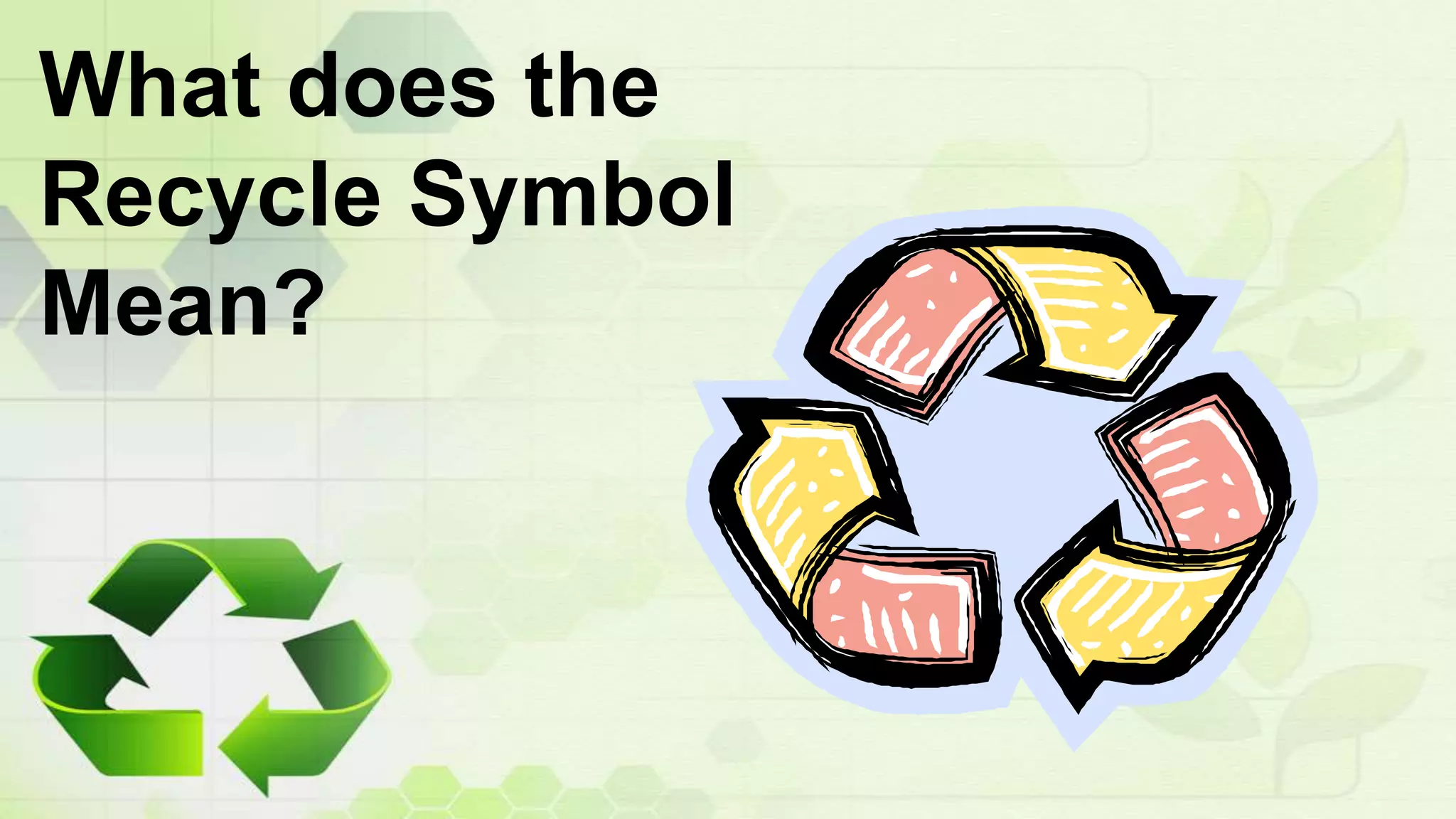
What does the
Recycle Symbol
Mean?
• The first top arrow represents
the collection of recyclable
materials for processing.
• The bottom right arrow
represents the recyclables being
processed into recycled
products.
• The bottom left arrow is the
most important. It represents
when the consumer actually buys
a product with recycled content.
What are the three R’s
of Recycling?
Reduce
• Reduce means to use less of
something. Some examples
are:
1. Use a handkerchief instead of
tissues.
2. Use a cotton rag when cleaning
house instead of paper towels.
3. Use a sports bottle instead of
buying bottled water
everyday.
Reuse
• Reuse is to put again into
service without changing.
Examples are:
1. Wrapping paper
2.Floppy disks
3.Plastic grocery bags
Recycle
• Recycle is to put again into
service with changing.
Examples are:
1. Cans
2.Glass
3.Plastics
Where do I take my
Recyclables
• A local recycling center
• A local waste recycling
center
• At curbside
• A local bulky waste recycling
center
How can Recycling
conserve our natural
resources?
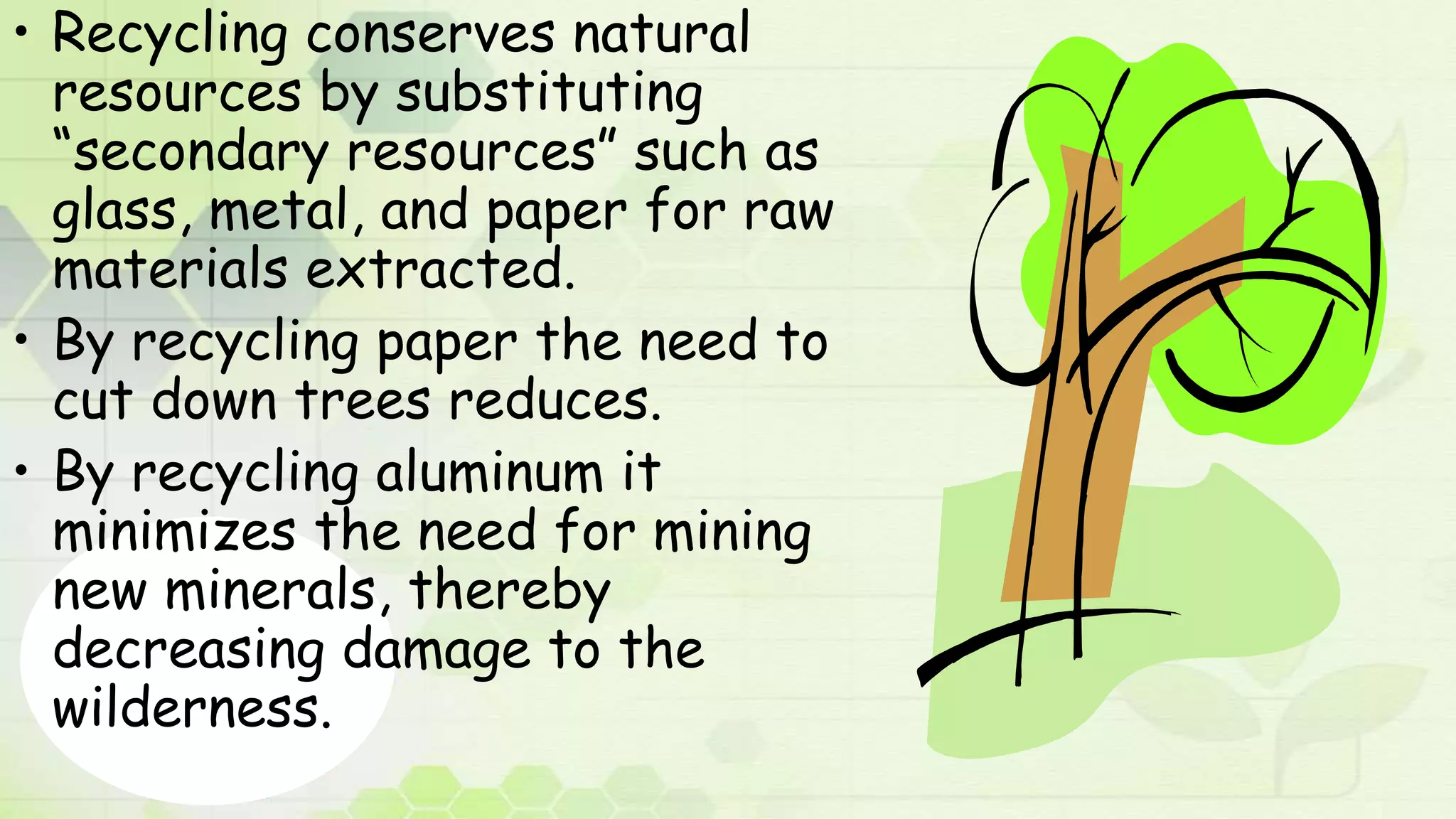
• Recycling conserves natural
resources by substituting
“secondary resources” such as
glass, metal, and paper for raw
materials extracted.
• By recycling paper the need to
cut down trees reduces.
• By recycling aluminum it
minimizes the need for mining
new minerals, thereby
decreasing damage to the
wilderness.
How does Recycling
save energy?
• The energy required to
manufacture paper, plastics,
glass, and metal from recycled
materials is usually less than
the energy required to produce
them from new materials.
• The steps such as collection,
processing, and transportation
is also usually less energy then
the steps in supplying new
materials.
Beautiful planet
We all want a clean Earth
A world full of junk
We don’t want a polluted Earth
Some things just
won’t go away…
It is important to recycle
Time for garbage to decompose:
Banana peel = 3 to 4 weeks
It is important to recycle
Time for garbage to decompose:
Paper bag = 1 month
It is important to recycle
Time for garbage to decompose:
Wool sock = 1 to 5 years
It is important to recycle
Time for garbage to decompose:
Cigarette butt = 5 years
It is important to recycle
Time for garbage to decompose:
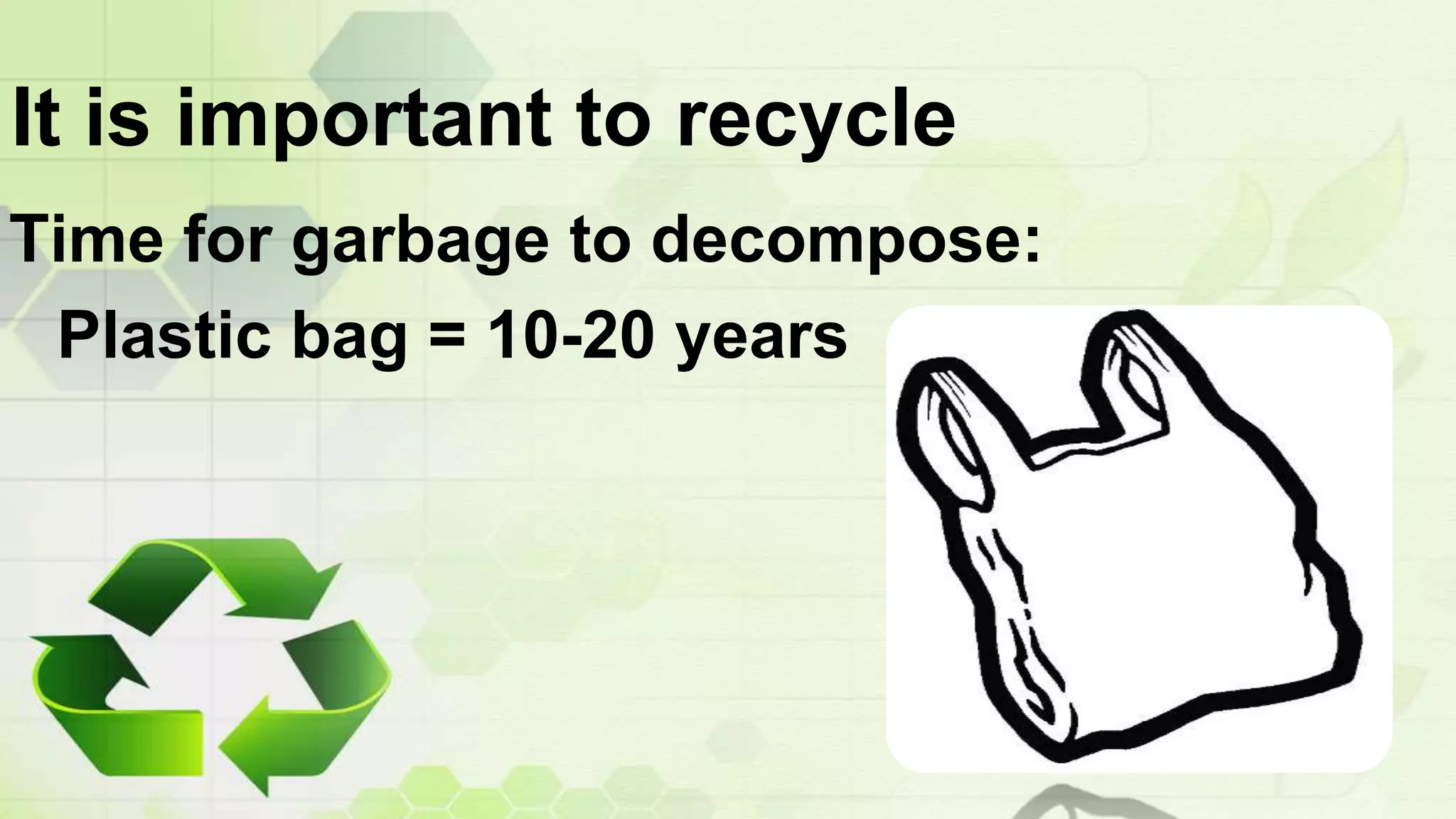
Plastic bag = 10-20 years
It is important to recycle
Time for garbage to decompose:
Tin can = 80 to 100 years
It is important to recycle
Time for garbage to decompose:
Aluminum can = 500 years
It is important to recycle
Time for garbage to decompose:
Glass bottle = 1,000 years
It is important to recycle
Time for garbage to decompose:
Styrofoam = unknown (a really long,
long time)
It is important to recycle
Time for garbage to decompose:
Plastic bottle = unknown (a long, long
time)
Things that CANNOT be recycled
• Aluminum Foil
• Auto Glass or Ceramics
• Batteries
• Film Canisters
• Food
• Light Bulbs
• Painted Wood
• Paper Towels and
Napkins
• Plastic Grocery Bags
• Plastic Wrap
• Porcelain
• Styrofoam
• Treated Wood
• Wrappers
What are some
things I can Recycle?
Things that CAN be recycled:
• Aluminum Cans
• Brown Paper Bags
• Cardboard
• Catalogs, Magazines, and
Phone Books
• Chipboard (Cereal Boxes,
Shoe Boxes, etc.)
• Colored Paper
• Computer Paper
• Envelopes
• Glass Bottles and Jars
(Without the Caps)
• Newspapers and Junk Mail
• Plastic Bottles and Jugs
(Without the Caps)
• Tin and Steel Cans
• Empty Aerosol Cans
• White Ledger Paper
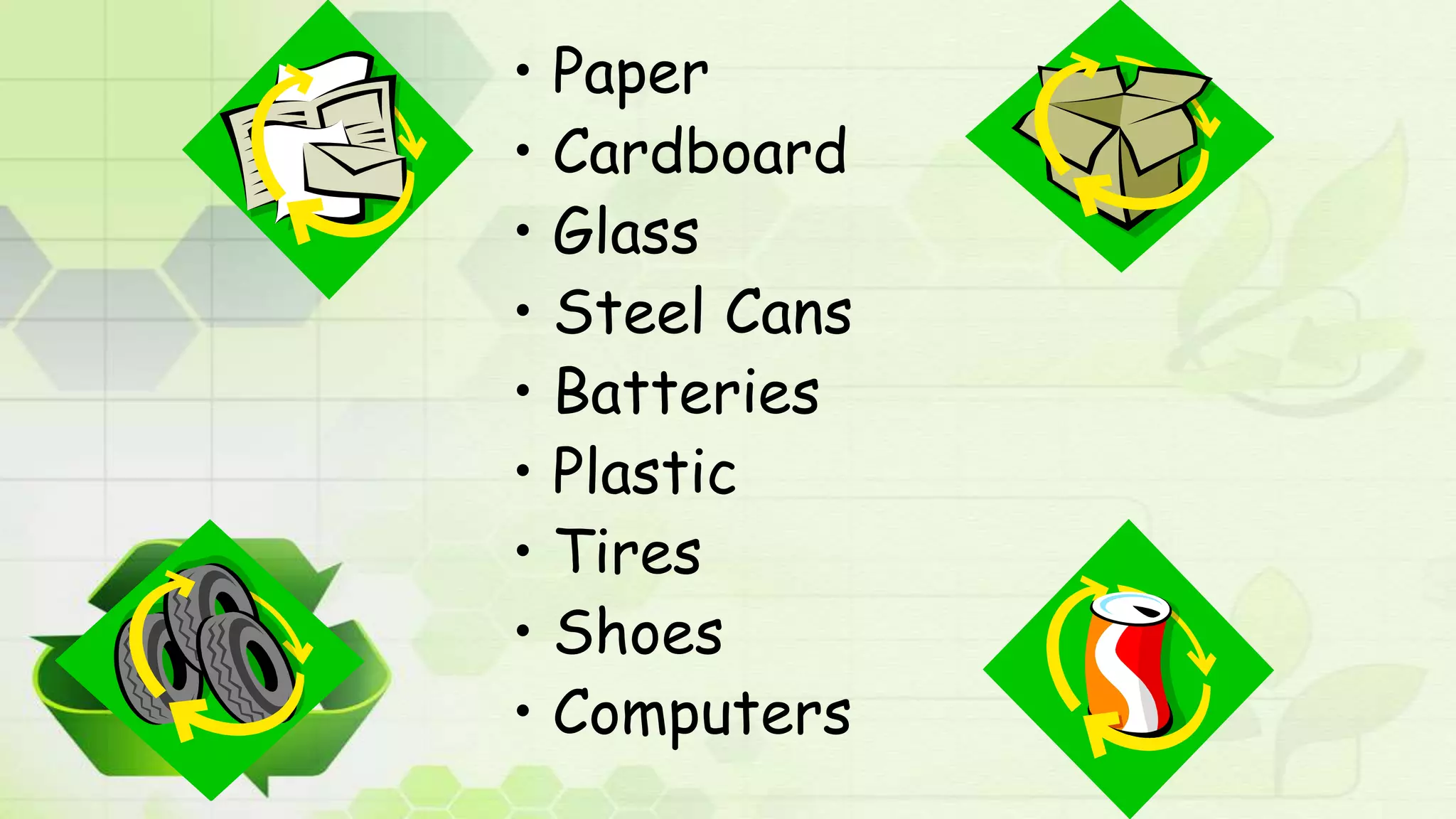
• Paper
• Cardboard
• Glass
• Steel Cans
• Batteries
• Plastic
• Tires
• Shoes
• Computers
Recycle a phone book
into a pen organizer
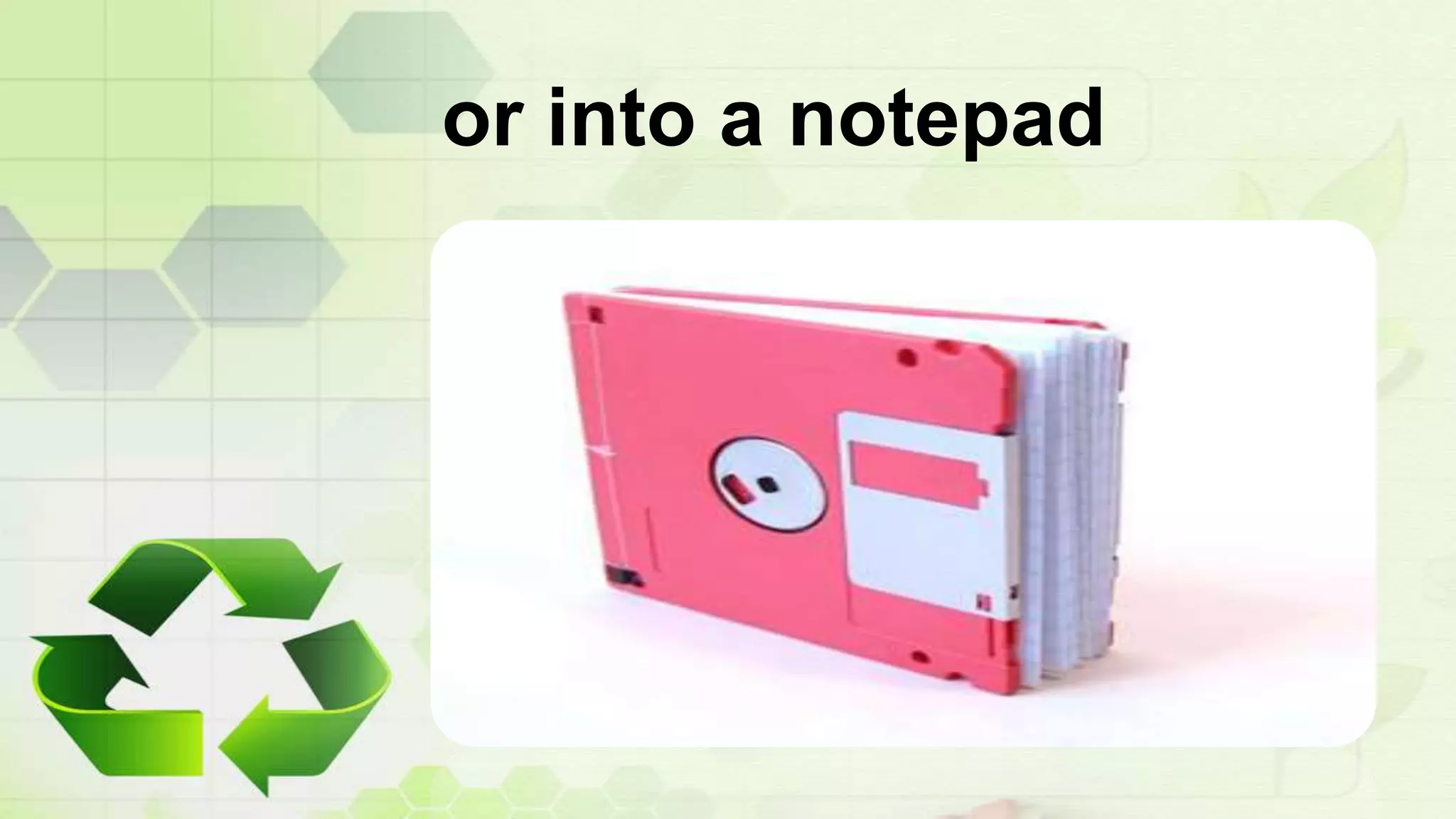
Recycle old floppy disks…
into a pen holder
or into a notepad
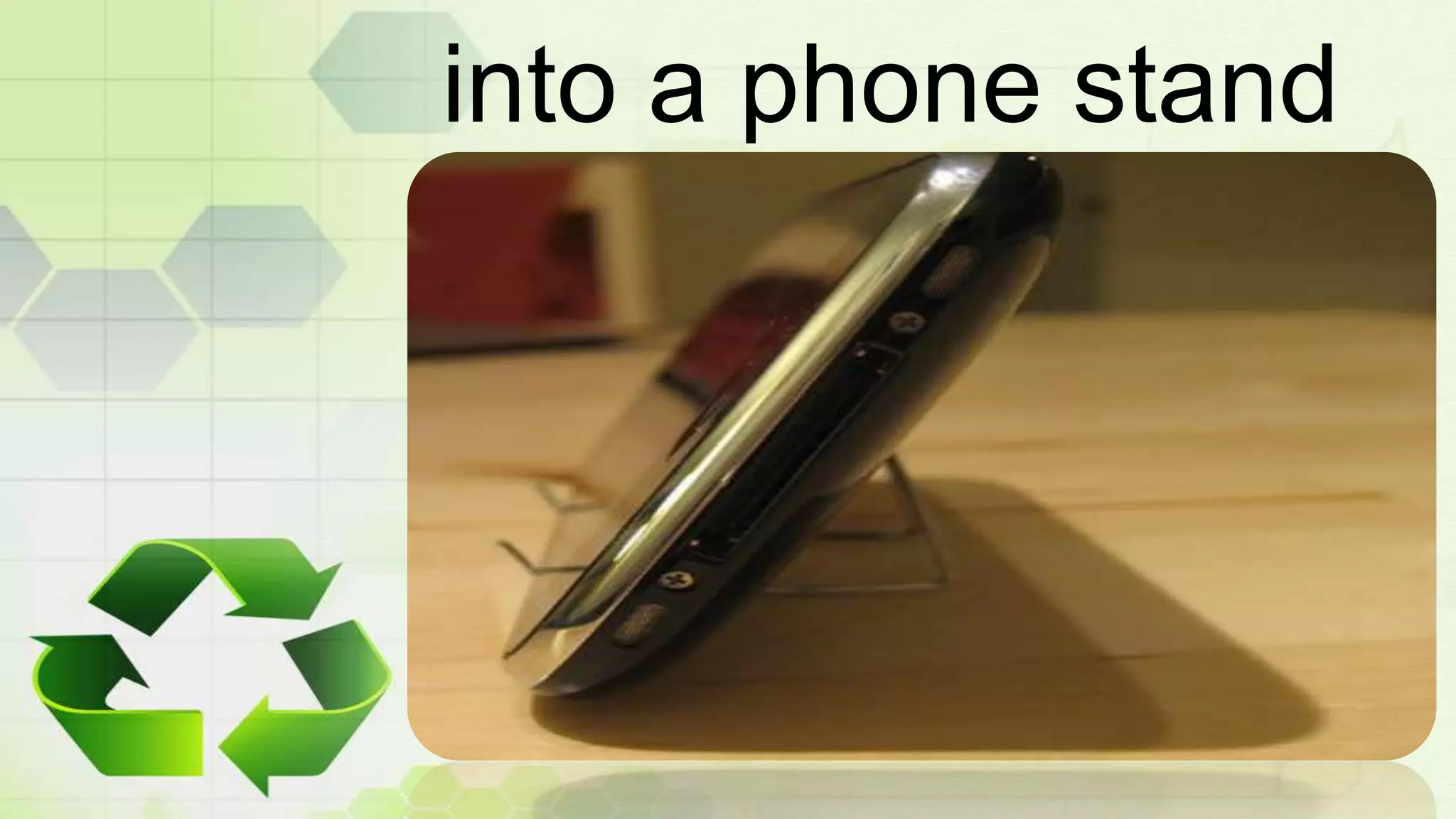
Recycle a paper clip…
into a phone stand
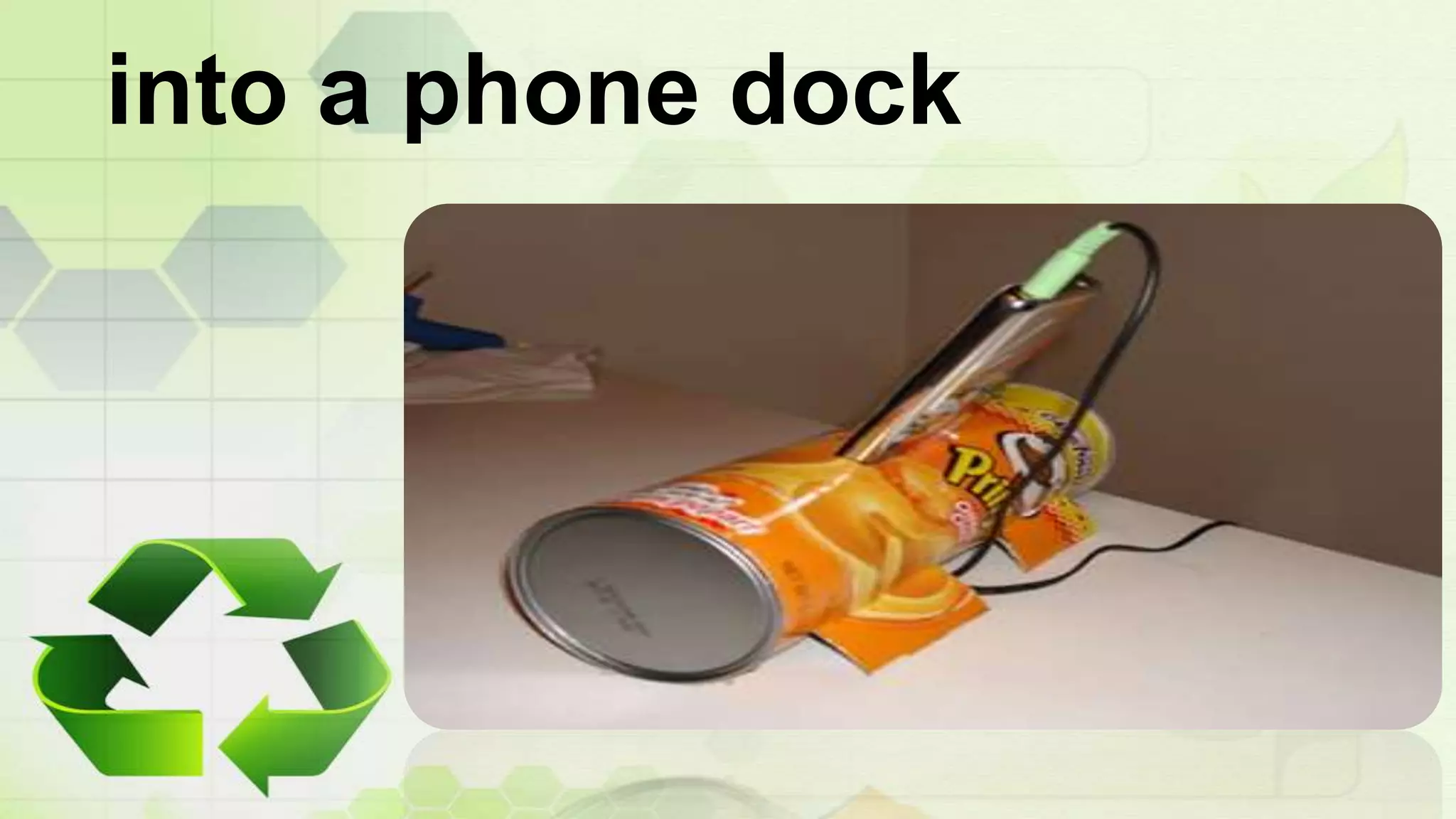
Recycle a Pringles can
into a phone dock
or a gift packaging
Recycle milk bottles…
into home lights
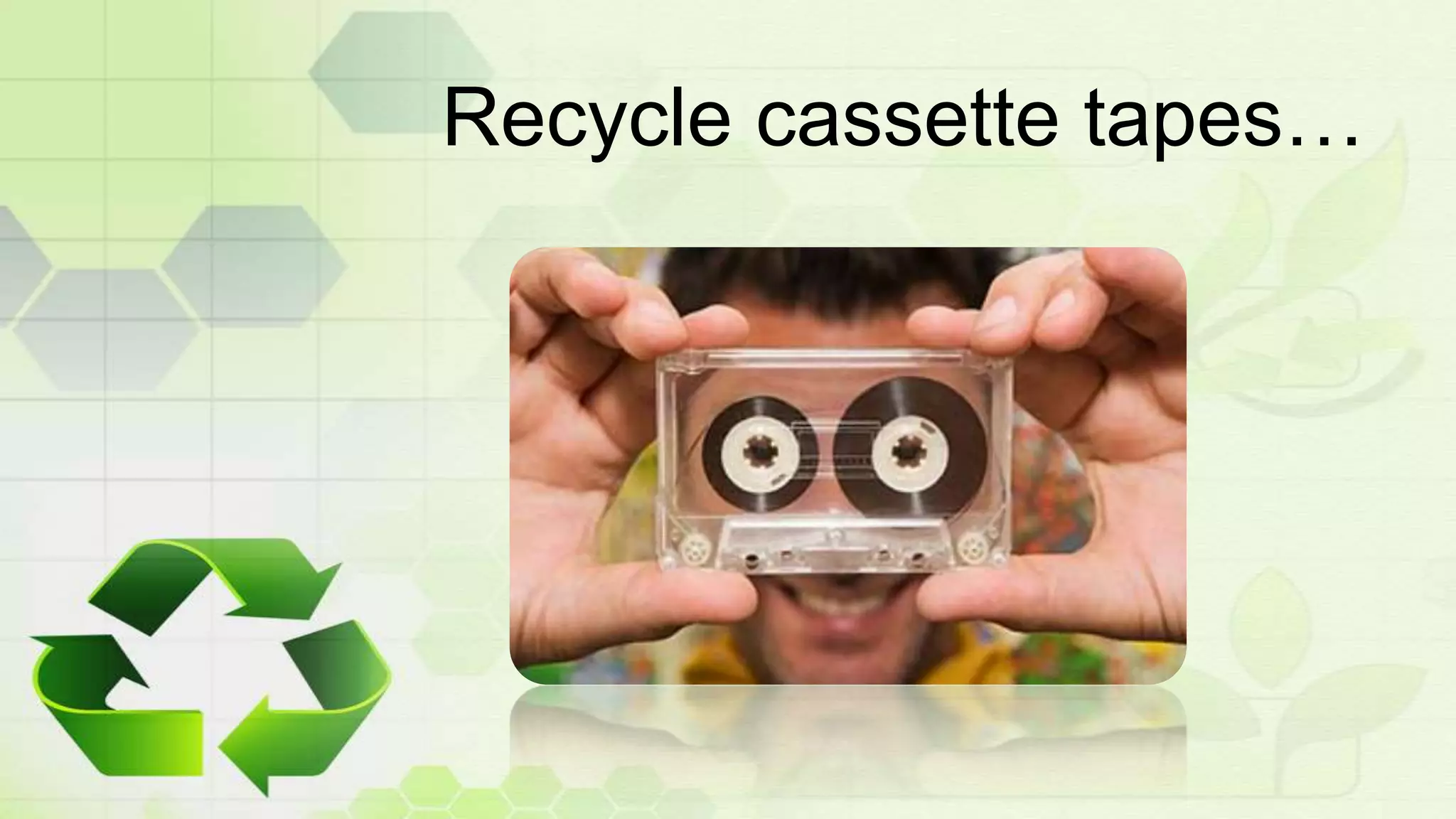
Recycle cassette tapes…
into a lamp
Recycle a water bottle…
into a juicer
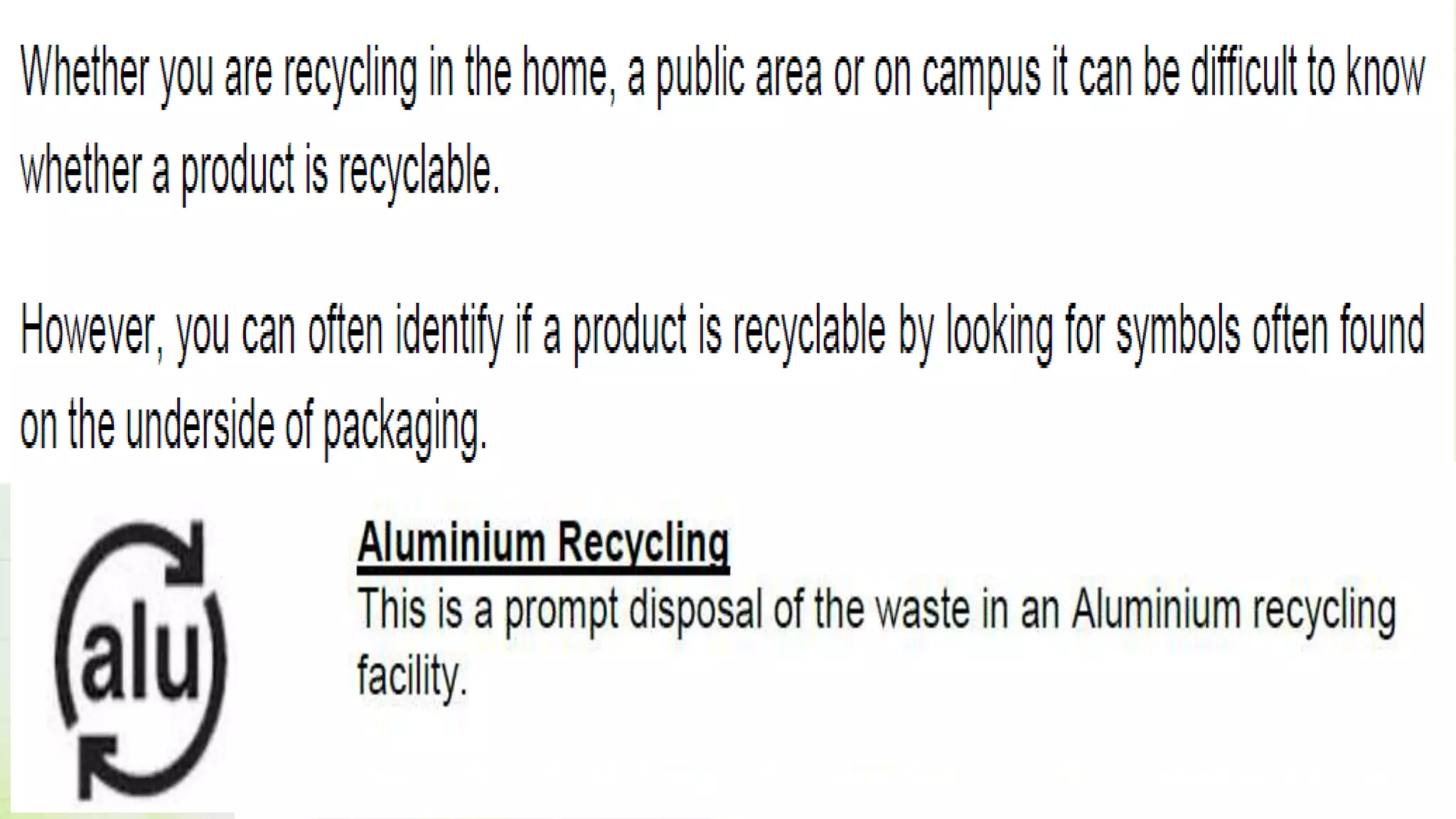
•RECYCLING
SYMBOLS
What Happens If
We Don’t Recycle
Plastic?
It’s your turn!
Think!
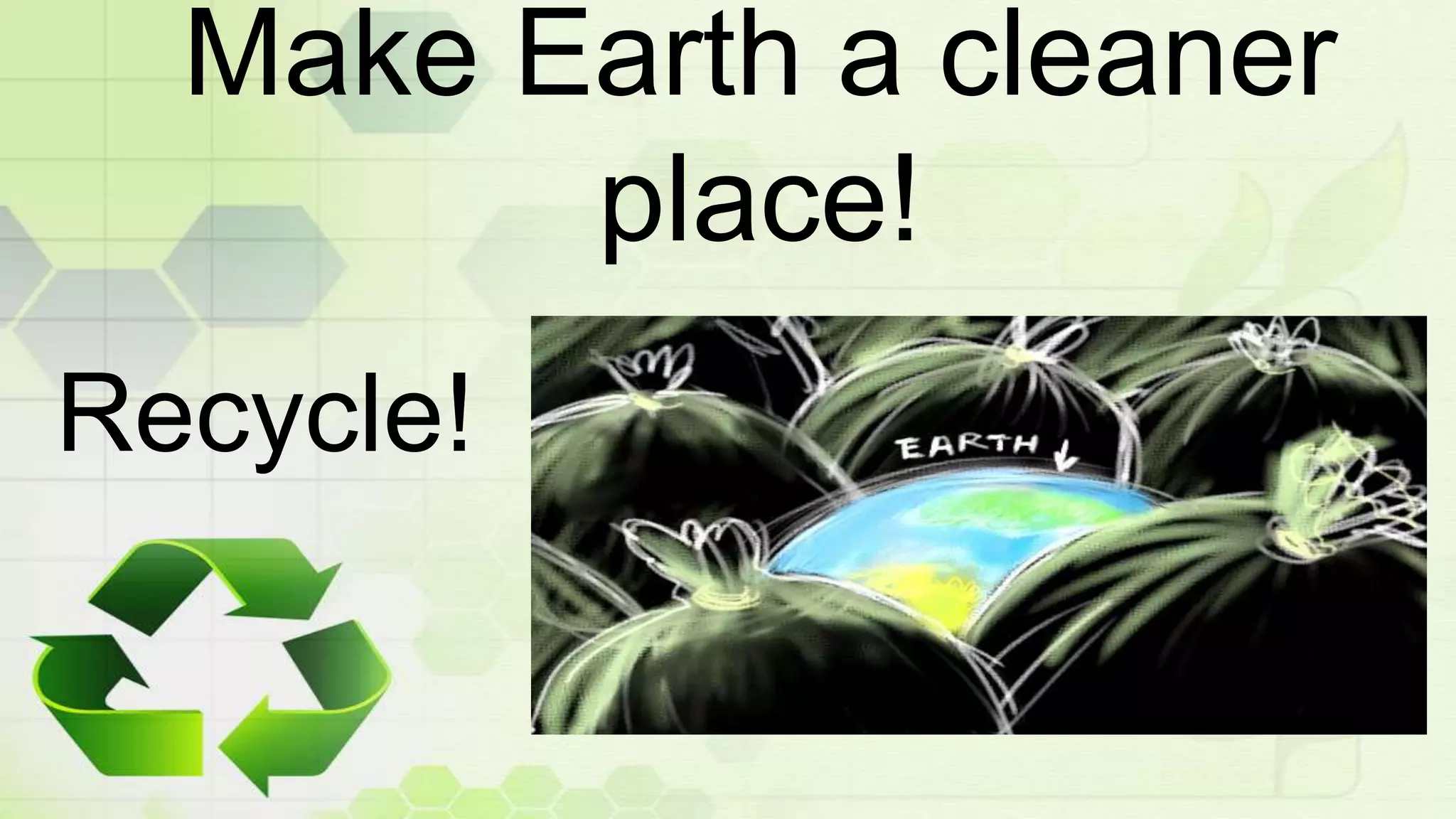
Make Earth a cleaner
place!
Recycle!

Recycle

  • 3.
    What is Recycle? Itis the process of converting waste materials into new materials and objects.
  • 4.
    • It alsomeans that we can use our creative talent to make something new out of something old. • Most importantly, we can help save the Earth and all of its resources.
  • 5.
  • 6.
    • The firsttop arrow represents the collection of recyclable materials for processing. • The bottom right arrow represents the recyclables being processed into recycled products. • The bottom left arrow is the most important. It represents when the consumer actually buys a product with recycled content.
  • 7.
    What are thethree R’s of Recycling?
  • 8.
    Reduce • Reduce meansto use less of something. Some examples are: 1. Use a handkerchief instead of tissues. 2. Use a cotton rag when cleaning house instead of paper towels. 3. Use a sports bottle instead of buying bottled water everyday.
  • 9.
    Reuse • Reuse isto put again into service without changing. Examples are: 1. Wrapping paper 2.Floppy disks 3.Plastic grocery bags
  • 10.
    Recycle • Recycle isto put again into service with changing. Examples are: 1. Cans 2.Glass 3.Plastics
  • 11.
    Where do Itake my Recyclables
  • 12.
    • A localrecycling center • A local waste recycling center • At curbside • A local bulky waste recycling center
  • 13.
    How can Recycling conserveour natural resources?
  • 14.
    • Recycling conservesnatural resources by substituting “secondary resources” such as glass, metal, and paper for raw materials extracted. • By recycling paper the need to cut down trees reduces. • By recycling aluminum it minimizes the need for mining new minerals, thereby decreasing damage to the wilderness.
  • 15.
  • 16.
    • The energyrequired to manufacture paper, plastics, glass, and metal from recycled materials is usually less than the energy required to produce them from new materials. • The steps such as collection, processing, and transportation is also usually less energy then the steps in supplying new materials.
  • 17.
    Beautiful planet We allwant a clean Earth
  • 18.
    A world fullof junk We don’t want a polluted Earth
  • 19.
  • 20.
    It is importantto recycle Time for garbage to decompose: Banana peel = 3 to 4 weeks
  • 21.
    It is importantto recycle Time for garbage to decompose: Paper bag = 1 month
  • 22.
    It is importantto recycle Time for garbage to decompose: Wool sock = 1 to 5 years
  • 23.
    It is importantto recycle Time for garbage to decompose: Cigarette butt = 5 years
  • 24.
    It is importantto recycle Time for garbage to decompose: Plastic bag = 10-20 years
  • 25.
    It is importantto recycle Time for garbage to decompose: Tin can = 80 to 100 years
  • 26.
    It is importantto recycle Time for garbage to decompose: Aluminum can = 500 years
  • 27.
    It is importantto recycle Time for garbage to decompose: Glass bottle = 1,000 years
  • 28.
    It is importantto recycle Time for garbage to decompose: Styrofoam = unknown (a really long, long time)
  • 29.
    It is importantto recycle Time for garbage to decompose: Plastic bottle = unknown (a long, long time)
  • 30.
    Things that CANNOTbe recycled • Aluminum Foil • Auto Glass or Ceramics • Batteries • Film Canisters • Food • Light Bulbs • Painted Wood • Paper Towels and Napkins • Plastic Grocery Bags • Plastic Wrap • Porcelain • Styrofoam • Treated Wood • Wrappers
  • 31.
    What are some thingsI can Recycle?
  • 32.
    Things that CANbe recycled: • Aluminum Cans • Brown Paper Bags • Cardboard • Catalogs, Magazines, and Phone Books • Chipboard (Cereal Boxes, Shoe Boxes, etc.) • Colored Paper • Computer Paper • Envelopes • Glass Bottles and Jars (Without the Caps) • Newspapers and Junk Mail • Plastic Bottles and Jugs (Without the Caps) • Tin and Steel Cans • Empty Aerosol Cans • White Ledger Paper
  • 33.
    • Paper • Cardboard •Glass • Steel Cans • Batteries • Plastic • Tires • Shoes • Computers
  • 34.
  • 35.
    into a penorganizer
  • 36.
  • 37.
    into a penholder
  • 38.
    or into anotepad
  • 39.
  • 40.
  • 41.
  • 42.
  • 43.
    or a giftpackaging
  • 44.
  • 45.
  • 46.
  • 47.
  • 48.
    Recycle a waterbottle…
  • 49.
  • 52.
  • 53.
    What Happens If WeDon’t Recycle Plastic?
  • 54.
  • 55.
  • 56.
    Make Earth acleaner place! Recycle!