R E V I E W 
Hellenic Journal of Atherosclerosis 5(3):168–176 
Α Ν Α Σ Κ Ο Π Η Σ Η 
Ελληνική Επιθεώρηση Αθηροσκλήρωσης 5(3):168–176 
Dr Ev.N. Liberopoulos MD, FASA, FRSH 
Department of Internal Medicine, Medical School, 
University of Ioannina, GR-451 10 Ioannina, Greece 
Tel: (+30) 2651 0 07502, Fax: (+30) 2651 0 07016 
e-mail: vaglimp@yahoo.com 
Δρ. Ευ.Ν. Λυμπερόπουλος 
Τομέας Παθολογίας, Ιατρική Σχολή, Πανεπιστήμιο 
Ιωαννίνων, 451 10 Ιωάννινα 
Τηλ: (+30) 2651 0 07502, Fax: (+30) 2651 0 07016 
e-mail: vaglimp@yahoo.com 
Inhibition of proprotein 
convertase subtilisin/kexin 
type 9 (PCSK9) 
A new approach to lipid 
lowering treatment 
E. Klouras, E. Liberopoulos, M. Elisaf 
Department of Internal Medicine, Medical School, 
University of Ioannina, Ioannina, Greece 
Αναστολή της PCSK9 
Μια νέα προσέγγιση 
στην υπολιπιδαιμική 
αγωγή 
Ε. Κλούρας, Ε. Λυμπερόπουλος, Μ. Ελισάφ 
Τομέας Παθολογίας, Ιατρική Σχολή, Πανεπιστήμιο Ιωαννίνων, 
Ιωάννινα 
ABSTRACT: Cardiovascular disease is the single 
most common cause of death worldwide; hence 
its prevention constitutes a strategic target for the 
improvement of life expectancy and quality of life. 
Statins are an essential element of lipid lowering 
treatment for decades with undisputable benefits. 
However, there are patients who cannot tolerate 
statins or cannot achieve the goal of lipid lower-ing 
treatment only by statins. Studying people with 
genetically high or low cholesterol levels and the 
analysis of their genome has led to the discovery 
of the proprotein convertase subtilisin/kexin type 9 
(PCSK9) protein. The important contribution of the 
PCSK9 to the catabolism of the low density lipo-protein 
(LDL) receptor renders it as the main regu-lator 
in cholesterol metabolism, thus making it an 
attractive target for the development of new drugs. 
Inhibiting the PCSK9 protein by using monoclonal 
antibodies is the most advanced approach, given that 
it achieves an additional reduction of LDL choles-terol 
by 50–60%, while having an excellent safety 
ΠΕΡΙΛΗΨΗ: Τα καρδιαγγειακά νοσήματα απο- 
τελούν την πρώτη αιτία θανάτου παγκοσμίως και η 
πρόληψή τους αποτελεί στρατηγικό στόχο για τη βελ- 
τίωση του προσδόκιμου επιβίωσης και της ποιότητας 
ζωής. Οι στατίνες αποτελούν τον θεμέλιο λίθο της 
υπολιπιδαιμικής αγωγής για δεκαετίες, με εντυπωσια- 
κά αποτελέσματα στη μείωση της καρδιαγγειακής νο- 
σηρότητας και θνητότητας. Ωστόσο υπάρχουν ασθε- 
νείς που δεν μπορούν να ανεχθούν τις στατίνες ή δεν 
μπορούν να επιτύχουν τον στόχο της υπολιπιδαιμικής 
αγωγής μόνο με στατίνες. Η μελέτη ατόμων με γενε- 
τικά αυξημένη ή μειωμένη χοληστερόλη και η ανάλυ- 
ση του γονοτύπου τους οδήγησε στην ανακάλυψη της 
πρωτεΐνης proprotein convertase subtilisin/kexin type 
9 (PCSK9). Η σημαντική συμμετοχή της πρωτεΐνης 
PCSK9 στον καταβολισμό του υποδοχέα των χαμη- 
λής πυκνότητας λιποπρωτεϊνών (LDL υποδοχέα) την 
καθιστά κύριο ρυθμιστή του μεταβολισμού της χολη- 
στερόλης και ως εκ τούτου ελκυστικό στόχο για την 
ανάπτυξη νέων φαρμάκων. Η αναστολή της PCSK9 
με τη χρήση μονοκλωνικών αντισωμάτων αποτελεί 
 
© 2014 Ελληνική Εταιρεία Αθηροσκλήρωσης
INHIBITION OF PCSK9: A NEW APPROACH TO LIPID LOWERING TREATMENT 169 
την προκρινόμενη προσέγγιση, δεδομένου ότι επιτυγ- 
χάνει επιπρόσθετες μειώσεις της χοληστερόλης των 
χαμηλής πυκνότητας λιποπρωτεϊνών (LDL χοληστε- 
ρόλη) της τάξης του 50–60% με πολύ καλό προφίλ 
ασφάλειας. Εν αναμονή της ολοκλήρωσης μεγάλων 
μελετών, όλα δείχνουν ότι βρισκόμαστε ενώπιον μιας 
επανάστασης στον τομέα της υπολιπιδαιμικής αγωγής 
και της πρόληψης των καρδιαγγειακών νοσημάτων. 
© 2014 Ελληνική Εταιρεία Αθηροσκλήρωσης 
1. Introduction 
Cardiovascular disease (CVD) is the leading cause of 
death worldwide and its incidence is expected to rise 
in the years to come.1 Thus, both the scientific commu-nity 
and the national health systems have focused their 
interest on CVD prevention. Increased concentration of 
low density lipoprotein (LDL) cholesterol is a major risk 
factor for CVD incidents, while decreasing LDL choles-terol 
is a primary target of treatment. Statins are the ba-sis 
of the hypolipidemic treatment by inhibiting 3-hy-droxy- 
3-methyl-glutaryl-CoA (HMG-CoA) reductase, an 
essential enzyme in cholesterol’s hepatic production. 
Statins are associated with impressive benefits in cardi-ovascular 
prevention. European Society of Cardiology/ 
European Atherosclerosis Society (ESC/EAS) guidelines 
suggest reducing LDL cholesterol levels to lower than 
70 mg/dL for very high risk patients.2 However, up to 
80% of these patients fail to reach this target.3,4 Many 
patients have familial hypercholesterolemia (FH) and 
therefore very high baseline LDL cholesterol levels and 
inability to achieve lipid targets with statin alone or 
even in combination with ezetimibe. Of note, patients 
receiving statins have a significant residual cardiovas-cular 
risk that underlines the need for more effective 
decrease of LDL cholesterol.5,6 Moreover, 5–10% of pa-tients 
cannot tolerate an effective or any dose of statins 
because of myopathy.7,8 It is obvious that new, safe and 
effective drugs are needed. 
2. LDL metabolism and the discovery 
of PCSK9 
Our knowledge of LDL regulation was limited to the 
interaction between LDL particles and LDL receptors 
on the hepatic cells. Genetic mutations lowering LDL 
receptor activity are known to be responsible for a 
FH phenotype. Similarly, mutations in apolipoprotein 
B (ApoB) lead to FH. In 1999, Varret et al. reported for 
the first time a 3rd genetic locus, mutations of which 
result in FH.9 This was concluded after studying a fam-ily 
in France who presented with autosomal dominant 
FH phenotype but had no mutations in LDL receptor 
and ApoB genes.9 Further study showed in 2003 an as-sociation 
of a protein with the LDL receptor and LDL 
cholesterol levels.10 This protein was named proprotein 
convertase subtilisin/kexin type 9 (PCSK9) and is the 
product of PCSK9 gene in chromosome 1p32.3. Two 
mutations of that gene were described, both resulting 
in autosomal dominant FH. In particular, 2 families with 
heterozygous FH (HeFH) and history of early CVD were 
studied and no genetic relation with the LDL recep-tor 
or ApoB was found. The genetic sequence analysis 
though, revealed mutations in PCSK9 gene that en-hanced 
the protein’s activity (gain-of-function muta-tions) 
and decreased LDL receptor function.10 
Studies in mice followed, revealing that overexpres-sion 
of PCSK9 protein (via a genetically modified ad-enovirus 
expressing the PCSK9 gene) leads to increased 
LDL cholesterol and a phenotype similar to that of mice 
with complete LDL receptor absence.11 In addition, ad-ministering 
the PCSK9 protein to mice decreased LDL 
receptors on hepatic cell surface, without decreasing 
their mRNA.11 In contrast, deleting the PCSK9 gene from 
mice genome increased LDL receptors and reduced 
LDL cholesterol by increasing its hepatic clearance.12 
In humans, it was found that PCSK9 mutations result-ing 
in decreased activity of PCSK9 (loss-of-function mu-tations) 
are associated with decreased LDL cholesterol 
levels. Two mutations of the PCSK9 gene, present in 
2% of the blacks, decrease LDL cholesterol up to 40%, 
profile. While waiting for more studies to be com-pleted, 
it seems that we are witnessing a revolution 
in the fields of lipid lowering treatment and preven-tion 
of cardiovascular disease. 
Λέξεις ευρετηρίου: Πρωτεΐνη PCSK9, LDL χοληστε- 
ρόλη, δυσλιπιδαιμία, μονοκλωνικό αντίσωμα. 
Key words: Protein PCSK9, LDL cholesterol, dyslipi-demia, 
monoclonal antibody.
170 E. Klouras et al 
while another mutation, present in 3.2% of the whites, 
decreases LDL cholesterol up to 21%. 
Studying the carriers of these mutations, it was found 
that a decrease of LDL cholesterol by 40 mg/dL, attrib-uted 
to PCSK9 mutations, is related with an 88% reduc-tion 
of coronary artery disease.13 This benefit is much 
greater in comparison to the benefit seen in statin trials 
for similar LDL cholesterol reductions, likely because 
the low LDL cholesterol levels exist for a lifetime.13 A 
meta-analysis of 312,312 people studied 9 genetic poly-morphisms 
(SNPs) responsible for a long standing re-duction 
of LDL cholesterol. It was found that for every 
38.7 mg/dL of long standing LDL cholesterol reduction, 
CVD risk decreases by 54.5%. The same decrease of LDL 
cholesterol with statins is associated with a CVD risk 
reduction of 24%.14 Thus, when LDL cholesterol is low 
since very early in life, CVD risk is 3 times lower com-pared 
with the statin-induced risk reduction later in life. 
3. The role of PCSK9 
in LDL receptor metabolism 
In what way does PCSK9 affect serum LDL cholesterol 
levels? PSCK9 protein, consisted by 692 amino-acids, 
interacts directly with the extracellular section of LDL 
receptor (EGF-A sector) and forms a complex which is 
then internalized via clathrin-coated pits. In the acidic 
environment of the endosome, the interaction be-tween 
PCSK9 and LDL receptor increases, as their bond 
becomes stronger (by 150–170 times). Thus, PCSK9 in-hibits 
the recycle of LDL receptor to the cellular surface, 
promoting its degradation by lysosomal hydrolases.15 
Consequently, in the presence of PCSK9 LDL receptor 
degradation is augmented, decreasing their density on 
the cellular surface and resulting in decreased hepatic 
LDL uptake and increased serum LDL cholesterol levels. 
In the general population, PCSK9 protein shows a 
large range of serum concentrations (33–2988 ng/mL).16 
Trying to discover the determinants of PCSK9 levels, it 
was found that women have higher levels compared 
with men, with a significant increase postmenopau-sal. 
In addition, obesity and diabetes are related with 
increased levels of PCSK9, while statins also increase 
PCSK9 expression. However, these parameters seem to 
determine only 23% of PCSK9 level variability.16 
Atorvastatin 40 mg daily increased circulating PCSK9 
by 34% after 16 weeks of treatment.17 In addition, sim-vastatin 
40 mg and the combination of simvastatin and 
ezetimibe 40/10 mg increased PCSK9 levels by 67.8% 
© 2014 Ελληνική Εταιρεία Αθηροσκλήρωσης 
and 67.3%, respectively, while ezetimibe (10 mg/day) 
monotherapy was not related to a significant increase 
of PCSK9.18 It seems that simvastatin’s effect on PCSK9 
levels is not enhanced by ezetimibe addition despite 
the extra decrease of LDL cholesterol. It was also found 
that a moderate reduction in serum LDL cholesterol 
(30–50% from baseline) results in a great increase of 
PCSK9 by even 120%.18 Statins, by decreasing intracel-lular 
LDL cholesterol of the hepatic cell, enhance the 
activity of SREBP-2 (sterol regulatory element-binding 
protein-2), a transcription factor which activates the 
genes of both LDL receptor and PCSK9.19 This mecha-nism 
is possibly responsible for the limited further 
statin efficacy as doses increase (the rule of 6), as LDL 
receptors and PCSK9 increase in parallel, leading to an 
increased LDL receptor degradation. 
4. PCSK9 as a treating target 
The key role of PCSK9 in LDL receptor catabolism and 
its relation to increased levels of LDL cholesterol, ren-der 
its inhibition as a new treating target for LDL cho-lesterol 
reduction. Nature has already showed the way, 
as genetic defects associated with low or no PCSK9 
activity are not related to any health problems20 and 
markedly decrease CVD risk.13 
PCSK9 can be inhibited in various ways using mono-clonal 
antibodies (mAbs), oligonucleotides (antisense 
oligonucleotides), small sectors of silence RNA (siRNA) 
or small molecule inhibitors. Current research has 
mainly focused on monoclonal antibodies as PCSK9 in-hibitors. 
21 
Consequently, human monoclonal antibodies against 
PCSK9 protein have been developed and tested in ani-mals 
first. Intravenous infusion of these antibodies re-sulted 
in a decrease of LDL cholesterol by 50%.22,23 In 
humans, 3 monoclonal antibodies have been developed 
and tested, namely evolocumab (AMGEN), alirocumab 
(SANOFI-REGENERON) and bococizumab (PFIZER). 
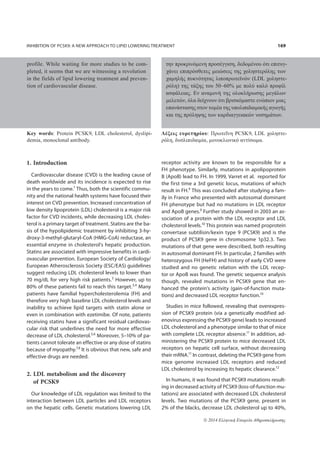
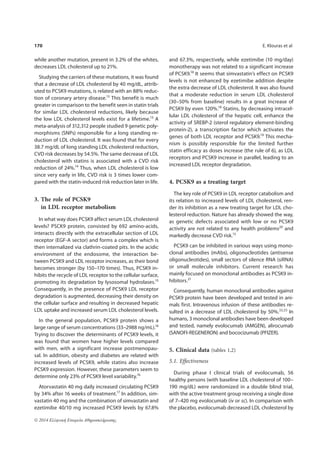
5. Clinical data (tables 1,2) 
5.1. Effectiveness 
During phase I clinical trials of evolocumab, 56 
healthy persons (with baseline LDL cholesterol of 100– 
190 mg/dL) were randomized in a double blind trial, 
with the active treatment group receiving a single dose 
of 7–420 mg evolocumab (iv or sc). In comparison with 
the placebo, evolocumab decreased LDL cholesterol by
INHIBITION OF PCSK9: A NEW APPROACH TO LIPID LOWERING TREATMENT 171 
© 2014 Ελληνική Εταιρεία Αθηροσκλήρωσης 
Table 1. Clinical studies with evolocumab. 
Study Patients Background 
therapy 
Treatment Mean LDL-C 
reduction 
Additional 
information 
Phase I 56 healthy pts None Evolocumab (single 
dose 7–420 mg) 
Up to 64% 
Phase I 57 dyslipidemic pts Statin Evolocumab 
(multiple doses) 
Up to 81% 
MENDEL 406 pts with LDL-C 
between 100 and 
190 mg/dL 
None Evolocumab 
(various doses) 
Up to 50% 
LAPLACE-TIMI 57 631 pts with LDL 
85 mg/dL 
Statin±Ezetimibe Evolocumab 
(various doses) 
Up to 66% 
RUTHERFORD 167 pts with HeFH Statin±Ezetimibe Evolocumab 
(various doses) 
Up to 55% 
GAUSS 160 statin 
intolerant pts 
Low dose or no statin 
±Ezetimibe 
Evolocumab 
(various doses) 
Up to 63% ApoB –43%, 
Lp(a) –27%, 
TGs –10%, 
HDL-C +10.1%, 
ApoAI +10.6% 
OSLER 1104 pts enrolled 
in phase II 
studies 
Placebo in phase II Evolocumab (420 
mg every 4 weeks) 
52.3% 
Various doses 
of evolocumab 
in phase II 
Evolocumab (420 
mg every 4 weeks) 
No significant 
changes (50.4% 
vs 52.1%) 
Various doses 
of evolocumab in 
phase II 
Placebo Return to near 
baseline levels 
TESLA 8 pts with HoFH Unknown Evolocumab 16.5% 
GAUSS-2 307 statin 
intolerant pts 
Placebo p.os. Evolocumab (140 
mg every 2 weeks 
or 420 mg once 
monthly) 
53–56% Additional 
reduction of 
LDL-C by 37- 
39% compared 
with ezetimibe 
monotherapy 
LAPLACE-2 1899 dyslipidemic 
pts 
Statin Evolocumab 
(140 mg every 
2 weeks or 420 mg 
once monthly) 
or Ezetimibe 
10 mg daily 
58-68% 
(additional 
reduction 
compared to 
ezetimibe) 
DESCARTES 901 dyslipidemic 
pts 
Diet alone 
Evolocumab 
(420 mg once 
monthly) 
55.7% 
Diet plus atorvastatin 
10 mg daily 
61.6% 
Diet plus atorvastatin 
80 mg daily 
56.8% 
Diet plus atorvastatin 
80 mg plus ezetimibe 
10 mg daily 
48.5% 
LDL-C indicates low-density lipoprotein cholesterol, pts: patients, HeFH: heterozygous familial hypercholesterolemia, ApoB: 
apolipoprotein B, Lp(a): lipoprotein (a), TGs: triglycerides, HDL-C: high-density lipoprotein cholesterol, ApoAI: apolipoprotein AI, 
HoFH: homozygous familial hypercholesterolemia, p.os.: orally
172 E. Klouras et al 
64% (p0.0001).24 Next, 57 dyslipidemic patients (LDL 
cholesterol 70–220 mg/dL) on statins (low-medium or 
high dose) and FH heterozygotes (HeFH) were rand-omized 
to receive multiple doses of evolocumab. The 
maximum LDL cholesterol reduction observed in this 
study was 81% (p0.001) compared with placebo.24 In 
addition, significant and dose-related reductions were 
seen in total cholesterol, non-HDL cholesterol, ApoB 
and lipoprotein (a) [Lp(a)].24 
© 2014 Ελληνική Εταιρεία Αθηροσκλήρωσης 
In phase II clinical trials, 1364 patients were randomized 
to receive various doses of evolocumab. In the first 
study (MENDEL, n=406), LDL cholesterol was reduced 
up to 50% (p0.0001 compared with placebo) in the 
drug monotherapy group.25 In LAPLACE-TIMI 57 study 
(n=631), the combination of evolocumab with a statin 
(±ezetimibe) reduced LDL cholesterol by a maximum 
of 66% (p0.0001) after 12 weeks.26 In RUTHERFORD 
study in 167 HeFH patients on statins ± ezetimibe, LDL 
Table 2. Clinical studies with alirocumab. 
Study Patients Background 
therapy 
Treatment Mean LDL-C 
reduction 
Additional 
information 
Phase I 
61 pts with 
dyslipidemia 
(familial or not) 
None or atorvastatin 
Alirocumab (50 mg 
every 2 weeks) 
39.2% 
Alirocumab (100 
mg every 2 
weeks) 
53.7% 
Alirocumab (150 
mg every 2 
weeks) 
61% 
Phase II 77 pts with HeFH Statin±Ezetimibe Alirocumab 
(various doses) 
28.9–67.9% 
Phase II 183 pts with LDL-C 
100 mg/dL 
Atorvastatin 10–40 
mg daily 
Alirocumab 
(various doses) 
40–72% 
Phase II 
92 pts with LDL-C 
100 mg/dL 
Atorvastatin 10 mg 
daily 
Alirocumab plus 
atorvastatin 80 
mg daily 
73% ApoB –58% 
Lp(a) –34% 
TGs –24% 
HDL-C +5.8% 
(maximum 
changes) 
Alirocumab plus 
atorvastatin 10 
mg daily 
66.2% 
Placebo plus 
atorvastatin 80 
mg daily 
17.3% 
ODYSSEY 
FH I  II 
735 pts with HeFH Statin±Ezetimibe 
Alirocumab 
(75–150 mg 
every 2 weeks) 
Patients reaching 
specific LDL-C 
goals 
48.8% (FH I) 72.2% 
48.7% (FH III) 81.4% 
ODYSSEY 
COMBO II 
720 dyslipidemic 
pts 
Statin (maximum 
tolerated dose) 
Alirocumab 
(75–150 mg 
every 2 weeks) 
or Ezetimibe 
(10 mg daily) 
50.6% 
ODYSSEY 
LONG TERM 
2431 pts with high 
CV risk or HeFH 
Statin (maximum 
tolerated 
dose)±other lipid-lowering 
treatment 
Alirocumab 
(150 mg every 
2 weeks) 
61% Patients reaching 
specific LDL-C 
goals: 81% 
LDL-C indicates low-density lipoprotein cholesterol, pts: patients, ApoB: apolipoprotein B, Lp(a): lipoprotein (a), TGs: triglycerides, 
HDL-C: high-density lipoprotein cholesterol, HeFH: heterozygous familial hypercholesterolemia, CV: cardiovascular
INHIBITION OF PCSK9: A NEW APPROACH TO LIPID LOWERING TREATMENT 173 
© 2014 Ελληνική Εταιρεία Αθηροσκλήρωσης 
cholesterol was decreased by 55% (p0.001).27 In the 
fourth study (GAUSS, n=160), LDL cholesterol reduction 
reached a maximum of 63% (p0.001) in statin intoler-ant 
patients (receiving low dose or no statin therapy at 
all ± ezetimibe).28 Tested doses were the 70 mg, 105 mg 
or 420 mg every 2 weeks and 280 mg, 350 mg or 420 mg 
every 4 weeks. In addition, significant reductions were 
seen in ApoB (43%), Lp(a) (27%) and triglycerides (10%), 
while HDL cholesterol and apolipoprotein AI were slight-ly 
raised (10.1% and 10.6%, respectively).27 The choice of 
dose regimen will depend on patient wish to receive one 
injection of larger volume every month or one of smaller 
volume every 2 weeks. 
The efficacy and safety of long term evolocumab use 
for 52 weeks were tested in the OSLER study. Eighty 
one percent of patients participating in phase II clini-cal 
trials were randomized again in a group receiving 
evolocumab+usual treatment (n=736) and a group re-ceiving 
only usual treatment (n=368). Receiving evo-locumab 
for the first time in OSLER study (patients in 
the placebo group in phase II) resulted in LDL choles-terol 
reductions by 52.3% (p0.0001).29 Patients who 
continued evolocumab treatment during this study 
(having been taking the drug in previous studies) kept 
their LDL cholesterol steadily low, while those who 
stopped evolocumab in OSLER study saw their LDL 
cholesterol levels return to baseline.29 
TESLA is an important trial, being the only one to 
study the effectiveness of PCSK9 blockage in patients 
with homozygous FH (HoFH). In 8 patients with HoFH, 
evolocumab (420 mg every 4 weeks for at least 12 
weeks) reduced LDL cholesterol by 16.5%. However, in 
2 patients with total loss of LDL receptor activity, LDL 
cholesterol levels were not significantly reduced.30 
Statin intolerant patients were enrolled in GAUSS-2 
study and randomized in 4 groups, 2 receiving evo-locumab 
140 mg/2 weeks or 420 mg/4 weeks and pla-cebo 
(p.os.) every day and 2 receiving placebo sc every 
2 or 4 weeks and 10 mg ezetimibe (p.os.) daily. After 12 
weeks, the 2 groups receiving evolocumab had 53–56% 
lower LDL cholesterol (compared with baseline), which 
stands for an additional 37–39% reduction compared 
with ezetimibe monotherapy.31 
Patients with hypercholesterolemia or combined 
dyslipidemia treated with high doses of atorvastatin 
or rosuvastatin (±ezetimibe) participated in LAPLACE-2 
study, receiving evolocumab 140 mg every 2 weeks or 
420 mg every 4 weeks. After 12 weeks LDL cholesterol 
was additionally reduced by 58–68%.32 
A phase III study named DESCARTES included 901 hy-percholesterolemic 
patients with LDL cholesterol 75 
mg/dL after 4 to 12 weeks of: (1) diet alone, (2) diet plus 
atorvastatin 10 mg daily or (3) 80 mg daily and (4) 80 
mg atorvastatin plus 10 mg ezetimibe daily. These pa-tients 
were randomly assigned in a 2:1 ratio to receive 
either evolocumab (420 mg) or placebo every 4 weeks. 
LDL cholesterol was reduced by 57% in the evolocumab 
group after 52 weeks. Depending on the background 
treatment, LDL cholesterol was reduced by 55.7% in the 
diet alone group, 61.6% and 56.8% in the atorvastatin 
10 mg and 80 mg group, respectively and 48.5% in the 
atorvastatin 80 mg plus ezetimibe 10 mg group.33 
Larger phase III studies have already began, with 
FOURIER study recruiting since early 2013. A total of 
27,500 patients are about to be enrolled, all with a 
history of clinically evident CVD and LDL cholesterol 
above 70 mg/dL despite the best lipid lowering treat-ment 
(high dose statin±ezetimibe). The follow-up peri-od 
will be 5 years and the primary endpoint will be the 
time to a new major CVD event (cardiovascular death, 
myocardial infarction, stroke, hospitalization for unsta-ble 
angina or coronary revascularization), so that to test 
if additional reduction of LDL cholesterol leads to fur-ther 
reduction of CVD. 
Sixty-one patients with hypercholesterolemia (famil-ial 
or not), untreated or under atorvastatin, participated 
in a phase I clinical trial assessing alirocumab safety. No 
treatment discontinuation was reported due to adverse 
events. Among patients treated with atorvastatin, LDL 
cholesterol was reduced by 39.2%, 53.7% and 61% in 
the 50 mg, 100 mg and 150 mg bimonthly dose of ali-rocumab, 
respectively (p 0.001).34 
In phase II clinical trials, LDL cholesterol was reduced 
by 28.9%–67.9% after various doses of alirocumab in 
77 randomly allocated FH patients treated with statin 
±ezetimibe. Another trial including 183 patients with 
LDL cholesterol 100 mg/dL despite treatment with 
atorvastatin (10–40 mg) showed LDL cholesterol re-duction 
by 40–72% after 12 weeks of treatment.35 In 
addition, 92 patients with LDL cholesterol 100 mg/dL 
treated with 10 mg atorvastatin daily were randomized 
in 3 groups. In the first group, receiving alirocumab and 
80 mg atorvastatin, mean LDL cholesterol was reduced 
by 73.2%, while the combination of alirocumab with 
10 mg atorvastatin in the second group reduced LDL 
cholesterol by 66.2%. The mean LDL cholesterol reduc-tion 
was limited to 17.3% (p0.001) in the third group, 
receiving placebo and 80 mg atorvastatin.36
174 E. Klouras et al 
The combination of atorvastatin and alirocumab re-duced 
LDL cholesterol to 100 mg/dL in all patients 
and 70 mg/dL in more than 90% of the patients ver-sus 
52% and 17% of patients receiving placebo plus 
atorvastatin, respectively. ApoB, Lp(a) and triglycerides 
were reduced by a maximum of 58% (p 0.001), 34% 
(p0.001) and 24% (p0.03), respectively, and HDL cho-lesterol 
increased by up to 5.8% (p0.005).36 
The ODYSSEY program, including more than 10 
phase III clinical trials of alirocumab, has already be-gun, 
with the expected participants exceeding 22,000. 
The most important trial is the ODYSSEY-OUTCOMES 
which assesses the effect of alirocumab on the time 
to a new CVD event (cardiovascular death, myocardial 
infarction, stroke, hospitalization due to unstable an-gina) 
in 18,000 patients older than 40 years with a re-cent 
(52 weeks) hospitalization for an acute coronary 
syndrome and LDL cholesterol 70 mg/dL on high 
dose statin. 
The ODYSSEY FH I  II trials were very recently pre-sented. 
In 735 patients with heterozygous FH under 
treatment with statins ± ezetimibe, alirocumab further 
reduced LDL cholesterol by 48.8% (FH I) and 48.7% (FH 
II) compared with baseline. In addition, 72.2% (FH I) 
and 81.4% (FH II) of patients in the alirocumab group 
reached the goal for LDL cholesterol (100 mg/dL for 
high risk patients and 70 mg/dL for very high risk pa-tients). 
37 In the ODYSSEY COMBO II trial (720 patients 
on maximum tolerated statin dose), LDL cholesterol 
was reduced by 50.6% after 24 weeks of treatment 
with alirocumab (compared with 20.7% reduction with 
ezetimibe, p0.0001).38 
The ODYSSEY LONG TERM trial is the largest phase III 
study for alirocumab with the longest follow-up period 
so far, including 2,431 patients with LDL cholesterol 70 
mg/dL despite maximum tolerated statin dose±other 
lipid lowering treatment. By week 24, alirocumab was 
associated with mean LDL cholesterol reduction of 
61% from baseline (whereas in the placebo group LDL 
cholesterol increased by 0.8%, p0.0001). Furthermore, 
76% of the patients receiving alirocumab saw their LDL 
cholesterol reduced at least in half from baseline (only 
2% in the placebo group, p0.0001), with no difference 
in the incidence of adverse events. A post-hoc analysis 
showed that the rate of major cardiovascular events 
(cardiac death, myocardial infarction, stroke, unsta-ble 
angina requiring hospitalization) was lower in the 
alirocumab group compared with placebo (1.4 versus 
3.0%, p0.01).39 
© 2014 Ελληνική Εταιρεία Αθηροσκλήρωσης 
5.2. Safety 
Evolocumab has been well tolerated. Total incidence 
of adverse events was comparable with the placebo, 
while no serious adverse events led to treatment dis-continuation. 
In addition, no antibodies against the 
drug were detected. It is important that the drug shares 
no muscle-related adverse events with statins, as they 
were uncommon and similar in both treatment and pla-cebo 
groups. Creatine kinase (CK) elevations were not 
common and liver enzymes increased very rarely. 
Alirocumab can also be considered as a safe drug, 
taking into account that the treatment was not discon-tinued 
due to adverse events in any case. Moreover, the 
prevalence of any or muscle-related adverse event was 
similar between alirocumab and placebo (60% vs 61% 
and 5% vs 6% respectively).36 
When monoclonal antibodies are injected local re-actions 
at the injection site may occur (erythema, he-matoma, 
hemorrhage, pain, and swelling). Reactions of 
this kind were observed with evolocumab. There were 
some considerations about the possible antibody-in-duced 
increase of hepatitis C virus infectivity. A possi-ble 
mechanism of entry of the virus into the hepatic cell 
via LDL receptors and the drug-induced upregulation 
of LDL receptors could potentially increase virus pene-tration. 
However, statins also upregulate the expression 
of LDL receptors, but their wide use for decades did not 
result in a higher incidence of hepatitis C. 
5. 3. Drug interactions 
Monoclonal antibodies are eliminated by antigen-antibody 
complexes and phagocytosis and are not me-tabolized 
or excreted by the liver or kidneys. Thus, the 
activity of cytochrome P450 remains untouched, avoid-ing 
any interaction with statins or other drugs that use 
this metabolic pathway. Statin or any other drug phar-macokinetics 
are not affected by these new drugs. 
6. Potential place in clinical practice 
Monoclonal antibodies against PCSK9 can cover the 
treatment gap in: (1) statin intolerant patients, (2) pa-tients 
with very high baseline LDL cholesterol (often at-tributed 
to FH), and (3) very high risk patients with low 
LDL cholesterol target, unachieved with current treat-ment. 
37 Parenteral administration is a possible disadvan-tage 
of these drugs, although compliance may improve. 
Of course, the high cost, attributed to innovation and 
complicated production, is an important limitation.
INHIBITION OF PCSK9: A NEW APPROACH TO LIPID LOWERING TREATMENT 175 
© 2014 Ελληνική Εταιρεία Αθηροσκλήρωσης 
7. Conclusion 
All available data indicate that we stand before a new, 
revolutionary and safe treatment approach for the mil-lions 
of dyslipidemic patients, promising effective CVD 
prevention. After a long time, we are able to further re-duce 
LDL cholesterol beyond current levels, hoping to 
further decrease CVD events. 
References 
1. Heidenreich PA, Trogdon JG, Khavjou OA, Butler J, Dracup K, 
Ezekowitz MD et al. Forecasting the future of cardiovascular dis-ease 
in the United States: a policy statement from the American 
Heart Association. Circulation 2011, 123:933–944 
2. European Association for Cardiovascular Prevention  
Rehabilitation, Reiner Z, Catapano AL, De Backer G, Graham 
I, Taskinen MR et al. ESC/EAS Guidelines for the management 
of dyslipidaemias: the Task Force for the management of dys-lipidaemias 
of the European Society of Cardiology (ESC) and 
the European Atherosclerosis Society (EAS). Eur Heart J 2011, 
32:1769–1818 
3. Liberopoulos E, Vlasserou F, Mitrogiannin Z Papageorgantas I, 
Elisaf M, Dysis-Greece Investigators. Prevalence and risk dis-tribution 
of residual dyslipidemia in statin-treated patients in 
Greece. Angiology 2012, 63:184–193. 
4. Euroaspire IV. Adverse lifestyle trends counter improvements in 
CV risk factor management. 2013 ESC Congress, Amsterdam, 
2013. Available at: http://www.escardio.org/about/press/press-releases/ 
esc13-amsterdam/Pages/adverse-lifestyle-trends-coun-ter- 
improvements-CV-risk-factor-management.aspx. 
5. Baigent C, Keech A, Kearney PM, Blackwell L, Buck G, Pollicino 
C et al. Efficacy and safety of cholesterol-lowering treatment: pro-spective 
meta-analysis of data from 90,056 participants in 14 ran-domised 
trials of statins. Lancet 2005, 366:1267–1278 
6. Baigent C, Blackwell L, Emberson J, Holland LE, Reith C et al; 
Cholesterol treatment trialists' (CCT). Efficacy and safety of more 
intensive lowering of LDL cholesterol: a meta-analysis of data 
from 170,000 participants in 26 randomised trials. Lancet 2010, 
376:1670–1681. 
7. Matteucci E, Giampietro O. Statin intolerance: why and what to 
do - with a focus on diabetic people. Curr Med Chem 2013, 20: 
1397–1408 
8. Harper CR, Jacobson TA. The broad spectrum of statin myopa-thy: 
from myalgia to rhabdomyolysis. Curr Opin Lipidol 2007, 
18:401–408 
9. Varret M, Rabes JP, Saint-Jore B, Cenarro A, Marinoni JC, Civeira F 
et al. A third major locus for autosomal dominant hypercholester-olemia 
maps to 1p34.1-p32. Am J Hum Genet 1999, 64:1378–1387 
10. Abifadel M, Varret M, Rabes JP, Allard D, Ouguerram K, Devillers 
M et al. Mutations in PCSK9 cause autosomal dominant hyper-cholesterolemia. 
Nat Genet 2003 34:154–156 
11. Maxwell KN, Breslow JL. Adenoviral-mediated expression of 
Pcsk9 in mice results in a low-density lipoprotein receptor knock-out 
phenotype. Proc Natl Acad Sci USA 2004, 101:7100–7105 
12. Rashid S, Curtis DE, Garuti R, Anderson NN, Bashmakov Y, 
HO YK et al. Decreased plasma cholesterol and hypersensitivity 
to statins in mice lacking Pcsk9. Proc Natl Acad Sci USA 2005, 
102:5374–5379 
13. Cohen JC, Boerwinkle E, Mosley TH JR, Hobbs HH. Sequence 
variations in PCSK9, low LDL, and protection against coronary 
heart disease. N Engl J Med 2006, 354:1264–1272 
14. Ference BA, Yoo W, Alesh I, Mahajan N, Mirowska KK, Mewada 
A et al. Effect of long-term exposure to lower low-density lipopro-tein 
cholesterol beginning early in life on the risk of coronary heart 
disease: a Mendelian randomization analysis. J Am Coll Cardiol 
2012, 60:2631–2639 
15. Poirier S, Mayer G. The biology of PCSK9 from the endoplasmic 
reticulum to lysosomes: new and emerging therapeutics to control 
low-density lipoprotein cholesterol. Drug Des Devel Ther 2013, 
7:1135–1148 
16. Lakoski SC, Lagace TA, Cohen JC, Horton JD, Hobbs HH. Genetic 
and metabolic determinants of plasma PCSK9 levels. J Clin 
Endocrinol Metab 2009, 94:2537–2543 
17. Careskey HE, Davis RA, Alborn WE, Troutt JS, Cao G, Konrad 
RJ. Atorvastatin increases human serum levels of proprotein con-vertase 
subtilisin/kexin type 9. J Lipid Res 2008, 49:394–398 
18. Berthold HK, Seidah NG, Benjannet S, Gouni-Berthold I. 
Evidence from a randomized trial that simvastatin, but not 
ezetimibe, upregulates circulating PCSK9 levels. PloS One 2013, 
8:e60095 
19. Dubuc G, Chamberland A, Wassef H, Davignon J, Seidah NG, 
Bernier L et al. Statins upregulate PCSK9, the gene encoding the 
proprotein convertase neural apoptosis-regulated convertase-1 
implicated in familial hypercholesterolemia. Arterioscler Thromb 
Vasc Biol 2004, 24:1454–1459. 
20. Zhao Z, Tuakli-Wosornu Y, Lagace TA, Kinch L, Grishin NV, 
Horton JD et al. Molecular characterization of loss-of-function 
mutations in PCSK9 and identification of a compound heterozy-gote. 
Am J Hum Genet 2006, 79:514–523 
21. Catapano AL, Papadopoulos N. The safety of therapeutic mono-clonal 
antibodies: implications for cardiovascular disease and tar-geting 
the PCSK9 pathway. Atherosclerosis 2013, 228:18–28 
22. Chan JC, Piper DE, Cao Q, Liu D, King C, Wang W et al. A pro-protein 
convertase subtilisin/kexin type 9 neutralizing antibody 
reduces serum cholesterol in mice and nonhuman primates. Proc 
Natl Acad Sci USA 2009, 106:9820–9825 
23. Ni YG, Di Marco S, Condra JH, Peterson LB, Wang F et al. A 
PCSK9-binding antibody that structurally mimics the EGF(A) 
domain of LDL-receptor reduces LDL cholesterol in vivo. J Lipid 
Res 2011, 52:78–86 
24. Dias CS, Shaywitz AJ, Wasserman SM, Smith BP, Gao B, Stolman 
DS et al. Effects of AMG 145 on low-density lipoprotein choles-terol 
levels: results from 2 randomized, double-blind, placebo-controlled, 
ascending-dose phase 1 studies in healthy volunteers 
and hypercholesterolemic subjects on statins. J Am Coll Cardiol 
2012, 60:1888–1898 
25. Koren MJ, Scott R, Kim JB, Knusel B, Liu T, Lei L et al. Efficacy, 
safety, and tolerability of a monoclonal antibody to proprotein 
convertase subtilisin/kexin type 9 as monotherapy in patients with 
hypercholesterolaemia (MENDEL): a randomised, double-blind, 
placebo-controlled, phase 2 study. Lancet 2012, 380:1995–2006 
26. Giugliano RP, Desai NR, Kohli P, Rogers WJ, Somaratne R, Huang 
F et al. Efficacy, safety, and tolerability of a monoclonal antibody 
to proprotein convertase subtilisin/kexin type 9 in combination 
with a statin in patients with hypercholesterolaemia (LAPLACE-TIMI 
57): a randomised, placebo-controlled, dose-ranging, phase 
2 study. Lancet 2012, 380:2007–2017 
27. Raal F, Scott R, Somaratne R, Bridges I, Li G, Wasserman SM et 
al. Low-density lipoprotein cholesterol-lowering effects of AMG 
145, a monoclonal antibody to proprotein convertase subtilisin/
176 E. Klouras et al 
kexin type 9 serine protease in patients with heterozygous famil-ial 
hypercholesterolemia: the Reduction of LDL-C with PCSK9 
Inhibition in Heterozygous Familial Hypercholesterolemia 
Disorder (RUTHERFORD) randomized trial. Circulation 2012, 
126:2408–2417 
28. Sullivan D, Olsson AG, Scott R, Kim JB, Xue A, Gebski V et al. 
Effect of a monoclonal antibody to PCSK9 on low-density lipo-protein 
cholesterol levels in statin-intolerant patients: the GAUSS 
randomized trial. JAMA 2012, 308:2497–2506 
29. Koren MJ Giugliano RP, Raal FJ, Sullivan D, Bolognese M, 
Langslet G et al. Efficacy and safety of longer-term administra-tion 
of evolocumab (AMG 145) in patients with hypercholester-olemia: 
52-week results from the Open-Label Study of Long-Term 
Evaluation Against LDL-C (OSLER) randomized trial. Circulation 
2014, 129:234–243 
30. Amgen announces positive top-line results from phase 3 TESLA 
trial of evolocumab (AMG 145) in patients with homozygous 
familial hypercholesterolemia. Available at: http://www.amgen. 
com/media/media_pr_detail.jsp?releaseID=1909327. 
31. Stroes E, Colquhoun D, Sullivan D, Civeira F, Rosenson RS, Watts 
GF et al. Anti-PCSK9 Antibody Effectively Lowers Cholesterol 
in Patients with Statin Intolerance: The GAUSS-2 Randomized, 
Placebo-controlled Phase 3 Clinical Trial of Evolocumab. J Am 
Coll Cardiol 2014, 63:2541–2548 
32. Robinson JG, Nedergaard BS, Rogers WJ, Fialkow J, Neutel JM, 
Ramstad D et al. Effect of evolocumab or ezetimibe added to 
mederate- or high-intensity statin therapy on LDL-C lowering in 
patients with hypercholesterolemia: the LAPLACE-2 randomized 
clinical trial. JAMA 2014, 311:1870–1882 
33. Blom DJ, Hala T, Bolognese M, Lillestom MJ, Toth Pd, Burgerss L 
et al. A 52-week placebo-controlled trial of evolocumab in hyper-lipidemia. 
N Engl J Med 2014, 370:1809–1819 
© 2014 Ελληνική Εταιρεία Αθηροσκλήρωσης 
34. Stein EA, Mellis S, Yancopoulos GD, Stahl N, Logan D, Smith WB 
et al. Effect of a monoclonal antibody to PCSK9 on LDL choles-terol. 
N Engl J Med 2012, 366:1108–1118 
35. McKenney JM, Koren MJ, Kereiakes DJ, Hanotin C, Ferrand 
AC, Stein EA. Safety and efficacy of a monoclonal antibody to 
proprotein convertase subtilisin/kexin type 9 serine protease, 
SAR236553/REGN727, in patients with primary hypercholester-olemia 
receiving ongoing stable atorvastatin therapy. J Am Coll 
Cardiol 2012, 59:2344–2353 
36. Roth EM, McKenney JM, Hanotin C, Asset G, Stein EA. 
Atorvastatin with or without an antibody to PCSK9 in primary 
hypercholesterolemia. N Engl J Med 2012, 367:1891–1900 
37. Odyssey FH I  II - Investigational alirocumab shows lipid-low-ering 
promise. Available at: http://www.escardio.org/about/press/ 
press-releases/esc14-barcelona/Pages/hotline-two-odyssey-fh1- 
fh2.aspx. 
38. Odyssey Combo II - Investigational agent outshines ezetimibe for 
lowering cholesterol. Available at: http://www.escardio.org/about/ 
press/press-releases/esc14-barcelona/Pages/hotline-two-odys-sey- 
combo-2.aspx. 
39. Odyssey Long Term - Long term results underscore efficacy and 
safety of alirocumab for lowering cholesterol. Available at: http:// 
www.escardio.org/about/press/press-releases/esc14-barcelona/ 
Pages/hotline-two-odyssey.aspx 
40. Norata GD, Ballantyne CM, Catapano AL. New therapeutic prin-ciples 
in dyslipidaemia: focus on LDL and Lp(a) lowering drugs. 
Eur Heart J 2013, 34:1783–1789 
Ημερομηνία Υποβολής 26/07/2014 
Ημερομηνία Έγκρισης 05/09/2014

Κλούρας Ε, Λυμπερόπουλος Ε, Ελισάφ Μ. Αναστολή της PCSK9: Μια νέα προσέγγιση στην υπολιπιδαιμική αγωγή. Ελληνική Επιθεώρηση Αθηροσκλήρωσης 2014

  • 1.
    R E VI E W Hellenic Journal of Atherosclerosis 5(3):168–176 Α Ν Α Σ Κ Ο Π Η Σ Η Ελληνική Επιθεώρηση Αθηροσκλήρωσης 5(3):168–176 Dr Ev.N. Liberopoulos MD, FASA, FRSH Department of Internal Medicine, Medical School, University of Ioannina, GR-451 10 Ioannina, Greece Tel: (+30) 2651 0 07502, Fax: (+30) 2651 0 07016 e-mail: vaglimp@yahoo.com Δρ. Ευ.Ν. Λυμπερόπουλος Τομέας Παθολογίας, Ιατρική Σχολή, Πανεπιστήμιο Ιωαννίνων, 451 10 Ιωάννινα Τηλ: (+30) 2651 0 07502, Fax: (+30) 2651 0 07016 e-mail: vaglimp@yahoo.com Inhibition of proprotein convertase subtilisin/kexin type 9 (PCSK9) A new approach to lipid lowering treatment E. Klouras, E. Liberopoulos, M. Elisaf Department of Internal Medicine, Medical School, University of Ioannina, Ioannina, Greece Αναστολή της PCSK9 Μια νέα προσέγγιση στην υπολιπιδαιμική αγωγή Ε. Κλούρας, Ε. Λυμπερόπουλος, Μ. Ελισάφ Τομέας Παθολογίας, Ιατρική Σχολή, Πανεπιστήμιο Ιωαννίνων, Ιωάννινα ABSTRACT: Cardiovascular disease is the single most common cause of death worldwide; hence its prevention constitutes a strategic target for the improvement of life expectancy and quality of life. Statins are an essential element of lipid lowering treatment for decades with undisputable benefits. However, there are patients who cannot tolerate statins or cannot achieve the goal of lipid lower-ing treatment only by statins. Studying people with genetically high or low cholesterol levels and the analysis of their genome has led to the discovery of the proprotein convertase subtilisin/kexin type 9 (PCSK9) protein. The important contribution of the PCSK9 to the catabolism of the low density lipo-protein (LDL) receptor renders it as the main regu-lator in cholesterol metabolism, thus making it an attractive target for the development of new drugs. Inhibiting the PCSK9 protein by using monoclonal antibodies is the most advanced approach, given that it achieves an additional reduction of LDL choles-terol by 50–60%, while having an excellent safety ΠΕΡΙΛΗΨΗ: Τα καρδιαγγειακά νοσήματα απο- τελούν την πρώτη αιτία θανάτου παγκοσμίως και η πρόληψή τους αποτελεί στρατηγικό στόχο για τη βελ- τίωση του προσδόκιμου επιβίωσης και της ποιότητας ζωής. Οι στατίνες αποτελούν τον θεμέλιο λίθο της υπολιπιδαιμικής αγωγής για δεκαετίες, με εντυπωσια- κά αποτελέσματα στη μείωση της καρδιαγγειακής νο- σηρότητας και θνητότητας. Ωστόσο υπάρχουν ασθε- νείς που δεν μπορούν να ανεχθούν τις στατίνες ή δεν μπορούν να επιτύχουν τον στόχο της υπολιπιδαιμικής αγωγής μόνο με στατίνες. Η μελέτη ατόμων με γενε- τικά αυξημένη ή μειωμένη χοληστερόλη και η ανάλυ- ση του γονοτύπου τους οδήγησε στην ανακάλυψη της πρωτεΐνης proprotein convertase subtilisin/kexin type 9 (PCSK9). Η σημαντική συμμετοχή της πρωτεΐνης PCSK9 στον καταβολισμό του υποδοχέα των χαμη- λής πυκνότητας λιποπρωτεϊνών (LDL υποδοχέα) την καθιστά κύριο ρυθμιστή του μεταβολισμού της χολη- στερόλης και ως εκ τούτου ελκυστικό στόχο για την ανάπτυξη νέων φαρμάκων. Η αναστολή της PCSK9 με τη χρήση μονοκλωνικών αντισωμάτων αποτελεί © 2014 Ελληνική Εταιρεία Αθηροσκλήρωσης
  • 2.
    INHIBITION OF PCSK9:A NEW APPROACH TO LIPID LOWERING TREATMENT 169 την προκρινόμενη προσέγγιση, δεδομένου ότι επιτυγ- χάνει επιπρόσθετες μειώσεις της χοληστερόλης των χαμηλής πυκνότητας λιποπρωτεϊνών (LDL χοληστε- ρόλη) της τάξης του 50–60% με πολύ καλό προφίλ ασφάλειας. Εν αναμονή της ολοκλήρωσης μεγάλων μελετών, όλα δείχνουν ότι βρισκόμαστε ενώπιον μιας επανάστασης στον τομέα της υπολιπιδαιμικής αγωγής και της πρόληψης των καρδιαγγειακών νοσημάτων. © 2014 Ελληνική Εταιρεία Αθηροσκλήρωσης 1. Introduction Cardiovascular disease (CVD) is the leading cause of death worldwide and its incidence is expected to rise in the years to come.1 Thus, both the scientific commu-nity and the national health systems have focused their interest on CVD prevention. Increased concentration of low density lipoprotein (LDL) cholesterol is a major risk factor for CVD incidents, while decreasing LDL choles-terol is a primary target of treatment. Statins are the ba-sis of the hypolipidemic treatment by inhibiting 3-hy-droxy- 3-methyl-glutaryl-CoA (HMG-CoA) reductase, an essential enzyme in cholesterol’s hepatic production. Statins are associated with impressive benefits in cardi-ovascular prevention. European Society of Cardiology/ European Atherosclerosis Society (ESC/EAS) guidelines suggest reducing LDL cholesterol levels to lower than 70 mg/dL for very high risk patients.2 However, up to 80% of these patients fail to reach this target.3,4 Many patients have familial hypercholesterolemia (FH) and therefore very high baseline LDL cholesterol levels and inability to achieve lipid targets with statin alone or even in combination with ezetimibe. Of note, patients receiving statins have a significant residual cardiovas-cular risk that underlines the need for more effective decrease of LDL cholesterol.5,6 Moreover, 5–10% of pa-tients cannot tolerate an effective or any dose of statins because of myopathy.7,8 It is obvious that new, safe and effective drugs are needed. 2. LDL metabolism and the discovery of PCSK9 Our knowledge of LDL regulation was limited to the interaction between LDL particles and LDL receptors on the hepatic cells. Genetic mutations lowering LDL receptor activity are known to be responsible for a FH phenotype. Similarly, mutations in apolipoprotein B (ApoB) lead to FH. In 1999, Varret et al. reported for the first time a 3rd genetic locus, mutations of which result in FH.9 This was concluded after studying a fam-ily in France who presented with autosomal dominant FH phenotype but had no mutations in LDL receptor and ApoB genes.9 Further study showed in 2003 an as-sociation of a protein with the LDL receptor and LDL cholesterol levels.10 This protein was named proprotein convertase subtilisin/kexin type 9 (PCSK9) and is the product of PCSK9 gene in chromosome 1p32.3. Two mutations of that gene were described, both resulting in autosomal dominant FH. In particular, 2 families with heterozygous FH (HeFH) and history of early CVD were studied and no genetic relation with the LDL recep-tor or ApoB was found. The genetic sequence analysis though, revealed mutations in PCSK9 gene that en-hanced the protein’s activity (gain-of-function muta-tions) and decreased LDL receptor function.10 Studies in mice followed, revealing that overexpres-sion of PCSK9 protein (via a genetically modified ad-enovirus expressing the PCSK9 gene) leads to increased LDL cholesterol and a phenotype similar to that of mice with complete LDL receptor absence.11 In addition, ad-ministering the PCSK9 protein to mice decreased LDL receptors on hepatic cell surface, without decreasing their mRNA.11 In contrast, deleting the PCSK9 gene from mice genome increased LDL receptors and reduced LDL cholesterol by increasing its hepatic clearance.12 In humans, it was found that PCSK9 mutations result-ing in decreased activity of PCSK9 (loss-of-function mu-tations) are associated with decreased LDL cholesterol levels. Two mutations of the PCSK9 gene, present in 2% of the blacks, decrease LDL cholesterol up to 40%, profile. While waiting for more studies to be com-pleted, it seems that we are witnessing a revolution in the fields of lipid lowering treatment and preven-tion of cardiovascular disease. Λέξεις ευρετηρίου: Πρωτεΐνη PCSK9, LDL χοληστε- ρόλη, δυσλιπιδαιμία, μονοκλωνικό αντίσωμα. Key words: Protein PCSK9, LDL cholesterol, dyslipi-demia, monoclonal antibody.
  • 3.
    170 E. Klouraset al while another mutation, present in 3.2% of the whites, decreases LDL cholesterol up to 21%. Studying the carriers of these mutations, it was found that a decrease of LDL cholesterol by 40 mg/dL, attrib-uted to PCSK9 mutations, is related with an 88% reduc-tion of coronary artery disease.13 This benefit is much greater in comparison to the benefit seen in statin trials for similar LDL cholesterol reductions, likely because the low LDL cholesterol levels exist for a lifetime.13 A meta-analysis of 312,312 people studied 9 genetic poly-morphisms (SNPs) responsible for a long standing re-duction of LDL cholesterol. It was found that for every 38.7 mg/dL of long standing LDL cholesterol reduction, CVD risk decreases by 54.5%. The same decrease of LDL cholesterol with statins is associated with a CVD risk reduction of 24%.14 Thus, when LDL cholesterol is low since very early in life, CVD risk is 3 times lower com-pared with the statin-induced risk reduction later in life. 3. The role of PCSK9 in LDL receptor metabolism In what way does PCSK9 affect serum LDL cholesterol levels? PSCK9 protein, consisted by 692 amino-acids, interacts directly with the extracellular section of LDL receptor (EGF-A sector) and forms a complex which is then internalized via clathrin-coated pits. In the acidic environment of the endosome, the interaction be-tween PCSK9 and LDL receptor increases, as their bond becomes stronger (by 150–170 times). Thus, PCSK9 in-hibits the recycle of LDL receptor to the cellular surface, promoting its degradation by lysosomal hydrolases.15 Consequently, in the presence of PCSK9 LDL receptor degradation is augmented, decreasing their density on the cellular surface and resulting in decreased hepatic LDL uptake and increased serum LDL cholesterol levels. In the general population, PCSK9 protein shows a large range of serum concentrations (33–2988 ng/mL).16 Trying to discover the determinants of PCSK9 levels, it was found that women have higher levels compared with men, with a significant increase postmenopau-sal. In addition, obesity and diabetes are related with increased levels of PCSK9, while statins also increase PCSK9 expression. However, these parameters seem to determine only 23% of PCSK9 level variability.16 Atorvastatin 40 mg daily increased circulating PCSK9 by 34% after 16 weeks of treatment.17 In addition, sim-vastatin 40 mg and the combination of simvastatin and ezetimibe 40/10 mg increased PCSK9 levels by 67.8% © 2014 Ελληνική Εταιρεία Αθηροσκλήρωσης and 67.3%, respectively, while ezetimibe (10 mg/day) monotherapy was not related to a significant increase of PCSK9.18 It seems that simvastatin’s effect on PCSK9 levels is not enhanced by ezetimibe addition despite the extra decrease of LDL cholesterol. It was also found that a moderate reduction in serum LDL cholesterol (30–50% from baseline) results in a great increase of PCSK9 by even 120%.18 Statins, by decreasing intracel-lular LDL cholesterol of the hepatic cell, enhance the activity of SREBP-2 (sterol regulatory element-binding protein-2), a transcription factor which activates the genes of both LDL receptor and PCSK9.19 This mecha-nism is possibly responsible for the limited further statin efficacy as doses increase (the rule of 6), as LDL receptors and PCSK9 increase in parallel, leading to an increased LDL receptor degradation. 4. PCSK9 as a treating target The key role of PCSK9 in LDL receptor catabolism and its relation to increased levels of LDL cholesterol, ren-der its inhibition as a new treating target for LDL cho-lesterol reduction. Nature has already showed the way, as genetic defects associated with low or no PCSK9 activity are not related to any health problems20 and markedly decrease CVD risk.13 PCSK9 can be inhibited in various ways using mono-clonal antibodies (mAbs), oligonucleotides (antisense oligonucleotides), small sectors of silence RNA (siRNA) or small molecule inhibitors. Current research has mainly focused on monoclonal antibodies as PCSK9 in-hibitors. 21 Consequently, human monoclonal antibodies against PCSK9 protein have been developed and tested in ani-mals first. Intravenous infusion of these antibodies re-sulted in a decrease of LDL cholesterol by 50%.22,23 In humans, 3 monoclonal antibodies have been developed and tested, namely evolocumab (AMGEN), alirocumab (SANOFI-REGENERON) and bococizumab (PFIZER). 5. Clinical data (tables 1,2) 5.1. Effectiveness During phase I clinical trials of evolocumab, 56 healthy persons (with baseline LDL cholesterol of 100– 190 mg/dL) were randomized in a double blind trial, with the active treatment group receiving a single dose of 7–420 mg evolocumab (iv or sc). In comparison with the placebo, evolocumab decreased LDL cholesterol by
  • 4.
    INHIBITION OF PCSK9:A NEW APPROACH TO LIPID LOWERING TREATMENT 171 © 2014 Ελληνική Εταιρεία Αθηροσκλήρωσης Table 1. Clinical studies with evolocumab. Study Patients Background therapy Treatment Mean LDL-C reduction Additional information Phase I 56 healthy pts None Evolocumab (single dose 7–420 mg) Up to 64% Phase I 57 dyslipidemic pts Statin Evolocumab (multiple doses) Up to 81% MENDEL 406 pts with LDL-C between 100 and 190 mg/dL None Evolocumab (various doses) Up to 50% LAPLACE-TIMI 57 631 pts with LDL 85 mg/dL Statin±Ezetimibe Evolocumab (various doses) Up to 66% RUTHERFORD 167 pts with HeFH Statin±Ezetimibe Evolocumab (various doses) Up to 55% GAUSS 160 statin intolerant pts Low dose or no statin ±Ezetimibe Evolocumab (various doses) Up to 63% ApoB –43%, Lp(a) –27%, TGs –10%, HDL-C +10.1%, ApoAI +10.6% OSLER 1104 pts enrolled in phase II studies Placebo in phase II Evolocumab (420 mg every 4 weeks) 52.3% Various doses of evolocumab in phase II Evolocumab (420 mg every 4 weeks) No significant changes (50.4% vs 52.1%) Various doses of evolocumab in phase II Placebo Return to near baseline levels TESLA 8 pts with HoFH Unknown Evolocumab 16.5% GAUSS-2 307 statin intolerant pts Placebo p.os. Evolocumab (140 mg every 2 weeks or 420 mg once monthly) 53–56% Additional reduction of LDL-C by 37- 39% compared with ezetimibe monotherapy LAPLACE-2 1899 dyslipidemic pts Statin Evolocumab (140 mg every 2 weeks or 420 mg once monthly) or Ezetimibe 10 mg daily 58-68% (additional reduction compared to ezetimibe) DESCARTES 901 dyslipidemic pts Diet alone Evolocumab (420 mg once monthly) 55.7% Diet plus atorvastatin 10 mg daily 61.6% Diet plus atorvastatin 80 mg daily 56.8% Diet plus atorvastatin 80 mg plus ezetimibe 10 mg daily 48.5% LDL-C indicates low-density lipoprotein cholesterol, pts: patients, HeFH: heterozygous familial hypercholesterolemia, ApoB: apolipoprotein B, Lp(a): lipoprotein (a), TGs: triglycerides, HDL-C: high-density lipoprotein cholesterol, ApoAI: apolipoprotein AI, HoFH: homozygous familial hypercholesterolemia, p.os.: orally
  • 5.
    172 E. Klouraset al 64% (p0.0001).24 Next, 57 dyslipidemic patients (LDL cholesterol 70–220 mg/dL) on statins (low-medium or high dose) and FH heterozygotes (HeFH) were rand-omized to receive multiple doses of evolocumab. The maximum LDL cholesterol reduction observed in this study was 81% (p0.001) compared with placebo.24 In addition, significant and dose-related reductions were seen in total cholesterol, non-HDL cholesterol, ApoB and lipoprotein (a) [Lp(a)].24 © 2014 Ελληνική Εταιρεία Αθηροσκλήρωσης In phase II clinical trials, 1364 patients were randomized to receive various doses of evolocumab. In the first study (MENDEL, n=406), LDL cholesterol was reduced up to 50% (p0.0001 compared with placebo) in the drug monotherapy group.25 In LAPLACE-TIMI 57 study (n=631), the combination of evolocumab with a statin (±ezetimibe) reduced LDL cholesterol by a maximum of 66% (p0.0001) after 12 weeks.26 In RUTHERFORD study in 167 HeFH patients on statins ± ezetimibe, LDL Table 2. Clinical studies with alirocumab. Study Patients Background therapy Treatment Mean LDL-C reduction Additional information Phase I 61 pts with dyslipidemia (familial or not) None or atorvastatin Alirocumab (50 mg every 2 weeks) 39.2% Alirocumab (100 mg every 2 weeks) 53.7% Alirocumab (150 mg every 2 weeks) 61% Phase II 77 pts with HeFH Statin±Ezetimibe Alirocumab (various doses) 28.9–67.9% Phase II 183 pts with LDL-C 100 mg/dL Atorvastatin 10–40 mg daily Alirocumab (various doses) 40–72% Phase II 92 pts with LDL-C 100 mg/dL Atorvastatin 10 mg daily Alirocumab plus atorvastatin 80 mg daily 73% ApoB –58% Lp(a) –34% TGs –24% HDL-C +5.8% (maximum changes) Alirocumab plus atorvastatin 10 mg daily 66.2% Placebo plus atorvastatin 80 mg daily 17.3% ODYSSEY FH I II 735 pts with HeFH Statin±Ezetimibe Alirocumab (75–150 mg every 2 weeks) Patients reaching specific LDL-C goals 48.8% (FH I) 72.2% 48.7% (FH III) 81.4% ODYSSEY COMBO II 720 dyslipidemic pts Statin (maximum tolerated dose) Alirocumab (75–150 mg every 2 weeks) or Ezetimibe (10 mg daily) 50.6% ODYSSEY LONG TERM 2431 pts with high CV risk or HeFH Statin (maximum tolerated dose)±other lipid-lowering treatment Alirocumab (150 mg every 2 weeks) 61% Patients reaching specific LDL-C goals: 81% LDL-C indicates low-density lipoprotein cholesterol, pts: patients, ApoB: apolipoprotein B, Lp(a): lipoprotein (a), TGs: triglycerides, HDL-C: high-density lipoprotein cholesterol, HeFH: heterozygous familial hypercholesterolemia, CV: cardiovascular
  • 6.
    INHIBITION OF PCSK9:A NEW APPROACH TO LIPID LOWERING TREATMENT 173 © 2014 Ελληνική Εταιρεία Αθηροσκλήρωσης cholesterol was decreased by 55% (p0.001).27 In the fourth study (GAUSS, n=160), LDL cholesterol reduction reached a maximum of 63% (p0.001) in statin intoler-ant patients (receiving low dose or no statin therapy at all ± ezetimibe).28 Tested doses were the 70 mg, 105 mg or 420 mg every 2 weeks and 280 mg, 350 mg or 420 mg every 4 weeks. In addition, significant reductions were seen in ApoB (43%), Lp(a) (27%) and triglycerides (10%), while HDL cholesterol and apolipoprotein AI were slight-ly raised (10.1% and 10.6%, respectively).27 The choice of dose regimen will depend on patient wish to receive one injection of larger volume every month or one of smaller volume every 2 weeks. The efficacy and safety of long term evolocumab use for 52 weeks were tested in the OSLER study. Eighty one percent of patients participating in phase II clini-cal trials were randomized again in a group receiving evolocumab+usual treatment (n=736) and a group re-ceiving only usual treatment (n=368). Receiving evo-locumab for the first time in OSLER study (patients in the placebo group in phase II) resulted in LDL choles-terol reductions by 52.3% (p0.0001).29 Patients who continued evolocumab treatment during this study (having been taking the drug in previous studies) kept their LDL cholesterol steadily low, while those who stopped evolocumab in OSLER study saw their LDL cholesterol levels return to baseline.29 TESLA is an important trial, being the only one to study the effectiveness of PCSK9 blockage in patients with homozygous FH (HoFH). In 8 patients with HoFH, evolocumab (420 mg every 4 weeks for at least 12 weeks) reduced LDL cholesterol by 16.5%. However, in 2 patients with total loss of LDL receptor activity, LDL cholesterol levels were not significantly reduced.30 Statin intolerant patients were enrolled in GAUSS-2 study and randomized in 4 groups, 2 receiving evo-locumab 140 mg/2 weeks or 420 mg/4 weeks and pla-cebo (p.os.) every day and 2 receiving placebo sc every 2 or 4 weeks and 10 mg ezetimibe (p.os.) daily. After 12 weeks, the 2 groups receiving evolocumab had 53–56% lower LDL cholesterol (compared with baseline), which stands for an additional 37–39% reduction compared with ezetimibe monotherapy.31 Patients with hypercholesterolemia or combined dyslipidemia treated with high doses of atorvastatin or rosuvastatin (±ezetimibe) participated in LAPLACE-2 study, receiving evolocumab 140 mg every 2 weeks or 420 mg every 4 weeks. After 12 weeks LDL cholesterol was additionally reduced by 58–68%.32 A phase III study named DESCARTES included 901 hy-percholesterolemic patients with LDL cholesterol 75 mg/dL after 4 to 12 weeks of: (1) diet alone, (2) diet plus atorvastatin 10 mg daily or (3) 80 mg daily and (4) 80 mg atorvastatin plus 10 mg ezetimibe daily. These pa-tients were randomly assigned in a 2:1 ratio to receive either evolocumab (420 mg) or placebo every 4 weeks. LDL cholesterol was reduced by 57% in the evolocumab group after 52 weeks. Depending on the background treatment, LDL cholesterol was reduced by 55.7% in the diet alone group, 61.6% and 56.8% in the atorvastatin 10 mg and 80 mg group, respectively and 48.5% in the atorvastatin 80 mg plus ezetimibe 10 mg group.33 Larger phase III studies have already began, with FOURIER study recruiting since early 2013. A total of 27,500 patients are about to be enrolled, all with a history of clinically evident CVD and LDL cholesterol above 70 mg/dL despite the best lipid lowering treat-ment (high dose statin±ezetimibe). The follow-up peri-od will be 5 years and the primary endpoint will be the time to a new major CVD event (cardiovascular death, myocardial infarction, stroke, hospitalization for unsta-ble angina or coronary revascularization), so that to test if additional reduction of LDL cholesterol leads to fur-ther reduction of CVD. Sixty-one patients with hypercholesterolemia (famil-ial or not), untreated or under atorvastatin, participated in a phase I clinical trial assessing alirocumab safety. No treatment discontinuation was reported due to adverse events. Among patients treated with atorvastatin, LDL cholesterol was reduced by 39.2%, 53.7% and 61% in the 50 mg, 100 mg and 150 mg bimonthly dose of ali-rocumab, respectively (p 0.001).34 In phase II clinical trials, LDL cholesterol was reduced by 28.9%–67.9% after various doses of alirocumab in 77 randomly allocated FH patients treated with statin ±ezetimibe. Another trial including 183 patients with LDL cholesterol 100 mg/dL despite treatment with atorvastatin (10–40 mg) showed LDL cholesterol re-duction by 40–72% after 12 weeks of treatment.35 In addition, 92 patients with LDL cholesterol 100 mg/dL treated with 10 mg atorvastatin daily were randomized in 3 groups. In the first group, receiving alirocumab and 80 mg atorvastatin, mean LDL cholesterol was reduced by 73.2%, while the combination of alirocumab with 10 mg atorvastatin in the second group reduced LDL cholesterol by 66.2%. The mean LDL cholesterol reduc-tion was limited to 17.3% (p0.001) in the third group, receiving placebo and 80 mg atorvastatin.36
  • 7.
    174 E. Klouraset al The combination of atorvastatin and alirocumab re-duced LDL cholesterol to 100 mg/dL in all patients and 70 mg/dL in more than 90% of the patients ver-sus 52% and 17% of patients receiving placebo plus atorvastatin, respectively. ApoB, Lp(a) and triglycerides were reduced by a maximum of 58% (p 0.001), 34% (p0.001) and 24% (p0.03), respectively, and HDL cho-lesterol increased by up to 5.8% (p0.005).36 The ODYSSEY program, including more than 10 phase III clinical trials of alirocumab, has already be-gun, with the expected participants exceeding 22,000. The most important trial is the ODYSSEY-OUTCOMES which assesses the effect of alirocumab on the time to a new CVD event (cardiovascular death, myocardial infarction, stroke, hospitalization due to unstable an-gina) in 18,000 patients older than 40 years with a re-cent (52 weeks) hospitalization for an acute coronary syndrome and LDL cholesterol 70 mg/dL on high dose statin. The ODYSSEY FH I II trials were very recently pre-sented. In 735 patients with heterozygous FH under treatment with statins ± ezetimibe, alirocumab further reduced LDL cholesterol by 48.8% (FH I) and 48.7% (FH II) compared with baseline. In addition, 72.2% (FH I) and 81.4% (FH II) of patients in the alirocumab group reached the goal for LDL cholesterol (100 mg/dL for high risk patients and 70 mg/dL for very high risk pa-tients). 37 In the ODYSSEY COMBO II trial (720 patients on maximum tolerated statin dose), LDL cholesterol was reduced by 50.6% after 24 weeks of treatment with alirocumab (compared with 20.7% reduction with ezetimibe, p0.0001).38 The ODYSSEY LONG TERM trial is the largest phase III study for alirocumab with the longest follow-up period so far, including 2,431 patients with LDL cholesterol 70 mg/dL despite maximum tolerated statin dose±other lipid lowering treatment. By week 24, alirocumab was associated with mean LDL cholesterol reduction of 61% from baseline (whereas in the placebo group LDL cholesterol increased by 0.8%, p0.0001). Furthermore, 76% of the patients receiving alirocumab saw their LDL cholesterol reduced at least in half from baseline (only 2% in the placebo group, p0.0001), with no difference in the incidence of adverse events. A post-hoc analysis showed that the rate of major cardiovascular events (cardiac death, myocardial infarction, stroke, unsta-ble angina requiring hospitalization) was lower in the alirocumab group compared with placebo (1.4 versus 3.0%, p0.01).39 © 2014 Ελληνική Εταιρεία Αθηροσκλήρωσης 5.2. Safety Evolocumab has been well tolerated. Total incidence of adverse events was comparable with the placebo, while no serious adverse events led to treatment dis-continuation. In addition, no antibodies against the drug were detected. It is important that the drug shares no muscle-related adverse events with statins, as they were uncommon and similar in both treatment and pla-cebo groups. Creatine kinase (CK) elevations were not common and liver enzymes increased very rarely. Alirocumab can also be considered as a safe drug, taking into account that the treatment was not discon-tinued due to adverse events in any case. Moreover, the prevalence of any or muscle-related adverse event was similar between alirocumab and placebo (60% vs 61% and 5% vs 6% respectively).36 When monoclonal antibodies are injected local re-actions at the injection site may occur (erythema, he-matoma, hemorrhage, pain, and swelling). Reactions of this kind were observed with evolocumab. There were some considerations about the possible antibody-in-duced increase of hepatitis C virus infectivity. A possi-ble mechanism of entry of the virus into the hepatic cell via LDL receptors and the drug-induced upregulation of LDL receptors could potentially increase virus pene-tration. However, statins also upregulate the expression of LDL receptors, but their wide use for decades did not result in a higher incidence of hepatitis C. 5. 3. Drug interactions Monoclonal antibodies are eliminated by antigen-antibody complexes and phagocytosis and are not me-tabolized or excreted by the liver or kidneys. Thus, the activity of cytochrome P450 remains untouched, avoid-ing any interaction with statins or other drugs that use this metabolic pathway. Statin or any other drug phar-macokinetics are not affected by these new drugs. 6. Potential place in clinical practice Monoclonal antibodies against PCSK9 can cover the treatment gap in: (1) statin intolerant patients, (2) pa-tients with very high baseline LDL cholesterol (often at-tributed to FH), and (3) very high risk patients with low LDL cholesterol target, unachieved with current treat-ment. 37 Parenteral administration is a possible disadvan-tage of these drugs, although compliance may improve. Of course, the high cost, attributed to innovation and complicated production, is an important limitation.
  • 8.
    INHIBITION OF PCSK9:A NEW APPROACH TO LIPID LOWERING TREATMENT 175 © 2014 Ελληνική Εταιρεία Αθηροσκλήρωσης 7. Conclusion All available data indicate that we stand before a new, revolutionary and safe treatment approach for the mil-lions of dyslipidemic patients, promising effective CVD prevention. After a long time, we are able to further re-duce LDL cholesterol beyond current levels, hoping to further decrease CVD events. References 1. Heidenreich PA, Trogdon JG, Khavjou OA, Butler J, Dracup K, Ezekowitz MD et al. Forecasting the future of cardiovascular dis-ease in the United States: a policy statement from the American Heart Association. Circulation 2011, 123:933–944 2. European Association for Cardiovascular Prevention Rehabilitation, Reiner Z, Catapano AL, De Backer G, Graham I, Taskinen MR et al. ESC/EAS Guidelines for the management of dyslipidaemias: the Task Force for the management of dys-lipidaemias of the European Society of Cardiology (ESC) and the European Atherosclerosis Society (EAS). Eur Heart J 2011, 32:1769–1818 3. Liberopoulos E, Vlasserou F, Mitrogiannin Z Papageorgantas I, Elisaf M, Dysis-Greece Investigators. Prevalence and risk dis-tribution of residual dyslipidemia in statin-treated patients in Greece. Angiology 2012, 63:184–193. 4. Euroaspire IV. Adverse lifestyle trends counter improvements in CV risk factor management. 2013 ESC Congress, Amsterdam, 2013. Available at: http://www.escardio.org/about/press/press-releases/ esc13-amsterdam/Pages/adverse-lifestyle-trends-coun-ter- improvements-CV-risk-factor-management.aspx. 5. Baigent C, Keech A, Kearney PM, Blackwell L, Buck G, Pollicino C et al. Efficacy and safety of cholesterol-lowering treatment: pro-spective meta-analysis of data from 90,056 participants in 14 ran-domised trials of statins. Lancet 2005, 366:1267–1278 6. Baigent C, Blackwell L, Emberson J, Holland LE, Reith C et al; Cholesterol treatment trialists' (CCT). Efficacy and safety of more intensive lowering of LDL cholesterol: a meta-analysis of data from 170,000 participants in 26 randomised trials. Lancet 2010, 376:1670–1681. 7. Matteucci E, Giampietro O. Statin intolerance: why and what to do - with a focus on diabetic people. Curr Med Chem 2013, 20: 1397–1408 8. Harper CR, Jacobson TA. The broad spectrum of statin myopa-thy: from myalgia to rhabdomyolysis. Curr Opin Lipidol 2007, 18:401–408 9. Varret M, Rabes JP, Saint-Jore B, Cenarro A, Marinoni JC, Civeira F et al. A third major locus for autosomal dominant hypercholester-olemia maps to 1p34.1-p32. Am J Hum Genet 1999, 64:1378–1387 10. Abifadel M, Varret M, Rabes JP, Allard D, Ouguerram K, Devillers M et al. Mutations in PCSK9 cause autosomal dominant hyper-cholesterolemia. Nat Genet 2003 34:154–156 11. Maxwell KN, Breslow JL. Adenoviral-mediated expression of Pcsk9 in mice results in a low-density lipoprotein receptor knock-out phenotype. Proc Natl Acad Sci USA 2004, 101:7100–7105 12. Rashid S, Curtis DE, Garuti R, Anderson NN, Bashmakov Y, HO YK et al. Decreased plasma cholesterol and hypersensitivity to statins in mice lacking Pcsk9. Proc Natl Acad Sci USA 2005, 102:5374–5379 13. Cohen JC, Boerwinkle E, Mosley TH JR, Hobbs HH. Sequence variations in PCSK9, low LDL, and protection against coronary heart disease. N Engl J Med 2006, 354:1264–1272 14. Ference BA, Yoo W, Alesh I, Mahajan N, Mirowska KK, Mewada A et al. Effect of long-term exposure to lower low-density lipopro-tein cholesterol beginning early in life on the risk of coronary heart disease: a Mendelian randomization analysis. J Am Coll Cardiol 2012, 60:2631–2639 15. Poirier S, Mayer G. The biology of PCSK9 from the endoplasmic reticulum to lysosomes: new and emerging therapeutics to control low-density lipoprotein cholesterol. Drug Des Devel Ther 2013, 7:1135–1148 16. Lakoski SC, Lagace TA, Cohen JC, Horton JD, Hobbs HH. Genetic and metabolic determinants of plasma PCSK9 levels. J Clin Endocrinol Metab 2009, 94:2537–2543 17. Careskey HE, Davis RA, Alborn WE, Troutt JS, Cao G, Konrad RJ. Atorvastatin increases human serum levels of proprotein con-vertase subtilisin/kexin type 9. J Lipid Res 2008, 49:394–398 18. Berthold HK, Seidah NG, Benjannet S, Gouni-Berthold I. Evidence from a randomized trial that simvastatin, but not ezetimibe, upregulates circulating PCSK9 levels. PloS One 2013, 8:e60095 19. Dubuc G, Chamberland A, Wassef H, Davignon J, Seidah NG, Bernier L et al. Statins upregulate PCSK9, the gene encoding the proprotein convertase neural apoptosis-regulated convertase-1 implicated in familial hypercholesterolemia. Arterioscler Thromb Vasc Biol 2004, 24:1454–1459. 20. Zhao Z, Tuakli-Wosornu Y, Lagace TA, Kinch L, Grishin NV, Horton JD et al. Molecular characterization of loss-of-function mutations in PCSK9 and identification of a compound heterozy-gote. Am J Hum Genet 2006, 79:514–523 21. Catapano AL, Papadopoulos N. The safety of therapeutic mono-clonal antibodies: implications for cardiovascular disease and tar-geting the PCSK9 pathway. Atherosclerosis 2013, 228:18–28 22. Chan JC, Piper DE, Cao Q, Liu D, King C, Wang W et al. A pro-protein convertase subtilisin/kexin type 9 neutralizing antibody reduces serum cholesterol in mice and nonhuman primates. Proc Natl Acad Sci USA 2009, 106:9820–9825 23. Ni YG, Di Marco S, Condra JH, Peterson LB, Wang F et al. A PCSK9-binding antibody that structurally mimics the EGF(A) domain of LDL-receptor reduces LDL cholesterol in vivo. J Lipid Res 2011, 52:78–86 24. Dias CS, Shaywitz AJ, Wasserman SM, Smith BP, Gao B, Stolman DS et al. Effects of AMG 145 on low-density lipoprotein choles-terol levels: results from 2 randomized, double-blind, placebo-controlled, ascending-dose phase 1 studies in healthy volunteers and hypercholesterolemic subjects on statins. J Am Coll Cardiol 2012, 60:1888–1898 25. Koren MJ, Scott R, Kim JB, Knusel B, Liu T, Lei L et al. Efficacy, safety, and tolerability of a monoclonal antibody to proprotein convertase subtilisin/kexin type 9 as monotherapy in patients with hypercholesterolaemia (MENDEL): a randomised, double-blind, placebo-controlled, phase 2 study. Lancet 2012, 380:1995–2006 26. Giugliano RP, Desai NR, Kohli P, Rogers WJ, Somaratne R, Huang F et al. Efficacy, safety, and tolerability of a monoclonal antibody to proprotein convertase subtilisin/kexin type 9 in combination with a statin in patients with hypercholesterolaemia (LAPLACE-TIMI 57): a randomised, placebo-controlled, dose-ranging, phase 2 study. Lancet 2012, 380:2007–2017 27. Raal F, Scott R, Somaratne R, Bridges I, Li G, Wasserman SM et al. Low-density lipoprotein cholesterol-lowering effects of AMG 145, a monoclonal antibody to proprotein convertase subtilisin/
  • 9.
    176 E. Klouraset al kexin type 9 serine protease in patients with heterozygous famil-ial hypercholesterolemia: the Reduction of LDL-C with PCSK9 Inhibition in Heterozygous Familial Hypercholesterolemia Disorder (RUTHERFORD) randomized trial. Circulation 2012, 126:2408–2417 28. Sullivan D, Olsson AG, Scott R, Kim JB, Xue A, Gebski V et al. Effect of a monoclonal antibody to PCSK9 on low-density lipo-protein cholesterol levels in statin-intolerant patients: the GAUSS randomized trial. JAMA 2012, 308:2497–2506 29. Koren MJ Giugliano RP, Raal FJ, Sullivan D, Bolognese M, Langslet G et al. Efficacy and safety of longer-term administra-tion of evolocumab (AMG 145) in patients with hypercholester-olemia: 52-week results from the Open-Label Study of Long-Term Evaluation Against LDL-C (OSLER) randomized trial. Circulation 2014, 129:234–243 30. Amgen announces positive top-line results from phase 3 TESLA trial of evolocumab (AMG 145) in patients with homozygous familial hypercholesterolemia. Available at: http://www.amgen. com/media/media_pr_detail.jsp?releaseID=1909327. 31. Stroes E, Colquhoun D, Sullivan D, Civeira F, Rosenson RS, Watts GF et al. Anti-PCSK9 Antibody Effectively Lowers Cholesterol in Patients with Statin Intolerance: The GAUSS-2 Randomized, Placebo-controlled Phase 3 Clinical Trial of Evolocumab. J Am Coll Cardiol 2014, 63:2541–2548 32. Robinson JG, Nedergaard BS, Rogers WJ, Fialkow J, Neutel JM, Ramstad D et al. Effect of evolocumab or ezetimibe added to mederate- or high-intensity statin therapy on LDL-C lowering in patients with hypercholesterolemia: the LAPLACE-2 randomized clinical trial. JAMA 2014, 311:1870–1882 33. Blom DJ, Hala T, Bolognese M, Lillestom MJ, Toth Pd, Burgerss L et al. A 52-week placebo-controlled trial of evolocumab in hyper-lipidemia. N Engl J Med 2014, 370:1809–1819 © 2014 Ελληνική Εταιρεία Αθηροσκλήρωσης 34. Stein EA, Mellis S, Yancopoulos GD, Stahl N, Logan D, Smith WB et al. Effect of a monoclonal antibody to PCSK9 on LDL choles-terol. N Engl J Med 2012, 366:1108–1118 35. McKenney JM, Koren MJ, Kereiakes DJ, Hanotin C, Ferrand AC, Stein EA. Safety and efficacy of a monoclonal antibody to proprotein convertase subtilisin/kexin type 9 serine protease, SAR236553/REGN727, in patients with primary hypercholester-olemia receiving ongoing stable atorvastatin therapy. J Am Coll Cardiol 2012, 59:2344–2353 36. Roth EM, McKenney JM, Hanotin C, Asset G, Stein EA. Atorvastatin with or without an antibody to PCSK9 in primary hypercholesterolemia. N Engl J Med 2012, 367:1891–1900 37. Odyssey FH I II - Investigational alirocumab shows lipid-low-ering promise. Available at: http://www.escardio.org/about/press/ press-releases/esc14-barcelona/Pages/hotline-two-odyssey-fh1- fh2.aspx. 38. Odyssey Combo II - Investigational agent outshines ezetimibe for lowering cholesterol. Available at: http://www.escardio.org/about/ press/press-releases/esc14-barcelona/Pages/hotline-two-odys-sey- combo-2.aspx. 39. Odyssey Long Term - Long term results underscore efficacy and safety of alirocumab for lowering cholesterol. Available at: http:// www.escardio.org/about/press/press-releases/esc14-barcelona/ Pages/hotline-two-odyssey.aspx 40. Norata GD, Ballantyne CM, Catapano AL. New therapeutic prin-ciples in dyslipidaemia: focus on LDL and Lp(a) lowering drugs. Eur Heart J 2013, 34:1783–1789 Ημερομηνία Υποβολής 26/07/2014 Ημερομηνία Έγκρισης 05/09/2014