Ratification
George Washington
• Chairman of the
Convention
• Seldom participated
• Lent his prestige to the
proceedings
• Wanted to Ratify the
Constitution
James Madison
 Father of the
Constitution
 Virginian
 Lead the debates
 Kept notes of the
proceedings
 Authored the Virginia
Plan
 Later authored much of
the Bill of Rights
 Wanted to Ratify the
Constitution
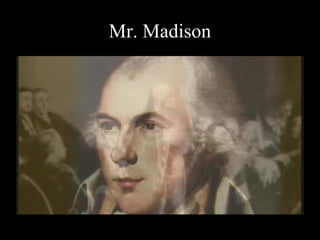
Mr. Madison
The Ratification Process
And some fussin’
Ratification Process
Process established by Framers
Debate occurred: between the Federalist and
Anti-Federalist
Delegates elected to state conventions to
accept or reject the Constitution (bypass state
Legislators)
Nine states had to accept, before it could be
ratified
Ratification
Federalist Position
Favored strong national government sharing
power with the states
Believed that separation of powers (3
branches of government) had built in checks
and balances
Believed that federal powers were needed to
manage trade, defense, and foreign relations
Similarly, today people who want the
government to solve national problems
Federalist Position Cont.
• Believed that factions balanced each others’
power-
• Believed Citizen’s rights were implied-no
need for Bill of Rights
• Federalist Papers:
– A collection of 85 essays that argued the positions
of the Federalist
Anti-Federalist Position
Believed that the federal government would
favor the interest of the rich and powerful and
ignore the rights of the masses
Believed that one central government would
be too powerful and would threaten
individual rights and liberties
Believed that individual rights must be
protected in a Bill of Rights
Freedoms
And its influences
Bill of Rights
Bill of Rights
Created because of the efforts of the Anti-
Federalist
Guaranteed the rights of individual citizens,
the new federal government could not take
away
Without addition of the Bill of Rights to the
Constitution, it may not have been ratified
Bill of Rights Cont.
• Bill of Rights very similar to the Virginia
Declaration of Rights and Virginia Statute of
Religious Freedom
• First 10 amendments to the Constitution
o Amendments: an alteration of the Constitution
Added in 1791
• Written by James Madison
What influenced the Bill of
Rights
Virginia is not only for lovers, but
also personal freedoms
VA Declaration of Rights
 Author George Mason
 1776
 It guaranteed certain
rights that the
government can not
take away
 Examples
 Freedom of worship
 Freedom of speech
 The right to a fair trial
VA Statute for Religious Freedom
• Author Thomas Jefferson
• 1786
• Established separation of
Church and state
• Eliminated official state
church
• Church could no longer
received money from
taxes
• Established principals of
religious liberty
Supreme Court Cases
• Marbury v. Madison
• McCulloch v. Maryland
• Gibbons v. Ogdon
Marbury v. Madison (1803)
• In fall of 1800, Adams tries to appoint 58 of his
buddies to new government positions
• When Jefferson took office, his new Secretary of
State (Madison) refused to deliver some of these
commissions
• William Marbury, brought suit before the
Supreme Court—he did not receive his
commission
• Marbury said the SC had to force Madison to give
him the commission
Marbury v. Madison (decision)
• SC said that it did NOT have to make Madison
give Marbury his commission
• Now the Supreme Court now had the power to
declare a act of Congress unconstitutional
Judicial Review
McCulloch v. Maryland (1819)
• Raised two important questions:
• 1. Did Congress have the authority to create a new bank?
• 2. Was the tax Maryland levied on the bank
Constitutional?
• Chief John Marshall stated that the Const. does not
specifically give Congress the power to create a bank
• But, he further states that Congress DOES have the power
to: collect taxes, borrow money, regulate commerce, raise
an army/navy and make “all laws which shall be necessary
and proper for carrying into execution the forgoing
powers”
• Bottom line—Congress can do what it need to do in order
for our Government to work/survive
• End result—Maryland’s tax on the bank was deemed
Unconstitutional
Gibbons v. Ogden 1824
• Gibbons and Ogden ran steamboat ferries on
the Hudson River between NJ and NY
• Ogden was given an exclusive license to
operate on the Hudson River and Gibbons
wanted a piece of the action.
• Supreme Court ruled for Gibbons
• Supreme Court defined commerce as any type
of commercial communication between states

3 ratification

  • 1.
  • 2.
    George Washington • Chairmanof the Convention • Seldom participated • Lent his prestige to the proceedings • Wanted to Ratify the Constitution
  • 3.
    James Madison  Fatherof the Constitution  Virginian  Lead the debates  Kept notes of the proceedings  Authored the Virginia Plan  Later authored much of the Bill of Rights  Wanted to Ratify the Constitution
  • 4.
  • 5.
  • 6.
    Ratification Process Process establishedby Framers Debate occurred: between the Federalist and Anti-Federalist Delegates elected to state conventions to accept or reject the Constitution (bypass state Legislators) Nine states had to accept, before it could be ratified
  • 7.
  • 8.
    Federalist Position Favored strongnational government sharing power with the states Believed that separation of powers (3 branches of government) had built in checks and balances Believed that federal powers were needed to manage trade, defense, and foreign relations Similarly, today people who want the government to solve national problems
  • 9.
    Federalist Position Cont. •Believed that factions balanced each others’ power- • Believed Citizen’s rights were implied-no need for Bill of Rights • Federalist Papers: – A collection of 85 essays that argued the positions of the Federalist
  • 10.
    Anti-Federalist Position Believed thatthe federal government would favor the interest of the rich and powerful and ignore the rights of the masses Believed that one central government would be too powerful and would threaten individual rights and liberties Believed that individual rights must be protected in a Bill of Rights
  • 11.
  • 12.
  • 13.
    Bill of Rights Createdbecause of the efforts of the Anti- Federalist Guaranteed the rights of individual citizens, the new federal government could not take away Without addition of the Bill of Rights to the Constitution, it may not have been ratified
  • 14.
    Bill of RightsCont. • Bill of Rights very similar to the Virginia Declaration of Rights and Virginia Statute of Religious Freedom • First 10 amendments to the Constitution o Amendments: an alteration of the Constitution Added in 1791 • Written by James Madison
  • 15.
    What influenced theBill of Rights Virginia is not only for lovers, but also personal freedoms
  • 16.
    VA Declaration ofRights  Author George Mason  1776  It guaranteed certain rights that the government can not take away  Examples  Freedom of worship  Freedom of speech  The right to a fair trial
  • 17.
    VA Statute forReligious Freedom • Author Thomas Jefferson • 1786 • Established separation of Church and state • Eliminated official state church • Church could no longer received money from taxes • Established principals of religious liberty
  • 18.
    Supreme Court Cases •Marbury v. Madison • McCulloch v. Maryland • Gibbons v. Ogdon
  • 19.
    Marbury v. Madison(1803) • In fall of 1800, Adams tries to appoint 58 of his buddies to new government positions • When Jefferson took office, his new Secretary of State (Madison) refused to deliver some of these commissions • William Marbury, brought suit before the Supreme Court—he did not receive his commission • Marbury said the SC had to force Madison to give him the commission
  • 20.
    Marbury v. Madison(decision) • SC said that it did NOT have to make Madison give Marbury his commission • Now the Supreme Court now had the power to declare a act of Congress unconstitutional Judicial Review
  • 21.
    McCulloch v. Maryland(1819) • Raised two important questions: • 1. Did Congress have the authority to create a new bank? • 2. Was the tax Maryland levied on the bank Constitutional? • Chief John Marshall stated that the Const. does not specifically give Congress the power to create a bank • But, he further states that Congress DOES have the power to: collect taxes, borrow money, regulate commerce, raise an army/navy and make “all laws which shall be necessary and proper for carrying into execution the forgoing powers” • Bottom line—Congress can do what it need to do in order for our Government to work/survive • End result—Maryland’s tax on the bank was deemed Unconstitutional
  • 22.
    Gibbons v. Ogden1824 • Gibbons and Ogden ran steamboat ferries on the Hudson River between NJ and NY • Ogden was given an exclusive license to operate on the Hudson River and Gibbons wanted a piece of the action. • Supreme Court ruled for Gibbons • Supreme Court defined commerce as any type of commercial communication between states