2
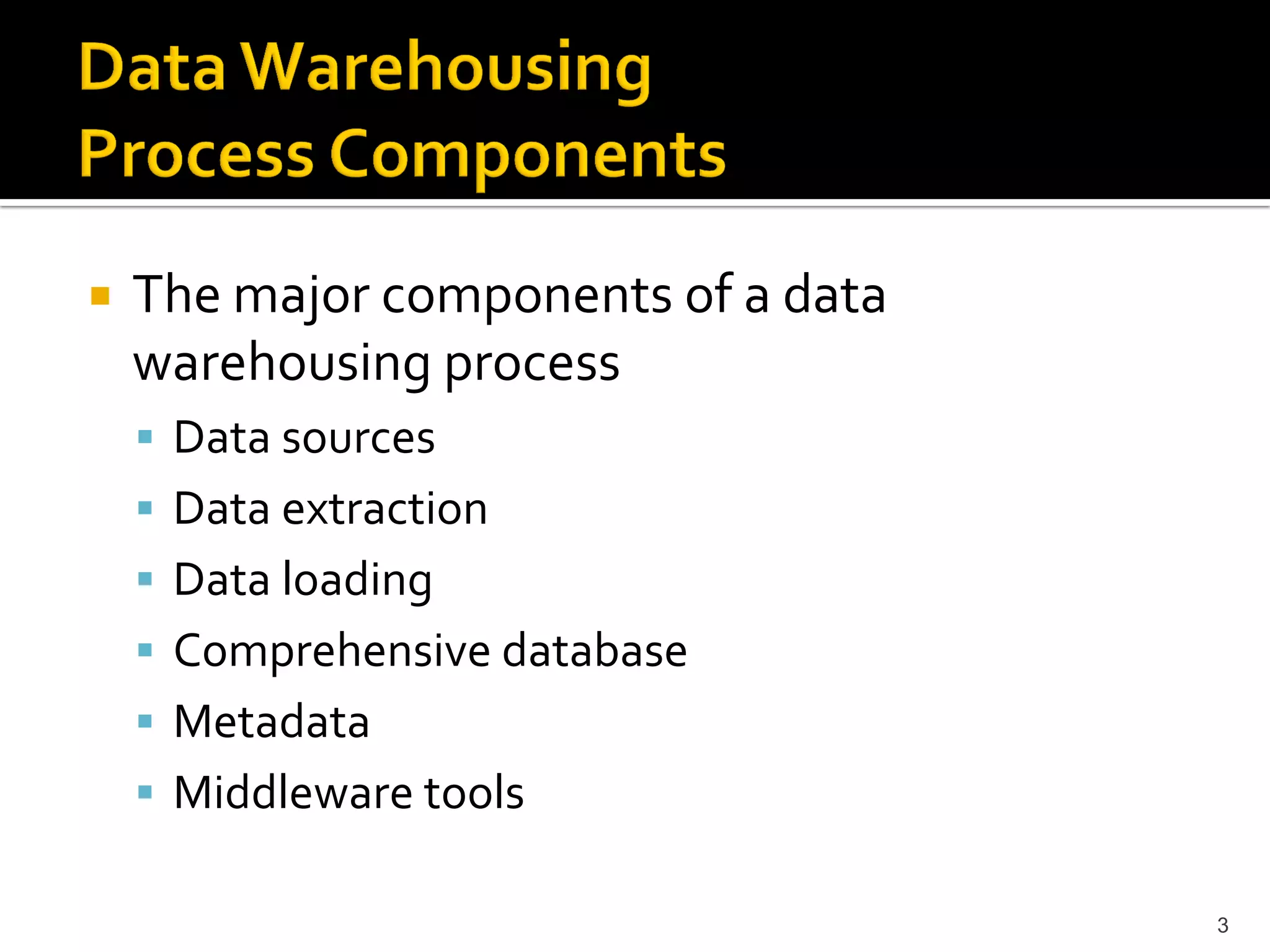
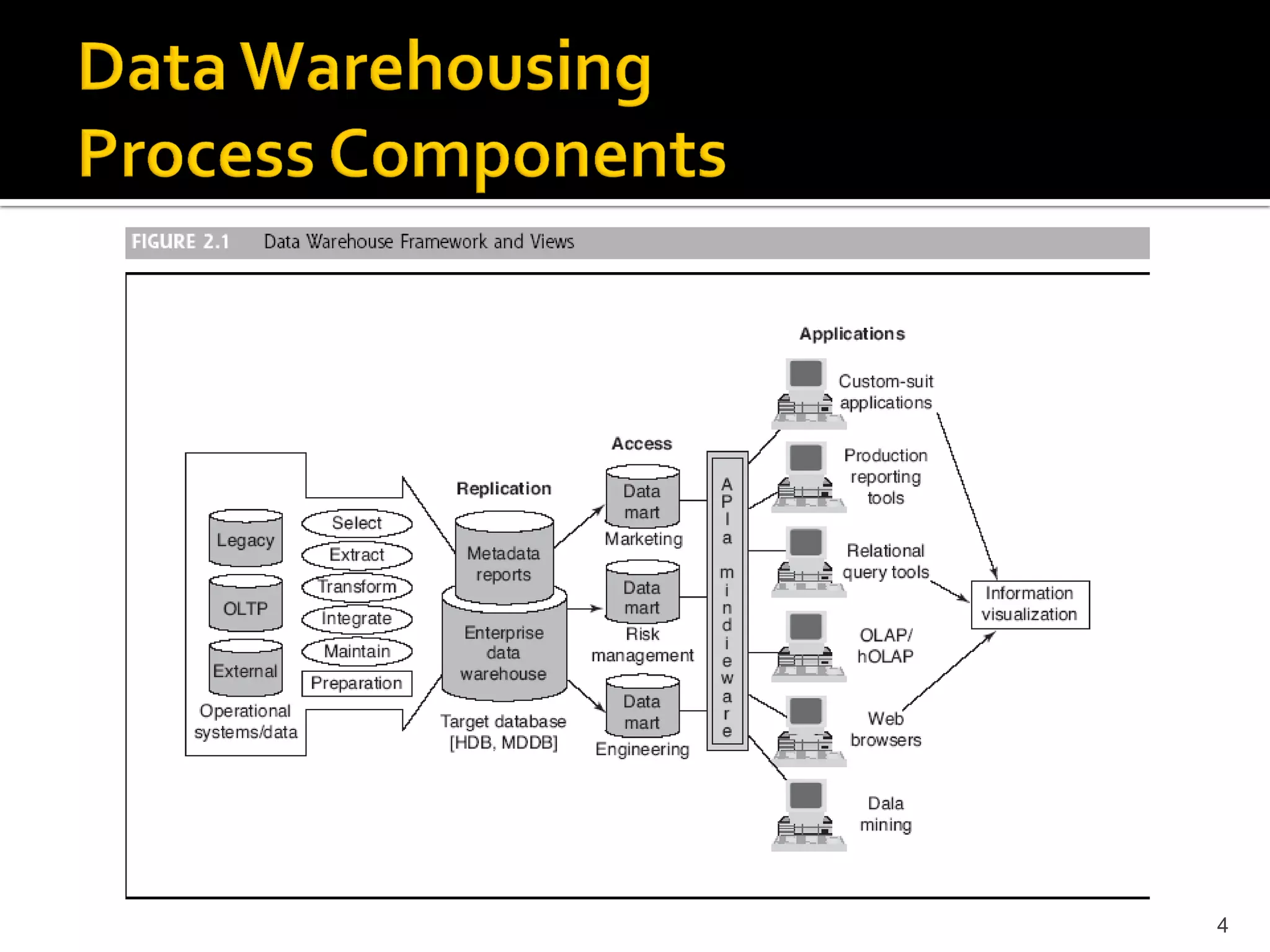
   The major components of a data
    warehousing process
     Data sources
     Data extraction
     Data loading
     Comprehensive database
     Metadata
     Middleware tools

                                     3
4
   Three parts of the data warehouse
     The data warehouse that contains the data and
      associated software
     Data acquisition (back-end) software that extracts
      data from legacy systems and external sources,
      consolidates and summarizes them, and loads
      them into the data warehouse
     Client (front-end) software that allows users to
      access and analyze data from the warehouse

                                                           5
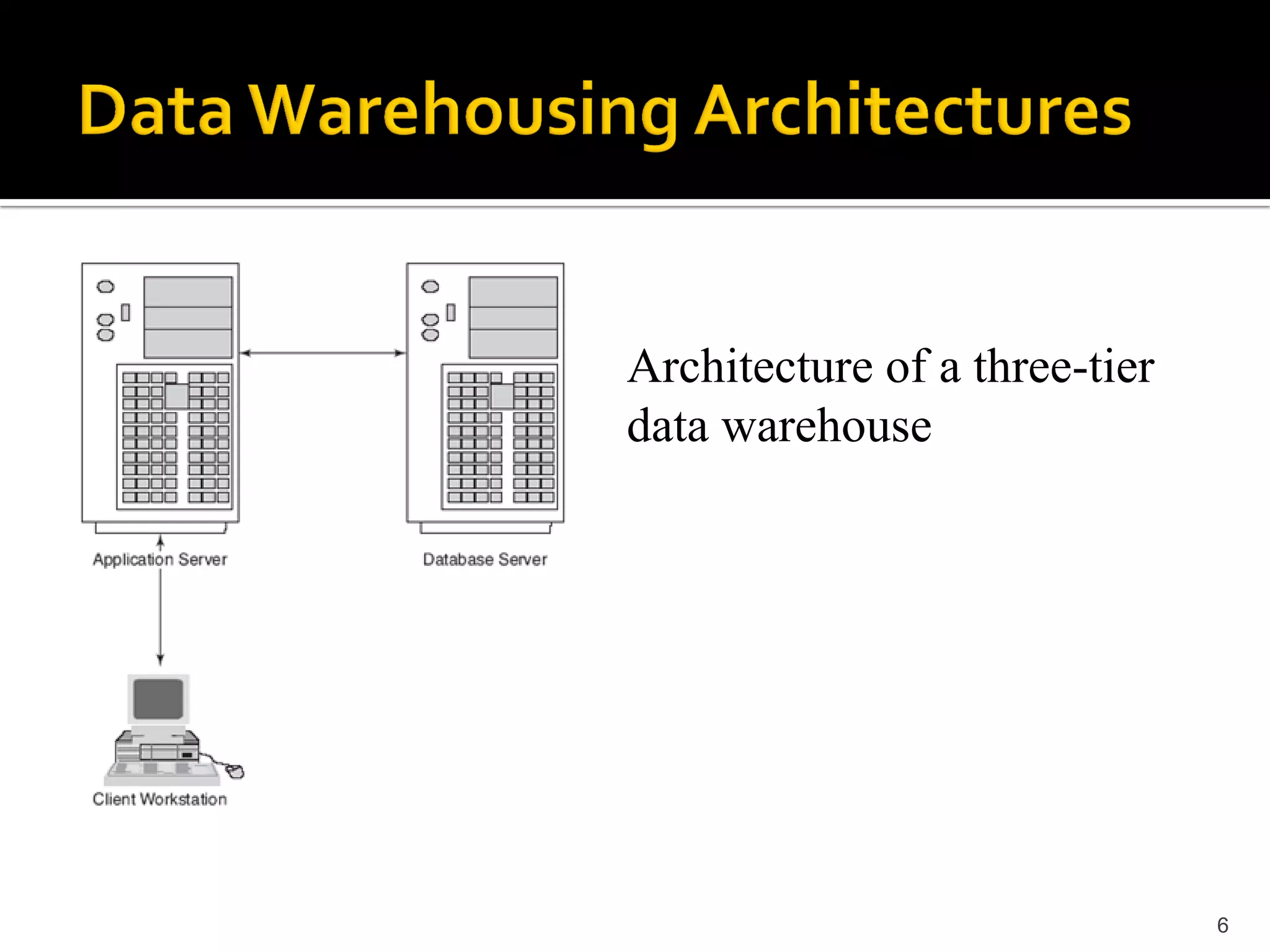
Architecture of a three-tier
data warehouse


                               6
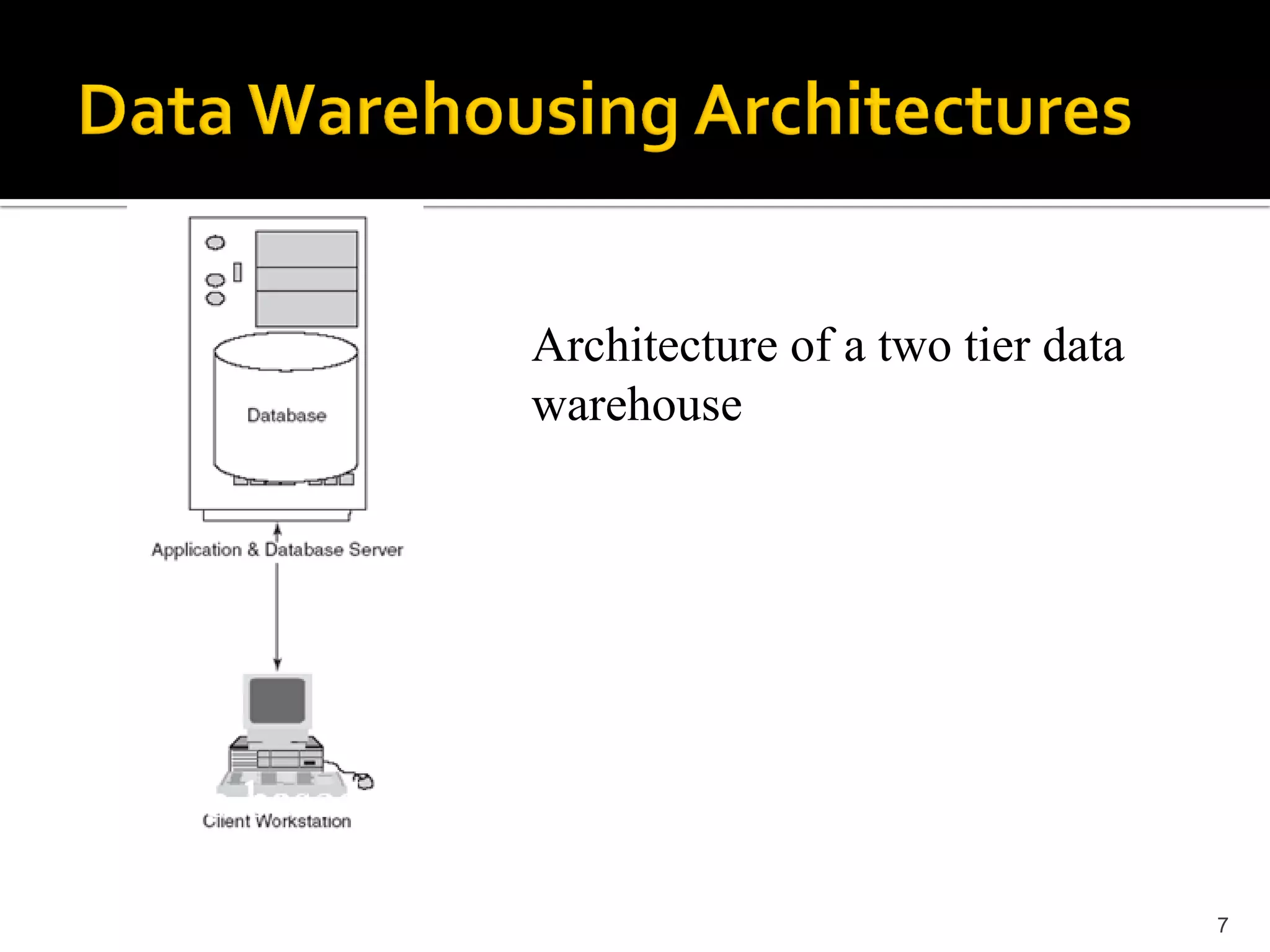
Architecture of a two tier data
warehouse


                                  7
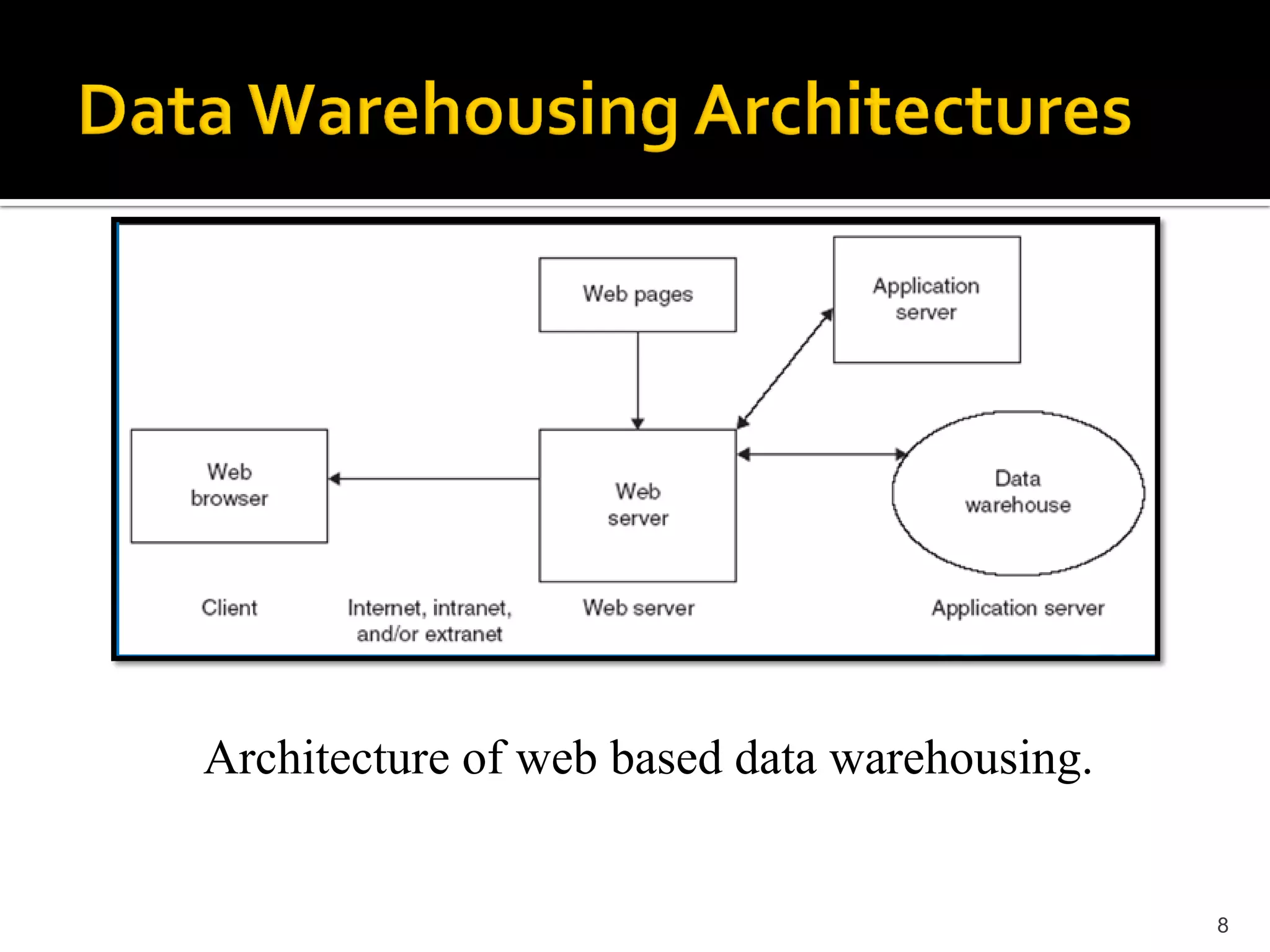
Architecture of web based data warehousing.


                                              8
   Issues to consider when deciding which
    architecture to use:
     Which database management system (DBMS) should
      be used?
     Will parallel processing and/or partitioning be used?
     Will data migration tools be used to load the data
      warehouse?
     What tools will be used to support data retrieval and
      analysis?
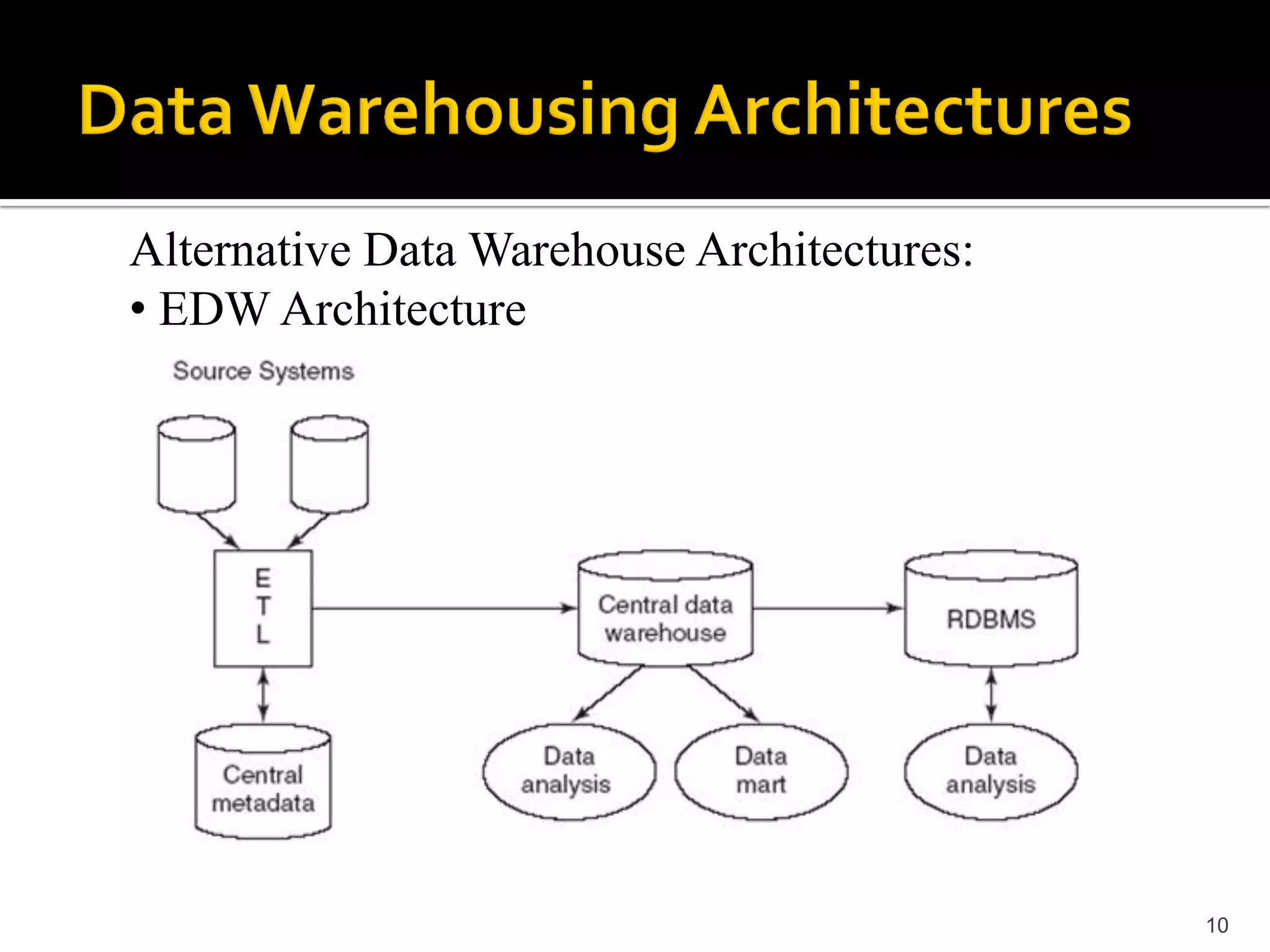
Alternative Data Warehouse Architectures:
• EDW Architecture


                                            10
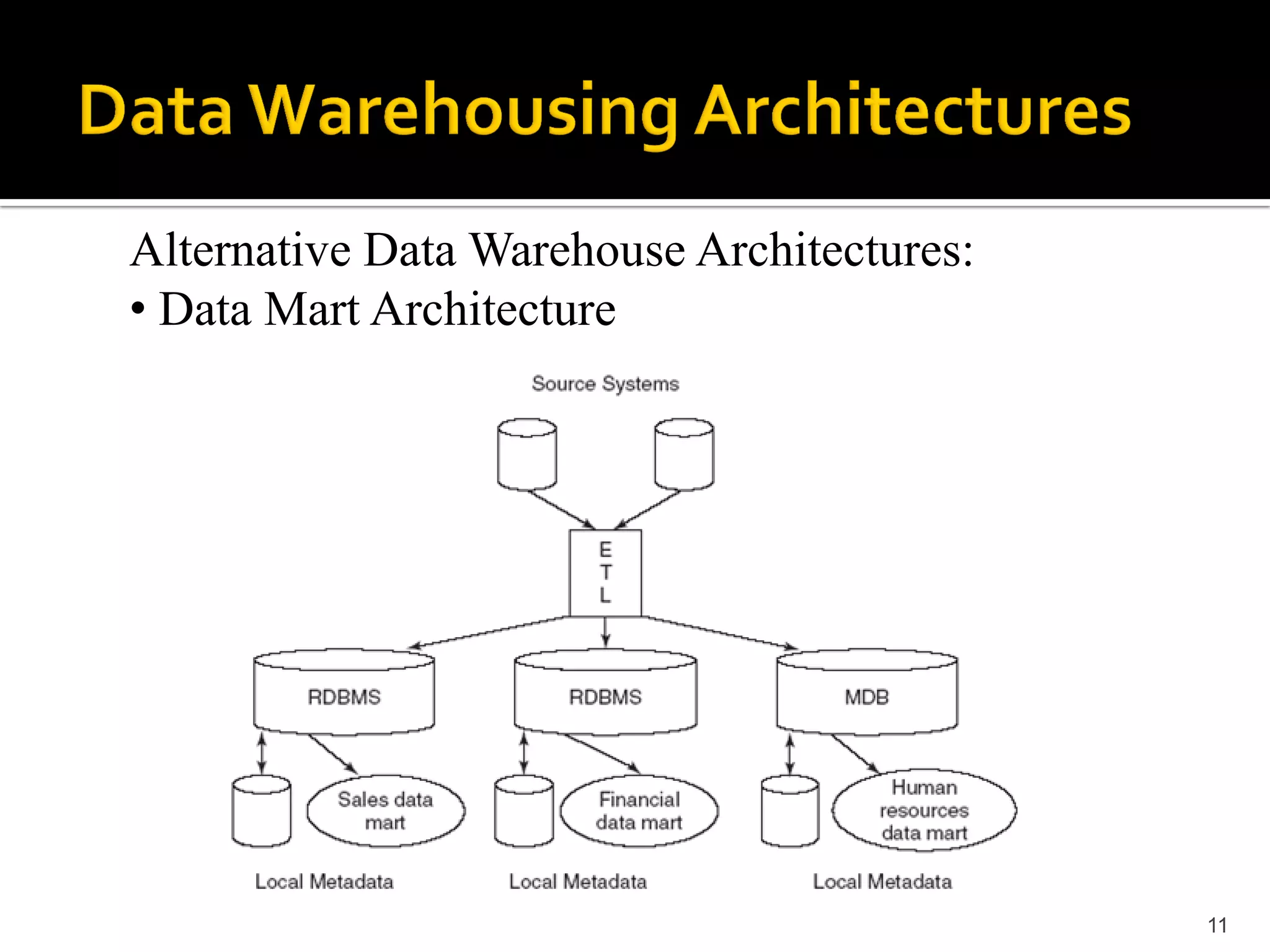
Alternative Data Warehouse Architectures:
• Data Mart Architecture


                                            11
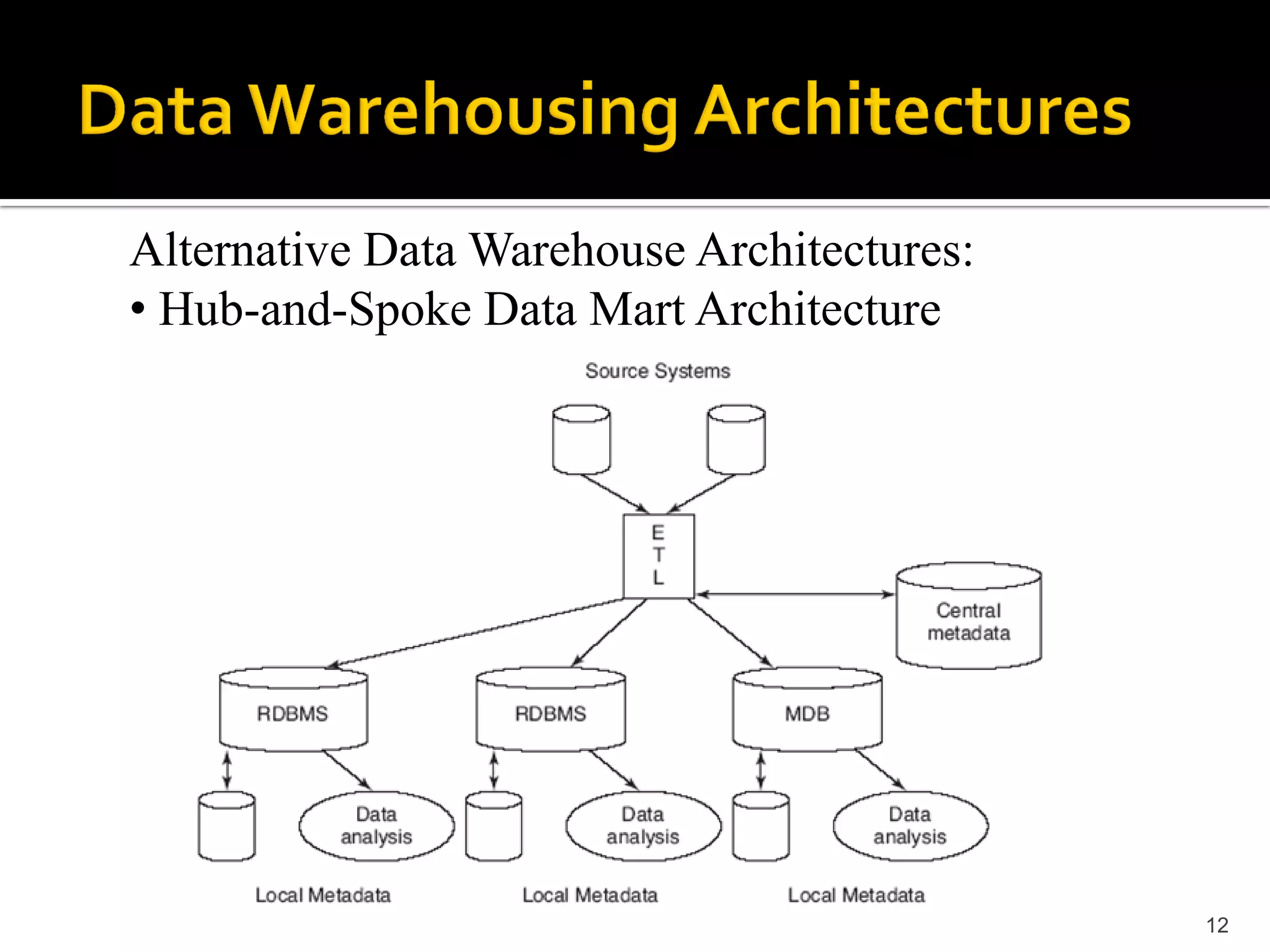
Alternative Data Warehouse Architectures:
• Hub-and-Spoke Data Mart Architecture


                                            12
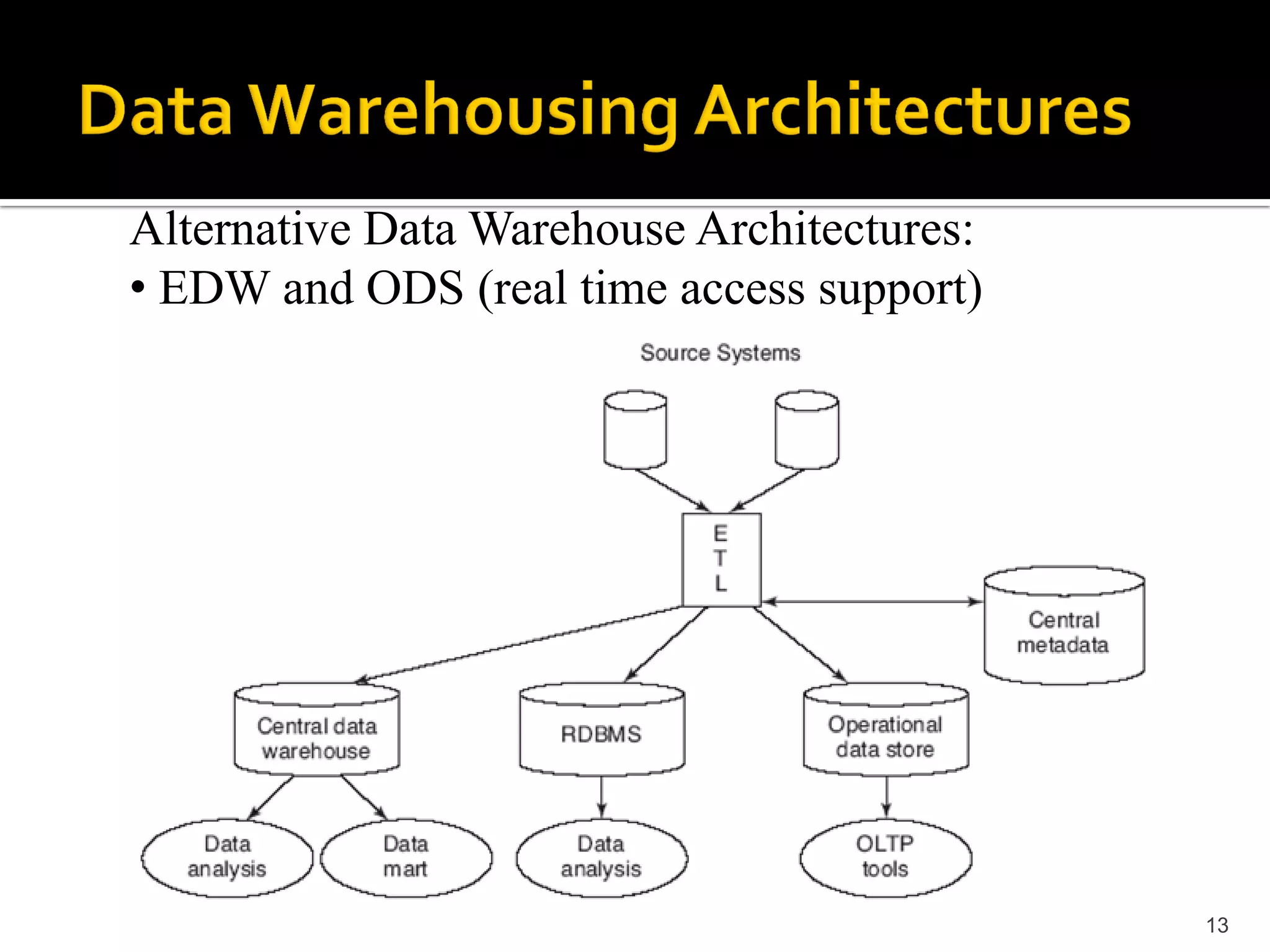
Alternative Data Warehouse Architectures:
• EDW and ODS (real time access support)


                                            13
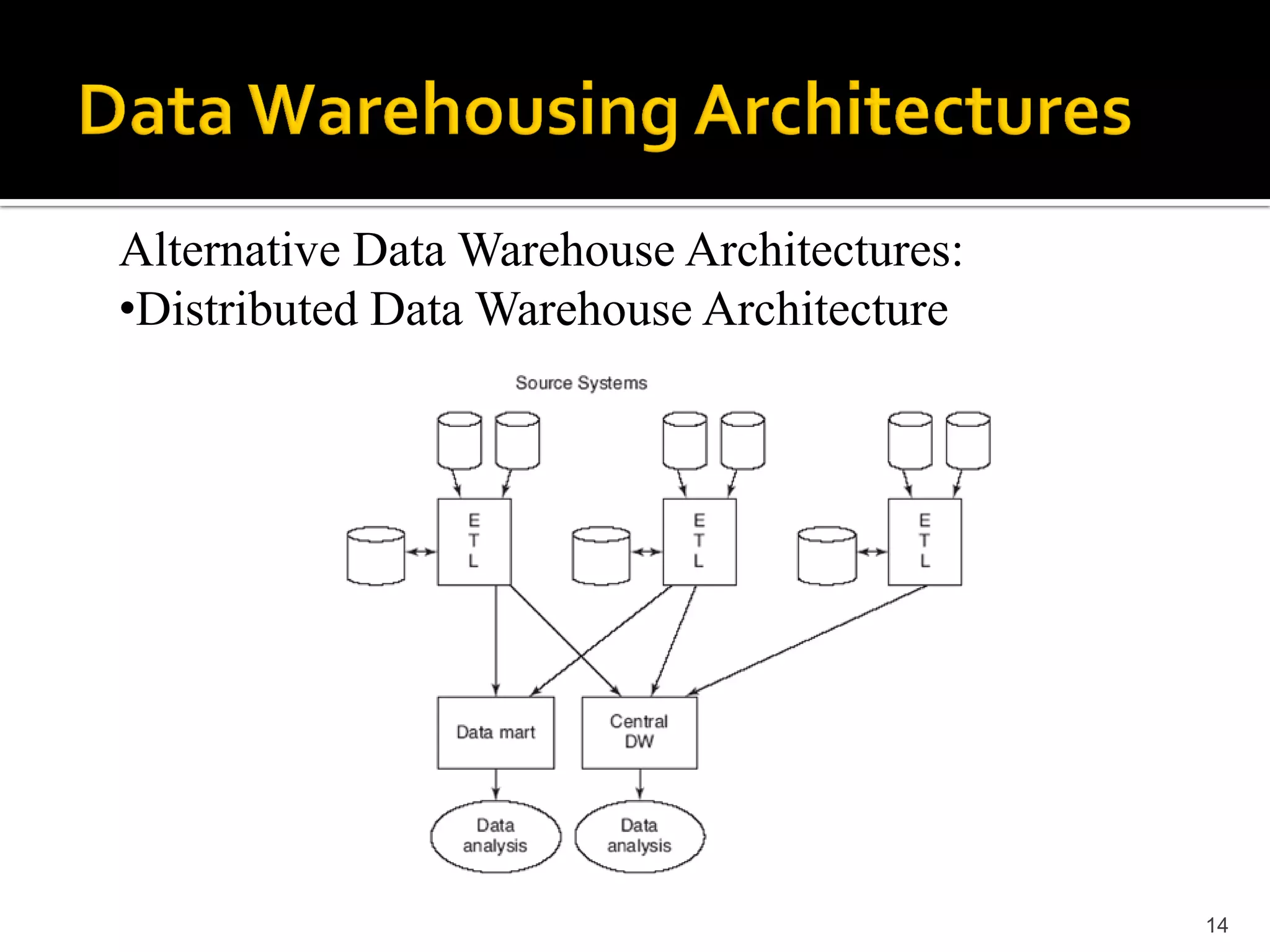
Alternative Data Warehouse Architectures:
•Distributed Data Warehouse Architecture


                                            14
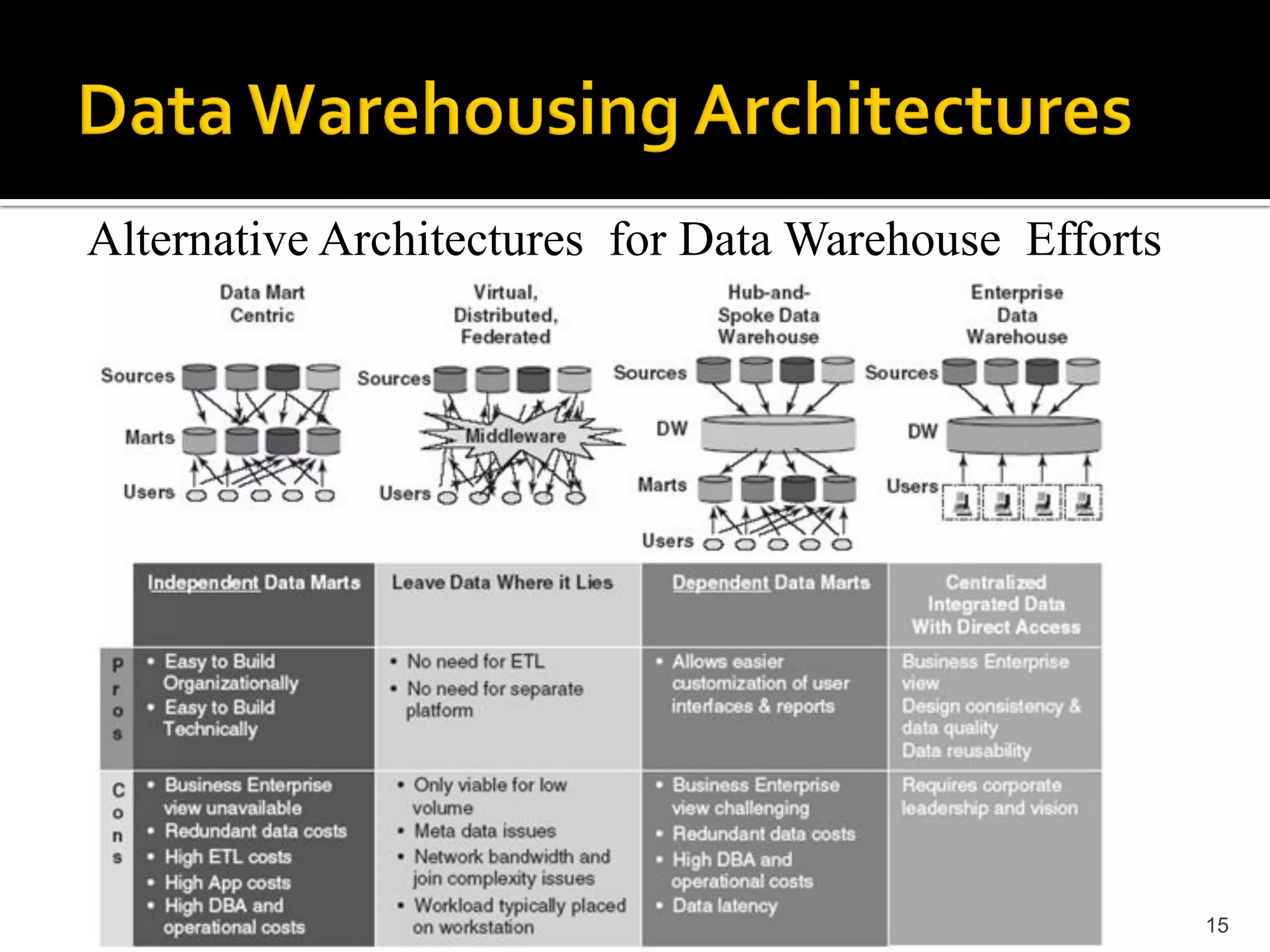
Alternative Architectures for Data Warehouse Efforts


                                                       15
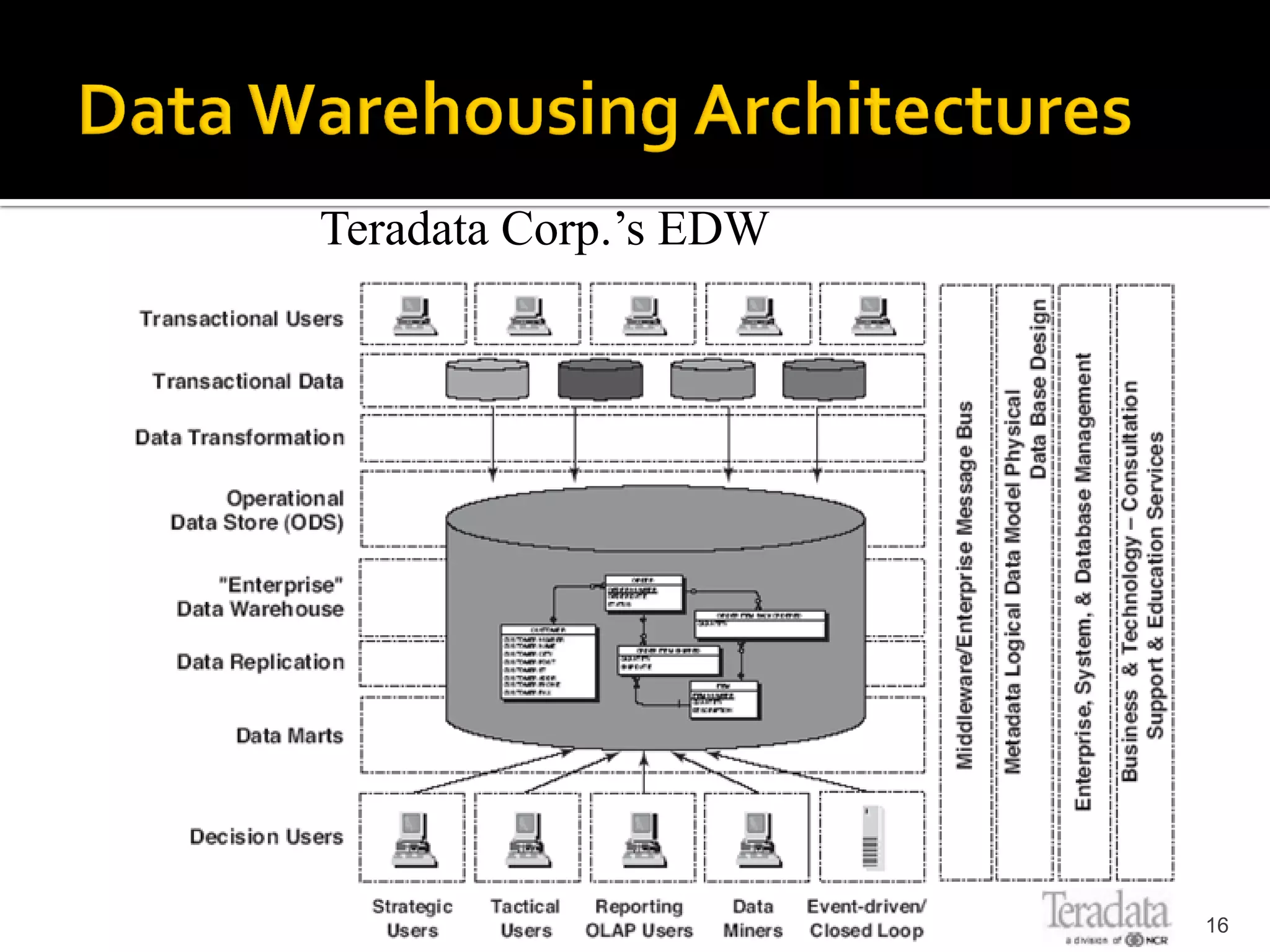
Teradata Corp.’s EDW


                       16
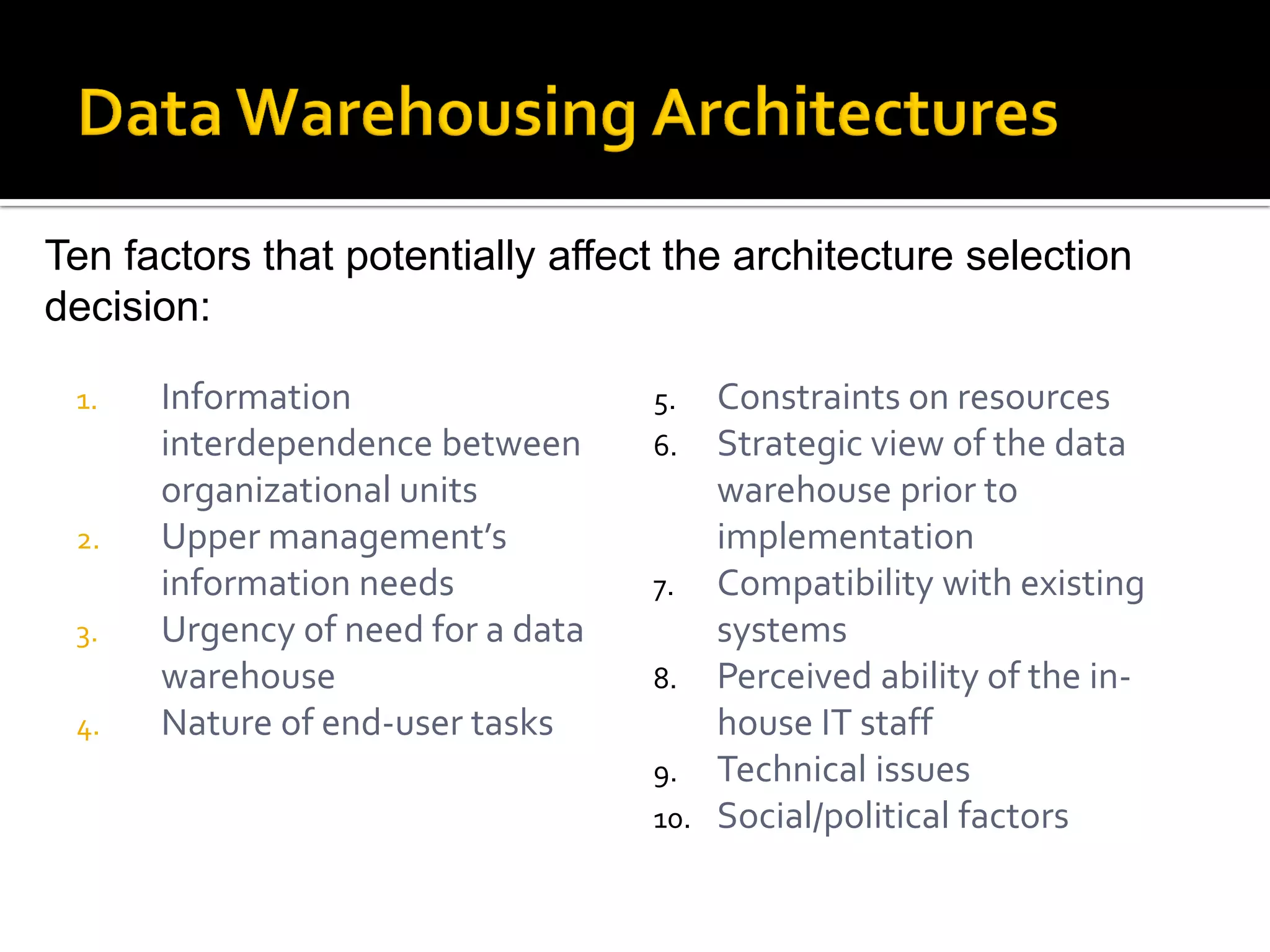
Ten factors that potentially affect the architecture selection
decision:

 1.   Information                  5.  Constraints on resources
      interdependence between      6.  Strategic view of the data
      organizational units             warehouse prior to
 2.   Upper management’s               implementation
      information needs            7. Compatibility with existing
 3.   Urgency of need for a data       systems
      warehouse                    8. Perceived ability of the in-
 4.   Nature of end-user tasks         house IT staff
                                   9. Technical issues
                                   10. Social/political factors
   DECISION SUPPORT SYSTEMS AND
    BUSINESS INTELLIGENCE. Turban
   Modern Data Warehousing, Mining, and
    Visualization: Core Concepts. George M.
    Marakas
   Modern Database Management.9th
    Edition.Jeffrey A. Hoffer, Mary B. Prescott,
    Heikki Topi

3 dw architectures

  • 2.
  • 3.
    The major components of a data warehousing process  Data sources  Data extraction  Data loading  Comprehensive database  Metadata  Middleware tools 3
  • 4.
  • 5.
    Three parts of the data warehouse  The data warehouse that contains the data and associated software  Data acquisition (back-end) software that extracts data from legacy systems and external sources, consolidates and summarizes them, and loads them into the data warehouse  Client (front-end) software that allows users to access and analyze data from the warehouse 5
  • 6.
    Architecture of athree-tier data warehouse 6
  • 7.
    Architecture of atwo tier data warehouse 7
  • 8.
    Architecture of webbased data warehousing. 8
  • 9.
    Issues to consider when deciding which architecture to use:  Which database management system (DBMS) should be used?  Will parallel processing and/or partitioning be used?  Will data migration tools be used to load the data warehouse?  What tools will be used to support data retrieval and analysis?
  • 10.
    Alternative Data WarehouseArchitectures: • EDW Architecture 10
  • 11.
    Alternative Data WarehouseArchitectures: • Data Mart Architecture 11
  • 12.
    Alternative Data WarehouseArchitectures: • Hub-and-Spoke Data Mart Architecture 12
  • 13.
    Alternative Data WarehouseArchitectures: • EDW and ODS (real time access support) 13
  • 14.
    Alternative Data WarehouseArchitectures: •Distributed Data Warehouse Architecture 14
  • 15.
    Alternative Architectures forData Warehouse Efforts 15
  • 16.
  • 17.
    Ten factors thatpotentially affect the architecture selection decision: 1. Information 5. Constraints on resources interdependence between 6. Strategic view of the data organizational units warehouse prior to 2. Upper management’s implementation information needs 7. Compatibility with existing 3. Urgency of need for a data systems warehouse 8. Perceived ability of the in- 4. Nature of end-user tasks house IT staff 9. Technical issues 10. Social/political factors
  • 18.
    DECISION SUPPORT SYSTEMS AND BUSINESS INTELLIGENCE. Turban  Modern Data Warehousing, Mining, and Visualization: Core Concepts. George M. Marakas  Modern Database Management.9th Edition.Jeffrey A. Hoffer, Mary B. Prescott, Heikki Topi