DATA WAREHOUSING
Requirements


                   1
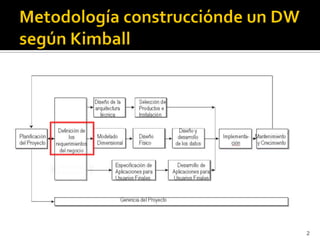
2
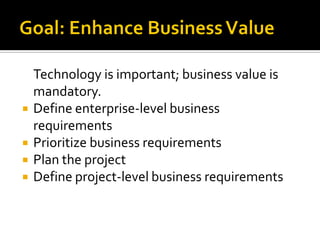
Technology is important; business value is
    mandatory.
   Define enterprise-level business
    requirements
   Prioritize business requirements
   Plan the project
   Define project-level business requirements
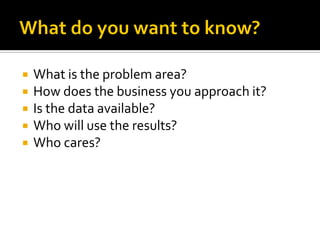
   What is the problem area?
   How does the business you approach it?
   Is the data available?
   Who will use the results?
   Who cares?
   Give me the annual revenue of all my
    product lines divided over all the sales
    regions over the last 3 years


5
   Give me the top 10 of most profitable
    products this year


6
   Give me the top 10 of most sold
    products of last year


7
   Give me the top 10 of most profitable
    customers


8
   Compare the YTD revenue with the one
    in the same period last year and the
    target


9
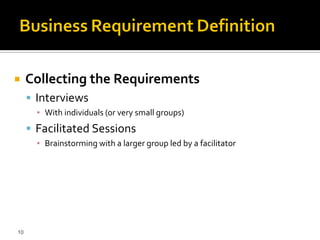
    Collecting the Requirements
      Interviews
       ▪ With individuals (or very small groups)
      Facilitated Sessions
       ▪ Brainstorming with a larger group led by a facilitator


10
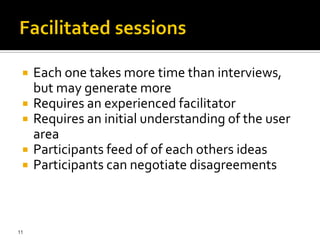
   Each one takes more time than interviews,
     but may generate more
    Requires an experienced facilitator
    Requires an initial understanding of the user
     area
    Participants feed of of each others ideas
    Participants can negotiate disagreements


11
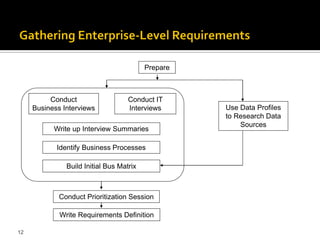
Prepare


          Conduct                   Conduct IT
     Business Interviews            Interviews      Use Data Profiles
                                                    to Research Data
                                                        Sources
           Write up Interview Summaries

            Identify Business Processes

               Build Initial Bus Matrix


             Conduct Prioritization Session

             Write Requirements Definition

12
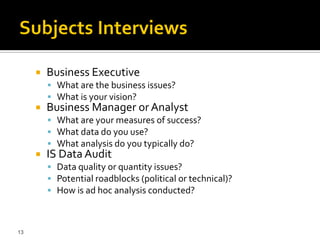
   Business Executive
          What are the business issues?
          What is your vision?
        Business Manager or Analyst
          What are your measures of success?
          What data do you use?
          What analysis do you typically do?
        IS Data Audit
          Data quality or quantity issues?
          Potential roadblocks (political or technical)?
          How is ad hoc analysis conducted?


13
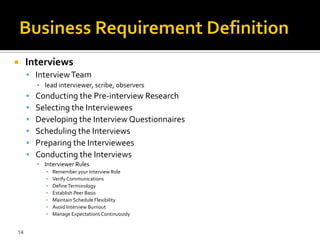
    Interviews
      Interview Team
         ▪ lead interviewer, scribe, observers
        Conducting the Pre-interview Research
        Selecting the Interviewees
        Developing the Interview Questionnaires
        Scheduling the Interviews
        Preparing the Interviewees
        Conducting the Interviews
         ▪ Interviewer Rules
            ▪   Remember your Interview Role
            ▪   Verify Communications
            ▪   Define Terminology
            ▪   Establish Peer Basis
            ▪   Maintain Schedule Flexibility
            ▪   Avoid Interview Burnout
            ▪   Manage Expectations Continuously


14
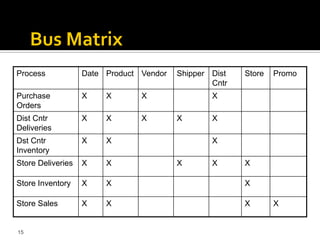
Process            Date Product Vendor   Shipper Dist   Store   Promo
                                                 Cntr
Purchase           X    X       X                X
Orders
Dist Cntr          X    X       X        X       X
Deliveries
Dst Cntr           X    X                        X
Inventory
Store Deliveries   X    X                X       X      X

Store Inventory    X    X                               X

Store Sales        X    X                               X       X


15

2 dw requeriments

  • 1.
  • 2.
  • 3.
    Technology is important;business value is mandatory.  Define enterprise-level business requirements  Prioritize business requirements  Plan the project  Define project-level business requirements
  • 4.
    What is the problem area?  How does the business you approach it?  Is the data available?  Who will use the results?  Who cares?
  • 5.
    Give me the annual revenue of all my product lines divided over all the sales regions over the last 3 years 5
  • 6.
    Give me the top 10 of most profitable products this year 6
  • 7.
    Give me the top 10 of most sold products of last year 7
  • 8.
    Give me the top 10 of most profitable customers 8
  • 9.
    Compare the YTD revenue with the one in the same period last year and the target 9
  • 10.
    Collecting the Requirements  Interviews ▪ With individuals (or very small groups)  Facilitated Sessions ▪ Brainstorming with a larger group led by a facilitator 10
  • 11.
    Each one takes more time than interviews, but may generate more  Requires an experienced facilitator  Requires an initial understanding of the user area  Participants feed of of each others ideas  Participants can negotiate disagreements 11
  • 12.
    Prepare Conduct Conduct IT Business Interviews Interviews Use Data Profiles to Research Data Sources Write up Interview Summaries Identify Business Processes Build Initial Bus Matrix Conduct Prioritization Session Write Requirements Definition 12
  • 13.
    Business Executive  What are the business issues?  What is your vision?  Business Manager or Analyst  What are your measures of success?  What data do you use?  What analysis do you typically do?  IS Data Audit  Data quality or quantity issues?  Potential roadblocks (political or technical)?  How is ad hoc analysis conducted? 13
  • 14.
    Interviews  Interview Team ▪ lead interviewer, scribe, observers  Conducting the Pre-interview Research  Selecting the Interviewees  Developing the Interview Questionnaires  Scheduling the Interviews  Preparing the Interviewees  Conducting the Interviews ▪ Interviewer Rules ▪ Remember your Interview Role ▪ Verify Communications ▪ Define Terminology ▪ Establish Peer Basis ▪ Maintain Schedule Flexibility ▪ Avoid Interview Burnout ▪ Manage Expectations Continuously 14
  • 15.
    Process Date Product Vendor Shipper Dist Store Promo Cntr Purchase X X X X Orders Dist Cntr X X X X X Deliveries Dst Cntr X X X Inventory Store Deliveries X X X X X Store Inventory X X X Store Sales X X X X 15