Doing the right thing when no-one is looking Delivering the Quality Strategy Ros Moore   Chief Nursing Officer for Scotland Douglas Murphy   Senior Clinical Research Fellow, University of Dundee
Professionalism Workstream Delivering the Quality Strategy Why Professionalism is Important
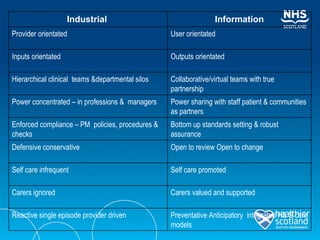
Industrial  Information Provider orientated User orientated Inputs orientated Outputs orientated Hierarchical clinical  teams &departmental silos  Collaborative/virtual teams with true partnership  Power concentrated – in professions &  managers  Power sharing with staff patient & communities  as partners Enforced compliance – PM  policies, procedures & checks  Bottom up standards setting & robust assurance  Defensive conservative Open to review Open to change Self care infrequent  Self care promoted  Carers ignored  Carers valued and supported  Reactive single episode provider driven  Preventative Anticipatory  integrated H& S care models
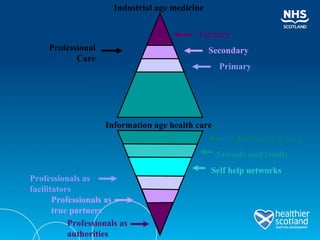
Tertiary Secondary Primary Professional Care Professionals as authorities Professionals as true partners Professionals as facilitators Individual Self care Friends and family Self help networks Information age health care Industrial age medicine
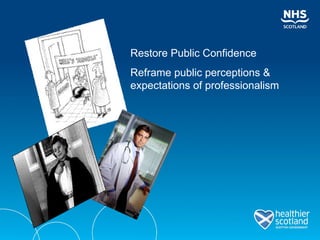
Restore Public Confidence Reframe public perceptions &  expectations of professionalism
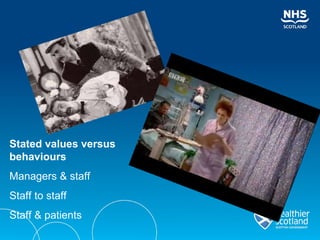
Stated values versus behaviours  Managers & staff Staff to staff Staff & patients
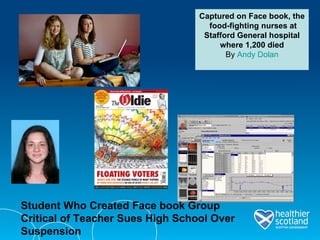
Student Who Created Face book Group Critical of Teacher Sues High School Over Suspension Captured on Face book, the  food-fighting nurses at Stafford General hospital where 1,200 died By  Andy Dolan
Restore Pride Identity & Purpose  DH Workforce Survey 2007/8
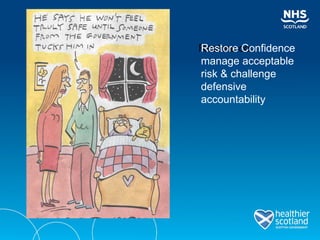
Restore co Restore Confidence manage acceptable risk & challenge defensive accountability
Why Professionalism  Gives continuity & helps us adapt to change Professionalism is not only a skills set in a given occupation; it is an ineffable something  ... Larkin 2010
Professionalism Workstream Delivering the Quality Strategy Purpose of work What does professionalism look like? Communicating the message Facilitating the message Measuring the message
Purpose of Work Delivering the Quality Strategy Contribute to the Quality Strategy Build on evidence of professionalism and promote Quality Improvement Enhance person –centredness  Benefit service users and providers Recommendations to Coordinating Council NHSS on communication/ facilitation/ measurement of professionalism
What Does Professionalism Look Like? Delivering the Quality Strategy Behaviours, attitudes, values Relationships Context Unites Builds
Communicating the Message Delivering the Quality Strategy Everyone All healthcare staff Patients Public
Facilitating the Message Delivering the Quality Strategy Public Personal Cultural Educational Regulatory bodies Employer
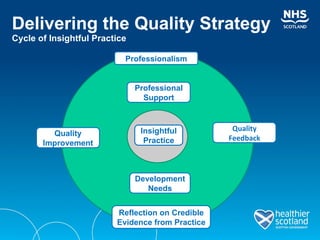
Delivering the Quality Strategy Cycle of Insightful Practice Insightful Practice Professional Support Development Needs Reflection on Credible Evidence from Practice Quality Feedback Quality Improvement Professionalism
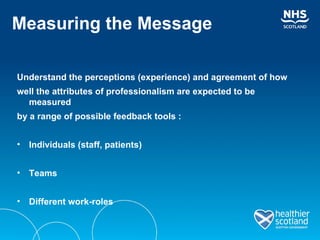
Measuring the Message Understand the perceptions (experience) and agreement of how well the attributes of professionalism are expected to be measured by a range of possible feedback tools : Individuals (staff, patients) Teams  Different work-roles
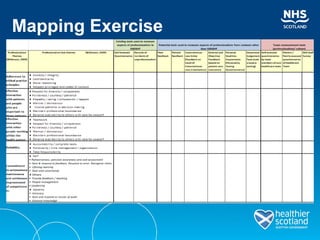
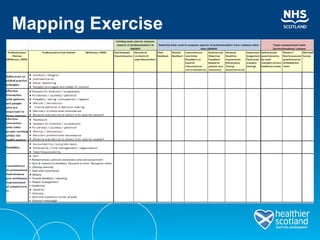
Mapping Exercise
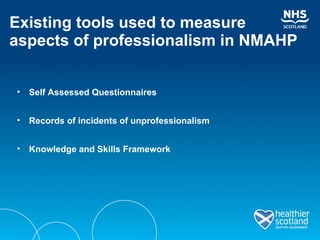
Existing tools used to measure  aspects of professionalism in NMAHP Self Assessed Questionnaires Records of incidents of unprofessionalism Knowledge and Skills Framework
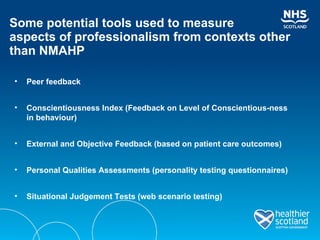
Some potential tools used to measure  aspects of professionalism from contexts other than NMAHP Peer feedback Conscientiousness Index (Feedback on Level of Conscientious-ness in behaviour)  External and Objective Feedback (based on patient care outcomes) Personal Qualities Assessments (personality testing questionnaires)  Situational Judgement Tests (web scenario testing)
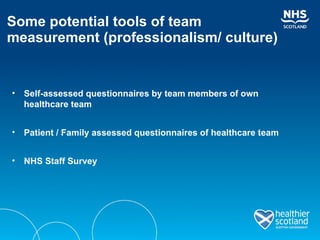
Some potential tools of team  measurement (professionalism/ culture)  Self-assessed questionnaires by team members of own healthcare team Patient / Family assessed questionnaires of healthcare team NHS Staff Survey
Mapping Exercise

Doing the Right Thing When No-one is Looking

  • 1.
    Doing the rightthing when no-one is looking Delivering the Quality Strategy Ros Moore Chief Nursing Officer for Scotland Douglas Murphy Senior Clinical Research Fellow, University of Dundee
  • 2.
    Professionalism Workstream Deliveringthe Quality Strategy Why Professionalism is Important
  • 3.
    Industrial InformationProvider orientated User orientated Inputs orientated Outputs orientated Hierarchical clinical teams &departmental silos Collaborative/virtual teams with true partnership Power concentrated – in professions & managers Power sharing with staff patient & communities as partners Enforced compliance – PM policies, procedures & checks Bottom up standards setting & robust assurance Defensive conservative Open to review Open to change Self care infrequent Self care promoted Carers ignored Carers valued and supported Reactive single episode provider driven Preventative Anticipatory integrated H& S care models
  • 4.
    Tertiary Secondary PrimaryProfessional Care Professionals as authorities Professionals as true partners Professionals as facilitators Individual Self care Friends and family Self help networks Information age health care Industrial age medicine
  • 5.
    Restore Public ConfidenceReframe public perceptions & expectations of professionalism
  • 6.
    Stated values versusbehaviours Managers & staff Staff to staff Staff & patients
  • 7.
    Student Who CreatedFace book Group Critical of Teacher Sues High School Over Suspension Captured on Face book, the food-fighting nurses at Stafford General hospital where 1,200 died By Andy Dolan
  • 8.
    Restore Pride Identity& Purpose DH Workforce Survey 2007/8
  • 9.
    Restore co RestoreConfidence manage acceptable risk & challenge defensive accountability
  • 10.
    Why Professionalism Gives continuity & helps us adapt to change Professionalism is not only a skills set in a given occupation; it is an ineffable something ... Larkin 2010
  • 11.
    Professionalism Workstream Deliveringthe Quality Strategy Purpose of work What does professionalism look like? Communicating the message Facilitating the message Measuring the message
  • 12.
    Purpose of WorkDelivering the Quality Strategy Contribute to the Quality Strategy Build on evidence of professionalism and promote Quality Improvement Enhance person –centredness Benefit service users and providers Recommendations to Coordinating Council NHSS on communication/ facilitation/ measurement of professionalism
  • 13.
    What Does ProfessionalismLook Like? Delivering the Quality Strategy Behaviours, attitudes, values Relationships Context Unites Builds
  • 14.
    Communicating the MessageDelivering the Quality Strategy Everyone All healthcare staff Patients Public
  • 15.
    Facilitating the MessageDelivering the Quality Strategy Public Personal Cultural Educational Regulatory bodies Employer
  • 16.
    Delivering the QualityStrategy Cycle of Insightful Practice Insightful Practice Professional Support Development Needs Reflection on Credible Evidence from Practice Quality Feedback Quality Improvement Professionalism
  • 17.
    Measuring the MessageUnderstand the perceptions (experience) and agreement of how well the attributes of professionalism are expected to be measured by a range of possible feedback tools : Individuals (staff, patients) Teams Different work-roles
  • 18.
  • 19.
    Existing tools usedto measure aspects of professionalism in NMAHP Self Assessed Questionnaires Records of incidents of unprofessionalism Knowledge and Skills Framework
  • 20.
    Some potential toolsused to measure aspects of professionalism from contexts other than NMAHP Peer feedback Conscientiousness Index (Feedback on Level of Conscientious-ness in behaviour) External and Objective Feedback (based on patient care outcomes) Personal Qualities Assessments (personality testing questionnaires) Situational Judgement Tests (web scenario testing)
  • 21.
    Some potential toolsof team measurement (professionalism/ culture) Self-assessed questionnaires by team members of own healthcare team Patient / Family assessed questionnaires of healthcare team NHS Staff Survey
  • 22.

Editor's Notes

  • #6 Expert knowledge & skills denoted power & demanded reward, status & visible trappings wigs uniforms etc As the professions proliferate, every group holding specialised knowledge will require an oath or code of ethics that obliges benevolent use of the power that knowledge bestows upon the practitioner. What can be democratised is access to specialised knowledge, or access to professionalism itself.
  • #9 The focus on targets & money had caused confusion and frustration from staff who were motivated by public service, a personal quest, altruism or profession specific values and