E-GAZARCHIN UNIVERSITY 
Approved by Head of Department Training Enkhjargal .D/MA/ 
Prepared by Orkhontuya. B /Inspector/ 
21st October 2014 
English Language Teacher 
Orkhontuya. B /MA/ 
Seminar 2
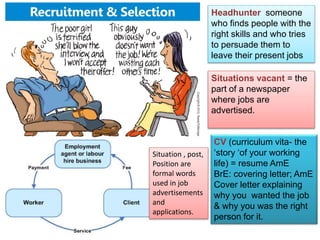
Headhunter someone 
who finds people with the 
right skills and who tries 
to persuade them to 
leave their present jobs 
Situations vacant = the 
part of a newspaper 
where jobs are 
advertised. 
CV (curriculum vita- the 
‘story ‘of your working 
life) = resume AmE 
BrE: covering letter; AmE 
Cover letter explaining 
why you wanted the job 
& why you was the right 
person for it. 
Situation , post, 
Position are 
formal words 
used in job 
advertisements 
and 
applications.
Selection procedures 
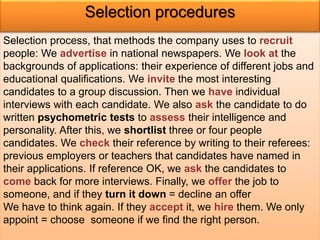
Selection process, that methods the company uses to recruit 
people: We advertise in national newspapers. We look at the 
backgrounds of applications: their experience of different jobs and 
educational qualifications. We invite the most interesting 
candidates to a group discussion. Then we have individual 
interviews with each candidate. We also ask the candidate to do 
written psychometric tests to assess their intelligence and 
personality. After this, we shortlist three or four people 
candidates. We check their reference by writing to their referees: 
previous employers or teachers that candidates have named in 
their applications. If reference OK, we ask the candidates to 
come back for more interviews. Finally, we offer the job to 
someone, and if they turn it down = decline an offer 
We have to think again. If they accept it, we hire them. We only 
appoint = choose someone if we find the right person.
Ways of working 
• Clock in/on (phrasal verb) to record on a special card the time 
you arrive at or begin work = punch in AmE. 
I clock on at 08:30. 
• Clock off/out (informal) = punch out # clock on 
What time do you clock off? 
• Flextime (AmE: flextime/ flexi time BrE). We can start at any 
time before eleven, and finish as early as three, as long as 
we do enough hours each month. It’s ideal for me as I have two 
young children. 
• Shifts/ day shift/night shift 
I work in a car plant. I work in shifts. I may be on the day shift 
one week and the night shift the next week. 
• Commute = change/ exchange (technical) 
• Teleworker someone who works from home, and 
communicates 
with their employer, customers… using a computer, telephone
Nice work if you can get it 
All these words are used in front of ‘job’ and ‘work’: 
• satisfying, stimulating, fascinating, exciting: the work is 
interesting and gives you positive feelings. 
• dull, boring, uninteresting, un stimulating: the work is not 
interesting. 
• repetitive work/task/jobs, routine: the work involves doing the 
same things again and again. 
• tough life/time/year/ hard time, tiring, demanding 
He’s quite tough with his students
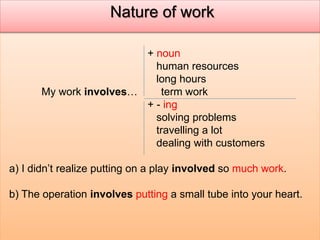
Nature of work 
+ noun 
human resources 
long hours 
My work involves… term work 
+ - ing 
solving problems 
travelling a lot 
dealing with customers 
a) I didn’t realize putting on a play involved so much work. 
b) The operation involves putting a small tube into your heart.
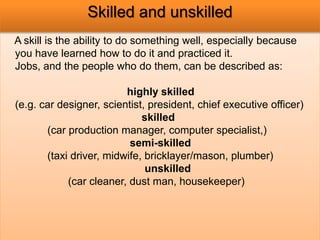
Skilled and unskilled 
A skill is the ability to do something well, especially because 
you have learned how to do it and practiced it. 
Jobs, and the people who do them, can be described as: 
highly skilled 
(e.g. car designer, scientist, president, chief executive officer) 
skilled 
(car production manager, computer specialist,) 
semi-skilled 
(taxi driver, midwife, bricklayer/mason, plumber) 
unskilled 
(car cleaner, dust man, housekeeper)
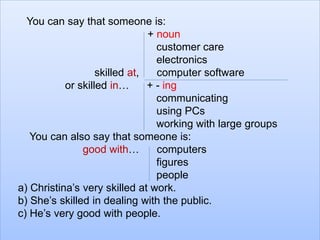
You can say that someone is: 
+ noun 
customer care 
electronics 
skilled at, computer software 
or skilled in… + - ing 
communicating 
using PCs 
working with large groups 
You can also say that someone is: 
good with… computers 
figures 
people 
a) Christina’s very skilled at work. 
b) She’s skilled in dealing with the public. 
c) He’s very good with people.
Please conduct us: 
elearning.english@yahoo.com

bie3

  • 1.
    E-GAZARCHIN UNIVERSITY Approvedby Head of Department Training Enkhjargal .D/MA/ Prepared by Orkhontuya. B /Inspector/ 21st October 2014 English Language Teacher Orkhontuya. B /MA/ Seminar 2
  • 2.
    Headhunter someone whofinds people with the right skills and who tries to persuade them to leave their present jobs Situations vacant = the part of a newspaper where jobs are advertised. CV (curriculum vita- the ‘story ‘of your working life) = resume AmE BrE: covering letter; AmE Cover letter explaining why you wanted the job & why you was the right person for it. Situation , post, Position are formal words used in job advertisements and applications.
  • 3.
    Selection procedures Selectionprocess, that methods the company uses to recruit people: We advertise in national newspapers. We look at the backgrounds of applications: their experience of different jobs and educational qualifications. We invite the most interesting candidates to a group discussion. Then we have individual interviews with each candidate. We also ask the candidate to do written psychometric tests to assess their intelligence and personality. After this, we shortlist three or four people candidates. We check their reference by writing to their referees: previous employers or teachers that candidates have named in their applications. If reference OK, we ask the candidates to come back for more interviews. Finally, we offer the job to someone, and if they turn it down = decline an offer We have to think again. If they accept it, we hire them. We only appoint = choose someone if we find the right person.
  • 4.
    Ways of working • Clock in/on (phrasal verb) to record on a special card the time you arrive at or begin work = punch in AmE. I clock on at 08:30. • Clock off/out (informal) = punch out # clock on What time do you clock off? • Flextime (AmE: flextime/ flexi time BrE). We can start at any time before eleven, and finish as early as three, as long as we do enough hours each month. It’s ideal for me as I have two young children. • Shifts/ day shift/night shift I work in a car plant. I work in shifts. I may be on the day shift one week and the night shift the next week. • Commute = change/ exchange (technical) • Teleworker someone who works from home, and communicates with their employer, customers… using a computer, telephone
  • 5.
    Nice work ifyou can get it All these words are used in front of ‘job’ and ‘work’: • satisfying, stimulating, fascinating, exciting: the work is interesting and gives you positive feelings. • dull, boring, uninteresting, un stimulating: the work is not interesting. • repetitive work/task/jobs, routine: the work involves doing the same things again and again. • tough life/time/year/ hard time, tiring, demanding He’s quite tough with his students
  • 6.
    Nature of work + noun human resources long hours My work involves… term work + - ing solving problems travelling a lot dealing with customers a) I didn’t realize putting on a play involved so much work. b) The operation involves putting a small tube into your heart.
  • 8.
    Skilled and unskilled A skill is the ability to do something well, especially because you have learned how to do it and practiced it. Jobs, and the people who do them, can be described as: highly skilled (e.g. car designer, scientist, president, chief executive officer) skilled (car production manager, computer specialist,) semi-skilled (taxi driver, midwife, bricklayer/mason, plumber) unskilled (car cleaner, dust man, housekeeper)
  • 9.
    You can saythat someone is: + noun customer care electronics skilled at, computer software or skilled in… + - ing communicating using PCs working with large groups You can also say that someone is: good with… computers figures people a) Christina’s very skilled at work. b) She’s skilled in dealing with the public. c) He’s very good with people.
  • 11.
    Please conduct us: elearning.english@yahoo.com