The Situation Calculus
Chapter 21.
2
Outline
 Reasoning about States and Actions
 Some Difficulties
 Generating Plans
 Additional Readings and Discussion
3
21.1 Reasoning about States and
Actions
 To investigate feature-based planning methods
much more thoroughly, richer language to
describe features and the constraints among them
will be introduced.
 Generally, a goal condition can be described by
any wff in the predicate calculus, and we can
determine if a goal is satisfied in a world state
described by formulas by attempting to prove the
goal wff from those formulas.
4
Situation calculus (1/3)
 A predicate calculus formalization of states,
actions, and the effects of actions on states.
 Our knowledge about states and actions as
formulas in the first-order predicate calculus
 Then use a deduction system to ask questions such
as “Does there exist a state to satisfy certain
properties, and if so, how can the present state be
transformed into that state by actions”
 A plan for achieving the desired state.
5
Situation calculus (2/3)
 The situation calculus was used in some
early AI planning systems.
 However, the formalism remains important
for exposing and helping to clarify
conceptual problems.
6
Situation calculus (3/3)
 In order to describe states in the situation
calculus, we reify states.
 States can be denoted by constant symbols
(S0, S1, S2, …), by variables, or by
functional expressions.
 Fluents: the atomic wff can denote relations
over states.
7
Example (Figure 21.1)
 First-order predicate calculus
On(B,A)On(A,C)On(C,F1)Clear(B)…
 True statement
On(B,A,S0)On(A,C,S0)On(C,F1,S0)Clear(B, S0)
 Prepositions true of all states
(x,y,s)[On(x,y,s)(y=F1) Clear(y,s)]
(s)Clear(F1,s)
8
Actions and the effects (1/2)
1. Reify the action
– Actions can be denoted by constant symbols, by
variables, or by functional expressions
– Generally, we can represent a family of move actions
by the schema, move(x,y,z), where x, y, and z are
schema variables.
2. Imagine a function constant, do, that denotes a
function that maps actions and states into states.
– do(,) denotes a function that maps the state-action
pair into the state obtained by performing the action
denoted by  in the state denoted by .
9
Actions and the effects (2/2)
3. Express the effects of actions by wffs.
– There are two such wffs for each action-fluent
pair.
– For the pair {On, move}.
[On(x,y,s)Clear(x,s)Clear(z,s)(xz)
On(x,z,do(move(x,y,z),s))]
And [On(x,y,s)Clear(x,s)Clear(z,s)(xz)
 On(x,z,do(move(x,y,z),s))]
positive effect axiom
negative effect axiom
preconditions
consequent
10
Effect axioms
 We can also write effect axioms for the {Clear,
move} pair.
[On(x,y,s)Clear(x,s)Clear(z,s)(xz)(yz)
Clear(y,do(move(x,y,z),s))]
[On(x,y,s)Clear(x,s)Clear(z,s)(xz)(zF1)
 Clear(z,do(move(x,y,z),s))]
 The antecedents consist of two parts
– One part expresses the preconditions under which the
action can be executed
– The other part expresses the condition under which the
action will have the effect expressed in the consequent
of the axiom.
11
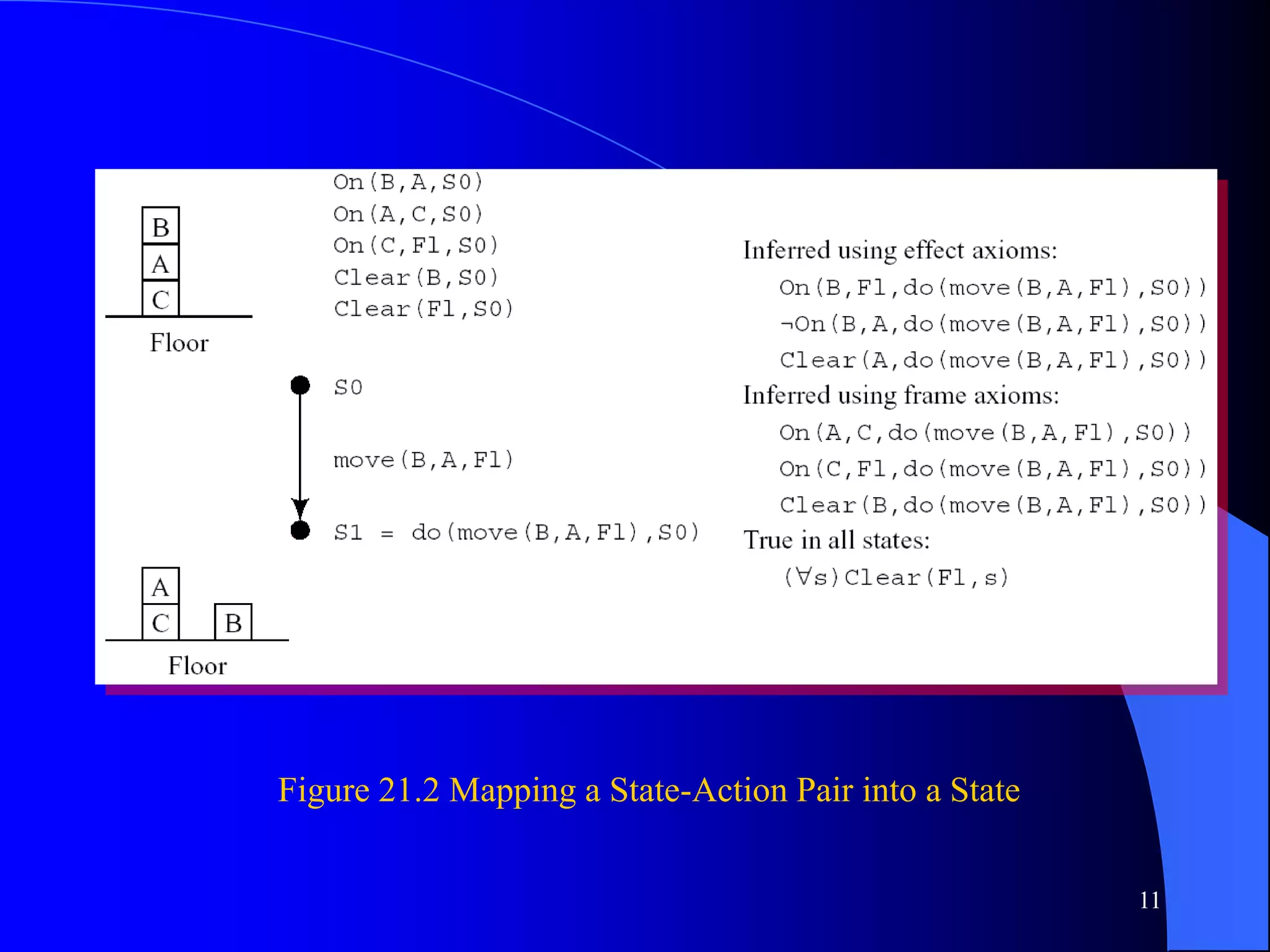
Figure 21.2 Mapping a State-Action Pair into a State
12
21.2.1 Frame Axioms (1/3)
 Not all of the statements true about state
do(move(B,A,F1),S0) can be inferred by the
effects axioms.
– Before the move, such as that C was on the floor and
that B was clear are also true of the state after the move.
 In order to make inferences about these
constancies, we need frame axioms for each action
and for each fluent that doesn’t change as a result
of the action.
13
21.2.1 Frame Axioms (2/3)
 The frame axioms for the pair, {(move, On)}
[On(x,y,s)(xu)]  On(x,y,do(move(u,y,z),s))
(On(x,y,s)[(xu)(yz)]  On(x,y,do(move(u,v,z),s))
 The frame axioms for the pair, {move,
Clear}
Clear(u,s)(uz)]  Clear(u,do(move(x,y,z),s))
Clear(u,s)(uy)  Clear(u,do(move(x,y,z),s))
positive frame axioms negative frame axioms
14
21.2.1 Frame Axioms (3/3)
 Frame axioms are used to prove that a
property of a state remains true if the state is
changed by an action that doesn’t affect that
property.
 Frame problem
– The various difficulties associated with dealing
with fluents that are not affected by actions.
15
21.2.2 Qualifications(限制)
 The antecedent of the transition formula
describing an action such as move gives the
preconditions for a rather idealized case.
– To be more precise, adding other qualification
such as Too_heavy(x,s), Glued_down(x,s),
Armbroken(s), …
 Qualification problem
– The difficulty of specifying all of the important
qualifications.
16
21.2.3 Ramifications
 Ramification problem(分枝)
– Keeping track of which derived formulas
survive subsequent state transitions.
17
21.3 Generating Plans
 To generate a plan that achieves some goal,
 (s),
– We attempt to prove (s)  (s)
– And use the answer predicate to extract
the state as a function of the nested
actions that produce it.
18
Example (Figure 21.1) (1/2)
 We want a plan that gets block B on the floor from
the initial state, s0, given in Figure 21.1.
 Prove (s) On(B, F1, s)
 Resolution refutation:
– The negation of (s) On(B, F1, s), together with the
formulas that describe S0 and the effects of move are
inconsistent.
– Use an answer predicate to capture the substitutions
made during the proof.
19
Example (Figure 21.1) (2/2)
On(A,C,S0)
On(C,F1,S0)
Clear(B,S0)
Clear(F1,S0)
[On(x,y,s)Clear(x,s) Clear(z,s) (xz)
On(x,z,do(move(x,y,z),s))]
(s) On(B,F1,s) ?
Answer: ans(do(move(B,A,F1),S0))
20
Difficulties
 If several actions are required to achieve a
goal, the action functions would be nested.
 The proof effort is too large even for simple
plan.

21 situation calculus

  • 1.
  • 2.
    2 Outline  Reasoning aboutStates and Actions  Some Difficulties  Generating Plans  Additional Readings and Discussion
  • 3.
    3 21.1 Reasoning aboutStates and Actions  To investigate feature-based planning methods much more thoroughly, richer language to describe features and the constraints among them will be introduced.  Generally, a goal condition can be described by any wff in the predicate calculus, and we can determine if a goal is satisfied in a world state described by formulas by attempting to prove the goal wff from those formulas.
  • 4.
    4 Situation calculus (1/3) A predicate calculus formalization of states, actions, and the effects of actions on states.  Our knowledge about states and actions as formulas in the first-order predicate calculus  Then use a deduction system to ask questions such as “Does there exist a state to satisfy certain properties, and if so, how can the present state be transformed into that state by actions”  A plan for achieving the desired state.
  • 5.
    5 Situation calculus (2/3) The situation calculus was used in some early AI planning systems.  However, the formalism remains important for exposing and helping to clarify conceptual problems.
  • 6.
    6 Situation calculus (3/3) In order to describe states in the situation calculus, we reify states.  States can be denoted by constant symbols (S0, S1, S2, …), by variables, or by functional expressions.  Fluents: the atomic wff can denote relations over states.
  • 7.
    7 Example (Figure 21.1) First-order predicate calculus On(B,A)On(A,C)On(C,F1)Clear(B)…  True statement On(B,A,S0)On(A,C,S0)On(C,F1,S0)Clear(B, S0)  Prepositions true of all states (x,y,s)[On(x,y,s)(y=F1) Clear(y,s)] (s)Clear(F1,s)
  • 8.
    8 Actions and theeffects (1/2) 1. Reify the action – Actions can be denoted by constant symbols, by variables, or by functional expressions – Generally, we can represent a family of move actions by the schema, move(x,y,z), where x, y, and z are schema variables. 2. Imagine a function constant, do, that denotes a function that maps actions and states into states. – do(,) denotes a function that maps the state-action pair into the state obtained by performing the action denoted by  in the state denoted by .
  • 9.
    9 Actions and theeffects (2/2) 3. Express the effects of actions by wffs. – There are two such wffs for each action-fluent pair. – For the pair {On, move}. [On(x,y,s)Clear(x,s)Clear(z,s)(xz) On(x,z,do(move(x,y,z),s))] And [On(x,y,s)Clear(x,s)Clear(z,s)(xz)  On(x,z,do(move(x,y,z),s))] positive effect axiom negative effect axiom preconditions consequent
  • 10.
    10 Effect axioms  Wecan also write effect axioms for the {Clear, move} pair. [On(x,y,s)Clear(x,s)Clear(z,s)(xz)(yz) Clear(y,do(move(x,y,z),s))] [On(x,y,s)Clear(x,s)Clear(z,s)(xz)(zF1)  Clear(z,do(move(x,y,z),s))]  The antecedents consist of two parts – One part expresses the preconditions under which the action can be executed – The other part expresses the condition under which the action will have the effect expressed in the consequent of the axiom.
  • 11.
    11 Figure 21.2 Mappinga State-Action Pair into a State
  • 12.
    12 21.2.1 Frame Axioms(1/3)  Not all of the statements true about state do(move(B,A,F1),S0) can be inferred by the effects axioms. – Before the move, such as that C was on the floor and that B was clear are also true of the state after the move.  In order to make inferences about these constancies, we need frame axioms for each action and for each fluent that doesn’t change as a result of the action.
  • 13.
    13 21.2.1 Frame Axioms(2/3)  The frame axioms for the pair, {(move, On)} [On(x,y,s)(xu)]  On(x,y,do(move(u,y,z),s)) (On(x,y,s)[(xu)(yz)]  On(x,y,do(move(u,v,z),s))  The frame axioms for the pair, {move, Clear} Clear(u,s)(uz)]  Clear(u,do(move(x,y,z),s)) Clear(u,s)(uy)  Clear(u,do(move(x,y,z),s)) positive frame axioms negative frame axioms
  • 14.
    14 21.2.1 Frame Axioms(3/3)  Frame axioms are used to prove that a property of a state remains true if the state is changed by an action that doesn’t affect that property.  Frame problem – The various difficulties associated with dealing with fluents that are not affected by actions.
  • 15.
    15 21.2.2 Qualifications(限制)  Theantecedent of the transition formula describing an action such as move gives the preconditions for a rather idealized case. – To be more precise, adding other qualification such as Too_heavy(x,s), Glued_down(x,s), Armbroken(s), …  Qualification problem – The difficulty of specifying all of the important qualifications.
  • 16.
    16 21.2.3 Ramifications  Ramificationproblem(分枝) – Keeping track of which derived formulas survive subsequent state transitions.
  • 17.
    17 21.3 Generating Plans To generate a plan that achieves some goal,  (s), – We attempt to prove (s)  (s) – And use the answer predicate to extract the state as a function of the nested actions that produce it.
  • 18.
    18 Example (Figure 21.1)(1/2)  We want a plan that gets block B on the floor from the initial state, s0, given in Figure 21.1.  Prove (s) On(B, F1, s)  Resolution refutation: – The negation of (s) On(B, F1, s), together with the formulas that describe S0 and the effects of move are inconsistent. – Use an answer predicate to capture the substitutions made during the proof.
  • 19.
    19 Example (Figure 21.1)(2/2) On(A,C,S0) On(C,F1,S0) Clear(B,S0) Clear(F1,S0) [On(x,y,s)Clear(x,s) Clear(z,s) (xz) On(x,z,do(move(x,y,z),s))] (s) On(B,F1,s) ? Answer: ans(do(move(B,A,F1),S0))
  • 20.
    20 Difficulties  If severalactions are required to achieve a goal, the action functions would be nested.  The proof effort is too large even for simple plan.