Dr. Mini Sood
Anatomy of the female breast and
clinical aspects
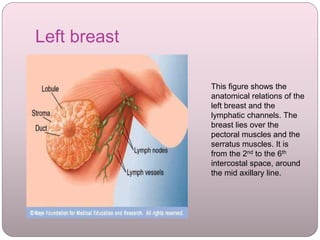
Left breast
This figure shows the
anatomical relations of the
left breast and the
lymphatic channels. The
breast lies over the
pectoral muscles and the
serratus muscles. It is
from the 2nd to the 6th
intercostal space, around
the mid axillary line.
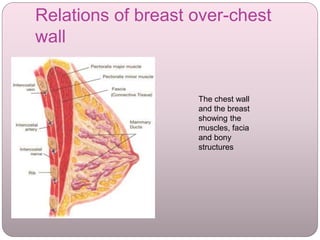
Relations of breast over-chest
wall
The chest wall
and the breast
showing the
muscles, facia
and bony
structures
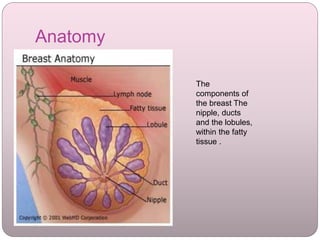
Anatomy
The
components of
the breast The
nipple, ducts
and the lobules,
within the fatty
tissue .
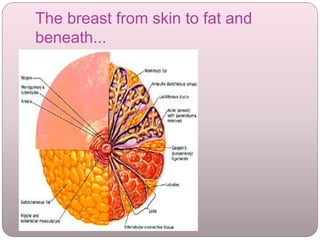
The breast from skin to fat and
beneath...
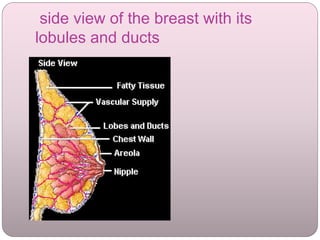
side view of the breast with its
lobules and ducts
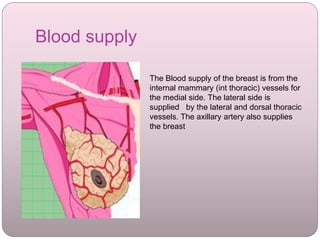
Blood supply
The Blood supply of the breast is from the
internal mammary (int thoracic) vessels for
the medial side. The lateral side is
supplied by the lateral and dorsal thoracic
vessels. The axillary artery also supplies
the breast
Nerve supply
 The nerve supply is from the anterior and lateral
cutaneous nerves fromm the 2nd to the 6th
intercostal space.
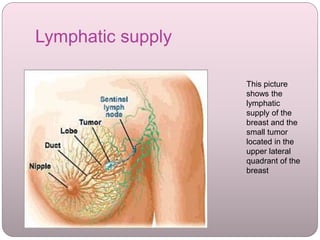
Lymphatic supply
This picture
shows the
lymphatic
supply of the
breast and the
small tumor
located in the
upper lateral
quadrant of the
breast
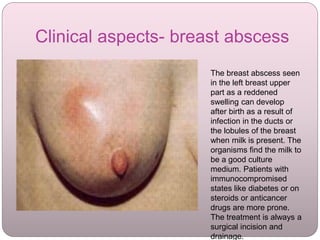
Clinical aspects- breast abscess
The breast abscess seen
in the left breast upper
part as a reddened
swelling can develop
after birth as a result of
infection in the ducts or
the lobules of the breast
when milk is present. The
organisms find the milk to
be a good culture
medium. Patients with
immunocompromised
states like diabetes or on
steroids or anticancer
drugs are more prone.
The treatment is always a
surgical incision and
drainage.
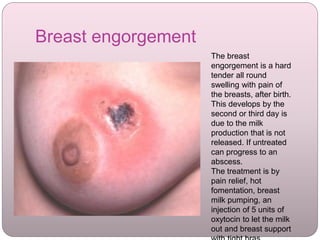
Breast engorgement
The breast
engorgement is a hard
tender all round
swelling with pain of
the breasts, after birth.
This develops by the
second or third day is
due to the milk
production that is not
released. If untreated
can progress to an
abscess.
The treatment is by
pain relief, hot
fomentation, breast
milk pumping, an
injection of 5 units of
oxytocin to let the milk
out and breast support
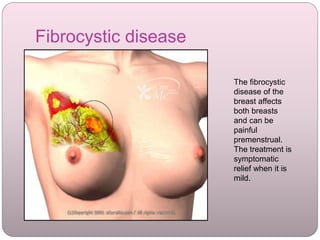
Fibrocystic disease
The fibrocystic
disease of the
breast affects
both breasts
and can be
painful
premenstrual.
The treatment is
symptomatic
relief when it is
mild.
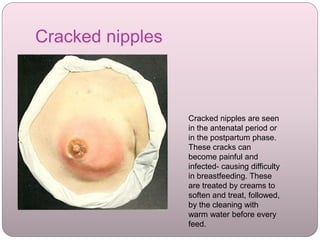
Cracked nipples
Cracked nipples are seen
in the antenatal period or
in the postpartum phase.
These cracks can
become painful and
infected- causing difficulty
in breastfeeding. These
are treated by creams to
soften and treat, followed,
by the cleaning with
warm water before every
feed.
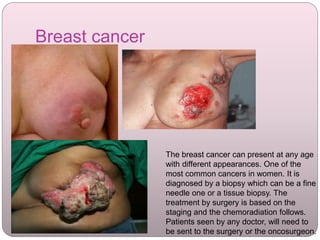
Breast cancer
The breast cancer can present at any age
with different appearances. One of the
most common cancers in women. It is
diagnosed by a biopsy which can be a fine
needle one or a tissue biopsy. The
treatment by surgery is based on the
staging and the chemoradiation follows.
Patients seen by any doctor, will need to
be sent to the surgery or the oncosurgeon.
conclusions
Female breast is made up of lobules
and ducts with-in a fibro-fatty tissue
Breasts are located over the anterior
chest wall over pectoralis major
muscles.
The chief blood supply is from the
mammary arteries and the axillary
vessels.
The lymphatics drain into the
lymph nodes, found in the axilla, along
the costal margins and in the
Conclusions
The breast engorgement, nipple cracks,
mastitis and abscess occur in the postpartum
period.
Breast nodules may be benign like the
fibroma.
Fibrocystic disease is due to the hormone
effects resulting in bilateral nodules that
become painful pre- menstrual. These can
progress and are treated when symptomatic.
Breast cancer can start as a small painless
mass, in the early stages, or as large
Thank you

21 08-16 female breast

  • 1.
    Dr. Mini Sood Anatomyof the female breast and clinical aspects
  • 2.
    Left breast This figureshows the anatomical relations of the left breast and the lymphatic channels. The breast lies over the pectoral muscles and the serratus muscles. It is from the 2nd to the 6th intercostal space, around the mid axillary line.
  • 3.
    Relations of breastover-chest wall The chest wall and the breast showing the muscles, facia and bony structures
  • 4.
    Anatomy The components of the breastThe nipple, ducts and the lobules, within the fatty tissue .
  • 5.
    The breast fromskin to fat and beneath...
  • 6.
    side view ofthe breast with its lobules and ducts
  • 7.
    Blood supply The Bloodsupply of the breast is from the internal mammary (int thoracic) vessels for the medial side. The lateral side is supplied by the lateral and dorsal thoracic vessels. The axillary artery also supplies the breast
  • 8.
    Nerve supply  Thenerve supply is from the anterior and lateral cutaneous nerves fromm the 2nd to the 6th intercostal space.
  • 9.
    Lymphatic supply This picture showsthe lymphatic supply of the breast and the small tumor located in the upper lateral quadrant of the breast
  • 10.
    Clinical aspects- breastabscess The breast abscess seen in the left breast upper part as a reddened swelling can develop after birth as a result of infection in the ducts or the lobules of the breast when milk is present. The organisms find the milk to be a good culture medium. Patients with immunocompromised states like diabetes or on steroids or anticancer drugs are more prone. The treatment is always a surgical incision and drainage.
  • 11.
    Breast engorgement The breast engorgementis a hard tender all round swelling with pain of the breasts, after birth. This develops by the second or third day is due to the milk production that is not released. If untreated can progress to an abscess. The treatment is by pain relief, hot fomentation, breast milk pumping, an injection of 5 units of oxytocin to let the milk out and breast support
  • 12.
    Fibrocystic disease The fibrocystic diseaseof the breast affects both breasts and can be painful premenstrual. The treatment is symptomatic relief when it is mild.
  • 13.
    Cracked nipples Cracked nipplesare seen in the antenatal period or in the postpartum phase. These cracks can become painful and infected- causing difficulty in breastfeeding. These are treated by creams to soften and treat, followed, by the cleaning with warm water before every feed.
  • 14.
    Breast cancer The breastcancer can present at any age with different appearances. One of the most common cancers in women. It is diagnosed by a biopsy which can be a fine needle one or a tissue biopsy. The treatment by surgery is based on the staging and the chemoradiation follows. Patients seen by any doctor, will need to be sent to the surgery or the oncosurgeon.
  • 15.
    conclusions Female breast ismade up of lobules and ducts with-in a fibro-fatty tissue Breasts are located over the anterior chest wall over pectoralis major muscles. The chief blood supply is from the mammary arteries and the axillary vessels. The lymphatics drain into the lymph nodes, found in the axilla, along the costal margins and in the
  • 16.
    Conclusions The breast engorgement,nipple cracks, mastitis and abscess occur in the postpartum period. Breast nodules may be benign like the fibroma. Fibrocystic disease is due to the hormone effects resulting in bilateral nodules that become painful pre- menstrual. These can progress and are treated when symptomatic. Breast cancer can start as a small painless mass, in the early stages, or as large
  • 17.