Int J Pediatr, Vol.4, N.1, Serial No.25, Jan 2016 1205
Original Article (Pages: 1205-1214)
http:// ijp.mums.ac.ir
Prevalence of Atopic Dermatitis Symptoms among Students in
Kurdistan: a North-west Province of Iran
Rasoul Nasiri kalmarzi 1
, Pedram Ataee 2
, Ghazaleh Homagostar 3
, Majid Tajik 3
, Ali Shekari
4
, Daem Roshani 5
, Vahid Ghobadi Dana 6
, *
Sairan Nili 71
1
Associate Professor, Allergy and Immunology Department, Kurdistan University of Medical Sciences,
Sanandaj, Iran.
2
Associate Professor, Department of Pediatrics, Beast Hospital, Kurdistan University of Medical
Sciences, Sanandaj, Iran.
3
Medical Students, School of Medicine, Kurdistan University of medical Sciences, Sanandaj, Iran.
4
MD, Kurdistan University of Farhangian , Sanandaj, Iran.
5
Associate Professor, Social Determinants of Health Research Center, Kurdistan University of Medical
Sciences, Sanandaj, Iran.
6
Tehran University of Medical Sciences, Tehran, Sanandaj, Iran.
7
Epidemiology MSc, Department of Disease Prevention of Health Deputy, Kurdistan University of Medical
Science, Sanandaj, Iran.
Abstract
Background
Atopic dermatitis (AD), often called eczema or atopic eczema is a very common skin disease; AD
looks different in infants, children, and adults. The aim of this study was to determine the prevalence
of the disease in Kurdistan province.
Materials and Methods
Cross-sectional study using written questionnaires ISAAC where 4,000 students in two age groups 7-
6 and 14 -13 years in the province were using multi-stage sampling was carried out so that the first
two floors rural and urban communities in every city and in every school pupil samples were selected
based on 8-digit code.
Results
The prevalence of itchy rashes in the past 6 months, itchy rashes in the past 12 months and rashes at
flexural areas were 7.5%, 8.9%, and 10.3%, respectively; the prevalence was higher in 13-14 years
old than 6-7 years old and was higher in boys than in girls(Odds Ratio (OR)=1.44, Confidence
interval (CI)= 1.49-2, P <0.001).
Conclusion
The prevalence of itchy rashes in the past 12 month was 8.9% and it was more prevalent in boys than
the girls were and in age group 13-14 years old was higher than in 6-7 years old.
Key Words: Atopic, Dermatitis, Iran, Students.
*Please cite this article as: Nasiri kalmarzi R, Ataee P, Homagostar Gh, Tajik M, Shekari A, Roshani D, et al.
Prevalence of Atopic Dermatitis Symptoms among Students in Kurdistan: a North-west Province of Iran. Int J
Pediatr 2016;4(1): 1205-14.
*Corresponding Author:
Sairan Nili, Kurdistan University of Medical Sciences, Abider Street, Sanandaj, Iran. Postal code: 66186-34683,
fax: +00 98 87 33237760.
Email: nele_sayran@yahoo.com
Received date: Aug 21, 2015 Accepted date: Sep 22, 2015
Prevalence of Atopic Dermatitis Symptoms among Students in Kurdistan-Iran
Int J Pediatr, Vol.4, N.1, Serial No.25, Jan 2016 1206
1- INTRODUCTION
Eczema or atopic dermatitis is one of
the most common skin diseases in the
world(1), particularly in neonates and
children (2) and its symptoms are itching
and eczema. Although this disorder is not
fatal, it can lead to skin damages,
secondary infections, sleep disorders in
children and parents(3), reduced quality of
life (4), high costs(5), loss of confidence,
and reduced functional capacity that can
interfere athletic activities and social
relationships(6). The economic burden of
eczema is similar to that of asthma (7)and
in its severe and moderate forms it
imposes a level of stress to families that is
more than the stress caused by caring for a
child with type I diabetes mellitus(8).
Studies have shown that the stress caused
by this disease can lead to increased levels
of eosinophils, subpopulation
lymphocytes, and natural killer cells (4).
Several studies state that genetic and
environmental factors involved in the
pathogenesis of atopic dermatitis(9). AD is
an important public health problem(10),
and there has been a significant increase in
the prevalence of disease in industrialized
countries during the past three decades
(11) which has affected 1% to 5% of the
general population, 2% to 10% of adults,
and 5% to 30% of children(11-13).
Higher prevalence of AD in urban areas is
attributed to better health condition that
reduces the level of exposure to infections
in early childhood and increase the
sensitivity to allergic diseases (11, 14).
Increased exposures to various infections
and endogenous allergens, reduced level of
breastfeeding, and more awareness about
atopic dermatitis have led to the increased
prevalence of the disease(15). In terms of
etiology of the disease, the progress of AD
is under the influence of both genetic
factors (16) and also environmental factors
such as diet, climate, infections,
atmosphere pollutions, ozone, nitrogen
monoxide, Particulate. Matter less than 10
(PM10), and songorine (SO, 10 and 30
μm) (13, 17). The prevalence of AD is
reported to be 17.2% in American
children(18), 15.6% in European
Children(19), 24% in Japanese children
aged 5-6 years old (20), 19.1% in Korea,
and 20% in other countries(21).
Investigations on more than half a million
children in the world in the first phase of
the ISAAC study showed that the disease
is a prevalent disease, and the range of its
prevalence varies from less than 2% to
20%(22). It is notable that the disease has
had a rising trend in recent decades (23-
25); probably, air pollution, increased
education levels, and increased social
levels may increase the risk of AD.
Previous studies have shown that
individuals with AD are more likely to
develop asthma; furthermore, there is a
better prognosis of asthma in patients
without a history of AD (26).
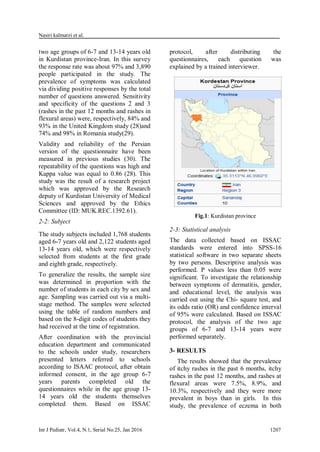
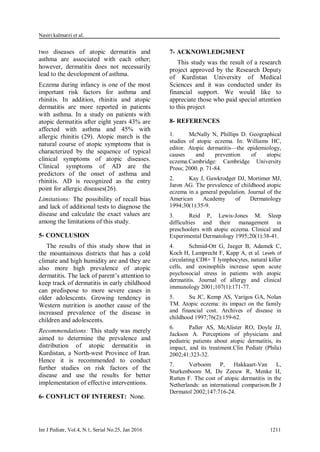
Kurdistan province has an area of 28,203
km2
and is located in western part of Iran
at 34 degrees 44 minutes and 36 degrees
30 minutes of north latitude and 45
degrees 31 minutes and 48 degrees 16
minutes of east longitude of the Greenwich
meridian. With regard to climatic and
geographical conditions, the province has
the features of a middle cool climate and
its height difference is about 3,290 meters
(27) (Figure.1). The knowledge about the
prevalence of the disease can be used to
prioritize health care issues and utilized as
a guide for identifying possible
environmental factors which can cause
dermatitis, and finally it can be helpful for
public health planning.
2- MATERIALS AND METHODS
2-1: Methods
This cross-sectional study was
conducted during September 2013 to June
2014. Using the written questionnaire of
the first phase of the ISAAC, this study
was conducted on 4,000 students at the
Nasiri kalmarzi et al.
Int J Pediatr, Vol.4, N.1, Serial No.25, Jan 2016 1207
two age groups of 6-7 and 13-14 years old
in Kurdistan province-Iran. In this survey
the response rate was about 97% and 3,890
people participated in the study. The
prevalence of symptoms was calculated
via dividing positive responses by the total
number of questions answered. Sensitivity
and specificity of the questions 2 and 3
(rashes in the past 12 months and rashes in
flexural areas) were, respectively, 84% and
93% in the United Kingdom study (28)and
74% and 98% in Romania study(29).
Validity and reliability of the Persian
version of the questionnaire have been
measured in previous studies (30). The
repeatability of the questions was high and
Kappa value was equal to 0.86 (28). This
study was the result of a research project
which was approved by the Research
deputy of Kurdistan University of Medical
Sciences and approved by the Ethics
Committee (ID: MUK.REC.1392.61).
2-2: Subject
The study subjects included 1,768 students
aged 6-7 years old and 2,122 students aged
13-14 years old, which were respectively
selected from students at the first grade
and eighth grade, respectively.
To generalize the results, the sample size
was determined in proportion with the
number of students in each city by sex and
age. Sampling was carried out via a multi-
stage method. The samples were selected
using the table of random numbers and
based on the 8-digit codes of students they
had received at the time of registration.
After coordination with the provincial
education department and communicated
to the schools under study, researchers
presented letters referred to schools
according to ISAAC protocol, after obtain
informed consent, in the age group 6-7
years parents completed old the
questionnaires while in the age group 13-
14 years old the students themselves
completed them. Based on ISSAC
protocol, after distributing the
questionnaires, each question was
explained by a trained interviewer.
Fig.1: Kurdistan province
2-3: Statistical analysis
The data collected based on ISSAC
standards were entered into SPSS-16
statistical software in two separate sheets
by two persons. Descriptive analysis was
performed. P values less than 0.05 were
significant. To investigate the relationship
between symptoms of dermatitis, gender,
and educational level, the analysis was
carried out using the Chi- square test, and
its odds ratio (OR) and confidence interval
of 95% were calculated. Based on ISSAC
protocol, the analysis of the two age
groups of 6-7 and 13-14 years were
performed separately.
3- RESULTS
The results showed that the prevalence
of itchy rashes in the past 6 months, itchy
rashes in the past 12 months, and rashes at
flexural areas were 7.5%, 8.9%, and
10.3%, respectively and they were more
prevalent in boys than in girls. In this
study, the prevalence of eczema in both
Prevalence of Atopic Dermatitis Symptoms among Students in Kurdistan-Iran
Int J Pediatr, Vol.4, N.1, Serial No.25, Jan 2016 1208
age groups was higher in boys and this
difference was statistically significant
(OR=1.44, CI: 1.49-2, P <0.001). In
addition, the prevalence of symptoms in
age group 13-14 years old was higher
(Table.1). Of all, 5.9% of boys and 6.5%
of girls had a severe form of the disease,
which was statistically significant
(P <0.003) (Table.2). The Odd ratio of
asthma in patients with eczema was 1.068,
CI: .742-1.539 and in patients with rhinitis
it was 0.9, CI: .77-1.269. The prevalence
rate was particularly diverse in different
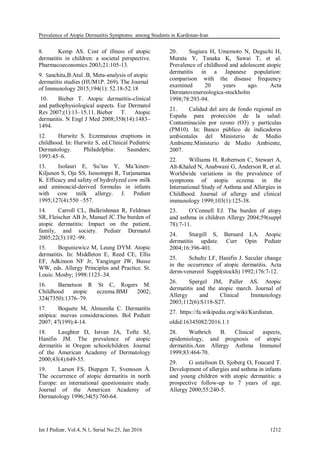
districts of the province (Figure.2).
Table 1: Prevalence of symptoms of atopic dermatitis, by age group and gender
PCIORN (%)Variables
1809(46.6)Male
2069(53.4)Female
1788(45.5)Elementary school (6-7 years old)
2122(54.6)Junior high school (13-14 years old)
.0021.122-1.6551.36311.96%Recurrent itchy rashes for at least 6 months
.0031.162-2.0841.5579.70%Male(6-7 years old)
5.60%Female
.145.937-1.5811.3178.40%Male(13-14 years old)
6.50%Female
0.0271.035-1.6151.2938.90%Itchy rashes during 12 past months
.0261.046-2.0251.45510.58%Male(6-7 years old)
7.50%Female
.318.869-1.5911.1769.40%Male(13-14 years old)
8.86%Female
.0331.024-1.721.326.6%Itchy rashes on flexural areas
.148.913-1.921.3257.79%Male(6-7 years old)
6%Female
.112.94-1.891.3357.33%Male(13-14 years old)
5.92%Female
.0001.49-21.4437.6%History of eczema
.0011.15-1.81.8537.2%Male(6-7 years old)
29%Female
.0001.51-2.261.7249.5%Male(13-14 years old)
34.6%Female
Table 2: Prevalence of sleep disorders due to itchy rashes, by age groups and gender
P valueOne or several
nights a week
Less than one
night a week
Never during the past
12 months N (%)Variables
109(6.2)621(35.4)102(58.4)Sleep disorders due to itchy rashes
.05218(5.3)142(42)178(52.7)Male(6-7 years old)
28(6.2)151(33.6)271(60.4)Female
.03532(6.3)192(37.7)285(56)Male(13-14 years old)
31(6.8)136(29.8)289(63.4)Female
.003847(5.9)334(39.4)463(54.7)MaleTotal
59(6.5)287(31.7)560(61.8)Female
Nasiri kalmarzi et al.
Int J Pediatr, Vol.4, N.1, Serial No.25, Jan 2016 1209
Fig.2: Distribution of the prevalence of eczema in districts of Kurdistan province
4- DISCUSSION
Of all people, 8.9% of the subject in
this study reported itchy rashes in the past
12 month, it was more prevalent among
the age group 13-14 years old, and there
was a significant difference between the
two sexes. In addition, the prevalence of
symptoms in age group 13-14 years old
was higher than in age group 6-7 years old.
Mean prevalence of symptoms of eczema
is 7.6% (from 0.1 to 19.9) in the world and
its prevalence among children aged 13-14
years old is 2.6% (22, 31), however, in
another study it is reported as 13.7% (from
1.6% to 39.7%)(32). According to the
results of international ISAAC study, the
prevalence of symptoms of atopic eczema
was higher in girls in both age groups;
moreover, with increasing the prevalence
of atopic eczema, was this ratio raised
more. The prevalence of symptoms in the
age group 6-7 years old was more than the
age group 13-14 years old(33). The
prevalence of the disease is reported to be
7.55% in Croatia(34) , 15% in Yazd(35),
18.3% in Shiraz (in Center of Iran)(36),
14% in Birjand (in Eastern part of
Iran)(37), and 15.6% in Bushehr (in
Southern part of Iran)(38); similar to our
results, in Bushier the disease was more
prevalent in the age group 13-14 years old
which may be due to the higher levels of
fast food consumption and other
nutritional factors in this age group(39).
The prevalence of AD in children 7-12
years old in Kerman (in Southeast of Iran)
in girls and boys was, respectively, 8.33%
and 9.09% (P> 0/05) (40).
The prevalence of disease has been
reported 3.9% in Ahvaz (41) and 2.1% in
Shahrekord(42). The highest levels of
prevalence in the world are reported in
urban areas in Africa, Australia, Northern
and Western Europe (more than 15%) and
the lowest levels are reported in China,
Eastern Europe, and Central Asia (less
than 5%) (43, 44). In a study in Brazil, of
all the subjects, 8.2% had atopic
dermatitis, 11.5% had eczema symptoms
in the past 12 months, and 5% were
Prevalence of Atopic Dermatitis Symptoms among Students in Kurdistan-Iran
Int J Pediatr, Vol.4, N.1, Serial No.25, Jan 2016 1210
suffering from severe eczema (45) and the
results are almost consistent with the
results of the present study.
The distribution of the prevalence of atopic
dermatitis in the province shows varieties
in the prevalence rates in the province
(Figure. 2) which is almost in line with the
climate conditions in different districts of
the province. Kurdistan is under the
influence of two important hot and cold air
flows which create different climates. The
highest amount of rainfall is observed in
the Western part of the province (in Bane
and Marivan) with 800 mm per year, and
the lowest rainfall is observed in the
eastern part of the province (in Ghorveh
and Bijar) with 400 mm per year. The
rainfall in the central part of the province
(in Saghez and Sanandaj) is about 500 mm
per year. In Northern parts of Brazil, there
was an association between the incidence
of eczema in children and higher
temperatures. In Nigerian children, heat,
extra sweating, and humidity were among
the predisposing factor for AD (46) and
similar findings are also noted in other
clinical trials (47). The prevalence of
eczema symptoms is also associated with
latitude and mean temperature; as a result
climate plays an important role in the
prevalence of the disease(48).
A study in Spain has reported air pollution
as one of the factors influencing the
increase of AD in adults (49). Allergic
diseases are increasing throughout the
world and such an increase is associated
with climate conditions, nutritional
changes that move toward westernization,
and environmental factors resulting from
industrial pollution (50). In European
countries the prevalence of symptoms of
eczema in both groups is positively
associated with the increase in height and
negatively associated with the increases in
annual mean temperature. Symptoms of
eczema in the age group 6-7 years old are
negatively associated with relative indoor
temperature. Indeed, height and
temperature are indirectly correlated with
changes in behaviors and exposures to
sunlight. Moreover, the impact of relative
indoor humidity is also suggested by some
other studies. Several studies have shown
that climate and pollutions are the most
important environmental factors affecting
the disease(51, 52).
Higher prevalence rates in urban areas and
among higher socioeconomic classes
suggest that antigenic pollutions and lack
of exposure to infectious agents and other
antigenic triggers in early childhood are
effective in the development of AD
(28, 53). Being affected by the severe form
of dermatitis in boys aged 6-7 years was
5.3% while in girls it was 6.2%; moreover,
in the age group 13-14 years old they were
6.3% and 6.8%, respectively, and the
difference between the sexes was
significant (P <0.003).
The prevalence of sever atopic eczema
symptoms ranged from 0% to 3.2% in the
age group 6-7 years and from 0% to 5.1%
in the age group 13-14 years old (33). The
prevalence of the severe form of the
disease is reported 5% in Brazil (45) and
1.5% in Taiwan(54).
Of all, 3.9% of patients reported a history
of asthma and 9.37% had a history of hay
fever. The Odd ratio of asthma in patients
with dermatitis was 1.068, CI: .742-1.539
and in patients with rhinitis it was 0.9, CI:
.77-1.269. The risk of asthma attributable
to atopic dermatitis is estimated to be
around 30% (55). In Bazazi’s study in
Gorgan (in North part of Iran), both the
history of rhinitis in the past 12 months
and eczema were associated with asthma
(P<0.05)(32). In a study that was
conducted in Bushier, there was no
association between environmental factors
and atopic dermatitis; however, there was
an association between allergic rhinitis and
asthma(38). In a study in Kerman, 3.79%
of participants reported a history of asthma
and rhinitis. Among allergic diseases, the
Nasiri kalmarzi et al.
Int J Pediatr, Vol.4, N.1, Serial No.25, Jan 2016 1211
two diseases of atopic dermatitis and
asthma are associated with each other;
however, dermatitis does not necessarily
lead to the development of asthma.
Eczema during infancy is one of the most
important risk factors for asthma and
rhinitis. In addition, rhinitis and atopic
dermatitis are more reported in patients
with asthma. In a study on patients with
atopic dermatitis after eight years 43% are
affected with asthma and 45% with
allergic rhinitis (29). Atopic march is the
natural course of atopic symptoms that is
characterized by the sequence of typical
clinical symptoms of atopic diseases.
Clinical symptoms of AD are the
predictors of the onset of asthma and
rhinitis. AD is recognized as the entry
point for allergic diseases(26).
Limitations: The possibility of recall bias
and lack of additional tests to diagnose the
disease and calculate the exact values are
among the limitations of this study.
5- CONCLUSION
The results of this study show that in
the mountainous districts that has a cold
climate and high humidity are and they are
also more high prevalence of atopic
dermatitis. The lack of parent’s attention to
keep track of dermatitis in early childhood
can predispose to more severe cases in
older adolescents. Growing tendency in
Western nutrition is another cause of the
increased prevalence of the disease in
children and adolescents.
Recommendations: This study was merely
aimed to determine the prevalence and
distribution of atopic dermatitis in
Kurdistan, a North-west Province of Iran.
Hence it is recommended to conduct
further studies on risk factors of the
disease and use the results for better
implementation of effective interventions.
6- CONFLICT OF INTEREST: None.
7- ACKNOWLEDGMENT
This study was the result of a research
project approved by the Research Deputy
of Kurdistan University of Medical
Sciences and it was conducted under its
financial support. We would like to
appreciate those who paid special attention
to this project
8- REFERENCES
1. McNally N, Phillips D. Geographical
studies of atopic eczema. In: Williams HC,
editor. Atopic dermatitis—the epidemiology,
causes and prevention of atopic
eczema.Cambridge: Cambridge University
Press; 2000. p. 71-84.
2. Kay J, Gawkrodger DJ, Mortimer MJ,
Jaron AG. The prevalence of childhood atopic
eczema in a general population. Journal of the
American Academy of Dermatology
1994;30(1):35-9.
3. Reid P, Lewis‐Jones M. Sleep
difficulties and their management in
preschoolers with atopic eczema. Clinical and
Experimental Dermatology 1995;20(1):38-41.
4. Schmid-Ott G, Jaeger B, Adamek C,
Koch H, Lamprecht F, Kapp A, et al. Levels of
circulating CD8+ T lymphocytes, natural killer
cells, and eosinophils increase upon acute
psychosocial stress in patients with atopic
dermatitis. Journal of allergy and clinical
immunology 2001;107(1):171-77.
5. Su JC, Kemp AS, Varigos GA, Nolan
TM. Atopic eczema: its impact on the family
and financial cost. Archives of disease in
childhood 1997;76(2):159-62.
6. Paller AS, McAlister RO, Doyle JJ,
Jackson A. Perceptions of physicians and
pediatric patients about atopic dermatitis, its
impact, and its treatment.Clin Pediatr (Phila)
2002;41:323-32.
7. Verboom P, Hakkaart-Van L,
Sturkenboom M, De Zeeuw R, Menke H,
Rutten F. The cost of atopic dermatitis in the
Netherlands: an international comparison.Br J
Dermatol 2002;147:716-24.
Prevalence of Atopic Dermatitis Symptoms among Students in Kurdistan-Iran
Int J Pediatr, Vol.4, N.1, Serial No.25, Jan 2016 1212
8. Kemp AS. Cost of illness of atopic
dermatitis in children: a societal perspective.
Pharmacoeconomics 2003;21:105-13.
9. Sanchita,B.Atul .B, Meta-analysis of atopic
dermatitis studies (HUM1P. 269). The Journal
of Immunology 2015;194(1): 52.18-52.18
10. Bieber T. Atopic dermatitis-clinical
and pathophysiological aspects. Eur Dermatol
Rev 2007;(1):13–15.11. Bieber T. Atopic
dermatitis. N Engl J Med 2008;358(14):1483–
1494.
12. Hurwitz S. Eczematous eruptions in
childhood. In: Hurwitz S, ed.Clinical Pediatric
Dermatology. Philadelphia: Saunders;
1993:45–6.
13. Isolauri E, Su¨tas Y, Ma¨kinen-
Kiljunen S, Oja SS, Isosomppi R, Turjanamaa
K. Efficacy and safety of hydrolyzed cow milk
and aminoacid-derived formulas in infants
with cow milk allergy. J. Pediatr
1995;127(4):550 –557.
14. Carroll CL, Balkrishman R, Feldman
SR, Fleischer AB Jr, Manuel JC.The burden of
atopic dermatitis: Impact on the patient,
family, and society. Pediatr Dermatol
2005;22(3):192–99.
15. Boguniewicz M, Leung DYM. Atopic
dermatitis. In: Middleton E, Reed CE, Ellis
EF, Adkinson NF Jr, Yanginger JW, Busse
WW, eds. Allergy Principles and Practice. St.
Louis: Mosby; 1998:1123–34.
16. Barnetson R St C, Rogers M.
Childhood atopic eczema.BMJ 2002;
324(7350):1376–79.
17. Boquete M, Almuniña C. Dermatitis
atópica: nuevas consideraciones. Bol Pediatr
2007; 47(199):4-14.
18. Laughter D, Istvan JA, Tofte SJ,
Hanifin JM. The prevalence of atopic
dermatitis in Oregon schoolchildren. Journal
of the American Academy of Dermatology
2000;43(4):649-55.
19. Larsen FS, Diepgen T, Svensson Å.
The occurrence of atopic dermatitis in north
Europe: an international questionnaire study.
Journal of the American Academy of
Dermatology 1996;34(5):760-64.
20. Sugiura H, Umemoto N, Deguchi H,
Murata Y, Tanaka K, Sawai T, et al.
Prevalence of childhood and adolescent atopic
dermatitis in a Japanese population:
comparison with the disease frequency
examined 20 years ago. Acta
Dermatovenereologica-stockholm
1998;78:293-94.
21. Calidad del aire de fondo regional en
España para protección de la salud:
Contaminación por ozono (O3) y partículas
(PM10). In: Banco público de indicadores
ambientales del Ministerio de Medio
Ambiente.Ministerio de Medio Ambiente,
2007.
22. Williams H, Robertson C, Stewart A,
Aït-Khaled N, Anabwani G, Anderson R, et al.
Worldwide variations in the prevalence of
symptoms of atopic eczema in the
International Study of Asthma and Allergies in
Childhood. Journal of allergy and clinical
immunology 1999;103(1):125-38.
23. O’Connell EJ. The burden of atopy
and asthma in children Allergy 2004;59(suppl
78):7-11.
24. Sturgill S, Bernard LA. Atopic
dermatitis update. Curr Opin Pediatr
2004;16:396-401.
25. Schultz LF, Hanifin J. Secular change
in the occurrence of atopic dermatitis. Acta
derm-venereol Suppl(stockh) 1992;176:7-12.
26. Spergel JM, Paller AS. Atopic
dermatitis and the atopic march. Journal of
Allergy and Clinical Immunology
2003;112(6):S118-S27.
27. https://fa.wikipedia.org/wiki/Kurdistan.
oldid:16345082/2016.1.1
28. Wuthrich B. Clinical aspects,
epidemiology, and prognosis of atopic
dermatitis.Ann Allergy Asthma Immunol
1999;83:464-70.
29. G ustafsson D, Sjoberg O, Foucard T.
Development of allergies and asthma in infants
and young children with atopic dermatitis: a
prospective follow-up to 7 years of age.
Allergy 2000;55:240-5.
Nasiri kalmarzi et al.
Int J Pediatr, Vol.4, N.1, Serial No.25, Jan 2016 1213
30. Masjedi M, Fadaeizadeh L,
Najafizadeh K, Doukouhaki P. A Study Of
The Prevalence And Severity Of Rhinitis In
Children In Tehran: Isaac Study. Journal of
Isfahan Medival School (IUMS). 2005.
31. Weiland S, Hüsing A, Strachan D,
Rzehak P, Pearce N. Climate and the
prevalence of symptoms of asthma, allergic
rhinitis, and atopic eczema in children.
Occupational and environmental medicine
2004;61(7):609-15.
32. Bazzazi H, Gharagozlou M, Kassaiee
M, Parsikia A, Zahmatkesh H. The prevalence
of asthma and allergic disorders among school
children in Gorgan. Journal of research in
medical sciences 2007;12(1):28-33.
33. Williams H, Robertson C, Stewart A,
Ait-Khaled N, Anabwani G, Anderson R et al.
Worldwide variations in the prevalence of
symptoms of atopic eczema in the
International Study of Asthma and Allergies in
Childhood. J Allergy Clin Immunol 1999;
103(1 Pt 1):125-38.
34. H. Munivrana Skvorca, D. Plavecb, S.
Munivranac, M. Skvorcd, B. Nogaloe, M.
Turkalj. Prevalence of and risk factors for the
development of atopic in schoolchildren age
12-14 in northwest crotia.Allergologia et
immunopathologica.2014;42(2):142-148.
35. Karimi M, Mirzaei M, Ahmadiah M.
Prevalence of Asthma, Allergic rhinitis and
Eczema symptoms among 13-14 year-old
school children in Yazd in 2003. J Ahvaz Uni
Med Sci 2007;6:270-75.
36. Hassanzadeh J, Basiri F, Mohammad-
Beigi A. Prevalence of asthma symptoms and
allergic diseases with ISSAC method in
children, Shiraz 2009. Zahedan Journal of
Research in Medical Sciences 2012; 13(8): 35-
9.
37. Mortazavi Moghaddam, AR SJ.
Prevalence of Asthma symptoms among 13-14
years old children in Birjand. J Zahedan Univ
Med Sci (Tabib-e-shargh) 2004;6:183–91.
38. Hatami G AAE, Najafi A, RazaviSh,
Afrasiabi K AM, Yarandi AR, Rasapour,
Meer-Alai A. Prevalence of Asthma and
Asthma-related symptoms among 13-14 yr
school children in Bushehr, ISSAC. Iranian
South Med J 2002; 2(5): 167-75.
39. Farrokhi S, Gheybi MK, Movahhed A,
Dehdari R, Gooya M, Keshvari S, et al.
Prevalence and Risk Factors of Asthma and
Allergic Diseases in Primary Schoolchildren
Living in Bushehr, Iran: Phase I, III ISAAC
Protocol. Iranian Journal of Allergy, Asthma
and Immunology 2014;13(5):348-55.
40. Farajzadeh S, Esfandiarpour I,
Sedaghatmanesh M, Saviz M. Epidemiology
and Clinical Features of Atopic Dermatitis in
Kerman, a Desert Area of Iran. Annals of
dermatology 2014;26(1):26-34.
41. Moosavi Z, Samadzadeh D.
Prevalence of atopic dermatitis in 7-11 year
old school children, Ahwaz. J Shahid
SadoughiUniversity Med Sci 2006;14:38-44.
42. Afshari F, Khadivi R, Shirzad H.
Factors influencing atopic dermatitis in school
children of Shahrekord. J ShahrekordUniv
Med Sci 2007;8:71-8.
43. Lis G, Breborowicz A, Cichocka-
Jarosz E, Sobkowiak P, Gazurek D, Swiatły A,
et al. The prevalence of allergic rhinitis and
conjunctivitis in school children from Krakow
and Poznan-ISAAC study (International Study
of Asthma and Allergies in Childhood).
Otolaryngologia polska The Polish
otolaryngology 2003;58(6):1103-9.
44. Annus T, Riikjärv MA, Rahu K,
Björkstén B. Modest increase in seasonal
allergic rhinitis and eczema over 8 years
among Estonian schoolchildren. Pediatric
allergy and immunology 2005;16(4):315-20.
45. Borges WG, Burns DAR, Felizola
ML, Oliveira BA, Hamu CS, Freitas VC.
Prevalence of allergic rhinitis among
adolescents from Distrito Federal, Brazil:
comparison between ISAAC phases I and III.
Jornal de pediatria 2006;82(2):137-43.
46. Shamssain MH, Shamsian N.
Prevalence and severity of asthma, rhinitis,
and atopic eczema in 13-to 14-year-old
schoolchildren from the northeast of England.
Annals of Allergy, Asthma & Immunology
2001;86(4):428-32.
Prevalence of Atopic Dermatitis Symptoms among Students in Kurdistan-Iran
Int J Pediatr, Vol.4, N.1, Serial No.25, Jan 2016 1214
47. Remes S, Korppi M, Kajosaari M,
Koivikko A, Soininen L, Pekkanen J.
Prevalence of allergic rhinitis and atopic
dermatitis among children in four regions of
Finland. Allergy 1998;53(7):682-89.
48. Asher M, Keil U, Anderson H,
Beasley R, Crane J, Martinez F, et al.
International Study of Asthma and Allergies in
Childhood (ISAAC): rationale and methods.
European respiratory journal 1995;8(3):483-
91.
49. Carvalho N, Fernandez-Benitez M,
Cascante L, Aguinaga I, Guillén F.
International Study of Asthma and Allergies in
Childhood. Results on rhinitis of first phase in
Pamplona, Spain. Allergologia et
immunopathologia 1999;28(4):207-12.
50. Esamai F, Ayaya S, Nyandiko W.
Prevalence of asthma, allergic rhinitis and
dermatitis in primary school children in Uasin
Gishu district, Kenya. East Afr Med J 2002
Oct;79(10):514-8.
51. Lee Y-L, Su H-J, Sheu H-M, Yu H-S,
Guo Y-L. Trafficrelated air pollution, climate,
and prevalence of eczema intaiwanese
schoolchildren. J Invest Dermatol
2008;128(10):2412-20.
52. Ballester F. Contaminación
atmosférica, cambio climático y salud. Rev
Esp Salud Pública 2005; 79(2):159-75.
53. Williams HC, Strachan DP. The
natural history of childhood eczema:
observations from the British 1958 birth cohort
study. Br J Dermatol 1998;139:834-9.
54. Yan D-C, Ou L-S, Tsai T-L, Wu W-F,
Huang J-L. Prevalence and severity of
symptoms of asthma, rhinitis, and eczema in
13-to 14-year-old children in Taipei, Taiwan.
Annals of allergy, asthma & immunology
2005;95(6):579-85.
55. Viegi G, Annesi I, Matteelli G.
Epidemiology of asthma. European respiratory
monograph 2003;231-25.

20450

  • 1.
    Int J Pediatr,Vol.4, N.1, Serial No.25, Jan 2016 1205 Original Article (Pages: 1205-1214) http:// ijp.mums.ac.ir Prevalence of Atopic Dermatitis Symptoms among Students in Kurdistan: a North-west Province of Iran Rasoul Nasiri kalmarzi 1 , Pedram Ataee 2 , Ghazaleh Homagostar 3 , Majid Tajik 3 , Ali Shekari 4 , Daem Roshani 5 , Vahid Ghobadi Dana 6 , * Sairan Nili 71 1 Associate Professor, Allergy and Immunology Department, Kurdistan University of Medical Sciences, Sanandaj, Iran. 2 Associate Professor, Department of Pediatrics, Beast Hospital, Kurdistan University of Medical Sciences, Sanandaj, Iran. 3 Medical Students, School of Medicine, Kurdistan University of medical Sciences, Sanandaj, Iran. 4 MD, Kurdistan University of Farhangian , Sanandaj, Iran. 5 Associate Professor, Social Determinants of Health Research Center, Kurdistan University of Medical Sciences, Sanandaj, Iran. 6 Tehran University of Medical Sciences, Tehran, Sanandaj, Iran. 7 Epidemiology MSc, Department of Disease Prevention of Health Deputy, Kurdistan University of Medical Science, Sanandaj, Iran. Abstract Background Atopic dermatitis (AD), often called eczema or atopic eczema is a very common skin disease; AD looks different in infants, children, and adults. The aim of this study was to determine the prevalence of the disease in Kurdistan province. Materials and Methods Cross-sectional study using written questionnaires ISAAC where 4,000 students in two age groups 7- 6 and 14 -13 years in the province were using multi-stage sampling was carried out so that the first two floors rural and urban communities in every city and in every school pupil samples were selected based on 8-digit code. Results The prevalence of itchy rashes in the past 6 months, itchy rashes in the past 12 months and rashes at flexural areas were 7.5%, 8.9%, and 10.3%, respectively; the prevalence was higher in 13-14 years old than 6-7 years old and was higher in boys than in girls(Odds Ratio (OR)=1.44, Confidence interval (CI)= 1.49-2, P <0.001). Conclusion The prevalence of itchy rashes in the past 12 month was 8.9% and it was more prevalent in boys than the girls were and in age group 13-14 years old was higher than in 6-7 years old. Key Words: Atopic, Dermatitis, Iran, Students. *Please cite this article as: Nasiri kalmarzi R, Ataee P, Homagostar Gh, Tajik M, Shekari A, Roshani D, et al. Prevalence of Atopic Dermatitis Symptoms among Students in Kurdistan: a North-west Province of Iran. Int J Pediatr 2016;4(1): 1205-14. *Corresponding Author: Sairan Nili, Kurdistan University of Medical Sciences, Abider Street, Sanandaj, Iran. Postal code: 66186-34683, fax: +00 98 87 33237760. Email: nele_sayran@yahoo.com Received date: Aug 21, 2015 Accepted date: Sep 22, 2015
  • 2.
    Prevalence of AtopicDermatitis Symptoms among Students in Kurdistan-Iran Int J Pediatr, Vol.4, N.1, Serial No.25, Jan 2016 1206 1- INTRODUCTION Eczema or atopic dermatitis is one of the most common skin diseases in the world(1), particularly in neonates and children (2) and its symptoms are itching and eczema. Although this disorder is not fatal, it can lead to skin damages, secondary infections, sleep disorders in children and parents(3), reduced quality of life (4), high costs(5), loss of confidence, and reduced functional capacity that can interfere athletic activities and social relationships(6). The economic burden of eczema is similar to that of asthma (7)and in its severe and moderate forms it imposes a level of stress to families that is more than the stress caused by caring for a child with type I diabetes mellitus(8). Studies have shown that the stress caused by this disease can lead to increased levels of eosinophils, subpopulation lymphocytes, and natural killer cells (4). Several studies state that genetic and environmental factors involved in the pathogenesis of atopic dermatitis(9). AD is an important public health problem(10), and there has been a significant increase in the prevalence of disease in industrialized countries during the past three decades (11) which has affected 1% to 5% of the general population, 2% to 10% of adults, and 5% to 30% of children(11-13). Higher prevalence of AD in urban areas is attributed to better health condition that reduces the level of exposure to infections in early childhood and increase the sensitivity to allergic diseases (11, 14). Increased exposures to various infections and endogenous allergens, reduced level of breastfeeding, and more awareness about atopic dermatitis have led to the increased prevalence of the disease(15). In terms of etiology of the disease, the progress of AD is under the influence of both genetic factors (16) and also environmental factors such as diet, climate, infections, atmosphere pollutions, ozone, nitrogen monoxide, Particulate. Matter less than 10 (PM10), and songorine (SO, 10 and 30 μm) (13, 17). The prevalence of AD is reported to be 17.2% in American children(18), 15.6% in European Children(19), 24% in Japanese children aged 5-6 years old (20), 19.1% in Korea, and 20% in other countries(21). Investigations on more than half a million children in the world in the first phase of the ISAAC study showed that the disease is a prevalent disease, and the range of its prevalence varies from less than 2% to 20%(22). It is notable that the disease has had a rising trend in recent decades (23- 25); probably, air pollution, increased education levels, and increased social levels may increase the risk of AD. Previous studies have shown that individuals with AD are more likely to develop asthma; furthermore, there is a better prognosis of asthma in patients without a history of AD (26). Kurdistan province has an area of 28,203 km2 and is located in western part of Iran at 34 degrees 44 minutes and 36 degrees 30 minutes of north latitude and 45 degrees 31 minutes and 48 degrees 16 minutes of east longitude of the Greenwich meridian. With regard to climatic and geographical conditions, the province has the features of a middle cool climate and its height difference is about 3,290 meters (27) (Figure.1). The knowledge about the prevalence of the disease can be used to prioritize health care issues and utilized as a guide for identifying possible environmental factors which can cause dermatitis, and finally it can be helpful for public health planning. 2- MATERIALS AND METHODS 2-1: Methods This cross-sectional study was conducted during September 2013 to June 2014. Using the written questionnaire of the first phase of the ISAAC, this study was conducted on 4,000 students at the
  • 3.
    Nasiri kalmarzi etal. Int J Pediatr, Vol.4, N.1, Serial No.25, Jan 2016 1207 two age groups of 6-7 and 13-14 years old in Kurdistan province-Iran. In this survey the response rate was about 97% and 3,890 people participated in the study. The prevalence of symptoms was calculated via dividing positive responses by the total number of questions answered. Sensitivity and specificity of the questions 2 and 3 (rashes in the past 12 months and rashes in flexural areas) were, respectively, 84% and 93% in the United Kingdom study (28)and 74% and 98% in Romania study(29). Validity and reliability of the Persian version of the questionnaire have been measured in previous studies (30). The repeatability of the questions was high and Kappa value was equal to 0.86 (28). This study was the result of a research project which was approved by the Research deputy of Kurdistan University of Medical Sciences and approved by the Ethics Committee (ID: MUK.REC.1392.61). 2-2: Subject The study subjects included 1,768 students aged 6-7 years old and 2,122 students aged 13-14 years old, which were respectively selected from students at the first grade and eighth grade, respectively. To generalize the results, the sample size was determined in proportion with the number of students in each city by sex and age. Sampling was carried out via a multi- stage method. The samples were selected using the table of random numbers and based on the 8-digit codes of students they had received at the time of registration. After coordination with the provincial education department and communicated to the schools under study, researchers presented letters referred to schools according to ISAAC protocol, after obtain informed consent, in the age group 6-7 years parents completed old the questionnaires while in the age group 13- 14 years old the students themselves completed them. Based on ISSAC protocol, after distributing the questionnaires, each question was explained by a trained interviewer. Fig.1: Kurdistan province 2-3: Statistical analysis The data collected based on ISSAC standards were entered into SPSS-16 statistical software in two separate sheets by two persons. Descriptive analysis was performed. P values less than 0.05 were significant. To investigate the relationship between symptoms of dermatitis, gender, and educational level, the analysis was carried out using the Chi- square test, and its odds ratio (OR) and confidence interval of 95% were calculated. Based on ISSAC protocol, the analysis of the two age groups of 6-7 and 13-14 years were performed separately. 3- RESULTS The results showed that the prevalence of itchy rashes in the past 6 months, itchy rashes in the past 12 months, and rashes at flexural areas were 7.5%, 8.9%, and 10.3%, respectively and they were more prevalent in boys than in girls. In this study, the prevalence of eczema in both
  • 4.
    Prevalence of AtopicDermatitis Symptoms among Students in Kurdistan-Iran Int J Pediatr, Vol.4, N.1, Serial No.25, Jan 2016 1208 age groups was higher in boys and this difference was statistically significant (OR=1.44, CI: 1.49-2, P <0.001). In addition, the prevalence of symptoms in age group 13-14 years old was higher (Table.1). Of all, 5.9% of boys and 6.5% of girls had a severe form of the disease, which was statistically significant (P <0.003) (Table.2). The Odd ratio of asthma in patients with eczema was 1.068, CI: .742-1.539 and in patients with rhinitis it was 0.9, CI: .77-1.269. The prevalence rate was particularly diverse in different districts of the province (Figure.2). Table 1: Prevalence of symptoms of atopic dermatitis, by age group and gender PCIORN (%)Variables 1809(46.6)Male 2069(53.4)Female 1788(45.5)Elementary school (6-7 years old) 2122(54.6)Junior high school (13-14 years old) .0021.122-1.6551.36311.96%Recurrent itchy rashes for at least 6 months .0031.162-2.0841.5579.70%Male(6-7 years old) 5.60%Female .145.937-1.5811.3178.40%Male(13-14 years old) 6.50%Female 0.0271.035-1.6151.2938.90%Itchy rashes during 12 past months .0261.046-2.0251.45510.58%Male(6-7 years old) 7.50%Female .318.869-1.5911.1769.40%Male(13-14 years old) 8.86%Female .0331.024-1.721.326.6%Itchy rashes on flexural areas .148.913-1.921.3257.79%Male(6-7 years old) 6%Female .112.94-1.891.3357.33%Male(13-14 years old) 5.92%Female .0001.49-21.4437.6%History of eczema .0011.15-1.81.8537.2%Male(6-7 years old) 29%Female .0001.51-2.261.7249.5%Male(13-14 years old) 34.6%Female Table 2: Prevalence of sleep disorders due to itchy rashes, by age groups and gender P valueOne or several nights a week Less than one night a week Never during the past 12 months N (%)Variables 109(6.2)621(35.4)102(58.4)Sleep disorders due to itchy rashes .05218(5.3)142(42)178(52.7)Male(6-7 years old) 28(6.2)151(33.6)271(60.4)Female .03532(6.3)192(37.7)285(56)Male(13-14 years old) 31(6.8)136(29.8)289(63.4)Female .003847(5.9)334(39.4)463(54.7)MaleTotal 59(6.5)287(31.7)560(61.8)Female
  • 5.
    Nasiri kalmarzi etal. Int J Pediatr, Vol.4, N.1, Serial No.25, Jan 2016 1209 Fig.2: Distribution of the prevalence of eczema in districts of Kurdistan province 4- DISCUSSION Of all people, 8.9% of the subject in this study reported itchy rashes in the past 12 month, it was more prevalent among the age group 13-14 years old, and there was a significant difference between the two sexes. In addition, the prevalence of symptoms in age group 13-14 years old was higher than in age group 6-7 years old. Mean prevalence of symptoms of eczema is 7.6% (from 0.1 to 19.9) in the world and its prevalence among children aged 13-14 years old is 2.6% (22, 31), however, in another study it is reported as 13.7% (from 1.6% to 39.7%)(32). According to the results of international ISAAC study, the prevalence of symptoms of atopic eczema was higher in girls in both age groups; moreover, with increasing the prevalence of atopic eczema, was this ratio raised more. The prevalence of symptoms in the age group 6-7 years old was more than the age group 13-14 years old(33). The prevalence of the disease is reported to be 7.55% in Croatia(34) , 15% in Yazd(35), 18.3% in Shiraz (in Center of Iran)(36), 14% in Birjand (in Eastern part of Iran)(37), and 15.6% in Bushehr (in Southern part of Iran)(38); similar to our results, in Bushier the disease was more prevalent in the age group 13-14 years old which may be due to the higher levels of fast food consumption and other nutritional factors in this age group(39). The prevalence of AD in children 7-12 years old in Kerman (in Southeast of Iran) in girls and boys was, respectively, 8.33% and 9.09% (P> 0/05) (40). The prevalence of disease has been reported 3.9% in Ahvaz (41) and 2.1% in Shahrekord(42). The highest levels of prevalence in the world are reported in urban areas in Africa, Australia, Northern and Western Europe (more than 15%) and the lowest levels are reported in China, Eastern Europe, and Central Asia (less than 5%) (43, 44). In a study in Brazil, of all the subjects, 8.2% had atopic dermatitis, 11.5% had eczema symptoms in the past 12 months, and 5% were
  • 6.
    Prevalence of AtopicDermatitis Symptoms among Students in Kurdistan-Iran Int J Pediatr, Vol.4, N.1, Serial No.25, Jan 2016 1210 suffering from severe eczema (45) and the results are almost consistent with the results of the present study. The distribution of the prevalence of atopic dermatitis in the province shows varieties in the prevalence rates in the province (Figure. 2) which is almost in line with the climate conditions in different districts of the province. Kurdistan is under the influence of two important hot and cold air flows which create different climates. The highest amount of rainfall is observed in the Western part of the province (in Bane and Marivan) with 800 mm per year, and the lowest rainfall is observed in the eastern part of the province (in Ghorveh and Bijar) with 400 mm per year. The rainfall in the central part of the province (in Saghez and Sanandaj) is about 500 mm per year. In Northern parts of Brazil, there was an association between the incidence of eczema in children and higher temperatures. In Nigerian children, heat, extra sweating, and humidity were among the predisposing factor for AD (46) and similar findings are also noted in other clinical trials (47). The prevalence of eczema symptoms is also associated with latitude and mean temperature; as a result climate plays an important role in the prevalence of the disease(48). A study in Spain has reported air pollution as one of the factors influencing the increase of AD in adults (49). Allergic diseases are increasing throughout the world and such an increase is associated with climate conditions, nutritional changes that move toward westernization, and environmental factors resulting from industrial pollution (50). In European countries the prevalence of symptoms of eczema in both groups is positively associated with the increase in height and negatively associated with the increases in annual mean temperature. Symptoms of eczema in the age group 6-7 years old are negatively associated with relative indoor temperature. Indeed, height and temperature are indirectly correlated with changes in behaviors and exposures to sunlight. Moreover, the impact of relative indoor humidity is also suggested by some other studies. Several studies have shown that climate and pollutions are the most important environmental factors affecting the disease(51, 52). Higher prevalence rates in urban areas and among higher socioeconomic classes suggest that antigenic pollutions and lack of exposure to infectious agents and other antigenic triggers in early childhood are effective in the development of AD (28, 53). Being affected by the severe form of dermatitis in boys aged 6-7 years was 5.3% while in girls it was 6.2%; moreover, in the age group 13-14 years old they were 6.3% and 6.8%, respectively, and the difference between the sexes was significant (P <0.003). The prevalence of sever atopic eczema symptoms ranged from 0% to 3.2% in the age group 6-7 years and from 0% to 5.1% in the age group 13-14 years old (33). The prevalence of the severe form of the disease is reported 5% in Brazil (45) and 1.5% in Taiwan(54). Of all, 3.9% of patients reported a history of asthma and 9.37% had a history of hay fever. The Odd ratio of asthma in patients with dermatitis was 1.068, CI: .742-1.539 and in patients with rhinitis it was 0.9, CI: .77-1.269. The risk of asthma attributable to atopic dermatitis is estimated to be around 30% (55). In Bazazi’s study in Gorgan (in North part of Iran), both the history of rhinitis in the past 12 months and eczema were associated with asthma (P<0.05)(32). In a study that was conducted in Bushier, there was no association between environmental factors and atopic dermatitis; however, there was an association between allergic rhinitis and asthma(38). In a study in Kerman, 3.79% of participants reported a history of asthma and rhinitis. Among allergic diseases, the
  • 7.
    Nasiri kalmarzi etal. Int J Pediatr, Vol.4, N.1, Serial No.25, Jan 2016 1211 two diseases of atopic dermatitis and asthma are associated with each other; however, dermatitis does not necessarily lead to the development of asthma. Eczema during infancy is one of the most important risk factors for asthma and rhinitis. In addition, rhinitis and atopic dermatitis are more reported in patients with asthma. In a study on patients with atopic dermatitis after eight years 43% are affected with asthma and 45% with allergic rhinitis (29). Atopic march is the natural course of atopic symptoms that is characterized by the sequence of typical clinical symptoms of atopic diseases. Clinical symptoms of AD are the predictors of the onset of asthma and rhinitis. AD is recognized as the entry point for allergic diseases(26). Limitations: The possibility of recall bias and lack of additional tests to diagnose the disease and calculate the exact values are among the limitations of this study. 5- CONCLUSION The results of this study show that in the mountainous districts that has a cold climate and high humidity are and they are also more high prevalence of atopic dermatitis. The lack of parent’s attention to keep track of dermatitis in early childhood can predispose to more severe cases in older adolescents. Growing tendency in Western nutrition is another cause of the increased prevalence of the disease in children and adolescents. Recommendations: This study was merely aimed to determine the prevalence and distribution of atopic dermatitis in Kurdistan, a North-west Province of Iran. Hence it is recommended to conduct further studies on risk factors of the disease and use the results for better implementation of effective interventions. 6- CONFLICT OF INTEREST: None. 7- ACKNOWLEDGMENT This study was the result of a research project approved by the Research Deputy of Kurdistan University of Medical Sciences and it was conducted under its financial support. We would like to appreciate those who paid special attention to this project 8- REFERENCES 1. McNally N, Phillips D. Geographical studies of atopic eczema. In: Williams HC, editor. Atopic dermatitis—the epidemiology, causes and prevention of atopic eczema.Cambridge: Cambridge University Press; 2000. p. 71-84. 2. Kay J, Gawkrodger DJ, Mortimer MJ, Jaron AG. The prevalence of childhood atopic eczema in a general population. Journal of the American Academy of Dermatology 1994;30(1):35-9. 3. Reid P, Lewis‐Jones M. Sleep difficulties and their management in preschoolers with atopic eczema. Clinical and Experimental Dermatology 1995;20(1):38-41. 4. Schmid-Ott G, Jaeger B, Adamek C, Koch H, Lamprecht F, Kapp A, et al. Levels of circulating CD8+ T lymphocytes, natural killer cells, and eosinophils increase upon acute psychosocial stress in patients with atopic dermatitis. Journal of allergy and clinical immunology 2001;107(1):171-77. 5. Su JC, Kemp AS, Varigos GA, Nolan TM. Atopic eczema: its impact on the family and financial cost. Archives of disease in childhood 1997;76(2):159-62. 6. Paller AS, McAlister RO, Doyle JJ, Jackson A. Perceptions of physicians and pediatric patients about atopic dermatitis, its impact, and its treatment.Clin Pediatr (Phila) 2002;41:323-32. 7. Verboom P, Hakkaart-Van L, Sturkenboom M, De Zeeuw R, Menke H, Rutten F. The cost of atopic dermatitis in the Netherlands: an international comparison.Br J Dermatol 2002;147:716-24.
  • 8.
    Prevalence of AtopicDermatitis Symptoms among Students in Kurdistan-Iran Int J Pediatr, Vol.4, N.1, Serial No.25, Jan 2016 1212 8. Kemp AS. Cost of illness of atopic dermatitis in children: a societal perspective. Pharmacoeconomics 2003;21:105-13. 9. Sanchita,B.Atul .B, Meta-analysis of atopic dermatitis studies (HUM1P. 269). The Journal of Immunology 2015;194(1): 52.18-52.18 10. Bieber T. Atopic dermatitis-clinical and pathophysiological aspects. Eur Dermatol Rev 2007;(1):13–15.11. Bieber T. Atopic dermatitis. N Engl J Med 2008;358(14):1483– 1494. 12. Hurwitz S. Eczematous eruptions in childhood. In: Hurwitz S, ed.Clinical Pediatric Dermatology. Philadelphia: Saunders; 1993:45–6. 13. Isolauri E, Su¨tas Y, Ma¨kinen- Kiljunen S, Oja SS, Isosomppi R, Turjanamaa K. Efficacy and safety of hydrolyzed cow milk and aminoacid-derived formulas in infants with cow milk allergy. J. Pediatr 1995;127(4):550 –557. 14. Carroll CL, Balkrishman R, Feldman SR, Fleischer AB Jr, Manuel JC.The burden of atopic dermatitis: Impact on the patient, family, and society. Pediatr Dermatol 2005;22(3):192–99. 15. Boguniewicz M, Leung DYM. Atopic dermatitis. In: Middleton E, Reed CE, Ellis EF, Adkinson NF Jr, Yanginger JW, Busse WW, eds. Allergy Principles and Practice. St. Louis: Mosby; 1998:1123–34. 16. Barnetson R St C, Rogers M. Childhood atopic eczema.BMJ 2002; 324(7350):1376–79. 17. Boquete M, Almuniña C. Dermatitis atópica: nuevas consideraciones. Bol Pediatr 2007; 47(199):4-14. 18. Laughter D, Istvan JA, Tofte SJ, Hanifin JM. The prevalence of atopic dermatitis in Oregon schoolchildren. Journal of the American Academy of Dermatology 2000;43(4):649-55. 19. Larsen FS, Diepgen T, Svensson Å. The occurrence of atopic dermatitis in north Europe: an international questionnaire study. Journal of the American Academy of Dermatology 1996;34(5):760-64. 20. Sugiura H, Umemoto N, Deguchi H, Murata Y, Tanaka K, Sawai T, et al. Prevalence of childhood and adolescent atopic dermatitis in a Japanese population: comparison with the disease frequency examined 20 years ago. Acta Dermatovenereologica-stockholm 1998;78:293-94. 21. Calidad del aire de fondo regional en España para protección de la salud: Contaminación por ozono (O3) y partículas (PM10). In: Banco público de indicadores ambientales del Ministerio de Medio Ambiente.Ministerio de Medio Ambiente, 2007. 22. Williams H, Robertson C, Stewart A, Aït-Khaled N, Anabwani G, Anderson R, et al. Worldwide variations in the prevalence of symptoms of atopic eczema in the International Study of Asthma and Allergies in Childhood. Journal of allergy and clinical immunology 1999;103(1):125-38. 23. O’Connell EJ. The burden of atopy and asthma in children Allergy 2004;59(suppl 78):7-11. 24. Sturgill S, Bernard LA. Atopic dermatitis update. Curr Opin Pediatr 2004;16:396-401. 25. Schultz LF, Hanifin J. Secular change in the occurrence of atopic dermatitis. Acta derm-venereol Suppl(stockh) 1992;176:7-12. 26. Spergel JM, Paller AS. Atopic dermatitis and the atopic march. Journal of Allergy and Clinical Immunology 2003;112(6):S118-S27. 27. https://fa.wikipedia.org/wiki/Kurdistan. oldid:16345082/2016.1.1 28. Wuthrich B. Clinical aspects, epidemiology, and prognosis of atopic dermatitis.Ann Allergy Asthma Immunol 1999;83:464-70. 29. G ustafsson D, Sjoberg O, Foucard T. Development of allergies and asthma in infants and young children with atopic dermatitis: a prospective follow-up to 7 years of age. Allergy 2000;55:240-5.
  • 9.
    Nasiri kalmarzi etal. Int J Pediatr, Vol.4, N.1, Serial No.25, Jan 2016 1213 30. Masjedi M, Fadaeizadeh L, Najafizadeh K, Doukouhaki P. A Study Of The Prevalence And Severity Of Rhinitis In Children In Tehran: Isaac Study. Journal of Isfahan Medival School (IUMS). 2005. 31. Weiland S, Hüsing A, Strachan D, Rzehak P, Pearce N. Climate and the prevalence of symptoms of asthma, allergic rhinitis, and atopic eczema in children. Occupational and environmental medicine 2004;61(7):609-15. 32. Bazzazi H, Gharagozlou M, Kassaiee M, Parsikia A, Zahmatkesh H. The prevalence of asthma and allergic disorders among school children in Gorgan. Journal of research in medical sciences 2007;12(1):28-33. 33. Williams H, Robertson C, Stewart A, Ait-Khaled N, Anabwani G, Anderson R et al. Worldwide variations in the prevalence of symptoms of atopic eczema in the International Study of Asthma and Allergies in Childhood. J Allergy Clin Immunol 1999; 103(1 Pt 1):125-38. 34. H. Munivrana Skvorca, D. Plavecb, S. Munivranac, M. Skvorcd, B. Nogaloe, M. Turkalj. Prevalence of and risk factors for the development of atopic in schoolchildren age 12-14 in northwest crotia.Allergologia et immunopathologica.2014;42(2):142-148. 35. Karimi M, Mirzaei M, Ahmadiah M. Prevalence of Asthma, Allergic rhinitis and Eczema symptoms among 13-14 year-old school children in Yazd in 2003. J Ahvaz Uni Med Sci 2007;6:270-75. 36. Hassanzadeh J, Basiri F, Mohammad- Beigi A. Prevalence of asthma symptoms and allergic diseases with ISSAC method in children, Shiraz 2009. Zahedan Journal of Research in Medical Sciences 2012; 13(8): 35- 9. 37. Mortazavi Moghaddam, AR SJ. Prevalence of Asthma symptoms among 13-14 years old children in Birjand. J Zahedan Univ Med Sci (Tabib-e-shargh) 2004;6:183–91. 38. Hatami G AAE, Najafi A, RazaviSh, Afrasiabi K AM, Yarandi AR, Rasapour, Meer-Alai A. Prevalence of Asthma and Asthma-related symptoms among 13-14 yr school children in Bushehr, ISSAC. Iranian South Med J 2002; 2(5): 167-75. 39. Farrokhi S, Gheybi MK, Movahhed A, Dehdari R, Gooya M, Keshvari S, et al. Prevalence and Risk Factors of Asthma and Allergic Diseases in Primary Schoolchildren Living in Bushehr, Iran: Phase I, III ISAAC Protocol. Iranian Journal of Allergy, Asthma and Immunology 2014;13(5):348-55. 40. Farajzadeh S, Esfandiarpour I, Sedaghatmanesh M, Saviz M. Epidemiology and Clinical Features of Atopic Dermatitis in Kerman, a Desert Area of Iran. Annals of dermatology 2014;26(1):26-34. 41. Moosavi Z, Samadzadeh D. Prevalence of atopic dermatitis in 7-11 year old school children, Ahwaz. J Shahid SadoughiUniversity Med Sci 2006;14:38-44. 42. Afshari F, Khadivi R, Shirzad H. Factors influencing atopic dermatitis in school children of Shahrekord. J ShahrekordUniv Med Sci 2007;8:71-8. 43. Lis G, Breborowicz A, Cichocka- Jarosz E, Sobkowiak P, Gazurek D, Swiatły A, et al. The prevalence of allergic rhinitis and conjunctivitis in school children from Krakow and Poznan-ISAAC study (International Study of Asthma and Allergies in Childhood). Otolaryngologia polska The Polish otolaryngology 2003;58(6):1103-9. 44. Annus T, Riikjärv MA, Rahu K, Björkstén B. Modest increase in seasonal allergic rhinitis and eczema over 8 years among Estonian schoolchildren. Pediatric allergy and immunology 2005;16(4):315-20. 45. Borges WG, Burns DAR, Felizola ML, Oliveira BA, Hamu CS, Freitas VC. Prevalence of allergic rhinitis among adolescents from Distrito Federal, Brazil: comparison between ISAAC phases I and III. Jornal de pediatria 2006;82(2):137-43. 46. Shamssain MH, Shamsian N. Prevalence and severity of asthma, rhinitis, and atopic eczema in 13-to 14-year-old schoolchildren from the northeast of England. Annals of Allergy, Asthma & Immunology 2001;86(4):428-32.
  • 10.
    Prevalence of AtopicDermatitis Symptoms among Students in Kurdistan-Iran Int J Pediatr, Vol.4, N.1, Serial No.25, Jan 2016 1214 47. Remes S, Korppi M, Kajosaari M, Koivikko A, Soininen L, Pekkanen J. Prevalence of allergic rhinitis and atopic dermatitis among children in four regions of Finland. Allergy 1998;53(7):682-89. 48. Asher M, Keil U, Anderson H, Beasley R, Crane J, Martinez F, et al. International Study of Asthma and Allergies in Childhood (ISAAC): rationale and methods. European respiratory journal 1995;8(3):483- 91. 49. Carvalho N, Fernandez-Benitez M, Cascante L, Aguinaga I, Guillén F. International Study of Asthma and Allergies in Childhood. Results on rhinitis of first phase in Pamplona, Spain. Allergologia et immunopathologia 1999;28(4):207-12. 50. Esamai F, Ayaya S, Nyandiko W. Prevalence of asthma, allergic rhinitis and dermatitis in primary school children in Uasin Gishu district, Kenya. East Afr Med J 2002 Oct;79(10):514-8. 51. Lee Y-L, Su H-J, Sheu H-M, Yu H-S, Guo Y-L. Trafficrelated air pollution, climate, and prevalence of eczema intaiwanese schoolchildren. J Invest Dermatol 2008;128(10):2412-20. 52. Ballester F. Contaminación atmosférica, cambio climático y salud. Rev Esp Salud Pública 2005; 79(2):159-75. 53. Williams HC, Strachan DP. The natural history of childhood eczema: observations from the British 1958 birth cohort study. Br J Dermatol 1998;139:834-9. 54. Yan D-C, Ou L-S, Tsai T-L, Wu W-F, Huang J-L. Prevalence and severity of symptoms of asthma, rhinitis, and eczema in 13-to 14-year-old children in Taipei, Taiwan. Annals of allergy, asthma & immunology 2005;95(6):579-85. 55. Viegi G, Annesi I, Matteelli G. Epidemiology of asthma. European respiratory monograph 2003;231-25.