2015
A.Asano,KansaiUniv.
もっとも一般的なモルフォロジの表現
モルフォロジが定義できる集合は,
要素間の一部に順序が定義されていて(半順序集合),
任意の要素間に「上限」と「下限」が
定義されていればよい.
束(lattice)という
束の例
(Hasse diagram)
the elementsof A is defined upper bound [lower bound]
of A. If the minimum [maximum] of the upper bound
[lower bound] of A exists, it is defined supremum
[infimum] of A. Note that the supremum and infimum
are not always an element of A. If the supremum
[infimum] is an element of A, it is equivalent to the
maximum [minimum] of A.
If the upper bound and lower bound are defined for all
combinations of two elements of X, and if the upper
bounds and lower bounds are always in X, the algebraic
*) Although the symbol “!” is often used to express an ordering, it is not related to the inequ
mathematical sense. The terms “upper” and “lower” only have the meaning that y is defined
this area are in progre
proposed. The lattice
ematical formulation
ogy[2].
References
[1] 小倉久和,情報の
ISBN4-7649-0276-1
[2] H. J. A. M. Heijma
tors, Academic Press
Fig. 4. Examples of lattice.
a
b
c
(a)
a
b
c
e
d
(b)
a
b
e
cd
f
h
g
(c)
近傍内の上限→dilation,下限→erosion
104.
2015
A.Asano,KansaiUniv.
もっとも一般的なモルフォロジの表現
モルフォロジが定義できる集合は,
要素間の一部に順序が定義されていて(半順序集合),
任意の要素間に「上限」と「下限」が
定義されていればよい.
束(lattice)という
束の例
(Hasse diagram)
全順序集合
the elementsof A is defined upper bound [lower bound]
of A. If the minimum [maximum] of the upper bound
[lower bound] of A exists, it is defined supremum
[infimum] of A. Note that the supremum and infimum
are not always an element of A. If the supremum
[infimum] is an element of A, it is equivalent to the
maximum [minimum] of A.
If the upper bound and lower bound are defined for all
combinations of two elements of X, and if the upper
bounds and lower bounds are always in X, the algebraic
*) Although the symbol “!” is often used to express an ordering, it is not related to the inequ
mathematical sense. The terms “upper” and “lower” only have the meaning that y is defined
this area are in progre
proposed. The lattice
ematical formulation
ogy[2].
References
[1] 小倉久和,情報の
ISBN4-7649-0276-1
[2] H. J. A. M. Heijma
tors, Academic Press
Fig. 4. Examples of lattice.
a
b
c
(a)
a
b
c
e
d
(b)
a
b
e
cd
f
h
g
(c)
近傍内の上限→dilation,下限→erosion
105.
2015
A.Asano,KansaiUniv.
もっとも一般的なモルフォロジの表現
モルフォロジが定義できる集合は,
要素間の一部に順序が定義されていて(半順序集合),
任意の要素間に「上限」と「下限」が
定義されていればよい.
束(lattice)という
束の例
(Hasse diagram)
全順序集合
the elementsof A is defined upper bound [lower bound]
of A. If the minimum [maximum] of the upper bound
[lower bound] of A exists, it is defined supremum
[infimum] of A. Note that the supremum and infimum
are not always an element of A. If the supremum
[infimum] is an element of A, it is equivalent to the
maximum [minimum] of A.
If the upper bound and lower bound are defined for all
combinations of two elements of X, and if the upper
bounds and lower bounds are always in X, the algebraic
*) Although the symbol “!” is often used to express an ordering, it is not related to the inequ
mathematical sense. The terms “upper” and “lower” only have the meaning that y is defined
this area are in progre
proposed. The lattice
ematical formulation
ogy[2].
References
[1] 小倉久和,情報の
ISBN4-7649-0276-1
[2] H. J. A. M. Heijma
tors, Academic Press
Fig. 4. Examples of lattice.
a
b
c
(a)
a
b
c
e
d
(b)
a
b
e
cd
f
h
g
(c)
the elements of A is defined upper bound [lower bound]
of A. If the minimum [maximum] of the upper bound
[lower bound] of A exists, it is defined supremum
[infimum] of A. Note that the supremum and infimum
are not always an element of A. If the supremum
[infimum] is an element of A, it is equivalent to the
maximum [minimum] of A.
If the upper bound and lower bound are defined for all
combinations of two elements of X, and if the upper
bounds and lower bounds are always in X, the algebraic
*) Although the symbol “!” is often used to express an ordering, it is not relate
proposed.
ematical f
ogy[2].
Referenc
[1] 小倉久
ISBN4-76
[2] H. J. A
tors, Acad
Fig. 4. Examples of lattice.
a
b
c
(a)
a
b
c
e
d
(b)
a
b
e
cd
f
h
g
(c)
近傍内の上限→dilation,下限→erosion
106.
2015
A.Asano,KansaiUniv.
もっとも一般的なモルフォロジの表現
モルフォロジが定義できる集合は,
要素間の一部に順序が定義されていて(半順序集合),
任意の要素間に「上限」と「下限」が
定義されていればよい.
束(lattice)という
束の例
(Hasse diagram)
全順序集合 c-dに順序はないが,
c-dの上限はb,下限はe
theelements of A is defined upper bound [lower bound]
of A. If the minimum [maximum] of the upper bound
[lower bound] of A exists, it is defined supremum
[infimum] of A. Note that the supremum and infimum
are not always an element of A. If the supremum
[infimum] is an element of A, it is equivalent to the
maximum [minimum] of A.
If the upper bound and lower bound are defined for all
combinations of two elements of X, and if the upper
bounds and lower bounds are always in X, the algebraic
*) Although the symbol “!” is often used to express an ordering, it is not related to the inequ
mathematical sense. The terms “upper” and “lower” only have the meaning that y is defined
this area are in progre
proposed. The lattice
ematical formulation
ogy[2].
References
[1] 小倉久和,情報の
ISBN4-7649-0276-1
[2] H. J. A. M. Heijma
tors, Academic Press
Fig. 4. Examples of lattice.
a
b
c
(a)
a
b
c
e
d
(b)
a
b
e
cd
f
h
g
(c)
the elements of A is defined upper bound [lower bound]
of A. If the minimum [maximum] of the upper bound
[lower bound] of A exists, it is defined supremum
[infimum] of A. Note that the supremum and infimum
are not always an element of A. If the supremum
[infimum] is an element of A, it is equivalent to the
maximum [minimum] of A.
If the upper bound and lower bound are defined for all
combinations of two elements of X, and if the upper
bounds and lower bounds are always in X, the algebraic
*) Although the symbol “!” is often used to express an ordering, it is not relate
proposed.
ematical f
ogy[2].
Referenc
[1] 小倉久
ISBN4-76
[2] H. J. A
tors, Acad
Fig. 4. Examples of lattice.
a
b
c
(a)
a
b
c
e
d
(b)
a
b
e
cd
f
h
g
(c)
近傍内の上限→dilation,下限→erosion
107.
2015
A.Asano,KansaiUniv.
もっとも一般的なモルフォロジの表現
モルフォロジが定義できる集合は,
要素間の一部に順序が定義されていて(半順序集合),
任意の要素間に「上限」と「下限」が
定義されていればよい.
束(lattice)という
束の例
(Hasse diagram)
全順序集合 c-dに順序はないが,
c-dの上限はb,下限はe
theelements of A is defined upper bound [lower bound]
of A. If the minimum [maximum] of the upper bound
[lower bound] of A exists, it is defined supremum
[infimum] of A. Note that the supremum and infimum
are not always an element of A. If the supremum
[infimum] is an element of A, it is equivalent to the
maximum [minimum] of A.
If the upper bound and lower bound are defined for all
combinations of two elements of X, and if the upper
bounds and lower bounds are always in X, the algebraic
*) Although the symbol “!” is often used to express an ordering, it is not related to the inequ
mathematical sense. The terms “upper” and “lower” only have the meaning that y is defined
this area are in progre
proposed. The lattice
ematical formulation
ogy[2].
References
[1] 小倉久和,情報の
ISBN4-7649-0276-1
[2] H. J. A. M. Heijma
tors, Academic Press
Fig. 4. Examples of lattice.
a
b
c
(a)
a
b
c
e
d
(b)
a
b
e
cd
f
h
g
(c)
the elements of A is defined upper bound [lower bound]
of A. If the minimum [maximum] of the upper bound
[lower bound] of A exists, it is defined supremum
[infimum] of A. Note that the supremum and infimum
are not always an element of A. If the supremum
[infimum] is an element of A, it is equivalent to the
maximum [minimum] of A.
If the upper bound and lower bound are defined for all
combinations of two elements of X, and if the upper
bounds and lower bounds are always in X, the algebraic
*) Although the symbol “!” is often used to express an ordering, it is not relate
proposed.
ematical f
ogy[2].
Referenc
[1] 小倉久
ISBN4-76
[2] H. J. A
tors, Acad
Fig. 4. Examples of lattice.
a
b
c
(a)
a
b
c
e
d
(b)
a
b
e
cd
f
h
g
(c)
of A. If the minimum [maximum] of the upper bound
[lower bound] of A exists, it is defined supremum
[infimum] of A. Note that the supremum and infimum
are not always an element of A. If the supremum
[infimum] is an element of A, it is equivalent to the
maximum [minimum] of A.
If the upper bound and lower bound are defined for all
combinations of two elements of X, and if the upper
bounds and lower bounds are always in X, the algebraic
*) Although the symbol “!” is often used to express an ordering, it is
mathematical sense. The terms “upper” and “lower” only have the m
p
e
o
R
[1
IS
[2
to
Fig. 4. Examples of lattice.
a
b
c
(a)
a
b
c
e
d
(b)
a
b
e
cd
f
h
g
(c)
近傍内の上限→dilation,下限→erosion
108.
2015
A.Asano,KansaiUniv.
もっとも一般的なモルフォロジの表現
モルフォロジが定義できる集合は,
要素間の一部に順序が定義されていて(半順序集合),
任意の要素間に「上限」と「下限」が
定義されていればよい.
束(lattice)という
束の例
(Hasse diagram)
全順序集合 c-dに順序はないが,
c-dの上限はb,下限はe
theelements of A is defined upper bound [lower bound]
of A. If the minimum [maximum] of the upper bound
[lower bound] of A exists, it is defined supremum
[infimum] of A. Note that the supremum and infimum
are not always an element of A. If the supremum
[infimum] is an element of A, it is equivalent to the
maximum [minimum] of A.
If the upper bound and lower bound are defined for all
combinations of two elements of X, and if the upper
bounds and lower bounds are always in X, the algebraic
*) Although the symbol “!” is often used to express an ordering, it is not related to the inequ
mathematical sense. The terms “upper” and “lower” only have the meaning that y is defined
this area are in progre
proposed. The lattice
ematical formulation
ogy[2].
References
[1] 小倉久和,情報の
ISBN4-7649-0276-1
[2] H. J. A. M. Heijma
tors, Academic Press
Fig. 4. Examples of lattice.
a
b
c
(a)
a
b
c
e
d
(b)
a
b
e
cd
f
h
g
(c)
the elements of A is defined upper bound [lower bound]
of A. If the minimum [maximum] of the upper bound
[lower bound] of A exists, it is defined supremum
[infimum] of A. Note that the supremum and infimum
are not always an element of A. If the supremum
[infimum] is an element of A, it is equivalent to the
maximum [minimum] of A.
If the upper bound and lower bound are defined for all
combinations of two elements of X, and if the upper
bounds and lower bounds are always in X, the algebraic
*) Although the symbol “!” is often used to express an ordering, it is not relate
proposed.
ematical f
ogy[2].
Referenc
[1] 小倉久
ISBN4-76
[2] H. J. A
tors, Acad
Fig. 4. Examples of lattice.
a
b
c
(a)
a
b
c
e
d
(b)
a
b
e
cd
f
h
g
(c)
of A. If the minimum [maximum] of the upper bound
[lower bound] of A exists, it is defined supremum
[infimum] of A. Note that the supremum and infimum
are not always an element of A. If the supremum
[infimum] is an element of A, it is equivalent to the
maximum [minimum] of A.
If the upper bound and lower bound are defined for all
combinations of two elements of X, and if the upper
bounds and lower bounds are always in X, the algebraic
*) Although the symbol “!” is often used to express an ordering, it is
mathematical sense. The terms “upper” and “lower” only have the m
p
e
o
R
[1
IS
[2
to
Fig. 4. Examples of lattice.
a
b
c
(a)
a
b
c
e
d
(b)
a
b
e
cd
f
h
g
(c)
近傍内の上限→dilation,下限→erosion
カラー画像のモルフォロジも,この考えにもとづく
(ベクトルの順位付け)





![2015
A.Asano,KansaiUniv.
モルフォロジにおけるフィルタ
移動不変性
(translation-invariance)
浅野:モルフォロジと形状記述
opening
closing
ng, closing の効果
高さとする柱で表す
内の立体となる.こ
に対して上記の集合
とは,
Ψ(Xb) = [Ψ(X)]b
であることをいう.簡単にいえば,「画像
をおよぼしても,その作用の効果は変わ
意味である.また「作用 Ψ が増加的で
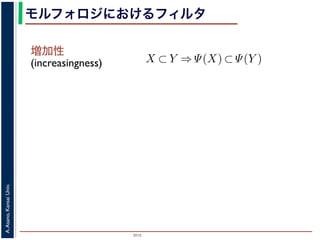
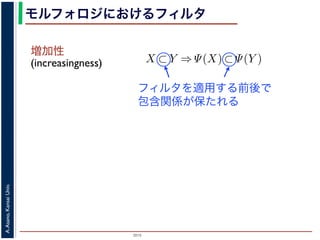
X ⊂ Y ⇒ Ψ(X) ⊂ Ψ(Y )
であることをいう.すなわち,物体の包
前後で保たれることを意味している.
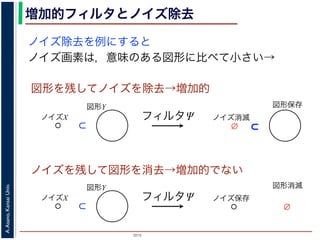
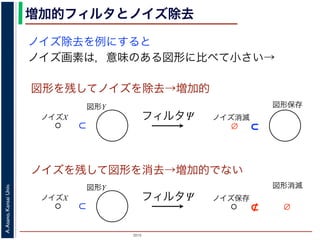
例えば,ノイズ除去を行う画像フィル
う.画像中のある場所でノイズとみなさ](https://image.slidesharecdn.com/2015sippr12slidess-150708014332-lva1-app6891/85/2015-6-320.jpg)
![2015
A.Asano,KansaiUniv.
モルフォロジにおけるフィルタ
移動不変性
(translation-invariance)
浅野:モルフォロジと形状記述
opening
closing
ng, closing の効果
高さとする柱で表す
内の立体となる.こ
に対して上記の集合
とは,
Ψ(Xb) = [Ψ(X)]b
であることをいう.簡単にいえば,「画像
をおよぼしても,その作用の効果は変わ
意味である.また「作用 Ψ が増加的で
X ⊂ Y ⇒ Ψ(X) ⊂ Ψ(Y )
であることをいう.すなわち,物体の包
前後で保たれることを意味している.
例えば,ノイズ除去を行う画像フィル
う.画像中のある場所でノイズとみなさ
フィルタ](https://image.slidesharecdn.com/2015sippr12slidess-150708014332-lva1-app6891/85/2015-7-320.jpg)
![2015
A.Asano,KansaiUniv.
モルフォロジにおけるフィルタ
移動不変性
(translation-invariance)
浅野:モルフォロジと形状記述
opening
closing
ng, closing の効果
高さとする柱で表す
内の立体となる.こ
に対して上記の集合
とは,
Ψ(Xb) = [Ψ(X)]b
であることをいう.簡単にいえば,「画像
をおよぼしても,その作用の効果は変わ
意味である.また「作用 Ψ が増加的で
X ⊂ Y ⇒ Ψ(X) ⊂ Ψ(Y )
であることをいう.すなわち,物体の包
前後で保たれることを意味している.
例えば,ノイズ除去を行う画像フィル
う.画像中のある場所でノイズとみなさ
フィルタ 図形](https://image.slidesharecdn.com/2015sippr12slidess-150708014332-lva1-app6891/85/2015-8-320.jpg)
![2015
A.Asano,KansaiUniv.
モルフォロジにおけるフィルタ
移動不変性
(translation-invariance)
浅野:モルフォロジと形状記述
opening
closing
ng, closing の効果
高さとする柱で表す
内の立体となる.こ
に対して上記の集合
とは,
Ψ(Xb) = [Ψ(X)]b
であることをいう.簡単にいえば,「画像
をおよぼしても,その作用の効果は変わ
意味である.また「作用 Ψ が増加的で
X ⊂ Y ⇒ Ψ(X) ⊂ Ψ(Y )
であることをいう.すなわち,物体の包
前後で保たれることを意味している.
例えば,ノイズ除去を行う画像フィル
う.画像中のある場所でノイズとみなさ
フィルタ 図形
移動](https://image.slidesharecdn.com/2015sippr12slidess-150708014332-lva1-app6891/85/2015-9-320.jpg)
![2015
A.Asano,KansaiUniv.
モルフォロジにおけるフィルタ
移動不変性
(translation-invariance)
浅野:モルフォロジと形状記述
opening
closing
ng, closing の効果
高さとする柱で表す
内の立体となる.こ
に対して上記の集合
とは,
Ψ(Xb) = [Ψ(X)]b
であることをいう.簡単にいえば,「画像
をおよぼしても,その作用の効果は変わ
意味である.また「作用 Ψ が増加的で
X ⊂ Y ⇒ Ψ(X) ⊂ Ψ(Y )
であることをいう.すなわち,物体の包
前後で保たれることを意味している.
例えば,ノイズ除去を行う画像フィル
う.画像中のある場所でノイズとみなさ
フィルタ 図形
移動
移動してからフィルタを適用するのと,
フィルタを適用してから移動するのとが同じ](https://image.slidesharecdn.com/2015sippr12slidess-150708014332-lva1-app6891/85/2015-10-320.jpg)
![2015
A.Asano,KansaiUniv.
モルフォロジにおけるフィルタ
移動不変性
(translation-invariance)
浅野:モルフォロジと形状記述
opening
closing
ng, closing の効果
高さとする柱で表す
内の立体となる.こ
に対して上記の集合
とは,
Ψ(Xb) = [Ψ(X)]b
であることをいう.簡単にいえば,「画像
をおよぼしても,その作用の効果は変わ
意味である.また「作用 Ψ が増加的で
X ⊂ Y ⇒ Ψ(X) ⊂ Ψ(Y )
であることをいう.すなわち,物体の包
前後で保たれることを意味している.
例えば,ノイズ除去を行う画像フィル
う.画像中のある場所でノイズとみなさ
フィルタ 図形
移動
移動してからフィルタを適用するのと,
フィルタを適用してから移動するのとが同じ
移動不変でない
(背景だけぼかし)](https://image.slidesharecdn.com/2015sippr12slidess-150708014332-lva1-app6891/85/2015-11-320.jpg)
![2015
A.Asano,KansaiUniv.
モルフォロジにおけるフィルタ
べき等性
(idempotence)
狭義のモルフォロジカルフィルタは,さらに
増加的なフィルタのみを考えるのは,自然であることがわかり
のモルフォロジカルフィルタとは,広義のフィルタの中で「べ
す。「作用 Ψ がべき等である」とは,
Ψ[Ψ(X)] = Ψ(X)
いいます。すなわち,「あるフィルタを適用した結果に,そのフ
結果は変わらない」という意味です。オープニングやクロージ
フォロジカルフィルタです。
は,大きな物体も小さな物体もエッジ以外は取り除いてしまうので,増加的](https://image.slidesharecdn.com/2015sippr12slidess-150708014332-lva1-app6891/85/2015-28-320.jpg)
![2015
A.Asano,KansaiUniv.
モルフォロジにおけるフィルタ
べき等性
(idempotence)
フィルタを1回適用すれば,
それ以上何度適用しても同じ
狭義のモルフォロジカルフィルタは,さらに
増加的なフィルタのみを考えるのは,自然であることがわかり
のモルフォロジカルフィルタとは,広義のフィルタの中で「べ
す。「作用 Ψ がべき等である」とは,
Ψ[Ψ(X)] = Ψ(X)
いいます。すなわち,「あるフィルタを適用した結果に,そのフ
結果は変わらない」という意味です。オープニングやクロージ
フォロジカルフィルタです。
は,大きな物体も小さな物体もエッジ以外は取り除いてしまうので,増加的](https://image.slidesharecdn.com/2015sippr12slidess-150708014332-lva1-app6891/85/2015-29-320.jpg)
![2015
A.Asano,KansaiUniv.
モルフォロジにおけるフィルタ
べき等性
(idempotence)
オープニング・クロージングは
もっとも基本的な(狭義の)モルフォロジカルフィルタ
フィルタを1回適用すれば,
それ以上何度適用しても同じ
狭義のモルフォロジカルフィルタは,さらに
増加的なフィルタのみを考えるのは,自然であることがわかり
のモルフォロジカルフィルタとは,広義のフィルタの中で「べ
す。「作用 Ψ がべき等である」とは,
Ψ[Ψ(X)] = Ψ(X)
いいます。すなわち,「あるフィルタを適用した結果に,そのフ
結果は変わらない」という意味です。オープニングやクロージ
フォロジカルフィルタです。
は,大きな物体も小さな物体もエッジ以外は取り除いてしまうので,増加的](https://image.slidesharecdn.com/2015sippr12slidess-150708014332-lva1-app6891/85/2015-30-320.jpg)
![2015
A.Asano,KansaiUniv.
フィルタ定理
移動不変で増加的なフィルタは,どんなフィルタでも,
なんらかの構造要素群による
エロージョンをORで組み合わせることで表せる
ルフォロジが真に図形操作の基礎演算であることを保証するものです。
表されます。
・増加的な(広義の)フィルタも,適当な構造要素を適当な数だけ用
エロ−ジョンの論理和,およびダイレーションの論理積によって表現
Ψ(X) を画像 X に対するフィルタとするとき,いかなる Ψ(X) につい
Ψ(X) =
B∈Ker[Ψ]
X ⊖ ˇB
Ψ(X) =
B∈Ker[Ψ]
X ⊕ ˇB
の集合(集合族)Ker[Ψ] が存在します。
の核 (kernel) とよばれ,次のようなものです。
Ker[Ψ] = {X | 0 ∈ Ψ(X)}.](https://image.slidesharecdn.com/2015sippr12slidess-150708014332-lva1-app6891/85/2015-32-320.jpg)
![2015
A.Asano,KansaiUniv.
フィルタ定理
移動不変で増加的なフィルタは,どんなフィルタでも,
なんらかの構造要素群による
エロージョンをORで組み合わせることで表せる
ルフォロジが真に図形操作の基礎演算であることを保証するものです。
表されます。
・増加的な(広義の)フィルタも,適当な構造要素を適当な数だけ用
エロ−ジョンの論理和,およびダイレーションの論理積によって表現
Ψ(X) を画像 X に対するフィルタとするとき,いかなる Ψ(X) につい
Ψ(X) =
B∈Ker[Ψ]
X ⊖ ˇB
Ψ(X) =
B∈Ker[Ψ]
X ⊕ ˇB
の集合(集合族)Ker[Ψ] が存在します。
の核 (kernel) とよばれ,次のようなものです。
Ker[Ψ] = {X | 0 ∈ Ψ(X)}.
Ψ(X) =
B∈Ker[Ψ]
X ⊖ ˇB
Ψ(X) =
B∈Ker[Ψ]
X ⊕ ˇB
の集合(集合族)Ker[Ψ] が存在します。
の核 (kernel) とよばれ,次のようなものです。
Ker[Ψ] = {X | 0 ∈ Ψ(X)}.
る座標系の原点を意味します。すなわち,Ker[Ψ] は「考えられる
るフィルタの出力が原点を含むものすべて」です。
下のように証明されます。ここでは,式 (4) のほうを証明します](https://image.slidesharecdn.com/2015sippr12slidess-150708014332-lva1-app6891/85/2015-33-320.jpg)
![2015
A.Asano,KansaiUniv.
フィルタ定理
移動不変で増加的なフィルタは,どんなフィルタでも,
なんらかの構造要素群による
エロージョンをORで組み合わせることで表せる
ルフォロジが真に図形操作の基礎演算であることを保証するものです。
表されます。
・増加的な(広義の)フィルタも,適当な構造要素を適当な数だけ用
エロ−ジョンの論理和,およびダイレーションの論理積によって表現
Ψ(X) を画像 X に対するフィルタとするとき,いかなる Ψ(X) につい
Ψ(X) =
B∈Ker[Ψ]
X ⊖ ˇB
Ψ(X) =
B∈Ker[Ψ]
X ⊕ ˇB
の集合(集合族)Ker[Ψ] が存在します。
の核 (kernel) とよばれ,次のようなものです。
Ker[Ψ] = {X | 0 ∈ Ψ(X)}.
Ψ(X) =
B∈Ker[Ψ]
X ⊖ ˇB
Ψ(X) =
B∈Ker[Ψ]
X ⊕ ˇB
の集合(集合族)Ker[Ψ] が存在します。
の核 (kernel) とよばれ,次のようなものです。
Ker[Ψ] = {X | 0 ∈ Ψ(X)}.
る座標系の原点を意味します。すなわち,Ker[Ψ] は「考えられる
るフィルタの出力が原点を含むものすべて」です。
下のように証明されます。ここでは,式 (4) のほうを証明します
フィルタの核(kernel)](https://image.slidesharecdn.com/2015sippr12slidess-150708014332-lva1-app6891/85/2015-34-320.jpg)
![2015
A.Asano,KansaiUniv.
フィルタ定理
移動不変で増加的なフィルタは,どんなフィルタでも,
なんらかの構造要素群による
エロージョンをORで組み合わせることで表せる
ルフォロジが真に図形操作の基礎演算であることを保証するものです。
表されます。
・増加的な(広義の)フィルタも,適当な構造要素を適当な数だけ用
エロ−ジョンの論理和,およびダイレーションの論理積によって表現
Ψ(X) を画像 X に対するフィルタとするとき,いかなる Ψ(X) につい
Ψ(X) =
B∈Ker[Ψ]
X ⊖ ˇB
Ψ(X) =
B∈Ker[Ψ]
X ⊕ ˇB
の集合(集合族)Ker[Ψ] が存在します。
の核 (kernel) とよばれ,次のようなものです。
Ker[Ψ] = {X | 0 ∈ Ψ(X)}.
Ψ(X) =
B∈Ker[Ψ]
X ⊖ ˇB
Ψ(X) =
B∈Ker[Ψ]
X ⊕ ˇB
の集合(集合族)Ker[Ψ] が存在します。
の核 (kernel) とよばれ,次のようなものです。
Ker[Ψ] = {X | 0 ∈ Ψ(X)}.
る座標系の原点を意味します。すなわち,Ker[Ψ] は「考えられる
るフィルタの出力が原点を含むものすべて」です。
下のように証明されます。ここでは,式 (4) のほうを証明します
フィルタの核(kernel)
原点](https://image.slidesharecdn.com/2015sippr12slidess-150708014332-lva1-app6891/85/2015-35-320.jpg)
![2015
A.Asano,KansaiUniv.
フィルタ定理
移動不変で増加的なフィルタは,どんなフィルタでも,
なんらかの構造要素群による
エロージョンをORで組み合わせることで表せる
ルフォロジが真に図形操作の基礎演算であることを保証するものです。
表されます。
・増加的な(広義の)フィルタも,適当な構造要素を適当な数だけ用
エロ−ジョンの論理和,およびダイレーションの論理積によって表現
Ψ(X) を画像 X に対するフィルタとするとき,いかなる Ψ(X) につい
Ψ(X) =
B∈Ker[Ψ]
X ⊖ ˇB
Ψ(X) =
B∈Ker[Ψ]
X ⊕ ˇB
の集合(集合族)Ker[Ψ] が存在します。
の核 (kernel) とよばれ,次のようなものです。
Ker[Ψ] = {X | 0 ∈ Ψ(X)}.
Ψ(X) =
B∈Ker[Ψ]
X ⊖ ˇB
Ψ(X) =
B∈Ker[Ψ]
X ⊕ ˇB
の集合(集合族)Ker[Ψ] が存在します。
の核 (kernel) とよばれ,次のようなものです。
Ker[Ψ] = {X | 0 ∈ Ψ(X)}.
る座標系の原点を意味します。すなわち,Ker[Ψ] は「考えられる
るフィルタの出力が原点を含むものすべて」です。
下のように証明されます。ここでは,式 (4) のほうを証明します
フィルタの核(kernel)
原点
事実上,
入力として可能な図形
すべて](https://image.slidesharecdn.com/2015sippr12slidess-150708014332-lva1-app6891/85/2015-36-320.jpg)
![2015
A.Asano,KansaiUniv.
フィルタ定理の証明
[1]
Ker[Ψ] の要素である任意の構造要素 B
るどの構造要素 B についても,X ⊖ ˇB
したがって,Ψ(X) ⊇
B∈Ker[Ψ]
X ⊖ ˇB
すから,h ∈ Ψ(X)ならば 0 ∈ Ψ(X−h)
h′ | (X−h)h′ ⊆ X} であり,h′ = h の
こで X−h を B とおくと,h ∈ X ⊖ ˇB
Ψ(X) ⇒ h ∈ X ⊖ ˇB です。つまり,
B を用いて,その画素が X ⊖ ˇB にも
B∈Ker[Ψ]
X ⊖ ˇB が示されました(図
す。より一般的な証明は,参考文献を参照し
を証明する](https://image.slidesharecdn.com/2015sippr12slidess-150708014332-lva1-app6891/85/2015-37-320.jpg)
![2015
A.Asano,KansaiUniv.
フィルタ定理の証明
[1]
Ker[Ψ] の要素である任意の構造要素 B
るどの構造要素 B についても,X ⊖ ˇB
したがって,Ψ(X) ⊇
B∈Ker[Ψ]
X ⊖ ˇB
すから,h ∈ Ψ(X)ならば 0 ∈ Ψ(X−h)
h′ | (X−h)h′ ⊆ X} であり,h′ = h の
こで X−h を B とおくと,h ∈ X ⊖ ˇB
Ψ(X) ⇒ h ∈ X ⊖ ˇB です。つまり,
B を用いて,その画素が X ⊖ ˇB にも
B∈Ker[Ψ]
X ⊖ ˇB が示されました(図
す。より一般的な証明は,参考文献を参照し
を証明する
Ker[Ψ]に含まれるBについて
,次のようなものです。
= {X | 0 ∈ Ψ(X)}. (6)
します。すなわち,Ker[Ψ] は「考えられるすべての入力図
点を含むものすべて」です。
す。ここでは,式 (4) のほうを証明します2。
いて,X ⊖ ˇB に含まれるベクトル(画素)h を考えます。
ら,Bh ⊆ X です。したがって,B ⊆ X−h です。
関係 B ⊆ X−h はフィルタ Ψ によって変化しません。すな
す。さらに,フィルタ Ψ は移動不変ですから,0 ∈ Ψ(X−h)
とによって h ∈ Ψ(X) が得られます。
) です。以上から,Ker[Ψ] の要素である任意の構造要素 B
まり,Ker[Ψ] に含まれるどの構造要素 B についても,X ⊖ ˇB
とがわかりました。したがって,Ψ(X) ⊇ X ⊖ ˇB
に含まれる画素hを考える](https://image.slidesharecdn.com/2015sippr12slidess-150708014332-lva1-app6891/85/2015-38-320.jpg)
![2015
A.Asano,KansaiUniv.
フィルタ定理の証明
[1]
Ker[Ψ] の要素である任意の構造要素 B
るどの構造要素 B についても,X ⊖ ˇB
したがって,Ψ(X) ⊇
B∈Ker[Ψ]
X ⊖ ˇB
すから,h ∈ Ψ(X)ならば 0 ∈ Ψ(X−h)
h′ | (X−h)h′ ⊆ X} であり,h′ = h の
こで X−h を B とおくと,h ∈ X ⊖ ˇB
Ψ(X) ⇒ h ∈ X ⊖ ˇB です。つまり,
B を用いて,その画素が X ⊖ ˇB にも
B∈Ker[Ψ]
X ⊖ ˇB が示されました(図
す。より一般的な証明は,参考文献を参照し
を証明する
Ker[Ψ]に含まれるBについて
X⊖B̌
h
,次のようなものです。
= {X | 0 ∈ Ψ(X)}. (6)
します。すなわち,Ker[Ψ] は「考えられるすべての入力図
点を含むものすべて」です。
す。ここでは,式 (4) のほうを証明します2。
いて,X ⊖ ˇB に含まれるベクトル(画素)h を考えます。
ら,Bh ⊆ X です。したがって,B ⊆ X−h です。
関係 B ⊆ X−h はフィルタ Ψ によって変化しません。すな
す。さらに,フィルタ Ψ は移動不変ですから,0 ∈ Ψ(X−h)
とによって h ∈ Ψ(X) が得られます。
) です。以上から,Ker[Ψ] の要素である任意の構造要素 B
まり,Ker[Ψ] に含まれるどの構造要素 B についても,X ⊖ ˇB
とがわかりました。したがって,Ψ(X) ⊇ X ⊖ ˇB
に含まれる画素hを考える](https://image.slidesharecdn.com/2015sippr12slidess-150708014332-lva1-app6891/85/2015-39-320.jpg)
![2015
A.Asano,KansaiUniv.
フィルタ定理の証明
[1]
Ker[Ψ] の要素である任意の構造要素 B
るどの構造要素 B についても,X ⊖ ˇB
したがって,Ψ(X) ⊇
B∈Ker[Ψ]
X ⊖ ˇB
すから,h ∈ Ψ(X)ならば 0 ∈ Ψ(X−h)
h′ | (X−h)h′ ⊆ X} であり,h′ = h の
こで X−h を B とおくと,h ∈ X ⊖ ˇB
Ψ(X) ⇒ h ∈ X ⊖ ˇB です。つまり,
B を用いて,その画素が X ⊖ ˇB にも
B∈Ker[Ψ]
X ⊖ ˇB が示されました(図
す。より一般的な証明は,参考文献を参照し
を証明する
Ker[Ψ]に含まれるBについて
X⊖B̌
h
,次のようなものです。
= {X | 0 ∈ Ψ(X)}. (6)
します。すなわち,Ker[Ψ] は「考えられるすべての入力図
点を含むものすべて」です。
す。ここでは,式 (4) のほうを証明します2。
いて,X ⊖ ˇB に含まれるベクトル(画素)h を考えます。
ら,Bh ⊆ X です。したがって,B ⊆ X−h です。
関係 B ⊆ X−h はフィルタ Ψ によって変化しません。すな
す。さらに,フィルタ Ψ は移動不変ですから,0 ∈ Ψ(X−h)
とによって h ∈ Ψ(X) が得られます。
) です。以上から,Ker[Ψ] の要素である任意の構造要素 B
まり,Ker[Ψ] に含まれるどの構造要素 B についても,X ⊖ ˇB
とがわかりました。したがって,Ψ(X) ⊇ X ⊖ ˇB
に含まれる画素hを考える
Ker[Ψ] =
0 は X が定義されている座標系の原点を意味しま
形のうち,それに対するフィルタの出力が原点を
フィルタ定理は,以下のように証明されます。
Ker[Ψ] の要素である任意の構造要素 B につい
X ⊖ ˇB = {x|Bx ⊆ X} と定義されていますから,
ここで,フィルタ Ψ は増加的ですから,包含関
わち,0 ∈ Ψ(B) ならば 0 ∈ Ψ(X−h) となります。
ならば,この関係を全体に h だけ移動することに
B は Ker[Ψ] の要素ですから,確かに 0 ∈ Ψ(B)
について,h ∈ X ⊖ ˇB ⇒ h ∈ Ψ(X) である,つまり](https://image.slidesharecdn.com/2015sippr12slidess-150708014332-lva1-app6891/85/2015-40-320.jpg)
![2015
A.Asano,KansaiUniv.
フィルタ定理の証明
[1]
Ker[Ψ] の要素である任意の構造要素 B
るどの構造要素 B についても,X ⊖ ˇB
したがって,Ψ(X) ⊇
B∈Ker[Ψ]
X ⊖ ˇB
すから,h ∈ Ψ(X)ならば 0 ∈ Ψ(X−h)
h′ | (X−h)h′ ⊆ X} であり,h′ = h の
こで X−h を B とおくと,h ∈ X ⊖ ˇB
Ψ(X) ⇒ h ∈ X ⊖ ˇB です。つまり,
B を用いて,その画素が X ⊖ ˇB にも
B∈Ker[Ψ]
X ⊖ ˇB が示されました(図
す。より一般的な証明は,参考文献を参照し
を証明する
Ker[Ψ]に含まれるBについて
X⊖B̌
h
,次のようなものです。
= {X | 0 ∈ Ψ(X)}. (6)
します。すなわち,Ker[Ψ] は「考えられるすべての入力図
点を含むものすべて」です。
す。ここでは,式 (4) のほうを証明します2。
いて,X ⊖ ˇB に含まれるベクトル(画素)h を考えます。
ら,Bh ⊆ X です。したがって,B ⊆ X−h です。
関係 B ⊆ X−h はフィルタ Ψ によって変化しません。すな
す。さらに,フィルタ Ψ は移動不変ですから,0 ∈ Ψ(X−h)
とによって h ∈ Ψ(X) が得られます。
) です。以上から,Ker[Ψ] の要素である任意の構造要素 B
まり,Ker[Ψ] に含まれるどの構造要素 B についても,X ⊖ ˇB
とがわかりました。したがって,Ψ(X) ⊇ X ⊖ ˇB
に含まれる画素hを考える
Ker[Ψ] =
0 は X が定義されている座標系の原点を意味しま
形のうち,それに対するフィルタの出力が原点を
フィルタ定理は,以下のように証明されます。
Ker[Ψ] の要素である任意の構造要素 B につい
X ⊖ ˇB = {x|Bx ⊆ X} と定義されていますから,
ここで,フィルタ Ψ は増加的ですから,包含関
わち,0 ∈ Ψ(B) ならば 0 ∈ Ψ(X−h) となります。
ならば,この関係を全体に h だけ移動することに
B は Ker[Ψ] の要素ですから,確かに 0 ∈ Ψ(B)
について,h ∈ X ⊖ ˇB ⇒ h ∈ Ψ(X) である,つまり
核 (kernel) とよばれ,次のようなものです。
Ker[Ψ] = {X | 0 ∈ Ψ(X)}.
標系の原点を意味します。すなわち,Ker[Ψ] は「考えら
ィルタの出力が原点を含むものすべて」です。
ように証明されます。ここでは,式 (4) のほうを証明しま
の構造要素 B について,X ⊖ ˇB に含まれるベクトル(画
義されていますから,Bh ⊆ X です。したがって,B ⊆
加的ですから,包含関係 B ⊆ X−h はフィルタ Ψ によって
Ψ(X−h) となります。さらに,フィルタ Ψ は移動不変です
h だけ移動することによって h ∈ Ψ(X) が得られます。](https://image.slidesharecdn.com/2015sippr12slidess-150708014332-lva1-app6891/85/2015-41-320.jpg)
![2015
A.Asano,KansaiUniv.
フィルタ定理の証明
[1]
Ker[Ψ] の要素である任意の構造要素 B
るどの構造要素 B についても,X ⊖ ˇB
したがって,Ψ(X) ⊇
B∈Ker[Ψ]
X ⊖ ˇB
すから,h ∈ Ψ(X)ならば 0 ∈ Ψ(X−h)
h′ | (X−h)h′ ⊆ X} であり,h′ = h の
こで X−h を B とおくと,h ∈ X ⊖ ˇB
Ψ(X) ⇒ h ∈ X ⊖ ˇB です。つまり,
B を用いて,その画素が X ⊖ ˇB にも
B∈Ker[Ψ]
X ⊖ ˇB が示されました(図
す。より一般的な証明は,参考文献を参照し
を証明する
Ker[Ψ]に含まれるBについて
X⊖B̌
h
,次のようなものです。
= {X | 0 ∈ Ψ(X)}. (6)
します。すなわち,Ker[Ψ] は「考えられるすべての入力図
点を含むものすべて」です。
す。ここでは,式 (4) のほうを証明します2。
いて,X ⊖ ˇB に含まれるベクトル(画素)h を考えます。
ら,Bh ⊆ X です。したがって,B ⊆ X−h です。
関係 B ⊆ X−h はフィルタ Ψ によって変化しません。すな
す。さらに,フィルタ Ψ は移動不変ですから,0 ∈ Ψ(X−h)
とによって h ∈ Ψ(X) が得られます。
) です。以上から,Ker[Ψ] の要素である任意の構造要素 B
まり,Ker[Ψ] に含まれるどの構造要素 B についても,X ⊖ ˇB
とがわかりました。したがって,Ψ(X) ⊇ X ⊖ ˇB
に含まれる画素hを考える
Ker[Ψ] =
0 は X が定義されている座標系の原点を意味しま
形のうち,それに対するフィルタの出力が原点を
フィルタ定理は,以下のように証明されます。
Ker[Ψ] の要素である任意の構造要素 B につい
X ⊖ ˇB = {x|Bx ⊆ X} と定義されていますから,
ここで,フィルタ Ψ は増加的ですから,包含関
わち,0 ∈ Ψ(B) ならば 0 ∈ Ψ(X−h) となります。
ならば,この関係を全体に h だけ移動することに
B は Ker[Ψ] の要素ですから,確かに 0 ∈ Ψ(B)
について,h ∈ X ⊖ ˇB ⇒ h ∈ Ψ(X) である,つまり
核 (kernel) とよばれ,次のようなものです。
Ker[Ψ] = {X | 0 ∈ Ψ(X)}.
標系の原点を意味します。すなわち,Ker[Ψ] は「考えら
ィルタの出力が原点を含むものすべて」です。
ように証明されます。ここでは,式 (4) のほうを証明しま
の構造要素 B について,X ⊖ ˇB に含まれるベクトル(画
義されていますから,Bh ⊆ X です。したがって,B ⊆
加的ですから,包含関係 B ⊆ X−h はフィルタ Ψ によって
Ψ(X−h) となります。さらに,フィルタ Ψ は移動不変です
h だけ移動することによって h ∈ Ψ(X) が得られます。
します。
うなものです。
∈ Ψ(X)}. (6)
なわち,Ker[Ψ] は「考えられるすべての入力図
のすべて」です。
は,式 (4) のほうを証明します2。
⊖ ˇB に含まれるベクトル(画素)h を考えます。
X です。したがって,B ⊆ X−h です。
X−h はフィルタ Ψ によって変化しません。すな](https://image.slidesharecdn.com/2015sippr12slidess-150708014332-lva1-app6891/85/2015-42-320.jpg)
![2015
A.Asano,KansaiUniv.
フィルタ定理の証明
一方 BはKer[Ψ]に含まれるので
X⊖B̌
h
は増加的ですから,包含関係 B ⊆ X−h はフィルタ Ψ によっ
0 ∈ Ψ(X−h) となります。さらに,フィルタ Ψ は移動不変
体に h だけ移動することによって h ∈ Ψ(X) が得られます
すから,確かに 0 ∈ Ψ(B) です。以上から,Ker[Ψ] の要素で
h ∈ Ψ(X) である,つまり,Ker[Ψ] に含まれるどの構造要
て Ψ(X) に含まれることがわかりました。したがって,Ψ
)。
る任意の画素hを考えます。Ψは移動不変ですから,h ∈ Ψ
h ∈ Ker[Ψ] です。ところで,X ⊖ ˇX−h = {h′ | (X−h)h′ ⊆
満たされるので,h ∈ X ⊖ ˇX−h です。ここで X−h を B](https://image.slidesharecdn.com/2015sippr12slidess-150708014332-lva1-app6891/85/2015-43-320.jpg)
![2015
A.Asano,KansaiUniv.
フィルタ定理の証明
一方 BはKer[Ψ]に含まれるので
X⊖B̌
h
を含むものすべて」です。
。ここでは,式 (4) のほうを証明します2。
いて,X ⊖ ˇB に含まれるベクトル(画素)h を考えます。
,Bh ⊆ X です。したがって,B ⊆ X−h です。
関係 B ⊆ X−h はフィルタ Ψ によって変化しません。すな
。さらに,フィルタ Ψ は移動不変ですから,0 ∈ Ψ(X−h)
によって h ∈ Ψ(X) が得られます。
) です。以上から,Ker[Ψ] の要素である任意の構造要素 B
り,Ker[Ψ] に含まれるどの構造要素 B についても,X ⊖ ˇB
がわかりました。したがって,Ψ(X) ⊇
B∈Ker[Ψ]
X ⊖ ˇB
は増加的ですから,包含関係 B ⊆ X−h はフィルタ Ψ によっ
0 ∈ Ψ(X−h) となります。さらに,フィルタ Ψ は移動不変
体に h だけ移動することによって h ∈ Ψ(X) が得られます
すから,確かに 0 ∈ Ψ(B) です。以上から,Ker[Ψ] の要素で
h ∈ Ψ(X) である,つまり,Ker[Ψ] に含まれるどの構造要
て Ψ(X) に含まれることがわかりました。したがって,Ψ
)。
る任意の画素hを考えます。Ψは移動不変ですから,h ∈ Ψ
h ∈ Ker[Ψ] です。ところで,X ⊖ ˇX−h = {h′ | (X−h)h′ ⊆
満たされるので,h ∈ X ⊖ ˇX−h です。ここで X−h を B
前ページ](https://image.slidesharecdn.com/2015sippr12slidess-150708014332-lva1-app6891/85/2015-44-320.jpg)
![2015
A.Asano,KansaiUniv.
フィルタ定理の証明
一方 BはKer[Ψ]に含まれるので
X⊖B̌
h
を含むものすべて」です。
。ここでは,式 (4) のほうを証明します2。
いて,X ⊖ ˇB に含まれるベクトル(画素)h を考えます。
,Bh ⊆ X です。したがって,B ⊆ X−h です。
関係 B ⊆ X−h はフィルタ Ψ によって変化しません。すな
。さらに,フィルタ Ψ は移動不変ですから,0 ∈ Ψ(X−h)
によって h ∈ Ψ(X) が得られます。
) です。以上から,Ker[Ψ] の要素である任意の構造要素 B
り,Ker[Ψ] に含まれるどの構造要素 B についても,X ⊖ ˇB
がわかりました。したがって,Ψ(X) ⊇
B∈Ker[Ψ]
X ⊖ ˇB
は増加的ですから,包含関係 B ⊆ X−h はフィルタ Ψ によっ
0 ∈ Ψ(X−h) となります。さらに,フィルタ Ψ は移動不変
体に h だけ移動することによって h ∈ Ψ(X) が得られます
すから,確かに 0 ∈ Ψ(B) です。以上から,Ker[Ψ] の要素で
h ∈ Ψ(X) である,つまり,Ker[Ψ] に含まれるどの構造要
て Ψ(X) に含まれることがわかりました。したがって,Ψ
)。
る任意の画素hを考えます。Ψは移動不変ですから,h ∈ Ψ
h ∈ Ker[Ψ] です。ところで,X ⊖ ˇX−h = {h′ | (X−h)h′ ⊆
満たされるので,h ∈ X ⊖ ˇX−h です。ここで X−h を B
前ページ
ち,それに対するフィルタの出力が原点を含むものすべて」
ルタ定理は,以下のように証明されます。ここでは,式 (4)
] の要素である任意の構造要素 B について,X ⊖ ˇB に含ま
= {x|Bx ⊆ X} と定義されていますから,Bh ⊆ X です。し
で,フィルタ Ψ は増加的ですから,包含関係 B ⊆ X−h はフィ
∈ Ψ(B) ならば 0 ∈ Ψ(X−h) となります。さらに,フィルタ
,この関係を全体に h だけ移動することによって h ∈ Ψ(X)
Ker[Ψ] の要素ですから,確かに 0 ∈ Ψ(B) です。以上から,K
て,h ∈ X ⊖ ˇB ⇒ h ∈ Ψ(X) である,つまり,Ker[Ψ] に含まれ
れる画素はすべて Ψ(X) に含まれることがわかりました。し
れました(図 1)。
増加的](https://image.slidesharecdn.com/2015sippr12slidess-150708014332-lva1-app6891/85/2015-45-320.jpg)
![2015
A.Asano,KansaiUniv.
フィルタ定理の証明
一方 BはKer[Ψ]に含まれるので
X⊖B̌
h
を含むものすべて」です。
。ここでは,式 (4) のほうを証明します2。
いて,X ⊖ ˇB に含まれるベクトル(画素)h を考えます。
,Bh ⊆ X です。したがって,B ⊆ X−h です。
関係 B ⊆ X−h はフィルタ Ψ によって変化しません。すな
。さらに,フィルタ Ψ は移動不変ですから,0 ∈ Ψ(X−h)
によって h ∈ Ψ(X) が得られます。
) です。以上から,Ker[Ψ] の要素である任意の構造要素 B
り,Ker[Ψ] に含まれるどの構造要素 B についても,X ⊖ ˇB
がわかりました。したがって,Ψ(X) ⊇
B∈Ker[Ψ]
X ⊖ ˇB
は増加的ですから,包含関係 B ⊆ X−h はフィルタ Ψ によっ
0 ∈ Ψ(X−h) となります。さらに,フィルタ Ψ は移動不変
体に h だけ移動することによって h ∈ Ψ(X) が得られます
すから,確かに 0 ∈ Ψ(B) です。以上から,Ker[Ψ] の要素で
h ∈ Ψ(X) である,つまり,Ker[Ψ] に含まれるどの構造要
て Ψ(X) に含まれることがわかりました。したがって,Ψ
)。
る任意の画素hを考えます。Ψは移動不変ですから,h ∈ Ψ
h ∈ Ker[Ψ] です。ところで,X ⊖ ˇX−h = {h′ | (X−h)h′ ⊆
満たされるので,h ∈ X ⊖ ˇX−h です。ここで X−h を B
前ページ
ち,それに対するフィルタの出力が原点を含むものすべて」
ルタ定理は,以下のように証明されます。ここでは,式 (4)
] の要素である任意の構造要素 B について,X ⊖ ˇB に含ま
= {x|Bx ⊆ X} と定義されていますから,Bh ⊆ X です。し
で,フィルタ Ψ は増加的ですから,包含関係 B ⊆ X−h はフィ
∈ Ψ(B) ならば 0 ∈ Ψ(X−h) となります。さらに,フィルタ
,この関係を全体に h だけ移動することによって h ∈ Ψ(X)
Ker[Ψ] の要素ですから,確かに 0 ∈ Ψ(B) です。以上から,K
て,h ∈ X ⊖ ˇB ⇒ h ∈ Ψ(X) である,つまり,Ker[Ψ] に含まれ
れる画素はすべて Ψ(X) に含まれることがわかりました。し
れました(図 1)。
増加的
味します。すなわち,Ker[Ψ] は「考えられるすべての入
原点を含むものすべて」です。
ます。ここでは,式 (4) のほうを証明します2。
について,X ⊖ ˇB に含まれるベクトル(画素)h を考えま
すから,Bh ⊆ X です。したがって,B ⊆ X−h です。
包含関係 B ⊆ X−h はフィルタ Ψ によって変化しません。
ます。さらに,フィルタ Ψ は移動不変ですから,0 ∈ Ψ(X
ことによって h ∈ Ψ(X) が得られます。
Ψ(B) です。以上から,Ker[Ψ] の要素である任意の構造要
,つまり,Ker[Ψ] に含まれるどの構造要素 B についても,X
ことがわかりました。したがって,Ψ(X) ⊇ X
移動不変](https://image.slidesharecdn.com/2015sippr12slidess-150708014332-lva1-app6891/85/2015-46-320.jpg)
![2015
A.Asano,KansaiUniv.
フィルタ定理の証明
一方 BはKer[Ψ]に含まれるので
X⊖B̌
h
を含むものすべて」です。
。ここでは,式 (4) のほうを証明します2。
いて,X ⊖ ˇB に含まれるベクトル(画素)h を考えます。
,Bh ⊆ X です。したがって,B ⊆ X−h です。
関係 B ⊆ X−h はフィルタ Ψ によって変化しません。すな
。さらに,フィルタ Ψ は移動不変ですから,0 ∈ Ψ(X−h)
によって h ∈ Ψ(X) が得られます。
) です。以上から,Ker[Ψ] の要素である任意の構造要素 B
り,Ker[Ψ] に含まれるどの構造要素 B についても,X ⊖ ˇB
がわかりました。したがって,Ψ(X) ⊇
B∈Ker[Ψ]
X ⊖ ˇB
は増加的ですから,包含関係 B ⊆ X−h はフィルタ Ψ によっ
0 ∈ Ψ(X−h) となります。さらに,フィルタ Ψ は移動不変
体に h だけ移動することによって h ∈ Ψ(X) が得られます
すから,確かに 0 ∈ Ψ(B) です。以上から,Ker[Ψ] の要素で
h ∈ Ψ(X) である,つまり,Ker[Ψ] に含まれるどの構造要
て Ψ(X) に含まれることがわかりました。したがって,Ψ
)。
る任意の画素hを考えます。Ψは移動不変ですから,h ∈ Ψ
h ∈ Ker[Ψ] です。ところで,X ⊖ ˇX−h = {h′ | (X−h)h′ ⊆
満たされるので,h ∈ X ⊖ ˇX−h です。ここで X−h を B
前ページ
ち,それに対するフィルタの出力が原点を含むものすべて」
ルタ定理は,以下のように証明されます。ここでは,式 (4)
] の要素である任意の構造要素 B について,X ⊖ ˇB に含ま
= {x|Bx ⊆ X} と定義されていますから,Bh ⊆ X です。し
で,フィルタ Ψ は増加的ですから,包含関係 B ⊆ X−h はフィ
∈ Ψ(B) ならば 0 ∈ Ψ(X−h) となります。さらに,フィルタ
,この関係を全体に h だけ移動することによって h ∈ Ψ(X)
Ker[Ψ] の要素ですから,確かに 0 ∈ Ψ(B) です。以上から,K
て,h ∈ X ⊖ ˇB ⇒ h ∈ Ψ(X) である,つまり,Ker[Ψ] に含まれ
れる画素はすべて Ψ(X) に含まれることがわかりました。し
れました(図 1)。
増加的
味します。すなわち,Ker[Ψ] は「考えられるすべての入
原点を含むものすべて」です。
ます。ここでは,式 (4) のほうを証明します2。
について,X ⊖ ˇB に含まれるベクトル(画素)h を考えま
すから,Bh ⊆ X です。したがって,B ⊆ X−h です。
包含関係 B ⊆ X−h はフィルタ Ψ によって変化しません。
ます。さらに,フィルタ Ψ は移動不変ですから,0 ∈ Ψ(X
ことによって h ∈ Ψ(X) が得られます。
Ψ(B) です。以上から,Ker[Ψ] の要素である任意の構造要
,つまり,Ker[Ψ] に含まれるどの構造要素 B についても,X
ことがわかりました。したがって,Ψ(X) ⊇ X
移動不変
B∈Ker[Ψ]
X ⊕ ˇB (5)
Ψ] が存在します。
,次のようなものです。
{X | 0 ∈ Ψ(X)}. (6)
ます。すなわち,Ker[Ψ] は「考えられるすべての入力図
を含むものすべて」です。
。ここでは,式 (4) のほうを証明します2。
いて,X ⊖ ˇB に含まれるベクトル(画素)h を考えます。
ら,Bh ⊆ X です。したがって,B ⊆ X−h です。
関係 B ⊆ X−h はフィルタ Ψ によって変化しません。すな
に含まれるどのhに
ついてもなりたつ→](https://image.slidesharecdn.com/2015sippr12slidess-150708014332-lva1-app6891/85/2015-47-320.jpg)
![2015
A.Asano,KansaiUniv.
フィルタ定理の証明
一方 BはKer[Ψ]に含まれるので
X⊖B̌
h
を含むものすべて」です。
。ここでは,式 (4) のほうを証明します2。
いて,X ⊖ ˇB に含まれるベクトル(画素)h を考えます。
,Bh ⊆ X です。したがって,B ⊆ X−h です。
関係 B ⊆ X−h はフィルタ Ψ によって変化しません。すな
。さらに,フィルタ Ψ は移動不変ですから,0 ∈ Ψ(X−h)
によって h ∈ Ψ(X) が得られます。
) です。以上から,Ker[Ψ] の要素である任意の構造要素 B
り,Ker[Ψ] に含まれるどの構造要素 B についても,X ⊖ ˇB
がわかりました。したがって,Ψ(X) ⊇
B∈Ker[Ψ]
X ⊖ ˇB
は増加的ですから,包含関係 B ⊆ X−h はフィルタ Ψ によっ
0 ∈ Ψ(X−h) となります。さらに,フィルタ Ψ は移動不変
体に h だけ移動することによって h ∈ Ψ(X) が得られます
すから,確かに 0 ∈ Ψ(B) です。以上から,Ker[Ψ] の要素で
h ∈ Ψ(X) である,つまり,Ker[Ψ] に含まれるどの構造要
て Ψ(X) に含まれることがわかりました。したがって,Ψ
)。
る任意の画素hを考えます。Ψは移動不変ですから,h ∈ Ψ
h ∈ Ker[Ψ] です。ところで,X ⊖ ˇX−h = {h′ | (X−h)h′ ⊆
満たされるので,h ∈ X ⊖ ˇX−h です。ここで X−h を B
前ページ
ち,それに対するフィルタの出力が原点を含むものすべて」
ルタ定理は,以下のように証明されます。ここでは,式 (4)
] の要素である任意の構造要素 B について,X ⊖ ˇB に含ま
= {x|Bx ⊆ X} と定義されていますから,Bh ⊆ X です。し
で,フィルタ Ψ は増加的ですから,包含関係 B ⊆ X−h はフィ
∈ Ψ(B) ならば 0 ∈ Ψ(X−h) となります。さらに,フィルタ
,この関係を全体に h だけ移動することによって h ∈ Ψ(X)
Ker[Ψ] の要素ですから,確かに 0 ∈ Ψ(B) です。以上から,K
て,h ∈ X ⊖ ˇB ⇒ h ∈ Ψ(X) である,つまり,Ker[Ψ] に含まれ
れる画素はすべて Ψ(X) に含まれることがわかりました。し
れました(図 1)。
増加的
味します。すなわち,Ker[Ψ] は「考えられるすべての入
原点を含むものすべて」です。
ます。ここでは,式 (4) のほうを証明します2。
について,X ⊖ ˇB に含まれるベクトル(画素)h を考えま
すから,Bh ⊆ X です。したがって,B ⊆ X−h です。
包含関係 B ⊆ X−h はフィルタ Ψ によって変化しません。
ます。さらに,フィルタ Ψ は移動不変ですから,0 ∈ Ψ(X
ことによって h ∈ Ψ(X) が得られます。
Ψ(B) です。以上から,Ker[Ψ] の要素である任意の構造要
,つまり,Ker[Ψ] に含まれるどの構造要素 B についても,X
ことがわかりました。したがって,Ψ(X) ⊇ X
移動不変
Ψ(X)
B∈Ker[Ψ]
X ⊕ ˇB (5)
Ψ] が存在します。
,次のようなものです。
{X | 0 ∈ Ψ(X)}. (6)
ます。すなわち,Ker[Ψ] は「考えられるすべての入力図
を含むものすべて」です。
。ここでは,式 (4) のほうを証明します2。
いて,X ⊖ ˇB に含まれるベクトル(画素)h を考えます。
ら,Bh ⊆ X です。したがって,B ⊆ X−h です。
関係 B ⊆ X−h はフィルタ Ψ によって変化しません。すな
に含まれるどのhに
ついてもなりたつ→ こうなる](https://image.slidesharecdn.com/2015sippr12slidess-150708014332-lva1-app6891/85/2015-48-320.jpg)
![2015
A.Asano,KansaiUniv.
フィルタ定理の証明
Ker[Ψ]に含まれる任意の構造要素Bについて
ここで,フィルタ Ψ は増加的ですから,包含関係 B ⊆ X−h はフィ
わち,0 ∈ Ψ(B) ならば 0 ∈ Ψ(X−h) となります。さらに,フィルタ
ならば,この関係を全体に h だけ移動することによって h ∈ Ψ(X)
B は Ker[Ψ] の要素ですから,確かに 0 ∈ Ψ(B) です。以上から,K
について,h ∈ X ⊖ ˇB ⇒ h ∈ Ψ(X) である,つまり,Ker[Ψ] に含まれ
に含まれる画素はすべて Ψ(X) に含まれることがわかりました。し
が示されました(図 1)。
逆に,Ψ(X)に含まれる任意の画素hを考えます。Ψは移動不変です
です。したがって,X−h ∈ Ker[Ψ] です。ところで,X ⊖ ˇX−h = {h
とき {(X−h)h′ ⊆ X} は満たされるので,h ∈ X ⊖ ˇX−h です。ここ
です。
したがって,Ker[Ψ] に含まれるある構造要素 B について,h ∈
X⊖B̌
h
Ψ(X)](https://image.slidesharecdn.com/2015sippr12slidess-150708014332-lva1-app6891/85/2015-49-320.jpg)
![2015
A.Asano,KansaiUniv.
フィルタ定理の証明
Ker[Ψ]に含まれる任意の構造要素Bについて
ここで,フィルタ Ψ は増加的ですから,包含関係 B ⊆ X−h はフィ
わち,0 ∈ Ψ(B) ならば 0 ∈ Ψ(X−h) となります。さらに,フィルタ
ならば,この関係を全体に h だけ移動することによって h ∈ Ψ(X)
B は Ker[Ψ] の要素ですから,確かに 0 ∈ Ψ(B) です。以上から,K
について,h ∈ X ⊖ ˇB ⇒ h ∈ Ψ(X) である,つまり,Ker[Ψ] に含まれ
に含まれる画素はすべて Ψ(X) に含まれることがわかりました。し
が示されました(図 1)。
逆に,Ψ(X)に含まれる任意の画素hを考えます。Ψは移動不変です
です。したがって,X−h ∈ Ker[Ψ] です。ところで,X ⊖ ˇX−h = {h
とき {(X−h)h′ ⊆ X} は満たされるので,h ∈ X ⊖ ˇX−h です。ここ
です。
したがって,Ker[Ψ] に含まれるある構造要素 B について,h ∈
h
X⊖B̌
X⊖B̌
h
Ψ(X)](https://image.slidesharecdn.com/2015sippr12slidess-150708014332-lva1-app6891/85/2015-50-320.jpg)
![2015
A.Asano,KansaiUniv.
フィルタ定理の証明
Ker[Ψ]に含まれる任意の構造要素Bについて
ここで,フィルタ Ψ は増加的ですから,包含関係 B ⊆ X−h はフィ
わち,0 ∈ Ψ(B) ならば 0 ∈ Ψ(X−h) となります。さらに,フィルタ
ならば,この関係を全体に h だけ移動することによって h ∈ Ψ(X)
B は Ker[Ψ] の要素ですから,確かに 0 ∈ Ψ(B) です。以上から,K
について,h ∈ X ⊖ ˇB ⇒ h ∈ Ψ(X) である,つまり,Ker[Ψ] に含まれ
に含まれる画素はすべて Ψ(X) に含まれることがわかりました。し
が示されました(図 1)。
逆に,Ψ(X)に含まれる任意の画素hを考えます。Ψは移動不変です
です。したがって,X−h ∈ Ker[Ψ] です。ところで,X ⊖ ˇX−h = {h
とき {(X−h)h′ ⊆ X} は満たされるので,h ∈ X ⊖ ˇX−h です。ここ
です。
したがって,Ker[Ψ] に含まれるある構造要素 B について,h ∈
h
X⊖B̌
X⊖B̌
h
Ψ(X)
X⊖B̌
h](https://image.slidesharecdn.com/2015sippr12slidess-150708014332-lva1-app6891/85/2015-51-320.jpg)
![2015
A.Asano,KansaiUniv.
フィルタ定理の証明
Ker[Ψ]に含まれる任意の構造要素Bについて
こうなっている
ここで,フィルタ Ψ は増加的ですから,包含関係 B ⊆ X−h はフィ
わち,0 ∈ Ψ(B) ならば 0 ∈ Ψ(X−h) となります。さらに,フィルタ
ならば,この関係を全体に h だけ移動することによって h ∈ Ψ(X)
B は Ker[Ψ] の要素ですから,確かに 0 ∈ Ψ(B) です。以上から,K
について,h ∈ X ⊖ ˇB ⇒ h ∈ Ψ(X) である,つまり,Ker[Ψ] に含まれ
に含まれる画素はすべて Ψ(X) に含まれることがわかりました。し
が示されました(図 1)。
逆に,Ψ(X)に含まれる任意の画素hを考えます。Ψは移動不変です
です。したがって,X−h ∈ Ker[Ψ] です。ところで,X ⊖ ˇX−h = {h
とき {(X−h)h′ ⊆ X} は満たされるので,h ∈ X ⊖ ˇX−h です。ここ
です。
したがって,Ker[Ψ] に含まれるある構造要素 B について,h ∈
h
X⊖B̌
X⊖B̌
h
Ψ(X)
X⊖B̌
h](https://image.slidesharecdn.com/2015sippr12slidess-150708014332-lva1-app6891/85/2015-52-320.jpg)
![2015
A.Asano,KansaiUniv.
フィルタ定理の証明
Ker[Ψ]に含まれる任意の構造要素Bについて
つまり
こうなっている
ここで,フィルタ Ψ は増加的ですから,包含関係 B ⊆ X−h はフィ
わち,0 ∈ Ψ(B) ならば 0 ∈ Ψ(X−h) となります。さらに,フィルタ
ならば,この関係を全体に h だけ移動することによって h ∈ Ψ(X)
B は Ker[Ψ] の要素ですから,確かに 0 ∈ Ψ(B) です。以上から,K
について,h ∈ X ⊖ ˇB ⇒ h ∈ Ψ(X) である,つまり,Ker[Ψ] に含まれ
に含まれる画素はすべて Ψ(X) に含まれることがわかりました。し
が示されました(図 1)。
逆に,Ψ(X)に含まれる任意の画素hを考えます。Ψは移動不変です
です。したがって,X−h ∈ Ker[Ψ] です。ところで,X ⊖ ˇX−h = {h
とき {(X−h)h′ ⊆ X} は満たされるので,h ∈ X ⊖ ˇX−h です。ここ
です。
したがって,Ker[Ψ] に含まれるある構造要素 B について,h ∈
h
X⊖B̌
X⊖B̌
h
Ψ(X)
X⊖B̌
h
うを証明します 。
ベクトル(画素)h を考えます。
って,B ⊆ X−h です。
Ψ によって変化しません。すな
移動不変ですから,0 ∈ Ψ(X−h)
られます。
の要素である任意の構造要素 B
の構造要素 B についても,X ⊖ ˇB
って,Ψ(X) ⊇
B∈Ker[Ψ]
X ⊖ ˇB](https://image.slidesharecdn.com/2015sippr12slidess-150708014332-lva1-app6891/85/2015-53-320.jpg)
![2015
A.Asano,KansaiUniv.
フィルタ定理の証明
[2] を証明する
素 B について,h ∈ Ψ(X) ⇒ h ∈ X ⊖ ˇB です。つまり,
の中のある構造要素 B を用いて,その画素が X ⊖ ˇB にも
したがって,Ψ(X) ⊆
B∈Ker[Ψ]
X ⊖ ˇB が示されました(図
現定理」とよばれています。より一般的な証明は,参考文献を参照し
3. 6. 26) http://racco.mikeneko.jp/ 2/5 ページ](https://image.slidesharecdn.com/2015sippr12slidess-150708014332-lva1-app6891/85/2015-54-320.jpg)
![2015
A.Asano,KansaiUniv.
フィルタ定理の証明
[2] を証明する
Ψ(X)に含まれる任意のhについて
素 B について,h ∈ Ψ(X) ⇒ h ∈ X ⊖ ˇB です。つまり,
の中のある構造要素 B を用いて,その画素が X ⊖ ˇB にも
したがって,Ψ(X) ⊆
B∈Ker[Ψ]
X ⊖ ˇB が示されました(図
現定理」とよばれています。より一般的な証明は,参考文献を参照し
3. 6. 26) http://racco.mikeneko.jp/ 2/5 ページ
。ここでは,式 (4) のほうを証明します 。
て,X ⊖ ˇB に含まれるベクトル(画素)h を考えます。
,Bh ⊆ X です。したがって,B ⊆ X−h です。
係 B ⊆ X−h はフィルタ Ψ によって変化しません。すな
。さらに,フィルタ Ψ は移動不変ですから,0 ∈ Ψ(X−h)
によって h ∈ Ψ(X) が得られます。
です。以上から,Ker[Ψ] の要素である任意の構造要素 B
り,Ker[Ψ] に含まれるどの構造要素 B についても,X ⊖ ˇB
がわかりました。したがって,Ψ(X) ⊇
B∈Ker[Ψ]
X ⊖ ˇB](https://image.slidesharecdn.com/2015sippr12slidess-150708014332-lva1-app6891/85/2015-55-320.jpg)
![2015
A.Asano,KansaiUniv.
フィルタ定理の証明
[2] を証明する
Ψ(X)に含まれる任意のhについて
素 B について,h ∈ Ψ(X) ⇒ h ∈ X ⊖ ˇB です。つまり,
の中のある構造要素 B を用いて,その画素が X ⊖ ˇB にも
したがって,Ψ(X) ⊆
B∈Ker[Ψ]
X ⊖ ˇB が示されました(図
現定理」とよばれています。より一般的な証明は,参考文献を参照し
3. 6. 26) http://racco.mikeneko.jp/ 2/5 ページ
Ker[Ψ] = {X | 0 ∈ Ψ(X)}.
されている座標系の原点を意味します。すなわち,Ker[Ψ] は
れに対するフィルタの出力が原点を含むものすべて」です。
理は,以下のように証明されます。ここでは,式 (4) のほう
素である任意の構造要素 B について,X ⊖ ˇB に含まれるベ
x ⊆ X} と定義されていますから,Bh ⊆ X です。したがっ
ルタ Ψ は増加的ですから,包含関係 B ⊆ X−h はフィルタ Ψ
) ならば 0 ∈ Ψ(X−h) となります。さらに,フィルタ Ψ は移
関係を全体に h だけ移動することによって h ∈ Ψ(X) が得ら
の要素ですから,確かに 0 ∈ Ψ(B) です。以上から,Ker[Ψ] の
X ⊖ ˇB ⇒ h ∈ Ψ(X) である,つまり,Ker[Ψ] に含まれるどの
。ここでは,式 (4) のほうを証明します 。
て,X ⊖ ˇB に含まれるベクトル(画素)h を考えます。
,Bh ⊆ X です。したがって,B ⊆ X−h です。
係 B ⊆ X−h はフィルタ Ψ によって変化しません。すな
。さらに,フィルタ Ψ は移動不変ですから,0 ∈ Ψ(X−h)
によって h ∈ Ψ(X) が得られます。
です。以上から,Ker[Ψ] の要素である任意の構造要素 B
り,Ker[Ψ] に含まれるどの構造要素 B についても,X ⊖ ˇB
がわかりました。したがって,Ψ(X) ⊇
B∈Ker[Ψ]
X ⊖ ˇB
移動不変](https://image.slidesharecdn.com/2015sippr12slidess-150708014332-lva1-app6891/85/2015-56-320.jpg)
![2015
A.Asano,KansaiUniv.
フィルタ定理の証明
[2] を証明する
Ψ(X)に含まれる任意のhについて
素 B について,h ∈ Ψ(X) ⇒ h ∈ X ⊖ ˇB です。つまり,
の中のある構造要素 B を用いて,その画素が X ⊖ ˇB にも
したがって,Ψ(X) ⊆
B∈Ker[Ψ]
X ⊖ ˇB が示されました(図
現定理」とよばれています。より一般的な証明は,参考文献を参照し
3. 6. 26) http://racco.mikeneko.jp/ 2/5 ページ
Ker[Ψ] = {X | 0 ∈ Ψ(X)}.
されている座標系の原点を意味します。すなわち,Ker[Ψ] は
れに対するフィルタの出力が原点を含むものすべて」です。
理は,以下のように証明されます。ここでは,式 (4) のほう
素である任意の構造要素 B について,X ⊖ ˇB に含まれるベ
x ⊆ X} と定義されていますから,Bh ⊆ X です。したがっ
ルタ Ψ は増加的ですから,包含関係 B ⊆ X−h はフィルタ Ψ
) ならば 0 ∈ Ψ(X−h) となります。さらに,フィルタ Ψ は移
関係を全体に h だけ移動することによって h ∈ Ψ(X) が得ら
の要素ですから,確かに 0 ∈ Ψ(B) です。以上から,Ker[Ψ] の
X ⊖ ˇB ⇒ h ∈ Ψ(X) である,つまり,Ker[Ψ] に含まれるどの
。ここでは,式 (4) のほうを証明します 。
て,X ⊖ ˇB に含まれるベクトル(画素)h を考えます。
,Bh ⊆ X です。したがって,B ⊆ X−h です。
係 B ⊆ X−h はフィルタ Ψ によって変化しません。すな
。さらに,フィルタ Ψ は移動不変ですから,0 ∈ Ψ(X−h)
によって h ∈ Ψ(X) が得られます。
です。以上から,Ker[Ψ] の要素である任意の構造要素 B
り,Ker[Ψ] に含まれるどの構造要素 B についても,X ⊖ ˇB
がわかりました。したがって,Ψ(X) ⊇
B∈Ker[Ψ]
X ⊖ ˇB
移動不変
x|Bx ⊆ X} と定義されていますから,Bh ⊆ X です。したがっ
フィルタ Ψ は増加的ですから,包含関係 B ⊆ X−h はフィルタ Ψ
Ψ(B) ならば 0 ∈ Ψ(X−h) となります。さらに,フィルタ Ψ は移動
の関係を全体に h だけ移動することによって h ∈ Ψ(X) が得ら
Ψ] の要素ですから,確かに 0 ∈ Ψ(B) です。以上から,Ker[Ψ] の
∈ X⊖ ˇB ⇒ h ∈ Ψ(X) である,つまり,Ker[Ψ] に含まれるどの構
画素はすべて Ψ(X) に含まれることがわかりました。したがって
した(図 1)。
X)に含まれる任意の画素hを考えます。Ψは移動不変ですから,h
がって,X−h ∈ Ker[Ψ] です。ところで,X ⊖ ˇX−h = {h′ | (X−
)h′ ⊆ X} は満たされるので,h ∈ X ⊖ ˇX−h です。ここで X−h
核の定義](https://image.slidesharecdn.com/2015sippr12slidess-150708014332-lva1-app6891/85/2015-57-320.jpg)
![2015
A.Asano,KansaiUniv.
フィルタ定理の証明
[2] を証明する
Ψ(X)に含まれる任意のhについて
素 B について,h ∈ Ψ(X) ⇒ h ∈ X ⊖ ˇB です。つまり,
の中のある構造要素 B を用いて,その画素が X ⊖ ˇB にも
したがって,Ψ(X) ⊆
B∈Ker[Ψ]
X ⊖ ˇB が示されました(図
現定理」とよばれています。より一般的な証明は,参考文献を参照し
3. 6. 26) http://racco.mikeneko.jp/ 2/5 ページ
Ker[Ψ] = {X | 0 ∈ Ψ(X)}.
されている座標系の原点を意味します。すなわち,Ker[Ψ] は
れに対するフィルタの出力が原点を含むものすべて」です。
理は,以下のように証明されます。ここでは,式 (4) のほう
素である任意の構造要素 B について,X ⊖ ˇB に含まれるベ
x ⊆ X} と定義されていますから,Bh ⊆ X です。したがっ
ルタ Ψ は増加的ですから,包含関係 B ⊆ X−h はフィルタ Ψ
) ならば 0 ∈ Ψ(X−h) となります。さらに,フィルタ Ψ は移
関係を全体に h だけ移動することによって h ∈ Ψ(X) が得ら
の要素ですから,確かに 0 ∈ Ψ(B) です。以上から,Ker[Ψ] の
X ⊖ ˇB ⇒ h ∈ Ψ(X) である,つまり,Ker[Ψ] に含まれるどの
。ここでは,式 (4) のほうを証明します 。
て,X ⊖ ˇB に含まれるベクトル(画素)h を考えます。
,Bh ⊆ X です。したがって,B ⊆ X−h です。
係 B ⊆ X−h はフィルタ Ψ によって変化しません。すな
。さらに,フィルタ Ψ は移動不変ですから,0 ∈ Ψ(X−h)
によって h ∈ Ψ(X) が得られます。
です。以上から,Ker[Ψ] の要素である任意の構造要素 B
り,Ker[Ψ] に含まれるどの構造要素 B についても,X ⊖ ˇB
がわかりました。したがって,Ψ(X) ⊇
B∈Ker[Ψ]
X ⊖ ˇB
移動不変
x|Bx ⊆ X} と定義されていますから,Bh ⊆ X です。したがっ
フィルタ Ψ は増加的ですから,包含関係 B ⊆ X−h はフィルタ Ψ
Ψ(B) ならば 0 ∈ Ψ(X−h) となります。さらに,フィルタ Ψ は移動
の関係を全体に h だけ移動することによって h ∈ Ψ(X) が得ら
Ψ] の要素ですから,確かに 0 ∈ Ψ(B) です。以上から,Ker[Ψ] の
∈ X⊖ ˇB ⇒ h ∈ Ψ(X) である,つまり,Ker[Ψ] に含まれるどの構
画素はすべて Ψ(X) に含まれることがわかりました。したがって
した(図 1)。
X)に含まれる任意の画素hを考えます。Ψは移動不変ですから,h
がって,X−h ∈ Ker[Ψ] です。ところで,X ⊖ ˇX−h = {h′ | (X−
)h′ ⊆ X} は満たされるので,h ∈ X ⊖ ˇX−h です。ここで X−h
∈ Ψ(X) である,つまり,Ker[Ψ] に含まれるどの構造要素 B に
Ψ(X) に含まれることがわかりました。したがって,Ψ(X) ⊇
任意の画素 hを考えます。Ψは移動不変ですから,h ∈ Ψ(X)なら
∈ Ker[Ψ] です。ところで,X ⊖ ˇX−h = {h′ | (X−h)h′ ⊆ X} で
たされるので,h ∈ X ⊖ ˇX−h です。ここで X−h を B とおく
含まれるある構造要素 B について,h ∈ Ψ(X) ⇒ h ∈ X ⊖ B
についても,Ker[Ψ] の中のある構造要素 B を用いて,その画
とがわかりました。したがって,Ψ(X) ⊆
B∈Ker[Ψ]
X ⊖ ˇB が示
を考えると
核の定義](https://image.slidesharecdn.com/2015sippr12slidess-150708014332-lva1-app6891/85/2015-58-320.jpg)
![2015
A.Asano,KansaiUniv.
フィルタ定理の証明
[2] を証明する
Ψ(X)に含まれる任意のhについて
素 B について,h ∈ Ψ(X) ⇒ h ∈ X ⊖ ˇB です。つまり,
の中のある構造要素 B を用いて,その画素が X ⊖ ˇB にも
したがって,Ψ(X) ⊆
B∈Ker[Ψ]
X ⊖ ˇB が示されました(図
現定理」とよばれています。より一般的な証明は,参考文献を参照し
3. 6. 26) http://racco.mikeneko.jp/ 2/5 ページ
Ker[Ψ] = {X | 0 ∈ Ψ(X)}.
されている座標系の原点を意味します。すなわち,Ker[Ψ] は
れに対するフィルタの出力が原点を含むものすべて」です。
理は,以下のように証明されます。ここでは,式 (4) のほう
素である任意の構造要素 B について,X ⊖ ˇB に含まれるベ
x ⊆ X} と定義されていますから,Bh ⊆ X です。したがっ
ルタ Ψ は増加的ですから,包含関係 B ⊆ X−h はフィルタ Ψ
) ならば 0 ∈ Ψ(X−h) となります。さらに,フィルタ Ψ は移
関係を全体に h だけ移動することによって h ∈ Ψ(X) が得ら
の要素ですから,確かに 0 ∈ Ψ(B) です。以上から,Ker[Ψ] の
X ⊖ ˇB ⇒ h ∈ Ψ(X) である,つまり,Ker[Ψ] に含まれるどの
。ここでは,式 (4) のほうを証明します 。
て,X ⊖ ˇB に含まれるベクトル(画素)h を考えます。
,Bh ⊆ X です。したがって,B ⊆ X−h です。
係 B ⊆ X−h はフィルタ Ψ によって変化しません。すな
。さらに,フィルタ Ψ は移動不変ですから,0 ∈ Ψ(X−h)
によって h ∈ Ψ(X) が得られます。
です。以上から,Ker[Ψ] の要素である任意の構造要素 B
り,Ker[Ψ] に含まれるどの構造要素 B についても,X ⊖ ˇB
がわかりました。したがって,Ψ(X) ⊇
B∈Ker[Ψ]
X ⊖ ˇB
移動不変
x|Bx ⊆ X} と定義されていますから,Bh ⊆ X です。したがっ
フィルタ Ψ は増加的ですから,包含関係 B ⊆ X−h はフィルタ Ψ
Ψ(B) ならば 0 ∈ Ψ(X−h) となります。さらに,フィルタ Ψ は移動
の関係を全体に h だけ移動することによって h ∈ Ψ(X) が得ら
Ψ] の要素ですから,確かに 0 ∈ Ψ(B) です。以上から,Ker[Ψ] の
∈ X⊖ ˇB ⇒ h ∈ Ψ(X) である,つまり,Ker[Ψ] に含まれるどの構
画素はすべて Ψ(X) に含まれることがわかりました。したがって
した(図 1)。
X)に含まれる任意の画素hを考えます。Ψは移動不変ですから,h
がって,X−h ∈ Ker[Ψ] です。ところで,X ⊖ ˇX−h = {h′ | (X−
)h′ ⊆ X} は満たされるので,h ∈ X ⊖ ˇX−h です。ここで X−h
∈ Ψ(X) である,つまり,Ker[Ψ] に含まれるどの構造要素 B に
Ψ(X) に含まれることがわかりました。したがって,Ψ(X) ⊇
任意の画素 hを考えます。Ψは移動不変ですから,h ∈ Ψ(X)なら
∈ Ker[Ψ] です。ところで,X ⊖ ˇX−h = {h′ | (X−h)h′ ⊆ X} で
たされるので,h ∈ X ⊖ ˇX−h です。ここで X−h を B とおく
含まれるある構造要素 B について,h ∈ Ψ(X) ⇒ h ∈ X ⊖ B
についても,Ker[Ψ] の中のある構造要素 B を用いて,その画
とがわかりました。したがって,Ψ(X) ⊆
B∈Ker[Ψ]
X ⊖ ˇB が示
を考えると
核の定義](https://image.slidesharecdn.com/2015sippr12slidess-150708014332-lva1-app6891/85/2015-59-320.jpg)
![2015
A.Asano,KansaiUniv.
フィルタ定理の証明
[2] を証明する
Ψ(X)に含まれる任意のhについて
素 B について,h ∈ Ψ(X) ⇒ h ∈ X ⊖ ˇB です。つまり,
の中のある構造要素 B を用いて,その画素が X ⊖ ˇB にも
したがって,Ψ(X) ⊆
B∈Ker[Ψ]
X ⊖ ˇB が示されました(図
現定理」とよばれています。より一般的な証明は,参考文献を参照し
3. 6. 26) http://racco.mikeneko.jp/ 2/5 ページ
Ker[Ψ] = {X | 0 ∈ Ψ(X)}.
されている座標系の原点を意味します。すなわち,Ker[Ψ] は
れに対するフィルタの出力が原点を含むものすべて」です。
理は,以下のように証明されます。ここでは,式 (4) のほう
素である任意の構造要素 B について,X ⊖ ˇB に含まれるベ
x ⊆ X} と定義されていますから,Bh ⊆ X です。したがっ
ルタ Ψ は増加的ですから,包含関係 B ⊆ X−h はフィルタ Ψ
) ならば 0 ∈ Ψ(X−h) となります。さらに,フィルタ Ψ は移
関係を全体に h だけ移動することによって h ∈ Ψ(X) が得ら
の要素ですから,確かに 0 ∈ Ψ(B) です。以上から,Ker[Ψ] の
X ⊖ ˇB ⇒ h ∈ Ψ(X) である,つまり,Ker[Ψ] に含まれるどの
。ここでは,式 (4) のほうを証明します 。
て,X ⊖ ˇB に含まれるベクトル(画素)h を考えます。
,Bh ⊆ X です。したがって,B ⊆ X−h です。
係 B ⊆ X−h はフィルタ Ψ によって変化しません。すな
。さらに,フィルタ Ψ は移動不変ですから,0 ∈ Ψ(X−h)
によって h ∈ Ψ(X) が得られます。
です。以上から,Ker[Ψ] の要素である任意の構造要素 B
り,Ker[Ψ] に含まれるどの構造要素 B についても,X ⊖ ˇB
がわかりました。したがって,Ψ(X) ⊇
B∈Ker[Ψ]
X ⊖ ˇB
移動不変
x|Bx ⊆ X} と定義されていますから,Bh ⊆ X です。したがっ
フィルタ Ψ は増加的ですから,包含関係 B ⊆ X−h はフィルタ Ψ
Ψ(B) ならば 0 ∈ Ψ(X−h) となります。さらに,フィルタ Ψ は移動
の関係を全体に h だけ移動することによって h ∈ Ψ(X) が得ら
Ψ] の要素ですから,確かに 0 ∈ Ψ(B) です。以上から,Ker[Ψ] の
∈ X⊖ ˇB ⇒ h ∈ Ψ(X) である,つまり,Ker[Ψ] に含まれるどの構
画素はすべて Ψ(X) に含まれることがわかりました。したがって
した(図 1)。
X)に含まれる任意の画素hを考えます。Ψは移動不変ですから,h
がって,X−h ∈ Ker[Ψ] です。ところで,X ⊖ ˇX−h = {h′ | (X−
)h′ ⊆ X} は満たされるので,h ∈ X ⊖ ˇX−h です。ここで X−h
∈ Ψ(X) である,つまり,Ker[Ψ] に含まれるどの構造要素 B に
Ψ(X) に含まれることがわかりました。したがって,Ψ(X) ⊇
任意の画素 hを考えます。Ψは移動不変ですから,h ∈ Ψ(X)なら
∈ Ker[Ψ] です。ところで,X ⊖ ˇX−h = {h′ | (X−h)h′ ⊆ X} で
たされるので,h ∈ X ⊖ ˇX−h です。ここで X−h を B とおく
含まれるある構造要素 B について,h ∈ Ψ(X) ⇒ h ∈ X ⊖ B
についても,Ker[Ψ] の中のある構造要素 B を用いて,その画
とがわかりました。したがって,Ψ(X) ⊆
B∈Ker[Ψ]
X ⊖ ˇB が示
を考えると
) です。以上から,Ker[Ψ] の要素である任意の構造要素 B
り,Ker[Ψ] に含まれるどの構造要素 B についても,X ⊖ ˇB
がわかりました。したがって,Ψ(X) ⊇
B∈Ker[Ψ]
X ⊖ ˇB
す。Ψは移動不変ですから,h ∈ Ψ(X)ならば 0 ∈ Ψ(X−h)
ろで,X ⊖ ˇX−h = {h′ | (X−h)h′ ⊆ X} であり,h′ = h の
X ⊖ ˇX−h です。ここで X−h を B とおくと,h ∈ X ⊖ ˇB
素 B について,h ∈ Ψ(X) ⇒ h ∈ X ⊖ ˇB です。つまり,
の中のある構造要素 B を用いて,その画素が X ⊖ ˇB にも
たがって,Ψ(X) ⊆ X ⊖ ˇB が示されました(図
のときもなりたつ
核の定義](https://image.slidesharecdn.com/2015sippr12slidess-150708014332-lva1-app6891/85/2015-60-320.jpg)
![2015
A.Asano,KansaiUniv.
フィルタ定理の証明
[2] を証明する
Ψ(X)に含まれる任意のhについて
素 B について,h ∈ Ψ(X) ⇒ h ∈ X ⊖ ˇB です。つまり,
の中のある構造要素 B を用いて,その画素が X ⊖ ˇB にも
したがって,Ψ(X) ⊆
B∈Ker[Ψ]
X ⊖ ˇB が示されました(図
現定理」とよばれています。より一般的な証明は,参考文献を参照し
3. 6. 26) http://racco.mikeneko.jp/ 2/5 ページ
Ker[Ψ] = {X | 0 ∈ Ψ(X)}.
されている座標系の原点を意味します。すなわち,Ker[Ψ] は
れに対するフィルタの出力が原点を含むものすべて」です。
理は,以下のように証明されます。ここでは,式 (4) のほう
素である任意の構造要素 B について,X ⊖ ˇB に含まれるベ
x ⊆ X} と定義されていますから,Bh ⊆ X です。したがっ
ルタ Ψ は増加的ですから,包含関係 B ⊆ X−h はフィルタ Ψ
) ならば 0 ∈ Ψ(X−h) となります。さらに,フィルタ Ψ は移
関係を全体に h だけ移動することによって h ∈ Ψ(X) が得ら
の要素ですから,確かに 0 ∈ Ψ(B) です。以上から,Ker[Ψ] の
X ⊖ ˇB ⇒ h ∈ Ψ(X) である,つまり,Ker[Ψ] に含まれるどの
。ここでは,式 (4) のほうを証明します 。
て,X ⊖ ˇB に含まれるベクトル(画素)h を考えます。
,Bh ⊆ X です。したがって,B ⊆ X−h です。
係 B ⊆ X−h はフィルタ Ψ によって変化しません。すな
。さらに,フィルタ Ψ は移動不変ですから,0 ∈ Ψ(X−h)
によって h ∈ Ψ(X) が得られます。
です。以上から,Ker[Ψ] の要素である任意の構造要素 B
り,Ker[Ψ] に含まれるどの構造要素 B についても,X ⊖ ˇB
がわかりました。したがって,Ψ(X) ⊇
B∈Ker[Ψ]
X ⊖ ˇB
移動不変
x|Bx ⊆ X} と定義されていますから,Bh ⊆ X です。したがっ
フィルタ Ψ は増加的ですから,包含関係 B ⊆ X−h はフィルタ Ψ
Ψ(B) ならば 0 ∈ Ψ(X−h) となります。さらに,フィルタ Ψ は移動
の関係を全体に h だけ移動することによって h ∈ Ψ(X) が得ら
Ψ] の要素ですから,確かに 0 ∈ Ψ(B) です。以上から,Ker[Ψ] の
∈ X⊖ ˇB ⇒ h ∈ Ψ(X) である,つまり,Ker[Ψ] に含まれるどの構
画素はすべて Ψ(X) に含まれることがわかりました。したがって
した(図 1)。
X)に含まれる任意の画素hを考えます。Ψは移動不変ですから,h
がって,X−h ∈ Ker[Ψ] です。ところで,X ⊖ ˇX−h = {h′ | (X−
)h′ ⊆ X} は満たされるので,h ∈ X ⊖ ˇX−h です。ここで X−h
∈ Ψ(X) である,つまり,Ker[Ψ] に含まれるどの構造要素 B に
Ψ(X) に含まれることがわかりました。したがって,Ψ(X) ⊇
任意の画素 hを考えます。Ψは移動不変ですから,h ∈ Ψ(X)なら
∈ Ker[Ψ] です。ところで,X ⊖ ˇX−h = {h′ | (X−h)h′ ⊆ X} で
たされるので,h ∈ X ⊖ ˇX−h です。ここで X−h を B とおく
含まれるある構造要素 B について,h ∈ Ψ(X) ⇒ h ∈ X ⊖ B
についても,Ker[Ψ] の中のある構造要素 B を用いて,その画
とがわかりました。したがって,Ψ(X) ⊆
B∈Ker[Ψ]
X ⊖ ˇB が示
を考えると
) です。以上から,Ker[Ψ] の要素である任意の構造要素 B
り,Ker[Ψ] に含まれるどの構造要素 B についても,X ⊖ ˇB
がわかりました。したがって,Ψ(X) ⊇
B∈Ker[Ψ]
X ⊖ ˇB
す。Ψは移動不変ですから,h ∈ Ψ(X)ならば 0 ∈ Ψ(X−h)
ろで,X ⊖ ˇX−h = {h′ | (X−h)h′ ⊆ X} であり,h′ = h の
X ⊖ ˇX−h です。ここで X−h を B とおくと,h ∈ X ⊖ ˇB
素 B について,h ∈ Ψ(X) ⇒ h ∈ X ⊖ ˇB です。つまり,
の中のある構造要素 B を用いて,その画素が X ⊖ ˇB にも
たがって,Ψ(X) ⊆ X ⊖ ˇB が示されました(図
のときもなりたつ
∈ Ψ(B) ならば 0 ∈ Ψ(X−h) となります。さらに,フィル
この関係を全体に h だけ移動することによって h ∈ Ψ(
er[Ψ] の要素ですから,確かに 0 ∈ Ψ(B) です。以上から
,h ∈ X⊖ ˇB ⇒ h ∈ Ψ(X) である,つまり,Ker[Ψ] に含ま
る画素はすべて Ψ(X) に含まれることがわかりました。
ました(図 1)。
Ψ(X)に含まれる任意の画素hを考えます。Ψは移動不変
たがって,X−h ∈ Ker[Ψ] です。ところで,X ⊖ ˇX−h =
X−h)h′ ⊆ X} は満たされるので,h ∈ X ⊖ ˇX−h です。こ
核の定義](https://image.slidesharecdn.com/2015sippr12slidess-150708014332-lva1-app6891/85/2015-61-320.jpg)
![2015
A.Asano,KansaiUniv.
フィルタ定理の証明
した(図 1)。
X)に含まれる任意の画素hを考えます。Ψは移動不変ですから,
がって,X−h ∈ Ker[Ψ] です。ところで,X ⊖ ˇX−h = {h′ | (X−
h)h′ ⊆ X} は満たされるので,h ∈ X ⊖ ˇX−h です。ここで X−
て,Ker[Ψ] に含まれるある構造要素 B について,h ∈ Ψ(X)
まれるどの画素についても,Ker[Ψ] の中のある構造要素 B を用
うにできることがわかりました。したがって,Ψ(X) ⊆
B∈Ker[
定理は,より一般的には「Math´eron の表現定理」とよばれています。より
に含まれる任意の画素hを考えます。Ψは移動不変ですか
って,X−h ∈ Ker[Ψ] です。ところで,X ⊖ ˇX−h = {h′
⊆ X} は満たされるので,h ∈ X ⊖ ˇX−h です。ここで
,Ker[Ψ] に含まれるある構造要素 B について,h ∈ Ψ
れるどの画素についても,Ker[Ψ] の中のある構造要素 B
にできることがわかりました。したがって,Ψ(X) ⊆
B∈
理は,より一般的には「Math´eron の表現定理」とよばれています。
Ψ(X)に含まれる任意のhについて](https://image.slidesharecdn.com/2015sippr12slidess-150708014332-lva1-app6891/85/2015-62-320.jpg)
![2015
A.Asano,KansaiUniv.
フィルタ定理の証明
そこで X-hをBと名付けると
した(図 1)。
X)に含まれる任意の画素hを考えます。Ψは移動不変ですから,
がって,X−h ∈ Ker[Ψ] です。ところで,X ⊖ ˇX−h = {h′ | (X−
h)h′ ⊆ X} は満たされるので,h ∈ X ⊖ ˇX−h です。ここで X−
て,Ker[Ψ] に含まれるある構造要素 B について,h ∈ Ψ(X)
まれるどの画素についても,Ker[Ψ] の中のある構造要素 B を用
うにできることがわかりました。したがって,Ψ(X) ⊆
B∈Ker[
定理は,より一般的には「Math´eron の表現定理」とよばれています。より
に含まれる任意の画素hを考えます。Ψは移動不変ですか
って,X−h ∈ Ker[Ψ] です。ところで,X ⊖ ˇX−h = {h′
⊆ X} は満たされるので,h ∈ X ⊖ ˇX−h です。ここで
,Ker[Ψ] に含まれるある構造要素 B について,h ∈ Ψ
れるどの画素についても,Ker[Ψ] の中のある構造要素 B
にできることがわかりました。したがって,Ψ(X) ⊆
B∈
理は,より一般的には「Math´eron の表現定理」とよばれています。
ですから,h ∈ Ψ(X)ならば0 ∈ Ψ(X−h)
{h′ | (X−h)h′ ⊆ X} であり,h′ = h の
こで X−h を B とおくと,h ∈ X ⊖ ˇB
∈ Ψ(X) ⇒ h ∈ X ⊖ ˇB です。つまり,
素 B を用いて,その画素が X ⊖ ˇB にも
⊆
B∈Ker[Ψ]
X ⊖ ˇB が示されました(図
Ψ(X)に含まれる任意のhについて
Ker[Ψ] の要素ですから,確かに 0 ∈ Ψ(B) です。以上から,K
て,h ∈ X ⊖ ˇB ⇒ h ∈ Ψ(X) である,つまり,Ker[Ψ] に含まれ
れる画素はすべて Ψ(X) に含まれることがわかりました。し
れました B ∈ Ker[Ψ](図??)。
,Ψ(X)に含まれる任意の画素 hを考えます。Ψは移動不変で
したがって,X−h ∈ Ker[Ψ] です。ところで,X ⊖ ˇX−h = {
X−h)h′ ⊆ X} は満たされるので,h ∈ X ⊖ ˇX−h です。ここ
がって,Ker[Ψ] に含まれるある構造要素 B について,h ∈
に含まれるどの画素についても,Ker[Ψ] の中のある構造要素
るようにできることがわかりました。したがって,Ψ(X) ⊆](https://image.slidesharecdn.com/2015sippr12slidess-150708014332-lva1-app6891/85/2015-63-320.jpg)
![2015
A.Asano,KansaiUniv.
フィルタ定理の証明
そこで X-hをBと名付けると
が存在する
した(図 1)。
X)に含まれる任意の画素hを考えます。Ψは移動不変ですから,
がって,X−h ∈ Ker[Ψ] です。ところで,X ⊖ ˇX−h = {h′ | (X−
h)h′ ⊆ X} は満たされるので,h ∈ X ⊖ ˇX−h です。ここで X−
て,Ker[Ψ] に含まれるある構造要素 B について,h ∈ Ψ(X)
まれるどの画素についても,Ker[Ψ] の中のある構造要素 B を用
うにできることがわかりました。したがって,Ψ(X) ⊆
B∈Ker[
定理は,より一般的には「Math´eron の表現定理」とよばれています。より
に含まれる任意の画素hを考えます。Ψは移動不変ですか
って,X−h ∈ Ker[Ψ] です。ところで,X ⊖ ˇX−h = {h′
⊆ X} は満たされるので,h ∈ X ⊖ ˇX−h です。ここで
,Ker[Ψ] に含まれるある構造要素 B について,h ∈ Ψ
れるどの画素についても,Ker[Ψ] の中のある構造要素 B
にできることがわかりました。したがって,Ψ(X) ⊆
B∈
理は,より一般的には「Math´eron の表現定理」とよばれています。
ですから,h ∈ Ψ(X)ならば0 ∈ Ψ(X−h)
{h′ | (X−h)h′ ⊆ X} であり,h′ = h の
こで X−h を B とおくと,h ∈ X ⊖ ˇB
∈ Ψ(X) ⇒ h ∈ X ⊖ ˇB です。つまり,
素 B を用いて,その画素が X ⊖ ˇB にも
⊆
B∈Ker[Ψ]
X ⊖ ˇB が示されました(図
B∈Ker[Ψ]
移動不変ですから,h ∈ Ψ(X)ならば0 ∈ Ψ(X−h)
⊖ ˇX−h = {h′ | (X−h)h′ ⊆ X} であり,h′ = h の
です。ここで X−h を B とおくと,h ∈ X ⊖ ˇB
いて,h ∈ Ψ(X) ⇒ h ∈ X ⊖ ˇB です。つまり,
る構造要素 B を用いて,その画素が X ⊖ ˇB にも
,Ψ(X) ⊆
B∈Ker[Ψ]
X ⊖ ˇB が示されました(図
よばれています。より一般的な証明は,参考文献を参照し
となる
{x|Bx ⊆ X} と定義されていますから,Bh ⊆ X です。したがっ
,フィルタ Ψ は増加的ですから,包含関係 B ⊆ X−h はフィルタ Ψ
Ψ(B) ならば 0 ∈ Ψ(X−h) となります。さらに,フィルタ Ψ は移
この関係を全体に h だけ移動することによって h ∈ Ψ(X) が得ら
er[Ψ] の要素ですから,確かに 0 ∈ Ψ(B) です。以上から,Ker[Ψ] の
,h ∈ X ⊖ ˇB ⇒ h ∈ Ψ(X) である,つまり,Ker[Ψ] に含まれるどの
る画素はすべて Ψ(X) に含まれることがわかりました。したがっ
ました B ∈ Ker[Ψ](図??)。
(X)に含まれる任意の画素 hを考えます。Ψは移動不変ですから,
たがって,X−h ∈ Ker[Ψ] です。ところで,X ⊖ ˇX−h = {h′ | (X−
−h)h′ ⊆ X} は満たされるので,h ∈ X ⊖ ˇX−h です。ここで X−
Ψ(X)に含まれる任意のhについて
つまり
Ker[Ψ] の要素ですから,確かに 0 ∈ Ψ(B) です。以上から,K
て,h ∈ X ⊖ ˇB ⇒ h ∈ Ψ(X) である,つまり,Ker[Ψ] に含まれ
れる画素はすべて Ψ(X) に含まれることがわかりました。し
れました B ∈ Ker[Ψ](図??)。
,Ψ(X)に含まれる任意の画素 hを考えます。Ψは移動不変で
したがって,X−h ∈ Ker[Ψ] です。ところで,X ⊖ ˇX−h = {
X−h)h′ ⊆ X} は満たされるので,h ∈ X ⊖ ˇX−h です。ここ
がって,Ker[Ψ] に含まれるある構造要素 B について,h ∈
に含まれるどの画素についても,Ker[Ψ] の中のある構造要素
るようにできることがわかりました。したがって,Ψ(X) ⊆](https://image.slidesharecdn.com/2015sippr12slidess-150708014332-lva1-app6891/85/2015-64-320.jpg)
![2015
A.Asano,KansaiUniv.
フィルタ定理の証明
そこで X-hをBと名付けると
が存在する
した(図 1)。
X)に含まれる任意の画素hを考えます。Ψは移動不変ですから,
がって,X−h ∈ Ker[Ψ] です。ところで,X ⊖ ˇX−h = {h′ | (X−
h)h′ ⊆ X} は満たされるので,h ∈ X ⊖ ˇX−h です。ここで X−
て,Ker[Ψ] に含まれるある構造要素 B について,h ∈ Ψ(X)
まれるどの画素についても,Ker[Ψ] の中のある構造要素 B を用
うにできることがわかりました。したがって,Ψ(X) ⊆
B∈Ker[
定理は,より一般的には「Math´eron の表現定理」とよばれています。より
に含まれる任意の画素hを考えます。Ψは移動不変ですか
って,X−h ∈ Ker[Ψ] です。ところで,X ⊖ ˇX−h = {h′
⊆ X} は満たされるので,h ∈ X ⊖ ˇX−h です。ここで
,Ker[Ψ] に含まれるある構造要素 B について,h ∈ Ψ
れるどの画素についても,Ker[Ψ] の中のある構造要素 B
にできることがわかりました。したがって,Ψ(X) ⊆
B∈
理は,より一般的には「Math´eron の表現定理」とよばれています。
ですから,h ∈ Ψ(X)ならば0 ∈ Ψ(X−h)
{h′ | (X−h)h′ ⊆ X} であり,h′ = h の
こで X−h を B とおくと,h ∈ X ⊖ ˇB
∈ Ψ(X) ⇒ h ∈ X ⊖ ˇB です。つまり,
素 B を用いて,その画素が X ⊖ ˇB にも
⊆
B∈Ker[Ψ]
X ⊖ ˇB が示されました(図
B∈Ker[Ψ]
移動不変ですから,h ∈ Ψ(X)ならば0 ∈ Ψ(X−h)
⊖ ˇX−h = {h′ | (X−h)h′ ⊆ X} であり,h′ = h の
です。ここで X−h を B とおくと,h ∈ X ⊖ ˇB
いて,h ∈ Ψ(X) ⇒ h ∈ X ⊖ ˇB です。つまり,
る構造要素 B を用いて,その画素が X ⊖ ˇB にも
,Ψ(X) ⊆
B∈Ker[Ψ]
X ⊖ ˇB が示されました(図
よばれています。より一般的な証明は,参考文献を参照し
となる
{x|Bx ⊆ X} と定義されていますから,Bh ⊆ X です。したがっ
,フィルタ Ψ は増加的ですから,包含関係 B ⊆ X−h はフィルタ Ψ
Ψ(B) ならば 0 ∈ Ψ(X−h) となります。さらに,フィルタ Ψ は移
この関係を全体に h だけ移動することによって h ∈ Ψ(X) が得ら
er[Ψ] の要素ですから,確かに 0 ∈ Ψ(B) です。以上から,Ker[Ψ] の
,h ∈ X ⊖ ˇB ⇒ h ∈ Ψ(X) である,つまり,Ker[Ψ] に含まれるどの
る画素はすべて Ψ(X) に含まれることがわかりました。したがっ
ました B ∈ Ker[Ψ](図??)。
(X)に含まれる任意の画素 hを考えます。Ψは移動不変ですから,
たがって,X−h ∈ Ker[Ψ] です。ところで,X ⊖ ˇX−h = {h′ | (X−
−h)h′ ⊆ X} は満たされるので,h ∈ X ⊖ ˇX−h です。ここで X−
Ψ(X)に含まれる任意のhについて
つまり
Ker[Ψ] の要素ですから,確かに 0 ∈ Ψ(B) です。以上から,K
て,h ∈ X ⊖ ˇB ⇒ h ∈ Ψ(X) である,つまり,Ker[Ψ] に含まれ
れる画素はすべて Ψ(X) に含まれることがわかりました。し
れました B ∈ Ker[Ψ](図??)。
,Ψ(X)に含まれる任意の画素 hを考えます。Ψは移動不変で
したがって,X−h ∈ Ker[Ψ] です。ところで,X ⊖ ˇX−h = {
X−h)h′ ⊆ X} は満たされるので,h ∈ X ⊖ ˇX−h です。ここ
がって,Ker[Ψ] に含まれるある構造要素 B について,h ∈
に含まれるどの画素についても,Ker[Ψ] の中のある構造要素
るようにできることがわかりました。したがって,Ψ(X) ⊆
Ψ(X)](https://image.slidesharecdn.com/2015sippr12slidess-150708014332-lva1-app6891/85/2015-65-320.jpg)
![2015
A.Asano,KansaiUniv.
フィルタ定理の証明
そこで X-hをBと名付けると
が存在する
した(図 1)。
X)に含まれる任意の画素hを考えます。Ψは移動不変ですから,
がって,X−h ∈ Ker[Ψ] です。ところで,X ⊖ ˇX−h = {h′ | (X−
h)h′ ⊆ X} は満たされるので,h ∈ X ⊖ ˇX−h です。ここで X−
て,Ker[Ψ] に含まれるある構造要素 B について,h ∈ Ψ(X)
まれるどの画素についても,Ker[Ψ] の中のある構造要素 B を用
うにできることがわかりました。したがって,Ψ(X) ⊆
B∈Ker[
定理は,より一般的には「Math´eron の表現定理」とよばれています。より
に含まれる任意の画素hを考えます。Ψは移動不変ですか
って,X−h ∈ Ker[Ψ] です。ところで,X ⊖ ˇX−h = {h′
⊆ X} は満たされるので,h ∈ X ⊖ ˇX−h です。ここで
,Ker[Ψ] に含まれるある構造要素 B について,h ∈ Ψ
れるどの画素についても,Ker[Ψ] の中のある構造要素 B
にできることがわかりました。したがって,Ψ(X) ⊆
B∈
理は,より一般的には「Math´eron の表現定理」とよばれています。
ですから,h ∈ Ψ(X)ならば0 ∈ Ψ(X−h)
{h′ | (X−h)h′ ⊆ X} であり,h′ = h の
こで X−h を B とおくと,h ∈ X ⊖ ˇB
∈ Ψ(X) ⇒ h ∈ X ⊖ ˇB です。つまり,
素 B を用いて,その画素が X ⊖ ˇB にも
⊆
B∈Ker[Ψ]
X ⊖ ˇB が示されました(図
B∈Ker[Ψ]
移動不変ですから,h ∈ Ψ(X)ならば0 ∈ Ψ(X−h)
⊖ ˇX−h = {h′ | (X−h)h′ ⊆ X} であり,h′ = h の
です。ここで X−h を B とおくと,h ∈ X ⊖ ˇB
いて,h ∈ Ψ(X) ⇒ h ∈ X ⊖ ˇB です。つまり,
る構造要素 B を用いて,その画素が X ⊖ ˇB にも
,Ψ(X) ⊆
B∈Ker[Ψ]
X ⊖ ˇB が示されました(図
よばれています。より一般的な証明は,参考文献を参照し
となる
{x|Bx ⊆ X} と定義されていますから,Bh ⊆ X です。したがっ
,フィルタ Ψ は増加的ですから,包含関係 B ⊆ X−h はフィルタ Ψ
Ψ(B) ならば 0 ∈ Ψ(X−h) となります。さらに,フィルタ Ψ は移
この関係を全体に h だけ移動することによって h ∈ Ψ(X) が得ら
er[Ψ] の要素ですから,確かに 0 ∈ Ψ(B) です。以上から,Ker[Ψ] の
,h ∈ X ⊖ ˇB ⇒ h ∈ Ψ(X) である,つまり,Ker[Ψ] に含まれるどの
る画素はすべて Ψ(X) に含まれることがわかりました。したがっ
ました B ∈ Ker[Ψ](図??)。
(X)に含まれる任意の画素 hを考えます。Ψは移動不変ですから,
たがって,X−h ∈ Ker[Ψ] です。ところで,X ⊖ ˇX−h = {h′ | (X−
−h)h′ ⊆ X} は満たされるので,h ∈ X ⊖ ˇX−h です。ここで X−
Ψ(X)に含まれる任意のhについて
つまり
Ker[Ψ] の要素ですから,確かに 0 ∈ Ψ(B) です。以上から,K
て,h ∈ X ⊖ ˇB ⇒ h ∈ Ψ(X) である,つまり,Ker[Ψ] に含まれ
れる画素はすべて Ψ(X) に含まれることがわかりました。し
れました B ∈ Ker[Ψ](図??)。
,Ψ(X)に含まれる任意の画素 hを考えます。Ψは移動不変で
したがって,X−h ∈ Ker[Ψ] です。ところで,X ⊖ ˇX−h = {
X−h)h′ ⊆ X} は満たされるので,h ∈ X ⊖ ˇX−h です。ここ
がって,Ker[Ψ] に含まれるある構造要素 B について,h ∈
に含まれるどの画素についても,Ker[Ψ] の中のある構造要素
るようにできることがわかりました。したがって,Ψ(X) ⊆
Ψ(X)
h
X⊖B̌](https://image.slidesharecdn.com/2015sippr12slidess-150708014332-lva1-app6891/85/2015-66-320.jpg)
![2015
A.Asano,KansaiUniv.
フィルタ定理の証明
そこで X-hをBと名付けると
が存在する
した(図 1)。
X)に含まれる任意の画素hを考えます。Ψは移動不変ですから,
がって,X−h ∈ Ker[Ψ] です。ところで,X ⊖ ˇX−h = {h′ | (X−
h)h′ ⊆ X} は満たされるので,h ∈ X ⊖ ˇX−h です。ここで X−
て,Ker[Ψ] に含まれるある構造要素 B について,h ∈ Ψ(X)
まれるどの画素についても,Ker[Ψ] の中のある構造要素 B を用
うにできることがわかりました。したがって,Ψ(X) ⊆
B∈Ker[
定理は,より一般的には「Math´eron の表現定理」とよばれています。より
に含まれる任意の画素hを考えます。Ψは移動不変ですか
って,X−h ∈ Ker[Ψ] です。ところで,X ⊖ ˇX−h = {h′
⊆ X} は満たされるので,h ∈ X ⊖ ˇX−h です。ここで
,Ker[Ψ] に含まれるある構造要素 B について,h ∈ Ψ
れるどの画素についても,Ker[Ψ] の中のある構造要素 B
にできることがわかりました。したがって,Ψ(X) ⊆
B∈
理は,より一般的には「Math´eron の表現定理」とよばれています。
ですから,h ∈ Ψ(X)ならば0 ∈ Ψ(X−h)
{h′ | (X−h)h′ ⊆ X} であり,h′ = h の
こで X−h を B とおくと,h ∈ X ⊖ ˇB
∈ Ψ(X) ⇒ h ∈ X ⊖ ˇB です。つまり,
素 B を用いて,その画素が X ⊖ ˇB にも
⊆
B∈Ker[Ψ]
X ⊖ ˇB が示されました(図
B∈Ker[Ψ]
移動不変ですから,h ∈ Ψ(X)ならば0 ∈ Ψ(X−h)
⊖ ˇX−h = {h′ | (X−h)h′ ⊆ X} であり,h′ = h の
です。ここで X−h を B とおくと,h ∈ X ⊖ ˇB
いて,h ∈ Ψ(X) ⇒ h ∈ X ⊖ ˇB です。つまり,
る構造要素 B を用いて,その画素が X ⊖ ˇB にも
,Ψ(X) ⊆
B∈Ker[Ψ]
X ⊖ ˇB が示されました(図
よばれています。より一般的な証明は,参考文献を参照し
となる
{x|Bx ⊆ X} と定義されていますから,Bh ⊆ X です。したがっ
,フィルタ Ψ は増加的ですから,包含関係 B ⊆ X−h はフィルタ Ψ
Ψ(B) ならば 0 ∈ Ψ(X−h) となります。さらに,フィルタ Ψ は移
この関係を全体に h だけ移動することによって h ∈ Ψ(X) が得ら
er[Ψ] の要素ですから,確かに 0 ∈ Ψ(B) です。以上から,Ker[Ψ] の
,h ∈ X ⊖ ˇB ⇒ h ∈ Ψ(X) である,つまり,Ker[Ψ] に含まれるどの
る画素はすべて Ψ(X) に含まれることがわかりました。したがっ
ました B ∈ Ker[Ψ](図??)。
(X)に含まれる任意の画素 hを考えます。Ψは移動不変ですから,
たがって,X−h ∈ Ker[Ψ] です。ところで,X ⊖ ˇX−h = {h′ | (X−
−h)h′ ⊆ X} は満たされるので,h ∈ X ⊖ ˇX−h です。ここで X−
Ψ(X)に含まれる任意のhについて
つまり
Ker[Ψ] の要素ですから,確かに 0 ∈ Ψ(B) です。以上から,K
て,h ∈ X ⊖ ˇB ⇒ h ∈ Ψ(X) である,つまり,Ker[Ψ] に含まれ
れる画素はすべて Ψ(X) に含まれることがわかりました。し
れました B ∈ Ker[Ψ](図??)。
,Ψ(X)に含まれる任意の画素 hを考えます。Ψは移動不変で
したがって,X−h ∈ Ker[Ψ] です。ところで,X ⊖ ˇX−h = {
X−h)h′ ⊆ X} は満たされるので,h ∈ X ⊖ ˇX−h です。ここ
がって,Ker[Ψ] に含まれるある構造要素 B について,h ∈
に含まれるどの画素についても,Ker[Ψ] の中のある構造要素
るようにできることがわかりました。したがって,Ψ(X) ⊆
Ψ(X)
h
X⊖B̌
h
X⊖B̌](https://image.slidesharecdn.com/2015sippr12slidess-150708014332-lva1-app6891/85/2015-67-320.jpg)
![2015
A.Asano,KansaiUniv.
フィルタ定理の証明
そこで X-hをBと名付けると
が存在する
した(図 1)。
X)に含まれる任意の画素hを考えます。Ψは移動不変ですから,
がって,X−h ∈ Ker[Ψ] です。ところで,X ⊖ ˇX−h = {h′ | (X−
h)h′ ⊆ X} は満たされるので,h ∈ X ⊖ ˇX−h です。ここで X−
て,Ker[Ψ] に含まれるある構造要素 B について,h ∈ Ψ(X)
まれるどの画素についても,Ker[Ψ] の中のある構造要素 B を用
うにできることがわかりました。したがって,Ψ(X) ⊆
B∈Ker[
定理は,より一般的には「Math´eron の表現定理」とよばれています。より
に含まれる任意の画素hを考えます。Ψは移動不変ですか
って,X−h ∈ Ker[Ψ] です。ところで,X ⊖ ˇX−h = {h′
⊆ X} は満たされるので,h ∈ X ⊖ ˇX−h です。ここで
,Ker[Ψ] に含まれるある構造要素 B について,h ∈ Ψ
れるどの画素についても,Ker[Ψ] の中のある構造要素 B
にできることがわかりました。したがって,Ψ(X) ⊆
B∈
理は,より一般的には「Math´eron の表現定理」とよばれています。
ですから,h ∈ Ψ(X)ならば0 ∈ Ψ(X−h)
{h′ | (X−h)h′ ⊆ X} であり,h′ = h の
こで X−h を B とおくと,h ∈ X ⊖ ˇB
∈ Ψ(X) ⇒ h ∈ X ⊖ ˇB です。つまり,
素 B を用いて,その画素が X ⊖ ˇB にも
⊆
B∈Ker[Ψ]
X ⊖ ˇB が示されました(図
B∈Ker[Ψ]
移動不変ですから,h ∈ Ψ(X)ならば0 ∈ Ψ(X−h)
⊖ ˇX−h = {h′ | (X−h)h′ ⊆ X} であり,h′ = h の
です。ここで X−h を B とおくと,h ∈ X ⊖ ˇB
いて,h ∈ Ψ(X) ⇒ h ∈ X ⊖ ˇB です。つまり,
る構造要素 B を用いて,その画素が X ⊖ ˇB にも
,Ψ(X) ⊆
B∈Ker[Ψ]
X ⊖ ˇB が示されました(図
よばれています。より一般的な証明は,参考文献を参照し
となる
{x|Bx ⊆ X} と定義されていますから,Bh ⊆ X です。したがっ
,フィルタ Ψ は増加的ですから,包含関係 B ⊆ X−h はフィルタ Ψ
Ψ(B) ならば 0 ∈ Ψ(X−h) となります。さらに,フィルタ Ψ は移
この関係を全体に h だけ移動することによって h ∈ Ψ(X) が得ら
er[Ψ] の要素ですから,確かに 0 ∈ Ψ(B) です。以上から,Ker[Ψ] の
,h ∈ X ⊖ ˇB ⇒ h ∈ Ψ(X) である,つまり,Ker[Ψ] に含まれるどの
る画素はすべて Ψ(X) に含まれることがわかりました。したがっ
ました B ∈ Ker[Ψ](図??)。
(X)に含まれる任意の画素 hを考えます。Ψは移動不変ですから,
たがって,X−h ∈ Ker[Ψ] です。ところで,X ⊖ ˇX−h = {h′ | (X−
−h)h′ ⊆ X} は満たされるので,h ∈ X ⊖ ˇX−h です。ここで X−
Ψ(X)に含まれる任意のhについて
つまり
Ker[Ψ] の要素ですから,確かに 0 ∈ Ψ(B) です。以上から,K
て,h ∈ X ⊖ ˇB ⇒ h ∈ Ψ(X) である,つまり,Ker[Ψ] に含まれ
れる画素はすべて Ψ(X) に含まれることがわかりました。し
れました B ∈ Ker[Ψ](図??)。
,Ψ(X)に含まれる任意の画素 hを考えます。Ψは移動不変で
したがって,X−h ∈ Ker[Ψ] です。ところで,X ⊖ ˇX−h = {
X−h)h′ ⊆ X} は満たされるので,h ∈ X ⊖ ˇX−h です。ここ
がって,Ker[Ψ] に含まれるある構造要素 B について,h ∈
に含まれるどの画素についても,Ker[Ψ] の中のある構造要素
るようにできることがわかりました。したがって,Ψ(X) ⊆
Ψ(X)
h
X⊖B̌
h
X⊖B̌
h
X⊖B̌](https://image.slidesharecdn.com/2015sippr12slidess-150708014332-lva1-app6891/85/2015-68-320.jpg)
![2015
A.Asano,KansaiUniv.
フィルタ定理の証明
そこで X-hをBと名付けると
が存在する
した(図 1)。
X)に含まれる任意の画素hを考えます。Ψは移動不変ですから,
がって,X−h ∈ Ker[Ψ] です。ところで,X ⊖ ˇX−h = {h′ | (X−
h)h′ ⊆ X} は満たされるので,h ∈ X ⊖ ˇX−h です。ここで X−
て,Ker[Ψ] に含まれるある構造要素 B について,h ∈ Ψ(X)
まれるどの画素についても,Ker[Ψ] の中のある構造要素 B を用
うにできることがわかりました。したがって,Ψ(X) ⊆
B∈Ker[
定理は,より一般的には「Math´eron の表現定理」とよばれています。より
に含まれる任意の画素hを考えます。Ψは移動不変ですか
って,X−h ∈ Ker[Ψ] です。ところで,X ⊖ ˇX−h = {h′
⊆ X} は満たされるので,h ∈ X ⊖ ˇX−h です。ここで
,Ker[Ψ] に含まれるある構造要素 B について,h ∈ Ψ
れるどの画素についても,Ker[Ψ] の中のある構造要素 B
にできることがわかりました。したがって,Ψ(X) ⊆
B∈
理は,より一般的には「Math´eron の表現定理」とよばれています。
ですから,h ∈ Ψ(X)ならば0 ∈ Ψ(X−h)
{h′ | (X−h)h′ ⊆ X} であり,h′ = h の
こで X−h を B とおくと,h ∈ X ⊖ ˇB
∈ Ψ(X) ⇒ h ∈ X ⊖ ˇB です。つまり,
素 B を用いて,その画素が X ⊖ ˇB にも
⊆
B∈Ker[Ψ]
X ⊖ ˇB が示されました(図
B∈Ker[Ψ]
移動不変ですから,h ∈ Ψ(X)ならば0 ∈ Ψ(X−h)
⊖ ˇX−h = {h′ | (X−h)h′ ⊆ X} であり,h′ = h の
です。ここで X−h を B とおくと,h ∈ X ⊖ ˇB
いて,h ∈ Ψ(X) ⇒ h ∈ X ⊖ ˇB です。つまり,
る構造要素 B を用いて,その画素が X ⊖ ˇB にも
,Ψ(X) ⊆
B∈Ker[Ψ]
X ⊖ ˇB が示されました(図
よばれています。より一般的な証明は,参考文献を参照し
となる
{x|Bx ⊆ X} と定義されていますから,Bh ⊆ X です。したがっ
,フィルタ Ψ は増加的ですから,包含関係 B ⊆ X−h はフィルタ Ψ
Ψ(B) ならば 0 ∈ Ψ(X−h) となります。さらに,フィルタ Ψ は移
この関係を全体に h だけ移動することによって h ∈ Ψ(X) が得ら
er[Ψ] の要素ですから,確かに 0 ∈ Ψ(B) です。以上から,Ker[Ψ] の
,h ∈ X ⊖ ˇB ⇒ h ∈ Ψ(X) である,つまり,Ker[Ψ] に含まれるどの
る画素はすべて Ψ(X) に含まれることがわかりました。したがっ
ました B ∈ Ker[Ψ](図??)。
(X)に含まれる任意の画素 hを考えます。Ψは移動不変ですから,
たがって,X−h ∈ Ker[Ψ] です。ところで,X ⊖ ˇX−h = {h′ | (X−
−h)h′ ⊆ X} は満たされるので,h ∈ X ⊖ ˇX−h です。ここで X−
Ψ(X)に含まれる任意のhについて
つまり
Ker[Ψ] の要素ですから,確かに 0 ∈ Ψ(B) です。以上から,K
て,h ∈ X ⊖ ˇB ⇒ h ∈ Ψ(X) である,つまり,Ker[Ψ] に含まれ
れる画素はすべて Ψ(X) に含まれることがわかりました。し
れました B ∈ Ker[Ψ](図??)。
,Ψ(X)に含まれる任意の画素 hを考えます。Ψは移動不変で
したがって,X−h ∈ Ker[Ψ] です。ところで,X ⊖ ˇX−h = {
X−h)h′ ⊆ X} は満たされるので,h ∈ X ⊖ ˇX−h です。ここ
がって,Ker[Ψ] に含まれるある構造要素 B について,h ∈
に含まれるどの画素についても,Ker[Ψ] の中のある構造要素
るようにできることがわかりました。したがって,Ψ(X) ⊆
Ψ(X)
h
X⊖B̌
h
X⊖B̌
h
X⊖B̌
よって](https://image.slidesharecdn.com/2015sippr12slidess-150708014332-lva1-app6891/85/2015-69-320.jpg)
![2015
A.Asano,KansaiUniv.
フィルタ定理の証明
そこで X-hをBと名付けると
が存在する
した(図 1)。
X)に含まれる任意の画素hを考えます。Ψは移動不変ですから,
がって,X−h ∈ Ker[Ψ] です。ところで,X ⊖ ˇX−h = {h′ | (X−
h)h′ ⊆ X} は満たされるので,h ∈ X ⊖ ˇX−h です。ここで X−
て,Ker[Ψ] に含まれるある構造要素 B について,h ∈ Ψ(X)
まれるどの画素についても,Ker[Ψ] の中のある構造要素 B を用
うにできることがわかりました。したがって,Ψ(X) ⊆
B∈Ker[
定理は,より一般的には「Math´eron の表現定理」とよばれています。より
に含まれる任意の画素hを考えます。Ψは移動不変ですか
って,X−h ∈ Ker[Ψ] です。ところで,X ⊖ ˇX−h = {h′
⊆ X} は満たされるので,h ∈ X ⊖ ˇX−h です。ここで
,Ker[Ψ] に含まれるある構造要素 B について,h ∈ Ψ
れるどの画素についても,Ker[Ψ] の中のある構造要素 B
にできることがわかりました。したがって,Ψ(X) ⊆
B∈
理は,より一般的には「Math´eron の表現定理」とよばれています。
ですから,h ∈ Ψ(X)ならば0 ∈ Ψ(X−h)
{h′ | (X−h)h′ ⊆ X} であり,h′ = h の
こで X−h を B とおくと,h ∈ X ⊖ ˇB
∈ Ψ(X) ⇒ h ∈ X ⊖ ˇB です。つまり,
素 B を用いて,その画素が X ⊖ ˇB にも
⊆
B∈Ker[Ψ]
X ⊖ ˇB が示されました(図
B∈Ker[Ψ]
移動不変ですから,h ∈ Ψ(X)ならば0 ∈ Ψ(X−h)
⊖ ˇX−h = {h′ | (X−h)h′ ⊆ X} であり,h′ = h の
です。ここで X−h を B とおくと,h ∈ X ⊖ ˇB
いて,h ∈ Ψ(X) ⇒ h ∈ X ⊖ ˇB です。つまり,
る構造要素 B を用いて,その画素が X ⊖ ˇB にも
,Ψ(X) ⊆
B∈Ker[Ψ]
X ⊖ ˇB が示されました(図
よばれています。より一般的な証明は,参考文献を参照し
となる
{x|Bx ⊆ X} と定義されていますから,Bh ⊆ X です。したがっ
,フィルタ Ψ は増加的ですから,包含関係 B ⊆ X−h はフィルタ Ψ
Ψ(B) ならば 0 ∈ Ψ(X−h) となります。さらに,フィルタ Ψ は移
この関係を全体に h だけ移動することによって h ∈ Ψ(X) が得ら
er[Ψ] の要素ですから,確かに 0 ∈ Ψ(B) です。以上から,Ker[Ψ] の
,h ∈ X ⊖ ˇB ⇒ h ∈ Ψ(X) である,つまり,Ker[Ψ] に含まれるどの
る画素はすべて Ψ(X) に含まれることがわかりました。したがっ
ました B ∈ Ker[Ψ](図??)。
(X)に含まれる任意の画素 hを考えます。Ψは移動不変ですから,
たがって,X−h ∈ Ker[Ψ] です。ところで,X ⊖ ˇX−h = {h′ | (X−
−h)h′ ⊆ X} は満たされるので,h ∈ X ⊖ ˇX−h です。ここで X−
Ψ(X)に含まれる任意のhについて
つまり
Ker[Ψ] の要素ですから,確かに 0 ∈ Ψ(B) です。以上から,K
て,h ∈ X ⊖ ˇB ⇒ h ∈ Ψ(X) である,つまり,Ker[Ψ] に含まれ
れる画素はすべて Ψ(X) に含まれることがわかりました。し
れました B ∈ Ker[Ψ](図??)。
,Ψ(X)に含まれる任意の画素 hを考えます。Ψは移動不変で
したがって,X−h ∈ Ker[Ψ] です。ところで,X ⊖ ˇX−h = {
X−h)h′ ⊆ X} は満たされるので,h ∈ X ⊖ ˇX−h です。ここ
がって,Ker[Ψ] に含まれるある構造要素 B について,h ∈
に含まれるどの画素についても,Ker[Ψ] の中のある構造要素
るようにできることがわかりました。したがって,Ψ(X) ⊆
Ψ(X)
h
X⊖B̌
h
X⊖B̌
h
X⊖B̌
よって
B は Ker[Ψ] の要素ですから,確かに 0 ∈ Ψ(B) です。以上から,Ker[Ψ] の要素であ
について,h ∈ X ⊖ ˇB ⇒ h ∈ Ψ(X) である,つまり,Ker[Ψ] に含まれるどの構造要素 B
に含まれる画素はすべて Ψ(X) に含まれることがわかりました。したがって,Ψ(X
が示されました(図 1)。
逆に,Ψ(X)に含まれる任意の画素 hを考えます。Ψは移動不変ですから,h ∈ Ψ(X)
です。したがって,X−h ∈ Ker[Ψ] です。ところで,X ⊖ ˇX−h = {h′ | (X−h)h′ ⊆ X
とき {(X−h)h′ ⊆ X} は満たされるので,h ∈ X ⊖ ˇX−h です。ここで X−h を B とお
です。
したがって,Ker[Ψ] に含まれるある構造要素 B について,h ∈ Ψ(X) ⇒ h ∈ X
Ψ(X) に含まれるどの画素についても,Ker[Ψ] の中のある構造要素 B を用いて,その
含まれるようにできることがわかりました。したがって,Ψ(X) ⊆
B∈Ker[Ψ]
X ⊖ ˇB
2)。
2
フィルタ定理は,より一般的には「Math´eron の表現定理」とよばれています。より一般的な証明
てください。
浅野 晃/画像情報処理(2013 年度春学期) 第12回 (2013. 6. 26) http://racco.mi](https://image.slidesharecdn.com/2015sippr12slidess-150708014332-lva1-app6891/85/2015-70-320.jpg)
![2015
A.Asano,KansaiUniv.
フィルタ定理の証明
そこで X-hをBと名付けると
が存在する
した(図 1)。
X)に含まれる任意の画素hを考えます。Ψは移動不変ですから,
がって,X−h ∈ Ker[Ψ] です。ところで,X ⊖ ˇX−h = {h′ | (X−
h)h′ ⊆ X} は満たされるので,h ∈ X ⊖ ˇX−h です。ここで X−
て,Ker[Ψ] に含まれるある構造要素 B について,h ∈ Ψ(X)
まれるどの画素についても,Ker[Ψ] の中のある構造要素 B を用
うにできることがわかりました。したがって,Ψ(X) ⊆
B∈Ker[
定理は,より一般的には「Math´eron の表現定理」とよばれています。より
に含まれる任意の画素hを考えます。Ψは移動不変ですか
って,X−h ∈ Ker[Ψ] です。ところで,X ⊖ ˇX−h = {h′
⊆ X} は満たされるので,h ∈ X ⊖ ˇX−h です。ここで
,Ker[Ψ] に含まれるある構造要素 B について,h ∈ Ψ
れるどの画素についても,Ker[Ψ] の中のある構造要素 B
にできることがわかりました。したがって,Ψ(X) ⊆
B∈
理は,より一般的には「Math´eron の表現定理」とよばれています。
ですから,h ∈ Ψ(X)ならば0 ∈ Ψ(X−h)
{h′ | (X−h)h′ ⊆ X} であり,h′ = h の
こで X−h を B とおくと,h ∈ X ⊖ ˇB
∈ Ψ(X) ⇒ h ∈ X ⊖ ˇB です。つまり,
素 B を用いて,その画素が X ⊖ ˇB にも
⊆
B∈Ker[Ψ]
X ⊖ ˇB が示されました(図
B∈Ker[Ψ]
移動不変ですから,h ∈ Ψ(X)ならば0 ∈ Ψ(X−h)
⊖ ˇX−h = {h′ | (X−h)h′ ⊆ X} であり,h′ = h の
です。ここで X−h を B とおくと,h ∈ X ⊖ ˇB
いて,h ∈ Ψ(X) ⇒ h ∈ X ⊖ ˇB です。つまり,
る構造要素 B を用いて,その画素が X ⊖ ˇB にも
,Ψ(X) ⊆
B∈Ker[Ψ]
X ⊖ ˇB が示されました(図
よばれています。より一般的な証明は,参考文献を参照し
となる
{x|Bx ⊆ X} と定義されていますから,Bh ⊆ X です。したがっ
,フィルタ Ψ は増加的ですから,包含関係 B ⊆ X−h はフィルタ Ψ
Ψ(B) ならば 0 ∈ Ψ(X−h) となります。さらに,フィルタ Ψ は移
この関係を全体に h だけ移動することによって h ∈ Ψ(X) が得ら
er[Ψ] の要素ですから,確かに 0 ∈ Ψ(B) です。以上から,Ker[Ψ] の
,h ∈ X ⊖ ˇB ⇒ h ∈ Ψ(X) である,つまり,Ker[Ψ] に含まれるどの
る画素はすべて Ψ(X) に含まれることがわかりました。したがっ
ました B ∈ Ker[Ψ](図??)。
(X)に含まれる任意の画素 hを考えます。Ψは移動不変ですから,
たがって,X−h ∈ Ker[Ψ] です。ところで,X ⊖ ˇX−h = {h′ | (X−
−h)h′ ⊆ X} は満たされるので,h ∈ X ⊖ ˇX−h です。ここで X−
Ψ(X)に含まれる任意のhについて
つまり
Ker[Ψ] の要素ですから,確かに 0 ∈ Ψ(B) です。以上から,K
て,h ∈ X ⊖ ˇB ⇒ h ∈ Ψ(X) である,つまり,Ker[Ψ] に含まれ
れる画素はすべて Ψ(X) に含まれることがわかりました。し
れました B ∈ Ker[Ψ](図??)。
,Ψ(X)に含まれる任意の画素 hを考えます。Ψは移動不変で
したがって,X−h ∈ Ker[Ψ] です。ところで,X ⊖ ˇX−h = {
X−h)h′ ⊆ X} は満たされるので,h ∈ X ⊖ ˇX−h です。ここ
がって,Ker[Ψ] に含まれるある構造要素 B について,h ∈
に含まれるどの画素についても,Ker[Ψ] の中のある構造要素
るようにできることがわかりました。したがって,Ψ(X) ⊆
Ψ(X)
h
X⊖B̌
h
X⊖B̌
h
X⊖B̌
よって
す。以上から,Ker[Ψ] の要素である任意の構造要素 B
Ker[Ψ] に含まれるどの構造要素 B についても,X ⊖ ˇB
かりました。したがって,Ψ(X) ⊇
B∈Ker[Ψ]
X ⊖ ˇB
Ψは移動不変ですから,h ∈ Ψ(X)ならば 0 ∈ Ψ(X−h)
,X ⊖ ˇX−h = {h′ | (X−h)h′ ⊆ X} であり,h′ = h の
ˇX−h です。ここで X−h を B とおくと,h ∈ X ⊖ ˇB
について,h ∈ Ψ(X) ⇒ h ∈ X ⊖ ˇB です。つまり,
のある構造要素 B を用いて,その画素が X ⊖ ˇB にも
って,Ψ(X) ⊆
B∈Ker[Ψ]
X ⊖ ˇB が示されました(図
B は Ker[Ψ] の要素ですから,確かに 0 ∈ Ψ(B) です。以上から,Ker[Ψ] の要素であ
について,h ∈ X ⊖ ˇB ⇒ h ∈ Ψ(X) である,つまり,Ker[Ψ] に含まれるどの構造要素 B
に含まれる画素はすべて Ψ(X) に含まれることがわかりました。したがって,Ψ(X
が示されました(図 1)。
逆に,Ψ(X)に含まれる任意の画素 hを考えます。Ψは移動不変ですから,h ∈ Ψ(X)
です。したがって,X−h ∈ Ker[Ψ] です。ところで,X ⊖ ˇX−h = {h′ | (X−h)h′ ⊆ X
とき {(X−h)h′ ⊆ X} は満たされるので,h ∈ X ⊖ ˇX−h です。ここで X−h を B とお
です。
したがって,Ker[Ψ] に含まれるある構造要素 B について,h ∈ Ψ(X) ⇒ h ∈ X
Ψ(X) に含まれるどの画素についても,Ker[Ψ] の中のある構造要素 B を用いて,その
含まれるようにできることがわかりました。したがって,Ψ(X) ⊆
B∈Ker[Ψ]
X ⊖ ˇB
2)。
2
フィルタ定理は,より一般的には「Math´eron の表現定理」とよばれています。より一般的な証明
てください。
浅野 晃/画像情報処理(2013 年度春学期) 第12回 (2013. 6. 26) http://racco.mi](https://image.slidesharecdn.com/2015sippr12slidess-150708014332-lva1-app6891/85/2015-71-320.jpg)
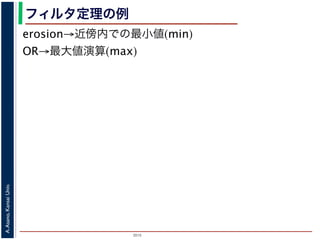
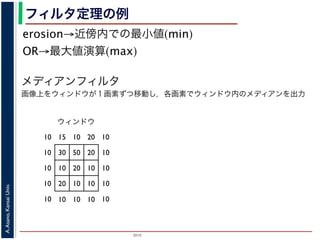
![2015
A.Asano,KansaiUniv.
フィルタ定理の例
erosion→近傍内での最小値(min)
OR→最大値演算(max)
メディアンフィルタ
画像上をウィンドウが1画素ずつ移動し,各画素でウィンドウ内のメディアンを出力
10 15 10 20 10
10 30 50 20 10
10 10 20 10 10
10 20 10 10 10
10 10 10 10 10
ウィンドウ
[n/2 + 1]画素の
サブウィンドウ](https://image.slidesharecdn.com/2015sippr12slidess-150708014332-lva1-app6891/85/2015-75-320.jpg)
![2015
A.Asano,KansaiUniv.
フィルタ定理の例
erosion→近傍内での最小値(min)
OR→最大値演算(max)
メディアンフィルタ
画像上をウィンドウが1画素ずつ移動し,各画素でウィンドウ内のメディアンを出力
10 15 10 20 10
10 30 50 20 10
10 10 20 10 10
10 20 10 10 10
10 10 10 10 10
ウィンドウ サブウィンドウ
内の画素値
[n/2 + 1]画素の
サブウィンドウ](https://image.slidesharecdn.com/2015sippr12slidess-150708014332-lva1-app6891/85/2015-76-320.jpg)
![2015
A.Asano,KansaiUniv.
フィルタ定理の例
erosion→近傍内での最小値(min)
OR→最大値演算(max)
メディアンフィルタ
画像上をウィンドウが1画素ずつ移動し,各画素でウィンドウ内のメディアンを出力
10 15 10 20 10
10 30 50 20 10
10 10 20 10 10
10 20 10 10 10
10 10 10 10 10
ウィンドウ サブウィンドウ
内の画素値
10
20
30
50
20
[n/2 + 1]画素の
サブウィンドウ](https://image.slidesharecdn.com/2015sippr12slidess-150708014332-lva1-app6891/85/2015-77-320.jpg)
![2015
A.Asano,KansaiUniv.
フィルタ定理の例
erosion→近傍内での最小値(min)
OR→最大値演算(max)
メディアンフィルタ
画像上をウィンドウが1画素ずつ移動し,各画素でウィンドウ内のメディアンを出力
10 15 10 20 10
10 30 50 20 10
10 10 20 10 10
10 20 10 10 10
10 10 10 10 10
ウィンドウ サブウィンドウ
内の画素値
10
20
30
50
20
[n/2 + 1]画素の
サブウィンドウ](https://image.slidesharecdn.com/2015sippr12slidess-150708014332-lva1-app6891/85/2015-78-320.jpg)
![2015
A.Asano,KansaiUniv.
フィルタ定理の例
erosion→近傍内での最小値(min)
OR→最大値演算(max)
メディアンフィルタ
画像上をウィンドウが1画素ずつ移動し,各画素でウィンドウ内のメディアンを出力
10 15 10 20 10
10 30 50 20 10
10 10 20 10 10
10 20 10 10 10
10 10 10 10 10
ウィンドウ サブウィンドウ
内の画素値
10
20
30
50
20
10 10
20 2020
[n/2 + 1]画素の
サブウィンドウ](https://image.slidesharecdn.com/2015sippr12slidess-150708014332-lva1-app6891/85/2015-79-320.jpg)
![2015
A.Asano,KansaiUniv.
フィルタ定理の例
erosion→近傍内での最小値(min)
OR→最大値演算(max)
メディアンフィルタ
画像上をウィンドウが1画素ずつ移動し,各画素でウィンドウ内のメディアンを出力
10 15 10 20 10
10 30 50 20 10
10 10 20 10 10
10 20 10 10 10
10 10 10 10 10
ウィンドウ サブウィンドウ
内の画素値
10
20
30
50
20
10 10
20 2020
...
[n/2 + 1]個の画素からなるすべてのサブウィンドウ
[n/2 + 1]画素の
サブウィンドウ](https://image.slidesharecdn.com/2015sippr12slidess-150708014332-lva1-app6891/85/2015-80-320.jpg)
![2015
A.Asano,KansaiUniv.
フィルタ定理の例
erosion→近傍内での最小値(min)
OR→最大値演算(max)
メディアンフィルタ
画像上をウィンドウが1画素ずつ移動し,各画素でウィンドウ内のメディアンを出力
10 15 10 20 10
10 30 50 20 10
10 10 20 10 10
10 20 10 10 10
10 10 10 10 10
ウィンドウ サブウィンドウ
内の画素値
10
20
30
50
20
10 10
20 2020
...
[n/2 + 1]個の画素からなるすべてのサブウィンドウ
[n/2 + 1]画素の
サブウィンドウ](https://image.slidesharecdn.com/2015sippr12slidess-150708014332-lva1-app6891/85/2015-81-320.jpg)
![2015
A.Asano,KansaiUniv.
フィルタ定理の例
erosion→近傍内での最小値(min)
OR→最大値演算(max)
メディアンフィルタ
画像上をウィンドウが1画素ずつ移動し,各画素でウィンドウ内のメディアンを出力
10 15 10 20 10
10 30 50 20 10
10 10 20 10 10
10 20 10 10 10
10 10 10 10 10
ウィンドウ サブウィンドウ
内の画素値
10
20
30
50
20
10
20
10 10
20
10 10
20 2020
...
[n/2 + 1]個の画素からなるすべてのサブウィンドウ](https://image.slidesharecdn.com/2015sippr12slidess-150708014332-lva1-app6891/85/2015-82-320.jpg)
![2015
A.Asano,KansaiUniv.
フィルタ定理の例
erosion→近傍内での最小値(min)
OR→最大値演算(max)
メディアンフィルタ
画像上をウィンドウが1画素ずつ移動し,各画素でウィンドウ内のメディアンを出力
10 15 10 20 10
10 30 50 20 10
10 10 20 10 10
10 20 10 10 10
10 10 10 10 10
ウィンドウ サブウィンドウ
内の画素値
10
20
30
50
20
10
20
10 10
20
10 10
20 2020
...
[n/2 + 1]個の画素からなるすべてのサブウィンドウ
各サブウィンドウ内の
最大値の中の
最小=メディアン](https://image.slidesharecdn.com/2015sippr12slidess-150708014332-lva1-app6891/85/2015-83-320.jpg)
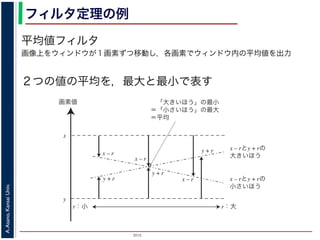
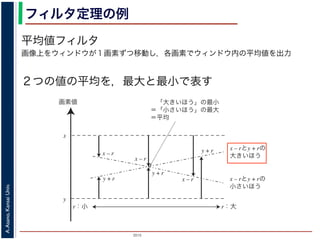
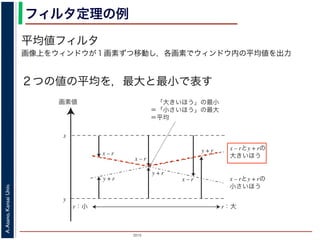
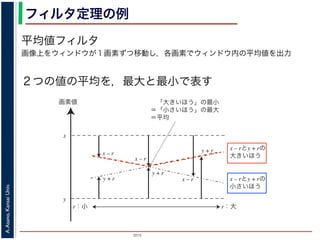
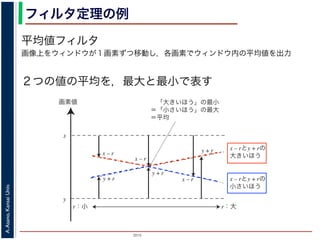
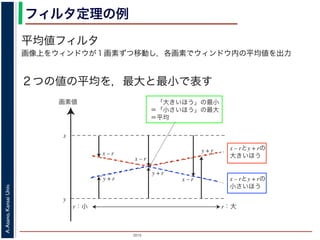
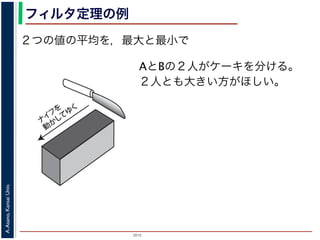
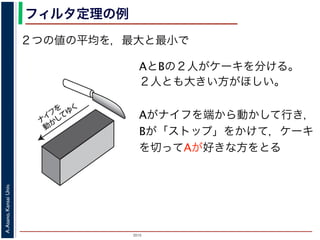
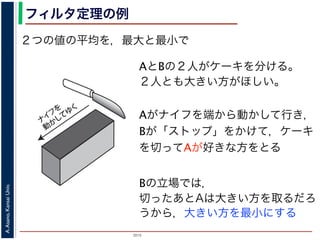


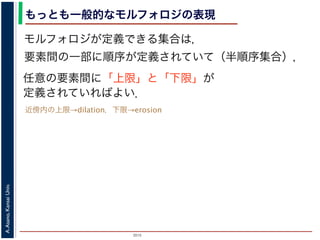
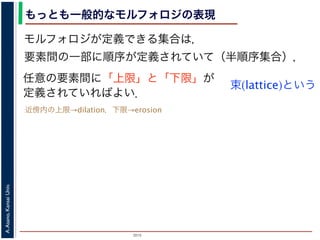
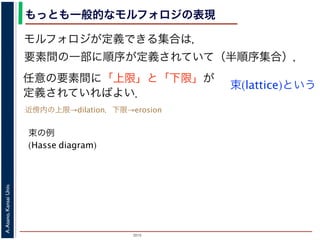
![2015
A.Asano,KansaiUniv.
もっとも一般的なモルフォロジの表現
モルフォロジが定義できる集合は,
要素間の一部に順序が定義されていて(半順序集合),
任意の要素間に「上限」と「下限」が
定義されていればよい.
束(lattice)という
束の例
(Hasse diagram)
the elements of A is defined upper bound [lower bound]
of A. If the minimum [maximum] of the upper bound
[lower bound] of A exists, it is defined supremum
[infimum] of A. Note that the supremum and infimum
are not always an element of A. If the supremum
[infimum] is an element of A, it is equivalent to the
maximum [minimum] of A.
If the upper bound and lower bound are defined for all
combinations of two elements of X, and if the upper
bounds and lower bounds are always in X, the algebraic
*) Although the symbol “!” is often used to express an ordering, it is not related to the inequ
mathematical sense. The terms “upper” and “lower” only have the meaning that y is defined
this area are in progre
proposed. The lattice
ematical formulation
ogy[2].
References
[1] 小倉久和,情報の
ISBN4-7649-0276-1
[2] H. J. A. M. Heijma
tors, Academic Press
Fig. 4. Examples of lattice.
a
b
c
(a)
a
b
c
e
d
(b)
a
b
e
cd
f
h
g
(c)
近傍内の上限→dilation,下限→erosion](https://image.slidesharecdn.com/2015sippr12slidess-150708014332-lva1-app6891/85/2015-103-320.jpg)
![2015
A.Asano,KansaiUniv.
もっとも一般的なモルフォロジの表現
モルフォロジが定義できる集合は,
要素間の一部に順序が定義されていて(半順序集合),
任意の要素間に「上限」と「下限」が
定義されていればよい.
束(lattice)という
束の例
(Hasse diagram)
全順序集合
the elements of A is defined upper bound [lower bound]
of A. If the minimum [maximum] of the upper bound
[lower bound] of A exists, it is defined supremum
[infimum] of A. Note that the supremum and infimum
are not always an element of A. If the supremum
[infimum] is an element of A, it is equivalent to the
maximum [minimum] of A.
If the upper bound and lower bound are defined for all
combinations of two elements of X, and if the upper
bounds and lower bounds are always in X, the algebraic
*) Although the symbol “!” is often used to express an ordering, it is not related to the inequ
mathematical sense. The terms “upper” and “lower” only have the meaning that y is defined
this area are in progre
proposed. The lattice
ematical formulation
ogy[2].
References
[1] 小倉久和,情報の
ISBN4-7649-0276-1
[2] H. J. A. M. Heijma
tors, Academic Press
Fig. 4. Examples of lattice.
a
b
c
(a)
a
b
c
e
d
(b)
a
b
e
cd
f
h
g
(c)
近傍内の上限→dilation,下限→erosion](https://image.slidesharecdn.com/2015sippr12slidess-150708014332-lva1-app6891/85/2015-104-320.jpg)
![2015
A.Asano,KansaiUniv.
もっとも一般的なモルフォロジの表現
モルフォロジが定義できる集合は,
要素間の一部に順序が定義されていて(半順序集合),
任意の要素間に「上限」と「下限」が
定義されていればよい.
束(lattice)という
束の例
(Hasse diagram)
全順序集合
the elements of A is defined upper bound [lower bound]
of A. If the minimum [maximum] of the upper bound
[lower bound] of A exists, it is defined supremum
[infimum] of A. Note that the supremum and infimum
are not always an element of A. If the supremum
[infimum] is an element of A, it is equivalent to the
maximum [minimum] of A.
If the upper bound and lower bound are defined for all
combinations of two elements of X, and if the upper
bounds and lower bounds are always in X, the algebraic
*) Although the symbol “!” is often used to express an ordering, it is not related to the inequ
mathematical sense. The terms “upper” and “lower” only have the meaning that y is defined
this area are in progre
proposed. The lattice
ematical formulation
ogy[2].
References
[1] 小倉久和,情報の
ISBN4-7649-0276-1
[2] H. J. A. M. Heijma
tors, Academic Press
Fig. 4. Examples of lattice.
a
b
c
(a)
a
b
c
e
d
(b)
a
b
e
cd
f
h
g
(c)
the elements of A is defined upper bound [lower bound]
of A. If the minimum [maximum] of the upper bound
[lower bound] of A exists, it is defined supremum
[infimum] of A. Note that the supremum and infimum
are not always an element of A. If the supremum
[infimum] is an element of A, it is equivalent to the
maximum [minimum] of A.
If the upper bound and lower bound are defined for all
combinations of two elements of X, and if the upper
bounds and lower bounds are always in X, the algebraic
*) Although the symbol “!” is often used to express an ordering, it is not relate
proposed.
ematical f
ogy[2].
Referenc
[1] 小倉久
ISBN4-76
[2] H. J. A
tors, Acad
Fig. 4. Examples of lattice.
a
b
c
(a)
a
b
c
e
d
(b)
a
b
e
cd
f
h
g
(c)
近傍内の上限→dilation,下限→erosion](https://image.slidesharecdn.com/2015sippr12slidess-150708014332-lva1-app6891/85/2015-105-320.jpg)
![2015
A.Asano,KansaiUniv.
もっとも一般的なモルフォロジの表現
モルフォロジが定義できる集合は,
要素間の一部に順序が定義されていて(半順序集合),
任意の要素間に「上限」と「下限」が
定義されていればよい.
束(lattice)という
束の例
(Hasse diagram)
全順序集合 c-dに順序はないが,
c-dの上限はb,下限はe
the elements of A is defined upper bound [lower bound]
of A. If the minimum [maximum] of the upper bound
[lower bound] of A exists, it is defined supremum
[infimum] of A. Note that the supremum and infimum
are not always an element of A. If the supremum
[infimum] is an element of A, it is equivalent to the
maximum [minimum] of A.
If the upper bound and lower bound are defined for all
combinations of two elements of X, and if the upper
bounds and lower bounds are always in X, the algebraic
*) Although the symbol “!” is often used to express an ordering, it is not related to the inequ
mathematical sense. The terms “upper” and “lower” only have the meaning that y is defined
this area are in progre
proposed. The lattice
ematical formulation
ogy[2].
References
[1] 小倉久和,情報の
ISBN4-7649-0276-1
[2] H. J. A. M. Heijma
tors, Academic Press
Fig. 4. Examples of lattice.
a
b
c
(a)
a
b
c
e
d
(b)
a
b
e
cd
f
h
g
(c)
the elements of A is defined upper bound [lower bound]
of A. If the minimum [maximum] of the upper bound
[lower bound] of A exists, it is defined supremum
[infimum] of A. Note that the supremum and infimum
are not always an element of A. If the supremum
[infimum] is an element of A, it is equivalent to the
maximum [minimum] of A.
If the upper bound and lower bound are defined for all
combinations of two elements of X, and if the upper
bounds and lower bounds are always in X, the algebraic
*) Although the symbol “!” is often used to express an ordering, it is not relate
proposed.
ematical f
ogy[2].
Referenc
[1] 小倉久
ISBN4-76
[2] H. J. A
tors, Acad
Fig. 4. Examples of lattice.
a
b
c
(a)
a
b
c
e
d
(b)
a
b
e
cd
f
h
g
(c)
近傍内の上限→dilation,下限→erosion](https://image.slidesharecdn.com/2015sippr12slidess-150708014332-lva1-app6891/85/2015-106-320.jpg)
![2015
A.Asano,KansaiUniv.
もっとも一般的なモルフォロジの表現
モルフォロジが定義できる集合は,
要素間の一部に順序が定義されていて(半順序集合),
任意の要素間に「上限」と「下限」が
定義されていればよい.
束(lattice)という
束の例
(Hasse diagram)
全順序集合 c-dに順序はないが,
c-dの上限はb,下限はe
the elements of A is defined upper bound [lower bound]
of A. If the minimum [maximum] of the upper bound
[lower bound] of A exists, it is defined supremum
[infimum] of A. Note that the supremum and infimum
are not always an element of A. If the supremum
[infimum] is an element of A, it is equivalent to the
maximum [minimum] of A.
If the upper bound and lower bound are defined for all
combinations of two elements of X, and if the upper
bounds and lower bounds are always in X, the algebraic
*) Although the symbol “!” is often used to express an ordering, it is not related to the inequ
mathematical sense. The terms “upper” and “lower” only have the meaning that y is defined
this area are in progre
proposed. The lattice
ematical formulation
ogy[2].
References
[1] 小倉久和,情報の
ISBN4-7649-0276-1
[2] H. J. A. M. Heijma
tors, Academic Press
Fig. 4. Examples of lattice.
a
b
c
(a)
a
b
c
e
d
(b)
a
b
e
cd
f
h
g
(c)
the elements of A is defined upper bound [lower bound]
of A. If the minimum [maximum] of the upper bound
[lower bound] of A exists, it is defined supremum
[infimum] of A. Note that the supremum and infimum
are not always an element of A. If the supremum
[infimum] is an element of A, it is equivalent to the
maximum [minimum] of A.
If the upper bound and lower bound are defined for all
combinations of two elements of X, and if the upper
bounds and lower bounds are always in X, the algebraic
*) Although the symbol “!” is often used to express an ordering, it is not relate
proposed.
ematical f
ogy[2].
Referenc
[1] 小倉久
ISBN4-76
[2] H. J. A
tors, Acad
Fig. 4. Examples of lattice.
a
b
c
(a)
a
b
c
e
d
(b)
a
b
e
cd
f
h
g
(c)
of A. If the minimum [maximum] of the upper bound
[lower bound] of A exists, it is defined supremum
[infimum] of A. Note that the supremum and infimum
are not always an element of A. If the supremum
[infimum] is an element of A, it is equivalent to the
maximum [minimum] of A.
If the upper bound and lower bound are defined for all
combinations of two elements of X, and if the upper
bounds and lower bounds are always in X, the algebraic
*) Although the symbol “!” is often used to express an ordering, it is
mathematical sense. The terms “upper” and “lower” only have the m
p
e
o
R
[1
IS
[2
to
Fig. 4. Examples of lattice.
a
b
c
(a)
a
b
c
e
d
(b)
a
b
e
cd
f
h
g
(c)
近傍内の上限→dilation,下限→erosion](https://image.slidesharecdn.com/2015sippr12slidess-150708014332-lva1-app6891/85/2015-107-320.jpg)
![2015
A.Asano,KansaiUniv.
もっとも一般的なモルフォロジの表現
モルフォロジが定義できる集合は,
要素間の一部に順序が定義されていて(半順序集合),
任意の要素間に「上限」と「下限」が
定義されていればよい.
束(lattice)という
束の例
(Hasse diagram)
全順序集合 c-dに順序はないが,
c-dの上限はb,下限はe
the elements of A is defined upper bound [lower bound]
of A. If the minimum [maximum] of the upper bound
[lower bound] of A exists, it is defined supremum
[infimum] of A. Note that the supremum and infimum
are not always an element of A. If the supremum
[infimum] is an element of A, it is equivalent to the
maximum [minimum] of A.
If the upper bound and lower bound are defined for all
combinations of two elements of X, and if the upper
bounds and lower bounds are always in X, the algebraic
*) Although the symbol “!” is often used to express an ordering, it is not related to the inequ
mathematical sense. The terms “upper” and “lower” only have the meaning that y is defined
this area are in progre
proposed. The lattice
ematical formulation
ogy[2].
References
[1] 小倉久和,情報の
ISBN4-7649-0276-1
[2] H. J. A. M. Heijma
tors, Academic Press
Fig. 4. Examples of lattice.
a
b
c
(a)
a
b
c
e
d
(b)
a
b
e
cd
f
h
g
(c)
the elements of A is defined upper bound [lower bound]
of A. If the minimum [maximum] of the upper bound
[lower bound] of A exists, it is defined supremum
[infimum] of A. Note that the supremum and infimum
are not always an element of A. If the supremum
[infimum] is an element of A, it is equivalent to the
maximum [minimum] of A.
If the upper bound and lower bound are defined for all
combinations of two elements of X, and if the upper
bounds and lower bounds are always in X, the algebraic
*) Although the symbol “!” is often used to express an ordering, it is not relate
proposed.
ematical f
ogy[2].
Referenc
[1] 小倉久
ISBN4-76
[2] H. J. A
tors, Acad
Fig. 4. Examples of lattice.
a
b
c
(a)
a
b
c
e
d
(b)
a
b
e
cd
f
h
g
(c)
of A. If the minimum [maximum] of the upper bound
[lower bound] of A exists, it is defined supremum
[infimum] of A. Note that the supremum and infimum
are not always an element of A. If the supremum
[infimum] is an element of A, it is equivalent to the
maximum [minimum] of A.
If the upper bound and lower bound are defined for all
combinations of two elements of X, and if the upper
bounds and lower bounds are always in X, the algebraic
*) Although the symbol “!” is often used to express an ordering, it is
mathematical sense. The terms “upper” and “lower” only have the m
p
e
o
R
[1
IS
[2
to
Fig. 4. Examples of lattice.
a
b
c
(a)
a
b
c
e
d
(b)
a
b
e
cd
f
h
g
(c)
近傍内の上限→dilation,下限→erosion
カラー画像のモルフォロジも,この考えにもとづく
(ベクトルの順位付け)](https://image.slidesharecdn.com/2015sippr12slidess-150708014332-lva1-app6891/85/2015-108-320.jpg)


