Download as PDF, PPTX
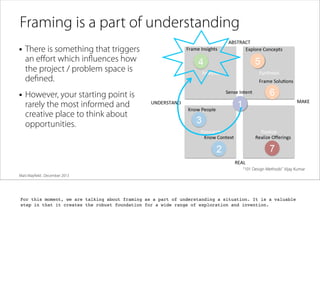
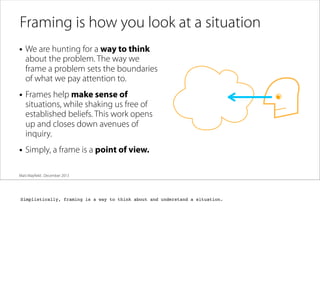
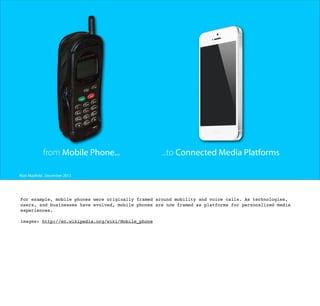
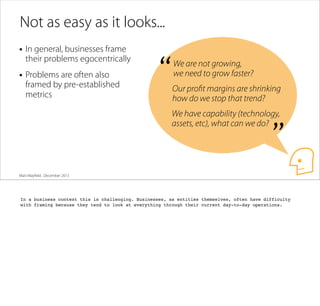
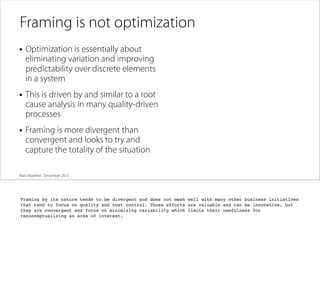
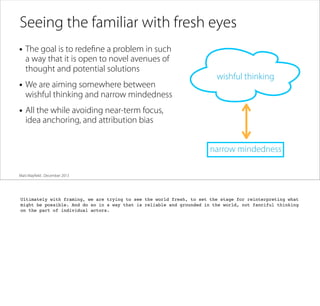
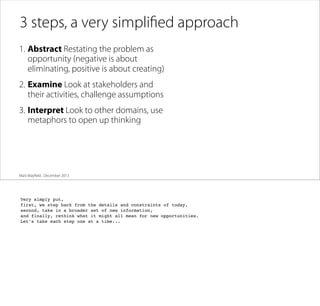
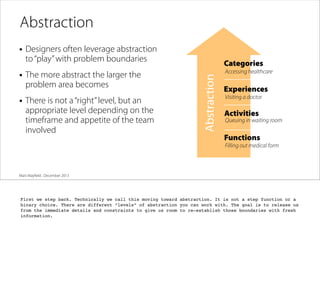
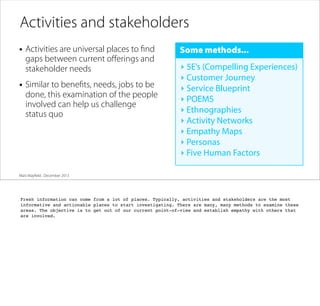
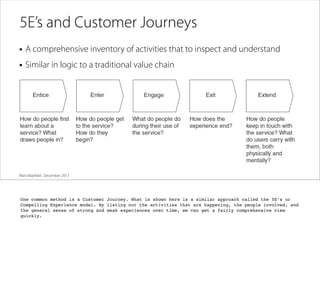
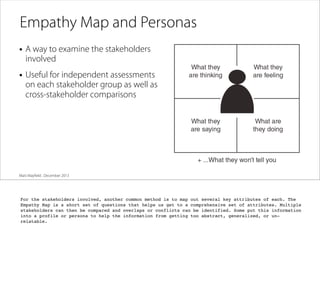
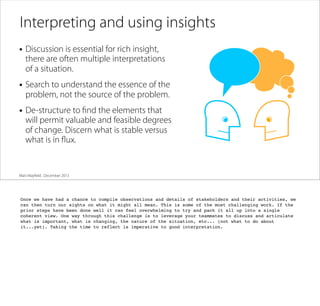

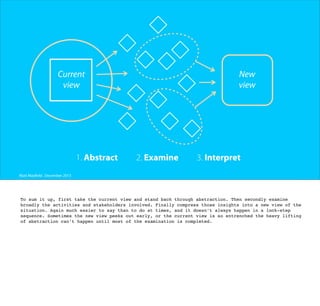

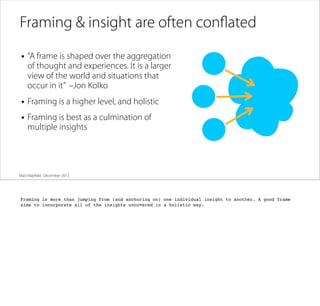
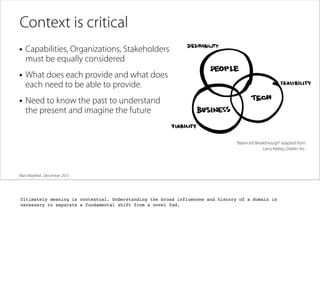
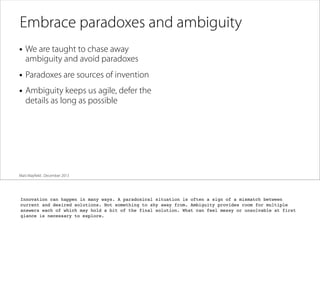
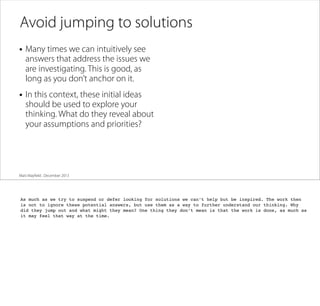
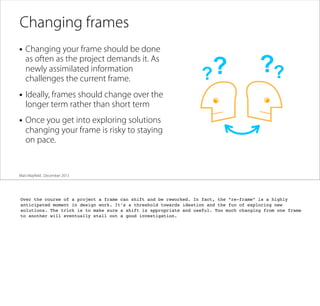
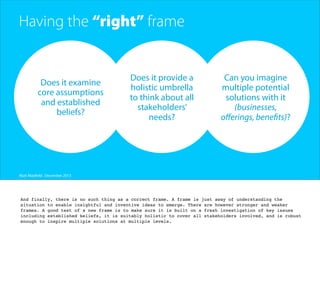

The document discusses the process of framing problems to find innovative opportunities. It defines framing as looking beyond surface-level symptoms to understand the core issues, and examines stakeholders and activities to challenge assumptions. The framing process involves three steps - abstracting the problem to remove constraints, examining activities and stakeholders with fresh perspectives, and interpreting insights to develop a new understanding. Framing requires embracing ambiguity and paradoxes, avoiding premature solutions, and being open to changing frames as new information emerges. The goal is to generate a holistic frame that examines core assumptions and inspires multiple potential solutions.


![Thinking [Better] About the Future](https://cdn.slidesharecdn.com/ss_thumbnails/iabcthinkingbetteraboutthefuture-110517162442-phpapp02-thumbnail.jpg?width=640&height=640&fit=bounds)


