

The New Political Campaign:
Using Social Networking

Carol A. Spencer
RepublicanCarol@gmail.com
March 24, 2012
Why Do We Care?
Newspaper readership is plummeting
• 18 of the 25 largest newspapers circulated fewer copies
in the 1st quarter, 2011.
• Online circulation is increasing.
• 80% of consumers are unwilling to pay for news.
• Newspaper ads and letters to the editor are not
reaching voters.
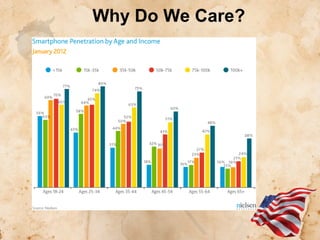
Why Do We Care?
May 2000
• 47% — overall internet population of adults
• 78% — internet population of those in households earning
more than $75,000
• 28% — internet population of those in households earning
less than $30,000
• 61% — internet population of those ages 18-29
• 14% — internet population of those ages 65 and older
February 2012
• 80% — overall internet population of adults
• 98% — internet population of those in households earning
more than $75,000
• 65% — internet population of those in households earning
less than $30,000
• 94% — internet population of those ages 18-29
• 50% — internet population of those ages 65 and older

Source: PewInternet.org,
Why Do We Care?
Broadcast Campaigning
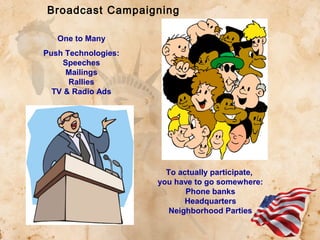
One to Many
Push Technologies:
Speeches
Mailings
Rallies
TV & Radio Ads

To actually participate,
you have to go somewhere:
Phone banks
Headquarters
Neighborhood Parties
Broadcast Campaigning

Roles Clearly Defined
• Candidate is the messenger
• Volunteers are participants
• Voters are passive receptors
Broadcast Campaigning

• Voters are alienated from the process
• Voters feel disconnected
• Voters are cynical and don’t trust the message
• Voters are not engaged
Broadcast Campaigning
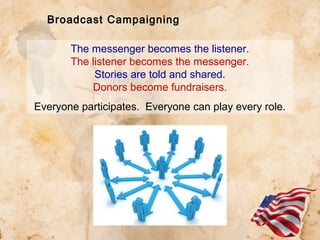
The messenger becomes the listener.
The listener becomes the messenger.
Stories are told and shared.
Donors become fundraisers.
Everyone participates. Everyone can play every role.
Participatory Campaigning

Use these technologies to:
• Build relationships among supporters
• Create a campaign community
• Engage citizens in the process
• Turn every supporter into a volunteer
• Provide tools for campaigning from any place
at any time
• Share everything to build trust
• Get your message out, unfiltered
Using Social Networking
We’ve entered a new era in political
campaigning, government and politics.
Defense Department study on the use of
Social Networking… New Media

“Ignore it at your peril”
Social Media Technologies
Blogger
Facebook
Twitter
YouTube
Flickr

All of these have been
created for the
purpose of sharing
information
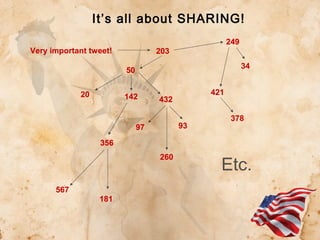
It’s all about SHARING!
249

Very important tweet!

203
34

50
20

142

421

432
93

97

378

356
260

567
181

Etc.
Facebook - FREE
Facebook is a Social Network
• Post your status
• Know what friends are doing
• Share your photos or videos
• Join groups / invite friends to join
• Send private messages (emails)
• Comment on anything
Twitter - FREE
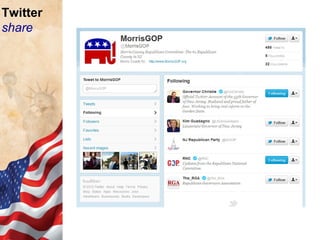
Twitter is a micro-blog
• Twitter limit is 140 characters
• Sign up and others “follow” you
• Your tweets or retweet others’ info
• Include links to other information
• Like reading email subject lines
• Send / receive via web or mobile
Blogger - FREE
A blog is a journal.
• Blogging tells a story.
• Commenting promotes trust and
communicates openness.
• Blogs can contain photos or videos.
• Blogs can include links to FB or
other sites.
• Readers feel involved, connected
YouTube - FREE
Internet is a visual medium. Use it.
• Videos should be no more than
2 – 3 minutes.
• Create your own channel
• Use cheap digital camera to record
• Testimonials
• Your message unfiltered
Flickr - FREE
Store and share your photos:
• Upload digital photos
• Tag your photos with people’s
names or event details
• Produce slideshows
• Share your photos via email or
embed in your website
Other (Cheap) Tools
• Constant Contact
• Opt-in email communication
• Survey tools

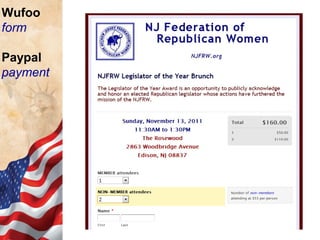
• Wufoo & Paypal
• Create a form; take donations online
Using Social Networking:
Making it Work

Some Examples
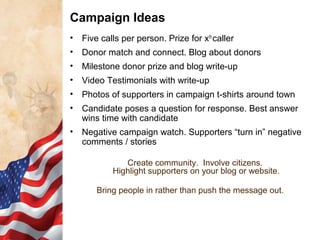
Campaign Ideas
•

Five calls per person. Prize for xth caller

•

Donor match and connect. Blog about donors

•

Milestone donor prize and blog write-up

•

Video Testimonials with write-up

•

Photos of supporters in campaign t-shirts around town

•

Candidate poses a question for response. Best answer
wins time with candidate

•

Negative campaign watch. Supporters “turn in” negative
comments / stories
Create community. Involve citizens.
Highlight supporters on your blog or website.
Bring people in rather than push the message out.
Constant
Contact
email
Paypal
payment
Constant
Contact
email
YouTube
video
testimonial
Wufoo
form
Paypal
payment
Twitter
share
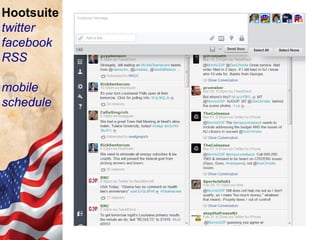
Hootsuite
twitter
facebook
RSS
mobile
schedule
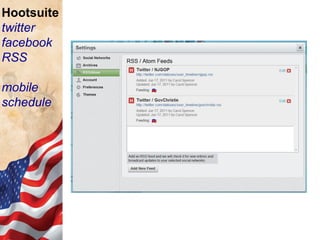
Hootsuite
twitter
facebook
RSS
mobile
schedule
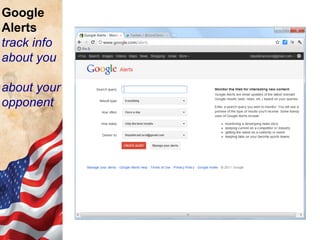
Google
Alerts
track info
about you
about your
opponent
ALL of this is mobile!
•

Facebook

•

Twitter

•

YouTube

•

Flickr

•

Blogger

•

Constant Contact

•

Hootsuite

These companies know mobile is now!
And now…. you do too!
The New Political Campaign:
Using Social Networking

Carol A. Spencer
RepublicanCarol@gmail.com
March 24, 2012

2012: The New Political Campaign

  • 1.
    The New PoliticalCampaign: Using Social Networking Carol A. Spencer RepublicanCarol@gmail.com March 24, 2012
  • 2.
    Why Do WeCare? Newspaper readership is plummeting • 18 of the 25 largest newspapers circulated fewer copies in the 1st quarter, 2011. • Online circulation is increasing. • 80% of consumers are unwilling to pay for news. • Newspaper ads and letters to the editor are not reaching voters.
  • 3.
    Why Do WeCare? May 2000 • 47% — overall internet population of adults • 78% — internet population of those in households earning more than $75,000 • 28% — internet population of those in households earning less than $30,000 • 61% — internet population of those ages 18-29 • 14% — internet population of those ages 65 and older February 2012 • 80% — overall internet population of adults • 98% — internet population of those in households earning more than $75,000 • 65% — internet population of those in households earning less than $30,000 • 94% — internet population of those ages 18-29 • 50% — internet population of those ages 65 and older Source: PewInternet.org,
  • 4.
    Why Do WeCare?
  • 5.
    Broadcast Campaigning One toMany Push Technologies: Speeches Mailings Rallies TV & Radio Ads To actually participate, you have to go somewhere: Phone banks Headquarters Neighborhood Parties
  • 6.
    Broadcast Campaigning Roles ClearlyDefined • Candidate is the messenger • Volunteers are participants • Voters are passive receptors
  • 7.
    Broadcast Campaigning • Votersare alienated from the process • Voters feel disconnected • Voters are cynical and don’t trust the message • Voters are not engaged
  • 8.
    Broadcast Campaigning The messengerbecomes the listener. The listener becomes the messenger. Stories are told and shared. Donors become fundraisers. Everyone participates. Everyone can play every role.
  • 9.
    Participatory Campaigning Use thesetechnologies to: • Build relationships among supporters • Create a campaign community • Engage citizens in the process • Turn every supporter into a volunteer • Provide tools for campaigning from any place at any time • Share everything to build trust • Get your message out, unfiltered
  • 10.
    Using Social Networking We’veentered a new era in political campaigning, government and politics. Defense Department study on the use of Social Networking… New Media “Ignore it at your peril”
  • 11.
    Social Media Technologies Blogger Facebook Twitter YouTube Flickr Allof these have been created for the purpose of sharing information
  • 12.
    It’s all aboutSHARING! 249 Very important tweet! 203 34 50 20 142 421 432 93 97 378 356 260 567 181 Etc.
  • 13.
    Facebook - FREE Facebookis a Social Network • Post your status • Know what friends are doing • Share your photos or videos • Join groups / invite friends to join • Send private messages (emails) • Comment on anything
  • 14.
    Twitter - FREE Twitteris a micro-blog • Twitter limit is 140 characters • Sign up and others “follow” you • Your tweets or retweet others’ info • Include links to other information • Like reading email subject lines • Send / receive via web or mobile
  • 15.
    Blogger - FREE Ablog is a journal. • Blogging tells a story. • Commenting promotes trust and communicates openness. • Blogs can contain photos or videos. • Blogs can include links to FB or other sites. • Readers feel involved, connected
  • 16.
    YouTube - FREE Internetis a visual medium. Use it. • Videos should be no more than 2 – 3 minutes. • Create your own channel • Use cheap digital camera to record • Testimonials • Your message unfiltered
  • 17.
    Flickr - FREE Storeand share your photos: • Upload digital photos • Tag your photos with people’s names or event details • Produce slideshows • Share your photos via email or embed in your website
  • 18.
    Other (Cheap) Tools •Constant Contact • Opt-in email communication • Survey tools • Wufoo & Paypal • Create a form; take donations online
  • 19.
    Using Social Networking: Makingit Work Some Examples
  • 20.
    Campaign Ideas • Five callsper person. Prize for xth caller • Donor match and connect. Blog about donors • Milestone donor prize and blog write-up • Video Testimonials with write-up • Photos of supporters in campaign t-shirts around town • Candidate poses a question for response. Best answer wins time with candidate • Negative campaign watch. Supporters “turn in” negative comments / stories Create community. Involve citizens. Highlight supporters on your blog or website. Bring people in rather than push the message out.
  • 21.
  • 22.
  • 23.
  • 24.
  • 25.
  • 26.
  • 27.
  • 28.
    ALL of thisis mobile! • Facebook • Twitter • YouTube • Flickr • Blogger • Constant Contact • Hootsuite These companies know mobile is now! And now…. you do too!
  • 29.
    The New PoliticalCampaign: Using Social Networking Carol A. Spencer RepublicanCarol@gmail.com March 24, 2012

Editor's Notes

  • #2 http://www.youtube.com/watch?v=0eUeL3n7fDs