Do we Still need High Doses?
Professor : Mohamed Gamal Abdel Aziz
Aswan
8/2/2012
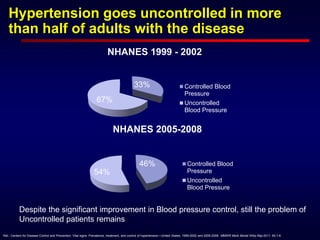
Hypertension goes uncontrolled in more
than half of adults with the disease
33%
67%
NHANES 1999 - 2002
Controlled Blood
Pressure
Uncontrolled
Blood Pressure
46%
54%
NHANES 2005-2008
Controlled Blood
Pressure
Uncontrolled
Blood Pressure
Ref.: Centers for Disease Control and Prevention. Vital signs: Prevalence, treatment, and control of hypertension—United States, 1999-2002 and 2005-2008. MMWR Morb Mortal Wkly Rep 2011; 60:1-6.
Despite the significant improvement in Blood pressure control, still the problem of
Uncontrolled patients remains
Trials in diabetic patients
40
30
20
10
0
Major CV events (% of patients over 5 years)
Zanchetti A, 2009
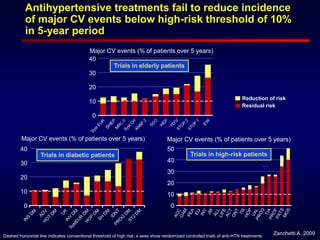
Antihypertensive treatments fail to reduce incidence
of major CV events below high-risk threshold of 10%
in 5-year period
Trials in high-risk patients
50
40
30
20
10
0
Major CV events (% of patients over 5 years)
Reduction of risk
Residual risk
Trials in elderly patients
40
30
20
10
0
Major CV events (% of patients over 5 years)
Dashed horizontal line indicates conventional threshold of high risk; x axes show randomized controlled trials of anti-HTN treatments.
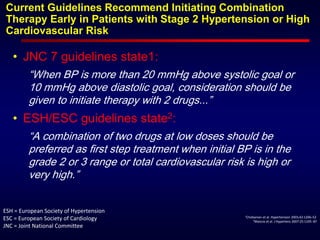
Current Guidelines Recommend Initiating Combination
Therapy Early in Patients with Stage 2 Hypertension or High
Cardiovascular Risk
• JNC 7 guidelines state1:
―When BP is more than 20 mmHg above systolic goal or
10 mmHg above diastolic goal, consideration should be
given to initiate therapy with 2 drugs...‖
• ESH/ESC guidelines state2:
―A combination of two drugs at low doses should be
preferred as first step treatment when initial BP is in the
grade 2 or 3 range or total cardiovascular risk is high or
very high.‖
1Chobanian et al. Hypertension 2003;42:1206–52
2Mancia et al. J Hypertens 2007:25:110587
ESH = European Society of Hypertension
ESC = European Society of Cardiology
JNC = Joint National Committee
Low-dose 2-drug combinationLow-dose single agent
Not at BP goal
Full dose of
single agent
Switch to
different agent
at low dose
Full dose of
2-drug
combination
Add a
third drug
at low dose
Not at BP goal
2–3 drug
combination
at full dose
Full doses of 2–3-drug
combination
ESH–ESC: Algorithm for Treatment of Hypertension
Full-dose
single agent
TOD = target organ damage
Marked BP elevation
High/very high CV risk
Lower BP target
Mild BP elevation
Low/moderate CV risk
Conventional BP target
Task Force for ESH–ESC. J Hypertens 2007;25:1105–874
CCB
Alpha
blockers
Beta
blockers
Diuretics Other
RAS blockade
The Foundation
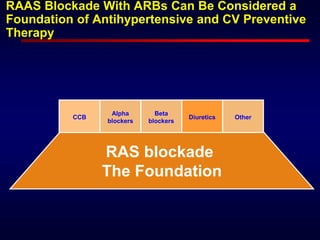
RAAS Blockade With ARBs Can Be Considered a
Foundation of Antihypertensive and CV Preventive
Therapy
Pre-diabetes
Diabetes – Renal
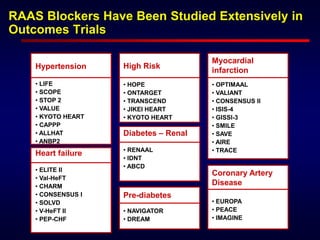
RAAS Blockers Have Been Studied Extensively in
Outcomes Trials
High Risk
Myocardial
infarction
• LIFE
• SCOPE
• STOP 2
• VALUE
• KYOTO HEART
• CAPPP
• ALLHAT
• ANBP2
• HOPE
• ONTARGET
• TRANSCEND
• JIKEI HEART
• KYOTO HEART
• OPTIMAAL
• VALIANT
• CONSENSUS II
• ISIS-4
• GISSI-3
• SMILE
• SAVE
• AIRE
• TRACE
Heart failure
• NAVIGATOR
• DREAM
• RENAAL
• IDNT
• ABCD
Hypertension
Coronary Artery
Disease
• EUROPA
• PEACE
• IMAGINE
• ELITE II
• Val-HeFT
• CHARM
• CONSENSUS I
• SOLVD
• V-HeFT II
• PEP-CHF
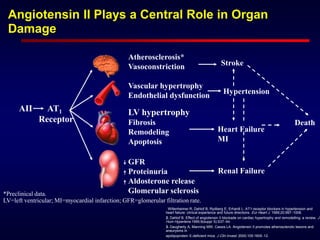
GFR
Proteinuria
Aldosterone release
Glomerular sclerosis
AII AT1
Receptor
Atherosclerosis*
Vasoconstriction
Vascular hypertrophy
Endothelial dysfunction
LV hypertrophy
Fibrosis
Remodeling
Apoptosis
Stroke
Death
*Preclinical data.
LV=left ventricular; MI=myocardial infarction; GFR=glomerular filtration rate.
Hypertension
Heart Failure
MI
Renal Failure
Angiotensin II Plays a Central Role in Organ
Damage
. Willenheimer R, Dahlof B, Rydberg E, Erhardt L. AT1-receptor blockers in hypertension and
heart failure: clinical experience and future directions. Eur Heart J. 1999;20:997–1008.
2. Dahlof B. Effect of angiotensin II blockade on cardiac hypertrophy and remodelling: a review. J
Hum Hypertens.1995;9(suppl 5):S37–44.
3. Daugherty A, Manning MW, Cassis LA. Angiotensin II promotes atherosclerotic lesions and
aneurysms in
apolipoprotein E-deficient mice. J Clin Invest. 2000;105:1605–12.
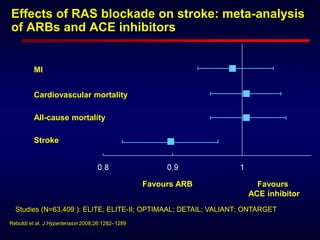
Effects of RAS blockade on stroke: meta-analysis
of ARBs and ACE inhibitors
MI
Cardiovascular mortality
All-cause mortality
Stroke
Favours ARB Favours
ACE inhibitor
Reboldi et al. J Hypertension 2008;26:1282–1289
Studies (N=63,409 ): ELITE; ELITE-II; OPTIMAAL; DETAIL; VALIANT; ONTARGET
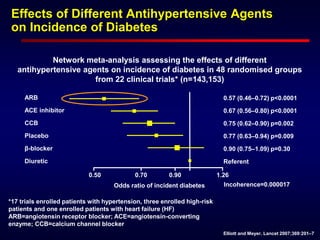
Elliott and Meyer. Lancet 2007;369:201–7
0.57 (0.46–0.72) p<0.0001
0.67 (0.56–0.80) p<0.0001
0.75 (0.62–0.90) p=0.002
0.77 (0.63–0.94) p=0.009
0.90 (0.75–1.09) p=0.30
Referent
ARB
ACE inhibitor
CCB
Placebo
β-blocker
Diuretic
Odds ratio of incident diabetes Incoherence=0.000017
0.50 0.70 0.90 1.26
Effects of Different Antihypertensive Agents
on Incidence of Diabetes
Network meta-analysis assessing the effects of different
antihypertensive agents on incidence of diabetes in 48 randomised groups
from 22 clinical trials* (n=143,153)
*17 trials enrolled patients with hypertension, three enrolled high-risk
patients and one enrolled patients with heart failure (HF)
ARB=angiotensin receptor blocker; ACE=angiotensin-converting
enzyme; CCB=calcium channel blocker
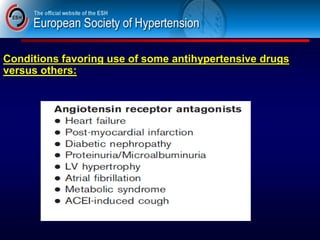
Conditions favoring use of some antihypertensive drugs
versus others:
Are all ARBs
the same?
There is no such thing
as a simple Class Effect
that cover all aspect of
different molecules
Go with the evidence,do not assume
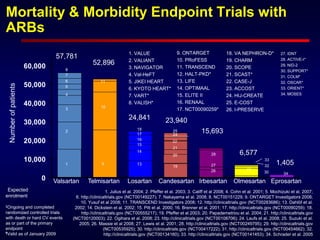
1. VALUE
2. VALIANT
3. NAVIGATOR
4. Val-HeFT
5. JIKEI HEART
6. KYOTO HEART*
7. VART*
8. VALISH*
27. IDNT
28. ACTIVE-I*
29. NID-2
30. SUPPORT*
31. COLM*
32. OSCAR*
33. ORIENT*
34. MOSES
1. Julius et al. 2004; 2. Pfeffer et al. 2003; 3. Califf et al 2008; 4. Cohn et al. 2001; 5. Mochizuki et al. 2007;
6. http://clinicaltrials.gov (NCT00149227); 7. Nakayama et al. 2008; 8. NCT00151229; 9. ONTARGET Investigators 2008;
10. Yusuf et al 2008; 11. TRANSCEND Investigators 2008; 12. http://clinicaltrials.gov (NCT00283686); 13. Dahlöf et al.
2002; 14. Dickstein et al. 2002; 15. Pitt et al. 2000; 16. Brenner et al. 2001; 17. http://clinicaltrials.gov (NCT00090259); 18.
http://clinicaltrials.gov (NCT00555217); 19. Pfeffer et al 2003; 20. Papademetriou et al. 2004; 21. http://clinicaltrials.gov
(NCT00120003); 22. Ogihara et al. 2008; 23. http://clinicaltrials.gov (NCT00108706); 24. Laufs et al. 2008; 25. Suzuki et al.
2005; 26. Massie et al 2008; 27. Lewis et al. 2001; 28. http://clinicaltrials.gov (NCT00249795); 29. http://clinicaltrials.gov
(NCT00535925); 30. http://clinicaltrials.gov (NCT00417222); 31. http://clinicaltrials.gov (NCT00454662); 32.
http://clinicaltrials.gov (NCT00134160); 33. http://clinicaltrials.gov (NCT00141453); 34. Schrader et al. 2005
9. ONTARGET
10. PRoFESS
11. TRANSCEND
12. HALT-PKD*
13. LIFE
14. OPTIMAAL
15. ELITE II
16. RENAAL
17. NCT00090259*
*Expected
enrolment
‡Ongoing and completed
randomized controlled trials
with death or hard CV events
as or part of the primary
endpoint
¶Valid as of January 2009
Mortality & Morbidity Endpoint Trials with
ARBs
18. VA NEPHRON-D*
19. CHARM
20. SCOPE
21. SCAST*
22. CASE-J
23. ACCOST
24. HIJ-CREATE
25. E-COST
26. I-PRESERVE
0
10,000
20,000
30,000
40,000
50,000
60,000
Numberofpatients
Valsartan Telmisartan Losartan Candesartan Irbesartan Olmesartan Eprosartan
57,781
52,896
24,841 23,940
6,577
1,405
15,693
1
2
5
4
3
7
8
6
9
10
16
11
17
18
15
13
14
22
25
21
19
20
34
31
30
32
33
28
27
26
24
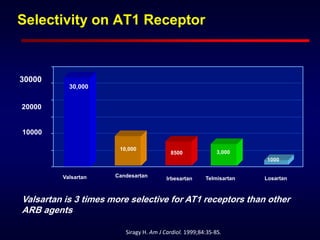
Selectivity on AT1 Receptor
Valsartan Candesartan
LosartanIrbesartan Telmisartan
10000
20000
30000
30,000
1000
8500
10,000
3,000
Valsartan is 3 times more selective for AT1 receptors than other
ARB agents
Siragy H. Am J Cardiol. 1999;84:3S-8S.
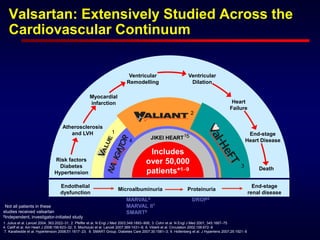
Valsartan: Extensively Studied Across the
Cardiovascular Continuum
1. Julius et al. Lancet 2004; 363:2022–31; 2. Pfeffer et al. N Engl J Med 2003;349:1893–906; 3. Cohn et al. N Engl J Med 2001; 345:1667–75
4. Califf et al. Am Heart J 2008;156:623–32; 5. Mochizuki et al. Lancet 2007;369:1431–9; 6. Viberti et al. Circulation 2002;106:6728
7. Karalliedde et al. Hypertension 2008;51:161723; 8. SMART Group. Diabetes Care 2007;30:1581–3; 9. Hollenberg et al. J Hypertens 2007;25:19216
MARVAL6
MARVAL II7
SMART8
DROP9
Endothelial
dysfunction
Microalbuminuria Proteinuria
End-stage
renal disease
Risk factors
Diabetes
Hypertension
Atherosclerosis
and LVH
Myocardial
infarction
Ventricular
Remodelling
Ventricular
Dilation
Heart
Failure
End-stage
Heart Disease
Death
Includes
over 50,000
patients*19
JIKEI HEART
1
2
3
4
‡5
*Not all patients in these
studies received valsartan
‡Independent, investigator-initiated study
19
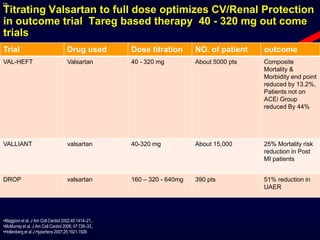
Titrating Valsartan to full dose optimizes CV/Renal Protection
in outcome trial Tareg based therapy 40 - 320 mg out come
trials
Trial Drug used Dose titration NO. of patient outcome
VAL-HEFT Valsartan 40 - 320 mg About 5000 pts Composite
Mortality &
Morbidity end point
reduced by 13.2%,
Patients not on
ACEi Group
reduced By 44%
VALLIANT valsartan 40-320 mg About 15,000 25% Mortality risk
reduction in Post
MI patients
DROP valsartan 160 – 320 - 640mg 390 pts 51% reduction in
UAER
•Maggioni et al. J Am Coll Cardiol 2002;40:1414–21,,
•McMurray et al. J Am Coll Cardiol 2006; 47:726–33,,
•Hollenberg et al J Hypertens 2007,25:1921-1926
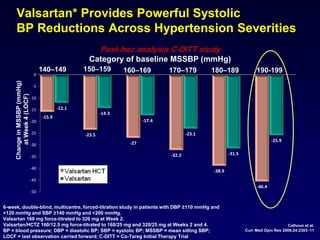
Valsartan* Provides Powerful Systolic
BP Reductions Across Hypertension Severities
-15.9
-23.5
-27
-32.2
-38.9
-46.4
-12.1
-14.3
-17.4
-23.1
-31.5
-25.9
-50
-45
-40
-35
-30
-25
-20
-15
-10
-5
0
140–149 150–159
Post-hoc analysis C-DITT study
Category of baseline MSSBP (mmHg)
160–169 170–179 180–189
ChangeinMSSBP(mmHg)
atWeek4(LOCF)
6-week, double-blind, multicentre, forced-titration study in patients with DBP ≥110 mmHg and
<120 mmHg and SBP ≥140 mmHg and <200 mmHg.
Valsartan 160 mg force-titrated to 320 mg at Week 2.
Valsartan/HCTZ 160/12.5 mg force-titrated to 160/25 mg and 320/25 mg at Weeks 2 and 4.
BP = blood pressure; DBP = diastolic BP; SBP = systolic BP; MSSBP = mean sitting SBP;
LOCF = last observation carried forward; C-DITT = Co-Tareg Initial Therapy Trial
190-199
Calhoun et al.
Curr Med Opin Res 2008;24:230311
0
–5
–10
–15
–20
–25
–30
Blacks Hispanic Elderly# Obese‡
Diabetes
n=202 n=51 n=117 n=477 n=69
21.4 21.7
25.5
23.6
19.5
n=190 n=58 n=103 n=493 n=97
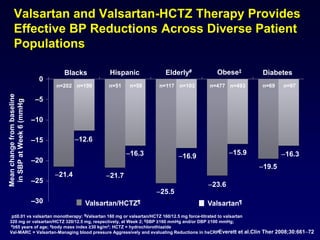
*p≤0.01 vs valsartan monotherapy: ¶Valsartan 160 mg or valsartan/HCTZ 160/12.5 mg force-titrated to valsartan
320 mg or valsartan/HCTZ 320/12.5 mg, respectively, at Week 2; §SBP ≥160 mmHg and/or DBP ≥100 mmHg;
#≥65 years of age; ‡body mass index ≥30 kg/m2; HCTZ = hydrochlorothiazide
Val-MARC = Valsartan-Managing blood pressure Aggressively and evaluating Reductions in hsCRPEverett et al.Clin Ther 2008;30:66172
Meanchangefrombaseline
inSBPatWeek6(mmHg)
12.6
16.3 16.9
15.9 16.3
*
*
*
*
Valsartan and Valsartan-HCTZ Therapy Provides
Effective BP Reductions Across Diverse Patient
Populations
Valsartan/HCTZ¶ Valsartan¶
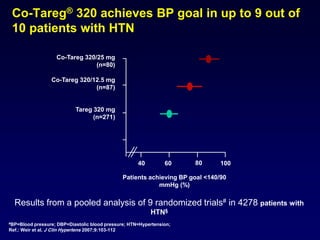
Co-Tareg® 320 achieves BP goal in up to 9 out of
10 patients with HTN
#BP=Blood pressure; DBP=Diastolic blood pressure; HTN=Hypertension;
Ref.: Weir et al. J Clin Hypertens 2007;9:103-112
Results from a pooled analysis of 9 randomized trials# in 4278 patients with
HTN§
Patients achieving BP goal <140/90
mmHg (%)
Co-Tareg 320/25 mg
(n=80)
Tareg 320 mg
(n=271)
Co-Tareg 320/12.5 mg
(n=87)
40 60 80 100
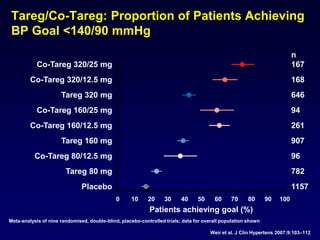
Tareg/Co-Tareg: Proportion of Patients Achieving
BP Goal <140/90 mmHg
Co-Tareg 320/25 mg
Co-Tareg 320/12.5 mg
Tareg 320 mg
Co-Tareg 160/25 mg
Co-Tareg 160/12.5 mg
Tareg 160 mg
Co-Tareg 80/12.5 mg
Tareg 80 mg
Placebo
n
167
168
646
94
261
907
96
782
1157
0 10 20 30 40 50 60 70 80 90 100
Patients achieving goal (%)
Weir et al. J Clin Hypertens 2007;9:103–112
Meta-analysis of nine randomised, double-blind, placebo-controlled trials; data for overall population shown
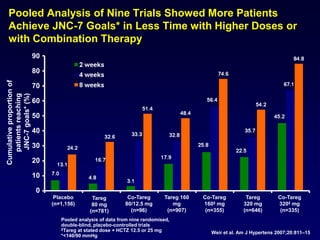
Pooled Analysis of Nine Trials Showed More Patients
Achieve JNC-7 Goals* in Less Time with Higher Doses or
with Combination Therapy
Cumulativeproportionof
patientsreaching
JNC-7goals*(%)
Weir et al. Am J Hypertens 2007;20:811–15
Placebo
(n=1,156)
Tareg
80 mg
(n=781)
Co-Tareg
80/12.5 mg
(n=96)
Tareg 160
mg
(n=907)
Co-Tareg
160‡ mg
(n=355)
Tareg
320 mg
(n=646)
Co-Tareg
320‡ mg
(n=335)
90
80
70
60
50
40
30
20
10
0
Pooled analysis of data from nine randomised,
double-blind, placebo-controlled trials
‡Tareg at stated dose + HCTZ 12.5 or 25 mg
*<140/90 mmHg
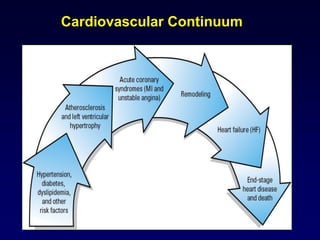
Cardiovascular Continuum
Proteinuria Is an Independent Risk Factor
for Mortality in Type 2 Diabetes
1.0
0.9
0.8
0.7
0.6
0.5
0 1 2 3 4 5 6
Years
Survival
(all-causemortality)
Normoalbuminuria
(n=191) [8%]
Microalbuminuria
(n=86) [20%]
Macroalbuminuria
(n=51) [35%]
Gall, MA et al. Diabetes 1995;44:1303
P<0.01 normo vs. micro- and macroalbuminuria
P<0.05 micro vs. macroalbuminuria
Tareg Reduction of Proteinuria
(DROP) Study:
Albuminuria response to very
high-dose valsartan in type 2
diabetes mellitus
Hollenberg et al.,
Journal of Hypertension 2007, 25:1921-1926
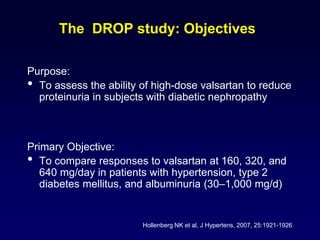
The DROP study: Objectives
Purpose:
• To assess the ability of high-dose valsartan to reduce
proteinuria in subjects with diabetic nephropathy
Primary Objective:
• To compare responses to valsartan at 160, 320, and
640 mg/day in patients with hypertension, type 2
diabetes mellitus, and albuminuria (30–1,000 mg/d)
Hollenberg NK et al, J Hypertens, 2007, 25:1921-1926
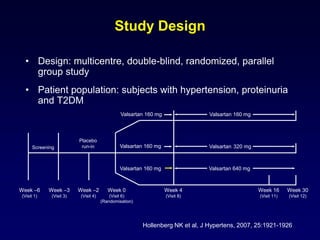
Study Design
• Design: multicentre, double-blind, randomized, parallel
group study
• Patient population: subjects with hypertension, proteinuria
and T2DM
Valsartan 160 mg
Valsartan 320 mg
Valsartan 640 mg
Placebo
run-inScreening Valsartan 160 mg
Week –6
(Visit 1)
Week –3
(Visit 3)
Week –2
(Visit 4)
Week 0
(Visit 6)
(Randomisation)
Week 4
(Visit 8)
Week 16
(Visit 11)
Week 30
(Visit 12)
Valsartan 160 mg
Valsartan 160 mg
Hollenberg NK et al, J Hypertens, 2007, 25:1921-1926
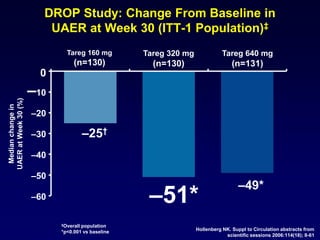
DROP Study: Change From Baseline in
UAER at Week 30 (ITT-1 Population)‡
–25†
–51*
–49*
–60
–50
–40
–30
–20
–10
0
Medianchangein
UAERatWeek30(%)
Tareg 160 mg
(n=130)
Tareg 320 mg
(n=130)
Tareg 640 mg
(n=131)
‡Overall population
*p<0.001 vs baseline
Hollenberg NK. Suppl to Circulation abstracts from
scientific sessions 2006:114(18); II-61
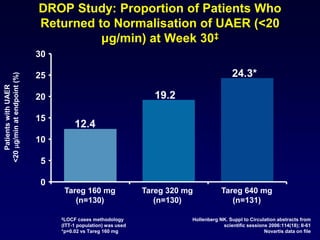
DROP Study: Proportion of Patients Who
Returned to Normalisation of UAER (<20
μg/min) at Week 30‡
12.4
19.2
0
5
10
15
20
25
30
PatientswithUAER
<20g/minatendpoint(%)
‡LOCF cases methodology
(ITT-1 population) was used
*p=0.02 vs Tareg 160 mg
Tareg 160 mg
(n=130)
Tareg 320 mg
(n=130)
Hollenberg NK. Suppl to Circulation abstracts from
scientific sessions 2006:114(18); II-61
Novartis data on file
24.3*
Tareg 640 mg
(n=131)
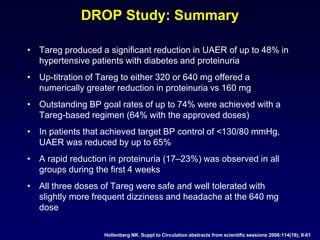
DROP Study: Summary
• Tareg produced a significant reduction in UAER of up to 48% in
hypertensive patients with diabetes and proteinuria
• Up-titration of Tareg to either 320 or 640 mg offered a
numerically greater reduction in proteinuria vs 160 mg
• Outstanding BP goal rates of up to 74% were achieved with a
Tareg-based regimen (64% with the approved doses)
• In patients that achieved target BP control of <130/80 mmHg,
UAER was reduced by up to 65%
• A rapid reduction in proteinuria (17–23%) was observed in all
groups during the first 4 weeks
• All three doses of Tareg were safe and well tolerated with
slightly more frequent dizziness and headache at the 640 mg
dose
Hollenberg NK. Suppl to Circulation abstracts from scientific sessions 2006:114(18); II-61
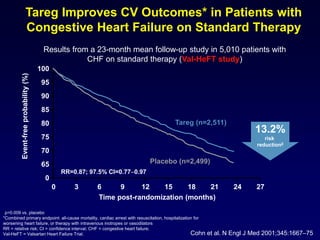
Time post-randomization (months)
100
95
90
85
80
75
70
65
0
Tareg (n=2,511)
Placebo (n=2,499)
0 3 6 9 12 15 18 21 24 27
13.2%
risk
reduction‡
Event-freeprobability(%)
‡p=0.009 vs. placebo
*Combined primary endpoint: all-cause mortality, cardiac arrest with resuscitation, hospitalization for
worsening heart failure, or therapy with intravenous inotropes or vasodilators
RR = relative risk; CI = confidence interval; CHF = congestive heart failure;
Val-HeFT = Valsartan Heart Failure Trial.
Results from a 23-month mean follow-up study in 5,010 patients with
CHF on standard therapy (Val-HeFT study)
Cohn et al. N Engl J Med 2001;345:1667–75
Tareg Improves CV Outcomes* in Patients with
Congestive Heart Failure on Standard Therapy
RR=0.87; 97.5% CI=0.770.97
*p<0.001;‡Combined primary endpoint: all-cause mortality, cardiac arrest with resuscitation,
hospitalization for worsening heart failure, or therapy with intravenous inotropes or vasodilators
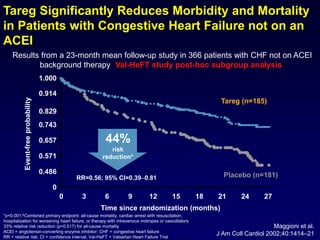
33% relative risk reduction (p=0.017) for all-cause mortality
ACEI = angiotensin-converting enzyme inhibitor; CHF = congestive heart failure
RR = relative risk; CI = confidence interval; Val-HeFT = Valsartan Heart Failure Trial
0
0.486
0.571
0.657
0.743
0.829
0.914
1.000
Time since randomization (months)
Event-freeprobability‡
Tareg (n=185)
Placebo (n=181)
44%
risk
reduction*
0 3 6 9 12 15 18 21 24 27
Maggioni et al.
J Am Coll Cardiol 2002;40:1414–21
Results from a 23-month mean follow-up study in 366 patients with CHF not on ACEI
background therapy (Val-HeFT study post-hoc subgroup analysis)
Tareg Significantly Reduces Morbidity and Mortality
in Patients with Congestive Heart Failure not on an
ACEI
RR=0.56; 95% CI=0.390.81
Captopril
0
0.05
0.1
0.15
0.2
0.25
0.3
0 6 12 18 24 30 36
ProbabilityofEvent
Mortality by Treatment
Pfeffer, McMurray, Velazquez, et al. N Engl J Med 2003;349
Valsartan 4909 4464 4272 4007 2648 1437 357
Months
Valsartan vs. Captopril: HR = 1.00; P = 0.982
Valsartan + Captopril vs. Captopril: HR = 0.98; P = 0.726
Captopril 4909 4428 4241 4018 2635 1432 364
Valsartan + Cap 4885 4414 4265 3994 2648 1435 382
Valsartan
Valsartan + Captopril
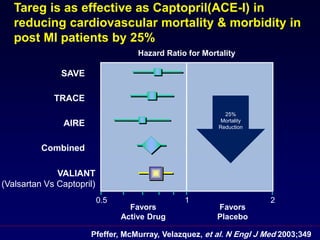
Tareg is as effective as Captopril(ACE-I) in
reducing cardiovascular mortality & morbidity in
post MI patients by 25%
Hazard Ratio for Mortality
Favors
Active Drug
Favors
Placebo
Pfeffer, McMurray, Velazquez, et al. N Engl J Med 2003;349
0.5 1 2
Combined
TRACE
SAVE
AIRE
VALIANT
(Valsartan Vs Captopril)
25%
Mortality
Reduction
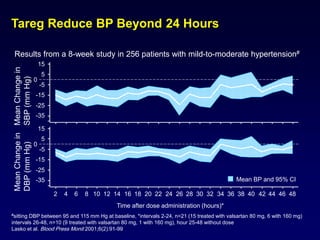
Tareg Reduce BP Beyond 24 Hours
Results from a 8-week study in 256 patients with mild-to-moderate hypertension#
#sitting DBP between 95 and 115 mm Hg at baseline, *intervals 2-24, n=21 (15 treated with valsartan 80 mg, 6 with 160 mg)
intervals 26-48, n=10 (9 treated with valsartan 80 mg, 1 with 160 mg), hour 25-48 without dose
Lasko et al. Blood Press Monit 2001;6(2):91-99
15
5
0
-5
-15
-25
-35
15
5
0
-5
-15
-25
-35
2 4 6 8 10 12 14 16 18 20 22 24 26 28 30 32 34 36 38 40 42 44 46 48
MeanChangein
SBP(mmHg)
MeanChangein
DBP(mmHg)
Time after dose administration (hours)*
Mean BP and 95% CI
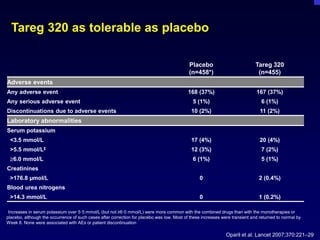
Tareg 320 as tolerable as placebo
Oparil et al. Lancet 2007;370:221–29
‡Increases in serum potassium over 5·5 mmol/L (but not ≥6·0 mmol/L) were more common with the combined drugs than with the monotherapies or
placebo, although the occurrence of such cases after correction for placebo was low. Most of these increases were transient and returned to normal by
Week 8. None were associated with AEs or patient discontinuation
Placebo
(n=458*)
Tareg 320
(n=455)
Adverse events
Any adverse event 168 (37%) 167 (37%)
Any serious adverse event 5 (1%) 6 (1%)
Discontinuations due to adverse events 10 (2%) 11 (2%)
Laboratory abnormalities
Serum potassium
<3.5 mmol/L 17 (4%) 20 (4%)
>5.5 mmol/L‡ 12 (3%) 7 (2%)
6.0 mmol/L 6 (1%) 5 (1%)
Creatinines
>176.8 µmol/L 0 2 (0.4%)
Blood urea nitrogens
>14.3 mmol/L 0 1 (0.2%)
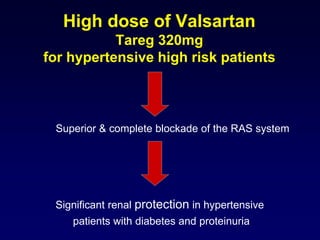
High dose of Valsartan
Tareg 320mg
for hypertensive high risk patients
Superior & complete blockade of the RAS system
Significant renal protection in hypertensive
patients with diabetes and proteinuria
So when to use the new high dose
of Valsartan?
- High risk and very high risk
hypertensive patients
- For Nephroprotection (Diabetics with
proteinuria)
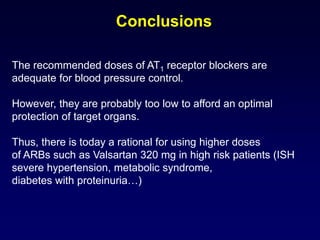
Conclusions
The recommended doses of AT1 receptor blockers are
adequate for blood pressure control.
However, they are probably too low to afford an optimal
protection of target organs.
Thus, there is today a rational for using higher doses
of ARBs such as Valsartan 320 mg in high risk patients (ISH
severe hypertension, metabolic syndrome,
diabetes with proteinuria…)
Thank You

ueda2012 do we still need high doses-d.mohammed

  • 1.
    Do we Stillneed High Doses? Professor : Mohamed Gamal Abdel Aziz Aswan 8/2/2012
  • 2.
    Hypertension goes uncontrolledin more than half of adults with the disease 33% 67% NHANES 1999 - 2002 Controlled Blood Pressure Uncontrolled Blood Pressure 46% 54% NHANES 2005-2008 Controlled Blood Pressure Uncontrolled Blood Pressure Ref.: Centers for Disease Control and Prevention. Vital signs: Prevalence, treatment, and control of hypertension—United States, 1999-2002 and 2005-2008. MMWR Morb Mortal Wkly Rep 2011; 60:1-6. Despite the significant improvement in Blood pressure control, still the problem of Uncontrolled patients remains
  • 3.
    Trials in diabeticpatients 40 30 20 10 0 Major CV events (% of patients over 5 years) Zanchetti A, 2009 Antihypertensive treatments fail to reduce incidence of major CV events below high-risk threshold of 10% in 5-year period Trials in high-risk patients 50 40 30 20 10 0 Major CV events (% of patients over 5 years) Reduction of risk Residual risk Trials in elderly patients 40 30 20 10 0 Major CV events (% of patients over 5 years) Dashed horizontal line indicates conventional threshold of high risk; x axes show randomized controlled trials of anti-HTN treatments.
  • 4.
    Current Guidelines RecommendInitiating Combination Therapy Early in Patients with Stage 2 Hypertension or High Cardiovascular Risk • JNC 7 guidelines state1: ―When BP is more than 20 mmHg above systolic goal or 10 mmHg above diastolic goal, consideration should be given to initiate therapy with 2 drugs...‖ • ESH/ESC guidelines state2: ―A combination of two drugs at low doses should be preferred as first step treatment when initial BP is in the grade 2 or 3 range or total cardiovascular risk is high or very high.‖ 1Chobanian et al. Hypertension 2003;42:1206–52 2Mancia et al. J Hypertens 2007:25:110587 ESH = European Society of Hypertension ESC = European Society of Cardiology JNC = Joint National Committee
  • 5.
    Low-dose 2-drug combinationLow-dosesingle agent Not at BP goal Full dose of single agent Switch to different agent at low dose Full dose of 2-drug combination Add a third drug at low dose Not at BP goal 2–3 drug combination at full dose Full doses of 2–3-drug combination ESH–ESC: Algorithm for Treatment of Hypertension Full-dose single agent TOD = target organ damage Marked BP elevation High/very high CV risk Lower BP target Mild BP elevation Low/moderate CV risk Conventional BP target Task Force for ESH–ESC. J Hypertens 2007;25:1105–874
  • 6.
    CCB Alpha blockers Beta blockers Diuretics Other RAS blockade TheFoundation RAAS Blockade With ARBs Can Be Considered a Foundation of Antihypertensive and CV Preventive Therapy
  • 7.
    Pre-diabetes Diabetes – Renal RAASBlockers Have Been Studied Extensively in Outcomes Trials High Risk Myocardial infarction • LIFE • SCOPE • STOP 2 • VALUE • KYOTO HEART • CAPPP • ALLHAT • ANBP2 • HOPE • ONTARGET • TRANSCEND • JIKEI HEART • KYOTO HEART • OPTIMAAL • VALIANT • CONSENSUS II • ISIS-4 • GISSI-3 • SMILE • SAVE • AIRE • TRACE Heart failure • NAVIGATOR • DREAM • RENAAL • IDNT • ABCD Hypertension Coronary Artery Disease • EUROPA • PEACE • IMAGINE • ELITE II • Val-HeFT • CHARM • CONSENSUS I • SOLVD • V-HeFT II • PEP-CHF
  • 8.
    GFR Proteinuria Aldosterone release Glomerular sclerosis AIIAT1 Receptor Atherosclerosis* Vasoconstriction Vascular hypertrophy Endothelial dysfunction LV hypertrophy Fibrosis Remodeling Apoptosis Stroke Death *Preclinical data. LV=left ventricular; MI=myocardial infarction; GFR=glomerular filtration rate. Hypertension Heart Failure MI Renal Failure Angiotensin II Plays a Central Role in Organ Damage . Willenheimer R, Dahlof B, Rydberg E, Erhardt L. AT1-receptor blockers in hypertension and heart failure: clinical experience and future directions. Eur Heart J. 1999;20:997–1008. 2. Dahlof B. Effect of angiotensin II blockade on cardiac hypertrophy and remodelling: a review. J Hum Hypertens.1995;9(suppl 5):S37–44. 3. Daugherty A, Manning MW, Cassis LA. Angiotensin II promotes atherosclerotic lesions and aneurysms in apolipoprotein E-deficient mice. J Clin Invest. 2000;105:1605–12.
  • 10.
    Effects of RASblockade on stroke: meta-analysis of ARBs and ACE inhibitors MI Cardiovascular mortality All-cause mortality Stroke Favours ARB Favours ACE inhibitor Reboldi et al. J Hypertension 2008;26:1282–1289 Studies (N=63,409 ): ELITE; ELITE-II; OPTIMAAL; DETAIL; VALIANT; ONTARGET
  • 11.
    Elliott and Meyer.Lancet 2007;369:201–7 0.57 (0.46–0.72) p<0.0001 0.67 (0.56–0.80) p<0.0001 0.75 (0.62–0.90) p=0.002 0.77 (0.63–0.94) p=0.009 0.90 (0.75–1.09) p=0.30 Referent ARB ACE inhibitor CCB Placebo β-blocker Diuretic Odds ratio of incident diabetes Incoherence=0.000017 0.50 0.70 0.90 1.26 Effects of Different Antihypertensive Agents on Incidence of Diabetes Network meta-analysis assessing the effects of different antihypertensive agents on incidence of diabetes in 48 randomised groups from 22 clinical trials* (n=143,153) *17 trials enrolled patients with hypertension, three enrolled high-risk patients and one enrolled patients with heart failure (HF) ARB=angiotensin receptor blocker; ACE=angiotensin-converting enzyme; CCB=calcium channel blocker
  • 12.
    Conditions favoring useof some antihypertensive drugs versus others:
  • 13.
  • 15.
    There is nosuch thing as a simple Class Effect that cover all aspect of different molecules Go with the evidence,do not assume
  • 16.
    1. VALUE 2. VALIANT 3.NAVIGATOR 4. Val-HeFT 5. JIKEI HEART 6. KYOTO HEART* 7. VART* 8. VALISH* 27. IDNT 28. ACTIVE-I* 29. NID-2 30. SUPPORT* 31. COLM* 32. OSCAR* 33. ORIENT* 34. MOSES 1. Julius et al. 2004; 2. Pfeffer et al. 2003; 3. Califf et al 2008; 4. Cohn et al. 2001; 5. Mochizuki et al. 2007; 6. http://clinicaltrials.gov (NCT00149227); 7. Nakayama et al. 2008; 8. NCT00151229; 9. ONTARGET Investigators 2008; 10. Yusuf et al 2008; 11. TRANSCEND Investigators 2008; 12. http://clinicaltrials.gov (NCT00283686); 13. Dahlöf et al. 2002; 14. Dickstein et al. 2002; 15. Pitt et al. 2000; 16. Brenner et al. 2001; 17. http://clinicaltrials.gov (NCT00090259); 18. http://clinicaltrials.gov (NCT00555217); 19. Pfeffer et al 2003; 20. Papademetriou et al. 2004; 21. http://clinicaltrials.gov (NCT00120003); 22. Ogihara et al. 2008; 23. http://clinicaltrials.gov (NCT00108706); 24. Laufs et al. 2008; 25. Suzuki et al. 2005; 26. Massie et al 2008; 27. Lewis et al. 2001; 28. http://clinicaltrials.gov (NCT00249795); 29. http://clinicaltrials.gov (NCT00535925); 30. http://clinicaltrials.gov (NCT00417222); 31. http://clinicaltrials.gov (NCT00454662); 32. http://clinicaltrials.gov (NCT00134160); 33. http://clinicaltrials.gov (NCT00141453); 34. Schrader et al. 2005 9. ONTARGET 10. PRoFESS 11. TRANSCEND 12. HALT-PKD* 13. LIFE 14. OPTIMAAL 15. ELITE II 16. RENAAL 17. NCT00090259* *Expected enrolment ‡Ongoing and completed randomized controlled trials with death or hard CV events as or part of the primary endpoint ¶Valid as of January 2009 Mortality & Morbidity Endpoint Trials with ARBs 18. VA NEPHRON-D* 19. CHARM 20. SCOPE 21. SCAST* 22. CASE-J 23. ACCOST 24. HIJ-CREATE 25. E-COST 26. I-PRESERVE 0 10,000 20,000 30,000 40,000 50,000 60,000 Numberofpatients Valsartan Telmisartan Losartan Candesartan Irbesartan Olmesartan Eprosartan 57,781 52,896 24,841 23,940 6,577 1,405 15,693 1 2 5 4 3 7 8 6 9 10 16 11 17 18 15 13 14 22 25 21 19 20 34 31 30 32 33 28 27 26 24
  • 17.
    Selectivity on AT1Receptor Valsartan Candesartan LosartanIrbesartan Telmisartan 10000 20000 30000 30,000 1000 8500 10,000 3,000 Valsartan is 3 times more selective for AT1 receptors than other ARB agents Siragy H. Am J Cardiol. 1999;84:3S-8S.
  • 18.
    Valsartan: Extensively StudiedAcross the Cardiovascular Continuum 1. Julius et al. Lancet 2004; 363:2022–31; 2. Pfeffer et al. N Engl J Med 2003;349:1893–906; 3. Cohn et al. N Engl J Med 2001; 345:1667–75 4. Califf et al. Am Heart J 2008;156:623–32; 5. Mochizuki et al. Lancet 2007;369:1431–9; 6. Viberti et al. Circulation 2002;106:6728 7. Karalliedde et al. Hypertension 2008;51:161723; 8. SMART Group. Diabetes Care 2007;30:1581–3; 9. Hollenberg et al. J Hypertens 2007;25:19216 MARVAL6 MARVAL II7 SMART8 DROP9 Endothelial dysfunction Microalbuminuria Proteinuria End-stage renal disease Risk factors Diabetes Hypertension Atherosclerosis and LVH Myocardial infarction Ventricular Remodelling Ventricular Dilation Heart Failure End-stage Heart Disease Death Includes over 50,000 patients*19 JIKEI HEART 1 2 3 4 ‡5 *Not all patients in these studies received valsartan ‡Independent, investigator-initiated study
  • 19.
    19 Titrating Valsartan tofull dose optimizes CV/Renal Protection in outcome trial Tareg based therapy 40 - 320 mg out come trials Trial Drug used Dose titration NO. of patient outcome VAL-HEFT Valsartan 40 - 320 mg About 5000 pts Composite Mortality & Morbidity end point reduced by 13.2%, Patients not on ACEi Group reduced By 44% VALLIANT valsartan 40-320 mg About 15,000 25% Mortality risk reduction in Post MI patients DROP valsartan 160 – 320 - 640mg 390 pts 51% reduction in UAER •Maggioni et al. J Am Coll Cardiol 2002;40:1414–21,, •McMurray et al. J Am Coll Cardiol 2006; 47:726–33,, •Hollenberg et al J Hypertens 2007,25:1921-1926
  • 20.
    Valsartan* Provides PowerfulSystolic BP Reductions Across Hypertension Severities -15.9 -23.5 -27 -32.2 -38.9 -46.4 -12.1 -14.3 -17.4 -23.1 -31.5 -25.9 -50 -45 -40 -35 -30 -25 -20 -15 -10 -5 0 140–149 150–159 Post-hoc analysis C-DITT study Category of baseline MSSBP (mmHg) 160–169 170–179 180–189 ChangeinMSSBP(mmHg) atWeek4(LOCF) 6-week, double-blind, multicentre, forced-titration study in patients with DBP ≥110 mmHg and <120 mmHg and SBP ≥140 mmHg and <200 mmHg. Valsartan 160 mg force-titrated to 320 mg at Week 2. Valsartan/HCTZ 160/12.5 mg force-titrated to 160/25 mg and 320/25 mg at Weeks 2 and 4. BP = blood pressure; DBP = diastolic BP; SBP = systolic BP; MSSBP = mean sitting SBP; LOCF = last observation carried forward; C-DITT = Co-Tareg Initial Therapy Trial 190-199 Calhoun et al. Curr Med Opin Res 2008;24:230311
  • 21.
    0 –5 –10 –15 –20 –25 –30 Blacks Hispanic Elderly#Obese‡ Diabetes n=202 n=51 n=117 n=477 n=69 21.4 21.7 25.5 23.6 19.5 n=190 n=58 n=103 n=493 n=97 *p≤0.01 vs valsartan monotherapy: ¶Valsartan 160 mg or valsartan/HCTZ 160/12.5 mg force-titrated to valsartan 320 mg or valsartan/HCTZ 320/12.5 mg, respectively, at Week 2; §SBP ≥160 mmHg and/or DBP ≥100 mmHg; #≥65 years of age; ‡body mass index ≥30 kg/m2; HCTZ = hydrochlorothiazide Val-MARC = Valsartan-Managing blood pressure Aggressively and evaluating Reductions in hsCRPEverett et al.Clin Ther 2008;30:66172 Meanchangefrombaseline inSBPatWeek6(mmHg) 12.6 16.3 16.9 15.9 16.3 * * * * Valsartan and Valsartan-HCTZ Therapy Provides Effective BP Reductions Across Diverse Patient Populations Valsartan/HCTZ¶ Valsartan¶
  • 22.
    Co-Tareg® 320 achievesBP goal in up to 9 out of 10 patients with HTN #BP=Blood pressure; DBP=Diastolic blood pressure; HTN=Hypertension; Ref.: Weir et al. J Clin Hypertens 2007;9:103-112 Results from a pooled analysis of 9 randomized trials# in 4278 patients with HTN§ Patients achieving BP goal <140/90 mmHg (%) Co-Tareg 320/25 mg (n=80) Tareg 320 mg (n=271) Co-Tareg 320/12.5 mg (n=87) 40 60 80 100
  • 23.
    Tareg/Co-Tareg: Proportion ofPatients Achieving BP Goal <140/90 mmHg Co-Tareg 320/25 mg Co-Tareg 320/12.5 mg Tareg 320 mg Co-Tareg 160/25 mg Co-Tareg 160/12.5 mg Tareg 160 mg Co-Tareg 80/12.5 mg Tareg 80 mg Placebo n 167 168 646 94 261 907 96 782 1157 0 10 20 30 40 50 60 70 80 90 100 Patients achieving goal (%) Weir et al. J Clin Hypertens 2007;9:103–112 Meta-analysis of nine randomised, double-blind, placebo-controlled trials; data for overall population shown
  • 24.
    Pooled Analysis ofNine Trials Showed More Patients Achieve JNC-7 Goals* in Less Time with Higher Doses or with Combination Therapy Cumulativeproportionof patientsreaching JNC-7goals*(%) Weir et al. Am J Hypertens 2007;20:811–15 Placebo (n=1,156) Tareg 80 mg (n=781) Co-Tareg 80/12.5 mg (n=96) Tareg 160 mg (n=907) Co-Tareg 160‡ mg (n=355) Tareg 320 mg (n=646) Co-Tareg 320‡ mg (n=335) 90 80 70 60 50 40 30 20 10 0 Pooled analysis of data from nine randomised, double-blind, placebo-controlled trials ‡Tareg at stated dose + HCTZ 12.5 or 25 mg *<140/90 mmHg
  • 25.
  • 27.
    Proteinuria Is anIndependent Risk Factor for Mortality in Type 2 Diabetes 1.0 0.9 0.8 0.7 0.6 0.5 0 1 2 3 4 5 6 Years Survival (all-causemortality) Normoalbuminuria (n=191) [8%] Microalbuminuria (n=86) [20%] Macroalbuminuria (n=51) [35%] Gall, MA et al. Diabetes 1995;44:1303 P<0.01 normo vs. micro- and macroalbuminuria P<0.05 micro vs. macroalbuminuria
  • 28.
    Tareg Reduction ofProteinuria (DROP) Study: Albuminuria response to very high-dose valsartan in type 2 diabetes mellitus Hollenberg et al., Journal of Hypertension 2007, 25:1921-1926
  • 29.
    The DROP study:Objectives Purpose: • To assess the ability of high-dose valsartan to reduce proteinuria in subjects with diabetic nephropathy Primary Objective: • To compare responses to valsartan at 160, 320, and 640 mg/day in patients with hypertension, type 2 diabetes mellitus, and albuminuria (30–1,000 mg/d) Hollenberg NK et al, J Hypertens, 2007, 25:1921-1926
  • 30.
    Study Design • Design:multicentre, double-blind, randomized, parallel group study • Patient population: subjects with hypertension, proteinuria and T2DM Valsartan 160 mg Valsartan 320 mg Valsartan 640 mg Placebo run-inScreening Valsartan 160 mg Week –6 (Visit 1) Week –3 (Visit 3) Week –2 (Visit 4) Week 0 (Visit 6) (Randomisation) Week 4 (Visit 8) Week 16 (Visit 11) Week 30 (Visit 12) Valsartan 160 mg Valsartan 160 mg Hollenberg NK et al, J Hypertens, 2007, 25:1921-1926
  • 31.
    DROP Study: ChangeFrom Baseline in UAER at Week 30 (ITT-1 Population)‡ –25† –51* –49* –60 –50 –40 –30 –20 –10 0 Medianchangein UAERatWeek30(%) Tareg 160 mg (n=130) Tareg 320 mg (n=130) Tareg 640 mg (n=131) ‡Overall population *p<0.001 vs baseline Hollenberg NK. Suppl to Circulation abstracts from scientific sessions 2006:114(18); II-61
  • 32.
    DROP Study: Proportionof Patients Who Returned to Normalisation of UAER (<20 μg/min) at Week 30‡ 12.4 19.2 0 5 10 15 20 25 30 PatientswithUAER <20g/minatendpoint(%) ‡LOCF cases methodology (ITT-1 population) was used *p=0.02 vs Tareg 160 mg Tareg 160 mg (n=130) Tareg 320 mg (n=130) Hollenberg NK. Suppl to Circulation abstracts from scientific sessions 2006:114(18); II-61 Novartis data on file 24.3* Tareg 640 mg (n=131)
  • 33.
    DROP Study: Summary •Tareg produced a significant reduction in UAER of up to 48% in hypertensive patients with diabetes and proteinuria • Up-titration of Tareg to either 320 or 640 mg offered a numerically greater reduction in proteinuria vs 160 mg • Outstanding BP goal rates of up to 74% were achieved with a Tareg-based regimen (64% with the approved doses) • In patients that achieved target BP control of <130/80 mmHg, UAER was reduced by up to 65% • A rapid reduction in proteinuria (17–23%) was observed in all groups during the first 4 weeks • All three doses of Tareg were safe and well tolerated with slightly more frequent dizziness and headache at the 640 mg dose Hollenberg NK. Suppl to Circulation abstracts from scientific sessions 2006:114(18); II-61
  • 34.
    Time post-randomization (months) 100 95 90 85 80 75 70 65 0 Tareg(n=2,511) Placebo (n=2,499) 0 3 6 9 12 15 18 21 24 27 13.2% risk reduction‡ Event-freeprobability(%) ‡p=0.009 vs. placebo *Combined primary endpoint: all-cause mortality, cardiac arrest with resuscitation, hospitalization for worsening heart failure, or therapy with intravenous inotropes or vasodilators RR = relative risk; CI = confidence interval; CHF = congestive heart failure; Val-HeFT = Valsartan Heart Failure Trial. Results from a 23-month mean follow-up study in 5,010 patients with CHF on standard therapy (Val-HeFT study) Cohn et al. N Engl J Med 2001;345:1667–75 Tareg Improves CV Outcomes* in Patients with Congestive Heart Failure on Standard Therapy RR=0.87; 97.5% CI=0.770.97
  • 35.
    *p<0.001;‡Combined primary endpoint:all-cause mortality, cardiac arrest with resuscitation, hospitalization for worsening heart failure, or therapy with intravenous inotropes or vasodilators 33% relative risk reduction (p=0.017) for all-cause mortality ACEI = angiotensin-converting enzyme inhibitor; CHF = congestive heart failure RR = relative risk; CI = confidence interval; Val-HeFT = Valsartan Heart Failure Trial 0 0.486 0.571 0.657 0.743 0.829 0.914 1.000 Time since randomization (months) Event-freeprobability‡ Tareg (n=185) Placebo (n=181) 44% risk reduction* 0 3 6 9 12 15 18 21 24 27 Maggioni et al. J Am Coll Cardiol 2002;40:1414–21 Results from a 23-month mean follow-up study in 366 patients with CHF not on ACEI background therapy (Val-HeFT study post-hoc subgroup analysis) Tareg Significantly Reduces Morbidity and Mortality in Patients with Congestive Heart Failure not on an ACEI RR=0.56; 95% CI=0.390.81
  • 36.
    Captopril 0 0.05 0.1 0.15 0.2 0.25 0.3 0 6 1218 24 30 36 ProbabilityofEvent Mortality by Treatment Pfeffer, McMurray, Velazquez, et al. N Engl J Med 2003;349 Valsartan 4909 4464 4272 4007 2648 1437 357 Months Valsartan vs. Captopril: HR = 1.00; P = 0.982 Valsartan + Captopril vs. Captopril: HR = 0.98; P = 0.726 Captopril 4909 4428 4241 4018 2635 1432 364 Valsartan + Cap 4885 4414 4265 3994 2648 1435 382 Valsartan Valsartan + Captopril
  • 37.
    Tareg is aseffective as Captopril(ACE-I) in reducing cardiovascular mortality & morbidity in post MI patients by 25% Hazard Ratio for Mortality Favors Active Drug Favors Placebo Pfeffer, McMurray, Velazquez, et al. N Engl J Med 2003;349 0.5 1 2 Combined TRACE SAVE AIRE VALIANT (Valsartan Vs Captopril) 25% Mortality Reduction
  • 38.
    Tareg Reduce BPBeyond 24 Hours Results from a 8-week study in 256 patients with mild-to-moderate hypertension# #sitting DBP between 95 and 115 mm Hg at baseline, *intervals 2-24, n=21 (15 treated with valsartan 80 mg, 6 with 160 mg) intervals 26-48, n=10 (9 treated with valsartan 80 mg, 1 with 160 mg), hour 25-48 without dose Lasko et al. Blood Press Monit 2001;6(2):91-99 15 5 0 -5 -15 -25 -35 15 5 0 -5 -15 -25 -35 2 4 6 8 10 12 14 16 18 20 22 24 26 28 30 32 34 36 38 40 42 44 46 48 MeanChangein SBP(mmHg) MeanChangein DBP(mmHg) Time after dose administration (hours)* Mean BP and 95% CI
  • 39.
    Tareg 320 astolerable as placebo Oparil et al. Lancet 2007;370:221–29 ‡Increases in serum potassium over 5·5 mmol/L (but not ≥6·0 mmol/L) were more common with the combined drugs than with the monotherapies or placebo, although the occurrence of such cases after correction for placebo was low. Most of these increases were transient and returned to normal by Week 8. None were associated with AEs or patient discontinuation Placebo (n=458*) Tareg 320 (n=455) Adverse events Any adverse event 168 (37%) 167 (37%) Any serious adverse event 5 (1%) 6 (1%) Discontinuations due to adverse events 10 (2%) 11 (2%) Laboratory abnormalities Serum potassium <3.5 mmol/L 17 (4%) 20 (4%) >5.5 mmol/L‡ 12 (3%) 7 (2%) 6.0 mmol/L 6 (1%) 5 (1%) Creatinines >176.8 µmol/L 0 2 (0.4%) Blood urea nitrogens >14.3 mmol/L 0 1 (0.2%)
  • 40.
    High dose ofValsartan Tareg 320mg for hypertensive high risk patients Superior & complete blockade of the RAS system Significant renal protection in hypertensive patients with diabetes and proteinuria
  • 41.
    So when touse the new high dose of Valsartan? - High risk and very high risk hypertensive patients - For Nephroprotection (Diabetics with proteinuria)
  • 42.
    Conclusions The recommended dosesof AT1 receptor blockers are adequate for blood pressure control. However, they are probably too low to afford an optimal protection of target organs. Thus, there is today a rational for using higher doses of ARBs such as Valsartan 320 mg in high risk patients (ISH severe hypertension, metabolic syndrome, diabetes with proteinuria…)
  • 43.