IV
CANNULATION
PRESENTED BY:
NAJAH AL-JOHANI
WHAT IS CANNULA?
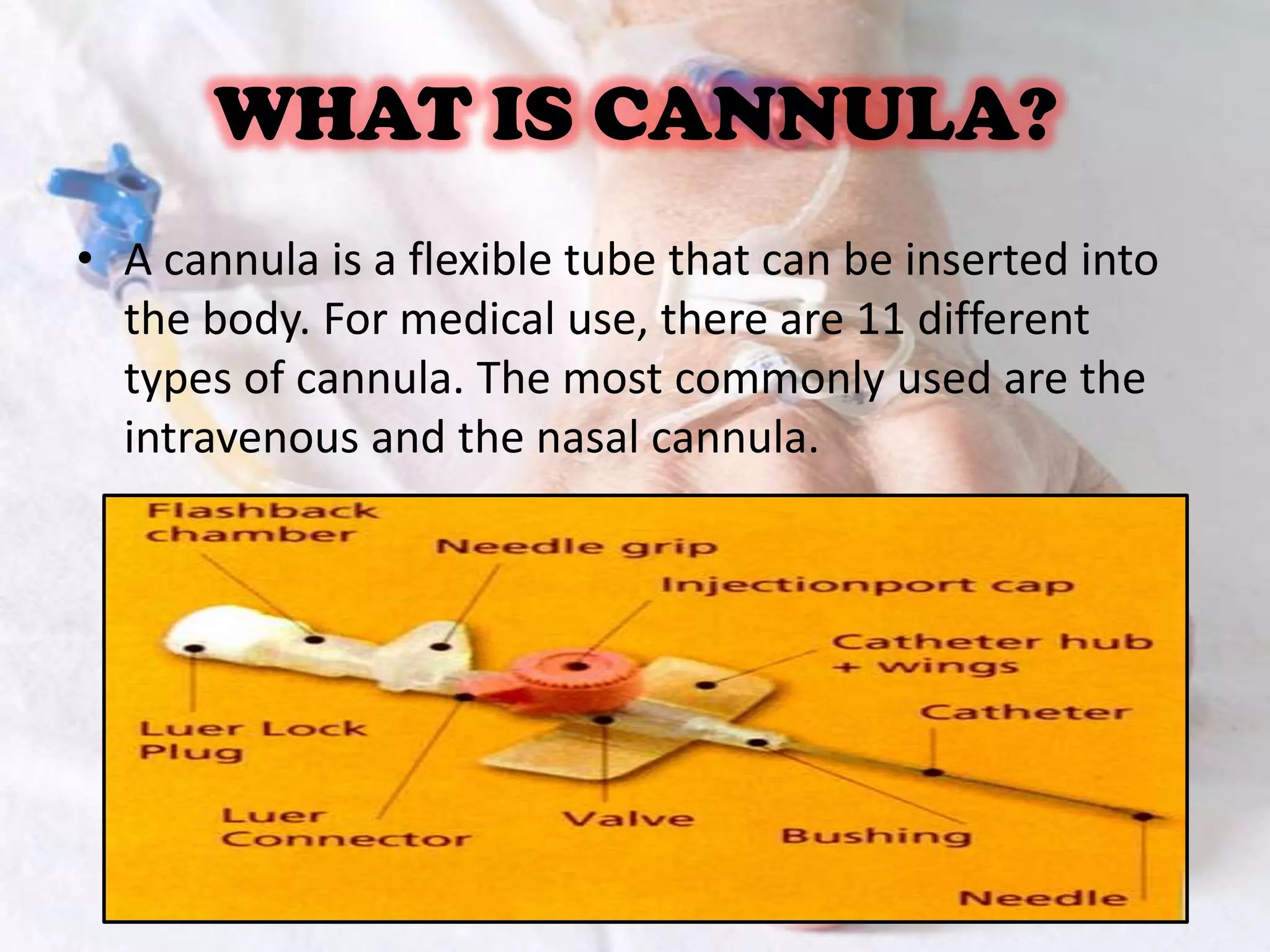
• A cannula is a flexible tube that can be inserted into
the body. For medical use, there are 11 different
types of cannula. The most commonly used are the
intravenous and the nasal cannula.
TYPES OF CANNULA
•
•
•
•

Iv cannula pen-like model.
Iv cannula with wings model.
Iv cannula with injection part model.
Iv cannula y-type model.
Pen-like model
With wings model
With injection part model
Y-type model
LENGTH OF CANNULA
INDICATION OF CANNULATION
•
•
•
•
•
•

Repeated blood sampling
Intravenous fluid administration
Intravenous medications administration
Intravenous chemotherapy administration
Intravenous nutritional support
Intravenous blood or blood products
administration
• Intravenous administration of radiological
contrast agents for computed
tomography, magnetic resonance imaging, or
nuclear imaging
PROCEDURE
• Introduce your self to patient.
• Explain the procedure.
• Approach with a confident, calm, caring attitude
• Collect your equipment.
• wash hand.
• Selecting a vein
Veins of the Forearm
1. Cephalic vein
2. Median Cubital vein
3. Accessory Cephalic vein
4. Basilic vein
5. Cephalic vein
6. Median antebrachial vein
CONT..
Veins of the Hand
1. Digital Dorsal veins
2. Dorsal Metacarpal veins
3. Dorsal venous network
4. Cephalic vein
5. Basilic vein
THE SITES SHOULD BE AVOIDED
1.
2.
3.
4.
5.
6.
7.

Wrist
Legs, feet, ankles
Veins below a previous IV infiltration
Vein below a phlebitic area
Sclerosed or thrombosed veins
Areas of skin inflammation
An arm affected by a radial
mastectomy, edema, blood clot, or infection.
8. An arm with an arteriovenous shunt of fistula
• Apply tourniquet.

• Clean area with
alcohol s
• Remove needle cover
• Insert the needle bevel up ward at about 30ᶜ&
̊
advance the rest of cannula into the vien
• Release the tourniquet & apply pressure
at the tip of cannula & remove the
needle .
• Apply the plaster to fix it on the place
COMPLICATION OF
CANNULATION
1-local complication:
-Infiltration.
-Extravasation.
-Thrombosis.
-Cellulitis.
-Phlebitis.

2-systmic complication:
-Embolism.
*pulmonary embolism
*air embolism
*catheter embolism.

-Hematoma.
-Systemic infection.
-Speed shock.
-Circulatory overload.
-Allergic reaction.
Local complication
1- Infiltration:
Local complication
2-Extravasation:
Local complication
3-Thrombosis:

Occurs when blood flow through a vein is
obstructed by a local thrombus
Local complication
4-Cellulities:
Local complication
5-Phlibitis:
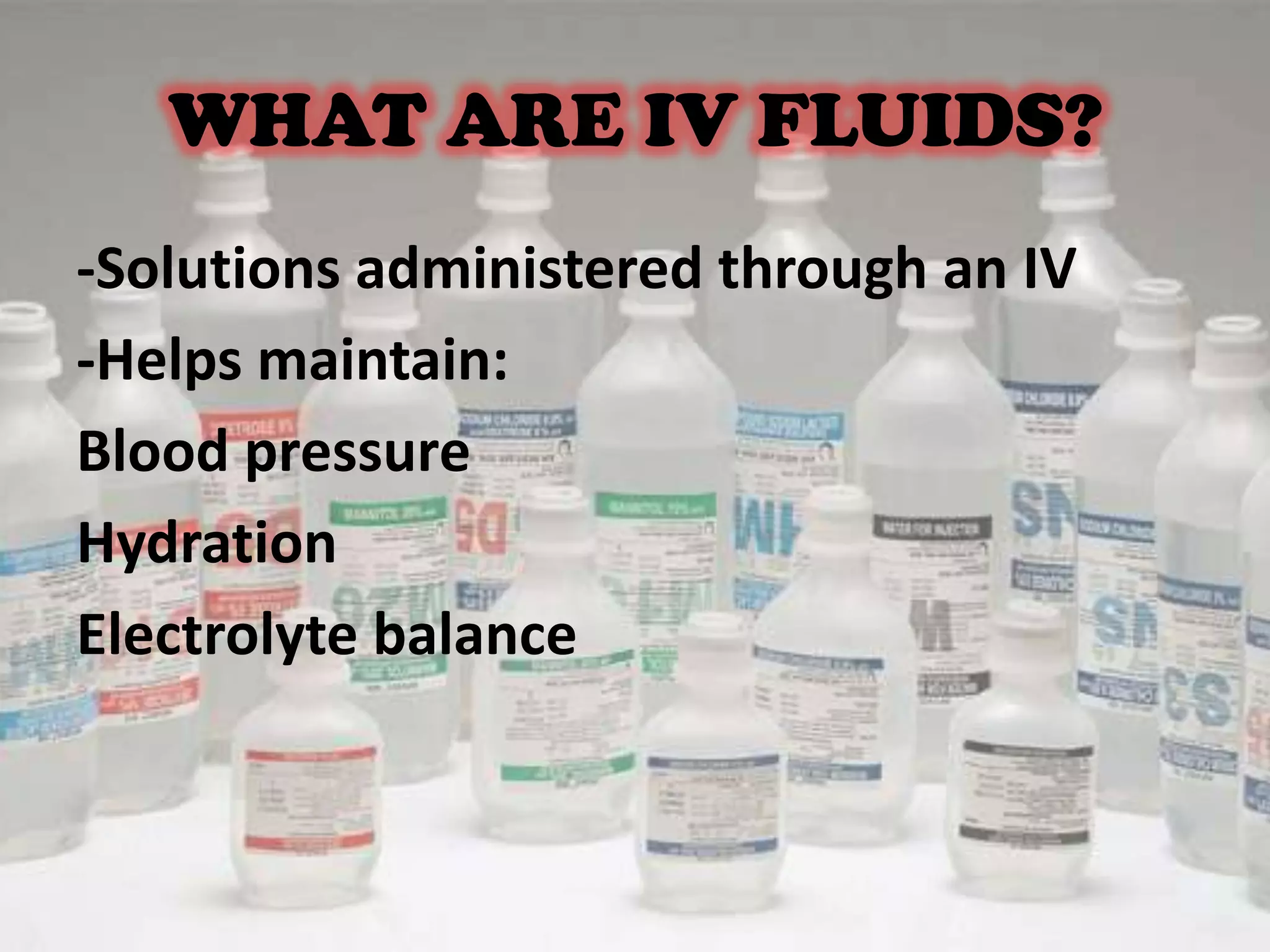
WHAT ARE IV FLUIDS?
-Solutions administered through an IV
-Helps maintain:
Blood pressure
Hydration
Electrolyte balance
TYPES OF IV FLUID
1-NS 0.9%
2-NS 0.45%
3-NS 0.225%
4-RL
5-D5%
6-D10%
7-D5%NS0.9%
8-D5%NS0.45%
9-D5%NS0.225%

20 iv cannulation