IV CANNULATION
Intravenous (IV) cannulation is a technique in which a cannula is placed inside a vein to provide venous access.
Anatomy of Veins:
 Veins are unlike arteries in that they are
1) Superficial
2) Display dark red blood at skin surface
3) No pulsation
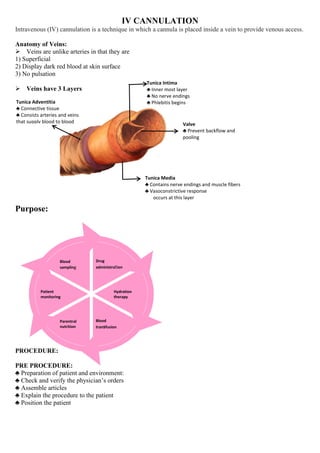
 Veins have 3 Layers
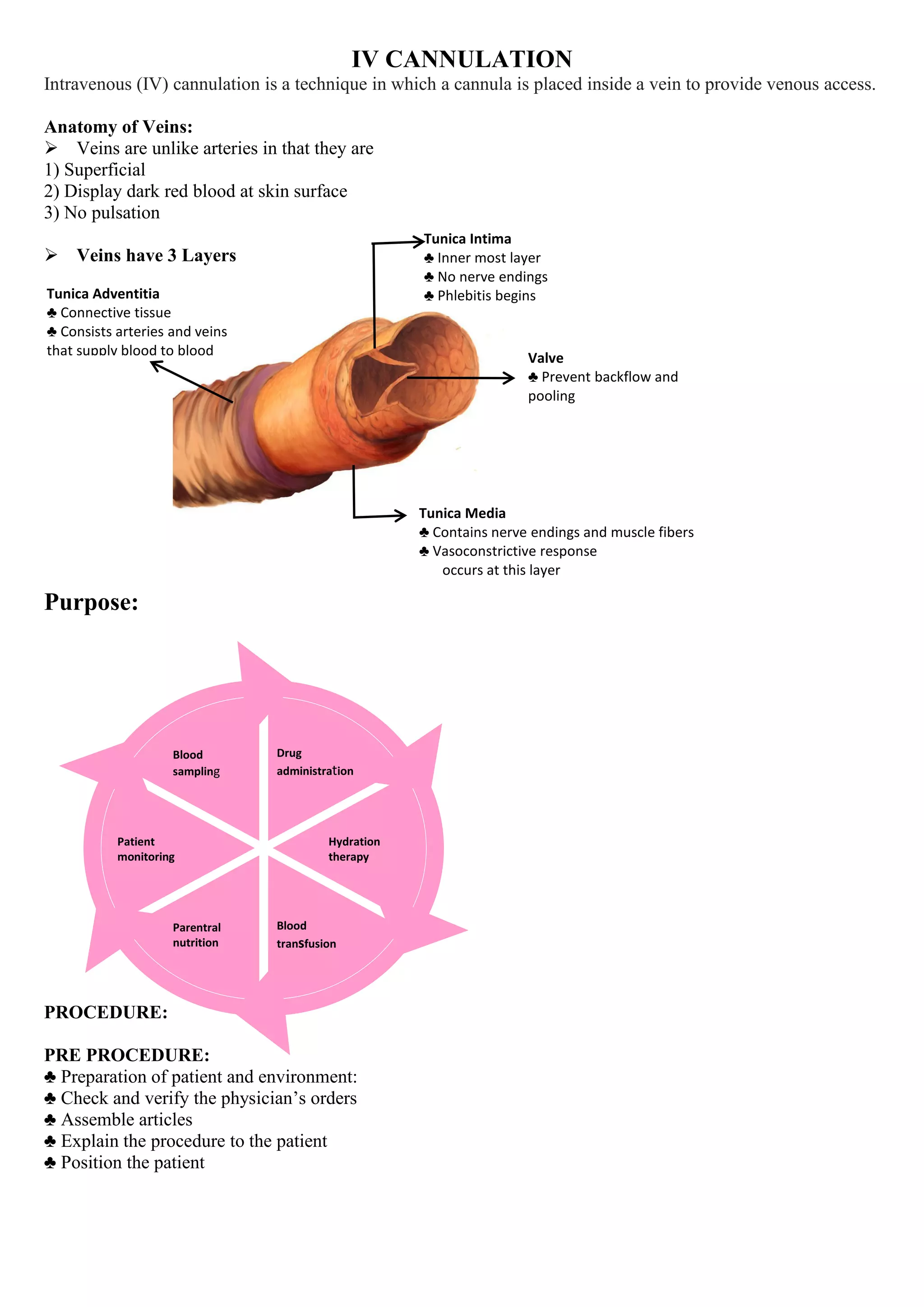
Purpose:
PROCEDURE:
PRE PROCEDURE:
♣ Preparation of patient and environment:
♣ Check and verify the physician’s orders
♣ Assemble articles
♣ Explain the procedure to the patient
♣ Position the patient
Drug
administration
Hydration
therapy
Blood
transfusion
Parentral
nutrition
Patient
monitoring
Blood
sampling
Tunica Media
♣ Contains nerve endings and muscle fibers
♣ Vasoconstrictive response
occurs at this layer
Tunica Adventitia
♣ Connective tissue
♣ Consists arteries and veins
that supply blood to blood
Tunica Intima
♣ Inner most layer
♣ No nerve endings
♣ Phlebitis begins
Valve
♣ Prevent backflow and
pooling
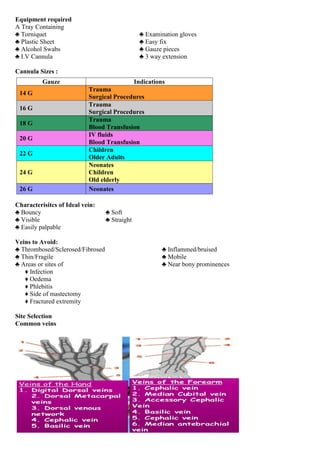
Equipment required
A Tray Containing
♣ Torniquet ♣ Examination gloves
♣ Plastic Sheet ♣ Easy fix
♣ Alcohol Swabs ♣ Gauze pieces
♣ I.V Cannula ♣ 3 way extension
Cannula Sizes :
Characterisitcs of Ideal vein:
♣ Bouncy ♣ Soft
♣ Visible ♣ Straight
♣ Easily palpable
Veins to Avoid:
♣ Thrombosed/Sclerosed/Fibrosed ♣ Inflammed/bruised
♣ Thin/Fragile ♣ Mobile
♣ Areas or sites of ♣ Near bony prominences
♦ Infection
♦ Oedema
♦ Phlebitis
♦ Side of mastectomy
♦ Fractured extremity
Site Selection
Common veins
Gauze Indications
14 G
Trauma
Surgical Procedures
16 G
Trauma
Surgical Procedures
18 G
Trauma
Blood Transfusion
20 G
IV fluids
Blood Transfusion
22 G
Children
Older Adults
24 G
Neonates
Children
Old elderly
26 G Neonates
Encourage Venous filling/dilation by:
♣ Tourniquet application - 3 to 4 inches above the site of insertion.
♣ Opening and closing the fist.
♣ Lowering the limb below the heart.
INTRA PROCEDURE
♣ Wash Hands and Don Gloves
♣ Apply Tourniquet 3-4 inches above the site of insertion
♣ Clean the site with Alcohol swab from centre to periphery in circular motion
♣ Maintain traction on the skin to anchor the vein.
♣ Hold the catheter with thumb (behind the thumb rest) with the 2nd and the 3rd finger in front of the side port
or catheter wings.
♣ Insert the stylet through the skin and into the vein at an angle of 15° to 30 °
♣ Placement of the needle tip into the vein is confirmed by blood in the flashback chamber.
♣ Upon visualisation of flashback decrease the catheter to skin angle virtually parallel to the skin
♣ Advance the entire catheter.
♣ Remove tourniquet
♣ Remove the stylet while applying digital pressure to the vein just beyond the catheter tip (to prevent
excessive bleeding)
♣ While applying digital pressure,Remove the white cap from the needle and place it to the cannula.
♣ Secure the cannula with Adhesive tape.
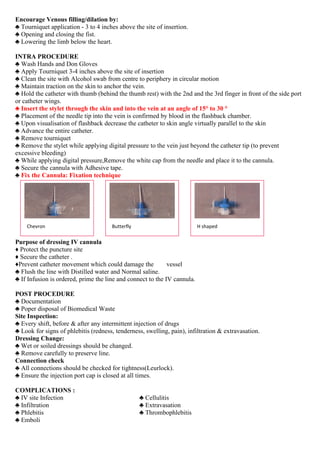
♣ Fix the Cannula: Fixation technique
Purpose of dressing IV cannula
♦ Protect the puncture site
♦ Secure the catheter .
♦Prevent catheter movement which could damage the vessel
♣ Flush the line with Distilled water and Normal saline.
♣ If Infusion is ordered, prime the line and connect to the IV cannula.
POST PROCEDURE
♣ Documentation
♣ Poper disposal of Biomedical Waste
Site Inspection:
♣ Every shift, before & after any intermittent injection of drugs
♣ Look for signs of phlebitis (redness, tenderness, swelling, pain), infiltration & extravasation.
Dressing Change:
♣ Wet or soiled dressings should be changed.
♣ Remove carefully to preserve line.
Connection check
♣ All connections should be checked for tightness(Leurlock).
♣ Ensure the injection port cap is closed at all times.
COMPLICATIONS :
♣ IV site Infection ♣ Cellulitis
♣ Infiltration ♣ Extravasation
♣ Phlebitis ♣ Thrombophlebitis
♣ Emboli
Chevron Butterfly H shaped
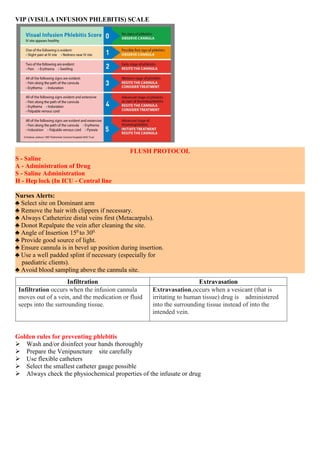
VIP (VISULA INFUSION PHLEBITIS) SCALE
FLUSH PROTOCOL
S - Saline
A - Administration of Drug
S - Saline Administration
H - Hep lock (In ICU - Central line
Nurses Alerts:
♣ Select site on Dominant arm
♣ Remove the hair with clippers if necessary.
♣ Always Catheterize distal veins first (Metacarpals).
♣ Donot Repalpate the vein after cleaning the site.
♣ Angle of Insertion 150
to 300.
♣ Provide good source of light.
♣ Ensure cannula is in bevel up position during insertion.
♣ Use a well padded splint if necessary (especially for
paediatric clients).
♣ Avoid blood sampling above the cannula site.
Golden rules for preventing phlebitis
 Wash and/or disinfect your hands thoroughly
 Prepare the Venipuncture site carefully
 Use flexible catheters
 Select the smallest catheter gauge possible
 Always check the physiochemical properties of the infusate or drug
Infiltration Extravasation
Infiltration occurs when the infusion cannula
moves out of a vein, and the medication or fluid
seeps into the surrounding tissue.
Extravasation,occurs when a vesicant (that is
irritating to human tissue) drug is administered
into the surrounding tissue instead of into the
intended vein.

IV CANNULATION.pdf

  • 1.
    IV CANNULATION Intravenous (IV)cannulation is a technique in which a cannula is placed inside a vein to provide venous access. Anatomy of Veins:  Veins are unlike arteries in that they are 1) Superficial 2) Display dark red blood at skin surface 3) No pulsation  Veins have 3 Layers Purpose: PROCEDURE: PRE PROCEDURE: ♣ Preparation of patient and environment: ♣ Check and verify the physician’s orders ♣ Assemble articles ♣ Explain the procedure to the patient ♣ Position the patient Drug administration Hydration therapy Blood transfusion Parentral nutrition Patient monitoring Blood sampling Tunica Media ♣ Contains nerve endings and muscle fibers ♣ Vasoconstrictive response occurs at this layer Tunica Adventitia ♣ Connective tissue ♣ Consists arteries and veins that supply blood to blood Tunica Intima ♣ Inner most layer ♣ No nerve endings ♣ Phlebitis begins Valve ♣ Prevent backflow and pooling
  • 2.
    Equipment required A TrayContaining ♣ Torniquet ♣ Examination gloves ♣ Plastic Sheet ♣ Easy fix ♣ Alcohol Swabs ♣ Gauze pieces ♣ I.V Cannula ♣ 3 way extension Cannula Sizes : Characterisitcs of Ideal vein: ♣ Bouncy ♣ Soft ♣ Visible ♣ Straight ♣ Easily palpable Veins to Avoid: ♣ Thrombosed/Sclerosed/Fibrosed ♣ Inflammed/bruised ♣ Thin/Fragile ♣ Mobile ♣ Areas or sites of ♣ Near bony prominences ♦ Infection ♦ Oedema ♦ Phlebitis ♦ Side of mastectomy ♦ Fractured extremity Site Selection Common veins Gauze Indications 14 G Trauma Surgical Procedures 16 G Trauma Surgical Procedures 18 G Trauma Blood Transfusion 20 G IV fluids Blood Transfusion 22 G Children Older Adults 24 G Neonates Children Old elderly 26 G Neonates
  • 3.
    Encourage Venous filling/dilationby: ♣ Tourniquet application - 3 to 4 inches above the site of insertion. ♣ Opening and closing the fist. ♣ Lowering the limb below the heart. INTRA PROCEDURE ♣ Wash Hands and Don Gloves ♣ Apply Tourniquet 3-4 inches above the site of insertion ♣ Clean the site with Alcohol swab from centre to periphery in circular motion ♣ Maintain traction on the skin to anchor the vein. ♣ Hold the catheter with thumb (behind the thumb rest) with the 2nd and the 3rd finger in front of the side port or catheter wings. ♣ Insert the stylet through the skin and into the vein at an angle of 15° to 30 ° ♣ Placement of the needle tip into the vein is confirmed by blood in the flashback chamber. ♣ Upon visualisation of flashback decrease the catheter to skin angle virtually parallel to the skin ♣ Advance the entire catheter. ♣ Remove tourniquet ♣ Remove the stylet while applying digital pressure to the vein just beyond the catheter tip (to prevent excessive bleeding) ♣ While applying digital pressure,Remove the white cap from the needle and place it to the cannula. ♣ Secure the cannula with Adhesive tape. ♣ Fix the Cannula: Fixation technique Purpose of dressing IV cannula ♦ Protect the puncture site ♦ Secure the catheter . ♦Prevent catheter movement which could damage the vessel ♣ Flush the line with Distilled water and Normal saline. ♣ If Infusion is ordered, prime the line and connect to the IV cannula. POST PROCEDURE ♣ Documentation ♣ Poper disposal of Biomedical Waste Site Inspection: ♣ Every shift, before & after any intermittent injection of drugs ♣ Look for signs of phlebitis (redness, tenderness, swelling, pain), infiltration & extravasation. Dressing Change: ♣ Wet or soiled dressings should be changed. ♣ Remove carefully to preserve line. Connection check ♣ All connections should be checked for tightness(Leurlock). ♣ Ensure the injection port cap is closed at all times. COMPLICATIONS : ♣ IV site Infection ♣ Cellulitis ♣ Infiltration ♣ Extravasation ♣ Phlebitis ♣ Thrombophlebitis ♣ Emboli Chevron Butterfly H shaped
  • 4.
    VIP (VISULA INFUSIONPHLEBITIS) SCALE FLUSH PROTOCOL S - Saline A - Administration of Drug S - Saline Administration H - Hep lock (In ICU - Central line Nurses Alerts: ♣ Select site on Dominant arm ♣ Remove the hair with clippers if necessary. ♣ Always Catheterize distal veins first (Metacarpals). ♣ Donot Repalpate the vein after cleaning the site. ♣ Angle of Insertion 150 to 300. ♣ Provide good source of light. ♣ Ensure cannula is in bevel up position during insertion. ♣ Use a well padded splint if necessary (especially for paediatric clients). ♣ Avoid blood sampling above the cannula site. Golden rules for preventing phlebitis  Wash and/or disinfect your hands thoroughly  Prepare the Venipuncture site carefully  Use flexible catheters  Select the smallest catheter gauge possible  Always check the physiochemical properties of the infusate or drug Infiltration Extravasation Infiltration occurs when the infusion cannula moves out of a vein, and the medication or fluid seeps into the surrounding tissue. Extravasation,occurs when a vesicant (that is irritating to human tissue) drug is administered into the surrounding tissue instead of into the intended vein.