Dr Ayesha Sadaf
Head of Prosthodontic Department/ Asst Prof
Shifa College of dentistry Islamabad
 Oral Health & Systemic health are inter-related
 More apparent when patient seeking oral care presents with systemic disorder
 Evaluation and consideration of overall health status prior to dental treatment
 Essential part of comprehensive health care system and better prognosis for
dental treatment
 Effect of un managed systemic disease on prosthodontic patients
 Direct or Indirect effects on oral tissue
 Drug interactions
 Immune system compromise
 Bacteremia
 Sensory and motor disturbances
 Decrease in patients’ tolerance to prosthodontic treatment
 Decrease in motivation towards oral health
 Regession towards invasive procedures
 Change in oral cavity which can effect treatment planning and prosthetic
procedures.
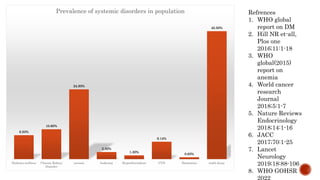
8.50%
10.60%
24.80%
2.50%
1.30%
6.14%
0.63%
45.50%
Diabetes mellitus Chronic Kidney
Disorder
anemia leukemia Hyperthyroidism CVD Dementias tooth decay
Prevalence of systemic disorders in population Refrences
1. WHO global
report on DM
2. Hill NR et-all,
Plos one
2016;11:1-18
3. WHO
global(2015)
report on
anemia
4. World cancer
research
Journal
2018;5:1-7
5. Nature Reviews
Endocrinology
2018;14:1-16
6. JACC
2017;70:1-25
7. Lancet
Neurology
2019;18:88-106
8. WHO GOHSR
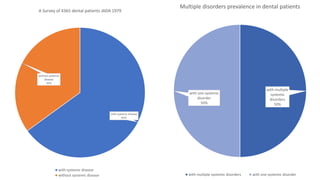
with systemic disease
65%
without systemic
disease
35%
A Survey of 4365 dental patients JADA 1979
with systemic disease
without systemic disease
with multiple
systemic
disorders
50%
with one systemic
disorder
50%
Multiple disorders prevalence in dental patients
with multiple systemic disorders with one systemic disorder
 At the end of this session student would be able to
 Identify various systemic disorders which affect oral cavity/ Prosthodontic
treatment
 Understand the affect of systemic disorders on prognosis of complete denture
treatment
 Apply the knowledge for prosthodontic management of systemic disorders
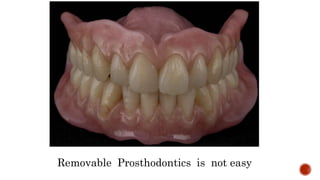
Removable Prosthodontics is not easy
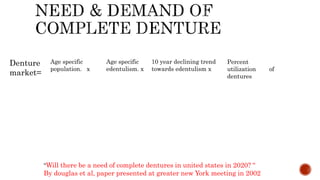
Denture
market=
Age specific
population. x
Age specific
edentulism. x
10 year declining trend
towards edentulism x
Percent
utilization of
dentures
“Will there be a need of complete dentures in united states in 2020? “
By douglas et al, paper presented at greater new York meeting in 2002
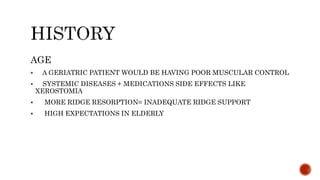
AGE
 A GERIATRIC PATIENT WOULD BE HAVING POOR MUSCULAR CONTROL
 SYSTEMIC DISEASES + MEDICATIONS SIDE EFFECTS LIKE
XEROSTOMIA
 MORE RIDGE RESORPTION= INADEQUATE RIDGE SUPPORT
 HIGH EXPECTATIONS IN ELDERLY
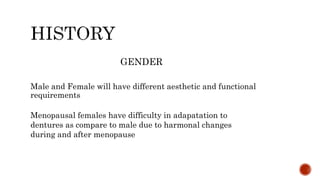
GENDER
Male and Female will have different aesthetic and functional
requirements
Menopausal females have difficulty in adapatation to
dentures as compare to male due to harmonal changes
during and after menopause
The medical
evaluation of
patients seeking
prosthodontic
treatment is a vital
step in treatment
planning.
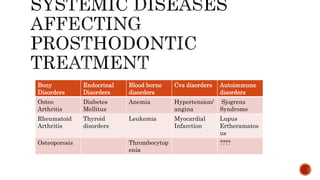
Bony
Disorders
Endocrinal
Disorders
Blood borne
disorders
Cvs disorders Autoimmune
disorders
Osteo
Arthritis
Diabetes
Mellitus
Anemia Hypertension/
angina
Sjogrens
Syndrome
Rheumatoid
Arthritis
Thyroid
disorders
Leukemia Myocardial
Infarction
Lupus
Ertheramatos
us
Osteoporosis Thrombocytop
enia
????
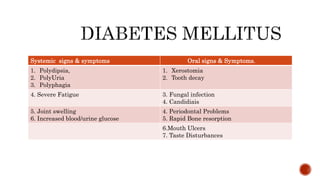
Systemic signs & symptoms Oral signs & Symptoms.
1. Polydipsia,
2. PolyUria
3. Polyphagia
1. Xerostomia
2. Tooth decay
4. Severe Fatigue 3. Fungal infection
4. Candidiais
5. Joint swelling
6. Increased blood/urine glucose
4. Periodontal Problems
5. Rapid Bone resorption
6.Mouth Ulcers
7. Taste Disturbances
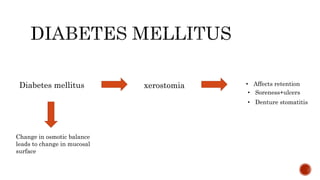
Diabetes mellitus xerostomia • Affects retention
• Soreness+ulcers
• Denture stomatitis
Change in osmotic balance
leads to change in mucosal
surface
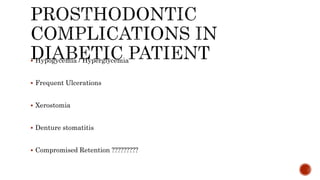
 Hypogycemia / Hyperglycemia
 Frequent Ulcerations
 Xerostomia
 Denture stomatitis
 Compromised Retention ?????????
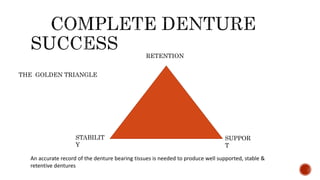
RETENTION
SUPPOR
T
STABILIT
Y
THE GOLDEN TRIANGLE
An accurate record of the denture bearing tissues is needed to produce well supported, stable &
retentive dentures
 A thorough Medical History including drugs and prescriptions to bring at the day
of appointment
 Stress Reduction Protocoal.
 Morning and short appointments
 Eradication of any oral diseases
 Oral cavity should be in a healthy state prior to prosthodontic treatment
 Mucostatic impression technique
 Digital Impressions
 Simple hygienic designs
 Supragingival margins
 Minimal trauma from occlusion
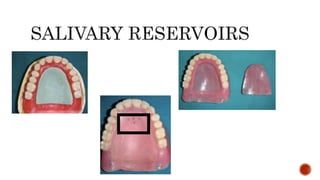
 Salivary Reservoirs
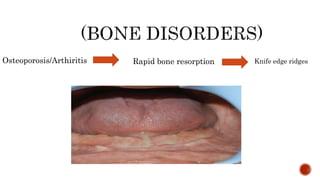
Osteoporosis/Arthiritis Rapid bone resorption Knife edge ridges
 Mucostatic / Minimal impression technique
 Minimal trauma from occlusion
 Simple and self cleansable designs of prosthesis
 Frequent use of denture cleansers
 Meticulous maintenance of denture hygiene.
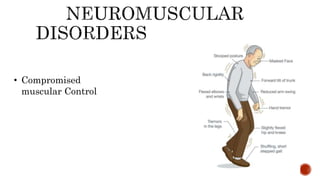
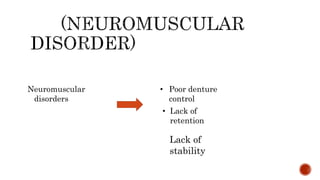
• Compromised
muscular Control
Neuromuscular
disorders
• Poor denture
control
• Lack of
retention
Lack of
stability
 Saliva pooling during impression taking , increased risk of impression choking.
 Poor muscular control
 Irregular muscle movements
 A thorough medical history
 Muscular examination
 Tmj examination
 Consultation with patients physician regarding drugs
 Mucostatic impression technique
 Minimal trauma from occlusion
 Simple designs
 Implant supported prosthesis are preferred
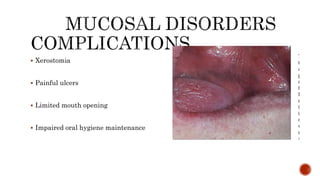
 Xerostomia
 Painful ulcers
 Limited mouth opening
 Impaired oral hygiene maintenance
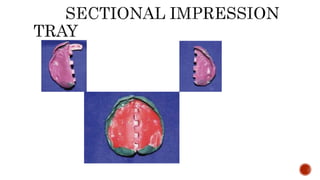
 Sectioned impression trays/ Sectional Impressions
 Use of corticosteroid and antimicrobial therapy
 Simple design
 Less mucosal coverage
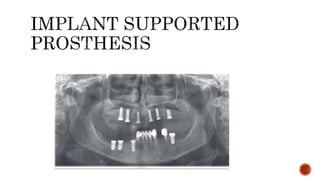
 Implant supported prosthesis
 Increased risk of medical emergencies
 Xerostomia
 Gingival enlargement
 Mucosal Ulceration
 Lichen planus
 Mucosal Ulceration
 A thorough Medical History including drugs and prescriptions to bring at the day of
appointment
 Stress Reduction Protocoal Non- Pharmacological ( Anxiolytics)/ Sedation
 Morning and short appointments
 BP Monitoring Throught long appointments
 Eradication of any oral diseases Prior taking impressions
 Oral cavity should be in a healthy state prior to prosthodontic treatment
 Salivary subsitutes
 Denture adhesives
 Polished dentures
 Salivary Reservoirs
 Meticulous maintenance of denture hygiene
 Impaired bone maturation & development in long term anemic patient
 Implants NOT contraindicated in most anemic patients
 Patients show disrupted & delayed healing
 Long time needed for implant osteointegration
 Progressive loading of implants to be followed
 Care needs to be observed while administrating pre and post OP antibiotics.
 Uncontrolled proliferation & release of immature blood cells
 Non irritating removable PD or CD can be used if patient maintains good oral
hygene
 FPD with supra gingival finish lines recommended
 Digital impression recommended
 Implants are contraindicated in such patients:
 increased bleeding
 delayed healing
 risk of secondary infection
 PostOP discomfort
 Usually presents with
 Immunosuppression
 Polypharmacy
 Renal Osteodystrophy
 Bone loss
 Restriction of oral fluid intake
 May produce premature tooth loss and xerostomia
 All prosthodontic problems should be treated before “transplant”
 If implants are to be placed after transplant, postpone till health stabilizes and
transplant is accepted by the body
 Local anestheisa without vasoconstrictors to be used
 Patients may have osteodystrophy while leads to bone demineralization and can cause
the bone to fracture after dental procedures. Treatment should be carefully monitored
 Hemodialysis patients:
 Implant surgery to be done 1 day after hemodialysis
 Long term implant stability should be measured using RFA or frequent radiographs
 Gingival enlargement
 In normal, crown and implant tooth is a common occurrence in patients who take
calcium channel blockers.
 Proper periodontal maintenance is necessary to avoid gingival enlargement
 Screw retained implant prosthesis are recommended for ease in maintainance

2 systemic disorders.pptx

  • 1.
    Dr Ayesha Sadaf Headof Prosthodontic Department/ Asst Prof Shifa College of dentistry Islamabad
  • 2.
     Oral Health& Systemic health are inter-related  More apparent when patient seeking oral care presents with systemic disorder  Evaluation and consideration of overall health status prior to dental treatment  Essential part of comprehensive health care system and better prognosis for dental treatment  Effect of un managed systemic disease on prosthodontic patients
  • 3.
     Direct orIndirect effects on oral tissue  Drug interactions  Immune system compromise  Bacteremia  Sensory and motor disturbances  Decrease in patients’ tolerance to prosthodontic treatment  Decrease in motivation towards oral health  Regession towards invasive procedures  Change in oral cavity which can effect treatment planning and prosthetic procedures.
  • 4.
    8.50% 10.60% 24.80% 2.50% 1.30% 6.14% 0.63% 45.50% Diabetes mellitus ChronicKidney Disorder anemia leukemia Hyperthyroidism CVD Dementias tooth decay Prevalence of systemic disorders in population Refrences 1. WHO global report on DM 2. Hill NR et-all, Plos one 2016;11:1-18 3. WHO global(2015) report on anemia 4. World cancer research Journal 2018;5:1-7 5. Nature Reviews Endocrinology 2018;14:1-16 6. JACC 2017;70:1-25 7. Lancet Neurology 2019;18:88-106 8. WHO GOHSR
  • 5.
    with systemic disease 65% withoutsystemic disease 35% A Survey of 4365 dental patients JADA 1979 with systemic disease without systemic disease with multiple systemic disorders 50% with one systemic disorder 50% Multiple disorders prevalence in dental patients with multiple systemic disorders with one systemic disorder
  • 6.
     At theend of this session student would be able to  Identify various systemic disorders which affect oral cavity/ Prosthodontic treatment  Understand the affect of systemic disorders on prognosis of complete denture treatment  Apply the knowledge for prosthodontic management of systemic disorders
  • 7.
  • 8.
    Denture market= Age specific population. x Agespecific edentulism. x 10 year declining trend towards edentulism x Percent utilization of dentures “Will there be a need of complete dentures in united states in 2020? “ By douglas et al, paper presented at greater new York meeting in 2002
  • 9.
    AGE  A GERIATRICPATIENT WOULD BE HAVING POOR MUSCULAR CONTROL  SYSTEMIC DISEASES + MEDICATIONS SIDE EFFECTS LIKE XEROSTOMIA  MORE RIDGE RESORPTION= INADEQUATE RIDGE SUPPORT  HIGH EXPECTATIONS IN ELDERLY
  • 10.
    GENDER Male and Femalewill have different aesthetic and functional requirements Menopausal females have difficulty in adapatation to dentures as compare to male due to harmonal changes during and after menopause
  • 11.
    The medical evaluation of patientsseeking prosthodontic treatment is a vital step in treatment planning.
  • 12.
    Bony Disorders Endocrinal Disorders Blood borne disorders Cvs disordersAutoimmune disorders Osteo Arthritis Diabetes Mellitus Anemia Hypertension/ angina Sjogrens Syndrome Rheumatoid Arthritis Thyroid disorders Leukemia Myocardial Infarction Lupus Ertheramatos us Osteoporosis Thrombocytop enia ????
  • 13.
    Systemic signs &symptoms Oral signs & Symptoms. 1. Polydipsia, 2. PolyUria 3. Polyphagia 1. Xerostomia 2. Tooth decay 4. Severe Fatigue 3. Fungal infection 4. Candidiais 5. Joint swelling 6. Increased blood/urine glucose 4. Periodontal Problems 5. Rapid Bone resorption 6.Mouth Ulcers 7. Taste Disturbances
  • 14.
    Diabetes mellitus xerostomia• Affects retention • Soreness+ulcers • Denture stomatitis Change in osmotic balance leads to change in mucosal surface
  • 15.
     Hypogycemia /Hyperglycemia  Frequent Ulcerations  Xerostomia  Denture stomatitis  Compromised Retention ?????????
  • 16.
    RETENTION SUPPOR T STABILIT Y THE GOLDEN TRIANGLE Anaccurate record of the denture bearing tissues is needed to produce well supported, stable & retentive dentures
  • 17.
     A thoroughMedical History including drugs and prescriptions to bring at the day of appointment  Stress Reduction Protocoal.  Morning and short appointments  Eradication of any oral diseases  Oral cavity should be in a healthy state prior to prosthodontic treatment
  • 18.
     Mucostatic impressiontechnique  Digital Impressions  Simple hygienic designs  Supragingival margins  Minimal trauma from occlusion  Salivary Reservoirs
  • 20.
    Osteoporosis/Arthiritis Rapid boneresorption Knife edge ridges
  • 22.
     Mucostatic /Minimal impression technique  Minimal trauma from occlusion  Simple and self cleansable designs of prosthesis  Frequent use of denture cleansers  Meticulous maintenance of denture hygiene.
  • 23.
  • 25.
    Neuromuscular disorders • Poor denture control •Lack of retention Lack of stability
  • 26.
     Saliva poolingduring impression taking , increased risk of impression choking.  Poor muscular control  Irregular muscle movements
  • 27.
     A thoroughmedical history  Muscular examination  Tmj examination  Consultation with patients physician regarding drugs  Mucostatic impression technique  Minimal trauma from occlusion  Simple designs  Implant supported prosthesis are preferred
  • 28.
     Xerostomia  Painfululcers  Limited mouth opening  Impaired oral hygiene maintenance
  • 29.
     Sectioned impressiontrays/ Sectional Impressions  Use of corticosteroid and antimicrobial therapy  Simple design  Less mucosal coverage  Implant supported prosthesis
  • 32.
     Increased riskof medical emergencies  Xerostomia  Gingival enlargement  Mucosal Ulceration  Lichen planus  Mucosal Ulceration
  • 33.
     A thoroughMedical History including drugs and prescriptions to bring at the day of appointment  Stress Reduction Protocoal Non- Pharmacological ( Anxiolytics)/ Sedation  Morning and short appointments  BP Monitoring Throught long appointments  Eradication of any oral diseases Prior taking impressions  Oral cavity should be in a healthy state prior to prosthodontic treatment
  • 34.
     Salivary subsitutes Denture adhesives  Polished dentures  Salivary Reservoirs  Meticulous maintenance of denture hygiene
  • 35.
     Impaired bonematuration & development in long term anemic patient  Implants NOT contraindicated in most anemic patients  Patients show disrupted & delayed healing  Long time needed for implant osteointegration  Progressive loading of implants to be followed  Care needs to be observed while administrating pre and post OP antibiotics.
  • 36.
     Uncontrolled proliferation& release of immature blood cells  Non irritating removable PD or CD can be used if patient maintains good oral hygene  FPD with supra gingival finish lines recommended  Digital impression recommended  Implants are contraindicated in such patients:  increased bleeding  delayed healing  risk of secondary infection  PostOP discomfort
  • 37.
     Usually presentswith  Immunosuppression  Polypharmacy  Renal Osteodystrophy  Bone loss  Restriction of oral fluid intake  May produce premature tooth loss and xerostomia  All prosthodontic problems should be treated before “transplant”  If implants are to be placed after transplant, postpone till health stabilizes and transplant is accepted by the body  Local anestheisa without vasoconstrictors to be used  Patients may have osteodystrophy while leads to bone demineralization and can cause the bone to fracture after dental procedures. Treatment should be carefully monitored
  • 38.
     Hemodialysis patients: Implant surgery to be done 1 day after hemodialysis  Long term implant stability should be measured using RFA or frequent radiographs  Gingival enlargement  In normal, crown and implant tooth is a common occurrence in patients who take calcium channel blockers.  Proper periodontal maintenance is necessary to avoid gingival enlargement  Screw retained implant prosthesis are recommended for ease in maintainance

Editor's Notes

  • #9 20 years back , with the decline in the denture market , which is measured by the above formula there was a speculation that edentulous population is decreasing by 10% every year and like wise the number of edentulous patients usinf c/d is also decreasing, so many dental colleges were deciding to eliminate the c/d curriculum from undergraduate and it was also speculated that removable prosthetics will no longer be a recognized specialty.
  • #10 WITH ADVANCING AGE BITH MEN AND WOMEN HAVE DIFFICULTY IN ADAPTATION
  • #11 FEMALES ARE MORE AESTHETICALLY DEMANDING BUT MALES ARE MORE FUNCTIONALLY DEMANDING.
  • #12 The medical evaluation of patients seeking prosthodontic treatment is a vital step in treatment planning.
  • #13 Medical Evaluation of patients considering prosthodontic treatment is a vital steo in the treatment planning.
  • #14 High concentaration of Glucose or lack of insulin
  • #15 diabetes mellitus affects mucosa due to change in osmotic balance and affecting the impression surface, increase ridge resorption
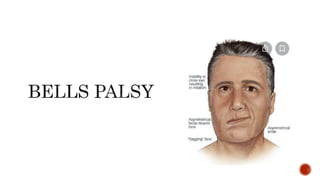
  • #24 PALPATE THE MUSCLES, AND ASK THE PATIENT TO PERFORM MANDIBULAR MOVEMENT, ITS USUALLY WEAKENED AND POOR MUSCULAR CONTROL IN PARKINSONISM, BELLS PALSY