Student Attitudes to Engagement –
a case study of engineering programmes


     Margaret Morgan and Pearse O’Gorman
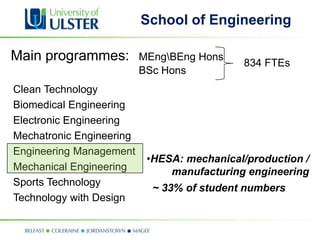
             School of Engineering
School of Engineering

Main programmes:          MEngBEng Hons
                                            834 FTEs
                          BSc Hons
Clean Technology
Biomedical Engineering
Electronic Engineering
Mechatronic Engineering
Engineering Management
                           •HESA: mechanical/production /
Mechanical Engineering         manufacturing engineering
Sports Technology
                            ~ 33% of student numbers
Technology with Design
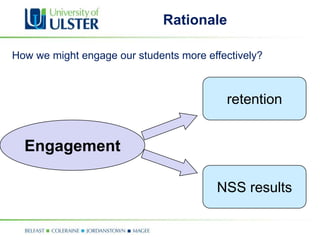
Rationale

How we might engage our students more effectively?


                                          retention


  Engagement

                                        NSS results
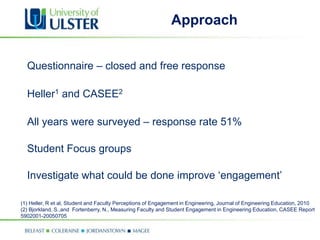
Approach


  Questionnaire – closed and free response

  Heller1 and CASEE2

  All years were surveyed – response rate 51%

  Student Focus groups

  Investigate what could be done improve ‘engagement’

(1) Heller, R et al, Student and Faculty Perceptions of Engagement in Engineering, Journal of Engineering Education, 2010
(2) Bjorkland, S.,and Fortenberry, N., Measuring Faculty and Student Engagement in Engineering Education, CASEE Report
5902001-20050705
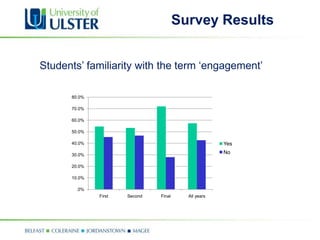
Survey Results


Students’ familiarity with the term ‘engagement’

      80.0%

      70.0%

      60.0%

      50.0%

      40.0%                                          Yes

      30.0%
                                                     No

      20.0%

      10.0%

       .0%
              First   Second   Final     All years
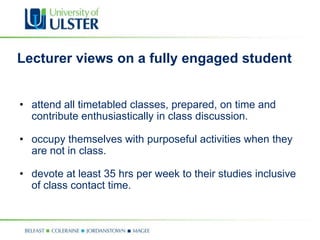
Lecturer views on a fully engaged student


• attend all timetabled classes, prepared, on time and
  contribute enthusiastically in class discussion.

• occupy themselves with purposeful activities when they
  are not in class.

• devote at least 35 hrs per week to their studies inclusive
  of class contact time.
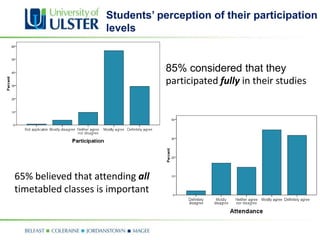
Students’ perception of their participation
                     levels


                                  85% considered that they
                                  participated fully in their studies


65% believed that attending all
timetabled classes is important
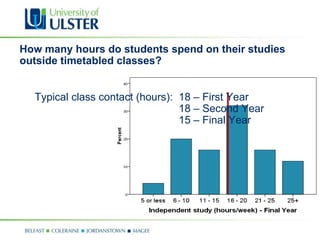
How many hours do students spend on their studies
outside timetabled classes?


  Typical class contact (hours): 18 – First Year
                                 18 – Second Year
                                 15 – Final Year
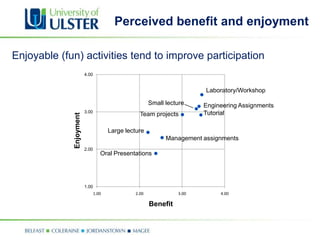
Perceived benefit and enjoyment

Enjoyable (fun) activities tend to improve participation
                         4.00


                                                                         Laboratory/Workshop

                                                       Small lecture    Engineering Assignments
                         3.00                                           Tutorial
                                                  Team projects
             Enjoyment


                                       Large lecture
                                                             Management assignments
                         2.00
                                   Oral Presentations


                         1.00
                                1.00            2.00             3.00        4.00

                                                       Benefit
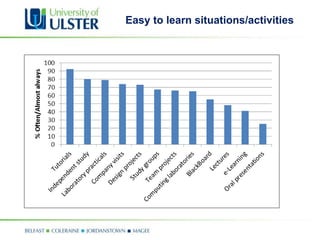
Easy to learn situations/activities
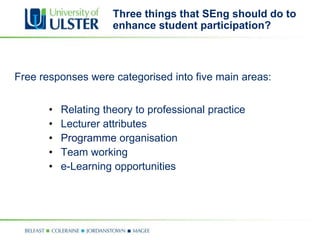
Three things that SEng should do to
                      enhance student participation?


Free responses were categorised into five main areas:


       •   Relating theory to professional practice
       •   Lecturer attributes
       •   Programme organisation
       •   Team working
       •   e-Learning opportunities
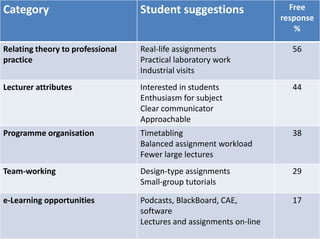
Category                          Student suggestions                  Free
                                                                     response
                                                                         %

Relating theory to professional   Real-life assignments                56
practice                          Practical laboratory work
                                  Industrial visits
Lecturer attributes               Interested in students               44
                                  Enthusiasm for subject
                                  Clear communicator
                                  Approachable
Programme organisation            Timetabling                          38
                                  Balanced assignment workload
                                  Fewer large lectures
Team-working                      Design-type assignments              29
                                  Small-group tutorials

e-Learning opportunities          Podcasts, BlackBoard, CAE,           17
                                  software
                                  Lectures and assignments on-line
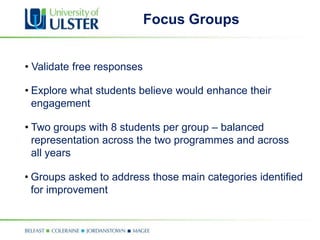
Focus Groups


• Validate free responses

• Explore what students believe would enhance their
  engagement

• Two groups with 8 students per group – balanced
  representation across the two programmes and across
  all years

• Groups asked to address those main categories identified
  for improvement
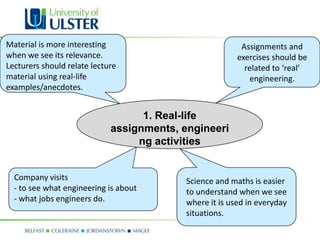
Material is more interesting                              Assignments and
when we see its relevance.                               exercises should be
Lecturers should relate lecture                            related to ‘real’
material using real-life                                    engineering.
examples/anecdotes.


                                   1. Real-life
                             assignments, engineeri
                                  ng activities


  Company visits                           Science and maths is easier
  - to see what engineering is about       to understand when we see
  - what jobs engineers do.                where it is used in everyday
                                           situations.
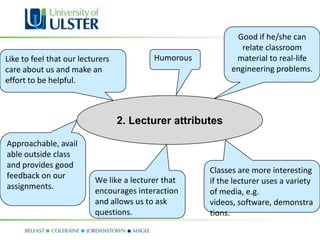
Good if he/she can
                                                             relate classroom
Like to feel that our lecturers           Humorous          material to real-life
care about us and make an                                  engineering problems.
effort to be helpful.


                                  2. Lecturer attributes

Approachable, avail
able outside class
and provides good
                                                     Classes are more interesting
feedback on our
                          We like a lecturer that    if the lecturer uses a variety
assignments.
                          encourages interaction     of media, e.g.
                          and allows us to ask       videos, software, demonstra
                          questions.                 tions.
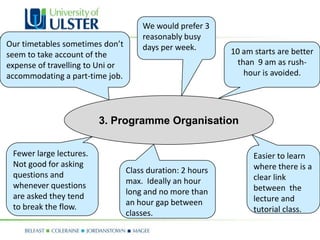
We would prefer 3
                                      reasonably busy
Our timetables sometimes don’t        days per week.
seem to take account of the                                 10 am starts are better
expense of travelling to Uni or                               than 9 am as rush-
accommodating a part-time job.                                  hour is avoided.


                         3. Programme Organisation


 Fewer large lectures.                                            Easier to learn
 Not good for asking                                              where there is a
 questions and                    Class duration: 2 hours
                                  max. Ideally an hour            clear link
 whenever questions                                               between the
 are asked they tend              long and no more than
                                  an hour gap between             lecture and
 to break the flow.                                               tutorial class.
                                  classes.
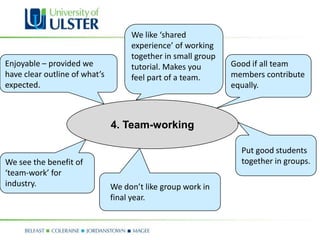
We like ‘shared
                                    experience’ of working
                                    together in small group
Enjoyable – provided we             tutorial. Makes you       Good if all team
have clear outline of what’s        feel part of a team.      members contribute
expected.                                                     equally.


                               4. Team-working

                                                                Put good students
We see the benefit of                                           together in groups.
‘team-work’ for
industry.                      We don’t like group work in
                               final year.
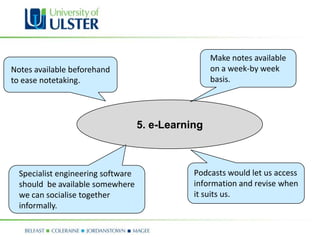
Make notes available
Notes available beforehand                          on a week-by week
to ease notetaking.                                 basis.


                                    5. e-Learning


  Specialist engineering software              Podcasts would let us access
  should be available somewhere                information and revise when
  we can socialise together                    it suits us.
  informally.
Thank you

2

  • 1.
    Student Attitudes toEngagement – a case study of engineering programmes Margaret Morgan and Pearse O’Gorman School of Engineering
  • 2.
    School of Engineering Mainprogrammes: MEngBEng Hons 834 FTEs BSc Hons Clean Technology Biomedical Engineering Electronic Engineering Mechatronic Engineering Engineering Management •HESA: mechanical/production / Mechanical Engineering manufacturing engineering Sports Technology ~ 33% of student numbers Technology with Design
  • 3.
    Rationale How we mightengage our students more effectively? retention Engagement NSS results
  • 4.
    Approach Questionnaire– closed and free response Heller1 and CASEE2 All years were surveyed – response rate 51% Student Focus groups Investigate what could be done improve ‘engagement’ (1) Heller, R et al, Student and Faculty Perceptions of Engagement in Engineering, Journal of Engineering Education, 2010 (2) Bjorkland, S.,and Fortenberry, N., Measuring Faculty and Student Engagement in Engineering Education, CASEE Report 5902001-20050705
  • 5.
    Survey Results Students’ familiaritywith the term ‘engagement’ 80.0% 70.0% 60.0% 50.0% 40.0% Yes 30.0% No 20.0% 10.0% .0% First Second Final All years
  • 6.
    Lecturer views ona fully engaged student • attend all timetabled classes, prepared, on time and contribute enthusiastically in class discussion. • occupy themselves with purposeful activities when they are not in class. • devote at least 35 hrs per week to their studies inclusive of class contact time.
  • 7.
    Students’ perception oftheir participation levels 85% considered that they participated fully in their studies 65% believed that attending all timetabled classes is important
  • 8.
    How many hoursdo students spend on their studies outside timetabled classes? Typical class contact (hours): 18 – First Year 18 – Second Year 15 – Final Year
  • 9.
    Perceived benefit andenjoyment Enjoyable (fun) activities tend to improve participation 4.00 Laboratory/Workshop Small lecture Engineering Assignments 3.00 Tutorial Team projects Enjoyment Large lecture Management assignments 2.00 Oral Presentations 1.00 1.00 2.00 3.00 4.00 Benefit
  • 10.
    Easy to learnsituations/activities
  • 11.
    Three things thatSEng should do to enhance student participation? Free responses were categorised into five main areas: • Relating theory to professional practice • Lecturer attributes • Programme organisation • Team working • e-Learning opportunities
  • 12.
    Category Student suggestions Free response % Relating theory to professional Real-life assignments 56 practice Practical laboratory work Industrial visits Lecturer attributes Interested in students 44 Enthusiasm for subject Clear communicator Approachable Programme organisation Timetabling 38 Balanced assignment workload Fewer large lectures Team-working Design-type assignments 29 Small-group tutorials e-Learning opportunities Podcasts, BlackBoard, CAE, 17 software Lectures and assignments on-line
  • 13.
    Focus Groups • Validatefree responses • Explore what students believe would enhance their engagement • Two groups with 8 students per group – balanced representation across the two programmes and across all years • Groups asked to address those main categories identified for improvement
  • 14.
    Material is moreinteresting Assignments and when we see its relevance. exercises should be Lecturers should relate lecture related to ‘real’ material using real-life engineering. examples/anecdotes. 1. Real-life assignments, engineeri ng activities Company visits Science and maths is easier - to see what engineering is about to understand when we see - what jobs engineers do. where it is used in everyday situations.
  • 15.
    Good if he/shecan relate classroom Like to feel that our lecturers Humorous material to real-life care about us and make an engineering problems. effort to be helpful. 2. Lecturer attributes Approachable, avail able outside class and provides good Classes are more interesting feedback on our We like a lecturer that if the lecturer uses a variety assignments. encourages interaction of media, e.g. and allows us to ask videos, software, demonstra questions. tions.
  • 16.
    We would prefer3 reasonably busy Our timetables sometimes don’t days per week. seem to take account of the 10 am starts are better expense of travelling to Uni or than 9 am as rush- accommodating a part-time job. hour is avoided. 3. Programme Organisation Fewer large lectures. Easier to learn Not good for asking where there is a questions and Class duration: 2 hours max. Ideally an hour clear link whenever questions between the are asked they tend long and no more than an hour gap between lecture and to break the flow. tutorial class. classes.
  • 17.
    We like ‘shared experience’ of working together in small group Enjoyable – provided we tutorial. Makes you Good if all team have clear outline of what’s feel part of a team. members contribute expected. equally. 4. Team-working Put good students We see the benefit of together in groups. ‘team-work’ for industry. We don’t like group work in final year.
  • 18.
    Make notes available Notesavailable beforehand on a week-by week to ease notetaking. basis. 5. e-Learning Specialist engineering software Podcasts would let us access should be available somewhere information and revise when we can socialise together it suits us. informally.
  • 19.