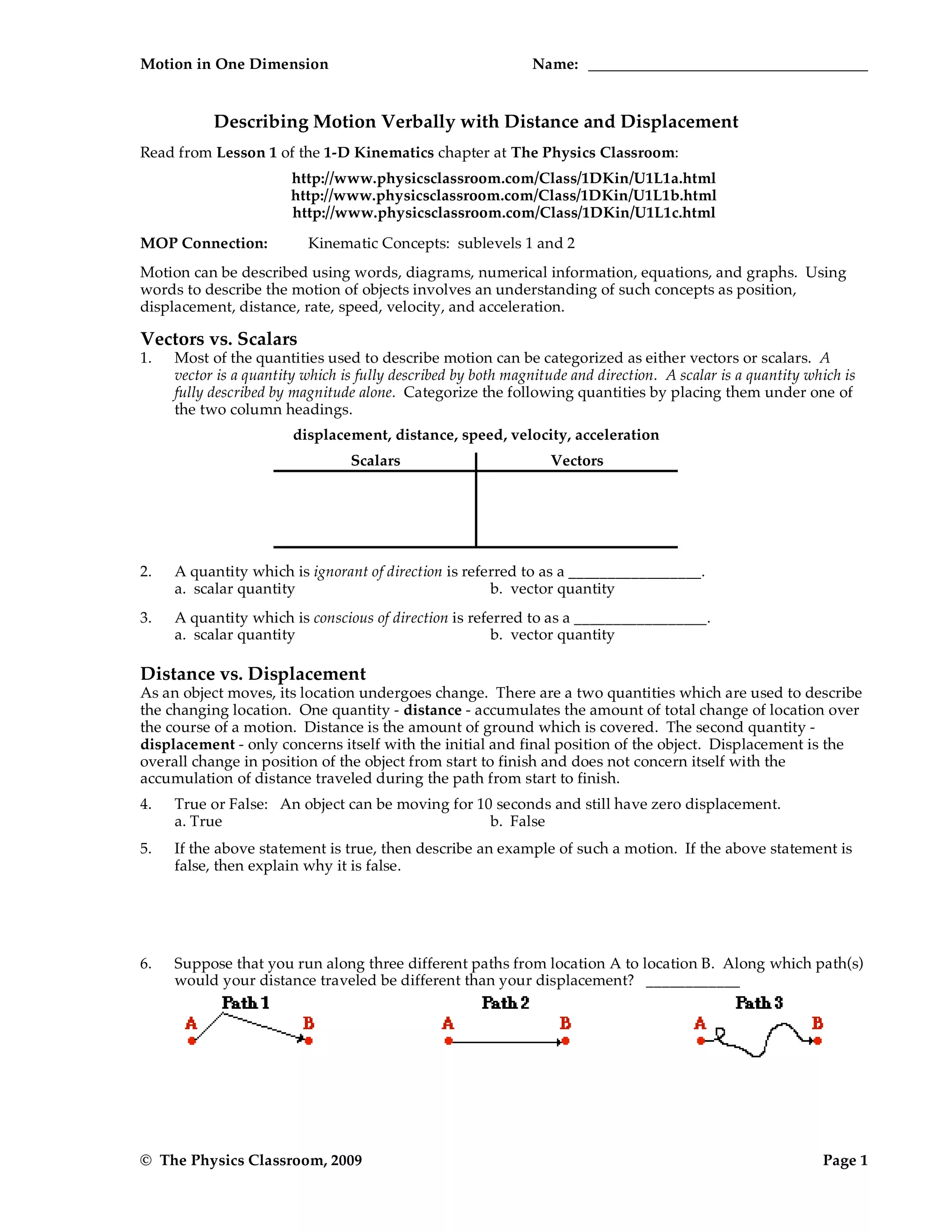
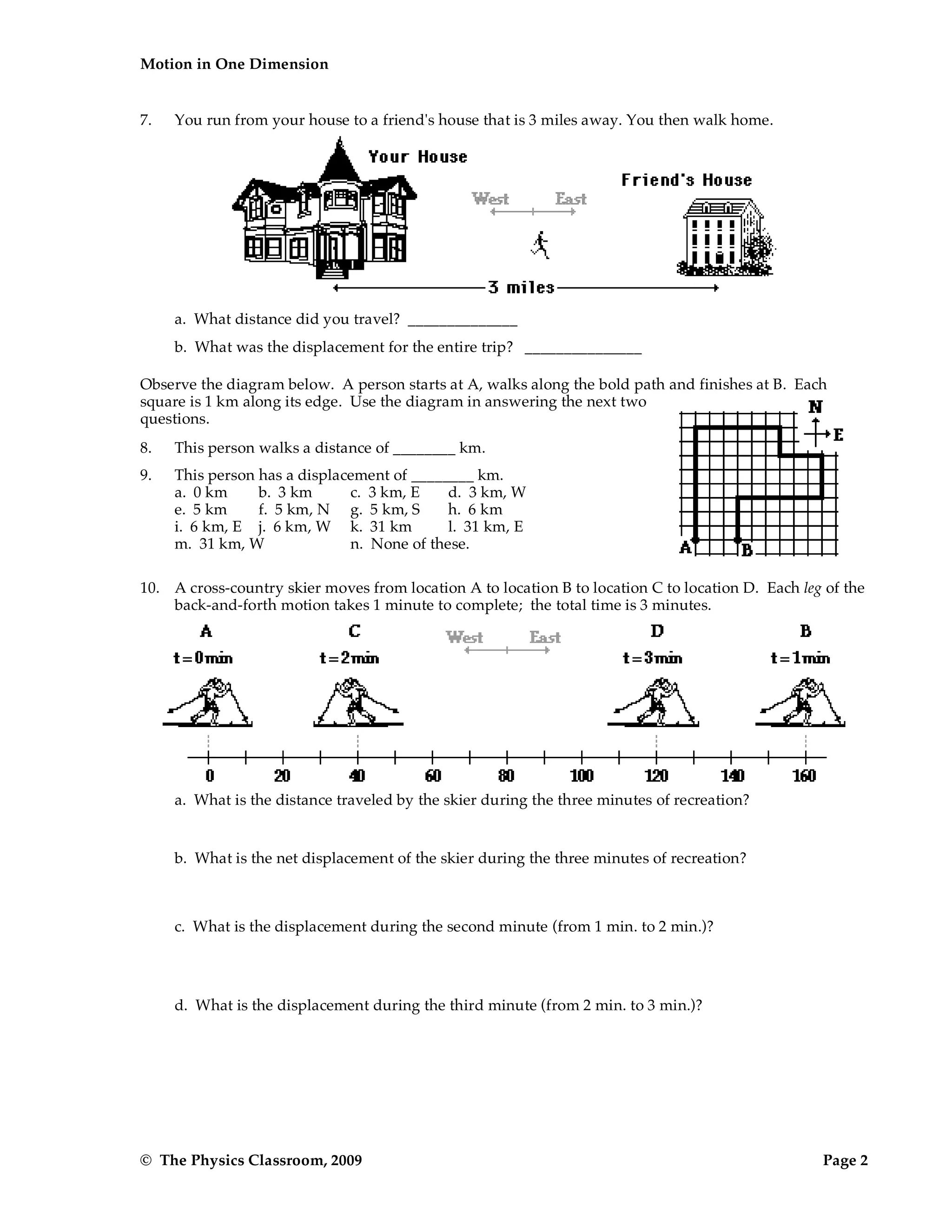
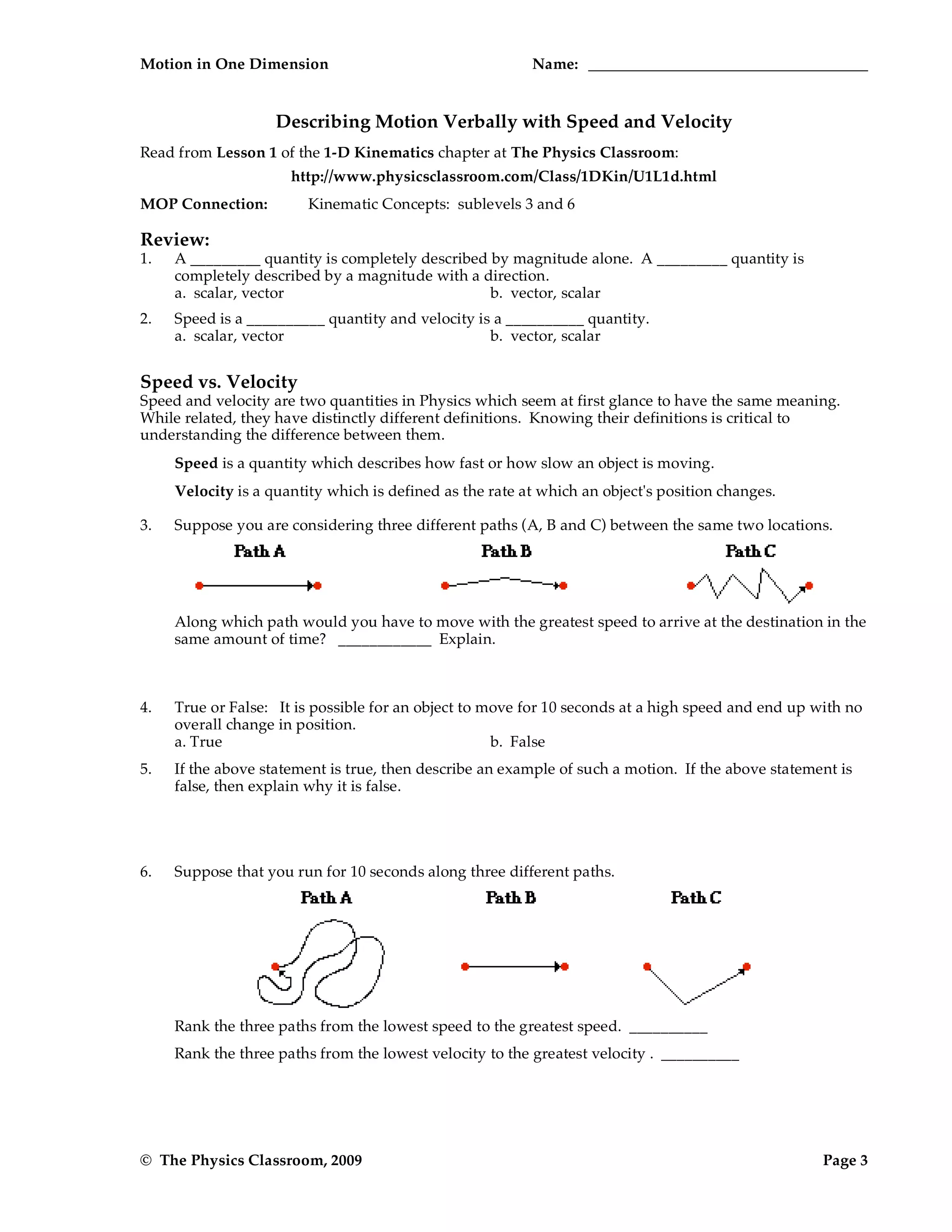
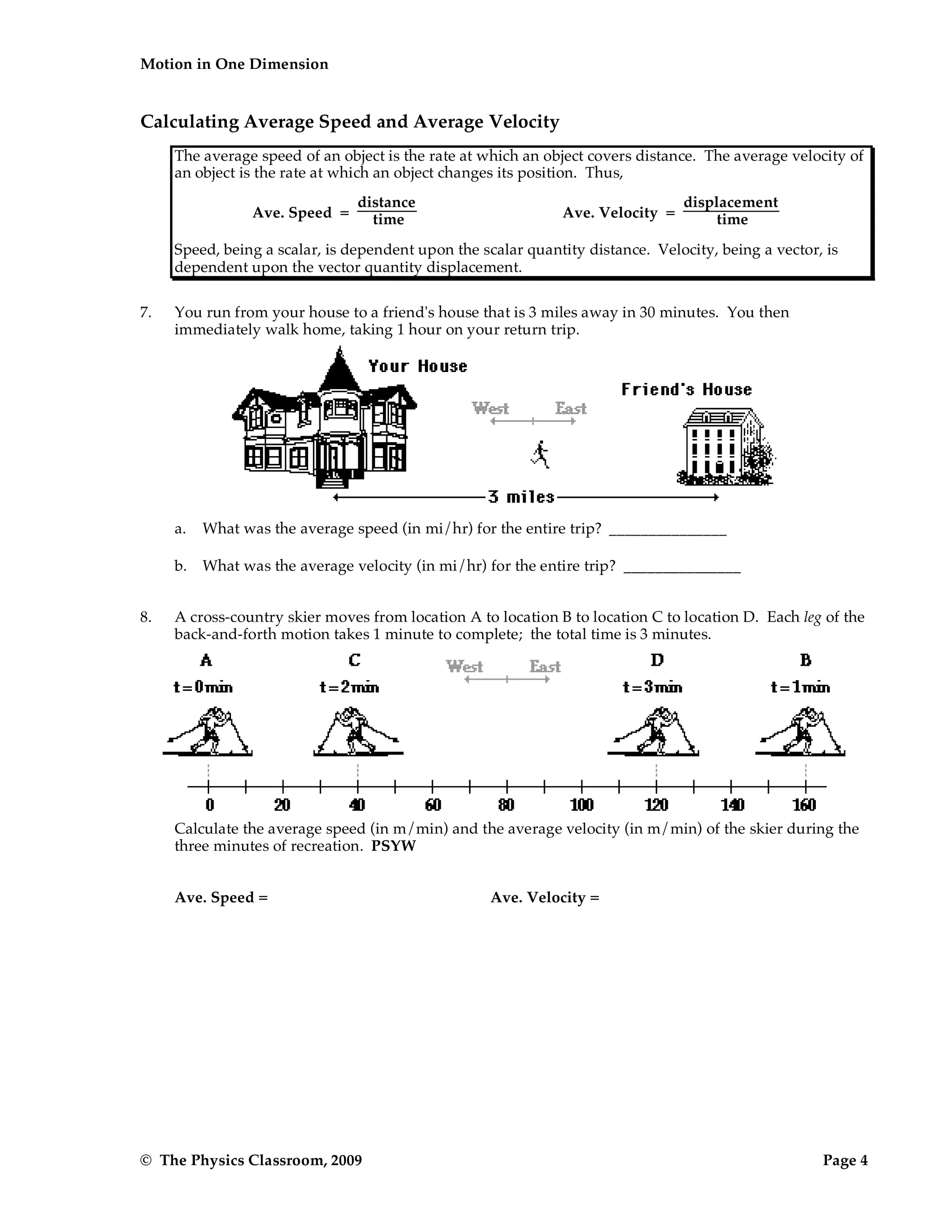
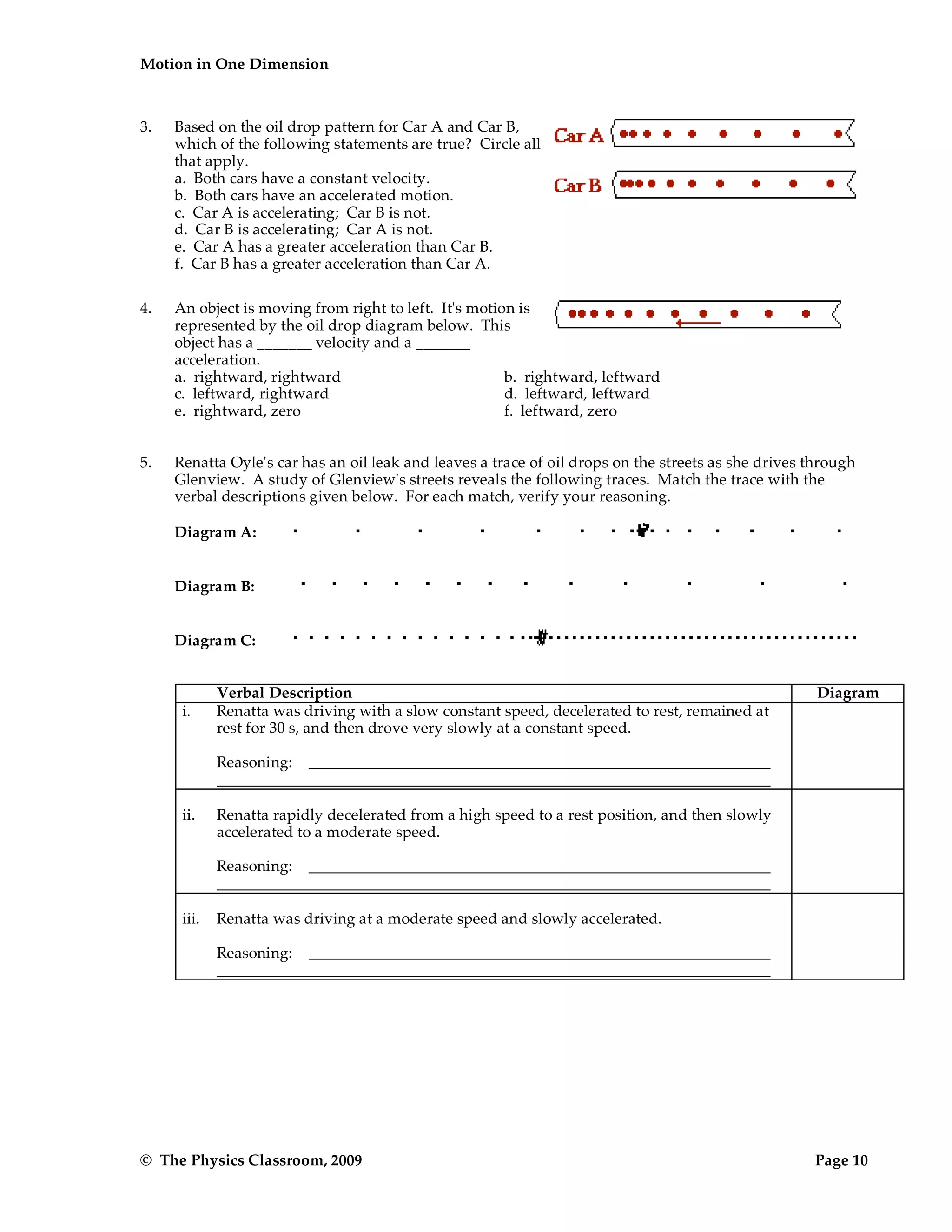
The document provides information about describing motion using words, diagrams, and equations. It discusses key concepts like position, displacement, distance, speed, velocity, and acceleration. It explains that displacement and distance are both measures of how far an object moves, but displacement considers direction while distance does not. Acceleration describes how an object's velocity changes, either in magnitude or direction. The document uses diagrams and examples to illustrate motion with constant and changing velocity and acceleration. It also discusses using oil drop diagrams to determine if an object is accelerating and the direction of acceleration.
Introduces motion with terms like distance, displacement, vectors vs. scalars, and illustrates concepts through examples.
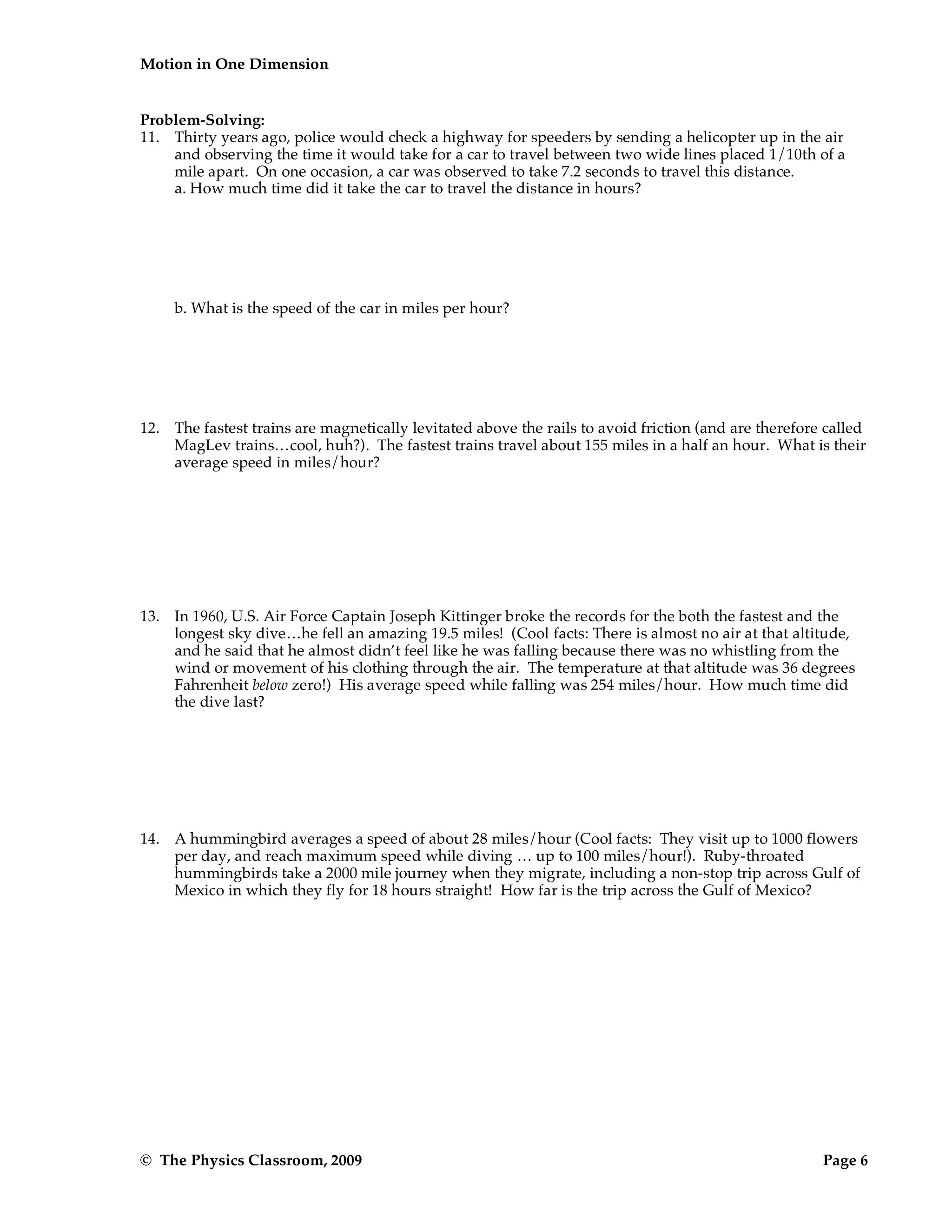
Covers definitions and differences between speed (scalar) and velocity (vector), including average speed and velocity calculations.
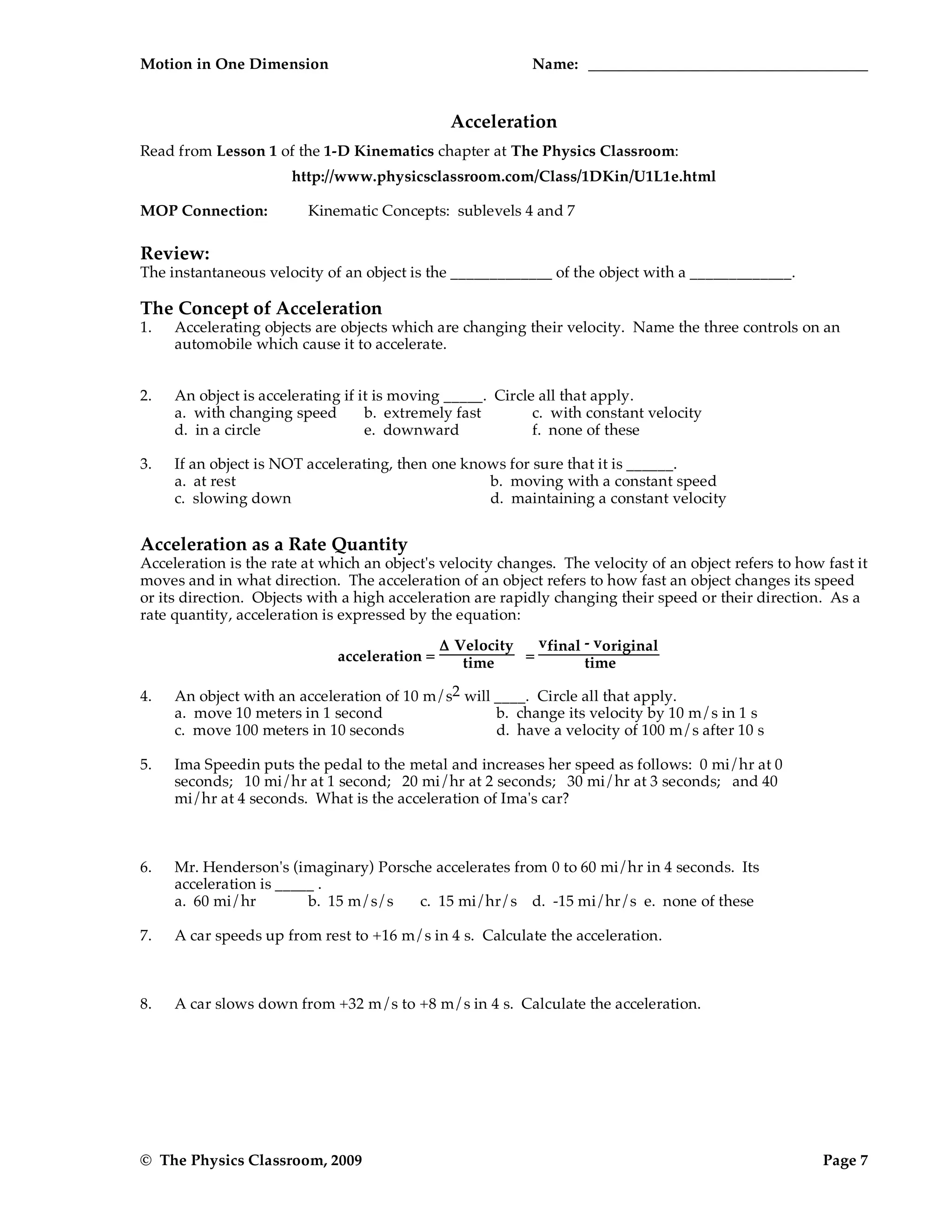
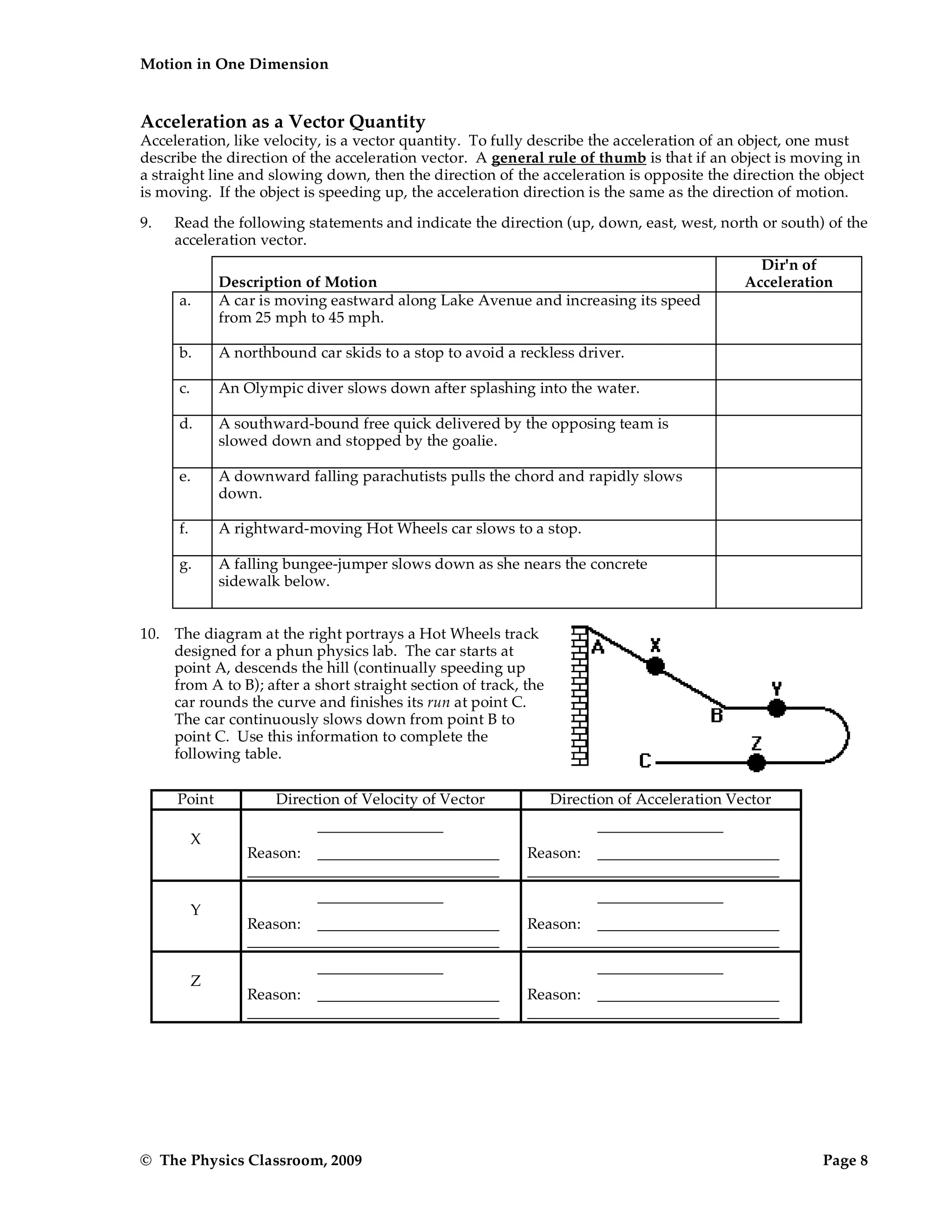
Defines acceleration as a vector quantity, describes conditions of acceleration, and examines changes in velocity, with related calculations.
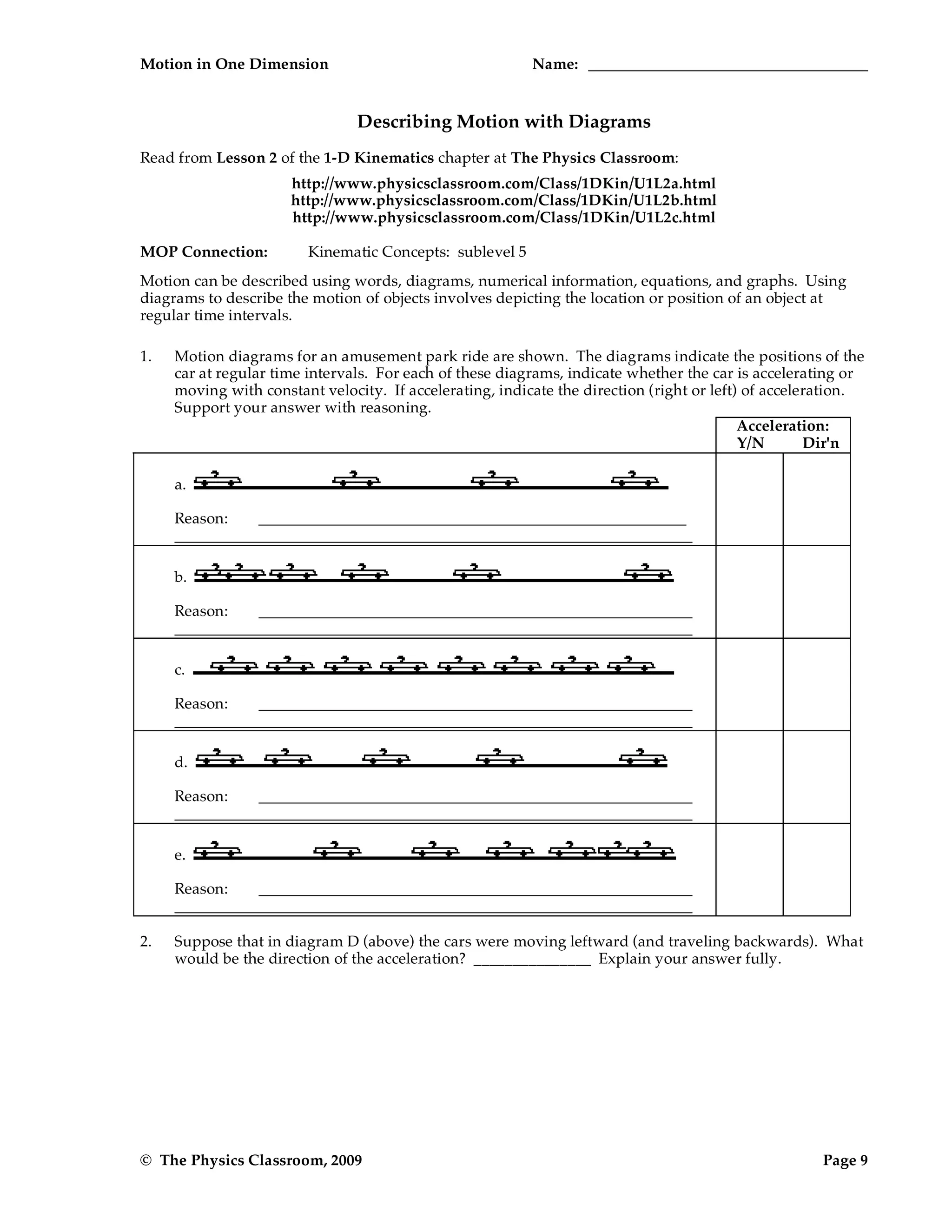
Focuses on motion diagrams to visualize positions at regular intervals and assess acceleration using reasoning.
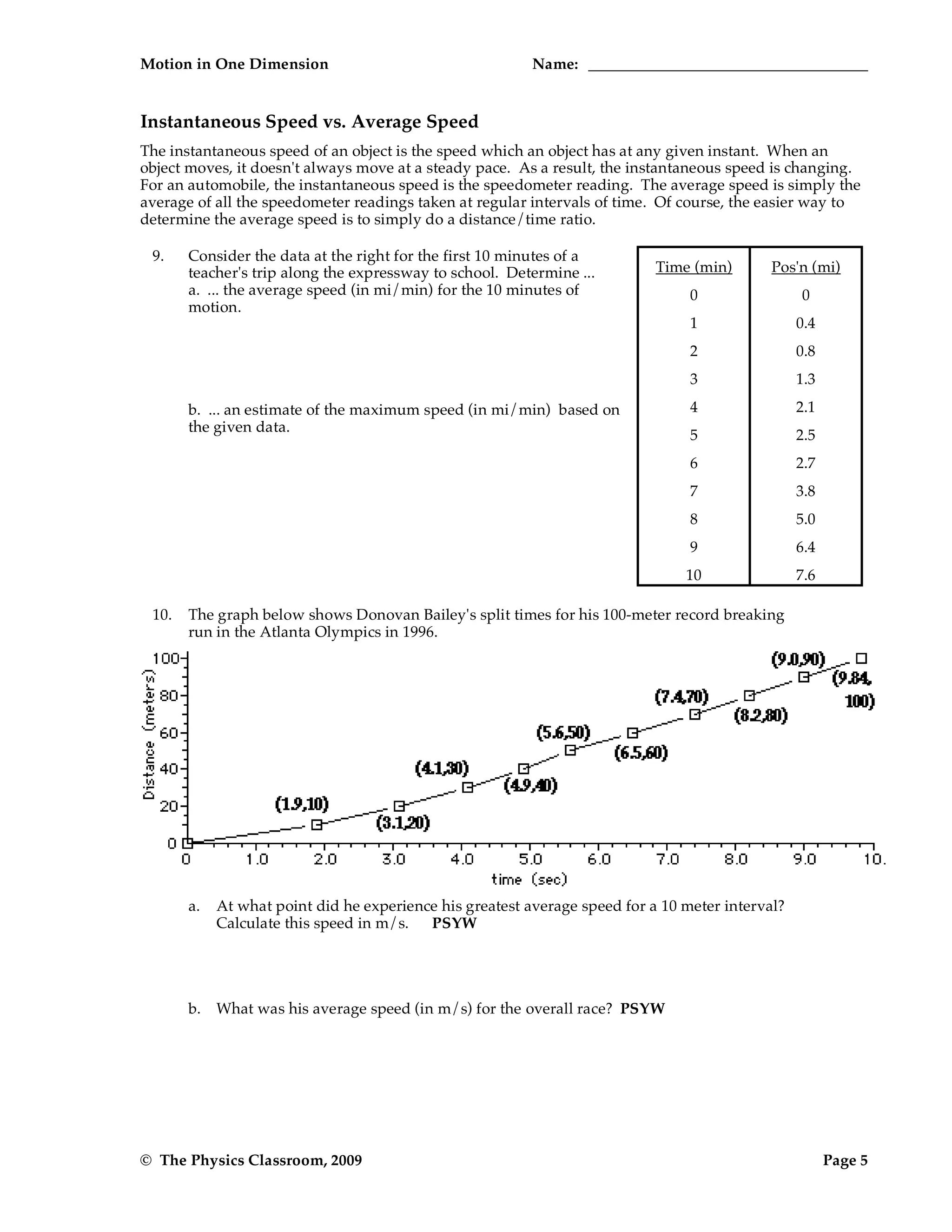
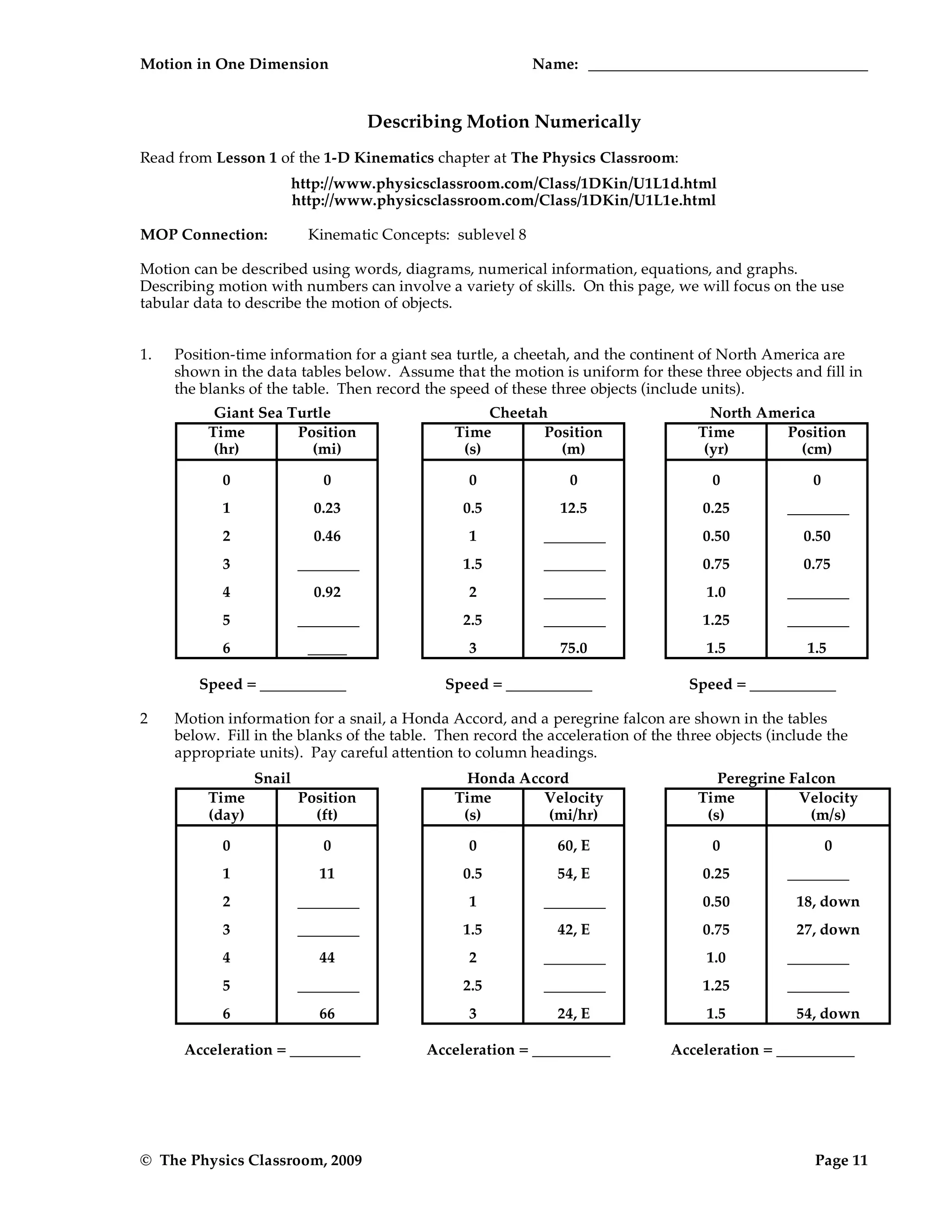
Uses numerical data and tables to describe motion for various subjects, calculates speeds and accelerations.
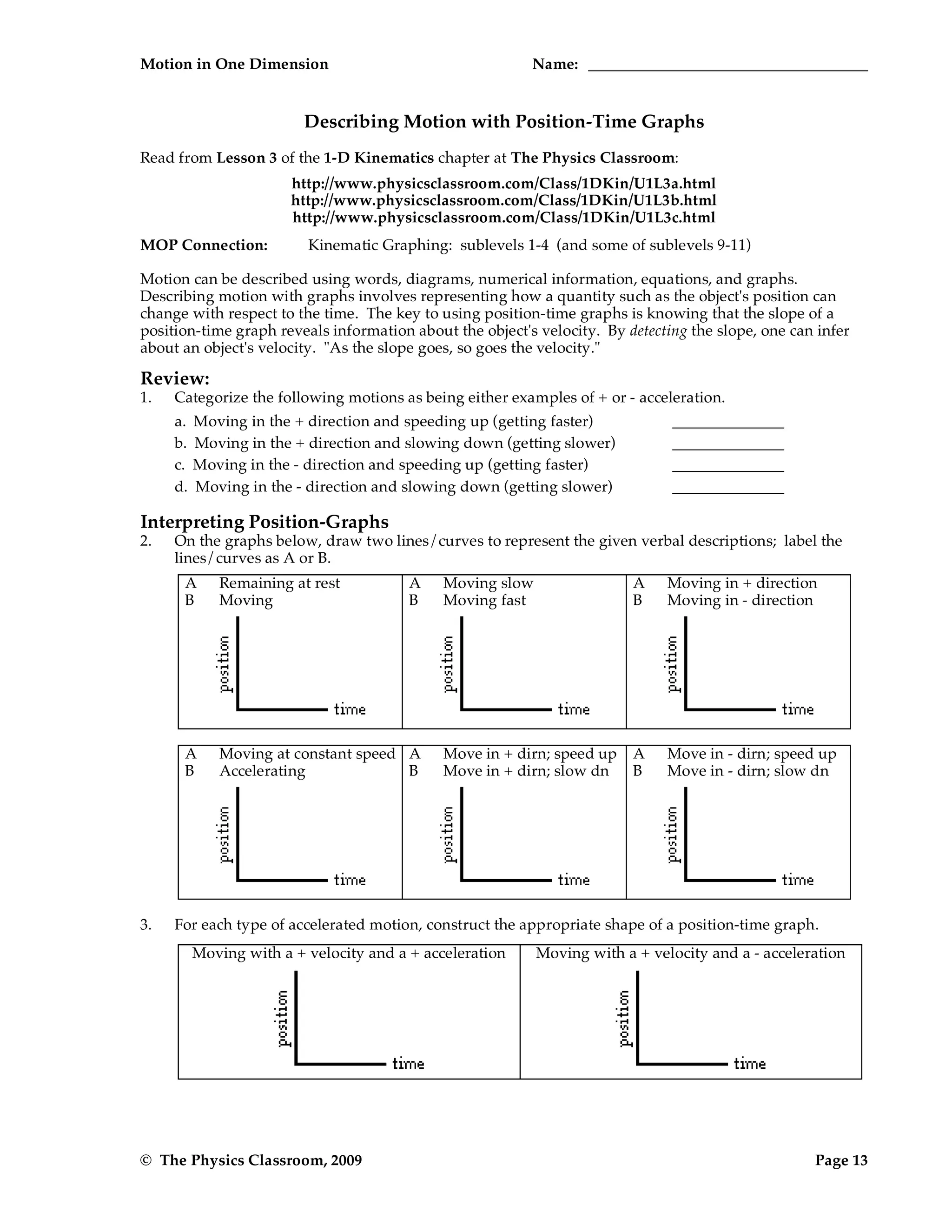
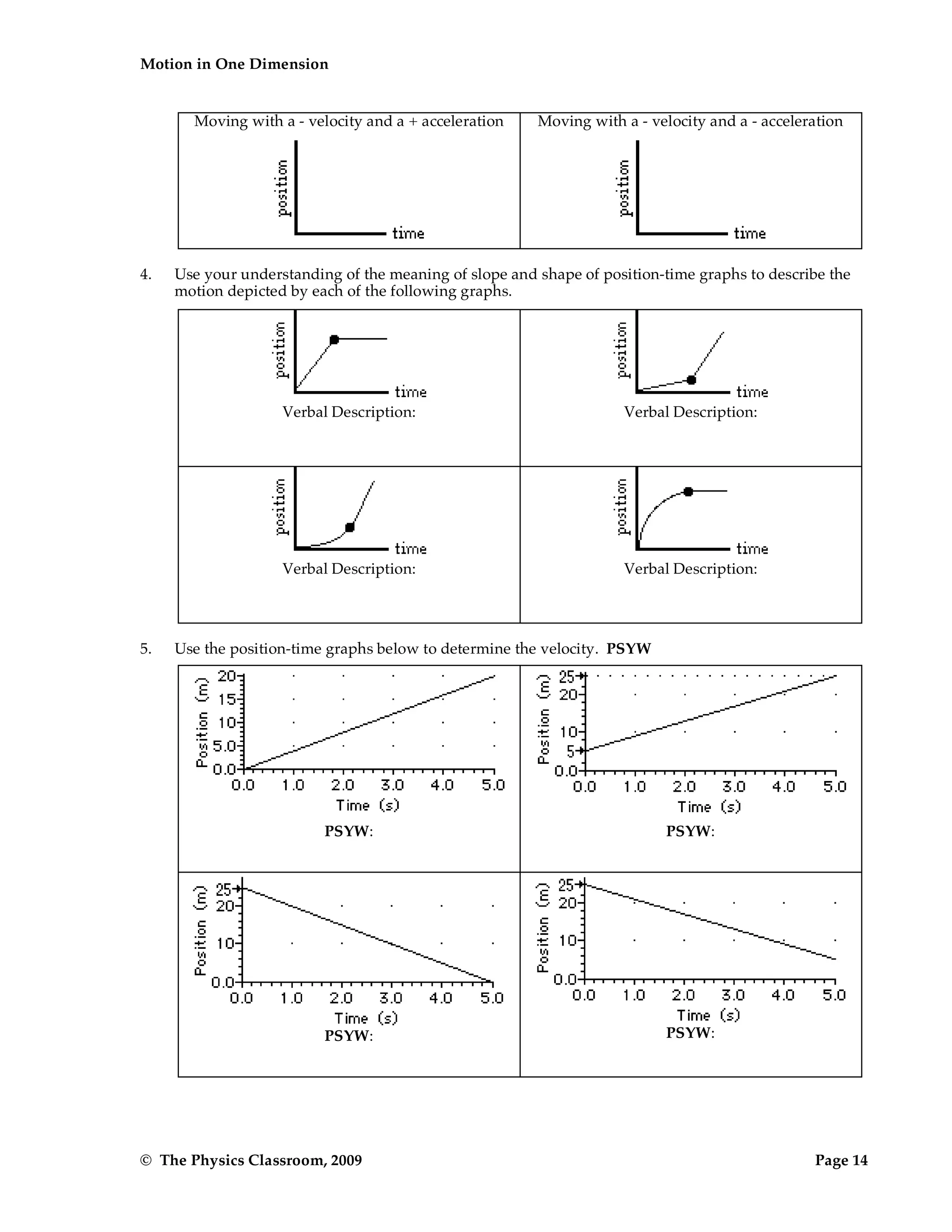
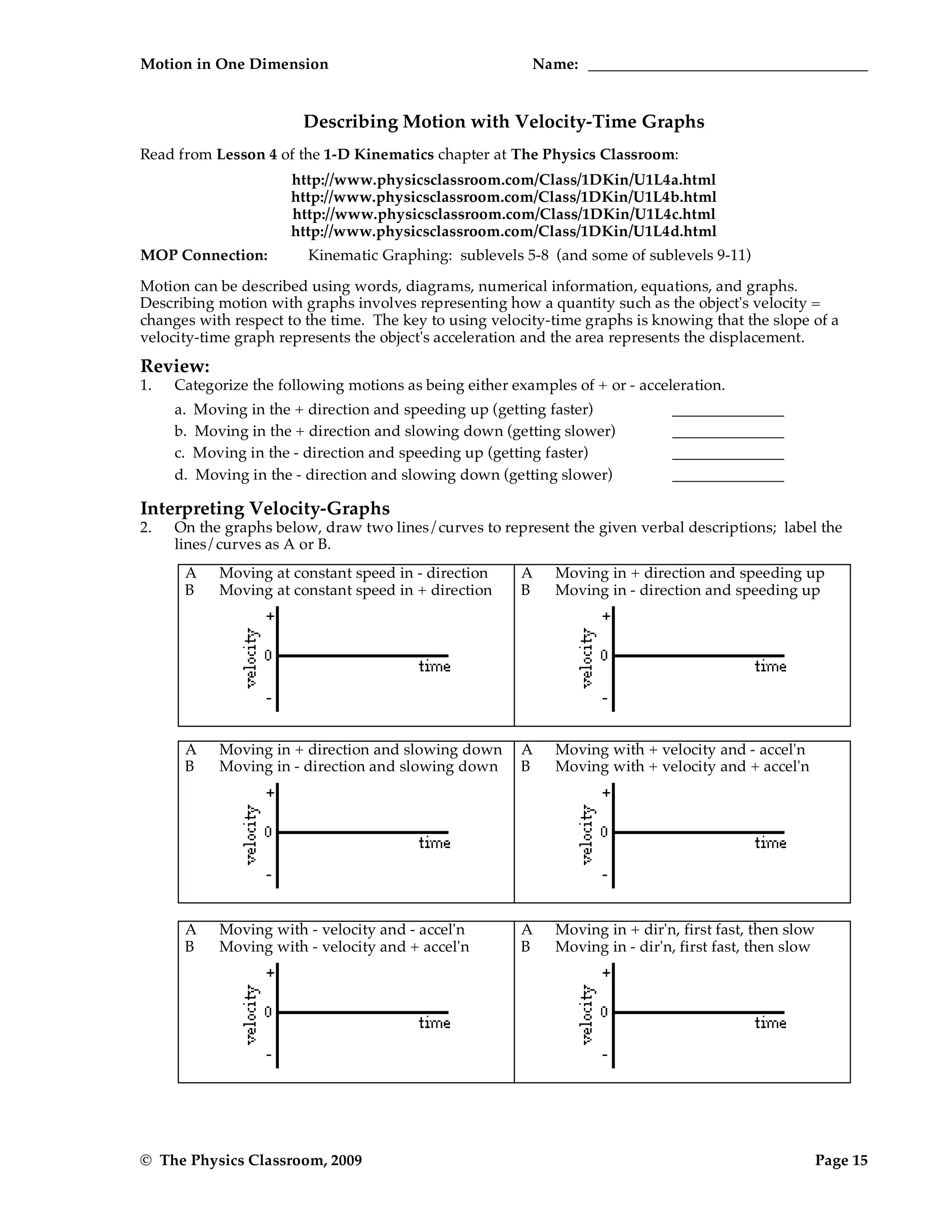
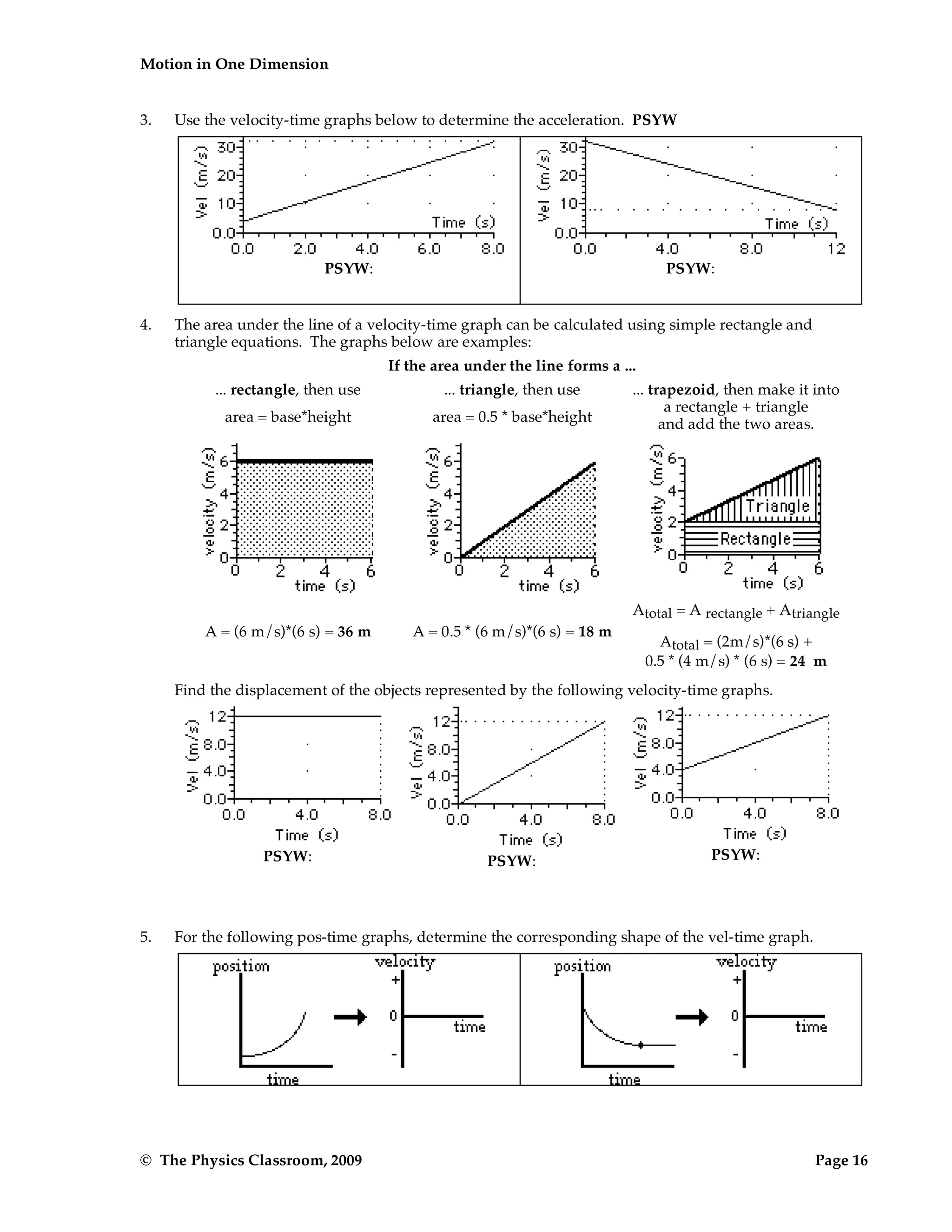
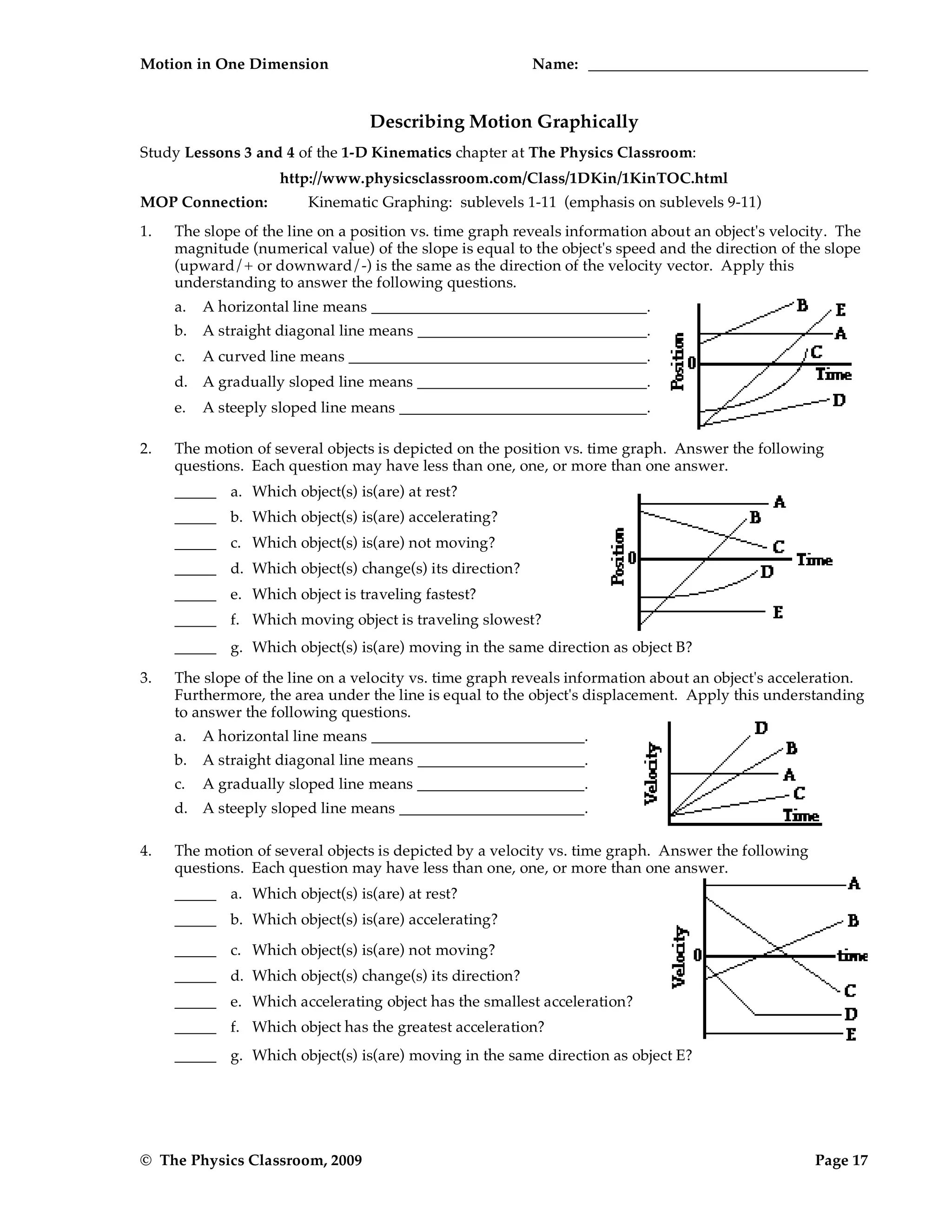
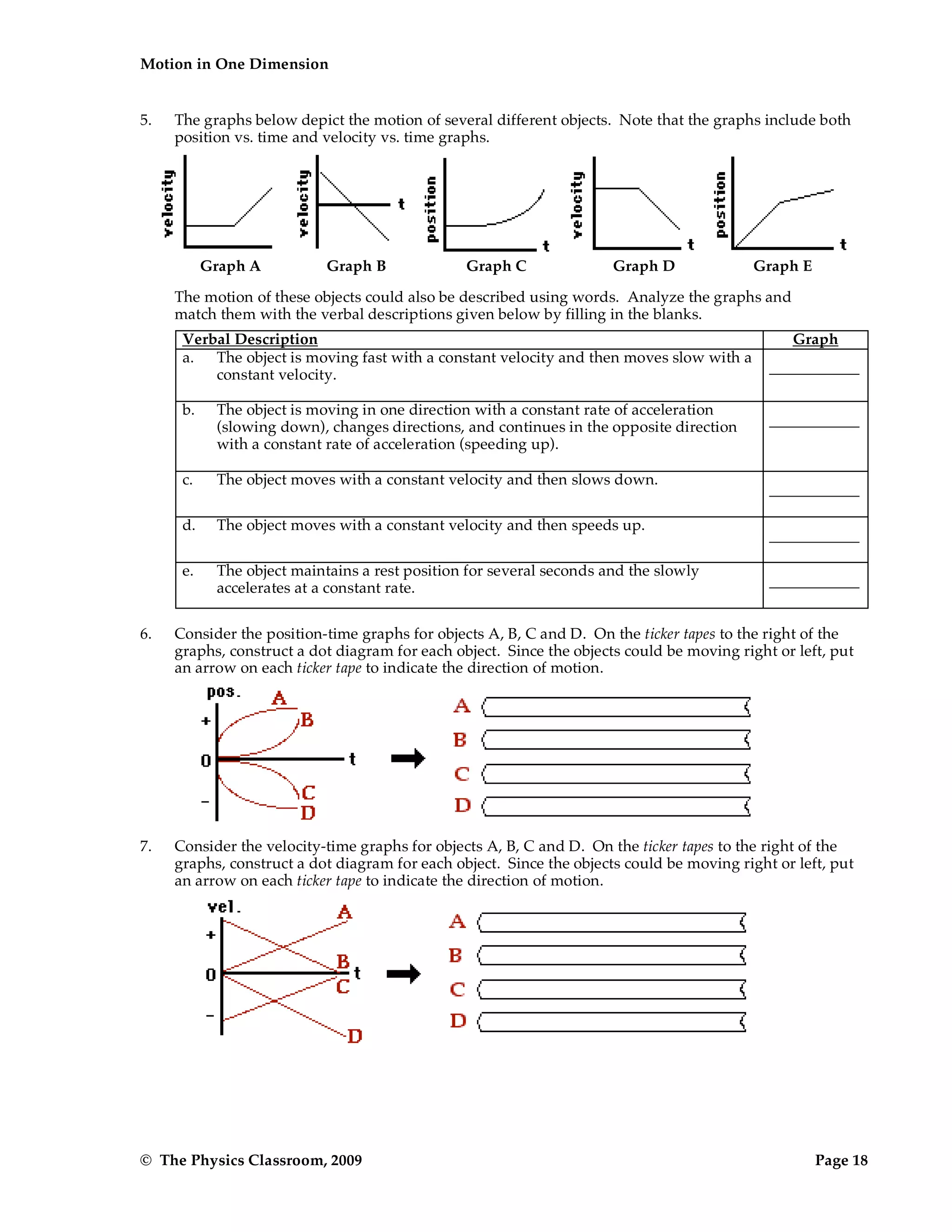
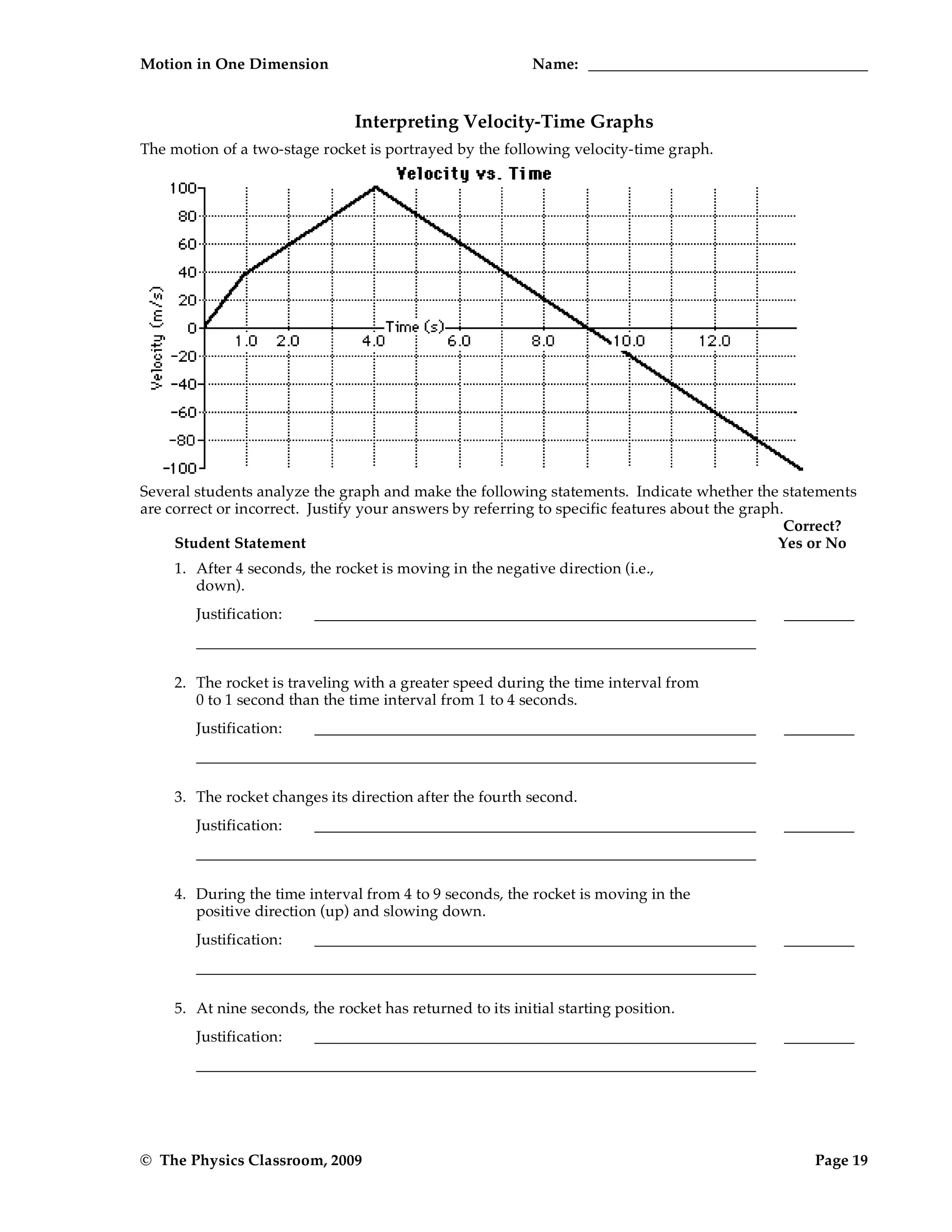
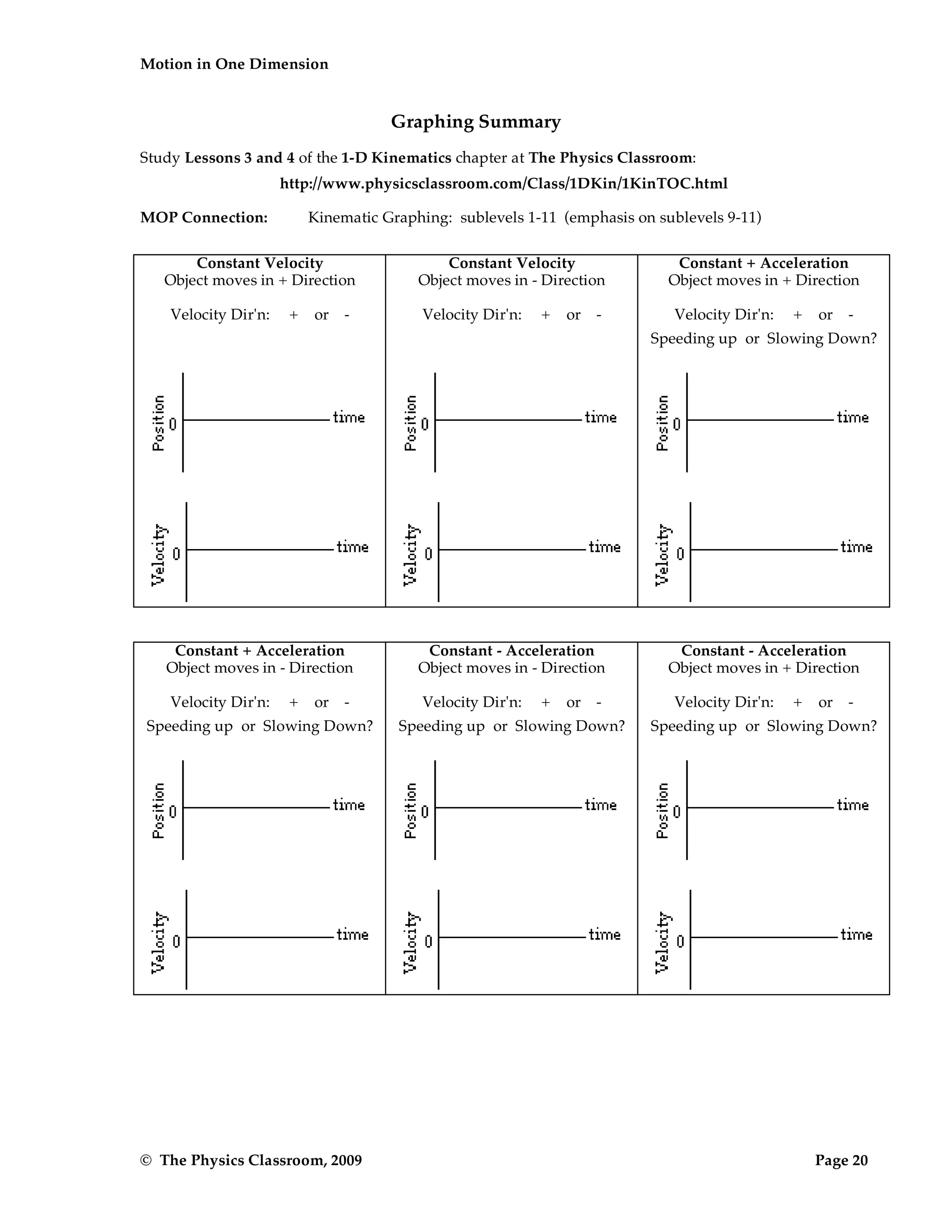
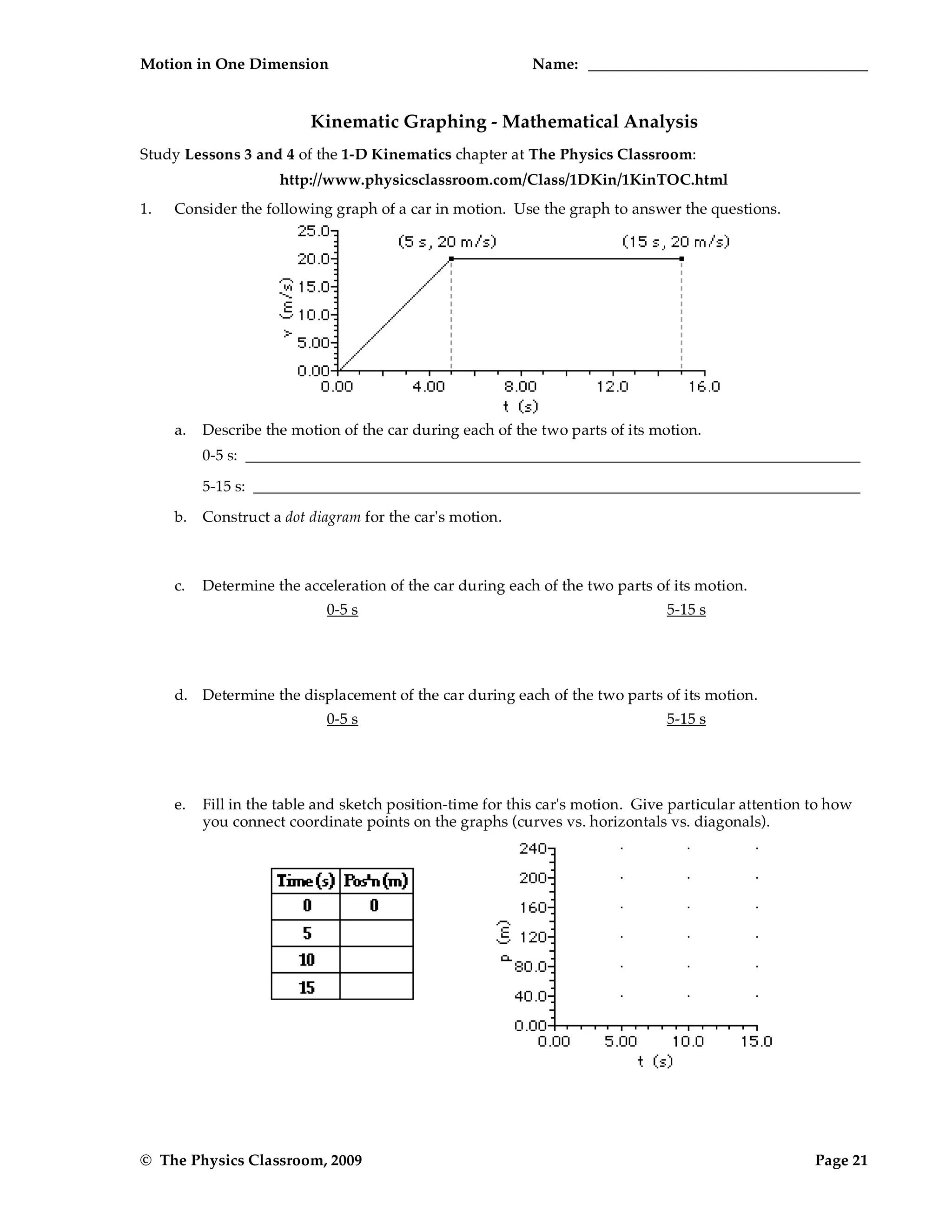
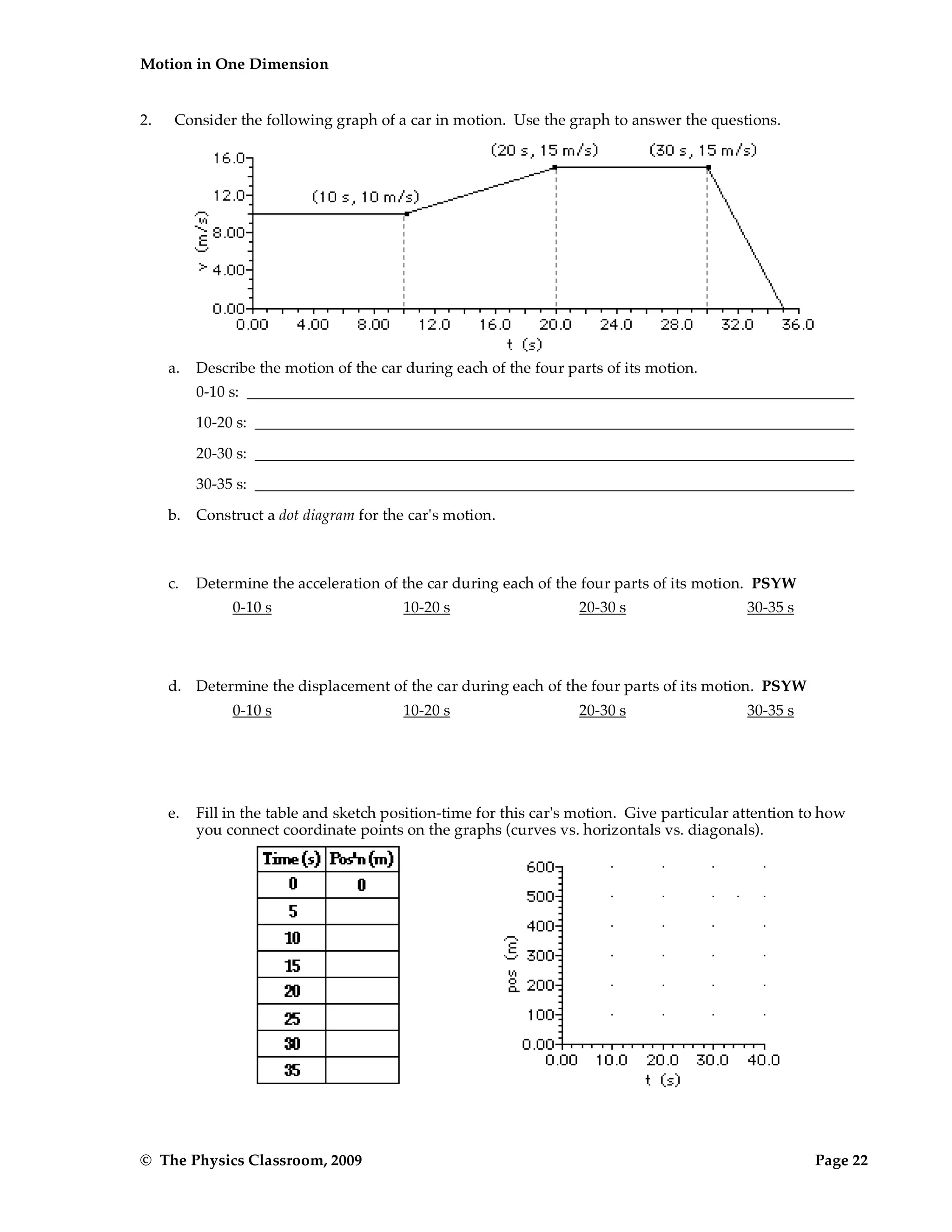
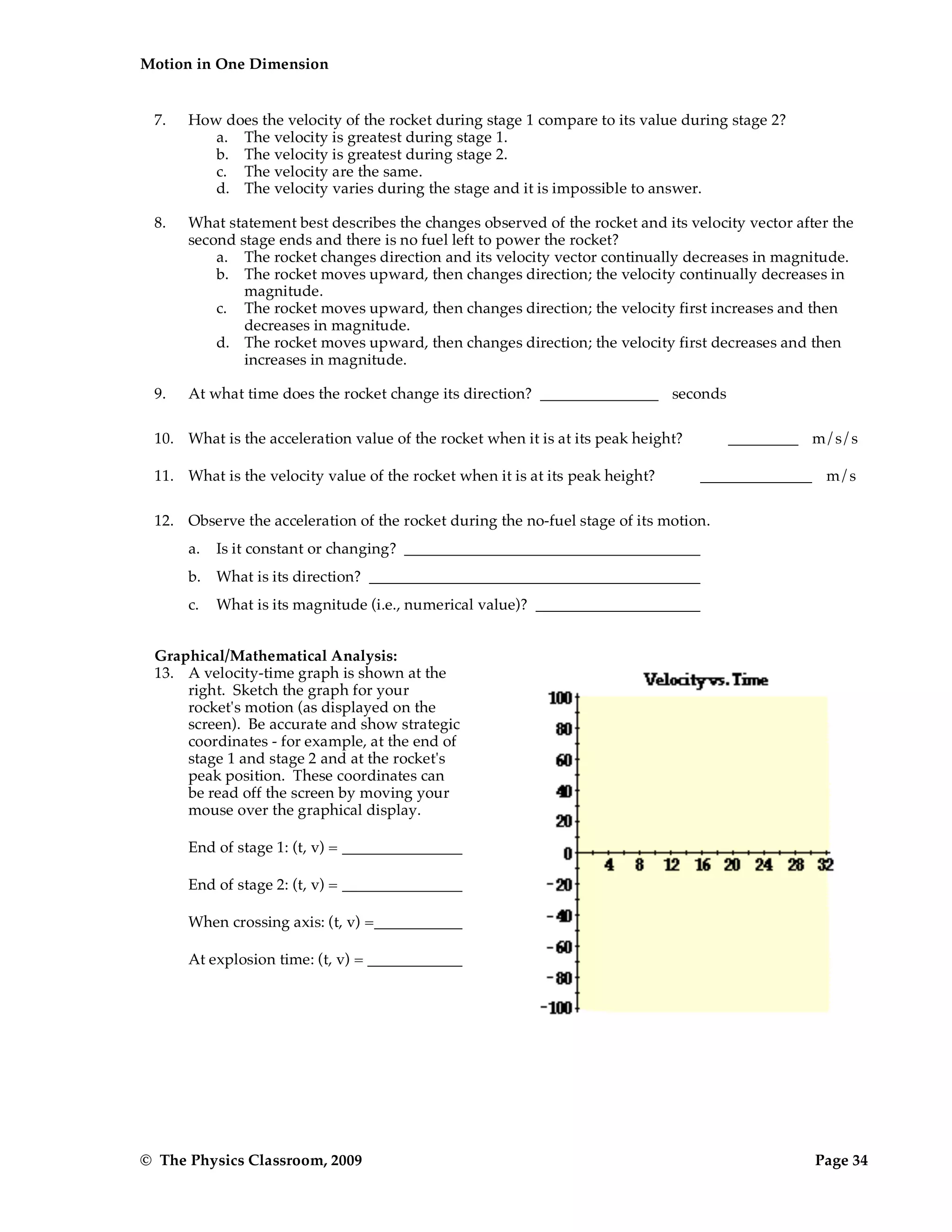
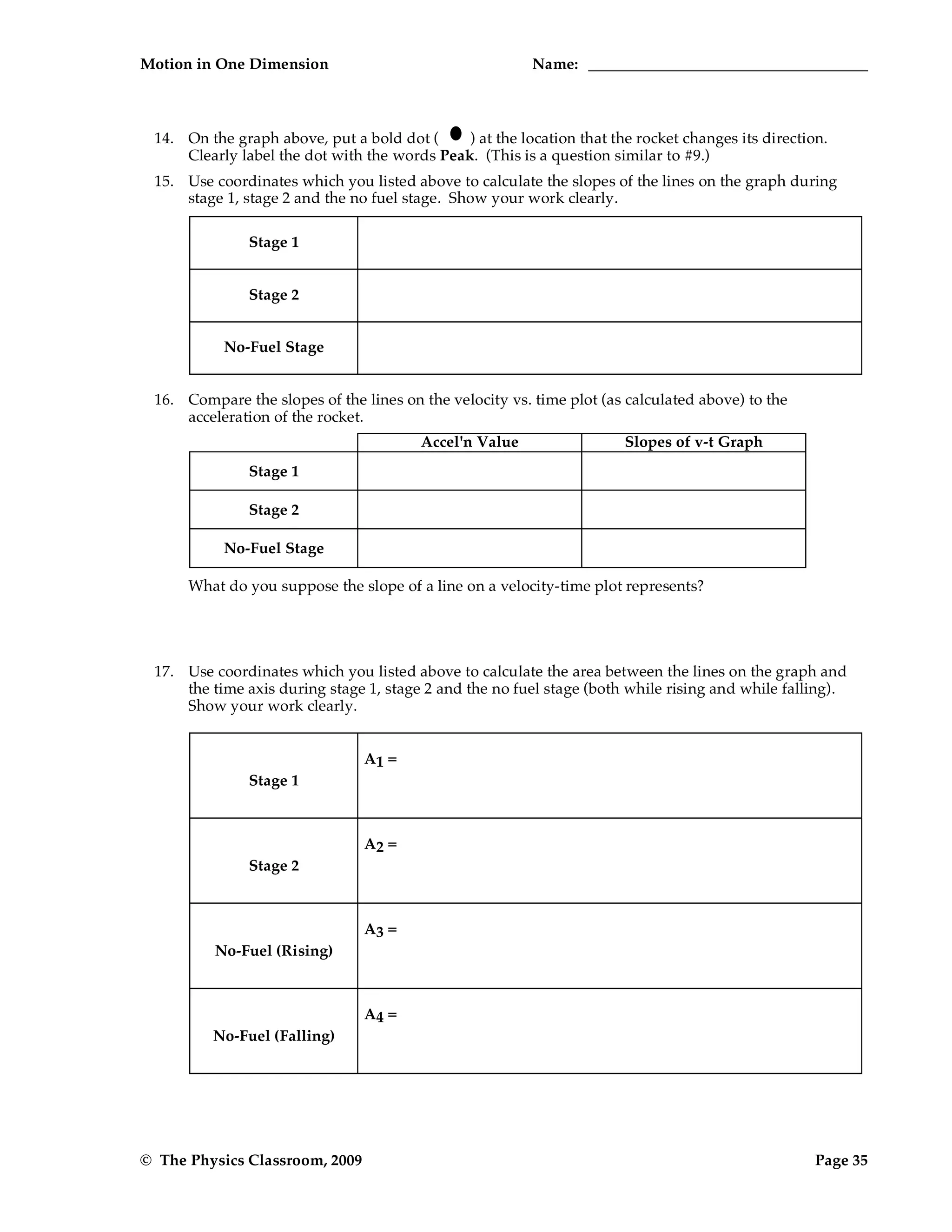
Explains position-time and velocity-time graphs, including interpreting slopes and areas under curves to provide data on motion.
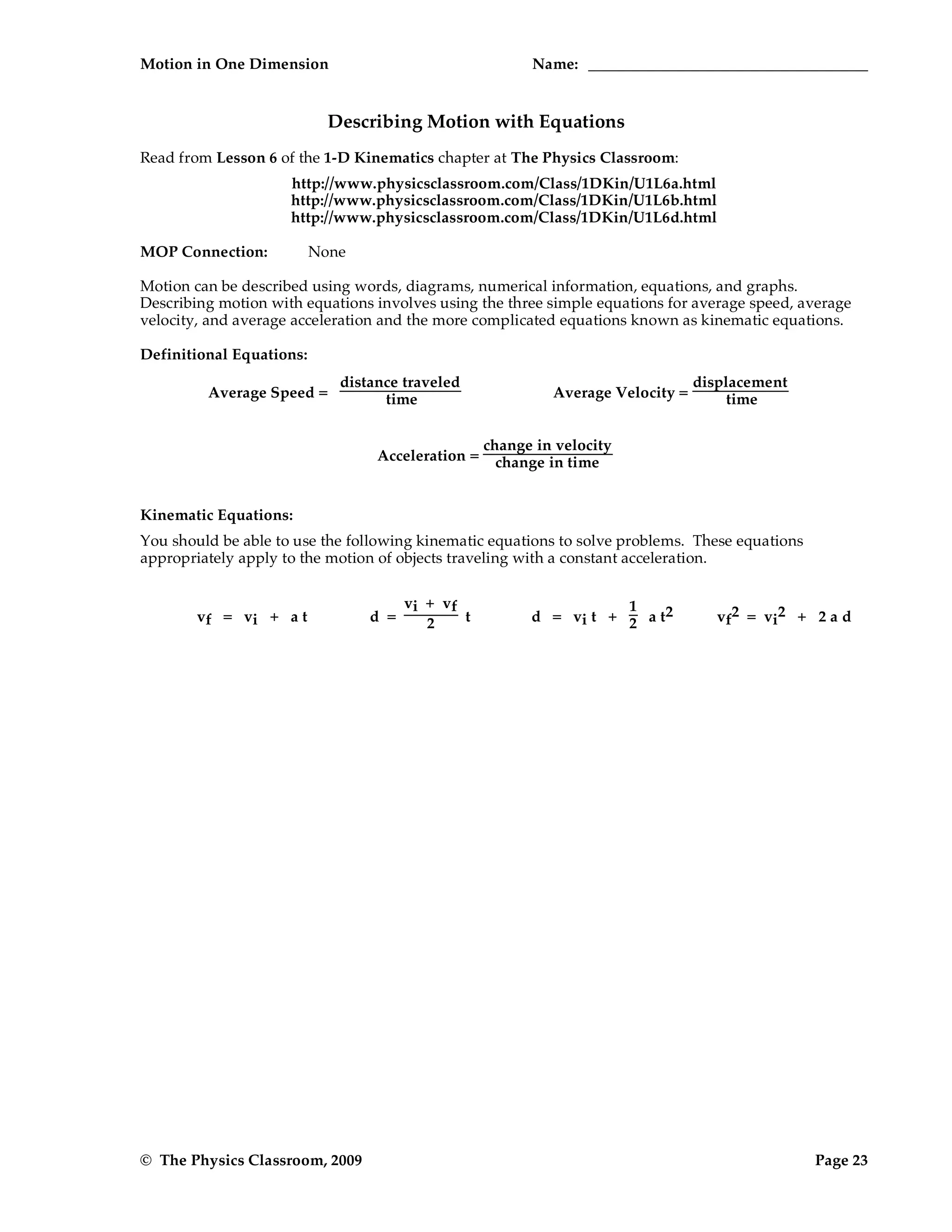
Introduces fundamental kinematic equations used for solving problems involving motion, emphasizing problem-solving strategies.
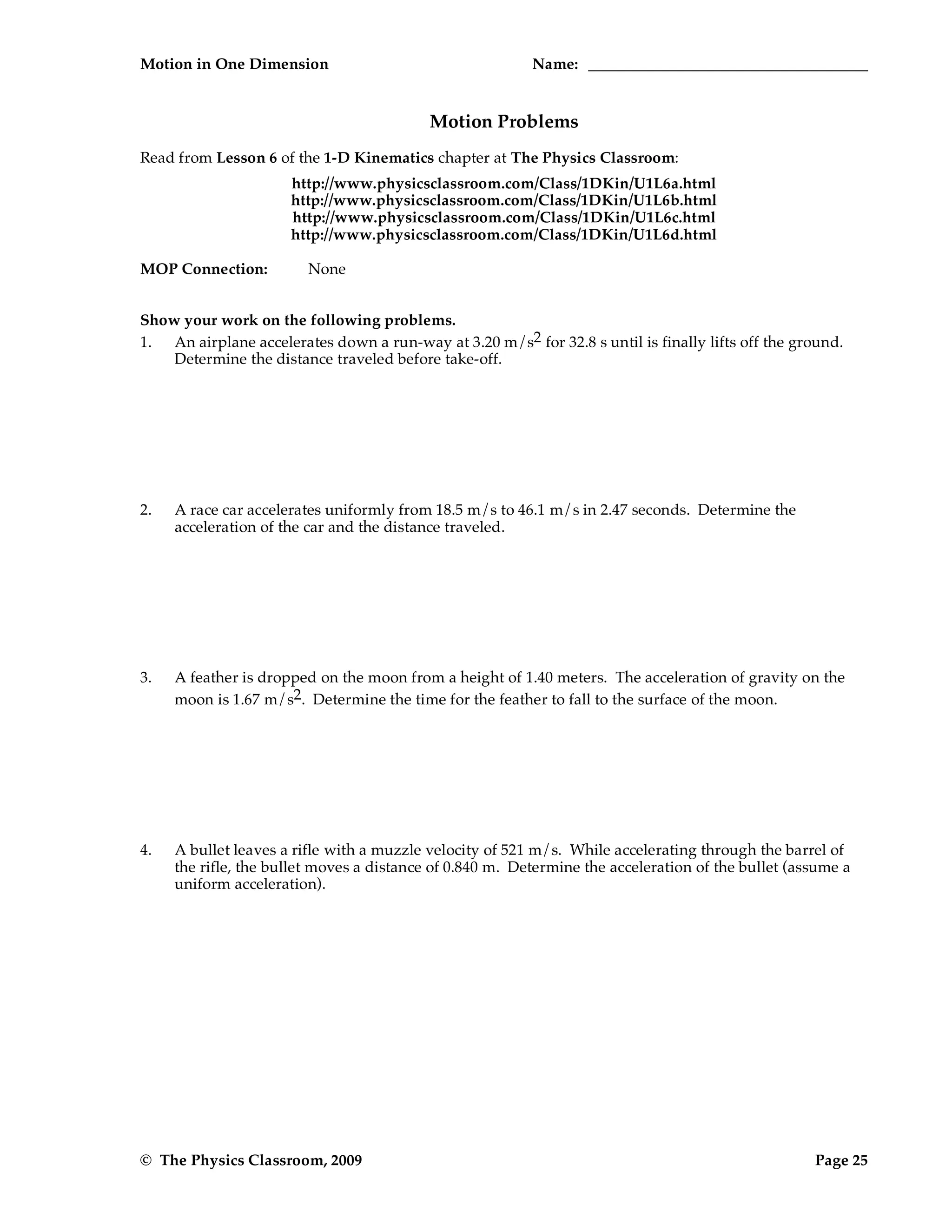
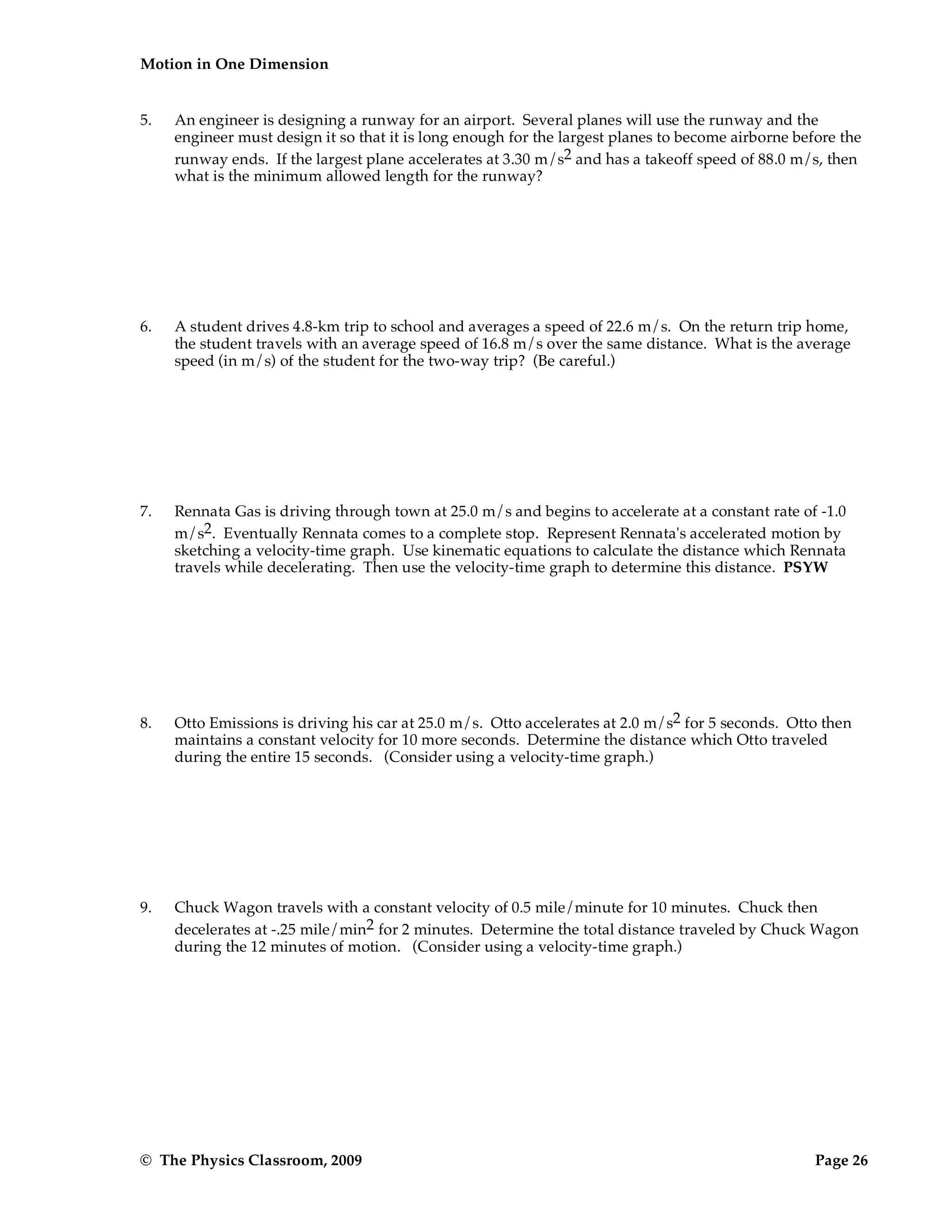
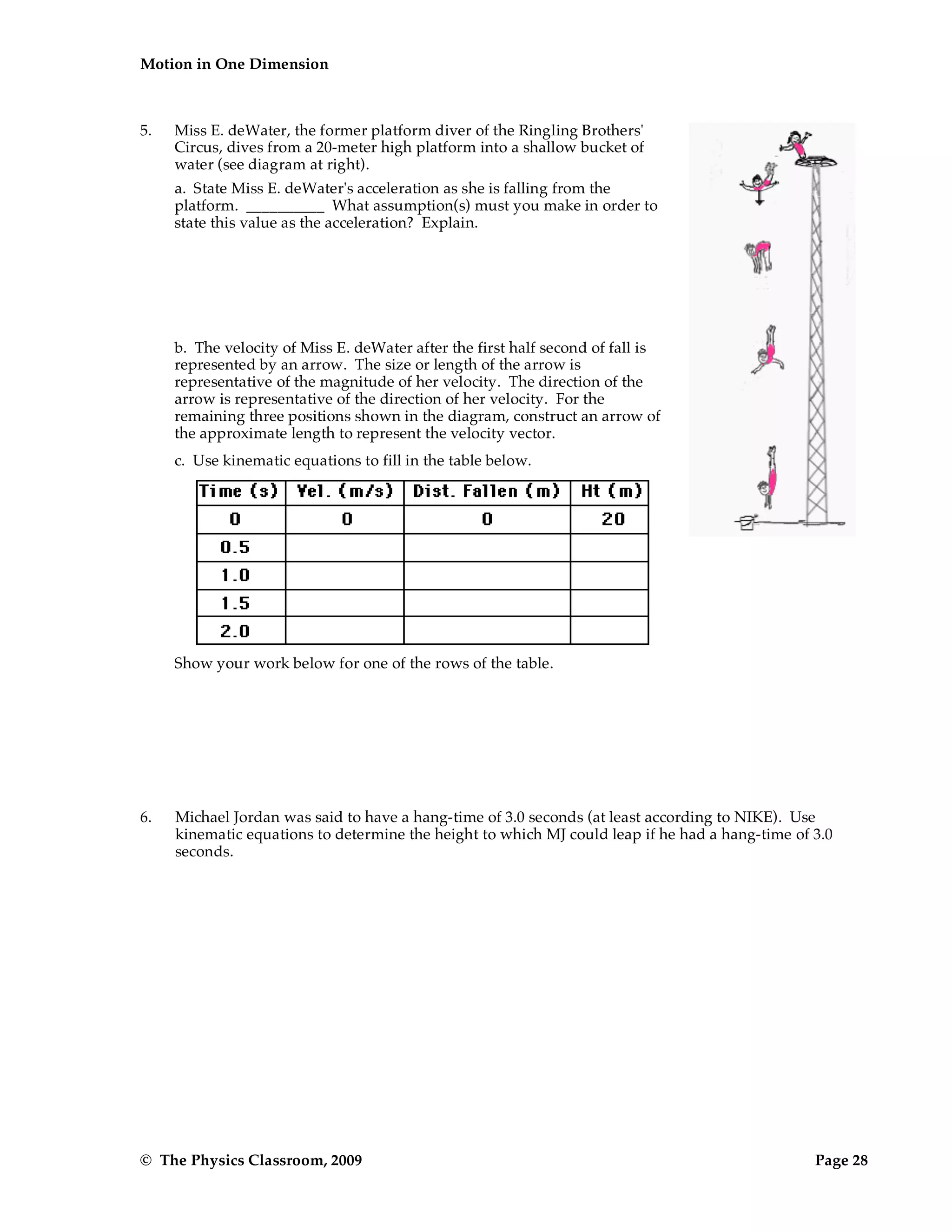
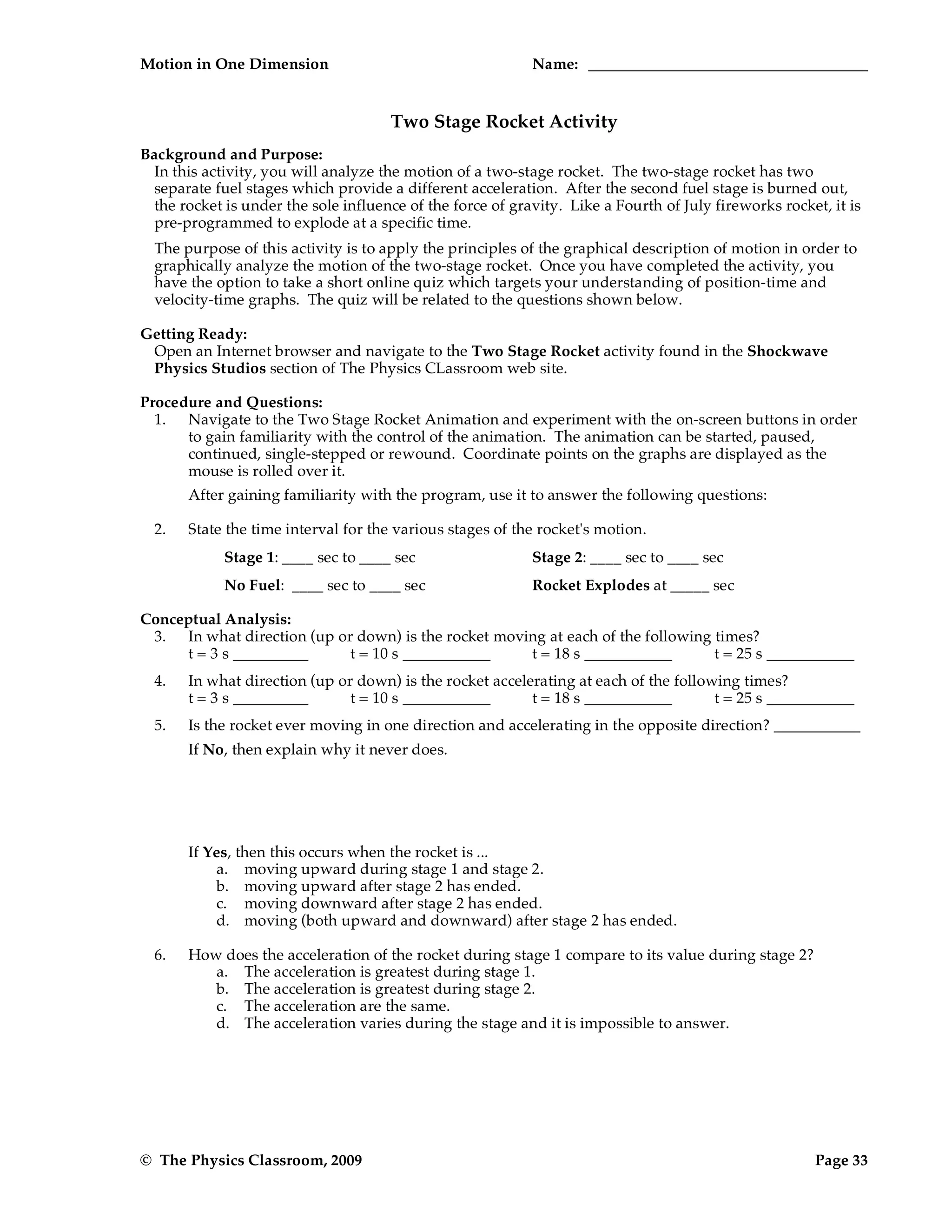
Solves various real-world motion problems involving acceleration, speed, and distance using physics principles. Explores free fall scenarios and analyzes two-stage rocket motion, emphasizing gravity's role and graphical analysis.