Anatomy & Physiology I-BIO 110 Dr. G. Krasilovsky Welcome e-mail: gkrasilo@sunyrockland.edu.com Office hours: after class  by appointment Office: Lecture Classroom!!
Chapters: 1 -  pp.1-11 plus lab material pp12-22 2 - skim pp.29, 42-60 3 - Next Unit: pp.62-95; 100-105 Readings for Unit I Marieb & Hoehn (2010).  Human Anatomy &   Physiology . 8th edition.
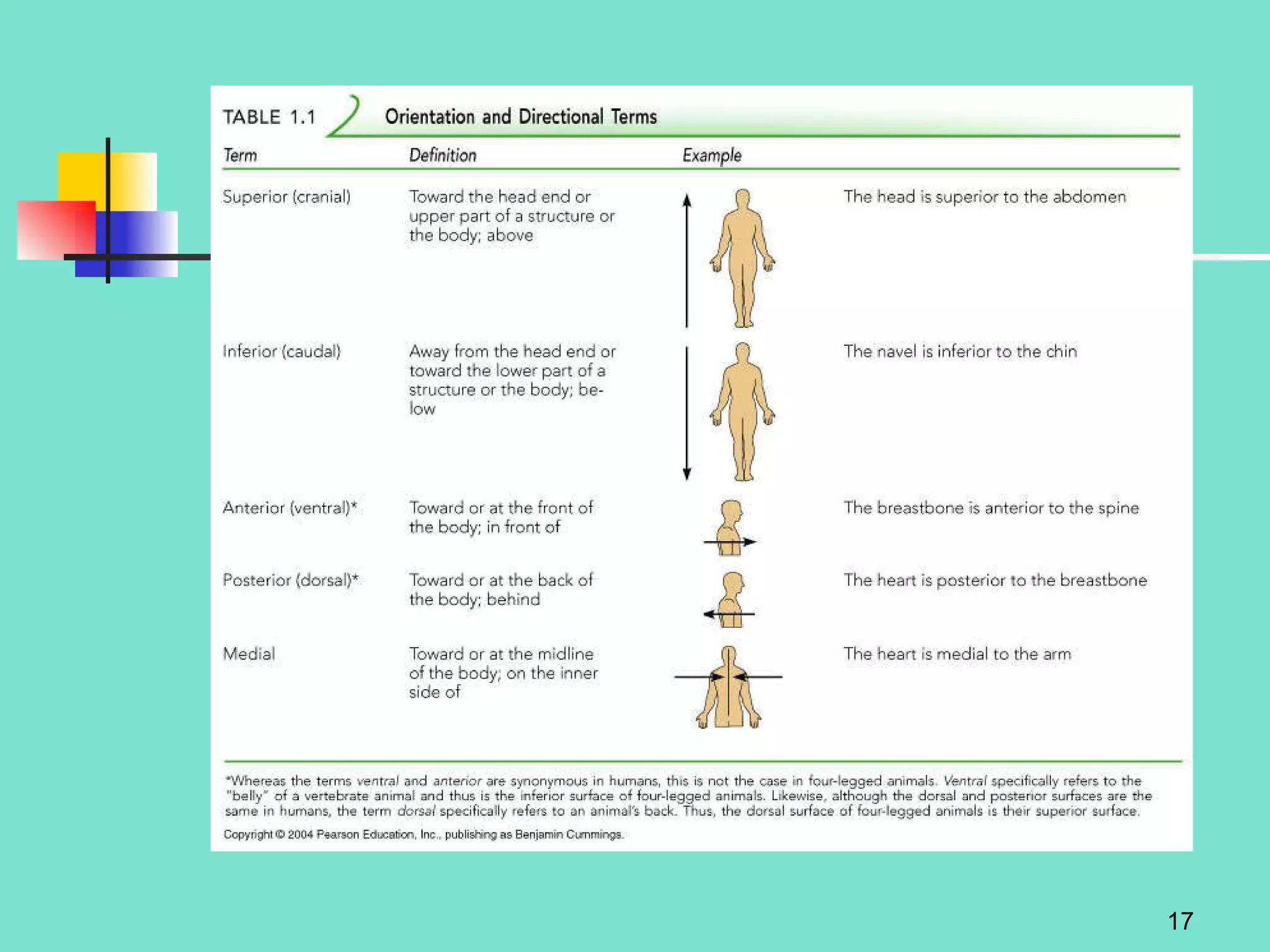
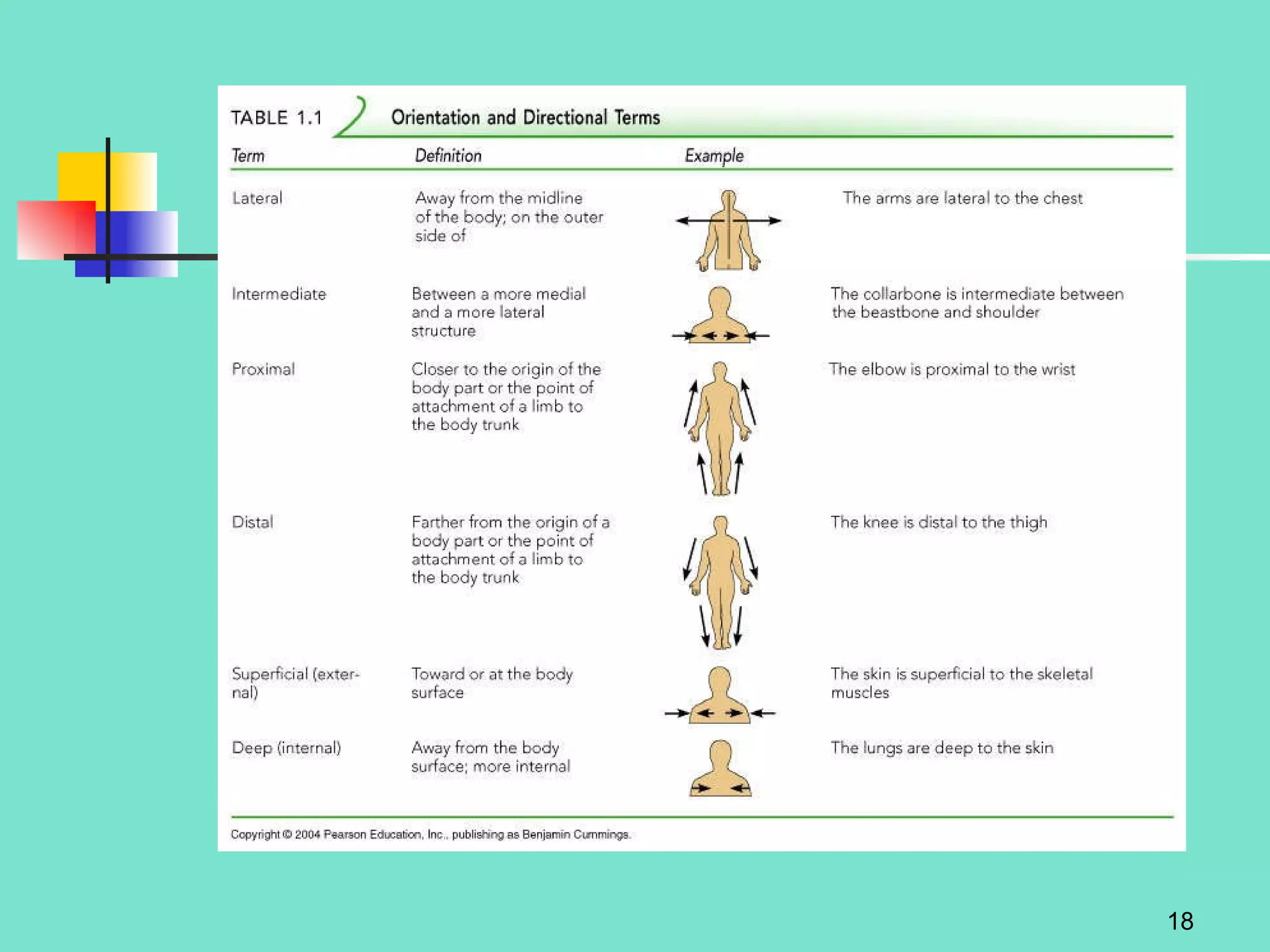
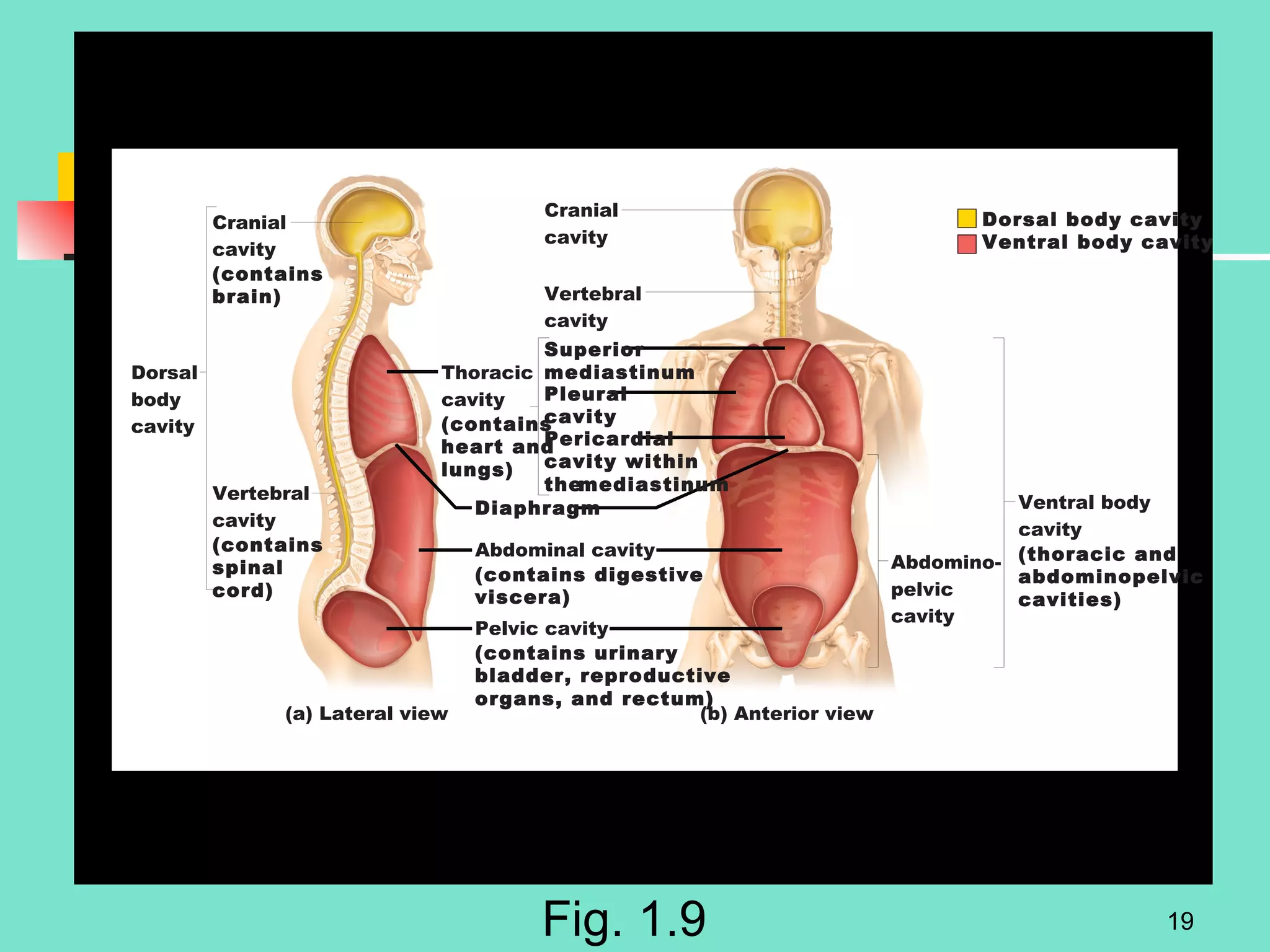
UNIT I - Introduction I. Introduction A. What is Life? B. Physiological Processes  C. Directional Terms (lab material)  D. Body Cavities (lab material) II. Chemistry for the Cell
A. What is Life? 1. A quality or characteristic of a system  that demonstrates the following: a) consists of specific chemicals that can interact and utilize or produce energy  (energy = ability to do work) b) has an organized basic structure ( CELL ) which could increase in size and number  ( ANATOMY = study of structure ) cell = basic unit of structure and function of all living things tissue = group of cells with similar structure and function
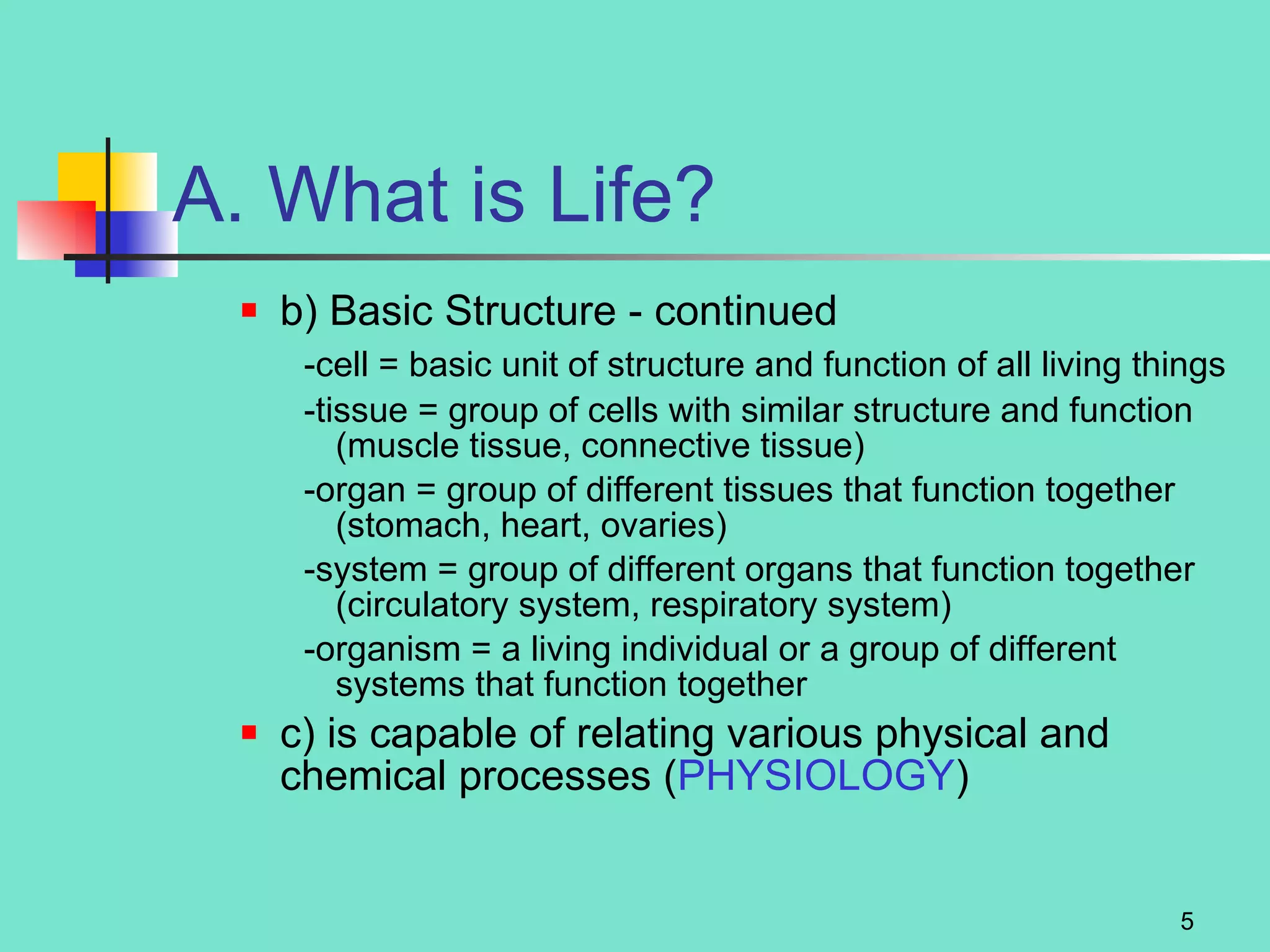
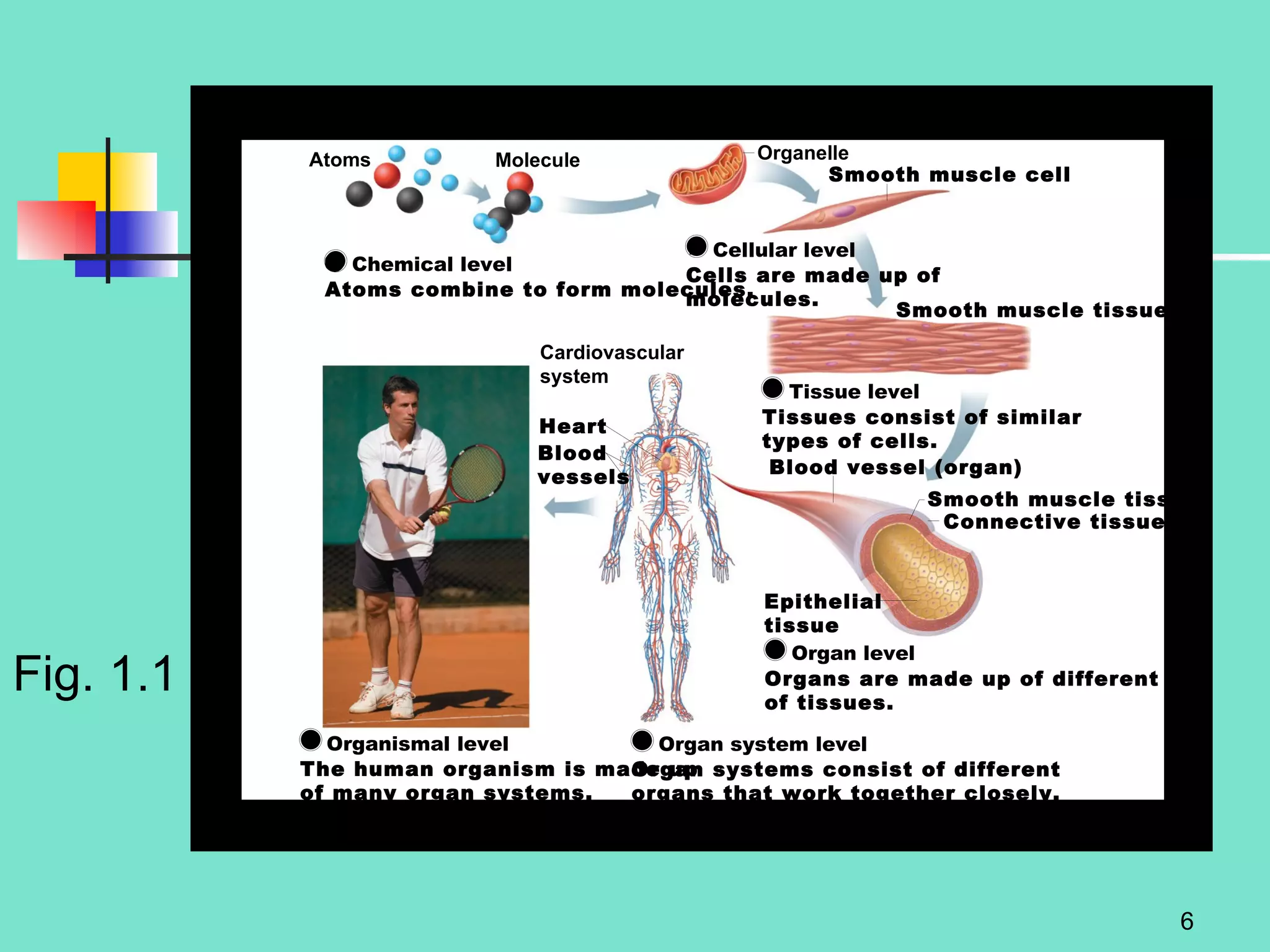
A. What is Life? b) Basic Structure   - continued  -cell = basic unit of structure and function of all living things -tissue = group of cells with similar structure and function (muscle tissue, connective tissue) -organ = group of different tissues that function together (stomach, heart, ovaries) -system = group of different organs that function together (circulatory system, respiratory system) -organism = a living individual or a group of different systems that function together c) is capable of relating various physical and chemical processes ( PHYSIOLOGY )
Fig. 1.1
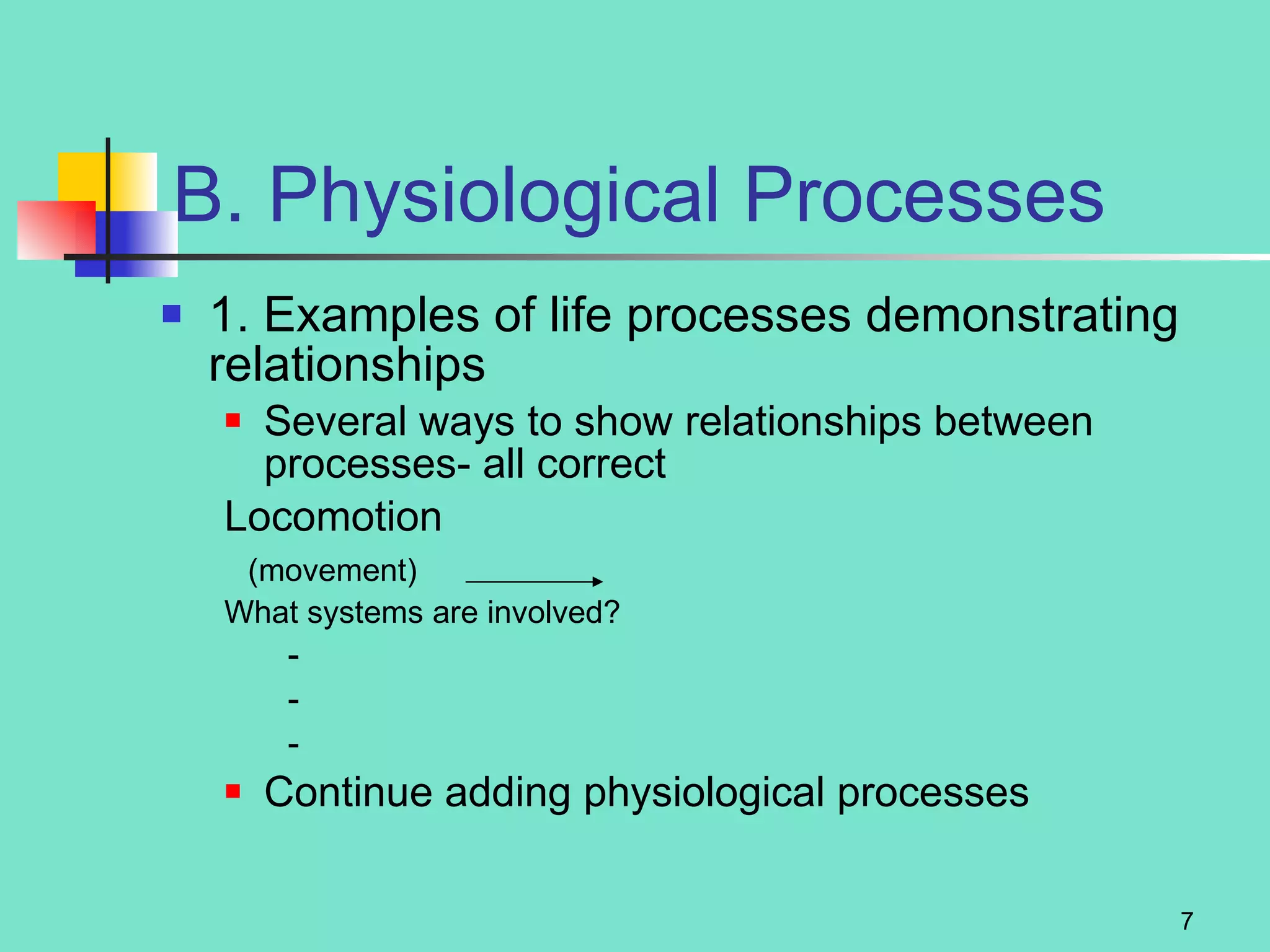
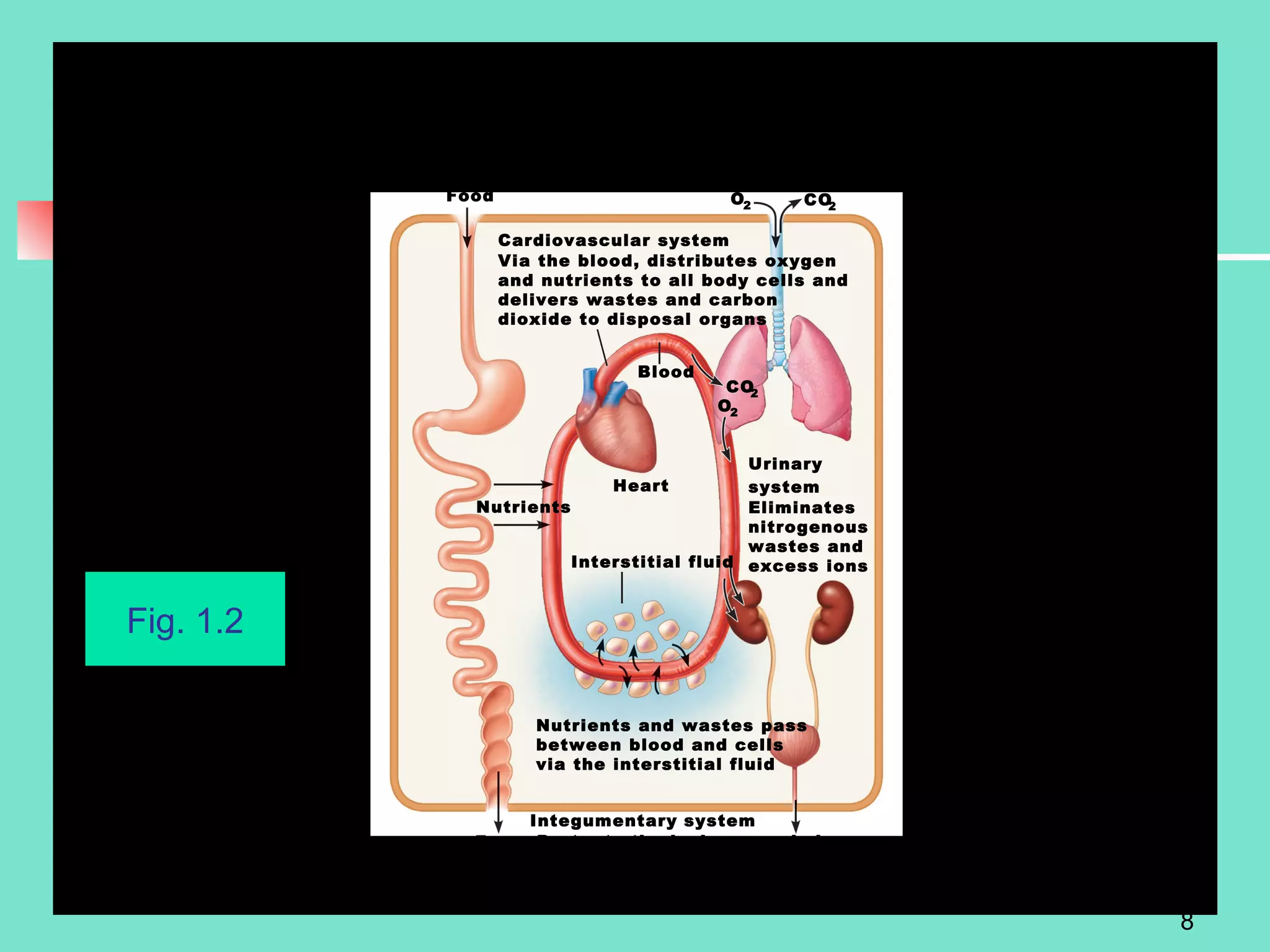
B. Physiological Processes 1. Examples of life processes demonstrating relationships Several ways to show relationships between processes- all correct Locomotion  (movement) What systems are involved?  - - - Continue adding physiological processes
Fig. 1.2
2. Metabolism a) sum total of all chemical processes in an organism’s cells b) includes  ALL   physiological process listed above c) general term: “ metabolic disorder ”?????   d) indicative of the energy utilization of an organism and its components:  this is the value of metabolic rate
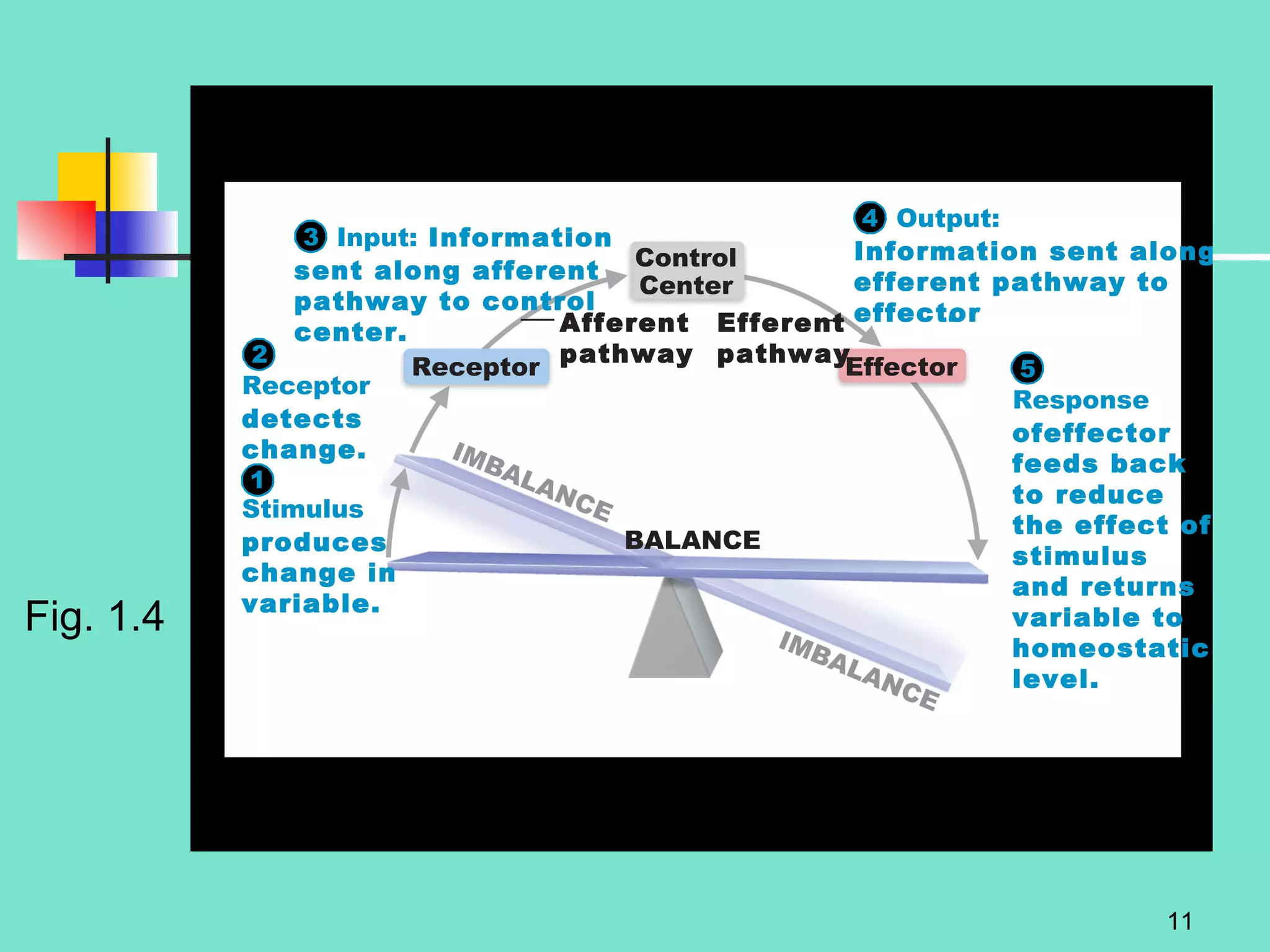
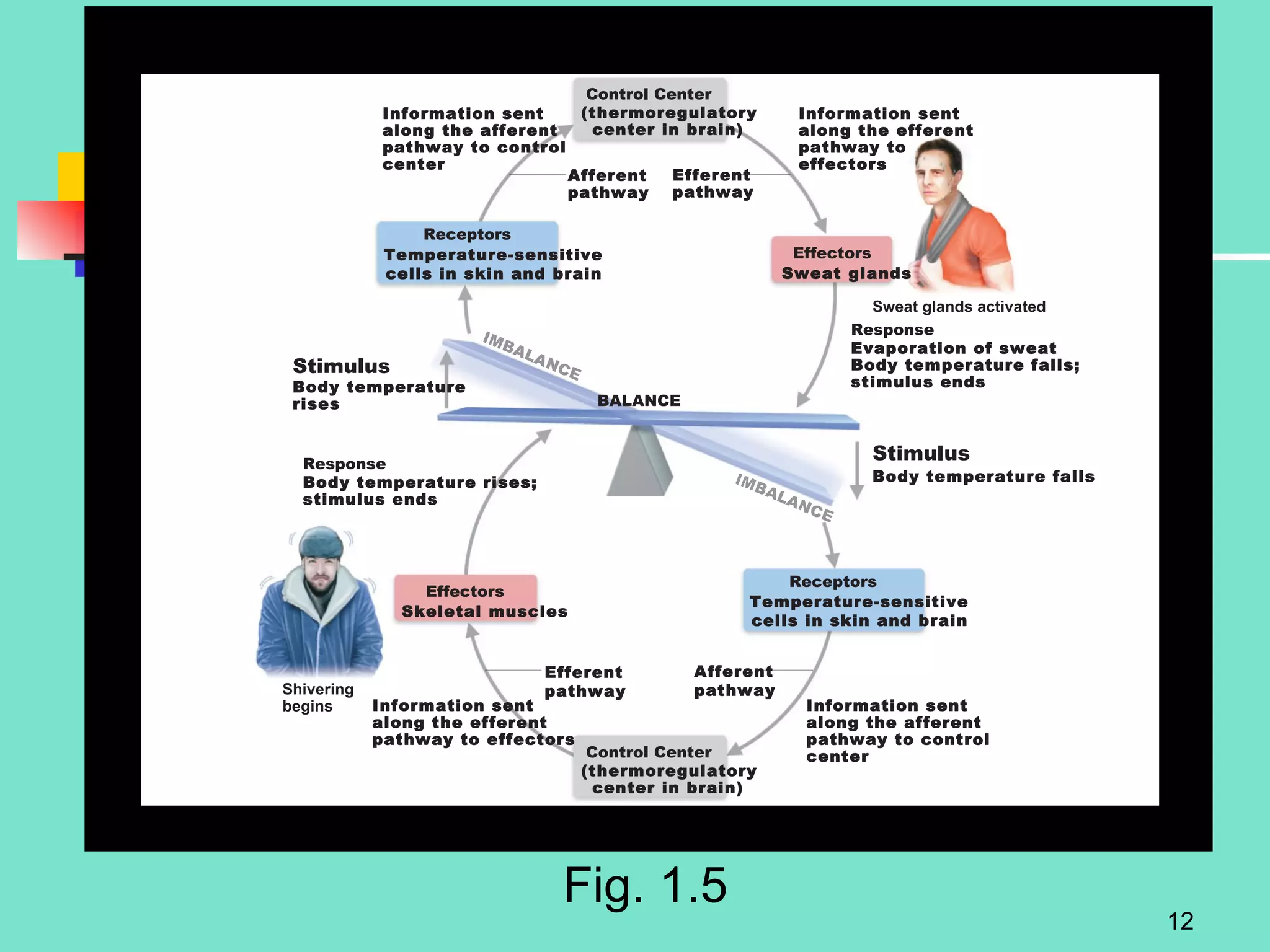
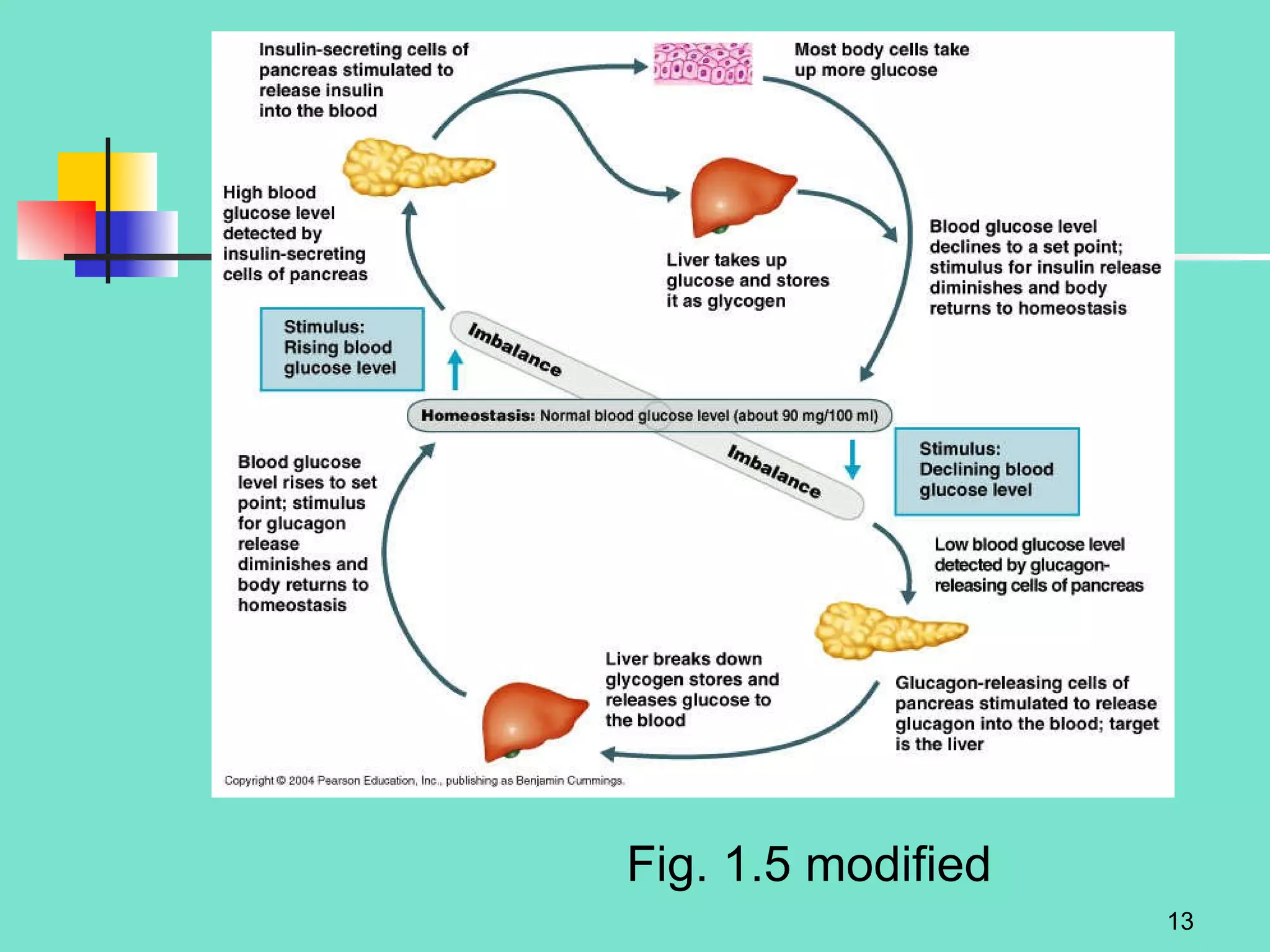
3. HOMEOSTASIS a) self regulation  of the internal environment of an organism, maintaining life functions within a NORMAL range b) Examples: Blood sugar Blood pressure Body temperature Hydration levels / Salt levels, etc.
Fig. 1.4
Fig. 1.5
Fig. 1.5 modified
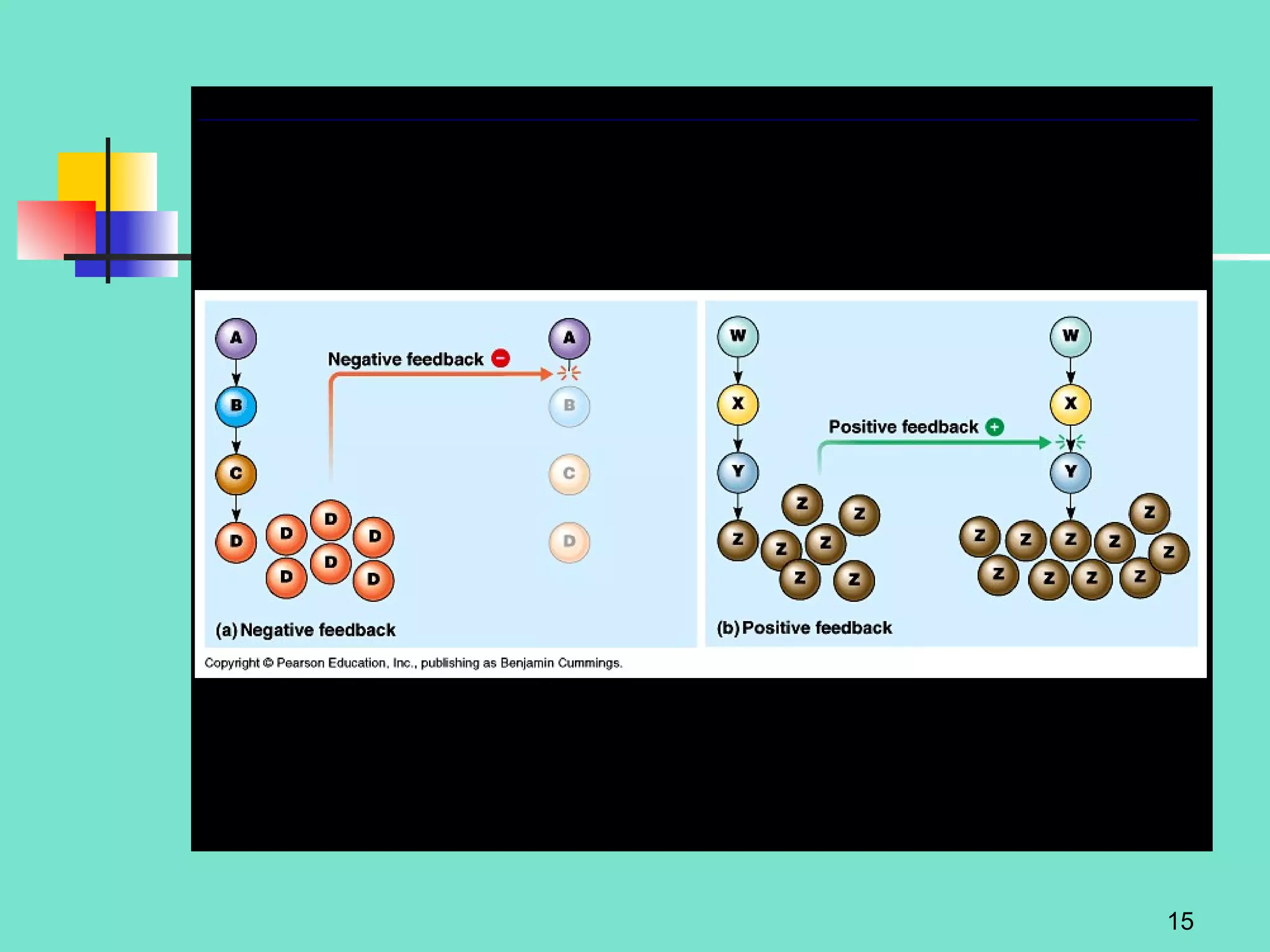
4. Stress - the absence of homeostasis What are physiological signs of stress? - - Value of stress vs. stress as a sign of disorder 5. Negative and Positive feedback Ability of an end-product to regulate its own production
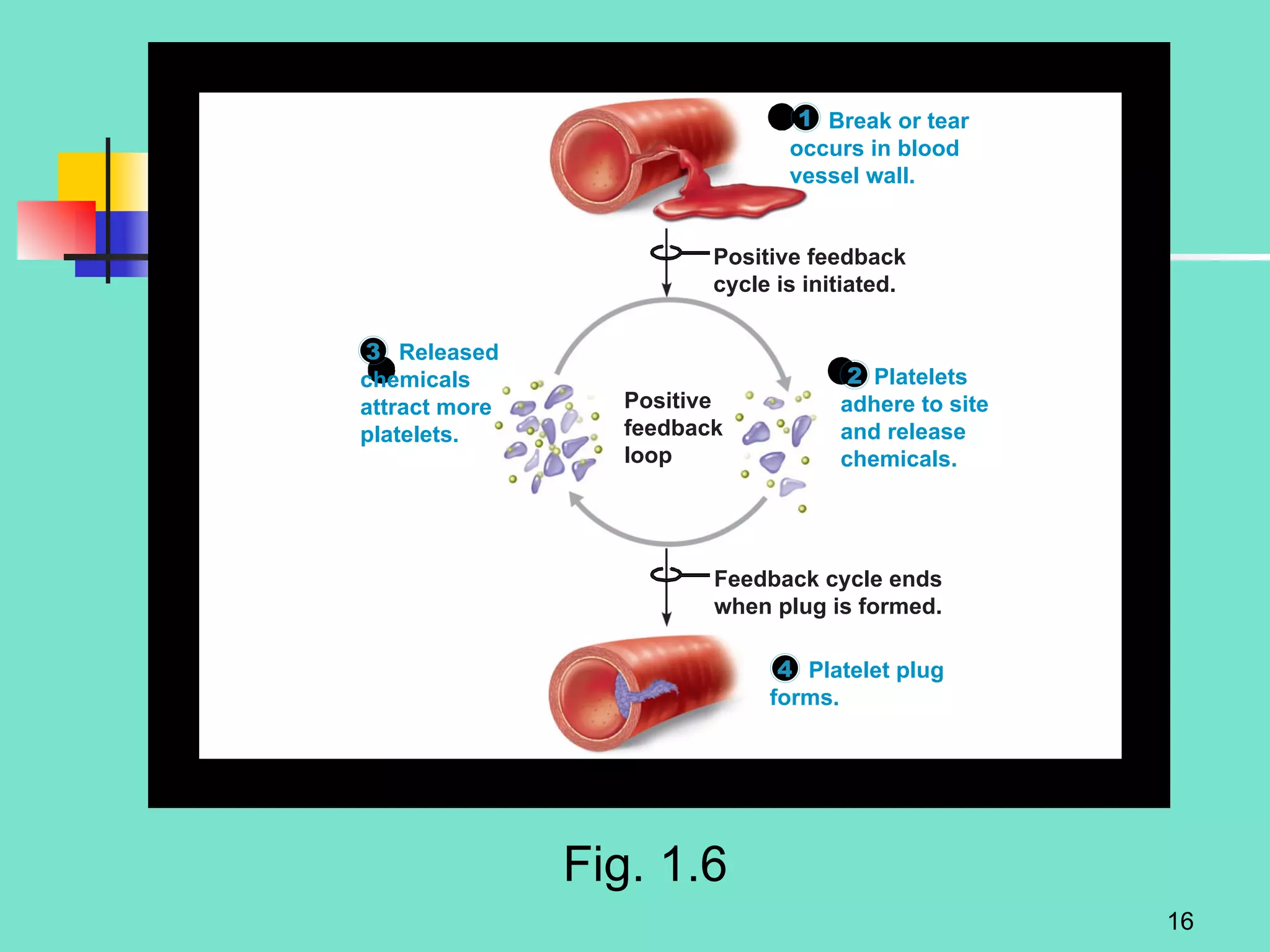
See Fig. 1.6  modified
Fig. 1.6
 
 
Fig. 1.9
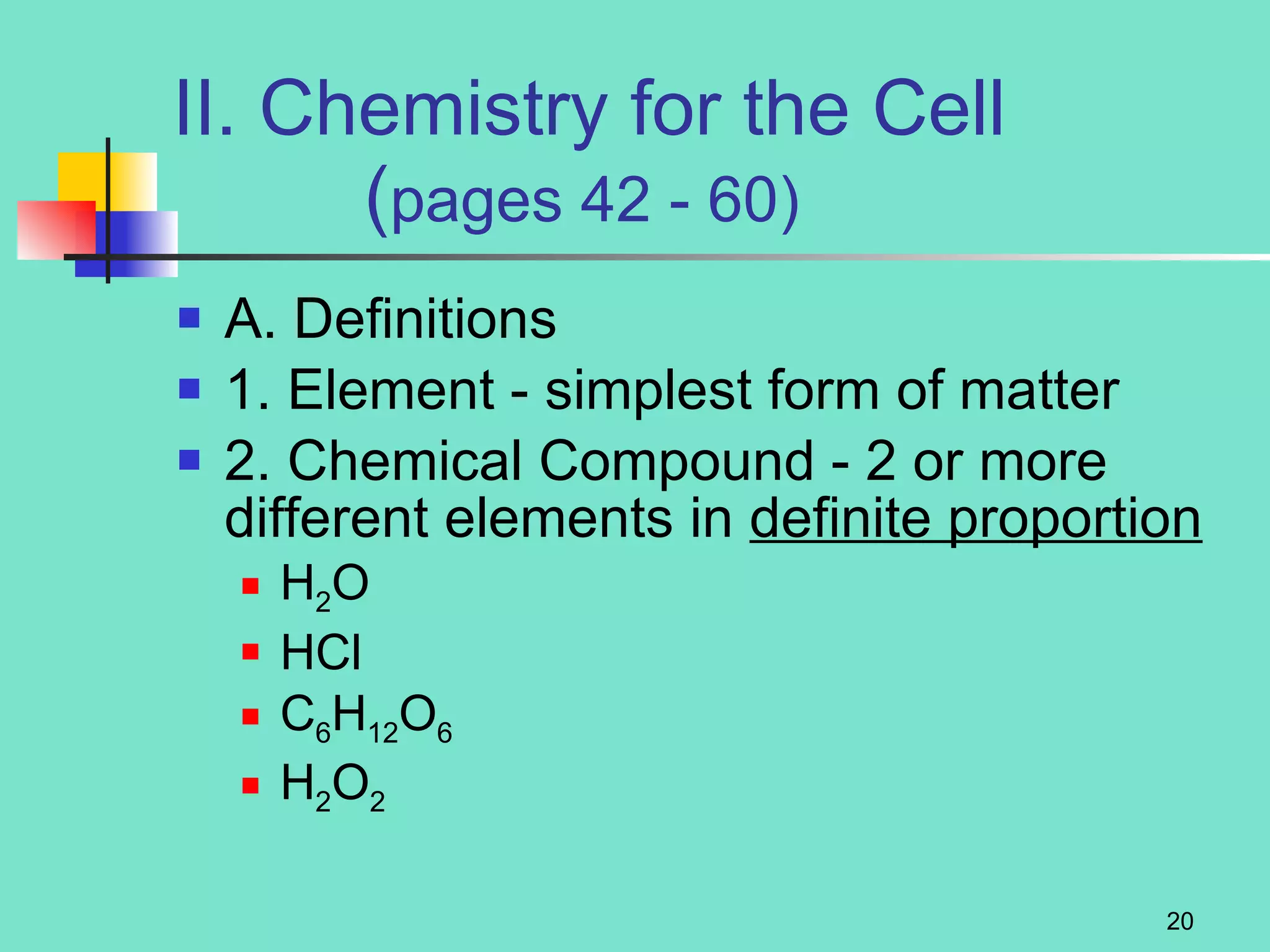
II. Chemistry for the Cell   ( pages 42 - 60) A. Definitions 1. Element - simplest form of matter 2. Chemical Compound - 2 or more different elements in  definite proportion H 2 O HCl C 6 H 12 O 6 H 2 O 2
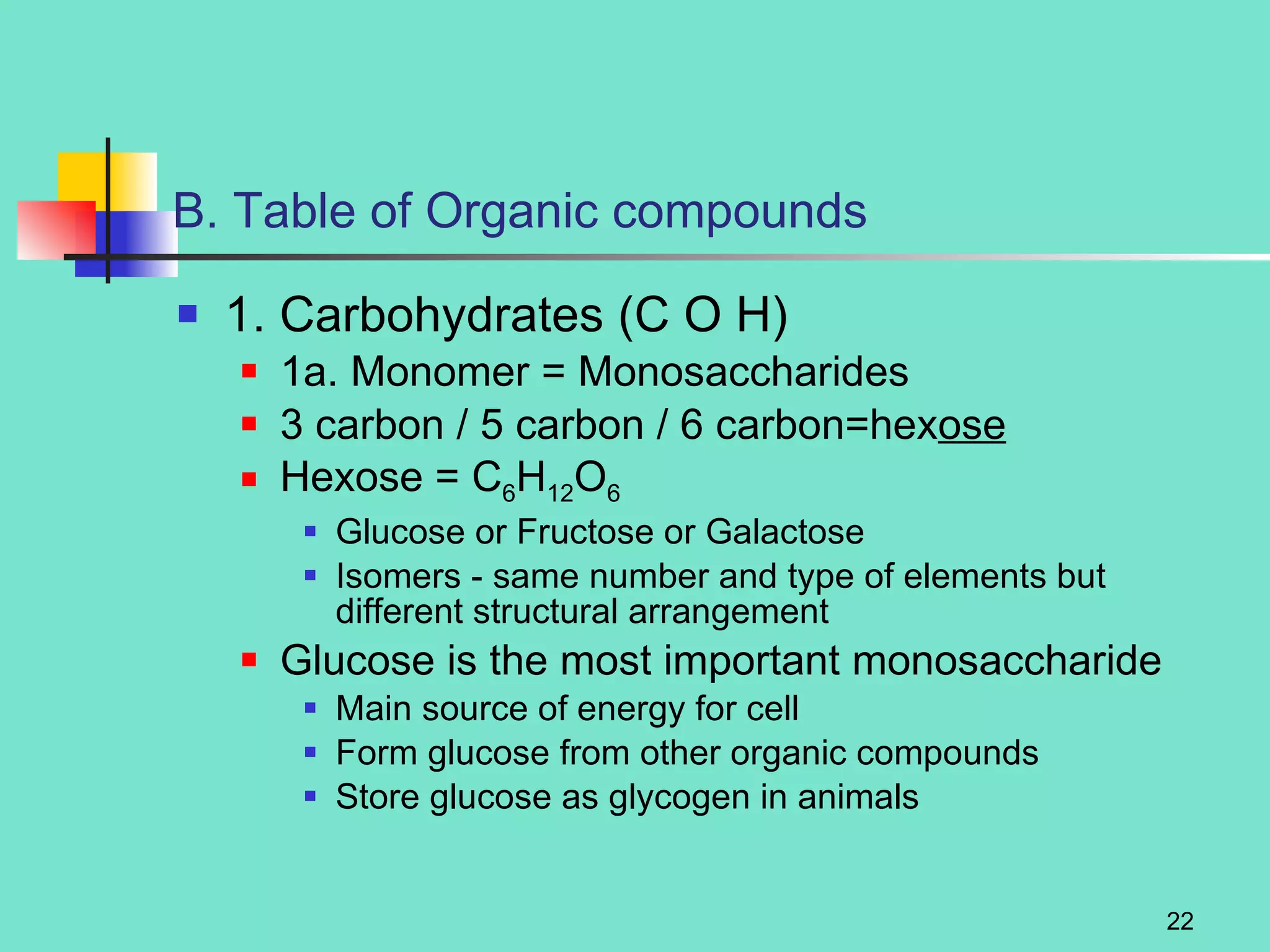
3. Monomer - basic repeating building block individual bricks, stones, tiles 4. Polymer - many monomers joined together = wall, path, ceiling or floor Organic compounds are carbon containing complex compounds or polymers
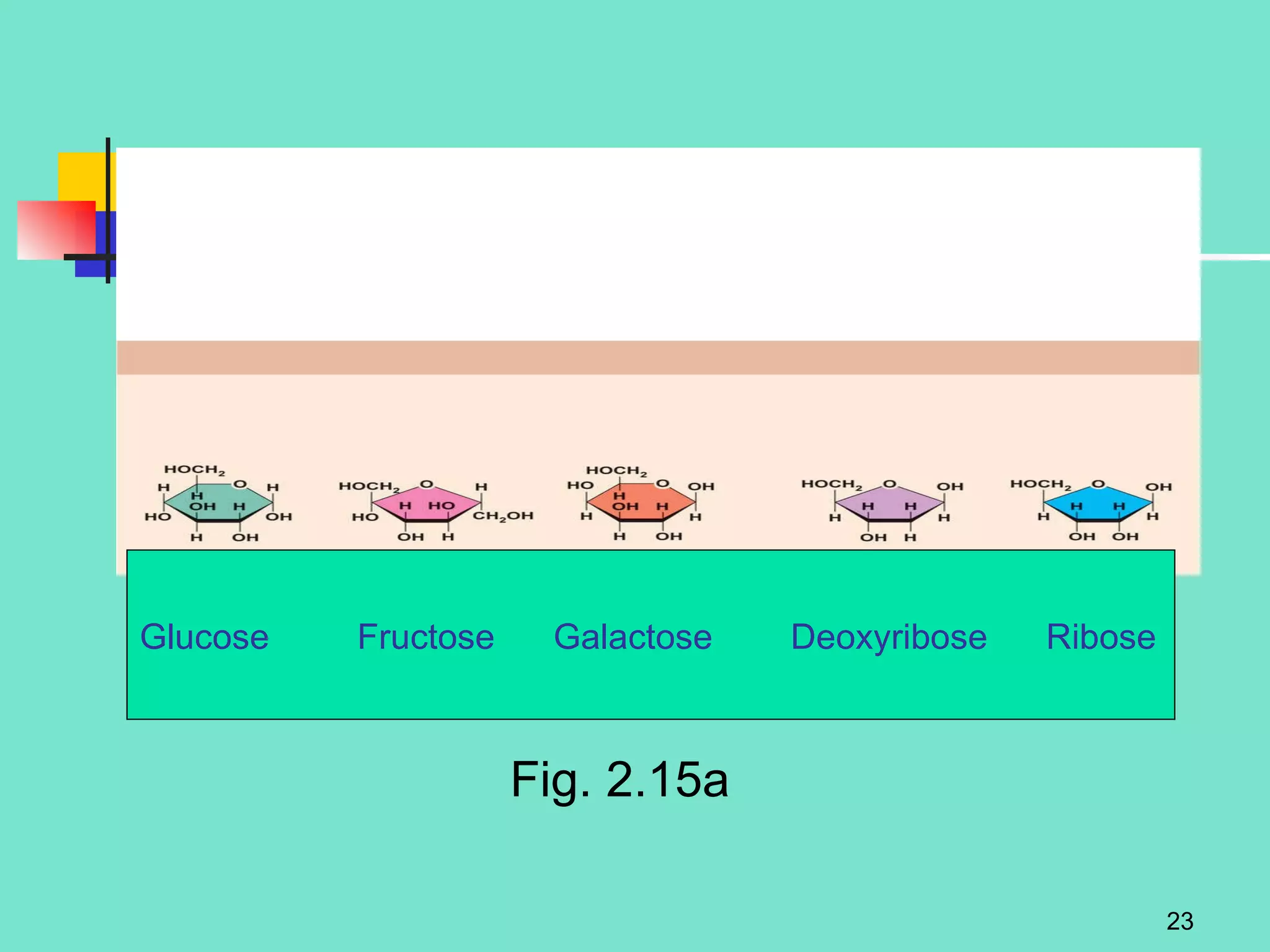
B. Table of Organic compounds 1. Carbohydrates (C O H) 1a. Monomer = Monosaccharides 3 carbon / 5 carbon / 6 carbon=hex ose Hexose = C 6 H 12 O 6 Glucose or Fructose or Galactose Isomers - same number and type of elements but different structural arrangement Glucose is the most important monosaccharide Main source of energy for cell Form glucose from other organic compounds Store glucose as glycogen in animals
Fig. 2.15a Glucose  Fructose  Galactose  Deoxyribose  Ribose
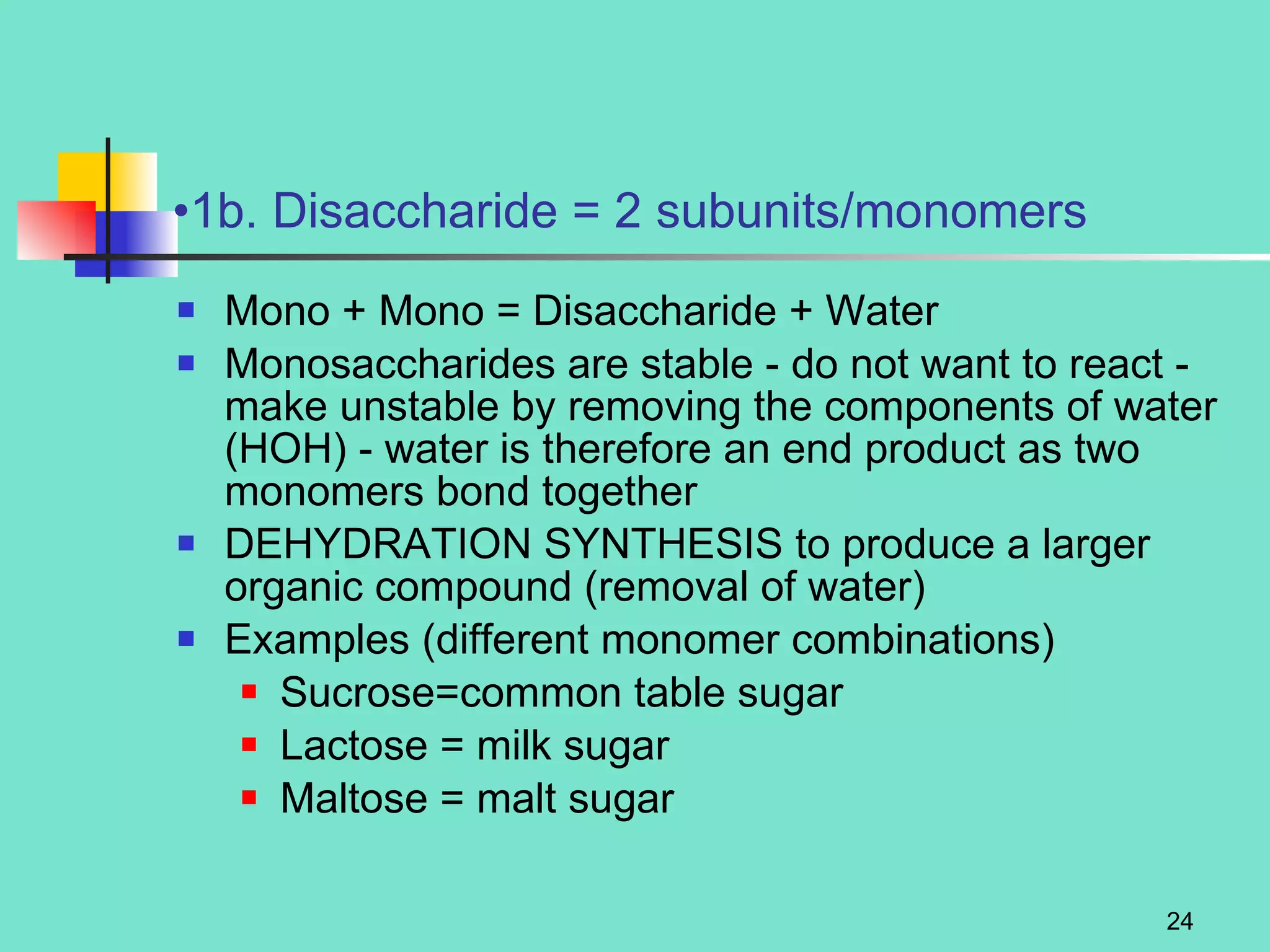
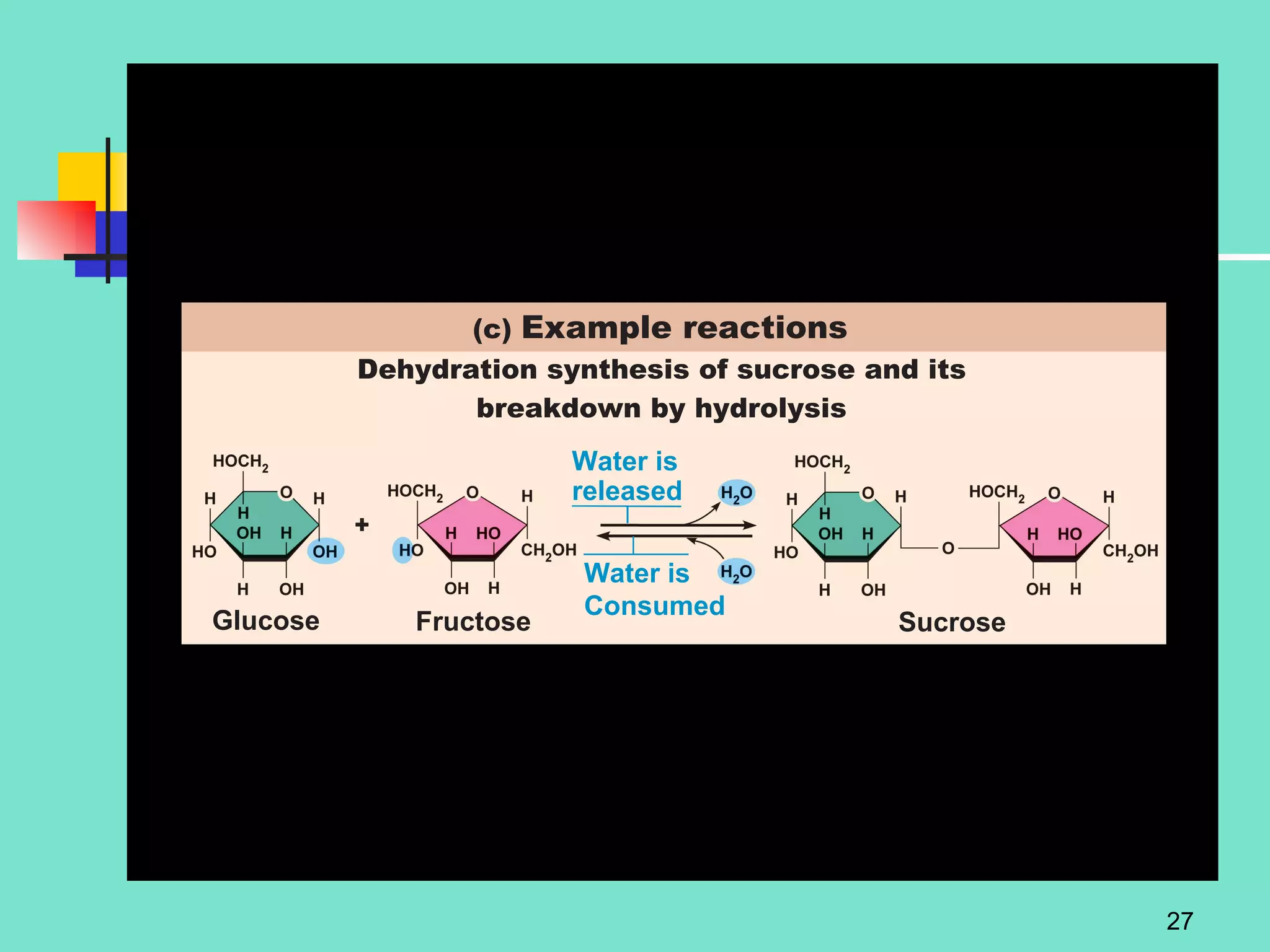
1b. Disaccharide = 2 subunits/monomers Mono + Mono = Disaccharide + Water Monosaccharides are stable - do not want to react - make unstable by removing the components of water (HOH) - water is therefore an end product as two monomers bond together DEHYDRATION SYNTHESIS to produce a larger organic compound (removal of water) Examples (different monomer combinations)  Sucrose=common table sugar Lactose = milk sugar Maltose = malt sugar
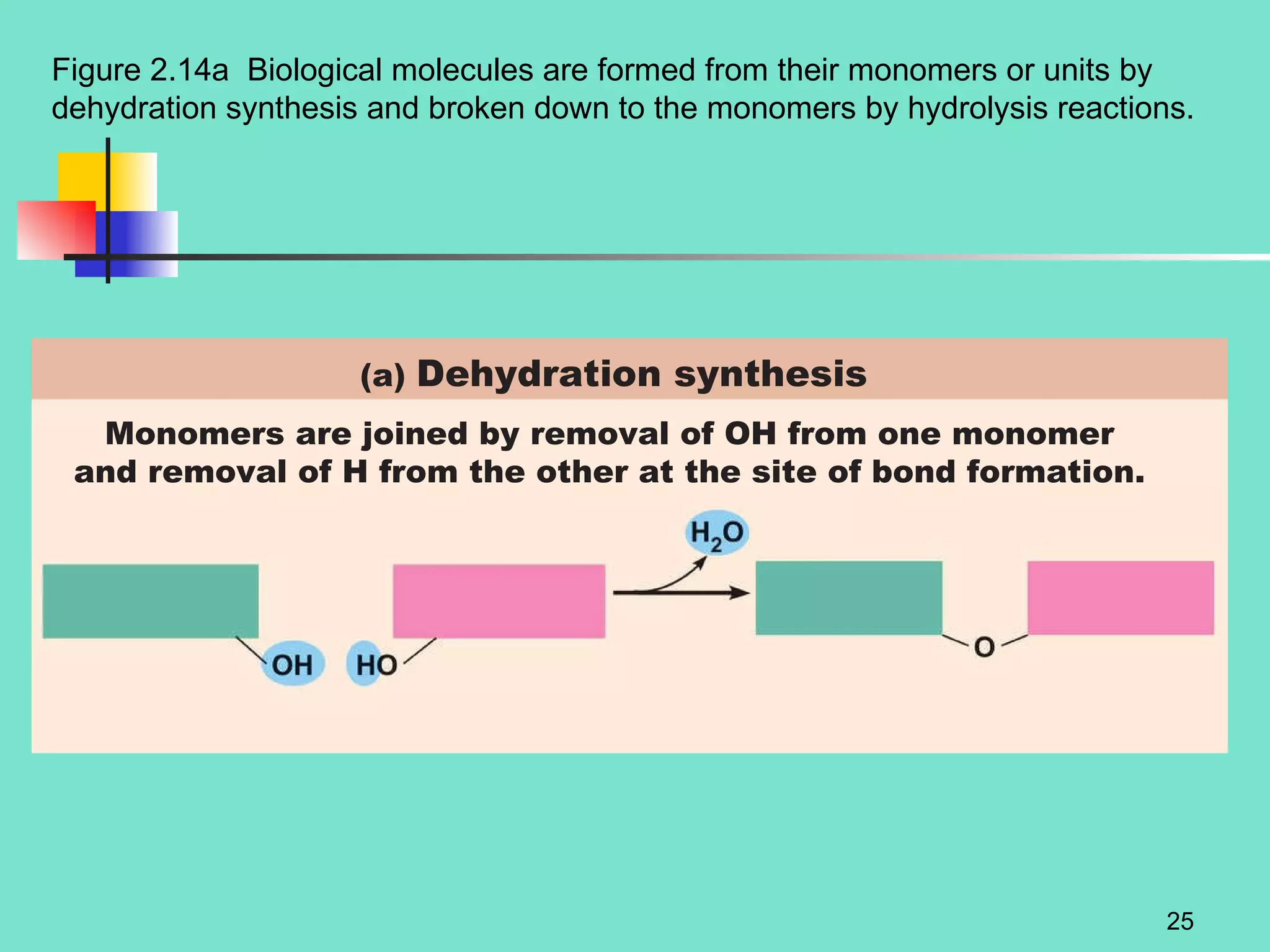
Monomers are joined by removal of OH from one monomer and removal of H from the other at the site of bond formation. (a)  Dehydration synthesis Figure 2.14a  Biological molecules are formed from their monomers or units by dehydration synthesis and broken down to the monomers by hydrolysis reactions.
 
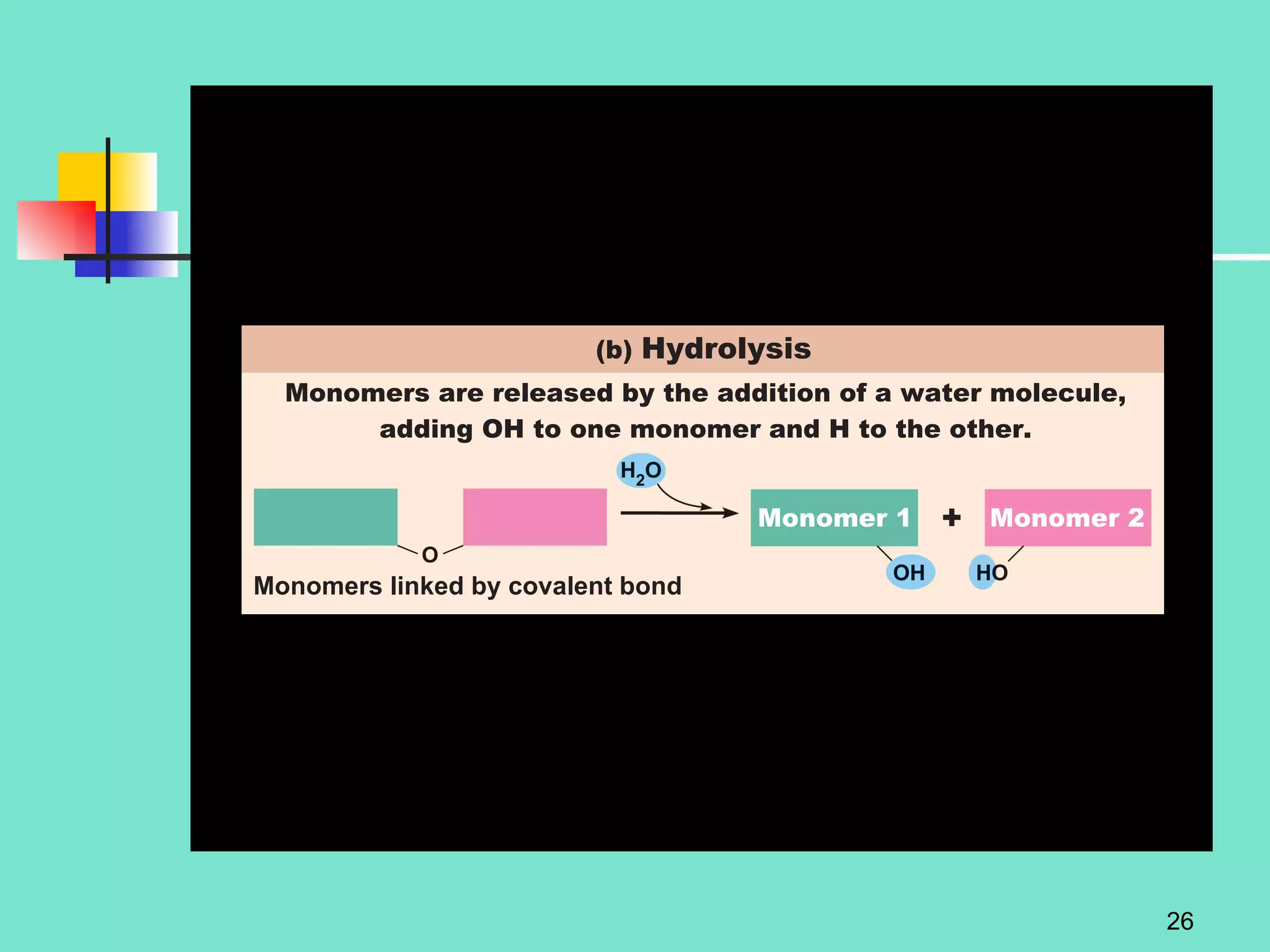
Fig.2.14b
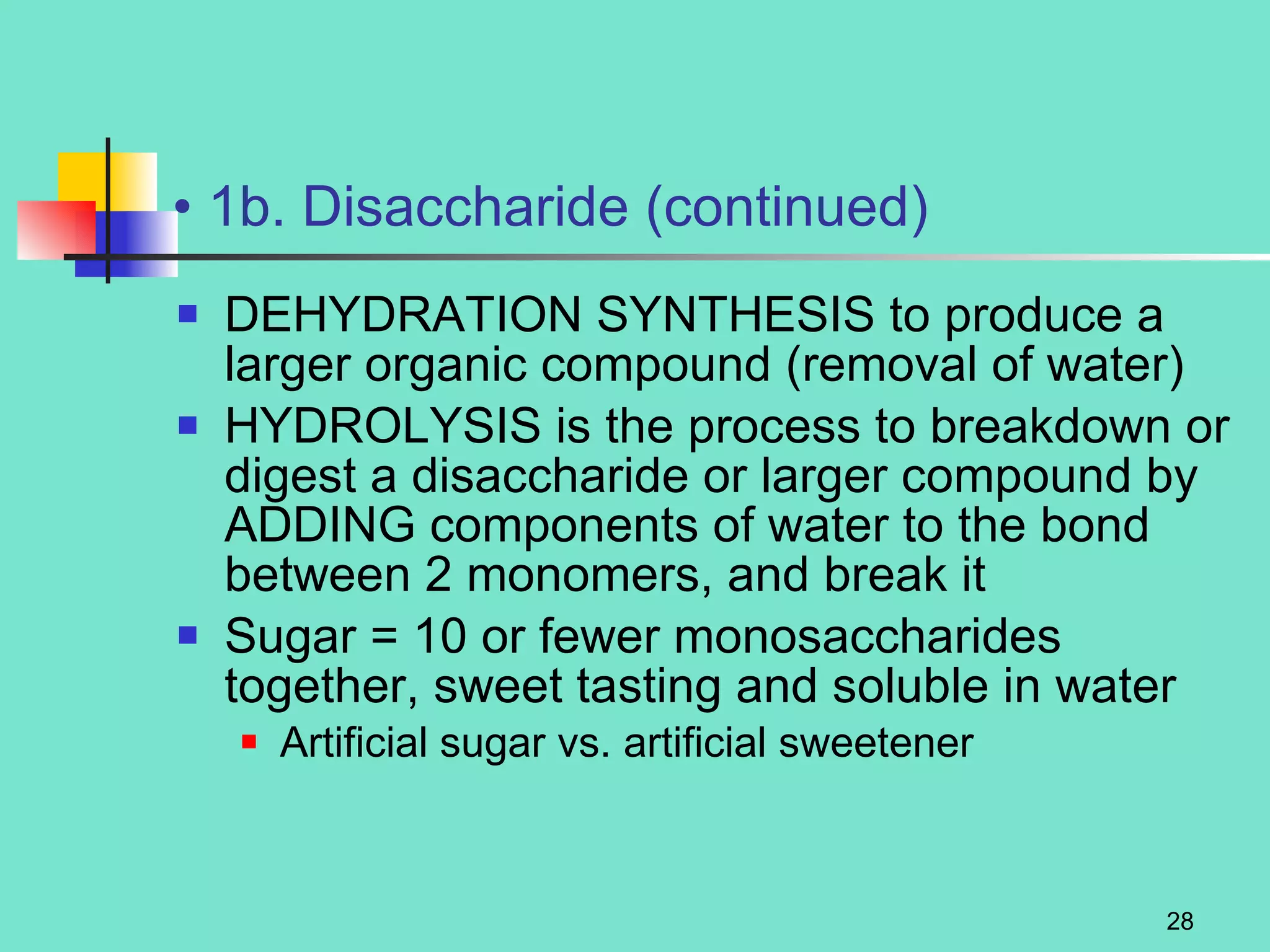
1b. Disaccharide (continued) DEHYDRATION SYNTHESIS to produce a larger organic compound (removal of water) HYDROLYSIS is the process to breakdown or digest a disaccharide or larger compound by ADDING components of water to the bond between 2 monomers, and break it Sugar = 10 or fewer monosaccharides together, sweet tasting and soluble in water Artificial sugar vs. artificial sweetener
1c. Multiunits = Polysaccharides 100 or more monosaccharides bonded together Dehydration Synthesis to bond each 2 monomers together Hydrolysis to digest the polysaccharide into smaller subunits Larger saccharides are not soluble in water and not sweet tasting
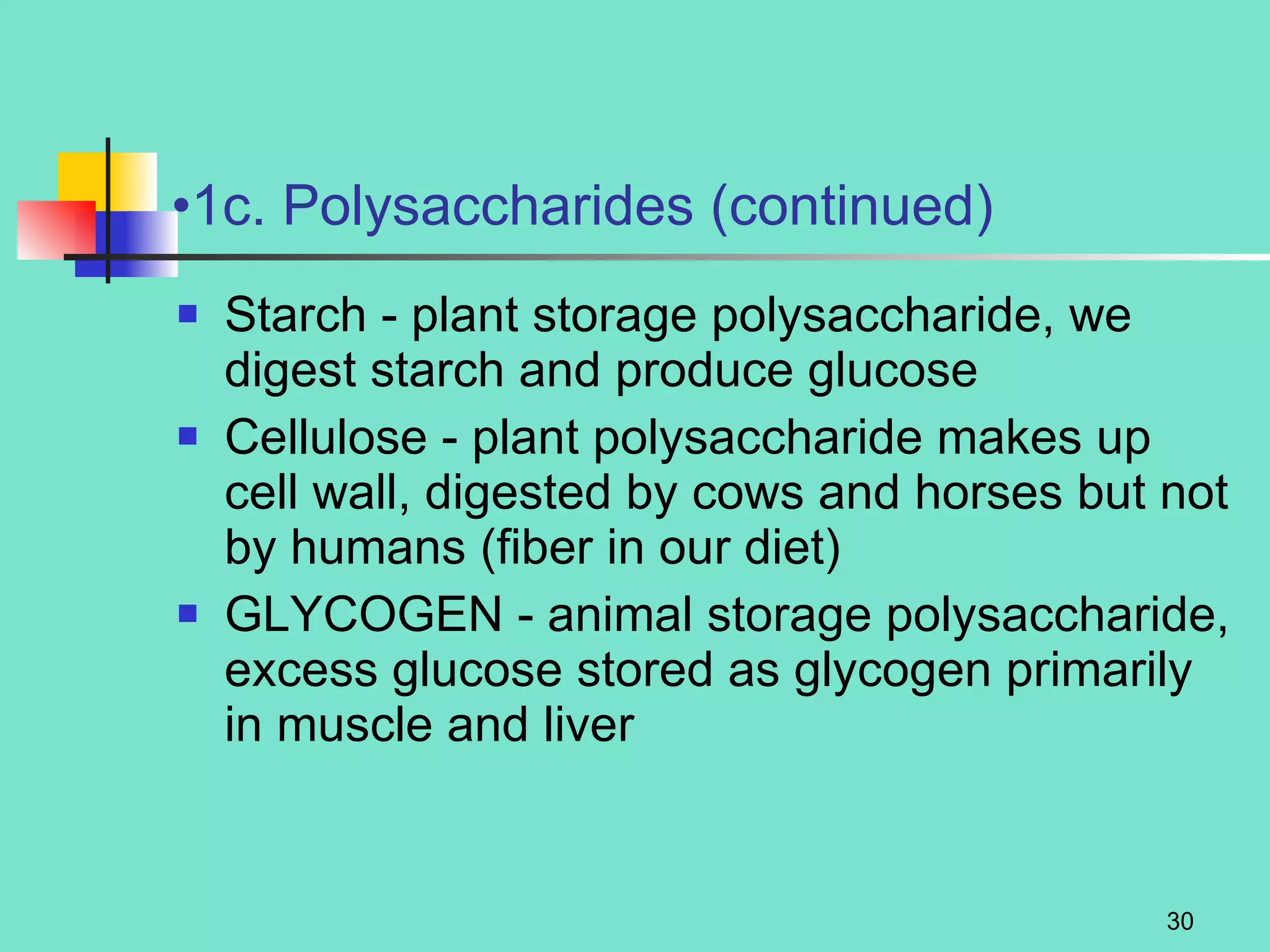
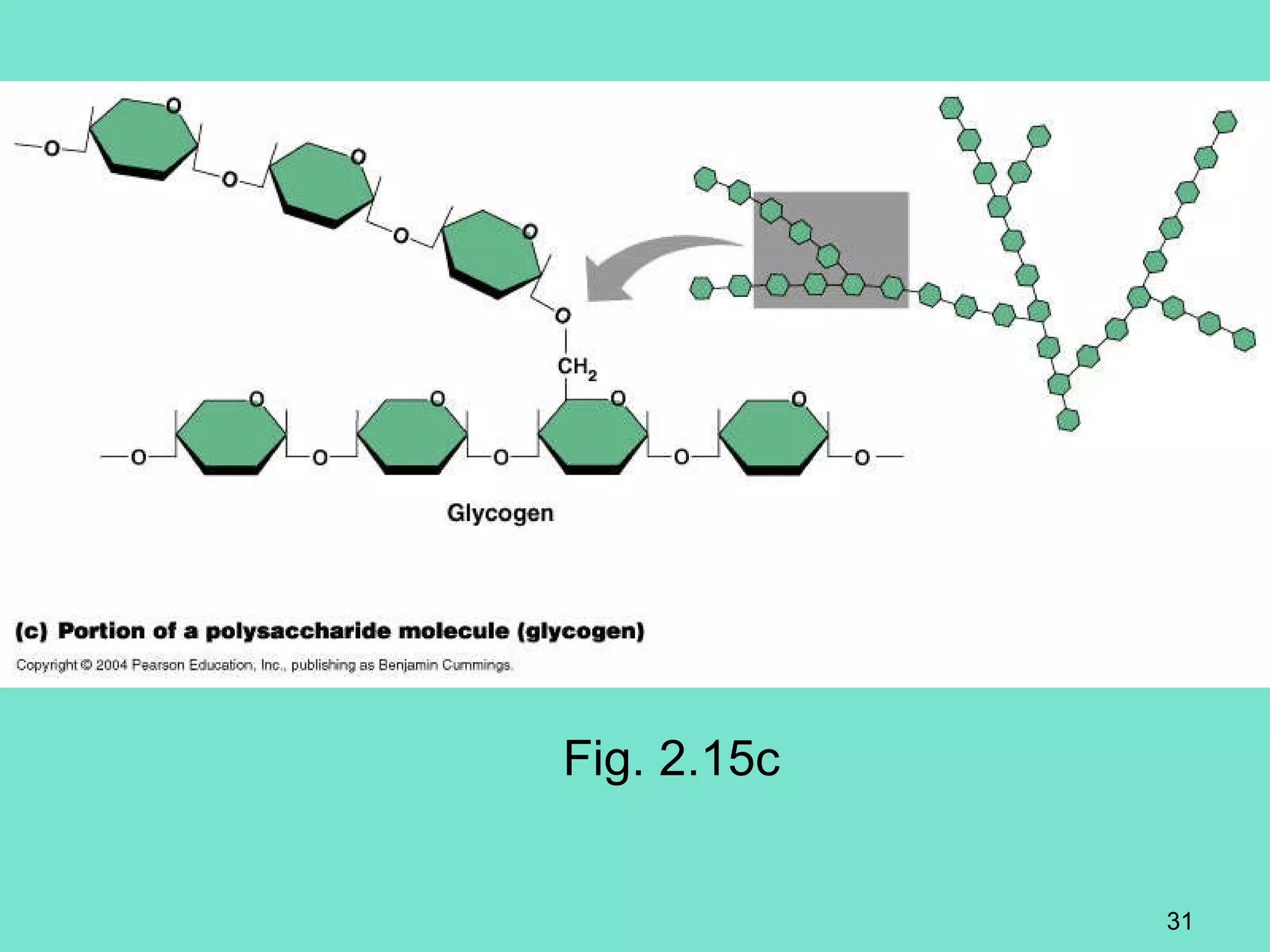
1c. Polysaccharides (continued) Starch - plant storage polysaccharide, we digest starch and produce glucose Cellulose - plant polysaccharide makes up cell wall, digested by cows and horses but not by humans (fiber in our diet) GLYCOGEN - animal storage polysaccharide, excess glucose stored as glycogen primarily in muscle and liver
Fig. 2.15c
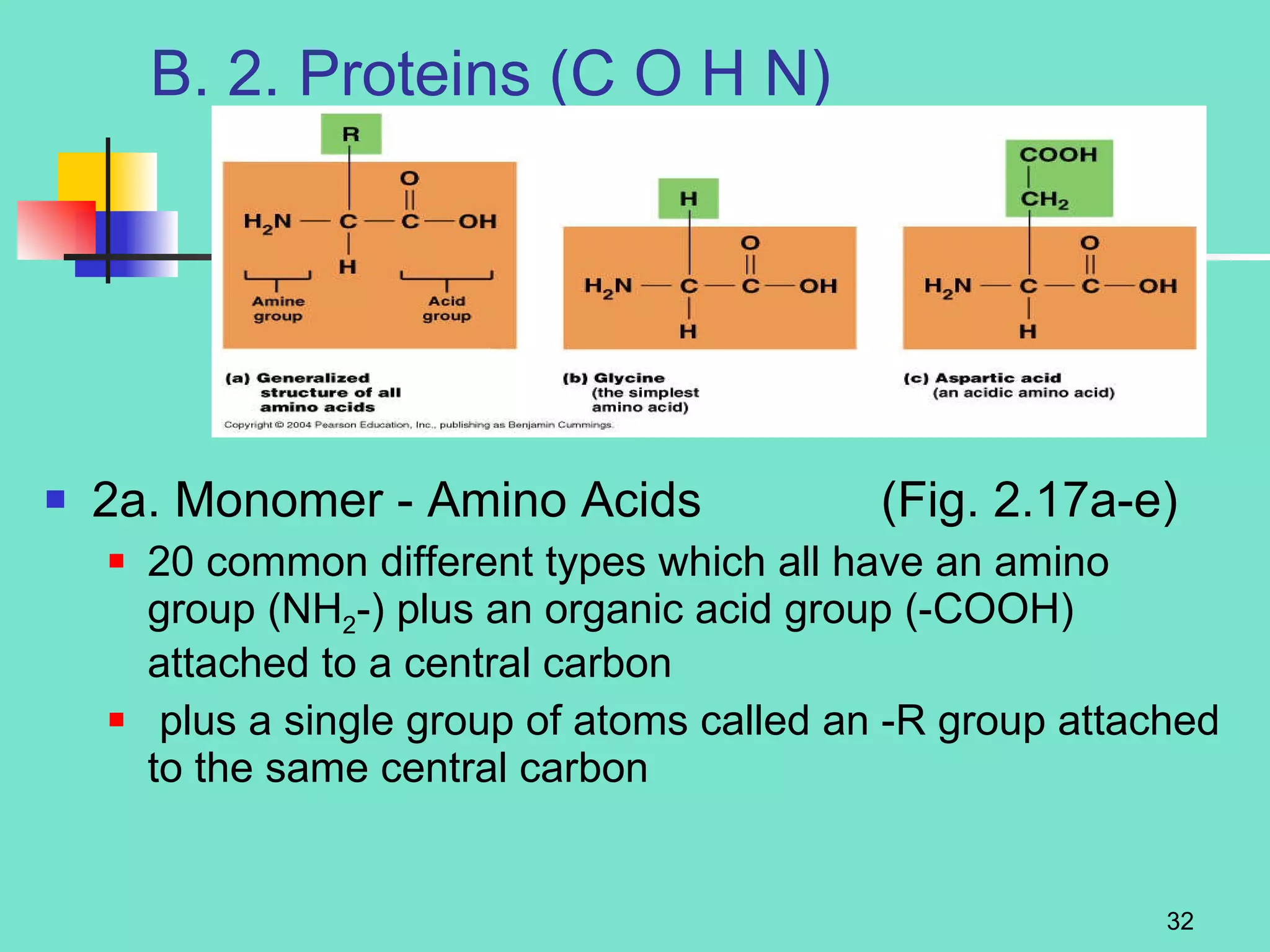
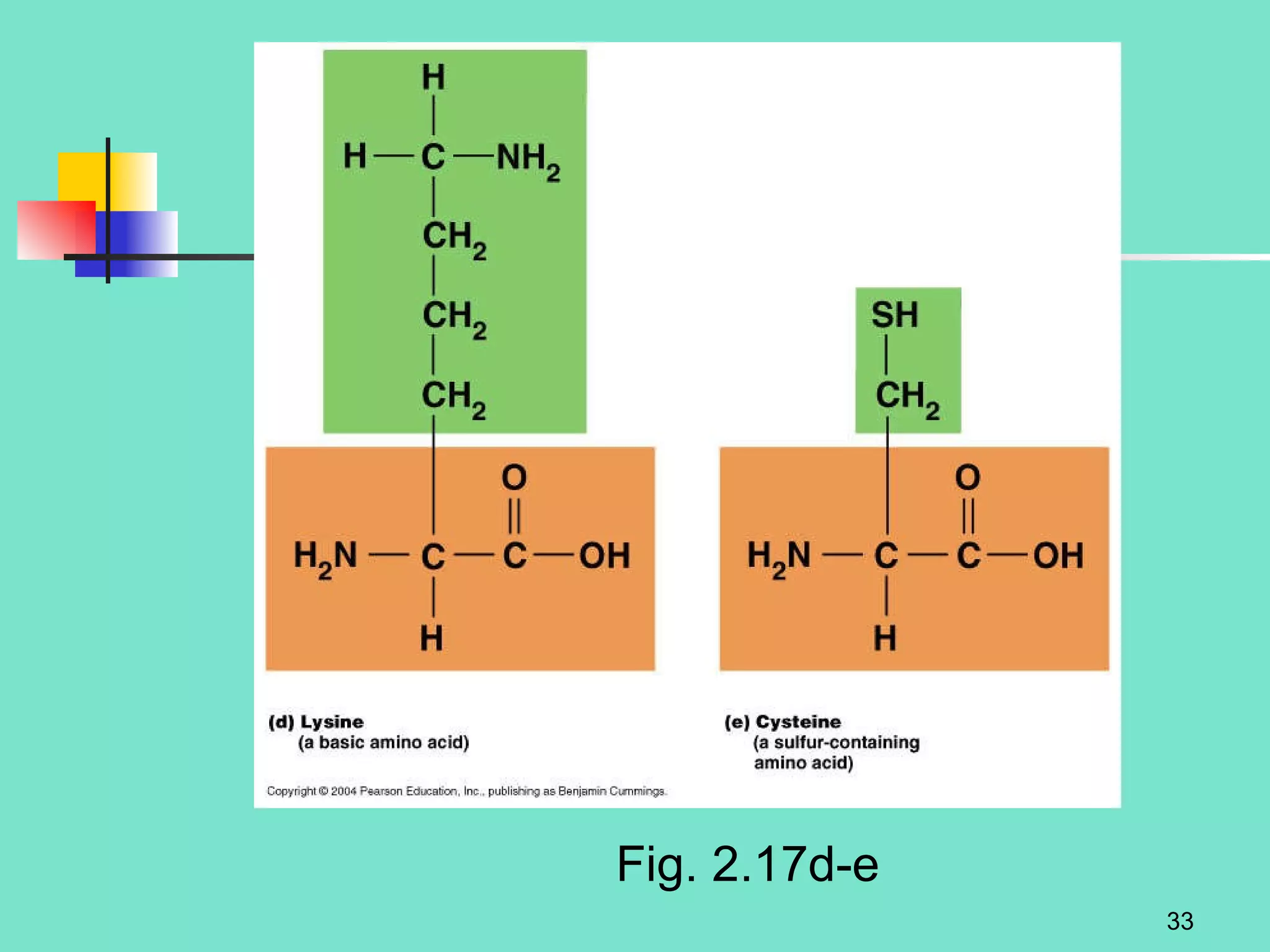
B. 2. Proteins (C O H N)  2a. Monomer - Amino Acids  (Fig. 2.17a-e) 20 common different types which all have an amino group (NH 2 -) plus an organic acid group (-COOH) attached to a central carbon plus a single group of atoms called an -R group attached to the same central carbon
Fig. 2.17d-e
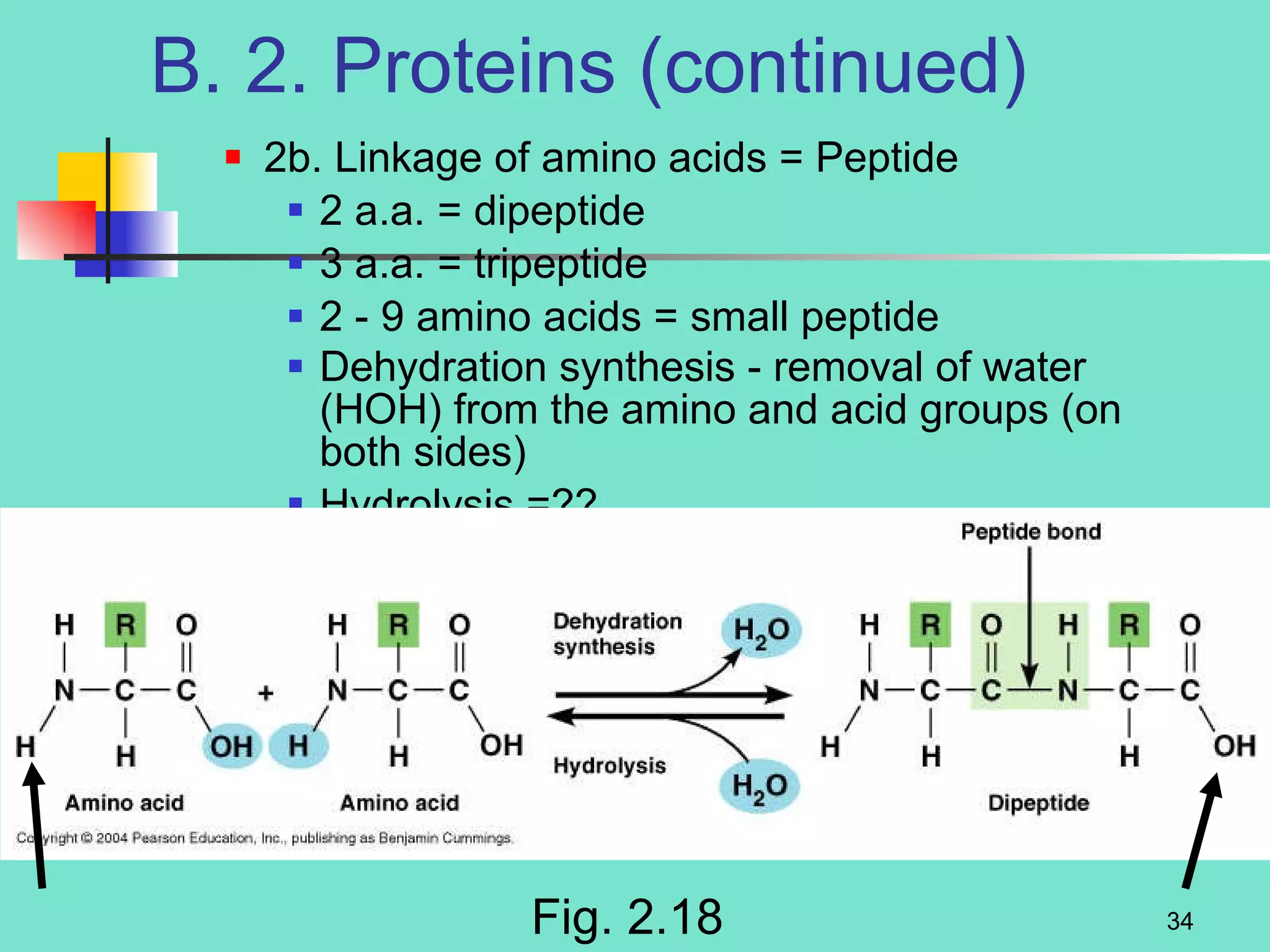
B. 2. Proteins (continued) 2b. Linkage of amino acids = Peptide 2 a.a. = dipeptide 3 a.a. = tripeptide 2 - 9 amino acids = small peptide Dehydration synthesis - removal of water (HOH) from the amino and acid groups (on both sides)   Hydrolysis =?? Fig. 2.18
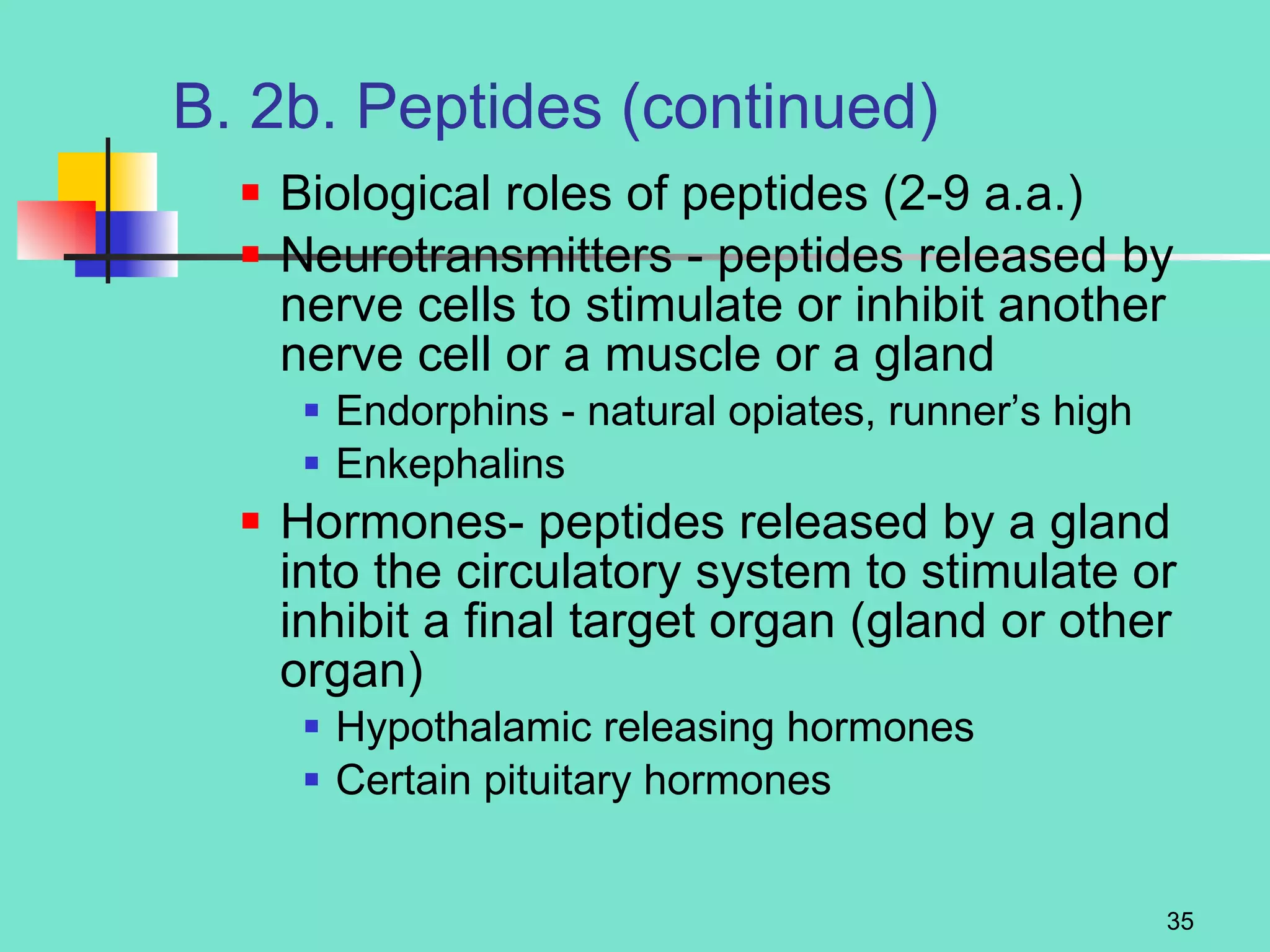
B. 2b. Peptides (continued) Biological roles of peptides (2-9 a.a.) Neurotransmitters - peptides released by nerve cells to stimulate or inhibit another nerve cell or a muscle or a gland Endorphins - natural opiates, runner’s high Enkephalins  Hormones- peptides released by a gland into the circulatory system to stimulate or inhibit a final target organ (gland or other organ) Hypothalamic releasing hormones Certain pituitary hormones
B. 2b. Peptides (continued) Ten or more amino acids = Polypeptide Also biologically active 3. Protein a) Introduction Large polymer = Macromolecules One or more chains of amino acids Total of 100 - thousands of amino acids Many peptide bonds in a chain b) Protein functions 1. Cell structure - membranes 2. Transport function - in blood and in/out of cell LDL vs. HDL
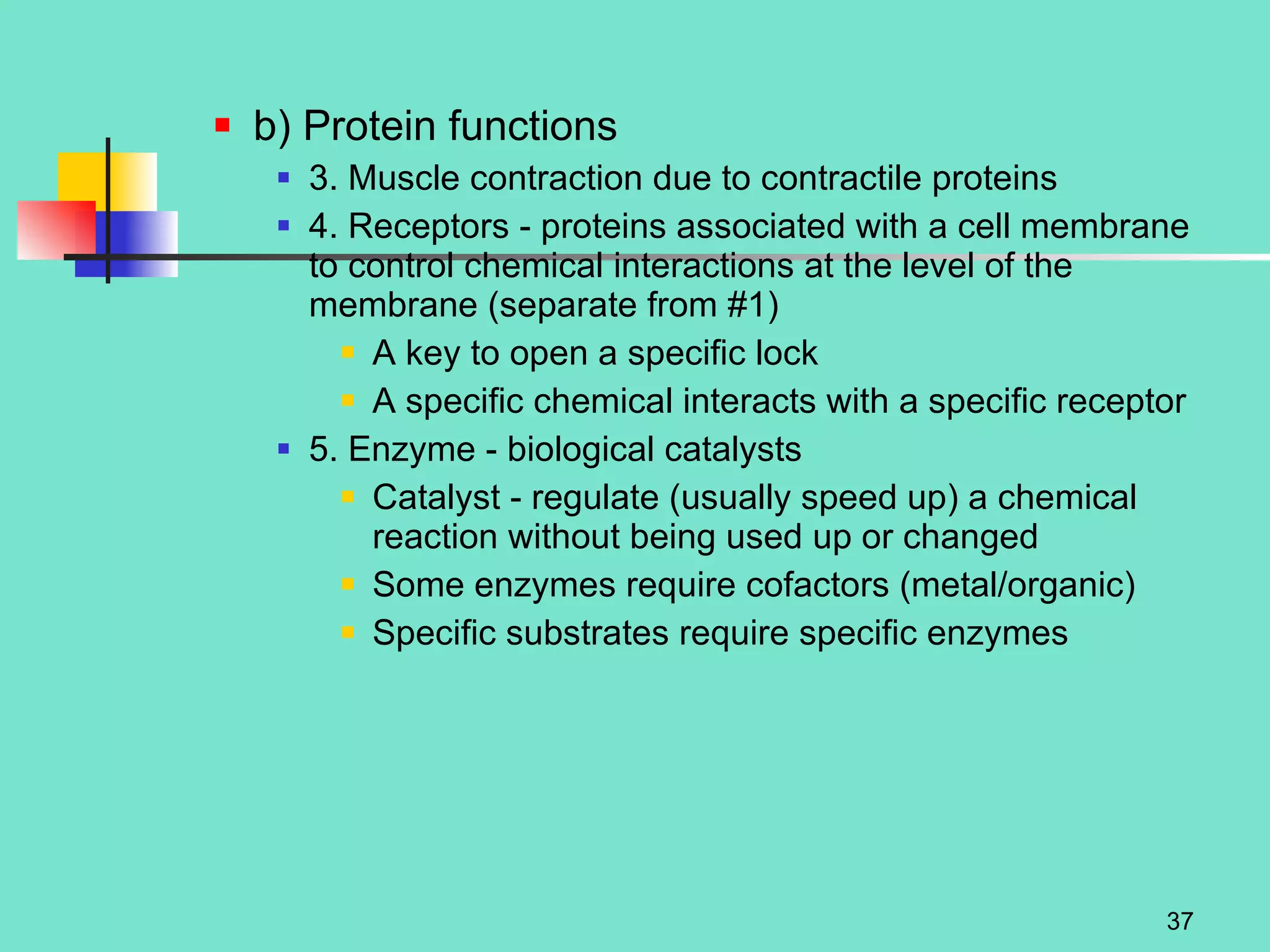
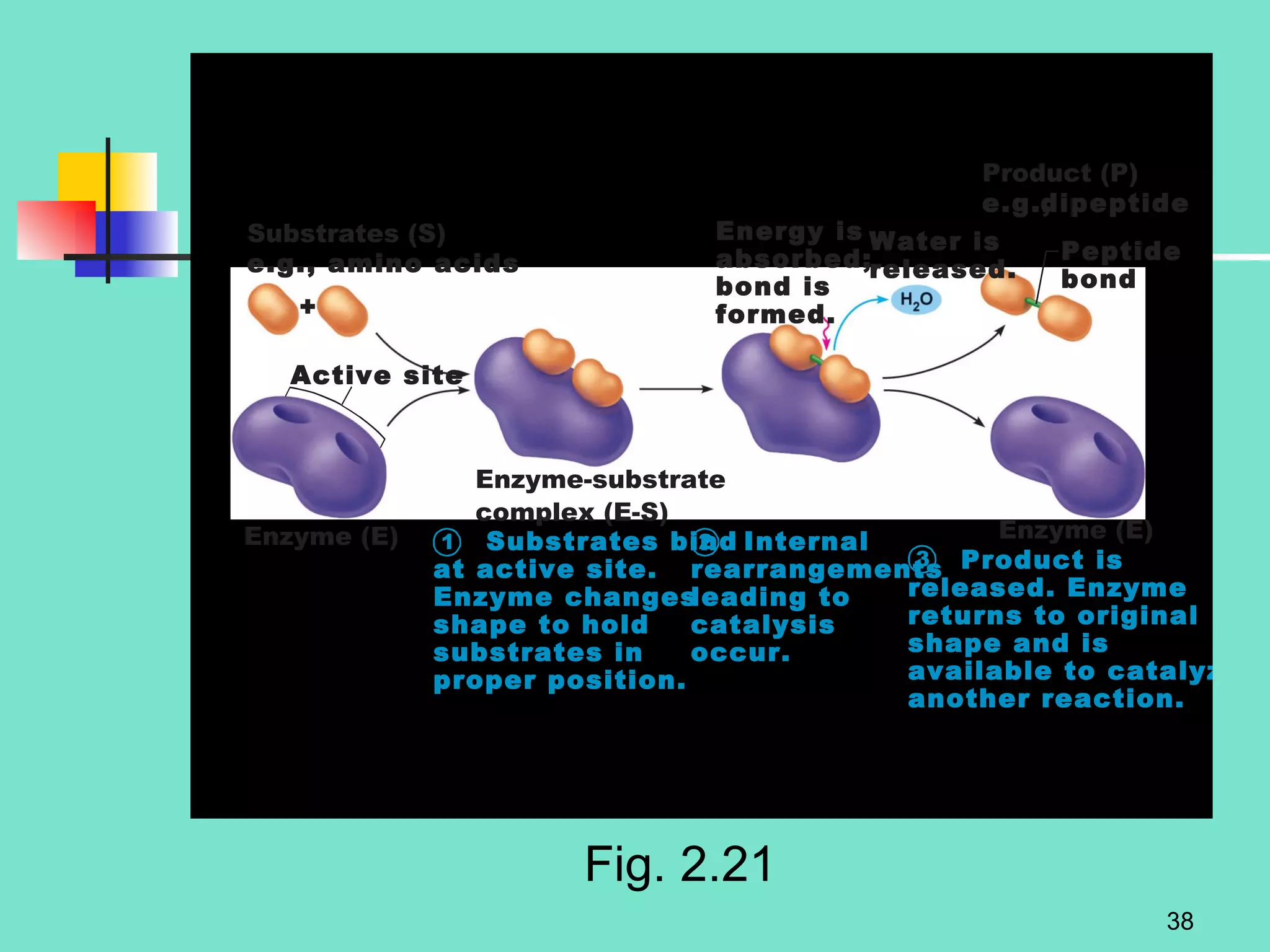
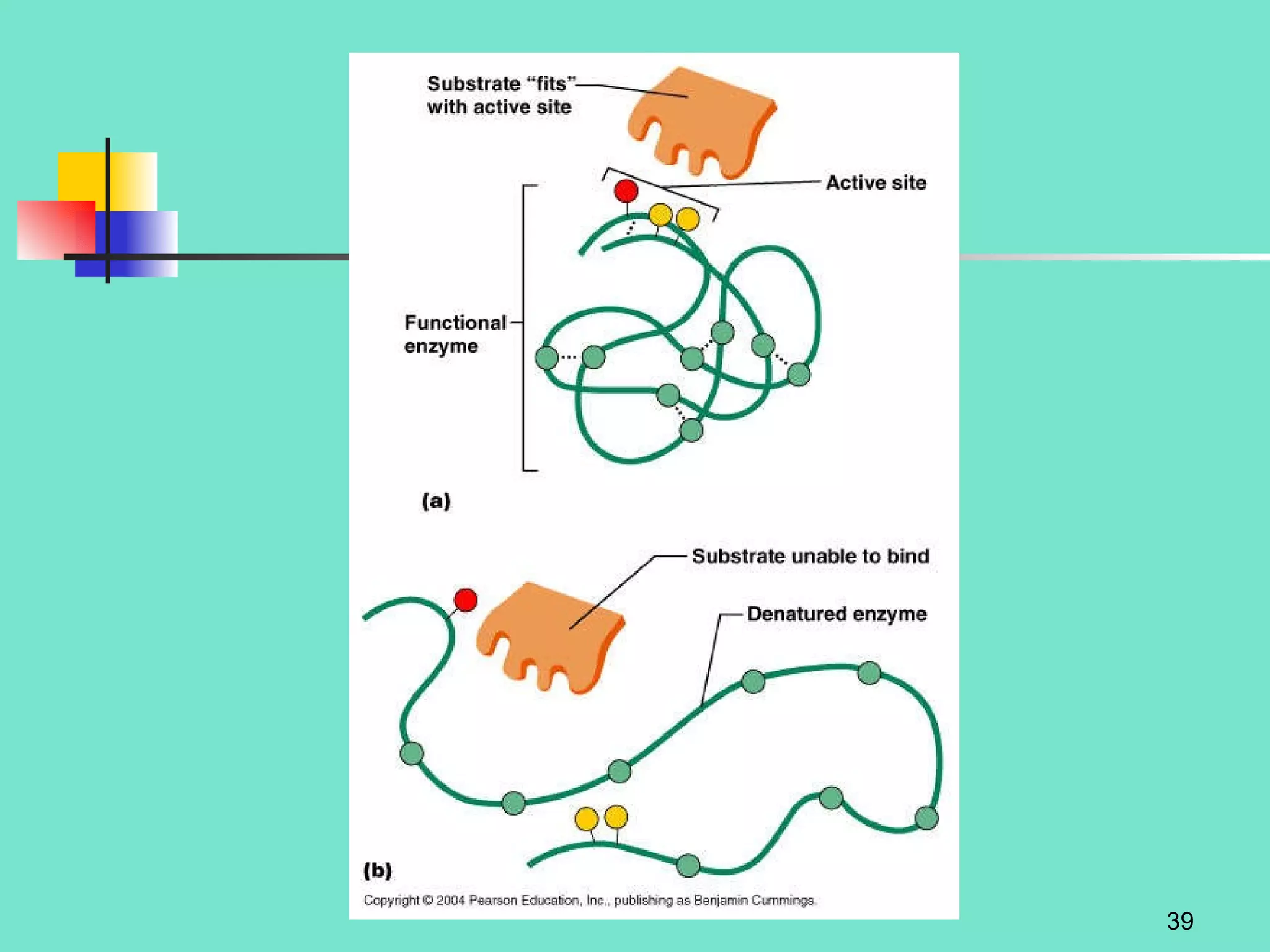
b) Protein functions 3. Muscle contraction due to contractile proteins 4. Receptors - proteins associated with a cell membrane to control chemical interactions at the level of the membrane (separate from #1) A key to open a specific lock A specific chemical interacts with a specific receptor 5. Enzyme - biological catalysts Catalyst - regulate (usually speed up) a chemical reaction without being used up or changed Some enzymes require cofactors (metal/organic) Specific substrates require specific enzymes
Fig. 2.21
 
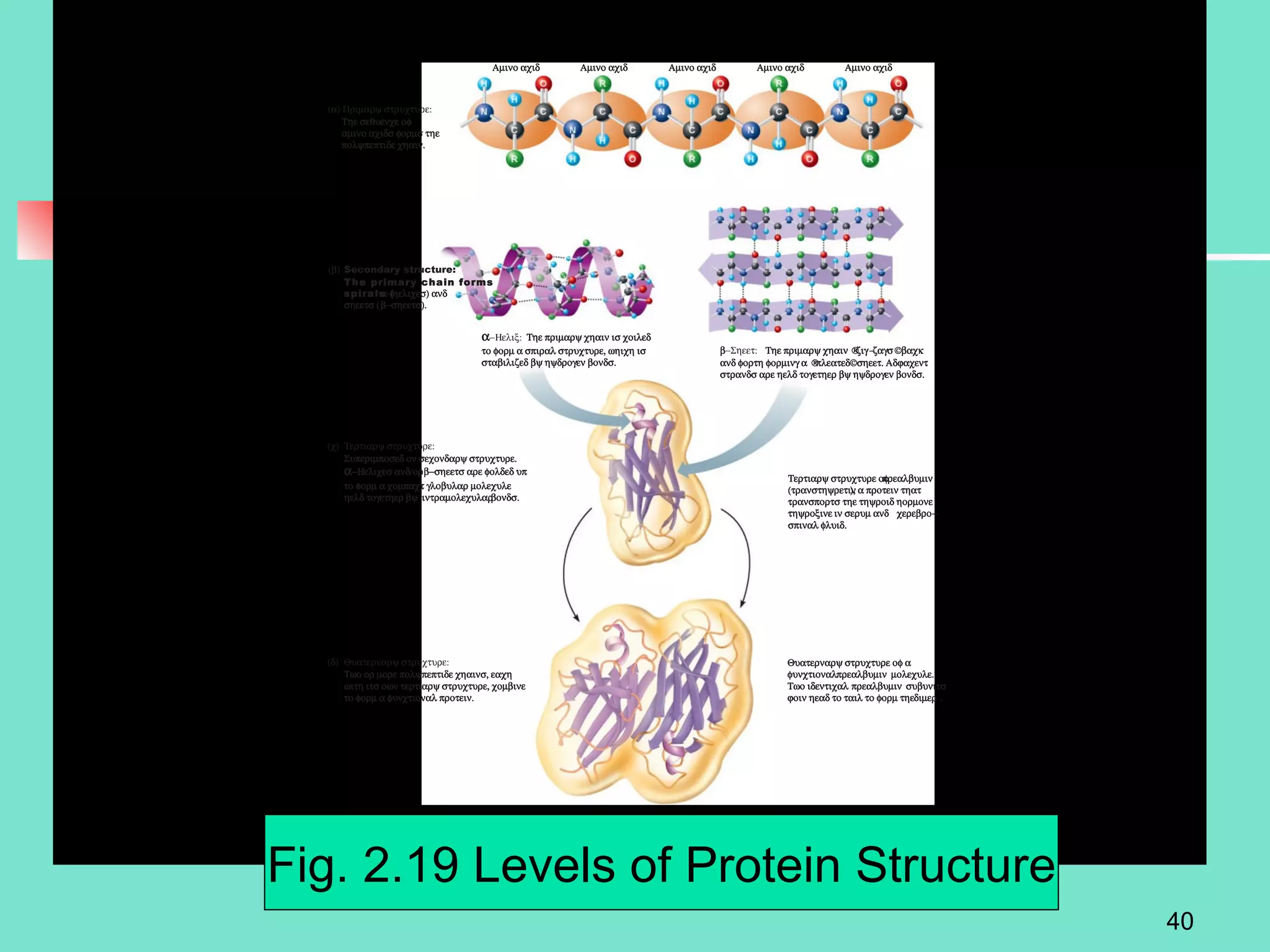
Fig. 2.19 Levels of Protein Structure
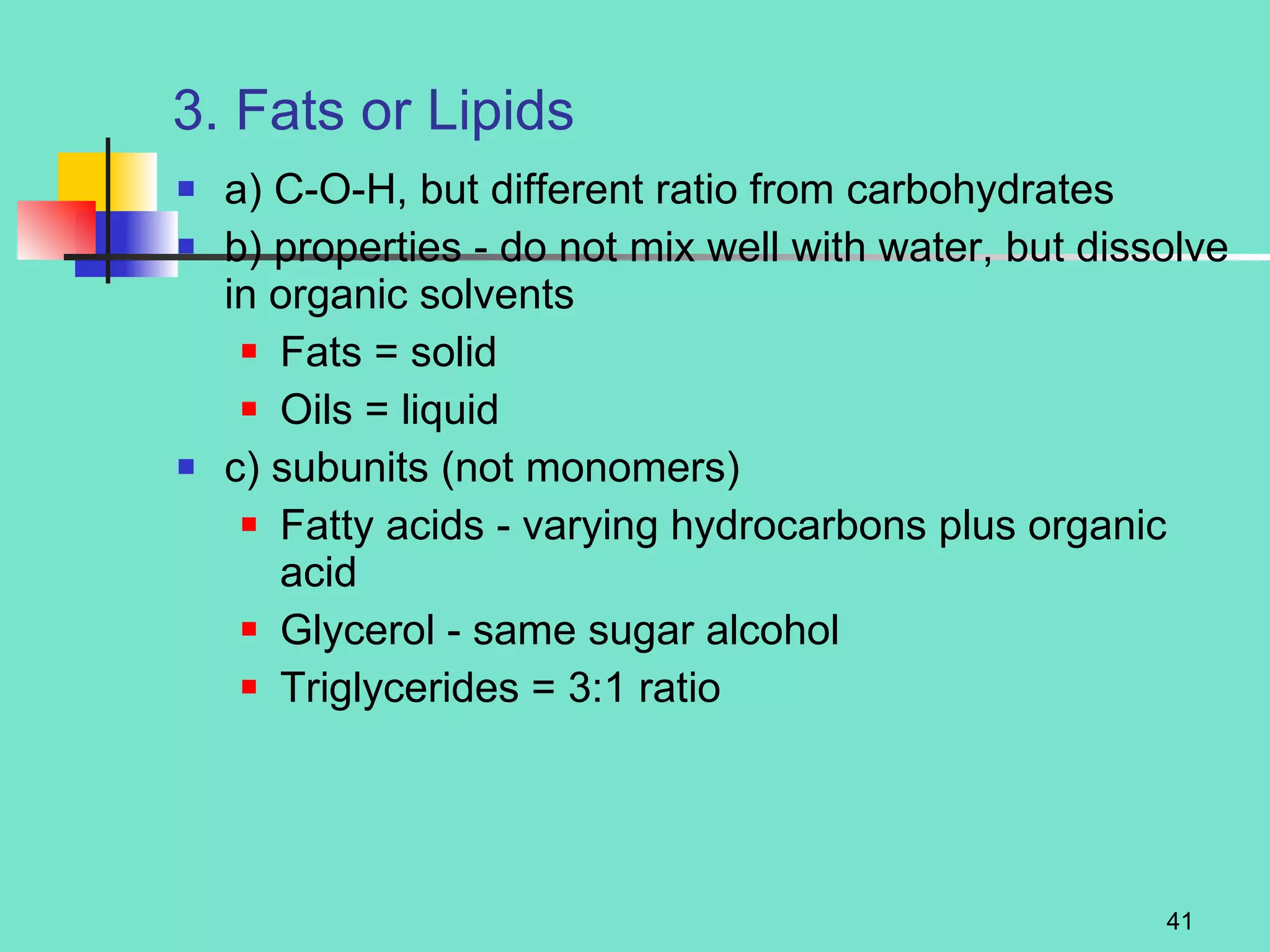
3. Fats or Lipids a) C-O-H, but different ratio from carbohydrates b) properties - do not mix well with water, but dissolve in organic solvents Fats = solid Oils = liquid c) subunits (not monomers) Fatty acids - varying hydrocarbons plus organic acid Glycerol - same sugar alcohol Triglycerides = 3:1 ratio
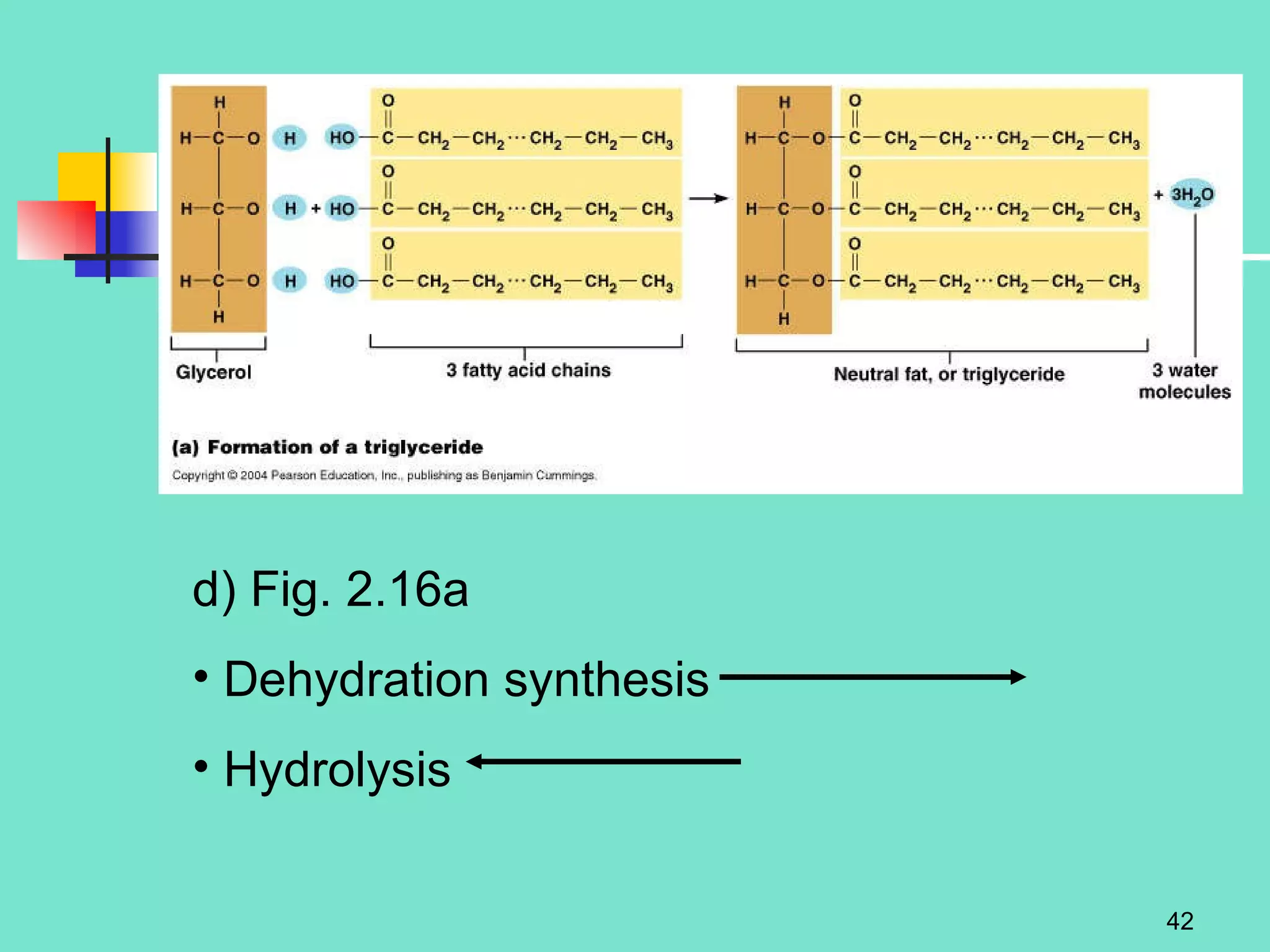
d) Fig. 2.16a Dehydration synthesis Hydrolysis
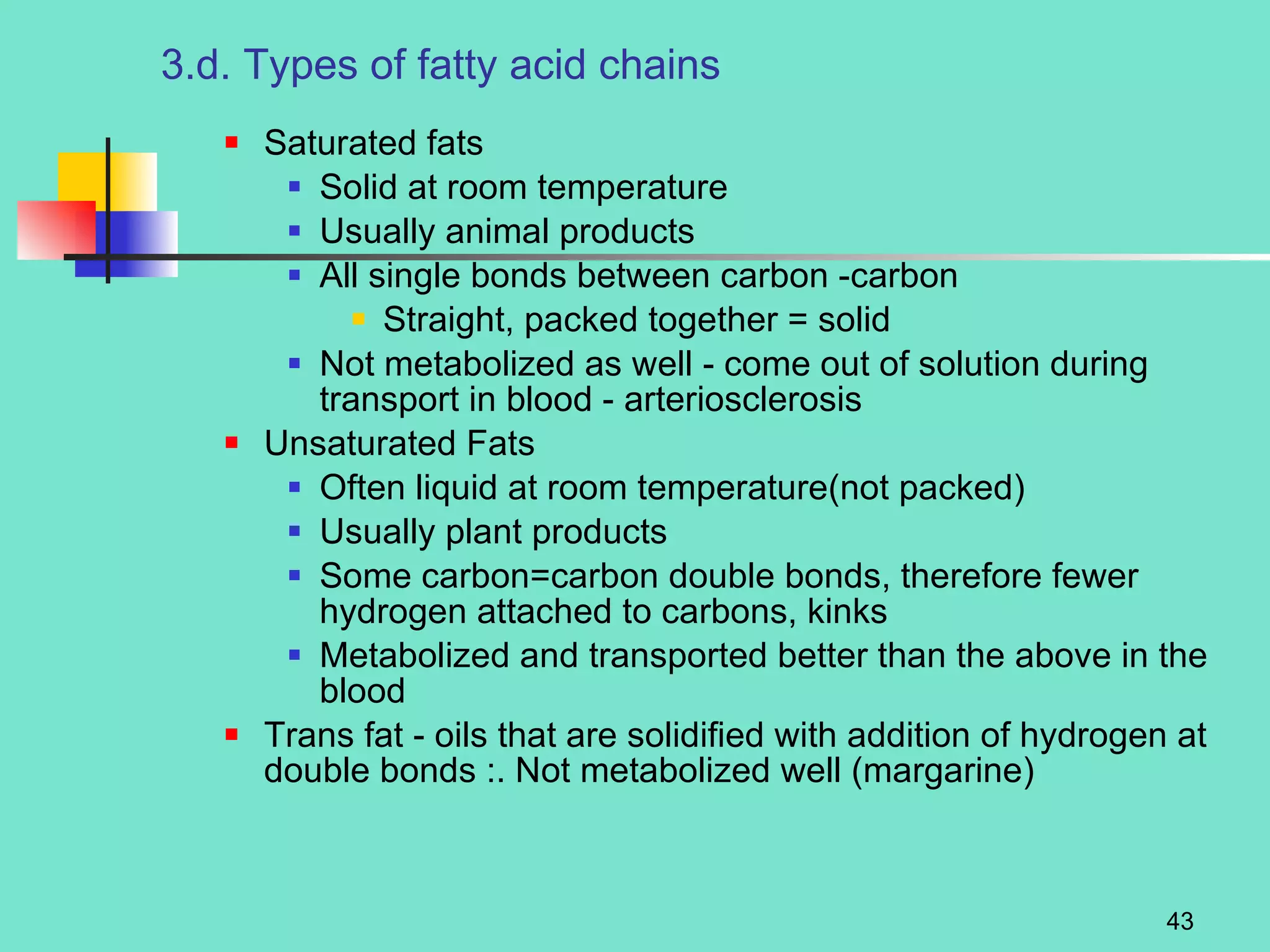
3.d. Types of fatty acid chains Saturated fats Solid at room temperature Usually animal products All single bonds between carbon -carbon Straight, packed together = solid Not metabolized as well - come out of solution during transport in blood - arteriosclerosis Unsaturated Fats Often liquid at room temperature(not packed) Usually plant products Some carbon=carbon double bonds, therefore fewer hydrogen attached to carbons, kinks Metabolized and transported better than the above in the blood Trans fat - oils that are solidified with addition of hydrogen at double bonds :. Not metabolized well (margarine)
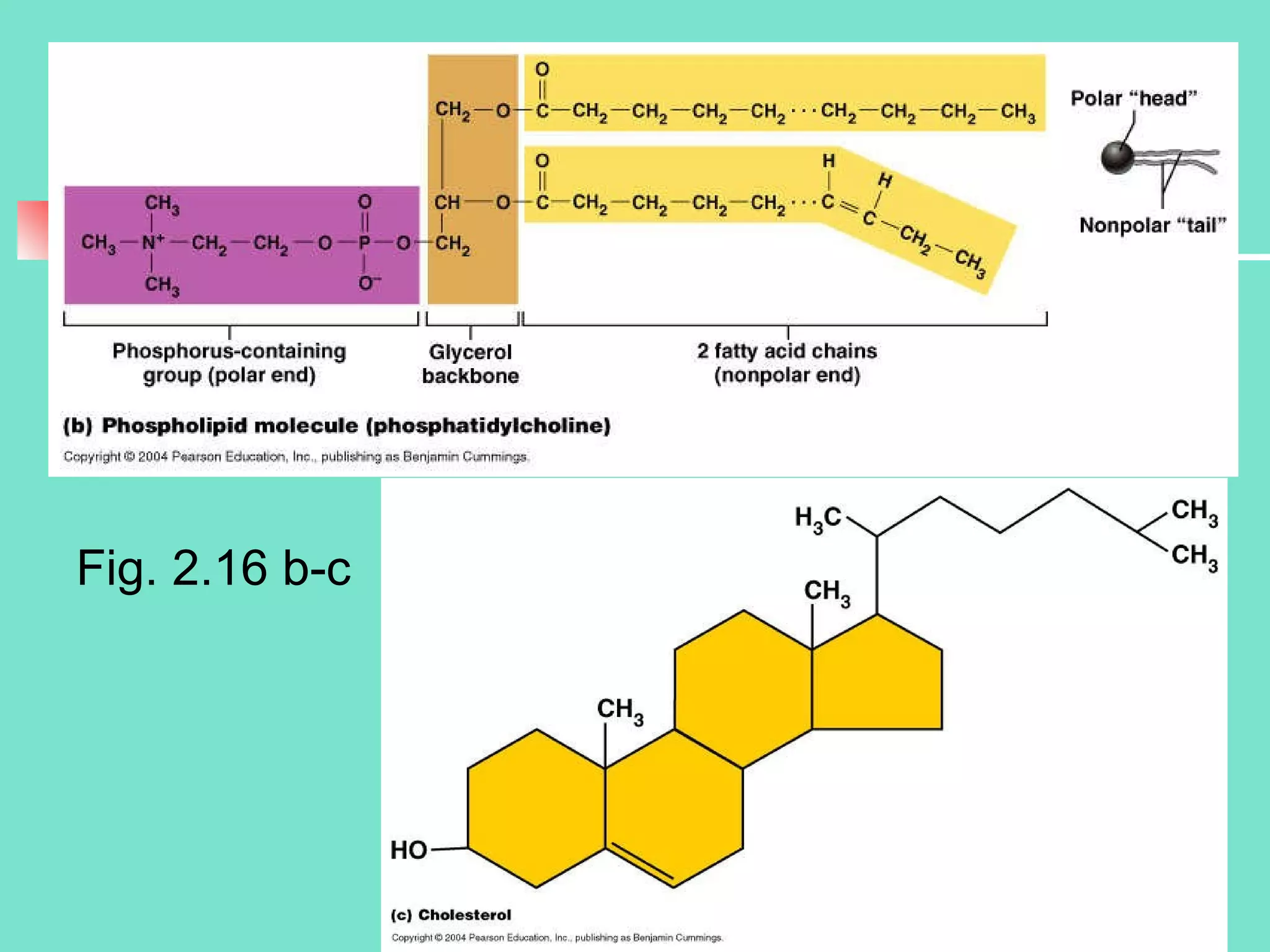
Fig. 2.16 b-c
3.e. Functions of Fats/Lipids 1. Protect and insulate body organs Second source of energy for the cells Chief component of cell membrane structure - phospholipids (Fig. 2.15b) Cholesterol also part of cell membrane structure (NOT A FAT) Prostaglandins - made from fatty acid chain, universal in body, involved with blood clotting, inflammation, birth - aspirin inhibits its synthesis
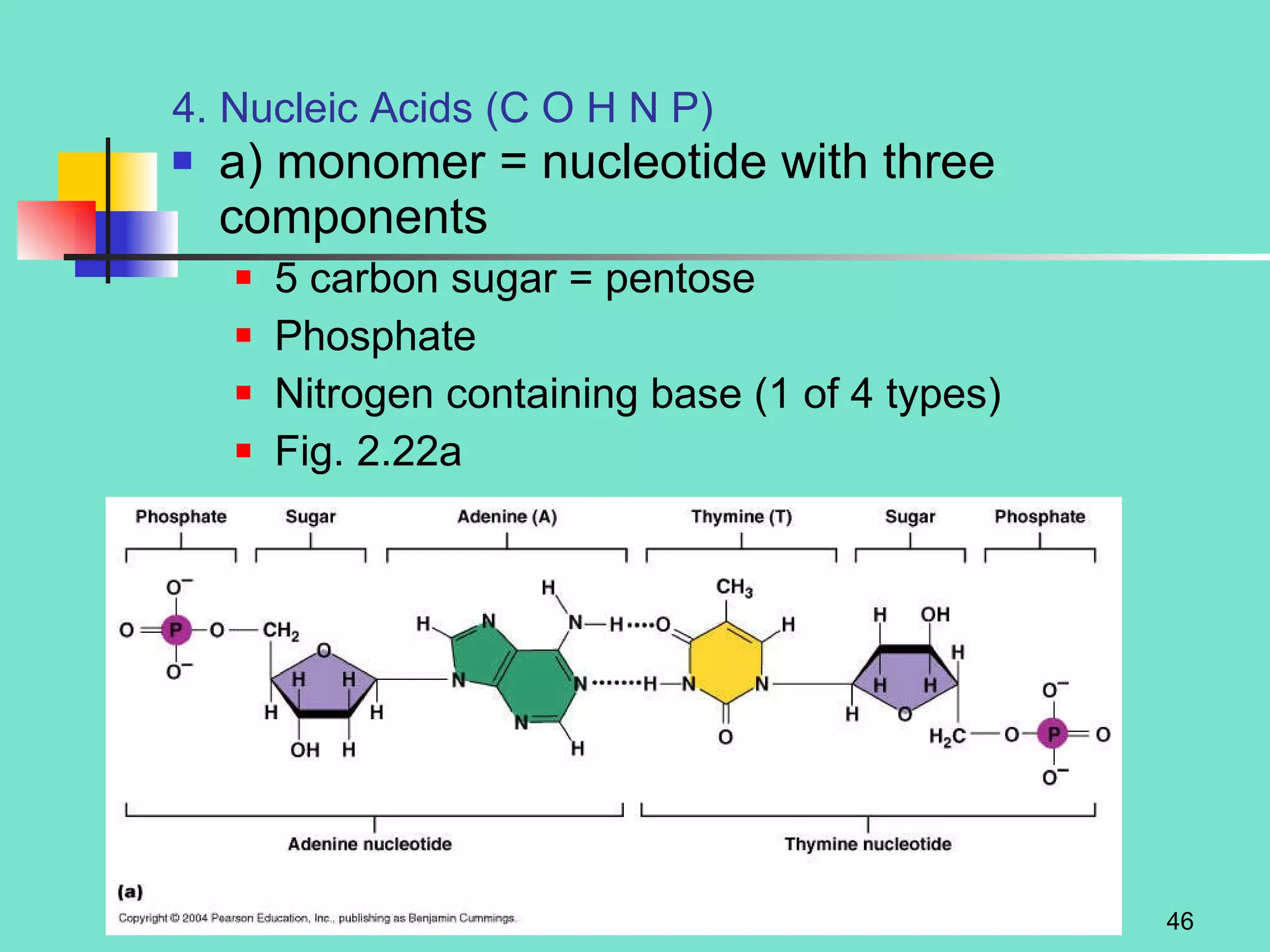
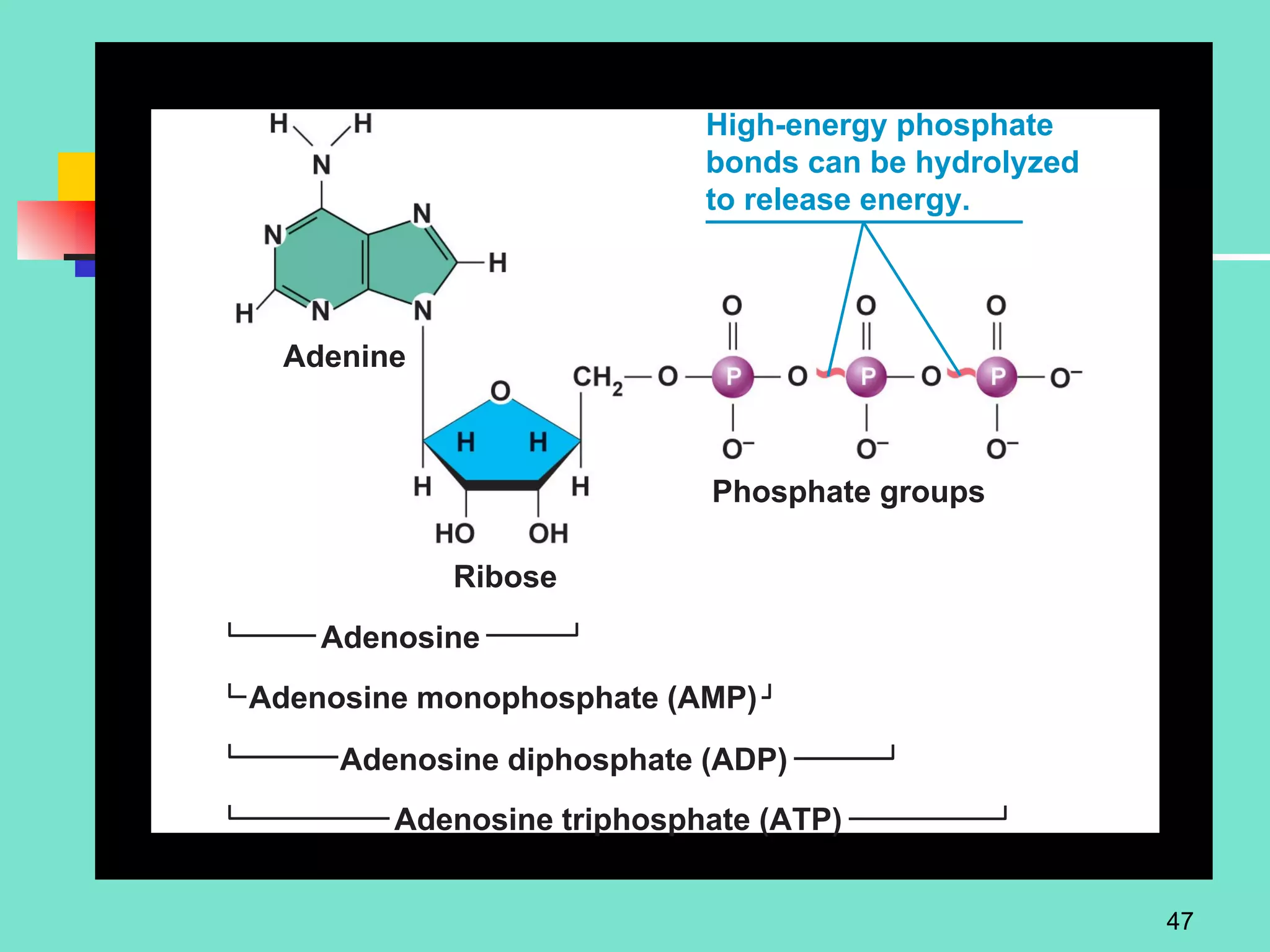
4. Nucleic Acids (C O H N P) a) monomer = nucleotide with three components 5 carbon sugar = pentose Phosphate Nitrogen containing base (1 of 4 types) Fig. 2.22a
Fig. 2.23
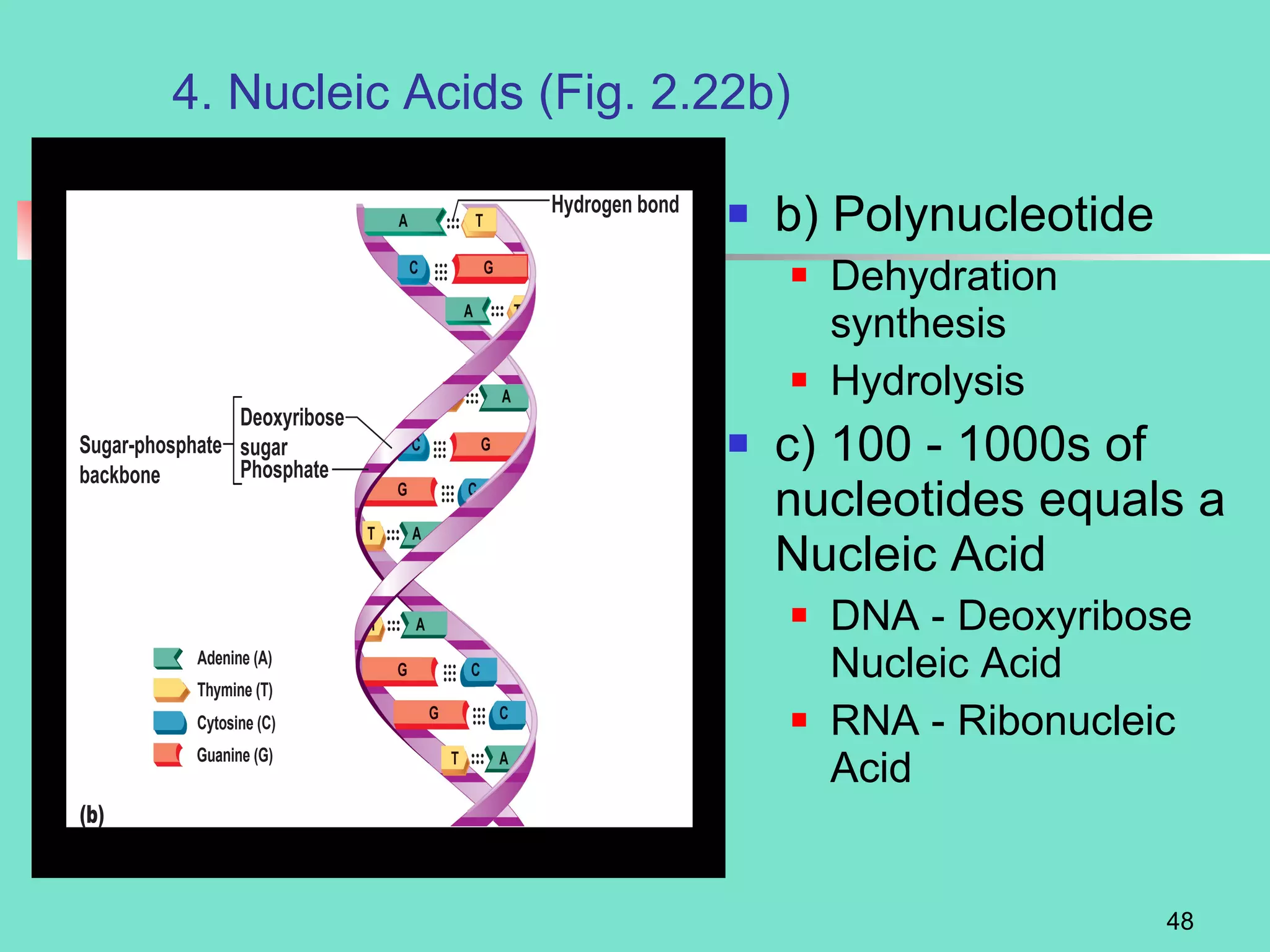
4. Nucleic Acids (Fig. 2.22b) b) Polynucleotide Dehydration synthesis Hydrolysis c) 100 - 1000s of nucleotides equals a Nucleic Acid DNA - Deoxyribose Nucleic Acid RNA - Ribonucleic Acid
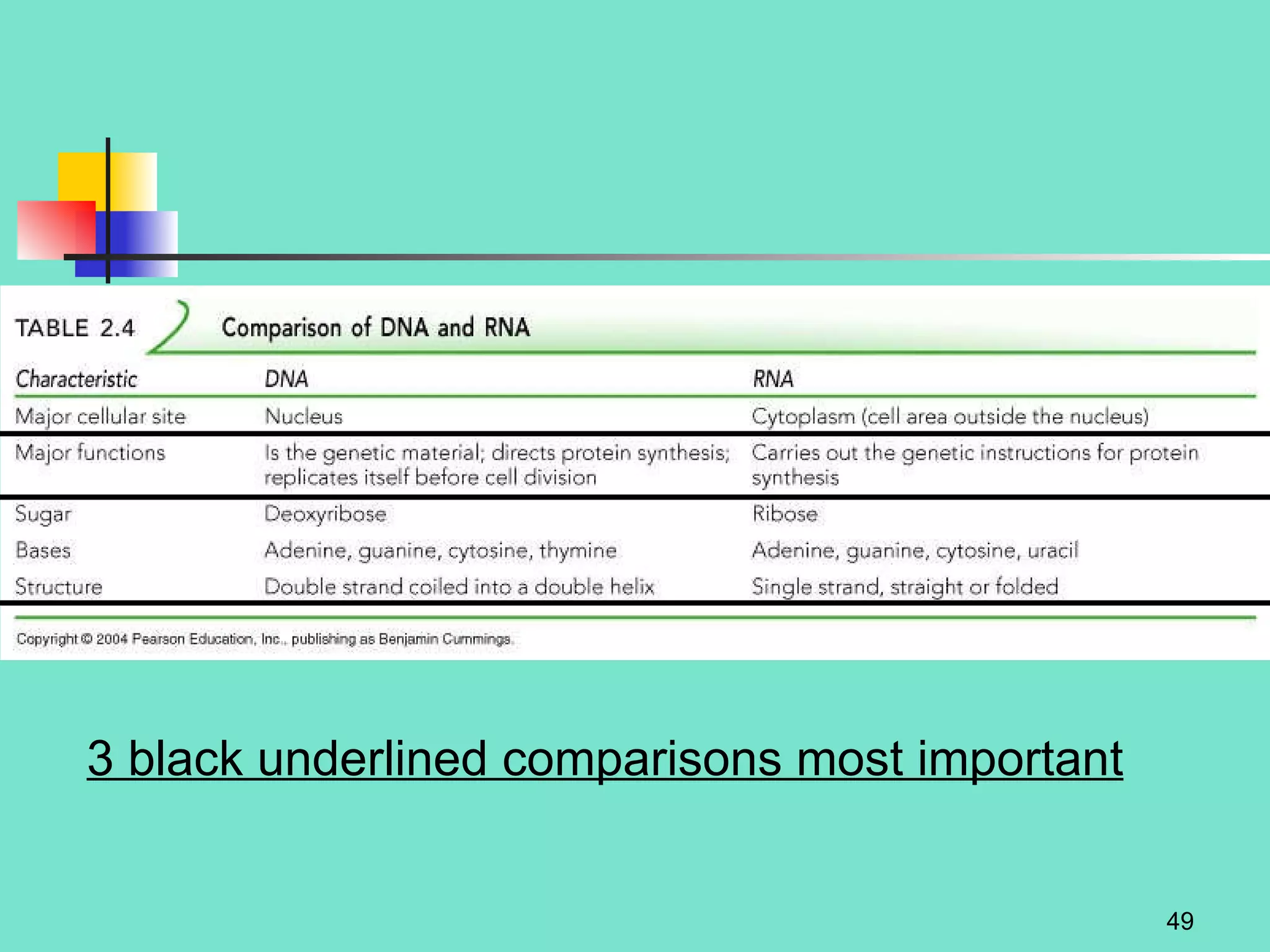
3 black underlined comparisons most important

1.a&p i intro.2010

  • 1.
    Anatomy & PhysiologyI-BIO 110 Dr. G. Krasilovsky Welcome e-mail: gkrasilo@sunyrockland.edu.com Office hours: after class by appointment Office: Lecture Classroom!!
  • 2.
    Chapters: 1 - pp.1-11 plus lab material pp12-22 2 - skim pp.29, 42-60 3 - Next Unit: pp.62-95; 100-105 Readings for Unit I Marieb & Hoehn (2010). Human Anatomy & Physiology . 8th edition.
  • 3.
    UNIT I -Introduction I. Introduction A. What is Life? B. Physiological Processes C. Directional Terms (lab material) D. Body Cavities (lab material) II. Chemistry for the Cell
  • 4.
    A. What isLife? 1. A quality or characteristic of a system that demonstrates the following: a) consists of specific chemicals that can interact and utilize or produce energy (energy = ability to do work) b) has an organized basic structure ( CELL ) which could increase in size and number ( ANATOMY = study of structure ) cell = basic unit of structure and function of all living things tissue = group of cells with similar structure and function
  • 5.
    A. What isLife? b) Basic Structure - continued -cell = basic unit of structure and function of all living things -tissue = group of cells with similar structure and function (muscle tissue, connective tissue) -organ = group of different tissues that function together (stomach, heart, ovaries) -system = group of different organs that function together (circulatory system, respiratory system) -organism = a living individual or a group of different systems that function together c) is capable of relating various physical and chemical processes ( PHYSIOLOGY )
  • 6.
  • 7.
    B. Physiological Processes1. Examples of life processes demonstrating relationships Several ways to show relationships between processes- all correct Locomotion (movement) What systems are involved? - - - Continue adding physiological processes
  • 8.
  • 9.
    2. Metabolism a)sum total of all chemical processes in an organism’s cells b) includes ALL physiological process listed above c) general term: “ metabolic disorder ”????? d) indicative of the energy utilization of an organism and its components: this is the value of metabolic rate
  • 10.
    3. HOMEOSTASIS a)self regulation of the internal environment of an organism, maintaining life functions within a NORMAL range b) Examples: Blood sugar Blood pressure Body temperature Hydration levels / Salt levels, etc.
  • 11.
  • 12.
  • 13.
  • 14.
    4. Stress -the absence of homeostasis What are physiological signs of stress? - - Value of stress vs. stress as a sign of disorder 5. Negative and Positive feedback Ability of an end-product to regulate its own production
  • 15.
    See Fig. 1.6 modified
  • 16.
  • 17.
  • 18.
  • 19.
  • 20.
    II. Chemistry forthe Cell ( pages 42 - 60) A. Definitions 1. Element - simplest form of matter 2. Chemical Compound - 2 or more different elements in definite proportion H 2 O HCl C 6 H 12 O 6 H 2 O 2
  • 21.
    3. Monomer -basic repeating building block individual bricks, stones, tiles 4. Polymer - many monomers joined together = wall, path, ceiling or floor Organic compounds are carbon containing complex compounds or polymers
  • 22.
    B. Table ofOrganic compounds 1. Carbohydrates (C O H) 1a. Monomer = Monosaccharides 3 carbon / 5 carbon / 6 carbon=hex ose Hexose = C 6 H 12 O 6 Glucose or Fructose or Galactose Isomers - same number and type of elements but different structural arrangement Glucose is the most important monosaccharide Main source of energy for cell Form glucose from other organic compounds Store glucose as glycogen in animals
  • 23.
    Fig. 2.15a Glucose Fructose Galactose Deoxyribose Ribose
  • 24.
    1b. Disaccharide =2 subunits/monomers Mono + Mono = Disaccharide + Water Monosaccharides are stable - do not want to react - make unstable by removing the components of water (HOH) - water is therefore an end product as two monomers bond together DEHYDRATION SYNTHESIS to produce a larger organic compound (removal of water) Examples (different monomer combinations) Sucrose=common table sugar Lactose = milk sugar Maltose = malt sugar
  • 25.
    Monomers are joinedby removal of OH from one monomer and removal of H from the other at the site of bond formation. (a) Dehydration synthesis Figure 2.14a Biological molecules are formed from their monomers or units by dehydration synthesis and broken down to the monomers by hydrolysis reactions.
  • 26.
  • 27.
  • 28.
    1b. Disaccharide (continued)DEHYDRATION SYNTHESIS to produce a larger organic compound (removal of water) HYDROLYSIS is the process to breakdown or digest a disaccharide or larger compound by ADDING components of water to the bond between 2 monomers, and break it Sugar = 10 or fewer monosaccharides together, sweet tasting and soluble in water Artificial sugar vs. artificial sweetener
  • 29.
    1c. Multiunits =Polysaccharides 100 or more monosaccharides bonded together Dehydration Synthesis to bond each 2 monomers together Hydrolysis to digest the polysaccharide into smaller subunits Larger saccharides are not soluble in water and not sweet tasting
  • 30.
    1c. Polysaccharides (continued)Starch - plant storage polysaccharide, we digest starch and produce glucose Cellulose - plant polysaccharide makes up cell wall, digested by cows and horses but not by humans (fiber in our diet) GLYCOGEN - animal storage polysaccharide, excess glucose stored as glycogen primarily in muscle and liver
  • 31.
  • 32.
    B. 2. Proteins(C O H N) 2a. Monomer - Amino Acids (Fig. 2.17a-e) 20 common different types which all have an amino group (NH 2 -) plus an organic acid group (-COOH) attached to a central carbon plus a single group of atoms called an -R group attached to the same central carbon
  • 33.
  • 34.
    B. 2. Proteins(continued) 2b. Linkage of amino acids = Peptide 2 a.a. = dipeptide 3 a.a. = tripeptide 2 - 9 amino acids = small peptide Dehydration synthesis - removal of water (HOH) from the amino and acid groups (on both sides) Hydrolysis =?? Fig. 2.18
  • 35.
    B. 2b. Peptides(continued) Biological roles of peptides (2-9 a.a.) Neurotransmitters - peptides released by nerve cells to stimulate or inhibit another nerve cell or a muscle or a gland Endorphins - natural opiates, runner’s high Enkephalins Hormones- peptides released by a gland into the circulatory system to stimulate or inhibit a final target organ (gland or other organ) Hypothalamic releasing hormones Certain pituitary hormones
  • 36.
    B. 2b. Peptides(continued) Ten or more amino acids = Polypeptide Also biologically active 3. Protein a) Introduction Large polymer = Macromolecules One or more chains of amino acids Total of 100 - thousands of amino acids Many peptide bonds in a chain b) Protein functions 1. Cell structure - membranes 2. Transport function - in blood and in/out of cell LDL vs. HDL
  • 37.
    b) Protein functions3. Muscle contraction due to contractile proteins 4. Receptors - proteins associated with a cell membrane to control chemical interactions at the level of the membrane (separate from #1) A key to open a specific lock A specific chemical interacts with a specific receptor 5. Enzyme - biological catalysts Catalyst - regulate (usually speed up) a chemical reaction without being used up or changed Some enzymes require cofactors (metal/organic) Specific substrates require specific enzymes
  • 38.
  • 39.
  • 40.
    Fig. 2.19 Levelsof Protein Structure
  • 41.
    3. Fats orLipids a) C-O-H, but different ratio from carbohydrates b) properties - do not mix well with water, but dissolve in organic solvents Fats = solid Oils = liquid c) subunits (not monomers) Fatty acids - varying hydrocarbons plus organic acid Glycerol - same sugar alcohol Triglycerides = 3:1 ratio
  • 42.
    d) Fig. 2.16aDehydration synthesis Hydrolysis
  • 43.
    3.d. Types offatty acid chains Saturated fats Solid at room temperature Usually animal products All single bonds between carbon -carbon Straight, packed together = solid Not metabolized as well - come out of solution during transport in blood - arteriosclerosis Unsaturated Fats Often liquid at room temperature(not packed) Usually plant products Some carbon=carbon double bonds, therefore fewer hydrogen attached to carbons, kinks Metabolized and transported better than the above in the blood Trans fat - oils that are solidified with addition of hydrogen at double bonds :. Not metabolized well (margarine)
  • 44.
  • 45.
    3.e. Functions ofFats/Lipids 1. Protect and insulate body organs Second source of energy for the cells Chief component of cell membrane structure - phospholipids (Fig. 2.15b) Cholesterol also part of cell membrane structure (NOT A FAT) Prostaglandins - made from fatty acid chain, universal in body, involved with blood clotting, inflammation, birth - aspirin inhibits its synthesis
  • 46.
    4. Nucleic Acids(C O H N P) a) monomer = nucleotide with three components 5 carbon sugar = pentose Phosphate Nitrogen containing base (1 of 4 types) Fig. 2.22a
  • 47.
  • 48.
    4. Nucleic Acids(Fig. 2.22b) b) Polynucleotide Dehydration synthesis Hydrolysis c) 100 - 1000s of nucleotides equals a Nucleic Acid DNA - Deoxyribose Nucleic Acid RNA - Ribonucleic Acid
  • 49.
    3 black underlinedcomparisons most important