Drought Risk Management Scheme:
a decision support system
Activity 5.4
Tamara Tokarczyk
2nd IDMP CEE Workshop
Ljubljana, 8 – 9 April 2014
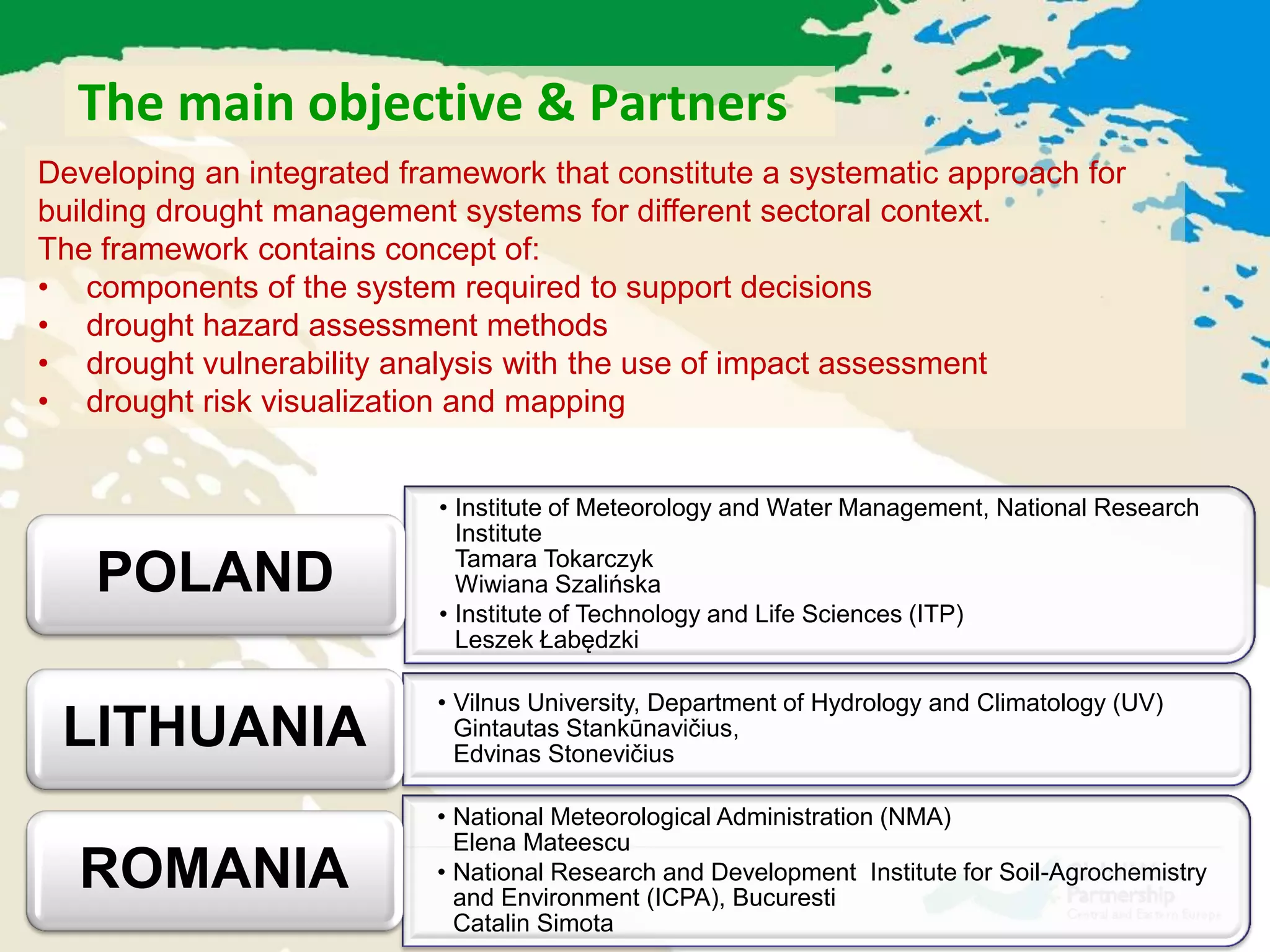
The main objective & Partners
• Institute of Meteorology and Water Management, National Research
Institute
Tamara Tokarczyk
Wiwiana Szalińska
• Institute of Technology and Life Sciences (ITP)
Leszek Łabędzki
POLAND
• Vilnus University, Department of Hydrology and Climatology (UV)
Gintautas Stankūnavičius,
Edvinas Stonevičius
LITHUANIA
• National Meteorological Administration (NMA)
Elena Mateescu
• National Research and Development Institute for Soil-Agrochemistry
and Environment (ICPA), Bucuresti
Catalin Simota
ROMANIA
Developing an integrated framework that constitute a systematic approach for
building drought management systems for different sectoral context.
The framework contains concept of:
• components of the system required to support decisions
• drought hazard assessment methods
• drought vulnerability analysis with the use of impact assessment
• drought risk visualization and mapping
Measures for the
assessment of hazard
and vulnerability to
drought
Methods for the
drought hazard and
risk management
Framework for
Drought Risk
Management Scheme
3.1 Drought Risk Management Scheme for
Odra River
3.2 Recommendations for operational support
system in drought risk management
2.1. Developing methodology for drought hazard
mapping with the use of measures for drought
susceptibility assessment.
2.2. Framing methodology for vulnerability to drought
assessment based on available GIS information
including population map, type of economic activity
map and protected area to showing the potential
adverse consequences.
1.1. Identification of the national measures for drought
suspectibility (drought hazard) assessment
1.2. Identification of the national measures for drought
vulnerability assessment
Inventory of the
national (Poland,
Romania, Lithuania)
drought contexts.
Concept of drought
hazard and
vulnerability mapping
as a tool for drought
risk management for
selected regional
context.
The generic approach to
drought management that
can be detailed and adjusted
for specific applications.
Requirements for operational
DSS development in the
middle Odra River basin.
OUTPUT MILESTONE
EXPECTED
RESULT
Outputs
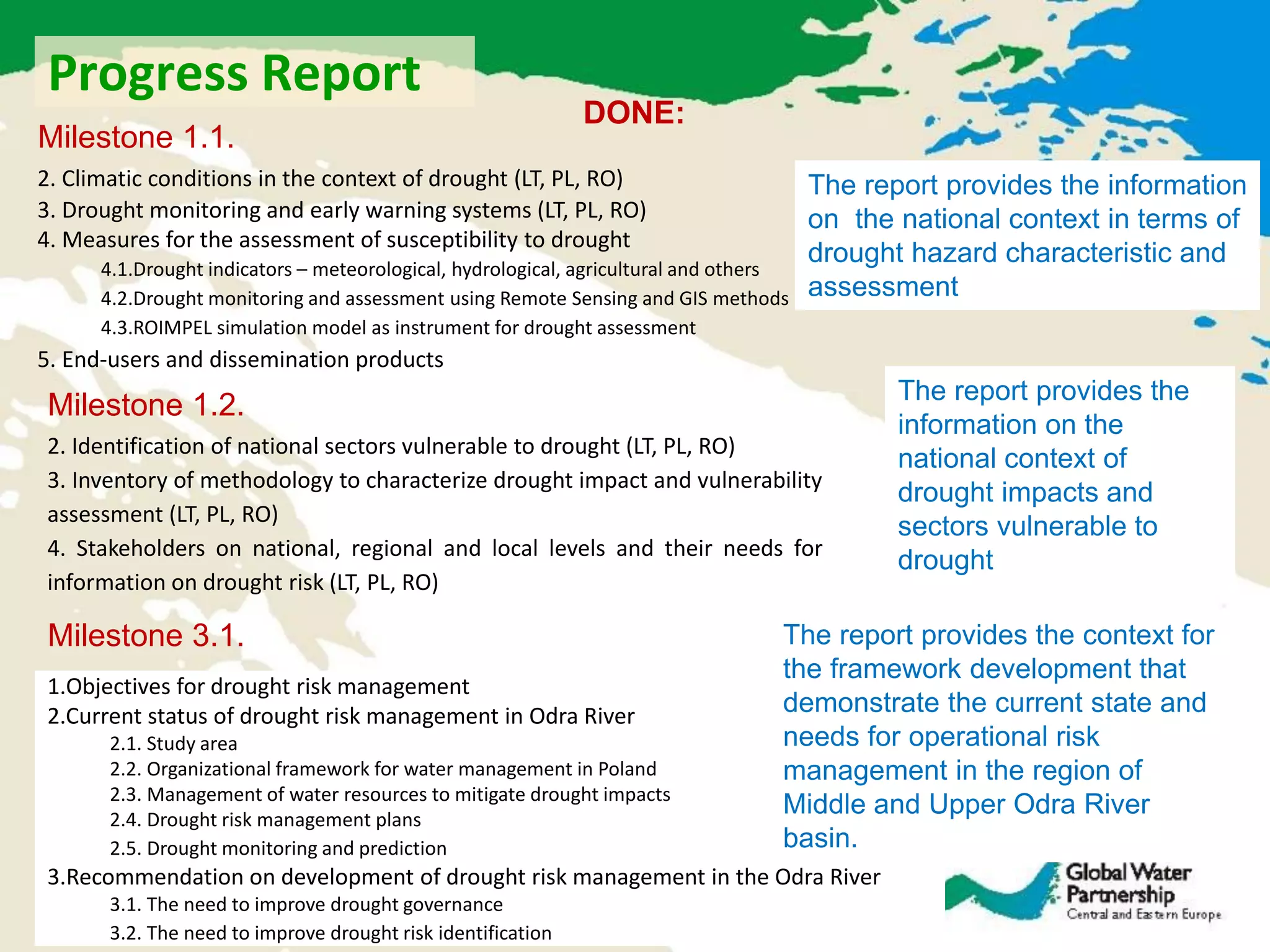
DONE:
2. Climatic conditions in the context of drought (LT, PL, RO)
3. Drought monitoring and early warning systems (LT, PL, RO)
4. Measures for the assessment of susceptibility to drought
4.1.Drought indicators – meteorological, hydrological, agricultural and others
4.2.Drought monitoring and assessment using Remote Sensing and GIS methods
4.3.ROIMPEL simulation model as instrument for drought assessment
5. End-users and dissemination products
Milestone 1.1.
2. Identification of national sectors vulnerable to drought (LT, PL, RO)
3. Inventory of methodology to characterize drought impact and vulnerability
assessment (LT, PL, RO)
4. Stakeholders on national, regional and local levels and their needs for
information on drought risk (LT, PL, RO)
Milestone 1.2.
1.Objectives for drought risk management
2.Current status of drought risk management in Odra River
2.1. Study area
2.2. Organizational framework for water management in Poland
2.3. Management of water resources to mitigate drought impacts
2.4. Drought risk management plans
2.5. Drought monitoring and prediction
3.Recommendation on development of drought risk management in the Odra River
3.1. The need to improve drought governance
3.2. The need to improve drought risk identification
Milestone 3.1. The report provides the context for
the framework development that
demonstrate the current state and
needs for operational risk
management in the region of
Middle and Upper Odra River
basin.
The report provides the information
on the national context in terms of
drought hazard characteristic and
assessment
The report provides the
information on the
national context of
drought impacts and
sectors vulnerable to
drought
Progress Report
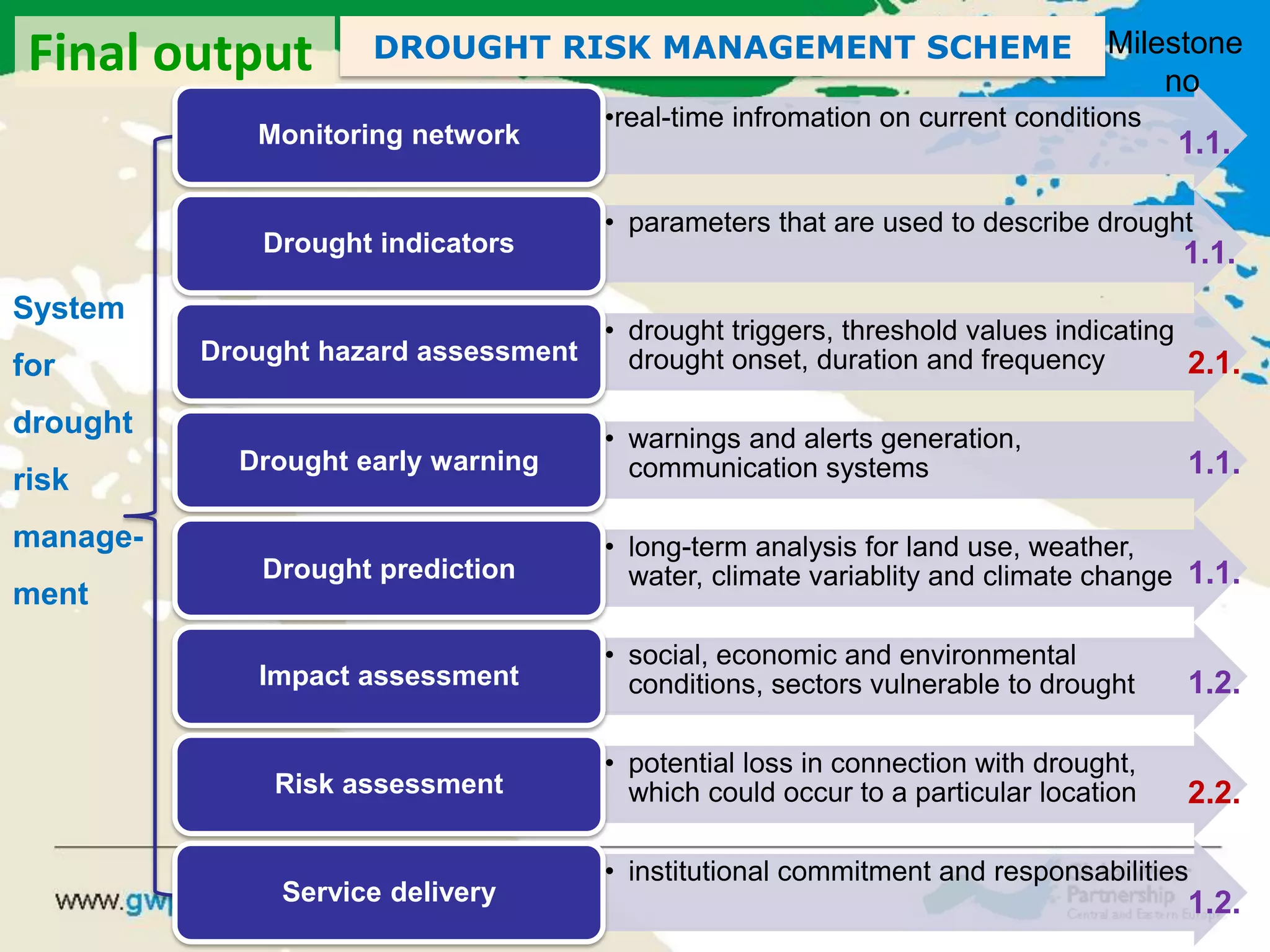
•real-time infromation on current conditions
Monitoring network
• parameters that are used to describe drought
Drought indicators
• drought triggers, threshold values indicating
drought onset, duration and frequencyDrought hazard assessment
• warnings and alerts generation,
communication systemsDrought early warning
• long-term analysis for land use, weather,
water, climate variablity and climate changeDrought prediction
• social, economic and environmental
conditions, sectors vulnerable to droughtImpact assessment
• potential loss in connection with drought,
which could occur to a particular locationRisk assessment
• institutional commitment and responsabilities
Service delivery
System
for
drought
risk
manage-
ment
DROUGHT RISK MANAGEMENT SCHEME
1.1.
1.1.
2.1.
1.1.
1.1.
1.2.
2.2.
1.2.
Milestone
no
Final output
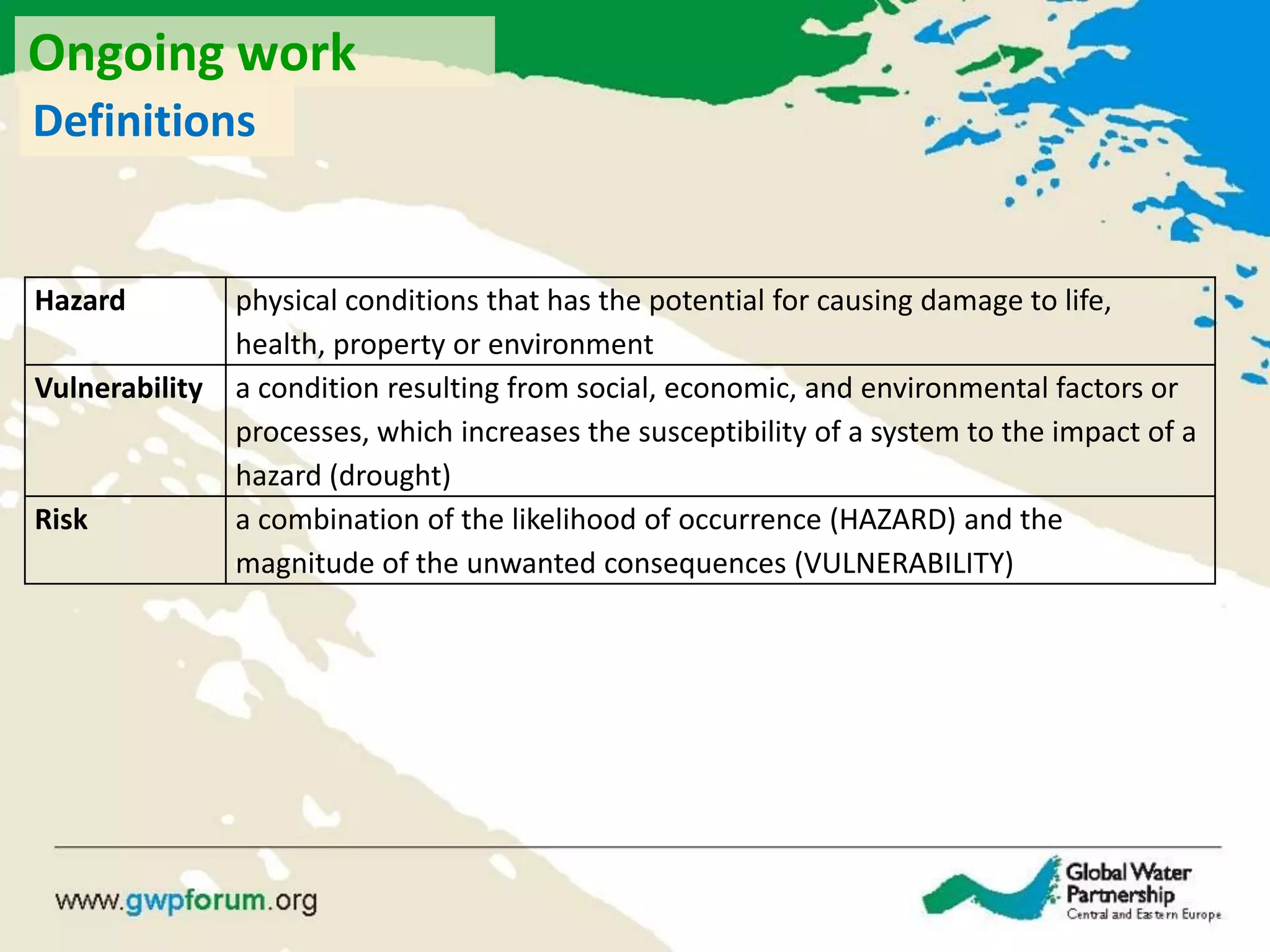
Definitions
Hazard physical conditions that has the potential for causing damage to life,
health, property or environment
Vulnerability a condition resulting from social, economic, and environmental factors or
processes, which increases the susceptibility of a system to the impact of a
hazard (drought)
Risk a combination of the likelihood of occurrence (HAZARD) and the
magnitude of the unwanted consequences (VULNERABILITY)
Ongoing work
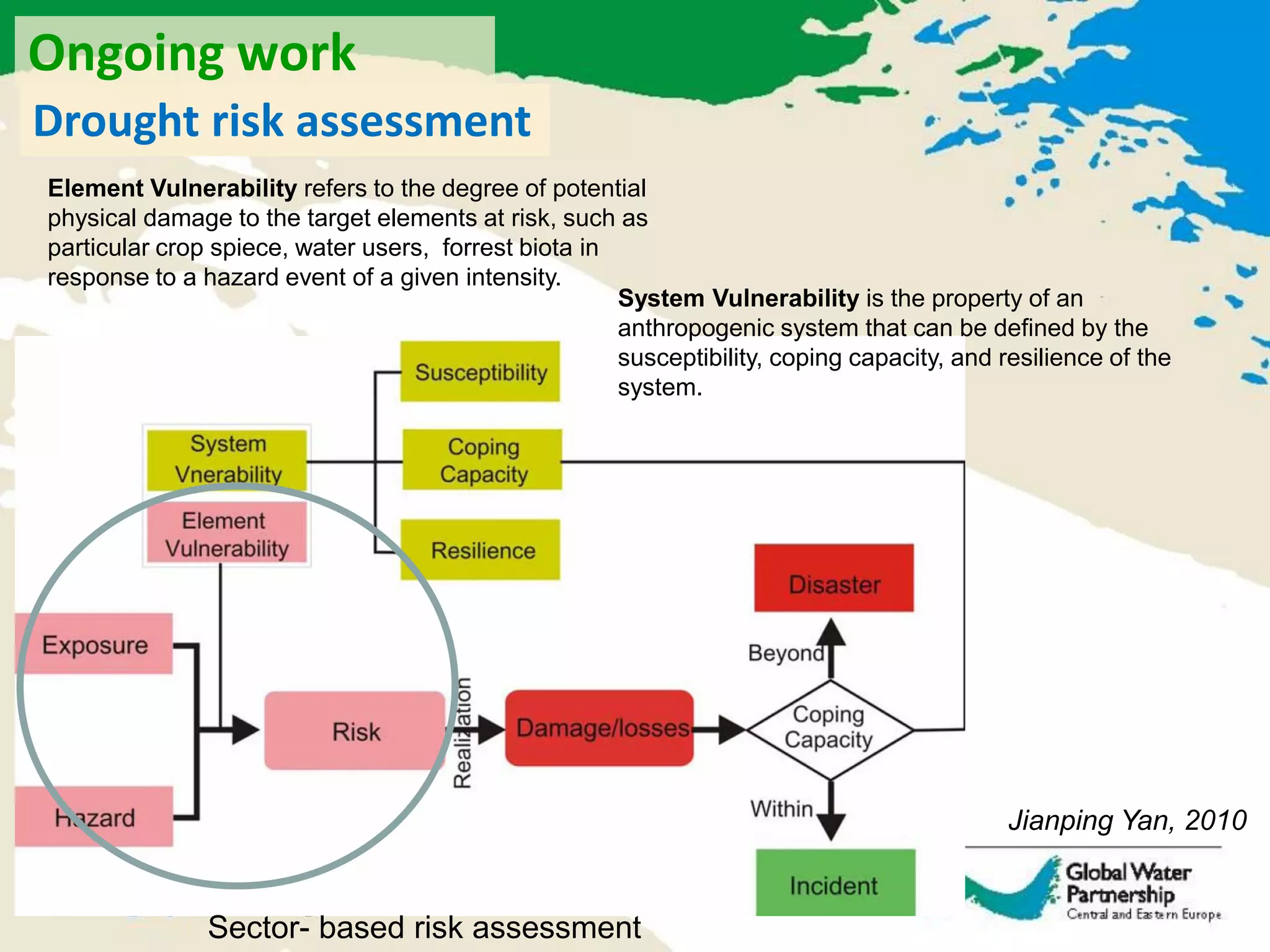
Jianping Yan, 2010
System Vulnerability is the property of an
anthropogenic system that can be defined by the
susceptibility, coping capacity, and resilience of the
system.
Element Vulnerability refers to the degree of potential
physical damage to the target elements at risk, such as
particular crop spiece, water users, forrest biota in
response to a hazard event of a given intensity.
Drought risk assessment
Ongoing work
Sector- based risk assessment
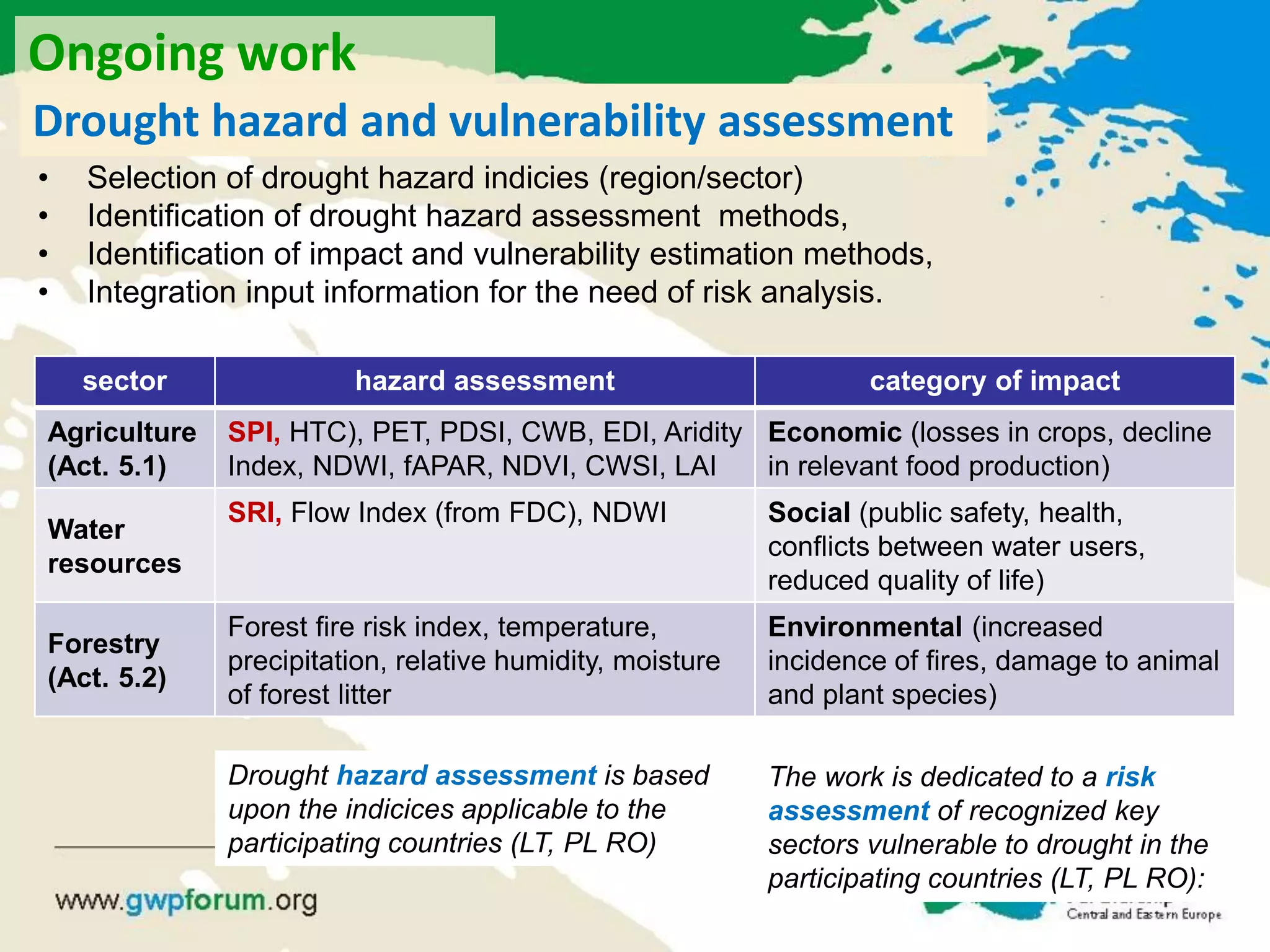
The work is dedicated to a risk
assessment of recognized key
sectors vulnerable to drought in the
participating countries (LT, PL RO):
sector hazard assessment category of impact
Agriculture
(Act. 5.1)
SPI, HTC), PET, PDSI, CWB, EDI, Aridity
Index, NDWI, fAPAR, NDVI, CWSI, LAI
Economic (losses in crops, decline
in relevant food production)
Water
resources
SRI, Flow Index (from FDC), NDWI Social (public safety, health,
conflicts between water users,
reduced quality of life)
Forestry
(Act. 5.2)
Forest fire risk index, temperature,
precipitation, relative humidity, moisture
of forest litter
Environmental (increased
incidence of fires, damage to animal
and plant species)
Drought hazard assessment is based
upon the indicices applicable to the
participating countries (LT, PL RO)
• Selection of drought hazard indicies (region/sector)
• Identification of drought hazard assessment methods,
• Identification of impact and vulnerability estimation methods,
• Integration input information for the need of risk analysis.
Drought hazard and vulnerability assessment
Ongoing work
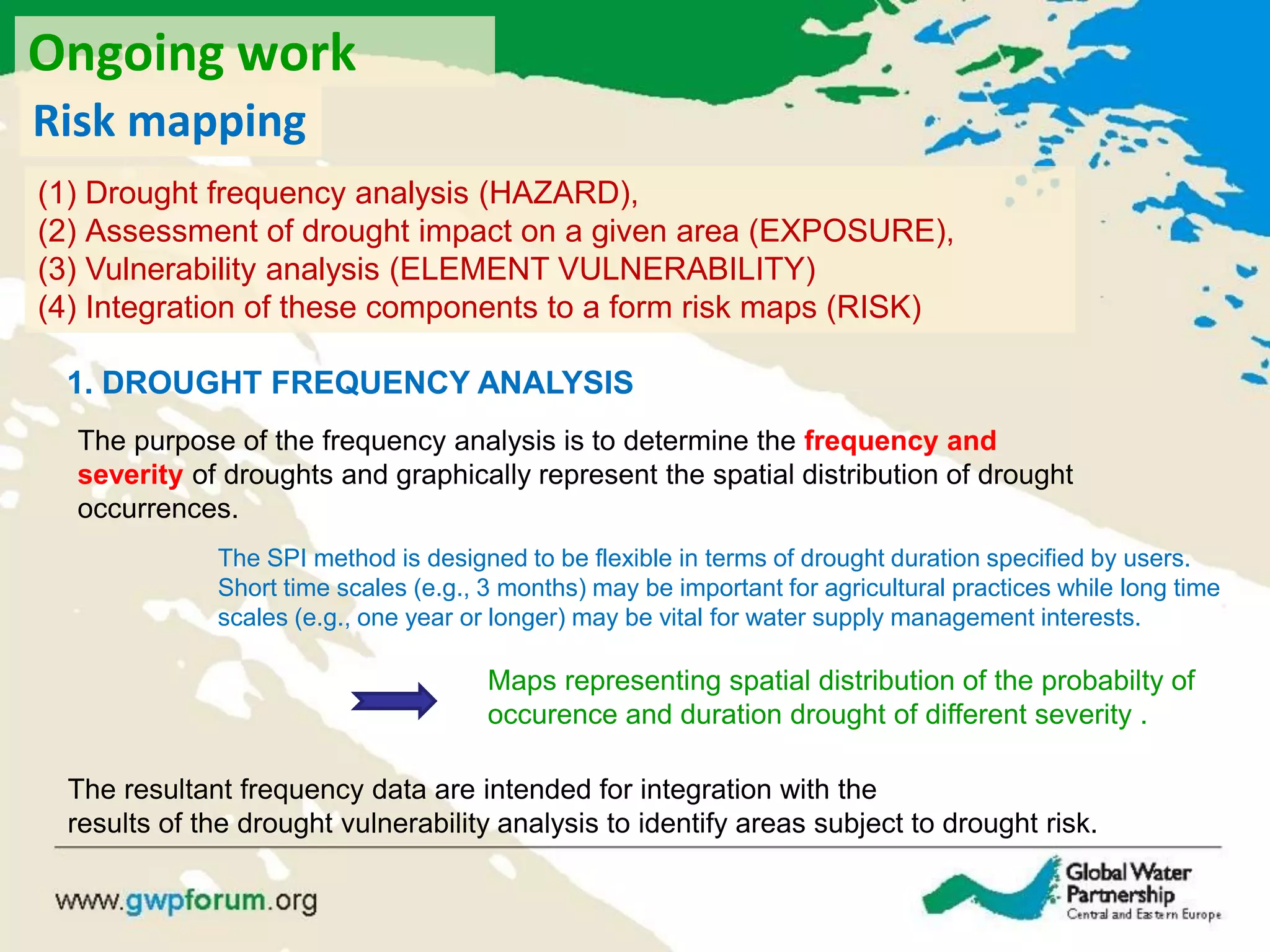
1. DROUGHT FREQUENCY ANALYSIS
The purpose of the frequency analysis is to determine the frequency and
severity of droughts and graphically represent the spatial distribution of drought
occurrences.
The SPI method is designed to be flexible in terms of drought duration specified by users.
Short time scales (e.g., 3 months) may be important for agricultural practices while long time
scales (e.g., one year or longer) may be vital for water supply management interests.
Maps representing spatial distribution of the probabilty of
occurence and duration drought of different severity .
The resultant frequency data are intended for integration with the
results of the drought vulnerability analysis to identify areas subject to drought risk.
(1) Drought frequency analysis (HAZARD),
(2) Assessment of drought impact on a given area (EXPOSURE),
(3) Vulnerability analysis (ELEMENT VULNERABILITY)
(4) Integration of these components to a form risk maps (RISK)
Risk mapping
Ongoing work
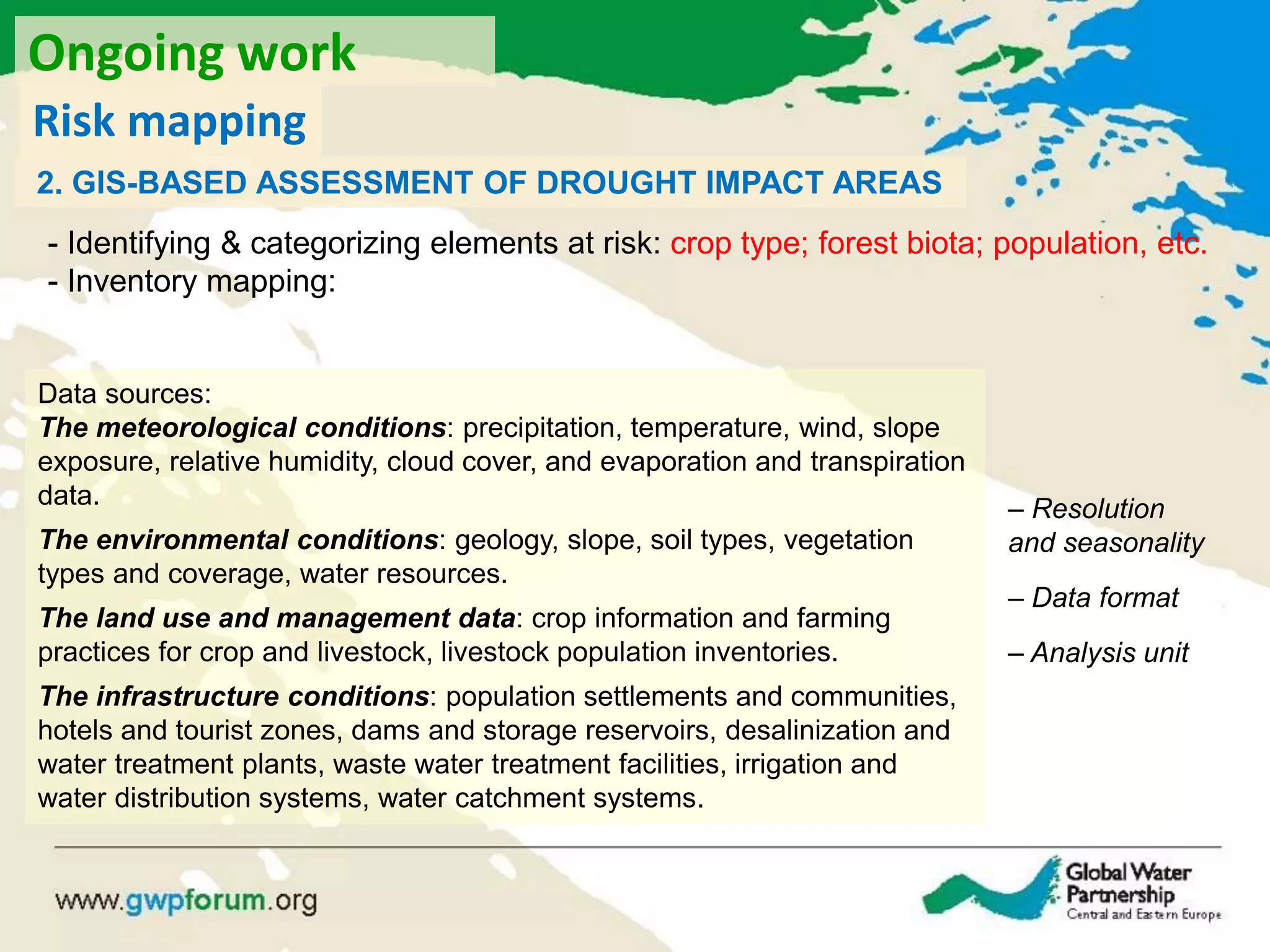
2. GIS-BASED ASSESSMENT OF DROUGHT IMPACT AREAS
Data sources:
The meteorological conditions: precipitation, temperature, wind, slope
exposure, relative humidity, cloud cover, and evaporation and transpiration
data.
The environmental conditions: geology, slope, soil types, vegetation
types and coverage, water resources.
The land use and management data: crop information and farming
practices for crop and livestock, livestock population inventories.
The infrastructure conditions: population settlements and communities,
hotels and tourist zones, dams and storage reservoirs, desalinization and
water treatment plants, waste water treatment facilities, irrigation and
water distribution systems, water catchment systems.
- Identifying & categorizing elements at risk: crop type; forest biota; population, etc.
- Inventory mapping:
– Resolution
and seasonality
– Data format
– Analysis unit
Ongoing work
Risk mapping
Developing Vulnerability Functions
for Drought Risk Assessment
- Loss-Intensity Matrix for Drought
- Vulnerability Functions
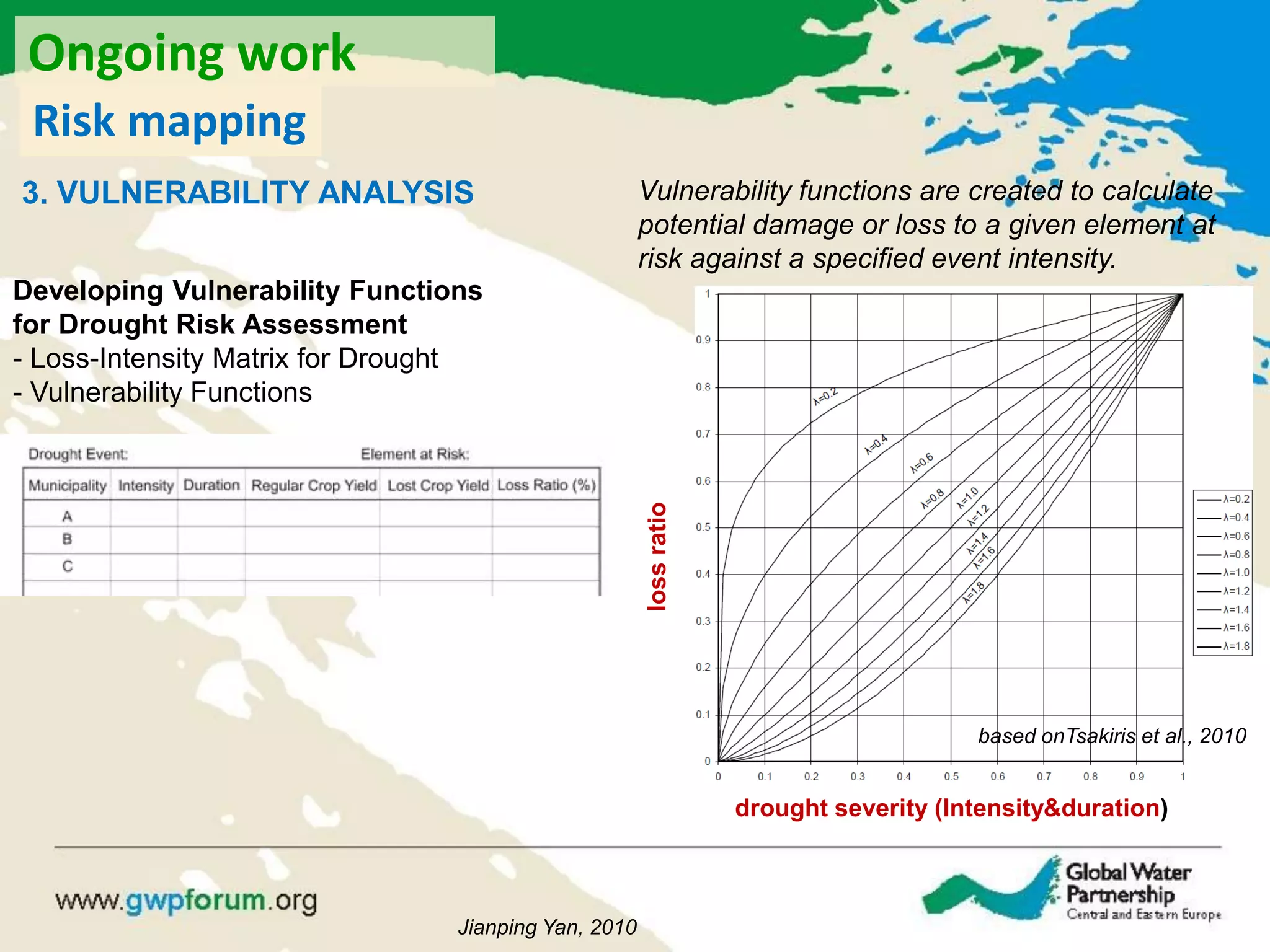
3. VULNERABILITY ANALYSIS Vulnerability functions are created to calculate
potential damage or loss to a given element at
risk against a specified event intensity.
drought severity (Intensity&duration)
lossratio
Ongoing work
Risk mapping
Jianping Yan, 2010
based onTsakiris et al., 2010
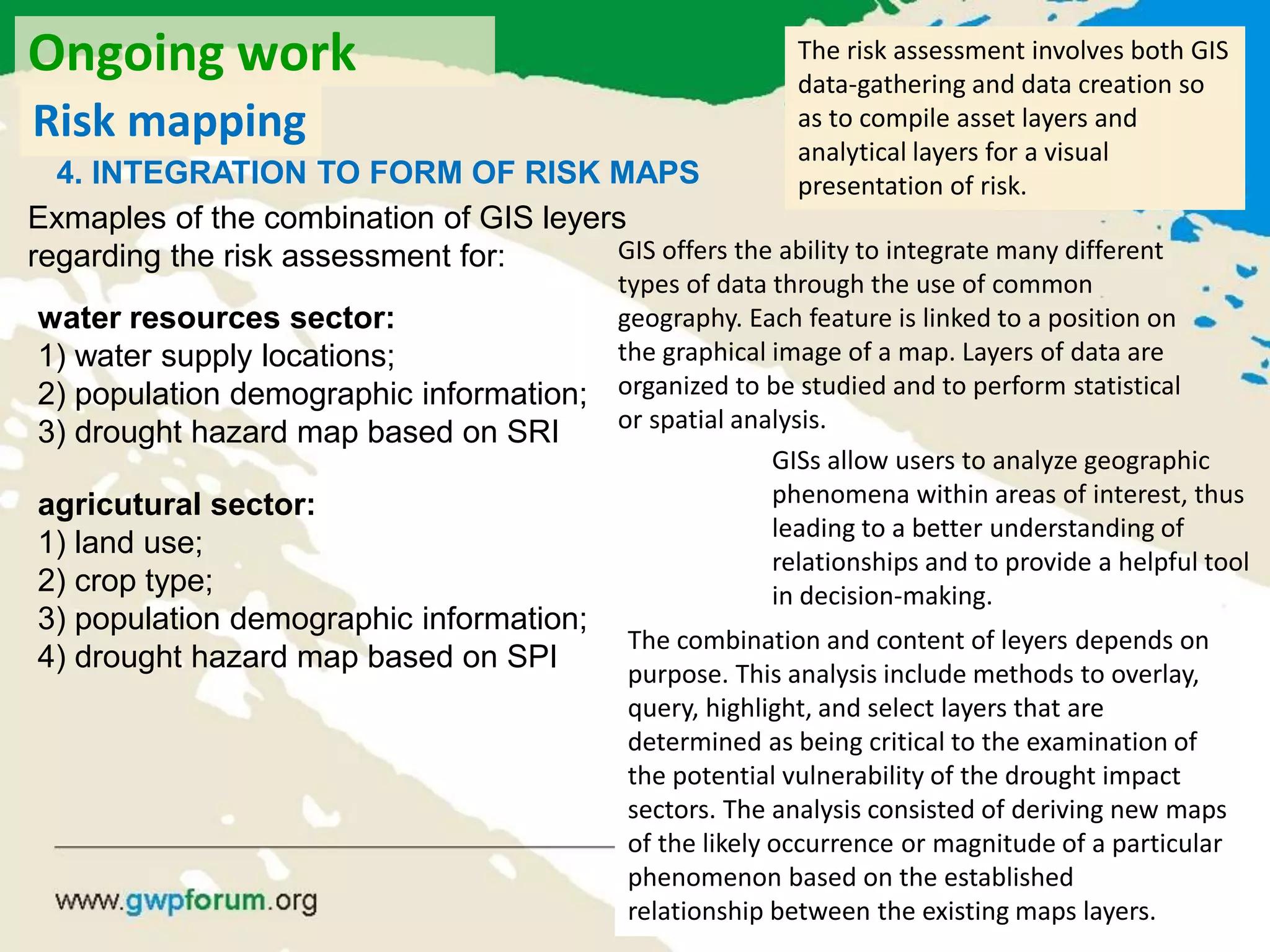
water resources sector:
1) water supply locations;
2) population demographic information;
3) drought hazard map based on SRI
Exmaples of the combination of GIS leyers
regarding the risk assessment for:
agricutural sector:
1) land use;
2) crop type;
3) population demographic information;
4) drought hazard map based on SPI
The risk assessment involves both GIS
data-gathering and data creation so
as to compile asset layers and
analytical layers for a visual
presentation of risk.
GIS offers the ability to integrate many different
types of data through the use of common
geography. Each feature is linked to a position on
the graphical image of a map. Layers of data are
organized to be studied and to perform statistical
or spatial analysis.
GISs allow users to analyze geographic
phenomena within areas of interest, thus
leading to a better understanding of
relationships and to provide a helpful tool
in decision-making.
The combination and content of leyers depends on
purpose. This analysis include methods to overlay,
query, highlight, and select layers that are
determined as being critical to the examination of
the potential vulnerability of the drought impact
sectors. The analysis consisted of deriving new maps
of the likely occurrence or magnitude of a particular
phenomenon based on the established
relationship between the existing maps layers.
Ongoing work
Risk mapping
4. INTEGRATION TO FORM OF RISK MAPS
4. INTEGRATION OF THESE COMPONENTS TO FORM OF RISK MAPS
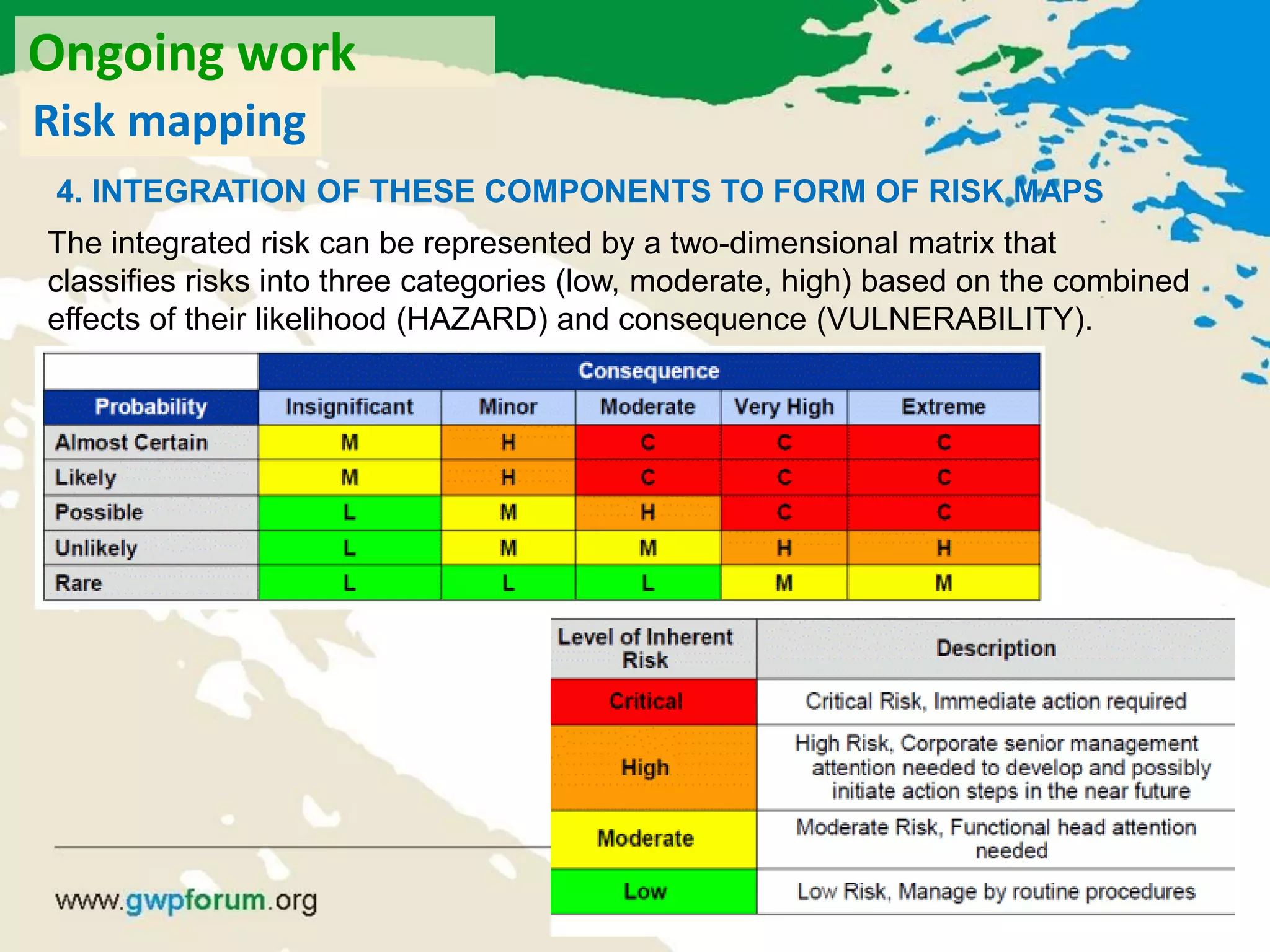
The integrated risk can be represented by a two-dimensional matrix that
classifies risks into three categories (low, moderate, high) based on the combined
effects of their likelihood (HAZARD) and consequence (VULNERABILITY).
Ongoing work
Risk mapping
Where we search for expertise?
• Partner countries?
• IDMP CEE countries?
• Other projects?
• Literature?
• Develop new ones?
Thanks for your attention !

IDMP CEE 2nd workshop: Activity 5.4 by Tamara Tokarczyk

  • 1.
    Drought Risk ManagementScheme: a decision support system Activity 5.4 Tamara Tokarczyk 2nd IDMP CEE Workshop Ljubljana, 8 – 9 April 2014
  • 2.
    The main objective& Partners • Institute of Meteorology and Water Management, National Research Institute Tamara Tokarczyk Wiwiana Szalińska • Institute of Technology and Life Sciences (ITP) Leszek Łabędzki POLAND • Vilnus University, Department of Hydrology and Climatology (UV) Gintautas Stankūnavičius, Edvinas Stonevičius LITHUANIA • National Meteorological Administration (NMA) Elena Mateescu • National Research and Development Institute for Soil-Agrochemistry and Environment (ICPA), Bucuresti Catalin Simota ROMANIA Developing an integrated framework that constitute a systematic approach for building drought management systems for different sectoral context. The framework contains concept of: • components of the system required to support decisions • drought hazard assessment methods • drought vulnerability analysis with the use of impact assessment • drought risk visualization and mapping
  • 3.
    Measures for the assessmentof hazard and vulnerability to drought Methods for the drought hazard and risk management Framework for Drought Risk Management Scheme 3.1 Drought Risk Management Scheme for Odra River 3.2 Recommendations for operational support system in drought risk management 2.1. Developing methodology for drought hazard mapping with the use of measures for drought susceptibility assessment. 2.2. Framing methodology for vulnerability to drought assessment based on available GIS information including population map, type of economic activity map and protected area to showing the potential adverse consequences. 1.1. Identification of the national measures for drought suspectibility (drought hazard) assessment 1.2. Identification of the national measures for drought vulnerability assessment Inventory of the national (Poland, Romania, Lithuania) drought contexts. Concept of drought hazard and vulnerability mapping as a tool for drought risk management for selected regional context. The generic approach to drought management that can be detailed and adjusted for specific applications. Requirements for operational DSS development in the middle Odra River basin. OUTPUT MILESTONE EXPECTED RESULT Outputs
  • 4.
    DONE: 2. Climatic conditionsin the context of drought (LT, PL, RO) 3. Drought monitoring and early warning systems (LT, PL, RO) 4. Measures for the assessment of susceptibility to drought 4.1.Drought indicators – meteorological, hydrological, agricultural and others 4.2.Drought monitoring and assessment using Remote Sensing and GIS methods 4.3.ROIMPEL simulation model as instrument for drought assessment 5. End-users and dissemination products Milestone 1.1. 2. Identification of national sectors vulnerable to drought (LT, PL, RO) 3. Inventory of methodology to characterize drought impact and vulnerability assessment (LT, PL, RO) 4. Stakeholders on national, regional and local levels and their needs for information on drought risk (LT, PL, RO) Milestone 1.2. 1.Objectives for drought risk management 2.Current status of drought risk management in Odra River 2.1. Study area 2.2. Organizational framework for water management in Poland 2.3. Management of water resources to mitigate drought impacts 2.4. Drought risk management plans 2.5. Drought monitoring and prediction 3.Recommendation on development of drought risk management in the Odra River 3.1. The need to improve drought governance 3.2. The need to improve drought risk identification Milestone 3.1. The report provides the context for the framework development that demonstrate the current state and needs for operational risk management in the region of Middle and Upper Odra River basin. The report provides the information on the national context in terms of drought hazard characteristic and assessment The report provides the information on the national context of drought impacts and sectors vulnerable to drought Progress Report
  • 5.
    •real-time infromation oncurrent conditions Monitoring network • parameters that are used to describe drought Drought indicators • drought triggers, threshold values indicating drought onset, duration and frequencyDrought hazard assessment • warnings and alerts generation, communication systemsDrought early warning • long-term analysis for land use, weather, water, climate variablity and climate changeDrought prediction • social, economic and environmental conditions, sectors vulnerable to droughtImpact assessment • potential loss in connection with drought, which could occur to a particular locationRisk assessment • institutional commitment and responsabilities Service delivery System for drought risk manage- ment DROUGHT RISK MANAGEMENT SCHEME 1.1. 1.1. 2.1. 1.1. 1.1. 1.2. 2.2. 1.2. Milestone no Final output
  • 6.
    Definitions Hazard physical conditionsthat has the potential for causing damage to life, health, property or environment Vulnerability a condition resulting from social, economic, and environmental factors or processes, which increases the susceptibility of a system to the impact of a hazard (drought) Risk a combination of the likelihood of occurrence (HAZARD) and the magnitude of the unwanted consequences (VULNERABILITY) Ongoing work
  • 7.
    Jianping Yan, 2010 SystemVulnerability is the property of an anthropogenic system that can be defined by the susceptibility, coping capacity, and resilience of the system. Element Vulnerability refers to the degree of potential physical damage to the target elements at risk, such as particular crop spiece, water users, forrest biota in response to a hazard event of a given intensity. Drought risk assessment Ongoing work Sector- based risk assessment
  • 8.
    The work isdedicated to a risk assessment of recognized key sectors vulnerable to drought in the participating countries (LT, PL RO): sector hazard assessment category of impact Agriculture (Act. 5.1) SPI, HTC), PET, PDSI, CWB, EDI, Aridity Index, NDWI, fAPAR, NDVI, CWSI, LAI Economic (losses in crops, decline in relevant food production) Water resources SRI, Flow Index (from FDC), NDWI Social (public safety, health, conflicts between water users, reduced quality of life) Forestry (Act. 5.2) Forest fire risk index, temperature, precipitation, relative humidity, moisture of forest litter Environmental (increased incidence of fires, damage to animal and plant species) Drought hazard assessment is based upon the indicices applicable to the participating countries (LT, PL RO) • Selection of drought hazard indicies (region/sector) • Identification of drought hazard assessment methods, • Identification of impact and vulnerability estimation methods, • Integration input information for the need of risk analysis. Drought hazard and vulnerability assessment Ongoing work
  • 9.
    1. DROUGHT FREQUENCYANALYSIS The purpose of the frequency analysis is to determine the frequency and severity of droughts and graphically represent the spatial distribution of drought occurrences. The SPI method is designed to be flexible in terms of drought duration specified by users. Short time scales (e.g., 3 months) may be important for agricultural practices while long time scales (e.g., one year or longer) may be vital for water supply management interests. Maps representing spatial distribution of the probabilty of occurence and duration drought of different severity . The resultant frequency data are intended for integration with the results of the drought vulnerability analysis to identify areas subject to drought risk. (1) Drought frequency analysis (HAZARD), (2) Assessment of drought impact on a given area (EXPOSURE), (3) Vulnerability analysis (ELEMENT VULNERABILITY) (4) Integration of these components to a form risk maps (RISK) Risk mapping Ongoing work
  • 10.
    2. GIS-BASED ASSESSMENTOF DROUGHT IMPACT AREAS Data sources: The meteorological conditions: precipitation, temperature, wind, slope exposure, relative humidity, cloud cover, and evaporation and transpiration data. The environmental conditions: geology, slope, soil types, vegetation types and coverage, water resources. The land use and management data: crop information and farming practices for crop and livestock, livestock population inventories. The infrastructure conditions: population settlements and communities, hotels and tourist zones, dams and storage reservoirs, desalinization and water treatment plants, waste water treatment facilities, irrigation and water distribution systems, water catchment systems. - Identifying & categorizing elements at risk: crop type; forest biota; population, etc. - Inventory mapping: – Resolution and seasonality – Data format – Analysis unit Ongoing work Risk mapping
  • 11.
    Developing Vulnerability Functions forDrought Risk Assessment - Loss-Intensity Matrix for Drought - Vulnerability Functions 3. VULNERABILITY ANALYSIS Vulnerability functions are created to calculate potential damage or loss to a given element at risk against a specified event intensity. drought severity (Intensity&duration) lossratio Ongoing work Risk mapping Jianping Yan, 2010 based onTsakiris et al., 2010
  • 12.
    water resources sector: 1)water supply locations; 2) population demographic information; 3) drought hazard map based on SRI Exmaples of the combination of GIS leyers regarding the risk assessment for: agricutural sector: 1) land use; 2) crop type; 3) population demographic information; 4) drought hazard map based on SPI The risk assessment involves both GIS data-gathering and data creation so as to compile asset layers and analytical layers for a visual presentation of risk. GIS offers the ability to integrate many different types of data through the use of common geography. Each feature is linked to a position on the graphical image of a map. Layers of data are organized to be studied and to perform statistical or spatial analysis. GISs allow users to analyze geographic phenomena within areas of interest, thus leading to a better understanding of relationships and to provide a helpful tool in decision-making. The combination and content of leyers depends on purpose. This analysis include methods to overlay, query, highlight, and select layers that are determined as being critical to the examination of the potential vulnerability of the drought impact sectors. The analysis consisted of deriving new maps of the likely occurrence or magnitude of a particular phenomenon based on the established relationship between the existing maps layers. Ongoing work Risk mapping 4. INTEGRATION TO FORM OF RISK MAPS
  • 13.
    4. INTEGRATION OFTHESE COMPONENTS TO FORM OF RISK MAPS The integrated risk can be represented by a two-dimensional matrix that classifies risks into three categories (low, moderate, high) based on the combined effects of their likelihood (HAZARD) and consequence (VULNERABILITY). Ongoing work Risk mapping
  • 14.
    Where we searchfor expertise? • Partner countries? • IDMP CEE countries? • Other projects? • Literature? • Develop new ones?
  • 15.
    Thanks for yourattention !