1857 REVOLT
FREEDOM STRUGGLE
MUNEERA TV
SOCIAL
SCIENCE
ROLL NO:46
KSTC
1
8
5
7
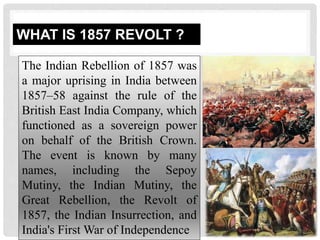
The Indian Rebellion of 1857 was
a major uprising in India between
1857–58 against the rule of the
British East India Company, which
functioned as a sovereign power
on behalf of the British Crown.
The event is known by many
names, including the Sepoy
Mutiny, the Indian Mutiny, the
Great Rebellion, the Revolt of
1857, the Indian Insurrection, and
India's First War of Independence
WHAT IS 1857 REVOLT ?
The rebellion began on 10 May 1857 in the form of a mutiny of
sepoys of the Company's army in the town of Meerut, 40 miles
northeast of Delhi .
It then erupted into other mutinies and civilian rebellions chiefly in
the upper Gangetic plain and central India, though incidents of revolt
also occurred farther north and east. The rebellion posed a
considerable threat to British power in that region,and was contained
only with the rebels' defeat in Gwalior on 20 June 1858.
On 1 November 1858, the British granted amnesty to all rebels not
involved in murder, though they did not declare the hostilities
formally to have ended until 8 July 1859.
WAY OF REBELLION
1. Political and Administrative
Reasons
2. Economic Causes
3. Social and Religious Causes:
4. Military and Immediate Causes
CAUSES OF THE
REBELLION
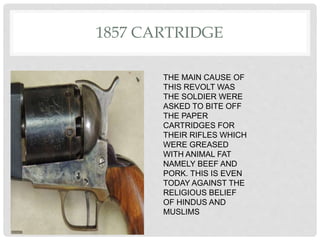
1857 CARTRIDGE
THE MAIN CAUSE OF
THIS REVOLT WAS
THE SOLDIER WERE
ASKED TO BITE OFF
THE PAPER
CARTRIDGES FOR
THEIR RIFLES WHICH
WERE GREASED
WITH ANIMAL FAT
NAMELY BEEF AND
PORK. THIS IS EVEN
TODAY AGAINST THE
RELIGIOUS BELIEF
OF HINDUS AND
MUSLIMS
IMPORTANT REVELUTION CENTERS
AND THEIR LEADERS
• BARRACKPORE MANGAL PANDEY
• LUCKNOW BEGUM HAZRAT MAHAL
• JHANSI RANI LAKSHMI BHAI
• KANPUR NANA SAHEB
• DELHI BAHADUR SHAH ZAFAR
• BIHAR KUNWAR SING
• BARELLY KHAN BAHADUR KHAN
The prominent leaders of
1857 revolt were:
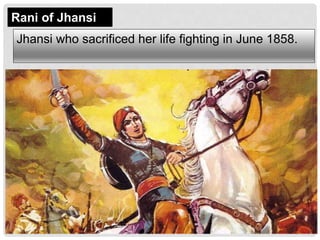
1. The Rani of Jhansi who sacrificed her life fighting in
June 1858.
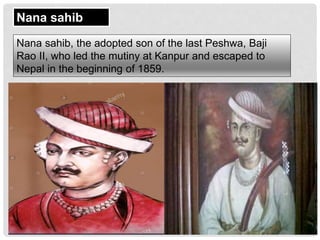
2. Nana saheb, the adopted son of the last Peshwa, Baji
Rao II, who led the mutiny at Kanpur and escaped to
Nepal in the beginning of 1859.
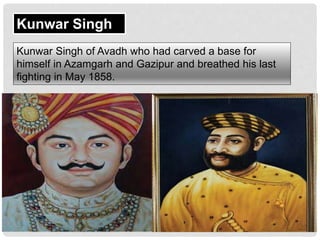
3. Kunwar Singh of Avadh who had carved a base for
himself in Azamgarh and Gazipur and breathed his last
fighting in May 1858.
4. Begum Hazarat Mahal
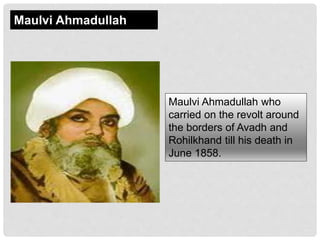
5. Maulvi Ahmadullah who carried on the revolt around the
borders of Avadh and Rohilkhand till his death in June
1858.
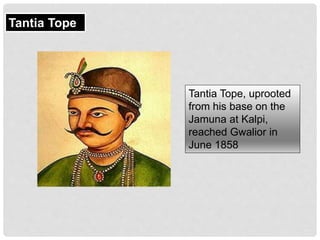
6. Tantia Tope, uprooted from his base on the Jamuna at
Kalpi, reached Gwalior in June 1858.
Rani of Jhansi
Jhansi who sacrificed her life fighting in June 1858.
Nana sahib
Nana sahib, the adopted son of the last Peshwa, Baji
Rao II, who led the mutiny at Kanpur and escaped to
Nepal in the beginning of 1859.
Kunwar Singh
Kunwar Singh of Avadh who had carved a base for
himself in Azamgarh and Gazipur and breathed his last
fighting in May 1858.
Maulvi Ahmadullah who
carried on the revolt around
the borders of Avadh and
Rohilkhand till his death in
June 1858.
Maulvi Ahmadullah
Tantia Tope, uprooted
from his base on the
Jamuna at Kalpi,
reached Gwalior in
June 1858
Tantia Tope
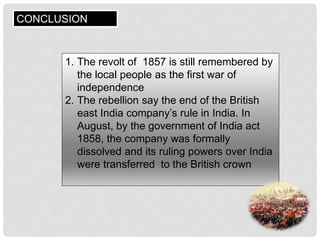
CONCLUSION
1. The revolt of 1857 is still remembered by
the local people as the first war of
independence
2. The rebellion say the end of the British
east India company’s rule in India. In
August, by the government of India act
1858, the company was formally
dissolved and its ruling powers over India
were transferred to the British crown

1857 revolt

  • 1.
    1857 REVOLT FREEDOM STRUGGLE MUNEERATV SOCIAL SCIENCE ROLL NO:46 KSTC 1 8 5 7
  • 2.
    The Indian Rebellionof 1857 was a major uprising in India between 1857–58 against the rule of the British East India Company, which functioned as a sovereign power on behalf of the British Crown. The event is known by many names, including the Sepoy Mutiny, the Indian Mutiny, the Great Rebellion, the Revolt of 1857, the Indian Insurrection, and India's First War of Independence WHAT IS 1857 REVOLT ?
  • 4.
    The rebellion beganon 10 May 1857 in the form of a mutiny of sepoys of the Company's army in the town of Meerut, 40 miles northeast of Delhi . It then erupted into other mutinies and civilian rebellions chiefly in the upper Gangetic plain and central India, though incidents of revolt also occurred farther north and east. The rebellion posed a considerable threat to British power in that region,and was contained only with the rebels' defeat in Gwalior on 20 June 1858. On 1 November 1858, the British granted amnesty to all rebels not involved in murder, though they did not declare the hostilities formally to have ended until 8 July 1859. WAY OF REBELLION
  • 5.
    1. Political andAdministrative Reasons 2. Economic Causes 3. Social and Religious Causes: 4. Military and Immediate Causes CAUSES OF THE REBELLION
  • 6.
    1857 CARTRIDGE THE MAINCAUSE OF THIS REVOLT WAS THE SOLDIER WERE ASKED TO BITE OFF THE PAPER CARTRIDGES FOR THEIR RIFLES WHICH WERE GREASED WITH ANIMAL FAT NAMELY BEEF AND PORK. THIS IS EVEN TODAY AGAINST THE RELIGIOUS BELIEF OF HINDUS AND MUSLIMS
  • 7.
    IMPORTANT REVELUTION CENTERS ANDTHEIR LEADERS • BARRACKPORE MANGAL PANDEY • LUCKNOW BEGUM HAZRAT MAHAL • JHANSI RANI LAKSHMI BHAI • KANPUR NANA SAHEB • DELHI BAHADUR SHAH ZAFAR • BIHAR KUNWAR SING • BARELLY KHAN BAHADUR KHAN
  • 8.
    The prominent leadersof 1857 revolt were: 1. The Rani of Jhansi who sacrificed her life fighting in June 1858. 2. Nana saheb, the adopted son of the last Peshwa, Baji Rao II, who led the mutiny at Kanpur and escaped to Nepal in the beginning of 1859. 3. Kunwar Singh of Avadh who had carved a base for himself in Azamgarh and Gazipur and breathed his last fighting in May 1858. 4. Begum Hazarat Mahal 5. Maulvi Ahmadullah who carried on the revolt around the borders of Avadh and Rohilkhand till his death in June 1858. 6. Tantia Tope, uprooted from his base on the Jamuna at Kalpi, reached Gwalior in June 1858.
  • 9.
    Rani of Jhansi Jhansiwho sacrificed her life fighting in June 1858.
  • 10.
    Nana sahib Nana sahib,the adopted son of the last Peshwa, Baji Rao II, who led the mutiny at Kanpur and escaped to Nepal in the beginning of 1859.
  • 11.
    Kunwar Singh Kunwar Singhof Avadh who had carved a base for himself in Azamgarh and Gazipur and breathed his last fighting in May 1858.
  • 12.
    Maulvi Ahmadullah who carriedon the revolt around the borders of Avadh and Rohilkhand till his death in June 1858. Maulvi Ahmadullah
  • 13.
    Tantia Tope, uprooted fromhis base on the Jamuna at Kalpi, reached Gwalior in June 1858 Tantia Tope
  • 14.
    CONCLUSION 1. The revoltof 1857 is still remembered by the local people as the first war of independence 2. The rebellion say the end of the British east India company’s rule in India. In August, by the government of India act 1858, the company was formally dissolved and its ruling powers over India were transferred to the British crown