THE
REVOLT OF
1857
IN INDIA
The Indian Rebellion of 1857 was a major, but ultimately unsuccessful, uprising in
India in 1857–58 against British rule. For nearly 100 years, that rule had been
presided over by the British East India Company, which had functioned as a
sovereign power on behalf of the British Crown. The rebellion began on 10 May
1857 in the form of a mutiny of sepoys of the Company's army in the garrison
town of Meerut, 40 miles northeast of Delhi. It then erupted into other mutinies
and civilian rebellions chiefly in the upper Gangetic plain and central India,
though incidents of revolt also occurred farther north and east.On 1 November
1858, the British granted amnesty to all rebels not involved in murder, though
they did not declare the hostilities formally to have ended until 8 July 1859. The
rebellion is known by many names, including the Sepoy Mutiny, the Indian
Mutiny, the Great Rebellion, the Revolt of 1857, the Indian Insurrection, and
India's First War of Independence.
1857 REVOLT
The En-field rifle could be operated only once the cartridge is bitten off
but the reason why Sepoy resisted was the grease was made of pig meat
Few of the Sepoy who were posted in Afghan war were supposed to eat
whatever came along and once the Sepoy s were back from the war, their
families have seen them as an outcast. Here being a Sepoy was
considered the most prestigious job back then but the same reason is
causing them the humiliation.
One more belief of Indians was that crossing the sea was seen as
inauspicious but around 1857 any Sepoy who worked under British should
cross the sea if required. Crossing the sea meant loss of caste.
Immediate cause
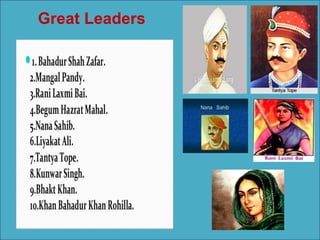
Great Leaders
The people of all classes became angry with the British due to the latter’s
despotic policy of aggression adapted from the battle of Plassey to the
revolt of 1857 A.D.Lord Dalhousie deprived the Indians from adopting a son
by implementing his doctrine of Lapse. By this policy he occupied the
princely states of Satara, Sambalpur, Nagpur, and Jhansi and aroused public
sentiment against him.
Apart from the princely states, the Santhals, Bhils, Khasis, Jaths and the
Faraizis revolted against the British.
The Indian sepoys of Bhopal were angry with the British since 1806 A.D.
Because, they were deprived of the right to wear tikas on the forehead or
turbans on the head.
Clive introduced a double rule in the name of good government and brought
famine in India.
Wellesley’s Subsidiary alliance by which he grabbed different provinces
increased political resentment.
Political cause
Indian markets were full of Manchester clothes which ultimately destroyed
India’s handicraft industry.
Besides the high rate of tariff and the ‘Drainage of wealth’ led to famines and
epidemics in India.
After the attainment of Diwani the cost of land revenue was also increased to
a great extent.
At the same time, the salaries of the Indians were much lower than that of the
Europeans. One statistics recorded that when 98 lakhs pounds were spent for
3,15,650 Indians annually, a sum of 2356 lakhs 60 thousand pounds were
spent for 51316 white officers. This economic discrimination was one of the
main reasons of the great revolt.
Economic cause
Indian sepoys formed more than 87% of British troops in India. They
were considered inferior to British soldiers. An Indian sepoy was paid
less than a European sepoy of the same rank. Besides, an Indian sepoy
could not rise to a rank higher than that of a Subedar
The extension of the British Empire in India had adversely affected the
service conditions of Indian sepoys. They were required to serve in
areas far away from their homes. In 1856 Lord Canning issued the
General Services Enlistment Act which required that the sepoys must
be ready to serve even in British land across the sea.
Military cause
A large section of the population was alarmed by the rapid spread of
Western civilization in India. An Act in 1850 changed the Hindu law of
inheritance enabling a Hindu who had converted into Christianity to
inherit his ancestral properties. Besides, the missionaries were
allowed to make conversions to Christianity all over India. The people
were convinced that the Government was planning to convert Indians
to Christianity.
The abolition of practices like sati and female infanticide, and the
legislation legalizing widow remarriage, were threats to the
established social structure. Even the introduction of the railways and
telegraph was viewed with suspicion.
Social and Religious cause
The Revolt of 1857 exposed the danger involved in allowing a commercial
organisation to rule over a country. Thus British government passed
Government of India Act 1858 on August 2, 1858, according to which the
power that the company enjoyed was snatched and a direct rule was
established. The supreme executive and legislative authority in India
henceforth came to be known as the Governor-General and the Viceroy Lord
Canning so far known as the Governor General of India also became the first
Viceroy of India.
The proportion of Indian soldiers in the army was reduced and the number
of European soldiers in the army was increased.
Policies were made to protect landlords and zamindars and give them
security of rights over their lands.
Muslims were considered to be responsible for the rebellion in a big way.
Hence their land and property was confiscated on large scale.
This policy freed the cultivators from tedious settlements and excessive
demands of the state. The financial system was also decentralized by
entrusting some items of taxation to local governments.
Effects
SHANTY E V

1857 REVOLT

  • 2.
  • 3.
    The Indian Rebellionof 1857 was a major, but ultimately unsuccessful, uprising in India in 1857–58 against British rule. For nearly 100 years, that rule had been presided over by the British East India Company, which had functioned as a sovereign power on behalf of the British Crown. The rebellion began on 10 May 1857 in the form of a mutiny of sepoys of the Company's army in the garrison town of Meerut, 40 miles northeast of Delhi. It then erupted into other mutinies and civilian rebellions chiefly in the upper Gangetic plain and central India, though incidents of revolt also occurred farther north and east.On 1 November 1858, the British granted amnesty to all rebels not involved in murder, though they did not declare the hostilities formally to have ended until 8 July 1859. The rebellion is known by many names, including the Sepoy Mutiny, the Indian Mutiny, the Great Rebellion, the Revolt of 1857, the Indian Insurrection, and India's First War of Independence. 1857 REVOLT
  • 4.
    The En-field riflecould be operated only once the cartridge is bitten off but the reason why Sepoy resisted was the grease was made of pig meat Few of the Sepoy who were posted in Afghan war were supposed to eat whatever came along and once the Sepoy s were back from the war, their families have seen them as an outcast. Here being a Sepoy was considered the most prestigious job back then but the same reason is causing them the humiliation. One more belief of Indians was that crossing the sea was seen as inauspicious but around 1857 any Sepoy who worked under British should cross the sea if required. Crossing the sea meant loss of caste. Immediate cause
  • 5.
  • 6.
    The people ofall classes became angry with the British due to the latter’s despotic policy of aggression adapted from the battle of Plassey to the revolt of 1857 A.D.Lord Dalhousie deprived the Indians from adopting a son by implementing his doctrine of Lapse. By this policy he occupied the princely states of Satara, Sambalpur, Nagpur, and Jhansi and aroused public sentiment against him. Apart from the princely states, the Santhals, Bhils, Khasis, Jaths and the Faraizis revolted against the British. The Indian sepoys of Bhopal were angry with the British since 1806 A.D. Because, they were deprived of the right to wear tikas on the forehead or turbans on the head. Clive introduced a double rule in the name of good government and brought famine in India. Wellesley’s Subsidiary alliance by which he grabbed different provinces increased political resentment. Political cause
  • 7.
    Indian markets werefull of Manchester clothes which ultimately destroyed India’s handicraft industry. Besides the high rate of tariff and the ‘Drainage of wealth’ led to famines and epidemics in India. After the attainment of Diwani the cost of land revenue was also increased to a great extent. At the same time, the salaries of the Indians were much lower than that of the Europeans. One statistics recorded that when 98 lakhs pounds were spent for 3,15,650 Indians annually, a sum of 2356 lakhs 60 thousand pounds were spent for 51316 white officers. This economic discrimination was one of the main reasons of the great revolt. Economic cause
  • 8.
    Indian sepoys formedmore than 87% of British troops in India. They were considered inferior to British soldiers. An Indian sepoy was paid less than a European sepoy of the same rank. Besides, an Indian sepoy could not rise to a rank higher than that of a Subedar The extension of the British Empire in India had adversely affected the service conditions of Indian sepoys. They were required to serve in areas far away from their homes. In 1856 Lord Canning issued the General Services Enlistment Act which required that the sepoys must be ready to serve even in British land across the sea. Military cause
  • 9.
    A large sectionof the population was alarmed by the rapid spread of Western civilization in India. An Act in 1850 changed the Hindu law of inheritance enabling a Hindu who had converted into Christianity to inherit his ancestral properties. Besides, the missionaries were allowed to make conversions to Christianity all over India. The people were convinced that the Government was planning to convert Indians to Christianity. The abolition of practices like sati and female infanticide, and the legislation legalizing widow remarriage, were threats to the established social structure. Even the introduction of the railways and telegraph was viewed with suspicion. Social and Religious cause
  • 10.
    The Revolt of1857 exposed the danger involved in allowing a commercial organisation to rule over a country. Thus British government passed Government of India Act 1858 on August 2, 1858, according to which the power that the company enjoyed was snatched and a direct rule was established. The supreme executive and legislative authority in India henceforth came to be known as the Governor-General and the Viceroy Lord Canning so far known as the Governor General of India also became the first Viceroy of India. The proportion of Indian soldiers in the army was reduced and the number of European soldiers in the army was increased. Policies were made to protect landlords and zamindars and give them security of rights over their lands. Muslims were considered to be responsible for the rebellion in a big way. Hence their land and property was confiscated on large scale. This policy freed the cultivators from tedious settlements and excessive demands of the state. The financial system was also decentralized by entrusting some items of taxation to local governments. Effects
  • 11.