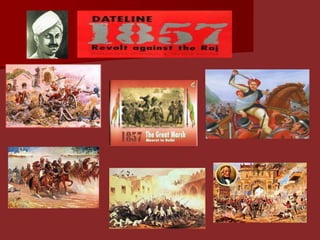
THE REVOLT OF
1857
“The Sepoy Mutiny”
THE GREAT REVOLT
THE FIRST WAR OF INDEPENDENCE
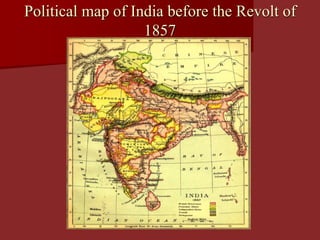
Political map of India before the Revolt of
1857
Causes of the Revolt of 1857
 Political
Economic
Military
Social
Administrative
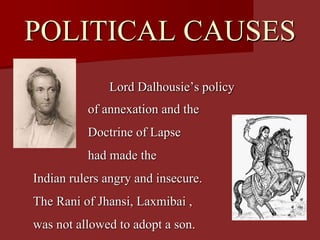
POLITICAL CAUSES
Lord Dalhousie’s policy
of annexation and the
Doctrine of Lapse
had made the
Indian rulers angry and insecure.
The Rani of Jhansi, Laxmibai ,
was not allowed to adopt a son.
The Muslim feelings had been badly
hurt when after the death of Bahadur
Shah II, Lord Canning took away
regal titles and Moghul palaces.
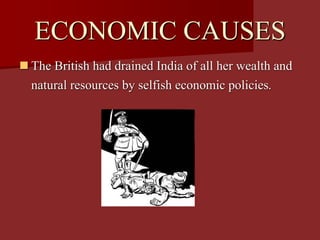
ECONOMIC CAUSES
 The British had drained India of all her wealth and
natural resources by selfish economic policies.
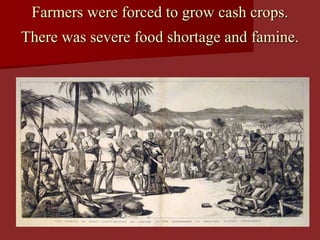
Farmers were forced to grow cash crops.
There was severe food shortage and famine.
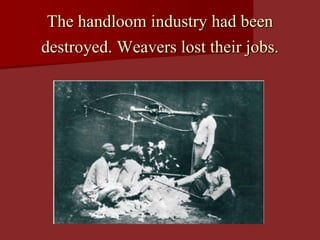
The handloom industry had been
destroyed. Weavers lost their jobs.
SOCIAL CAUSES
The practice of sati was abolished. Widow
remarriage was encouraged. Child
marriage, was not allowed. Interference of
British in Indian social customs.
Common people did not appreciate
changes in social customs, westernization
brought about by the British.
RELIGIOUS CAUSES
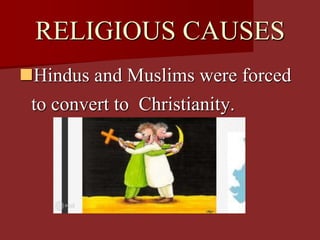
Hindus and Muslims were forced
to convert to Christianity.
ADMINISTRATIVE
CAUSES
.High posts and handsome
salaries were given to the British.
This caused frustration amongst
Indians.
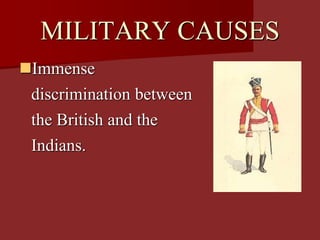
MILITARY CAUSES
Immense
discrimination between
the British and the
Indians.
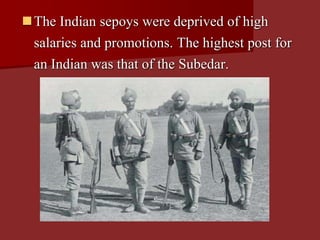
The Indian sepoys were deprived of high
salaries and promotions. The highest post for
an Indian was that of the Subedar.
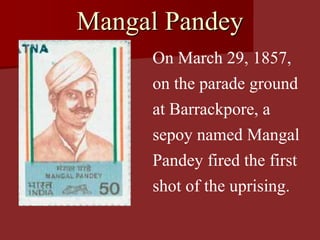
Mangal Pandey
On March 29, 1857,
on the parade ground
at Barrackpore, a
sepoy named Mangal
Pandey fired the first
shot of the uprising.
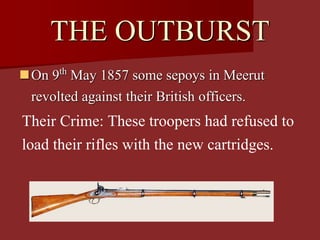
THE OUTBURST
On 9th May 1857 some sepoys in Meerut
revolted against their British officers.
Their Crime: These troopers had refused to
load their rifles with the new cartridges.
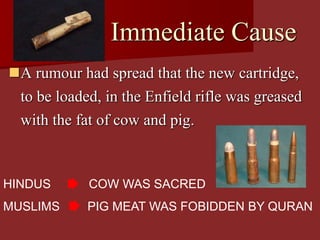
Immediate Cause
A rumour had spread that the new cartridge,
to be loaded, in the Enfield rifle was greased
with the fat of cow and pig.
HINDUS COW WAS SACRED
MUSLIMS PIG MEAT WAS FOBIDDEN BY QURAN
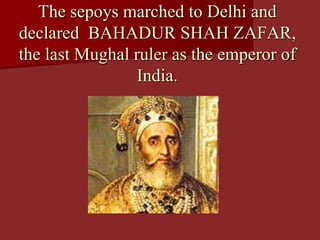
The sepoys marched to Delhi and
declared BAHADUR SHAH ZAFAR,
the last Mughal ruler as the emperor of
India.
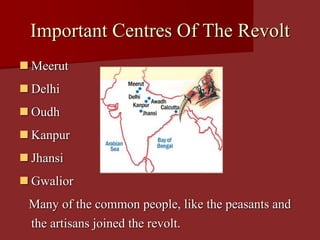
Important Centres Of The Revolt
 Meerut
 Delhi
 Oudh
 Kanpur
 Jhansi
 Gwalior
Many of the common people, like the peasants and
the artisans joined the revolt.
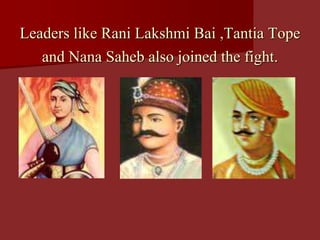
Leaders like Rani Lakshmi Bai ,Tantia Tope
and Nana Saheb also joined the fight.
OUTCOME
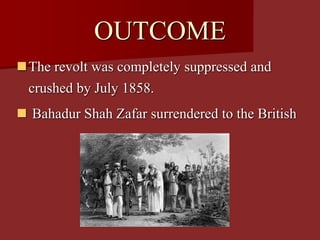
The revolt was completely suppressed and
crushed by July 1858.
 Bahadur Shah Zafar surrendered to the British
CAUSES OF FAILURE OF
THE REVOLT
 Localized
 Poorly organized.
British had better resources than the rebels.
 Feudal in character.
Leaders lacked military skills.
No unity.
The native princes did not join the revolt.
MAJOR IMPACT OF THE
REVOLT
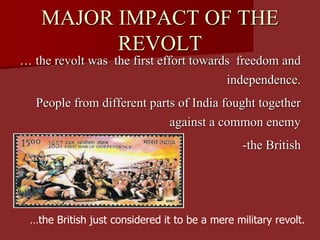
… the revolt was the first effort towards freedom and
independence.
People from different parts of India fought together
against a common enemy
-the British
…the British just considered it to be a mere military revolt.
IMPACT OF THE REVOLT
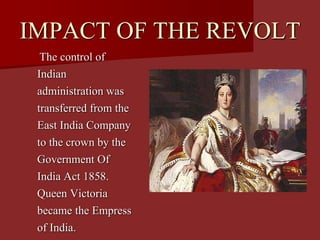
The control of
Indian
administration was
transferred from the
East India Company
to the crown by the
Government Of
India Act 1858.
Queen Victoria
became the Empress
of India.

The Revolt-of-1857

  • 1.
  • 2.
    THE GREAT REVOLT THEFIRST WAR OF INDEPENDENCE
  • 3.
    Political map ofIndia before the Revolt of 1857
  • 4.
    Causes of theRevolt of 1857  Political Economic Military Social Administrative
  • 5.
    POLITICAL CAUSES Lord Dalhousie’spolicy of annexation and the Doctrine of Lapse had made the Indian rulers angry and insecure. The Rani of Jhansi, Laxmibai , was not allowed to adopt a son.
  • 6.
    The Muslim feelingshad been badly hurt when after the death of Bahadur Shah II, Lord Canning took away regal titles and Moghul palaces.
  • 7.
    ECONOMIC CAUSES  TheBritish had drained India of all her wealth and natural resources by selfish economic policies.
  • 8.
    Farmers were forcedto grow cash crops. There was severe food shortage and famine.
  • 9.
    The handloom industryhad been destroyed. Weavers lost their jobs.
  • 10.
    SOCIAL CAUSES The practiceof sati was abolished. Widow remarriage was encouraged. Child marriage, was not allowed. Interference of British in Indian social customs. Common people did not appreciate changes in social customs, westernization brought about by the British.
  • 11.
    RELIGIOUS CAUSES Hindus andMuslims were forced to convert to Christianity.
  • 12.
    ADMINISTRATIVE CAUSES .High posts andhandsome salaries were given to the British. This caused frustration amongst Indians.
  • 13.
  • 14.
    The Indian sepoyswere deprived of high salaries and promotions. The highest post for an Indian was that of the Subedar.
  • 15.
    Mangal Pandey On March29, 1857, on the parade ground at Barrackpore, a sepoy named Mangal Pandey fired the first shot of the uprising.
  • 16.
    THE OUTBURST On 9thMay 1857 some sepoys in Meerut revolted against their British officers. Their Crime: These troopers had refused to load their rifles with the new cartridges.
  • 17.
    Immediate Cause A rumourhad spread that the new cartridge, to be loaded, in the Enfield rifle was greased with the fat of cow and pig. HINDUS COW WAS SACRED MUSLIMS PIG MEAT WAS FOBIDDEN BY QURAN
  • 18.
    The sepoys marchedto Delhi and declared BAHADUR SHAH ZAFAR, the last Mughal ruler as the emperor of India.
  • 19.
    Important Centres OfThe Revolt  Meerut  Delhi  Oudh  Kanpur  Jhansi  Gwalior Many of the common people, like the peasants and the artisans joined the revolt.
  • 21.
    Leaders like RaniLakshmi Bai ,Tantia Tope and Nana Saheb also joined the fight.
  • 22.
    OUTCOME The revolt wascompletely suppressed and crushed by July 1858.  Bahadur Shah Zafar surrendered to the British
  • 23.
    CAUSES OF FAILUREOF THE REVOLT  Localized  Poorly organized. British had better resources than the rebels.  Feudal in character. Leaders lacked military skills. No unity. The native princes did not join the revolt.
  • 24.
    MAJOR IMPACT OFTHE REVOLT … the revolt was the first effort towards freedom and independence. People from different parts of India fought together against a common enemy -the British …the British just considered it to be a mere military revolt.
  • 25.
    IMPACT OF THEREVOLT The control of Indian administration was transferred from the East India Company to the crown by the Government Of India Act 1858. Queen Victoria became the Empress of India.