18. We are Fine
Adam Briggle
UNT Phil 4250 Climate Change
adam.briggle@unt.edu
Big Picture
• We know we have to reduce GHG emissions
• But how much? (net zero?)
• How? (carbon tax, innovations…?)
• How fast? (by 2030…2050?)
• And how do we weigh costs of these reductions against damages and
dangers of climate change? (the danger is so high and so immediate that it is
worth a massive cost… or…?)
• Climate change is a problem…but how urgent is it?
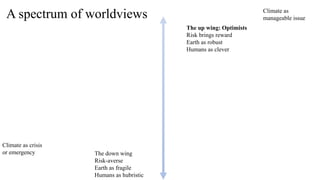
A spectrum of worldviews
Climate as crisis
or emergency
Climate as
manageable issue
The down wing
Risk-averse
Earth as fragile
Humans as hubristic
The up wing: Optimists
Risk brings reward
Earth as robust
Humans as clever
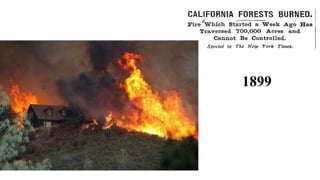
1899
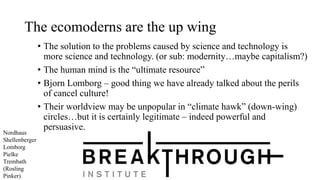
The ecomoderns are the up wing
• The solution to the problems caused by science and technology is
more science and technology. (or sub: modernity…maybe capitalism?)
• The human mind is the “ultimate resource”
• Bjorn Lomborg – good thing we have already talked about the perils
of cancel culture!
• Their worldview may be unpopular in “climate hawk” (down-wing)
circles…but it is certainly legitimate – indeed powerful and
persuasive.
Nordhaus
Shellenberger
Lomborg
Pielke
Trembath
(Rosling
Pinker)
Calm Down
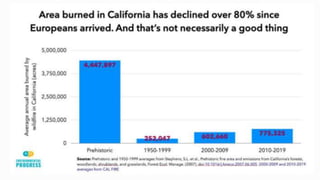
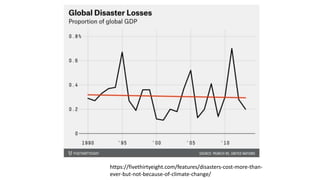
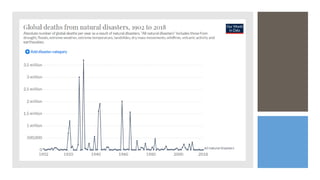
• Disasters are not new
• The world is not going to end in ten years
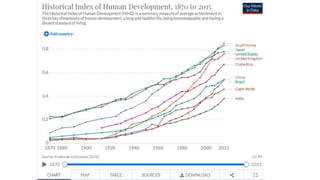
• The world is getting better…
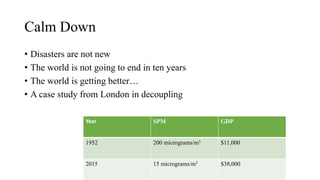
• A case study from London in decoupling
Year SPM GDP
1952 200 micrograms/m3 $11,000
2015 15 micrograms/m3 $38,000
https://fivethirtyeight.com/features/disasters-cost-more-than-
ever-but-not-because-of-climate-change/
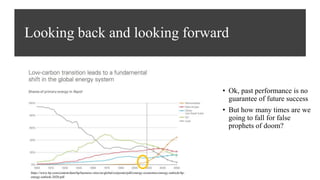
Looking back and looking forward
• Ok, past performance is no
guarantee of future success
• But how many times are we
going to fall for false
prophets of doom?
https://www.bp.com/content/dam/bp/business-sites/en/global/corporate/pdfs/energy-economics/energy-outlook/bp-
energy-outlook-2020.pdf
The up wing (ecomodern) vision
• Our ‘schedule’ (future) is one of increasing temps, at least for the next
several decades. (True, we won’t hit 1.5C, probably not even 2C)
• But it is also a future with dramatically less hunger and poverty.
• A wealthier future will be better adapted to the warming world – and will be
better able to mitigate emissions to reduce warming.
• Indeed, the supposed ‘business as usual’ RCP scenarios are quickly outdated
as decarbonization increases.
• In the long run, we can turn the temp down.
• Vast areas will be re-wilded as we develop more efficient agricultural
systems (e.g., lab-grown meats).
• We will have begun extra-planetary resource extraction – effectively zoning
the Earth ‘residential.’
We need to see climate change for what it is
• Climate change is a problem…
• …a first-world problem: It is better than the problems we are solving
along the way: poverty, poor health, short lives, and lack of education
and opportunity.
• Climate change is the cost paid for the benefits of development.
• Development gives us the technology and wealth we need to handle
the challenges posed by climate change.
What should we do?
• So, yes, we need to act, but act smart.
• Immediate, drastic restrictions fossil fuels impose present costs that
are not justified by future benefits (we should adopt a fairly high
discount rate).
• The smartest form of action is to incentivize low and zero carbon
technology development….nuclear power must be a priority. Electrify
everything.
• Help the poor. Combat inequality. Wealthy people survive better and
can afford to care about nature.
From Sin to Dignity
• The pessimist take on climate change is an eco-theology about
sinfulness, transgression, hubris…
• But we are natural creatures doing what we do best – use intelligence
to control our environment
• Along the way, we are truly ‘humanizing’ ourselves, making life more
dignified for more and more people.
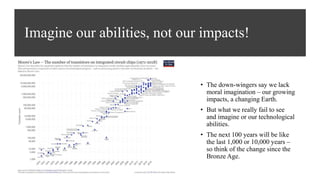
Imagine our abilities, not our impacts!
• The down-wingers say we lack
moral imagination – our growing
impacts, a changing Earth.
• But what we really fail to see
and imagine or our technological
abilities.
• The next 100 years will be like
the last 1,000 or 10,000 years –
so think of the change since the
Bronze Age.
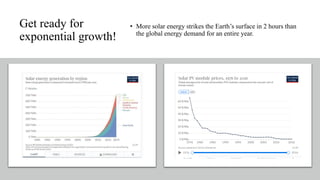
Get ready for
exponential growth!
• More solar energy strikes the Earth’s surface in 2 hours than
the global energy demand for an entire year.
“So, should we be
panicked or not…?”
Ackbar, confused
space squid

18. Climate Change: We are Fine

  • 1.
    18. We areFine Adam Briggle UNT Phil 4250 Climate Change adam.briggle@unt.edu
  • 2.
    Big Picture • Weknow we have to reduce GHG emissions • But how much? (net zero?) • How? (carbon tax, innovations…?) • How fast? (by 2030…2050?) • And how do we weigh costs of these reductions against damages and dangers of climate change? (the danger is so high and so immediate that it is worth a massive cost… or…?) • Climate change is a problem…but how urgent is it?
  • 3.
    A spectrum ofworldviews Climate as crisis or emergency Climate as manageable issue The down wing Risk-averse Earth as fragile Humans as hubristic The up wing: Optimists Risk brings reward Earth as robust Humans as clever
  • 4.
  • 6.
    The ecomoderns arethe up wing • The solution to the problems caused by science and technology is more science and technology. (or sub: modernity…maybe capitalism?) • The human mind is the “ultimate resource” • Bjorn Lomborg – good thing we have already talked about the perils of cancel culture! • Their worldview may be unpopular in “climate hawk” (down-wing) circles…but it is certainly legitimate – indeed powerful and persuasive. Nordhaus Shellenberger Lomborg Pielke Trembath (Rosling Pinker)
  • 7.
    Calm Down • Disastersare not new • The world is not going to end in ten years • The world is getting better… • A case study from London in decoupling Year SPM GDP 1952 200 micrograms/m3 $11,000 2015 15 micrograms/m3 $38,000
  • 9.
  • 11.
    Looking back andlooking forward • Ok, past performance is no guarantee of future success • But how many times are we going to fall for false prophets of doom? https://www.bp.com/content/dam/bp/business-sites/en/global/corporate/pdfs/energy-economics/energy-outlook/bp- energy-outlook-2020.pdf
  • 12.
    The up wing(ecomodern) vision • Our ‘schedule’ (future) is one of increasing temps, at least for the next several decades. (True, we won’t hit 1.5C, probably not even 2C) • But it is also a future with dramatically less hunger and poverty. • A wealthier future will be better adapted to the warming world – and will be better able to mitigate emissions to reduce warming. • Indeed, the supposed ‘business as usual’ RCP scenarios are quickly outdated as decarbonization increases. • In the long run, we can turn the temp down. • Vast areas will be re-wilded as we develop more efficient agricultural systems (e.g., lab-grown meats). • We will have begun extra-planetary resource extraction – effectively zoning the Earth ‘residential.’
  • 13.
    We need tosee climate change for what it is • Climate change is a problem… • …a first-world problem: It is better than the problems we are solving along the way: poverty, poor health, short lives, and lack of education and opportunity. • Climate change is the cost paid for the benefits of development. • Development gives us the technology and wealth we need to handle the challenges posed by climate change.
  • 14.
    What should wedo? • So, yes, we need to act, but act smart. • Immediate, drastic restrictions fossil fuels impose present costs that are not justified by future benefits (we should adopt a fairly high discount rate). • The smartest form of action is to incentivize low and zero carbon technology development….nuclear power must be a priority. Electrify everything. • Help the poor. Combat inequality. Wealthy people survive better and can afford to care about nature.
  • 15.
    From Sin toDignity • The pessimist take on climate change is an eco-theology about sinfulness, transgression, hubris… • But we are natural creatures doing what we do best – use intelligence to control our environment • Along the way, we are truly ‘humanizing’ ourselves, making life more dignified for more and more people.
  • 16.
    Imagine our abilities,not our impacts! • The down-wingers say we lack moral imagination – our growing impacts, a changing Earth. • But what we really fail to see and imagine or our technological abilities. • The next 100 years will be like the last 1,000 or 10,000 years – so think of the change since the Bronze Age.
  • 17.
    Get ready for exponentialgrowth! • More solar energy strikes the Earth’s surface in 2 hours than the global energy demand for an entire year.
  • 18.
    “So, should webe panicked or not…?” Ackbar, confused space squid