R enal  F ailure : acute, chronic &ESRD Saeed M.G. Al-Ghamdi, FRCPS,FACP Faculty of Medicine  King Abdulaziz University Hospital
RF : Items for Discussion  Definitions of ARF, CRF & ESRD Classification & causes of RF Statistics Presentations  Investigations Treatment
ARF : Definition  Abrupt decline of Glomerular filtration rate which is   potentially reversible
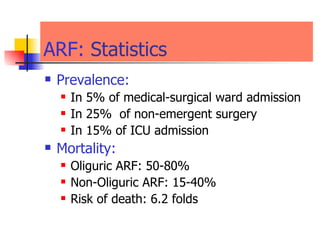
ARF:  Statistics  Prevalence: In 5% of medical-surgical ward admission  In 25%  of non-emergent surgery  In 15% of ICU admission  Mortality:   Oliguric ARF: 50-80% Non-Oliguric ARF: 15-40% Risk of death: 6.2 folds
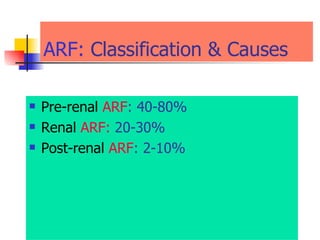
ARF:   Classification & Causes Pre-renal  ARF :   40-80%  Renal  ARF:  20-30% Post-renal  ARF : 2-10%
Pre-renal Causes:  1) Extra-renal fluid loss: Vomiting  Continuous un-replaced NG suctioning Continuous un-replaced drainage  Diarrhea , intestinal fistula  Pancreatitis  Intestinal obstruction  Excessive Sweating & heat stroke ,burns
Pre-renal Causes:  2) Renal fluid loss Osmotic Diuretics: hyperglycemia, mannitol  Loop and thiazide diuretics  Un-replaced post-obstructive diurecis  3) Change in renal hemodynamics  ACEI in bilateral Renal Artery Stenosis  NSAIDS in patient with dehydration or CHF
Pre-renal Causes 4) Cardiac causes   Due to renal hypo-perfusion   In severe systolic heart failure (EF <15%) Severe valvular heart disease  Arrhythmias: Complete Heart Block  Cardiac temponade  Right Ventricular Infarction  Severe core pulmonale
ARF:  Pre-renal Causes  5) Peripheral vasodilatation: Anti-hypertensive drugs  6) Hepato-Renal Syndrome  Due to renal vaso-constrictors & third spacing In advanced irreversible liver disease  Other causes of ARF should be ruled out  Very low urine sodium (<10)
Renal Causes of  ARF 1) acute tubular necrosis (ATN) Septic syndrome (with & without hypotension)  Significant bleeding leading to prolonged hypotension  Severe dehydration leading to prolonged hypotension  Cardiogenic shock  Severe PET & ET
Renal Causes of  ARF  (Cont..) 2 )  Toxic and pigment-induced ATN Aminoglycoside nephrotoxicity  Amphotericin-induced nephrotoxicity  Contrast-nephropathy  Hemoglobinuria (severe intravascular hemolysis)  Myoglobinuria (Rhabdomyolysis)
Renal Causes of  ARF  (Cont..) 3) Glomerular diseases and systemic vasculitis   Rapidly progressive Glomerulonephritis (RPGN)  Immune-complex nephritis: (post-infectious GN, lupus nephritis, HSP, ..Etc.) Anti-GBM disease  Pauci-immune nephritis: Wegener's Granulomatosis
Renal Causes of  ARF  (Cont..) 4) acute  interstitial nephritis   Drug-induced (NSAIDS, beta lactam antibiotics,rifampicin, furosemide, allopurinol  ..Etc.) Auto-immune (SLE, Sjogren syndrome, HES )  Infection-related (Legionella, salmonella ,..Etc.) Sarcoidosis Idiopathic
Renal Causes of  ARF  (Cont..) 5) Acute Pyelonephritis In transplant kidney  In single functioning kidney  6) Acute Allograft Rejection  7) Lymphomatous Infiltration of the kidneys In HIV+ve Patients  PTLD
ARF:   Renal Causes  8) renal vasular & Ischemic disorders   Vasculitis  Scleroderma renal crisis  Malignant HTN TTP, HUS, DIC Renal artery thrombosis  Renal vein thrombosis  Cholesterol Athero-embolic disease
ARF:   Renal Causes  (contin..) 9) acute cortical necrosis (ACN) In association with hypotension and DIC Abruptio placenta, placenta previa  IUFD Presentation: Loin pain  Anuria  Gross hematuria  Cortical calcification (after healing)
Renal Causes of  ARF   (Cont..) 10) acute papillary necrosis  Acute Pyelonephritis in diabetic Sickle cell disease  Phenacetin-induced nephropathy  Pesentation: Loin pain Oligo-anuria  Passage of tissues (papillae)
ARF : Presentation (Cont..) Features suggest renal causes of   ARF History of arthritis and  or arthralgia  Recent drug exposure  Recent surgery and or intervention  Recent URTI or tonsillitis  Peri-orbital and facial edema  HTN and absence of signs of hypovolemia Vasculitis or livedo reticularis
ARF:   Post-renal Causes  Intra-renal (tubular) obstruction :  (medical) Acute uric acid nephropathy  Calcium oxalate Crystalluria: ethylene glycol poisoning or high dose vitamin C Myeloma cast nephropathy IV Methotrexate crystalluria IV acylovir and oral Indinavir crystalluria  Sulfonamides crystalluria (sulfadiazine, SMZ)
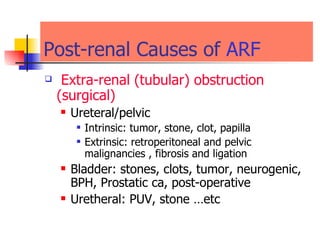
Post-renal Causes of  ARF Extra- renal ( tubular )  obstruction  (surgical)  Ureteral/pelvic  Intrinsic: tumor, stone, clot, papilla  Extrinsic: retroperitoneal and pelvic malignancies , fibrosis and ligation  Bladder: stones, clots, tumor, neurogenic, BPH, Prostatic ca , post-operative Uretheral: PUV , stone …etc
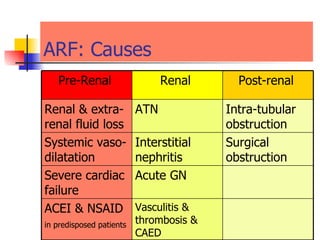
ARF: Causes  Vasculitis & thrombosis & CAED ACEI & NSAID  in predisposed patients   Acute GN Severe cardiac failure  Surgical obstruction  Interstitial nephritis  Systemic vaso-dilatation  Intra-tubular obstruction  ATN Renal & extra-renal fluid loss Post-renal  Renal  Pre-Renal
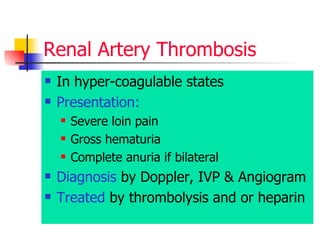
Renal Artery Thrombosis   In hyper-coagulable states Presentation: Severe loin pain  Gross hematuria  Complete anuria if bilateral Diagnosis  by Doppler, IVP & Angiogram  Treated  by thrombolysis and or heparin
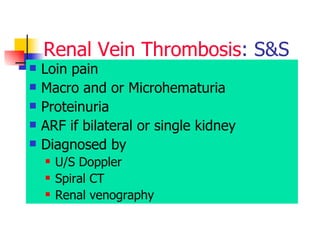
Renal   Vein Thrombosis : S&S L oin pain  Macro and or Microhematuria  Proteinuria  ARF if bilateral or single kidney  Diagnosed by  U/S Doppler Spiral CT  Renal venography
RVT : Predisposing Factors  Severe dehydration in neonates  Severe nephrotic syndrome (S.Alb.<20 g) Hypercoagulable states Protein S or C deficiency Anti-Phospholipids antibody syndrome Homocysteinuria Malignancies
Cholesterol Athero-embolic Disease Predisposing factors  Follows intravascular intervention May follow bellow renal  vascular surgery  May occur after anti-coagulation May occur spontaneously
CAED : Presentation  3-6 weeks after vascular instrumentation  Progressive rise of S.Creatinine  Livedo Reticularis  Gangrenous toes and peripheral skin  Thrombocytopenia  Eosinophilia  Hypocomplementemia  Diagnosed by kidney biopsy
ARF : Presentation  Features suggest pre-renal. Vomiting, diarrhea , NGT ..Etc. Uncontrolled DM. Diuretic use. Exposure to sun and hot weather. Postural hypotension and tachycardia. Low JVP. Dry axilla and mucous membranes.
ARF : Investigations  Rapidly rising S.Cr. & hyperkalemia  U/S kidneys & bladder  Urine analysis  RBCs and RBC casts suggest GN WBCs and WBC casts suggest AIN or acute pyelonephritis  Brown granular casts suggest ATN
ARF : Investigations (Cont..) Urine Eosinophils :  In AIN Urine myoglobulin :  in Rhabdomyolysis  Urine hemoglobin :  in Hemoglobinuria Urine sodium :  <10 mmol/l,  suggest  pre-renal Na +  Excretion Fraction:  <1% suggest  pre-renal  > 3% suggest  ATN
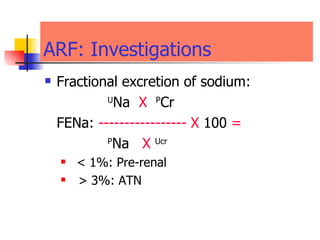
ARF:   Investigations  Fractional excretion of sodium:    U Na  X  P Cr  FENa:  -----------------   X  100  =   P Na  X   Ucr < 1%: Pre-renal  > 3%: ATN
ARF : Investigations (Cont..) Positive  ANA & Anti-dsDNA   in lupus nephritis  Low  C 3  & C 4   in :  Lupus nephritis  Pos-infectious GN MPGN Falsely positive  RF   in cryoglobulinemia
ARF : Investigations (Cont..) Positive  ANCA. Wegener's Granulomatosis. Microscopic Poly-Angiitis. Poly-Arteritis Nodosa. Positive  Anti-GBM   in Good Pasture ’ s syn. Monoclonal band  in Serum and or urine electrophoresis   in patients with paraprotein.
ARF : Investigations (Cont..)  CBC Neutrophilic Leucocytosis in infection Eosinophilia in allergic interstitial nephritis  Leucopenia & Thrombocytopenia  suggest SLE Prolonged  PT  &  PTT  and low   fibrinogen  in DIC and sepsis  Prolonged uncorrectable  PTT  in SLE
ARF:   Treatment First:  Treatment of the underlying cause  Second:  Conservative treatment of established ARF Third:  Dialysis if indication (s) arise
I)  Treatment According to the Cause  of  ARF Pre-Renal Failure:  Hydration  Post-Renal Failure:   Relieve obstruction  Catheterization  DJS Nephrostomy   Dialysis if indication arises  Replace urine output  ( Post-Obstructive Diurecis)
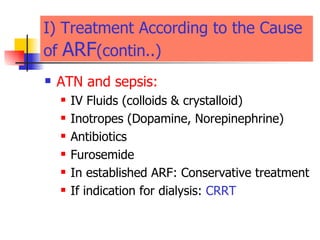
I) Treatment According to the Cause  of  ARF (contin..) ATN and sepsis: IV Fluids (colloids & crystalloid) Inotropes (Dopamine, Norepinephrine) Antibiotics Furosemide  In established ARF: Conservative treatment  If indication for dialysis:  CRRT
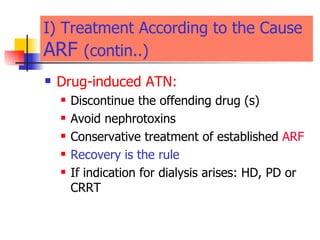
I) Treatment According to the Cause  ARF   (contin..) Drug-induced ATN: Discontinue the offending drug (s) Avoid nephrotoxins Conservative treatment of established  ARF   Recovery is the rule  If indication for dialysis arises: HD, PD or CRRT
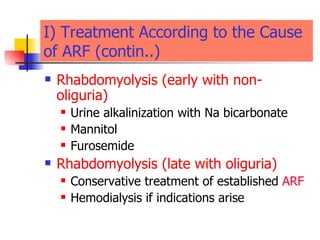
I) Treatment According to the Cause   of ARF   (contin..) Rhabdomyolysis (early with non-oliguria) Urine alkalinization with Na bicarbonate  Mannitol  Furosemide  Rhabdomyolysis (late with oliguria) Conservative treatment of established  ARF Hemodialysis if indications arise
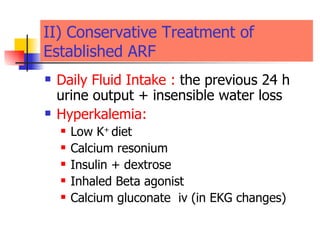
II) Conservative Treatment   of   Established ARF Daily Fluid Intake :  the previous 24 h urine output + insensible water loss Hyperkalemia:   Low K +  diet  Calcium resonium  Insulin + dextrose  Inhaled Beta agonist Calcium gluconate  iv (in EKG changes)
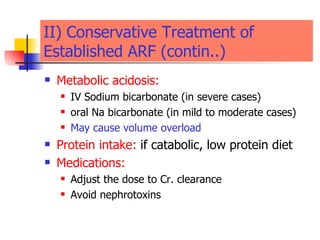
II) Conservative Treatment of Established ARF (contin..) Metabolic acidosis:   IV Sodium bicarbonate (in severe cases) oral Na bicarbonate (in mild to moderate cases) May cause volume overload  Protein intake:   if catabolic, low protein diet  Medications:   Adjust the dose to Cr. clearance  Avoid nephrotoxins
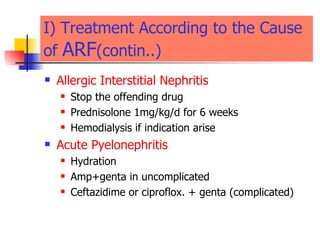
I) Treatment According to the Cause of  ARF (contin..)  Allergic Interstitial Nephritis Stop the offending drug  Prednisolone 1mg/kg/d for 6 weeks  Hemodialysis if indication arise  Acute Pyelonephritis   Hydration  Amp+genta in uncomplicated  Ceftazidime or ciproflox. + genta (complicated)
CRF: definition  Chronic, slow, indolent,  progressive  deterioration of Glomerular filtration rate which is  irreversible
CRF: Causes  DM:  30% HTN: 26% Glomerulonephritis : 14% Other causes: 30% Chronic interstitial diseases  Obstructive Uropathy ADPKD
CRF: Causes in Children Congenital renal hypoplasia and dysplasia. Vesico-Ureteric Reflux. Congenital cystic diseases. ARPKD. Multicystic disease. MCD (Juvenile Nephronophthasis). Obstructive diseases: PUV, etc....
CRF: Causes in Children Congenital glomerulonephritis  Alport’s syndrome  Congenital FSGS  Glomerulonephritis Unresponsive GN DMS  HUS Congenital HUS Post-diarrheal HUS
CRF: Presentation In mild to moderate disease; GFR >40 ml/min. As ymptomatic. Incidental discovery of high urea & Cr. Discovery of concomitant or causative disease, e.g... PKD, etc.... Hypertension.
CRF: Presentation  (Cont...) In moderate to moderately severe CRF:  GFR> 15 mls/min and < 40 mls/min Polyuria & polydepsia  Generalized fatigue Sexual dysfunction  Bruiritis  Bone pain and muscle weakness
CRF: Diagnosis Requires three perquisites: Co-existence of disease that cause CRF Evidence of Progressive Renal Dysfunction  Evidence of Extra-renal uremic organ dysfunction
CRF: Diagnosis Coexistence of disease that cause CRF Long standing DM (>10 years) Long standing uncontrolled HTN Remote history of hematuria or proteinuria  Recurrent upper UTI  Recurrent nephrolithiasis  Painful conditions with chronic analgesic abuse Family history of PKD
CRF: Diagnosis  (contin.) Evidence of Progressive Renal Dysfunction  Previously documented elevated serum creatinine  Radiological evidence of signs of chronicity by U/S Hyperechoic cortices  Small shrunken kidneys
CRF: Diagnosis  (Continued) Evidence of Extra-renal organ dysfunction  Anemia of chronic disease  (due to decrease EPO & decrease RBC survival) Renal Osteodystrophy: Decrease S. Ca ++ Increase S. PO4 -- Increase ALP & iPTH Sub-periosteal bone resumption (MCP, Phalanges, and clavicles)
CRF: Investigations  S. Creatinine:  ( > 120 mic.mol/l) S. potassium:  (usually normal) S. calcium:  (normal or low) S. phosphorus:  (usually high) Alkaline phosphatase:  (usually high) CBC: Normochromic normocytic anemia
CRF: Investigations  (Continued) Urine analysis: Specific gravity:  (1.010) RBCs:  (only in patients with Chronic GN) Casts:  (granular casts) Urine is bland   (benign)
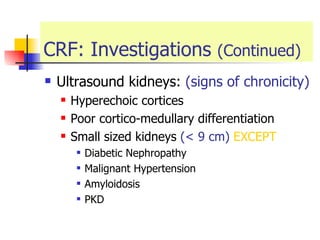
CRF: Investigations  (Continued) Ultrasound kidneys:  (signs of chronicity) Hyperechoic cortices  Poor cortico-medullary differentiation  Small sized kidneys  (< 9 cm)  EXCEPT Diabetic Nephropathy Malignant Hypertension  Amyloidosis  PKD
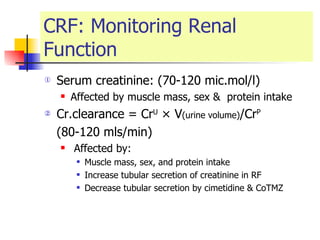
CRF: Monitoring Renal Function Serum creatinine: (70-120 mic.mol/l) Affected by muscle mass, sex &  protein intake Cr.clearance = Cr U  × V (urine volume) /Cr P (80-120 mls/min) Affected by: Muscle mass, sex, and protein intake  Increase tubular secretion of creatinine in RF  Decrease tubular secretion by cimetidine & CoTMZ
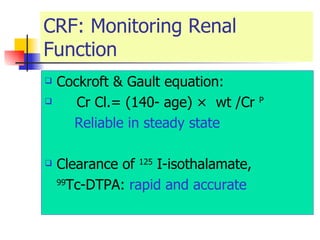
CRF: Monitoring Renal Function Cockroft & Gault equation: Cr Cl.= (140- age) ×  wt /Cr  P    Reliable in steady state Clearance of  125  I-isothalamate,  99 Tc-DTPA:  rapid and accurate
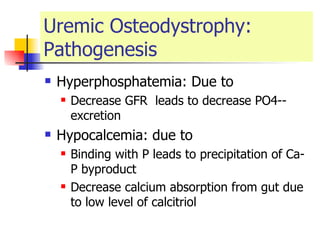
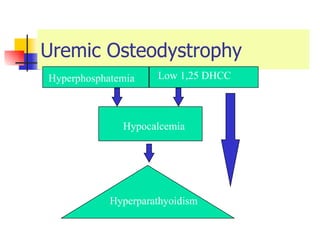
Uremic Osteodystrophy: Pathogenesis Hyperphosphatemia: Due to  Decrease GFR  leads to decrease PO4-- excretion Hypocalcemia: due to  Binding with P leads to precipitation of Ca-P byproduct  Decrease calcium absorption from gut due to low level of calcitriol
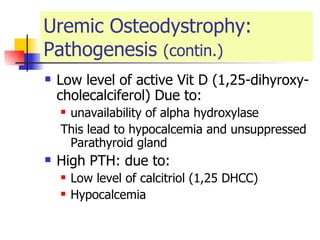
Uremic Osteodystrophy: Pathogenesis  (contin.) Low level of active Vit D (1,25-dihyroxy-cholecalciferol) Due to: unavailability of alpha hydroxylase  This lead to hypocalcemia and unsuppressed Parathyroid gland  High PTH: due to: Low level of calcitriol (1,25 DHCC) Hypocalcemia
Uremic Osteodystrophy Hyperphosphatemia  Low 1,25 DHCC Hypocalcemia  Hyperparathyoidism
CRF: Treatment Aggressive treatment of the underlying disease  Aggressive control of blood sugar (DCCT 93) Optimal control of BP   Discontinue all nephrotoxins  Relieve Urinary Tract Obstruction Treat underlying auto-immune disease  Suppress UTI in recurrent upper UTI
CRF: Treatment  (Continued) Attenuate the hyperfiltration  ACE Inhibitors and Angiotensin Receptors Antagonists  (especially in DM) Low Protein Diet; 0.8g/kg BW  (MDRD) Avoid all Nephrotoxins  NSAIDS Aminoglycosides
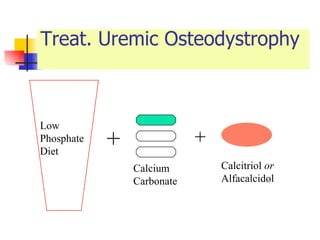
CRF: Treatment  (Continued) Treat Uremic Bone Disease  Lower serum  Phosphate Low Phosphate diet  Calcium carbonate,  or  Calcium acetate,  or   Renagel with meal  (phosphate binders) Suppress PTH & increase Ca ++  absorption  Calcitriol  or   alfacalcidol (0.25-1.0 mic.g/day)
Treat.  Uremic Osteodystrophy Calcitriol  or Alfacalcidol  Calcium  Carbonate  Low  Phosphate Diet + +
CRF: Treatment  (Continued) Treat anemia of CRF Iron sulfate or fumarate  rh-Erythropoeitin  Usually when GFR <15mls/minute Only if Hgb significantly low (<9g) After replacing Iron stores  Target Hgb level (11.0-12.0g, Hct 33-36) Folic acids and multivitamins
CRF: Treatment  (Continued) Prepare Patient for Renal Replacement Therapy  (when GFR < 15 ml/minute) AVF for hemodialysis  PD catheter (Tenkhoff’s catheter ) for PD  Transplant workup  Urological & medical assessment  Radiological investigations Tissue matching (ABO, HLA & LYMPHOCYTE)
ESRD: definition  Permanent loss of GFR to the extent where renal replacement therapy is to be instituted
ESRD: Statistics  330,000 patients on RRT worldwide  70% on HD 9% on PD 21% has functioning renal transplants  Incidence in USA: 240 PMP Incidence in KSA: 139-215 PMP Mortality:
ESRD : Presentation Euremic Enchephalopathy  Nausea & vomiting & hiccup  Lethargy, sleepiness, drowsiness and coma  Myoclonic jerks & seizures Uremic Pericarditis  Chest pain Pericardial rub Pericardial effusion and temponade
RRT: Modalities  Hemodialysis  Peritoneal Dialysis  Renal Transplantation  Living-Related, Living-Unrelated  Cadaveric  CRRT CAVH, CVVH, SCUF CAVHD,CVVHD, CAVHDF, CVVHDF
RRT: Absolute Indications for Dialysis Fluid Overload Hyperkalemia  Severe Metabolic Acidosis Uremic Pericarditis  Uremic Enchephalopathy  Intoxication: Methanol, ethylene glycol ASA, & Lithium
RRT: Relative Indications for Dialysis Uremic Neuropathy  Malnutrition of CRF Correct bleeding time before surgery  Cr. clearance <10 ml/minute  Level of urea & creatinine ??
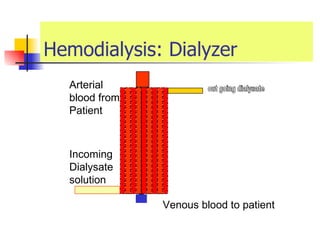
Hemodialysis: Dialyzer Arterial  blood from Patient Venous blood to patient Incoming Dialysate  solution out going dialysate
Hemodialysis: Principles Solutes are effectively removed by  diffusion   Water is removed by  convection (UF) Both mechanisms contribute to solute removal
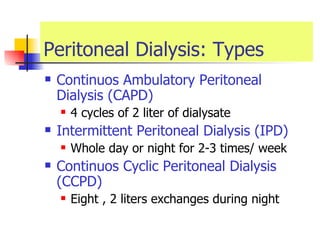
Peritoneal Dialysis: Types Continuos Ambulatory Peritoneal Dialysis (CAPD) 4 cycles of 2 liter of dialysate  Intermittent Peritoneal Dialysis (IPD) Whole day or night for 2-3 times/ week Continuos Cyclic Peritoneal Dialysis (CCPD) Eight , 2 liters exchanges during night
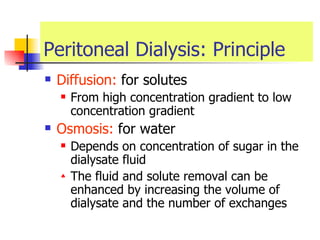
Peritoneal Dialysis: Principle Diffusion:  for solutes  From high concentration gradient to low concentration gradient  Osmosis:  for water  Depends on concentration of sugar in the dialysate fluid The fluid and solute removal can be enhanced by increasing the volume of dialysate and the number of exchanges
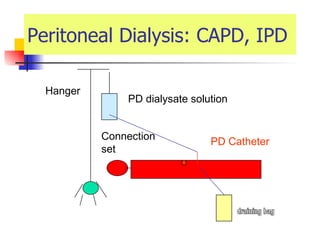
Peritoneal Dialysis: CAPD, IPD PD dialysate solution  PD Catheter Hanger  Connection set draining bag
PD: Advantages A more normal life-style Better residual renal function   Less stringent fluid and diet restriction  Stable solutes concentration  (no dysequilibrium) Better hemoglobin level  More economic: 2/3 of HD cost
PD: Complications CAPD PERITONITIS  Abdominal pain  Fever Turbid effluent  WBC in effluent >400  Organisms: Staph. aureus and epidermedis  Gram negative: Klebseilla, pseudomonas  Candida
CAPD PERITONITIS: Treatment 3 flushes in & out  Loading dose Intraperitoneal antibiotics:  Cefazoline and Tobramycin   Or   Vancomycin & Tobramycin   Maintenance dose IP antibiotics: Change antibiotics according to sensitivity
CAPD: Complications & Treat. Tunnel infection  Pain and swelling at tunnel site Fever Treatment: Vancomycin IV Exit site infection Redness at exit site with discharge  Cloxacillin or Vancomycin
CAPD: Complications & Treat. Catheter leak Treatment: Temporary conversion to HD Catheter dysfunction:  causes Constipation:  laxatives  Fibrin:  IP heparin  Omental wrap May require replacement
CAPD: Complications Obesity & hypertriglyceridemia  Due to excessive absorption of glucose Protein loss & hypoalbuminemia  Loss with the effluent Bloody Effluent:  Ruptured corpus leutium (ovulation)  Endometriosis
CRRT: Types CAVH: UF only  CVVH: UF only  SCUF: slow UF  CAVHD: Dialysis  CVVHD: Dialysis CAVHDF: UF & Dialysis  CVVHDF: UF & Dialysis
CRRT: Principle Ultrafiltration: The main driving force  Diffusion: slow and efficient only with time Patient need replacement of fluid loss up to 18 liters/ day  (in CAVH, CVVH, CAVHDF & CVVHDF)
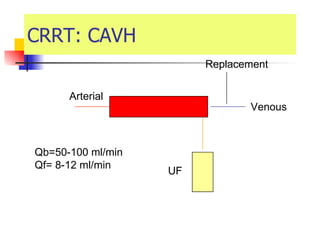
CRRT: CAVH Arterial Venous  UF Replacement  Qb=50-100 ml/min Qf= 8-12 ml/min
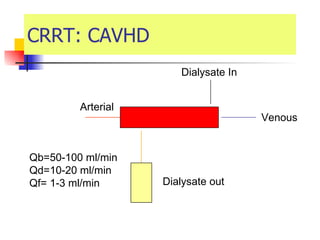
CRRT: CAVHD Arterial  Venous  Dialysate out Qb=50-100 ml/min Qd=10-20 ml/min Qf= 1-3 ml/min Dialysate In
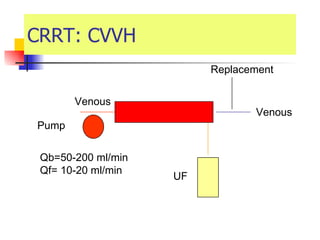
CRRT: CVVH Venous  Venous  UF Replacement  Qb=50-200 ml/min Qf= 10-20 ml/min Pump
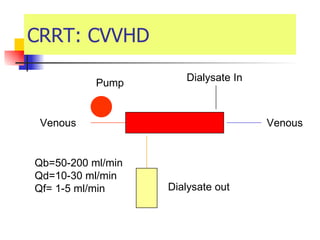
CRRT: CVVHD Venous  Venous  Dialysate out Qb=50-200 ml/min Qd=10-30 ml/min  Qf= 1-5 ml/min Dialysate In  Pump
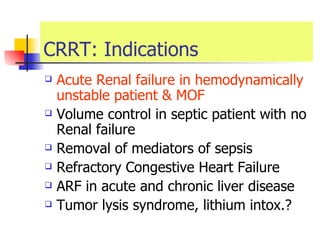
CRRT: Indications Acute Renal failure in hemodynamically unstable patient & MOF Volume control in septic patient with no Renal failure  Removal of mediators of sepsis Refractory Congestive Heart Failure ARF in acute and chronic liver disease Tumor lysis syndrome, lithium intox.?
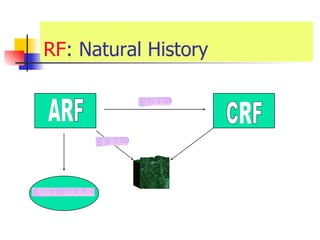
RF : Natural History
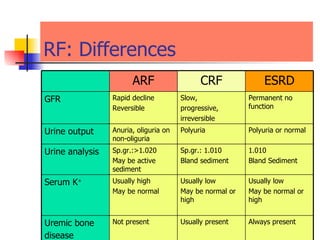
RF: Differences Always present  Usually present  Not present  Uremic bone disease   Usually low May be normal or high  Usually low May be normal or high  Usually high  May be normal  Serum K + 1.010 Bland Sediment Sp.gr.: 1.010 Bland sediment  Sp.gr.:>1.020 May be active sediment  Urine analysis  Polyuria or normal  Polyuria  Anuria, oliguria on non-oliguria Urine output Permanent no function Slow, progressive, irreversible  Rapid decline Reversible  GFR ESRD CRF ARF

17 Renal Failure S Ghamdi

  • 1.
    R enal F ailure : acute, chronic &ESRD Saeed M.G. Al-Ghamdi, FRCPS,FACP Faculty of Medicine King Abdulaziz University Hospital
  • 2.
    RF : Itemsfor Discussion Definitions of ARF, CRF & ESRD Classification & causes of RF Statistics Presentations Investigations Treatment
  • 3.
    ARF : Definition Abrupt decline of Glomerular filtration rate which is potentially reversible
  • 4.
    ARF: Statistics Prevalence: In 5% of medical-surgical ward admission In 25% of non-emergent surgery In 15% of ICU admission Mortality: Oliguric ARF: 50-80% Non-Oliguric ARF: 15-40% Risk of death: 6.2 folds
  • 5.
    ARF: Classification & Causes Pre-renal ARF : 40-80% Renal ARF: 20-30% Post-renal ARF : 2-10%
  • 6.
    Pre-renal Causes: 1) Extra-renal fluid loss: Vomiting Continuous un-replaced NG suctioning Continuous un-replaced drainage Diarrhea , intestinal fistula Pancreatitis Intestinal obstruction Excessive Sweating & heat stroke ,burns
  • 7.
    Pre-renal Causes: 2) Renal fluid loss Osmotic Diuretics: hyperglycemia, mannitol Loop and thiazide diuretics Un-replaced post-obstructive diurecis 3) Change in renal hemodynamics ACEI in bilateral Renal Artery Stenosis NSAIDS in patient with dehydration or CHF
  • 8.
    Pre-renal Causes 4)Cardiac causes Due to renal hypo-perfusion In severe systolic heart failure (EF <15%) Severe valvular heart disease Arrhythmias: Complete Heart Block Cardiac temponade Right Ventricular Infarction Severe core pulmonale
  • 9.
    ARF: Pre-renalCauses 5) Peripheral vasodilatation: Anti-hypertensive drugs 6) Hepato-Renal Syndrome Due to renal vaso-constrictors & third spacing In advanced irreversible liver disease Other causes of ARF should be ruled out Very low urine sodium (<10)
  • 10.
    Renal Causes of ARF 1) acute tubular necrosis (ATN) Septic syndrome (with & without hypotension) Significant bleeding leading to prolonged hypotension Severe dehydration leading to prolonged hypotension Cardiogenic shock Severe PET & ET
  • 11.
    Renal Causes of ARF (Cont..) 2 ) Toxic and pigment-induced ATN Aminoglycoside nephrotoxicity Amphotericin-induced nephrotoxicity Contrast-nephropathy Hemoglobinuria (severe intravascular hemolysis) Myoglobinuria (Rhabdomyolysis)
  • 12.
    Renal Causes of ARF (Cont..) 3) Glomerular diseases and systemic vasculitis Rapidly progressive Glomerulonephritis (RPGN) Immune-complex nephritis: (post-infectious GN, lupus nephritis, HSP, ..Etc.) Anti-GBM disease Pauci-immune nephritis: Wegener's Granulomatosis
  • 13.
    Renal Causes of ARF (Cont..) 4) acute interstitial nephritis Drug-induced (NSAIDS, beta lactam antibiotics,rifampicin, furosemide, allopurinol ..Etc.) Auto-immune (SLE, Sjogren syndrome, HES ) Infection-related (Legionella, salmonella ,..Etc.) Sarcoidosis Idiopathic
  • 14.
    Renal Causes of ARF (Cont..) 5) Acute Pyelonephritis In transplant kidney In single functioning kidney 6) Acute Allograft Rejection 7) Lymphomatous Infiltration of the kidneys In HIV+ve Patients PTLD
  • 15.
    ARF: Renal Causes 8) renal vasular & Ischemic disorders Vasculitis Scleroderma renal crisis Malignant HTN TTP, HUS, DIC Renal artery thrombosis Renal vein thrombosis Cholesterol Athero-embolic disease
  • 16.
    ARF: Renal Causes (contin..) 9) acute cortical necrosis (ACN) In association with hypotension and DIC Abruptio placenta, placenta previa IUFD Presentation: Loin pain Anuria Gross hematuria Cortical calcification (after healing)
  • 17.
    Renal Causes of ARF (Cont..) 10) acute papillary necrosis Acute Pyelonephritis in diabetic Sickle cell disease Phenacetin-induced nephropathy Pesentation: Loin pain Oligo-anuria Passage of tissues (papillae)
  • 18.
    ARF : Presentation(Cont..) Features suggest renal causes of ARF History of arthritis and or arthralgia Recent drug exposure Recent surgery and or intervention Recent URTI or tonsillitis Peri-orbital and facial edema HTN and absence of signs of hypovolemia Vasculitis or livedo reticularis
  • 19.
    ARF: Post-renal Causes Intra-renal (tubular) obstruction : (medical) Acute uric acid nephropathy Calcium oxalate Crystalluria: ethylene glycol poisoning or high dose vitamin C Myeloma cast nephropathy IV Methotrexate crystalluria IV acylovir and oral Indinavir crystalluria Sulfonamides crystalluria (sulfadiazine, SMZ)
  • 20.
    Post-renal Causes of ARF Extra- renal ( tubular ) obstruction (surgical) Ureteral/pelvic Intrinsic: tumor, stone, clot, papilla Extrinsic: retroperitoneal and pelvic malignancies , fibrosis and ligation Bladder: stones, clots, tumor, neurogenic, BPH, Prostatic ca , post-operative Uretheral: PUV , stone …etc
  • 21.
    ARF: Causes Vasculitis & thrombosis & CAED ACEI & NSAID in predisposed patients Acute GN Severe cardiac failure Surgical obstruction Interstitial nephritis Systemic vaso-dilatation Intra-tubular obstruction ATN Renal & extra-renal fluid loss Post-renal Renal Pre-Renal
  • 22.
    Renal Artery Thrombosis In hyper-coagulable states Presentation: Severe loin pain Gross hematuria Complete anuria if bilateral Diagnosis by Doppler, IVP & Angiogram Treated by thrombolysis and or heparin
  • 23.
    Renal Vein Thrombosis : S&S L oin pain Macro and or Microhematuria Proteinuria ARF if bilateral or single kidney Diagnosed by U/S Doppler Spiral CT Renal venography
  • 24.
    RVT : PredisposingFactors Severe dehydration in neonates Severe nephrotic syndrome (S.Alb.<20 g) Hypercoagulable states Protein S or C deficiency Anti-Phospholipids antibody syndrome Homocysteinuria Malignancies
  • 25.
    Cholesterol Athero-embolic DiseasePredisposing factors Follows intravascular intervention May follow bellow renal vascular surgery May occur after anti-coagulation May occur spontaneously
  • 26.
    CAED : Presentation 3-6 weeks after vascular instrumentation Progressive rise of S.Creatinine Livedo Reticularis Gangrenous toes and peripheral skin Thrombocytopenia Eosinophilia Hypocomplementemia Diagnosed by kidney biopsy
  • 27.
    ARF : Presentation Features suggest pre-renal. Vomiting, diarrhea , NGT ..Etc. Uncontrolled DM. Diuretic use. Exposure to sun and hot weather. Postural hypotension and tachycardia. Low JVP. Dry axilla and mucous membranes.
  • 28.
    ARF : Investigations Rapidly rising S.Cr. & hyperkalemia U/S kidneys & bladder Urine analysis RBCs and RBC casts suggest GN WBCs and WBC casts suggest AIN or acute pyelonephritis Brown granular casts suggest ATN
  • 29.
    ARF : Investigations(Cont..) Urine Eosinophils : In AIN Urine myoglobulin : in Rhabdomyolysis Urine hemoglobin : in Hemoglobinuria Urine sodium : <10 mmol/l, suggest pre-renal Na + Excretion Fraction: <1% suggest pre-renal > 3% suggest ATN
  • 30.
    ARF: Investigations Fractional excretion of sodium: U Na X P Cr FENa: ----------------- X 100 = P Na X Ucr < 1%: Pre-renal > 3%: ATN
  • 31.
    ARF : Investigations(Cont..) Positive ANA & Anti-dsDNA in lupus nephritis Low C 3 & C 4 in : Lupus nephritis Pos-infectious GN MPGN Falsely positive RF in cryoglobulinemia
  • 32.
    ARF : Investigations(Cont..) Positive ANCA. Wegener's Granulomatosis. Microscopic Poly-Angiitis. Poly-Arteritis Nodosa. Positive Anti-GBM in Good Pasture ’ s syn. Monoclonal band in Serum and or urine electrophoresis in patients with paraprotein.
  • 33.
    ARF : Investigations(Cont..) CBC Neutrophilic Leucocytosis in infection Eosinophilia in allergic interstitial nephritis Leucopenia & Thrombocytopenia suggest SLE Prolonged PT & PTT and low fibrinogen in DIC and sepsis Prolonged uncorrectable PTT in SLE
  • 34.
    ARF: Treatment First: Treatment of the underlying cause Second: Conservative treatment of established ARF Third: Dialysis if indication (s) arise
  • 35.
    I) TreatmentAccording to the Cause of ARF Pre-Renal Failure: Hydration Post-Renal Failure: Relieve obstruction Catheterization DJS Nephrostomy Dialysis if indication arises Replace urine output ( Post-Obstructive Diurecis)
  • 36.
    I) Treatment Accordingto the Cause of ARF (contin..) ATN and sepsis: IV Fluids (colloids & crystalloid) Inotropes (Dopamine, Norepinephrine) Antibiotics Furosemide In established ARF: Conservative treatment If indication for dialysis: CRRT
  • 37.
    I) Treatment Accordingto the Cause ARF (contin..) Drug-induced ATN: Discontinue the offending drug (s) Avoid nephrotoxins Conservative treatment of established ARF Recovery is the rule If indication for dialysis arises: HD, PD or CRRT
  • 38.
    I) Treatment Accordingto the Cause of ARF (contin..) Rhabdomyolysis (early with non-oliguria) Urine alkalinization with Na bicarbonate Mannitol Furosemide Rhabdomyolysis (late with oliguria) Conservative treatment of established ARF Hemodialysis if indications arise
  • 39.
    II) Conservative Treatment of Established ARF Daily Fluid Intake : the previous 24 h urine output + insensible water loss Hyperkalemia: Low K + diet Calcium resonium Insulin + dextrose Inhaled Beta agonist Calcium gluconate iv (in EKG changes)
  • 40.
    II) Conservative Treatmentof Established ARF (contin..) Metabolic acidosis: IV Sodium bicarbonate (in severe cases) oral Na bicarbonate (in mild to moderate cases) May cause volume overload Protein intake: if catabolic, low protein diet Medications: Adjust the dose to Cr. clearance Avoid nephrotoxins
  • 41.
    I) Treatment Accordingto the Cause of ARF (contin..) Allergic Interstitial Nephritis Stop the offending drug Prednisolone 1mg/kg/d for 6 weeks Hemodialysis if indication arise Acute Pyelonephritis Hydration Amp+genta in uncomplicated Ceftazidime or ciproflox. + genta (complicated)
  • 42.
    CRF: definition Chronic, slow, indolent, progressive deterioration of Glomerular filtration rate which is irreversible
  • 43.
    CRF: Causes DM: 30% HTN: 26% Glomerulonephritis : 14% Other causes: 30% Chronic interstitial diseases Obstructive Uropathy ADPKD
  • 44.
    CRF: Causes inChildren Congenital renal hypoplasia and dysplasia. Vesico-Ureteric Reflux. Congenital cystic diseases. ARPKD. Multicystic disease. MCD (Juvenile Nephronophthasis). Obstructive diseases: PUV, etc....
  • 45.
    CRF: Causes inChildren Congenital glomerulonephritis Alport’s syndrome Congenital FSGS Glomerulonephritis Unresponsive GN DMS HUS Congenital HUS Post-diarrheal HUS
  • 46.
    CRF: Presentation Inmild to moderate disease; GFR >40 ml/min. As ymptomatic. Incidental discovery of high urea & Cr. Discovery of concomitant or causative disease, e.g... PKD, etc.... Hypertension.
  • 47.
    CRF: Presentation (Cont...) In moderate to moderately severe CRF: GFR> 15 mls/min and < 40 mls/min Polyuria & polydepsia Generalized fatigue Sexual dysfunction Bruiritis Bone pain and muscle weakness
  • 48.
    CRF: Diagnosis Requiresthree perquisites: Co-existence of disease that cause CRF Evidence of Progressive Renal Dysfunction Evidence of Extra-renal uremic organ dysfunction
  • 49.
    CRF: Diagnosis Coexistenceof disease that cause CRF Long standing DM (>10 years) Long standing uncontrolled HTN Remote history of hematuria or proteinuria Recurrent upper UTI Recurrent nephrolithiasis Painful conditions with chronic analgesic abuse Family history of PKD
  • 50.
    CRF: Diagnosis (contin.) Evidence of Progressive Renal Dysfunction Previously documented elevated serum creatinine Radiological evidence of signs of chronicity by U/S Hyperechoic cortices Small shrunken kidneys
  • 51.
    CRF: Diagnosis (Continued) Evidence of Extra-renal organ dysfunction Anemia of chronic disease (due to decrease EPO & decrease RBC survival) Renal Osteodystrophy: Decrease S. Ca ++ Increase S. PO4 -- Increase ALP & iPTH Sub-periosteal bone resumption (MCP, Phalanges, and clavicles)
  • 52.
    CRF: Investigations S. Creatinine: ( > 120 mic.mol/l) S. potassium: (usually normal) S. calcium: (normal or low) S. phosphorus: (usually high) Alkaline phosphatase: (usually high) CBC: Normochromic normocytic anemia
  • 53.
    CRF: Investigations (Continued) Urine analysis: Specific gravity: (1.010) RBCs: (only in patients with Chronic GN) Casts: (granular casts) Urine is bland (benign)
  • 54.
    CRF: Investigations (Continued) Ultrasound kidneys: (signs of chronicity) Hyperechoic cortices Poor cortico-medullary differentiation Small sized kidneys (< 9 cm) EXCEPT Diabetic Nephropathy Malignant Hypertension Amyloidosis PKD
  • 55.
    CRF: Monitoring RenalFunction Serum creatinine: (70-120 mic.mol/l) Affected by muscle mass, sex & protein intake Cr.clearance = Cr U × V (urine volume) /Cr P (80-120 mls/min) Affected by: Muscle mass, sex, and protein intake Increase tubular secretion of creatinine in RF Decrease tubular secretion by cimetidine & CoTMZ
  • 56.
    CRF: Monitoring RenalFunction Cockroft & Gault equation: Cr Cl.= (140- age) × wt /Cr P Reliable in steady state Clearance of 125 I-isothalamate, 99 Tc-DTPA: rapid and accurate
  • 57.
    Uremic Osteodystrophy: PathogenesisHyperphosphatemia: Due to Decrease GFR leads to decrease PO4-- excretion Hypocalcemia: due to Binding with P leads to precipitation of Ca-P byproduct Decrease calcium absorption from gut due to low level of calcitriol
  • 58.
    Uremic Osteodystrophy: Pathogenesis (contin.) Low level of active Vit D (1,25-dihyroxy-cholecalciferol) Due to: unavailability of alpha hydroxylase This lead to hypocalcemia and unsuppressed Parathyroid gland High PTH: due to: Low level of calcitriol (1,25 DHCC) Hypocalcemia
  • 59.
    Uremic Osteodystrophy Hyperphosphatemia Low 1,25 DHCC Hypocalcemia Hyperparathyoidism
  • 60.
    CRF: Treatment Aggressivetreatment of the underlying disease Aggressive control of blood sugar (DCCT 93) Optimal control of BP Discontinue all nephrotoxins Relieve Urinary Tract Obstruction Treat underlying auto-immune disease Suppress UTI in recurrent upper UTI
  • 61.
    CRF: Treatment (Continued) Attenuate the hyperfiltration ACE Inhibitors and Angiotensin Receptors Antagonists (especially in DM) Low Protein Diet; 0.8g/kg BW (MDRD) Avoid all Nephrotoxins NSAIDS Aminoglycosides
  • 62.
    CRF: Treatment (Continued) Treat Uremic Bone Disease Lower serum Phosphate Low Phosphate diet Calcium carbonate, or Calcium acetate, or Renagel with meal (phosphate binders) Suppress PTH & increase Ca ++ absorption Calcitriol or alfacalcidol (0.25-1.0 mic.g/day)
  • 63.
    Treat. UremicOsteodystrophy Calcitriol or Alfacalcidol Calcium Carbonate Low Phosphate Diet + +
  • 64.
    CRF: Treatment (Continued) Treat anemia of CRF Iron sulfate or fumarate rh-Erythropoeitin Usually when GFR <15mls/minute Only if Hgb significantly low (<9g) After replacing Iron stores Target Hgb level (11.0-12.0g, Hct 33-36) Folic acids and multivitamins
  • 65.
    CRF: Treatment (Continued) Prepare Patient for Renal Replacement Therapy (when GFR < 15 ml/minute) AVF for hemodialysis PD catheter (Tenkhoff’s catheter ) for PD Transplant workup Urological & medical assessment Radiological investigations Tissue matching (ABO, HLA & LYMPHOCYTE)
  • 66.
    ESRD: definition Permanent loss of GFR to the extent where renal replacement therapy is to be instituted
  • 67.
    ESRD: Statistics 330,000 patients on RRT worldwide 70% on HD 9% on PD 21% has functioning renal transplants Incidence in USA: 240 PMP Incidence in KSA: 139-215 PMP Mortality:
  • 68.
    ESRD : PresentationEuremic Enchephalopathy Nausea & vomiting & hiccup Lethargy, sleepiness, drowsiness and coma Myoclonic jerks & seizures Uremic Pericarditis Chest pain Pericardial rub Pericardial effusion and temponade
  • 69.
    RRT: Modalities Hemodialysis Peritoneal Dialysis Renal Transplantation Living-Related, Living-Unrelated Cadaveric CRRT CAVH, CVVH, SCUF CAVHD,CVVHD, CAVHDF, CVVHDF
  • 70.
    RRT: Absolute Indicationsfor Dialysis Fluid Overload Hyperkalemia Severe Metabolic Acidosis Uremic Pericarditis Uremic Enchephalopathy Intoxication: Methanol, ethylene glycol ASA, & Lithium
  • 71.
    RRT: Relative Indicationsfor Dialysis Uremic Neuropathy Malnutrition of CRF Correct bleeding time before surgery Cr. clearance <10 ml/minute Level of urea & creatinine ??
  • 72.
    Hemodialysis: Dialyzer Arterial blood from Patient Venous blood to patient Incoming Dialysate solution out going dialysate
  • 73.
    Hemodialysis: Principles Solutesare effectively removed by diffusion Water is removed by convection (UF) Both mechanisms contribute to solute removal
  • 74.
    Peritoneal Dialysis: TypesContinuos Ambulatory Peritoneal Dialysis (CAPD) 4 cycles of 2 liter of dialysate Intermittent Peritoneal Dialysis (IPD) Whole day or night for 2-3 times/ week Continuos Cyclic Peritoneal Dialysis (CCPD) Eight , 2 liters exchanges during night
  • 75.
    Peritoneal Dialysis: PrincipleDiffusion: for solutes From high concentration gradient to low concentration gradient Osmosis: for water Depends on concentration of sugar in the dialysate fluid The fluid and solute removal can be enhanced by increasing the volume of dialysate and the number of exchanges
  • 76.
    Peritoneal Dialysis: CAPD,IPD PD dialysate solution PD Catheter Hanger Connection set draining bag
  • 77.
    PD: Advantages Amore normal life-style Better residual renal function Less stringent fluid and diet restriction Stable solutes concentration (no dysequilibrium) Better hemoglobin level More economic: 2/3 of HD cost
  • 78.
    PD: Complications CAPDPERITONITIS Abdominal pain Fever Turbid effluent WBC in effluent >400 Organisms: Staph. aureus and epidermedis Gram negative: Klebseilla, pseudomonas Candida
  • 79.
    CAPD PERITONITIS: Treatment3 flushes in & out Loading dose Intraperitoneal antibiotics: Cefazoline and Tobramycin Or Vancomycin & Tobramycin Maintenance dose IP antibiotics: Change antibiotics according to sensitivity
  • 80.
    CAPD: Complications &Treat. Tunnel infection Pain and swelling at tunnel site Fever Treatment: Vancomycin IV Exit site infection Redness at exit site with discharge Cloxacillin or Vancomycin
  • 81.
    CAPD: Complications &Treat. Catheter leak Treatment: Temporary conversion to HD Catheter dysfunction: causes Constipation: laxatives Fibrin: IP heparin Omental wrap May require replacement
  • 82.
    CAPD: Complications Obesity& hypertriglyceridemia Due to excessive absorption of glucose Protein loss & hypoalbuminemia Loss with the effluent Bloody Effluent: Ruptured corpus leutium (ovulation) Endometriosis
  • 83.
    CRRT: Types CAVH:UF only CVVH: UF only SCUF: slow UF CAVHD: Dialysis CVVHD: Dialysis CAVHDF: UF & Dialysis CVVHDF: UF & Dialysis
  • 84.
    CRRT: Principle Ultrafiltration:The main driving force Diffusion: slow and efficient only with time Patient need replacement of fluid loss up to 18 liters/ day (in CAVH, CVVH, CAVHDF & CVVHDF)
  • 85.
    CRRT: CAVH ArterialVenous UF Replacement Qb=50-100 ml/min Qf= 8-12 ml/min
  • 86.
    CRRT: CAVHD Arterial Venous Dialysate out Qb=50-100 ml/min Qd=10-20 ml/min Qf= 1-3 ml/min Dialysate In
  • 87.
    CRRT: CVVH Venous Venous UF Replacement Qb=50-200 ml/min Qf= 10-20 ml/min Pump
  • 88.
    CRRT: CVVHD Venous Venous Dialysate out Qb=50-200 ml/min Qd=10-30 ml/min Qf= 1-5 ml/min Dialysate In Pump
  • 89.
    CRRT: Indications AcuteRenal failure in hemodynamically unstable patient & MOF Volume control in septic patient with no Renal failure Removal of mediators of sepsis Refractory Congestive Heart Failure ARF in acute and chronic liver disease Tumor lysis syndrome, lithium intox.?
  • 90.
    RF : NaturalHistory
  • 91.
    RF: Differences Alwayspresent Usually present Not present Uremic bone disease Usually low May be normal or high Usually low May be normal or high Usually high May be normal Serum K + 1.010 Bland Sediment Sp.gr.: 1.010 Bland sediment Sp.gr.:>1.020 May be active sediment Urine analysis Polyuria or normal Polyuria Anuria, oliguria on non-oliguria Urine output Permanent no function Slow, progressive, irreversible Rapid decline Reversible GFR ESRD CRF ARF