Download to read offline
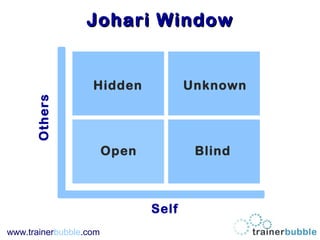


The Johari Window model suggests that a person's self is composed of four parts represented by the panes of a window: the open area which is known by the person and others, the blind area which is unknown by the person but known by others, the hidden area which is known by the person but unknown by others, and the unknown area which is unknown by both. The goal is to increase self-awareness and open communication by regularly sharing feedback and personal information to reduce the size of the hidden, blind, and unknown areas.


