Mushroom Cultivation
By
Hem Chander
Assistant Professor (Botany)
Career Point University Hamirpur (HP) 176041
hemchander78@gmail.com
Introduction
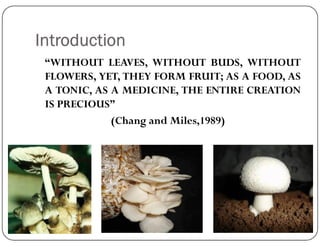
“WITHOUT LEAVES, WITHOUT BUDS, WITHOUT
FLOWERS, YET, THEY FORM FRUIT; AS A FOOD, AS
A TONIC, AS A MEDICINE, THE ENTIRE CREATION
IS PRECIOUS”
(Chang and Miles,1989)
BACKGROUND
 Mushroom cultivation- highly lucrative agro- industry
 Ranks first with the grosser among all the agricultural
and horticultural commodities
 World production more than 10 million tons with
growth rate of about 7 per cent
 Present Indian production more than 1,40,000 tons, with
20-25% growth rate.
 Very low per capita consumption (25 –30 gm) in India as
compared to very high consumption (2.5-3.5kg) in
developed countries.
 Mushroom production is a labour intensive and low
labour cost is the biggest advantage India enjoys .
White Button Mushroom
 White button mushroom is most popular and
commercialized
 Most of the farmers(about 70%) take two crops from
October to March under seasonal growing conditions
 Few enterprising growers take 3-4 crops under
Few enterprising growers take 3-4 crops under
controlled conditions.
 Some progressive growers have achieved very high yield
of 23-25 kg per 100 kg of the compost and earned profit
between Rs. 25000 - 30000 per 100 bags
 Sudden spurt in cultivation of white button mushroom
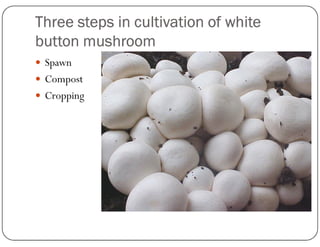
Three steps in cultivation of white
button mushroom
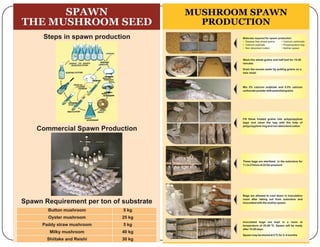
 Spawn
 Compost
 Cropping
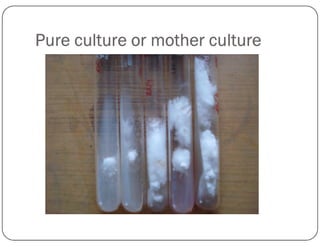
Pure culture or mother culture
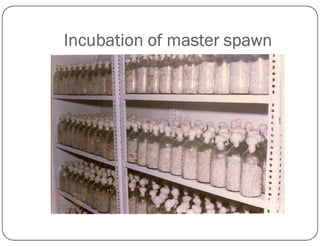
Incubation of master spawn
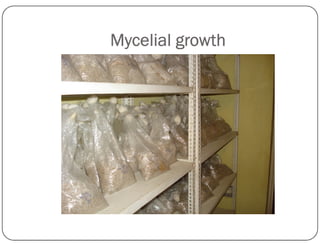
Mycelial growth
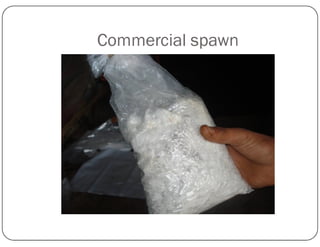
Commercial spawn
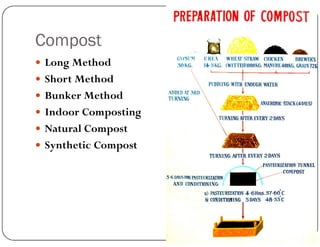
Compost
 Long Method
 Short Method
 Bunker Method
 Indoor Composting
Natural Compost
 Natural Compost
 Synthetic Compost
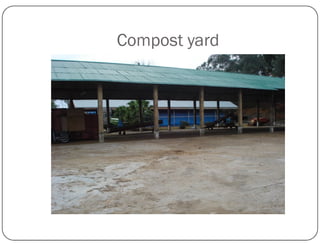
Compost yard
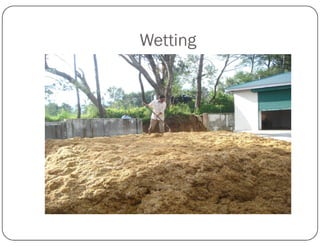
Wetting
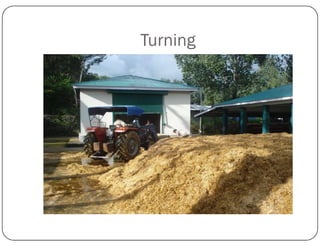
Turning
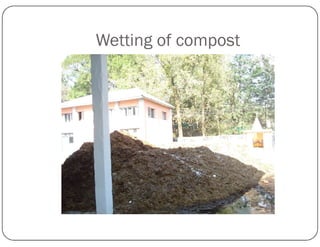
Wetting of compost
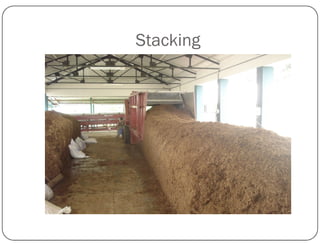
Stacking
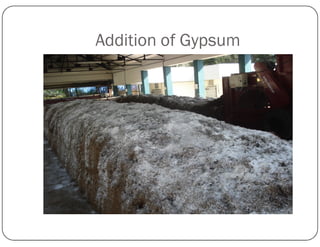
Addition of Gypsum
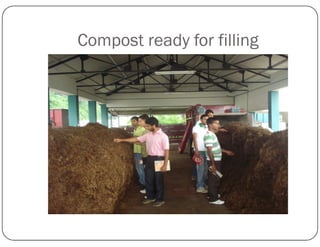
Compost ready for filling
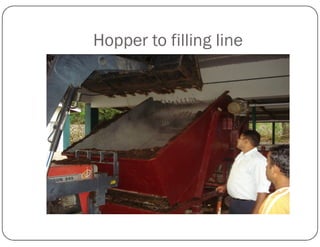
Hopper to filling line
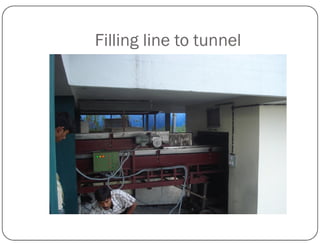
Filling line to tunnel
A tunnel used for Phase-II
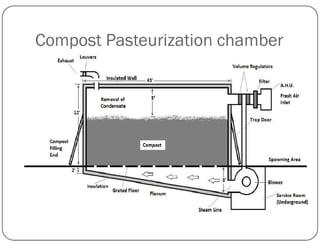
Compost Pasteurization chamber
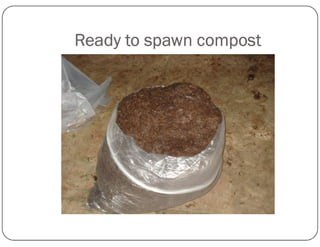
Ready to spawn compost
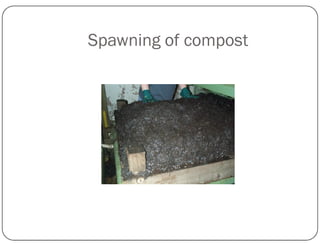
Spawning of compost
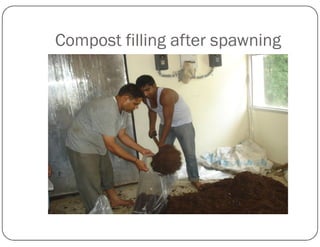
Compost filling after spawning
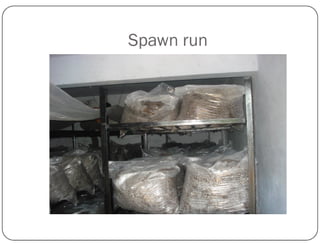
Spawn run
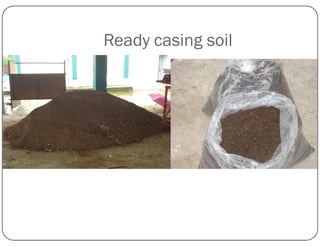
Sieving & Cleaning of soil
Ready casing soil
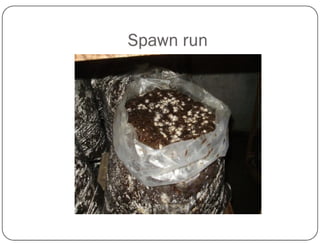
Spawn run
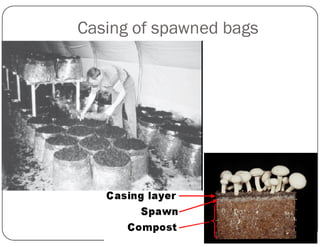
Casing of spawned bags
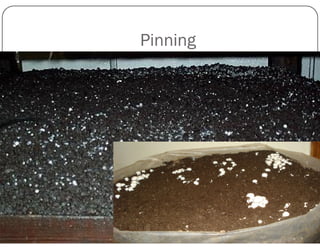
Pinning
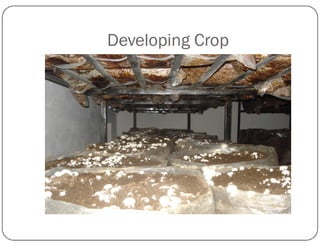
Developing Crop
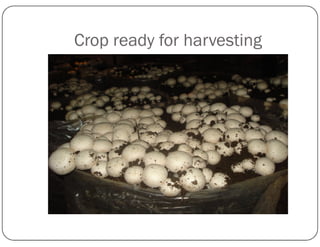
Crop ready for harvesting
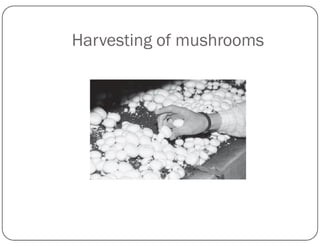
Harvesting of mushrooms
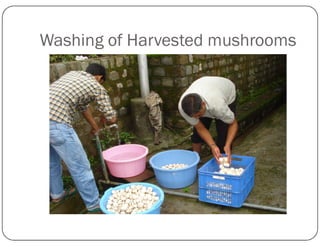
Washing of Harvested mushrooms
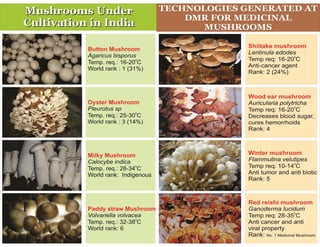
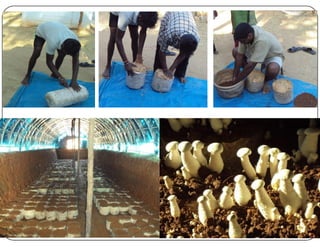
Oyster mushroom
 Mainly cultivated in the months of March - May and
September –October
 Becoming popular due to simple cultivation technique
and availability of wide range of substrates and strains
 Very popular among the women farmers particularly in
the areas where compost is not available
 Cultivation of oyster mushroom is very suitable tool for
economic and social empowerment of rural women.
 A new low temperature loving strain of oyster
mushroom available to the growers.Oyster mushroom is
now being cultivated by the farmers during winter
months.
 Cultivation of oyster mushroom is poised to be adopted
as a family enterprise by the people of the area.
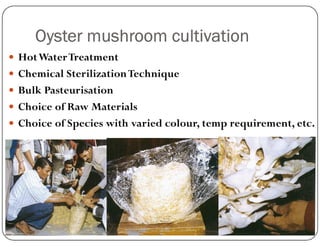
Oyster mushroom cultivation
 HotWaterTreatment
 Chemical SterilizationTechnique
 Bulk Pasteurisation
 Choice of Raw Materials
 Choice of Species with varied colour, temp requirement, etc.
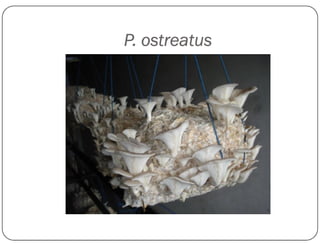
P. ostreatus
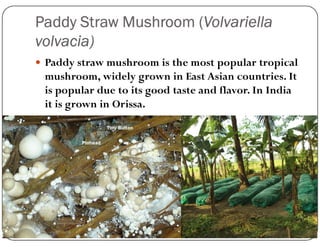
Paddy Straw Mushroom (Volvariella
volvacia)
 Paddy straw mushroom is the most popular tropical
mushroom, widely grown in East Asian countries. It
is popular due to its good taste and flavor. In India
it is grown in Orissa.
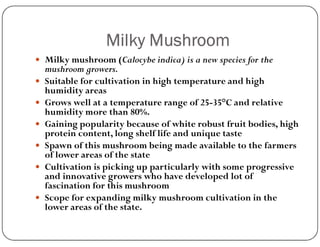
Milky Mushroom
 Milky mushroom (Calocybe indica) is a new species for the
mushroom growers.
 Suitable for cultivation in high temperature and high
humidity areas
 Grows well at a temperature range of 25-35°C and relative
humidity more than 80%.
 Gaining popularity because of white robust fruit bodies, high
protein content, long shelf life and unique taste
 Spawn of this mushroom being made available to the farmers
of lower areas of the state
 Cultivation is picking up particularly with some progressive
and innovative growers who have developed lot of
fascination for this mushroom
 Scope for expanding milky mushroom cultivation in the
lower areas of the state.
Conclusions
 Developing countries have huge production potential and valuable
world market
 Intensive training programme should be taken up for educating the
farmers regarding importance and cultivation of mushrooms.
 Very good source of supplementing the income of the family.
 Mushroom cultivation is picking up fast
 Required quantity of compost not available to growers
 More Compost Production Units need to be established
 Emphasis on cultivation of medicinal mushrooms for exploitations
as NUTRITIONAL and DIETARY supplements
 Future exploitation of wild mushrooms through domestication of
important mushrooms
 Developing specialty products for a wide range of health concerns
……. Mushrooms can serve as food,
as tonic, and as medicine. A regular
intake of mushrooms can make you
healthier, fitter, and happier. They
can make you live longer, and
always look younger.….

19. Mushroom Cultivation.pdf

  • 1.
    Mushroom Cultivation By Hem Chander AssistantProfessor (Botany) Career Point University Hamirpur (HP) 176041 hemchander78@gmail.com
  • 2.
    Introduction “WITHOUT LEAVES, WITHOUTBUDS, WITHOUT FLOWERS, YET, THEY FORM FRUIT; AS A FOOD, AS A TONIC, AS A MEDICINE, THE ENTIRE CREATION IS PRECIOUS” (Chang and Miles,1989) (Chang and Miles,1989)
  • 3.
    BACKGROUND  Mushroom cultivation-highly lucrative agro- industry  Ranks first with the grosser among all the agricultural and horticultural commodities  World production more than 10 million tons with growth rate of about 7 per cent  Present Indian production more than 1,40,000 tons, with  Present Indian production more than 1,40,000 tons, with 20-25% growth rate.  Very low per capita consumption (25 –30 gm) in India as compared to very high consumption (2.5-3.5kg) in developed countries.  Mushroom production is a labour intensive and low labour cost is the biggest advantage India enjoys .
  • 6.
    White Button Mushroom White button mushroom is most popular and commercialized  Most of the farmers(about 70%) take two crops from October to March under seasonal growing conditions  Few enterprising growers take 3-4 crops under Few enterprising growers take 3-4 crops under controlled conditions.  Some progressive growers have achieved very high yield of 23-25 kg per 100 kg of the compost and earned profit between Rs. 25000 - 30000 per 100 bags  Sudden spurt in cultivation of white button mushroom
  • 7.
    Three steps incultivation of white button mushroom  Spawn  Compost  Cropping
  • 9.
    Pure culture ormother culture
  • 10.
  • 11.
  • 12.
  • 13.
    Compost  Long Method Short Method  Bunker Method  Indoor Composting Natural Compost  Natural Compost  Synthetic Compost
  • 14.
  • 15.
  • 16.
  • 17.
  • 18.
  • 19.
  • 20.
  • 21.
  • 22.
  • 23.
    A tunnel usedfor Phase-II
  • 24.
  • 25.
  • 26.
  • 27.
  • 30.
  • 31.
  • 32.
  • 33.
  • 34.
  • 35.
  • 36.
  • 37.
    Crop ready forharvesting
  • 38.
  • 39.
  • 40.
    Oyster mushroom  Mainlycultivated in the months of March - May and September –October  Becoming popular due to simple cultivation technique and availability of wide range of substrates and strains  Very popular among the women farmers particularly in the areas where compost is not available  Cultivation of oyster mushroom is very suitable tool for economic and social empowerment of rural women.  A new low temperature loving strain of oyster mushroom available to the growers.Oyster mushroom is now being cultivated by the farmers during winter months.  Cultivation of oyster mushroom is poised to be adopted as a family enterprise by the people of the area.
  • 41.
    Oyster mushroom cultivation HotWaterTreatment  Chemical SterilizationTechnique  Bulk Pasteurisation  Choice of Raw Materials  Choice of Species with varied colour, temp requirement, etc.  Choice of Species with varied colour, temp requirement, etc.
  • 42.
  • 43.
    Paddy Straw Mushroom(Volvariella volvacia)  Paddy straw mushroom is the most popular tropical mushroom, widely grown in East Asian countries. It is popular due to its good taste and flavor. In India it is grown in Orissa.
  • 44.
    Milky Mushroom  Milkymushroom (Calocybe indica) is a new species for the mushroom growers.  Suitable for cultivation in high temperature and high humidity areas  Grows well at a temperature range of 25-35°C and relative humidity more than 80%.  Gaining popularity because of white robust fruit bodies, high  Gaining popularity because of white robust fruit bodies, high protein content, long shelf life and unique taste  Spawn of this mushroom being made available to the farmers of lower areas of the state  Cultivation is picking up particularly with some progressive and innovative growers who have developed lot of fascination for this mushroom  Scope for expanding milky mushroom cultivation in the lower areas of the state.
  • 46.
    Conclusions  Developing countrieshave huge production potential and valuable world market  Intensive training programme should be taken up for educating the farmers regarding importance and cultivation of mushrooms.  Very good source of supplementing the income of the family.  Mushroom cultivation is picking up fast  Required quantity of compost not available to growers  Required quantity of compost not available to growers  More Compost Production Units need to be established  Emphasis on cultivation of medicinal mushrooms for exploitations as NUTRITIONAL and DIETARY supplements  Future exploitation of wild mushrooms through domestication of important mushrooms  Developing specialty products for a wide range of health concerns
  • 47.
    ……. Mushrooms canserve as food, as tonic, and as medicine. A regular intake of mushrooms can make you healthier, fitter, and happier. They can make you live longer, and can make you live longer, and always look younger.….