SKIN
MANIFESTATIONS
OF HIV/AIDS
SUMMARY
INTRODUCTION
 Up to 92% of HIV/AIDS patient will
have one or more skin disorders
during the course their illness.
 Recognizing HIV-related skin changes
may lead to the diagnosis of HIV
infection in the early stages, which
allows initiation of appropriate
antiretroviral therapy
INTRODUCTION
 Dermatological manifestations are
seen at every stage of HIV/AIDS
 Some of the conditions are unique
and virtually pathognomonic for HIV
disease like bacillary angiomatosis
and oral hairy leukoplakia.
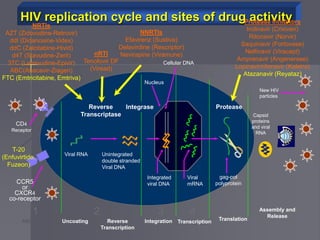
HIV replication cycle and sites of drug activity
Capsid
proteins
and viral
RNA
CD4
Receptor
Viral RNA
New HIV
particles
Protease
Attachment Uncoating Reverse
Transcription
Integration Transcription Translation
Reverse
Transcriptase
Unintegrated
double stranded
Viral DNA
Integrated
viral DNA
Viral
mRNA
Integrase
gag-pol
polyprotein
1 2 3 4 5
6
Assembly and
Release
Protease Inhibitors
Indinavir (Crixivan)
Ritonavir (Norvir)
Saquinavir (Fortovase)
Nelfinavir (Viracept)
Amprenavir (Angenerase)
Lopinavir/ritonavir (Kaletra)
Atazanavir (Reyataz)
NRTIs
AZT (Zidovudine-Retrovir)
ddI (Didanosine-Videx)
ddC (Zalcitabine-Hivid)
d4T (Stavudine-Zerit)
3TC (Lamivudine-Epivir)
ABC(Abacavir-Ziagen)
FTC (Emtricitabine, Emtriva)
NNRTIs
Efavirenz (Sustiva)
Delavirdine (Rescriptor)
Nevirapine (Viramune)
Nucleus
Cellular DNA
CCR5
or
CXCR4
co-receptor
HIV Virions
nRTI
Tenofovir DF
(Viread)
T-20
(Enfuvirtide,
Fuzeon)
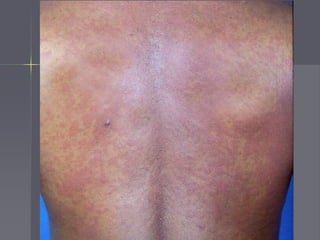
Acute Retroviral Syndrome
 80 percent of cases
 several weeks before seroconversion
 IP 3 to 6 weeks
 Constitutional symptoms are followed
by exanthematous rash.
 The more severe the ARS, the worse
the prognosis of AIDS will be.
 Some recommend giving HAART for 6
months to 2 years.
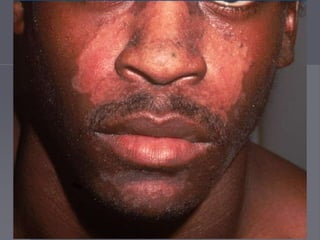
Seborrhoeic dermatitis
 The most common dermatosis
 The eruption, characterized by
widespread inflammatory and
hyperkeratotic lesions in seborrhoeic
areas, may progress to erythroderma.
 It is usually resistant to treatment
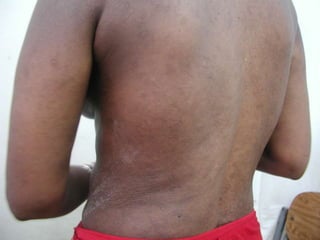
Xerosis
 Generalized dry skin syndrome is more
frequently observed in patients with
HIV infection.
 It is often accompanied by severe
itching.
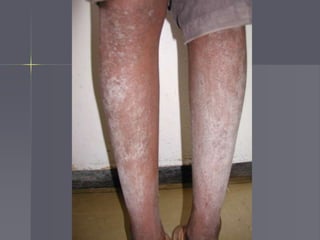
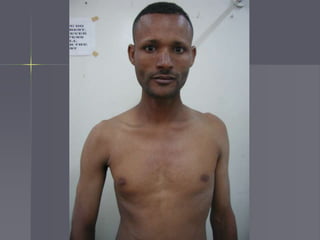
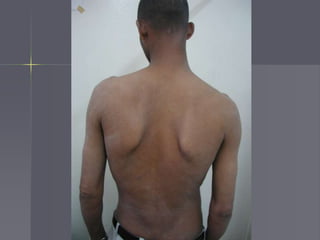
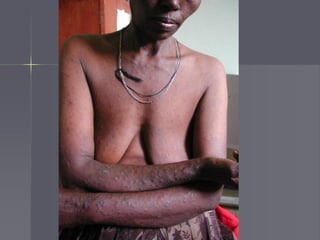
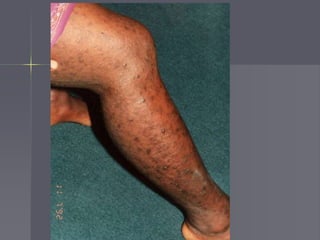
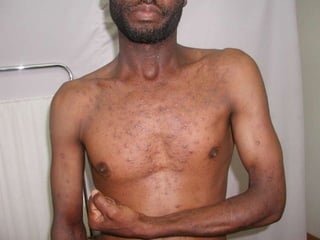
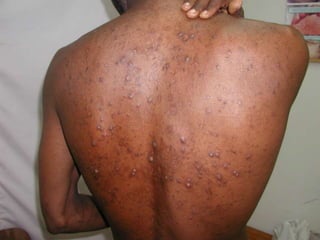
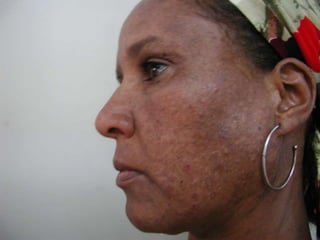
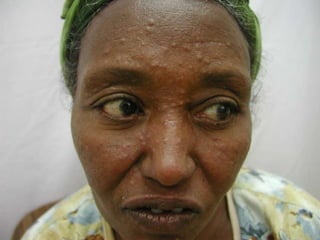
Pruritic papular eruption (PPE)
 Common and relatively specific manifestation,
60% have advanced immunosuppression
 Small, itchy, red or skin-colored papules on
the head, the neck, and the upper part of the
trunk
 The cause is not known.
 Emollients, steroid and antihistamines give
temporary relief
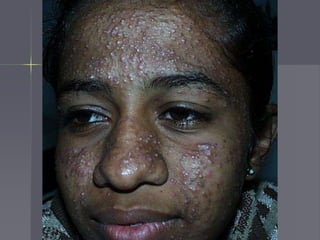
Eosinophilic folliculitis
 An idiopathic, highly pruritic, papulopustular
eruption of sterile pustules around hair
follicles involving the face, the neck, the
trunk, and the extremities and occurring in
advanced immunodeficiency.
 May be the extreme of PPE.
 Resistant to all forms of treatment. Steroid
may help.
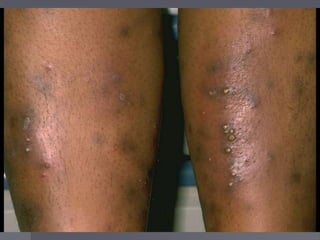
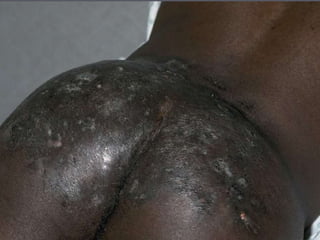
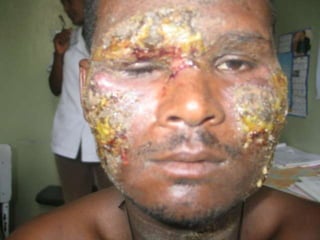
Bacterial infections
 Impetigo and folliculitis may be
recurrent and persistent in HIV
disease, particularly in children
 Disseminated furunculosis,
gingivitis, gangrenous stomatitis,
and abscess formation frequently
occur
Bacillary Angiomatosis
 Known to occur exclusively in HIV infection
 Caused by Bartonela quintana
 It presents as fleshy, friable, protuberant
papules-to-nodules that tend to bleed very
easily.
 Confuses with Kapos’s sarcoma and other
vascular tumors.
 Treatment consists of prolonged use of
antibiotics.
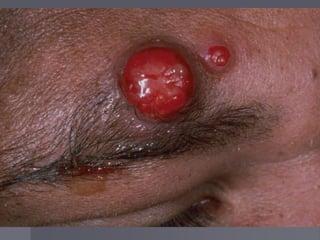
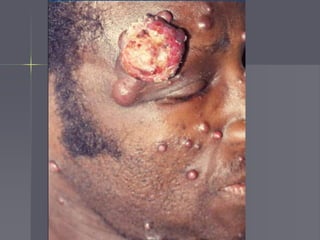
Fungal Infections
 Dermatophytosis has the same
frequency as the general
population, may be more
extensive and resistant to
treatment.
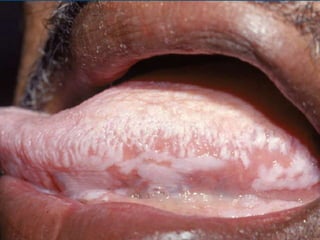
Fungal Infections
 Recurrent and severe
oropharyngeal candidiasis,
usually extending to the
esophagus and/or trachea is
the presenting symptom and
indicates immunosupression
Fungal Infections
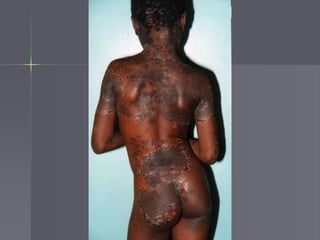
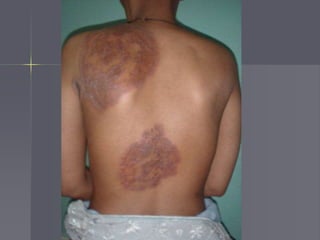
 Deep and rare fungal infections like
cryptococcosis, coccidiomycosis, and
histoplasmosis affecting the systemic
organs and the skin are unique
features of advanced AIDS.
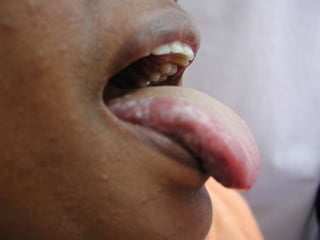
Oral Hairy Leukoplakia
 Very specific manifestation of HIV infection
presenting as filiform white papules or
plaques forming reticulate pattern on the
inferiolateral border of the mouth.
 It is due to Epstein-Bar virus infection.
 May be the initial sign of progressive
immunosuppression
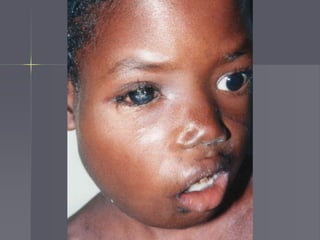
Warts
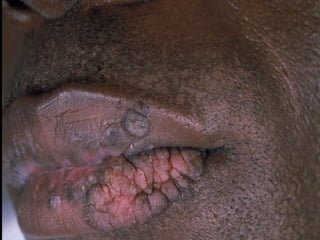
 Lesions may be extensive and
resistant to therapy. warts usually look
like those seen in
nonimmunosuppressed patients, but
are more extensive.
 Flat warts on adult face are typical
features of HIV infection.
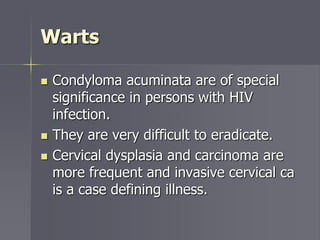
Warts
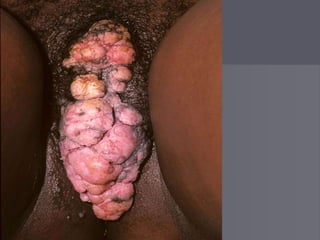
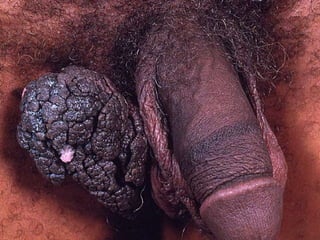
 Condyloma acuminata are of special
significance in persons with HIV
infection.
 They are very difficult to eradicate.
 Cervical dysplasia and carcinoma are
more frequent and invasive cervical ca
is a case defining illness.
Warts
 Condyloma acuminata are of special
significance in persons with HIV
infection.
 They are very difficult to eradicate.
 Cervical dysplasia and carcinoma are
more frequent and invasive cervical ca
is a case defining illness.
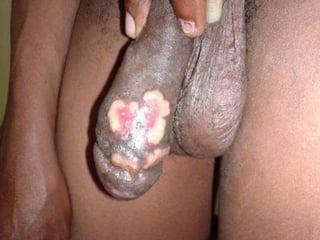
Herpes Simplex Virus
Infection
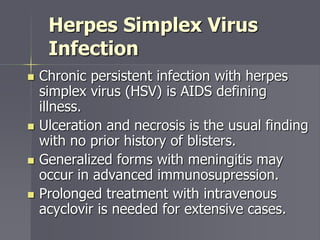
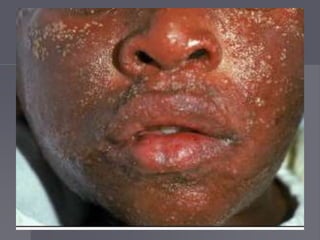
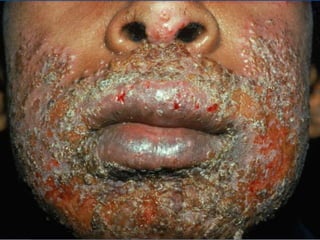
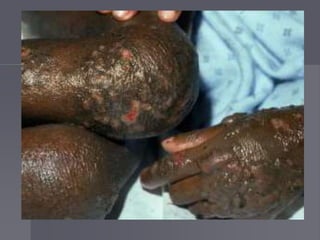
 Chronic persistent infection with herpes
simplex virus (HSV) is AIDS defining
illness.
 Ulceration and necrosis is the usual finding
with no prior history of blisters.
 Generalized forms with meningitis may
occur in advanced immunosupression.
 Prolonged treatment with intravenous
acyclovir is needed for extensive cases.
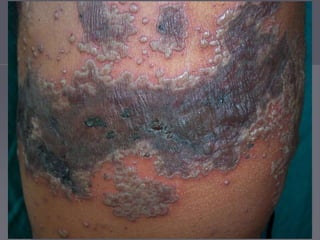
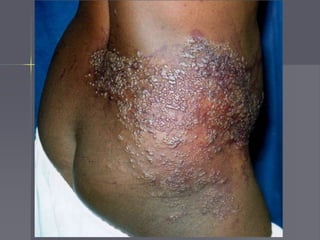
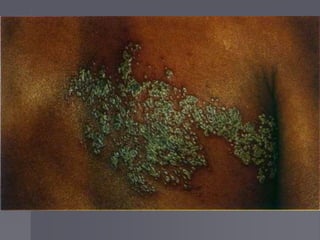
Herpes Zoster
 Commonly seen early in the course of
HIV infection, particularly in healthy-
appearing individuals
 May be particularly bullous, hemorrhagic,
necrotic, and painful
 Recurrences and multidermatomal
involvement is common
 Treatment need s systemic acyclovir
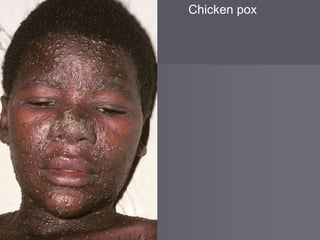
Chicken pox
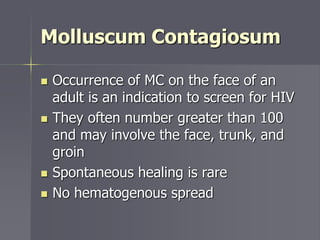
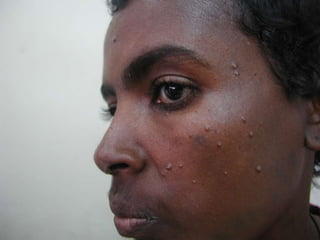
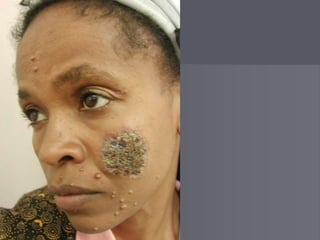
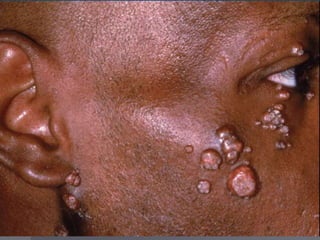
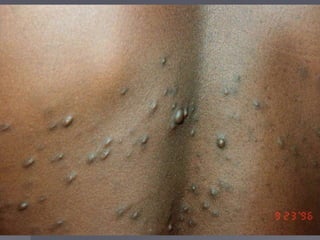
Molluscum Contagiosum
 Occurrence of MC on the face of an
adult is an indication to screen for HIV
 They often number greater than 100
and may involve the face, trunk, and
groin
 Spontaneous healing is rare
 No hematogenous spread
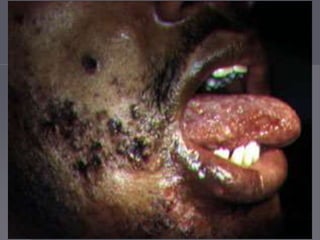
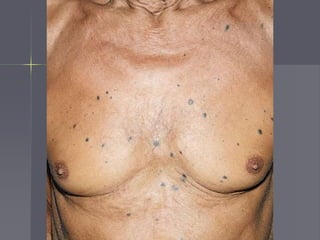
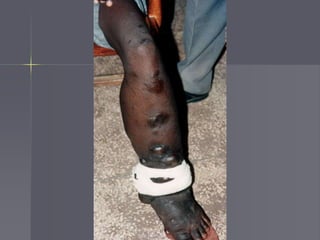
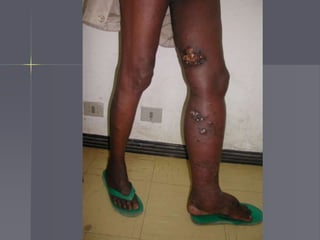
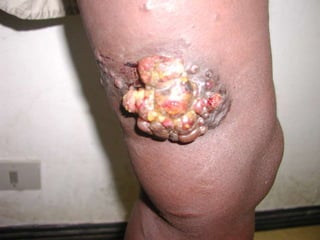
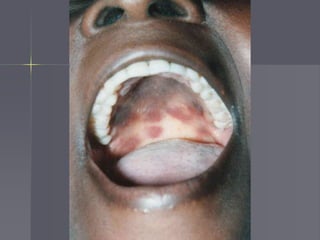
Kaposi’s Sarcoma
 The first reported malignancy in
association with HIV infection
 Appears as red-to-brown flat macules
in any site, mainly above the trunk
 Prognosis is poor and kills the patient
unless HAART is instituted immediately
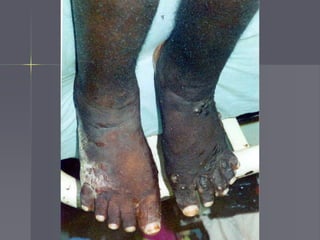
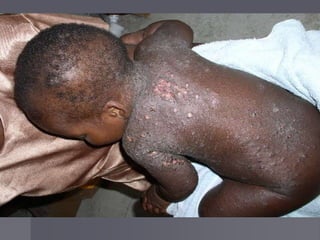
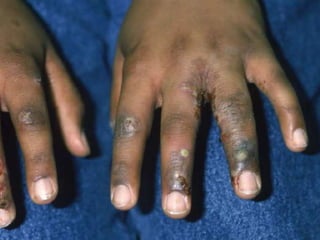
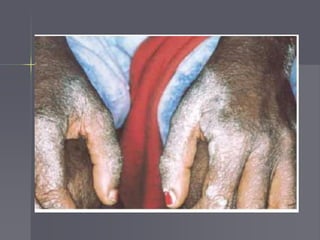
Scabies
 Frequency the same
 Norwegian (crusted) scabies, which is
characterized by wide spread
hyperkeratotic plaque occurs on palms
and soles.
 Prolonged treatment with repeated
course of scabicides is needed
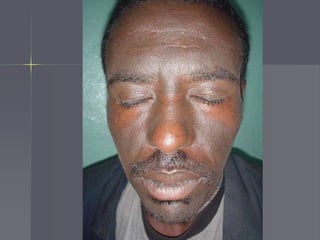
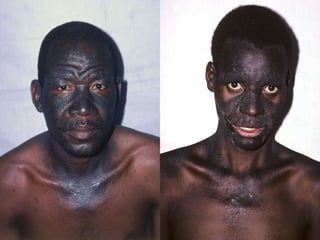
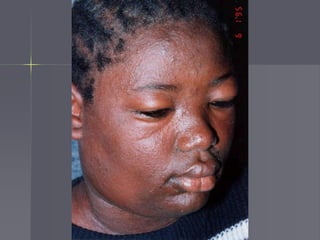
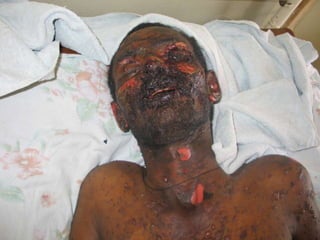
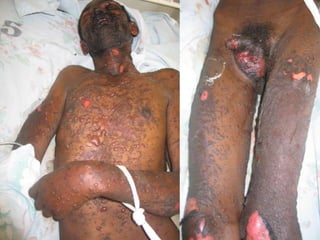
Hypersensitivity Reactions
 The immune dysregulation associated
with AIDS has made these patients to
react abnormally for any exogenous
stimuli like arthropod bite, drugs, and
UV radiation
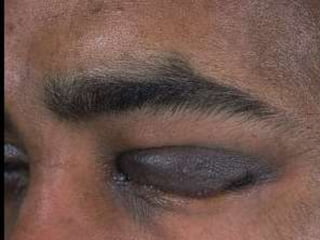
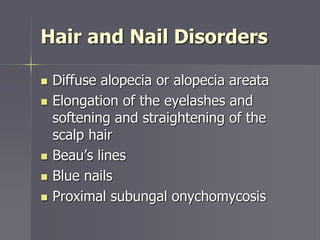
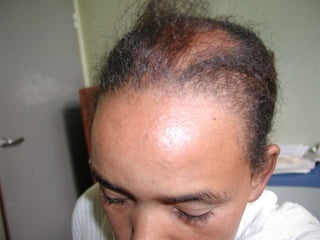
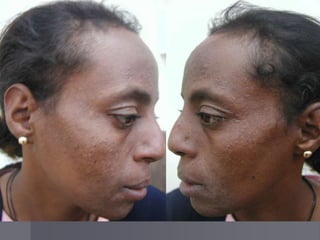
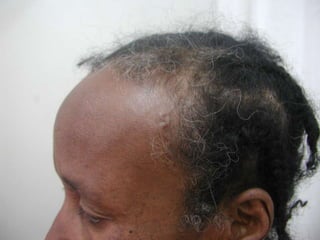
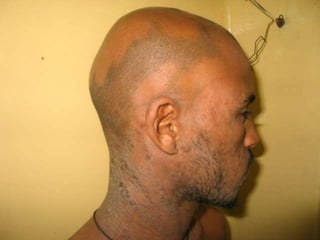
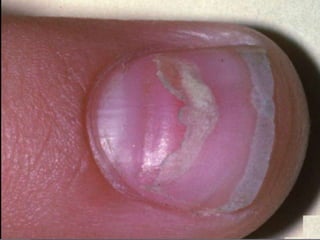
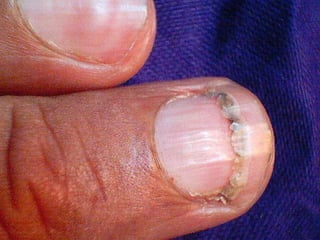
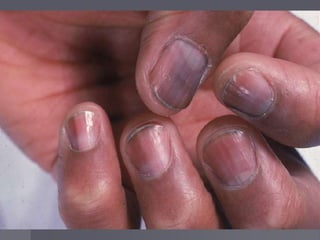
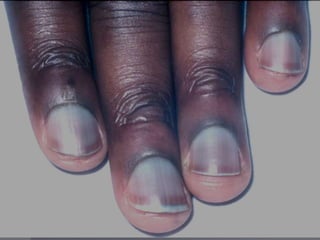
Hair and Nail Disorders
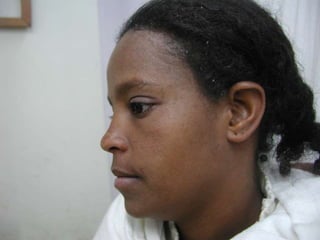
 Diffuse alopecia or alopecia areata
 Elongation of the eyelashes and
softening and straightening of the
scalp hair
 Beau’s lines
 Blue nails
 Proximal subungal onychomycosis
12HIV.ppt
12HIV.ppt
12HIV.ppt
12HIV.ppt
12HIV.ppt
12HIV.ppt
12HIV.ppt
12HIV.ppt
12HIV.ppt

12HIV.ppt

  • 1.
  • 2.
    INTRODUCTION  Up to92% of HIV/AIDS patient will have one or more skin disorders during the course their illness.  Recognizing HIV-related skin changes may lead to the diagnosis of HIV infection in the early stages, which allows initiation of appropriate antiretroviral therapy
  • 3.
    INTRODUCTION  Dermatological manifestationsare seen at every stage of HIV/AIDS  Some of the conditions are unique and virtually pathognomonic for HIV disease like bacillary angiomatosis and oral hairy leukoplakia.
  • 4.
    HIV replication cycleand sites of drug activity Capsid proteins and viral RNA CD4 Receptor Viral RNA New HIV particles Protease Attachment Uncoating Reverse Transcription Integration Transcription Translation Reverse Transcriptase Unintegrated double stranded Viral DNA Integrated viral DNA Viral mRNA Integrase gag-pol polyprotein 1 2 3 4 5 6 Assembly and Release Protease Inhibitors Indinavir (Crixivan) Ritonavir (Norvir) Saquinavir (Fortovase) Nelfinavir (Viracept) Amprenavir (Angenerase) Lopinavir/ritonavir (Kaletra) Atazanavir (Reyataz) NRTIs AZT (Zidovudine-Retrovir) ddI (Didanosine-Videx) ddC (Zalcitabine-Hivid) d4T (Stavudine-Zerit) 3TC (Lamivudine-Epivir) ABC(Abacavir-Ziagen) FTC (Emtricitabine, Emtriva) NNRTIs Efavirenz (Sustiva) Delavirdine (Rescriptor) Nevirapine (Viramune) Nucleus Cellular DNA CCR5 or CXCR4 co-receptor HIV Virions nRTI Tenofovir DF (Viread) T-20 (Enfuvirtide, Fuzeon)
  • 5.
    Acute Retroviral Syndrome 80 percent of cases  several weeks before seroconversion  IP 3 to 6 weeks  Constitutional symptoms are followed by exanthematous rash.  The more severe the ARS, the worse the prognosis of AIDS will be.  Some recommend giving HAART for 6 months to 2 years.
  • 7.
    Seborrhoeic dermatitis  Themost common dermatosis  The eruption, characterized by widespread inflammatory and hyperkeratotic lesions in seborrhoeic areas, may progress to erythroderma.  It is usually resistant to treatment
  • 10.
    Xerosis  Generalized dryskin syndrome is more frequently observed in patients with HIV infection.  It is often accompanied by severe itching.
  • 15.
    Pruritic papular eruption(PPE)  Common and relatively specific manifestation, 60% have advanced immunosuppression  Small, itchy, red or skin-colored papules on the head, the neck, and the upper part of the trunk  The cause is not known.  Emollients, steroid and antihistamines give temporary relief
  • 21.
    Eosinophilic folliculitis  Anidiopathic, highly pruritic, papulopustular eruption of sterile pustules around hair follicles involving the face, the neck, the trunk, and the extremities and occurring in advanced immunodeficiency.  May be the extreme of PPE.  Resistant to all forms of treatment. Steroid may help.
  • 24.
    Bacterial infections  Impetigoand folliculitis may be recurrent and persistent in HIV disease, particularly in children  Disseminated furunculosis, gingivitis, gangrenous stomatitis, and abscess formation frequently occur
  • 28.
    Bacillary Angiomatosis  Knownto occur exclusively in HIV infection  Caused by Bartonela quintana  It presents as fleshy, friable, protuberant papules-to-nodules that tend to bleed very easily.  Confuses with Kapos’s sarcoma and other vascular tumors.  Treatment consists of prolonged use of antibiotics.
  • 31.
    Fungal Infections  Dermatophytosishas the same frequency as the general population, may be more extensive and resistant to treatment.
  • 32.
    Fungal Infections  Recurrentand severe oropharyngeal candidiasis, usually extending to the esophagus and/or trachea is the presenting symptom and indicates immunosupression
  • 33.
    Fungal Infections  Deepand rare fungal infections like cryptococcosis, coccidiomycosis, and histoplasmosis affecting the systemic organs and the skin are unique features of advanced AIDS.
  • 36.
    Oral Hairy Leukoplakia Very specific manifestation of HIV infection presenting as filiform white papules or plaques forming reticulate pattern on the inferiolateral border of the mouth.  It is due to Epstein-Bar virus infection.  May be the initial sign of progressive immunosuppression
  • 40.
    Warts  Lesions maybe extensive and resistant to therapy. warts usually look like those seen in nonimmunosuppressed patients, but are more extensive.  Flat warts on adult face are typical features of HIV infection.
  • 41.
    Warts  Condyloma acuminataare of special significance in persons with HIV infection.  They are very difficult to eradicate.  Cervical dysplasia and carcinoma are more frequent and invasive cervical ca is a case defining illness.
  • 42.
    Warts  Condyloma acuminataare of special significance in persons with HIV infection.  They are very difficult to eradicate.  Cervical dysplasia and carcinoma are more frequent and invasive cervical ca is a case defining illness.
  • 45.
    Herpes Simplex Virus Infection Chronic persistent infection with herpes simplex virus (HSV) is AIDS defining illness.  Ulceration and necrosis is the usual finding with no prior history of blisters.  Generalized forms with meningitis may occur in advanced immunosupression.  Prolonged treatment with intravenous acyclovir is needed for extensive cases.
  • 50.
    Herpes Zoster  Commonlyseen early in the course of HIV infection, particularly in healthy- appearing individuals  May be particularly bullous, hemorrhagic, necrotic, and painful  Recurrences and multidermatomal involvement is common  Treatment need s systemic acyclovir
  • 55.
  • 56.
    Molluscum Contagiosum  Occurrenceof MC on the face of an adult is an indication to screen for HIV  They often number greater than 100 and may involve the face, trunk, and groin  Spontaneous healing is rare  No hematogenous spread
  • 60.
    Kaposi’s Sarcoma  Thefirst reported malignancy in association with HIV infection  Appears as red-to-brown flat macules in any site, mainly above the trunk  Prognosis is poor and kills the patient unless HAART is instituted immediately
  • 69.
    Scabies  Frequency thesame  Norwegian (crusted) scabies, which is characterized by wide spread hyperkeratotic plaque occurs on palms and soles.  Prolonged treatment with repeated course of scabicides is needed
  • 73.
    Hypersensitivity Reactions  Theimmune dysregulation associated with AIDS has made these patients to react abnormally for any exogenous stimuli like arthropod bite, drugs, and UV radiation
  • 79.
    Hair and NailDisorders  Diffuse alopecia or alopecia areata  Elongation of the eyelashes and softening and straightening of the scalp hair  Beau’s lines  Blue nails  Proximal subungal onychomycosis