PAPULOSQUAMOUS
DIORDERS
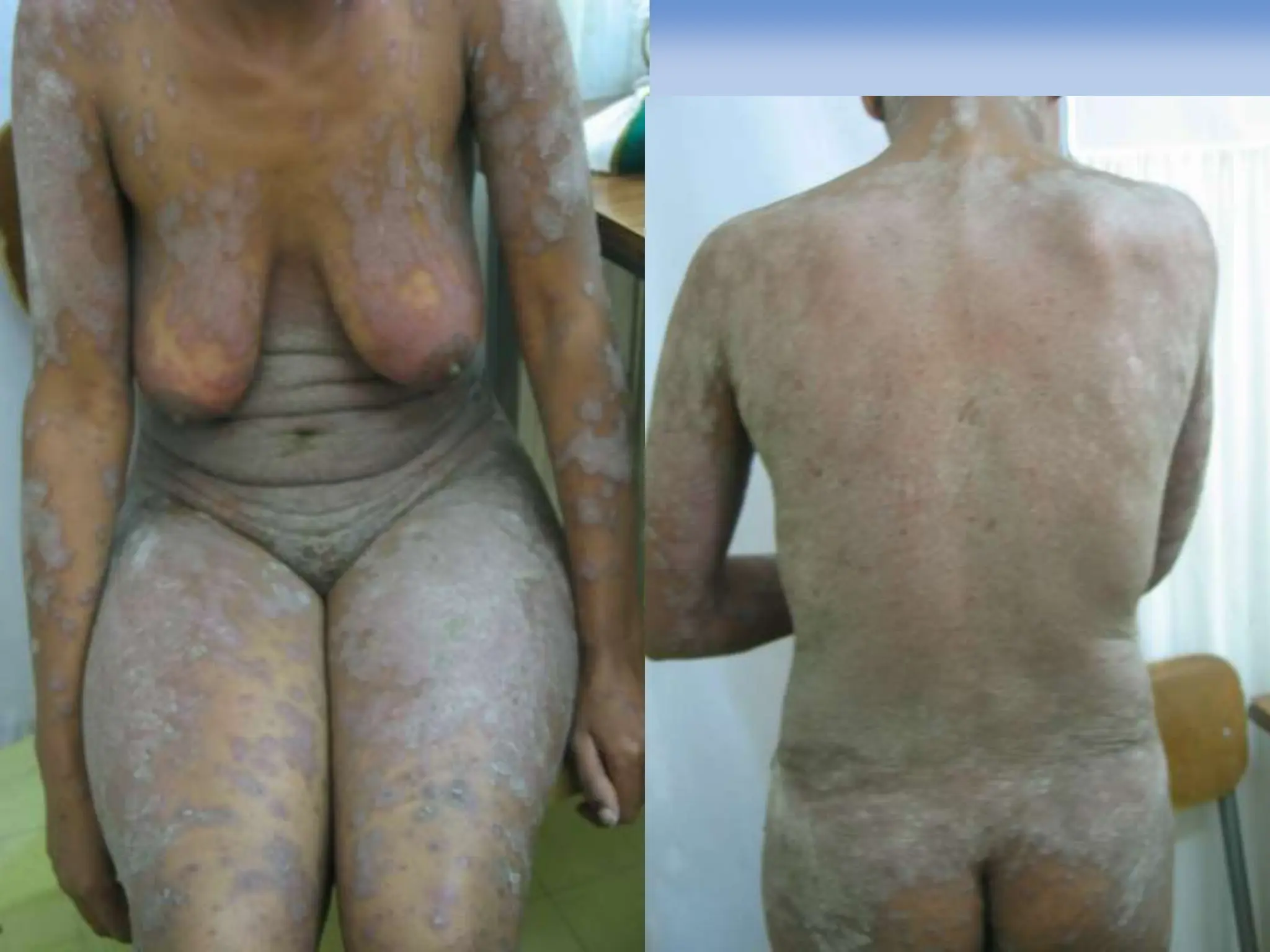
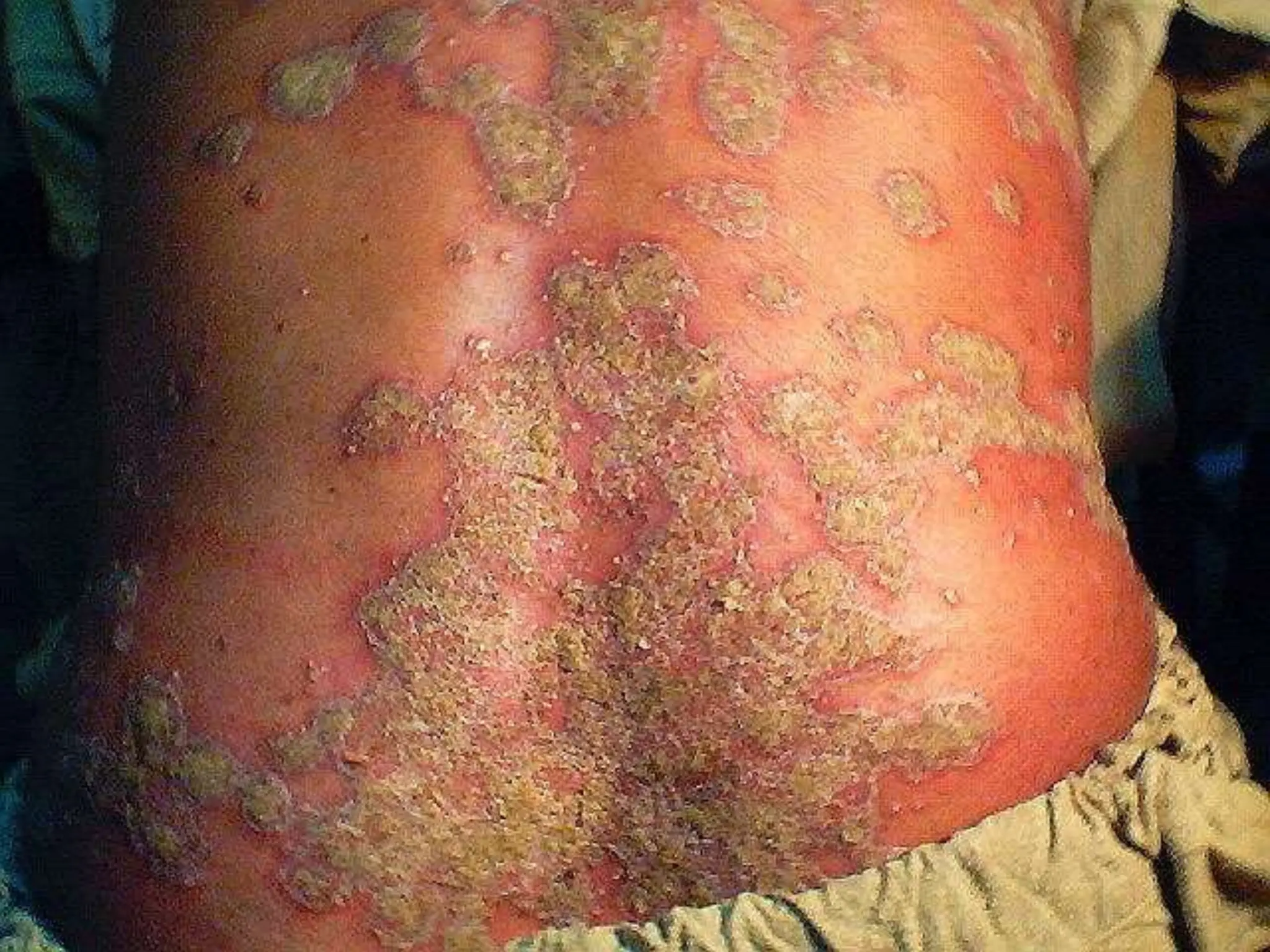
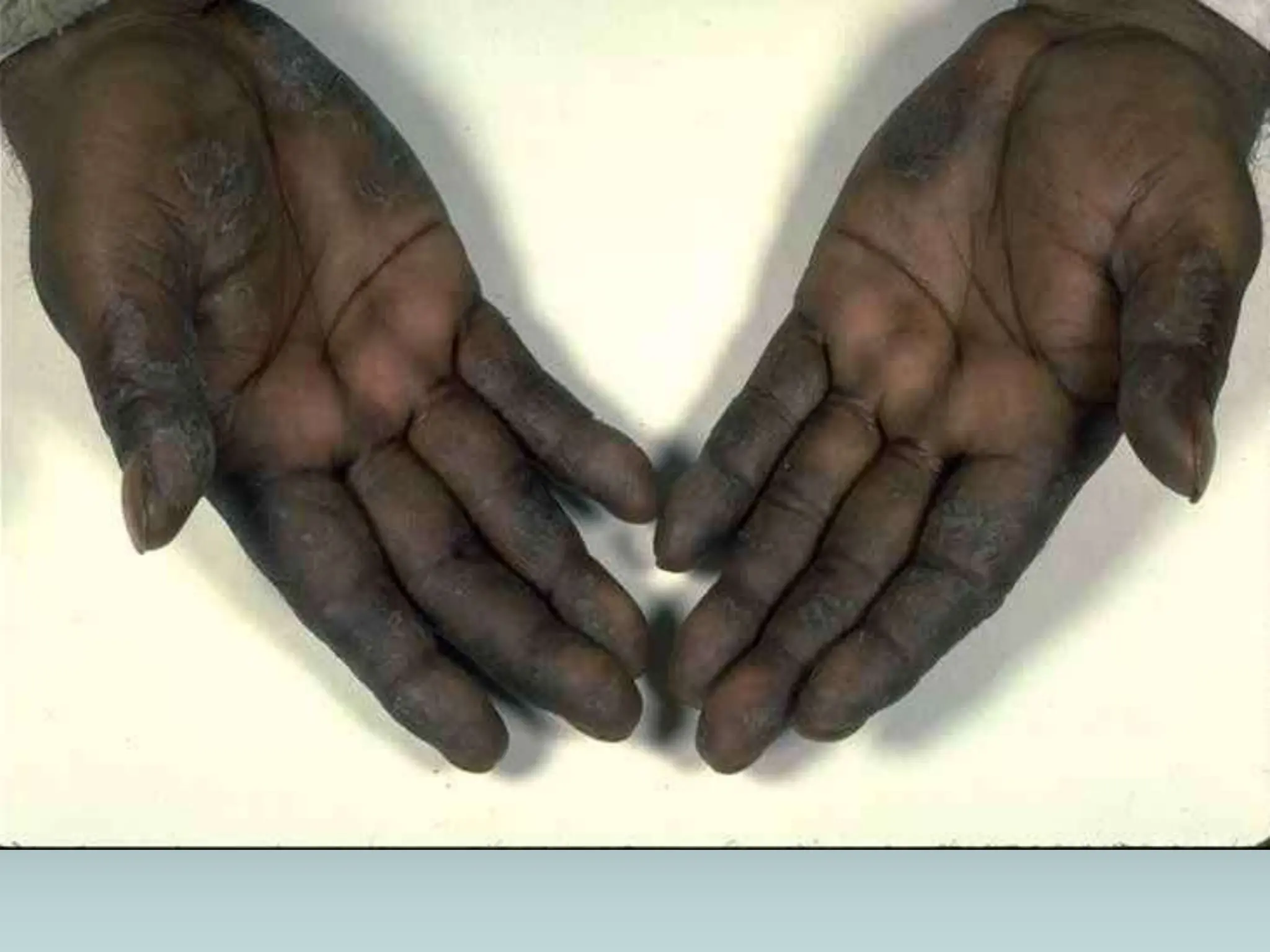
Psoriasis
 Affects 2 % to 3 % of the population
 One of the “miseries that beset mankind”
 Genetic defect with polygenic inheritance
 Trigger Factors:
 Physical trauma (Koebner’s phenomenon)
 Infections
 Stress
 Drugs
Psoriasis
The principal abnormality in
psoriasis is an alteration of the
cell kinetics of keratinocytes
The exact mechanism is not
known.
Psoriasis
Classification
 Non pustular forms
 Plaque psriasis
 Guttate psoriasis
 Psoriatic arthritis
 Pustular forms
 Pustular psoriasis
 Pustolosis palmaris et plantaris
 Erythrodermic psoriasis
 Von Zumbusch
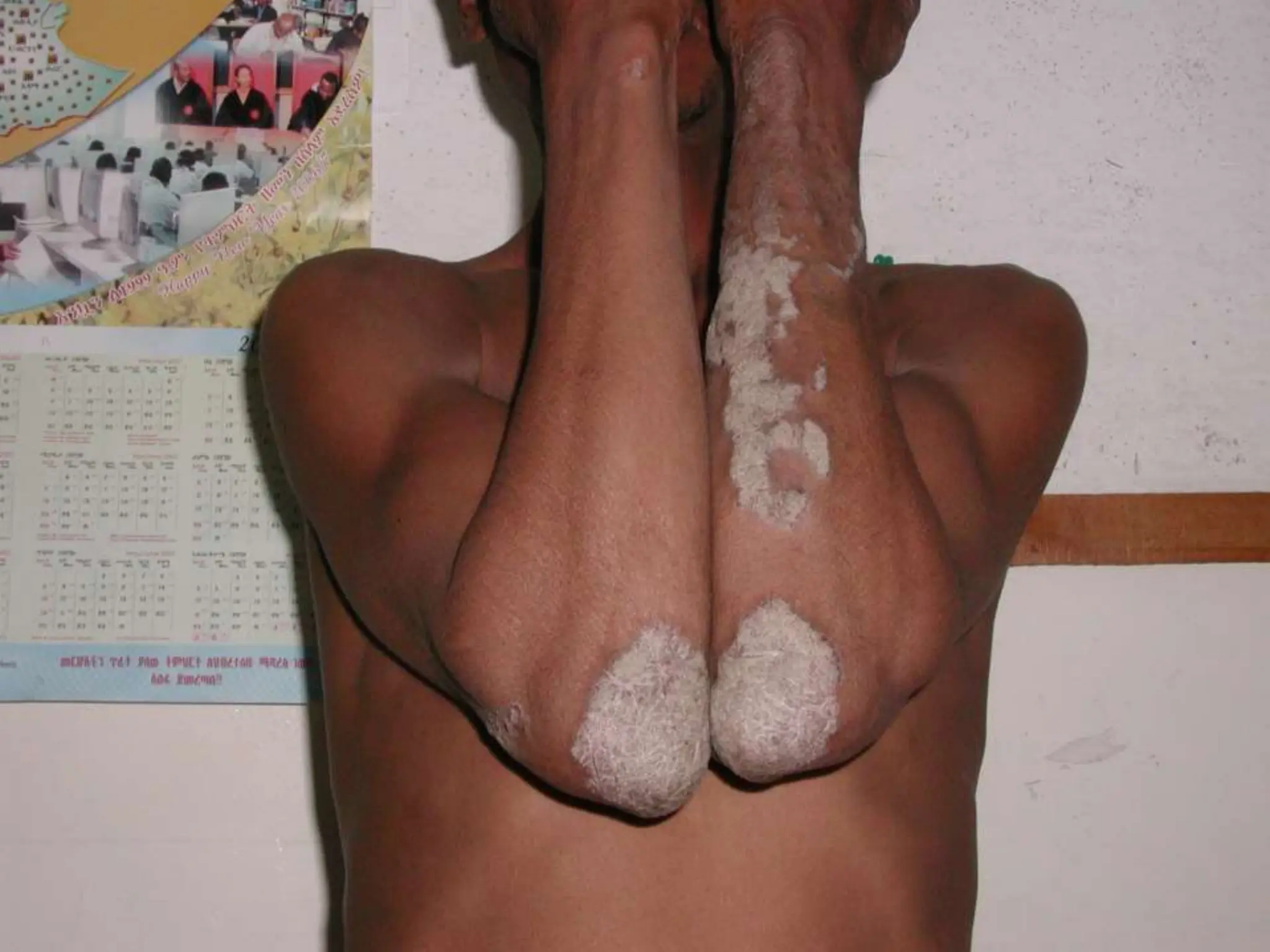
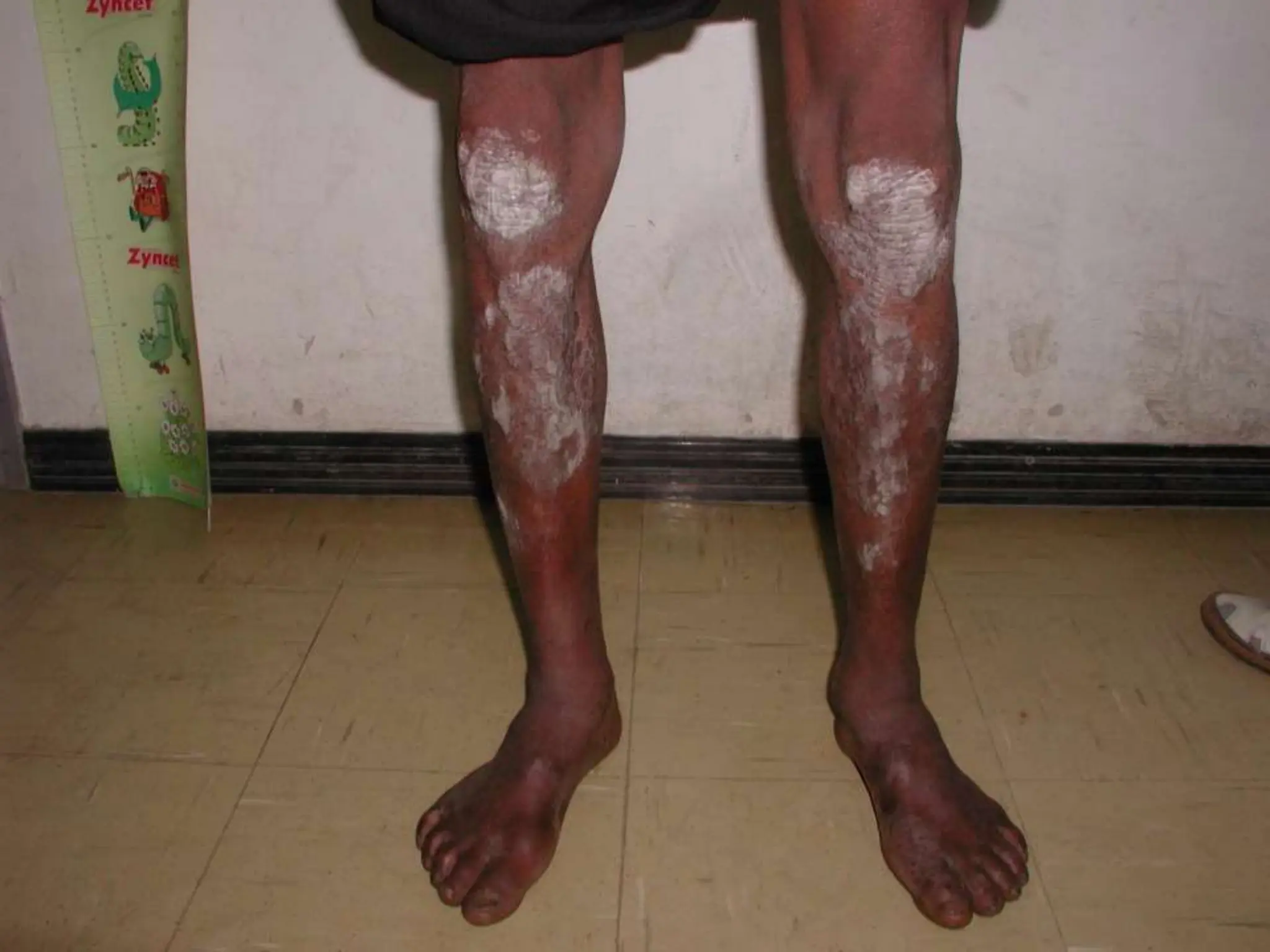
Psoriasis Vulgaris
 Characterized by silvery white scaly plaques
mainly on the extensor surfaces
 Positive Auspitz’s sign.
 Flexural forms are wet and erythematous
Psoriasis vulgaris
Psoriasis
Treatment should be individualized
based on patients’ age, type of
psoriasis, site and extent of
involvement, previous treatment,
associated medical disorders.
Topical Treatment
Emollients
Coal Tar
Salcylic Acid
Topical steroid
Topical calcipotriol (Daivonex)
cream
Dithranol:
Systemic Treatment
Methotrexate
Cyclosporin A
Phototherapy and
Photochemotherapy
Prognosis
Psoriasis is incurable disease.
The prognosis for control is good
in good setups and patients have
decreased quality of life and more
or less normal life expectancy
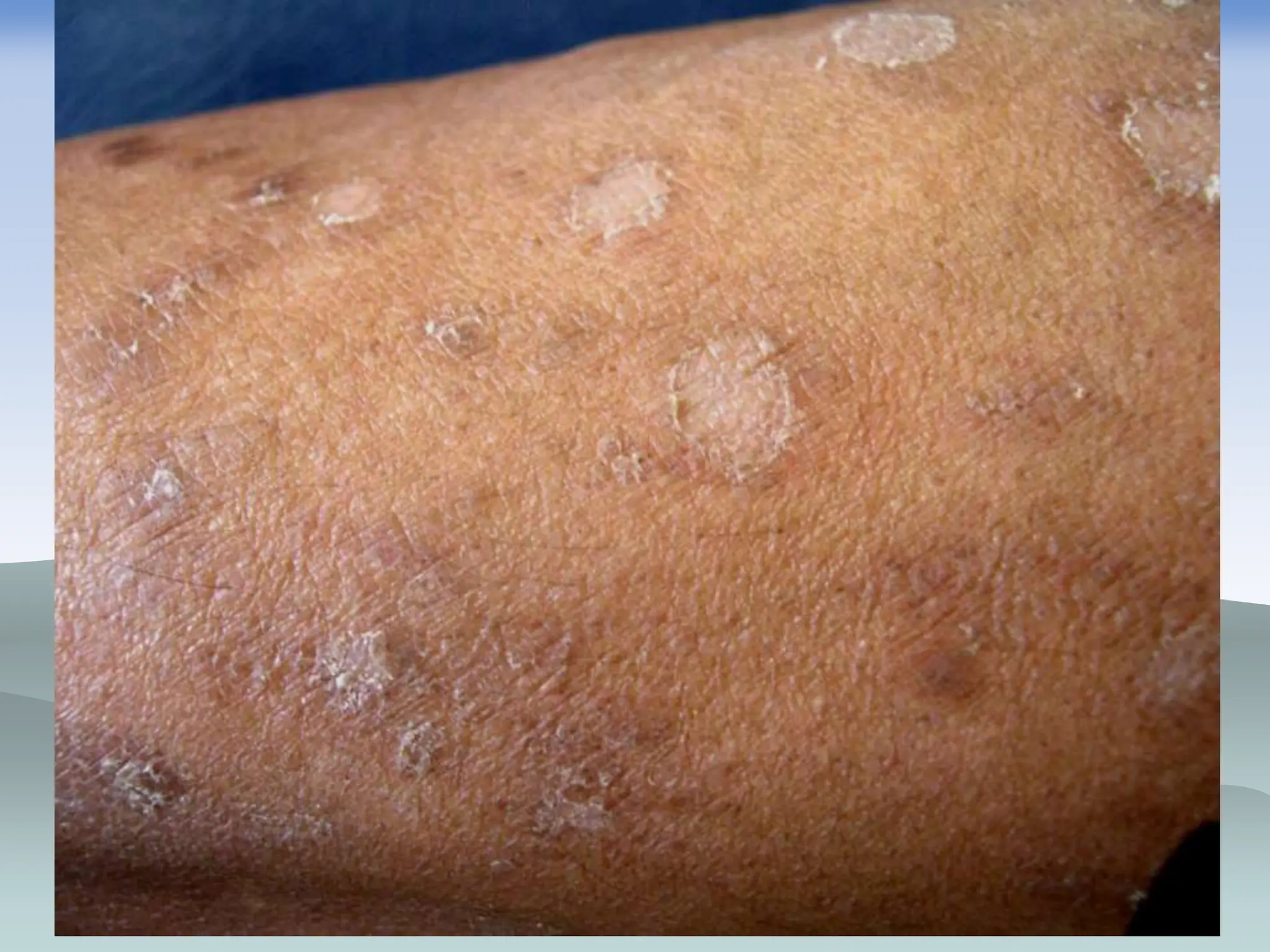
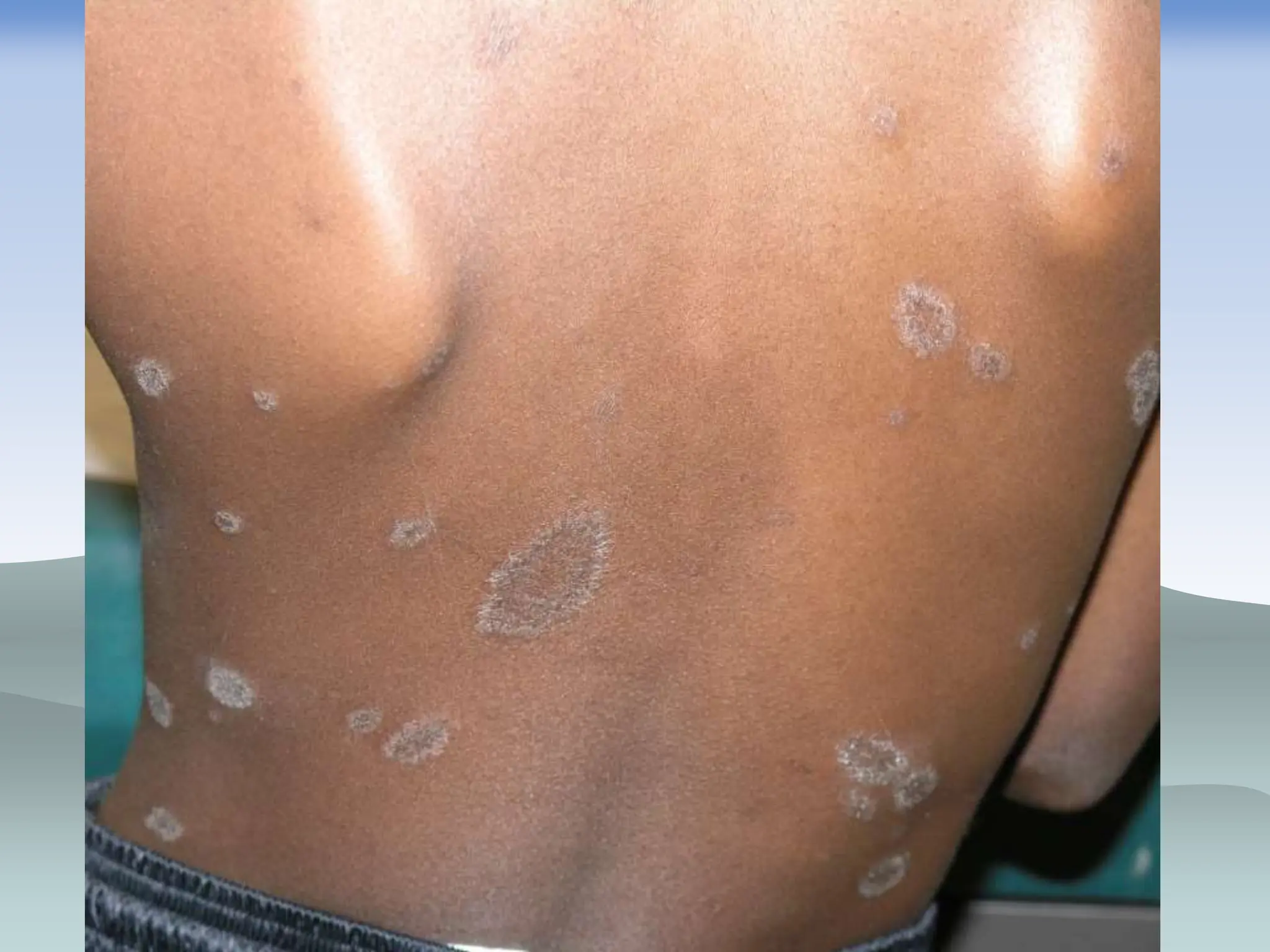
Pityriasis Rosea
 Common acute exanthematous eruption with a
distinctive morphology
 Cause unknown. HHV-7 is suspected
 A single herald patch precedes the
exanthematous phase
 Oval, slightly raised plaque 2 to 5 cm, bright
red, fine collarette scale at periphery on the
trunk, is followed by generalized plaques that
forms x-mas tree appearance.
Pityriasis Rosea
Self limited illness
Symptomatic treatment
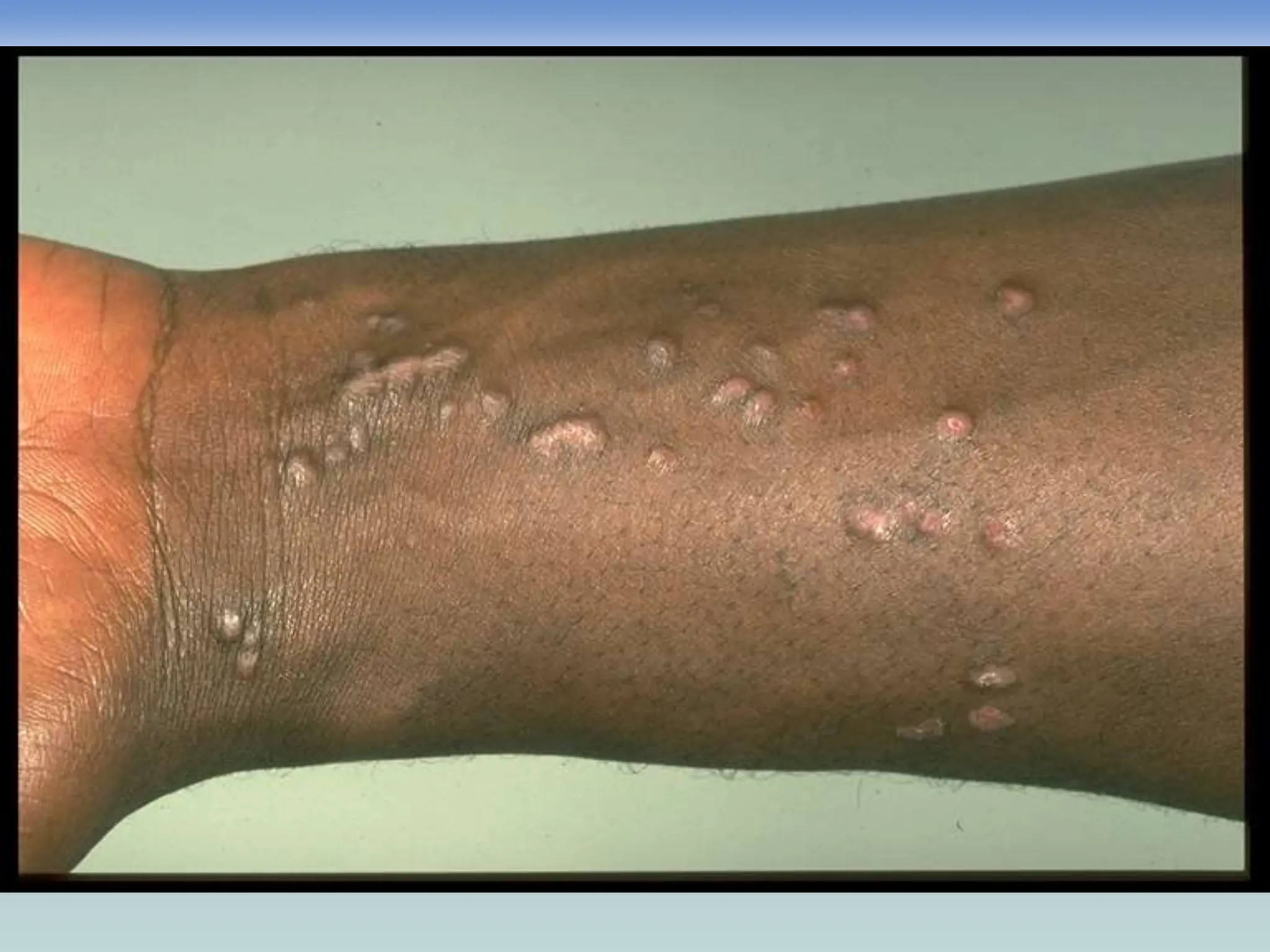
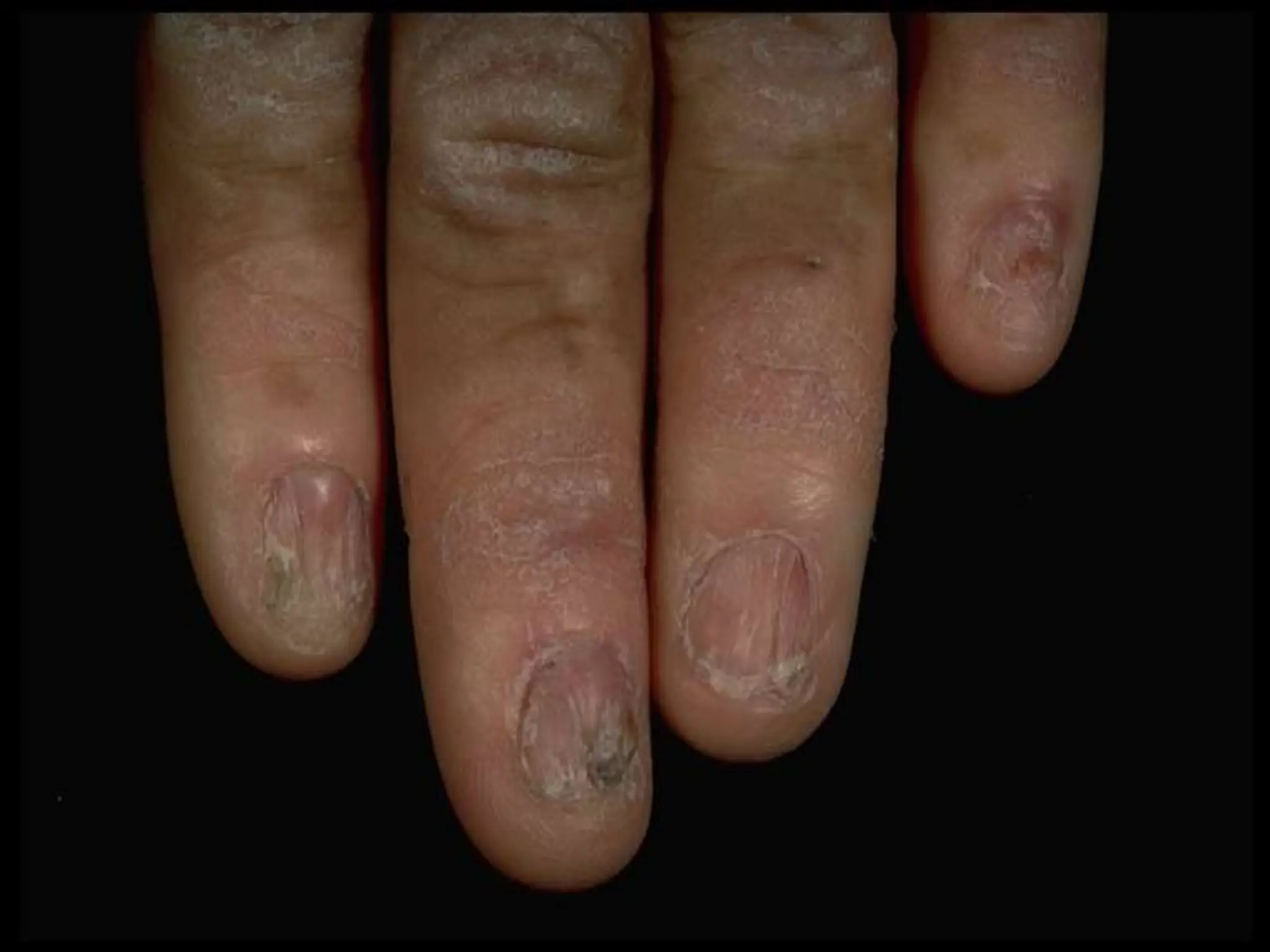
Lichen Planus
A unique, common inflammatory
disorder that affects the skin, mucous
membranes, nails, and/or hair.
Cause is unknown
Pruritic, violaceous, flat-topped,
polygonal papules are seen in any
part of the skin
Lichen Planus
Topical, intralesional, or systemic
steroids are usually effective.

16Papulosquamous Disorders.ppt