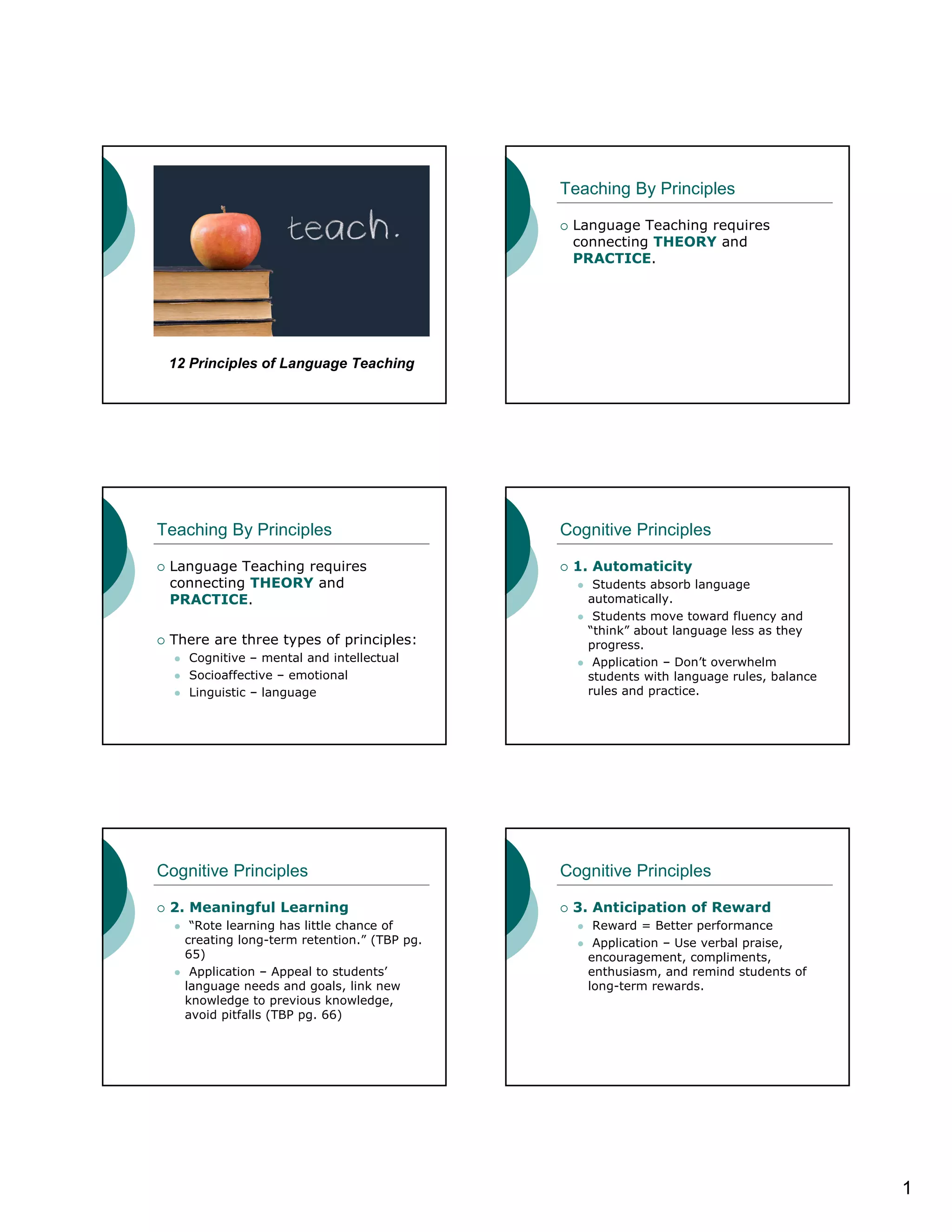
Teaching By Principles

                                              Language Teaching requires
                                              connecting THEORY and
                                              PRACTICE.


 12 Principles of Language Teaching


Teaching By Principles                       Cognitive Principles

 Language Teaching requires                   1. Automaticity
 connecting THEORY and                           Students absorb language
 PRACTICE.                                      automatically.
                                                 Students move toward fluency and
                                                “think” about language less as they
 There are three types of principles:           progress.
    Cognitive – mental and intellectual          Application – Don’t overwhelm
    Socioaffective – emotional                  students with language rules, balance
    Linguistic – language                       rules and practice.


Cognitive Principles                         Cognitive Principles

 2. Meaningful Learning                       3. Anticipation of Reward
    “Rote learning has little chance of          Reward = Better performance
   creating long-term retention.” (TBP pg.       Application – Use verbal praise,
   65)                                          encouragement, compliments,
    Application – Appeal to students’           enthusiasm, and remind students of
   language needs and goals, link new           long-term rewards.
   knowledge to previous knowledge,
   avoid pitfalls (TBP pg. 66)


                                                                                        1
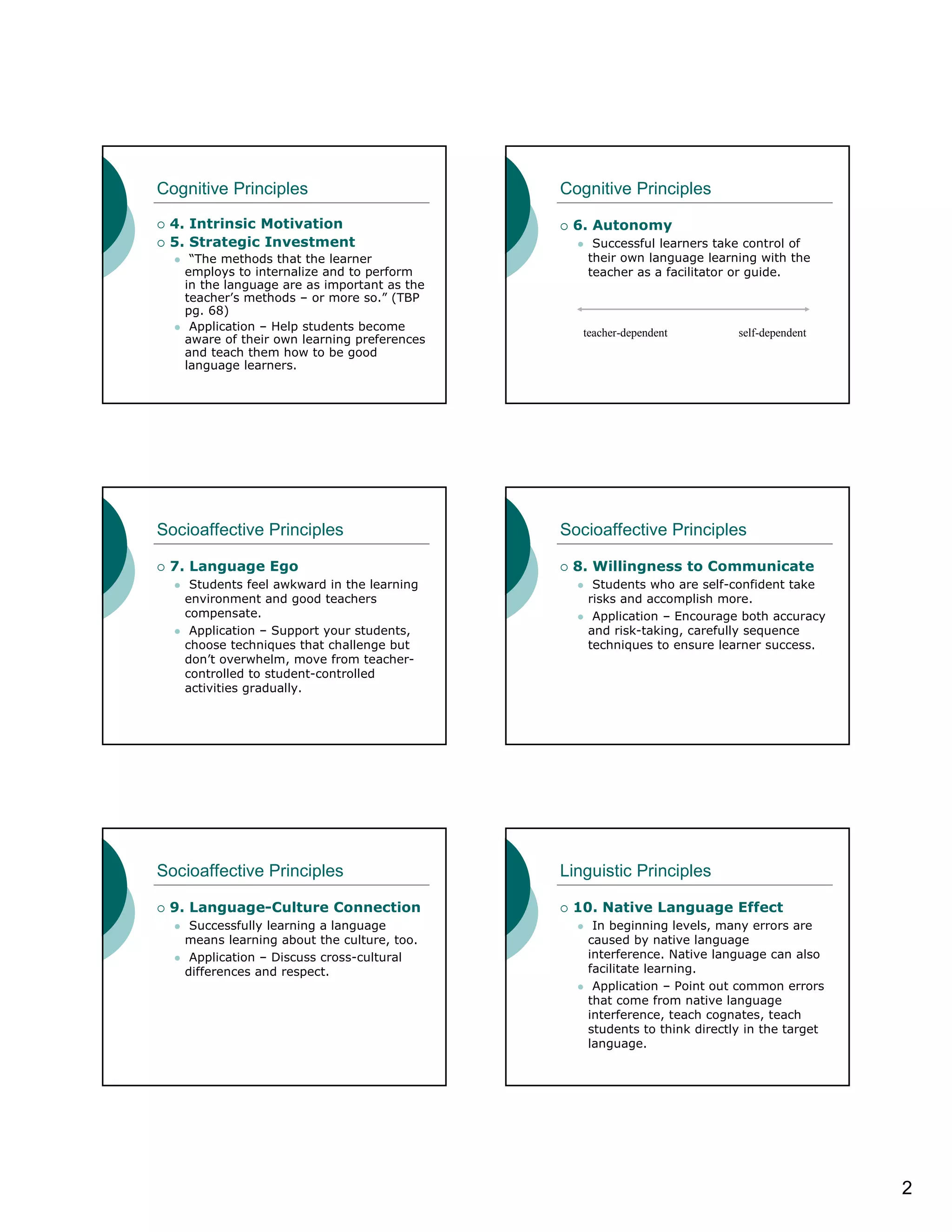
Cognitive Principles                         Cognitive Principles
 4. Intrinsic Motivation                      6. Autonomy
 5. Strategic Investment                         Successful learners take control of
    “The methods that the learner               their own language learning with the
   employs to internalize and to perform        teacher as a facilitator or guide.
   in the language are as important as the
   teacher’s methods – or more so.” (TBP
   pg. 68)
    Application – Help students become
                                                teacher-dependent        self-dependent
   aware of their own learning preferences
   and teach them how to be good
   language learners.


Socioaffective Principles                    Socioaffective Principles

 7. Language Ego                              8. Willingness to Communicate
    Students feel awkward in the learning        Students who are self-confident take
   environment and good teachers                risks and accomplish more.
   compensate.                                   Application – Encourage both accuracy
    Application – Support your students,        and risk-taking, carefully sequence
   choose techniques that challenge but         techniques to ensure learner success.
   don’t overwhelm, move from teacher-
   controlled to student-controlled
   activities gradually.


Socioaffective Principles                    Linguistic Principles

 9. Language-Culture Connection               10. Native Language Effect
    Successfully learning a language             In beginning levels, many errors are
   means learning about the culture, too.       caused by native language
    Application – Discuss cross-cultural        interference. Native language can also
   differences and respect.                     facilitate learning.
                                                 Application – Point out common errors
                                                that come from native language
                                                interference, teach cognates, teach
                                                students to think directly in the target
                                                language.


                                                                                           2
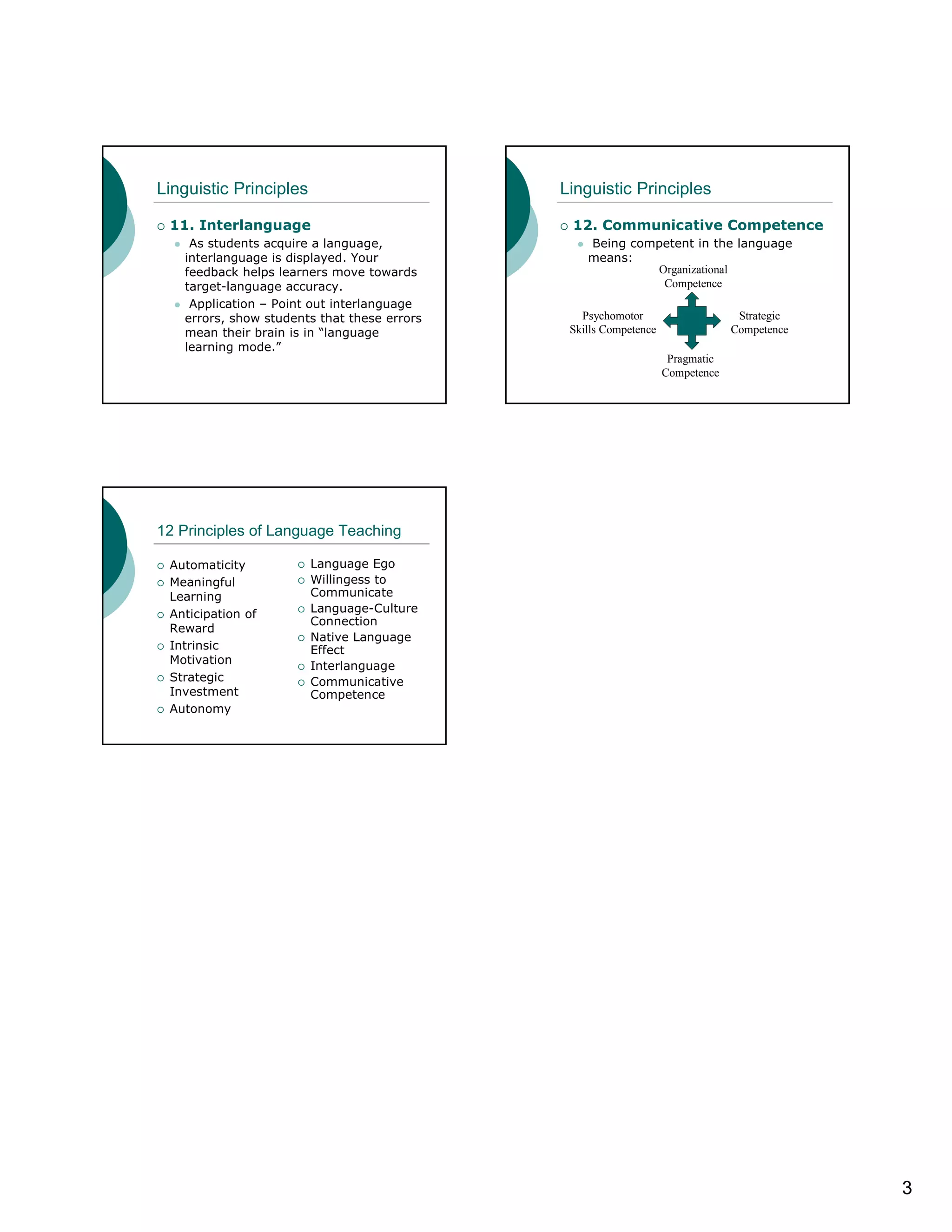
Linguistic Principles                        Linguistic Principles

 11. Interlanguage                            12. Communicative Competence
    As students acquire a language,              Being competent in the language
   interlanguage is displayed. Your              means:
   feedback helps learners move towards                   Organizational
   target-language accuracy.                               Competence
    Application – Point out interlanguage
   errors, show students that these errors      Psychomotor                     Strategic
   mean their brain is in “language           Skills Competence                Competence
   learning mode.”
                                                                   Pragmatic
                                                                  Competence


12 Principles of Language Teaching

 Automaticity           Language Ego
 Meaningful             Willingess to
 Learning               Communicate
 Anticipation of        Language-Culture
                        Connection
 Reward
                        Native Language
 Intrinsic              Effect
 Motivation             Interlanguage
 Strategic              Communicative
 Investment             Competence
 Autonomy


                                                                                            3

12 principles of language teaching power point notes page

  • 1.
    Teaching By Principles Language Teaching requires connecting THEORY and PRACTICE. 12 Principles of Language Teaching Teaching By Principles Cognitive Principles Language Teaching requires 1. Automaticity connecting THEORY and Students absorb language PRACTICE. automatically. Students move toward fluency and “think” about language less as they There are three types of principles: progress. Cognitive – mental and intellectual Application – Don’t overwhelm Socioaffective – emotional students with language rules, balance Linguistic – language rules and practice. Cognitive Principles Cognitive Principles 2. Meaningful Learning 3. Anticipation of Reward “Rote learning has little chance of Reward = Better performance creating long-term retention.” (TBP pg. Application – Use verbal praise, 65) encouragement, compliments, Application – Appeal to students’ enthusiasm, and remind students of language needs and goals, link new long-term rewards. knowledge to previous knowledge, avoid pitfalls (TBP pg. 66) 1
  • 2.
    Cognitive Principles Cognitive Principles 4. Intrinsic Motivation 6. Autonomy 5. Strategic Investment Successful learners take control of “The methods that the learner their own language learning with the employs to internalize and to perform teacher as a facilitator or guide. in the language are as important as the teacher’s methods – or more so.” (TBP pg. 68) Application – Help students become teacher-dependent self-dependent aware of their own learning preferences and teach them how to be good language learners. Socioaffective Principles Socioaffective Principles 7. Language Ego 8. Willingness to Communicate Students feel awkward in the learning Students who are self-confident take environment and good teachers risks and accomplish more. compensate. Application – Encourage both accuracy Application – Support your students, and risk-taking, carefully sequence choose techniques that challenge but techniques to ensure learner success. don’t overwhelm, move from teacher- controlled to student-controlled activities gradually. Socioaffective Principles Linguistic Principles 9. Language-Culture Connection 10. Native Language Effect Successfully learning a language In beginning levels, many errors are means learning about the culture, too. caused by native language Application – Discuss cross-cultural interference. Native language can also differences and respect. facilitate learning. Application – Point out common errors that come from native language interference, teach cognates, teach students to think directly in the target language. 2
  • 3.
    Linguistic Principles Linguistic Principles 11. Interlanguage 12. Communicative Competence As students acquire a language, Being competent in the language interlanguage is displayed. Your means: feedback helps learners move towards Organizational target-language accuracy. Competence Application – Point out interlanguage errors, show students that these errors Psychomotor Strategic mean their brain is in “language Skills Competence Competence learning mode.” Pragmatic Competence 12 Principles of Language Teaching Automaticity Language Ego Meaningful Willingess to Learning Communicate Anticipation of Language-Culture Connection Reward Native Language Intrinsic Effect Motivation Interlanguage Strategic Communicative Investment Competence Autonomy 3