Doing It On Your Own: When
to Call in the Consultants,
When to Leave Them Out
#12NTCDoing


Pam Kingpetcharat
Gabriel Nichols
Evaluate This Session!
Each entry is a chance to win an NTEN engraved
                     iPad!


      or Online at www.nten.org/ntc/eval
   Prepare: What you need to know before you
    consider consultants
   Define: What you need to do to clearly set the
    ‘bar’ for service and performance
   Shop: Where to look for the right team
   Select: How to establish a system to
    objectively weigh choices & estimate risk
   Manage: How to increase the probability of
    success
   Evaluate: How to learn & build on each
    engagement

Topics for discussion
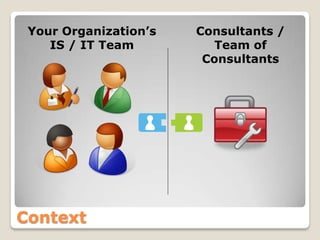
Your Organization’s   Consultants /
    IS / IT Team          Team of
                        Consultants


Context
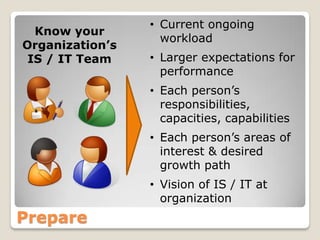
• Current ongoing
  Know your
                   workload
Organization’s
 IS / IT Team    • Larger expectations for
                   performance
                 • Each person’s
                   responsibilities,
                   capacities, capabilities
                 • Each person’s areas of
                   interest & desired
                   growth path
                 • Vision of IS / IT at
                   organization
Prepare
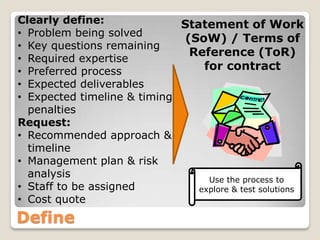
Clearly define:              Statement of Work
• Problem being solved
                             (SoW) / Terms of
• Key questions remaining
                              Reference (ToR)
• Required expertise
• Preferred process              for contract
• Expected deliverables
• Expected timeline & timing
  penalties
Request:
• Recommended approach &
  timeline
• Management plan & risk
  analysis                        Use the process to
• Staff to be assigned          explore & test solutions
• Cost quote
Define
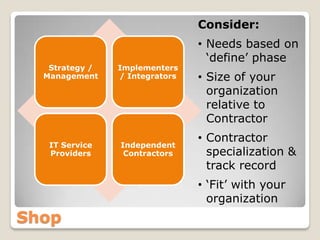
Consider:
                                • Needs based on
                                  ‘define’ phase
   Strategy /   Implementers
  Management    / Integrators   • Size of your
                                  organization
                                  relative to
                                  Contractor
                                • Contractor
   IT Service   Independent
   Providers     Contractors      specialization &
                                  track record
                                • ‘Fit’ with your
                                  organization
Shop
Considerations:
• Expertise in-house            • Credibility / need for
  (long/short term)?              objectivity | politics?
• Comparative                   • Pros / Cons / Risks /
  advantage?                      Cost / Timing
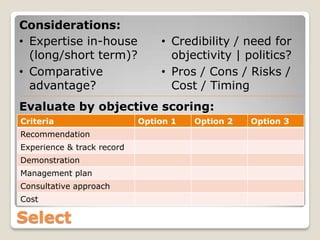
Evaluate by objective scoring:
Criteria                    Option 1   Option 2   Option 3
Recommendation
Experience & track record
Demonstration
Management plan
Consultative approach
Cost

Select
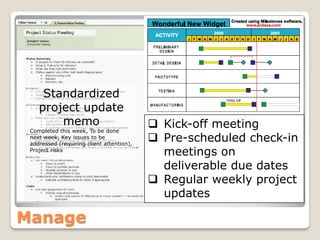
Standardized
    project update
        memo                                Kick-off meeting
 Completed this week, To be done
 next week, Key issues to be
 addressed (requiring client attention),
                                            Pre-scheduled check-in
 Project risks
                                             meetings on
                                             deliverable due dates
                                            Regular weekly project
                                             updates

Manage
 Final documentation
 Close out
  presentation /
  meeting
 Provide formal
  feedback
 Ensure payment close
  out
 Internal
  documentation &
  ongoing relationship
  management

Evaluate
Leaving the Consultants Behind
Completing large scale projects without outside support
   What expertise does the project require?
    1. Does your internal staff have/can the get that
       expertise
    2. Will you need that skillset moving forward for
       additional projects/maintenance of the new
       systems
    3. Is this a growth opportunity for someone on
       your staff?


Questions to Ask
   What is the deadline?
    1. Is there a hard deadline by which completion
       is required?
    2. What costs, in budget, additional work, and
       opportunities lost will slippage cost
    3. Are internal stakeholders sufficiently
       committed to the project to accept setbacks


Questions to Ask
   What resources do you have to devote to
    this?
    1. Your staff have full time jobs, can you devote
       the time for training and work?
    2. Be realistic. When an expert gives an
       assessment of time expected for a project
       you should add 50%, for internal staff triple
       it.


Questions to Ask
   Exchange 2007 – 2010 migration
    1. Fully outsources, staff managed
    2. Clearly defined SOW with concrete
       deliverables and specific timeline
    3. Transition needed to be completed by set
       date to fit in with larger infrastructure plans
    4. One time task, expertise would not benefit
       the organization moving forward
    5. All staff were fully committed to other
       projects. No ability to make space


Three projects, three approaches
   Network/Application Redesign
    1. Partnership between internal and external
       assets
    2. SOW was flexible, project evolved as
       conditions changed
    3. Time slippage was expensive but original
       systems could continue without error
    4. Consultants provided planning support,
       specialized expertise and training for staff on
       continuing maintenance


Three projects, three approaches
   CMS Website conversion
    1. Internal assets only
    2. Staff included a web publisher expert in
       HTML/CSS for template design and developer who
       could do PHP coding
    3. No set deadline, separated from a larger project
       which had been too large to gain organizational
       support
    4. Website is dynamic with frequent changes both to
       content and structure. Having the expertise to do
       this internally has improved responsiveness and
       flexibility.
    5. Success in this step helped produce buy-in for
       larger project which will be out-sourced


Three projects, three approaches
1. Budget – there was none, this project served as
    a proof of concept for further investment in the
    website
 2. Staff Development – during the project the web
    publisher taught himself PHP and started learning
    mySQL
 3. Flexibility – because staff were completely
    familiar with the structure and design of the site
    they are better able to make changes going
    forward
 4. Greater Internal Understanding of Systems -
    Discovery process for the project taught us about
    strengths and weaknesses of the site we
    otherwise would not have gained


Advantages
1. Time – Project took 6 months from beginning to
    rollout during which time we did not have the
    benefit of the new system which a more
    experienced firm could have deployed far more
    quickly
 2. Wasted Effort – four months in we realized that
    we had made a key error in the design of our
    templates and information infrastructure. While
    this did not require starting from scratch it
    required significant additional effort to fix.
 3. Opportunity Costs – the time staff spent on this
    project were not spent on other work.


Costs
Questions/
Discussion?

Doing It On Your Own: When to Call in the Consultants, When to Leave Them Out

  • 1.
    Doing It OnYour Own: When to Call in the Consultants, When to Leave Them Out #12NTCDoing Pam Kingpetcharat Gabriel Nichols
  • 2.
    Evaluate This Session! Eachentry is a chance to win an NTEN engraved iPad! or Online at www.nten.org/ntc/eval
  • 3.
    Prepare: What you need to know before you consider consultants  Define: What you need to do to clearly set the ‘bar’ for service and performance  Shop: Where to look for the right team  Select: How to establish a system to objectively weigh choices & estimate risk  Manage: How to increase the probability of success  Evaluate: How to learn & build on each engagement Topics for discussion
  • 4.
    Your Organization’s Consultants / IS / IT Team Team of Consultants Context
  • 5.
    • Current ongoing Know your workload Organization’s IS / IT Team • Larger expectations for performance • Each person’s responsibilities, capacities, capabilities • Each person’s areas of interest & desired growth path • Vision of IS / IT at organization Prepare
  • 6.
    Clearly define: Statement of Work • Problem being solved (SoW) / Terms of • Key questions remaining Reference (ToR) • Required expertise • Preferred process for contract • Expected deliverables • Expected timeline & timing penalties Request: • Recommended approach & timeline • Management plan & risk analysis Use the process to • Staff to be assigned explore & test solutions • Cost quote Define
  • 7.
    Consider: • Needs based on ‘define’ phase Strategy / Implementers Management / Integrators • Size of your organization relative to Contractor • Contractor IT Service Independent Providers Contractors specialization & track record • ‘Fit’ with your organization Shop
  • 8.
    Considerations: • Expertise in-house • Credibility / need for (long/short term)? objectivity | politics? • Comparative • Pros / Cons / Risks / advantage? Cost / Timing Evaluate by objective scoring: Criteria Option 1 Option 2 Option 3 Recommendation Experience & track record Demonstration Management plan Consultative approach Cost Select
  • 9.
    Standardized project update memo  Kick-off meeting Completed this week, To be done next week, Key issues to be addressed (requiring client attention),  Pre-scheduled check-in Project risks meetings on deliverable due dates  Regular weekly project updates Manage
  • 10.
     Final documentation Close out presentation / meeting  Provide formal feedback  Ensure payment close out  Internal documentation & ongoing relationship management Evaluate
  • 11.
    Leaving the ConsultantsBehind Completing large scale projects without outside support
  • 12.
    What expertise does the project require? 1. Does your internal staff have/can the get that expertise 2. Will you need that skillset moving forward for additional projects/maintenance of the new systems 3. Is this a growth opportunity for someone on your staff? Questions to Ask
  • 13.
    What is the deadline? 1. Is there a hard deadline by which completion is required? 2. What costs, in budget, additional work, and opportunities lost will slippage cost 3. Are internal stakeholders sufficiently committed to the project to accept setbacks Questions to Ask
  • 14.
    What resources do you have to devote to this? 1. Your staff have full time jobs, can you devote the time for training and work? 2. Be realistic. When an expert gives an assessment of time expected for a project you should add 50%, for internal staff triple it. Questions to Ask
  • 15.
    Exchange 2007 – 2010 migration 1. Fully outsources, staff managed 2. Clearly defined SOW with concrete deliverables and specific timeline 3. Transition needed to be completed by set date to fit in with larger infrastructure plans 4. One time task, expertise would not benefit the organization moving forward 5. All staff were fully committed to other projects. No ability to make space Three projects, three approaches
  • 16.
    Network/Application Redesign 1. Partnership between internal and external assets 2. SOW was flexible, project evolved as conditions changed 3. Time slippage was expensive but original systems could continue without error 4. Consultants provided planning support, specialized expertise and training for staff on continuing maintenance Three projects, three approaches
  • 17.
    CMS Website conversion 1. Internal assets only 2. Staff included a web publisher expert in HTML/CSS for template design and developer who could do PHP coding 3. No set deadline, separated from a larger project which had been too large to gain organizational support 4. Website is dynamic with frequent changes both to content and structure. Having the expertise to do this internally has improved responsiveness and flexibility. 5. Success in this step helped produce buy-in for larger project which will be out-sourced Three projects, three approaches
  • 18.
    1. Budget –there was none, this project served as a proof of concept for further investment in the website 2. Staff Development – during the project the web publisher taught himself PHP and started learning mySQL 3. Flexibility – because staff were completely familiar with the structure and design of the site they are better able to make changes going forward 4. Greater Internal Understanding of Systems - Discovery process for the project taught us about strengths and weaknesses of the site we otherwise would not have gained Advantages
  • 19.
    1. Time –Project took 6 months from beginning to rollout during which time we did not have the benefit of the new system which a more experienced firm could have deployed far more quickly 2. Wasted Effort – four months in we realized that we had made a key error in the design of our templates and information infrastructure. While this did not require starting from scratch it required significant additional effort to fix. 3. Opportunity Costs – the time staff spent on this project were not spent on other work. Costs
  • 20.