


Lorem Ipsum Dolor?
Yep, you need content strategy

April 4, 2012
Today’s Presenter

                Courtney Clark
                Content Strategy Lead
                Forum One Communications
Defined
 Content Strategy plans for the
 creation, publication, and
 governance of useful usable
 content.

 - Kristina Halvorson
   author of Content
   Strategy for the Web
Defined
Blah
   blah
Defined
Blah
   blah
Defined
Blah
   blah
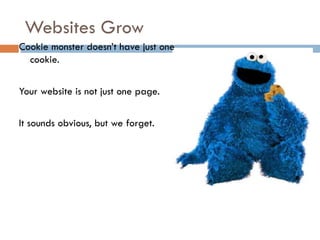
Websites Grow
Cookie monster doesn’t have just one
  cookie.

Your website is not just one page.

It sounds obvious, but we forget.
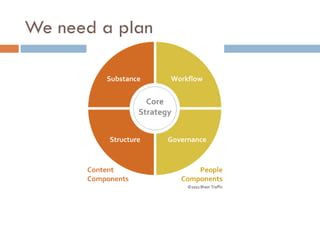
We need a plan
We need a plan
So what?
It’s important!
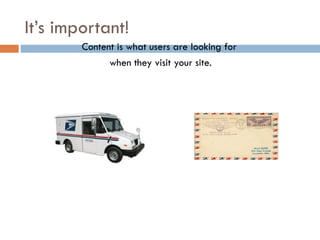
        Content is what users are looking for
              when they visit your site.
It’s influential!
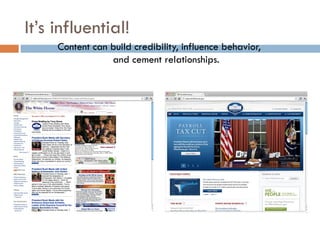
     Content can build credibility, influence behavior,
                 and cement relationships.
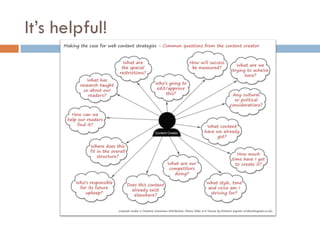
It’s helpful!
Good Content Quals
    Relevant
    Actionable
    User-centered
    Clear
    Consistent
    Concise
    Supported


http://www.alistapart.com/articles/a-checklist-for-content-work/
Relevant
   Are you in the right place, talking to the right people, about
    the right stuff?
   Is this content relevant to our business goals, users, context
   Is this written for the right audience?
   Is the content on the right page?
Actionable
   What is the purpose of this content?
   What action do you want users to take?
Actionable
User-Centered
   What is your user’s mindset?
   What does the user want to accomplish?
   Are you helping him/her?
User-Centered
Clear
   Can a user read this content?
   Can a user understand it?
   Are you using terms the user already knows?
Clear
Consistent
   Are you using the style guide?
   Are you using terms consistently?
   Is the tone consistent?
   Is the message consistent?
Consistent
Concise
   Can you say this in one sentence instead of a paragraph?
   Do you get to the point in the first sentence?
   Did you give the overview before the long report?
Actionable
   Concise
 • What is the purpose of this content?
 • What action do you want users to take?
Supported
   What’s the plan after this content is published?
   Is it time sensitive?
   Who will update it?
   Does it need to be archived?
   Do you have the resources to support it?
Supported
Web Writing Tips
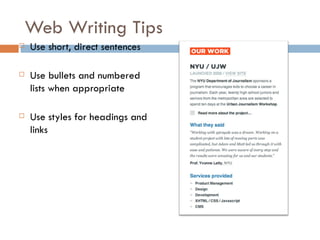
   Use short, direct sentences

   Use bullets and numbered
    lists when appropriate

   Use styles for headings and
    links
Resources
Books, Websites, Conferences, etc.

http://www.forumone.com/blogs/post/content-
   strategy-resources
Lorem Ipsum Dolor?  Yep, you need a content strategy.

Lorem Ipsum Dolor? Yep, you need a content strategy.

  • 1.
    Lorem Ipsum Dolor? Yep,you need content strategy April 4, 2012
  • 2.
    Today’s Presenter Courtney Clark Content Strategy Lead Forum One Communications
  • 3.
    Defined Content Strategyplans for the creation, publication, and governance of useful usable content. - Kristina Halvorson author of Content Strategy for the Web
  • 4.
  • 5.
  • 6.
  • 7.
    Websites Grow Cookie monsterdoesn’t have just one cookie. Your website is not just one page. It sounds obvious, but we forget.
  • 8.
  • 9.
  • 10.
  • 11.
    It’s important! Content is what users are looking for when they visit your site.
  • 12.
    It’s influential! Content can build credibility, influence behavior, and cement relationships.
  • 13.
  • 14.
    Good Content Quals  Relevant  Actionable  User-centered  Clear  Consistent  Concise  Supported http://www.alistapart.com/articles/a-checklist-for-content-work/
  • 15.
    Relevant  Are you in the right place, talking to the right people, about the right stuff?  Is this content relevant to our business goals, users, context  Is this written for the right audience?  Is the content on the right page?
  • 16.
    Actionable  What is the purpose of this content?  What action do you want users to take?
  • 17.
  • 18.
    User-Centered  What is your user’s mindset?  What does the user want to accomplish?  Are you helping him/her?
  • 19.
  • 20.
    Clear  Can a user read this content?  Can a user understand it?  Are you using terms the user already knows?
  • 21.
  • 22.
    Consistent  Are you using the style guide?  Are you using terms consistently?  Is the tone consistent?  Is the message consistent?
  • 23.
  • 24.
    Concise  Can you say this in one sentence instead of a paragraph?  Do you get to the point in the first sentence?  Did you give the overview before the long report?
  • 25.
    Actionable Concise • What is the purpose of this content? • What action do you want users to take?
  • 26.
    Supported  What’s the plan after this content is published?  Is it time sensitive?  Who will update it?  Does it need to be archived?  Do you have the resources to support it?
  • 27.
  • 28.
    Web Writing Tips  Use short, direct sentences  Use bullets and numbered lists when appropriate  Use styles for headings and links
  • 29.
    Resources Books, Websites, Conferences,etc. http://www.forumone.com/blogs/post/content- strategy-resources

Editor's Notes

  • #2Ā `Blog posts, tweets, white papers, reports, and plain ol’ descriptions - the list of content on your website can go on and on. There is clearly no shortage of web content out there, but how much of it is good and useful? Your organization is not alone in this content conundrum. This webinar will cover the "tell tale" signs of good content and the basics of assessing and improving your content. In our 60 minute webinar, you will learn: What is content strategy? Why is it important for my organization’s website? What are the qualities of "good" content? How do I assess my content and make sure it's sinking-in with my audiences? How do I create content that is findable, readable, and actionable?
  • #4Ā There’s been some buzz about content strategy over the last couple of years. Now there’s a growing library of books about it. First, we should all understand what it means. [read definition] If the you look at the verbs, they sound familiar. In the printing world of books and newspapers, we’re familiar with creation and publication. But the web adds a new dimension – governance. After you complete a book, it’s done. In order to revise, you must recreate and republish, but on the web, changes are often pretty easy. Enter governance. Governance is a distinguishing part of content strategy because it makes us define who will update the content, who can change it, when we will delete it or archive it. Tough scenarios that you need a plan for. But let’s look back at the world of publishing…
  • #5Ā Print publishing – familiar with many parties involved… ā€œ In fact, if you think about all of the stuff required to publish books— authors, reviewers, technical editors, copy editors, publishers, graphic designers, distributors , etc.—you begin to see that their analogous roles on the web are just, by default, not designed into the process …at least, not when everyone and their mom can publish content. Lots of people!
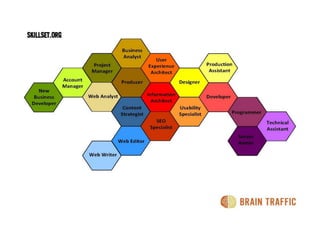
  • #6Ā Then we had websites. And we needed web editors or webmasters or whatever you called them. It started to become clear that the web master would need some help. Do some complicated code, call in a developer Need a cool design, call in a designer The business analyst has a new request.
  • #7Ā As websites got bigger and more complicated, one person could not do it alone. I’m not saying that you need 16 people to run a website. I know that sometimes 1 person is doing all of these things. My point is that a website has similarities to publishing a book or newspaper. The web is even a little more complicated because it can respond to you like a book cannot.
  • #8Ā The larger the website, the more moving parts. And how do we keep track of all of it? If you’re doing all those jobs and constantly adding to the site, you can start to feel like this.
  • #9Ā You can start to feel a little crazy. So content strategy became popular when a whole bunch of people (UX, writers, designers) wanted to create a process in order to stop the madness.
  • #10Ā So people managing the website said, ā€œWe need a plan!ā€
  • #11Ā So what? You might be thinking, we’re doing some of that… or ā€œEh, doesn’t seem like such a big deal, my site is tiny.ā€ Well, no matter the size of your site, this is a big deal. Here are a couple of reasons why…
  • #12Ā For the most part, users are coming to your site for the content! It could be: Address Phone number Document Project information Users don’t care about the delivery mechanism (mail truck), they just want what their looking for (their mail)! So if the primary reason that users are coming to your site is because of your content, shouldn’t it be good?! I say – Do it well! People get upset when they can’t find what they’re looking for. If they can’t find it, they will leave your site and find another that will give them what they want. On of your goals should be to have lots of users visit your site, and have them stay on the site for a long time. If you don’t take care of your content, your users won’t stay.
  • #13Ā If you get your content right, you can accomplish a lot. Just like design can influence perceptions, content can as well.
  • #15Ā Good Content is Erin Kissane wrote a great blog post on this. Let’s dive in and see some examples! http://www.alistapart.com/articles/a-checklist-for-content-work/ http://www.alistapart.com/articles/a-checklist-for-content-work/
  • #16Ā This is basically a sanity check. Are we in the right place, talking to the right people, about the right stuff? Erin Kissane wrote that appropriate content makes users feel like geniuses. This is the bit where good content isn’t recognized as content, because it’s so perfect it seems natural. ā€œ Content is perfectly appropriate for users when it makes them feel like geniuses on critically important missions, offering them precisely what they need, exactly when they need it, and in just the right form.ā€ http://www.alistapart.com/articles/a-checklist-for-content-work/
  • #17Ā We want information to have a purpose, but also to direct people to take action in some way! Work toward those business goals. Purpose is not just ā€œsell stuffā€. It needs to be more specific. An example would be ā€œConvince nurse practitioners that our products will save them time.ā€ Or influence parents to share this information with principals.
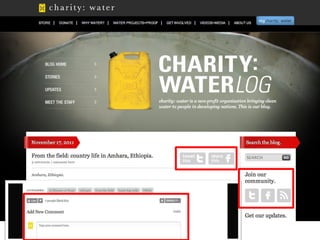
  • #18Ā What’s the purpose of this page? They’re not selling anything. This is a blog post from Charity Water The action is partially to consume information and understand the work. But they do want you to join the discussion! Just because you’re not selling anything doesn’t mean that you can’t write with purpose. This example shows how information architecture and content strategy work together to create actionable information.
  • #19Ā This is where we’re thinking about the audience
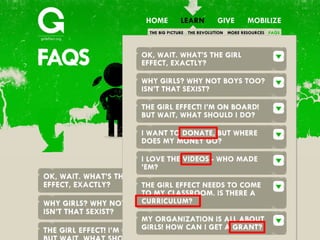
  • #20Ā Girl Effect - It is devoted to the idea that the empowerment of girls is the key to significant social and economic change in developing countries. You can see that these question span many audiences. The questions are all written in conversational tone and get straight to the point. They could even mimic what some people are actually thinking after they watch the video. This is what it means to be user-centered. You channel the user and create content (in this case write questions) that align with the user’s needs and how they think about things. The FAQ list is short, only 7 questions, but it covers a lot. And each question has an answer with next steps – keeping people involved and in a lot of cases on the site.
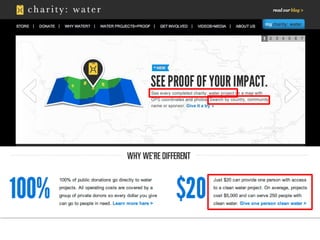
  • #22Ā Charity water is a great example of an org that has some great content to achieve their goals. They do a great job of explaining what is probably a complicated process. I have two screenshots here from the top and bottom of the home page. At the top, you can see the language they use. It tells me what I’ll see and what I can do if I click the link. It says ā€œsearch by country, community, etcā€. It does not use technical jargon and say, ā€œSearch by metadata and taxonomy terms to yield results.ā€ Keep it simple. At the bottom, they use real numbers to explain the overall cost, how many people are served, and what your contribution can do. All in one short paragraph! Simple language. Short sentences. Not many words with more than two syllables.
  • #23Ā All useful for multiple authors. Terms – espeically if you have multiple authors Are you saying renewable energy or green energy? There are some great examples of style guides from Best Buy and Skype.
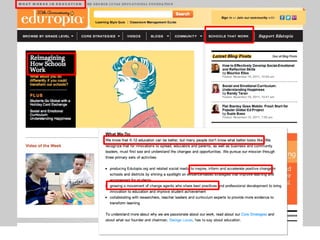
  • #24Ā This is an example of a site using message and phrases consistently. What works in education Reimagining How Schools work Schools that work This site is obviously focused on solutions! Everything seems to work here! The design is consistent. Even the ad matches their orange pallet! This goes with their ā€œWhat We Doā€ Statement
  • #25Ā Rule 13 from The Elements of Style is ā€œOmit needless wordsā€ This is recommended for good web content too! This obviously depends on how much text your working with. Being concise in a tagline is far different from being concise in a report summary. Here are some good questions to ask yourself when evaluating content: Being concise is also key to your mobile strategy for content. You have a much smaller screen to work with and you need to get straight to the point!
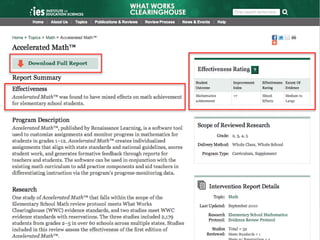
  • #26Ā Content is grouped Actions are clear Effectiveness Summarized in a table
  • #27Ā So you published some content, now what? By support, I’m talking about publiscation. Once it’s published, you’re not done yet. Many groups have projects, data, staff profiles that will change over time. They need to be removed, updated, or archived. Who’s gonna do it? I recommend that you create some sort of plan to ensure that your content is supported in the long-term.
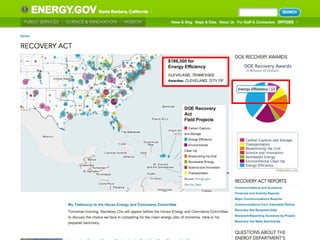
  • #28Ā In this example, Energy.gov has data on projects that are part of the recovery act. Now I’m sure that this data comes from a database and magically appears on the map. This is a perfect example of something that is timely, will need to be updated, and probably archived later. Energy.gov needs a plan to support this content. How does the pie chart update when a new project is added or removed? Is that dynamic? That’s focused more on the design and code behind it, but visuals are content too!
  • #29Ā That’s a lot to take in. You may be wondering, ā€œWhat something small that I can get started on today?ā€ Either reworking a few pages or starting on some new content your developing…
  • #30Ā As I said, the Content Strategy movement is growing and picking up traction. There are many books, conferences, and website that you look into if you’d like to learn more and continue the discussion.