Diagnosis and Treatment of 
Periodontal Disease 
dr shabeel pn 1
STAGES OF GINGIVITIS AND 
PERIODONTAL DISEASE 
dr shabeel pn 2
Did you know? 
Gum disease is a common dental 
problem that may result in tooth 
loss. Gingivitis and Periodontitis 
are the most common types of 
adult gum disease. 
dr shabeel pn 3
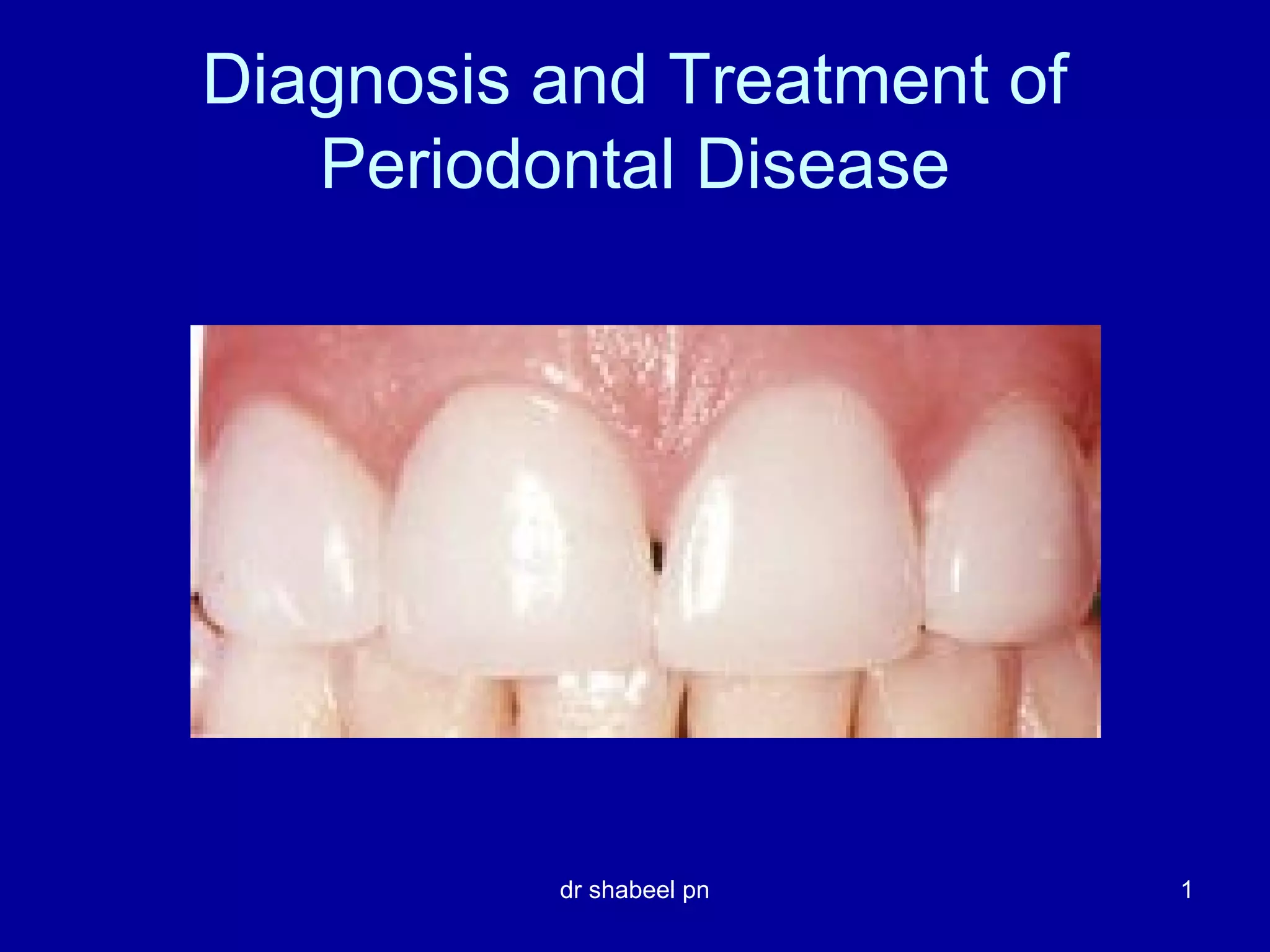
HEALTHY GUMS 
dr shabeel pn 4
Healthy teeth and gums are 
maintained by daily plaque 
removal from all surfaces of 
the tooth (through tooth 
brushing and interdental 
cleaning) 
dr shabeel pn 5
Healthy gums are characterized 
by the following features: 
• pink or coral pink color, 
(normal variations in 
color depend on race 
and complexion) 
• firm, resilient tissues 
• 'orange-peel' texture 
(known as stippling) 
• shape that follows the 
contour of the teeth and 
forms a scalloped edge 
• no areas of redness, 
swelling or 
inflammation 
• no bleeding during 
daily plaque removal 
• no discomfort 
dr shabeel pn 6
dr shabeel pn 7
WHAT IS GINGIVITIS ? 
dr shabeel pn 8
WHAT IS GINGIVITIS ? 
• Gingivitis is inflammation of the gum tissue. 
• The gums are irritated and swollen due to a plaque 
or calculus (tartar) buildup along the gum line. 
• The gums may be sore, bleed easily and appear 
puffy, soft and swollen. 
dr shabeel pn 9
WHAT IS GINGIVITIS ? 
• No bone structure is lost around the teeth at this 
stage of gum disease. 
• Blood on the toothbrush or dental floss is one of the 
earliest and most common signs of gingivitis. 
• Your gums should never bleed while brushing or 
flossing. 
• The good news about gingivitis is that it is 
preventable and reversible through good brushing 
and flossing techniques (or other interdental tooth 
cleansing). 
• On the other hand, if oral hygiene habits are poor, 
gingivitis may progress to periodontitis. 
dr shabeel pn 10
Gingivitis: Notice the gums are 
red and swollen 
dr shabeel pn 11
WHAT IS PERIODONTAL 
DISEASE? 
• Periodontal disease is destruction of 
bone and the structures supporting the 
teeth. Unfortunately periodontitis is 
irreversible, but you can stop its 
progression through good oral hygiene 
and visiting your dental professional. 
dr shabeel pn 12
Eight Warning Signs of 
Periodontal Disease: 
• gums that bleed when 
you brush or floss your 
teeth 
• gums that are red, 
swollen or tender 
• gums that have pulled 
away from teeth 
• infection including 
purulence (pus) between 
the teeth and gums when 
the gums are pressed 
• permanent teeth that 
are loose or separating 
• any changes in the way 
your teeth fit together 
when you bite 
• any changes in the fit of 
your partial denture 
• bad breath 
• itchy sensation 
dr shabeel pn 13
EARLY AND MODERATE 
PERIODONTITIS: 
dr shabeel pn 14
EARLY AND MODERATE 
PERIODONTITIS: 
• Periodontitis occurs when the 
inflammation of the gums progresses 
into the deeper underlying structures 
and bone. 
• In the most common form of 
periodontitis, plaque (and sometimes 
calculus) is found below the gum line. 
• The gums may feel irritated, appear 
bright red, and bleed easily. 
dr shabeel pn 15
EARLY AND MODERATE 
PERIODONTITIS: 
• The ligaments holding the tooth in its 
socket break down and the gums pull 
away from the teeth, resulting in a 
periodontal pocket or space between 
the tooth and gum. 
• The periodontal pocket deepens and 
fills with more bacteria. Supportive 
ligaments and bone start to show 
damage. 
dr shabeel pn 16
EARLY AND MODERATE 
PERIODONTITIS: 
dr shabeel pn 17
dr shabeel pn 18
ADVANCED PERIODONTITIS: 
dr shabeel pn 19
ADVANCED PERIODONTITIS: 
• When periodontitis progresses to the 
advanced stage, the gums severely 
recede (pull away from the tooth ); 
pockets deepen and may be filled with 
pus. 
dr shabeel pn 20
Advanced Periodontitis 
• There may be swelling around the root 
and you may experience sensitivity to 
hot or cold or feel pain when brushing 
your teeth. This is due to the severely 
receding gums exposing the root 
surface. 
dr shabeel pn 21
Advanced Periodontitis 
• As bone loss increases, your teeth may 
lose so much support that they need to 
be removed to preserve the overall 
health of your mouth. 
dr shabeel pn 22
Advanced Periodontal Disease 
dr shabeel pn 23
dr shabeel pn 24
Treatment of Periodontal Disease 
• Prevention 
• Detection 
• Assessment 
• Scaling, debridement, root surface planing 
• Periodontal surgery 
• Bone grafting 
dr shabeel pn 25
Prevention 
• Regular homecare 
– Brush 
– Floss 
– Rinse 
– Aids to oral hygiene 
• Regular dental visits 
• Dietary consideration 
dr shabeel pn 26
dr shabeel pn 27
dr shabeel pn 28
Detection 
• Signs and Symptoms 
– Bleeding, inflamed gums 
– Halitosis 
– Discoloration/Stain 
– Long in the tooth 
– Mobility 
• Radiographic findings 
• Periodontal probing depths 
dr shabeel pn 29
Detection 
dr shabeel pn 30
dr shabeel pn 31
dr shabeel pn 32
dr shabeel pn 33
dr shabeel pn 34
Assessment 
• Radiographs 
• Periodontal Charting 
• Diagnosis 
– I 
– II 
– III 
– IV 
• Prognosis 
dr shabeel pn 35
Scaling, debridement, root surface 
planing 
dr shabeel pn 36
dr shabeel pn 37
Periodontal surgery 
dr shabeel pn 38
Deep pocket with calculus 
dr shabeel pn 39
Flap Reflected to Visualize 
Calculus 
dr shabeel pn 40
Gum sutured back to normal 
height, leaving a deepened space 
dr shabeel pn 41
Gum sutured down to bone to 
reduce residual space 
dr shabeel pn 42
Bone grafting 
dr shabeel pn 43
Flap reflected to allow 
bone implant 
dr shabeel pn 44
Flap resutured over 
bone implant 
dr shabeel pn 45
Flap reflected to 
insert membrane 
dr shabeel pn 46
Flap resutured 
over membrane 
dr shabeel pn 47
Mucogingival Surgery 
dr shabeel pn 48
Oral Irrigation 
dr shabeel pn 49
Pharmacological Intervention 
• Topical Antibiotics 
– Tetracycline 
– Doxycycline 
– Minocycline 
dr shabeel pn 50
Pharmacological Intervention 
• Periochip (cholorhexidine, and 
bacteriocidal drug) 
• Atridox (doxycycline antibiotic, a form of 
tetracycline) 
• Arestin (minocycline antibiotic, a form of 
tetracycline) 
dr shabeel pn 51
dr shabeel pn 52
Post Treatment Care 
• Regular periodontal maintainance 
– 3 month recare 
– Monitor probing depths 
– Follow up radiographs 
• Empahasis on Homecare 
dr shabeel pn 53

11diagnosis and treatment_of_periodontal_disease dissan

  • 1.
    Diagnosis and Treatmentof Periodontal Disease dr shabeel pn 1
  • 2.
    STAGES OF GINGIVITISAND PERIODONTAL DISEASE dr shabeel pn 2
  • 3.
    Did you know? Gum disease is a common dental problem that may result in tooth loss. Gingivitis and Periodontitis are the most common types of adult gum disease. dr shabeel pn 3
  • 4.
    HEALTHY GUMS drshabeel pn 4
  • 5.
    Healthy teeth andgums are maintained by daily plaque removal from all surfaces of the tooth (through tooth brushing and interdental cleaning) dr shabeel pn 5
  • 6.
    Healthy gums arecharacterized by the following features: • pink or coral pink color, (normal variations in color depend on race and complexion) • firm, resilient tissues • 'orange-peel' texture (known as stippling) • shape that follows the contour of the teeth and forms a scalloped edge • no areas of redness, swelling or inflammation • no bleeding during daily plaque removal • no discomfort dr shabeel pn 6
  • 7.
  • 8.
    WHAT IS GINGIVITIS? dr shabeel pn 8
  • 9.
    WHAT IS GINGIVITIS? • Gingivitis is inflammation of the gum tissue. • The gums are irritated and swollen due to a plaque or calculus (tartar) buildup along the gum line. • The gums may be sore, bleed easily and appear puffy, soft and swollen. dr shabeel pn 9
  • 10.
    WHAT IS GINGIVITIS? • No bone structure is lost around the teeth at this stage of gum disease. • Blood on the toothbrush or dental floss is one of the earliest and most common signs of gingivitis. • Your gums should never bleed while brushing or flossing. • The good news about gingivitis is that it is preventable and reversible through good brushing and flossing techniques (or other interdental tooth cleansing). • On the other hand, if oral hygiene habits are poor, gingivitis may progress to periodontitis. dr shabeel pn 10
  • 11.
    Gingivitis: Notice thegums are red and swollen dr shabeel pn 11
  • 12.
    WHAT IS PERIODONTAL DISEASE? • Periodontal disease is destruction of bone and the structures supporting the teeth. Unfortunately periodontitis is irreversible, but you can stop its progression through good oral hygiene and visiting your dental professional. dr shabeel pn 12
  • 13.
    Eight Warning Signsof Periodontal Disease: • gums that bleed when you brush or floss your teeth • gums that are red, swollen or tender • gums that have pulled away from teeth • infection including purulence (pus) between the teeth and gums when the gums are pressed • permanent teeth that are loose or separating • any changes in the way your teeth fit together when you bite • any changes in the fit of your partial denture • bad breath • itchy sensation dr shabeel pn 13
  • 14.
    EARLY AND MODERATE PERIODONTITIS: dr shabeel pn 14
  • 15.
    EARLY AND MODERATE PERIODONTITIS: • Periodontitis occurs when the inflammation of the gums progresses into the deeper underlying structures and bone. • In the most common form of periodontitis, plaque (and sometimes calculus) is found below the gum line. • The gums may feel irritated, appear bright red, and bleed easily. dr shabeel pn 15
  • 16.
    EARLY AND MODERATE PERIODONTITIS: • The ligaments holding the tooth in its socket break down and the gums pull away from the teeth, resulting in a periodontal pocket or space between the tooth and gum. • The periodontal pocket deepens and fills with more bacteria. Supportive ligaments and bone start to show damage. dr shabeel pn 16
  • 17.
    EARLY AND MODERATE PERIODONTITIS: dr shabeel pn 17
  • 18.
  • 19.
  • 20.
    ADVANCED PERIODONTITIS: •When periodontitis progresses to the advanced stage, the gums severely recede (pull away from the tooth ); pockets deepen and may be filled with pus. dr shabeel pn 20
  • 21.
    Advanced Periodontitis •There may be swelling around the root and you may experience sensitivity to hot or cold or feel pain when brushing your teeth. This is due to the severely receding gums exposing the root surface. dr shabeel pn 21
  • 22.
    Advanced Periodontitis •As bone loss increases, your teeth may lose so much support that they need to be removed to preserve the overall health of your mouth. dr shabeel pn 22
  • 23.
  • 24.
  • 25.
    Treatment of PeriodontalDisease • Prevention • Detection • Assessment • Scaling, debridement, root surface planing • Periodontal surgery • Bone grafting dr shabeel pn 25
  • 26.
    Prevention • Regularhomecare – Brush – Floss – Rinse – Aids to oral hygiene • Regular dental visits • Dietary consideration dr shabeel pn 26
  • 27.
  • 28.
  • 29.
    Detection • Signsand Symptoms – Bleeding, inflamed gums – Halitosis – Discoloration/Stain – Long in the tooth – Mobility • Radiographic findings • Periodontal probing depths dr shabeel pn 29
  • 30.
  • 31.
  • 32.
  • 33.
  • 34.
  • 35.
    Assessment • Radiographs • Periodontal Charting • Diagnosis – I – II – III – IV • Prognosis dr shabeel pn 35
  • 36.
    Scaling, debridement, rootsurface planing dr shabeel pn 36
  • 37.
  • 38.
  • 39.
    Deep pocket withcalculus dr shabeel pn 39
  • 40.
    Flap Reflected toVisualize Calculus dr shabeel pn 40
  • 41.
    Gum sutured backto normal height, leaving a deepened space dr shabeel pn 41
  • 42.
    Gum sutured downto bone to reduce residual space dr shabeel pn 42
  • 43.
    Bone grafting drshabeel pn 43
  • 44.
    Flap reflected toallow bone implant dr shabeel pn 44
  • 45.
    Flap resutured over bone implant dr shabeel pn 45
  • 46.
    Flap reflected to insert membrane dr shabeel pn 46
  • 47.
    Flap resutured overmembrane dr shabeel pn 47
  • 48.
  • 49.
    Oral Irrigation drshabeel pn 49
  • 50.
    Pharmacological Intervention •Topical Antibiotics – Tetracycline – Doxycycline – Minocycline dr shabeel pn 50
  • 51.
    Pharmacological Intervention •Periochip (cholorhexidine, and bacteriocidal drug) • Atridox (doxycycline antibiotic, a form of tetracycline) • Arestin (minocycline antibiotic, a form of tetracycline) dr shabeel pn 51
  • 52.
  • 53.
    Post Treatment Care • Regular periodontal maintainance – 3 month recare – Monitor probing depths – Follow up radiographs • Empahasis on Homecare dr shabeel pn 53