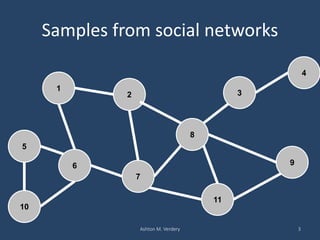
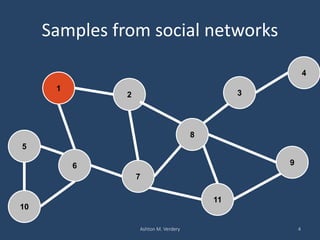
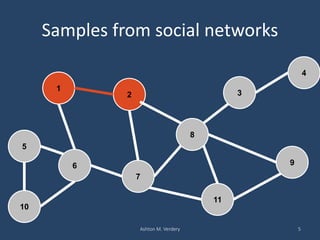
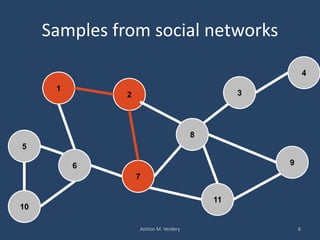
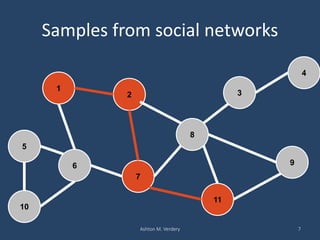
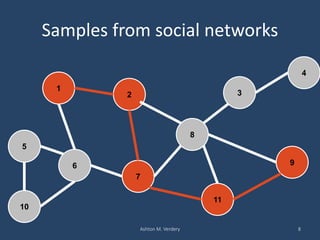
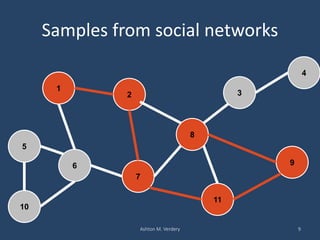
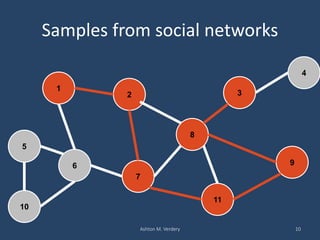
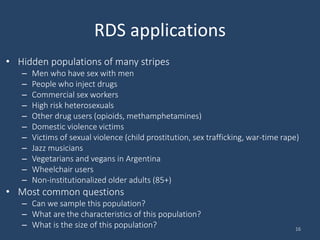
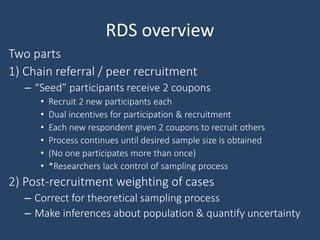
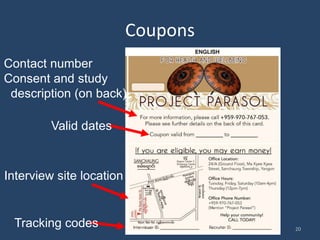
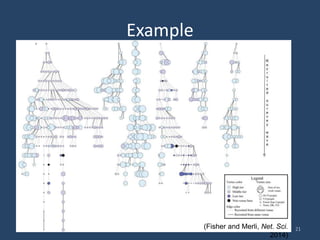
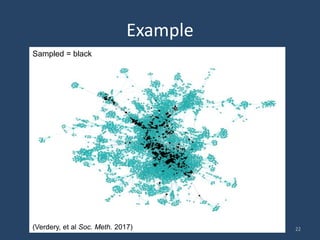
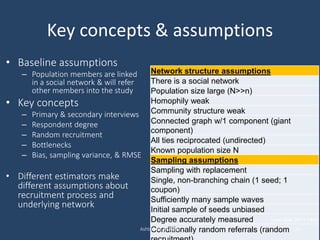
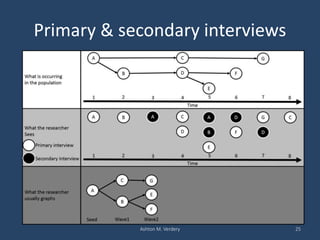
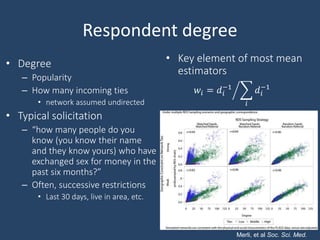
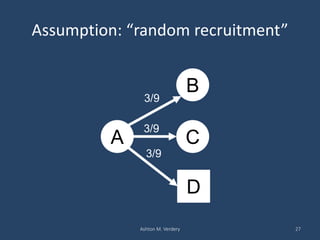
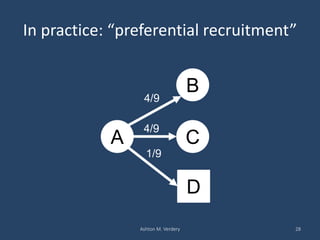
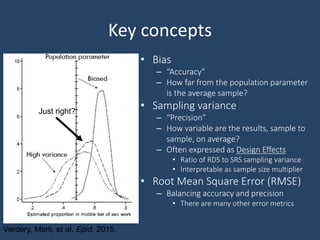
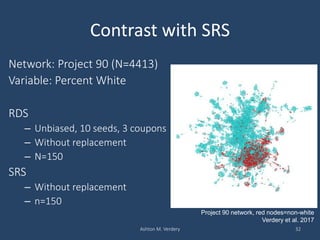
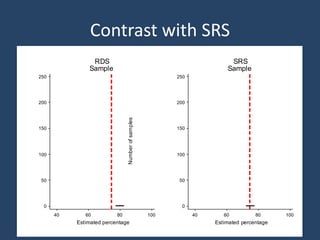
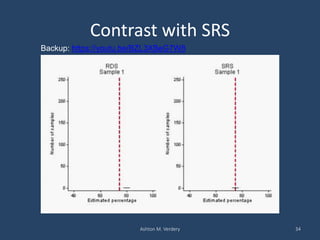
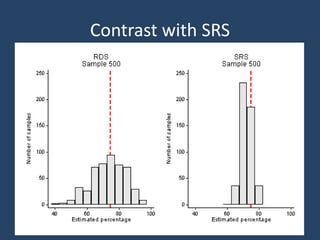
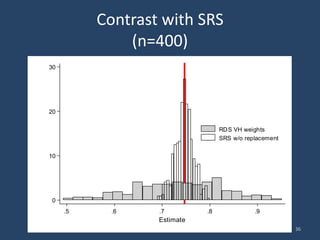
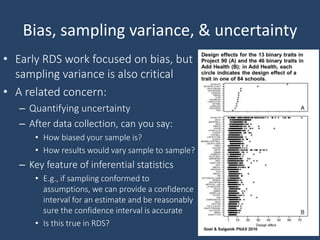
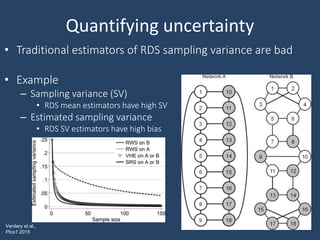
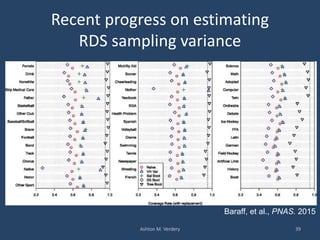
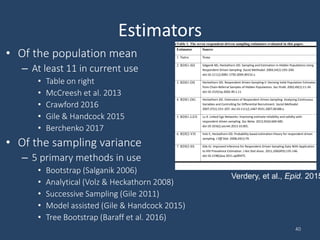
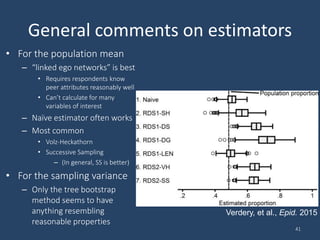
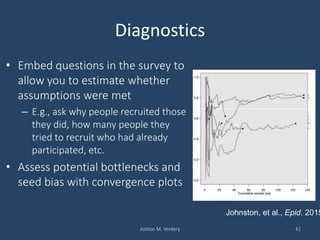
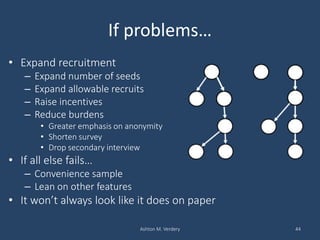
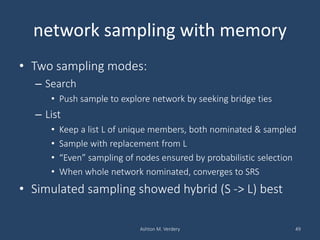
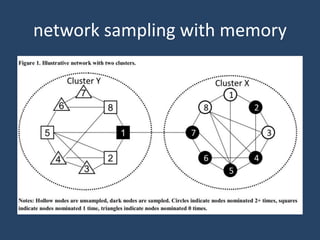
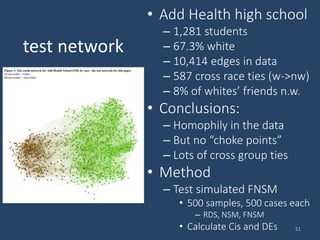
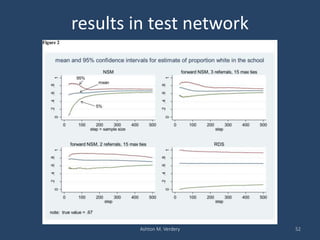
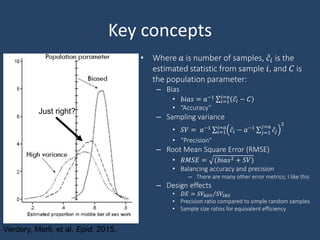
This document provides an overview of Respondent-Driven Sampling (RDS), a method for sampling hidden populations using their social networks. RDS begins by selecting initial participants, called "seeds", who each recruit a small number of new participants into the study. Those new participants can then recruit others, creating a chain-referral sample. The document discusses how RDS works, its applications across many hidden populations, and some of its promises and pitfalls, including high sampling variance requiring large sample sizes compared to simple random sampling. It also reviews recent progress on estimating sampling variance from RDS studies.