Downloaded 19 times

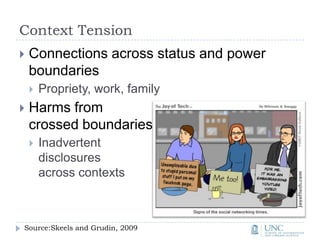
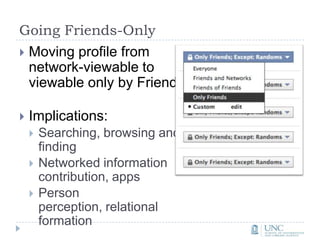
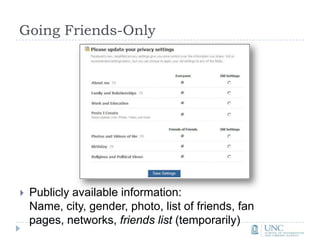
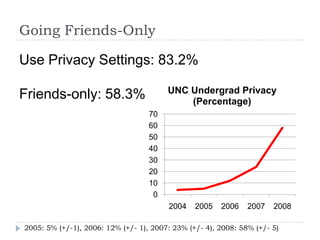
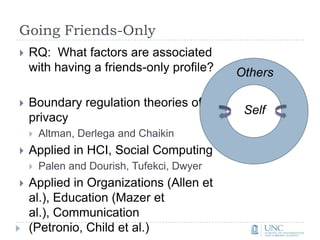
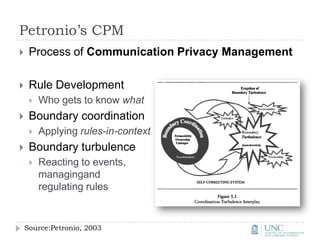
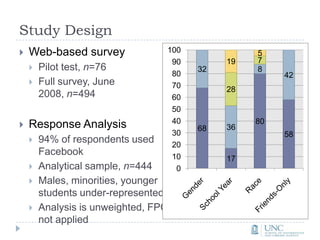
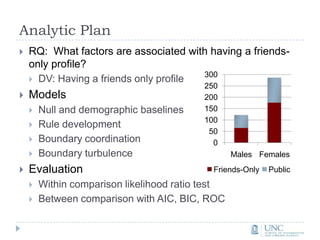
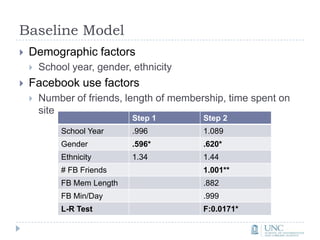
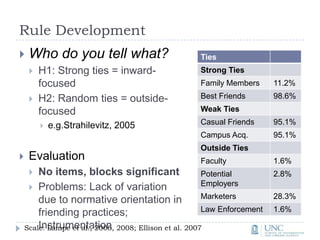
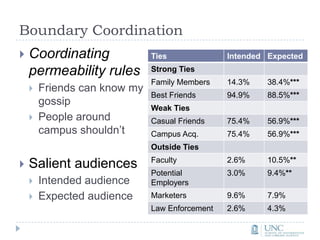
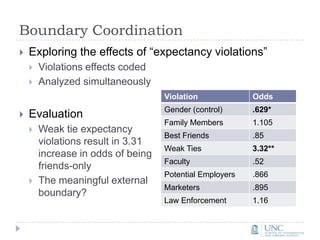
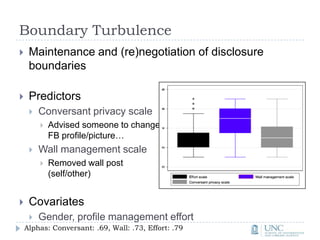
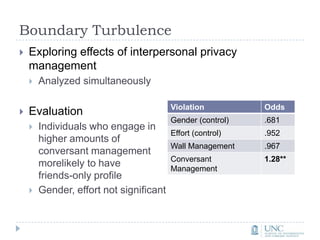
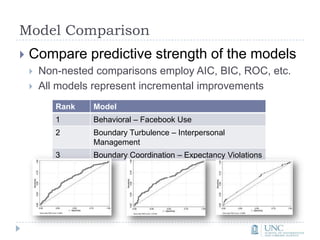

This document summarizes a study examining factors associated with users making their Facebook profiles only visible to friends. The study analyzed survey responses from 444 Facebook users. Models tested included demographic factors, rule development around disclosure to ties, boundary coordination of expected audiences, and boundary turbulence from privacy management experiences. The boundary coordination model found expectancy violations from weak ties increased odds of a friends-only profile. The boundary turbulence model found more privacy management led to friends-only profiles. The models provide insights into the dynamic process of boundary regulation on social networks.


